Welcome to your first CES edition of TMA, attempting (almost futilely) to distill the biggest product reveals and announcements. Despite two days of briefings and conferences, today is merely day one. However, we’ve already seen Sony Honda reveal its next car — and the Afeela 1 isn’t yet on sale. We’ve got a deep dive on what we’ve seen so far, right here.
AMD announced new Ryzen AI 400 laptop processors and updated desktop chips, including the Ryzen 7 9850X3D, with a new focus broadly on AI processing improvements. NVIDIA had a lengthy, dense press conference showing off its dominance in AI tech, but it lacked major consumer announcements — until overnight, when it revealed next-gen G-Sync tech and an upgraded version of DLSS. The new tech can handle up to 4K 240Hz path traced performance. It also adds an improved version of Super Resolution Transformer, with more stability.
This year’s wildcard CES press conference was… Lego? It revealed Smart Bricks, which adds sensors, audio and wireless communication to traditional Lego pieces. The system is launching with Star Wars sets later this year — and perhaps crucially, no smartphone or screen is needed to play.
There’s also LG and Samsung to get into — more on those below!
After launching its double-folding smartphone in Korea, Samsung is giving its newest foldable the press tour at CES 2026 and, despite reservations, it’s slick. The key difference between the Z Trifold and the Z Fold series is a second fold-out wing, turning it from a traditional smartphone into a more tablet-like form factor, closer to what we’re used to. Farewell square-ish screens.
This is what we were promised when foldables first appeared: a larger screen that offers greater utility than traditional smartphones, without compromise. Sam Rutherford tested one out. Read on for his impressions.
The big reveal at Samsung’s First Look CES press conference was literally big: a flagship 130-inch Micro RGB TV framed by a giant metal easel with embedded speakers. It’s much more in the realm of concept than reality — no price, no release date. It works as a halo product for more realistic TV sets using Samsung’s new preferred display technology. This year it’ll be offering TVs in 55-, 65- and 75-inch sizes. And if you’re curious, we explain what Micro RGB TVs are.
CES 2026 marks the return of LG’s ultra-thin Wallpaper TV. The latest version sports a gorgeous OLED screen and wireless connectivity, and it’s about as thin as a pencil. We checked out the new Wallpaper TV during a CES preview event, along with LG’s Gallery and Micro RGB sets. If money were no object, I’d want a 100-inch LG Wallpaper TV. According to Devindra Hardawar, it looks “shockingly thin” in person.
This article originally appeared on Engadget at https://www.engadget.com/general/the-morning-after-engadget-newsletter-ces-2026-press-day-174444560.html?src=rss
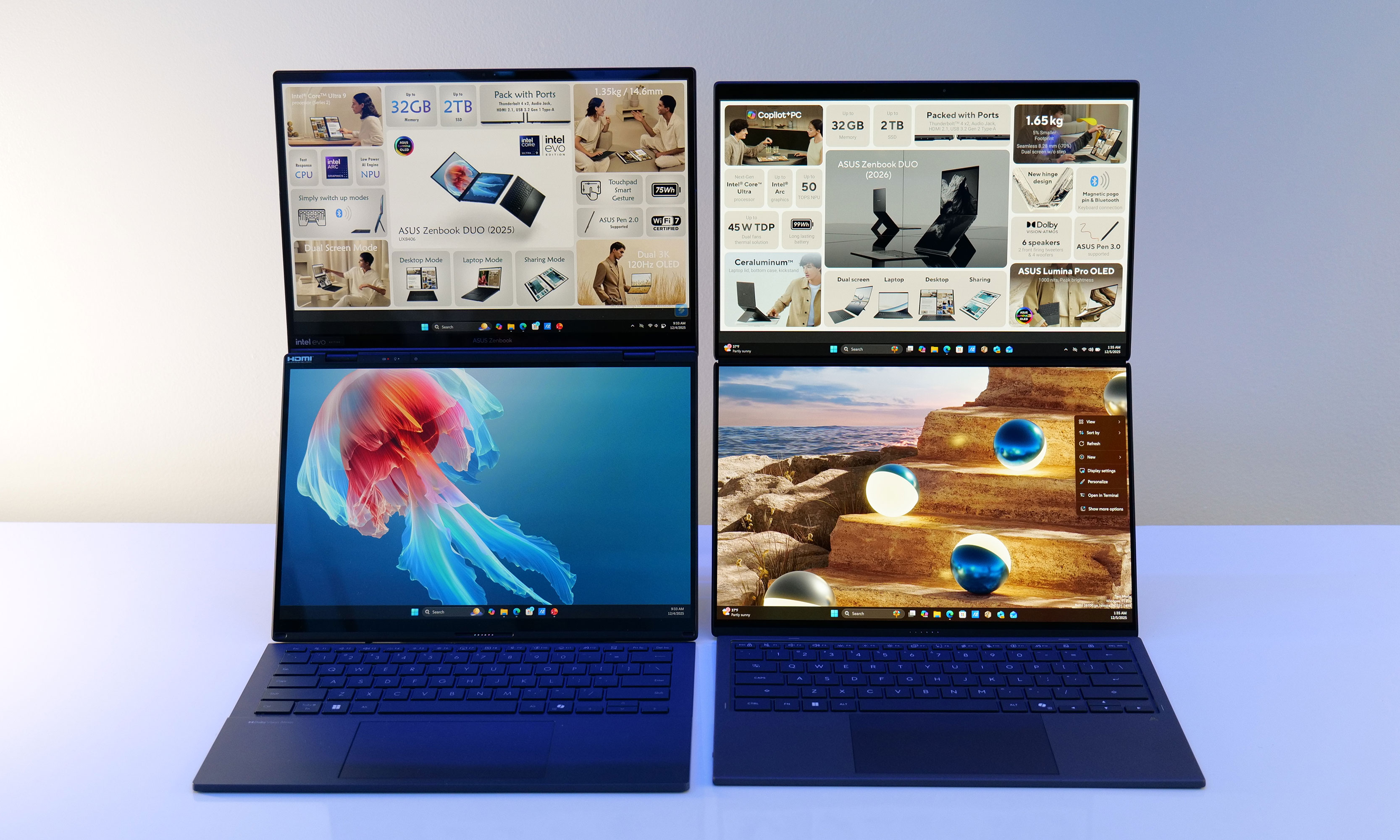
The ASUS Zenbook Duo was easily one of my favorite laptops of 2024 as it was the first dual-screen notebook actually worth buying. But now at CES 2026, ASUS has given the second-gen model a complete revamp with practically all the upgrades and tweaks I’ve been hoping for.
Like the rest of the Zenbook line, the 2026 Duo is getting ASUS’ Ceraluminum treatment on its lid, bottom and kickstand, which not only looks great but it adds an extra bit of durability and scratch resistance. There’s also an improved magnetic latch system and Bluetooth connection for its detachable keyboard to help keep it charged up and paired more reliably. However, the biggest upgrade is ASUS’ all-new "hideaway" hinge. Not only does it allow the system to unfold flat against a table, it also massively shrinks the gap between the laptop’s two 3K 144Hz Lumina Pro OLED displays to just 8.28 mm. That’s a reduction of 70 percent compared to the previous model and it makes the idea of using a dual screen laptop just that much more seamless and appealing than before.
Another important upgrade is that despite having a significantly larger 99Whr battery (up from 75Whr on its predecessor), the overall footprint of the second-gen Zenbook Duo is actually five percent smaller than before. That makes it noticeably more compact without sacrificing on weight or thinness, which is staying pretty much the same at 3.6 pounds and 0.77 to 0.9 inches thick (depending on where you measure). Connectivity remains excellent as well, with ASUS including Wi-Fi 7, two USB-C with Thunderbolt 4, a USB-A 3.2 Gen 2 connector and even a full-size HDMI 2.1 jack. And for all the artists out there, the Zenbook Duo also supports stylus input via the ASUS Pen 3.0, so you can easily detach the wireless keyboard and use either screen as a built-in drawing tablet. That said, it’s currently unclear if the stylus comes included or not.
Meanwhile on the inside, the Zenbook Duo features either an Intel Core Ultra 7 355 or Ultra 9 386H chip with up to 32GB of RAM and 2TB of storage. On top of that, ASUS increased the Duo’s TDP to 45 watts, which is another notable bump up over the original. So not only does it have a larger battery, its performance is getting a big boost as well, especially when combined with the much improved onboard graphics from Intel’s latest integrated Arc GPU.
Here's how the new 2026 ASUS Zenbook duo (right) stacks up against the outgoing model (left).
Sam Rutherford for Engadget
I know a lot of people out there still aren’t convinced that dual screen laptops need to be a thing, and that’s totally OK. But as the kind of person who feels like they are missing a limb when I’m traveling and away from my two monitors at home, the second-gen Zenbook Duo feels like a major refinement of an already great idea. It’s got a bigger battery, faster performance and a hugely streamlined design without gaining any bulkiness or weight. Out of all of the laptops I’ve seen at CES 2026, this is the one I most wish I could grab and start using right away.
The one potential concern is that ASUS has yet to release pricing for the new Zenbook Duo or say when it will go on sale. So here’s hoping it won’t break the bank when it arrives sometime later this year.
This article originally appeared on Engadget at https://www.engadget.com/computing/the-asus-zenbook-duo-got-a-fantastic-redesign-for-ces-2026-173000392.html?src=rss
Eric Migicovsky has been thinking a lot about friction. Specifically, he’s been thinking about how too much friction in the way of using a device can put people off wearing it altogether. The founder of Pebble is here at CES 2026 with a few new devices from the company he recently started to bring back the beloved smartwatch brand, including the Pebble Round 2 and the Index 01. That second one is a simple ring with a button on it that you push down to talk to Pebble’s AI whenever you want it to help you remember something.
In the sea of AI gadgets that clutter the showfloors of CES (and the current tech industry in general), the Index 01 is refreshingly simple. The prototypes I saw here in Las Vegas weren’t connected to phones, so they weren’t actually working. They also seemed a little unfinished, like there was still some polishing to do. But I was able to put a few on and push their buttons. I also checked out the one Migicovsky wears — more on that in a bit.
I have to caveat that the rings that Migicovsky and his team had for us to try on were way too large for me. I did manage to get sized and found out I was a Pebble size 7, while my colleague Dan Cooper was determined to be a size 11. These demo rings sat loosely on my finger — and Migicovsky was particular that I wear it on my index finger and not my thumb or middle finger.
I suspect that has to do with how you reach for and press the button. It’s much easier to push the key if it’s closer to your thumb. Since the idea of the Index 01 began as an app on the Pebble watch, Migicovsky has been working hard to figure out how best to make it easy to access. Back when it was an app, “friction points were having to use your other hand” to press the screen, he said. “We also experimented with gestures and voice activation, wake words,” he added. But as many of us are painfully familiar with, those triggers don’t always work well.
“The whole thing that drives this ring is it being something that you can rely on. It being something that you can incorporate into your… habits,” Migicovsky said. So putting a button right by your thumb not only makes sense, but might even be, in my opinion, a bit more accessible for people with, say, speech impediments or only one hand.
I have to admit I initially found the Index 01’s design to be a bit bulky-looking, and the rubbery button protrudes a lot more than I expected from looking at it in its glamor shots. It’s like in place of a diamond or a gemstone on the ring, there’s a weird little nipple that you twiddle around until you want to push it.
I did find the button easy to press, if that allays any of your concerns at all. But, really, the Index’s powers aren’t visible. It’s what happens after you push the button that matters.
Using the Pebble Index 01 ring
The actual demo was brief. Migicovsky prefaced things by telling me what he was about to ask, held up his hand to his mouth, pushed the button and asked me “What’s your favorite book these days?” I explained I had recently been reading Kaiju Preservation Society by John Scalzi and then Migicovsky let go of the button.
After a few starts and stops due to internet woes, the companion app on his phone responded, showing a transcription of what we said, followed by an answer “That sounds like a fun read! I can create a note about the book you are reading if you’d like.”
I didn’t get to ask many more questions, and I think I’d need to live with an actual unit in my life to start to rely on it more. But I love the idea of a second brain or an AI assistant that’s always ready for my random thoughts at the push of a button. Migicovsky said the Index 01 is water resistant, so you never have to take it off, even in the shower. So for those times when you’re sudsing up and have a random stroke of inspiration about soap art, you can still tell the Index 01 to remember your Eureka moment.
Migicovsky said you can also double click the button (and then hold it) to access a different side of the AI. Instead of simply remembering things you tell it, the AI can try to provide answers. Pebble’s AI is powered by Claude, so the usefulness of these results is going to be dependent on that model.
Depending on how you use it, Migicovsky said the Index 01 can last for years — up to three if you’re not too heavy of a user. Since he doesn’t want for you to have to place the ring on a charger and forget to put it back on again, the device is not rechargeable. When you’re about a month away from running out of juice, the app will send you a warning and ask if you want to order a replacement. You’ll also be offered the option of sending it in for recycling.
That still feels a bit wasteful and potentially expensive, but Migicovsky’s thinking is that if you still are using the ring enough after two years to be thinking about extending its battery life, the price might be justifiable to you.
Why a Pebble AI ring instead of others?
It’s things like this that make me think Migicovsky (and the Pebble team) have the right approach to making an AI ring. Though the hardware is not the most advanced and there is a quaint simplicity to the software, there is a level of thought and care that feels important to any product’s success.
Migicovsky is quick to acknowledge that Pebble watches won’t be for everyone. That if you want a health-tracking device or something with a bright, colorful screen, you should consider something else. He’s even considering placing ads for other smartwatches on the website listing the new Pebble devices.
“Look — I’m the first person to call myself out when I fail,” Migicovsky wrote in a blog he posted last November. And when he spoke with Engadget, he also recognized that Pebble at one point might have tried to do too much. These days, there are other companies making smart rings that are all about tracking your sleep and fitness, and the Index 01 is not that. “And Pebble is absolutely 100 percent not that company.” Maybe with a renewed focus on a sustainable business model, Pebble actually has a chance to survive and continue making its AI ring and other devices.
Nowadays, Migicovsky just wants to make gadgets that will make you smile. And when I look at a cute little nyan cat wiggling about in its lo-fi, lo-res and low-frame-rate glory on the new Pebble smartwatches, I just feel warm inside.
This article originally appeared on Engadget at https://www.engadget.com/wearables/pebbles-founder-might-be-just-the-right-person-to-make-an-ai-ring-170104222.html?src=rss
As soon as I held the Pebble Round 2 in my hand, I suddenly realized what I’d been missing for the better part of a decade. I’ve always felt smartwatches should supplement, rather than supplant, your phone, but that’s an attitude that feels almost quaint these days. After all, Apple and Samsung believe everyone wants a watch that can do almost everything your phone can do. But that wasn’t the prevailing opinion at the dawn of the smartwatch era, either philosophically or from limitations in the technology. Back then, companies like Pebble, Vector, Basis and others all built devices that added a second screen to the device in your pocket, and were all the better for it. Thankfully, Pebble founder Eric Migicovsky agrees, and if his project to revive the company is successful, perhaps we’ll once again see these alternative approaches flourish. The first step on this very long road is the Pebble Round 2, which aims to be the standard bearer for a new generation of comparatively less smart, but fundamentally more useful, smartwatches.
Round 2 was announced on January 2, and is the second product in Core Devices’ (Migicovsky’s new company) lineup of revived Pebbles. The first was the revamped Time 2, aping the form of its more successful predecessor, while the Round 2 is an attempt to correct the mistakes of 2015’s Pebble Time Round. That watch, when it debuted, was met with disappointment from critics who loved its aesthetics but little else. Back then, building a Pebble with a round face required plenty of compromise, including a higher price, shorter battery life, fewer features and a massive bezel. A decade on, and the technology has come along sufficiently to render such compromises moot, making for a much better device overall.
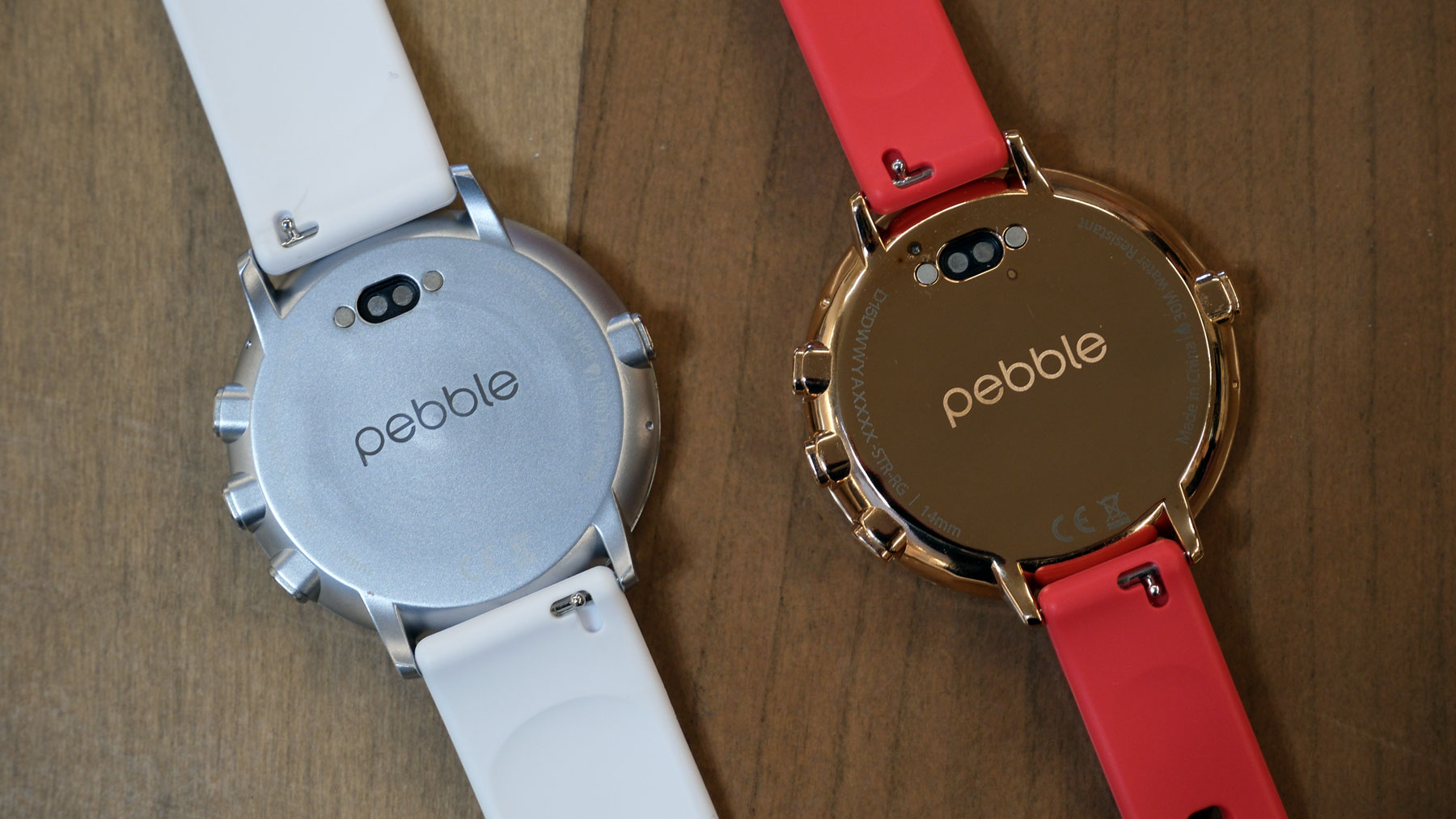
The new watch has a 1.3-inch color e-paper touchscreen which stretches to the end of the case. Its display has been bonded to the glass crystal, dramatically improving the viewing angles and reducing glare. You should expect to get two weeks of life on a single charge, but it remains just 8.1mm thick, and you can really feel that lack of heft when it’s in your hand. In fact, compared to so many of its smartwatch peers, you could almost unironically describe it as dainty, making its case size feel almost comically large. On the materials side, the case feels strong enough that I think it would withstand the rigors of daily life, and I’m quite smitten with both the polished rose gold and brushed silver finishes.
On one hand, it’s hardly the major reason to buy a watch, but I’m deeply smitten by how much text the Round 2’s display can render. Even the fanciest of smartwatches aren’t that willing to display big reams of text for your ease of reading. I was tickled to read a lengthy Slack message which reminded me, again, of what I’ve been missing for all of these years. Perhaps that’s a sign of the broader benefits a device like this offers, which is the ability to tweak its UI to what you need, rather than being tied by the UI designers in Cupertino and Mountain View.
There are plenty of omissions in the spec list, including no optical heart rate sensor, no GPS and no speaker. I’m not weeping over any of them: I’ve not used my smartwatch’s GPS in years and yes, and Pebble is swerving away from the health and fitness market. I don’t want to take calls from my wrist, either, and while the omitted heart rate sensor is harder to take given their ubiquity, it’s been done to ensure the watch is thinner than many of its competitors.
Migicovsky is candid about Pebble’s failure, saying the company spent too much to become a global hardware brand. He invested heavily in inventory in anticipation of blockbuster sales that never came, similar to Peloton’s post-COVID slump. This time around, the focus is on ensuring the company remains sustainable over the long term and, hopefully, building a succession of products. Rather than big investments, he’ll make small batches of devices to cater to pre-orders and won’t water down his philosophy in the hope of attracting a broad user base. He even said the Pebble website may include recommendations for alternative smartwatches from other companies to ensure he’s only catering to the faithful.
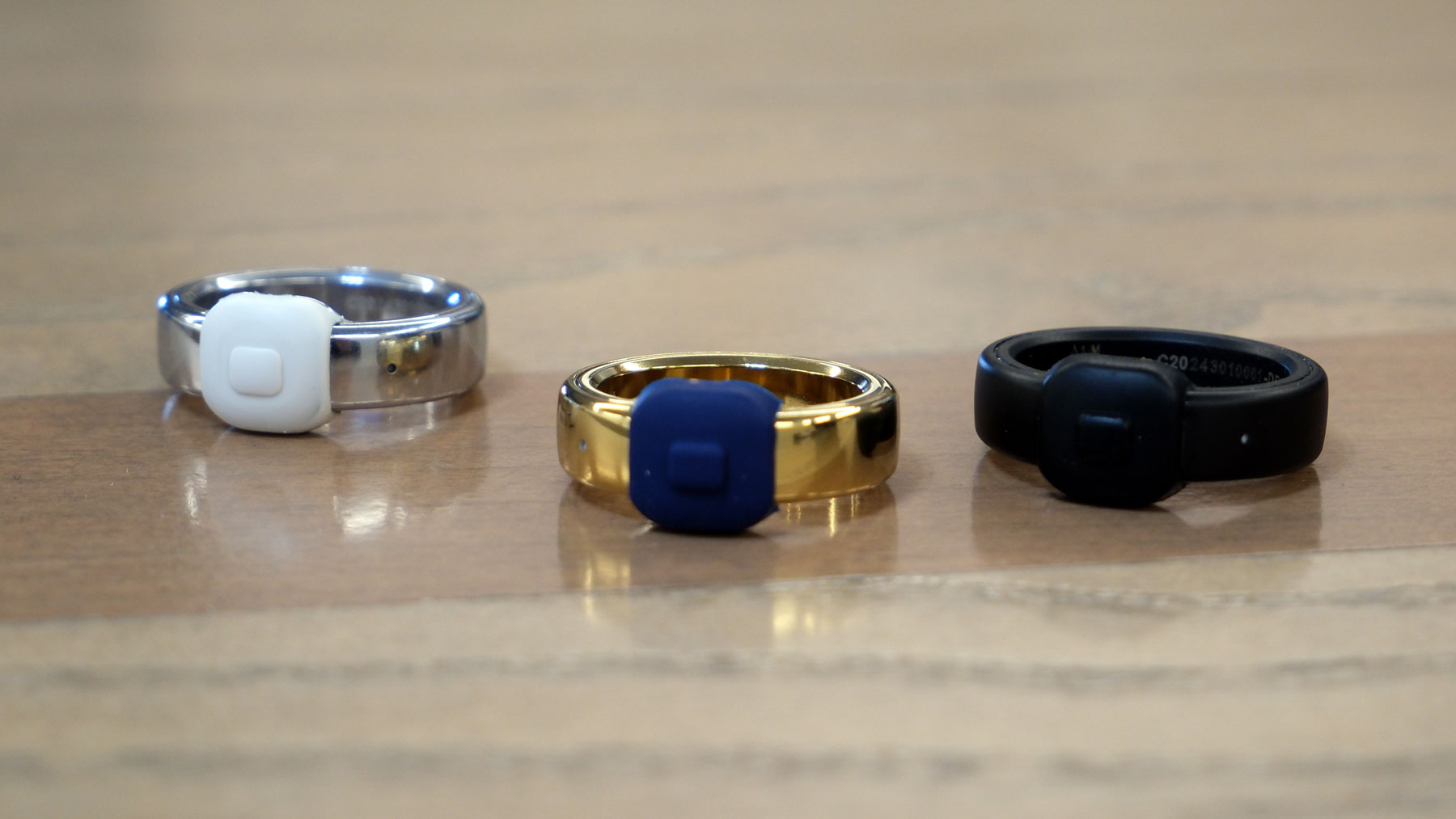
Three Pebble Indexes side by side on a table.
Daniel Cooper for Engadget
It’s his hope that this approach will give him the time and space to make more products, such as the already-announced Pebble Index 01. It’s a $75 ring equipped with a microphone, Bluetooth and a single push button, where users can record brief reminders to themselves. Rather than add weight and complexity with a rechargeable battery, each Index has a sealed-in cell that the company promises will last for up to two years. A month before the battery is due to expire, you’ll be asked if you want to buy a replacement, sending in the original for recycling. It’s an unusual arrangement but one that Migicovsky believes is more compelling than some others. After all, users aren’t saddled with any monthly subscription fees, and they only need to buy a new one if they’ve actually gotten the benefit out of their existing model. As with the revived Pebbles, the prevailing attitude is that nobody’s twisting your arm here.
Image of the rear sides of the Pebble Round 2
Daniel Cooper for Engadget
More broadly, Migicovsky has the time and money now to explore these product ideas free from the usual pressures. He has no investors or backers demanding instant returns and fast growth, giving him license to pursue his ideas as far as he wants to take them. And he is determined to return a small degree of whimsy to consumer electronics, building gadgets that are in some way fun. Let’s hope he succeeds, because the industry can’t survive another decade of homogeneity.
This article originally appeared on Engadget at https://www.engadget.com/wearables/pebble-seeks-to-remedy-the-wearable-industrys-original-sin-170000834.html?src=rss
Multiple of Satechi's Thunderbolt 4 docks are on Engadget's list of the best docking stations, so when the company announces a new accessory, it's usually worth a look. At CES 2026, Satechi is finally making the jump to Thunderbolt 5 with a new docking station and cable. The Thunderbolt 5 CubeDock with SSD Enclosure and Thunderbolt 5 Pro Cable leverage the faster speeds of Intel's cable tech, and in the case of the dock, also include extra benefits like space for SSD storage.
The CubeDock is made from a block of solid aluminum and is clearly supposed to evoke Apple's desktop Macs, like the new Mac mini. Satechi already made a Mac mini hub that can do some of the same things as CubeDock, but that accessory was focused on Thunderbolt 4. With the Thunderbolt 5 on the CubeDock, the new docking station can offer support for multiple 8K monitors, 180W smart power delivery and up to 120 Gb/s transfer speeds.
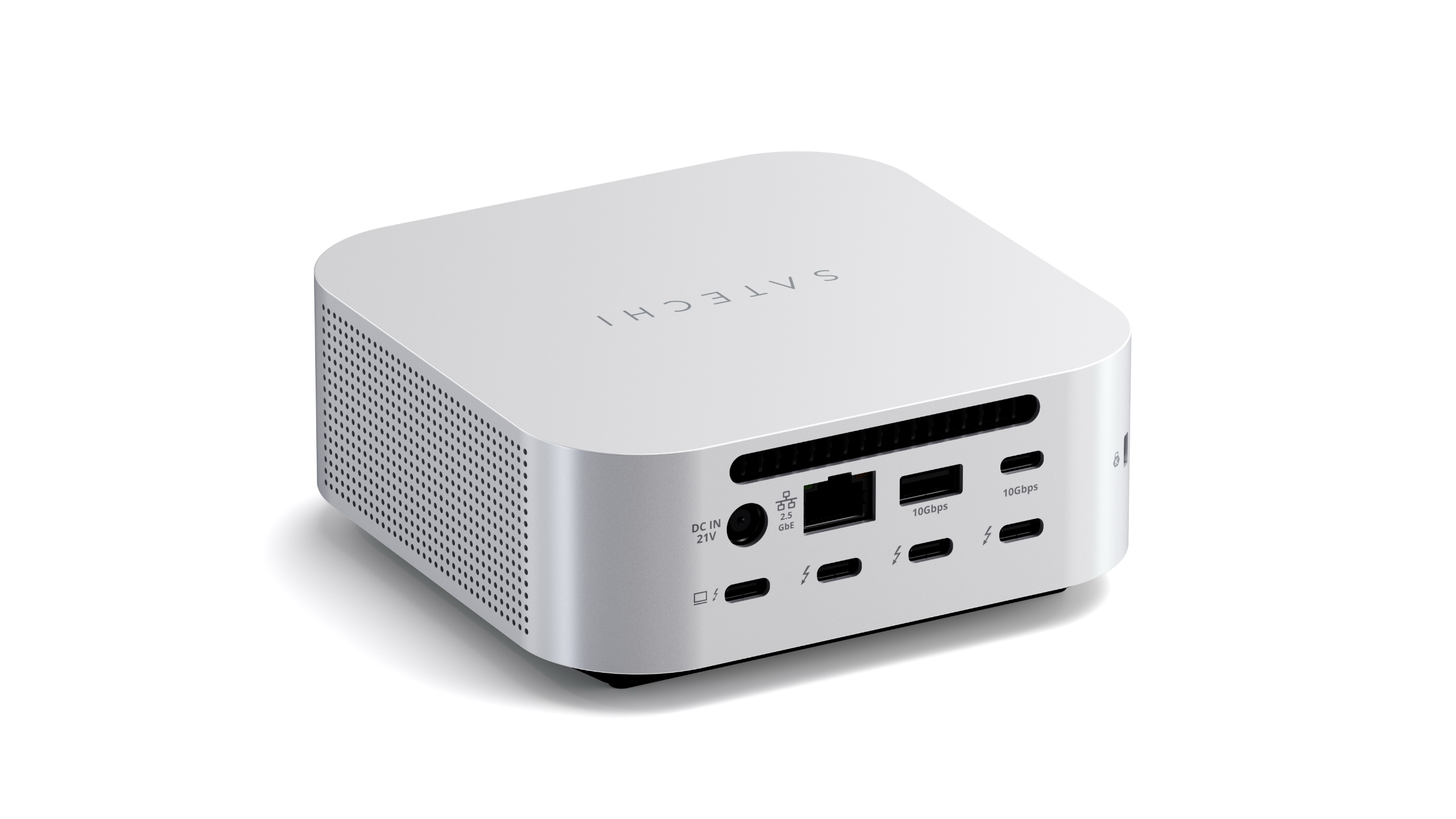
The back of a Satechi CubeDock displaying multiple types of ports.
Satechi
The dock also features a microSD card slot, SD card slots and headphone jack on the front, with multiple other input options on the back, including Thunderbolt 5 ports and an ethernet port. If you're interested in extra storage, you can also pop off the bottom of the CubeDock and add up to 8TB of SSD storage.
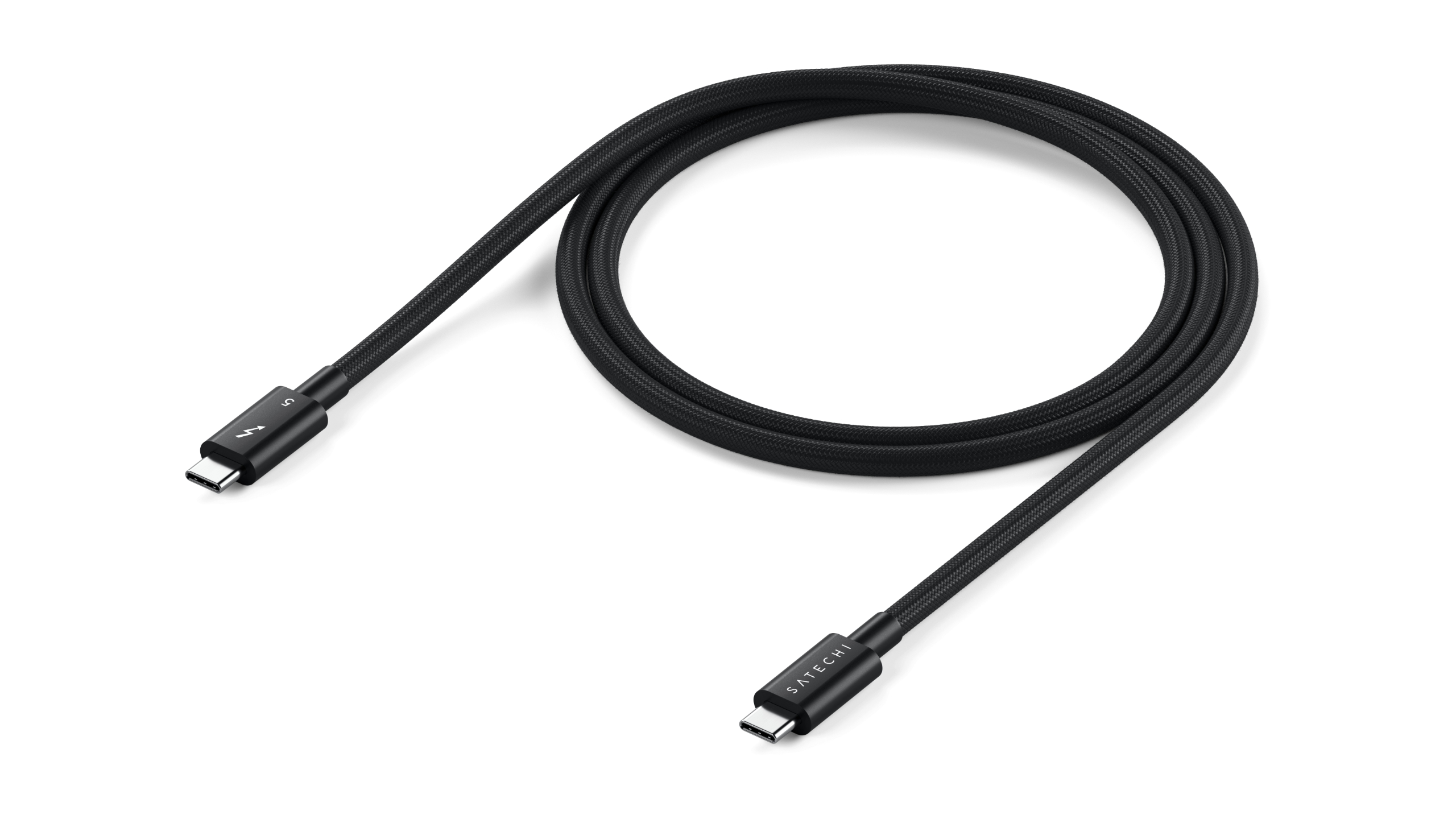
To pair with the CubeDock, Satechi is also releasing its own Thunderbolt 5 cable. The Thunderbolt 5 Pro Cable supports up to 120 Gb/s uni-directional or 80 Gb/s bi-directional data transfers, 240W power delivery and either dual 8K/60Hz displays or a trio of 4K/144Hz displays.
The Satechi Thunderbolt 5 Pro Cable coiled on a white background.
Satechi
Satechi says you can pre-order the Thunderbolt 5 CubeDock with SSD Enclosure on the company's website for $399.99, and it will ship in Q1 2026. The Thunderbolt 5 Pro Cable is available to order now for $39.99 from Satechi, Amazon and other retailers.
This article originally appeared on Engadget at https://www.engadget.com/computing/accessories/satechi-is-embracing-thunderbolt-5-at-ces-with-a-new-dock-and-cable-170000137.html?src=rss
Last year, PocketBook rocked up at CES with a series of large e-paper displays to display art on the walls of your home. This year, the company has turned up with a far larger, A1-sized model called the Duna, which it says mimics the “texture, depth and tonal richness of printed paper.” It’s intended to act as an upmarket alternative to those big screen TVs which display art when they’re not being used for their intended purpose.
Unsurprisingly, such a fancy product also needs some fancy accessories, so it’s recruited Italian design house Pininfarina to help. It claims the credit for the Duna’s “precision-engineered aluminum frame” and its “elegantly stitched Alcantara.” To celebrate the pairing, the InkPoster App will enable you to view original design sketches from the Pininfarina archives on your screens.
At last year’s CES, I saw the three smaller models in person and found them to be very promising. The colors are vibrant in a way you don’t expect from an e-paper display, and at a distance you could easily mistake these for a real canvas. Just don’t get too close to the screen itself, since you’ll still be able to see the pixels rather than brush strokes. I’m no expert, but I suspect the technology suits bold, blocky art styles — think modern artists like Modigliani — better than delicate, more antiquated forms.
As before, each InkPoster can be hung for up to a year on a single charge, refreshing from its library of licensed artwork according to your whims. Plus, you can use it as a digital photo frame, if you want to display your selfies at art gallery or movie poster sizes.
If you’re interested in buying one of the new models, you’ll have to wait until April, after the frames are exhibited at Milan Design Week in April. While we don’t have full pricing details right now, you can expect to pay something in the region of $6,000 for one.
This article originally appeared on Engadget at https://www.engadget.com/home/inkposter-launches-a-premium-41-inch-e-paper-display-for-your-home-170000292.html?src=rss
The following article discusses themes of an adult nature.
Lovense has turned up to CES with a “companion doll,” a life-size sex doll that’s designed to be more than just a life size sex doll. The company has equipped it with its proprietary AI engine and promises “human-like cognition, emotional awareness and expressive behavior.” The doll, which in the marketing video is called Emily, is Lovense’s answer to the global loneliness crisis. It says, over time, a user’s relationship with the system will grow deeper as it learns to adapt to their needs. And that the doll is the natural evolution of the virtual companions that have, until now, “existed only on phones and screens.”
From a hardware standpoint, the doll uses a standard user posable skeleton for everywhere but inside the skull. Up top, there are various servos and mechanisms to give the doll the ability to slightly move their mouth while speaking, as well as some basic facial expressions. (You haven’t lived until you’ve seen Emily attempt a smize or a wink in a matter few would describe as flirtatious.) The company hasn’t spoken about the less delicate parts of her anatomy, but did say her built in Bluetooth can “integrate effortlessly with the full Lovense ecosystem” and can run for eight hours on a single charge.
The major focus, however, is on the AI part of the equation, explaining it will remember details of previous conversations to enable users to build a deeper bond with its user. In addition, you can even engage with the AI when you’re out and about, messaging it via the Lovense app. Oh, and you can even get “AI-generated selfies that mirror her real-world appearance” should you want. The company, in its materials, say that the doll will hopefully lead people out of their comfort zone and better equip them to engage with real people.
Of course, it’s worth noting that Lovense’s track record with people’s most intimate data isn’t the best. In 2017, a Reddit user discovered the Lovense app was recording a private moment between them and their partner. In July 2025, another security flaw enabled hackers to hijack accounts without a password. The company addressed both issues at the time, but it’s one to consider if you’re thinking about forming a long-term relationship with one of its bots.
There’s no word on pricing or availability just yet —the company will be launching a pre-sale in the near future — but you can probably expect it to be fairly expensive.
This article originally appeared on Engadget at https://www.engadget.com/lovense-launches-an-ai-companion-doll-at-ces-170000490.html?src=rss
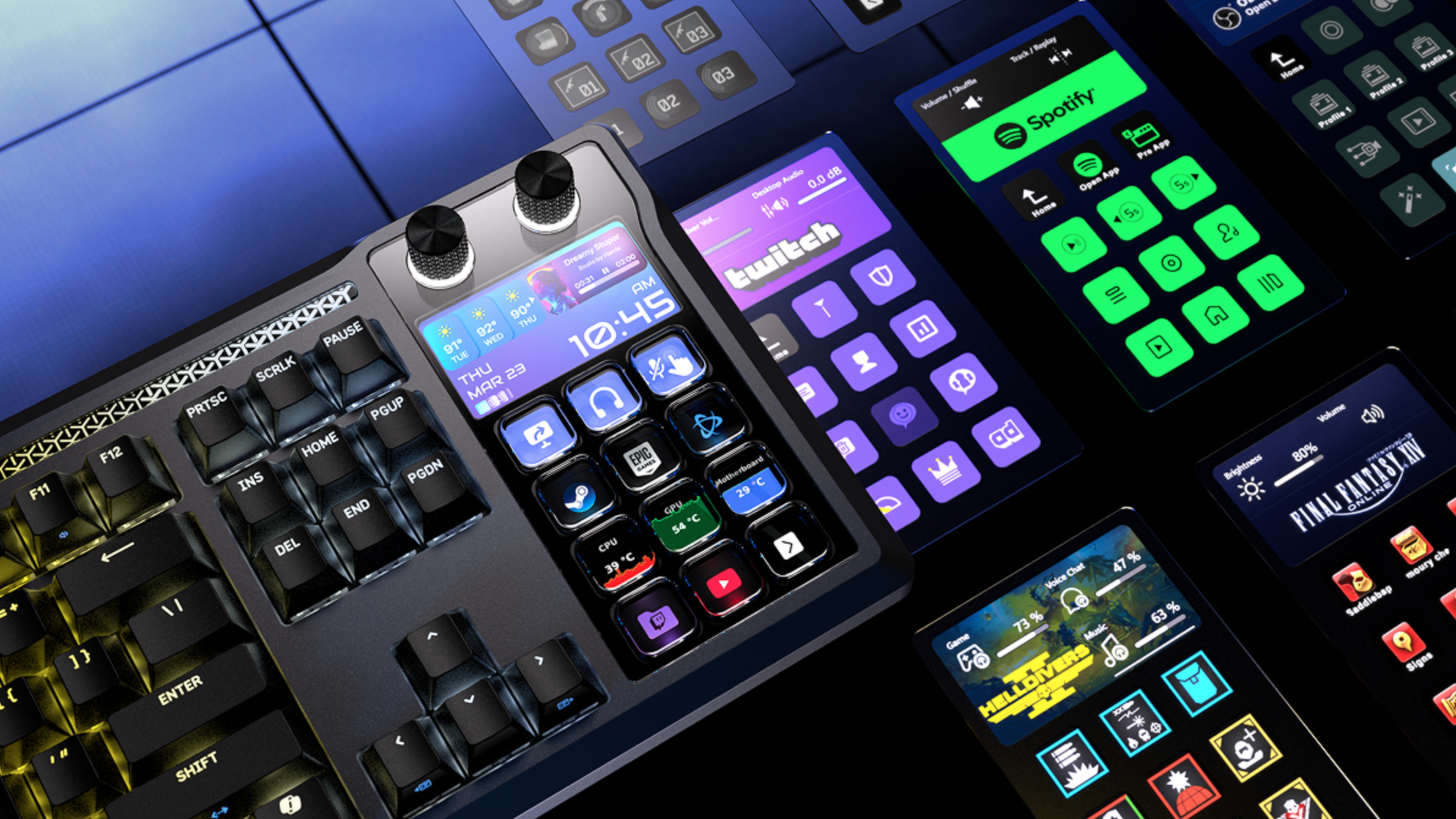
Corsair just revealed a gaming keyboard with a built-in Stream Deck controller at CES 2026. The Galleon 100 SD is a mechanical keyboard with a 5-inch screen, two rotary encoders and a full complement of Stream Deck buttons.
For the uninitiated, the Stream Deck is basically a collection of hot keys that execute various commands. It's been incredibly popular for streamers and the like, but it's also become a boon for PC gamers.
Corsair is advertising the Galleon 100 SD directly to gamers, so it boasts of hot keys being used to "access abilities, call in airstrikes and manage inventory without diving through menus." The Elgato Marketplace offers profiles for specific games, eliminating the need to manually program the buttons. The included screen can display relevant stats while playing.
However, this is a real Stream Deck. It has 12 big buttons, which can be programmed to do all kinds of things beyond gaming. People use it to stream, yes, but also to control smart home devices, assist with creative tasks and a lot more.
A keyboard thing.
Corsair
It's also a true mechanical gaming keyboard with hyper-polling rates up to 8,000Hz, which the company says "transmits your keystrokes up to eight times faster" than standard releases. It features MLX Pulse keyswitches that have been "tuned for fast actuation and smooth yet tactile feedback."
Everything is housed in a durable aluminum frame with gasket housing and six layers of sound dampening. There's a cushioned palm rest and configurable RGB lighting.
The Galleon 100 SD is available right now, but there's a catch. It costs $350, which is a lot of dough for a gaming keyboard. For that amount of money you could buy an actual Stream Deck XL and a decent keyboard and still have plenty to spare.
This article originally appeared on Engadget at https://www.engadget.com/gaming/corsair-made-a-keyboard-with-a-built-in-stream-deck-163158296.html?src=rss
AirTags already have a decently long battery life, but you will end up needing to replace the coin cell every two years or so. If you don't even want to be bothered with that, Elevation Lab made just the accessory for you: its AirTag battery case that can power the tracker for up to 10 years is on sale for 30 percent off. You can pick one up for only $16, and it's available in two- and four-packs as well at a discount.
The TimeCapsule case uses two AA batteries to offer up to 14 times the lifespan of the CR2032 battery that powers an AirTag. The company based those estimates on Energizer Ultimate Lithium batteries, so your mileage may vary. Once an AirTag is seated inside the case, which is a compact 4.45 x 1.57 inches, it is sealed shut with four screws at the corners. The case is fiber-reinforced, according to Elevation Lab, and rated IP69 waterproof.
The company says it’s intended for use cases where you might place an AirTag for long periods of time, like in a vehicle, a piece of luggage or a work bag. We've already got a couple of Elevation Lab products on our list for best AirTag accessories, so while we haven't reviewed the battery case, we tend to like this company's products.
This article originally appeared on Engadget at https://www.engadget.com/deals/elevation-labs-extended-battery-airtag-case-is-down-to-only-16-162308748.html?src=rss
CES remains a key stage for laptop makers to lay out their plans for the year ahead. At CES 2026, that meant new flagship productivity machines, reconsidered gaming notebooks and solid incremental updates across several major lineups. While we’re still seeing embargoes lift and hands-on time on the show floor, the announcements below reflect the most significant laptops we’ve seen so far. Plus, the list will grow as more companies reveal details throughout January 6 and beyond.
Lenovo Legion Pro Rollable
Lenovo Legion Pro Rollable
Engadget
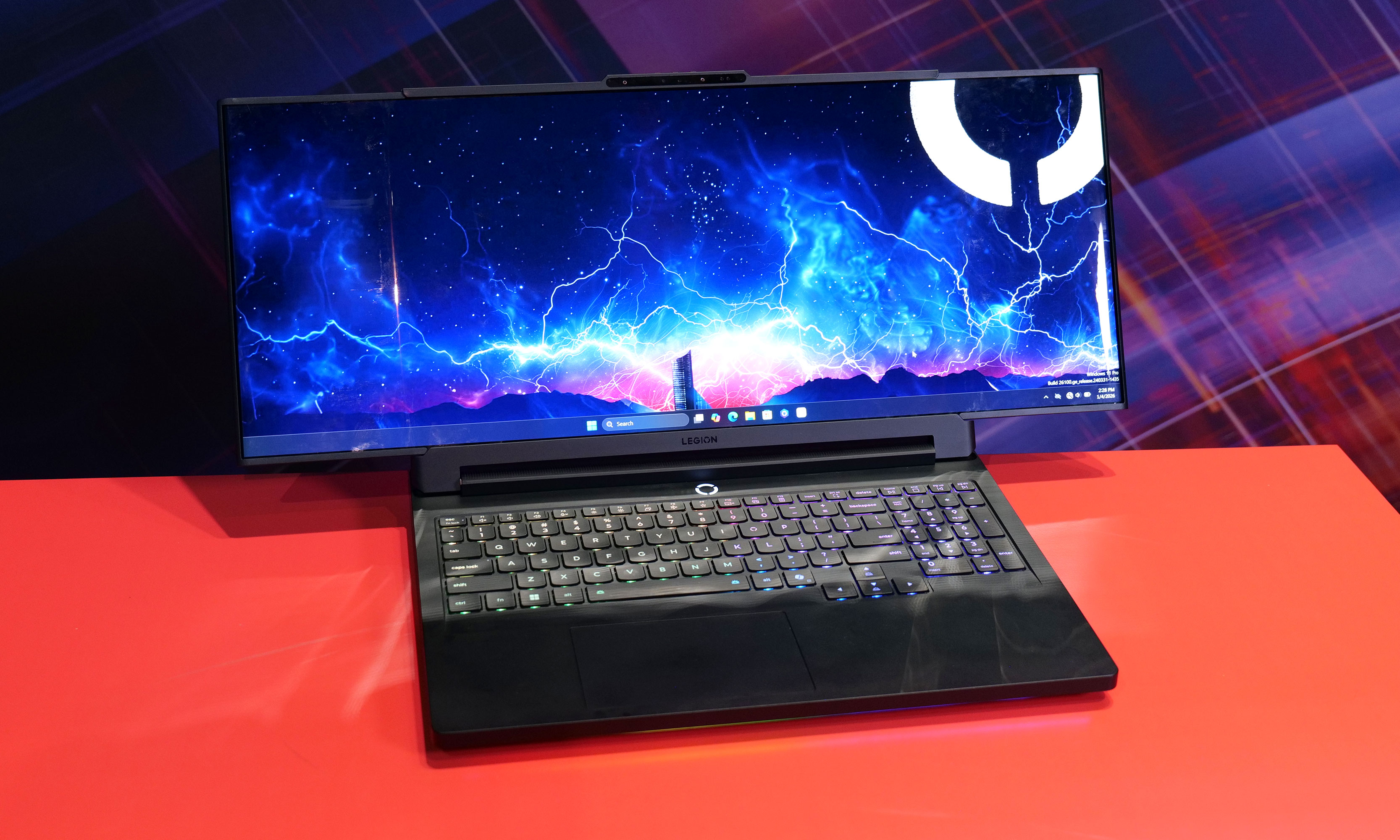
Lenovo came prepared for CES 2026 with a ton of laptops — concepts, fully-formed designs and everything in betwee. The most striking concept was the Legion Pro Rollable, a gaming laptop built around a flexible OLED panel that expands sideways from a standard 16-inch footprint to 21.5 inches or 23.8 inches, shifting aspect ratios from 16:10 to 21:9 or even 24:9. It’s the kind of idea that makes immediate sense for flight sims, racing games and open-world titles that benefit from ultrawide views, even if the mechanics felt a bit prototype-like up close.
Lenovo also showed the XD Rollable concept, which takes a more familiar rollable approach, expanding a 13.3-inch OLED screen to 16 inches at the push of a button. The twist is that the “extra” display wraps around the back of the lid to create a world-facing surface for mirrored content or a secondary view.
Samsung Galaxy Book6 series
New Samsung Galaxy Book6 laptops offer NVIDIA RTX 50-series GPUs.
Samsung announced the Galaxy Book6 family at CES 2026, introducing three new laptops built around Intel’s Panther Lake chips: the Galaxy Book6, Book6 Pro and Book6 Ultra. The focus this year is on slimmer designs, improved thermals and longer battery life, with Samsung claiming up to 30 hours of video playback on the Book6 Ultra and Pro.
The 16-inch Galaxy Book6 Ultra sits at the top of the lineup, with configurations offering up to Intel Core Ultra X9 processors, Intel Arc graphics and NVIDIA RTX 50-series GPUs, including RTX 5070 and RTX 5060 options. Samsung says the Ultra delivers up to 1.6x better CPU performance and 1.7x improved graphics compared with the previous Galaxy Book generation, helped by a wider vapor chamber and a new dual-path fan system for GPU cooling.
Both the Book6 Ultra and Book6 Pro feature upgraded 2,880 x 1,800 AMOLED 2X displays with touch support, adaptive refresh rates up to 120Hz and peak brightness of up to 1,000 nits. The laptops are thinner than their predecessors, with the Ultra measuring 15.4mm thick and the Pro coming in at 11.9mm — and Samsung has added haptic trackpads across the series for the first time. Pricing and release dates have not yet been announced.
ASUS ROG Zephyrus Duo
On top of having two displays, the Zephyrus Duo's screens also feature excellent brightness at up to 1,100 nits.
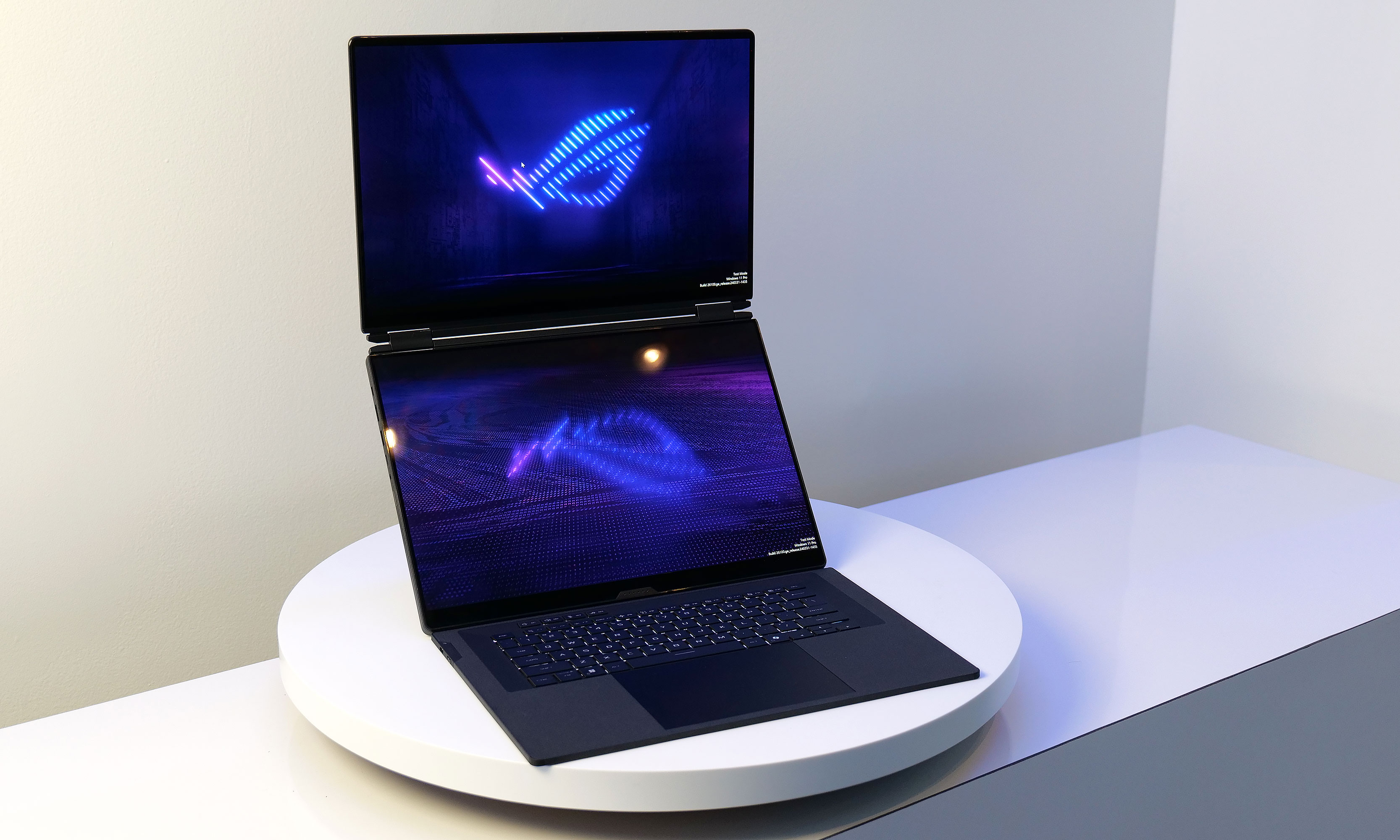
ASUS brought its dual-screen design into the gaming space at CES 2026 with the ROG Zephyrus Duo, a laptop that pairs two full-size 16-inch displays with high-end gaming hardware. Unlike productivity-focused dual-screen systems, the Zephyrus Duo is positioned as a hybrid machine designed to handle gaming, content creation and multitasking in a single portable setup.
Both 16-inch Nebula OLED panels support HDR with up to 1,100 nits of peak brightness, NVIDIA G-SYNC, stylus input and high color accuracy. Performance comes from Intel’s latest Core Ultra processors paired with NVIDIA RTX 50-series GPUs, up to an RTX 5090. While the system’s 135W power budget means it won’t match the raw performance of some single-screen gaming laptops, ASUS is clearly prioritizing versatility over maximum output.
The Zephyrus Duo includes a detachable wireless keyboard, a built-in kickstand and multiple usage modes, including stacked dual-screen layouts and drawing configurations. Despite weighing a whopping 6.28 pounds, ASUS has kept the chassis relatively slim at 0.77 inches and equipped it with a six-speaker system, vapor chamber cooling and a broad selection of ports including Thunderbolt 4, HDMI 2.1 and a full-size SD card slot. Pricing and availability have not yet been announced.
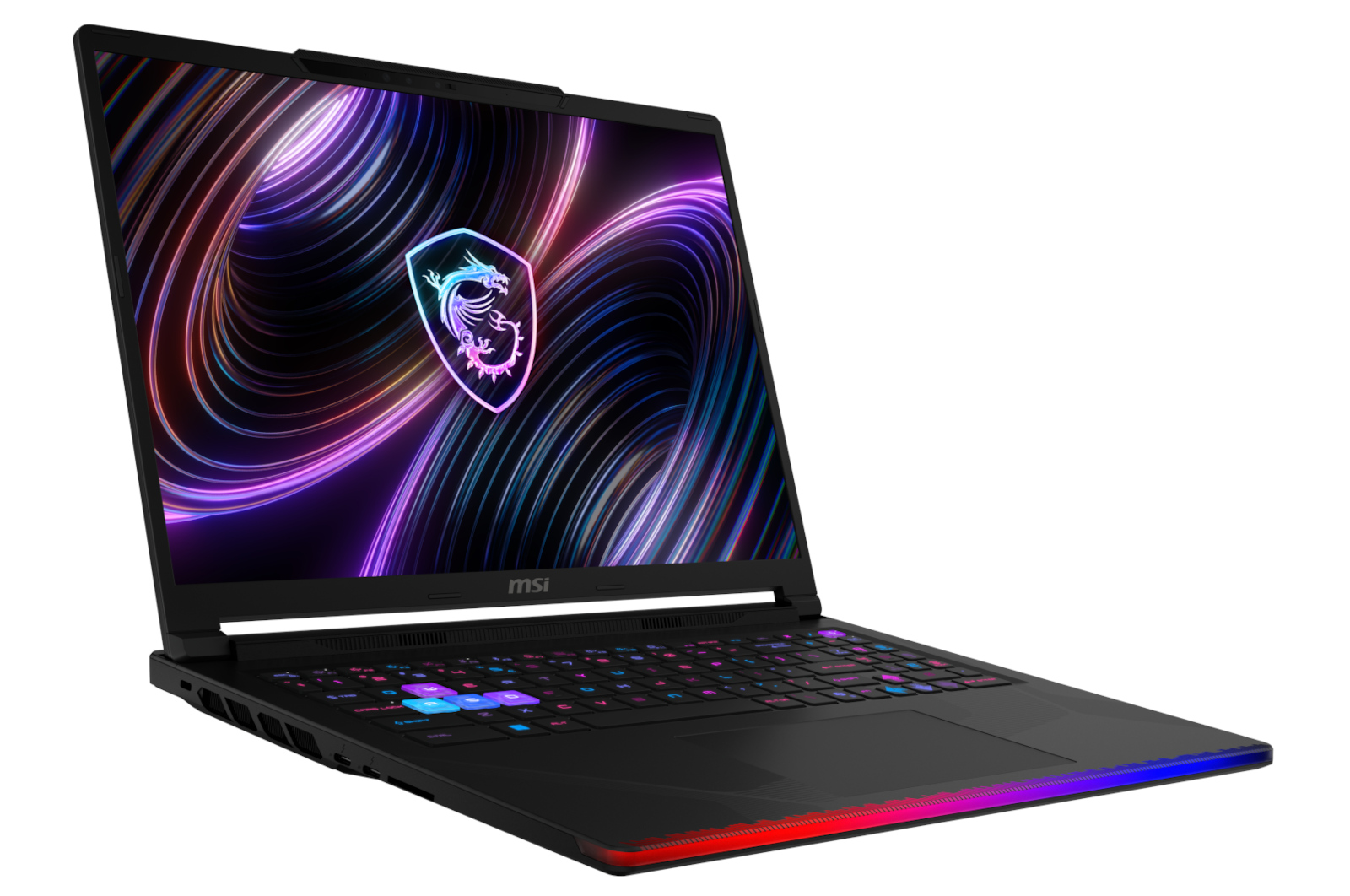
MSI Stealth 16 AI+
MSI's most powerful gaming laptop.
MSI
MSI updated its Stealth lineup at CES 2026 with the Stealth 16 AI+, a gaming laptop designed to balance performance and portability. The system measures just 16.6mm thick, weighs under two kilograms and is equipped with NVIDIA RTX 50-series graphics alongside Intel Core Ultra 200HX processors.
Despite its slim profile, the Stealth 16 AI+ includes dual memory slots and dual SSD bays, giving it more upgrade flexibility than many thin gaming laptops. MSI is positioning it as a versatile machine for users who want gaming performance without the bulk typically associated with high-end hardware.
MSI Crosshair 16 Max HX
The Crosshair 16 Max HX represents MSI’s more traditional gaming approach, pairing Intel Core Ultra 200HX processors with NVIDIA GeForce RTX 50-series GPUs. It sits below the company’s flagship Raider models but still targets players who want strong performance in a relatively streamlined chassis.
Buyers can opt for an optional QHD+ OLED display with a 165Hz refresh rate, adding sharper visuals and smoother motion for gaming and media. Alongside the Max HX, MSI also announced a Crosshair 16 HX variant, giving the Crosshair line a broader range of configurations aimed at mid-to-high-end gaming buyers.
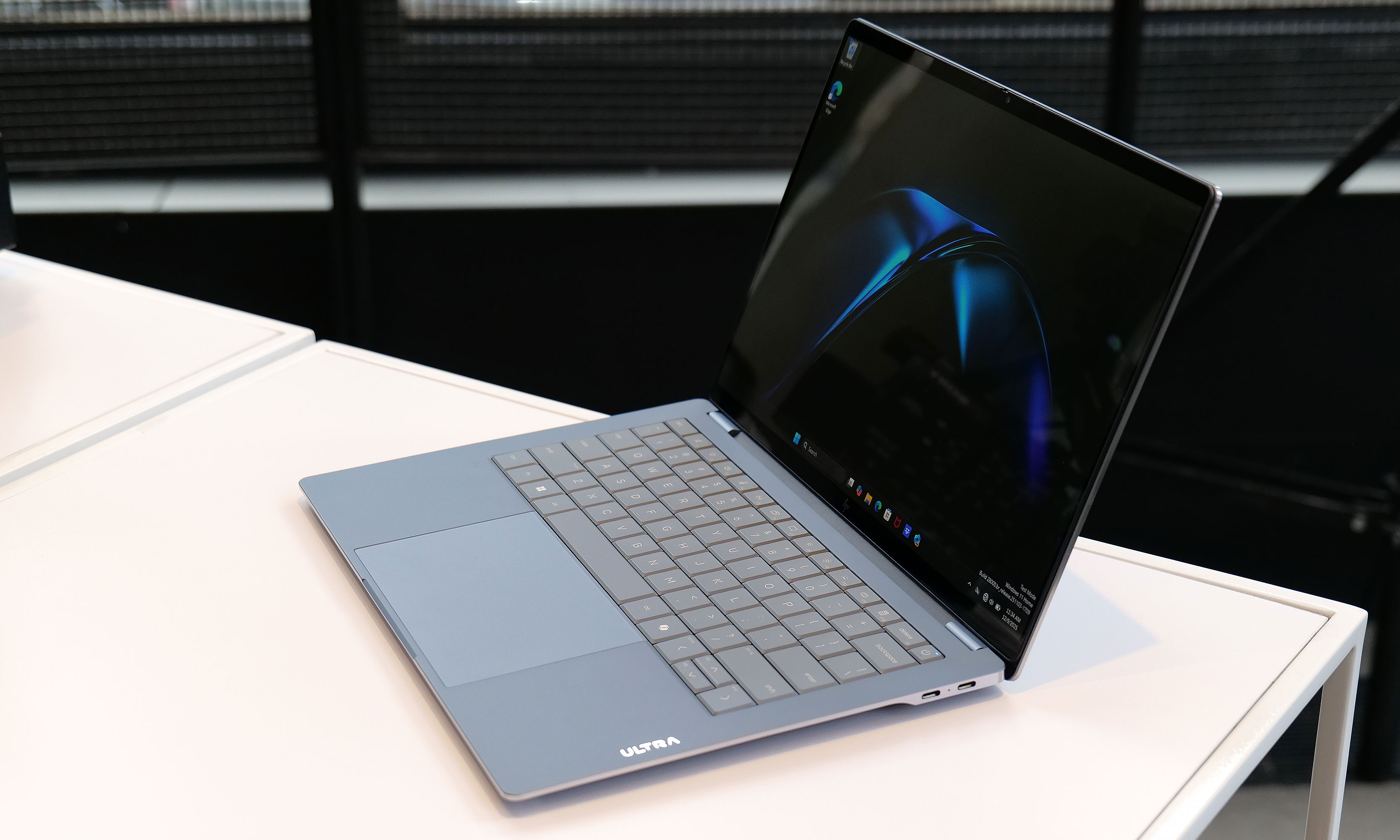
HP OmniBook Ultra 14
HP claims the Omnibook Ultra 14 has passed 20 different MIL-STD 810H tests for things like extreme temperature and shock resistance.
HP used CES 2026 to debut its new flagship consumer laptop, the OmniBook Ultra 14. It’s a premium ultraportable built around an ultra-thin but durability-focused design. The laptop measures just 0.42 inches thick and weighs 2.8 pounds, yet HP says it passes 20 MIL-STD-810 tests for shock, drops and extreme temperatures. Rather than a traditional unibody chassis, HP uses a forge-stamped aluminum construction designed to improve strength and bend resistance.
The OmniBook Ultra 14 features a 3K OLED display and can be configured with up to 64GB of memory and 2TB of storage. Buyers can choose between Intel Core Ultra processors or Qualcomm’s Snapdragon X2 Elite, with the Snapdragon version offering a more powerful NPU rated at up to 85 TOPS for AI workloads. HP has also added a vapor chamber for the first time in an OmniBook to support sustained performance in such a slim chassis.
HP rounds things out with a large touchpad, quad speakers and three USB-C ports supporting Thunderbolt 4, DisplayPort 2.1 and fast charging. The OmniBook Ultra 14 is expected to go on sale later this month starting at $1,550.
HP Omen Max 16
HP also refreshed its gaming lineup at CES 2026 with the Omen Max 16, which the company describes as its most powerful 16-inch gaming laptop to date. The system is built around Intel Core Ultra 200HX processors and NVIDIA RTX 50-series GPUs, with configurations reaching the high end of HP’s mobile performance offerings.
Designed for sustained gaming workloads, the Omen Max 16 features expanded thermal headroom and high-refresh-rate displays aimed at competitive players. HP is positioning the laptop as the flagship of its Omen lineup, sitting above refreshed Omen 15 and Omen 16 models that target more mainstream gaming buyers.
Pricing and availability for the Omen Max 16 have not yet been announced, with HP expected to share more details later this year.
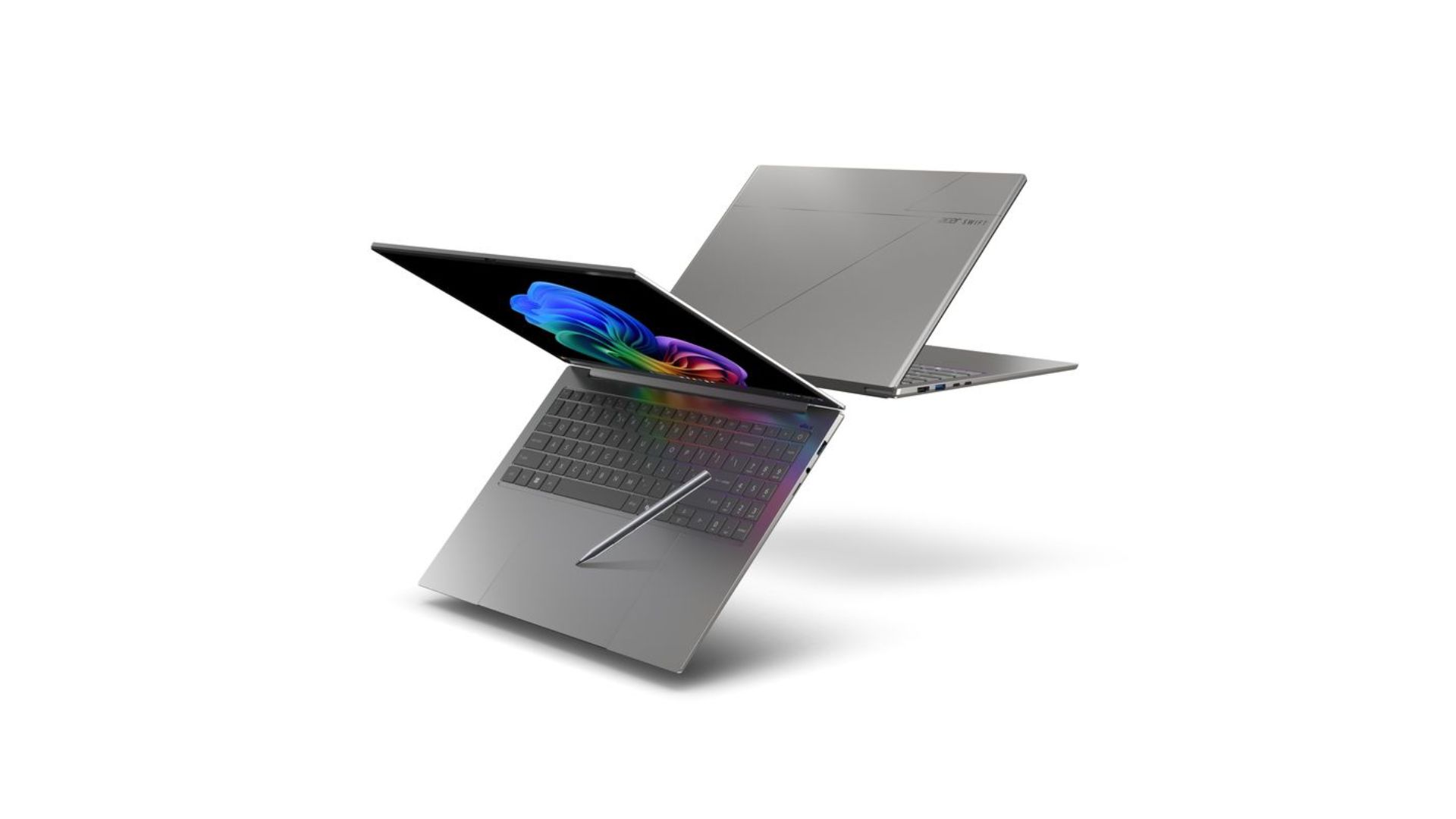
Acer Swift 16 AI
Promo photo of the Acer Swift 16 AI laptop
Acer
Acer expanded its flagship Swift lineup at CES 2026 with the Swift 16 AI, a large-screen ultraportable that leans heavily into input innovation and display quality. The standout feature is what Acer says is the world’s largest haptic touchpad, which supports MPP 2.5 stylus input and is designed to improve precision for creative and productivity tasks.
The Swift 16 AI features a 16-inch 3K OLED WQXGA+ touchscreen with HDR support, a 120Hz refresh rate and full DCI-P3 color coverage. It can be configured with up to an Intel Core Ultra X9 388H processor and Intel Arc B390 graphics, with up to 32GB of memory and 2TB of storage. Despite the large display, the laptop measures just 14.9mm thick and weighs about 3.4 pounds.
Acer says the Swift 16 AI is part of the Copilot+ PC program, positioning it around on-device AI features alongside performance and portability. Pricing and availability have not yet been announced.
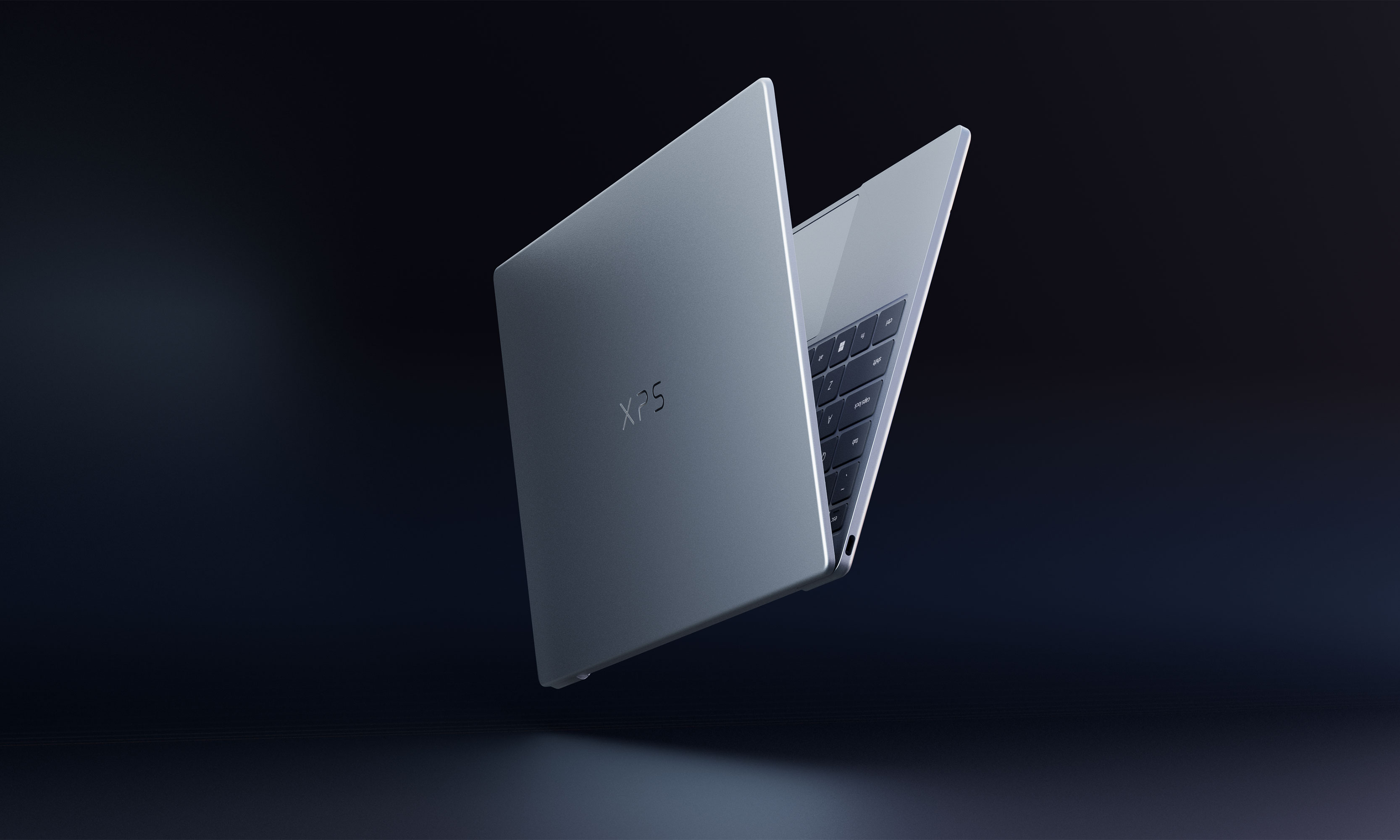
Dell XPS 13, XPS 14 and XPS 16
Dell wouldn't let me take photos of the XPS 13 prototype model, but here's a teaser it provided for CES.
Dell
Having a bit of déjà vu? You’re not alone. Dell killed its XPS branding last year only to bring it back this year after admitting it had made a mistake. Instead of simplifying its product offering, the rebranding only bewildered consumers and tech journalists alike, both of which had come to know the XPS lineup to be synonymous with quality. Now, Dell is getting back to its roots and coming out with a whole refreshed lineup of XPS laptops, including new XPS 13, XPS 14 and XPS 16 machines. Specific details for each model still remain under wraps, and there’s no word yet on when they will hit the market.
According to Alienware, the 16-inch version will feature NVIDIA discrete graphics paired with new, highly efficient CPUs. Rather than positioning it as a pure gaming machine, Alienware says the laptop is intended to balance gaming performance with creative work, productivity and everyday use.
Alienware has not shared pricing, availability or full specifications, and it remains unclear how the 14-inch and 16-inch models will differ beyond size.
Alienware also previewed a new entry-level gaming laptop aimed at expanding its reach to more budget-conscious players. While specs remain limited, the company says the system will deliver strong gaming performance at its most accessible price point yet.
Alienware suggests pricing should come in below the $1,199 starting price of the Alienware 16 Aurora, potentially making it the most affordable gaming laptop the brand currently offers. As with the ultra-slim model, full details are expected later this year.
Alienware Area-51 and Aurora
Alongside its new teasers, Alienware announced updates to several existing laptops. The Alienware 16X Aurora and Alienware 16 Area-51 are gaining new anti-glare OLED panels with up to 620 nits of peak HDR brightness and a 0.2ms response time, as well as Intel Core Ultra 200HX processors.
The Alienware 18 Area-51 is also being refreshed with the same CPUs. Alienware says the updated Alienware 16X Aurora, Alienware 16 Area-51 and Alienware 18 Area-51 laptops will be available in Q1 2026. Pricing has not yet been announced.
This article originally appeared on Engadget at https://www.engadget.com/computing/laptops/all-the-laptops-that-caught-our-eye-at-ces-2026-160610752.html?src=rss