Smart rings are meant to be invisible, and that’s the problem

Sometimes, you’re in bed and the glow from your smart ring’s optical heart rate sensor creeps into your peripheral vision. It got me thinking about how Samsung (and potentially Apple) will join the smart ring market, and why that’s a terrible idea. You see, these companies want devices that make their presence known in your life, embedding themselves in your routine. But smart rings blend into the background on purpose, which limits how much you can, or will want, to do with them.

Back in February, Samsung announced the Galaxy Ring, a health-tracking wearable baked into a ring. When it launches later this year, it will continuously monitor your sleep, breathing, movement and reproductive cycle. Entirely coincidentally, I’m sure, Bloomberg reported Apple was also conducting investigations into its own smart ring platform. Both companies are not-so secretly gunning for the Oura Ring, the market leader in finger-worn wearables. And I’ve been testing one of these for a long while.

Oura tracks your sleep, temperature, activity, post-exertion recovery and menstrual cycle. It’s a marvel of engineering to get so much technology into such a small and elegant package. The downside, if you can call it that, is there’s no way to access the data the ring collects, or its insights, unless you have a phone on hand.

But here’s the thing: It’s not that often I find myself actually opening the app to see what the stats are saying. If I wake up feeling like crap, there’s normally a self-evident reason why that needs no further explanation. And on those rare occasions when I wake up and don’t know why I’m feeling bad, the last thing that would occur to me is to check my phone. Who wants to look at fine-grain data when your head is pounding and your eyes refuse to focus?

That friction, that small gap between having the information there and it being easily accessible is a problem. Yeah, you can get a notification if your "Readiness Score" — Oura's proprietary metric for overall health — falls below a certain level. But I’ve been using this thing for long enough that I’ve never taken up the habit, and I suspect others would struggle to do so, too. It’s nice to have that information on those rare occasions when I’m thinking enough about it to look at my data over a longer period of time. But I can’t imagine myself looking at this data once or twice a day.

It’s also not that useful for workout tracking, principally because you won’t want to risk your $300 gadget in the gym. The first time I took it to work out, I picked up a pair of metal dumbbells, realized their knurled handles were rubbing against the metal of the ring and quickly took it off.

Because there’s no direct method of input, it’s far too easy to forget it’s there and not make use of its information. If you’re all-in on using a ring to track your fitness because you won’t wear a smartwatch or fitness tracker, and you’re always checking your stats, then it’ll work for you. But, deep down, I prefer a watch with a display that’s easy enough to check as a matter of instinct. And it’s this that I think should be a concern for Samsung and, potentially, Apple, as they look to move into this space. A smart ring caters to a niche inside a niche – quantified self obsessives who refuse to wear a watch. They obviously believe that’s enough of a draw to devote time and money to building their own, but I’m not sure it’ll be a blockbuster.

Not to mention these rings only have a few hooks to keep users inside their specific corporate bubble. Both Apple and Samsung have dedicated health-tracking apps and it’s likely whoever buys one of these will have one fewer reason to switch providers in future. But compare that to the watches, which offer health tracking, messaging, app interactions and mobile payments. Smartwatches are beneficial to these platforms because they help draw together various features from the phone. Rings do not.

Perhaps this is another sight tech’s biggest players now just need to copy and destroy their smaller rivals rather than striving for new products. Smart rings cater to a small market, albeit one that big tech could dominate with very little time and effort. Especially given the strength of their relative brands, which means these devices will more or less sell themselves to diehard fans. But is that all a new product can be in 2024, and is that what we could or should expect these companies to be doing?

This article originally appeared on Engadget at https://www.engadget.com/smart-rings-are-meant-to-be-invisible-and-thats-a-bad-thing-140927134.html?src=rss

How to Maintain iPhone Battery Health

iPhone Battery Health

Maintaining the health of your iPhone’s battery is crucial to ensure that your device runs smoothly for as long as possible. Whether you have a new or older model, this comprehensive guide provides you with a set of strategies to extend the life of your iPhone’s battery, helping you get the most out of your […]

The post How to Maintain iPhone Battery Health appeared first on Geeky Gadgets.

New Mercedes EQS EV with 511 Mile Range Launched

New Mercedes EQS

As you set your sights on the ultimate electric vehicle experience, the new Mercedes EQS beckons with its unmatched 511-mile range. This groundbreaking achievement in electric vehicle long range technology propels you into a future where sustainable luxury travel knows no boundaries. With the EQS, you can embark on adventures that span vast distances, all […]

The post New Mercedes EQS EV with 511 Mile Range Launched appeared first on Geeky Gadgets.

Unleash the Power of Edge AI with ADLINK’s New Intel Arc A380E Graphics Card

ADLINK Edge AI Intel Arc A380E GPU

Are you ready to embrace the future of Edge AI? Look no further than ADLINK’s groundbreaking Intel Arc A380E graphics card. This industrial-grade powerhouse is designed to not only enhance your gaming experience but also transform a wide range of Edge AI applications. With its impressive cost/performance ratio, high reliability, and low power consumption of […]

The post Unleash the Power of Edge AI with ADLINK’s New Intel Arc A380E Graphics Card appeared first on Geeky Gadgets.

Literacy Pen is first education tool that can let the illiterate read and write in an instant

It can’t be stressed enough that literacy is the best tool for empowerment and social change. Literacy is everyone’s prerogative but it is not available for everyone in reality. For some their economic status is a hindrance, while for some the social stigmas and lack of opportunity become an impediment. Whatever the circumstance may be, the inability to read and write can lead to issues in everyday life, with the littlest of things such as signing a document or reading the medical prescription/medication.

Literacy drives have been a common endeavor in most developing countries in the last few decades, yet the UNESC report has alarming numbers. Reportedly, some “773 million” people globally “struggle with literacy.” The World Literacy Foundation, which has been at the forefront of providing literacy to the maximum individuals possible, has collaborated with Media.Monks to create the Literacy Pen: a speech-to-text assistance device.

Designer: The World Literacy Foundation and Media Monks

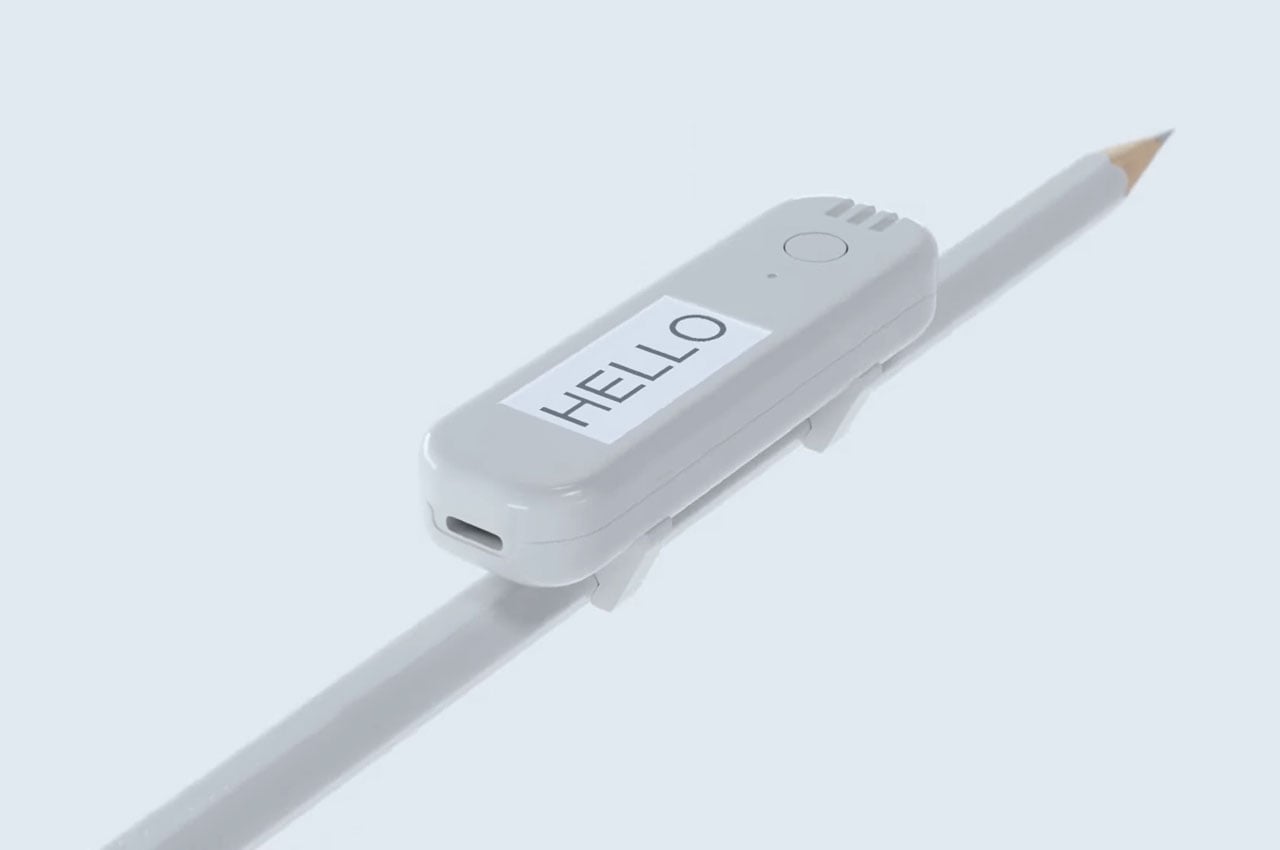
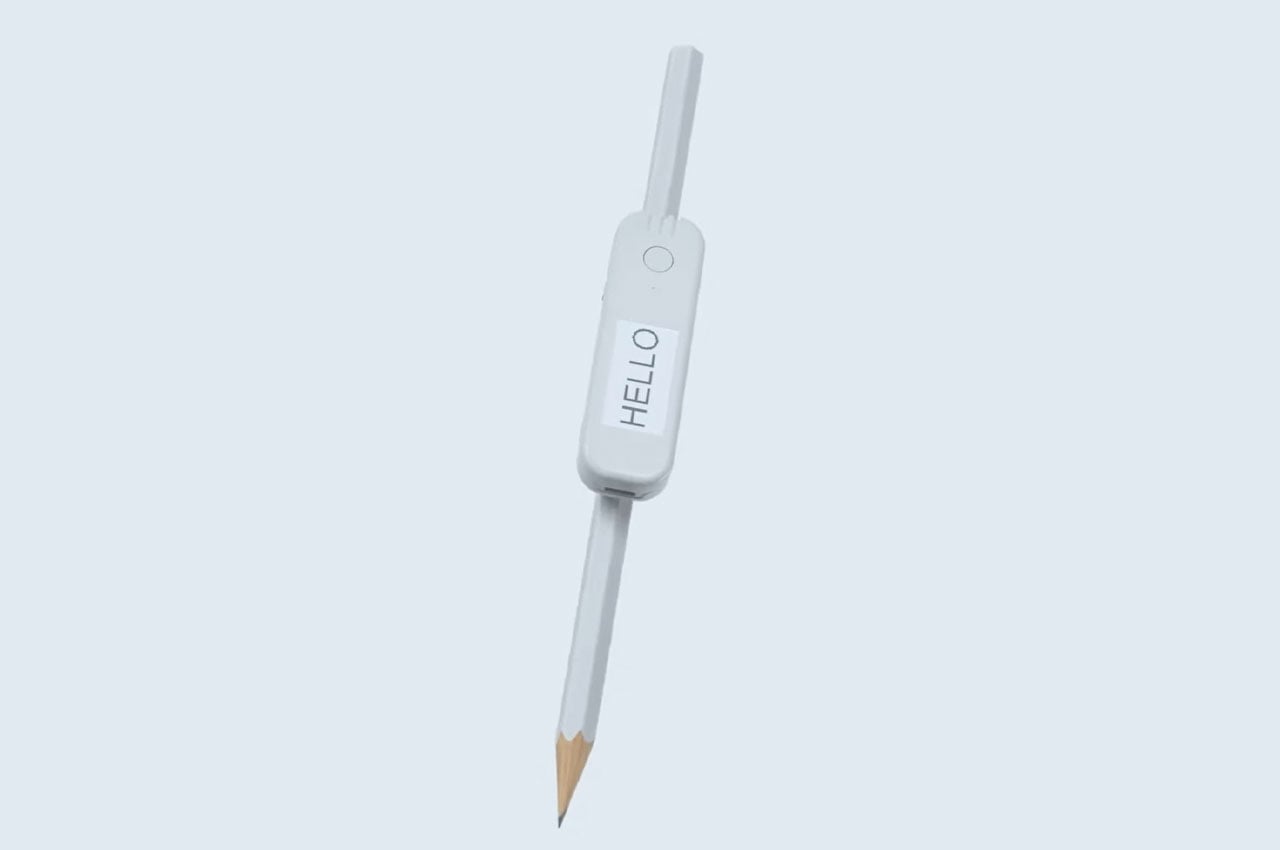
Literacy Pen is the first, portable education tool that can let the illiterate read and write instantly. It is a small device – compatible with any standard pen or pencil – with an onboard screen to display visual input that can be directly copied onto paper.

Designed with key literacy development aspects like visual repetition in hindsight, this user-friendly, lightweight tool comes with a microphone. The user can effortlessly slide a pen into the compactly designed Literacy Pen, and speak desired words into the microphone, which transcribes them word by word automatically onto the digital screen. From here the individual can see and directly copy it onto paper using the attached pen.

How much of that is possible in the real-world environment where individuals we are talking about would have never held a pen in their hand before? Considering this tool is inexpensive that the lowest in the economic hierarchy can own, with due practice, at least some people should be able to sign their financial documents or even land a job.

The post Literacy Pen is first education tool that can let the illiterate read and write in an instant first appeared on Yanko Design.

Instagram will test nudity protection in messages to fight sextortion

Instagram is far from a gleaming example of protecting young people online, having failed to prevent its algorithm from promoting child sexual abuse material. But new features bring some (at least a little?) hope that the platform could become a bit safer. Meta announced it's rolling out new tools meant to protect users against intimate image abuse and sextortion — when a person is digitally blackmailed under threat of sharing intimate media.

One of the most significant updates is that nudity protection is coming to private messages. Meta first confirmed it was building this technology back in 2022, and it will automatically activate the tool for users under 18. Once switched on, a machine learning tool will detect and blur images it suspects of containing nudity for the recipient. The analysis happens on the user's device, so messages should remain end-to-end encrypted without Meta ever having access to them. Users will have the option to view the image alongside a pop-up message from Meta that they shouldn't feel pressured to respond, along with a safety tips button and an option to block the sender. 

Meta's new tool — which it will start testing "soon" — also detects if a person is sending a nude image and warns them to "take care when sharing sensitive photos" while outlining potential risks. Plus, it reminds users that they can delete a message before anyone sees it. Then there's the final warning: a reminder to be responsible and respectful appears when someone tries to forward a message with detected nudity (though it still lets the image be forwarded).

Then there are the tools designed to detect potential scammers or sextortionists and make it more difficult for them to approach teens. Message requests from these possible bad actors should now go to hidden requests, and anyone already involved in a conversation will receive a warning with boundary reminders and steps to report users. As for young people, Meta previously barred people from messaging users 16 or under if they weren't mutually connected — even if the other account claimed to be the same age. Now, these potential scammers won't see the option to message a teen even if they follow each other.

This article originally appeared on Engadget at https://www.engadget.com/instagram-will-test-nudity-protection-in-messages-to-fight-sextortion-131516318.html?src=rss

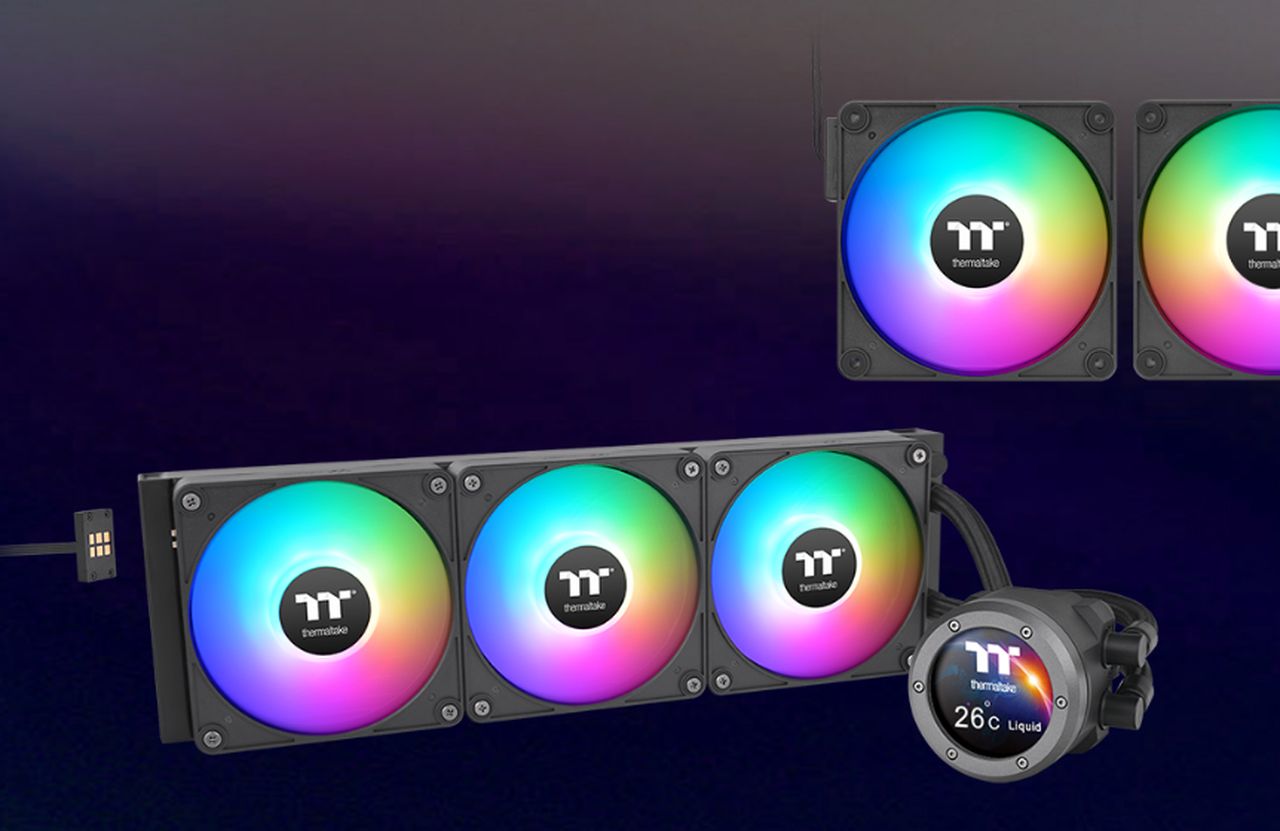
Keep your gaming rig cool with Thermaltake’s MagForce 2.0 AIO PC cooler

Thermaltake MagForce 2 AIO PC cooler

Gamers especially understand the importance of keeping your gaming rig running at peak performance. The new Thermaltake MagForce 2.0 AIO PC cooler range are designed to help you achieve just that. These customizable cooling solutions harness the power of liquid cooling to ensure your CPU stays cool, even during the most demanding gaming sessions. With […]

The post Keep your gaming rig cool with Thermaltake’s MagForce 2.0 AIO PC cooler appeared first on Geeky Gadgets.

Motorola Moto g04S Smartphone with AI Camera Launched

Motorola Moto g04S

The Motorola Moto g04s is a new AI-powered smartphone is designed to elevate your photography skills, allowing you to take breathtaking photos in any lighting condition. The 50MP camera is equipped with advanced AI capabilities, such as Portrait mode, Night Vision, and HDR, enabling you to shoot like a professional photographer. Whether you’re capturing a […]

The post Motorola Moto g04S Smartphone with AI Camera Launched appeared first on Geeky Gadgets.

Meta introduces new next-generation AI Training and Inference Accelerator

Meta Training and Inference Accelerator

Meta AI has this week introduced its new next-generation AI Training and Inference Accelerator chips. With the demand for sophisticated AI models soaring across industries, businesses will need a powerful and reliable computing infrastructure to keep pace. Meta’s accelerator could be the answer, providing enterprise applications with the tools to tackle even the most complex […]

The post Meta introduces new next-generation AI Training and Inference Accelerator appeared first on Geeky Gadgets.