Valve doesn’t sound confident the Steam Machine will ship in 2026

As part of a Year in Review blog detailing changes Valve made to Steam in 2025, the company shared a minor update on its hardware plans that doesn't sound good for anyone hoping to buy a Steam Machine, Steam Controller or Steam Frame in 2026. Specifically, the company is now opening up the possibility its new hardware won't ship this year at all.

In February, when Valve acknowledged the ongoing memory and storage shortage had delayed the launch of its hardware and could lead to higher prices, the company was still committing to a (fairly wide) window of when its hardware would ship: 

"Our goal of shipping all three products in the first half of the year has not changed. But we have work to do to land on concrete pricing and launch dates that we can confidently announce, being mindful of how quickly the circumstances around both of those things can change." 

As of the company's latest post, however, things somehow sound even less certain. "We hope to ship in 2026, but as we shared recently, memory and storage shortages have created challenges for us," Valve wrote in its Year in Review post. "We’ll share updates publicly when we finalize our plans!" 

While Valve's air of secrecy can make it easy to read too much into the limited information the company does share, moving from "the first half of the year" to "[hoping] to ship in 2026" certainly gives it wiggle room to not release new hardware this year. And considering the difficulties other companies are facing sourcing memory and storage, it wouldn't be all that surprising.

HP said in February that RAM accounts for a third of its PC costs, and industry analysts expect the RAM shortage could radically alter the PC landscape as companies are forced to raise prices. Valve's already struggling to keep the Steam Deck in stock due to its issues securing RAM, it stands to reason sourcing components for even more devices wouldn't make that process any easier. Then again, the company hasn’t updated its launch timing FAQ, so there’s still reason to hope the Steam Machine ships in 2026.

This article originally appeared on Engadget at https://www.engadget.com/gaming/pc/valve-doesnt-sound-confident-the-steam-machine-will-ship-in-2026-221709517.html?src=rss
Netflix’s version of Overcooked lets you play as Huntr/x

Netflix's library of streamable party games is expanding today with a custom version of Overcooked! All You Can Eat. Netflix launched its cloud gaming program with games like Lego Party and Tetris Time Warp, but Overcooked feels a bit unique because it features a roster of Netflix-affiliated characters from KPop Demon Hunters and Stranger Things.

For the uninitiated, Overcooked plays like a more manic version of Diner Dash, where teams attempt to prepare food together in increasingly elaborate kitchens filled with obstacles. The original version of Overcooked! All You Can Eat was released in 2020, and includes DLC and stages from previous versions of the game. Netflix's version bundles in the same content, and "10 Netflix celebrity chefs" including "Dustin, Eleven, Lucas, and the Demogorgon from Stranger Things," and "half-dozen faces from KPop Demon Hunters," like "Mira, Rumi, Zoey, Jinu, Derpy and Sussie." Like Netflix's other streaming games, playing Overcooked also requires you to use a connected smartphone as a controller.

Offering a growing library of streaming games is part of Netflix's new strategy under Alan Tascan, a former executive from Epic Games. Tascan took over as Netflix's President of Games in 2024, and appeared to start revamping the company's plans not long after, cancelling the release of several mobile games and reportedly shutting down its AAA game studio. Netflix is also continuing to adapt video games into content for its platform. For example, A24 is reportedly developing a game show based on Overcooked for the streaming service.

This article originally appeared on Engadget at https://www.engadget.com/gaming/netflixs-version-of-overcooked-lets-you-play-as-huntrx-212515187.html?src=rss

Nintendo is suing the US government over Trump’s tariffs

Nintendo of America is suing the US government, including the Department of Treasury, Department of Homeland Security and US Customs and Border Protection, over its tariff policy, Aftermath reports. The video game giant already raised prices on the Nintendo Switch in August 2025 in response to “market conditions,” but has so far left the price of its newer Switch 2 console unchanged.

Nintendo’s lawsuit, filed in the US Court of International Trade, cites a Supreme Court ruling from February that confirmed a lower courts’ opinion that the Trump administration’s global tariffs were illegal. Nintendo’s lawyers claim that the video game company has been “substantially harmed by the unlawful of execution and imposition” of “unauthorized Executive Orders,” and the fees Nintendo has already paid to import products into the country. In response, the company is seeking a “prompt refund, with interest” of the tariffs it has paid.

“We can confirm we filed a request,” Nintendo of America said in a statement. “We have nothing else to share on this topic.”

While taxes and other trade policies are supposed to be set by Congress, President Donald Trump implemented a collection of global tariffs over the course of his first year in office using executive orders and the International Emergency Economic Powers Act (IEEPA), a law that gives the president expanded control over trade during a global emergency. The Trump administration has positioned tariffs as a way to punish enemies and bargain with trade partners, but many companies have passed the increased price of importing goods onto customers.

In upholding opinions from the US District Court of the District of Columbia and the US Court of International Trade, the Supreme Court removed the Trump administration’s ability to collect tariffs using IEEPA, but didn’t clarify how the tariffs the government had illegally collected should be returned to companies. Like Nintendo, other companies have decided filing a lawsuit is the best way to get refunded.

The Guardian reports that US Customs and Border Protection is already preparing a system to process refunds for affected companies, but that might not mark the end of Trump’s tariff regime. In a press conference held after the Supreme Court released its decision, the President announced plans to introduce tariffs using other, more constrained methods. Tariffs aren’t the only obstacle Nintendo faces, either. The company could also be forced to raise the price of its consoles in response to the current RAM shortage.

This article originally appeared on Engadget at https://www.engadget.com/gaming/nintendo/nintendo-is-suing-the-us-government-over-trumps-tariffs-191849003.html?src=rss

Amazon.com is on the mend after experiencing technical issues

Amazon's website appears to be stabilizing after experiencing technical issues that kept users from logging in and prevented prices from displaying correctly. DownDetector reported a spike of outage reports around 2PM ET, but as of 5:56PM ET, user complaints have fallen significantly.

The Amazon.com homepage currently loads, and Engadgets staff have been able to load product pages and view prices without any problems. During the peak of the site’s issues, neither were loading consistently, and clicking through in some cases showed an error page with text that says "Sorry, something went wrong on our end." Users also reported being unable to log into their accounts.

“We're sorry that some customers may be experiencing issues while shopping,” Amazon said in a statement to Engadget. “We appreciate customers’ patience as we work to resolve the issue." The company shared a similar sentiment with customers on X, confirming that it’s aware there’s a problem and acknowledging that its working on a fix. Amazon has yet to confirm whether the issue is fully resolved.

As a cloud provider through its Amazon Web Services (AWS) business, Amazon has experienced its fair share of outages, including one in October 2025 that took out services like Snapchat and Amazon's own Alexa voice assistant for hours. The company's website experiencing issues without a larger AWS outage seems a bit more unusual, and might suggest the problem lies outside of its cloud infrastructure.

Update, March 5, 5:56PM ET: Updated article to reflect improved performance on Amazon.com.

This article originally appeared on Engadget at https://www.engadget.com/big-tech/amazoncom-is-on-the-mend-after-experiencing-technical-issues-211430657.html?src=rss

Nothing’s Phone 4a Pro picks up flagship features and an even brighter display for $499

Back in January, Nothing shared that it wouldn't be releasing its flagship Nothing Phone 4 in 2026, and instead focusing on follow-ups to its midrange Phone 3a and Phone 3a Pro. After some expected teasing, those sequels have arrived: the Phone 4a Pro and Phone 4a. And like Nothing's previous devices, they seem like meaningful departures from what the company has tried in the past.

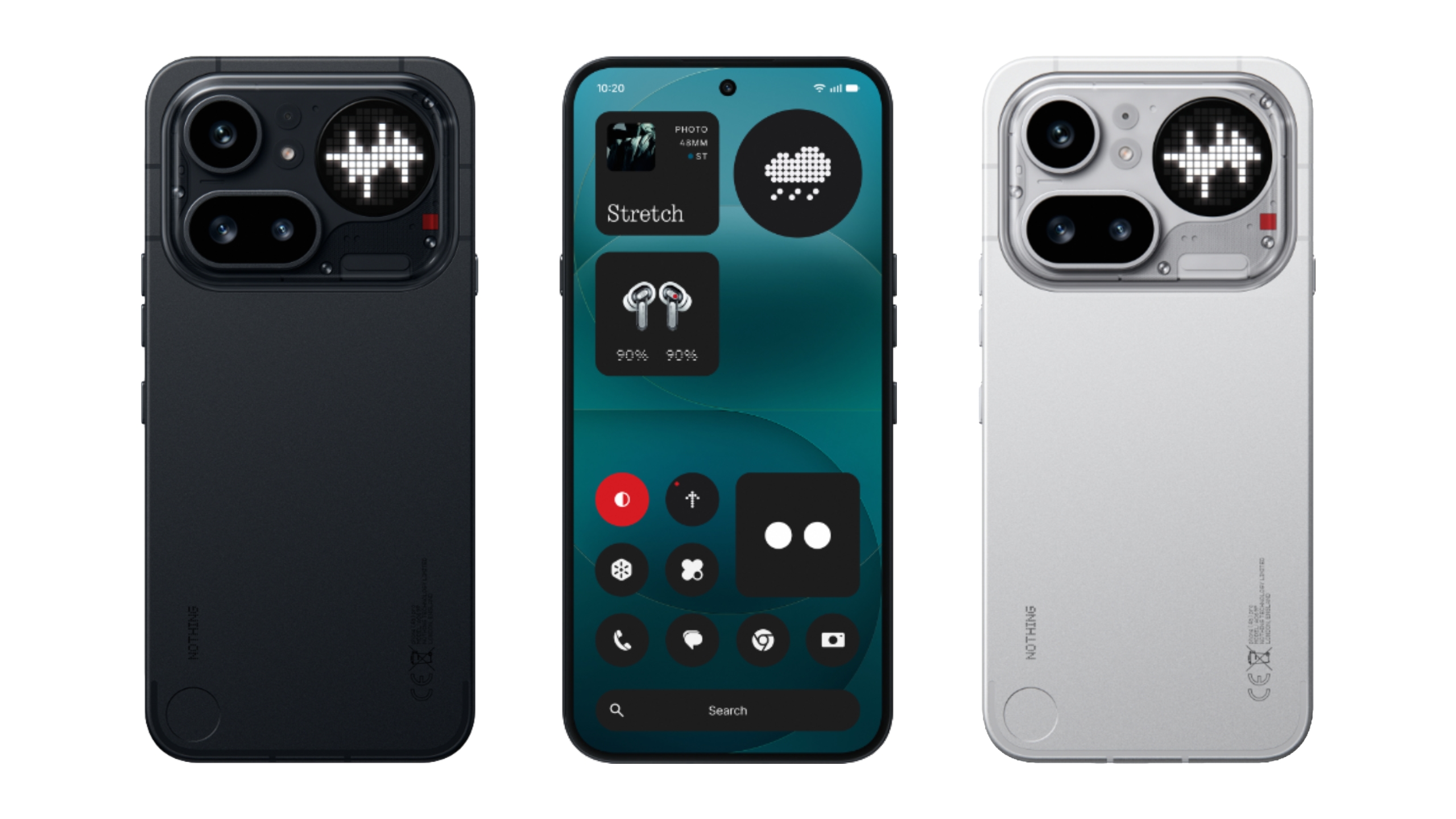
The Nothing 4a Pro represents the biggest change. Gone is the translucent back meant to offer a pseudo-glimpse into the internals of the phone, and in its place is a metal unibody design in black, silver or pink, and Nothing's Glyph Matrix interface, now even larger and brighter than it was on the Phone 3. Nothing describes the Phone 4a Pro as its slimmest phone ever, and on some level its reminiscent of the iPhone 17 Pro, but the changes in design and materials also support improvements to durability (the phone is rated for IP65 water resistance) and cooling.

The back of a black Nothing Phone 4a Pro, the front screen of a black Phone 4a Pro and the back of a silver Phone 4a Pro.
Nothing

In terms of components, the Phone 4a Pro includes a 6.83-inch AMOLED display with 144Hz refresh rate, and a peak brightness of 5000 nits, and a 5,080mAh battery Nothing says should offer up to 17 hours of use. Like the Phone 3a Pro, the phone also includes four cameras, in this case a 50-megapixel wide lens, a 32-megapixel selfie camera, an ultra-wide and 50-megapixel periscope telephoto lens that's capable of 140x zoom, twice as much as the Phone 4a. While the phone doesn't include Qualcomm's flagship Snapdragon 8 Elite Gen 5 chip, Nothing opted to use the Snapdragon 7s Gen 4, which isn't as powerful, but should be capable of running Nothing's growing list of AI-powered features.

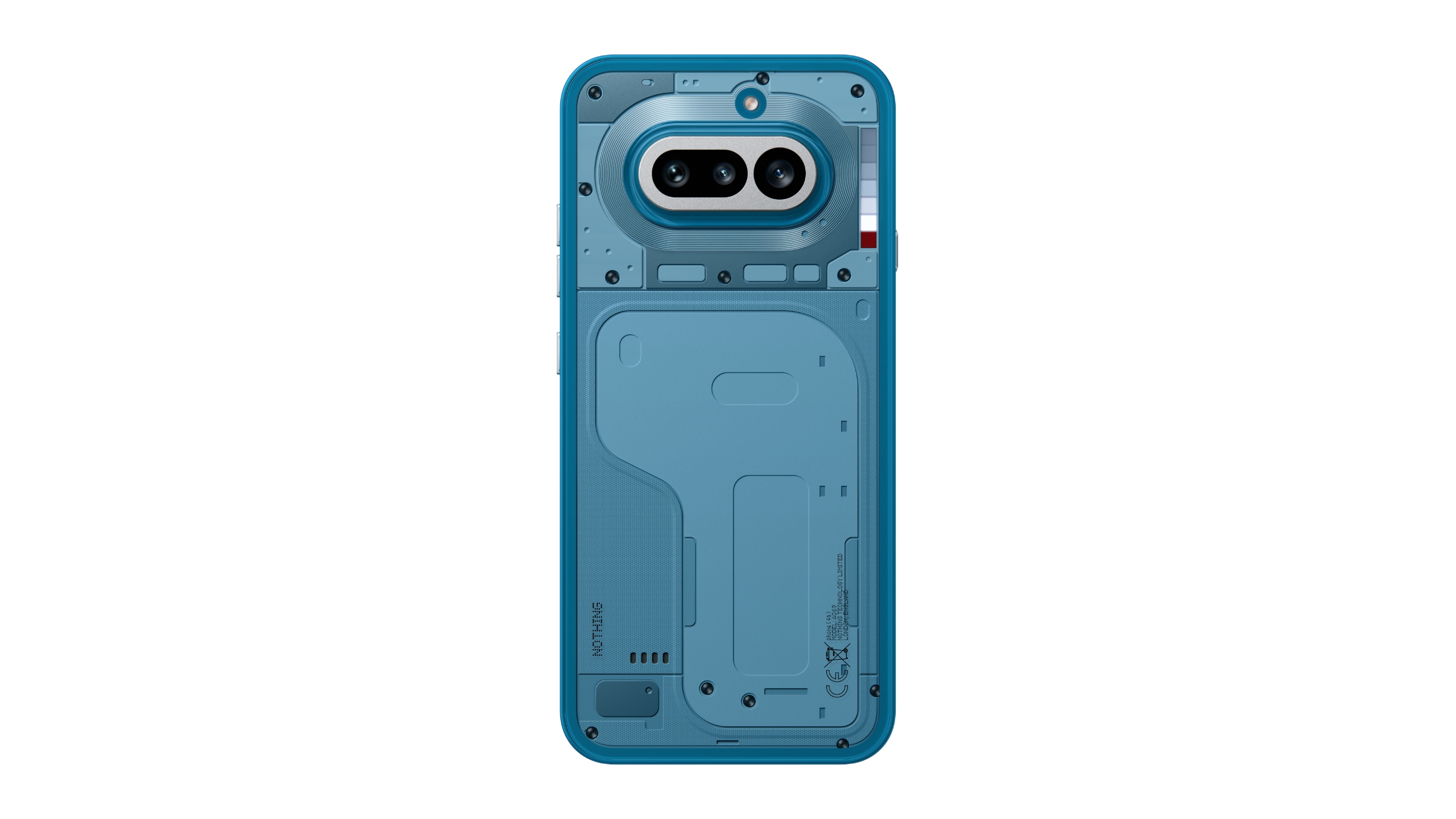
The Nothing Phone 4a was more heavily teased leading up to today's announcement, but still includes plenty of nice upgrades over the Phone 3a. The midrange smartphone evolves Nothing's trademark translucent design with new colors (white, pink, black and blue), IP64 dust and water resistance and an updated "Glyph Bar" that's brighter and now runs in a straight line next to the 4a's cameras. The Phone 4a has four cameras, a 50-megapixel wide that takes in 64 percent more light, a 32-megapixel selfie camera, an ultra-wide and a new 50-megapixel tetraprism periscope telephoto lens that's capable of a 3.5x optical zoom, 7x lossless zoom and up to a 70x ultra zoom.

The Nothing Phone 4a in blue with its new "Glyph Bar."
Nothing

Like its more premium sibling, the Phone 4a includes an AMOLED display, though in a smaller 6.78-inch size, with a 120Hz refresh rate and a peak brightness of 4,500 nits. The display is covered with Gorilla Glass 7i, which is supposed to be twice as scratch-resistant as the previous generation, and even better for placing the phone face down. Internally, the Pro's Snapdragon 7s Gen 4 chip and 5,080mAh battery also make the jump to the cheaper phone.

Nothing says both phones will ship with Nothing OS 4.1, which includes Essential Search for looking up information across apps, personalized results based on your saved "Memories" in Essential Space and Nothing Playground, an app for using AI to create custom widgets. Nothing OS 4.1 is based on Android 16, and Nothing says Phone 4a and Phone 4a Pro owners are guaranteed three years of Android updates and six years of security patches.

Global pre-orders for the Phone 4a begin today, and the phone is available in three different configurations depending on your region and the amount of RAM and storage you want. The Phone 4a starts at €349 for 8GB and 12GB and can cost as much as €429 for 12GB of RAM and 256GB of storage. 

While the Phone 4a Pro will be available globally, the fancier of Nothing’s two new phones is the only one coming to the US. The Phone 4a Pro will be available to pre-order starting March 13, and will either cost $499 for 8GB of RAM and 128GB of storage or $599 for 12GB of RAM and 256GB of storage.

This article originally appeared on Engadget at https://www.engadget.com/mobile/smartphones/nothings-phone-4a-pro-picks-up-flagship-features-and-an-even-brighter-display-for-499-111500926.html?src=rss

Google ends its 30 percent app store fee and welcomes third-party app stores

Google is officially doing away with its 30 percent cut of Play Store transactions, and rolling out changes to how third-party app stores and alternate billing systems will be handled by Android. Some of these tweaks were proposed as part of the settlement the company reached with Epic in November 2025, but rather than wait for final judicial approval, Google is committing to revamping Android and the Play Store publicly.

The biggest change is to how Google will collect fees from developers publishing apps on Android. Rather than take its standard 30 percent cut of in-app purchases through the Play Store, Google is lowering its cut to 20 percent, and in some cases 15 percent for new installs of apps from developers participating in its new App Experience program or updated Google Play Games Level Up program. Those changes extend to subscriptions, too, where the company’s cut is lowering to 10 percent. For Google’s billing system, the company says developers in the UK, US, or European Economic Area (EEA) will now be charged a five percent fee and "a market-specific rate" in other regions. Of course, for anyone trying to avoid those fees, using alternatives to Google's billing system is getting easier.

Google says that developers will be able to offer alternative billing systems alongside its own or "guide users outside of their app to their own websites for purchases." The setup, as described by Google, appears to be more permissive than what Apple settled on in 2025. For iOS apps on the App Store, developers interested in avoiding Apple's fees can only direct customers to alternative payment methods on the web through in-app links. Allowing for these outside transactions is part of what prompted Epic to bring Fortnite back to the App Store in the US in May 2025. The developer added the app back to the Play Store in the US in December of that year, and Epic CEO Tim Sweeney shared alongside today's changes that Fortnite will soon be available in Google's app store globally.

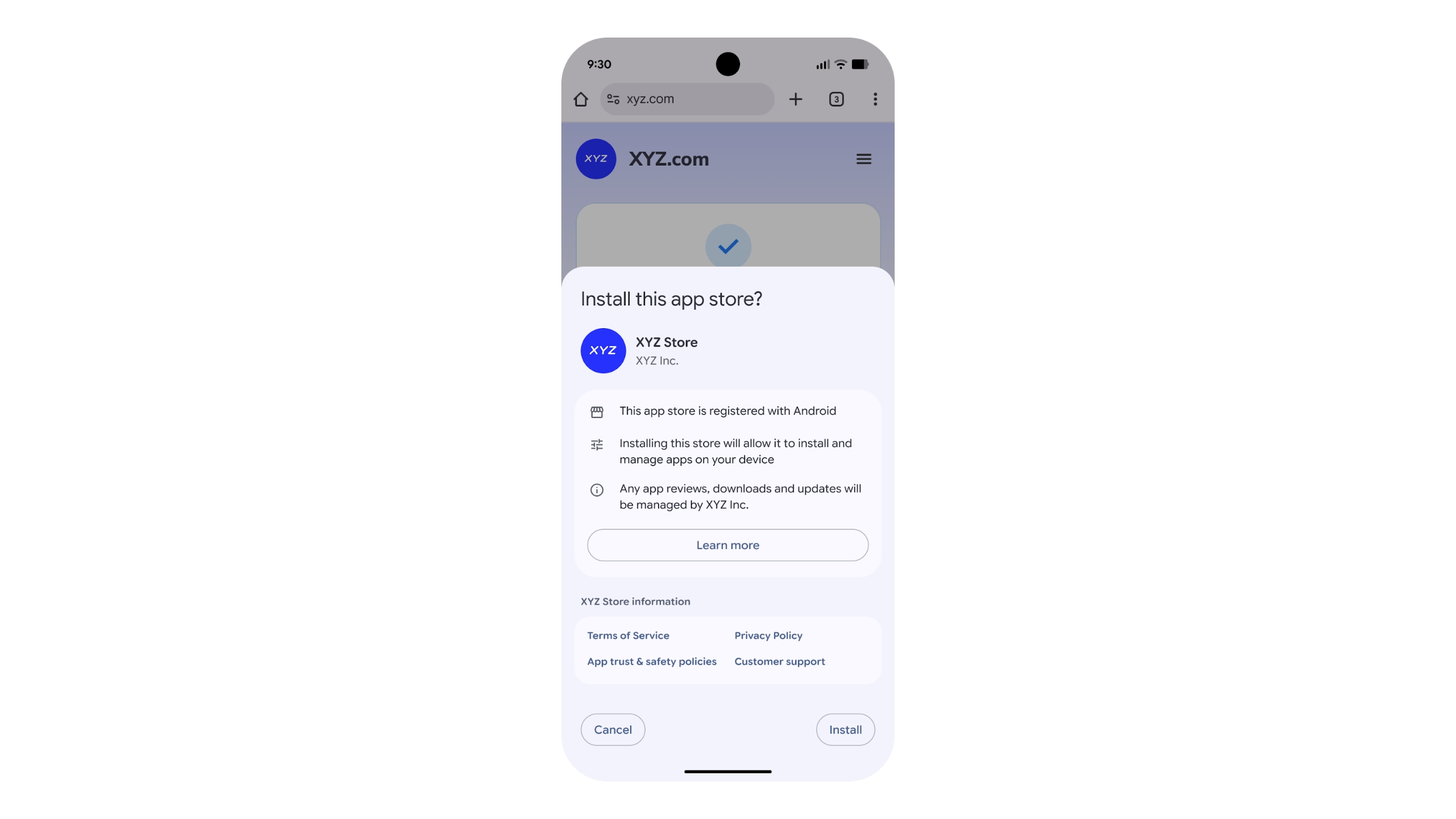
Epic is ultimately interested in getting people to use the mobile version of its Epic Games Store, and Google’s announcement also includes details on how third-party app stores can come to Android. Third-party app stores will be able to apply to the company's new "Registered App Stores" program to see if they meet "certain quality and safety benchmarks." If they do, they'll be able to take advantage of a streamlined installation interface in Android. Participating in the program is optional, and users will still be able to sideload alternative app stores that aren't part of the program, but Google clearly has a preference.  Changes the company plans to make to sideloading later in 2026 could deliberately make the process more difficult, which might force developers to apply to Google’s program.

The interface for installing "qualified" third-party app stores on Android.
App stores approved by the Registered App Stores program get a simpler installation interface.
Google

Given the scale of the changes, not all of Google's tweaks will be available everywhere at the same time. Google says that its updated fee structure will come to the EEA, the UK and the US by June 30, Australia by September 30, Korea and Japan by December 31 and the entire world by September 30, 2027. Meanwhile, the company's updated Google Play Games Level Up program and new App Experience program will launch in the EEA, the UK, the US and Australia on September 30, before hitting the remaining regions alongside the updated fee structure. For any developers interested in offering their own app store, Google says it'll launch its Registered App Stores program "with a version of a major Android release" before the end of the year. According to the company, the program will be available in other regions first before it comes to the US.

Google has made changes to how it collects app store fees in the past, the most significant being in 2021, when it lowered its cut to 15 percent on the first $1 million developers earn, and 15 percent on subscriptions. The difference here is that the regulatory scrutiny brought about by Epic's lawsuit against Google and Apple seems to be a key motivator for its changes. Well, that, and an entirely separate business deal the company made with Epic. Google and Epic's settlement served as the basis for these changes, but The Verge reported in January that the companies also agreed to an $800 million joint partnership around product development and Google using Epic's "core technology." Letting developers keep more of their money is ultimately good, but it's a business decision Google felt comfortable making, which likely means it has its own share of upsides. 

This article originally appeared on Engadget at https://www.engadget.com/apps/google-ends-its-30-percent-app-store-fee-and-welcomes-third-party-app-stores-185248647.html?src=rss

Highguard has raided its last fortress, will shutdown on March 12

Highguard, the live-service multiplayer shooter that was announced at the Game Awards 2025, is shutting down on March 12. Developer Wildlight Studios shared that the game would be winding down alongside details of its final update, which include a new character, weapon and skill trees.

"Today we’re sharing difficult news. We have made the decision to permanently shut down Highguard on March 12," Wildlight Studios shared via a statement on the Highguard X account. "Since launch, more than two million players stepped into Highguard’s world. You shared feedback, created content, and many believed in what we were building. For that, we are deeply grateful. Despite the passion and hard work of our team, we have not been able to build a sustainable player base to support the game long term. Servers will remain online until March 12. We hope you’ll jump in with us one more time to show your support and get those final great matches in while we still can."

When Highguard shuts down next week, it will have been available to play for a grand total of 46 days. That's longer than the two weeks Concord received, but tragic for an online multiplayer game that was still in some form of active development. Wildlight Studios laid off some of its staff not long after Highguard launched, but a smaller team of developers has been supporting the game with new content since then, adding things like a "5v5 raid mode" and today's final update.

While it's easy to chalk up Highguard's failure to a shrinking appetite for live-service games or an inability to find an audience for the game's mix of competitive hero shooter and MOBA strategy mechanics, the reality is more complicated. The first hint that Highguard's launch might be troubled was the dearth of information or marketing shared about the game after its debut at the Game Awards. Wildlight Studios' staff was full of former Respawn employees who shadowdropped Apex Legends to great success, and Bloomberg reports Wildight's executives thought they could pull off something similar with Highguard. The difference is, little was known about Apex Legends until after it launched, while players had over a month to stew on the Highguard trailer and form all sorts of opinions.

Wildlight's inability to keep players coming back — SteamDB shows the game peaked at over 97,000 concurrent players and is now sitting at around 300 — also hurt its chances. Dwindling player counts reportedly played a role in one of Wildlight's investors, Tencent, pulling funding, which reduced the runway the studio had to continue working on the game and likely prompted its layoffs. It would be simple if the lesson here was for future studios to give up developing online multiplayer games, but it really seems like not one, but all of these elements led to Highguard's ultimate demise.

This article originally appeared on Engadget at https://www.engadget.com/gaming/highguard-has-raided-its-last-fortress-will-shutdown-on-march-12-225531035.html?src=rss

Skateboarding train game Denshattack! is out on June 17

Denshattack!, the skateboarding game that manages to mix an anime-inspired narrative with Tony Hawk Pro Skater-style grinding and wall-riding, is coming out on June 17. The game's publisher Fireshine Games announced its launch date alongside a new trailer at Nintendo's recent Indie World event.

If it wasn't clear from previous trailers, Denshattack! remains stylish as hell, filled to the brim with bright colors and over-the-top animation. The new trailer doesn't offer much more in terms of what the story of the game will be, but it does highlight its fast-paced gameplay, which will have you flipping and grinding a tiny train through settings like a futuristic cityscape, jungles and a snowy mountain region.

Among the other charms of Denshattack!, the game also features original songs from composers Tee Lopes (Sonic Mania), Ryo Nagamatsu (Splatoon series), Richard Jacques (Jet Set Radio series) and Takenobu Mitsuyoshi (Daytona USA). If you're at all curious to try Denshattack! before it comes out this summer, demos of the game are available to download right now for PC and Switch 2.

Denshattack! will be available on PC, PlayStation 5, Switch 2 and Xbox Series X/S when it launches June 17. The game will also be available to play via Xbox Game Pass.

This article originally appeared on Engadget at https://www.engadget.com/gaming/skateboarding-train-game-denshattack-is-out-on-june-17-210314631.html?src=rss

Elgato’s Stream Deck + XL adds a touch strip and dials to an already massive array of buttons

Elgato's Stream Deck helped popularize using a macro pad among aspiring livestreamers and regular desk jockeys, so it's only natural for the brand to continue to expand on its lineup. After announcing a suite of new Stream Deck devices last year, Elgato is kicking off 2026 with the Stream Deck + XL, a larger version of the already big Stream Deck XL, and a collection of new audio accessories that should help improve sound mixing in and out of livestreams.

The Stream Deck + XL not only expands on the number of buttons on the regular Stream Deck XL (from 32 customizable buttons to 36 customizable buttons), but also introduces multiple new control options, including a touch strip and six dials. All the controls on the new Stream Deck are customizable, and the presence of the touch strip means you can receive visual feedback about adjustments you're making while you're making them. The new macro pad should still work well as a way to quickly end a live stream or queue up a transition, and Elgato says that paired with its new Wave XLR Pro audio interface, the Stream Deck + XL could also become a straightforward tool for sound mixing, too.

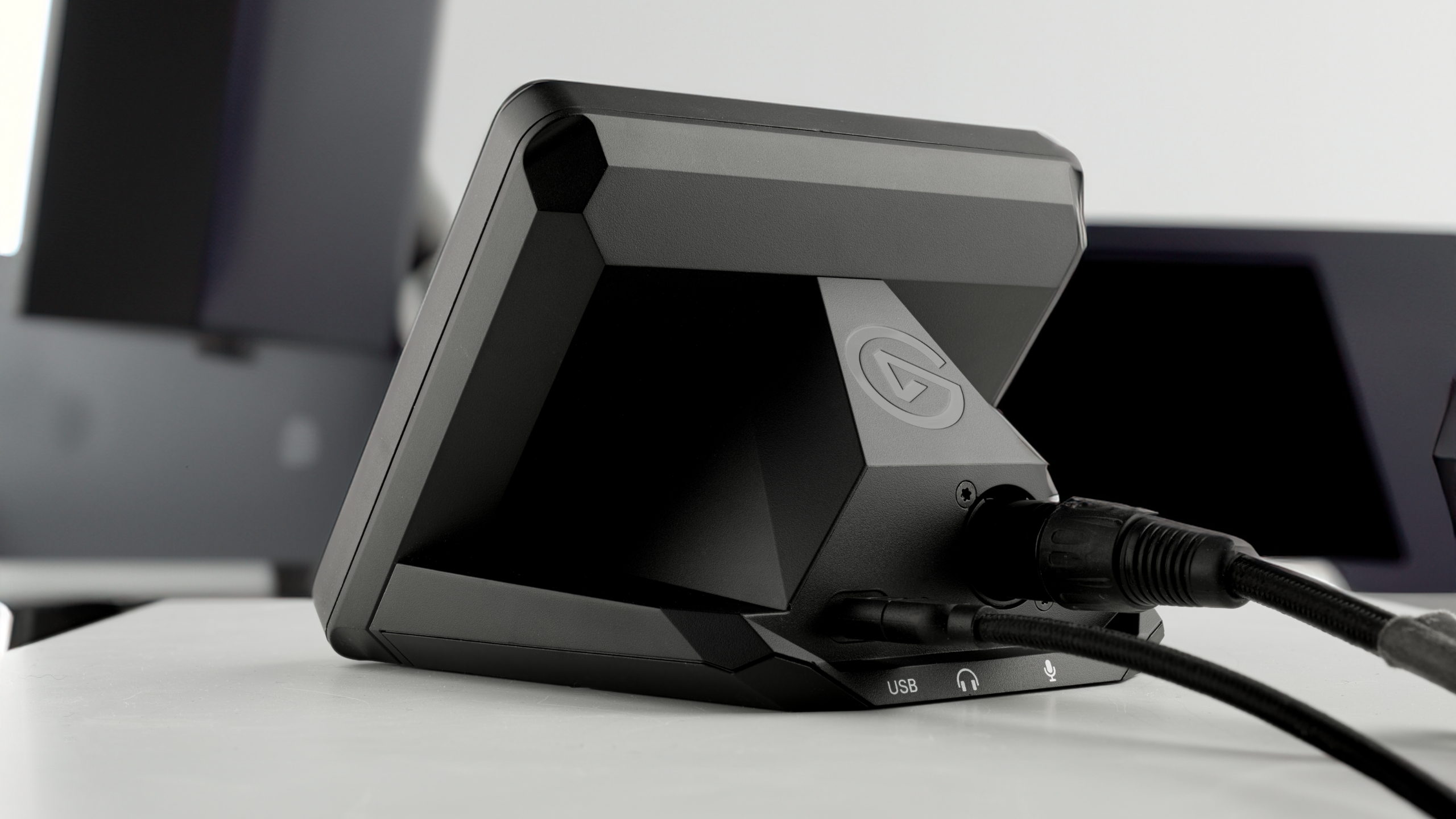
The new XLR DOck MK. 2 on the back of a Stream Deck, with an XLR cable plugged in.
The XLR Dock MK. 2 adds an XLR input to the Stream Deck +.
Elgato

The Wave XLR Pro "integrates two fully independent XLR inputs with 80 dB of clean gain each," Elgato says, along with multiple headphone outputs and "a built-in Maximizer effect" that can maintain consistent loudness. When you're livestreaming, Elgato's says the Wave XLR Pro's "per-channel ducking" can also automatically lower other audio sources when you speak. The XLR Pro is one of several Wave audio products Elgato is announcing alongside the Stream Deck + XL, a lineup which also includes a new condenser microphone and a new way to connect XLR microphones to the company's smaller Stream Deck. The XLR Dock MK. 2, exclusively compatible with the Stream Deck +, lets you connect professional XLR audio devices directly to your Stream Deck. The Dock "adds 80 dB of clean gain, 48V phantom power, onboard DSP effects, and low-latency VST Insert support," and can be entirely managed through the Stream Deck's buttons and dials.

Elgato says both the Stream Deck + XL and the XLR Dock MK. 2 are available to pre-order today for $350 and $130, respectively. The Wave XLR Pro will cost $350 when it launches at some point in Q2 2026.

This article originally appeared on Engadget at https://www.engadget.com/computing/elgatos-stream-deck--xl-adds-a-touch-strip-and-dials-to-an-already-massive-array-of-buttons-195200129.html?src=rss

FCC approves the merger of cable giants Cox and Charter

The Federal Communications Commission has given the go ahead for two of the US' biggest cable providers, Charter Communications and Cox Communications, to merge. Charter announced its intention to acquire Cox for $34.5 billion in May 2025, with specific plans to inherit Cox's managed IT, commercial fiber and cloud businesses, while folding the company's residential cable service into a subsidiary.

“By approving this deal, the FCC ensures big wins for Americans," FCC Chairman Brendan Carr said in a statement. "This deal means that jobs are coming back to America that had been shipped overseas. It means that modern, high-speed networks will get built out in more communities across rural America. And it means that customers will get access to lower priced plans. On top of this, the deal enshrines protections against DEI discrimination."

The FCC claims that Charter plans to invest "billions" to upgrade its network following the closure of the deal, leading to "faster broadband and lower prices." The company's "Rural Construction Initiative" will also extend those improvements to rural states lacking in consistent internet service, a project the FCC was heavily invested in during the Biden administration, but has been pulling back from since President Donald Trump appointed Carr. The FCC also claims Charter will onshore jobs currently handled off-shore by Cox employees and commit to "new safeguards to protect against DEI discrimination," which essentially amounts to hiring, recruiting and promoting employees based on "skills, qualifications, and experience."

While Carr's FCC paints a rosy picture of Charter's acquisition, history has provided multiple examples of mergers having the opposite effect on jobs and pricing. For example, redundancies created when T-Mobile merged with Sprint in 2020 led to a wave of layoffs at the carrier. And funnily enough in 2018, not long after Charter's merger with Time Warner Cable was approved by the FCC, the company raised prices on its Spectrum service by over $91 a year. 

The FCC's obsession with diversity, equity and inclusion as part of the deal is stranger, if only because it appears to fall outside of the commission's purpose of maintaining fair competition in the telecommunications industry. It does fit with other mergers the FCC has approved under Carr, however. Skydance's acquisition of Paramount was approved in 2025 under the condition it wouldn't establish any DEI programs.

This article originally appeared on Engadget at https://www.engadget.com/big-tech/fcc-approves-the-merger-of-cable-giants-cox-and-charter-230258865.html?src=rss