Buying for the man who already owns the good version of everything is its own kind of design challenge. He has the watch, the pen, the television, the card holder. What he doesn’t have is the version nobody else thought to make, the object that solves a problem he didn’t know he had or simply looks better doing the job than anything currently on his desk. That’s the gap this list lives in.
What follows isn’t a pile of gadgets picked for novelty. It’s titanium that’s actually earning its keep, leather built by hand in Kyoto, a television that builds color instead of filtering it, and one genuinely unreleased concept worth knowing about before anyone else does. Eight objects, eight different materials and mechanisms, one shared obsession with doing a familiar thing properly.
1. The MAD-5: A Music Player With the Screen in the Right Place
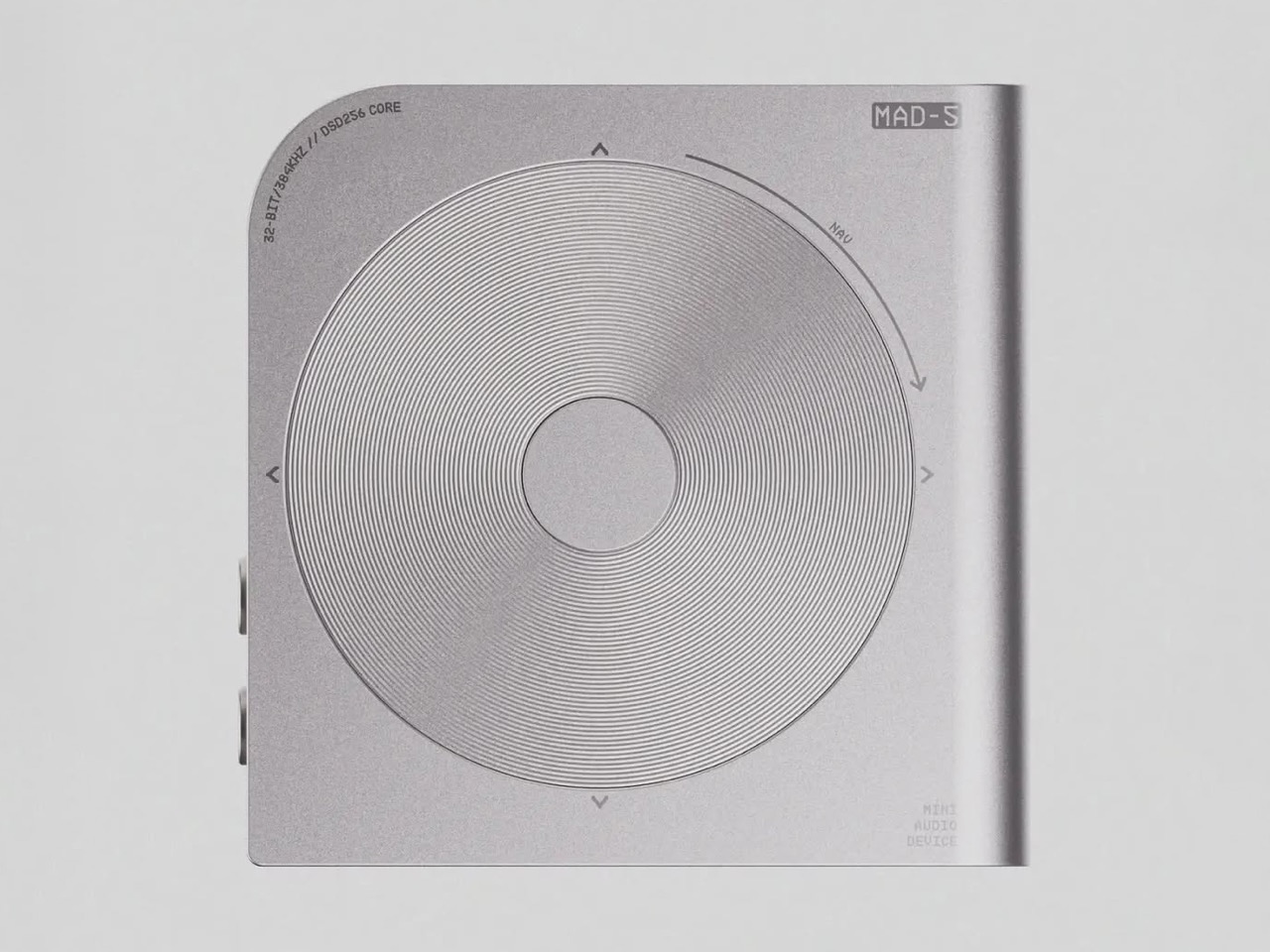
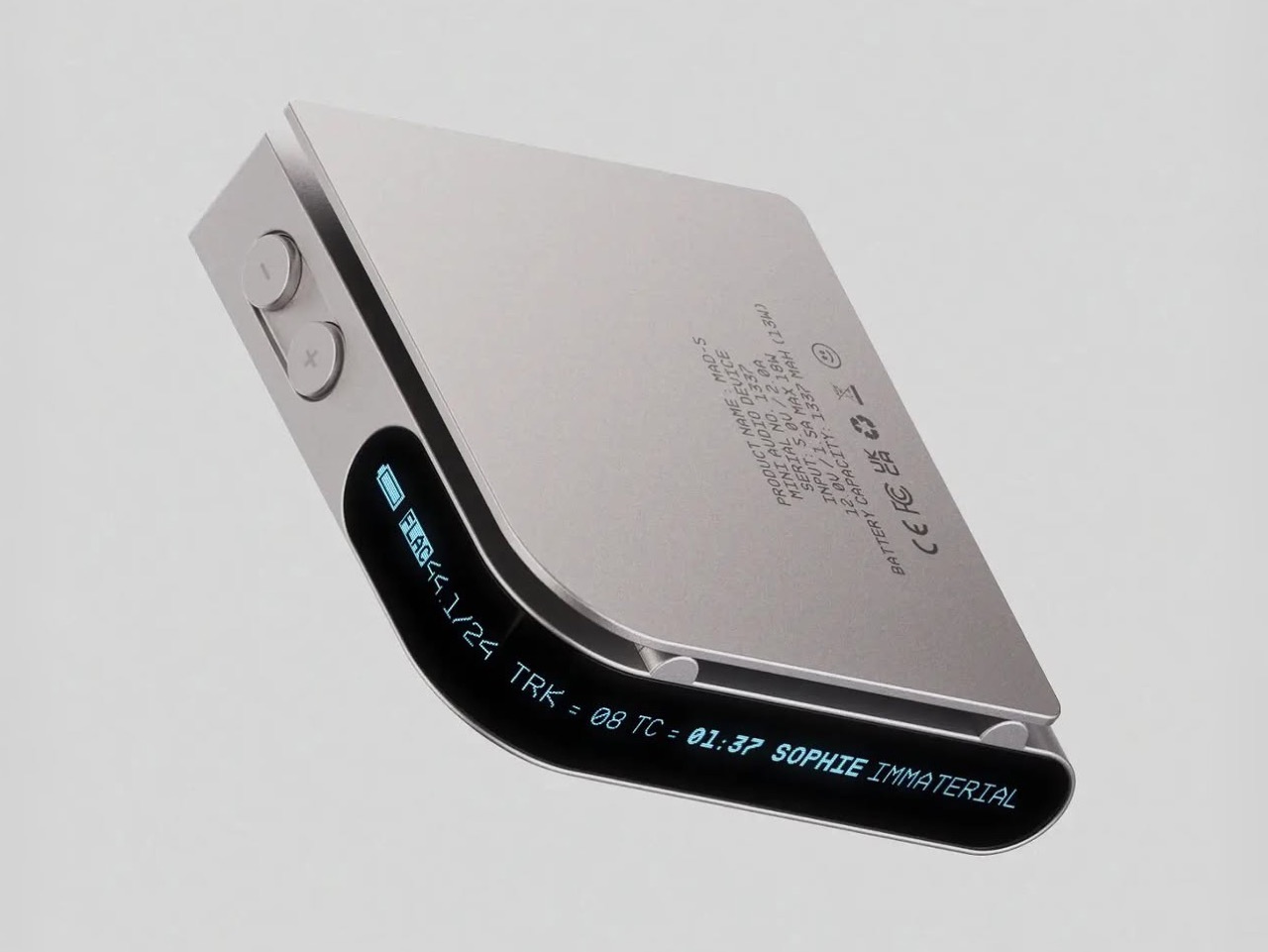
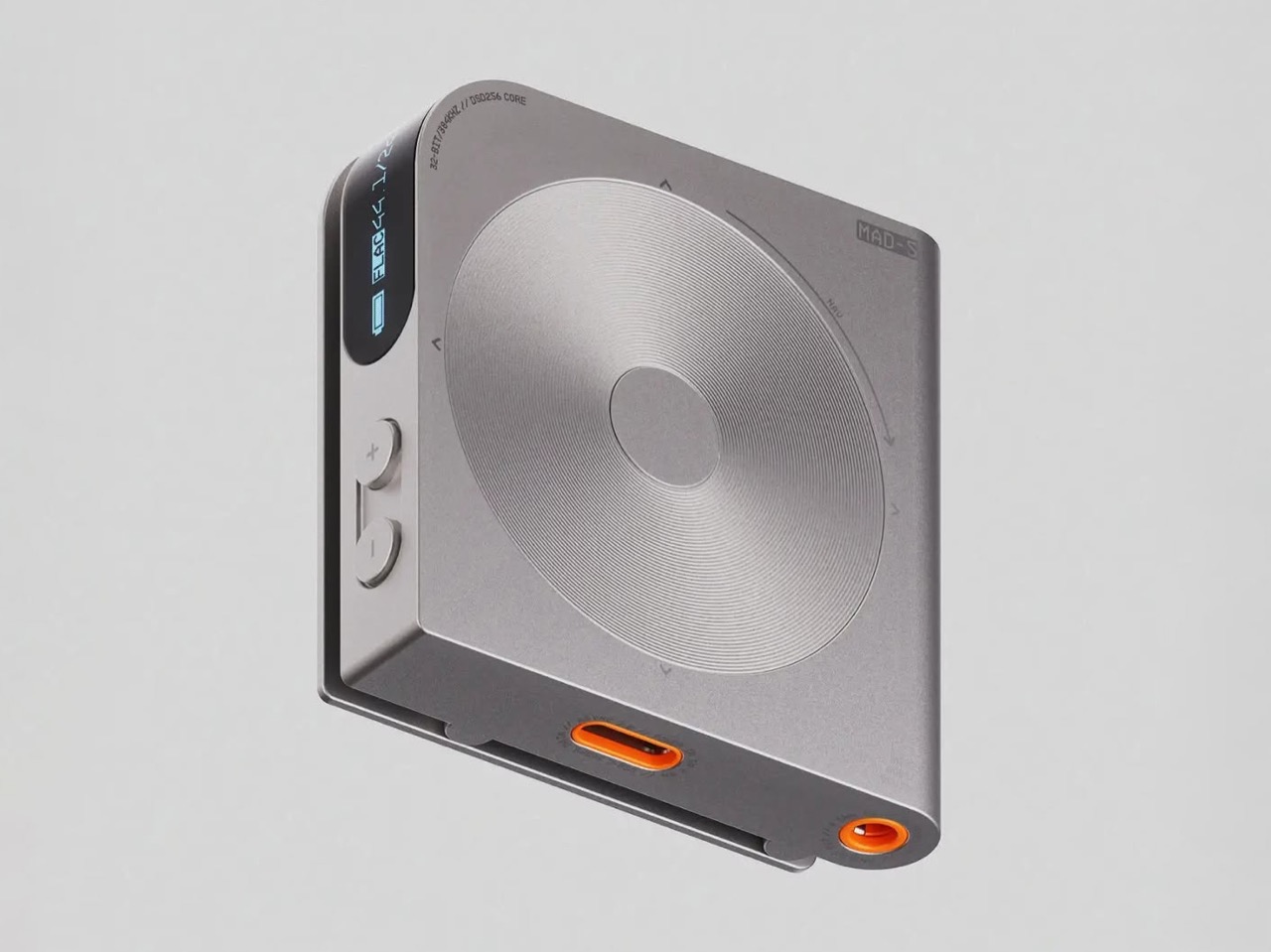
Designer Florent Porta spent years looking at the Sony MZ-RH1, a MiniDisc recorder from 2006 that mounted its OLED display on the front edge of the body instead of the top. That edge-mounted screen became the seed for the MAD-5, a square aluminum player that borrows the MZ-RH1’s near-perfect 83.8 by 84.4mm proportions and pairs them with a clip lifted from the fourth-generation iPod Shuffle. A thin blue ticker runs along the front lip, reading out format, sample rate, track number, and song title.
For the man who already tracks every obscure audio gadget release, this is the one to know about before it exists. It has no Bluetooth, no expandable storage, and currently lives only as a render, but its USB DAC mode and jog disc nodding to Teenage Engineering’s TP-7 make it a genuine conversation piece. Gift the idea of it now, and you’ll both be watching for whether Porta’s teased desktop dock ever actually ships.
What we like:
- The edge-mounted ticker screen solves a problem clip-on players have ignored for two decades
- Doubles as a USB DAC, turning it into an audio interface the moment it’s plugged into a laptop
What we dislike:
- No Bluetooth, no balanced output, and no expandable storage
- Exists only as a concept render, with no confirmed hardware release
2. Oblica Card Holder: The One That’s Meant to Be Seen

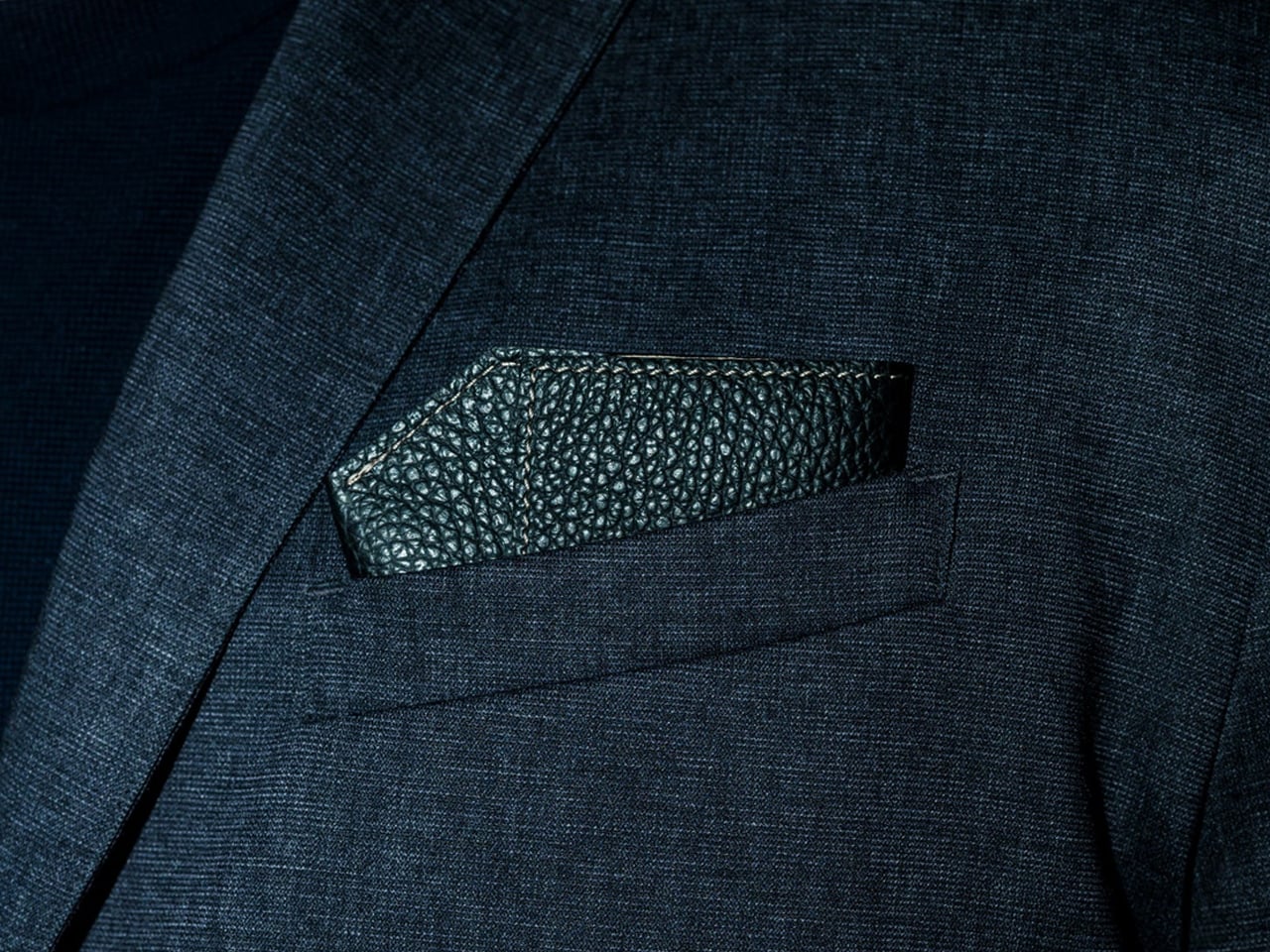
Most card holders are designed to disappear into a pocket. Oblica does the opposite. Its diagonal silhouette is built to rest in the breast pocket of a blazer, where it reads as part of the tailoring rather than something stuffed in to hide. Two staggered diagonal tiers keep every card visible, so what looks like a folded pocket square reveals itself as a fully functional holder the moment you reach for it. It holds more than 30 standard business cards.
Each one is handmade in Kyoto by Sudaku, a leather workshop built around exactly this kind of unconventional pattern work, using Italian leather on the outside and Japanese pig suede within. At just 5mm thick, it slides into a back pocket just as easily on days without a jacket. For a man who already owns a wallet for every occasion, this is the one built for the occasion of being noticed.
Click Here to Buy Now: $160
What we like:
- The diagonal design genuinely functions as both a tailoring detail and a card holder
- Handmade construction from Italian leather and Japanese pig suede, built to develop patina over time
What we dislike:
- At 5mm, capacity is naturally limited if he carries thicker ID or credit cards
- Only 3 units were available on the product page at the time of writing
3. Sandmarc Titanium Band: The Apple Watch Ultra Deserves This
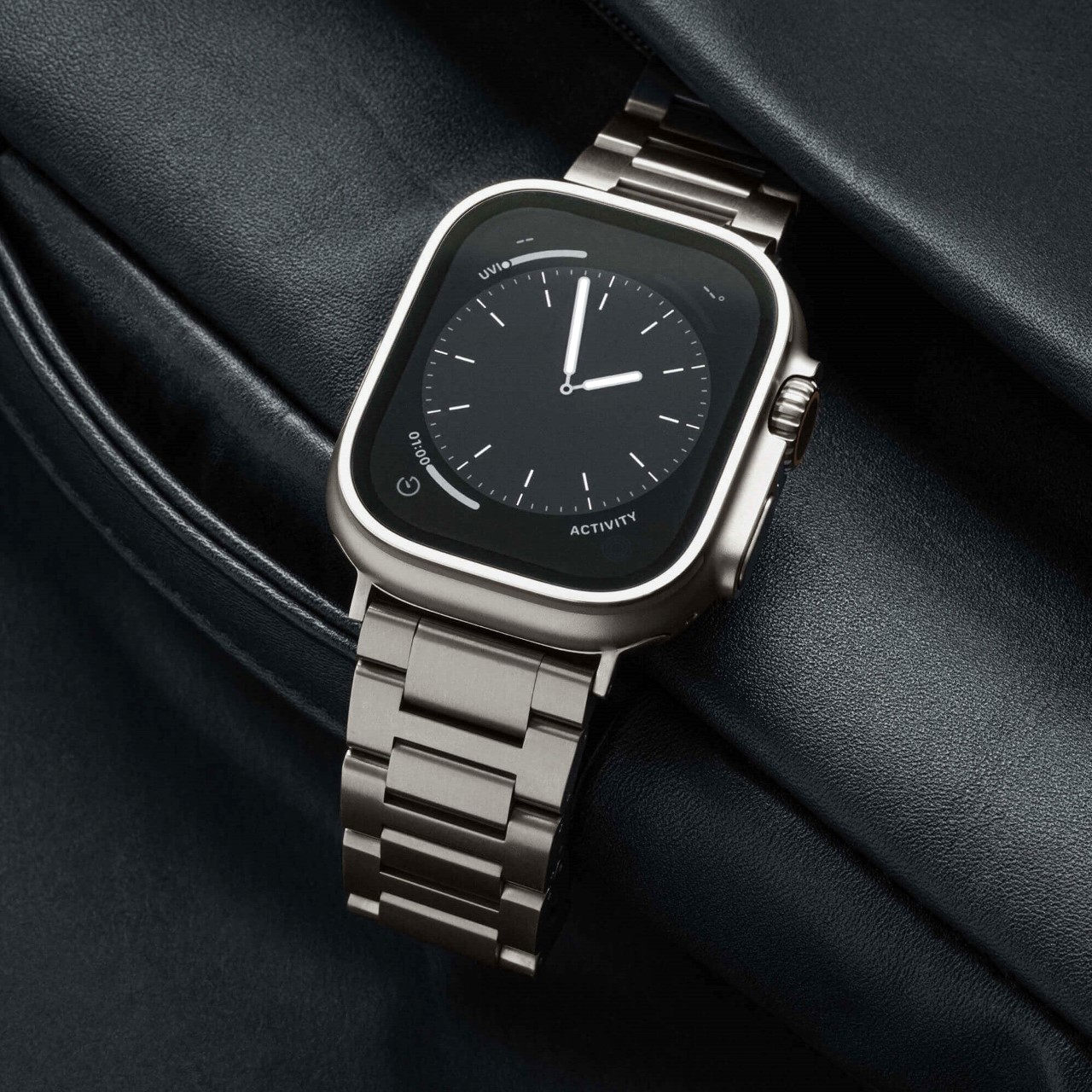
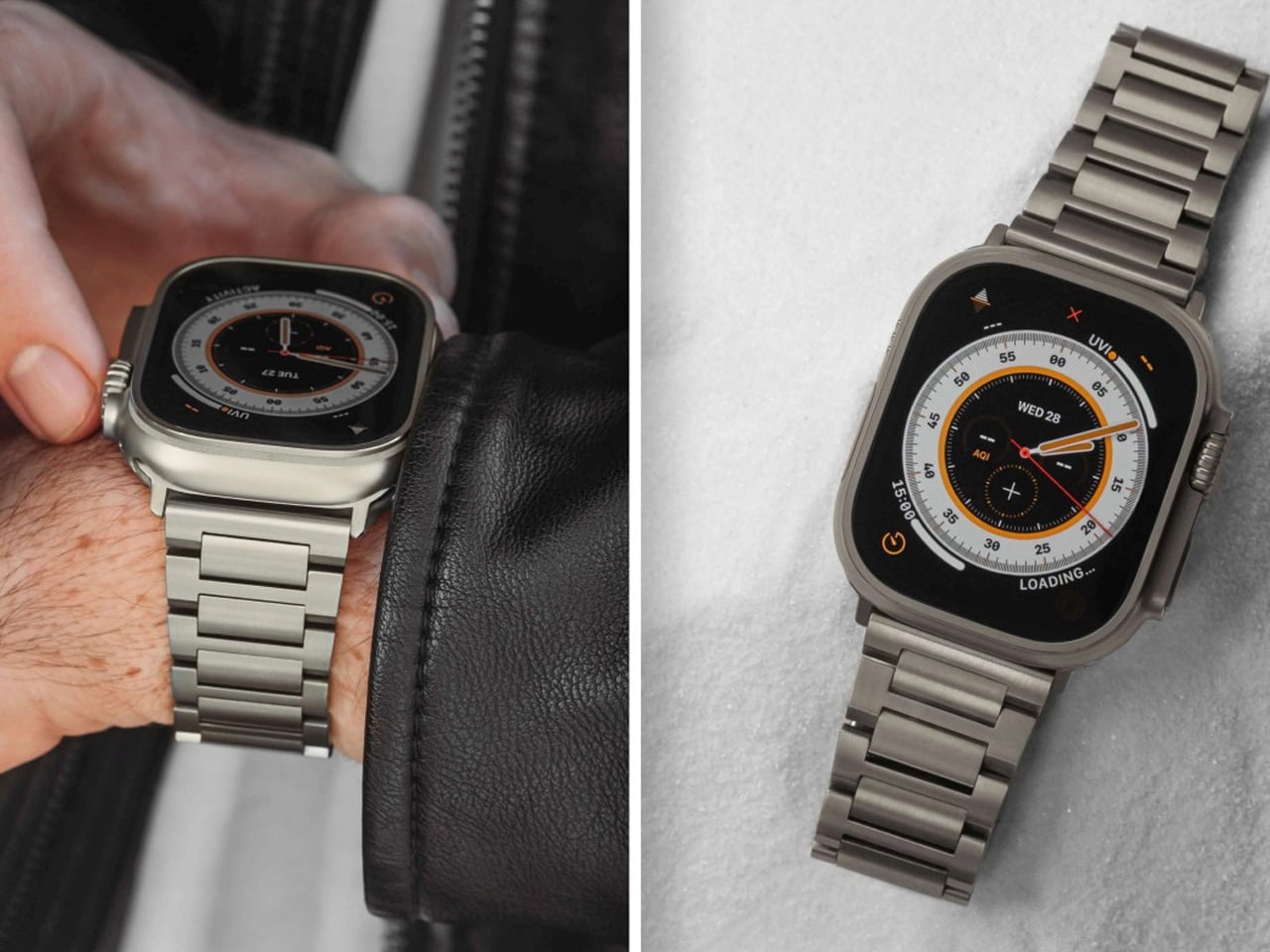
The Apple Watch Ultra was built for trekking and deep-sea diving, which means most owners are stuck wearing a sports strap they’ll never actually test. Sandmarc’s titanium band fixes that mismatch entirely. Machined from grade 2 titanium with a scratch-resistant glass film coating, the Oyster style band matches the Watch Ultra’s champagne finish so closely it looks like an Apple original. At 190mm and just 57 grams, it’s nearly 40 percent lighter than a stainless steel equivalent.
This is the upgrade for the man who bought the most rugged smartwatch on the market and wants it to look at home in a boardroom. Stainless steel connectors attach it securely, and an included adjustment tool lets him remove links for a proper fit. Every band is tested at a third-party lab for quality and chemical analysis, so the luxury finish isn’t just cosmetic.
What we like:
- Matches the Watch Ultra’s finish closely enough to look factory-made
- Nearly 40 percent lighter than comparable stainless steel bands, at 57 grams total
What we dislike:
- Oyster style links mean sizing adjustments require the included tool rather than a quick swap
4. Hisense UR8: A Television That Builds Its Own Color

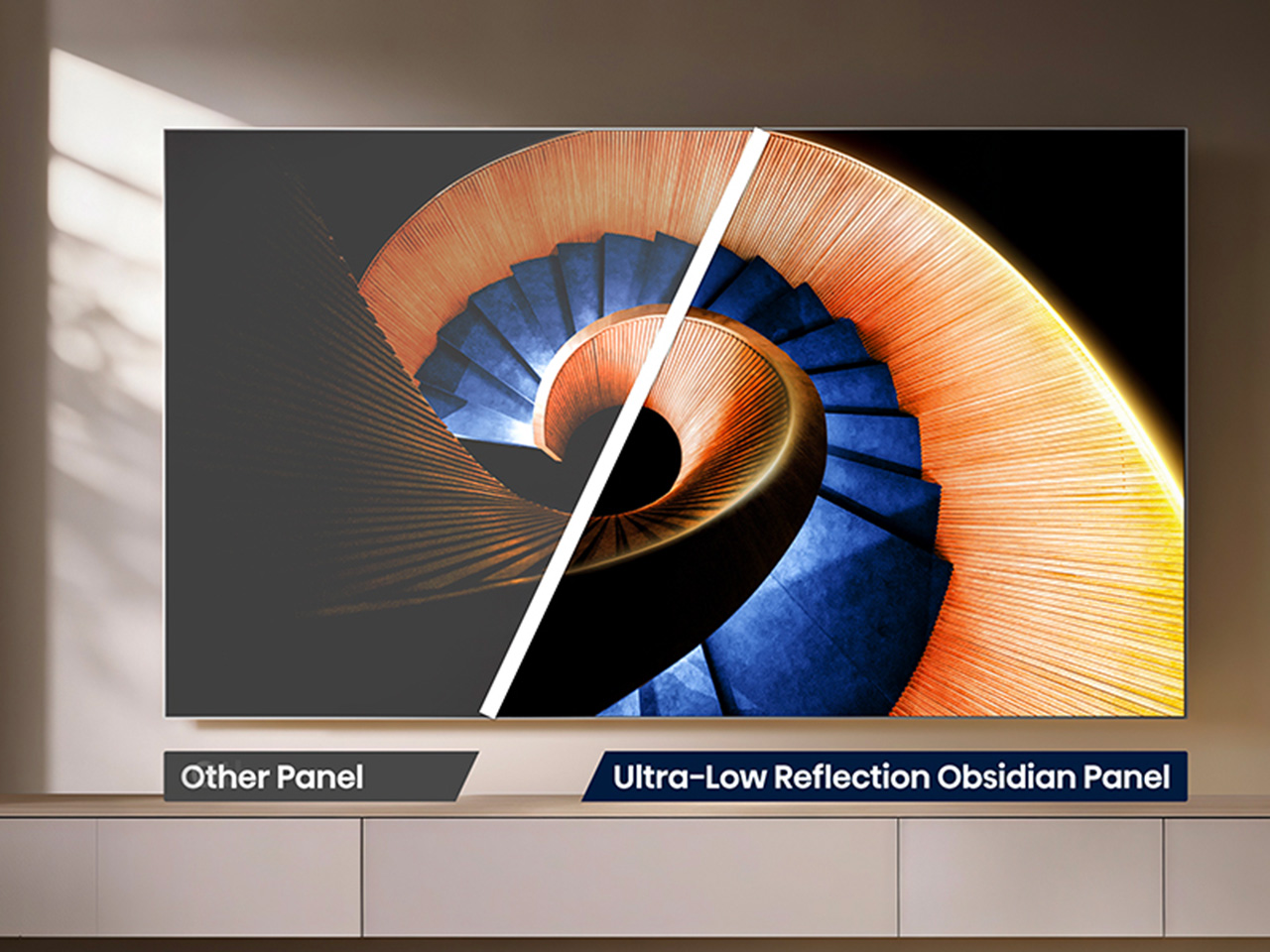
Every television has made color the same way for decades, filtering a single blue light source down into red, green, and blue until something resembling a picture appears. The Hisense UR8 skips that step entirely. Its Chromagic display technology generates red, green, and blue light individually across nearly 15,000 RGB MiniLEDs, rather than filtering one source and losing brightness in the process. Hisense backs this with 100 percent BT.2020 color coverage and Pantone-validated accuracy.
For the man who already has a nice television and wants the one his friends will ask about, this is the upgrade that’s actually visible from the couch. An Ultra Low Reflection Obsidian panel keeps the screen usable in bright rooms, native 180Hz motion processing handles fast sports and gaming cleanly, and Google TV with Gemini handles the software side. It starts at $1,299 across five sizes.
What we like:
- RGB MiniLED architecture creates color directly instead of filtering it, with 100 percent BT.2020 coverage
- Native 180Hz motion handling plus VRR up to 330Hz makes it a legitimate gaming display
What we dislike:
- The size range starts at 55 inches and goes up to 100, so there’s no compact option for a smaller apartment, bedroom, or secondary room setup
5. Grovemade Matte Studio Pad: Order for the Desk That Needs It

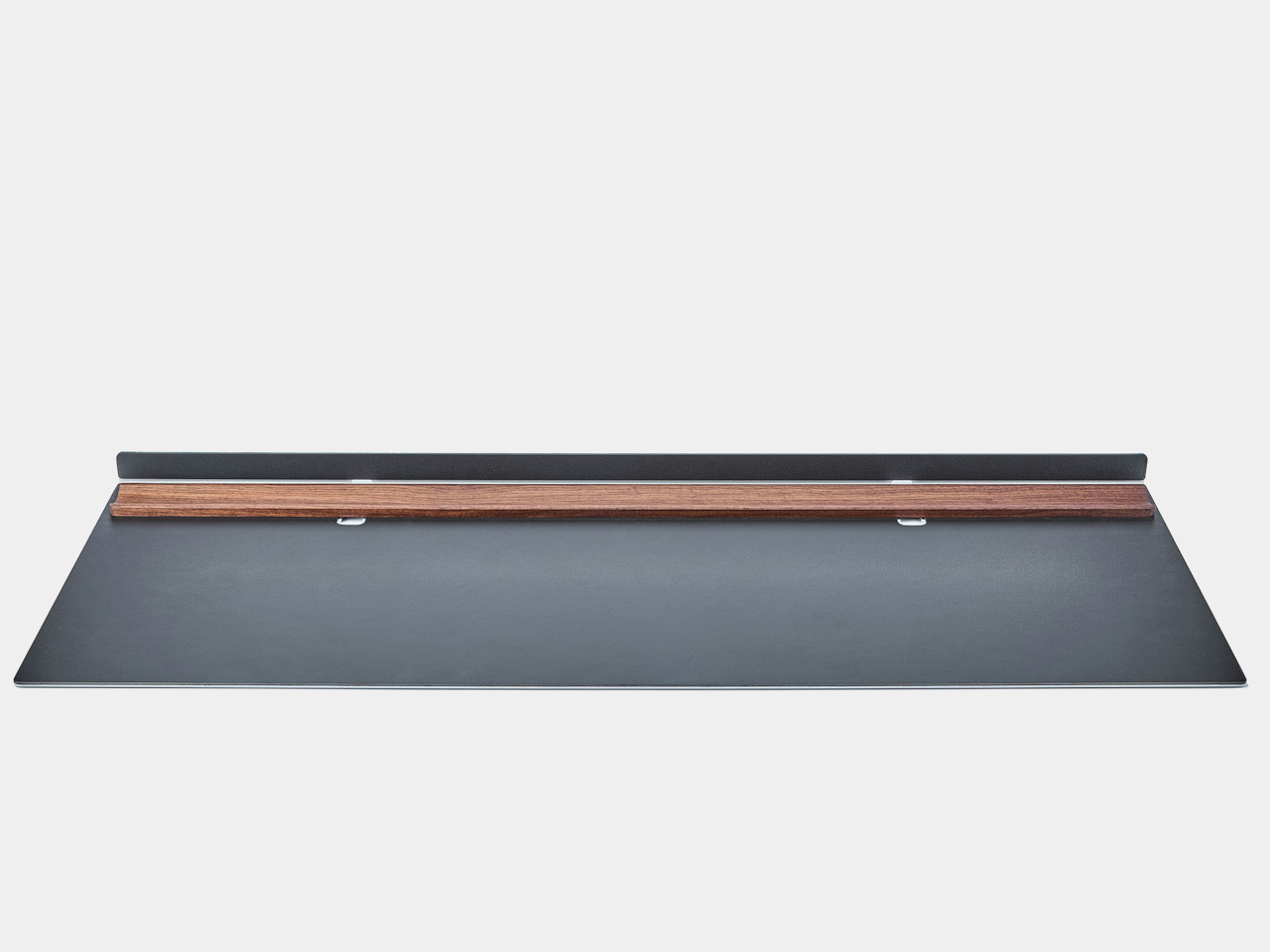
A cluttered desk is sometimes a sign of a sharp mind at work, but it’s also just frustrating to use. Grovemade’s Matte Studio Pad is built to fix that without asking anyone to go fully minimalist. Underneath its smudge-resistant matte surface sits a brushed aluminum chassis for stability, a layer of natural cork to protect the desk beneath it, and a full-length hardwood tray that gives pens and styluses somewhere proper to rest.
The cleverest detail is the aluminum lip lined with natural linoleum, which props up a phone or iPad at a usable angle during calls or reference work. Built-in cable slots keep cords from crossing the desk entirely. For the man who already has good gear but no good surface to keep it on, this gives the whole setup a defined edge.
What we like:
- Layered construction of aluminum, cork, and hardwood feels genuinely durable rather than decorative
- The linoleum-lined lip doubles as a built-in stand for phones and tablets
What we dislike:
- A single large pad dictates desk layout, which won’t suit smaller workstations
- Pricing wasn’t listed on the product page we reviewed, so budget accordingly before gifting
6. Lumink Titanium Fountain Pen: Pocket-Sized Until It Isn’t
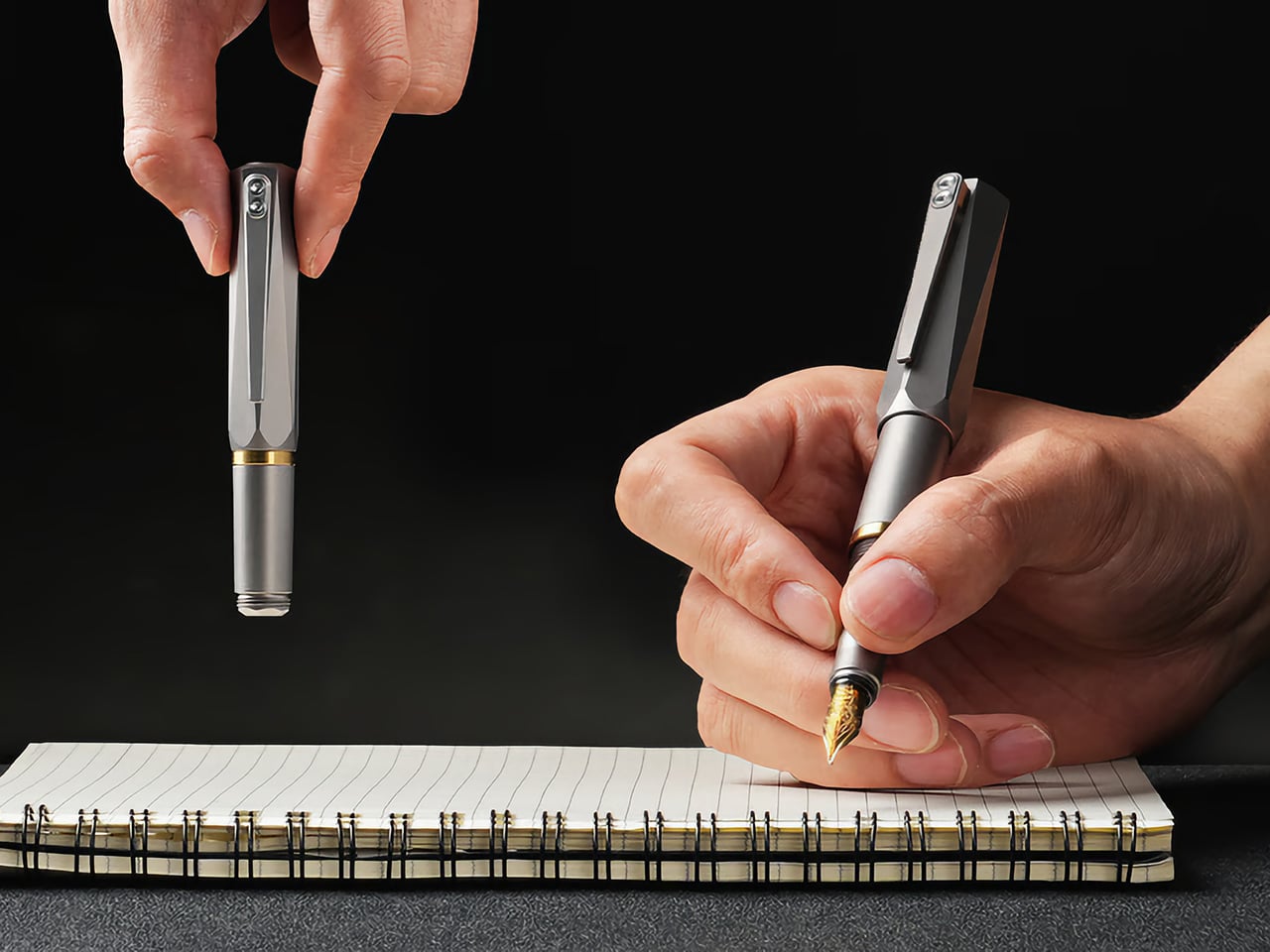

Fountain pens built for everyday carry usually ask for a compromise somewhere, either in size or in durability. Lumink’s titanium pen avoids both by folding down to a stubby 3.8 inches and extending to a full 5.51 inches when the threaded rear section is twisted open. The body is machined from Grade 5 titanium, the same alloy used in aerospace and orthopedic implants, which makes it harder than steel while staying close to half the weight.
A German Schmidt nib anchors the writing experience, a proven component used across pens far more expensive than this one. An airtight threaded seal keeps the nib isolated from the ink reservoir during transport, solving the leaking problem that’s kept most people from carrying fountain pens daily. For a man who already owns a good pen, this is the one built to outlast him.
What we like:
- Grade 5 titanium construction is genuinely harder than steel while remaining lightweight
- Airtight threaded seal solves the real-world leaking problem of carrying a fountain pen daily
What we dislike:
- The protective leather sleeve isn’t included in the base price.
7. Unfiltered Titanium Whiskey Glass: Drinkware Built From the Same Material as His Watch Band


Rounding out the drinkware is a titanium whiskey glass, currently listed at $90 with only a handful of units available. The product listing is sparse on construction details beyond its material and price, so treat this as a rare entry defined more by scarcity and material choice than by a long feature set.
What we can confirm is straightforward: it’s a whiskey glass made from titanium rather than crystal or standard glass, priced at $90, and currently in a limited drop. For a man who already has a cabinet of proper glassware, the appeal is largely owning a piece made from a material his other glasses aren’t.
What we like:
- Titanium construction sets it apart from the crystal and glass options already in most bar carts
- Limited availability gives it the same scarcity appeal as a proper collectible
What we dislike:
- The product listing offers very little detail on construction, capacity, or finish
8. TiCal Pro 2.0: The Caliper That Finally Fits in a Pocket
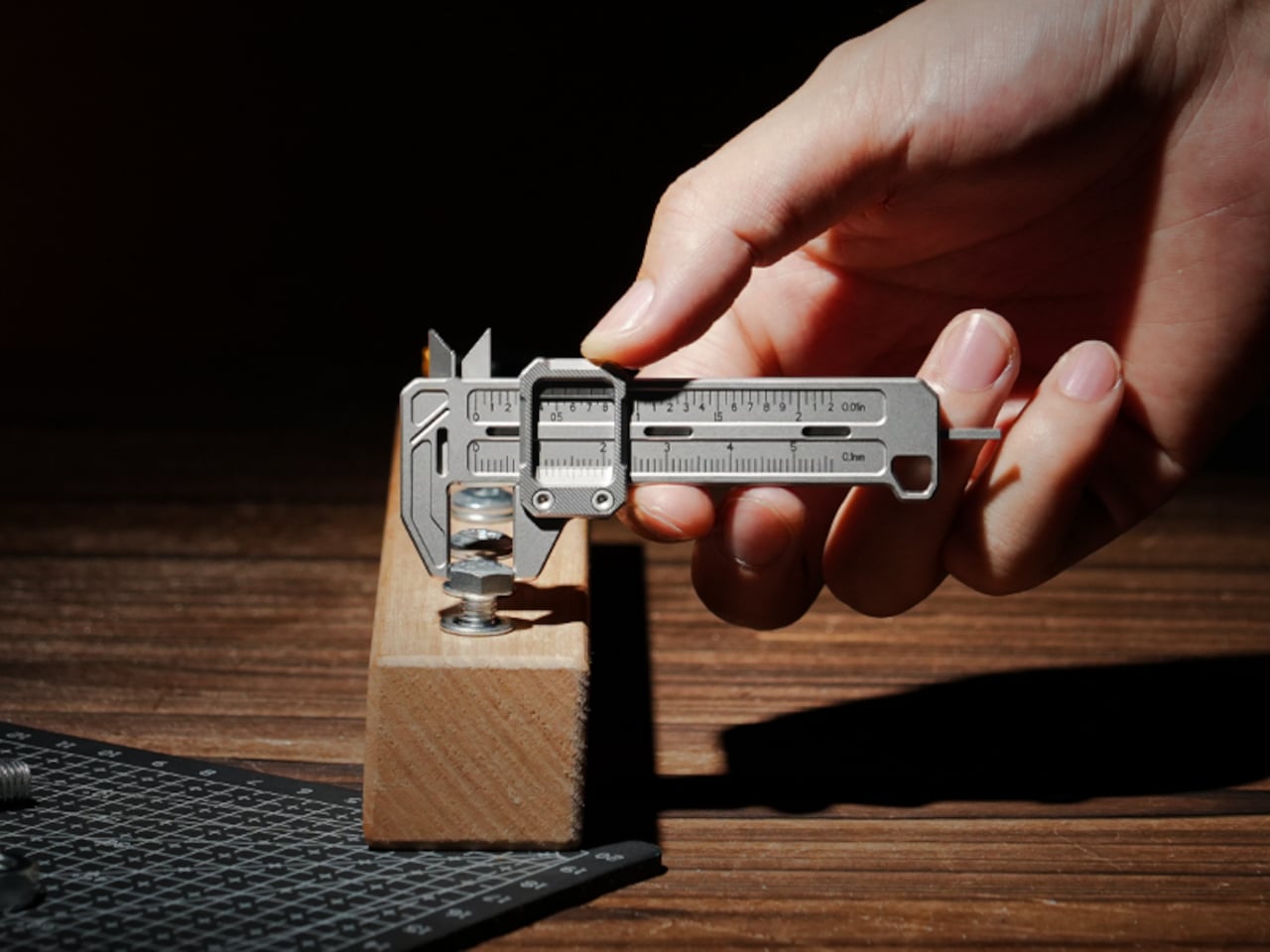
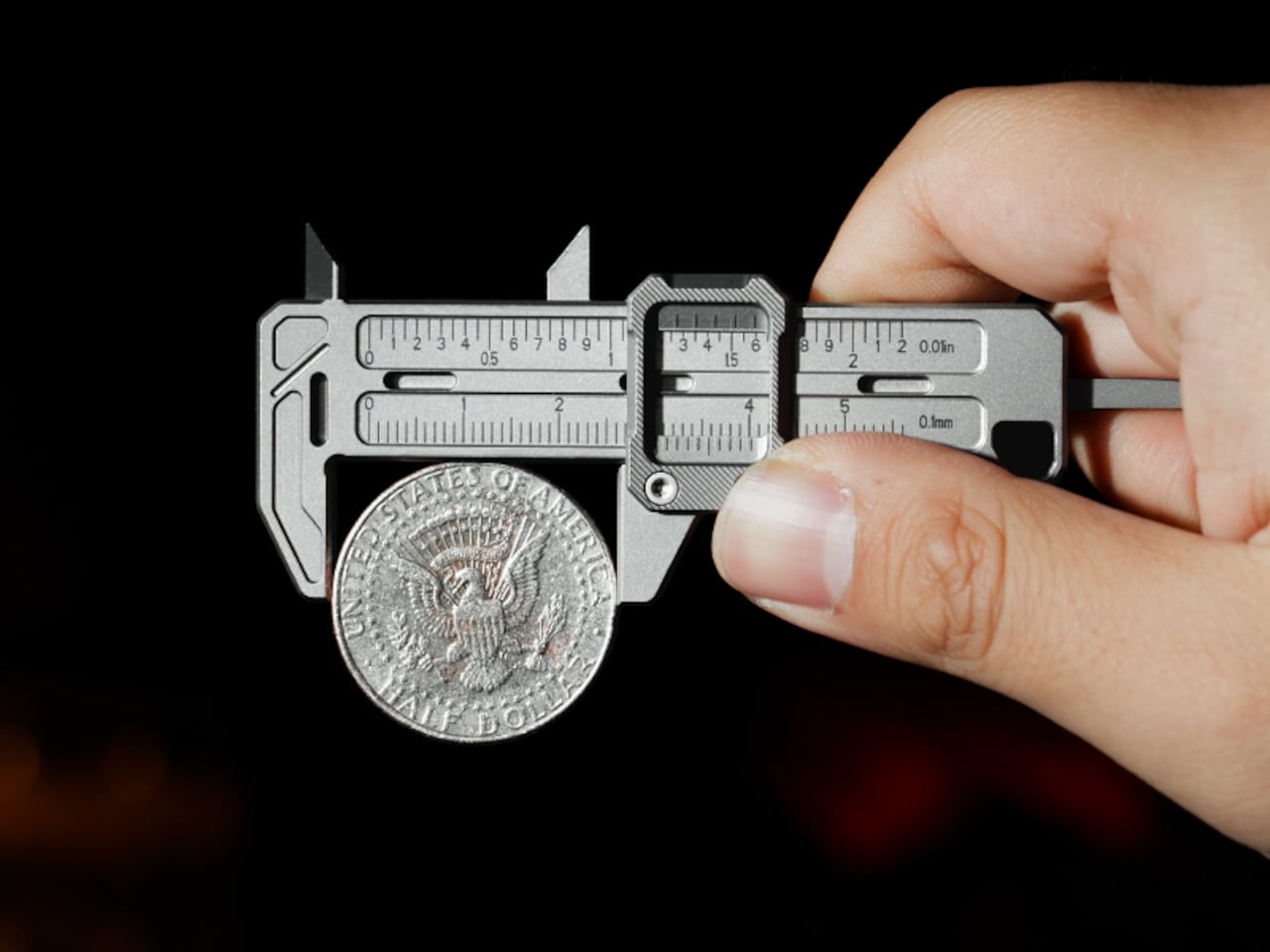
The EDC community is particular about what earns a spot in a pocket, and accurate measurement has historically stayed a workshop job. A full-size caliper lives on the bench. Everything else is guesswork. TiCal Pro 2.0 closes that gap with a titanium pocket caliper built for genuine vernier precision, with jaws and a depth rod machined as integral parts of a single frame rather than bolted-on afterthoughts.
Its dual-scale system shows inch and millimeter readings simultaneously, which removes the mental math that trips up anyone switching between metric drawings and imperial hardware. At 3.37 inches and just 37.6 grams, it clips to a keychain or hangs as a pendant without ever feeling like dead weight. For the man who already owns precision tools, this is the one that finally fits where the others don’t.
What we like:
- Dual-scale vernier system reads inches and millimeters simultaneously, down to 0.01-inch and 0.1mm resolution
- Grade 5 titanium body plus a self-lubricating POM ball rail keeps the slide smooth without oil or grinding
What we dislike:
- A full-size caliper still offers more range; this one is built for pocket moments, not bench work
The Only Problem Left Is Choosing
Eight objects end up covering more ground than their shared “gift” label suggests. A concept render worth tracking: leather built by hand across the world, titanium shaped into a watch band, a pen, a drinking glass, and now a precision tool small enough to forget you’re carrying. A television rebuilding how color gets made sits right alongside it, proof that this list isn’t chasing one material or one price point.
What ties the eight together isn’t the tag or the finish; it’s that every piece was designed by someone trying to fix a specific, unglamorous problem rather than just add another option to a crowded shelf. That’s usually the actual definition of a gift worth giving to someone who doesn’t need anything.
The post 8 Best Gifts for Men Who Have Everything in 2026 first appeared on Yanko Design.