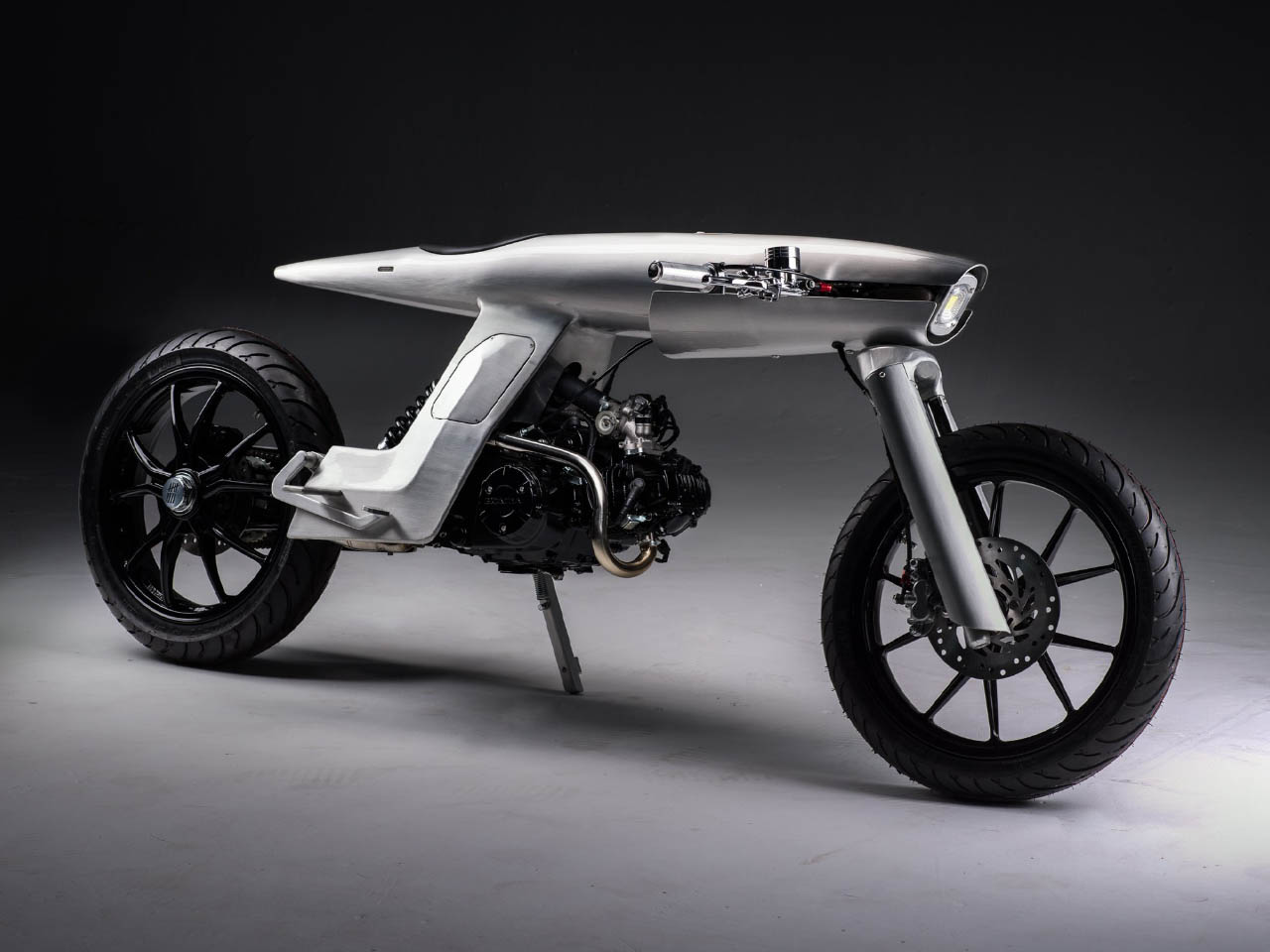
How does the greatest Ducati of the last decade get built four thousand miles from Bologna, in a workshop most people have never heard of? Ducati’s home turf is basically hallowed ground, all red paint and Borgo Panigale badges and a hundred years of racing pedigree breathing down every design decision. Bandit9 clearly did not get the memo, and thank god for that. The Saigon based atelier, founded by former creative director Daryl Villanueva, builds bikes the way a sculptor builds a monument, one hand shaped panel at a time, with zero interest in playing by anyone else’s house style. Their take on the Ducati 821 takes a stock Monster and turns it into something that somehow feels more Ducati than the actual Ducati. It is the kind of move you only get to make when you have absolutely nothing to lose.
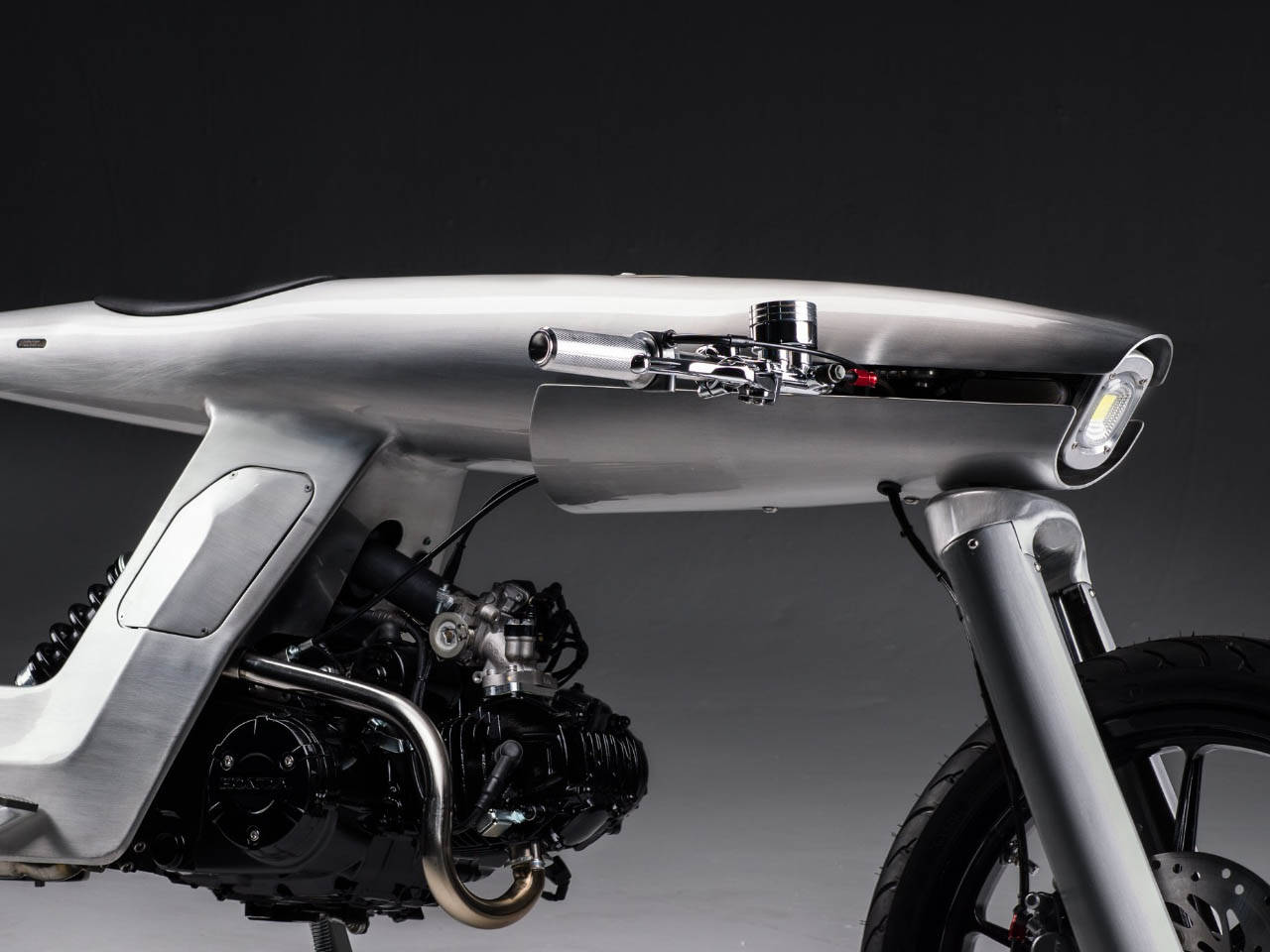
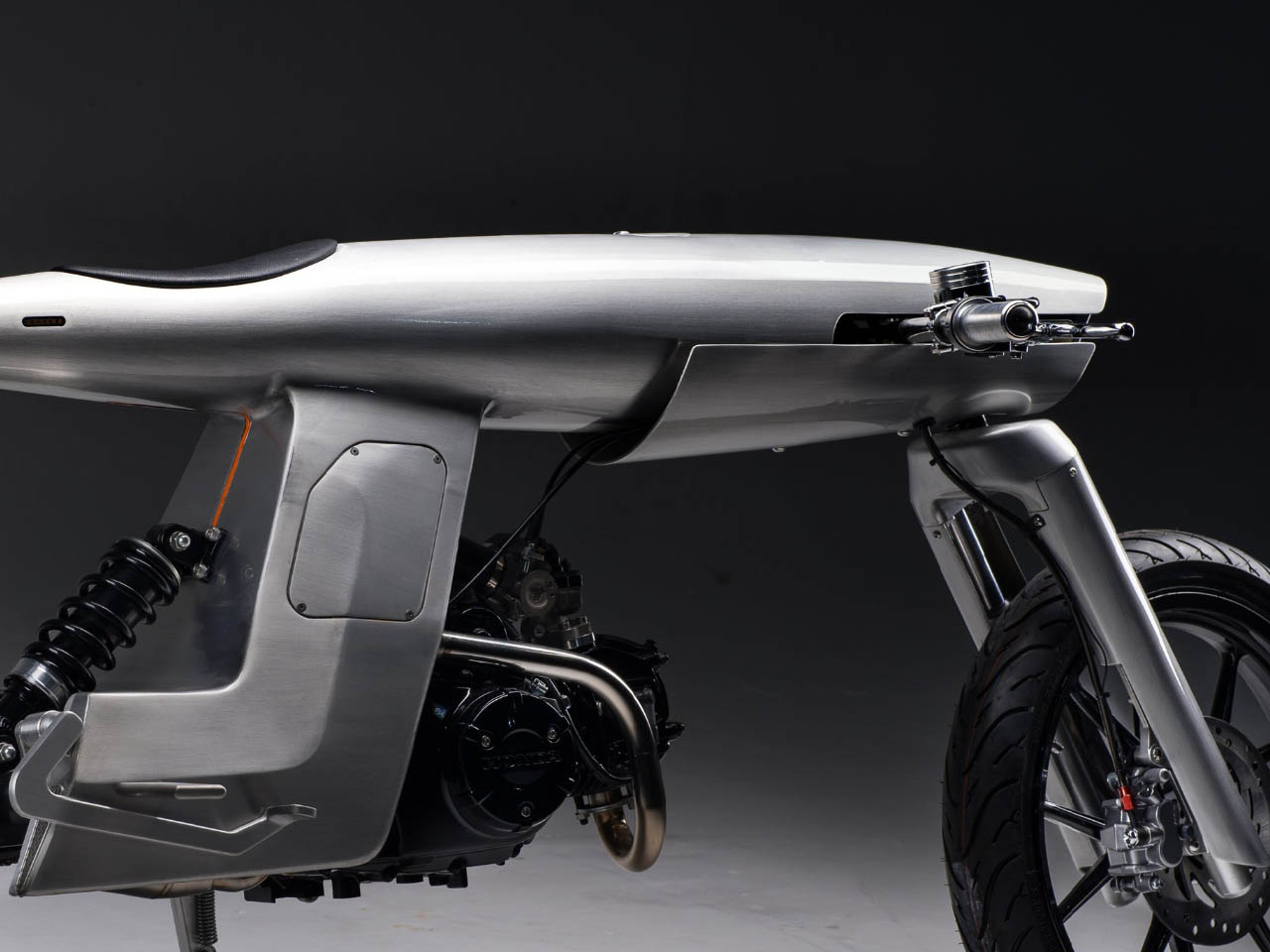
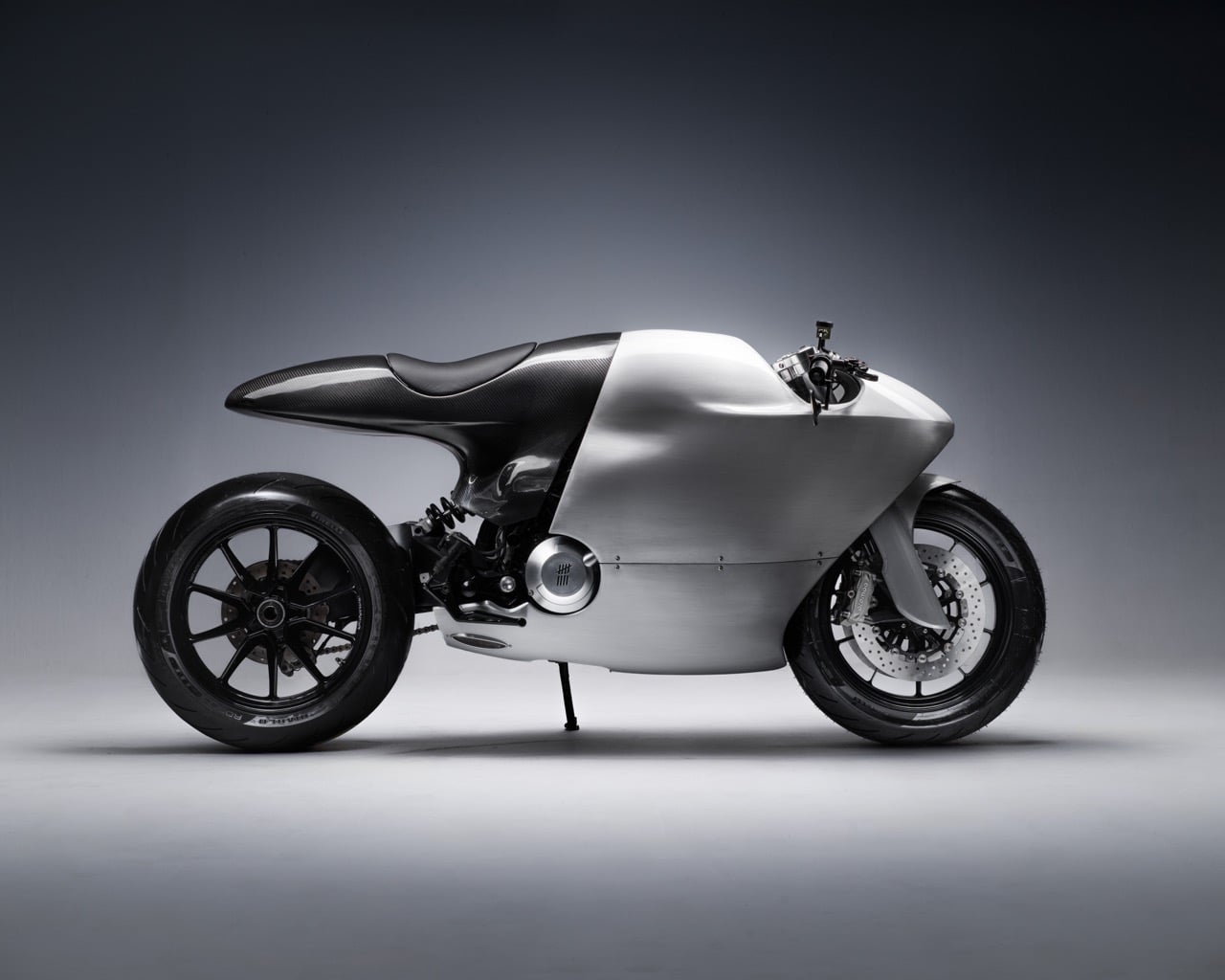
Only nine of these were ever going to exist, and eight of them are already gone, which means we are looking at the very last one on the shelf. Bandit9’s resume includes permanent spots in the collections of MoMA and the Petersen Automotive Museum, so this is not some garage tinkerer getting lucky once. Underneath the bodywork sits Ducati’s own 821cc Testastretta L-twin, 110 horsepower, a 3.3 second sprint to 60 mph, wrapped in a hand formed shell that splits clean between brushed aluminum and gloss carbon fiber. At $49,900 for the last unit, you are buying the argument as much as the motorcycle.
Designer: Bandit9
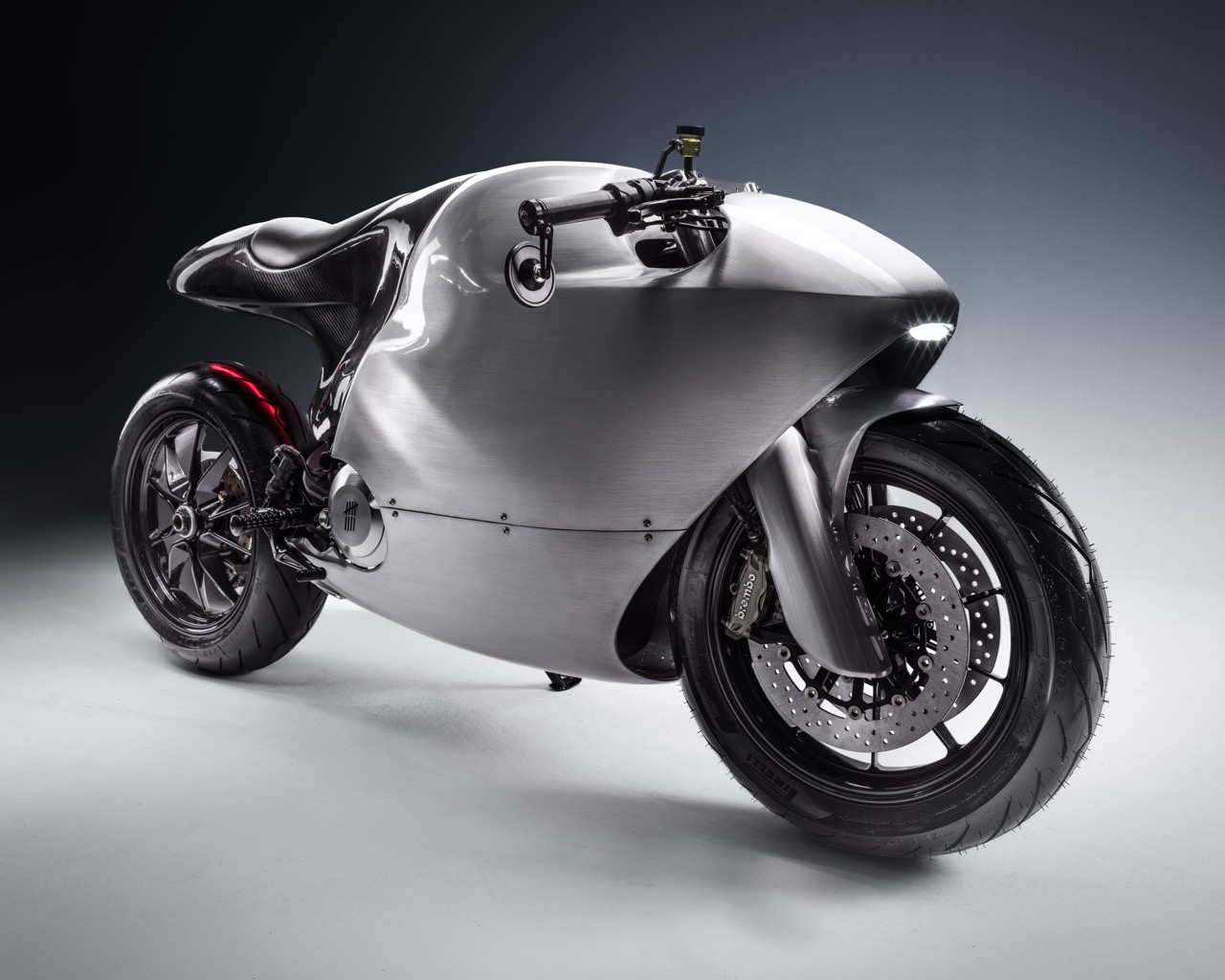
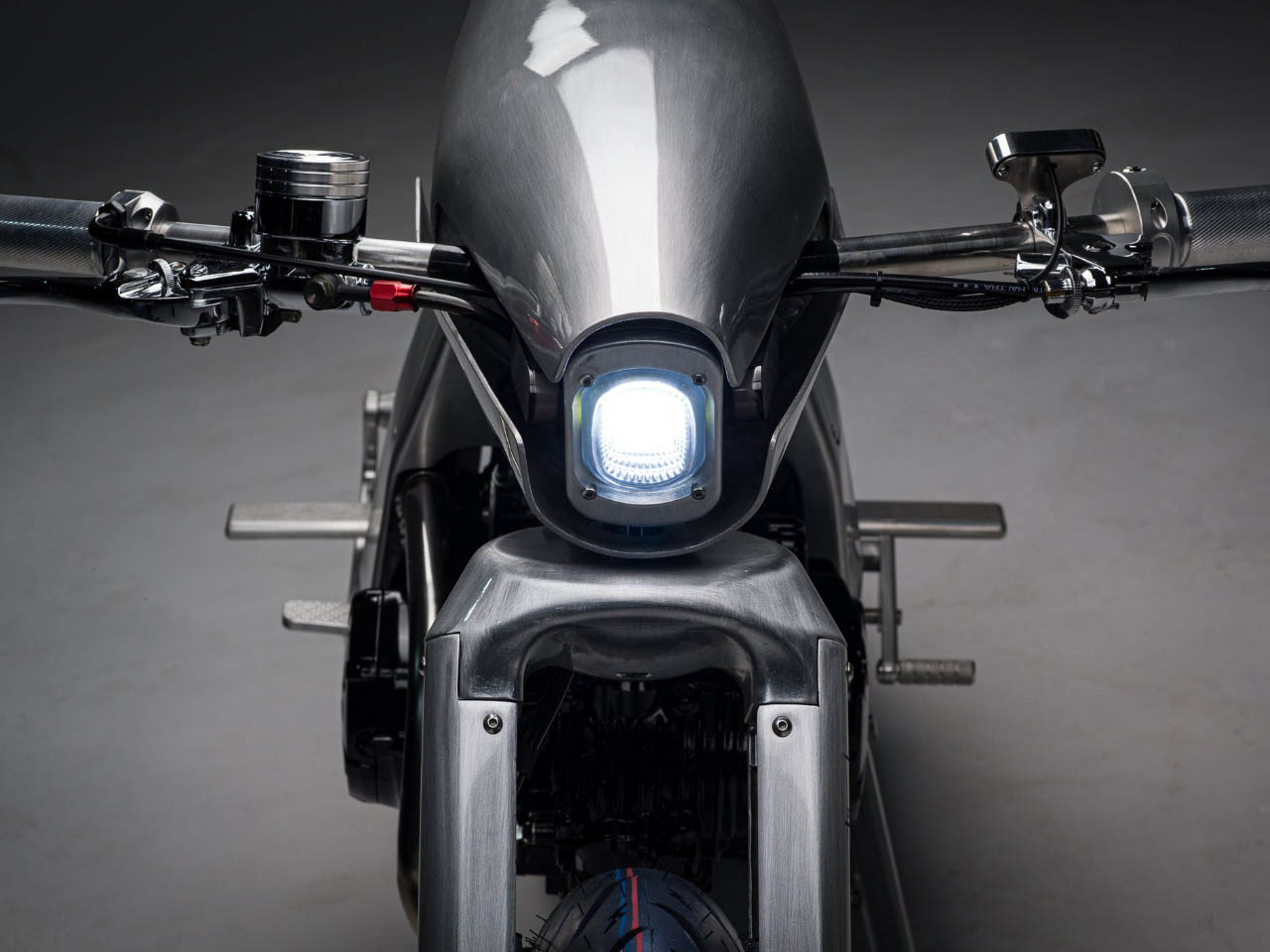
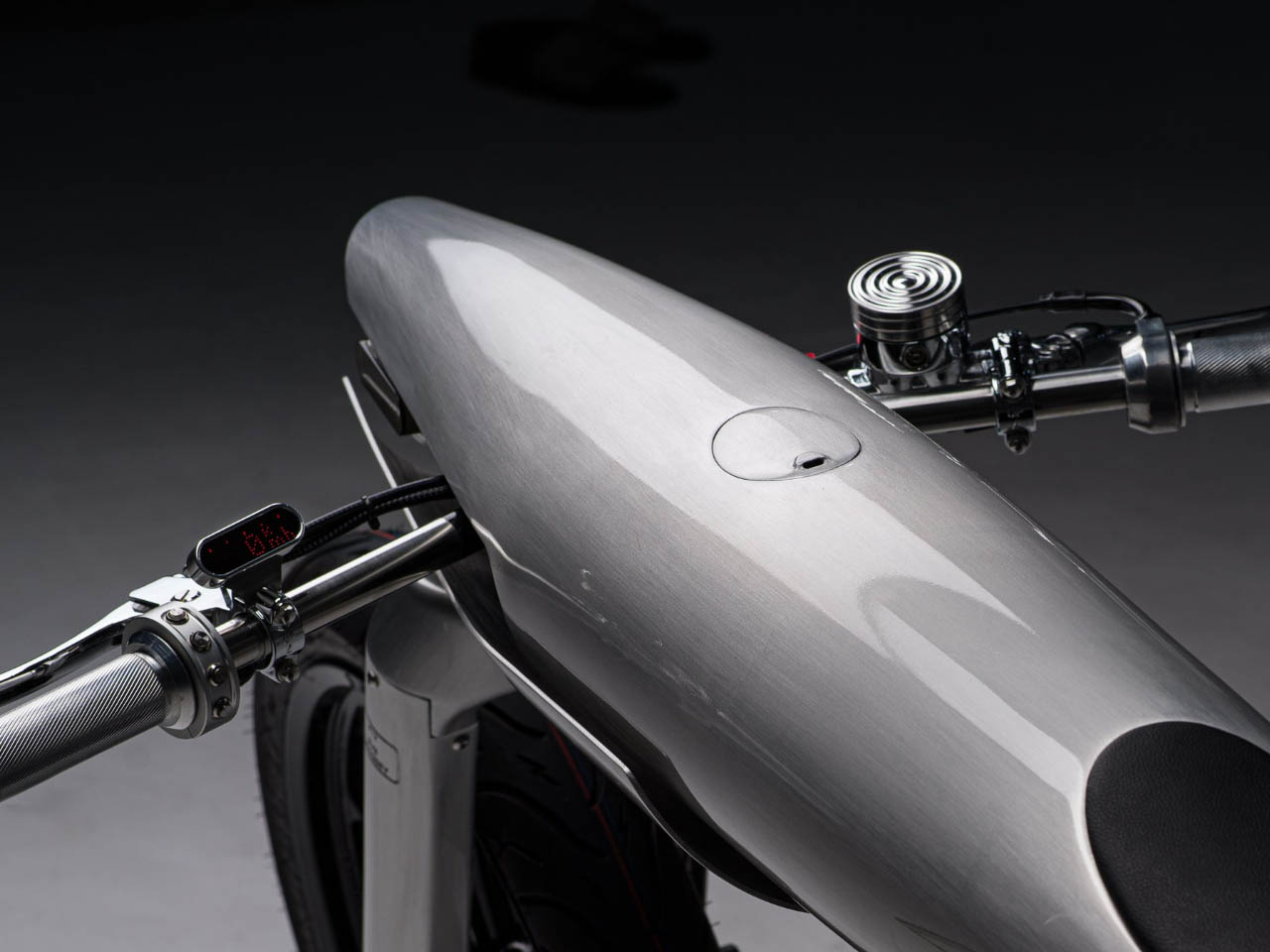
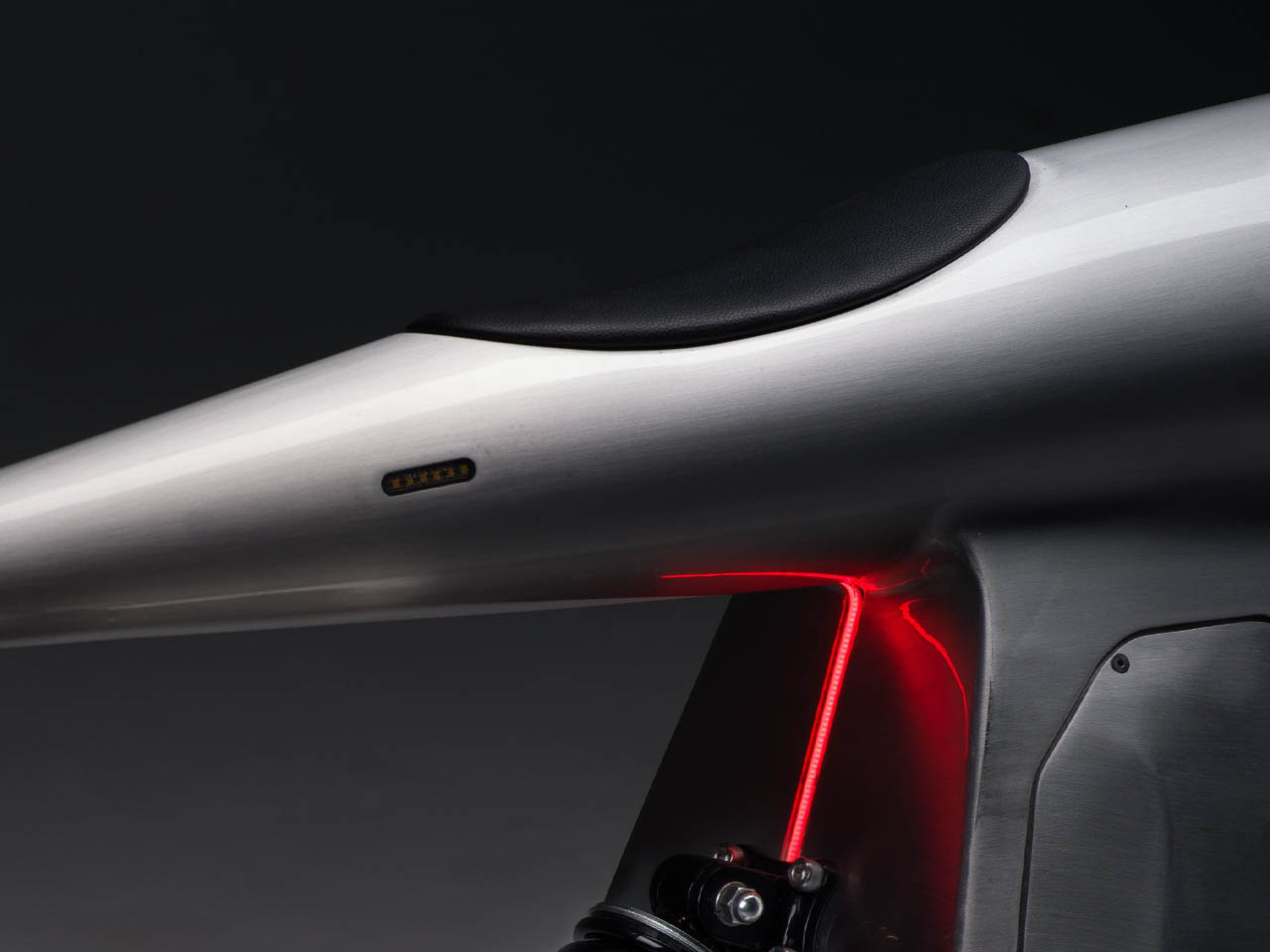
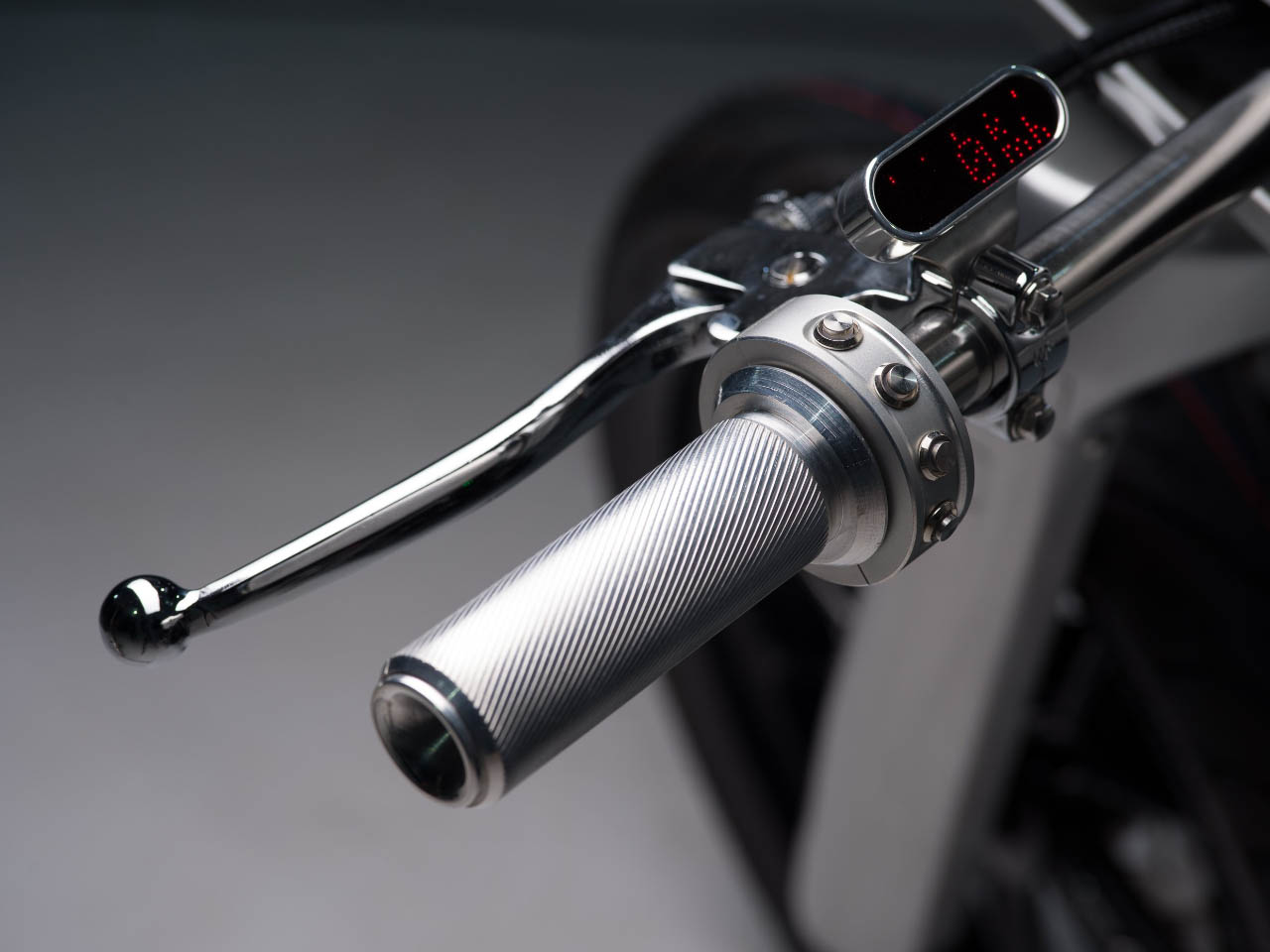
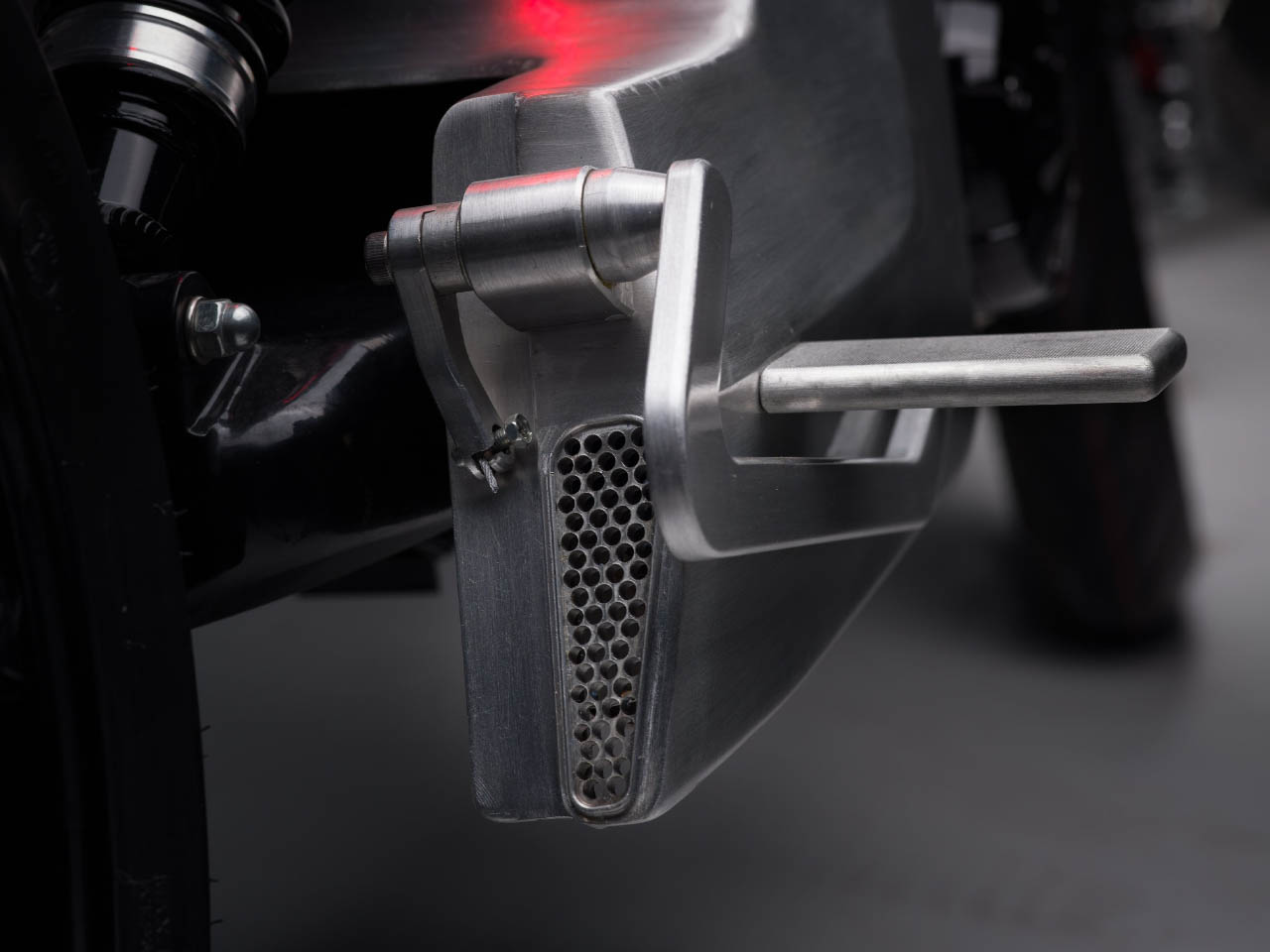
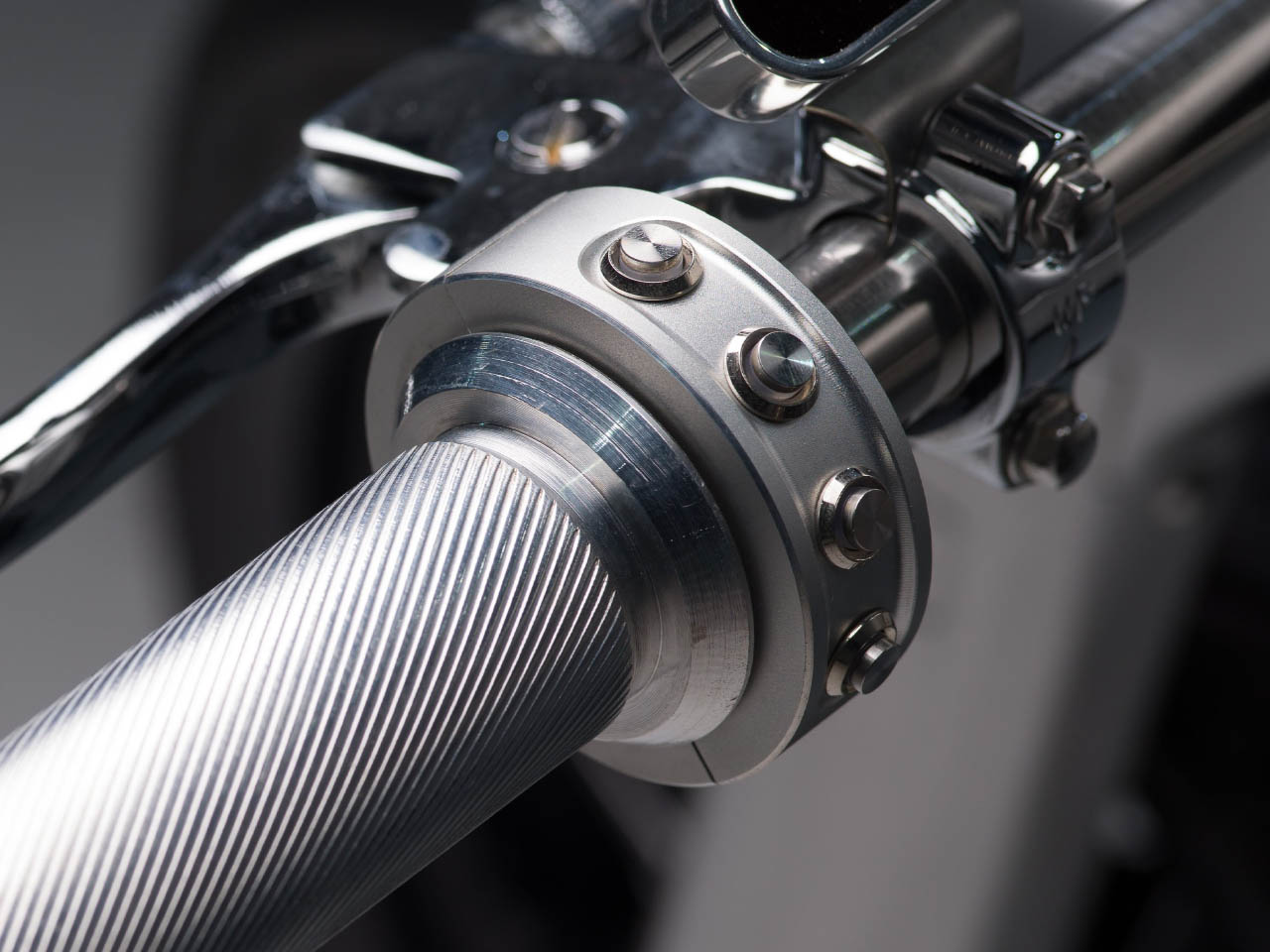
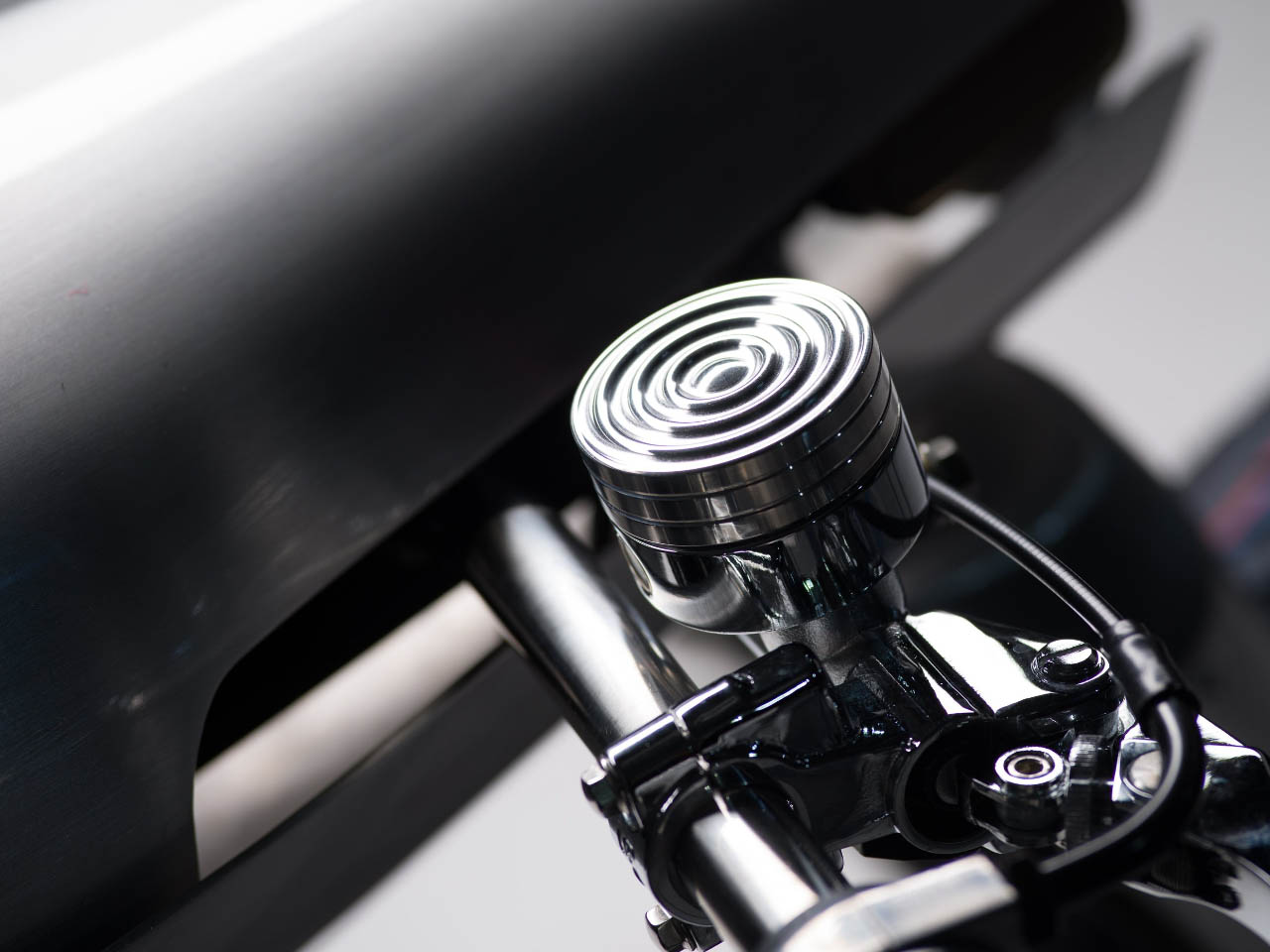
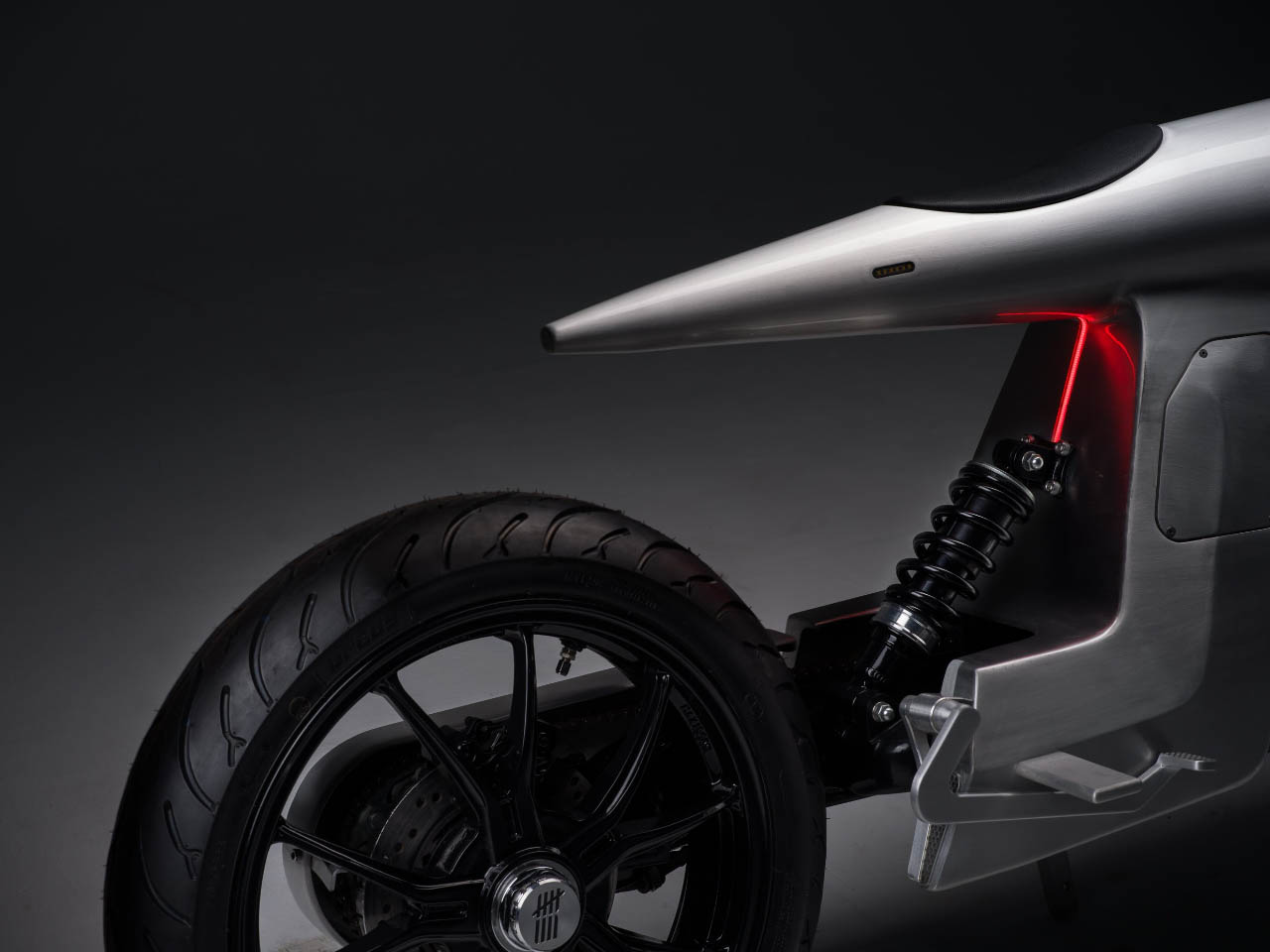
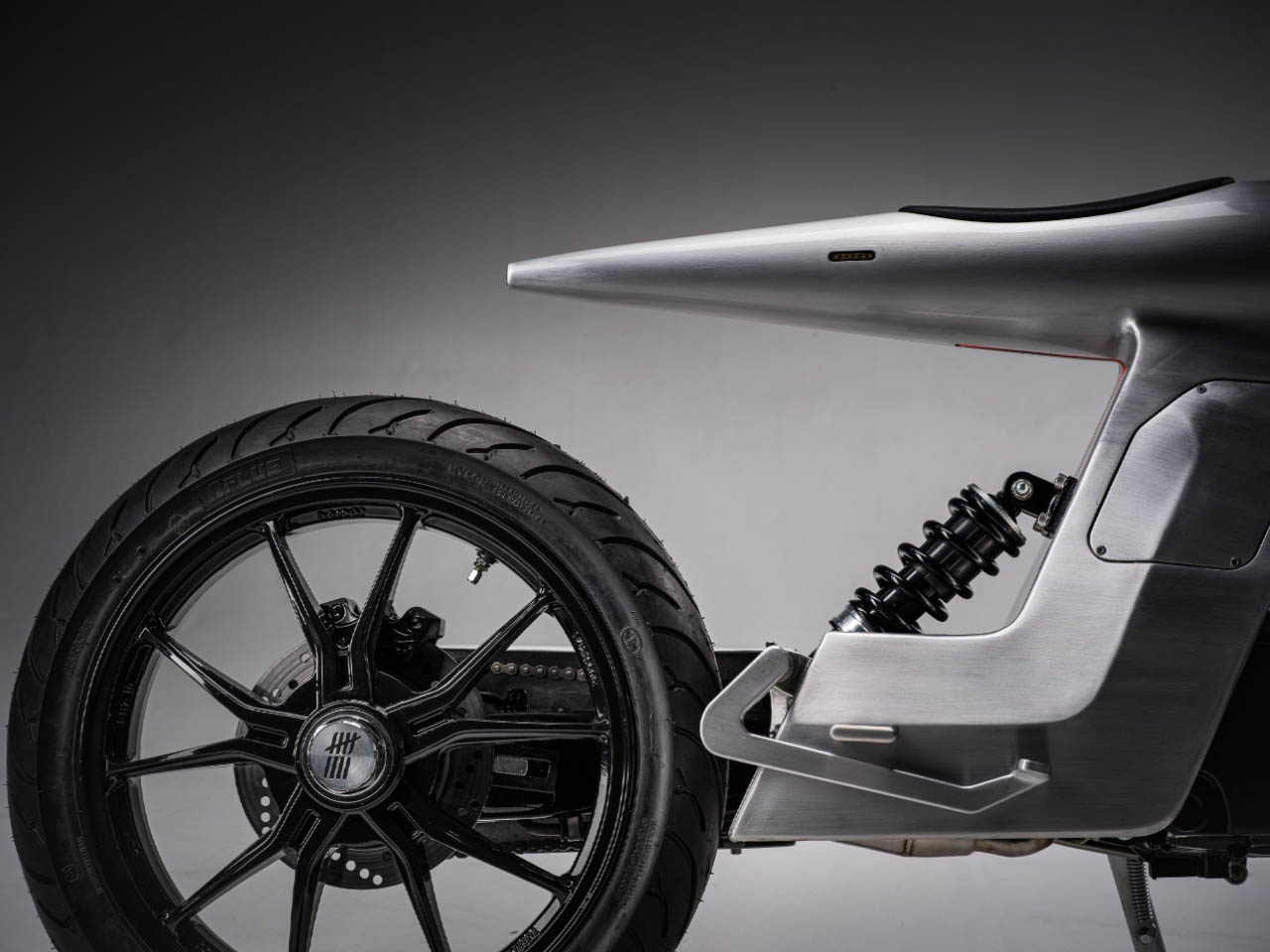
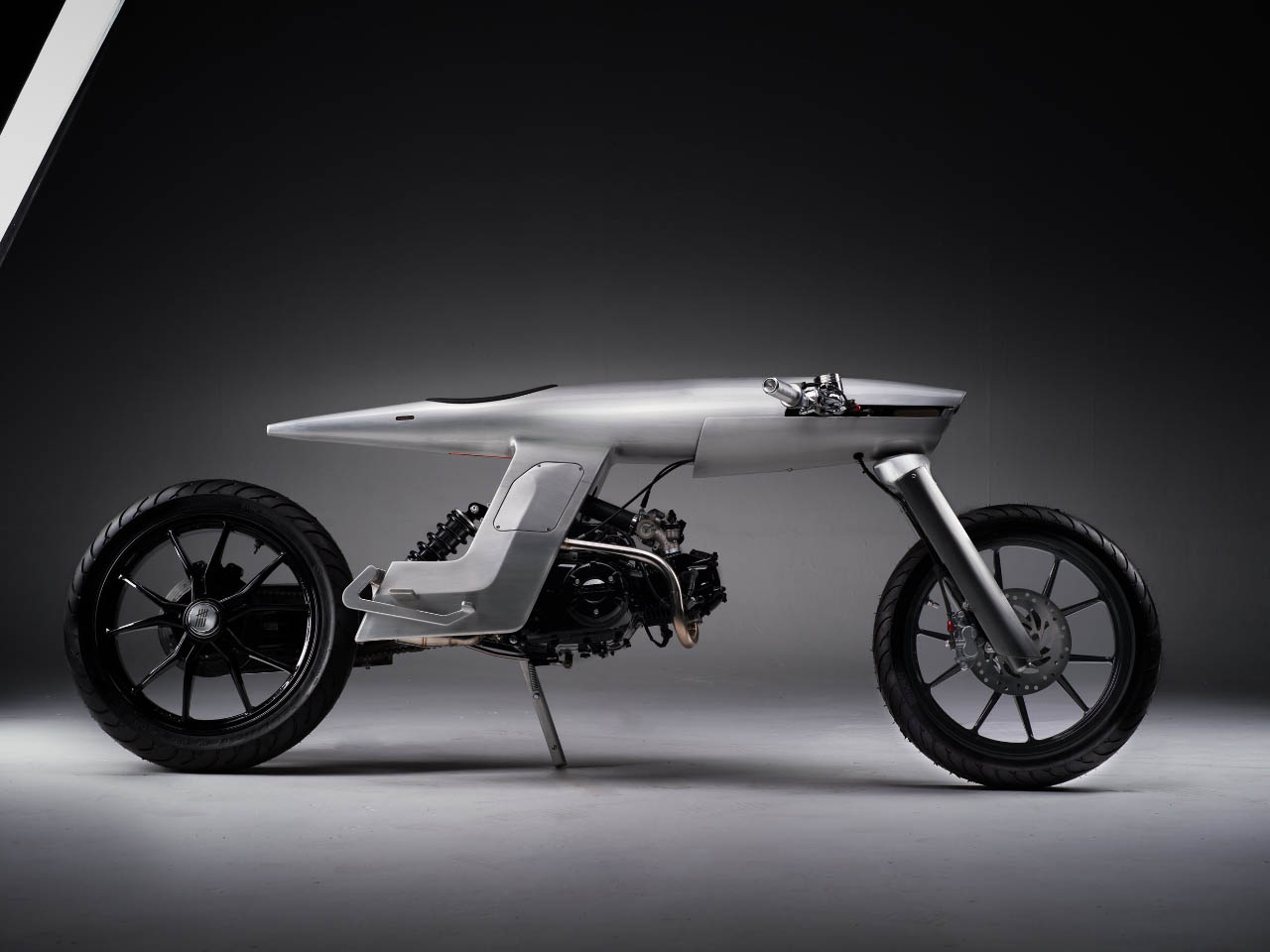
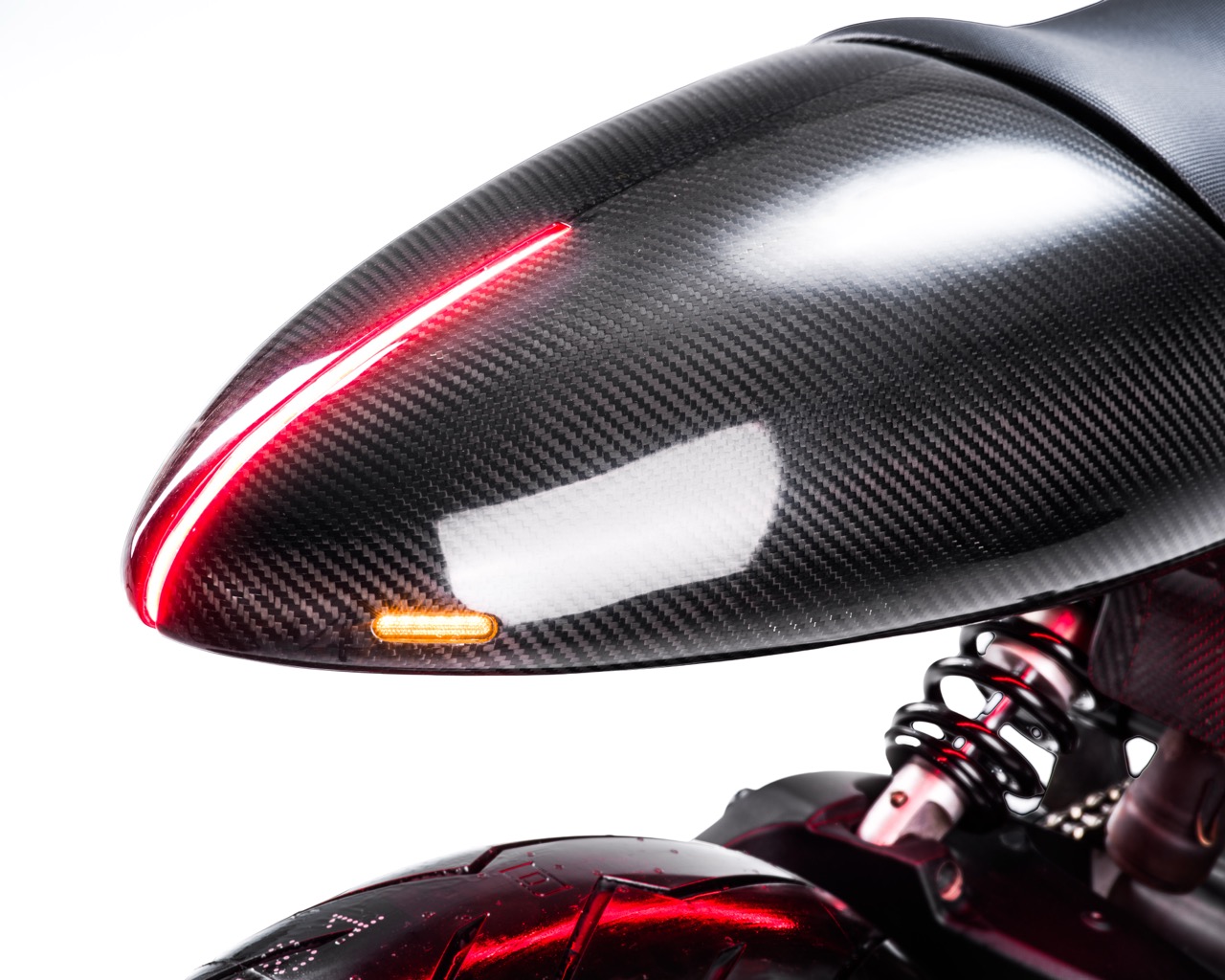
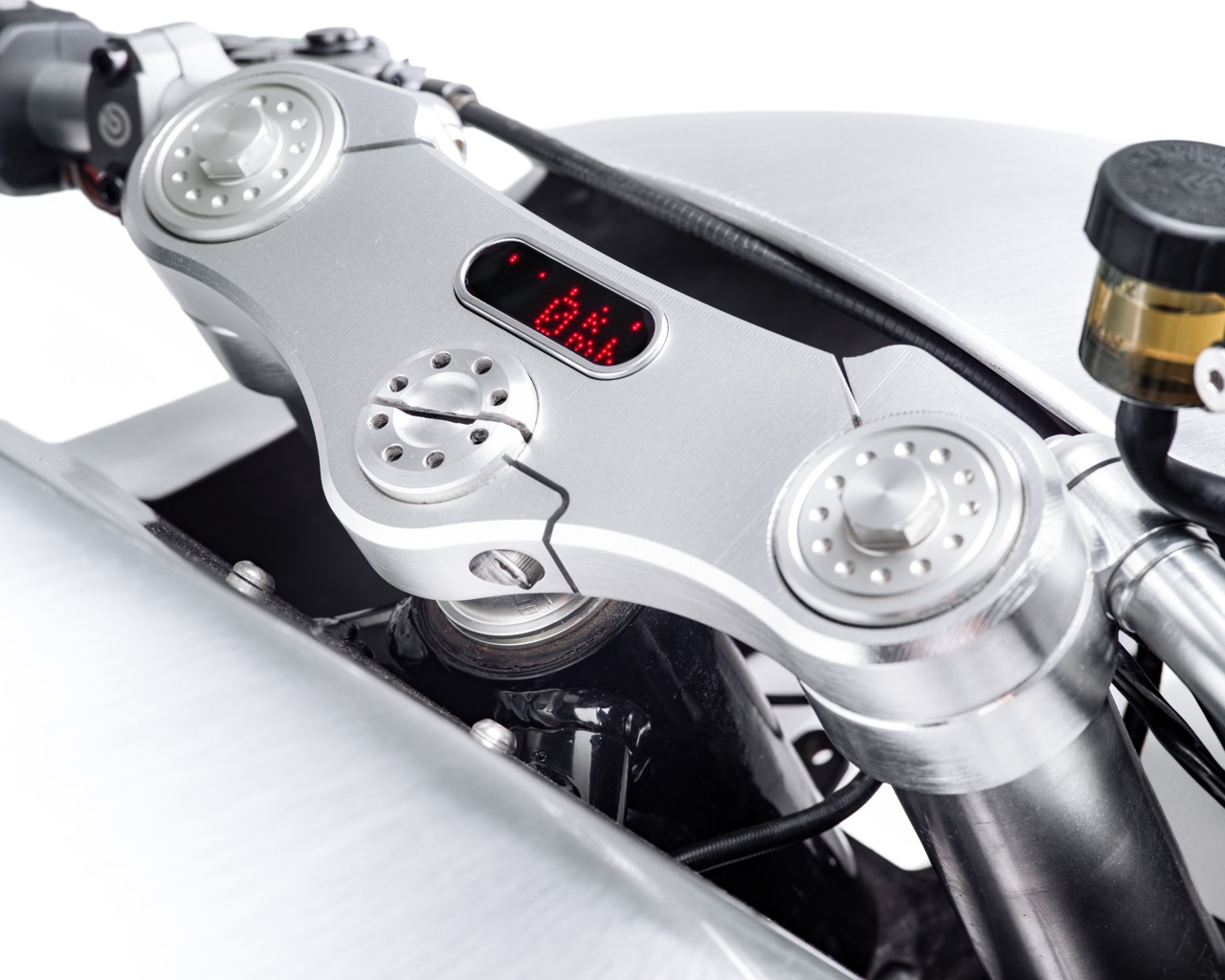
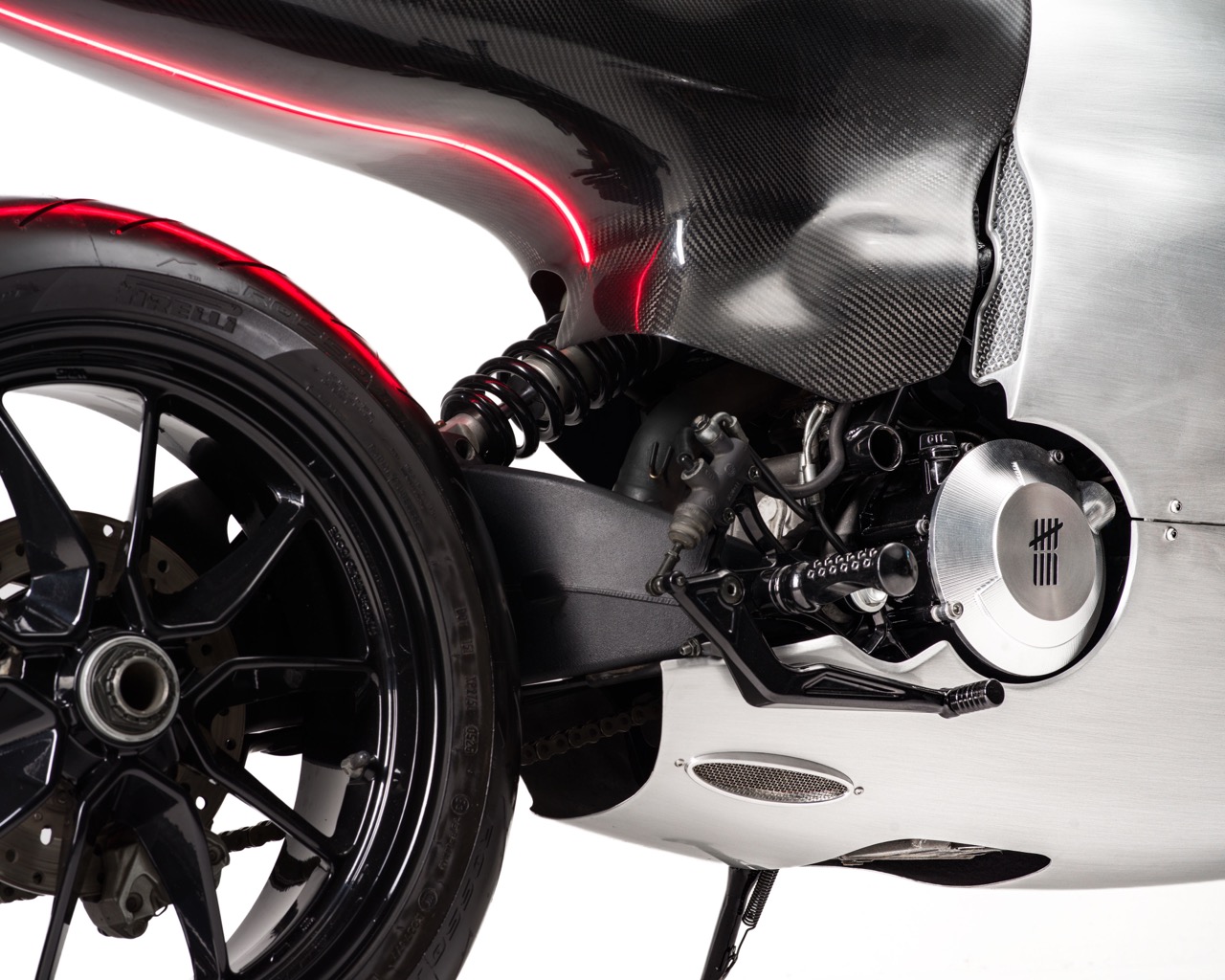
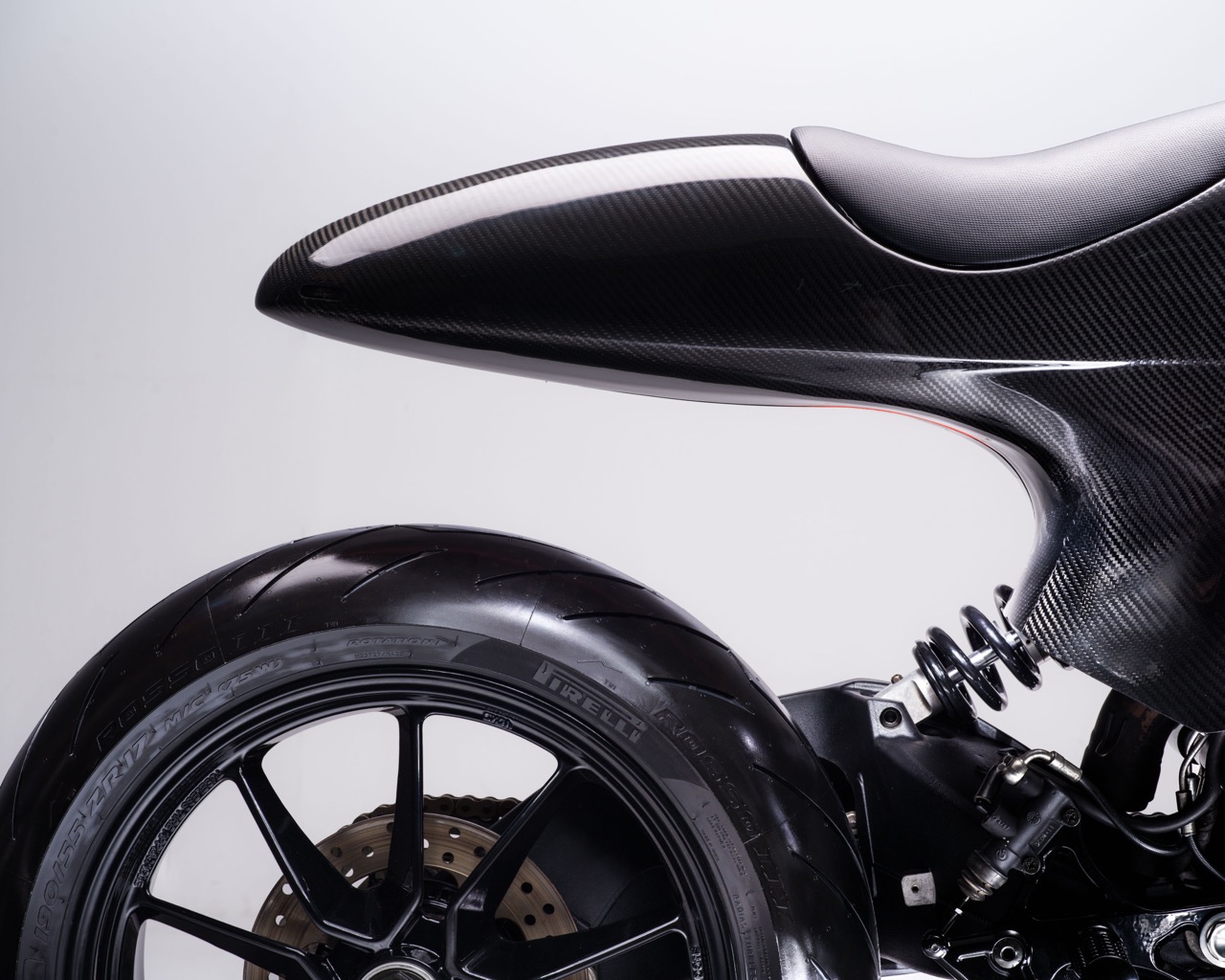
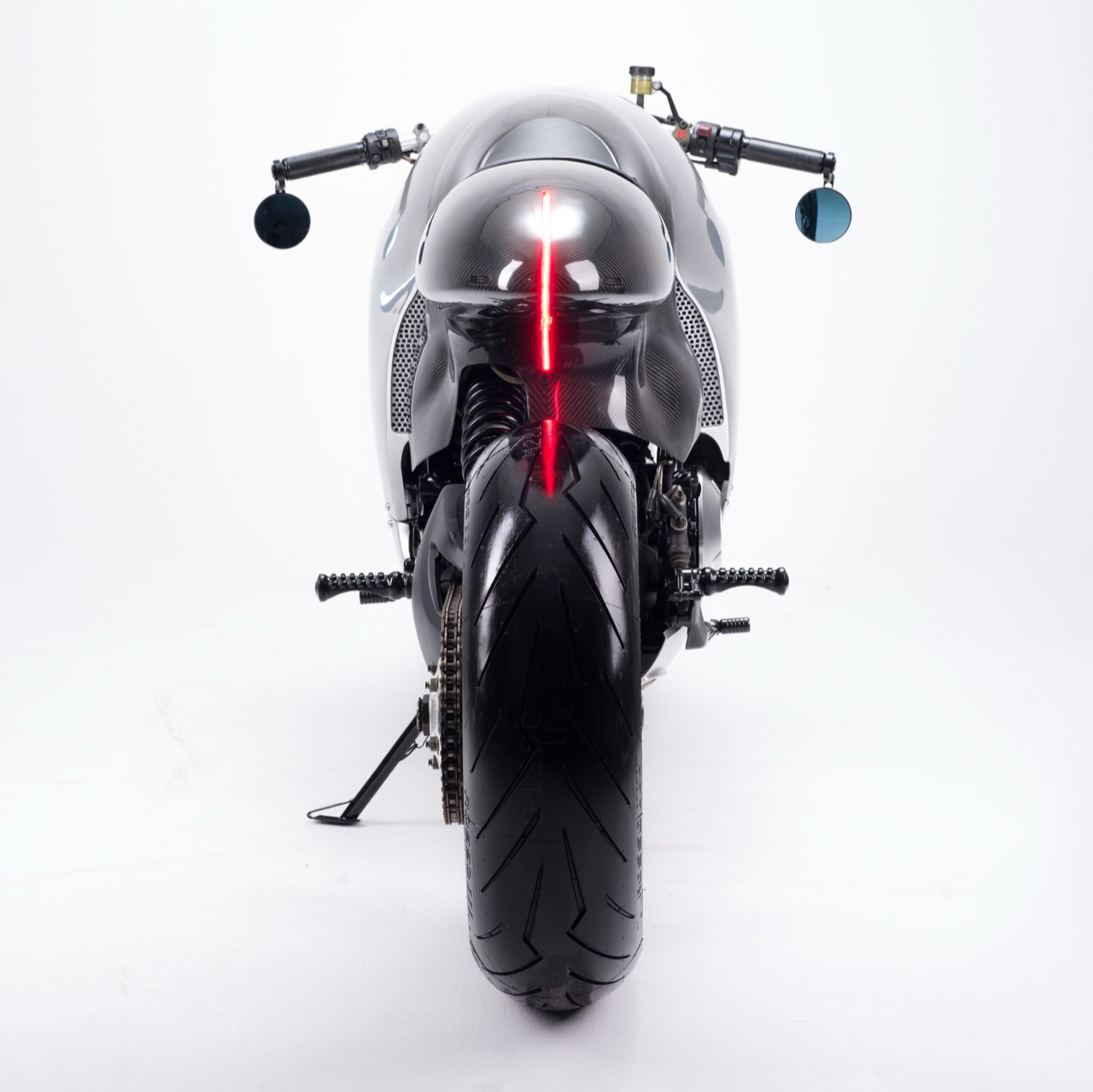
The material split down the middle grabs you first, and while it looks cosmetic, it actually serves a functional purpose. Brushed aluminum wraps the nose, tank, and belly, while gloss carbon fiber takes over the tail section, and the seam between the two materials tracks the actual bodywork geometry instead of sitting on top of it like a paint job. That tail section deserves its own moment, a bullet nosed unit with an LED strip tracing the ridge line into a tucked amber turn signal, wrapped in exposed weave carbon that catches light like a jewel. Flip to the cockpit and Bandit9 sweated even the smallest details, milling a top yoke in aluminum with a tiny embedded LED trip readout nested between the fork caps. Most custom shops would leave that space blank or bolt on an aftermarket gauge. Bandit9 machined a bespoke solution instead, because subtlety does not appear to be part of their vocabulary.
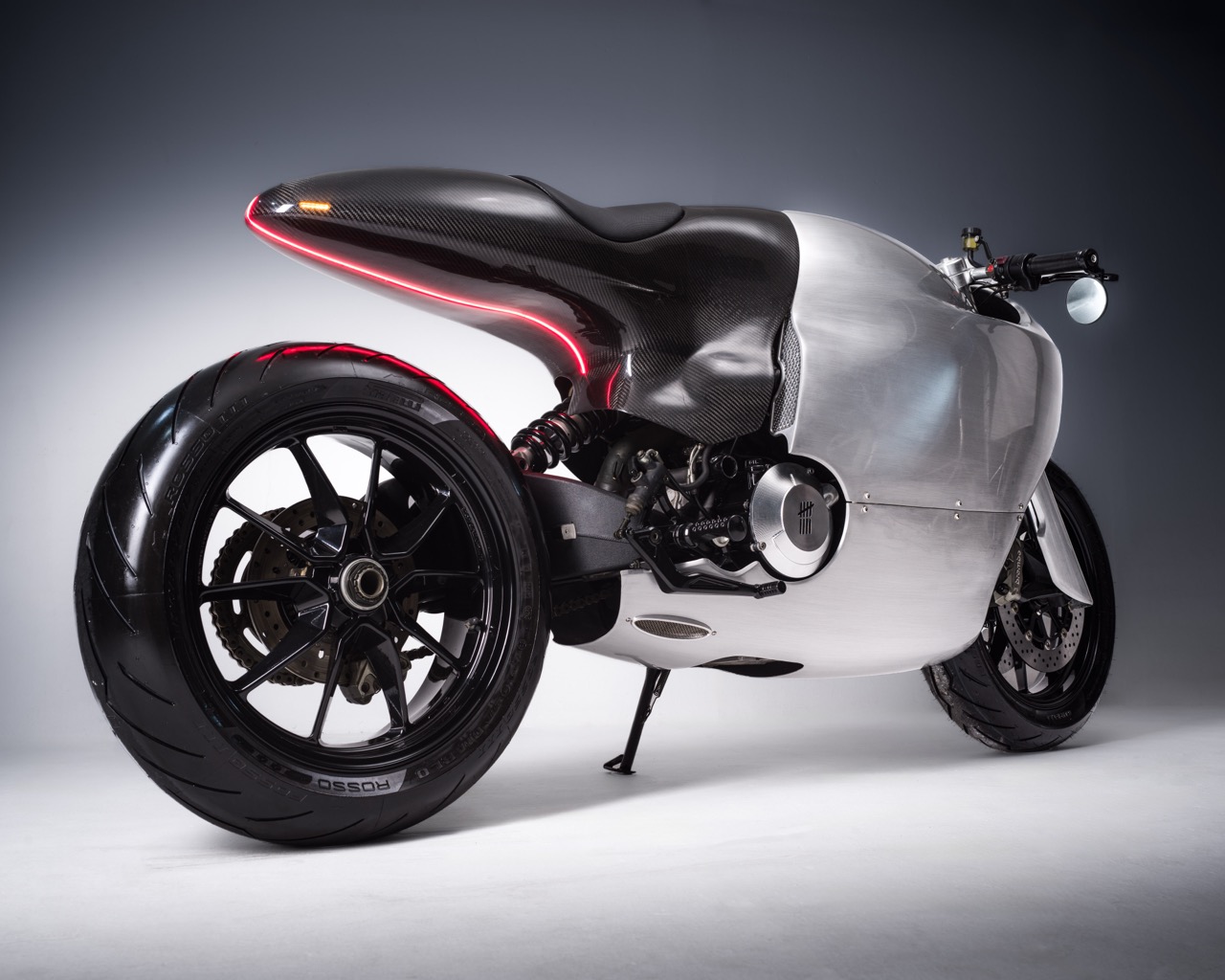
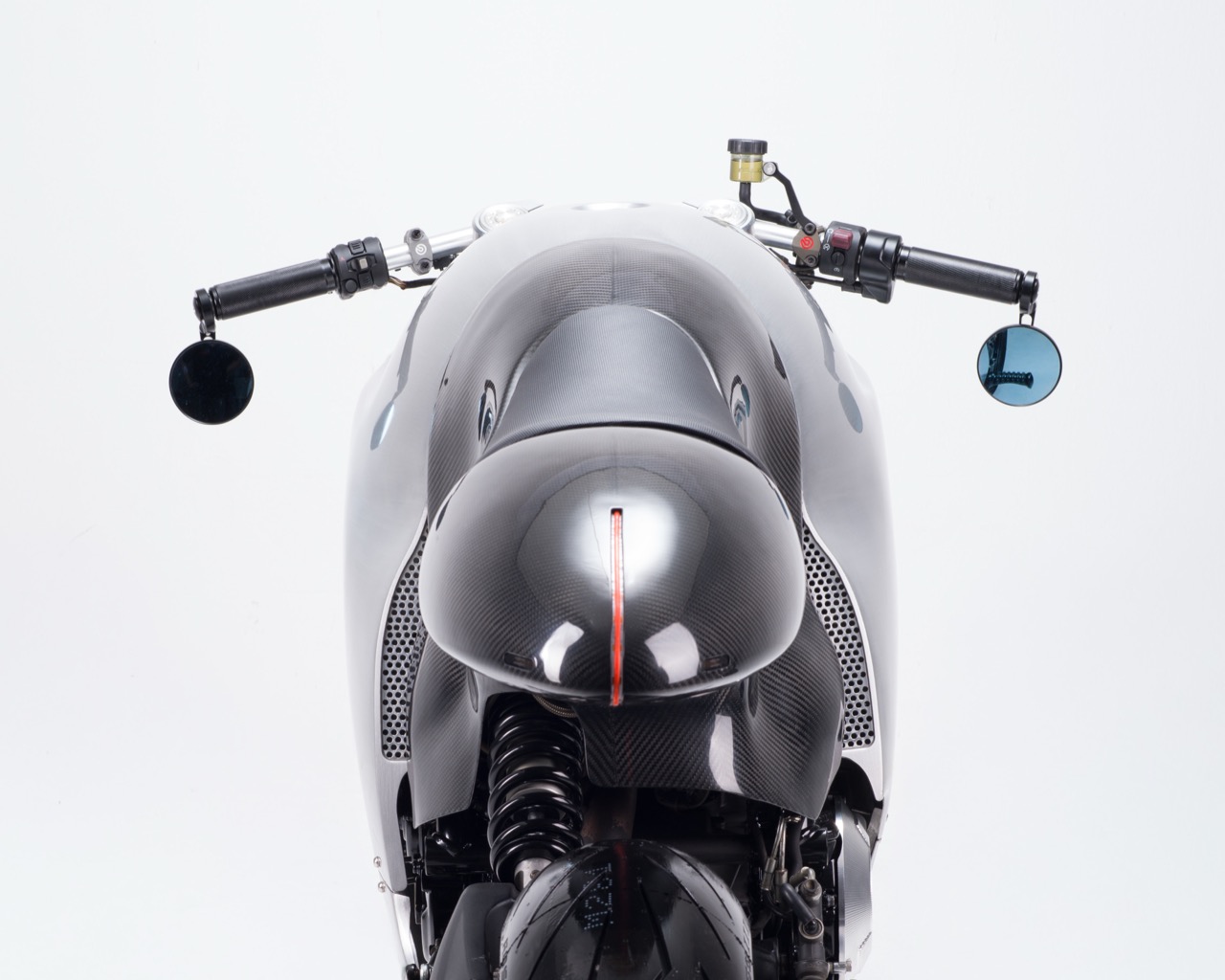
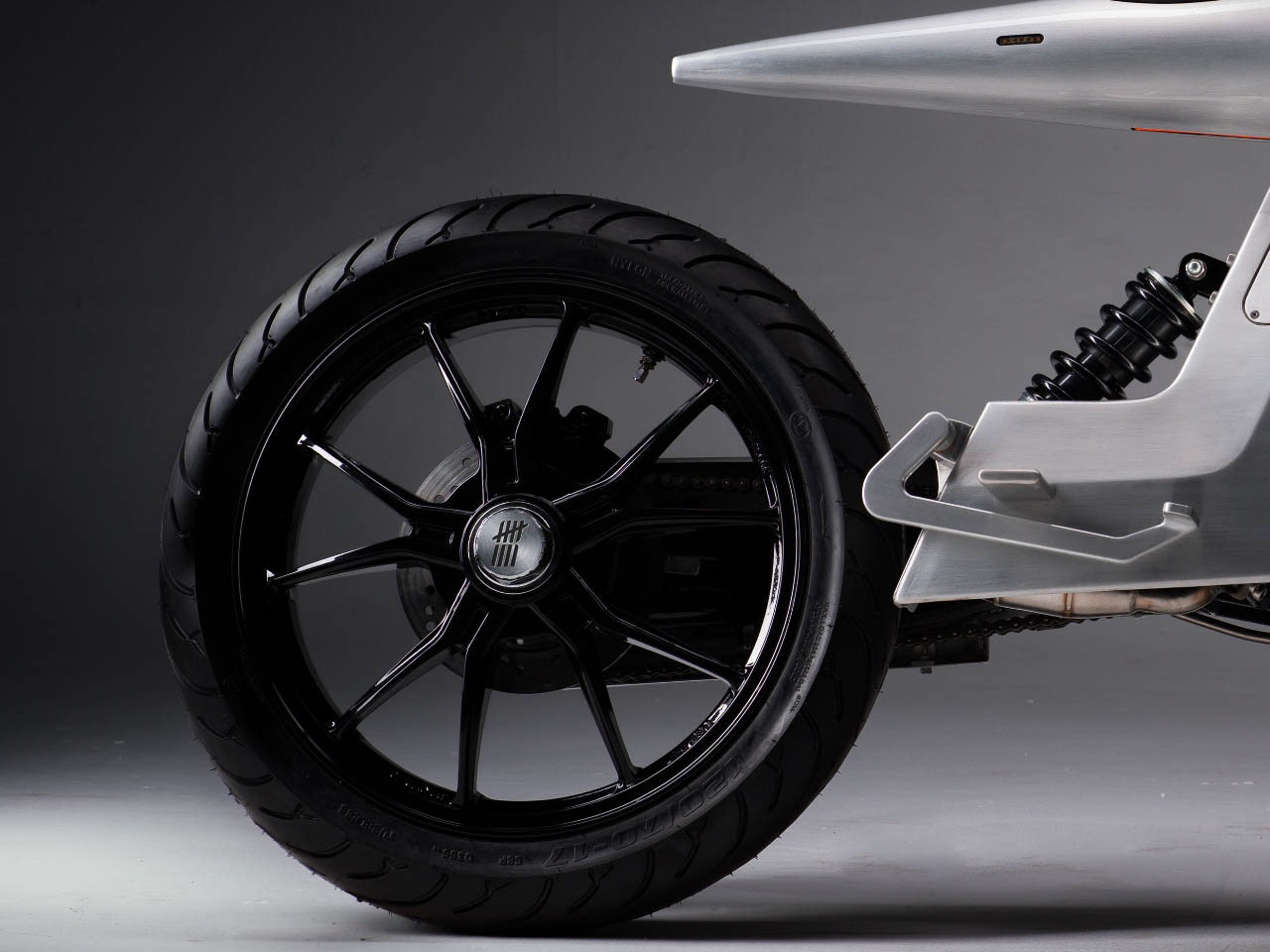
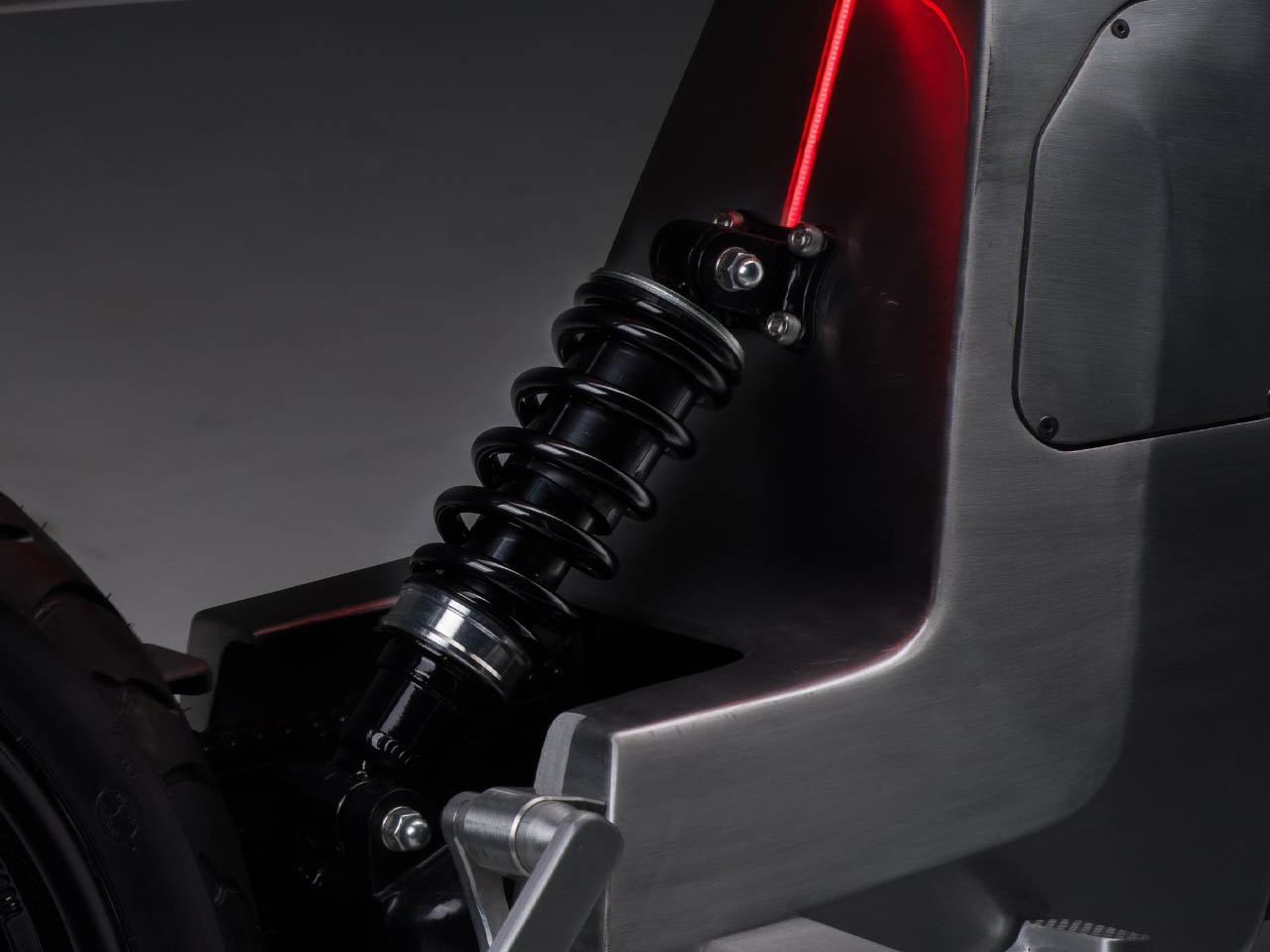
Ducati’s own 821cc Testastretta 11 degree L-twin sits underneath all that hand formed metal, still producing 110 horsepower and 65.8 ft-lb of torque, enough to send the bike from 0 to 60 mph in about 3.3 seconds. A custom tubular steel trellis frame carries the engine, paired with 43mm Sachs forks up front and an adjustable Sachs monoshock out back, while dual 320mm Brembo monobloc calipers handle the stopping duties. None of that is particularly radical on paper, and that is the point. Bandit9 never touched the parts that make a Ducati go fast or stop hard, they only rebuilt everything around it by hand. No stamping press currently exists that can produce a single panel wrapping from the front cowl over the tank and down the body without a seam, so every curve on this bike got there because a person spent months shaping metal the way a watchmaker shapes a case. That is what craftsmanship actually looks like, no marketing spin required.
Nine of these were ever going to exist, and eight already have owners, so the math here is simple. Bandit9 has spent years building a reputation that includes permanent placements in the collections of MoMA and the Petersen Automotive Museum, putting them in rare company within the custom bike world, alongside names like Deus Ex Machina and Icon, but operating on a different plane of ambition entirely. Founder Daryl Villanueva, a former graphic designer and creative director, runs the Saigon based atelier less like a garage and more like a small design house that happens to build motorcycles instead of furniture or typefaces. At $49,900, the last unit is not cheap, but measured against months of hand labor and a production run that will never reopen, the number starts to make sense. Whoever buys it walks away with a working sculpture that also happens to be a genuinely quick motorcycle.
Ducati will keep building excellent motorcycles in Bologna, and nobody is arguing otherwise. But Bandit9’s 821 makes an honest case that great design does not need a postcode, a century of racing heritage, or a factory at all, just a workshop, a stubborn sense of craft, and someone willing to spend months getting a single curve exactly right. The last unit will sell fast, probably to someone who already owns a garage full of things most people only see in magazines. What happens after that is anyone’s guess, though I would not be surprised if Bandit9 is already sketching whatever comes next. For a company that keeps proving Bologna does not have a monopoly on great Ducatis, retirement does not seem to be part of the plan.
The post This ‘Liquid Metal’ Ducati 821 Was Built by Hand in Vietnam, and Only One Remains first appeared on Yanko Design.