The Zipper Is the Button. Finally.

We’re used to devices and gadgets that have all complicated buttons and controls. But what if it wasn’t that way always? The gesture is almost embarrassingly simple. Pull a zipper open and sound plays. Pull it shut and the room goes quiet. No tapping a screen, no asking a voice assistant, no hunting for a button that somehow always ends up on the wrong side of the device. Just the same physical action you’ve been doing since you were old enough to dress yourself.

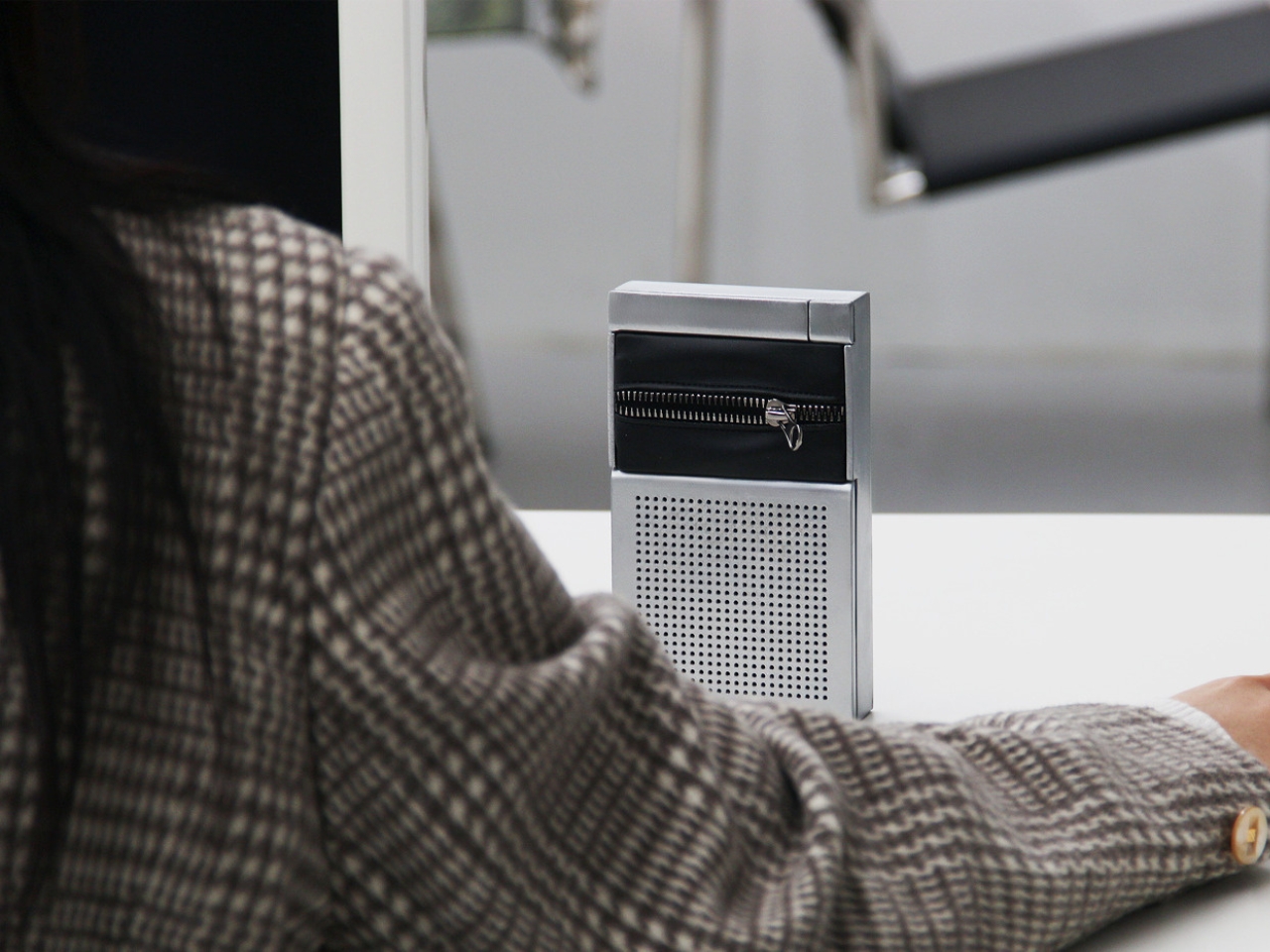
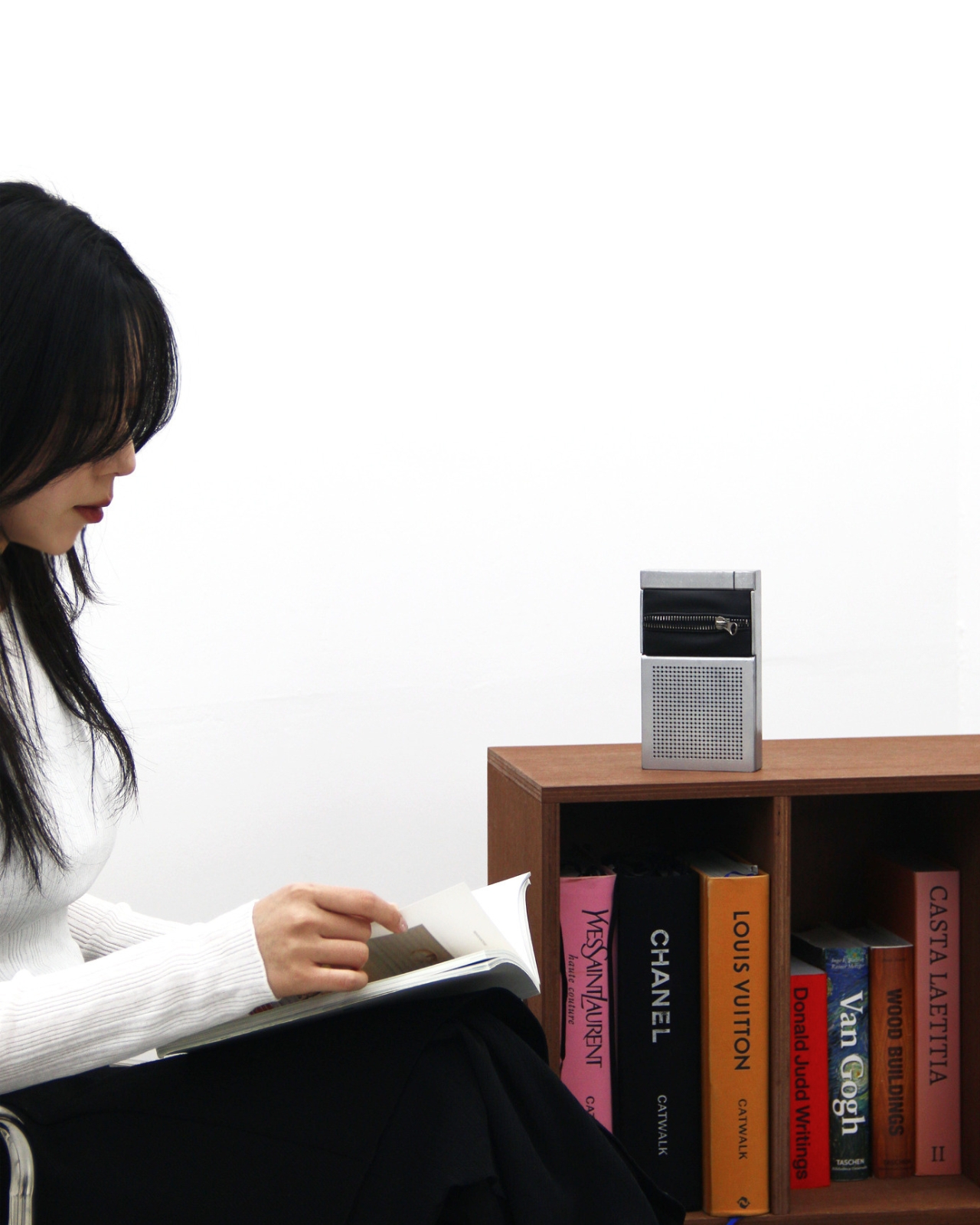
That’s the entire premise of ZIP, a concept speaker designed by Korean designers Taeyang Kim, Dugyeong Lee, Yejin Na, and Gijeong Shin. It’s one of those ideas that, once you see it, makes you wonder why it took this long. The concept draws directly from the universal expression “zip your lips,” mapping the act of silencing onto the most tactile and satisfying closure mechanism we use in everyday life. The zipper isn’t decorative here. It isn’t a style nod or an ironic wink. It is the interface. And that commitment is what makes ZIP genuinely interesting rather than just aesthetically clever.

Designers: Taeyang Kim, Dugyeong Lee, Yejin Na, gijeong Shin

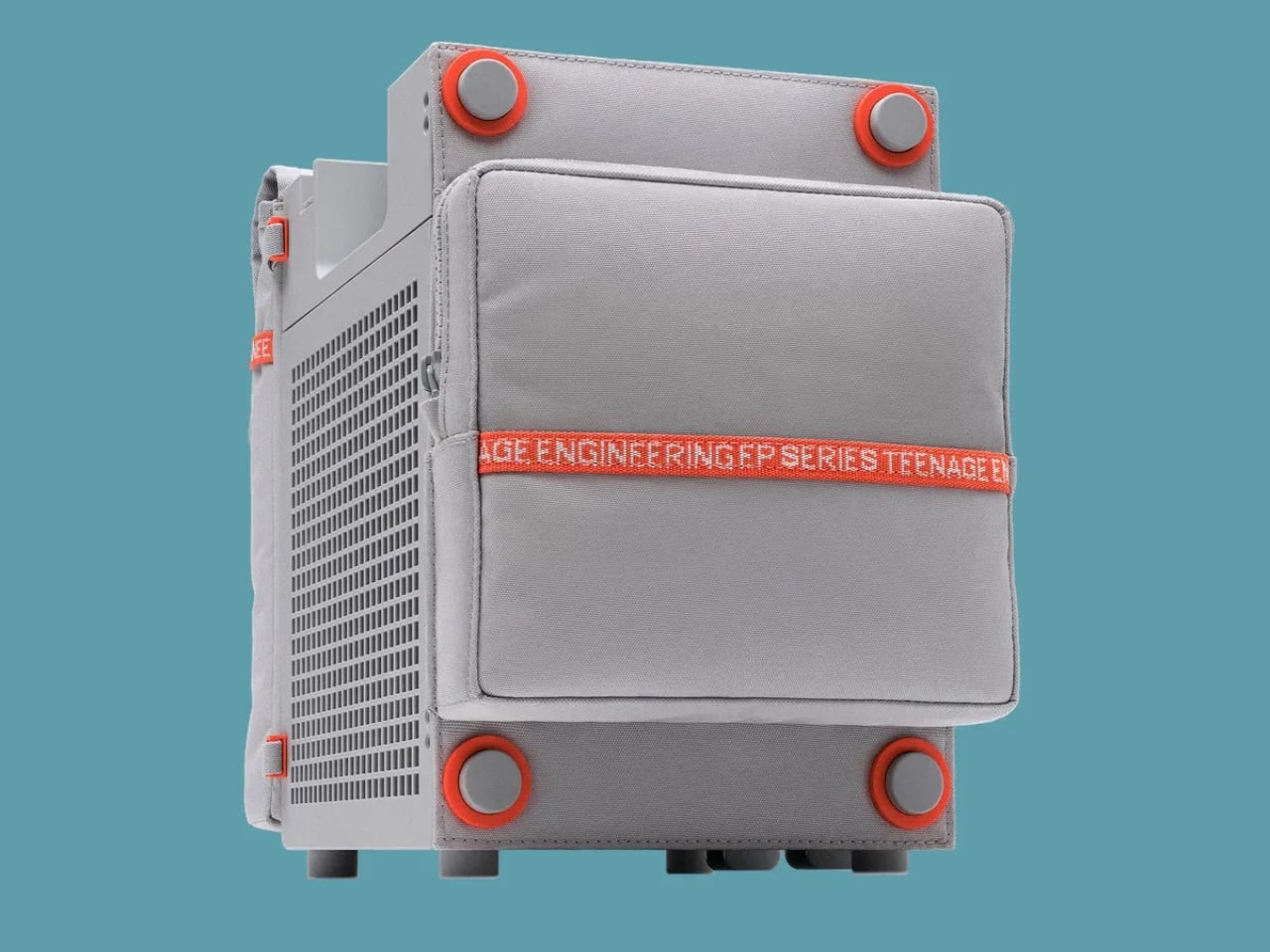
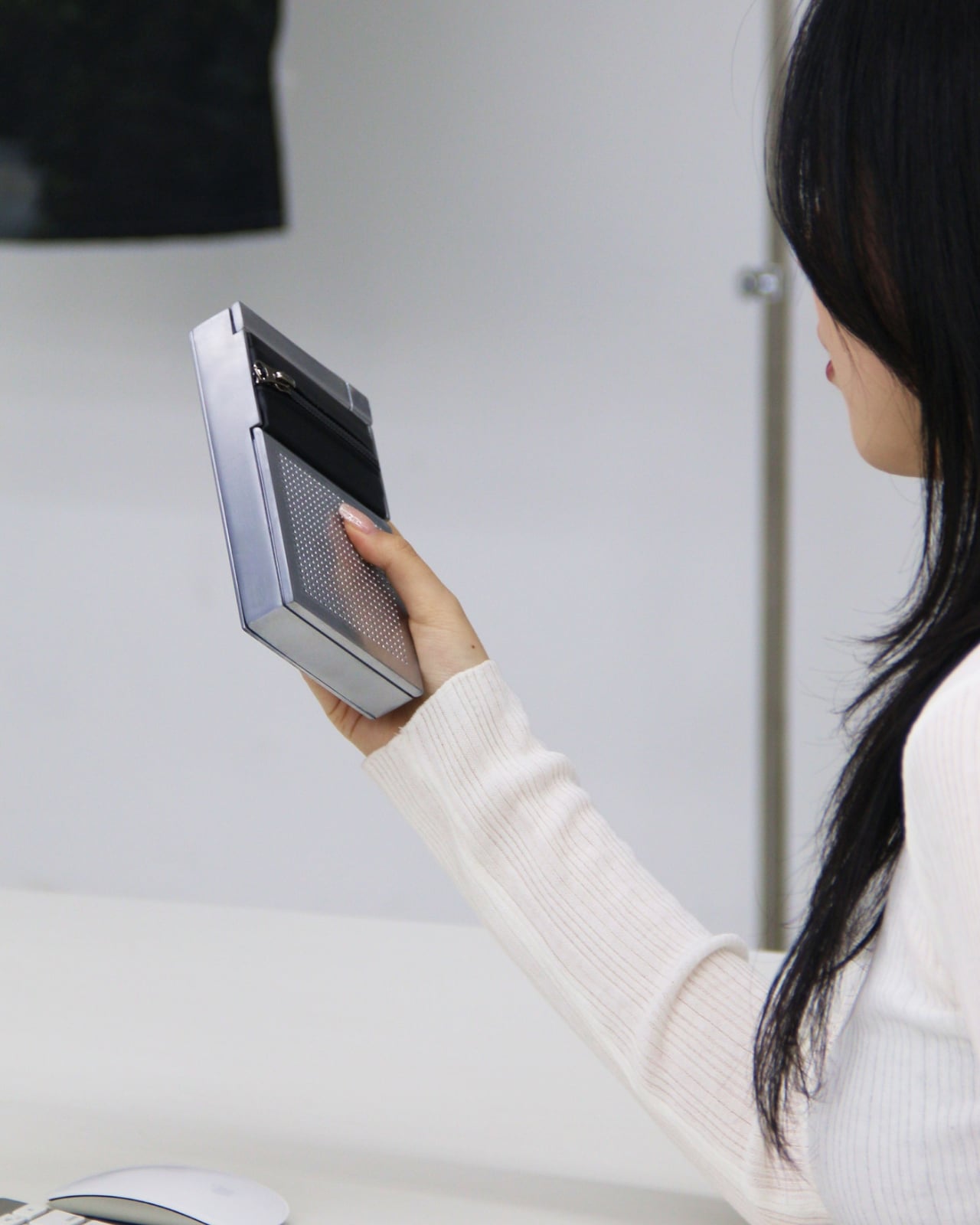
Physically, the object is composed and self-assured. A compact rectangular body in brushed silver aluminum sits below a band of dark fabric bisected by a metal zipper, the kind of heavy-duty hardware you’d find on a quality jacket, not a flimsy fashion detail. The lower half houses the speaker grille: a grid of evenly punched dots that reads like something out of a Dieter Rams archive, which is very much a compliment. The visual language is minimal without being cold, functional without being dull. It looks equally at home on a credenza beside art books and on a desk next to a keyboard.

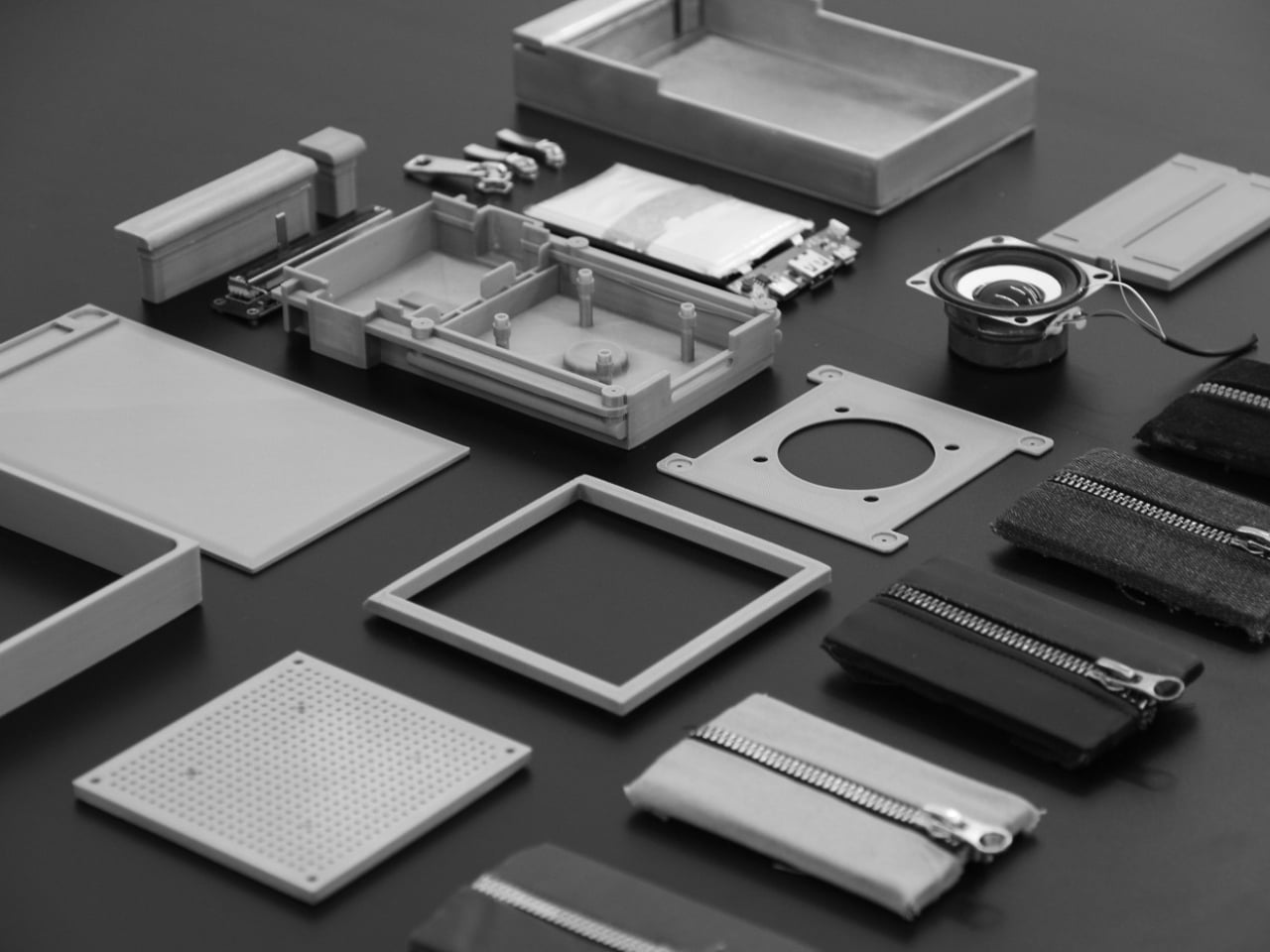
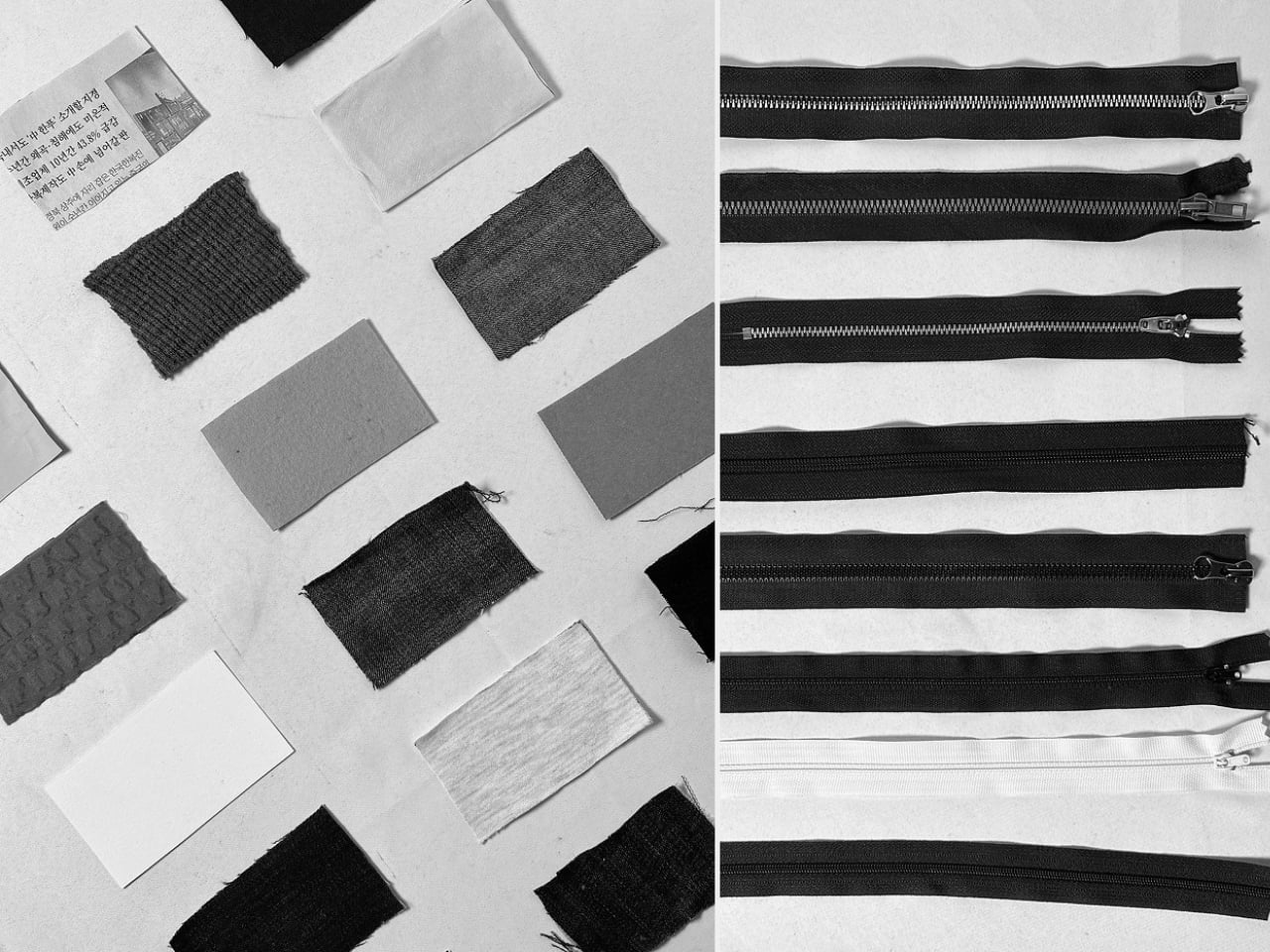
The prototype photos on Behance pull off something a lot of design projects fail to do: they make you feel the weight of the thing. The exploded component layout is especially good. You can see the actual speaker driver, the PCB, the battery, the zipper hardware, all laid out like a dissected argument for why this object should exist. It’s a working prototype, not a render, and that matters. Renders are promises. A functioning prototype is a proof.

What I keep coming back to is the conceptual integrity. A lot of tech and industrial design right now is obsessed with reducing interfaces to nothing: invisible touch surfaces, gesture sensing, proximity triggers. The instinct is understandable, but there’s a real cost to removing physicality from control. You lose feedback. You lose certainty. You lose the tiny neurological satisfaction of knowing you actually did a thing. ZIP goes in a different direction by betting that a familiar mechanical action can carry more meaning than a capacitive button ever will.

The “zip your lips” metaphor also does something a lot of design thinking misses. It’s cross-cultural in its clarity. You don’t need to read a manual to understand what zipping something shut means in relation to silence. The designers describe it as proposing “a new interface that controls sound, inspired by the gesture of closing your mouth.” That isn’t just product language. It’s a considered philosophical position on what intuitive design actually means. Intuitive doesn’t mean invisible. It means immediately understood.

The styling throughout the Behance project reinforces this with a dry, confident visual wit. The image of someone holding the zipper module over their mouth says everything the project text says, but in about half a second. It’s the kind of visual shorthand that designers spend entire careers trying to achieve.

Whether ZIP ever becomes a commercially available product is, frankly, beside the point right now. What it demonstrates is a design team that understands the difference between novelty and concept. Novelty fades. Concept compounds. And the concept here, that the best interface is the one that already lives in muscle memory, is solid enough to carry a lot more than a speaker. It’s rare to look at a design concept and feel like the people behind it already know something important. ZIP is that kind of rare.

The post The Zipper Is the Button. Finally. first appeared on Yanko Design.
Marshall Heddon Hub Adds Multi-Room Hi-Fi to Your Bluetooth Marshalls

Owning a couple of Marshall Bluetooth speakers means great sound in different rooms, but getting music to follow you means reconnecting Bluetooth, nudging volume knobs, or carrying your phone with you. One speaker plays in the kitchen, another sits silent in the living room, and switching between them breaks whatever you were doing. The missing piece is not another speaker but a way to tie them together.

Marshall’s Heddon is a Wi-Fi music hub, a small square box that sits by your router and quietly becomes the brain for Acton III, Stanmore III, and Woburn III speakers. It connects to your network over Wi-Fi or Ethernet, pulls in music using Spotify Connect, AirPlay, Google Cast, or Tidal Connect, then rebroadcasts it to your speakers using Auracast so they all play in sync across rooms.

Designer: Marshall

Starting a playlist on your phone, you send it to Heddon instead of a single speaker and let it handle the rest. You move from the kitchen to the living room, and the same track is coming out of different Marshalls without re-pairing. Friends can cast from their own apps, but the hub keeps the stream going even when phones leave or run out of battery, which is how whole-home audio is supposed to work.

Heddon has RCA line-in, so you can plug in a turntable or older CD player and stream that signal wirelessly to your Marshall speakers around the house. The only requirement is a phono preamp somewhere in the chain. A record spinning in one corner can be heard in the kitchen and bedroom without running cables or buying a new Wi-Fi-enabled turntable, turning analog playback into something that feels modern.

Most of the complexity lives in the Marshall app, which discovers Heddon, lets you assign speakers to rooms, create groups, and manage updates. The physical box stays simple on purpose. That makes it easier to update over time, but it also means the experience rises and falls with how well the app is maintained and how comfortable you are living inside one brand’s ecosystem.

Heddon only works with specific Marshall home speakers, not older models or portable units, which narrows the audience. At around $300, it is not a casual add-on, even if bundle discounts soften the cost. Compared to third-party streamers, you are paying for tight integration and the Marshall look, which makes sense if you are already committed to their gear.

Heddon is less about chasing another object and more about making the speakers you like feel current. By adding Wi-Fi, casting, and multi-room logic in one small hub, it nudges a Marshall-filled home closer to the convenience of dedicated multi-room systems without throwing anything out. For people who care as much about how speakers look as how they sound, that is a neat way to modernize without starting over.

The post Marshall Heddon Hub Adds Multi-Room Hi-Fi to Your Bluetooth Marshalls first appeared on Yanko Design.
Harman Kardon Aura Studio 5 revives an iconic design with modern glow and immersive sound

Few brands have successfully merged sound and sculptural elements quite like Harman Kardon. For decades, the New York-based company has treated speakers not merely as audio devices but as design objects. More than just audio accessories, they are pieces that add emotion and visual rhythm to any interior space. From the transparent SoundSticks that became a millennial desktop icon to the elegantly curved Aura series, every release has carried that distinctive harmony of sublime clarity and unique form.

The newly introduced Aura Studio 5 builds on that legacy, reinterpreting Harman Kardon’s classic dome aesthetic for a generation that values both sensory immersion and timeless design. Its combination of audio performance, ambient lighting, and sculptural form positions it not just as a speaker but as an artful centerpiece for modern interiors. In the age of portable sound and smart assistants, the Aura Studio 5 stands apart by focusing on the audio and visual experience. The sculptural speaker is designed to fill a room not only with rich sound but with presence. For longtime admirers of Harman Kardon’s design language, this evolution feels like a thoughtful homage. One that reconnects with the brand’s expressive past while embracing a distinctly modern sensibility.
Designer: Harman Kardon

At first glance, the Aura Studio 5 feels familiar yet freshly refined. The transparent dome remains its signature feature, offering a glimpse of the internal architecture while softly diffusing light. On the Inside, there’s a carefully engineered 360-degree sound system that combines a 25 mm tweeter, six 40 mm mid-range drivers, and a 143 mm subwoofer driven by a powerful 160-watt amplifier. Together, they deliver Harman Kardon’s “Constant Sound Field” experience, balancing acoustics that maintain their character no matter where you sit in the room. With a frequency response from 45 Hz to 20 kHz, the speaker captures both the warmth of low-end depth and the sparkle of treble detail with remarkable precision.

This new model, replacing the Aura 4, introduces a refreshed layer of sensory engagement through its ambient light projection system. Nature-inspired themes like Snowy Fireplace, Sunrise, Blossom, Aurora, and Ocean, cast subtle, dynamic visuals across walls and ceilings, transforming listening sessions into immersive environments. Through the companion Harman Kardon app, users can control lighting effects, adjust brightness, fine-tune the equalizer, install firmware updates, or even link two Aura Studio 5 units for a stereophonic setup.

Modern connectivity keeps the overall experience seamless. Bluetooth 5.4 ensures stable wireless streaming with minimal latency, while the 3.5 mm auxiliary input offers a wired alternative for traditional audio sources. This versatility makes the speaker equally at home in a contemporary living space, creative studio, or office setting. The Aura Studio 5 debuted in Japan at around 46,200 Yen (approximately $300) with sales starting on 13 November. Availability in other markets such as the United States, the United Kingdom, and Europe is expected soon.

The post Harman Kardon Aura Studio 5 revives an iconic design with modern glow and immersive sound first appeared on Yanko Design.