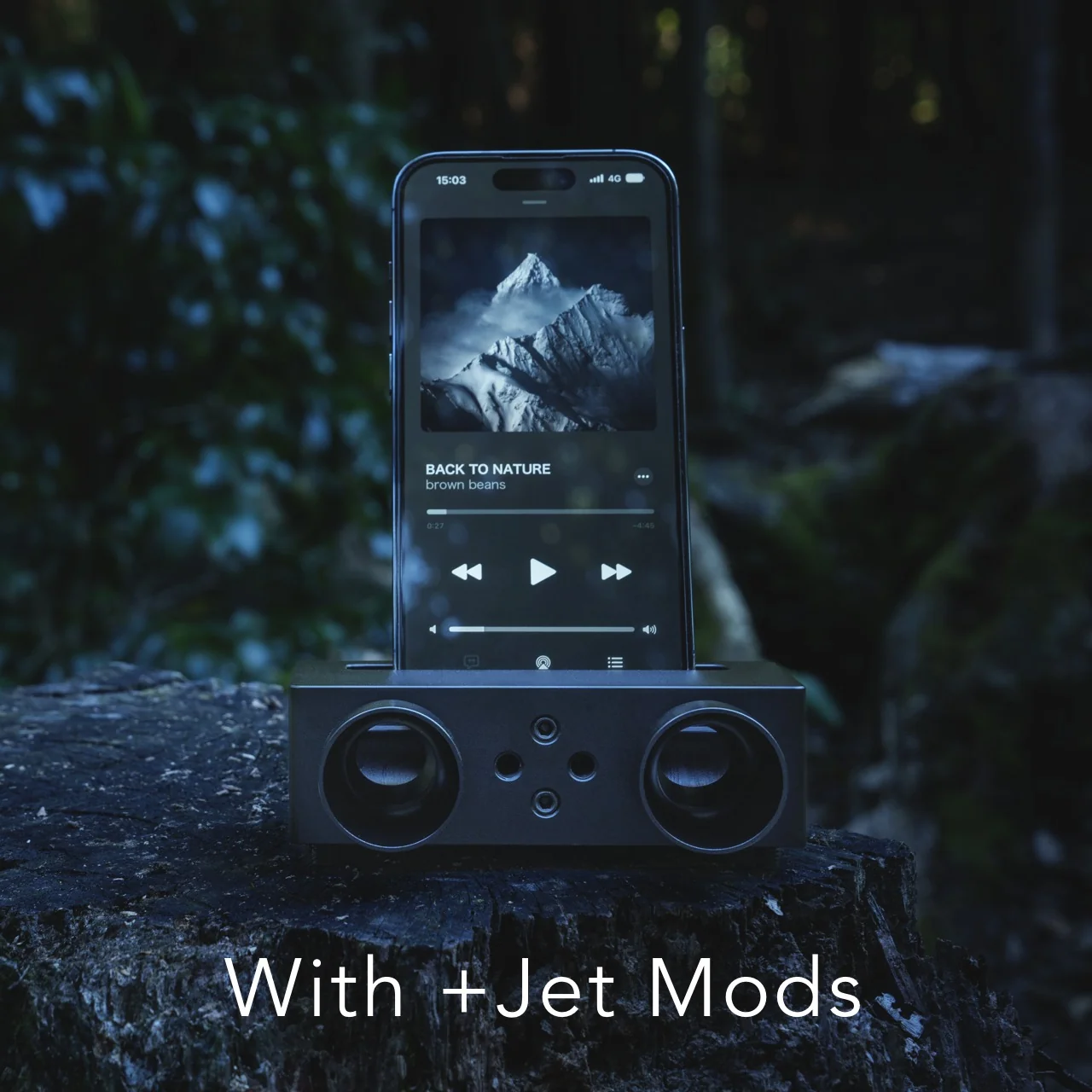
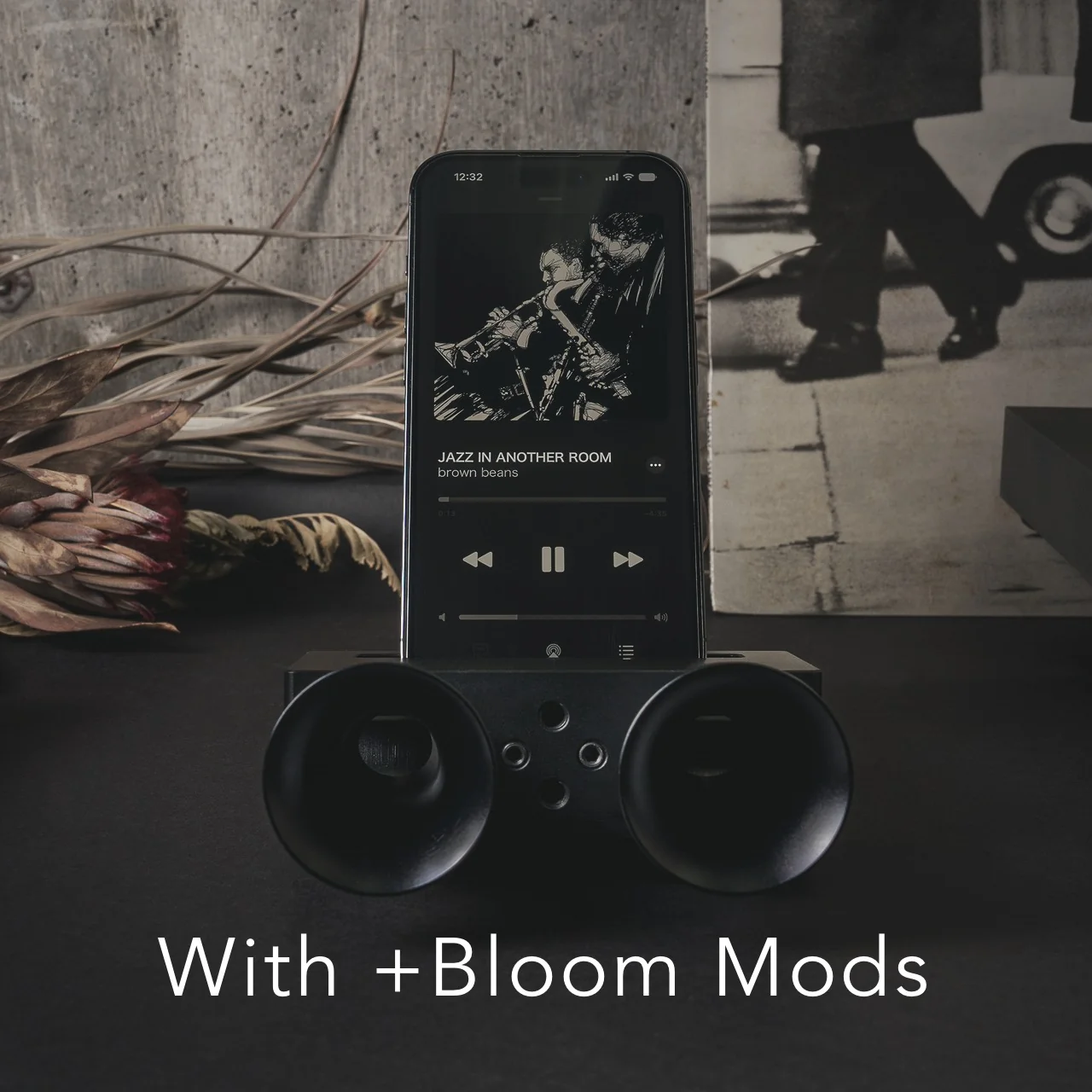
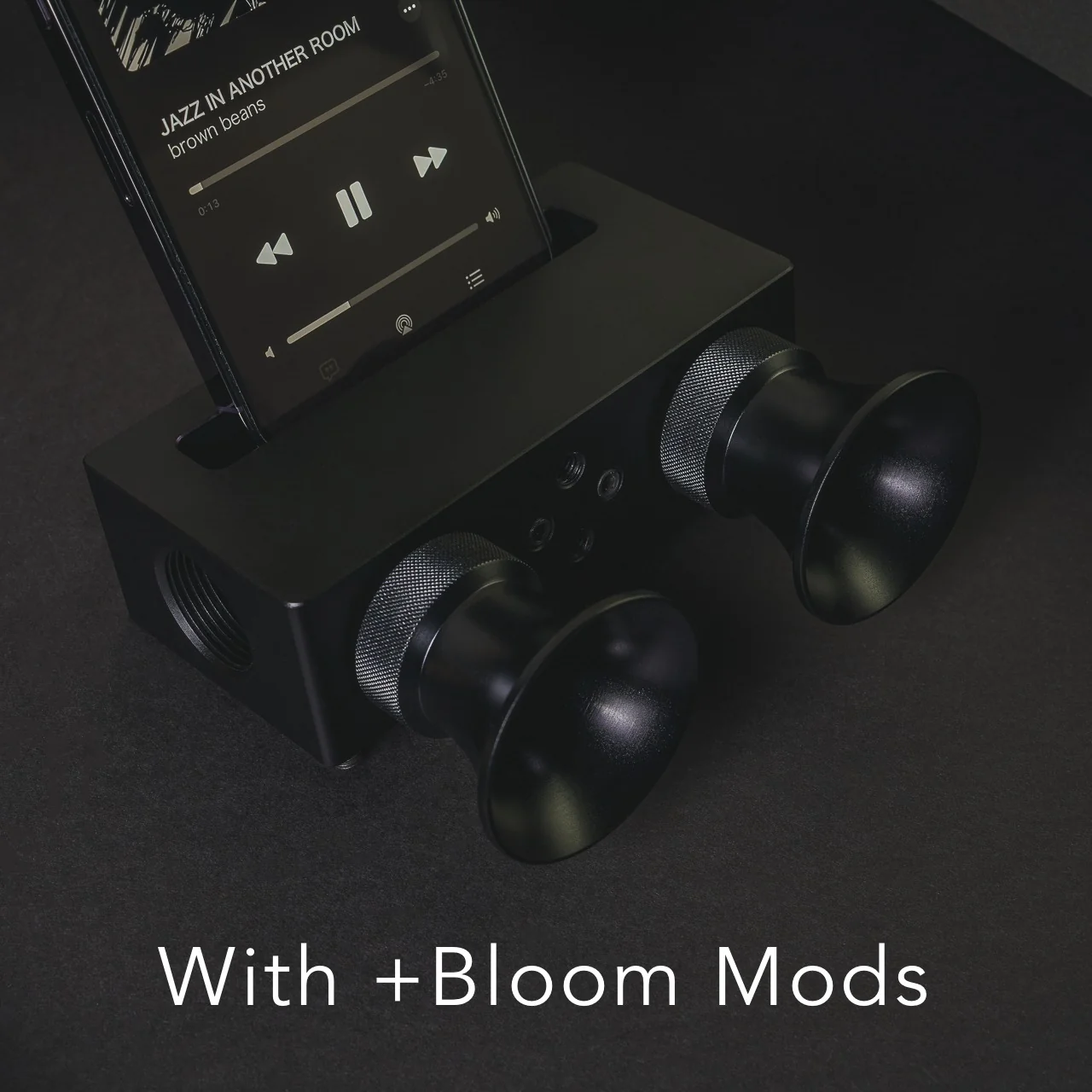
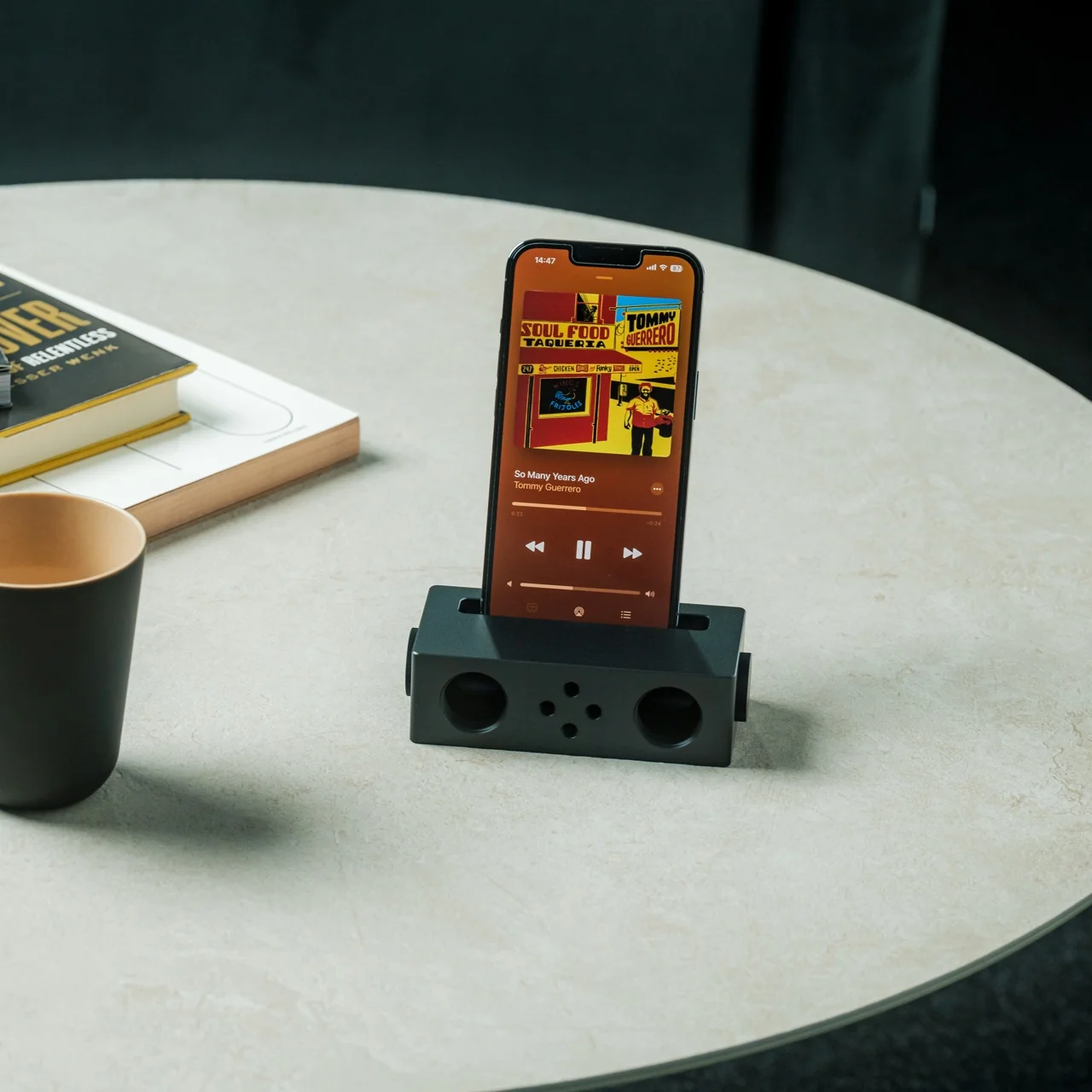
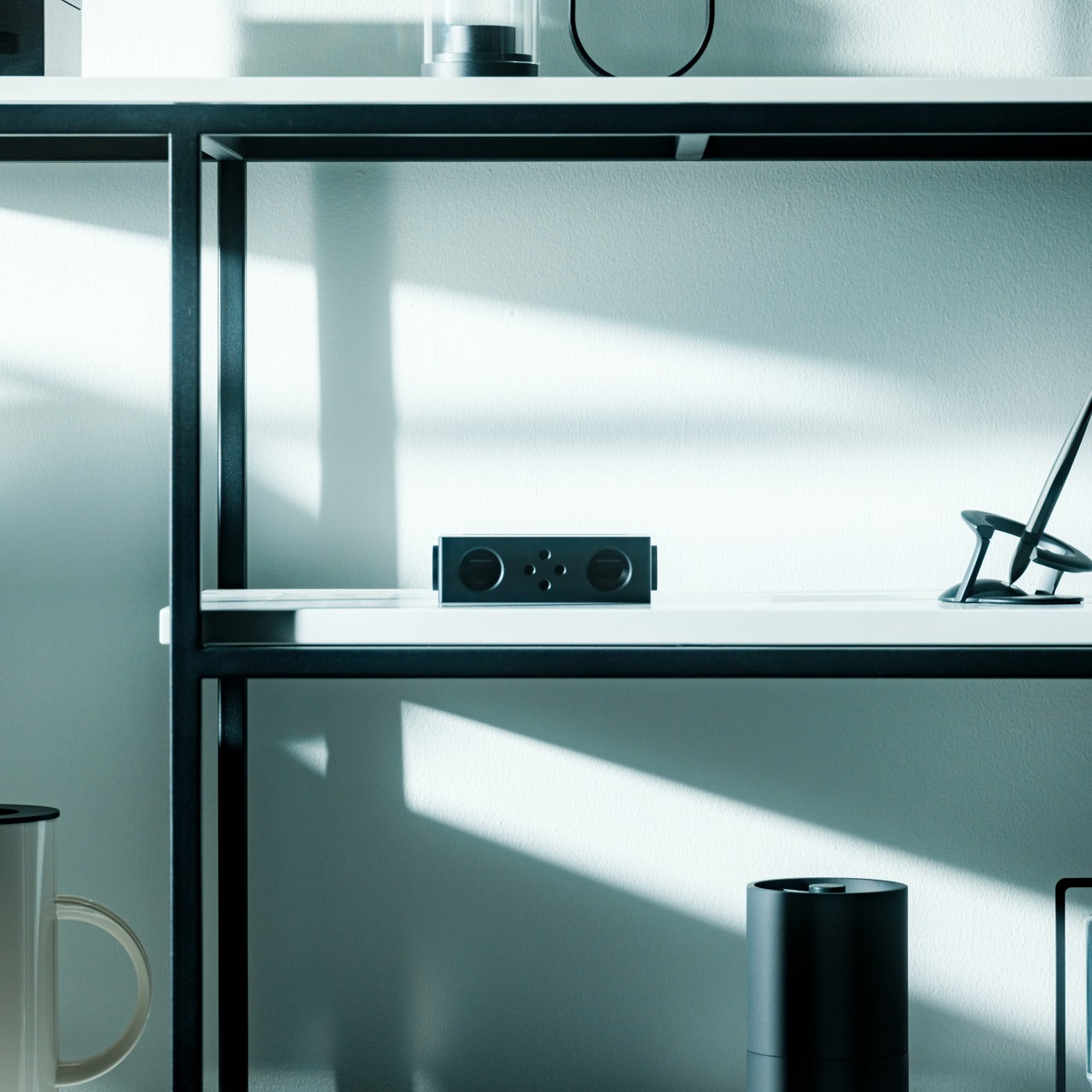
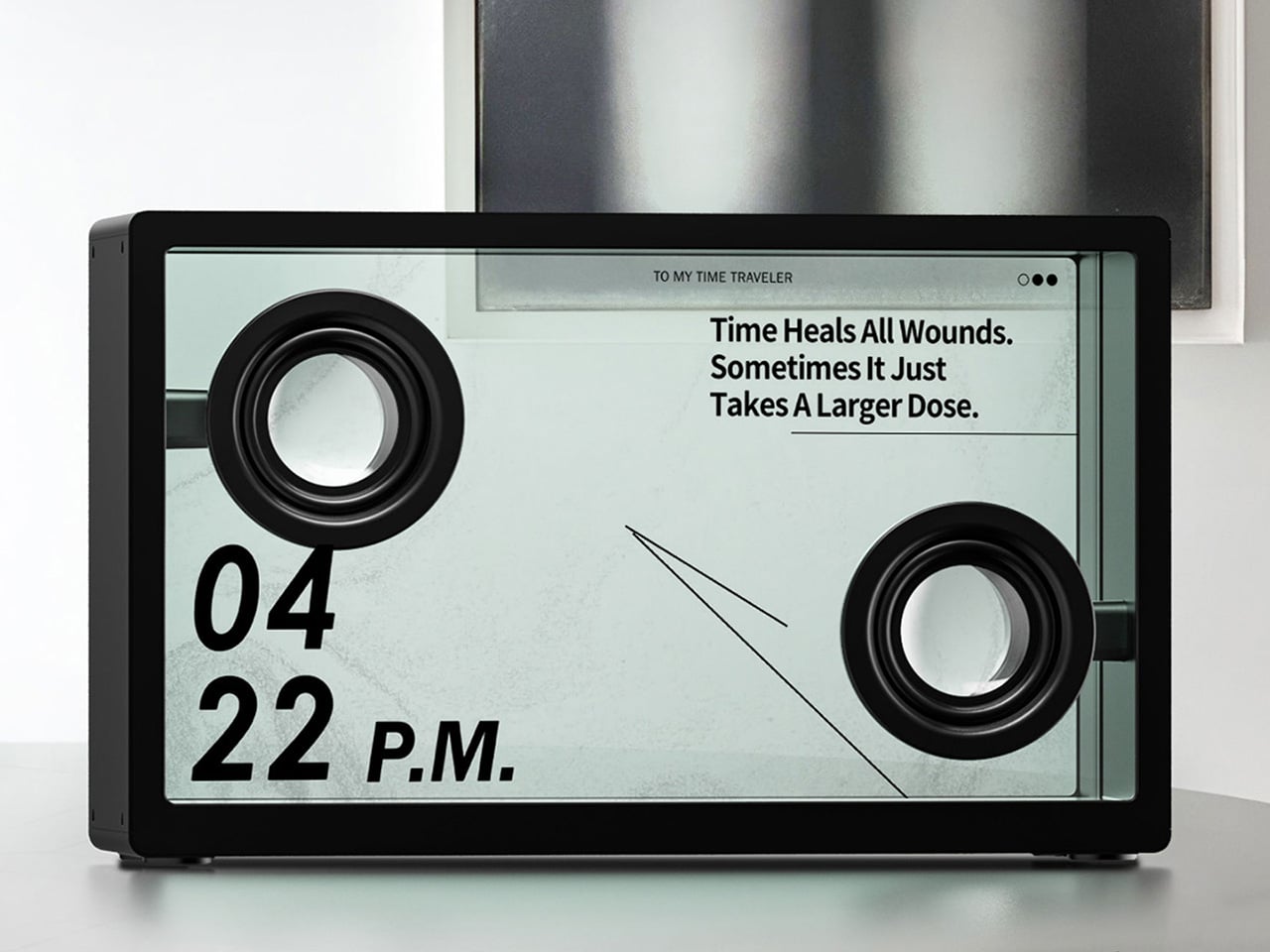
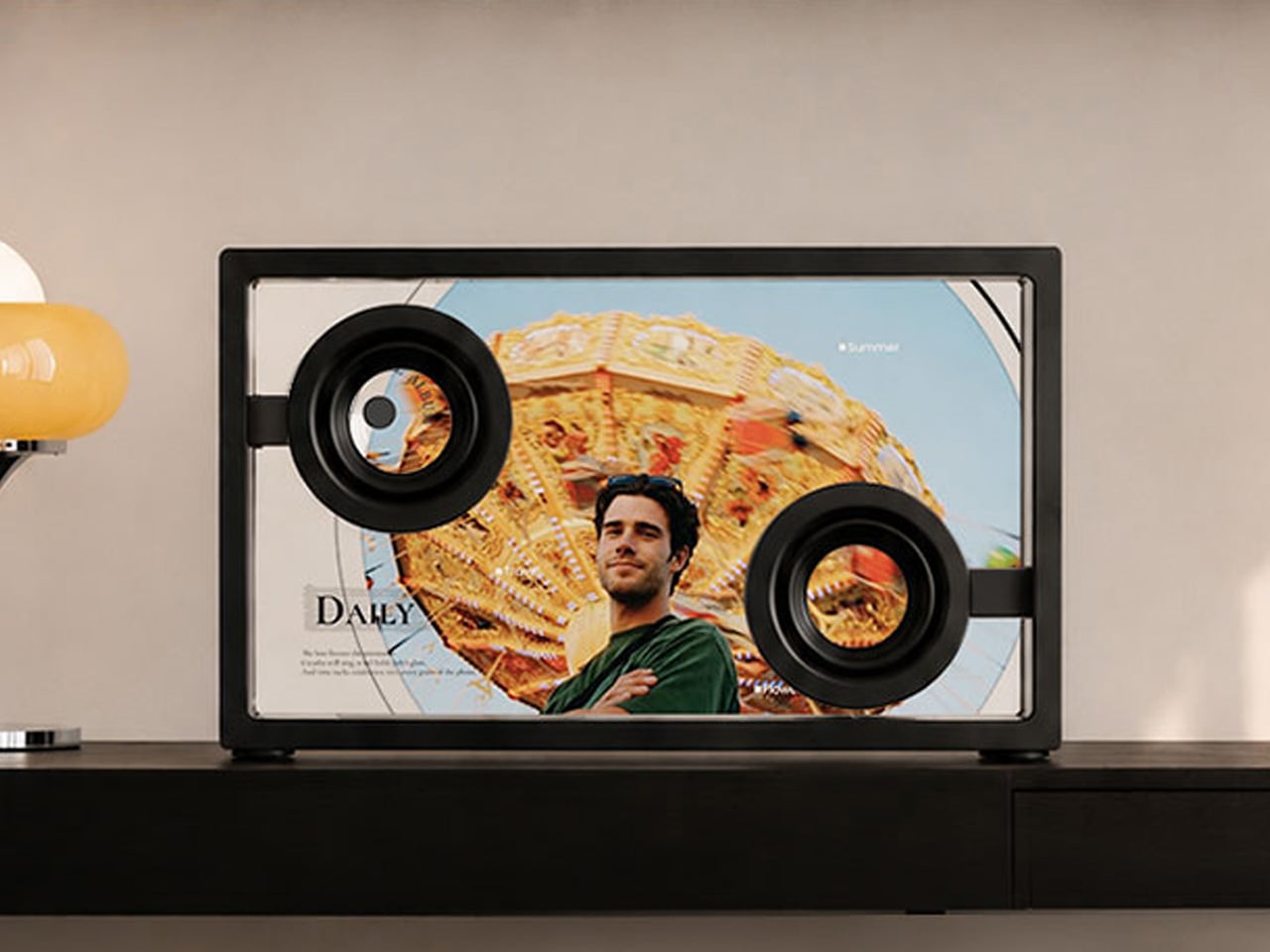
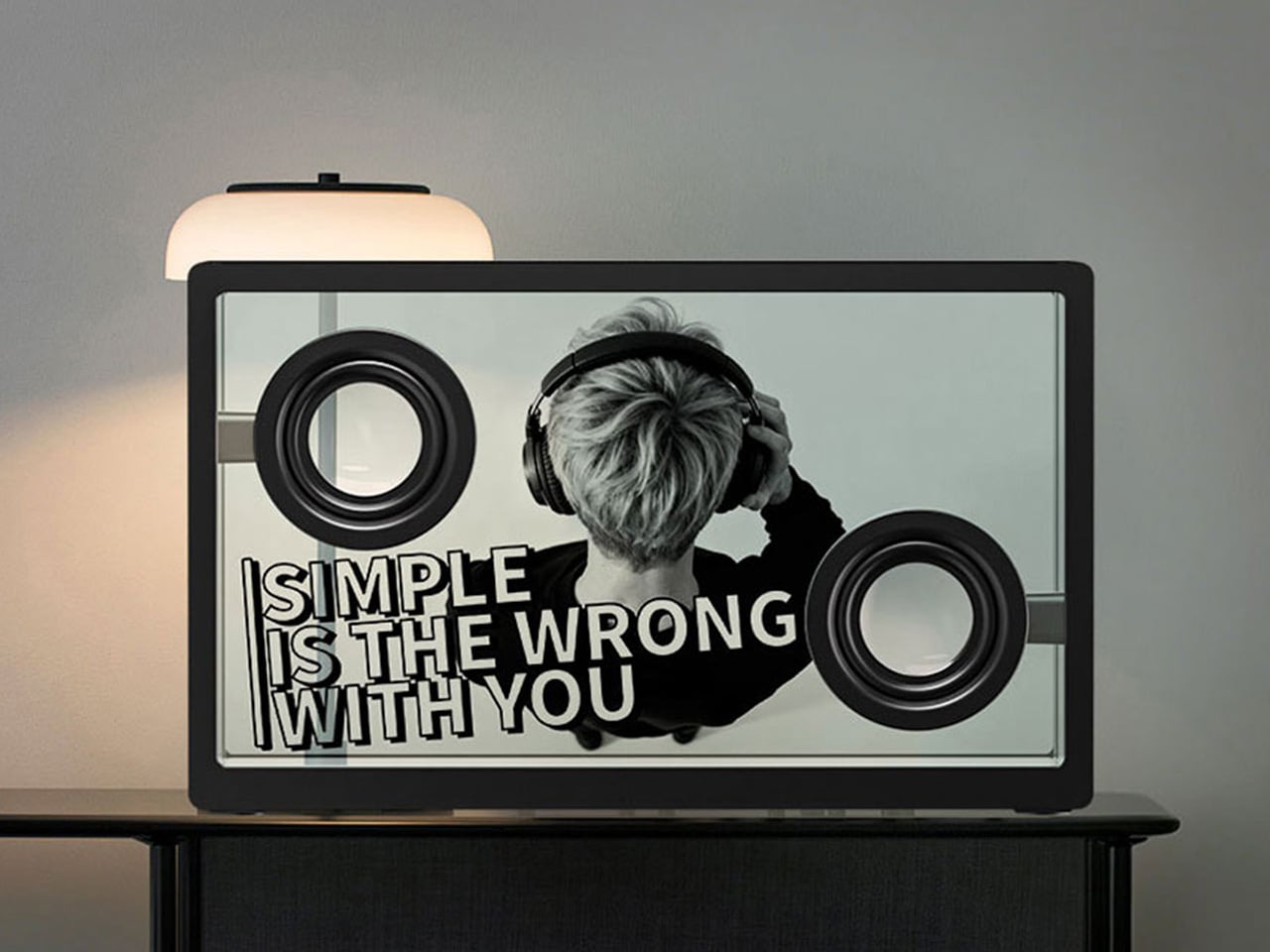
You’ve been waiting for your favorite artist to release their latest album, counting down the hours until it finally drops on your streaming service of choice. You open your phone and press play… and you’re a little disappointed. It’s not that the album isn’t great, it’s that your phone’s speaker doesn’t do it justice. You want something to amplify that sound right now, but your external Bluetooth speaker hasn’t been charged in weeks.
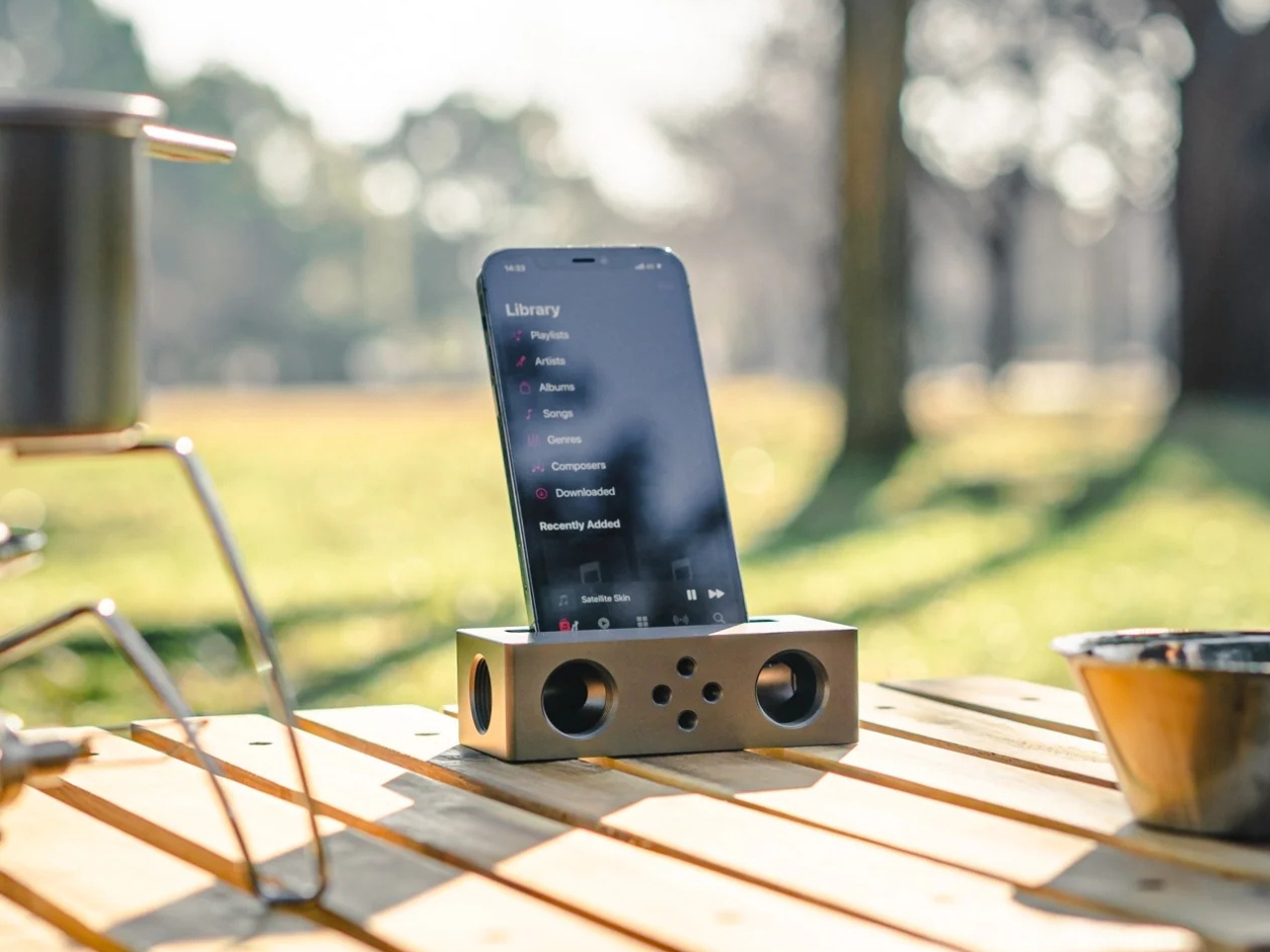
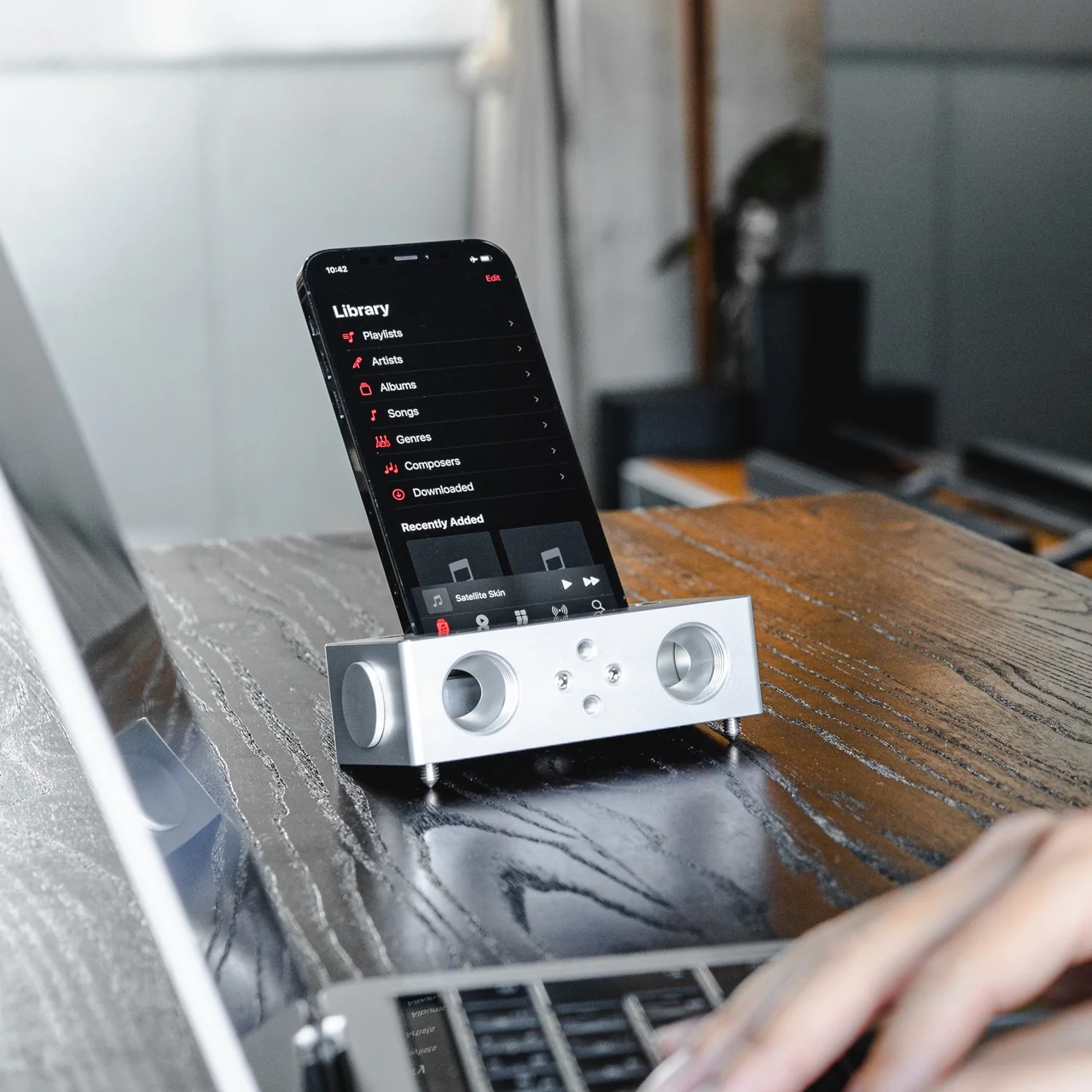
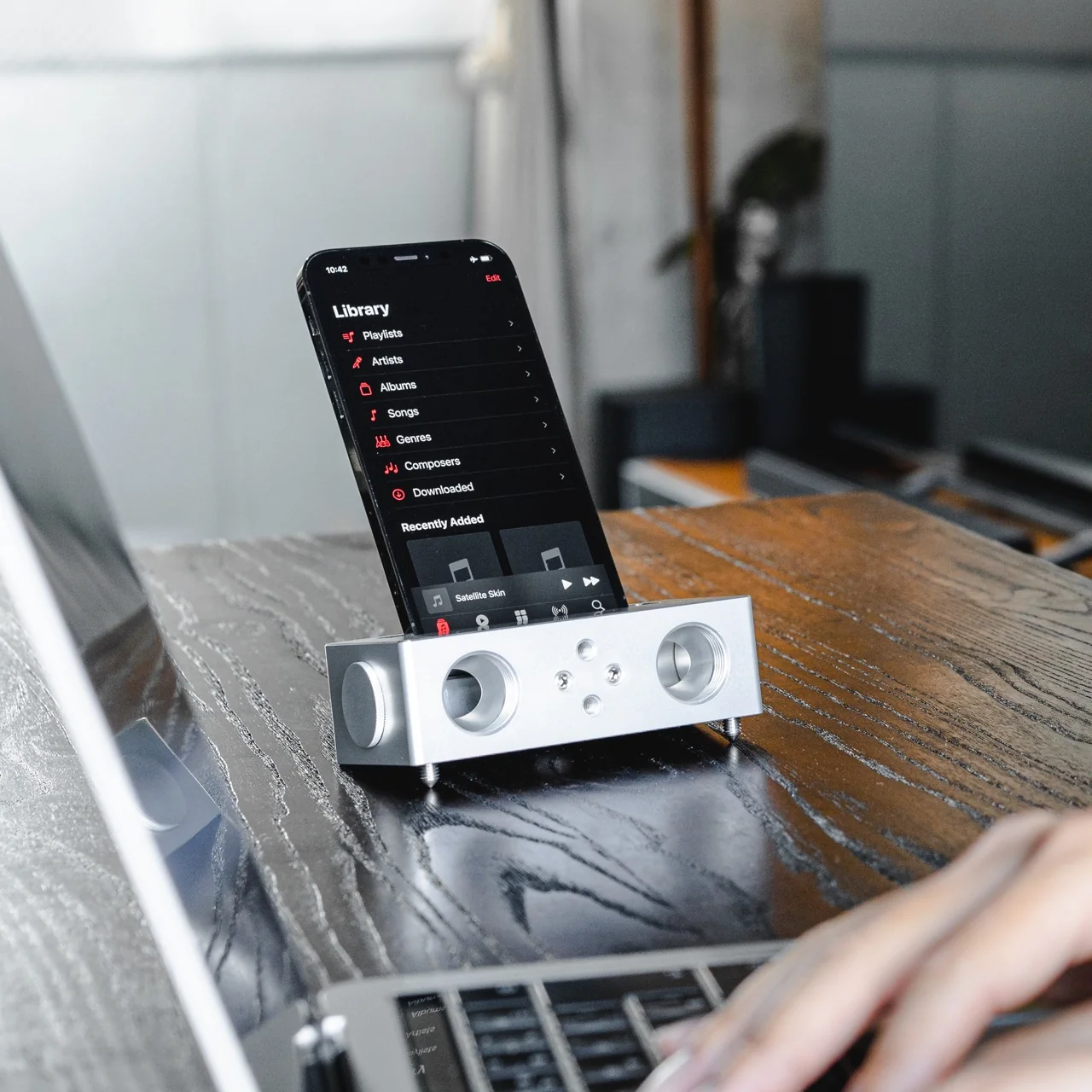
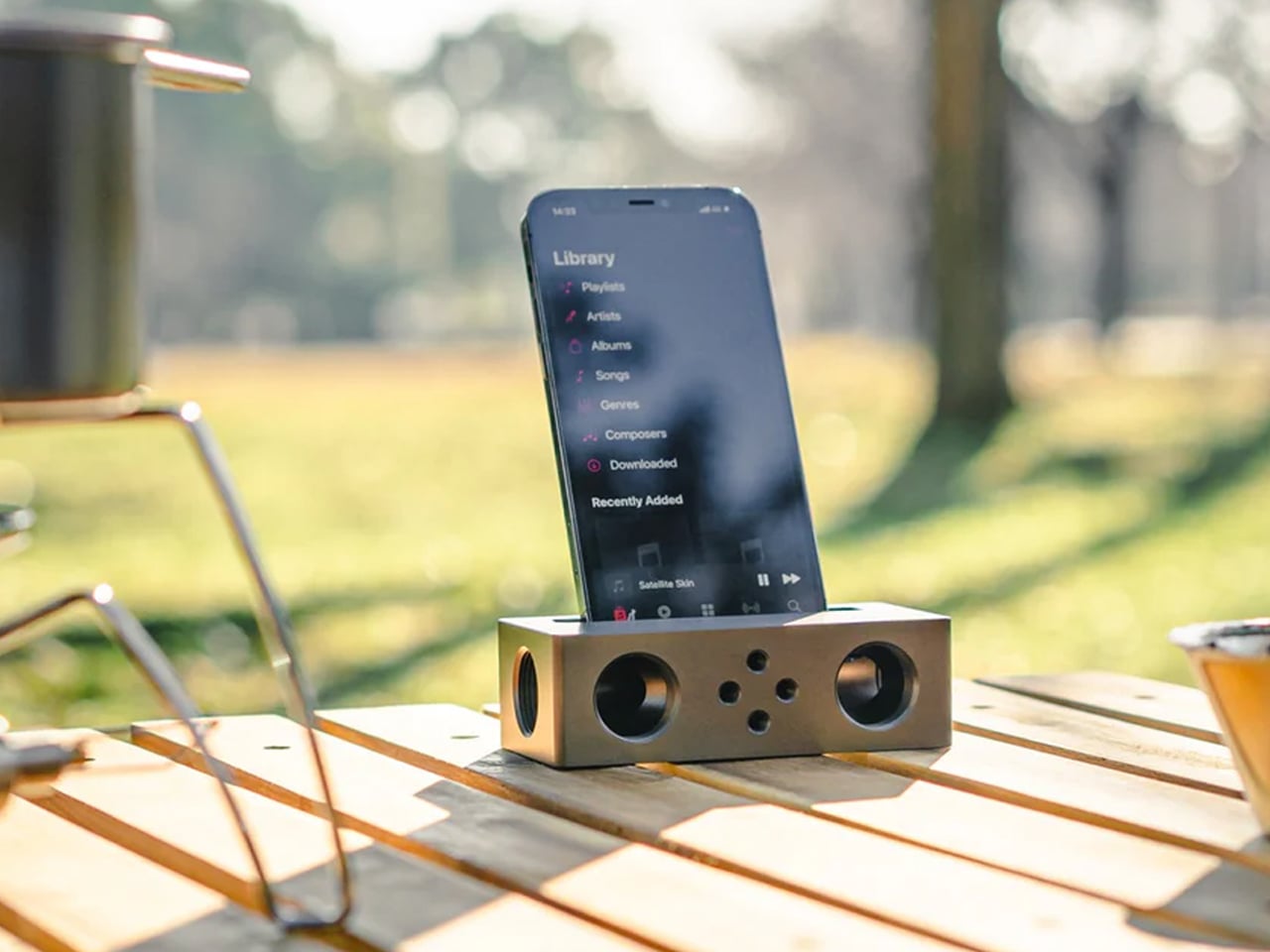
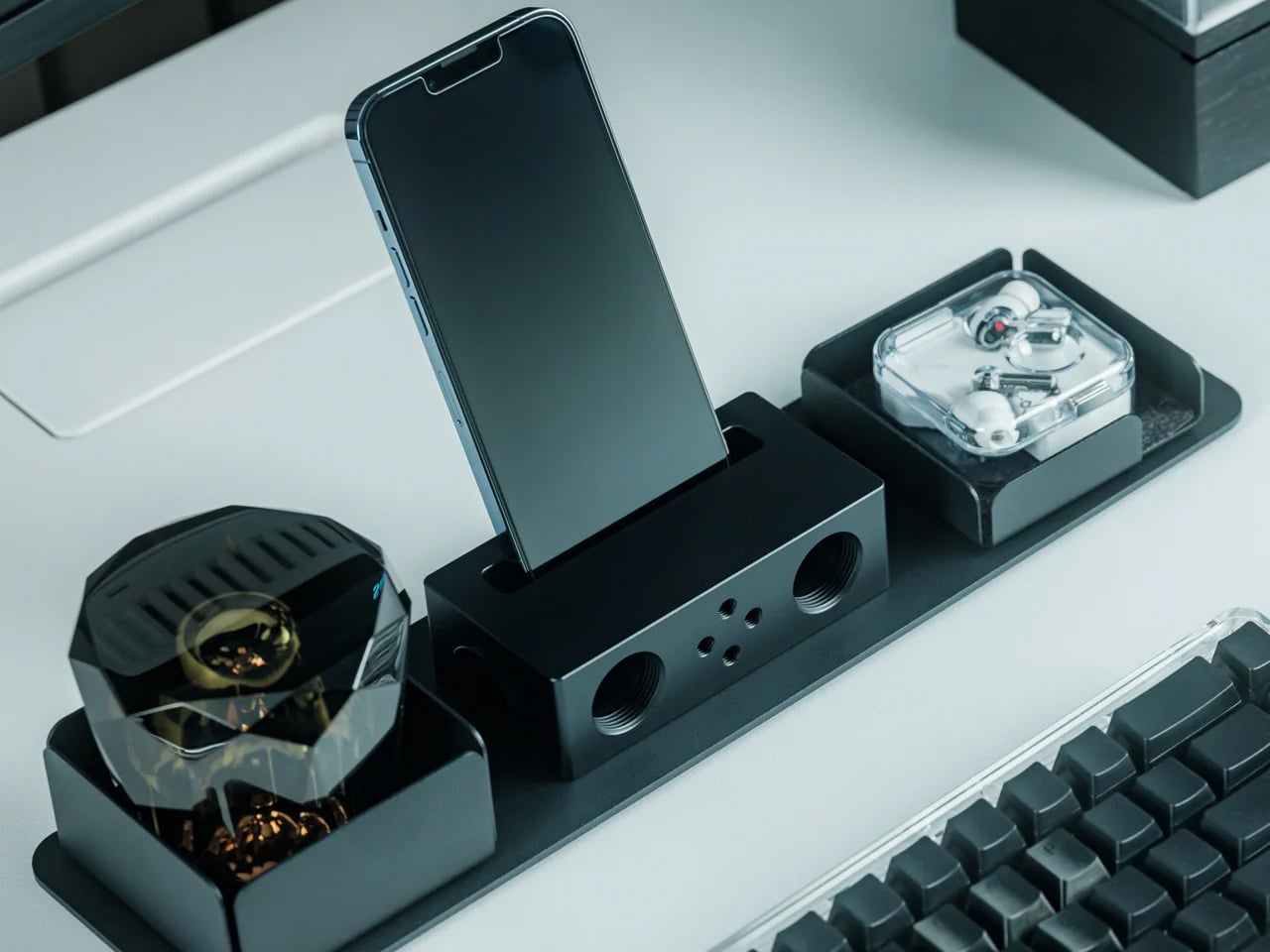
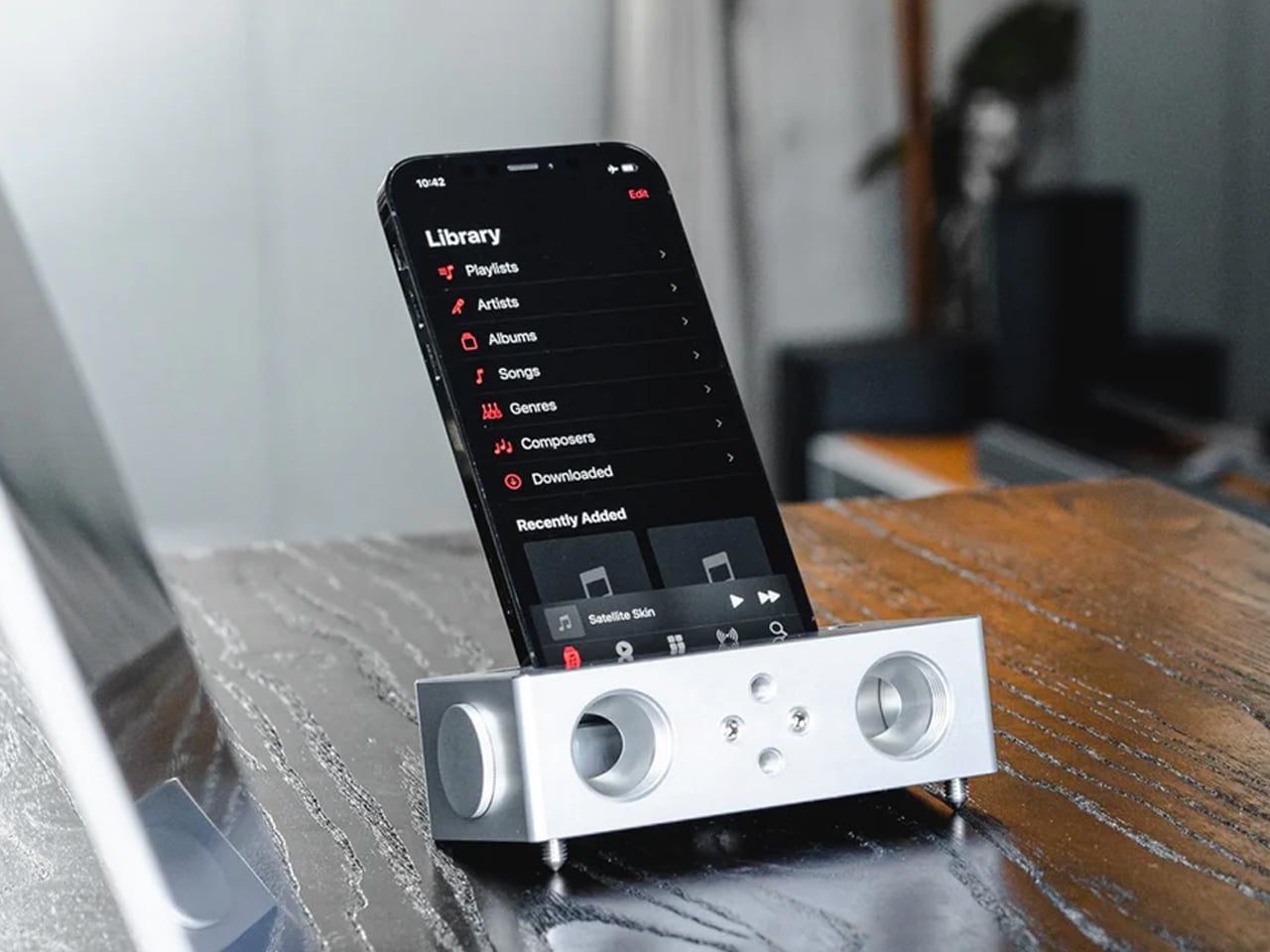
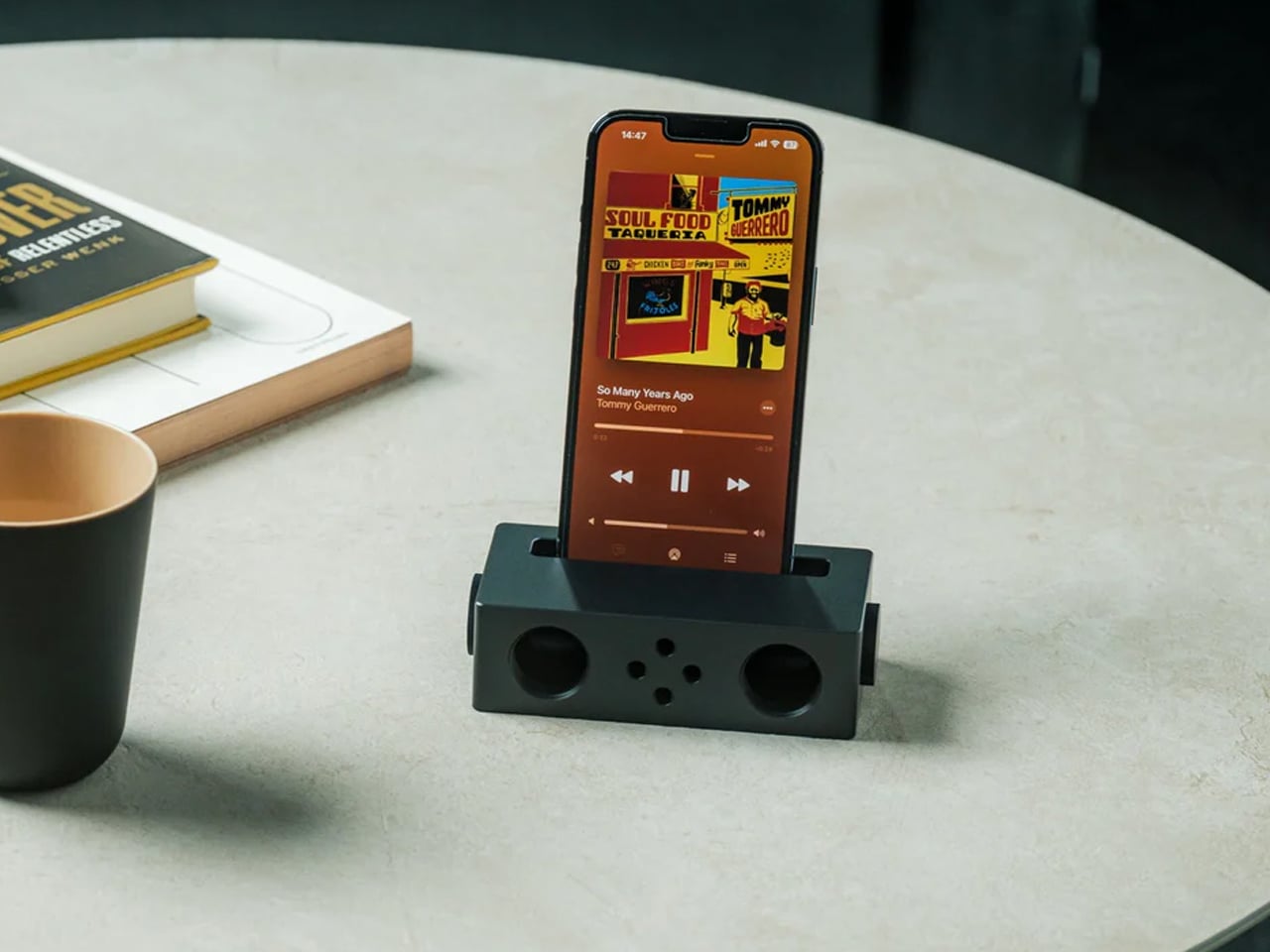
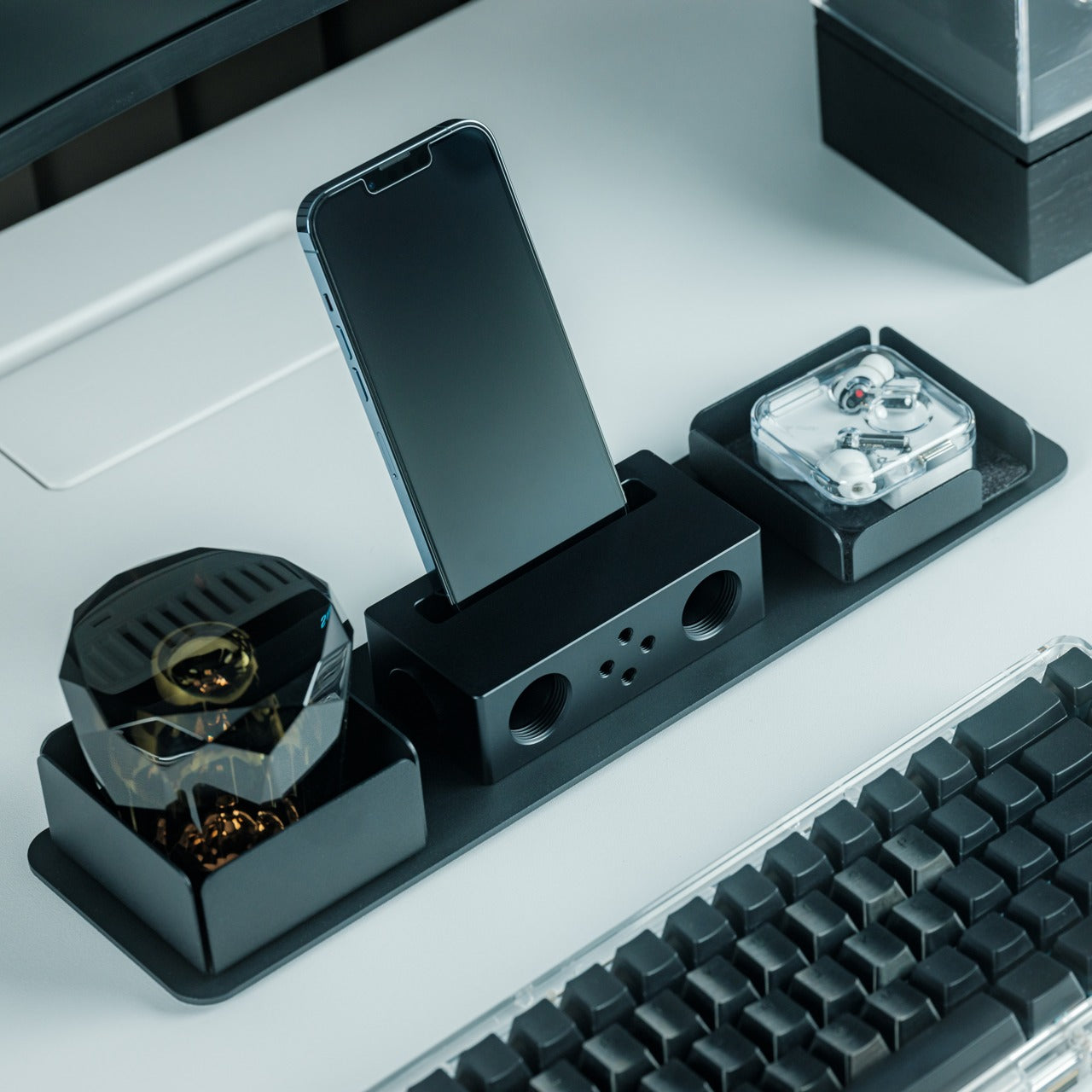
The Battery-free Amplifying iSpeakers can solve that problem for you, and you won’t need a single cable or Bluetooth connection to make it happen. This “dumb” speaker is actually smart enough to rely purely on acoustic engineering, channeling and amplifying the sound waves coming out of your phone so your music, podcast, or call sounds noticeably fuller than it would through your built-in speaker alone.
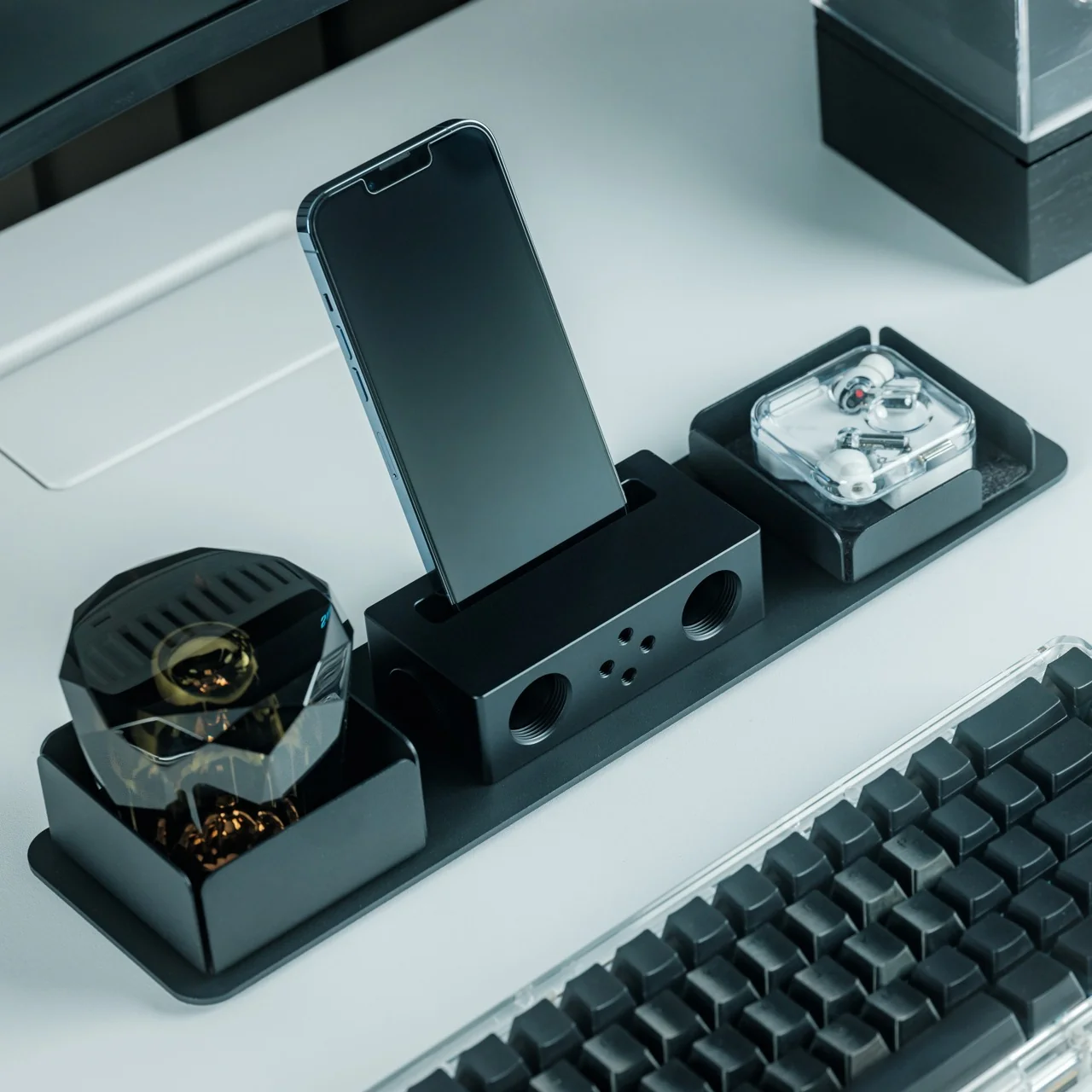
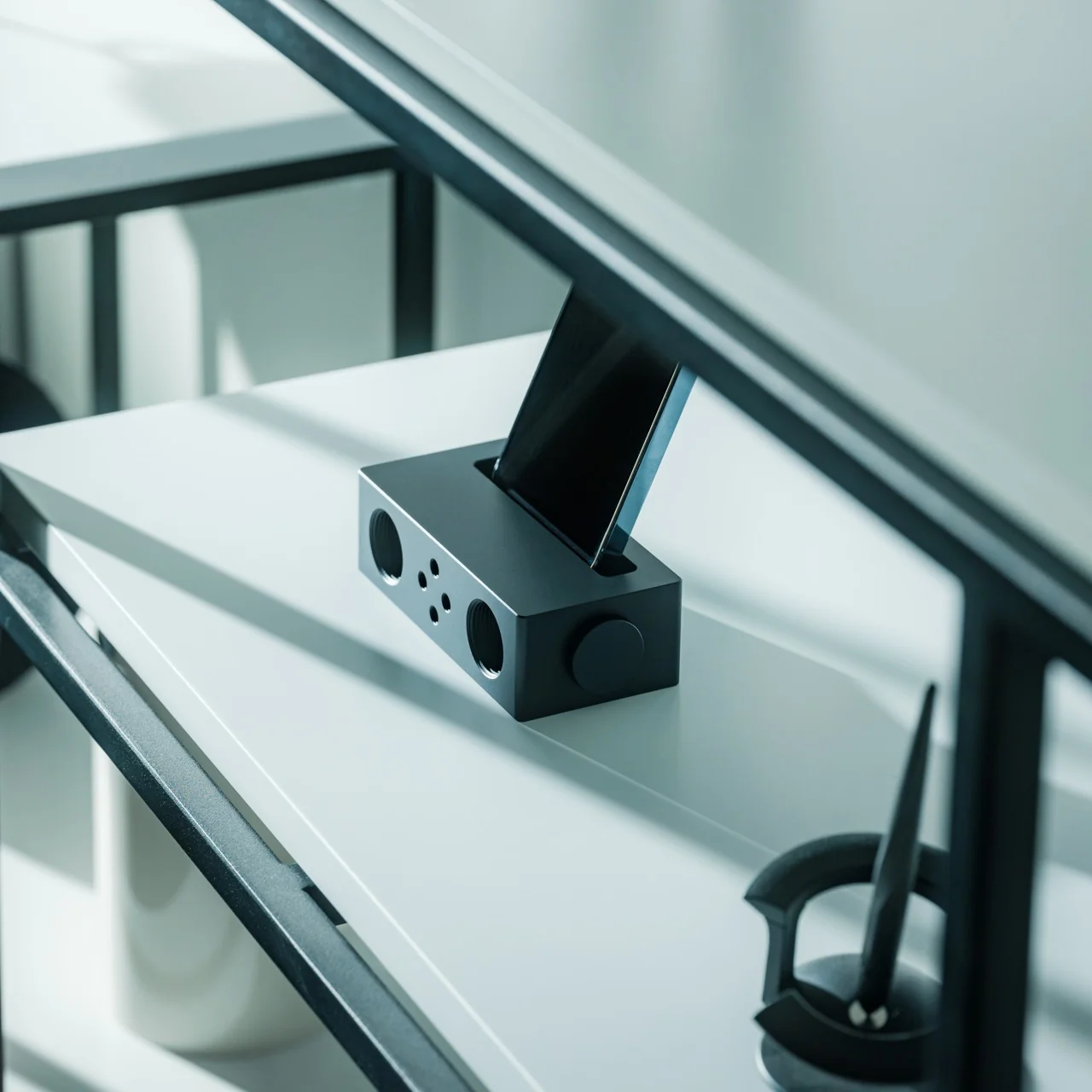
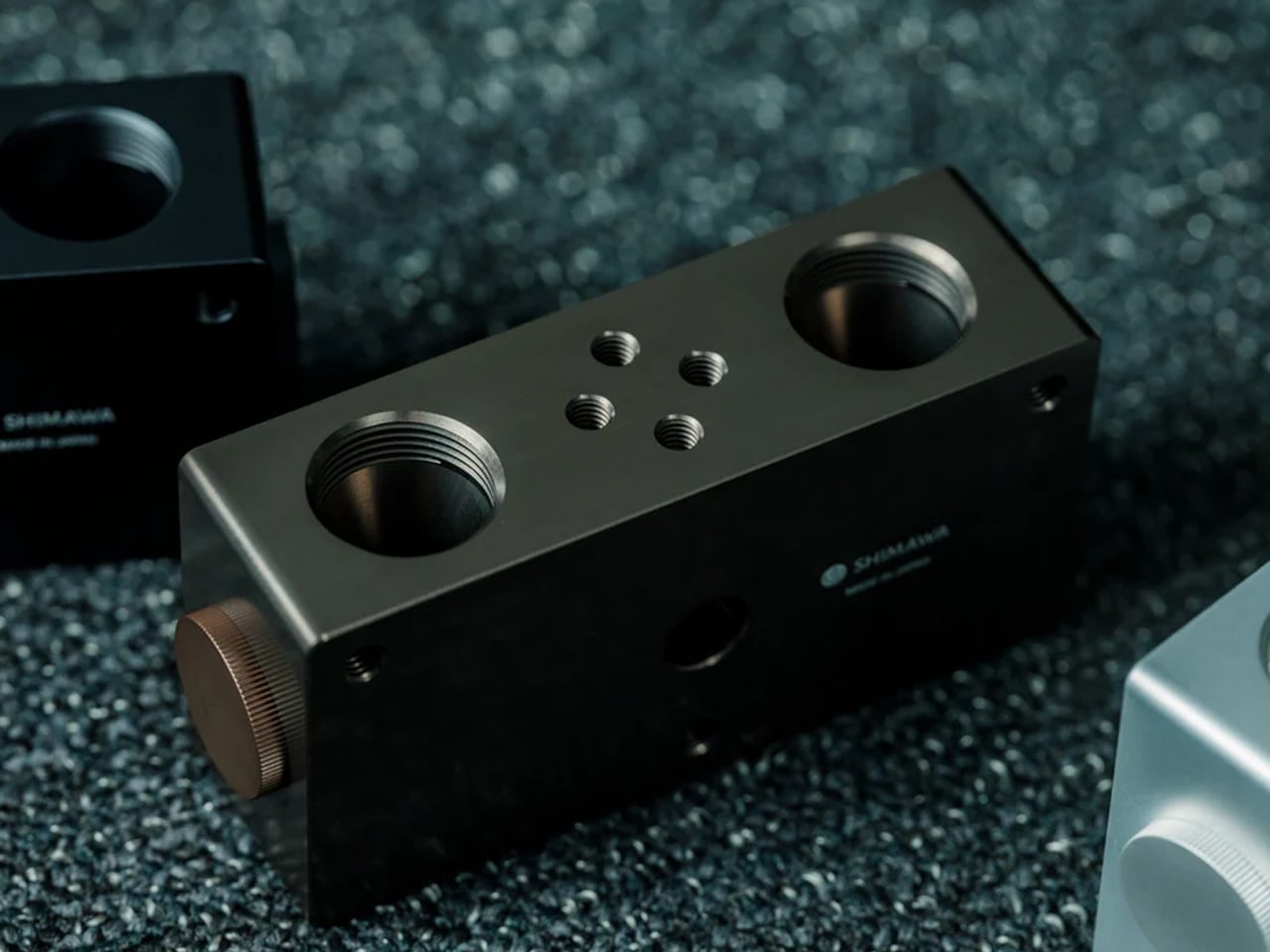
Designed by Ooi Masato and made in Japan, this battery-free device lives up to its name: it uses a precision-machined metal slot that cradles whatever phone you own, instantly amplifying whatever you’re playing. There’s no pairing process, no cord to plug in, and no anxious glance at a battery icon wondering if your speaker will cut out mid-song. You set your phone down, and it just works.
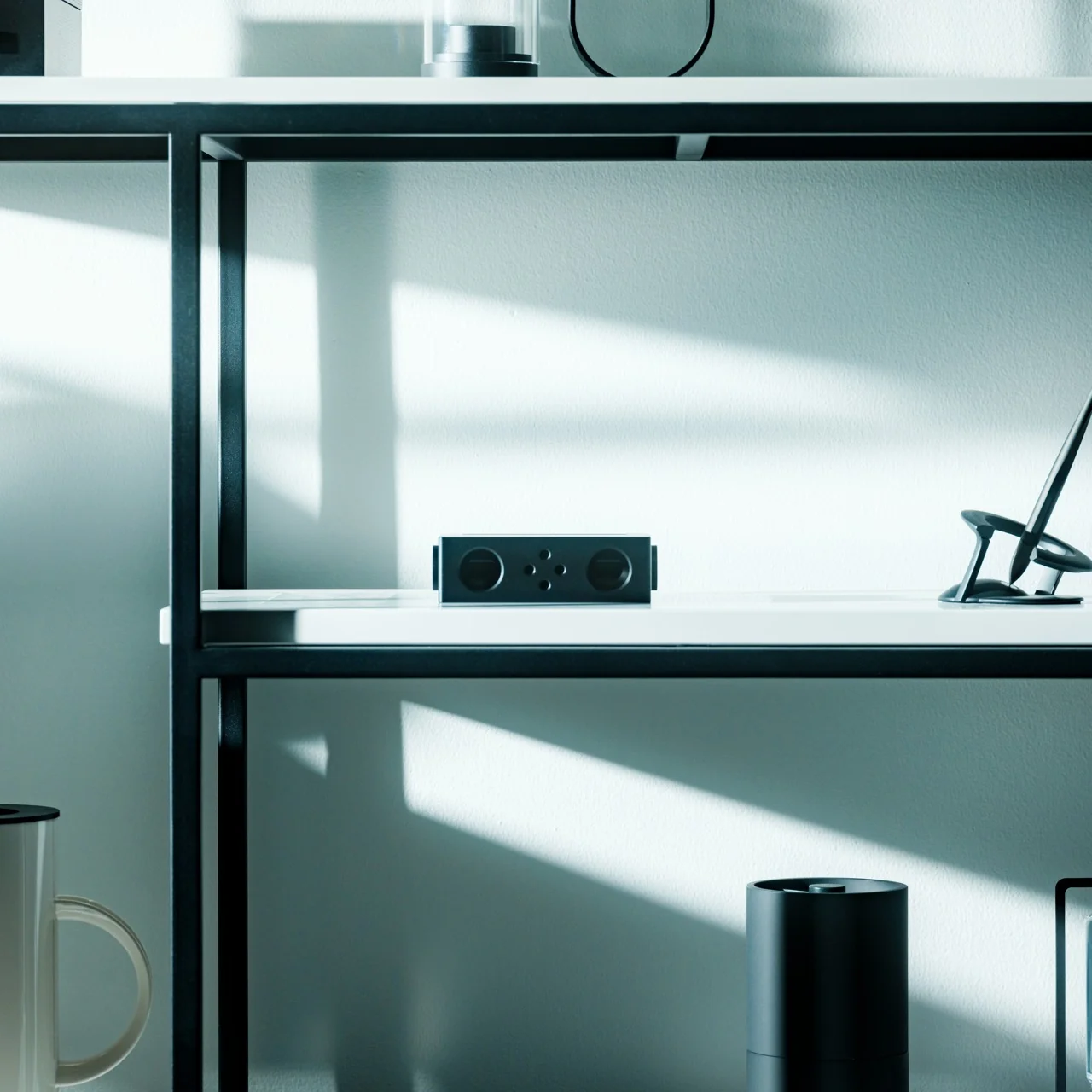
Design-wise, the iSpeakers follow a clean, minimalist aesthetic that looks just as at home on a cluttered work desk as it does on a nightstand or a bookshelf. The body is shaped around the golden ratio, giving it a visual balance that feels intentional rather than accidental (the kind of object you’d leave out on display rather than tuck into a drawer). It’s compact enough to toss in a bag, so you can bring your amplified sound with you to a picnic, a hotel room, or a friend’s backyard without hunting for an outlet. And because there’s no port, connector, or wireless protocol involved, it works with virtually any phone you own, including Apple’s freshly announced iPhone 18 Pro lineup and its first ever foldable, the iPhone Ultra, unveiled at today’s “Surprise and Shine” event. All you have to do is let the speaker slot cradle your phone’s speaker grille; there’s no compatibility chart to check and no software update to wait on.
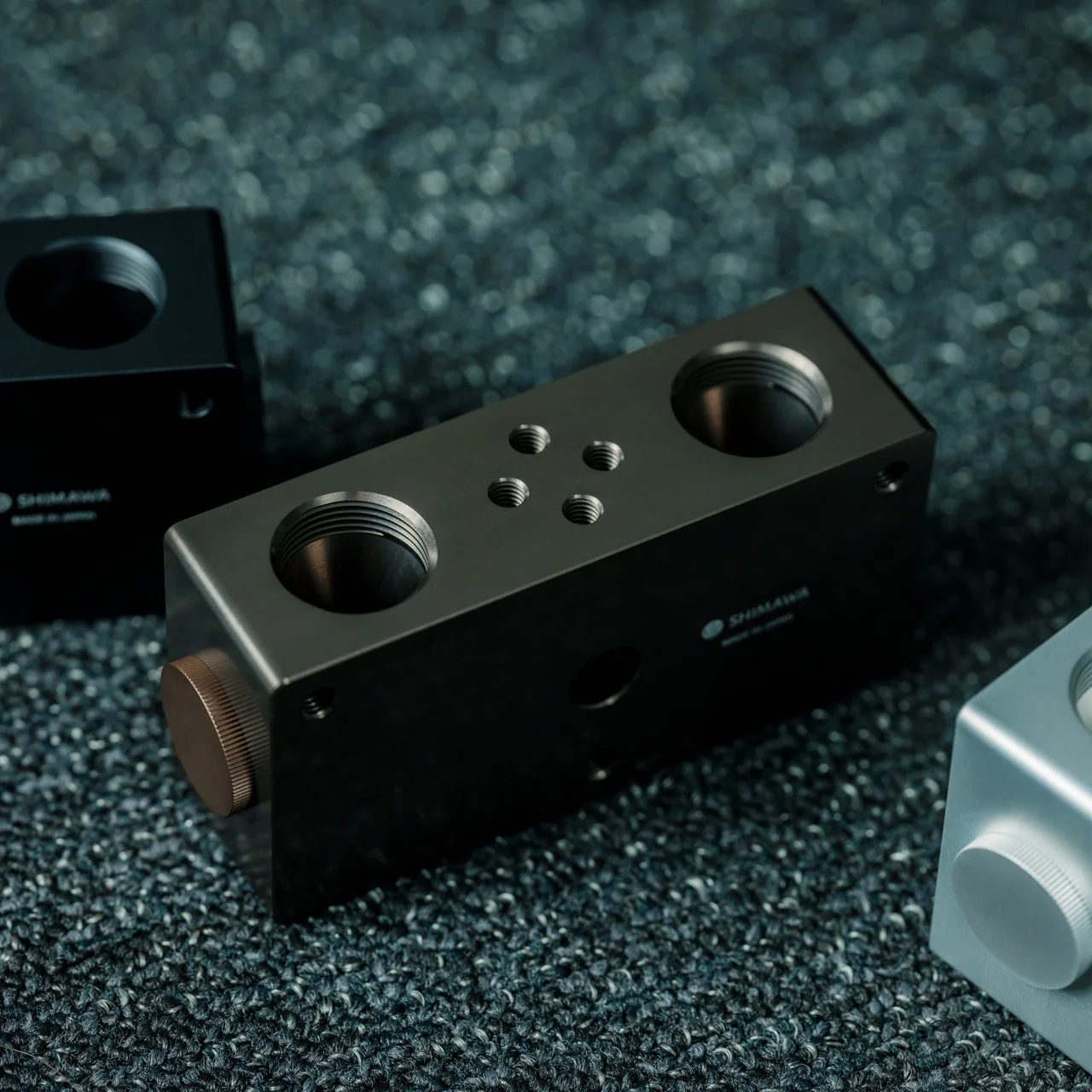
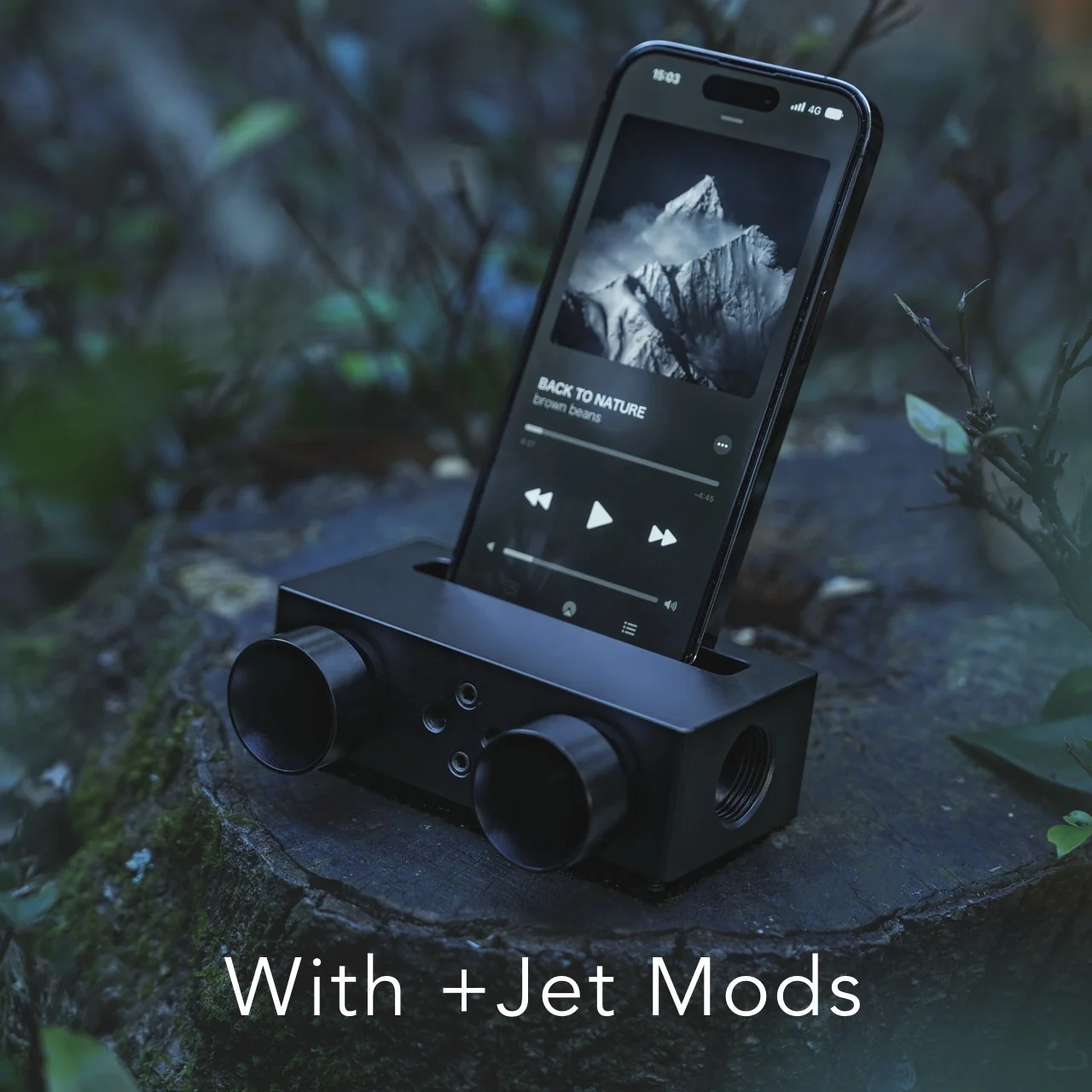
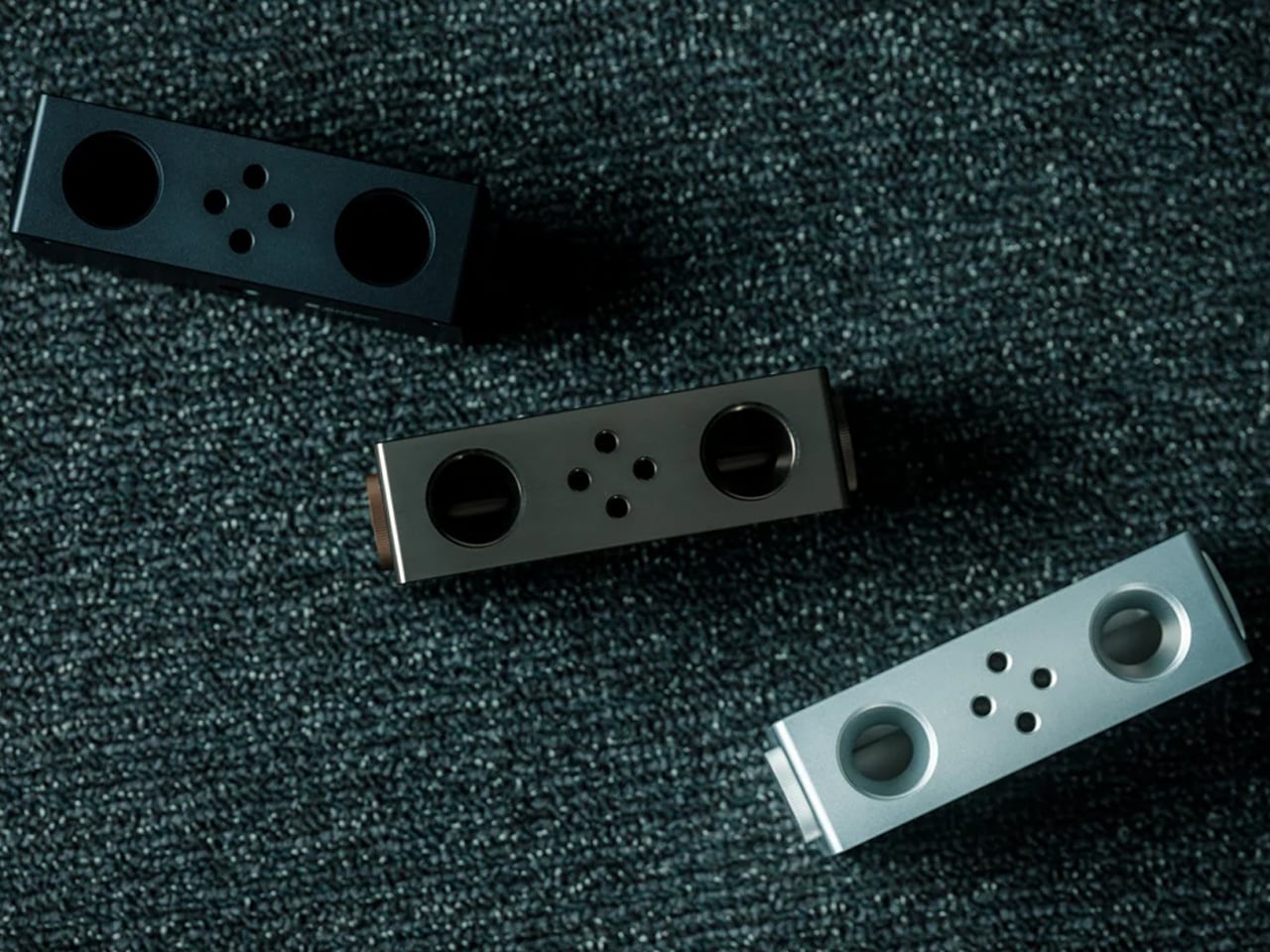
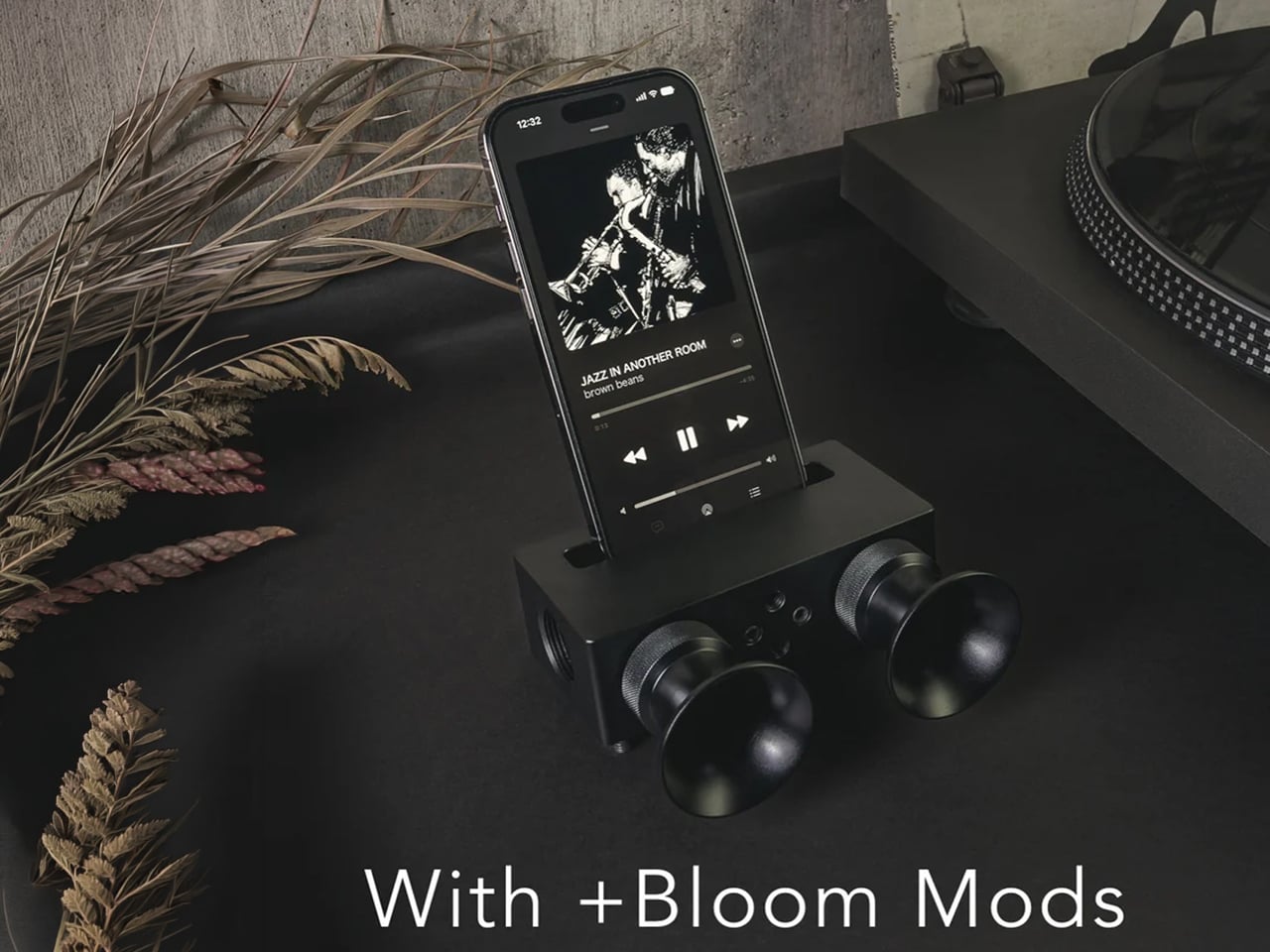
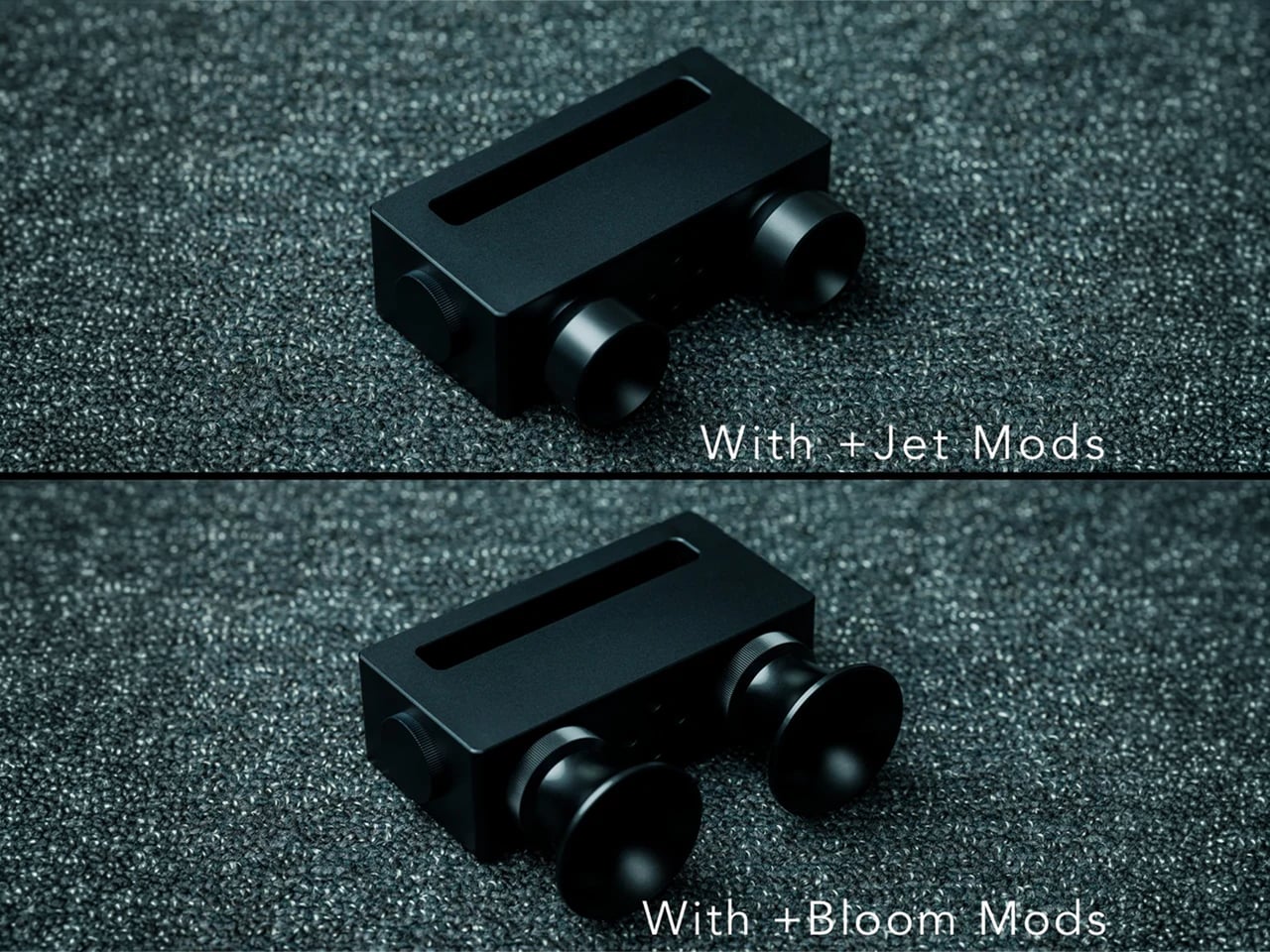
The speaker itself is milled from Duralumin, the same lightweight, vibration resistant alloy used in aircraft construction. That means you’re getting a premium feel along with genuine durability. This isn’t a flimsy accessory that’ll crack after a few drops in your bag. The Japanese craftsmanship and golden ratio proportions give it a quiet sophistication that fits in seamlessly next to your laptop or coffee mug. If you want to get more out of it, you can also pick up the +Bloom and +Jet attachments, which let you customize how the sound projects, whether that means directing it upward for a fuller room fill or downward for a more intimate listening experience.
So how does this stack up against the Bluetooth speakers already crowding your shelf? Take a brand like JBL, whose Flip series has become a go-to for portable audio. Those speakers sound great and pump out serious volume, but they still ask you to charge them, remember to pair them, and eventually deal with a battery that won’t hold a charge like it used to. The iSpeakers skip all of that by design. You’re trading a bit of raw volume and bass depth for something Bluetooth speakers simply can’t offer: a device that will sound exactly the same in ten years as it does today, with zero maintenance and zero electronic waste. At $179, it’s priced closer to a premium Bluetooth speaker than a budget one, but you’re paying for a very different kind of value: permanence, craftsmanship, and simplicity over specs and app connectivity.
At the end of the day, the Battery-free Amplifying iSpeakers isn’t trying to replace your Bluetooth speaker for a backyard party. It’s solving a much smaller, more common frustration: the moment when you just want your phone to sound better, right now, without any setup. For anyone tired of charging cords, pairing screens, and speakers that die at the worst possible moment, this is a refreshingly simple fix, and a genuinely beautiful object to boot. Sometimes the smartest tech is the kind that doesn’t need power at all.
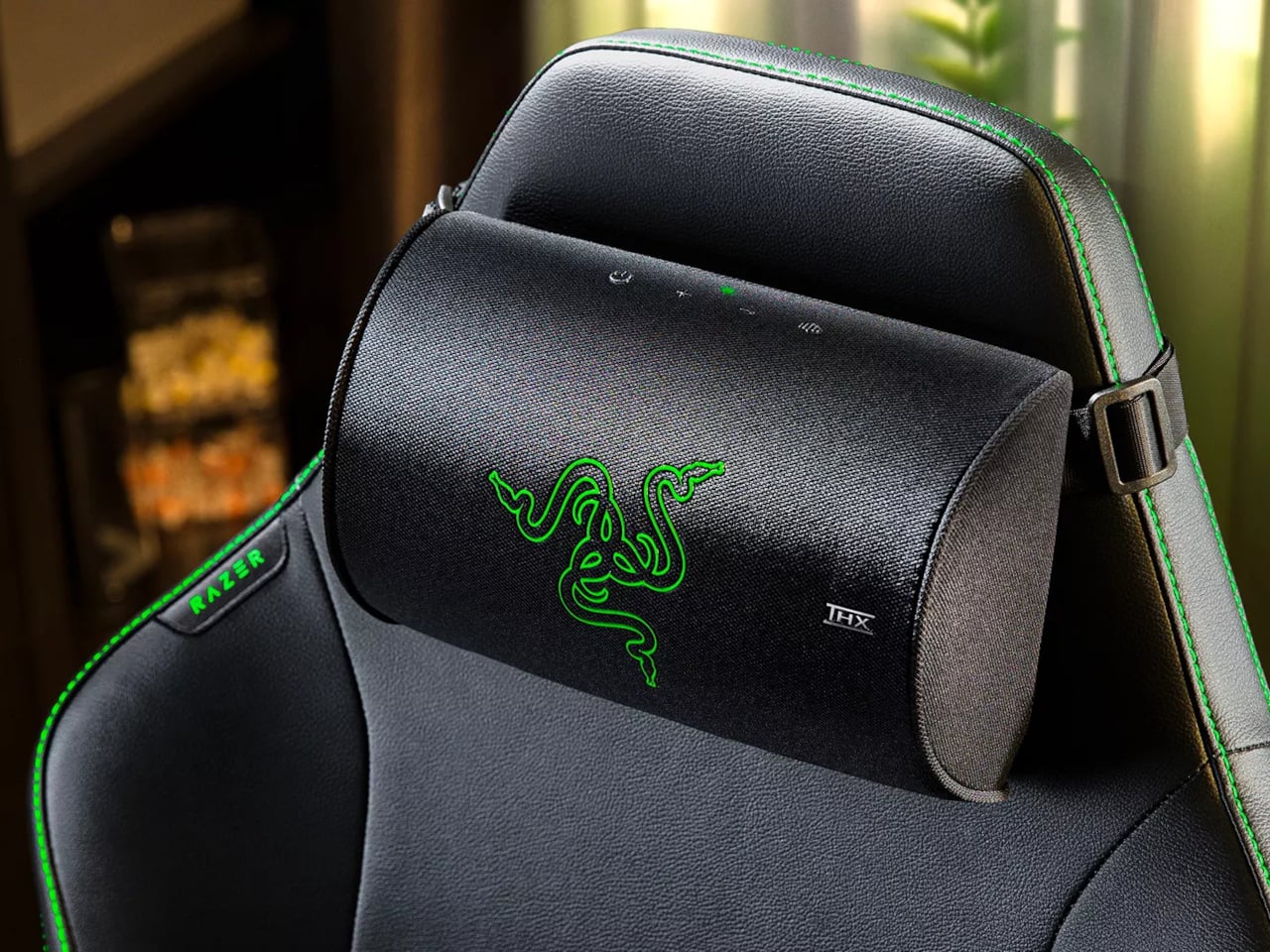
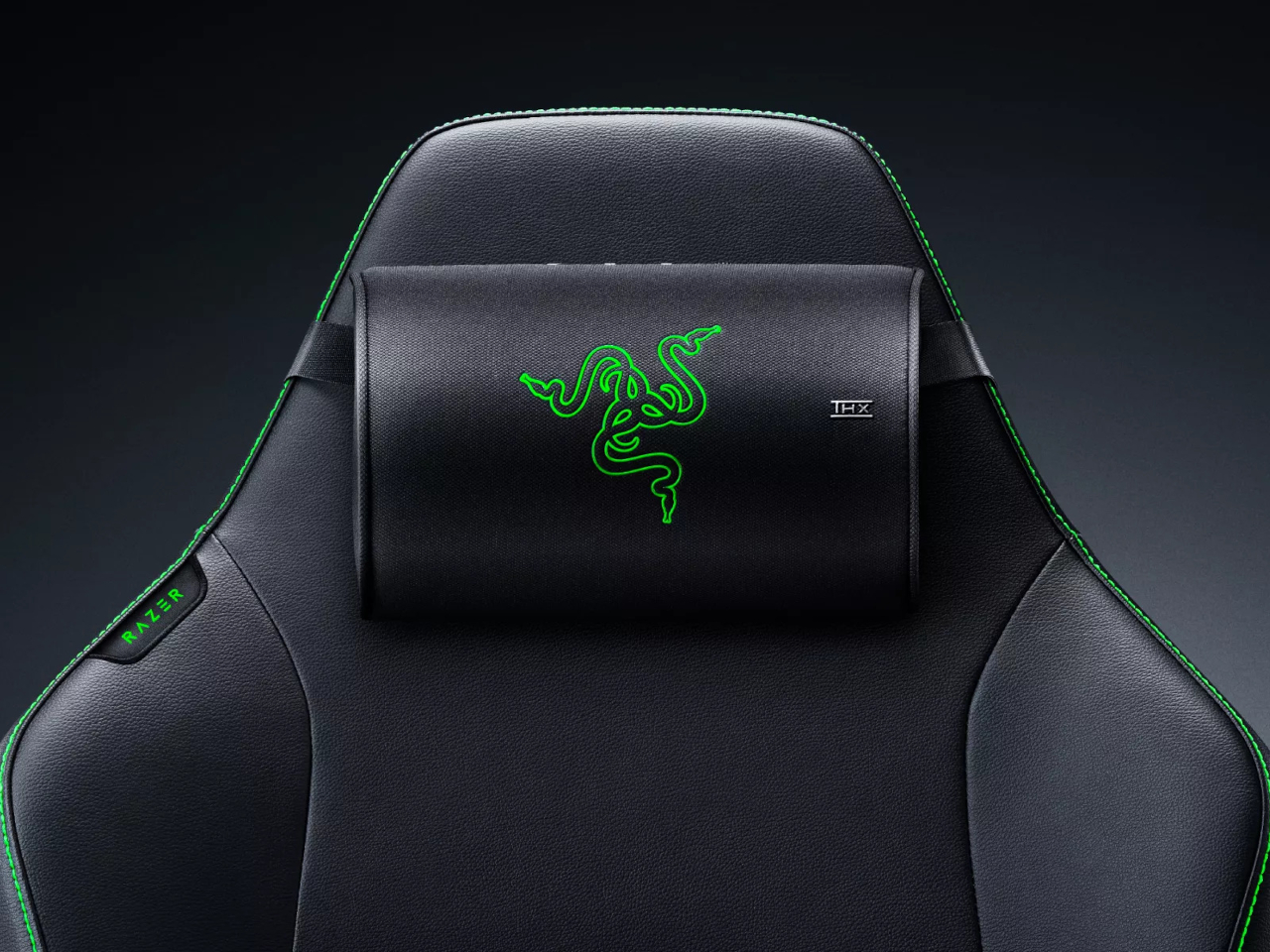
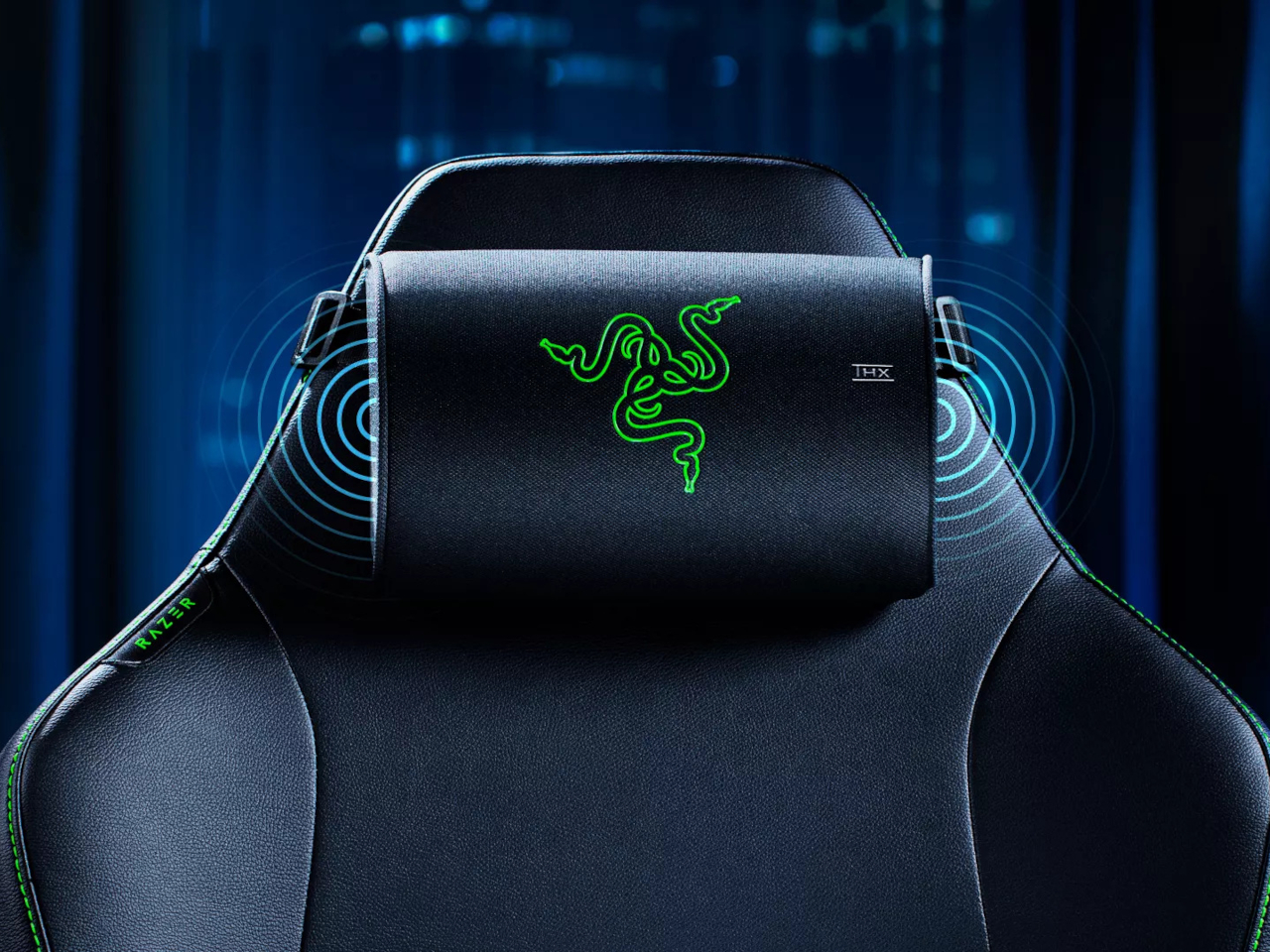
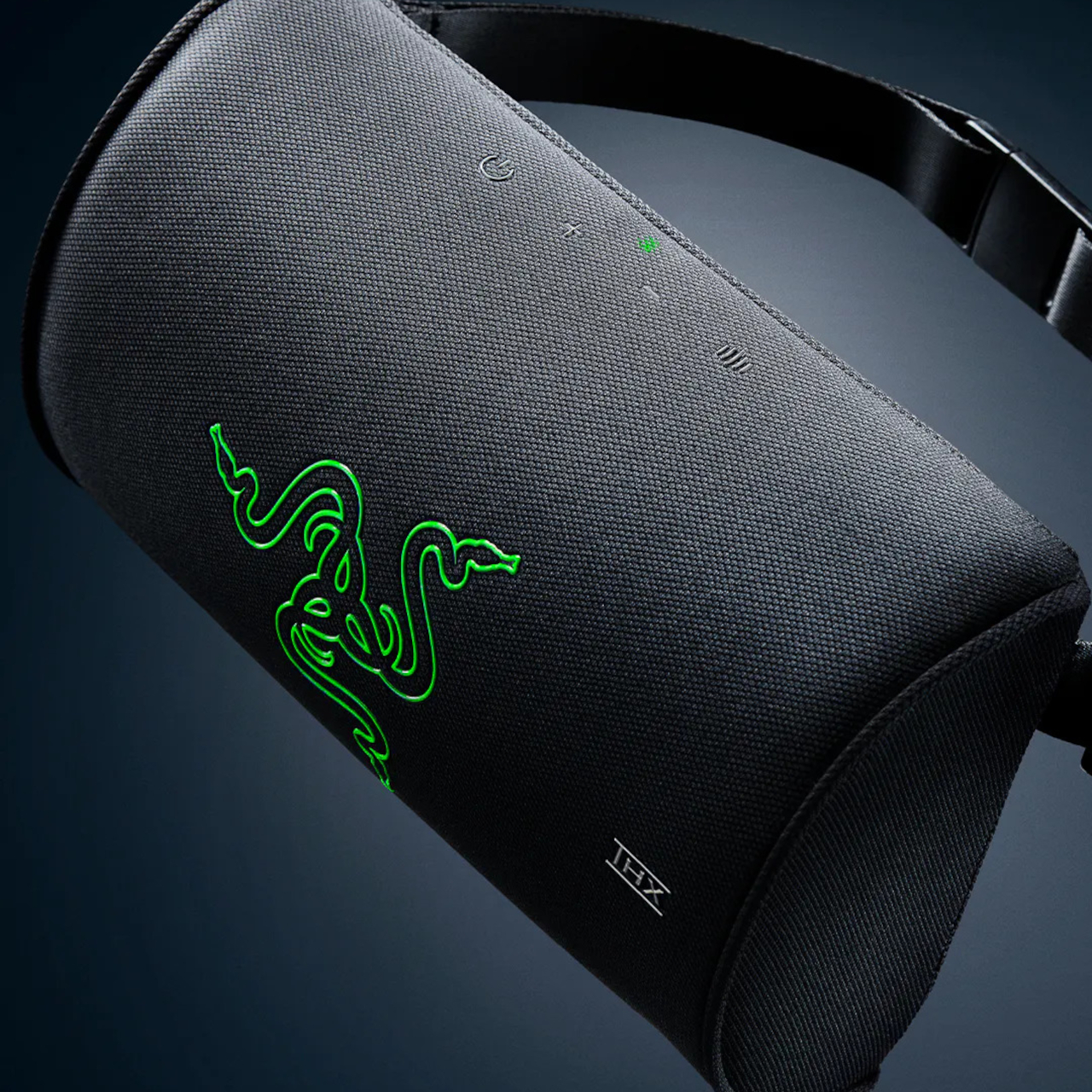
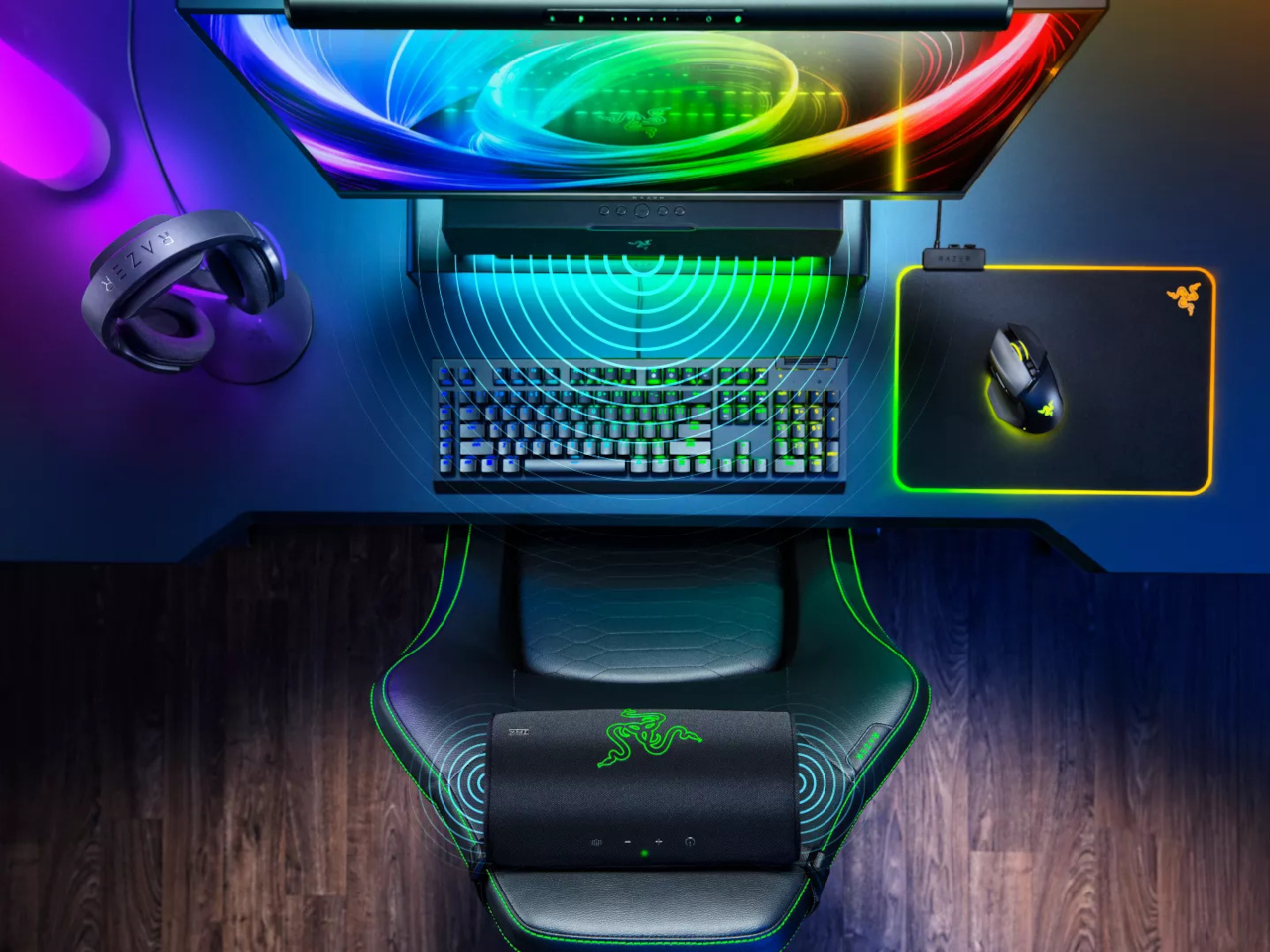
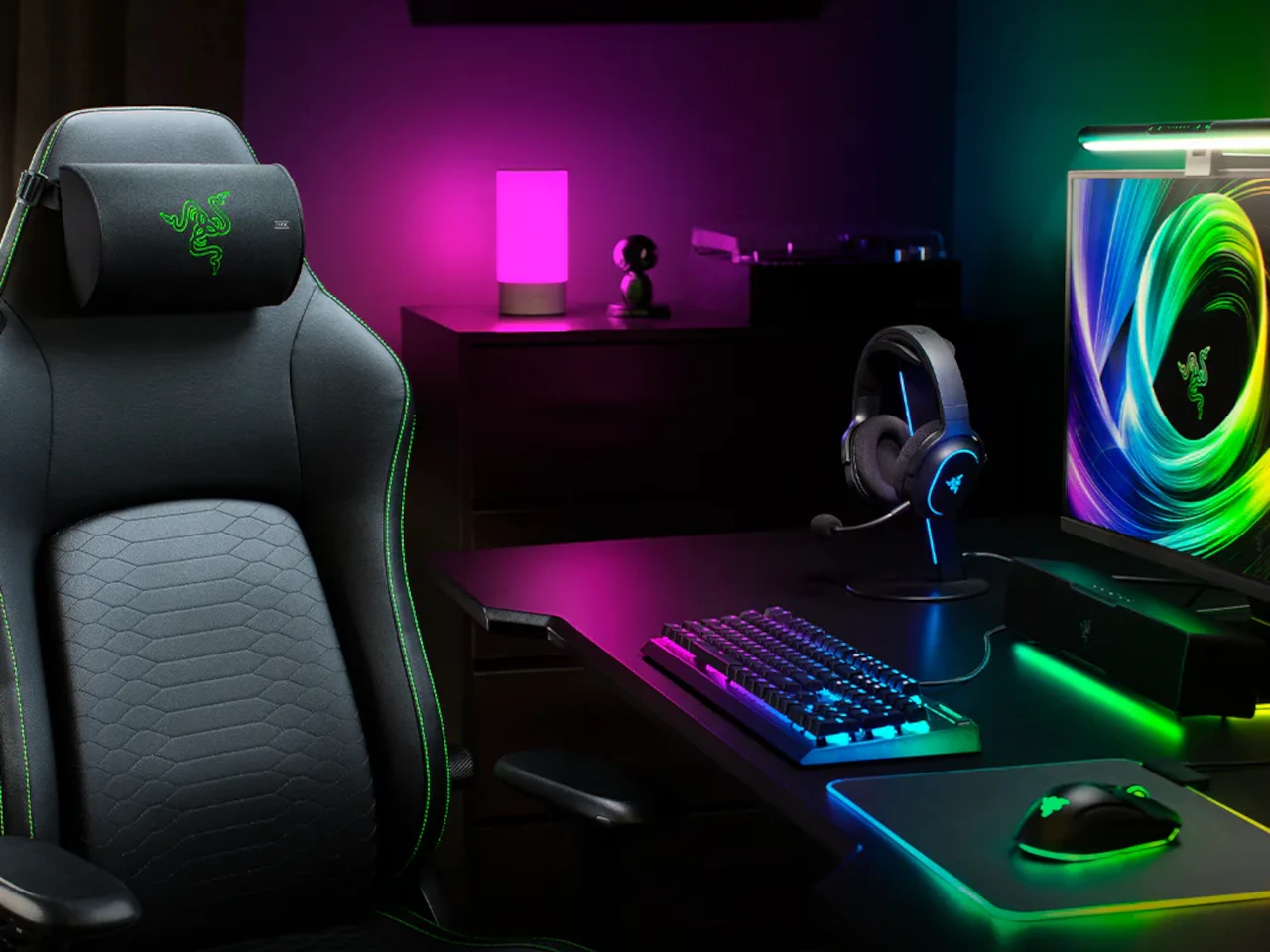
Immersive gaming audio has always come with a catch: wear a headset and get isolated from everyone else in the room, or build out a full speaker setup and lose the intimacy of hearing something meant just for you. The Razer Clio X sits between those two extremes. It’s a speaker built directly into a gaming chair’s head cushion, delivering focused spatial sound aimed at exactly where your ears already are.
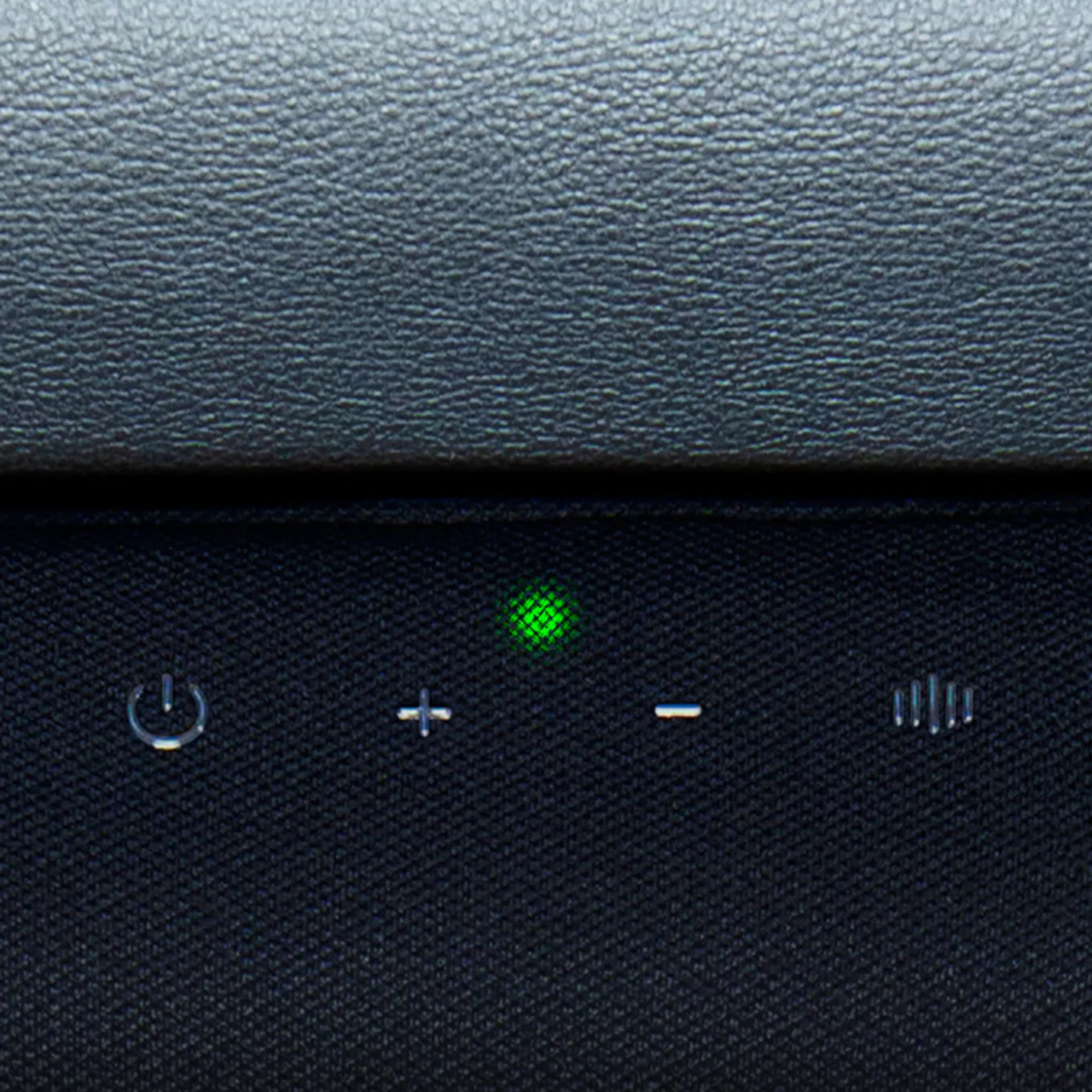
Inside that cushion sit two 1.5 in loudspeakers paired with two 2.2 in passive radiators, a more compact arrangement than the 1.7 in aluminum cone drivers found in Razer’s flagship Clio. That tradeoff isn’t a downgrade so much as a different design goal, delivering the same THX Spatial Audio experience and near-field clarity in a smaller, less bulky cushion that sits more naturally against a headrest without announcing itself as hardware.
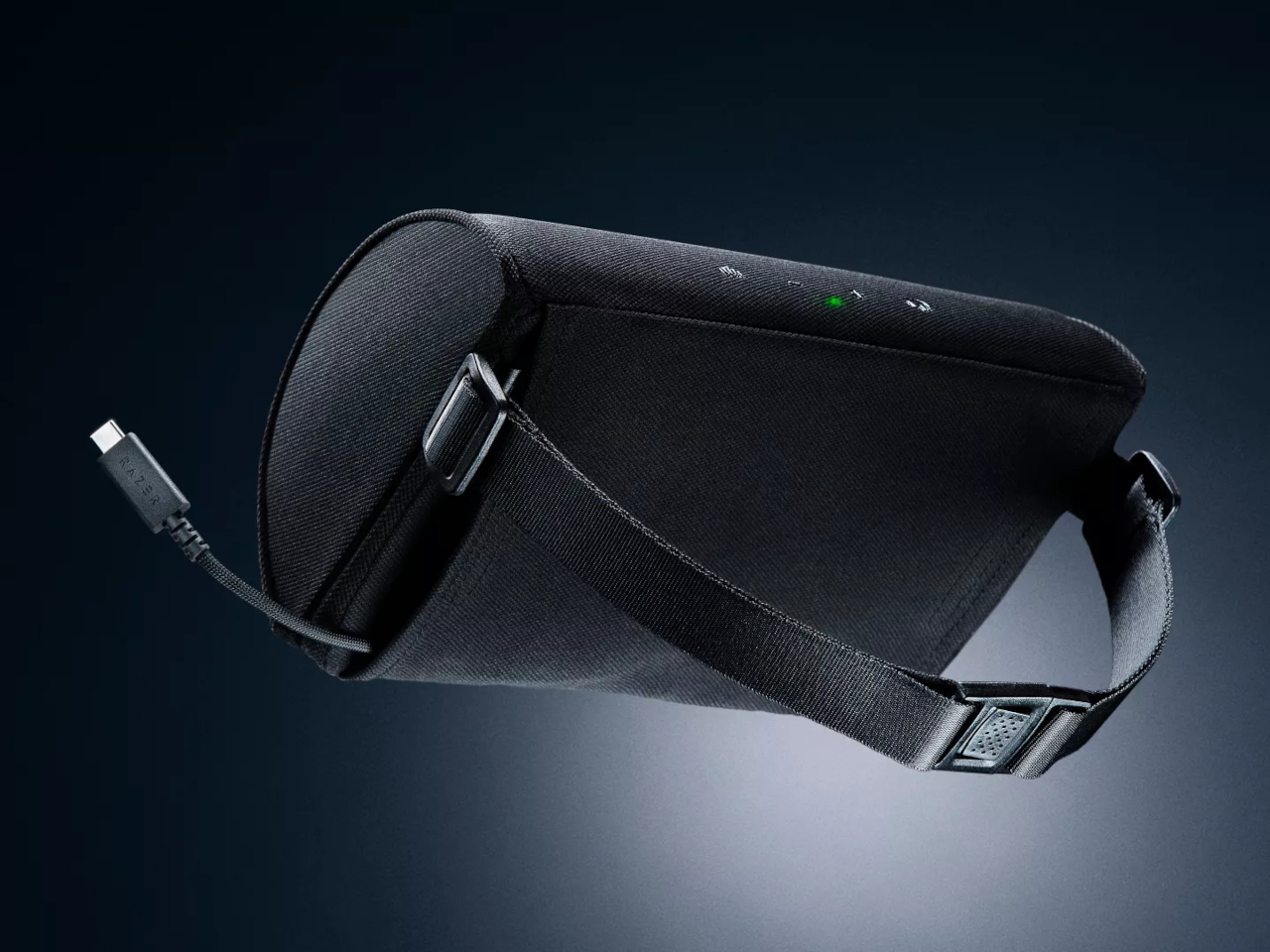
Getting sound to that cushion happens over Razer’s HyperSpeed wireless connection, a 2.4 GHz link built specifically to avoid the lag that standard Bluetooth introduces during fast-moving game audio. There’s no headset clamping down on your head, no cable running from your ears to your desk, just a strap securing the cushion to a high-back chair and a wireless signal doing the rest of the work invisibly.
Power comes through USB-C rather than a built-in battery pegged to a runtime number, drawing from a 15-watt or higher PD2.0 source to hit full volume. That decision keeps the cushion running indefinitely during long sessions instead of racing against a depleting charge mid-match, though it does mean planning a power source alongside the chair itself, whether that’s a nearby outlet or a power bank for a portable setup.
Where the Clio X earns its place in an existing setup is flexibility. Someone already running a 2.0 or 2.1 speaker system at their desk can fold the Clio X in as a wireless rear channel instead, turning a stereo setup into something closer to real surround sound without running an extra cable behind the chair. Used alone, it just becomes the entire audio system on its own terms.
Picture a late-night session where headphones start pressing uncomfortably against your ears, or a shared room where blasting a soundbar isn’t an option out of consideration for someone asleep down the hall. The Clio X splits the difference, audio present enough to feel surrounding, contained enough to stay mostly private, all without adding a single extra object to hold or wear.
None of this replaces a dedicated home theater setup chasing maximum output, and nobody buying this expects it to. What the Clio X actually delivers is a specific, narrower promise: immersive audio that lives in the furniture you already sit in every day, asking for nothing more than a strap and a power cable to make itself useful.
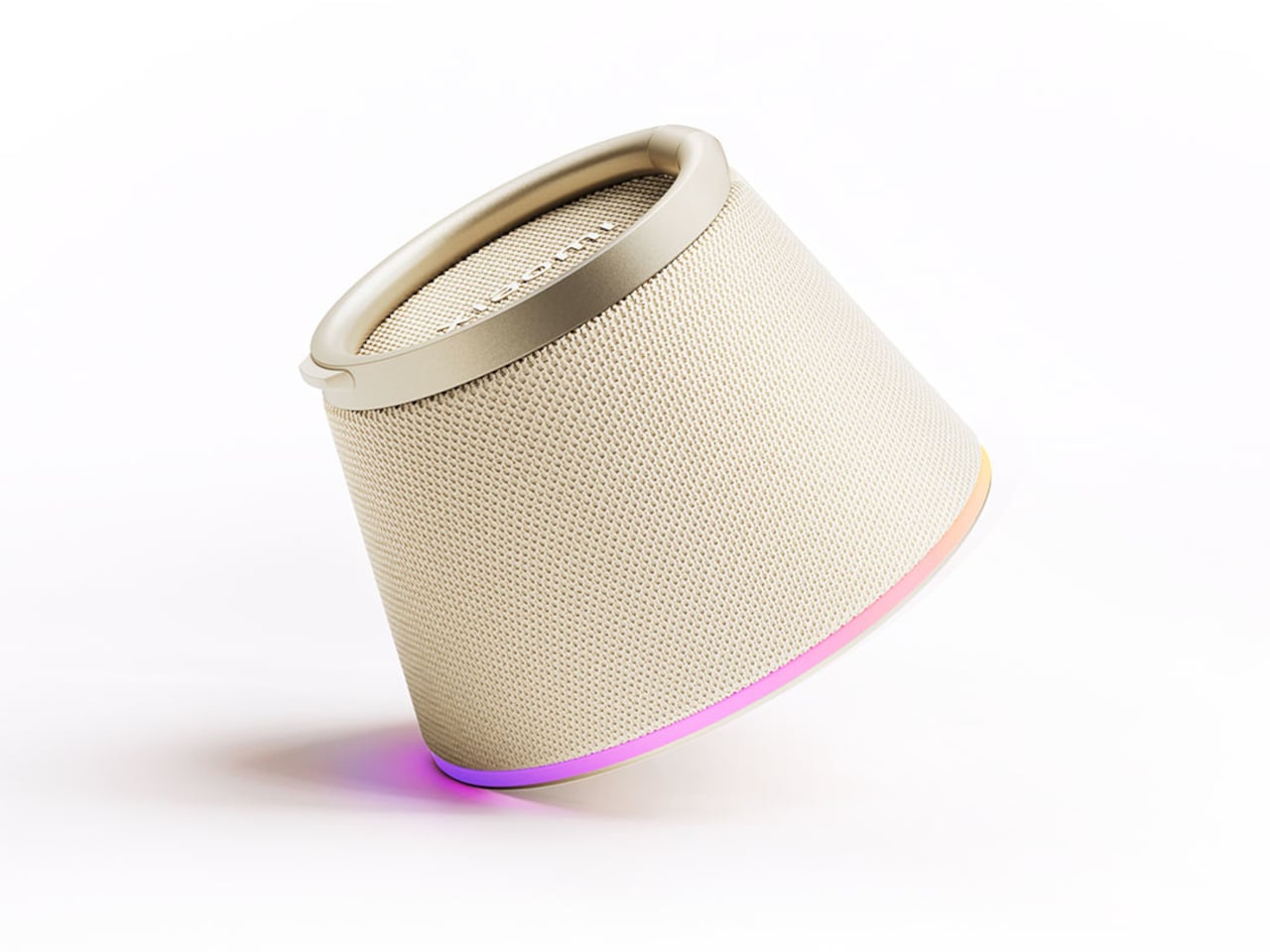
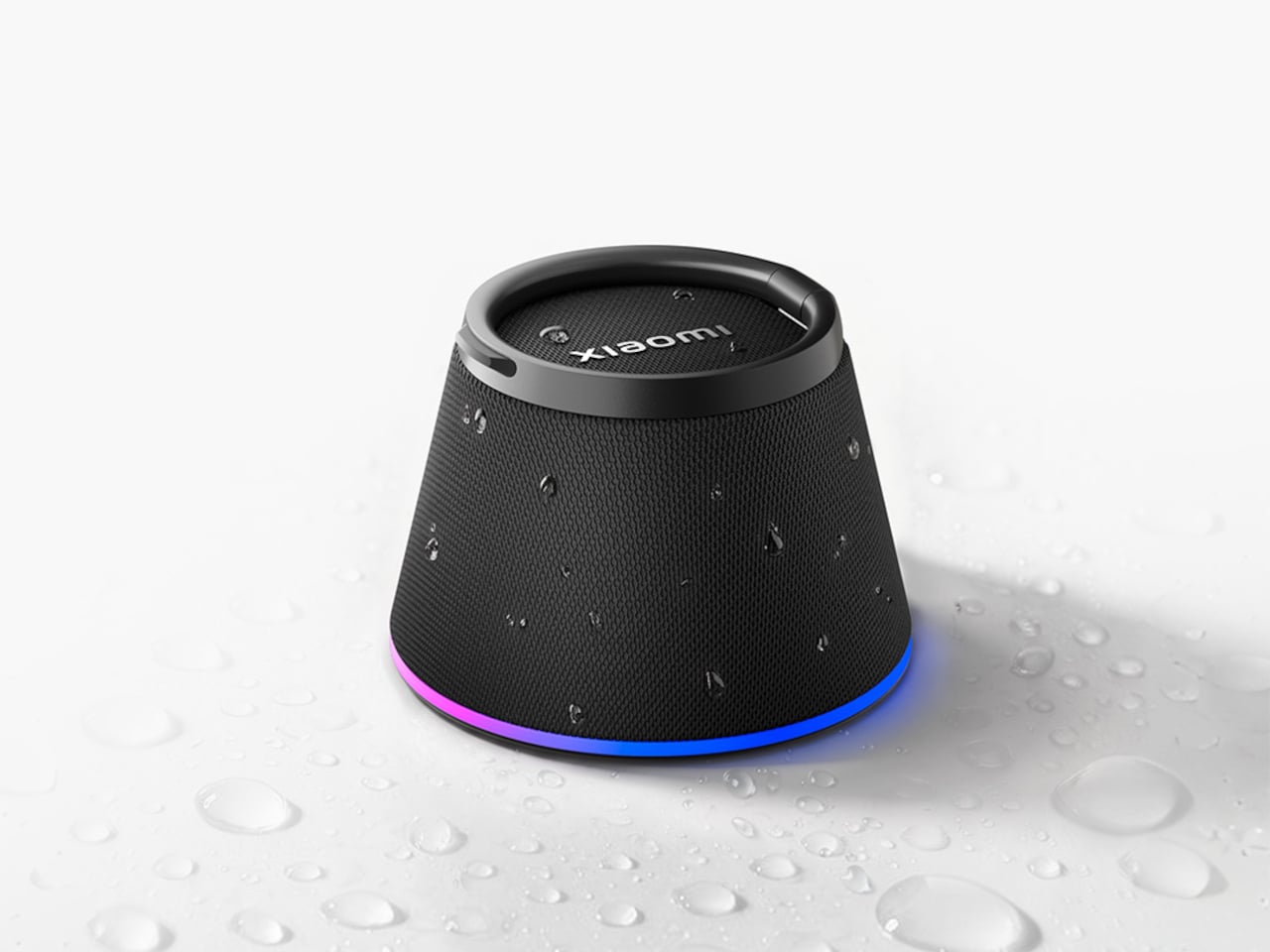
The compact Bluetooth speaker category has been fighting the same battle for years. Every new entry promises to be louder than your phone, smaller than a can of soda, and tough enough to survive a bag. Most deliver on those basics reasonably well, and most of them occupy the same category of objects that you put next to your phone rather than on it. That distinction tends to go unexamined, and it’s the one Xiaomi decided to question with its latest accessory.
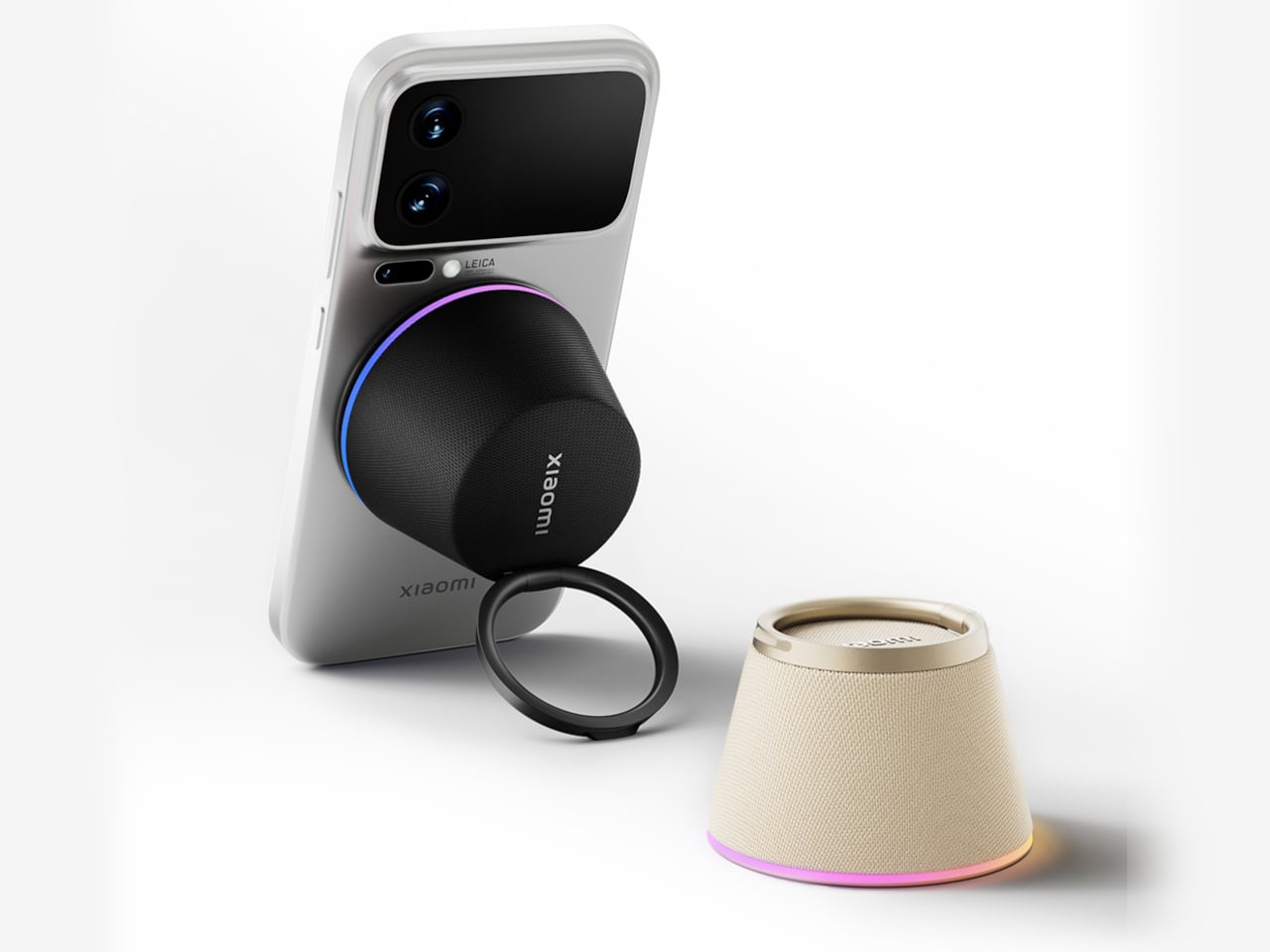
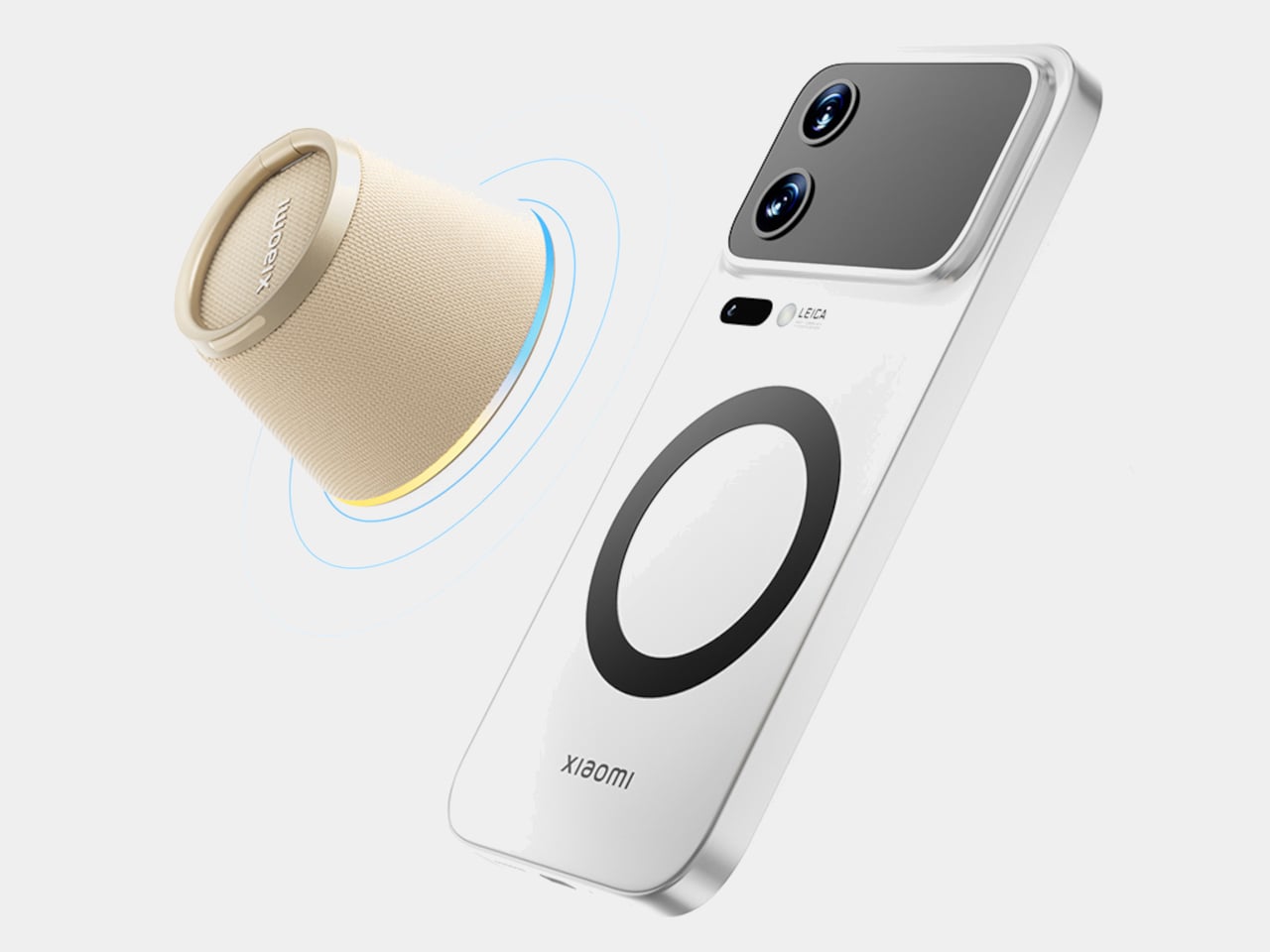
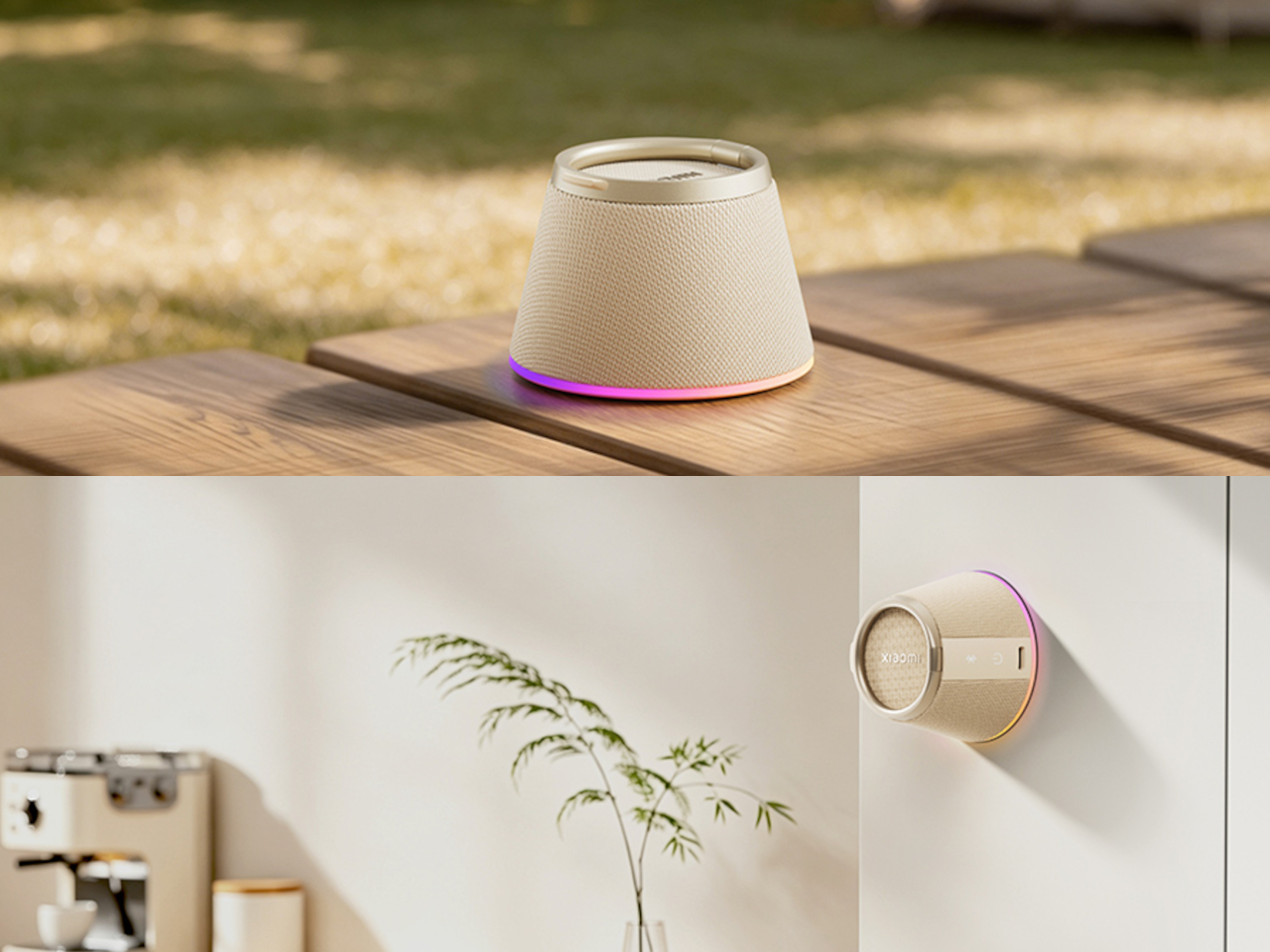
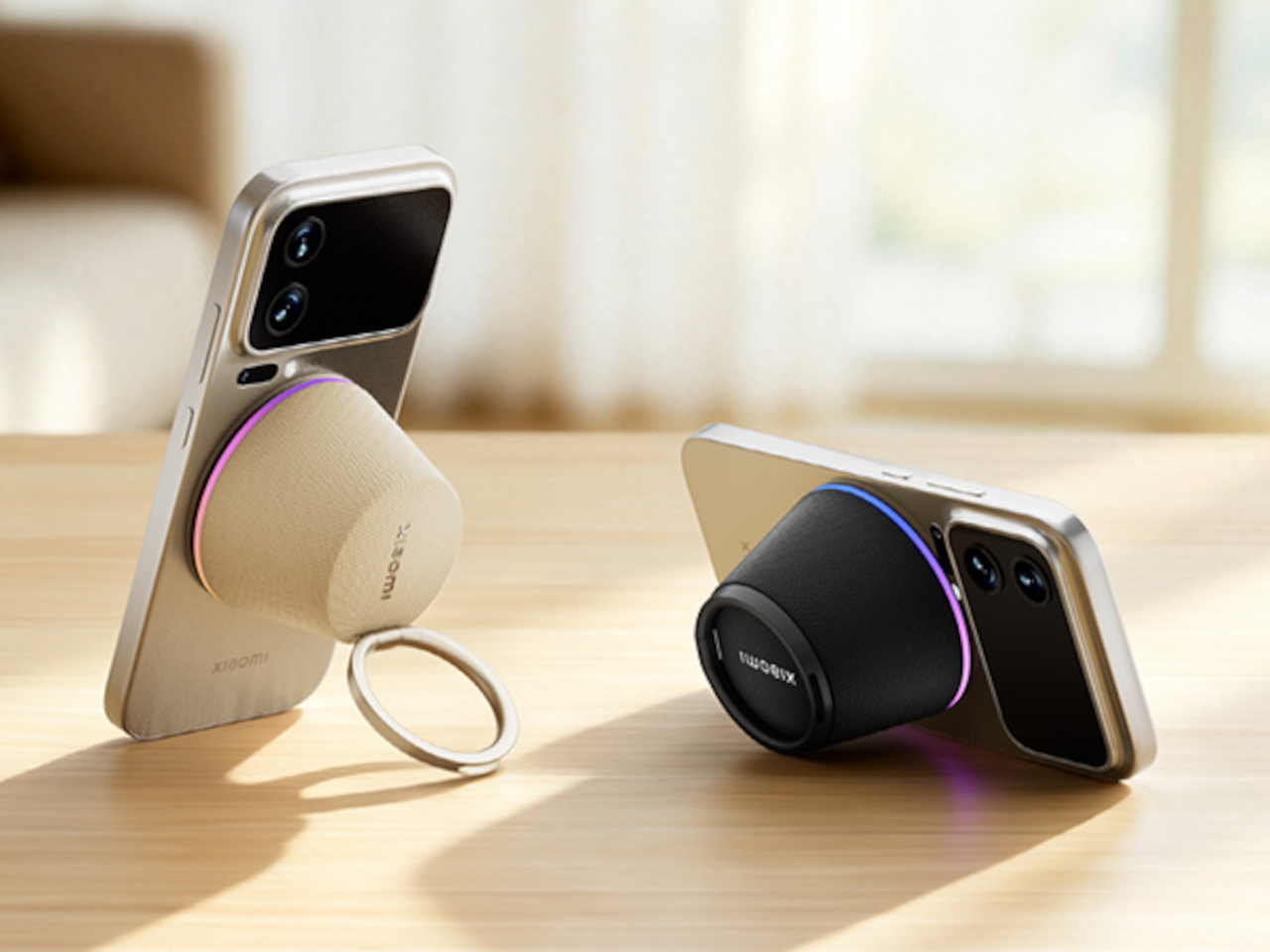
The Xiaomi Bluetooth Speaker Magnetic Edition attaches directly to the back of a smartphone. The connection is magnetic, and a built-in Hall sensor detects the moment it locks on, triggering the speaker to power on automatically. No button to find, no pairing ritual to repeat. You put it against your phone and it starts. Pull it off and it stops. The whole interaction is designed to be immediate enough that the speaker stops feeling like an accessory and starts feeling like part of the phone itself.
The stand function is the idea that makes this more than a magnet trick. Rather than simply hanging on the back while the phone lies flat, the speaker’s base props the phone upright at a comfortable viewing angle. That solves two things at once: you get a better listening experience than the phone’s own speaker provides, and you get a hands-free viewing position without hunting for a stand or balancing the phone against something that will slide the moment you look away.
The audio hardware is modest by design. A 1.5-inch full-range driver running at 3W isn’t built for a living room, and the 200Hz to 20kHz frequency response tells you this is tuned for clear, near-field playback rather than bass-heavy output. For someone cooking in the kitchen and wanting to follow a video without holding their phone, or listening at a desk without headphones, that kind of output is exactly right. The speaker isn’t competing with a dedicated tabletop Bluetooth speaker; it’s competing with a phone’s built-in speaker, and that bar it clears comfortably.
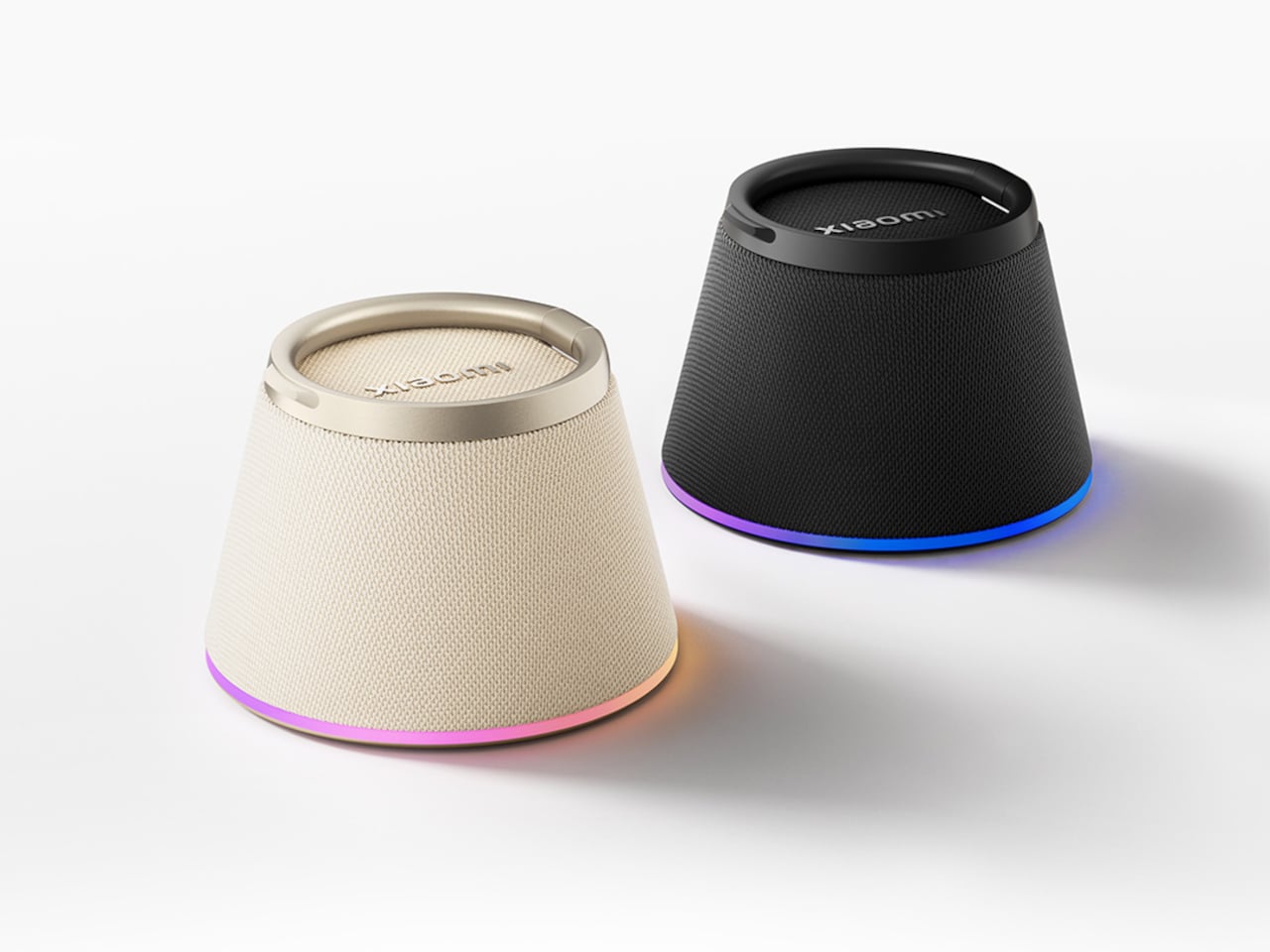
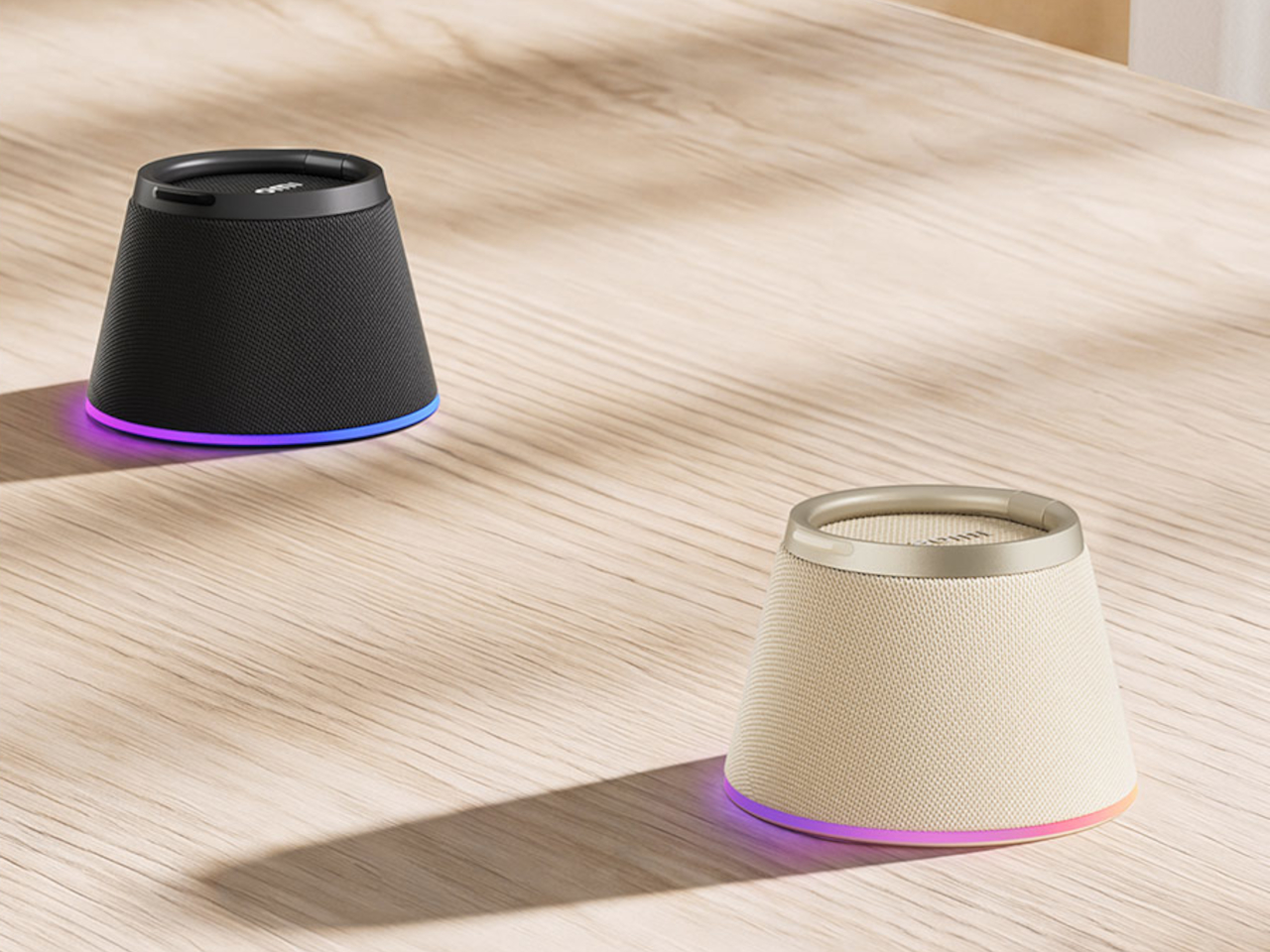
RGB lighting rings the base of the speaker and syncs its colors to the audio playing, adding some visual presence in lower light and keeping the device from reading as purely utilitarian when it’s sitting on a desk as a stand. The 650mAh battery powers the speaker independently from the phone’s own charge. Bluetooth 6.0 handles the wireless connection with AAC and SBC codec support, and the pairing typically carries over automatically each time the speaker is magnetically attached.
Two color options are available, with dark gray confirmed. Priced at 132 yuan during the Xiaomi Youpin launch period, with a suggested retail price of 199 yuan, roughly $29 or €25, it sits in a price range where the two-in-one premise doesn’t need to be flawless to be worth trying. That’s a meaningful advantage for an accessory built around a function that most people are currently meeting with improvised solutions anyway.
Most desk setups already include an accidental phone prop. A charging pad, a book corner, a keyboard edge, something doing the job that wasn’t designed for it. The Xiaomi speaker makes the argument that the prop might as well be a speaker too, and that at this size and price, consolidating both into one small object costs nothing in practicality and improves the experience every time you sit down to watch something, take a call, or simply want your hands back.
Every speaker you own needs something. The Bluetooth speaker needs charging – and the charging case, and the cable for the case. The wireless earbuds need their own ritual before the music starts. The smart speaker needs a wall outlet, a WiFi password, and a company’s servers staying online on a Tuesday. The Battery-free Amplifying iSpeakers from Yanko Design need none of it. They need your iPhone and the physics of a sound wave moving through precision-machined metal, and that is the complete technical brief.
No battery. No Bluetooth. No electricity. No app. No pairing. No charging. Just your phone, a slot in a piece of metal, and the same acoustic principle that made the phonograph work before Edison’s power grid reached the average American home.
The Battery-free Amplifying iSpeakers use acoustic resonance – the same principle that powered phonographs before electricity reached the average home – to make your iPhone louder without touching a single cable or draining a single milliamp.
One Slot, A Louder Room
The amplification here is acoustic, not electronic. A phonograph built in 1877 used the same governing principle – a horn-shaped resonance chamber that directed and amplified sound waves using geometry rather than power. The iSpeakers apply that same physics, precision-machined into a metal chassis designed specifically to receive a modern iPhone. The phone’s speaker fires into the chamber. The chamber’s interior geometry redirects, focuses, and amplifies the sound wave. Music comes out measurably louder on the other side – with no battery depleting silently in the background, no Bluetooth connection to drop at the moment the song hits its best part, and no firmware to update before any of it works.
We placed a phone into the iSpeakers and left it there for a week on the desk. The first thing that registers is not the volume, it is the silence around the process. No pairing animation. No connection sound. No status LED cycling through colours. Phone in, music louder. Phone out, music stops. There is no standby mode because there is nothing to stand by. The speaker is a shaped piece of metal that does one thing through pure acoustic engineering, and it does it every single time without being asked twice.
The second thing that registers is the material. Metal sounds different from wood. The passive amplifier market is dominated almost entirely by handcrafted wooden alternatives – walnut, maple, bamboo, each with their own warmth and grain character. Metal amplifies differently: crisper, more present, with a clarity that wood’s natural porosity softens. Whether that is better or worse is a matter of what you are listening to and what you are listening for. As a desk object in a considered setup, it is audibly distinct from every wooden alternative in the category and visually distinct from all of them.
Built for the Desk That Has Everything Except One More Cable
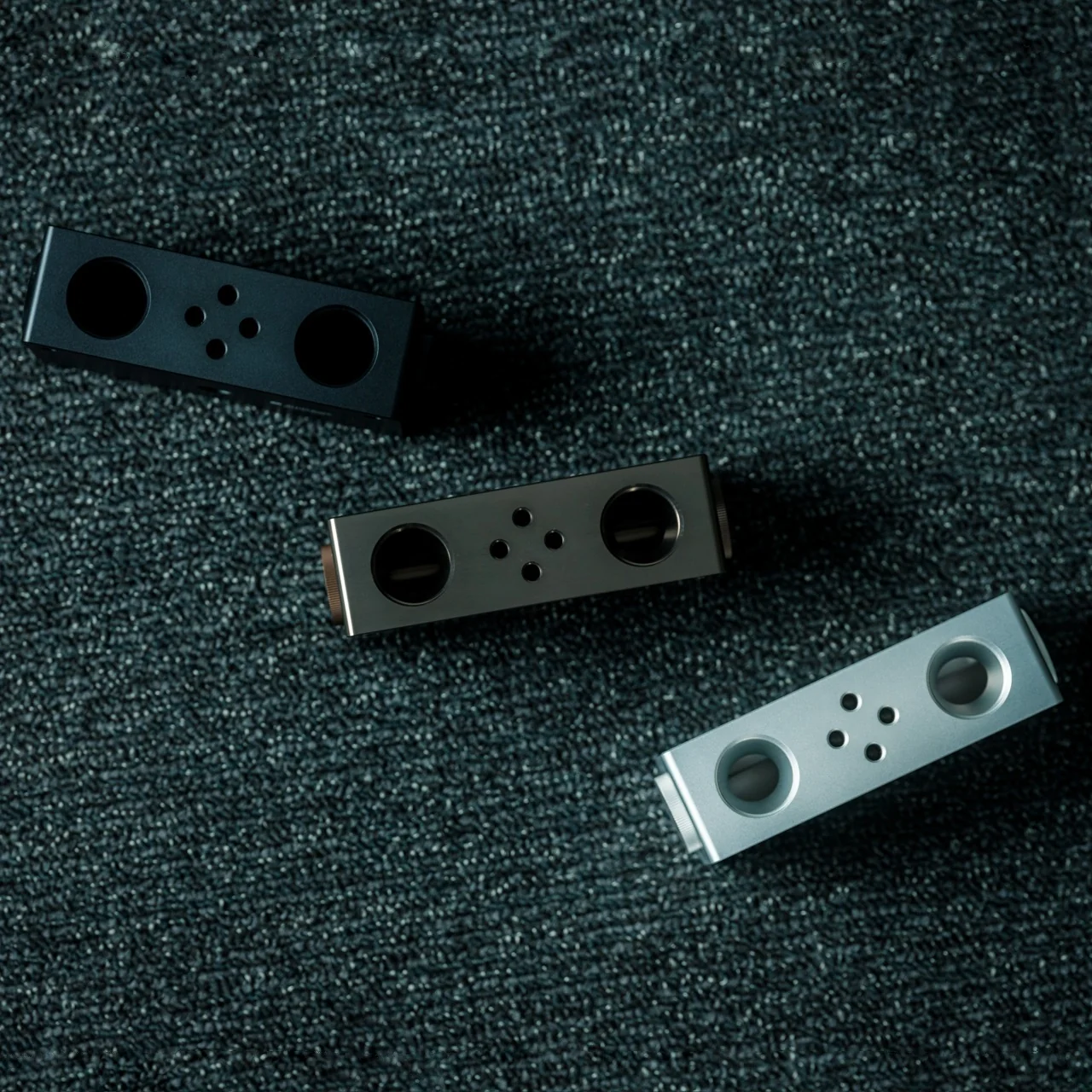
The iSpeakers are available in Silver in two configurations: Speaker Only at $179 and a modified configuration at $299 for extended iPhone compatibility. The price is unambiguously at the premium end of a market, and it deserves the scrutiny that premium pricing invites.
What the $179 buys over the Etsy wooden alternatives – which start at $15 and top out around $60 for handcrafted versions – is precision-machined metal construction, iPhone-specific acoustic tuning, and a design that belongs on the same surface as a considered desk setup rather than looking like a craft project that migrated indoors. The gap between a $25 3D-printed passive speaker and this one is not a matter of degree. It is a matter of what category the object belongs to.
For the remote worker, the minimalist desk builder, or anyone who has spent real money getting every wire off the surface and every device intentional – a speaker that contributes zero cables, zero charging cycles, and zero connectivity requirements to that arrangement is not a convenience. It is the only version of a speaker that is actually consistent with that philosophy.
What We Like
Zero power required of any kind – no battery, no USB, no wall outlet, no Bluetooth radio, no WiFi; the amplification is entirely acoustic, which means it works at 3am in a power cut and never needs to be charged before a trip
Precision-machined metal construction delivers a distinctly different acoustic character than the wooden alternatives that dominate this category – crisper and more present, with a clarity that reflects the material’s acoustic properties rather than softening them
iPhone-specific acoustic geometry means the channel dimensions and chamber angles are tuned to the iPhone’s speaker placement rather than being universal and therefore approximate – specificity in passive amplifier design is not a minor variable
Instant-on, always-ready operation – phone in the slot, music plays louder; no pairing sequence, no app, no startup delay, no connection to lose; this is the simplest possible interaction model because there is no interaction model
Zero cable contribution to the desk – in a setup where cable management is the work, a speaker that adds nothing to that count is a different category of object than one that adds even one
What We Dislike
For this design the buyer has already decided that acoustic amplification, cable-free operation, and metal construction are the priorities – anyone arriving at this product from a Bluetooth speaker mindset will not find the value immediately obvious
iPhone-specific design is a strength acoustically but a limitation categorically – Android users, regardless of budget or intent, are not the audience for this product, and that is not stated prominently enough before purchase
The Speaker That Remembered How Sound Works
The Battery-free Amplifying iSpeakers do not fix a problem most people knew they had. They reveal one. Once your music plays louder through a piece of metal that asked nothing of your power bank, your charging cable, or your WiFi router – the Bluetooth speaker on the desk feels exactly like what it is: a device that solved a problem by adding four more problems underneath it.
For the audio-minded, it is a precision-machined object applying one hundred and fifty years of acoustic physics to a twenty-first century pocket computer, with the restraint to leave electricity entirely out of the conversation. For everyone else, the Battery-free Amplifying iSpeakers is a $179 answer to the question of why a speaker needs a battery in the first place.
Either way, once it earns its place on the desk, a charging cable will not be going back.
The nightstand has become a staging ground for technology. Between a phone, a white noise machine, a lamp, and whatever book you’re pretending to read before you fall asleep, it tends to get crowded. That clutter has gotten to the point where some people start their mornings already stressed from looking at the pile, which is counterproductive for something that’s supposed to help you rest.
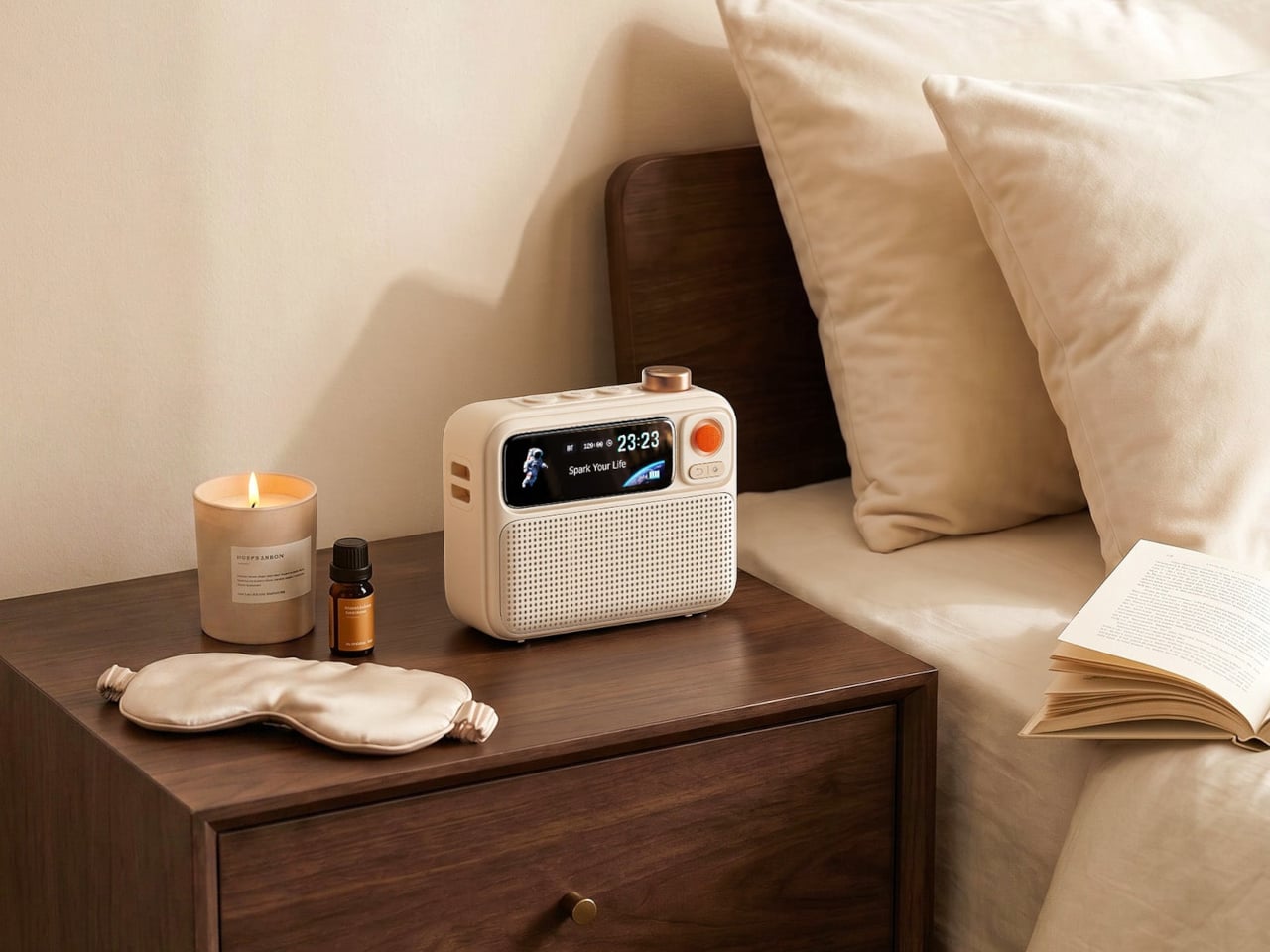
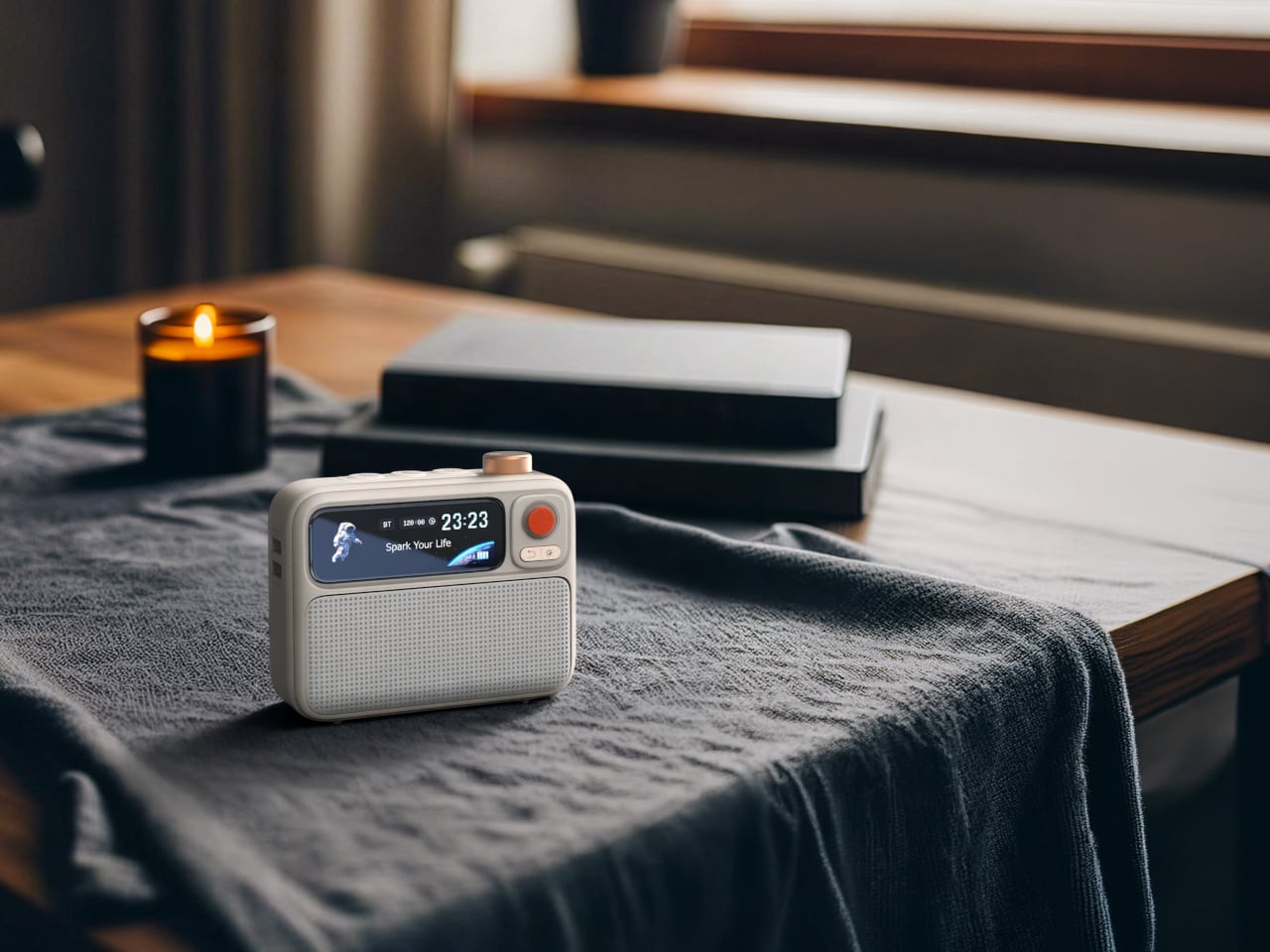
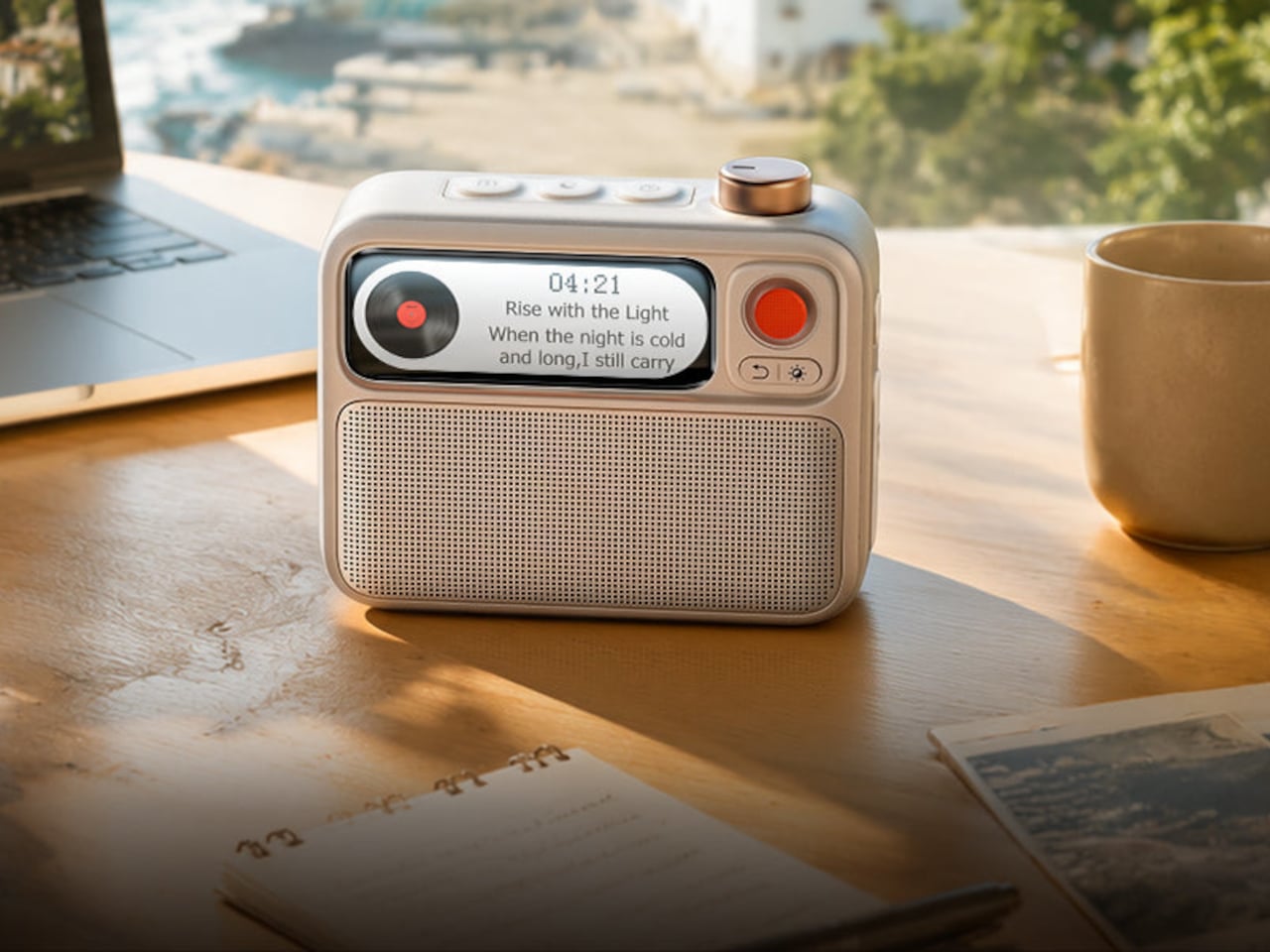
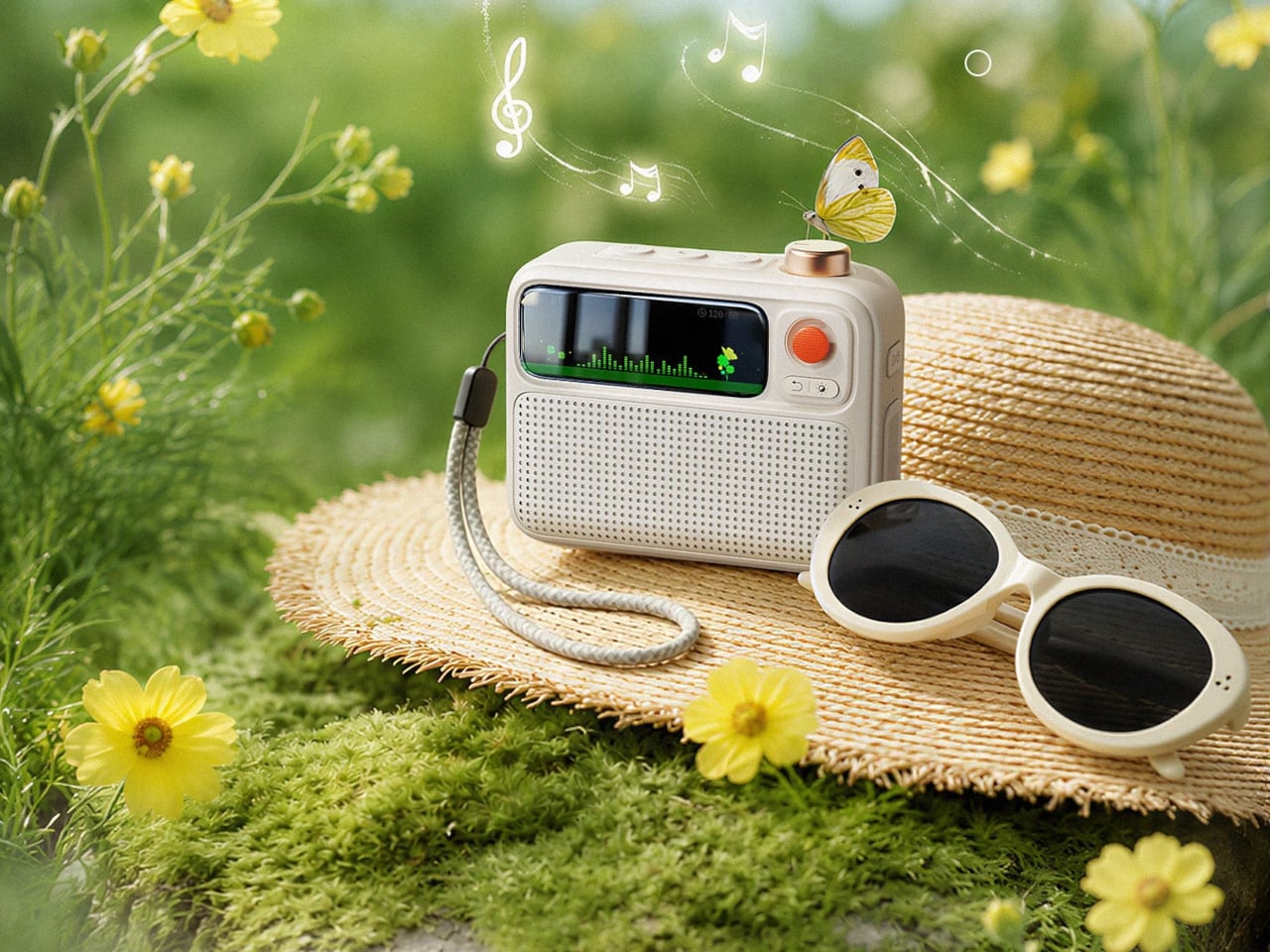
The Divoom FlowToo works around that problem by collapsing three bedside staples into a single compact device. It’s a Bluetooth speaker, white noise machine, and alarm clock all at once, with a customizable display that rounds the whole thing out. Rather than adding another device to the pile, it’s designed to clear some of it, while actually improving on each of those functions rather than just combining them with asterisks.
The speaker runs through a 10W amplifier and 45mm full-range driver, which makes it a genuine music speaker rather than the obligatory audio feature most alarm clocks bolt on as an afterthought. You can stream music from your phone over Bluetooth and get enough volume to fill a bedroom without things getting harsh. For a device that lives on a nightstand, that sets it apart from most of the competition.
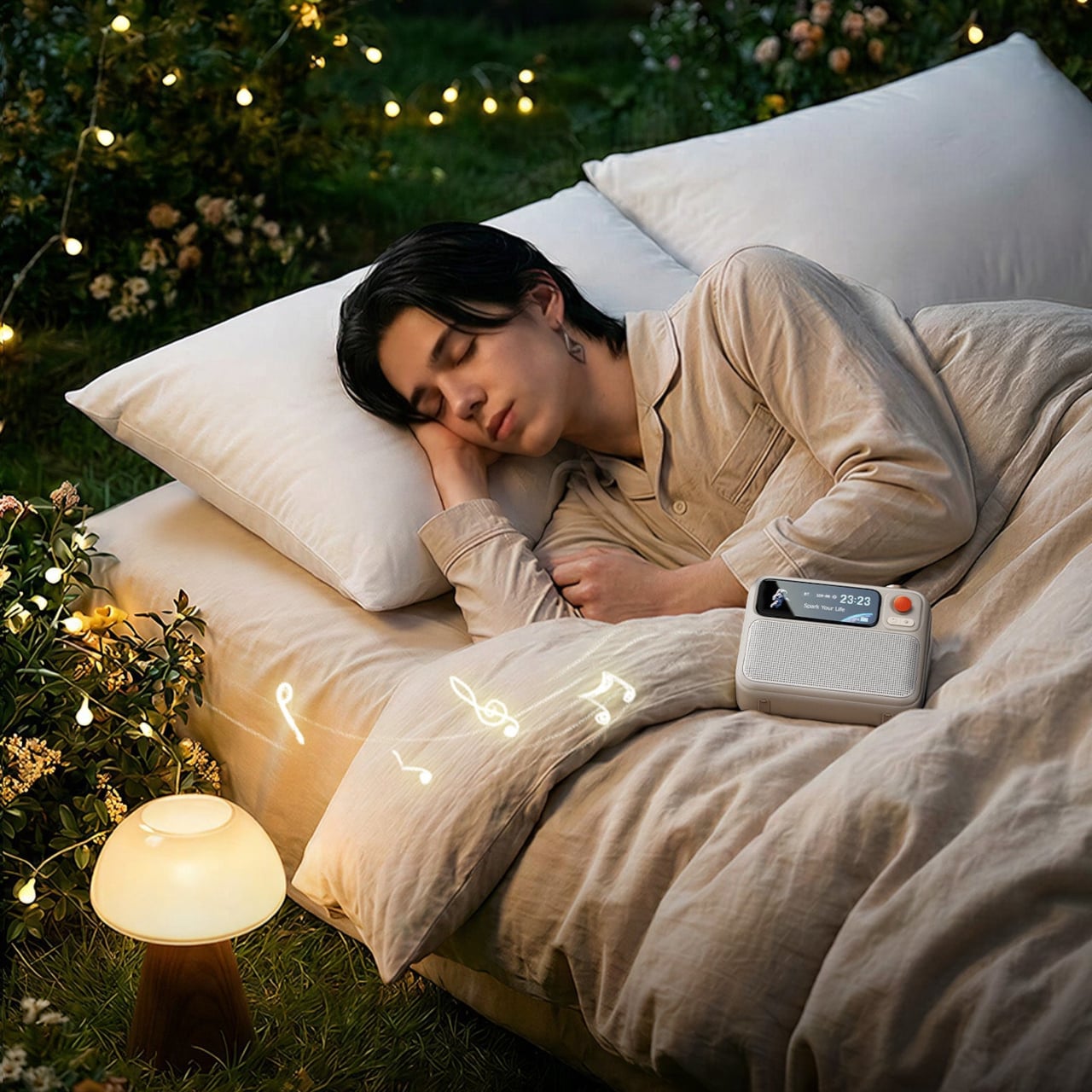
The FlowToo’s more than 90 built-in sounds cover what people actually reach for at night, from rain and ocean waves to forest ambience and other calming tones. These aren’t just sleep aids; they work just as well for focusing during the day when you need background noise that doesn’t pull your attention elsewhere. The library is large enough that finding something to suit your preference won’t take long.
Getting out of bed is the harder side of this equation, and the FlowToo handles it carefully. Rather than a jarring alarm tone, it wakes you gradually with natural sounds that grow louder while a gentle light fills in from the display. The idea is to bring you up without jolting you out of sleep, which tends to leave you considerably less wrecked for the rest of the morning.
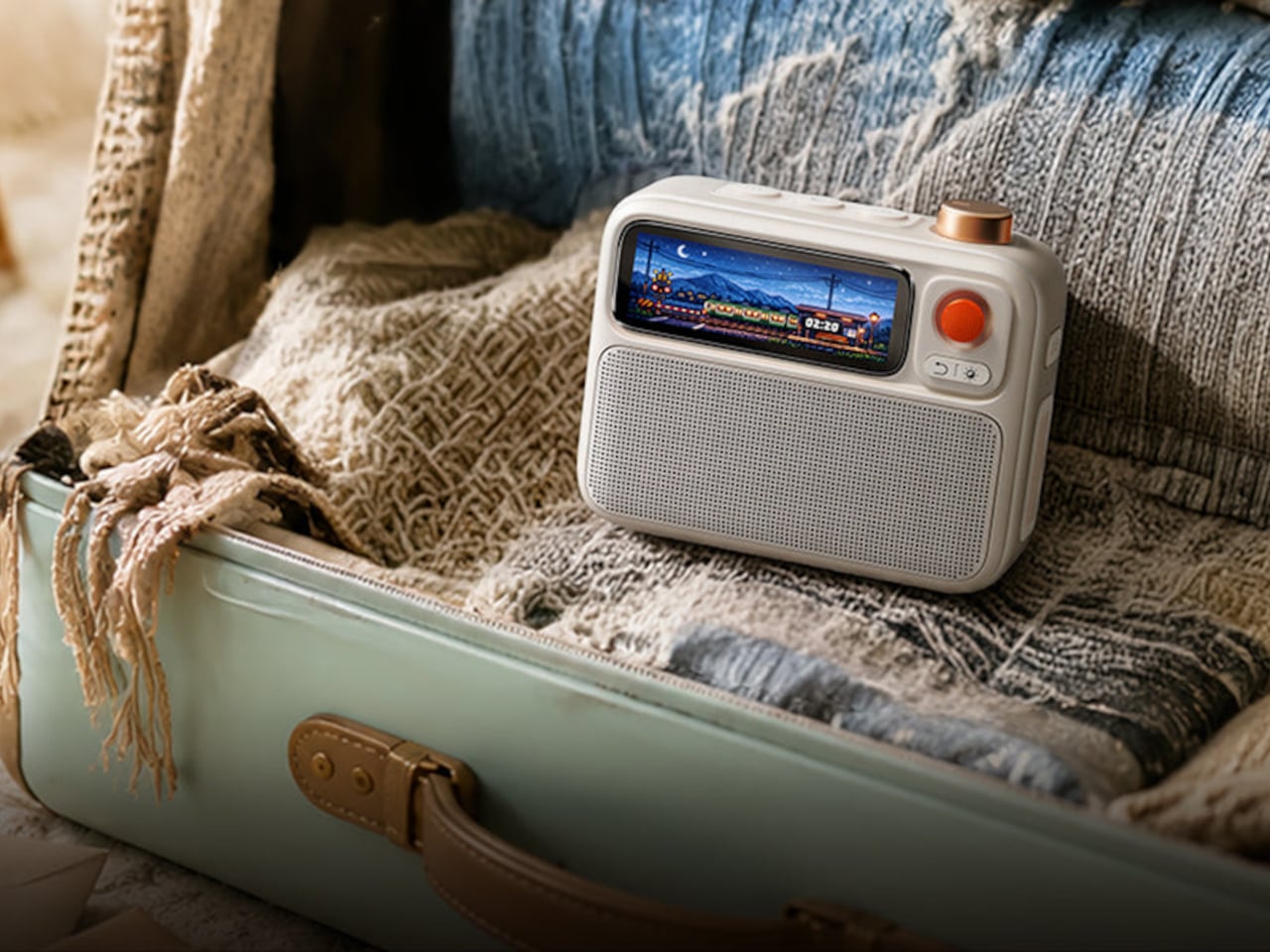
The 2.26-inch smart display is where the FlowToo takes on a bit more personality than a typical clock radio. It can show multiple clock face designs, music visualizers that react to what’s playing, sleep scene animations, and mood lighting to set a different tone in the room. The Divoom App lets you swap between these, set alarms, and choose sounds from your phone, which keeps the device simple to operate.
The FlowToo comes in White and Black and currently retails for $99.99. It’s compact enough to sit comfortably beside most beds without taking over the surface. The overall look is clean and rounded rather than clinical, which makes it easier to accept as a permanent bedroom addition instead of something that feels like a tech purchase trying too hard to belong on a nightstand.
There are more focused devices for each of those individual functions, and some will argue that a dedicated white noise machine sounds better or that a standalone speaker gets louder. That’s fair enough. But most people aren’t looking for world-class performance across every category; they’re looking for something reliable and pleasant that takes up less space, starts their morning decently, and doesn’t require them to manage four different apps.
Portable party speakers have settled into a comfortable but predictable aesthetic: boxy, rugged, cylindrical, occasionally translucent. They compete mostly on specs, with loudness and battery life doing most of the heavy lifting in marketing copy. The design rarely causes a double-take. Most of them look like pieces of gear that belong in a hiking backpack, not a conversation starter you’d voluntarily carry to a campsite because someone just had to see it.
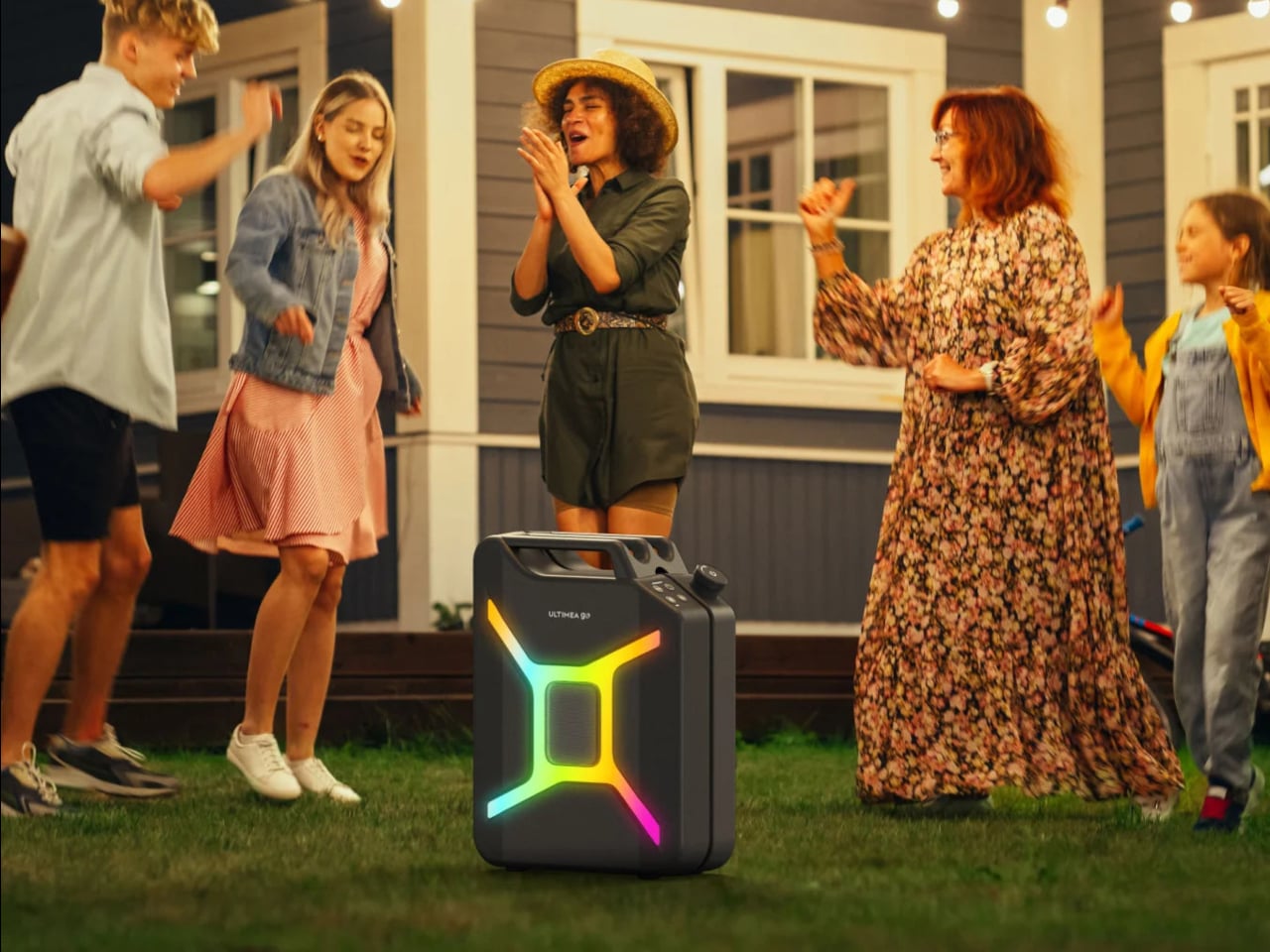
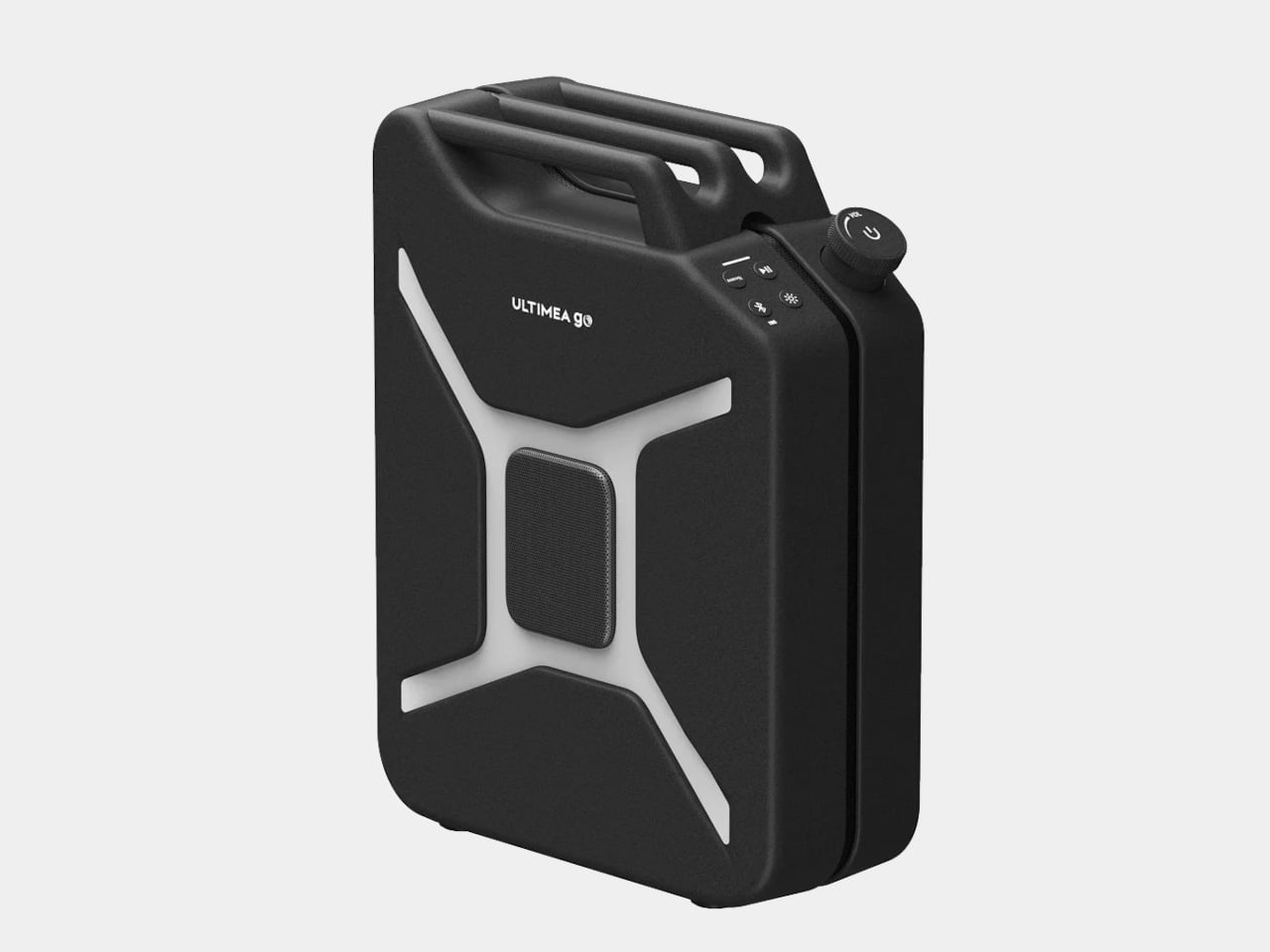
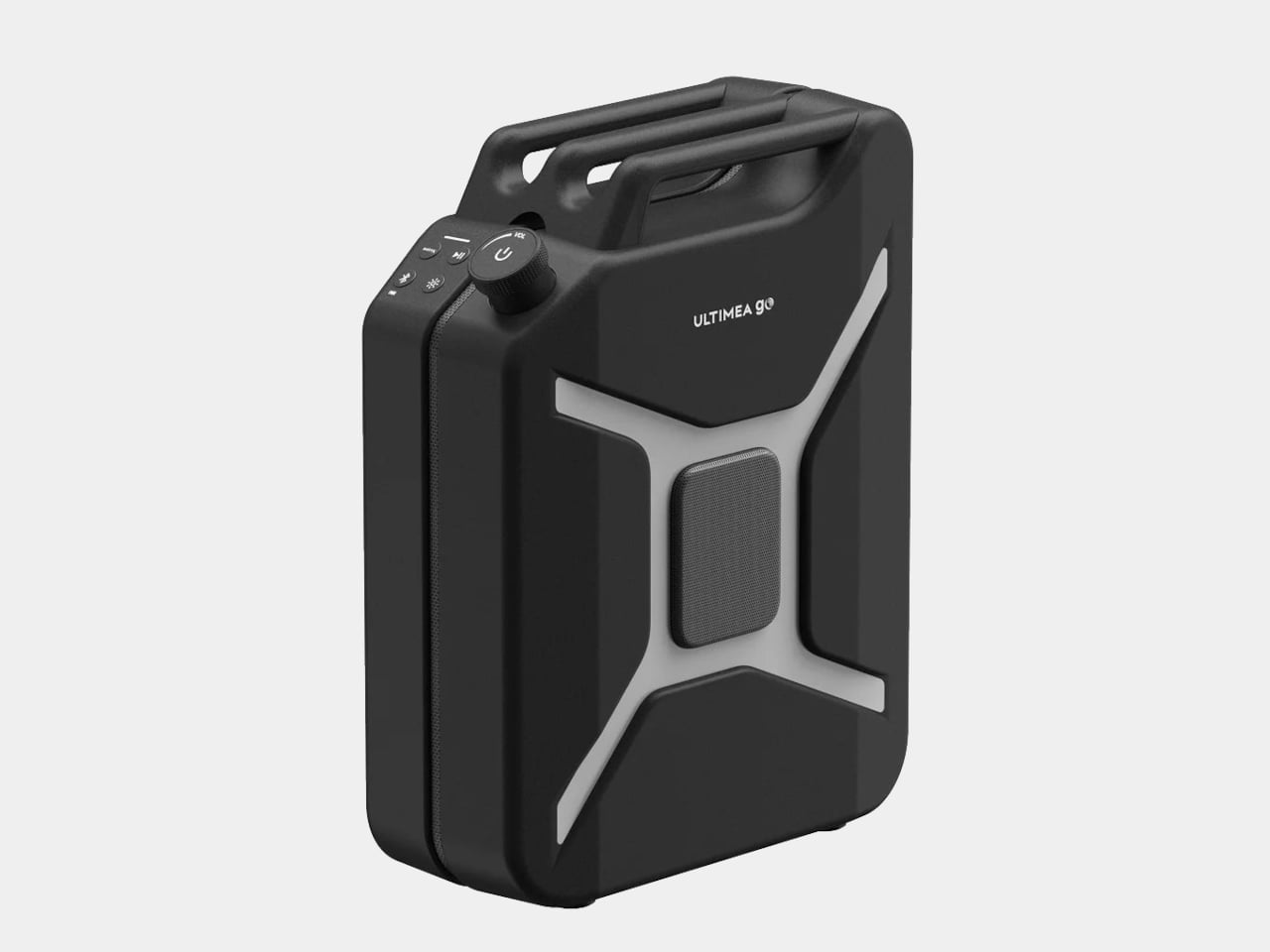
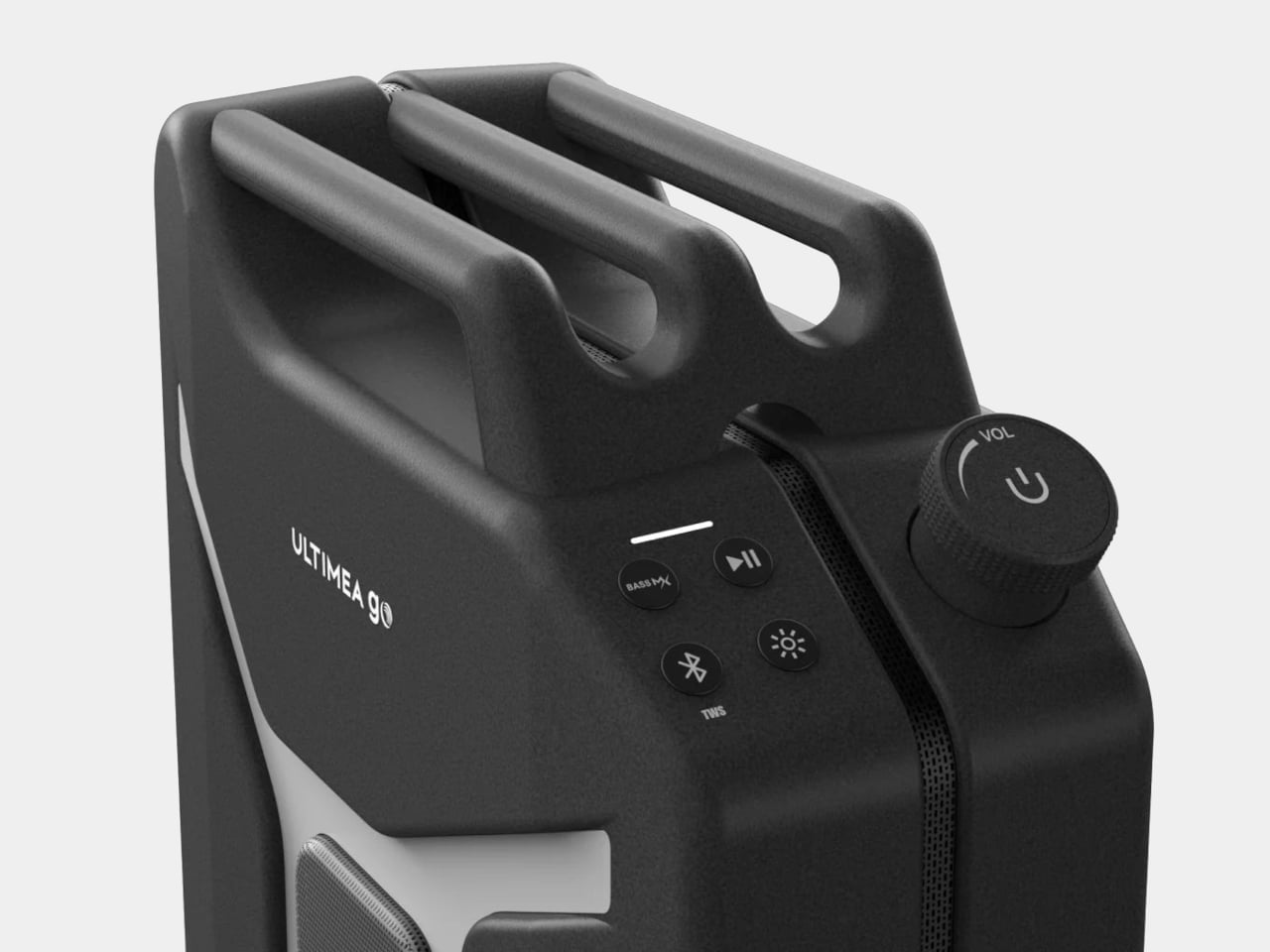
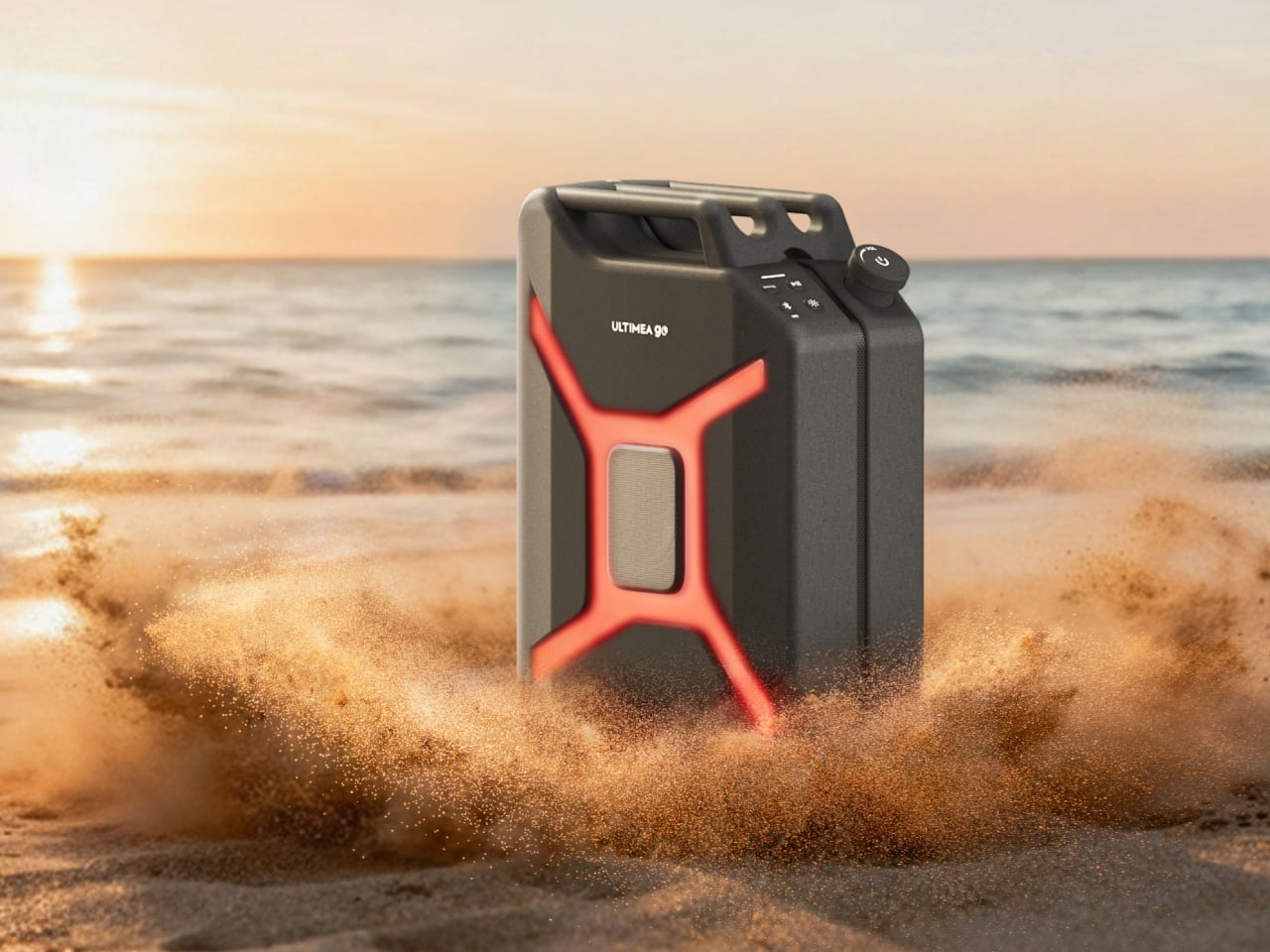
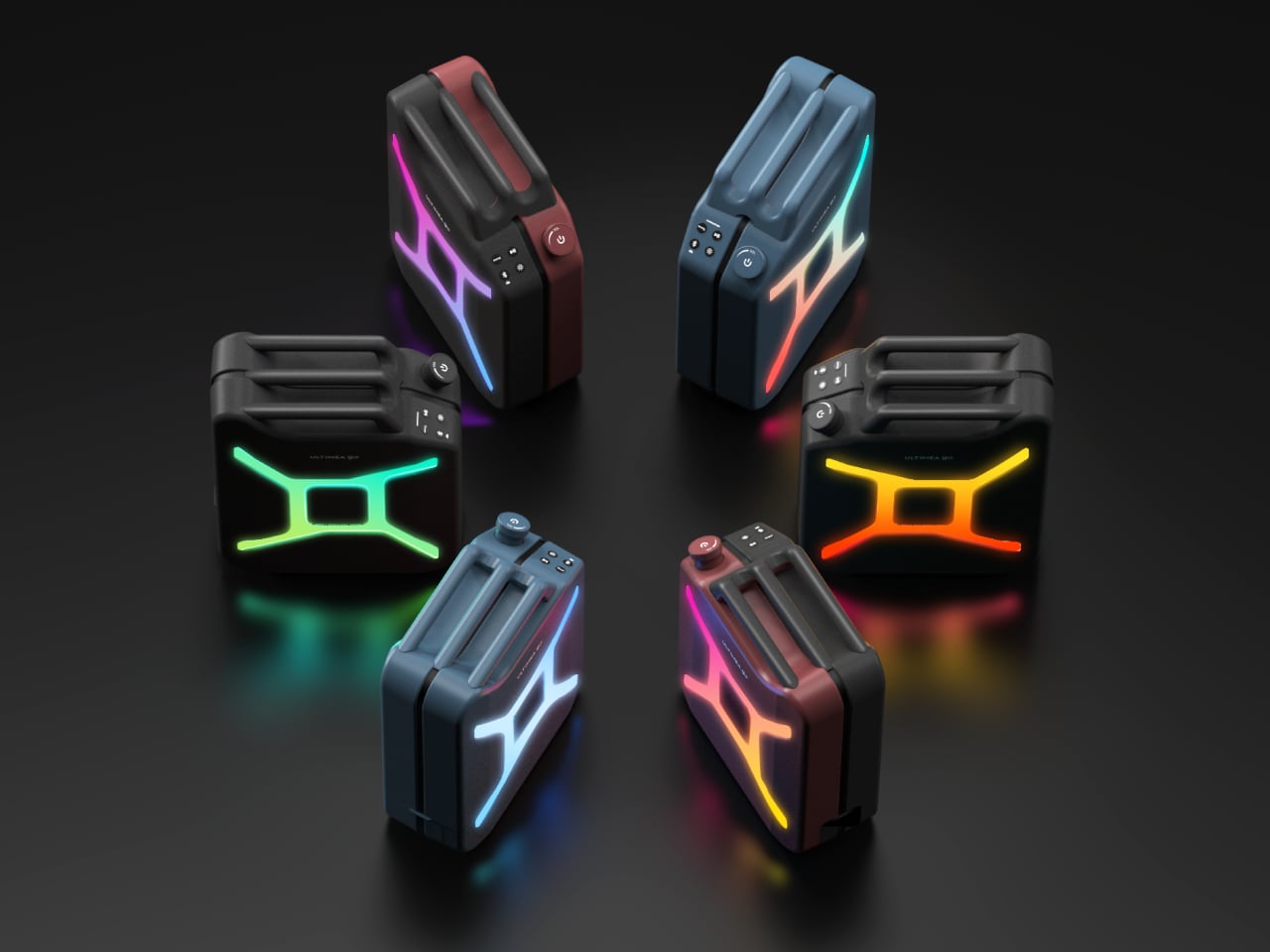
The Ultimea Go throws all of that out by doing something nobody asked for but nobody can really argue with: it looks exactly like a jerry can. The resemblance isn’t a stretch or a loose visual metaphor. It’s a deliberate full-scale commitment to the fuel container form, right down to the handle and the boxy proportions. The gimmick and the product are the same thing here, and it lands.
Under the shell, the speaker pulls its weight acoustically. The driver setup includes dual 5-inch woofers, dual 3-inch full-range drivers, and a 1-inch tweeter, all contributing to a 300 W peak output that Ultimea says is loud enough for groups of 10 to 20 people. The 360° omnidirectional design means the sound radiates in all directions rather than projecting from one face, which matters when a crowd is gathered around rather than sitting in front of it.
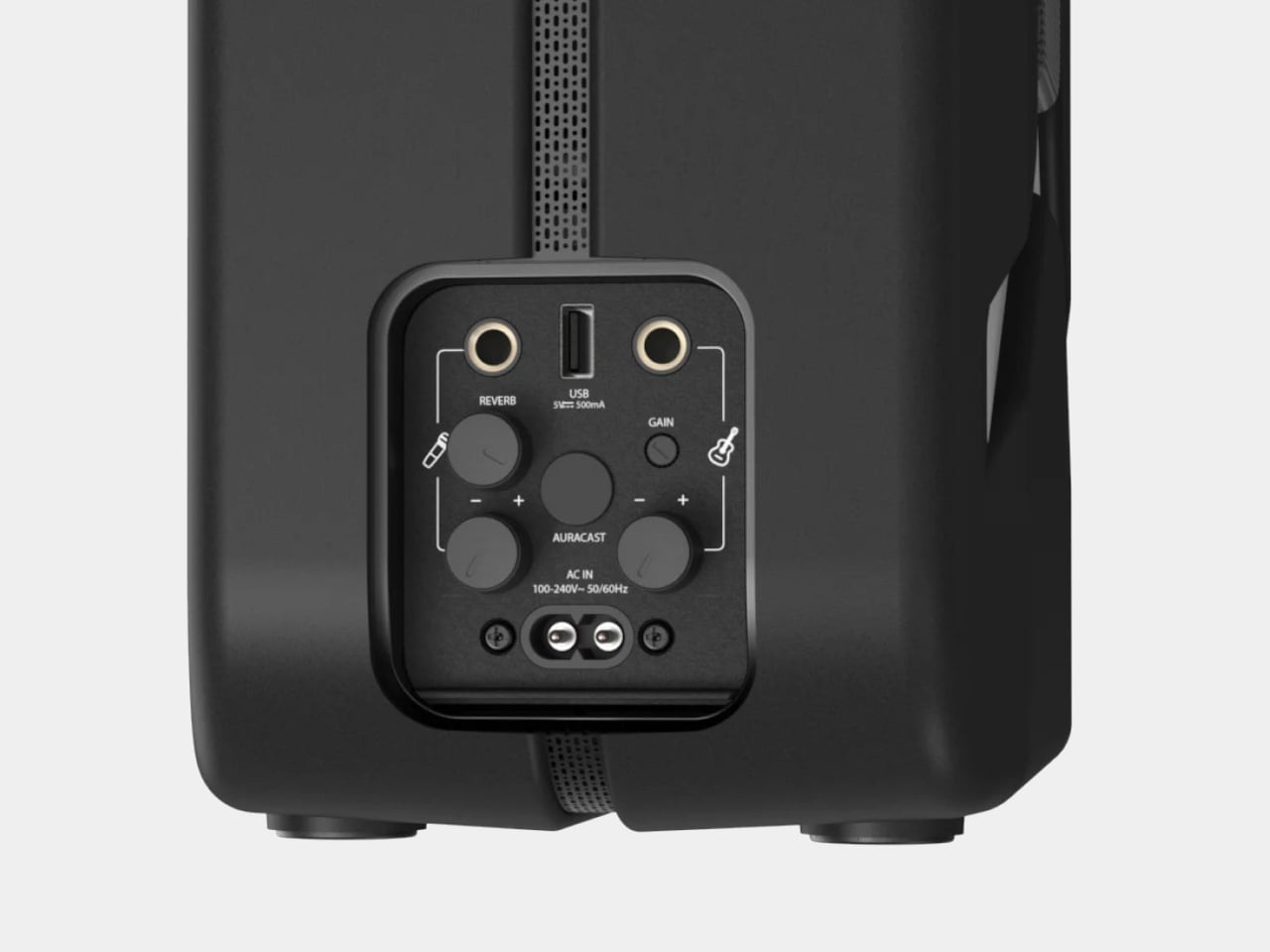
What tips it further toward the unexpected is the inclusion of two microphone inputs and a guitar input alongside the standard Bluetooth 5.4 connection. That turns it from a passive playback device into something a busker could plug into on a street corner or a backyard musician could use for a spontaneous after-dinner set. The inputs don’t feel like afterthoughts; they actively expand what the speaker is for.
For anyone who wants to scale up, Auracast support allows playback to sync across up to 100 devices simultaneously. Practically, that means linking multiple speakers across a large space without the usual signal degradation or timing offsets that come with daisy-chaining Bluetooth units together. Two Ultimea Go speakers can also be paired in TWS mode for true stereo output, making the jerry can a unit that can grow with the occasion.
The battery runs for up to 16 hours on a single charge, which holds through a full outdoor day without needing a top-up. IPX4 water resistance adds a reasonable layer of protection against splashes and light rain, so setting it near a pool or leaving it outside during a light drizzle isn’t cause for panic. RGB lights add the requisite visual flair without being the only thing the design has going for it.
An app handles the finer controls, and a bass boost function gives the low end an extra push when the situation calls for it. The speaker ships in black, with the jerry can silhouette doing most of the visual work in any setting. It’s the kind of thing that gets spotted across a campsite and prompts a walk over to find out what it actually is.
Most portable speakers resolve the outdoor brief in one of two ways. They build something tough enough to survive whatever summer throws at it, then let design take care of itself. Or they craft something that looks considered and hope it never meets moisture. These five refuse that tradeoff. Each earns its place outdoors on visual merit alone, a bar that very few speakers in this category have the confidence to clear.
The selection spans passive acoustic amplification to hard-anodized Danish aluminum, retro broadcast aesthetics to science fiction metalwork, and an outdoor warrior that floats face-up in a swimming pool. What ties them together is a conviction that a portable speaker should be worth looking at when the music stops. Whether you pack one for the long weekend or set one up on the rooftop, these speakers make the setup look considered before anyone hits play.
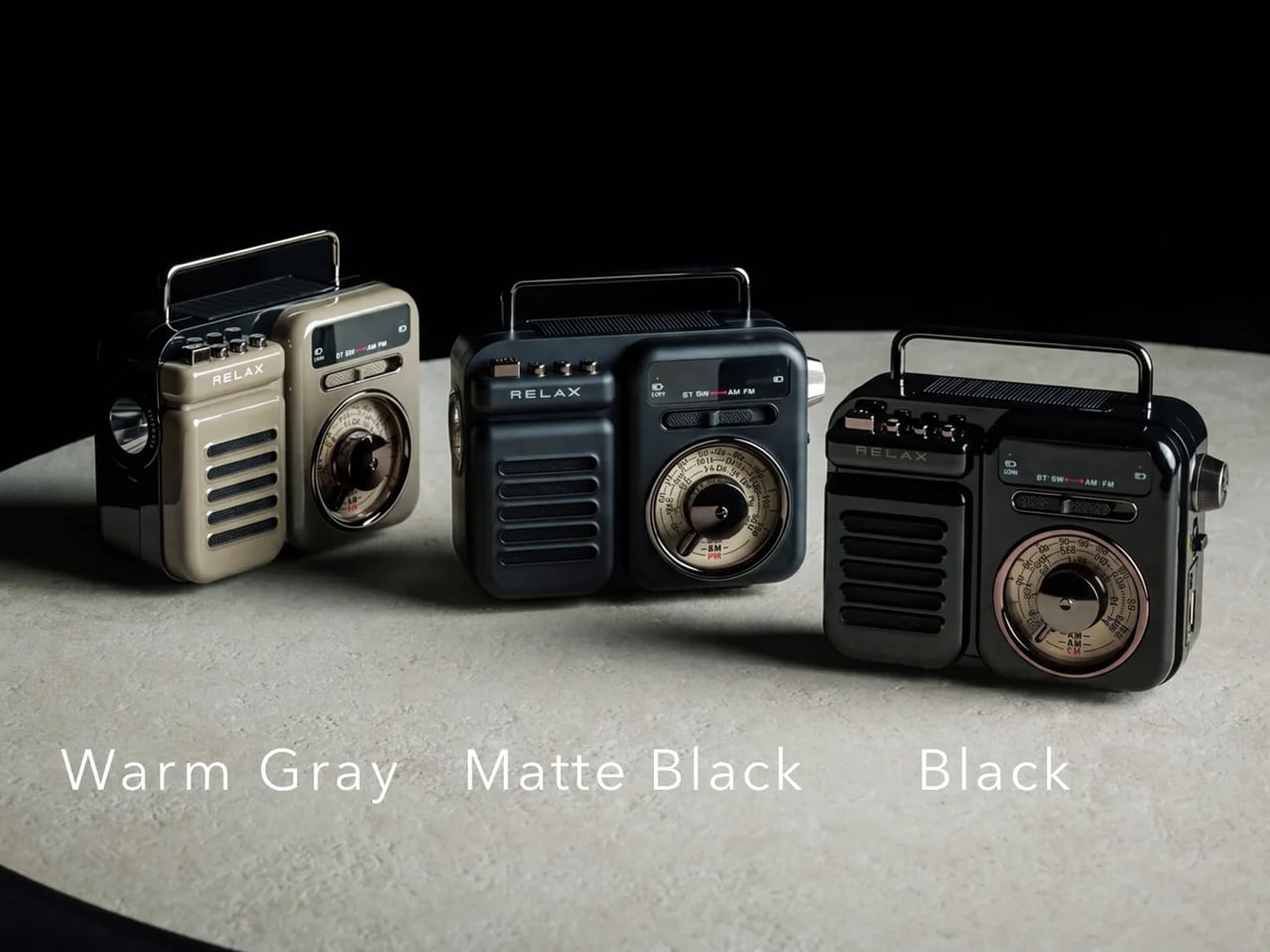
1. Retrowave Radio
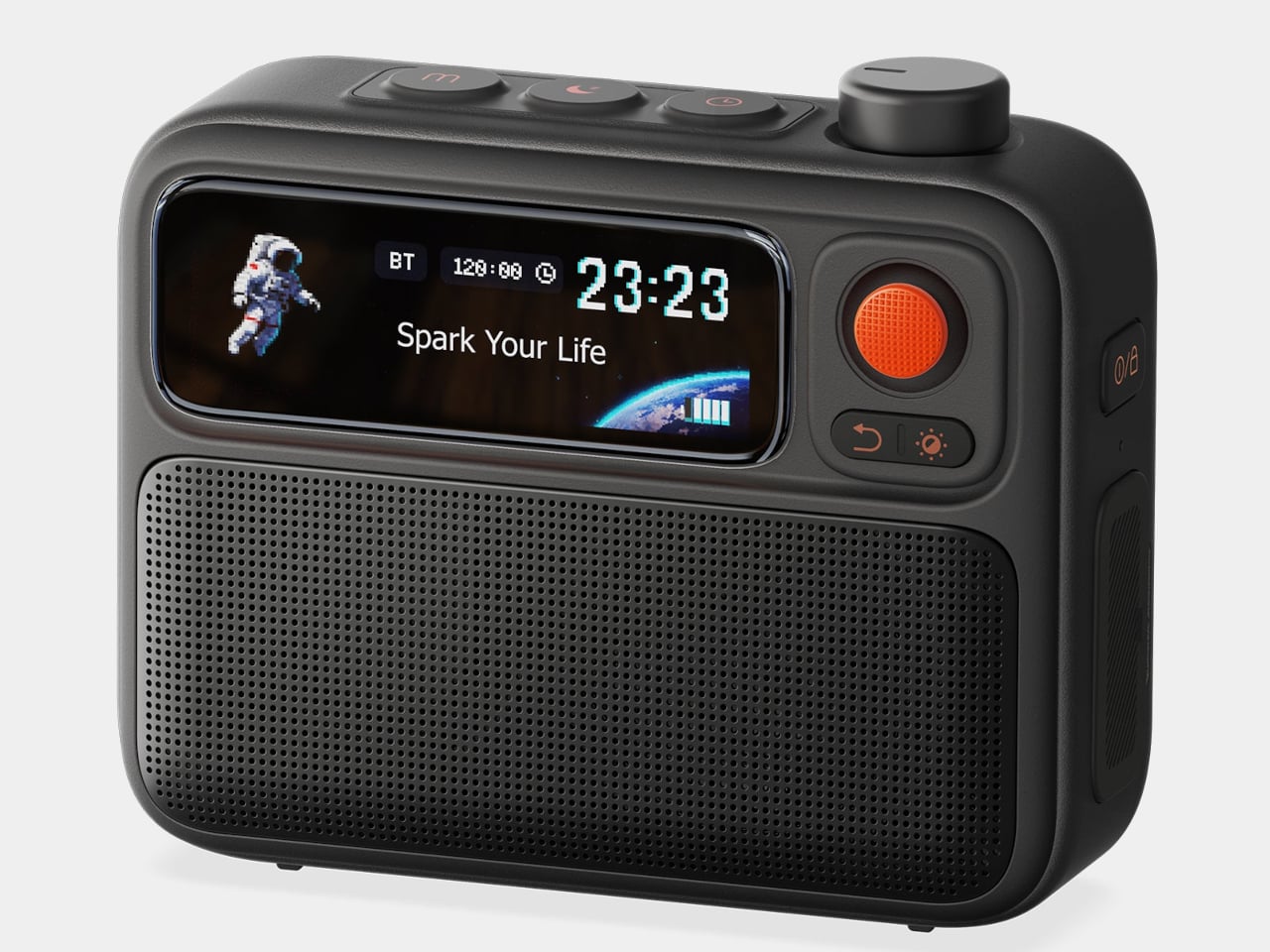
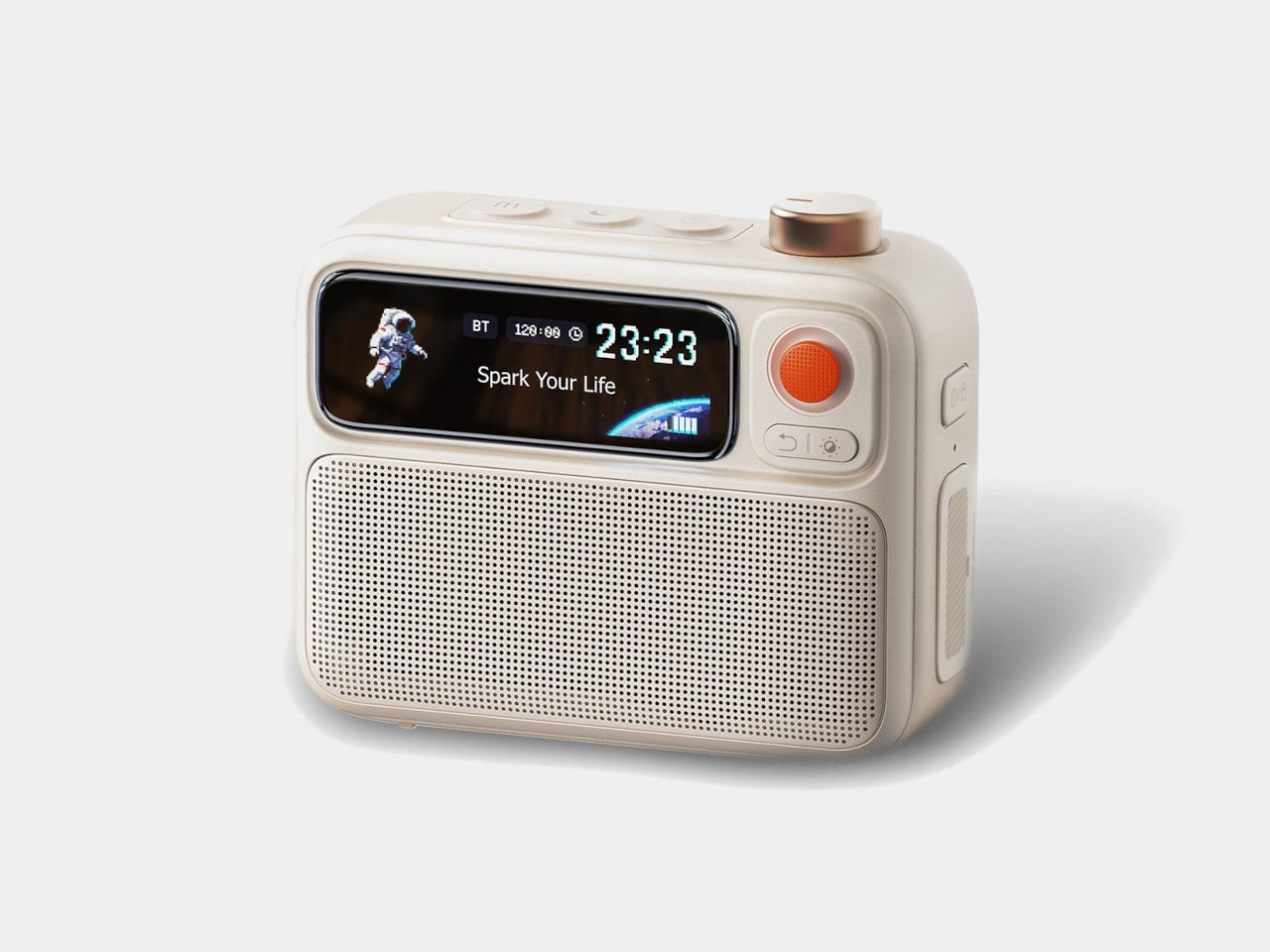
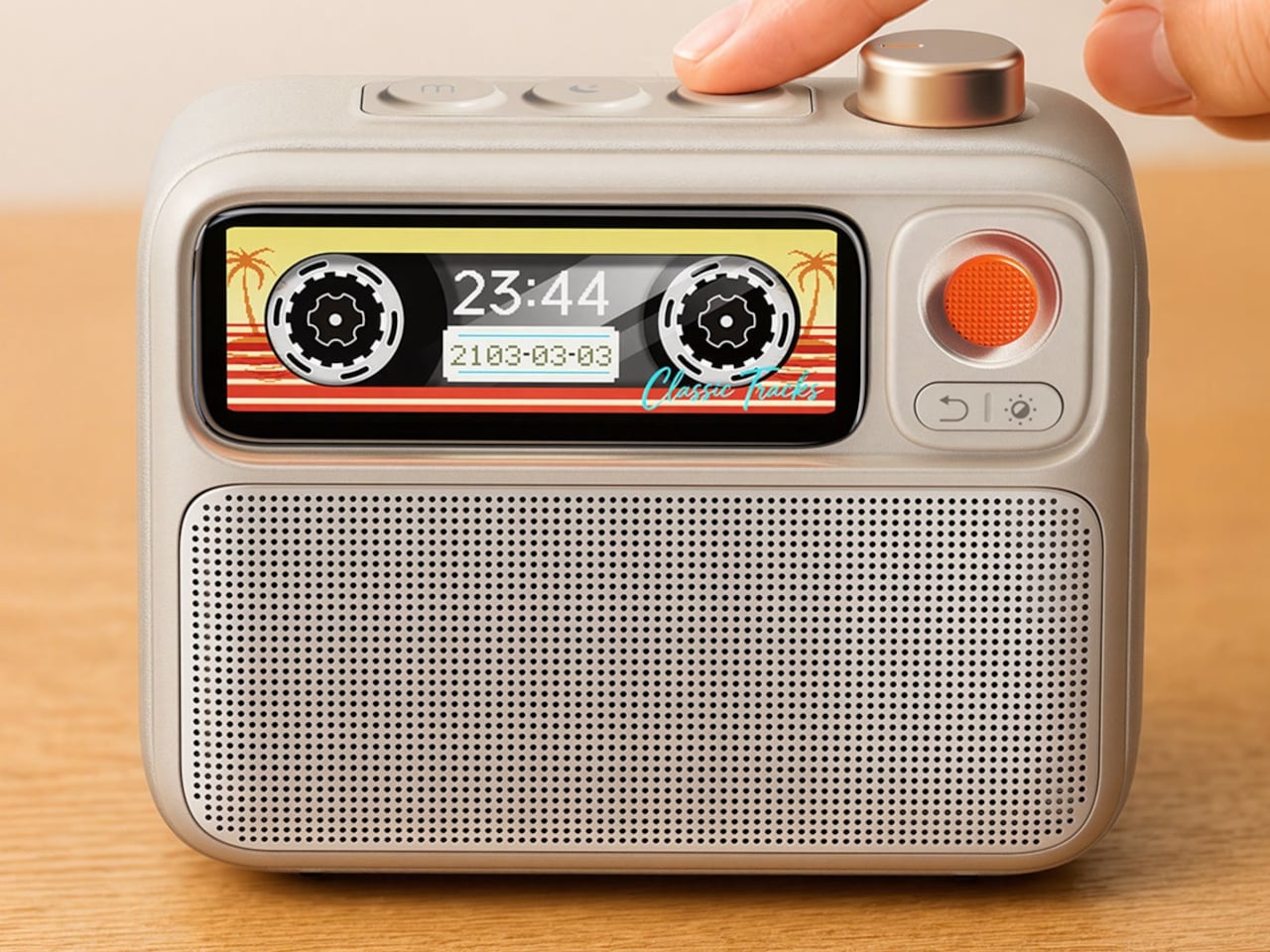
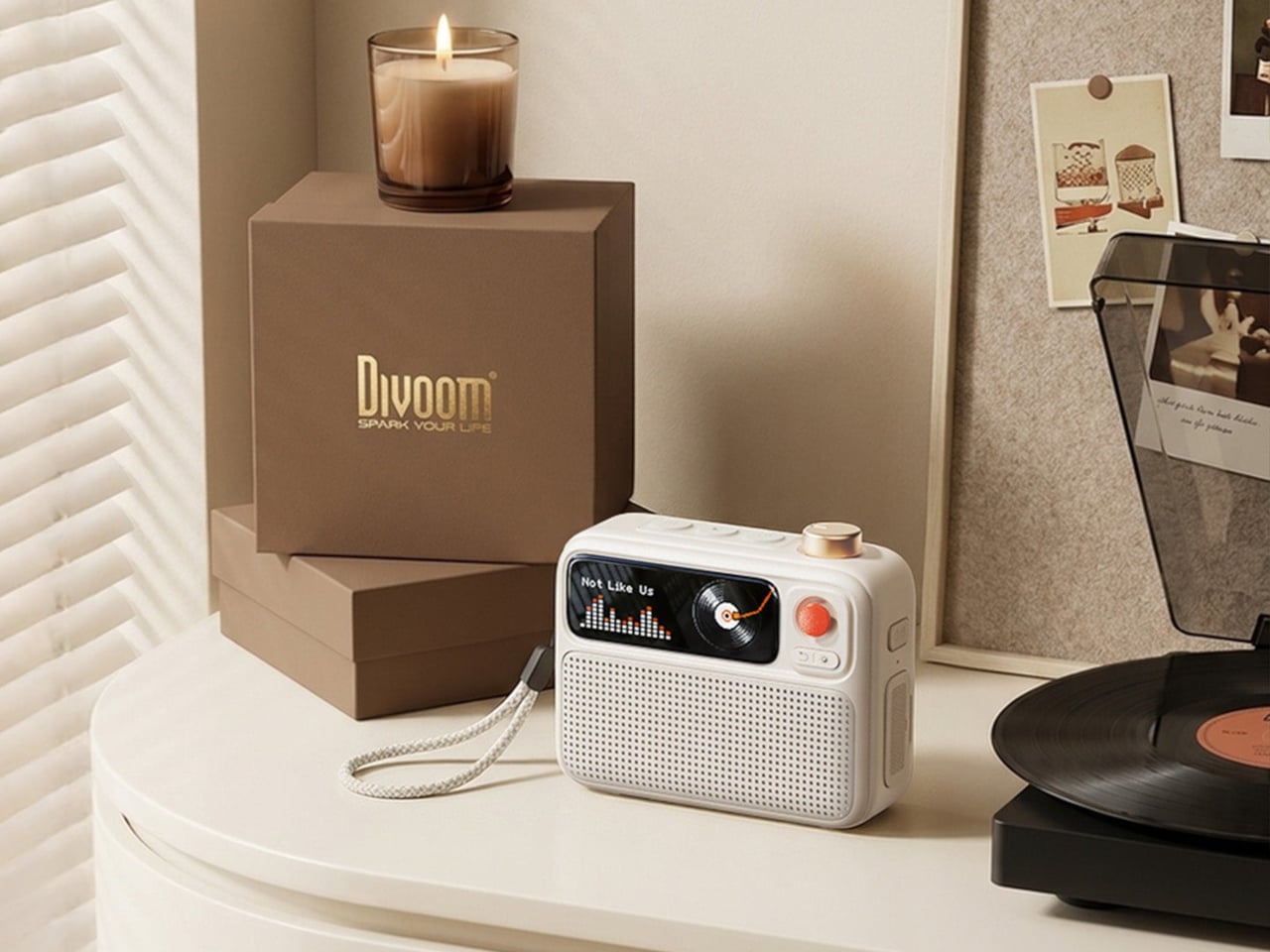
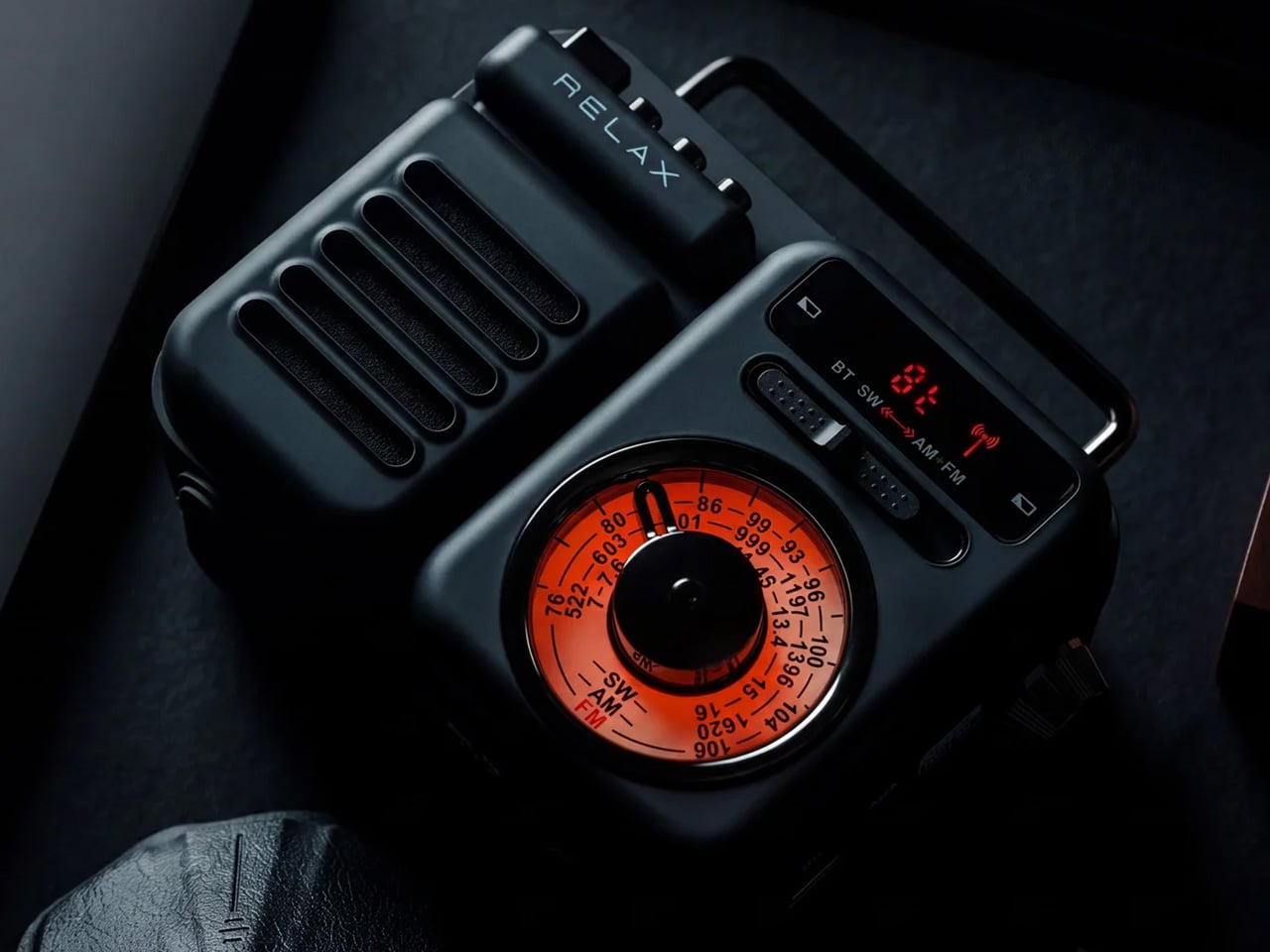
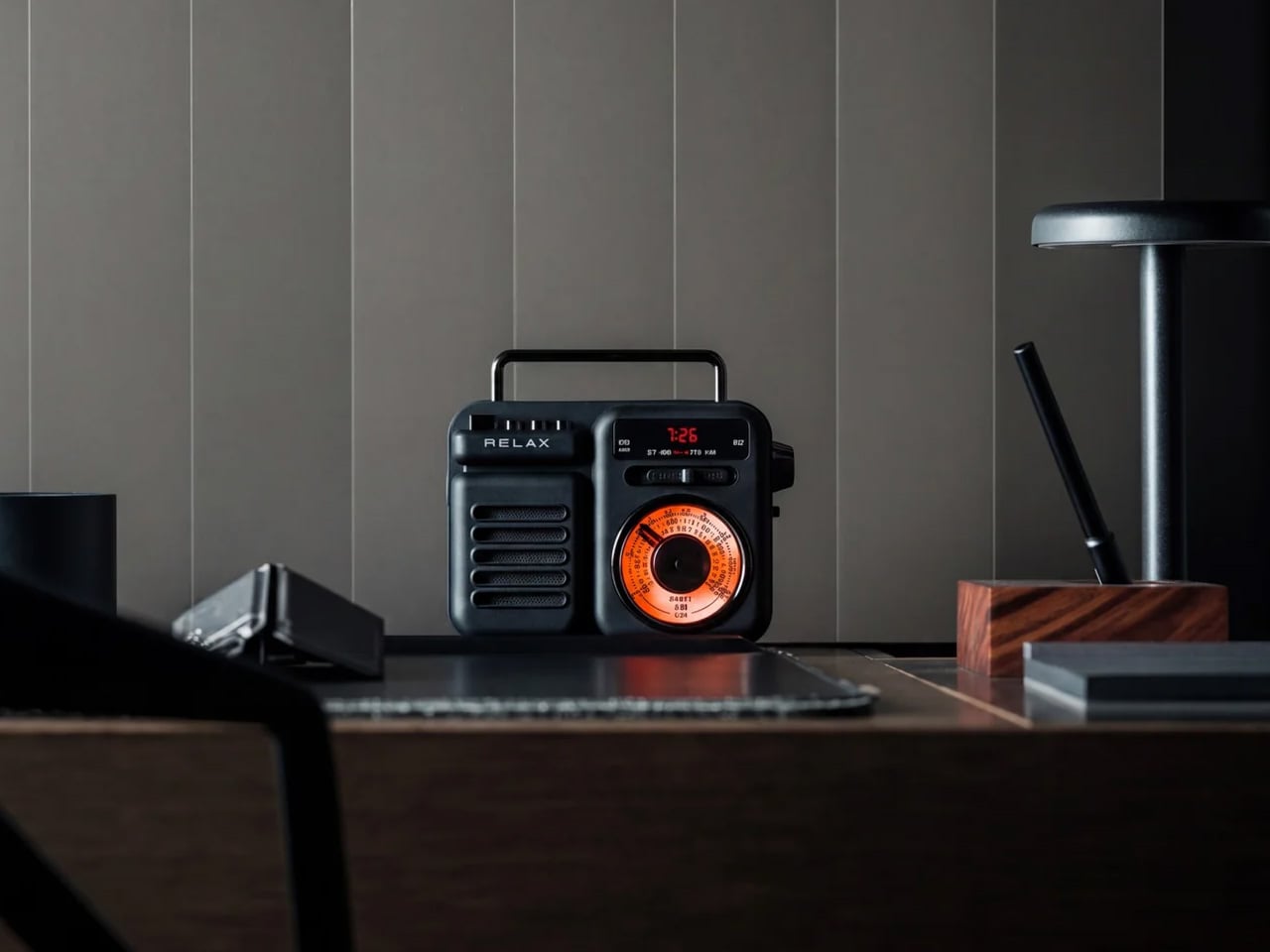
There is a specific pleasure in a speaker that looks like it predates Bluetooth by thirty years. The Retrowave Radio brings that cabinet sensibility into a summer that runs on playlists and wireless connectivity, giving you the best of both. Its proportions and analog-styled face sit more comfortably on a picnic blanket or campsite ledge than most modern speakers manage, which tend to read as tech accessories rather than objects genuinely worth looking at.
The FM tuner adds a layer the streaming era forgot. Scanning local frequencies somewhere without a strong data signal is its own kind of discovery, the kind no algorithm delivers. Bluetooth connectivity keeps it relevant to every device you already own, so the retro shell is not a compromise so much as a philosophy about what listening outdoors should feel like. It is the speaker most likely to draw a question from whoever walks past, which is the highest compliment any piece of audio design can receive.
The retro cabinet reads as a considered aesthetic statement rather than a novelty gimmick, and holds its own in any outdoor setting
Dual functionality as a Bluetooth speaker and FM radio opens it up to genuine off-grid situations where streaming is not an option
What We Dislike
The analog-inspired styling may not suit those who prefer a contemporary minimal look in their audio gear
FM reception quality depends entirely on local signal strength, which varies considerably depending on where summer takes you
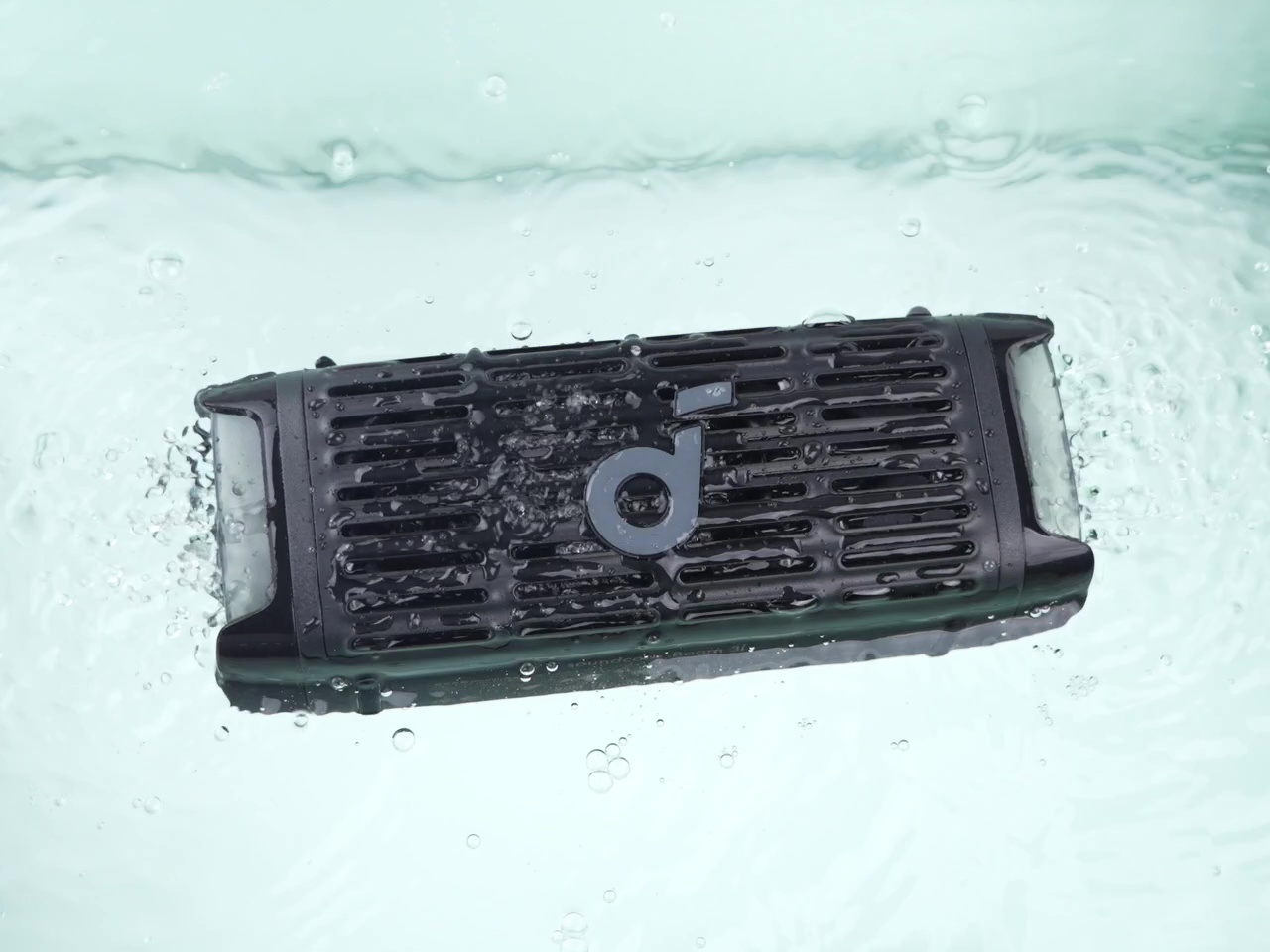
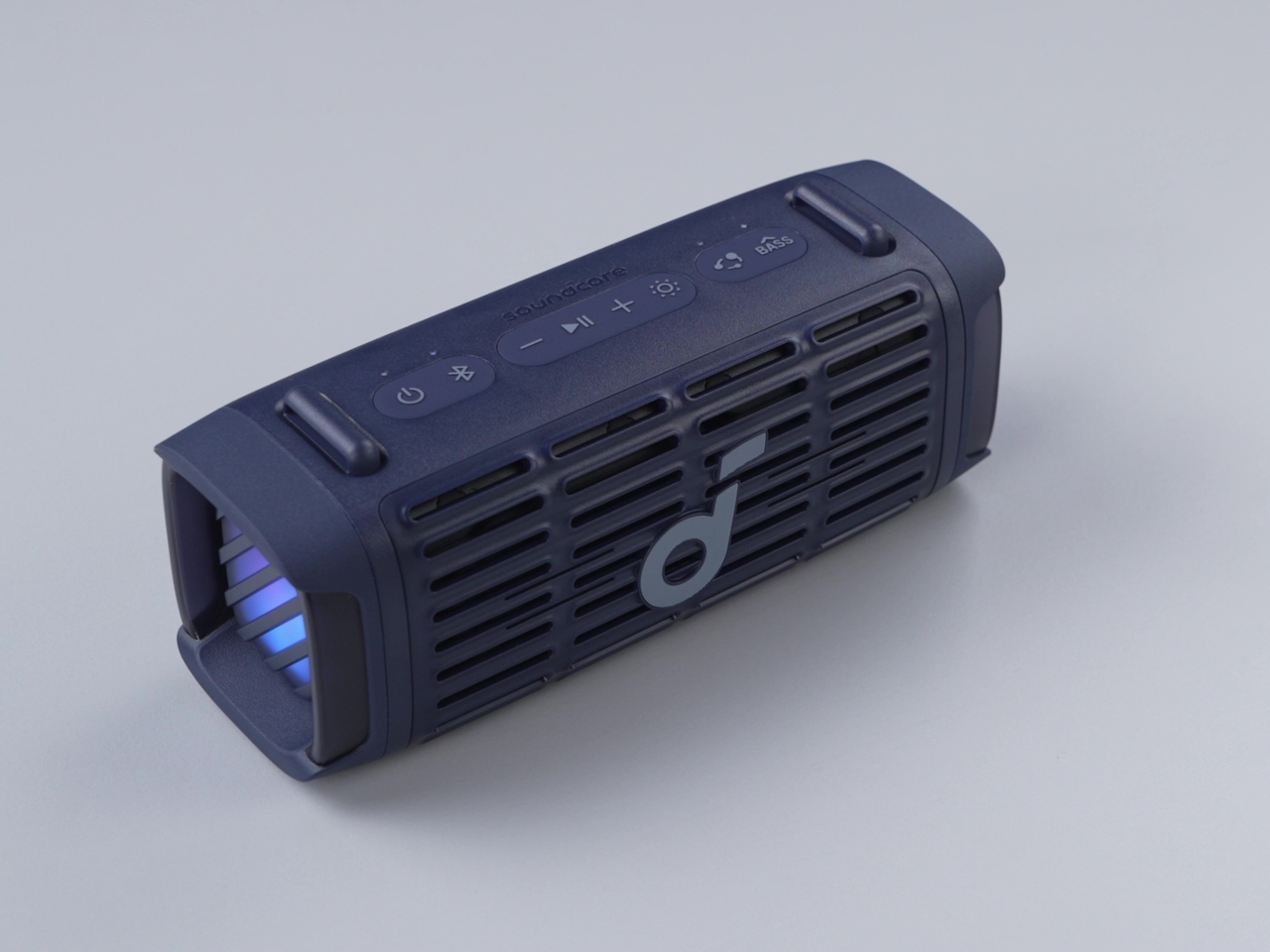
2. Anker Soundcore Boom 3i
The Soundcore Boom 3i solves a problem most outdoor speakers refuse to acknowledge. Pools, lakes, and beaches are exactly where you want music most and also the worst possible environments for most electronics. Anker’s answer is a speaker that floats and self-orients so the audio always faces upward, keeping sound clear whether it was placed there deliberately or went in during a particularly competitive game of volleyball. That kind of design honesty about actual use is rare.
Beyond the floating, it includes Buzz Clean, a feature where the speaker vibrates on command to shake sand and debris out of the grille. It is a small addition that solves a genuine frustration without tools or disassembly. Sixteen hours of battery life and LED lighting that pulses with your music make it a speaker clearly built by a team that has spent time at actual beaches, not imagined them from an office.
What We Like
The self-orienting float design solves a real outdoor audio problem rather than just marketing waterproofing that most owners never actually test
Buzz Clean is genuinely useful in sandy environments and requires no tools, disassembly, or anything beyond pressing a button
What We Dislike
The LED lighting, while effective at night, adds visual busyness that may not appeal to those who prefer their gear to sit quietly in the background
Its larger footprint makes it less suited to compact bags or minimalist packing situations where every cubic inch matters
3. Bang & Olufsen Beosound Explore
Bang & Olufsen built the Beosound Explore from hard-anodized aluminum, and that material choice explains everything else about it. Reaching for aluminum where every competitor defaults to polycarbonate communicates a specific set of values about longevity, texture, and what outdoor gear can look like when it is not trying to appear durable but simply is. At 631 grams with a rubberized base and carabiner strap, it travels without ceremony and arrives looking like it belongs wherever you set it down.
The True360 sound from dual full-range drivers means there is no bad angle at a campsite or on a rooftop, and 27 hours of battery life removes the anxiety that shadows every other portable speaker on a long weekend. IP67 water resistance covers submersion up to one meter for thirty minutes, which handles every realistic outdoor scenario. Designed in Denmark and built to outlast seasons rather than one summer, the Beosound Explore is the speaker you eventually stop having to replace.
What We Like
Hard-anodized aluminum construction gives it a material quality and cool-to-the-touch feel that no polycarbonate competitor comes close to matching
27-hour battery life is genuinely class-leading at this form factor, removing charging from the weekend equation entirely
What We Dislike
The price sits at the premium end of the portable speaker category, which may not align with every budget on this list
The compact driver configuration prioritizes audio fidelity over sheer volume ceiling, so those expecting a party speaker may find it more refined than powerful
4. Battery-Free Amplifying iSpeakers
The Battery-Free Amplifying Speaker starts from the most honest premise in portable audio: what if the speaker needed nothing from you except the sound you already had? Using passive acoustic amplification, it channels audio from your device through a shaped resonance chamber without a Bluetooth receiver, a charging cable, or a battery to manage. The result is a speaker that is always ready because there is genuinely nothing about it that can run out.
Its design logic sits closer to a musical instrument than a consumer gadget. Every curve and internal chamber proportion is there to do acoustic work, which means every formal decision has a functional one sitting behind it. For a long morning on the balcony or an afternoon at the beach where you forgot to charge everything, it removes the one variable that always causes friction. You set it down, rest your phone inside, and the sound arrives without a single button pressed.
Zero dependency on charging makes it genuinely grab-and-go in a way no battery-powered speaker on this list can claim
Passive acoustic construction makes it one of the most durable options here by virtue of having no electronics to fail
What We Dislike
Volume ceiling is naturally limited compared to powered speakers, making it less suited to larger outdoor gatherings where you are competing with ambient noise
Performance is tied directly to the speaker quality of the host device, which varies considerably from one phone to the next
5. GravaStar Mars Pro
The GravaStar Mars Pro does not attempt to blend in, and it is entirely correct not to try. Its zinc alloy body, war-damaged finish options, tripod legs, and exposed mechanical detailing sit somewhere between industrial design and a film prop, which is precisely what makes it worth owning. Most portable speakers are designed to disappear into their surroundings. The Mars Pro is designed to become the focal point of wherever it is placed, and its 20W dual speaker system backs that visual confidence with real audio substance.
A full-range driver paired with a passive bass radiator gives the Mars Pro low-end presence that its dimensions should not produce. The RGB lighting system runs through six dynamic modes, pulsing with your music and making it a natural fit for evening rooftops and outdoor gatherings. At 5.5 pounds, it is the heaviest option here, which places it at the center of a setup rather than inside a bag. That is exactly where it wants to be.
What We Like
The zinc alloy construction and sculpted mech aesthetic make it one of the most visually distinctive portable speakers available at any price point
20W dual speaker output delivers bass presence well beyond what the physical size suggests is acoustically possible
What We Dislike
At 5.5 pounds, it is not a speaker you carry around a site; it is the one you set up and gather around, which limits where it fits on a summer itinerary
The dramatic visual language is polarizing and will not appeal to anyone who wants their audio gear to sit quietly in the background
The Best Summer Speaker Is the One Worth Looking At When the Music Stops
A portable speaker is one of the few objects that has to perform twice over. It has to sound right and look right in the same moment and the same light. The five here clear that bar without any of them feeling like a compromise in either direction. Summer is short enough that whatever you bring outdoors should be worth the trip, and each of these makes that case without any difficulty.
Whether you reach for the passive simplicity of the battery-free amplifier, the engineered restraint of the Beosound Explore, or the unapologetic presence of the Mars Pro, the underlying conviction is the same. Good design does not ask you to choose between form and function. These speakers already made that decision, and it shows from the moment you set them down somewhere they have no business looking this good.
Most home speakers today have settled into a comfortable invisibility. Whether they’re slim soundbars pushed against a wall or cylindrical mesh towers parked on a bookshelf, the design goal is essentially the same: stay out of the way. They’re meant to be heard and rarely looked at, and even the ones that look interesting rarely offer much to see once the music starts.
MorningBlues has a clear thesis about music, and it has a lot to do with how the things we listen to can also be things worth looking at. Its SonicGlass A1 is a hi-fi speaker built around a transparent glass driver that lets you watch sound in motion as music plays. It’s the kind of object that sits on a shelf the way art does, with intention, and with something to say even before you press play.
The SonicGlass A1’s front face is a 21.5-inch TFT panel with high-transparency tempered glass, framed in black with over 90% light transmission. The transparent driver sits behind it, fully visible, which is both an acoustic feature and a design statement. There’s no grille hiding anything, no fabric obscuring the view. What you see is the working interior of the speaker, presented like an exhibit rather than concealed like a component.
When a song plays, lyrics appear across the glass surface in motion styles drawn from the track’s rhythm, pace, and emotional character. MorningBlues calls this MoodLyric, built on data from hundreds of millions of playbacks to animate text in ways that feel tied to what the song is actually doing. All lyrics are licensed through LyricFind, meaning the display does right by the artists whose words it borrows.
Beyond the lyrics, a feature called SceneSync adds a visual layer that responds to music genres. Pop, hip-hop, R&B, and rock each trigger different visual aesthetics on screen, generated in real time by AI. The idea is that the speaker shouldn’t just play a song; it should match the world the song is coming from. It’s a more cinematic take on the standard music visualizer.
The MorningBlues app lets you upload a personal photo that AI uses to place your face inside a genre-matched music video, displayed on the speaker’s screen. It’s the kind of feature that’s genuinely fun at a gathering, or just for yourself on a slow afternoon. You can also load the speaker with your own photos and videos to use as background content, turning it into a personal display.
When the music stops, the SonicGlass A1 doesn’t go blank. It has ambient display settings that keep it working as a room fixture, with options like ambient backgrounds, dynamic clock faces, and an ASMR sleep mode for winding down at night. That always-on character makes the speaker feel less like a device you switch off and more like something that already belongs in the room.
Pair the A1 with a microphone, and it becomes a home karaoke setup with licensed lyrics scrolling on screen in sync as you sing. The MorningBlues Music Hub 1, a dedicated controller for phone-free playback, rounds out the experience by letting you manage everything from a single tactile device, so your phone doesn’t need to be part of the evening at all. The large glass screen handles the rest.
The SonicGlass A1 isn’t angling to be the most powerful speaker in the room or the one with the most impressive spec sheet. It’s made for people who think about music the way they think about other things they choose to live with, considering both what those things do and how they look doing it. MorningBlues is asking a direct question: what if your speaker was worth watching?
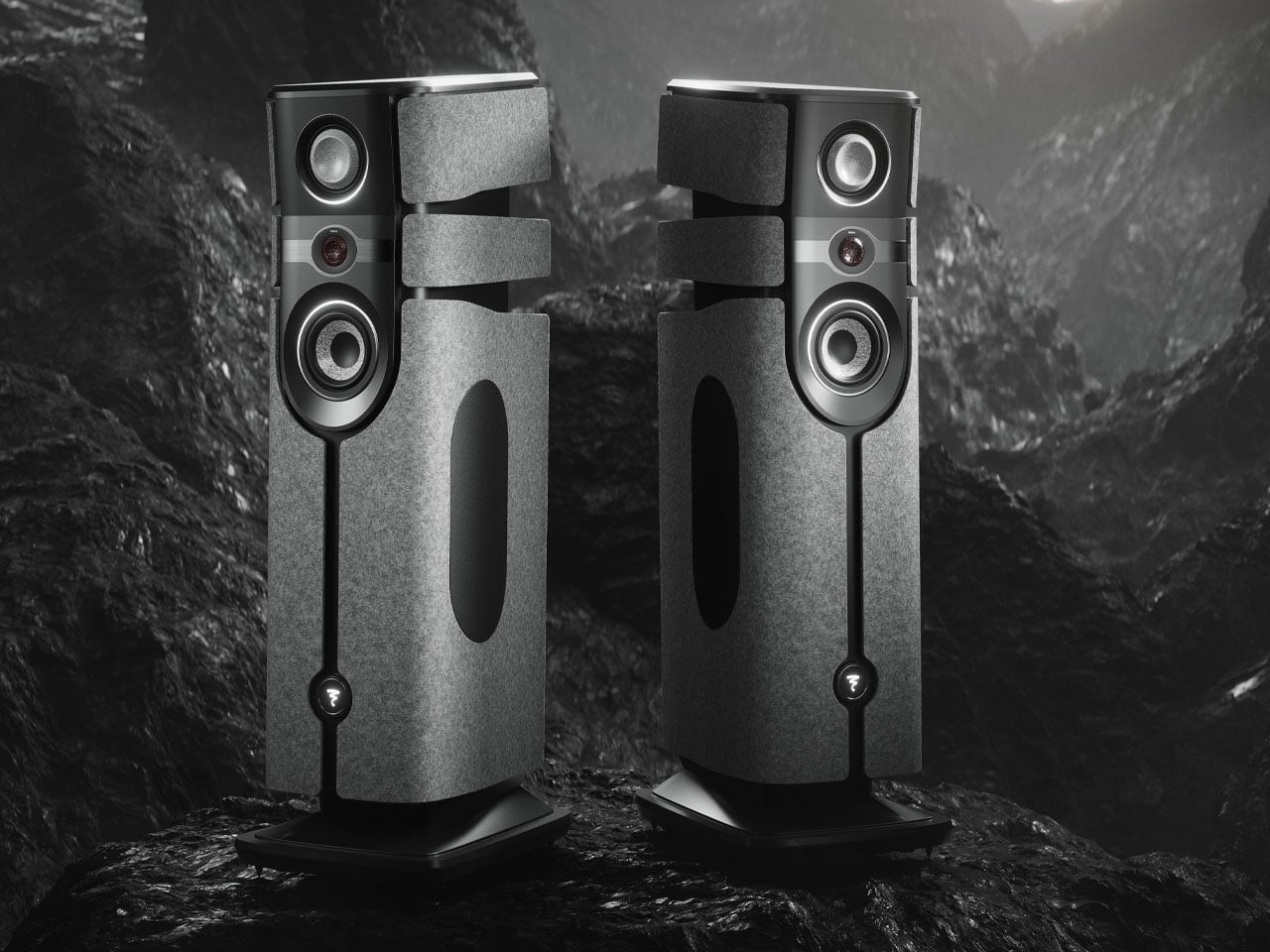
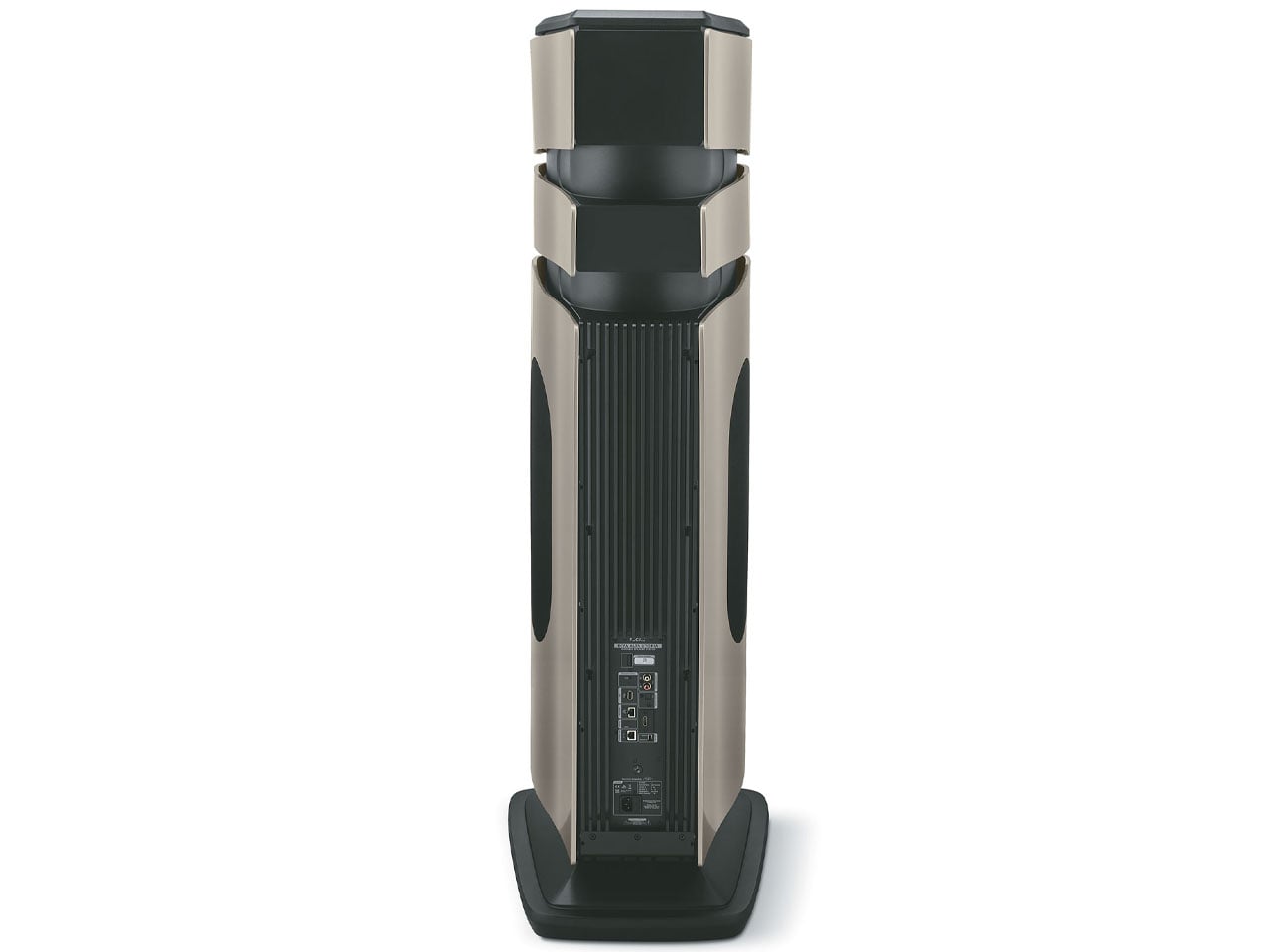
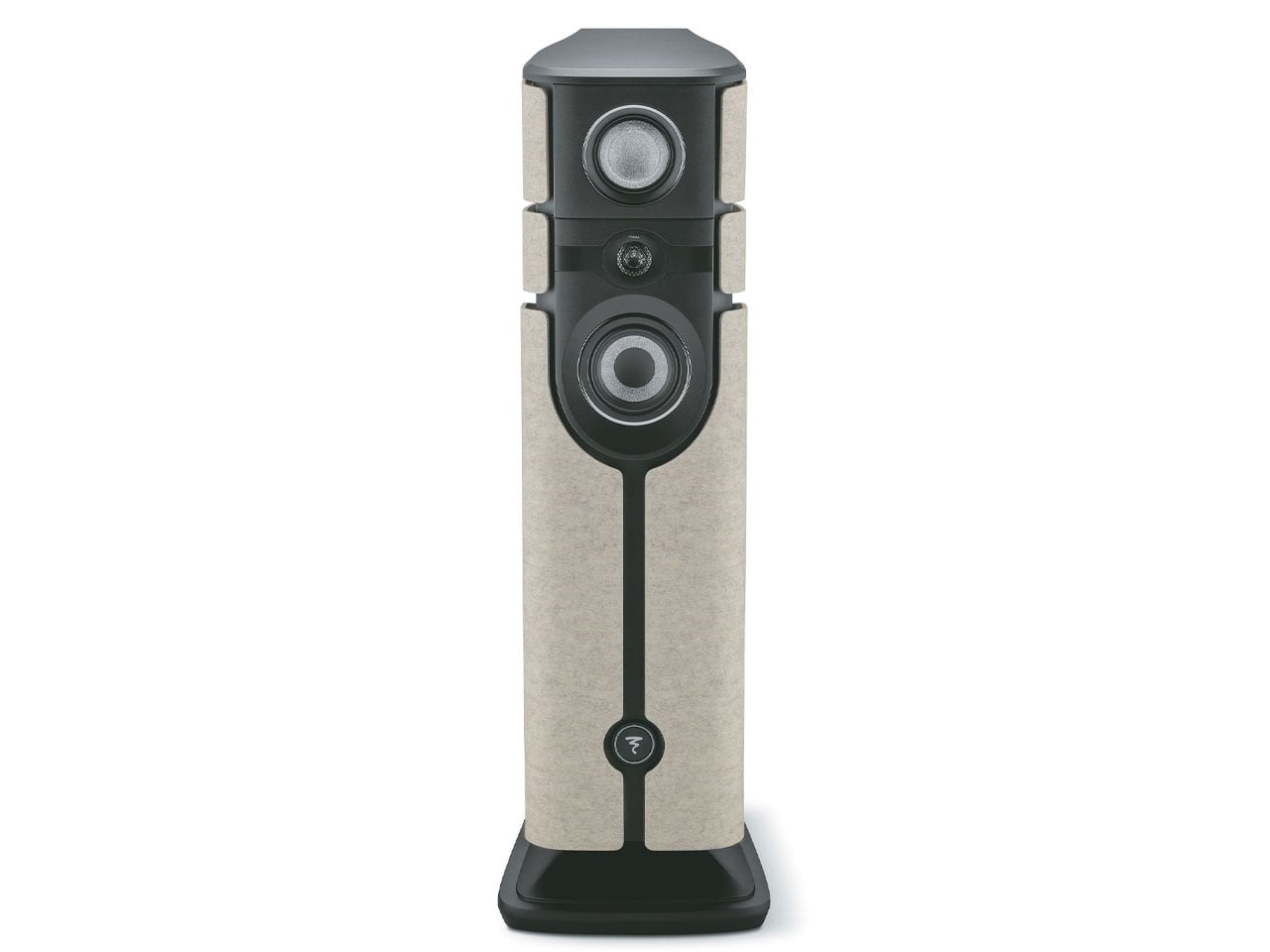
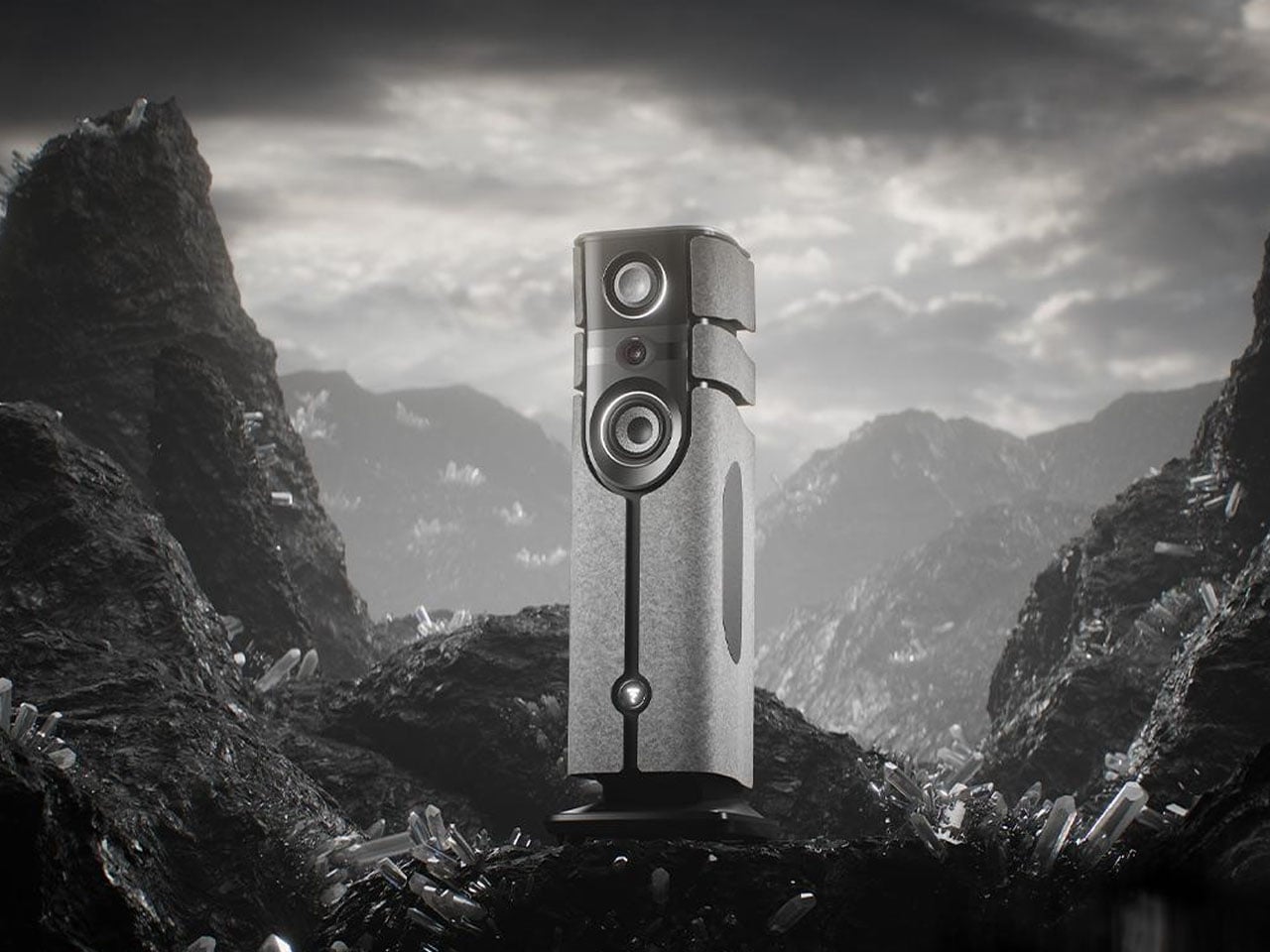
Focal and Naim’s partnership has already reshaped expectations around high-end wireless audio, proving that convenience no longer has to come at the expense of performance. With the new Diva Alta Utopia, the two brands push that idea to its absolute limit. They’ve created a flagship floorstanding speaker system that combines reference-grade acoustics and modern streaming technology in a package designed for the most demanding listeners.
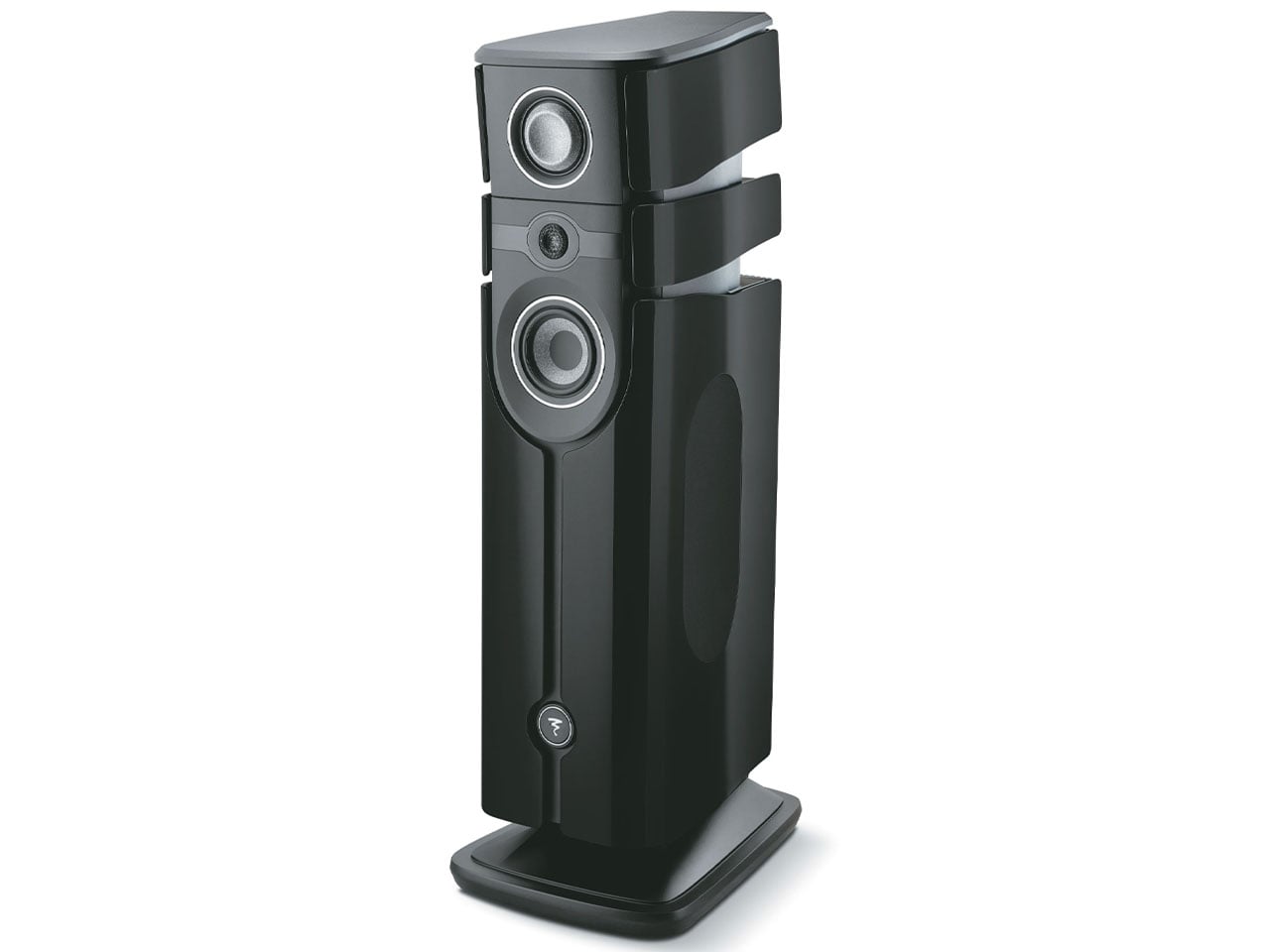
Positioned above the Diva Mezze Utopia, the Diva Alta Utopia is the largest and most advanced model in the lineup. Rather than requiring separate amplifiers, DACs, streamers, and racks full of equipment, the system integrates everything into a pair of sculptural floorstanding speakers. The result is a streamlined approach to high-end audio that preserves the performance expected from traditional audiophile setups while significantly reducing complexity.
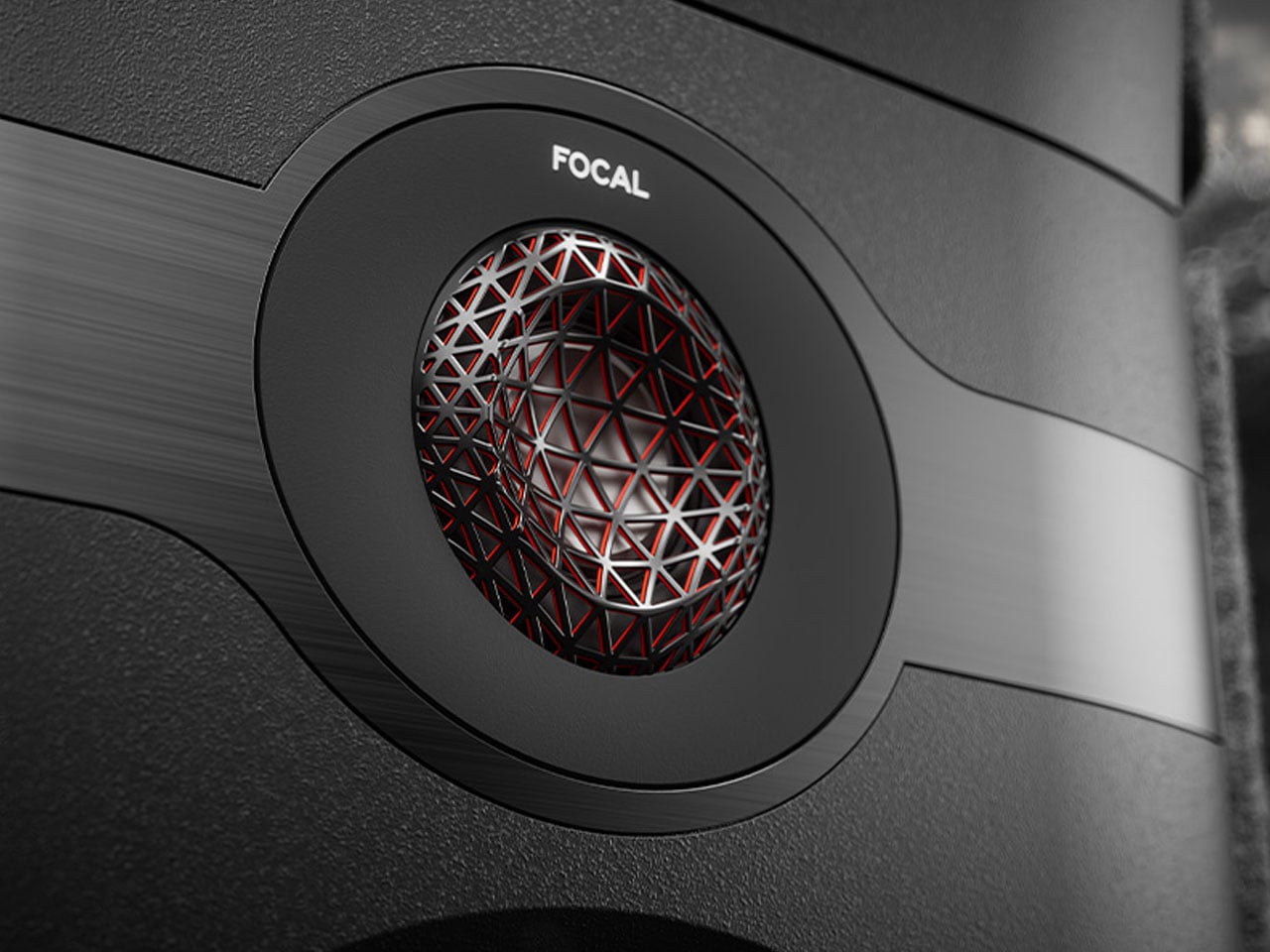
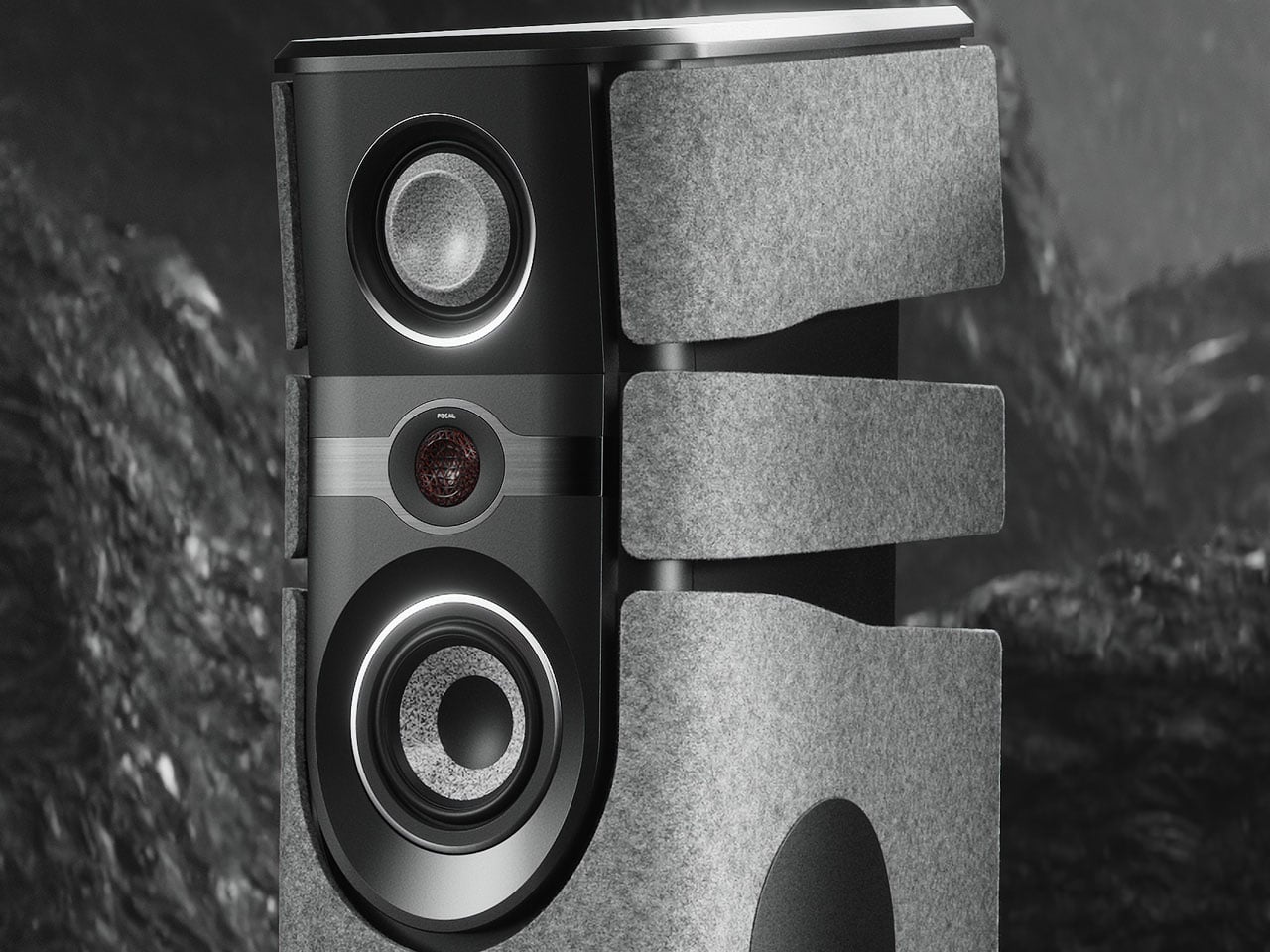
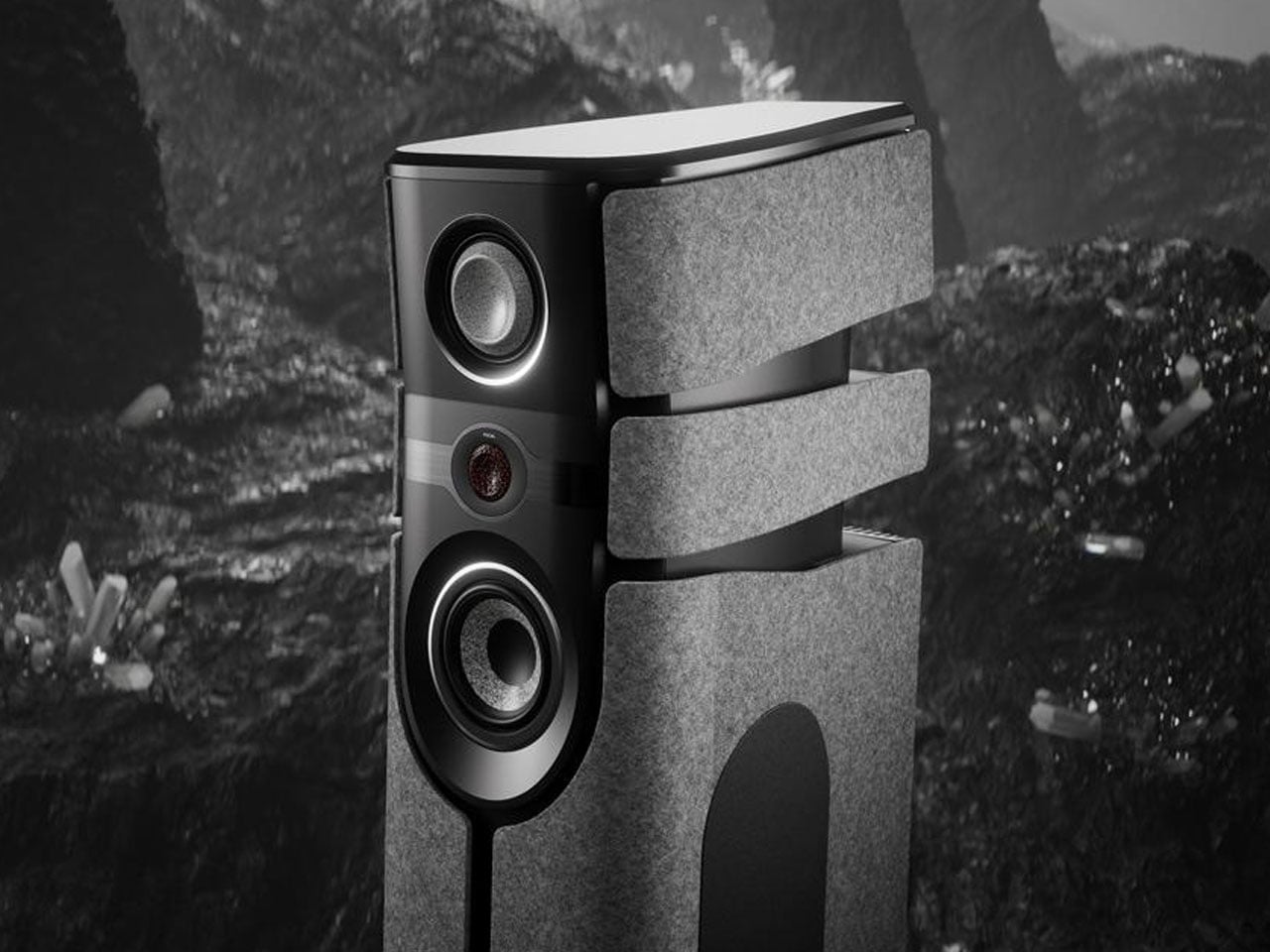
The speaker’s imposing form serves a functional purpose. Each cabinet houses a newly developed 27mm Prism tweeter engineered to balance rigidity, damping, and low mass for greater detail and precision. A carbon-reinforced 5-inch midrange driver handles vocals and instruments, while bass duties are shared by four 8-inch woofers and a dedicated 6.5-inch W-cone mid-bass driver. The drivers are arranged using Focal’s Time Management architecture, a design intended to align acoustic output for more accurate imaging and a convincing soundstage.
Every speaker contains four Class A/B amplifiers delivering a combined 600 watts, ensuring sufficient headroom for dynamic passages without compression. The system is capable of reaching deep into the low frequencies while maintaining clarity and control across the entire spectrum, making it suitable for everything from intimate acoustic recordings to large-scale orchestral performances.
Wireless performance has been a major focus of the design. Using Ultra Wideband transmission technology, the speakers can exchange audio wirelessly at up to 24-bit/192kHz resolution, while Naim’s Pulse streaming platform supports playback of PCM files up to 32-bit/384kHz. The platform provides access to a wide range of music services and protocols, including AirPlay 2, Google Cast, Spotify Connect, Tidal Connect, Qobuz, internet radio, and Bluetooth with aptX Adaptive support.
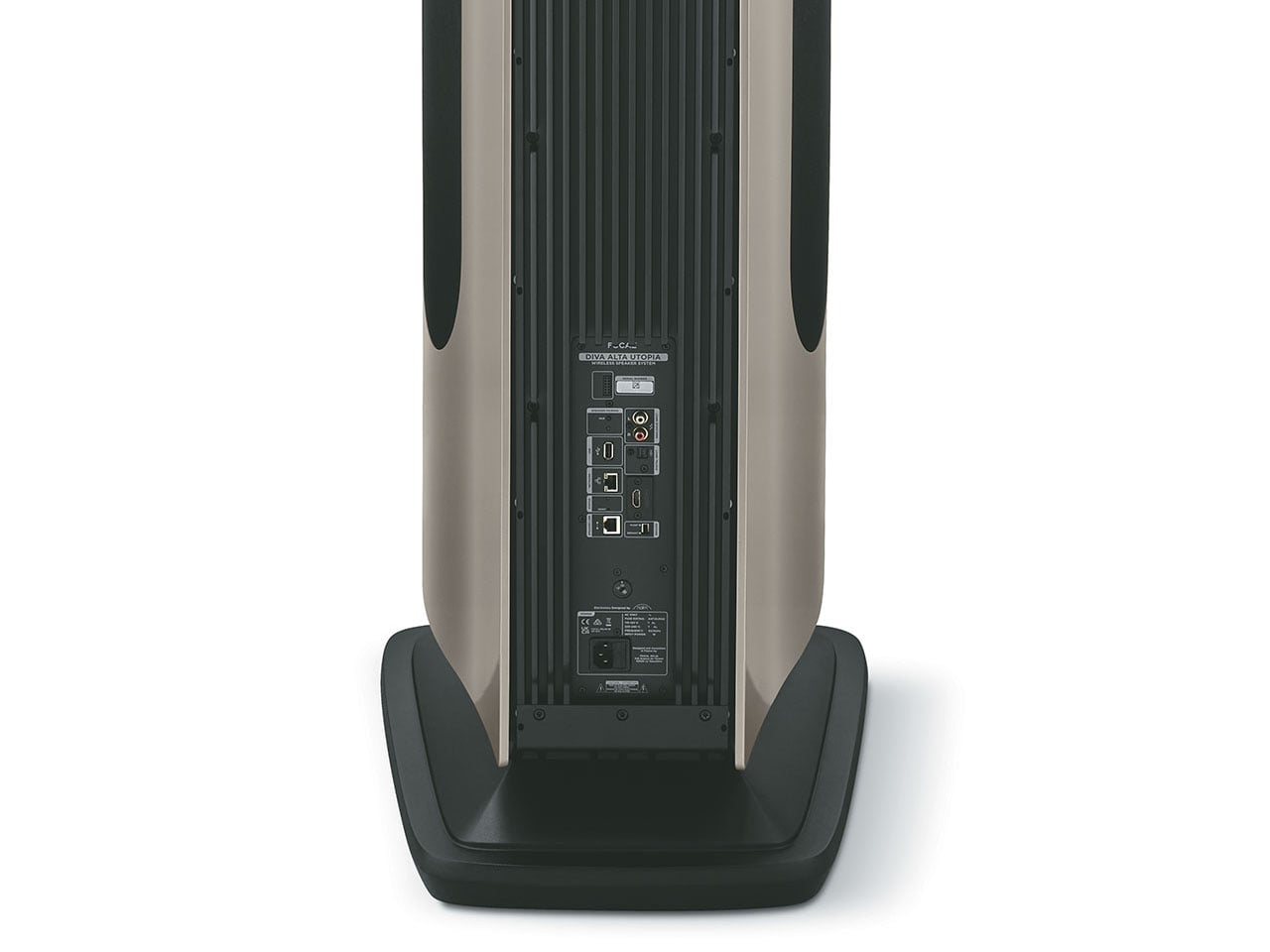
For users with additional sources, connectivity is extensive. HDMI eARC allows seamless integration with televisions, while optical, USB-C, RCA, Ethernet, and speaker-link connections accommodate everything from gaming consoles to high-resolution music libraries. Control is handled through the Focal & Naim app, which also enables ADAPT room calibration technology. This system analyses room acoustics and speaker placement to optimize performance for a specific listening environment.
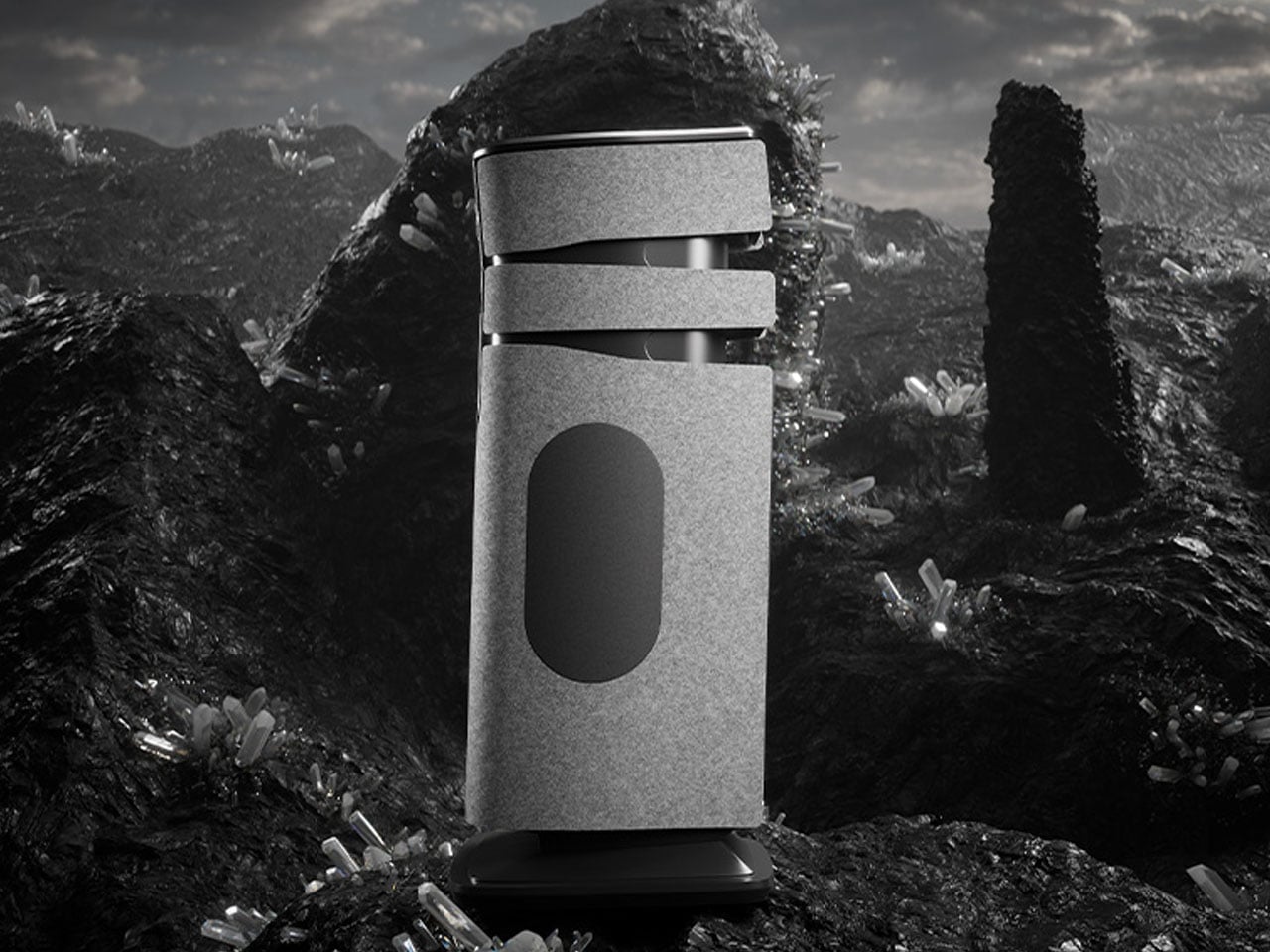
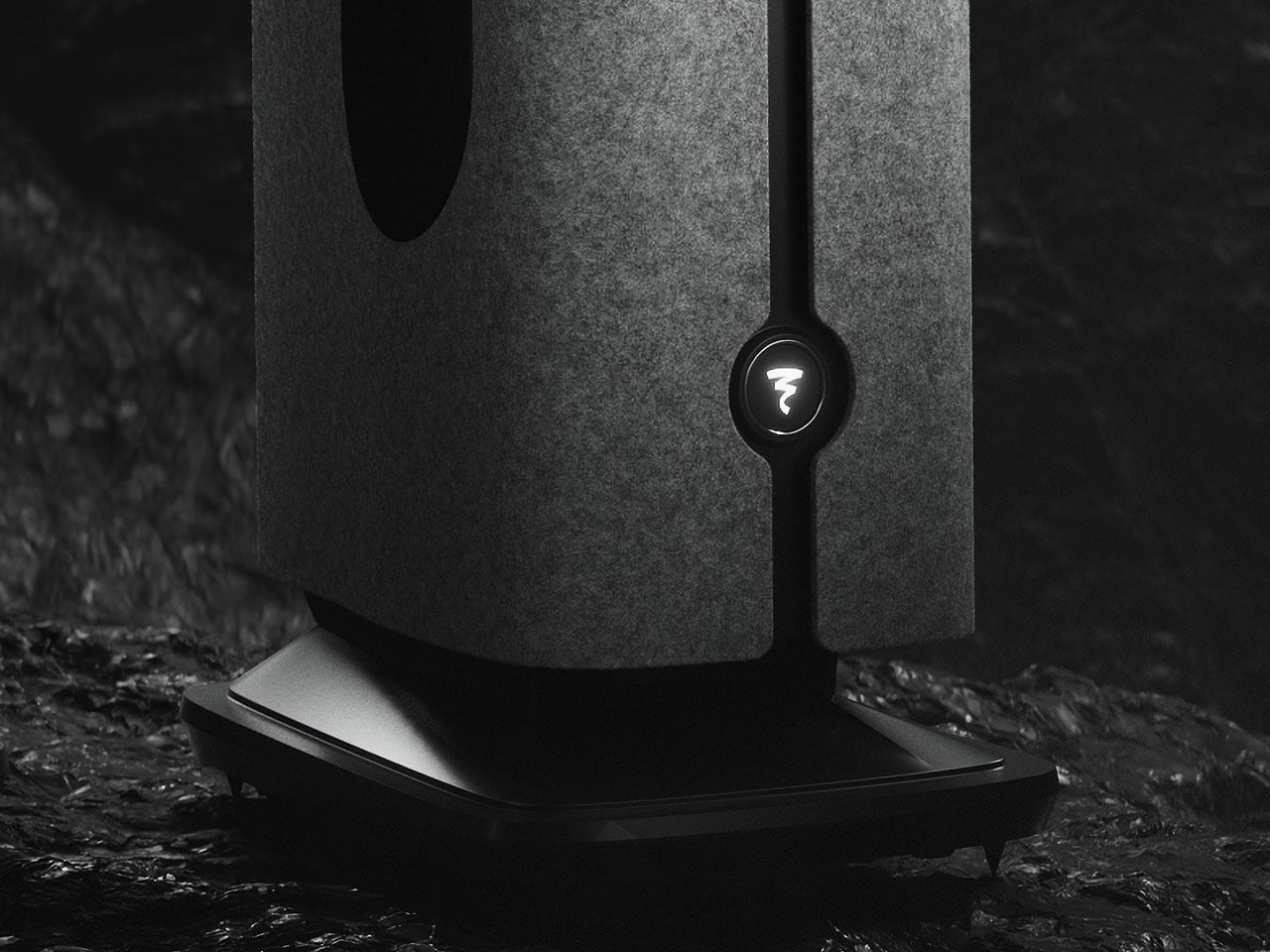
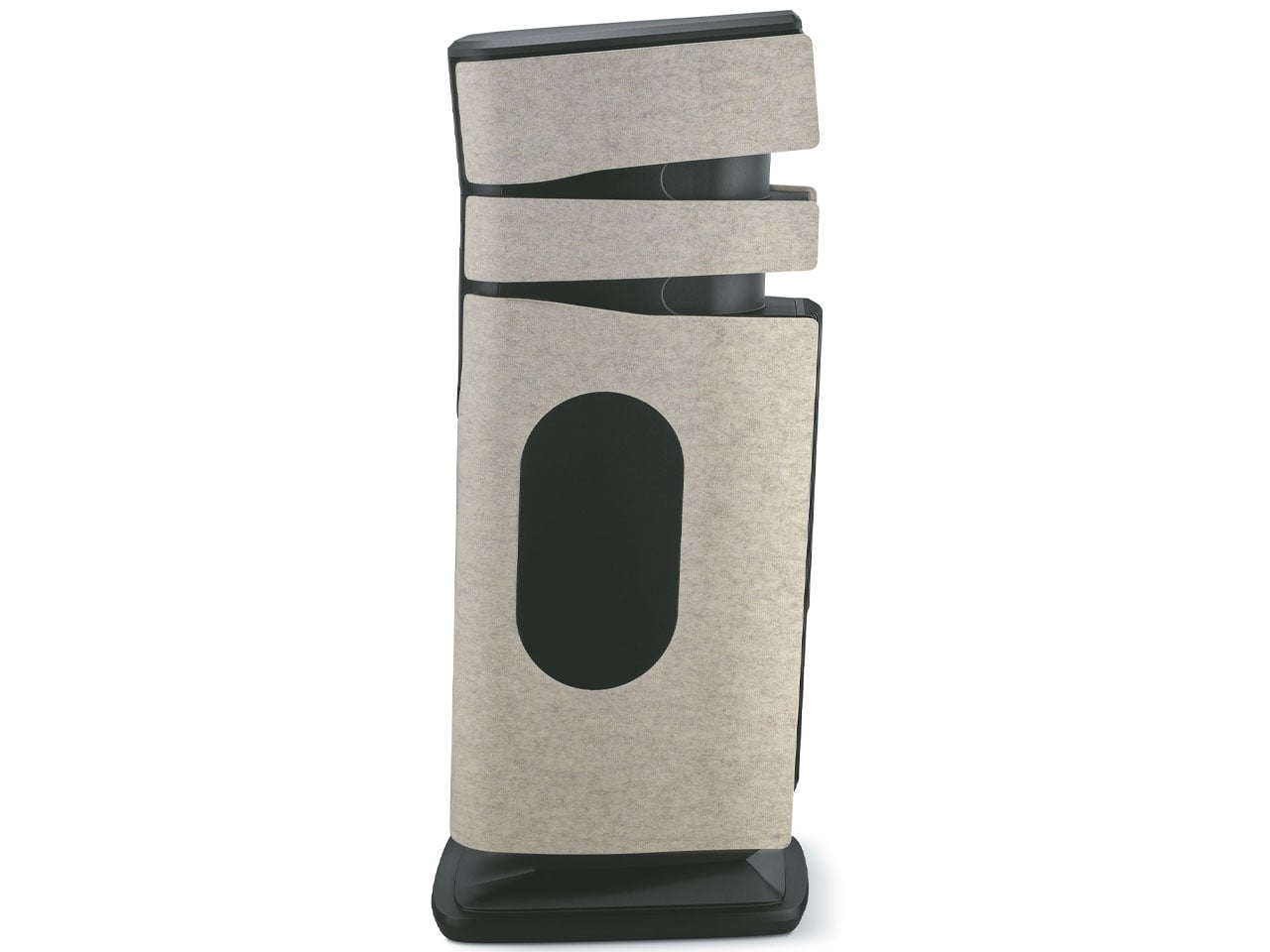
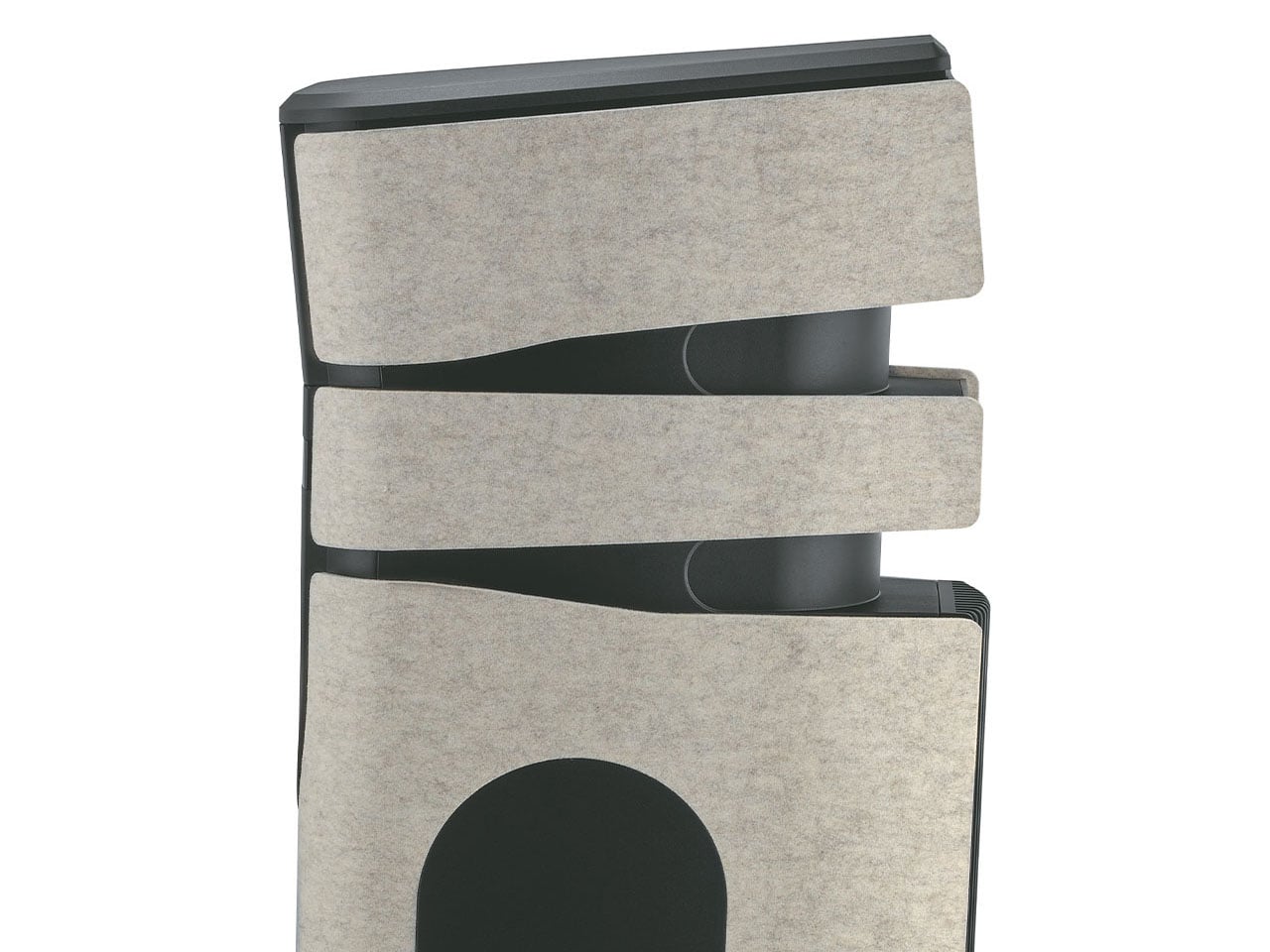
Despite its technical sophistication, Diva Alta Utopia remains unmistakably a design statement. Floating side panels, premium materials, and multiple finish options, including felt and high-gloss lacquer treatments, give the speakers a distinctive presence that blends luxury craftsmanship with contemporary aesthetics.
With pricing that starts around $200,000 per pair, the Diva Alta Utopia occupies a rarefied segment of the audio market. Yet it delivers the precision and emotional impact of an elite separates system while offering the simplicity and convenience of a modern wireless speaker.
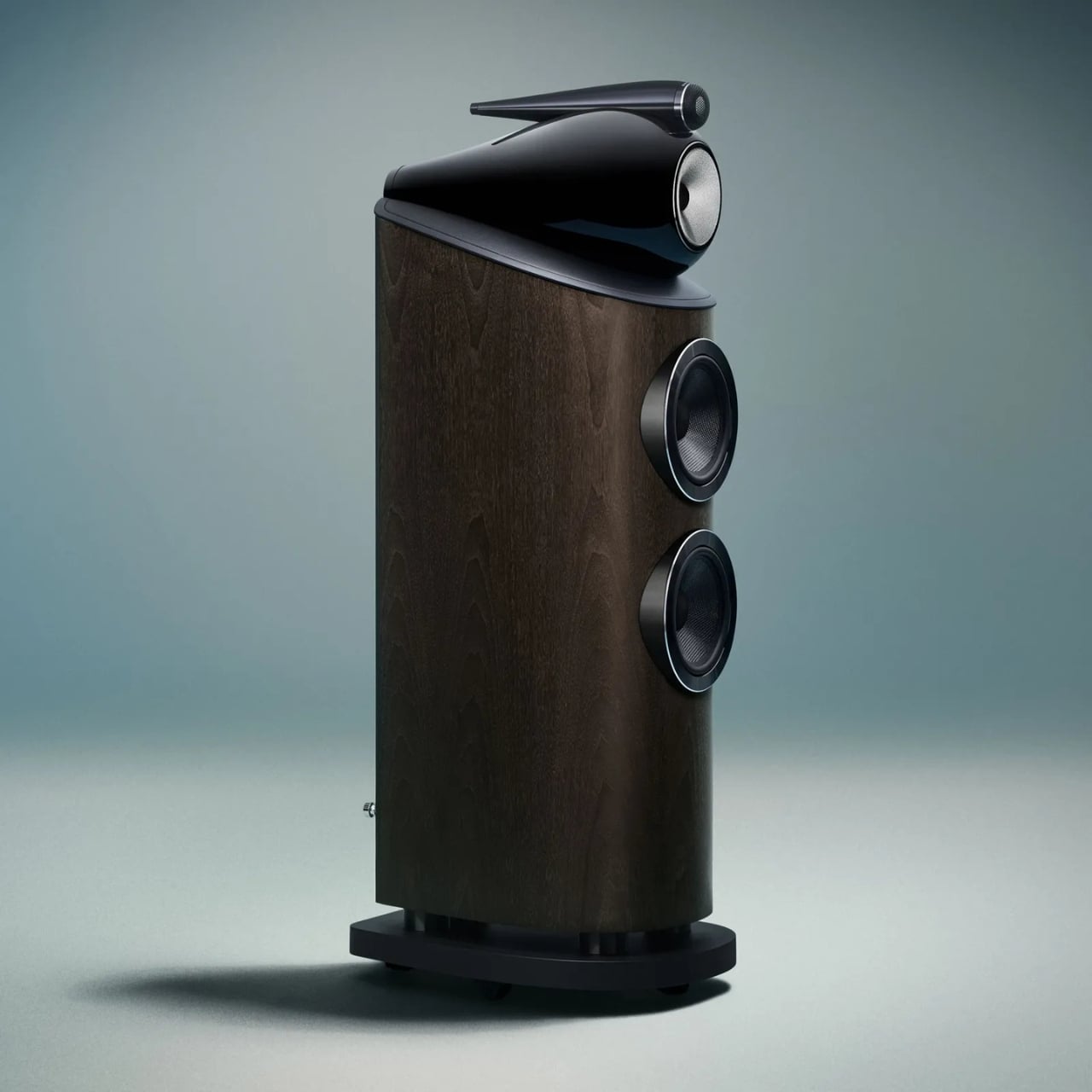
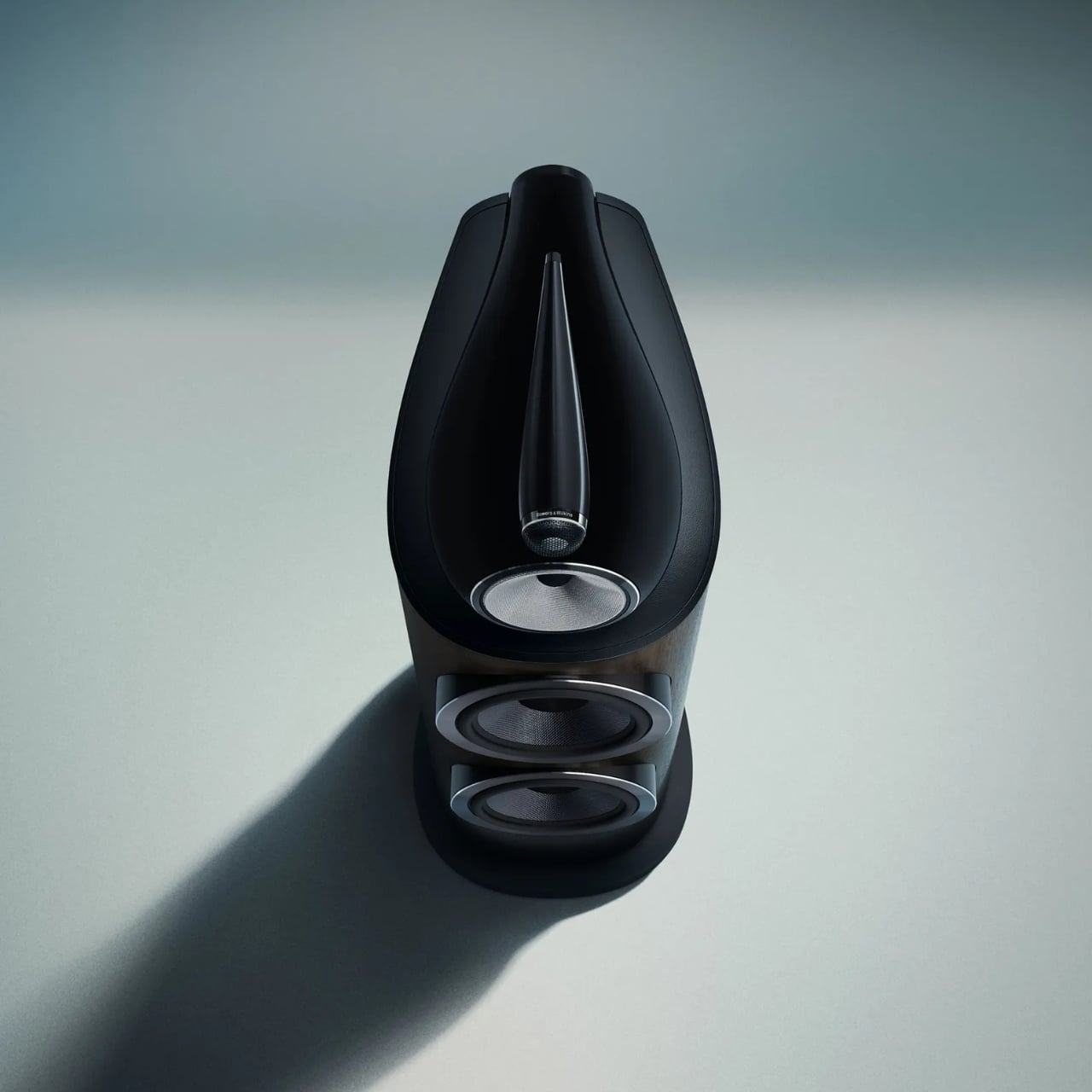
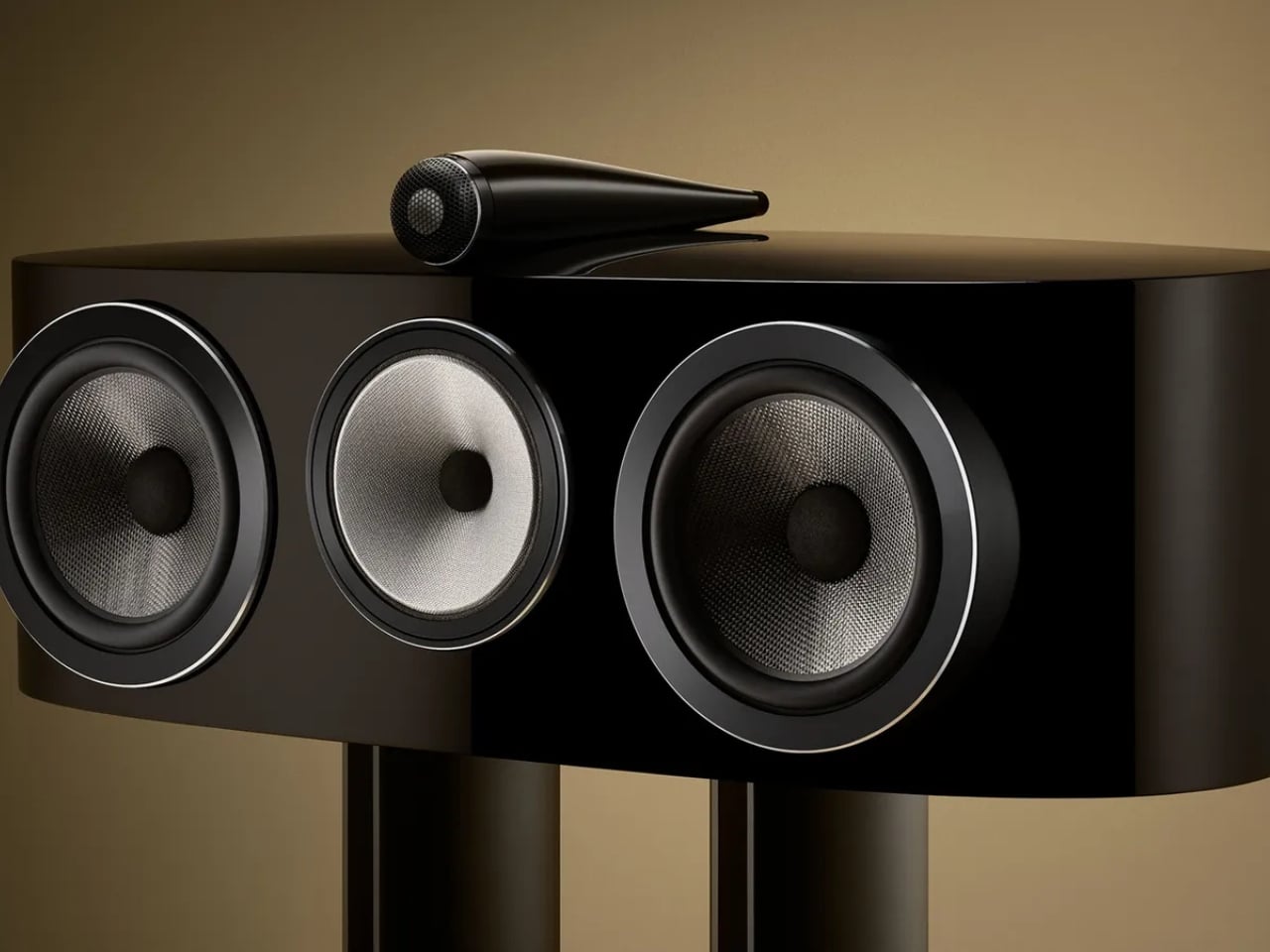
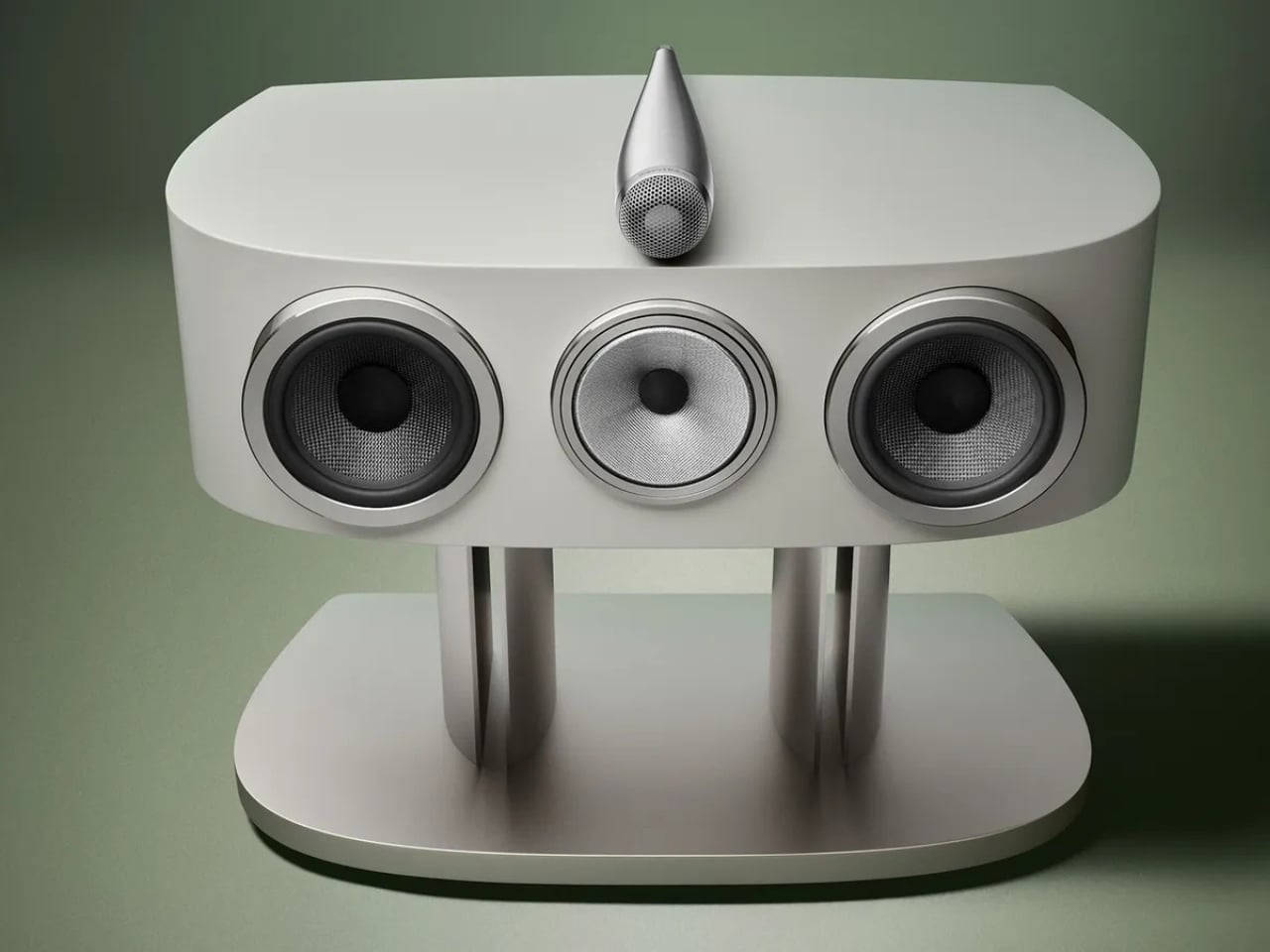
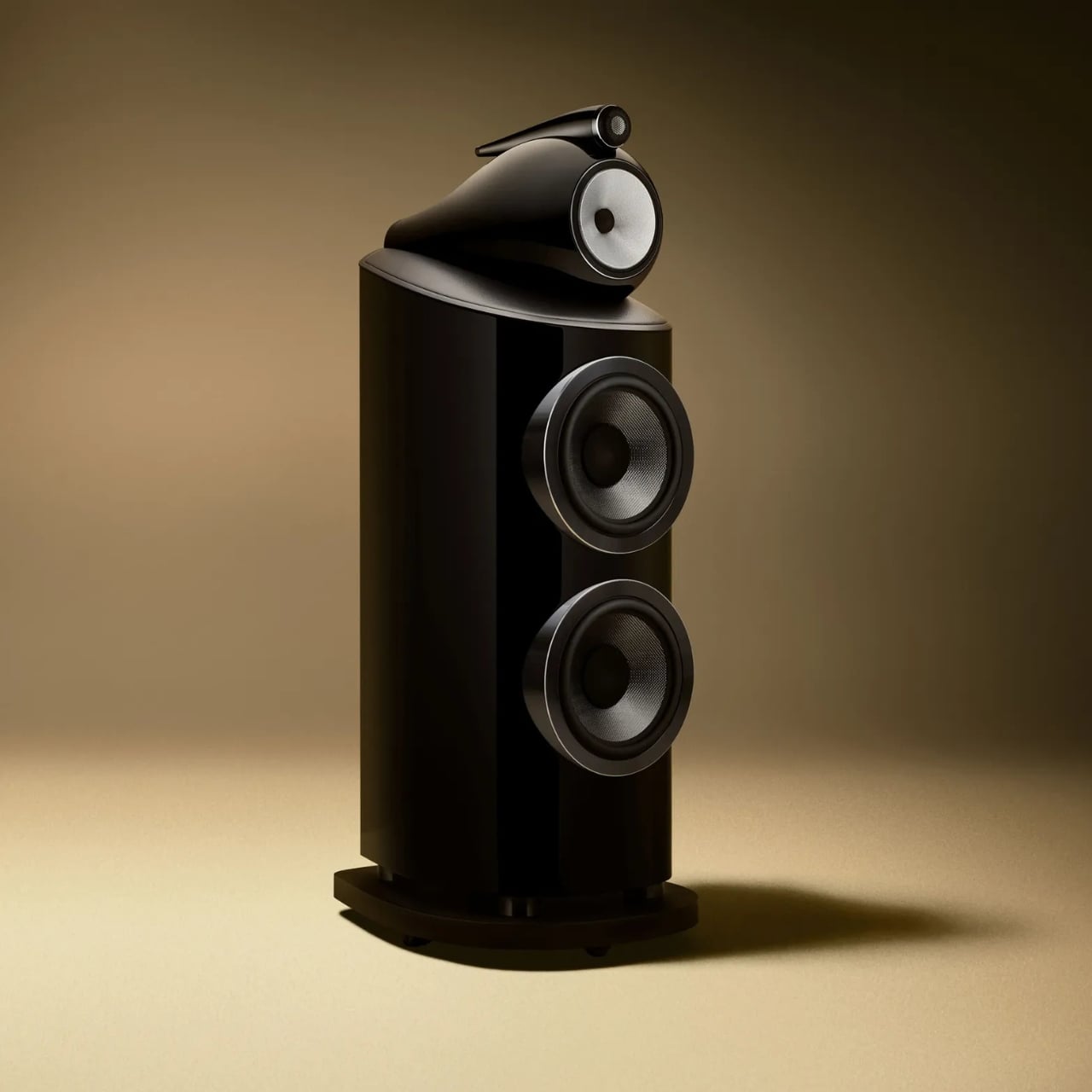
Most brands celebrate a 60th anniversary with a retrospective book or a limited-edition colorway. Bowers & Wilkins celebrated theirs by unveiling what may genuinely be the most advanced loudspeaker range they have ever made. The 800 Series Diamond D5 arrived with that kind of quiet confidence that doesn’t need fanfare to make its point, even if it was announced to considerable fanfare.
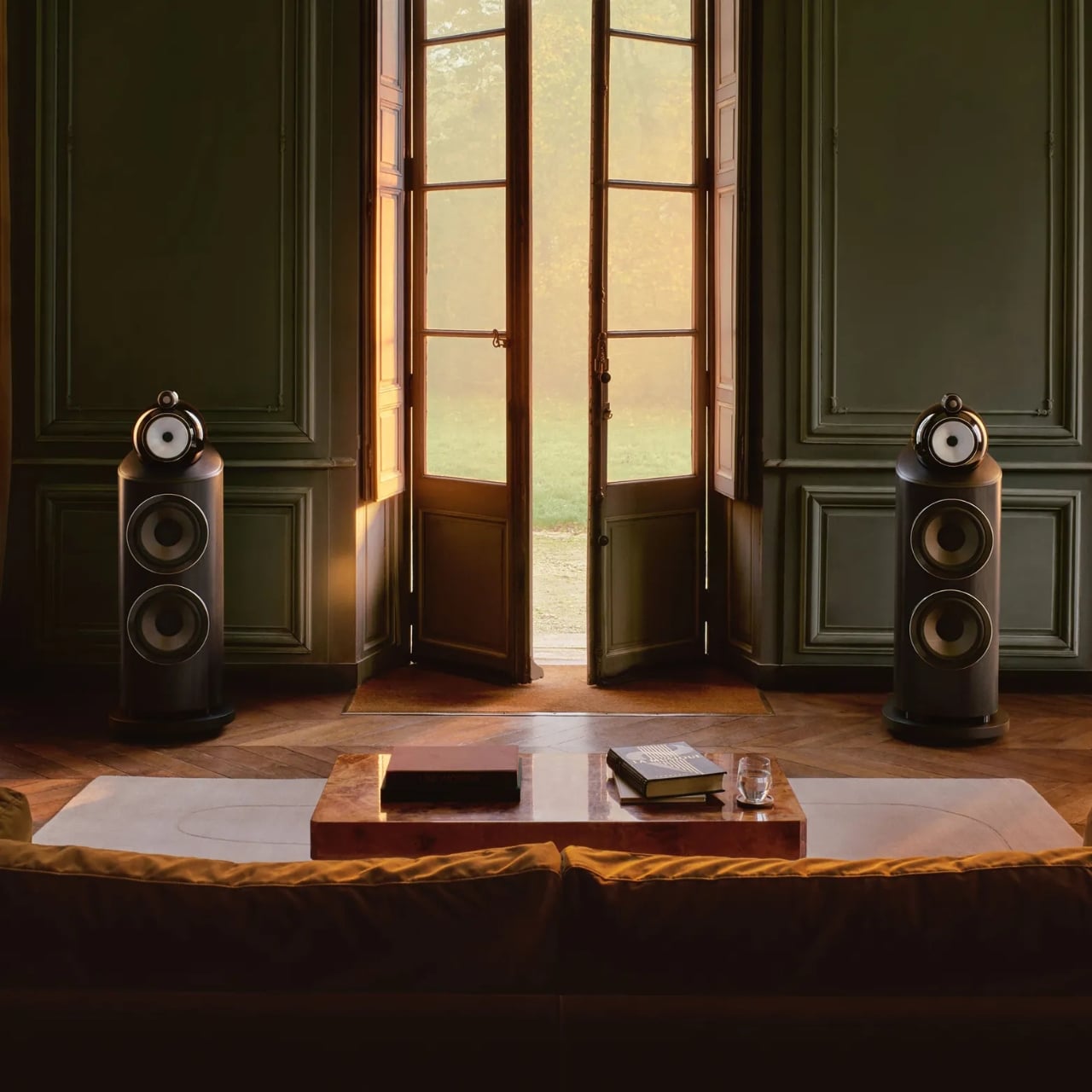
I’ve always believed that truly great audio equipment occupies a strange place between technology and sculpture. The 800 Series has lived in that space for decades. It’s the kind of speaker you find in professional recording studios around the world, at Skywalker Ranch where teams have mixed and mastered legendary film soundtracks, and also in the living room of the person who just needs the room to sound exactly right. That dual citizenship, professional and deeply personal, tells you everything about what Bowers & Wilkins has been building toward.
The D5 is the fifth generation of the Diamond series, and the tagline “60 years in the making” isn’t marketing hyperbole. It’s a mission statement rooted in John Bowers’ original True Sound philosophy: nothing added, nothing taken away. Every generation of 800 Series starts from the same question: what stands in the way of the music? The answers keep evolving. The ambition stays constant.
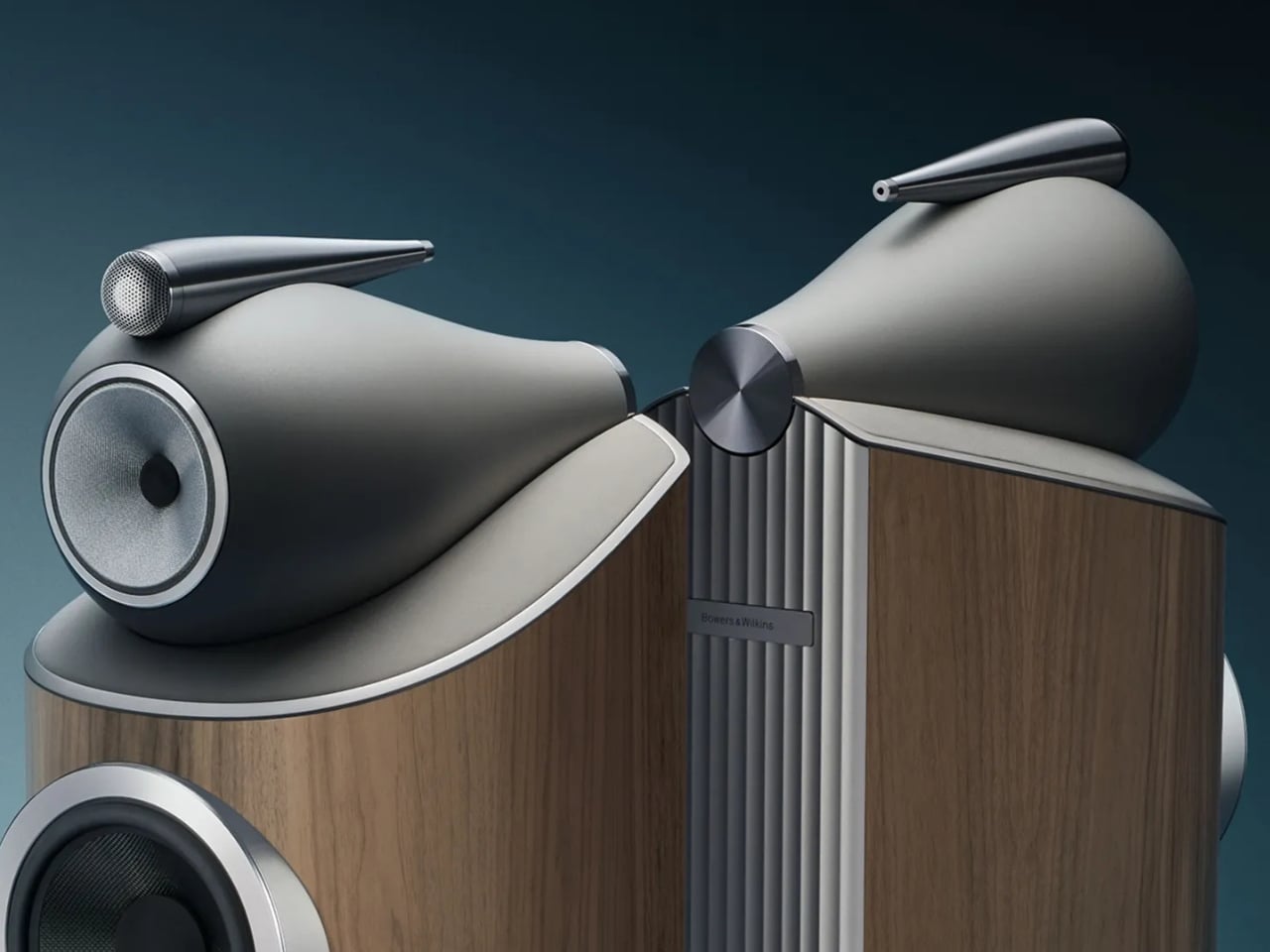
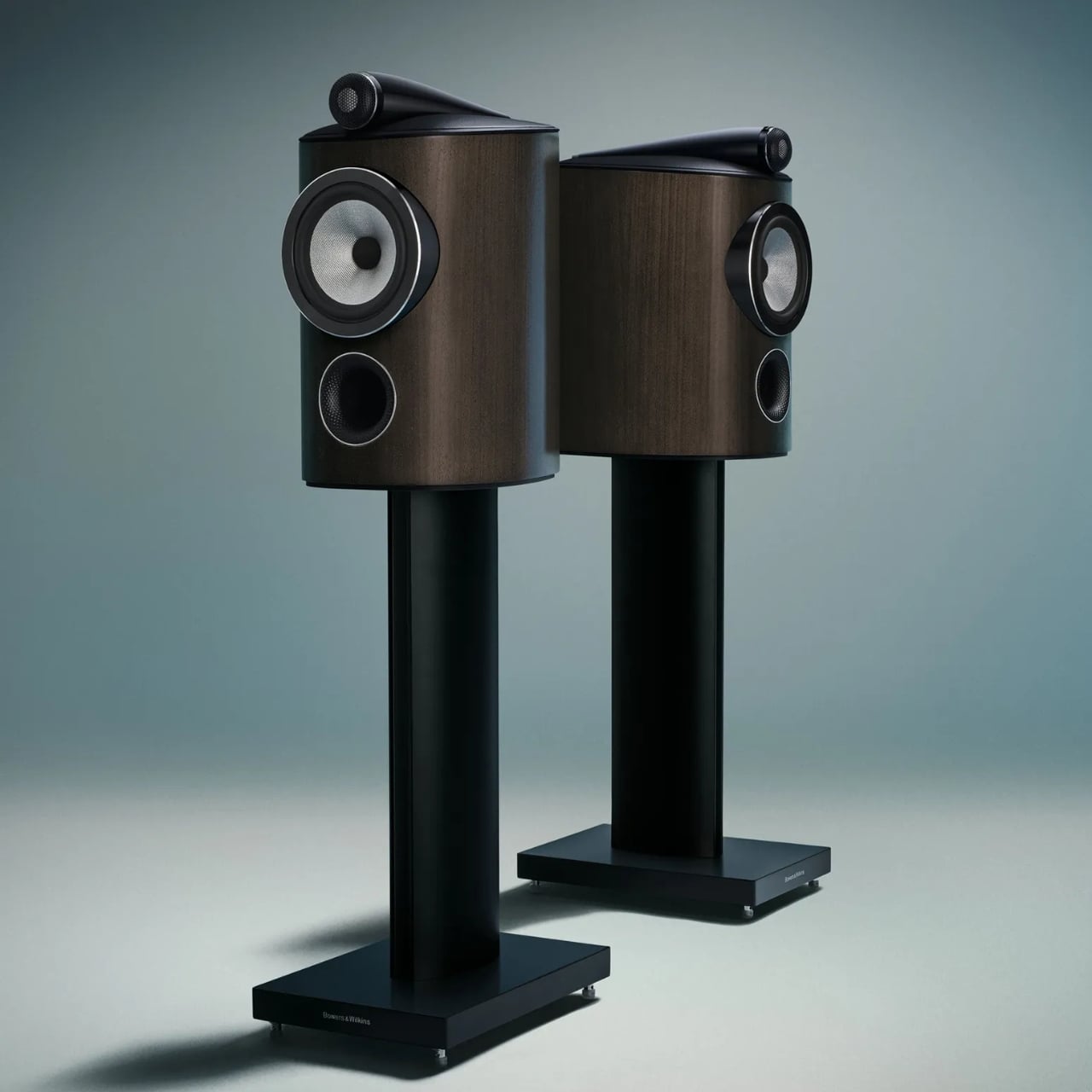
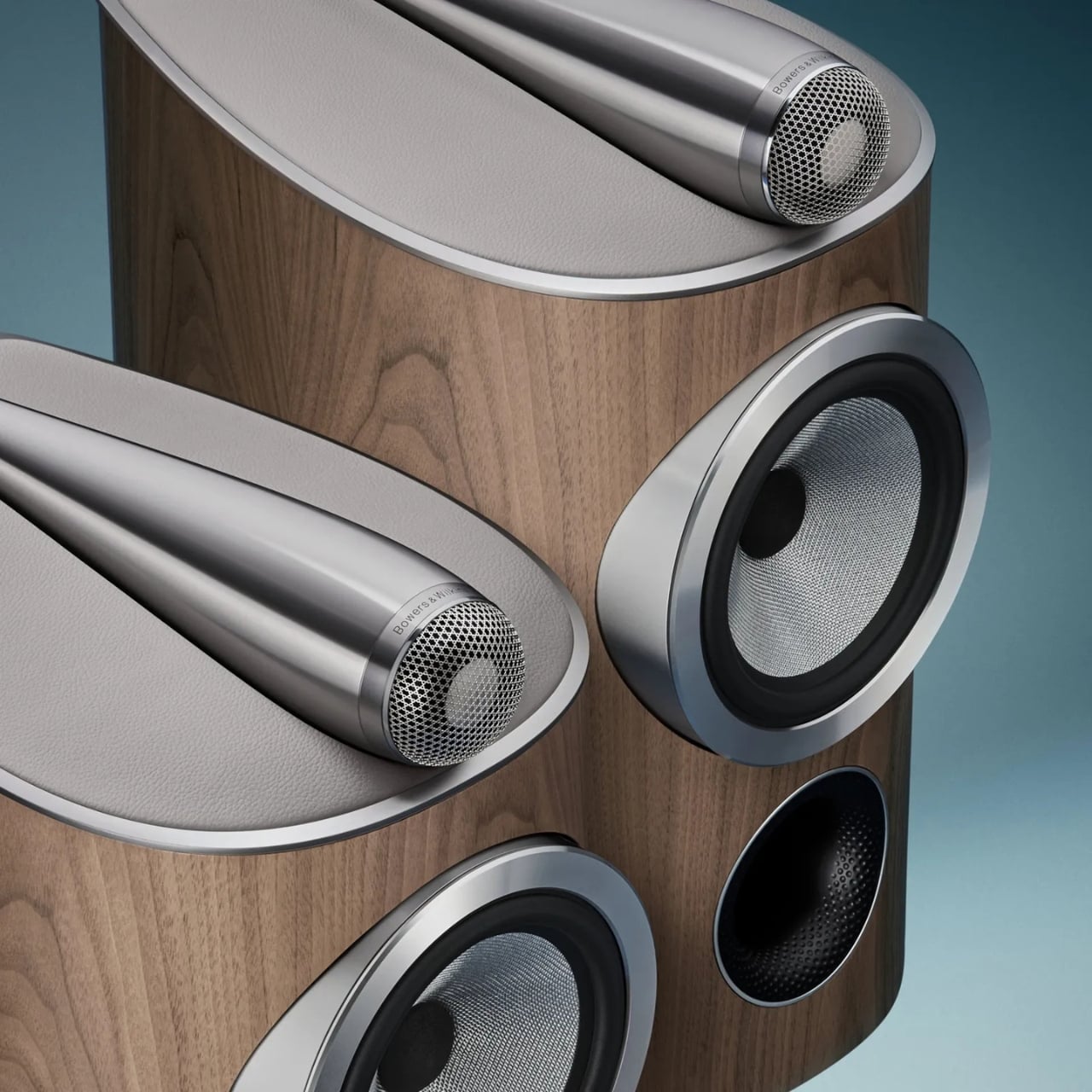
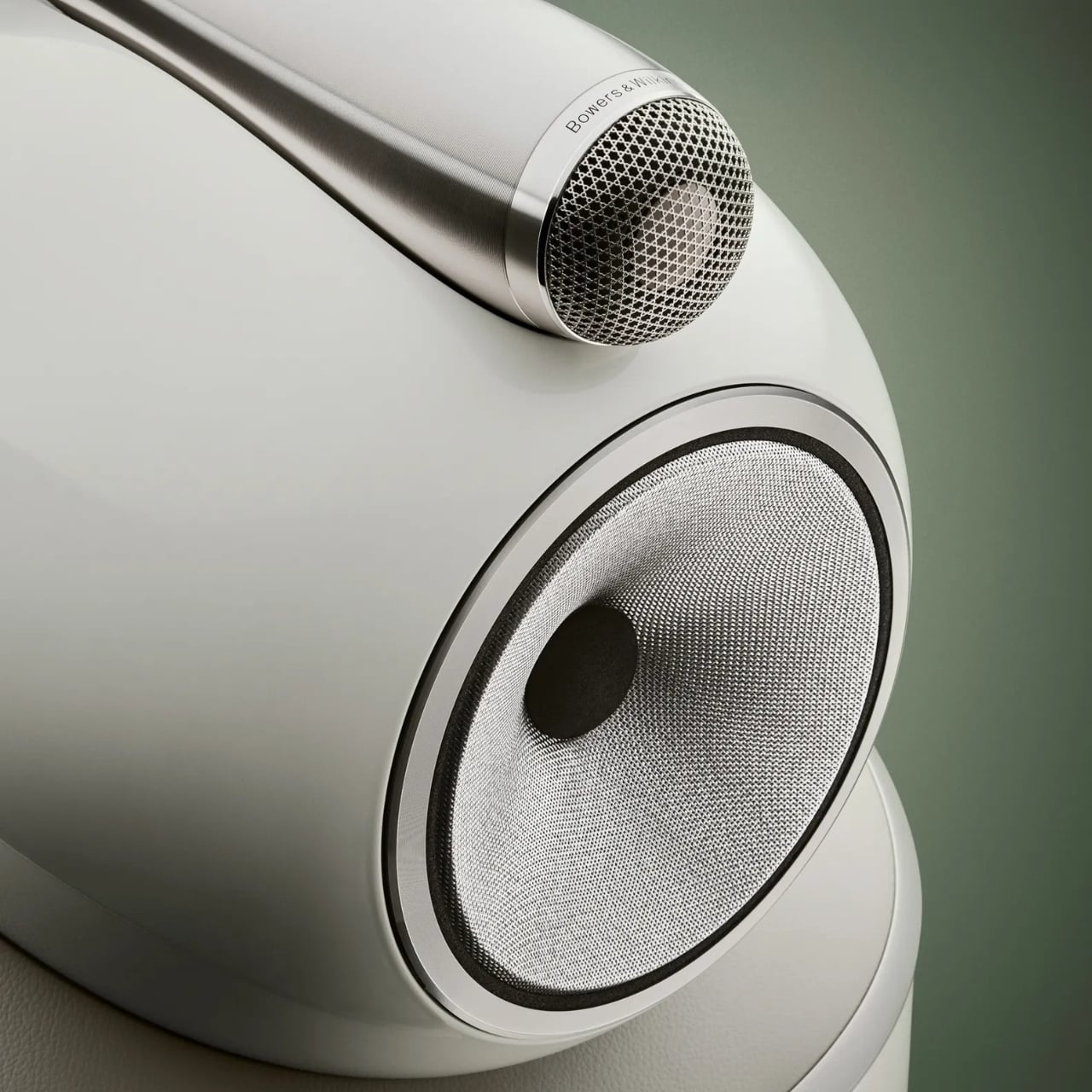
The range includes seven models, from the compact 805 D5 stand-mount to the flagship 801 D5 with its twin 10-inch bass drivers. The iconic Turbine Head, that distinctive aluminum sphere housing the midrange driver in complete acoustic isolation from the bass section, remains one of the most recognizable silhouettes in audio design. It was bold when it debuted, and it’s still striking today. It’s been refined here, not rethought, and I think that’s the right call. Some shapes earn the right to stay.
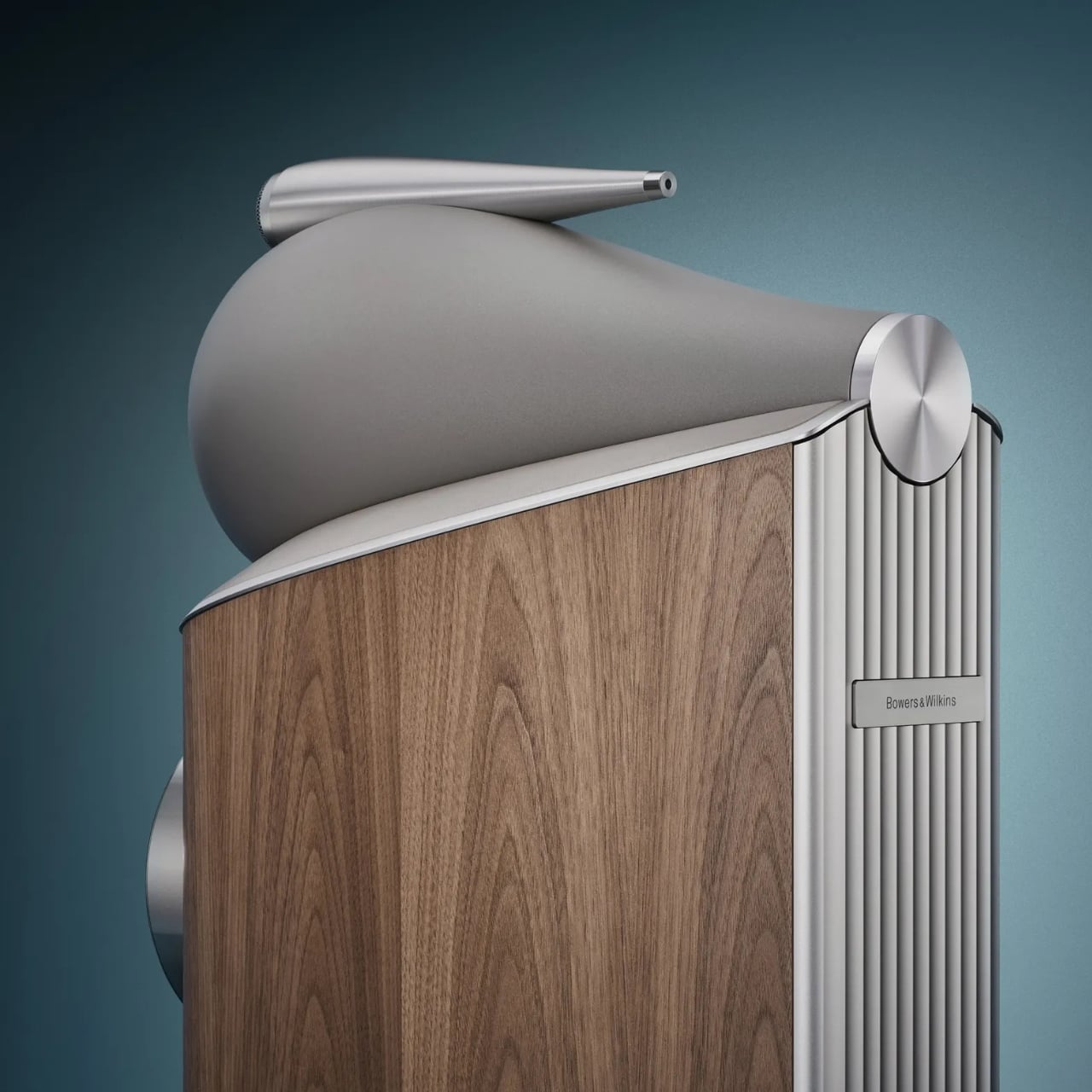
What’s new in D5 runs much deeper than the surface. The Space Frame Bracing system introduces parallel aluminum rails bolted directly to the rear Matrix cabinet bracing, making the enclosure significantly stiffer and mechanically quieter than its predecessor. A revised aluminum top plate, with thicker ribbing and updated decoupling mounts, better supports the Turbine Head and Solid-Body-Tweeter assemblies. The crossover components have been moved entirely outside the cabinet, mounted on aluminum rails at the rear, which eliminates internal air pressure fluctuations from affecting crossover behavior. As an added benefit, natural convection keeps those components running cooler during extended listening.
The Diamond Dome tweeter gets a new grille mesh, first developed for the acclaimed 801 D4 Signature, that’s more acoustically transparent while still protecting the dome. The result is better off-axis performance and noticeably improved resolution. Every midrange and bass driver across the range has also been upgraded with lower-distortion motor systems derived from Signature-grade components. That’s not a minor tune-up; that’s serious trickle-down engineering from the very top of the catalog.
Aesthetically, the D5 introduces four new finishes: Stealth Black, Warm White, Light Walnut, and Dark Walnut. The paint has been upgraded for greater depth and durability, and the design detailing across every surface, from the spine to the plinth to the drive unit pods, has been refined. These are speakers handcrafted in Worthing, UK, and they carry that provenance visibly. Luxurious isn’t too generous a word.
Where I land on all of this is that the 800 Series Diamond D5 represents something genuinely uncommon in a market crowded with premium pricing and thin justification: a product that earns its position through accumulated expertise and genuine craft. There’s real, demonstrable engineering here, the kind that takes decades to develop, and Bowers & Wilkins isn’t shy about showing their work. The D5 range is scheduled to ship in fall 2026, and the anticipation feels entirely warranted.
Sixty years of obsessive refinement, applied to a speaker that takes the living room as seriously as a professional studio, will do that. When the engineering is this thorough and the design this considered, the only question left is how loud you want to play it.