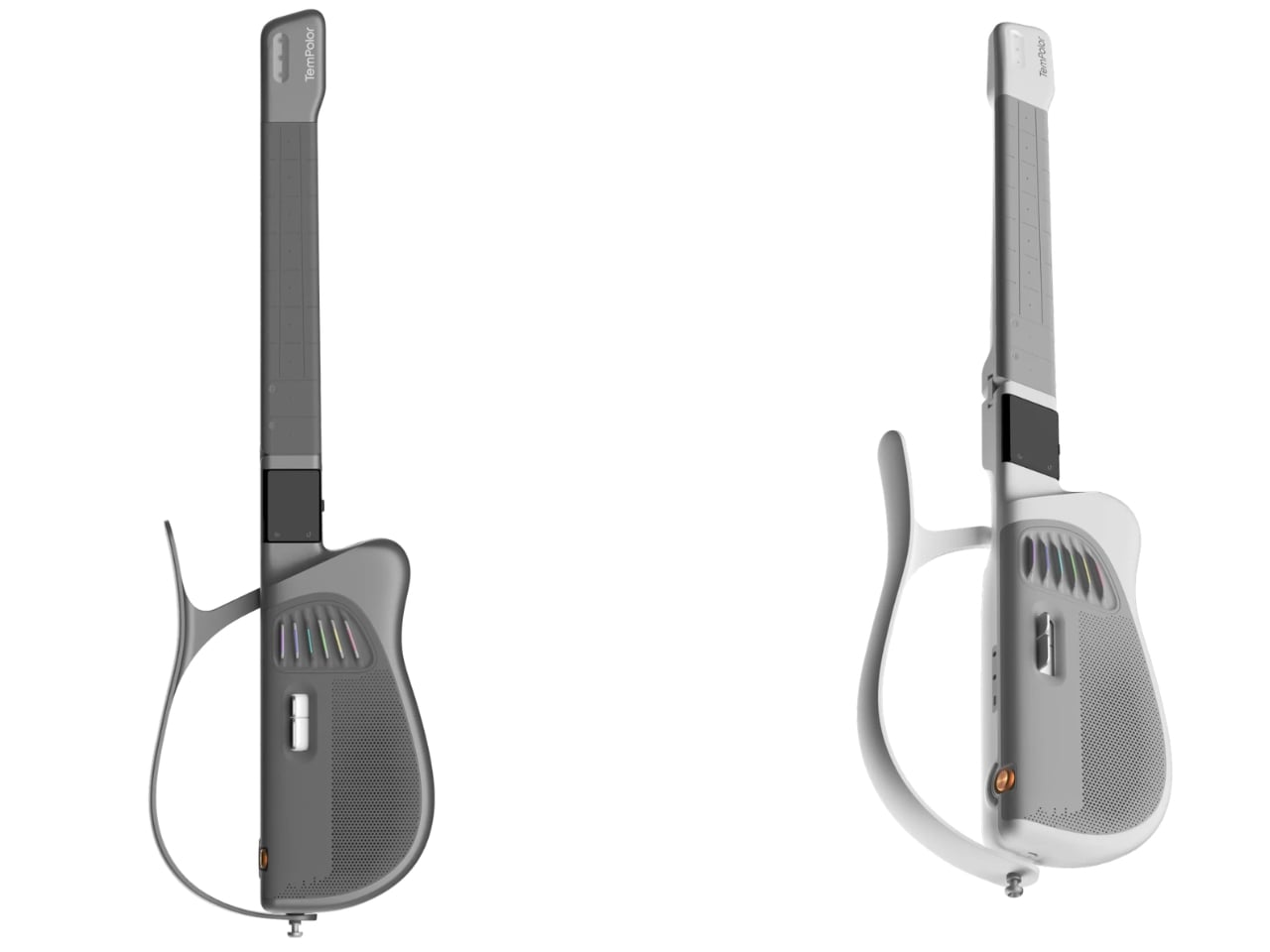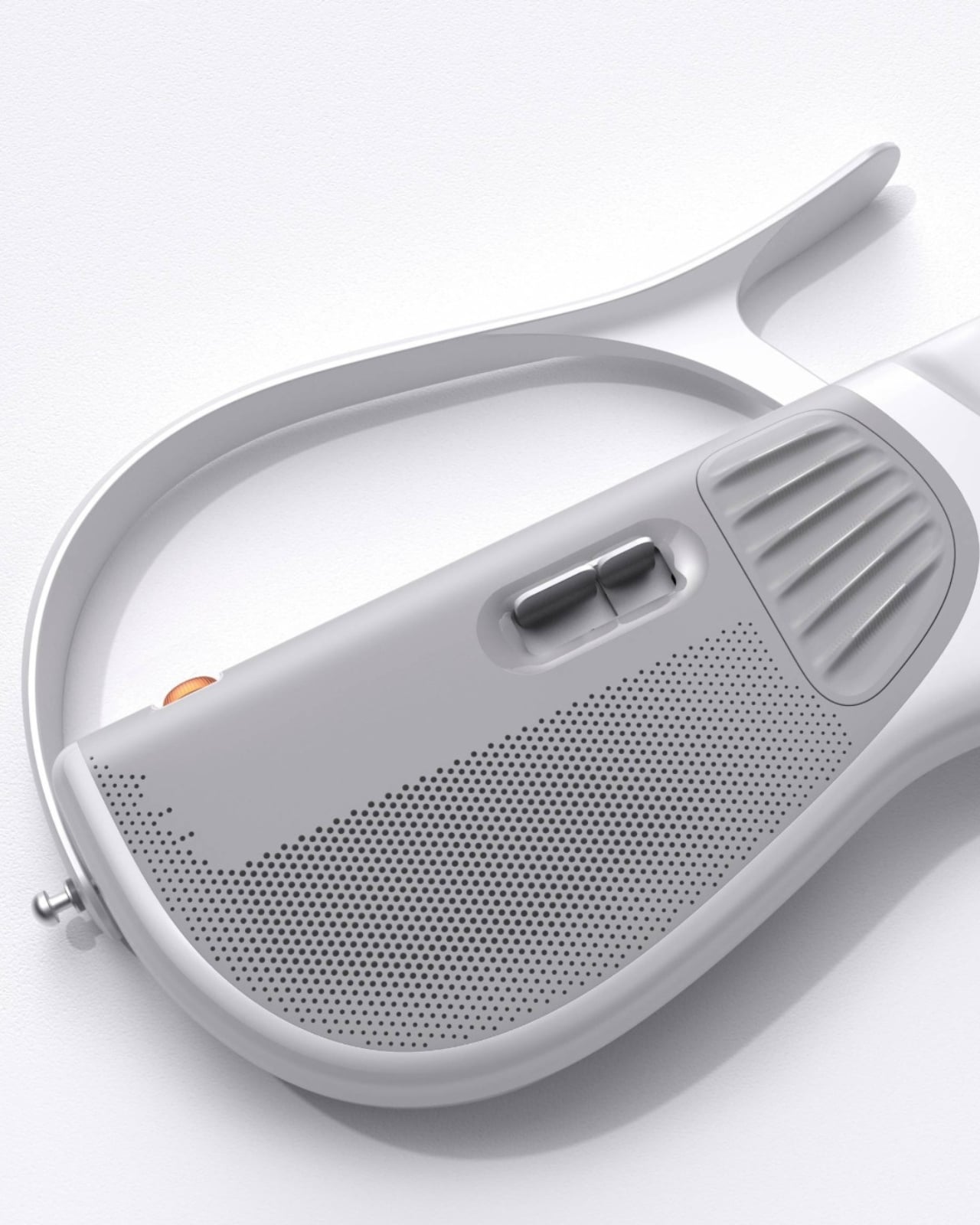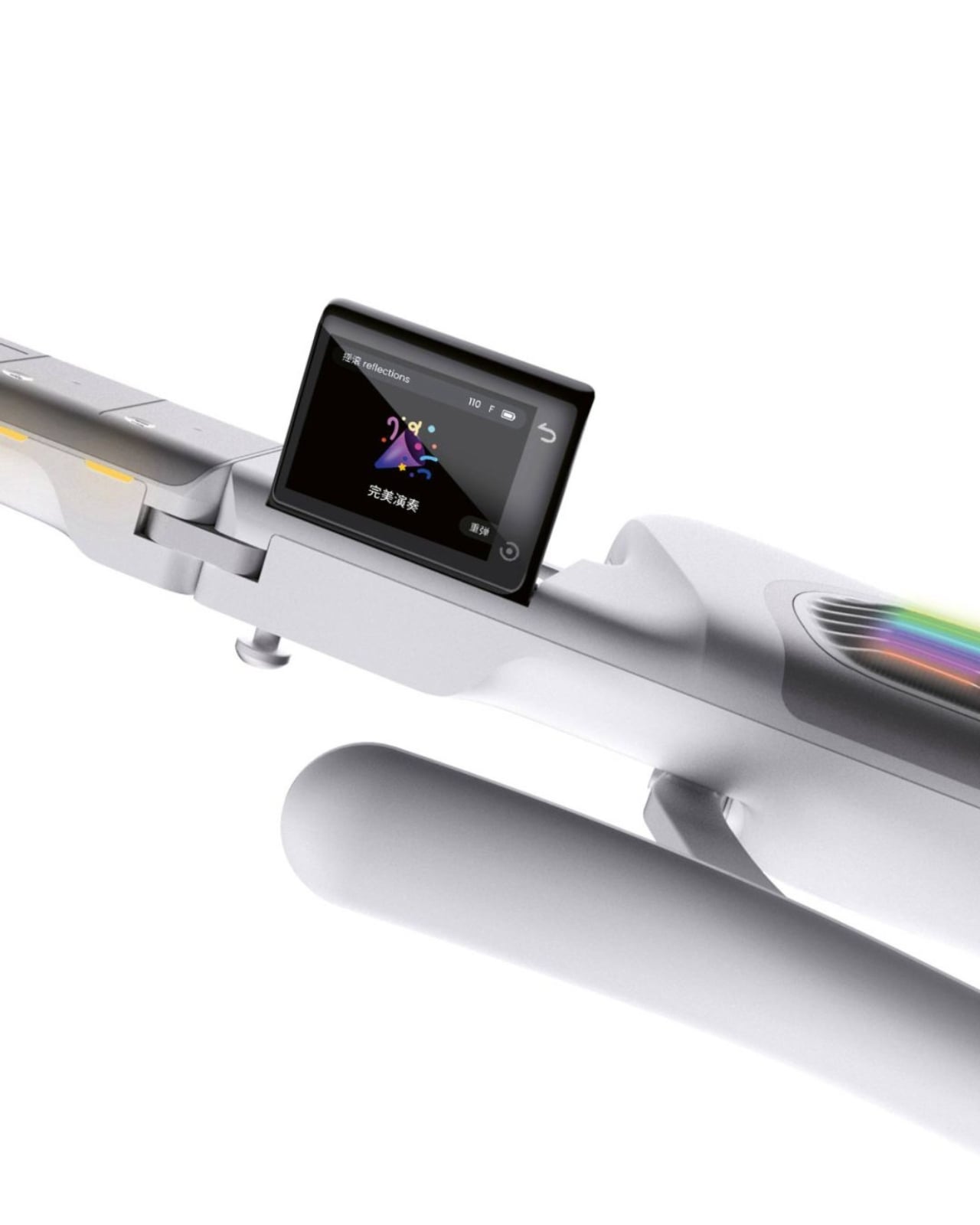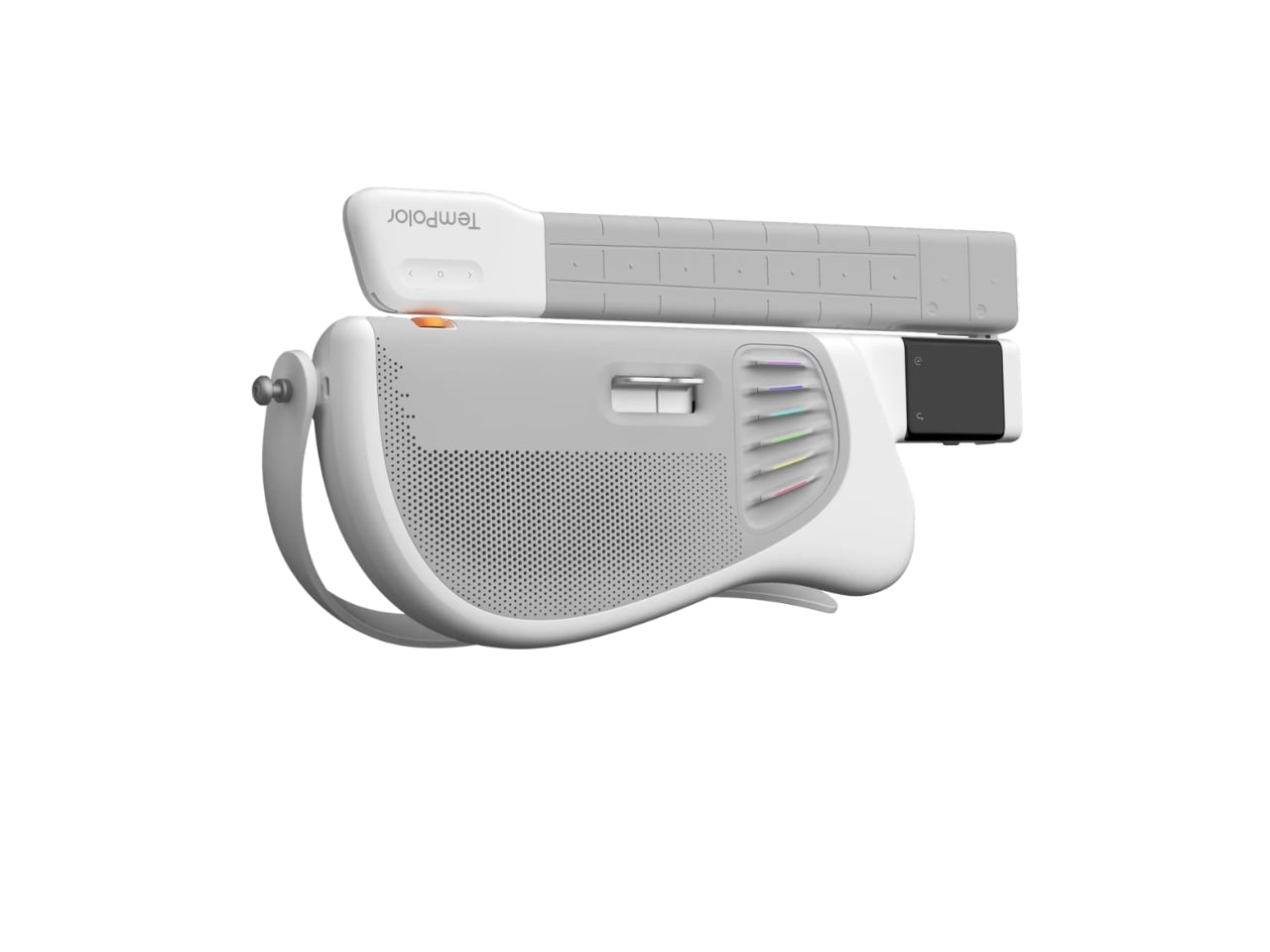
This $3,500 Guitar Changes Colors via Bluetooth, No Repainting Needed

Guitarists obsess over finishes. Sunburst fades, metallic flakes, relic’d nitro that looks like it survived three decades of dive bars, all of it matters until you realize that once you pick a color, you are stuck unless you repaint. Stage rigs and LED walls morph through palettes every night while the guitar stays frozen, a static object carried by musicians who constantly reinvent their sound and visual identity.

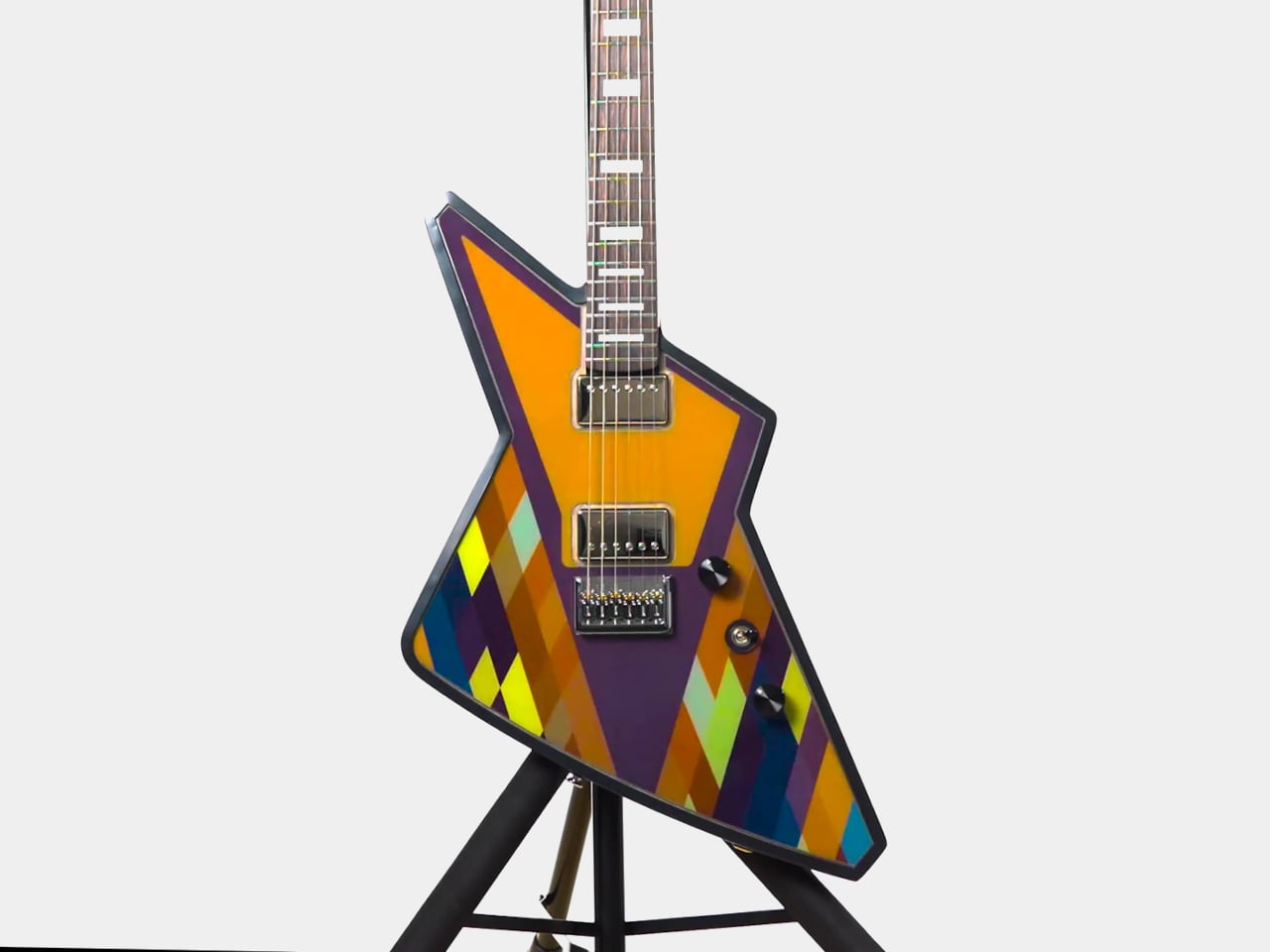
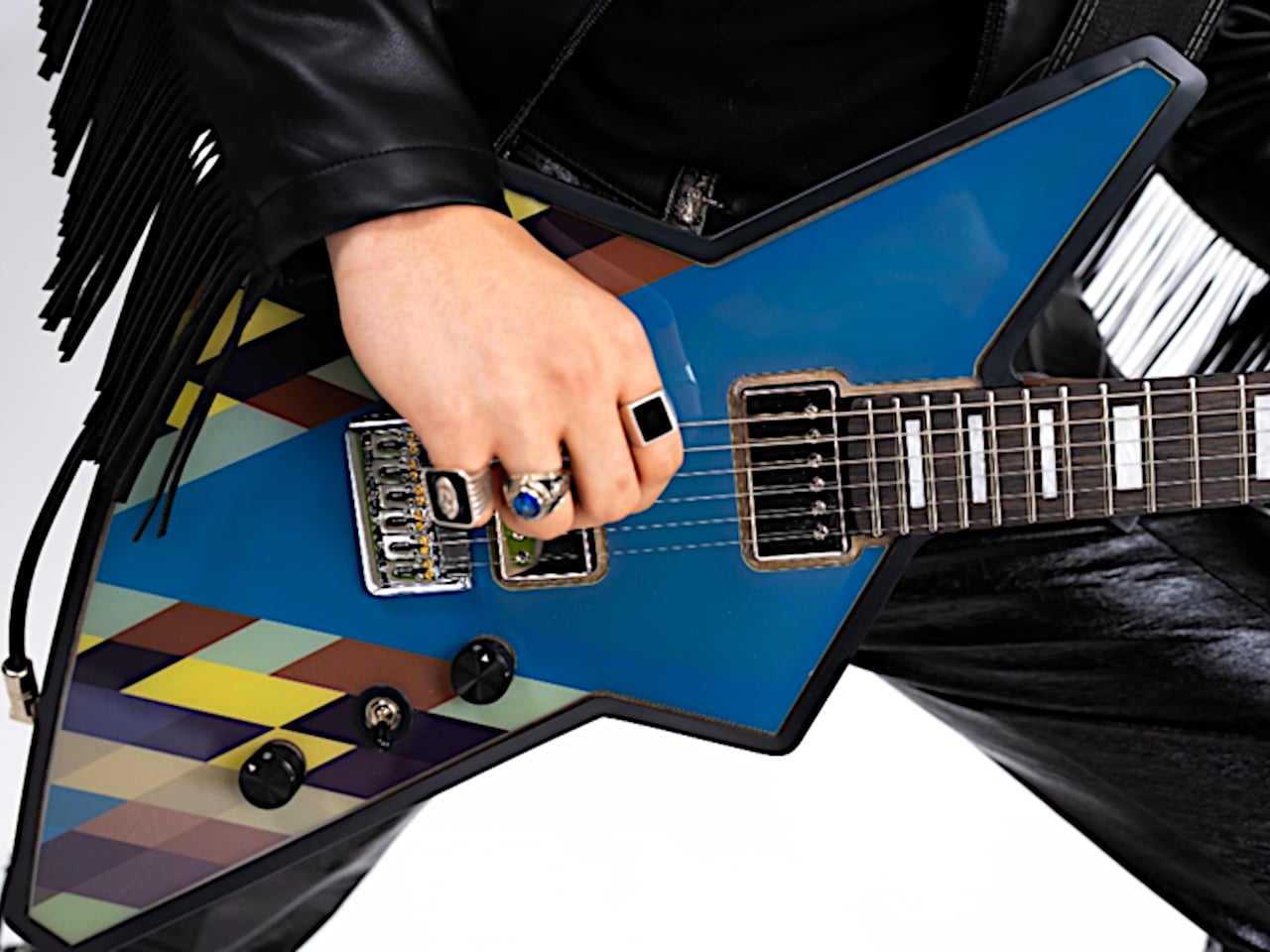
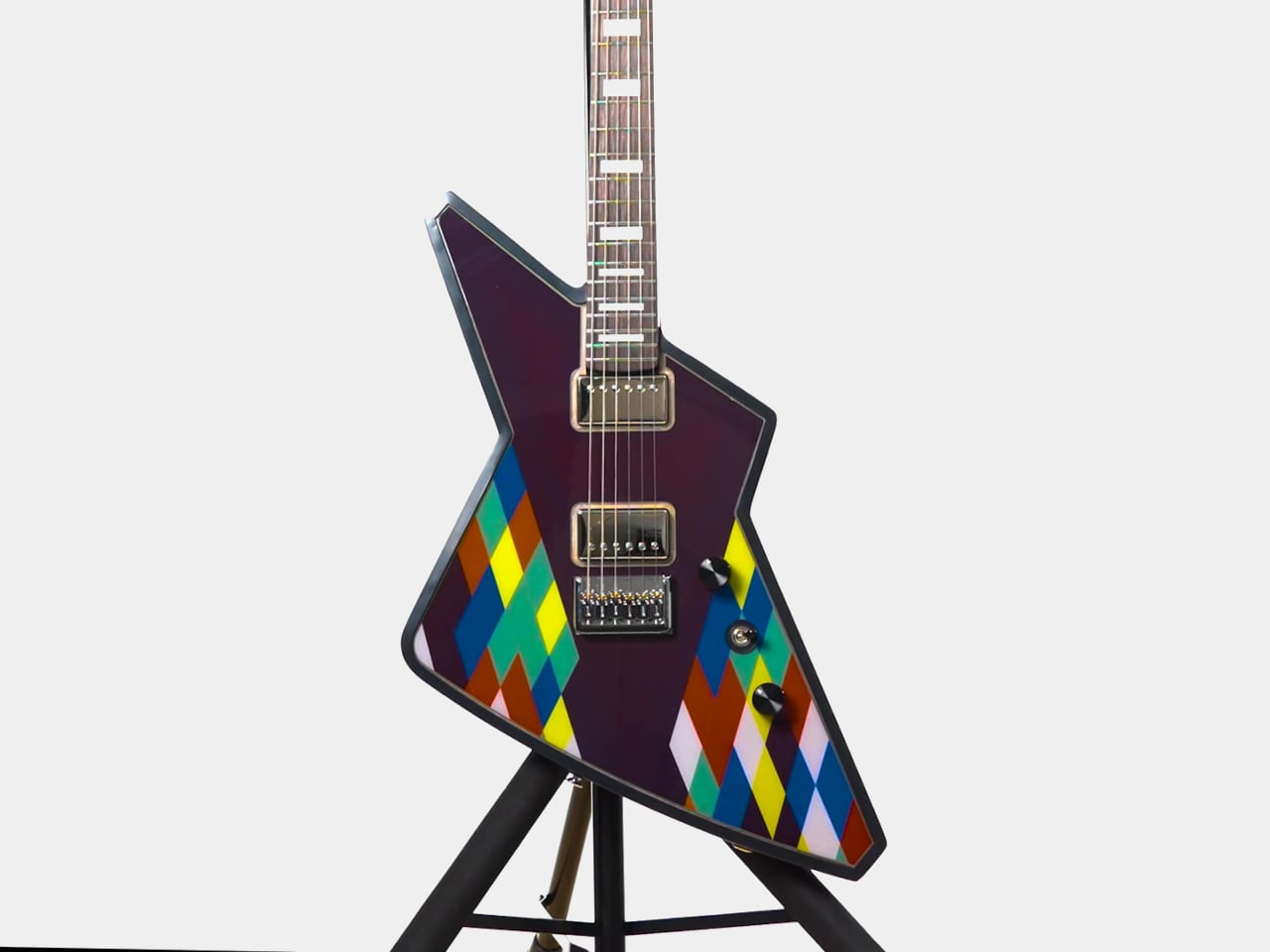
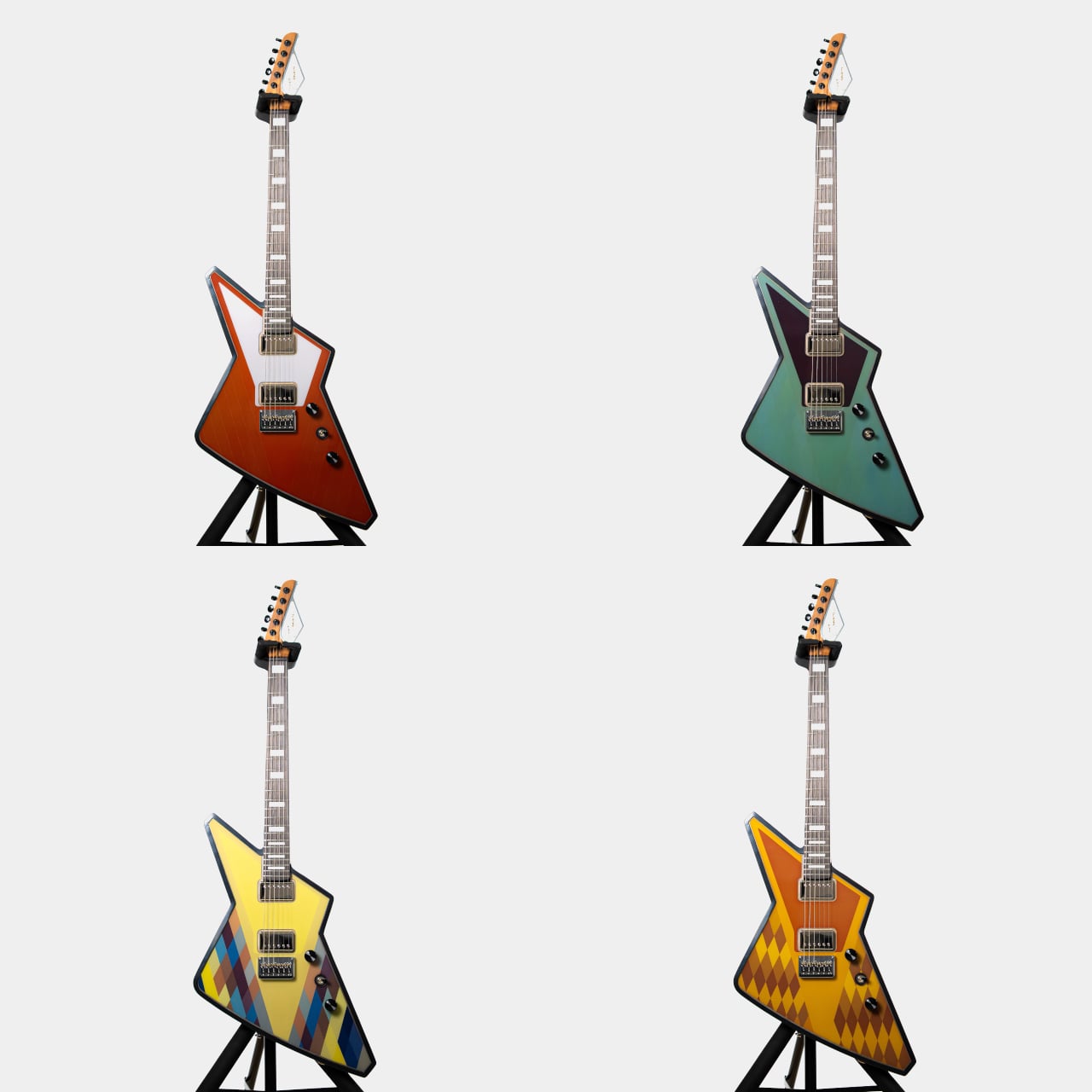
Cream Guitars’ DaVinci wraps its entire body in an E Ink Prism 3 panel, turning the surface into a programmable skin that changes colors and patterns over Bluetooth. Instead of a single paint job, the guitar becomes a dynamic canvas. It is the first commercially available product to use Prism 3, which is usually reserved for architectural surfaces and product experiments, not instruments you plug into an amp and carry on tour.

Designer: Cream Guitars

Prism 3 is color changing ePaper, closer to a Kindle page than an LED screen. It does not emit light, just holds pigment using low power electrophoretic particles. DaVinci’s front divides into sixty four segments, each assigned one of seven colors, white, black, yellow, orange, blue, red, or green. That segmentation lets you build stripes, blocks, and faux pickguards, changing the visual structure without touching a spray can.

A guitarist could match the guitar to different projects without owning three instruments. One night, geometric patterns echo album art. Another, a minimalist scheme feels right. The ePaper only draws power when changing, so once set, it sits visible under stage lights without glowing like LEDs or draining the battery between songs or overnight in a case, ready to change again whenever the visual identity shifts.

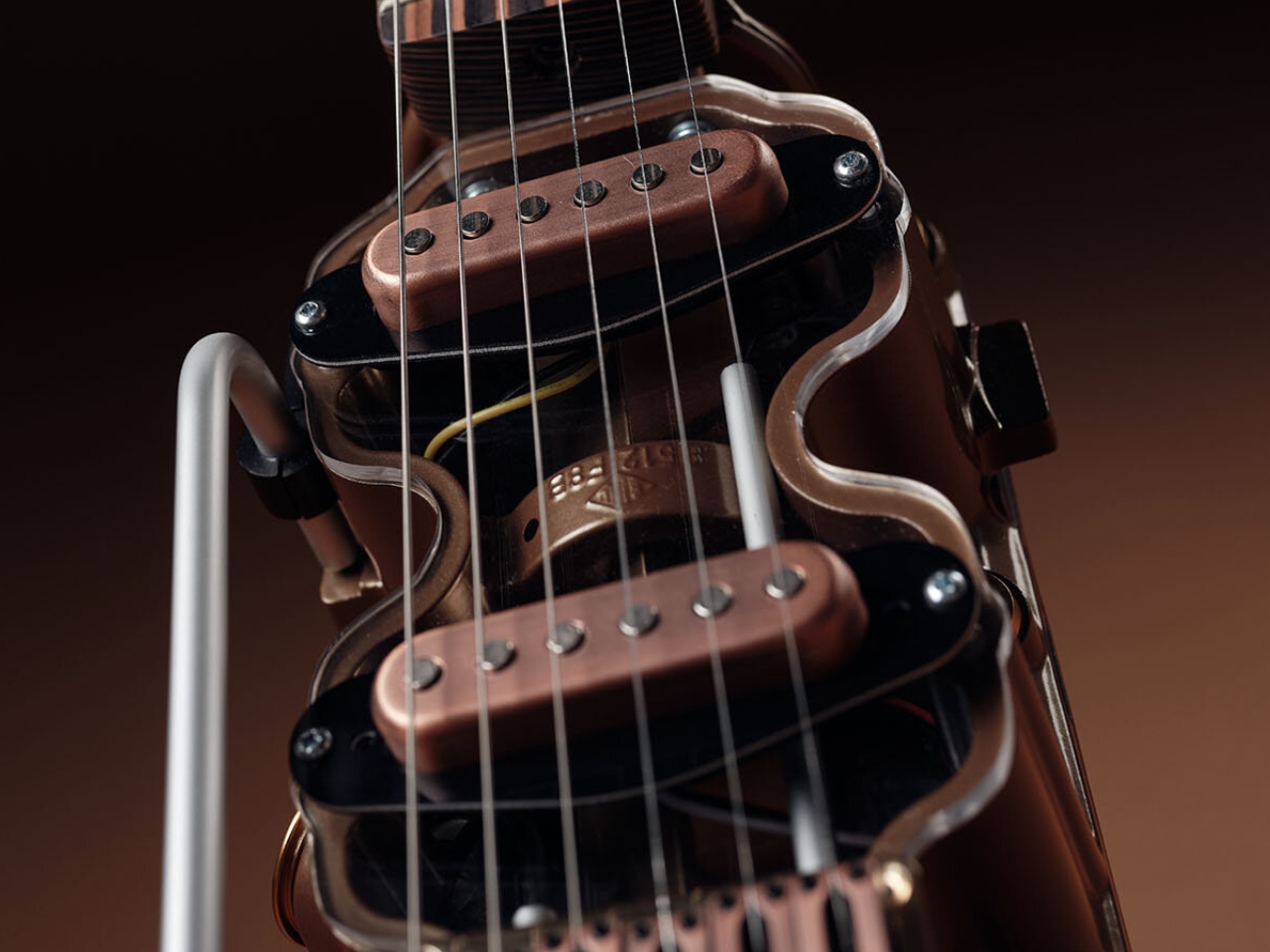
Under the display sits a Voltage body with roasted maple neck, rosewood fretboard, extra jumbo frets, and Graphtech locking tuners. Fishman Fluence pickups offer three voices, single coil, traditional humbucker, and high output humbucker. The tech wraps around a serious guitar, not a prop with thin pickups that sound disappointing once the visual novelty wears off after the first show or when you need to track a real session.

Traditional refinishing is messy and permanent. Sand, spray, cure, repeat if you change your mind. DaVinci’s ePaper skin reprograms endlessly, with Prism 3’s low power profile positioning it as a more sustainable alternative to LED bodies or constantly changing finishes. The guitar becomes a long term canvas rather than a disposable fashion statement that needs repainting or ends up retired because the color fell out of style after one album cycle.

DaVinci hints at instruments as programmable surfaces that evolve with the player. It feels like a crossover between luthier craft and interface design, where the object in your hands can match your projected identity without needing backup guitars. Whether or not you want one at three thousand five hundred dollars, it is easy to imagine keyboards, drum shells, and amps following the same path, turning stage gear into surfaces that shift as often as setlists do.

The post This $3,500 Guitar Changes Colors via Bluetooth, No Repainting Needed first appeared on Yanko Design.
This $3,500 Guitar Changes Colors via Bluetooth, No Repainting Needed

Guitarists obsess over finishes. Sunburst fades, metallic flakes, relic’d nitro that looks like it survived three decades of dive bars, all of it matters until you realize that once you pick a color, you are stuck unless you repaint. Stage rigs and LED walls morph through palettes every night while the guitar stays frozen, a static object carried by musicians who constantly reinvent their sound and visual identity.

Cream Guitars’ DaVinci wraps its entire body in an E Ink Prism 3 panel, turning the surface into a programmable skin that changes colors and patterns over Bluetooth. Instead of a single paint job, the guitar becomes a dynamic canvas. It is the first commercially available product to use Prism 3, which is usually reserved for architectural surfaces and product experiments, not instruments you plug into an amp and carry on tour.

Designer: Cream Guitars

Prism 3 is color changing ePaper, closer to a Kindle page than an LED screen. It does not emit light, just holds pigment using low power electrophoretic particles. DaVinci’s front divides into sixty four segments, each assigned one of seven colors, white, black, yellow, orange, blue, red, or green. That segmentation lets you build stripes, blocks, and faux pickguards, changing the visual structure without touching a spray can.

A guitarist could match the guitar to different projects without owning three instruments. One night, geometric patterns echo album art. Another, a minimalist scheme feels right. The ePaper only draws power when changing, so once set, it sits visible under stage lights without glowing like LEDs or draining the battery between songs or overnight in a case, ready to change again whenever the visual identity shifts.

Under the display sits a Voltage body with roasted maple neck, rosewood fretboard, extra jumbo frets, and Graphtech locking tuners. Fishman Fluence pickups offer three voices, single coil, traditional humbucker, and high output humbucker. The tech wraps around a serious guitar, not a prop with thin pickups that sound disappointing once the visual novelty wears off after the first show or when you need to track a real session.

Traditional refinishing is messy and permanent. Sand, spray, cure, repeat if you change your mind. DaVinci’s ePaper skin reprograms endlessly, with Prism 3’s low power profile positioning it as a more sustainable alternative to LED bodies or constantly changing finishes. The guitar becomes a long term canvas rather than a disposable fashion statement that needs repainting or ends up retired because the color fell out of style after one album cycle.

DaVinci hints at instruments as programmable surfaces that evolve with the player. It feels like a crossover between luthier craft and interface design, where the object in your hands can match your projected identity without needing backup guitars. Whether or not you want one at three thousand five hundred dollars, it is easy to imagine keyboards, drum shells, and amps following the same path, turning stage gear into surfaces that shift as often as setlists do.

The post This $3,500 Guitar Changes Colors via Bluetooth, No Repainting Needed first appeared on Yanko Design.
This Cardboard Guitar Is 70% Air… But It Still Plays Like A Fender

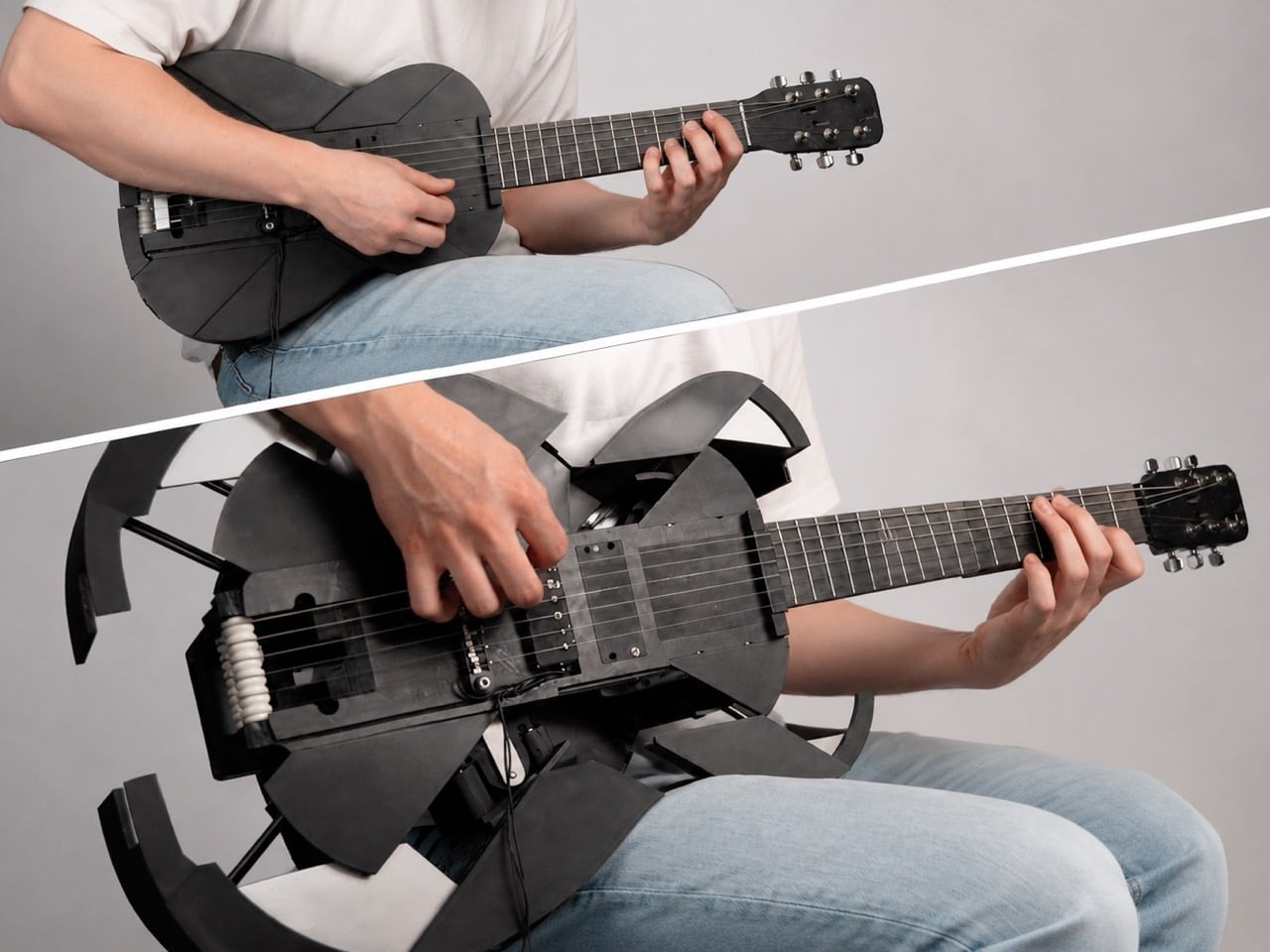
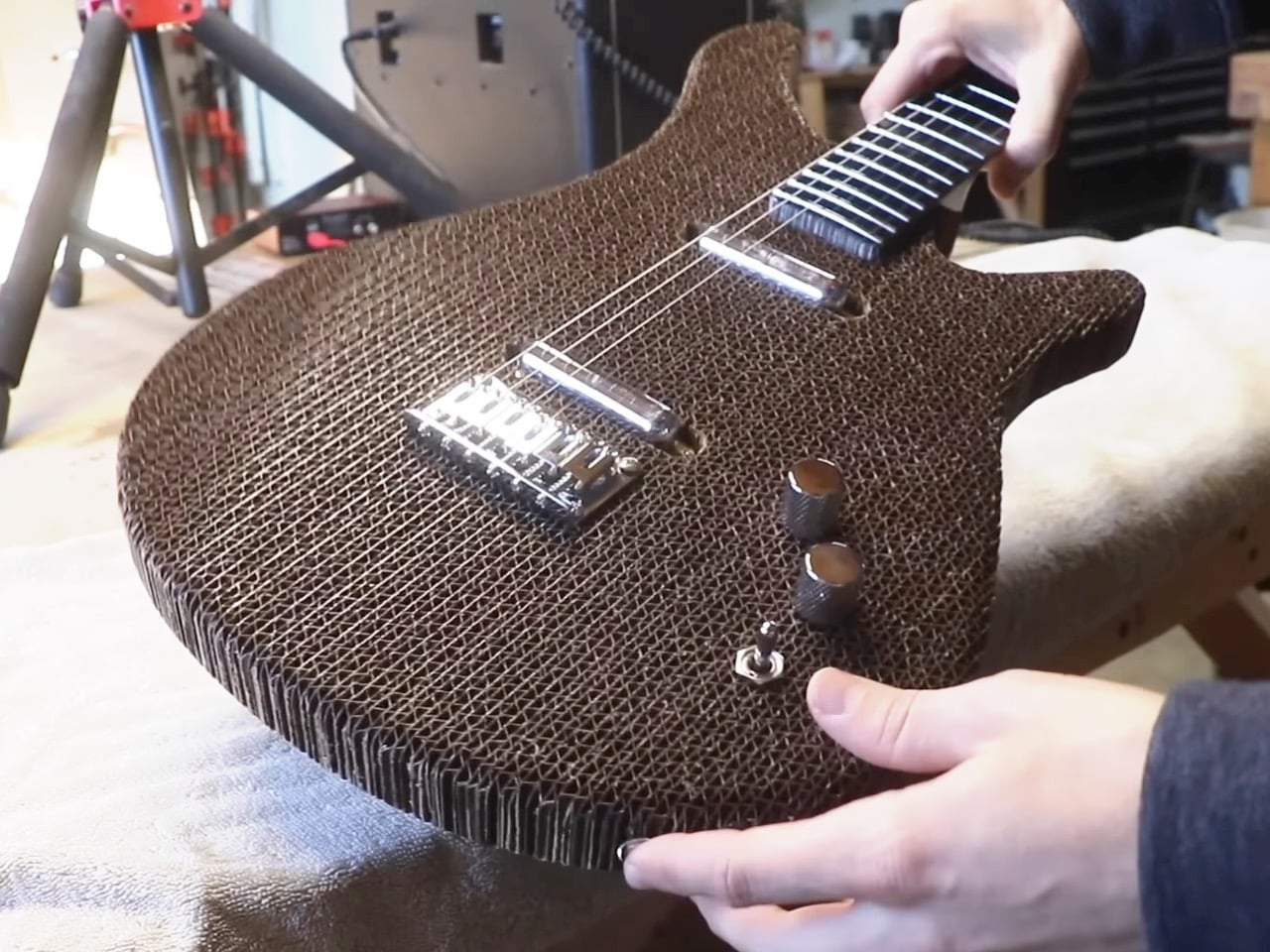
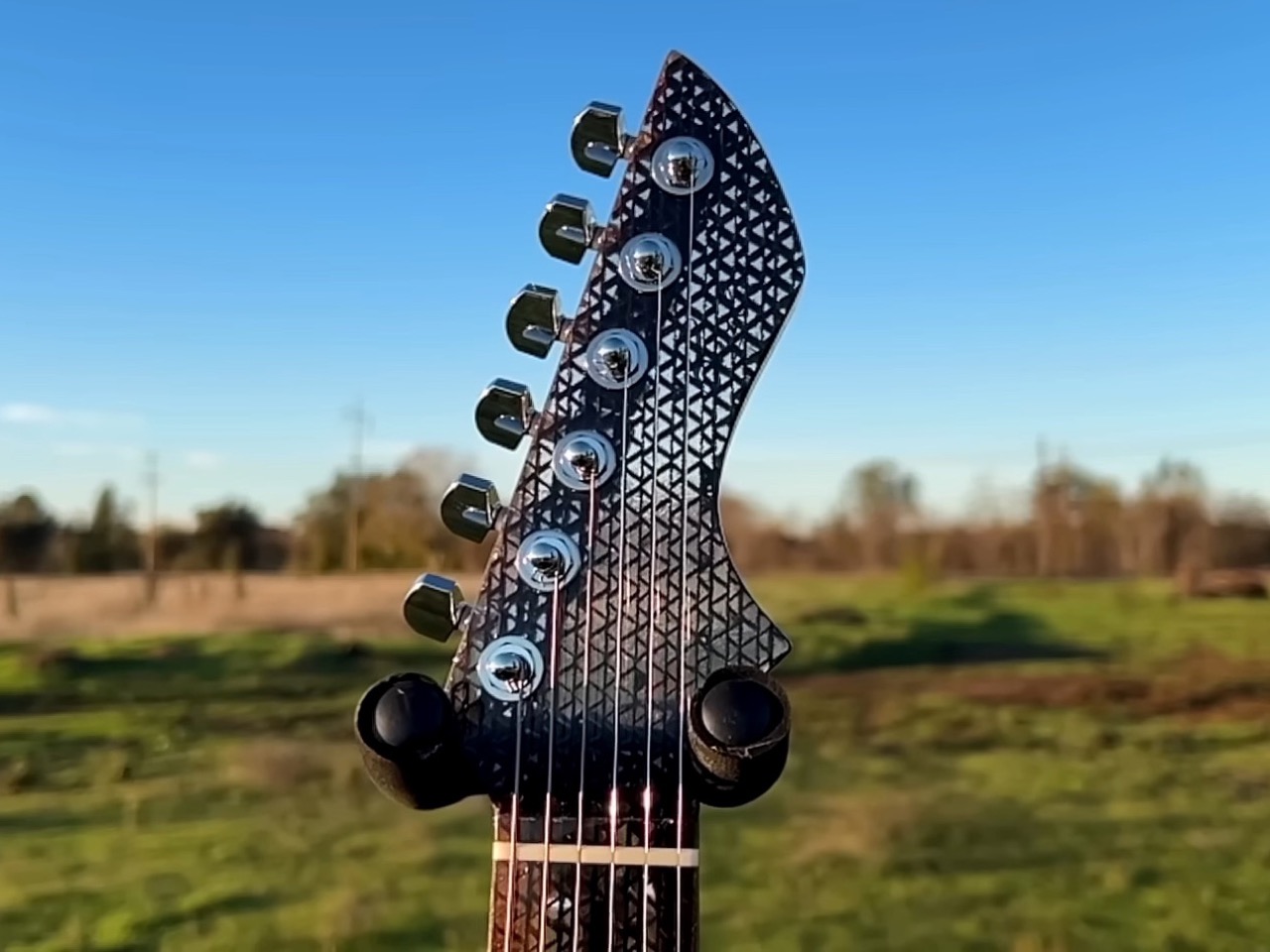
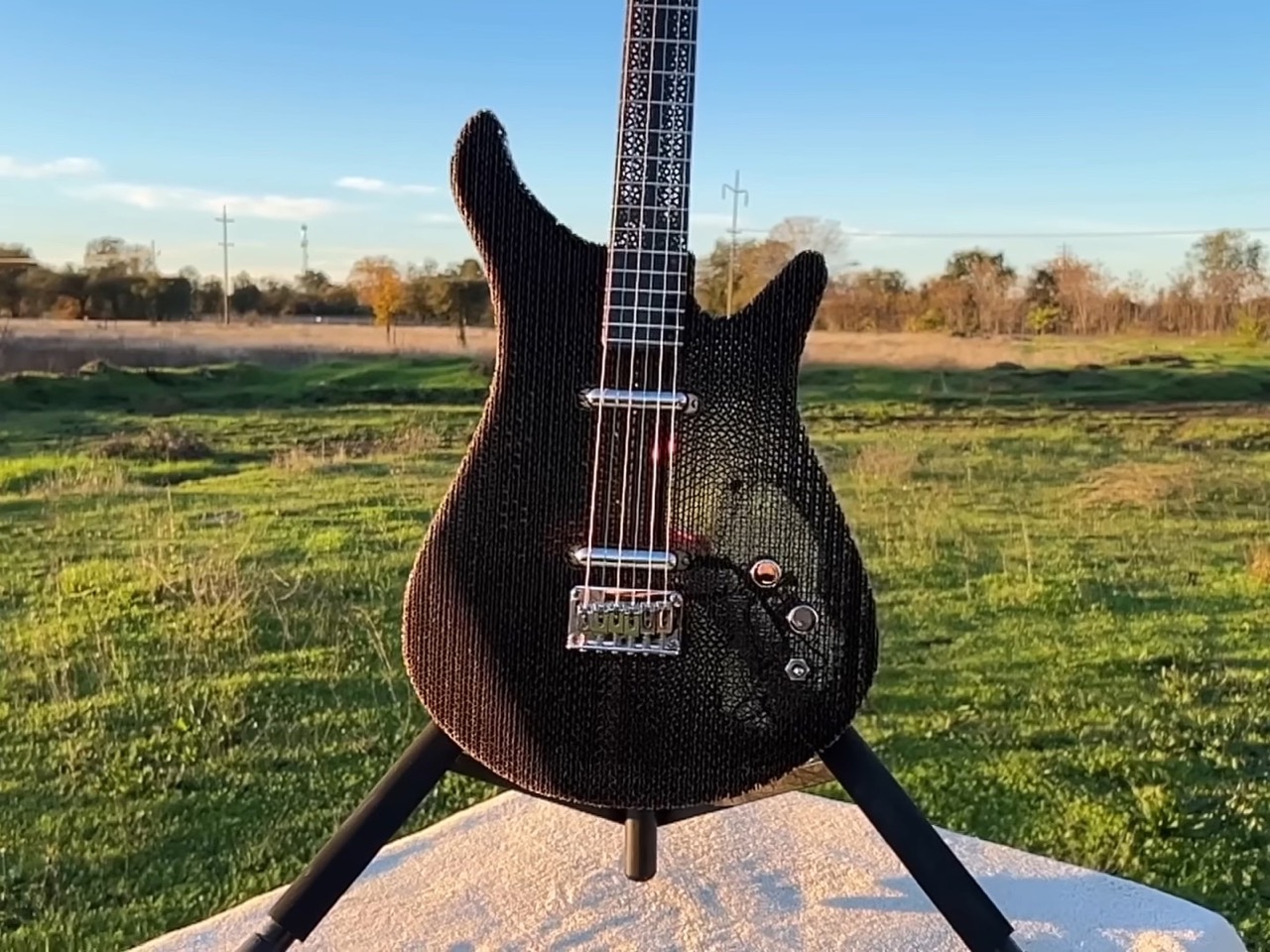
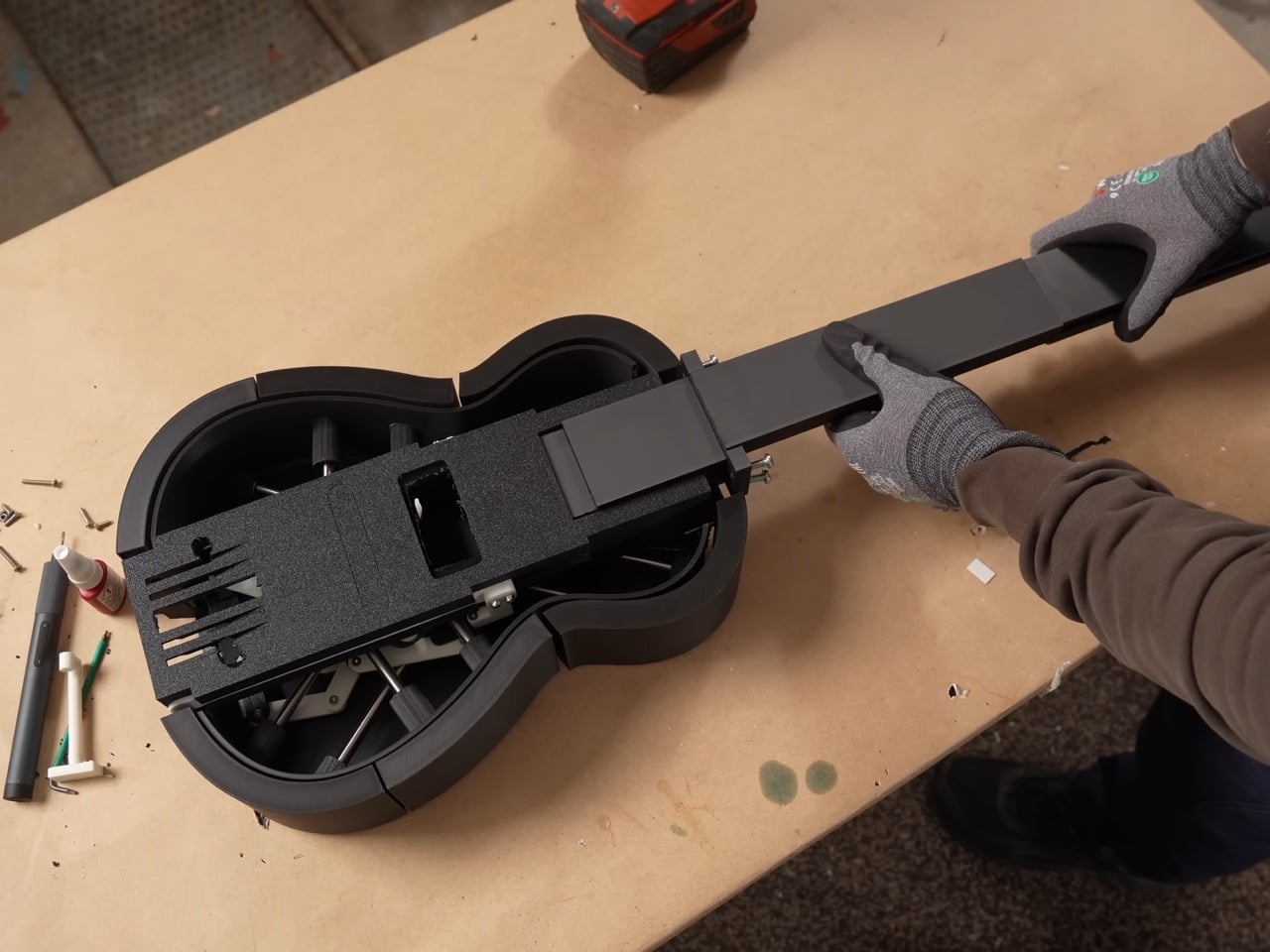
Ten years ago, Fender and Signal put out a cardboard Stratocaster that made the rounds online and promptly disappeared into the “cool but impractical” category of guitar experiments. Burls Art saw it and had a different reaction: he wanted to build his own. Not as a replica, but as a legitimate exploration of what corrugated cardboard could do as a guitar-building material. The result is a 4.42-pound fully functional electric guitar that sounds surprisingly good and raises some interesting questions about material choices in instrument design.

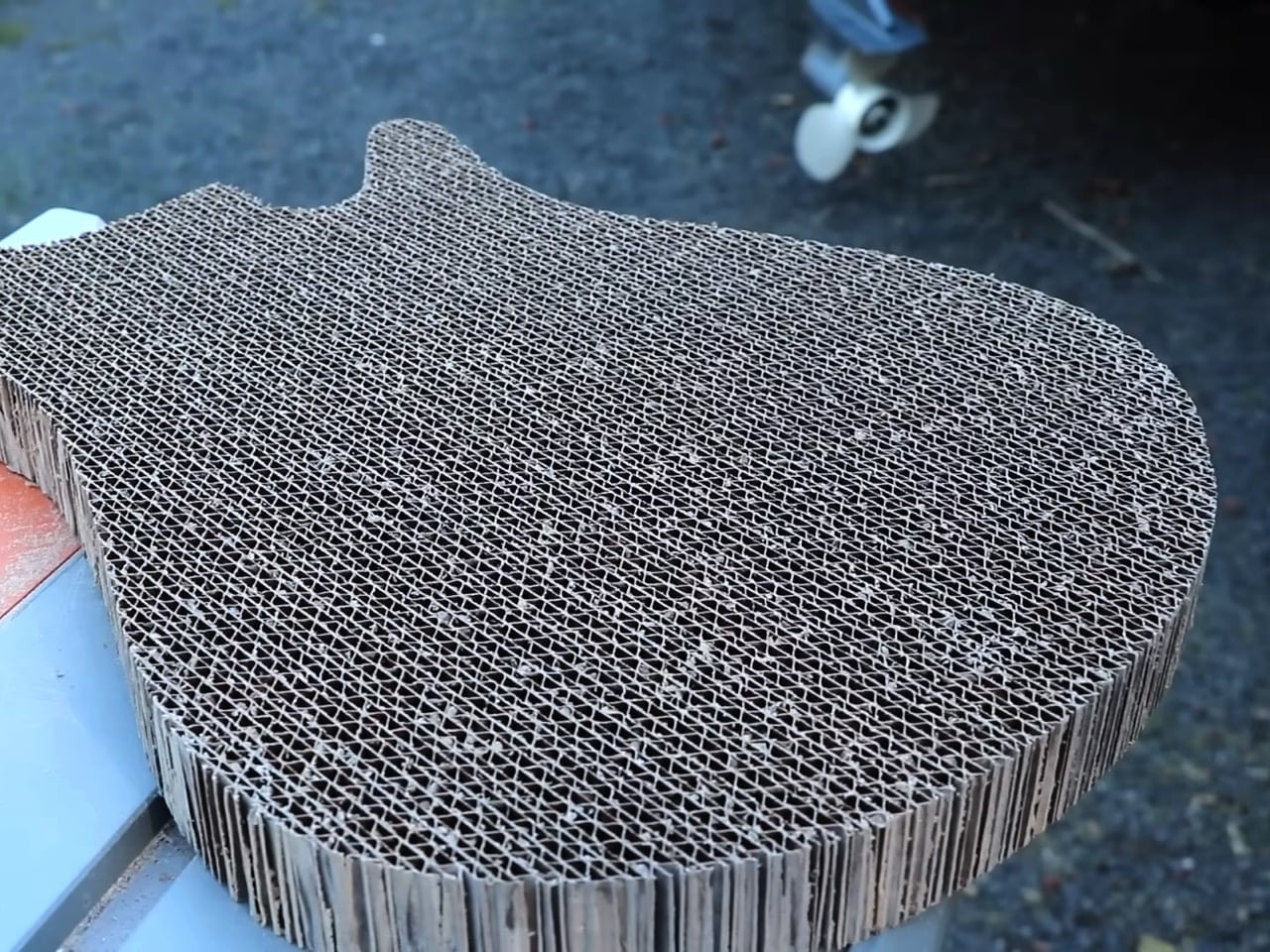
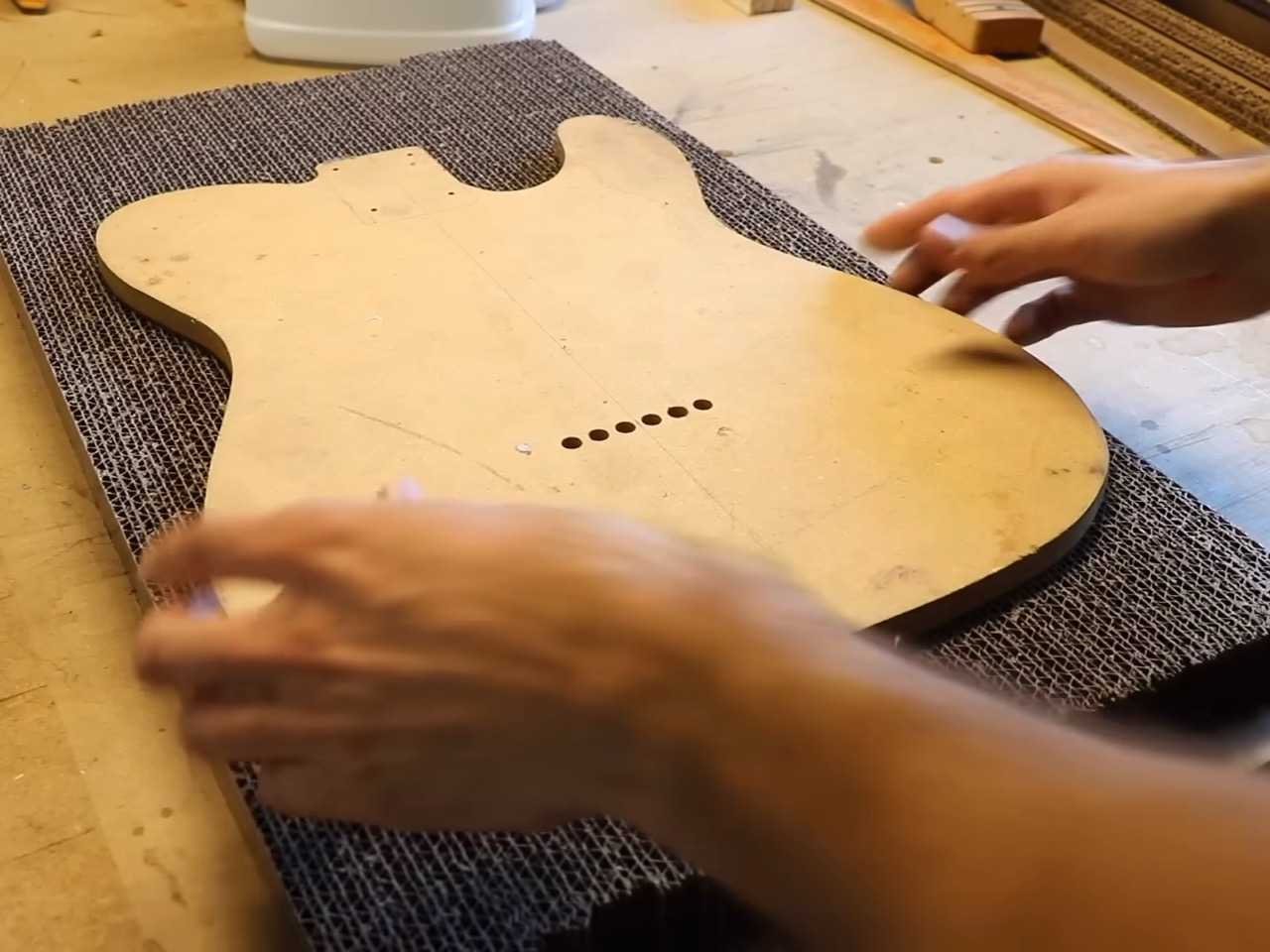
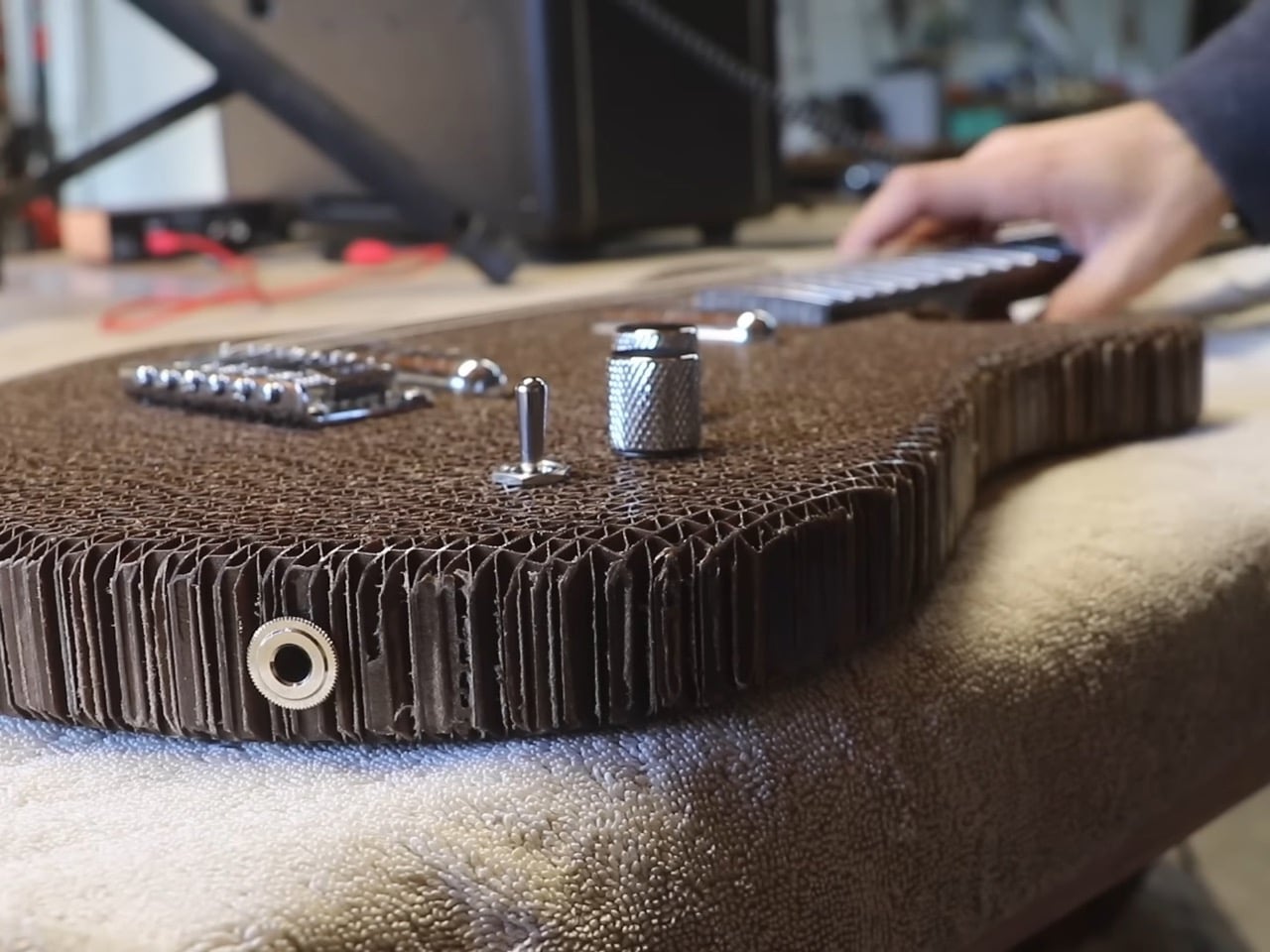
The concept isn’t about gimmickry or standard internet clout-chasing, it’s about pushing cardboard to its structural limits while keeping the guitar genuinely playable. Burls Art started with recycled corrugated cardboard sheets, laminating them with resin into blanks thick enough to shape into a body and neck. The key was saturating each piece thoroughly while letting excess resin drain through runners, leaving the corrugated channels mostly hollow. This gave him blanks that were roughly 70% air but rigid enough to route and carve like traditional tonewoods.

Designer: Burls Arts

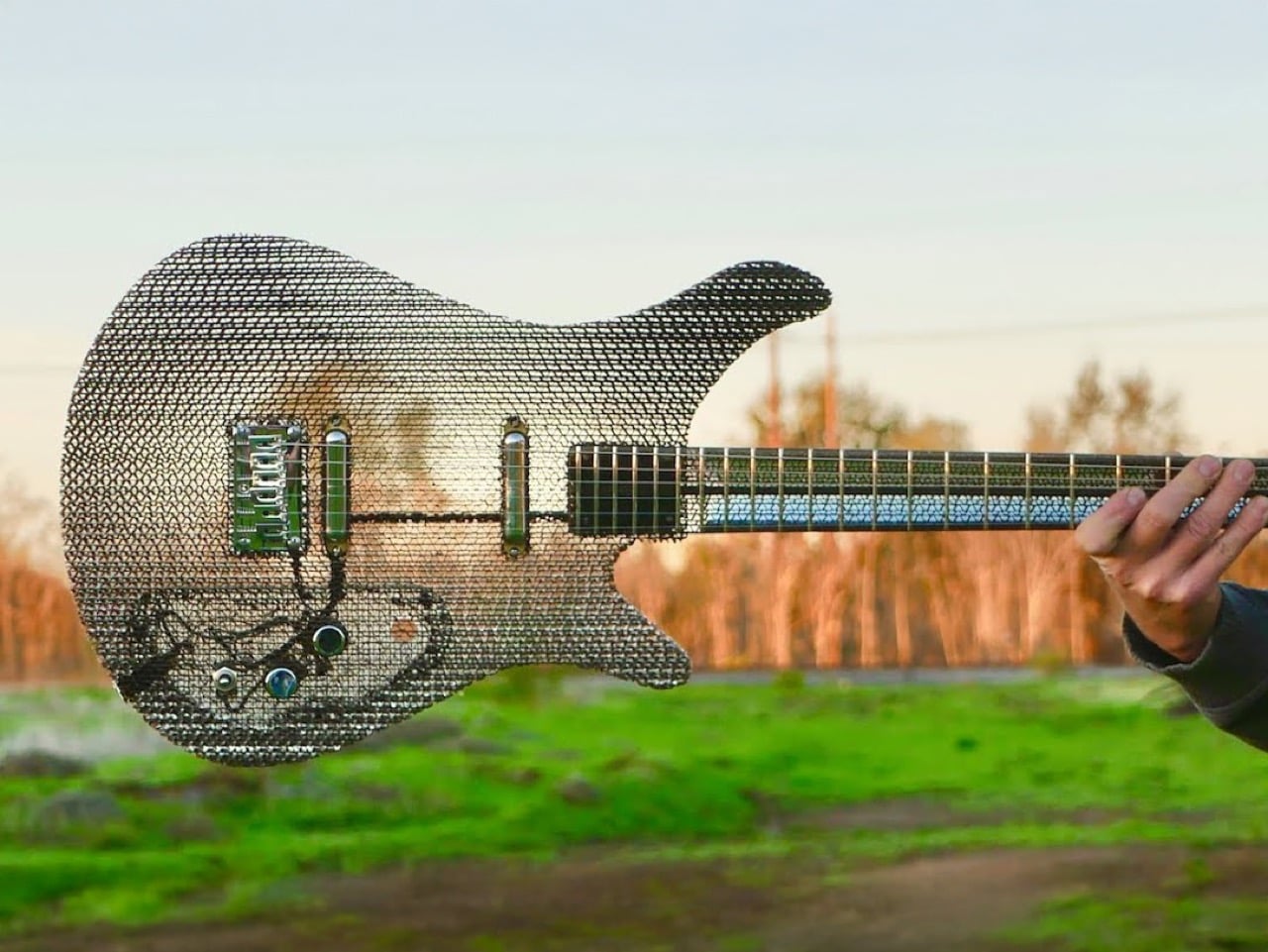
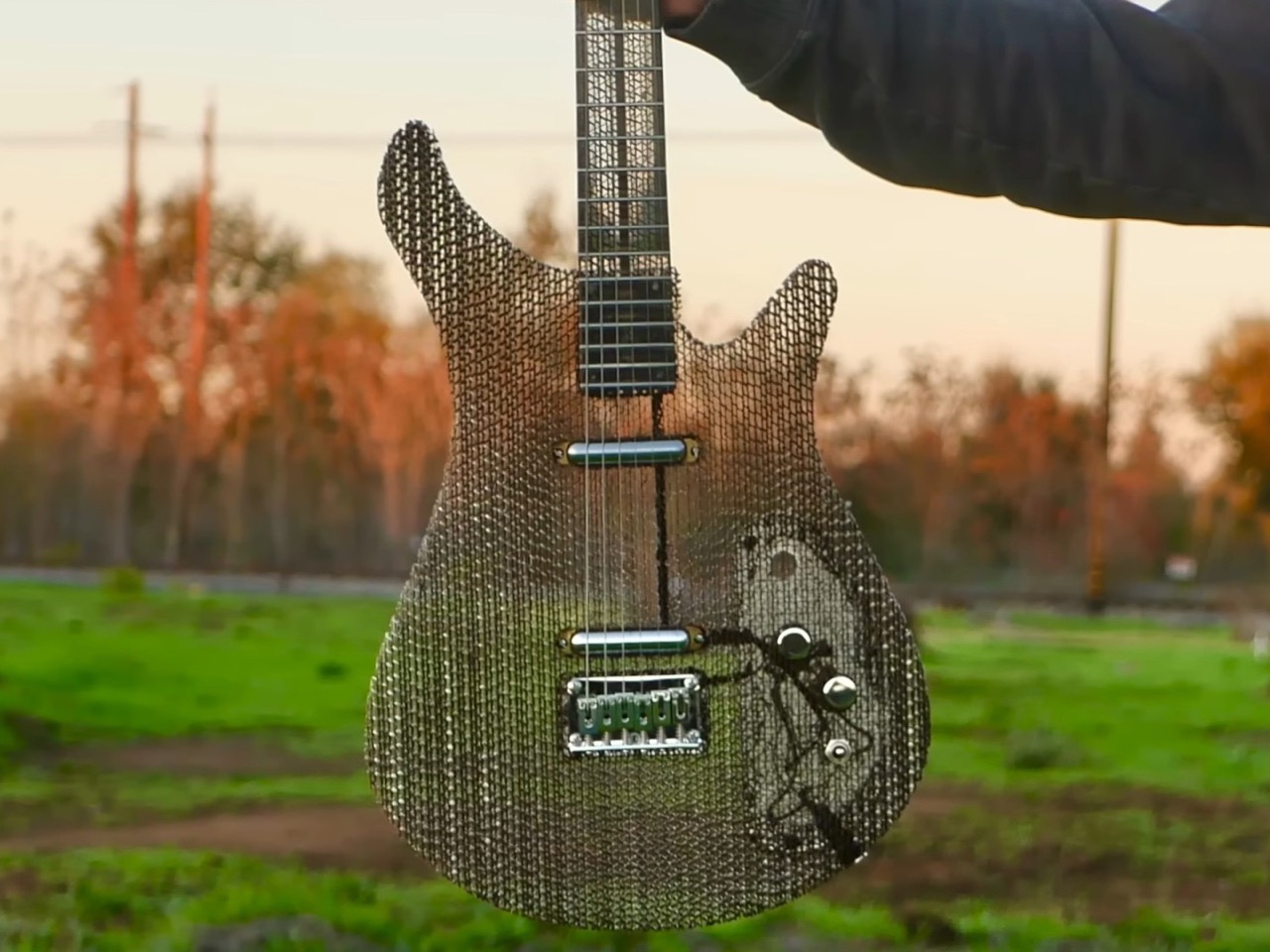
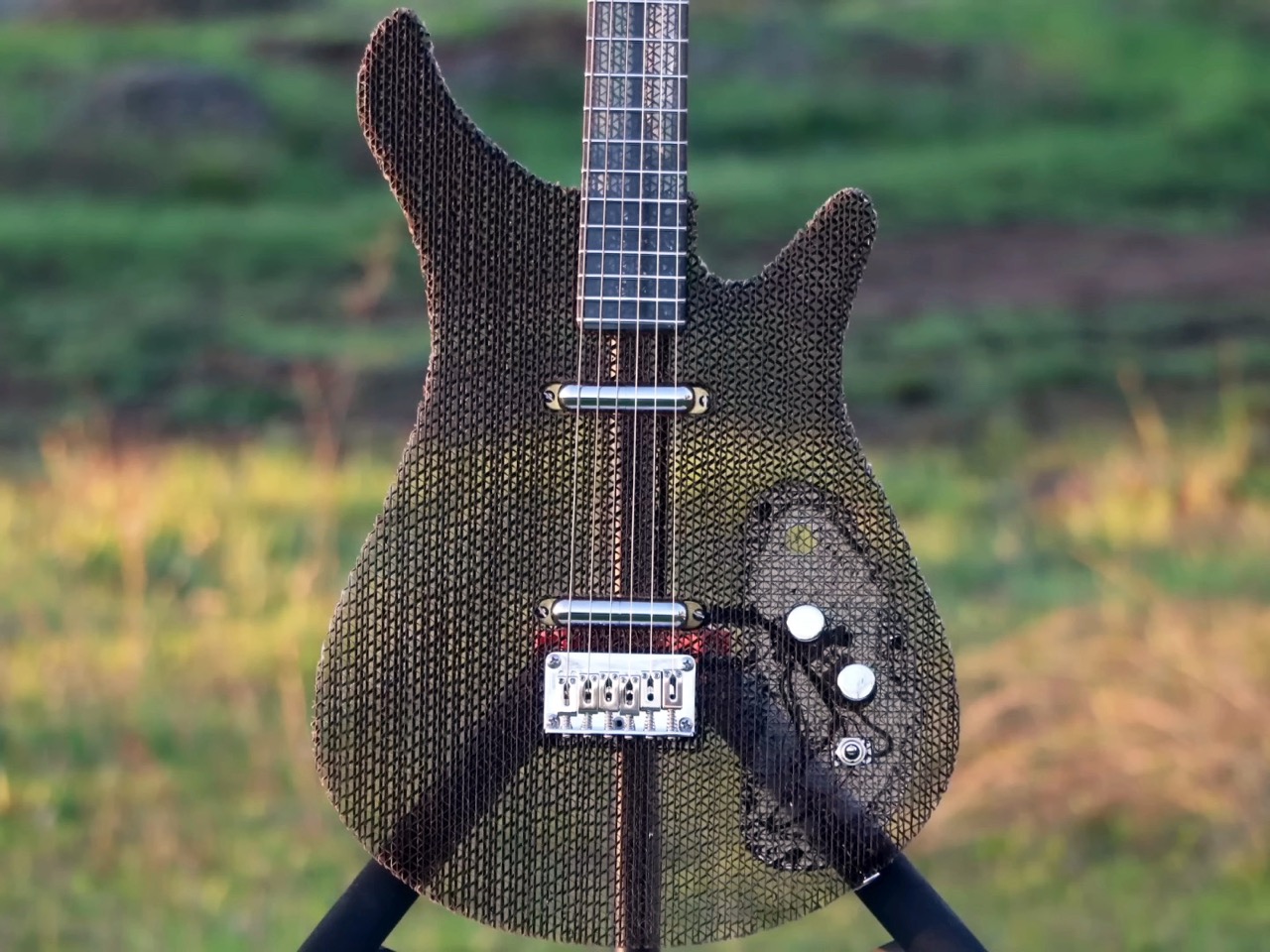
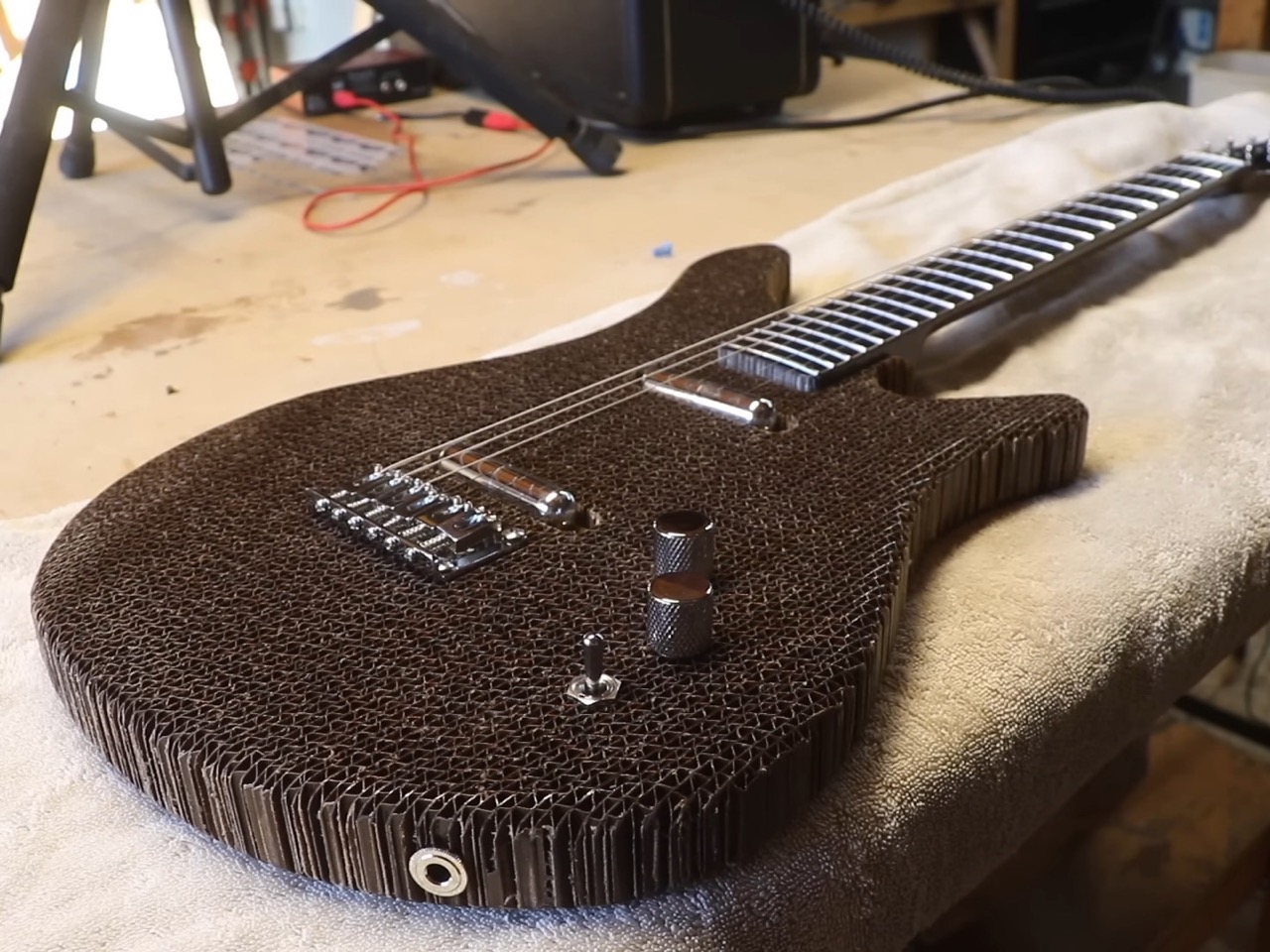
The body came together relatively smoothly. He used a router sled instead of risking the planer, carving in standard contours – a belly carve on the back, an arm bevel on top – that wouldn’t look out of place on any conventional Strat-style build. The visual effect is unexpectedly compelling: from up close, the corrugation creates a textured, almost screen-like appearance, but step back and align your sight line just right, and the guitar becomes nearly transparent, with just the outline visible through thousands of tiny cardboard channels.

The neck presented a more complex engineering challenge. String tension on a guitar neck isn’t trivial, we’re talking about roughly 100-150 pounds of force depending on string gauge and tuning. Cardboard, even laminated cardboard, doesn’t immediately inspire confidence in this application. Burls Art’s first approach drew inspiration from an unexpected source: the Wiggle Side Chair he’d seen at the London Design Museum, which alternates the grain orientation of its cardboard layers for added strength. He tested two lamination methods – one with consistent orientation, another alternating… and the results were dramatic. The alternated pattern withstood 125 pounds of force before breaking, compared to just 37 pounds for the standard orientation.

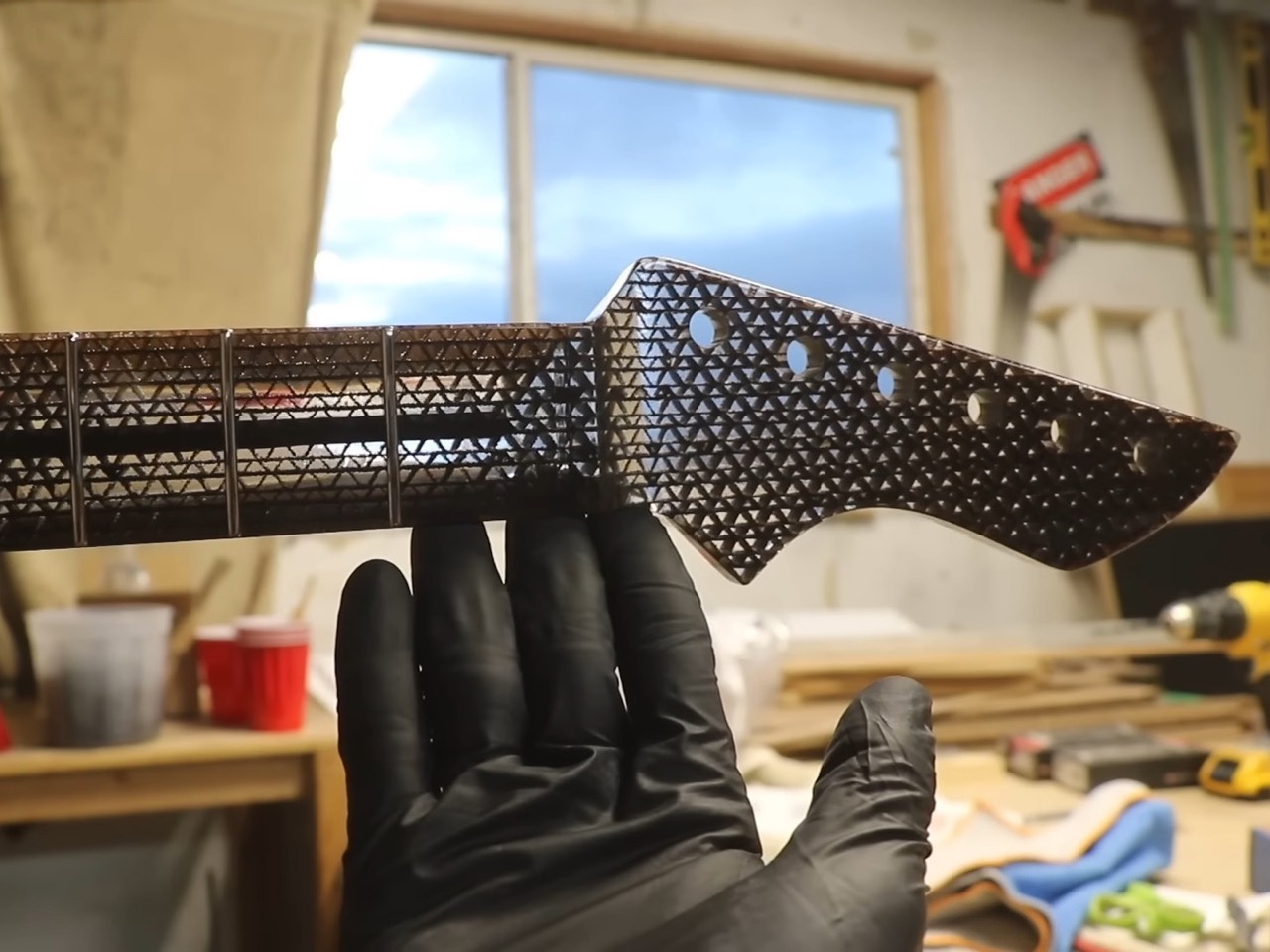
The first neck, despite being theoretically strong enough, had a fatal flaw: the edges kept peeling and creating rough, jagged surfaces that would be uncomfortable to play. This is where real-world application diverges from lab testing, a neck that can withstand string tension in theory still needs to feel right in your hands. Rather than continuing to troubleshoot the alternating pattern, he pivoted to a fully resin-saturated approach, essentially creating a cardboard-epoxy composite. It’s heavier, sure, but the cardboard fibers act like fiberglass reinforcement, preventing the cracking issues you’d see in a pure resin neck while giving him a surface that could be carved smooth and fretted without delamination issues.

Weight became the next puzzle. That resin-saturated neck was too heavy for the ultra-light body, creating the dreaded neck dive – where the headstock droops toward the floor when you’re wearing the guitar on a strap. He carved aggressively, removing as much material as possible without compromising structural integrity, using the balance point at the neck plate as his target. The final setup required dropping down to Super Slinky strings to reduce the tension demands on the truss rod, which makes sense when you’re working at the edge of a material’s capabilities.

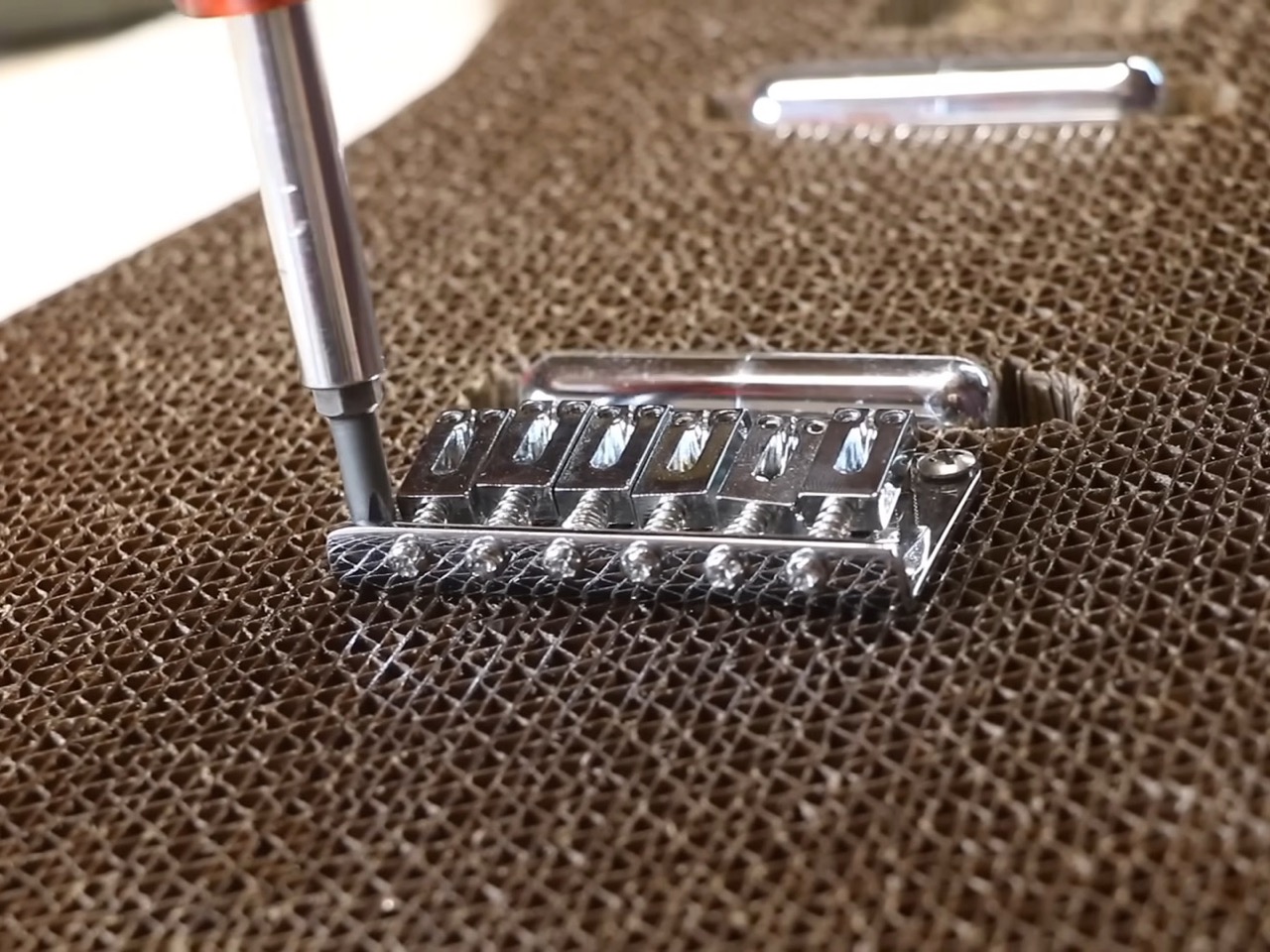
Hardware mounting in corrugated cardboard requires creative problem-solving. You can’t just screw into hollow channels and expect it to hold. For the bridge, he fabricated a resin-saturated cardboard backplate that gets inset into the body, creating a clamping system with the cardboard sandwiched between the bridge and plate. The electronics cavity cover uses magnets paired with screw heads hot-glued into the corrugation – a cleaner solution than trying to thread screws into this material.

The finished instrument plays better than you’d expect. Action is solid, intonation holds, and the sound quality is legitimately good with its pair of lipstick single-coils. There’s an interesting side effect from the flexible body: it’s exceptionally responsive to vibrato from arm pressure. Apply a bit of force with your forearm and you get pronounced pitch modulation, far more than you’d get from a traditional solid-body design. Whether that’s a feature or a bug depends on your playing style, but it’s the kind of unexpected behavior that makes alternative materials interesting.

The tactile experience is admittedly different from your standard Stratocaster. The surface has a sticky quality against fabric, and the edges are intentionally rough – he could have added wood binding to smooth them out but chose to keep it authentically cardboard. At 4.42 pounds, it’s 3-4 pounds lighter than a typical electric guitar, which puts it closer to laptop weight than instrument weight. That’s legitimately remarkable when you consider it’s holding tune under full string tension.

This isn’t going to replace your main gigging guitar, and Burls Art isn’t suggesting it should. But it’s a genuine exploration of material science applied to lutherie (the craft of making stringed instruments), the kind of project that answers questions nobody was asking but everyone’s curious about once they see the results. The original Fender collaboration was proof of concept. This is proof that with enough ingenuity and willingness to iterate past initial failures, cardboard can be a legitimate choice for guitar-building… after all IKEA’s made tables out of the same material too.

The post This Cardboard Guitar Is 70% Air… But It Still Plays Like A Fender first appeared on Yanko Design.
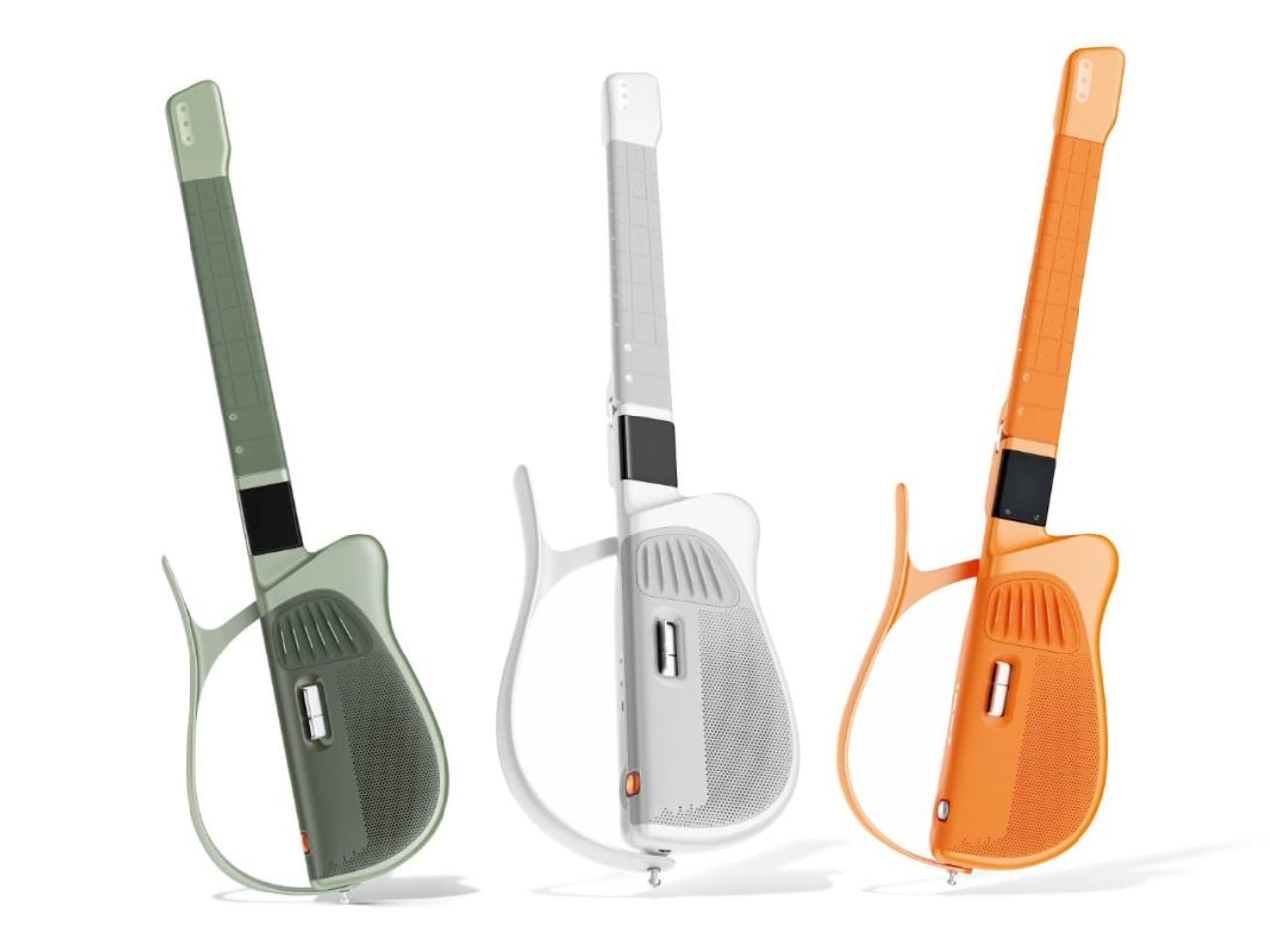
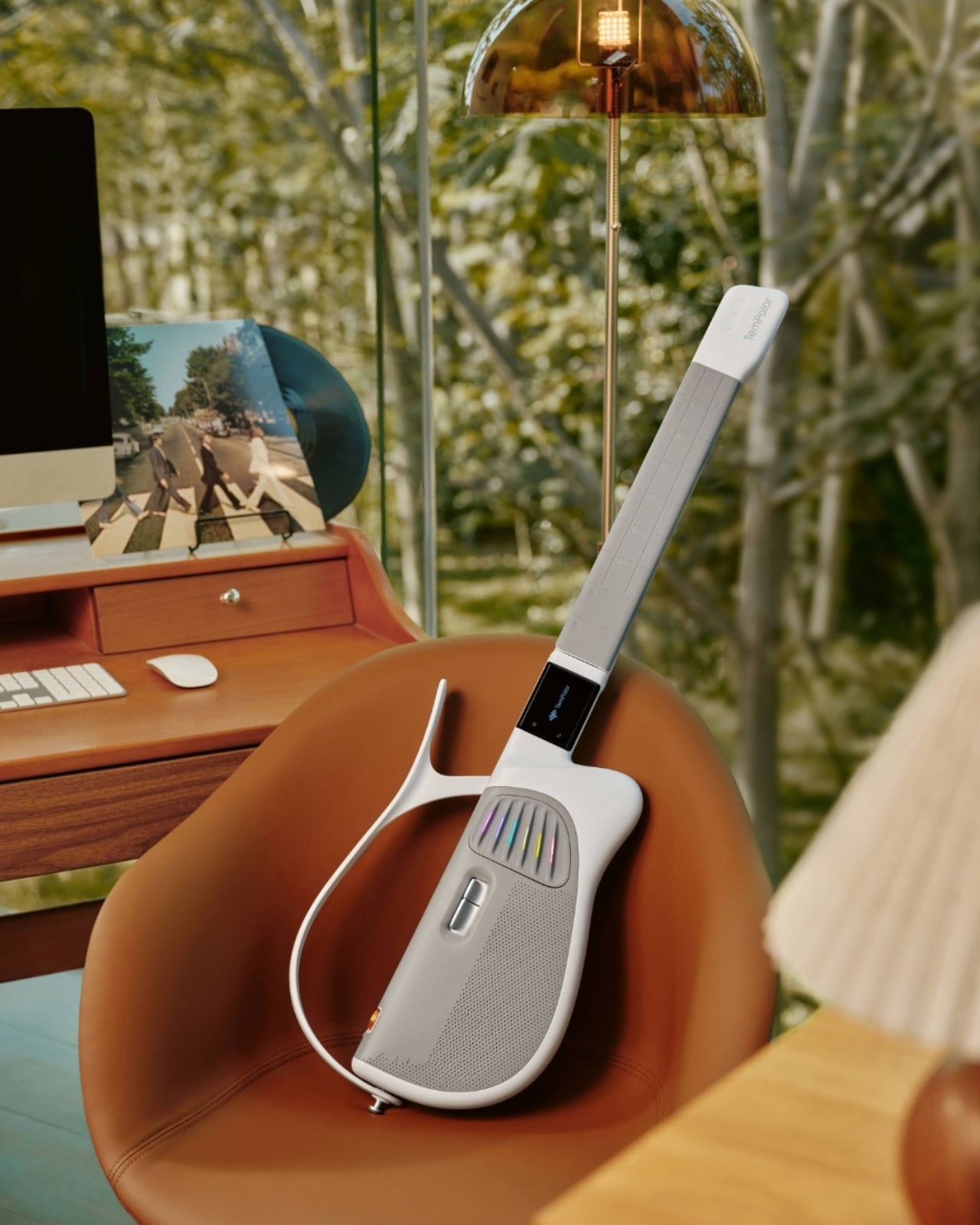
Stringless Sampler Guitar with a Built-In Speaker and AI Music App turns you into a One Man Band

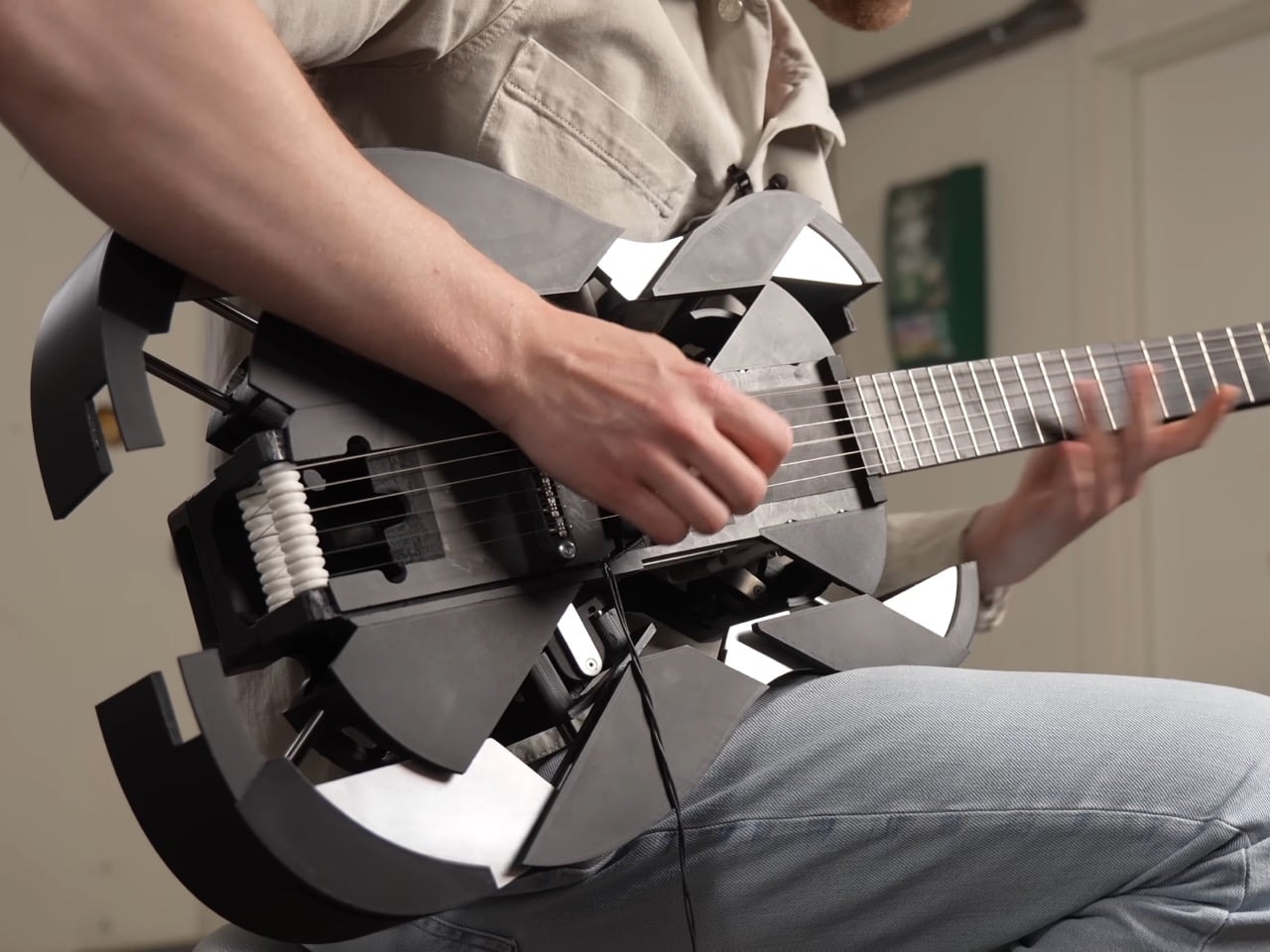
Ever dream of strumming on stage like Taylor Swift or effortlessly playing like John Legend? But music theory, chord structures, and difficult-to-master instruments make things tough? That’s where the LAVA GENIE comes in – a new-age guitar that ditches strings for touch-sensitive pads, powered by an AI that makes learning, playing, and sampling music easier.

Designed to be used by total beginners as well as seasoned musicians, the LAVA GENIE is an all-in-one instrument that removes the hurdles of traditional instruments, putting a world of sound in your hands, ready to play anytime inspiration strikes. Whether you’re jamming with friends or performing solo, this portable, powerful device invites everyone to explore and share their musical voice, connecting people through the joy of music—anytime, anywhere.

Designer: LAVA Music Team

Click Here to Buy Now: $349 $399 ($50 off). Hurry, only 63/750 left! Raised over $270,000.

Forget Strings—Touch and Tap to Start

Let’s address the elephant in the room: the GENIE has no strings. The GENIE’s stringless design makes it accessible for everyone, including those with hand disabilities. By removing strings, it redefines guitar playing, enabling users to produce sound with simple taps and presses. This opens new doors for beginners and those who have found stringed instruments challenging, making musical expression approachable and inclusive.

Incorporating touch-sensitive, pressure-responsive TapPads, the GENIE provides an intuitive playing experience. Each TapPad can be customized, allowing players to control chords, tempo, or add beats effortlessly. Just touch, tap, and your musical performance takes off—no strings, no complications.

LAVA+ App: Your All-in-One Coach and Music Partner

The LAVA+ app offers an extensive song library with thousands of popular tracks—and it’s constantly growing. Whether you want to learn, play along, or simply explore new music, LAVA+ has you covered. The library makes it easy for users of all levels to dive into music without limits, with fresh content always just a tap away.

With LAVA’s integrated AI, transcribing your own songs is effortless. Simply upload any audio file, and the app instantly converts it into chord charts, syncing perfectly with the GENIE. It’s like having a personal music assistant, ready to help you bring your ideas to life and elevate your skills with every session.

A Guitar With 500 Preloaded Synths + Sound Bank

Breaking away from the traditional string and fretboard structure allows the LAVA GENIE to be much more than a simple guitar. Essentially, the LAVA GENIE is a sampler instrument that uses touch-sensitive pads known as TapPads to help you trigger notes, chords, progressions, samples, and perform pitch/scale and tempo control. More than what any regular guitar can dream of

Equipped with over 500 preloaded sounds in its synth and sample bank, the GENIE goes beyond offering what an effect pedal does for an electric guitarist – think of any instrument and you can possibly play it on the GENIE, including nylon guitar, piano, electric guitar, and even drums. It’s like having a mini sound studio built into a guitar, making it versatile enough for jamming, composing, or performing in any style you like. LAVA also releases updates regularly, so new sounds are always arriving to keep your music fresh and evolving.

Craft your unique instrument with Creative Mode

For music creators, you may want to play something different LAVA GENIE has two playing modes: Auto Mode for beginners, which guides you into music with automatic harmonies and rhythm adjustments, and Creative Mode, which lets you personalize patterns, tempo, and more.

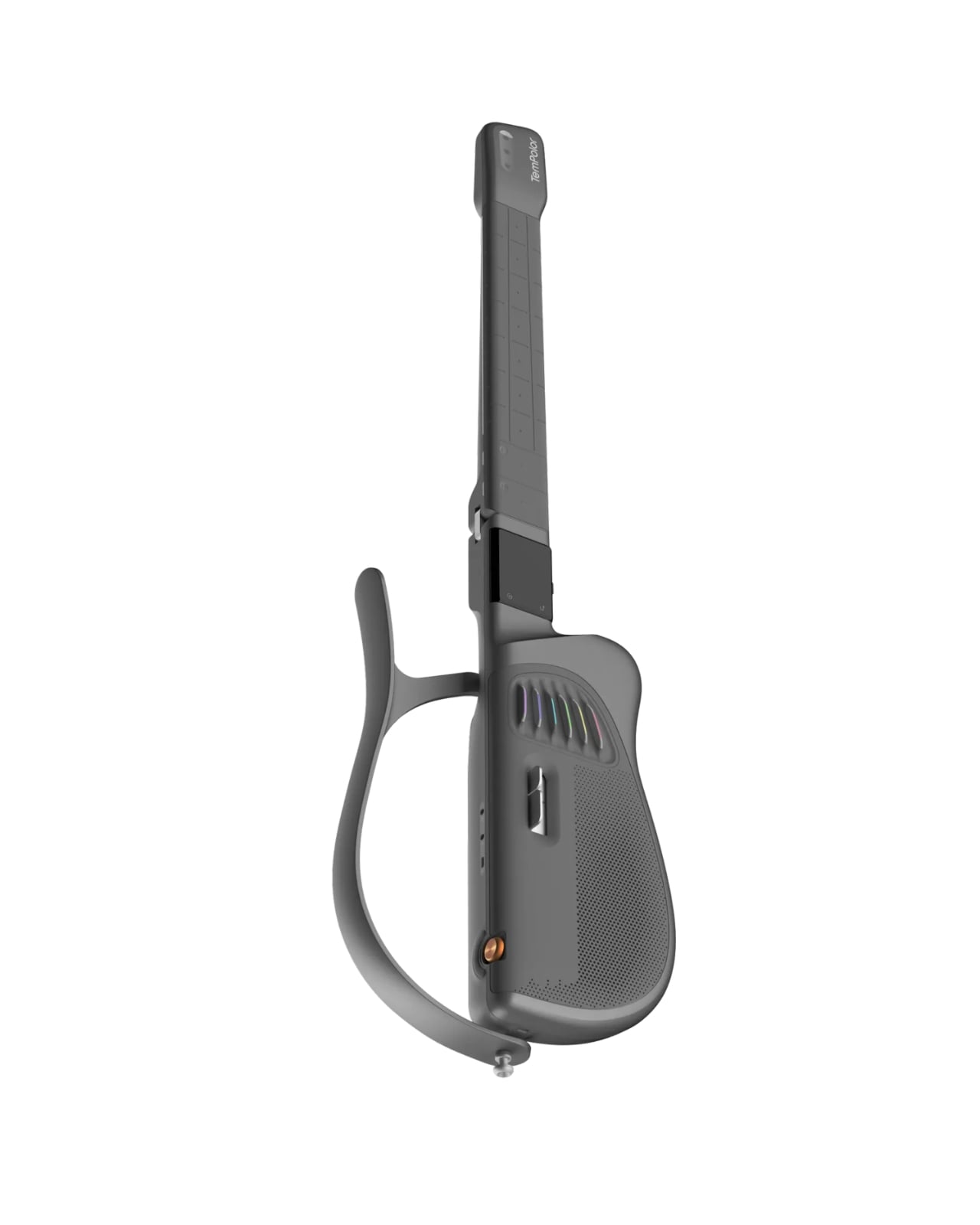
This interface goes far beyond strings—LAVA has crafted it with five custom TapPads. These pads are customizable zones that can be set up to perform chords, control tempo, or even add a drum beat. Whether you’re strumming, picking, or layering effects, the TapPads make it easy to dive into music without any barriers. The sounds can be accessed through the TapPads, but pair the guitar with the LAVA+ app and you get access to rich features like interactive Chord Charts, BPM settings, and speed adjustments to help you access your fullest music potential.

An Unforgettable Hollow Design with a Built-In Speaker

If you’ve seen most electric guitar setups, they’re almost always wired to a large amp that produces sound. The GENIE, however, sidesteps that entire conundrum by building a powerful speaker right into its gorgeously futuristic design. The top of the guitar remains hollow, making the instrument both look as well as feel lightweight. The bottom half of the body, however, packs dual drivers, delivering a 12-watt treble output with bass enhancement, giving you serious sound without needing an external speaker.
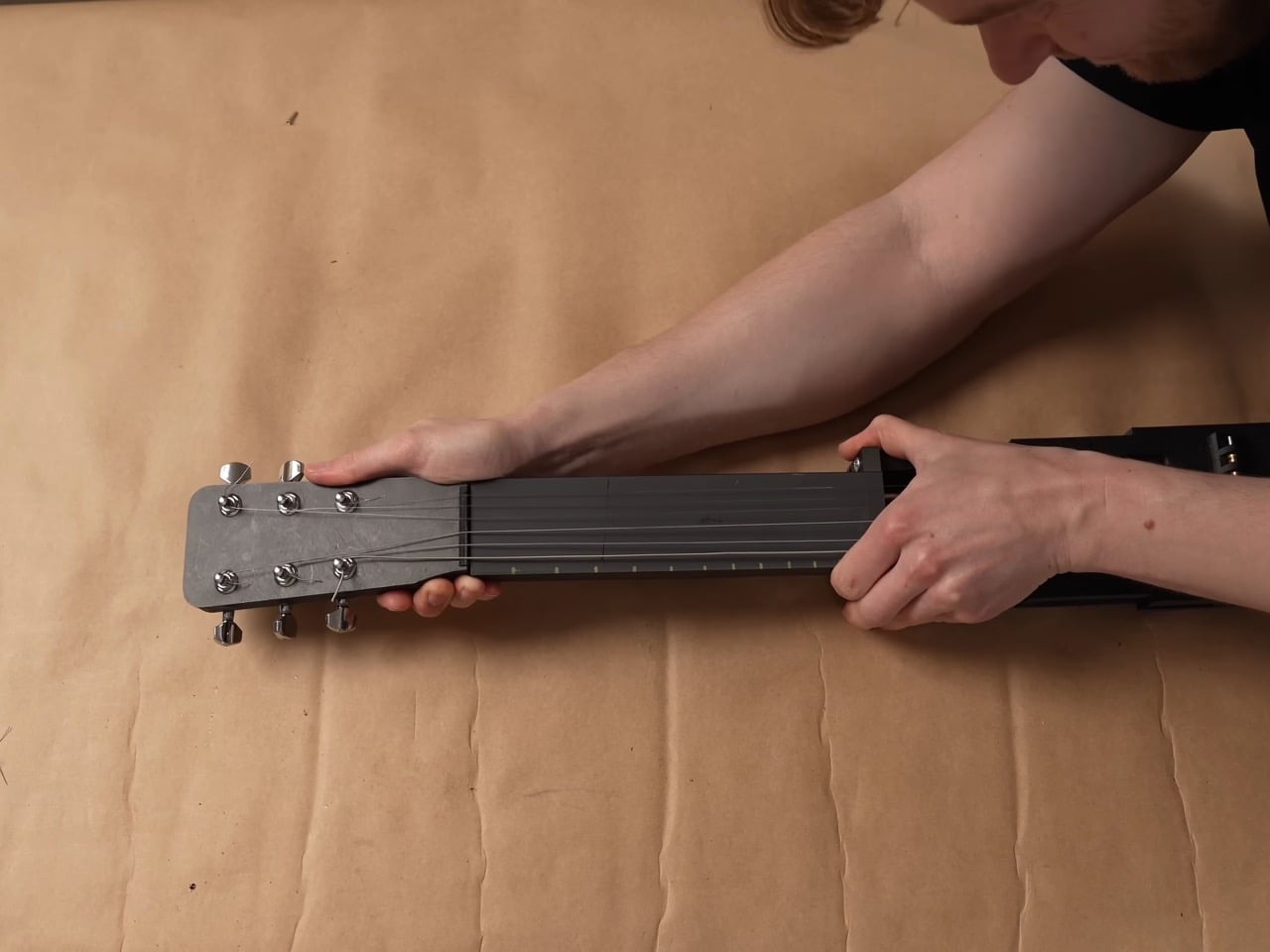
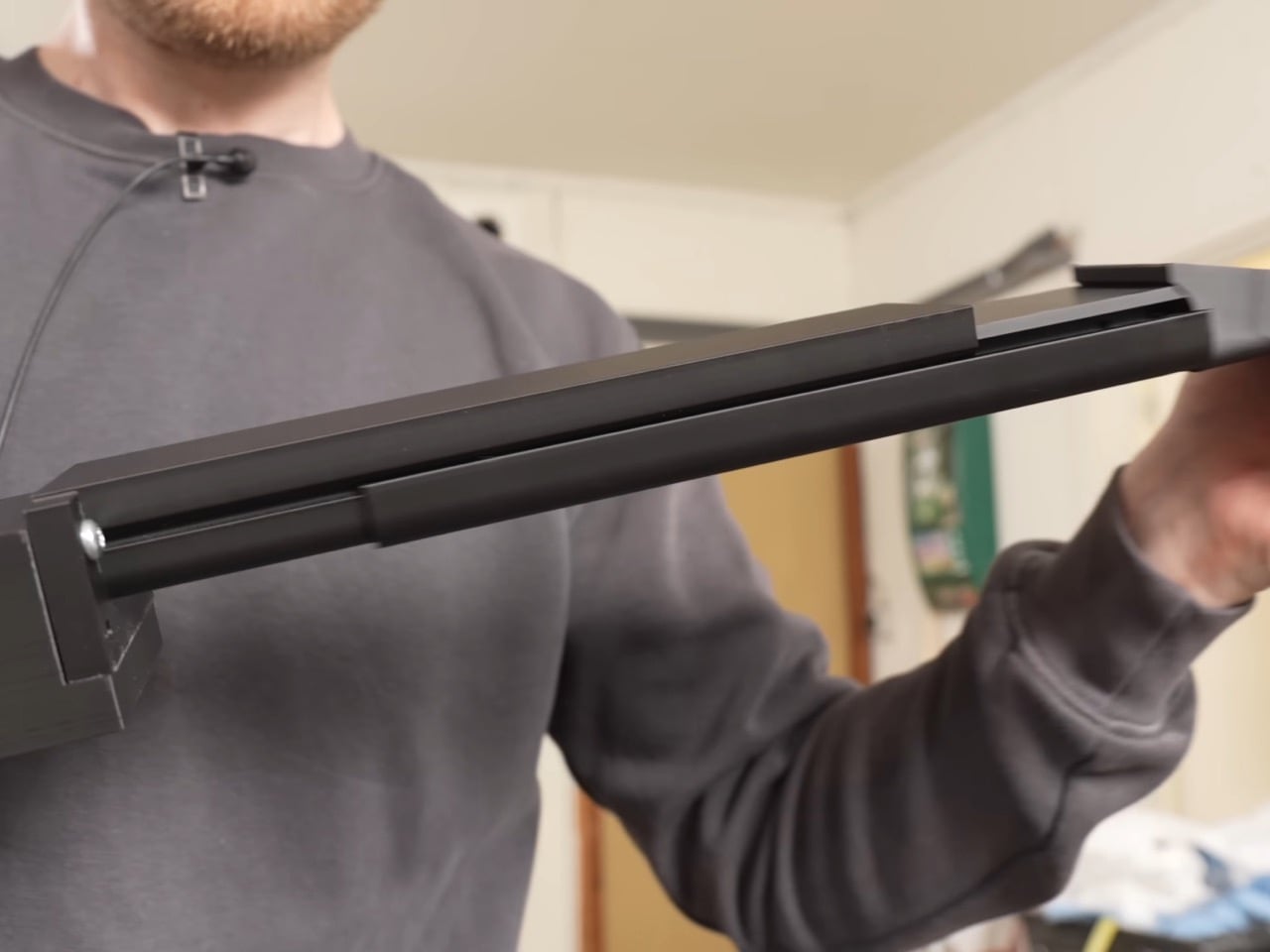
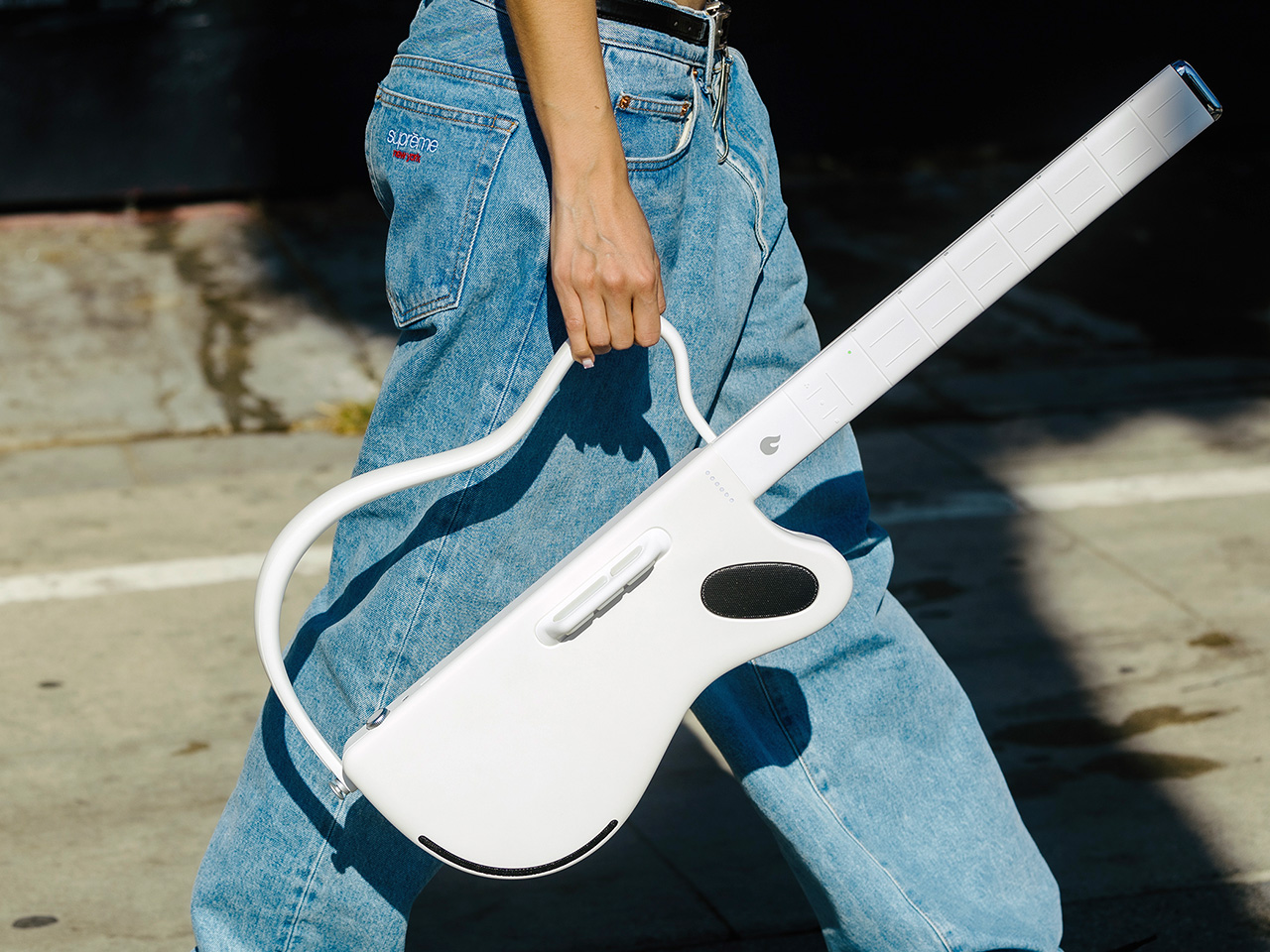
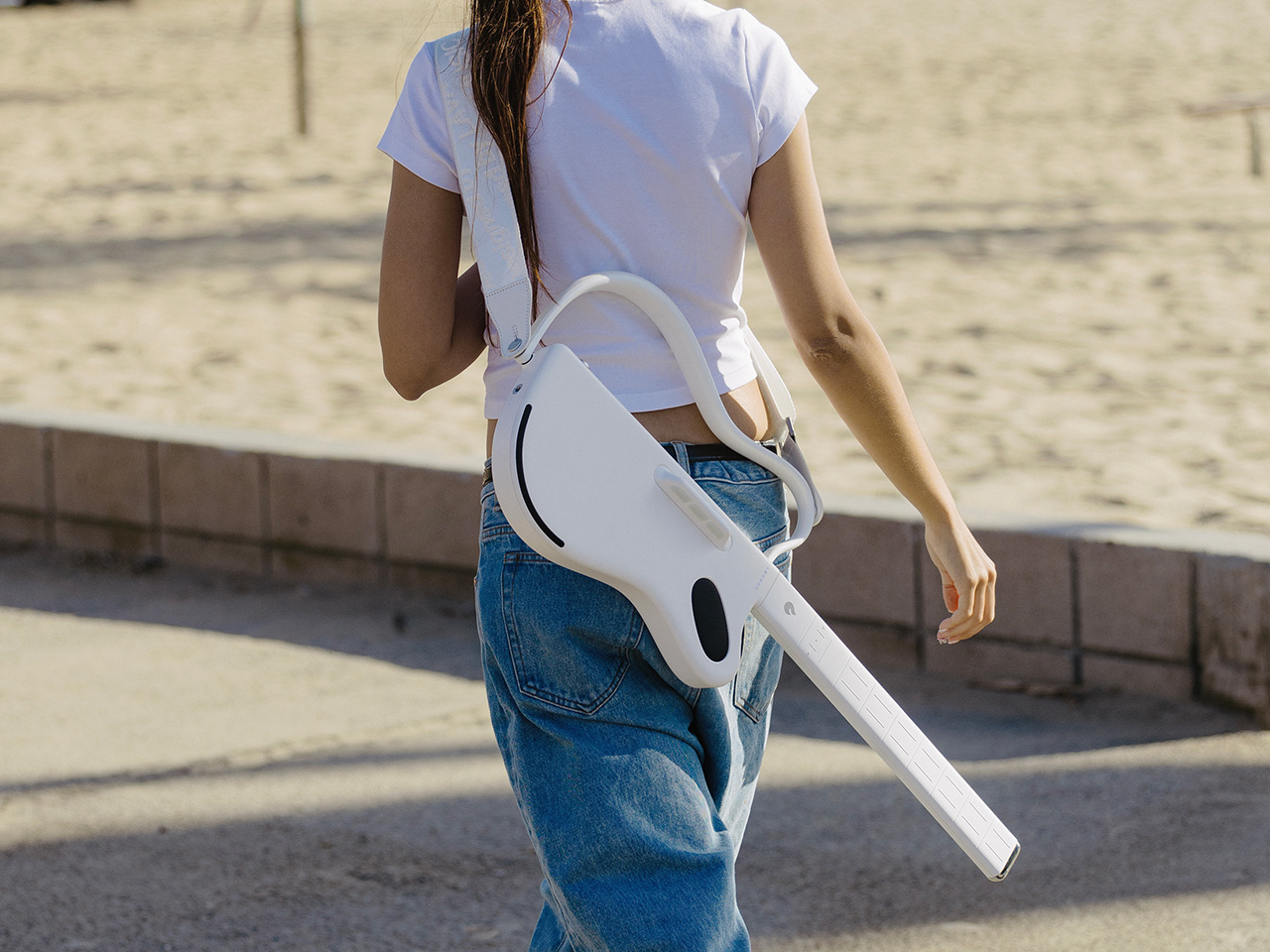
The LAVA GENIE delivers crisp, studio-grade sound without amps, headphones, loop pedals, or soundboards. Just switch the GENIE on and you’re ready to begin jamming. Plus, at 35% thinner than most other instruments, the GENIE is built for travel. The hollow upper segment folds down and the fretboard detaches too (thanks to the lack of strings), making the GENIE slim while traveling, so you can play whenever inspiration strikes.

Instant Jamming and Performing – Anytime, Anywhere

LAVA’s foldable design and travel-ready features are ideal for anyone who needs portability without compromising on sound quality. Its slim profile and compact size make it perfect for on-the-go sessions, whether you’re traveling or just want something easy to carry to a jam session. The GENIE doesn’t need a big setup, making it a go-to choice for musicians who value flexibility and easy access to creativity.
And that’s really what’s so impressive about the GENIE. It’s easy to think of it as a guitar (I know I refer to it as one multiple times), but the GENIE’s shape is probably the only ‘guitar-like’ thing about it. On the contrary, the device is your ticket to being a one-man show, letting you do everything an electronic musician or deejay does – but instead of looking somewhat unimpactful behind a laptop, you get to look like a bona fide rockstar, shredding away on a touchpad that brings the entire world of music to your literal fingertips.

Click Here to Buy Now: $349 $399 ($50 off).Hurry, only 63/750 left! Raised over $270,000.

The post Stringless Sampler Guitar with a Built-In Speaker and AI Music App turns you into a One Man Band first appeared on Yanko Design.