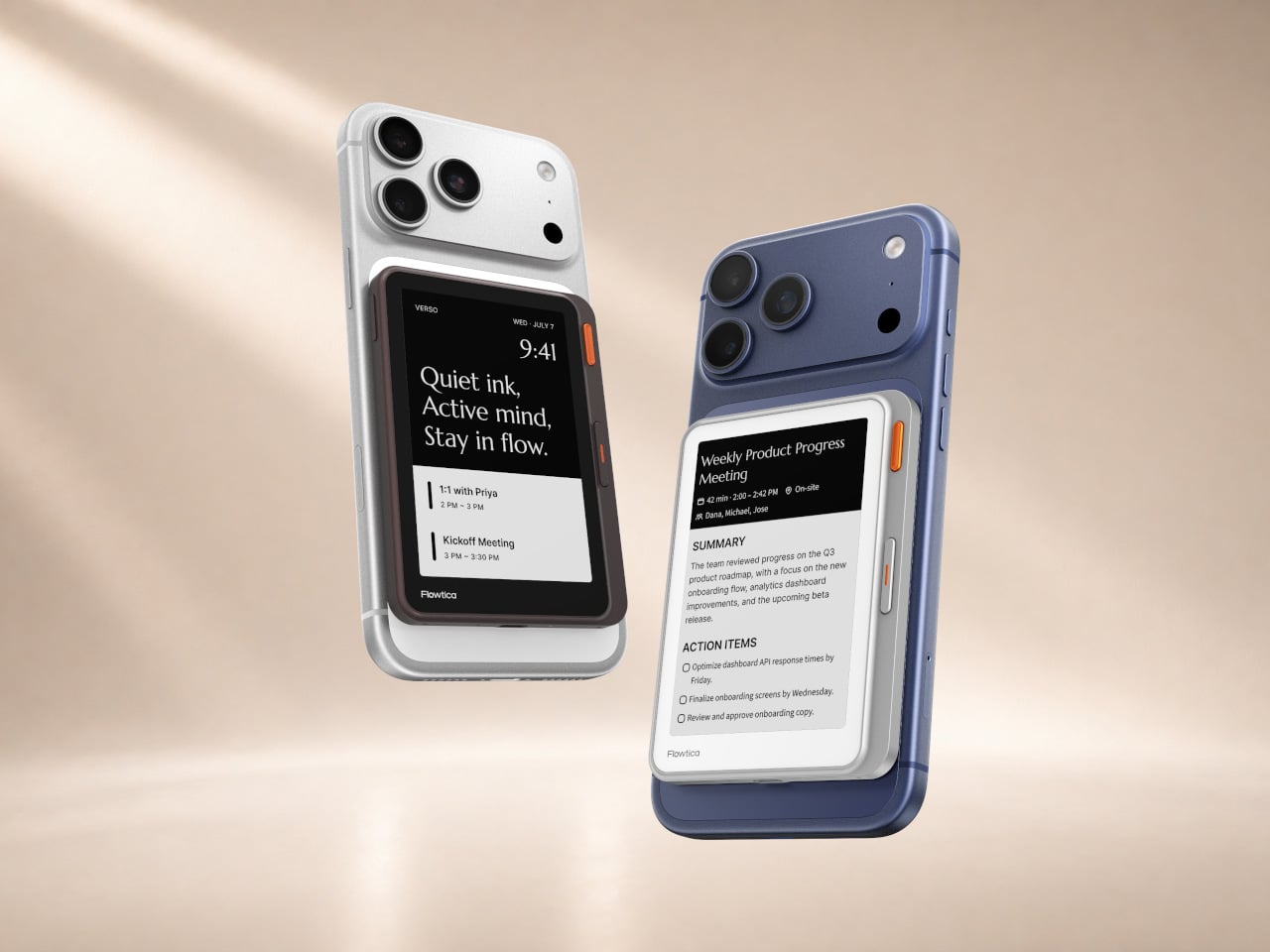
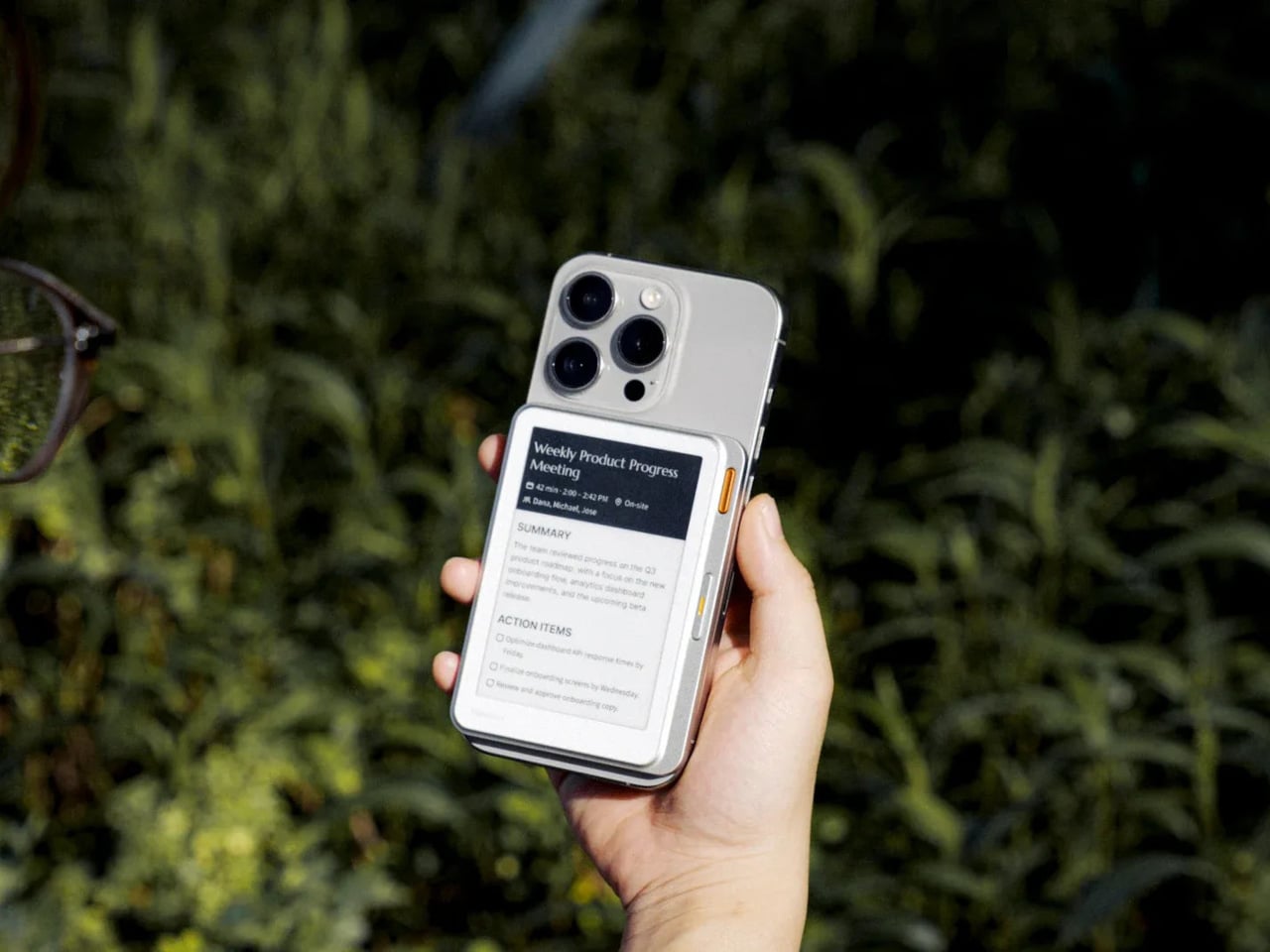
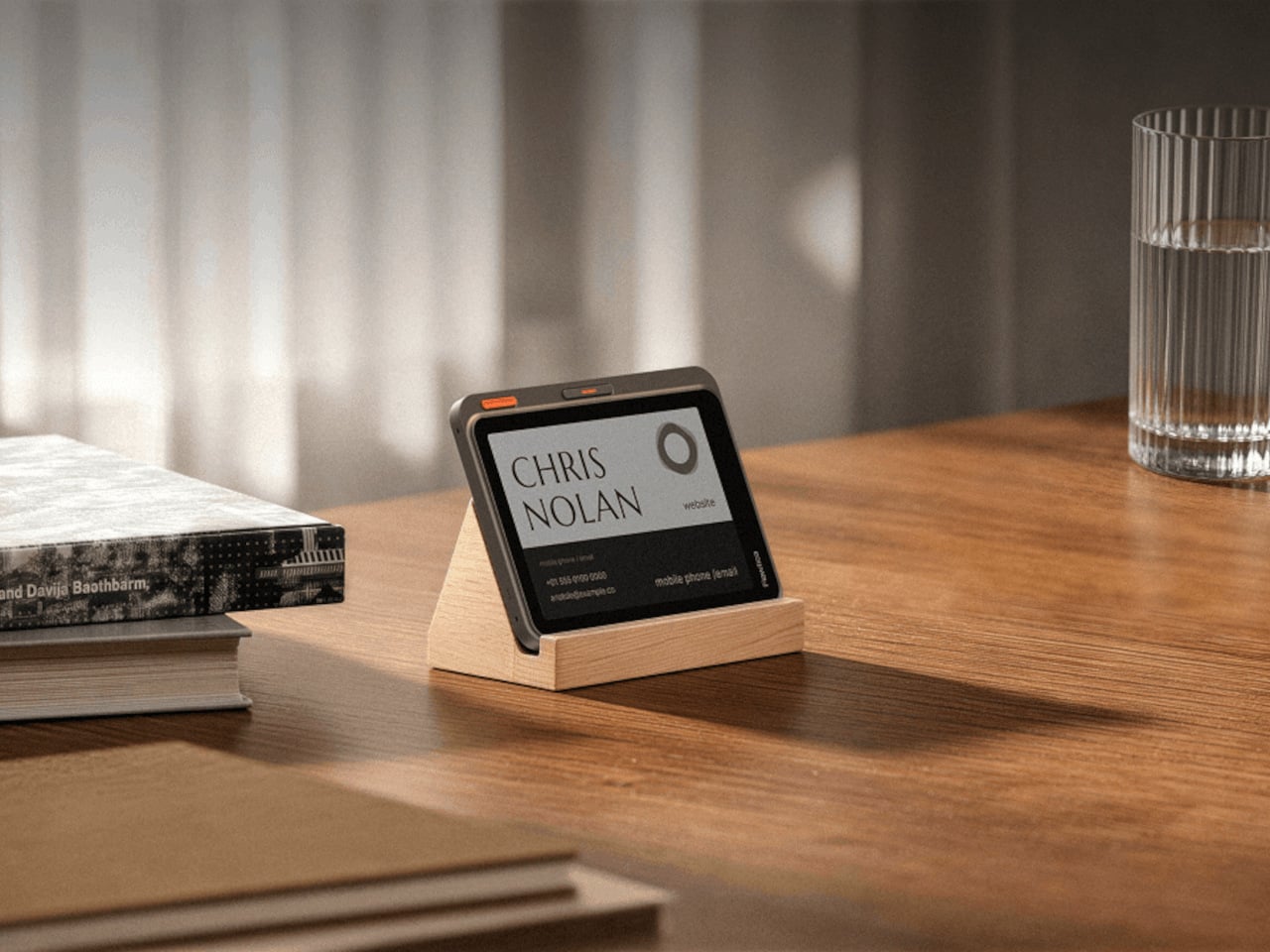
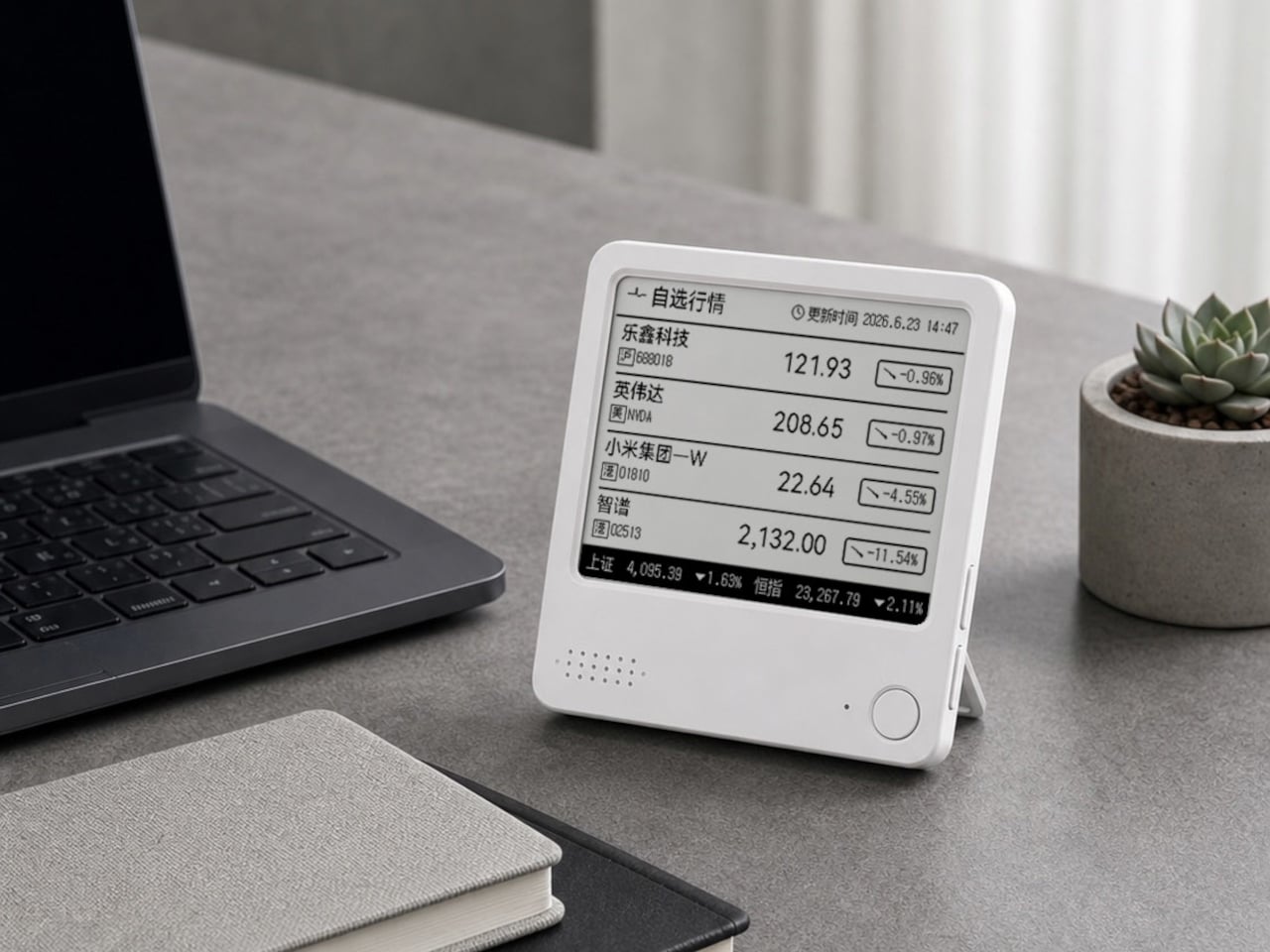
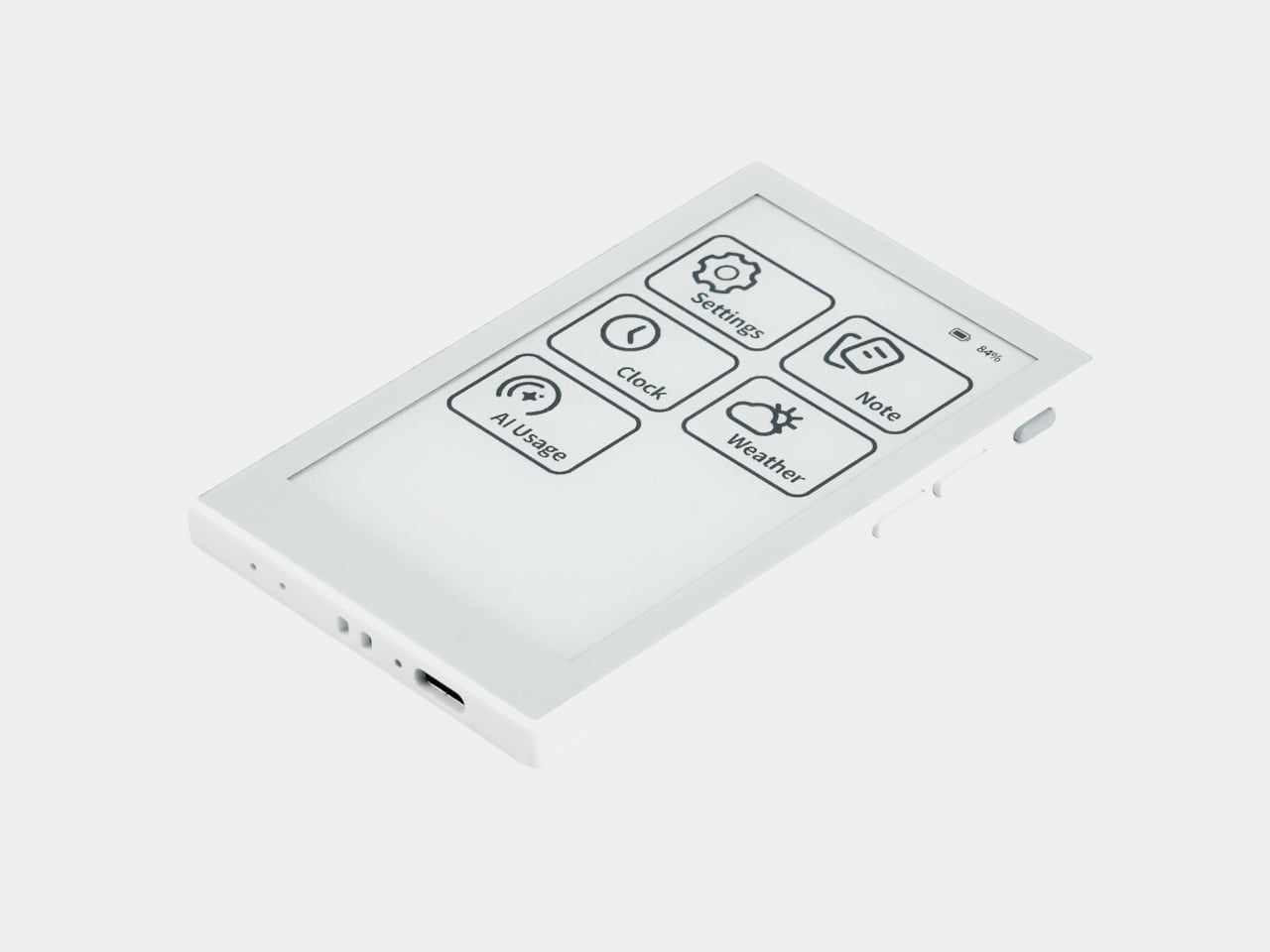
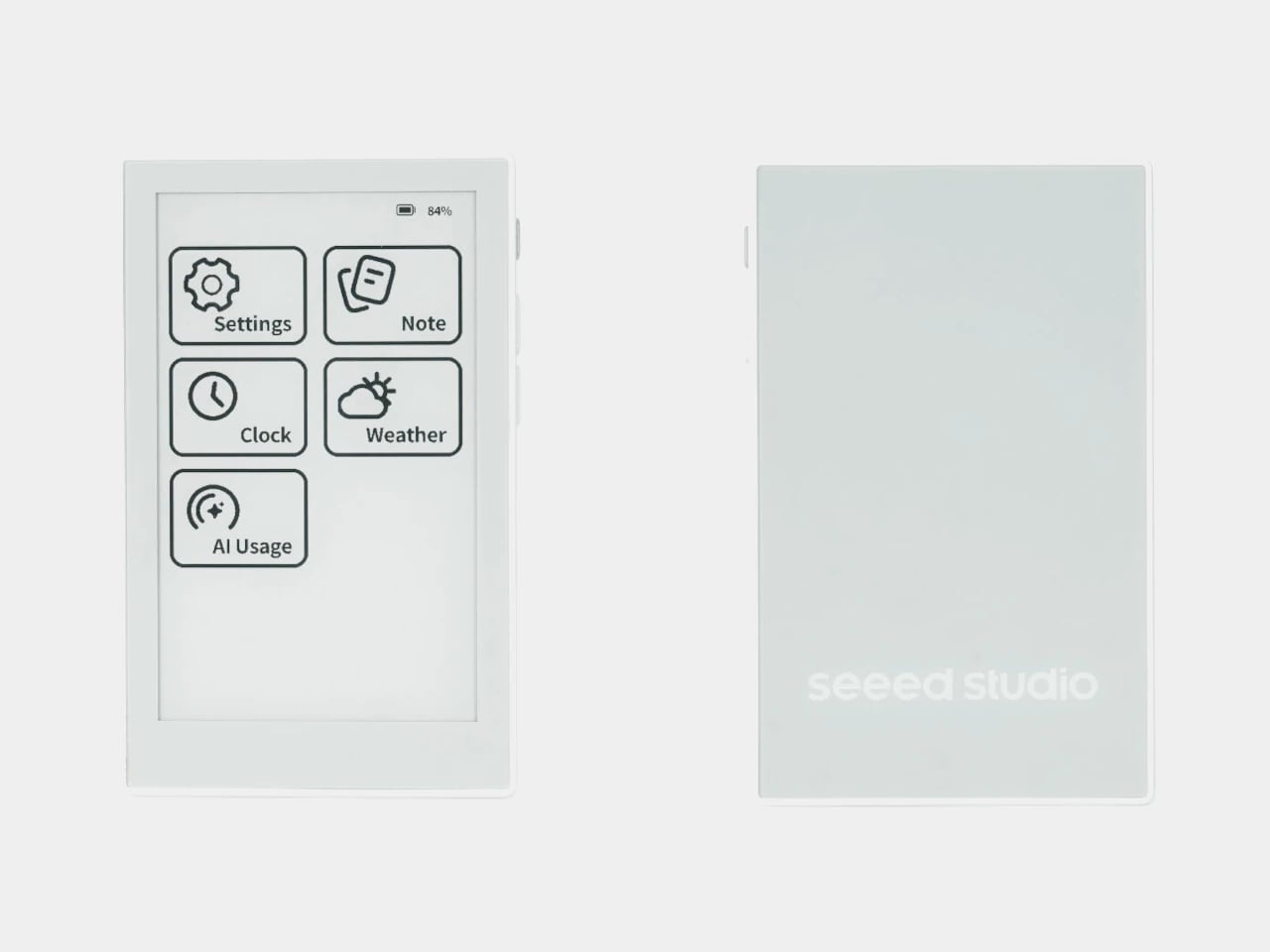
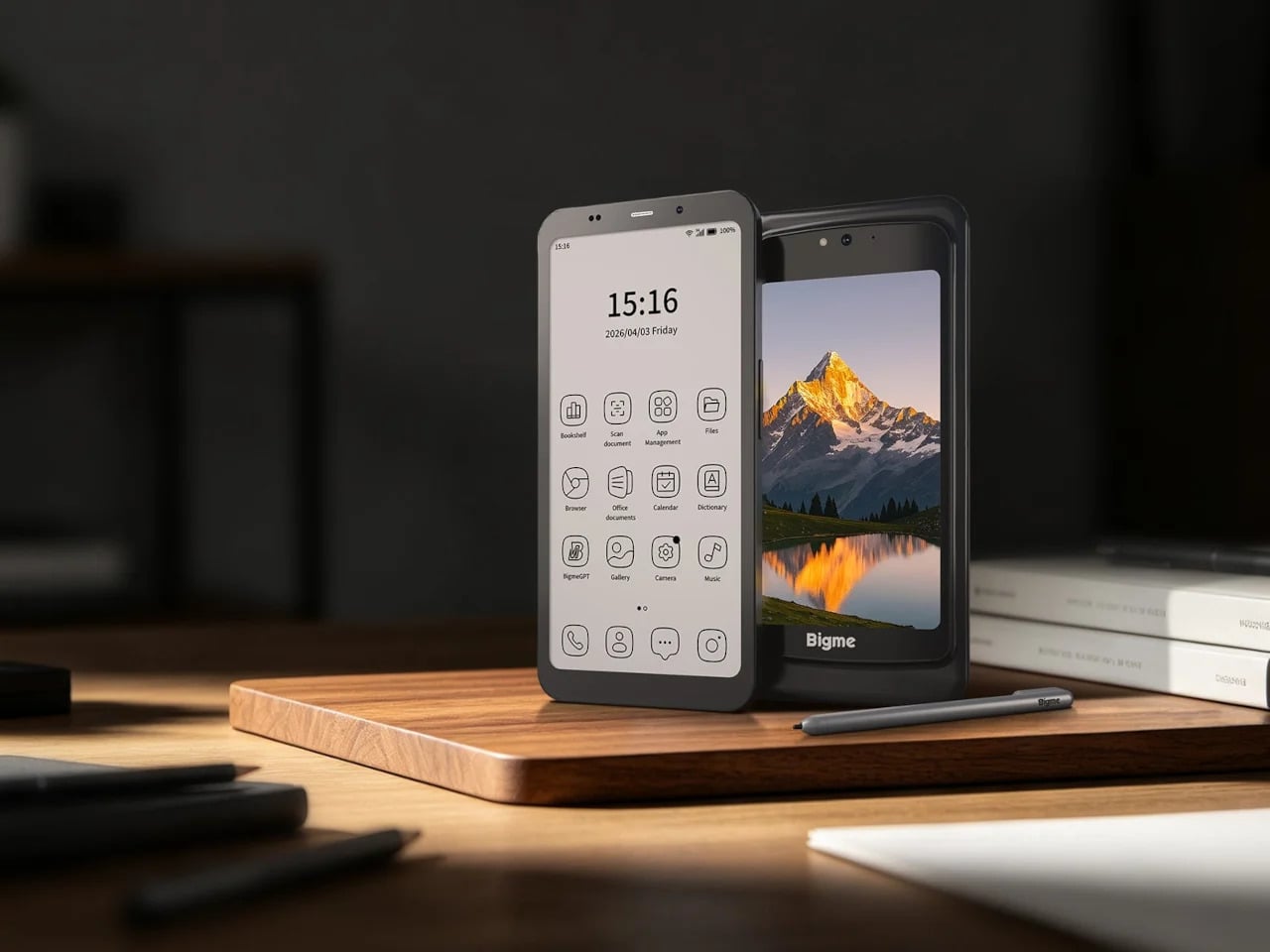
Phone screens have quietly become the default display for everything, including thoughts that never needed an app in the first place. The Flowtica Verso pushes back on that habit by giving your phone a second face, a card-sized panel with its own always-on e-paper screen. Snap it onto the back of a handset, and it starts listening, transcribing, and summarizing conversations without asking you to unlock anything.
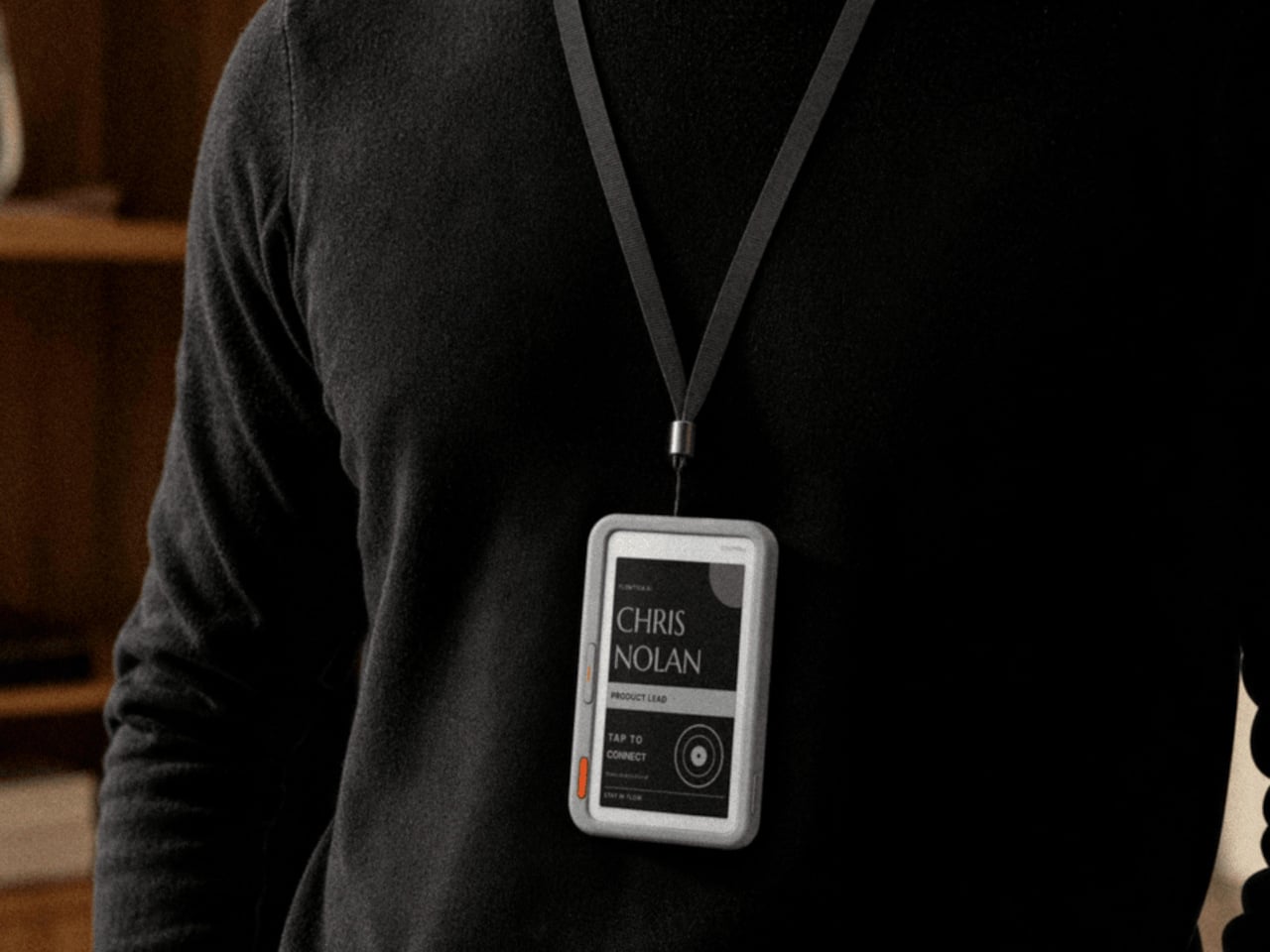
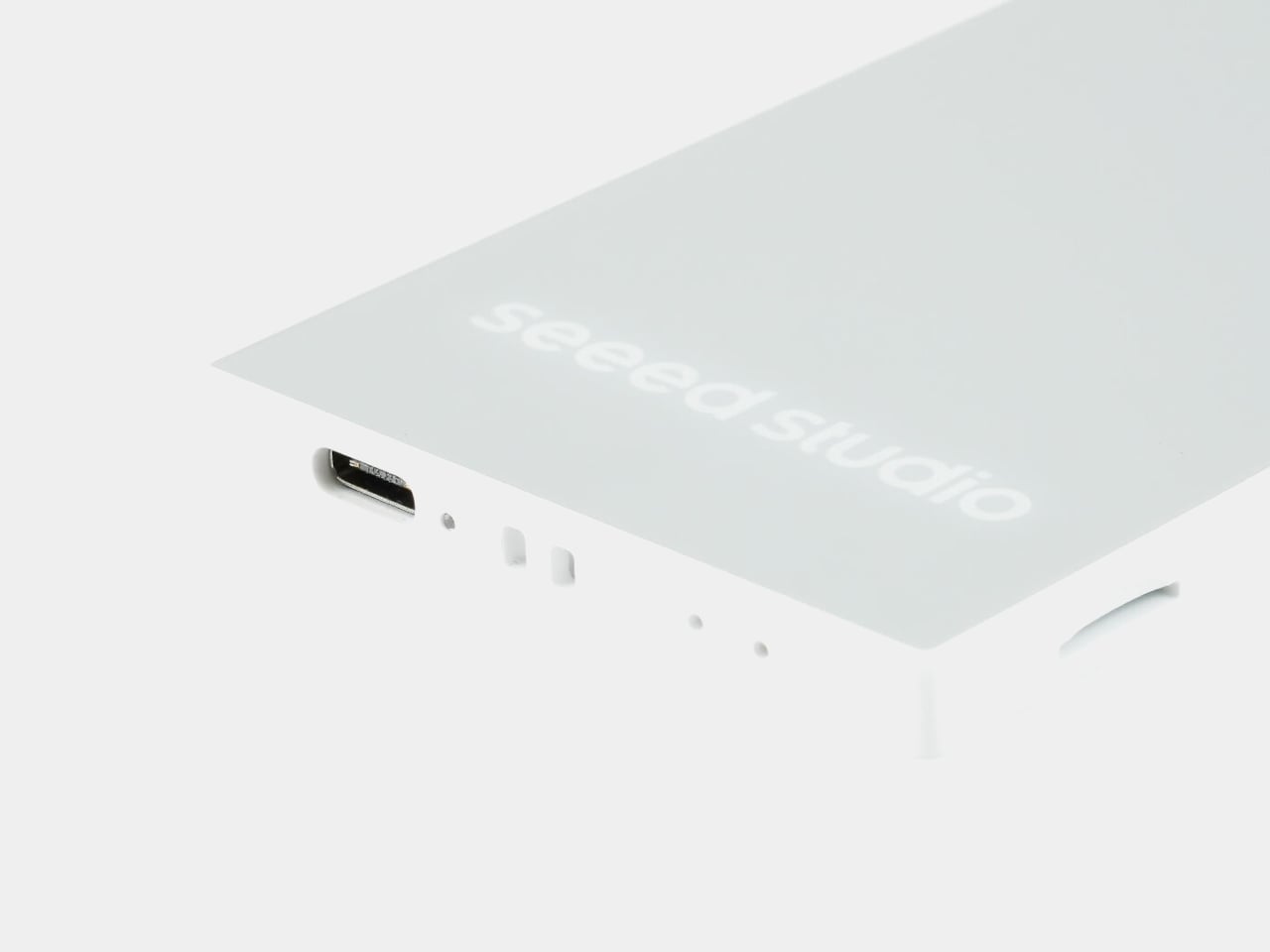
That panel is barely 6.5 millimeters thick, thinner than most phone cases, yet it holds a full touchscreen, a five-microphone array, and enough battery to run for up to 72 hours between charges. Magnets let it click onto a MagSafe-compatible phone, but that’s only one option. Hang it from a lanyard during a conference, or prop it on a desk stand next to a laptop instead.
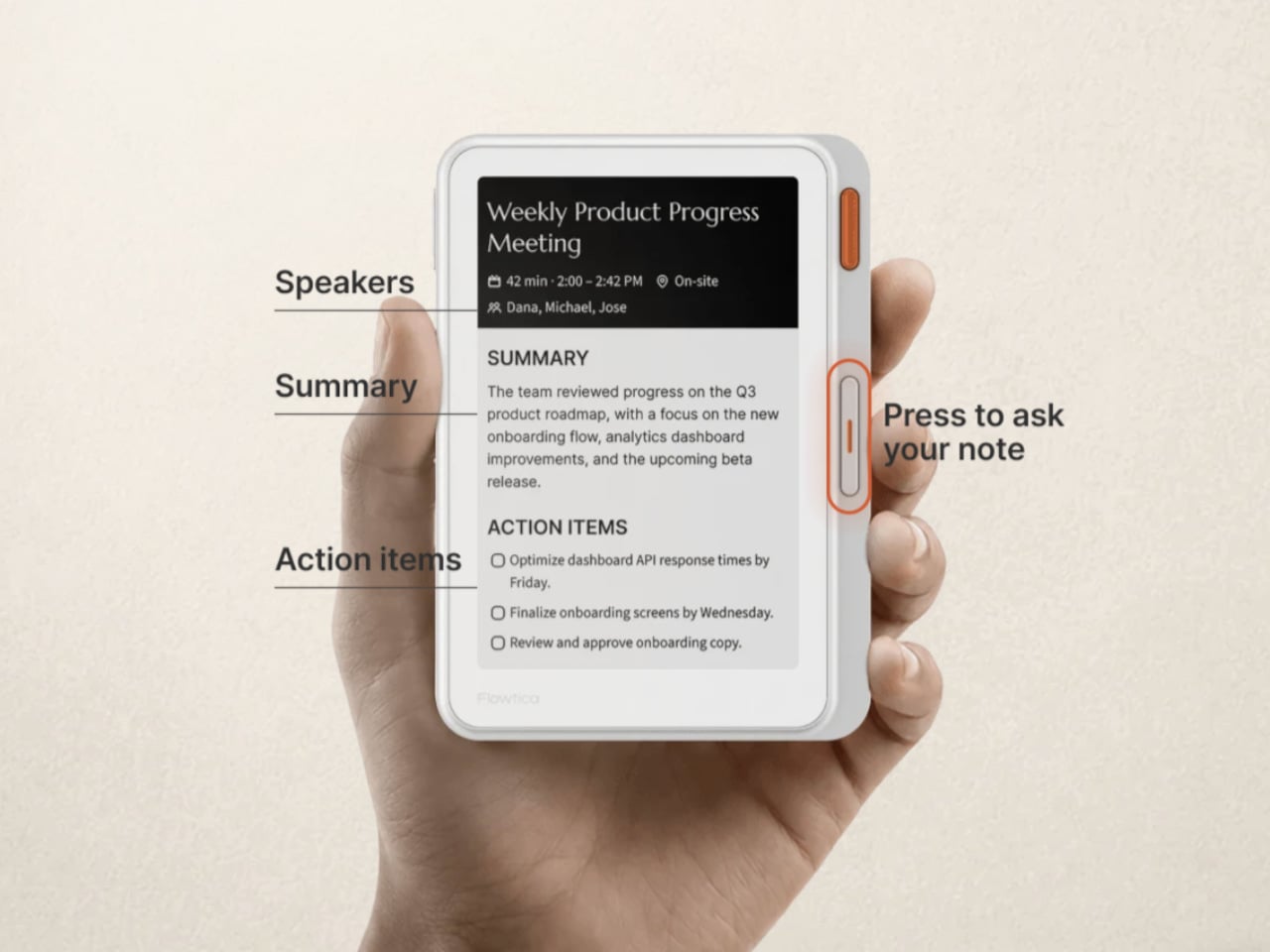
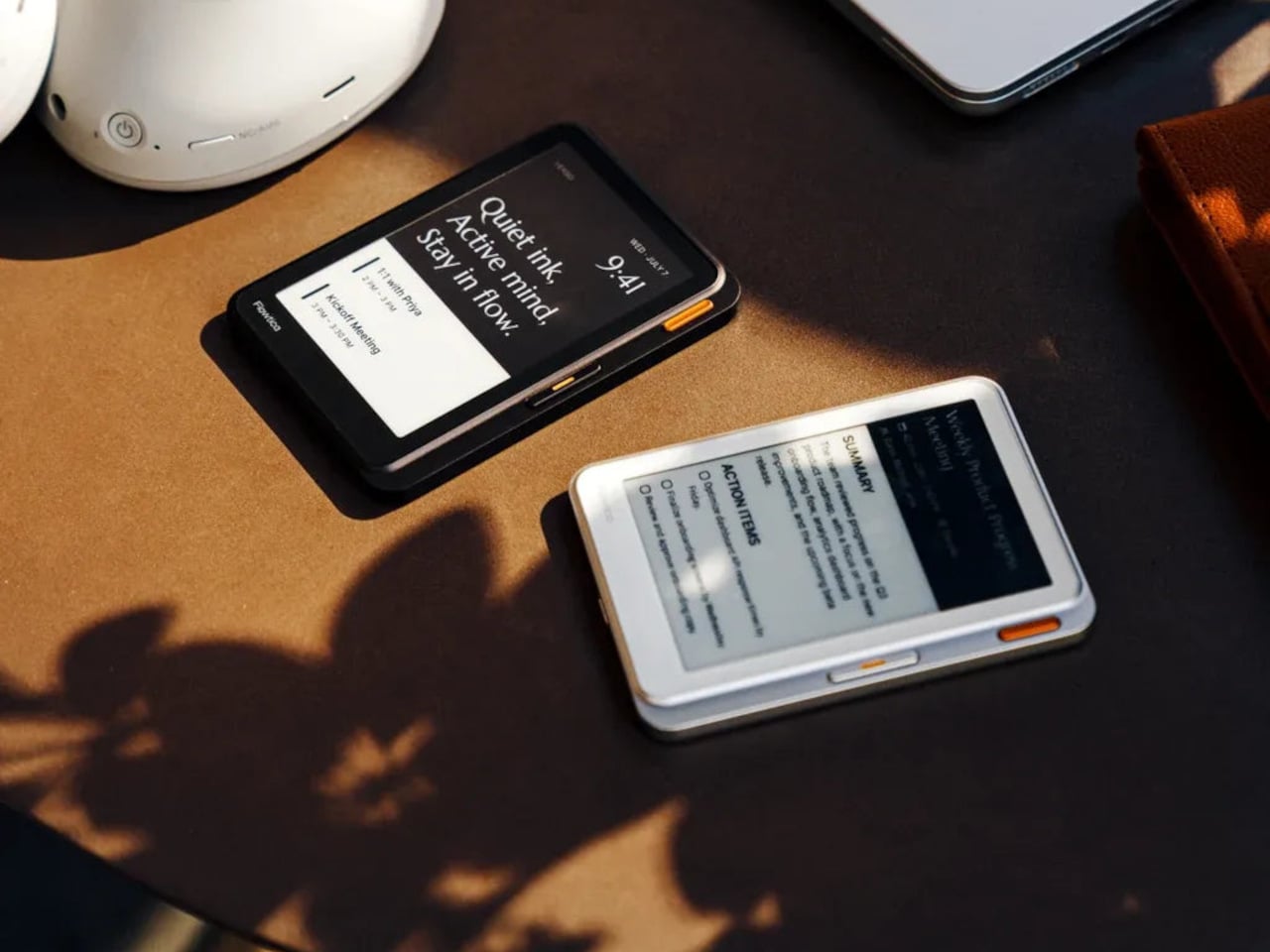
Picture a meeting that runs long and scattered, the kind where important details slip past because everyone’s phone is face down on the table. With the Verso clipped to a case, none of that gets lost. It records the discussion, then turns the audio into a clean summary with action items sitting right there on its screen, ready before anyone reaches for a notebook or a second device.
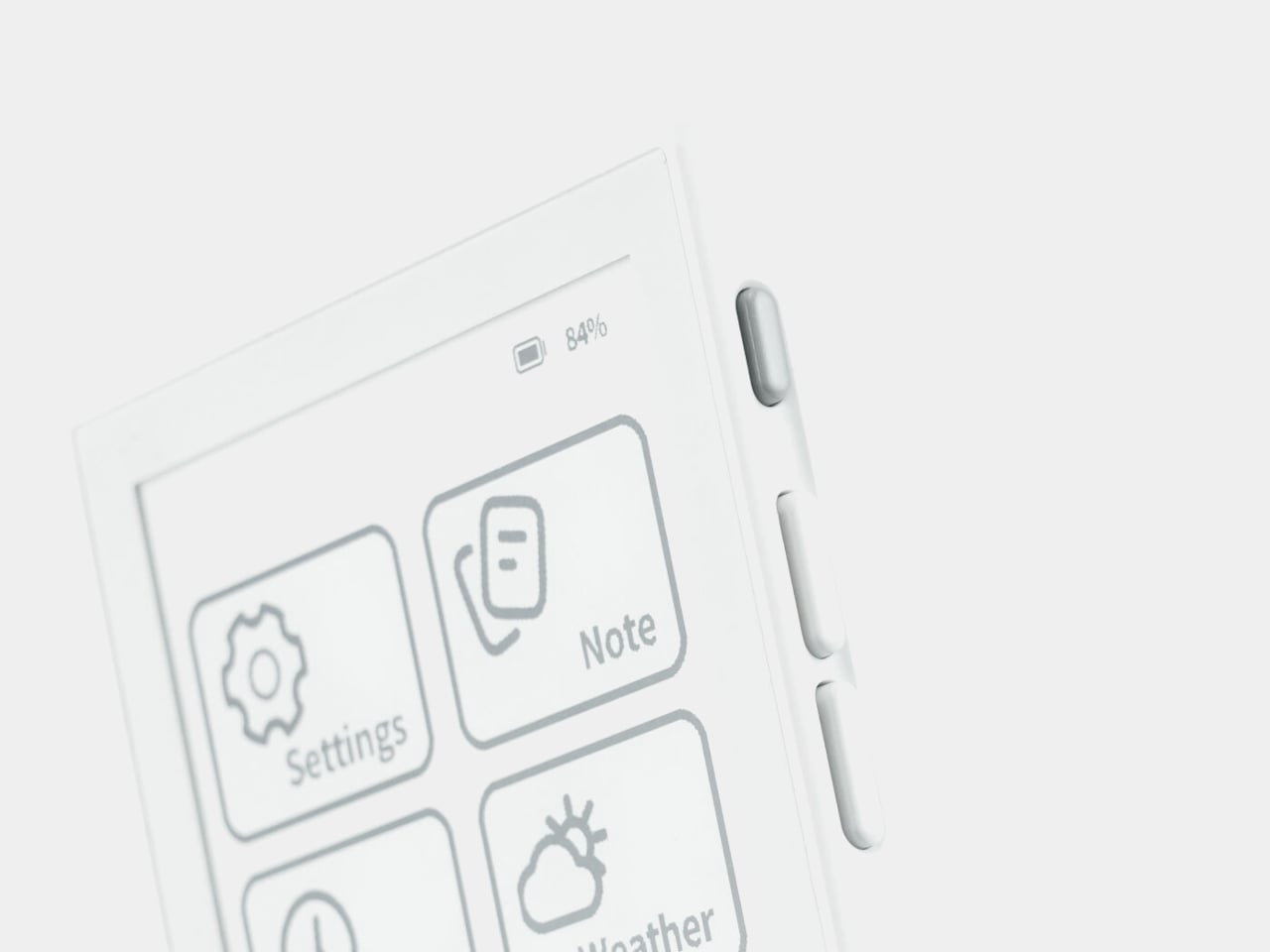
A second button turns the same panel into something closer to a conversation partner. Hold it down, ask a quick question about what just got discussed, and the answer appears on the e-paper face within seconds, no app switching required. That small design choice matters more than it sounds, because it keeps a person’s attention on the room instead of a glowing rectangle in their palm.
A Screen That Keeps Working After the Meeting Ends
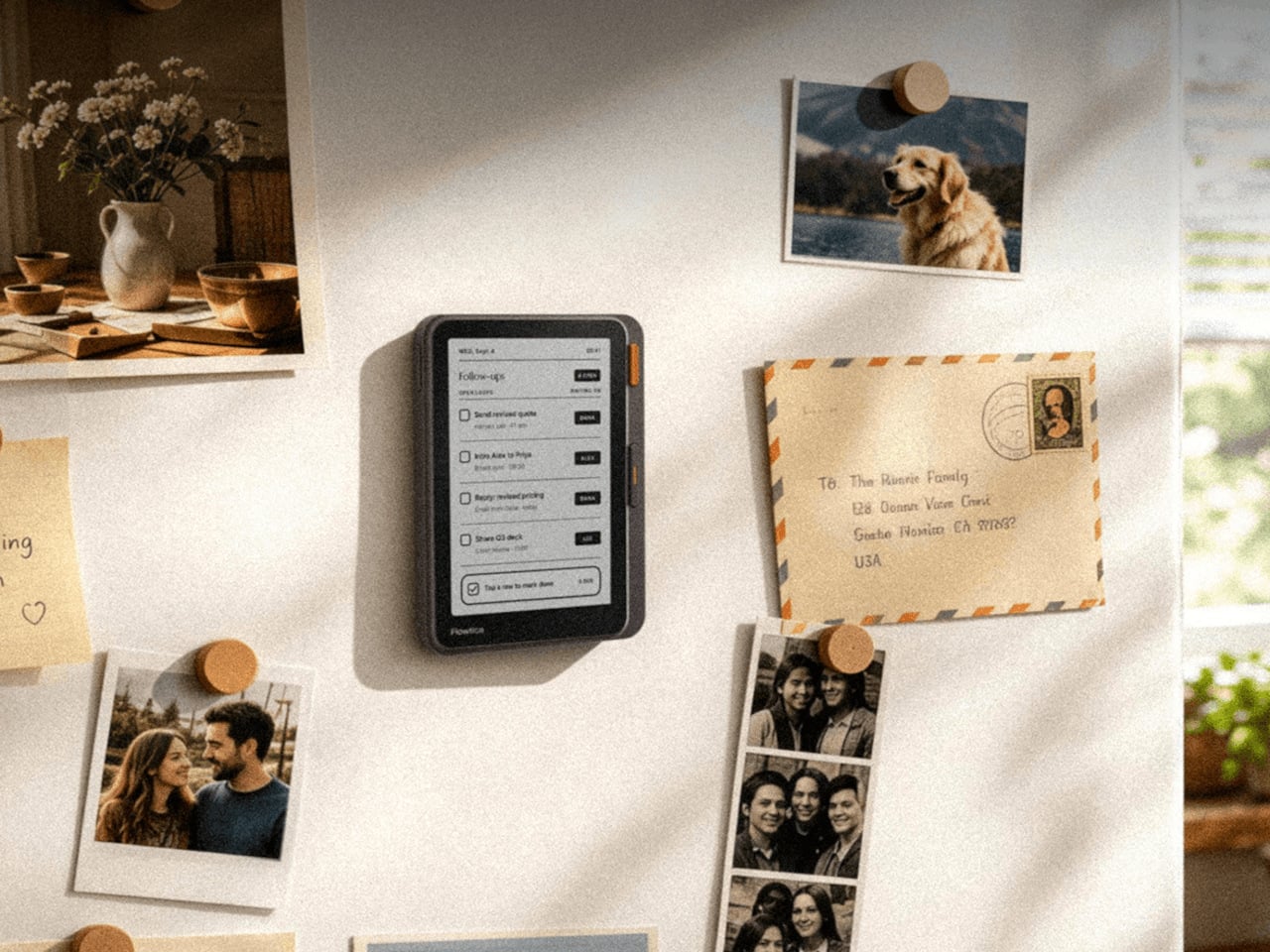
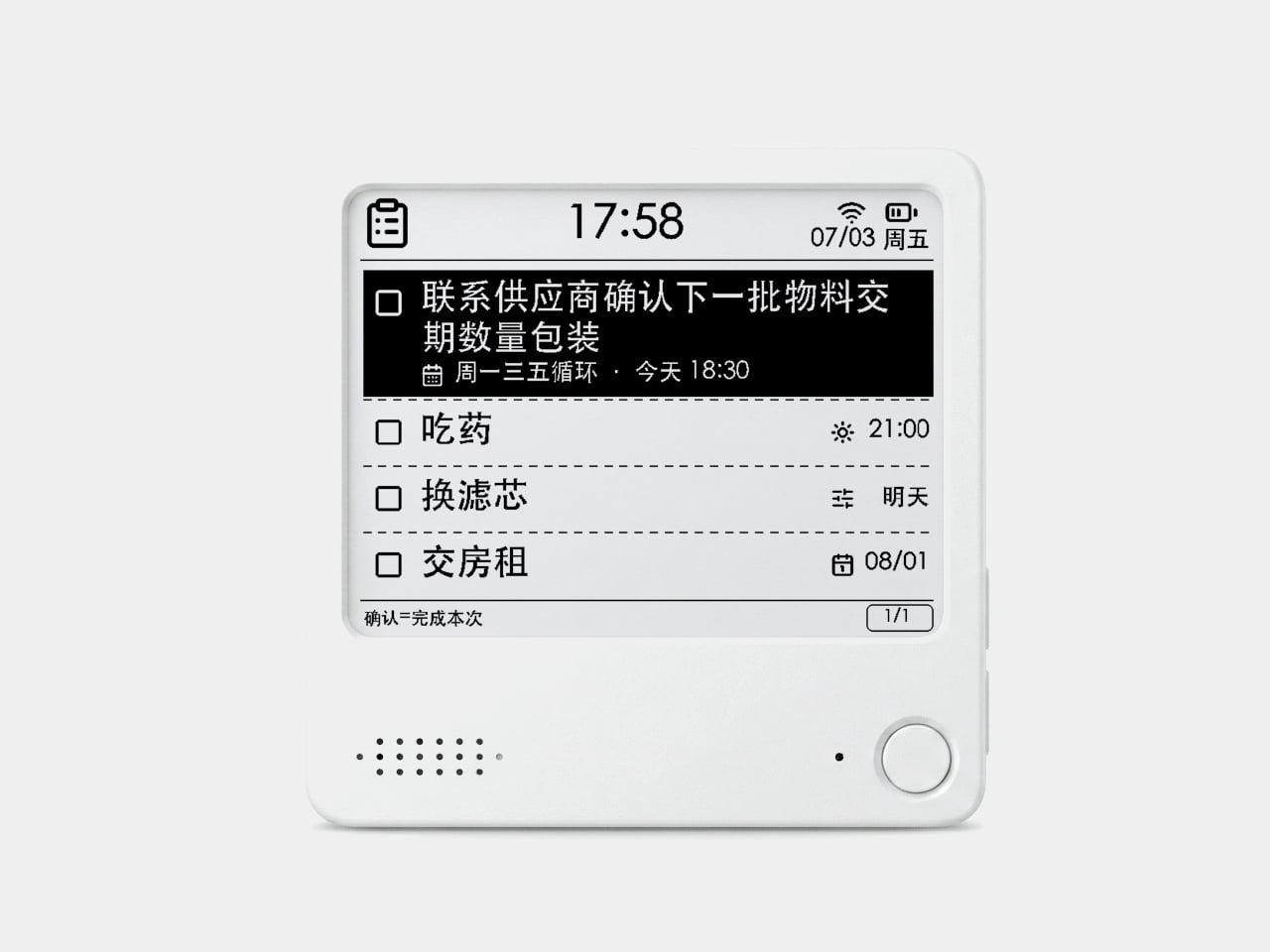
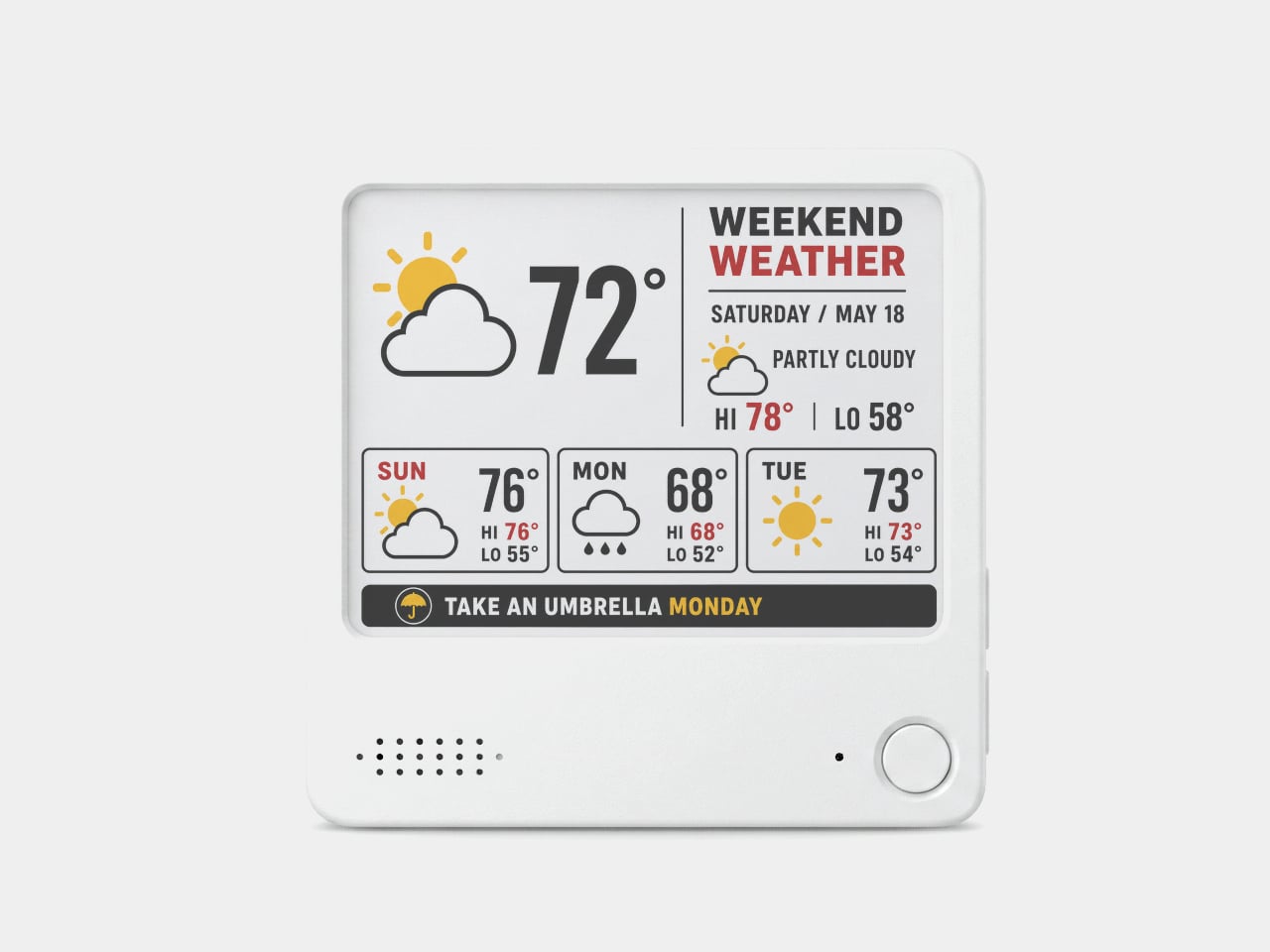
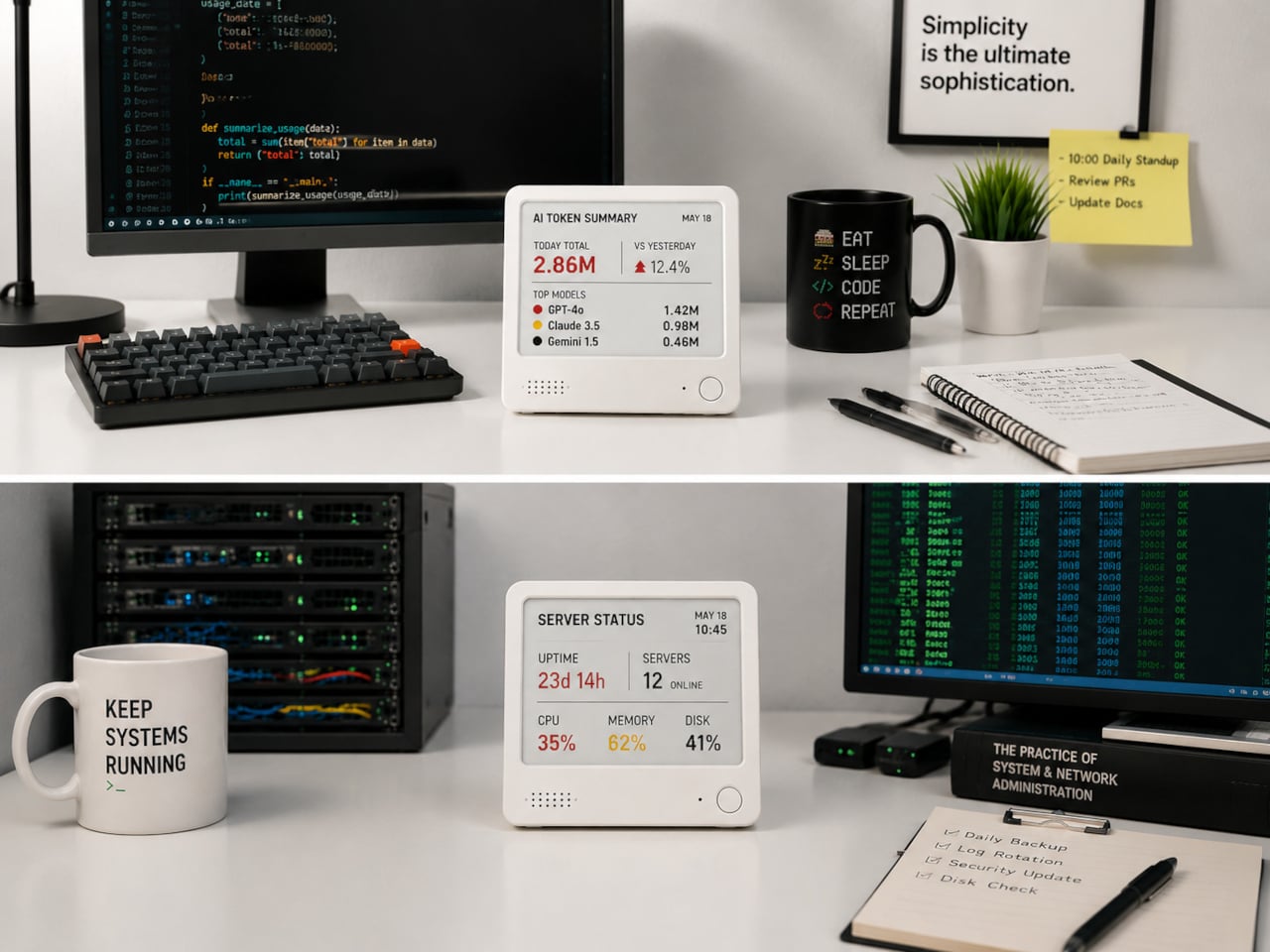
Beyond a single meeting, the same panel doubles as a running dashboard for the day. It surfaces calendars, pending to-do items, and summaries pulled from earlier recordings, so checking on today’s schedule stops requiring a phone unlock at all. The device is priced at $299, positioning it closer to a dedicated tool than a phone accessory picked up on a whim.
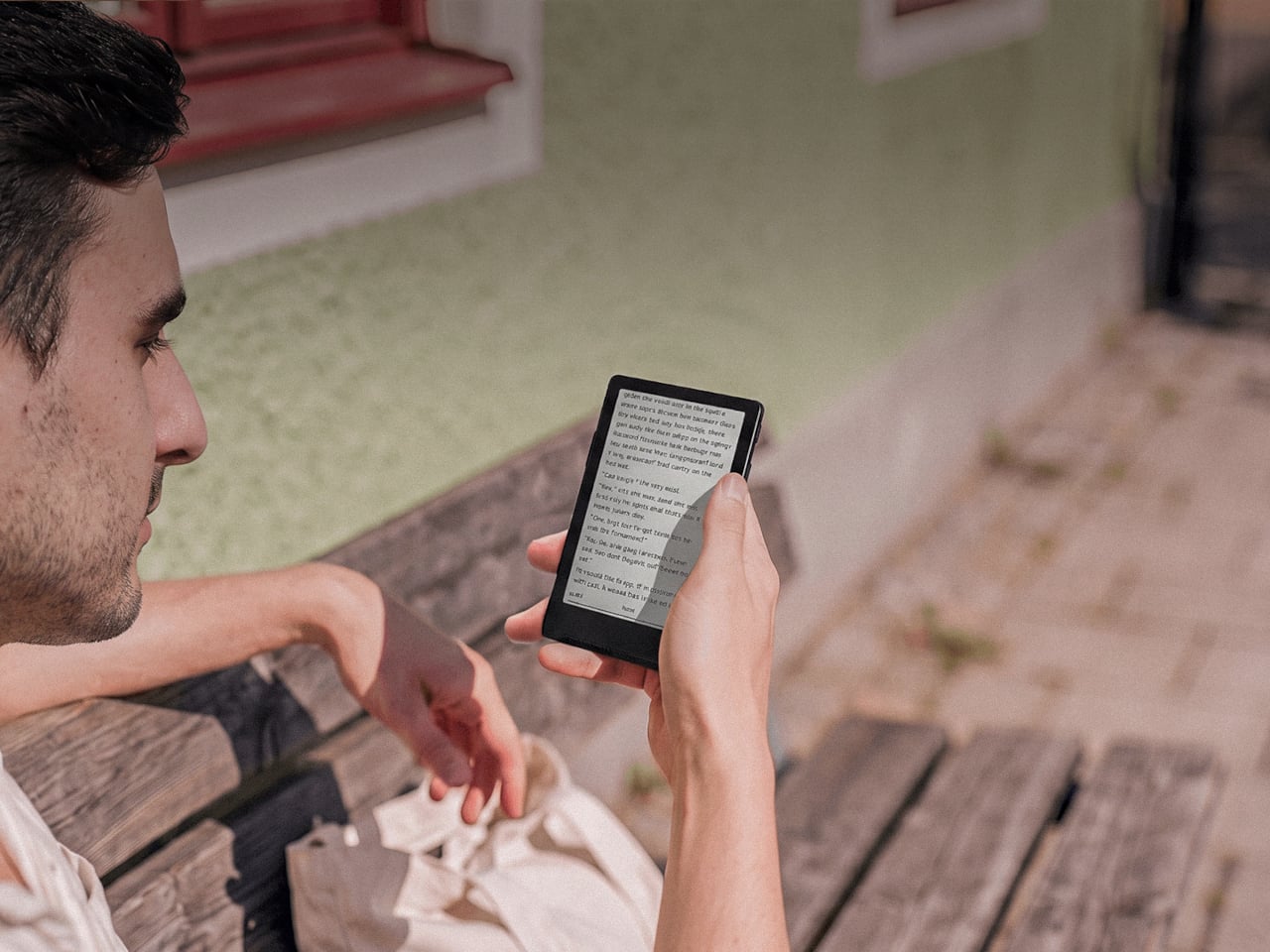
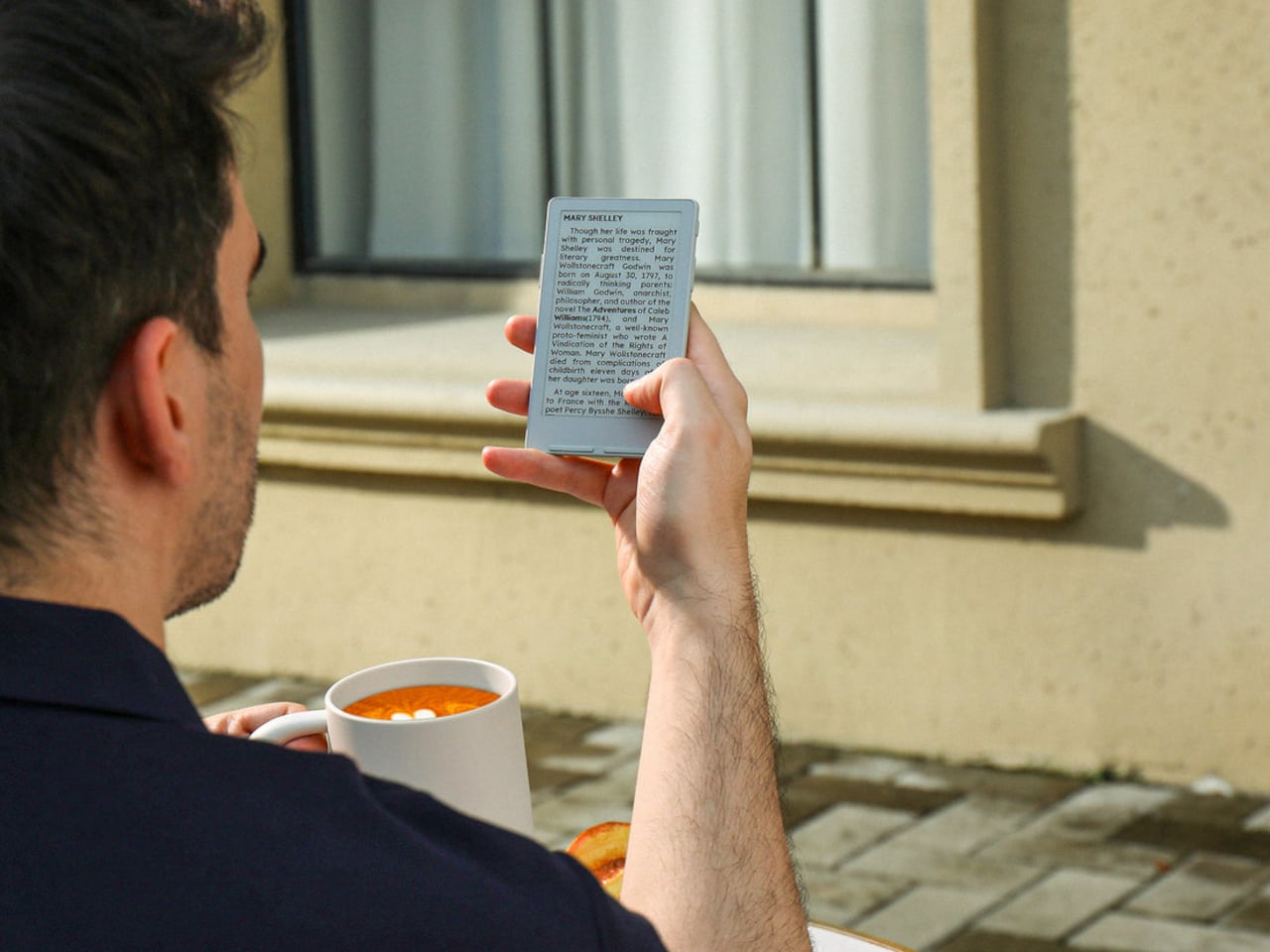
E-paper is the quiet advantage running through the whole design. Unlike an OLED display that drains a battery just by staying lit, the Verso’s screen holds its last update with almost no power draw, which is how it stretches to 72 hours of use. Text also stays legible outdoors under direct sun, somewhere most phone screens start to wash out and become unreadable within minutes.
Shared Real Estate, Different Jobs
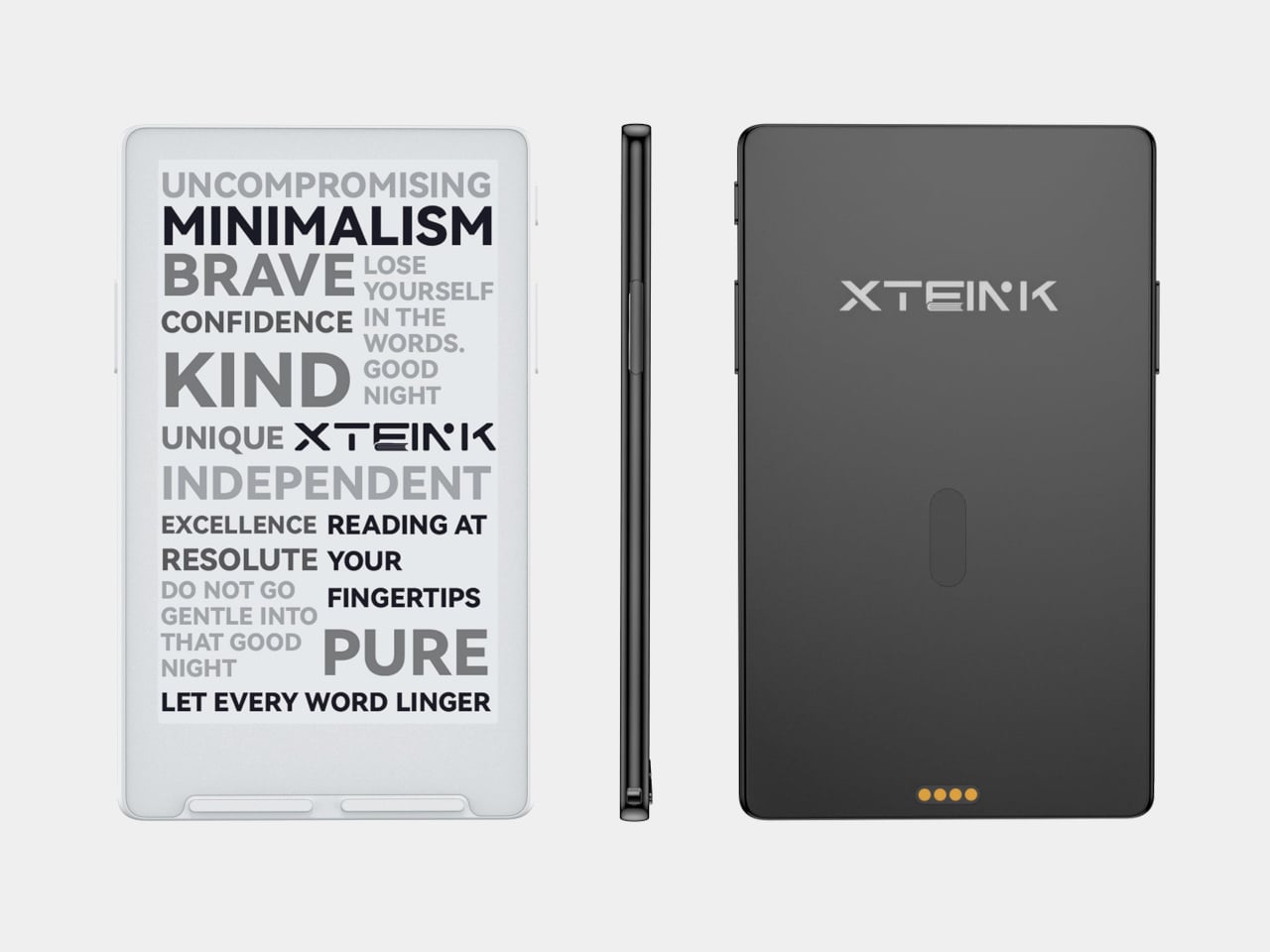
The back of a phone has quietly become contested real estate. Xteink’s X4 Classic strips a magnetic add-on down to page-turn buttons and nothing else at $79, while its X4 Pro version adds a front light for $99, and BOOX’s Picco shrinks a touchscreen reader to pocket size for around $100. Each one chases distraction-free reading. Verso claims the same magnetic footprint but points it at conversations instead of pages.
That distinction matters because a magnetic back panel is easy to copy, but the job it performs is not. Reading gadgets ask for stillness and a single task done well. Verso asks for the opposite, staying alert through scattered conversations and handing back organized thoughts before the moment passes. Both approaches treat a phone’s blank back as valuable space, just aimed at very different kinds of attention.
There’s something wonderfully strange about walking up to a framed picture on your wall and telling it what to paint next. Say “paint my dog as a Japanese ink painting,” and the frame generates and displays a new piece. No file transfers, no app navigation, no creative software required. Jitrainno’s Smart Canvas runs on this premise: a voice and text-prompted AI art frame built around an E-Ink Spectra 6 color display, the matte, paper-like panel technology that draws zero power in static mode and reads under ambient light the way a canvas does. It comes in three solid-wood sizes, 7.5, 13.3, and 31.5 inches (named the Echo-7, Echo-13, and Echo-31 respectively), all with built-in batteries and Wi-Fi.
Jitrainno is a Hong Kong-based multidisciplinary team with in-house expertise spanning hardware R&D, E-Ink engineering, AI integration, firmware, and cloud services. They developed a proprietary color rendering layer on top of the Spectra 6 panel, tuned specifically for skin tone accuracy, landscape depth, and smooth gradient transitions. That kind of layered engineering, building custom display algorithms rather than shipping a panel with factory defaults, is what separates a team that genuinely understands display science from one that simply sourced a good component. The project moved from inception and industrial design in June 2025 to a production validation run by May 2026, a fast but not reckless pace for hardware at this scale. Global fulfillment is estimated for November 2026.
E-Ink Spectra 6 is the most capable color e-paper panel currently available to consumer product makers, using six primary pigments: black, white, red, yellow, blue, and green. It achieves up to 200 pixels per inch and draws zero power in static display mode, meaning the canvas can stay on your wall for days between charges. The paper-like surface reflects ambient light rather than projecting it, eliminating the glowing-rectangle problem that has defined every LCD-based digital art frame since the Kodak EasyShare era. Jitrainno’s self-developed rendering and color optimization layer is designed to preserve the subtle details that make an image feel closer to paper art. Based on early reviews, it reads more like a framed print than a screen, which is the bar the whole product needs to clear.
Speaking a prompt aloud and watching a new image materialize on the wall is a genuinely new behavioral ritual, and I think it’s the feature that will hook most people. Users can create images from text or voice prompts, explore different visual styles, and generate variations of their ideas, with AI used as a creative tool within the artwork creation experience. The product page demos a prompt like “a cute green dinosaur in a sunny prehistoric scene, soft watercolor and colored-pencil storybook style,” which apparently renders accurately enough to land on a kid’s wall. The AI side routes through third-party commercial image generation services via official APIs, supporting text-to-image and image-based creative generation within the experience. They also confirm they do not use user content to train their own foundation models, a meaningful distinction in a market where that commitment is far from universal.
AI generation is only one of several ways to populate the canvas. The app supports content from AI-generated art, a free art gallery called Daily Drops, the phone camera, the user’s photo library, and personal collections. Daily Drops streams a rotating selection of curated artwork that users can filter by mood or scene type and push directly to the display. The phone camera connection opens the obvious use case of photographing a physical painting, a landscape, or a face and sending it to the frame instantly. That breadth of sourcing makes the Smart Canvas a capable display platform in its own right, with AI generation sitting as a feature rather than a crutch.
Gallery proportions, tactile materials, and Auto-Rotation are deliberate choices to help the Jitrainno Echo series belong in the room like framed art. From the product photography, the proportions are gallery-standard, the profile slim enough to recede into a wall, and the matte panel surface does the visual work of making it belong. A built-in sensor detects whether the frame is in portrait or landscape and automatically switches the artwork’s aspect ratio, with no manual setting required. Connectivity runs in two modes: full cloud-connected (remote upload, AI creation, gallery sync, multi-user sharing) or completely offline (no account, no internet, direct phone-to-frame transfer). The offline option is a genuine design stance in a category where “smart” has almost universally meant always routing through someone else’s server.
The Jitrainno Echo-7 at 7.5 inches (1024×600, 170x236mm) is the tabletop model. The Jitrainno Echo-13 at 13.3 inches (1200×1600, 316.3×416.3mm) works both on a desktop stand and wall-mounted, making it the most flexible of the three. The Jitrainno Echo-31 at 31.5 inches (2560×1440, 603x903mm) is wall-only, the model that reads as a proper statement artwork rather than a gadget trying to pass itself off as one. All three run on E-Ink Spectra 6 full-color panels in solid wood frames, with built-in batteries and USB-C charging. The Jitrainno Echo-13 retails at $469 and the Jitrainno Echo-31 at $1,499, both covered by a one-year manufacturer’s warranty, with global fulfillment estimated to begin November 2026.
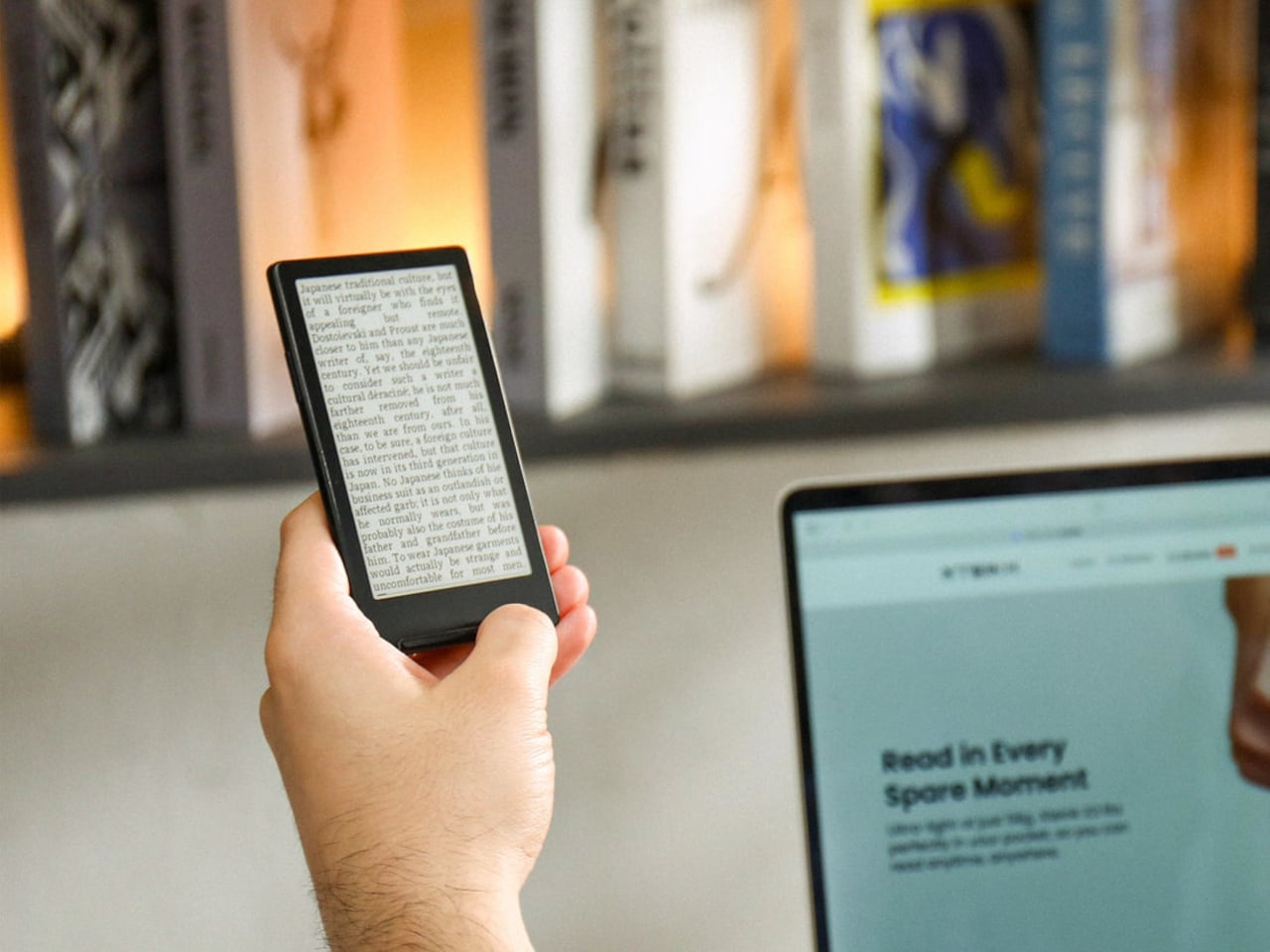
Most gadget refreshes add something: a brighter screen, an extra sensor, a higher price tag. The XTEINK X4 Classic does the opposite, and that’s precisely the point. It keeps the same 4.3-inch E Ink display, the same buttons-only interface, and the same $79 price as the original X4, while quietly upgrading the chip, the battery, and the body underneath. The result is a pocket reader that feels more refined without feeling more complicated.
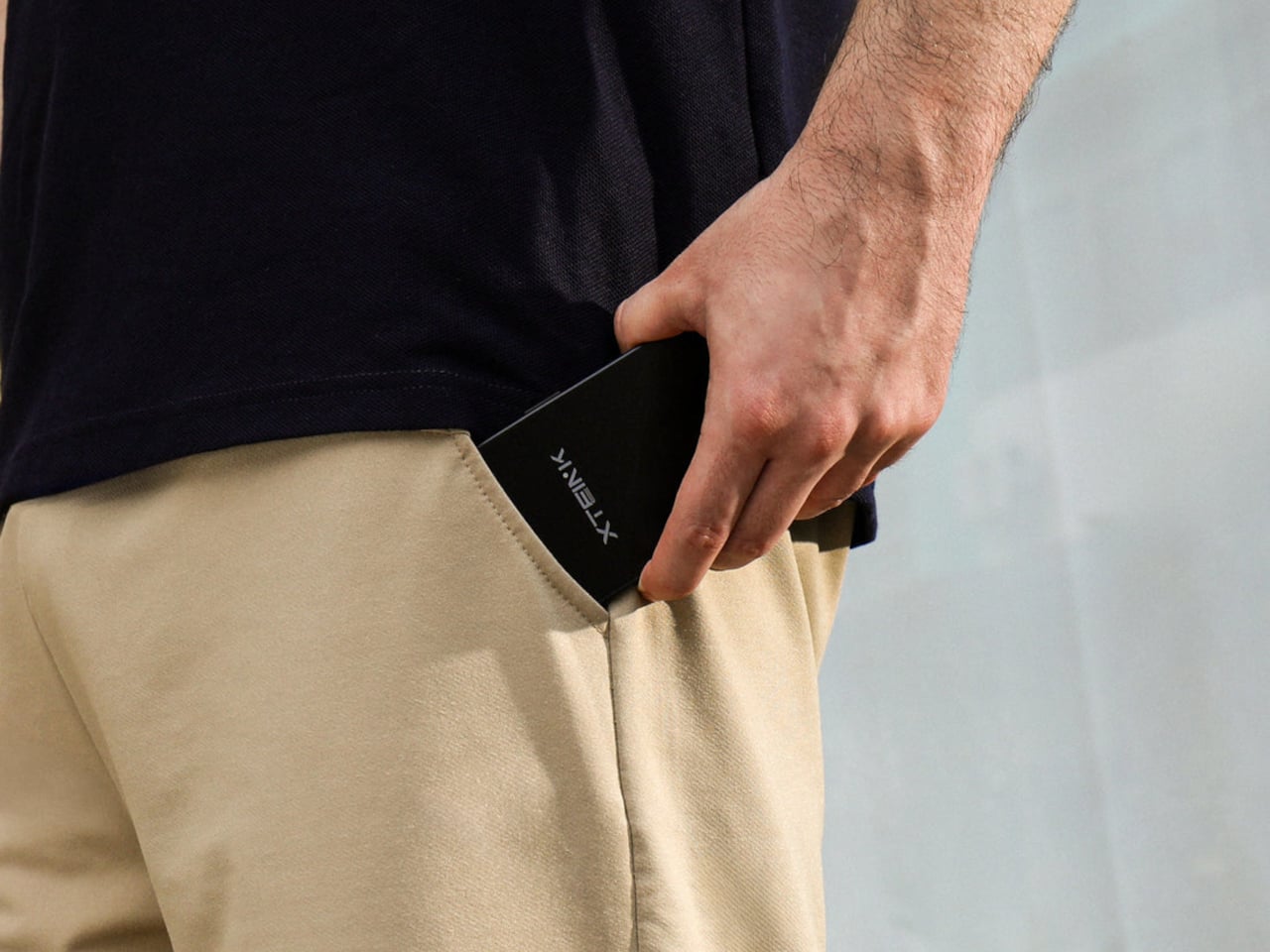
Slimming down to 4.9mm and 68g doesn’t sound dramatic on paper, but it changes how the device behaves in daily use. A magnetic backplate lets it snap onto the back of any smartphone, MagSafe included, turning your phone case into a bookshelf you never have to think about. Pull it off before a commute, let it ride along through a museum visit, or leave it clipped to a bag strap so it’s never more than an arm’s length away.
That magnetic system carries over from the original X4, but XTEINK reinforced the hold this time around, a significant upgrade more than you’d expect. A phone accessory that occasionally slides off with a slight wiggle isn’t an accessory people trust. A firmer grip means the reader stays put through a subway ride or a bike commute, exactly the fragmented pockets of time this device is built to fill.
Inside, a faster chip and a bigger battery replace the original hardware, translating into quicker page turns and a longer stretch between charges. It’s something you’d feel more than think, especially on a transatlantic flight or a week of packed commutes. Reading in short bursts stops feeling like a compromise when the device itself gets out of the way that quickly.
There’s no touchscreen here, and no front light either, and that’s a deliberate omission rather than some cost-cutting measure. Physical buttons handle every page turn, keeping your thumb in one place and your eyes on the text instead of hunting for a tap target. Anyone who’s ever fumbled a touchscreen ereader while lying in bed with the lights off knows how the tactile approach actually wins over advanced features.
The smaller 4.3-inch canvas does mean less text per page compared to a standard-sized ereader, so pages turn more often. That trade-off only works because the X4 Classic isn’t trying to replace a full-sized reader. It’s built for the reading that already happens in stolen minutes: a chapter on a train platform, a few pages before a meeting starts, a bedtime scene squeezed in before the lights go out.
What makes the X4 Classic worth paying attention to isn’t a headline feature. It’s the discipline behind leaving features out while still making the hardware measurably better. In a category where every new release tends to pile on screens, sensors, and price increases, holding the line at $79 while improving the parts that matter most is its own kind of design statement.
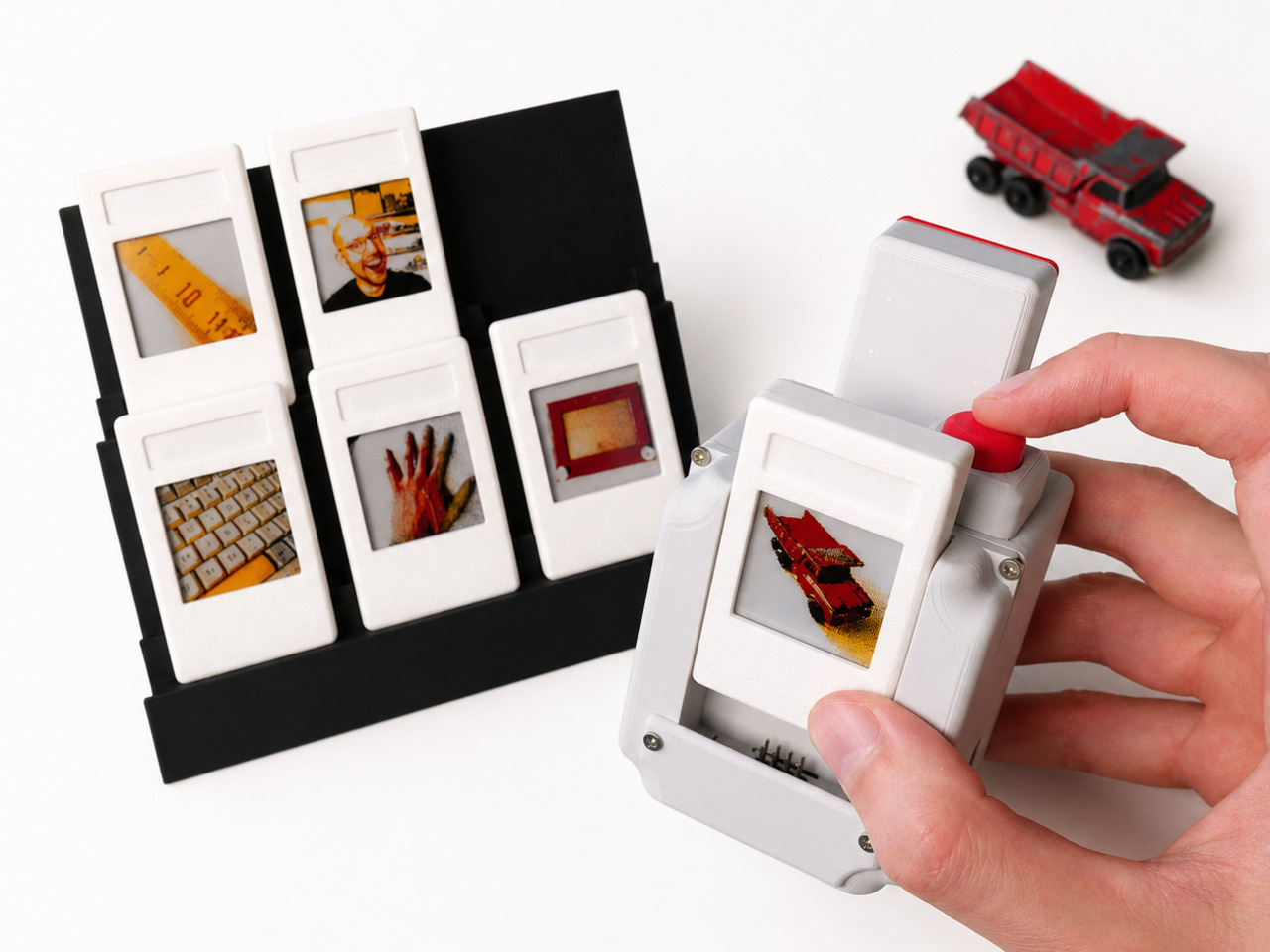
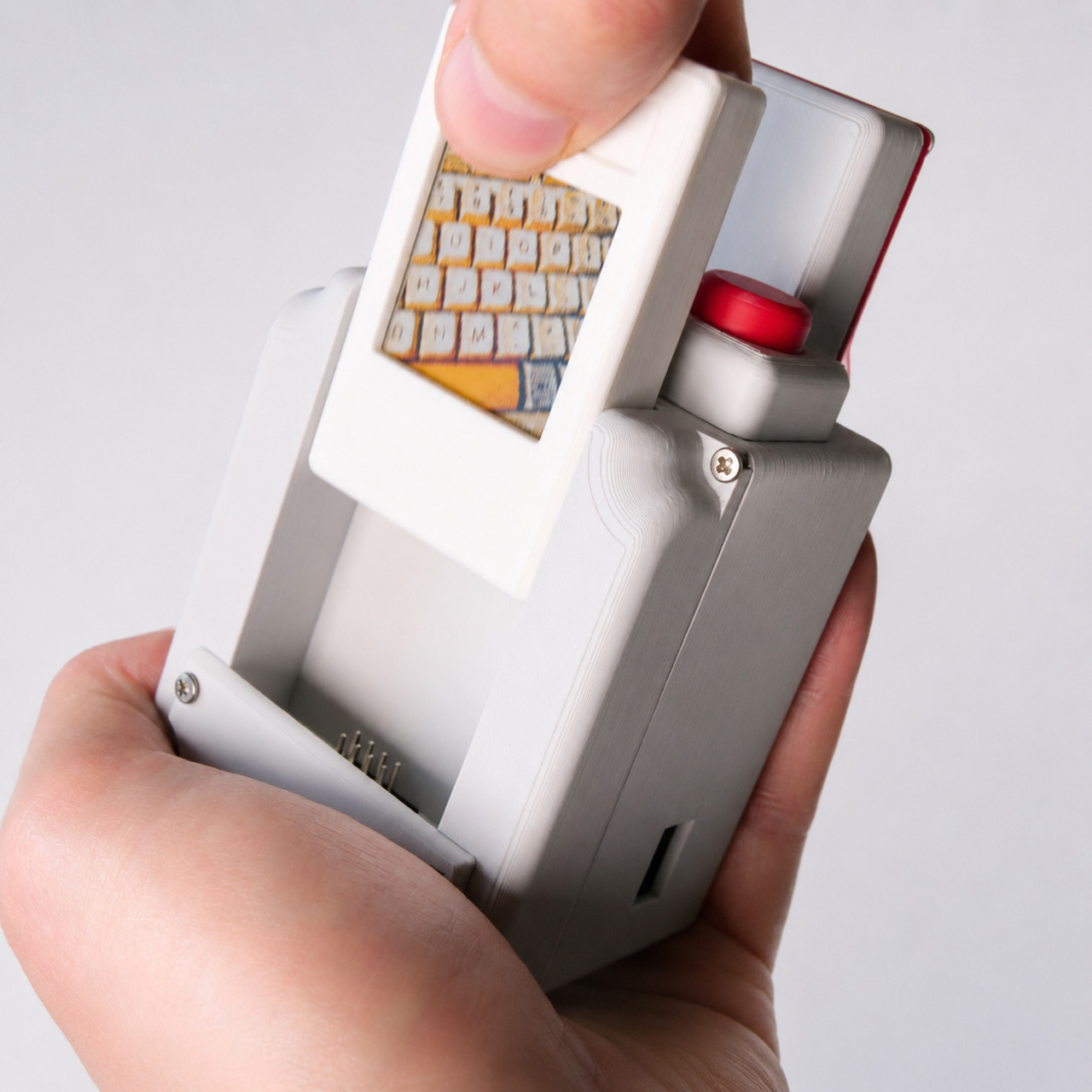
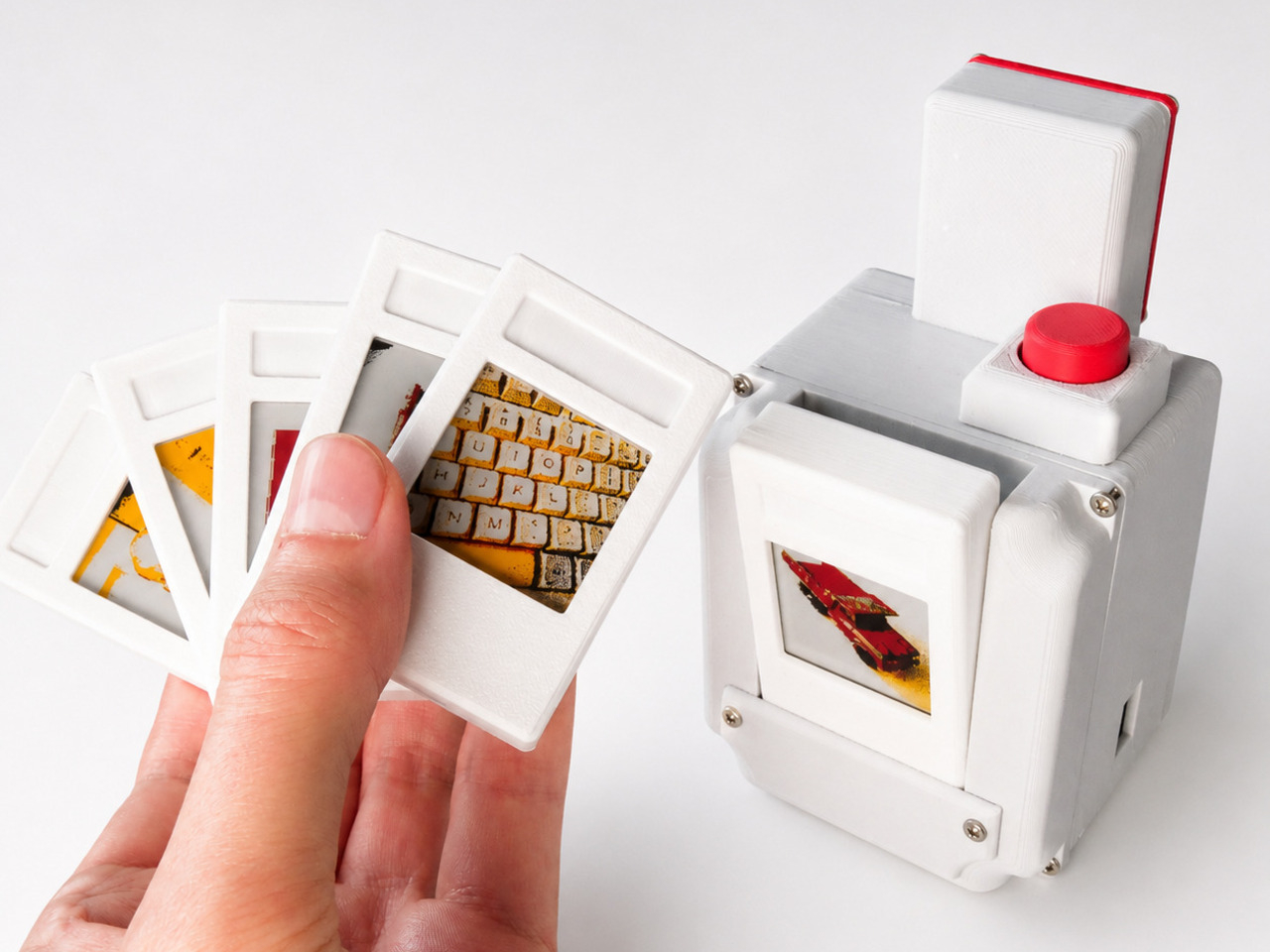
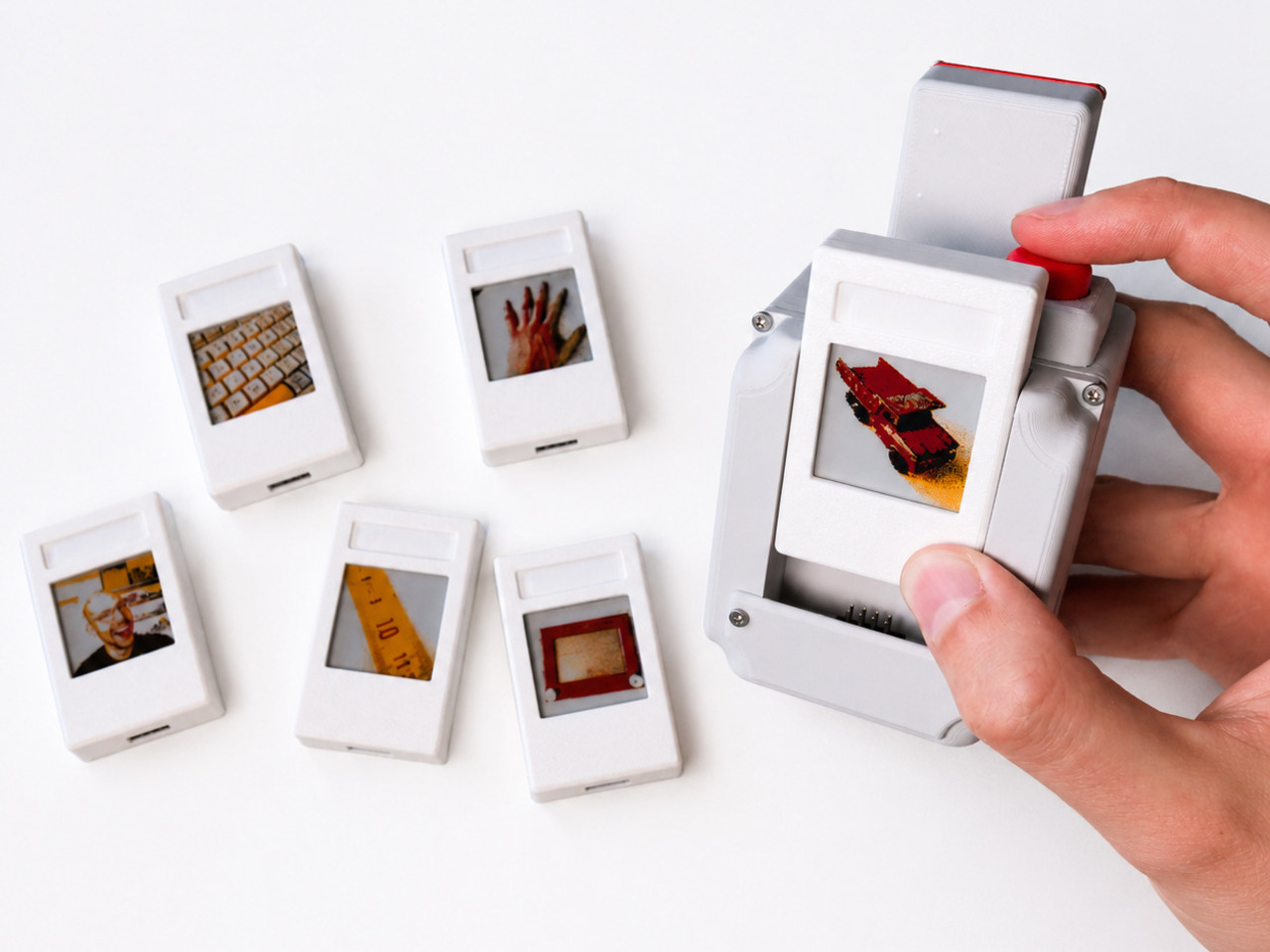
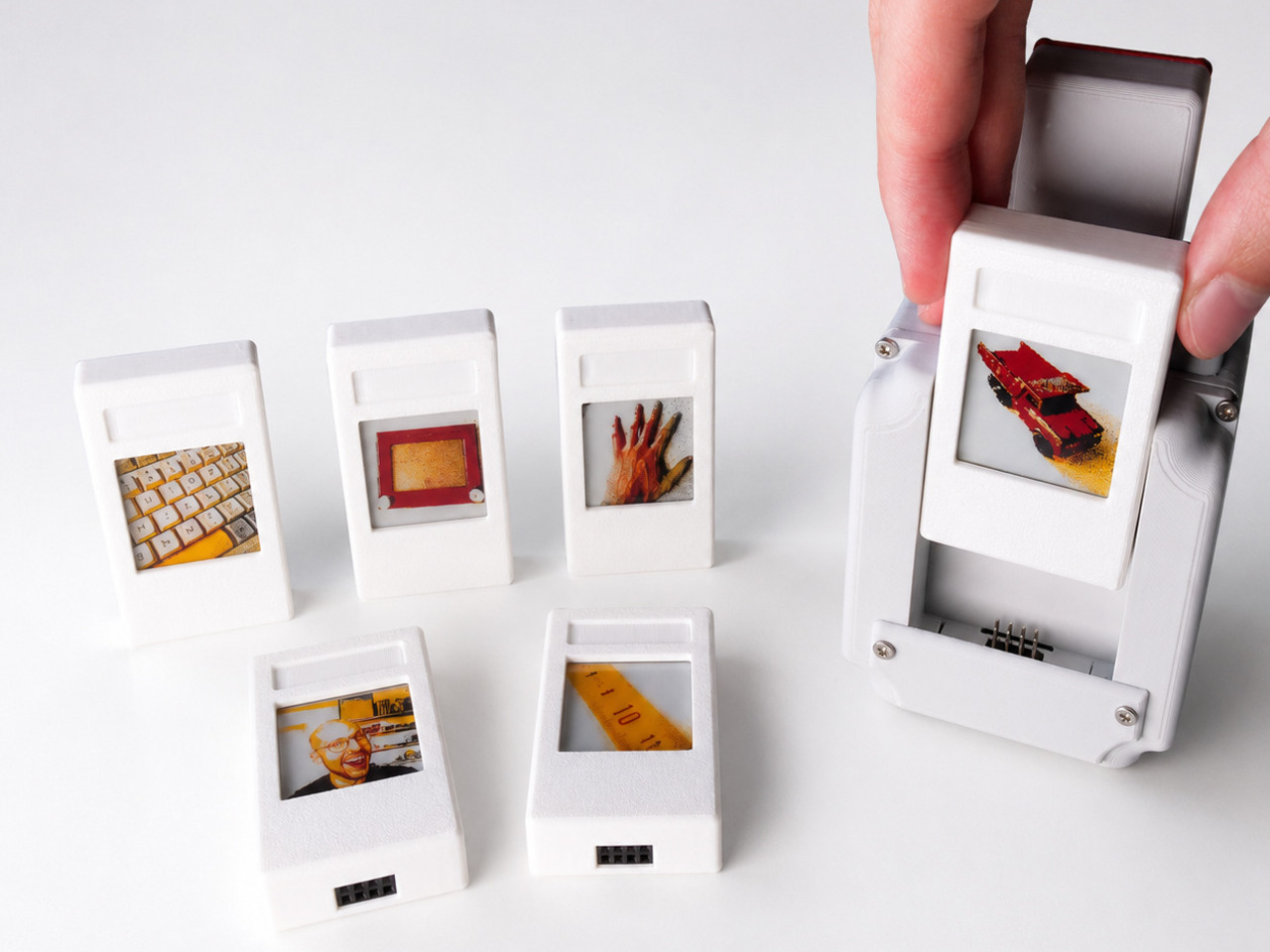
Every digital photo you’ve ever taken lives the same way, buried in a folder, scrolled past, forgotten within the hour. The Camera with Digital Film refuses that fate for its images. It captures a scene digitally, then commits that single shot to a small e-paper cartridge you can pull out, prop up, and actually look at, closer to a printed photograph than anything living inside a phone.
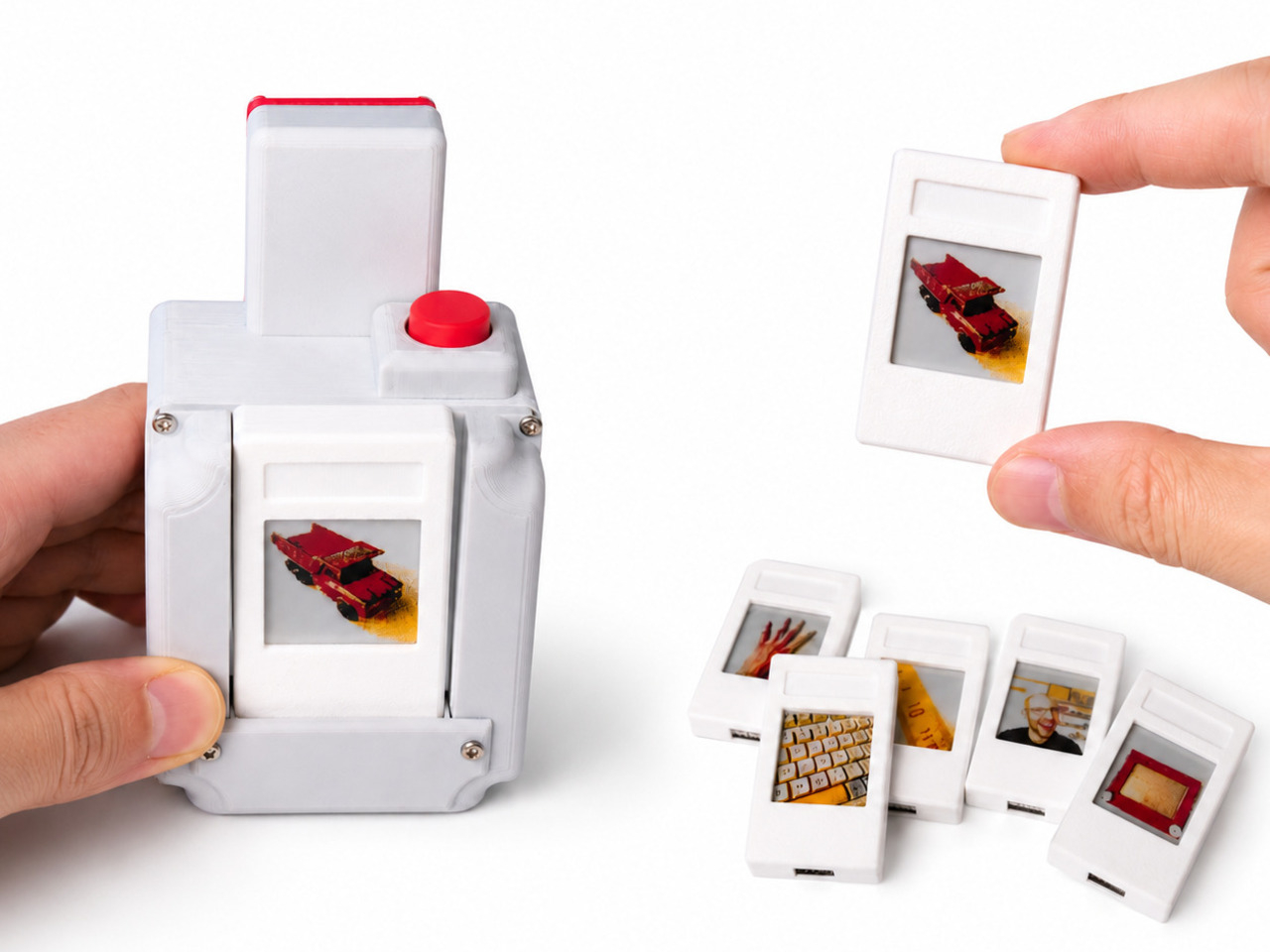
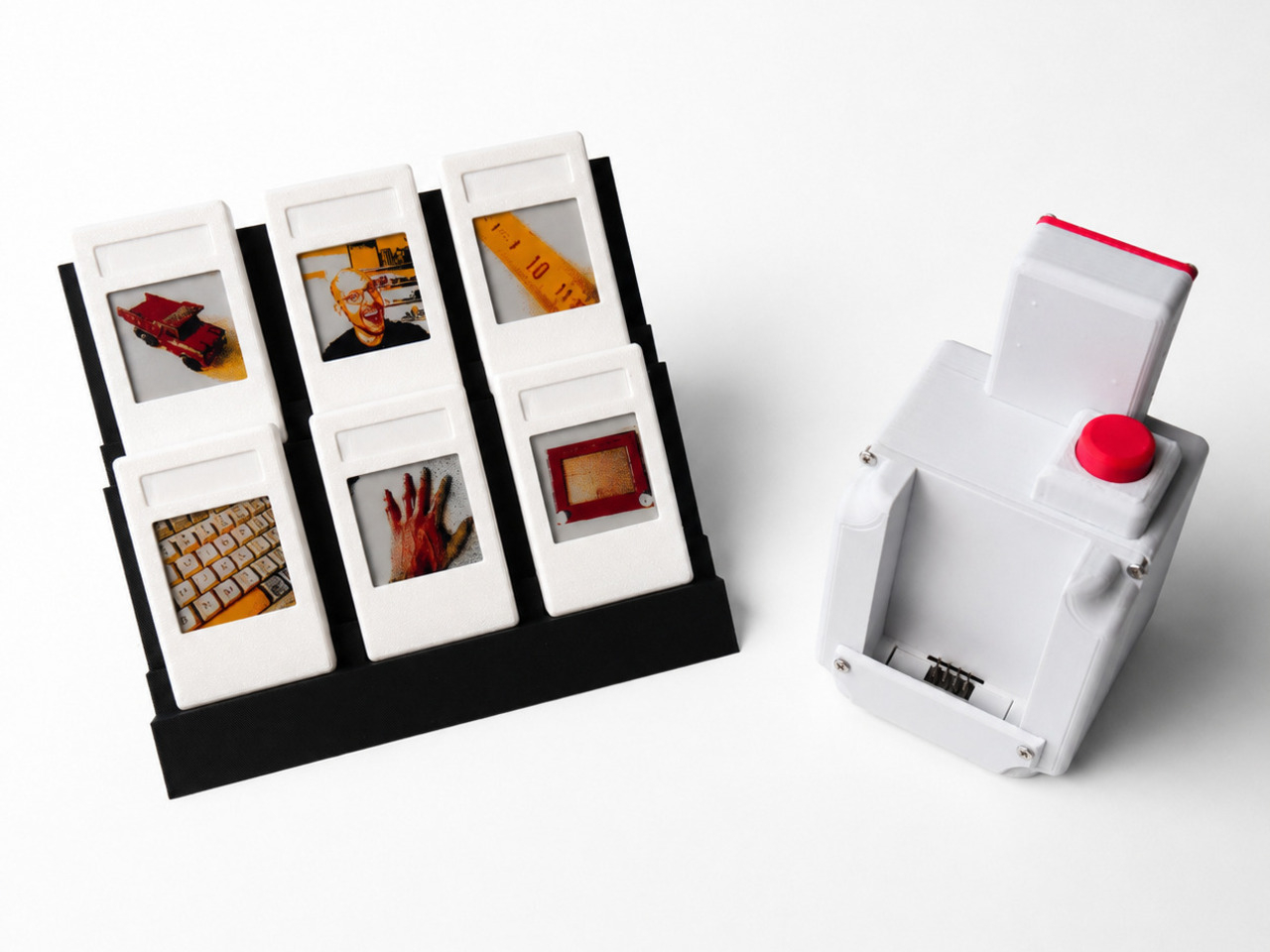
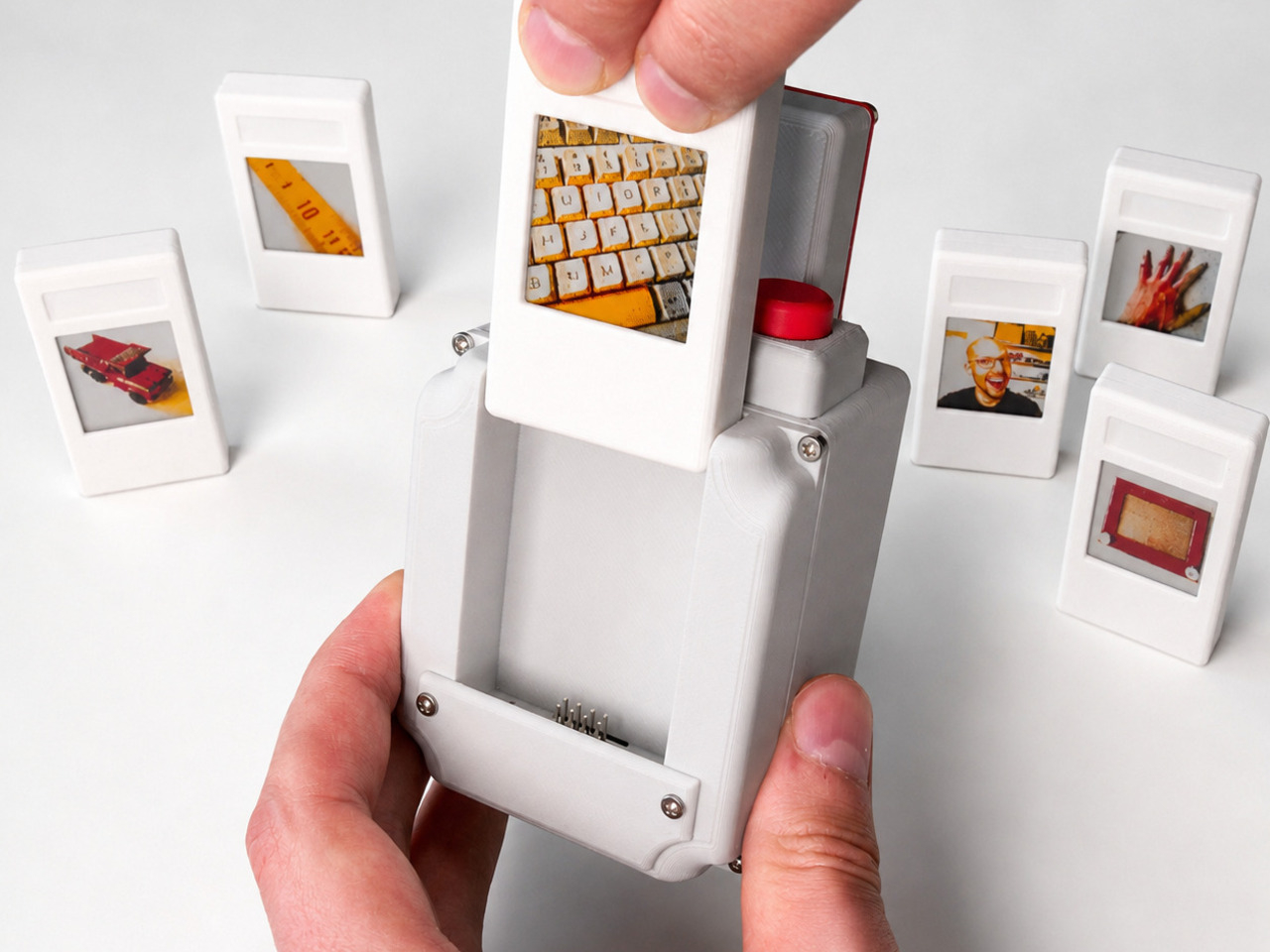
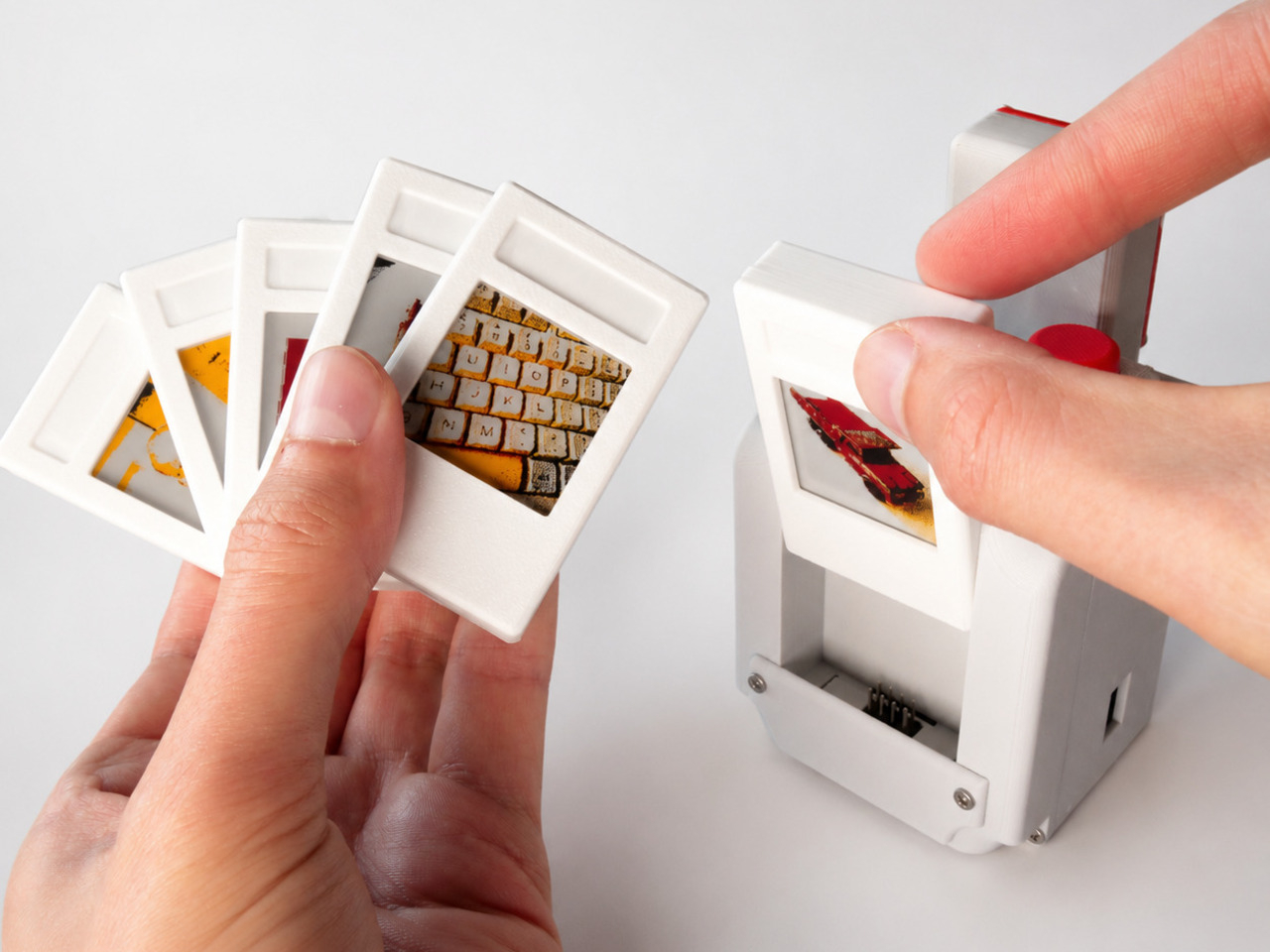
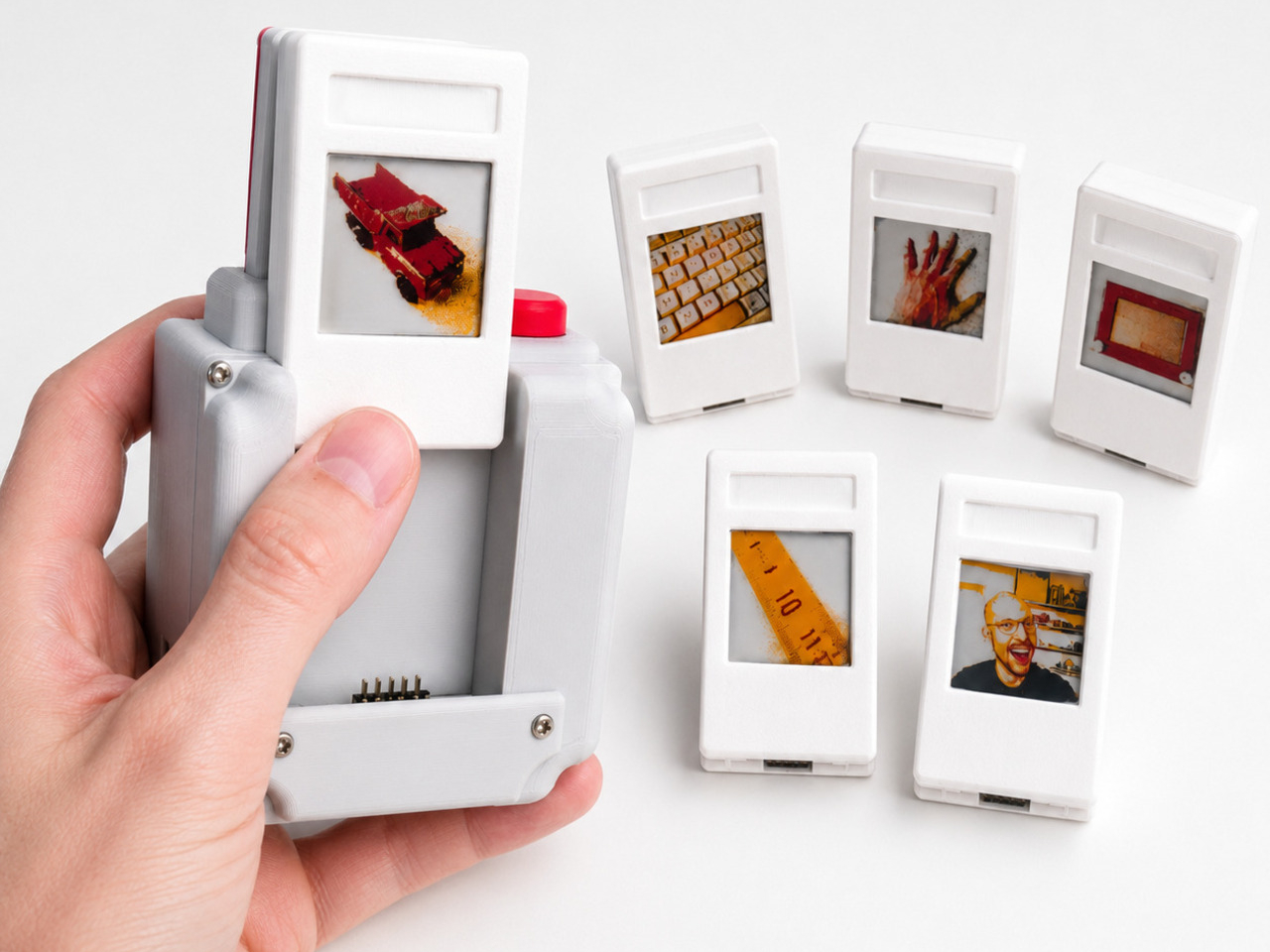
The trick sits in the cartridge itself. Slide it into a slot at the top of the boxy 3D-printed body, press the shutter, and a Raspberry Pi with a 5-megapixel camera module does the capturing. The e-paper screen inside that cartridge then flickers and settles into a finished image built from just four colors, black, white, red, and yellow, giving every photo the flattened, graphic quality of a screen print rather than a snapshot.
That four-color limit isn’t a technical shortcoming so much as a deliberate constraint. Before the image locks in, a script reduces the raw capture down to that palette while letting contrast, brightness, saturation, sharpness, and dithering get tuned until the picture actually looks intentional on a screen that small. The result rewards patience over speed, closer to darkroom fussing than instant gratification.
Pull the cartridge free afterward, and the photo doesn’t disappear. E-paper holds its image even with the battery removed, so that little rectangle becomes a physical object you can lean against a monitor or stick to a fridge door, exactly the kind of permanence chemical film offered and most digital cameras never bothered to replicate. Slide it back in later, though, and the same cartridge accepts a brand new shot, erasing the old one entirely.
That’s the real design move here: film that behaves like film until you decide otherwise, then behaves like a hard drive instead. No single cartridge is precious in the way a Polaroid frame is precious, since nothing is technically lost by overwriting it, yet each one still holds its picture with enough physical weight to feel worth keeping around for a while first.
The build itself skips screws entirely, relying on header pins to hold the cartridge snug against its contacts, with a small grab tab added later so removing a used cartridge doesn’t turn into a fight. It’s a minor detail, but one that matters for a device whose entire personality depends on how satisfying that swap feels in the hand, less like ejecting a memory card and more like pulling a photo out of a machine meant to produce them.
There’s a quiet argument buried in this project about what digital photography gave up along the way. Endless storage solved scarcity but erased the ritual of a photograph actually existing somewhere outside a screen. This camera doesn’t try to out-spec anything on the market. It just asks what happens when a picture has to earn a place in a slot before it’s allowed to disappear.
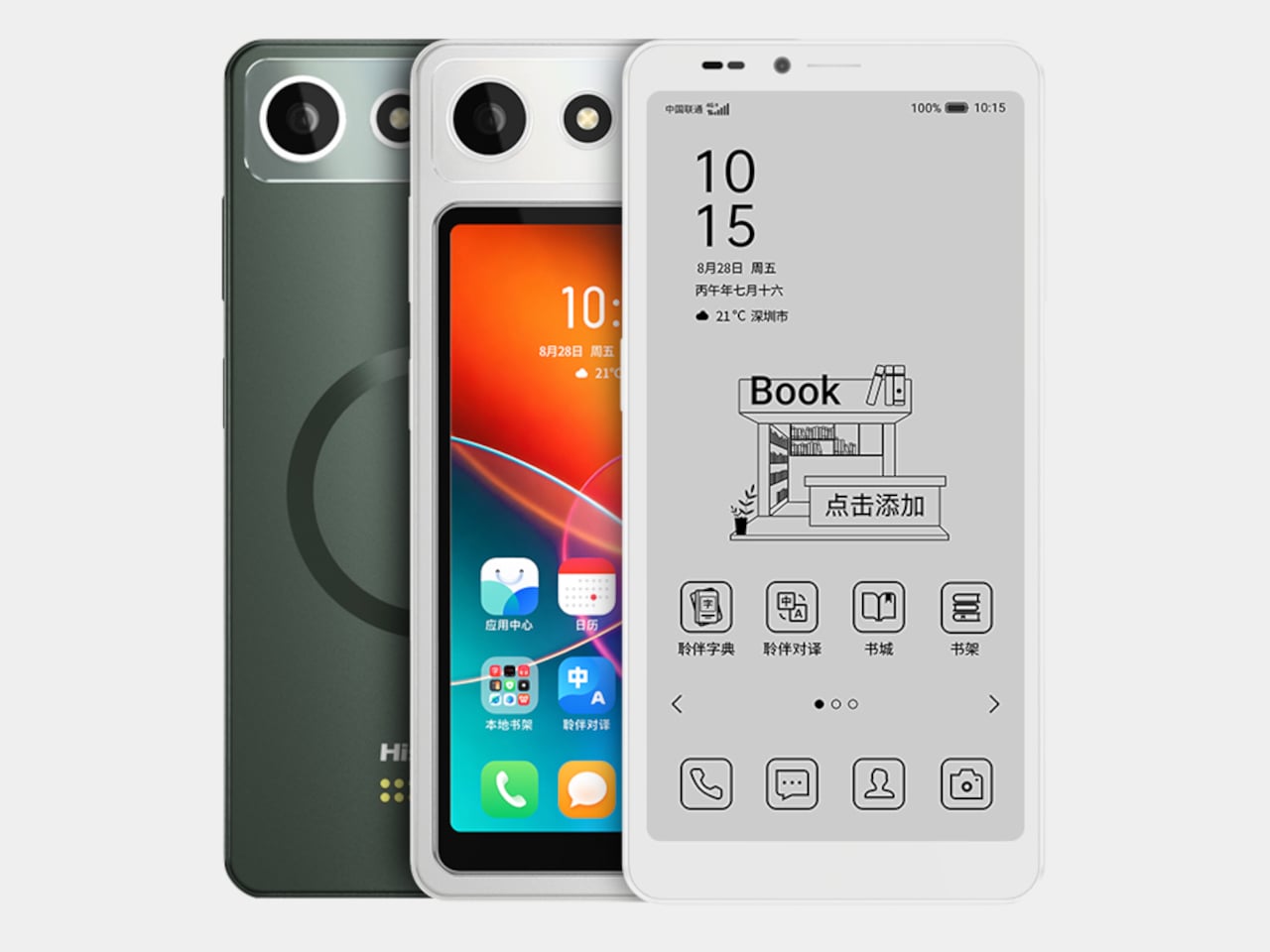
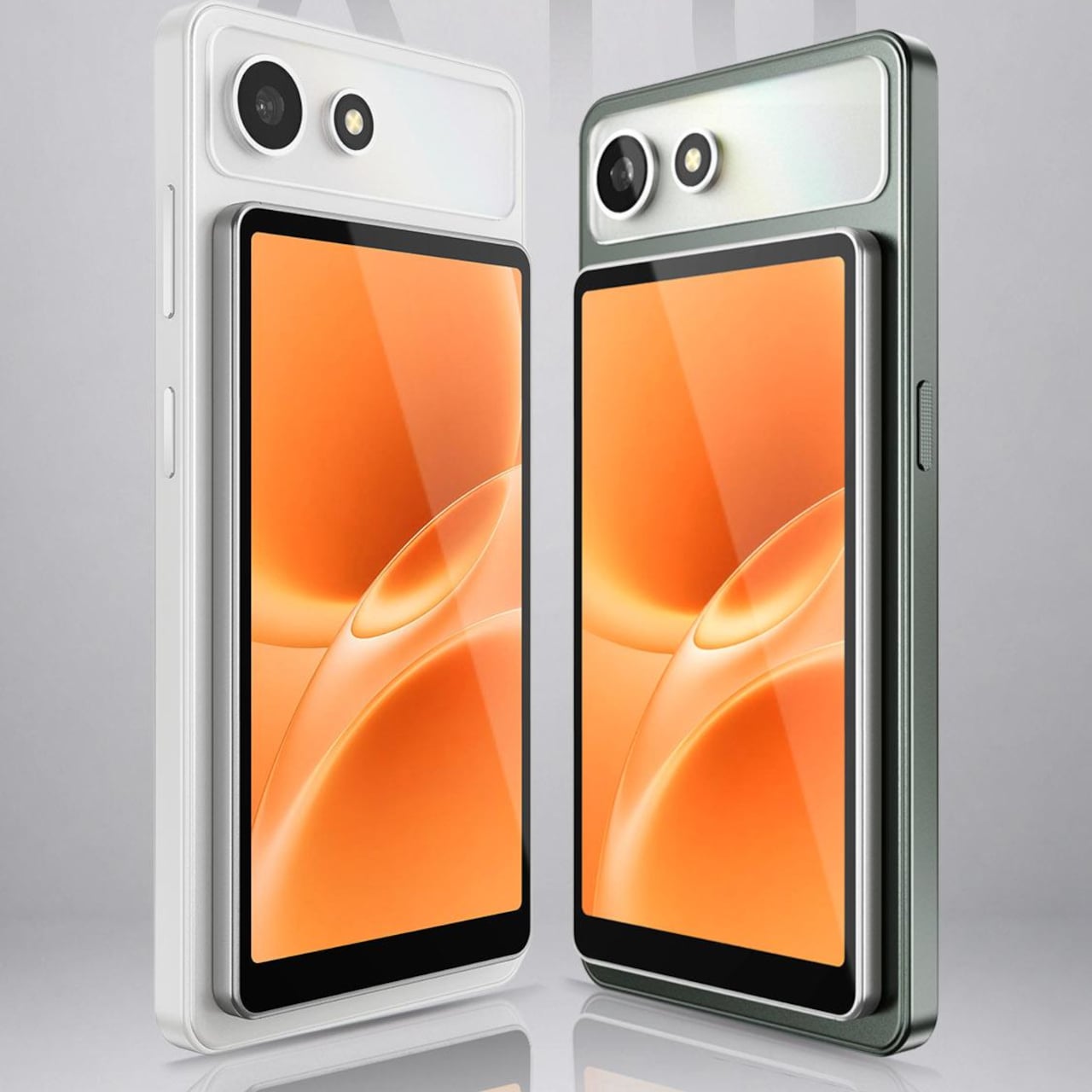
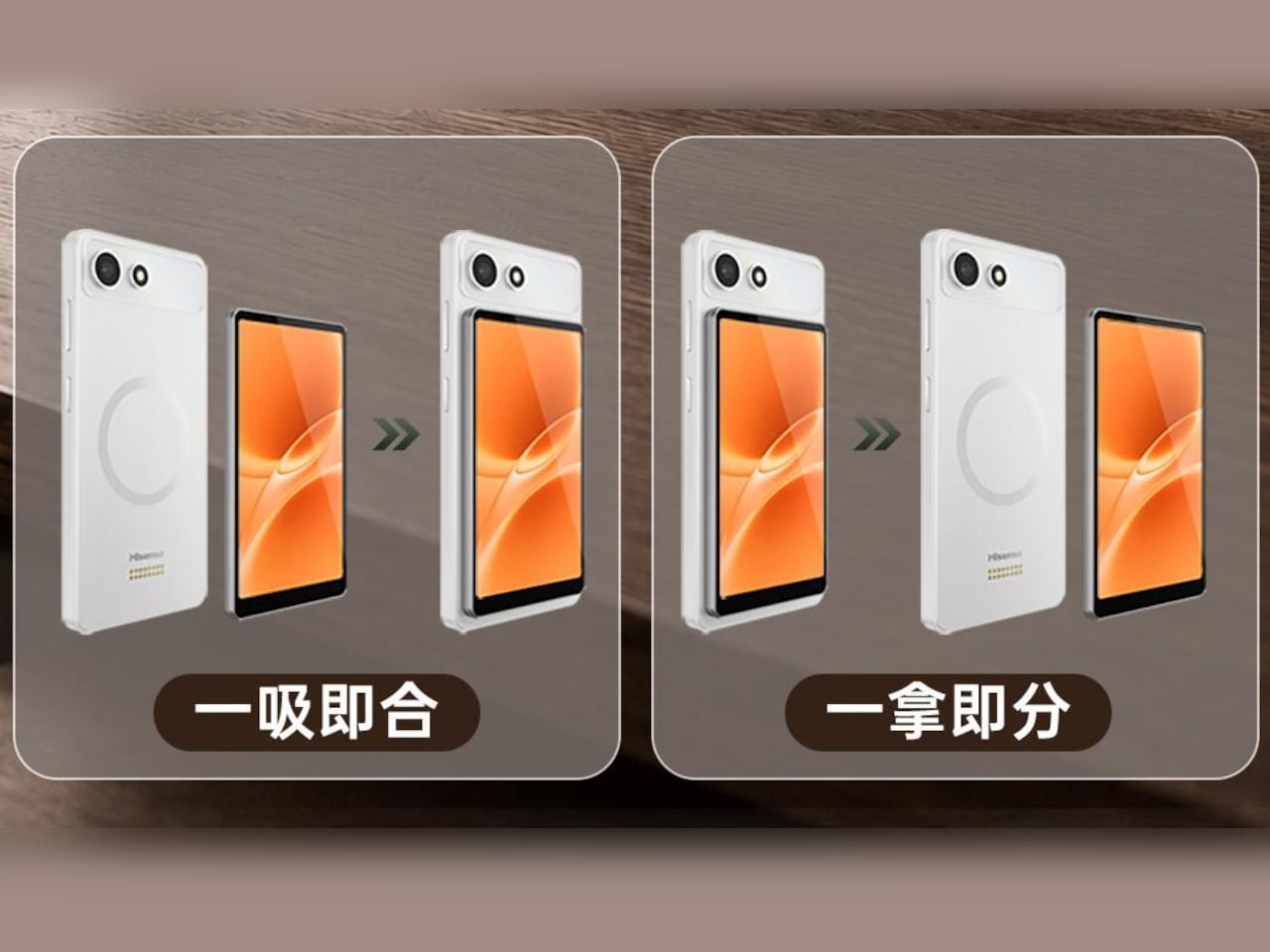
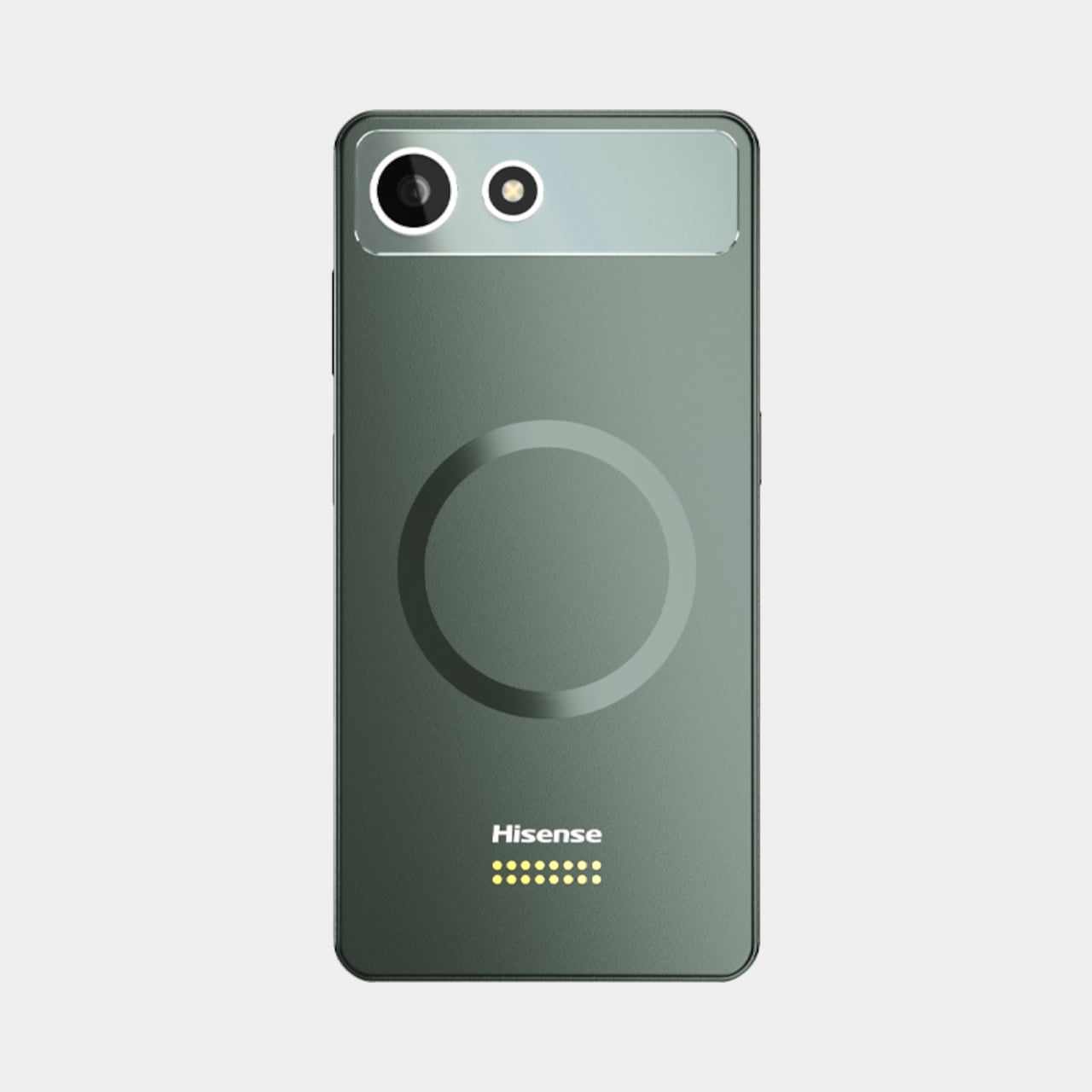
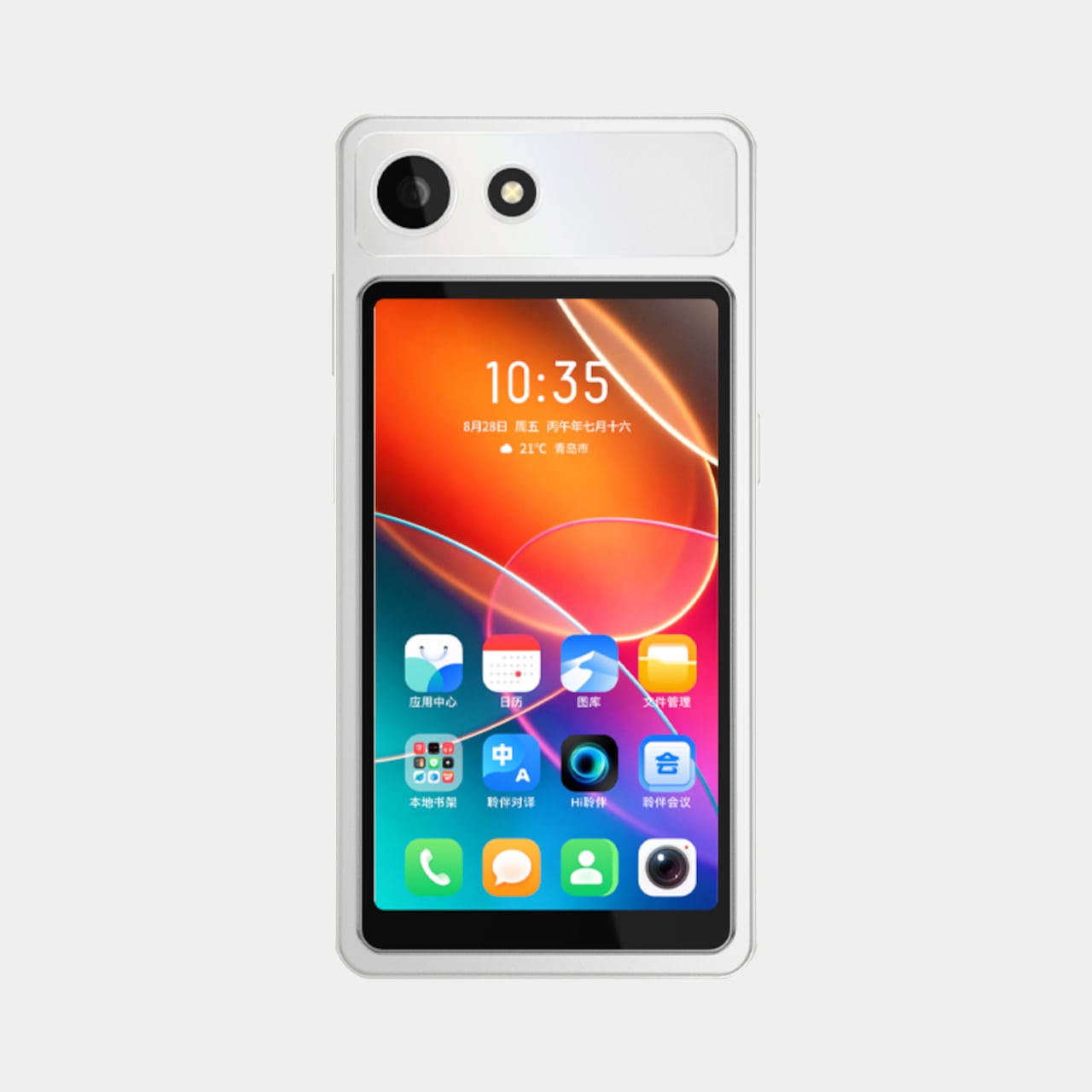
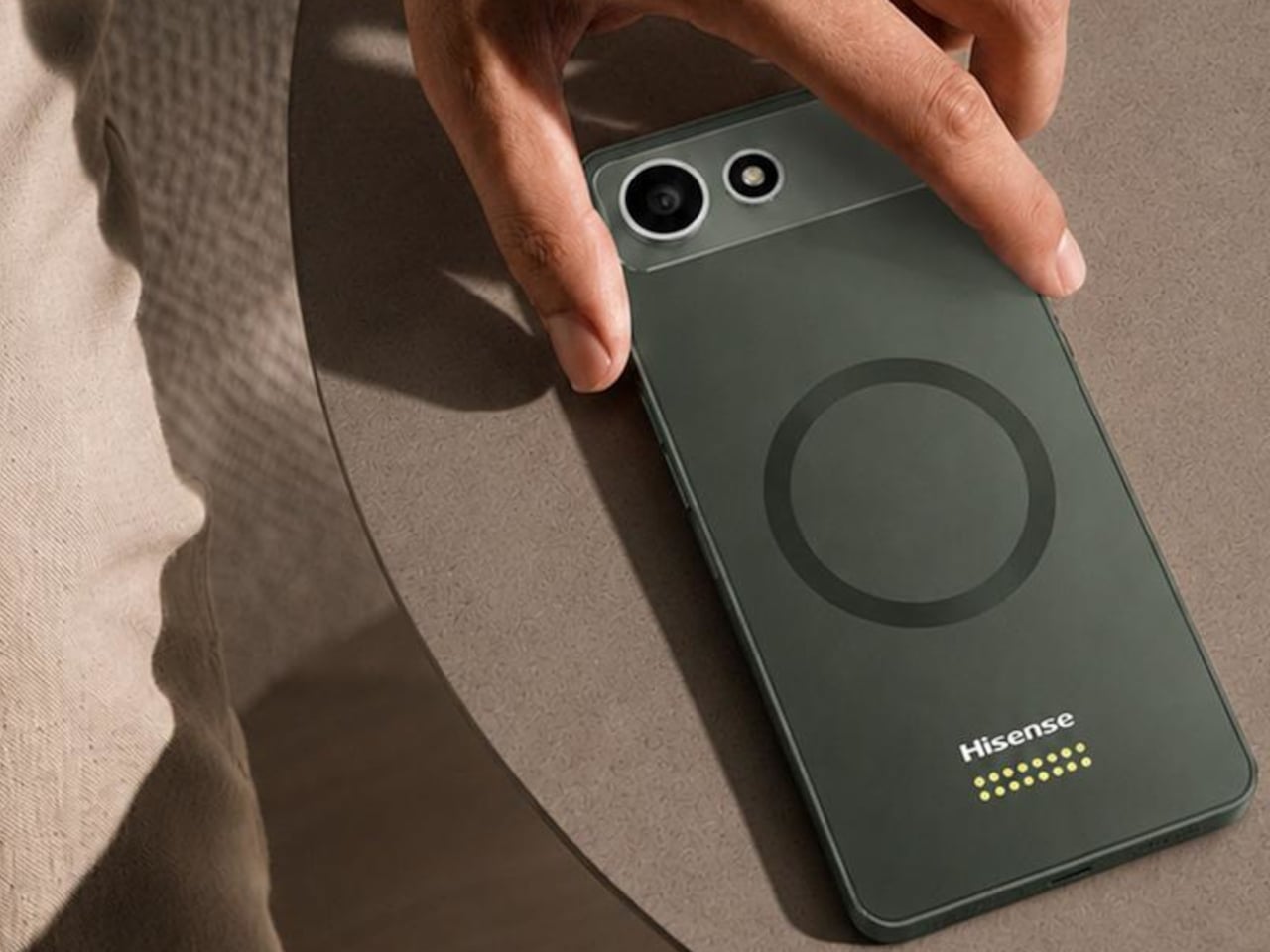
Every smartphone screen is a compromise, built to do everything reasonably well and nothing perfectly. The Hisense A10 Ultra rejects that premise outright. Instead of one panel stretched thin across every task, it pairs a 6.13-inch E Ink display with a 4.96-inch color touchscreen that clips onto the back magnetically, then walks away again the moment you don’t need it.
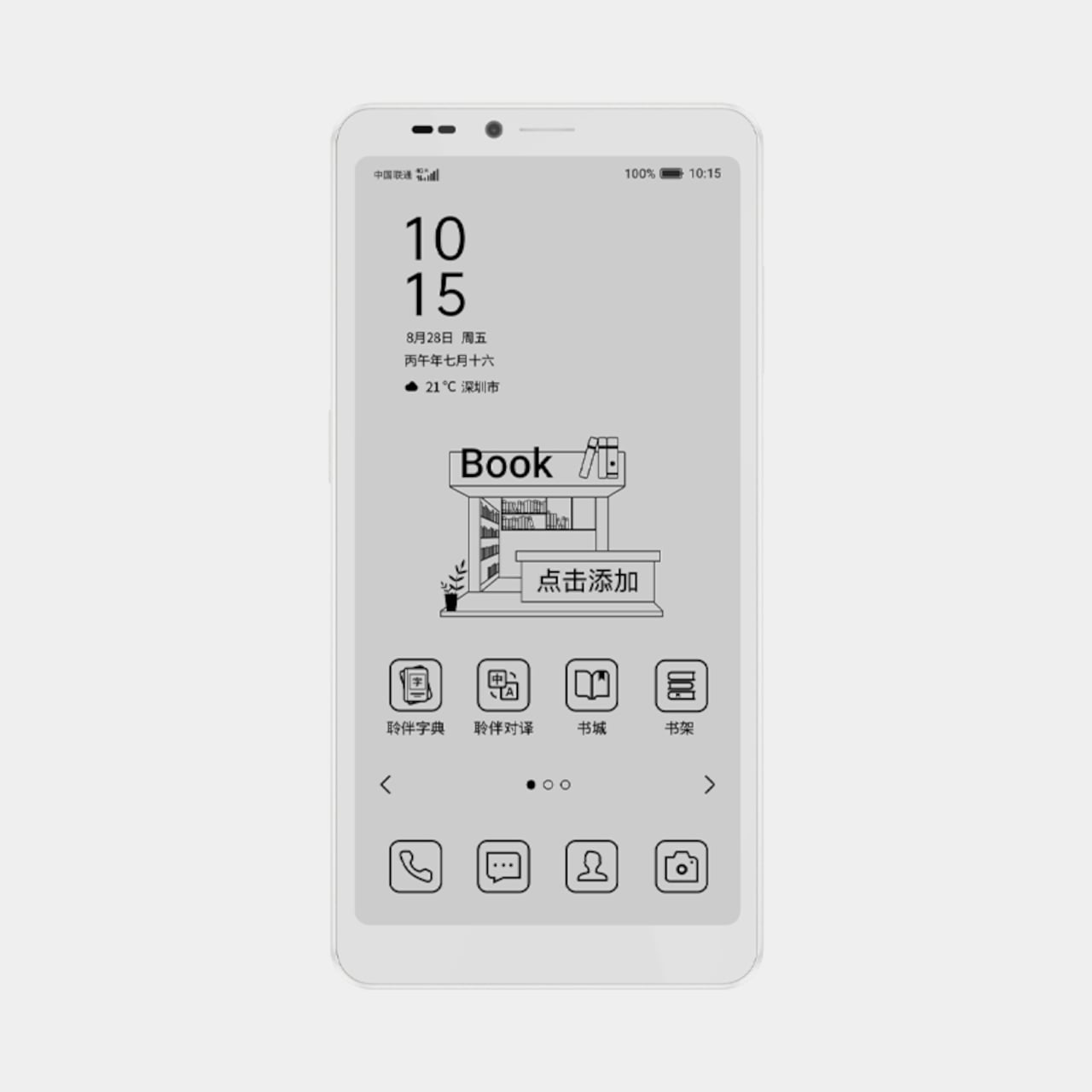
The E Ink layer is the phone’s permanent identity, a 300 PPI Carta 1300 panel that renders text with the same paper-like calm as a dedicated e-reader. A 36-level front light shifts between warm and cool tones without flickering, so a page read at noon and one read at midnight both stay comfortable on the eyes. Nothing about this half of the phone asks for your attention beyond what you came to read.
Snap the color module onto the back, held by magnetic pogo pins, and the same device suddenly handles video, maps, and camera framing without fighting the E Ink panel’s slower refresh. A dedicated T2000 controller chip in the main display keeps scrolling responsive, but color and motion still belong to the LCD module. The two screens divide labor instead of splitting attention, which is a distinction worth sitting with.
Imagine spending a long commute finishing a chapter on the E Ink side, then arriving at a destination and needing turn-by-turn directions or a quick selfie. Rather than tolerating a grayscale map or waiting through refresh lag, the color module goes on for exactly as long as the task requires. Afterward, it comes right back off, and the phone returns to its lighter, quieter default state around 190g.
That detachability is the real design statement here. Most phone makers treat a second screen as permanent architecture, bolted in and powered whether you use it or not. Hisense instead treats it as optional equipment, closer to a lens you’d attach to a camera than a component soldered into a chassis. The color panel exists for exactly the moments that call for it, then disappears when it doesn’t.
An “Ink Smart Button” on the side backs this up practically, letting you switch modes, wake an assistant, or force a full refresh without digging through menus. Paired with a Qualcomm QCM6690 processor, up to 12GB of RAM, and a 4,000 mAh battery, the hardware underneath doesn’t feel like an afterthought bolted onto a gimmick. It reads more like a phone that happens to know when to get out of its own way.
There’s something clarifying about a device willing to admit that no single screen does everything well. The A10 Ultra doesn’t try to hide that tension behind clever software or a single do-it-all panel. It just hands you the two halves separately and lets you decide, task by task, which one earns a place on your phone that day.
Screens have been the unresolved tension at the center of productivity for years. LCD and OLED displays do everything well except the one thing that matters most during a long reading or writing session: they don’t stop being screens. The brightness, the blue light, and the glare accumulate into eye fatigue that most people simply accept as part of working on a device all day. E Ink tablets have addressed that problem, but historically at the cost of color and app freedom.
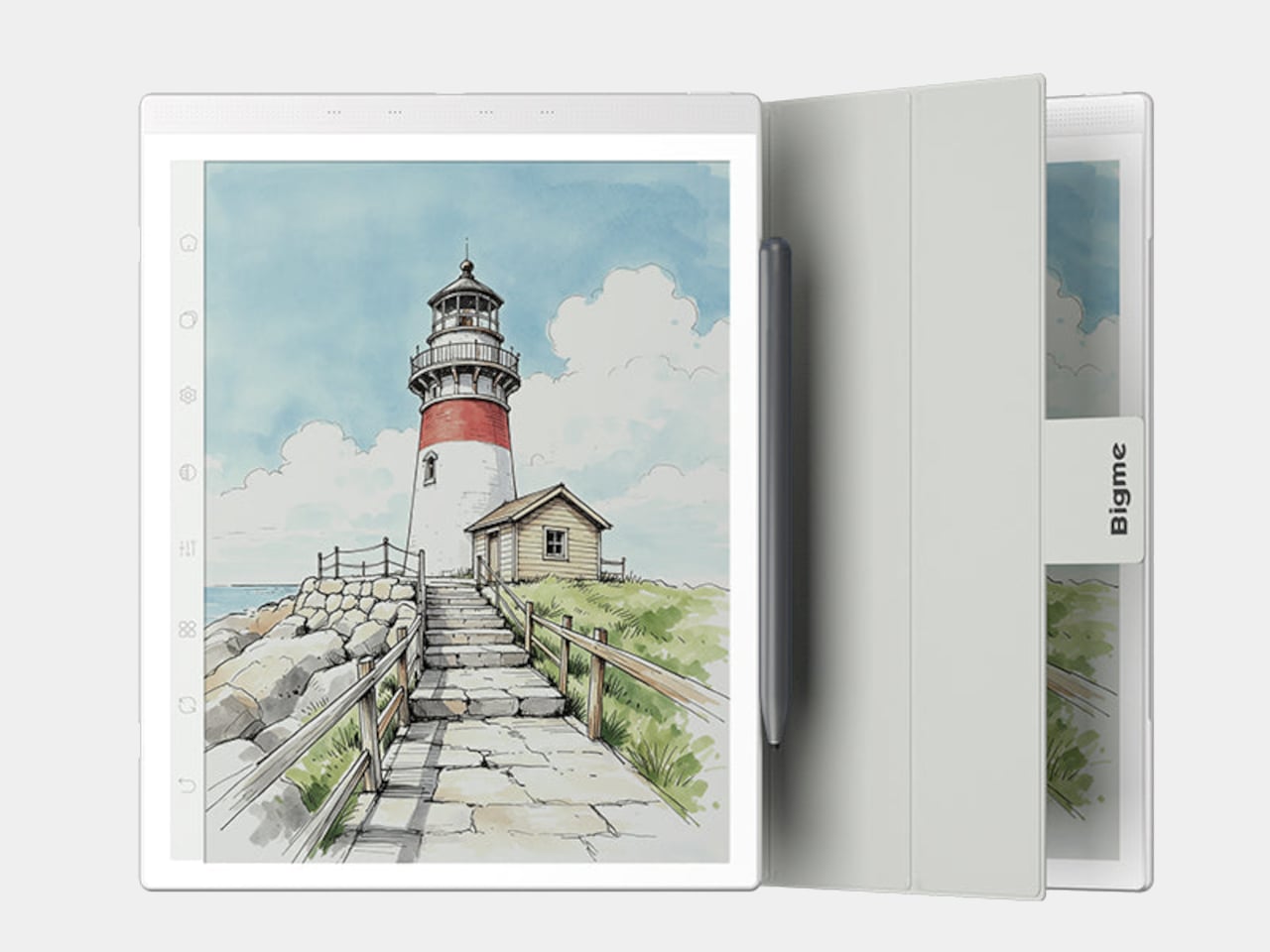
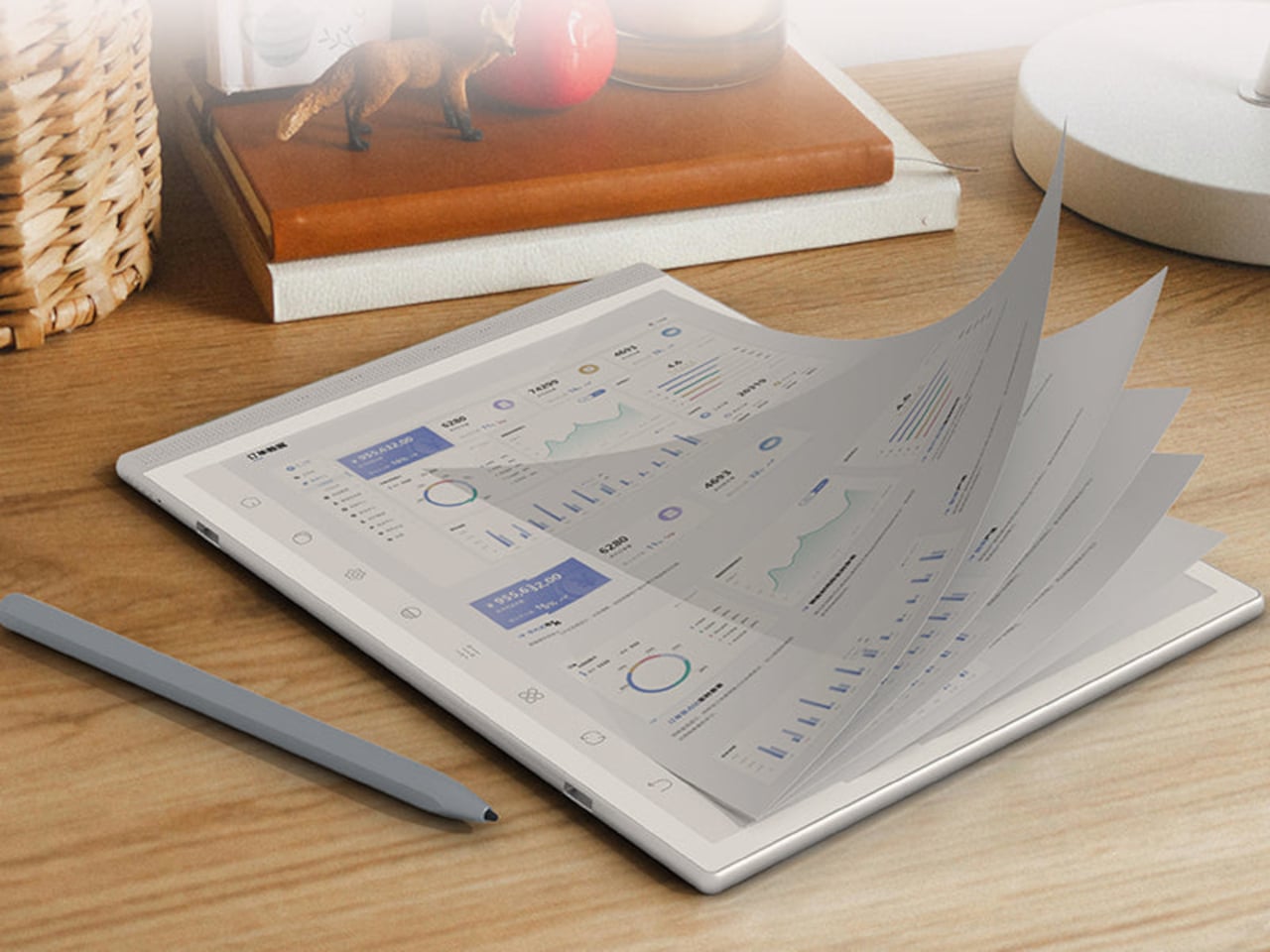
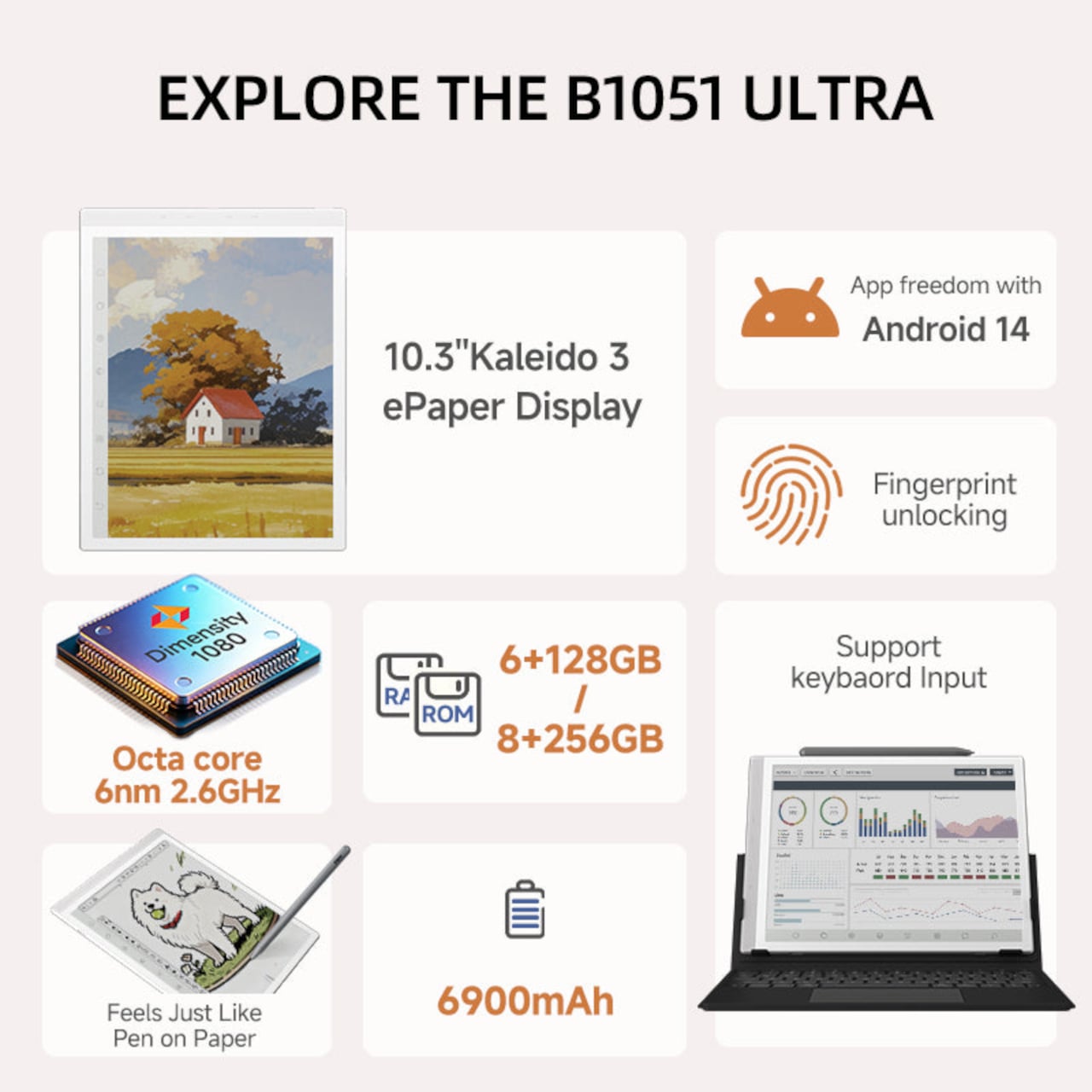
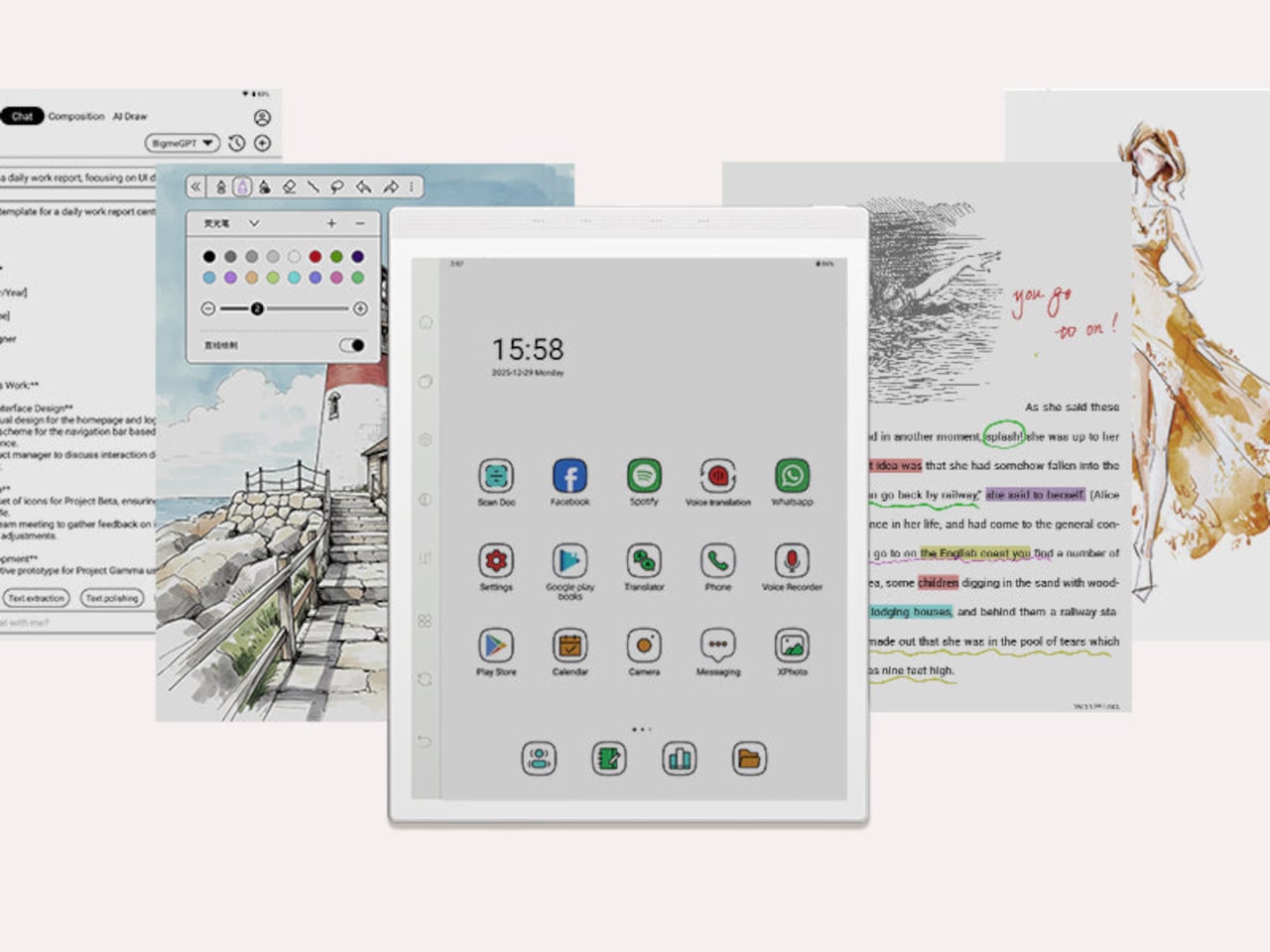
The Bigme B1051 Ultra is built on the premise that none of those trade-offs need to be permanent. Its 10.3-inch Kaleido 3 E Ink display is color-capable and glare-free, with an adjustable front light covering 36 levels of brightness in both warm and cool tones. The result is a surface that handles illustrated documents, annotated PDFs, and color-coded spreadsheets without sending the wearer reaching for eye drops an hour in.
Color E Ink of any generation has historically been limited in brightness and saturation compared to traditional displays, and the Kaleido 3 panel doesn’t fully close that gap. What it does deliver is a dramatically more comfortable reading experience for long sessions, particularly in well-lit environments where conventional displays produce the most glare. For documents, annotations, and notes, the color rendering is more than sufficient to make the information readable without eye strain.
The hardware underneath is capable enough to run Android 14 without compromise. A MediaTek Dimensity 1080 octa-core chip running at 2.6GHz with up to 8GB of RAM handles third-party apps from Google Play without the sluggishness that plagued earlier E Ink Android devices. Spotify works. WhatsApp runs. The Google Play Store is fully accessible. A 6,900mAh battery supports the kind of all-day use the form factor implies.
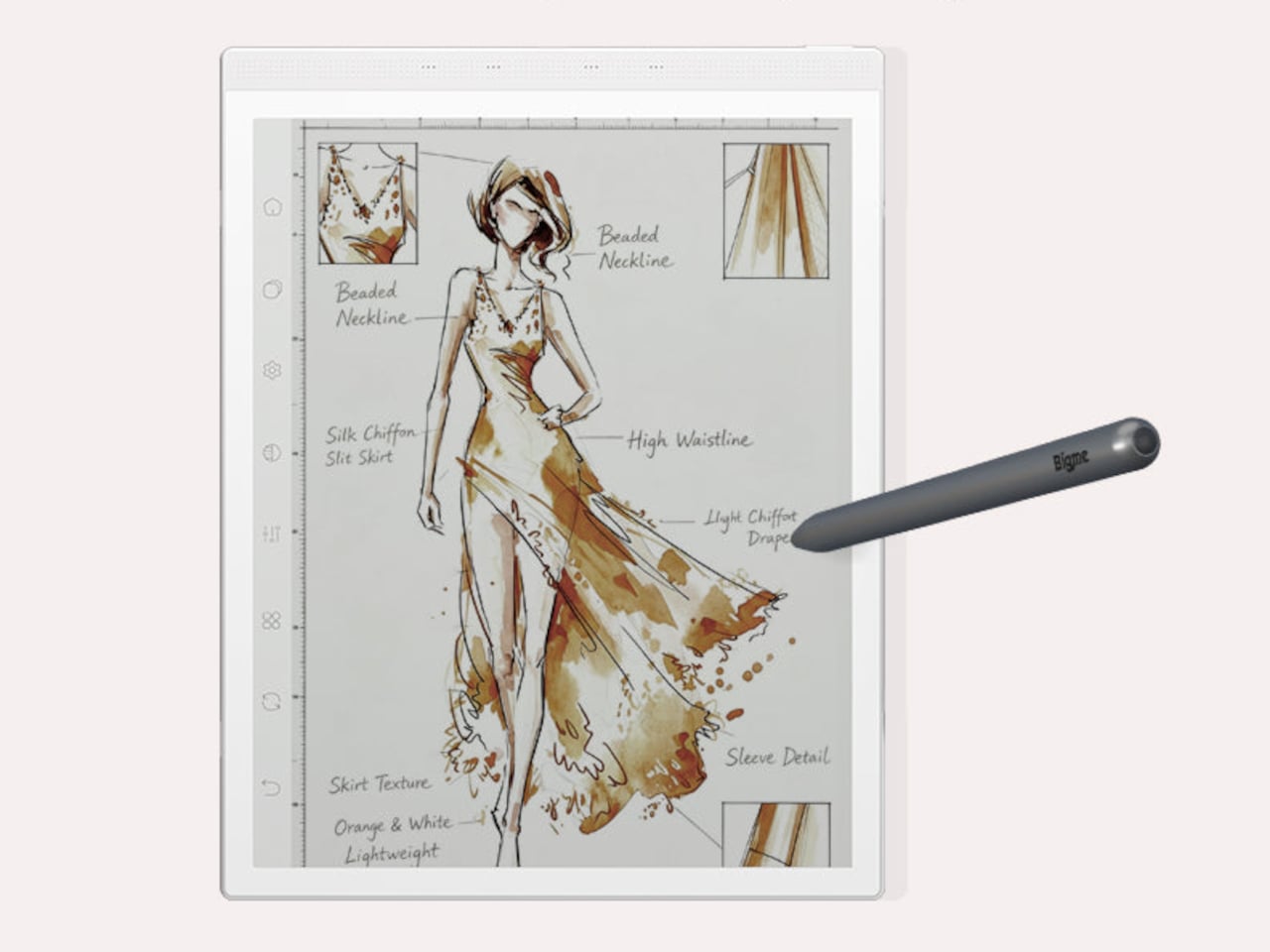
Writing and sketching feel natural on the included stylus, which offers 4,096 levels of pressure sensitivity and a surface friction designed to replicate paper. An annotated legal document, a fashion sketch with labeled callouts, or a watercolor illustration all sit on the display with the same kind of grainless, paper-like quality. Bigme’s auto ghosting elimination technology handles the visual artifacts that have historically made fast stylus input on E Ink screens feel laggy or muddy.
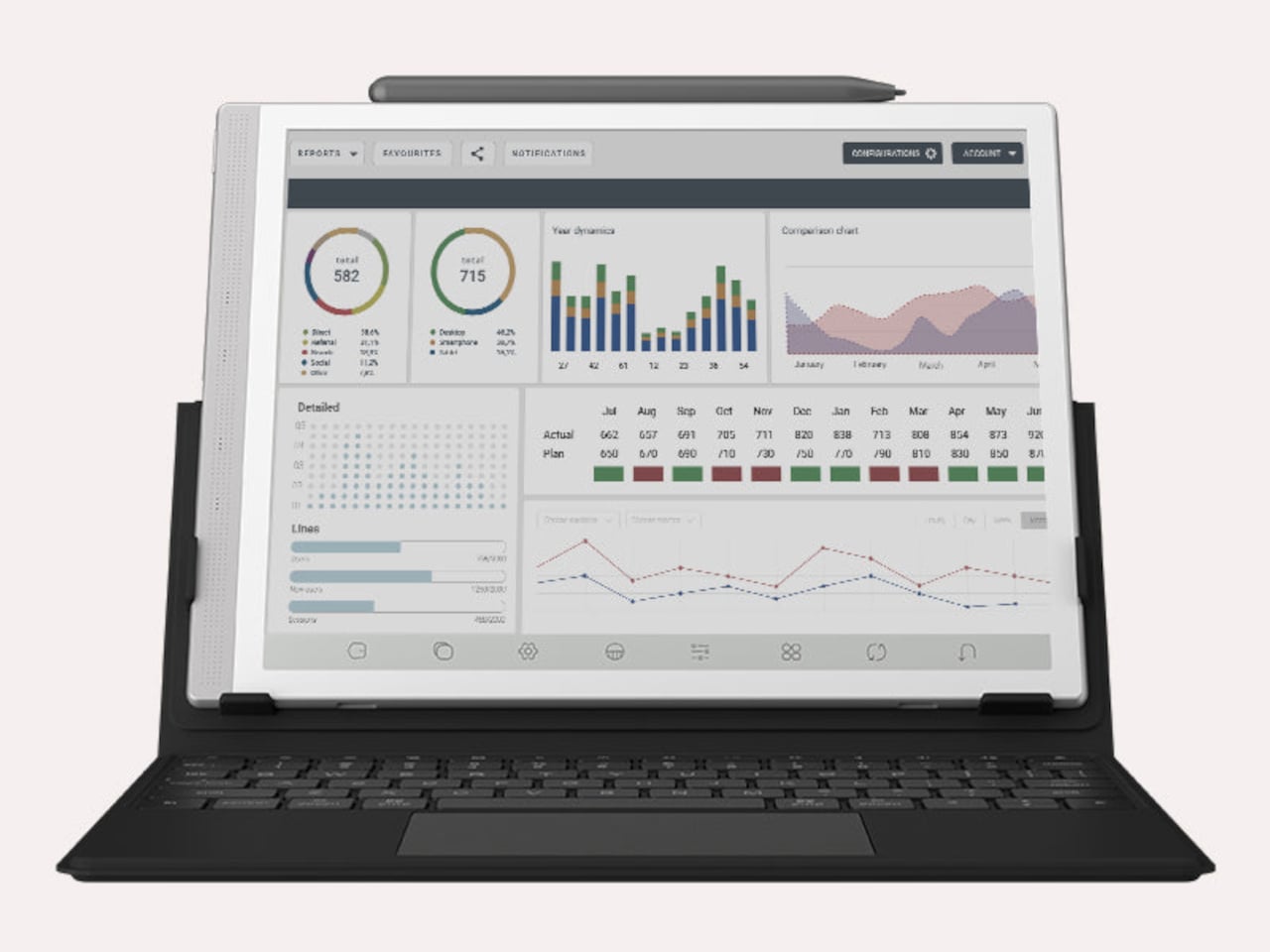
The optional keyboard folio cover turns the B1051 Ultra into something that reads more like an e-paper laptop. A trackpad is built into the keyboard, and the folio supports dual-angle positioning for desk and lap use. Connecting to an external keyboard and looking at a dashboard of charts and figures across the full 10.3-inch surface is a different experience from doing the same work on an LCD that competes with every other light source in the room.
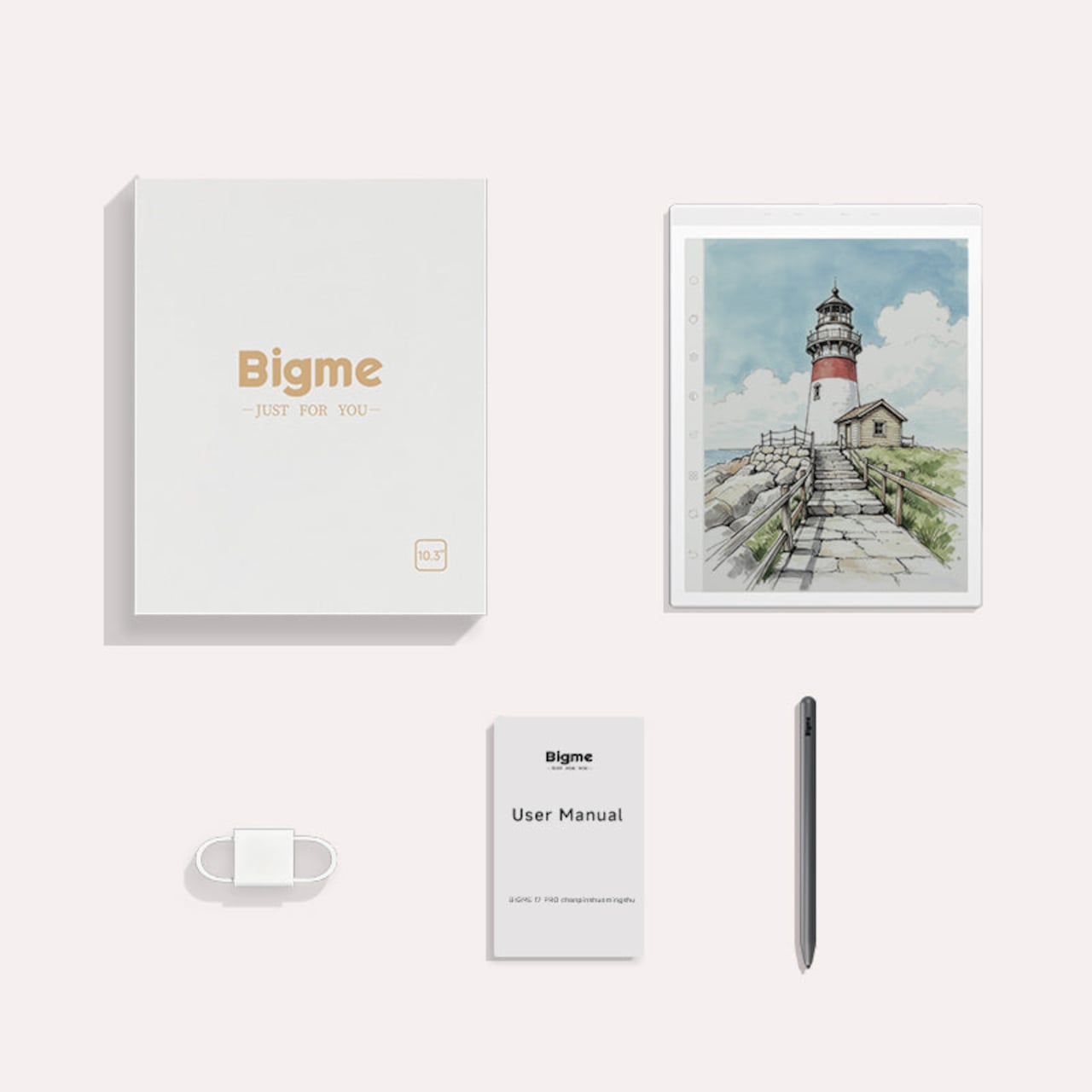
Integrated AI tools extend beyond the display and stylus. Text extraction, text polishing, AI-assisted drawing, and composition features are baked into the software layer. Fingerprint unlocking handles access. The B1051 Ultra is available starting at $499 for the device-and-case bundle, with the keyboard configuration adding to that. E Ink has always been the right technology for certain kinds of work, and the Bigme B1051 Ultra is one of the more complete arguments that it doesn’t need black-and-white e-readers to make that case convincingly.
Smartphones have made information permanently accessible, but that accessibility comes at a price. The same device that shows you a reminder also delivers a notification for something unrelated, which leads to one more app opened, one more five-minute detour, and one more afternoon where the task you meant to remember sits unfinished somewhere in a mental stack. The problem isn’t access to information. It’s the medium through which it arrives.
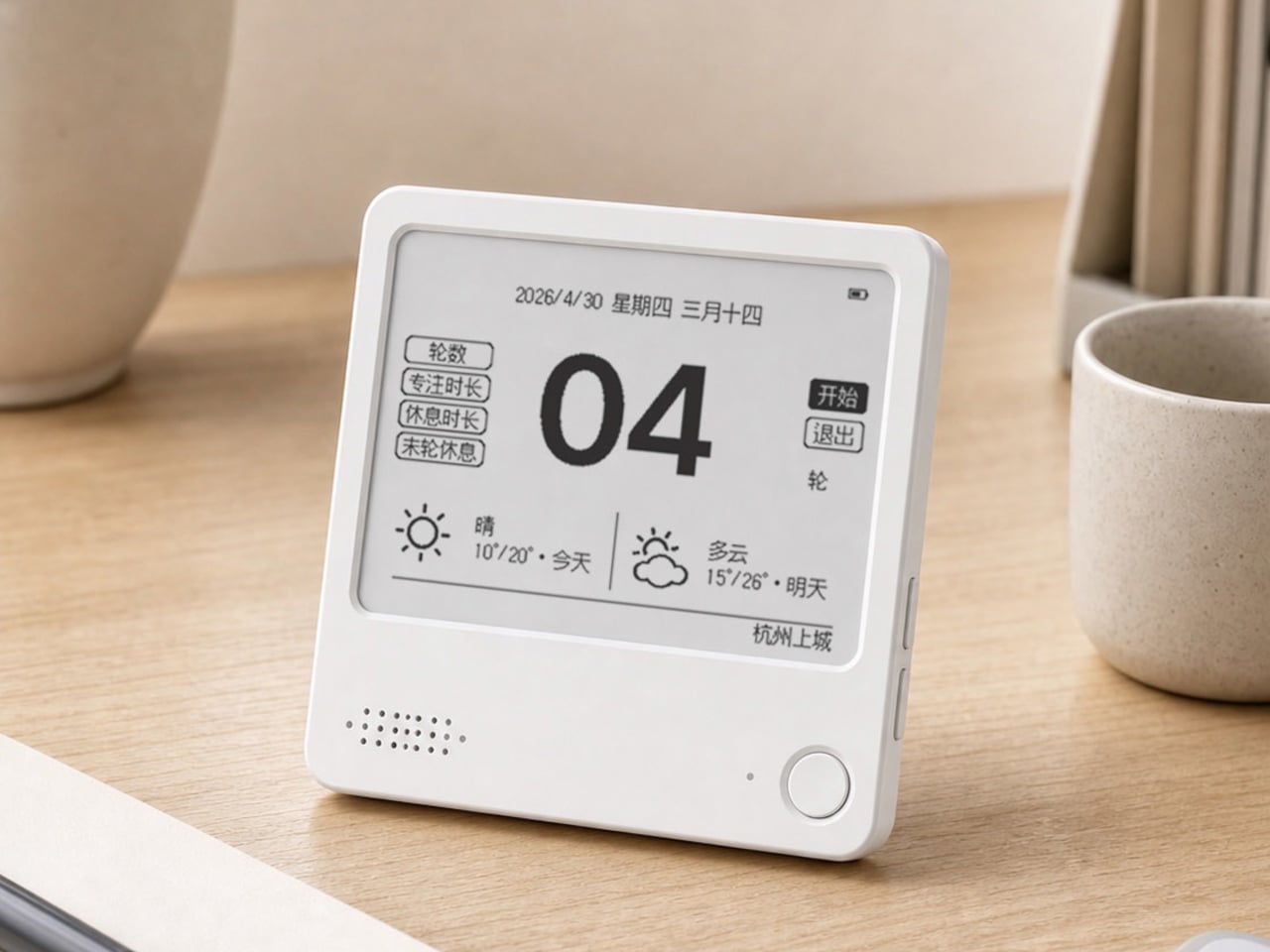
The ZecTrix Note 4 approaches that with a different premise: what if the display that shows your tasks doesn’t connect to your attention the same way a phone screen does? It’s a 4.2-inch e-paper smart display, about the size of a palm, that attaches magnetically to a metal surface and stays there showing whatever you most need to remember, using almost no power to do it.
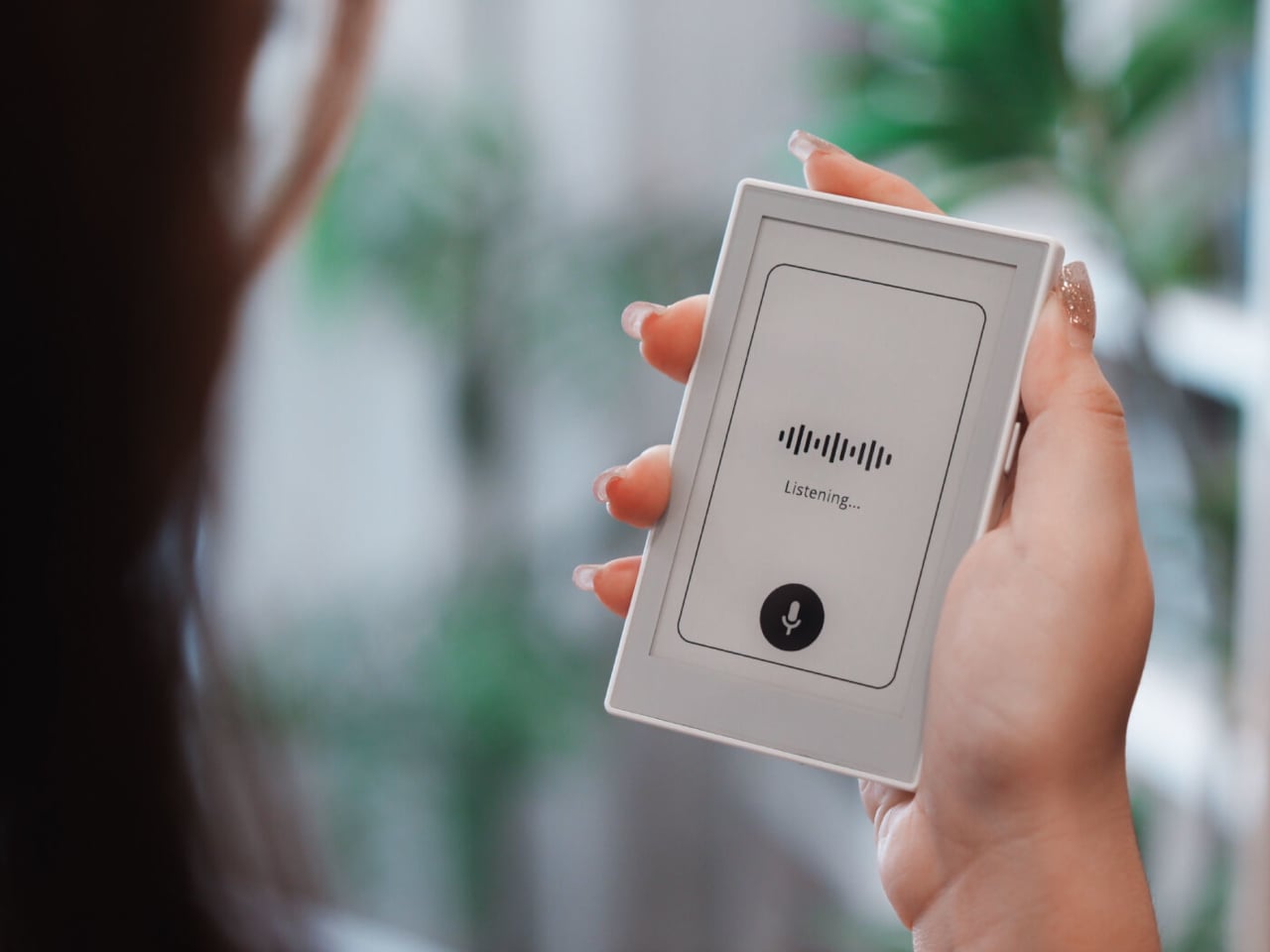
The interaction model is deliberately minimal. Press the physical button, speak your task or reminder, and the device converts that into text and adds it to the display. The built-in AI voice assistant handles the transcription and task management, and the e-paper screen holds whatever it’s showing without any power draw between updates. The display also handles weather, clocks, focus timers, handwritten notes, images, and custom templates.
Hardware underneath is solid for something this compact. An ESP32-S3 dual-core processor with 8 MB of PSRAM and 16 MB of flash handles the AI processing and connectivity, backed by a 2,000 mAh battery, 2.4 GHz Wi-Fi, Bluetooth 5.0, NFC, a speaker, a microphone, and a USB Type-C port for charging. GPIO expansion is also available, which opens the platform to custom hardware additions.
The 97mm x 97mm x 8.75mm square chassis comes in three enclosure variants: an injection-molded Minimal Premium Edition designed for clean desk or kitchen wall placement, a standard Everyday Edition for DIY-minded users, and a Color Edition with open-source 3D model files for those who want to print their own. The magnetic backplate sticks firmly to any suitable metal surface without adhesive or mounting hardware.
For users who want more than a black-and-white display, there’s the Note 4C, which replaces the monochrome panel with a four-color E Ink screen that adds red and yellow to the palette. It runs on the same hardware platform but ships without the consumer AI firmware, positioning it instead as an open development device for people with ESP32 experience. The color panel is slower to refresh, typically over ten seconds per full update, making it better suited to status labels, family photo cards, or API dashboards that update occasionally rather than continuously.
The two products are deliberately distinct rather than tiered versions of the same thing. The Note 4 is a finished product with a lifetime AI voice service included; the Note 4C is an open starting point for a custom build. Both share the same physical form, so the choice comes down to how much of the software someone wants to supply themselves.
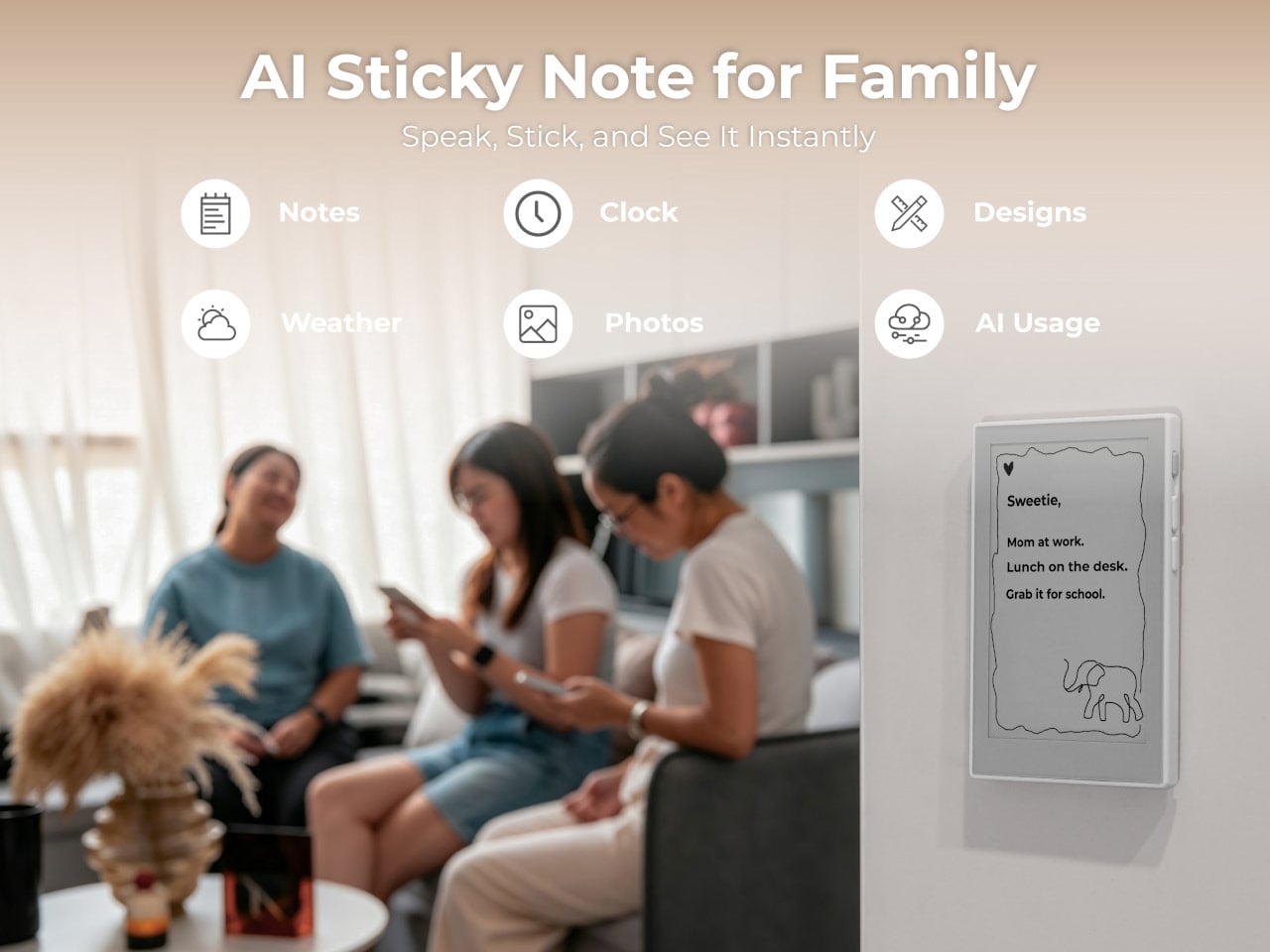
The shared household notice board is one of those ideas that never quite works the way it’s supposed to. Paper notes fall off, whiteboards get ignored once the novelty fades, and the natural alternative, a group chat, keeps everything buried where nobody looks unless they’re already on their phone. The problem isn’t that families don’t communicate; it’s that the display for that communication isn’t in the right place or form.
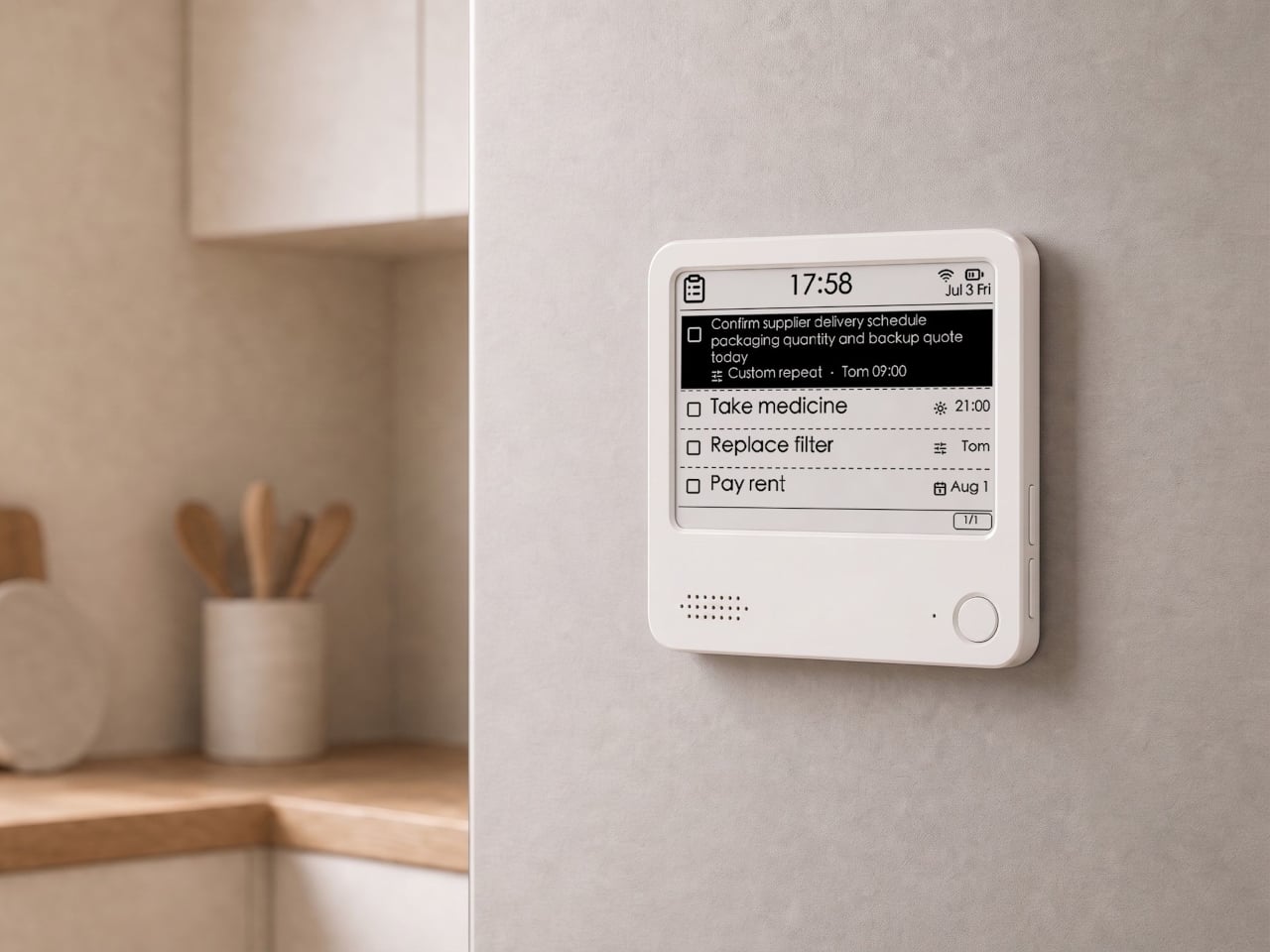
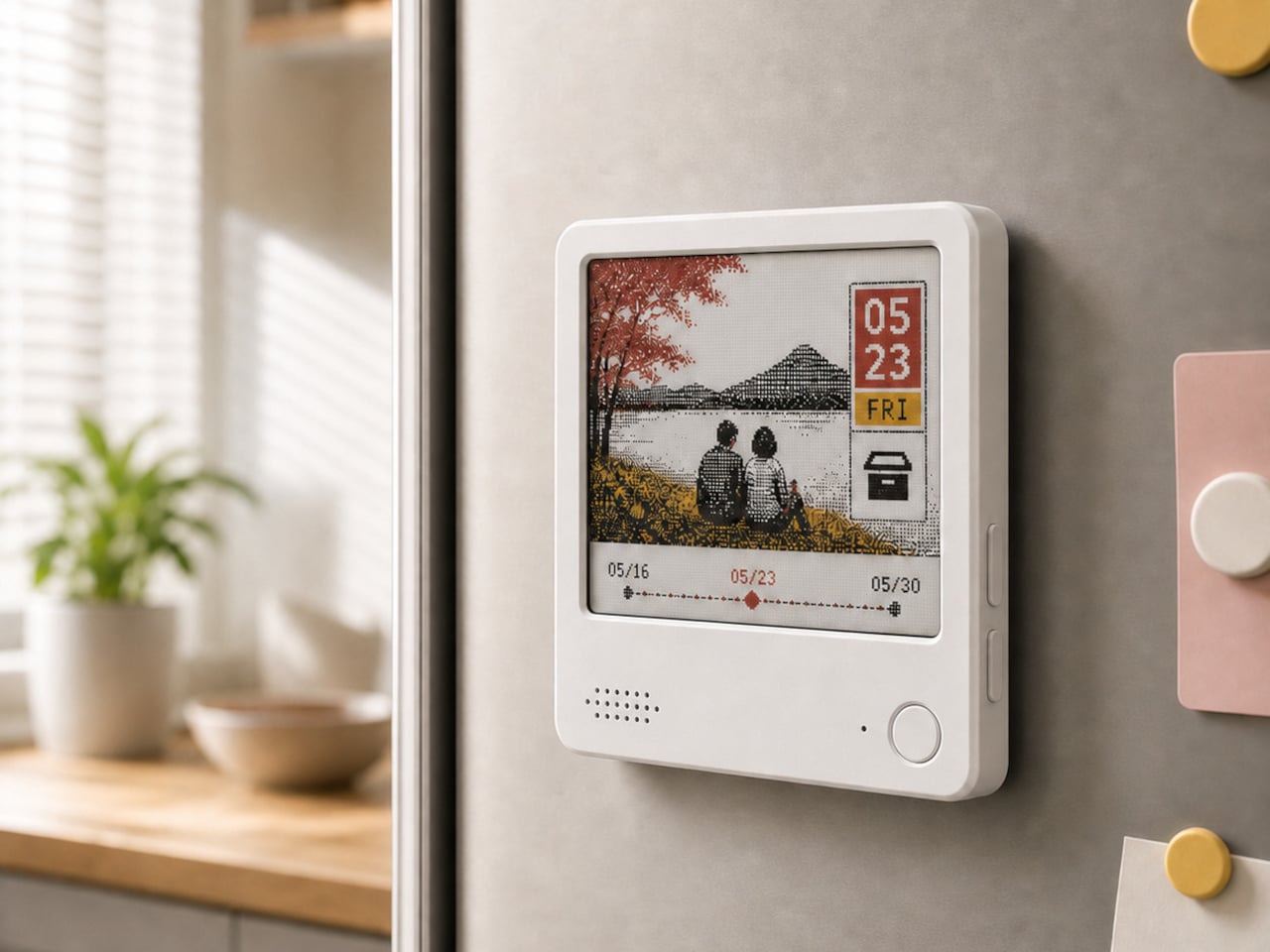
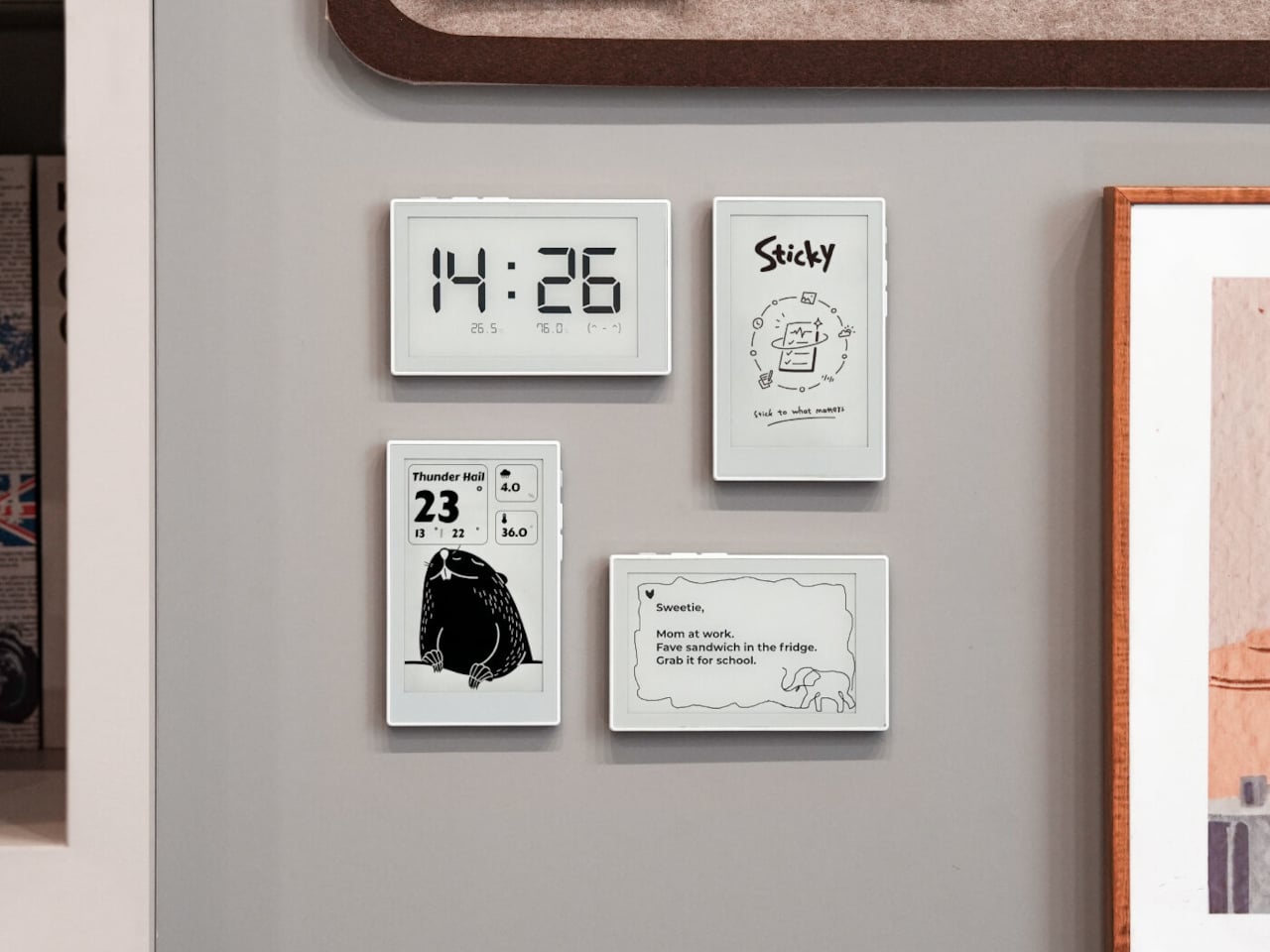
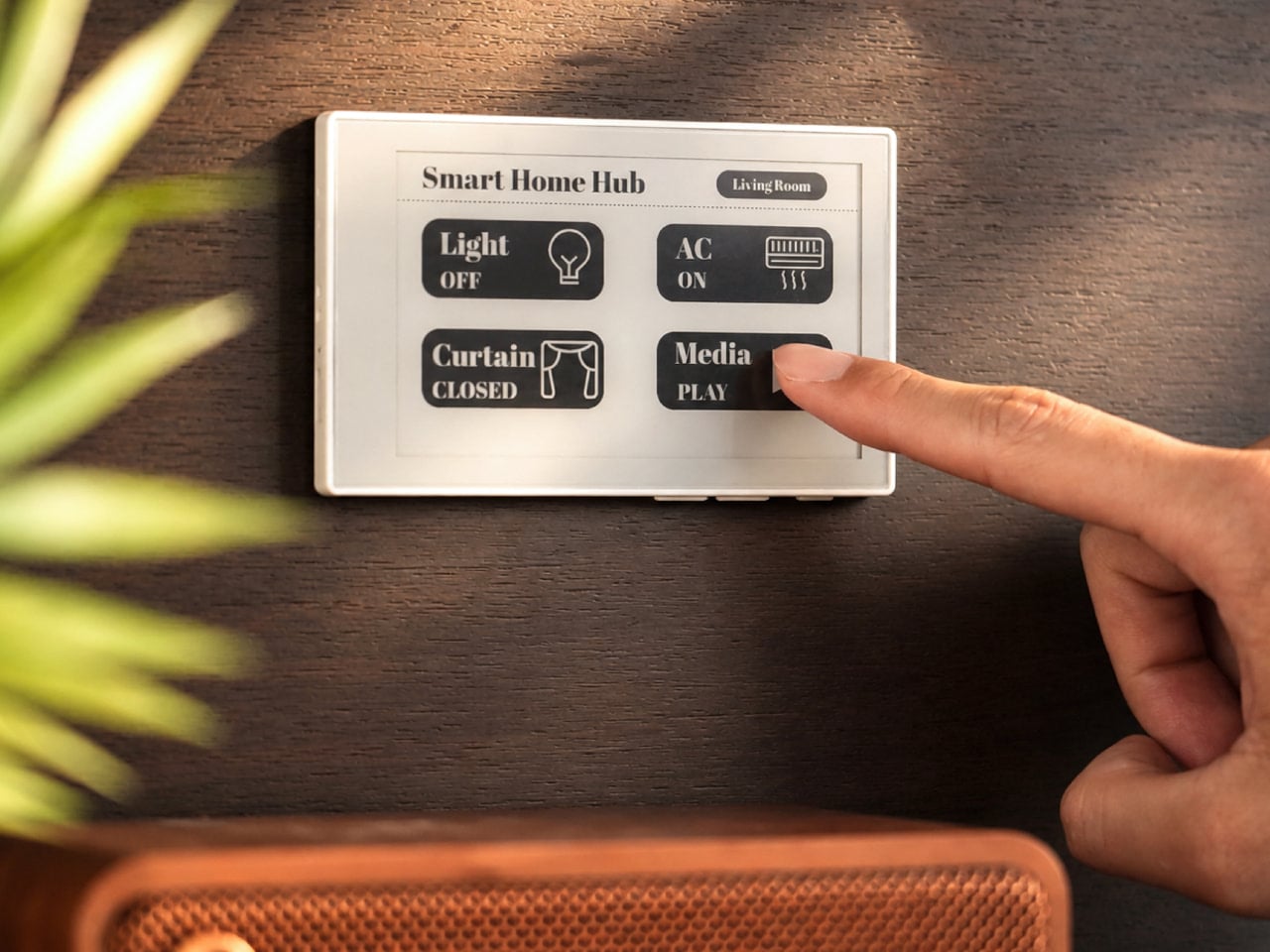
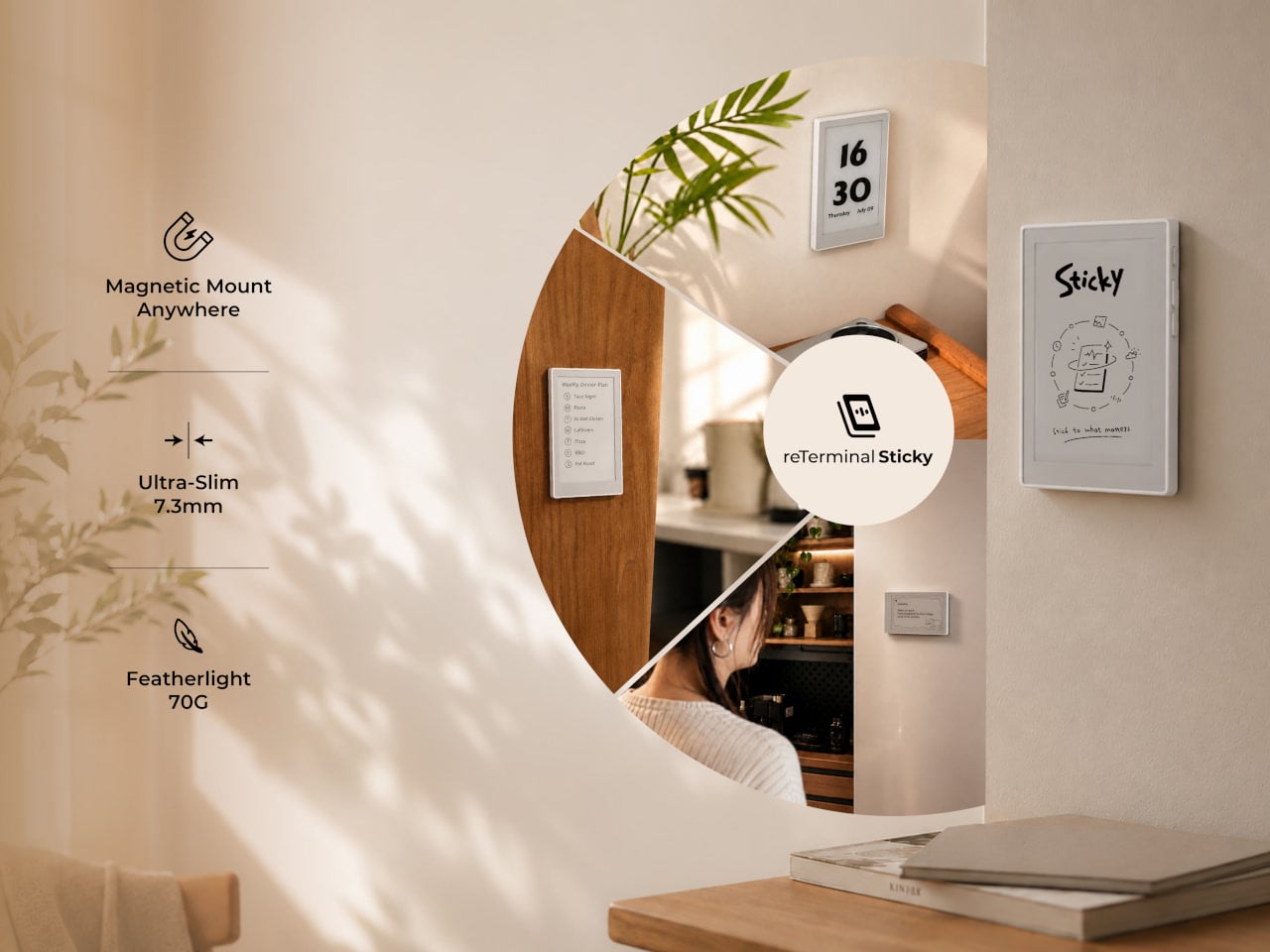
The reTerminal Sticky is a compact e-paper display built specifically for that gap. It magnets directly to a refrigerator or any metal surface, runs for days on a single charge, and shows notes, reminders, weather, and messages sent from a phone. The idea is simple: a screen that stays in plain sight and updates without demanding attention in return.
The display is a 3.97-inch monochrome E-Ink touchscreen at 800×480 resolution, set into a 106mm x 65.5mm x 7.3mm body that sits flush against a surface without protruding noticeably. E-Ink suits the application well because it holds whatever’s on screen without drawing power to maintain the image, which is why the 750mAh battery lasts up to a week under normal use and potentially months in Battery Saver Mode.
Creating a note doesn’t require opening an app first. An onboard physical button lets you press and speak; the device transcribes the voice directly into a note or to-do list on screen. Voice input works in English and Chinese. For sending notes remotely, the companion Seeedash app handles it over Wi-Fi or cellular, so someone at work can post a dinner reminder to the home screen without a text chain.
The Seeedash app is also where most of the management happens. It pairs initially over Bluetooth, sets the Wi-Fi network, and after that the device runs independently without the phone needing to stay nearby. Content can include typed notes, weather pulled from a set location, a clock, a calendar, or custom designs and photos uploaded from the app or the Seeedash web platform.
Mounting is toolless in either direction. The built-in magnetic backing attaches to any metal surface directly. For non-metal walls, the box includes an adhesive magnetic ring that goes up once and lets you reposition the Sticky freely afterward. For users who want to go further with the hardware, the device also supports custom firmware flashing, making it compatible with the broader SenseCraft ecosystem and developer-friendly by design.
The monochrome E-Ink display trades color for legibility and battery life, two properties that matter more than vibrancy when the screen is sitting on a kitchen appliance across the room. The low-power nature of the display also means it can show a full week’s worth of reminders without needing to be charged mid-week, which removes the main reason most desk gadgets get quietly retired after a month.
The e-reader has been one of the most static product categories of the past two decades. Since the first Kindle appeared in 2007, the form factor has barely evolved: a single screen, a flat back, and dimensions roughly matching a paperback. These devices have gotten lighter, sharper, and more waterproof, but the fundamental design assumption has stayed the same. They’re books without the book part.
A growing number of designers have been working on a different premise: what if an e-reader actually opened like a book? One with two E Ink panels and a real hinge, held the way you’d hold a paperback, where left and right pages exist as physical space. That shared ambition has driven a small but serious cluster of projects building quietly over the past five years.
The proof that e-paper could bend
The idea of folding an E Ink display isn’t new. Back in 2020, E Ink Corporation demonstrated a hinged prototype showing that a bending e-paper panel could survive the mechanical stress of being folded. It never reached retail shelves, but it answered the one question that mattered most at the time: whether the material itself could handle the geometry of a real book.
Designer: E Ink
That prototype didn’t solve everything. It was a controlled demonstration with no commercial roadmap, no software, no battery life to speak of, and no clear form factor beyond the fold itself. What it gave the industry was proof that flexible e-paper was a viable building block rather than a permanent research curiosity. Every foldable E Ink project that came after built on that understanding.
The book illusion finally made real
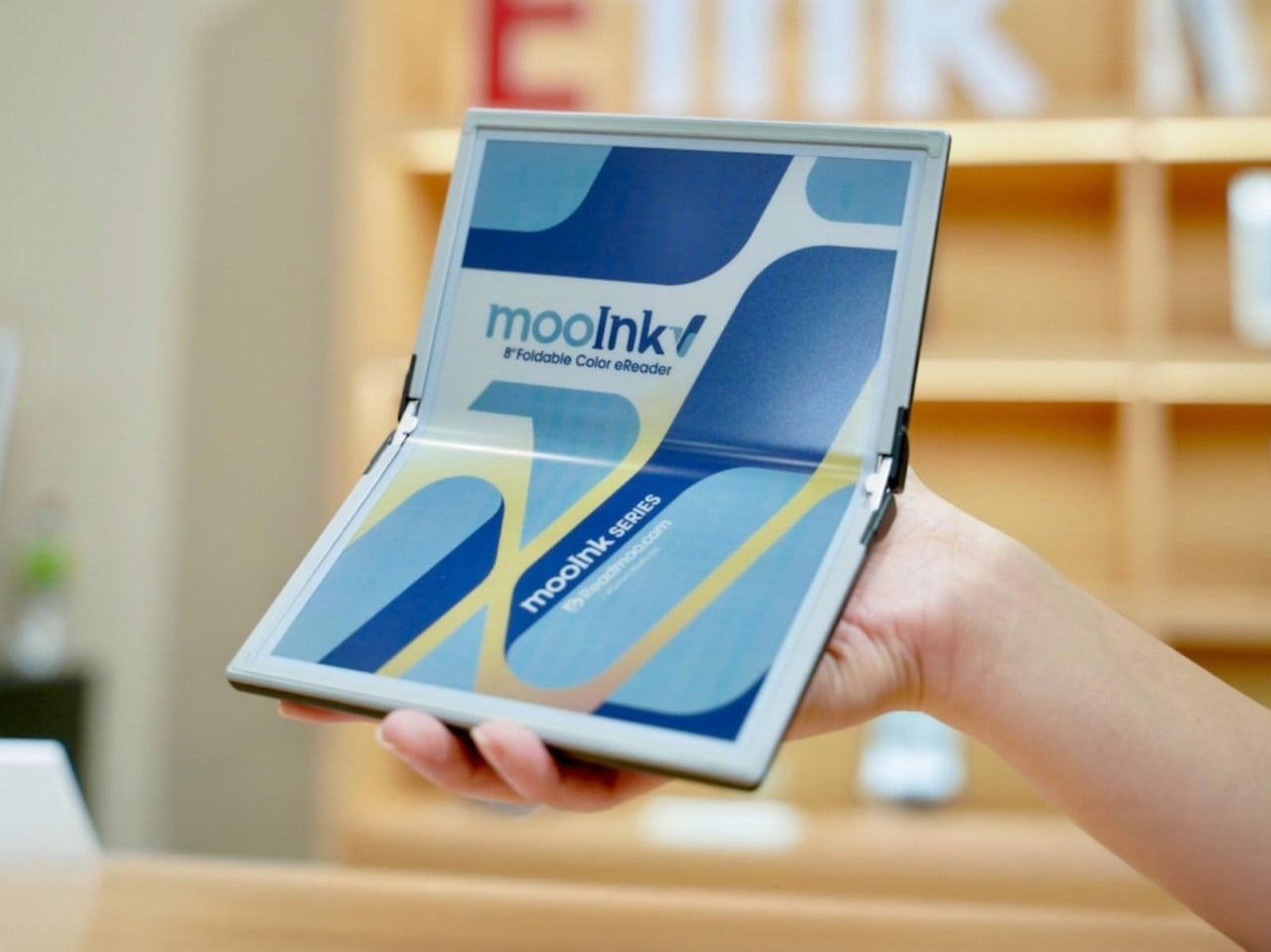
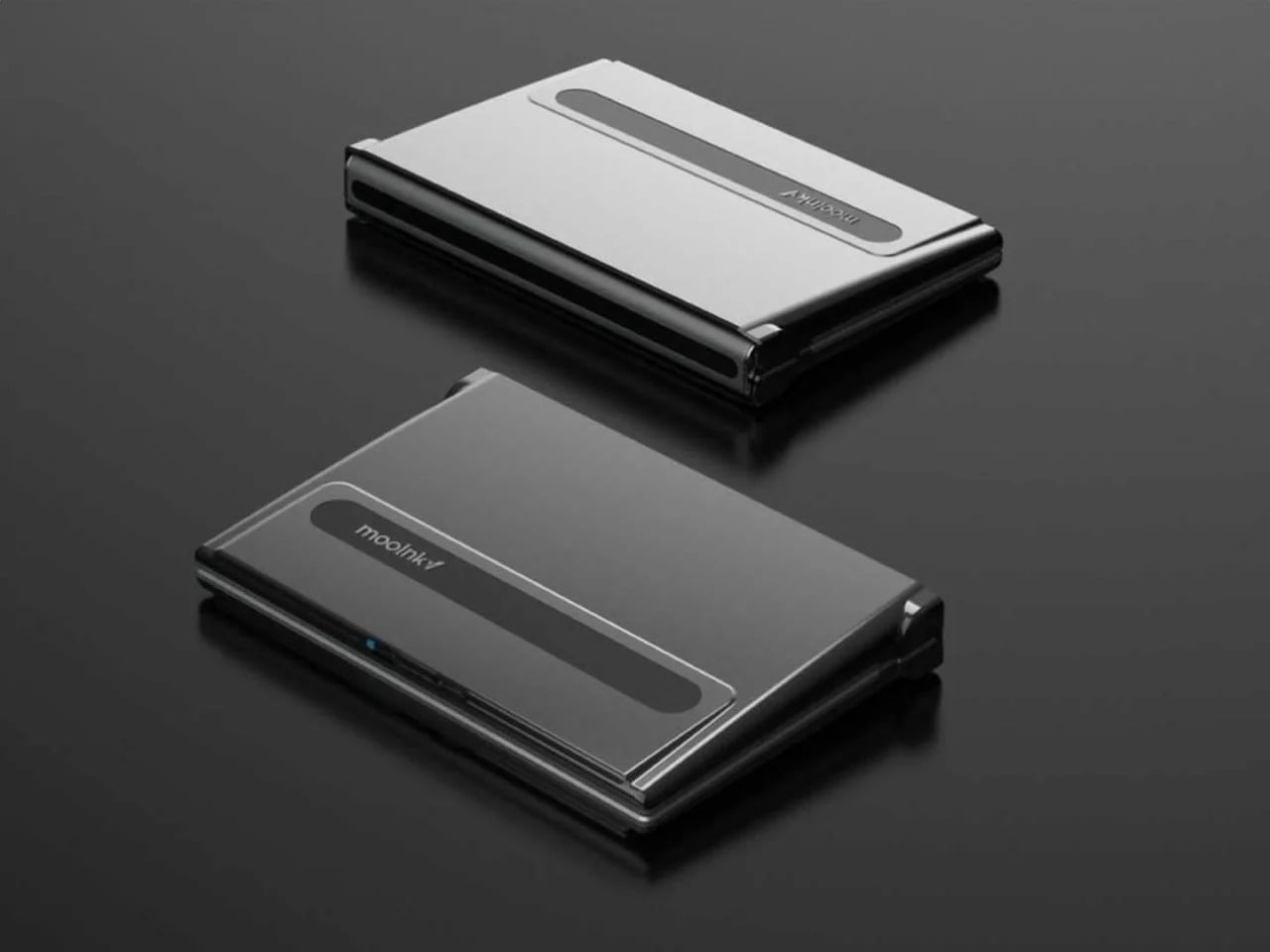
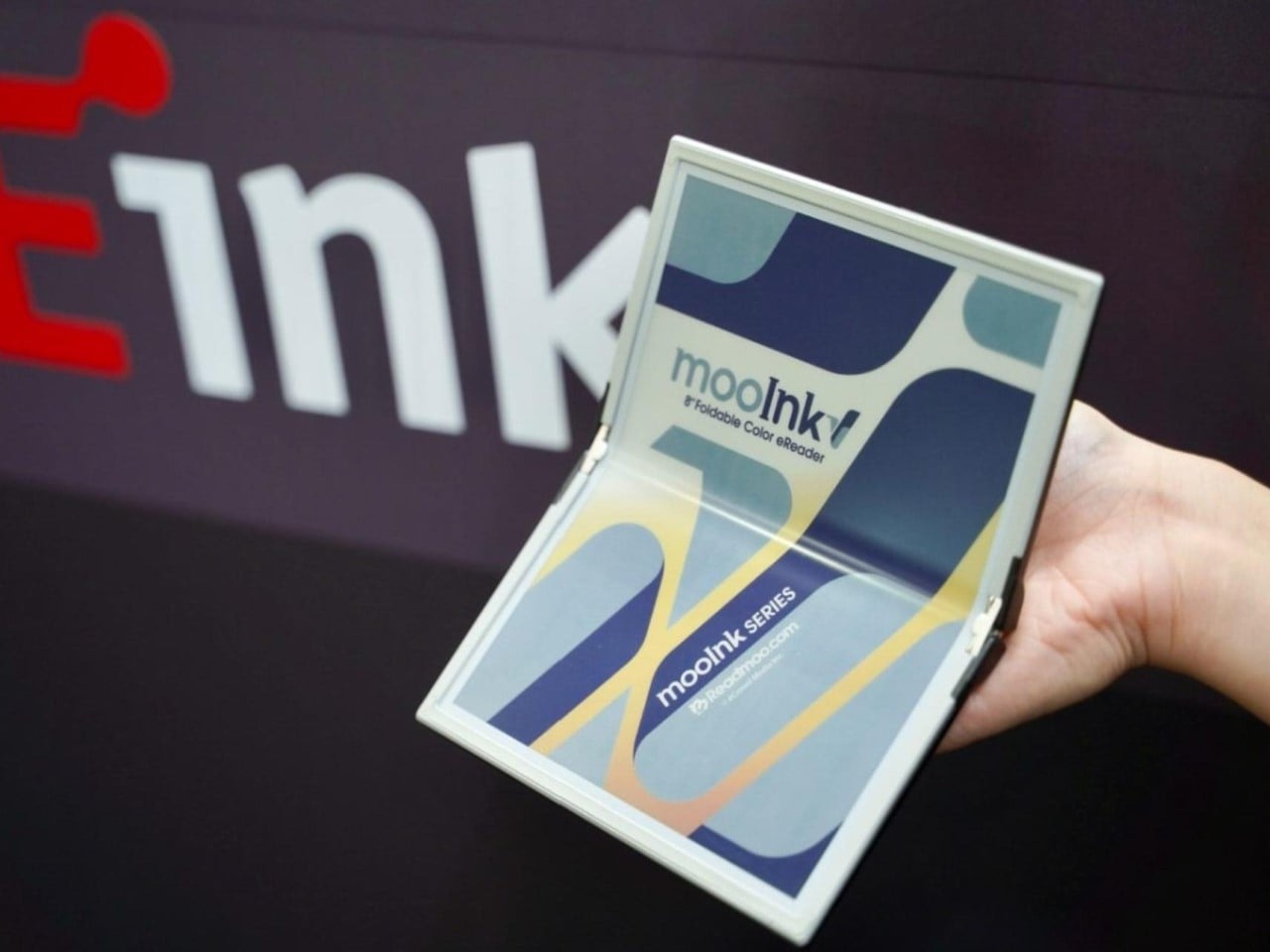
Readmoo’s Mooink V was the first design to make the flexible E Ink concept feel emotionally legible to a general audience. It’s built around an 8-inch Gallery 3 color e-paper display developed in collaboration with E Ink, one that folds down the middle to make the device small enough to pocket when closed and wide enough to feel like a slim paperback when open.
The color display matters more than it might seem. Gallery 3 renders close to 50,000 colors at 300 PPI, expanding the format beyond plain text to illustrated books, comics, and magazines. The fold reportedly passed 200,000 bending tests during development, and when fully open, the crease isn’t dramatic enough to register as a flaw so much as an honest design trade-off.
Mooink V hasn’t had the smoothest road to market, though. Despite genuine buzz at trade shows including Touch Taiwan and SID Display Week, no confirmed retail availability or street price had materialized as of mid-2026. The design made the foldable E Ink book look and feel tangible in a way earlier prototypes hadn’t. Whether it gets there commercially is a different and still open question.
Two screens, no crease
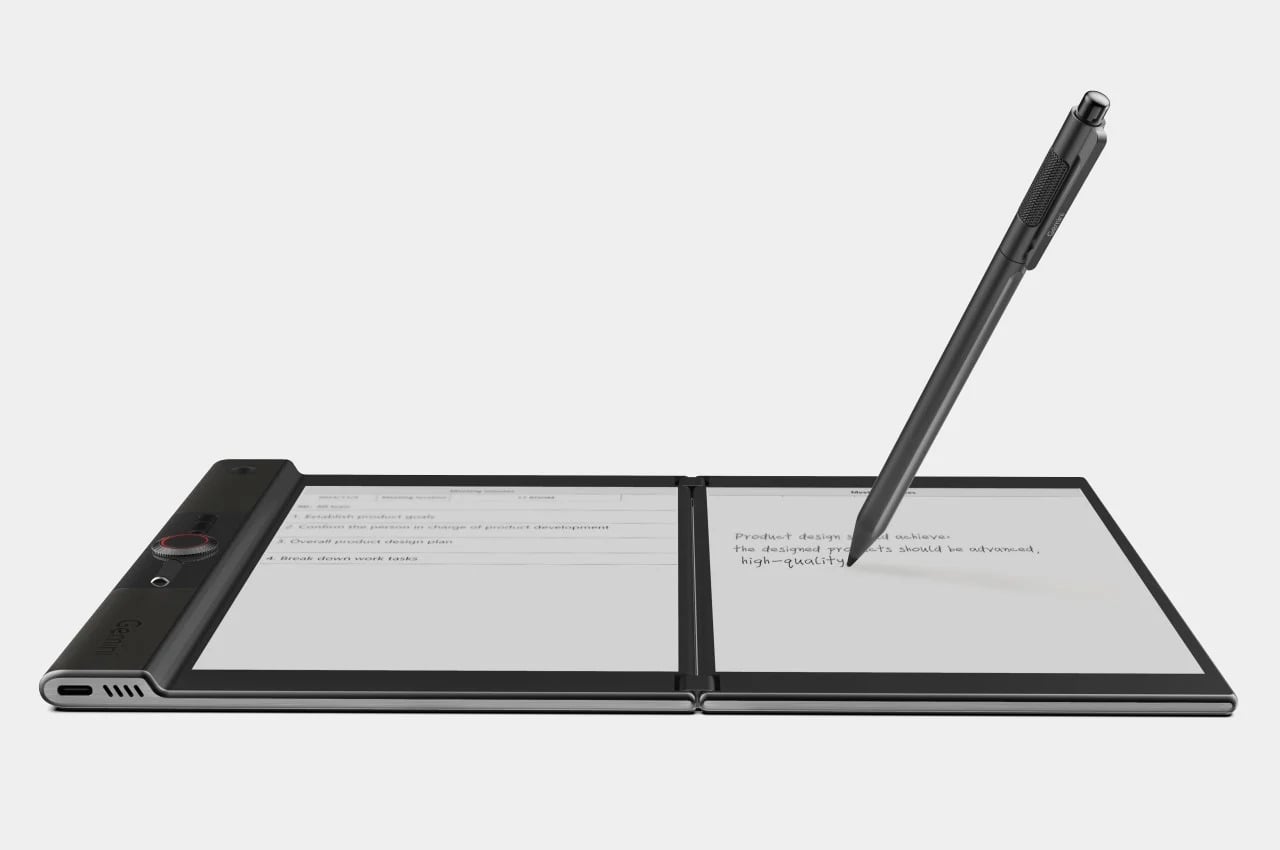
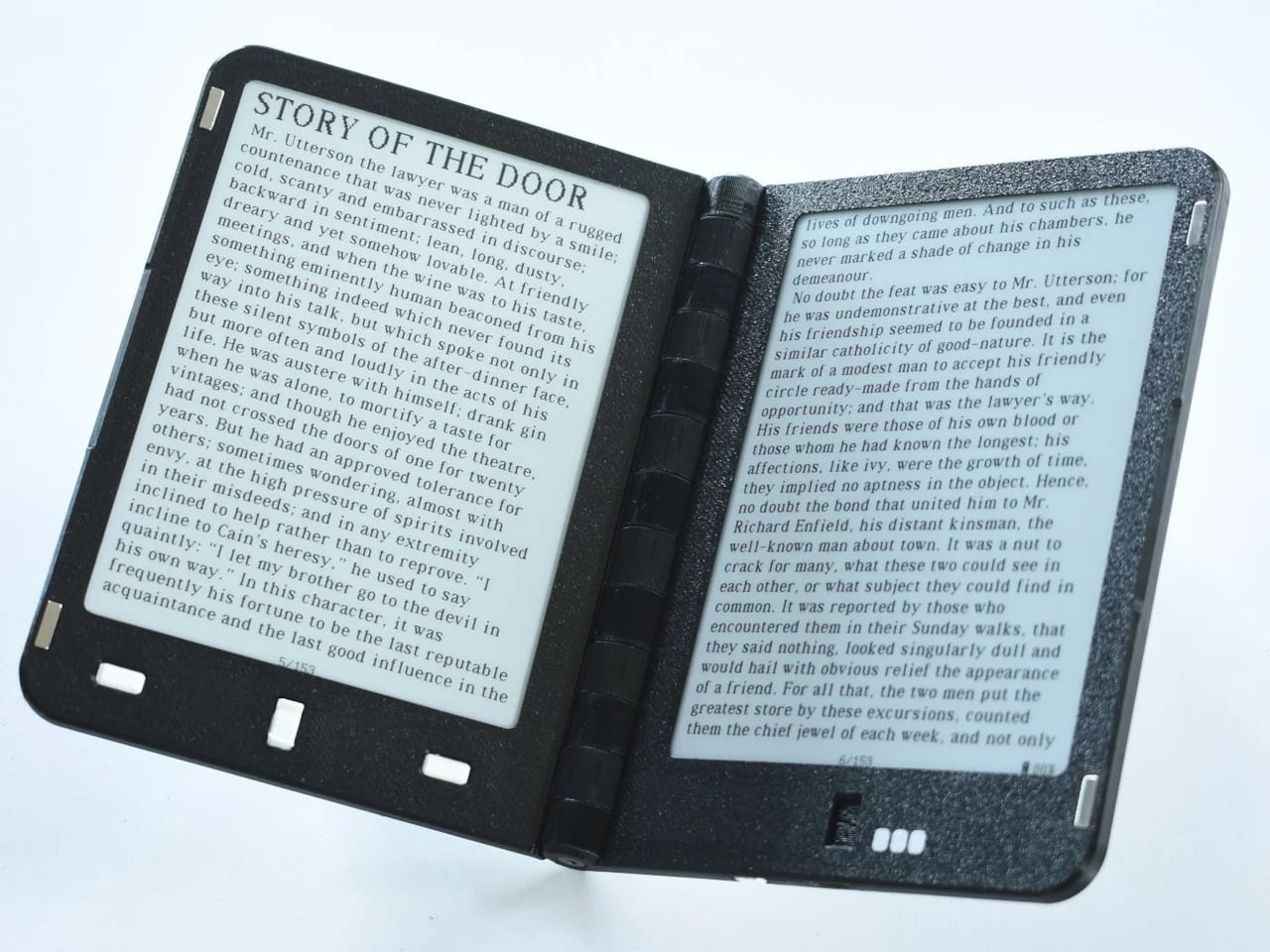
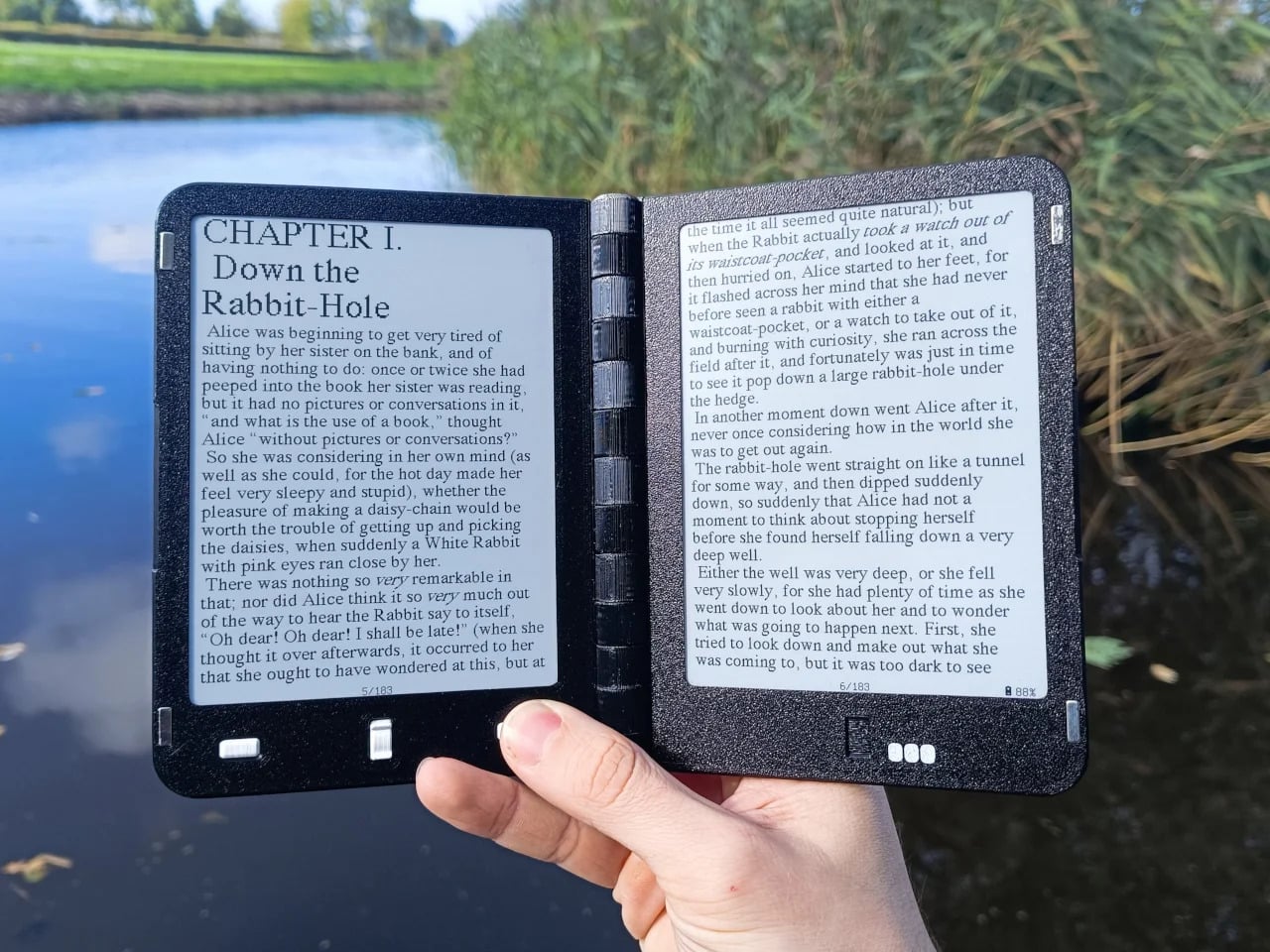
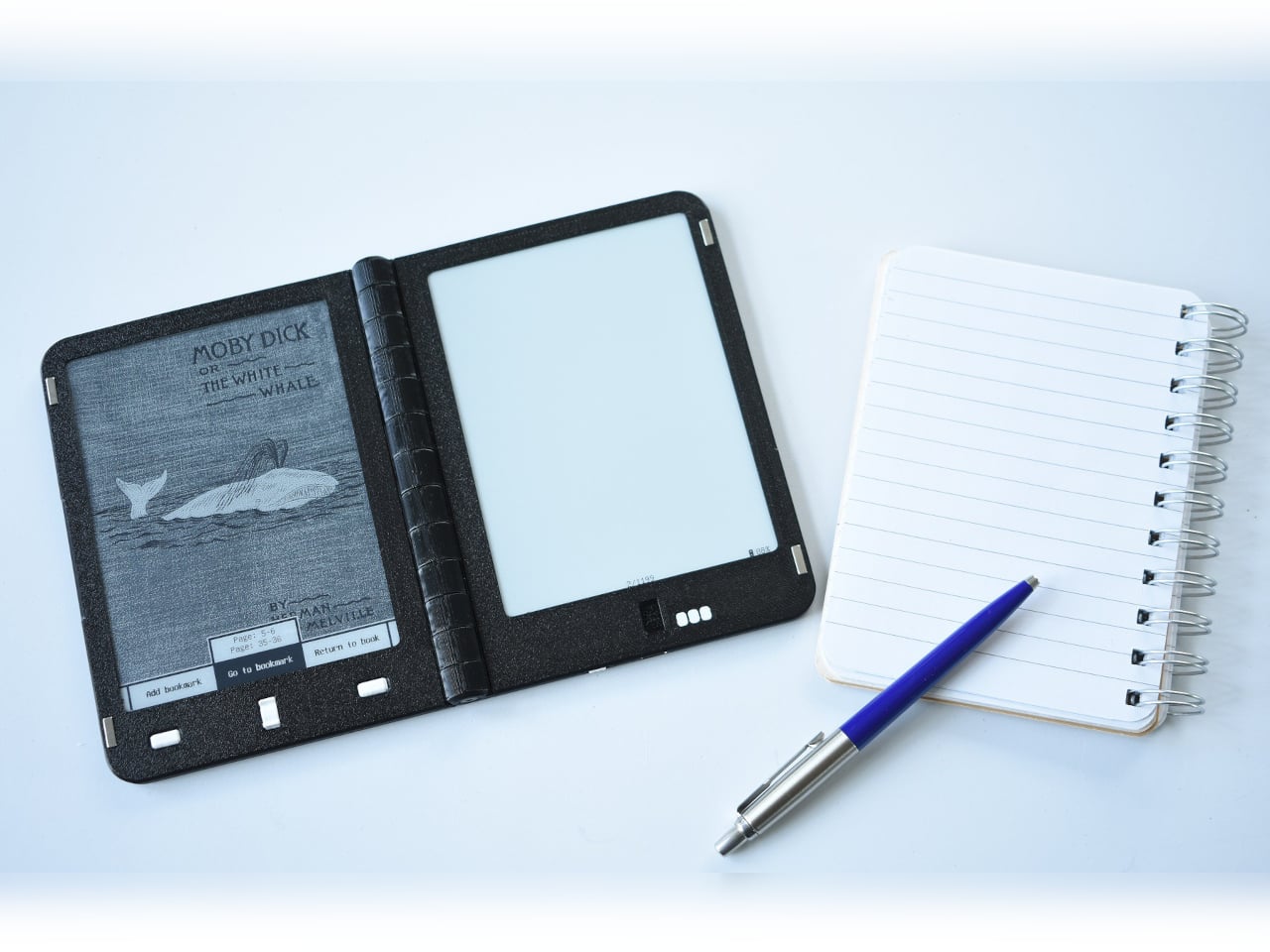
Not everyone building a book-shaped e-reader was willing to bet on a single flexible panel. A parallel design school took a more pragmatic approach: pair two conventional E Ink screens with a well-engineered hinge and let the gutter do the work. The result avoids crease anxiety entirely since neither panel has to bend, though it trades the seamless page illusion for a visible seam you’d have to accept.
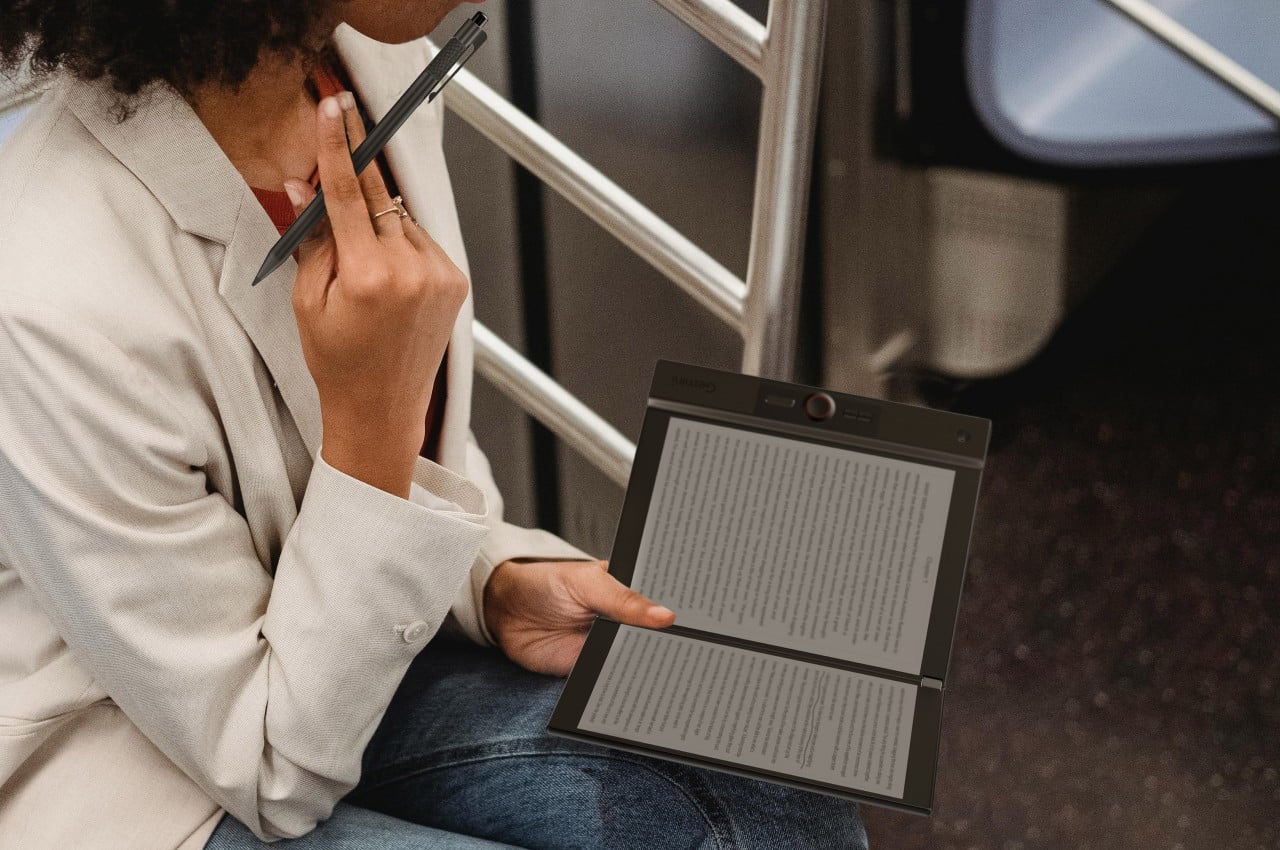
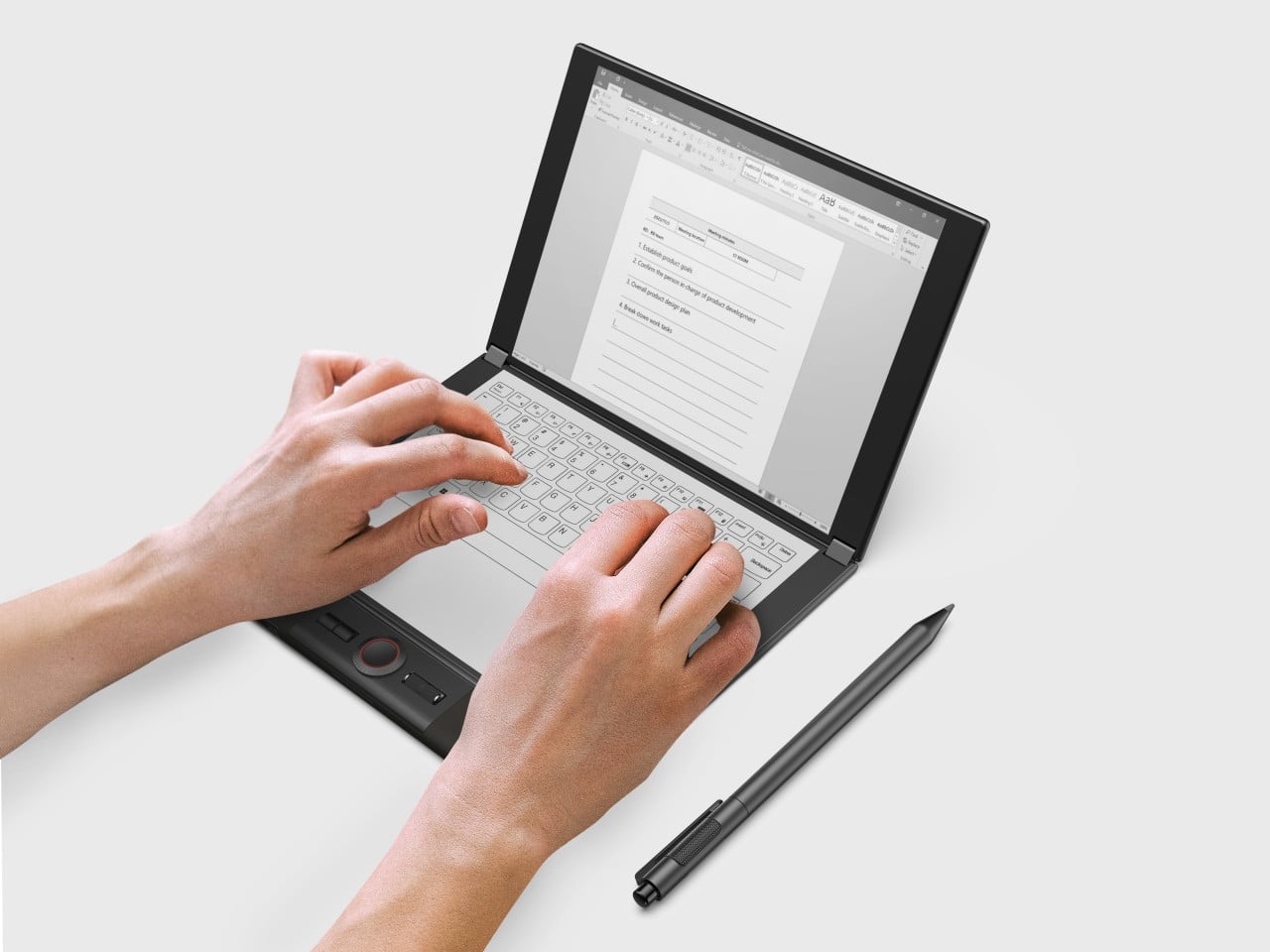
LCFC’s Gemini took the productivity angle furthest, giving both E Ink panels enough real estate to function almost like a laptop, with reading material open on one side and an active workspace on the other. The InkReader Duo concept took a more compact approach, fitting two E Ink screens into a phone-sized form, which made it feel less like a desk tool and more like a pocket notebook.
Diptyx went in a different direction altogether. Rather than chasing consumer polish, the project leaned into open-source principles, building a two-panel hinged e-reader without the lock-in that defines most commercial platforms. It isn’t the most refined interpretation of the book-shaped reader, but it made a clear point: the hardware problem was increasingly solvable, and the real challenge was getting the software and ecosystem right.
Not every dual-screen device fits cleanly into this story. The Bluegen OKPad pairs an E Ink panel with a regular LCD screen, which makes for a versatile tablet but undermines the unified reading experience that makes an E Ink book feel coherent. Switching between two fundamentally different display types introduces a visual disconnect that software bridging alone can’t fully smooth over.
Bigme’s HiBreak Dual 2 runs into a different kind of problem. It’s a smartphone with a secondary E Ink display on the back, which is a genuinely clever idea for managing notifications and extending battery endurance, but it’s shaped and used like a phone rather than a book. A second screen doesn’t automatically recreate the spatial logic of reading a bound object.
Inkleaf is the most pragmatic entry in the foldable E Ink space so far. Instead of chasing a seamless fold, it pairs two 10.3-inch Carta E Ink panels in a notebook-style hinge, with one side for reading and the other for writing. The seam between them works as a gutter rather than a flaw, and the design doesn’t try to hide it.
That workflow proposition is what makes Inkleaf interesting beyond its form factor. Having reference material on one panel while taking notes on the other removes a friction point that every single-screen reader quietly ignores. You don’t need to switch apps, scroll back, or memorize what you just read before writing something down. It’s aimed at a different kind of reader than a Kindle typically serves.
Inkleaf is currently collecting early-access signups ahead of an August 2026 launch, with a broader public release targeted for 2027. That’s a staggered timeline worth noting: the hardware still has to prove itself beyond initial demos, and the software will matter as much as the panels themselves. Carta E Ink is a sensible fit for a writing-focused device, but actual daily use remains the real test.
What Kindle still has to answer for
None of this means the Kindle is suddenly irrelevant. Amazon’s device still wins on price, ecosystem depth, and a friction-free reading experience built up through years of software refinement. If all you want to do is buy a book and read it on a train, nothing in this group of foldable experiments beats a Paperwhite for simplicity. The incumbents aren’t losing sleep yet.
What these devices do expose is a design gap Amazon hasn’t seriously tried to close. A Kindle displays text efficiently, but it doesn’t recreate the spatial logic of reading a bound book: two visible pages, a sense of position, a natural place for margin thoughts. Those aren’t features that get patched in through a software update, which is why the form-factor conversation is overdue.
That’s what this group of foldable and dual-screen E Ink devices has been quietly building toward for the past five years. Not a product category defined by any single winner, but a shared argument about what a digital reading device could look like if it started from the book rather than the screen. Whether any of them fully delivers on that is a question 2027 will help answer.
Phone cases have been a stubborn category for personalization. Swapping the look of your phone has traditionally meant buying a different case altogether, waiting for it to arrive, and committing to whatever fixed image or color you chose until you get tired of it again. Custom print-on-demand cases get closer, but they’re still a one-and-done commitment once the ink is on the plastic.
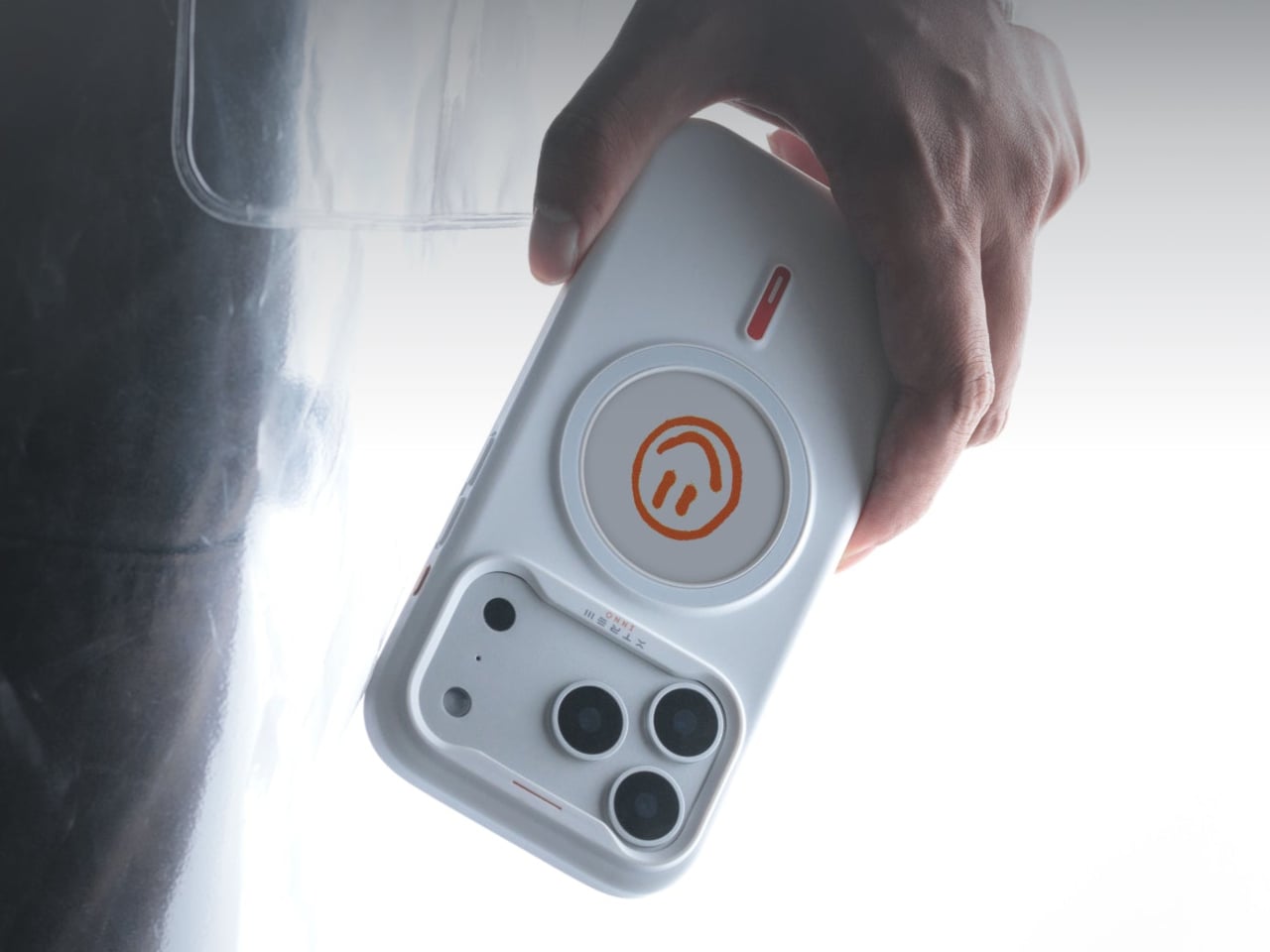
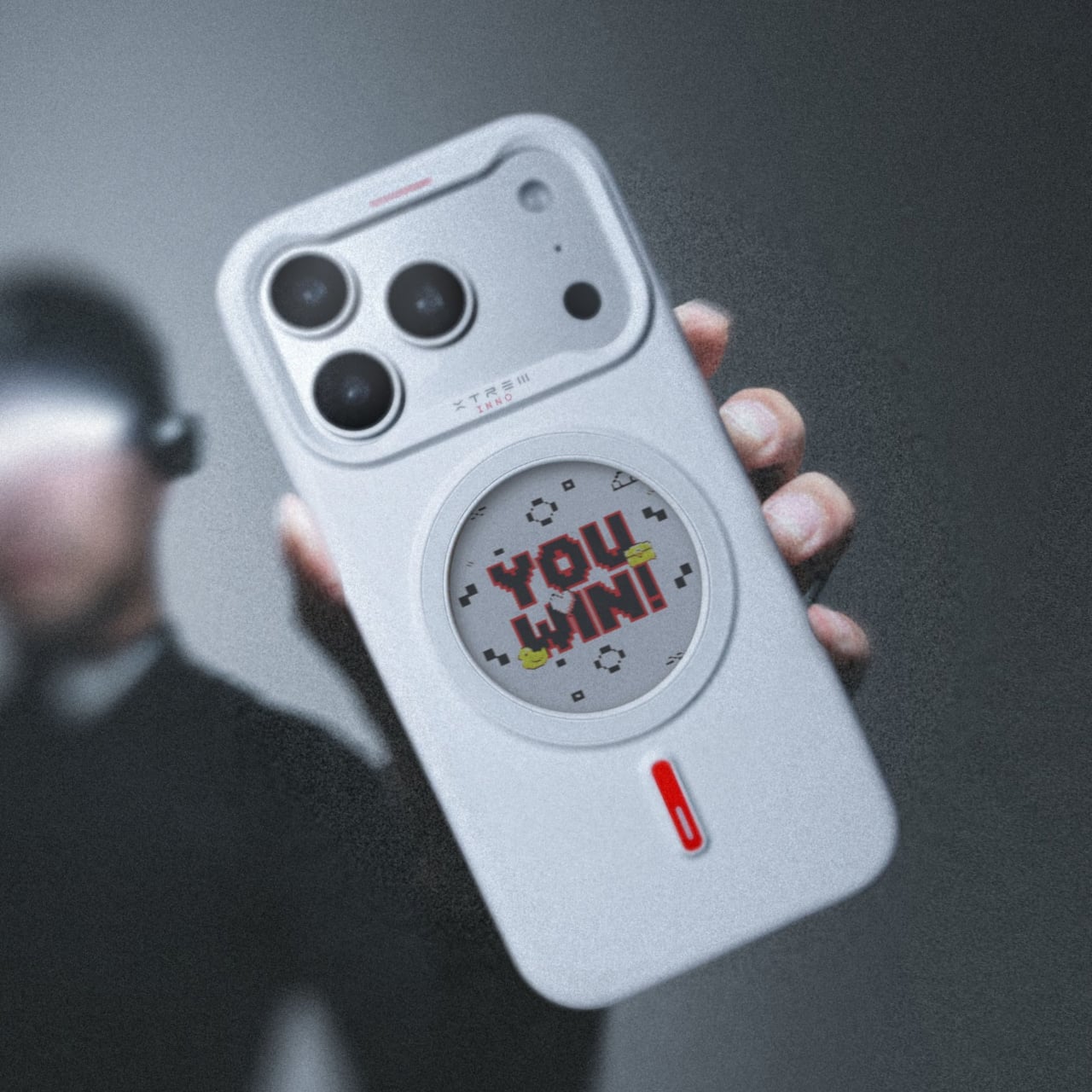
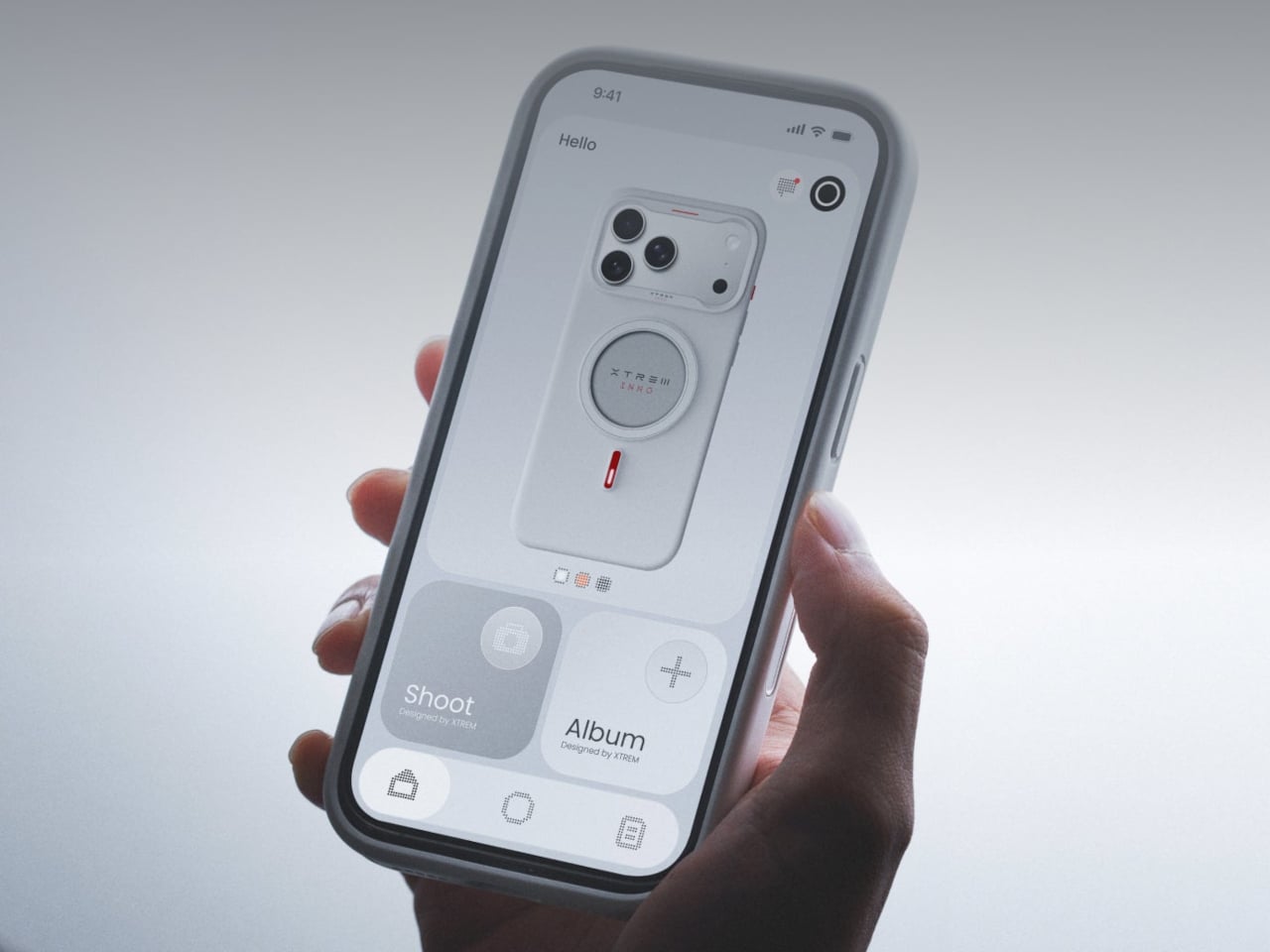
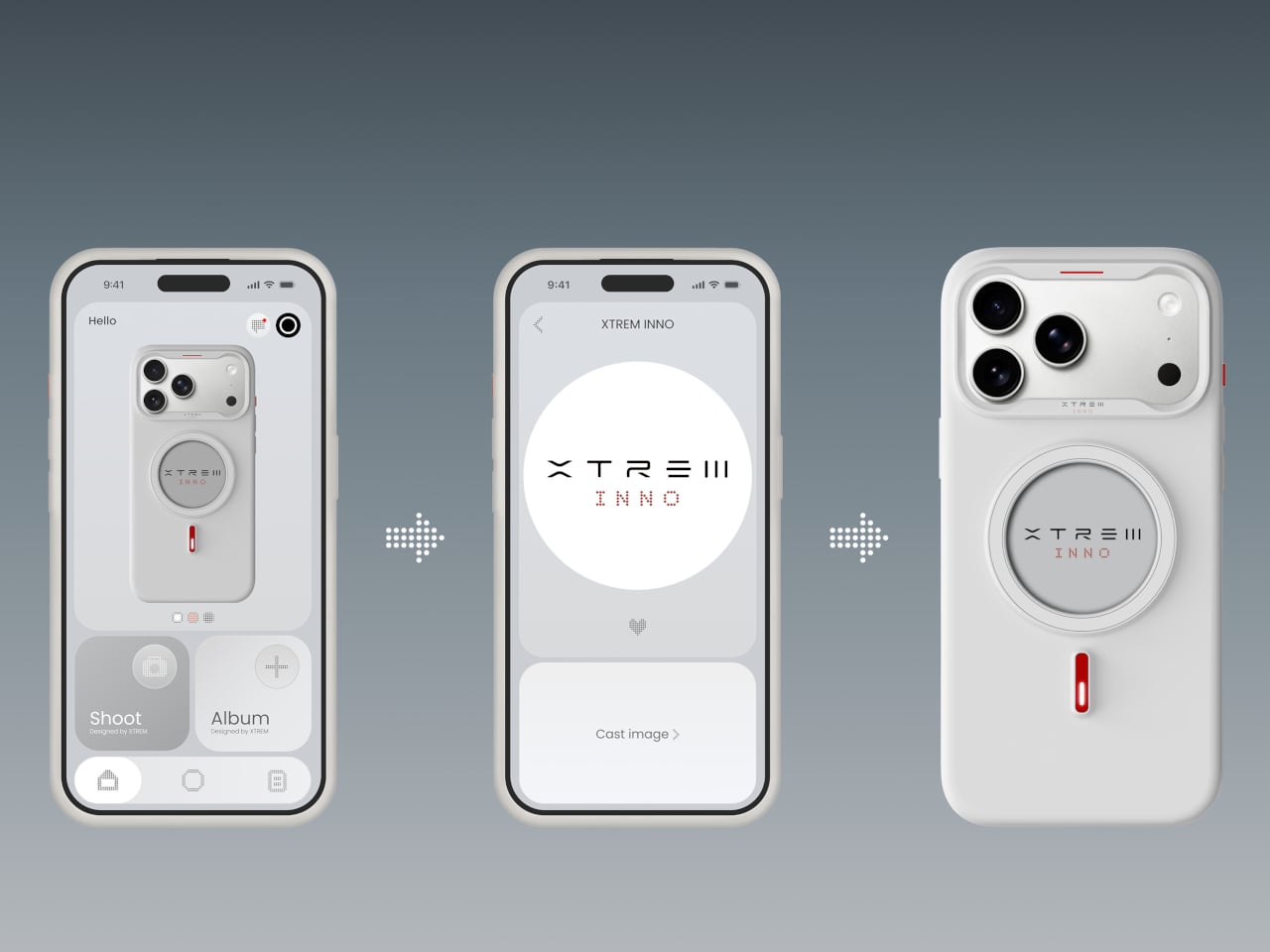
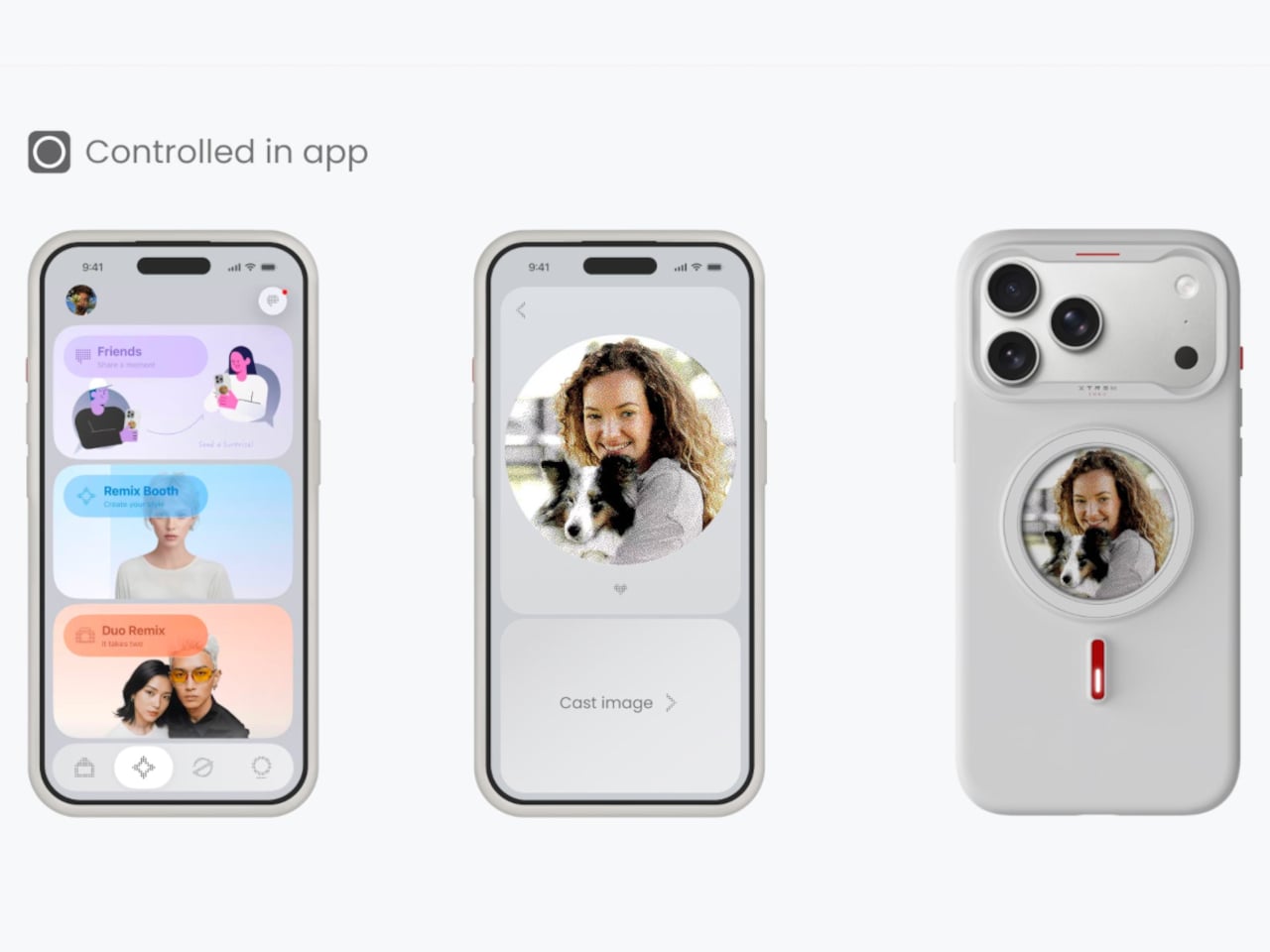
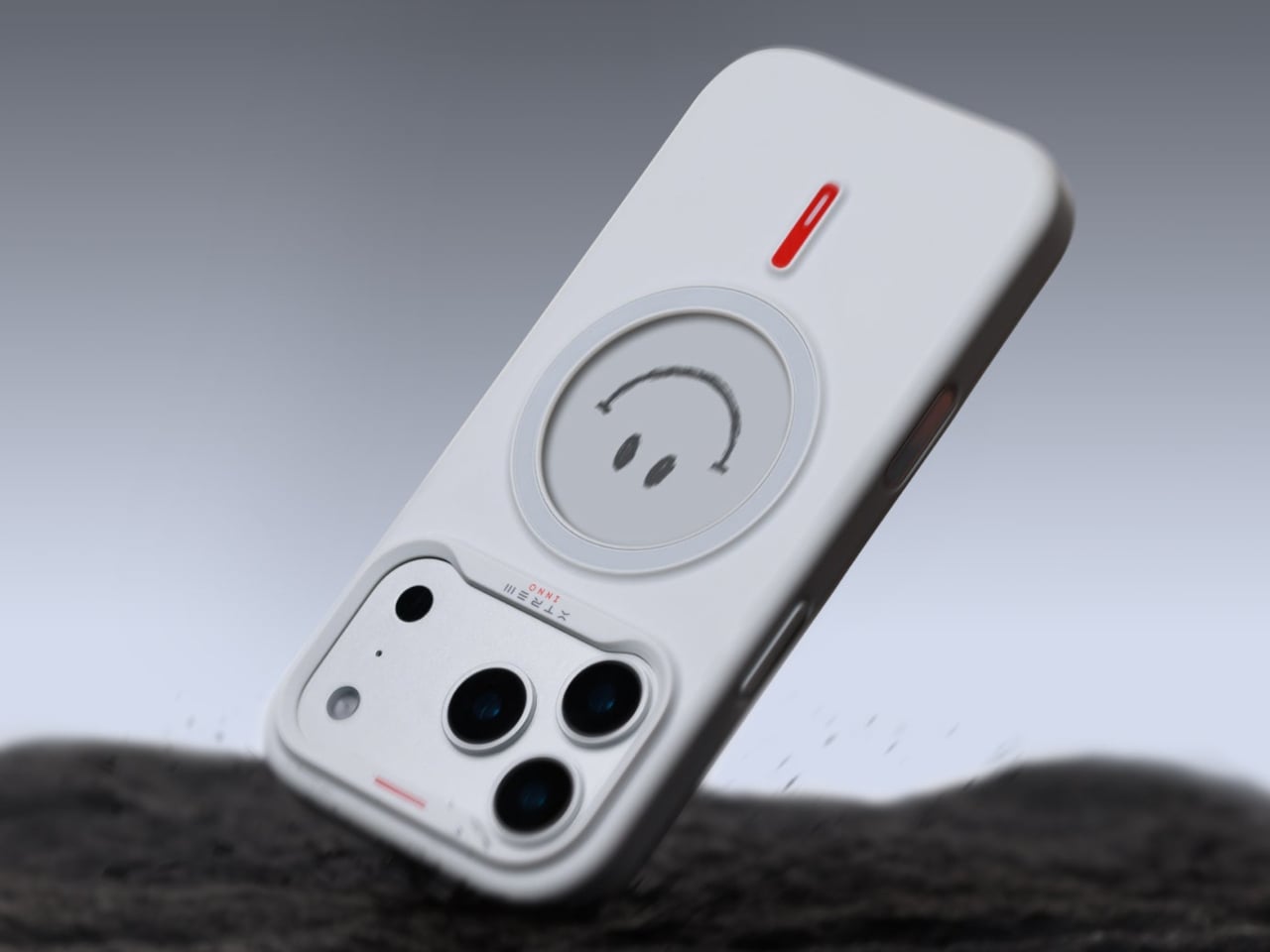
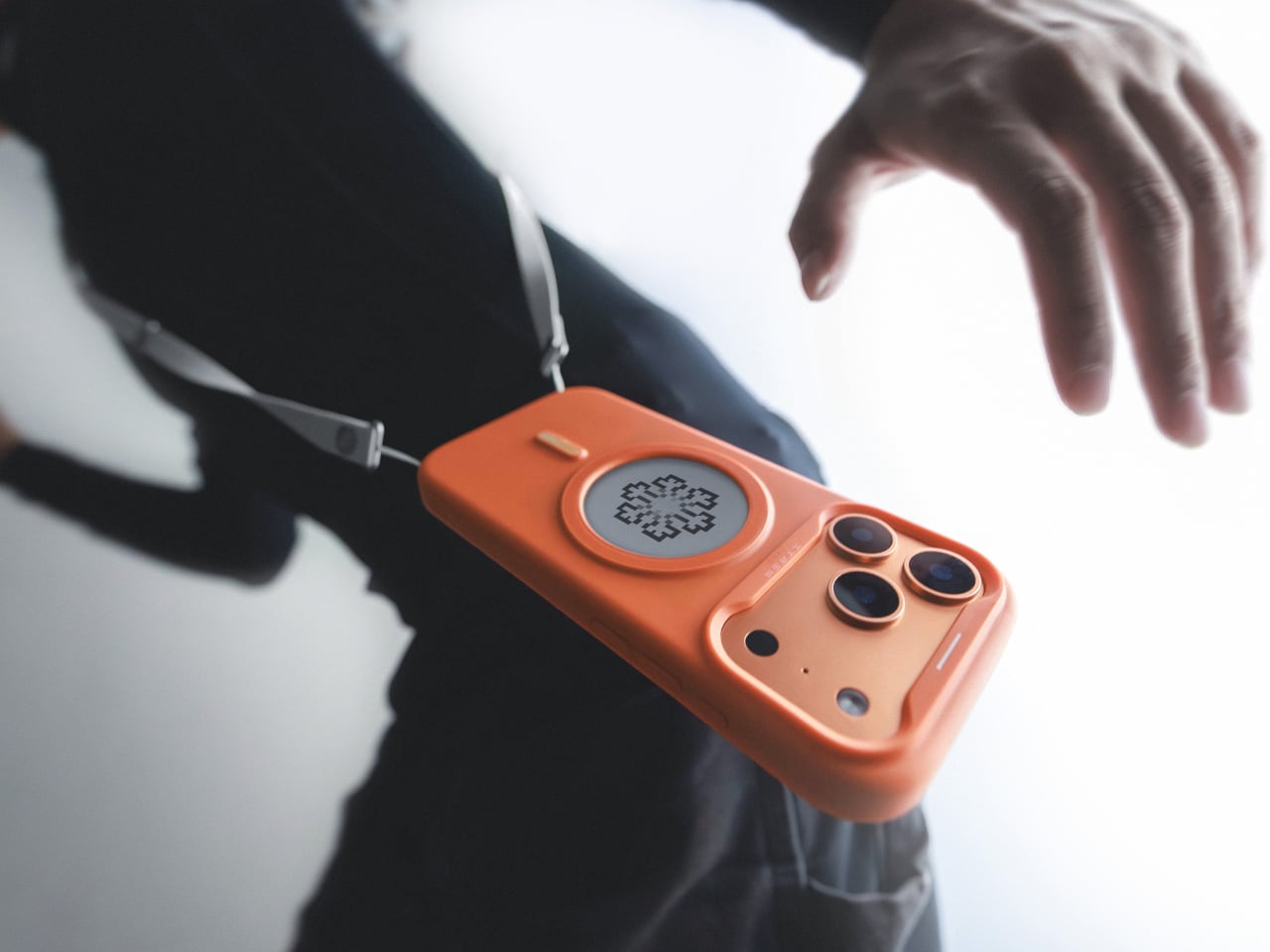
The XTREM INNO Instant Custom Case takes a different approach entirely by putting a live E-Ink display on the back of the case. The circular screen sits on the rear of the case and can be updated anytime using the companion G-SHELL app. Pick a photo from your camera roll, tap “Cast Image,” and within seconds the display updates to show it. No charging cables, no dongle, no separate battery to keep alive.
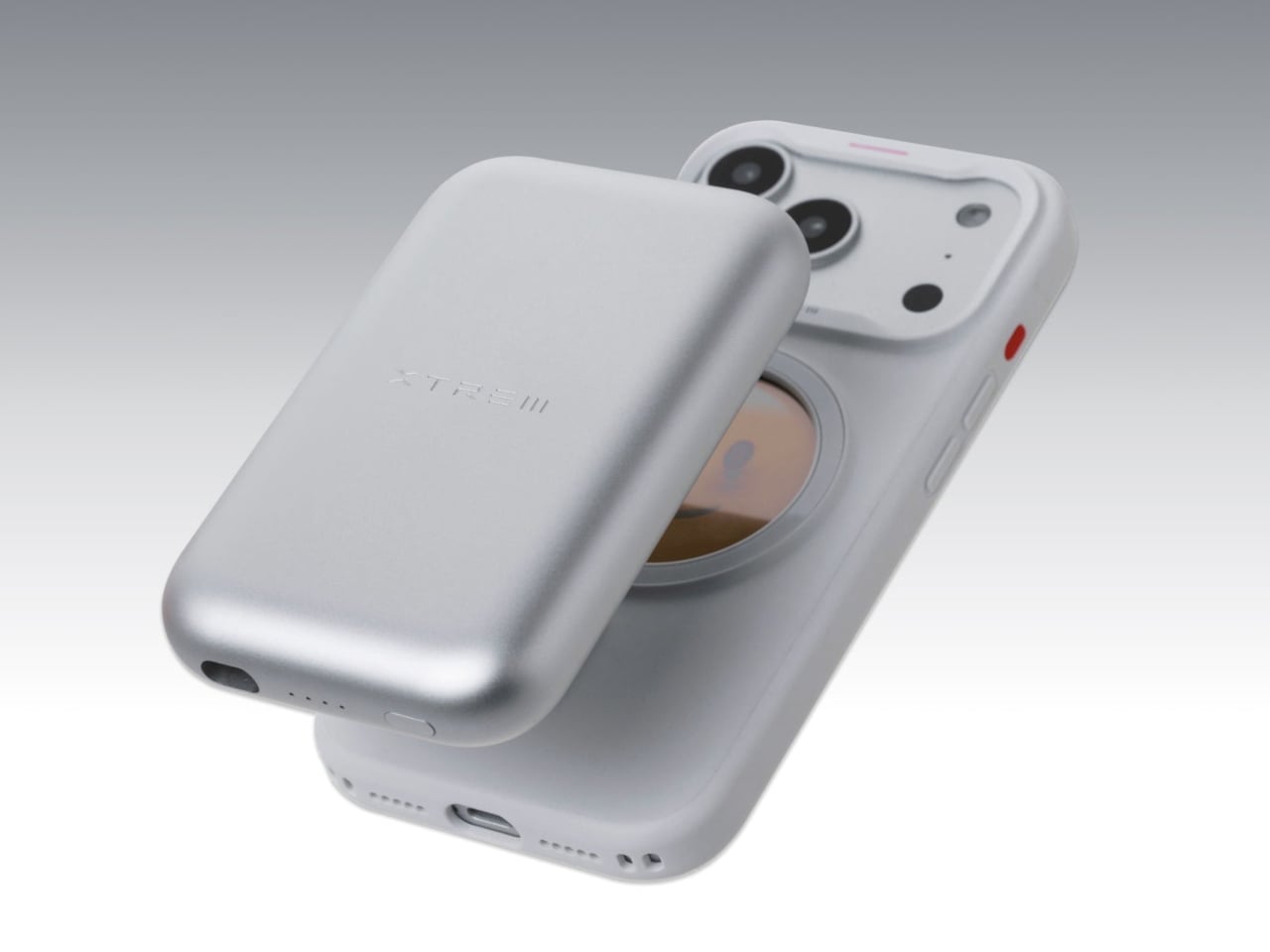
That last part is the piece worth pausing on. The display uses passive NFC technology, which means the case draws what it needs from the phone only during the update and then holds the image indefinitely using essentially zero power. The photo stays visible even with the phone switched off or the case detached entirely. It doesn’t dim, doesn’t drain the phone’s battery, and doesn’t require any kind of maintenance.
The E-Ink screen itself runs at 212 PPI with a four-color system covering black, white, red, and yellow. That palette is wider than most standard tri-color E-Ink screens, though it’s worth noting the display doesn’t replicate photorealistic color the way a phone screen would. Images take on a quality closer to a printed photograph or a high-contrast graphic, which has its own particular appeal depending on what you’re putting on the case.
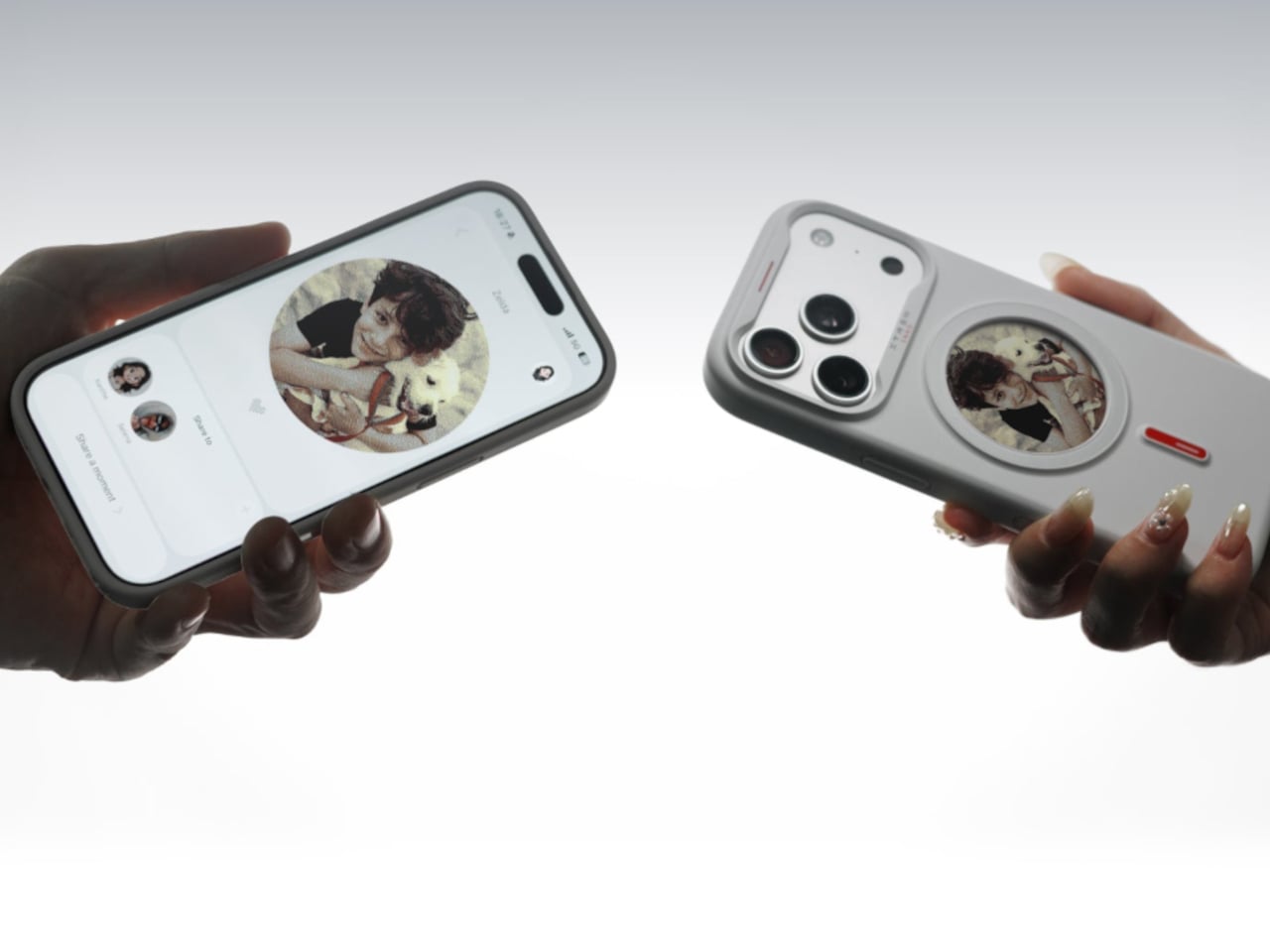
A more recent feature lets users link their case with a friend’s and cast photos directly to each other’s displays. Send a selfie, a shared joke, a matching photo, or anything else from your camera roll straight to someone else’s phone case without going through a message thread first. It’s a genuinely odd little communication channel, and a lot more tactile than a reaction emoji.
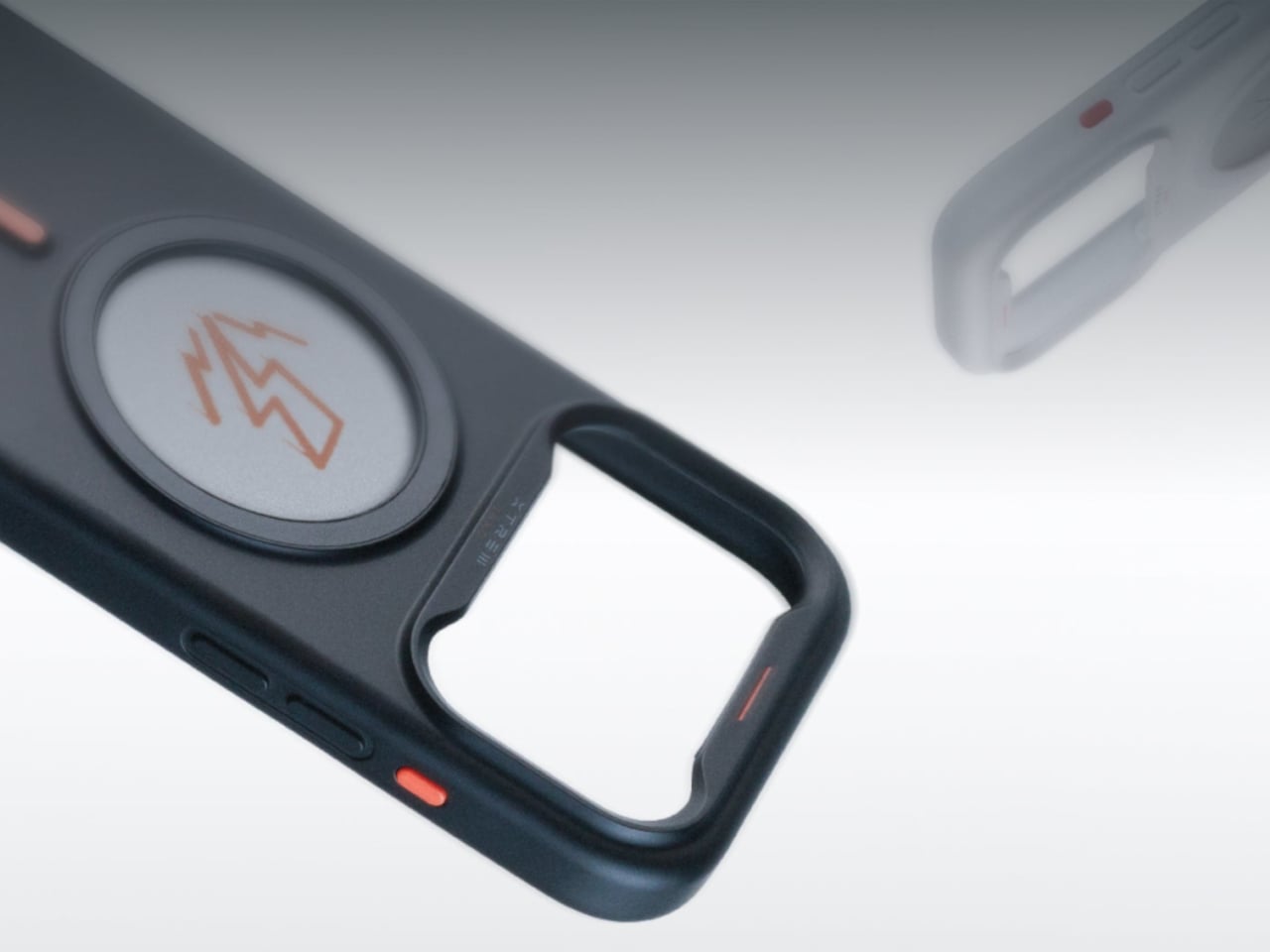
The case itself is built around a sandwich structure that the company says improves wireless charging efficiency and heat dissipation compared to a standard case. It weighs just 40g, clears MagSafe compatibility fully, and has passed drop testing with reinforced corners and a patented frame. The material is treated against yellowing, which is one of the more persistent grievances with transparent cases over time.
Available for iPhone 15 through iPhone 17 models, the XTREM INNO case comes in Nova White, Noir Black, and Cosmic Orange. The circular E-Ink panel is the same across all variants; the color options refer to the frame and body of the case itself. A single case retails at $69.99, which is more than a typical protective case but significantly less than replacing an entire case every time you want a different look.
For people who already change their phone lock screen frequently or rotate between a few different photos they actually care about, the logic of a case that does the same thing doesn’t take much convincing. The technology’s already proven in e-readers; applying it to the back of an iPhone case turns out to be a surprisingly sensible place to put it.