Hermès Paddock Yoyo Charger is a luxury wireless charging experience for Apple devices

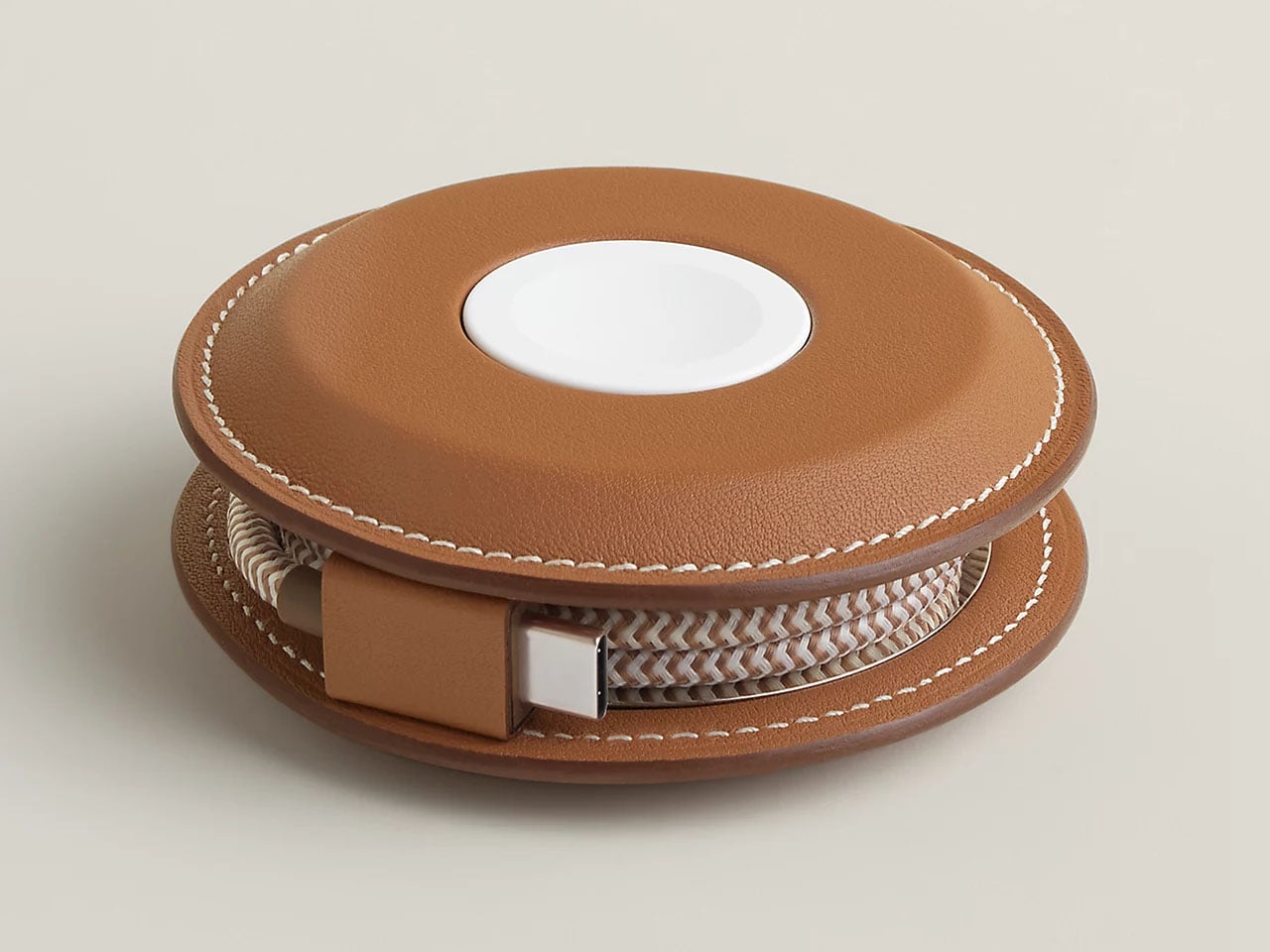
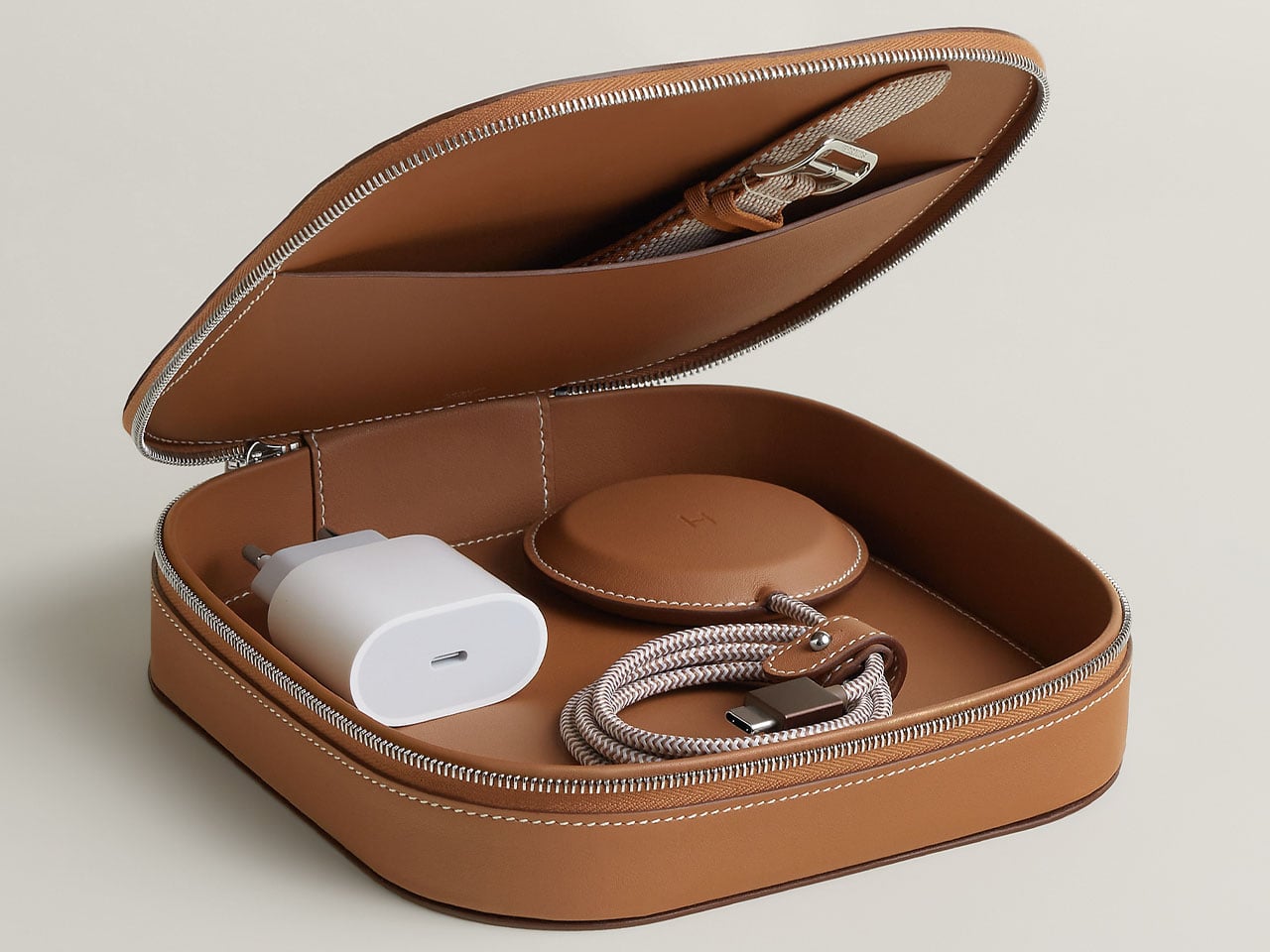
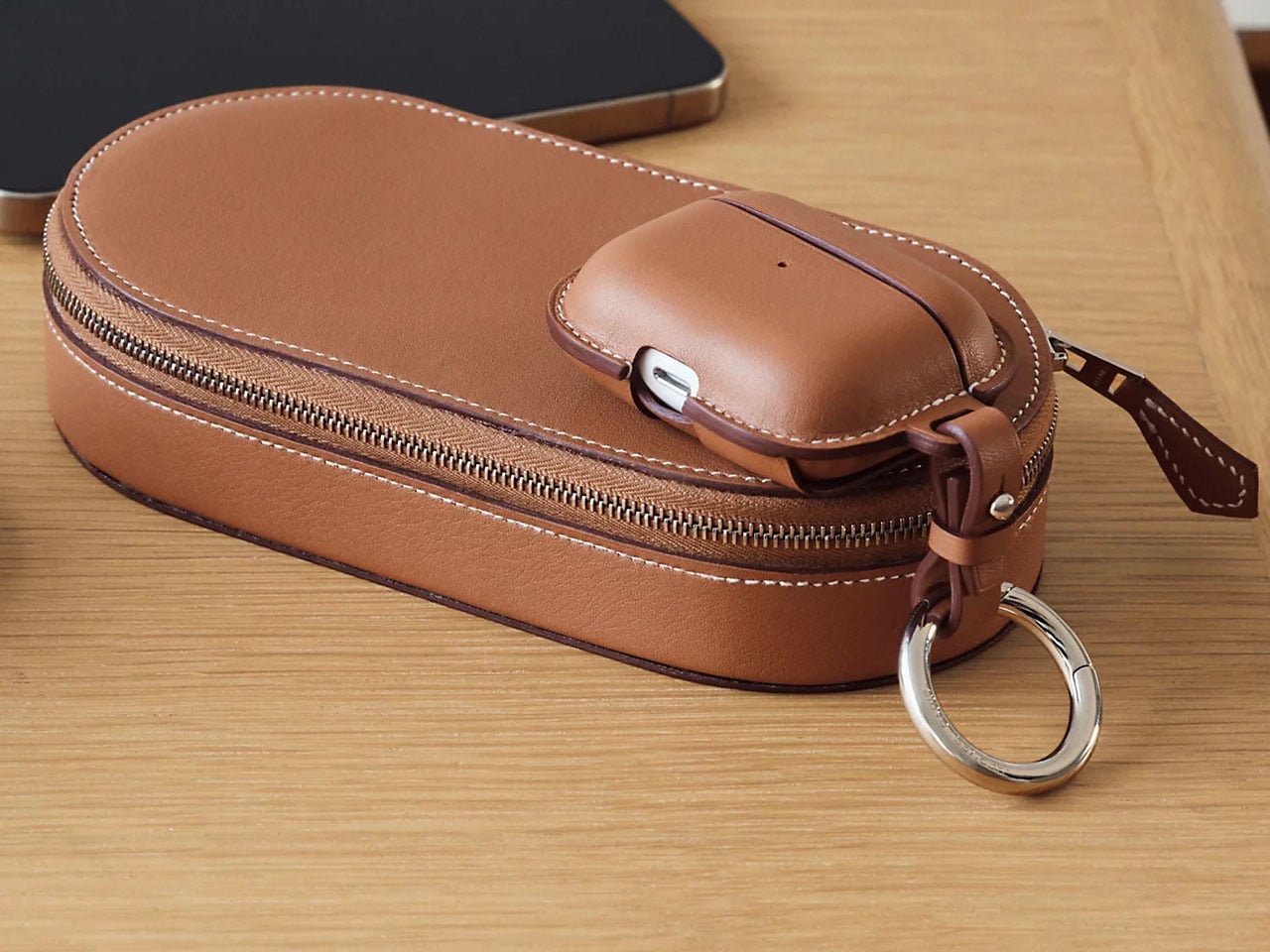
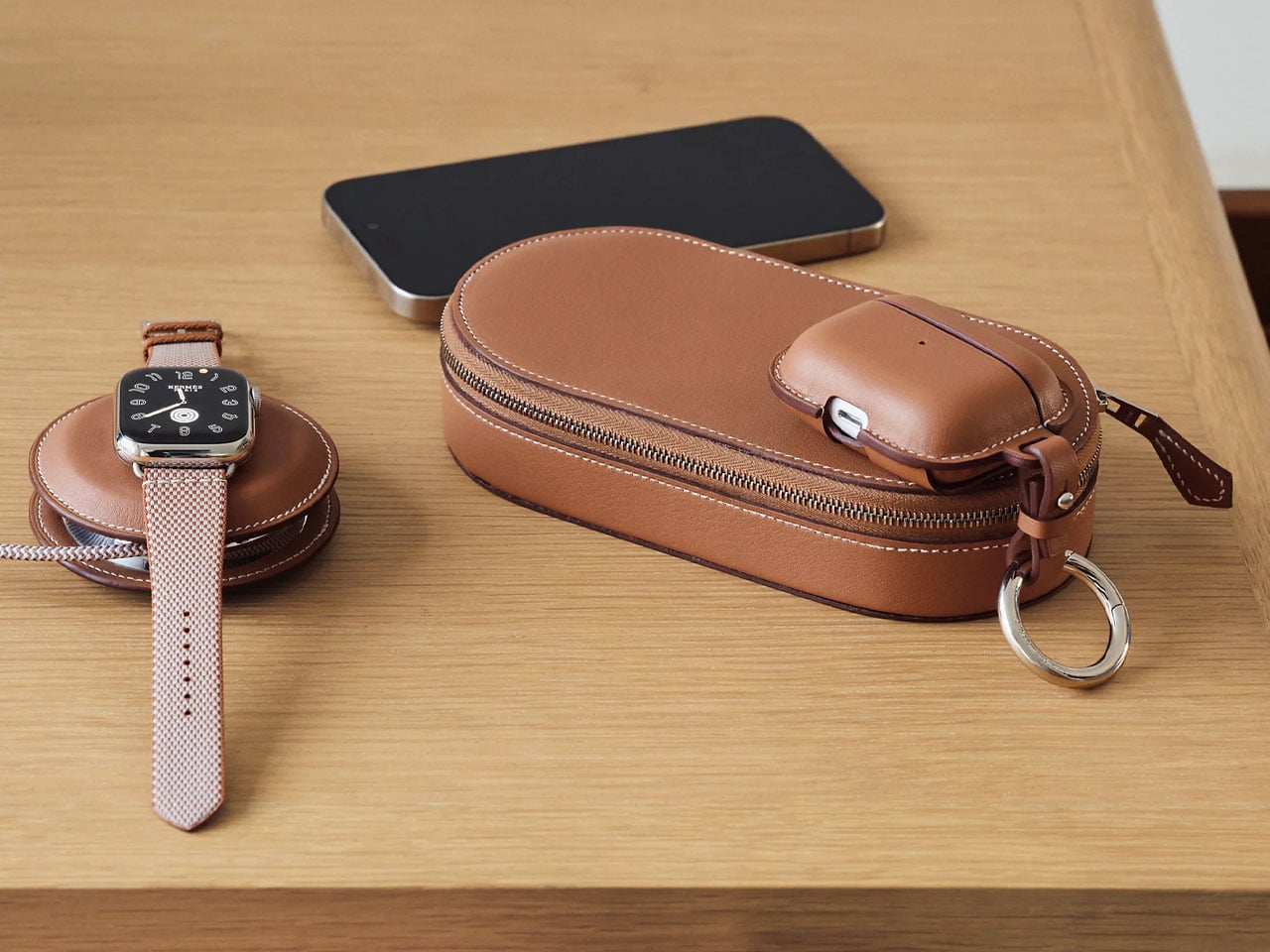
There are MagSafe chargers, and then there is the Hermes Paddock Yoyo Charger. The French luxury brand has crafted a leather charger case for your Apple devices that costs much more than the iPhone 17 Pro Max or the MacBook Air. This accessory comes as a part of the Hermes spring tech collection, which includes the Paddock Solo charger, Grand Paddock Case, and the Paddock Duo Charger.

This new collection of leather-wrapped charging accessories for Apple devices by Hermes is certainly targeted at the rich and famous. Clearly, style and status symbols are at the fore in this line-up, but we got most intrigued by the unique design of the Yoyo Charger and the subtle luxury of the Grand Paddock Case.

Designer: Hermes

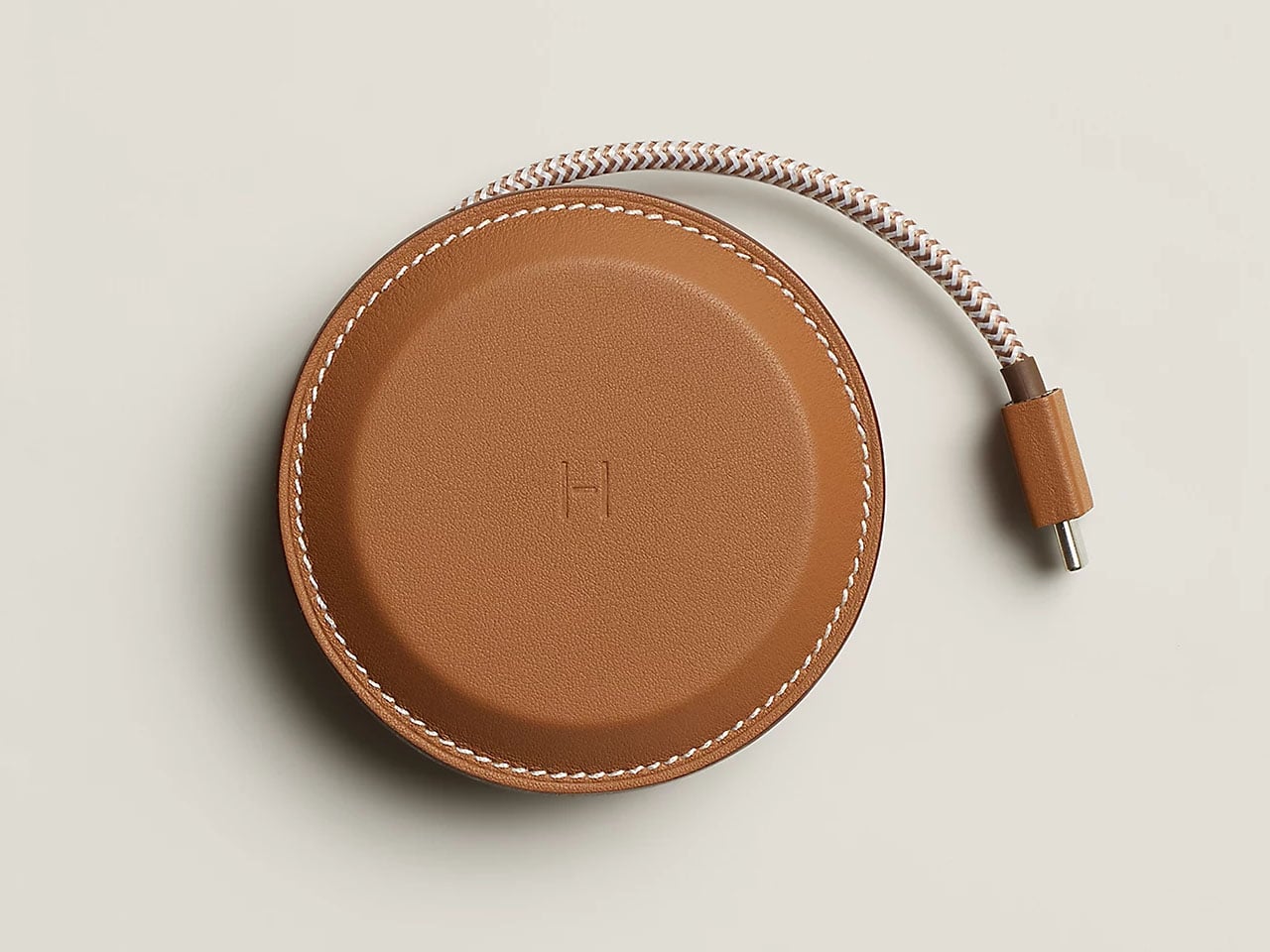
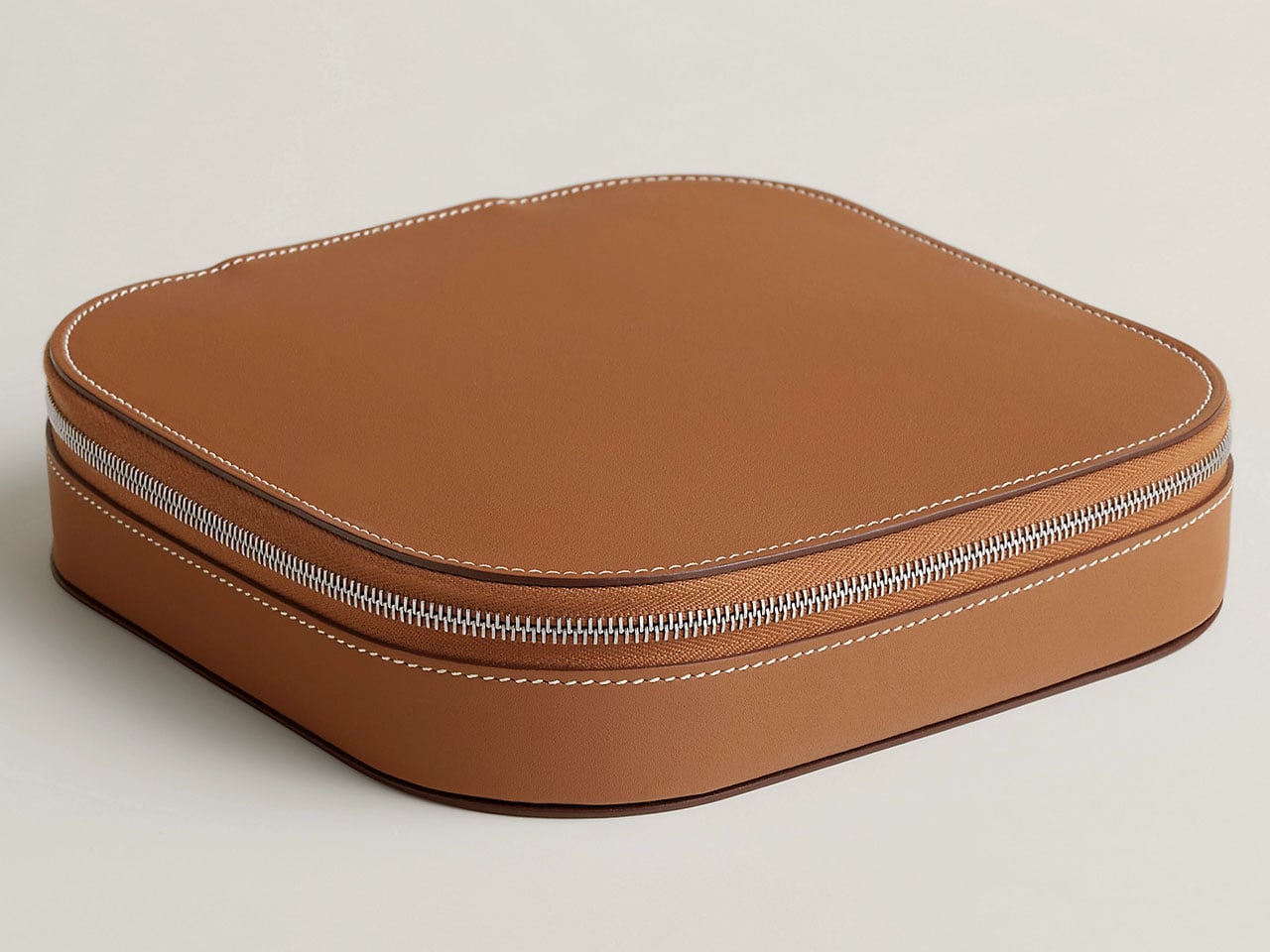
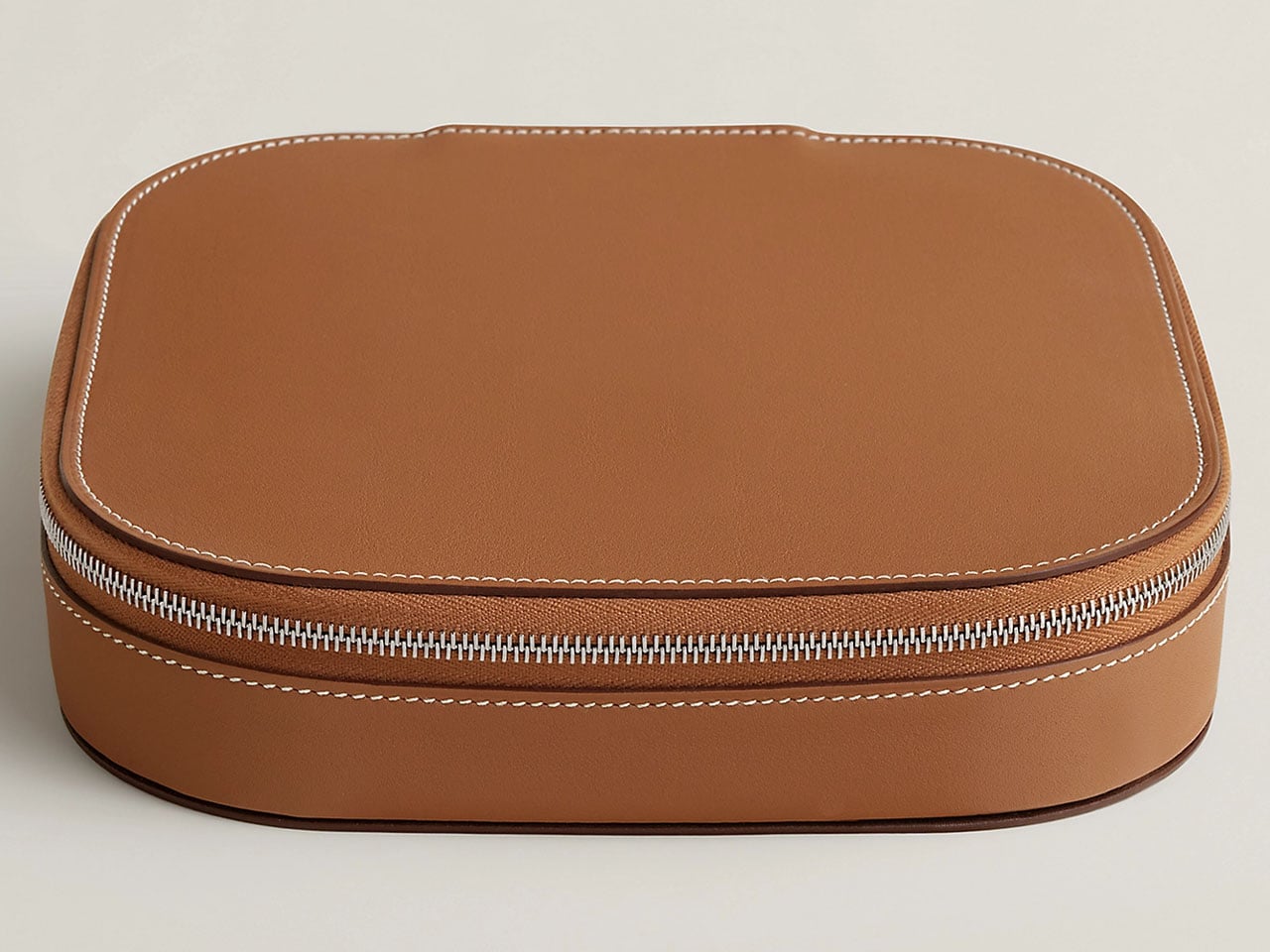
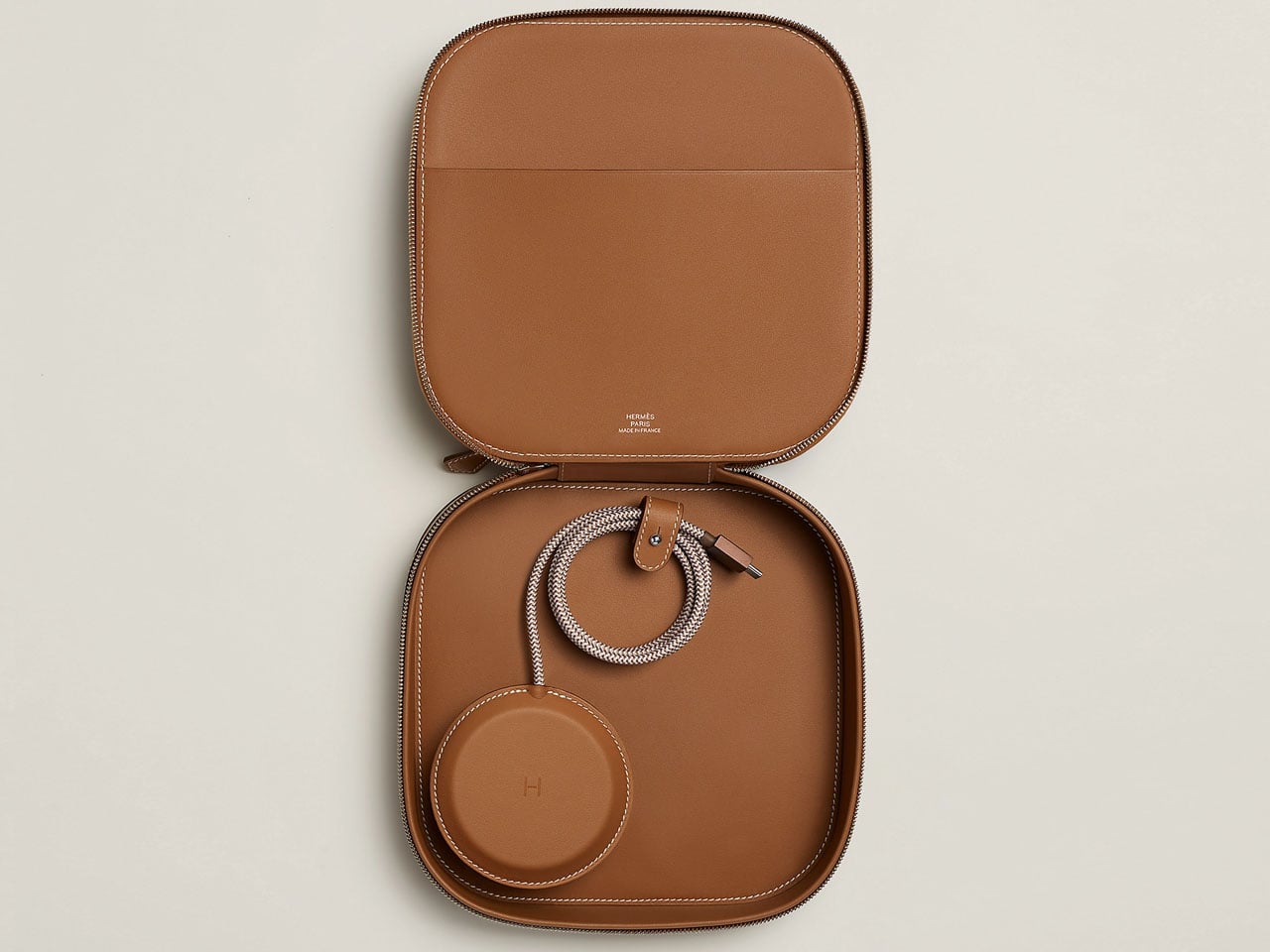
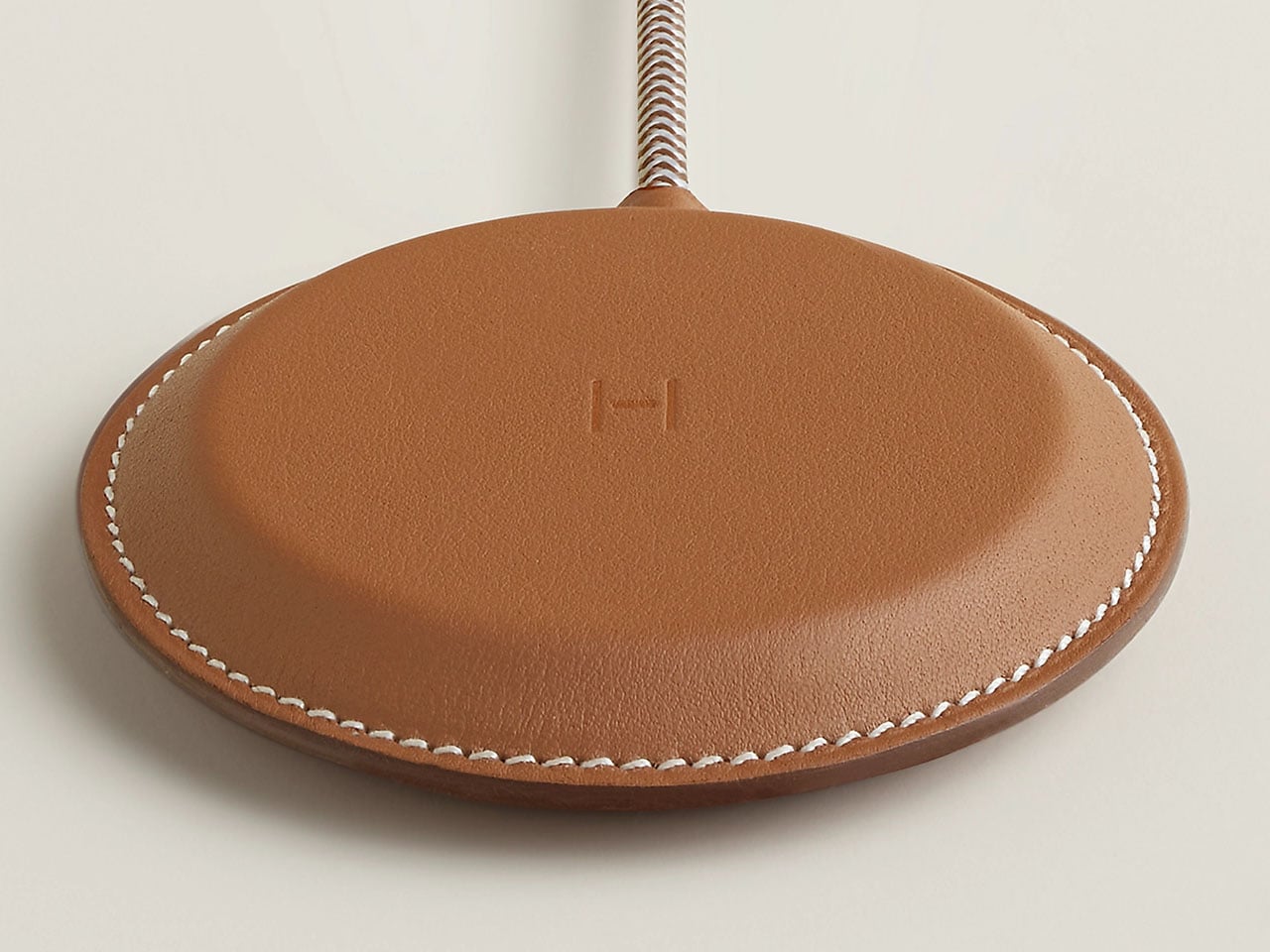
Both the Yoyo Charger and the Grand Paddock Case are crafted in Gold Swift calfskin with artisan-level saddle stitching. The use of premium materials and attention to detail make it opulent to the feel and touch. The Yoyo Charger has two MagSafe charging zones for fast charging of your multiple Apple gadgets like iPhone, AirPods, or Apple Watch. Complementing the yoyo-shaped charger is the travel-ready Grand Paddock Case, which comes with an inner storage pocket and doubles as a protective casing for the Yoyo Charger.

The internal charging system relies on MagSafe and Qi-compatible wireless charging technology, making it compatible with MagSafe-enabled iPhones starting from the iPhone 12 generation, as well as other wireless charging accessories. Power is delivered through a USB-C connection, and the charging system requires a minimum 20W power input to function properly. While a USB-C cable is included with the charger, the package notably does not include a wall power adapter, meaning users must supply their own power brick.

While this might feel unusual given the price point, it aligns with the increasingly common practice among electronics brands to exclude power adapters from accessory packages. Pricing across the Hermès charging collection highlights the brand’s focus on exclusivity rather than affordability. The Paddock Solo charger starts at around $1,250, while the Yoyo and Paddock Duo chargers are priced at approximately $1,750. When paired with the larger leather carrying cases, the price climbs dramatically. The Yoyo Charger bundled with the Grand Paddock Case reaches around $5,150, a price that exceeds many premium laptops and smartphones.

For most users, the functionality of these chargers will be similar to far more affordable wireless charging pads available on the market. However, for collectors of Hermès leather goods or those who appreciate the blend of luxury fashion with everyday technology. The French luxury high-fashion house has collaborated with Apple for years, most notably through luxury Apple Watch bands, and this charging accessory lineup extends that partnership into the broader ecosystem of Apple devices.

The post Hermès Paddock Yoyo Charger is a luxury wireless charging experience for Apple devices first appeared on Yanko Design.
The Hermes Yacht Concept Has Bronze Panels and a Glass Canopy, and It’s Stunning

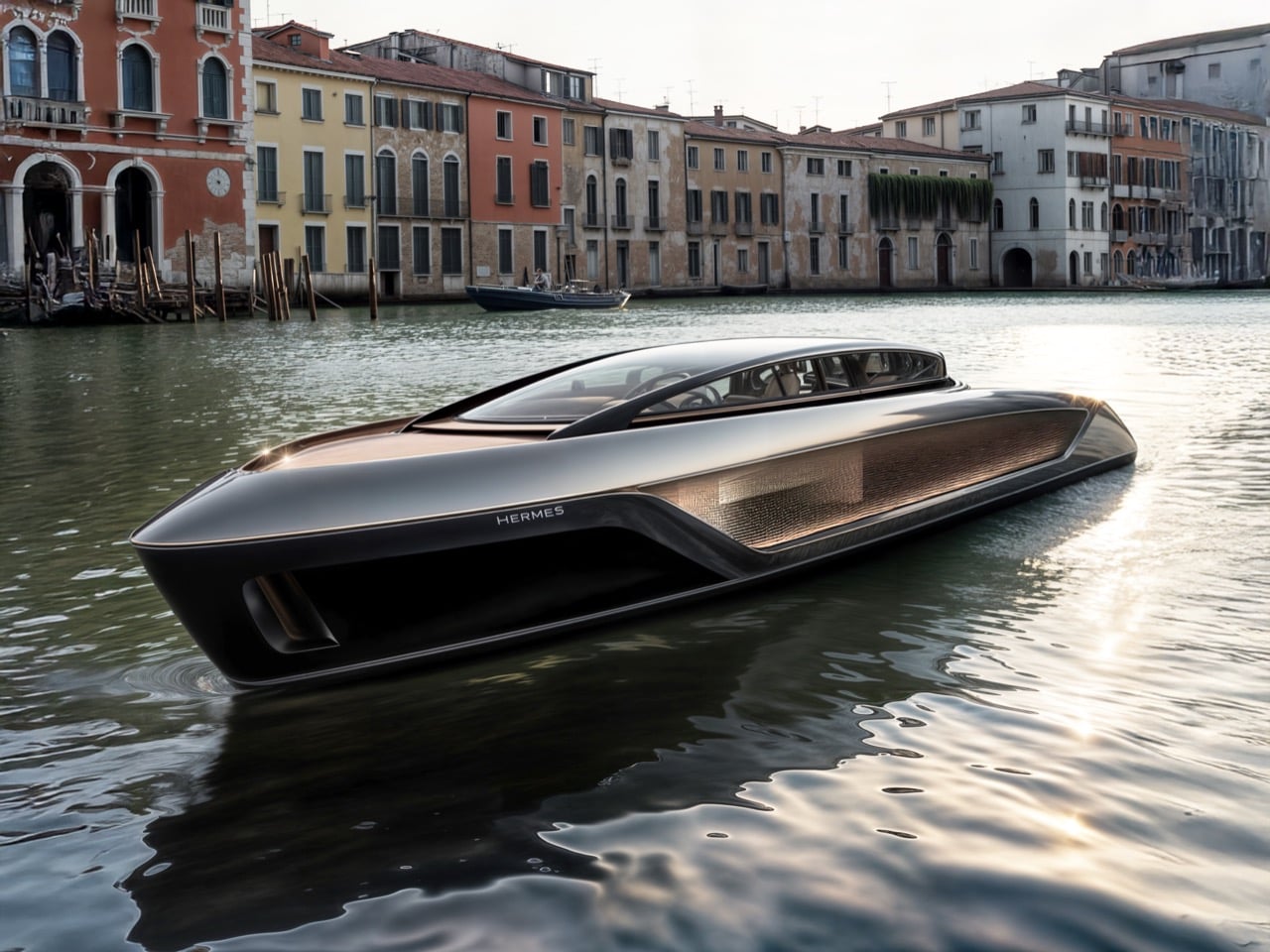
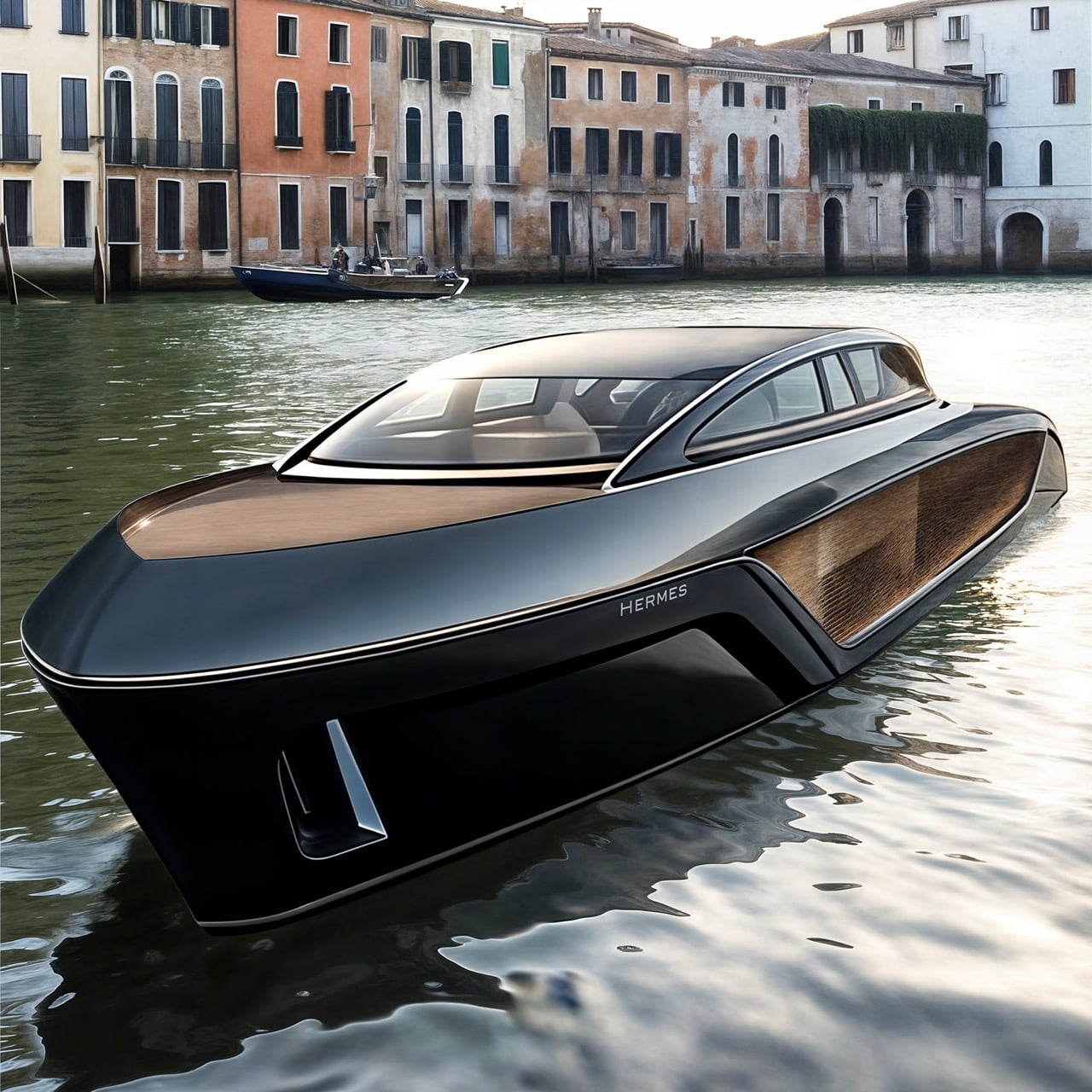
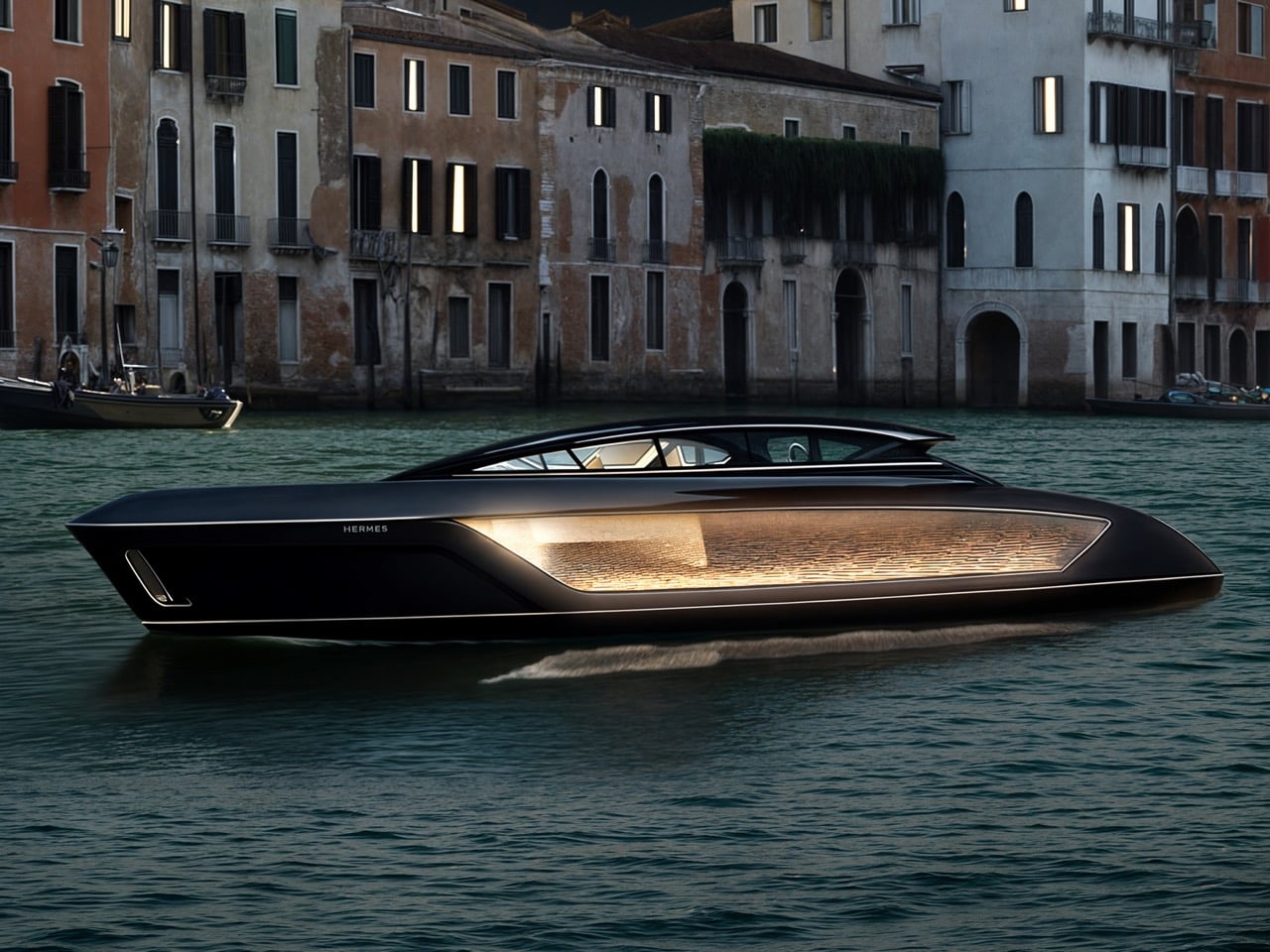
The contrast could hardly be more striking. Traditional gondolas drift past weathered Venetian buildings while the Hermes Yacht commands attention with its angular, contemporary form. Paolo Demel designed this concept vessel to embody what he calls “futuristic elegance,” a concept that bridges luxury marine craft with the precision and artistry of high fashion design.

Measuring 49 feet in length, Hermes combines lightweight fiberglass and aluminum with sustainable materials, proving that environmental consciousness and aesthetic ambition can strengthen rather than limit design possibilities. The yacht’s retractable systems transform it from docked mode to cruising configuration, while enhanced hydrodynamics improve both speed and fuel efficiency. From its inception in Milan through final development in Venice, this project spent eighteen months evolving into an award-winning example of how modern yacht design can honor craftsmanship while embracing innovation and responsible material choices.

Designer: Paolo Demel

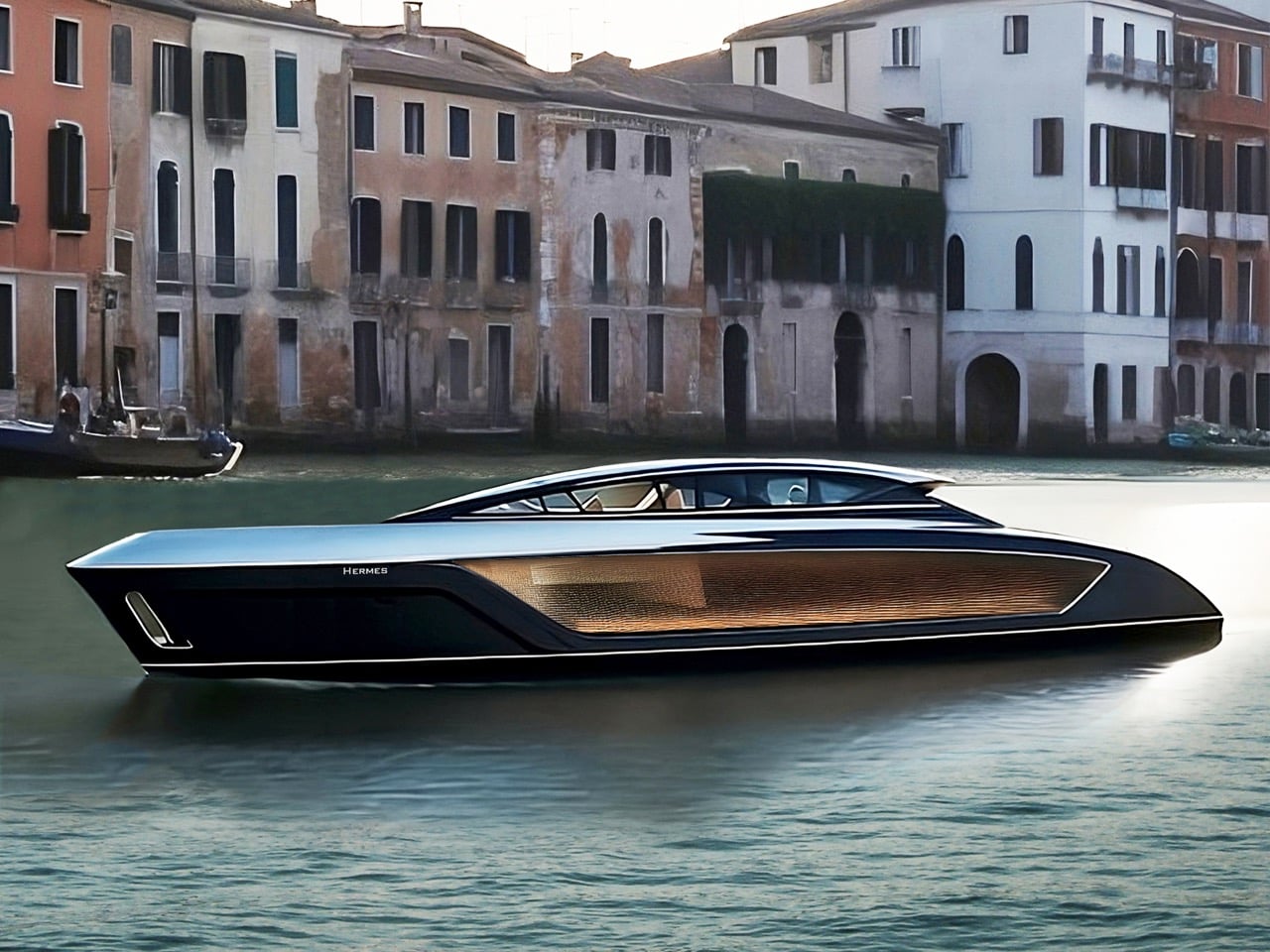
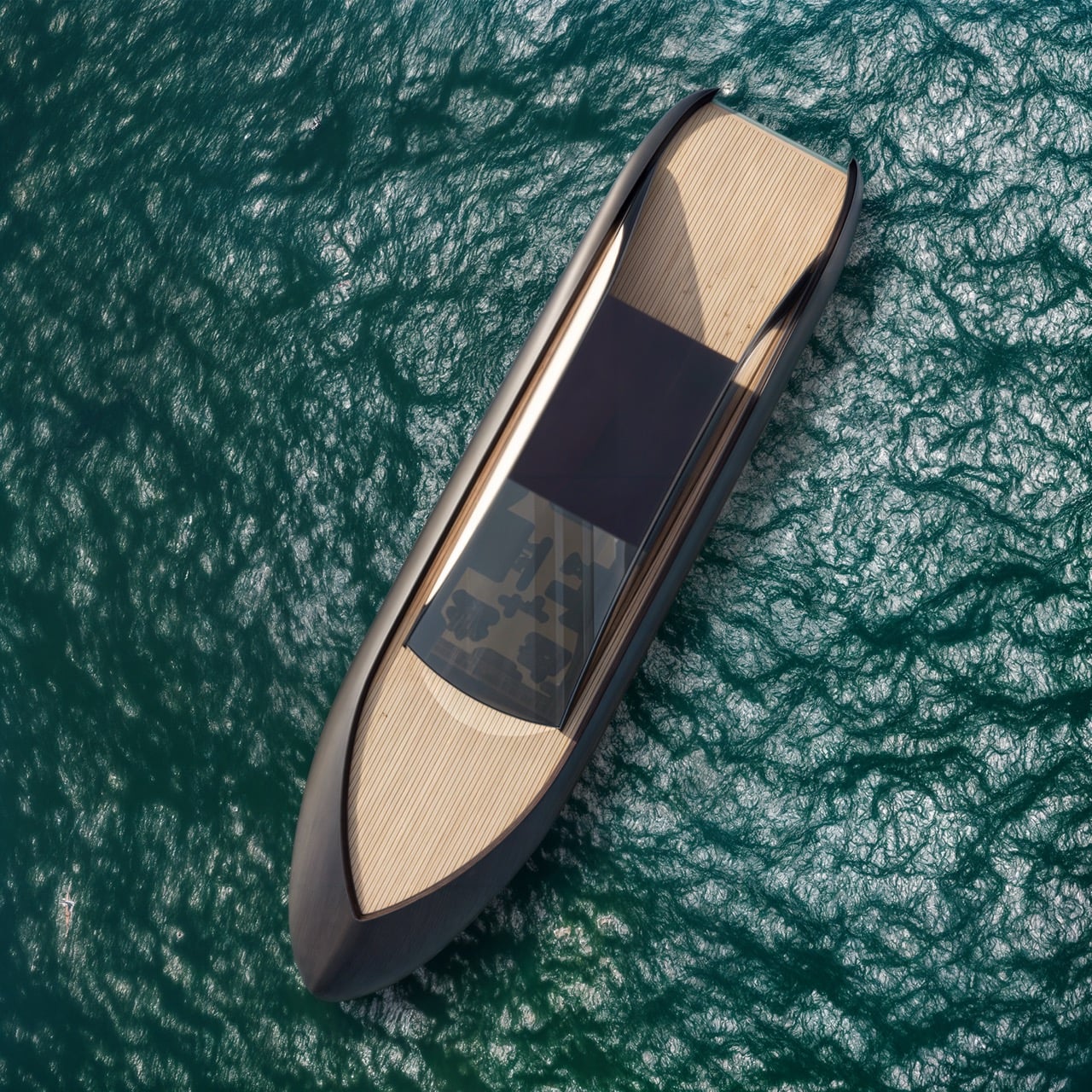
Paolo Demel spent 18 months developing the Hermes Yacht concept between Milan and Venice, and the work shows in how thoroughly considered everything appears. The proposed 49-foot hull would use fiberglass and aluminum to keep weight down while maintaining structural integrity, which directly improves fuel efficiency through basic physics. Less mass means less energy required to push through water at speed. The glass canopy wrapping around the cabin does double duty, flooding the interior with natural light while creating that visual continuity between inside and outside spaces. Those bronze-toned panels along the flanks have a textured, almost perforated appearance that adds depth without looking overwrought. Demel pulled inspiration from fashion rather than other yacht designers, studying how haute couture handles material combinations and surface finishes.

The dimensions spec out at 49 feet long, 14.5 feet wide, and 9.5 feet tall, landing in that middle range where you have actual interior volume but can still maneuver through tighter waterways. Visualizing this concept in Venice’s canals probably shaped some of these decisions, since those narrow passages force you to think about turning radius and sight lines differently than open water would. The knife-edge bow cuts drag, which would show up in improved top speeds and better fuel economy with the same powerplant. You see this kind of aerodynamic thinking in automotive design constantly, and it translates well to marine applications where you’re fighting fluid resistance constantly.

Demel designed retractable systems for the keel and sails, letting the yacht physically reconfigure between docked and cruising modes. Most vessels compromise with a fixed setup that works okay in both scenarios but excels in neither. Shallow draft when docked makes berthing easier. Deeper keel and larger sail surfaces when cruising improve stability and performance. The mechanical complexity of moving parts would introduce maintenance considerations, but the operational flexibility seems worth that tradeoff if anyone actually produces this design. CNC machining would handle precision components where tolerances matter, then hand finishing would take over for surfaces requiring human judgment. That hybrid manufacturing approach has become standard in high-end fabrication because automated and manual processes each handle what they do best.

Rendering a yacht in Venice carries obvious symbolic weight, placing futuristic design against Renaissance architecture. Demel understood that contrast when choosing where to visualize Hermes. The juxtaposition works because the yacht holds its own visually without trying to blend in or apologize for looking different. Those bronze panels catch light differently depending on angle and time of day, creating visual interest that static renders can only hint at. Whether anyone builds this remains to be seen, but as a design exercise it demonstrates how cross-pollinating ideas from fashion into marine design produces results that feel fresh in a category that tends toward conservative iterations on established themes.

The post The Hermes Yacht Concept Has Bronze Panels and a Glass Canopy, and It’s Stunning first appeared on Yanko Design.