The JVC Pyramid TV That Defined Retro Futurism in the 70s Now Wants to Be a LEGO Set

Before flat screens colonized every wall and surface, televisions had personality. They came in wild shapes and bold colors, designed by people who believed consumer electronics could be sculpture. The JVC 3100R Video Capsule, produced throughout the 1970s, exemplified this philosophy. Its pyramid form and space-helmet aesthetic made it a favorite among collectors of “space-abilia,” that peculiar category of objects inspired by Apollo missions and science fiction films.

Enter DocBrickJones, a LEGO builder who has recreated this vintage icon in remarkable detail. His LEGO Ideas submission captures everything from the angled white body to the frequency gauge on the control panel. The project needs 10,000 supporters to be considered for production, but it’s currently sitting at just over 200. For anyone who appreciates when design took risks, or when LEGO tackles interesting real-world objects, this pyramid-shaped tribute deserves a closer look.

Designer: DocBrickJones

The original 3100R combined a 6-inch black and white CRT screen with an AM/FM radio in a package that could transform. Collapsed into pyramid mode, it functioned as a radio. Truncate that pyramid by opening the top section, and suddenly you had a television. The design language borrowed heavily from the cultural moment: the black and white color scheme echoed Saturn rockets, while the pyramid geometry nodded to San Francisco’s Transamerica Pyramid skyscraper, completed just a year before the 3100R hit shelves. This was 1972, when the Apollo program still dominated headlines and anything vaguely space-themed sold like crazy. JVC understood the assignment.

What makes DocBrickJones’ LEGO version impressive is how he’s translated analog curves and slopes into a medium that fundamentally works in right angles. The angled faces of the pyramid base use carefully placed slope bricks to maintain clean lines. The blue-tiled screen sits recessed behind a dark gray frame, complete with speaker grills and control dials. There’s even a telescoping antenna in light gray and a brick-built power cable trailing from the base. These details matter because they demonstrate an understanding of what made the original compelling: the interplay between smooth surfaces and functional elements, the visual weight of that wide base supporting a delicate screen assembly, the contrast between the pristine white body and the technical-looking control panel.

The current LEGO Ideas lineup skews heavily toward nostalgic tech objects. The Polaroid OneStep camera, the classic typewriter, even the Atari 2600 have all found success by appealing to adults who remember when consumer electronics felt tactile and specific rather than generic and touchscreen. The 3100R fits this pattern perfectly, maybe even better than some approved projects. It represents a specific design philosophy from a specific moment when optimism about technology translated into physical form. You looked at a 3100R and thought about the future, even if that future was technically just watching grainy UHF broadcasts.

LEGO Ideas operates as a democratic platform where fan-created designs compete for official production. Submit a project, gather 10,000 supporters within a set timeframe, and LEGO reviews it for potential manufacturing. The newly minted JVC 3100R build currently sits at 207 votes and needs to hit the 1,000 vote margin to reach the next stage, which means there’s plenty of runway for this design to find its audience. Voting costs nothing beyond a free LEGO account, and successful projects get produced as official sets with the original creator receiving royalties and credit. The platform has launched everything from the Saturn V rocket to the Medieval Blacksmith, proving that niche appeal can translate into mainstream success. If you want to see this space-age pyramid sitting on store shelves next to other design-focused sets, the voting link lives on the LEGO Ideas website. The 3100R deserves a second act, this time in brick form.

The post The JVC Pyramid TV That Defined Retro Futurism in the 70s Now Wants to Be a LEGO Set first appeared on Yanko Design.
Modular LEGO Pirate Map (With A Kraken) Lets You Redesign Your Own Adventure Every Single Day

X marks the spot, but which spot? George Brickman’s Modular Pirate Map refuses to commit, and that’s precisely why I love it. This LEGO Ideas submission treats the pirate world like a puzzle where every piece works anywhere, creating a different adventure depending on your mood. Twenty tiles, each bursting with microscale detail, slot into an elegant frame to form a complete map. Then you mix them up and start again.

The tiles themselves are tiny masterpieces. Corner pieces house imperial forts and mysterious caves. Interior tiles feature mountain waterfalls and crop fields. Island tiles show colonial outposts. And then there’s the kraken, red tentacles wrapped around an unfortunate vessel, ready to terrorize whatever waters you assign it to. With approximately 2,120 pieces and already marked as a Staff Pick, this project currently has 4,172 supporters steering it toward the 10,000-vote goal. The frame measures about 16 by 13.5 inches, but the possibilities stretch much further.

Designer: George Brickman

The constant element here is the map’s frame. Dark brown borders with golden accents, three ship’s wheels positioned along the bottom edge like they belong in a captain’s quarters. It’s museum presentation meets functional toy, which is a balance LEGO constantly chases but doesn’t always nail. When you pull tiles out to rearrange them, that empty grid doesn’t look unfinished. It looks like a map in progress, a world being redrawn in real time. The tan and brown tile slots aren’t just practical. They’re decorative infrastructure.

Six corner tiles carry the major landmarks. Bustling harbor with docked ships. Imperial fort with battlements and flag. Cave entrance carved into rocky cliffs. Mountain waterfall cascading into pools. Field of golden crops. Small town with multiple buildings crammed together. Four interior tiles handle the transitional spaces with pools, more agriculture, additional structures, varied terrain. Two island tiles add strategic focal points including an imperial outpost. One side tile gives you coastline on a single edge for asymmetrical builds. Four blank water tiles let you control how much ocean dominates your world. Every piece has a job, and Brickman clearly spent time figuring out what players would actually need versus what just fills space.

There’s a Kraken tile that adds a perfect amount of whimsy to the map. Massive red tentacles wrapped around a ship getting absolutely wrecked. At this scale, giving those appendages actual volume and curve is legitimately difficult, but Brickman pulled it off. Position matters with this one – drop it near your harbor and you’ve got a siege. Place it next to blank water and it becomes a deep-sea horror story. The kraken doesn’t passively occupy a tile. It dictates tone for everything around it, which is exactly how a showpiece element should function.

Modularity only works when every tile has character and purpose. You need each piece to justify independent existence, otherwise why bother with the swapping mechanic at all? Palm trees lean at intentionally different angles. Rocks stack with natural irregularity instead of uniform patterns. Ships have distinct hull shapes and sail configurations rather than cookie-cutter repetition. Microscale forces brutal economy because you can’t hide weak composition behind part-count excess. When you only have 75 pieces per tile, every single brick needs purpose.

Start mixing configurations and the mathematics get wild. A 4×5 grid holding 20 tiles produces absurd permutation counts even accounting for corner and edge restrictions. You could theme it with all land tiles clustered on one side creating an archipelago. You could scatter islands randomly across mostly-water fields. You could jam civilization into one corner and leave wilderness sprawling everywhere else. The modularity isn’t decorative flexibility. It’s the entire reason this concept works as a product rather than just a pretty render.

4,172 supporters with 589 days remaining and Staff Pick status means this campaign has actual legs (or kraken tentacles, should I say). LEGO has done modular buildings for years. They’ve released countless pirate ships across multiple themes. Nobody’s done a modular map, which feels like an obvious gap now that someone’s finally filled it. If this survives the 10,000-vote threshold and makes it through LEGO’s review process, you’re looking at a potential template for an entire category. Modular fantasy maps with castles and dragons. Space station maps with docking bays and asteroid fields. Underwater maps with submarines and coral reefs. The format translates to literally any theme that benefits from spatial reconfiguration. That’s a vision I can get behind – and if you believe in it too, go ahead and cast your vote for Brickman’s MOC (My Own Creation) on the LEGO Ideas website. It’s free!

The post Modular LEGO Pirate Map (With A Kraken) Lets You Redesign Your Own Adventure Every Single Day first appeared on Yanko Design.
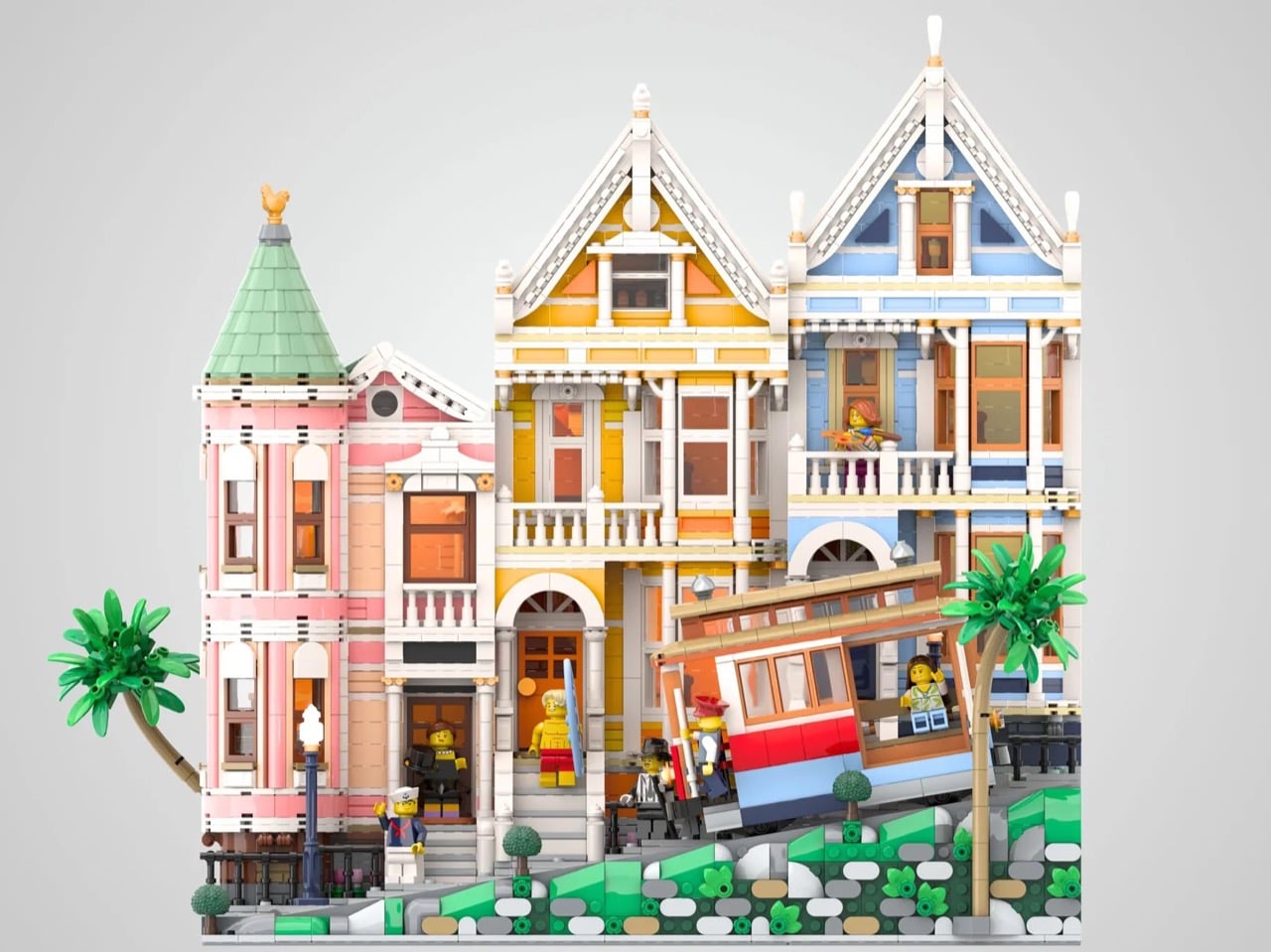
Six-Legged LEGO Technic Walker Moves Like a Real Creature Thanks To Pure Mechanical Engineering

Walking machines are hard. Really hard. Which is why most LEGO motorized builds stick to wheels or treads, and the ones that do attempt legs usually end up with something that shuffles more than it strides. But every so often someone figures out the mechanical magic trick that makes it work, and this six-legged walker currently on LEGO Ideas is one of those builds that actually delivers on the promise. The creator has managed to build something that moves with genuine fluidity, the kind where you can see the weight transfer from leg to leg.

The secret is in the gearing system. Rather than trying to program each leg’s movement independently, the build uses variable-speed gears that automatically adjust leg velocity based on where it is in the stride cycle. Slow and deliberate when the foot is planted, quick when it swings through the air. Combined with a vertical stabilization mechanism and shock-absorbing feet, you get something that can handle real terrain rather than just demonstration videos on smooth surfaces. It’s styled as a space exploration rover complete with a crew cabin and solar panels, leaning into that AT-AT aesthetic without directly copying it.

Designer: Alexis_MOCs_FR

Here’s the thing about making LEGO walk. You can throw servos at the problem and program every joint independently, which is how Boston Dynamics does it and why their robots cost more than a house. Or you can do what Theo Jansen did with his Strandbeest sculptures and let the mechanism itself figure out the gait. Jansen’s beach creatures run on wind power and pure geometry, converting constant rotation into this weirdly organic walking motion that makes you forget you’re watching PVC pipe and zip ties. That’s the approach Alexis_MOCs_FR took here, using two L motors and a gear train that does all the thinking mechanically. No Arduino, no sensor feedback loops, just smart engineering that exploits the physics of rotating linkages.

The look is peak 1970s futurism. White body panels, black structural framework, blue solar arrays, elevated cockpit with room for two astronaut minifigs. There’s a satellite dish up top because of course there is. The whole thing sits maybe 12 to 16 inches tall based on minifig scale, and all that gearing is completely visible. Some builds try to hide the mechanism under cosmetic panels, but here the exposed gear trains are the entire point. Watching the motion transfer from motors down through the variable-speed system and into the legs is genuinely mesmerizing, like those transparent mechanical watch movements that cost absurd money because people will pay to see the machinery work.

The vertical stabilization bit is where you can tell someone really understood the assignment. When your upper leg is swinging through a 60 or 70 degree arc, keeping the foot flat on the ground becomes this annoying trigonometry problem. Most people either accept some wobble or add complexity with extra actuators. This build has a sliding element in the lower leg that compensates for the angle automatically. Upper leg tilts, slider adjusts, foot stays vertical. It’s passive, it’s reliable, and it’s the kind of solution that only works because someone actually prototyped this thing instead of just CAD modeling it and calling it a day.

High-stepping gaits hit hard. You’re lifting legs way off the ground and slamming them back down at whatever speed your motors can manage. Without damping, every impact rattles through the structure and either knocks gears out of alignment or turns the whole thing into a vibrating mess. Custom shock absorbers at each foot solve this, which is why the creator can apparently run it over rumpled blankets and piles of Kapla blocks without it face-planting. The build is allegedly both lightweight and robust, which sounds like marketing speak until you consider that you need enough mass for stability but not so much that momentum tears the gear teeth apart during direction changes.

The project is currently in its very early stages, with 424 more days to gather votes and hit the next milestone. If it gets to the coveted 10,000 mark, LEGO actually reviews it for production. The Technic lineup has been pretty safe lately, lots of supercars and construction equipment but not much that pushes mechanical boundaries. This thing demonstrates actual engineering innovation, the kind where someone solved hard problems with clever solutions instead of just adding more motors. If you want to see it become a real set, go cast your vote on the LEGO Ideas website!

The post Six-Legged LEGO Technic Walker Moves Like a Real Creature Thanks To Pure Mechanical Engineering first appeared on Yanko Design.
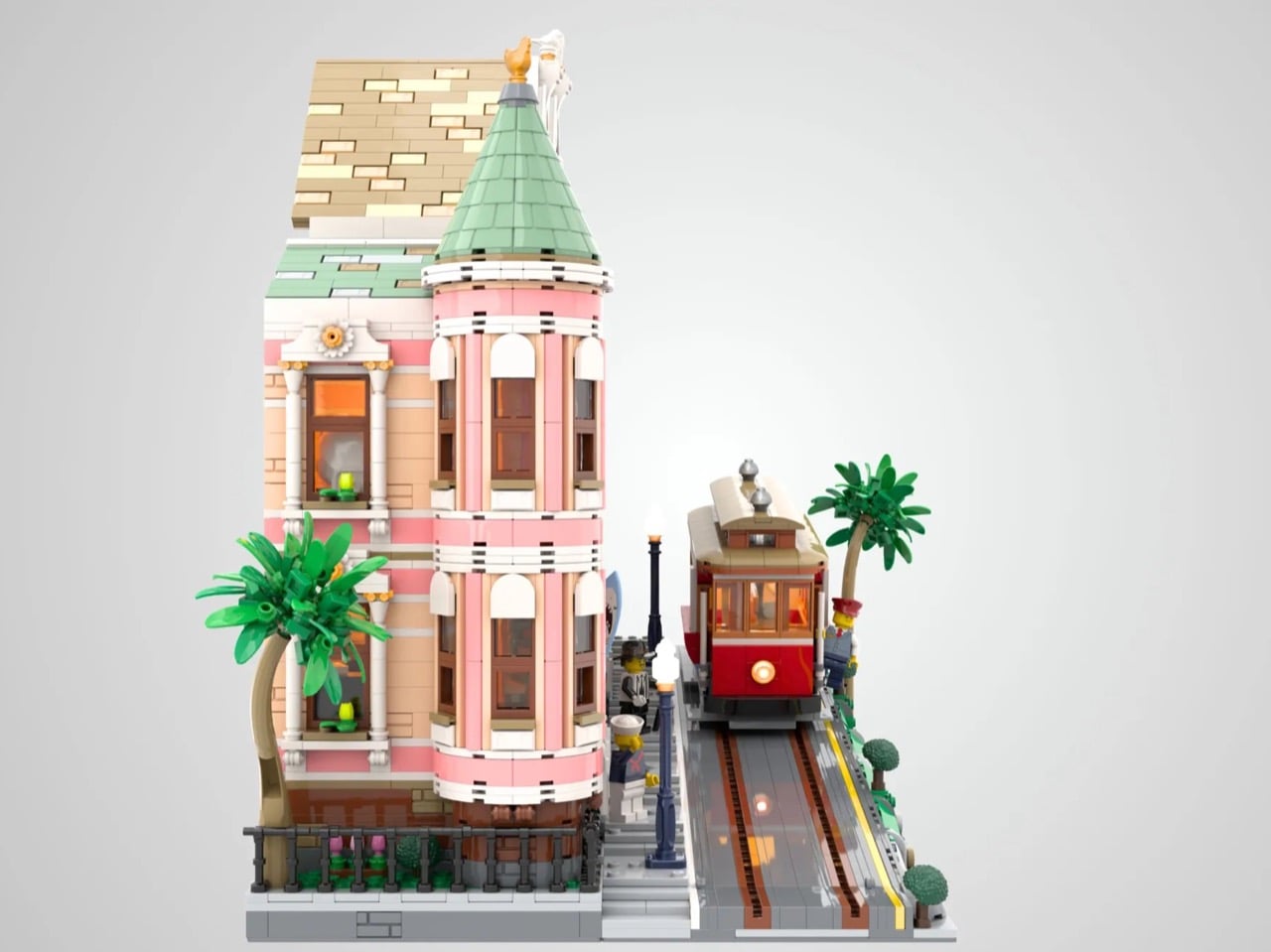
LEGO Pays Tribute To The 40+ Year Journey Of Apple Calculator Designs

The iPad got its own native calculator app in 2024, just 40 years after Apple rolled out its first-ever GUI (graphical user interface) calculator for the Macintosh in 1984. The original was designed by Chris Espinosa, and was a favorite of Steve Jobs’ up until it was refreshed with the MacOS X in 2001. However, most of us are familiar with the original black and orange calculator UI that debuted as early as 2007.

The thing is, Apple’s calculator designs are a pretty great way to see the company’s design journey. Things went from strictly functional to visually contemporary to goddamn gorgeous (without ever compromising usability of course), and this LEGO set captures that journey perfectly. Put together with just 821 pieces, this fan-made build shows Apple’s transition through 4 stages – going all the way from the b/w 1984 calculator to the modern scientific calculator.

Designer: The Art Of Knowledge

The first calculator design was put together by Espinosa at the young age of 22 while under the leadership of Jobs. Famously a pedantic, Jobs ripped apart almost every design that Espinosa shared with him. After multiple iterations, Espinosa went to him with what we now look at as the final design. It was accepted, but not without a strong dose of criticism from Jobs, who said “Well, it’s a start but basically, it stinks. The background color is too dark, some lines are the wrong thickness, and the buttons are too big.”

The calculator was finally tweaked on the UI and semantics front by Andy Hertzfeld and Donn Derman, who retained this Jobs-approved graphical version. This remained a standard on Macs all the way up until the end of OS 9. The following OS X, again led by Jobs’ vision to break past old and usher in the new, saw a more skeuomorphic approach.

In 2001, Apple transitioned away from its classic Mac OS 9 calculator, known for its simple, functional design (influenced by Steve Jobs and Dieter Rams’ Braun aesthetic), to the new Mac OS X, featuring a refreshed look that emphasized minimalism, better integration, and user-friendly details like larger zero buttons, reflecting Jobs’ philosophy of simplicity and intuitive interaction.

The final calculator design we see today wasn’t always like this. Apple loyalists will remember a phase in 2007 when the iPhone did have a calculator app with the familiar black and orange colorway, but with rectangular buttons instead of orange ones. The circles only made their way into the UI as late as 2024, although design-nerds will remember the Braun ET55 calculator which heavily inspired Apple’s design efforts. Braun’s entire design philosophy, crafted by legend Dieter Rams himself, helped craft Apple’s approach to industrial (and even interface) design. Shown below are two versions of the same iOS18 calculator design – in basic as well as scientific formats.

“This model utilizes interlocking plates, tiles, and inverted tiles for a smooth, tactile finish. It is designed as a modular desk display, perfect for students, engineers, and tech historians alike. With roughly 821 pieces, it offers a rewarding build experience that fits perfectly alongside other LEGO office or technology sets. Attention is paid to the scale of the model to match as closely as possible to the apps,” says designer The Art Of Knowledge, who put this MOC together for LEGO lovers on the LEGO Ideas forum. It currently exists as just a fan-made concept, although you can vote the build into reality by heading down to the LEGO Ideas website and casting your vote for the design. It’s free!

The post LEGO Pays Tribute To The 40+ Year Journey Of Apple Calculator Designs first appeared on Yanko Design.
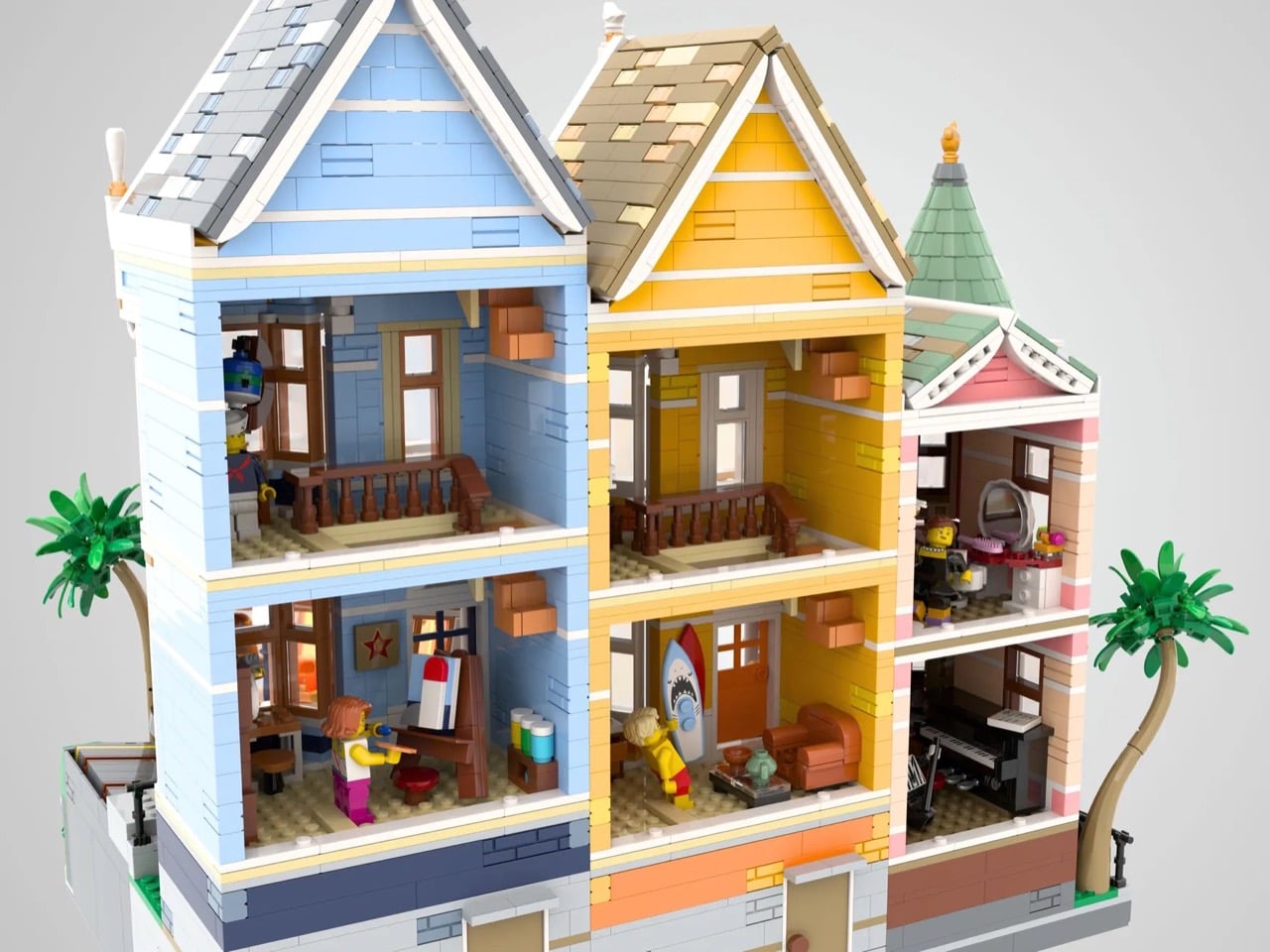
DIY LEGO ‘Connect 4’ Brickset lets you actually play the game after building it!

There aren’t many LEGO sets designed to played with once they’re built. A lot of them are envisioned as show-pieces, and yes, you can do imaginary play with them like you would holding a LEGO Millennium Falcon and whooshing around the house, but this MOC from HH Bricks captures a kind of LEGO playability that’s absolutely rare. Inspired by his daughters’ love for building and playing with LEGO, HH Bricks designed this playable version of one of the world’s most popular tabletop games.

For those uninitiated, Connect 4 is a simple game where you drop tokens down a vertical slot-board, trying to build a set of 4 tokens in a straight line. Your job is to simply build a straight line without being stopped, while also consistently breaking your opponent’s ability to build a solid 4 streak on their own. The game just celebrated 50 years since it was first invented in 1974 (and commercially sold in ’75), and this set recreates the game’s strategic magic, just using LEGO bricks.

Designer: HH Bricks

Although HH Bricks doesn’t specify how many pieces come together to build this set, one could venture it’s easily in the higher end of the spectrum, just because of how many tiny single or double-stud bricks were used to build the set’s flat panels and the 42 tokens that come along with the board. Flat surfaces are fairly complex in LEGO, not because of any visual complexity, but just the fact that they require a lot of bricks to build out.

The rules are ridiculously simple. Each player chooses a color and gets to work, dropping tokens into any slot they want. Beat your opponent by building a connection of 4 tokens in the same color in a straight line (horizontal, vertical, or diagonal). Some people even play a double-streak round, trying to hit two connections to eventually win the game. Once the game is over, simply pull out the bottom tray and all the tokens come crashing out, reseting the game for the next session.

If you’re here you’ve probably heard of LEGO Ideas – the online forum where LEGO fans and enthusiasts build, share, and vote for MOCs (or fan-made My Own Creations). This LEGO Connect 4 set is a part of the Ideas forum too, having racked up more than 2,800 votes as of writing this. The ultimate goal is to hit the 10k vote mark (which this MOC has 478 more days to reach), following which LEGO’s internal team reviews the build and turns it into a retail box set if everything goes well. The first step, however, is to hit that 10,000 vote mark, which you can help HH Bricks reach by voting for their MOC on the LEGO Ideas website here!

The post DIY LEGO ‘Connect 4’ Brickset lets you actually play the game after building it! first appeared on Yanko Design.
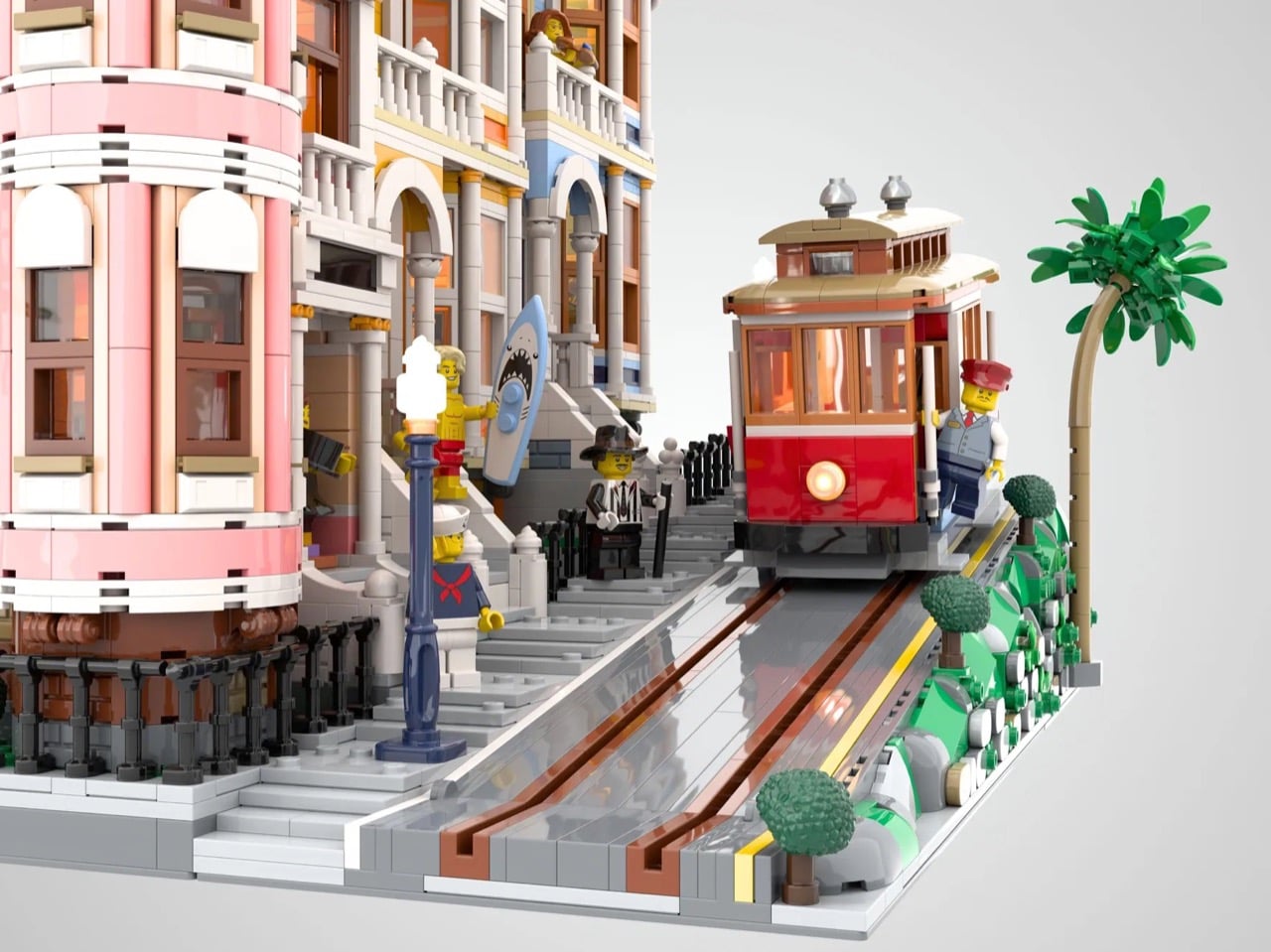
This LEGO Portal 2 Set Lets You Design/Build Your Own Test Chambers With 1,280 Pieces

The Portal franchise has earned its place in gaming history through ingenious puzzle design, dark humor, and an aesthetic so iconic that a simple orange and blue color scheme instantly evokes the Aperture Science testing facility. Now, LEGO builder KaijuBuilds has translated that sterile-yet-sinister world into brick form with the Portal 2: Test Chamber Creator, a project currently seeking support on LEGO Ideas.

The set features a sophisticated modular tile system with 18 unique configurations across 29 total modules, allowing builders to reconstruct famous test chambers or design entirely new challenges. With around 1,280 pieces, the build includes Chell, Wheatley, Atlas, P-body, turrets, portals, a Companion Cube, and even that infamous cake. The attention to detail extends to overgrown tiles that reference Portal 2’s decayed facility sections, complete with a white rat as a nod to the mysterious Rattman. The modular approach mirrors the in-game test chamber editor, which means you can actually play with spatial configurations rather than building a single frozen scene.

Designer: KaijuBuilds

The Aperture Science facility aesthetic translates surprisingly well to LEGO’s design language because both share a love of modular systems and clean geometric forms. Portal works on minimalist white panels, colored power conduits, and spatial reasoning. This build captures that by making reconfigurability the core feature. Tiles come in different sizes (8×8, 4×4, 4×8) and snap onto an orange base with visible connection points. Some tiles show pristine testing surfaces while others feature vegetation breaking through panels, directly referencing Portal 2’s narrative about a facility decaying over decades. The observation windows sit where GLaDOS would watch test subjects fail, and those structural details do heavy lifting in establishing atmosphere.

The character roster features all the iconic beings and bots and whatnots. Chell appears in her orange jumpsuit with the Aperture Science tank top. Wheatley exists as a buildable personality core with his blue eye. Atlas and P-body (the co-op robots from Portal 2) demonstrate awareness that the franchise extends beyond Chell’s story. The turrets manage to look simultaneously adorable and threatening with their white chassis, red sensors, and antenna stems. Two portal pieces come in translucent orange and blue, likely using curved or printed elements to create those characteristic oval shapes. The portal gun sits in Chell’s hands, completing the loadout any fan would expect.

Those 18 unique tile types across 29 modules provide enough variety to build compact chambers or combine everything into larger, more complex puzzles. Some tiles feature orange and blue power line conduits that connect mechanisms in the actual game. Dark grey tiles break up monotonous white surfaces. Button tiles, overgrown sections, observation windows, and the Heavy Duty Super-Colliding Super Button all serve gameplay purposes Portal fans recognize immediately. The structure uses long and short connectors with technic pins and 2L axles to hold everything together, which should make reconfiguration reasonably straightforward without constant collapse during redesign sessions. The orange base with its studded connection points does the critical work of making the whole modular system functional rather than theoretical.

The functional elements push this past display territory into actual play value. The Companion Cube dropper holds and releases cubes, mimicking those ceiling-mounted dispensers from the game. The aerial faith plate triggers manually to launch minifigures upward. A tilting elevated platform angles in different directions for variable chamber layouts. The door swings open for chamber entrances and exits. These mechanisms aren’t revolutionary in LEGO terms, but they’re deployed strategically to recreate specific Portal gameplay moments. The laser grid uses red transparent pieces across a 3×6 area. It won’t vaporize minifigs, but it provides the visual language of hazards you’d design chambers around. The deadly goo gets two 8×8 tiles in translucent orange, which is the correct color unlike some fan builds that use green acid from generic video game conventions.

There’s even a cake hidden somewhere because at this point it’s mandatory for Portal merchandise. The cultural penetration of “the cake is a lie” has been both blessing and curse for the franchise, but you can’t release Portal LEGO without acknowledging it. The white rat perched on structural pillars references Doug Rattmann, the Aperture scientist who left cryptic murals throughout the facility. That’s a deeper cut than casual fans would catch. The test chamber sign displays “25” along with hazard pictograms, grounding the build in Aperture Science’s obsessive signage culture. The facility loved warning test subjects about dangers they couldn’t avoid. Small crows appear on the pillars too, adding those environmental details that make the difference between a good build and one that captures a world.

Portal maintains relevance fifteen years after its 2007 release through memorable writing, innovative mechanics, and an aesthetic that spawned endless memes. GLaDOS remains one of gaming’s most iconic antagonists. “Still Alive” transcended the game to become a cultural touchstone. The orange and blue portal color scheme is instantly recognizable across demographics. Portal 2 expanded the universe in 2011 with co-op gameplay, more complex puzzles, and deeper lore about Aperture Science’s history. The games influenced puzzle design across the industry and demonstrated that shorter, tightly designed experiences could compete with sprawling open-world titles. That legacy makes Portal a strong candidate for LEGO treatment, especially given LEGO’s existing relationship with video game properties and Valve’s general receptiveness to licensed products.

LEGO Ideas operates as a platform where fans submit designs for potential official sets. Projects reaching 10,000 supporters enter review, where LEGO evaluates production feasibility, licensing complexity, and market viability. The Portal 2: Test Chamber Creator sits at roughly 1,700 supporters with 543 days remaining. Voting requires a free LEGO Ideas account and takes about thirty seconds (you can cast your vote here). Reaching 10,000 votes doesn’t guarantee production since LEGO considers factors beyond popularity (licensing negotiations with Valve, manufacturing costs, retail strategy), but fan support gets projects in front of decision-makers. LEGO has produced gaming sets before, from Minecraft to various Nintendo properties. Portal’s enduring cultural presence and Valve’s track record with merchandise partnerships suggest this build has legitimate production potential if it clears the voting threshold.

The post This LEGO Portal 2 Set Lets You Design/Build Your Own Test Chambers With 1,280 Pieces first appeared on Yanko Design.
This LEGO Campbell’s Soup Can Opens to Reveal Andy Warhol’s Entire Factory Studio

In 1962, Andy Warhol turned a humble soup can into an art world phenomenon. Now, a LEGO Ideas submission is turning that same can into something equally revolutionary: a buildable gateway to understanding the artist himself. This isn’t just about stacking bricks into a cylindrical shape, though the technical achievement of creating such smooth curves at 24 studs diameter deserves recognition. This project represents months of research into Warhol’s working methods, his relationship with popular culture, and the visual language of The Factory that became synonymous with 1960s avant-garde creativity.

Open the can and the transformation is immediate. The metallic interior contrasts sharply with the familiar red and white exterior, creating an Alice-in-Wonderland moment where everyday packaging becomes an art studio. Printed artworks cover the walls and floor, reflecting Warhol’s habit of painting directly on the ground surrounded by his creations. The Andy Warhol minifigure with signature silver wig presides over a space filled with props from his actual studio: the disco ball, the motorcycle, the couch where celebrities and artists mingled. It’s both a display piece for design enthusiasts and an educational tool that makes pop art accessible, proving LEGO sets can be as culturally significant as they are fun to build.

Designer: HonorableImmenseWorriz

The build sits at 1,117 pieces and stretches to 32.6 centimeters tall, which sounds manageable until you realize the entire cylinder uses curved slope elements to achieve those smooth walls. Most builders avoid large-scale curves because getting a 24-stud diameter to look this polished requires serious geometric planning. The three-section hinge system adds another challenge since you need structural integrity while maintaining mechanical function. What separates this from typical pop culture tributes is the commitment to printed elements over stickers, with Campbell’s branding, artwork tiles, and even the gold medal seal all printed directly onto bricks. The Marilyn Monroe quad portrait, Flowers series, purple Cow prints, they’re all there on the metallic silver walls that reference The Factory’s legendary aluminum foil aesthetic.

HonorableImmenseWorriz , the builder, positions it as “a LEGO set for the kitchen,” which completes the conceptual loop Warhol started by elevating everyday consumer goods to fine art status. You build this, place it near your actual soup cans, and your kitchen becomes gallery space. The 32 stickers showing different Campbell’s soup flavors let you customize and swap variations, mirroring Warhol’s seriality philosophy from his original 1962 series that featured 32 different canvases. The father-son collaboration behind it shows in the prop selection too, each item chosen for historical accuracy rather than visual filler. That red couch, the orange motorcycle, the camera on tripod, they’re narrative anchors to The Factory’s actual chaos, not random accessories.

The project’s currently a fan submission on the LEGO Ideas website – an online forum where enthusiasts share their own creations and vote for favorites. MOCs (My Own Creations) that hit the 10,000 vote mark then get sent to LEGO’s team for approval before being turned into a retail box set that anyone can buy. If you fancy yourself a LEGO ode to Warhol (and Campbell), head down to the LEGO Ideas forum and cast your vote for this build! It’s free!

The post This LEGO Campbell’s Soup Can Opens to Reveal Andy Warhol’s Entire Factory Studio first appeared on Yanko Design.
Remember the Saleen S7? This 1,200‑Piece LEGO Build Brings Back America’s Wildest Supercar

LEGO’s Speed Champions line has given us countless Ferraris, Porsches, and McLarens. Meanwhile, one of America’s most ambitious supercar projects sits conspicuously absent from the brick-built garage. The Saleen S7 deserves better than obscurity, and builder Nytedance has created a 1,200-piece proposal that makes the case beautifully. This isn’t a quick parts-bin creation but a thoughtfully detailed tribute to a car that once proved American manufacturers could play in the supercar sandbox.

The build captures everything that made the S7 special: those dramatic scissor doors, the trio of diagonal side vents that channeled air to the mid-mounted engine, and the low-slung stance that telegraphed serious performance intentions. Nytedance included opening hood and engine bay access alongside a detailed interior, giving the model the same display-worthy presence the real S7 commanded on showroom floors. At a time when automotive design often feels derivative, this MOC celebrates a machine that carved its own identity through pure American audacity and engineering ambition.

Designer: Nytedance

Here’s the thing about the S7 that most people forget: it was legitimately fast. Like, 2000-era supercar fast when that still meant something. The naturally aspirated version put out 550 horsepower from a 7.0-liter V8, which sounds almost quaint now until you remember the whole car weighed 2,865 pounds. Then in 2005 they strapped turbos to it because why not. Steve Saleen had spent years building hot rod Mustangs, so when he decided to build a proper supercar, he didn’t half-ass it. Carbon fiber monocoque, mid-engine layout, the whole European playbook executed by a company in Irvine, California. And somehow this car gets forgotten while we endlessly rehash which Ferrari from that era was best.

Those proportions are tricky because the car sits so low and wide, but the MOC nails that aggressive wedge shape without looking like a doorstop. The side intakes are the hero detail here, three diagonal slashes that became the car’s signature move. They’re rendered in white against black internals, creating the contrast you need for them to read properly at this scale. The scissor doors actually function, which feels mandatory given that half the reason anyone remembers the S7 involves those doors opening at car shows. Look at the rear haunches and how they flare out over the wheels. That’s not easy to pull off with LEGO’s predominantly rectangular vocabulary, but it works. The builder used curved slopes intelligently instead of trying to force angles that would look chunky.

The white color is clean enough to let you study the form without distraction, plus it matches one of the more common S7 liveries. Those red taillights pop against the white body, four circles arranged in a quad pattern that anyone who spent time with Need for Speed games will recognize instantly. The wheels use those multi-spoke pieces that suggest performance without going full boy racer. At 1,200 pieces, this sits in an interesting spot between impulse purchase and serious investment. You’re committed enough to display it properly but you’re not dropping Technic Bugatti money.

LEGO Ideas is basically democracy for brick nerds. You submit a design, people vote, and if you hit 10,000 supporters, LEGO actually reviews it for potential production. Get approved and your MOC becomes a real set with your name on the box and royalties in your pocket. Nytedance’s Saleen S7 is live on the platform now, so if you think American supercar history deserves shelf space next to all those Prancing Horse sets, go vote for it. The S7 spent too long in obscurity already.

The post Remember the Saleen S7? This 1,200‑Piece LEGO Build Brings Back America’s Wildest Supercar first appeared on Yanko Design.

This LEGO Bobber Uses Ballpoint Pen Springs for Suspension and It Actually Fits Perfectly

Ballpoint pen springs probably weren’t on your list of unofficial-yet-essential LEGO Technic parts, but this bobber MOC (My Own Creation) makes a compelling case for raiding your desk drawer. The twin coiled springs flanking the front forks and tucked behind the rear wheel handle suspension duties with surprising visual authenticity. They compress and extend just like real motorcycle shocks, adding functional movement to a build that already nails the stripped-down bobber aesthetic.

Bobbers emerged from post-war American garages when riders started cutting away everything unnecessary from their motorcycles. The philosophy was simple: lose the extra weight, keep what makes it run. This LEGO version channels that same spirit with its exposed twin-cylinder engine, bare-bones frame, and that yellow racing tank sporting a bold number 8. The builder modified LEGO Technic set 42036 into something far leaner and more specialized, swapping the original suspension components for those ingenious pen springs and repositioning elements to achieve proper bobber proportions.

Designer: MadamMelodicRaisin104

The pen spring hack solves a real problem in LEGO motorcycle builds. Technic sets come with their own suspension systems, sure, but they’re often bulky or visually clunky at this scale. Real bobber shocks are these long, exposed coil-over units that sit right out in the open, part of the bike’s visual language. Standard LEGO shock absorbers don’t quite capture that look. They function fine mechanically but lack the visual density and tight coil pattern you see on actual motorcycles. Pen springs nail the aesthetics, which works perfectly for this MOC because visuals are everything. The Bobber isn’t entirely functional, but the suspension (even if static) looks the part.

Set 42036, the donor bike here, originally builds into either a chopper or a street bike configuration. Both versions skew whimsical, which works for LEGO’s typical audience but doesn’t scratch the itch if you’re after something with genuine mechanical credibility. The builder kept the core engine assembly and frame geometry but ditched the fanciful proportions. Bobbers sit low, with the seat almost directly over the rear axle and minimal distance between components. This build compresses everything into that tight package, pulling the handlebars back into a more neutral position and mounting the foot pegs mid-frame rather than forward where cruisers typically place them. Mid-controls make sense for bobbers because the whole point was maneuverability and quick handling, not long highway cruises with your feet stretched out front.

The kickstand correction might seem minor but it speaks to the builder’s attention to detail. The original Technic chopper configuration puts the stand on the right side, which is wrong for actual motorcycles. Real bikes park on the left because that’s where the shifter lives and you need clear access when you’re mounting from the curb side. Swapping it over takes maybe five minutes but it shows someone who actually rides or at least understands how these machines work in the real world. Same logic applies to adding the foot pegs, which the kit omits entirely. You can’t have a rideable motorcycle without somewhere to put your feet, even in miniature form.

The yellow racing livery with that big number 8 pulls the aesthetic away from typical black-on-black bobber builds and into flat track racing territory. Flat trackers are bobbers’ dirt-slinging cousins, stripped down for speed on oval dirt tracks. The color choice keeps the build from looking too generic while the racing plate gives it a story beyond “stripped motorcycle.” The tail section stays minimal, just a small seat cowl and rear fender. Nothing to disturb the clean line running from tank to tail. The fat rear tire balances against that narrow front wheel, classic bobber proportions that suggest power and grip where it matters most. Those pen springs keep catching your eye though, because they’re so perfectly scaled and so absurdly obvious that you wonder why more builders haven’t figured it out.

The catch, however, is that this Bobber only exists in the metaverse… or rather LEGO’s own virtual verse, called the LEGO Ideas forum. Designed as an online platform for LEGO enthusiasts to share their own creations and vote for their favorites. MOCs that cross the 10,000 vote threshold get sent to LEGO’s internal team for review, and if successful, get turned into a box set that all of us can buy! I don’t see LEGO launching kits that require dismembering ballpoint pens for their springs (because that’s technically an ‘illegal’ form of building a brickset), but I’m sure there’s a pneumatic Technic part somewhere in LEGO’s arsenal that will work. If you want to see that happen, however, step 1 is to cast your vote for this gorgeous build on the LEGO Ideas website.

The post This LEGO Bobber Uses Ballpoint Pen Springs for Suspension and It Actually Fits Perfectly first appeared on Yanko Design.
LEGO And Creality Come Together in This Incredibly Detailed Ender-Inspired 3D Printer Model

LEGO and 3D printing occupy similar creative territory, both letting you turn ideas into physical objects through systematic processes. Yet despite this natural kinship, there’s never been an official LEGO model of the specific machine that’s currently democratizing small-scale manufacturing. This fan submission fixes that gap with a recognizably Ender-inspired design that captures both the utilitarian aesthetic and basic kinematic structure of Creality’s popular printer lineup.

The build doesn’t actually function like some ambitious LEGO projects (there’s a working LEGO Turing machine out there made from 2,900 bricks), but that’s not really the point. Someone unfamiliar with 3D printing could assemble this and understand how Cartesian motion systems work, how the hotend assembly relates to the build plate, and why those vertical lead screws matter for Z-axis stability. For people who already own an Ender or similar machine, it’s more about the novelty and nostalgia of seeing familiar hardware translated into a tabletop collectible to admire and cherish.

Designer: Guris14

Paying homage to the Ender 3 is fitting, since it was literally the first 3D printer for so many people, quite like an entire generation having a Nokia first phone. Creality sold hundreds of thousands of these things, maybe millions at this point, and the design became the default mental image of what a 3D printer looks like for an entire generation of makers. That boxy aluminum frame, the single Z-axis lead screw on earlier models (this LEGO version appears to reference the dual-screw V2), the bowden extruder setup with that blue PTFE tube snaking from the frame-mounted motor to the hotend. That characteristic black and silver color scheme with blue accent components has become as visually shorthand for “budget 3D printer” as the beige tower was for 90s PCs. Designer Guris14 scaled the model down from the Ender 3 V2’s actual 220x220x250mm build volume to something desk-friendly, but kept the proportions honest enough that you immediately recognize what you’re looking at.

What’s impressive is how the mechanical systems translate into LEGO’s vocabulary without completely abandoning accuracy. The Z-axis uses what appears to be LEGO’s ribbed hose pieces to represent lead screws, with the gantry able to move up and down the vertical supports. The X-axis gantry rides on a black beam that mimics the 2040 aluminum extrusion found on real Enders, while the hotend assembly hangs from a carriage with that signature blue bowden tube curling back toward the extruder. The build plate sits on a Y-axis assembly with its own lead screw mechanism, and there’s even a LEGO logo on the build-plate, like perfectly placed branding!

Flip the model and you’ll find representations of the motherboard and power supply tucked beneath the build plate, exactly where Creality positions them on the actual hardware. There’s that angled LCD screen mount on the front right corner, positioned just like the stock Ender setup. Even the spool holder perched on the top frame gets included, which is the kind of completeness that separates a thoughtful recreation from a surface-level approximation. You could hand this to someone who’s never seen a 3D printer and they’d walk away with a surprisingly accurate mental model of how these machines are structured.


The project currently sits on the LEGO Ideas website, where fans share their own creations and vote for their favorites. Lucky builds that hit the 10,000 vote mark move to the review stage where LEGO actually considers it for production. That’s always been the tricky part with Ideas submissions. You need a concept that’s simultaneously niche enough to excite enthusiasts but broad enough that LEGO thinks they can sell tens of thousands of units through their retail channels. A 3D printer model lives in an interesting space there. The maker community overlap is real and passionate, but you’re also asking LEGO to produce a set celebrating a technology that competes with their own manufacturing process in certain contexts.

Still, LEGO has greenlit plenty of sets that celebrate tools and technology. The Typewriter, the Polaroid camera, the various Technic construction vehicles, all of these acknowledge that people enjoy building detailed models of machines they find interesting or useful. A 3D printer fits that pattern perfectly, especially as these devices become more common in homes and schools. The educational angle writes itself: here’s a hands-on way to understand additive manufacturing without dealing with bed leveling or filament moisture. Whether that’s enough to get LEGO’s product team on board is another question entirely, but stranger things have made it through the Ideas gauntlet. The NASA Apollo Saturn V started as a fan submission. So did the ship in a bottle.

The post LEGO And Creality Come Together in This Incredibly Detailed Ender-Inspired 3D Printer Model first appeared on Yanko Design.