After 15 Years, Patek Philippe Returns With a Hand-Wound Chronograph That Stores Energy Like a Bow

Perpetual calendar chronographs are Patek Philippe’s version of a solar eclipse. They do not happen often, and when they do, everyone stops what they’re doing to look up. The last one arrived back in 2011, which in watch years is basically a geological era.

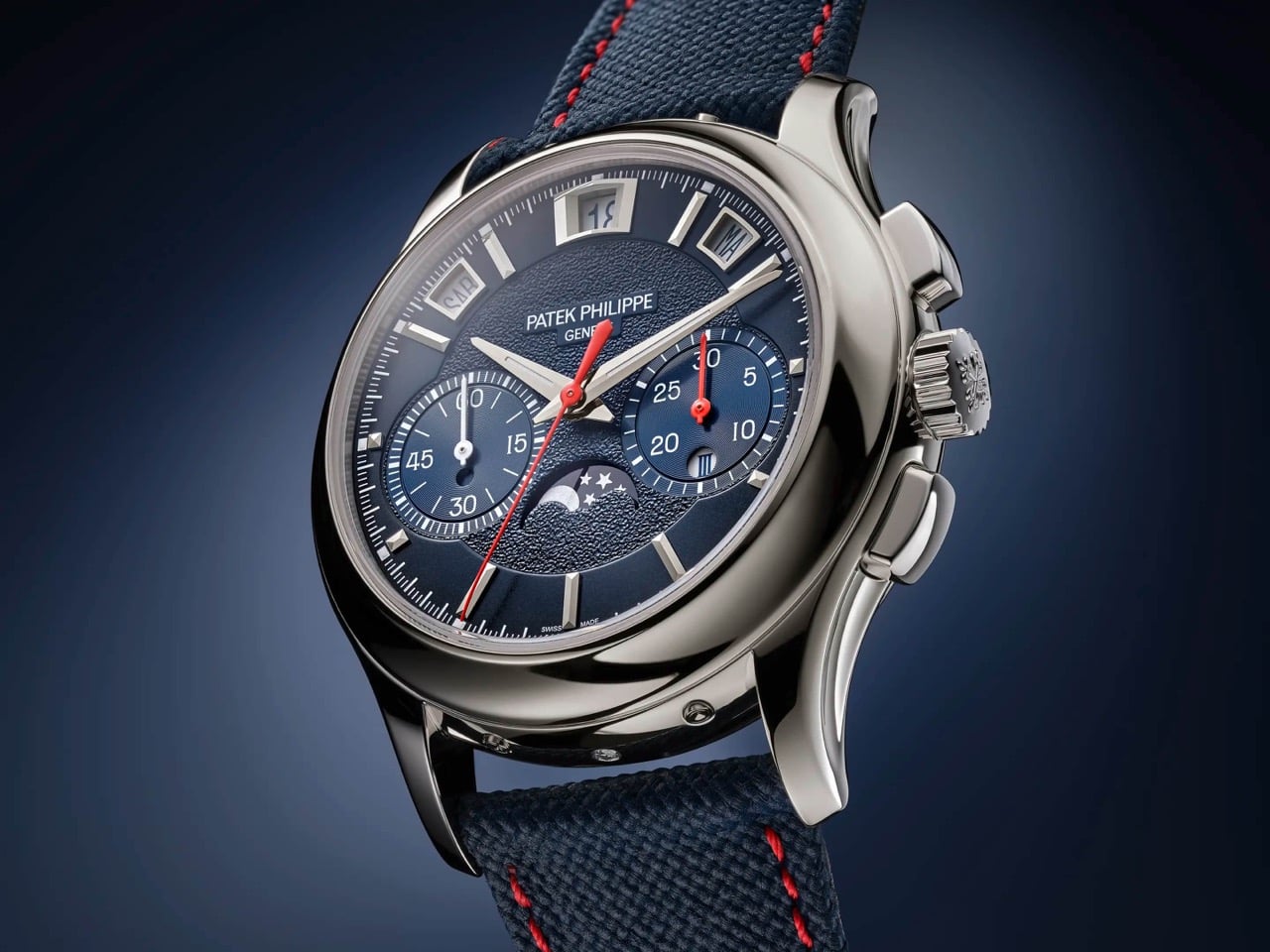
The wait is over, and Patek did not play it safe on the comeback. The new Ref. 5978P-010 is the first watch to combine the brand’s hand-wound chronograph movement with an instantaneous perpetual calendar, a mechanism usually reserved for its most serious grand complications, where every calendar display jumps simultaneously in under 30 milliseconds instead of dragging itself forward at midnight. It debuted at Patek’s seventh Watch Art Grand Exhibition in Milan, limited to 120 platinum pieces at $337,585 each, with a navy dial, red chronograph hands, and calendar text printed in Italian for the occasion. Rare watch, rare city, apparently rare patience too.

Designer: Patek Philippe
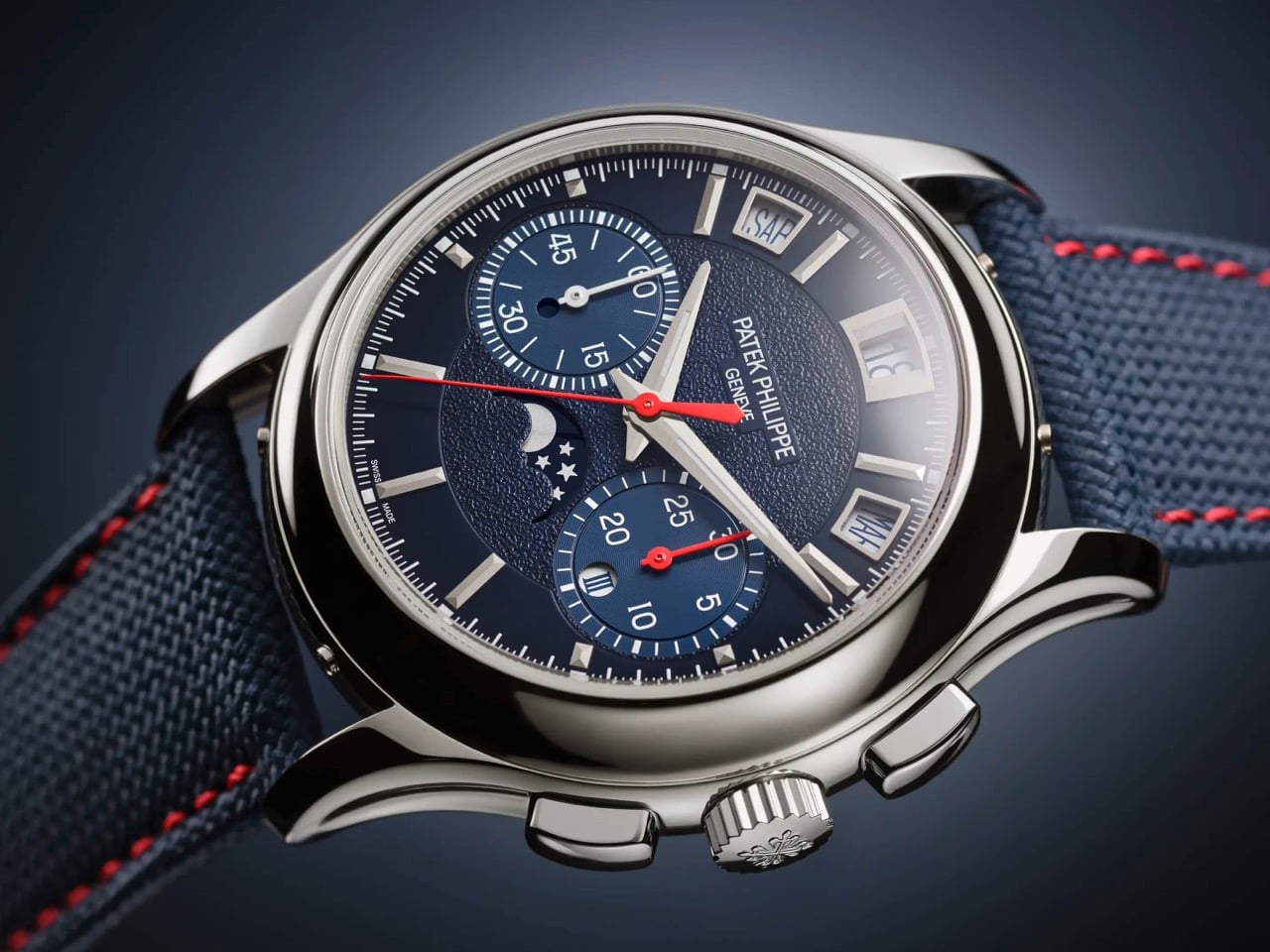
The new caliber inside the 5978P-010 is called the CH 29-535 PS QI, a hand-wound movement built from 500 parts. Patek fused two things it already had, the CH 29-535 PS chronograph base from 2009 and the instantaneous calendar module developed for the R CHR 27 PS QI inside references like the 5207, 5308, and 5208. The result is a watch where the day, date, month, leap year, and day and night indicators do not creep forward through the night. Instead, they wait, then snap into their new position together in roughly 30 milliseconds. Even the chronograph’s 30-minute counter gets the same instantaneous treatment, jumping to its next position in one clean motion rather than crawling minute by minute.

Rather than letting a spring slowly push the calendar discs forward, the movement spends hours steadily storing tension, then releases it all at once like a drawn bow. A progressive perpetual calendar can leave a date disc caught mid-flip for a few minutes around midnight, which looks fine until you actually need to read it. This one simply will not do that. The caliber beats at 28,800 vibrations per hour on a Breguet balance spring, and because it is hand-wound, there is no rotor blocking the view, so the full chronograph architecture sits exposed through the sapphire caseback.
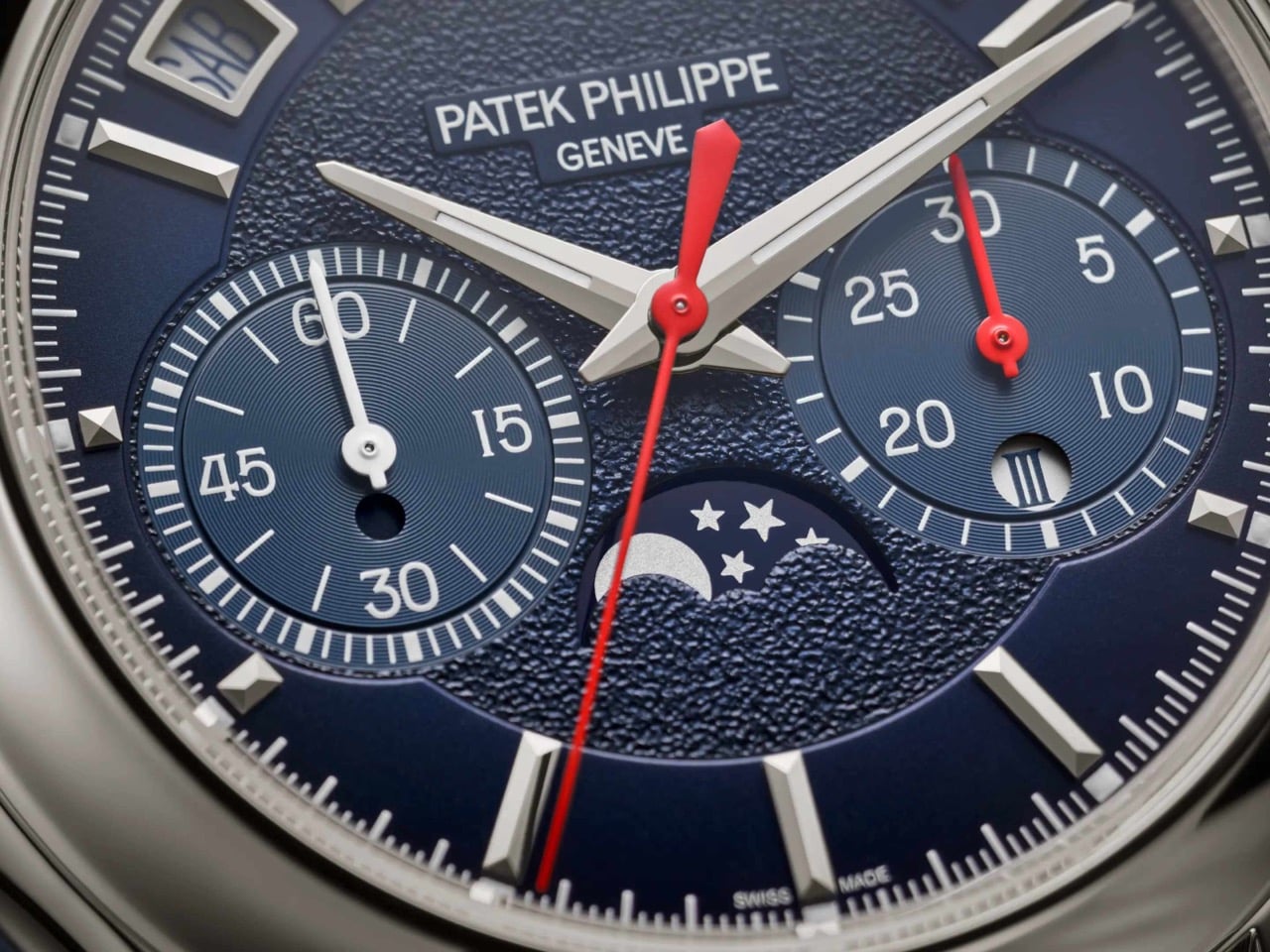
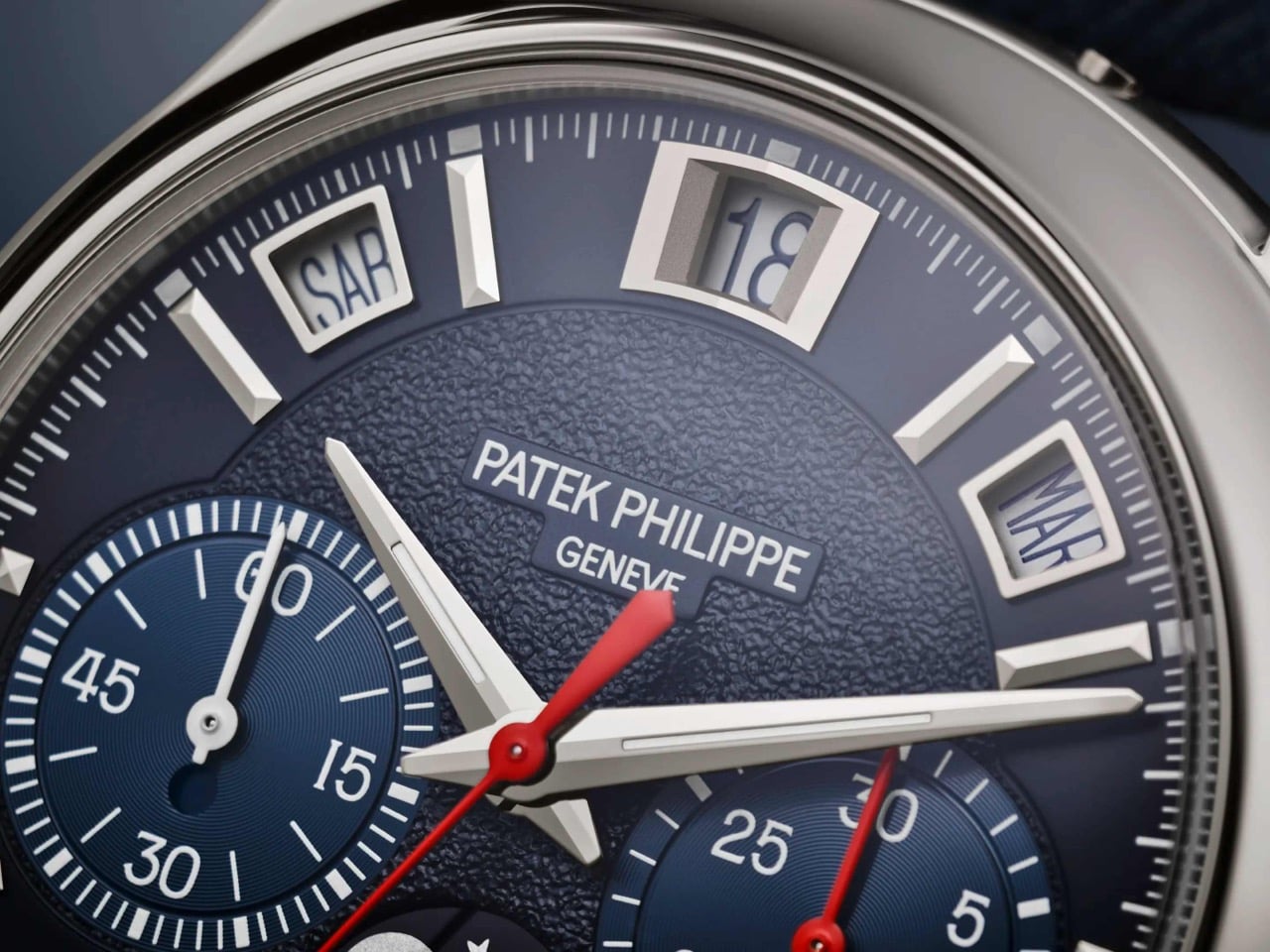
The 42mm (1.65 inch) platinum case measures 14.24mm (0.56 inch) thick, with a concave bezel and scalloped lugs lifted from the Calatrava-style cases of the 5208 and 5205, a departure from the ornate shapes Patek usually reserves for this complication. A single diamond sits at 6 o’clock, the hallmark Patek adds to every platinum watch in its catalog. The sunburst navy dial fades into a black-gradient rim around a textured center, with white gold faceted markers and dauphine hands finished in white luminescent coating. Red varnished hands carry the chronograph and small seconds, the only flash of color on the dial. Calendar apertures ring the top of the dial between 10 and 2 o’clock, with the moon phase sitting at 6 and the instantaneous 30-minute counter opposite it at 3.

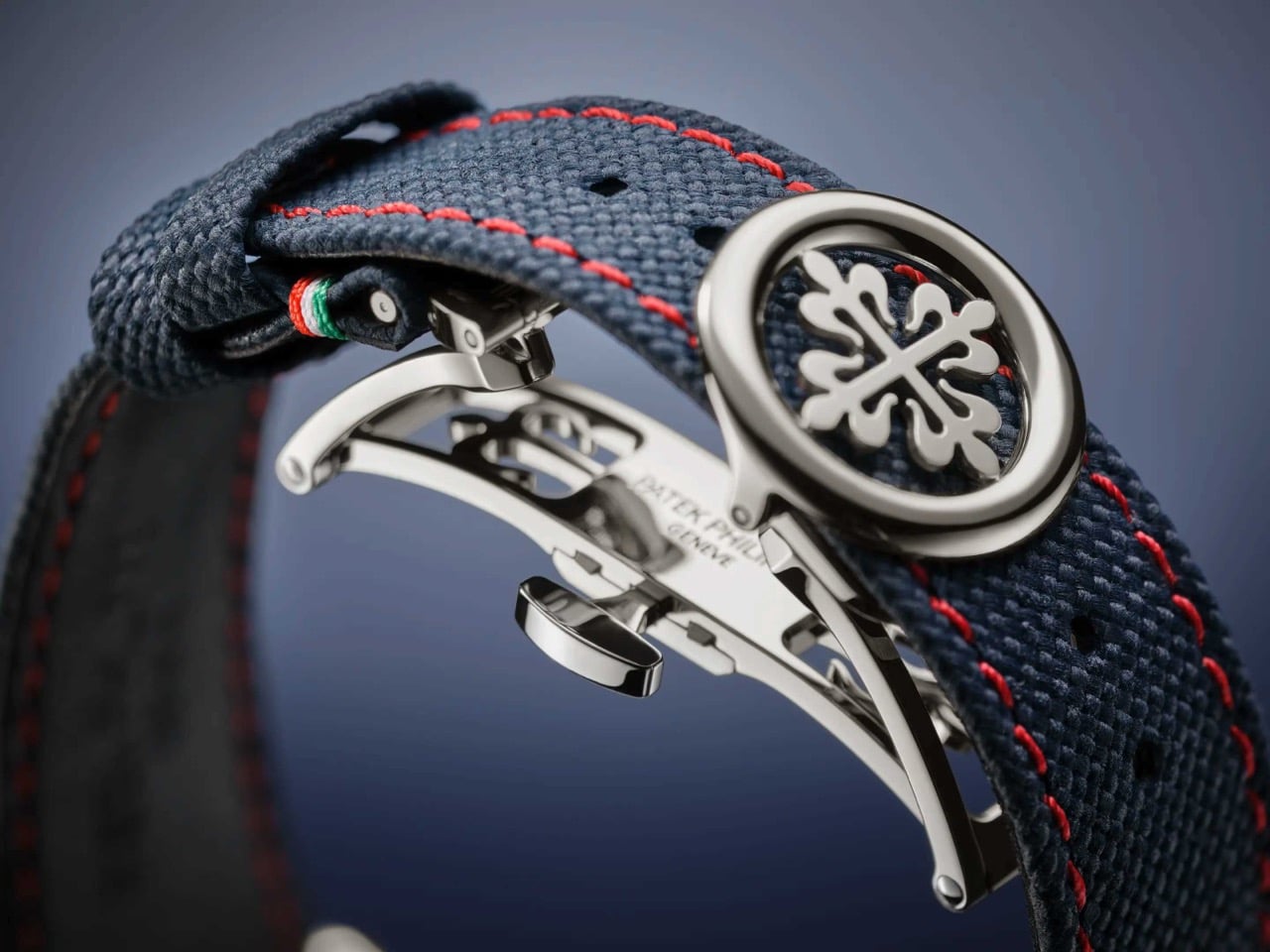
Patek’s own marketing describes the 5978P-010 as a sporty look timepiece, which is a strange way to describe a platinum perpetual calendar chronograph until you look at it. The navy and red color scheme, paired with a composite strap finished in a fabric weave rather than alligator, borrows more from the Aquanaut than from anything in the formal grand complications catalog. It is not the first time Patek has let its sportier instincts bleed into serious territory. We covered the Cubitus back when it launched, a watch that took the Nautilus’s DNA and reshaped it into something squarer and more divisive. The 5978P-010 is a subtler version of that same impulse, applied to a complication that has spent 85 years dressed for black tie.
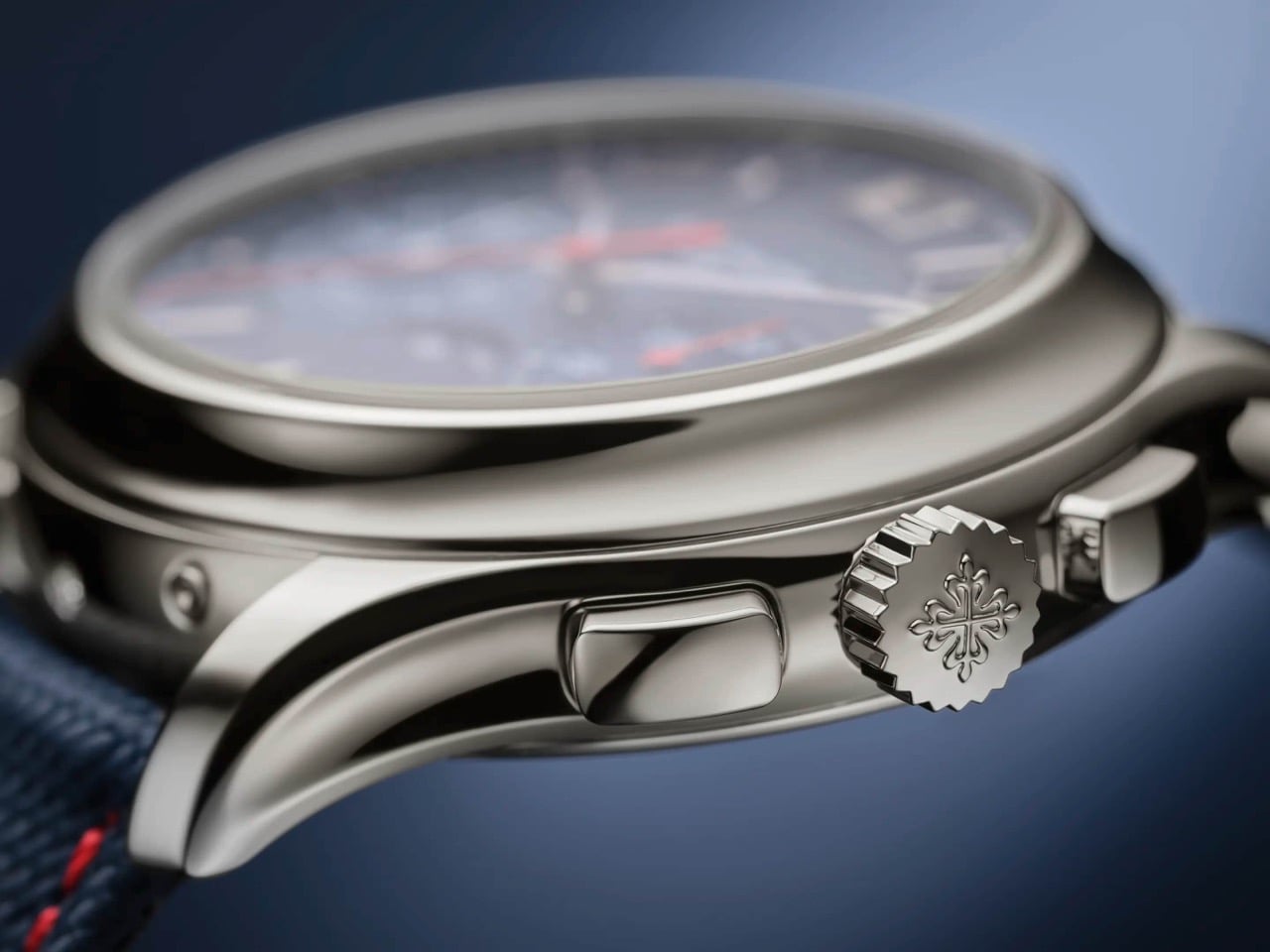
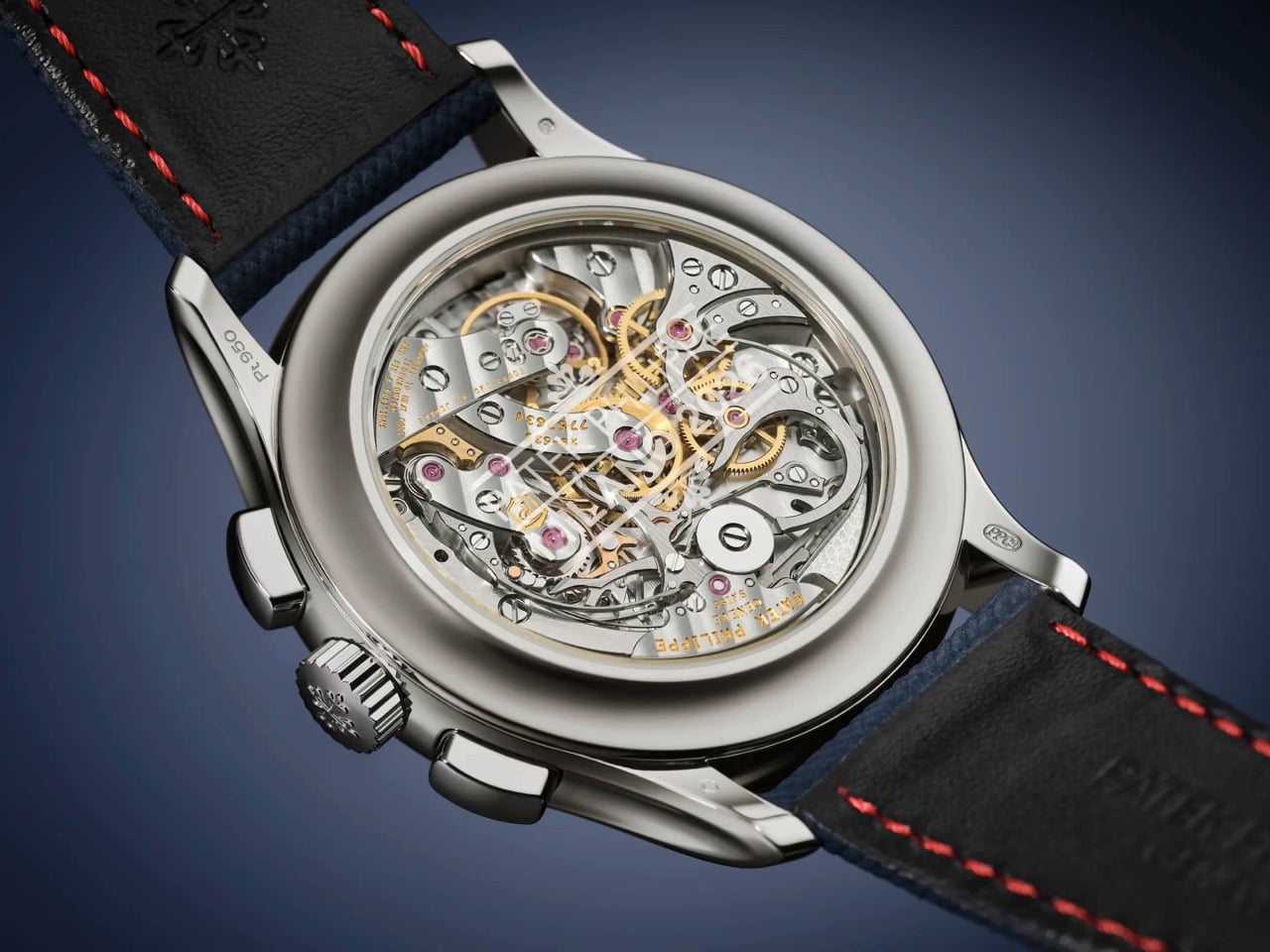
The calendar windows on the 5978P-010 are printed in Italian, so Saturday reads SAB instead of SAT, a detail that only makes sense once you know this watch was built for Milan. The strap repeats the gesture in miniature, with a stopping point stitched in the colors of the Italian flag just before the clasp. Patek built the watch for its seventh Watch Art Grand Exhibition, which opened October 2 inside Milan’s CityOval and runs free through October 18. It is one of seven limited editions made for this stop on the tour, a group that also includes enamel-dialed World Time minute repeaters and three carbon-patterned Calatravas in the same tricolore palette. Altogether those seven references add up to 685 pieces, a genuinely small run by Patek’s standards.

There is a catch for anyone outside Italy who wants this watch: all seven Milan editions, including the 5978P-010, sell exclusively through Patek retailers inside the country. Buyers elsewhere wait for one to surface at auction, where past exhibition pieces have historically carried a premium over retail. At $337,585, this was never going to be an impulse buy, and the exclusivity only adds to that. What sticks with me is not the price, it is the choice to dress the brand’s most formal complication pairing in a strap that would not look out of place on a dive watch. Eighty five years after the 1518 started this lineage in stern black and gold, Patek just sent its most serious watch out wearing red sneakers, and somehow it works.
The post After 15 Years, Patek Philippe Returns With a Hand-Wound Chronograph That Stores Energy Like a Bow first appeared on Yanko Design.


Patek Philippe’s Radical Design: Visionary or Misstep? The Controversial Cubitus

While still awaiting the official announcement from Patek Philippe, it’s important to consider whether this new shape signals a significant shift in their long-term strategy. Unlike Audemars Piguet’s approach with the Royal Oak, Patek seems intent on avoiding a singular ‘hero’ model that defines the brand. Instead, the new Cubitus Collection marks a bold move to diversify their offering and redefine what an iconic Patek Philippe watch can be. The Cubitus presents a striking divergence from the brand’s traditionally round silhouettes, embracing a distinct octagonal case that demands attention. Despite this fresh design direction, the Cubitus remains true to Patek’s reputation for refined elegance while also exploring new design frontiers.

Designer: Patek Philippe

The watch’s octagonal form gives a sense of geometry and balance, subtly echoing architectural elements. Its brushed metal finish on the case edges contrasts effectively with the polished flat surfaces, adding depth while maintaining a streamlined and sophisticated profile. The careful craftsmanship allows light to dance across the watch’s varied surfaces, adding an elegant interplay of reflections that subtly enhances its visual appeal.

Dial Design and Complexity

The dial showcases a subtle complexity. It features a deep blue guilloché texture with horizontal wave-like lines, a finish that adds visual interest and conveys a sense of luxury and depth. The indices are applied markers that appear to float over the dial, contributing to a visual clarity that Patek Philippe watches are renowned for.

The day-night indicator is located at the lower half of the dial, adding a celestial element to the otherwise highly practical layout. The integration of a moon phase complication further highlights the watch’s duality—utilitarian in its functionality but romantic in its conception. The oversized double window date, positioned prominently below 12 o’clock, ensures easy readability, blending practicality and sophistication.

Case and Crown

The Cubitus case itself appears crafted in a premium brushed metal, likely white gold or platinum, which gives it an imposing presence while remaining tasteful. The case features intricate facets and architectural lines that enhance the overall visual complexity, demonstrating meticulous craftsmanship and adding a sense of bold sophistication.

Compared to iconic Patek Philippe models like the Nautilus or the Calatrava, the Cubitus takes a different path with its unique shape. The Calatrava is known for its classic round elegance, and the Nautilus for its seamless bracelet design. In contrast, the Cubitus goes for a bold, angular look that suggests Patek wants to expand its image and explore a more adventurous side of its design legacy.

The crown’s design complements the rest of the case, with serrations for a firm grip and a subtle integration into the case body. Its understated design follows Patek’s approach of less is more, ensuring no distractions from the watch’s other carefully chosen features.

Strap and Buckle

The strap, likely a textured alligator leather or high-quality rubber, is a deep shade of blue that seamlessly matches the dial, maintaining visual unity throughout. The integration of the strap into the case appears flawless, which enhances both the comfort on the wrist and the aesthetic cohesiveness of the design. Although the buckle or clasp isn’t visible yet, it can be assumed that Patek will ensure it provides security and comfort without compromising on the luxury feel.

A New Era for Patek Philippe?

As we await the official announcement from Patek Philippe, it’s interesting to consider if this new shape is part of a broader strategy. Unlike Audemars Piguet, which has leaned heavily on the Royal Oak as its flagship model, Patek seems to be moving in a direction that resists the notion of a single iconic watch. The Cubitus could be Patek’s way of adding diversity to their lineup, offering a fresh perspective on what makes a Patek Philippe watch stand out.

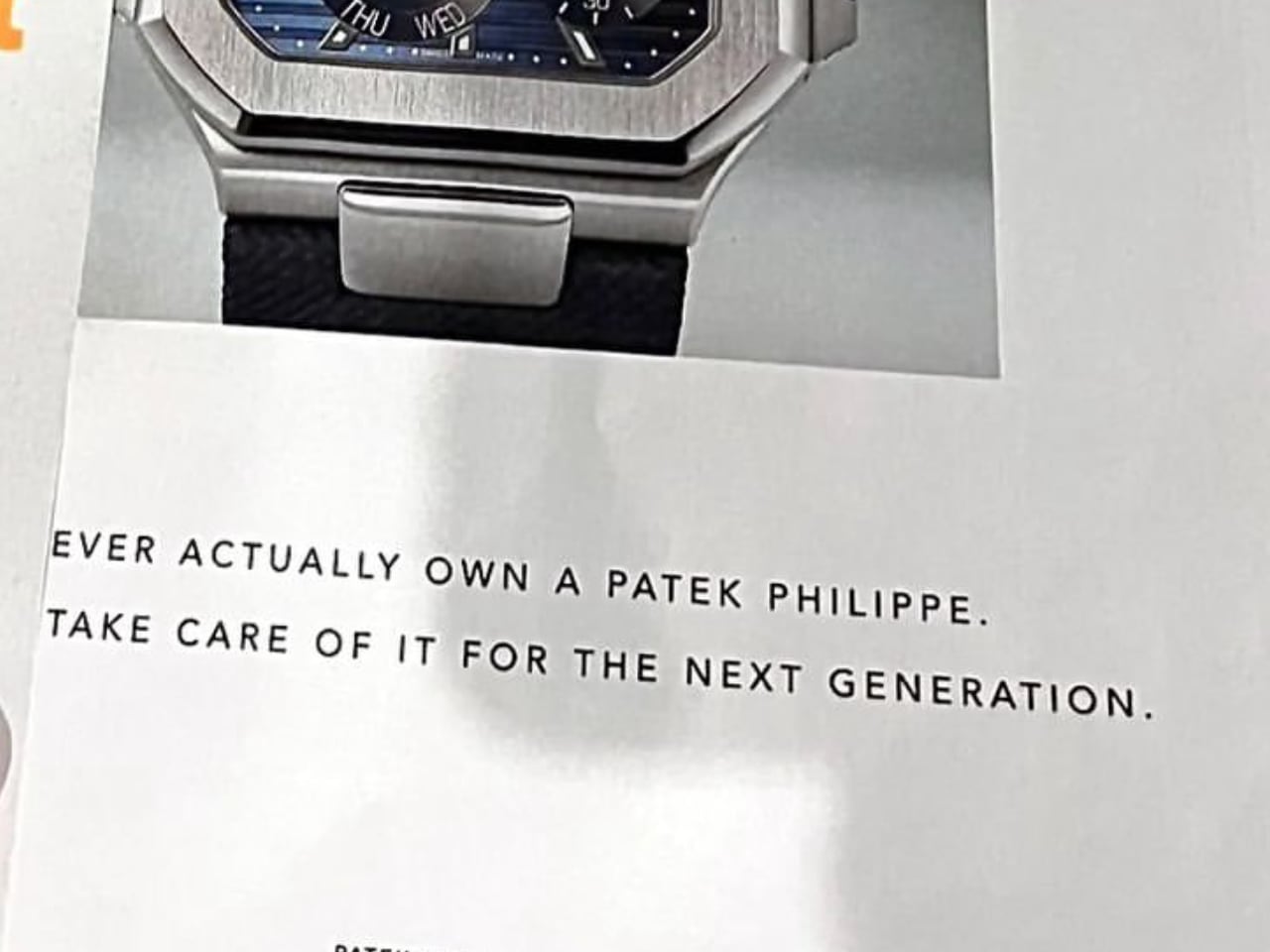
The slogan, “You never actually own a Patek Philippe. You merely take care of it for the next generation,” has become synonymous with the brand’s identity. This slogan reflects Patek Philippe’s dedication to quality, heritage, and timeless value. This message highlights the brand’s aim to create timepieces that represent wealth and status while also serving as heirlooms meant to be passed down through generations.

The choice of language here reflects Patek’s emphasis on craftsmanship and heritage over fleeting trends. It aims to appeal to individuals who value permanence and legacy—those who see a Patek Philippe watch as a lasting investment, both in terms of material value and in emotional and familial significance. The Cubitus Collection, with its carefully considered design, embodies this idea perfectly; it’s an heirloom piece meant to be cherished and appreciated not just in the present but also by future generations.

The Patek Philippe Cubitus Collection stands out by blending avant-garde design cues with the brand’s signature sophistication. Its octagonal case, moonphase, and blue guilloché dial push the boundaries of what is expected from Patek Philippe, yet every detail feels deliberate and rooted in the brand’s values of elegance and quality. While still awaiting the official announcement from Patek Philippe, it’s worth questioning whether this new shape is part of their long-term strategy. Some believe Patek is purposefully avoiding a single ‘hero’ watch, unlike Audemars Piguet with the Royal Oak. This timepiece is not merely a watch; it’s an apprec

The post Patek Philippe’s Radical Design: Visionary or Misstep? The Controversial Cubitus first appeared on Yanko Design.