Meet The SP40 Restomod Speedster: The Minimalist Carbon Hot Rod Redefining Retro Car Design

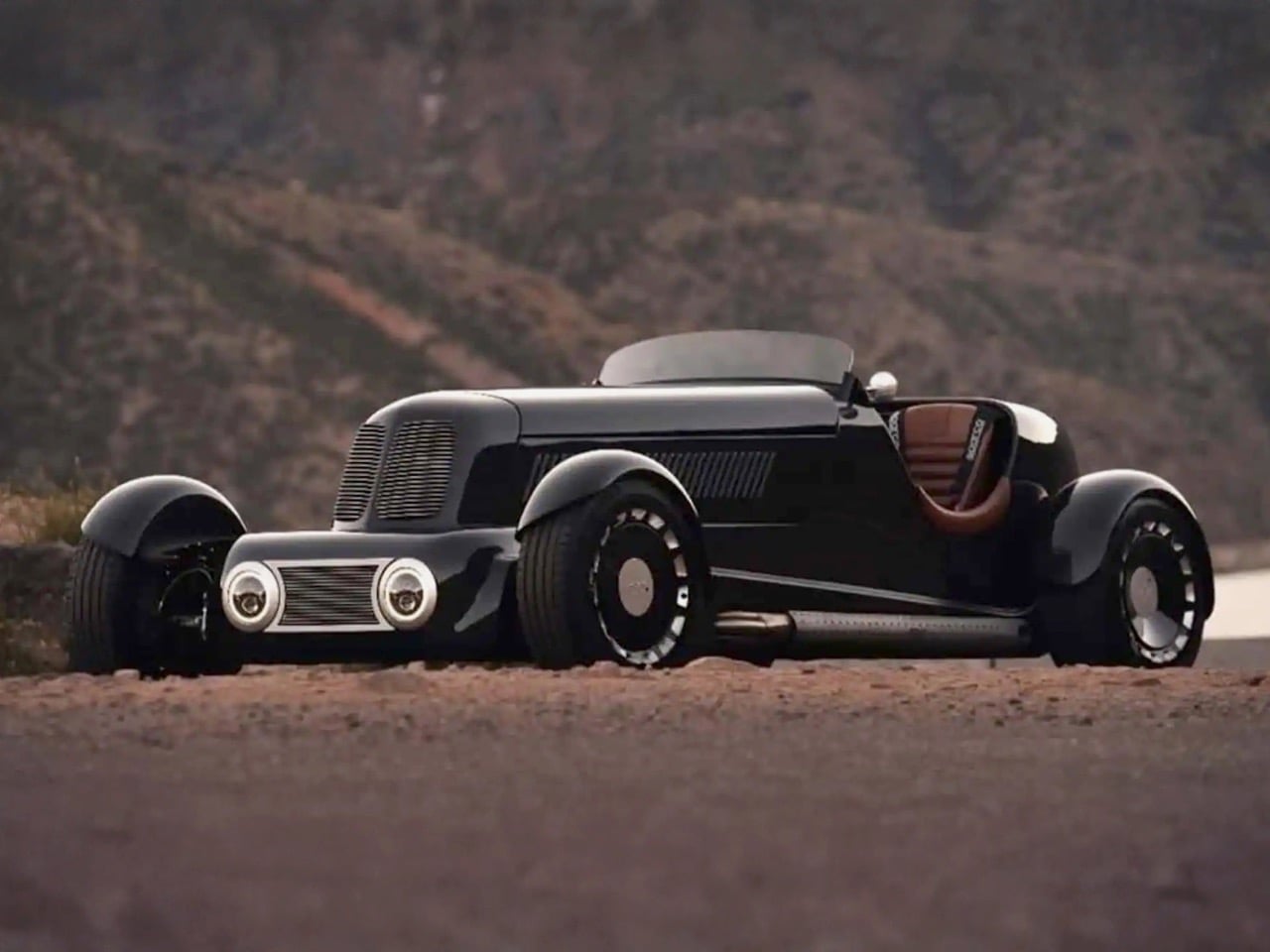
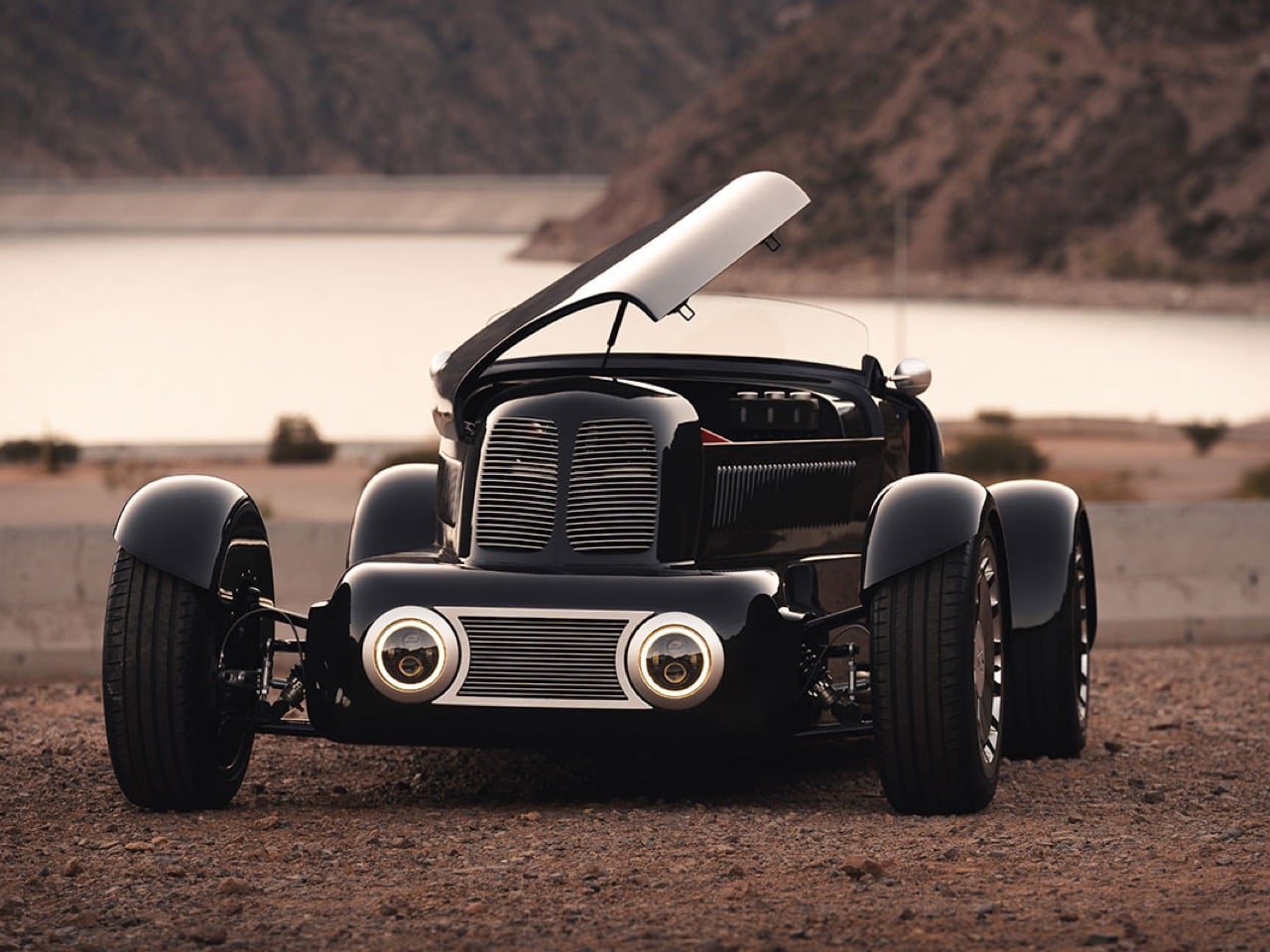
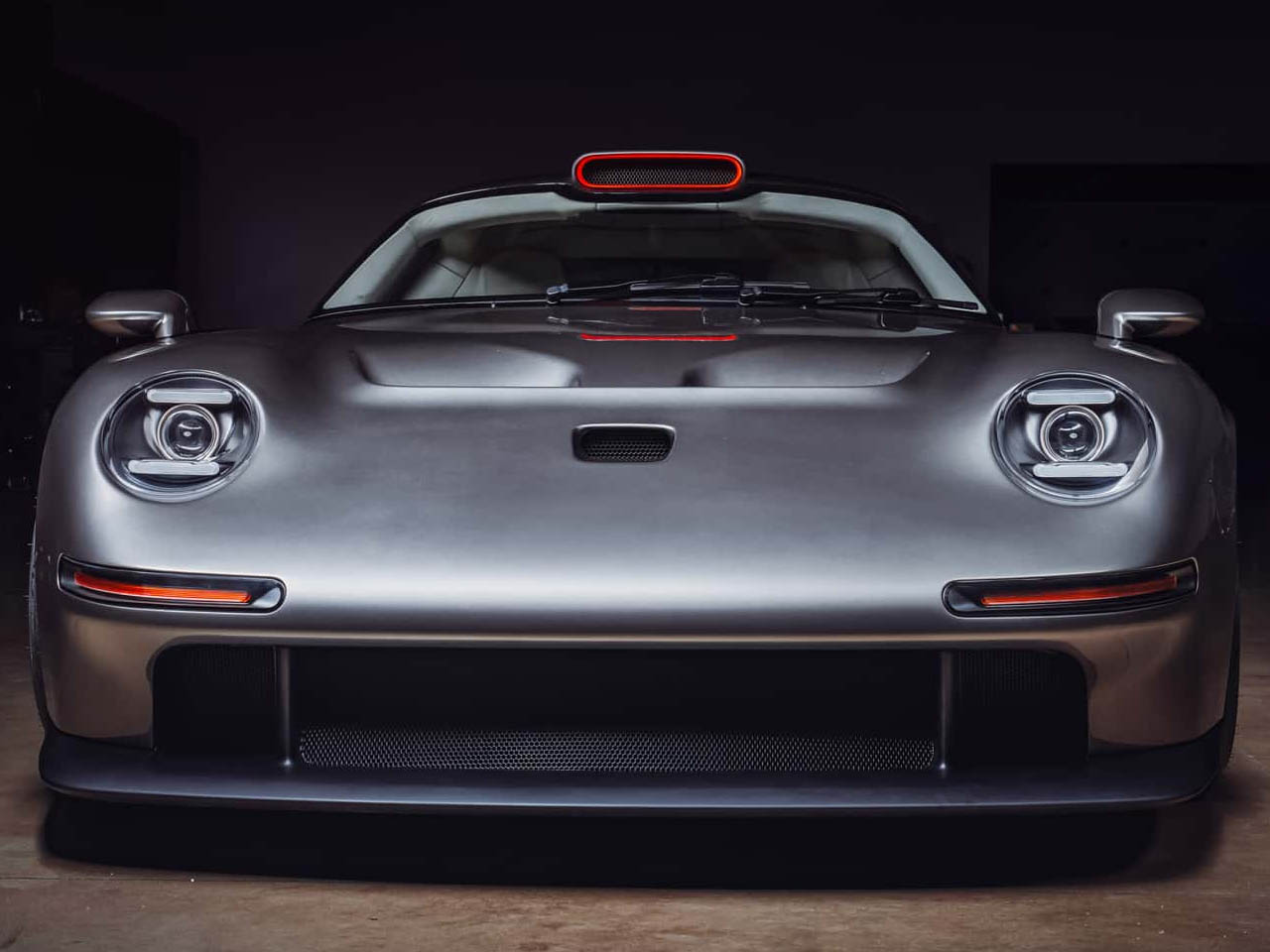
The best custom builds do not just remix old ideas. They ask what those ideas would look like if they were born today, with access to current tools, materials, and manufacturing processes. The SP40 Restomod Speedster is that question answered in carbon and billet. It takes the stance and spirit of a 1930s streamliner, that long, low, purposeful shape built for speed rather than comfort, and reimagines it through the lens of modern coachbuilding. The body is a series of massive, unbroken surfaces. The cockpit is minimal and driver-focused. The whole thing looks like it was designed on a computer, then machined to tolerances measured in microns.

There is a specific audience for this kind of work. People who buy hand-wound watches even though their phones keep better time. People who collect midcentury furniture not because it is trendy, but because the joinery and proportions feel right. People who understand that restraint is harder than excess, and that the best designs are the ones where nothing feels arbitrary. The SP40 sits at the intersection of automotive history and contemporary craft. It is not trying to fool anyone into thinking it is from another era. It is trying to capture what made that era compelling, then execute it with the precision and materials available right now.

Designer: Iconic Auto Sports

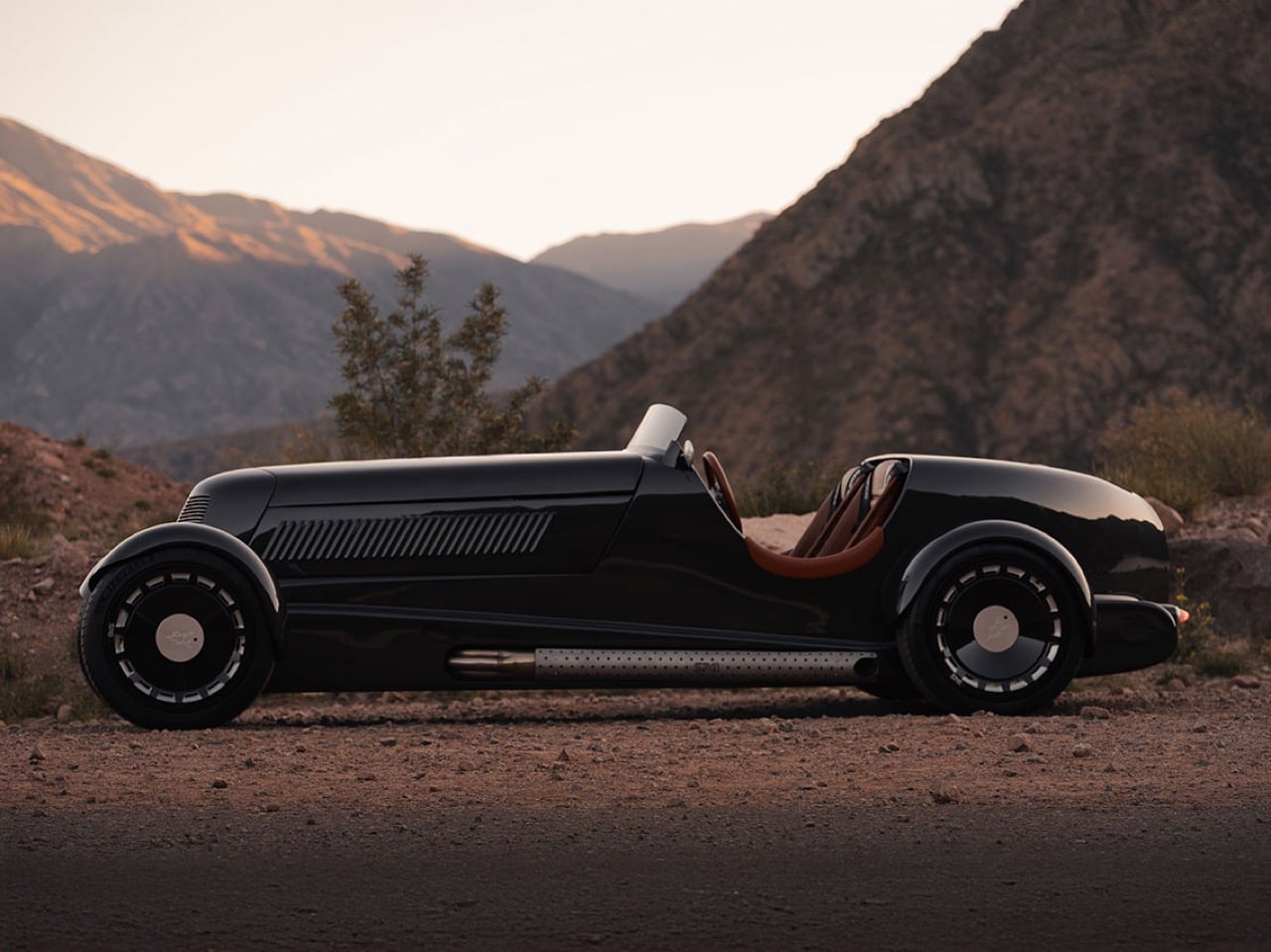
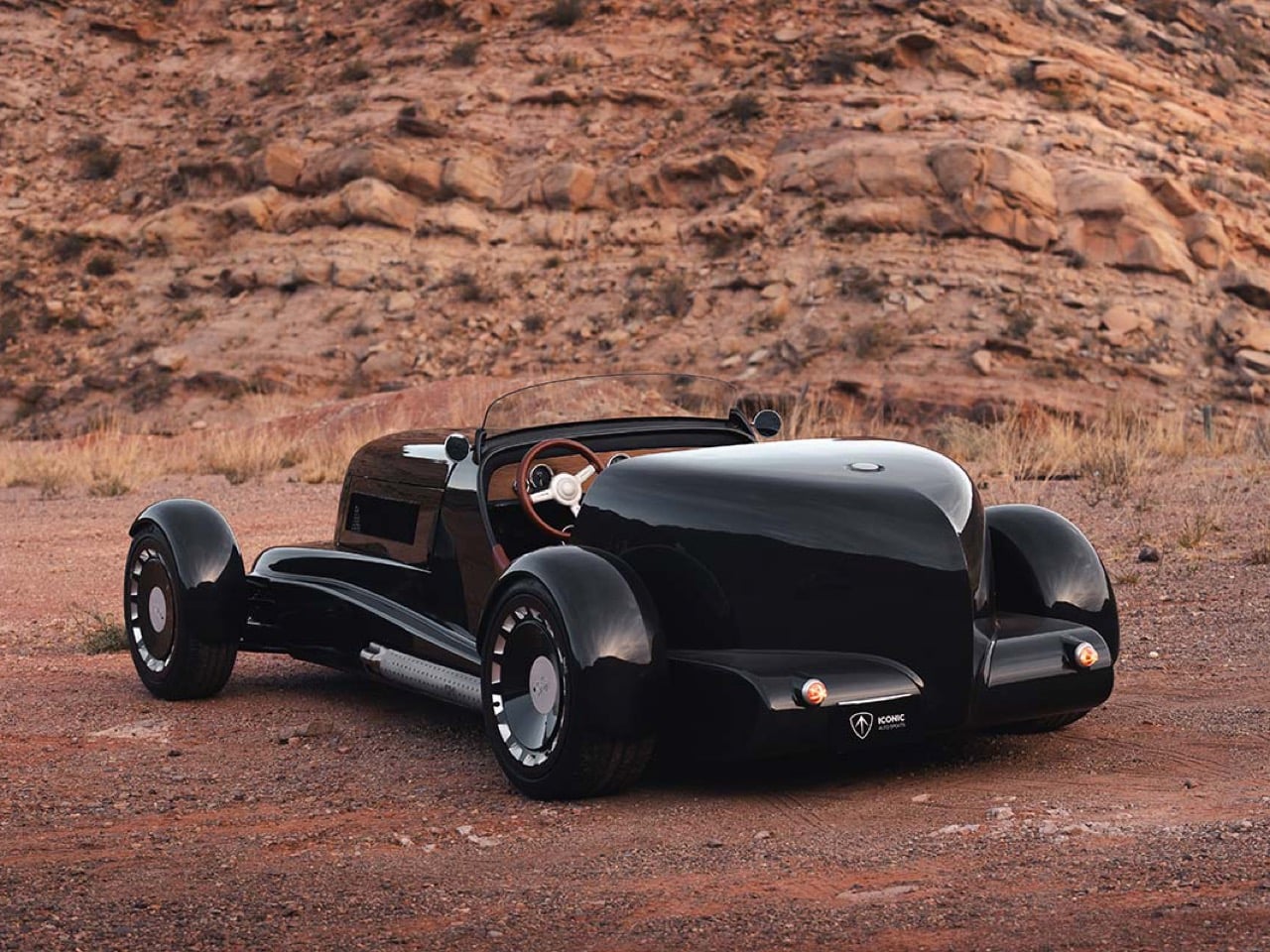
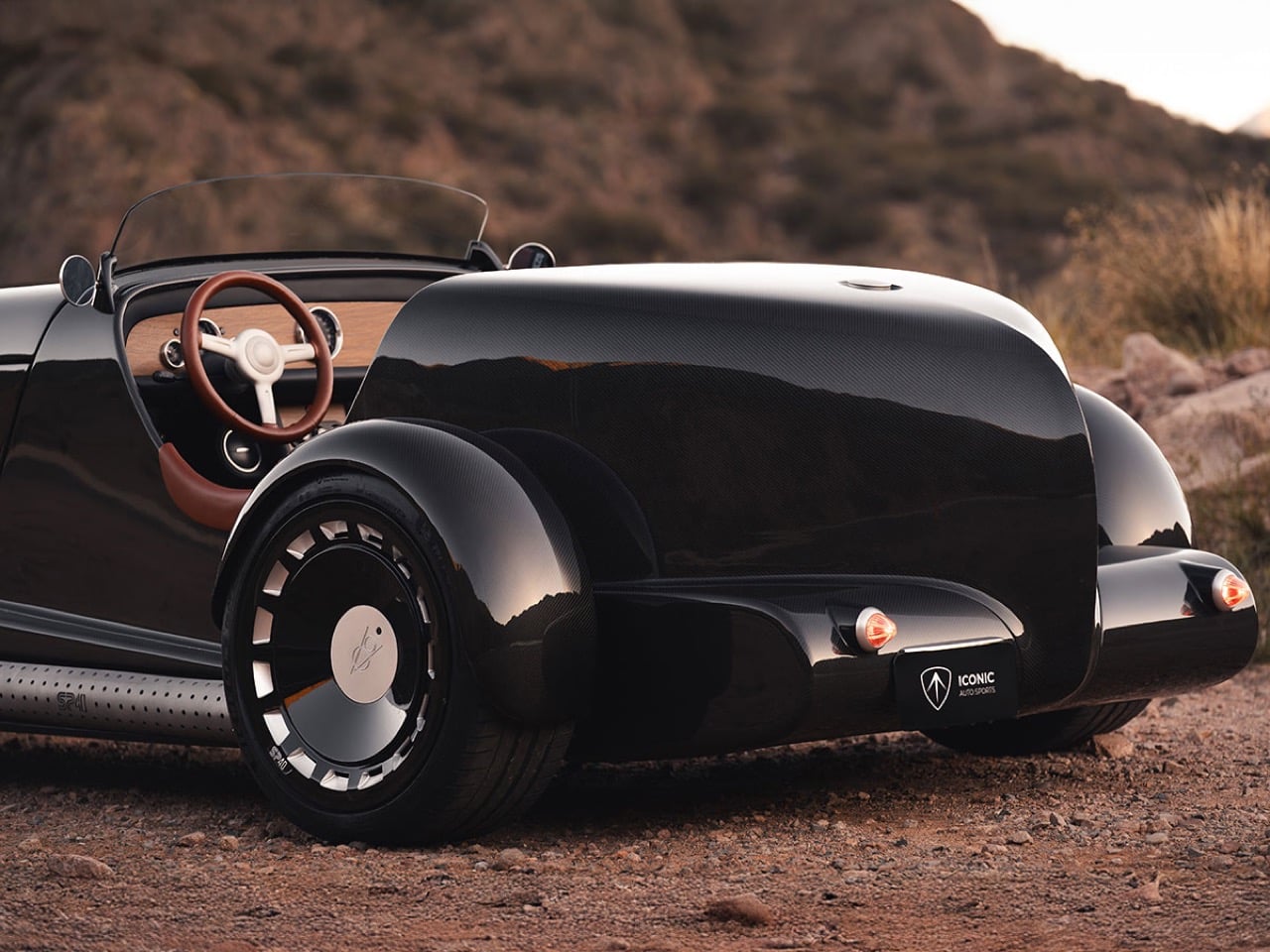
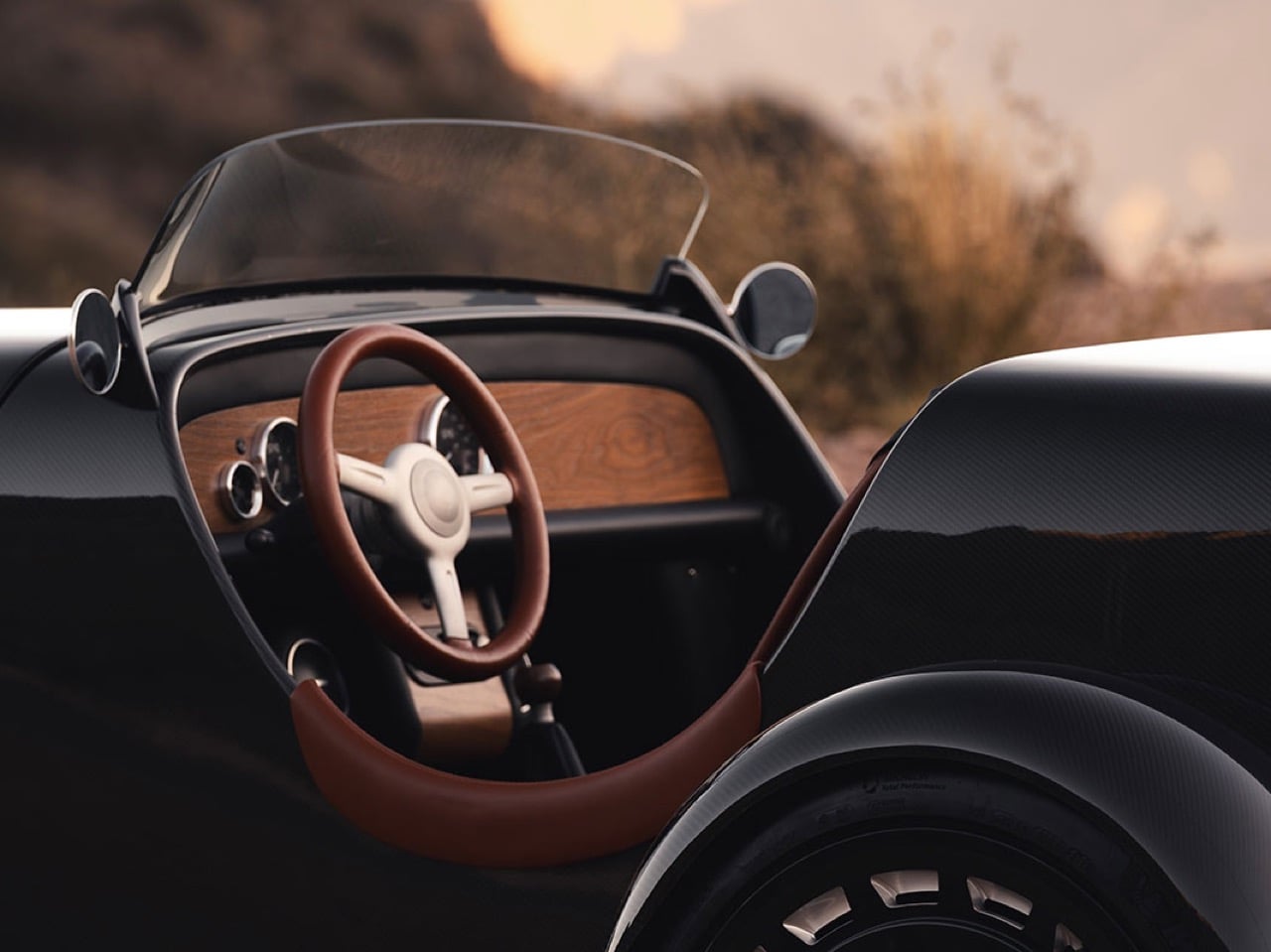
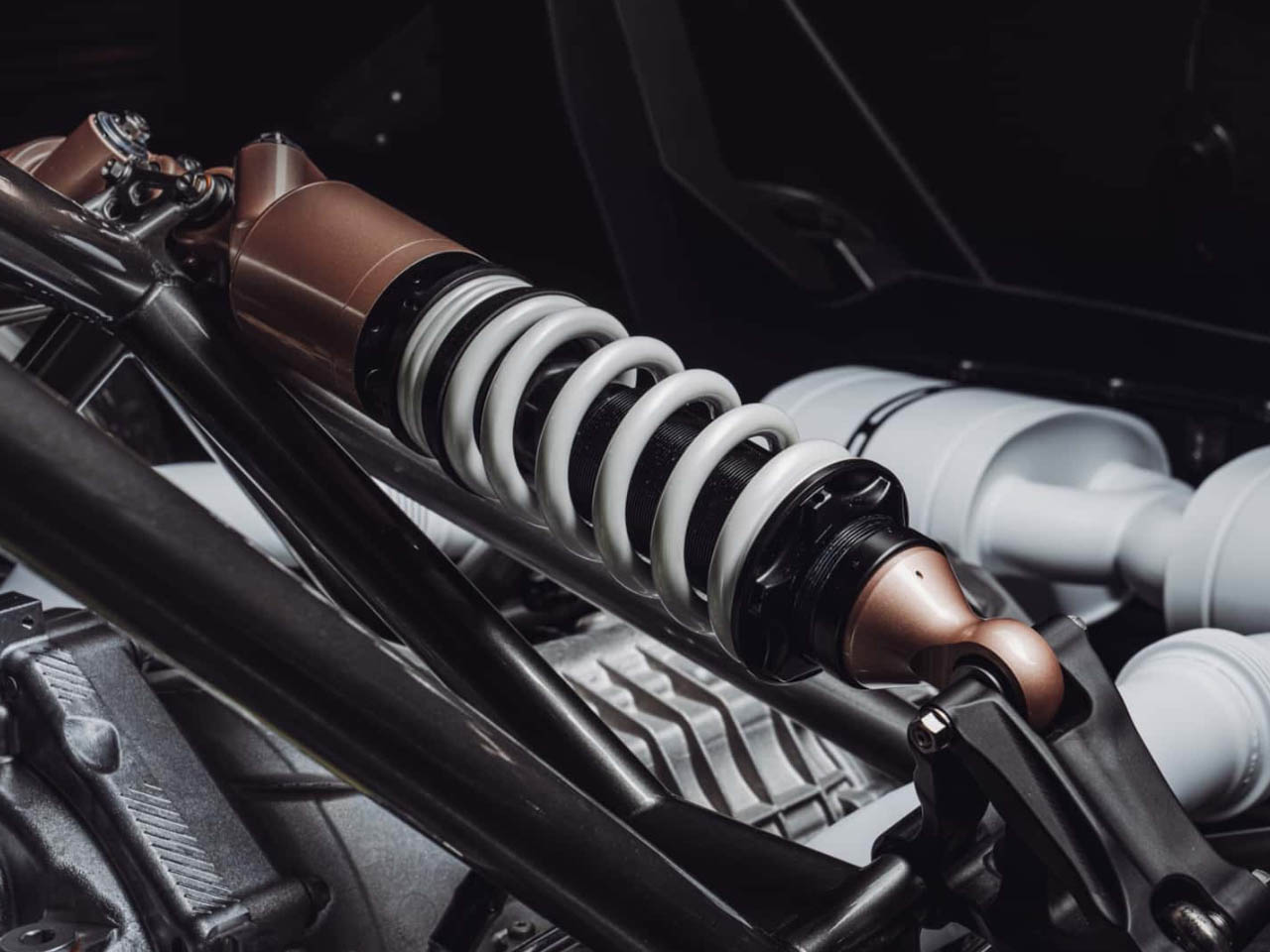
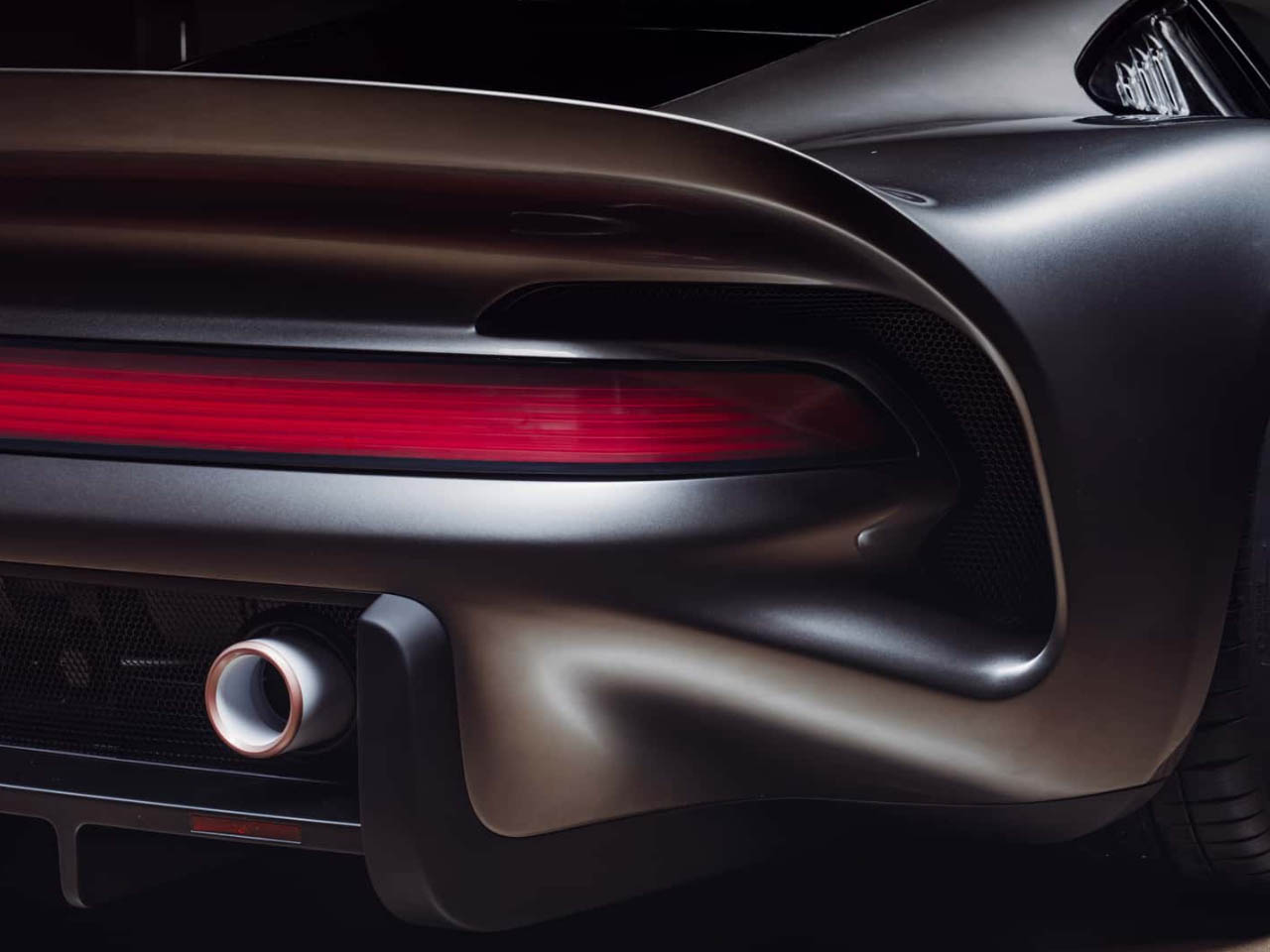
You can see that precision in the bodywork, which is almost certainly a full carbon fiber monocoque. Look at the rear clamshell; getting a single piece of carbon that large to lay perfectly without waves or distortion is an engineering feat in itself. This is not kit-car fiberglass with a carbon wrap. This is structural, aerospace-grade material science applied to a shape that feels impossibly organic. The entire car probably weighs less than 950 kilograms, which fundamentally changes how it would drive. All the visible suspension components up front are likely CNC-milled from aluminum, with geometry dialed in using modern kinematic software. It is a level of finish that blurs the line between a car and a piece of kinetic sculpture.

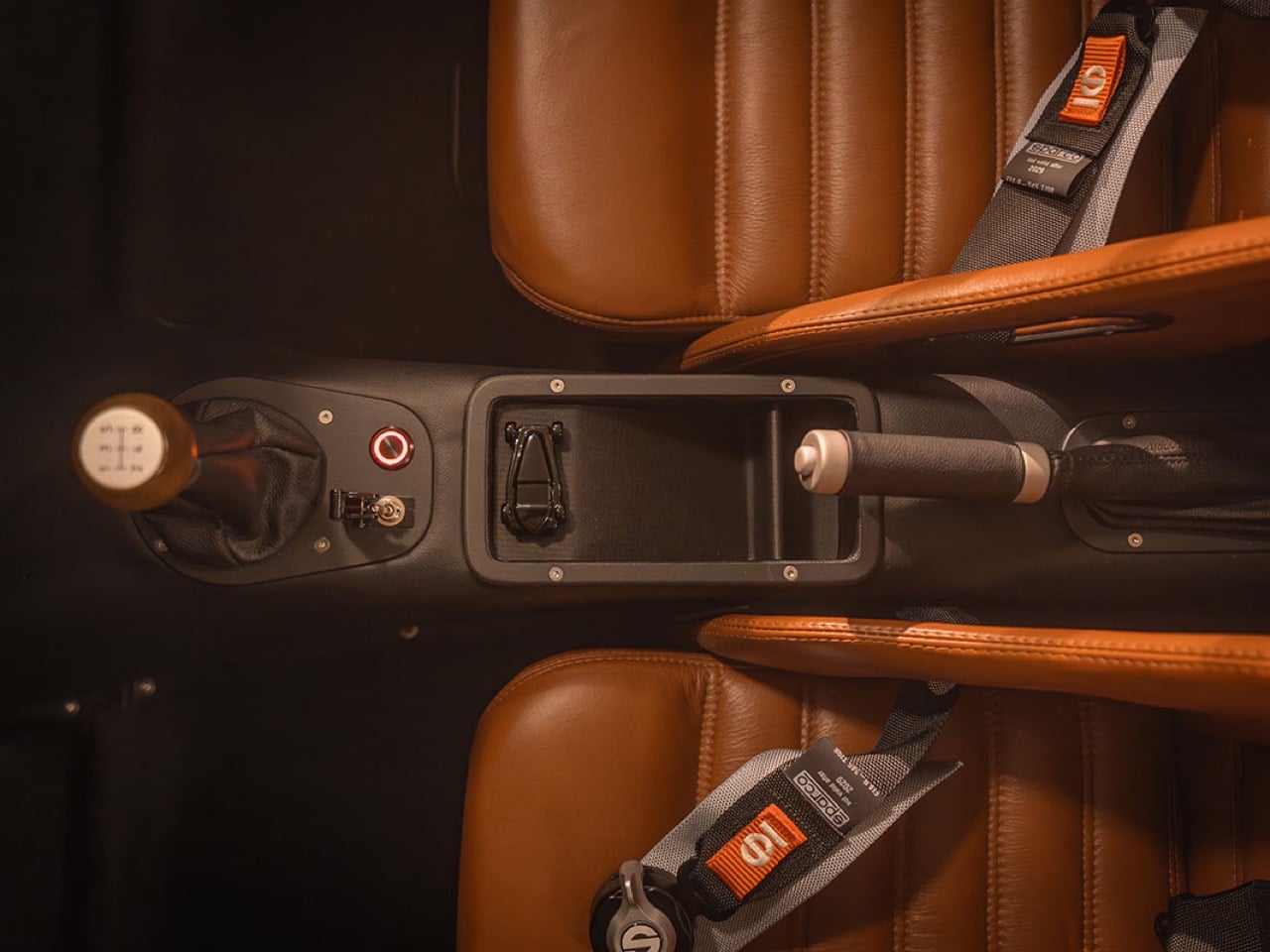
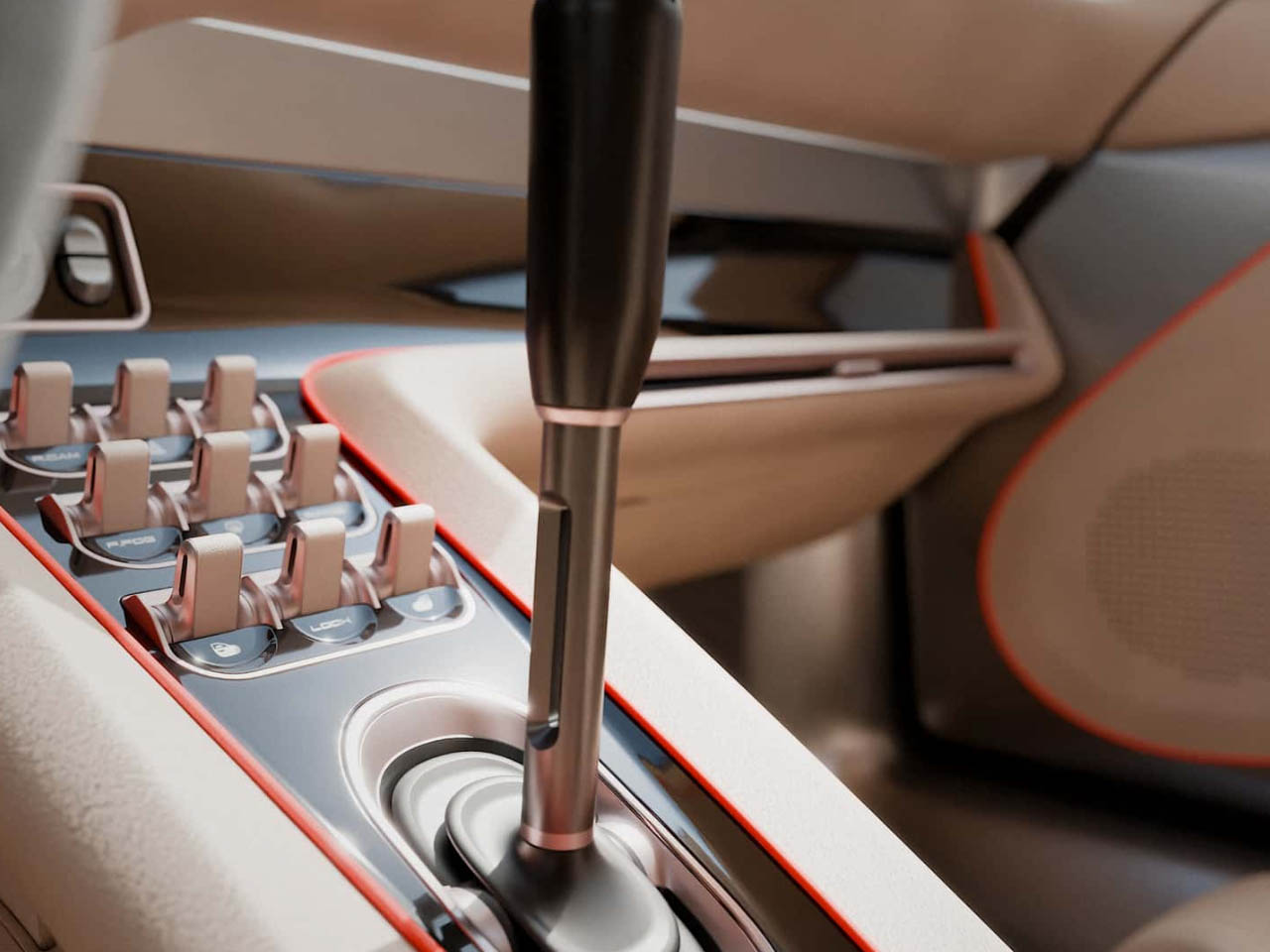
That philosophy carries right into the cockpit, which is a masterclass in tactile design. The gated manual shifter, with its wooden knob, is the centerpiece. It promises a mechanical, deliberate shifting action that modern paddle-shift systems simply cannot replicate. The dashboard is a simple plank of wood with classic analog gauges, a direct rejection of the screen-centric interiors that dominate the industry. Every control, from the toggle switches to the pull-handbrake, feels chosen for its physical feedback. It is a space designed for the act of driving, where your connection to the machine is through direct, mechanical inputs. The Sparco harnesses are not just for show; they are a clear signal of the car’s performance intent.

Underneath it all, the powertrain has to be something modern and potent. The side-exit exhaust and the big opening in the lower front grille point toward a forced-induction setup, probably a compact, high-revving V8. Something like a supercharged LT4 crate engine would provide around 650 horsepower with reliable, accessible torque, turning this lightweight chassis into an absolute weapon. Those wheels are a perfect metaphor for the whole project: they have the solid, functional look of vintage aero discs, but the turbine-like slots and two-tone finish are thoroughly contemporary. This car is a rolling thesis statement, arguing that technology’s best use is not to isolate the driver, but to perfect the analog connection we fell in love with in the first place.

The post Meet The SP40 Restomod Speedster: The Minimalist Carbon Hot Rod Redefining Retro Car Design first appeared on Yanko Design.
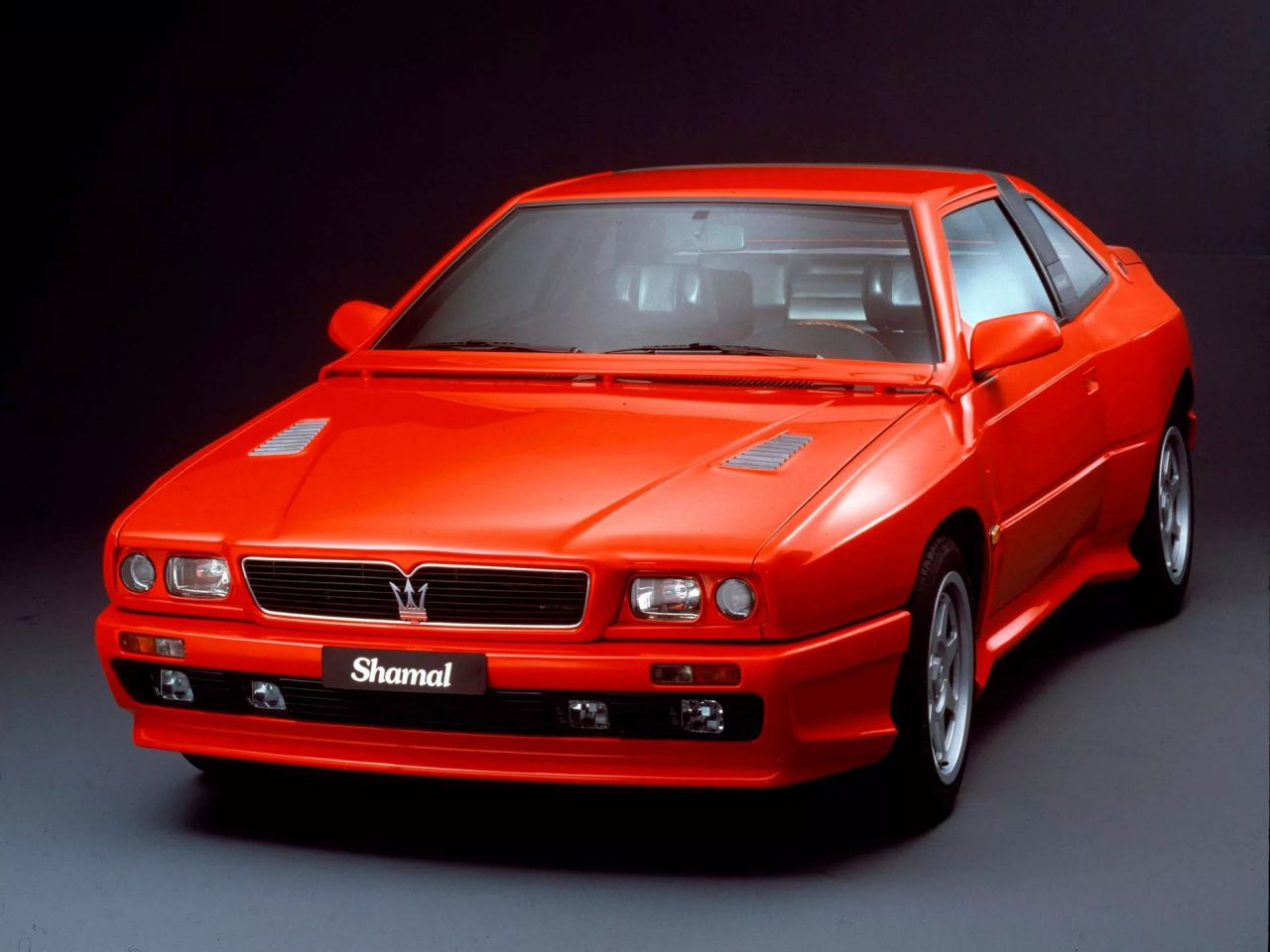
Maserati Biturbo-Shamal restomod reincarnates the 90s Italian coupe into a desirable hunk

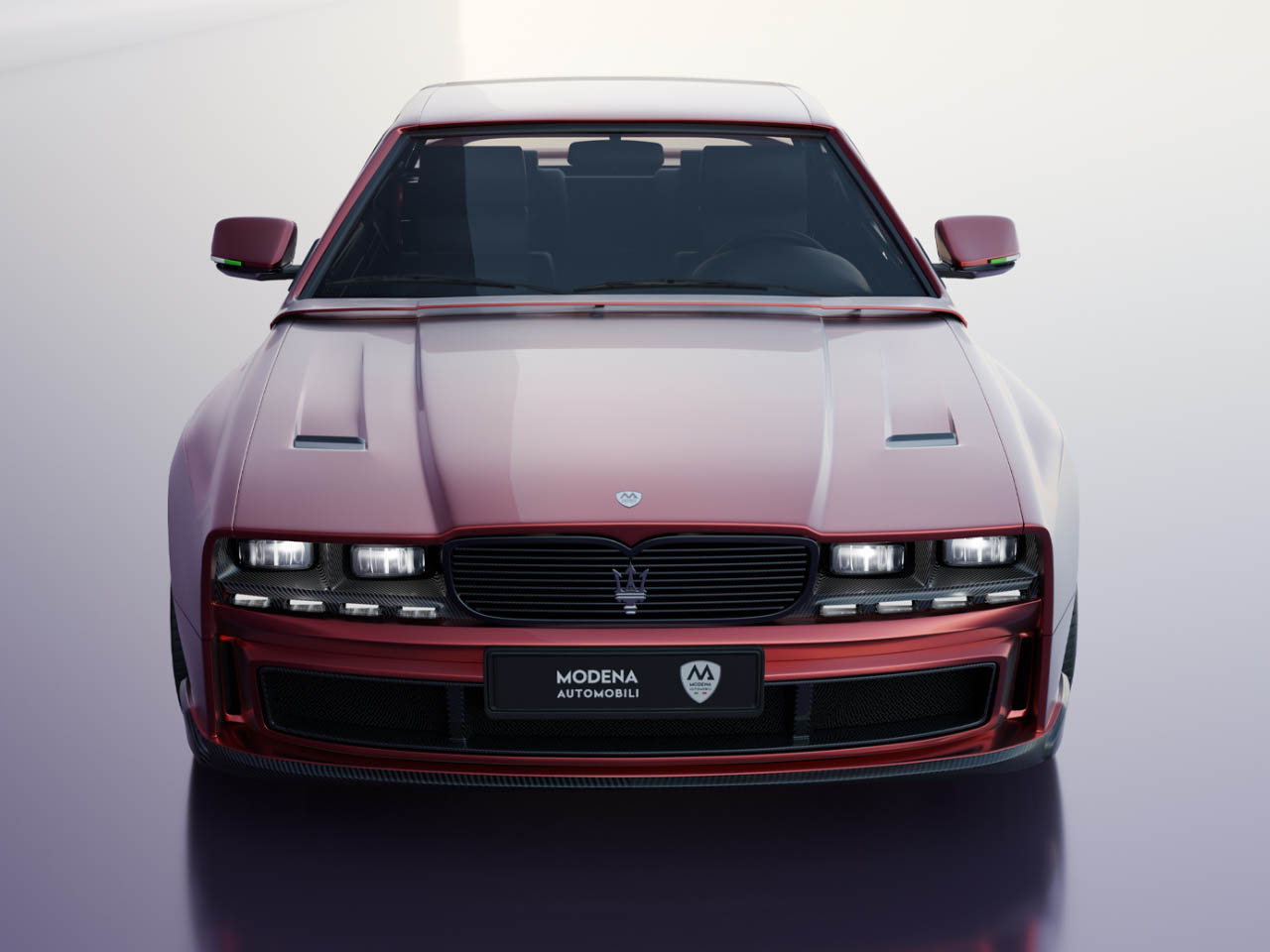
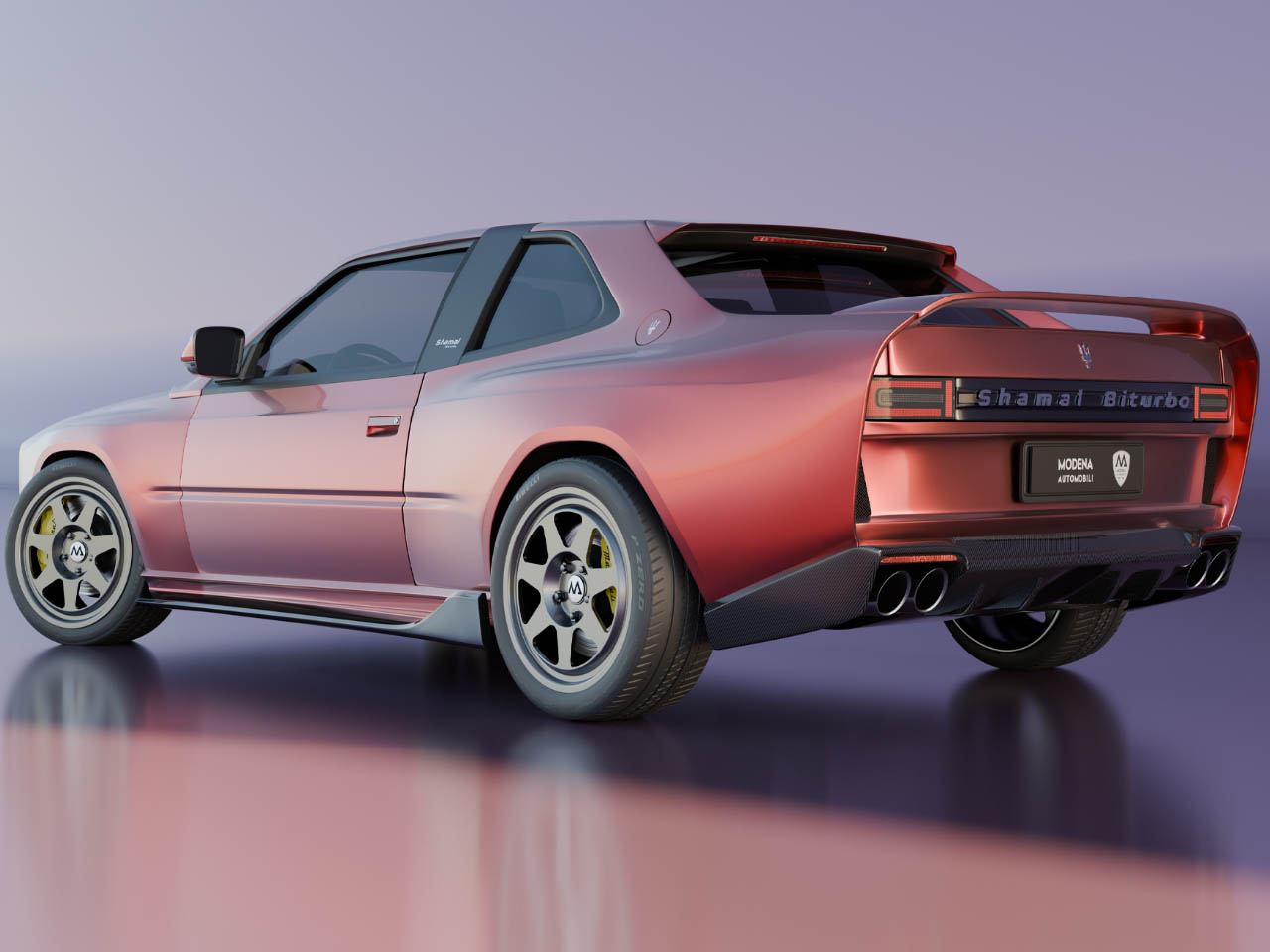
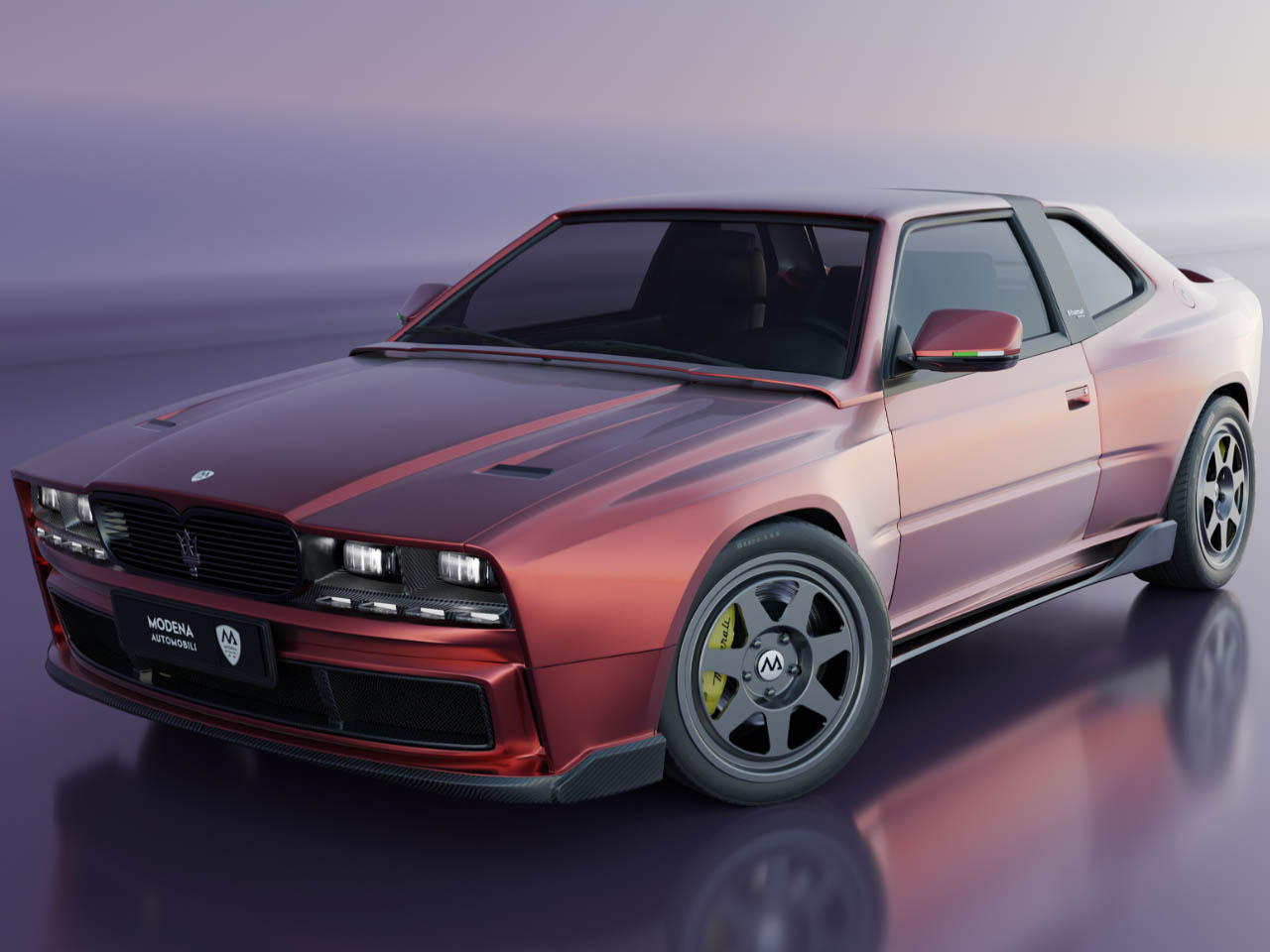
Maserati Biturbo-Shamal was one of Maserati’s finest creations when it was released in the 90s. Co-designed by Marcello Gandini, the performance grand tourer fitted with a V8 engine only sold a limited edition of 369 units. Now, Automobili Modena has brought back the sharp Italian classic as a restomod version.

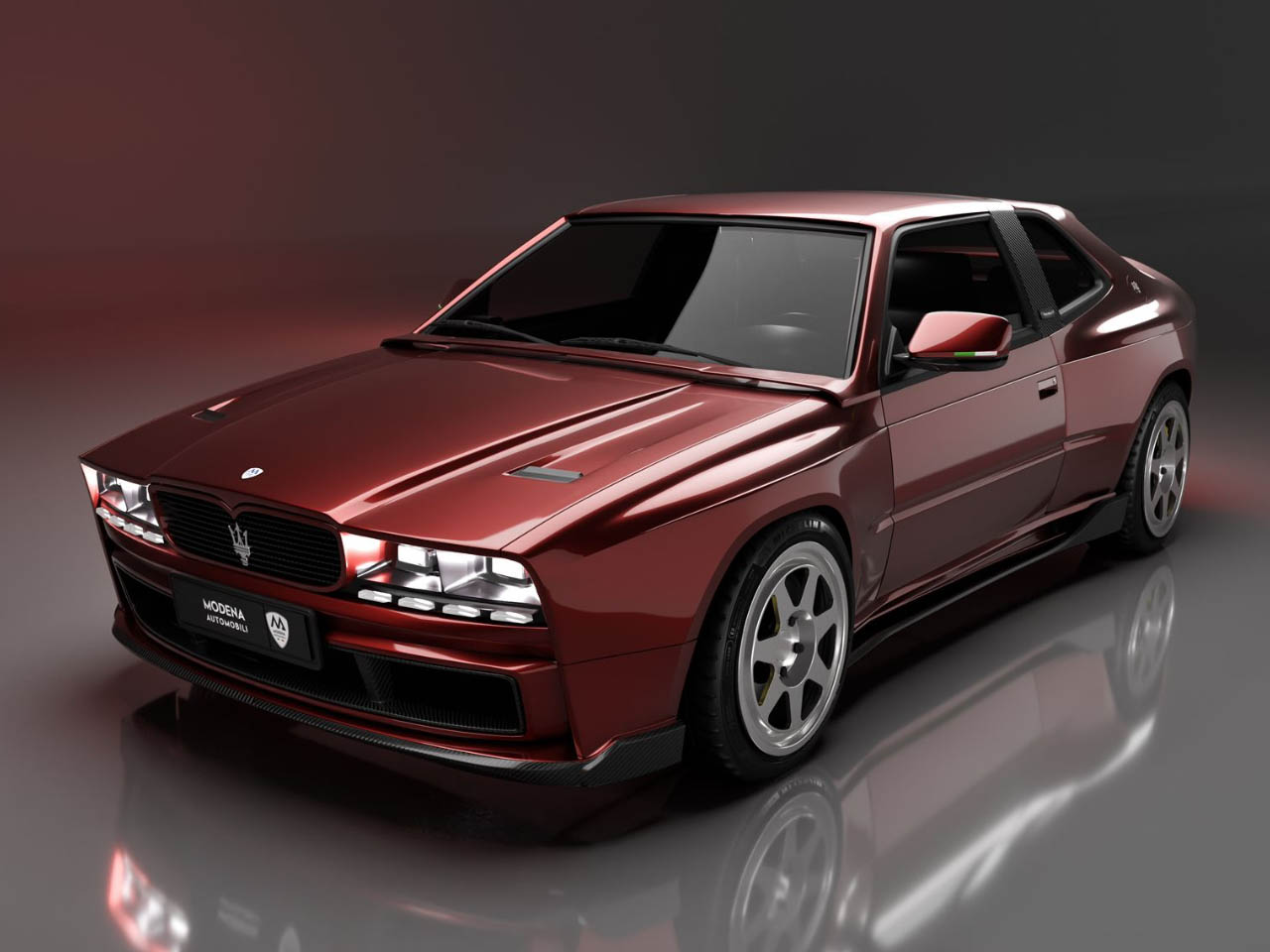
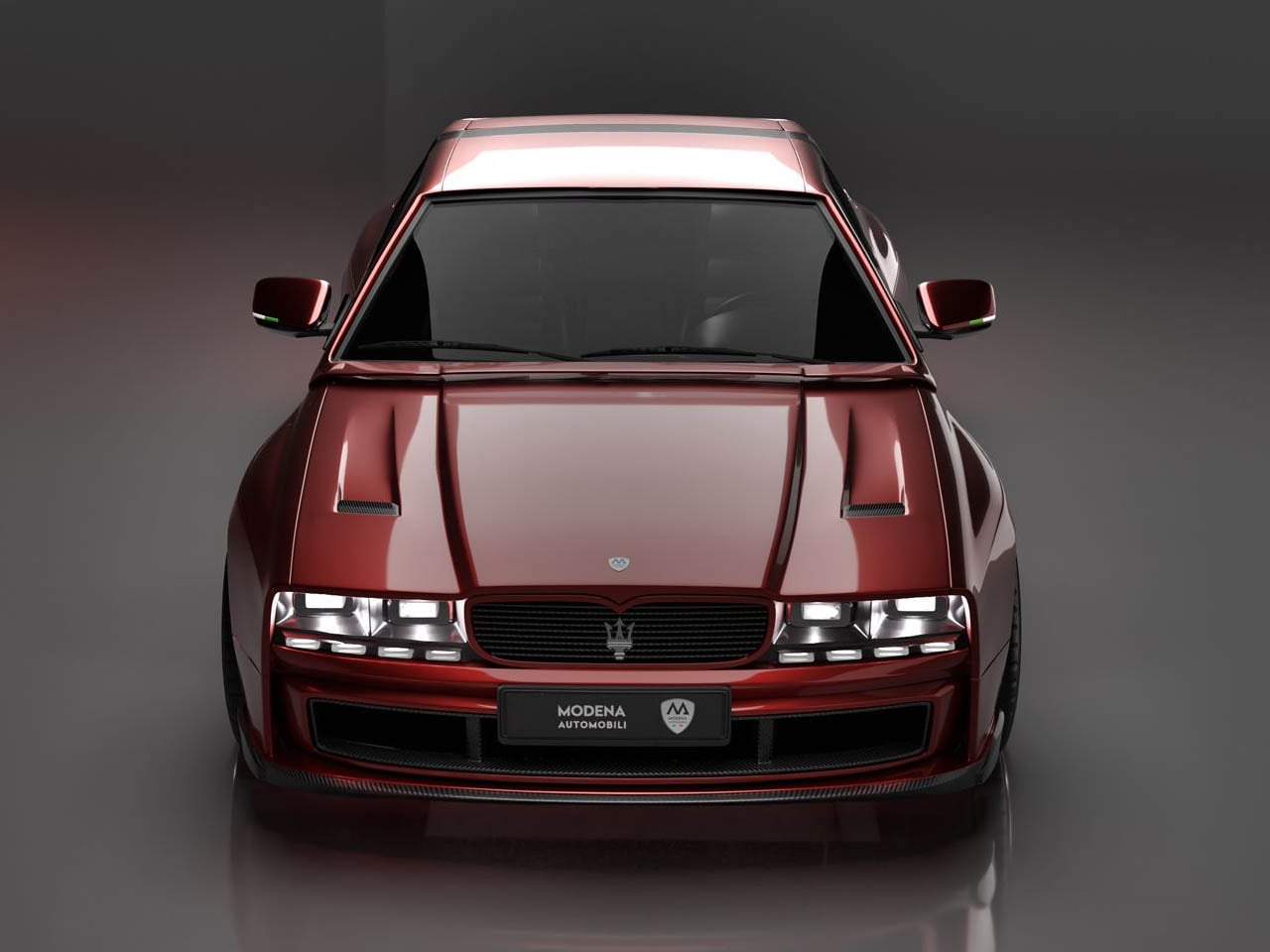
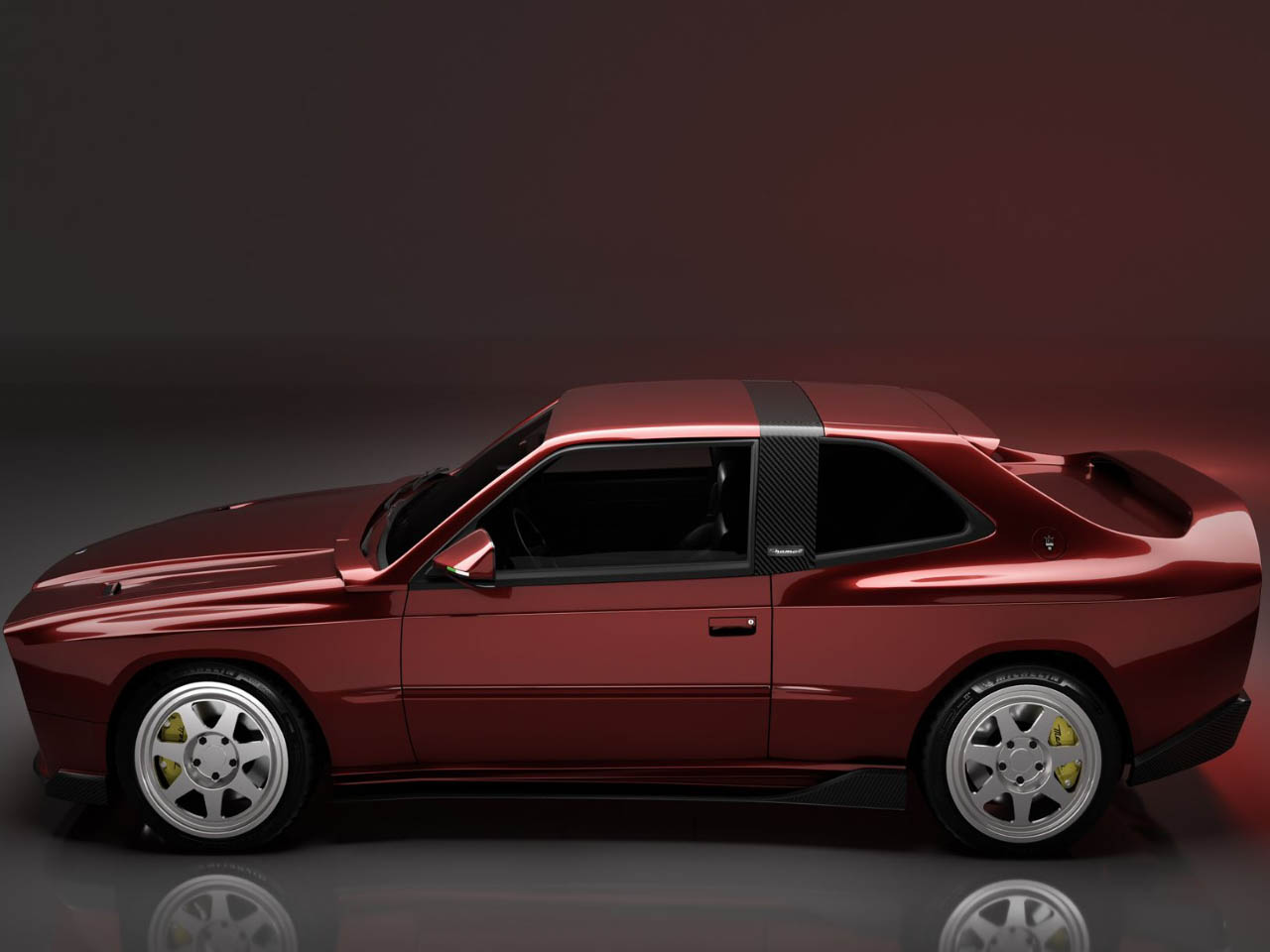
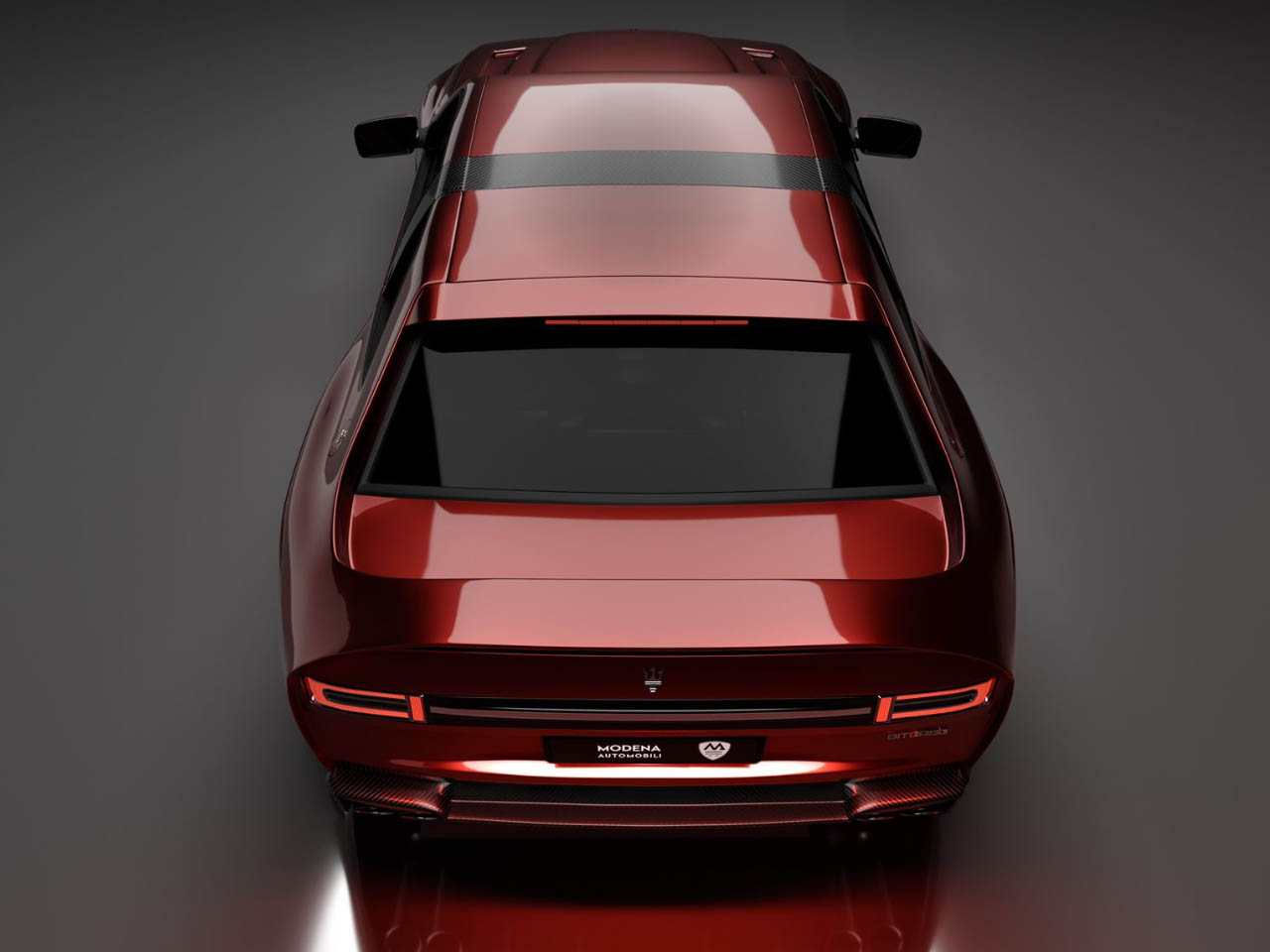
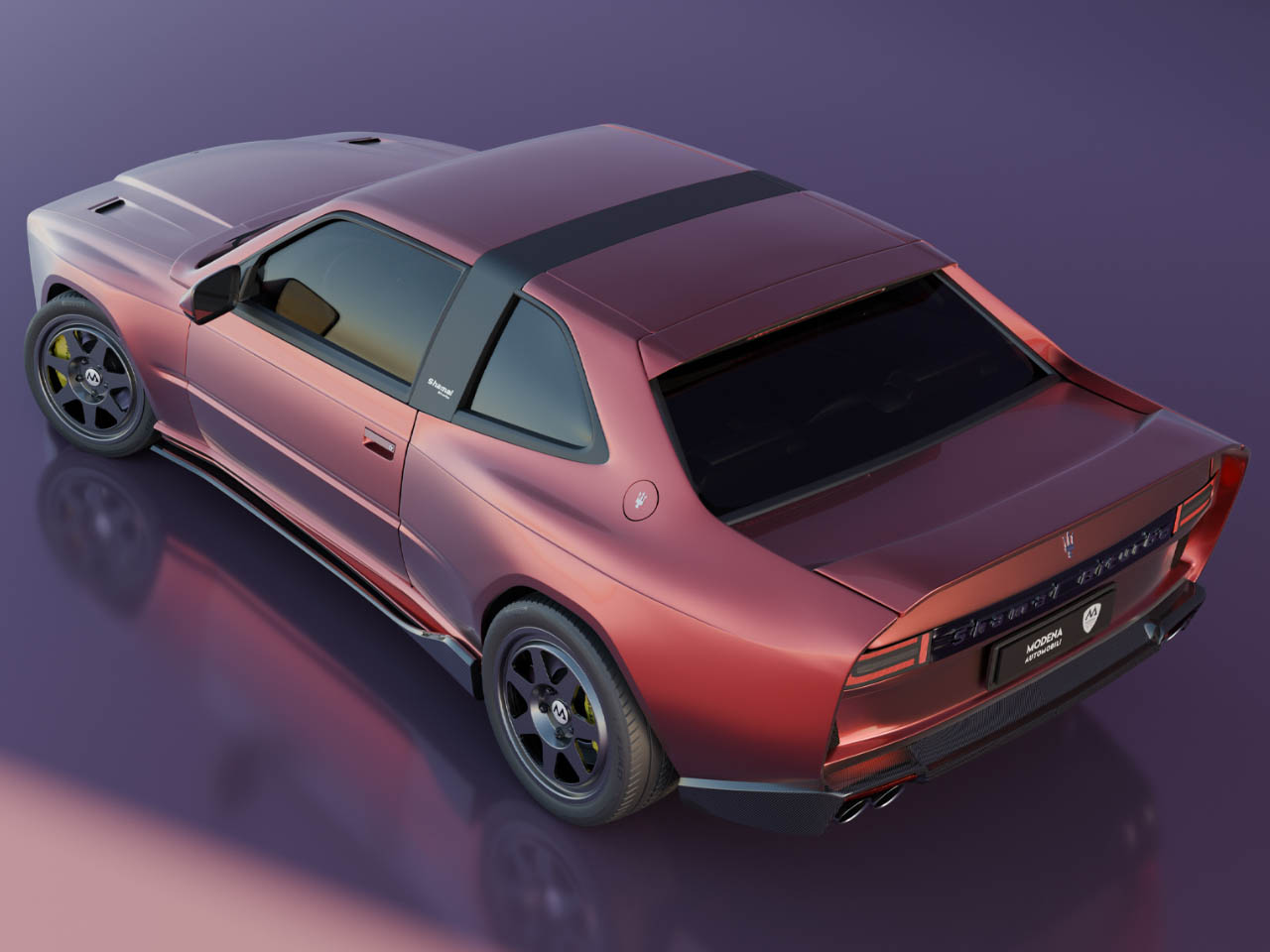
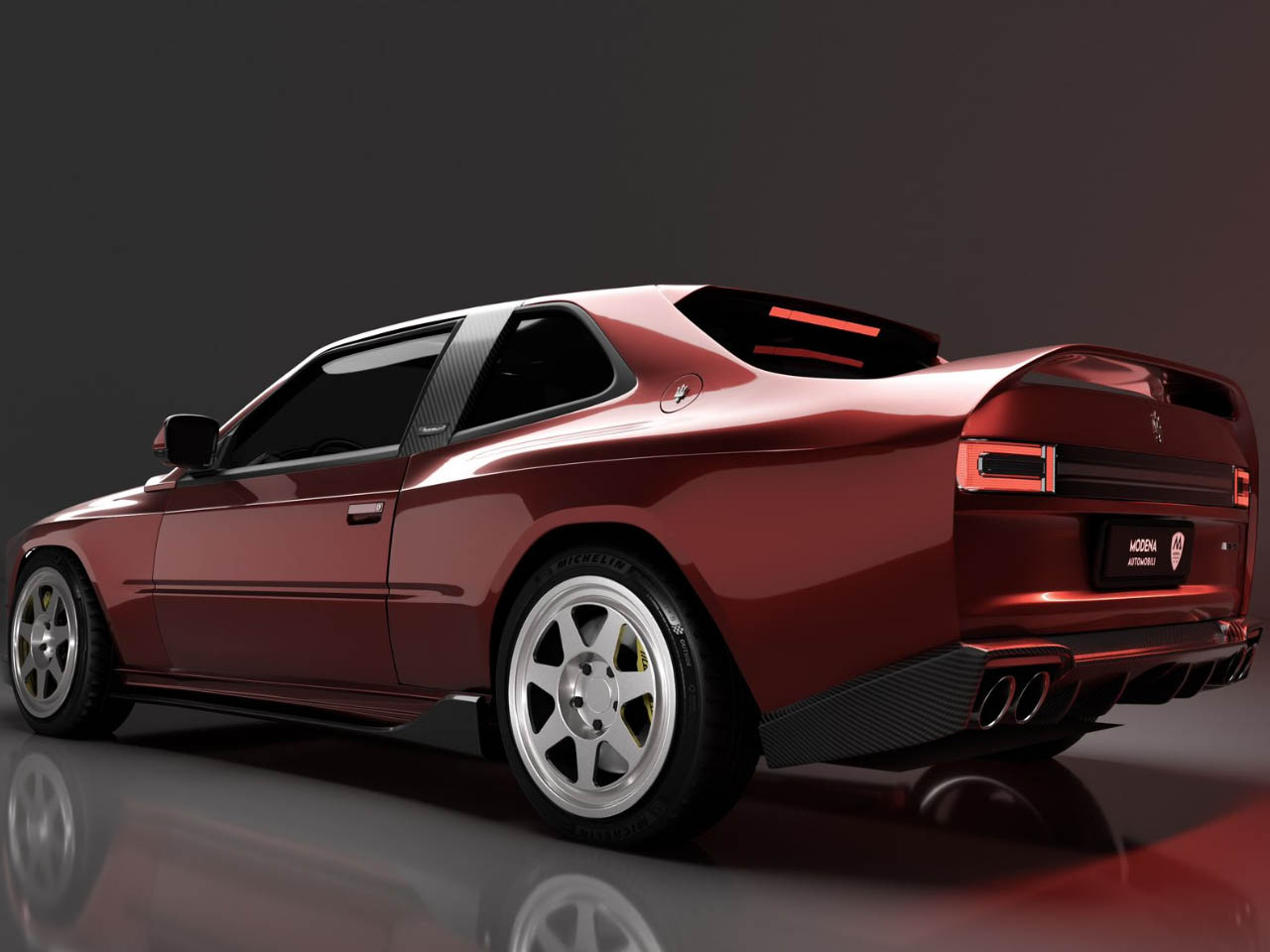
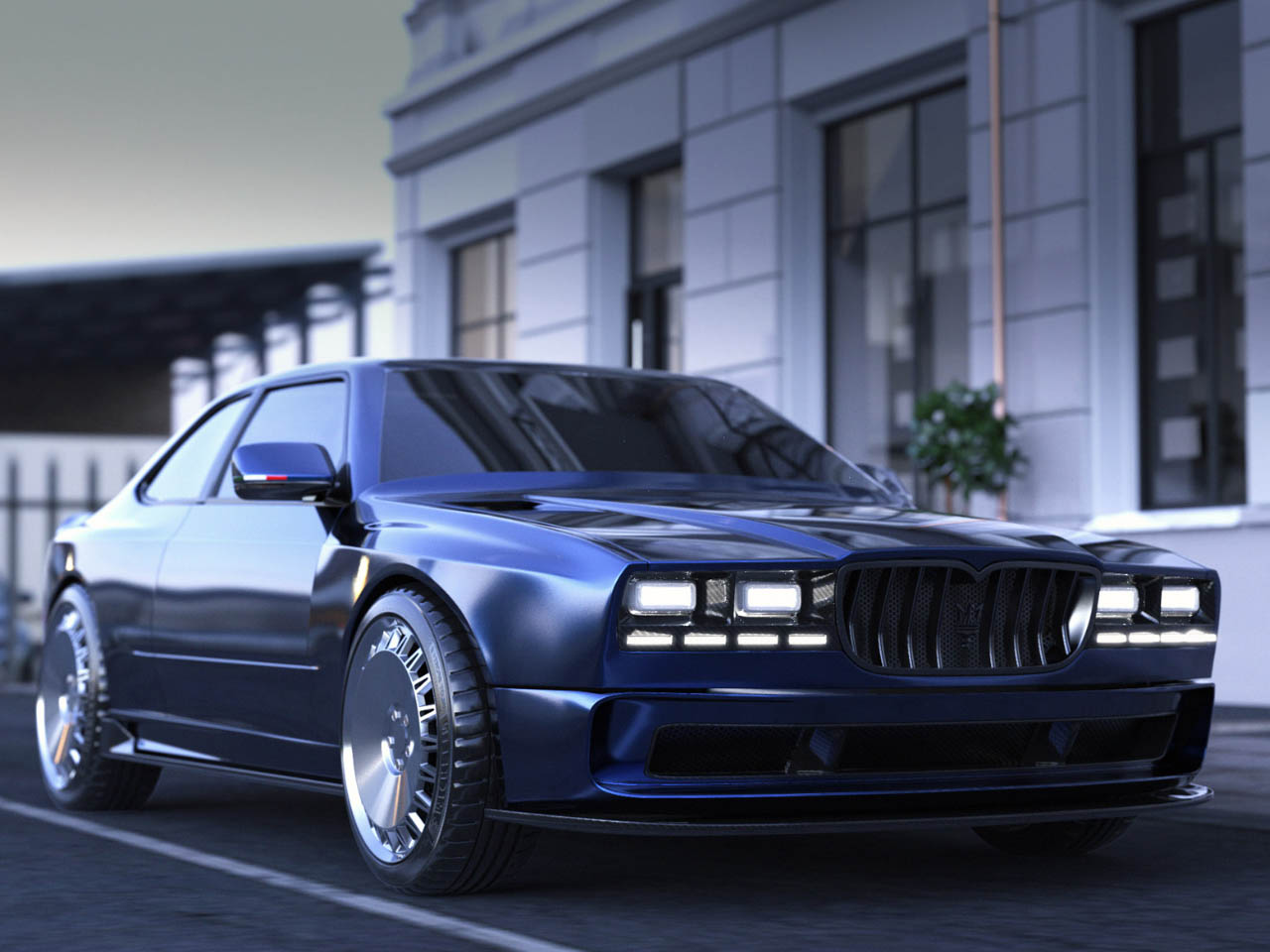
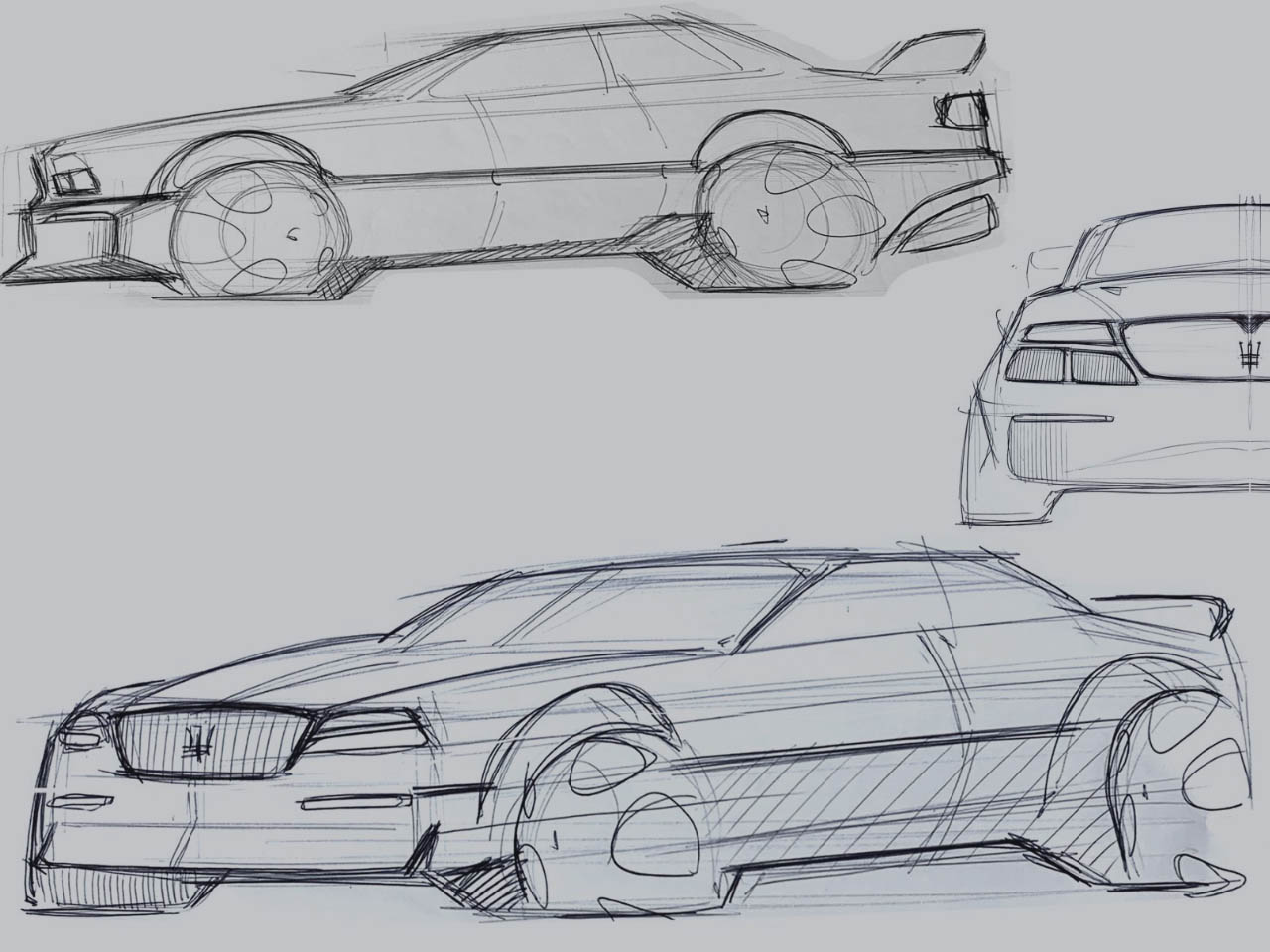
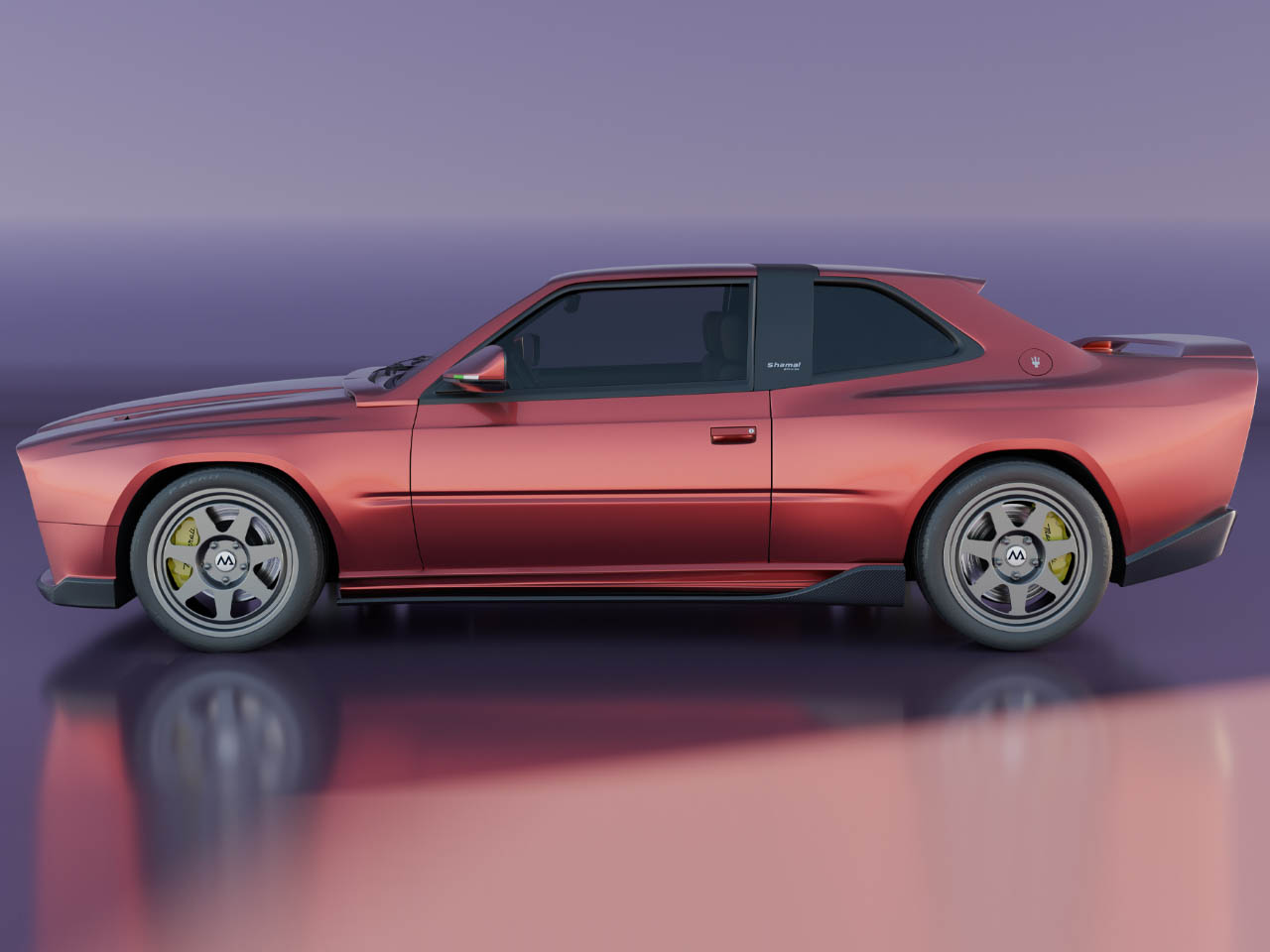
Dubbed MA-01 Biturbo-Shamal Restomod, the car retains the bodywork’s angular, sharp flowing lines, right from the front grille to the LED light clusters on the rear. Eye-pleasing muscle is added in the form of wheel arches, high tail, fixed wing, smoothness of the flanks, and beefy exhausts (two on each side) bulging from the valence.

Designer: Modena Automobili

Lucky ones who own the original Shamal, and ones who are motorheads will instantly recognize the semblance of grille design, center pillar, and Trident on the rear pillars and door handles. The facelift comes in the shape of a more aggressive frontal stance, bigger air intakes, side skirtings and sharper wheel arches. Of them all, the LED light pack and the large spoiler give it a sportier look. The lightweight body features steel and carbon fiber make. Integrated into the frame is an exposed carbon central pillar that doubles as a rollbar for protection.

Although not many details of the interior have been shared, it will likely have an oval digital instrument cluster just like the original. Other details about the innards are left out for now to everyone’s imagination. Under the hood is where most of the work has been invested in. Gone is the original Maserati Biturbo Shamal’s 326-hp 3.2-liter V8 replaced by the modern Maserati Ghibli S’ twin-turbocharged 3.0-liter V6. The engine is custom-tuned to generate more power in coordination with a Ghibli S’ eight-speed ZF gearbox that’s capable of gear shifting in a mere 150 milliseconds. More internal components push the twin-turbo V6’s capability to generate 500hp. In the end, the Shamal hits a top speed of 177 mph and goes from 0-60mph in 4.7 seconds.

The ambitious Modena Automobili Project is only going to take shape as 33 limited edition units. Priced at approximately 638,000 the Maserati Biturbo-Shamal restomod will go up for sale in Spring of 2025, so better mark your calendars.

The post Maserati Biturbo-Shamal restomod reincarnates the 90s Italian coupe into a desirable hunk first appeared on Yanko Design.

Kia reincarnates the iconic old school Pride as a powerful electric car restomod we love

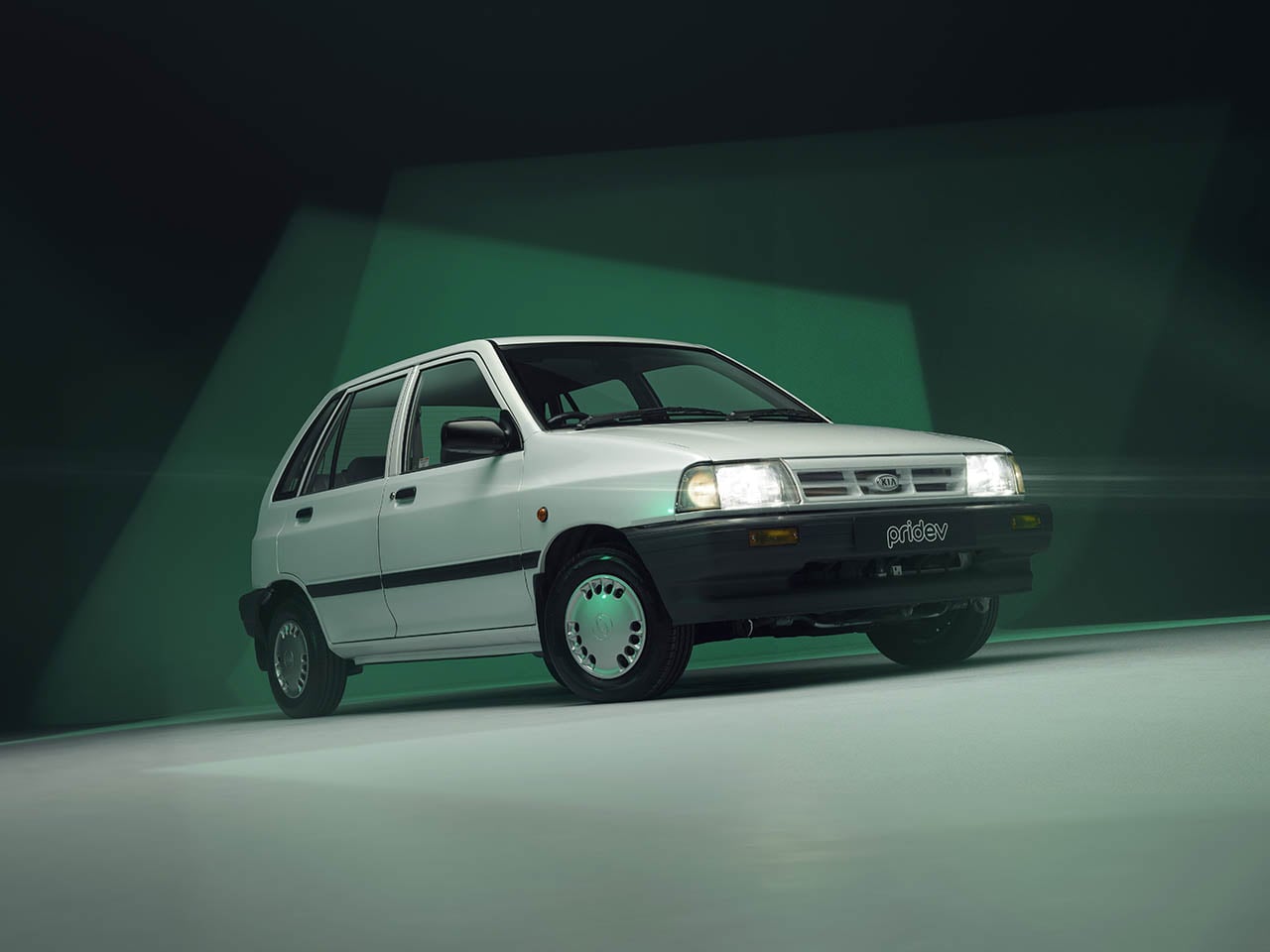
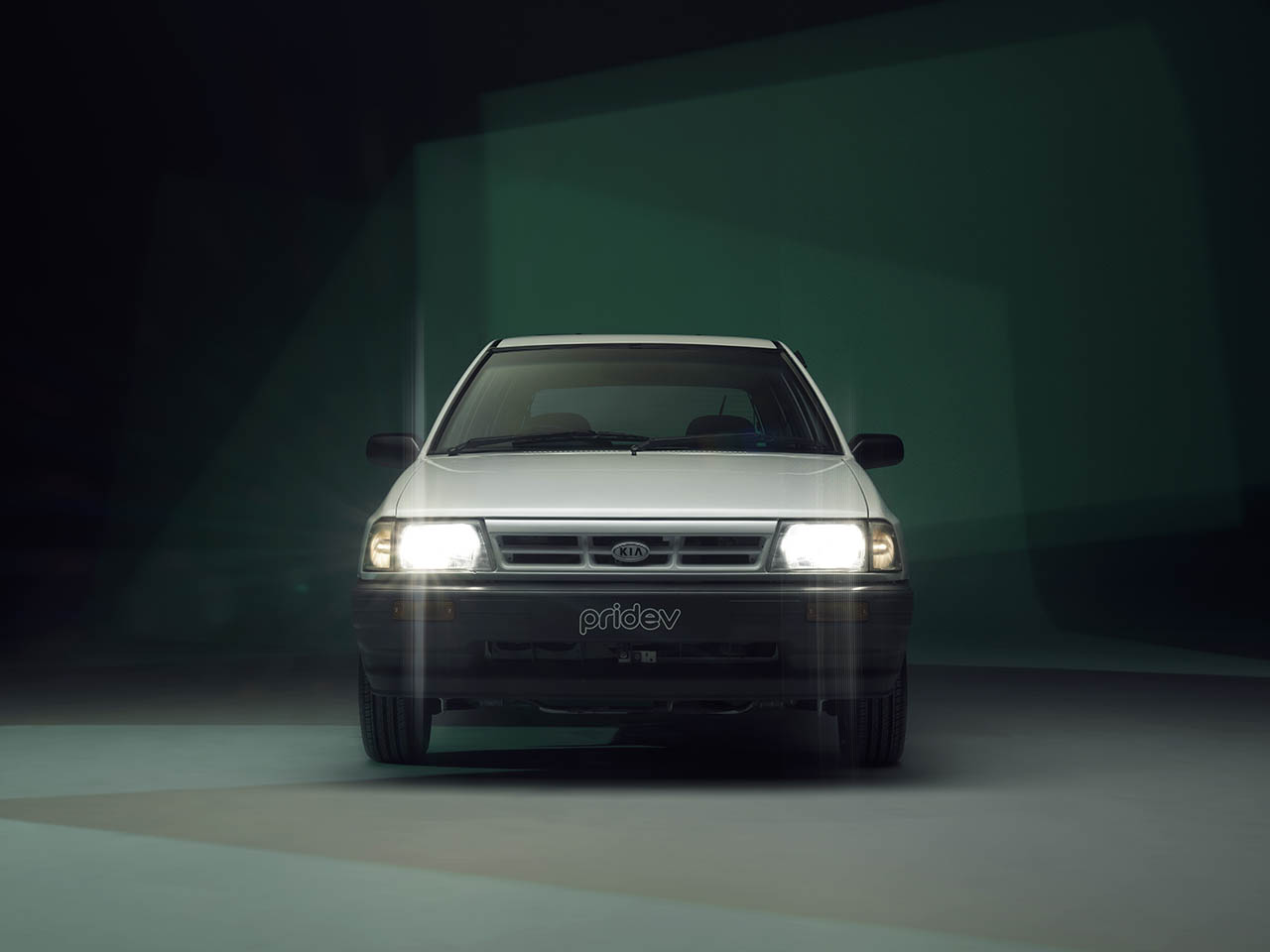
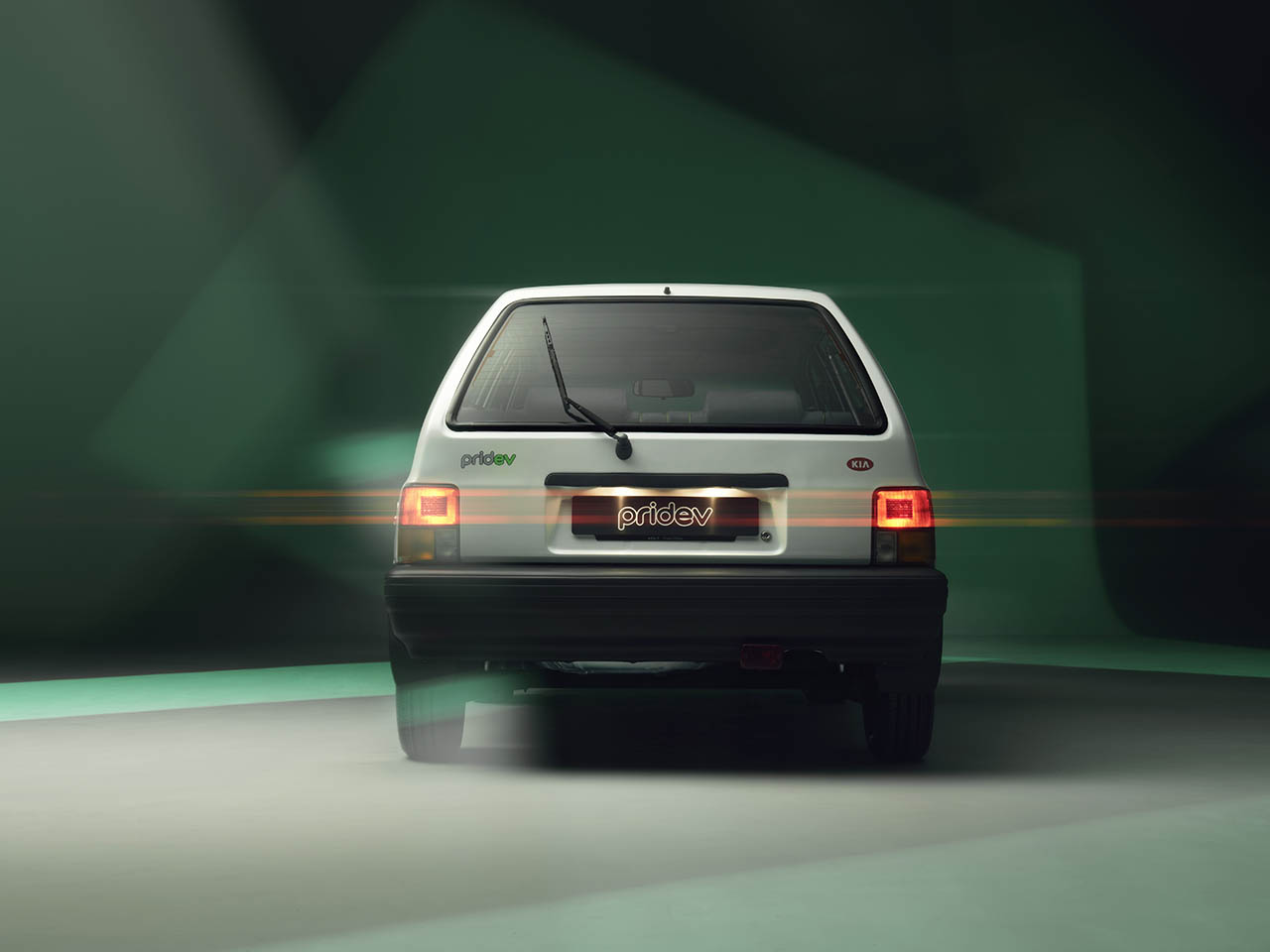
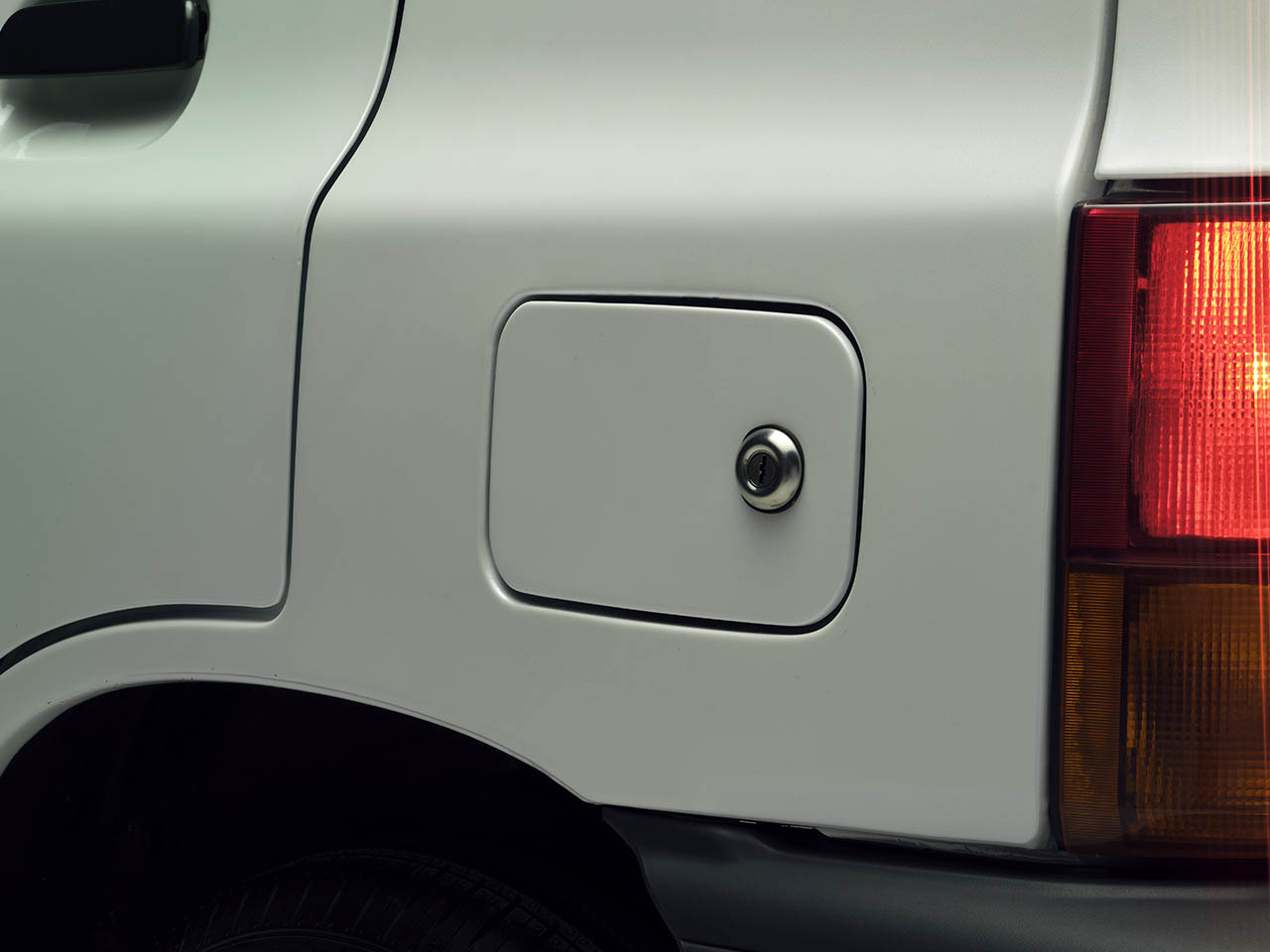
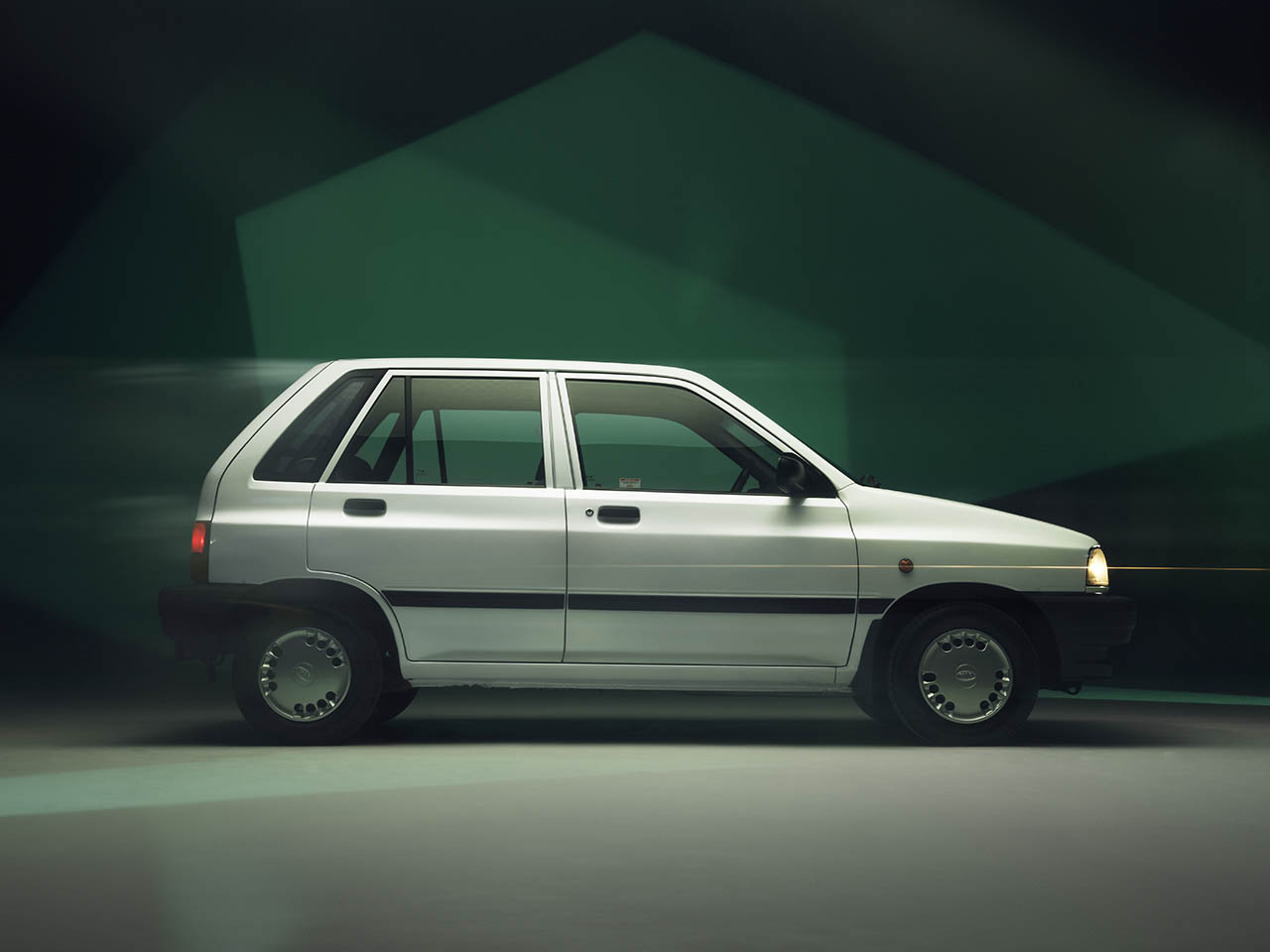
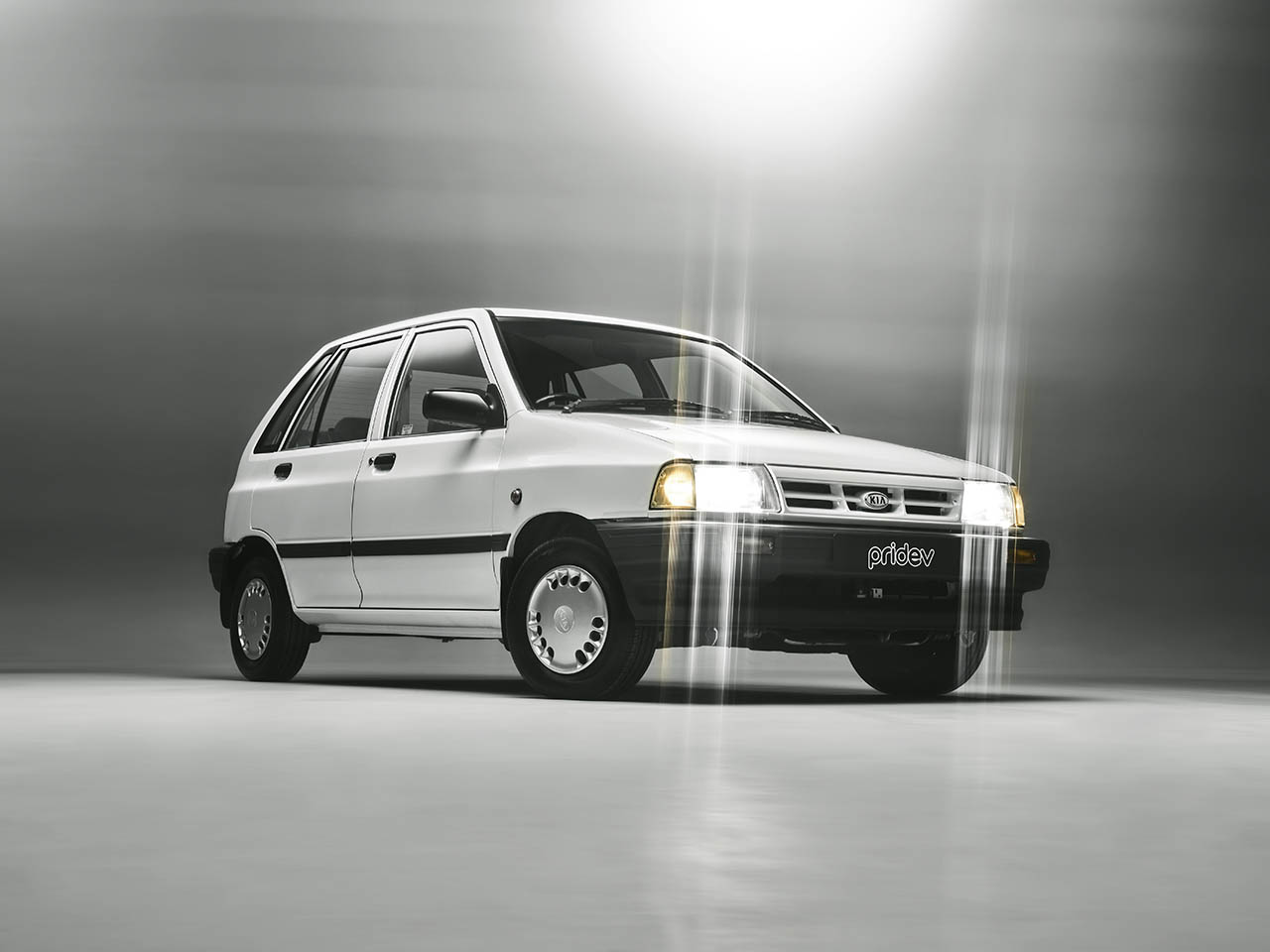
The gas-powered Kia Pride was a successful subcompact hatchback from the 90s that was a rebatched Ford Festiva. For the 80th anniversary of the brand’s business in the UK, they have restored the 1996 Pride 1.3 LX into an all-electric restomod. This one-off electrified reincarnation of the classic family car gets a stellar EV powertrain conversion courtesy of a British manufacturer.

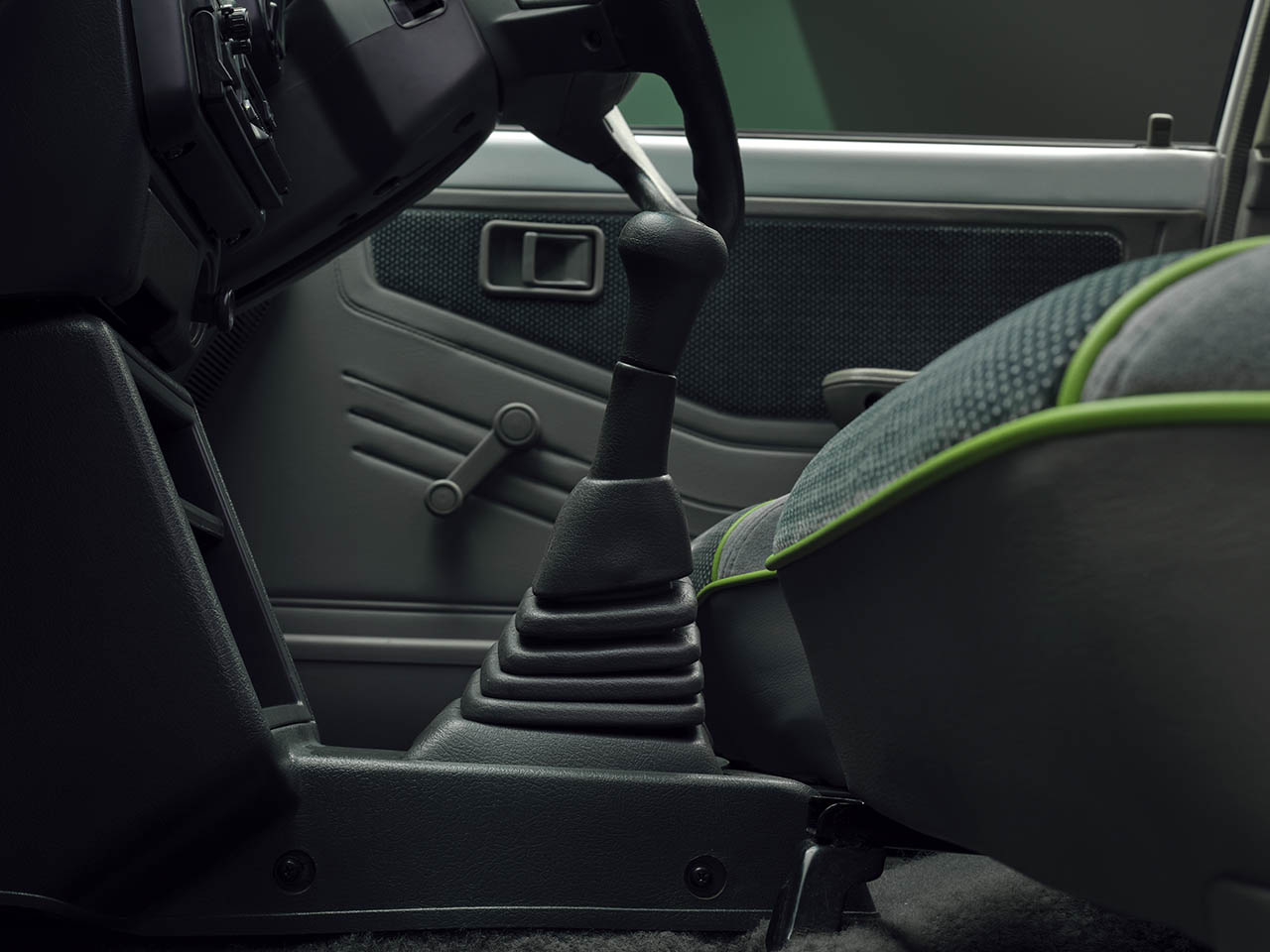
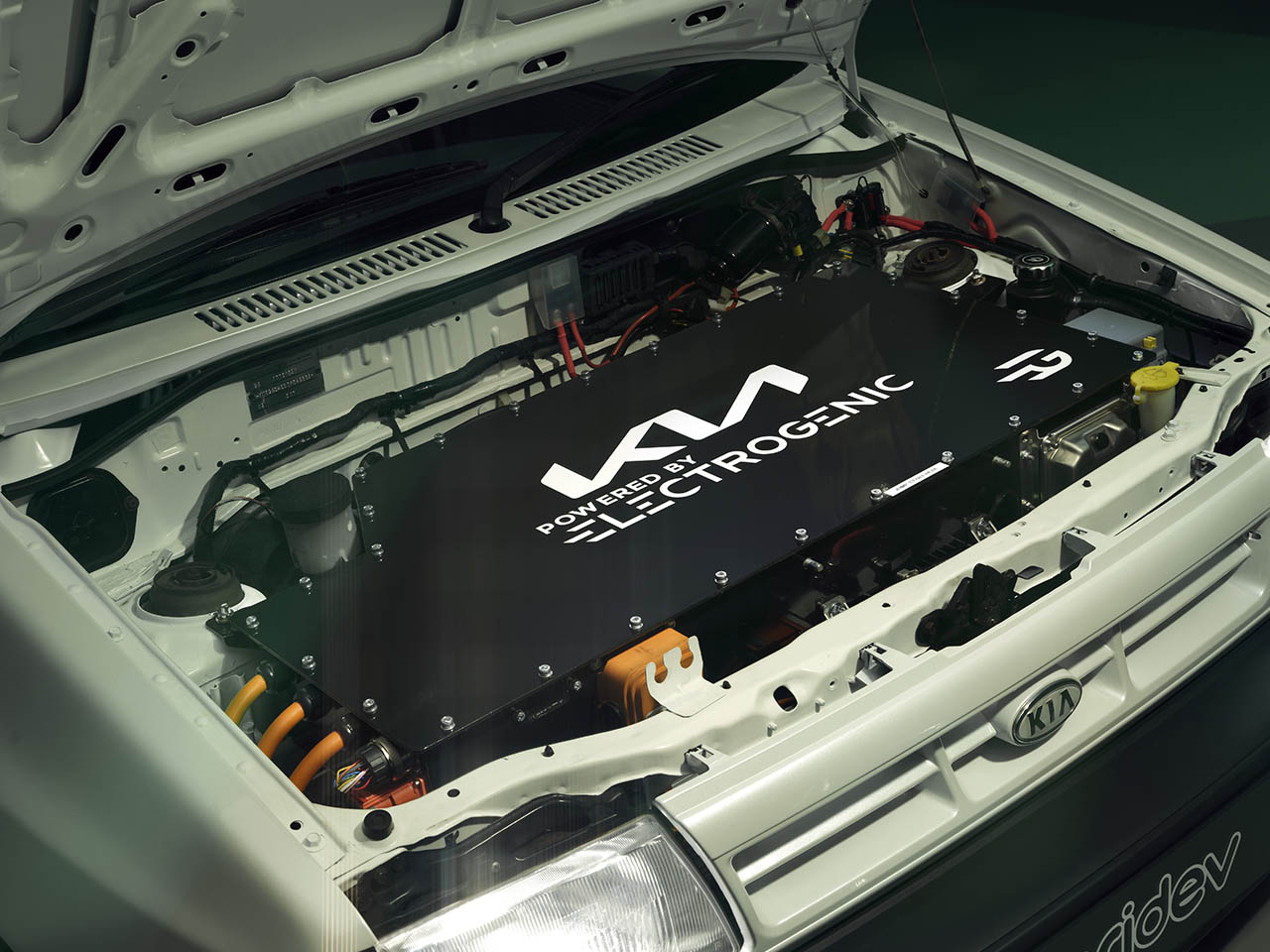
According to Kia, the electric hot hatch is one of the most powerful of its kind, and they playfully call it a “true socket rocket.”  All the combustion components have been replaced with a powerful EV powertrain and the only components retained from the original are the five-speed manual transmission and drive shafts. This brings maximum drivable engagement for motorheads who care.

Designer: Kia

The renewed avatar of the Pride boasts 107 bhp (80kW) and 173 lb-ft of torque, almost double the power of its older counterpart. On the inside, the electric motor, twin 10 kWh battery packs, and a charging port replace the older gas-powered engine, fuel tank and filler neck. All these core modifications lead to an acceleration of 0 to 62 mph in 8 seconds flat. Kia assures that the 20 kWh battery pack can stretch a total mileage of 120 miles on a single full charge in the Evo mode which is good enough for a city commuter like this one. In this drive configuration the engine shifts to producing 60 bhp with a maximum torque of 11 Nm. Talking of which, the Pride EV also has two other modes – Auto and Sport – the latter offering a max power output of 107 bhp and 173 lb-ft torque.

Sadly, this restomod version is going to be a one-off and not up for sale anytime in the future. That said Kia is launching many EVs like the latest EV3 as a part of the plan to have 15 electric vehicles by 2027. Nine of these will be available for sale in the UK.

The post Kia reincarnates the iconic old school Pride as a powerful electric car restomod we love first appeared on Yanko Design.
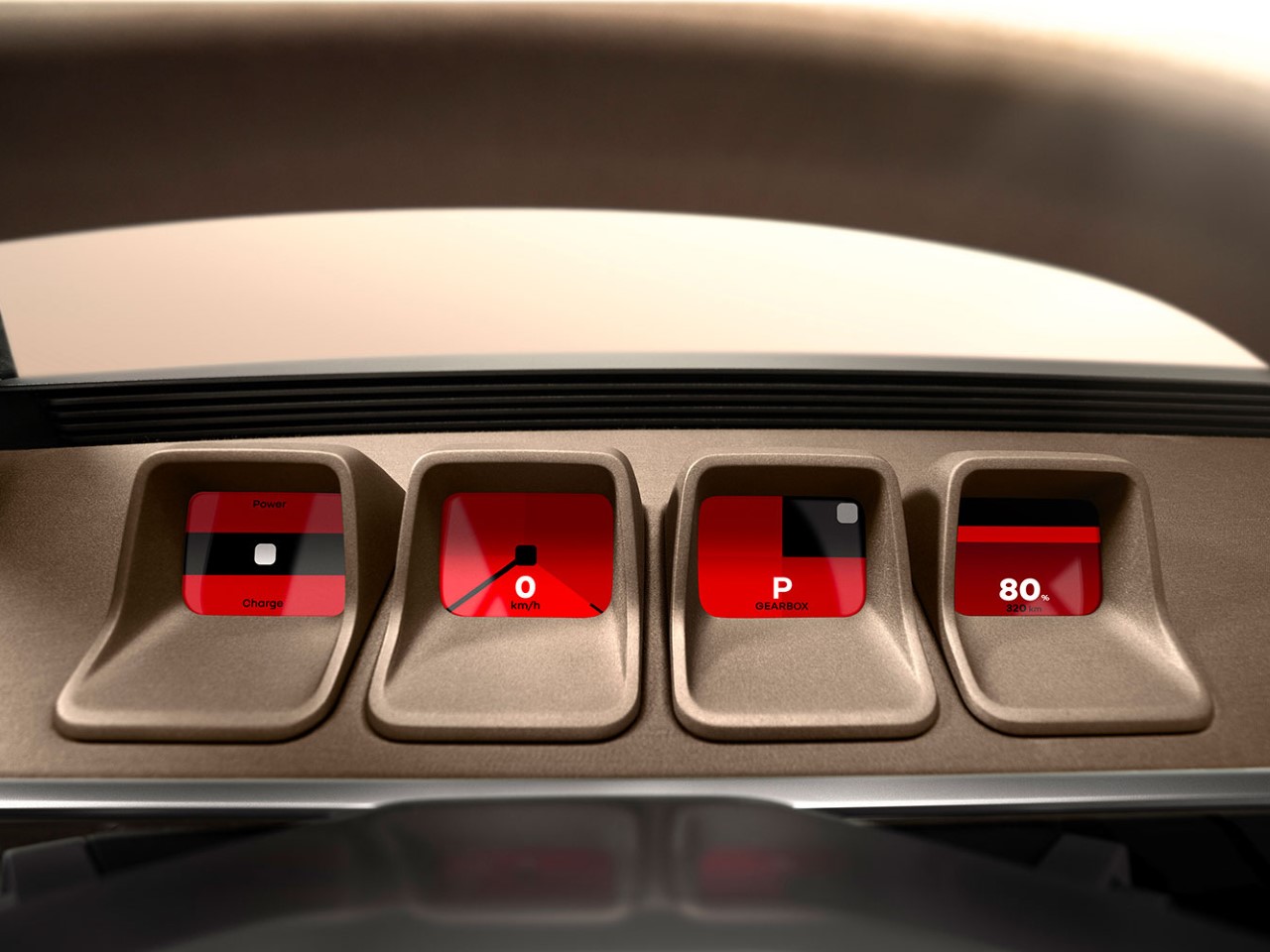
Renault releases Limited-Edition R17 Restomod with a Minimalist Cyberpunk Makeover

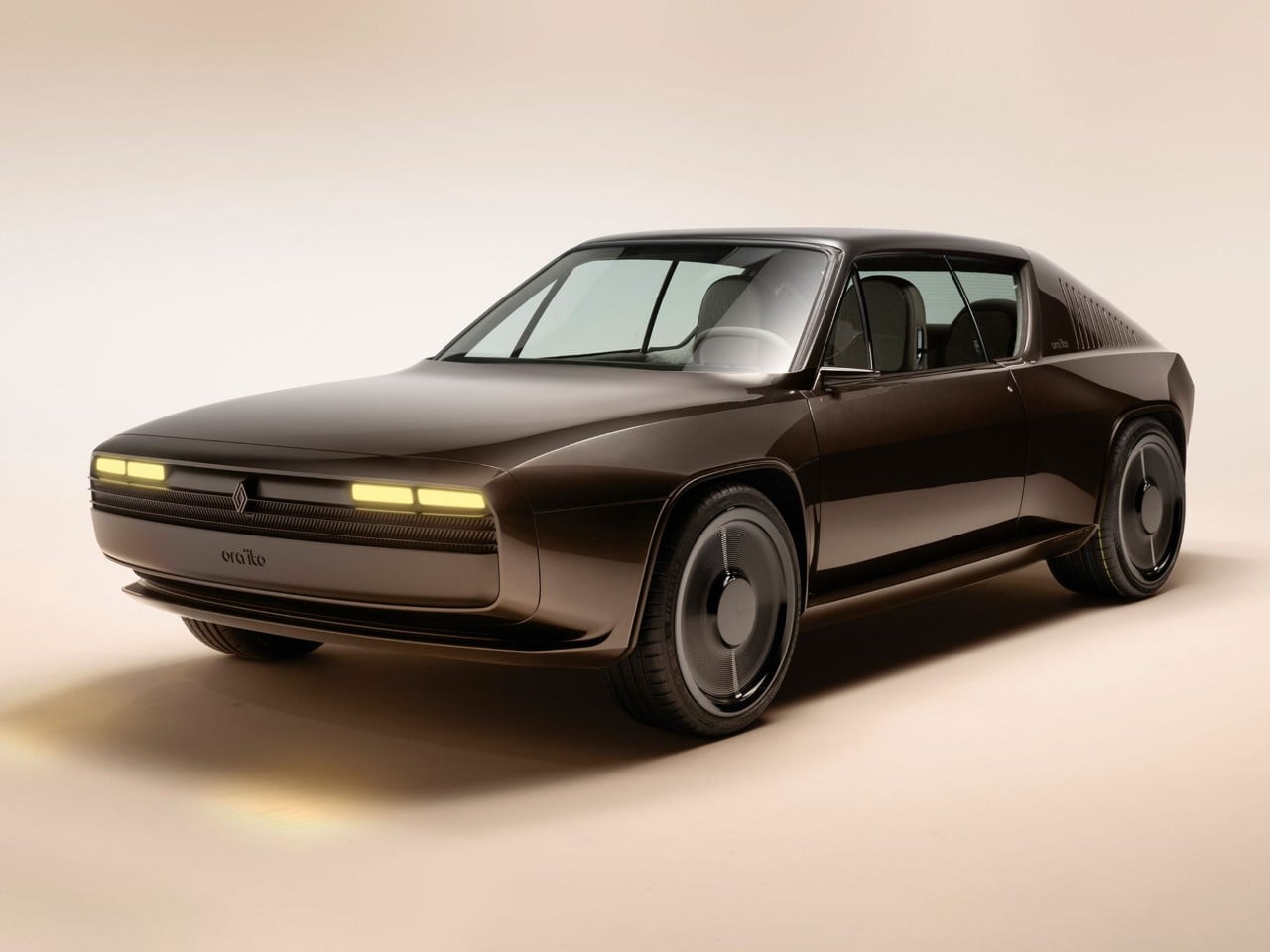
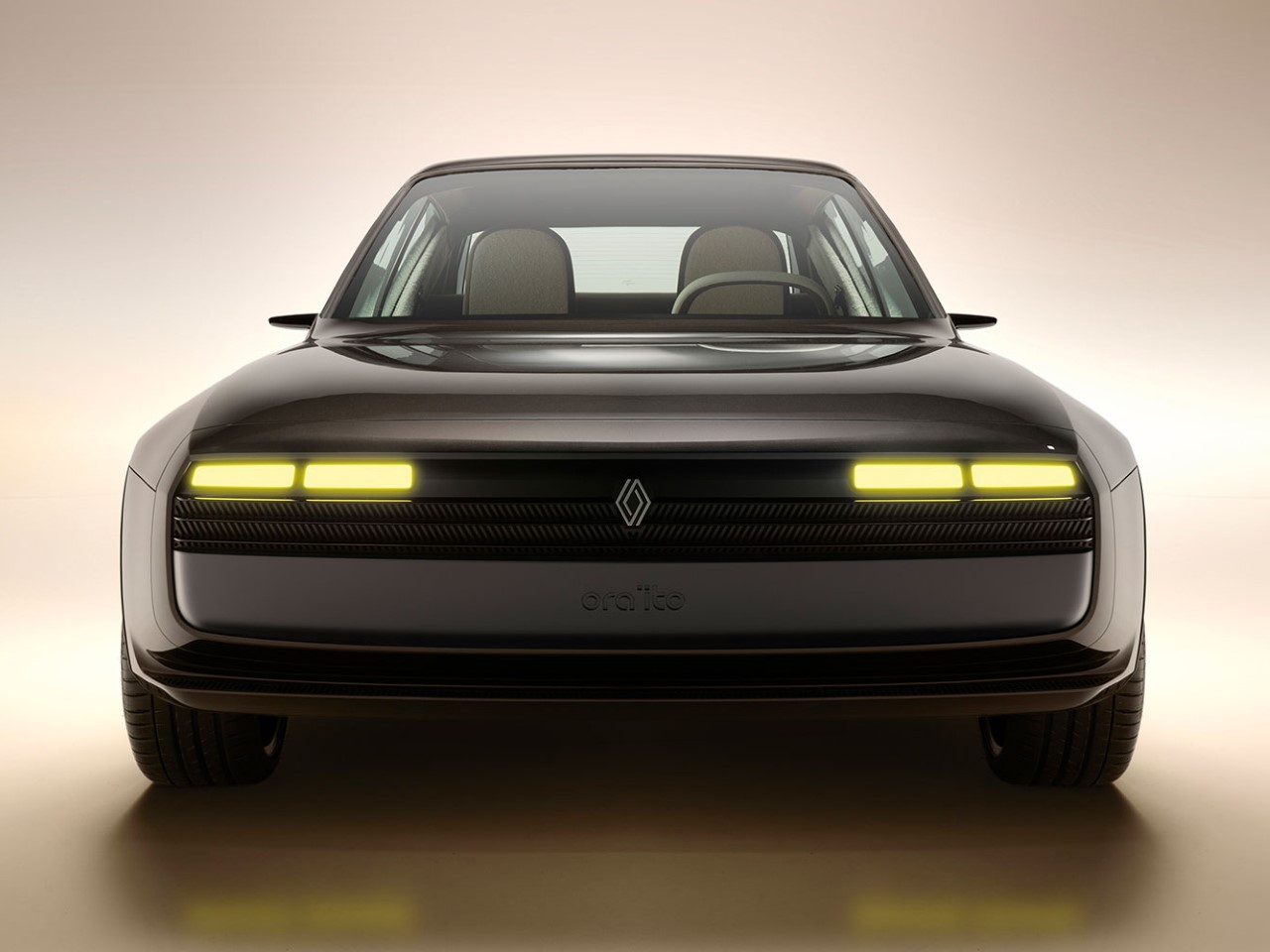
The Renault R17 Restomod brings a fresh take on a classic piece of French automotive history with its modernized design that fits well into contemporary urban settings. The original R17, first produced in the 1970s, was known for its angular design and sporty appeal. Now, Renault has partnered with French designer Ora ïto to reimagine this iconic coupe, blending retro style with modern technology and electrification. The result is a striking restomod that respects the past while fully embracing the future in a tasteful way that more and more EV companies are doing, like Hyundai with its Ioniq for example.

Designer: Renault X Ora Ïto

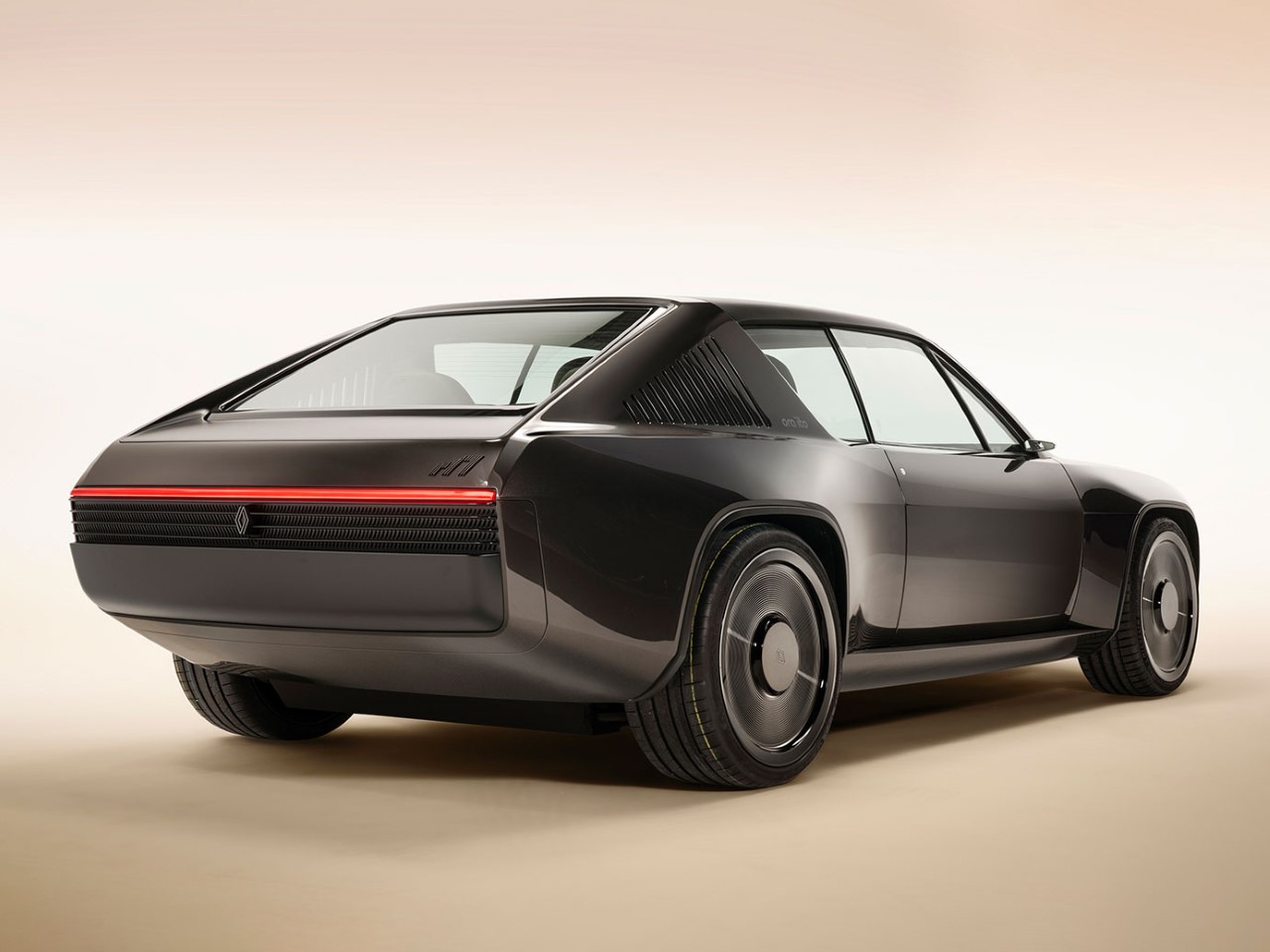
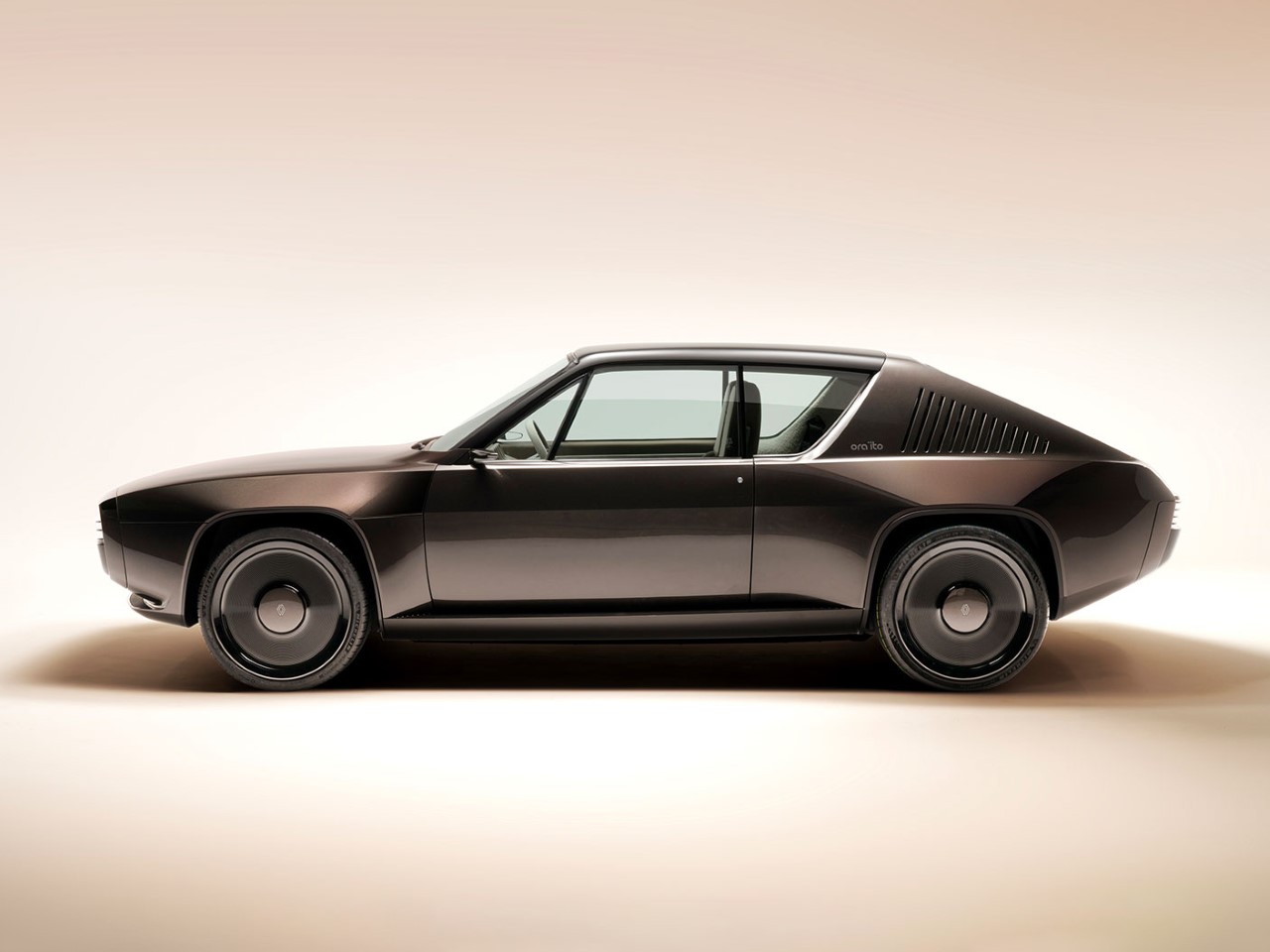
The original Renault R17 stood out with its wedge-shaped design, wide stance, and a distinctively sharp rear end—details that made it a fan favorite. The restomod keeps these iconic elements intact but gives them a modern twist. The design update focuses on cleaner lines, sharper details, and a more aggressive stance, making the R17 Restomod look like a natural evolution of the original.

Up front, the car sports sleek LED headlights that fit perfectly into today’s design landscape. These lights, combined with an updated front grille, offer a modern look while still paying homage to the car’s 1970s aesthetic. The restomod sits on contemporary wheels that reinterpret the old-school alloys, giving the car an updated yet still familiar appearance.

Ora ïto, a well-known French designer celebrated for his minimalist approach, brings a sleek and refined touch to this project. His philosophy of “simplexity”—the blending of simplicity and complexity—is evident throughout the R17 Restomod. He’s managed to pare back some of the busier details of the original car, resulting in a design that feels polished without losing its retro charm.

The exterior’s crisp lines give the car a futuristic feel, while touches like the classic coupe silhouette and the iconic rear louvres remind you that this car is deeply rooted in history. The restomod balances both vintage and modern elements, creating a cohesive design that resonates with both old-school Renault fans and new buyers looking for a unique ride.

Underneath the R17 Restomod’s sharp new exterior lies one of the most significant changes—a fully electric powertrain. This transformation turns the classic Renault coupe into an eco-friendly vehicle that’s built for the future. The shift to electric isn’t just a nod to sustainability; it completely alters the driving experience, offering smooth, instant torque and a more refined, quiet ride.

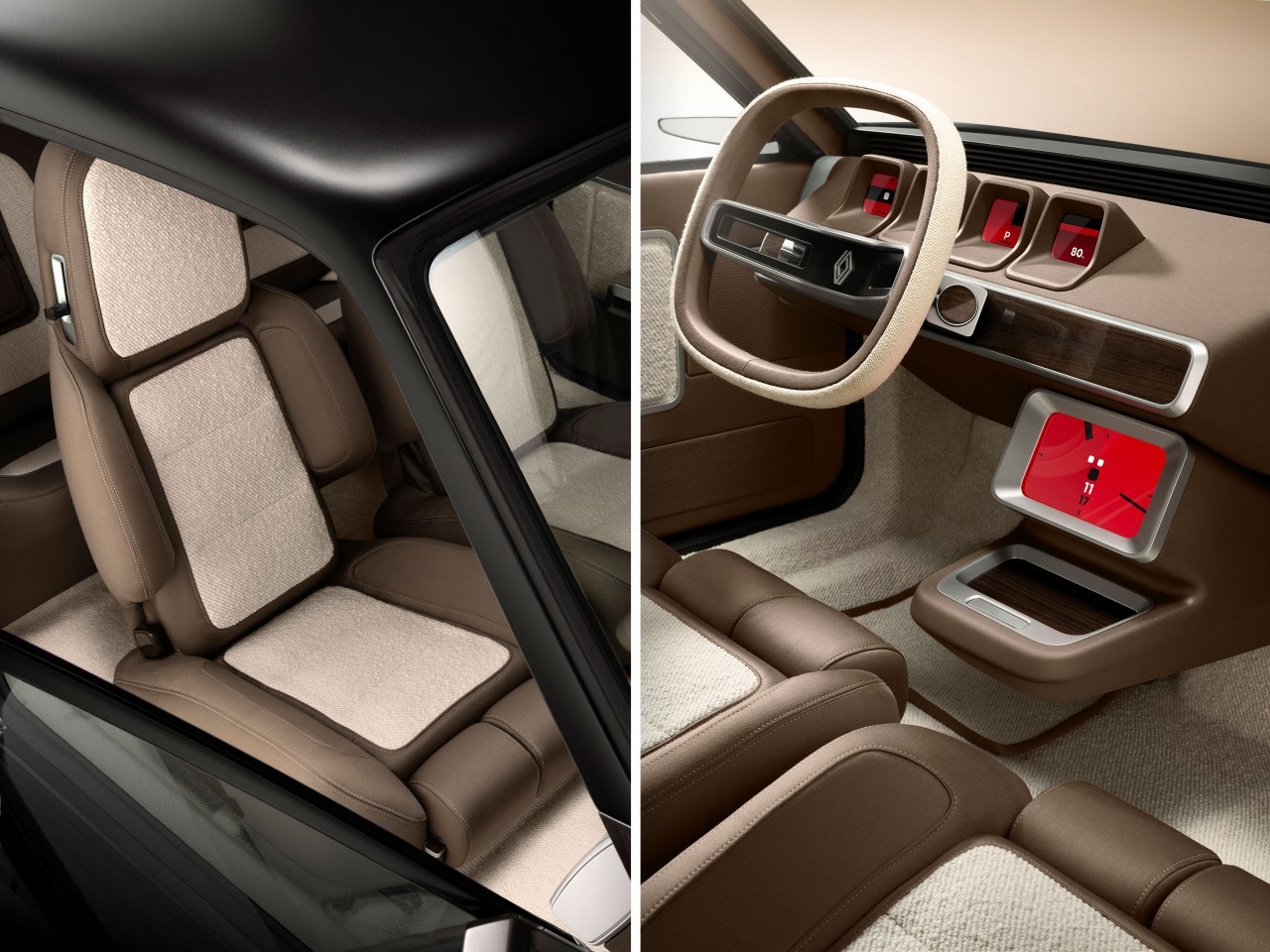
Inside, the changes are even more noticeable. The cluttered dashboard of the original is replaced by a minimalist design, where leather and brushed metal take center stage. A digital instrument cluster and a modern infotainment system bring the R17 squarely into the 21st century, but the interior still feels like a proper nod to its roots.

Renault has confirmed that the R17 Restomod will be available in limited quantities, making it a rare find for collectors and automotive enthusiasts alike. These kinds of limited-run projects often attract significant attention, especially when they bridge iconic history with cutting-edge design and technology. The price remains under wraps, but it’s not like any of us will get our hands on this limited-edition piece of art anyway…

The post Renault releases Limited-Edition R17 Restomod with a Minimalist Cyberpunk Makeover first appeared on Yanko Design.
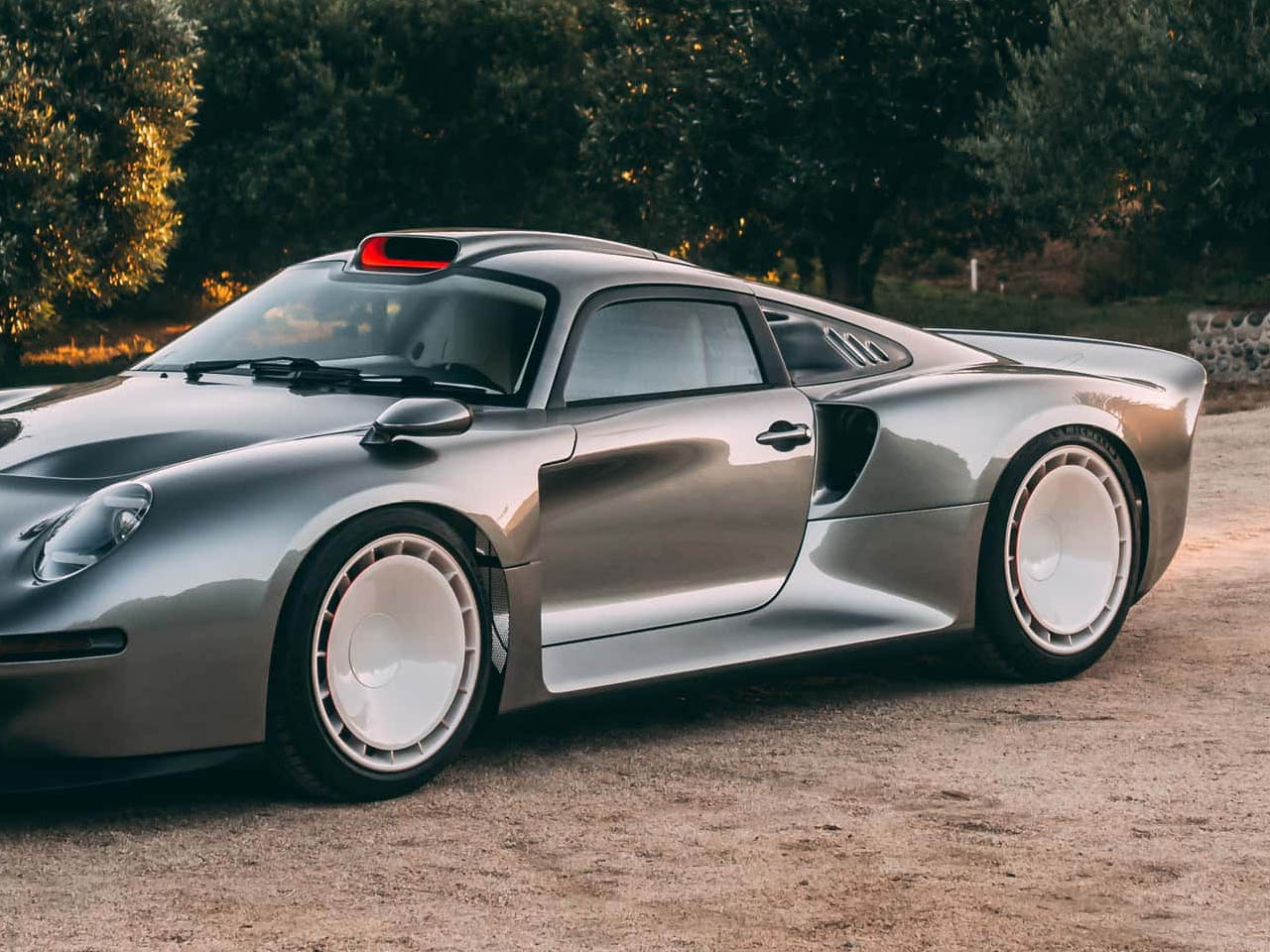
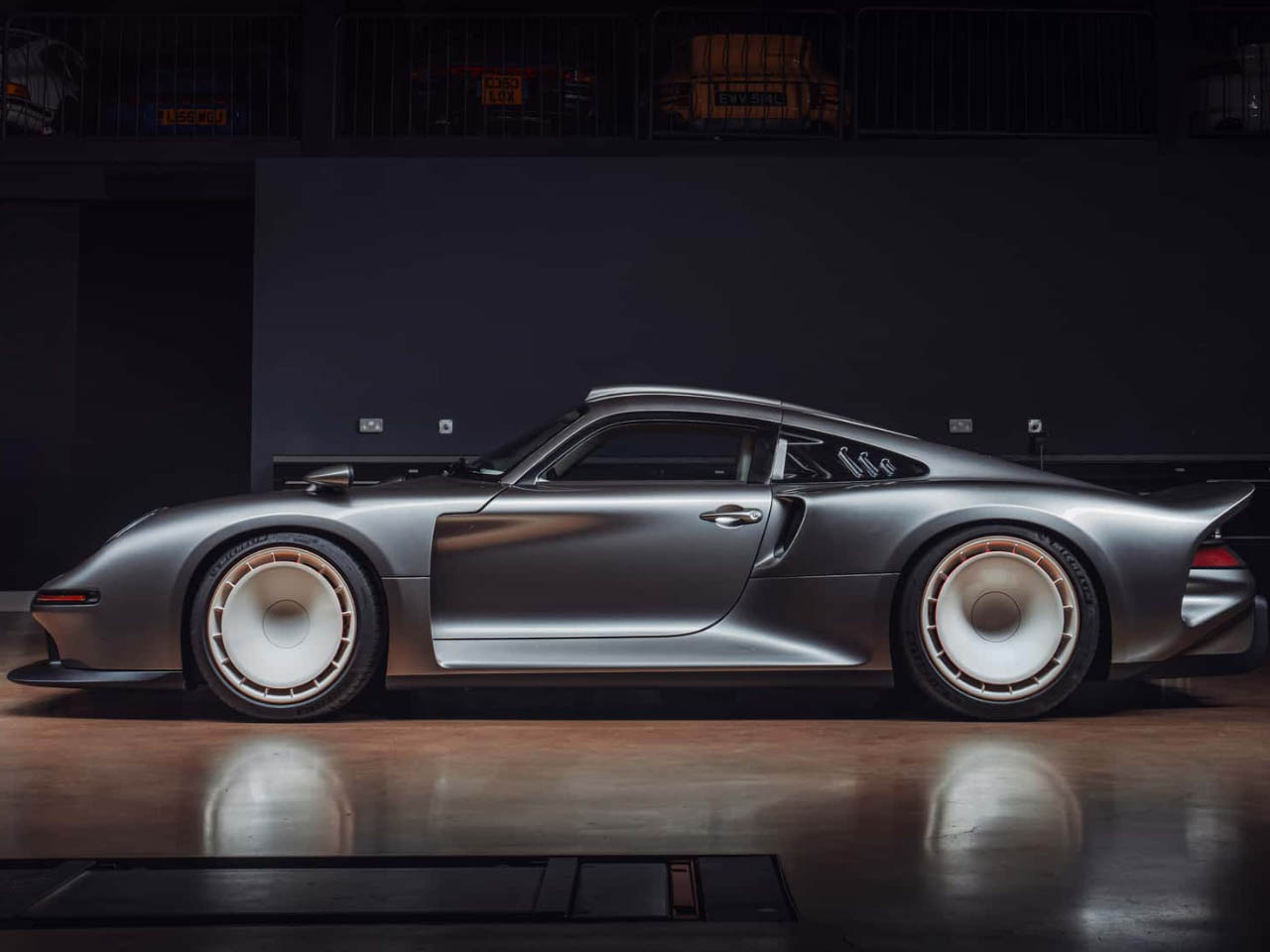
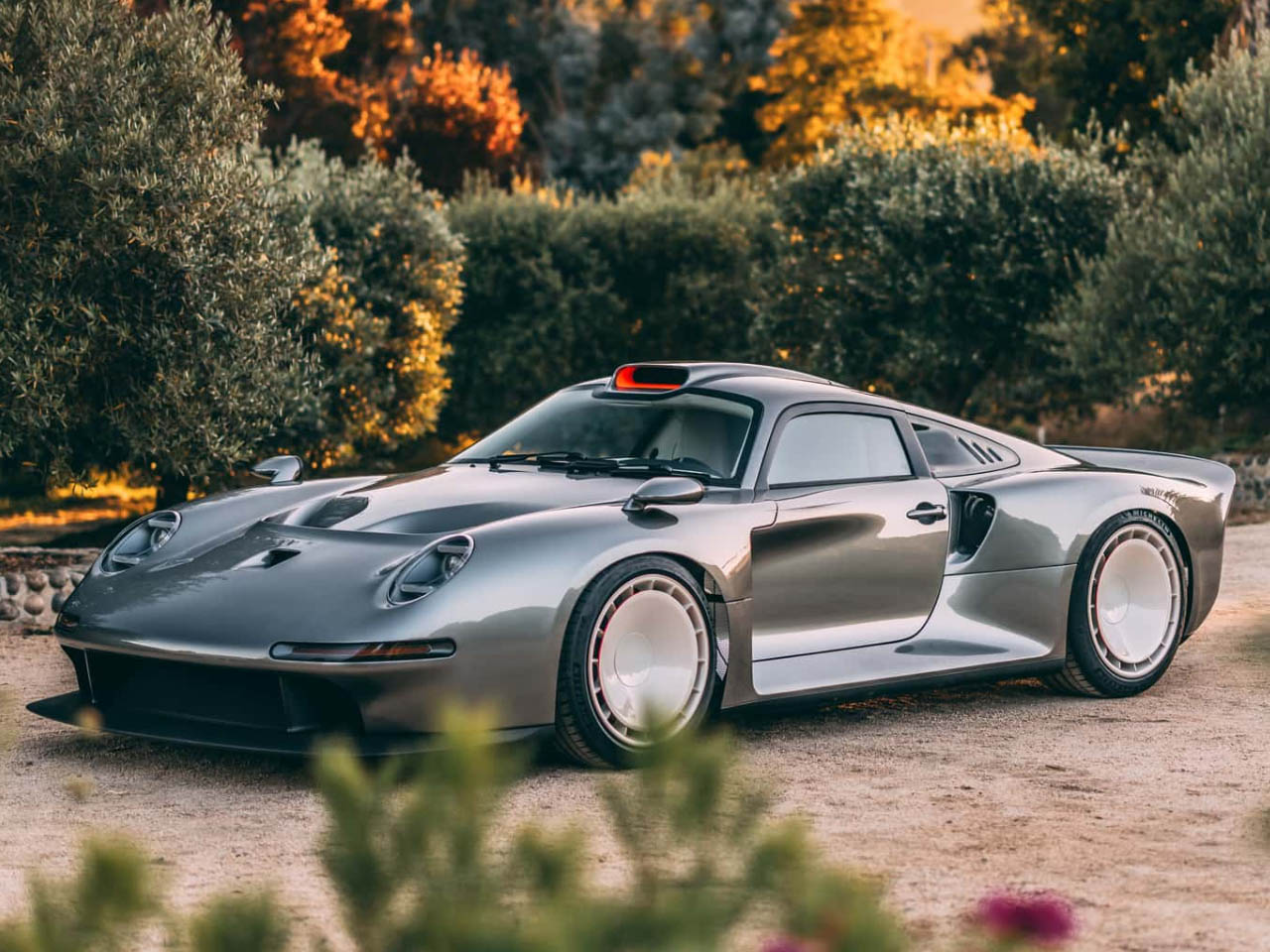
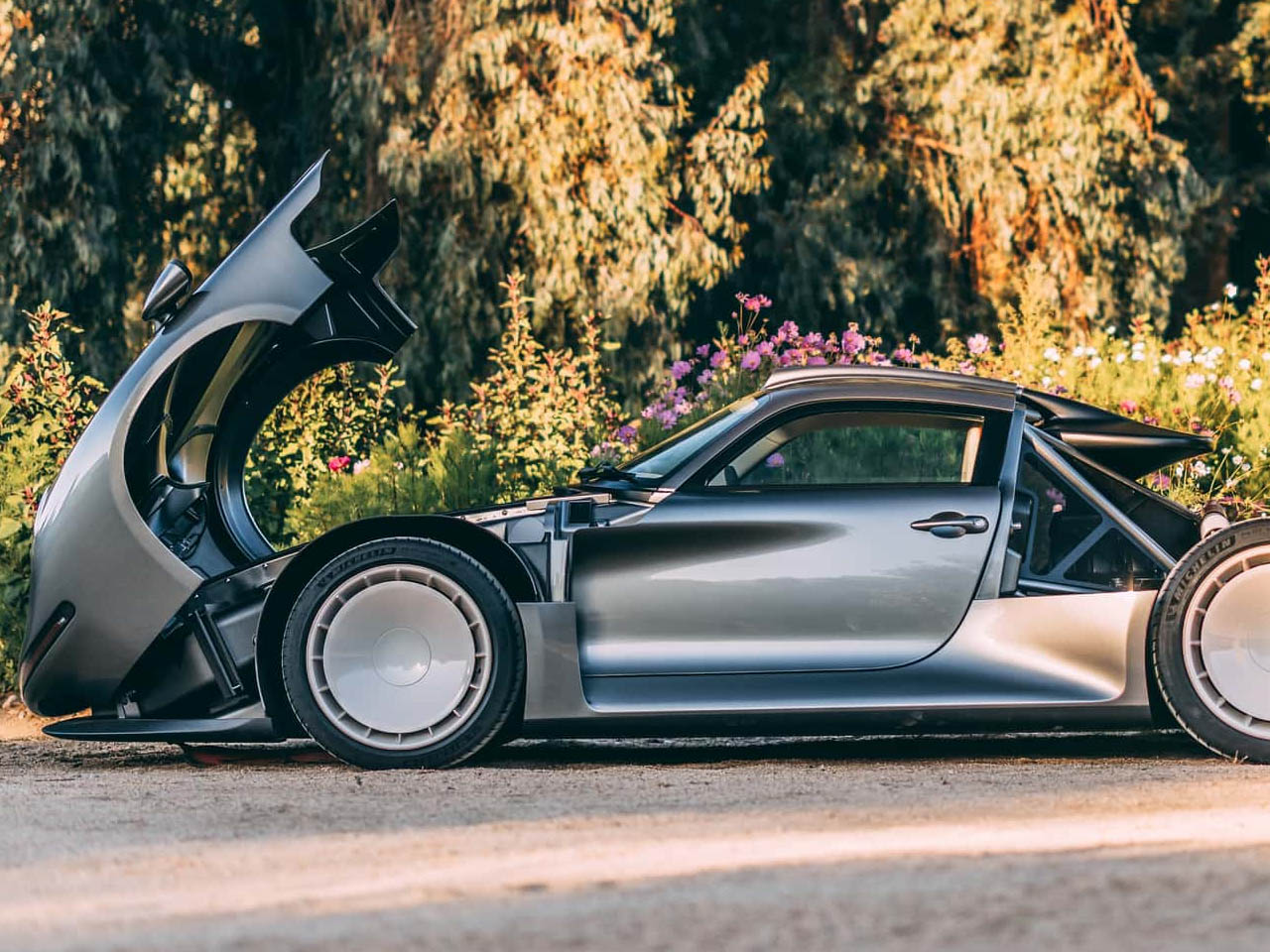
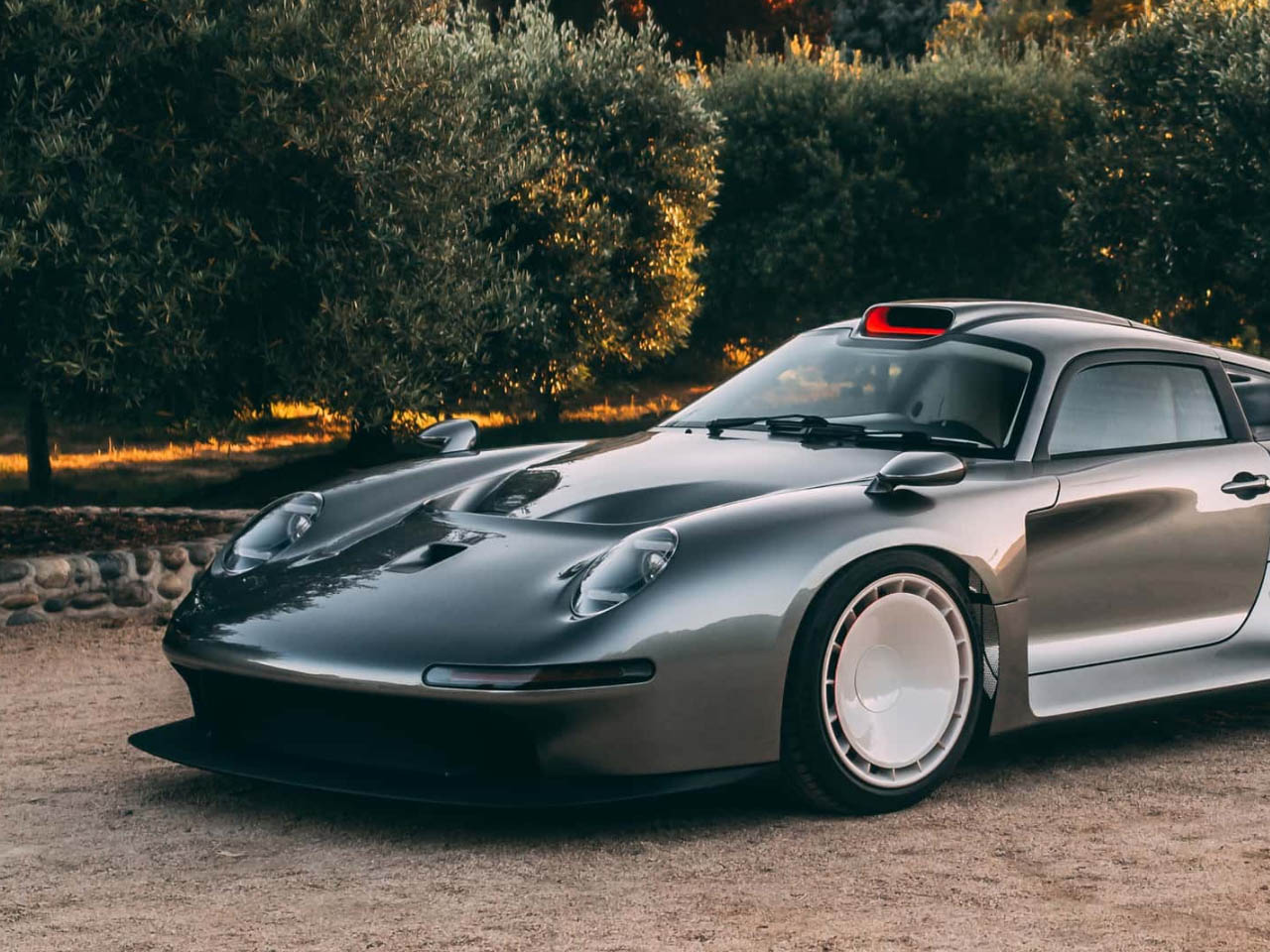
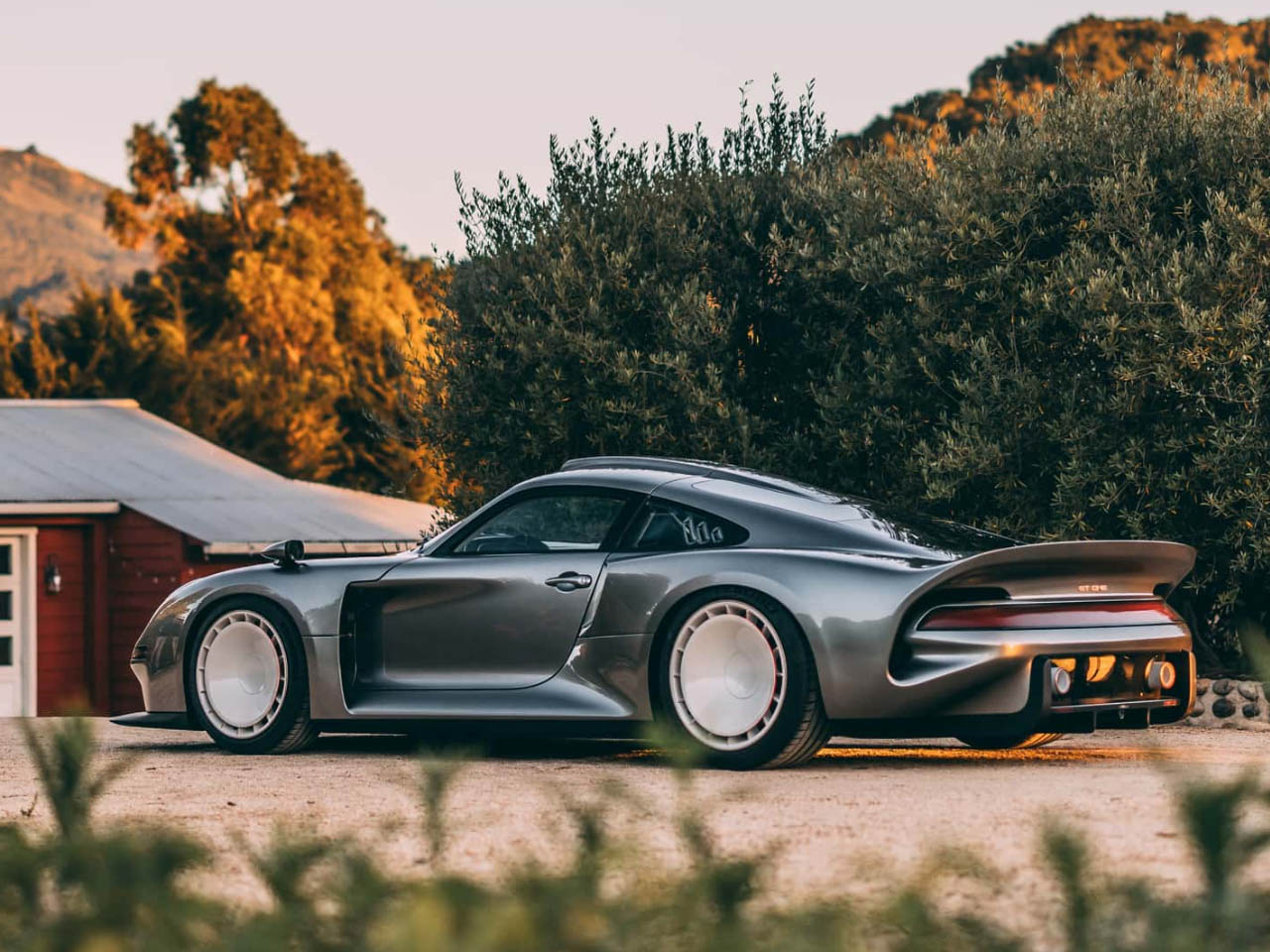
Tuthill Porsche GT ONE restomod is a perfect fusion of past racing history and modern street culture

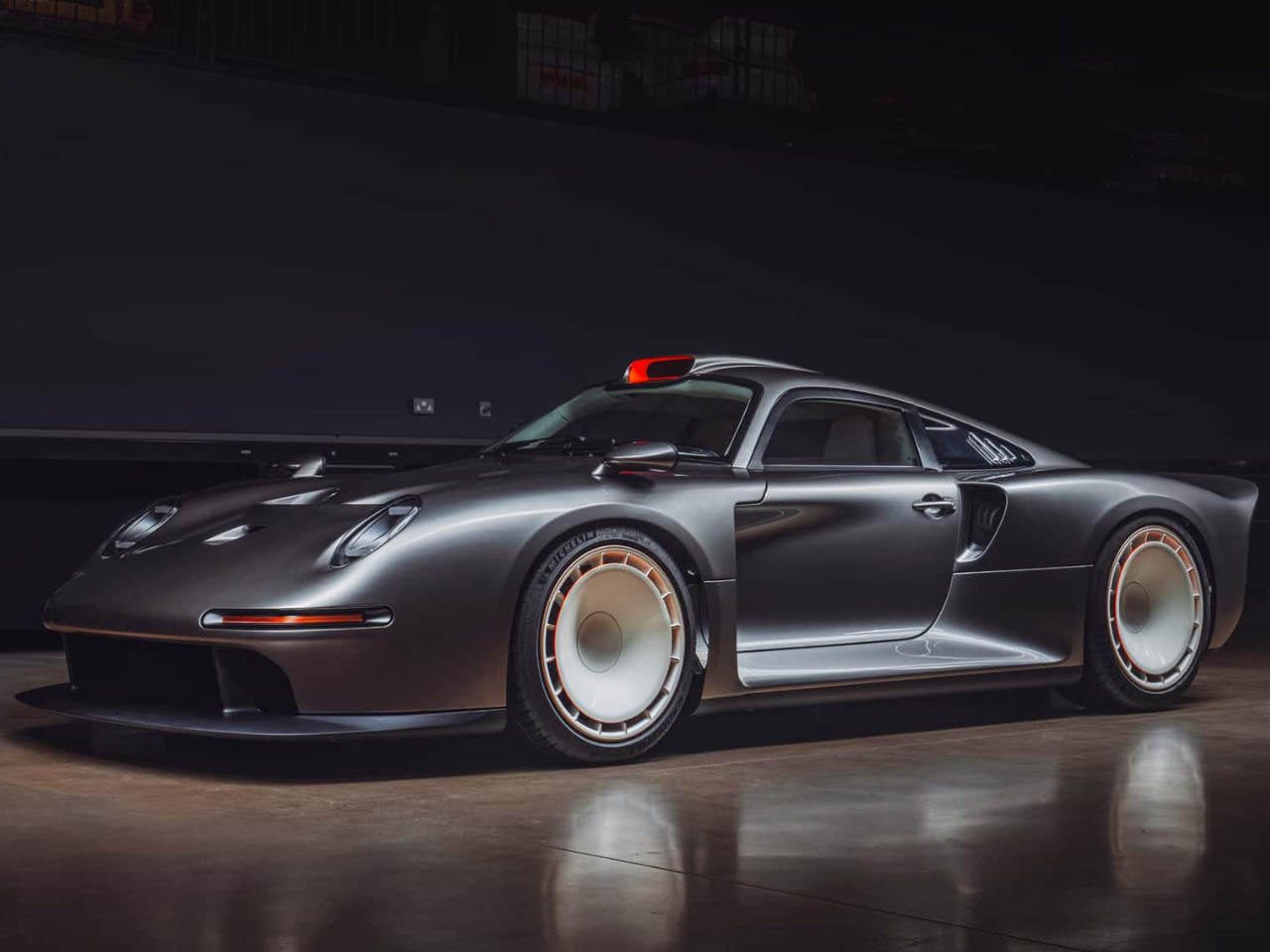
Tuthill Porsche, a UK-based renowned rally and restoration shop is setting the pace in the restomod industry with the recent collaboration with Singer. They’ve recently turned eyeballs at the 2024 Monterey Car Week with the Porsche GT ONE. The restomod inspired by the famous 1990s 911 GT1 race car that featured in the BPR Global GT Series. This later took shape as the road-legal 911 GT1 Straßenversion which was limited to 21 units for the passionate buyers.

Well known for modifying Porsche 911’s, the company wanted to commemorate the homologation special Straßenversion with its version that we see here. The performance car is fully optimized for road use, unlike the Straßenversion. As per Richard Tuthill, CEO, Tuthill Porsche, “We have taken the best bits but focused on producing a wonderful road car. The inspiration from all that we have done in the past and have been inspired by what others have done before us and continue to do.”
Designer: Tuthill Porsche and Florian Flatau

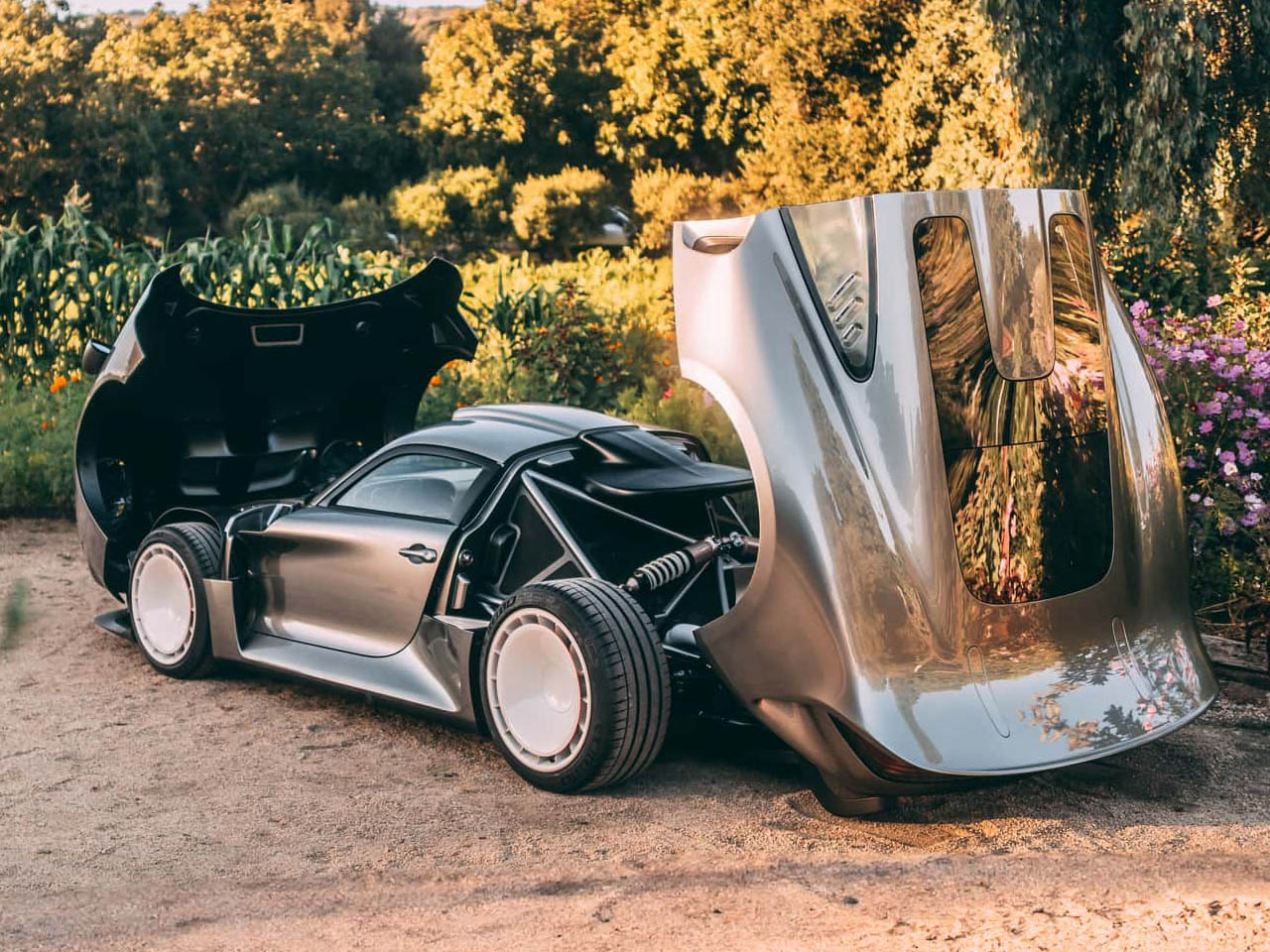
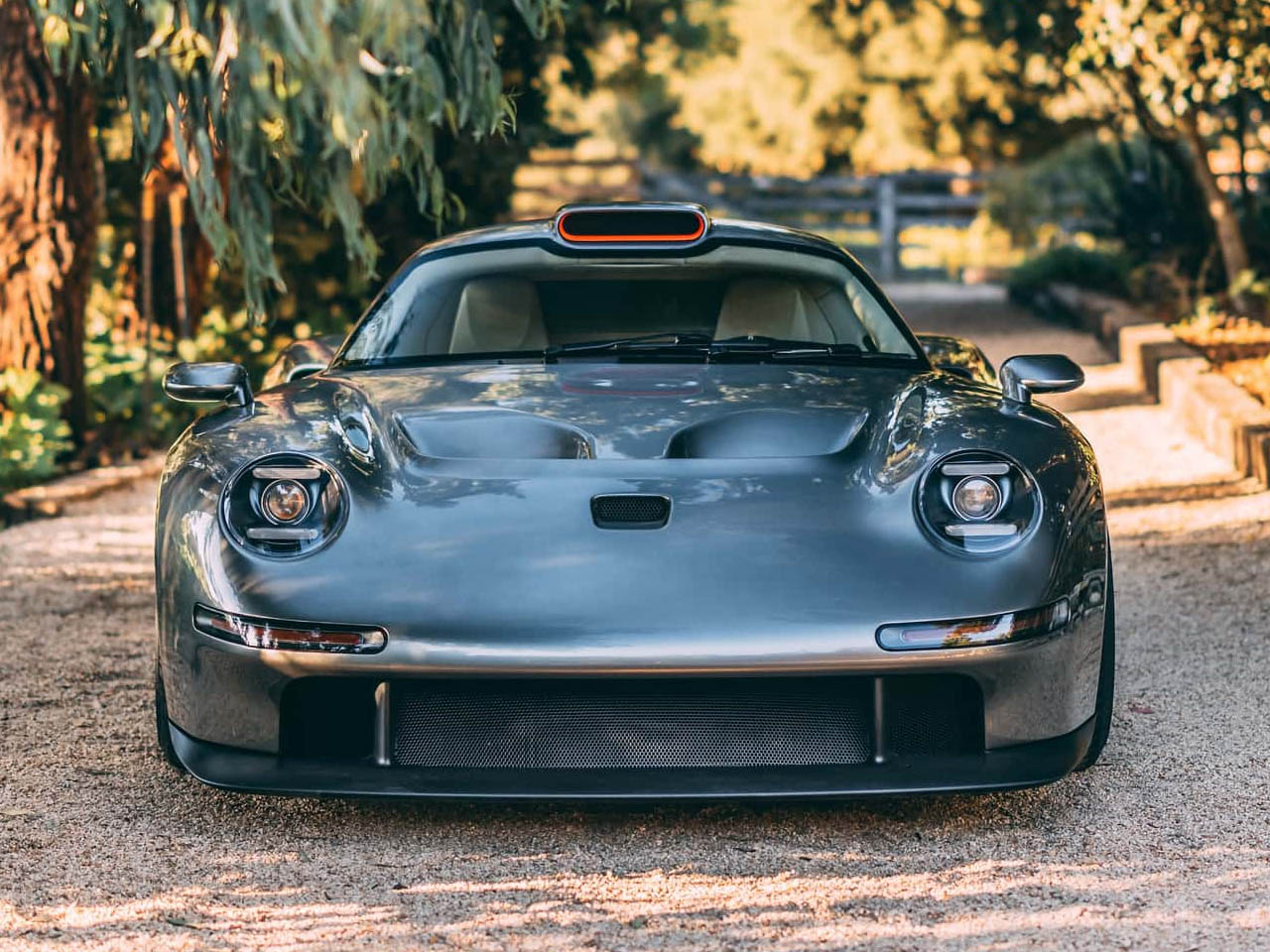
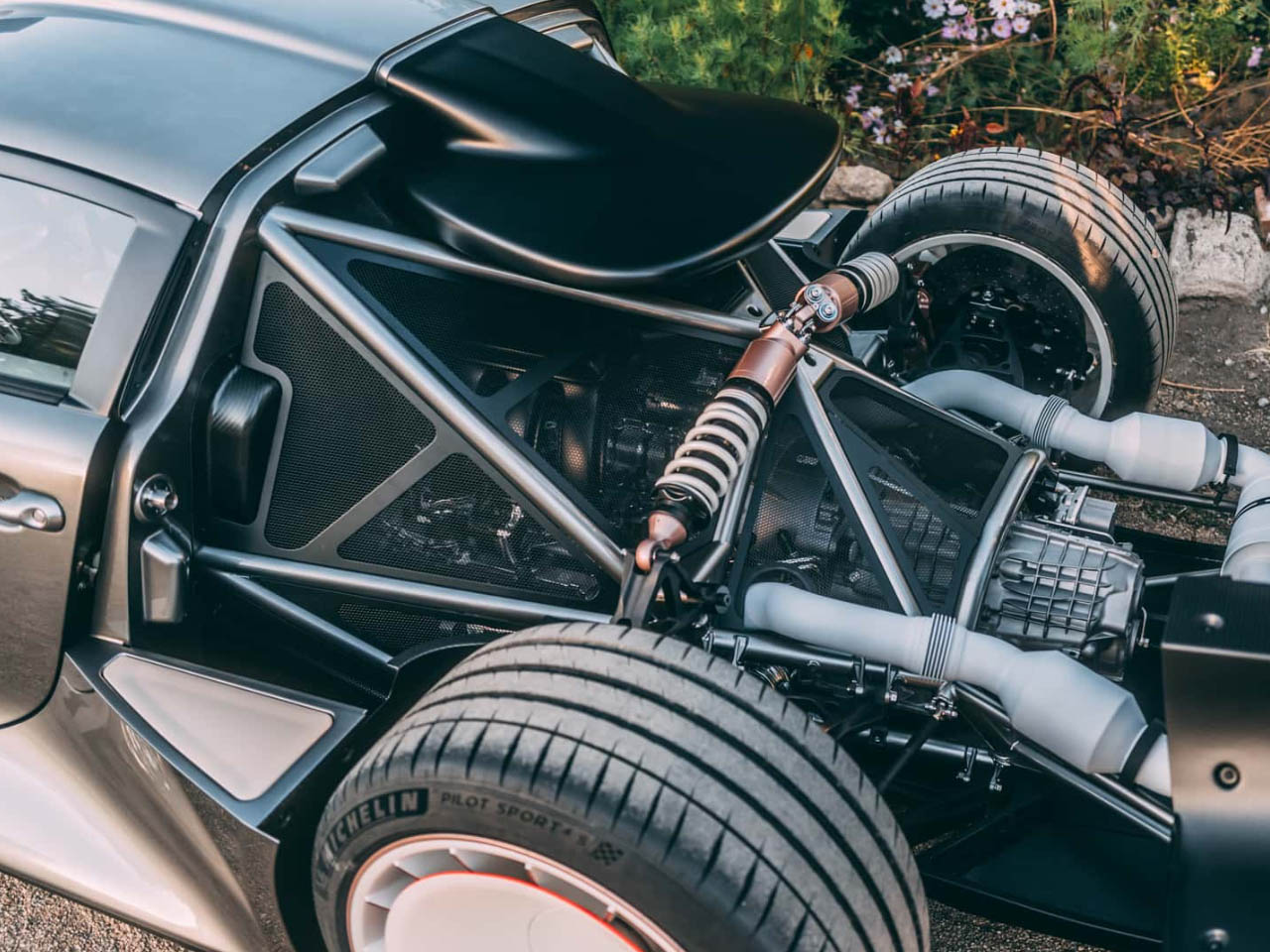
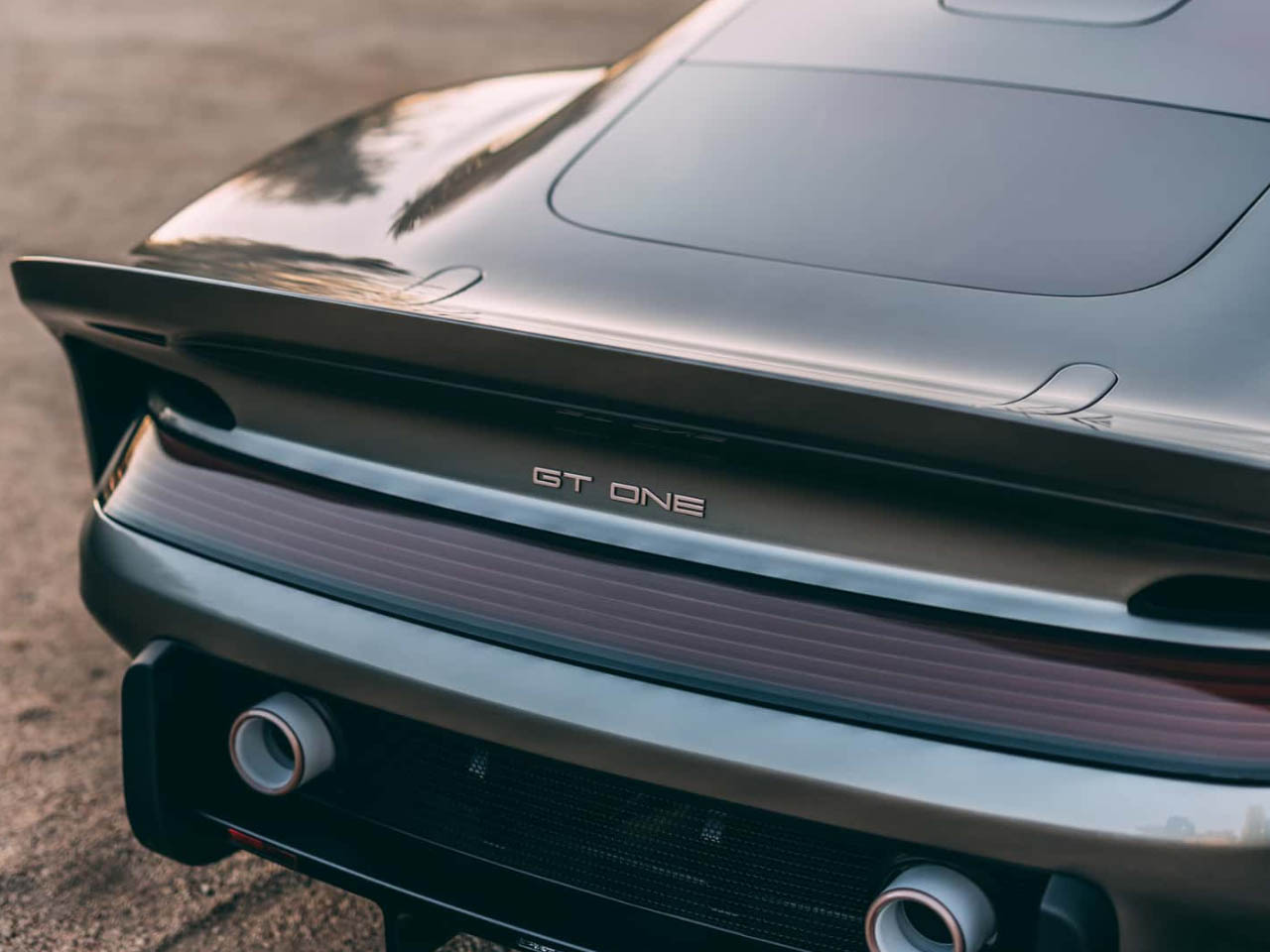
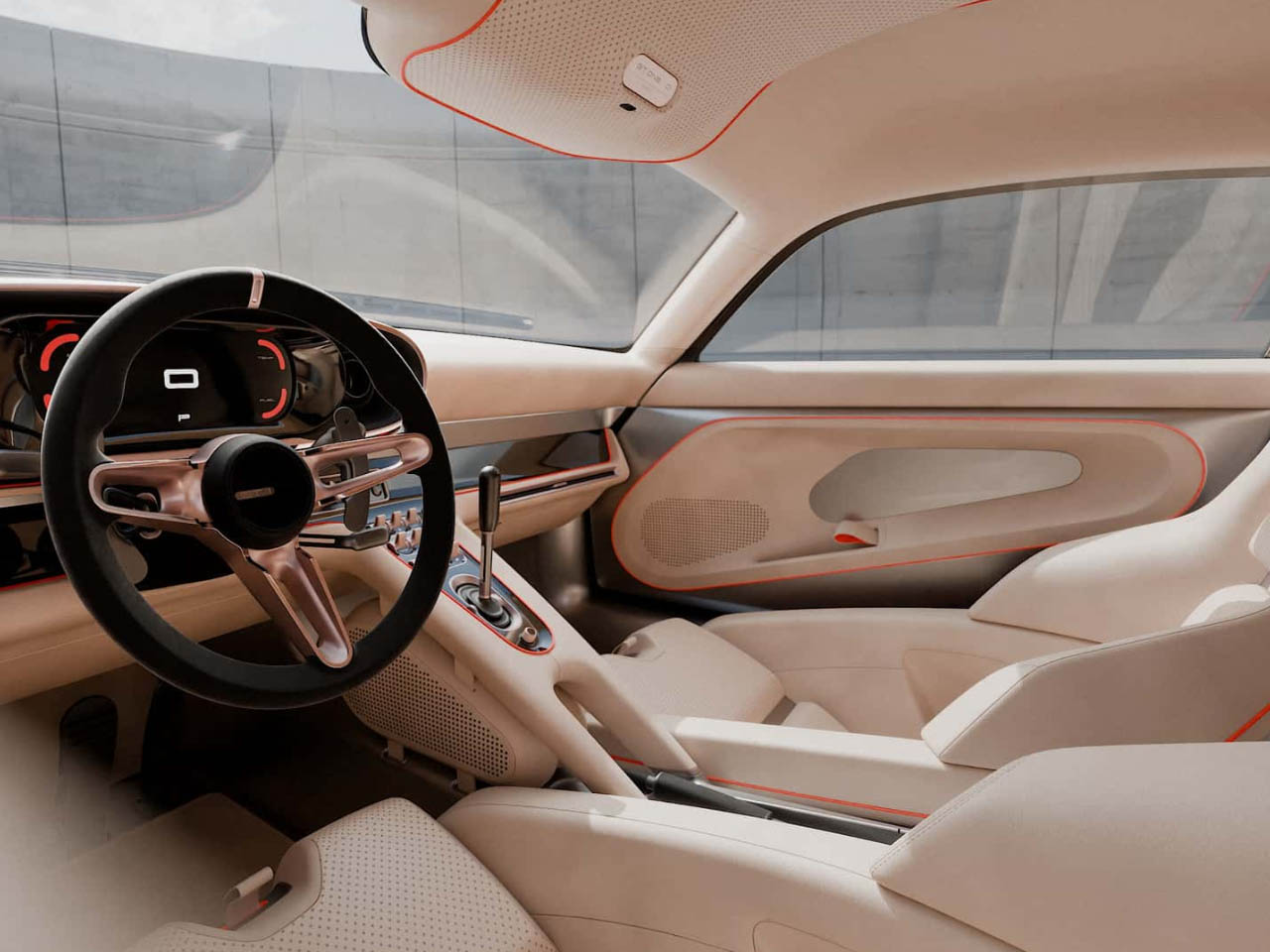
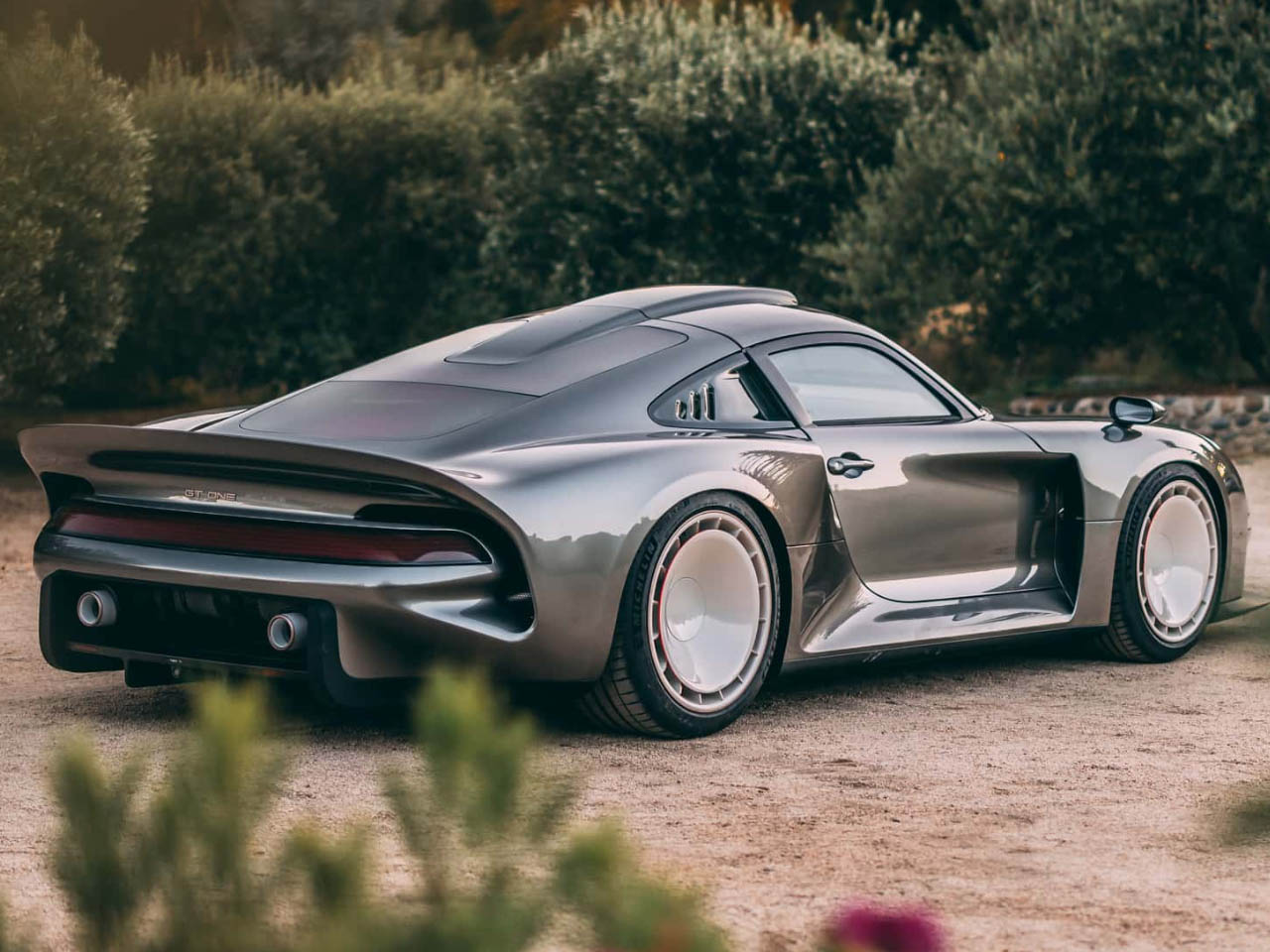
Just like the 911 GT1 Straßenversion, the GT One has the striking styling of the 993-generation 911. The company commissioned designer Florian Flatau for this amazing race car tailored for the streets. The ride’s body is made out of carbon fiber that brings the total weight down to 2,645 pounds. The limited edition car will have a 4.0L flat-six engine under the hood in two configurations. One will be a 493 hp naturally aspired version and the other a forced induction version churning out 593 hp. The gearbox will also be offered in a choice of 7-speed dual-clutch transmission or a manual gearbox.

The impressive specifications don’t end there, as the GT ONE boasts a double wishbone suspension, bespoke calipers and carbon ceramic brakes. For those who want to take advantage of every ounce of the engine power, the car has advanced aerodynamic tuning courtesy of the CFD analysis. Tuthill is also considering an add-on aero package for enthusiasts who want to test it out on the freeway or the race tracks.

According to Richard, this masterpiece takes around 3,500 hours to finish which in itself is a testament to the effort put into the making. Only 22 production examples of the GT ONE will be made and there’s no word on the pricing yet.  That said, the makers believe the car is a piece of art and a machine to be enjoyed while driving.

The post Tuthill Porsche GT ONE restomod is a perfect fusion of past racing history and modern street culture first appeared on Yanko Design.