The LG Rolling TV That Went Viral Is Now 32 Inches, 4K, and $1,299

TVs have stayed mostly where you put them. Whether wall-mounted or parked on a stand, they tend to define the room around them. Portable screens have existed on the margins, mostly small and underpowered, better suited for camping trips than everyday home use. The idea of a full-featured smart display that doesn’t need a power outlet and can move freely from room to room is still a fairly new proposal.

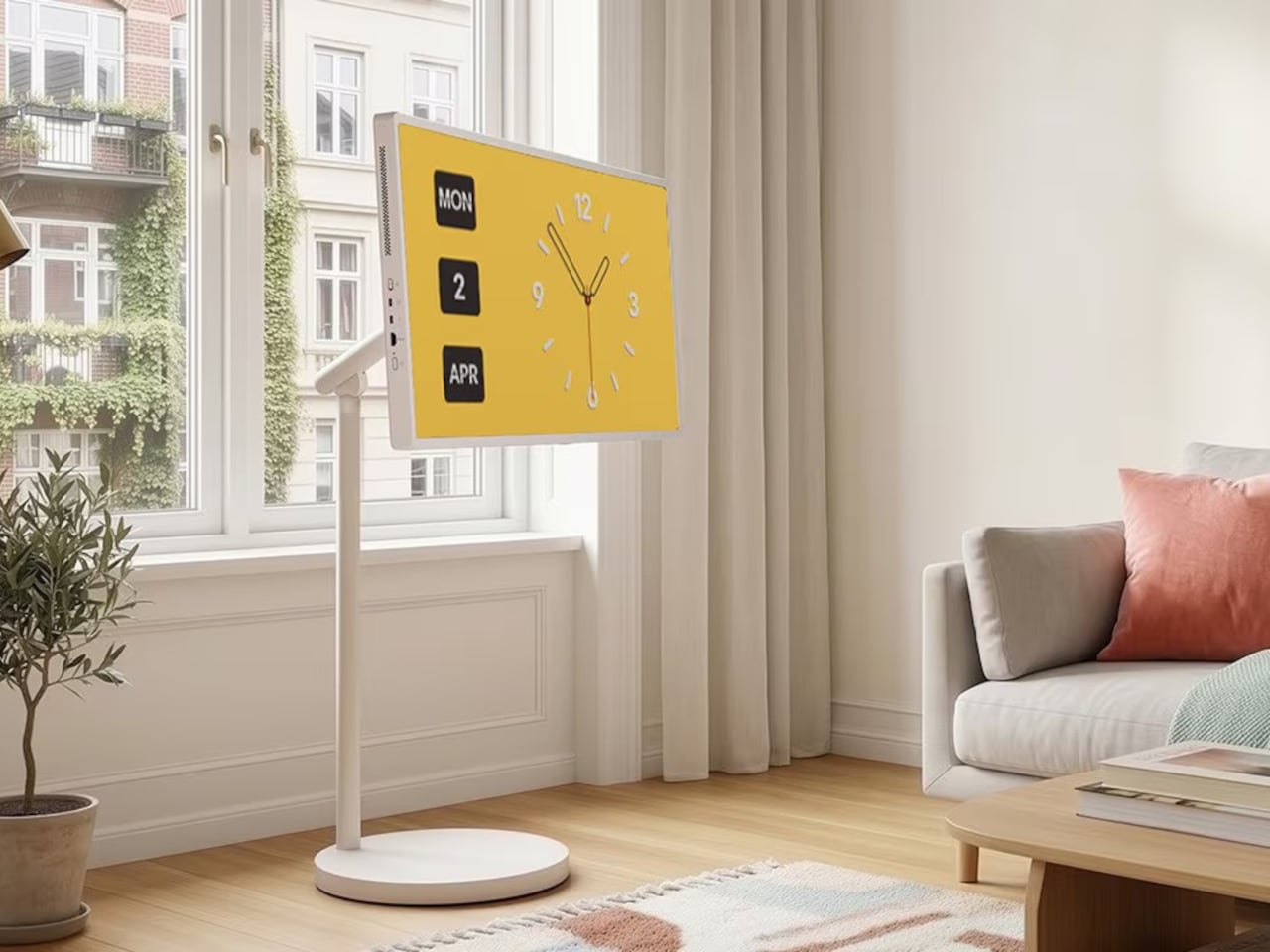
The LG StanbyME 2 Max pushes that concept further than its predecessors managed. It’s the largest StanbyME yet at 32 inches, now with 4K resolution, and a built-in battery lasting up to 4.5 hours without any outlets nearby. The screen area is roughly 40% larger than the 27-inch model it succeeds, which makes a genuine difference when you’re watching something rather than just glancing at a display.

Designer: LG
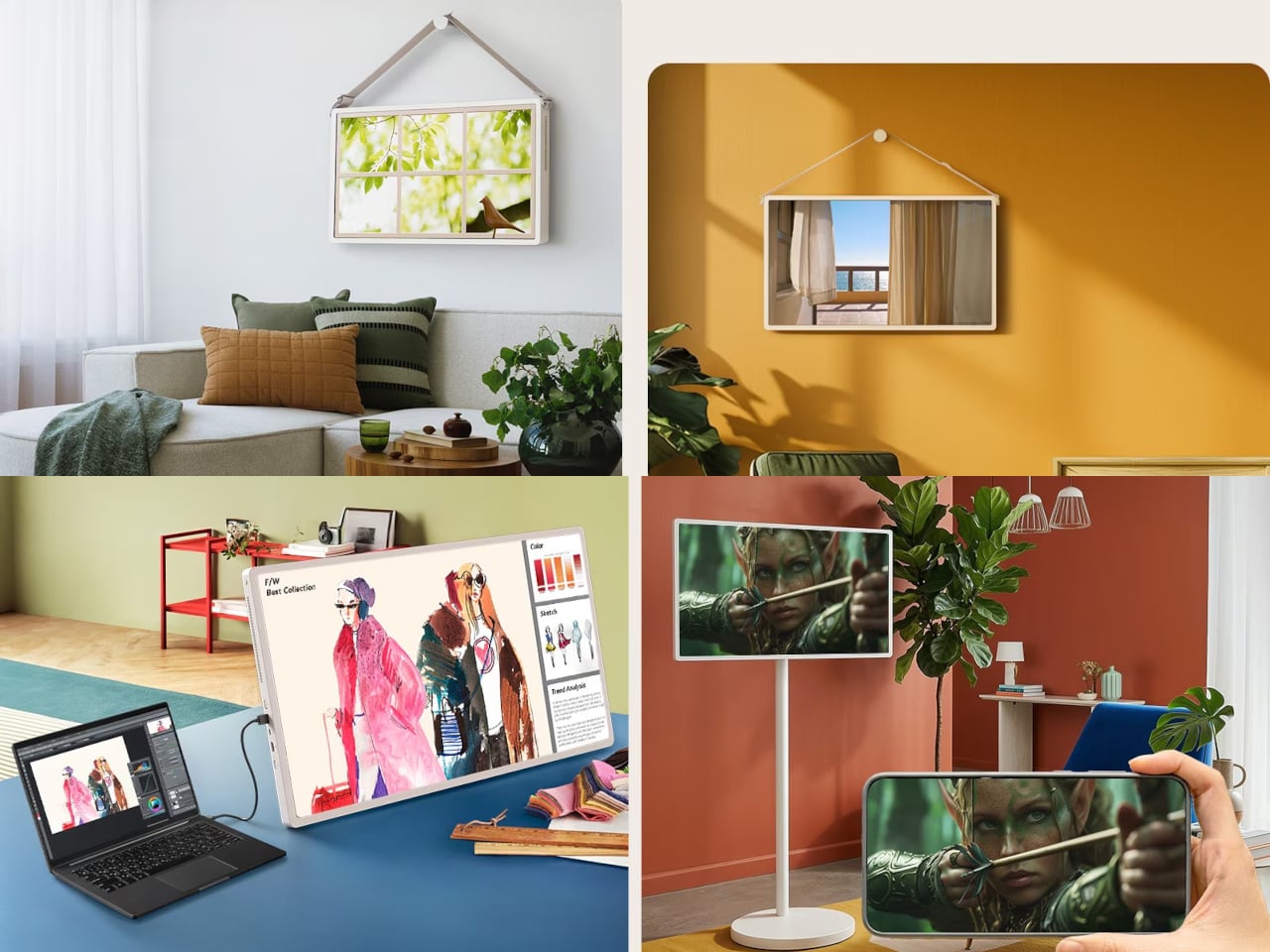
The battery is a 144Wh cell, a meaningful step up from earlier StanbyME versions that started with three hours of playback back in 2021. When the charge runs low, a USB-C port accepts input from an external power bank, so you don’t have to hunt for a wall outlet mid-movie. A magnetic clip-on mini remote stores against the side of the display, keeping the overall setup clean.
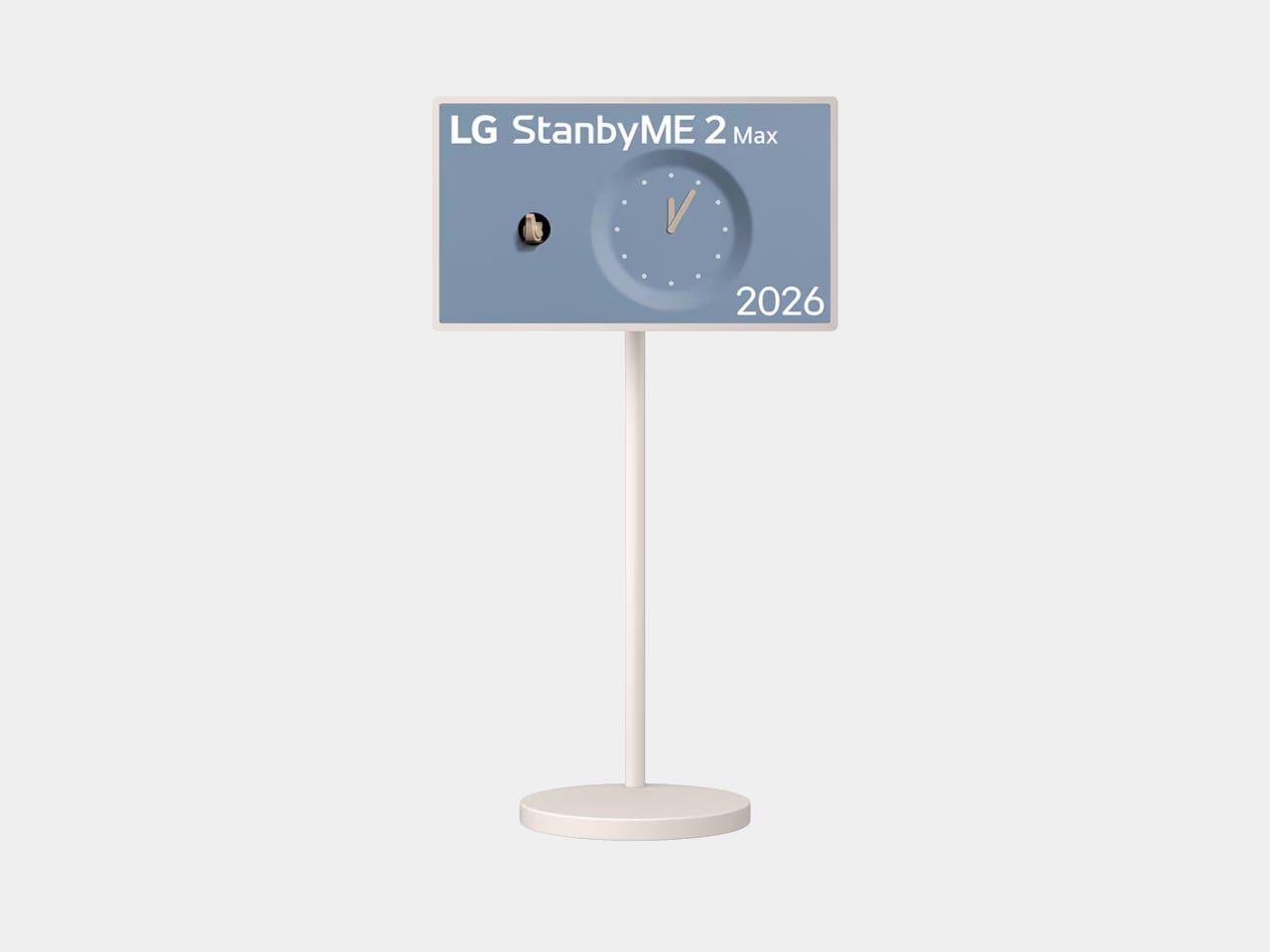
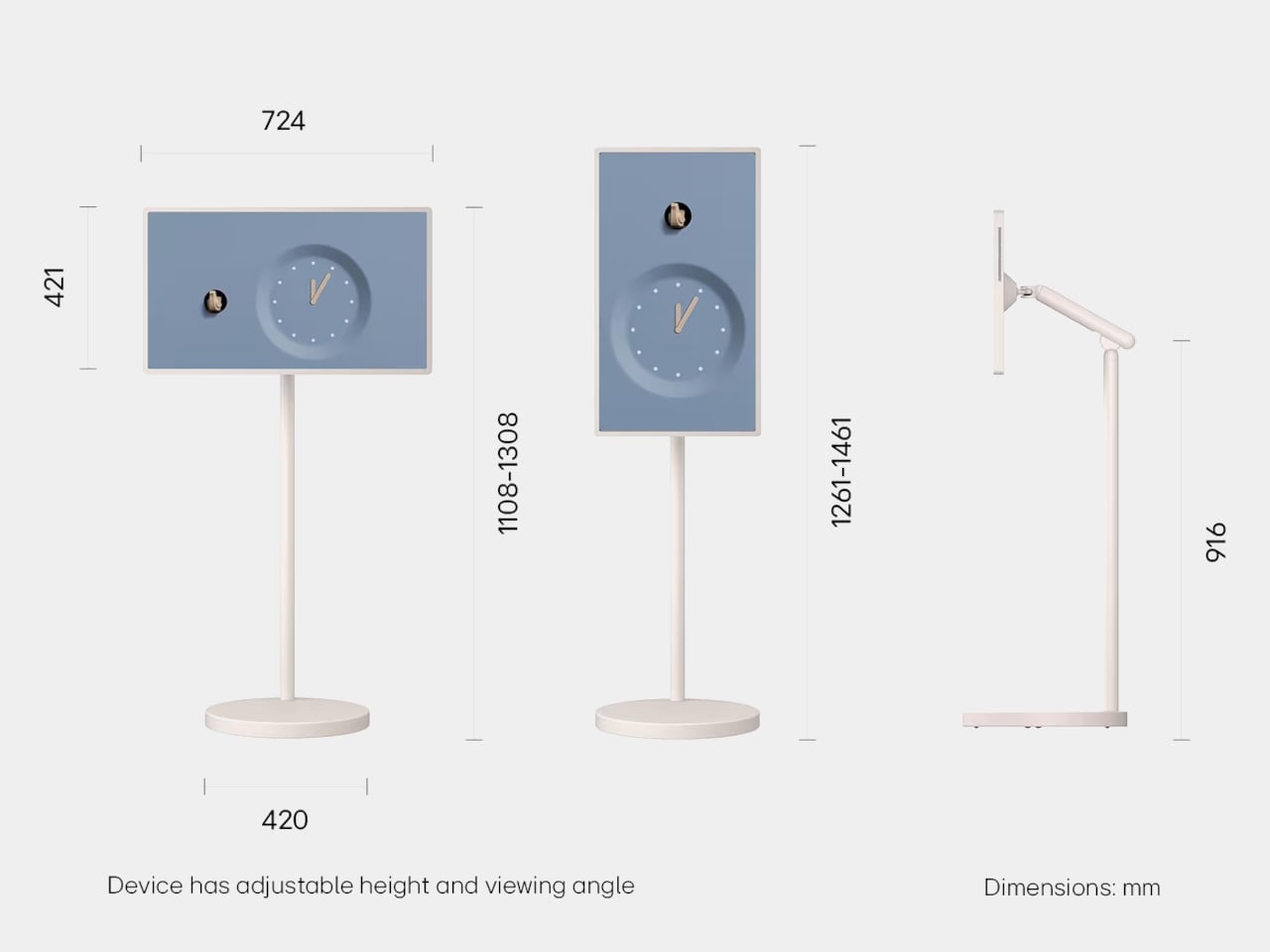
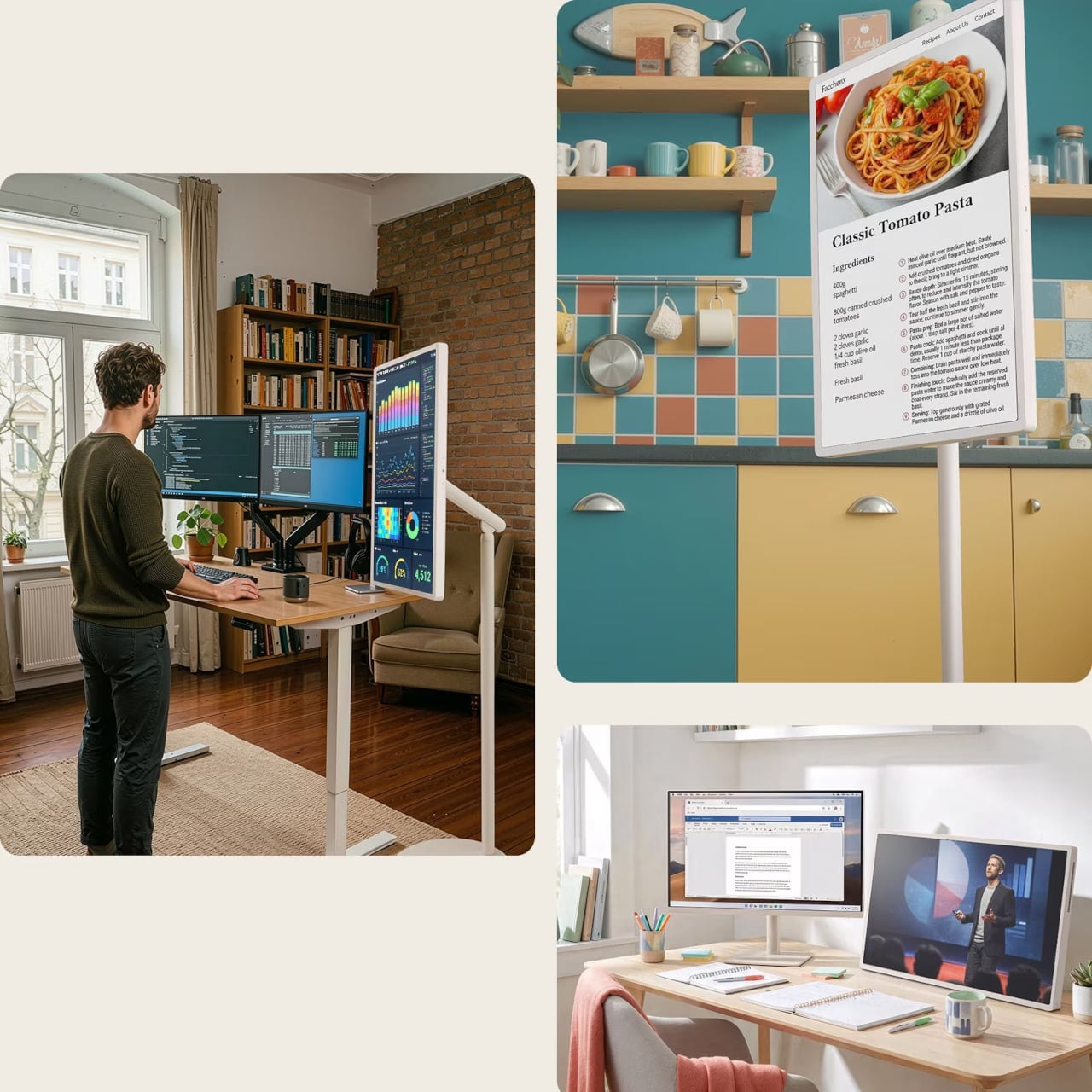
The display detaches from its wheeled floor stand with a single click and comes with a second tabletop stand for positioning on a desk or counter. Landscape and portrait orientations are both supported, so it adapts to what you’re watching or doing. The wheeled base lets you roll the setup from one room to another without lifting anything, which is what made earlier StanbyME models a social media phenomenon.
The jump to 4K UHD means the 32-inch panel renders at 3,840 x 2,160 pixels, which holds up well at the close-up distances a screen of this kind naturally invites. Dolby Vision handles HDR content, while side-firing speakers output Dolby Atmos supported by AI Sound Pro processing. The α8 AI Processor Gen3 handles picture enhancement automatically, detecting what’s on screen and adjusting the image accordingly.

Running on webOS, the StanbyME 2 Max behaves like LG’s current smart TV lineup, giving access to more than 400 free LG Channels alongside major streaming services. Mood Maker turns it into an ambient display when idle, while built-in touchscreen apps include board games and Let’s Draw for sketching. HDMI and USB ports cover external connections for laptops, gaming consoles, and set-top boxes.
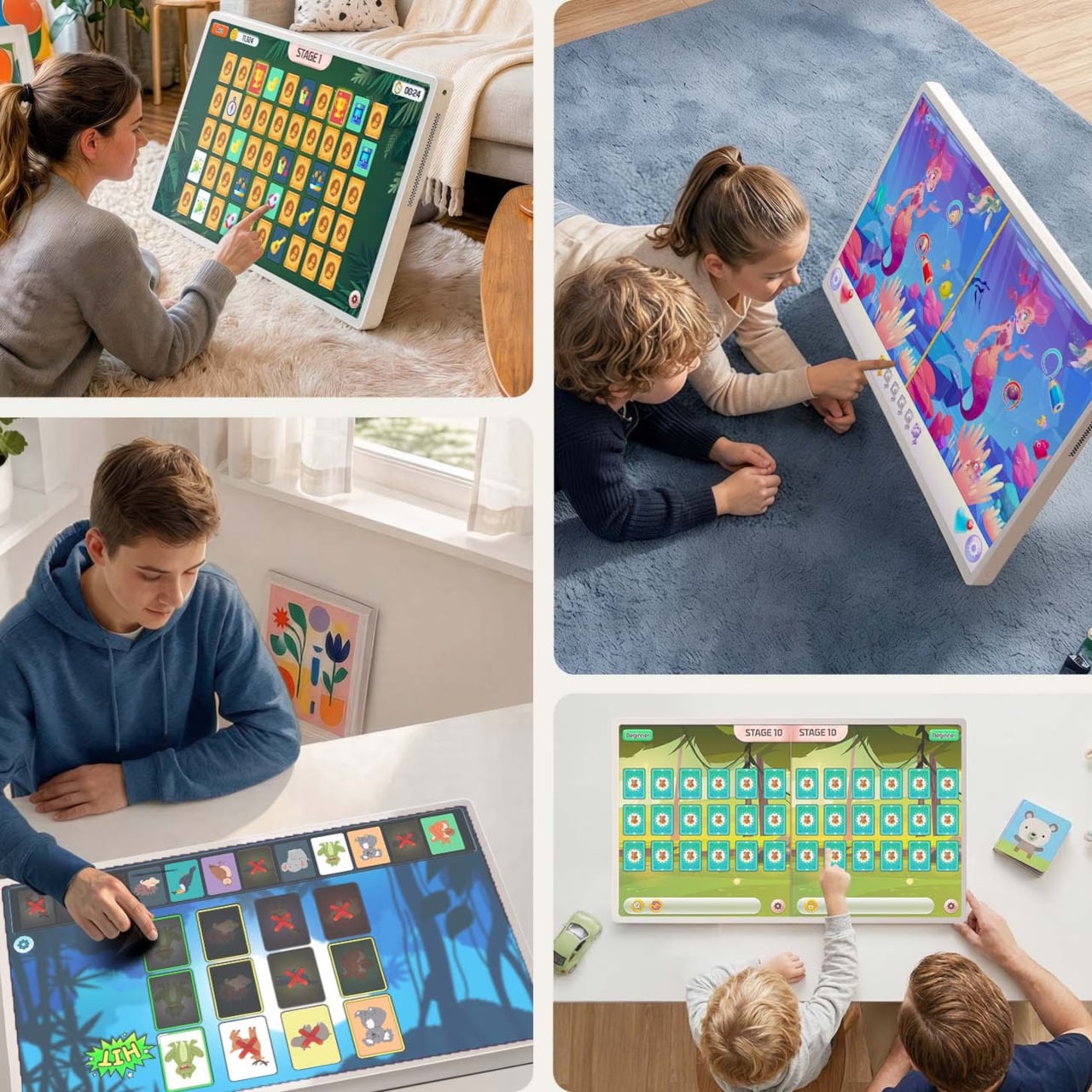
The StanbyME 2 Max earned a CES 2026 Innovation Award in the Content & Entertainment category, building on the iF Design Award and Red Dot Design Award that its predecessor picked up. LG has kept the visual profile clean enough that it doesn’t look conspicuous propped beside a bed or rolled into a kitchen. It’s available for pre-order now at $1,299.99.

The first StanbyME was a genuinely strange product that found an audience anyway. This one is harder to dismiss as a novelty. At 32 inches with 4K resolution, a 4.5-hour battery, and HDMI connectivity for consoles and laptops, it competes as much with a secondary monitor as it does with a conventional TV. The $1,299.99 price tag is the part that asks the most of prospective buyers.

The post The LG Rolling TV That Went Viral Is Now 32 Inches, 4K, and $1,299 first appeared on Yanko Design.

A Rolling Home Robot That Recognizes Faces and Detects Falls for $549

Smart home devices have gotten remarkably good at answering questions and playing music, but they’ve always had one big limitation: they stay put. A speaker on the kitchen counter can’t check on an elderly parent who hasn’t moved in hours, or trail a curious toddler around the house. For families trying to stay connected and keep everyone safe, that gap has always been difficult to bridge.

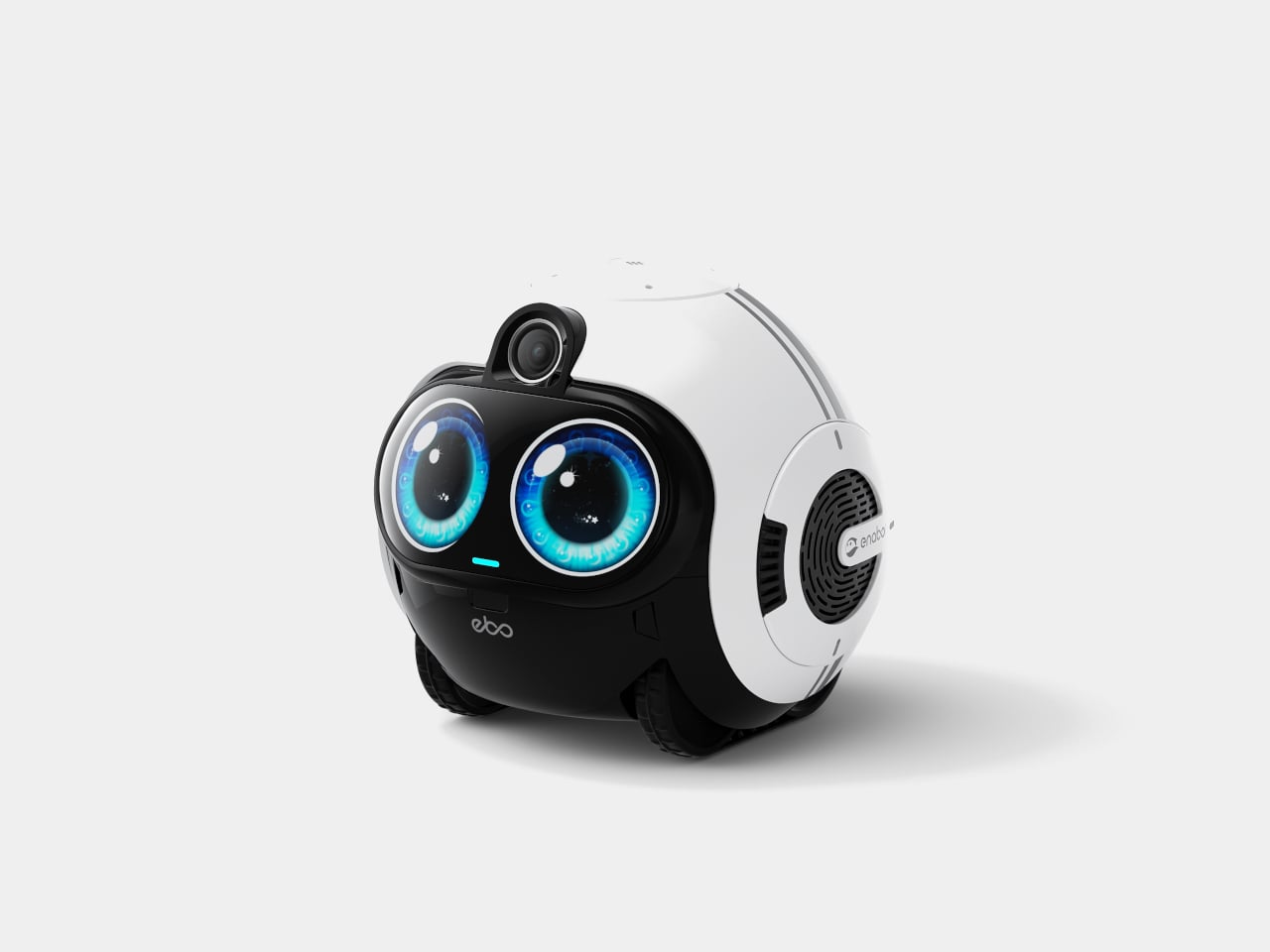
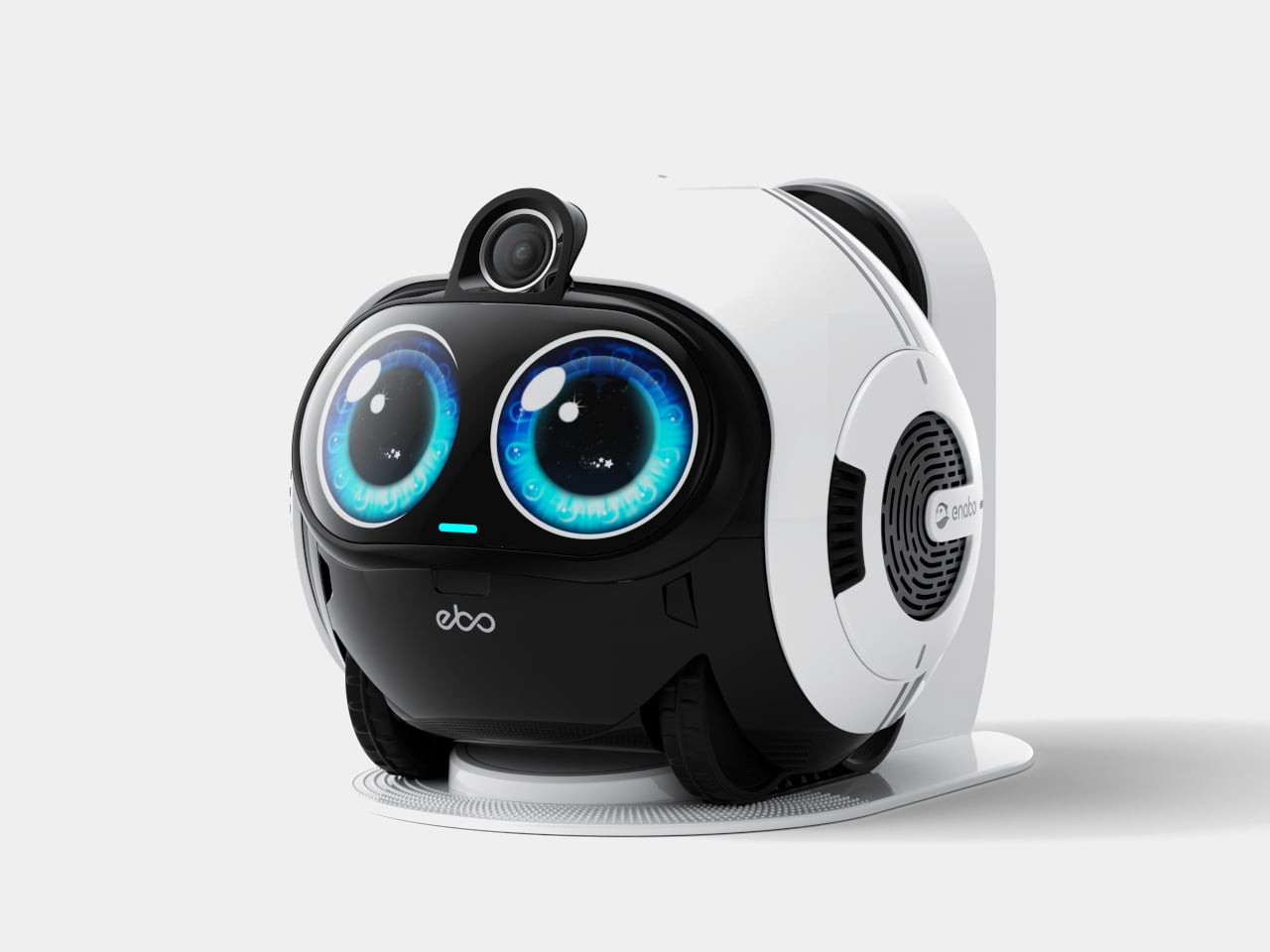
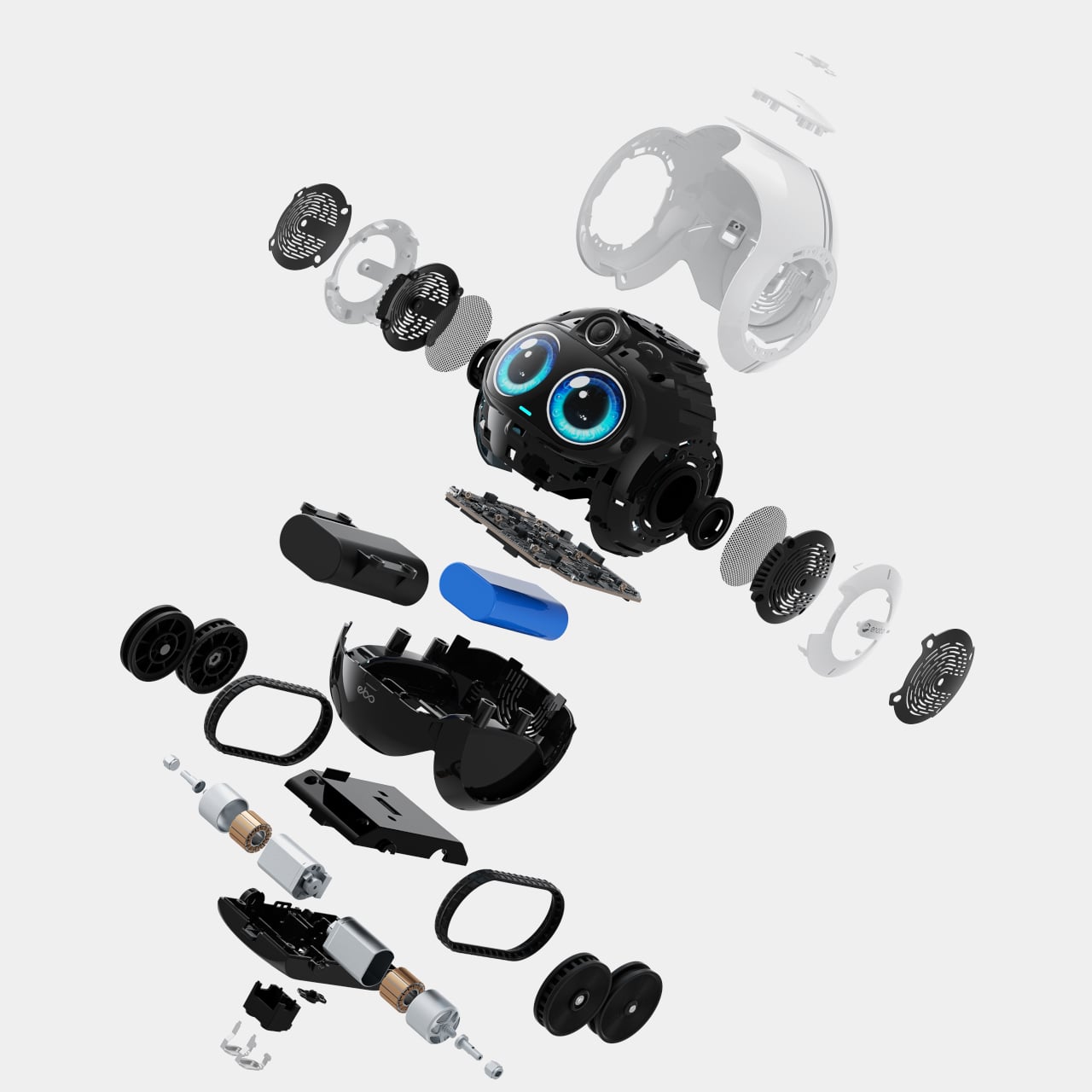
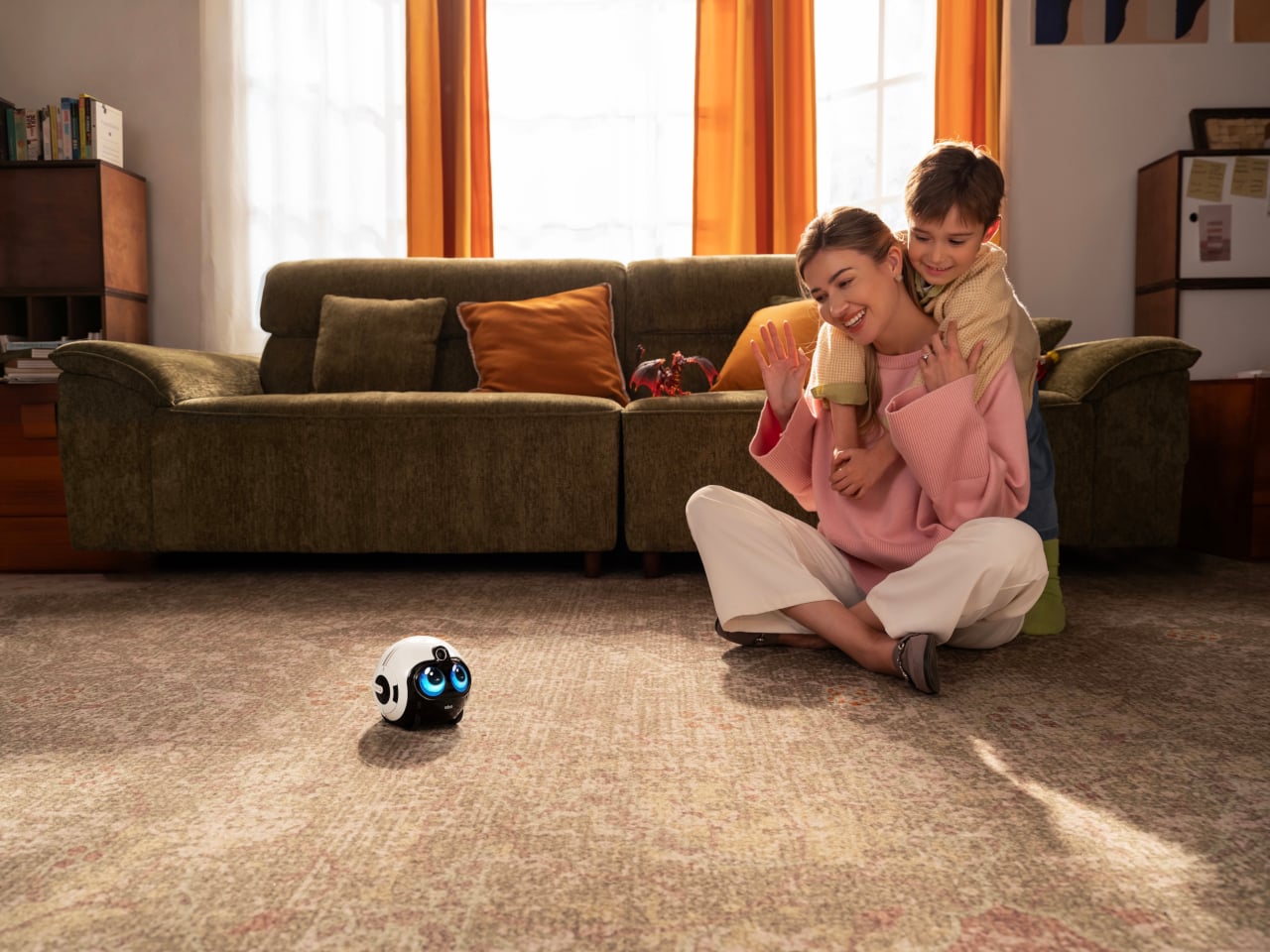
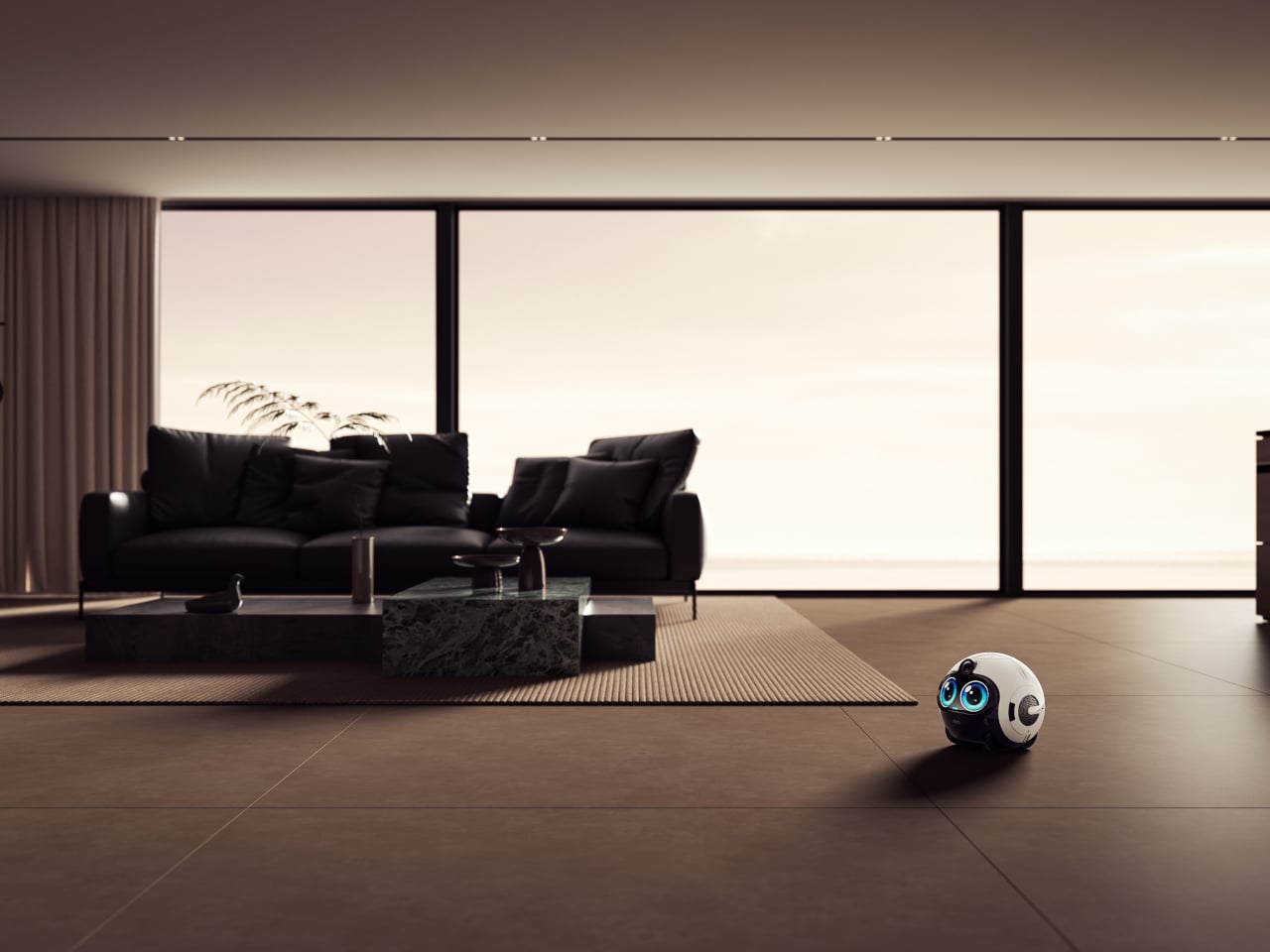
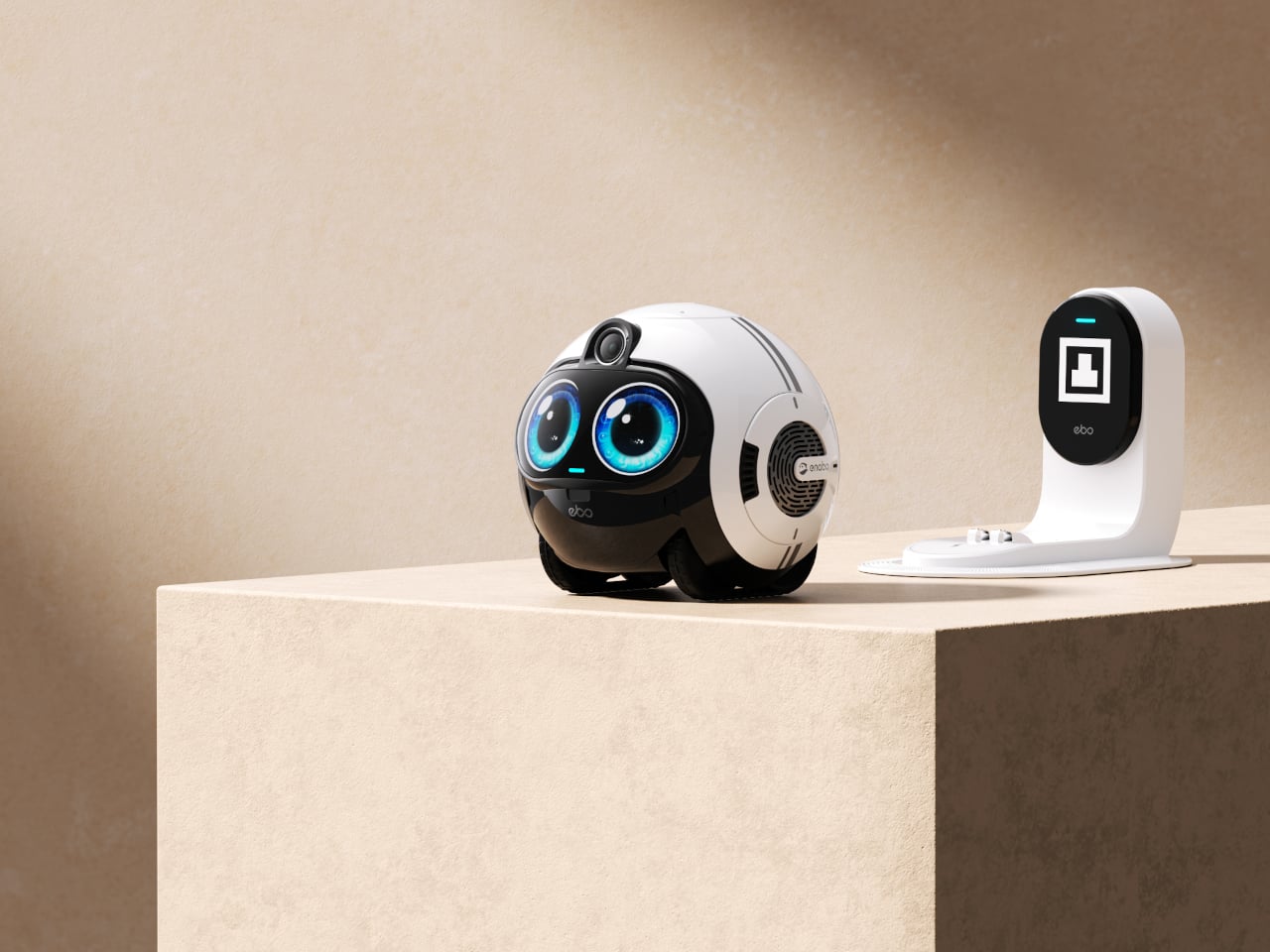
Enabot’s EBO Max FamilyBot takes a completely different approach. It’s a compact, round-bodied robot roughly the size of a football, with expressive oversized eyes and the ability to roll independently through every room of your home. Rather than sitting on a shelf waiting to be spoken to, the EBO Max goes looking for the people it’s come to know, without needing to be told.

Designer: Enabot

What makes the EBO Max different is its multimodal AI. Unlike the reactive AI in earlier models that only responds to direct commands and retains no memory, it processes what it sees and hears with genuine context. It recognizes family members by their faces, voices, and how they carry themselves, remembering routines and preferences, and it’s built to grow more useful the longer it stays in your home.

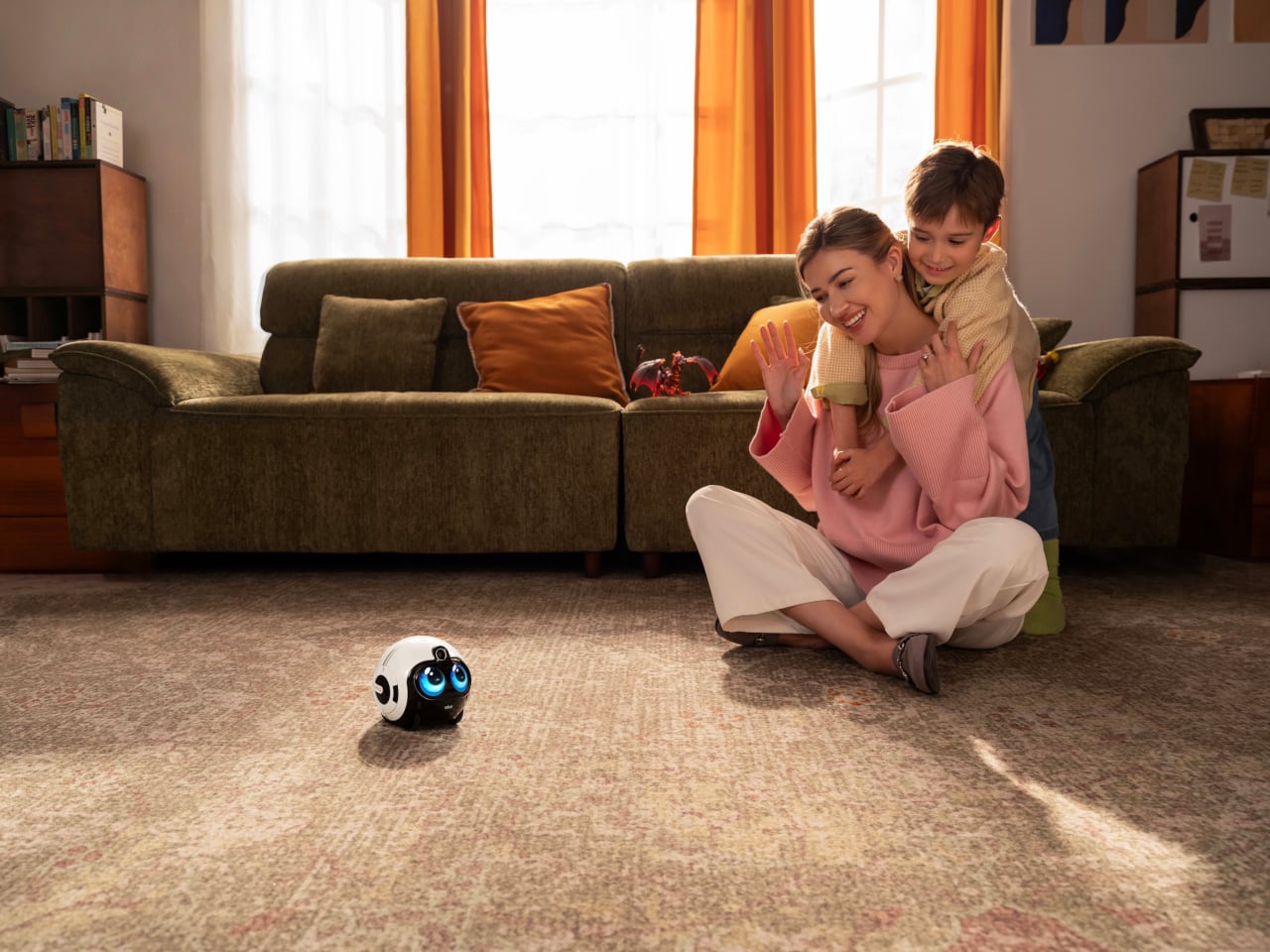
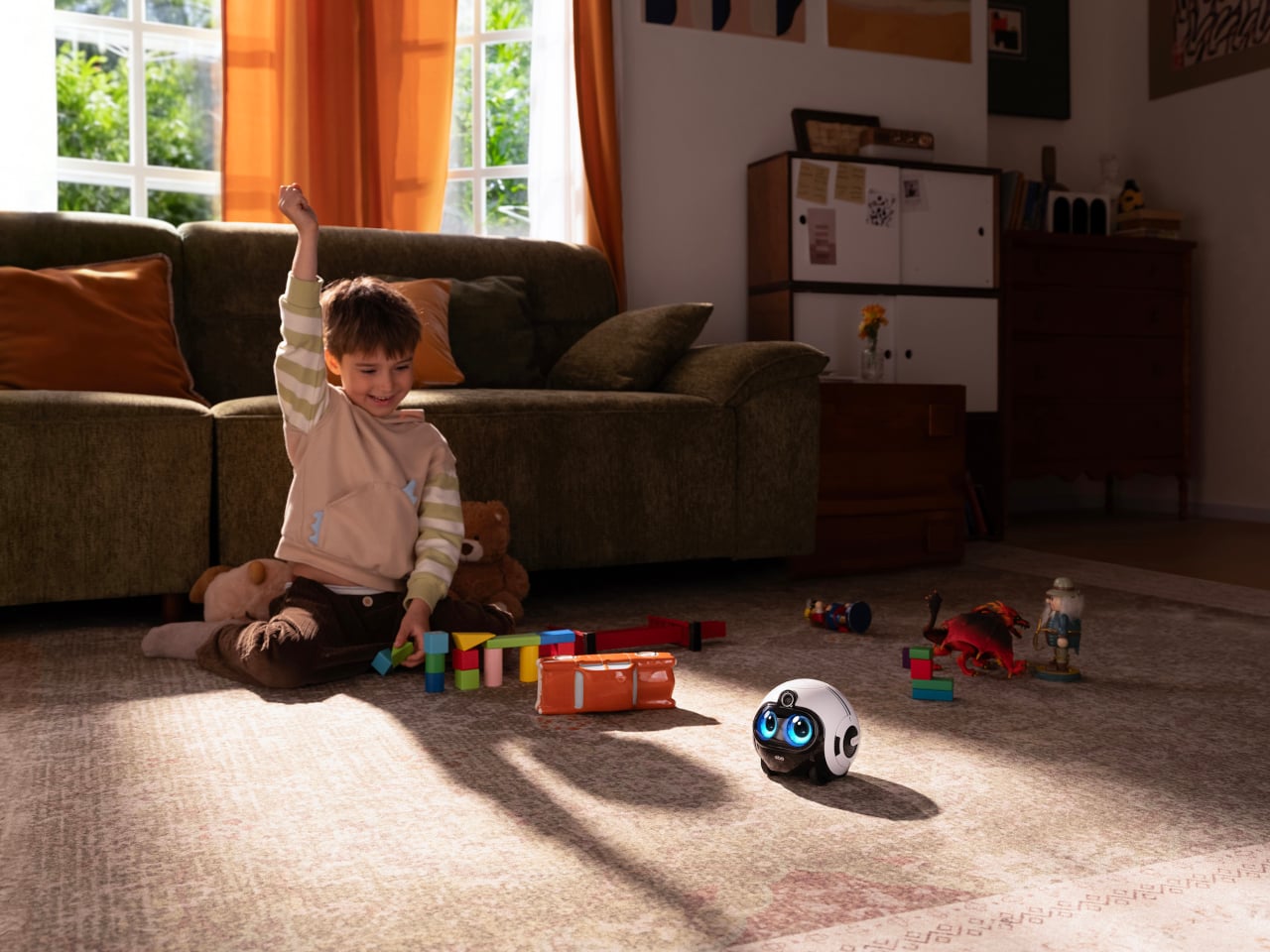
For kids, the EBO Max is something closer to a playmate than a gadget. It answers questions, joins in on simple games, and keeps children company with a curiosity that actually feels engaging. For the adults running the household, it quietly handles reminders, helps keep tabs on what’s happening at home, and keeps everyone looped in through the app without becoming another interruption in an already busy day.

For elderly family members, it carries even more weight. The EBO Max can detect falls and instantly send alerts, which is the kind of safety net that gives everyone a little more peace of mind. It rolls over to check on them, stays close when needed, and keeps them company in a way that a fixed camera in the corner of a room simply can’t replicate.

When you’re away from home, the EBO Max keeps that connection from feeling distant. It streams 4K video through an 8MP wide-angle camera with a 131-degree field of view, so you can hop on a two-way call and actually see what’s going on. You can also direct it to specific spots around the house by voice or through the app, turning it into a mobile eye you control.

The EBO Max handles its own movement using V-SLAM navigation, a system that maps and remembers the layout of your home for more accurate positioning and smoother routes. It can patrol on a set schedule, cover the entire house on its own, or be pointed at marked spots for targeted check-ins. When the battery runs low, it finds its way back to the docking station without any prompting.

The EBO Max FamilyBot is available for pre-order at $549.99, which feels steep until you start accounting for what it replaces: separate cameras, smart speakers, and the quiet worry of not knowing what’s happening at home. It doesn’t do everything perfectly, but as an AI-powered companion that moves, learns, and actually keeps an eye out, it’s a more thoughtful answer to family care than a camera stuck to the wall.

The post A Rolling Home Robot That Recognizes Faces and Detects Falls for $549 first appeared on Yanko Design.