LG’s Impossibly Thin 9mm Wallpaper TV Goes Wireless at CES 2026

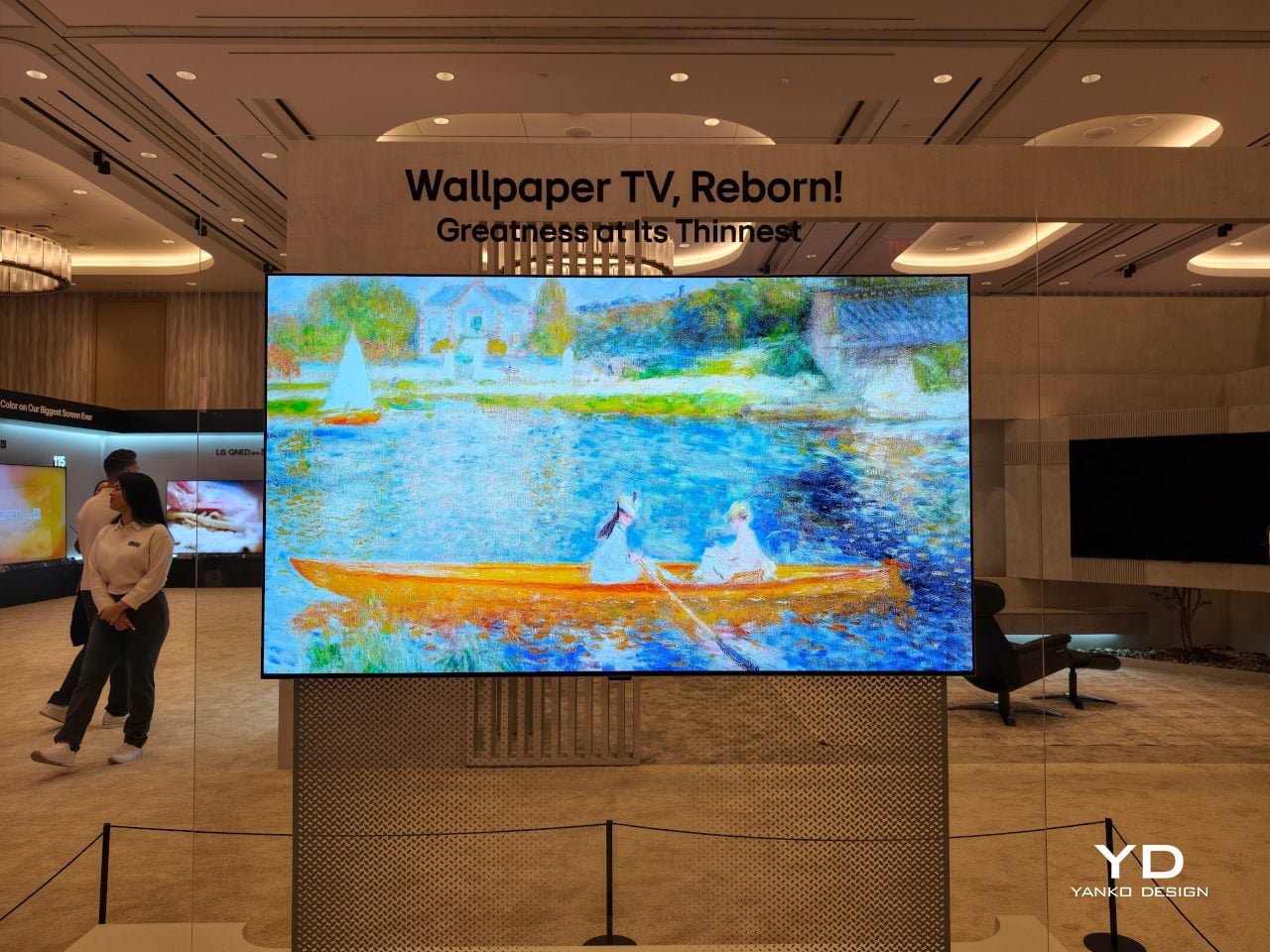
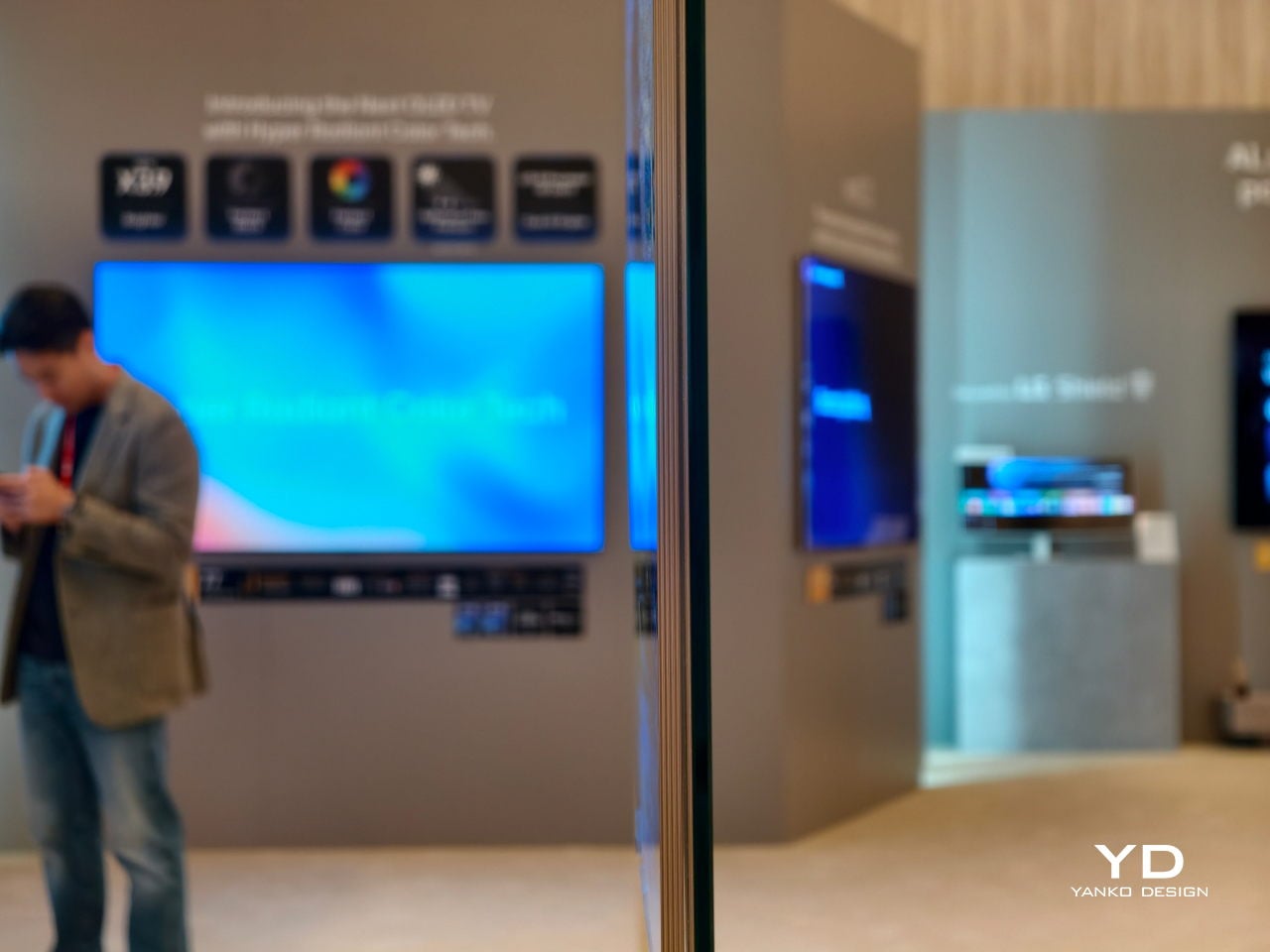
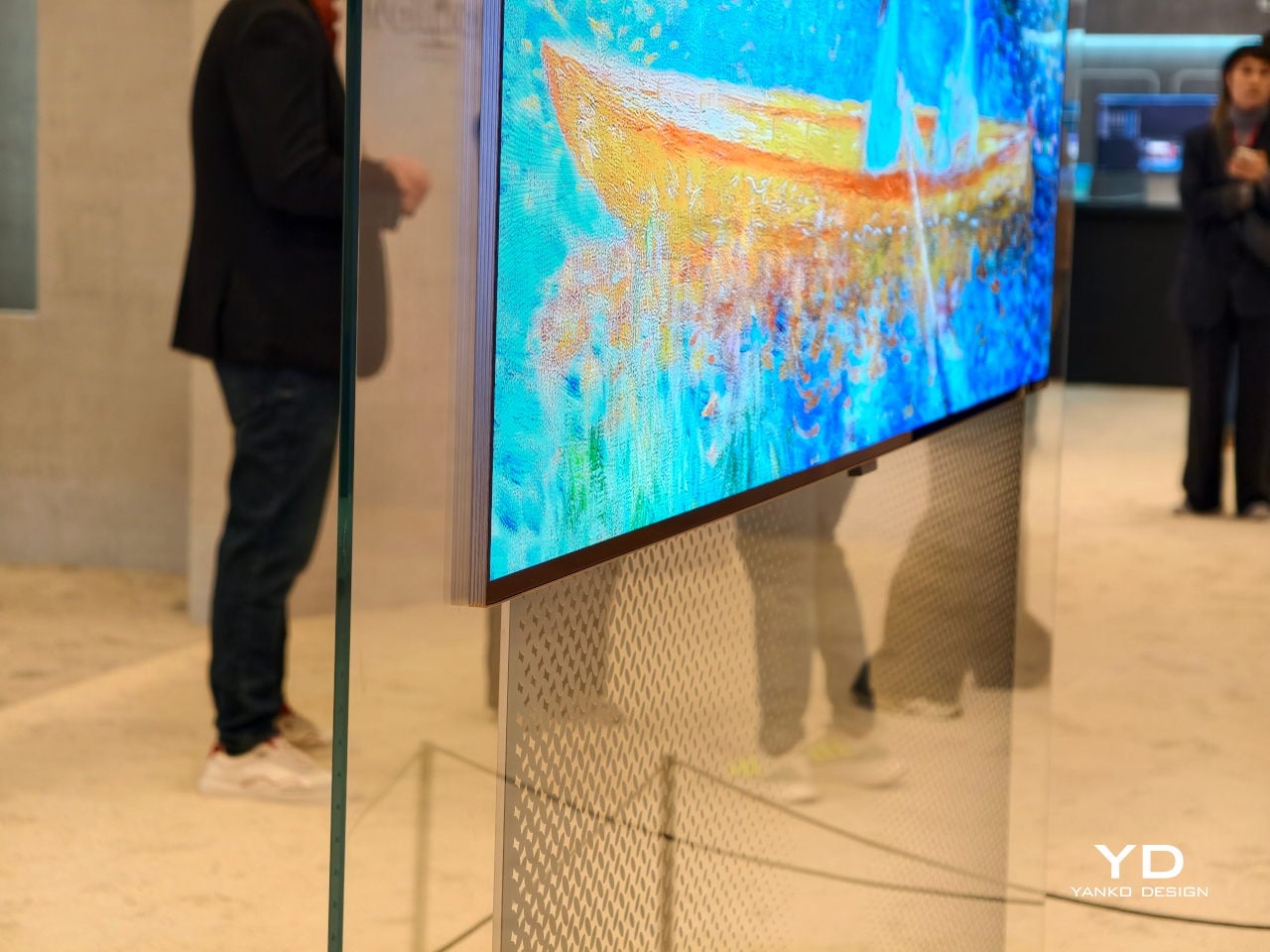
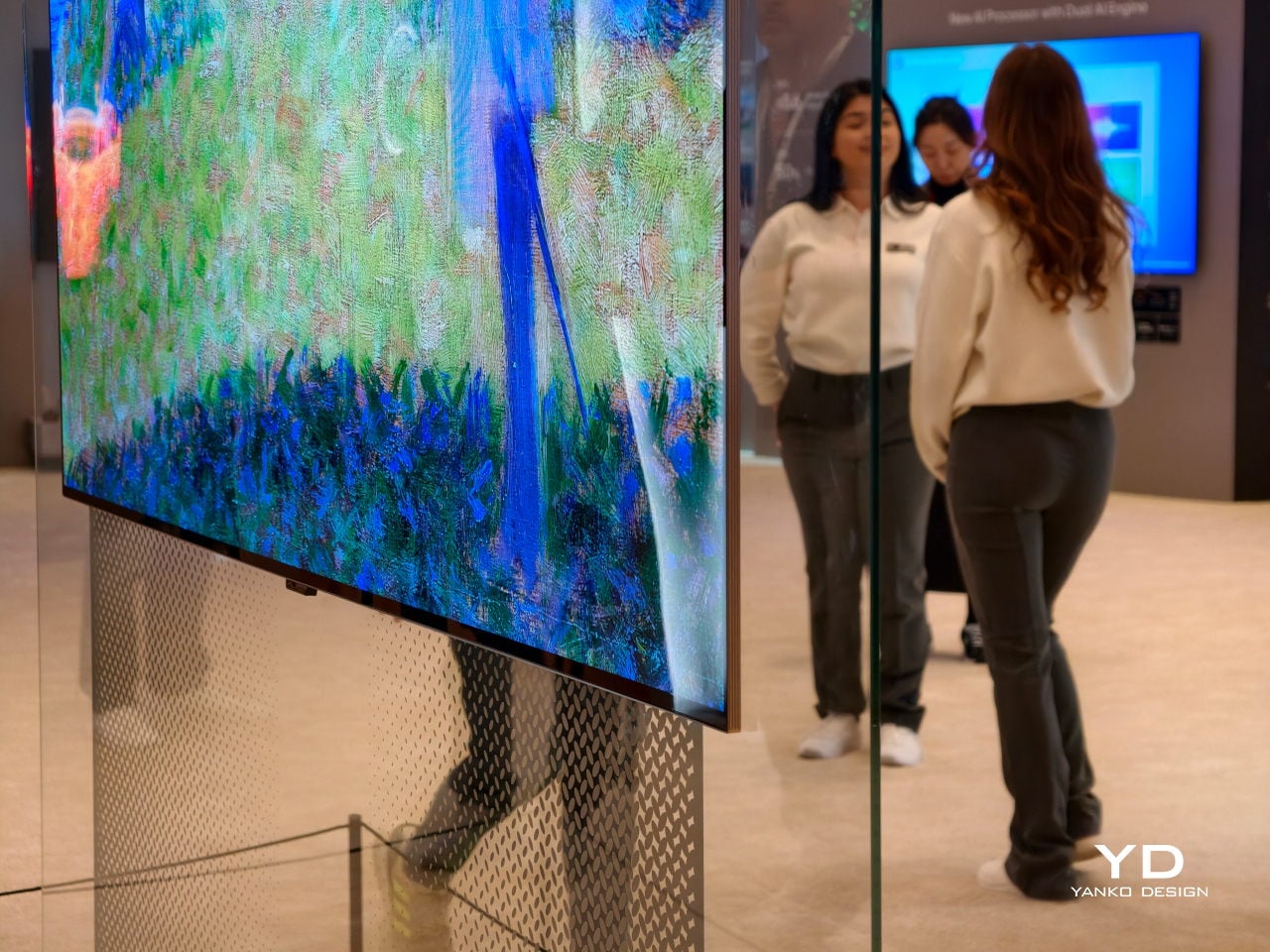
The original Wallpaper OLED from 2017 felt like a sci-fi prop, impossibly thin but tethered by cables and living in carefully staged rooms. CES 2026 is where LG brings that idea back with the OLED evo W6, a Wallpaper TV that now calls itself true wireless, nine-millimeter-class thin, and ready to live in actual homes instead of just concept apartments with perfectly curated shelves and no hint of where the clutter went.

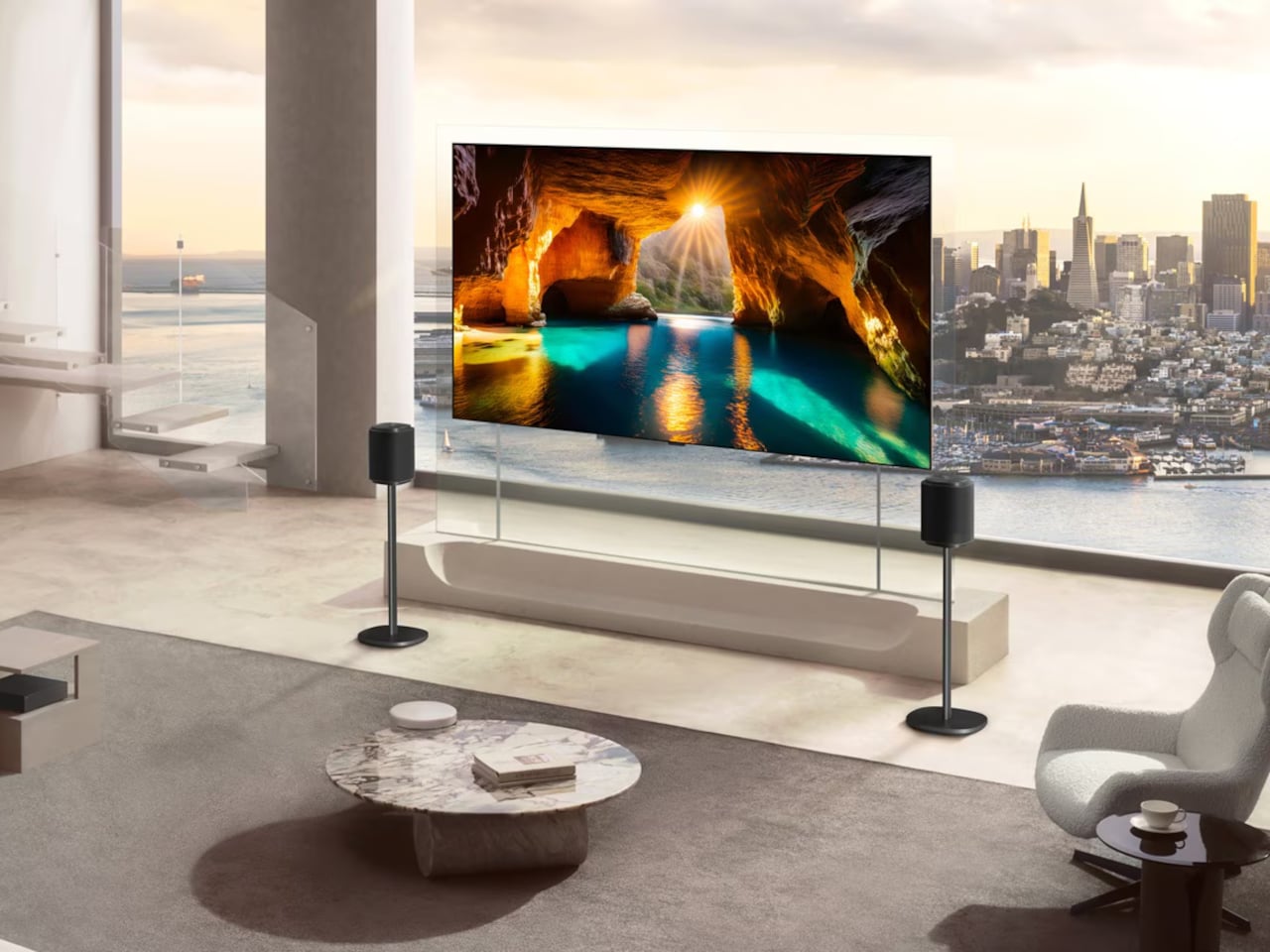
The W6 moves all inputs and processing into a Zero Connect Box that can sit up to 10 m away, sending 4K video and audio wirelessly to the panel. The TV itself becomes a sheet of OLED that mounts flush to the wall, with no visible ports or cables, so the usual tangle of consoles, set-top boxes, and sound systems can hide in a cabinet across the room or behind furniture instead of snaking up the wall.

Designer: LG

A living room with big windows is where most TVs struggle, fighting reflections and glare all afternoon. The OLED evo W6 leans on Hyper Radiant Color Technology and a panel that earns Reflection Free Premium certification, combining Brightness Booster Ultra, up to 3.9 times brighter than conventional OLEDs at peak, with the lowest reflectance in LG’s lineup. Daytime viewing does not require blackout curtains or strategic seating, which changes how the TV fits into daily routines.

A movie night brings the α11 AI Processor Gen3 into focus, with its 5.6 times more powerful NPU and Dual AI Engine. Instead of choosing between smoothing noise and preserving texture, it runs parallel algorithms to do both, keeping film grain and skin detail intact while cleaning up compression artifacts. The image stays crisp without looking over-sharpened or plasticky, even on older content pulled from streaming libraries that were compressed years ago.

The hours when nobody is actively watching are where Gallery+ turns the OLED evo W6 into a canvas for more than 4,500 visuals, from cinema stills to game art, plus your own photos and generative AI pieces, all paired with mood-matched music. The TV stops being a black rectangle and becomes part of the room’s atmosphere, changing with seasons, gatherings, or whatever you feel like seeing when you walk past between tasks or while cooking dinner.

A late-night gaming session is where the OLED evo W6’s 4K 165 Hz support, 0.1 ms response time, and compatibility with NVIDIA G-SYNC and AMD FreeSync Premium matter. Auto Low Latency Mode kicks in, input lag drops, and the same panel that showed impressionist art earlier now handles fast shooters or racing games without tearing or ghosting, making the Wallpaper TV feel less fragile and more like a serious multi-purpose display.

The LG OLED evo W6 pulls together LG’s 13 years of OLED work, true-wireless experiments, and AI processing into something that finally behaves like the wallpaper TV idea always promised. At CES 2026, it reads less like a stunt and more like a sign that the next wave of TVs will be judged not only on how they look when they are on, but on how gracefully they disappear when they are not.

The post LG’s Impossibly Thin 9mm Wallpaper TV Goes Wireless at CES 2026 first appeared on Yanko Design.
LG xBoom Stage 501 Uses AI to Turn Any Song Into Instant Karaoke

CES 2026 is full of portable speakers that blur together until you find a pair built around specific moments in your week. Most promise bass and battery, but few commit to a clear identity beyond a spec sheet. LG’s xBoom Stage 501 and xBoom Blast are different, less about covering every scenario and more about owning the moments they were designed for with enough confidence to make those scenarios better.

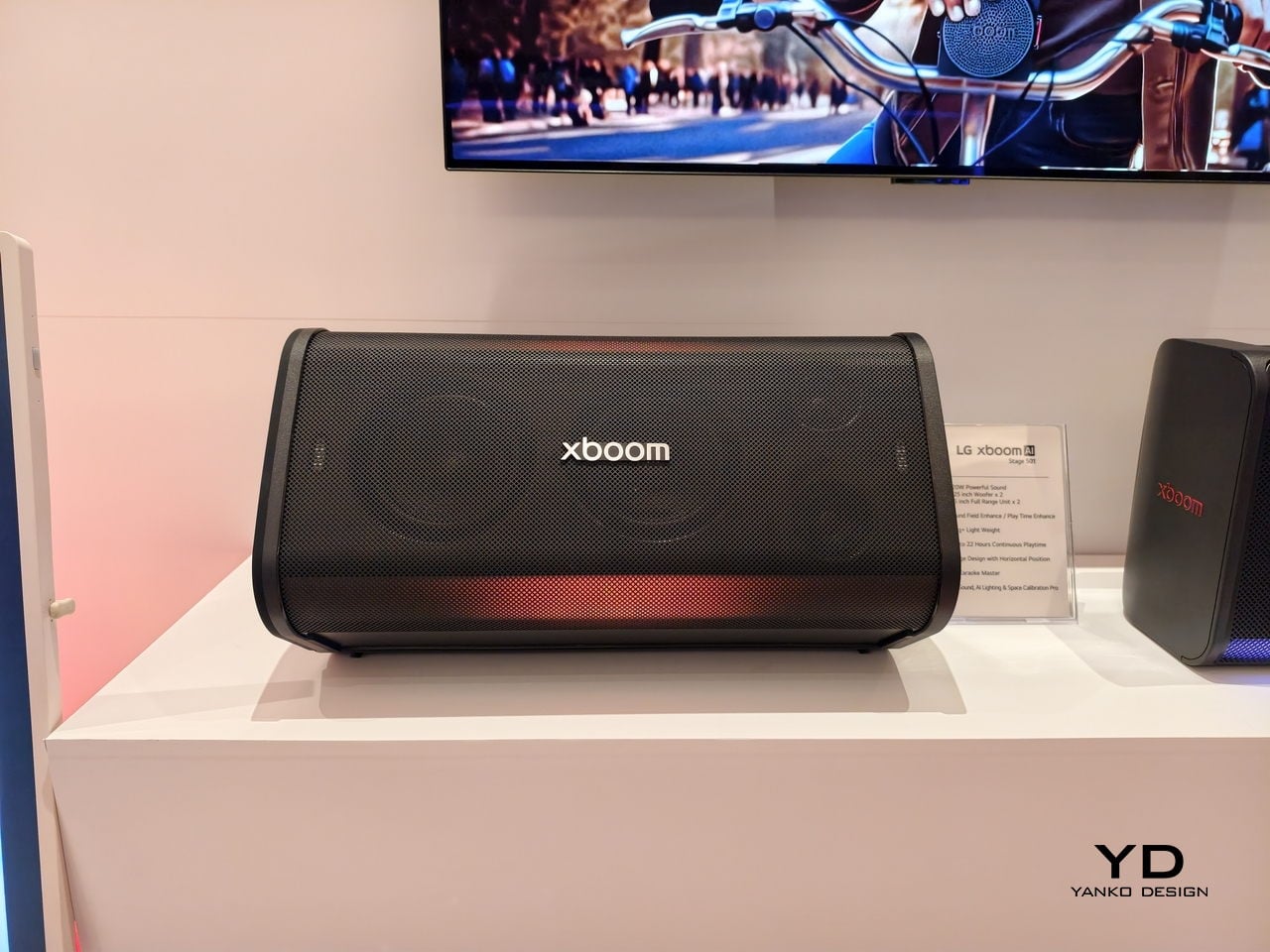
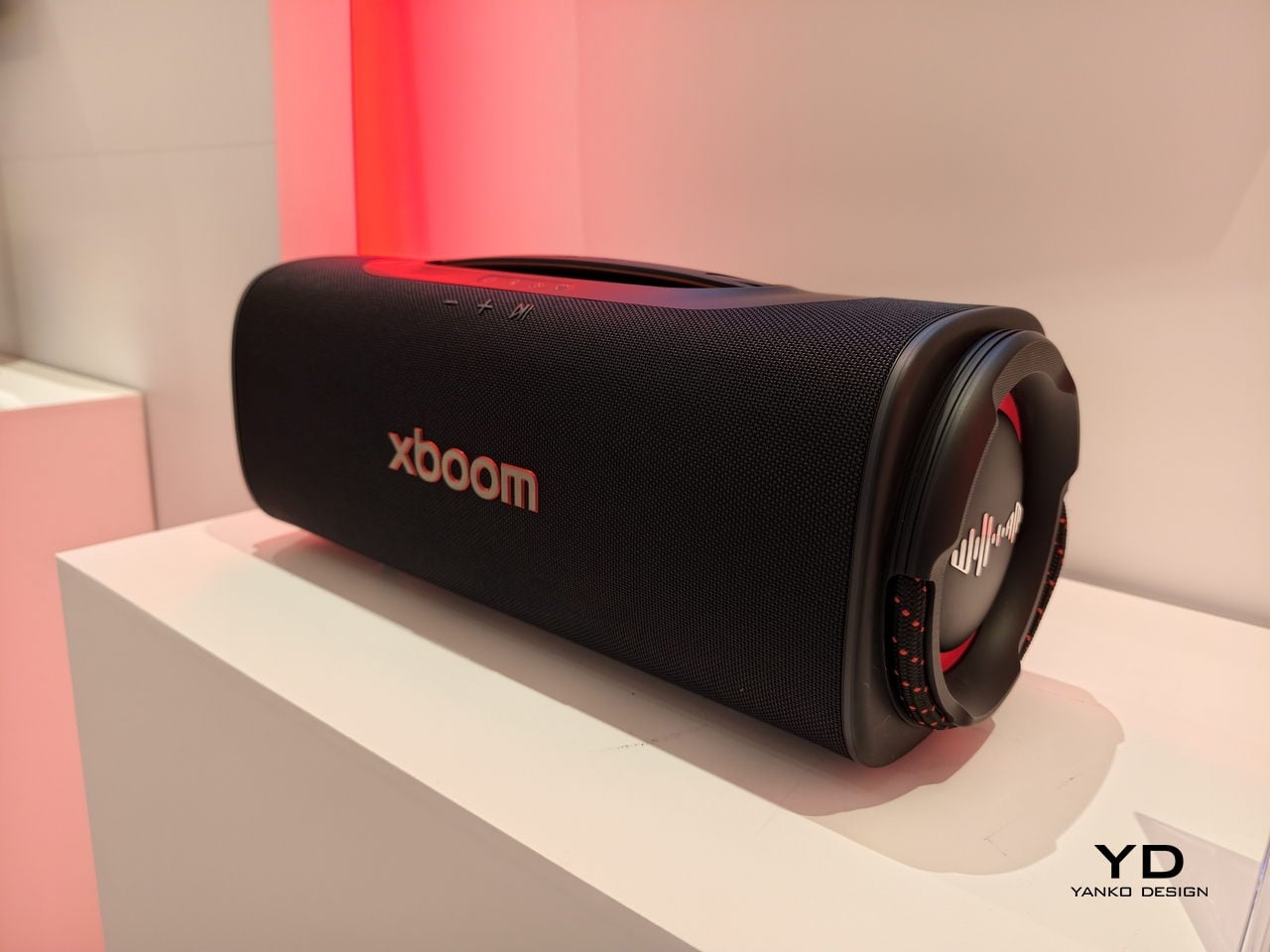
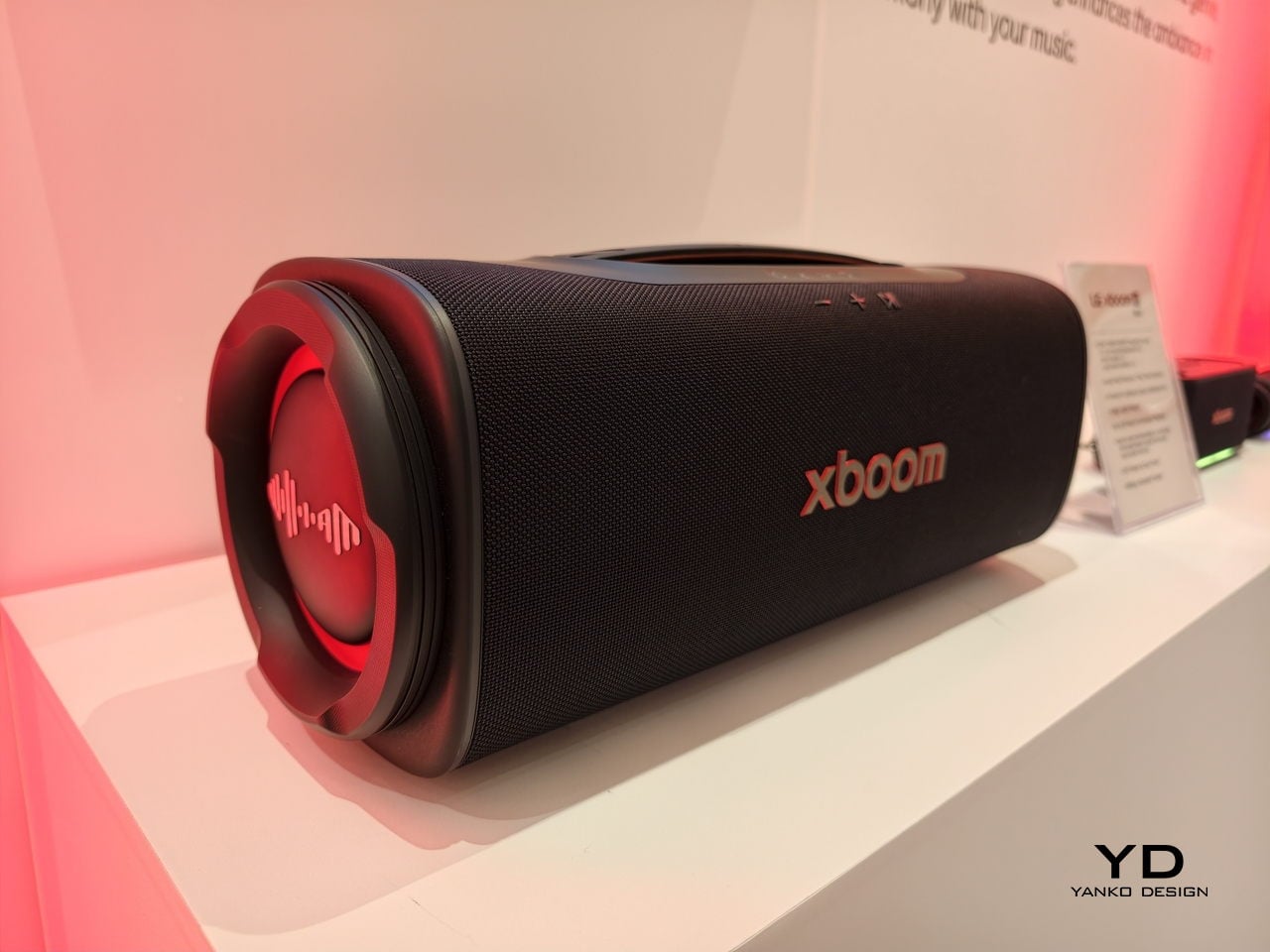
Stage 501 is tuned for late-night living-room chaos, karaoke marathons, and indoor parties that spill onto patios. Blast is built for long days outside, beach trips, camping weekends, and backyard gatherings that start in the afternoon and refuse to end until the sun comes back. Both run LG’s AI-driven xBoom platform with will.i.am’s signature sound, both pack 99 Wh batteries that outlast most playlists, and both treat lighting and sound as inseparable parts of the same vibe.

Designer: will.i.am x LG

xBoom Stage 501

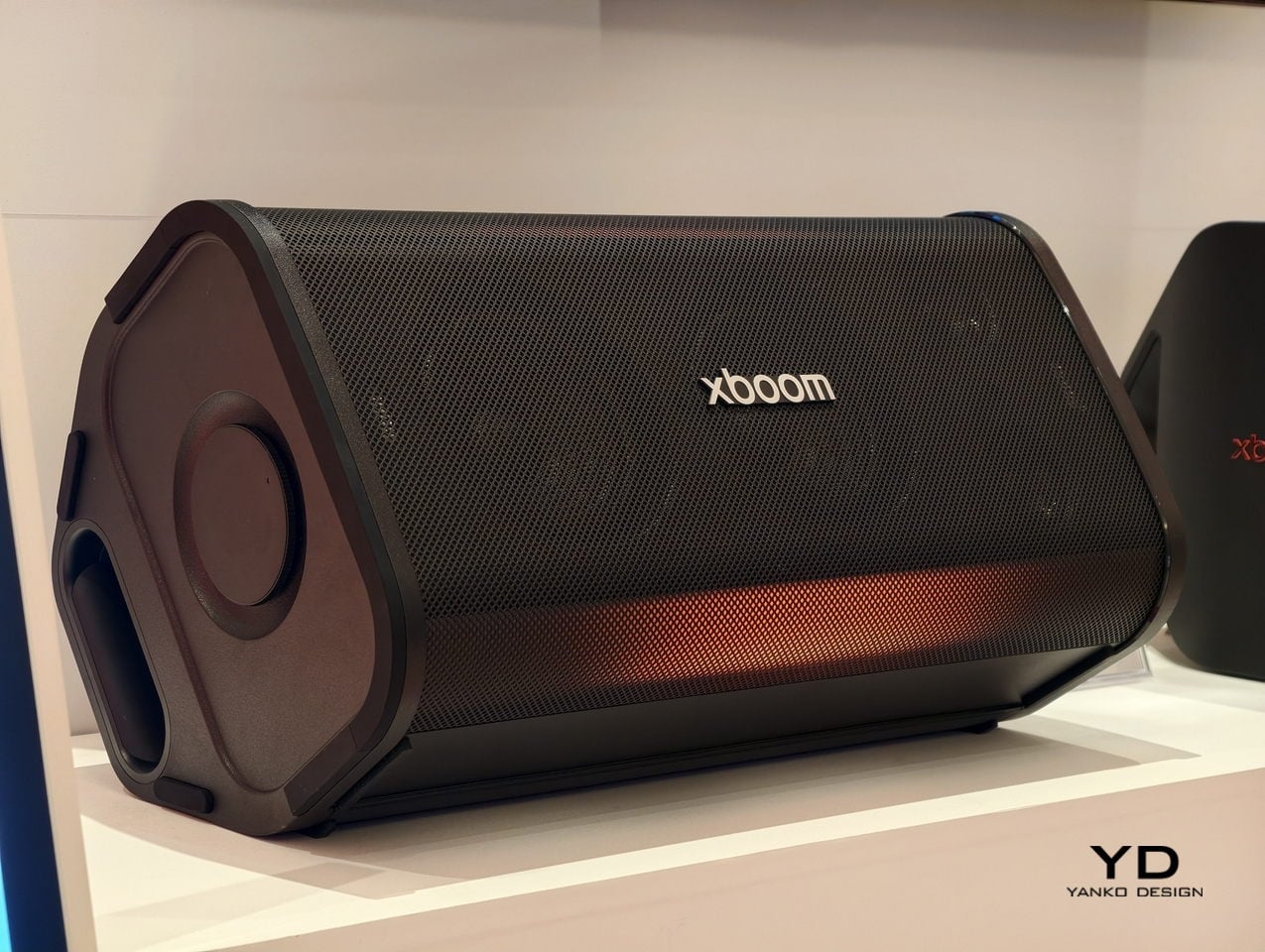
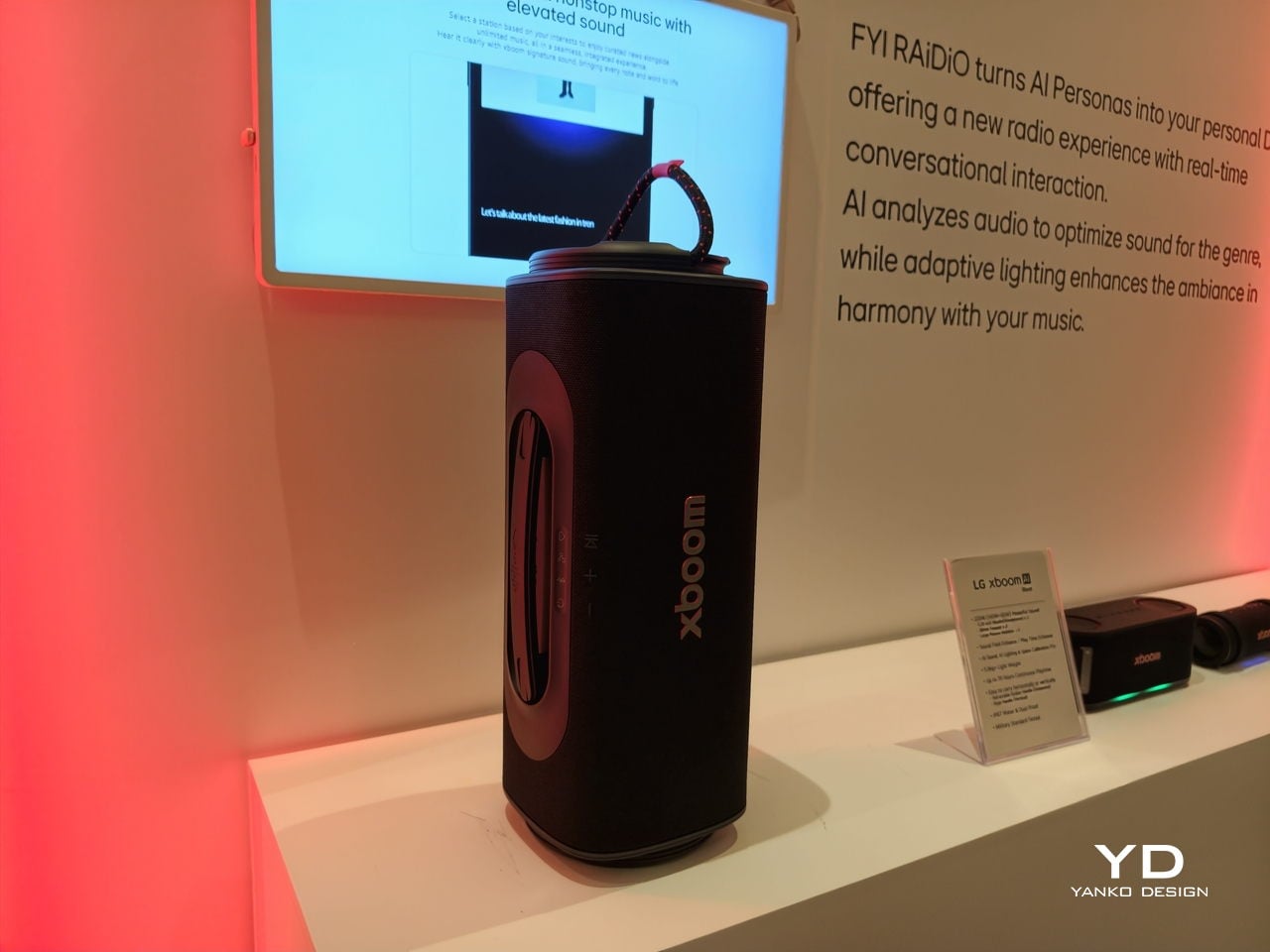
A living room slowly turns into a karaoke bar as friends arrive, drinks appear, and someone inevitably reaches for a mic. Stage 501 is already in the corner, its wedge-shaped cabinet angled toward the room with LEDs pulsing in sync. It pushes up to 220 W when plugged in or 160 W on battery, with dual 2.5-inch woofers, full-range drivers, and Peerless tweeters handling everything from bass drops to high notes.

AI Karaoke Master turns any playlist into a karaoke queue, stripping or lowering vocals and even shifting pitch so people can sing solo or duet with the original artist without hunting for special tracks. It uses deep learning trained on over 10,000 songs, which means it works on virtually anything in your library. AI Sound and Space Calibration Pro analyze the room and the song, nudging EQ and output.

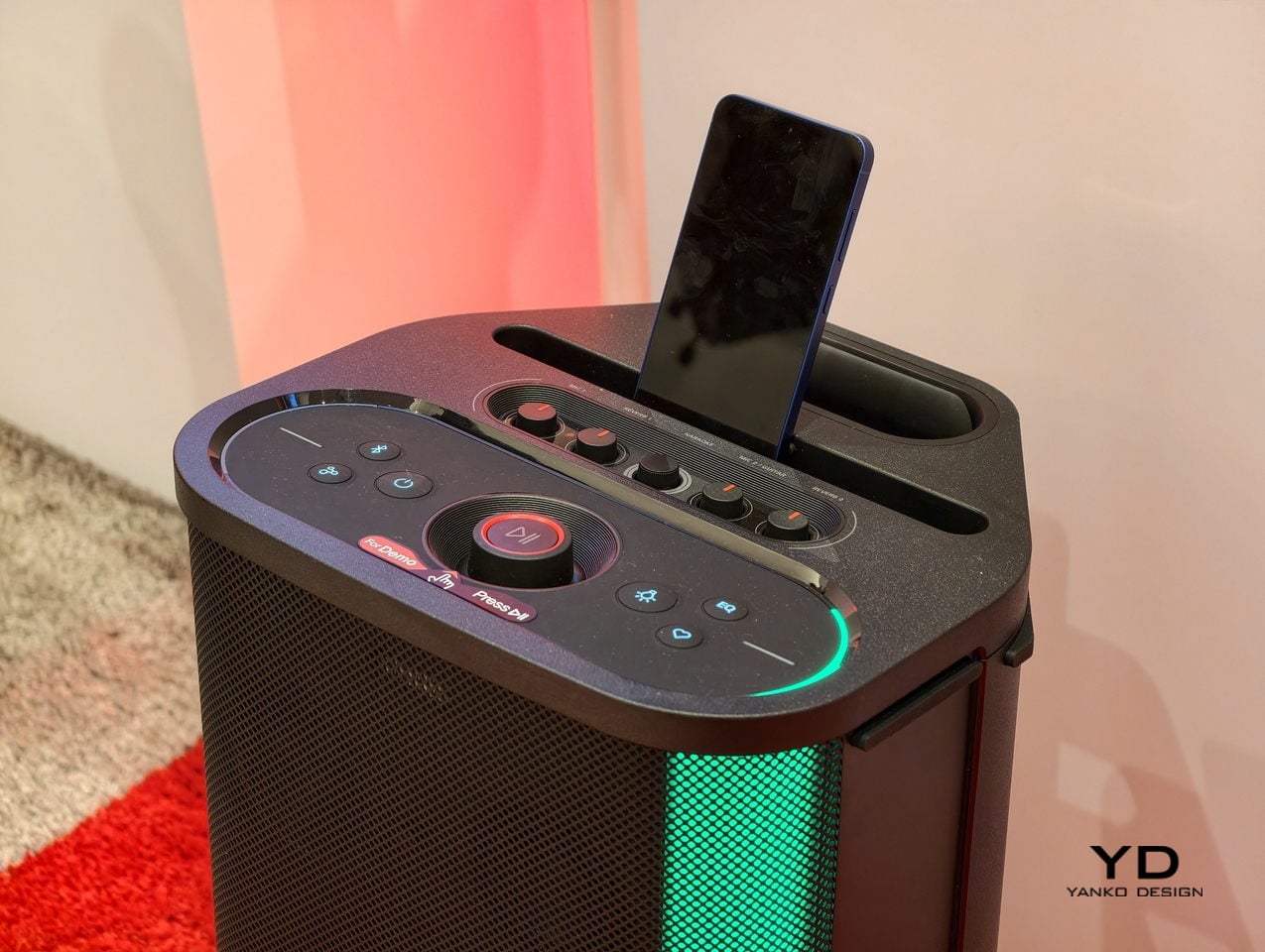
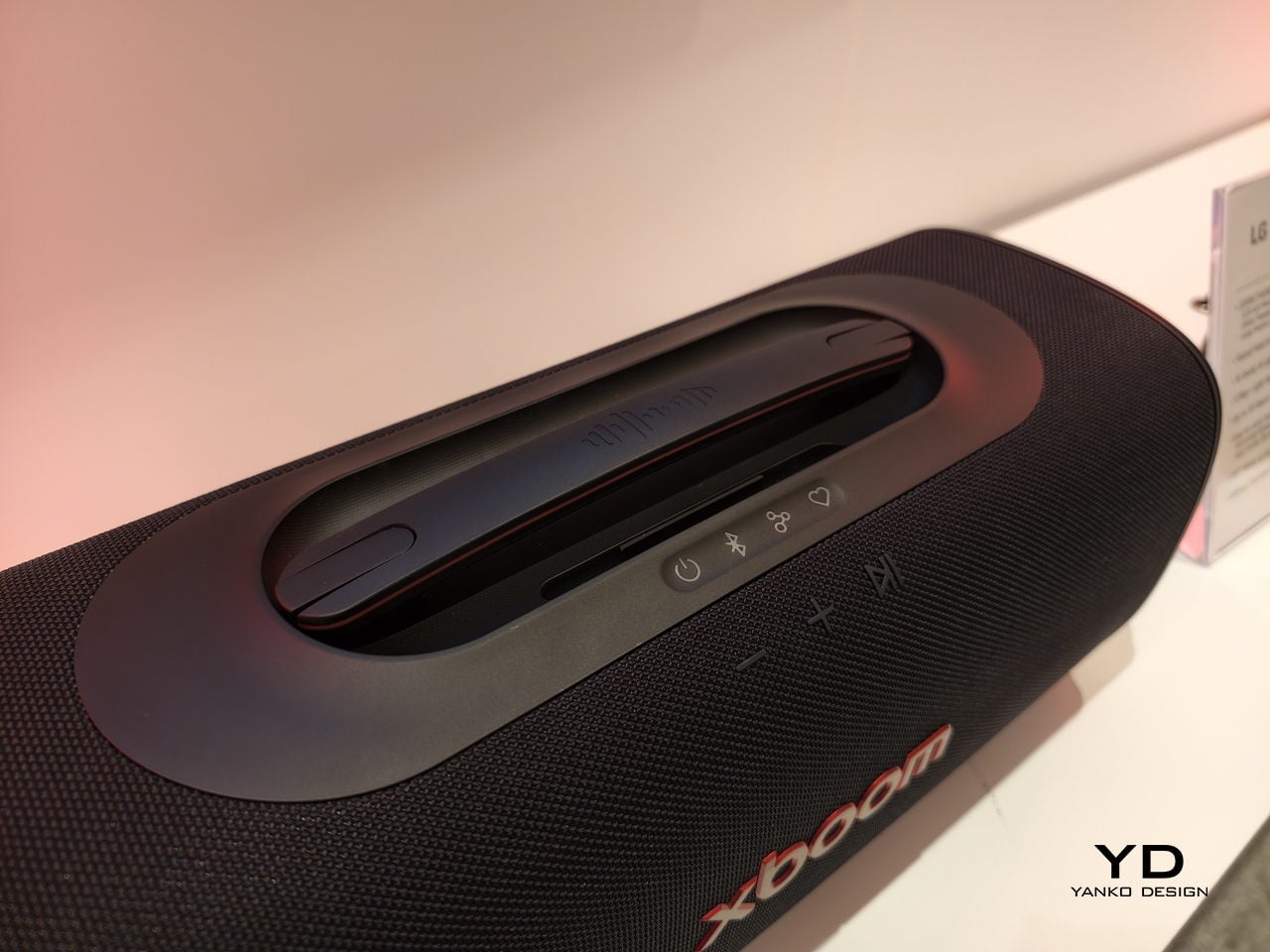
The top panel becomes a small control deck during the night, with a phone resting in the slot for lyrics, mics plugged in, and a big central dial handling volume and effects. The five-sided design can stand upright, lie horizontally, tilt, or even go on a tripod, so the same speaker that lives under a TV on weekdays can move to the patio or a rented hall when someone’s birthday rolls around.

xBoom Blast

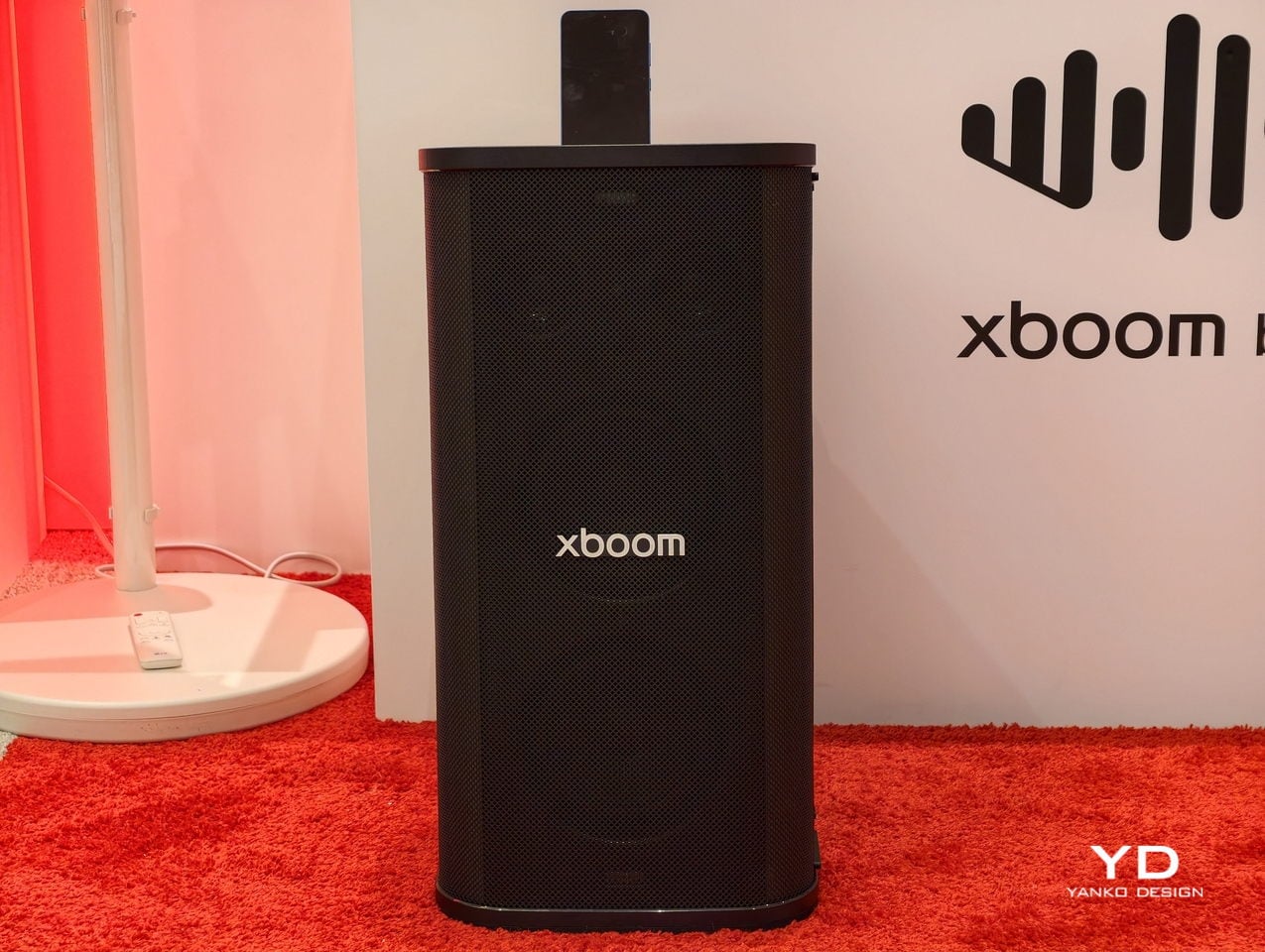
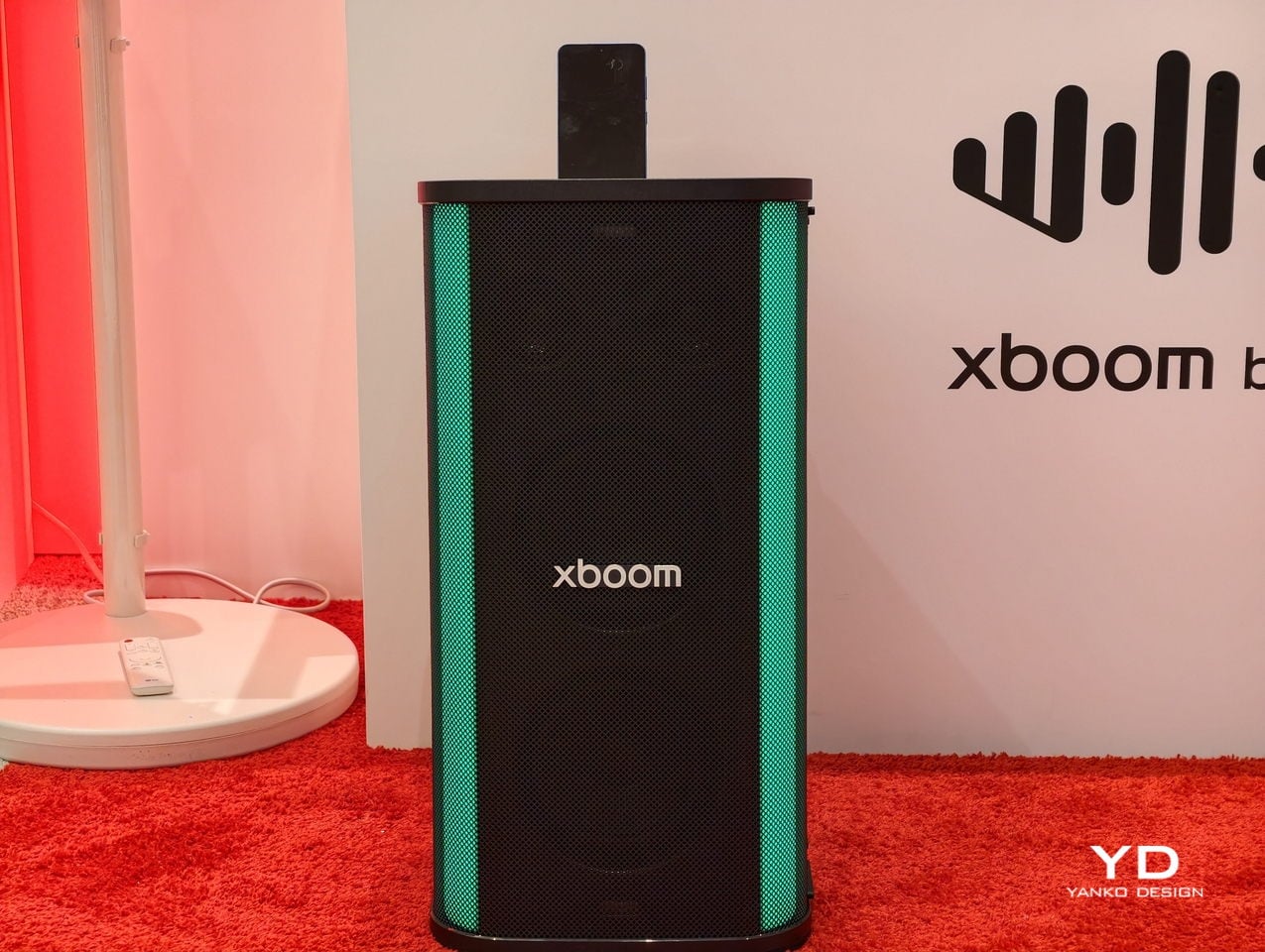
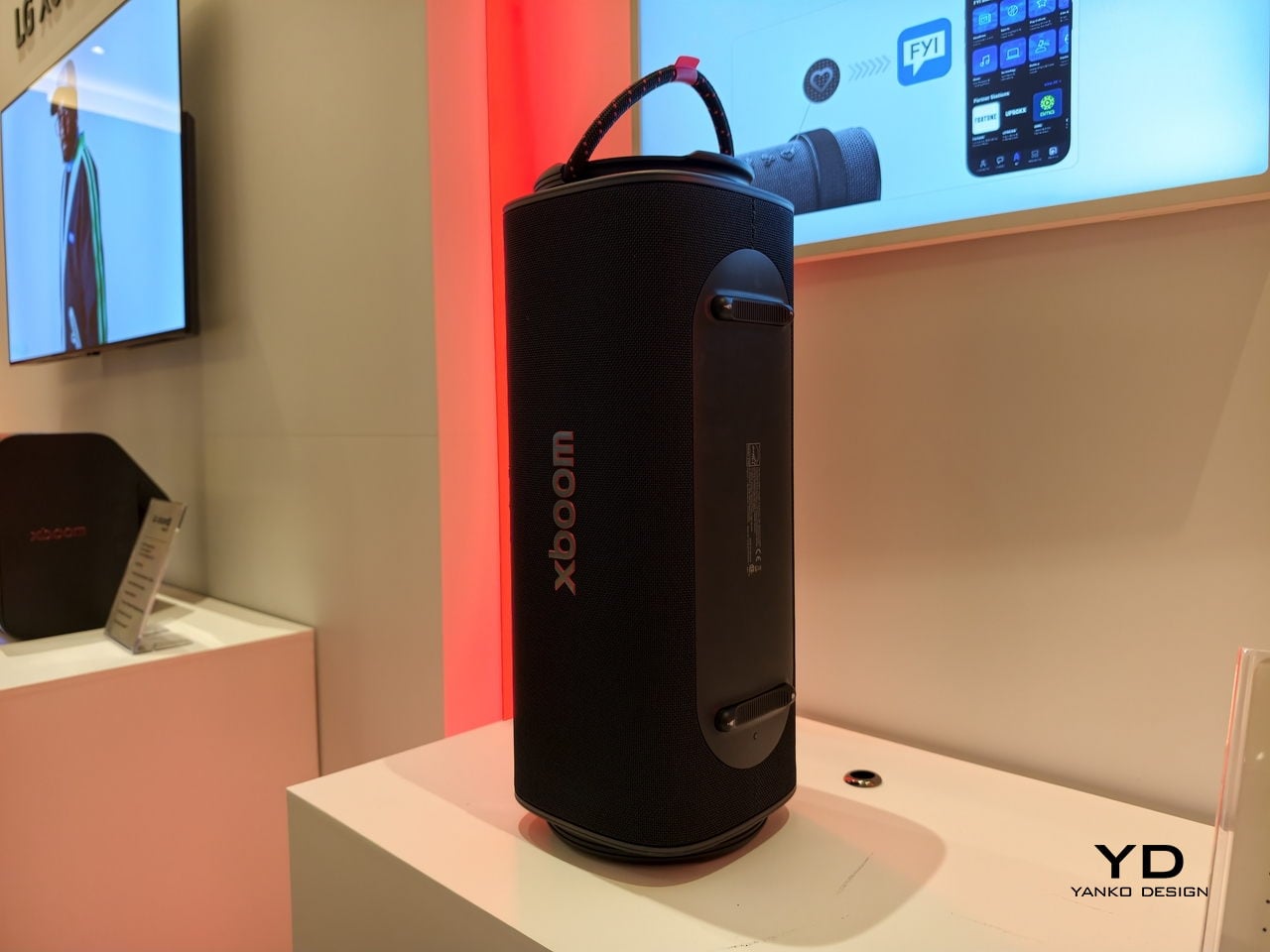
A beach day or campsite is different, power outlets are far away, and the playlist needs to last longer than the sun. Blast shows up as the tall, cylindrical speaker that gets dropped next to the cooler, its 99 Wh battery promising up to 35 hours of music. It still delivers 220 W of output with three 3.25-inch drivers and three passive radiators, so it does not sound like a compromise.

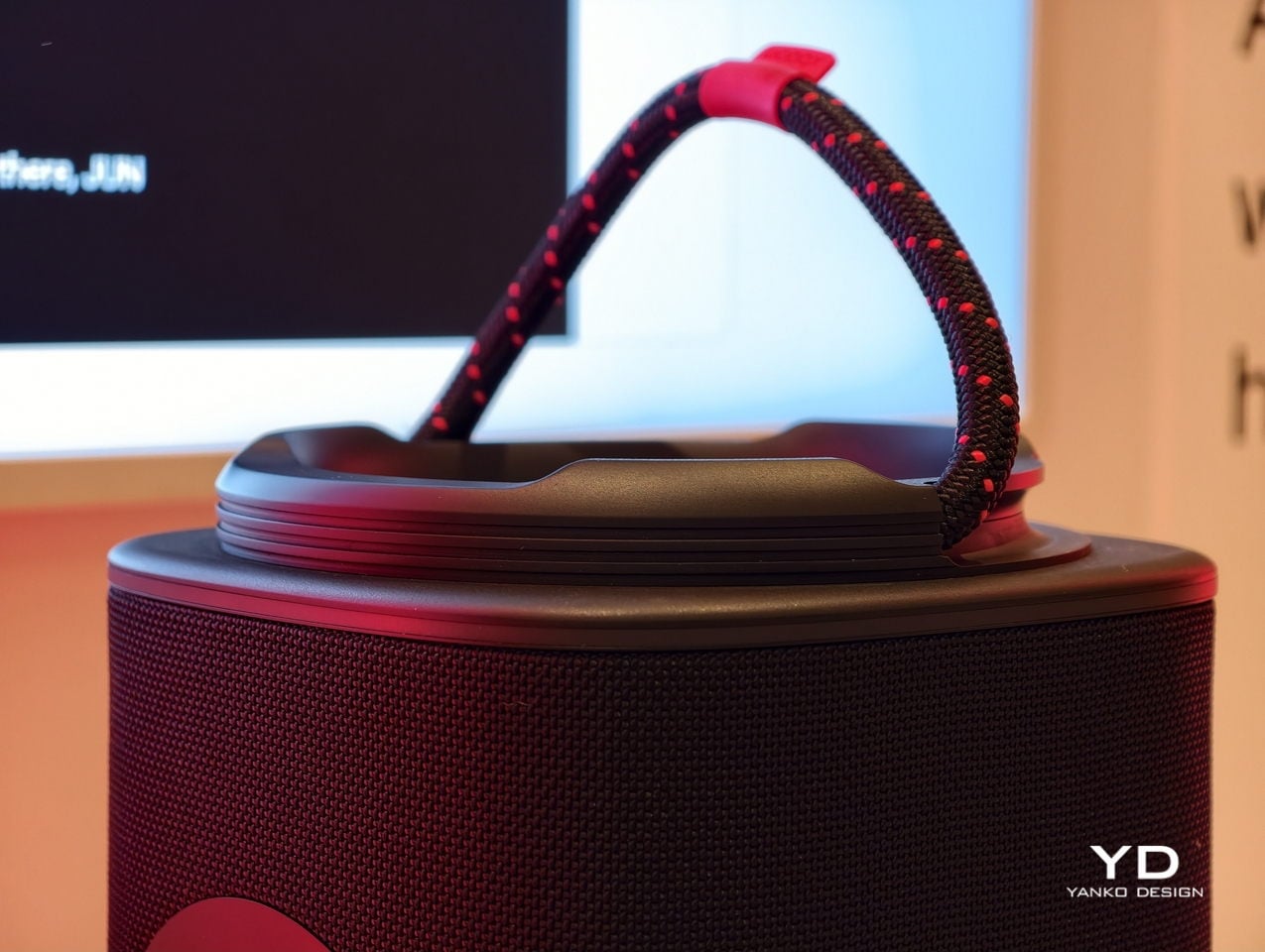
IP67 water- and dust-proofing, edge bumpers, and military-standard testing mean nobody panics when sand, spilled drinks, or sudden rain show up. The side rope handle makes it easy to carry vertically through crowds, while the top handle covers quick moves between spots. AI Lighting and AI Sound keep the LEDs and EQ in sync with whatever is playing, turning grass or sand into a small stage.

At 12 kg, Blast is not exactly light, but that weight holds the passive radiators and battery that get you through a full weekend outdoors. The dual-handle system and rugged shell acknowledge that party speakers live rougher lives than most tech, bouncing around trunks, getting set on uneven ground, and soaking up whatever the weather decides to do. Blast feels like it was designed for those realities.

LG at CES 2026

xBoom by will.i.am is less about one do-everything box and more about matching sound to the way people actually move through their week. Stage 501 anchors indoor parties and karaoke nights, while Blast follows you outdoors. Seeing them at CES 2026 hints at a future where portable speakers are defined as much by the nights and trips they are built for as by their wattage.

The post LG xBoom Stage 501 Uses AI to Turn Any Song Into Instant Karaoke first appeared on Yanko Design.

LG Collaborated with Museum Curators to Bring the Gallery TV to CES 2026

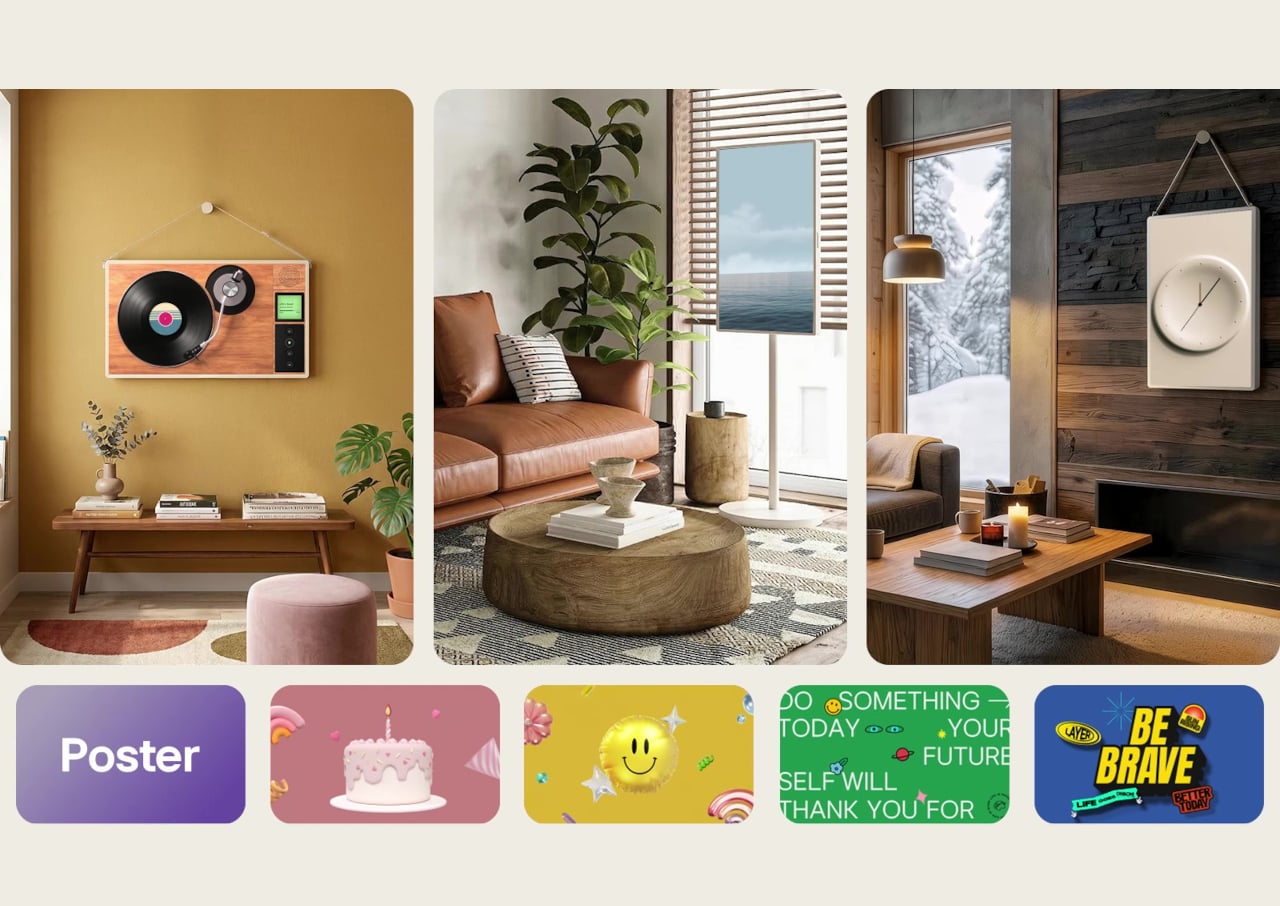
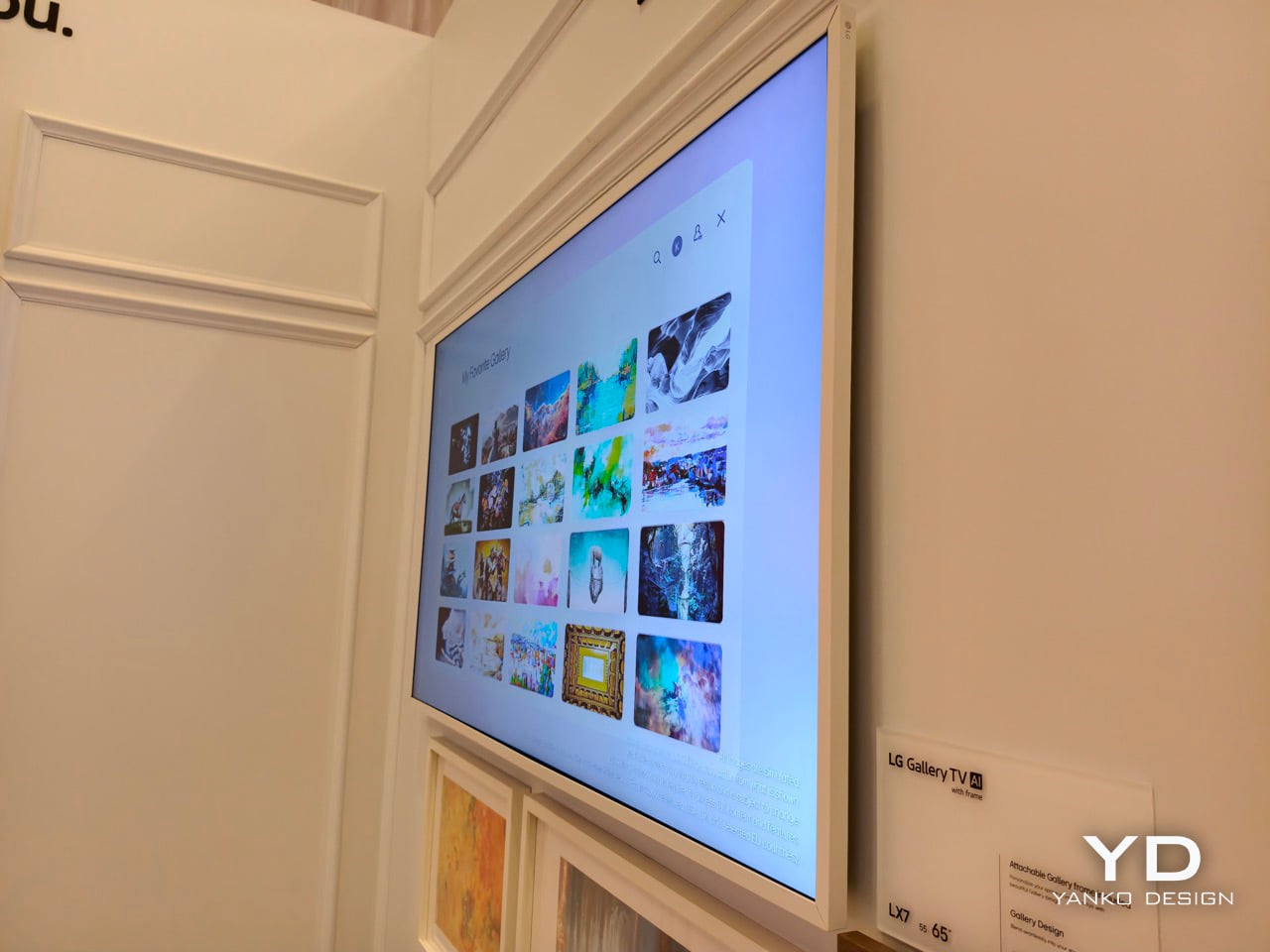
Museum curators don’t typically collaborate with television manufacturers, but LG Electronics recruited them specifically to develop the Gallery Mode for its new Gallery TV launching at CES 2026. This specialized display mode optimizes color accuracy, brightness levels, and glare reduction to reproduce the visual texture of original artworks with exhibition-quality fidelity. The screen automatically adjusts to changing ambient light throughout the day, maintaining clarity whether morning sun floods the room or evening darkness sets in.
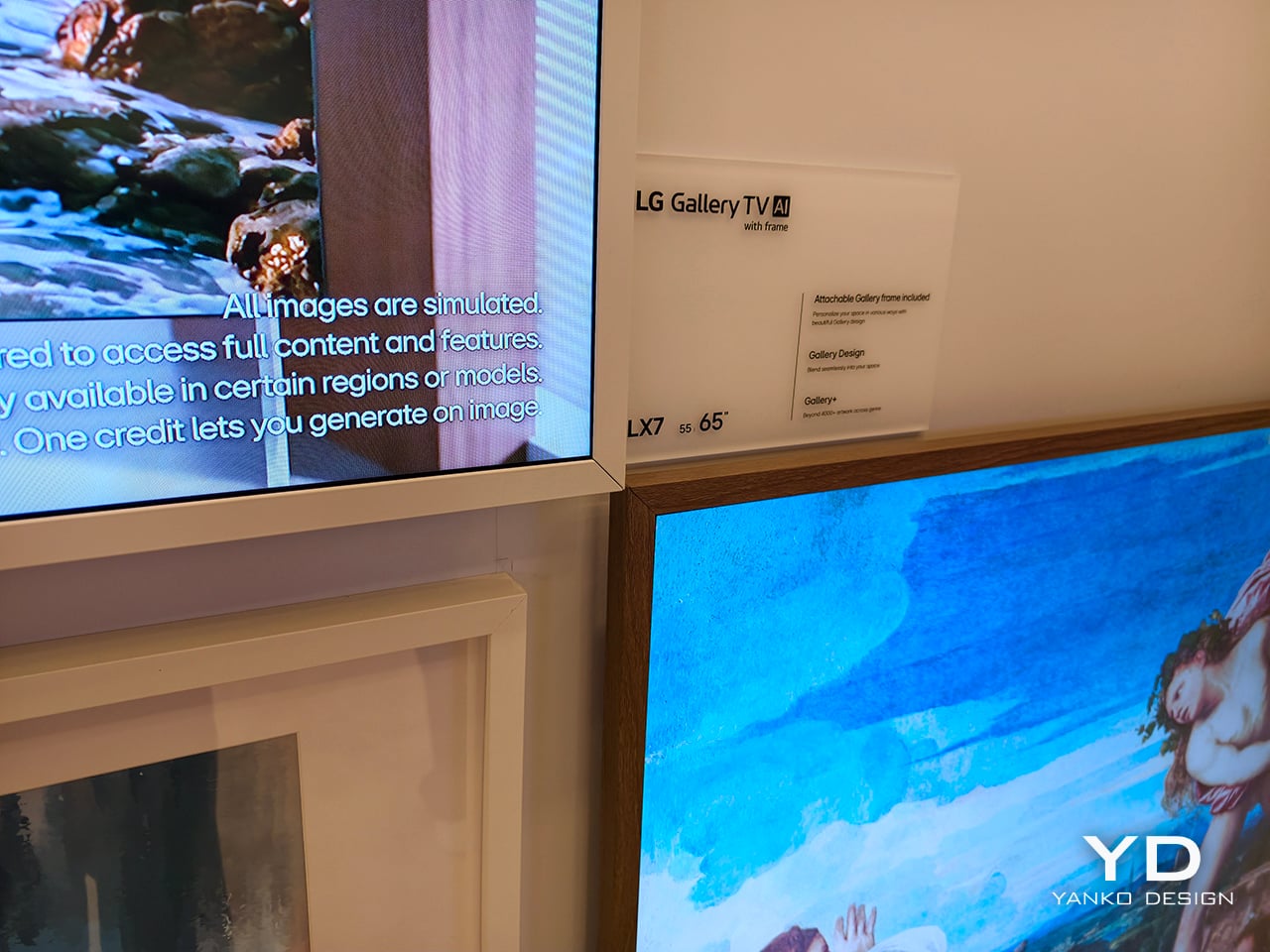
LG’s approach combines the Alpha 7 AI Processor with MiniLED display technology to deliver 4K resolution suitable for both traditional television content and fine art reproduction. The audio system features AI Sound Pro with Virtual 9.1.2ch capability for immersive surround sound simulation. Customizable magnetic frames attach to the slim, flush-mount design, with one frame type included and additional options sold separately. The Gallery+ service provides access to over 4,500 pieces of content spanning fine art, cinematic scenes, game visuals, and animations, though the full library requires a monthly subscription while a free light version offers limited access.
Designer: LG

Here’s the thing that Samsung probably saw coming from a mile away. LG finally decided the art TV market is worth serious attention, which means the category has officially graduated from novelty to legitimate product segment. The Frame has been sitting pretty much unchallenged for years while TCL and Hisense tossed their hats in the ring, but LG entering changes the competitive dynamics entirely. They’ve got distribution channels, brand recognition, and display technology chops that make this a credible threat rather than an unassuming Frame competitor.

The MiniLED implementation with the Alpha 7 processor tells you LG is positioning this above budget competitors. They’re using actual processing power to handle the museum-curated Gallery Mode instead of just slapping a matte filter on a standard panel and calling it art-ready. The anti-glare treatment combined with automatic ambient light adjustment means the TV actively works to maintain image quality as your living room lighting shifts from breakfast through sunset. That’s the kind of engineering detail that separates premium products from cheap imitations trying to ride a trend.

What I find genuinely interesting is the content library breadth beyond traditional fine art. Including cinematic scenes, game visuals, and animations alongside classical paintings suggests LG understands their actual customer base better than the “sophisticated gallery atmosphere” marketing copy implies. People buying these TVs want options that match their personality, whether that’s Monet or concept art from their favorite video game. The generative AI image creation and personal photo display features push this further into customization territory, which makes sense given how much interior design flexibility drives purchases in this category.

The subscription model will be the real conversation starter though. LG offers a free light version but gates the full 4,500-piece library behind a monthly webOS Pay subscription. No pricing details yet, but this fundamentally changes the value equation. You’re buying the hardware and then paying ongoing fees for content access, which works great for LG’s recurring revenue goals but might frustrate consumers expecting a one-time purchase. Samsung doesn’t charge monthly fees for art content on the Frame, so LG is betting their library quality and refresh rate justify the subscription model. We’ll see if consumers agree when the real pricing drops at CES next week.

The post LG Collaborated with Museum Curators to Bring the Gallery TV to CES 2026 first appeared on Yanko Design.