A Ring of Light: Ancient Symbols Meet Modern Art at Giza

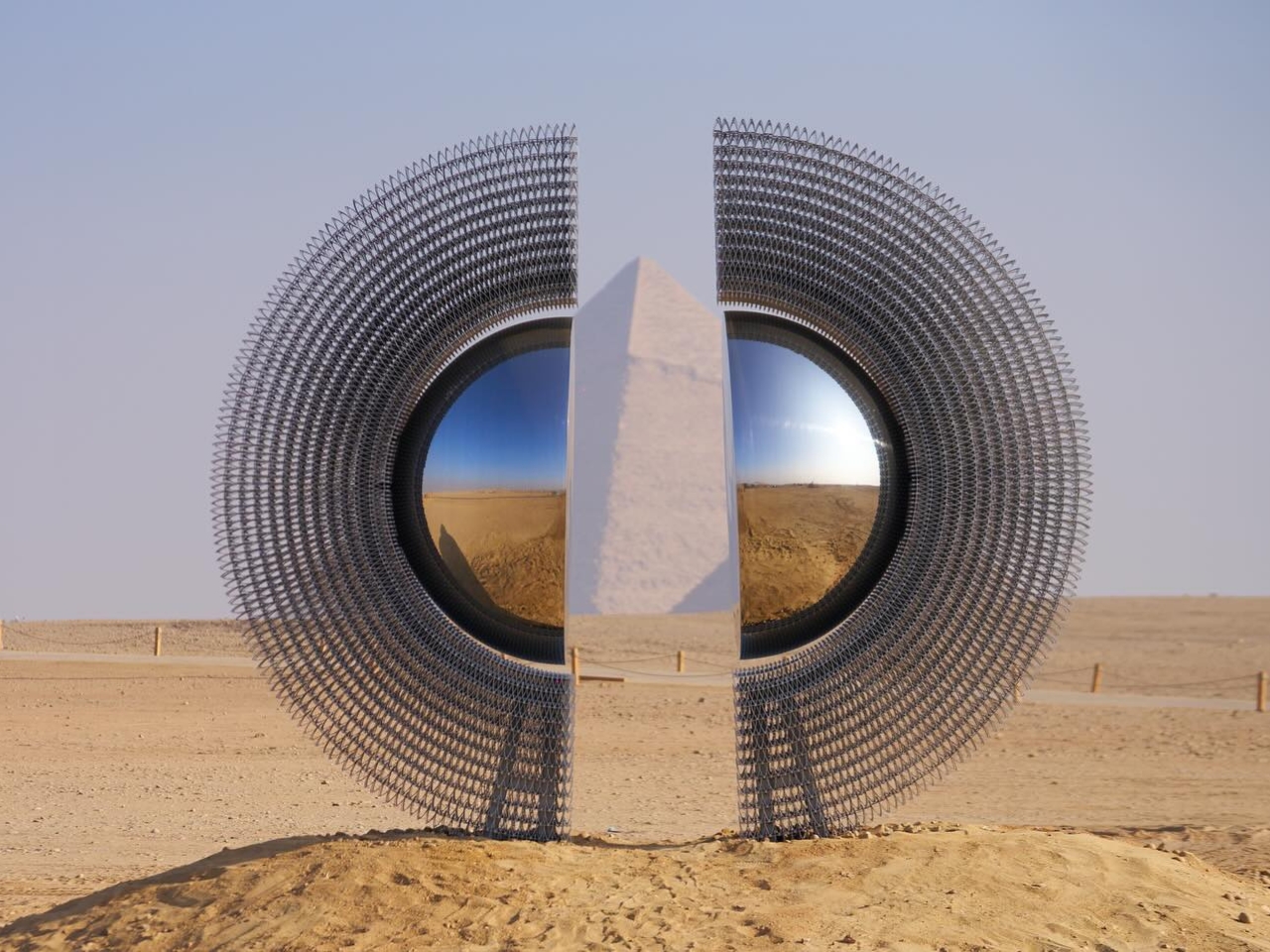
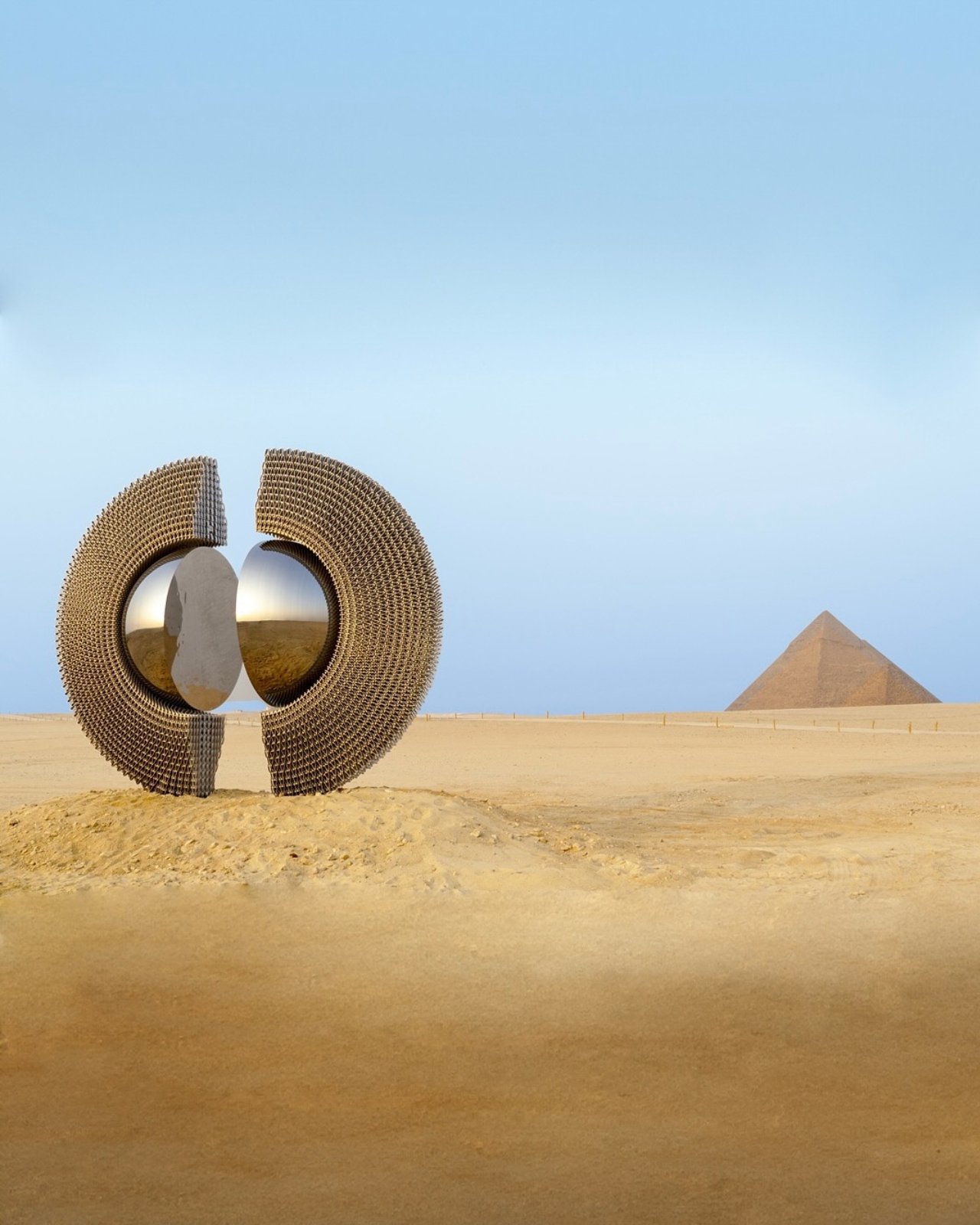
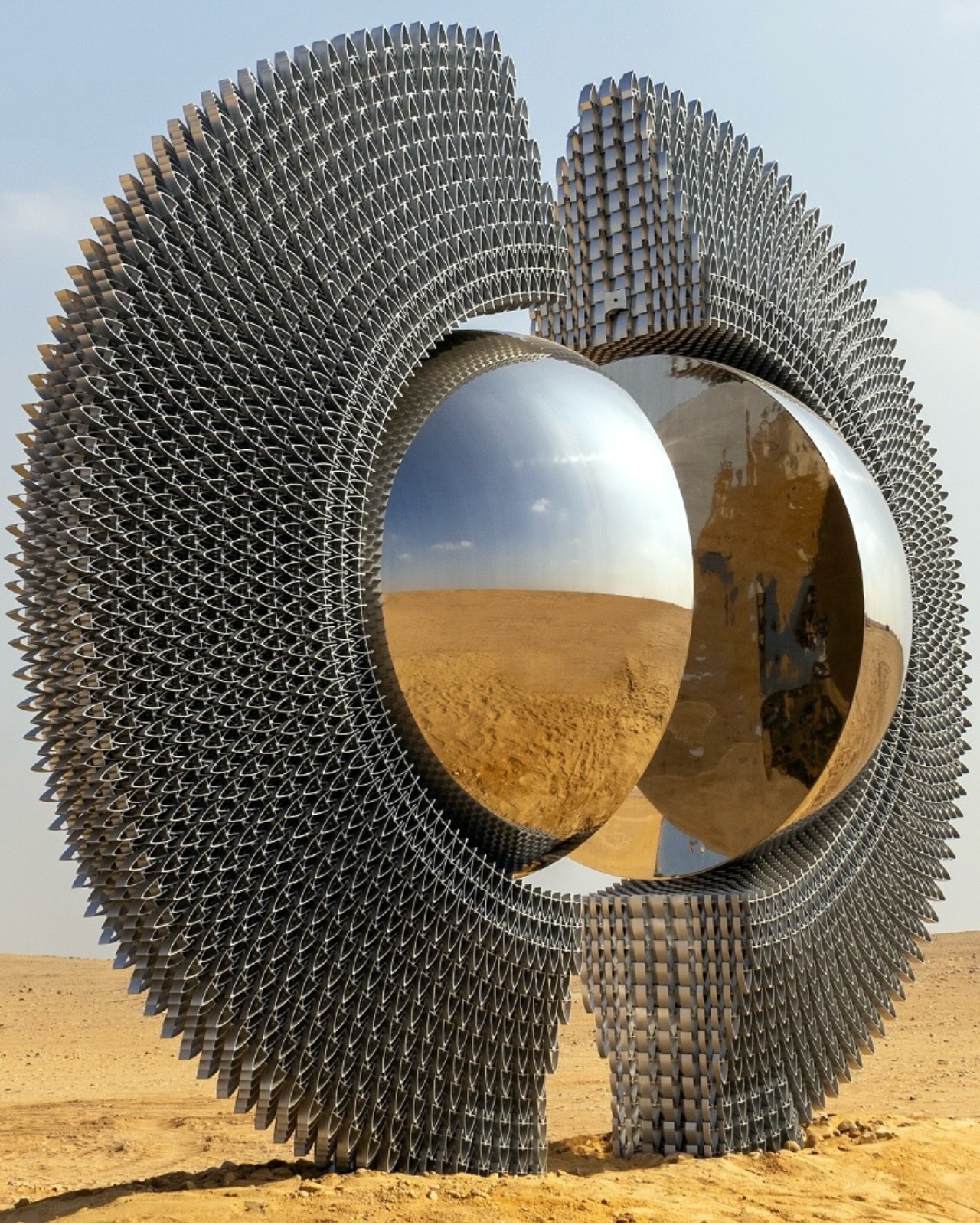
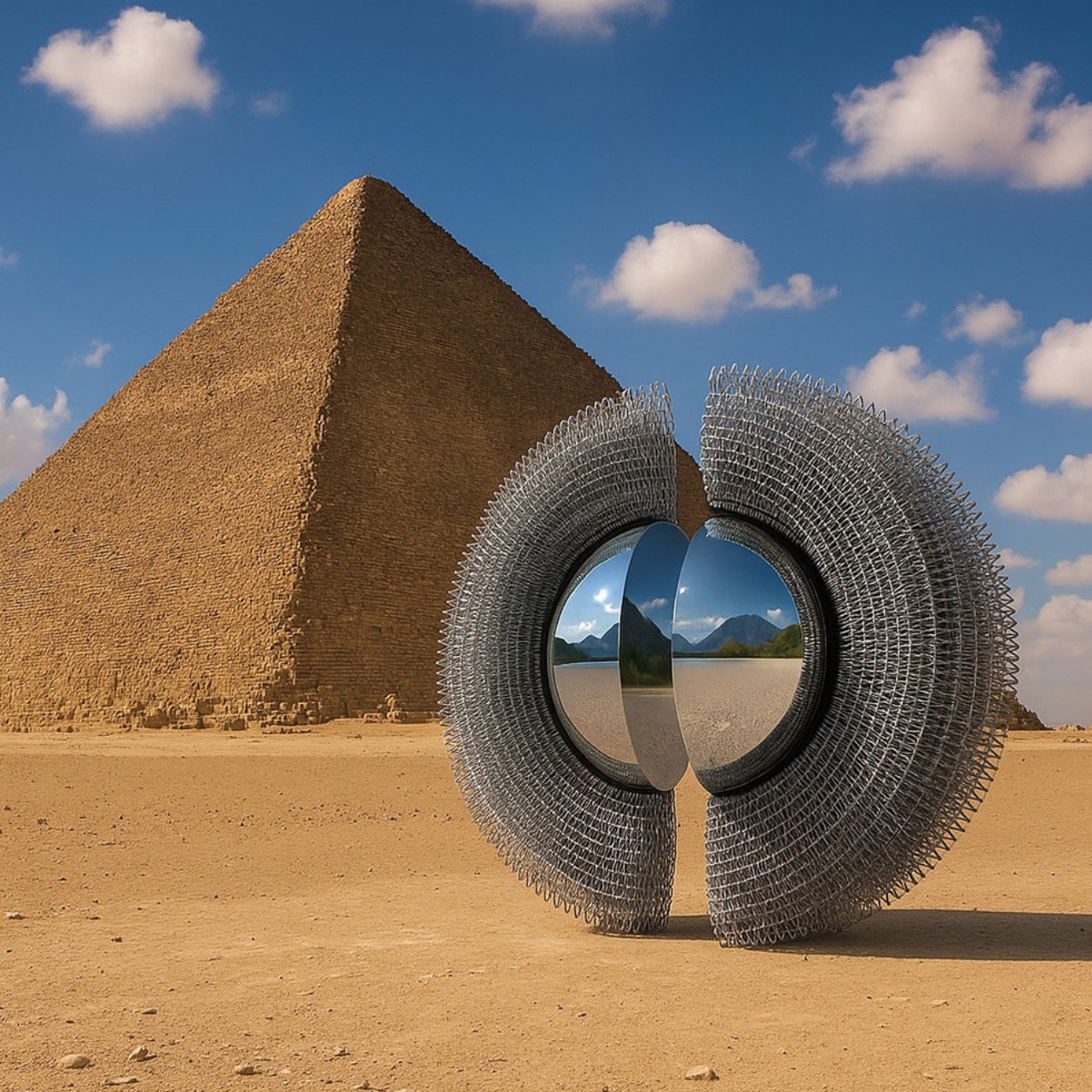
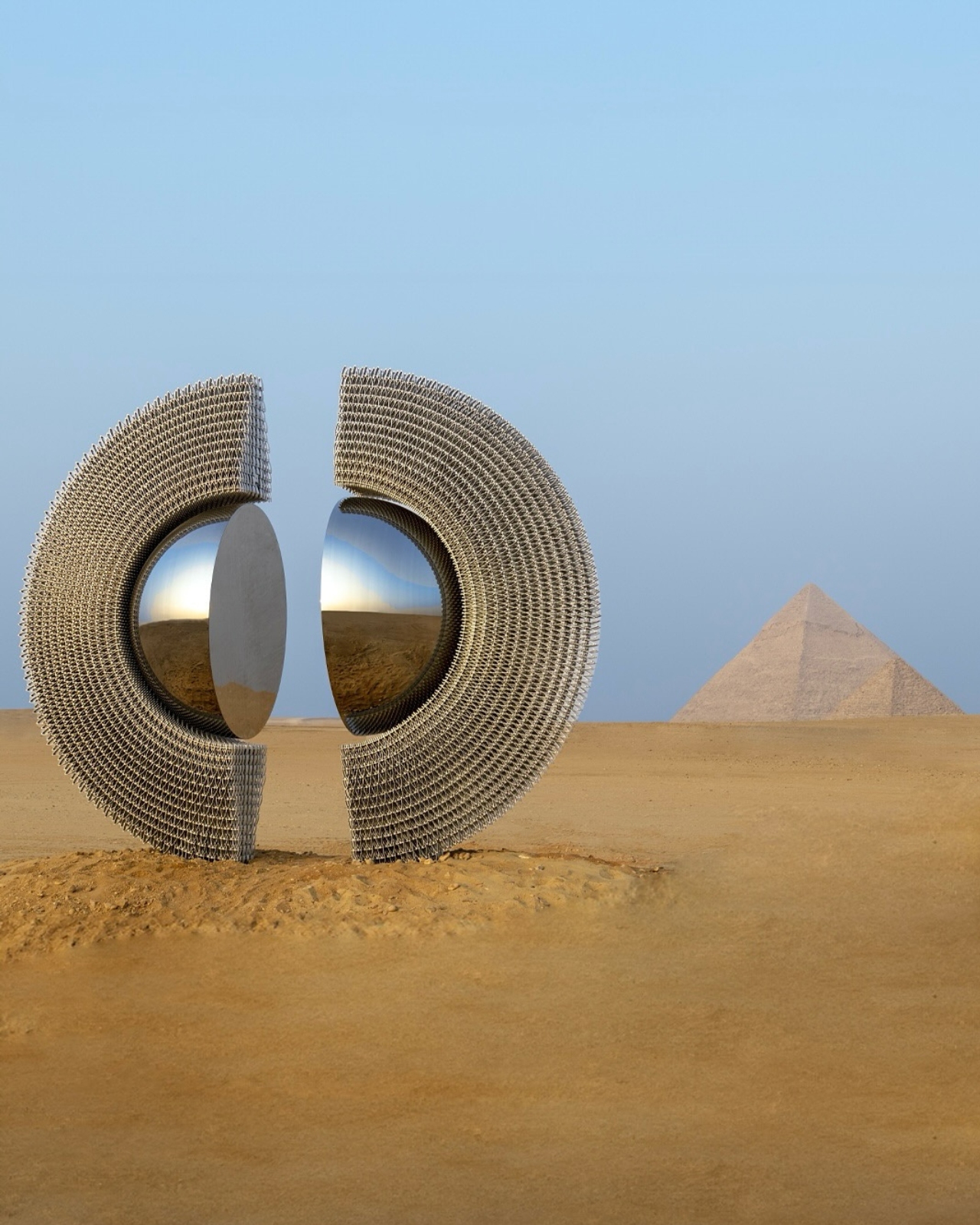
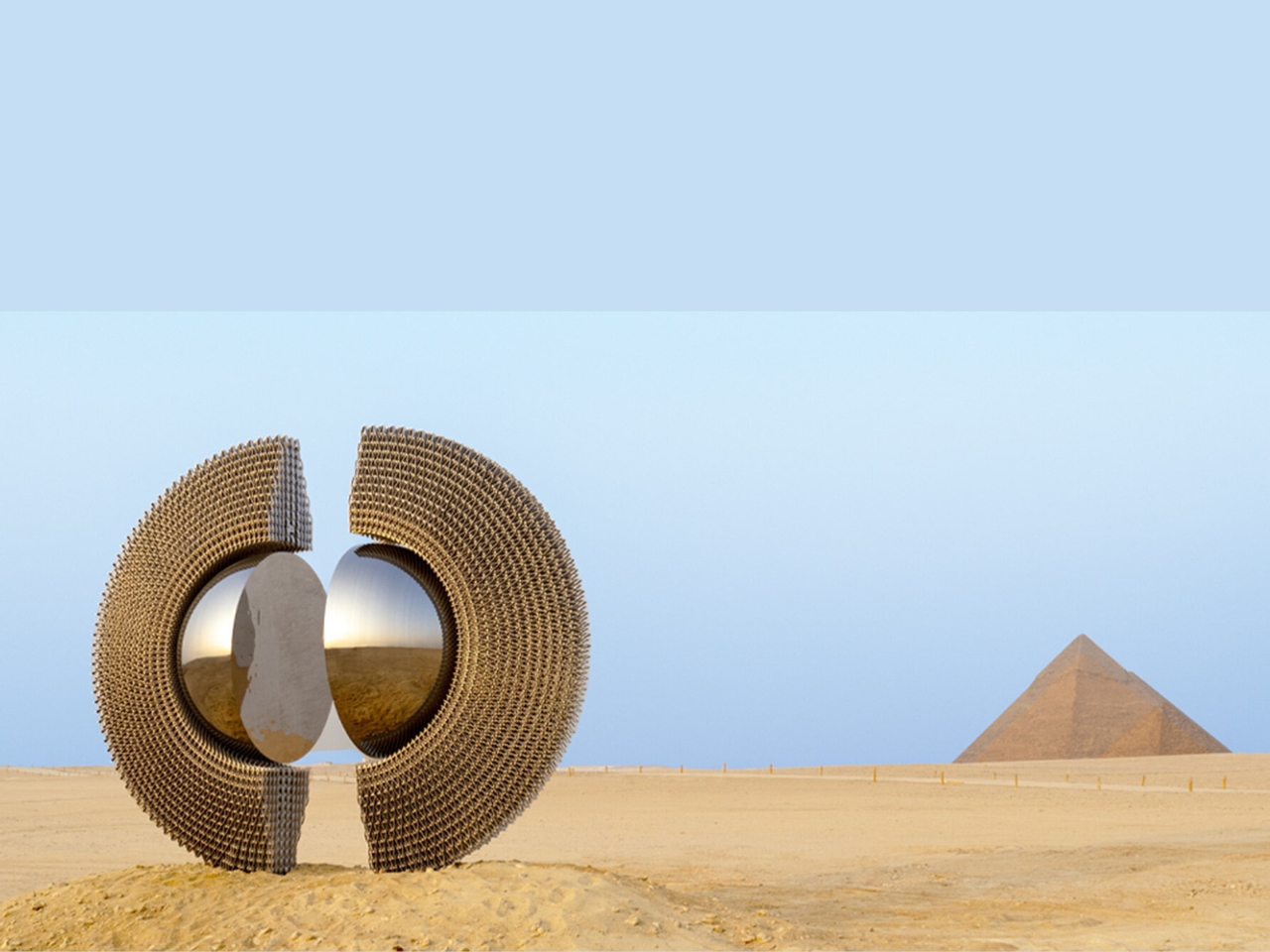
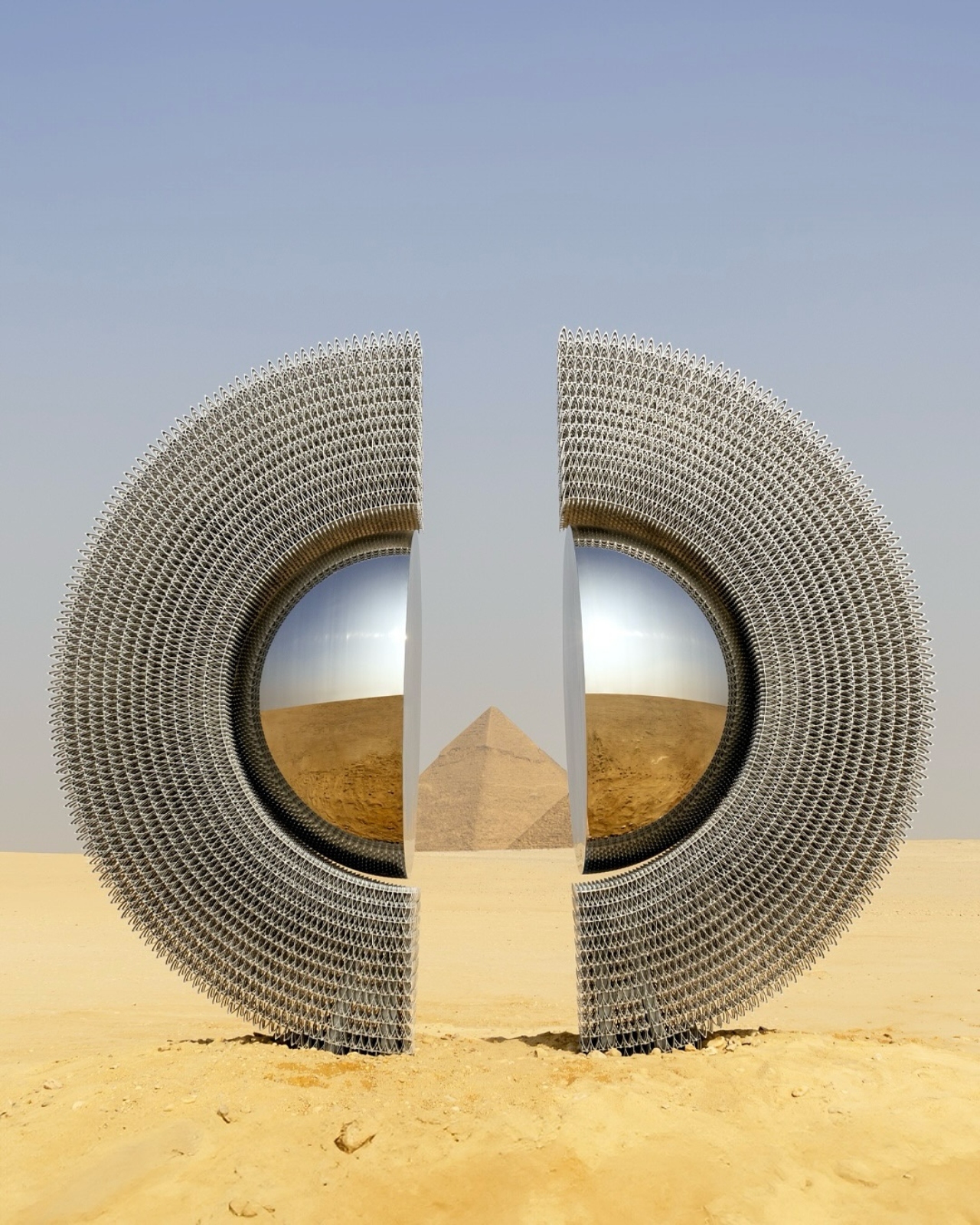
Picture this: you’re standing on the Giza Plateau, the Great Pyramids towering behind you as they have for 4,500 years, and suddenly there’s something new in this ancient landscape. A massive aluminum ring that looks like it fell from the future, catching sunlight and throwing it back at history itself. That’s exactly what Turkish artist Mert Ege Köse just dropped on us with “The Shen,” and honestly, it’s the kind of art installation that makes you stop scrolling and actually want to book a flight to Egypt.

“The Shen” is currently on display as part of Art D’Égypte’s “Forever Is Now” exhibition, now in its fifth edition, and it’s doing something really special with how we think about contemporary art in historical spaces. The sculpture isn’t trying to compete with the pyramids or overshadow them. Instead, it creates this incredible dialogue between ancient Egyptian symbolism and modern design sensibility.

Designer: Mert Ege Köse

The name itself is a clue to what Köse is up to. In ancient Egyptian hieroglyphics, the Shen symbol represented eternity and protection, depicted as a circle of rope with no beginning or end. It’s basically the OG infinity symbol, showing up in royal cartouches and religious texts throughout pharaonic history. Köse took that concept and supersized it into a monumental aluminum structure that frames the pyramids like the world’s most epic viewfinder.

What makes this work so compelling is how it plays with reflection and perception. The polished aluminum surface doesn’t just sit there looking pretty. It actively engages with its surroundings, capturing the shifting desert light, the blue Egyptian sky, and the ancient stones in a constantly changing display. Depending on where you stand and what time of day you visit, you’re basically looking at a different artwork. It’s responsive design taken to a literal, sculptural extreme.

Köse has built his practice around creating these kinds of sculptural works that bridge tradition and innovation. His pieces typically feature smooth surfaces and malleable aluminum alloys, materials that feel distinctly contemporary while still carrying a sense of timelessness. There’s a poetic quality to his work that doesn’t hit you over the head with meaning but instead invites you to find your own connections.

The location matters enormously here. Art D’Égypte has been pushing boundaries with “Forever Is Now” since 2021, transforming the Giza Plateau into an open-air gallery where contemporary artists from around the world respond to one of humanity’s most iconic historical sites. It’s not just about plunking modern art next to ancient wonders for the shock value. The exhibition carefully considers how contemporary creative practice can illuminate and honor historical context rather than clash with it.

“The Shen” succeeds because it understands this balance. The circular form echoes not just the ancient Egyptian symbol but also the eternal cycle that the pyramids themselves represent: life, death, and the continuity of human creative expression across millennia. When you look through the ring toward the pyramids, you’re literally framing history through a contemporary lens. It’s a visual metaphor that works on multiple levels without feeling forced or pretentious.

There’s also something to be said about accessibility here. Unlike a lot of monumental sculpture that feels designed for art world insiders, “The Shen” is immediately photographable and shareable. It gives visitors a way to interact with both the artwork and the pyramids in a fresh way. In our current moment where experience and documentation are so intertwined, that matters. The sculpture becomes a portal, not just literally but also digitally, connecting people worldwide to this ancient site through contemporary art.

As an emerging voice in Turkish contemporary art, Köse is making moves that position him well beyond regional recognition. Bringing “The Shen” to Egypt, working at this scale, and creating something that genuinely enhances one of the world’s most significant historical sites is the kind of project that defines careers. What “The Shen” ultimately offers is something increasingly rare: art that makes you feel something without requiring an art history degree to understand it. It’s beautiful, it’s thoughtful, and it reminds us that the conversation between past and present doesn’t have to be complicated to be profound. Sometimes all you need is a perfect circle of light.

The post A Ring of Light: Ancient Symbols Meet Modern Art at Giza first appeared on Yanko Design.
This Tiny Las Vegas Sphere Replica Lights Up With 945 LEDs That Display Graphics And Emojis

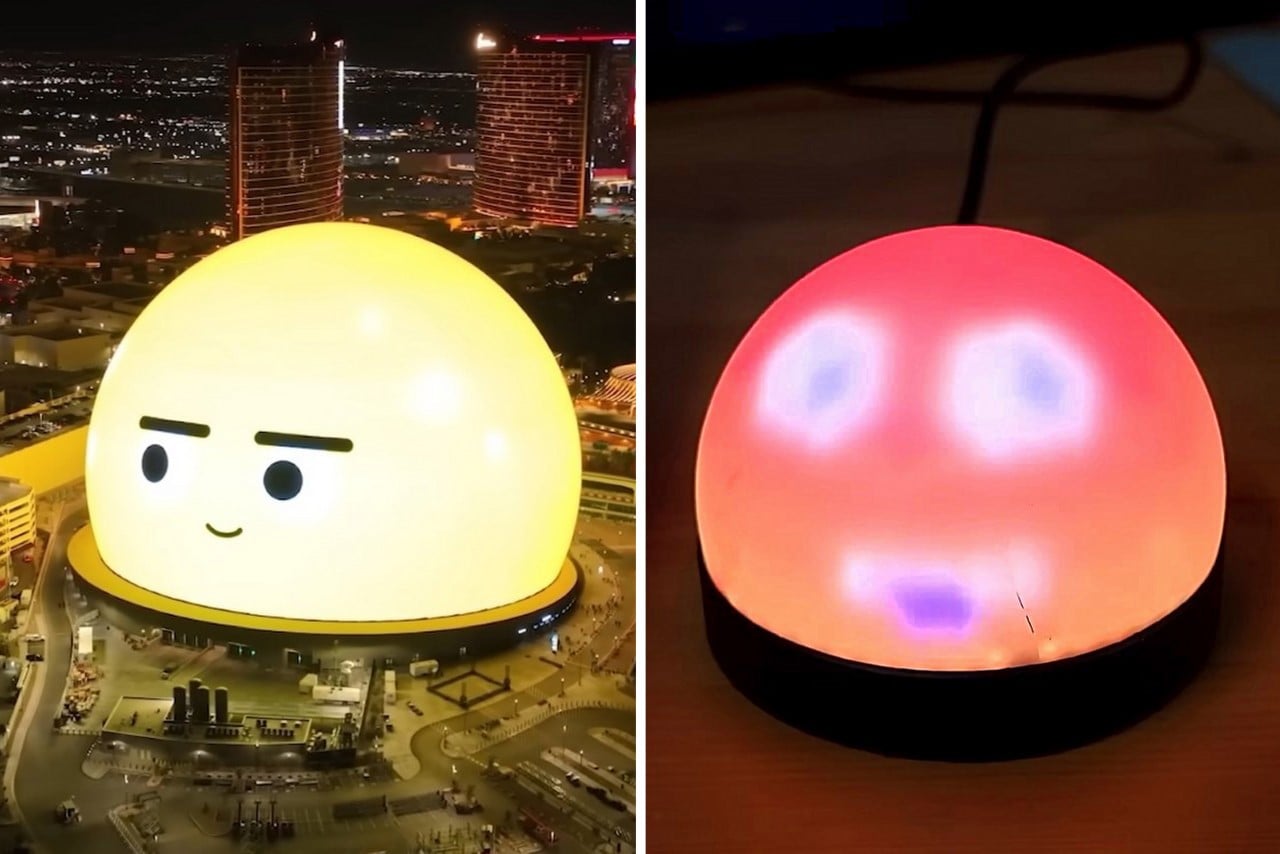
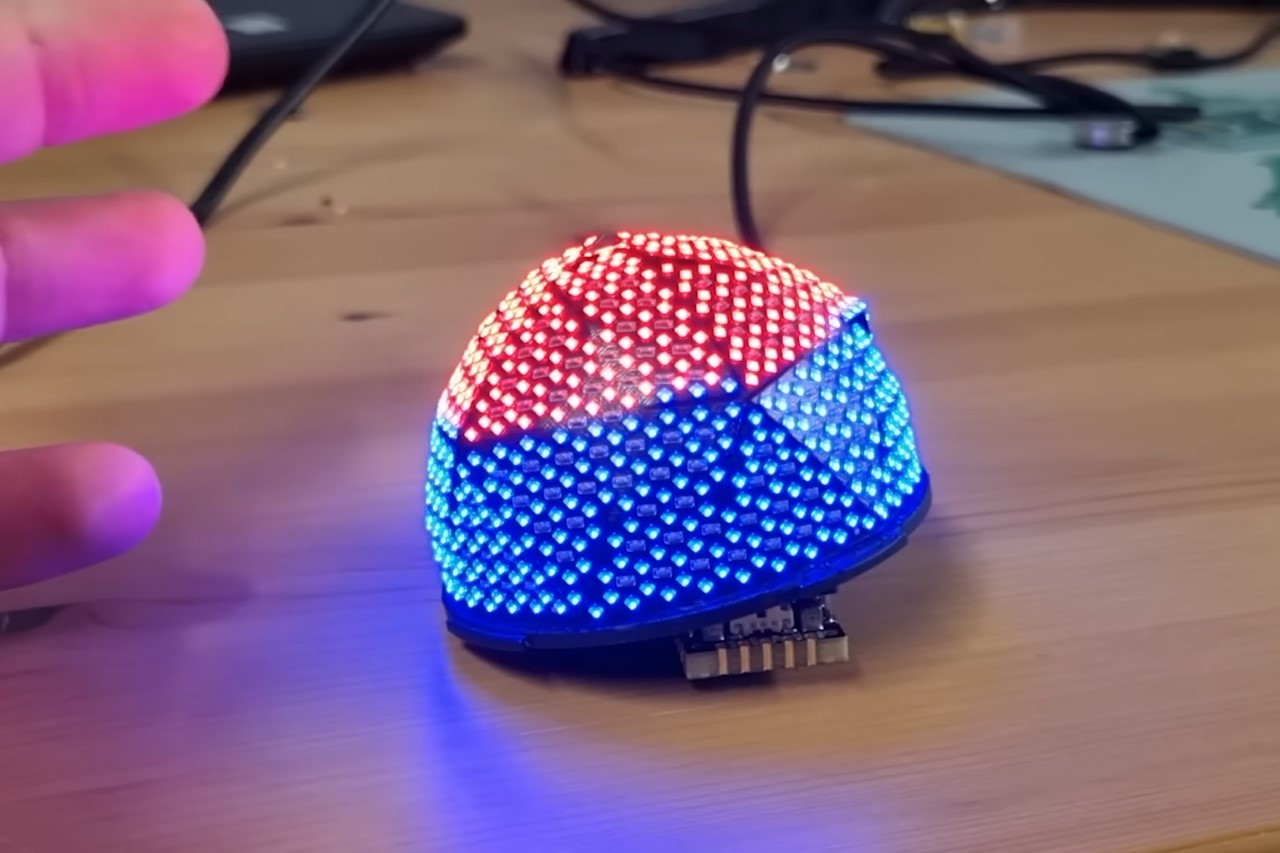
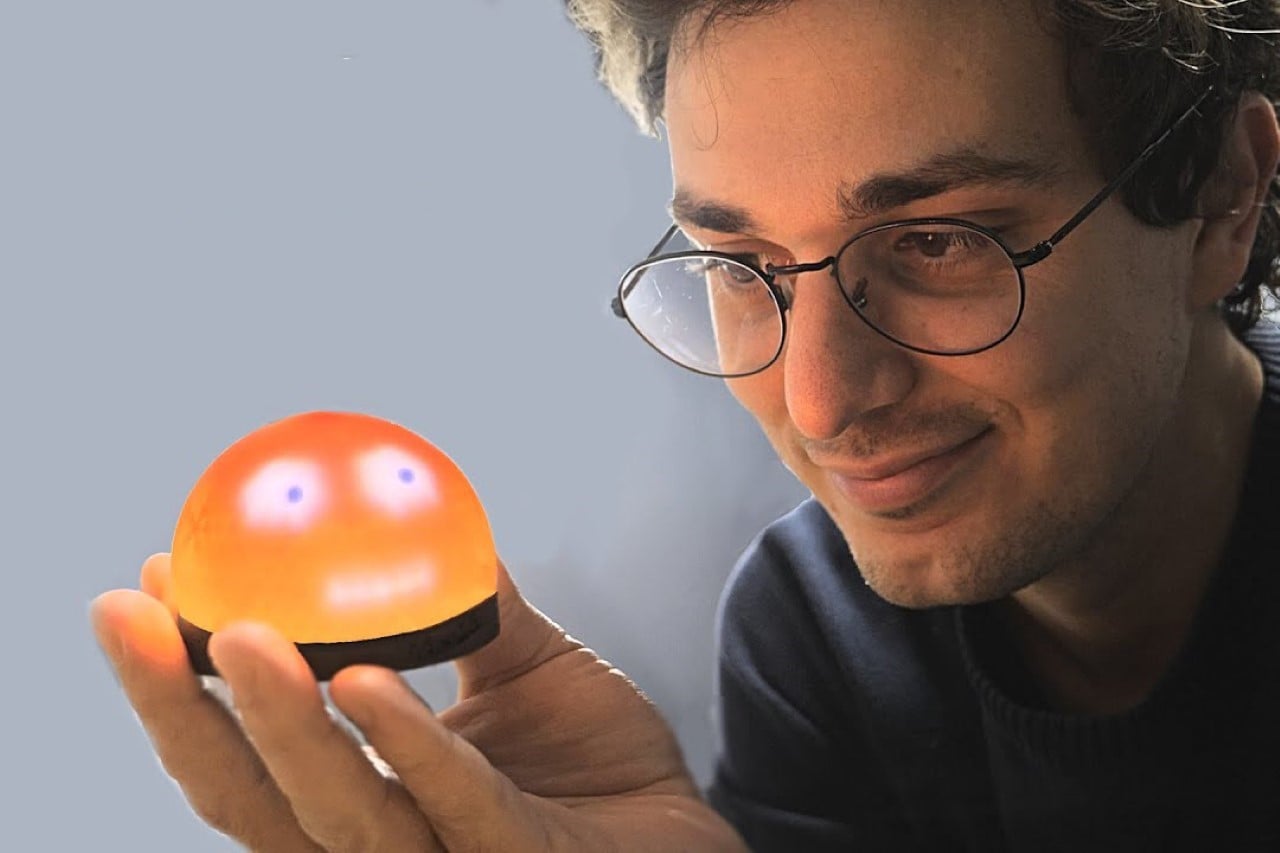
Such is the nature of the internet that it honestly feels like years since the Sphere in Las Vegas was inaugurated… but truth be told, the massive hemispherical display only opened to the public in September last year. Practically one of the most visible buildings on the north end of the Vegas Strip (you can even see it as your flight lands at the airport), the Sphere gained meme status with its sheer size and scale, and its ability to become a canvas for everything from advertisements to graphics, and even the occasional hilarious emoji that looks around and interacts with objects around the desert city. YouTuber Carl Bugeja decided that in theory, it shouldn’t be too difficult to make a homemade version of the Sphere using a bunch of LEDs and clever programming. His journey led him to build an adorable recreation of the sphere, scaled down to fit in your palm. The MINI Sphere is an adorable replica of a modern architectural wonder, and even lights up to display various graphics like an eyeball, the planet Earth, swirling colors, or emoji faces. A built-in accelerometer even detects when you lift the MINI Sphere off the tabletop, prompting it to display a scared emoji face!

Designer: Carl Bugeja

The original Sphere is a marvel of maths, engineering, and design, with its outer shell comprising a staggering 1.2 million LEDs that come to life to give the Sphere its own personality of sorts. The thing is visible from miles away, allowing even people in hotel rooms to be privy to the Sphere’s graphics. In between quirky visuals like a spinning earth, an emoji, or just particle graphics, the globe-shaped building also serves as a billboard for brands as well as for the venue itself, which plays movies as well as hosts concerts. The Sphere cost an impressive $2.3 billion to build, but Carl’s task was to create a massively scaled-down version of the building for a minuscule fraction of the price.

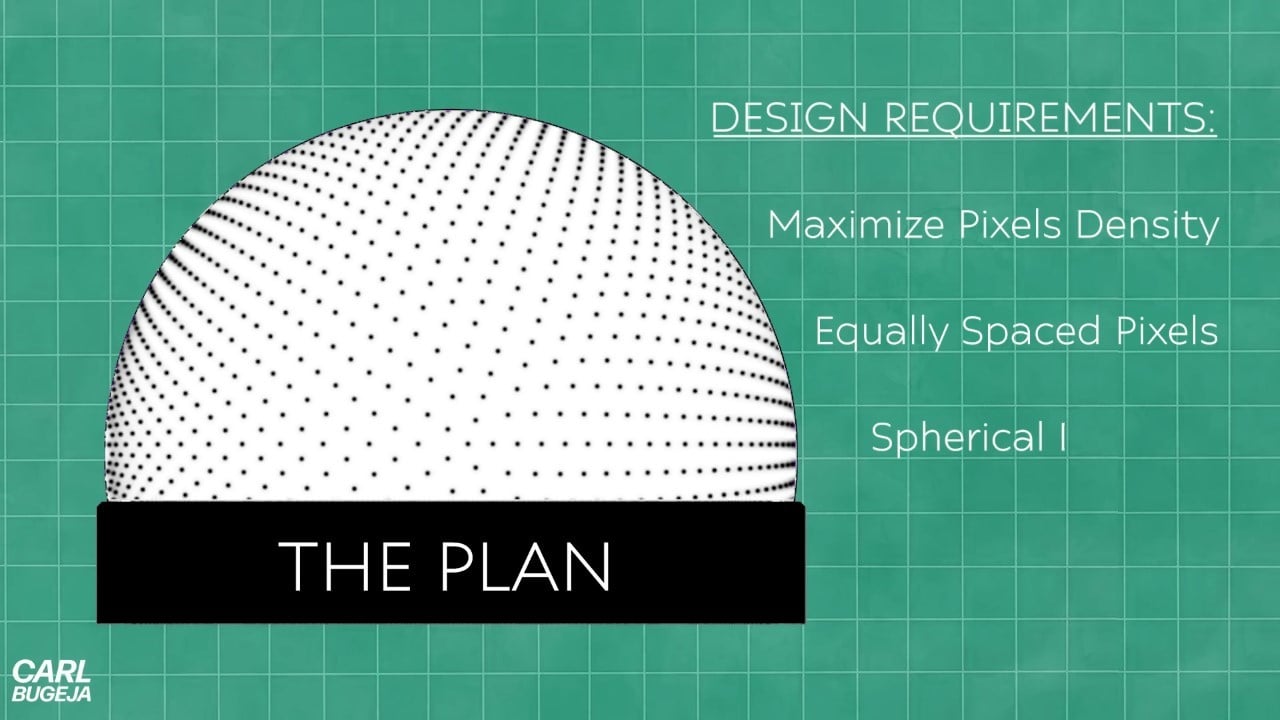
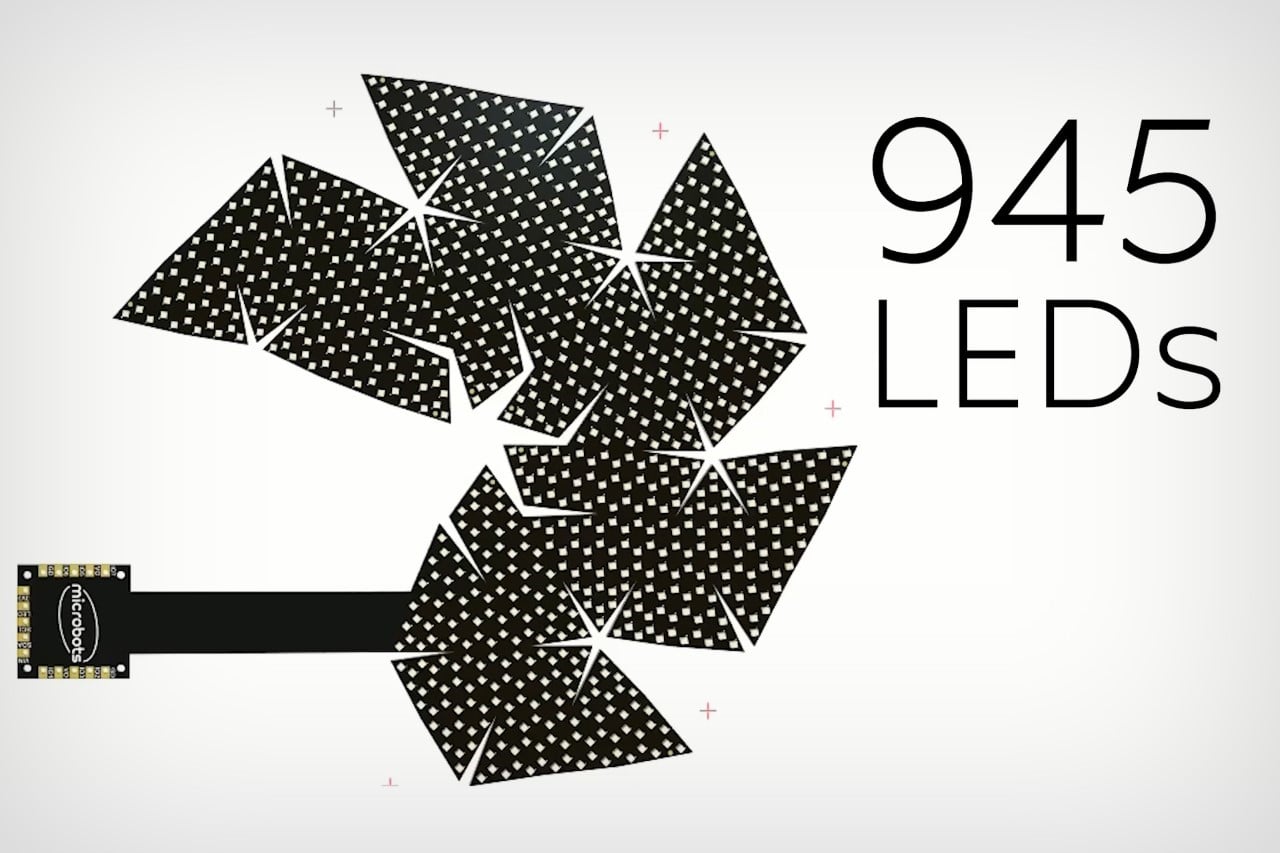
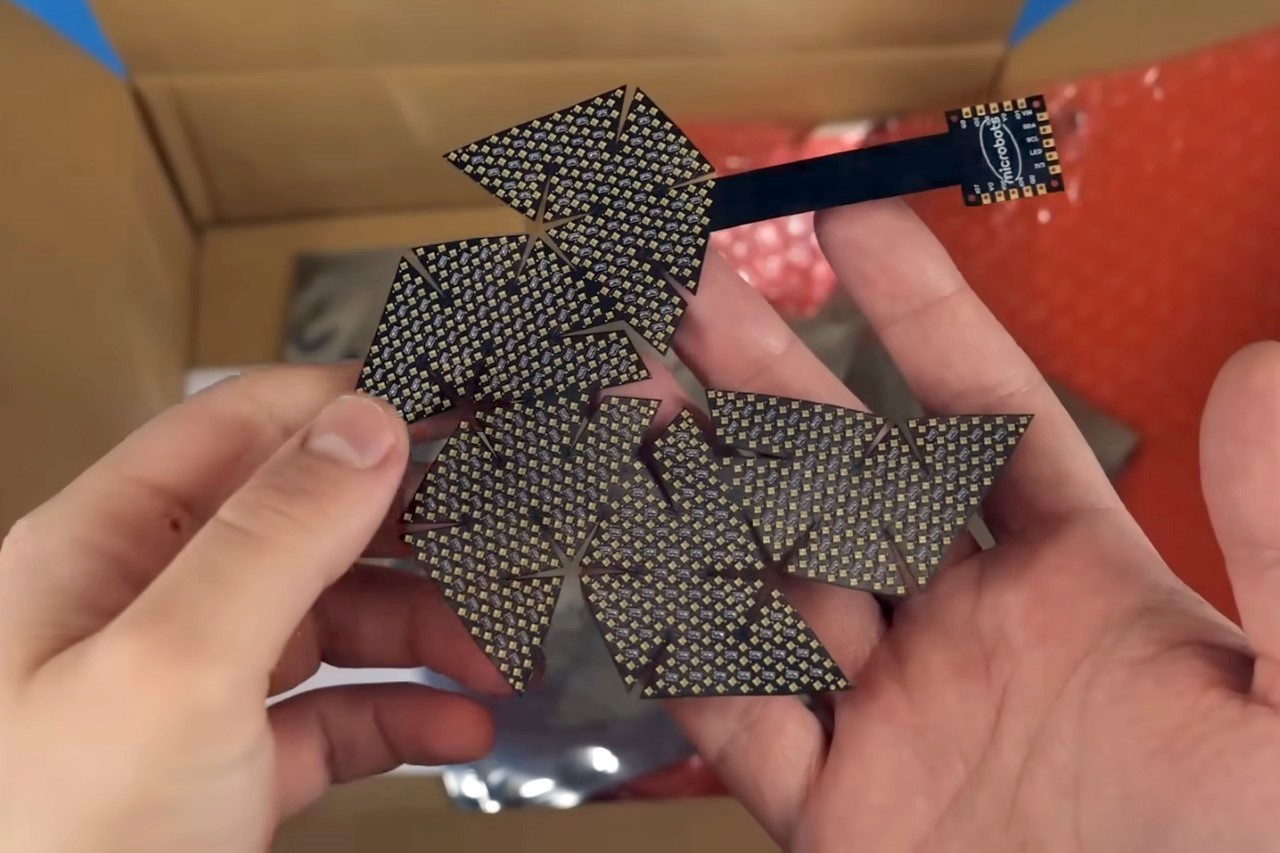
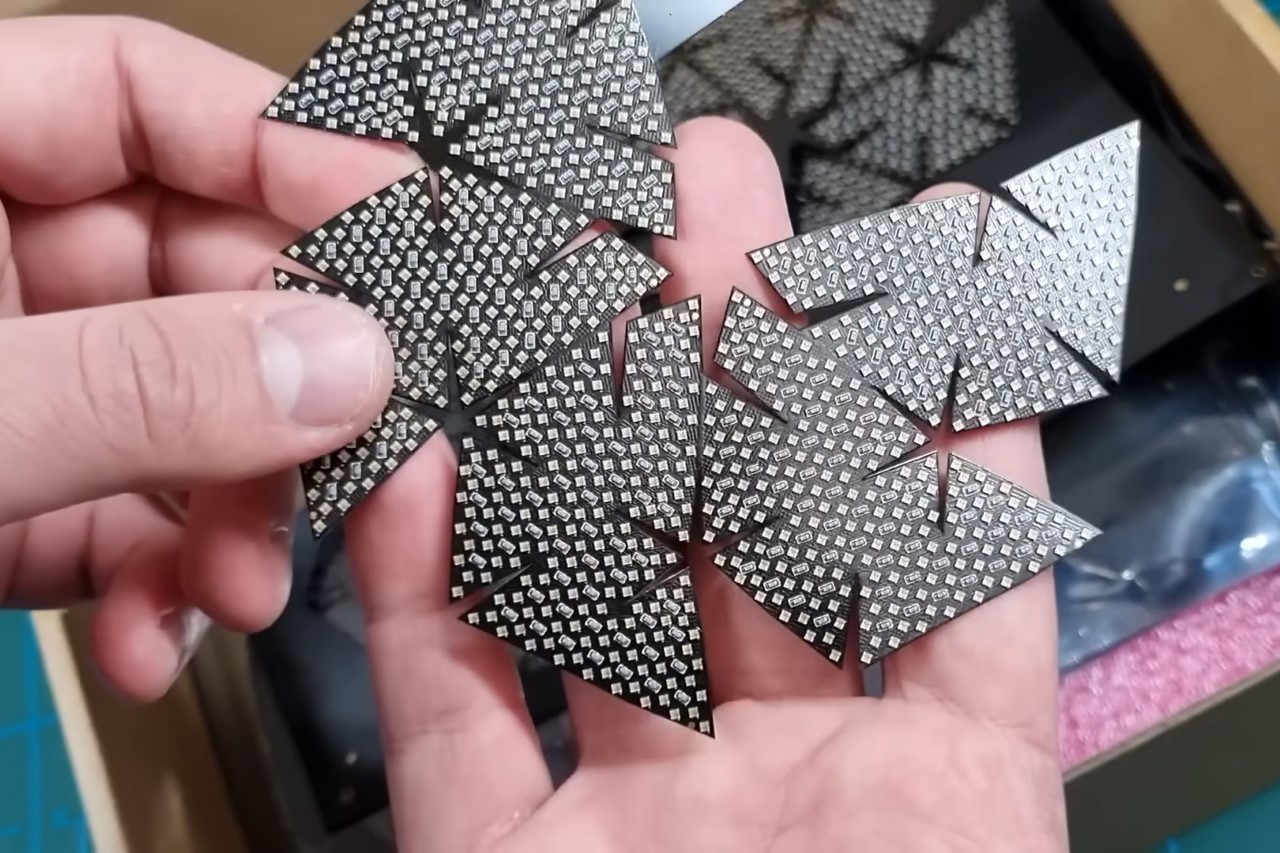
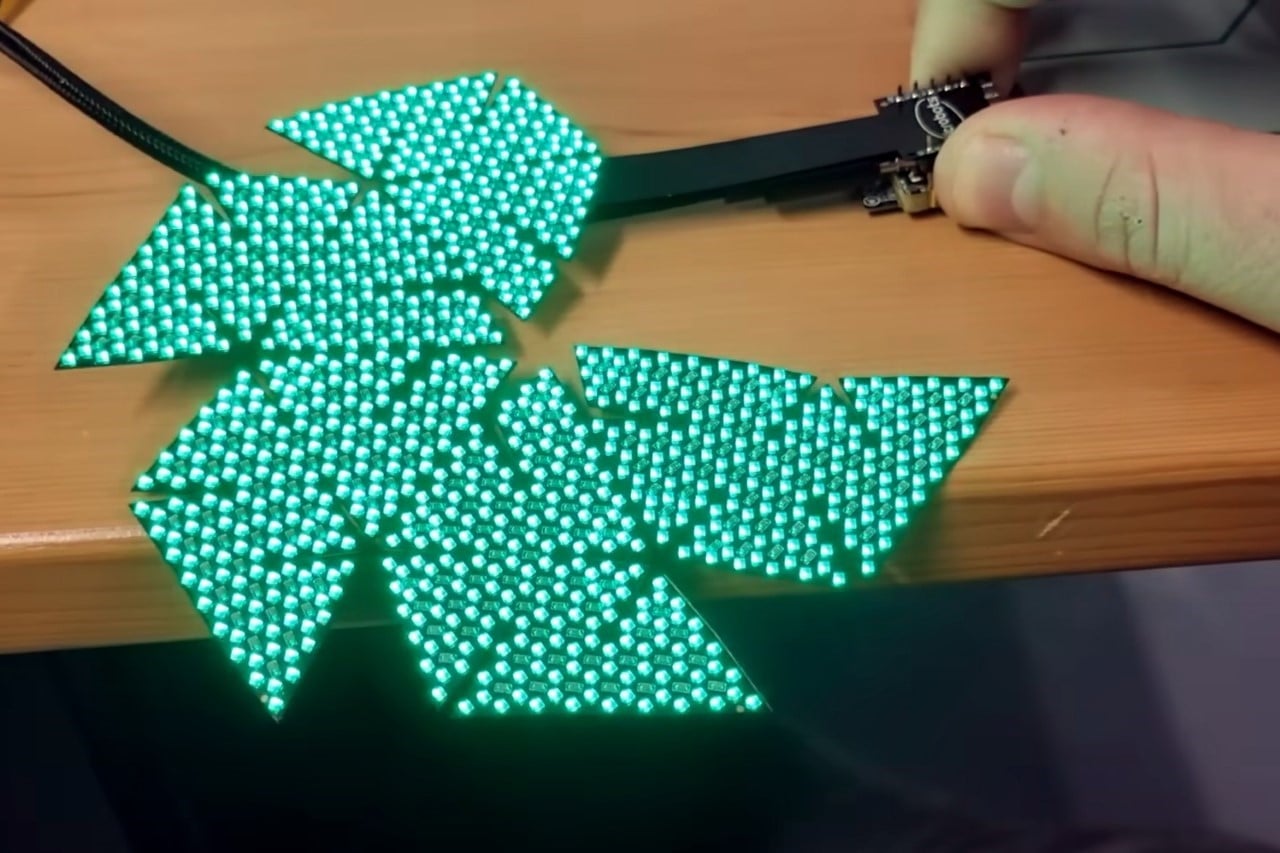
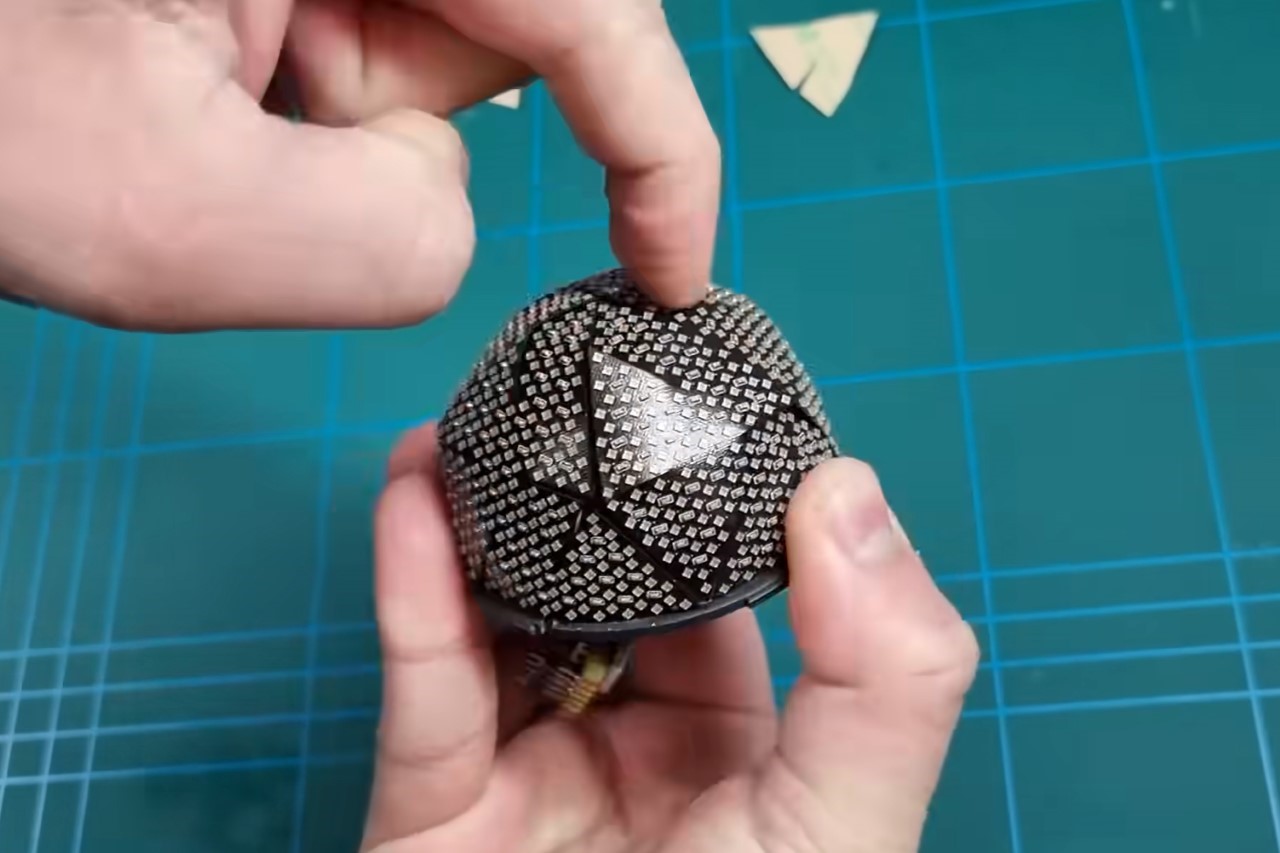
Carl’s plan was to build a roughly baseball-sized version of the monument, while still maintaining a compact pixel density that allowed his MINI Sphere to look like a display and not just a cluster of random pixels. His first idea was to simply have an LED ring rotating at high speeds, creating the effect of a sphere display, but that had problems – it would be too blurry, too complicated, and too noisy. He finally decided to use SK6805 LEDs, which measured a mere 1mm in width and height. Packing a staggering 945 of them onto a bendable PCB from PCBWay, Carl began building the MINI Sphere.

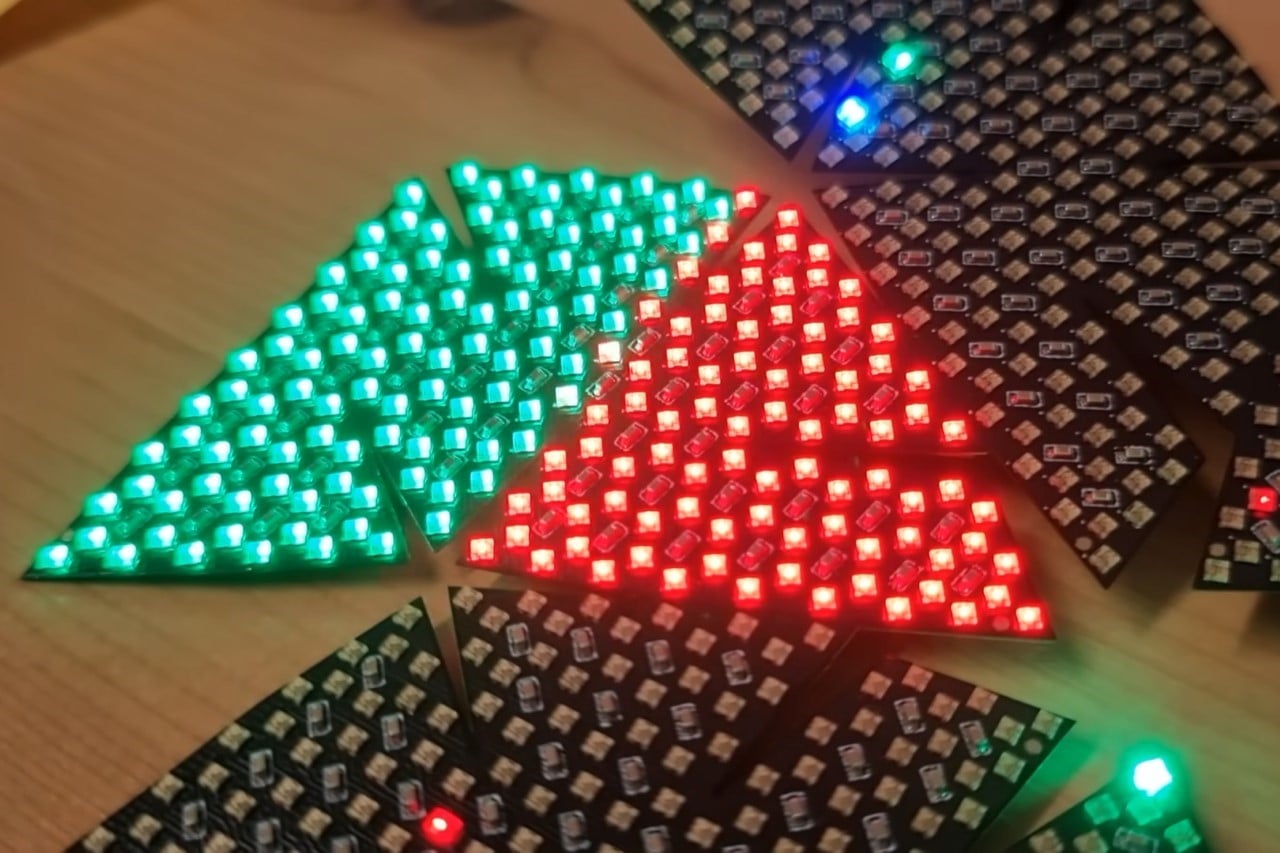
The LEDs were oriented on an odd geometric shape, comprising multiple triangles joined together. The idea was to simply fold the triangles to create a geodesic sphere. Carl would then program each LED in a way that would create a continuous display by building multiple graphic patches that could be stitched together in a software.

Carl connected the LED board to a CodeCell controller unit, using a USB-C cable to power the display. He then stuck the PCB onto a hemispherical 3D printed base, carefully ensuring each triangular panel was glued in place without any distinct visible seams.

Before his final design step, Carl began testing out visual patterns by designing them on a computer and feeding them to the MINI Sphere. Since this was a spherical display comprising multiple triangular facets, feeding visuals wasn’t as easy as simply dragging and dropping JPEGs. They had to be sliced into different artboards that could then be fed to the sphere’s various LED panels.

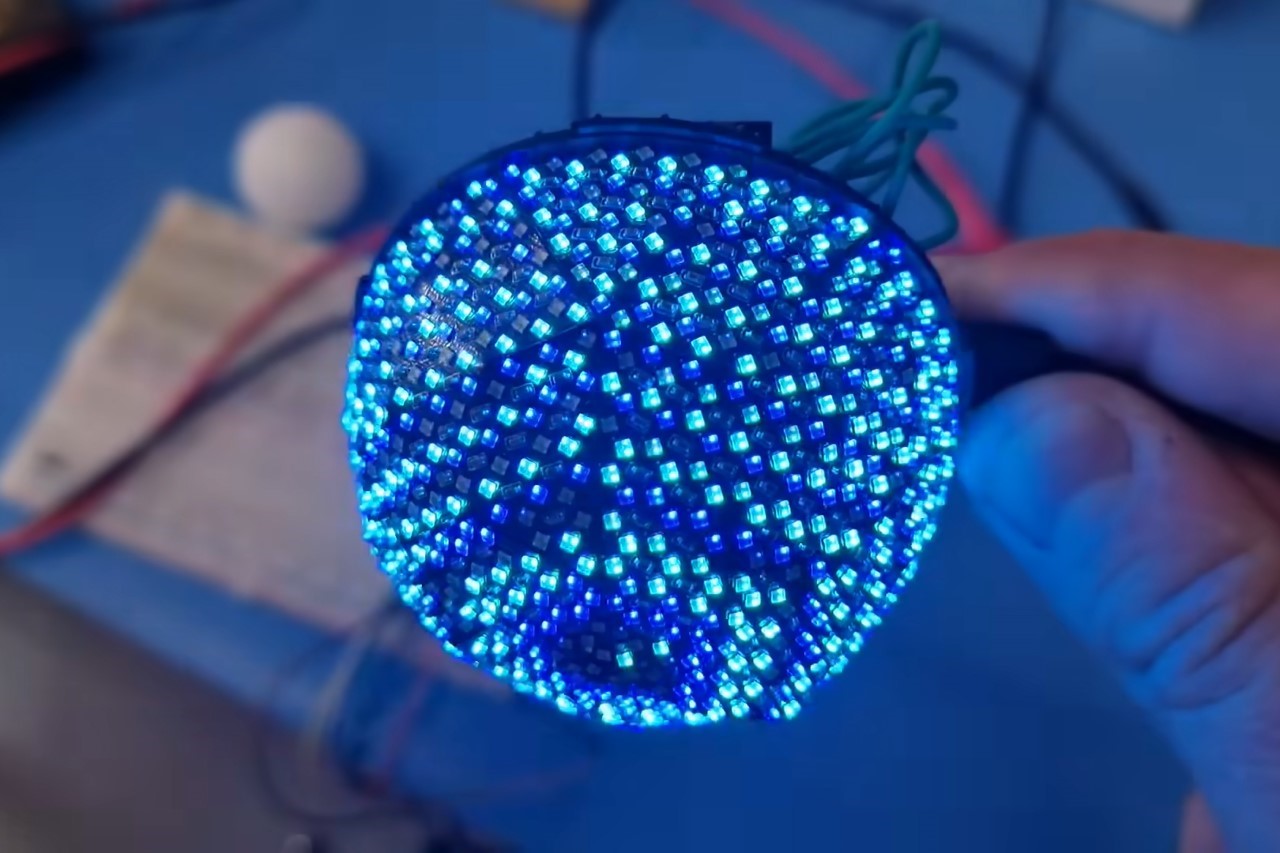
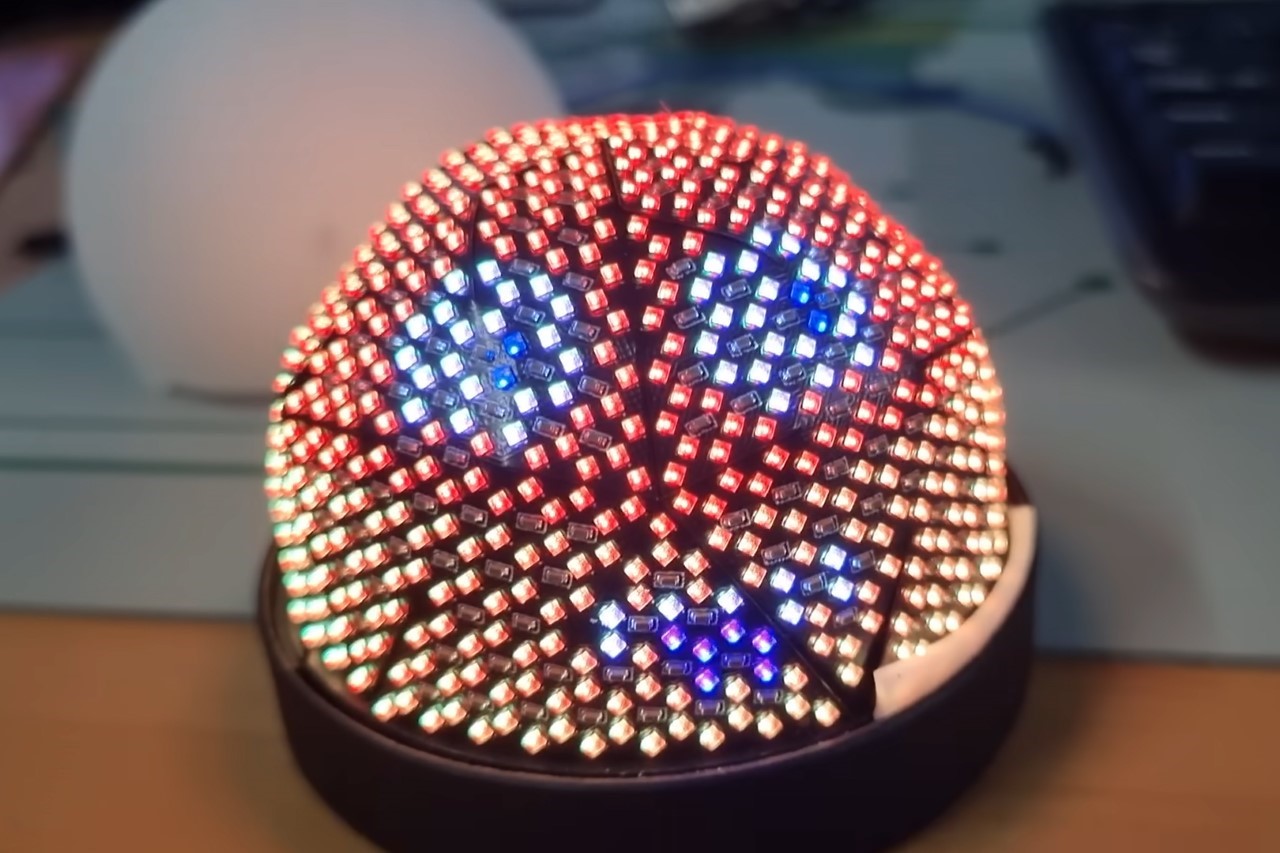
Finally, the MINI Sphere got its crowning component, a diffuser that helped blend the individual pixels to create a more coherent image. Given that the MINI Sphere has less than 1000 pixels (that’s hardly high-definition), it was difficult for the eye to perceive clear images because the gaps between the pixels were so pronounced. To fix this, Carl simply mounted a translucent cover on the Sphere, helping blur the gap between the pixels and create a more easy to identify image. Sure, one would agree that the end result isn’t as crystal clear as the original Sphere, but by DIY standards, it’s very impressive!

The MINI Sphere currently displays the graphics shown below (including even a blinking eye that looks around), but the most adorable is the emoji, which reacts to being shaken or picked up!

The post This Tiny Las Vegas Sphere Replica Lights Up With 945 LEDs That Display Graphics And Emojis first appeared on Yanko Design.