Nader Gammas’ Vessels Turns Light Into a Slow, Living Presence

The Vessels collection feels like a quiet confession from Nader Gammas. Known for lighting defined by brutalist strength and architectural discipline, Gammas takes an unexpected turn inward with this series. The sharp certainty that once shaped his work softens here, replaced by forms that feel grown rather than constructed. These lights do not announce themselves. They linger. They unfold slowly, like something discovered rather than designed.

The inspiration comes from cup fungi, a modest yet mesmerizing group of organisms that bloom close to the earth. Their clustered growth patterns and delicately rippled rims become the emotional backbone of the collection. Instead of rigid symmetry, the vessels curve and open organically, as if responding to an internal logic of growth. Light is not forced outward. It is held, filtered, and gently released, echoing the way fungi cradle moisture and air within their fragile structures.

Designer: Nader Gammas

This natural influence marks a clear departure from the heavy brass and assertive geometries that have long defined Gammas’ work. In Vessels, the language shifts toward softness and restraint. Ceramic takes center stage, valued for its warmth and sensitivity to touch. Its surface carries subtle variations in thickness and texture, details that only emerge through hand shaping. Brass remains present, but now it plays a supporting role, adding quiet warmth rather than visual weight.

Each piece is shaped entirely by hand, without molds or replication. This process ensures that every vessel is singular, carrying its own proportions, curves, and imperfections. The result is a collection that feels almost alive. As light passes through the ceramic forms, it creates a slow interplay of glow and shadow, giving the impression that the object itself is breathing. These are not fixtures designed to disappear into a ceiling or wall. They are characters within a space, each with its own presence and mood.

While the aesthetic has softened, the philosophy behind the work remains firmly rooted. Gammas has always believed that lighting is fundamental to how people experience a space emotionally. That belief traces back to his early life growing up in the United States with Syrian roots, where he developed an instinctive understanding of how form and function shape atmosphere. His academic path, from architecture at the University of Jordan to an MFA in Lighting Design at Parsons School of Design, refined that instinct with technical precision.

Today, with exclusive representation by STUDIOTWENTYSEVEN, Gammas stands confidently on the global design stage. Yet Vessels feels deeply personal, almost like a return to intuition. It is a collection that listens more than it declares, allowing nature to guide form and light to guide emotion.

Vessels is a lighting series, but with a meditation on growth, material, and restraint. Through handmade ceramic forms accented with brass, the collection transforms light into something felt rather than seen, shaping spaces with a quiet and lasting intimacy.

The post Nader Gammas’ Vessels Turns Light Into a Slow, Living Presence first appeared on Yanko Design.

Turn Any Song Into an iPhone Ringtone Without a Computer

Turn Any Song Into an iPhone Ringtone Without a Computer iPhone Ringtone

Customizing your iPhone ringtone can seem like a daunting task, especially if you want to avoid using a computer. However, Apple’s GarageBand app simplifies the process, allowing you to turn any song or audio file into a personalized ringtone—all for free. This guide provides a clear, step-by-step approach to help you create and set your […]

The post Turn Any Song Into an iPhone Ringtone Without a Computer appeared first on Geeky Gadgets.

Posted in Uncategorized

GameSir Pocket Taco : Clamp, Connect & Play, Turns Your Phone Into A GameBoy

GameSir Pocket Taco : Clamp, Connect & Play, Turns Your Phone Into A GameBoy Phone gameplay running RetroArch while the Pocket Taco supplies power to the device from its 6,000 mAh battery.

What if your smartphone could transform into a retro gaming console, complete with the tactile charm of a GameBoy? The GameSir Pocket Taco makes this dream a reality, blending nostalgia with modern convenience in a way that feels almost too good to be true. In this walkthrough, ETA Prime shows how this compact Bluetooth controller […]

The post GameSir Pocket Taco : Clamp, Connect & Play, Turns Your Phone Into A GameBoy appeared first on Geeky Gadgets.

Posted in Uncategorized

This Chair Looks Skeletal But That’s Exactly the Point

There’s something satisfying about watching minimalism meet function in furniture design, and Denis Zarembo’s Insero Chair does exactly that with an unexpected twist. Based in Moscow, Zarembo has created a piece that challenges how we think about sitting, proving that sometimes the most interesting designs come from playing with basic shapes in not-so-basic ways.

The Insero Chair isn’t trying to reinvent the wheel. Instead, it’s reimagining the seat, backrest, and frame through a lens of geometric precision that feels both contemporary and surprisingly timeless. What makes this design stand out on Behance, where it’s already racked up dozens of appreciations and hundreds of views, is how it balances visual lightness with structural integrity.

Designer: Denis Zarembo

At first glance, the chair appears almost skeletal. Clean lines intersect at deliberate angles, creating a framework that looks like it could have been sketched in a single, confident stroke. But look closer and you’ll notice the thoughtfulness behind each junction point, each curve, each decision about where material exists and where it’s been carved away. This isn’t minimalism for minimalism’s sake. It’s reduction with purpose.

The name “Insero” comes from Latin, meaning “to insert” or “to place within,” which gives us a clue about Zarembo’s design philosophy. The chair seems to explore the relationship between positive and negative space, between what’s there and what’s deliberately absent. The seat appears to nestle within the frame rather than simply sit on top of it, creating an integrated whole that feels more like sculpture than traditional furniture.

What’s particularly clever is how the design manages to look both delicate and sturdy. The slender proportions suggest lightness and mobility, which is increasingly important in our flexible living spaces where furniture needs to work harder and move more freely. Yet the geometric construction hints at strength, with forces distributed through the frame in ways that are as much about engineering as aesthetics.

The chair exists at that sweet spot where industrial design meets art object. You could absolutely see it in a modern apartment or a minimalist office, but you could just as easily imagine it cordoned off in a design museum, being studied for its formal qualities. That dual nature is what makes pieces like this so compelling. They don’t just serve a function; they start conversations.

Zarembo’s work fits into a larger tradition of designers who understand that chairs are never just chairs. They’re statements about how we live, how we work, how we relax. From Charles and Ray Eames to contemporary makers pushing digital fabrication techniques, chair design has always been a proving ground for new ideas. The Insero Chair continues that lineage while speaking in a distinctly current visual language.

The rendering quality also deserves mention. The way Zarembo has presented the chair on Behance shows it from multiple angles, letting viewers appreciate how the geometry shifts depending on perspective. Sometimes it looks almost two-dimensional, like a line drawing come to life. From other angles, the complexity reveals itself, showing depth and dimension you might not initially expect. This careful presentation isn’t just about showing off. It’s essential for understanding how the piece actually works in three-dimensional space.

There’s no information yet about whether the Insero Chair will move into production, but that’s almost beside the point. Concept furniture serves an important role in pushing the conversation forward, in asking “what if?” even when “when?” remains unanswered. These designs influence other makers, spark ideas, and gradually shift our collective sense of what’s possible.

For anyone interested in where contemporary furniture design is heading, pieces like the Insero Chair offer valuable clues. We’re seeing a move away from bulky, overwrought designs toward cleaner silhouettes that don’t sacrifice comfort or functionality. We’re seeing digital tools enable precision that would have been difficult or impossible with traditional methods. And we’re seeing designers like Zarembo who understand that good design doesn’t shout. It speaks clearly, confidently, and leaves room for you to fill in the meaning yourself.

Whether the Insero Chair ends up in living rooms or remains in the realm of conceptual exploration, it’s already doing what good design should: making us look twice, think differently, and reconsider something as everyday as where we choose to sit.

The post This Chair Looks Skeletal But That’s Exactly the Point first appeared on Yanko Design.

Samsung Galaxy S26 Ultra: Game-Changing AI, But at What Cost?

Samsung Galaxy S26 Ultra: Game-Changing AI, But at What Cost? Samsung Galaxy S26 Ultra

The Galaxy S26 Ultra represents a significant leap forward in smartphone technology, showcasing remarkable advancements in artificial intelligence (AI) and camera performance. However, it also introduces a contentious limitation in wireless charging that could divide user opinions. Alongside this flagship device, Samsung is unveiling the Galaxy Buds 4 and Buds 4 Pro, which bring notable […]

The post Samsung Galaxy S26 Ultra: Game-Changing AI, But at What Cost? appeared first on Geeky Gadgets.

Posted in Uncategorized

ChatGPT 5.3 vs Opus 4.6 : More Code,Features & Tradeoffs

ChatGPT 5.3 vs Opus 4.6 : More Code,Features & Tradeoffs Clean editor screen highlighting organized code structure produced by ChatGPT 5.3 during the JSX transformer build.

What if the future of programming wasn’t just about writing code but about collaborating with AI to create it? In this breakdown, The PrimeTime walks through how the newly launched Opus 4.6 and ChatGPT 5.3 are reshaping the way developers approach complex tasks. Released just minutes apart on February 6, 2026, these two AI models […]

The post ChatGPT 5.3 vs Opus 4.6 : More Code,Features & Tradeoffs appeared first on Geeky Gadgets.

Posted in Uncategorized

5 Product Designs That Brought the Moon Indoors: They’re All Stunning

The moon in product design is no longer just a romantic reference. It has become a quiet source of structure and meaning. Designers now draw from its sense of absence, soft geometry, textured surfaces, and the gentle play of light and shadow. Rather than literal moon shapes, the influence appears through restraint, calm proportions, and tactile depth.

Using the moon as a muse helps create products that feel grounded and timeless. This approach values emotional longevity over visual noise, allowing objects to connect with users on a deeper, more intuitive level. By echoing the moon’s permanence and stillness, design gains a timeless quality in an otherwise fast-changing world, influencing everything from sculptural lighting, celestial timepieces, and orbit-inspired furniture to architectural forms, tactile décor objects, and calm, minimalist technology products.

1. Furniture: Interpreting the Moon’s Surface Through Form

Lunar-inspired furniture moves away from polished perfection toward raw, tactile expression. Surfaces echo the moon’s terrain through uneven textures, carved contours, and matte finishes that invite touch. Materials such as cast metal, stone, and concrete reflect a quiet strength, translating celestial ruggedness into functional, grounded forms.

These pieces act as visual and spatial anchors within an interior. Their weight and texture create a sense of stability, offering emotional comfort through material honesty. Beyond aesthetics, such furniture delivers long-term value—designed to endure, age gracefully, and remain relevant across generations rather than follow fleeting trends.

The Moon Series by Craft of Both and MADE encourages users to play, adjust, and reshape their space through a pleated, fan-like form inspired by radial geometry. Designed by Christina Standaloft and Jay Jordan, the Moon Chair and Moon Bench unfold gently, turning everyday use into a calm, tactile experience.

What defines the series is its modular intelligence. Elements can be added or removed to change comfort, privacy, and visual impact. When combined, the pieces form sculptural seating landscapes. Blending Eastern inspiration with contemporary design, the Moon Series balances adaptability, craftsmanship, and enduring elegance.

2. Lighting: Creating Atmospheres Through Lunar Glow

Lunar-inspired lighting focuses on softness rather than intensity. The design language shifts away from direct glare toward indirect, diffused illumination that mimics the moon’s changing phases. Gentle gradations of light create calm, responsive environments instead of static brightness.

These fixtures are designed as experiences, not just utilities. By filtering and softening light, they introduce a sense of sanctuary within modern interiors dominated by glass and steel. The result is an ambient glow that feels natural and restorative, subtly shaping mood, rhythm, and spatial comfort throughout the day.

Phase is a sculptural lighting object that reimagines our relationship with time and light by replicating the moon’s real-time orbit around Earth. Developed by London-based studio Relative Distance over four years of research and engineering, the lamp transforms astronomical data into an immersive visual experience. Light passing through its smoked glass surface reveals the moon’s topography in striking detail, creating a soft, hypnotic glow that feels both intimate and expansive.

The lunar imagery is derived from a high-resolution NASA composite and applied with extreme precision, housed within a minimalist mineral-composite case inspired by extraterrestrial materials. Phase operates without apps or connectivity, relying instead on a simple three-button interface to control time, brightness, and viewing modes. With carefully tuned optics that mimic the subtle diffusion of true moonlight, the lamp offers a calm alternative to screen-based light—an object that slows perception and deepens spatial awareness.

3. Architecture: The Lunar Dome Perspective

The domical form offers a softer, more immersive interpretation of lunar architecture. Inspired by the moon’s curved horizon, dome-shaped spaces dissolve sharp edges and create a continuous spatial flow. Light moves gently along the curved surfaces, enhancing a sense of enclosure while maintaining openness to the sky.

From a performance standpoint, domical architecture is inherently efficient. The form encourages natural air circulation and evenly distributes light, reducing heat gain and energy demand. Beyond efficiency, the dome creates a primal sense of shelter—an architectural echo of the moon itself, grounding the home in cosmic reference and human comfort.

Conceived as an architectural spectacle, Moon is a 224-meter-tall spherical resort that translates lunar form into inhabitable design. Developed by Moon World Resorts Inc., the structure is envisioned as a hyper-realistic representation of Earth’s satellite, combining monumental scale with precision engineering. The project is organized around a three-storey circular base that supports a colossal orb above – designed to be the world’s largest sphere. The exterior of the orb mirrors the moon’s surface, constructed from a steel framework clad in carbon-fiber composite, with integrated solar panels enabling energy self-sufficiency.

Function and form are tightly interwoven throughout the design. The base accommodates public amenities such as the hotel lobby, spa, and convention facilities, while the spherical volume above houses approximately 4,000 suites. At its core lies an immersive lunar environment, featuring acres of undulating terrain and a detailed simulated colony. Designed to meet LEED Gold five-star standards, Moon positions architecture as experience – where structure, sustainability, and spectacle converge into a singular, otherworldly destination.

4. Clock Design: Reconnecting Time with Lunar Cycles

Clock design is shifting away from precise minute-counting toward a more intuitive understanding of time. Instead of emphasizing speed and schedules, these pieces track lunar phases and cyclical movement, reminding users that time is fluid rather than strictly linear.

Beyond function, such clocks carry a quiet educational role. They reconnect daily life with natural rhythms and inherited ways of measuring time. Crafted as sculptural objects, they balance motion, material, and meaning – serving as instruments of awareness and enduring design statements within the home.

Time may be a human system of measurement, but its logic is rooted in celestial motion. The SpaceOne Tellurium translates this cosmic rhythm into an elegant mechanical object, merging daily timekeeping with the orbital dance of Earth and Moon. Beyond hours and minutes, the watch presents a miniature solar system at its center, where scaled representations of the Earth and Moon revolve around a fixed sun. These elements do not move symbolically; their motion is precisely calibrated to reflect real astronomical cycles, turning the dial into a living model of time and space.

This complexity is driven by an intricate mechanical architecture built around the Soprod Caliber P024. A series of star wheels governs days, months, and orbital movement, allowing the Earth to complete one full revolution each year while guiding the Moon’s phases with remarkable accuracy. Housed in a lightweight Grade 5 titanium case, the design departs from traditional dial layouts, using a triangular division that reinforces its futuristic character. A deep black-and-blue palette, scattered with star-like markers, completes the watch’s refined celestial aesthetic.

5. Sculptural Art: Experiencing the Lunar Sublime

Lunar-inspired art shifts toward scale, silence, and depth. Large monolithic works use light-absorbing surfaces to create moments of visual disappearance, where form feels both present and absent. These pieces are less about image and more about sensation, drawing the viewer into stillness.

This approach treats art as a spatial experience rather than an ornament. Confronting the idea of the void, it challenges perception and spatial awareness. Positioned deliberately often at the end of a passage, such works create a journey through architecture, culminating in a quiet moment of reflection and cosmic pause.

LUA is conceived as a sculptural lighting object that blurs the line between functional design and contemporary art. Created by Madrid-based brand Woodendot, the piece draws directly from the quiet poetry of the moon, translating celestial calm into a tactile, three-dimensional form. Its softly contoured geometry and layered construction allow light to emerge gently, creating an ethereal presence rather than a conventional source of illumination. As an object, LUA feels composed and intentional—designed to be viewed as much as it is to be used.

The sculptural quality of LUA lies in its interplay of planes, textures, and shadow. Two wooden panels form the core composition: a corrugated back panel that adds depth and material richness, and a smaller folded front panel that partially obscures the light, producing an eclipse-like halo. This subtle manipulation of form and light creates a dynamic visual effect that changes with perspective. Available in multiple shapes, sizes, and finishes, LUA functions as a quiet centerpiece—an artful intervention that enhances spatial mood through restraint, balance, and material expression.

“Moon as Muse” is not a passing trend but a deeper shift toward thoughtful and lasting design. It encourages designers to slow down and find balance between technology and emotion, structure and softness. By looking to the moon, design becomes more reflective and intentional.

This approach defines a quieter kind of luxury. It is not about excess, but about clarity—honest materials, restrained forms, and the careful use of light. In this stillness, spaces feel timeless, meaningful, and deeply connected to the way we experience our homes and the natural world.

The post 5 Product Designs That Brought the Moon Indoors: They’re All Stunning first appeared on Yanko Design.

The iPhone Successor? Apple’s New AI Pin is Basically a Talking AirTag

The iPhone Successor? Apple’s New AI Pin is Basically a Talking AirTag Apple's sleek AI-powered wearable device with advanced features

Apple is reportedly working on an AI-powered wearable device that could transform how you interact with technology in your daily life. Designed to integrate seamlessly into Apple’s ecosystem, this compact device—similar in size and appearance to an AirTag—aims to deliver hands-free AI assistance. If successful, it could establish a new benchmark for wearable technology. However, […]

The post The iPhone Successor? Apple’s New AI Pin is Basically a Talking AirTag appeared first on Geeky Gadgets.

Posted in Uncategorized

Turn Firefighting into Planned Work, with One Clear Task View

Turn Firefighting into Planned Work, with One Clear Task View A unified task dashboard showing items pulled from email, projects, notes, and a calendar in one view.

Have you ever felt like you’re constantly putting out fires, scrambling to keep up with tasks scattered across emails, sticky notes, and multiple apps? It’s a chaotic way to work, and it’s more common than you might think. In this walkthrough, Tom from ICOR shows how consolidating all your tasks into a single, unified system […]

The post Turn Firefighting into Planned Work, with One Clear Task View appeared first on Geeky Gadgets.

Posted in Uncategorized

Samsung Galaxy S26 Ultra Shocks Fans with Missing Feature

Samsung Galaxy S26 Ultra Shocks Fans with Missing Feature Samsung Galaxy S26 Ultra showcasing its sleek design and innovative features

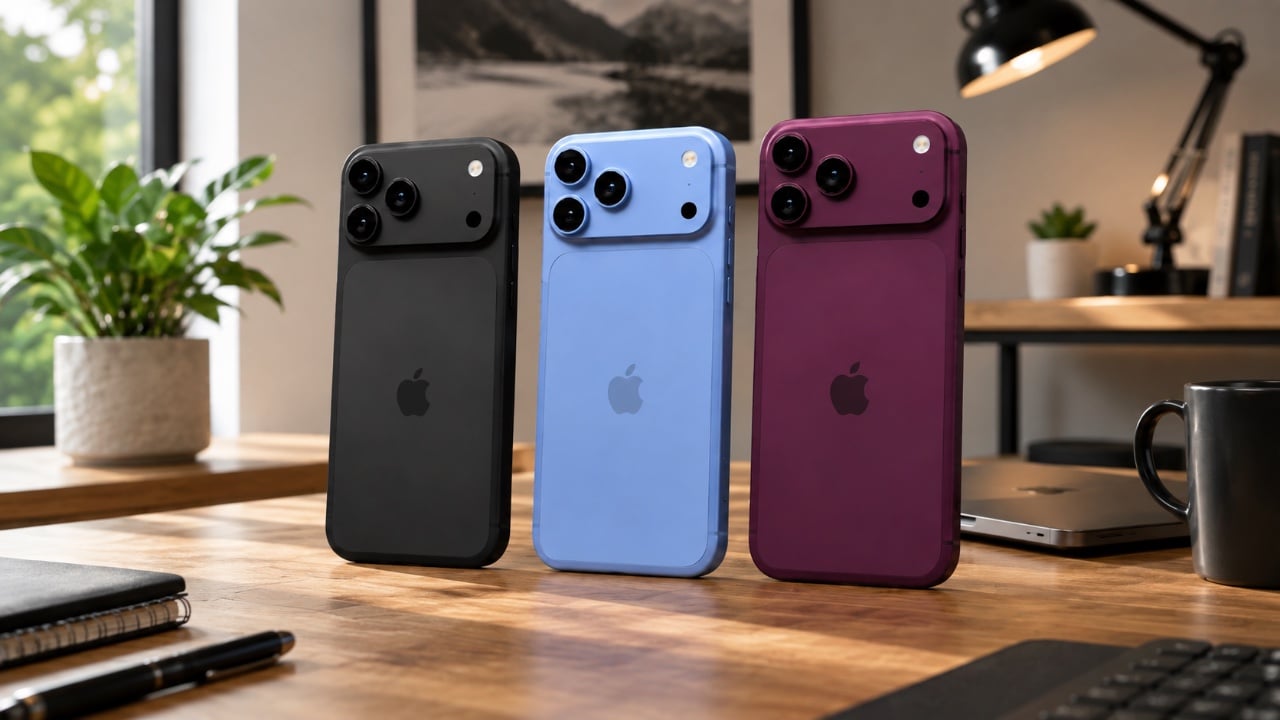
The Samsung Galaxy S26 Ultra, the latest flagship in Samsung’s renowned lineup, has captured attention with its innovative features and refined design. However, one unexpected design decision has sparked significant discussion: the absence of built-in magnets. This choice directly impacts magnetic functionality, wireless charging efficiency, and accessory compatibility, raising questions about whether it aligns with […]

The post Samsung Galaxy S26 Ultra Shocks Fans with Missing Feature appeared first on Geeky Gadgets.

Posted in Uncategorized