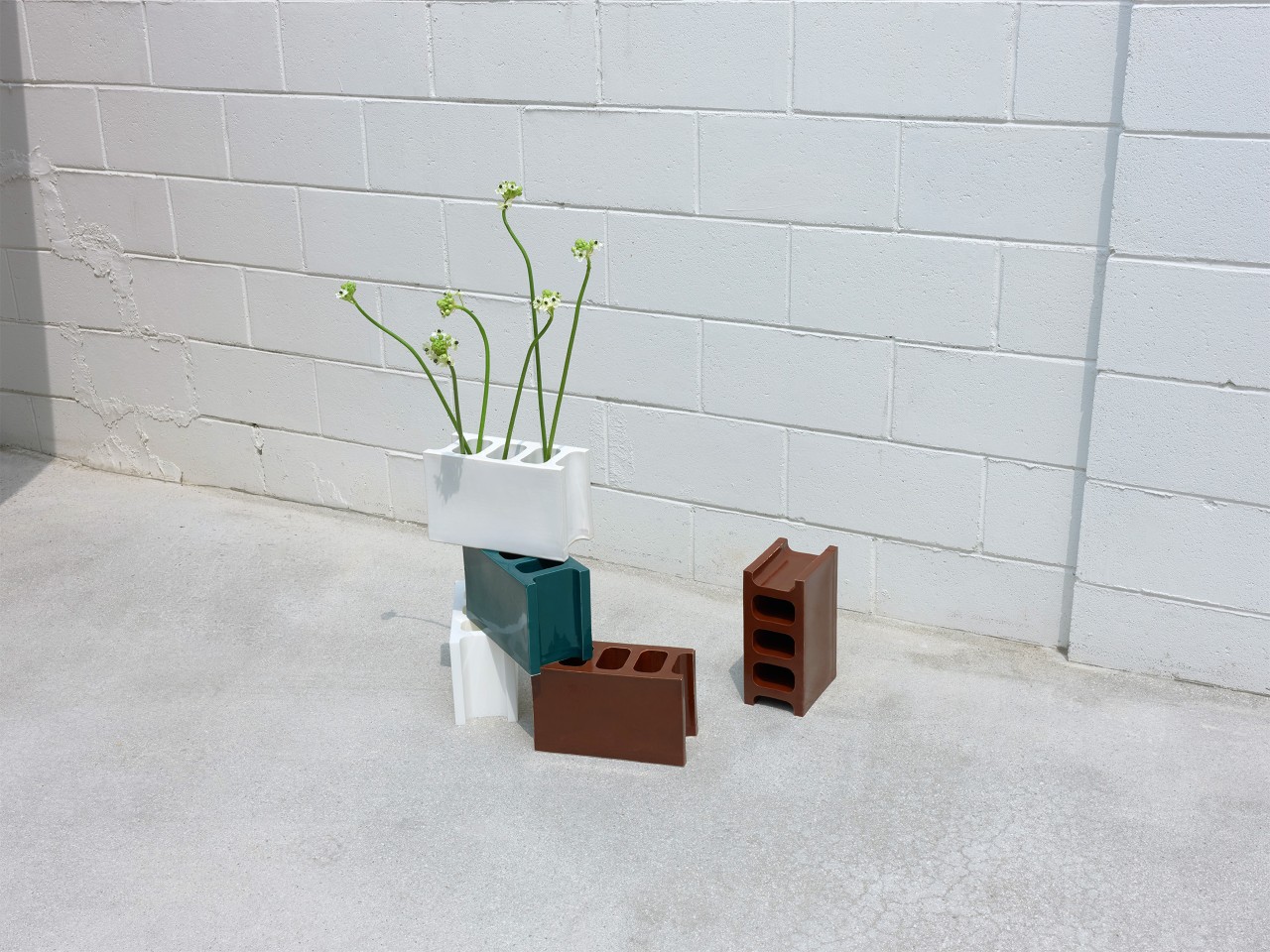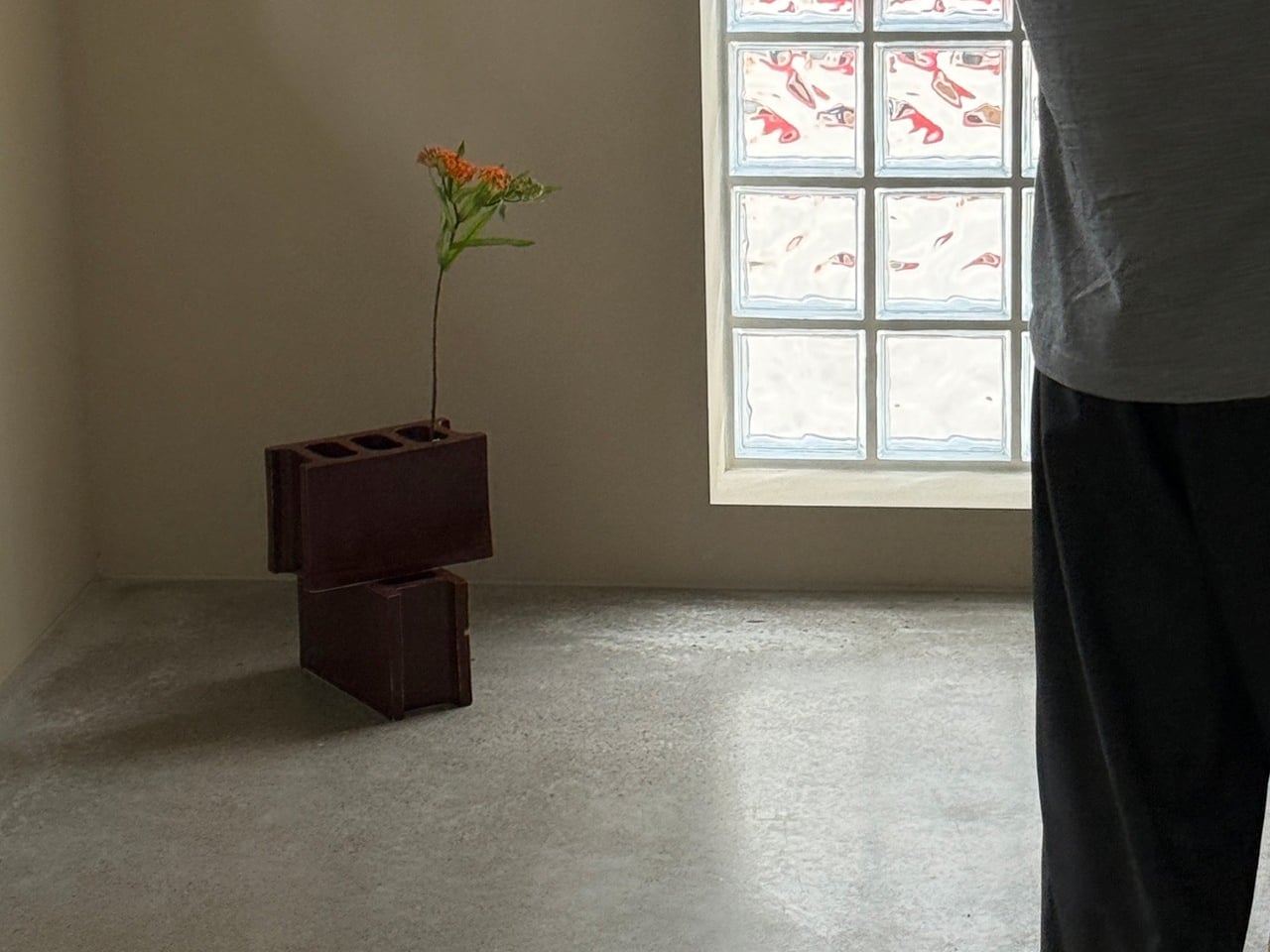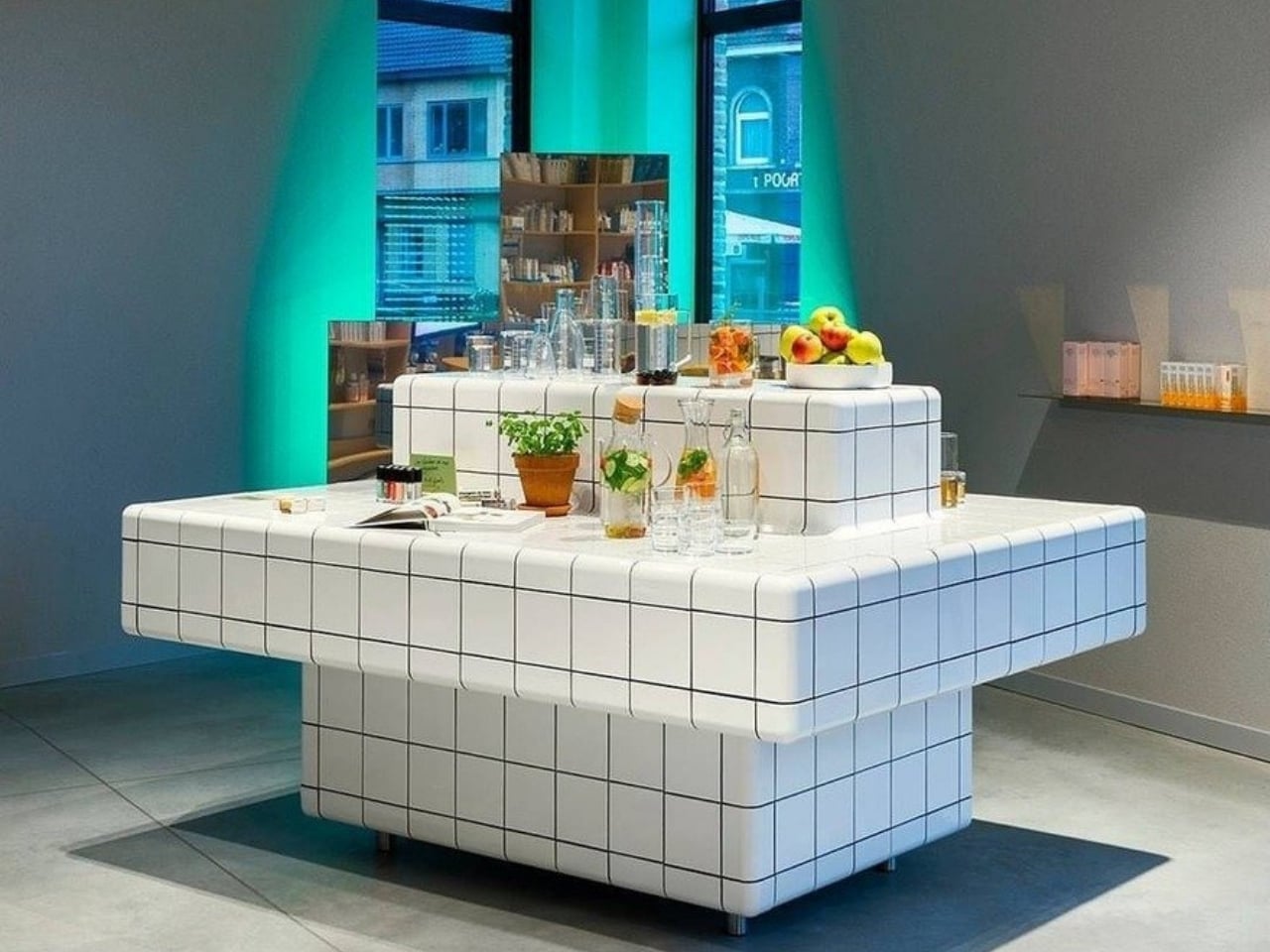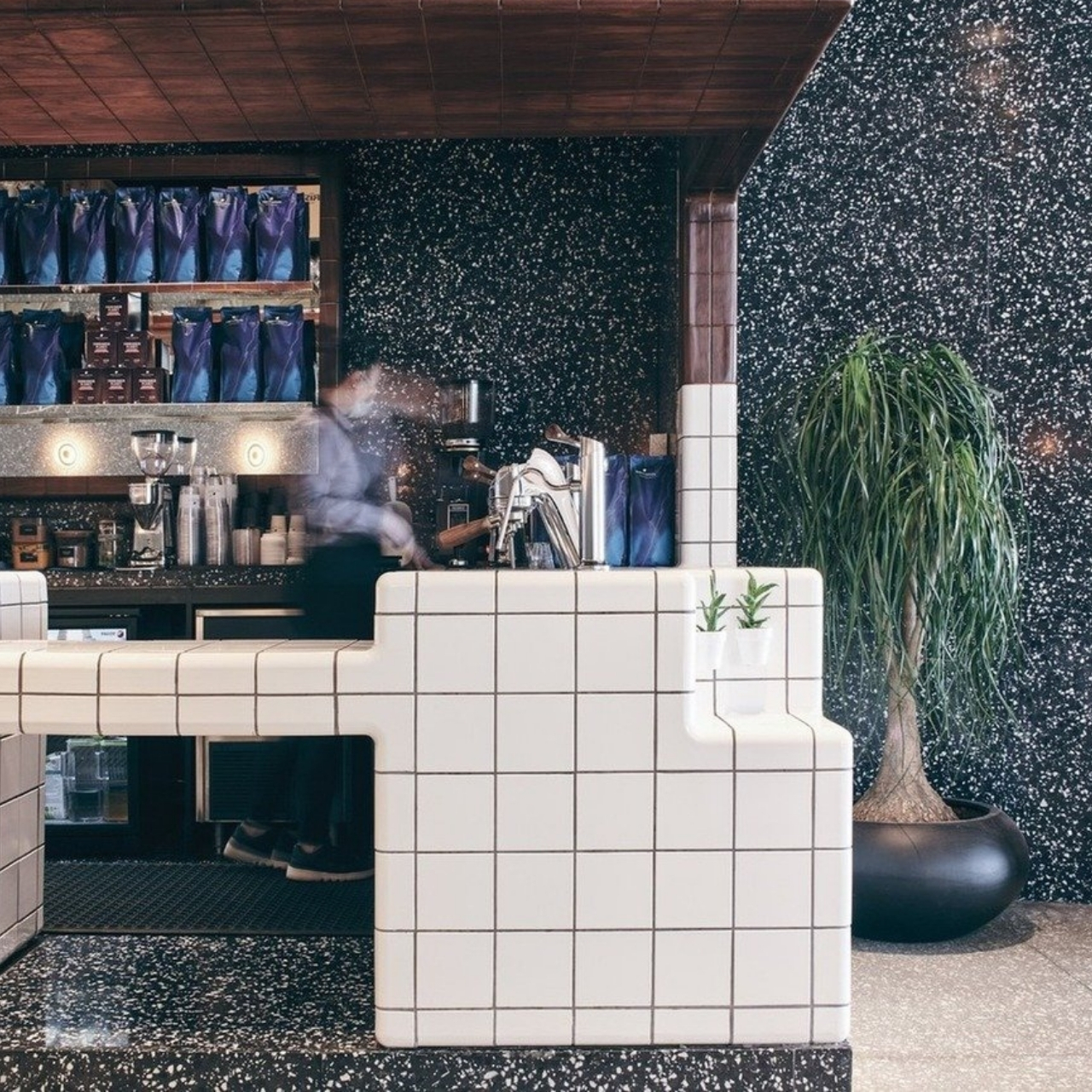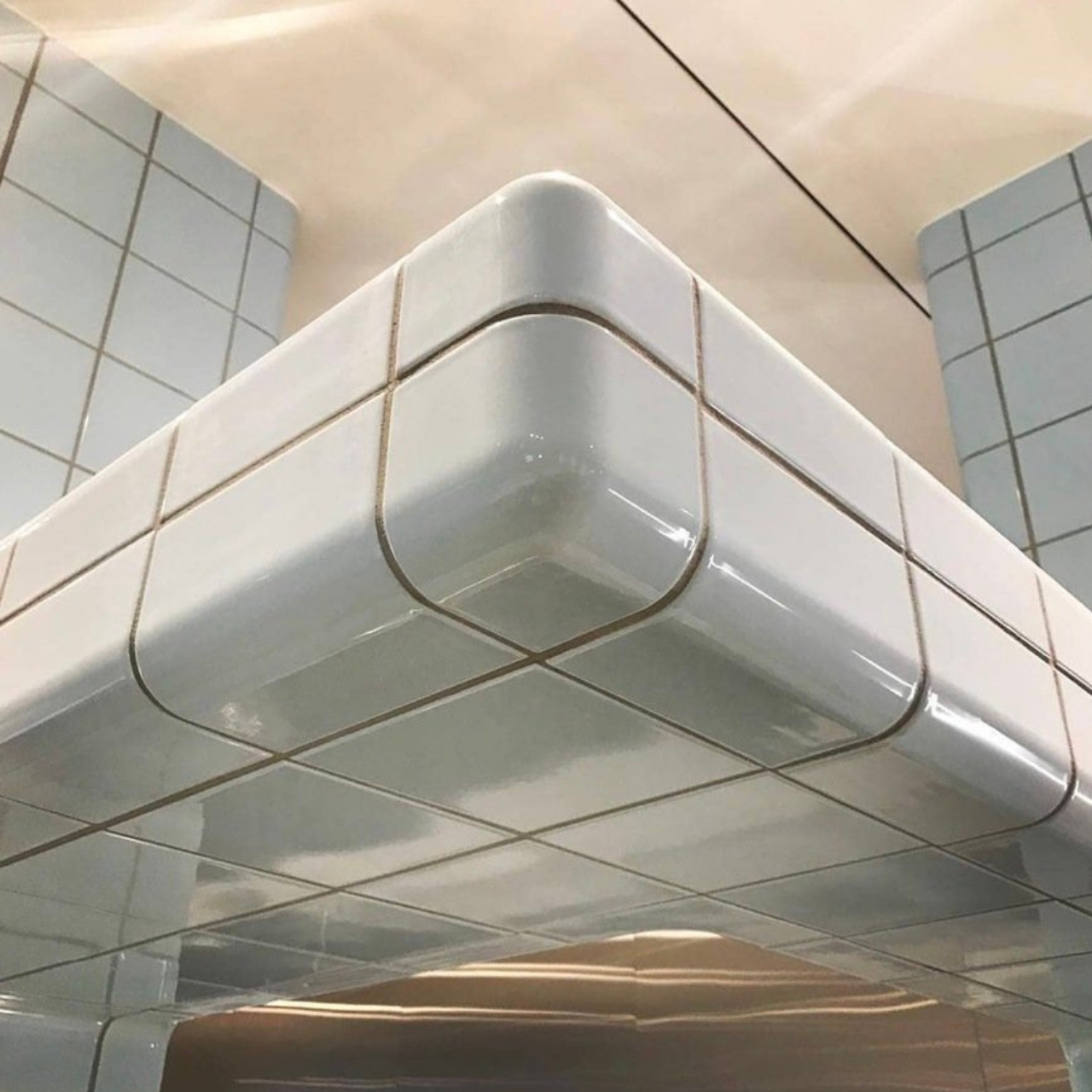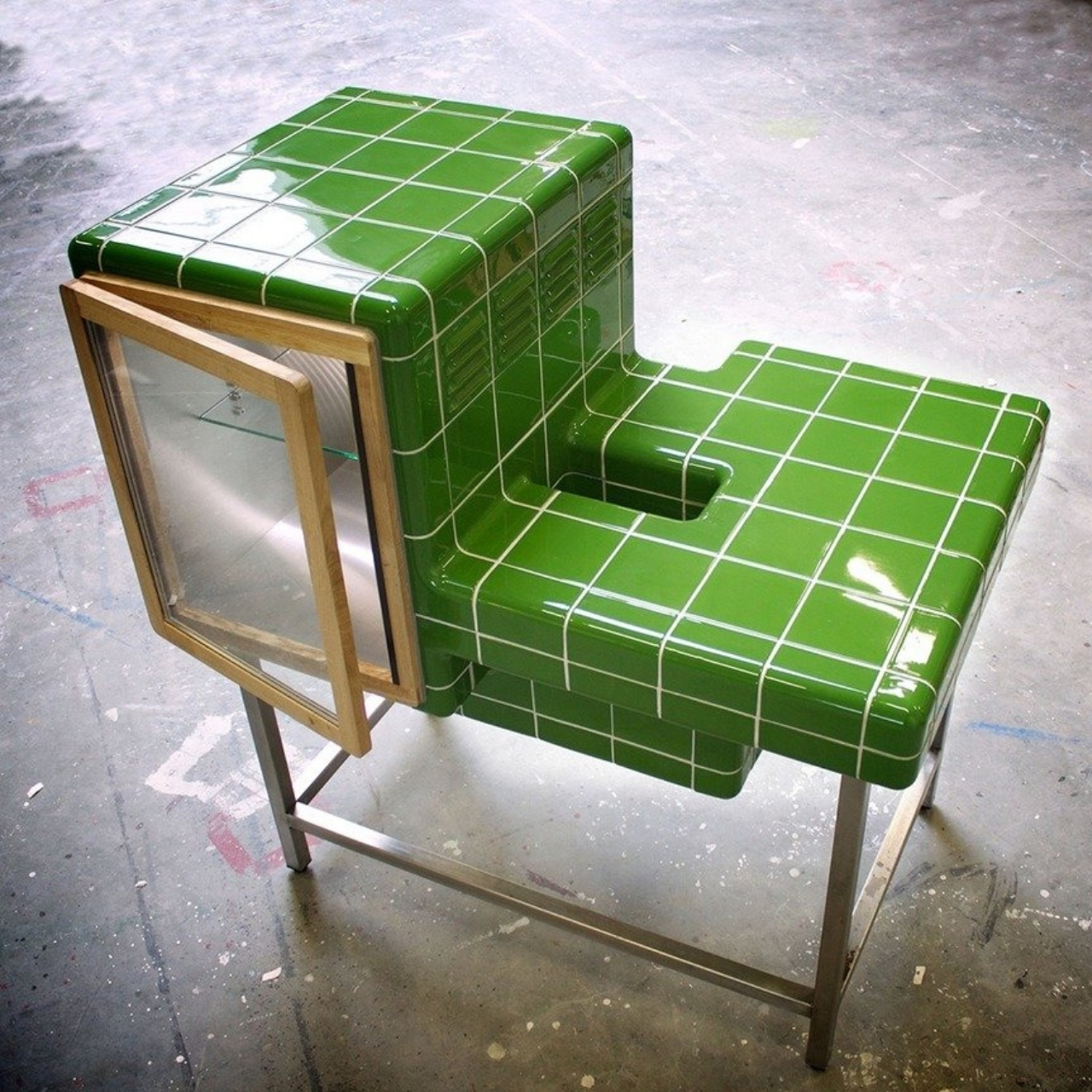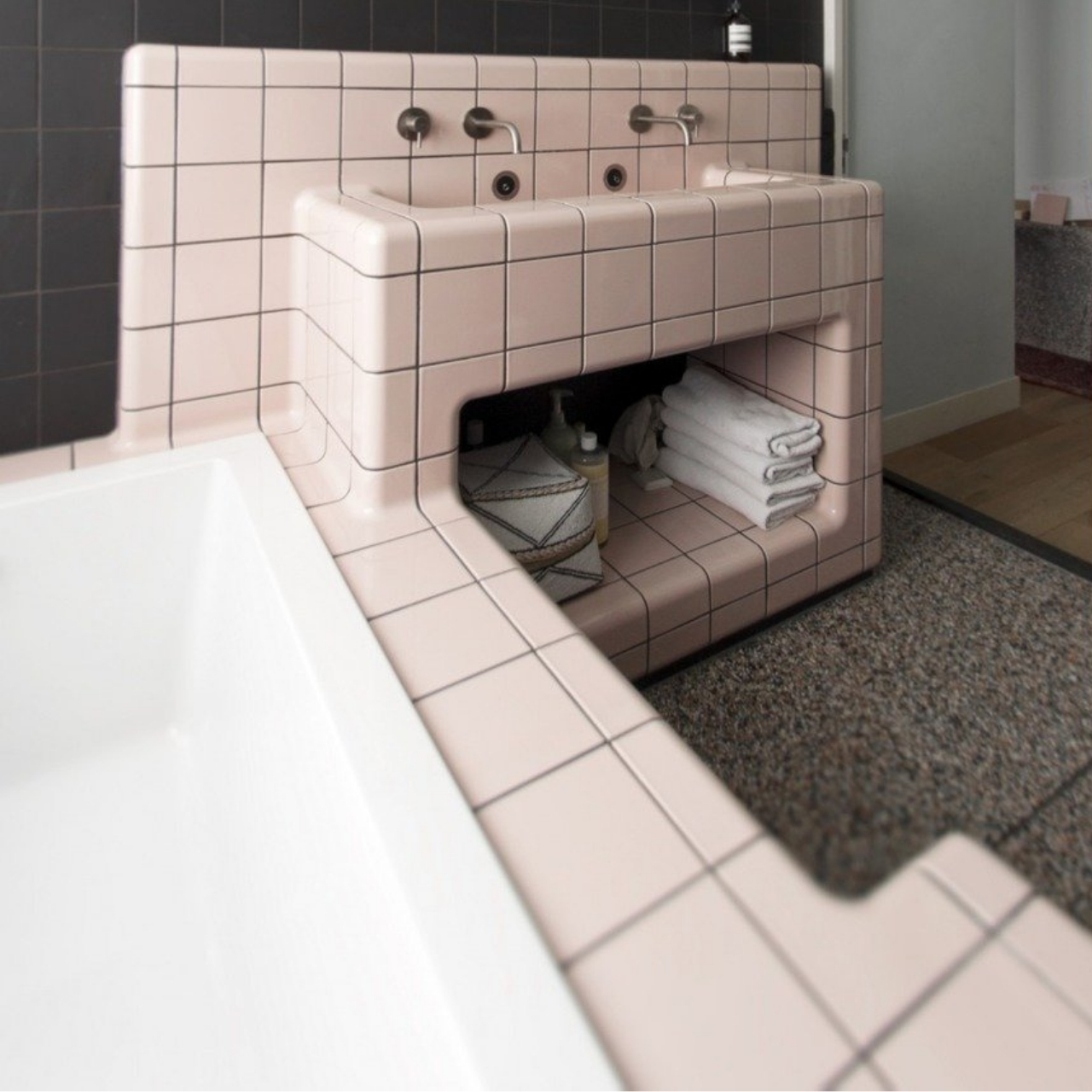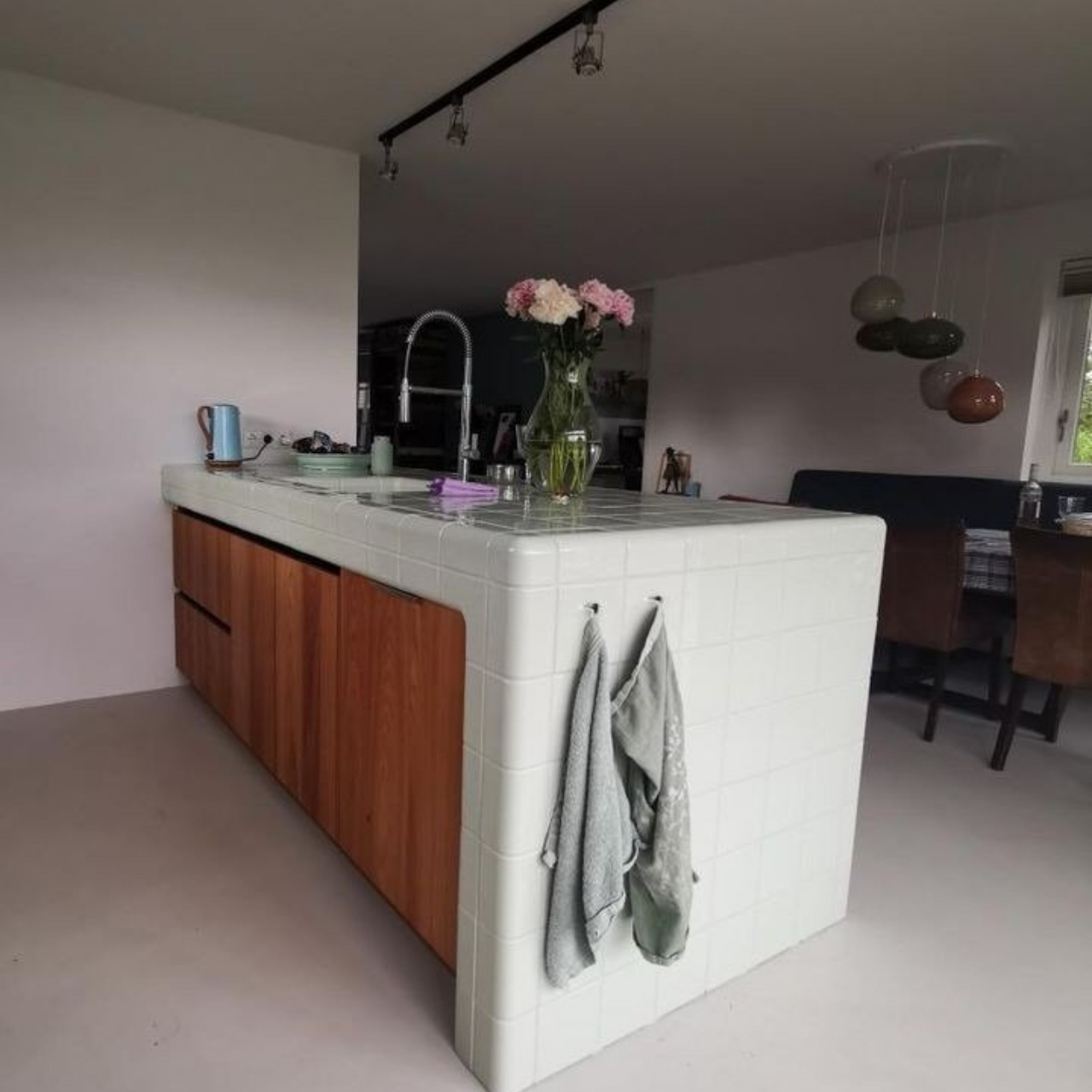
Leucos Just Turned Ceramic Tiles Into 3D Glowing Wall Art

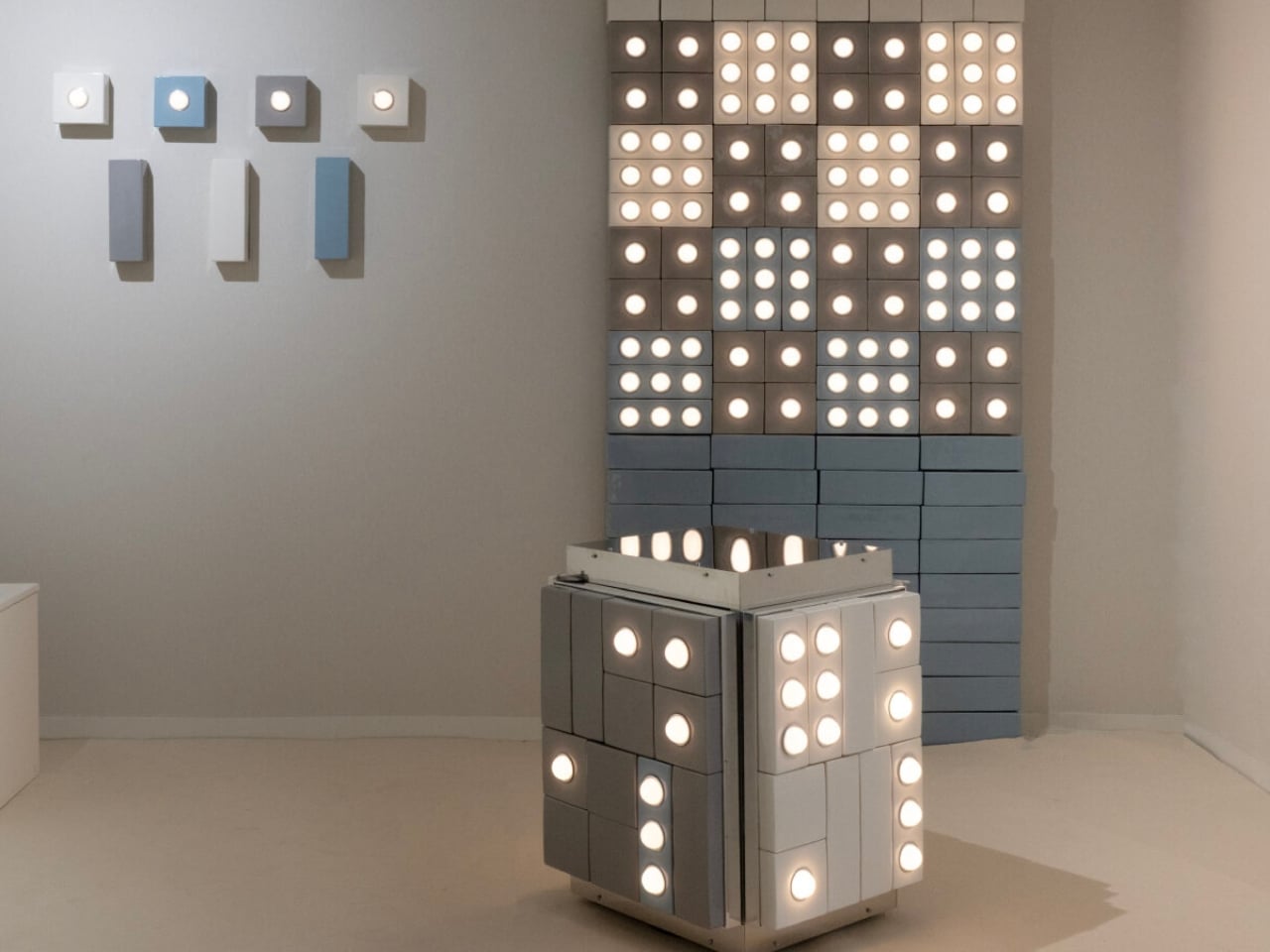
Imagine treating a tile as a medium for light. Not the ambient glow of a strip along the ceiling, or the directional punch of a spotlight, but something more architectural and intimate. That’s the premise behind Glowtile, a modular lighting system designed by RedDuo for the Italian lighting brand Leucos, and it’s one of those concepts that sounds obvious in retrospect, yet somehow nobody had quite pulled off this way before.

Leucos has been making handblown glass lamps since 1962, born just outside Venice where craftsmanship and artisanship have been synonymous for centuries. Over more than 60 years, the brand has built a reputation around the kind of quality that doesn’t cut corners. RedDuo is the newer voice in this partnership: a Milan-based interior design and creative studio founded in 2020 by Fabiola Di Virgilio and Andrea Rosso, two former fashion industry professionals with a material-first, fashion-informed approach to everything they do. The pairing makes sense the moment you see the result.

Designers: RedDuo for Lucos

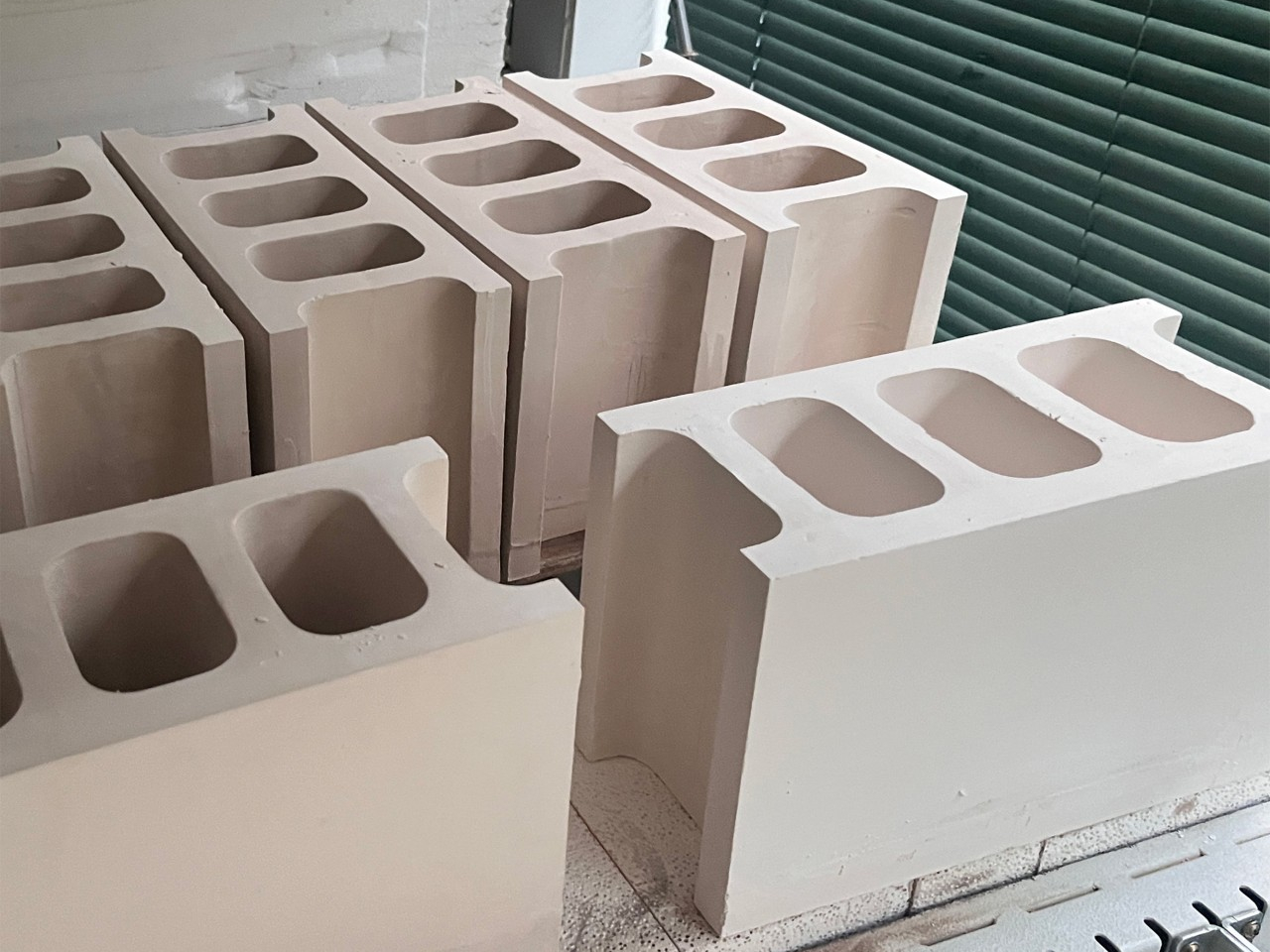
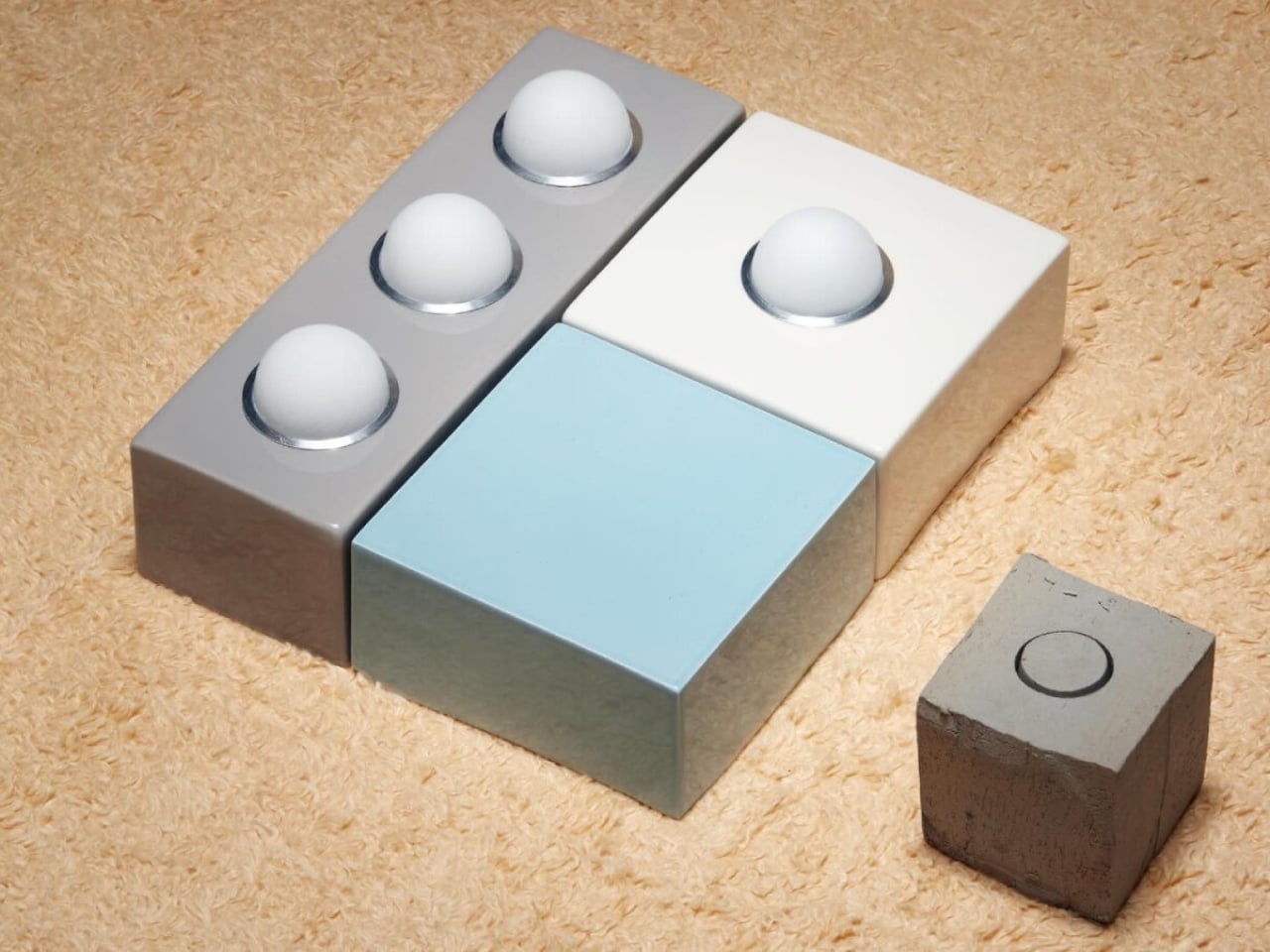
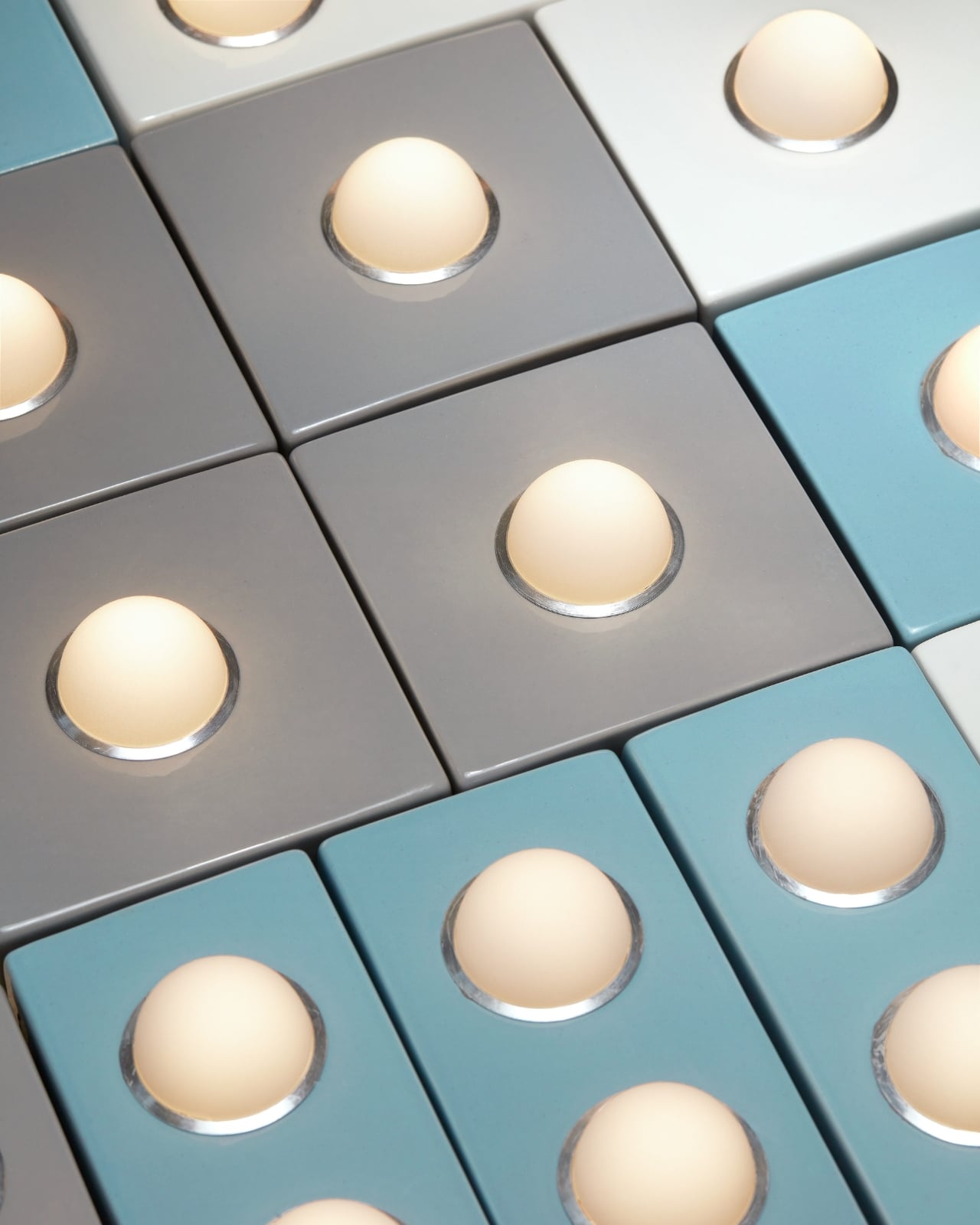
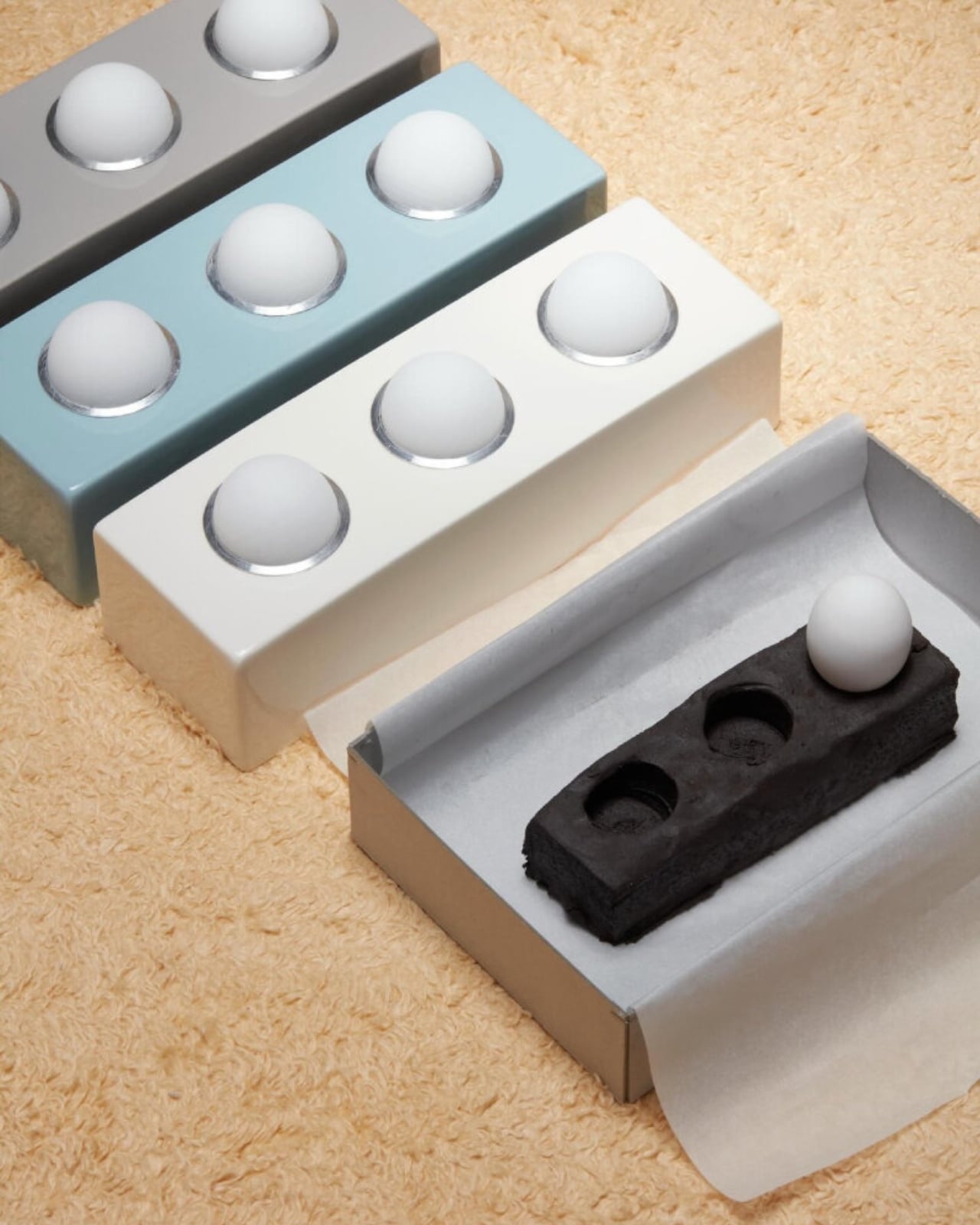
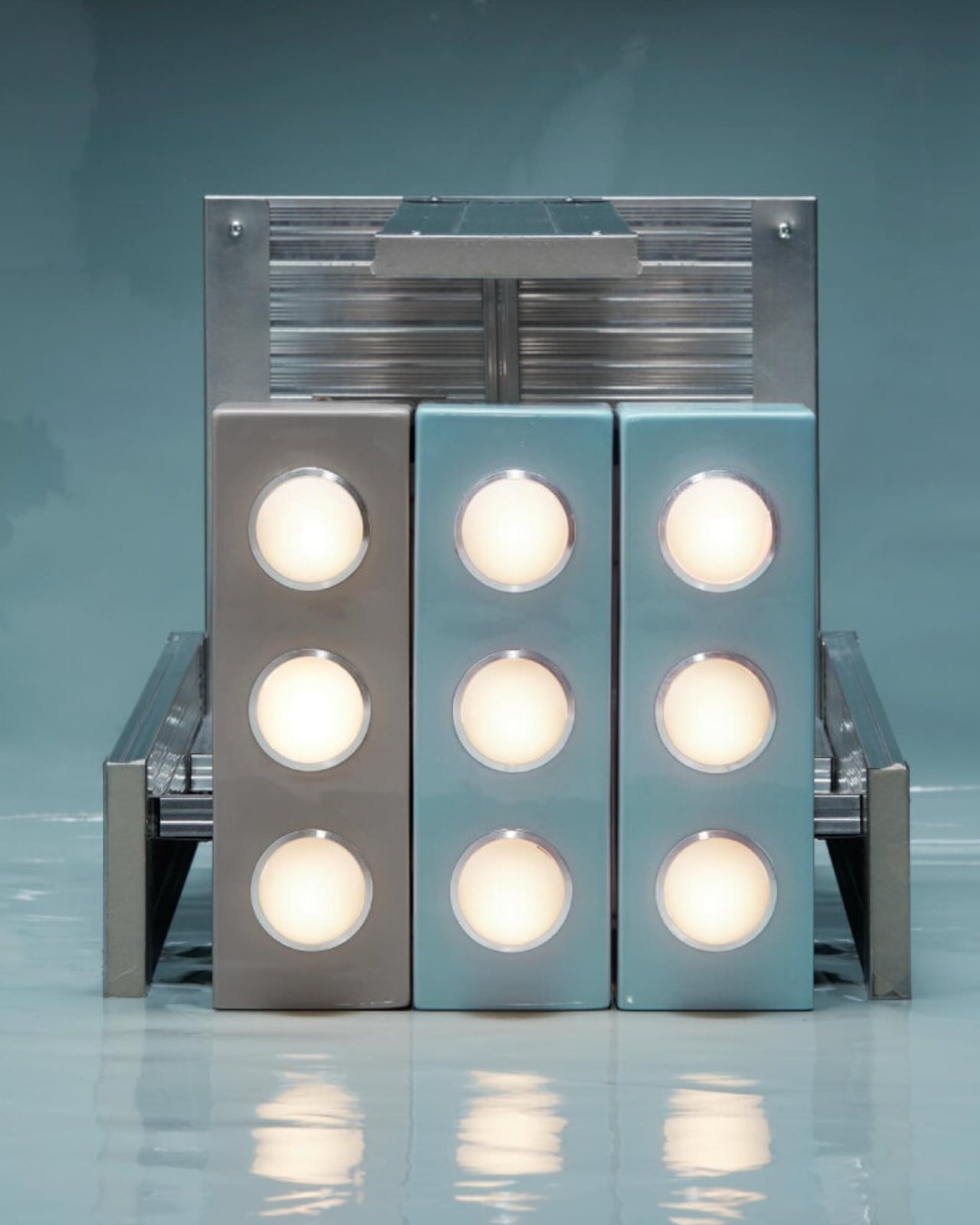
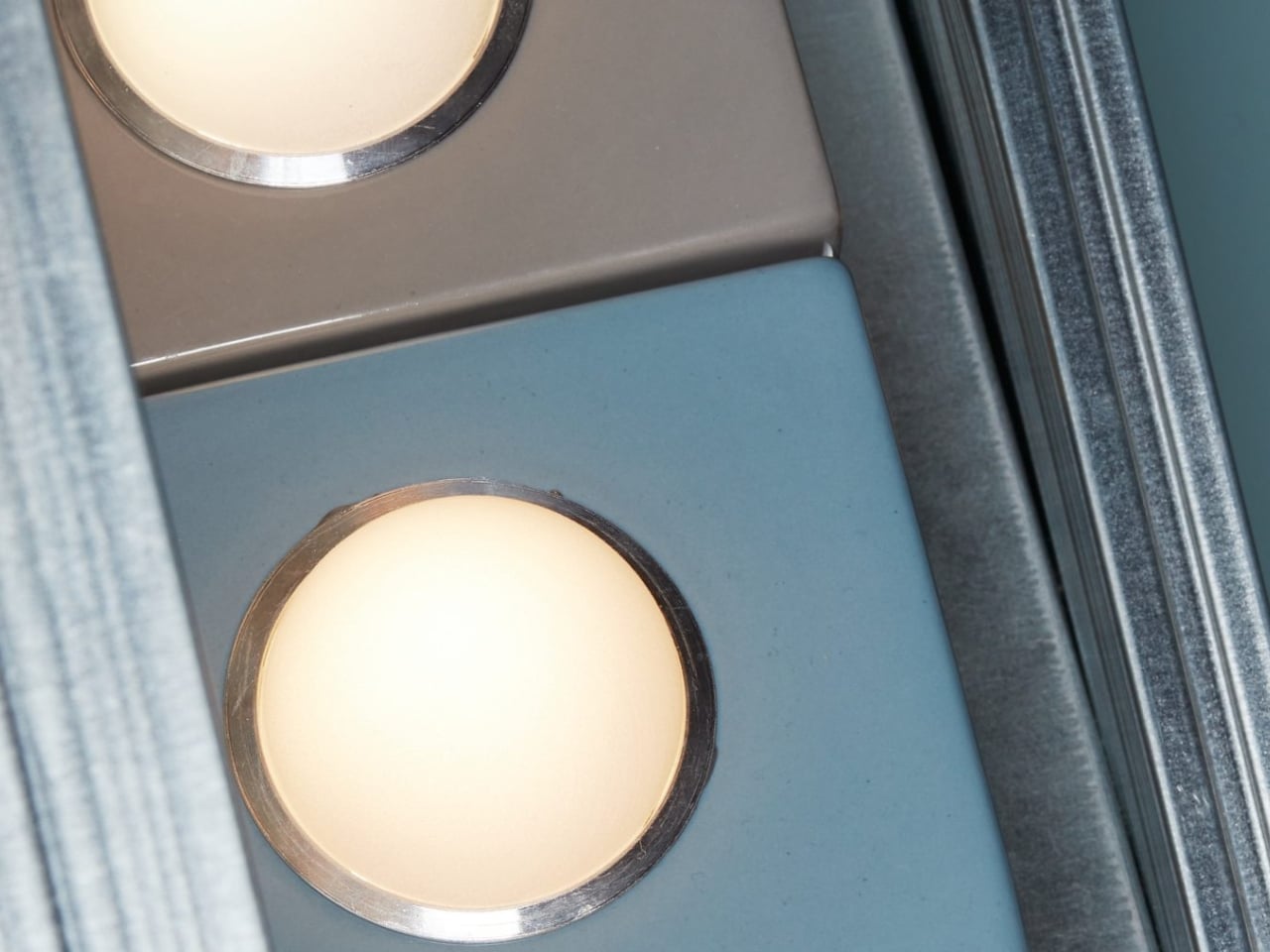
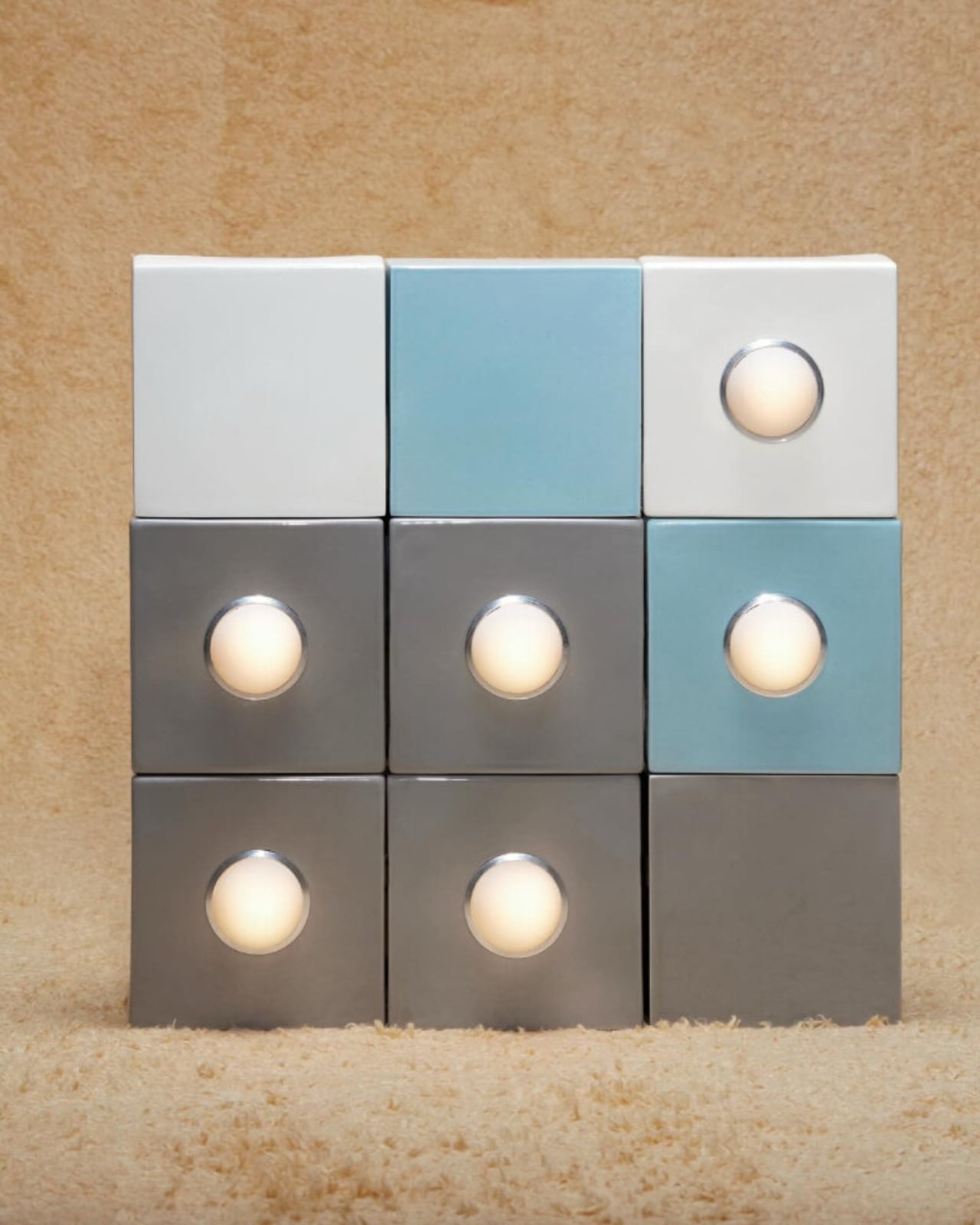
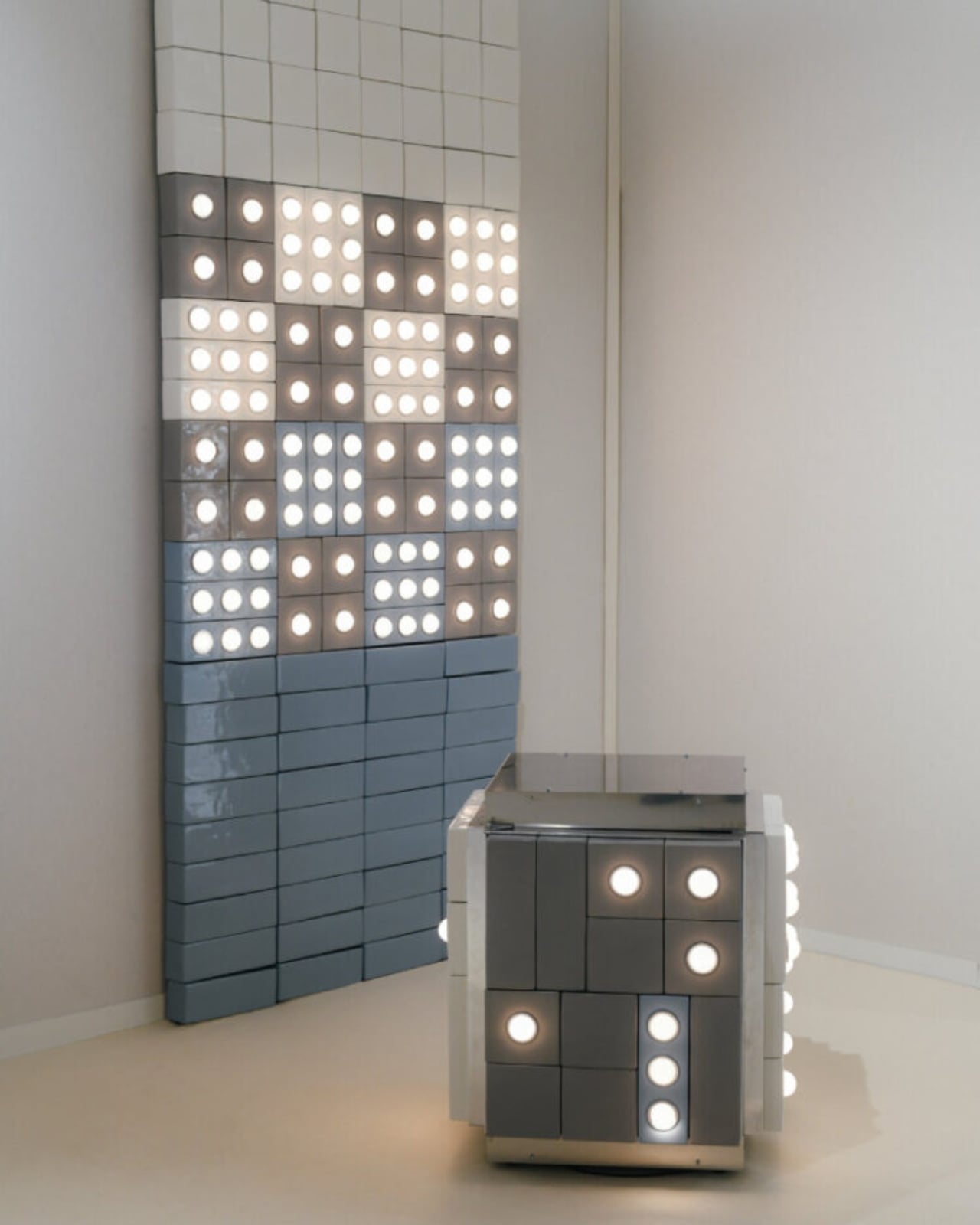
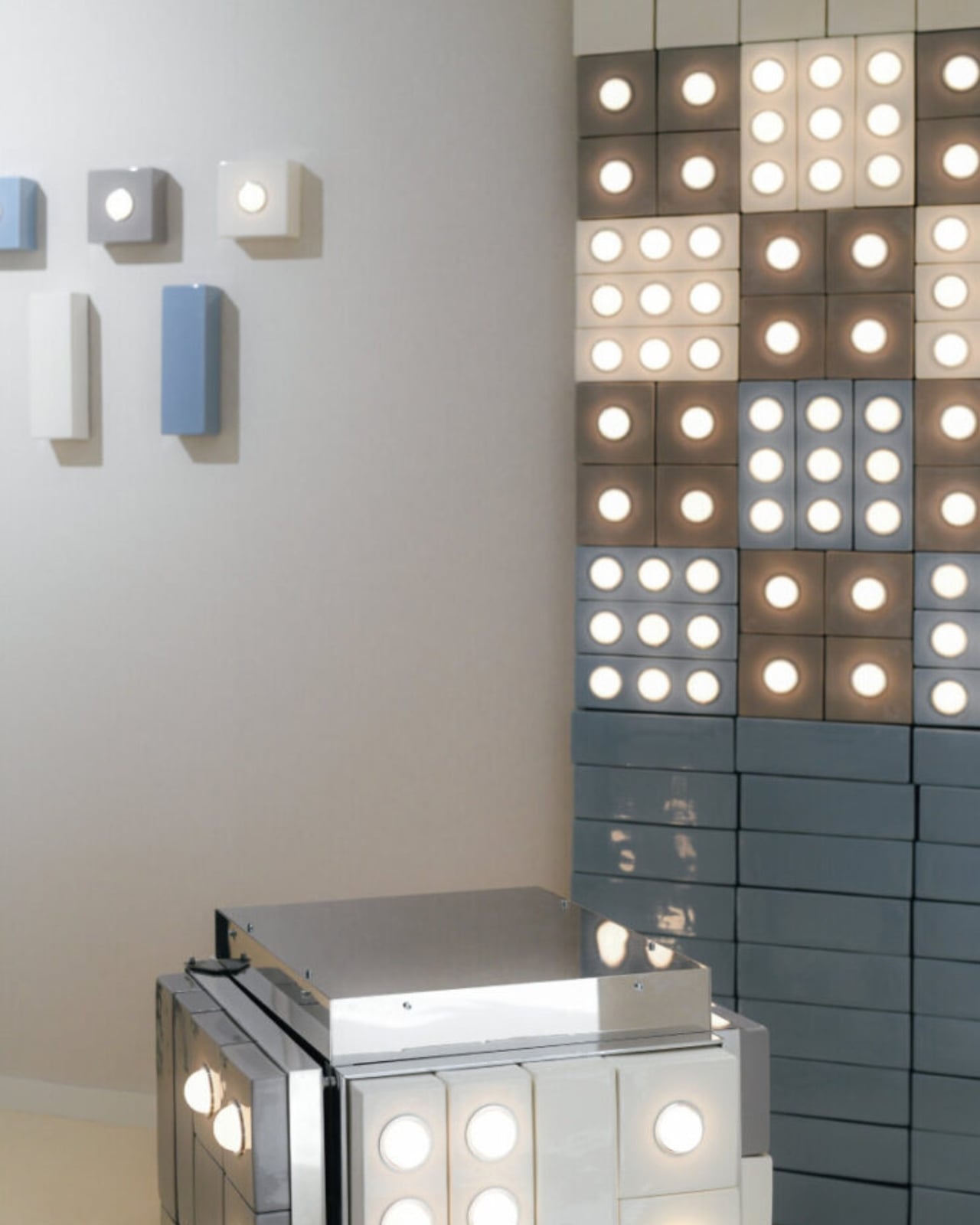
Glowtile works around a deceptively simple concept: glazed ceramic tiles, each fitted with an egg-shaped handblown glass diffuser set inside a ring of anodized aluminum. Two tile formats make up the system: a square 15×15 centimeter module and a rectangular 30×10 centimeter one. You can arrange them in grids, stagger them, mix both formats together, install them on walls, ceilings, or even set them on the floor to shoot light upward. It’s the same compositional freedom you’d have with any standard tiling job, except your tiles glow.

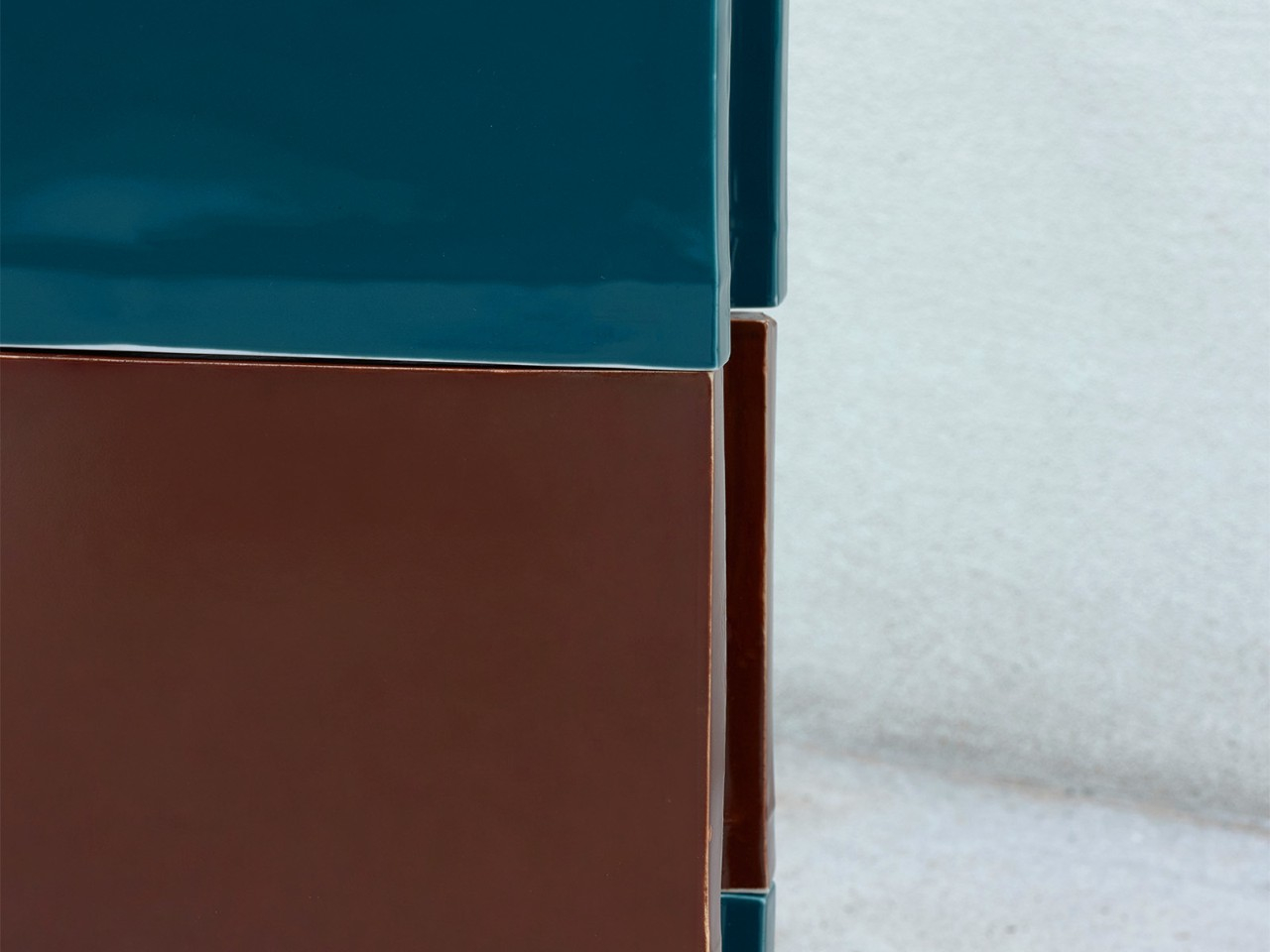
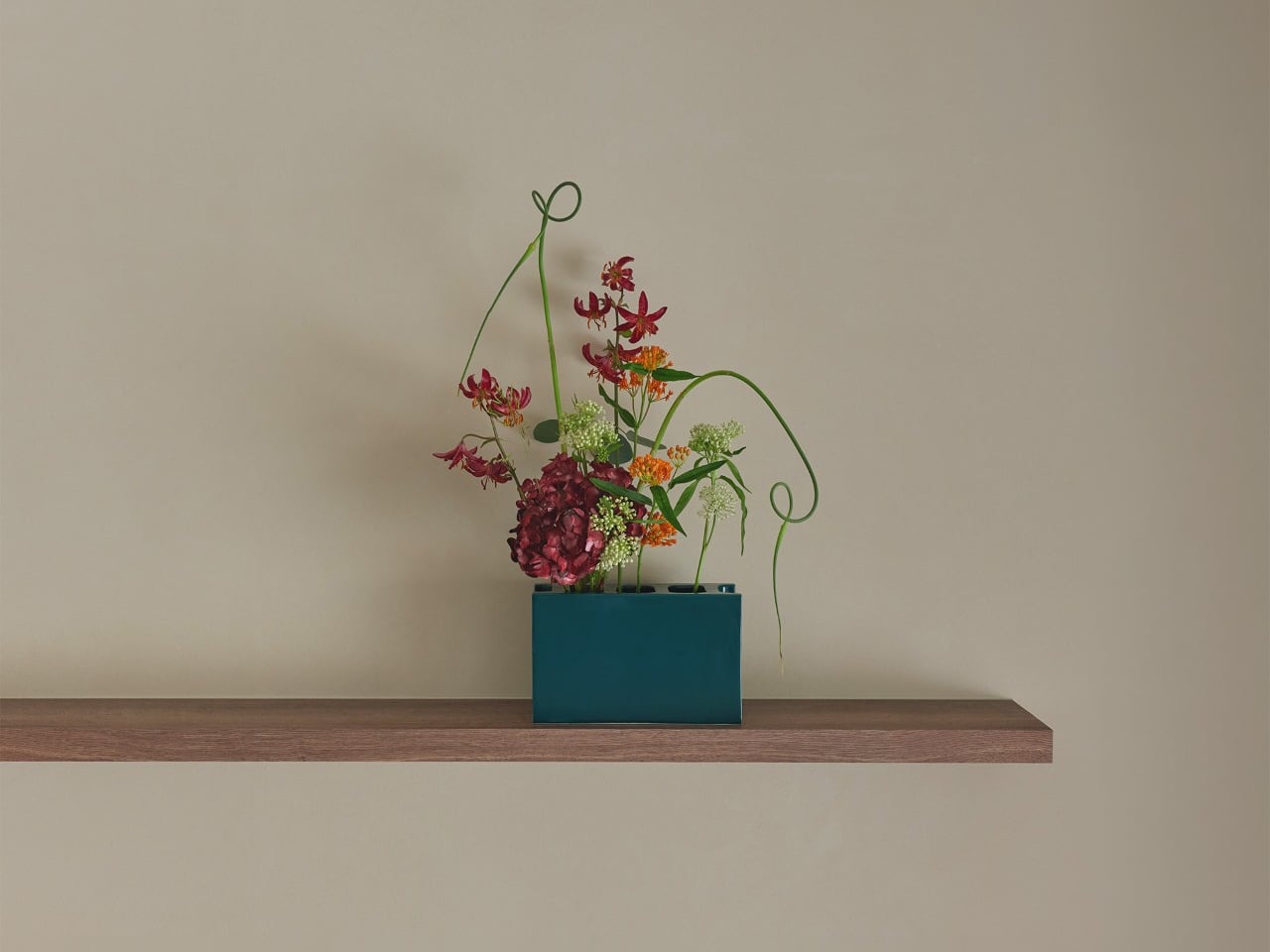
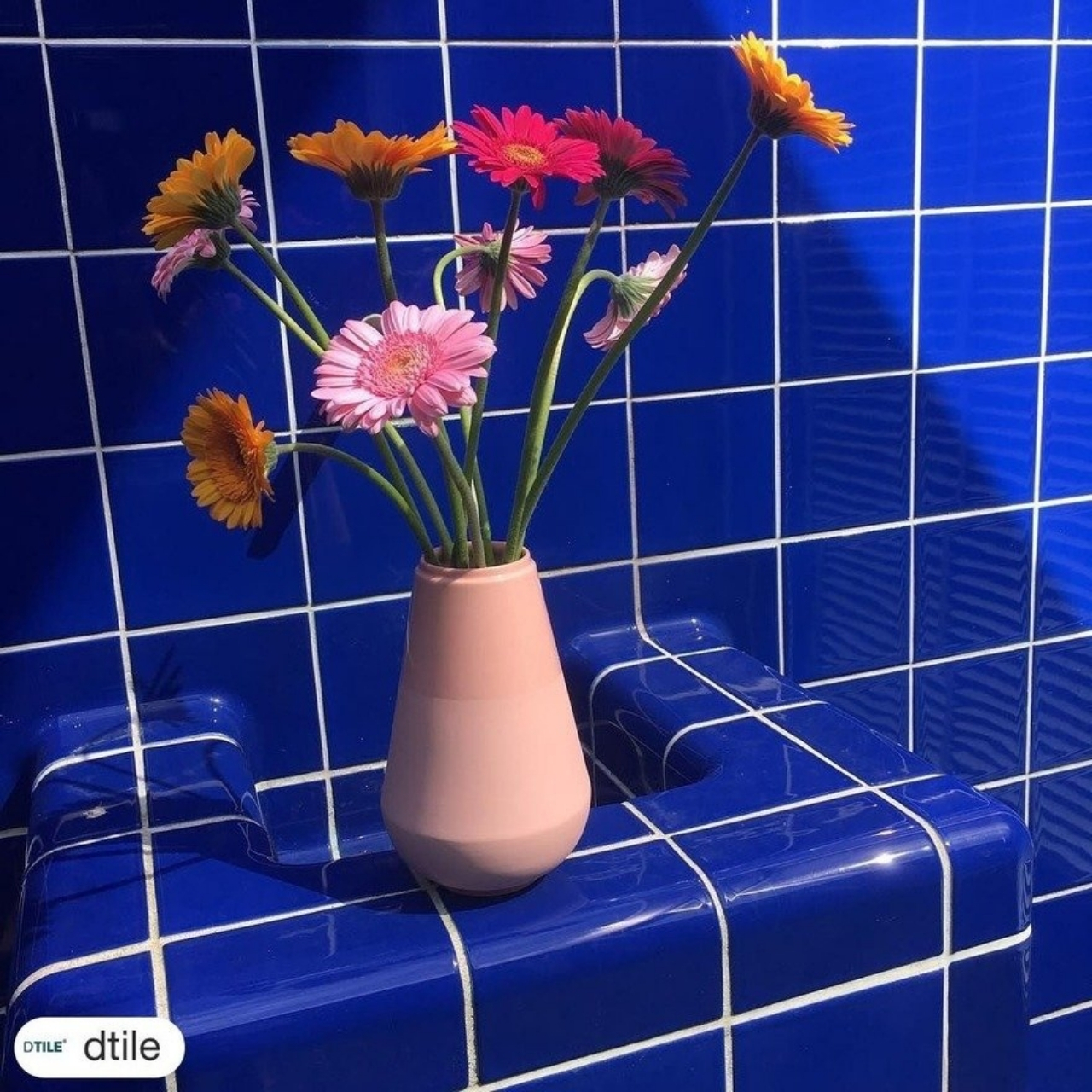
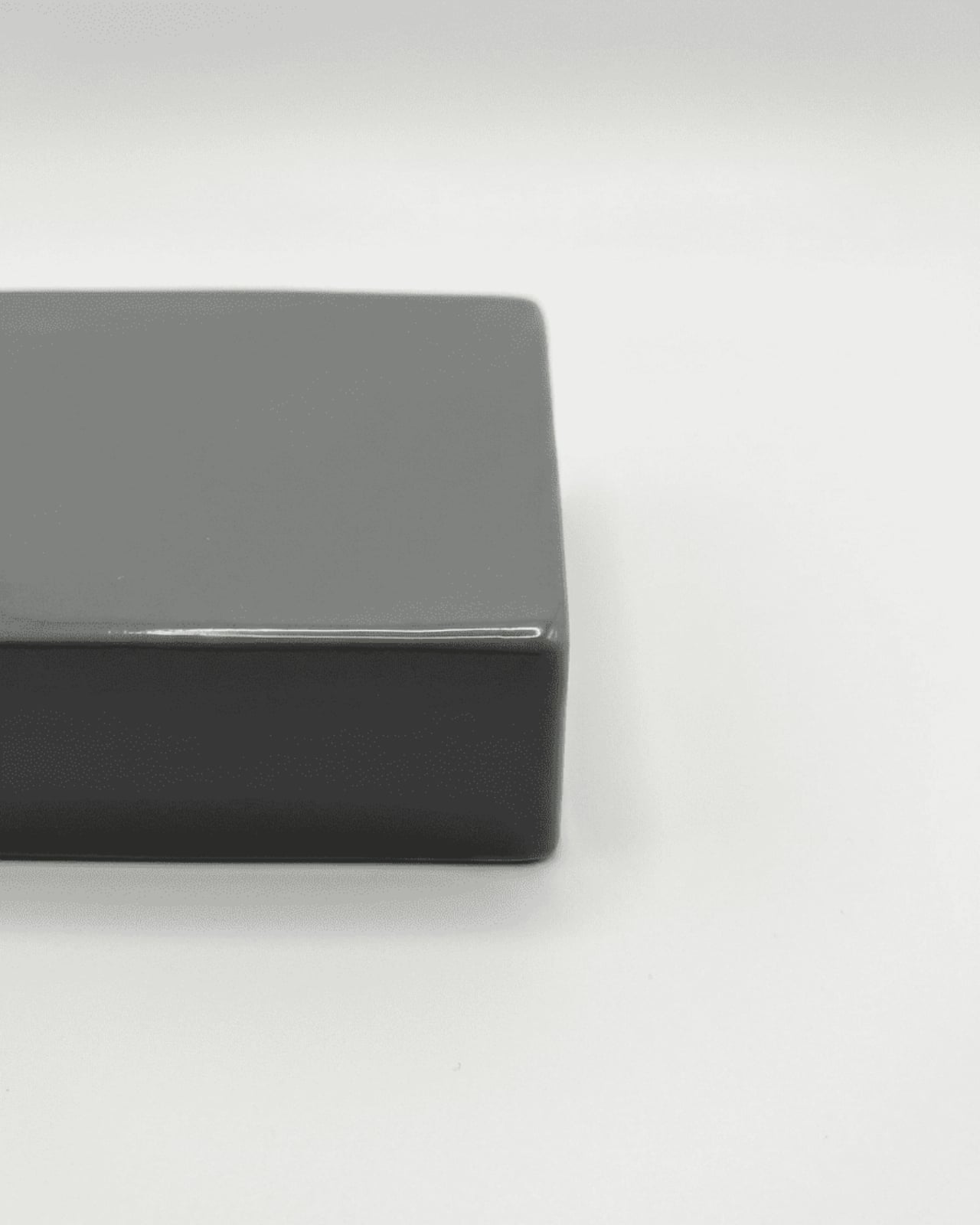
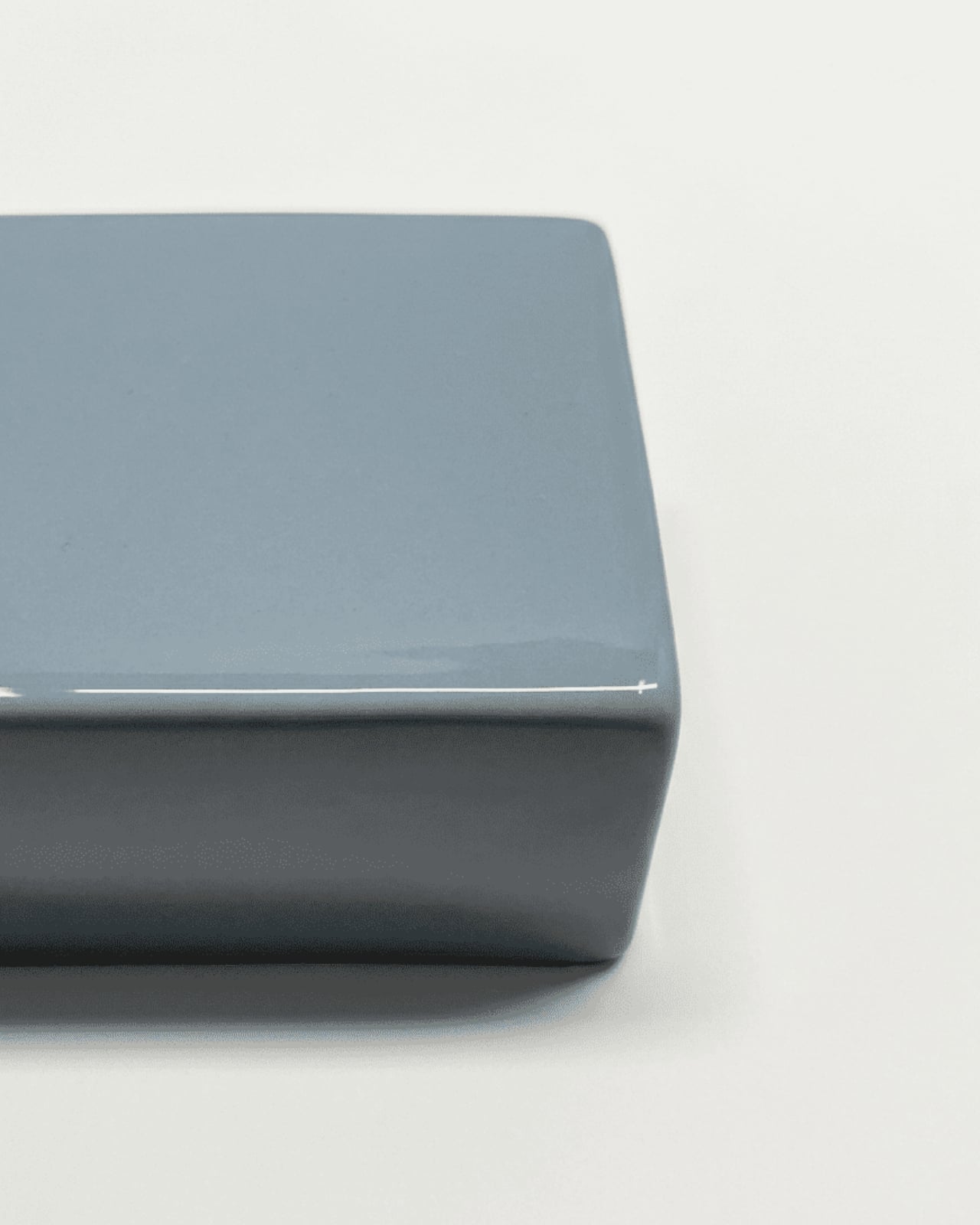
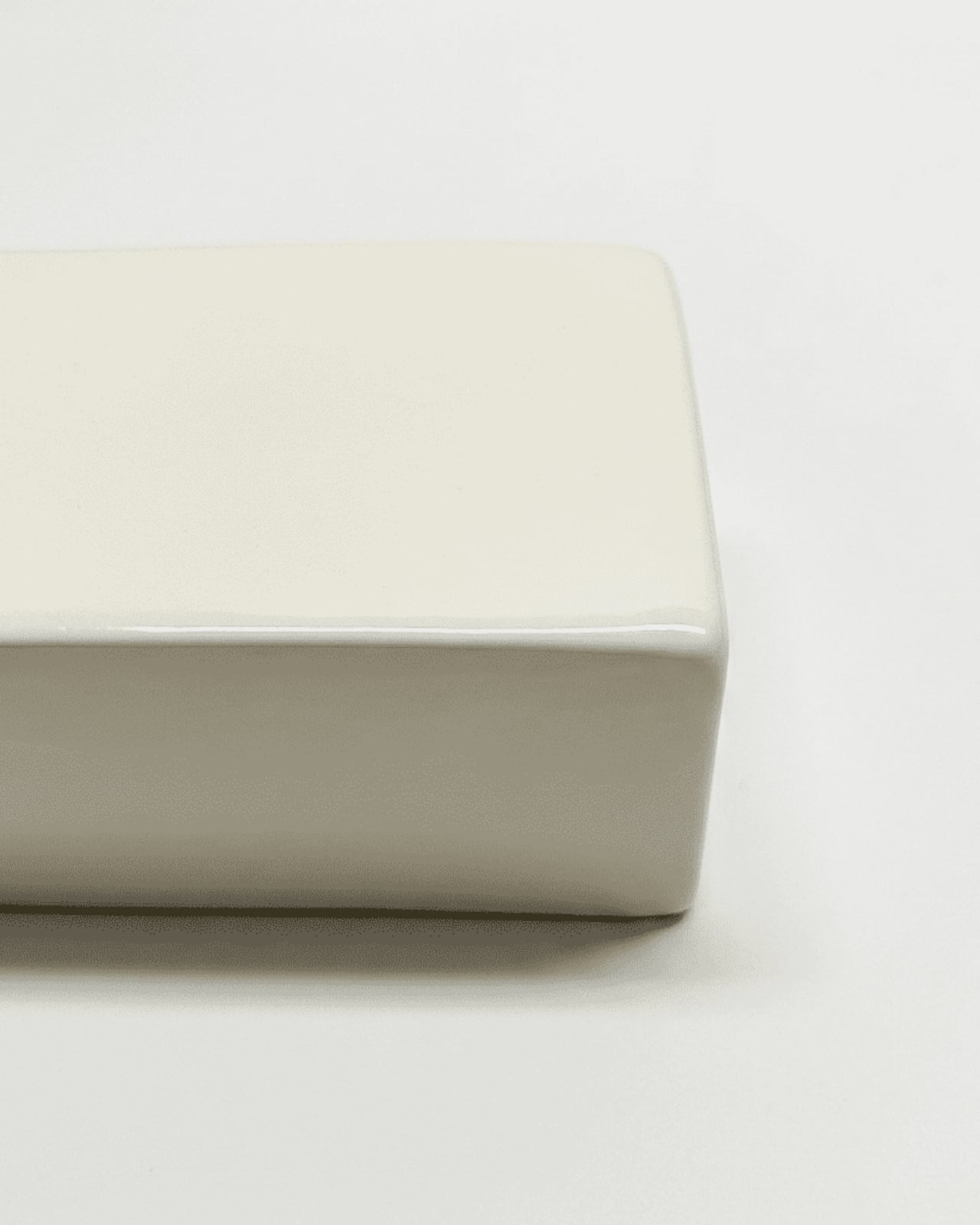
What makes this genuinely compelling is the material honesty of it. The ceramic tiles come in three finishes, all beautifully named: Chalk Blue, which reads like the inside of an old swimming pool; Oyster White, creamy and warm; and Mineral Grey, which skews more architectural and serious. Each feels considered rather than arbitrary, and the finish you choose radically changes the mood of the whole installation. Pair Chalk Blue tiles in a close grid on a wall and you get something gallery-like and almost cinematic. Spread Oyster White modules across a ceiling and the whole effect softens into something residential and dreamy.

The handblown glass diffuser deserves a moment of appreciation on its own. A glassblower gathers molten glass on the end of a long metal pipe and shapes it entirely through breath and rotation. No two pieces come out exactly the same. That built-in human irregularity, something most manufacturers would rather engineer out of their products, is here embraced as part of the whole point. Every Glowtile carries a small trace of the person who made it, which is a quietly radical thing for a modular system to hold onto.

The system made its debut at Matter and Shape in Paris on March 6, 2026, and the images from the event show off just how wide the range of Glowtile can be. In one configuration, it’s a wall-mounted composition that functions like art. In another, the pieces sit low on the floor, functioning almost like a glowing sculptural seat. That flexibility matters because lighting is a category where most products are good at exactly one thing. Glowtile seems designed by people who find that limitation boring.

Whether it ends up in mainstream interiors or stays squarely in the territory of architects and design-forward clients is an open question. The handcrafted materials and the obvious care involved in production suggest this won’t be the most affordable wall treatment you’ll consider. But cost is almost beside the point here. What Glowtile really asks is whether your wall and your light need to be two separate things. Most rooms have never been offered that question before.

For Leucos, this feels like another chapter in a quiet but genuine transformation: a brand rooted in over six decades of Venetian glass tradition that’s become increasingly curious about what lies beyond it. Collaborating with RedDuo, a studio that came from fashion rather than classical industrial design, is probably exactly why Glowtile ends up feeling like nothing else currently in this space.

The post Leucos Just Turned Ceramic Tiles Into 3D Glowing Wall Art first appeared on Yanko Design.

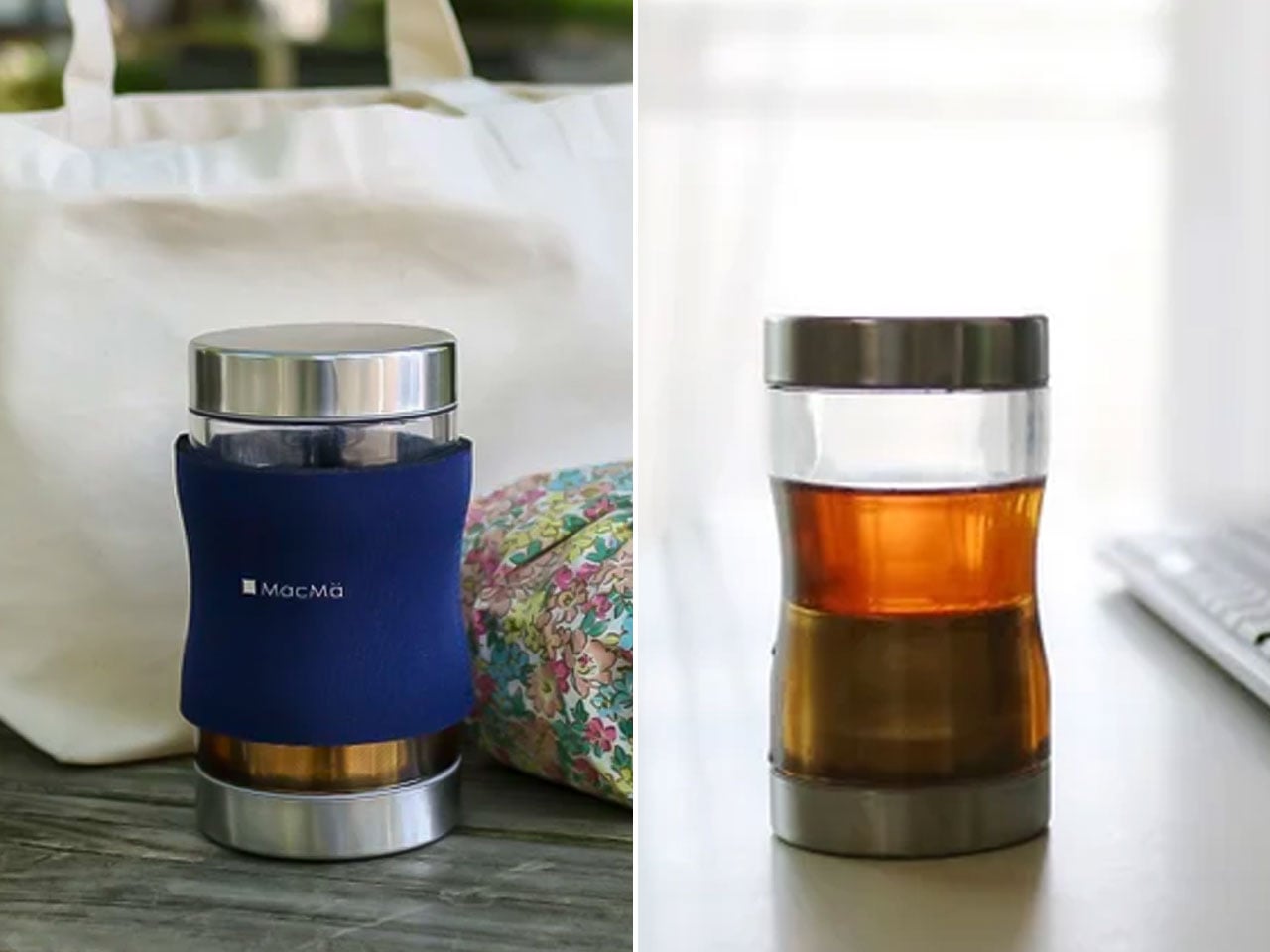
6 Camping Mugs From Japan That Make Coffee Taste Better (Science Says So)

You know that first sip of coffee in the morning, the one where everything just clicks? Turns out, the mug you’re drinking from has more to do with that feeling than you might think. Research has shown that ceramic mugs maintain temperature better, have a neutral flavor profile that won’t interfere with your brew, and even influence how your brain perceives taste. Studies suggest that the shape, material, and even the color of a cup can shift how sweet, intense, or satisfying a coffee actually tastes. In short, your vessel is not just a vessel. It is part of the experience.

And when it comes to vessels, Japanese ceramics have been quietly setting the standard for centuries. Right now, Japanese design is having a well-deserved moment in the spotlight, with hot beverage lovers drawn to its philosophy of wabi-sabi, finding grace in imperfection, and a deep respect for intentional, handcrafted beauty. A Japanese ceramic mug is not mass-produced or cookie-cutter. It carries the marks of its maker, the character of its kiln, and a quiet soul that only deepens with use. Bring one to your next camping trip, and that early morning brew by the fire? It just became a whole experience. These six Japanese camping mugs are proof of that.

1. Ceramic Cup

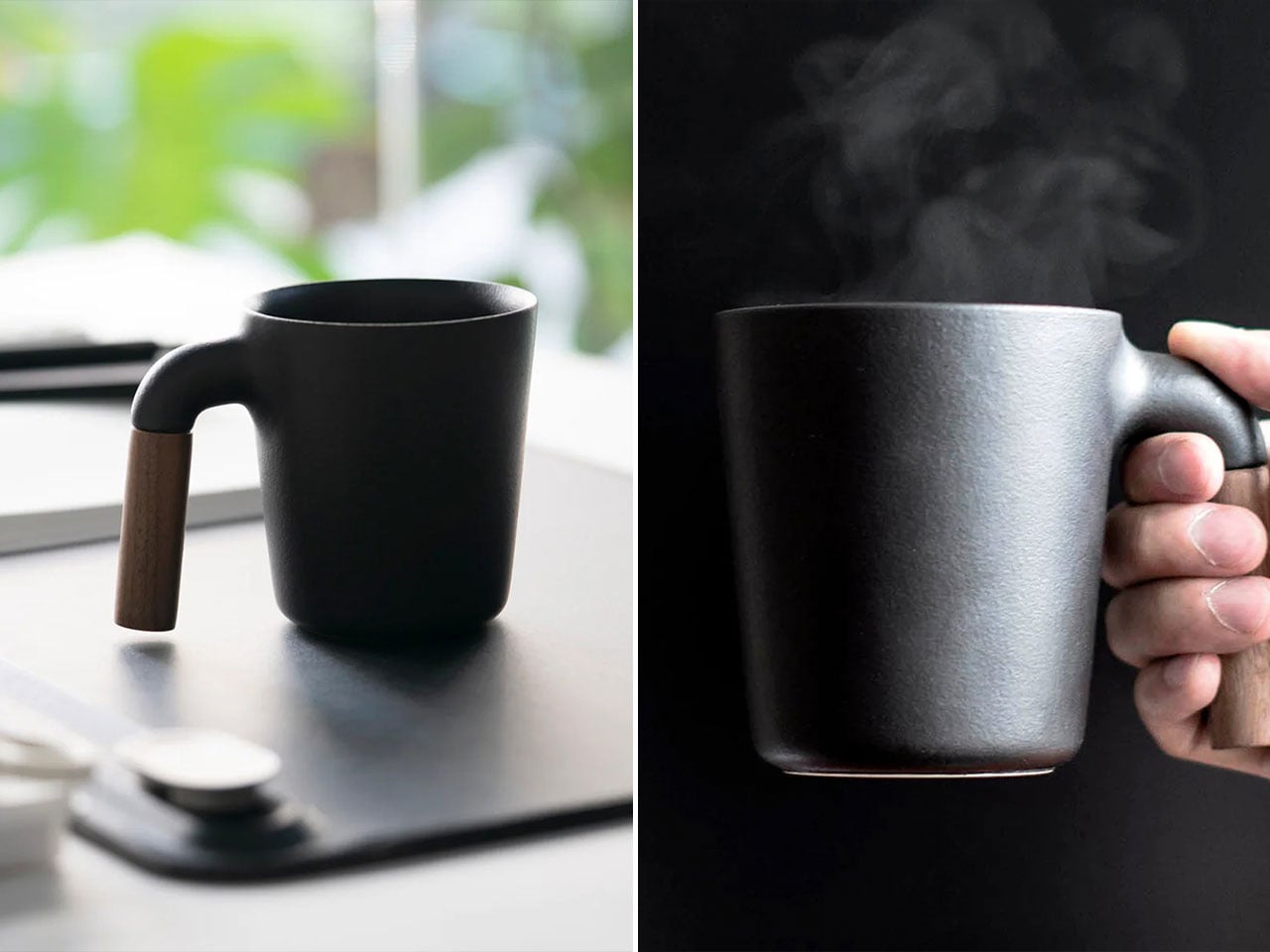
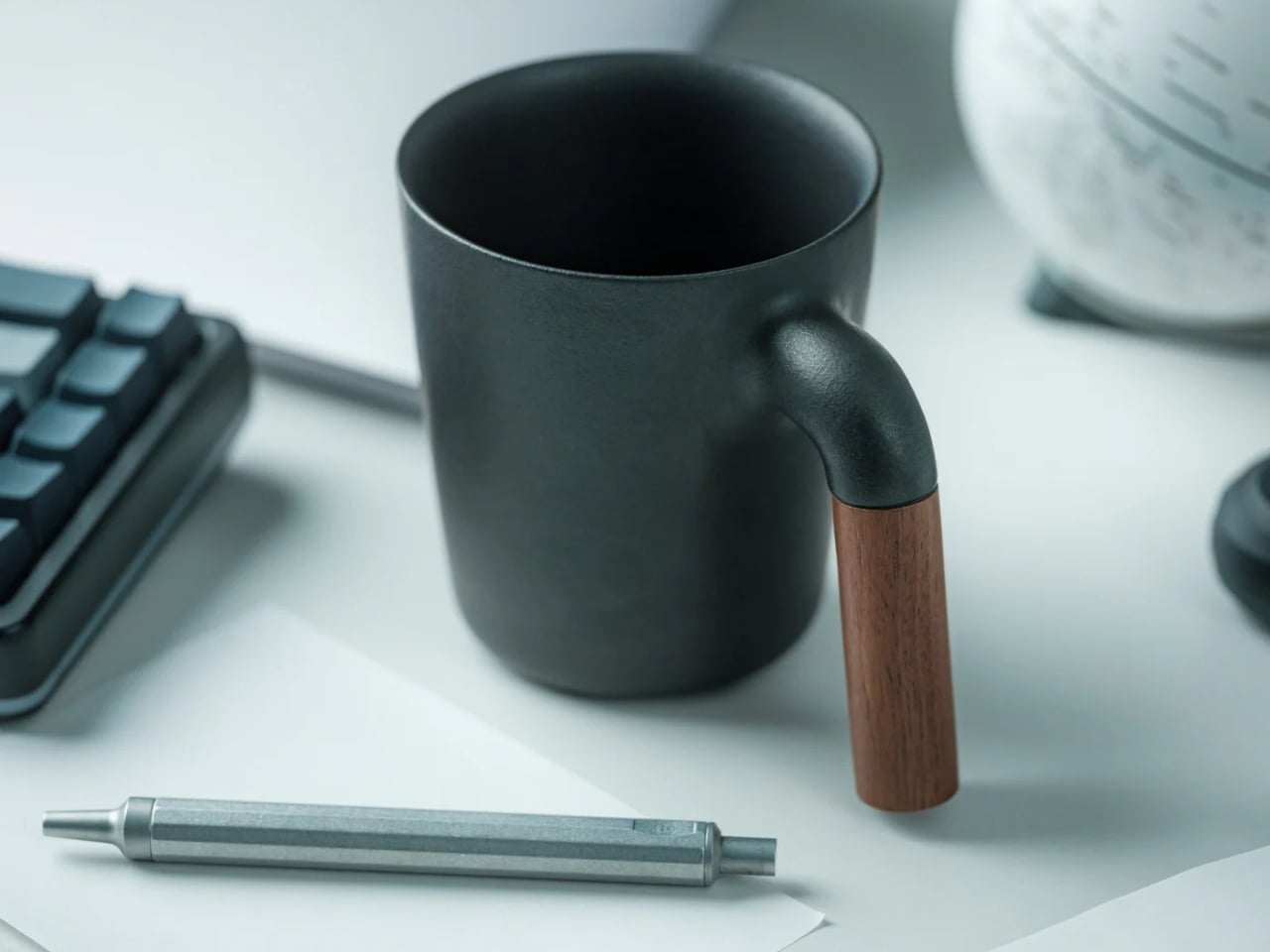
Japan’s relationship with coffee is a serious one, and the objects surrounding that ritual tend to reflect it. This Ceramic Cup is a product of that culture: a 350ml vessel crafted from Japanese ceramic with a smooth, refined finish and a natural wood handle, designed to slow the act of drinking down into something closer to meditation. It’s the kind of cup you buy because you’ve decided your daily coffee deserves better than whatever was left in the cabinet.

The pairing of ceramic and wood isn’t accidental. The ceramic body holds heat beautifully, keeping your pour at temperature while you linger over it, while the wood handle stays cool and grounded in your grip. At $60, the Ceramic Cup sits in that satisfying range of objects that feel like a genuine investment in small daily pleasures, the kind you notice every single morning and never quite get tired of.

Click Here to Buy Now: $60.00. Hurry, only a few left!

Why do we love this mug?

Bring it camping and it becomes something else entirely. Picture a particular kind of morning: cold air, slow light, the sound of a stove clicking to life. That morning deserves a proper cup. The sturdy ceramic and warm wood handle make that ritual feel intentional, even deliberate. It’s not just a mug. It’s a reason to wake up a few minutes earlier.

2. Haori Cup

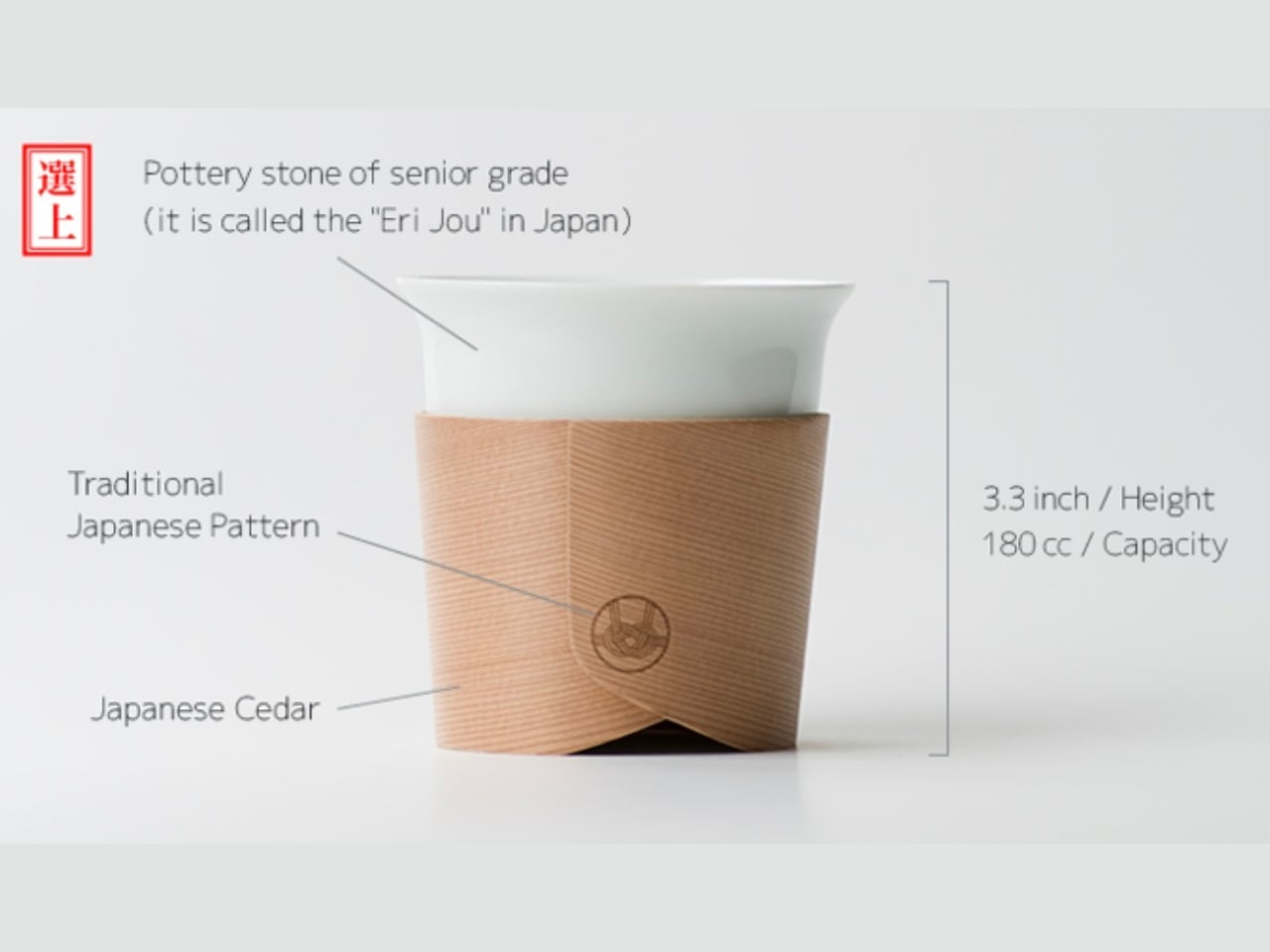
When designer Tomoya Nasuda set out to revive the 400-year-old Japanese craft of Hakata Magemono, the painstaking art of hand-bending thin cedar wood plates into curved forms, the world took notice. The response was a resounding answer to the question of whether people still care about objects made with genuine cultural depth and human skill. Named after the haori, the traditional Japanese garment that wraps itself around the body, the cup follows the same principle: a single wooden plate, coaxed by hand into a form that feels both ancient and entirely new.

What elevates the Haori Cup from beautiful object to exceptional mug is how it actually performs. The bentwood construction provides natural insulation, keeping your coffee comfortable to hold whether it’s steaming hot or poured over ice, with no burning fingers and no sweating cup. The cedar wood lends a subtle, clean fragrance to each sip: a whisper of forest, not a shout. Available in several colorways including the delicate “Sakura,” every cup is handmade and genuinely one of a kind, shaped by the same grain patterns and hands that define any true craft object.

Why do we love this mug?

Bring the Haori Cup camping and something clicks into place. Holding warm coffee in a vessel bent from a single piece of Japanese cedar, sitting among trees that look not so different from the ones that made it, that’s the kind of moment you came outside for. It’s lightweight, it’s alive with history, and it makes your first cup of the morning feel less like a caffeine delivery system and more like a ceremony worth showing up for.

3. Earth Friendly Tumbler

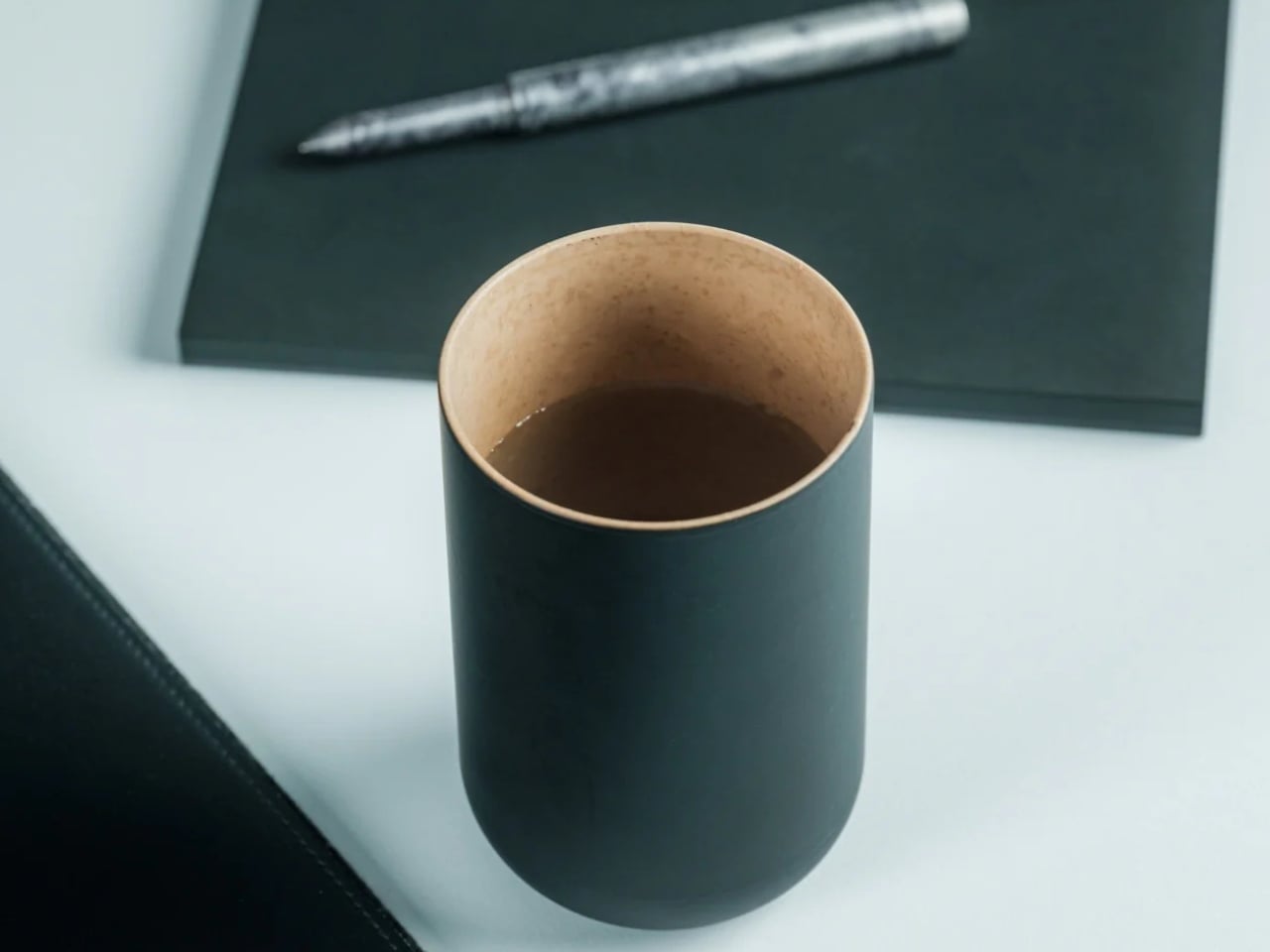
There’s something poetic about a vessel that eventually gives itself back to the earth. The Earth Friendly Tumbler from Japan’s EcoCraft line is made from a biodegradable resin derived from paper and corn, meaning that when its long life finally ends, it quietly decomposes into water and CO₂ through natural microbial action. It’s a cup that carries the philosophy of the country that made it: thoughtful, restrained, and deeply intentional about its place in the world.

What keeps you reaching for it, though, is how it feels. The surface has a distinctive texture that sits somewhere between ceramic and wood, warm to the touch, satisfying in the palm, and nothing like the cold uniformity of plastic. Its minimalist design is clean enough for a city desk but earthy enough for the forest, and starting at just $25, it’s an easy yes. Because each tumbler’s material is shaped naturally through the biodegradable process, no two are exactly alike, a quiet nod to the Japanese ideal of wabi-sabi.

Click Here to Buy Now: $25.00. Hurry, only a few left!

Why do we love this mug?

For the camper who takes their environmental footprint as seriously as their coffee, this tumbler is a natural match. It’s light enough for a day hike, beautiful enough to sit on a camp table at sunrise, and carries with it the rare satisfaction of knowing the mug in your hand is doing the planet a quiet favor.

4. Titanium Mug

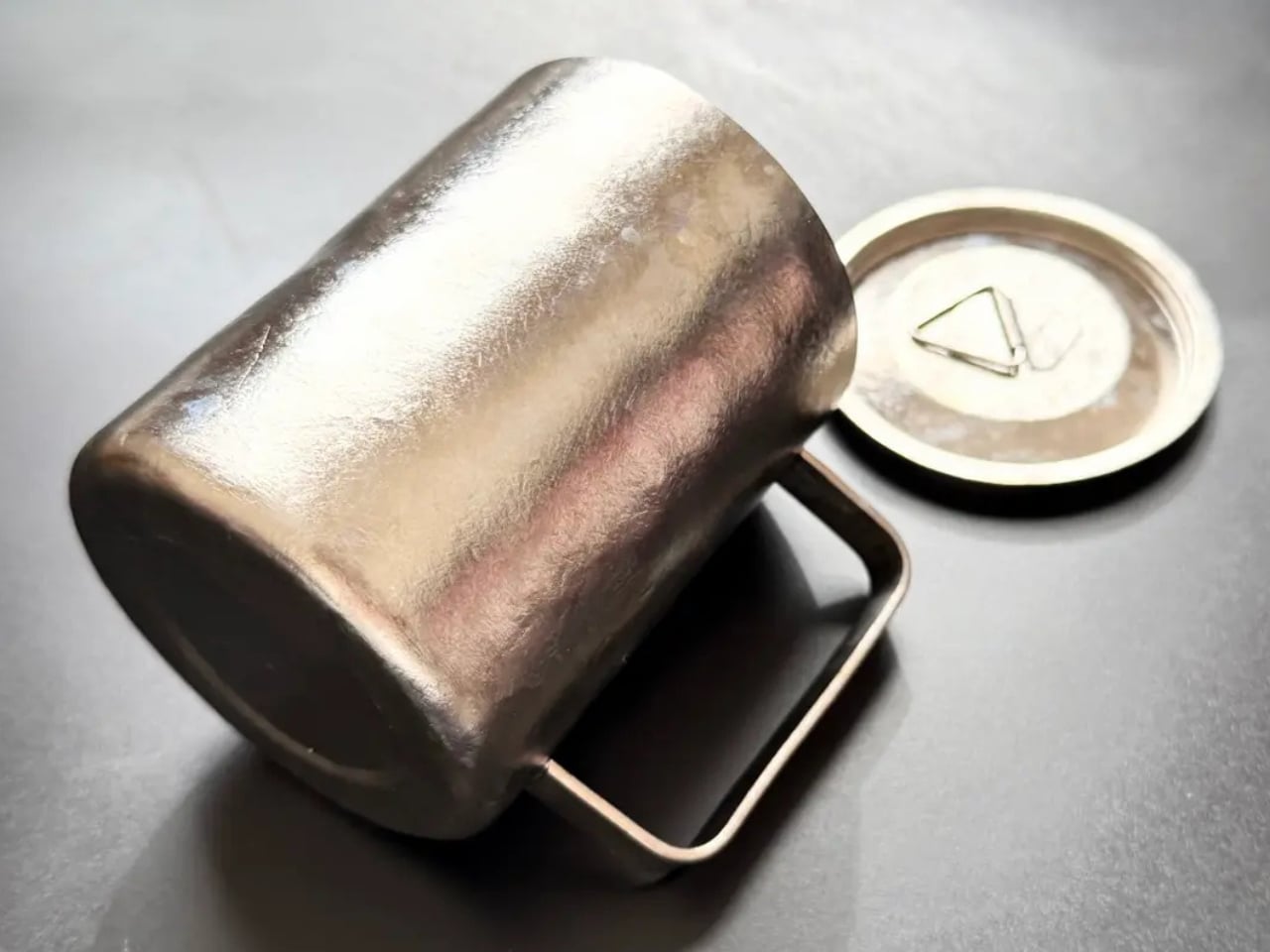
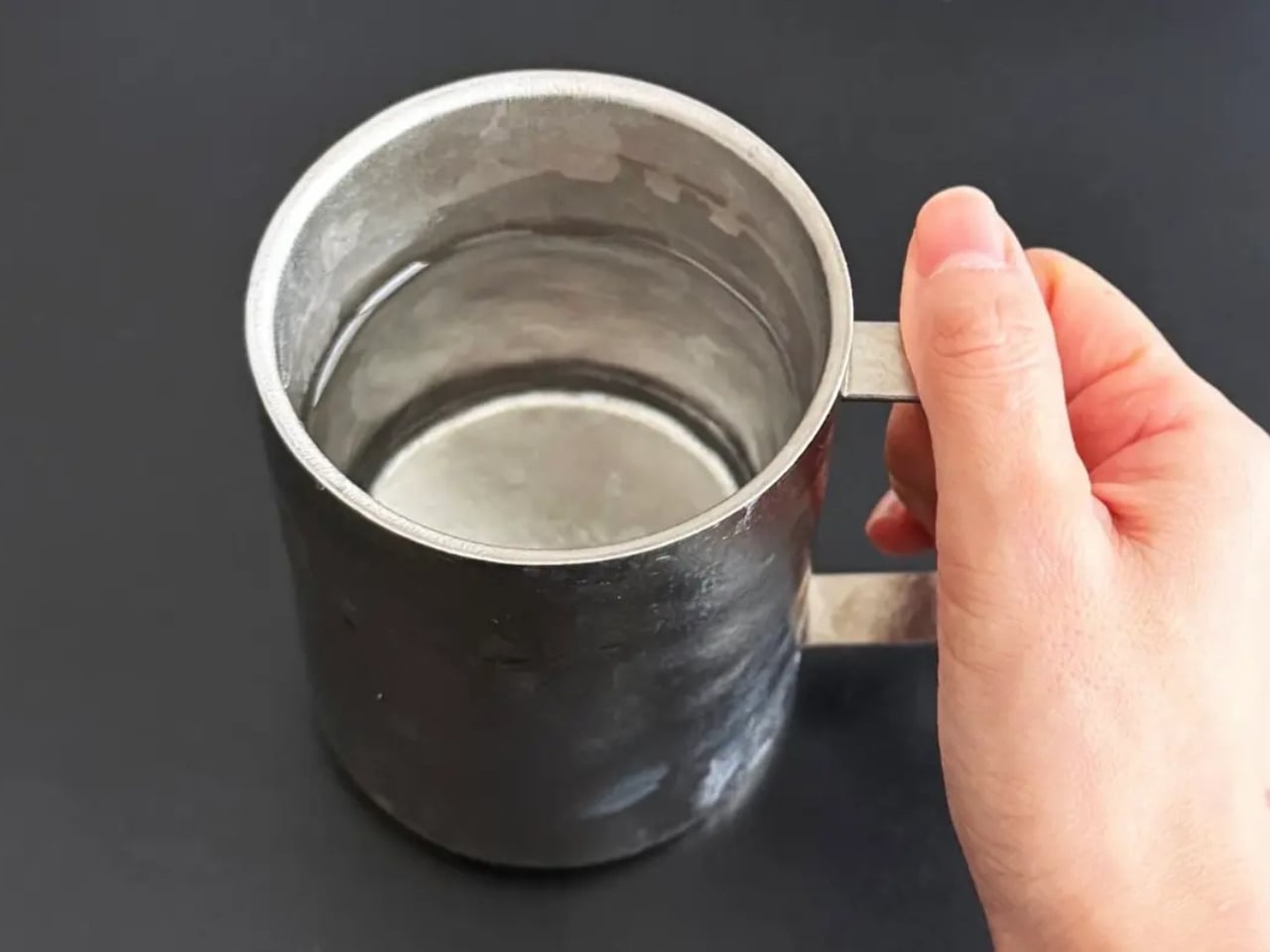
Titanium has always been the material of people who won’t compromise, and Japan’s precision metalworkers know how to honor that reputation. This mug is engineered from pure titanium, a material roughly 45% lighter than stainless steel yet equal to it in strength, which means the first time you pick it up, the lightness will catch you off guard. It feels almost implausibly slight in your hand for something this solid.

But the real story is what titanium does for your coffee. Unlike stainless steel, titanium imparts zero metallic taste or odor to your drink, so your coffee arrives exactly as it was brewed, nothing added, nothing taken away. Its lower thermal conductivity also means heat moves through the walls more slowly, keeping your drink warmer for longer on cold mornings. And with use, the titanium surface develops a gradual oxide film, a deepening, iridescent patina that makes each mug grow more beautiful and personal over time.

Why do we love this mug?

This is gear built for the outdoors without apology. It can be placed directly over a camp stove, it’s impervious to rust even in wet conditions, and its ultralight profile makes every gram-counting backpacker smile. It’s the mug you bring on every trip and eventually can’t imagine leaving behind.

5. T-Go Mini

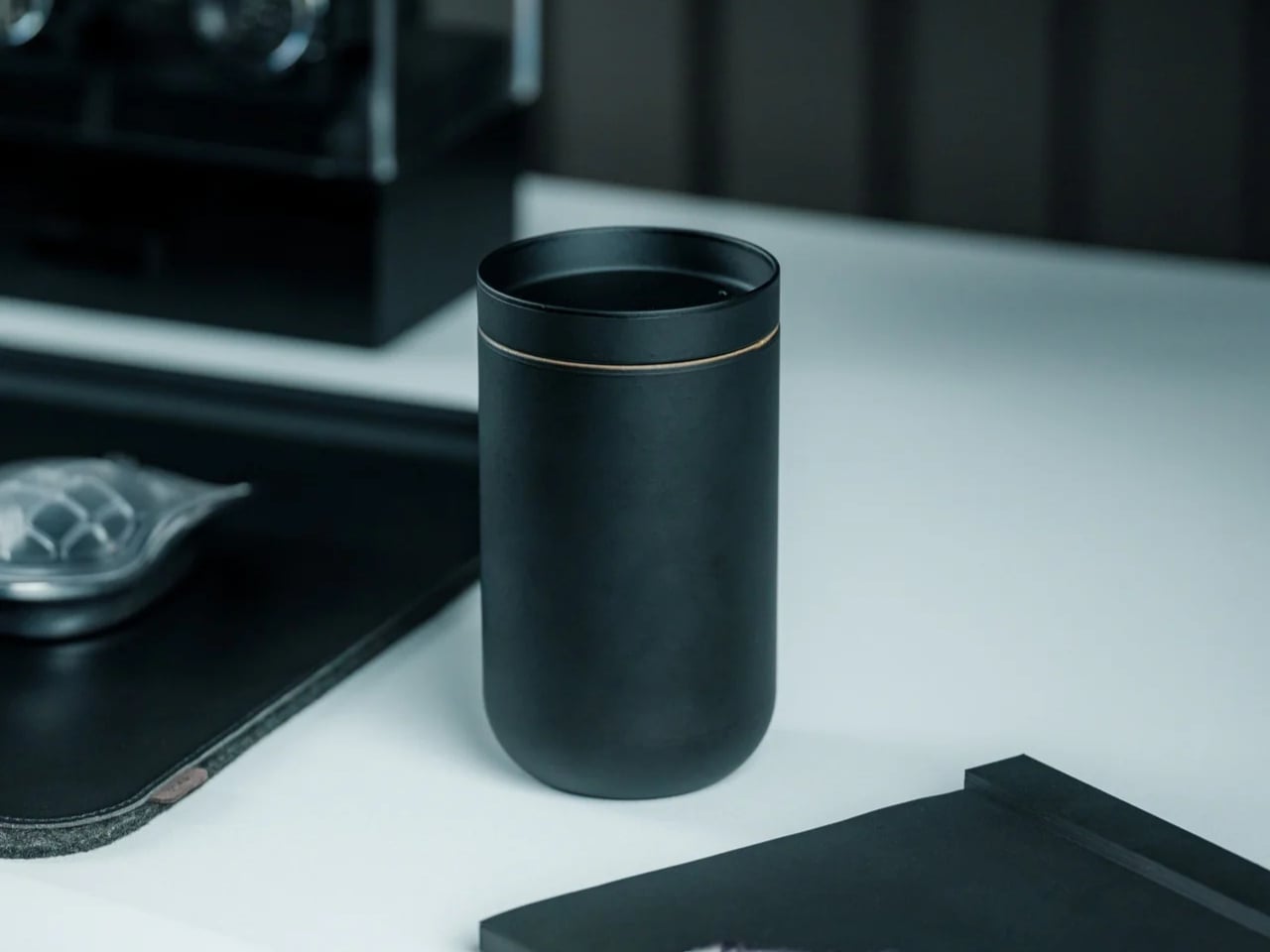
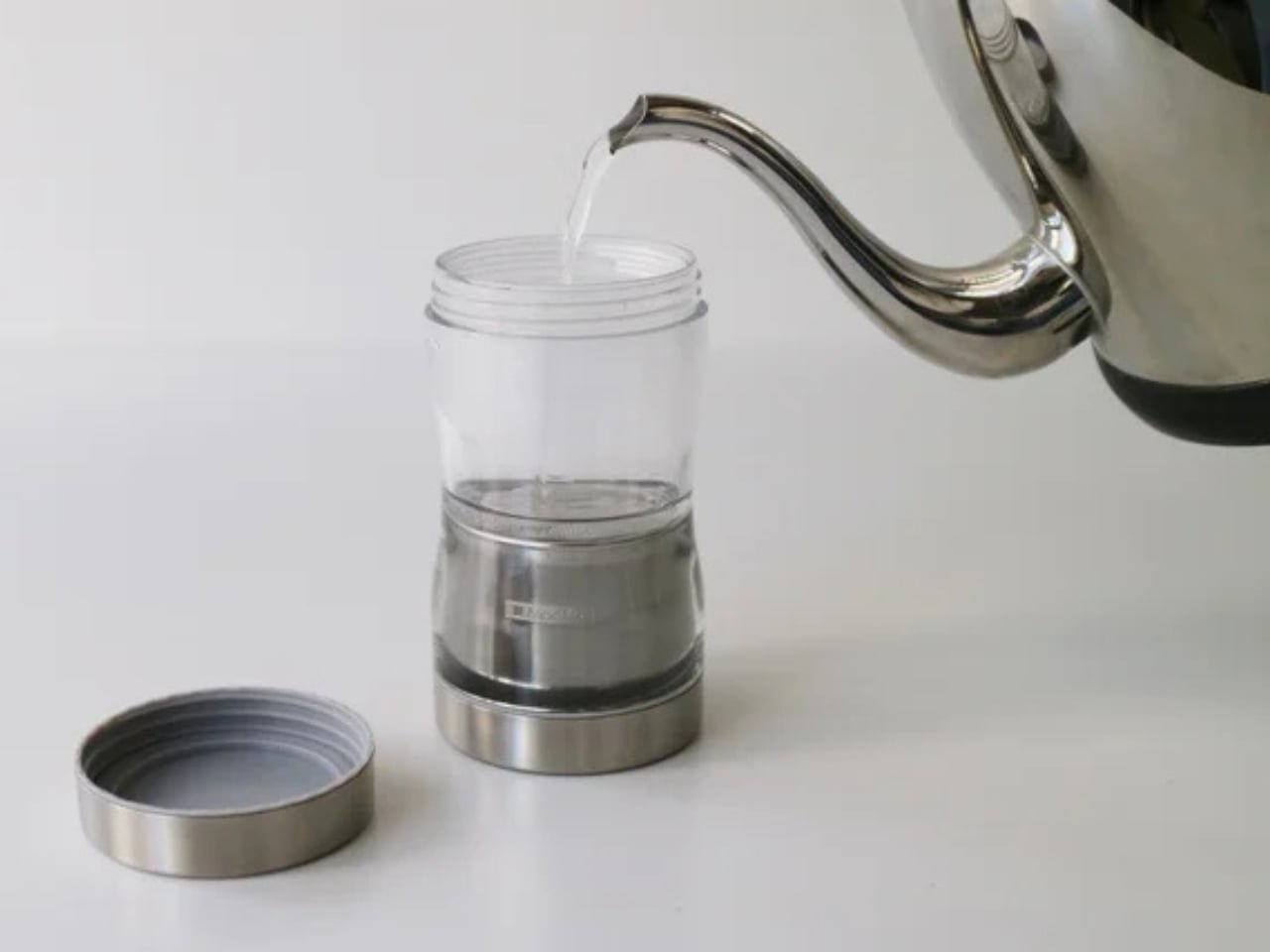
The premise of the T-Go Mini is a simple one: great coffee shouldn’t require you to leave your standards at the trailhead. This compact travel mug was designed for people who refuse to accept that “outdoor coffee” has to mean bad coffee. Small enough to disappear into any pack, it strips the camping mug back to its most essential form and then gets every detail of that form exactly right.

“Mini” here means refined, not reduced. The T-Go Mini is shaped by the Japanese design principle of doing more with less: a tighter footprint, a secure seal, heat retention that punches above its size, and a construction that speaks of deliberate craft rather than cost-cutting. It’s the kind of object that reveals itself slowly. The more you use it, the more you appreciate what its designers chose not to include, and why.

Why do we love this mug?

For the hiker, the trail runner, or the minimalist camper who’s already decided every gram matters, the T-Go Mini is an easy decision. Slip it into a chest pocket, a jacket pouch, or a side sleeve, and let it quietly prove that the best outdoor gear doesn’t ask you to compromise. It just asks you to pay attention.

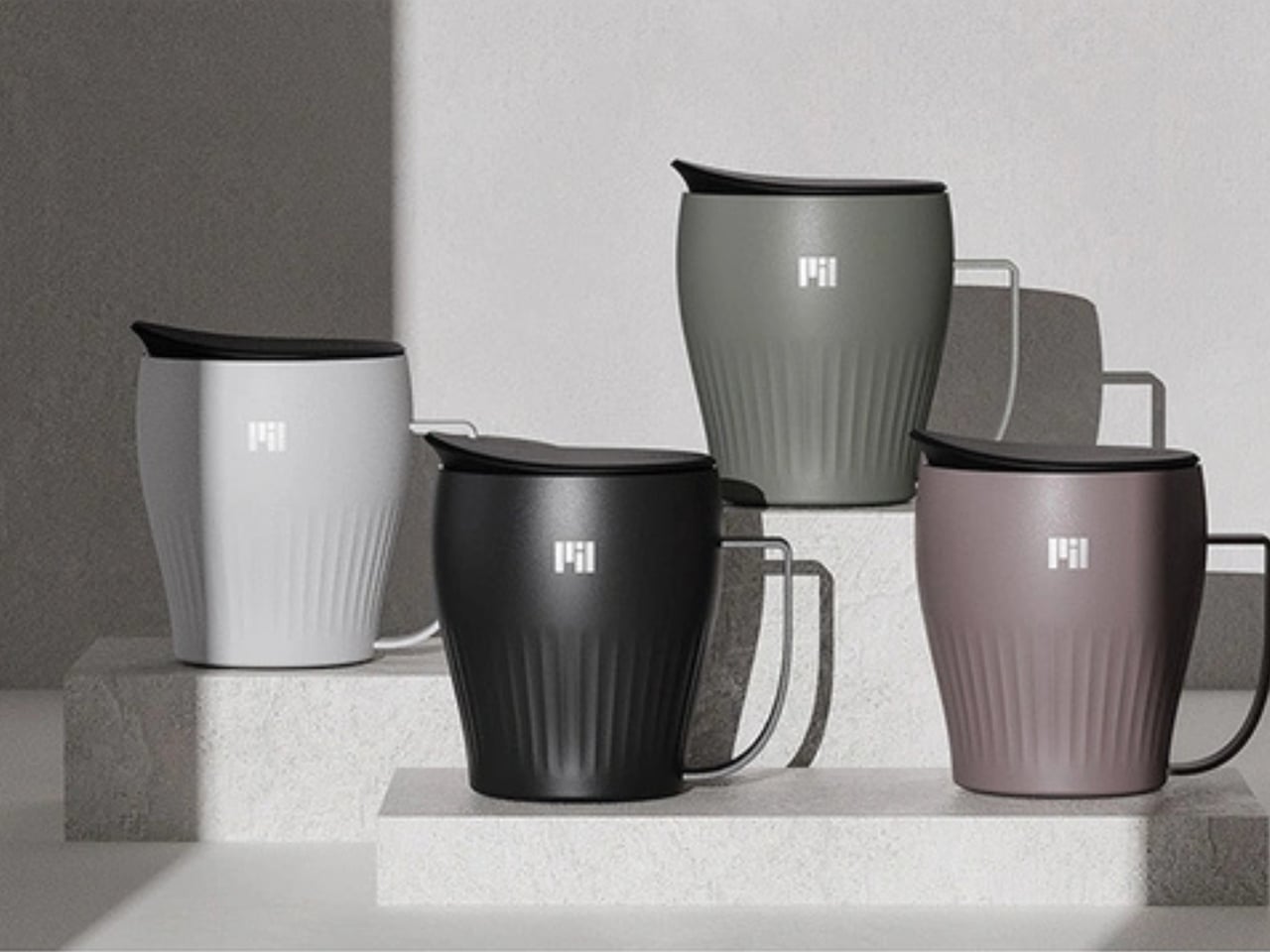
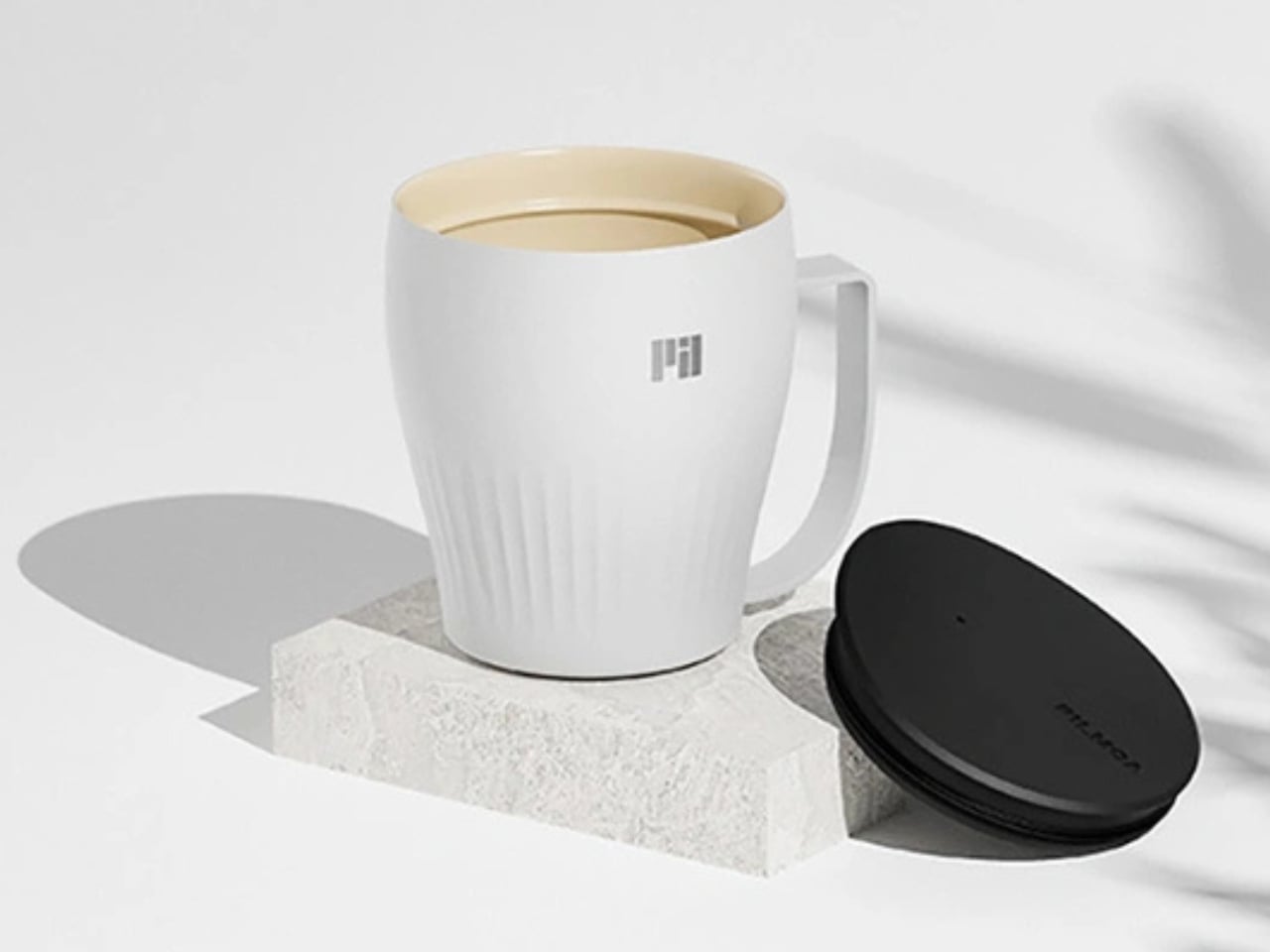
6. Pilmoa Mug

The Pilmoa Mug is a second-generation design refined through real-world feedback and use. It represents something increasingly rare in the outdoor gear market: a mug designed by people who actually think carefully about what it means to drink coffee well, not just to drink it conveniently.

The Pilmoa is built around the small details that most camping mugs overlook: the feel of the rim against your lips, the balance of the cup in a cold hand, the way heat distributes through its walls on a slow morning. These are the quiet, almost invisible considerations that separate a mug you tolerate from one you genuinely look forward to. It’s not trying to do everything, just trying to do one thing with the kind of focus that Japanese product design consistently brings to the table.

Why do we love this mug?

Compact and carefully conceived, the Pilmoa earns its place in any outdoor kit. Whether you’re setting it beside a stove in the backcountry or pulling it from a hip pack mid-hike, it holds its ground. It’s the kind of mug that reminds you, every time you use it, that good mornings outdoors are worth planning for.

Six mugs, six philosophies, one shared conviction: that how you drink matters as much as what you drink. Whether you reach for the biodegradable quiet of the Earth Friendly Tumbler, the handcrafted soul of the Haori Cup, or the no-compromise precision of the Titanium Mug, each of these objects carries the same Japanese understanding that a well-made vessel is never just a vessel. It is an argument, made in clay or cedar or titanium, that ordinary moments deserve extraordinary attention. Science already told us that the cup shapes the experience. Japan has known that for centuries. So the next time you find yourself at a campsite with cold air in your lungs and a stove hissing to life, think carefully about what you pour your coffee into. The right mug won’t just hold your drink. It will hold the whole morning.

The post 6 Camping Mugs From Japan That Make Coffee Taste Better (Science Says So) first appeared on Yanko Design.

Nader Gammas’ Vessels Turns Light Into a Slow, Living Presence

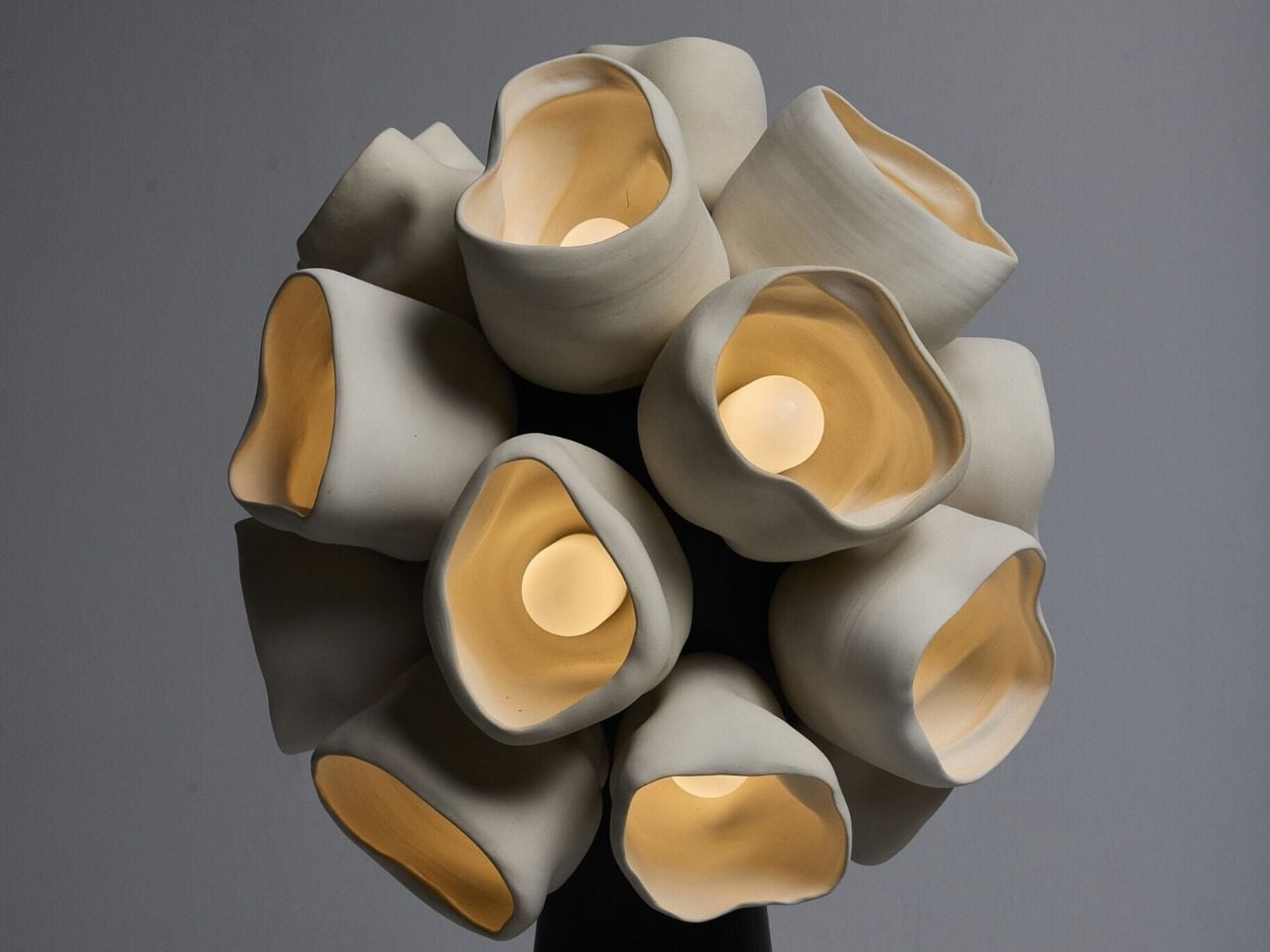
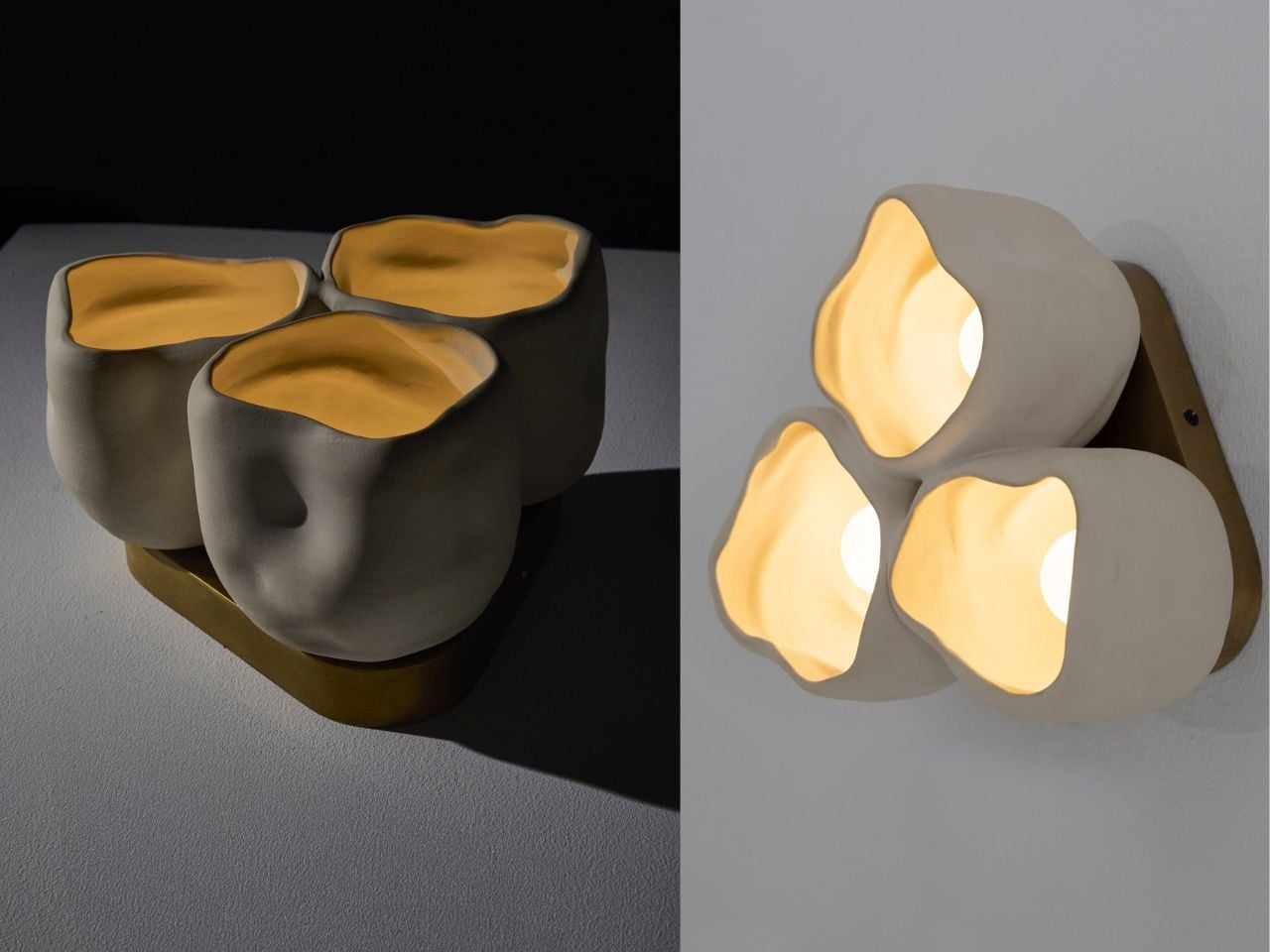
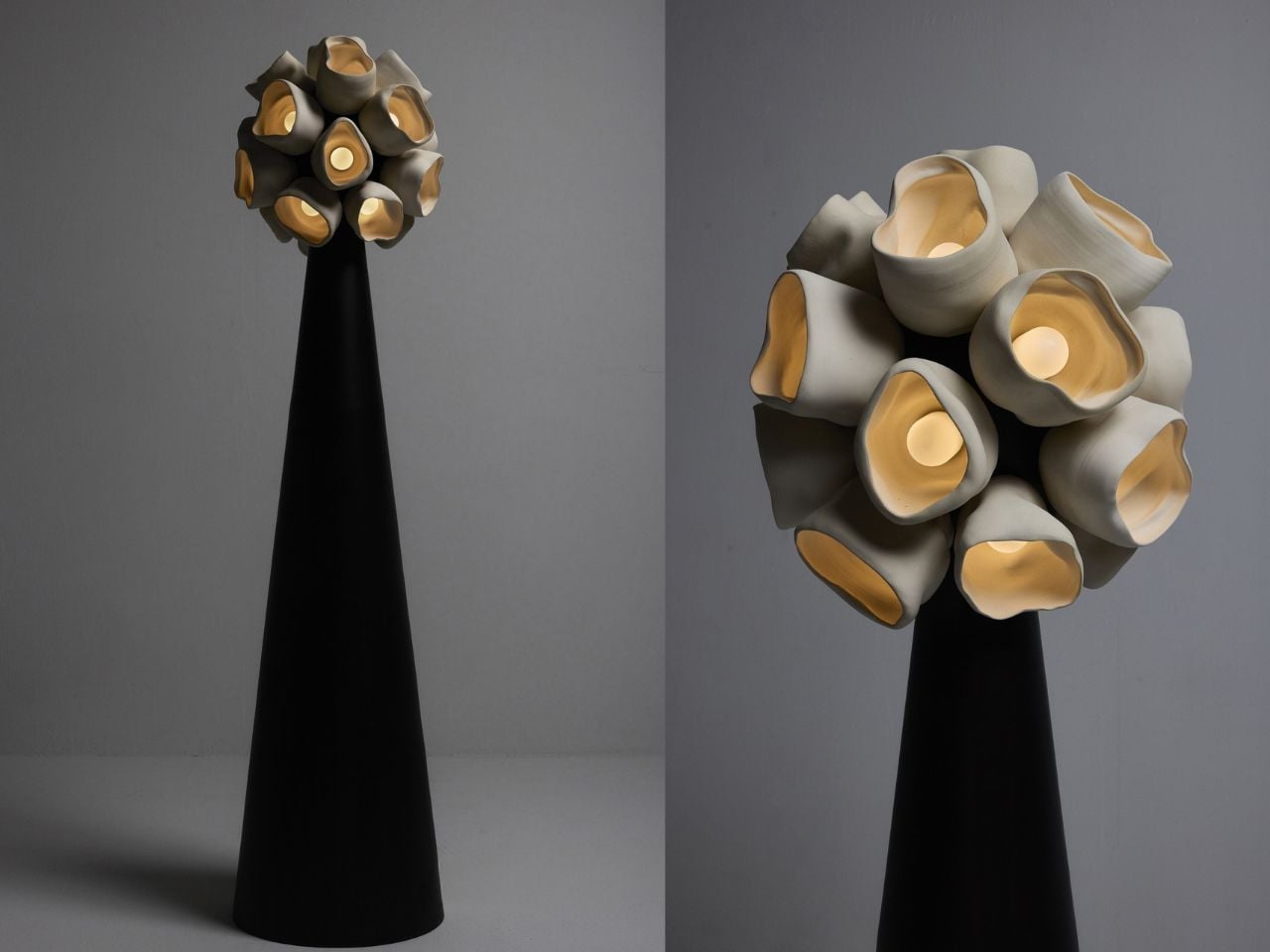
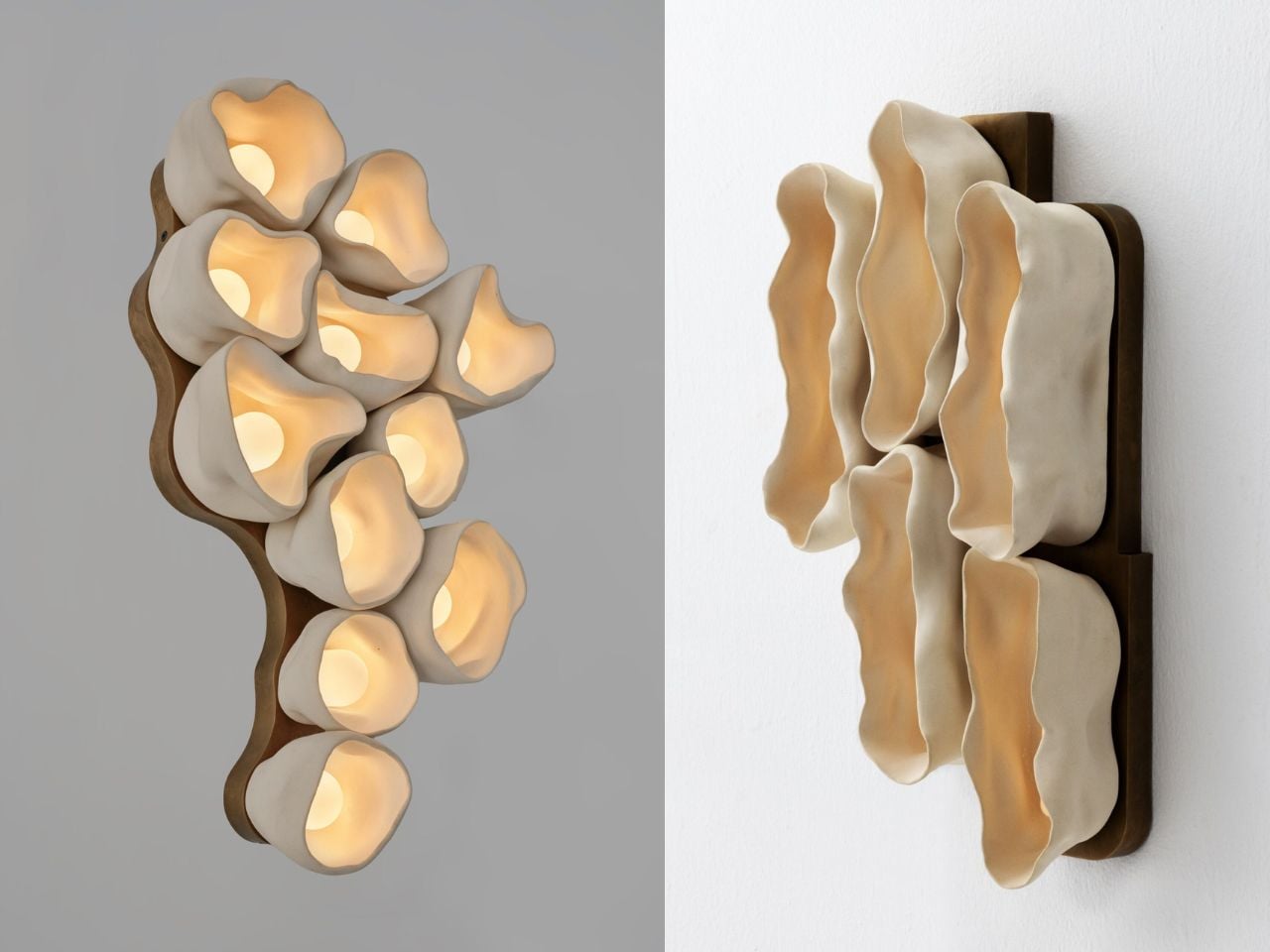
The Vessels collection feels like a quiet confession from Nader Gammas. Known for lighting defined by brutalist strength and architectural discipline, Gammas takes an unexpected turn inward with this series. The sharp certainty that once shaped his work softens here, replaced by forms that feel grown rather than constructed. These lights do not announce themselves. They linger. They unfold slowly, like something discovered rather than designed.

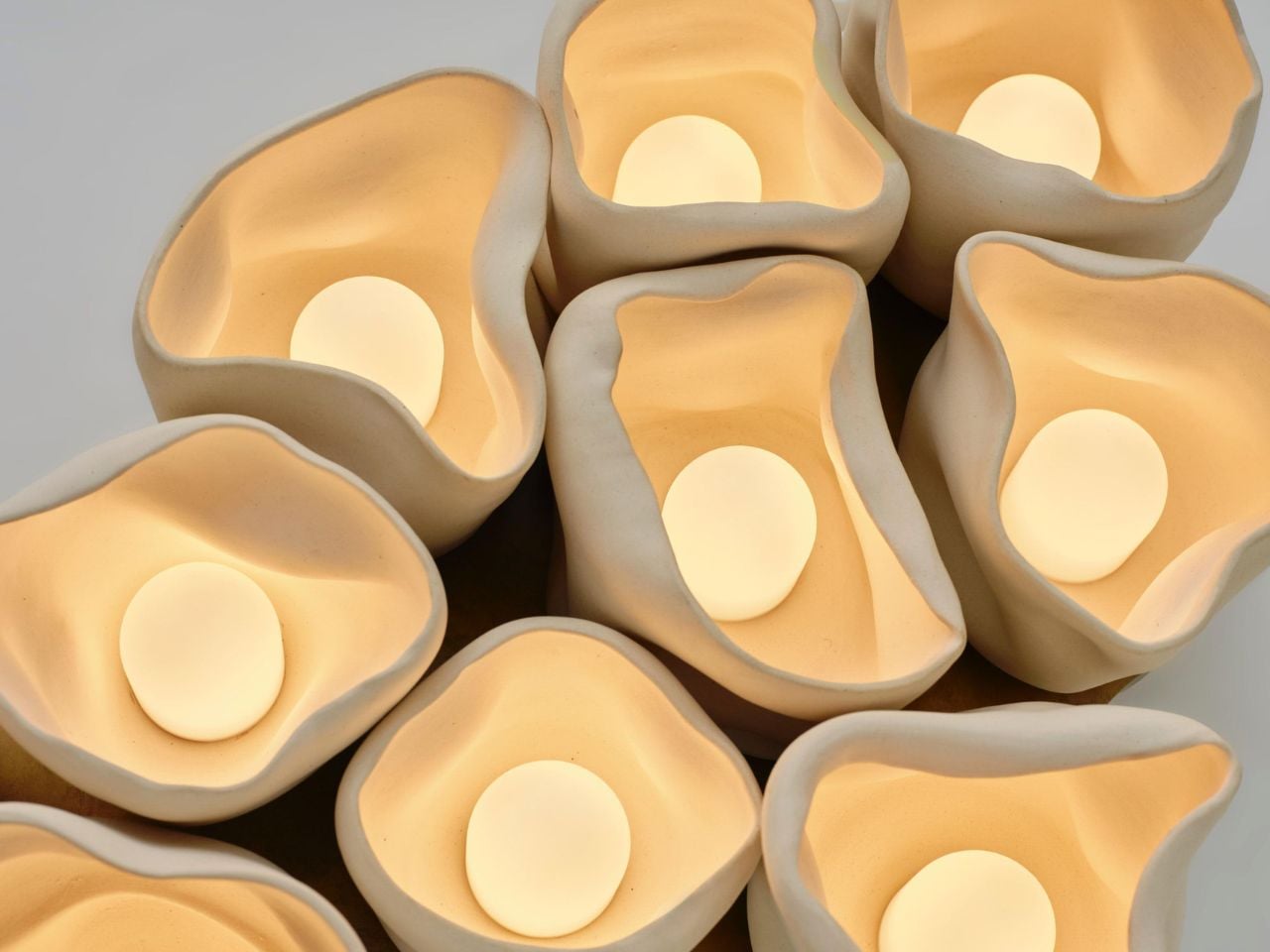
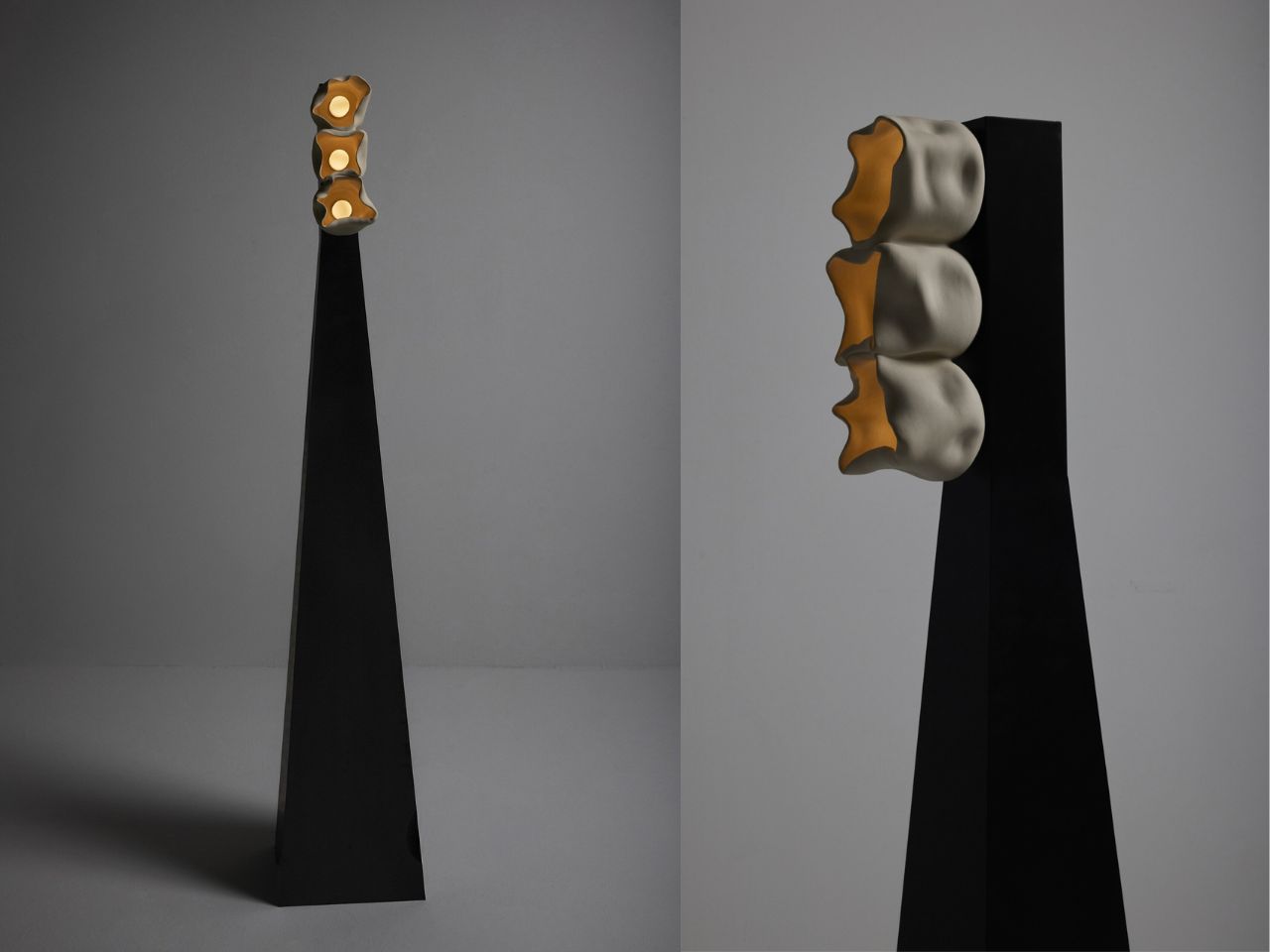
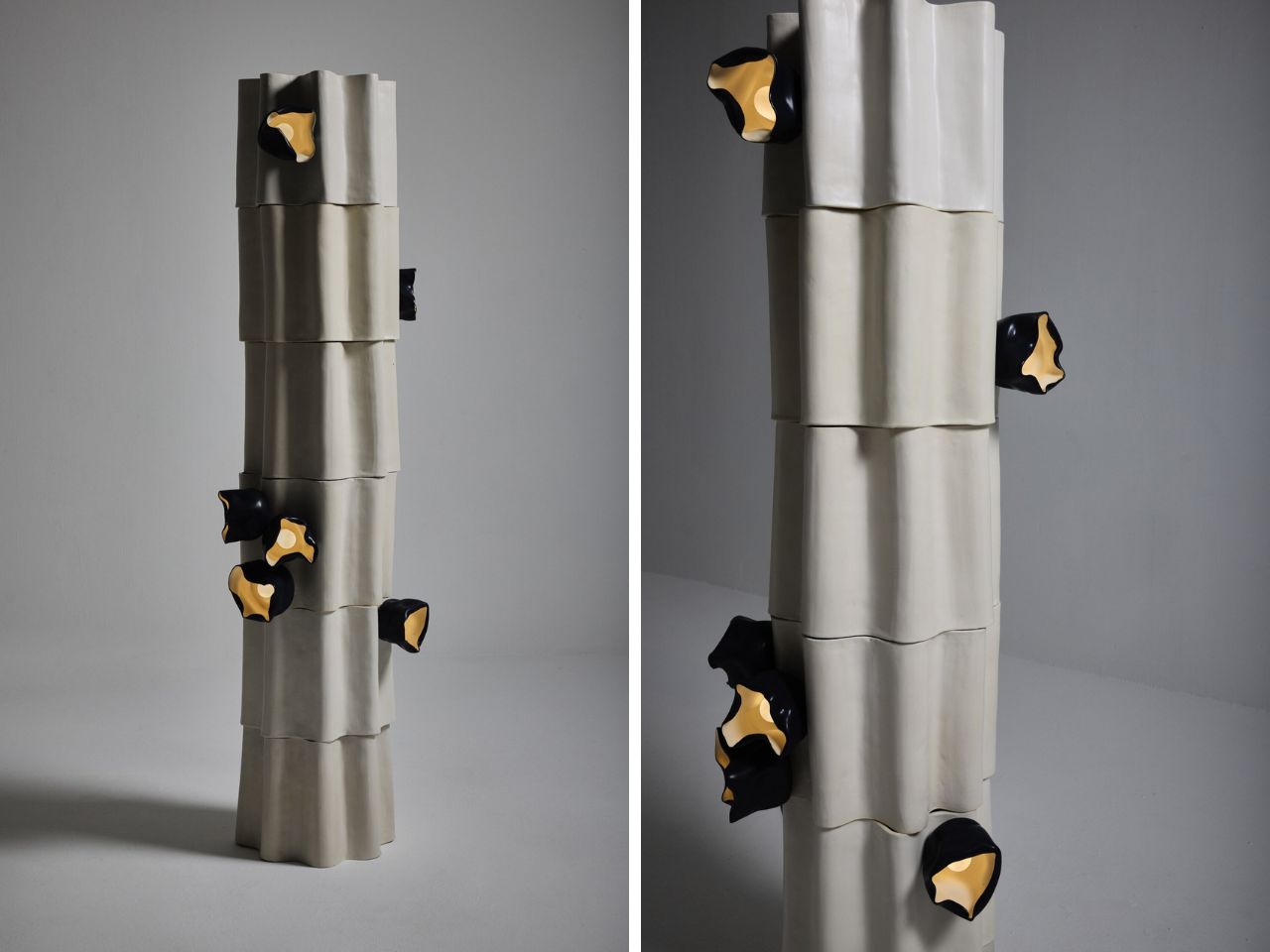
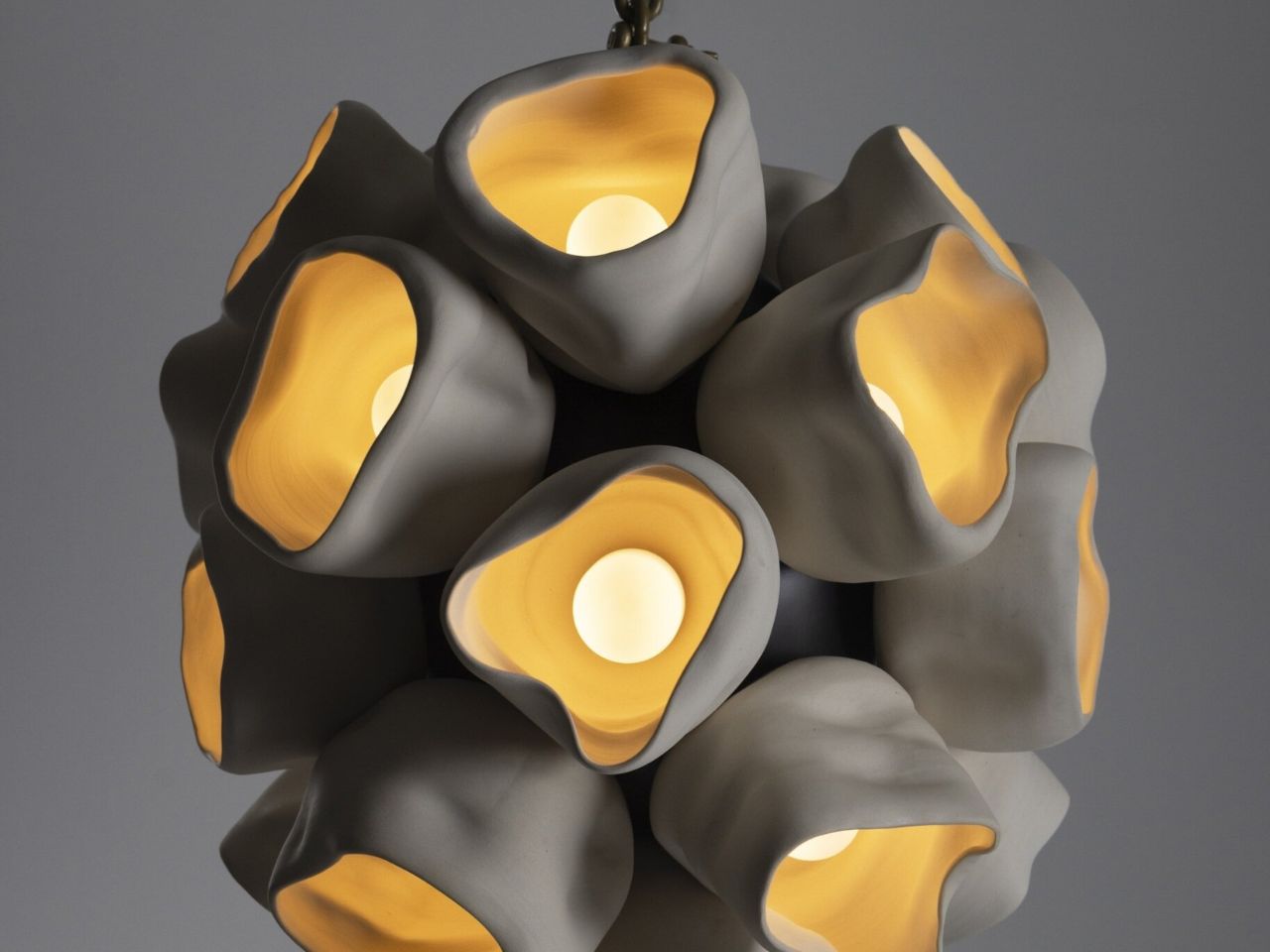
The inspiration comes from cup fungi, a modest yet mesmerizing group of organisms that bloom close to the earth. Their clustered growth patterns and delicately rippled rims become the emotional backbone of the collection. Instead of rigid symmetry, the vessels curve and open organically, as if responding to an internal logic of growth. Light is not forced outward. It is held, filtered, and gently released, echoing the way fungi cradle moisture and air within their fragile structures.

Designer: Nader Gammas

This natural influence marks a clear departure from the heavy brass and assertive geometries that have long defined Gammas’ work. In Vessels, the language shifts toward softness and restraint. Ceramic takes center stage, valued for its warmth and sensitivity to touch. Its surface carries subtle variations in thickness and texture, details that only emerge through hand shaping. Brass remains present, but now it plays a supporting role, adding quiet warmth rather than visual weight.

Each piece is shaped entirely by hand, without molds or replication. This process ensures that every vessel is singular, carrying its own proportions, curves, and imperfections. The result is a collection that feels almost alive. As light passes through the ceramic forms, it creates a slow interplay of glow and shadow, giving the impression that the object itself is breathing. These are not fixtures designed to disappear into a ceiling or wall. They are characters within a space, each with its own presence and mood.

While the aesthetic has softened, the philosophy behind the work remains firmly rooted. Gammas has always believed that lighting is fundamental to how people experience a space emotionally. That belief traces back to his early life growing up in the United States with Syrian roots, where he developed an instinctive understanding of how form and function shape atmosphere. His academic path, from architecture at the University of Jordan to an MFA in Lighting Design at Parsons School of Design, refined that instinct with technical precision.

Today, with exclusive representation by STUDIOTWENTYSEVEN, Gammas stands confidently on the global design stage. Yet Vessels feels deeply personal, almost like a return to intuition. It is a collection that listens more than it declares, allowing nature to guide form and light to guide emotion.

Vessels is a lighting series, but with a meditation on growth, material, and restraint. Through handmade ceramic forms accented with brass, the collection transforms light into something felt rather than seen, shaping spaces with a quiet and lasting intimacy.

The post Nader Gammas’ Vessels Turns Light Into a Slow, Living Presence first appeared on Yanko Design.

This Ceramic Bowl Has Secret Compartments for Pistachio Shells

Eating pistachios or olives usually means improvising a discard situation. Shells end up on napkins, side plates, or scattered across the coffee table, and by the time the bowl is empty, there’s a mess to clean up. Shared snack bowls at parties have the same problem: fresh food mixed with scraps, and everyone reaches in with uncertain hands trying to avoid the pile of pits someone left on the edge.

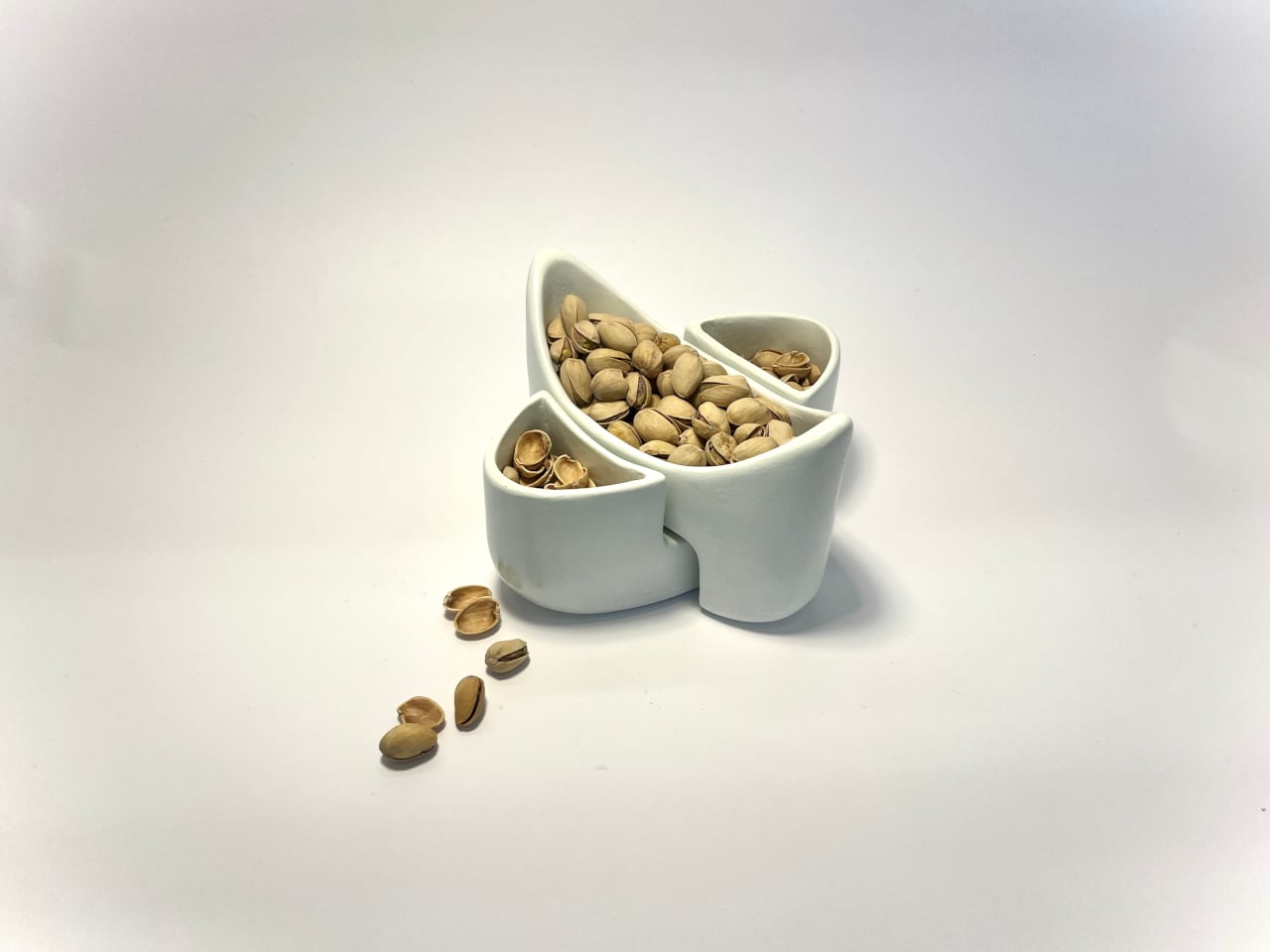
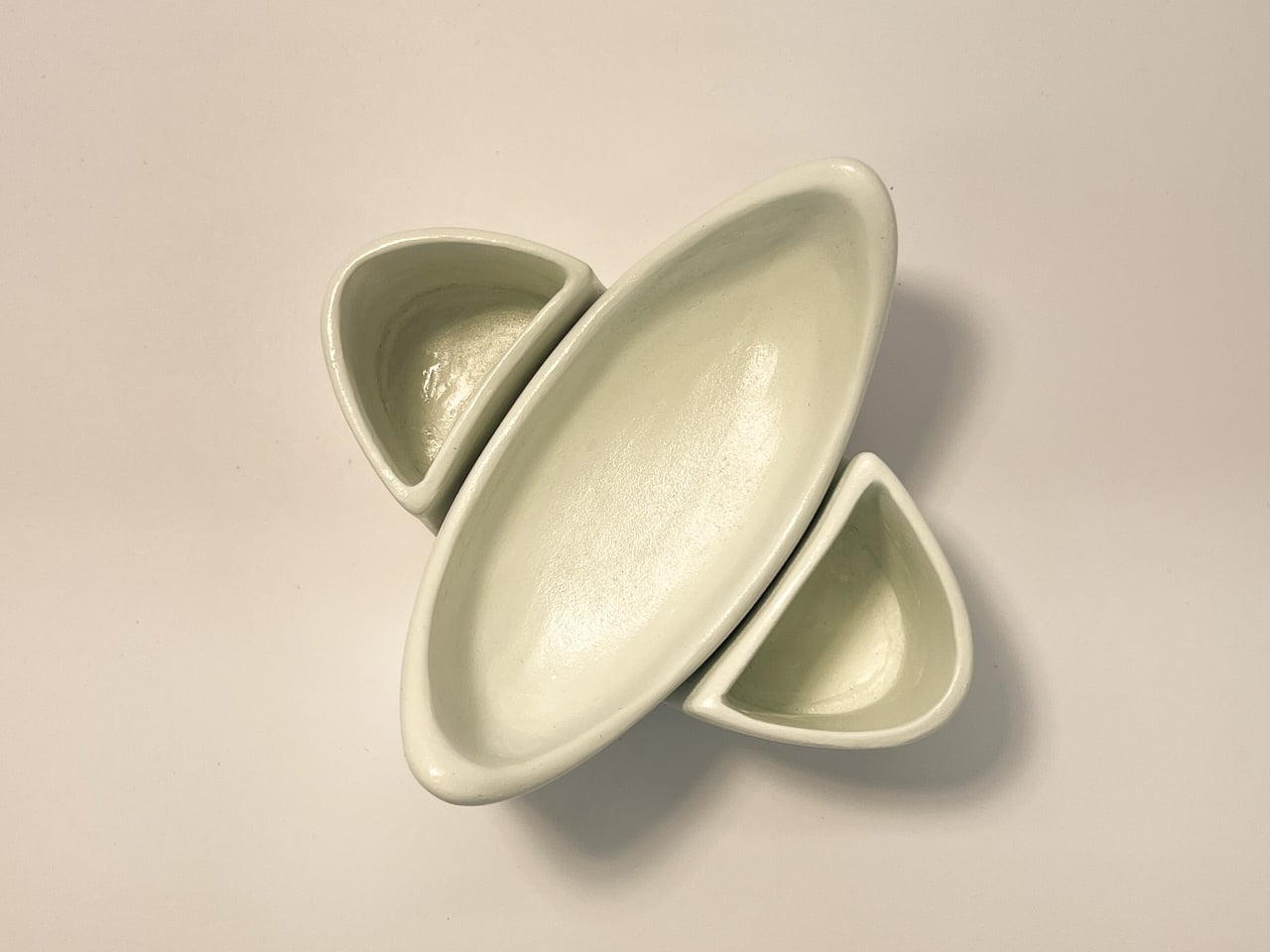
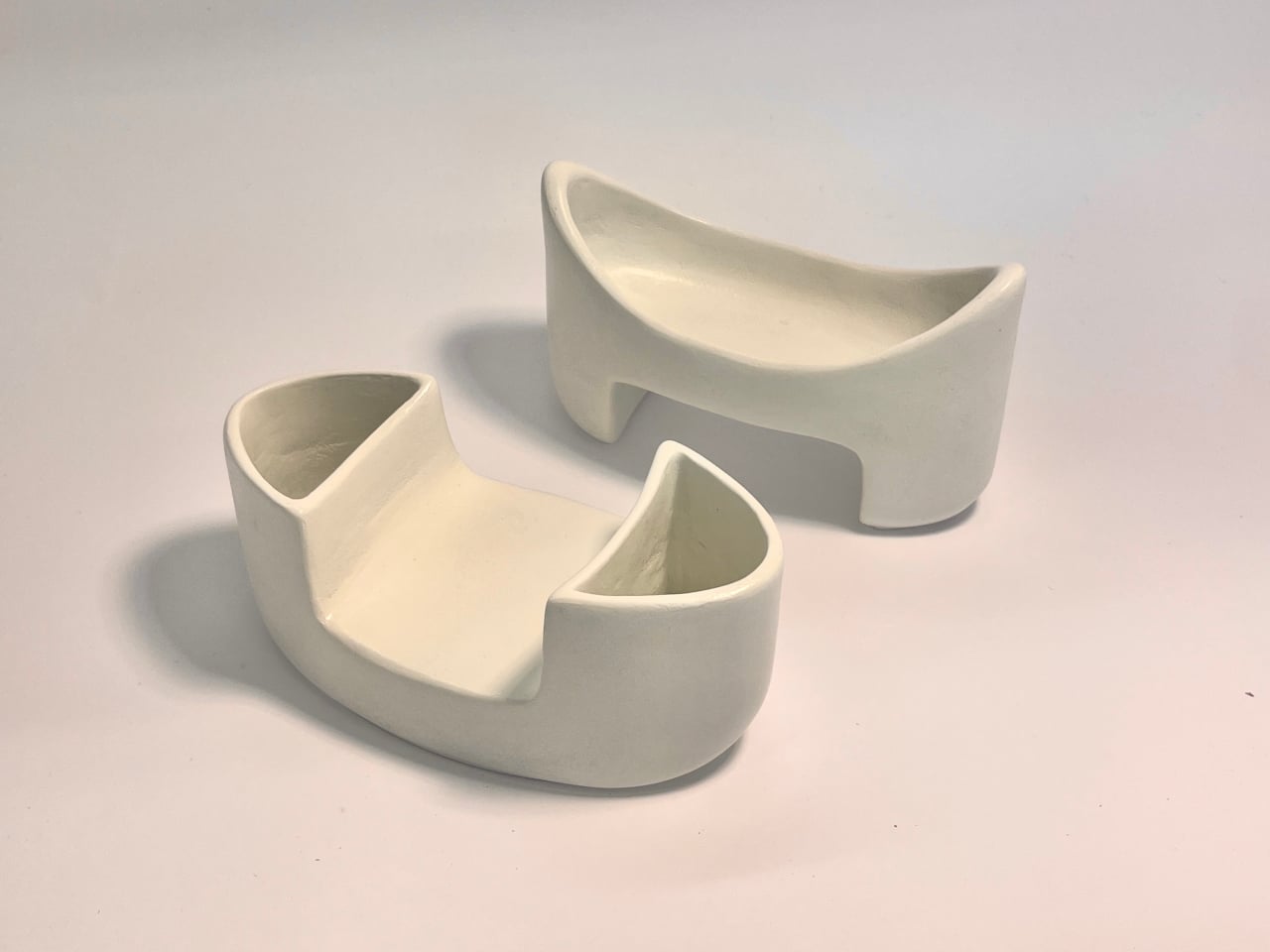
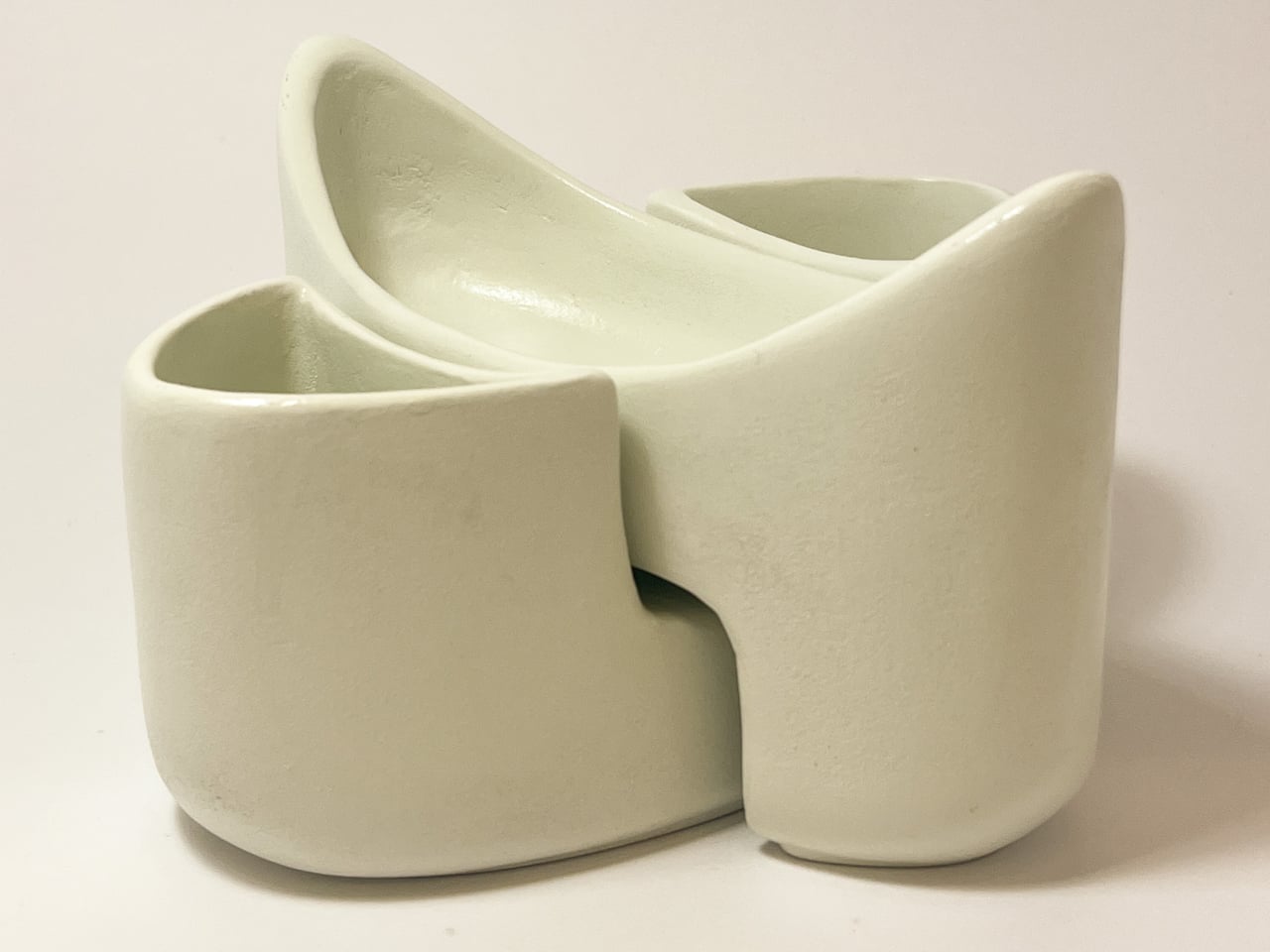
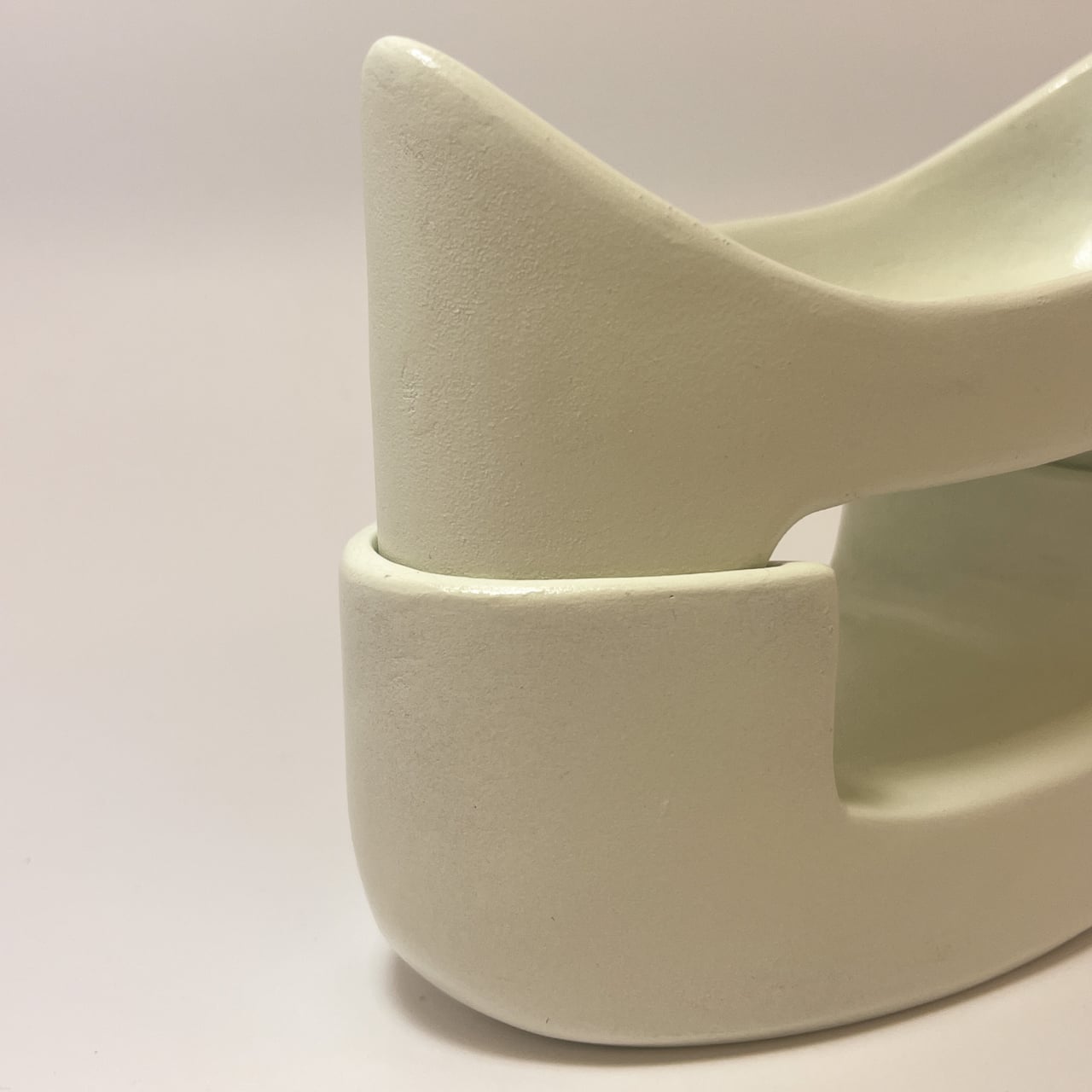
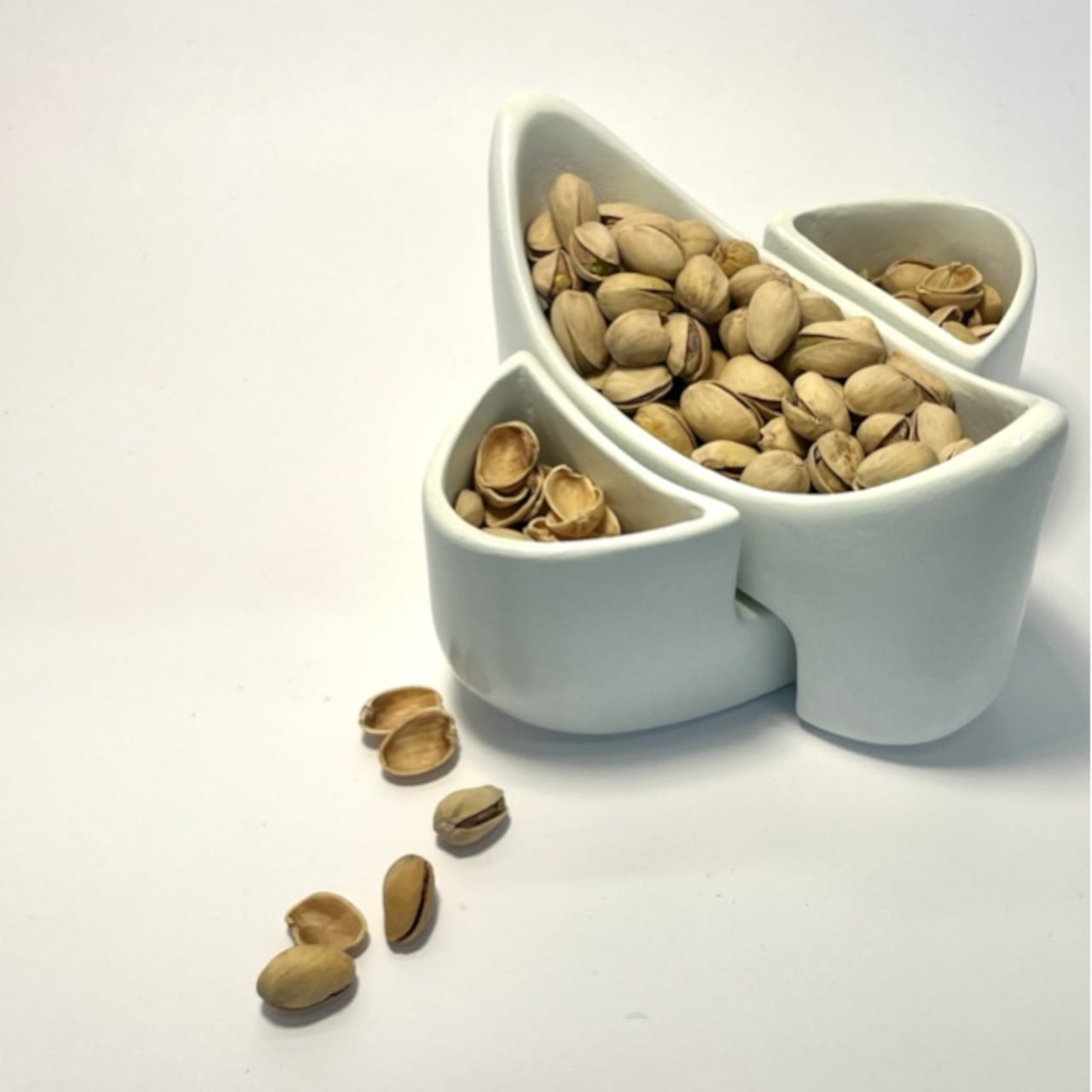
CALYRA treats that mess as part of the design brief rather than an afterthought. It’s a ceramic food and waste server that combines a main serving space with dedicated discard areas in a single form. The two pieces nest together symmetrically, both during use and when tucked away in a cupboard, so pits and shells have an obvious home from the start instead of wandering around the table.

Designer: Christina Tran

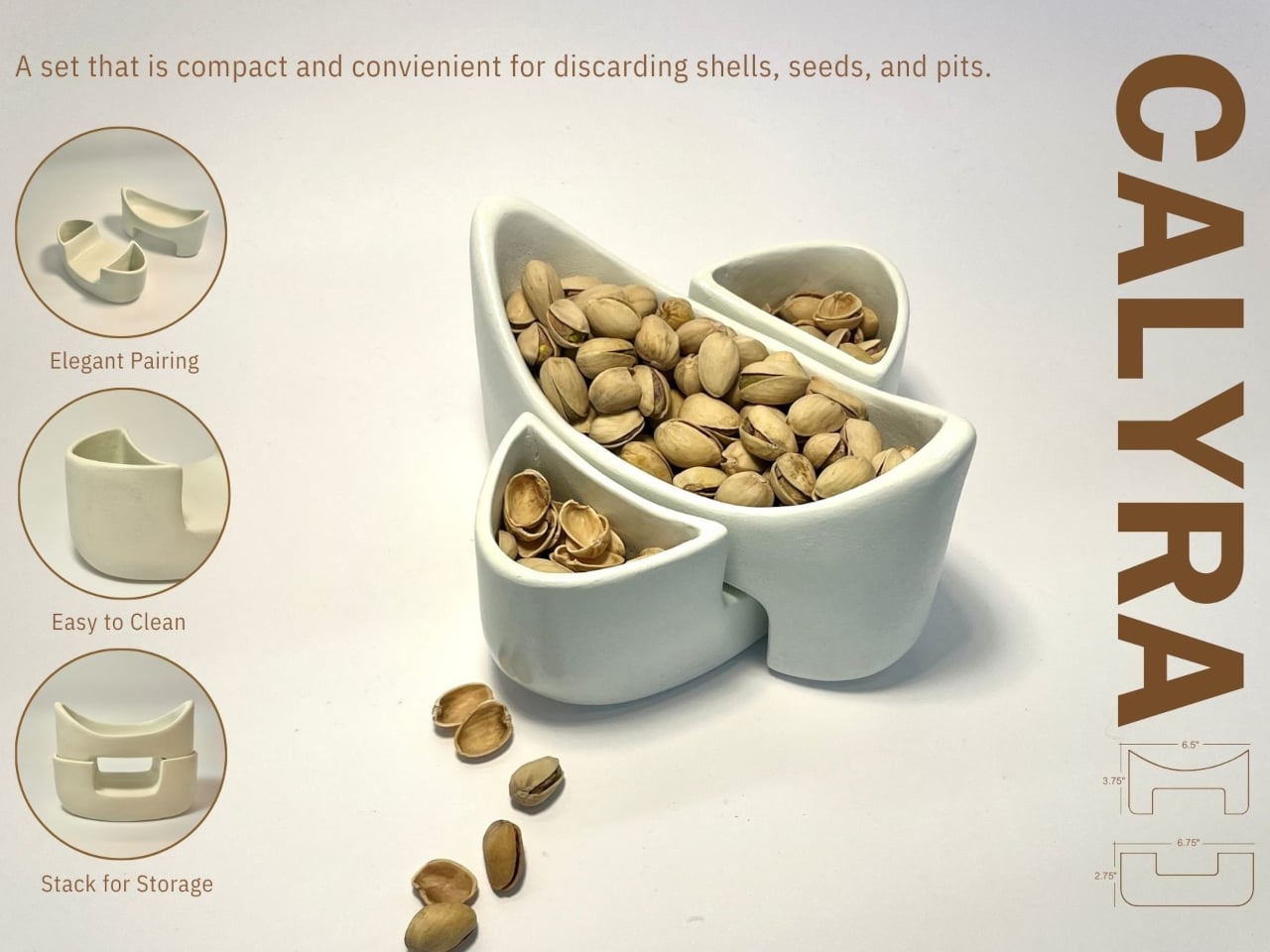
Picture a casual evening with pistachios on the coffee table. CALYRA’s larger basin holds the fresh snacks, while two smaller cavities collect empty shells and pits as you work through the bowl. Instead of juggling an extra plate or folding a napkin into an improvised waste pouch, everything stays within one footprint. When you’re done, you can carry the whole situation to the sink in one trip.

Once the food is gone, the two pieces nest into a compact stack. The cut-out legs and curved profiles lock into a stable shape that’s easy to store in a small cabinet. That symmetry means you can carry it as a single object from the cupboard to the table and back again, even when your hands are already full with wine glasses or a tray of something else that needs attention.

CALYRA’s smooth ceramic surfaces and rounded interiors make it simple to rinse or wipe clean, with no tight corners for residue to hide in. The neutral form and color let it move between different foods and settings, from solo snacks at a desk to shared tapas at dinner. It behaves like regular tableware, just with the added intelligence of a built-in waste plan that most bowls quietly ignore.

The concept focuses on the unglamorous part of eating, the shells, seeds, and pits that usually get handled as an afterthought. By folding that step into the serving piece itself, CALYRA turns a small annoyance into a smoother gesture. It’s the kind of quiet improvement that makes you wonder why most snack bowls still pretend the messy part doesn’t exist, as if ignoring it makes it less of a problem when you’re trying to enjoy pistachios without turning your table into a shell graveyard.

The post This Ceramic Bowl Has Secret Compartments for Pistachio Shells first appeared on Yanko Design.

LuneUp Ceramic Basins Can Double as Barbecue Grills

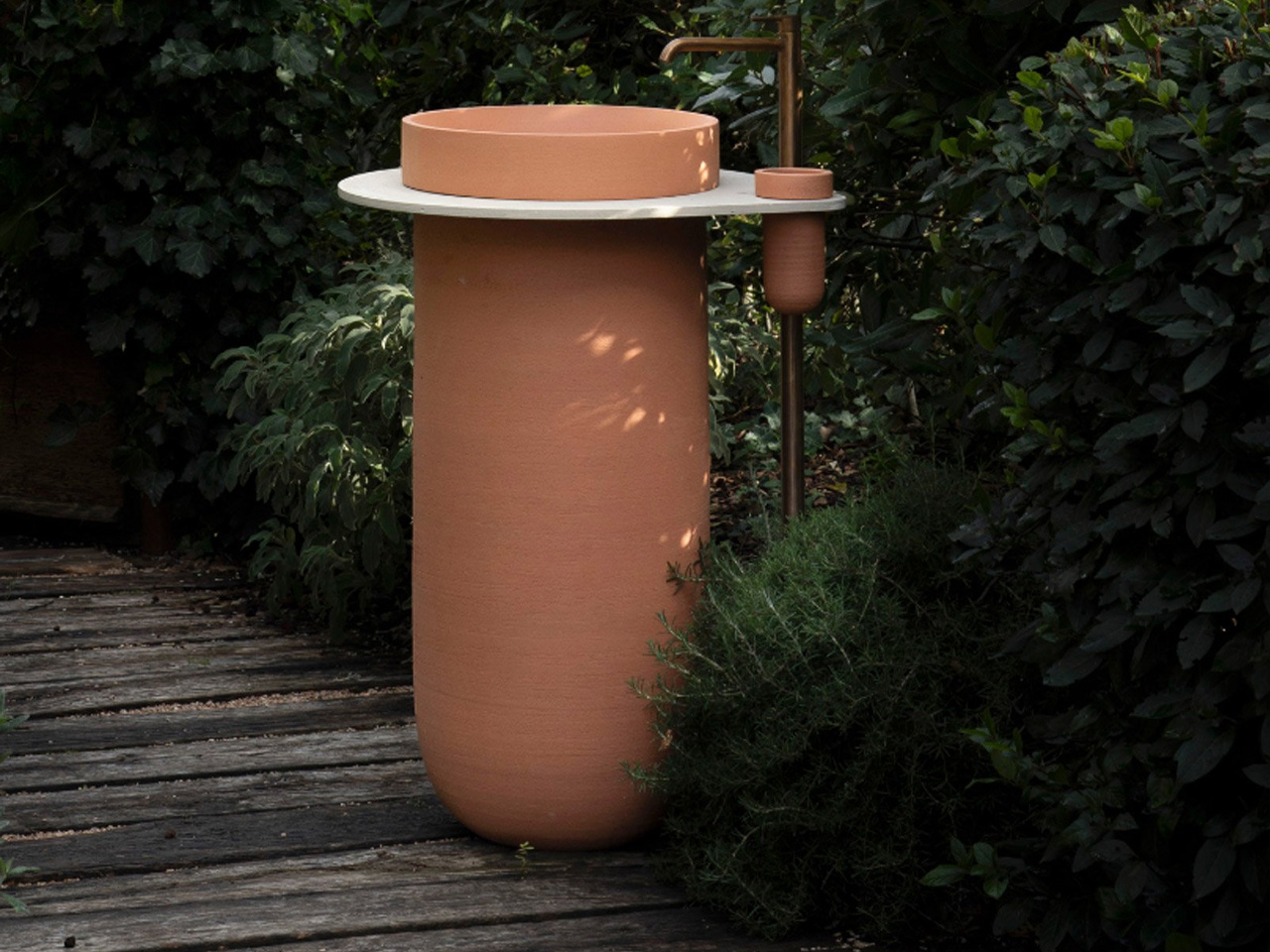
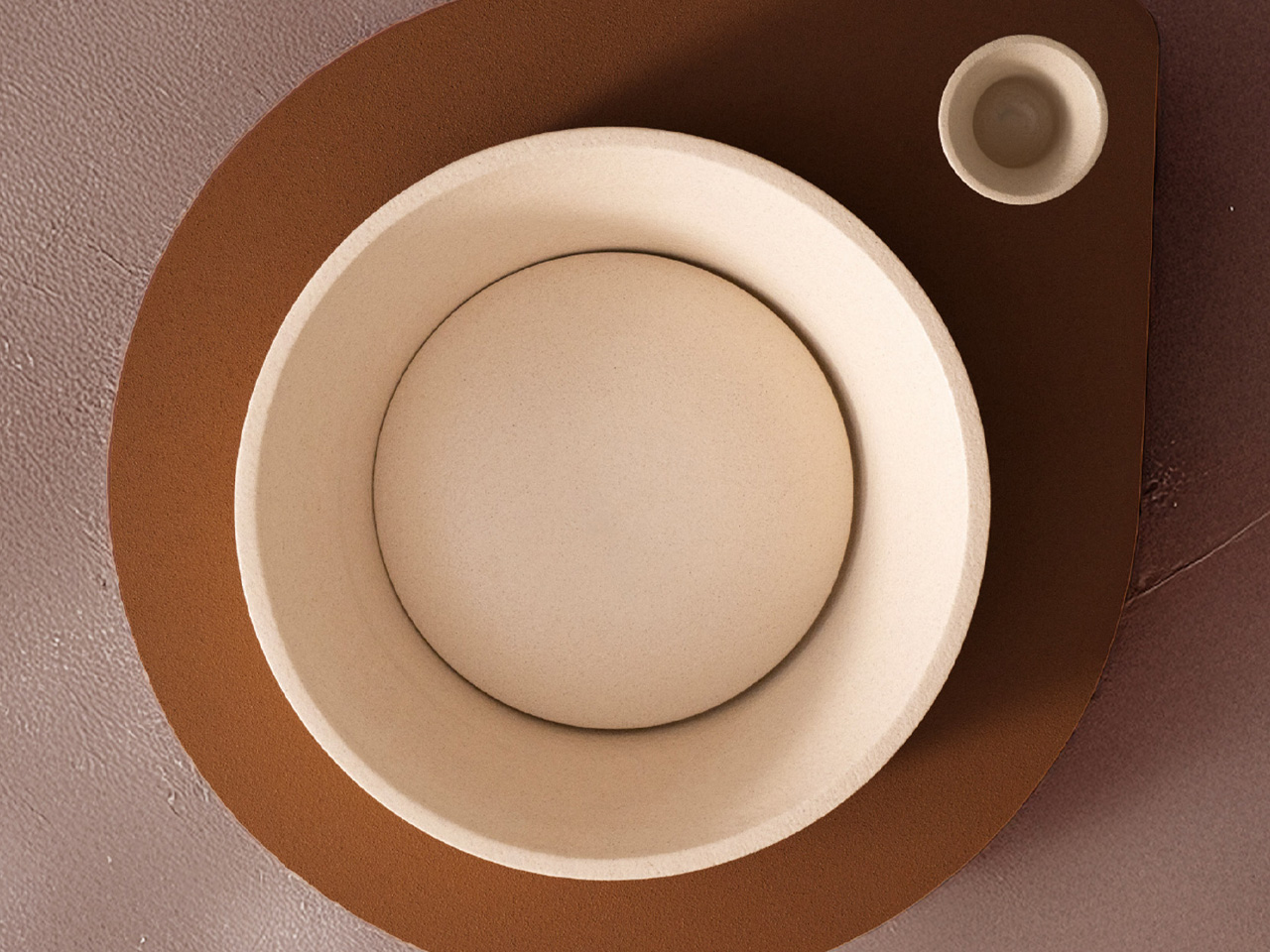
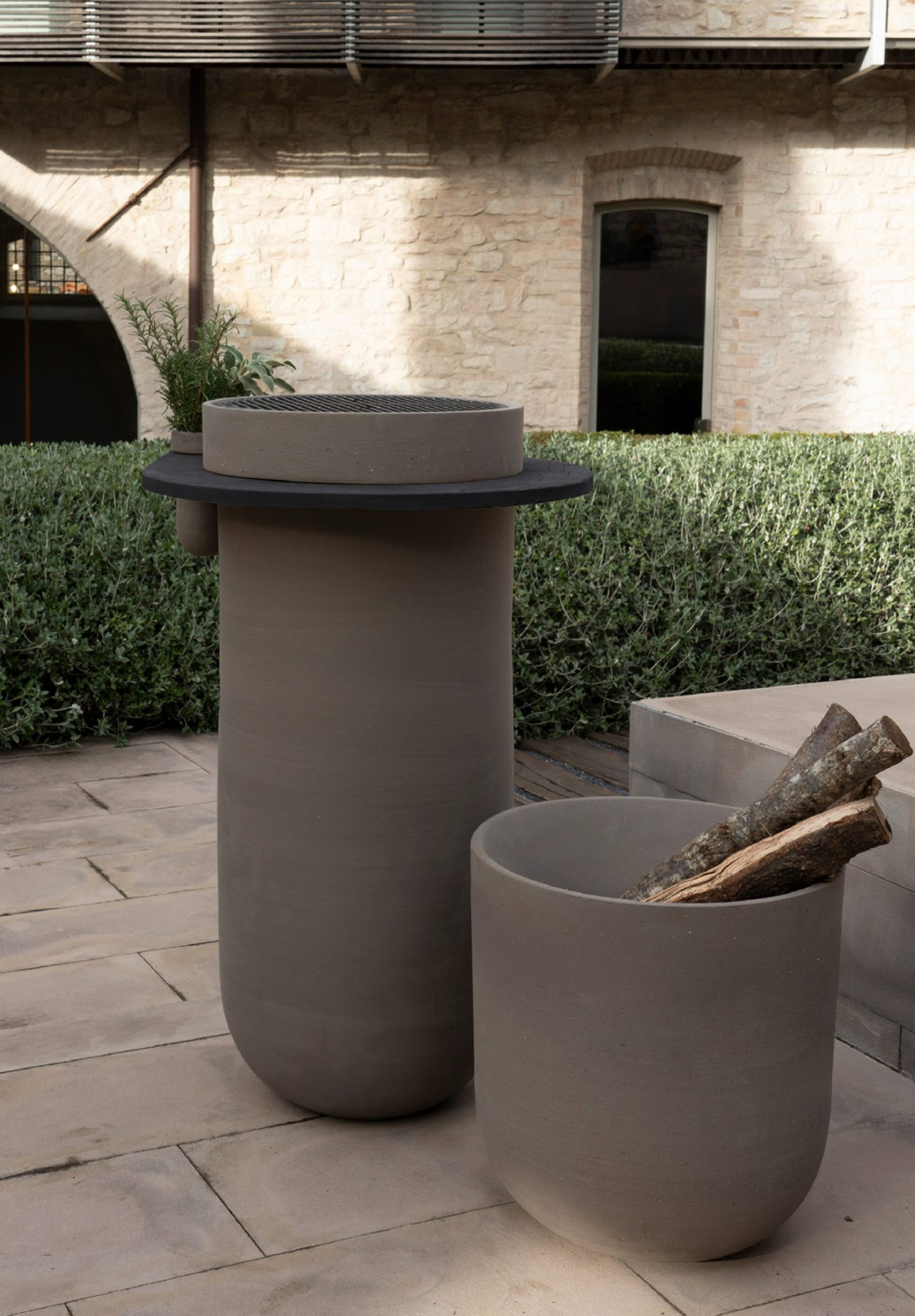
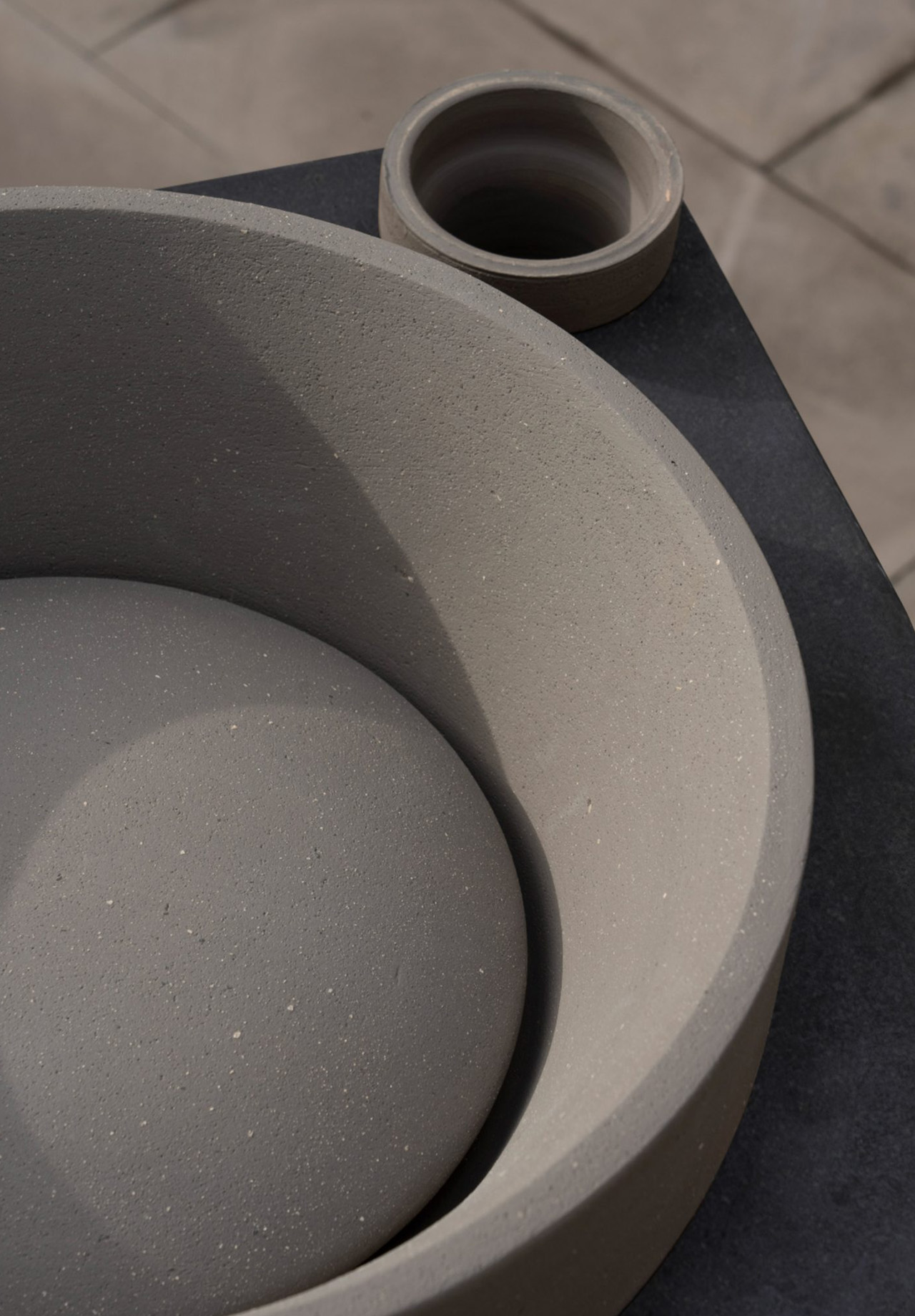
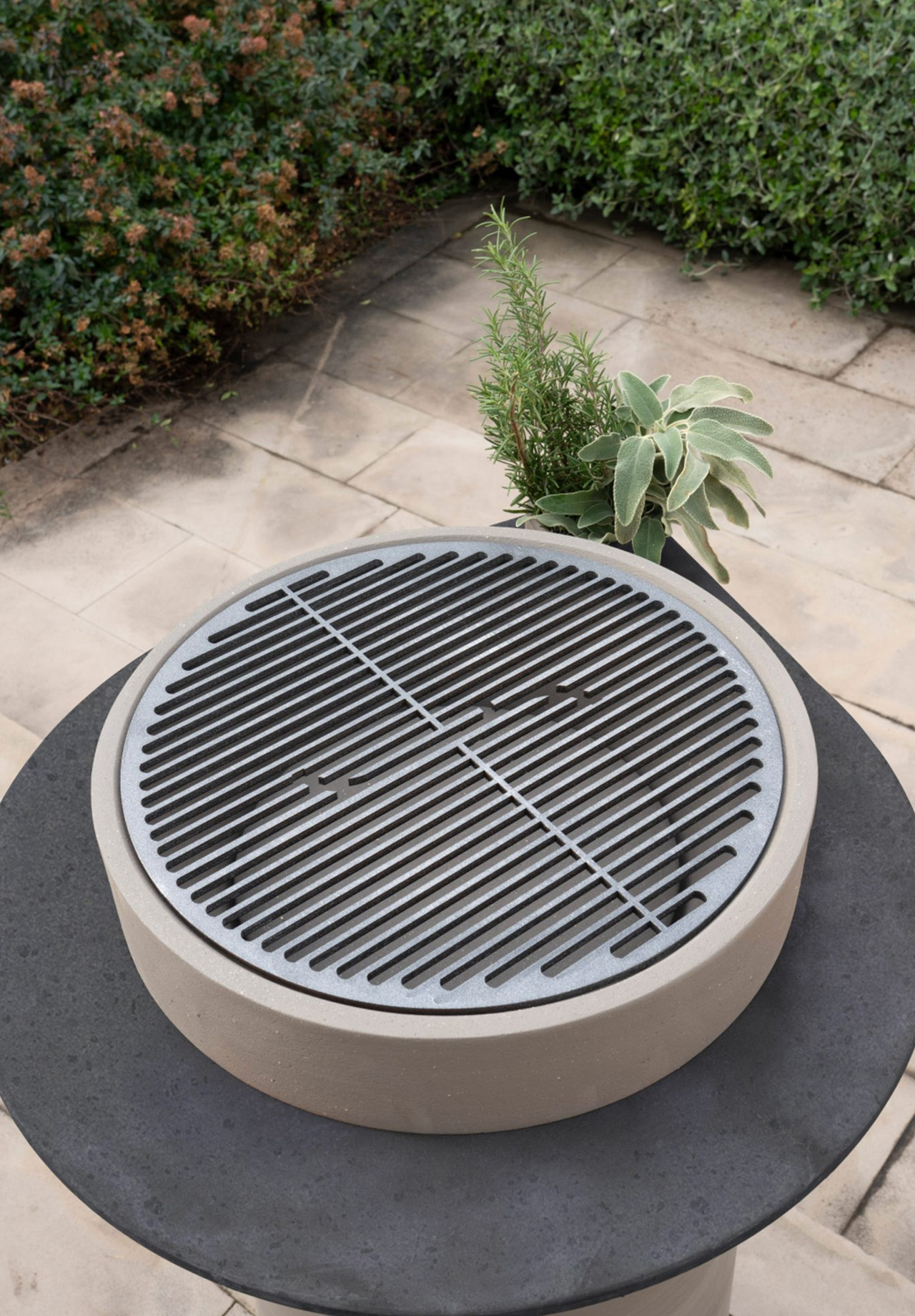
Italian bathroom brand Terzofoco has launched LuneUp, a versatile system of hand-thrown ceramic pedestals that challenges conventional thinking about bathroom design. Created by designer Emanuel Gargano, this modular collection transforms ceramic from a simple finishing material into a central living element that works both indoors and outdoors. The LuneUp concept centers on customization, allowing users to select from interchangeable elements, including washbasins, planters, and even barbecues, all supported by sculptural ceramic pedestals.

This total-living system approach means the same foundational pieces that hold a washbasin in your bathroom can support outdoor cooking equipment on your terrace. The design deliberately blurs the line between functional bathroom fixture and lifestyle furniture. Gargano’s vision extends beyond traditional bathroom boundaries, with ceramic elements serving as supports for various configurations. Each piece is handcrafted using traditional throwing techniques, ensuring an artisanal quality that brings organic variation to every installation. The system includes various heights and formats, from freestanding basins to console configurations, offering remarkable possibilities for contemporary spaces.

Designer: Emanuel Gargano for Terzofoco

The LuneUp Bench composition features an aluminum top that doubles as both a surface and a seat, bringing unexpected versatility to what might otherwise be purely utilitarian pieces. Available finishes include Terra rossa, Raku clay, and Terra nera, each bringing distinct character while maintaining the system’s cohesive visual language. The LuneUp Pouf adds another dimension, functioning as both a ceramic laundry container and a stool. The minimalist aesthetic enables these pieces to stand alone or be combined into more intricate arrangements, adapting to various spatial needs and personal preferences. The modular system is so versatile that its offering ranges from a single wash basin to more complex combinations that serve multiple functions simultaneously.

What makes LuneUp particularly compelling is its rejection of bathroom design conventions. Rather than treating ceramic as decorative tile or simple basin material, Gargano positions it as structural and sculptural. The hand-thrown quality brings organic variation to each piece, ensuring no two installations look identical. This artisanal approach aligns with growing interest in craft-based design within the luxury bathroom sector, where consumers increasingly value pieces that showcase maker’s marks and individual character over mass-produced uniformity.

Terzofoco presented the collection at Milan Design Week in April 2025, where it attracted significant attention for its innovative approach to modular bathroom systems. The industry took notice earlier when the LUNE vanity unit earned recognition as one of the top 10 products at the Salone Internazionale del Bagno in June 2024. This acknowledgment from one of the bathroom industry’s most prestigious events validated Gargano’s unconventional thinking and confirmed that the market was ready for designs that transcend traditional category boundaries.

The system’s indoor-outdoor flexibility addresses contemporary living patterns where boundaries between interior and exterior spaces continue to dissolve. A ceramic pedestal holding a washbasin inside can support a planter outside, creating visual continuity across different zones. The barbecue option takes this further, suggesting that design languages typically confined to bathrooms can migrate to entertaining spaces. Photography by Gian Domenico Troiano captures the system’s sculptural qualities, emphasizing how light plays across the ceramic surfaces and aluminum accents. The images show LuneUp pieces in various settings, from traditional bathroom contexts to outdoor terraces, illustrating the system’s adaptability. Communication design by Simone Scimmi Design Studio presents the collection with clarity that matches its minimalist aesthetic, allowing the ceramic work itself to take center stage.

The post LuneUp Ceramic Basins Can Double as Barbecue Grills first appeared on Yanko Design.

World’s First Robot-Made Ceramic Tiles Change Color With Sunlight

There’s something deeply satisfying about watching a potter’s wheel spin, the way human hands coax wet clay into form. But what happens when you hand that craft over to a robot? Designers Yutao Chen and Yiwen Gu asked that question, and their answer is CeraShingle, a façade system that’s reimagining what ceramic can do for architecture.

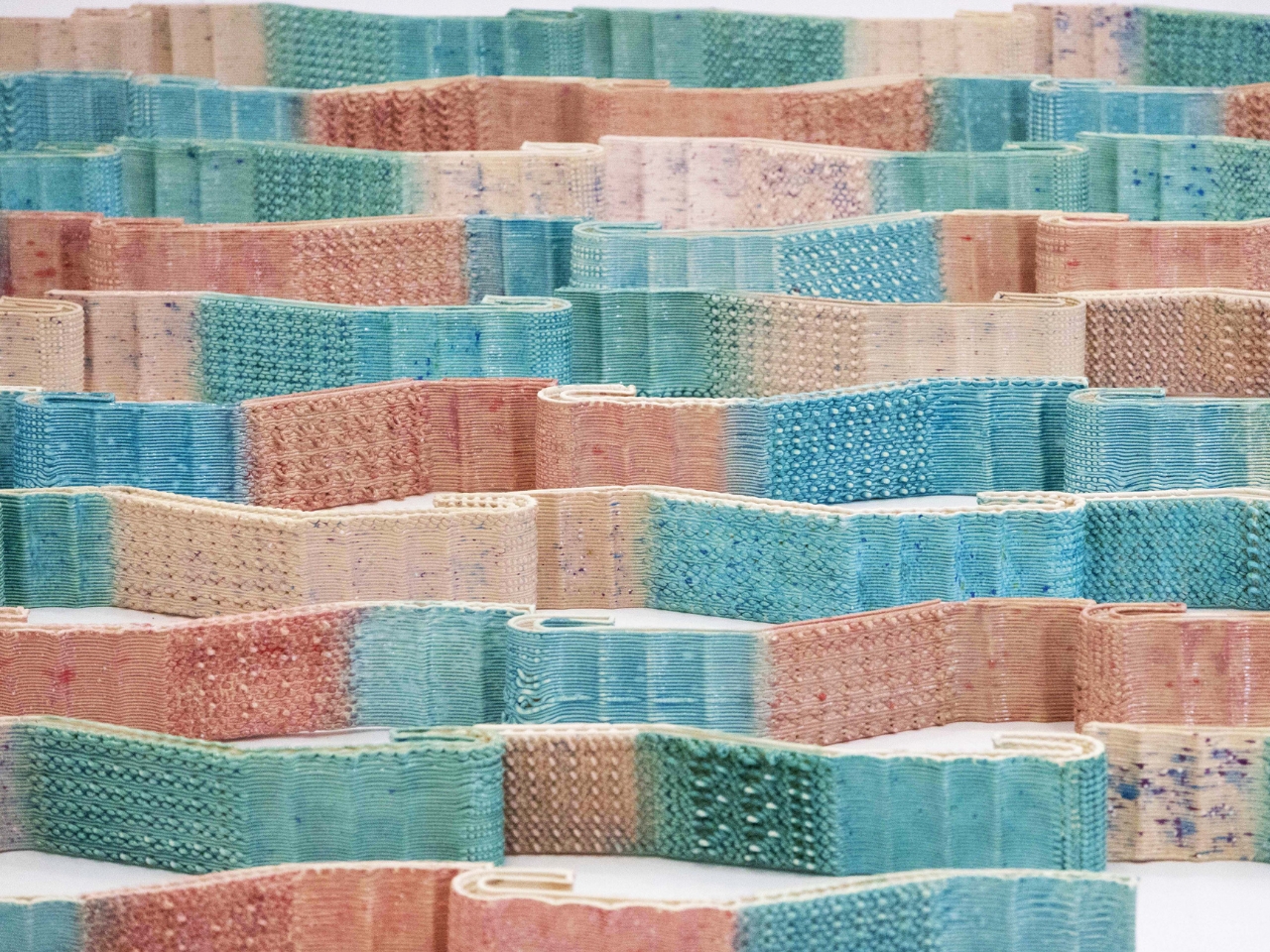
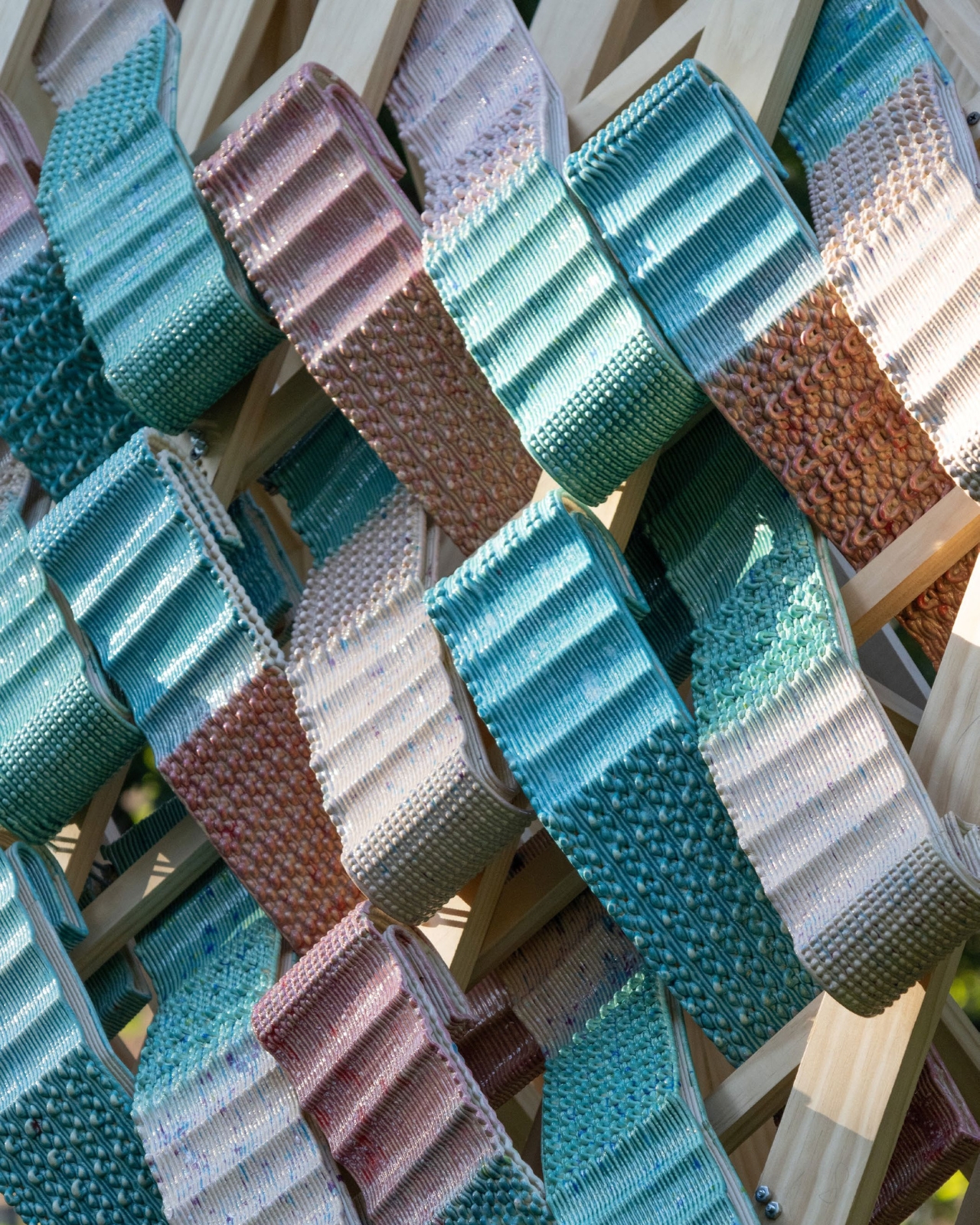
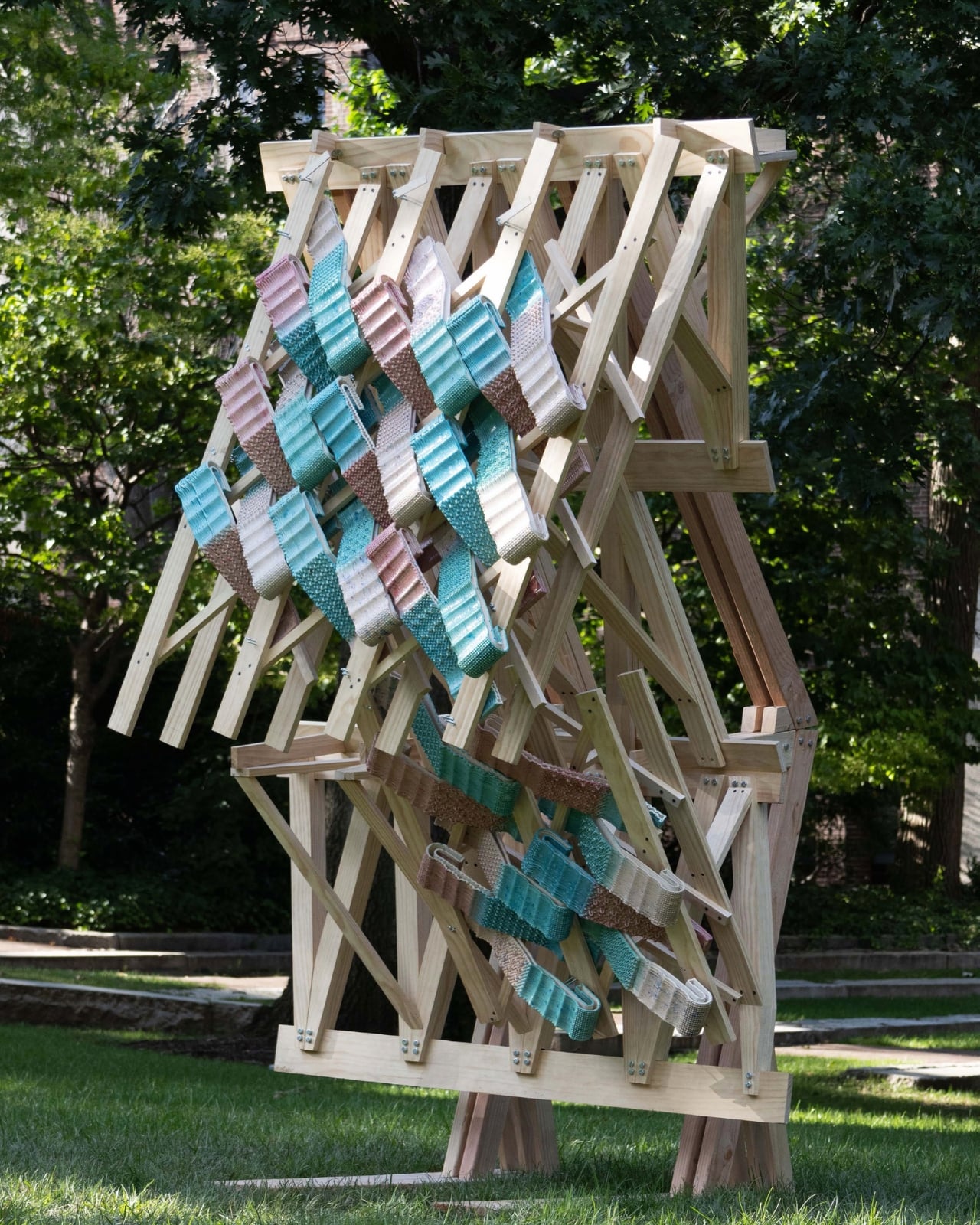
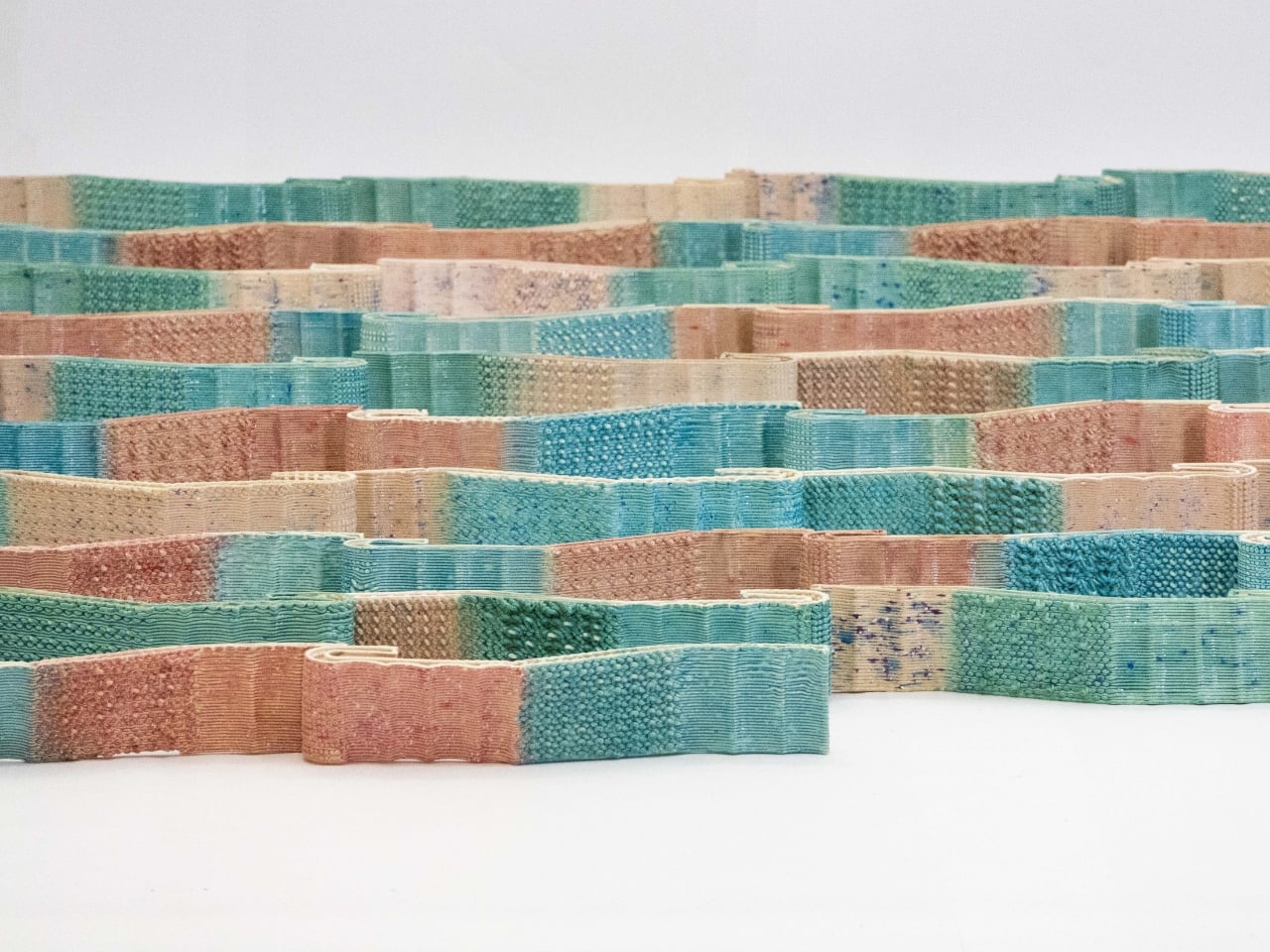
Picture a building wrapped in ceramic tiles, but not the flat, uniform squares you’re used to. CeraShingle modules are 3D-printed clay shingles with intricate textures, delicate perforations, and color gradients that flow across the surface like watercolor on paper. Each piece measures roughly 400 by 130 millimeters and weighs just over a kilogram, light enough to handle but substantial enough to feel real. When you install them with calculated overlap, they create a skin that seems to breathe with the light, shifting appearance as the sun moves and as you change your viewing angle.

Designers: Yutao Chen, Yiwen Gu

The magic happens in the making. Robotic arms deposit clay layer by layer, building up surface details that would be impossible with traditional molds. Think micro-ribs that catch shadows, patterns that emerge only at certain times of day, gentle curves that couldn’t be pressed or cast. It’s precision meets poetry. The parametric design workflow means each shingle can be unique while still fitting together on site, varying in thickness, texture, and shape within families of compatible parts.

What strikes me most about CeraShingle is how it refuses the usual digital-versus-handmade debate. Instead of replacing the warmth of craft with cold precision, it uses computational tools to amplify what makes ceramics special. The robot doesn’t erase the human touch; it extends what human hands can achieve. You get the intimacy of clay with possibilities that would make traditional ceramicists weep with joy.

The environmental story is equally compelling. The 3D printing process deposits material only where it’s needed, cutting waste dramatically compared to subtractive methods. Chen and Gu specify locally sourced clay and low-temperature glazes, reducing both transportation costs and firing energy. When a module gets damaged, you replace just that piece rather than a whole panel, extending the façade’s lifespan and keeping embodied carbon low. In an era when construction is responsible for nearly 40 percent of global carbon emissions, these details matter.

But CeraShingle isn’t just solving problems; it’s proposing a new aesthetic language. Contemporary cladding tends toward two extremes: either sleek industrial materials like glass and metal, or nostalgic brick and stone that look backward. CeraShingle occupies a third space. It’s clearly contemporary, born from digital tools and computational thinking, yet it carries ceramic’s ancient warmth. It’s sculptural without being precious, technical without being cold. The system scales beautifully. You could use it for a small architectural installation, an accent wall, or an entire building envelope. The modular logic means projects can grow organically, and repairs stay simple. For architects tired of choosing between innovation and practicality, that flexibility is powerful.

Set to launch in 2026, CeraShingle arrives at an interesting moment. We’re seeing renewed interest in craft and materiality after decades of smooth minimalism. People are hungry for texture, for surfaces that respond to light and touch, for buildings that feel less like sealed boxes and more like living things. At the same time, climate concerns are pushing architecture toward lighter, more efficient assemblies. CeraShingle threads that needle. It gives you the sensory richness of traditional materials with the performance and adaptability of contemporary systems. It’s a building skin that can think, that can vary and respond while staying grounded in earth and fire.

What Chen and Gu have created isn’t just a clever product; it’s a provocation. It asks what happens when we stop treating digital fabrication as a replacement for craft and start seeing it as craft’s next chapter. The answer, wrapped around a building and catching the afternoon light, might just be the future of how we clad our world.

The post World’s First Robot-Made Ceramic Tiles Change Color With Sunlight first appeared on Yanko Design.

ASUS Zenbook S 14 Ceraluminum Laptop Review: Elegance You Can Feel, Power You Can Touch

PROS:


  • Gorgeous Ceraluminum design with a unique tactile experience

  • Ultra-thin and lightweight chassis for effortless portability

  • Lush and vibrant 14-inch 3K 120Hz OLED display

  • Impressive performance, including light gaming

CONS:


  • Port selection is a bit constrained

  • RAM is integrated into System-on-Chip


RATINGS:

AESTHETICS
ERGONOMICS
PERFORMANCE
SUSTAINABILITY / REPAIRABILITY
VALUE FOR MONEY

EDITOR'S QUOTE:

Packing incredible performance in a compact and beautiful design, the ASUS Zenbook S 14 redefines what ultraportable laptops are capable of and demonstrates how to deliver a design that you can feel.
award-icon

For the longest time, Apple MacBooks have set themselves apart from the rest of the laptop crowd with their stylish designs, while laptop manufacturers preferred to focus on the performance and technical aspects of their products. Consumer tastes have shifted, however, and brands have started their search for thinner and lighter designs, though they always get stumped by the laws of physics and the limits of technologies and materials. Always in Search of Incredible, ASUS decided to look to other places for inspiration, both from other industries and Mother Nature herself. The result is a new “meta-material” Ceraluminum, which debuted on the ASUS Zenbook S 14, a rather striking laptop that promises the best of all worlds. Naturally, we couldn’t resist getting our hands on it and taking it for a test run to see whether its beauty runs deep.

Designer: ASUS

Aesthetics

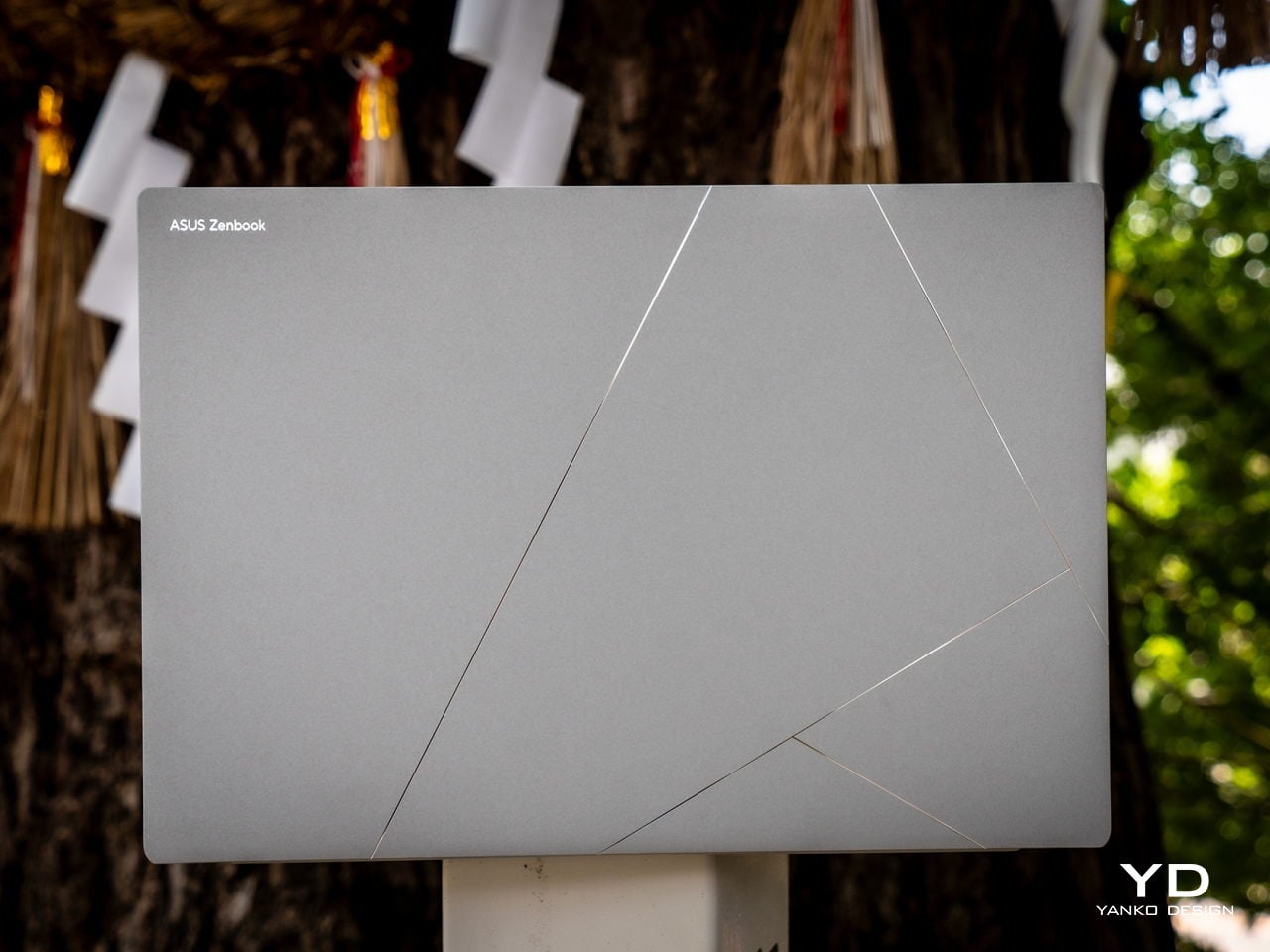
Laptop lids are often made from metal like aluminum or plastic, both of which offer different strengths but also weaknesses. Lately, titanium has become the hot new material for electronics because of its durable and lightweight properties, but it is far from the end-all and be-all of metallic products. Taking a page from the aerospace and luxury watch industries, ASUS developed a new oxidation or “ceramization” to produce a sort of hybrid or meta-material, if you would, that combines not only the lightness of aluminum and the hardness of ceramic but also creates a new visual and tactile experience never before seen on a laptop.
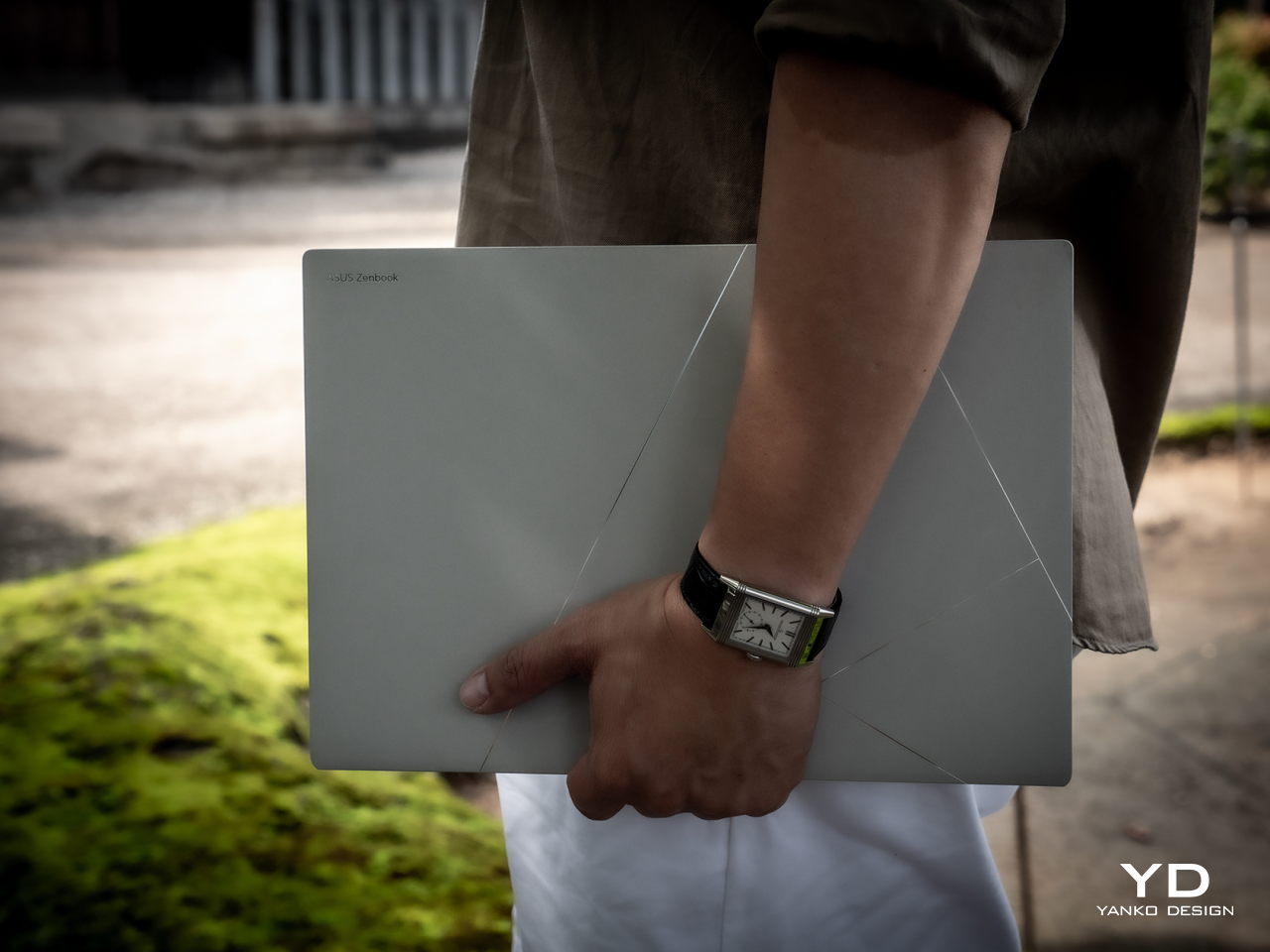
“Ceraluminum” is the marketing term for what ASUS previously called Plasma Ceramic Aluminum, and our very own Vincent Nguyen describes the material in better detail. The end result is a laptop cover that looks nothing less than a piece of art, especially with the lines that cross its surface to create geometric patterns. Not only is the laptop great to look at, but it also feels great to touch. There’s a certain degree of roughness to its surface, almost like paper. Considering its paper-light weight and thinness, it almost feels like you’re simply carrying a stack of white or gray paper.

And yes, the ASUS Zenbook S 14 is unbelievably thin and lightweight, only 1.1cm (0.47 inches) thin and 1.2 kg (2.65 lbs) light. It gives the laptop a rather striking profile that grabs attention from any angle. And with its tactile design and lightweight body, you might find yourself wanting to carry the laptop in your arms often, truly a design that you can feel.

Fortunately, the laptop’s beauty doesn’t disappear when you lift up the lid. The very thin bezels almost disappear completely, giving way to the bright and colorful ASUS Lumina OLED display. The clean and modest design of the keyboard and the touchpad pad perfectly complement the minimalism of the laptop’s lids. Even the rather unique ventilation grid lying between the keyboard and the display hinge brings functional aesthetics into the picture. No matter which way you look at and hold the Zenbook S 14, you are greeted by a strikingly elegant display that you touch with your eyes as well as with your fingers.

Ergonomics

With such a thin and light design, there is really no argument about the portability of this laptop. You can easily carry it anywhere by hand or slip it inside a bag, and use it anywhere as well, including on your laptop. This makes the Zenbook S 14 ideal for people who find themselves always on the move, sometimes even at a moment’s notice. Best of all, they aren’t losing out on power and performance, as we’ll see later, so there are almost no downsides to its design.

That said, if you’re a bit picky about your typing experience, you might have some issues with the ASUS Zenbook S 14’s keyboard. With a profile as thin as this, it shouldn’t come as a surprise that the keyboard actually has a bit of a shallow travel distance, just around 1.1mm. Mind you, that’s not exactly a deal breaker and we found it to still be quite comfortable and enjoyable to type on. In fact, considering that same thin profile, it’s a miracle that this keyboard could actually feel this good. Again, your mileage might vary, but keyboard connoisseurs might want to take note of this detail.
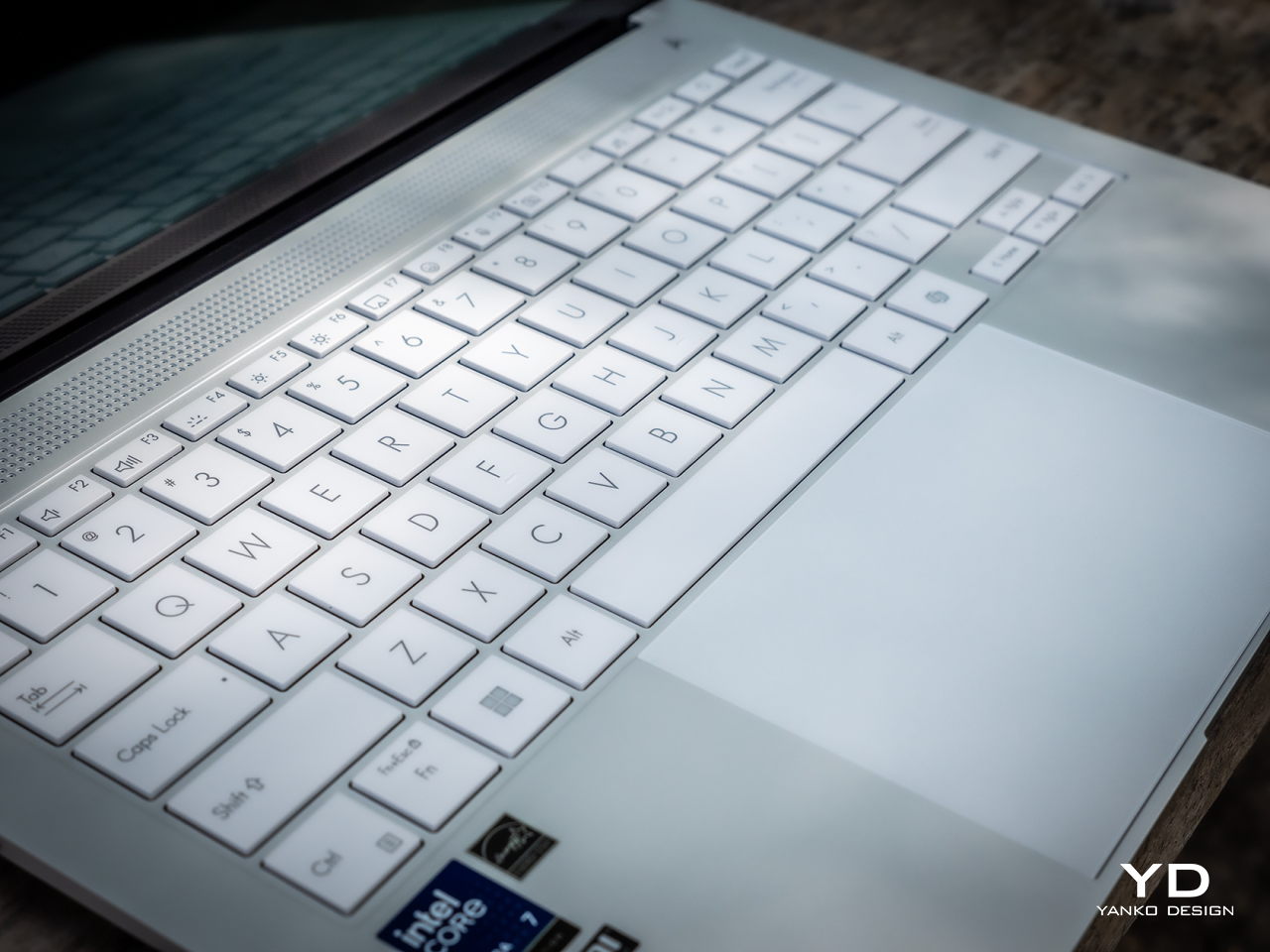
Another minor matter that may or may not ruin your experience is the very bright keyboard backlight. Although adjustable, even its dimmest setting might feel a little blinding to more sensitive eyes, especially in a dark room. On the bright side (no pun intended), the light and the keys are also very visible even in bright surroundings. Again, not a huge flaw but something you’ll want to consider based on your personal preferences.

Performance

You might be wondering what the catch is since thin laptops have traditionally been underpowered to the point of being unusable for anything but the most basic computing tasks. There are a small number of gotchas, indeed, but not in the ways you might expect and definitely not damning enough to ruin mar the Zenbook S 14’s prestige. In fact, it’s pretty mind-blowing that this ultra-thin laptop is able to perform this well, offering a no-compromise mobile computing experience.

Part of that is thanks to the new Intel Lunar Lake processor, specifically the Core Ultra 7 258V. It uses a system-on-chip design that integrates a CPU, a dedicated NPU (Neural Processing Unit), an Intel Arc Xe GPU, and 32GB of RAM. Yes, that memory is built into the processor, which does have an important implication we’ll get to later. Regardless, this compact silicon design is what allowed Intel and ASUS to maximize internal space, allowing them to cram more or bigger components, like a 72Wh battery.

The Zenbook S 14’s raw benchmark performance is nothing short of impressive, easily matching other 28W laptops. Considering ultra-thin 14-inch laptops often operate at a much lower 15W TDP to avoid overheating, this is quite a remarkable feat. Perhaps the most telling achievement is how this slim laptop can deftly handle gaming loads with medium graphics settings instead of the typical low settings. Although it’s not marketed as a content creation or gaming laptop, it can definitely fit the bill with some performance tweaking and adjustments.

What’s a bit more interesting, however, is how the laptop’s performance seems to lean more towards unplugged use. Of course, this is perhaps one of the most important considerations for a laptop, since wouldn’t want to have it always plugged in, defeating the purpose of its portability. Long story short, the Zenbook S 14 seems to perform best when on battery, providing a good balance of power and efficiency to meet any computing need anywhere, anytime. And with mixed use, you can get a little under 20 hours of battery life on a single charge. That’s well under ASUS’s advertised 27 hours of non-stop video playback, but the realistic numbers are still quite good.
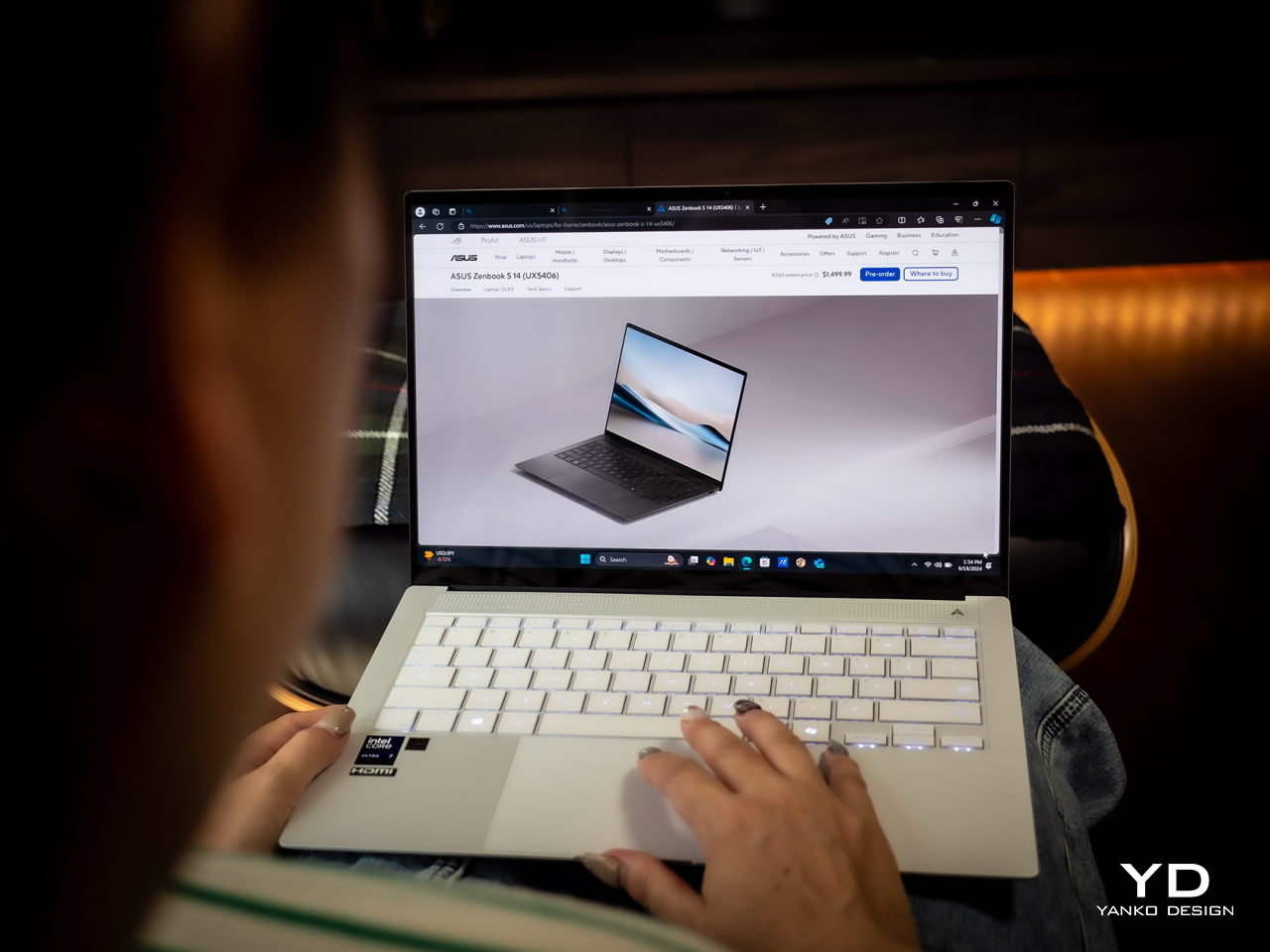
This makes the ASUS Zenbook S 14 a great all-around laptop, and that includes multimedia and, as mentioned, even games. The 14-inch 3K OLED screen is just breathtaking with its brightness and colors, and being part of the ASUS Lumina line, it is also PANTONE-validated, making it an excellent tool for creators, and the monitor’s 120Hz is actually a must-have for gamers. Four high-quality speakers give a punchy treatment to videos and music, making this laptop a multimedia powerhouse despite its modest and business-minded looks.
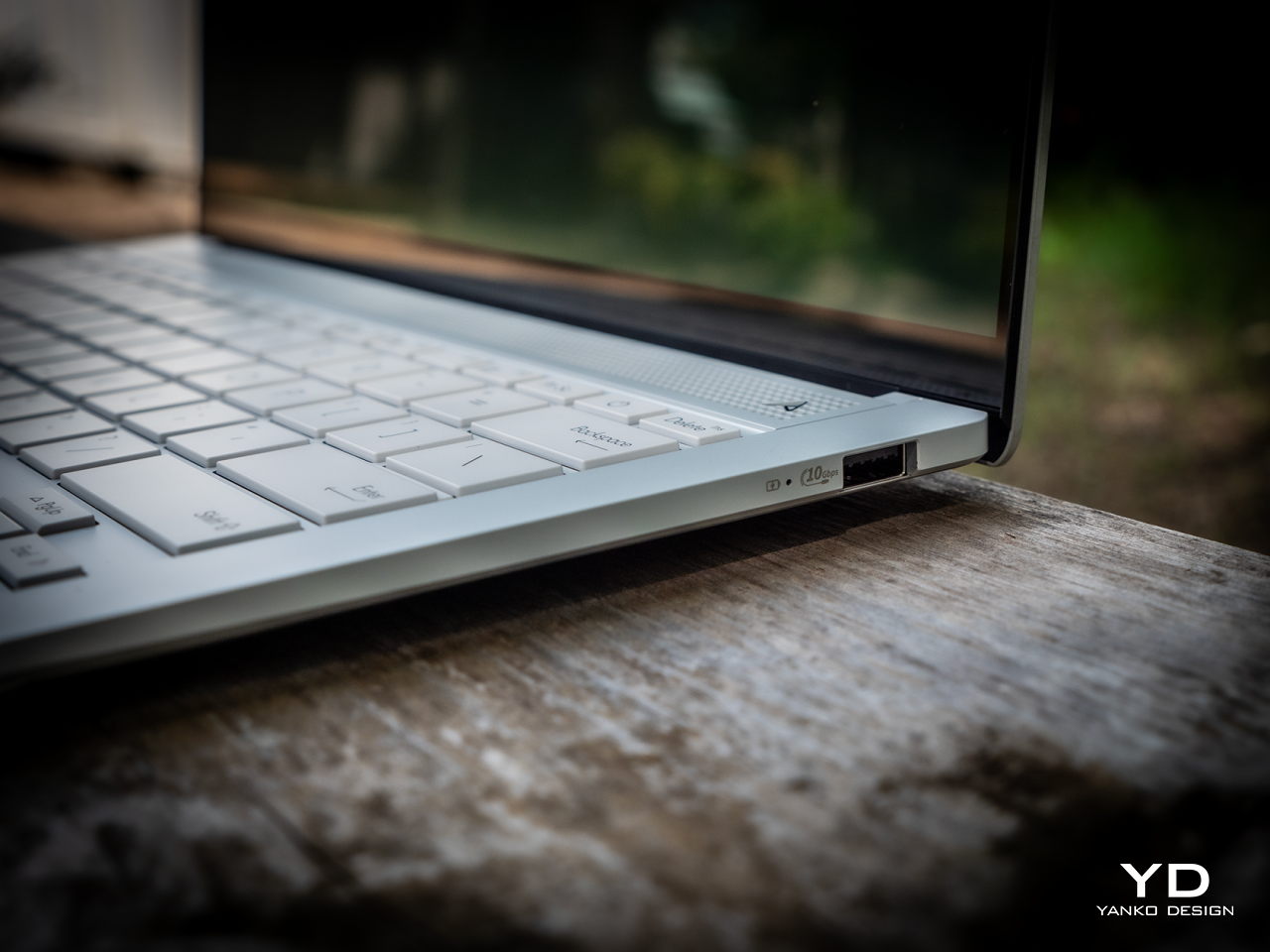
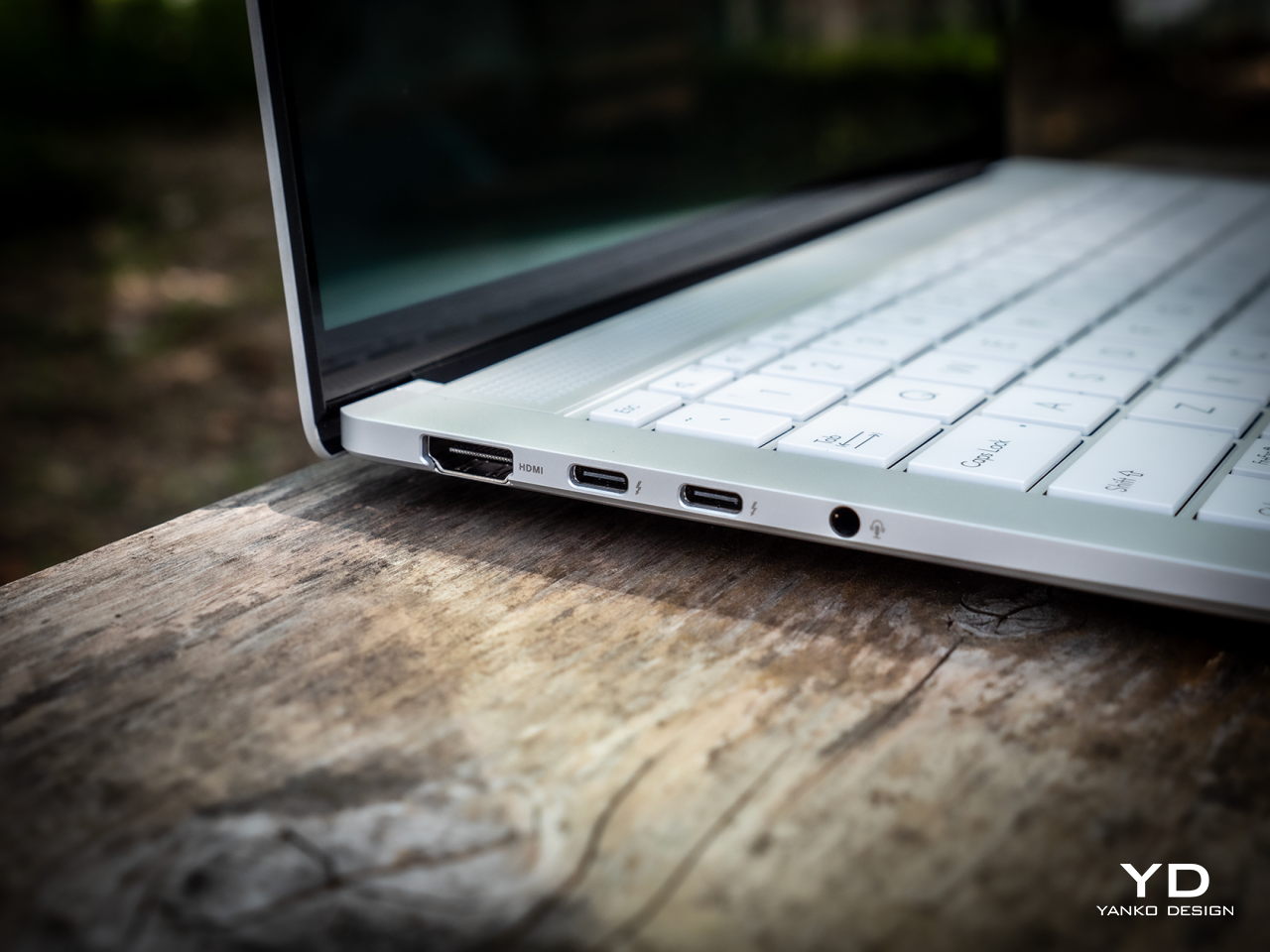
One area where the Zenbook S 14 might come up short for some people is the number of ports available. Remember that time when Apple got chided for replacing all the ports on MacBook Pros with just four C-Type Thunderbolt 4 ports? It’s not as bad here, but there will definitely be some who will find the selection far too modest. There are only two of those USB-C Thunderbolt 4 ports, both of which can be used for charging, data, and video out. There’s also one full-sized USB 3.2 Gen 2 Type-A port, one HDMI 2.1 port, and a headphone/mic combo jack. That’s pretty much it. There isn’t even an SD card reader, which will probably disappoint photographers. Both USB-C ports are located on the same side, which forces you to have the charger and dongles competing for space. The lack of other ports might not be that big of a problem when you dock the laptop at home or in the office, but if your office tends to change locations, you’ll have to bring a hub with you as well.

Sustainability

ASUS has been working hard to step up to the challenge of making the world a greener place for future generations, and its most ambitious attempt yet can be seen in its most ambitious material design as well. Ceraluminum isn’t just a fancy new material with a beautiful aesthetic and satisfying texture; it is also a more sustainable alternative to the usual metal anodizing techniques used by manufacturers. Instead of corrosive acids that release harmful toxins into the air, ASUS’ ceramization process uses water and super-high voltage electricity to produce an even better oxide layer, creating this blend of lightweight durability your fingers will love.
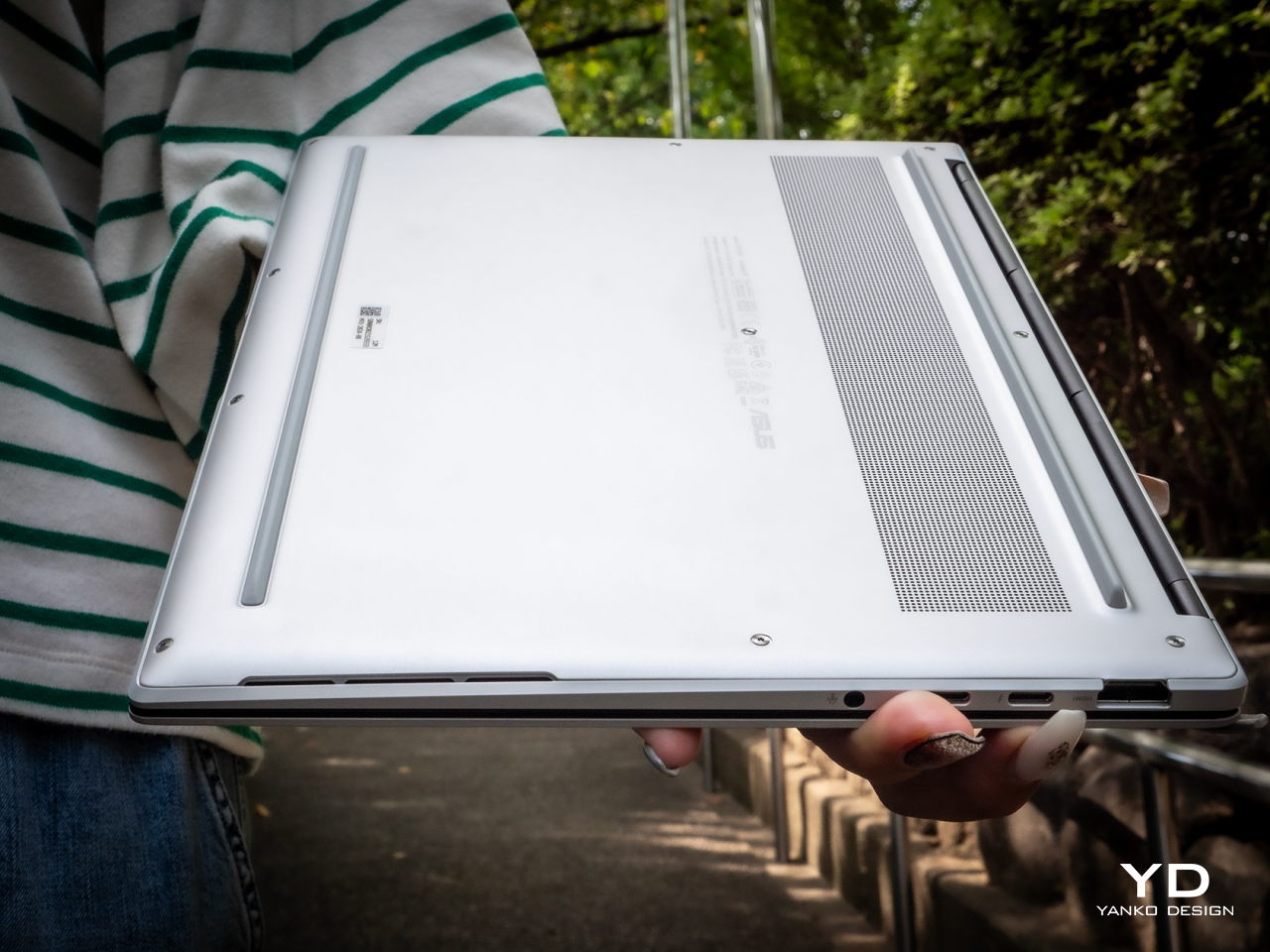
The ASUS Zenbook S 14 is also made to last, thanks to that Ceraluminum material that’s not only scratch-resistant but also smudge-resistant. And despite its luxurious aesthetic, this laptop actually boasts military-grade MIL-STD-810H compliance, ensuring that it can survive accidental bumps, high-frequency vibrations, and extreme temperatures. One aspect that takes a point from its longevity is the fact that you can only upgrade the M.2 NVMe SSD, and only up to 1TB capacity. The 32GB of RAM is, as mentioned, fixed and soldered. Yes, that might be enough for most use cases, but only today. Who knows how demanding apps and services will be just a few years from now.

Value

Most people marvel at ultra-thin laptops but pass them over because those slim profiles barely have enough power to meet their needs. Finding the right balance between portability, power, and price is like a hunting game, but you don’t need to go any further than what ASUS is now offering on the table. With a beautiful 14-inch screen, only 1.1cm thick, and weighing only 2.65 lbs, the ASUS Zenbook S 14 delivers a versatile machine that doesn’t compromise on performance, at least not in significant ways.
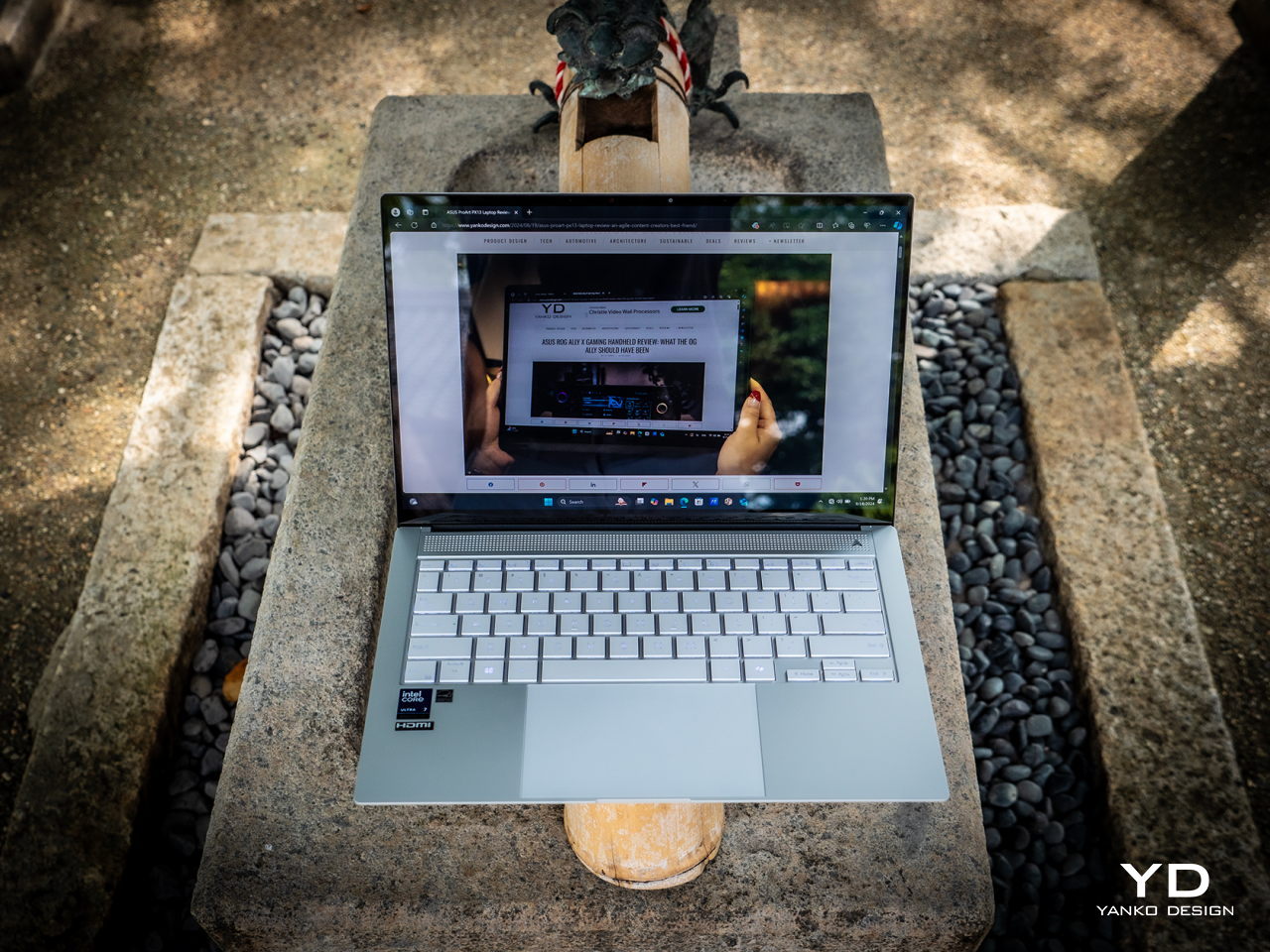
Best of all, it’s an absolute beauty to behold and to hold! Ceraluminum might sound like a buzzword, but its aesthetic value and tactile experience are the real deal. The $1,499.99 price tag for the 32GB RAM model is indeed nothing to scoff at either, but when you realize all the value that you’re getting, it’s almost a steal.

Verdict

We have finally reached a point where laptops no longer need to be hulking blocks of metal just to catch up with their desktop counterparts. While they still lose out on raw performance and customization, today’s laptops can be slimmer than ever and, more importantly, offer a design experience that desktop towers can only dream of. Of course, it takes no small amount of creative thinking, bold decision-making, and the courage to go beyond the boundaries of convention to create an amazing experience that will satiate consumer’s thirst for better-designed products. ASUS has definitely proven that it isn’t averse to taking that big leap, and the Zenbook S 14 is a shining testament to that daring spirit to create designs that you can see and feel.

The post ASUS Zenbook S 14 Ceraluminum Laptop Review: Elegance You Can Feel, Power You Can Touch first appeared on Yanko Design.
‘Is it cardboard?”: Ceramic art blurs line between perception and reality

One of the most popular reality game shows on Netflix is “Is It Cake?” where the contestants have to recreate common objects and then trick the judges into guessing if it’s cake or not. It’s fun seeing all of these ordinary, every day things recreated as cakes and it’s also a good reminder that not everything is as it seems. This art experiment by Jacques Monneraud is of the same idea as the game show but this time it uses something even more ordinary and turns it into an extraordinary collection.

Designer: Jacques Monneraud

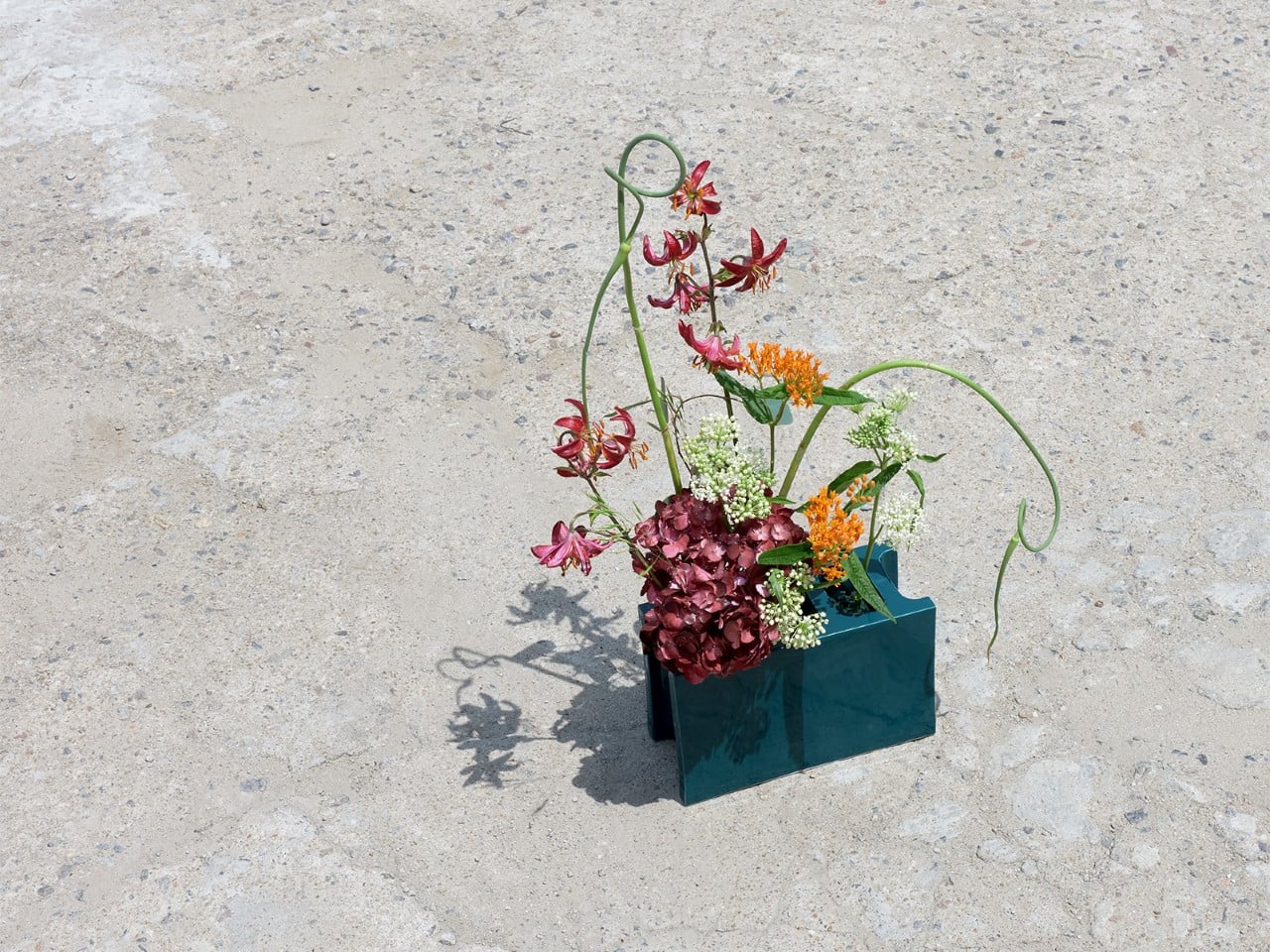
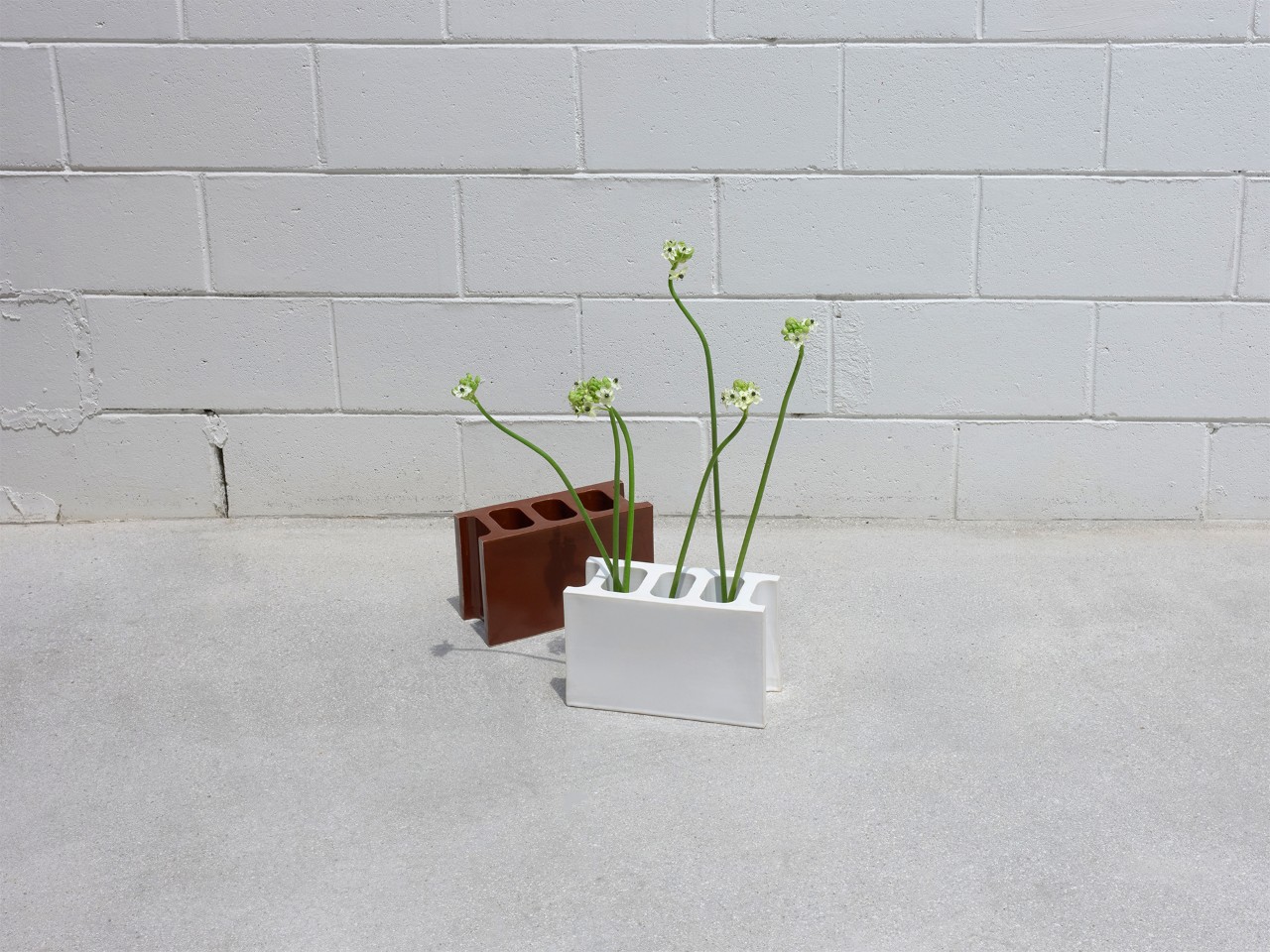
The Cardboard collection recreates some common household items like pitchers and vaes into ceramic art. What makes this different from others though is that the they were made from clay but made to look like cardboard. It is basically a statement of “mockery of overproduction and overconsumption” but it is also something that people can actually use if they need something unique on their dining tables and living rooms.

The designer wanted to maintain the texture and visual characteristics of cardboard while at the same time retaining the ceramic properties of the items. The basic idea of the design is to make it look simple enough, like three pieces of cardboard + two pieces of tape makes a pitcher. He had to blend three distinct stonewares for the main body while the tape-like item was crafted from glaze.

If I just saw a photo of these items without knowing the context, I really would have been fooled that they were made from cardboard. Monneraud wants viewers to actually think about how perception and reality can be inextricably linked and is more complex than just the surface. While cardboard is normally a disposable object, the designer believes his work can actually last for more than 3,000 years.

The post ‘Is it cardboard?”: Ceramic art blurs line between perception and reality first appeared on Yanko Design.
ASUS Ceraluminum brings beautiful ceramic and durable aluminum laptops

Gone are the days when laptops were seen just as technical equipment needed to get work done. Just like with smartphones, they have also become part of our modern lifestyles and a reflection of our own selves. What all these mean is that people are now more conscious of the design of the laptops they purchase, not just the specs or the brand. Yes, there are still many that look like tanks with rainbow lighting accents, but even some more powerful notebooks now have sleeker and more refined aesthetics as well. To keep up with more discerning consumers, ASUS has engineered a new kind of material for the outer lid of their newest and most premium laptop that combines the lightness of ceramic with the durability of aluminum into an elegant surface that just screams “luxury.”

Designer: ASUS

Laptop lids are often made of either plastic or metal because of their resilience and durability. Of the two, metal, which usually means aluminum, is considered more premium but also tends to be heavier and sometimes uncomfortable due to how cold it is to the touch. In contrast, ceramic is equally premium yet almost the opposite of metal: lightweight, warm to the touch, and sadly also fragile.

ASUS has aimed to bring the best of these worlds together and has created the portmanteau “Ceraluminum” to mark the success of their years of research and experimentation. In reality, it is actually aluminum but treated in a special process, which it unsurprisingly calls “ceramization,” which gives it the properties of ceramic. This “hi-tech” new material boasts being lighter than steel yet also more durable than actual ceramic. More importantly, the material focuses as much on the tactile experience as on the aesthetics. Like ceramic, Ceraluminum is not only cool to the touch but also gives the fingers a better grip on the laptop’s lid.

Ceraluminum is still a novel material and it might not be ready for truly mass production just yet. For its maiden voyage, ASUS has chosen its new Zenbook S 16 to be the first to benefit from this amalgamation of two of the most premium materials known in the industry. It’s a perfect match as well, given how incredibly thin and lightweight the laptop is. It looks premium and definitely feels premium, a fitting exhibit for Ceraluminum’s equally premium properties.

In addition to its elegant material, the ASUS Zenbook S 16 also brings nature-inspired colors to match. Zumaia Gray takes inspiration from flysch cliffs in Spain, while Scandinavian White mimics the warm light of the sun on snowy mountains. Even this color is a product of sophisticated materials research, modifying the molecular structure of copper and oxygen atoms to give off a different color while using the same aluminum oxide material as other colors. The ASUS Zenbook S 16 is, in the final analysis, an exhibit of the brand’s innovation in creating new materials meant to delight not just the eyes but also your fingers and elevate your laptop experience.

The post ASUS Ceraluminum brings beautiful ceramic and durable aluminum laptops first appeared on Yanko Design.
Reimagined clay water filter uses white ceramic for a better design (and taste)

Brazil apparently has one of the most effective (and affordable!) water filtration systems in the world. You can find clay water filters in almost every home and markets and they are actually created by local craftsmen. There are some challenges to this though as it is not always aesthetically pleasing and some people say there is a certain aftertaste to the water that goes through this system. There is even sometimes a problem about mold as well. Now a reinterpretation of the clay water filters may have solved some of those issues.
Designer: Estúdio Biologique

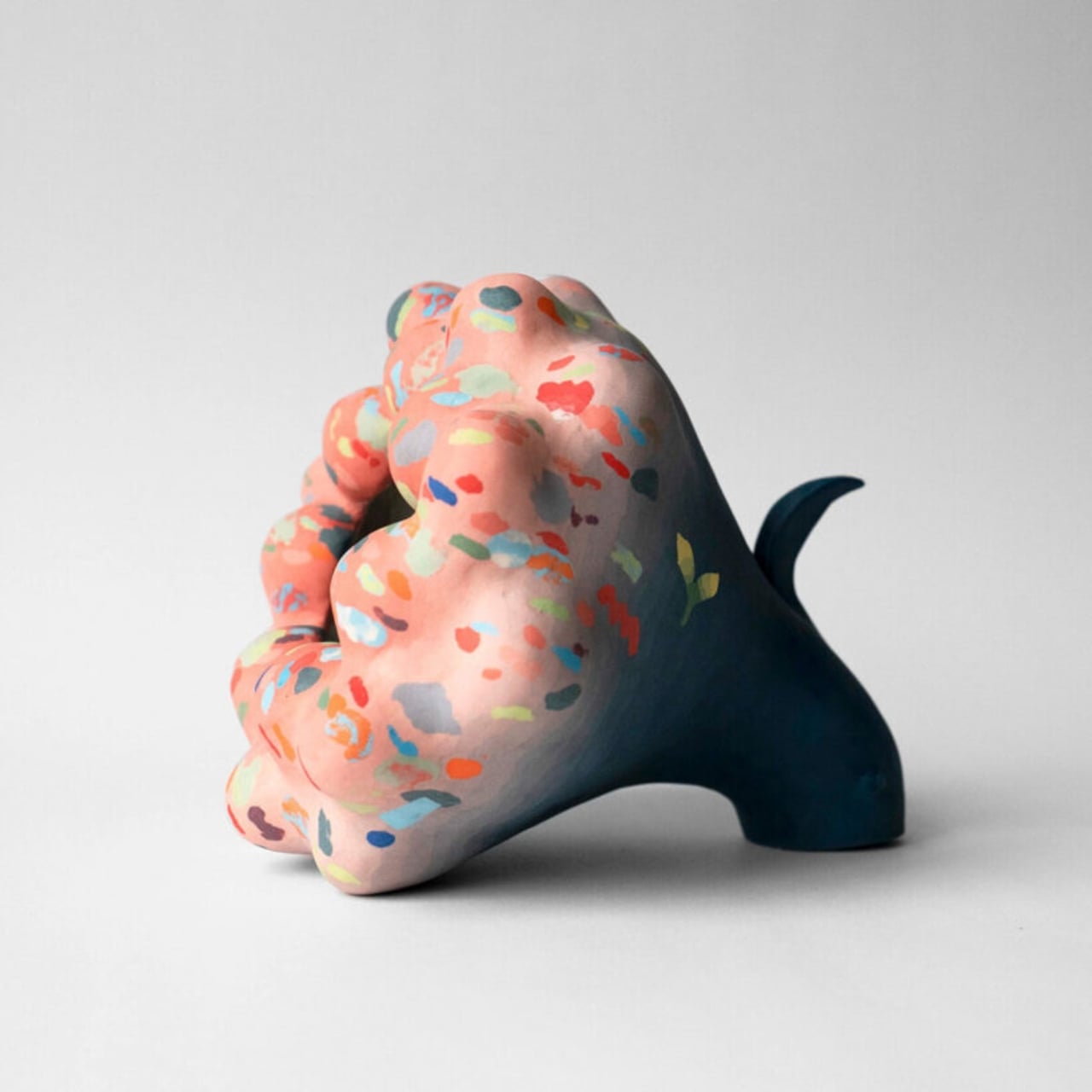
A Brazil-based design studio has come up with the Biologique water filter which still uses the same filter system. However, it uses white ceramic so that the water should taste about the same but of course it is filtered. It also doesn’t leave any mold but is also easy to clean, which was also a problem with the traditional filter. The important thing though is that it is able to bring clean, drinking water with the simple filtration system that doesn’t require any complicated installation or instructions.

For those that are concerned with the aesthetics of the water filter, then this is also where Biologique shines. It has a simple, minimalistic design that still keeps the original idea of the clay water filter but brings a more modern feel to it. It has two round parts on top of each other, a wooden stand, and a faucet that looks like those you find in draft beer machines. It comes in different colors: terracotta, rosé, green, brown, off white, black, gray, and capuccino.

The Biologique water filter comes in 9.0L and a petit version in 4.5L so you have two options depending on your space and the drinking water capacity of the people you live with. Of course it is more expensive than the traditional clay water filters that you’ll find in the usual Brazilian households. That’s the price you have to pay to have something prettier and better designed. Estúdio Biologique says their products are done by hand and on a small scale, so that’s also one of the reasons for the price point.

The post Reimagined clay water filter uses white ceramic for a better design (and taste) first appeared on Yanko Design.