This $959 Mini PC Looks Like an NES But Runs 70B AI Models

There is something quietly absurd about building a serious PC in the shape of a 1980s game console. Not absurd in a dismissive way, but more in the way that a very good idea sometimes sounds ridiculous until you see it sitting on a desk. The ACEMAGIC Retro X5 is exactly that kind of object: a compact Windows 11 Pro machine dressed in the rectangular geometry of classic cartridge-loading hardware, with a red power button where the reset button probably lived in your memory.

At 138mm x 128mm x 45 mm, the Retro X5 occupies roughly the footprint of a thick paperback. The body follows a black, white, and gray palette, with mechanical-style grilles cut into the cooling vents. A removable snap-fit panel lets you access the internals without tools, which signals something deliberate about the design: the whole thing is meant to be touched, handled, and opened rather than just admired from across a shelf.

Designer: ACEMAGIC

Inside that nostalgic shell sits AMD’s Ryzen AI 9 HX 370, a 12-core, 24-thread processor paired with the Radeon 890M GPU running at 2,900 MHz. The base configuration ships with 32 GB of DDR5 5,600 MT/s memory and a 1 TB PCIe 4.0 NVMe SSD. For anyone who has watched mini PCs ship with soldered RAM and single storage slots for years, the two M.2 2280 slots, expandable to 4TB total, are a more practical detail than the retro styling gets credit for.

The port selection makes the Retro X5 less of a novelty and more of a credible desk workhorse. The front has two USB 3.2 Gen 2 Type-A ports, a USB4 Type-C, and a 3.5 mm audio jack. The rear adds two more Type-A ports, a second Type-C, dual 2.5 GbE Ethernet, HDMI 2.1, and DisplayPort 2.0; altogether, the machine supports up to four screens at once, with both HDMI and DP capable of 8K at 60 Hz.

ACEMAGIC also positions the Retro X5 around local AI workloads, citing support for models like DeepSeek R1 70B and LLaMA. The HX 370’s neural processing unit makes that plausible on paper, but running a 70B-parameter model on 32 GB of shared memory depends heavily on quantization levels. That distance between the spec sheet and actual large-model performance is the part that the product page, understandably, does not get into.

At $959 for the 32 GB and 1 TB pre-order configuration, the Retro X5 sits at the upper end of the mini PC category, where other AMD Strix Point machines without the retro treatment tend to start closer to $600 or even $700. The premium covers partly the HX 370’s stronger GPU tier and partly the design itself. Whether that casing reads as a charming object worth the difference, or just a clever coat of paint on familiar hardware, is probably the right question to ponder before hitting that Checkout button.

The post This $959 Mini PC Looks Like an NES But Runs 70B AI Models first appeared on Yanko Design.

Samsung Finally Fixed It: The Galaxy Z Fold 8 Wide Ditches the Narrow Screen

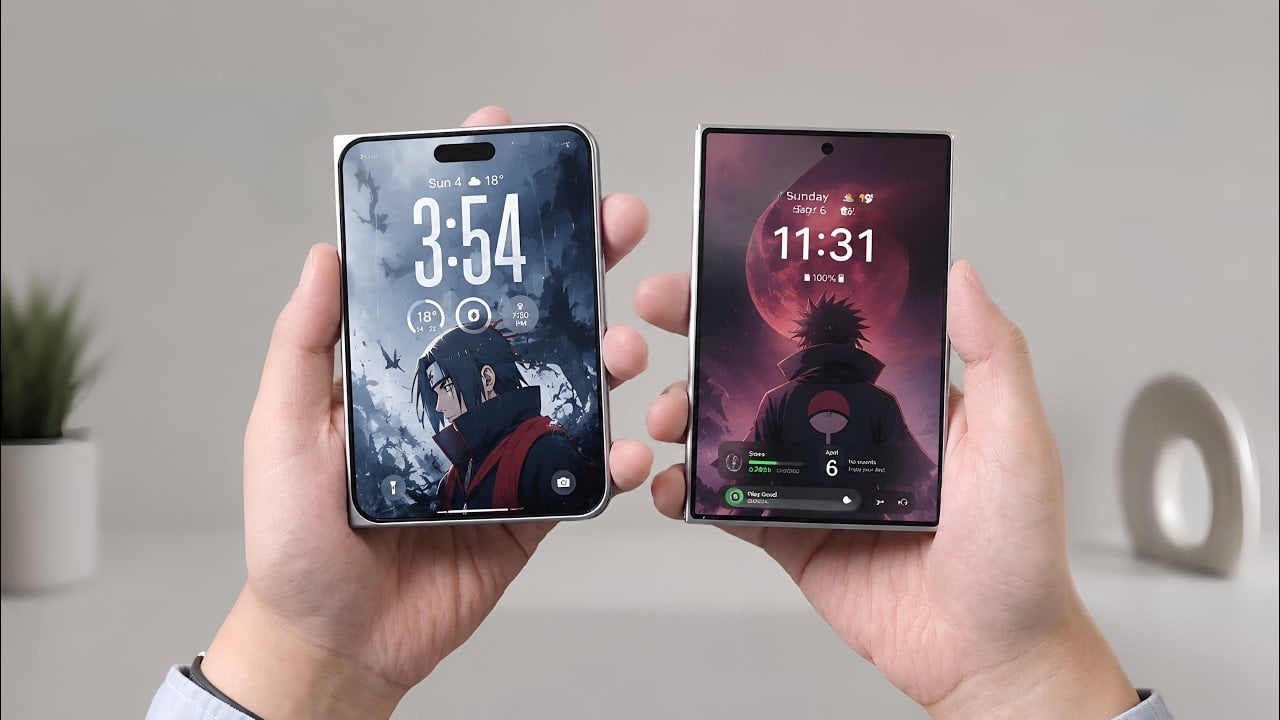
Samsung Finally Fixed It: The Galaxy Z Fold 8 Wide Ditches the Narrow Screen Render of the Samsung Galaxy Z Fold 8 Wide showing a broader inner screen and thinner bezels.

The Samsung Galaxy Z Fold 8 is poised to redefine the foldable smartphone landscape. With its anticipated wider design, innovative hardware and user-centric features, this device is expected to push the boundaries of what foldable technology can deliver. As Samsung continues to lead the foldable market, the Galaxy Z Fold 8 could solidify its dominance, […]

The post Samsung Finally Fixed It: The Galaxy Z Fold 8 Wide Ditches the Narrow Screen appeared first on Geeky Gadgets.

Posted in Uncategorized

Google Workspace CLI : Drive, Gmail & Slides Commands for AI Agents

Google Workspace CLI : Drive, Gmail & Slides Commands for AI Agents Terminal window showing Google Workspace CLI commands used to read Drive files and draft a Gmail message.

Google’s newly released Command Line Interface (CLI) for Google Workspace introduces a streamlined way to integrate AI-driven automation with Workspace APIs. Built with Rust, this CLI enables developers to handle tasks like drafting Gmail emails, automating Google Sheets and creating presentations in Google Slides with greater efficiency. A standout feature is its dynamic command updates, […]

The post Google Workspace CLI : Drive, Gmail & Slides Commands for AI Agents appeared first on Geeky Gadgets.

Posted in Uncategorized

iPhone 18 Pro Max Leak: Apple’s New Design Kills the Dynamic Island

iPhone 18 Pro Max Leak: Apple’s New Design Kills the Dynamic Island iPhone 18 Pro Max

  The iPhone 18 Pro Max is capturing attention with rumors of substantial advancements in battery life, processing power, and hardware efficiency. If you’re looking for a smartphone that combines innovative technology with enhanced endurance, this device could set a new standard in the industry. With a focus on delivering a superior user experience, the […]

The post iPhone 18 Pro Max Leak: Apple’s New Design Kills the Dynamic Island appeared first on Geeky Gadgets.

Posted in Uncategorized

New Claude Code Loop Feature Explained : Agent Loops vs Desktop Scheduling Limits

New Claude Code Loop Feature Explained : Agent Loops vs Desktop Scheduling Limits Terminal window showing Claude Code running an Agent Loops task every 10 minutes in one session.

The Agent Loops feature in Claude Code offers a straightforward way to automate recurring tasks during an active terminal session. As explained by Chase AI, this feature allows users to schedule tasks at intervals like every 10 minutes or hourly, with a maximum duration of three days. For example, it can be used to monitor […]

The post New Claude Code Loop Feature Explained : Agent Loops vs Desktop Scheduling Limits appeared first on Geeky Gadgets.

Posted in Uncategorized

SteamOS Anti-Cheat Update : Anti-cheat is coming to Steam Hardware in 2026

SteamOS Anti-Cheat Update : Anti-cheat is coming to Steam Hardware in 2026 Resident Evil 7 gameplay on Steam Deck with near-max graphics settings and a steady 45 FPS cap.

Valve’s decision to integrate anti-cheat software into Steam hardware, via SteamOS, addresses a longstanding challenge for Linux-based gaming platforms. Historically, compatibility issues with popular multiplayer games have limited the appeal of Linux systems for gamers. Deck Ready highlights how this integration, which includes updates to Proton, Valve’s Windows-to-Linux compatibility layer, could make games like Battlefield […]

The post SteamOS Anti-Cheat Update : Anti-cheat is coming to Steam Hardware in 2026 appeared first on Geeky Gadgets.

Posted in Uncategorized

This Wall Speaker Lets You Decorate Your Room with Music and Art

The must-have for your home used to be a choice: a speaker or a digital frame. Good audio gear fills a room with sound but rarely does anything worth looking at. Digital frames look considered and calm on a wall but go completely silent the moment you need them to do something else. It seems obvious, in hindsight, that someone would eventually stop treating these as separate problems.

Monar is that someone. The Monar Canvas Speaker brings both together in a single framed wall piece that plays Hi-Fi audio while displaying art on a built-in screen, and the two functions are genuinely connected. When music plays, the display responds in real time, generating visuals that shift and react to the track. It fills your home with sound. It decorates your wall with art. It does both at once.

Designer: Monar

Click Here to Buy Now: $799 $1299 ($500 off). Hurry, only 122/150 left! Raised over $55,000.

The design draws its visual logic from classical oil painting. Traditional canvas proportions, the kind that have framed masterworks for centuries, informed the 4:5 portrait ratio of the panel, a deliberate departure from the widescreen format most screens default to. That historical reference is not decorative. It is the reason the Monar reads like framed art on a wall rather than a screen that someone forgot to put away.

The outer frame is interchangeable across eight options: premium ABS plastics, natural linen, and brushed aluminium, with one ABS option styled after Mondrian’s primary color geometry. Swapping the frame is a practical feature rather than a gimmick, since the object is permanent décor. If your interior changes, the frame can too.

The audio side makes bold claims for an enclosure that is only 4.9cm deep. Six drivers handle the load: 2 titanium tweeters, 2 midranges using a golden ratio cone geometry, and full-size subwoofers running through a 2.2-channel amplifier. The 20Hz to 20kHz frequency response is ambitious for a chassis this thin, and one definitely worth hearing.

Where the product earns genuine interest is in the everyday texture of using it. Put on an album, and one of 12 lyric display themes animates the words in sync with the music. Switch to the World Gallery and the screen cycles through more than 50,000 digitized artworks, from Van Gogh to Hokusai. Activate Meditation Mode and the visuals shift to ambient scenes timed to calming audio. When no music is playing, it displays personal photos or videos, so it never really goes blank or dormant.

The generative AI tools go further still. Monar’s AI Studio lets you create original artwork through text prompts, uploaded images, or even a musical concept. The result displays on screen, making it possible to have genuinely new wall art on demand without touching a single frame nail. These features run on a points system, with a free tier offering 100 points per month. The World Gallery and Meditation Mode cost nothing extra, regardless.

Paid AI tiers range from $9.90 to $39.90 per month for heavier creative use, and the free allocation covers casual experimentation comfortably. What makes the pricing structure interesting is what it says about the product underneath it: even without touching a single AI feature, the Monar already delivers a fully functional Hi-Fi speaker system and a complete digital frame in one object. That combination alone is something no single product category had managed to pull off before it came along.

A speaker that becomes a painting, a gallery that plays music, a frame that reacts to sound: the Monar pulls off a combination that no single product category has figured out before it. The real question worth sitting with is not whether it works, but how much your walls have been missing something like it.

Click Here to Buy Now: $799 $1299 ($500 off). Hurry, only 122/150 left! Raised over $55,000.

The post This Wall Speaker Lets You Decorate Your Room with Music and Art first appeared on Yanko Design.

Microsoft Broke the Only Thing That Actually Mattered

Any tech nerd knows the unspoken contract that comes with being the only tech-literate person in the family. You get texts when someone’s laptop is slow, called over during the holidays to fix the router, and consulted every eighteen months when someone needs a new phone or computer. For years, the laptop question had a clean, confident answer: a Windows machine. Cheap entry points, massive software compatibility, games that actually run, no walled gardens, no ecosystem hostage situations, and enough flexibility that even a non-technical person could figure out the basics without feeling like they’d violated a terms of service agreement. But the last time someone asked me what laptop to get, I paused. For a good minute I asked myself, should I even recommend Windows anymore?

That pause is new, and it carries weight that no benchmark score or spec sheet can explain. The designated family tech person has historically been one of the most reliable organic distribution channels Windows ever had, recommending the same platform generation after generation because it worked, it was accessible, and there was nothing obviously better for normal people at a reasonable price. When that person hesitates, the platform has a problem. Microsoft built an empire on being the obvious, low-friction answer to the laptop question, and somewhere between Windows 10 and the Copilot era, they stopped protecting that position. And with Apple dropping a $599 MacBook just last week, that position seems even more in danger.

2024 CrowdStrike Outage

The OS that holds civilization together

Windows runs somewhere between 72 and 73 percent of the world’s desktops, and while that’s an impressive monopoly, it completely ignores the critical systems where Windows is actually even more prevalent and essential. Hospital admission systems, ATM networks, military command infrastructure, government offices, court systems, school networks, and banking operations across virtually every country on earth run on Windows. These institutions did not choose Windows out of preference; they are locked in through decades of infrastructure investment, software dependencies, and training costs that make switching systemically impractical at scale. The July 2024 CrowdStrike incident put a specific number on what this dependency looks like under pressure: one faulty content update to a single Windows security tool simultaneously bricked approximately 8.5 million machines, grounded over 8,500 flights globally, knocked hospital systems offline across multiple countries, and disabled 911 call centers across several US states. One third-party software layer, one bad update, and the operational skeleton of modern civic life visibly buckled.

That is the platform Microsoft has been treating as a vehicle for AI feature experiments. Recall, the AI tool Microsoft attempted to ship as part of Windows 11, worked by screenshotting the user’s screen every few seconds and storing those images locally to build a searchable timeline of everything they had ever done on the machine. Security researchers flagged it almost immediately as a catastrophic privacy liability: a permanent, silent, queryable record of every document, message, and webpage the screen had ever displayed. Microsoft paused the rollout after a fierce public backlash, but the revealing fact is that Recall cleared internal review in the first place. The teams approving that feature were not thinking about hospital clerks processing patient records, lawyers working with privileged communications, or government employees handling sensitive data. They were building a keynote demo.

The market is responding accordingly

Microsoft ended official Windows 10 support in October 2025, cutting off security patches for what was still the most widely used version of the OS. Months of upgrade campaigns, notification banners, and every available form of institutional pressure followed. The result: as of December 2025, Windows 10 sits at 44.68% market share and actually gained users after support ended, while Windows 11 dropped from 55.18% in October to 50.73% in December, shedding over four percentage points in two months while the officially dead OS clawed back ground. People are choosing to run a security-vulnerable, unsupported operating system rather than upgrade to the one Microsoft actively maintains, and that is not technophobia or inertia. It is a calculated judgment, made by millions of users independently, that the known risks of the old version beat the unknown risks of moving to the new one.

The TPM 2.0 hardware requirement blocked installation on millions of perfectly functional machines with no meaningful performance justification for everyday users, which meant the upgrade conversation started with resentment before it ever got to features. First-boot setup funnels new users toward a Microsoft account, with the offline bypass buried past the point where most non-technical people will ever find it. OneDrive integration sits deep enough in the OS that users regularly discover their Desktop files have been syncing to the cloud without understanding when or how they agreed to that. A fresh Windows 11 install in 2026 ships with TikTok, Instagram, Disney+, and a collection of Microsoft’s own unfinished apps pre-pinned to the Start menu, none of them arriving with any user consent. Copilot, which no consumer demand survey had identified as a priority, now appears in the OS sidebar, the taskbar, and since 2024, as a dedicated hardware key on new laptops, occupying real estate where a key with actual utility used to live.

Running alongside all of that is a separate update quality crisis that has been building its own track record. A January 2026 security update caused boot failures on certain Windows 11 machines, with Microsoft eventually tracing the issue to a botched December 2025 update that had left affected devices in what they diplomatically described as an “improper state.” An October 2025 security update broke VPN networking for enterprise users running OpenVPN and Cisco Secure Client, a bug that carried through the December patch cycle without a clean resolution. Security updates, the category Microsoft explicitly tells users they cannot afford to skip, became a threat to system stability in their own right. When the patch and the problem are indistinguishable from each other, the trust issue has moved well past inconvenience.

A modified version of a comic by Manu Cornet

Nadella is a great CEO. Just not for desktop operating systems.

Satya Nadella took Microsoft’s stock from roughly $35 in 2014 to over $400 at its peak, killed the Nokia disaster before it could fully metastasize, repositioned the entire company around cloud infrastructure, and placed an early bet on OpenAI when AI was still considered expensive academic theater. Azure’s consistent 30%-plus year-over-year growth commands complete executive attention and pulls the best engineering talent in the building toward it like gravity. By any honest standard corporate metric, Nadella’s Microsoft is a legitimate turnaround story, and the shareholder returns are not fabricated. But Nadella is a cloud and enterprise person at his core, and consumer Windows is a mature product in a saturated market, which in corporate strategy language translates cleanly to “managed asset.” The product that generates excitement gets the architects and the product visionaries; the one that just needs to keep working gets whoever is left after that allocation is done.

Paul Thurrott, who has covered Microsoft longer than most of the current Windows team has worked there, documented what that organizational reality looks like in practice. He wrote that Microsoft “relegated Windows to a backwater world led by B-teamers as the brightest minds at the company moved onto more lucrative career opportunities in Azure and AI.” That is an organizational autopsy, not editorial frustration, and it explains the product trajectory better than any feature changelog can. The talent followed the money and the excitement, and what remained shipped a redesigned Start menu nobody requested, a Copilot key nobody asked for, and a feature that the security community identified as dangerous within hours of its public announcement. The B-team does not ship bad decisions out of malice; they ship them because nobody senior enough to stop them is paying attention.

This pattern has a name

Nadella did not invent this behavioral tendency; it recurs reliably enough across modern tech to qualify as its own CEO archetype. Elon Musk built Tesla into the most culturally significant car company on earth, then spent the better part of two years fixated on Twitter, rebranding it to X, eliminating roughly 80% of staff, and torching advertiser relationships that took years to build, while Tesla’s stock dropped roughly 40% in the first quarter of 2025 alone. Now, he’s discontinued two Tesla models permanently while focusing efforts on an extremely polarizing AI chatbot. Mark Zuckerberg committed somewhere between $40 and $50 billion to the metaverse between 2021 and 2023, a virtual world that peaked at approximately 300,000 daily active users on Meta Horizon Worlds, before quietly pivoting to AI and becoming a public figure most associated with jiu-jitsu tournaments. The pattern is consistent enough to have a shape: a CEO builds something genuinely dominant, gets pulled toward the next big technological narrative, and hands the original product to the maintenance crew while energy and capital chase the new story. The difference with Nadella is the scale of what he handed off.

What separates his case from Musk and Zuckerberg is that he did not get distracted from Windows. He consciously stripped it for parts. Azure and AI received the budget, the senior talent pipeline, and the executive attention. Windows received the downstream output of that redistribution: mandatory AI integrations nobody requested, hardware specifications designed around Microsoft’s AI keynote roadmap rather than user needs, and a product direction driven more by investor narrative than by any user research that has ever been made public. The ordinary people buying $400 laptops are absorbing the cost of that sacrifice. The shareholders benefiting from Azure’s quarterly growth numbers are not.

Enshittification, documented

Cory Doctorow’s enshittification framework describes a platform lifecycle: start good for users, degrade toward serving business partners, then degrade further to extract maximum value for shareholders at everyone else’s expense. Windows 11 maps cleanly onto the third stage. The Start menu was rebuilt from scratch for the Windows 11 launch, stripping out Live Tiles that users had configured over years and replacing them with a static grid that is less functional and harder to customize, with no usability gain justifying the regression. Drag-and-drop onto taskbar applications was removed entirely at launch and only partially restored after months of sustained community pressure. Windows 11 originally shipped without the ability to right-click the taskbar to open Task Manager, a function that had existed since Windows NT 4.0 in 1996, and whose removal was not a redesign decision so much as evidence that nobody tested the product against the habits of actual users.

Control Panel, introduced in 1985, and the modern Settings app, first introduced in 2012 with Windows 8, still coexist in parallel inside Windows 11 in 2026. Basic system configuration requires jumping between both because neither is complete on its own, and the logic governing which settings live in which interface has never been consistently explained or resolved. Thirteen years of two competing tools sharing the same OS, and Microsoft never cared enough about the end-user experience to finish the job. This is not a legacy oversight or a technical debt problem that nobody knows how to solve. It is a choice, visible in its incompleteness, that reveals how little Windows product ownership has mattered to anyone with the authority to demand better.

Where this leaves ordinary people

Windows remains the most practical OS for most consumers, and that matters because it means there is no clean exit for the people being failed by it. MacOS is polished and stable but paternalistic by design: Apple creates deliberate friction around installing software from outside its ecosystem, the interface carries a genuine learning curve for anyone transitioning from Windows, and a MacBook Air M4 starts at $1,099 against a capable Windows laptop at around $400. Sure you can buy the $599 MacBook Neo too, but it’s genuinely less of a laptop and more of a netbook. The price difference between a regular MacBook and a similarly spec’d Windows laptop is not marginal in most of the world, particularly in the markets where Windows adoption is highest. Linux is genuinely improving year over year and deserves acknowledgment for it, but recommending Ubuntu to a non-technical family member invites more trouble than relief. The alternatives exist, but they serve a different user than the one who has to ask for a laptop recommendation.

A regular person can still buy an affordable Windows machine, install whatever software they want, run games across a hardware range that nothing else matches, plug in any peripheral without a compatibility interrogation, and operate without being treated as a security risk for opening a file from outside a curated store. Microsoft is eroding that value proposition methodically, one forced integration at a time, but the erosion has not yet reached full collapse. As of early 2026, reporting suggests Microsoft is pulling back from the AI-everywhere approach in Windows and refocusing on core stability, with Paul Thurrott describing the shift as “something happened,” which from a journalist who has spent years documenting Windows’ decline with the exhausted precision of someone watching a building settle incorrectly reads as cautious acknowledgment rather than optimism. Whether that represents genuine reprioritization or noise management ahead of a Windows 12 announcement nobody has officially confirmed is the question worth watching.

Rebuilding trust after Recall, after a year of destabilizing updates, after years of treating the world’s most consequential operating system as a demo environment for products the market never asked for, takes considerably longer than a few stable patches and a tonal reset in engineering blog posts. The millions of people still on Windows 10, knowingly running an unsupported OS past its expiration date, made a rational call: the known risks of yesterday’s software beat the unpredictable risks of an OS whose roadmap is driven by whatever Microsoft needs to show investors next quarter. That is not the normal frustration cycle where users grumble and eventually upgrade. It is a trust deficit built through years of consistent bad decisions, and a few good patch cycles will not close it. The easiest tech recommendation in the world has become a pause, and the people responsible for that pause are too deep in Azure dashboards to understand what it actually costs.

The post Microsoft Broke the Only Thing That Actually Mattered first appeared on Yanko Design.
Microsoft Broke the Only Thing That Actually Mattered

Any tech nerd knows the unspoken contract that comes with being the only tech-literate person in the family. You get texts when someone’s laptop is slow, called over during the holidays to fix the router, and consulted every eighteen months when someone needs a new phone or computer. For years, the laptop question had a clean, confident answer: a Windows machine. Cheap entry points, massive software compatibility, games that actually run, no walled gardens, no ecosystem hostage situations, and enough flexibility that even a non-technical person could figure out the basics without feeling like they’d violated a terms of service agreement. But the last time someone asked me what laptop to get, I paused. For a good minute I asked myself, should I even recommend Windows anymore?

That pause is new, and it carries weight that no benchmark score or spec sheet can explain. The designated family tech person has historically been one of the most reliable organic distribution channels Windows ever had, recommending the same platform generation after generation because it worked, it was accessible, and there was nothing obviously better for normal people at a reasonable price. When that person hesitates, the platform has a problem. Microsoft built an empire on being the obvious, low-friction answer to the laptop question, and somewhere between Windows 10 and the Copilot era, they stopped protecting that position. And with Apple dropping a $599 MacBook just last week, that position seems even more in danger.

2024 CrowdStrike Outage

The OS that holds civilization together

Windows runs somewhere between 72 and 73 percent of the world’s desktops, and while that’s an impressive monopoly, it completely ignores the critical systems where Windows is actually even more prevalent and essential. Hospital admission systems, ATM networks, military command infrastructure, government offices, court systems, school networks, and banking operations across virtually every country on earth run on Windows. These institutions did not choose Windows out of preference; they are locked in through decades of infrastructure investment, software dependencies, and training costs that make switching systemically impractical at scale. The July 2024 CrowdStrike incident put a specific number on what this dependency looks like under pressure: one faulty content update to a single Windows security tool simultaneously bricked approximately 8.5 million machines, grounded over 8,500 flights globally, knocked hospital systems offline across multiple countries, and disabled 911 call centers across several US states. One third-party software layer, one bad update, and the operational skeleton of modern civic life visibly buckled.

That is the platform Microsoft has been treating as a vehicle for AI feature experiments. Recall, the AI tool Microsoft attempted to ship as part of Windows 11, worked by screenshotting the user’s screen every few seconds and storing those images locally to build a searchable timeline of everything they had ever done on the machine. Security researchers flagged it almost immediately as a catastrophic privacy liability: a permanent, silent, queryable record of every document, message, and webpage the screen had ever displayed. Microsoft paused the rollout after a fierce public backlash, but the revealing fact is that Recall cleared internal review in the first place. The teams approving that feature were not thinking about hospital clerks processing patient records, lawyers working with privileged communications, or government employees handling sensitive data. They were building a keynote demo.

The market is responding accordingly

Microsoft ended official Windows 10 support in October 2025, cutting off security patches for what was still the most widely used version of the OS. Months of upgrade campaigns, notification banners, and every available form of institutional pressure followed. The result: as of December 2025, Windows 10 sits at 44.68% market share and actually gained users after support ended, while Windows 11 dropped from 55.18% in October to 50.73% in December, shedding over four percentage points in two months while the officially dead OS clawed back ground. People are choosing to run a security-vulnerable, unsupported operating system rather than upgrade to the one Microsoft actively maintains, and that is not technophobia or inertia. It is a calculated judgment, made by millions of users independently, that the known risks of the old version beat the unknown risks of moving to the new one.

The TPM 2.0 hardware requirement blocked installation on millions of perfectly functional machines with no meaningful performance justification for everyday users, which meant the upgrade conversation started with resentment before it ever got to features. First-boot setup funnels new users toward a Microsoft account, with the offline bypass buried past the point where most non-technical people will ever find it. OneDrive integration sits deep enough in the OS that users regularly discover their Desktop files have been syncing to the cloud without understanding when or how they agreed to that. A fresh Windows 11 install in 2026 ships with TikTok, Instagram, Disney+, and a collection of Microsoft’s own unfinished apps pre-pinned to the Start menu, none of them arriving with any user consent. Copilot, which no consumer demand survey had identified as a priority, now appears in the OS sidebar, the taskbar, and since 2024, as a dedicated hardware key on new laptops, occupying real estate where a key with actual utility used to live.

Running alongside all of that is a separate update quality crisis that has been building its own track record. A January 2026 security update caused boot failures on certain Windows 11 machines, with Microsoft eventually tracing the issue to a botched December 2025 update that had left affected devices in what they diplomatically described as an “improper state.” An October 2025 security update broke VPN networking for enterprise users running OpenVPN and Cisco Secure Client, a bug that carried through the December patch cycle without a clean resolution. Security updates, the category Microsoft explicitly tells users they cannot afford to skip, became a threat to system stability in their own right. When the patch and the problem are indistinguishable from each other, the trust issue has moved well past inconvenience.

A modified version of a comic by Manu Cornet

Nadella is a great CEO. Just not for desktop operating systems.

Satya Nadella took Microsoft’s stock from roughly $35 in 2014 to over $400 at its peak, killed the Nokia disaster before it could fully metastasize, repositioned the entire company around cloud infrastructure, and placed an early bet on OpenAI when AI was still considered expensive academic theater. Azure’s consistent 30%-plus year-over-year growth commands complete executive attention and pulls the best engineering talent in the building toward it like gravity. By any honest standard corporate metric, Nadella’s Microsoft is a legitimate turnaround story, and the shareholder returns are not fabricated. But Nadella is a cloud and enterprise person at his core, and consumer Windows is a mature product in a saturated market, which in corporate strategy language translates cleanly to “managed asset.” The product that generates excitement gets the architects and the product visionaries; the one that just needs to keep working gets whoever is left after that allocation is done.

Paul Thurrott, who has covered Microsoft longer than most of the current Windows team has worked there, documented what that organizational reality looks like in practice. He wrote that Microsoft “relegated Windows to a backwater world led by B-teamers as the brightest minds at the company moved onto more lucrative career opportunities in Azure and AI.” That is an organizational autopsy, not editorial frustration, and it explains the product trajectory better than any feature changelog can. The talent followed the money and the excitement, and what remained shipped a redesigned Start menu nobody requested, a Copilot key nobody asked for, and a feature that the security community identified as dangerous within hours of its public announcement. The B-team does not ship bad decisions out of malice; they ship them because nobody senior enough to stop them is paying attention.

This pattern has a name

Nadella did not invent this behavioral tendency; it recurs reliably enough across modern tech to qualify as its own CEO archetype. Elon Musk built Tesla into the most culturally significant car company on earth, then spent the better part of two years fixated on Twitter, rebranding it to X, eliminating roughly 80% of staff, and torching advertiser relationships that took years to build, while Tesla’s stock dropped roughly 40% in the first quarter of 2025 alone. Now, he’s discontinued two Tesla models permanently while focusing efforts on an extremely polarizing AI chatbot. Mark Zuckerberg committed somewhere between $40 and $50 billion to the metaverse between 2021 and 2023, a virtual world that peaked at approximately 300,000 daily active users on Meta Horizon Worlds, before quietly pivoting to AI and becoming a public figure most associated with jiu-jitsu tournaments. The pattern is consistent enough to have a shape: a CEO builds something genuinely dominant, gets pulled toward the next big technological narrative, and hands the original product to the maintenance crew while energy and capital chase the new story. The difference with Nadella is the scale of what he handed off.

What separates his case from Musk and Zuckerberg is that he did not get distracted from Windows. He consciously stripped it for parts. Azure and AI received the budget, the senior talent pipeline, and the executive attention. Windows received the downstream output of that redistribution: mandatory AI integrations nobody requested, hardware specifications designed around Microsoft’s AI keynote roadmap rather than user needs, and a product direction driven more by investor narrative than by any user research that has ever been made public. The ordinary people buying $400 laptops are absorbing the cost of that sacrifice. The shareholders benefiting from Azure’s quarterly growth numbers are not.

Enshittification, documented

Cory Doctorow’s enshittification framework describes a platform lifecycle: start good for users, degrade toward serving business partners, then degrade further to extract maximum value for shareholders at everyone else’s expense. Windows 11 maps cleanly onto the third stage. The Start menu was rebuilt from scratch for the Windows 11 launch, stripping out Live Tiles that users had configured over years and replacing them with a static grid that is less functional and harder to customize, with no usability gain justifying the regression. Drag-and-drop onto taskbar applications was removed entirely at launch and only partially restored after months of sustained community pressure. Windows 11 originally shipped without the ability to right-click the taskbar to open Task Manager, a function that had existed since Windows NT 4.0 in 1996, and whose removal was not a redesign decision so much as evidence that nobody tested the product against the habits of actual users.

Control Panel, introduced in 1985, and the modern Settings app, first introduced in 2012 with Windows 8, still coexist in parallel inside Windows 11 in 2026. Basic system configuration requires jumping between both because neither is complete on its own, and the logic governing which settings live in which interface has never been consistently explained or resolved. Thirteen years of two competing tools sharing the same OS, and Microsoft never cared enough about the end-user experience to finish the job. This is not a legacy oversight or a technical debt problem that nobody knows how to solve. It is a choice, visible in its incompleteness, that reveals how little Windows product ownership has mattered to anyone with the authority to demand better.

Where this leaves ordinary people

Windows remains the most practical OS for most consumers, and that matters because it means there is no clean exit for the people being failed by it. MacOS is polished and stable but paternalistic by design: Apple creates deliberate friction around installing software from outside its ecosystem, the interface carries a genuine learning curve for anyone transitioning from Windows, and a MacBook Air M4 starts at $1,099 against a capable Windows laptop at around $400. Sure you can buy the $599 MacBook Neo too, but it’s genuinely less of a laptop and more of a netbook. The price difference between a regular MacBook and a similarly spec’d Windows laptop is not marginal in most of the world, particularly in the markets where Windows adoption is highest. Linux is genuinely improving year over year and deserves acknowledgment for it, but recommending Ubuntu to a non-technical family member invites more trouble than relief. The alternatives exist, but they serve a different user than the one who has to ask for a laptop recommendation.

A regular person can still buy an affordable Windows machine, install whatever software they want, run games across a hardware range that nothing else matches, plug in any peripheral without a compatibility interrogation, and operate without being treated as a security risk for opening a file from outside a curated store. Microsoft is eroding that value proposition methodically, one forced integration at a time, but the erosion has not yet reached full collapse. As of early 2026, reporting suggests Microsoft is pulling back from the AI-everywhere approach in Windows and refocusing on core stability, with Paul Thurrott describing the shift as “something happened,” which from a journalist who has spent years documenting Windows’ decline with the exhausted precision of someone watching a building settle incorrectly reads as cautious acknowledgment rather than optimism. Whether that represents genuine reprioritization or noise management ahead of a Windows 12 announcement nobody has officially confirmed is the question worth watching.

Rebuilding trust after Recall, after a year of destabilizing updates, after years of treating the world’s most consequential operating system as a demo environment for products the market never asked for, takes considerably longer than a few stable patches and a tonal reset in engineering blog posts. The millions of people still on Windows 10, knowingly running an unsupported OS past its expiration date, made a rational call: the known risks of yesterday’s software beat the unpredictable risks of an OS whose roadmap is driven by whatever Microsoft needs to show investors next quarter. That is not the normal frustration cycle where users grumble and eventually upgrade. It is a trust deficit built through years of consistent bad decisions, and a few good patch cycles will not close it. The easiest tech recommendation in the world has become a pause, and the people responsible for that pause are too deep in Azure dashboards to understand what it actually costs.

The post Microsoft Broke the Only Thing That Actually Mattered first appeared on Yanko Design.
This Chair doubles as a Floor Lamp for quirky, multipurpose furniture for tiny homes

Most furniture is remarkably obedient. It goes where you put it, does what it was designed to do, and asks nothing back. A sofa is a sofa. A side table holds your coffee and your remote and maybe a plant you keep meaning to water. The relationship is comfortable, uncomplicated, and, if you’re honest about it, a little dull.

JXY Studio’s Art-chitecture modular furniture system is not obedient. Designed by Jiaxun Xu and Yue Xu, it’s built from just two materials, stainless steel and frosted acrylic, and assembled through a modular logic that lets the same set of components become a chair, a lamp, a wall sconce, a shelf, or something that doesn’t quite have a name yet. The system isn’t asking you to commit to a function. It’s asking you to keep questioning one.

Designer: JXY Studio

The physical language of the pieces is striking right away. The steel frame is exposed and structural, bolted together with visible hardware that reads more like small-scale architecture than furniture. The frosted acrylic panels diffuse light from within, so what sits in a corner as a cubic seat by day can glow like a softbox lantern at night. One configuration mounts flat against a brick wall as a sconce. Another rests on a wooden deck with a cushion tucked inside, a side table, a pet perch, a seat, take your pick. A Pomeranian pokes its head out of one in the project photos, looking entirely at home, which tells you something about the generosity of this design.

What JXY Studio is really pushing back against is the way furniture has historically been judged: by material, proportion, craftsmanship, and style. Those things matter, but that framework also quietly boxes furniture in. It positions an object as an accessory defined by aesthetic labels rather than as a force that actively shapes how a space feels. The Art-chitecture system rejects that framing. Its position is that a chair can be a spatial element, not just a seat.

I find this genuinely compelling, partly because it mirrors conversations happening across other design disciplines. In tech, modularity and open systems have been the standard for decades. In architecture, adaptive reuse and flexible programming have become almost expected. But furniture, the thing we touch and use more than almost any other designed object, has largely stayed categorical. The Art-chitecture system asks the obvious question that rarely gets asked: why?

Part of what makes it feel so contemporary is the balance it strikes between precision and openness. The components are designed around standard industrial processes, but the assembly logic is simplified enough that the user becomes a co-designer. You’re not just buying a product; you’re buying a set of spatial possibilities and figuring out what to do with them. It has flat-pack ambition with a considerably more ambitious philosophy behind it.

Modularity in furniture is not, of course, a new idea. The USM Haller system has been doing its thing since the 1960s, and everything from Enzo Mari to IKEA has explored assembly logic in various ways. But Art-chitecture distinguishes itself by crossing categories entirely. It doesn’t modularize within furniture. It modularizes across the boundary between furniture and space. Stack and recombine enough of these units and they stop being objects in a room and start becoming the room itself.

There are real tradeoffs worth acknowledging. Frosted acrylic is beautiful when lit but shows wear over time. Visible bolts and steel framing require a particular aesthetic tolerance. And any system this open-ended demands a level of spatial imagination that not everyone wants to bring to a Tuesday evening at home. But those feel like worthwhile concessions for a project that is genuinely trying to expand what furniture can be.

The image I keep coming back to is from the project photos: a person seated on an illuminated cube by a window, silhouetted against sheer curtains, while someone else holds an unassembled frame nearby. It looks like a play where the set is still being built. The Art-chitecture system treats living as an ongoing act of construction, where the things you sit on and the spaces you inhabit are never quite finished. I find that idea hard to let go of.

The post This Chair doubles as a Floor Lamp for quirky, multipurpose furniture for tiny homes first appeared on Yanko Design.