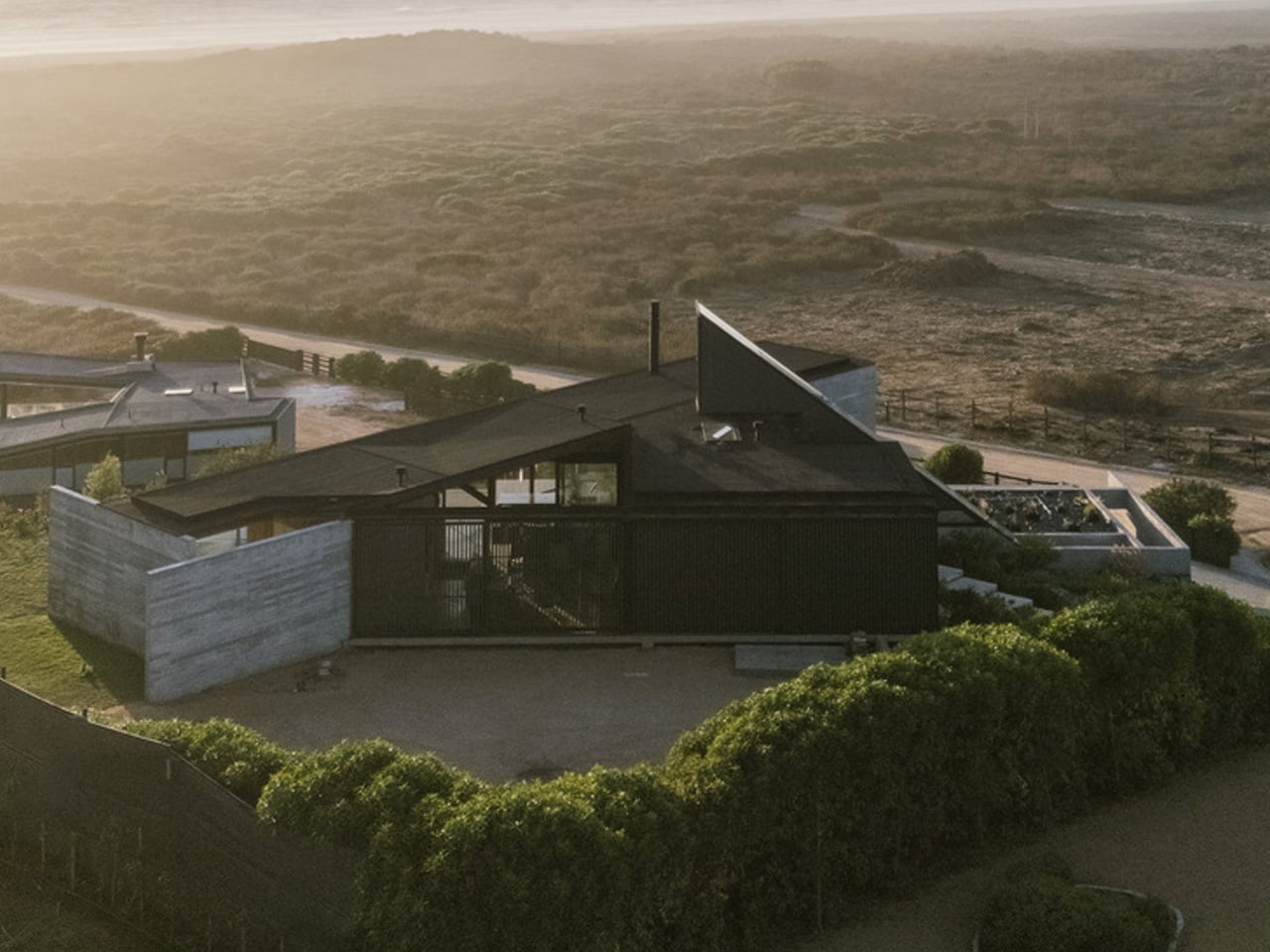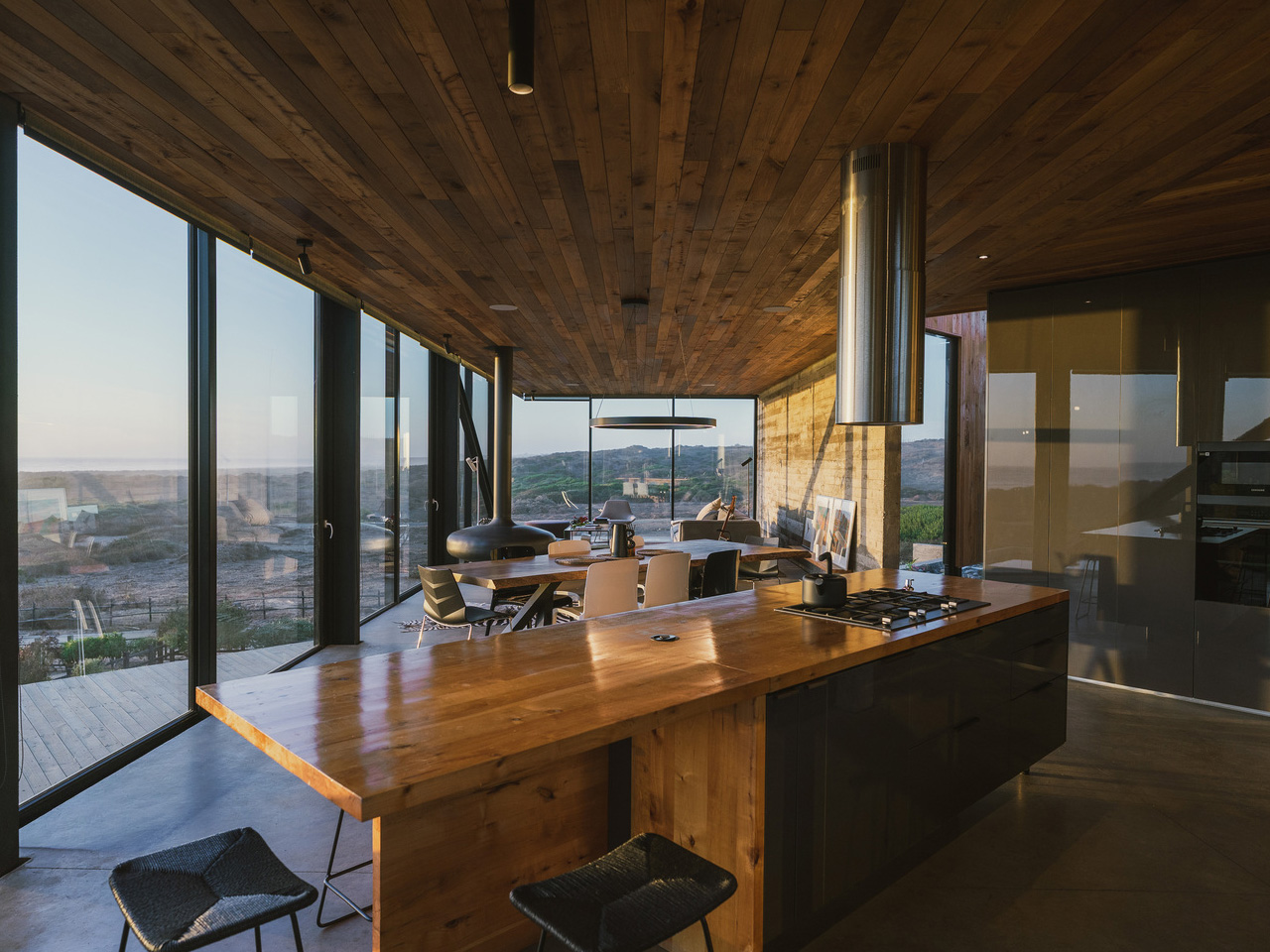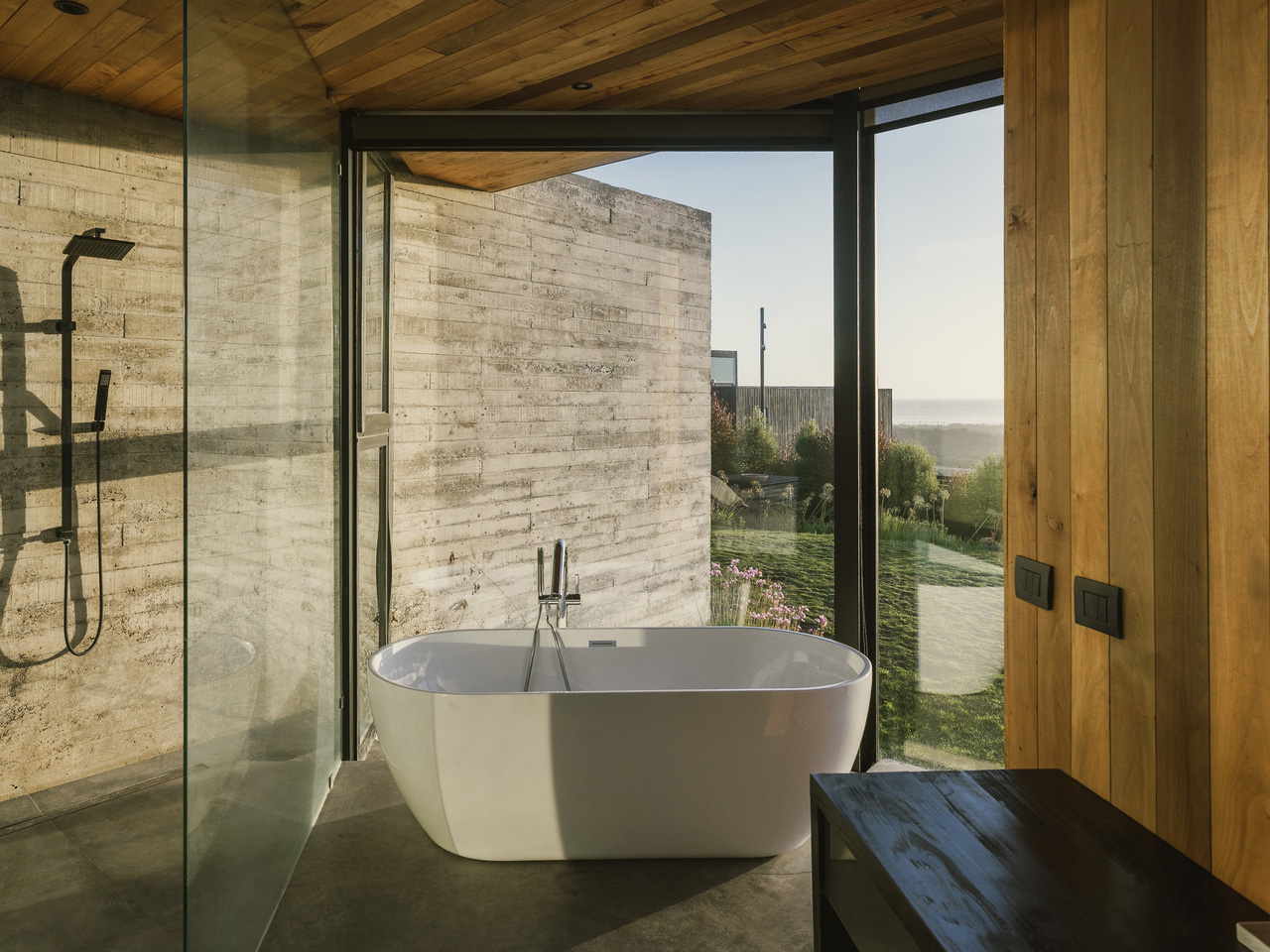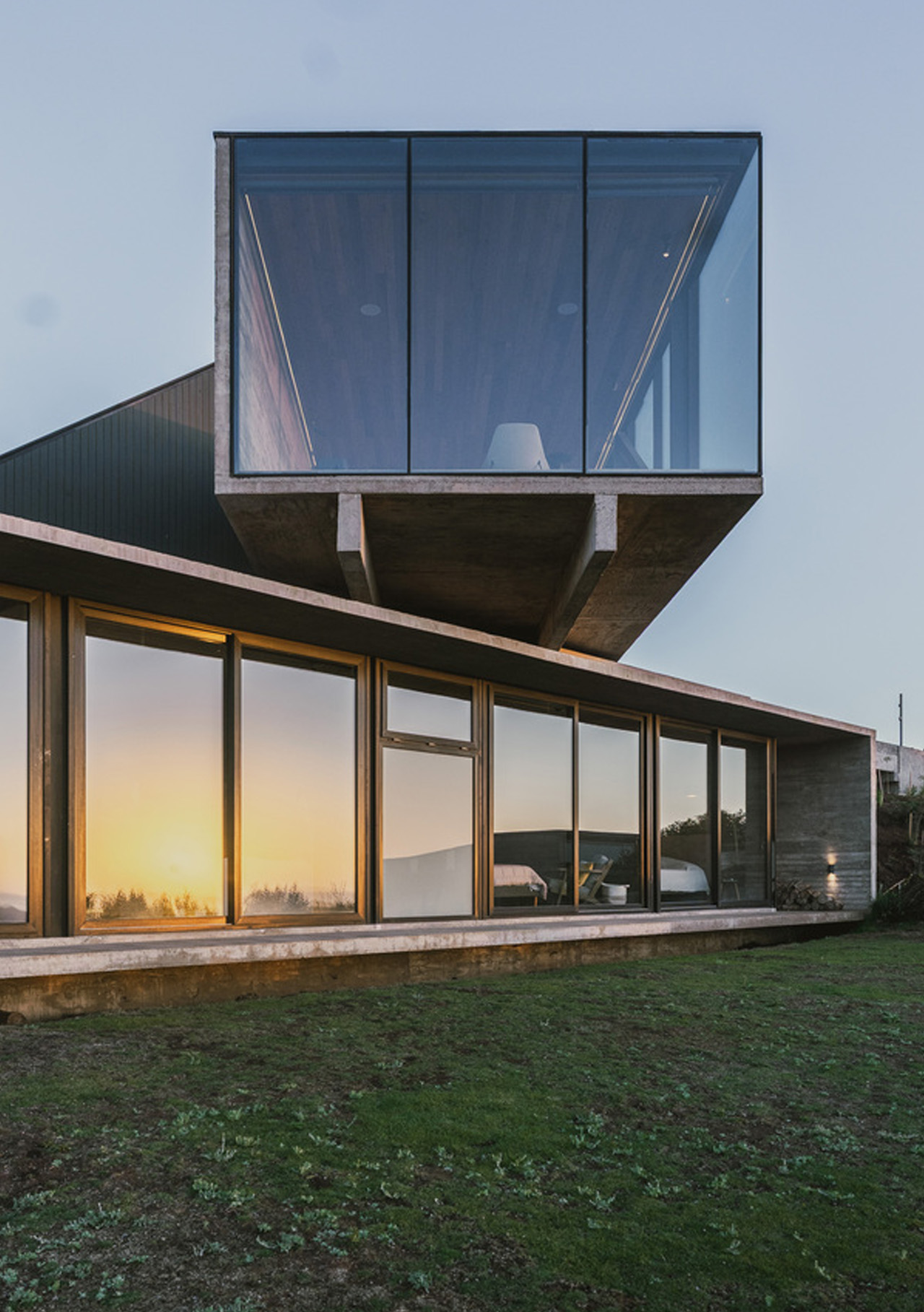
This Hollywood Hills House Channels Medieval Castles with a Modern Industrial Twist

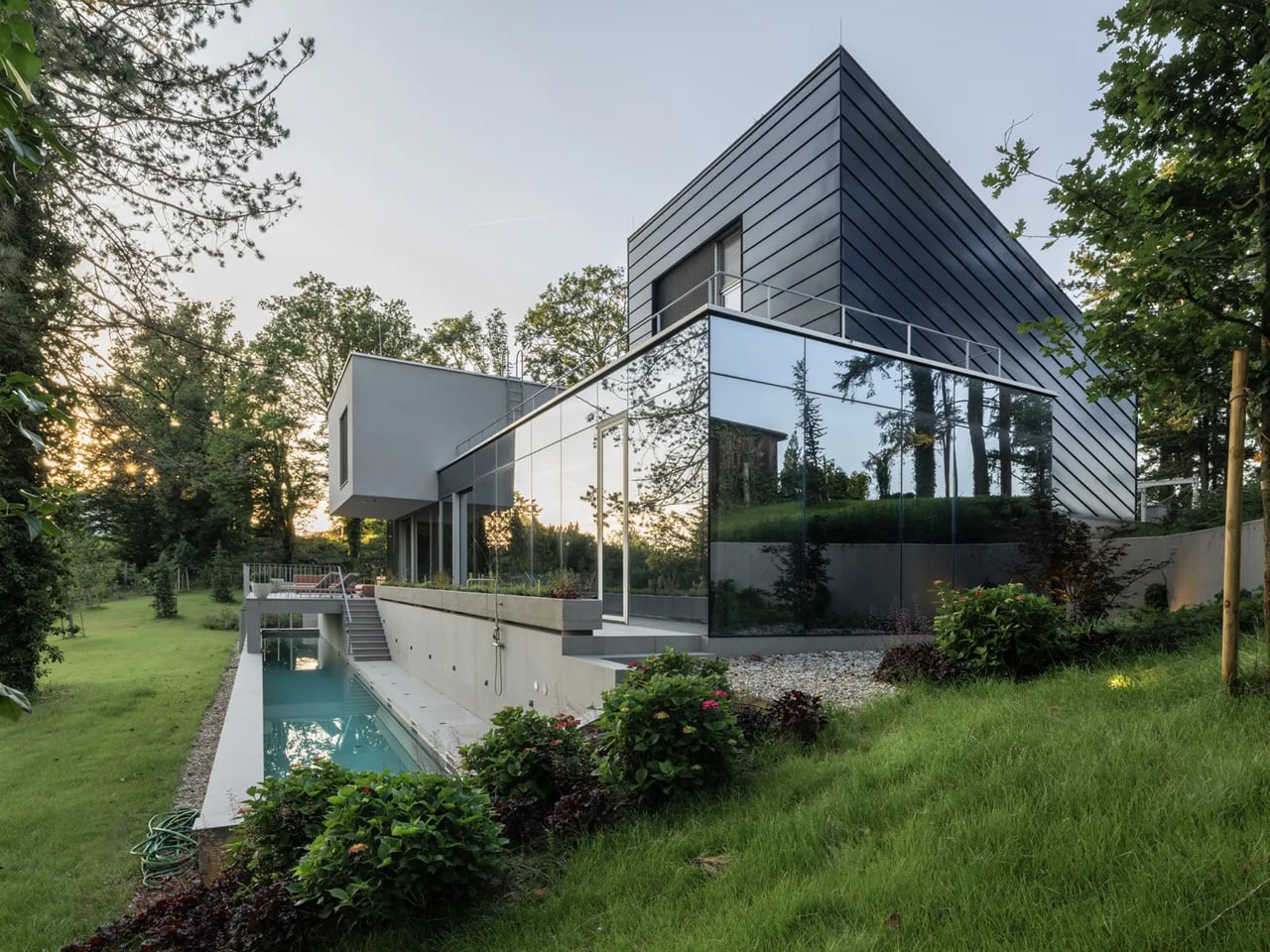
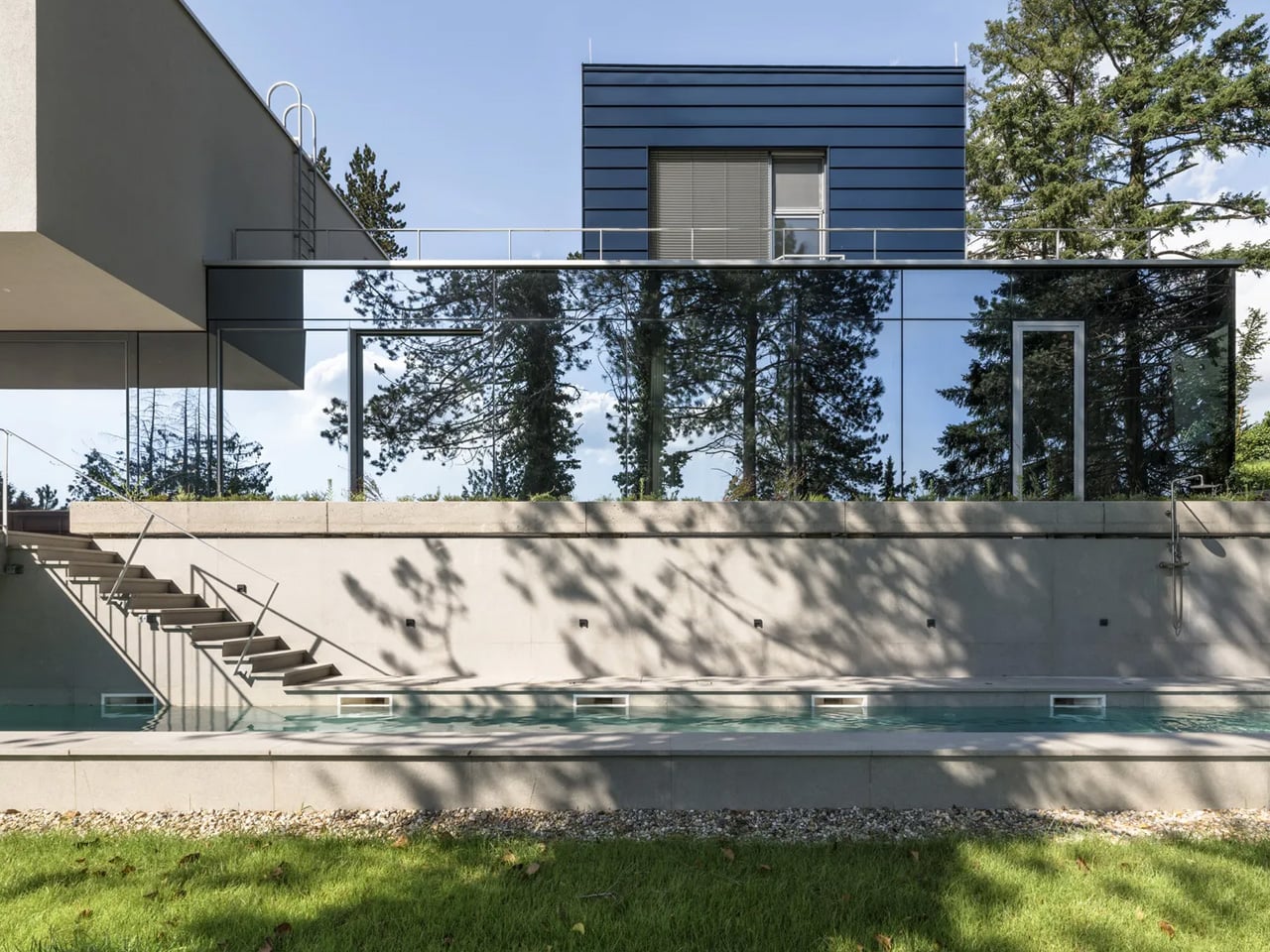
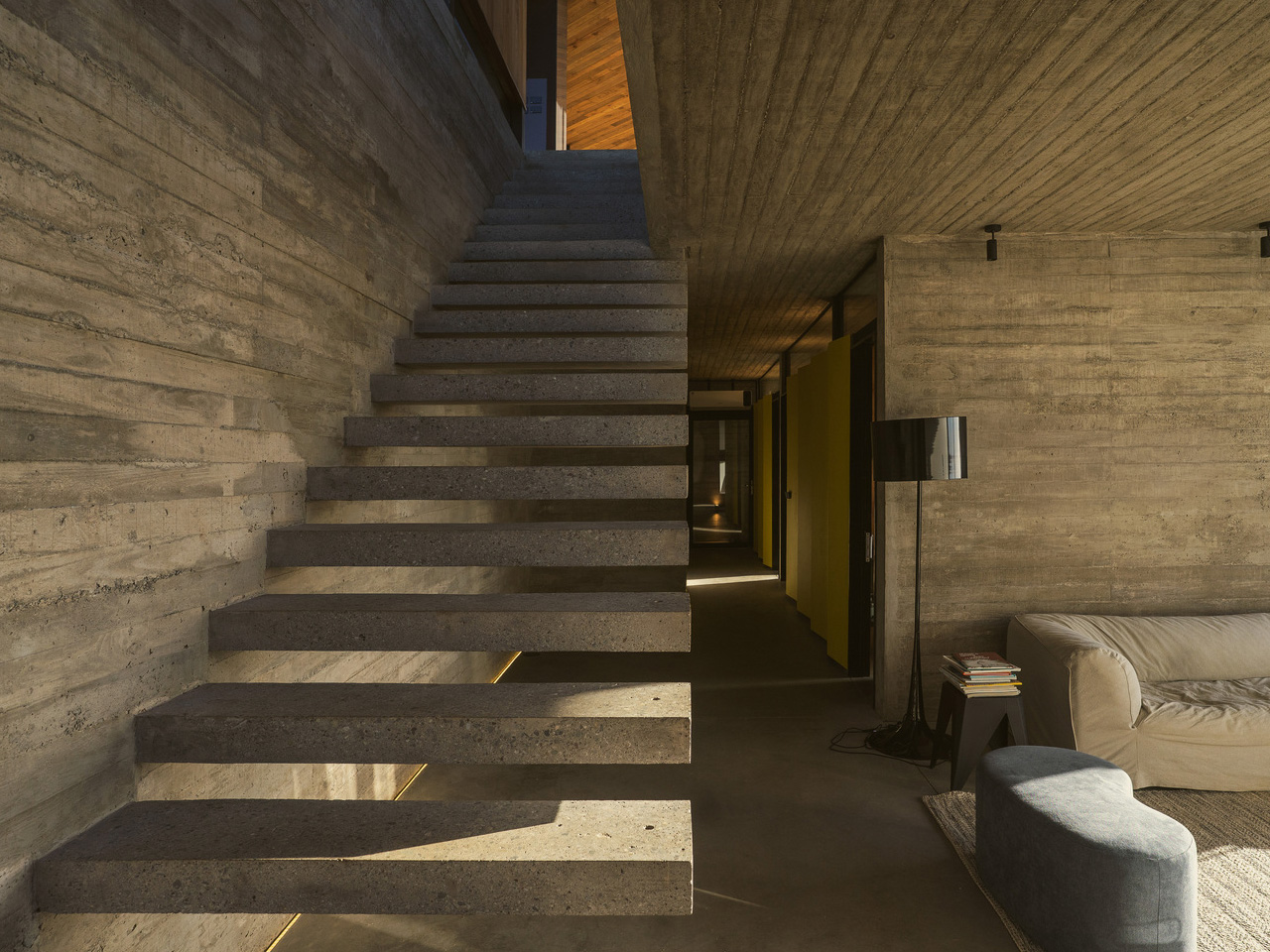
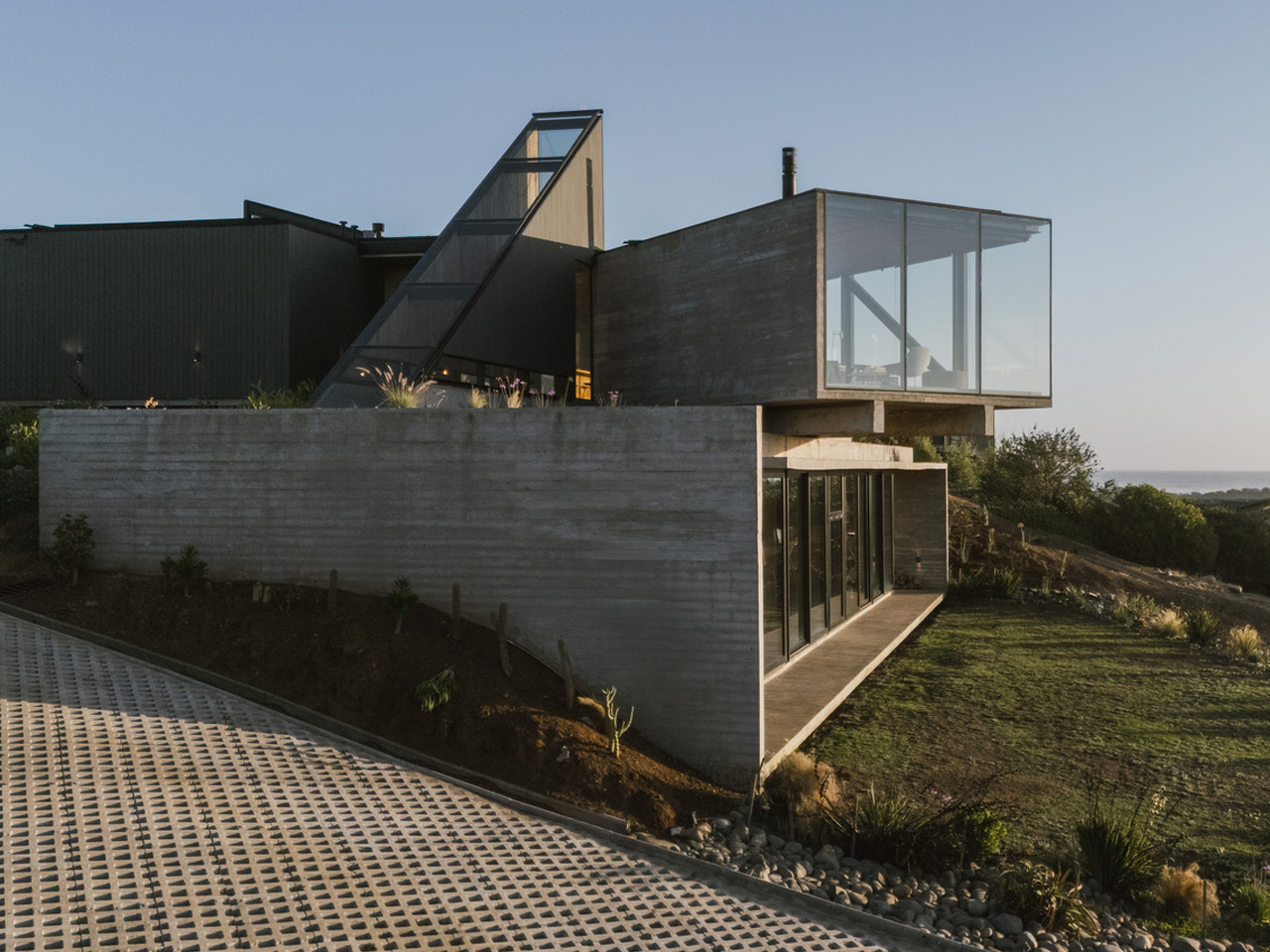
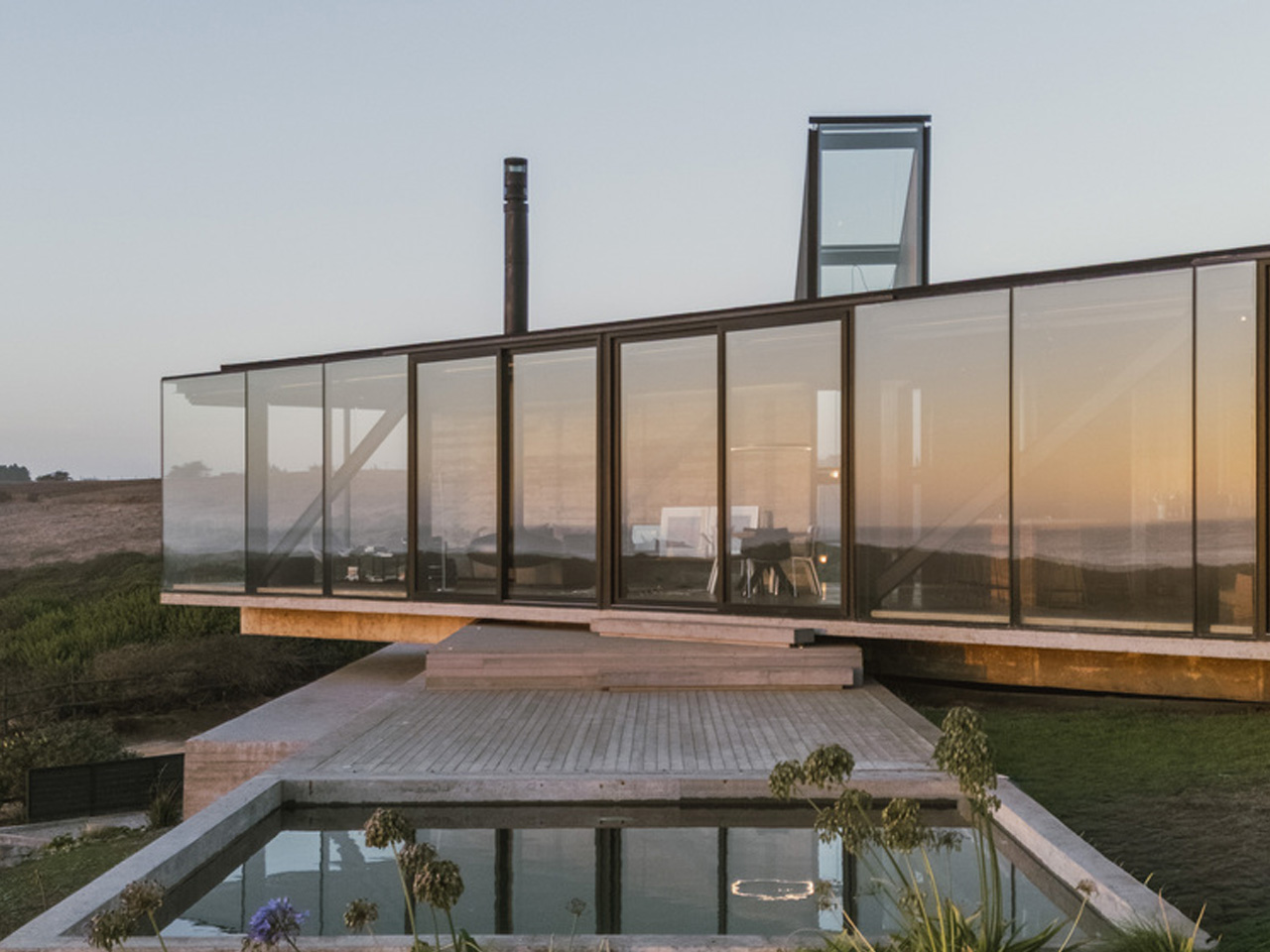
Perched atop a challenging 45-percent slope in the Hollywood Hills, this striking residence by Kristen Becker of Mutuus Studio reimagines what luxury living can look like within a modest footprint. Completed in 2016, the house was commissioned by an actor-director couple who wanted their Los Angeles home to feel as intimate and carefully curated as their New York City penthouse loft. The steep, oak-dotted hillside presented serious design challenges, but Becker transformed these constraints into architectural opportunities that give the home its distinctive character.

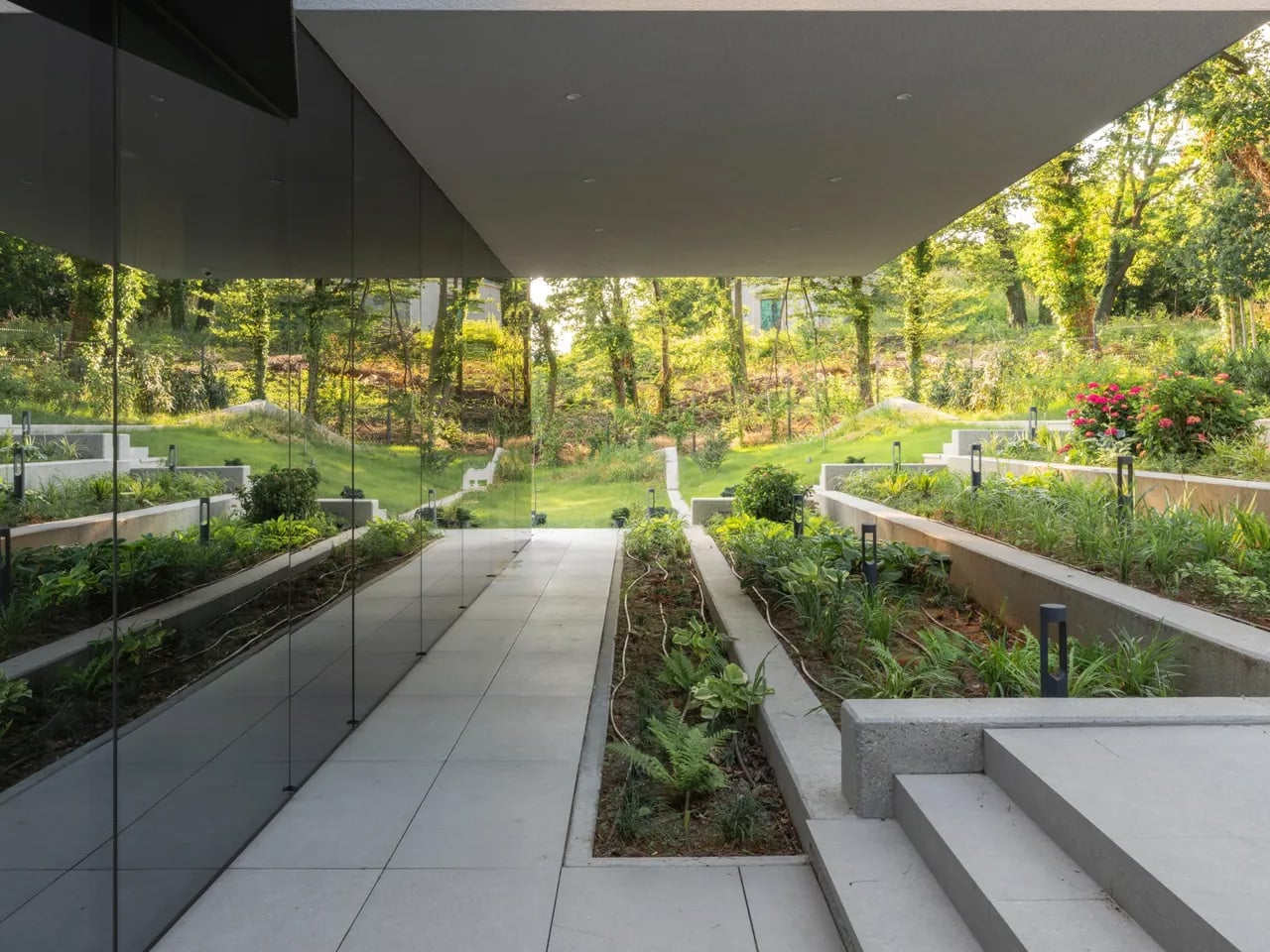
Becker drew inspiration from the clients’ travels through Ireland and their fascination with European castles, creating a sequence of spaces that unfold with theatrical drama. Visitors enter through a wooden, steel, and concrete bridge that spans a secret garden before arriving at an imposing bronze door. The garden connects to a courtyard where sunlight filters through floor-to-ceiling windows into the bathroom below, evoking the atmospheric quality of ancient fortresses. Medieval castles and industrial buildings both influenced the aesthetic, resulting in a design that feels simultaneously raw and refined.

Designer: Kristen Becker of Mutuus Studio

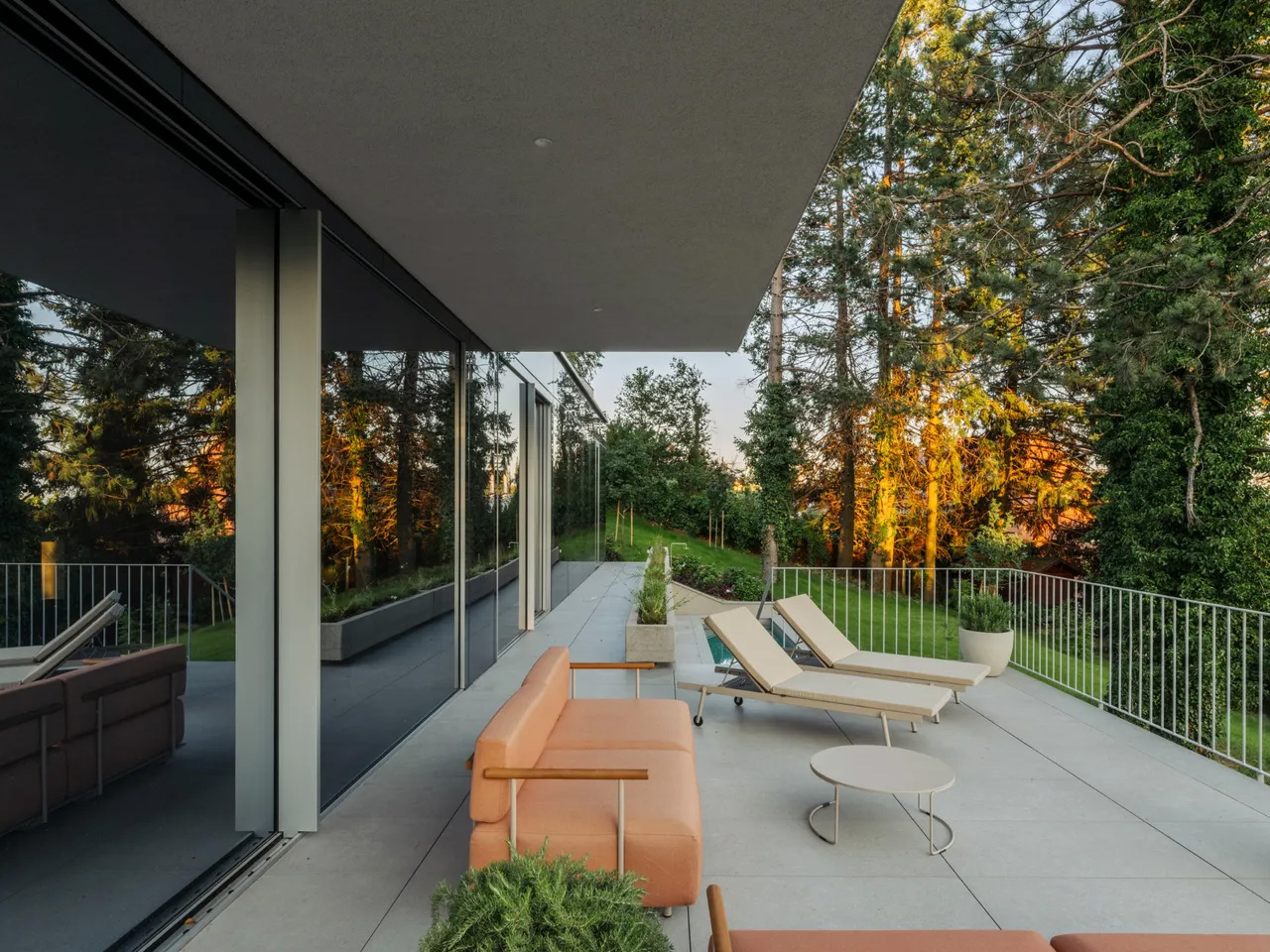
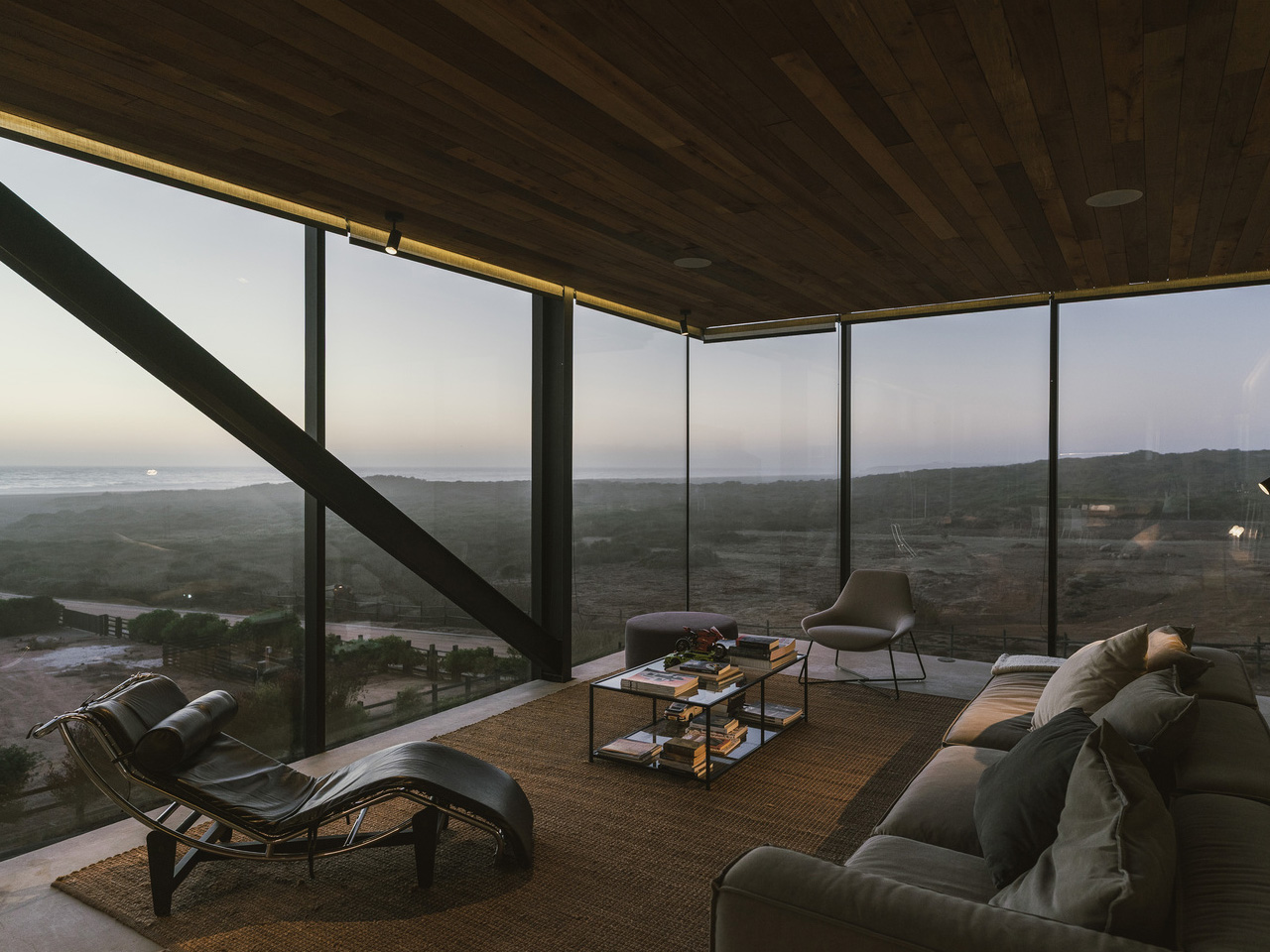
The multi-storey structure steps down the hillside rather than fighting against it, allowing each level to capture different views of the surrounding landscape dotted with shrubs, cacti, and mature oak trees. Natural light floods the interiors through expansive glazing, while a garage-style door in the main living area lifts upward to dissolve the boundary between inside and out. This connection to the terrace extends the living space and takes full advantage of California’s temperate climate. The steel and concrete structure provides the industrial backbone that supports the home’s open, flowing layout.

Interior design played an equally important role in the project, with Becker collaborating closely with the clients on furnishings that reflect their globetrotting lifestyle and eclectic taste. The living room showcases caramel leather sofas alongside leopard-print stools and a bronze and glass coffee table by Willy Daro. African artwork hangs near pieces from Brian Henson’s childhood collection. The dining area features a Finn Juhl teak table surrounded by Peter Moos chairs, all illuminated by a custom Facaro bicycle chain chandelier that adds unexpected whimsy.

Throughout the home, vintage pieces from different eras and continents sit comfortably together. Ricardo Fasanello’s Anel chair shares space with Bruno Mathsson’s Pernilla Lounge Chair, antique Chinese sideboards, vintage Japanese benches, and a Norman Cherner swivel chair from the 1960s. An Arc dome pendant by Allied Maker illuminates a vintage Warren Bacon saddle stool. Every element received thoughtful consideration, with the design team and owners collaborating to ensure each piece contributed to a seamless experience of place.

The Hollywood Hills House stands as proof that luxury and modesty can coexist. Becker’s background in dance informed the seamless flow through the rooms, where movement feels intuitive and natural. The residence delivers a sophisticated California lifestyle while maintaining efficiency in both space and resources. Photography by Kevin Scott captures how this modern castle commands its hilltop position, offering a fresh interpretation of the iconic Case Study Houses while establishing its own contemporary presence in the Los Angeles architectural landscape.

The post This Hollywood Hills House Channels Medieval Castles with a Modern Industrial Twist first appeared on Yanko Design.

What If Houses Were Spheres and AR Glasses Showed the Facade?

Buildings consume massive amounts of resources just to look a certain way. Houses could function perfectly well as simple, efficient structures that keep us warm, dry, and comfortable, but we demand gables, columns, brick facades, and decorative trim because we want them to look appealing. The materials and energy required to build and maintain those aesthetic choices far outweigh what’s actually needed for shelter. If we were all blind, the argument goes, our houses would be optimized spheres or domes with minimal material use and maximum efficiency.

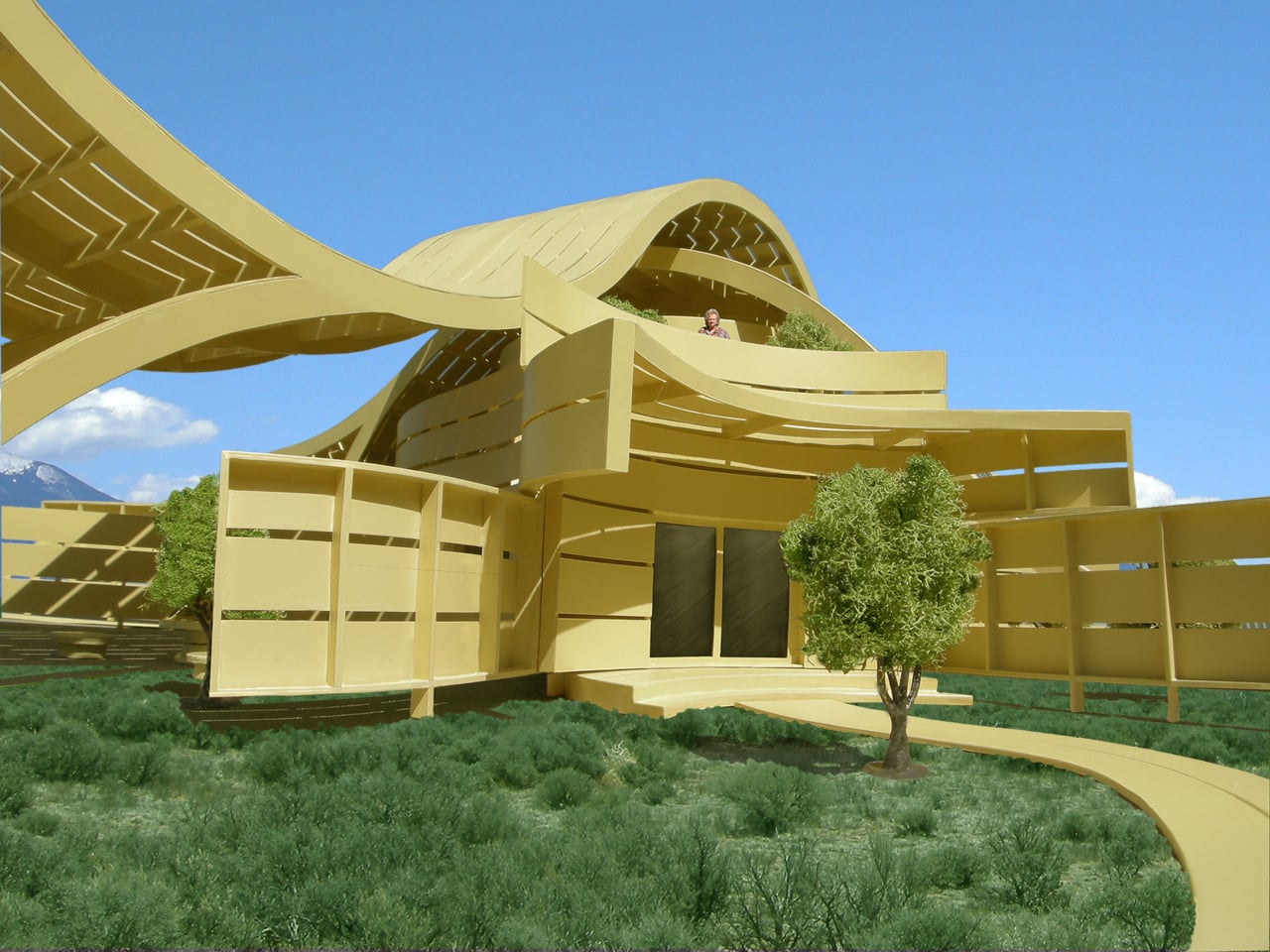
The Virtual Reality Veneer proposes a radical split between what a house is and what it looks like. The physical structure would always be a simple white sphere, built from the most environmentally friendly materials available and outfitted with efficient energy systems. The appearance, however, would be entirely digital, generated by a computer inside the sphere and broadcast to special AR glasses worn by anyone nearby. Look at the sphere through those glasses and you’d see whatever aesthetic the owner chose, from a traditional suburban home to an abstract sculpture.

Designer: Michael Jantzen

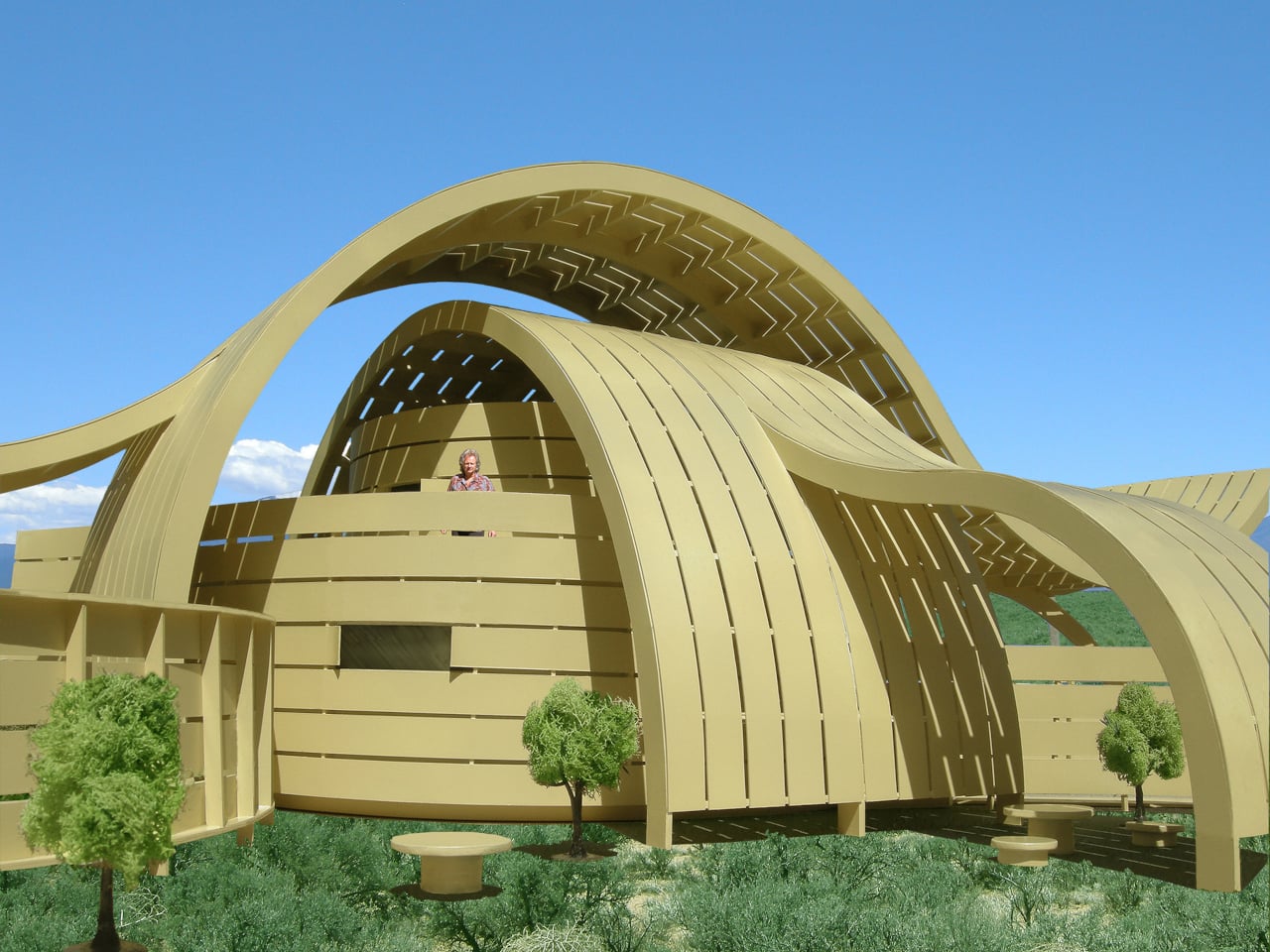
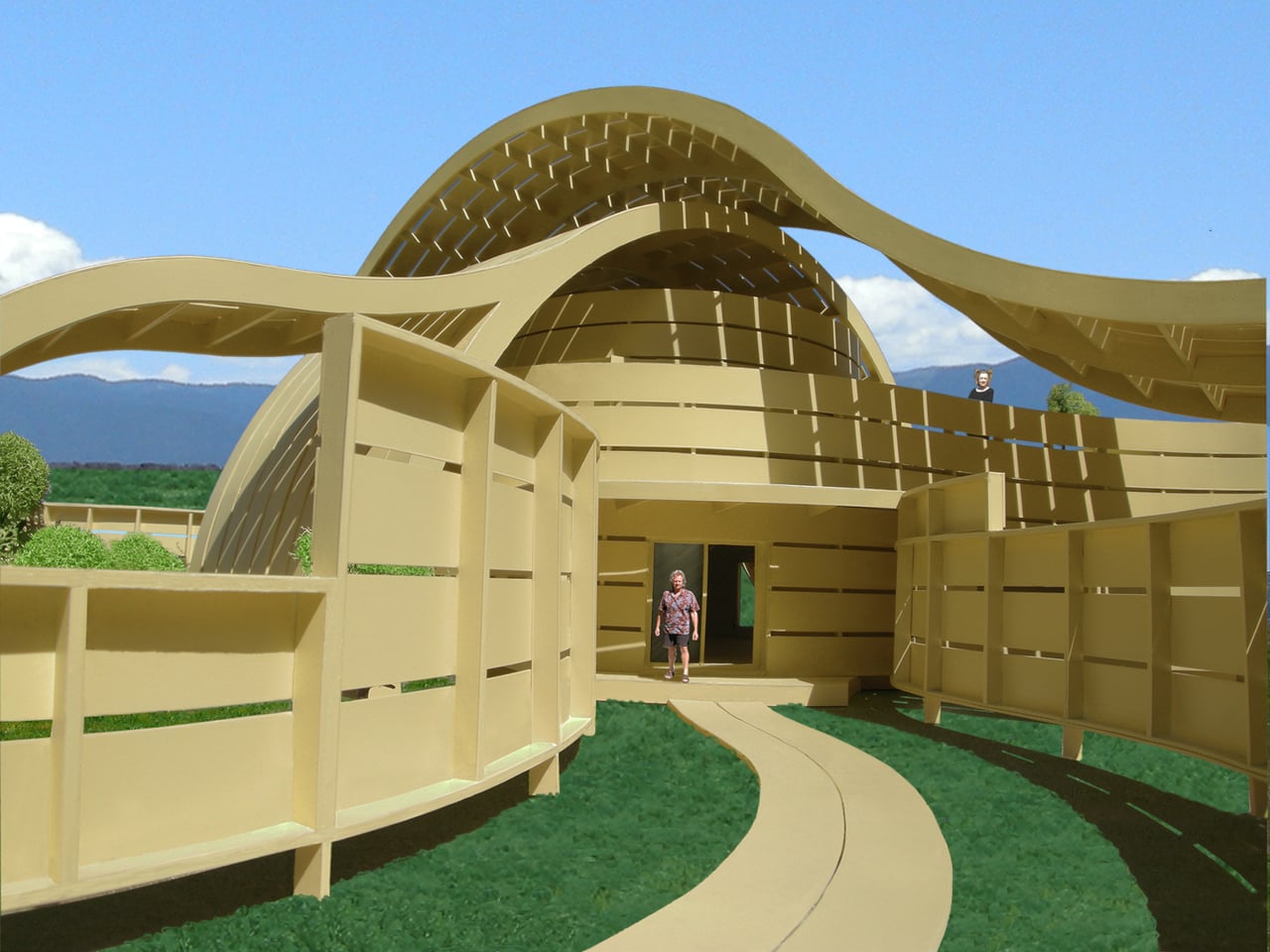
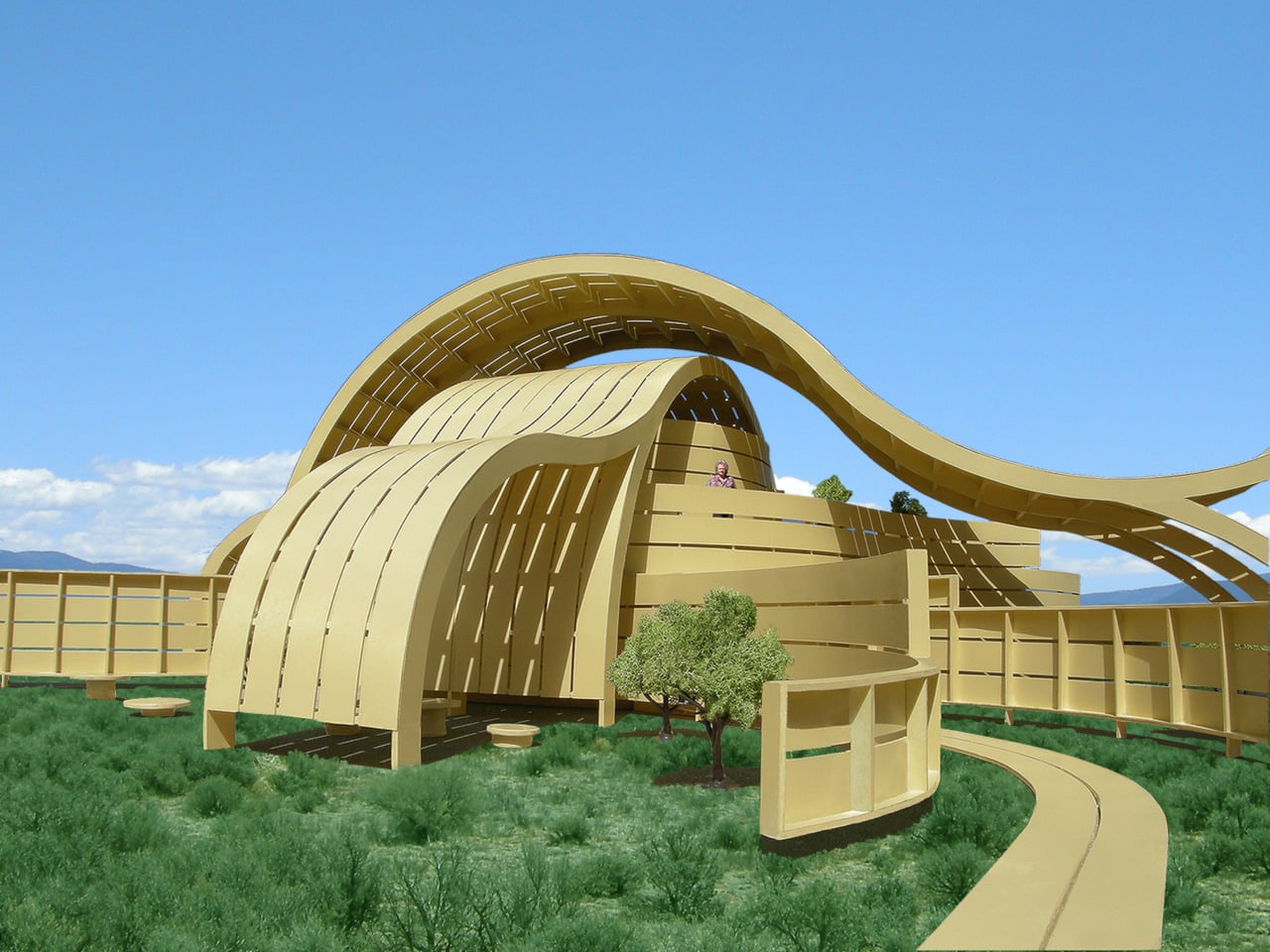
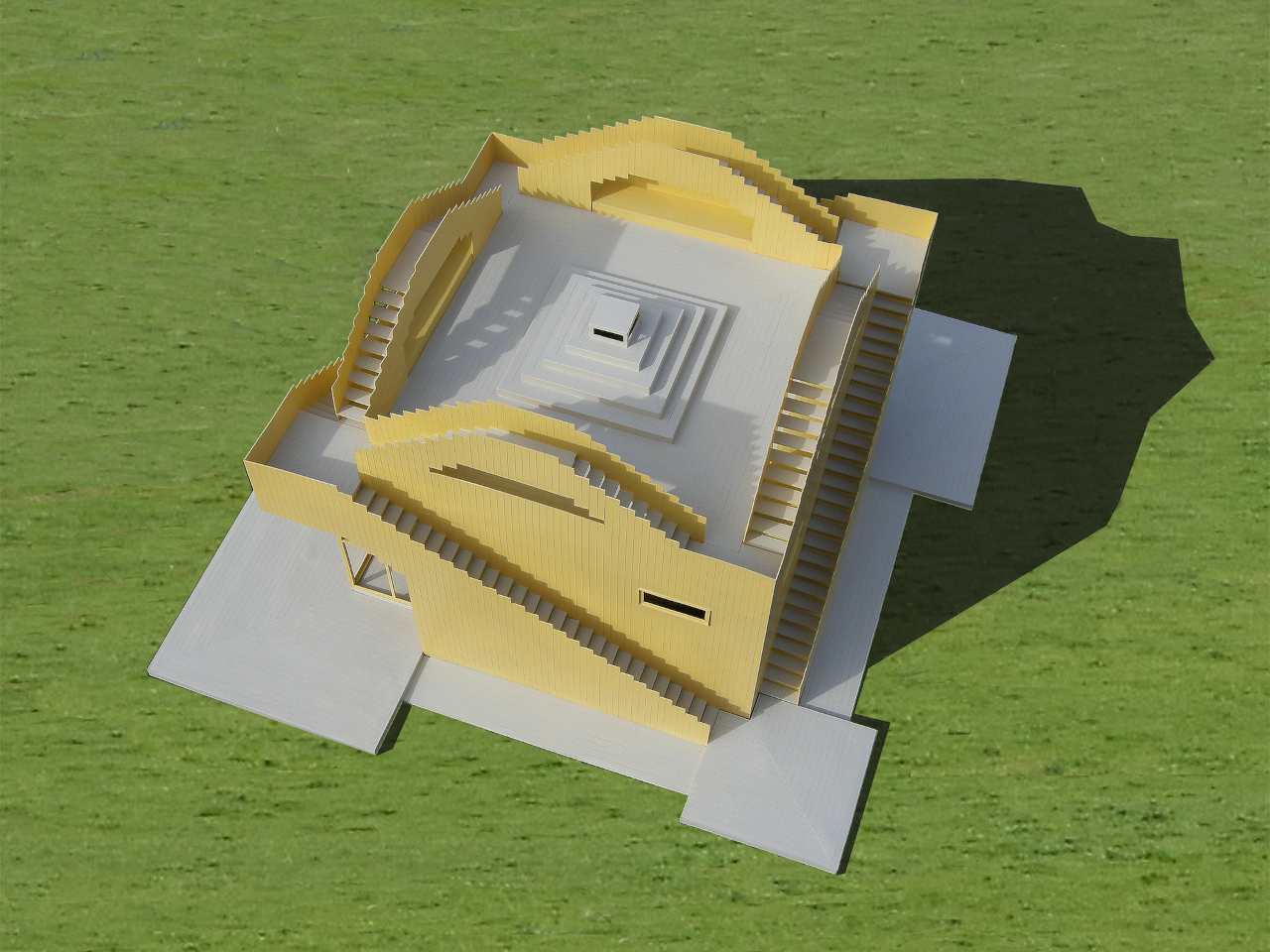
The concept is illustrated through a series of renderings showing the same spherical structure in a green landscape. The base condition is just a plain white sphere on supports, accessed by a simple staircase. The other images show that same sphere with a virtual skin unfurling to cover it, transforming into a classic American house complete with gables, shutters, and landscaping. This isn’t a different building but just a digital veneer unfolding over the same unchanging physical form.

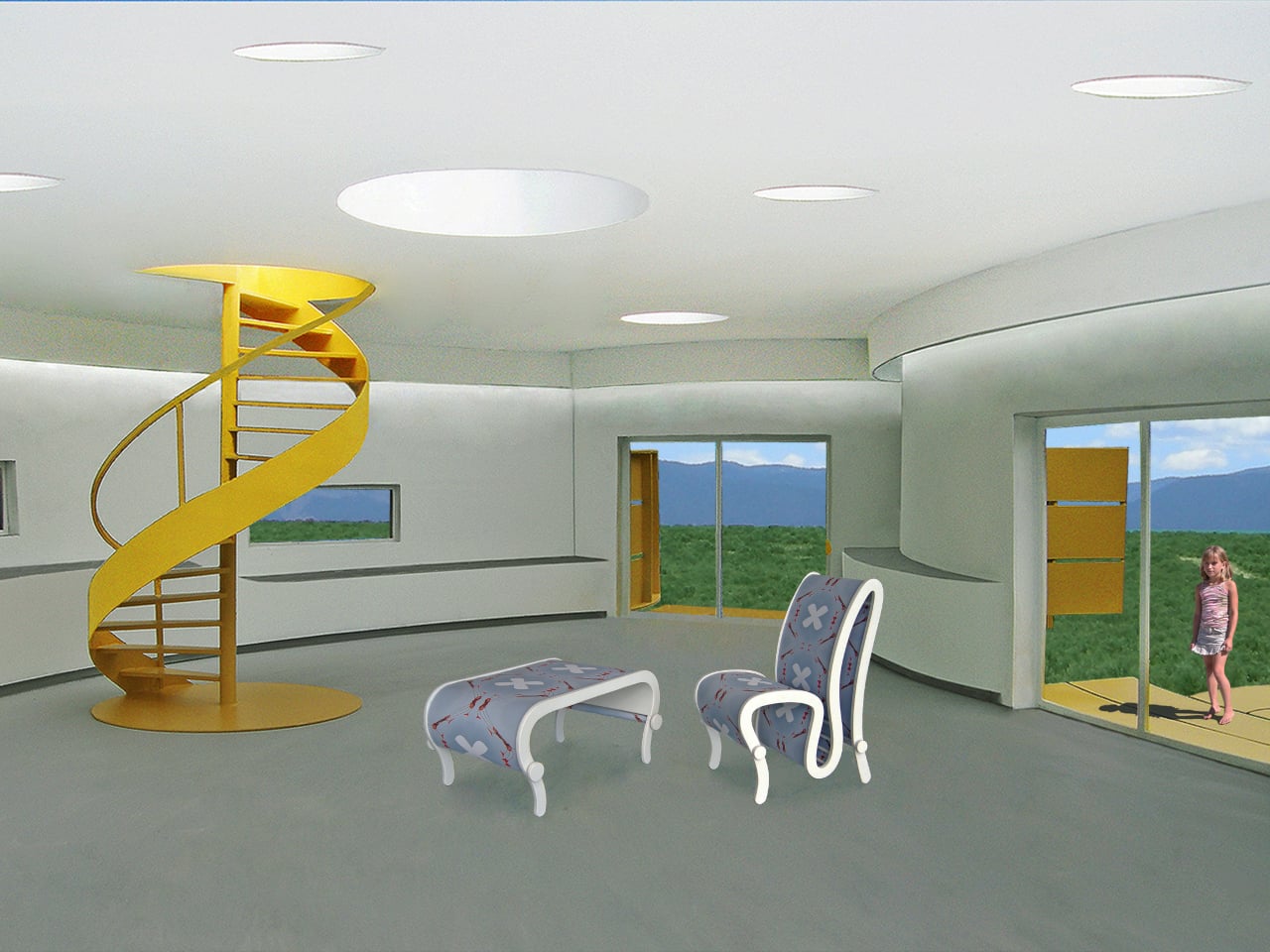
The system would work both inside and outside. When you approach the sphere wearing the glasses, you’d see the chosen exterior facade overlaid on the plain structure. Step inside, and the glasses would switch to a different set of images, replacing the minimal interior with virtual walls, furniture, and even window views showing landscapes that don’t physically exist. The owner could change everything on a whim without touching a single material.

Of course, this raises plenty of questions. What happens when different people want to see different aesthetics for the same building? Do non-wearers just see plain spheres dotting the landscape while everyone else experiences virtual variety? The concept assumes widespread adoption of AR glasses or possibly future retinal implants, which is a big leap from where we are now, even with mixed reality headsets becoming more common.

What makes the Virtual Reality Veneer interesting is how current technology is catching up to the idea. AR glasses, spatial computing, and AI image generation already let us overlay digital content onto the real world. The concept simply pushes that logic further, asking whether we could satisfy our desire for beautiful homes without actually building beautiful homes, using light and computation instead of lumber and stone.

The proposal works best as a provocation rather than a blueprint. It forces you to consider how much waste comes from wanting things to look a certain way, and whether we’d trade physical aesthetics for virtual ones if it meant reducing our environmental footprint. That’s a question without an easy answer, but worth asking as AR technology continues blurring the line between what’s real and what’s projected.

The post What If Houses Were Spheres and AR Glasses Showed the Facade? first appeared on Yanko Design.

Summer house in Denmark is inspired by fisherman’s houses in the area

One of my ultimate dreams is to be able to own a summer or vacation house in an area surrounded by nature. At the rate my life plans are going that will remain a dream but it doesn’t hurt to look at all the well-designed summer houses, specifically the ones in Europe. Most of these use sustainable materials and are built to be part of the natural landscape so those are major plus points.

Designer: Jesper Kusk Arkitekter

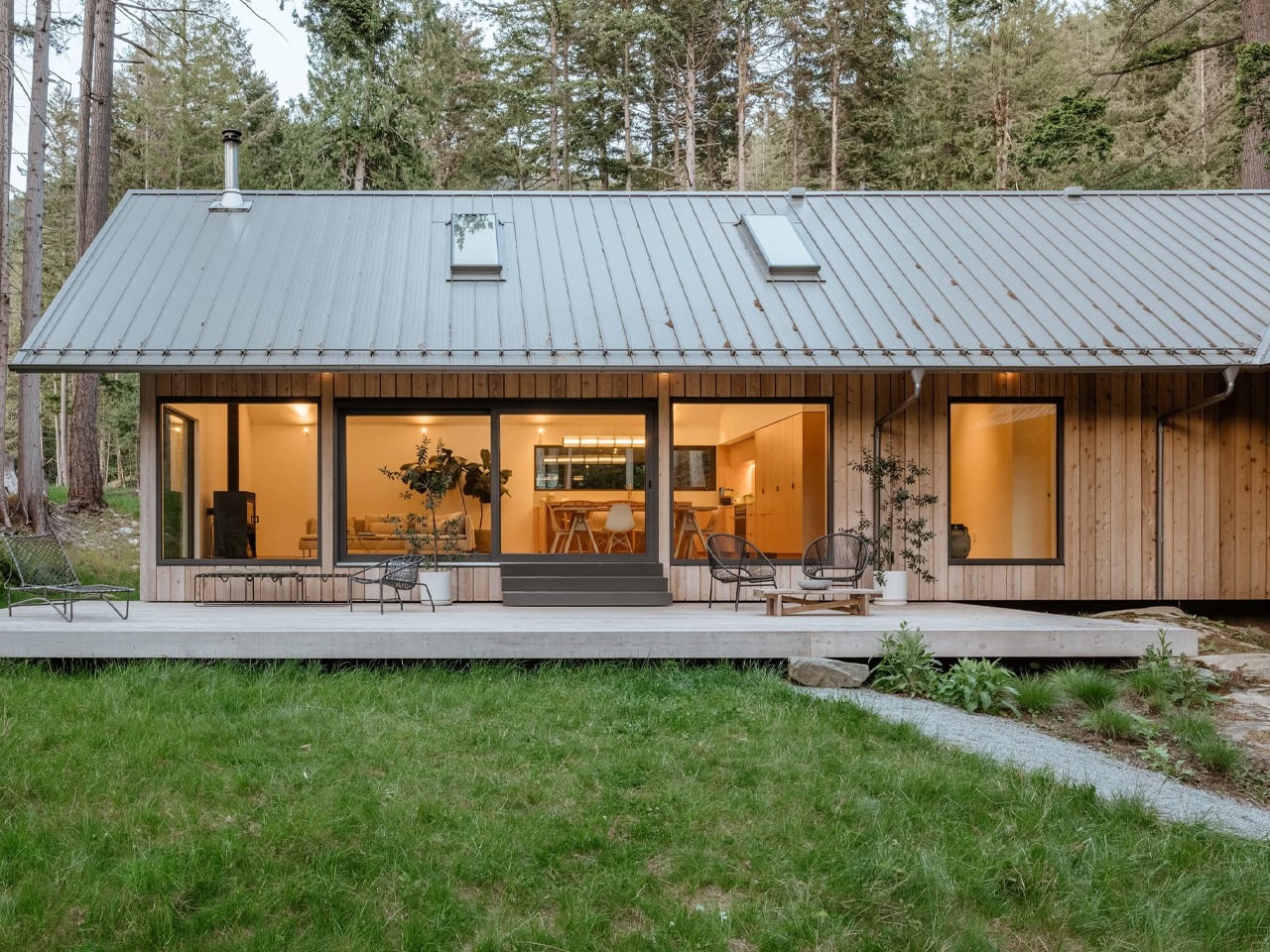
At Følle Strand in Denmark, they built the Strandvejen 35 Summer House, a “tiny” space measuring just 46 square meters and inspired by the fisherman’s houses that you can find in the area. Well, of course, a more expensive and spacious version. It’s actually made up of three small buildings that are overlooking the bay of Kalø and with all the spaces optimized so that 7 guests will be able to sleep there. You get all the basic spaces that you need in a house like sleeping areas, a kitchen, and of course a beautifully designed shower area.

The windows and walkways located around the house have also been turned into loving areas and they used sliding doors to separate the various interior spaces. Since the location is surrounded by nature, they have incorporated it into the over-all design. You have skylights and high ceilings to ensure a healthy indoor climate while the large windows show off the beauty of the surroundings which you can enjoy while sitting on the built-in benches and sofas.
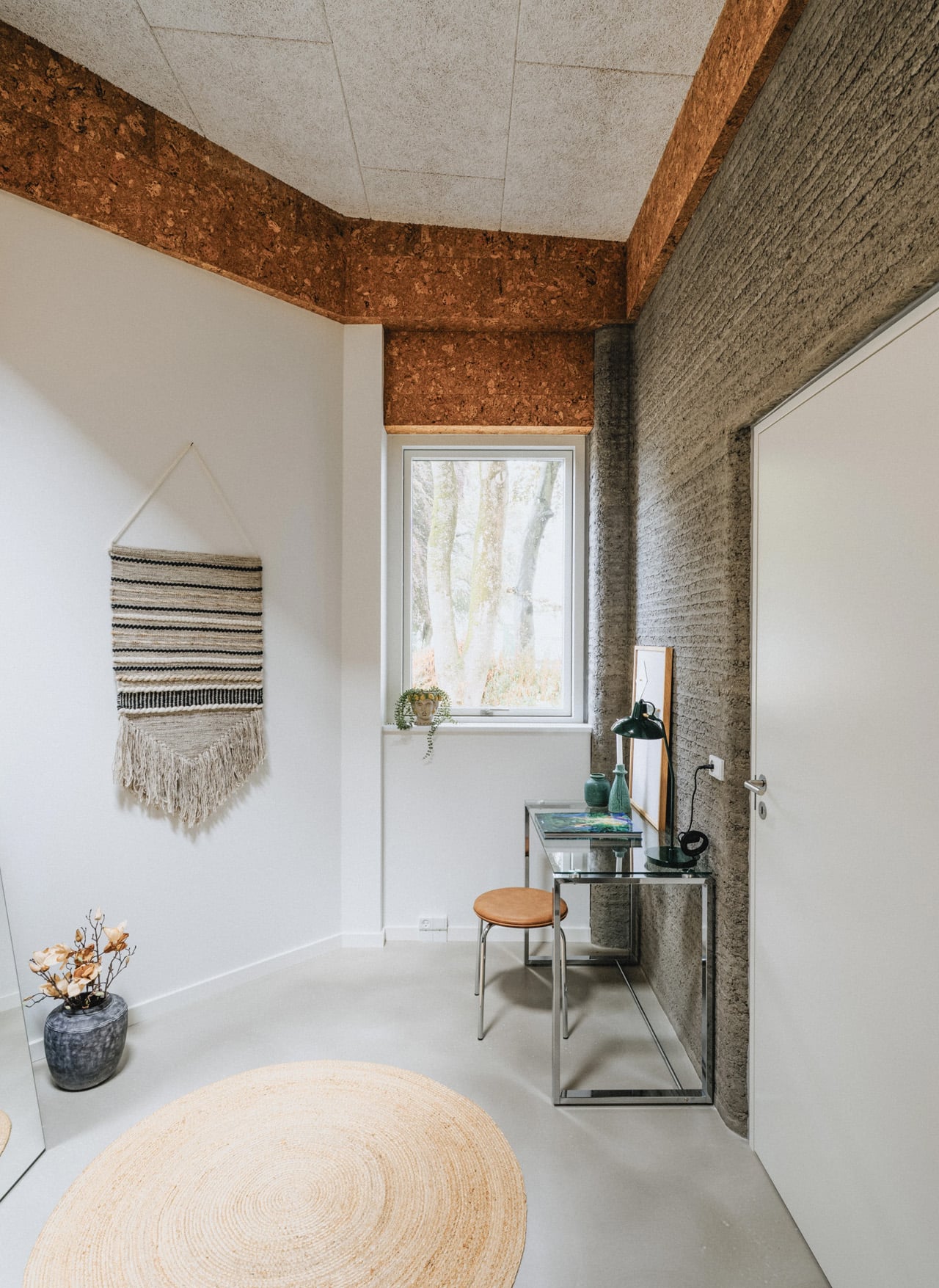
The house was built using locally sourced materials, mostly wood and then using Danish oak to clad the facades and roof. This way the overall CO2 footprint is reduced and in fact, they are placed in the Danish voluntary low-emission category. The Strandvejen 35 Summer House lets you commune with nature while inside the comfort of your sustainably built space.

The post Summer house in Denmark is inspired by fisherman’s houses in the area first appeared on Yanko Design.