Snap is spinning off its AR glasses into a separate business

Snap’s augmented reality glasses business will now be its own entity, with the company establishing Specs Inc. as a wholly owned subsidiary. It will enable Snap to more easily secure investors and partnerships for its wearables, as well as to grow Specs into a distinct brand while running it within Snap Inc. As The Information reported in mid-2025, Snap was thinking of ways to raise outside money for its AR glasses to be able to better compete with Meta, which has a lot more money to spend on development. It was already considering spinning off the business back then.

“Specs are launching at an important time, as artificial intelligence transforms the way that we use our computers,” the company said in its announcement. The glasses’ operating system can help you get things done faster based on what they see and what they know about your behaviors. Snap also says that its smartglasses can keep you present in the moment with friends and family unlike phones and computers, since they superimpose digital tools over your view of the real world. In addition, the company believes Specs can help reduce waste over time as its digital tools can replace physical objects, such as manuals and whiteboards.

Snap didn’t say whether Specs Inc. already has investors lined up, but it is already hiring for over 100 roles around the world. The new subsidiary is expected to launch Snap's next generation of standalone AR glasses sometime this year. Company CEO Evan Spiegel previously said that the model will be lighter, have a much smaller form factor and have more capabilities than its older smartglasses, which are mostly developer-focused.

This article originally appeared on Engadget at https://www.engadget.com/wearables/snap-is-spinning-off-its-ar-glasses-into-a-separate-business-140000659.html?src=rss

Amazon’s latest round of layoffs will affect 16,000 workers

Amazon has confirmed that it’s letting go of 16,000 workers and employees across its organization. In an announcement by company SVP Beth Galetti, she explained that Amazon was going through organizational changes to reduce layers and remove bureaucracy. Affected employees in the US will be given 90 days to look for another internal role and will receive severance pay if they do not find any. Galetti also said that Amazon doesn’t have plans to announce “broad reductions every few months” but admitted that the company could “make adjustments as appropriate.”

News about the layoffs was leaked in an email mistakenly sent out early to workers, along with a calendar invitation for a meeting dubbed internally as “Project Dawn.” In the email seen by Bloomberg and the BBC, Amazon Web Services Senior Vice President Colleen Aubrey told workers that their “impacted colleagues” from the US, Canada and Costa Rica had already been notified. “Changes like this are hard on everyone. These decisions are difficult and made thoughtfully as we position our organization and AWS for future success,” Aubrey reportedly wrote in the email.

Amazon eliminated 14,000 roles back in October 2025 across its games, logistics, payment and cloud computing divisions, with the availability of AI technologies being one of the main reasons for the layoffs. “This generation of AI is the most transformative technology we’ve seen since the Internet, and it's enabling companies to innovate much faster than ever before,” Amazon said in its announcement back then. This new round of layoffs is just a continuation of the previous one, as Amazon was reportedly looking to let 30,000 people go from the start.

The announcement comes shortly after Amazon revealed that it was shutting down its remaining Amazon Go and Amazon Fresh physical stores and will focus on grocery deliveries instead. To note, Amazon’s year-over-year net sales grew by 13 percent in the third quarter of 2025 alone. Its net income increased to $21.2 billion compared to the $15.3 billion it posted in the third quarter of 2024.

This article originally appeared on Engadget at https://www.engadget.com/big-tech/amazons-latest-round-of-layoffs-will-affect-16000-workers-120000702.html?src=rss

Google AI Plus is now available in the US for $8 a month

Google AI Plus, the company’s most affordable AI subscription plan, is now rolling out in the US. It will cost you $8 a month for its features, though you can get it for $4 a month for the first two months for a limited time only. AI Plus gives you access to 200GB of storage, as well as access to the Gemini 3 Pro model, Deep Research and Nano Banana Pro inside the Gemini app. Nano Banana Pro generates images that look so realistic, they’re nearly indistinguishable from ordinary photos snapped on phones. Google even had to limit its usage due to high demand.

A subscription to AI Plus also expands your access to Google’s AI filmmaking tool Flow, its image-to-video creator tool Whisk and its research assistant tool NotebookLM. In addition to the US, the plan is now making its way to 34 more countries, making it available in all regions where Google is selling its AI services. In the US, the new option costs less than half of a $20 AI Pro subscription, which comes with 2TB of storage and access to more tools like code assist. Google’s most expensive AI plan, the AI Ultra, costs a whopping $250 a month and comes with 30TB of storage, along with all the AI tools the company can offer. Take note that if you’re paying for a Google One Premium 2TB subscription, you’ll also get all of AI Plus’ features over the next few days.

This article originally appeared on Engadget at https://www.engadget.com/ai/google-ai-plus-is-now-available-in-the-us-for-8-a-month-180000175.html?src=rss

California will investigate TikTok’s alleged censorship of anti-Trump posts

California Governor Gavin Newsom has announced that his office is investigating whether TikTok is truly censoring content critical of Trump, days after ByteDance finalized a deal to spin off its business in the US. Newsom made the announcement in response to a post on X, claiming that you can no longer send messages in the app with the word “Epstein” in it. Newsom’s office, in a separate post, said it was able to independently confirm instances wherein TikTok suppressed content critical of President Donald Trump.

The governor’s office told Politico that it tried to send a direct message with the word “Epstein” in it and got a warning that it could not be sent because it may violate TikTok’s community guidelines. Newsom’s team is now “launching a review of this conduct and is calling on the California Department of Justice to determine whether it violates California law.”

If you’ll recall, ByteDance finalized a deal for a new US entity just as TikTok was about to be banned in the US. ByteDance only owns 19.9 percent of the new entity called the TikTok USDS Joint Venture, while the new investors own 80 percent. Oracle, Silver Lake and Emirati fund MGX have a 15 percent stake each. The US business will now retrain TikTok’s algorithm on US data and will also be in charge of content moderation.

After the US entity’s announcement, users started complaining about technical issues affecting TikTok’s recommendation algorithm and other features. Some claimed that they had difficulties posting videos about ICE over the weekend. TikTok blamed its issues, including bugs, slower loading times and timed-out uploads, on a power outage at one of its US data centers. It said it’s now working to restore its services.

This article originally appeared on Engadget at https://www.engadget.com/big-tech/california-will-investigate-tiktoks-alleged-censorship-of-anti-trump-posts-130000558.html?src=rss

How to use Google Photos’ new Me Meme feature

Google has started rolling out a new feature for its Photos app that can turn your images into memes. The feature, called Me Meme, uses Google Gemini to take meme templates and recreate them with the photo you use from within the app. It’s still in its experimental stages and will only be available for users in the US in the English language. In addition, it seems to be rolling out for Android users only at the moment, and Google warns that the generated images may not match the original photo at times. If you do get access to the feature soon, check out the instructions below on how to use it.

  1. Open your Photos app. Go to the Create tab at the bottom and find the Me Meme option. If it’s not showing up even though you’re an Android user in the US, you’ll have to wait for it as it continues rolling out. Google told TechCrunch that it will reach iOS users over the coming weeks.

  2. You’ll see onscreen instructions the first time you use it. The next time you access the feature, you’ll go straight to the meme creation process.

  3. You can browse and choose one of the preset templates Google provides, but you can also upload a meme or any other image as a template.

  4. You then have to upload a photo that you want to insert into the meme. Google advises using a selfie or a photo where your face is clearly visible.

  5. After you tap Generate, you can save the meme if you’re satisfied with the result or share it directly to social media platforms online. You can also tap Regenerate to see a different output.

Android Authority spotted the feature in October 2025 and was able to try it out before its limited release. You can see an example of Me Meme’s output below.

This article originally appeared on Engadget at https://www.engadget.com/ai/how-to-use-google-photos-new-me-meme-feature-140000157.html?src=rss

Ring can now verify if a video has been altered

Ring has launched a new tool that can tell you if a video clip captured by its camera has been altered or not. The company says that every video downloaded from Ring starting in December 2025 going forward will come with a digital security seal. “Think of it like the tamper-evident seal on a medicine bottle,” it explained. Its new tool, called Ring Verify, can tell you if a video has been altered in any way. Even adjusting a video clip’s brightness or trimming a few seconds off will break that seal, and the tool will tell you that it cannot be verified. All you have to do is visit the tool’s web page and upload the video you want to check.

In the era of AI, you can also use the tool to make sure you’re looking at a real Ring video instead of something generated by artificial intelligence models. OpenAI’s Sora, for instance, can easily create Ring video doorbell footage with just a prompt or two, leading to a lot of fake security cam footage on social media apps. The company suggests asking the owner of the camera to share videos straight from the Ring app to make sure they’re unaltered. It also doesn’t matter what camera it is: All of the company’s models now embed digital security seals to downloaded videos and videos shared from Ring’s cloud storage. However, the tool can only tell you if a video has been tampered with or can’t be verified at all. It can’t tell you what has been edited or if it’s AI-generated.

This article originally appeared on Engadget at https://www.engadget.com/home/smart-home/ring-can-now-verify-if-a-video-has-been-altered-140000140.html?src=rss

TikTok finalizes deal for its US entity

After years of uncertainty over TikTok's future in the United States, a deal for the app's US business has been finalized. The new US entity is called TikTok USDS Joint Venture. ByteDance has retained a 19.9 percent percent stake in the new business, with the rest controlled by a group of non-Chinese investors, including Oracle, Silver Lake and MGX, an Emirati-state owned investment firm, all of which have a 15 percent stake. Dell CEO Michael Dell and other investors have smaller stakes in the new company. 

The terms of the deal were first leaked last month, after TikTok CEO Shou Chew reportedly told employees in a memo that TikTok and ByteDance had agreed to a group of investors. This ends a lengthy saga and months of slow progress as the agreement was being worked out, ensuring that the app will remain available in the US after years of being on the verge of a ban in the country.

President Donald Trump, who had tried to ban the app during his first term in office, praised the deal in a post on Truth Social. "It will now be owned by a group of Great American Patriots and Investors, the Biggest in the World, and will be an important Voice," he wrote."I only hope that long into the future I will be remembered by those who use and love TikTok."

According to TikTok’s announcement, the joint venture will protect American users’ data with Oracle's secure US cloud environment. It will also retrain TikTok’s algorithm on US users’ data and will be in charge of content moderation in the US. The entity promises interoperability, as well, promising that users will still get international content and, if they’re a creator, viewers. “The safeguards provided by the Joint Venture will also cover CapCut, and Lemon8 and a portfolio of other apps and websites in the US,” TikTok said.

The new entity will be overseen by a seven-member board of directors, most of whom are Americans. It includes, Shou Chew, the Chief Executive Officer of TikTok, Silver Lake co-CEO Egon Durban, Oracle Executive Vice President Kenneth Glueck and MGX Chief Strategy and Safety Officer David Scott. Adam Presser, who had previously been head of operations and trust and safety at TikTok, is the CEO of TikTok USDS Joint Venture.

Exactly what the new joint venture means for US users of TikTok is unclear. Shortly after the deal was announced, TikTok introduced new terms of service for US users. As the BBC notes, the new terms include provisions relating to use of the app by kids under 13 (they are limited to the "Under 13 Experience") and that the "TikTok USDS Joint Venture does not endorse any content" in the app. The company hasn’t announced specific changes to the app’s algorithm or other core features.

Update, January 23, 2026, 10:58AM PT: This post was updated to add a statement from President Trump, and with additional information about TikTok’s new terms of service.

This article originally appeared on Engadget at https://www.engadget.com/big-tech/tiktok-finalizes-deal-for-its-us-entity-010543484.html?src=rss

AI Mode in Google search can now pull context from your other apps

After adding Personal Intelligence to Gemini as an opt-in experience, Google has announced that it’s also integrating the feature into AI Mode in Search. What Personal Intelligence does is pull information from your Google apps to tailor its responses based on your history and interests. For Search, in particular, you can allow Personal Intelligence to look for information in your Gmail accounts and Google Photos libraries.

If you use AI Mode to shop for clothes with the new feature enabled, for instance, Google could recommend items or models from a brand you previously purchased from. If it sees plane tickets or other reservations in Gmail, Google could also recommend specific items based on your destination and the season if you’re clothes shopping for that trip.

Personal Intelligence is powered by Google’s Gemini 3 AI model. The company says it doesn’t train its models using information from your Gmail inbox or Google Photos library, but it does use your prompts and AI Mode’s responses. Google also warned that sometimes, the feature’s recommendations could feel inaccurate because it could not fully comprehend the context or could make incorrect connections between separate topics.

At the moment, Personal Intelligence is an experimental feature that’s rolling out in Labs starting today. Google AI Pro and Ultra subscribers in the US, who use the service in English, will automatically have access to it and be able to connect AI Mode to Gmail and Google Photos. It will only be available to personal Google accounts, however, and not for Workspace accounts just yet.

This article originally appeared on Engadget at https://www.engadget.com/ai/ai-mode-in-google-search-can-now-pull-context-from-your-other-apps-160000103.html?src=rss

X is also launching Bluesky-like starter packs

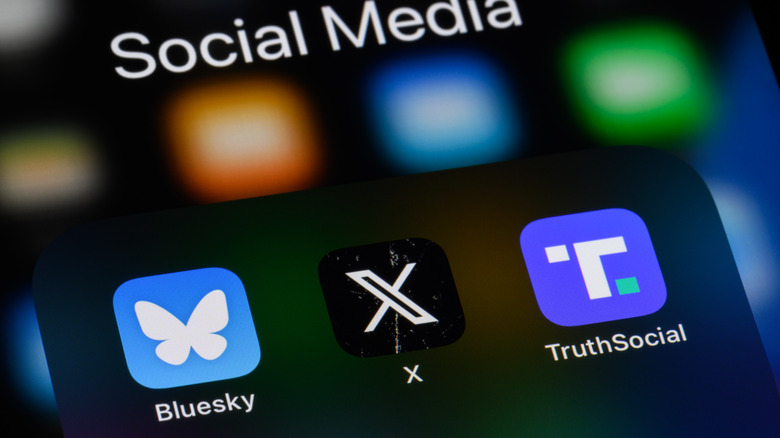
X is rolling out a new feature called “Starterpacks” to all users in the coming weeks, the company’s head of product has announced. It’s made up of compilations of accounts new users can follow based on their interests. If that sounds familiar, it’s because Bluesky launched a very similar feature that’s also called “starter packs” back in 2024. Bluesky allows ordinary users to curate their own packs as long as each one doesn’t exceed 50 accounts. They can then share those lists broadly on the platform or directly with new users via QR code. X, on the other hand, compiled and curated its own lists.

In his announcement, X head of product Nikita Bier said the company “scoured the world for the top posters in every niche and country.” X then compiled them into Starterpacks “to help new users find the best accounts — big or small — for their interests.” Before X announced its own take on the feature, other social media services had already launched their clones of Bluesky’s tool. Threads’ version, which rolled out in late 2024, puts collections of recommended profiles as suggestions in the feeds of new users. Mastodon launched its own in 2025, which gives existing users the freedom to choose whether they can or can’t be included in the lists.

This article originally appeared on Engadget at https://www.engadget.com/social-media/x-is-also-launching-bluesky-like-starter-packs-050057033.html?src=rss

X is also launching Bluesky-like starter packs

X is rolling out a new feature called “Starterpacks” to all users in the coming weeks, the company’s head of product has announced. It’s made up of compilations of accounts new users can follow based on their interests. If that sounds familiar, it’s because Bluesky launched a very similar feature that’s also called “starter packs” back in 2024. Bluesky allows ordinary users to curate their own packs as long as each one doesn’t exceed 50 accounts. They can then share those lists broadly on the platform or directly with new users via QR code. X, on the other hand, compiled and curated its own lists.

In his announcement, X head of product Nikita Bier said the company “scoured the world for the top posters in every niche and country.” X then compiled them into Starterpacks “to help new users find the best accounts — big or small — for their interests.” Before X announced its own take on the feature, other social media services had already launched their clones of Bluesky’s tool. Threads’ version, which rolled out in late 2024, puts collections of recommended profiles as suggestions in the feeds of new users. Mastodon launched its own in 2025, which gives existing users the freedom to choose whether they can or can’t be included in the lists.

This article originally appeared on Engadget at https://www.engadget.com/social-media/x-is-also-launching-bluesky-like-starter-packs-050057033.html?src=rss