Uber teams with Avride to offer self-driving vehicles for rides and food deliveries

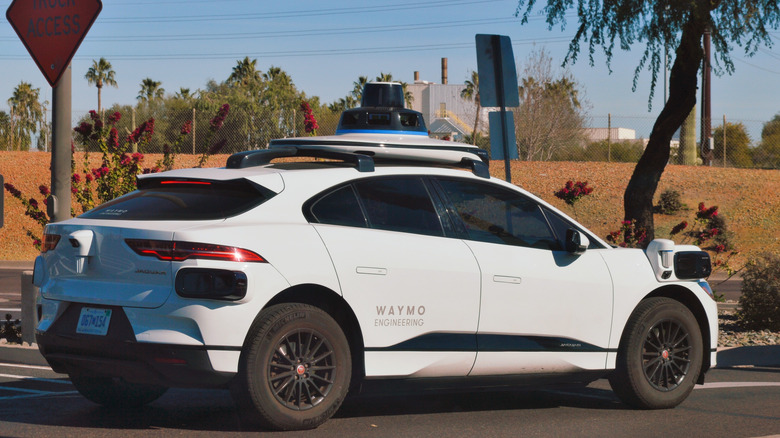
Uber has entered a new deal to offer customers in select cities an option for self-driving vehicles. The partnership is with Avride, which used to be the self-driving unit for Russian conglomerate Yandex.

The multi-year deal will begin by introducing Avride's self-driving robots as a delivery option for Uber Eats orders in Austin, Texas. Later this year, the robots are expected to become available for delivery orders in Dallas and Jersey City, New Jersey. Autonomous driving is slated to begin service for Uber ride requests in Dallas in 2025. It will only be an option for "qualifying orders" on either Uber or Uber Eats, but the company didn't specify what those qualifications are.

Before spinning out as a new business concern, Yandex landed a similar deal in 2021 for its self-driving robots to make Grubhub deliveries to college campuses in the US. That year its autonomous vehicles reached a milestone of 6 million miles logged under "challenging conditions," mostly traveled in and around Moscow.

Uber had its own department exploring self-driving vehicles. However, it sold the unit to Aurora, another autonomous vehicle company, in December 2020. 

This article originally appeared on Engadget at https://www.engadget.com/transportation/uber-teams-with-avride-to-offer-self-driving-vehicles-for-rides-and-food-deliveries-201622292.html?src=rss

Samsung confirms a software update wreaked havoc on older Galaxy smartphones

Samsung has confirmed that an update to its SmartThings app caused major issues for older Samsung Galaxy smartphones. 9to5Google first reported that the update, which rolled out from Samsung over the past few days, bricked devices from the Galaxy S10 and Galaxy Note 10 series of phones. The publication also found some users reporting the same issue with Galaxy M51 and A90 models. After downloading the update, the devices reportedly got stuck in a bootloop and never fully turn back on.

Impacted devices can perform a factory reset to recover functionality, but that's not a perfect fix. It should make the phone usable, but any data that hasn't already been backed up will be lost. 

In a statement sent to Engadget Friday, a spokesperson confirmed the issue: "We are aware that a limited number of Galaxy smartphones running on Android 12 are rebooting continuously during an update to the latest version of the SmartThings app," the spokesperson told Engadget. "Upon discovery, we immediately suspended the update and are working to resolve the issue. Affected customers can contact the Samsung Contact Center to receive support for their devices.”

Software support for older models can become an issue for any hardware manufacturer. The Galaxy S10 and Galaxy S10+ are five years old now, which is an age where companies may stop providing regular updates.

Update, October 4, 1:10PM ET: This story was updated after publish with confirmation and a fuller description of the issue from Samsung.

This article originally appeared on Engadget at https://www.engadget.com/mobile/smartphones/samsung-confirms-a-software-update-wreaked-havoc-on-older-galaxy-smartphones-175136332.html?src=rss

Tesla has stopped selling its cheapest car

Tesla's least expensive car is off the market: the Model 3 Standard Range Rear-Wheel Drive is no longer available in the online configurator. Electrek first reported on the absence of that Model 3 build. It was the cheapest option from the electric vehicle brand with a price tag of $39,000. Now the Model 3 Long-Range Rear-Wheel Drive takes that title with a retail price of $42,500. Tesla unveiled a refresh to its Model 3 line in the US in January.

The company also posted numbers for the third quarter today, with 462,890 vehicles delivered between July and September. Sales were aided by price cuts and other incentives during the quarter, enough to reach a 6.4 percent increase from the previous year's deliveries. However, the figure fell short of analysts' predictions for more than 469,000 deliveries during the period. This quarterly result could also hamper CEO Elon Musk's projections for the company to surpass the 1.8 million vehicles it handed over in all of 2023.

Tesla has also been struggling with recalls this year. Most of those issues were fixed with over-the-air updates, but the scope and number of the issues may also be leaving customers with doubts. Recalls impacted 200,000 vehicles in January, 2 million in February, 125,000 in May, 12,000 in June, 1.8 million in July, and more than 9,000 in August.

This article originally appeared on Engadget at https://www.engadget.com/transportation/evs/tesla-has-stopped-selling-its-cheapest-car-212756966.html?src=rss

Meta’s smart glasses can now tell you where you parked your car

Meta is rolling out some of the previously announced features to its AI-powered Ray-Ban smart glasses for users in the US and Canada. CTO Andrew Bosworth posted on Threads that today's update to the glasses includes more natural language recognition, meaning the stilted commands of "Hey Meta, look and tell me" should be gone. Users will be able to engage the AI assistant without the "look and" portion of the invocation.

Most of the other AI tools showed off during last month's Connect event are also arriving on the frames today. That includes voice messages, timers and reminders. The glasses can also be used to have Meta AI call a phone number or scan a QR code. CEO Mark Zuckerberg demonstrated the new reminders features as a way to find your car in a parking garage in an Instagram reel. One notable omission from this update is the live translation feature, but Bosworth didn't share a timeline for when that feature will be ready.

Meta's smart glasses already made headlines once today after two students from Harvard University used them to essentially dox total strangers. Their combination of facial recognition technology and a large language processing model was able to reveal addresses, phone numbers, family member details and partial Social Security Numbers.

This article originally appeared on Engadget at https://www.engadget.com/wearables/metas-smart-glasses-can-now-tell-you-where-you-parked-your-car-195200826.html?src=rss

Switch emulator Ryujinx is kaput after Nintendo pressure

Nintendo has shuttered another emulator, this time putting an end to Ryujinx. The program was an open-source emulator for playing Nintendo Switch games on Windows, Linux and Mac operating systems. A message shared today with the emulator's Discord server stated that the developer was contacted by Nintendo with a deal to cease work on the project. No additional details were given about the conditions of that agreement. The same message was also posted on X:

The emulator will still function for anyone already running it, but the Github repository has been removed. Ryujinx also made some headlines last month for running the new Legend of Zelda: Echoes of Wisdom game at more than 120 frames per second, vastly outstripping the Switch's capabilities.

Nintendo has taken an aggressive stance on emulators, even teaming up with a cybersecurity firm in 2023 to try and curb game piracy. Ryujinx is one of the more popular emulators it has taken on, but the game company also reached a $2.4 million settlement with the emulator Yuzu in March. It issued a whopping 8,535 DMCA takedowns in May to try and remove all the Yuzu code hosted across different Github repositories.

This article originally appeared on Engadget at https://www.engadget.com/gaming/nintendo/switch-emulator-ryujinx-is-kaput-after-nintendo-pressure-211524968.html?src=rss

California Gov. Newsom vetoes bill SB 1047 that aims to prevent AI disasters

California Gov. Gavin Newsom has vetoed bill SB 1047, which aims to prevent bad actors from using AI to cause "critical harm" to humans. The California state assembly passed the legislation by a margin of 41-9 on August 28, but several organizations including the Chamber of Commerce had urged Newsom to veto the bill. In his veto message on Sept. 29, Newsom said the bill is "well-intentioned" but "does not take into account whether an AI system is deployed in high-risk environments, involves critical decision-making or the use of sensitive data. Instead, the bill applies stringent standards to even the most basic functions - so long as a large system deploys it." 

SB 1047 would have made the developers of AI models liable for adopting safety protocols that would stop catastrophic uses of their technology. That includes preventive measures such as testing and outside risk assessment, as well as an "emergency stop" that would completely shut down the AI model. A first violation would cost a minimum of $10 million and $30 million for subsequent infractions. However, the bill was revised to eliminate the state attorney general's ability to sue AI companies with negligent practices if a catastrophic event does not occur. Companies would only be subject to injunctive relief and could be sued if their model caused critical harm.

This law would apply to AI models that cost at least $100 million to use and 10^26 FLOPS for training. It also would have covered derivative projects in instances where a third party has invested $10 million or more in developing or modifying the original model. Any company doing business in California would be subject to the rules if it meets the other requirements. Addressing the bill's focus on large-scale systems, Newsom said, "I do not believe this is the best approach to protecting the public from real threats posed by the technology." The veto message adds:

By focusing only on the most expensive and large-scale models, SB 1047 establishes a regulatory framework that could give the public a false sense of security about controlling this fast-moving technology. Smaller, specialized models may emerge as equally or even more dangerous than the models targeted by SB 1047 - at the potential expense of curtailing the very innovation that fuels advancement in favor of the public good.

The earlier version of SB 1047 would have created a new department called the Frontier Model Division to oversee and enforce the rules. Instead, the bill was altered ahead of a committee vote to place governance at the hands of a Board of Frontier Models within the Government Operations Agency. The nine members would be appointed by the state's governor and legislature.

The bill faced a complicated path to the final vote. SB 1047 was authored by California State Sen. Scott Wiener, who told TechCrunch: "We have a history with technology of waiting for harms to happen, and then wringing our hands. Let’s not wait for something bad to happen. Let’s just get out ahead of it." Notable AI researchers Geoffrey Hinton and Yoshua Bengio backed the legislation, as did the Center for AI Safety, which has been raising the alarm about AI's risks over the past year.

"Let me be clear - I agree with the author - we cannot afford to wait for a major catastrophe to occur before taking action to protect the public," Newsom said in the veto message. The statement continues:

California will not abandon its responsibility. Safety protocols must be adopted. Proactive guardrails should be implemented, and severe consequences for bad actors must be clear and enforceable. I do not agree, however, that to keep the public safe, we must settle for a solution that is not informed by an empirical trajectory analysis of AI systems and capabilities. Ultimately, any framework for effectively regulating AI needs to keep pace with the technology itself.

SB 1047 drew heavy-hitting opposition from across the tech space. Researcher Fei-Fei Li critiqued the bill, as did Meta Chief AI Scientist Yann LeCun, for limiting the potential to explore new uses of AI. The trade group repping tech giants such as Amazon, Apple and Google said SB 1047 would limit new developments in the state's tech sector. Venture capital firm Andreeson Horowitz and several startups also questioned whether the bill placed unnecessary financial burdens on AI innovators. Anthropic and other opponents of the original bill pushed for amendments that were adopted in the version of SB 1047 that passed California's Appropriations Committee on August 15. 

This article originally appeared on Engadget at https://www.engadget.com/ai/california-gov-newsom-vetoes-bill-sb-1047-that-aims-to-prevent-ai-disasters-220826827.html?src=rss

Zillow is adding climate risk data to all US for-sale listings

As extreme weather events become ever more common, climate risks are playing a role in many people's long-term decision-making. And few things are more long-term than buying real estate. In response, Zillow has announced a new partnership to bring climate risk information to its for-sale listings.

Property listing pages in the US will include data about flood, wildfire, wind, heat and air quality risks at that location. This section will also list any climate-related insurance requirements for that property. The information is being provided by First Street, a specialist in climate risk financial modeling. The climate data is rolling out this year to the Zillow website and iOS app, while Android is expected to get the update early next year. Some locations have already been updated to show climate data on the web.

Those five risk categories are also being applied to Zillow's interactive map search view. Each of the different climate concerns has a color-coded visualization to show the risk levels across the country or in a smaller region. It's valuable information for anybody in a position to make that big homebuying leap. For everybody else, it may add simply a touch of gloomy reality to the gleeful experience of scrolling through absurd and/or overpriced houses.

Zillow also introduced improvements to its AI search feature earlier this month.

This article originally appeared on Engadget at https://www.engadget.com/apps/zillow-is-adding-climate-risk-data-to-all-us-for-sale-listings-220038971.html?src=rss

New California law will force companies to admit you don’t own digital content

California Governor Gavin Newsom has signed AB 2426, a new law that requires digital marketplaces to make clearer to customers when they are only purchasing a license to access media. The law will not apply to cases of permanent offline downloads, only to the all-too-common situation of buying digital copies of video games, music, movies, TV shows or ebooks from an online storefront. The Verge spotted the development, which could see marketplaces facing fines for false advertising in the state if they don't use clear language to explain the limitations of what access entails. In other words, you won't be seeing language like "buy" or "purchase" once the law takes effect in 2025.

The move to digital storefronts has raised new parallel concerns about ownership and preservation for media in the modern age. Ubisoft's move to delete The Crew from players' libraries after the game's servers shuttered is one of the most recent examples of how customers can suddenly lose access to media they felt they owned. The new California law won't stop situations like The Crew's disappearance from happening, and it won't stop those losses from hurting. But it does make clearer that ownership is a pretty rare and intangible thing for digital media.

Governor Newsom is having a busy week. He also signed the state's "click to cancel" bill yesterday and last week signed two bills with protections against unwanted AI likenesses of actors, both living and deceased.

This article originally appeared on Engadget at https://www.engadget.com/entertainment/new-california-law-will-force-companies-to-admit-you-dont-own-digital-content-203053750.html?src=rss

CTO Mira Murati is the latest leader to leave OpenAI

Mira Murati has departed OpenAI, where she had been the chief technology officer since 2018. In a note shared with the company and then posted publicly on X, Murati said that she is exiting "because I want to create the time and space to do my own exploration."

Murati gained additional visibility as a face for the AI company when she briefly assumed CEO duties in November 2023 when the board of directors fired Sam Altman. Altman returned to the helm and Murati resumed work as CTO. However, her departure follows on two other notable exits. Last month, president and co–founder Greg Brockman and co-founder John Schulman both announced that they would be stepping away from OpenAI. Brockman is taking a sabbatical and Schulman is moving to rival AI firm Anthropic.

Here is the full text of Murati's statement:

Hi all,

I have something to share with you. After much reflection, I have made the difficult decision to leave OpenAl.

My six-and-a-half years with the OpenAl team have been an extraordinary privilege. While I’ll express my gratitude to many individuals in the coming days, I want to start by thanking Sam and Greg for their trust in me to lead the technical organization and for their support throughout the years.

There’s never an ideal time to step away from a place one cherishes, yet this moment feels right. Our recent releases of speech-to-speech and OpenAl o1 mark the beginning of a new era in interaction and intelligence - achievements made possible by your ingenuity and craftsmanship. We didn’t merely build smarter models, we fundamentally changed how Al systems learn and reason through complex problems.

We brought safety research from the theoretical realm into practical applications, creating models that are more robust, aligned, and steerable than ever before. Our work has made cutting-edge Al research intuitive and accessible, developing technology that adapts and evolves based on everyone’s input. This success is a testament to our outstanding teamwork, and it is because of your brilliance, your dedication, and your commitment that OpenAl stands at the pinnacle of Al innovation.

I’m stepping away because I want to create the time and space to do my own exploration. For now, my primary focus is doing everything in my power to ensure a smooth transition, maintaining the momentum we’ve built.

I will forever be grateful for the opportunity to build and work alongside this remarkable team. Together, we’ve pushed the boundaries of scientific understanding in our quest to improve human well-being. While I may no longer be in the trenches with you, I will still be rooting for you all.

With deep gratitude for the friendships forged, the triumphs achieved, and most importantly, the challenges overcome together.

Mira

In a post on X, Altman has revealed that the company's Chief Research Officer, Bob McGrew, and VP of Research, Barret Zoph, are also leaving the company. He said they made the decisions "independently of each other and amicably," but it made sense to "do this all at once" for a smooth handover. OpenAI's leadership will go through some changes as a result, with Mark Chen, the Head of Frontiers Research, being named as Research SVP. Research Scientist Josh Achiam has been named as Head of Mission Alignment, while Mark Knight, the Head of Security, is now the Chief Information Security Officer. 

Update, September 26, 2024, 7:03AM ET: This post has been updated to include information about the other staffers leaving OpenAI.

This article originally appeared on Engadget at https://www.engadget.com/ai/cto-mira-murati-is-the-latest-leader-to-leave-openai-200230104.html?src=rss

DoNotPay ‘robot lawyer’ fined $193K by the FTC for not being a lawyer

The Federal Trade Commission is taking action against DoNotPay, alleging that the AI-powered company billing itself as "the world's first robot lawyer" failed to back its claims that it could replace human legal representation. The agency's complaint argues that DoNotPay did not conduct tests to assess whether its AI chatbot was equivalent to a human lawyer, and that the company did not hire or retain any attorneys of its own. DoNotPay has agreed to a proposed settlement that would see it face fines of $193,000. In addition, the settlement will require DoNotPay to inform customers who subscribed to its service between 2021 and 2023 about the limitations of its offerings.

This proposed settlement is part of an FTC program called Operation AI Comply, which is targeting businesses that leverage artificial intelligence to make deceptive claims. "Using AI tools to trick, mislead, or defraud people is illegal," FTC Chair Lina M. Khan said. "The FTC’s enforcement actions make clear that there is no AI exemption from the laws on the books. By cracking down on unfair or deceptive practices in these markets, FTC is ensuring that honest businesses and innovators can get a fair shot and consumers are being protected."

In addition to promising legal services, DoNotPay also claimed it could get accounts unbanned from social media platforms. The company postponed its first attempt to use its AI chatbot in a court setting in 2023 after multiple state bar associations intervened in the case.

This article originally appeared on Engadget at https://www.engadget.com/ai/donotpay-robot-lawyer-fined-193k-by-the-ftc-for-not-being-a-lawyer-223227153.html?src=rss