Apple launched its new M3 Silicon back in October and has now made it available in a number of different systems allowing users to benefit from the next generation processing provided by the family of chips. If you are interested in learning more about running large language models on the latest Apple M3 silicon you’ll […]
Are you looking to simplify your iPhone experience with the latest iOS 17? If so, you will be pleased to know that achieving a minimalist setup that balances functionality, aesthetics, and mindfulness is now more accessible than ever. This video below from Robert Creating will walk you through transforming your iPhone into a device that […]
Casio’s instrument division has been around a long time, as anyone who got into music as a kid by making fart noises into an SK-1 knows. However, the company is mostly known for entry-level digital pianos that get the job done, but don’t offer much by way of modern conveniences. In recent years, Casio has been dipping its toes into the waters of high-end instruments like the Privia PX-S7000.
The latest Privia entry is a sizable leap over most starter pianos. This is a serious instrument for serious players, with that quad-speaker system, 88 hybrid hammer action keys that feel fantastic, plenty of high-tech bells and whistles and, most importantly, access to three realistic-sounding piano models, along with 400 other instruments. Oh, and it has a hefty $2,400 price tag to match.
All of that is well and good, but let’s talk about why I really decided to splurge on this thing over the myriad of other digital pianos out there — it’s absolutely gorgeous. It hits that sweet spot between a musical instrument and a piece of high-end furniture. I fell in love pretty much instantly when I saw it online. I wasn’t able to try it out ahead of time, as my options here in Minnesota are limited when it comes to testing synths and digital instruments, so I just went for it. My plan was to return the thing if it was a lemon but, as you can see, it’s still there. It’s not a lemon. Maybe it’s a strawberry? Those are pretty.
I had just moved into a mostly-bare new home and had an entire house to fill for the first time in my life. I wanted something that tied the living room together and I don’t really understand visual art, so I went with what I know: expensive musical instruments. It did the trick. It looks stunning sitting there and almost makes up for the lack of wall art.
Casio PX-S7000 out of the box
The piano itself has elegant spruce sides, and it ships with a sleek and sturdy wooden beech stand. There’s also a nice-looking three-pedal unit that attaches near the bottom, providing yet another feature that makes this digital piano feel, well, not-so digital. It weighs just 60 pounds, so it was easy for me to try out different placements on the fly without destroying my back. Real pianos weigh hundreds and even thousands of pounds — I’ve ruined enough friendships in my life asking people to help me move them around, thank you very much.
I ended up with the black model, though it’s also available in white and “harmonious mustard.” Personally, I think the mustard is the most attractive option, but the eye-popping paint job adds another $200 to the price. I’m financially irresponsible, but even I have my limits. I still lust over that warm and luscious yellow, though.
The Privia PX-S7000 is not just a conversation piece, it also sounds and feels eerily similar to playing the real thing. The three primary piano models are excellent, but digital recreations of classic instruments are nothing new. This instrument combines those excellent piano models with a realistic-sounding speaker system and a keybed that’s incredibly satisfying to play.
How it sounds: The tech inside the Casio PX-S7000
Photo by Lawrence Bonk / Engadget
The keybed feels great, with a textured surface on each key that calls to mind, you guessed it, an actual piano. There’s a proprietary technology here, called Smart Hybrid Hammer Action, but I don’t really understand the specifics. All I know is that the keys spring back nicely and do their part to keep the illusion going that you’re playing an analog instrument. There’s a heaviness to the key presses and an oh-so-satisfying thunk as each press returns to the resting position. It’s just plain fun to play. (Though I’m not exactly Rachmaninoff. I’m more of a dime-store Paul McCartney.)
Another proprietary system, Casio’s Multi-Dimensional Morphing AiR Sound Source, helps increase the fun factor by adding a bit of damper, string and aliquot resonance with each press. This tech is based on the sound engine from the even more expensive Celviano line of digital pianos, so it’s nice to see it pop up in a cheaper model. There’s also some counterweight and damping voodoo going on underneath the hood. This is the closest I’ve ever felt to the “real thing” with a digital instrument, though I haven’t spent any time with ultra-high-end digital pianos as a comparison point. I have, though, spent hundreds and hundreds of hours playing real pianos, starting in my grandmother’s den as a wee tyke.
When I’m playing the Privia SX-7000, it sounds like the tones are coming from everywhere at once, thanks to the quad-speaker spatial sound system. They really put me in the center of the action and, believe it or not, this actually makes me play better, especially when compared to my caveman plunks on a MIDI controller.
The main draws here are the three piano models, but this is a digital instrument in the year 2023, so there’s some high-tech fun to be had. Casio has introduced a new feature that pairs analog piano sounds and electric tones with on-board effects to recreate the vibe of classic songs. For instance, you can tap away at a piano that sounds like John Lennon’s Imagine, Queen's Bohemian Rhapsody, Stevie Wonder's Superstition and dozens more. There’s even a microphone input and 25 vocal effects options for sing-alongs. I’ve used both to great effect. Starting with a famous piano sound helps me drum up song ideas and plugging a mic in lets me hear my vocals at a decent volume without having to emote like Whitney Houston during the last key change of I Will Always Love You.
Sound settings
All modern digital pianos have a few hundred additional sounds for those times you want to hear an average-sounding bass, and the Privia’s no different. There are 400 sounds to choose from, ranging from good to barely OK. All of the usual bases are covered here, from synth-heavy pads to drum kits and woodwinds. None of these sounds are truly mind-blowing, but they can help generate ideas in a pinch. If I’m recording, however, I prefer a virtual instrument with more control options.
One modern convenience that I enjoy is the included Bluetooth adapter. This is only for incoming sounds, but it’s still pretty cool. I’ve spent many hours streaming music from my phone to the piano and playing along with it. It’s an efficient way to learn new songs.
Casio app
The piano integrates with a Casio app that offers piano lessons and the like, which I haven’t tried because I like learning in my own way. The app also displays PDF scores on your phone or tablet that you can play along to, though I haven’t experimented much with this feature because I (ducks) can’t read music.
The added features are cool — it’s 2023 after all — but the true draw of the Privia SX-7000 is three-fold: it looks great, it sounds great and it feels like playing a real piano. It’s also really expensive, costing around $2,400, so this isn’t for casual hobbyists. I bought it fully expecting to regret my purchase, but that regret never came. Instead, I feel a spark of joy whenever I see it sitting there, inviting me to play Imagine until I’m blue in the face.
This article originally appeared on Engadget at https://www.engadget.com/what-we-bought-casios-latest-flagship-digital-piano-doubles-as-drool-worthy-furniture-150038288.html?src=rss
In the fast-paced world of artificial intelligence (AI), having a robust and powerful infrastructure is crucial, especially when you’re working with complex machine learning models like those used in natural language processing. Microsoft Azure is at the forefront of this technological landscape, offering an advanced AI supercomputing platform that’s perfectly suited for the demands of […]
Intel has released a new large language model in the form of the Neural-Chat 7B a fine-tuned model based on mistralai/Mistral-7B-v0.1 on the open source dataset Open-Orca/SlimOrca. The new Intel large language model offers improved performance when compared to the original Mistrial 7B LLM and Intel has aligned it with DPO algorithm. The success of […]
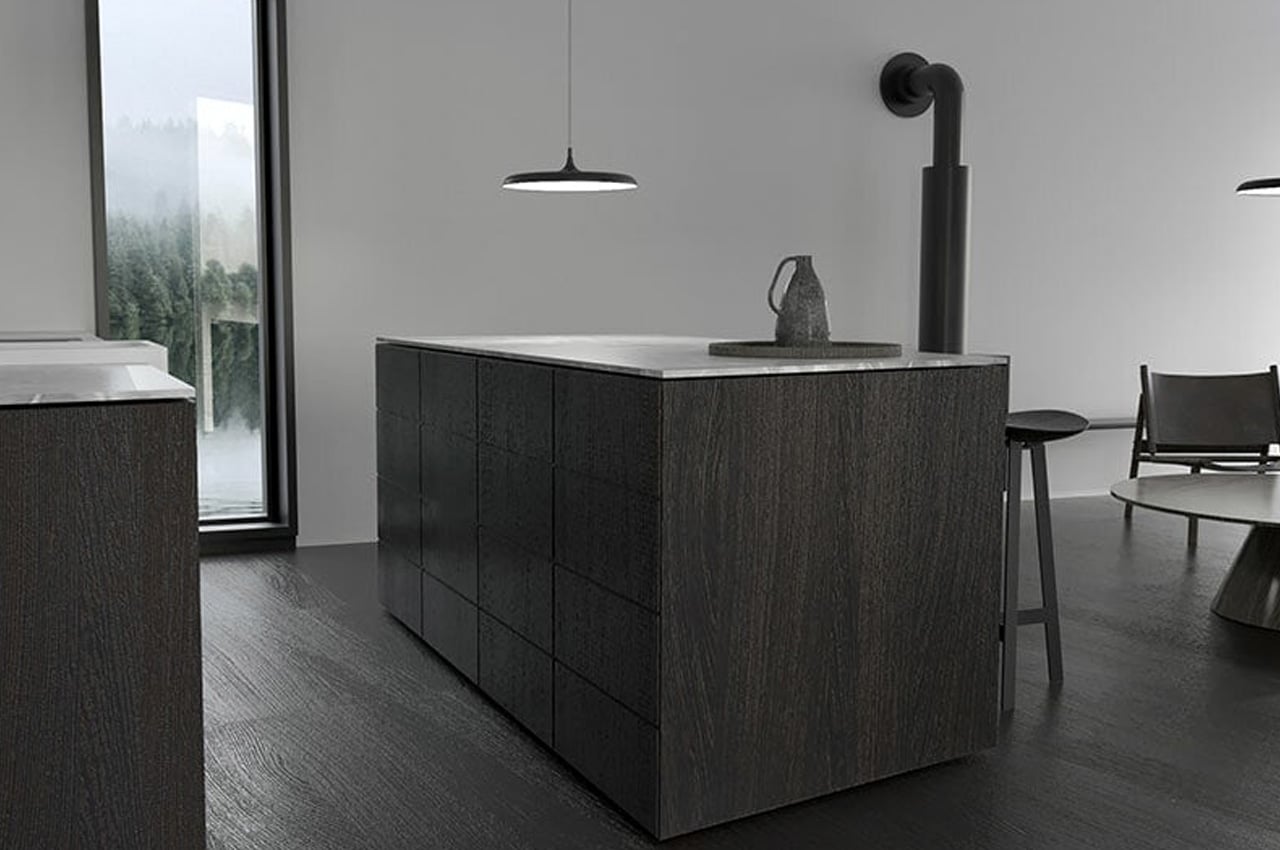
Designed by Antony Gibbon, the Tapered House is an innovative and elaborate new addition to his Inhabit series. The home is another vivid creation by Gibbon, which follows his design philosophy that centers around pushing the boundaries of architecture and laying down a harmonious and serene connection with nature. The other homes in the series include the Repitilia House and Loch Eight, and the Tapered House continues the unique design language seen in the other structures.
The Tapered House is settled along the shores of a lake and is surrounded by calming woods. The house is designed to be versatile and perfectly merges with its surrounding natural environment. Since it features raised stilts, you can place the house on the edge of a lake, river, pond, or any sloped terrain. This subtle elevation enables the Tapered House to effortlessly merge with the various contours and curves of the land while ensuring that is it well-settled on the ground. It is a prime specimen of form meets functionality.
The Tapered House is a spacious home while covering a footprint of 110 square meters. It includes two bedrooms. The ground floor of the house occupies eighty-one square meters, and it features a reception area, lounge, kitchen, one of the bedrooms, and a shower/washroom. The home also includes outdoor terraces that are located at the front and the rear of the property. The second floor, on the other hand, occupies twenty-nine square meters and holds a large double bedroom, office, and a built-in storage space.
The exterior of the home is clad in panels of various timber finishes. The timber finishes add a sense of warmth and zen to the structure while allowing the project to have an element of customization, which enables it to be adapted to different locations. All in all, the Tapered House is a modern and chic home amped with well-designed amenities, and customization options, allowing it to be adapted to the personal needs and requirements of various users.
The integration of DallE 3 into ChatGPT has provided a fantastic opportunity for OpenAI subscribers to be able to create a wide variety of different AI generated artwork. However if you would like to create a range of artwork with similar faces or character consistency you need to do a few specific things to make […]
IKEA isn't going to be making a play for top tech company anytime soon, but it has kept up an offering of solid smart home devices. Its latest releases are a trio of affordable smart home sensors for everything from open doors to water leakage.
First in the lineup is the Parasoll door and window sensor. You can mount it on your door or window (basically any access point) and receive a notification if they open or close unexpectedly. It also pairs directly with an IKEA smart bulb. Speaking of light, there's the Vallhorn wireless motion sensor, which activates lights when movement is detected. You can choose what color and amount of light you want, with the sensor controlling up to 10 IKEA smart bulbs. Rounding out the new offerings is the Barding water leakage sensor, which works to alert you about any rogue water before your floor finds out. The device can send you a mobile notification, or trigger an alarm.
The sensors are small and white, lending themselves to blending in better throughout the house (unless you really love color). All the sensors are compatible with IKEA's Dirigera Hub, but only Vallhorn works with the older Tradfri gateway.
IKEA points to people's desire to feel comfortable and secure in their homes as motivation for these new products. "Everyone wants to feel safe at home and we feel excited about entering a new smart product area that creates not only a better, but safer life at home," Stjepan Begic, Product Design Developer at IKEA of Sweden, said in a statement. "We believe these products can provide our customers with peace of mind and a greater sense of control and comfort." The three new devices follow the release of previous sensors by IKEA, like Vindstyrka, which measures air quality.
The US pricing isn't available yet, but the Parasoll will be €9.99 in Europe, with the Vallhorn and Barding sensors priced at €7.99 and €9.99, respectively. These numbers could transfer over directly into USD or be slightly higher. The sensors should be available in the US in January (Vallhorn), April (Parasoll) and July (Barding) in 2024.
This article originally appeared on Engadget at https://www.engadget.com/ikeas-new-smart-home-sensors-focus-on-safety-and-avoiding-water-damage-133033586.html?src=rss
Thanks to the explosion of AI it is now possible to create artificial intelligence assistants to help with those mundane tasks enabling you to concentrate on more important areas of your business or personal life. If you would like to learn how you can combine the OpenAI Assistant API and Zapier together to create no […]