Teenage Engineering’s K.O. II sampler proves the company can do cost-friendly cool

There's something of a theme running through Teenage Engineering's recent products. That theme is you need more money. The Field range represents the Swedish company’s most exclusive music making gear. So when its website teased a new product with a colorful countdown, the wallets of Teenies everywhere braced for impact. Once that timer hit all zeros, the big reveal turned out to be the EP-133 sampler. Or, to give it its full name, the EP-133 K.O. II 64MB Sampler Composer. The real surprise though, was that it both looked cool and, at $299, was reasonably priced.

Fadergate

The countdown was really just the start. Barely 24 hours after the K.O. II was revealed units started landing in buyers’ hands. Within days, YouTube was awash with first look videos and tutorials. Before our review unit even showed up, several users were complaining that theirs had defective faders. Enough folks were having this problem that it quickly became known as “fadergate.” One brave creator even took their unit apart and, possibly, discovered the cause — the internal pins were bent and not making a connection. I asked Teenage Engineering about the issue and will update this story once I hear back.

Some buyer’s theorized that the issue might be caused by the fact that the K.O. II ships without the caps on its rotaries and fader. They come loose in the box to enable the packaging to be flatter, but the cap for the fader is unusually tight fitting. This led to speculation that the enthusiasm required to push this cap down might be putting too much pressure on components inside, opening up the cruel possibility of users breaking their own devices before they even got to play with them. I used extra caution, along with some needle-nosed tweezers to support the fader as I applied its cap and so far… so good?

A close up of the controversy-causing fader on Teenage Engineering's K.O. II sampler.
Photo by James Trew / Engadget

The K.O. II name tells us that Teenage Engineering considers this something of a sequel to the original PO-33 K.O. Clearly the K.O. II isn’t a Pocket Operator, but its retro desk calculator aesthetic does take subtle design cues from that series. At 12-inches diagonally, it’s in iPad territory size-wise. The K.O. II also runs on AAA batteries (or USB power) which is another nod to the PO series. It’s hard to say how long it’ll run on those batteries and it’ll vary from brand to brand, but I’ve been using some cheap rechargeables for over a week and they seem to be going strong.

Personally, I was never particularly enamored with the Pocket Operators and much prefer the form factor of the K.O. II. It’s still very portable, but feels a bit more “serious.” It’s also just very nice to look at, which is something Teenage Engineering is quite good at. The model number, EP-133, indicates that we might see others in the line, so fingers crossed for giant calculator versions of other instruments, too.

In use

Fader fully checked and batteries in place, the K.O. II springs to life with a flourish of icons across its display. Those icons are actually fixed and not made up of pixels. Teenage Engineering calls it a “Super segment hybrid display” which basically fuses the digital watch part with a bunch of colorful, cute custom icons to let you know when certain modes or features are activated. It reminds me of the old Game & Watch handhelds where you can see where all the icons are and they are simply switched on or off as needed. Some of the icons are pretty abstract but there is a guide on the website to let you know that, for example, the red umbrella means undo.

Teenage Engineering K.O. II sampler showing a bar count.
Photo by James Trew / Engadget

Something I like to do with music gear is to see how easy it is to use without reading the manual. This works for all gadgets of course, but with music gear there are common tasks like sequencing, timing adjustment, automation and so on. How you achieve these on a drum machine might be very different to a keys-based synth. Teenage Engineering in particular likes to do things its own way but I was pleasantly surprised with the K.O. II. Within minutes I had managed to figure out basic navigation and how things are organized (sample groups, accessing shift functions, what the fader does and when and so on).

During this blind test I also got to know the K.O. II’s buttons and faders. It was obvious from the launch materials that we weren’t getting rubber MPC-esque pads here but I would describe the ones on the K.O. as keys rather than buttons. Fortunately they are satisfying to click and they’re pressure sensitive so you can give your drum hits different velocities or play notes at different strengths, just be sure to focus on the lower part of the key as that seems to be where the sensor is.

You probably should read the manual though. If for no other reason than it’s likely the prettiest one you’ll use in a while. There’s also a very cute tool for managing your samples which works via desktop browser. For the brave, you can also use this on your phone if you have Android (Chrome, Brave and Opera should all work). On iOS the same browsers can’t access Web MIDI and therefore will not work. (There’s the iOS Web MIDI Browser which crashes when I tried it with an iPhone but it does connect so your mileage may vary.) The K.O. II won’t show up on your PC as either a drive or an audio interface, so the main uses for the USB port are power and sending/receiving MIDI.

The workflow for grabbing sounds is pretty straightforward. If you want to sample from either a PC or phone or other sound-making device then as long as you can connect it to a 3.5mm cable you’re golden. For everything else, you’ll be using the built-in mic, which is surprisingly good. I recorded a few short vocal phrases and other found sounds and they come out well, assuming you’re in a quiet environment.

Teenage Engineering's $300 K.O. II sampler.
Photo by James Trew / Engadget

Don’t worry though, if you don’t have a bunch of samples yet, the K.O. II comes with a bunch pre-installed, and they’re pretty great. There’s a good mix of drums, bass pads and lead sounds — certainly enough to get you going straight away. You’ll definitely want to add your own though to make your projects unique. The presets use about half of the 64MB of memory, but you can back them up, delete them and free the slots up for your own. Max sample length is 20 seconds (same as on the OP-1 Field).

If 64MB doesn’t sound like a lot, know that it translates to about 11 minutes of samples at the 46kHz/16bit in which the K.O. II records. You can halve that time if you sample in stereo. Even if you go all out, over five minutes of samples should be plenty enough for most songs (we hope). If there’s going to be a bottleneck, it’ll more likely be due to the 12-voice limit. This means the K.O. II can make 12 sounds at once, so if you have six stereo samples playing at one time, you’ll hit that limit. My compositions aren’t interesting enough to hit that threshold, but if you’re a maximalist, then it’s worth keeping in mind.

A common technique to help avoid hitting the voice limit on other devices is resampling — basically merging separate sounds down into one new sample. This is also the technique for baking in any effects and modulation, which, given that the K.O. II can only manage one master effect at any one time makes the lack of resampling all the more obvious. Understandably, it’s possibly the biggest complaint among users I’ve seen so far (after fadergate of course).

There are ways around this, but it would involve recording out into another device and then sampling that back into the K.O. II and no one should have a sampler for their sampler, not in this economy. Teenage Engineering does have a decent track record of adding functionality via firmware updates — the company just added a new effect to the OP-1 Field as I wrote this — so fingers crossed.

A close up of Teenage Engineering's K.O. II sampler buttons.
Photo by James Trew / Engadget

While we’re on the topic of features the K.O. II doesn’t have, there doesn’t appear to be any kind of song mode. There are four sample “groups” that you can think of as tracks (drums, bass, lead and so on). Each of these groups can hold up to 99 patterns and patterns can be up to 99 bars in length. The active patterns across the four groups can be saved as a “scene” and scenes can be triggered consecutively. But, importantly, there’s no way for that to happen automatically right now. This means if you wanted to tease a whole recorded song out of the K.O. II you’ll have to either get clever with MIDI or trigger scenes and patterns manually in real time.

This performative nature might be a burden for songs, but I found it to be a feature in other areas. On top of the master effects you also have 12 “punch in” effects that can be applied — or punched in — by holding down the FX key and then any of the 12 black pads. Each is marked with its effect name (Level, Pitch and so on). These punch-in effects express themselves differently based on the amount of pressure you apply, making it a very expressive experience. The effects on these keys also correspond to modulation tools when used with the fader. So FX+7 adds the “Level” punch-in effect (rhythmic gating) while Fader+7 will assign gain/level to the fader until you choose another modulator such as Attack or Low Pass Filter.

I swear, half of the things you learn about how to use the K.O. II happen by accident. Yes, it’s in the manual, but I discovered you can solo groups by pressing the FX button and the corresponding group. You can also press multiple buttons to “solo” multiple groups or sounds at the same time. With a group or group solo’d you can then apply punch-in effects to create a lot of variations in real time. With so many touches like this, I am starting to assume that Teenage Engineering envisioned the K.O. II as a playful performative device rather than a linear song-making machine.

Teenage Engineering K.O. II sampler between the CM15 mic and an original Pocket Operator.
Photo by James Trew / Engadget

I’ve talked before about the sort of “magic” factor that Teenage Engineering sometimes hides into its products. Just small, cute and often a bit hidden features that aren’t necessary but are tons of fun. A common one is the inclusion of FM radio on the OP1/Field and OB 4 etc. Or the video making tool in the app for the OP-Z. There was a brief moment of excitement when I spotted “loop mode from OB-4” on the K.O. II’s product page. The hope being the two devices would interact somehow, but it appears that’s just a way of describing the looping feature that’s been borrowed from the OB-4.

As I write these closing thoughts, the second official firmware update (v1.1.1) has just been released. There’s nothing spicy in here like motion control or sampling the radio, but it’s confirmation of what I mentioned earlier about Teenage Engineering adding features after a product hits the shelves — such as the OP-1 Field’s vocoder synth that landed over six months after release or the fairly substantial 1.2.38 update for the OP-Z which came almost three years into its life.

The K.O. II represents an opportunity for Teenage Engineering to do the unthinkable and create a series of more capable instruments that don’t cost Field-series levels of money. As a sampler, it’s great for beginners or those who love a more performative style. It’s not nearly as detailed and in-depth as something like Roland’s SP 404 or Native Instruments’ Maschine, but it was never going to be a rival to, well, anything really. Fadergate aside, this is a promising product from a company that has tested the loyalty of its fans more than usual in recent years.

This article originally appeared on Engadget at https://www.engadget.com/teenage-engineerings-ko-ii-sampler-review-150038528.html?src=rss

CREN 25 mode waterproof camping light, power bank and speaker

CREN multifunctional camping light

The CREN MC01 is a remarkable device that has been designed to serve multiple functions, notably as a lantern and a Bluetooth speaker. This multifunctional device is not just an ordinary camping light; it encompasses eight functions and 25 lighting modes, promising a versatile and immersive experience for outdoor enthusiasts. One of the standout features […]

The post CREN 25 mode waterproof camping light, power bank and speaker appeared first on Geeky Gadgets.

KIOXIA SSDs achieve PCIe 5.0 and NVMe 2.0 compliance

KIOXIA PCIe 5.0 and NVMe SSD Storage

  KIOXIA’s CM7 and CD8P series SSDs have successfully passed the compliance certification for PCIe 5.0 and NVMe 2.0 specifications. This achievement signifies a major leap in the data storage industry, as these new interface specifications offer significantly increased data transfer speeds and bandwidth compared to their predecessors. The CM7 and CD8P series NVMe SSDs […]

The post KIOXIA SSDs achieve PCIe 5.0 and NVMe 2.0 compliance appeared first on Geeky Gadgets.

How to Get Started With Google Maps on Android

Google Maps Android

This guide is designed to show you how to get started with Google Maps on Android. Google Maps is an essential tool for anyone with a smartphone, and Android users have access to its full suite of features. Whether you’re a seasoned navigator or just getting your bearings, this guide will equip you with everything […]

The post How to Get Started With Google Maps on Android appeared first on Geeky Gadgets.

Video games in 2023: Acquisitions, layoffs, unions

This was a year of upheaval in video games. The industry has shapeshifted over the past 12 months, and it’s not all due to Microsoft’s lengthy acquisition of Activision, Blizzard and King. While Xbox executives were defending the legality of a $69 billion deal that would create the third-largest video game studio in the world, smaller companies were firing staff and shutting down entire teams, even amid fervent collective-bargaining efforts. It’s been a wild ride.

In 2023, the main factors molding the video game landscape were consolidation, layoffs and unionization, with each of these phenomena feeding into each other. This past year, the video game industry shrank, even as it grew financially.

Consolidation

When its purchase of Activision-Blizzard-King was legally approved on October 12, 2023, Microsoft became the world’s third-largest video game studio by revenue. As the owner of the Xbox ecosystem, Microsoft was already a massive player in video games, but purchasing a tentpole AAA studio solidified its position in the top three. Activision and Blizzard are the owners of Call of Duty, Diablo, Overwatch, World of Warcraft and Starcraft, but the real meat of this deal comes from King, the mobile division. King operates Candy Crush Saga, a game with 238 million monthly active users, which is more than twice as many as Activision Blizzard’s combined player bases. Candy Crush Saga has generated more than $20 billion in lifetime revenue, and King routinely outperforms Activision and Blizzard in terms of quarterly returns. Mobile gaming remains a huge business, especially in the Chinese market, which represents the largest and most lucrative audience in video games.

Though the $69 billion Activision deal was the biggest in Microsoft’s history — beating its purchase of LinkedIn for $26 billion in 2016 — it wasn’t the company’s first video game acquisition. Microsoft owns nearly 40 developers and it bought a chunk of those in the past five years. The Xbox umbrella covers 343 industries, Arkane Studios, Bethesda, Compulsion Games, Double Fine Productions, id Software, Infinity Ward, Mojang Studios, Ninja Theory, Playground Games, Tango Gameworks and Turn 10, among dozens more.

LOS ANGELES, CALIFORNIA - JUNE 12: (L-R) Tim Schafer, Feargus Urquhart, Dom Matthews, Matt Booty, Feargus Urquhart, and Larry Hryb speak onstage at the Xbox Game Studios - One Year Later panel during E3 2019 at the Novo Theatre on June 12, 2019 in Los Angeles, California. (Photo by Charley Gallay/Getty Images for E3/Entertainment Software Association)
Charley Gallay via Getty Images

With these studios at its back, Microsoft is leaning hard into cloud gaming while attempting to build a device-agnostic ecosystem powered by the Xbox brand. These moves are designed to unlock the mobile market even more, putting Xbox games on all devices, everywhere, all the time.

Still, Sony is bigger than Microsoft by revenue. Though Microsoft is often the face of the game-studio acquisition spree, Sony is the owner of 21 development teams, including Bungie, Guerrilla Games, Haven Studios, Housemarque, Insomniac Games, Media Molecule, Naughty Dog and Sucker Punch Productions. Sony has been subtly expanding its roster — more subtly than Microsoft, at least — over the past three years, and it’s also made heavy investments in studios like Epic Games and FromSoftware.

With this lineup, Sony is betting heavily on ongoing games, and it has 12 live-service titles in production right now, on top of Bungie’s Destiny franchise. These include Haven’s Fairgame$ and a multiplayer Horizon title from Guerilla.

“By expanding to PC and mobile, and… also to live services, we have the opportunity to move from a situation of being present in a very narrow segment of the overall gaming software market, to being present pretty much everywhere," Sony Interactive Entertainment president and CEO Jim Ryan said in 2022.

For the companies at the top, total domination is the goal.

Even still, Tencent is bigger than both Sony and Microsoft. Tencent is not a console manufacturer, so it isn’t a household name among most players, but it’s one of the largest companies in the world, and it wields a ridiculous amount of financial power in video games. Tencent owns a portion of Bloober Team, Bohemia Interactive, Don’t Nod, Epic, Paradox Interactive, PlatinumGames, Remedy Entertainment, Roblox and Ubisoft, among others. It has a majority stake in Supercell, Grinding Gear Games, Klei Entertainment, Tequila Works, Techland, Yager Development and others. It fully owns Riot Games, Funcom, Sharkmob, Turtle Rock Studios, and, of course, others. It also runs multiple internal development companies, including the Level Infinite and Tencent Games publishing labels.

People wait in line to try games at the booth of Tencent during gamescom 2023 in Cologne, Germany, Aug. 23, 2023. The 2023 edition of the international computer and video games trade fair gamescom opened on Wednesday in Cologne, western Germany. Chinese companies displayed their products on the trade fair.   According to the Koelnmesse, organizer of the week-long event, gamescom is the world's largest trade fair for computer and video games in terms of space and visitors. (Photo by Zhang Fan/Xinhua via Getty Images)
Xinhua News Agency via Getty Images

Sure, Sony has a stake in Epic, but Tencent’s is bigger. This investment alone means any time you buy a game built on Epic’s Unreal Engine, Tencent (and Sony) is getting a cut. Tencent is the biggest investor in games, with thousands of tendrils across the industry — if you played something this year, Tencent was probably involved.

On a smaller scale, companies like Netflix and Devolver Digital have also dipped their toes in the acquisition pond recently. Devolver started buying studios in 2020, and it now owns Croteam, Dodge Roll, Doinksoft, Firefly Studios, Nerial and System Era Softworks. Annapurna Interactive bought South African studio 24 Bit Games in November. Netflix launched its Games division in 2021, and it’s already purchased four studios, including Oxenfree developer Night School and Alphabear company Spry Fox.

Night School co-founder Sean Krankel told Engadget in June that the move to Netflix was a boon for the studio, providing financial security, a dedicated working space and plenty of marketing support for its projects.

“A small subset of teams are good to go for the next 10 years, but others have these peaks and valleys, and we were somewhere in between,” Krankel said. “We weren't in danger of anything going sideways. But we were at a spot where we're like, it would be cool to tether to somebody who has a similar vision, and somebody that we could work with that would like, de-risk us.”

Oxenfree II
Netflix

This is the short-term benefit of being bought by a larger company, but there are downsides to relinquishing independence. Having a corporate overseer can result in rigid production timelines, hindering a studio’s ability to pivot, and despite all of the promises otherwise, developers may be forced to adhere to a specific tone, vibe or game-development structure. Owned studios are held accountable by people outside of the actual development of a game, and the bigger the company, the further away its bosses are from the creative process.

The most extreme negative outcomes for an acquired indie studio are, of course, layoffs and closures. We saw a lot of these in 2023.

Layoffs

The post-acquisition power dynamic is playing out in public and in real-time. It’s estimated that more than 9,000 people in video games were laid off this year and the firings affected teams of all sizes. This is a crisis amount of cuts. In 2022, just 1,000 video game jobs were lost, according to layoffstracker.com.

The Embracer Group provides the clearest example of rampant, surprise layoffs in 2023. Embracer has spent the past few years acquiring prominent midsize studios, including Gearbox Software (Borderlands), Crystal Dynamics (Tomb Raider), Eidos-Montreal (Deus Ex) and Square Enix Montreal (Deus Ex Go). In the past decade, Embracer grew its portfolio to cover more than 100 game studios, including Volition (Saints Row), Coffee Stain (Goat Simulator), Free Radical Design (TimeSplitters) and Zen Studios (Pinball FX). The holding company also secured the rights to The Lord of the Rings in 2022, promising to turn it into “one of the biggest gaming franchises in the world.”

Saints Row IV
Volition

In June 2023, Embracer announced a six-year, $2 billion funding deal had fallen through, and it was going to restructure — meaning, layoffs and studio closures. Since this announcement, Embracer has shut down Volition, Free Radical Design and Campfire Cabal, it divested Goose Byte and it’s fired developers at Saber Interactive. More than 900 people lost their jobs during these moves. Meanwhile, Embracer’s share price rose by 11 points in November.

This wasn’t the only layoff round of the year. Unity lowered its headcount three times in 2023, affecting about 900 jobs. In its quarterly financial results in November, Unity reported a yearly revenue increase of 69 percent and it told investors, “We continued to manage costs well.”

Sony cut 100 jobs at Bungie, a company it bought for $3.6 billion in 2022. According to developers that are still there, Sony executives are attempting to use this upheaval to wrest more control of the studio from Bungie founders and leaders.

Epic Games fired roughly 830 people this year, or 16 percent of its staff. This included significant job cuts at Mediatonic, the studio behind Fall Guys that Epic purchased in 2021.

Fall Guys
Mediatonic

“For a while now, we've been spending way more money than we earn,” CEO Tim Sweeney wrote about the layoffs. He continued, “I had long been optimistic that we could power through this transition without layoffs, but in retrospect I see that this was unrealistic.”

Electronic Arts was one of the first video game companies to institute significant layoffs this year, with a reduction of 6 percent of its workforce, or about 800 employees, in March. EA later cut jobs at Dirt and F1 studio Codemasters, which it purchased in 2021 for $1.2 billion. EA culled an estimated 1,130 jobs in 2023.

CD Projekt RED and Sega each laid off about 100 people in the past 12 months, while Ubisoft fired an estimated 255 employees. Microsoft cut 10,000 jobs across its businesses early in the year, and that included about 100 people at Halo studio 343 industries.

Halo: The Master Chief Collection
343 industries

These are just some of the biggest names in layoffs in 2023. Looking back on the carnage, it feels like a warning — as consolidation efforts increase, more game studios will be controlled by just a handful of companies, and they’ll be vulnerable to moves like mass layoffs and closures. We’re laying the foundation for the future of video games right now, and consolidation only makes the industry smaller and more generic, as accountants, investors and shareholders push for low-risk concepts, rather than innovation and change.

What will rampant consolidation mean for all of these acquired studios in five years’ time? What will it mean when these teams aren’t shiny, new investments any longer, and the people at the top are ready to get lean again? Remember that many of the shuttered studios listed above were purchased within the past three years.

Being acquired is a cost-benefit analysis for smaller studios, where the benefits are immediate and the costs are potential. It’s easy to say that won’t happen to us. But it can happen, and it does, and as consolidation increases, bulk layoffs are only going to occur more often.

Unions

Unionization is one approach that can help protect the livelihoods of people in the video game industry, and there was progress on this front in 2023. Developers at multiple studios now have union support, from small indies to AAA powerhouses.

Microsoft is currently the home of the industry’s largest union, with representation for more than 300 quality assurance workers at ZeniMax Media. ZeniMax is the parent company of Bethesda, id Software and Arkane, and Microsoft purchased the whole caboodle for $7.5 billion in 2021. Microsoft formally recognized the ZeniMax union this January and the parties started negotiating in April. In December, Microsoft announced it would hire 77 contract workers as full-time employees under the ZeniMax Workers United-CWA union. The deal guaranteed a pay raise, paid holidays and sick leave, and a copy of Starfield, the game they helped ship.

Starfield
Bethesda Softworks

“We are now stronger at the bargaining table and are working to secure a fair contract for all workers — direct employees and contractors," ZeniMax union member Chris Lusco said. "We are all a part of ZeniMax Studio’s success and we all deserve our fair share. We hope to set a new precedent for workers across Microsoft and the entire gaming industry so that all workers, regardless of their employment status, are able to improve their working conditions through collective bargaining."

Meanwhile, executives at Microsoft’s newest acquisition, Activision Blizzard, spent the past few years stalling internal unionization efforts. However, QA employees at Raven Software, a subsidiary of Activision, successfully voted to unionize in May 2022. Microsoft has vowed to respect organization attempts now that Activision-Blizzard-King is under its control.

Other companies with unions established in the past two years include Avalanche Studios, Anemone Hug, CD Projekt RED, Experis Game Solutions, Keywords Studios, Sega of America, Tender Claws and Workinman Interactive.

This article originally appeared on Engadget at https://www.engadget.com/video-games-in-2023-acquisitions-layoffs-unions-143037174.html?src=rss

Lego Cherry Blossoms lets you have spring in your house soon

There are people born with “green thumbs” that are able to create wonderful gardens and plant and floral masterpieces. And then there are people like me who kill everything green that they touch (yes, I even manage to kill succulents and bonsais). If you’re the latter or you have kids that are interested in flowers and would need practice on non-living versions of floral arrangements or if you just like adding a bit of flowery things to your collection, then this new Lego addition should interest you.

Designer: Lego

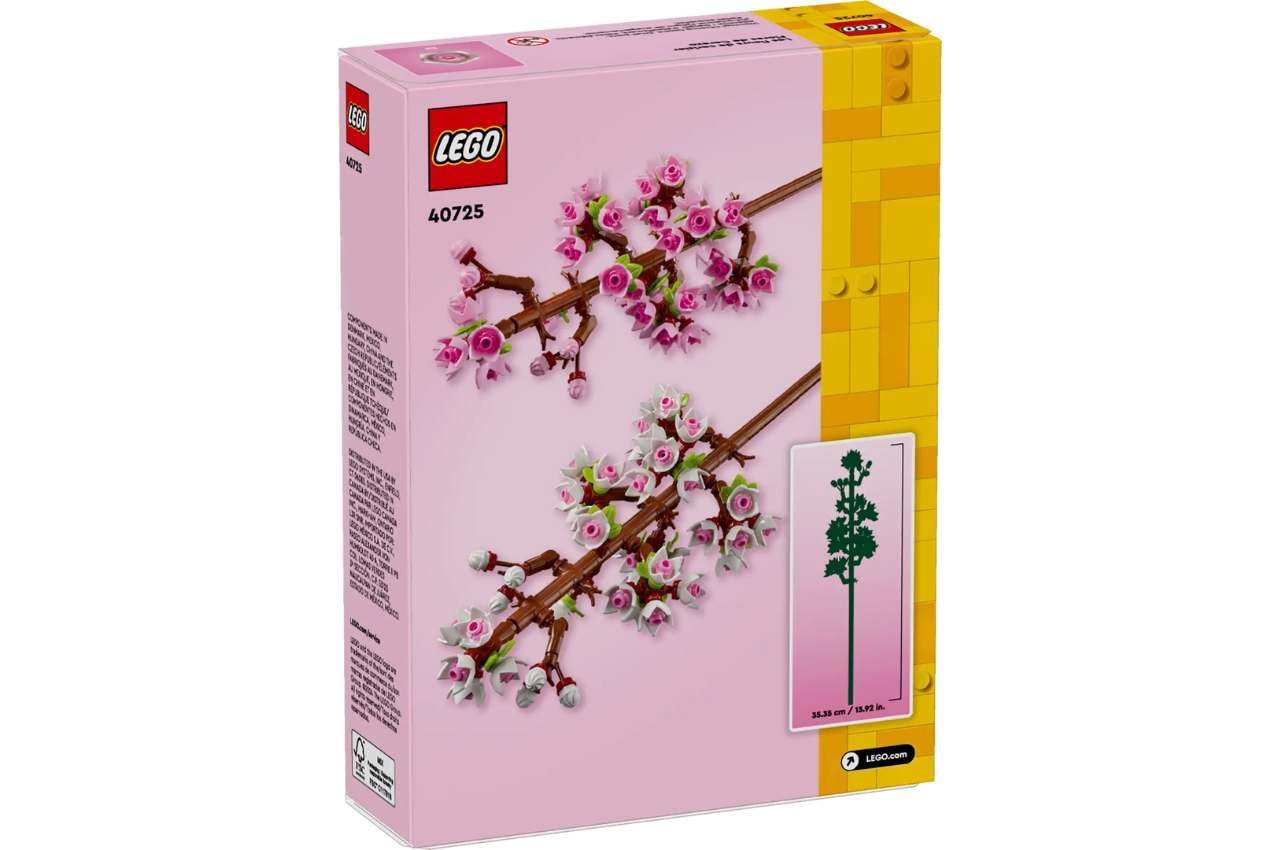
Spring is still a few months away but the LEGO Cherry Blossoms will help you get ready for it, as long as you’re 8 years old and above. The set features two buildable cherry blossom twigs that you can mix and match to get white and pink blooms. Since it’s Lego, you don’t get the actual flowers. You need to build it with the 438 pieces that come with the set to create two twigs that can measure up to 14 inches (35 cm) long. You can combine the different colors or stick to creating a white stem and a pink stem separately.

Once you’re able to complete your cherry blossom twigs, you can put it around the house as a piece of spring decoration. You can also combine it with other LEGO flower sets (sold separately) like their Roses, Wildflower Bouquet, Dried Flower Centerpiece, Flower Bouquet, Botanical Collection, etc. If it’s winter where you are, then these flowers can brighten up your space even though they may not be in season.

It’s interesting to see Lego venturing into other sets that may not necessarily appeal to their original market that are used to bigger and more complicated builds. But the Cherry Blossoms and their other flower sets is perfect for young kids who aspire to eventually create gardens or for adults like me who can only dream of having an actual green thumb.

The post Lego Cherry Blossoms lets you have spring in your house soon first appeared on Yanko Design.

LumiTool 20W 1064nm desktop fiber laser engraver

LumiTool 20W desktop fiber laser engraver

The LumiTool F20, a compact, 20W fiber laser engraver and cutter powered by Midjourney AI design, is a revolutionary tool that’s changing the landscape of engraving and cutting. This device is a fusion of industrial-grade power and compact design, offering features and performance that are superior to many of its counterparts in the market. One […]

The post LumiTool 20W 1064nm desktop fiber laser engraver appeared first on Geeky Gadgets.

Redmagic 9 Pro mobile gaming performance tested

Redmagic 9 Pro mobile gaming tested

In the world of gaming smartphones, a new contender has this week been released in the form of the Redmagic 9 Pro. The new phone has been specifically designed to provide users with an exceptional mobile gaming experience, rivaling that of traditional gaming consoles. With its advanced features and powerful hardware, is this smartphone is […]

The post Redmagic 9 Pro mobile gaming performance tested appeared first on Geeky Gadgets.

UBPet V10 powerful deep cleaning robot vacuum cleaner with LDS navigation from $349

robot vacuum cleaner

The UBPet V10 robot vacuum cleaner is boastsan array of innovative features that redefine the standards of cleanliness and ease of use. One of the most striking features of the UBPet V10 is its powerful suction and cyclonic structure. The vacuum cleaner harnesses the power of a 100AW brushless high-speed fan, which generates an impressive […]

The post UBPet V10 powerful deep cleaning robot vacuum cleaner with LDS navigation from $349 appeared first on Geeky Gadgets.

Building a Raspberry Pi 4G LTE Router

Raspberry Pi 4G LTE Router

Imagine turning a simple, affordable Raspberry Pi mini PC into a powerful 4G LTE router that can spread high-speed internet to your other projects and devices. By leveraging OpenWRT, an open-source firmware, you can transform your Raspberry Pi into a networking powerhouse, sharing a 4G connection both through cables and wirelessly. Let’s dive into how […]

The post Building a Raspberry Pi 4G LTE Router appeared first on Geeky Gadgets.