The 2024 Audi A5 represents a significant step forward in Audi’s premium mid-size lineup, replacing the previous A4/S4 and A5/S5 models. This new generation of vehicles showcases Audi’s commitment to innovation, performance, and luxury. The A5 Saloon starts at £41,950 OTR, while the A5 Avant begins at £43,850 OTR, offering customers a range of options […]
Hollowbody was one of the standouts from Steam Next Fest earlier this year, and it’s coming out real soon.
At a time when everyone is extremely nervous about the upcoming Silent Hill 2 remake, Hollowbody feels like a total throwback to that PlayStation era of survival horror. Set in a near-future dystopia, you play as a black market runner who crashes their flying car into a grim UK housing estate full of weird things going on.
The game is presented in a semi-retro style — ’90s vibes on modern tech — and makes smart use of fixed camera angles to build tension. It has its own twists on classic survival-horror gameplay like logic puzzles and sporadic save points. There’s not a ton in the way of combat, and apparently there will be options to dial back the action further to focus on creepy exploration instead.
Hollowbody is a new project from Nathan Hamley, who aimed to create an entire game — story, art, code and even music — solo. He raised over $35,000 on Kickstarter on the strength of his previous game, Chasing Static,and a pretty compelling trailer and pitch. Fom the Next Fest demo I played after reading a very positive writeup on VG247, his singular focus on this project has kinda worked? Hopefully those backers are happy.
I’m intrigued to see how the full game pans out — and there’s not too long to wait. It’ll be available on PC (Steam or GOG) on September 12.
This article originally appeared on Engadget at https://www.engadget.com/gaming/pc/throwback-survival-horror-game-hollowbody-is-coming-on-september-12-140029101.html?src=rss
Don’t rock the boat. That’s Lenovo’s strategy for its 12th iteration of the ThinkPad X1 Carbon. Instead of messing with a winning formula, the company employed small tweaks throughout the laptop, delivering a system that’s even thinner and lighter than its predecessor. The keyboard has undergone a few updates with a larger touchpad.
However, the biggest changes are under the hood with the X1 Carbon rocking the latest 14th Gen Intel processors and integrated graphics. The notebook also offers expanded display options. The changes, in short, are pretty incremental. But sometimes a few tweaks and refinements are all that’s needed to get the job done.
The ThinkPad X1 Carbon's design
The 12th-gen X1 Carbon looks pretty similar to its predecessor. It’s got a black matte finish that to my chagrin is very susceptible to fingerprints. If you’re familiar with the line, you know that the laptop is made of carbon fiber, but this time around there is recycled aluminum and magnesium in the mix along with some post-consumer materials. Honestly, the biggest design change you’ll notice is the brushed aluminum console at the top of the lid that houses an infrared (IR) camera with a physical shutter.
Weighing 2.4 pounds with a 0.6-inch profile, the X1 is thinner and lighter than previous models, which for a 14-inch system is always a good thing. The 2.6-pound ASUS Zenbook 14 OLED is just a tad lighter at 0.58 inches. And despite its slight form, the X1 Carbon is seriously durable, able to withstand drops, spills, dust and extreme temperatures as designated by its MIL-STD-810H certification.
Another good thing is the 14-inch display. The 1,920 x 1,200, 16:10 panel is a matte touchscreen, so unlike its chassis, it actually resists fingerprints. The finish virtually eliminates any glare and doesn't wash out the color like I’ve seen on some similar displays. Is the color as vibrant as you’d get on a glossy screen? Not necessarily, but it’s far from a deal breaker.
Lenovo made the trackpad larger, increasing the glass touchpad’s size to 4.7 inches. Outside of a few minor tweaks to the spill-proof keyboard, this is your typical Lenovo Chiclet keyboard down to its iconic bright red pointing stick. I’m not a big fan of Lenovo moving the power key to the right side of the keyboard. It makes sense for a 2-in-1, but is unnecessary on a regular clamshell, and I’d prefer it on one of the company’s many Yoga series notebooks.
While we’re talking about the X1’s sides, there’s a healthy number of ports here, including two USB-A 3.2 Gen 1, two Thunderbolt 4, an HDMI 2.1 port, a headset jack and a Kensington lock slot.
Sherri L. Smith for Engadget
Sitting above the display, the ThinkPad X1’s 1080p webcam takes solid still photos and will do fine in video conferencing sessions. It delivered really clear images on the Google Meet and Microsoft Teams calls I took, so much so I got a few compliments on my new hair color and style. As expected, things got overexposed when I sat in my yard at high noon. But I was pleasantly surprised at how well the camera adjusted to a low-light environment, maintaining color vibrancy and good detail.
The pair of speakers cleverly hidden beneath the keyboard did a good job conveying the voices of my meeting mates. You’ll want to grab a pair of headphones if you’re listening to music or watching a movie, though, as the low-end isn’t very strong despite the pre-installed Dolby Access software.
In use
Next-gen laptops means next-gen chips. For the 12th-gen X1 Carbon, that chip is a 14th-generation 1.7-GHz Intel Core Ultra 7 165U processor with 12 cores and 14 threads. According to Intel, it’s faster than last year’s silicon. In action, the ThinkPad X1 Carbon is pretty fast and powerful. I threw my usual workload at it, which means approximately 70 open Google Chrome tabs with a mix of G-Suite apps, social media, news and tech sites with a couple of YouTube videos for good measure. I even edited a video and played a few rounds of Hades II, but the notebook never slowed down.
The Lenovo notebook didn’t perform as well against similarly specced laptops. My review unit, with its Intel Core Ultra 7 CPU, 32GB of RAM, bested the Zenbook OLED 14 and XPS 14 on the PCMark 10 benchmark, but couldn’t topple this year’s model of the 14-inch HP Spectre x360 nor the Surface Laptop 6. The forecast wasn’t as rosy on the Cinebench R23 test, though, which saw the X1 Carbon fall short against every system.
Sherri L. Smith for Engadget
The X1 Carbon’s integrated Intel GPU isn’t really made for gaming, but if you can find older or indie games that aren’t as taxing as current AAA titles, you can squeeze in some playtime. For example, I got 30 frames per second as I played Hades II, which is a smooth enough rate to run most titles.
The X1 Carbon’s 3,777 result on 3DMark Wild Life Extreme is no match for any of the competing systems. Keep in mind that those laptops have more powerful chips under the hood with the XPS 14, Zenbook OLED 14, and Surface Laptop 6 having Intel Arc Graphics. The XPS 14 also has a discrete Nvidia RTX 4050 GPU onboard.
Like most laptops this year, the X1 Carbon has an integrated NPU (Neural Processing Unit) which is there to take the load off your CPU and GPU when it comes to AI apps and tasks. For example, Windows Studio Effects during my video calls seamlessly blurred my background, keeping me in frame and ensuring it looked like I held eye contact, all without any hiccup.
When it comes to keyboards, Lenovo ThinkPads are the gold standard, delivering firm, springy feedback. The 12th-gen X1 Carbon continues the tradition. I spent hours using this super comfortable keyboard and throughout that time, my fingers never bottomed out. I’d be remiss if I didn’t mention the new tactile markings on specific keys (Fn, F, H, Insert, down arrow, Enter and volume down/up)to act as a guide. And of course, there's the Copilot button if you want to give Microsoft’s AI a try. The white backlighting is bright enough to use in darkened environments, like when I used it in bed while my boyfriend slept.
Sherri L. Smith for Engadget
The trackpad, which is 9.1 percent bigger than last year’s, has excellent palm rejection and didn’t send the cursor launching into the stratosphere. The glass surface was responsive and smooth to the touch, with near-instant results whether I was navigating a web page or pinch-zooming on a picture.
The best thing by far about the ThinkPad X1 Carbon is its battery life. The laptop lasted 13 hours and 2 minutes on the PCMark Modern Office battery test. That time was more than enough to outlast the Zenbook OLED 14 (12:43). During my regular use, I squeezed almost 10 hours out of the X1 Carbon before I needed to plug it in.
The ThinkPad X1 Carbon's price and competition
The Lenovo ThinkPad X1 Carbon 12th starts at $1,449, which is about what you’d expect from a premium business laptop. That configuration gets you an Intel Core Ultra 5 125U processor with 16GB of RAM, 512GB SSD and Intel’s integrated graphics. You’ll need an extra $474 to upgrade to a Core Ultra 7 CPU, 32GB of RAM, and 512GB SSD. If you want a similar setup to my review model, it’ll cost you $2,285 as it has Intel’s vPro technology, which is more for IT admins and businesses.
For almost $500 cheaper, the ASUS Zenbook OLED 14 bested the ThinkPad X1 Carbon on performance, while offering comparable battery life and a stunning OLED display. But the Zenbook lacks the deep well of security features you’ll find on the business-centric X1 Carbon.
Consumers looking for more power, including a discrete GPU, should check out the Dell XPS 14. However, the laptop’s starting price is $250 higher than the X1 Carbon, and it only gets more exorbitant as you start adding more features such as the Nvidia GPU, vPro, RAM and storage.
Wrap-up
The 12th-gen Lenovo ThinkPad X1 Carbon continues its reign as the king of business laptops for now. But the gap is definitely narrowing. While there are definitely more powerful alternatives out there, the X1 is one of the few to offer the same level of security, durability and longevity for a relatively reasonable price.
This article originally appeared on Engadget at https://www.engadget.com/computing/laptops/lenovo-thinkpad-x1-carbon-gen-12-review-still-the-king-of-business-laptops-140029764.html?src=rss
Kim Kardashian is lending her name and image to a second collaboration with Apple's Beats line of headphones. The latest entry to the Beats x Kim line brings three neutral colors – Moon, Dune, and Earth – to the Beats Studio Pro headphones. The limited collection is available now from Apple and Amazon, and even with the celebrity backing, the headsets retail for their usual price of $350.
Apple refreshed the Beats Studio Pro last year, including a new version of the brand's audio chip and improving active noise cancellation capabilities. The headphones also got an aesthetic refresh to couple with the updated sound quality.
This marks the second time the reality television star has worked with Apple on audio gear. In 2022, the pair launched the Beats x Kim line with the same three skin tone hues for the Beats Fit Pro earbuds. Apple said that release was its best-selling collaboration to date. Kardashian's Skims clothing company also focuses on items with skin tone colors, so the neutral appearance of her Apple gear seems on brand.
This article originally appeared on Engadget at https://www.engadget.com/audio/headphones/kim-kardashian-is-back-with-a-new-beats-headphone-collab-140029761.html?src=rss
Google has unveiled the highly anticipated Pixel Buds Pro 2, the latest iteration of their premium wireless earbuds. These earbuds are packed with innovative technology and features designed to elevate your audio experience to new heights. At the heart of the Pixel Buds Pro 2 lies the custom-designed Tensor A1 chip, which powers enhanced audio performance, improved […]
Update, August 15, 5:50PM ET: The US Department of Homeland Security has issued a statement disputing some of MIT Technology Review's reporting. We've updated our post below with its statement and more details.
The US Department of Homeland Security (DHS), which is looking to improve its facial recognition algorithms, is reportedly planning to use the facial data of migrant children entering the country for training. According to MIT Technology Review, the agency intends to collect and analyze facial captures of kids younger than 14. John Boyd, the assistant director of Homeland Security's Office of Biometric Identity Management who's involved in the development of biometric services for the government, told the publication that the collection will include children "down to the infant."
Programs that collect biometric information and even DNA samples from migrants entering the country typically only apply to people between 14 and 79 years old. Boyd said Homeland Security's plan was likely made possible by some of its sub-offices' decision to remove age restrictions for the collection of biometric data. Since the information is also supposed to be used for research purposes and not for the agency's actual operations, Homeland's restrictions for biometric collection also don't apply to the program.
Boyd told MIT Technology Review that the agency hasn't started collecting biometric information under the program yet, at least to the best of his knowledge, but that he can confirm that his office is funding it. He added that his office takes privacy seriously and that it doesn't share data with commercial industries. Data collected by the program could help improve facial recognition technologies' understanding of how faces change as humans age. The program could ultimately help authorities find missing children even after years have passed.
However, critics and expects have raised concerns about collecting data from migrants, a lot of whom are entering the country in hopes of a better life and may feel like they have no choice but to agree to getting their facial and fingerprint information taken. It's even more concerning in this case, because children can't give their informed consent.
Homeland Security is disputing some of MIT Technology Review's reporting, though, and a spokesperson told Engadget that the publication got its information from a presentation meant to understand emerging technologies and their theoretical applications. "The DHS does not collect facial images from minors under 14, and has no current plans to do so for either operational or research purposes," the spokesperson said.
This article originally appeared on Engadget at https://www.engadget.com/general/us-homeland-security-will-reportedly-collect-face-scans-of-migrant-kids-133042516.html?src=rss
Christmas is just around the corner (well, at least here where we start celebrating as soon as the -ber months come in) and before that, Halloween first, for those who celebrate. Those who want to combine the two holidays are probably fans of the classic Tim Burton movie, The Nightmare Before Christmas. And if you’re one of those, then you will want to save up money for this LEGO® Ideas set.
Designer: LEGO®
The LEGO® diorama kit you never knew you needed will soon be available for the fans of the famous stop-motion animated musical fantasy film that came out in 1993 (so yes, that’s considered a classic now). The set includes 3 iconic locations from the movie – Spiral Hill, Jack Skellington’s house (that’s the main character if you haven’t watched it), and the Halloween Town Hall.
Each of the diorama models features “authentic” details like the walking bathub, a chalkboard containing Jack’s formula for Christmas, the lectern at the Town Hall, among other things. The set also includes 8 character minifigs: Jack Skellington, Sally, Santa Clause, Lock, Shock and Barrel, Zero the Dog, and a brick-built The Mayor with two faces. The LEGO Builder app also has some 3D viewing tools based on the set and the movie.
There are 2,193 pieces in the Nightmare Before Christmas set so this is something you might want to keep away from young children who might lose some of the pieces. And with its $200 price tag, you probably want to keep it for the grown-ups.
The Motorola Moto G85 5G, priced at a competitive £300 in the UK, is a budget-friendly smartphone that offers a compelling blend of modern design and practical features. The video below from Tech Spurt explores the various aspects of the device, including its design, display, performance, battery, software, camera, audio, and additional features. Sleek and […]
SAG-AFTRA has announced a new agreement that would allow actors to earn from AI copies of their voice with their informed consent. The union representing thousands of performers has struck a deal with Narrativ, which is an online platform where performers can license digital voice replicas for use in audio ads. Brands who want to use a performer's voice will have to identify the products or services they're promoting, and performers will be able to review offers before accepting or declining them.
Performers will also be able to set their own prices, with SAG-AFTRA's minimum rates being the lowest. And if they don't want to work with Narrativ anymore, the platform is required to delete their digital voice replica and any recordings they made for its creation. When the union went on strike last year, one of the biggest issues it wanted to address was the use of artificial intelligence to create actors' likeness without their permission (and without pay) even after they die. They were also concerned about the technology's potential to replace performers altogether.
When the union ended its strike in November 2023, it said it was able to secure a deal that would protect its members from the "threat of AI." Under the terms of agreement it negotiated, performers have to provide explicit consent before replicas of them can be created. They also have to provide their consent for every additional project where their replica is used. In January, SAG-AFTRA entered an agreement with Replica Studios so performers can license their voice to game studios. However, it failed to reach a deal with several major video game publishers, prompting the union to call for another strike in July so it could protect it members' likenesses and voices from being recreated with AI without their permission.
This article originally appeared on Engadget at https://www.engadget.com/ai/sag-aftra-deal-will-let-advertisers-replicate-actors-voices-with-ai-130019844.html?src=rss
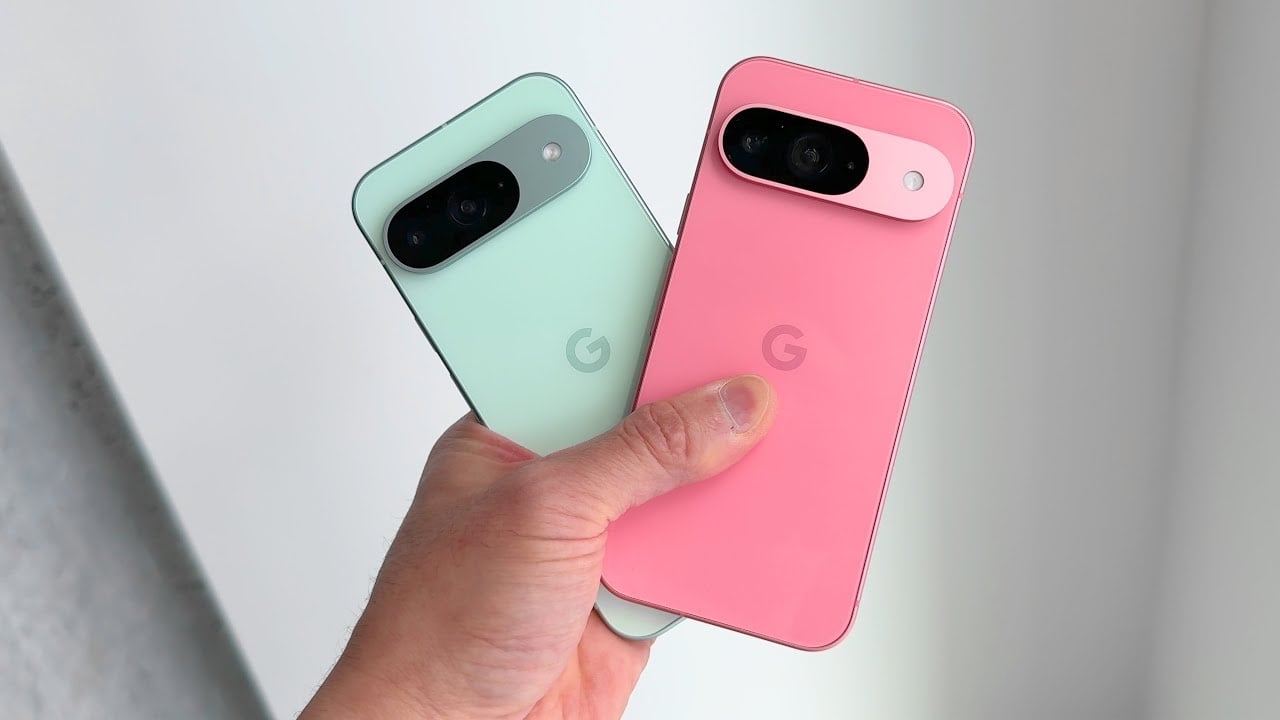
The Google Pixel 9 series has arrived, bringing a range of updates and a new foldable device to the lineup. While the improvements are incremental, they aim to enhance the user experience and introduce new AI capabilities. However, the $100 price increase across all models raises questions about the value proposition, especially considering the underwhelming […]