Security researchers found a serious zero-click bug in Synology’s Photos app

If you own a Synology NAS drive, you’ll want to update your device as soon as possible. As first reported by Wired, a group of Dutch security researchers recently identified a zero-click vulnerability within the Synology Photos app. For the uninitiated, such bugs allow hackers to compromise a system without a user needing to click something first. To make matters worse, the app comes pre-installed and enabled by default on Synology’s consumer line of Bee network storage devices. It’s also a popular download among those who use the company’s DiskStation systems.

Midnight Blue, the cybersecurity firm that discovered the vulnerability, estimates that millions of Synology users may be at risk. Although the company released a security patch to address the bug, its NAS devices do not automatically download updates. “It’s not trivial to find [the vulnerability] on your own, independently,” Carlo Meijer, one of the researchers, told Wired. “But it is pretty easy to figure out and connect the dots when the patch is actually released, and you reverse-engineer the patch.”

According to Midnight Blue, the zero-click is found in a part of the Synology Photos app that does not require authentication. As a result, attackers can exploit the bug directly over the internet and without needing to bypass a gateway first. They can then gain root access and install malicious code on the compromised device. At that point, there’s not much a malicious individual couldn’t do, with the firm noting it would even be possible to turn the infected device into a botnet. The possibility a ransomware gang could target Synology devices isn’t just theoretical either. Earlier this year, DiskStation users reported that they were the target of a ransomware attack.

This article originally appeared on Engadget at https://www.engadget.com/computing/security-researchers-found-a-serious-zero-click-bug-in-synologys-photos-app-145147159.html?src=rss

Hatch partners with KFC to create frying chicken ASMR

Anyone who’s ever been on TikTok knows that there are a lot of weird rumors that start on the platform and not all of them are good for the brain. But one of the more interesting and harmless ones that trended lately is the idea that the sound of rainfall that helps people sleep is actually the sound of cooking fried chicken. Out of this funny trend comes an unexpected collaboration.

Designer: Hatch for KFC

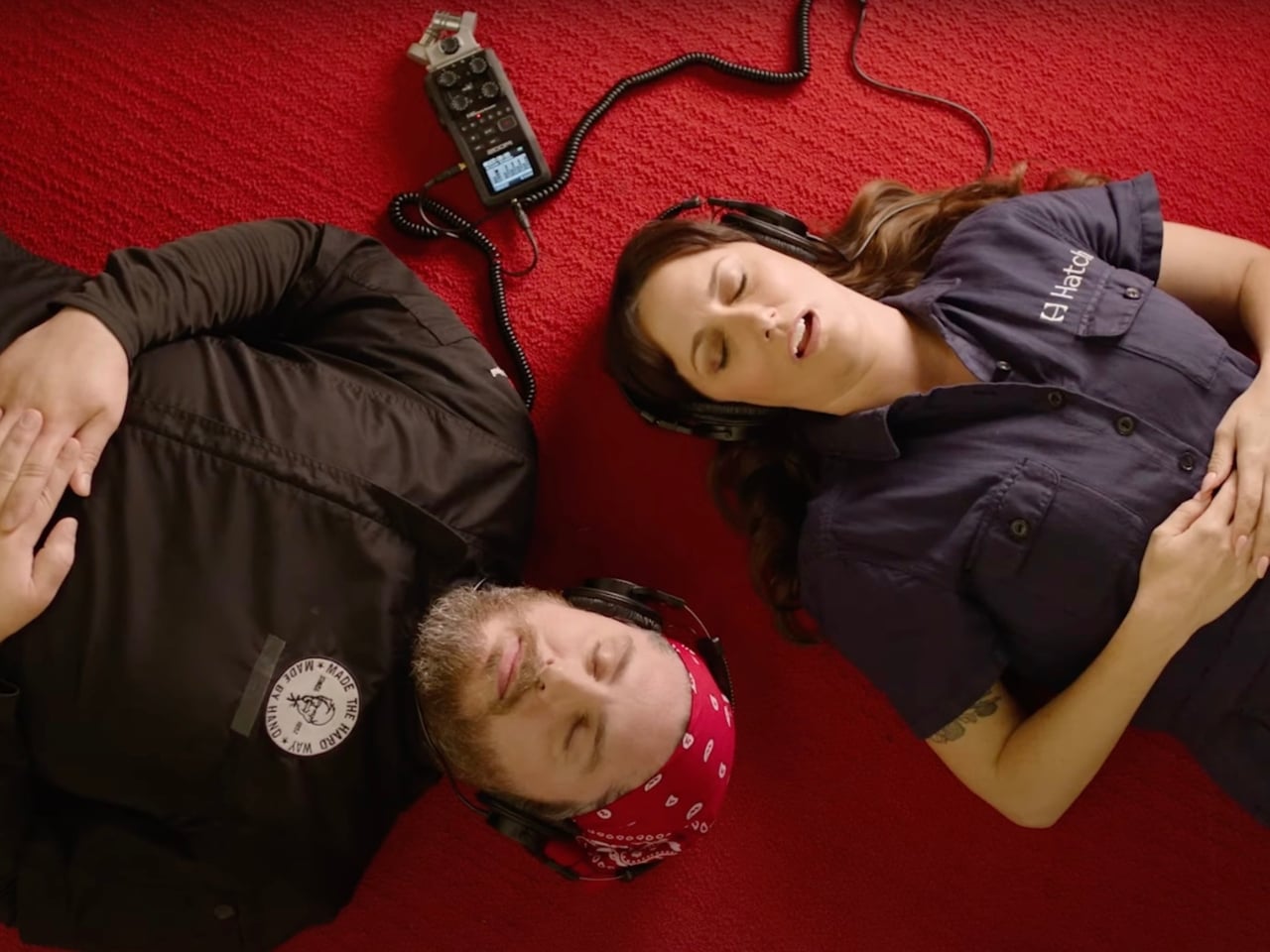
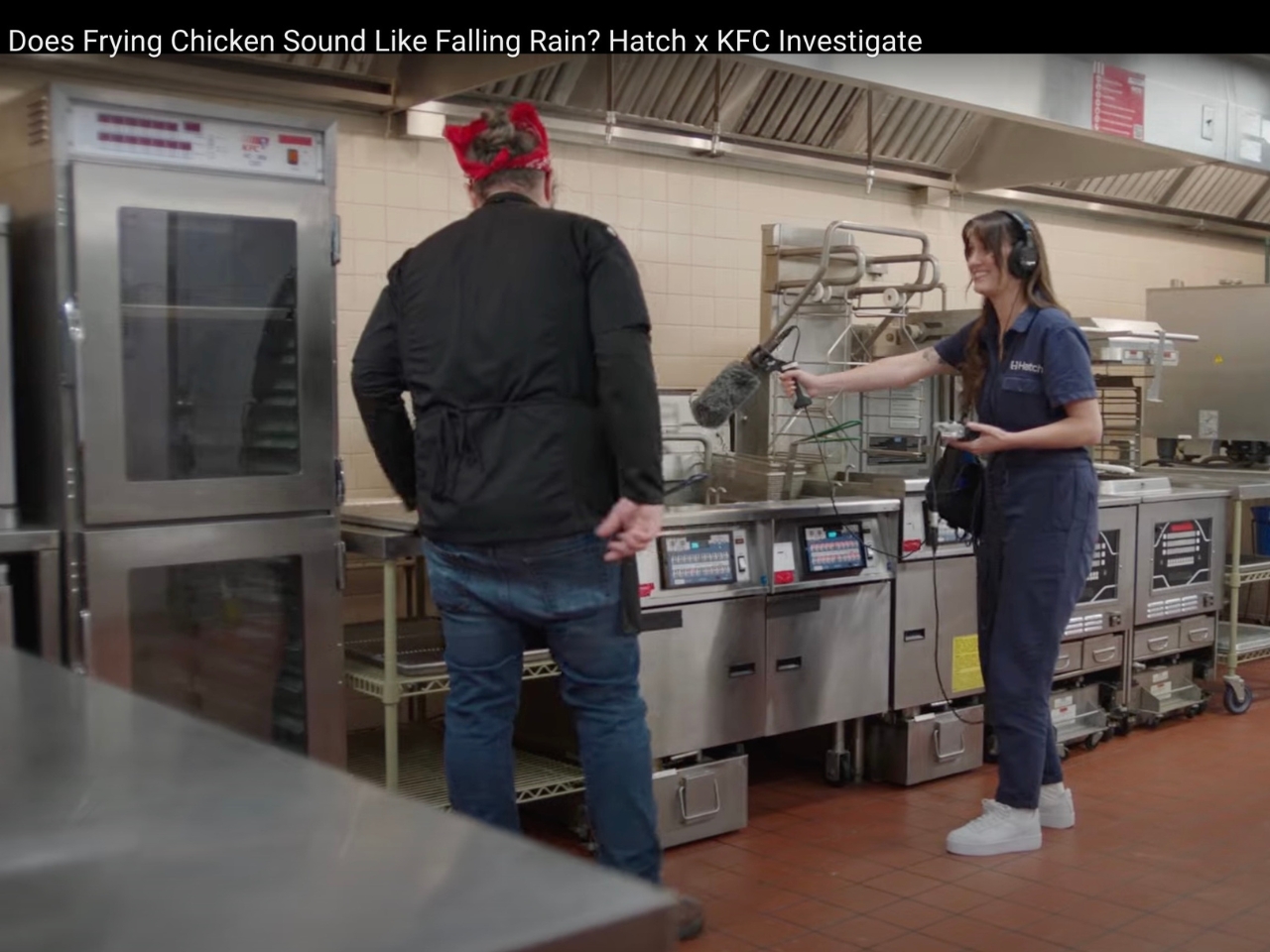
Hatch, a sleep wellness company, has partnered with probably the most popular fried chicken brand, KFC, to come up with new content that you can sleep to. Based on their “investigation” conducted at the KFC headquarters in Louisville, Kentucky, they have come up with 20 minutes of audio which you cannot distinguish if it’s frying chicken or falling rain. There’s a funny, behind-the-scenes video of a Hatch investigator recording the KFC guy deep frying chicken to prove that it is the same sound as falling rain.

The brand partnership content is actually to promote KFC’s new Original Recipe® Tenders. The recorded sound is apparently them frying these tenders and now people can drift off to sleep and maybe dream of eating chicken while they’re at it. The sound is available in Hatch’s Restore 2 smart sleep device if you have a Hatch+ premium content subscription. But you can also find it on both Hatch’s and KFC’s YouTube channels and the Hatch for Sleep Spotify page.

And if you’re really into this thing, there’s even a limited-edition Hatch X KFC Sleep Shirt with “Fell asleep to fried chicken” on it that you can buy at KFC’s online store. Too bad though, you still won’t get the secret recipe of 11 herbs and spices even if you fall asleep to the sound of frying chicken.

The post Hatch partners with KFC to create frying chicken ASMR first appeared on Yanko Design.

Major Samsung Update for Galaxy Phones: What’s New?

Samsung Galaxy

Samsung has recently released a significant software update for its Galaxy phone lineup, bringing a host of improvements and new features to enhance the user experience. This update aims to strengthen security measures, refine existing functionalities, and introduce new capabilities across various applications and services. As a Galaxy user, these enhancements will help ensure that […]

The post Major Samsung Update for Galaxy Phones: What’s New? appeared first on Geeky Gadgets.

Why Visual Thinking Inspires Clear and Powerful Strategies

visual models for strategic insight

Imagine trying to explain a complex idea to your team, only to be met with blank stares and confusion. We’ve all been there, struggling to bridge the gap between our thoughts and others’ understanding. This is where visual thinking comes into play, transforming abstract concepts into clear, engaging narratives that everyone can grasp. Leadership expert […]

The post Why Visual Thinking Inspires Clear and Powerful Strategies appeared first on Geeky Gadgets.

Posted in Uncategorized | Tagged

Meater’s Pro Duo keeps tabs on grill temps with two smart probes and Wi-Fi

Wireless food probes come in handy on the grill, allowing you to maneuver as needed without a maze of cables to navigate. In the case of Meater's recent products, these devices let you keep tabs on both food and ambient grill temperatures simultaneously. There's no doubting their utility, but often you need more than one to get the job done. Sometimes you need to cook steaks to different temperatures or accurately monitor the breast and thigh of your Thanksgiving turkey, for example. Meater already offers a four-probe option with the Pro XL, but it's $349.95, and might be overkill for some backyard cooks.

Today, the Traeger-owned company debuted the Meater Pro Duo, a dual-probe model that swaps Bluetooth for Wi-Fi to extend wireless range. The charger connects to your home network and then to Meater Cloud, which will allow you to monitor food and grill temps from anywhere on your phone. This dock also features its own battery (charges using USB-C), so you don't have to worry about swapping out batteries. As before, Meater says fully charged probes can last for up to 24 hours, which is more than enough for even the longest brisket cooks. If you do find yourself in a pinch, a five-minute charge will give you two hours of use. 

Meater has once again opted for stainless steel probes, and both have six temperature sensors (five internal, one ambient). These components allow the probes to withstand searing temperatures up to 1000 degrees Fahrenheit. The company says the internal sensors work up to 221 degrees Fahrenheit and are accurate to half a degree. Similar to previous Meater models, the probes are waterproof, which means you can use them for deep frying and sous vide. But, more importantly, it also means they're dishwasher safe. 

The Pro Duo probes send cooking data to Meater's app, which allows you to monitor progress on your phone. The software offers a number of cooking profiles based on the food you're preparing and a guided cooking system can walk you through every step of the process. There's also an estimator algorithm at work here, providing a calculation as to when your food will be ready (including rest time). 

The Meater Pro Duo is available now for pre-order for $199.95 from the company's website. Shipments begin November 15.

This article originally appeared on Engadget at https://www.engadget.com/home/kitchen-tech/meaters-pro-duo-keeps-tabs-on-grill-temps-with-two-smart-probes-and-wi-fi-134530562.html?src=rss

Meater’s Pro Duo keeps tabs on grill temps with two smart probes and Wi-Fi

Wireless food probes come in handy on the grill, allowing you to maneuver as needed without a maze of cables to navigate. In the case of Meater's recent products, these devices let you keep tabs on both food and ambient grill temperatures simultaneously. There's no doubting their utility, but often you need more than one to get the job done. Sometimes you need to cook steaks to different temperatures or accurately monitor the breast and thigh of your Thanksgiving turkey, for example. Meater already offers a four-probe option with the Pro XL, but it's $349.95, and might be overkill for some backyard cooks.

Today, the Traeger-owned company debuted the Meater Pro Duo, a dual-probe model that swaps Bluetooth for Wi-Fi to extend wireless range. The charger connects to your home network and then to Meater Cloud, which will allow you to monitor food and grill temps from anywhere on your phone. This dock also features its own battery (charges using USB-C), so you don't have to worry about swapping out batteries. As before, Meater says fully charged probes can last for up to 24 hours, which is more than enough for even the longest brisket cooks. If you do find yourself in a pinch, a five-minute charge will give you two hours of use. 

Meater has once again opted for stainless steel probes, and both have six temperature sensors (five internal, one ambient). These components allow the probes to withstand searing temperatures up to 1000 degrees Fahrenheit. The company says the internal sensors work up to 221 degrees Fahrenheit and are accurate to half a degree. Similar to previous Meater models, the probes are waterproof, which means you can use them for deep frying and sous vide. But, more importantly, it also means they're dishwasher safe. 

The Pro Duo probes send cooking data to Meater's app, which allows you to monitor progress on your phone. The software offers a number of cooking profiles based on the food you're preparing and a guided cooking system can walk you through every step of the process. There's also an estimator algorithm at work here, providing a calculation as to when your food will be ready (including rest time). 

The Meater Pro Duo is available now for pre-order for $199.95 from the company's website. Shipments begin November 15.

This article originally appeared on Engadget at https://www.engadget.com/home/kitchen-tech/meaters-pro-duo-keeps-tabs-on-grill-temps-with-two-smart-probes-and-wi-fi-134530562.html?src=rss

Election 2024: What will the candidates do about the digital divide?

The US presidential election is in its final stretch. Before election day on November 5, Engadget is looking at where the candidates, Kamala Harris and Donald Trump, stand on the most consequential tech issues of our day.

Broadband access in poorer and more rural communities has been a major campaign issue since 2008. Bridging the digital divide was a key component of Barack Obama’s platform. And, while far from perfect, his administration did a lot of work to grow the nation’s fiber-optic infrastructure, free up wireless spectrum and expand access to subsidies for low-income families. While successive administrations have promised to continue the work of bringing high-speed internet to the most underserved communities, the results have been disappointing. Both Kamala Harris and Donald Trump have pledged to get Americans online, but political realities will make that goal difficult.

During the Biden administration, Harris has acted as a sort of unofficial broadband czar (similar to her other unofficial titles of AI czar and border czar). This means she is deeply involved with and expected to carry forward the current administration’s policies. That could give her a chance to salvage some sort of positive legacy from what is currently a rather spotty track record for Biden on broadband.

Under President Biden, the White House secured roughly $90 billion to close the digital divide, $42.5 billion of that specifically for BEAD, the Broadband Equity, Access and Deployment program. This gives states money to fund the planning and buildout of broadband infrastructure, whether that be running new fiber to rural areas, installing Wi-Fi in low-income apartment complexes or training workers for new careers in telecommunications. Unfortunately, BEAD has been hampered by numerous delays, and very little of the money has actually been doled out. Virginia only received initial approval for access to $1.48 billion in funding in late July, despite having been first to file a request in September of 2023.

There is plenty of blame to go around for the slow and messy rollout of BEAD, but conservatives have been able to successfully turn it into a weapon against Harris. Stringent requirements around environmental impact, labor practices and affordable access have made BEAD an easy target for Republicans who see regulation and bureaucracy as the enemy of freedom and economic growth.

The NTIA (National Telecommunications and Information Administration), which administers BEAD, has found itself on the defensive, claiming the program is on track. Though, it’s unlikely any projects funded by BEAD will break ground until well into 2025 if not later.

As an outgrowth of the Infrastructure Investment and Jobs Act, BEAD is a key part of President Biden’s (and by extension Vice President Harris’) legacy. A focus for a Harris administration will likely be speeding up the distribution of BEAD funds and accelerating the groundbreaking on projects like fiberoptic and 5G infrastructure. But it’s unlikely there will be dramatic policy shifts under her leadership.

Similar to President Biden, Donald Trump made grand promises about expanding access to broadband, especially for rural communities, but largely failed to deliver. Not only that, but Democrats managed to turn that failure into a campaign weapon against him in 2020.

Under Trump and Ajit Pai, the FCC launched the Rural Digital Opportunity Fund, which promised $20.4 billion to expand rural broadband. However, it was merely a rebrand of an existing subsidy program established under Obama. The Trump administration’s efforts beyond that were far more modest than those of the Biden or Obama eras, and included initiatives like investing $1.3 billion through the Agriculture Department’s ReConnect Program.

Neither Trump nor the RNC have much to say about rural broadband or the digital divide this time around. That could suggest another term would again be defined by small-scale investments rather than large infrastructure programs. While the Trump campaign has tried to distance itself from Project 2025, the document was drafted by a number of people in Trump’s orbit, including former staffers. So, it’s not a stretch to assume he might adopt some, if not many, of its policies.

That document focuses largely on what can be seen as one of the Trump administration’s wins on the technology front: 5G. Project 2025 calls for freeing up additional spectrum for wireless broadband and streamlining the permitting process. It calls for the FCC to pursue an aggressive strategy for freeing up the airwaves and selling them to commercial interests. It also, unsurprisingly, calls for scaling back regulations regarding things like environmental impact and restrictions on building on federal lands in hopes of spurring the construction of more cell sites. It also wants to speed up the approval process for satellite providers, like StarLink, which it sees as vital to America’s economic and national security interests.

Project 2025 calls for these efforts to be consolidated as part of a national broadband strategy. It cites a Government Accountability Office report from 2022, which states there are “over 100 programs administered by 15 agencies” as evidence of mismanagement and a potential for waste.

This article originally appeared on Engadget at https://www.engadget.com/big-tech/election-2024-what-will-the-candidates-do-about-the-digital-divide-133045561.html?src=rss
Election 2024: What will the candidates do about the digital divide?

The US presidential election is in its final stretch. Before election day on November 5, Engadget is looking at where the candidates, Kamala Harris and Donald Trump, stand on the most consequential tech issues of our day.

Broadband access in poorer and more rural communities has been a major campaign issue since 2008. Bridging the digital divide was a key component of Barack Obama’s platform. And, while far from perfect, his administration did a lot of work to grow the nation’s fiber-optic infrastructure, free up wireless spectrum and expand access to subsidies for low-income families. While successive administrations have promised to continue the work of bringing high-speed internet to the most underserved communities, the results have been disappointing. Both Kamala Harris and Donald Trump have pledged to get Americans online, but political realities will make that goal difficult.

During the Biden administration, Harris has acted as a sort of unofficial broadband czar (similar to her other unofficial titles of AI czar and border czar). This means she is deeply involved with and expected to carry forward the current administration’s policies. That could give her a chance to salvage some sort of positive legacy from what is currently a rather spotty track record for Biden on broadband.

Under President Biden, the White House secured roughly $90 billion to close the digital divide, $42.5 billion of that specifically for BEAD, the Broadband Equity, Access and Deployment program. This gives states money to fund the planning and buildout of broadband infrastructure, whether that be running new fiber to rural areas, installing Wi-Fi in low-income apartment complexes or training workers for new careers in telecommunications. Unfortunately, BEAD has been hampered by numerous delays, and very little of the money has actually been doled out. Virginia only received initial approval for access to $1.48 billion in funding in late July, despite having been first to file a request in September of 2023.

There is plenty of blame to go around for the slow and messy rollout of BEAD, but conservatives have been able to successfully turn it into a weapon against Harris. Stringent requirements around environmental impact, labor practices and affordable access have made BEAD an easy target for Republicans who see regulation and bureaucracy as the enemy of freedom and economic growth.

The NTIA (National Telecommunications and Information Administration), which administers BEAD, has found itself on the defensive, claiming the program is on track. Though, it’s unlikely any projects funded by BEAD will break ground until well into 2025 if not later.

As an outgrowth of the Infrastructure Investment and Jobs Act, BEAD is a key part of President Biden’s (and by extension Vice President Harris’) legacy. A focus for a Harris administration will likely be speeding up the distribution of BEAD funds and accelerating the groundbreaking on projects like fiberoptic and 5G infrastructure. But it’s unlikely there will be dramatic policy shifts under her leadership.

Similar to President Biden, Donald Trump made grand promises about expanding access to broadband, especially for rural communities, but largely failed to deliver. Not only that, but Democrats managed to turn that failure into a campaign weapon against him in 2020.

Under Trump and Ajit Pai, the FCC launched the Rural Digital Opportunity Fund, which promised $20.4 billion to expand rural broadband. However, it was merely a rebrand of an existing subsidy program established under Obama. The Trump administration’s efforts beyond that were far more modest than those of the Biden or Obama eras, and included initiatives like investing $1.3 billion through the Agriculture Department’s ReConnect Program.

Neither Trump nor the RNC have much to say about rural broadband or the digital divide this time around. That could suggest another term would again be defined by small-scale investments rather than large infrastructure programs. While the Trump campaign has tried to distance itself from Project 2025, the document was drafted by a number of people in Trump’s orbit, including former staffers. So, it’s not a stretch to assume he might adopt some, if not many, of its policies.

That document focuses largely on what can be seen as one of the Trump administration’s wins on the technology front: 5G. Project 2025 calls for freeing up additional spectrum for wireless broadband and streamlining the permitting process. It calls for the FCC to pursue an aggressive strategy for freeing up the airwaves and selling them to commercial interests. It also, unsurprisingly, calls for scaling back regulations regarding things like environmental impact and restrictions on building on federal lands in hopes of spurring the construction of more cell sites. It also wants to speed up the approval process for satellite providers, like StarLink, which it sees as vital to America’s economic and national security interests.

Project 2025 calls for these efforts to be consolidated as part of a national broadband strategy. It cites a Government Accountability Office report from 2022, which states there are “over 100 programs administered by 15 agencies” as evidence of mismanagement and a potential for waste.

This article originally appeared on Engadget at https://www.engadget.com/big-tech/election-2024-what-will-the-candidates-do-about-the-digital-divide-133045561.html?src=rss

Top Android Apps to Download in November 2024

Android Apps

As an Android user, you’re always on the lookout for apps that can enhance your device’s functionality and customization options. This November, a wealth of new apps has emerged, offering innovative solutions ranging from privacy-focused tools to task automation features. Let’s take a closer look at the top Android apps you should consider downloading to make the most […]

The post Top Android Apps to Download in November 2024 appeared first on Geeky Gadgets.

Split-flap mechanical clock puts a dynamic piece of pixel art on your wall

As if constantly checking the time wasn’t distracting enough, having a clock that encourages you to look at it all the time spells trouble for your productivity. Riding the retro wave, this clock brings the popular pixel graphics design of yesteryears to your living space. Waiting for the clock hands to “turn” almost becomes a tense waiting game, and you probably end up losing more time just by watching it.

Klapklok, however, is more than just a quirky-looking clock. It’s also a unique audiovisual experience that brings delight to the senses at the turning of the hour. It makes time feel more dynamic and palpable, perhaps creating a stronger relationship to the concept of time compared to just passively looking at a regular clock, no matter how beautiful that might be.

Designer: Miniot

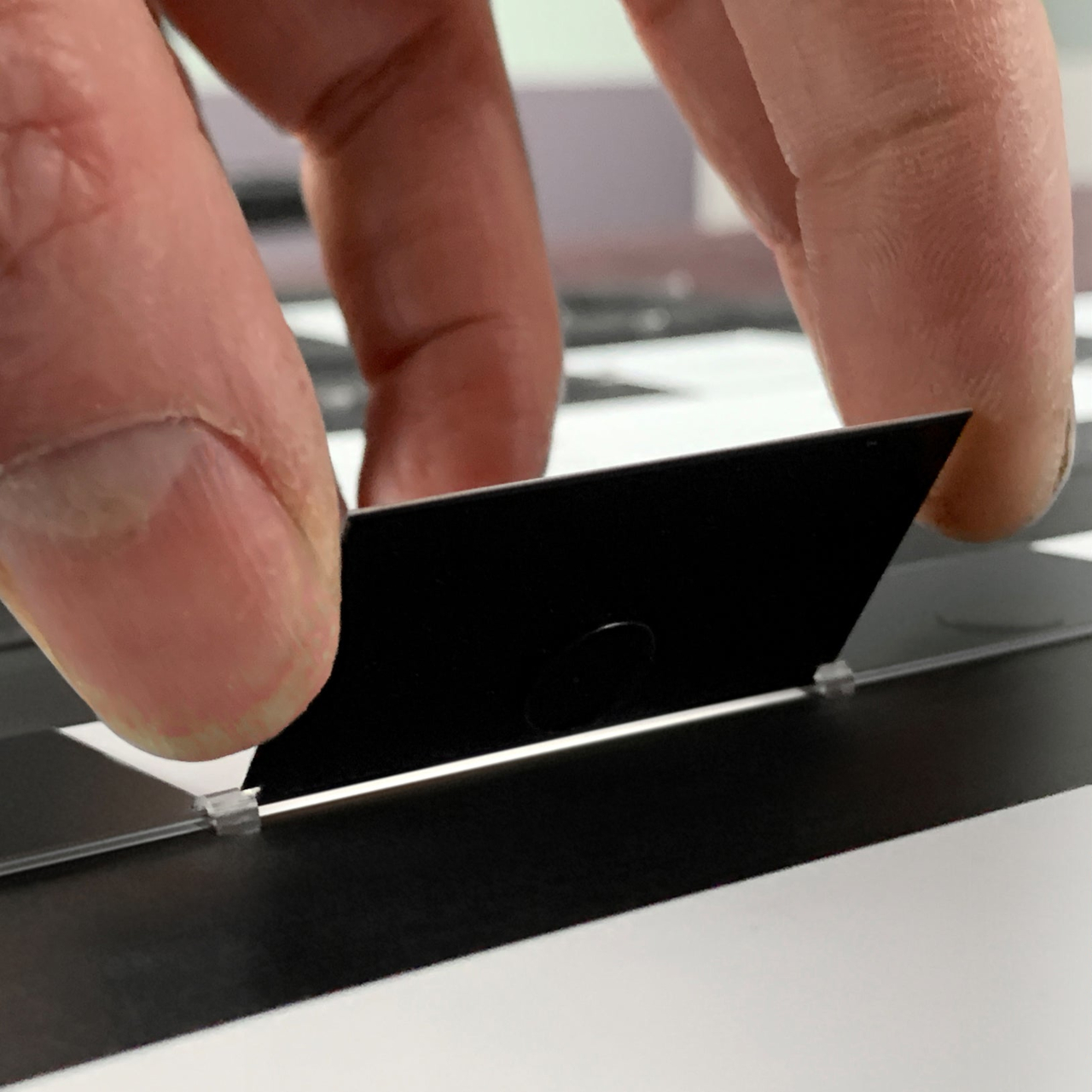
The split-flap mechanism used by old clocks and scoreboards is itself a blast from the past, but this clock employs it in a way that combines it with another retro design convention. Using 69 elements, the Klapklok creates what is practically a giant pixelated rounded square, where each “pixel” flips from white to black and vice-versa. Of course, the movement is anything but random, and the hands of the clock “move” every 2.5 minutes to tell the time.

The movement of the flaps is subtle but not altogether silent. It’s more like a gentle whisper than a rigid clank. Every hour, all 69 flaps quickly change to display the time as a number, creating a peaceful rustle like the flapping of butterfly wings. Despite the mechanical visual of flipping surfaces, the overall effect is more calming, almost mesmerizing.

It might all look simple, but this wonder clock is carefully handcrafted using premium materials. The base is milled out of high-performance bio polyurethane, while flaps are made from a paper-like yet durable composite material. The hinges are completely transparent to disappear from view and a metal USB-C cable for power perfectly complements the design, even if it’s always visible.

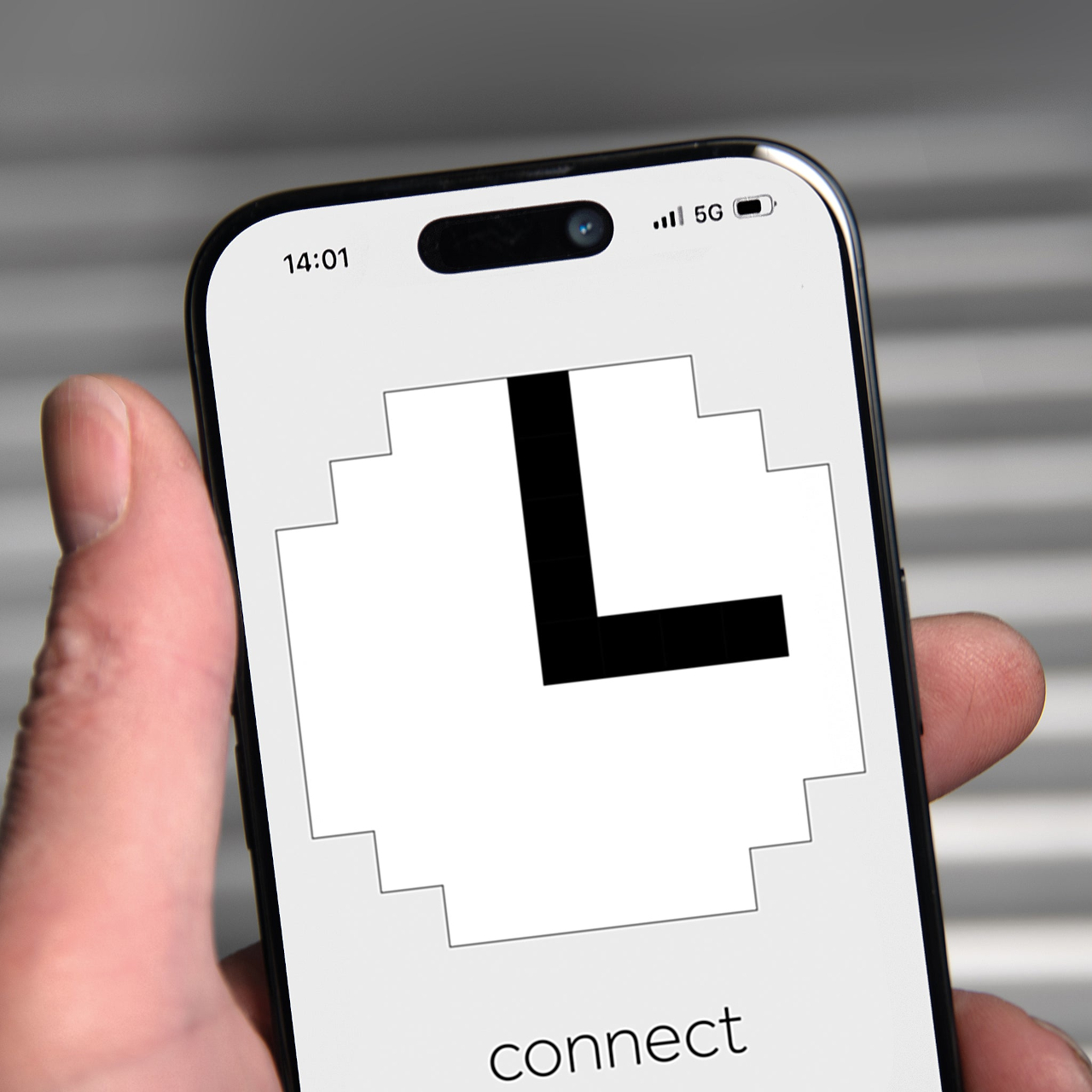
While its primary purpose is to tell time, Klapklok can also be used as a pixel art display. A smartphone app lets owners draw on that rounded square canvas, utilizing those 69 elements to show an icon or letters. It’s a fun and engaging feature that makes the clock useful even after you’ve grown tired of being distracted by its tempting design.

The post Split-flap mechanical clock puts a dynamic piece of pixel art on your wall first appeared on Yanko Design.