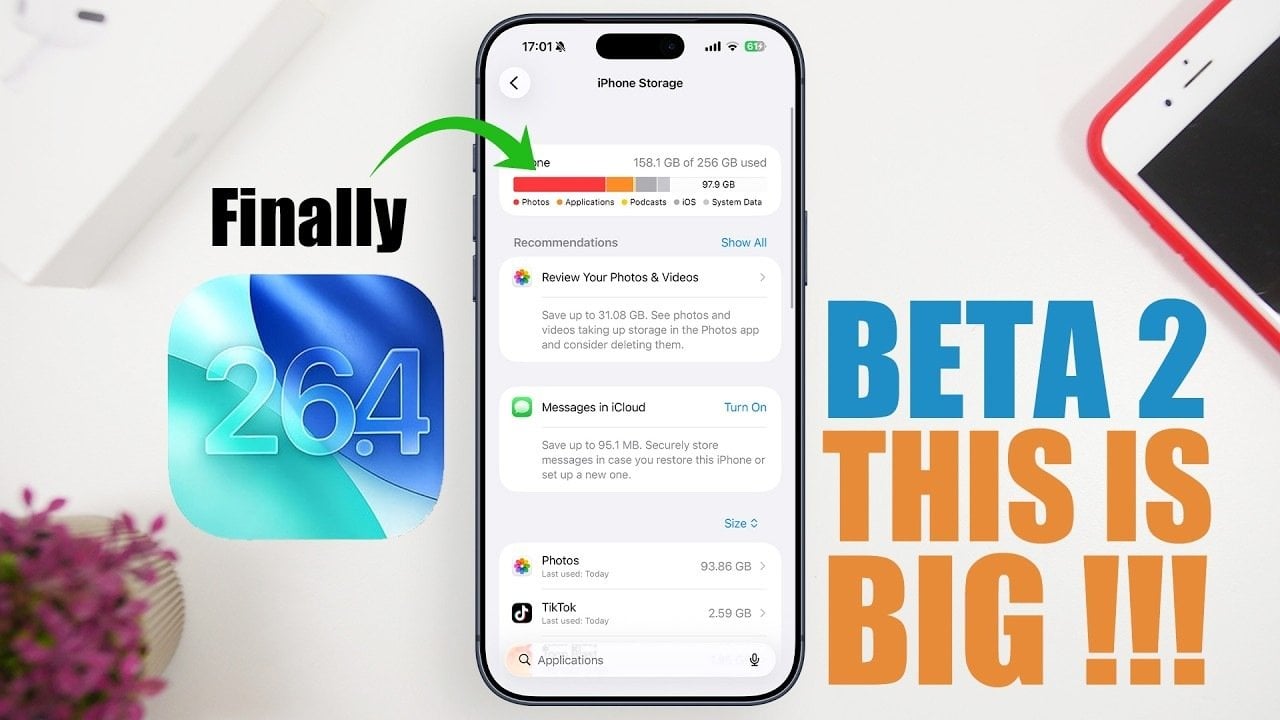
iOS 26.4 Beta 2 vs Beta 1: Better Battery, Minor Lag, Mid-March Target

iOS 26.4 Beta 2 vs Beta 1: Better Battery, Minor Lag, Mid-March Target Performance view showing improved memory handling on iOS 26.4 Beta 2, alongside notes about occasional app freezes.

iOS 26.4 Beta 2 brings incremental improvements to performance and battery life, as highlighted by Phones & Drones. One notable enhancement is the unified search bar in the App Store, which simplifies navigation and reduces unnecessary steps for users. While these updates demonstrate Apple’s focus on refining usability and efficiency, some persistent issues, such as […]

The post iOS 26.4 Beta 2 vs Beta 1: Better Battery, Minor Lag, Mid-March Target appeared first on Geeky Gadgets.

Posted in Uncategorized

The best Wi-Fi extenders in 2026

Weak Wi-Fi can turn everyday tasks into small frustrations, whether it’s a video call that drops mid-sentence or a stream that refuses to load in certain rooms. If upgrading your router isn’t an option, a Wi-Fi extender can be a practical way to stretch your existing network farther and smooth out coverage gaps — without rewiring your home or rearranging furniture.

Today’s Wi-Fi extenders range from simple plug-in repeaters to more advanced models that behave like miniature access points or mesh nodes. Some are best suited for extending coverage to a single room, while others are designed to preserve faster speeds across larger spaces. Choosing the right one depends on your home’s layout, your internet plan and how much performance you’re willing to trade for convenience.

We’ve tested a variety of Wi-Fi extenders to find the best options for different budgets and setups, from affordable fixes for small dead zones to higher-end models built to handle heavier traffic and faster connections.

These handy wireless devices do exactly what their name suggests: extend your Wi-Fi network so it covers more areas of your home. Most wireless extenders plug into an AC outlet and connect to your existing router so they can then rebroadcast it to spots that your router alone may not cover well. As a rule of thumb, you’ll get the best results by placing the extender half way between your router and the dead zone you’re trying to fix or improve your W-Fi connection and strengthen the wireless signal.

One important thing to note about Wi-Fi range extenders (also sometimes called “repeaters”) is that most of them actually create a new Wi-Fi network when rebroadcasting your existing one. That network will have a new name (it’ll often be your default network’s name with an EXT appended at the end, unless you change it) and that means you’ll have to connect to different networks when in different parts of your home. While that’s a small tradeoff in return for improved internet connection, some will be more inconvenienced than others.

If you’d rather have one, much larger network in your home, you’re better off upgrading to mesh networking systems. Mesh systems come with a main router and a wireless access point or two that, by default, create one large Wi-Fi system that should be accessible throughout your whole home. They tend to be the best Wi-Fi routers you can get, but that also translates to more expensive, and possibly more complicated, devices. Mesh Wi-Fi systems are, by far, more costly than a simple extender, plus you may have to work with your internet service provider to get your home’s existing network working on your new router.

Extenders today can support single, dual or tri-band Wi-Fi, and they will tell you the maximum speeds they support on all of their available bands. For example, one dual-band device might support 600Mbps speeds over its 2.4GHz band and up to 1300Mbps over its 5GHz band, for a combined maximum speed of 1900Mbps. For the best performance, you’ll want to go with a Wi-Fi extender that has the highest speeds possible (and those, as you might expect, tend to cost more). Some extenders even support Wi-Fi 7, giving you the latest in wireless technology for higher bandwidth, faster internet speed and lower latency.

However, it’s important to remember that Wi-Fi extenders are not true “signal boosters” since they are not designed to increase speeds across your home. In fact, you may find that the extender’s network is slower than your router’s. Instead, extenders are designed to increase the strong Wi-Fi coverage throughout your home, making them ideal for filling in dead zones. Some mesh extenders can help create a more seamless network, reducing the drop in speed and improving connectivity in larger spaces.

With the name of the gaming being coverage area, taking note of a device’s range is important. Depending on the size of your home and property, you may only need up to 1,200 square feet of coverage. But those with larger homes will want to spring for an extender that can support upwards of 2,000+ square feet of coverage.

Similarly, those with lots of gadgets will want an extender that can handle them all at once. If you spend most of your time on your phone or laptop and maybe have your smart TV online for a few hours of Netflix each day, you could get by with a more limited extender. Smart home aficionados and tech lovers should invest in one that won’t buckle under the pressure of a few dozen connected devices. This is especially important if you plan on linking all of the devices in a certain part of your home to your Wi-Fi range extender’s network, rather than directly to your existing router. Some models with external antennas can improve performance by providing stronger, more directional wireless signal.

There isn’t a ton of innovation when it comes to design in the Wi-Fi extender space. Most of the ones you’ll find today are rounded rectangles roughly the size of your hand that plug into a standard wall outlet. They usually have a few indicator lights that will show you when the extender is connected, how strong its signal strength is and when there’s a problem, and some will even have moveable external antennas that companies claim provide even better Wi-Fi signal. Generally, they are pretty simple to install and get connected, but if you’re struggling with how to set up your Wi-Fi extender, there are plenty of YouTube videos you can check out.

Aside from that, there are the scant few standalone Wi-Fi extenders that sit on an end table or a desk, and those look pretty similar to regular ol’ routers. But make no mistake, anything labeled as an extender or a “Wi-Fi repeater” will need an anchor router in order for it to work.

Another convenient feature you’ll find on most Wi-Fi extenders is an extra Ethernet connection port (or a few). This allows you to use the extender as a wireless access point if you connect it to your existing router, or an adapter to provide devices like TVs, smart home hubs or game consoles a hardwired connection to the internet. Unsurprisingly, this wired connection usually provides you with the fastest speeds possible, so you may want to use it for your most crucial devices.

Nowadays, there’s really no difference between a Wi-Fi booster and Wi-Fi extender - they’re just different names for the same thing. Previously, however, Wi-Fi boosters were devices that received signals from wireless routers, broadcasting them to another network. This essentially extends the range of the signal. Wi-Fi extenders expand the coverage within your home’s Wi-Fi network, but often you will see extenders described as boosters.

Mesh routers, or mesh Wi-Fi systems, use multiple devices (or nodes) across your home to create a larger home network. Essentially, you have multiple routers around your home with these systems, and that will hopefully provide the best coverage possible. Wi-Fi extenders, on the other hand, are usually just one device that extends your existing Wi-Fi signal, and they often require you to switch networks when connecting. Wi-Fi extenders are more affordable, though, and are great if you’re traveling or need a Wi-Fi signal in harder-to-reach areas. However, a mesh router can offer a better long-term solution to upgrade your entire home’s Wi-Fi.

Some people may need to use multiple Wi-Fi extenders, for instance, if your home is large or has dead zones in different areas. But if you do use multiple Wi-Fi extenders, there’s a chance of interference. You may also need to manually connect to the extenders separately, which isn’t always convenient.

The maximum distance for a Wi-Fi extender varies depending on the model, but most can effectively extend your wireless signal between 800 and 2,500 square feet. Some high-end models may reach even farther, especially if they feature external antennas or are part of a mesh system with additional dedicated wireless access points.

However, keep in mind that real-world performance depends on factors like your home's layout, wall materials and interference from other devices. For best results, place your extender about halfway between your router and the area with weak or no Wi-Fi connection. Always check the manufacturer’s specs — some of our top picks clearly list their expected range so you can find one that fits your space.

This article originally appeared on Engadget at https://www.engadget.com/computing/best-wifi-extender-130021313.html?src=rss

10 Secret iPhone Tips You Need to Try in 2026

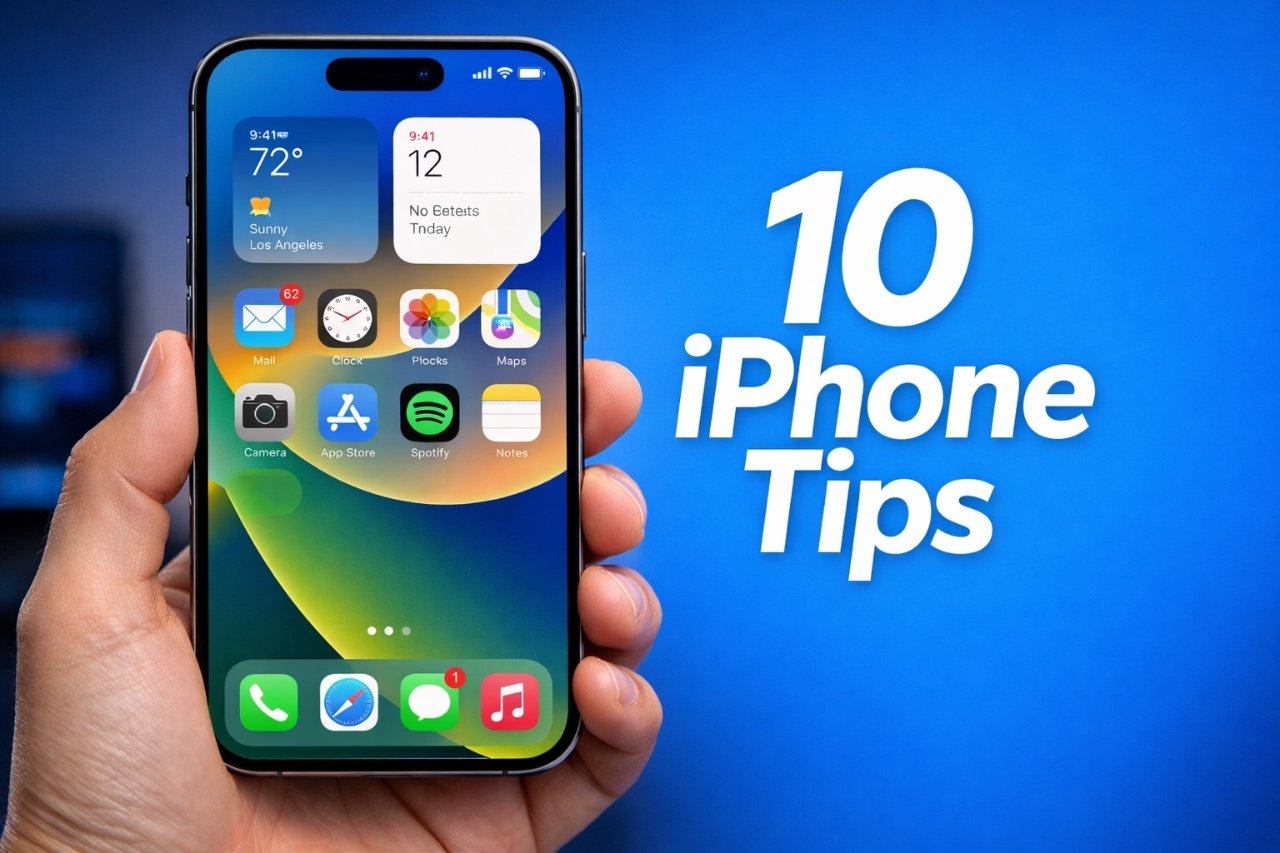
10 Secret iPhone Tips You Need to Try in 2026 10 Secret iPhone Tips

  Your iPhone is equipped with a variety of features designed to make your daily routines more efficient and enjoyable. Whether you’re organizing tasks, managing deadlines, or sharing files, these tips will help you maximize your device’s capabilities. Discover how to make your iPhone work smarter for you with these practical and time-saving strategies in […]

The post 10 Secret iPhone Tips You Need to Try in 2026 appeared first on Geeky Gadgets.

Posted in Uncategorized

These $40-$299 Cassette Players Just Crushed Spotify’s Algorithm

Somewhere between the algorithmic playlists and the infinite scroll of recommended tracks, music stopped being something you held in your hands. Cassette tapes were declared dead more than two decades ago, buried under the weight of MP3s and then streaming services that promised every song ever recorded for a monthly fee. Search trends tell a different story now, though. Queries for “retro cassette player” have surged over 125% year-over-year, while “retro walkman cassette player” has exploded by more than 1,281% in the same period.

These numbers point to something more than a passing fad or a collector’s whim. Millennials and Gen Z listeners are actively seeking hardware that forces them to slow down, to choose an album rather than shuffle through ten thousand options. The cassette, with its fixed tracklist and physical limitations, turns listening into something deliberate again. Five modern cassette players have emerged to meet that demand, each one approaching the format from a wildly different design philosophy.

FiiO CP13

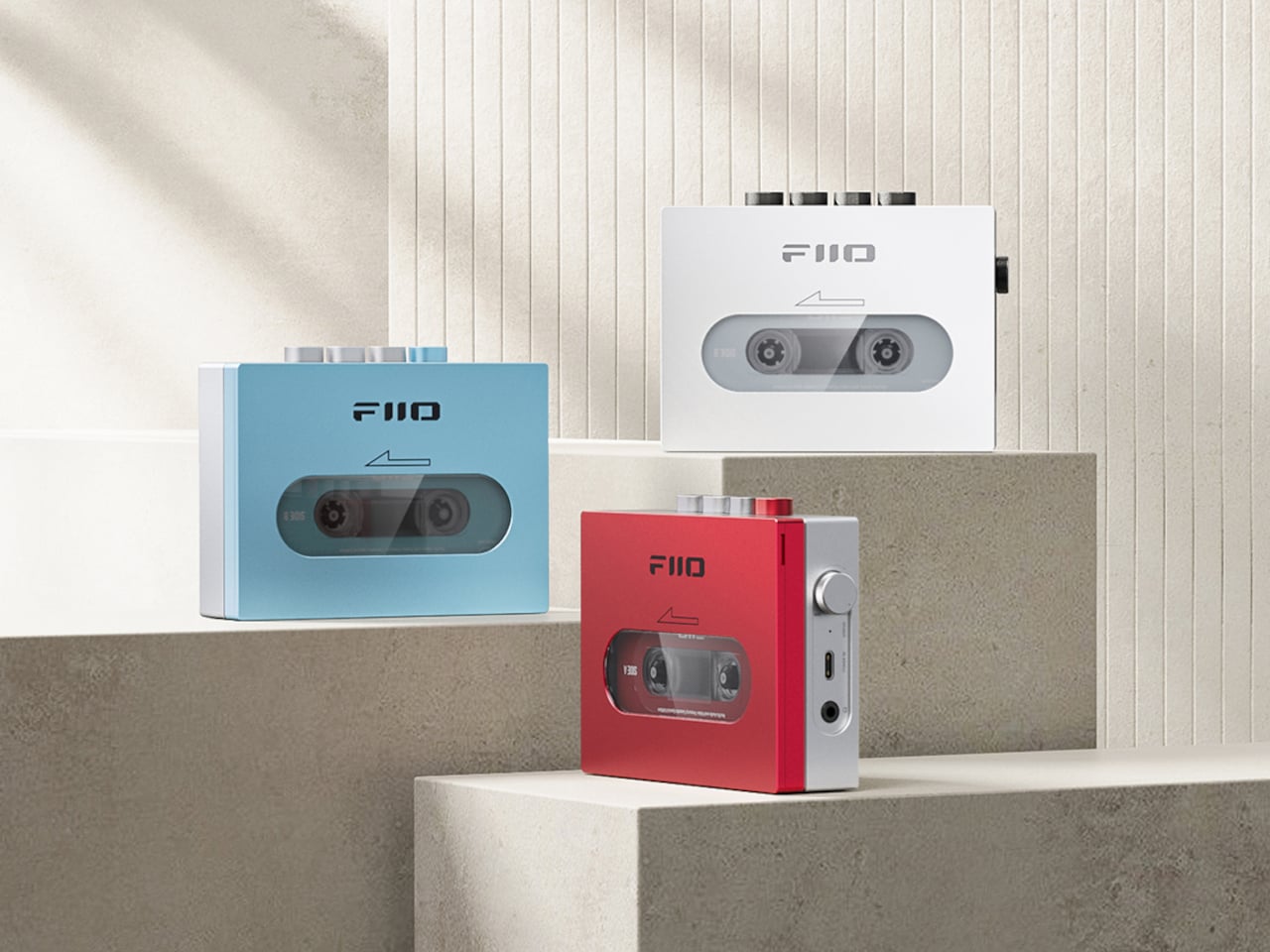
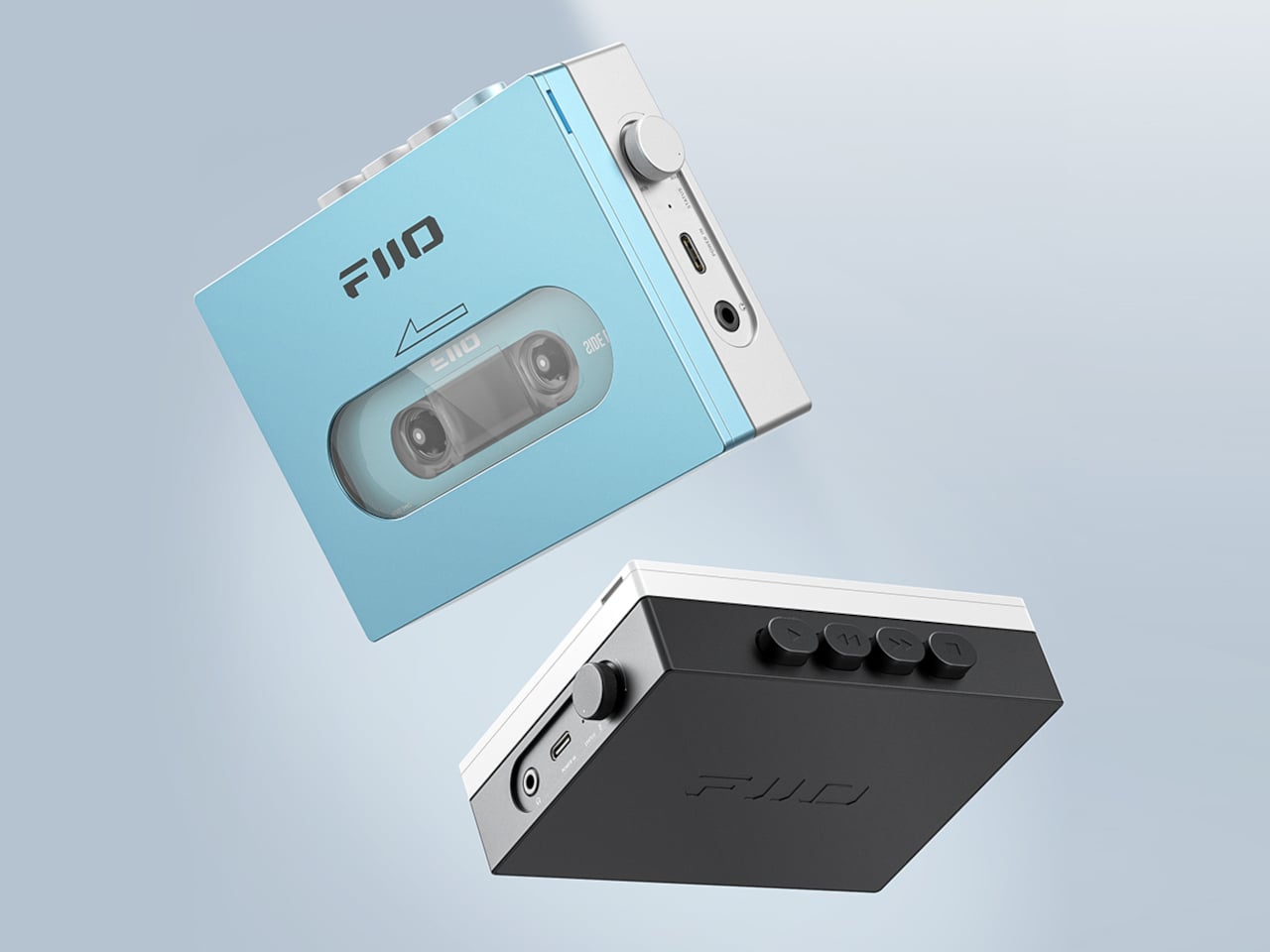
FiiO built its reputation on portable DACs and audiophile-grade headphone amplifiers, products where signal purity is the entire point. The CP13 carries that obsession into the cassette format with an all-analog signal path, from the magnetic tape head through a JRC5532 op-amp to the 3.5mm output. There is no digital conversion anywhere in the chain, no Bluetooth radio, no built-in speaker. The CP13 uses a motor with a high-voltage 4.2V power supply, paired with an oversized pure copper flywheel measuring 30.4mm in diameter.

Designer: FiiO

That flywheel is the quiet star of the CP13’s engineering. Thicker and heavier than standard components, it reduces wow and flutter to levels most modern cassette players cannot approach, keeping tape speed consistent enough for the analog signal to actually matter. The dual-color aluminum alloy chassis, available in sky blue, white and black, or red and silver, measures just 31.8mm thick. An 1800mAh lithium cobalt oxide battery delivers 13 hours of playback and charges through USB-C, though FiiO’s decision to support all tape types from Type I through Type IV suggests the company expects its buyers to own tapes worth caring about.

What we like

  • Oversized copper flywheel for low wow and flutter
  • Fully analog signal path with no digital conversion
  • Supports all cassette types (I through IV)

What we dislike

  • No Bluetooth output means wired headphones are the only option
  • No recording and auto-reverse functions,

We Are Rewind Edith

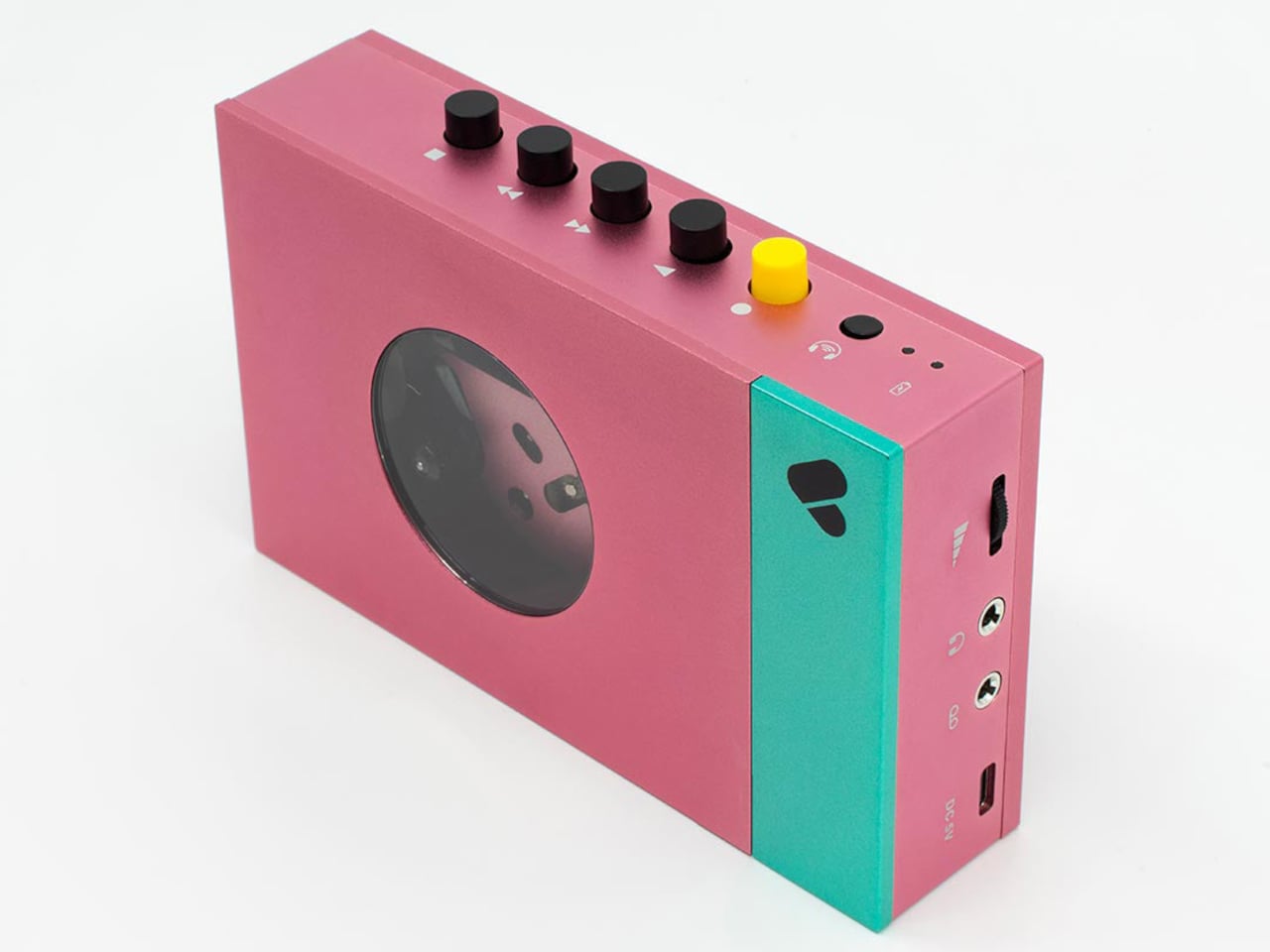
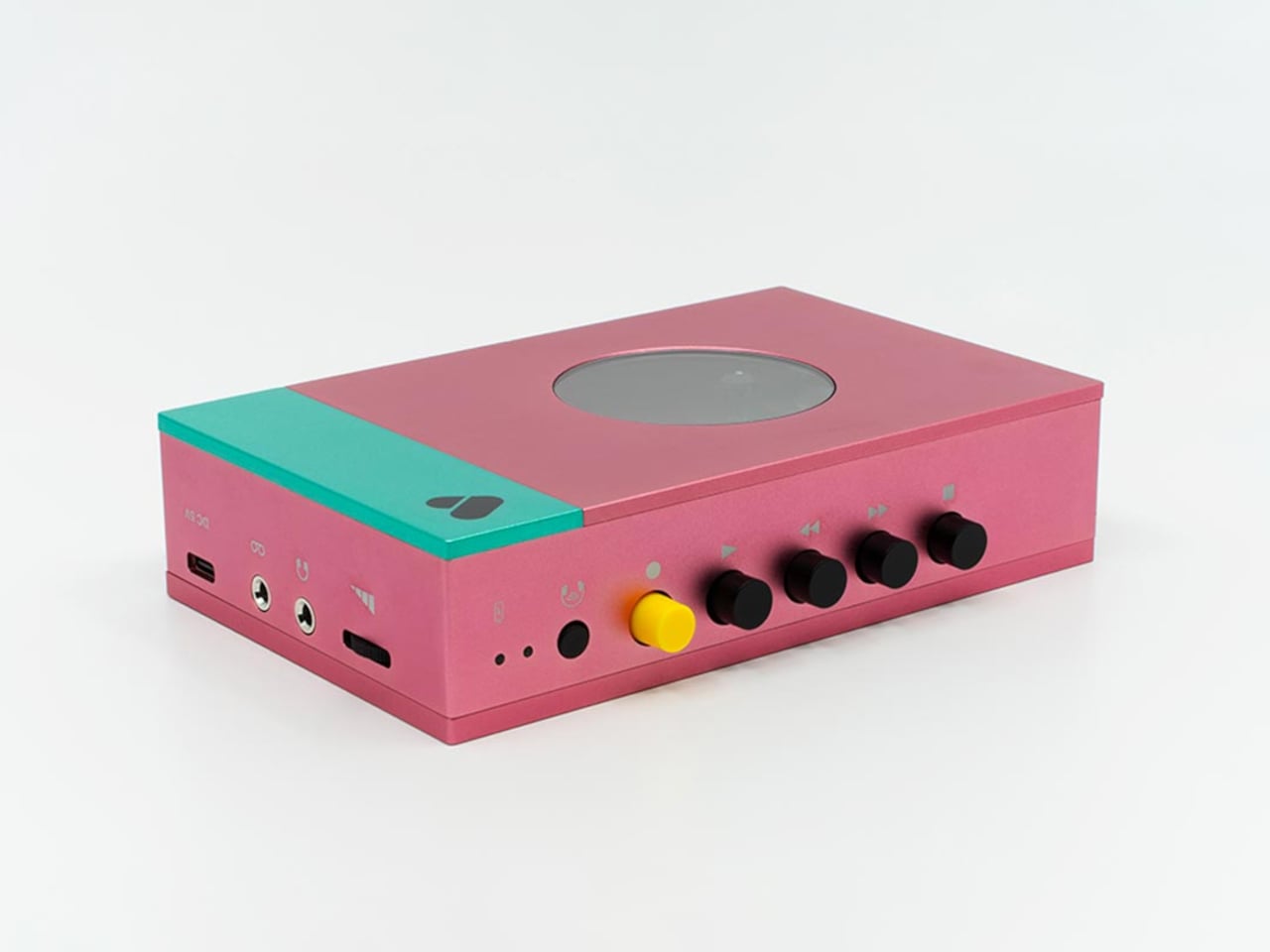
Where FiiO chases audio fidelity, the French brand We Are Rewind treats the cassette player as a cultural object first. The Edith, named after Edith Piaf, joins a lineup that already includes models named Kurt, Keith, and Serge, each one a color-coded tribute to a musician. The Edith arrives in a pink and green combination that reads less like consumer electronics and more like a fashion accessory, wrapped in an aluminum case that weighs 404 grams. That heft is deliberate. The brand explicitly references Sony’s original TPS-L2 Walkman as its design benchmark, choosing aluminum over plastic for what it describes as a “cool touch” quality.

Designer: We Are Rewind

Bluetooth 5.1 is the most visible concession to modernity, allowing wireless pairing with headphones and speakers. A built-in lithium-ion battery charges via USB-C and delivers roughly 10 to 12 hours of playback, replacing the disposable AA batteries that defined portable tape listening for decades. The Edith also records in stereo to Type I cassettes through its 3.5mm jack, and ships with a manual tape rewind pencil, a small wink to the analog rituals that streaming services have no equivalent for.

What we like

  • Aluminum case construction gives the player a premium tactile quality, making it feel like an object worth displaying
  • Bluetooth 5.1 and USB-C charging
  • Stereo recording capability through the 3.5mm jack preserves the mixtape tradition

What we dislike

  • The DC motor transport produces more wow and flutter than belt-driven alternatives
  • At 404 grams, the Edith is too heavy and too large for most pockets

NINM Lab IT’S OK TOO

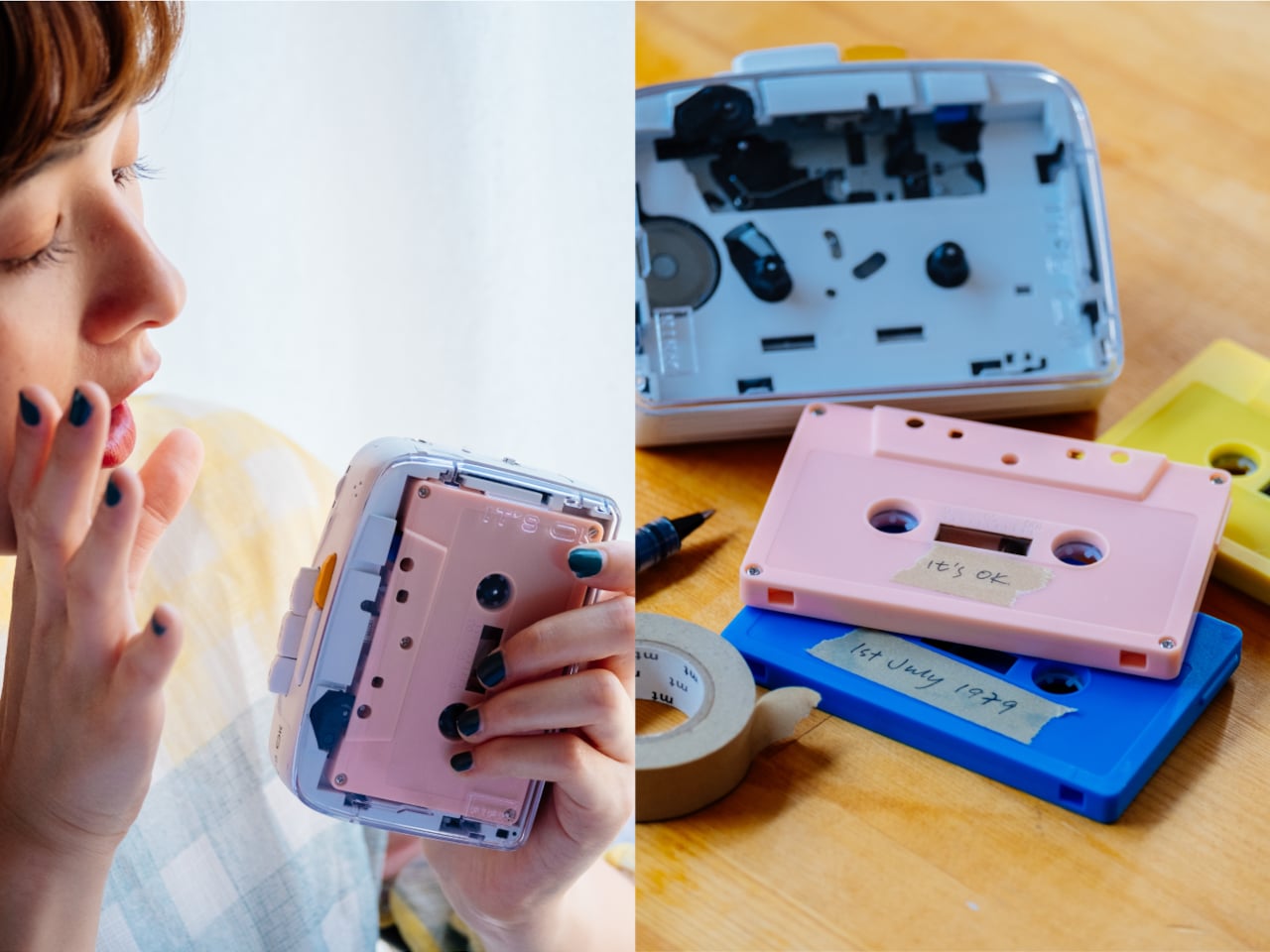
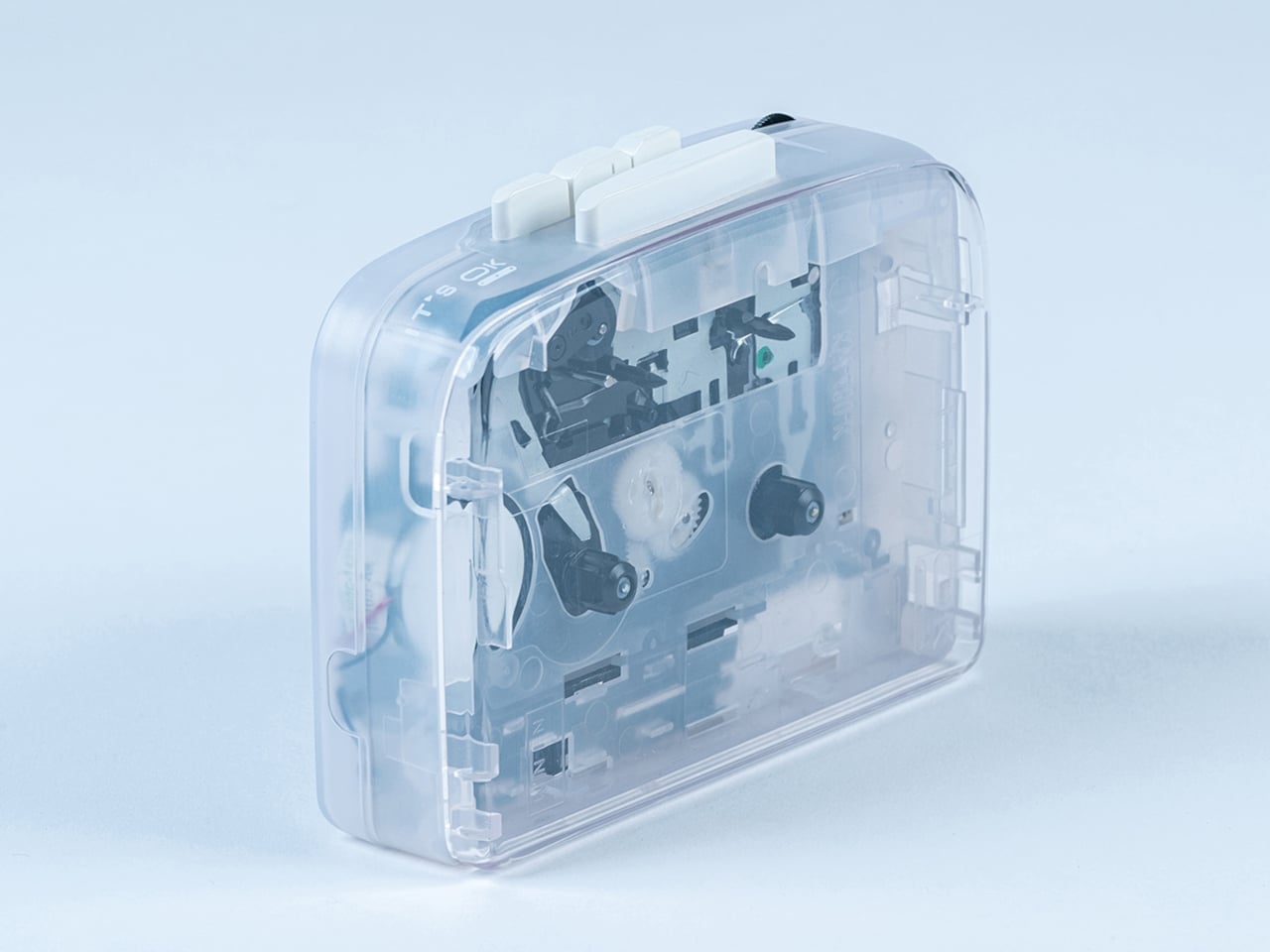
Taiwanese design studio NINM Lab launched the original IT’S OK through Kickstarter in 2019, billing it as the first cassette player with Bluetooth capability. The second generation, IT’S OK TOO, upgrades that foundation with stereo output and a semi-transparent matte body that splits the difference between full transparency and solid color. The casing is ABS plastic and polyethylene, lightweight at approximately 152g. Push-button controls for play, stop, forward, and backward line the front edge, with a classic belt clip on the back.

Designer: NINM Lab

Power comes from two AA batteries or a USB-C supply (not charging the device itself, but powering it directly), with optional USB-C charging if you install rechargeable Ni-MH batteries. The transparent design is the real design statement here, exposing the tape mechanism so the spools become a visible, moving part of the experience. The IT’S OK TOO firmly positions itself as a lifestyle product for a younger demographic that may never have owned a cassette player before.

What we like

  • Transparent body turns the tape mechanism into a visual feature
  • Bluetooth 5.0 stereo output with 3.5mm jack

What we dislike

  • Only supports Type I cassettes
  • AA battery requirement with no built-in rechargeable cell

Victrola Mini Bluetooth Boombox

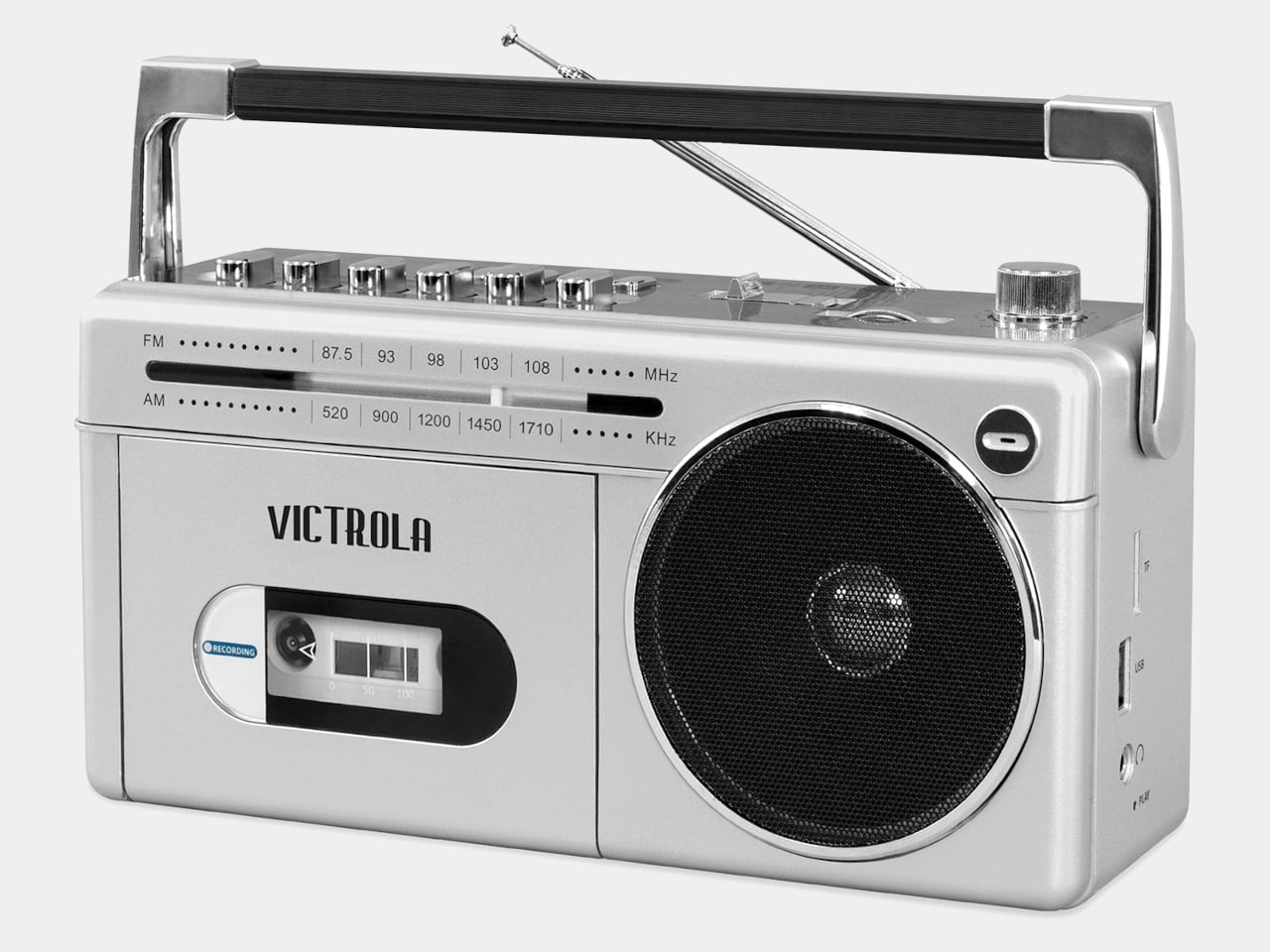
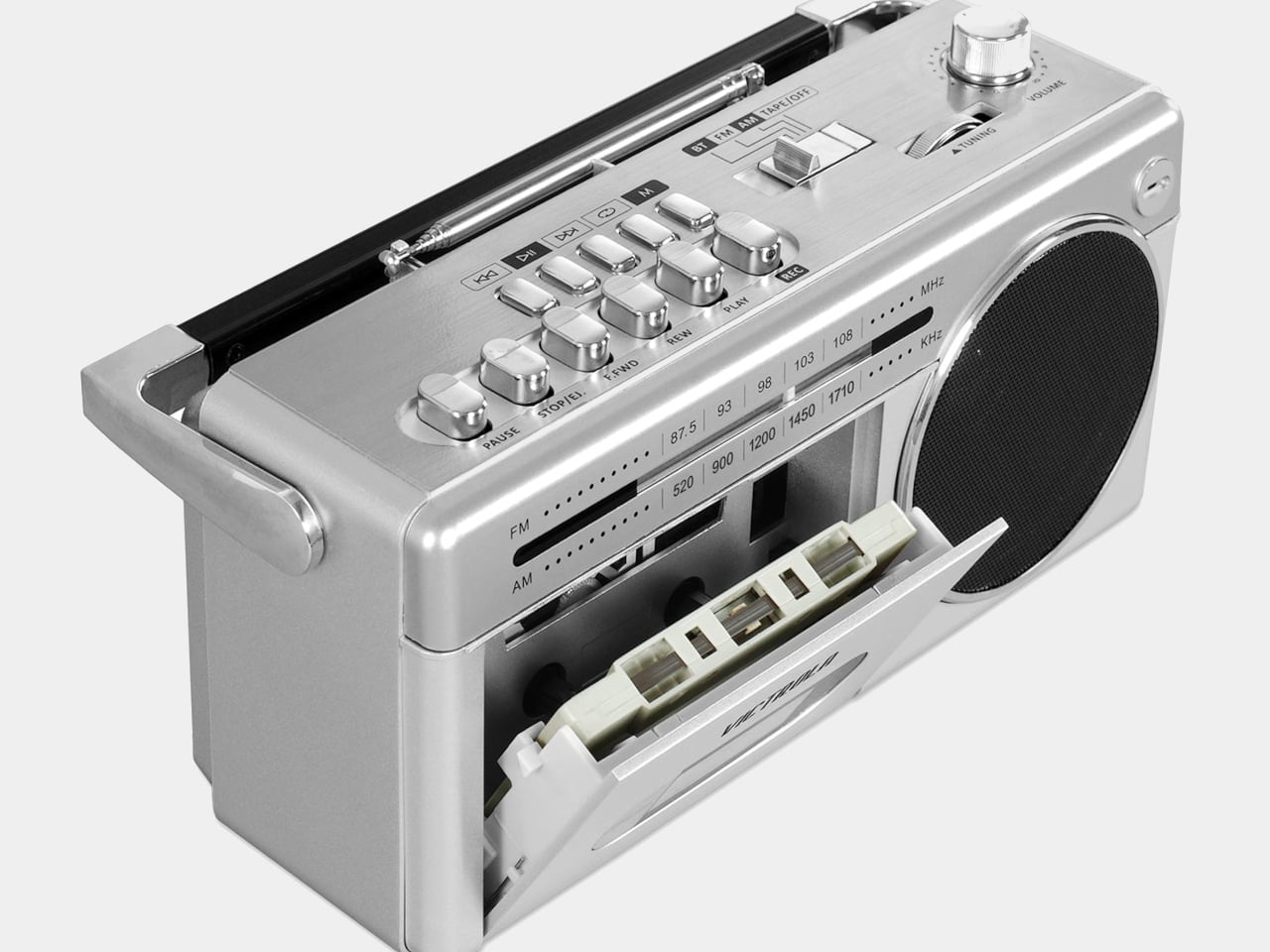
Victrola has made its name selling affordable turntables to people who want the ritual of vinyl without the investment of a serious hi-fi setup. The Mini Bluetooth Boombox applies that same philosophy to cassettes, packaging a tape player, tape recorder, AM/FM radio tuner, USB port for MP3 playback, and Bluetooth streaming into a hefty yet still portable box. It runs on AC power or batteries, comes in grey and silver colorways, and retails for under $40 at most outlets.

Designer: Victrola

The design is a scaled-down boombox archetype, complete with dual built-in speakers, an analog radio tuning dial, and a cassette door on the front. At this price point, audio fidelity is not the conversation. The Victrola is competing with cheap Bluetooth speakers, not with premium cassette players. Its recording function lets you capture audio directly to cassette through a built-in microphone, and the Bluetooth connectivity means it can serve as a wireless speaker for your phone. What the Victrola lacks in audio refinement, it compensates for in sheer versatility. No other player on this list gives you FM radio, Bluetooth reception, USB playback, and tape recording in one device.

What we like

  • The most versatile player on this list by a wide margin, combining cassette playback and recording, AM/FM radio, Bluetooth, and USB MP3 playback in a single compact unit
  • Sub-$40 pricing makes it the easiest entry point for anyone curious about cassettes but unwilling to commit to a premium device

What we dislike

  • Speaker quality and cassette playback fidelity are both budget-tier
  • Plastic construction and lightweight build feel disposable

Retrospekt Sony Walkman WM-F2015

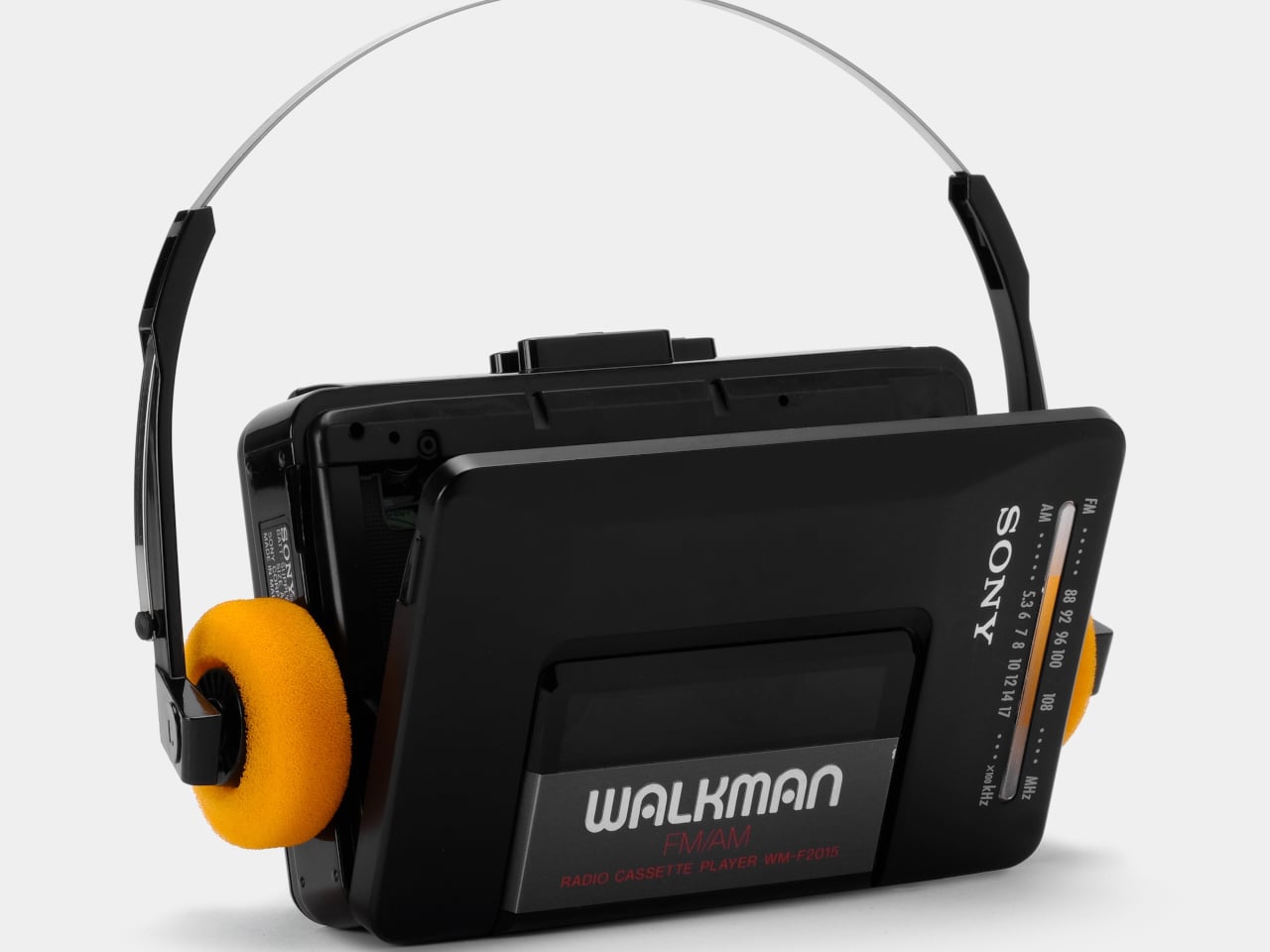
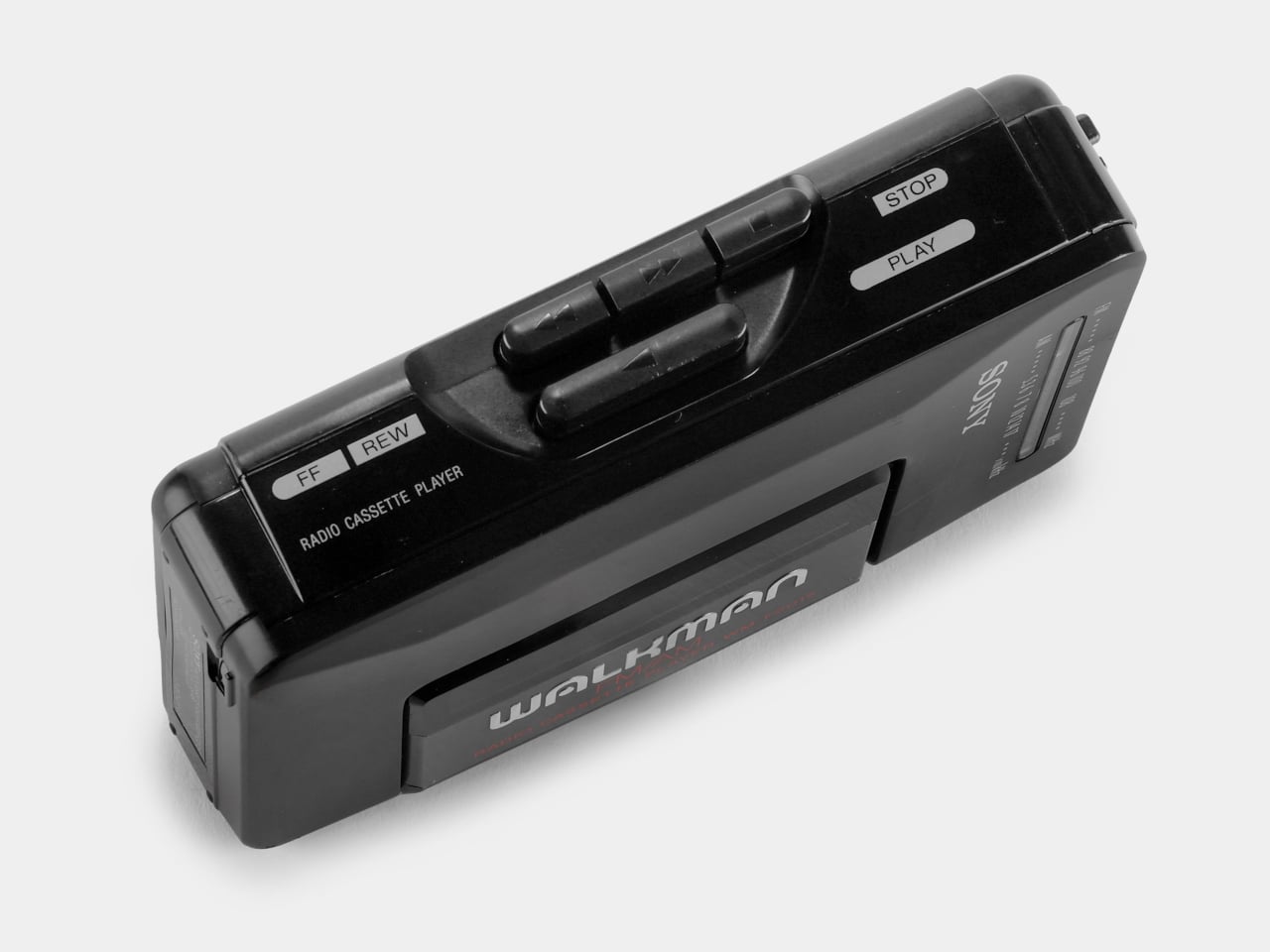
Every other player on this list is a modern product designed to evoke nostalgia. The Retrospekt Sony Walkman WM-F2015 is the actual artifact, a unit originally manufactured in 1990, disassembled by technicians in Milwaukee, and rebuilt with replaced drive belts, idler tires, and pinch wheels. The playback speed has been recalibrated, the volume potentiometer deoxidized, and the tape head cleaned and demagnetized. Retrospekt sells the WM-F2015 as a “vintage refurbished” product starting at $299.

Designer: Retrospekt

The WM-F2015 is a matte black candybar design with an AM/FM radio tuner, powered by two AA batteries. It ships with orange retro-inspired headphones that look the part, even if they cannot compete with modern over-ears. The appeal here is not specification superiority or modern convenience. There is no Bluetooth, no USB-C, no rechargeable battery, and no recording function. What the Retrospekt Walkman offers is something no reproduction can manufacture: the physical reality of a 35-year-old Sony mechanism, with all its original plastics and original weight, restored to functional condition.

What we like

  • An authentic 1990 Sony Walkman mechanism
  • Retro Sony matte black industrial design and compact form factor

What we dislike

  • A bit pricey at $299
  • Zero modern conveniences: no Bluetooth, no USB-C, no rechargeable battery

The post These $40-$299 Cassette Players Just Crushed Spotify’s Algorithm first appeared on Yanko Design.

Undermined AI Research Tool Finds 100% of Your Papers in Seconds

Undermined AI Research Tool Finds 100% of Your Papers in Seconds Undermined AI dashboard showing a research goal prompt and a list of matched papers in one workspace.

Andy Stapleton introduces a resource designed to streamline academic research by using artificial intelligence to locate and organize scholarly papers with remarkable speed. One standout feature highlighted is its ability to trace citation trails, which helps researchers uncover key studies and explore connections between works in their field. This functionality not only saves time but […]

The post Undermined AI Research Tool Finds 100% of Your Papers in Seconds appeared first on Geeky Gadgets.

Posted in Uncategorized

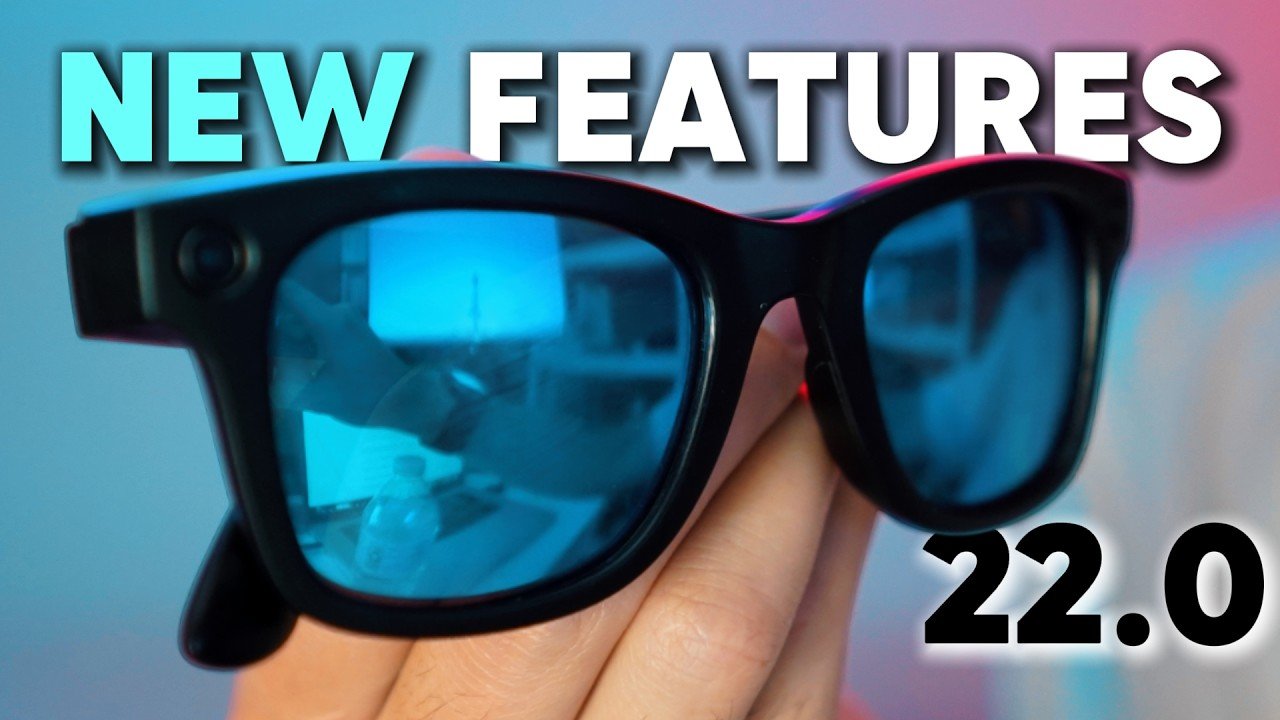
Ray-Ban Meta 22.0 Update Adds Conversation Focus with 3 Audio Modes

Ray-Ban Meta 22.0 Update Adds Conversation Focus with 3 Audio Modes Ray-Ban Meta smart glasses shown after the 22.0 update, highlighting new AI, audio focus, and stability fixes.

The Ray-Ban Meta 22.0 update improves the functionality of both Gen 1 and Gen 2 smart glasses in meaningful ways. According to Steven Sullivan, one standout fix addresses a long-standing issue in Gen 1 glasses where video settings were disrupted. Users can now reliably switch between 1080p 60fps and 1080p 30fps modes, making it easier […]

The post Ray-Ban Meta 22.0 Update Adds Conversation Focus with 3 Audio Modes appeared first on Geeky Gadgets.

Posted in Uncategorized

iOS 26.4 Beta 2 Reverses Controversial Design Changes: What’s New

iOS 26.4 Beta 2 Reverses Controversial Design Changes: What’s New Key updates and features in Apple iOS 26.4 Beta 2 for iPhone users

Apple has unveiled iOS 26.4 Beta 2, introducing a series of updates designed to enhance functionality, refine design, and improve overall performance. This release addresses several persistent issues while adding new features that aim to elevate the user experience. With Apple adhering to a weekly beta release schedule, the final version is anticipated to arrive […]

The post iOS 26.4 Beta 2 Reverses Controversial Design Changes: What’s New appeared first on Geeky Gadgets.

Posted in Uncategorized

Anthropic refuses to bow to Pentagon despite Hegseth’s threats

Despite an ultimatum from Defense Secretary Pete Hegseth, Anthropic said that it can't "in good conscience" comply with a Pentagon edict to remove guardrails on its AI, CEO Dario Amodei wrote in a blog post. The Department of Defense had threatened to cancel a $200 million contract and label Anthropic a "supply chain risk" if it didn't agree to remove safeguards over mass surveillance and autonomous weapons.

"Our strong preference is to continue to serve the Department and our warfighters — with our two requested safeguards in place," Amodei said. "We remain ready to continue our work to support the national security of the United States."

In response, US Under Secretary of Defense Emil Michael accused Amodei in a post on X of wanting "nothing more than to try to personally control the US military and is OK putting our nation's safety at risk."

The standoff began when the Pentagon demanded that Anthropic its Claude AI product available for "all lawful purposes" — including mass surveillance and the development of fully autonomous weapons that can kill without human supervision. Anthropic refused to offer its tech for those things, even with a "safety stack" built into that model.

Yesterday, Axios reported that Hegseth gave Anthropic a deadline of 5:01 PM on Friday to agree to the Pentagon's terms. At the same time, the DoD requested an assessment of its reliance on Claude, an initial step toward potentially labelling Anthropic as a "supply chain risk" — a designation usually reserved for firms from adversaries like China and "never before applied to an American company," Anthropic wrote. 

Amodei declined to change his stance and stated that if the Pentagon chose to offboard Anthropic, "we will work to enable a smooth transition to another provider, avoiding any disruption to ongoing military planning, operations or other critical missions." Grok is one of the other providers the DoD is reportedly considering, along with Google's Gemini and OpenAI. 

It may not be that simple for the military to disentangle itself from Claude, however. Up until now, Anthropic's model has been the only one allowed for the military's most sensitive tasks in intelligence, weapons development and battlefield operations. Claude was reportedly used in the Venezuelan raid in which the US military exfiltrated the country's president, Nicolás Maduro, and his wife.

AI companies have been widely criticized for potential harm to users, but mass surveillance and weapons development would clearly take that to a new level. Anthropic's potential reply to the Pentagon was seen as a test of its claim to be the most safety-forward AI company, particularly after dropping its flagship safety pledge a few days ago. Now that Amodei has responded, the focus will shift to the Pentagon to see if it follows through on its threats, which could seriously harm Anthropic. 

This article originally appeared on Engadget at https://www.engadget.com/ai/anthropic-refuses-to-bow-to-pentagon-despite-hegseths-threats-085553126.html?src=rss

Qwen TTS Ships Local TTS Under Apache 2.0 : Voice Cloning in 3 Seconds

Qwen TTS Ships Local TTS Under Apache 2.0 : Voice Cloning in 3 Seconds Chart listing Qwen TTS language coverage, including 10 languages and natural code-switching between two languages.

Qwen TTS, Alibaba’s open source text-to-speech model, offers new options for voice synthesis by allowing users to adjust tone and emotion through natural language commands instead of traditional sliders or presets. According to Better Stack, the model processes all data locally, making sure user privacy without relying on cloud-based systems. Licensed under Apache 2.0, it […]

The post Qwen TTS Ships Local TTS Under Apache 2.0 : Voice Cloning in 3 Seconds appeared first on Geeky Gadgets.

Posted in Uncategorized

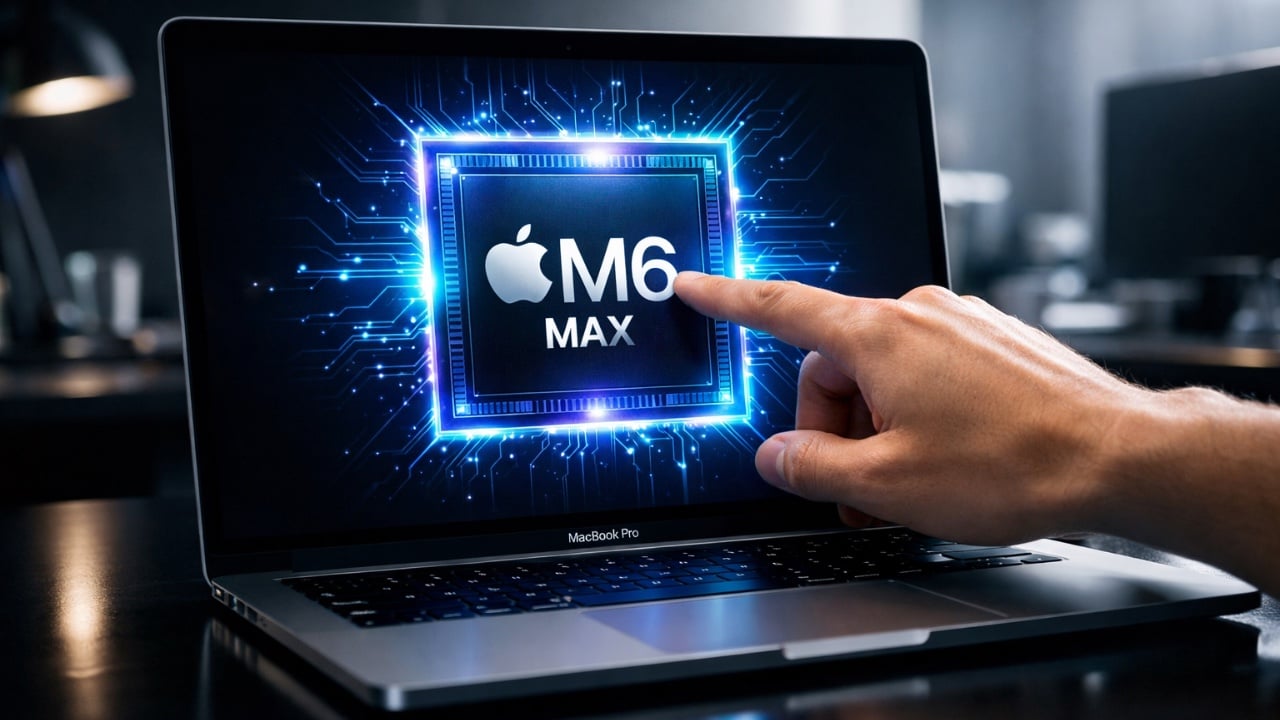
After Years of Saying No, Apple Is Bringing Touchscreens to the M6 MacBook Pro

After Years of Saying No, Apple Is Bringing Touchscreens to the M6 MacBook Pro M6 MacBook Pro

Apple is preparing to introduce a new addition to its MacBook lineup with the launch of the touchscreen MacBook Pro powered by the advanced M6 chip. This highly anticipated release, expected in late 2026, signifies a major shift in Apple’s design philosophy. By combining innovative hardware and software, Apple is not only redefining the MacBook […]

The post After Years of Saying No, Apple Is Bringing Touchscreens to the M6 MacBook Pro appeared first on Geeky Gadgets.

Posted in Uncategorized