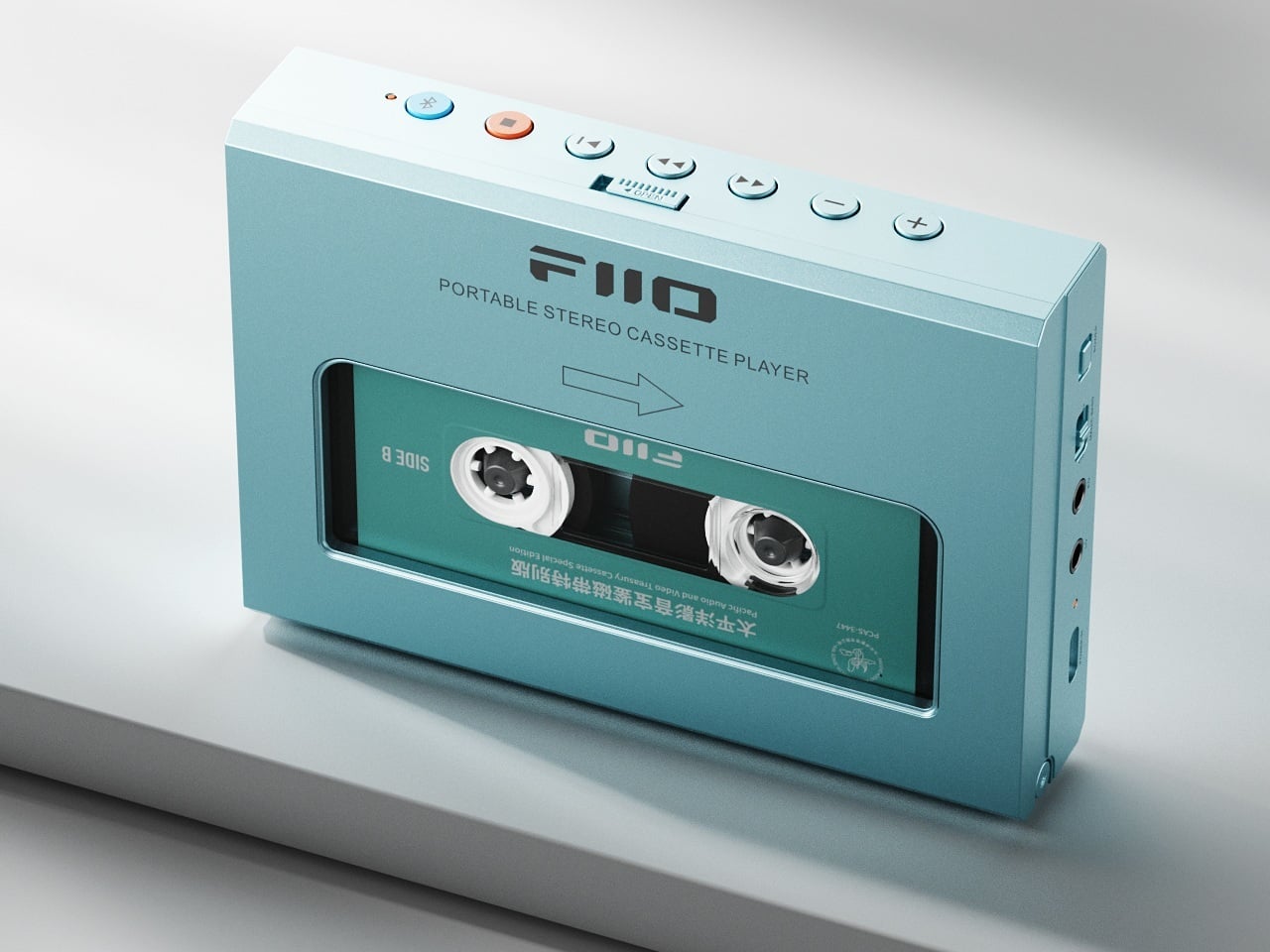
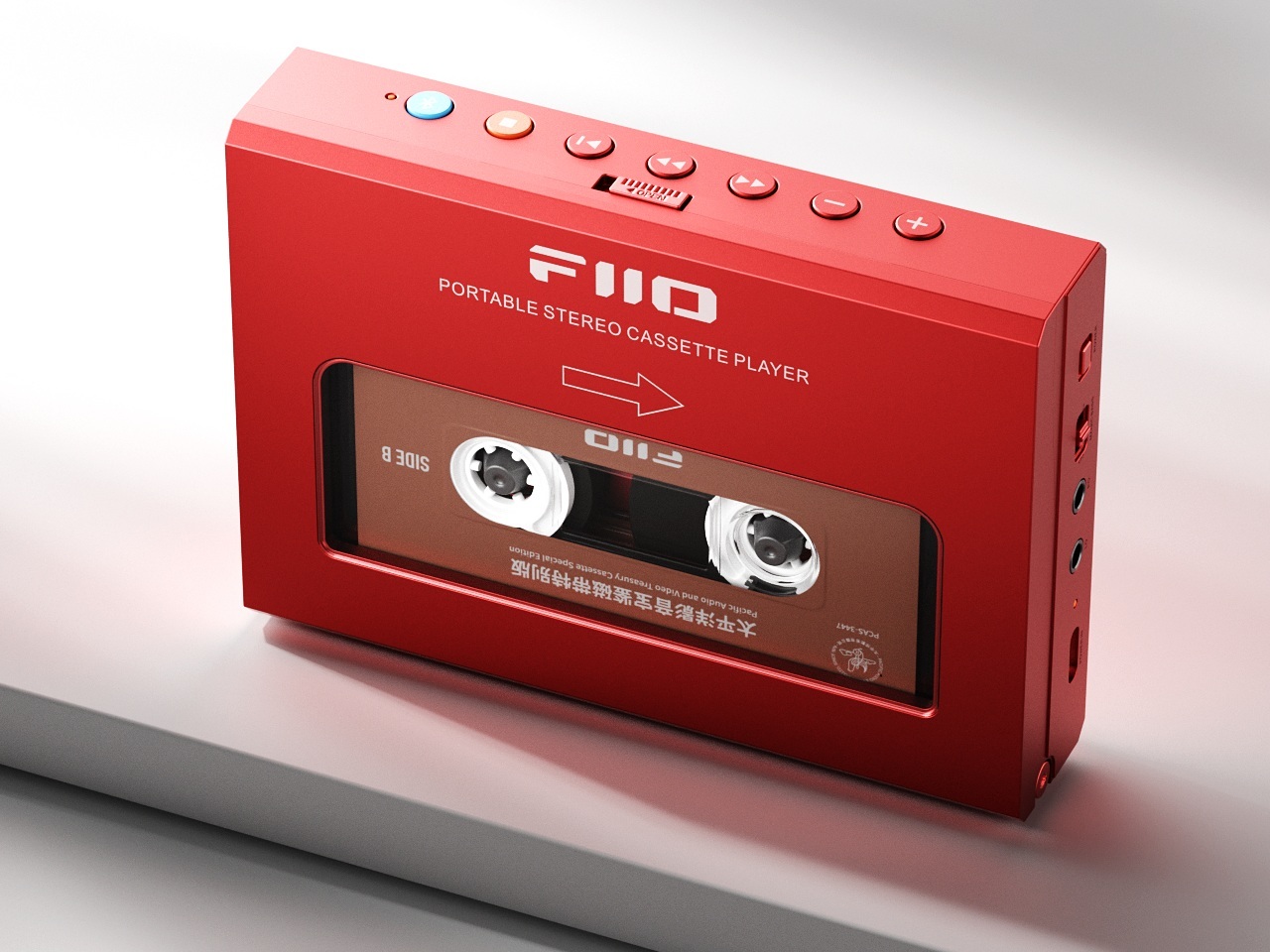
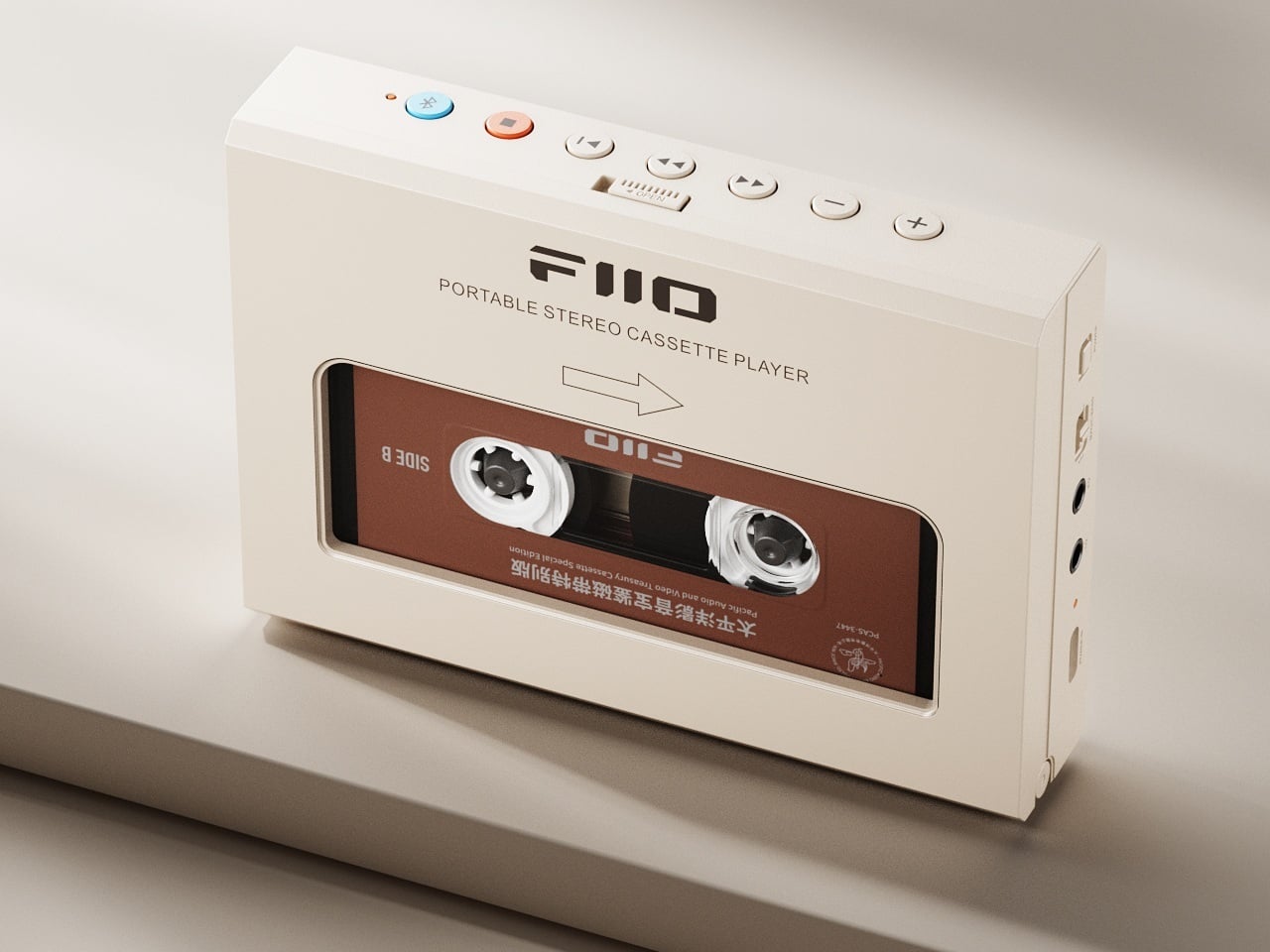
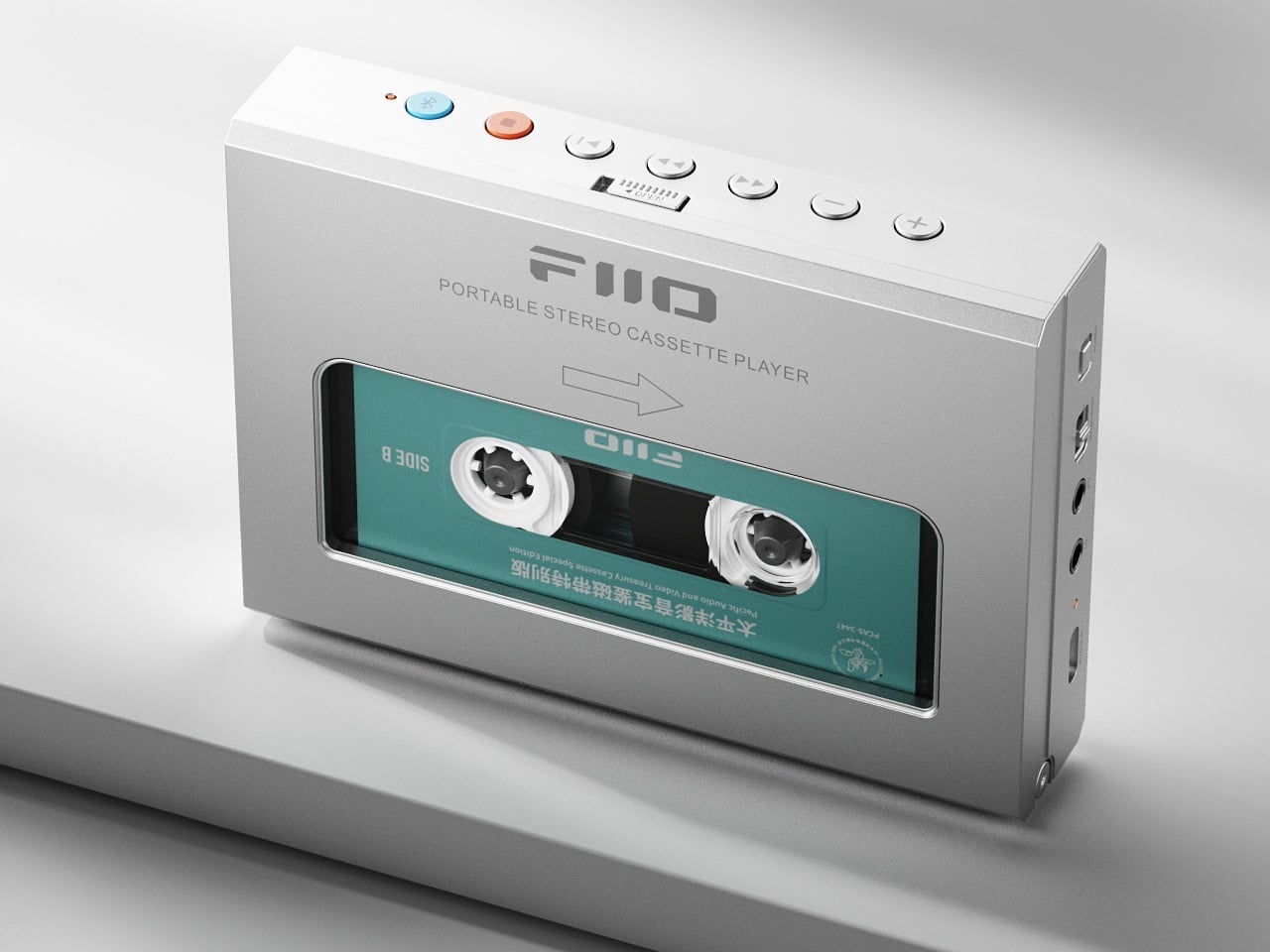
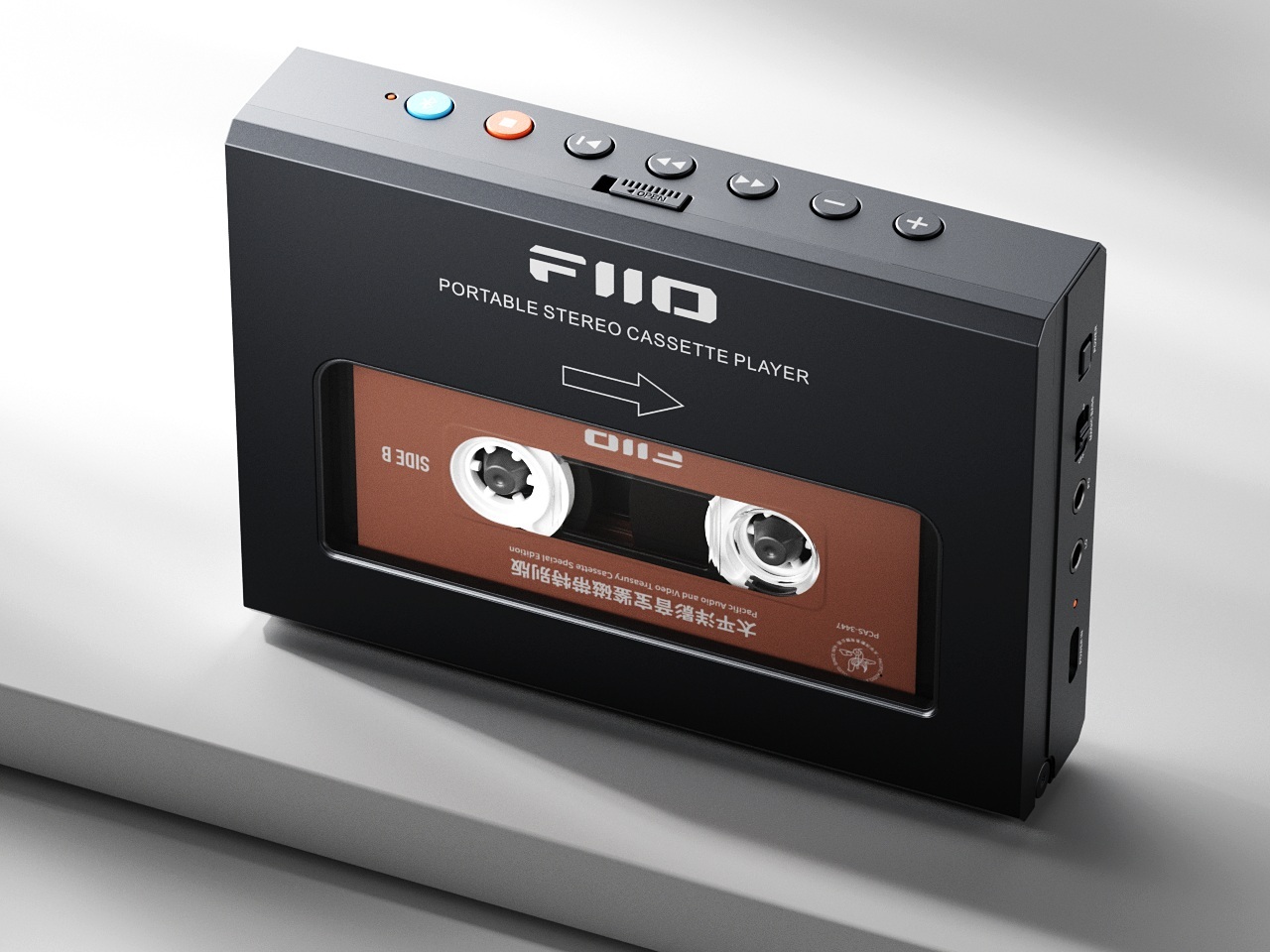
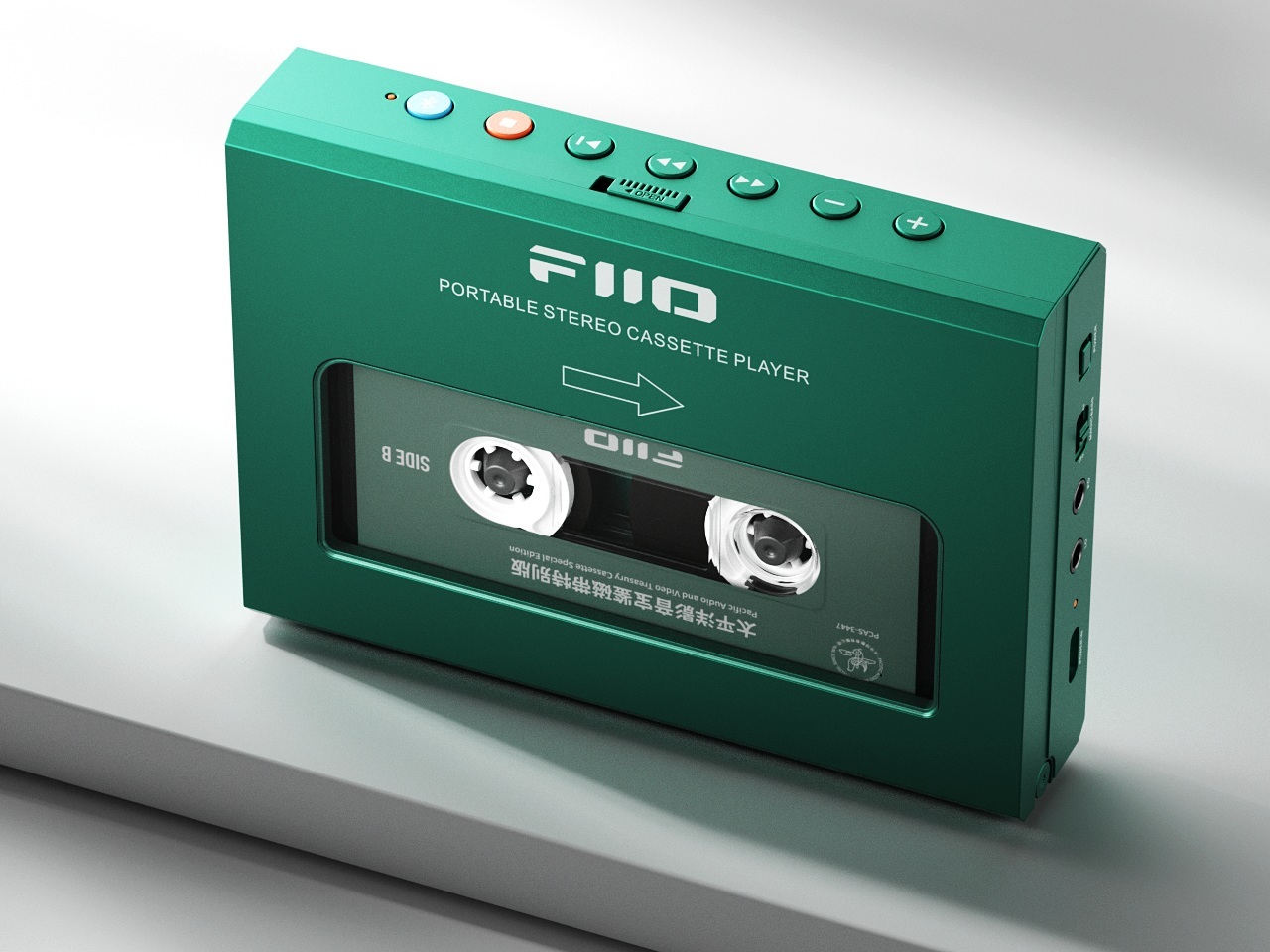
Vinyl already had its big cultural moment, dragging turntables and record stores back into the mainstream. Cassette tapes, quietly and without much fanfare, have been going through the same arc. Sales have been climbing for years, but the revival has lacked a player actually engineered for it. The FiiO CP11 is that player, and it comes with two years of R&D to back it up.
Getting to the CP11 wasn’t a straight line. FiiO originally planned to lead with the higher-end CP15, but as the new ultra-thin mechanism proved far more complex to engineer than expected, from structure and servo coordination to full system integration, the roadmap got reorganized. The CP11 was added earlier in the lineup so the new playback technology could reach people before everything else was perfected.
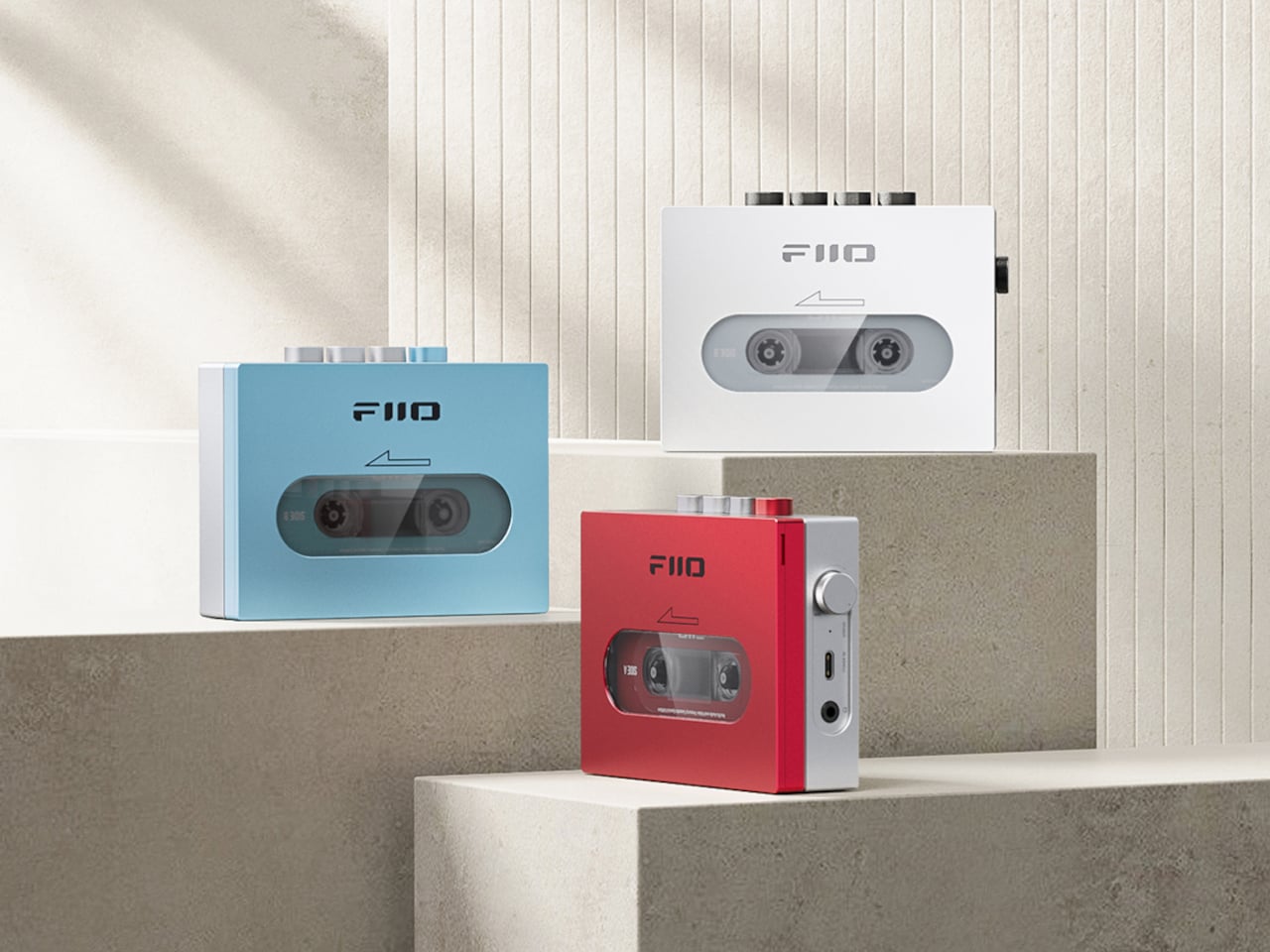
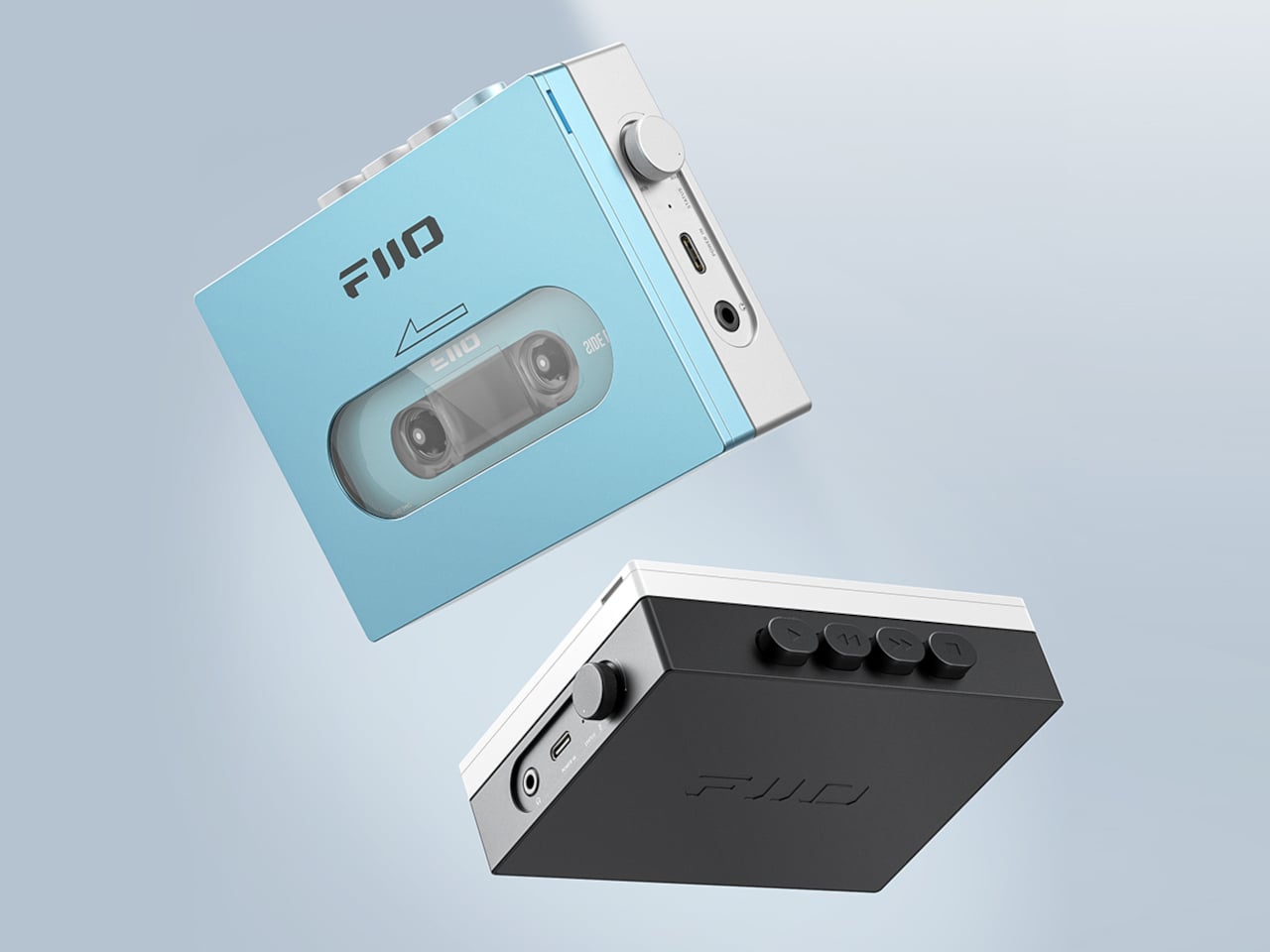
The size of the thing is worth talking about. FiiO designed the CP11 to be genuinely pocketable, competitive with the Walkmans that defined portable listening decades ago. That’s a different proposition entirely from the thick, ungainly cassette players that have populated the modern revival market. The all-new ultra-thin transport mechanism is what makes that slim profile possible, and getting it right required repeated prototyping and refinement.
Inside, the CP11 moves away from the hardware compromises that hold most modern tape players back. It runs on a brushless motor paired with a new servo drive and revised circuit design, which together are meant to deliver more stable, accurate playback than conventional motors allow. The magnetic head has been upgraded as well, since even the warmest analog sound can only be as good as the head reading it.
Then there’s Bluetooth, which is probably the feature that makes the CP11 most interesting to a broader audience. The fully analog CP13, FiiO’s existing tape player, never had it. Adding wireless transmission here means you can pair the CP11 with any wireless headphones and listen to your mixtapes or favorite vintage tapes without a headphone cord to manage. The 3.5mm jack is still there for people who prefer it that way.
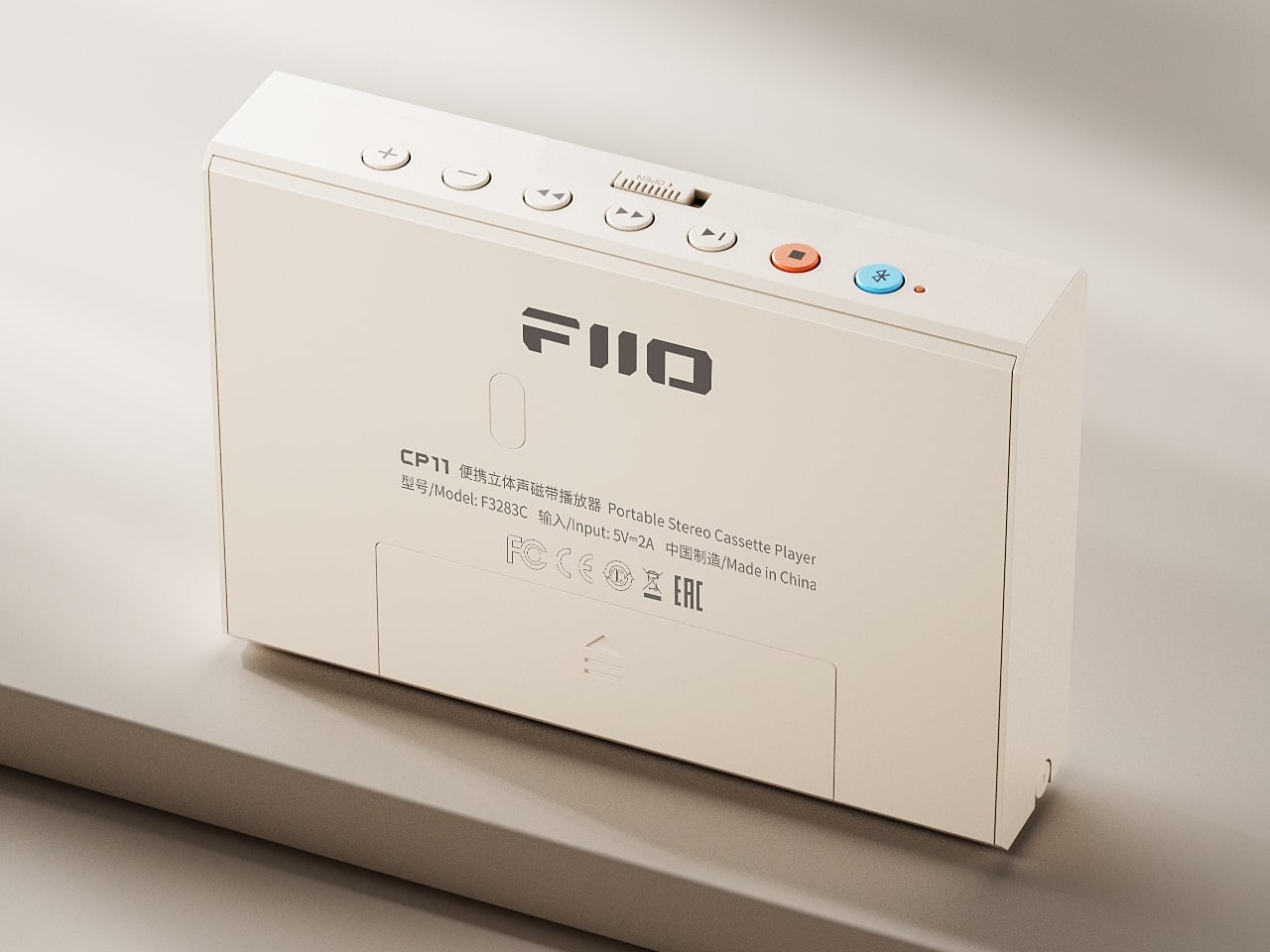
The design doesn’t try to pass off nostalgia as a substitute for intent. The body is clean and minimalist, available in cream, green, and silver colorways that feel more considered than retro-chic. There’s a battery hatch on the back, which suggests the cell might be user-replaceable, a small but meaningful detail for a device built around physical media and the culture of long listening sessions.
USB-C handles charging, which is a small but welcome concession to the present. It charges at 5V/2A, so any standard cable will do, and you won’t need to hunt for a specialized adapter while your tape collection gathers dust. Physical playback controls sit at the top alongside a dedicated Bluetooth button, keeping the experience tactile rather than forcing everything through a touchscreen or an app.
No pricing has been announced yet, though FiiO’s existing CP13 sells in the $99 to $110 range, giving some rough sense of where the CP11 might land. A late 2026 launch is the target, and the higher-end CP15 is progressing simultaneously, with its internals largely completed. The cassette revival doesn’t have a device worthy of leading it yet. The CP11 is making a case for the job.
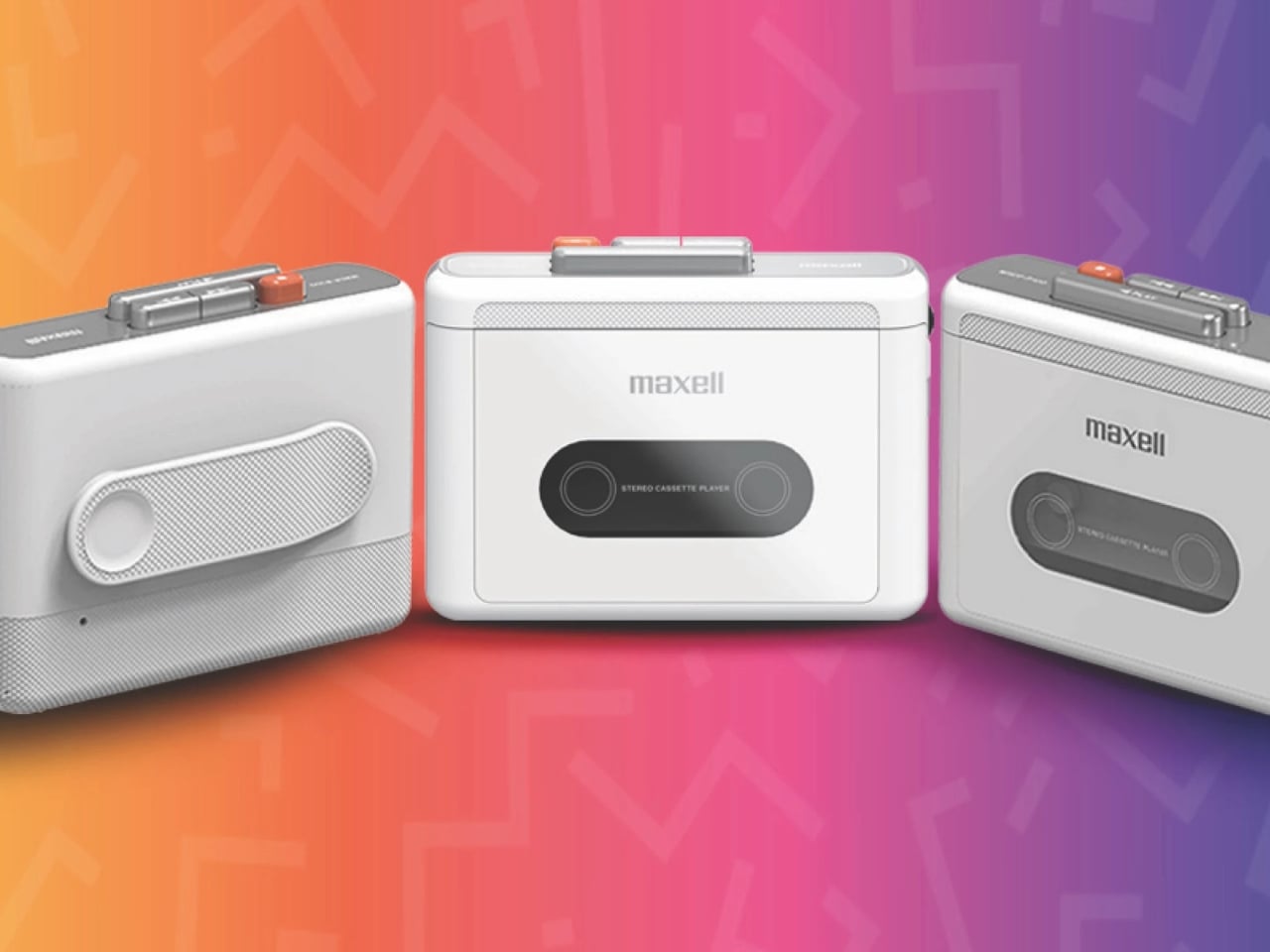
Every few years, the tech industry digs up something from the past, slaps a USB-C port on it, and calls it innovation. Sometimes it works. Sometimes it’s a gimmick dressed in nostalgia. The Maxell Wireless Cassette Player lands, surprisingly, somewhere in between, and it’s more interesting for it.
Maxell isn’t exactly an outsider here. The Japanese electronics brand was practically synonymous with cassette culture in the 1980s, when their high-performance chromium metal tapes were the gold standard for serious music listeners. So when they decided to bring back the cassette player, it wasn’t a random brand riding a retro wave. It was the original brand, returning to its roots with a bit more wisdom and a Bluetooth chip.
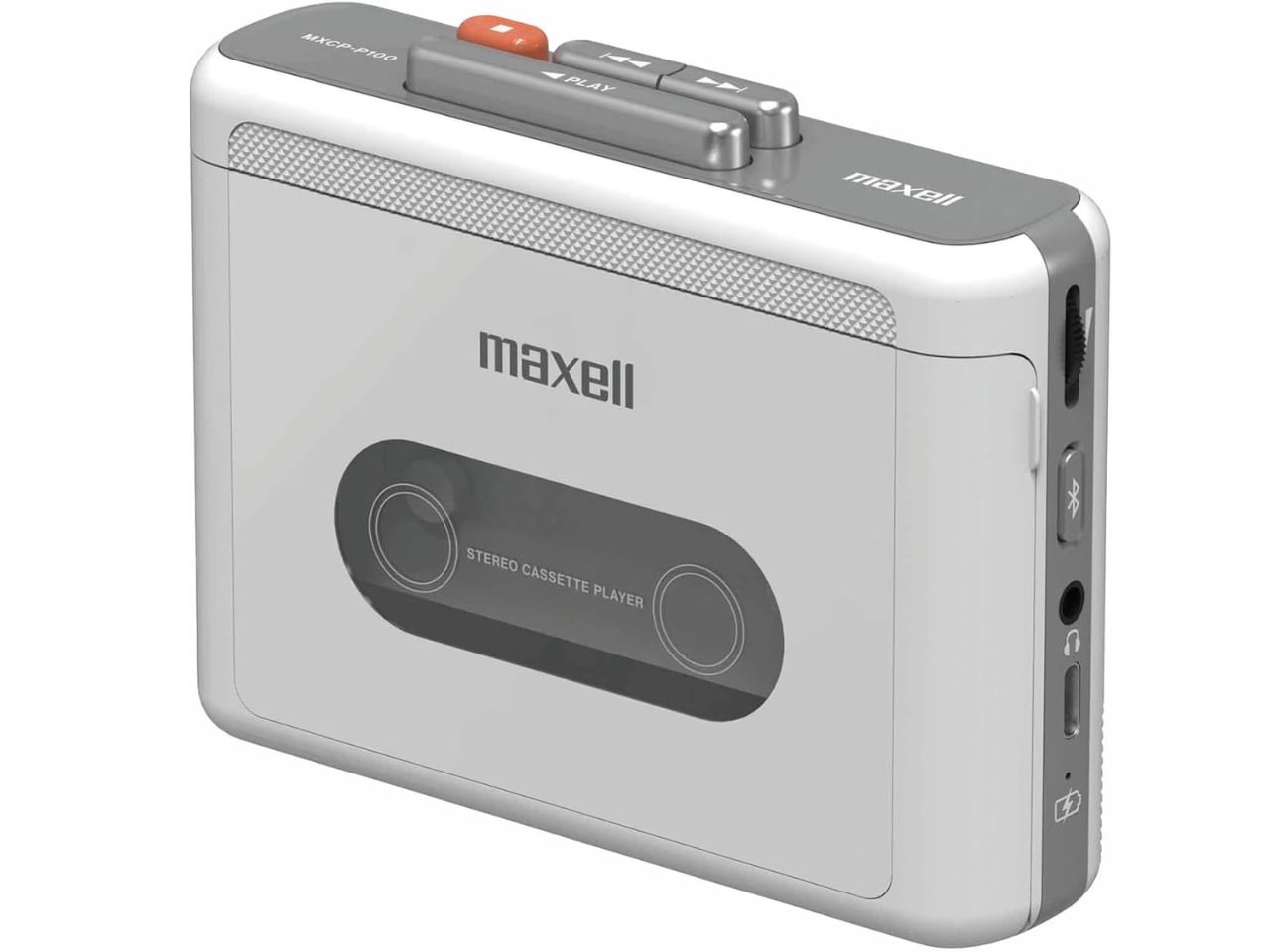
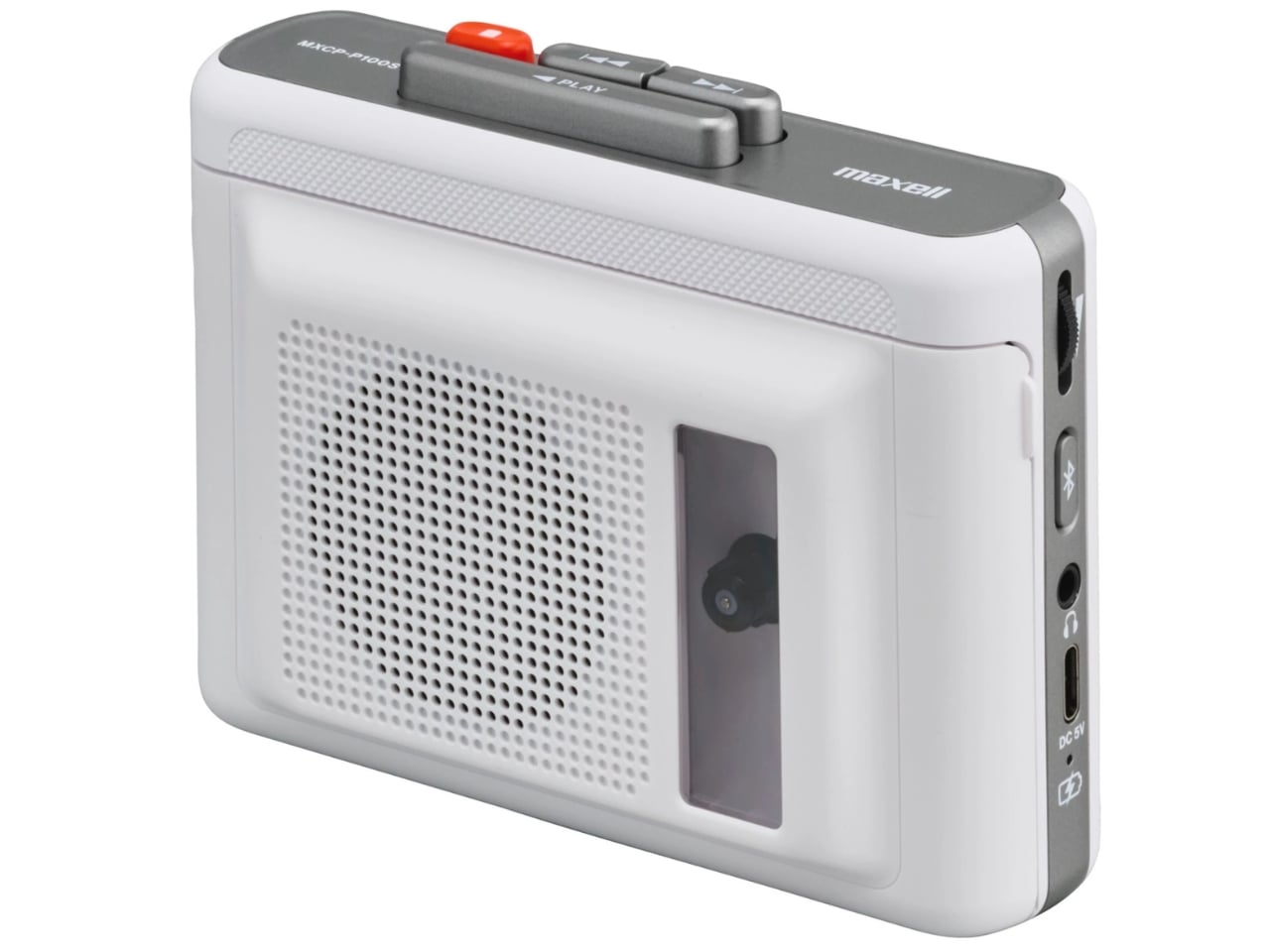
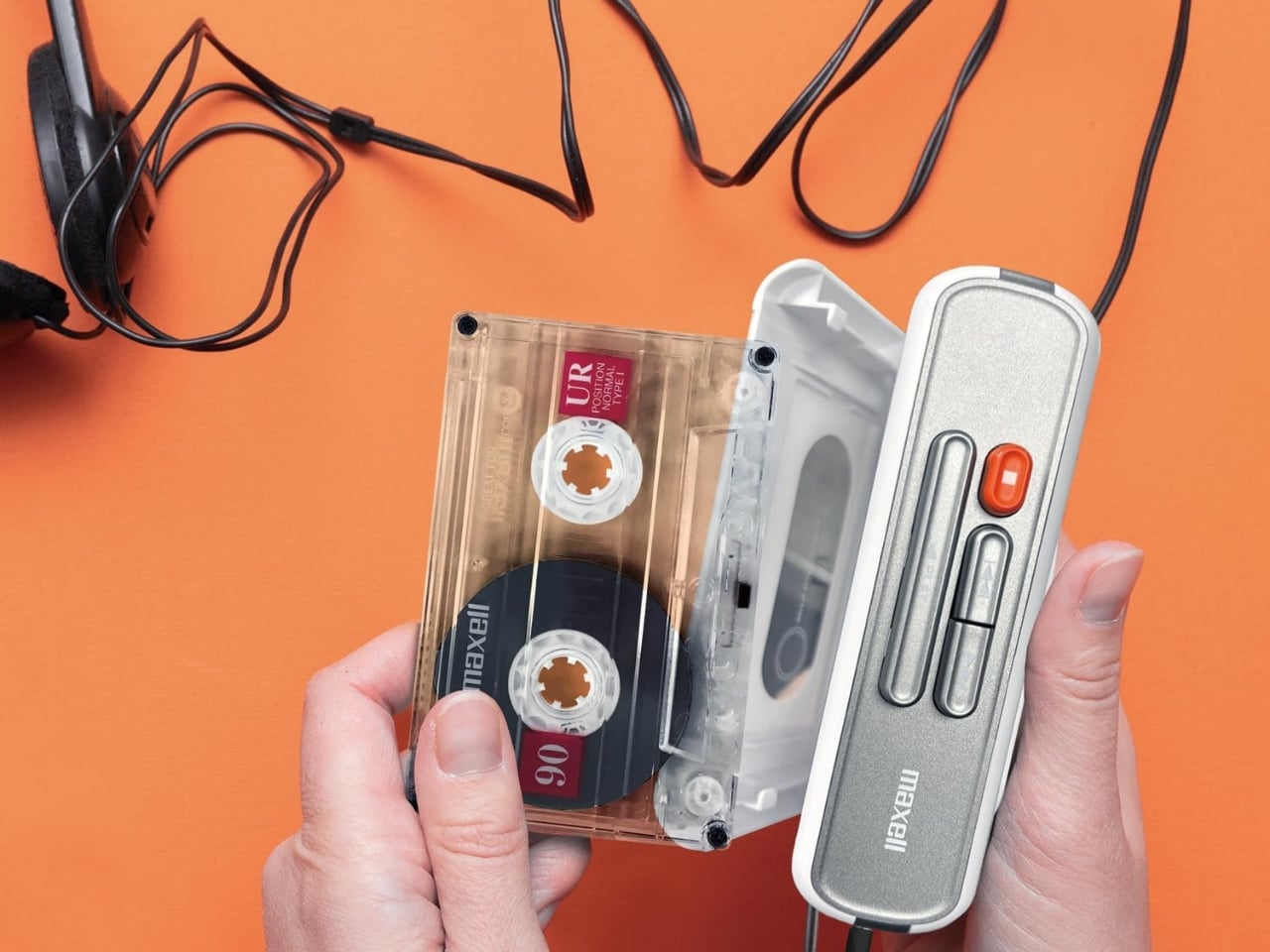
The result is the MXCP-P100, a compact player that pairs your old mixtapes with wireless technology. Pop in a tape, hit play, and stream the audio to your Bluetooth headphones or speaker of choice. At $99.99, currently selling closer to $75, it sits at a price point that feels reasonable for something this specific, though not cheap enough to be an impulse buy.
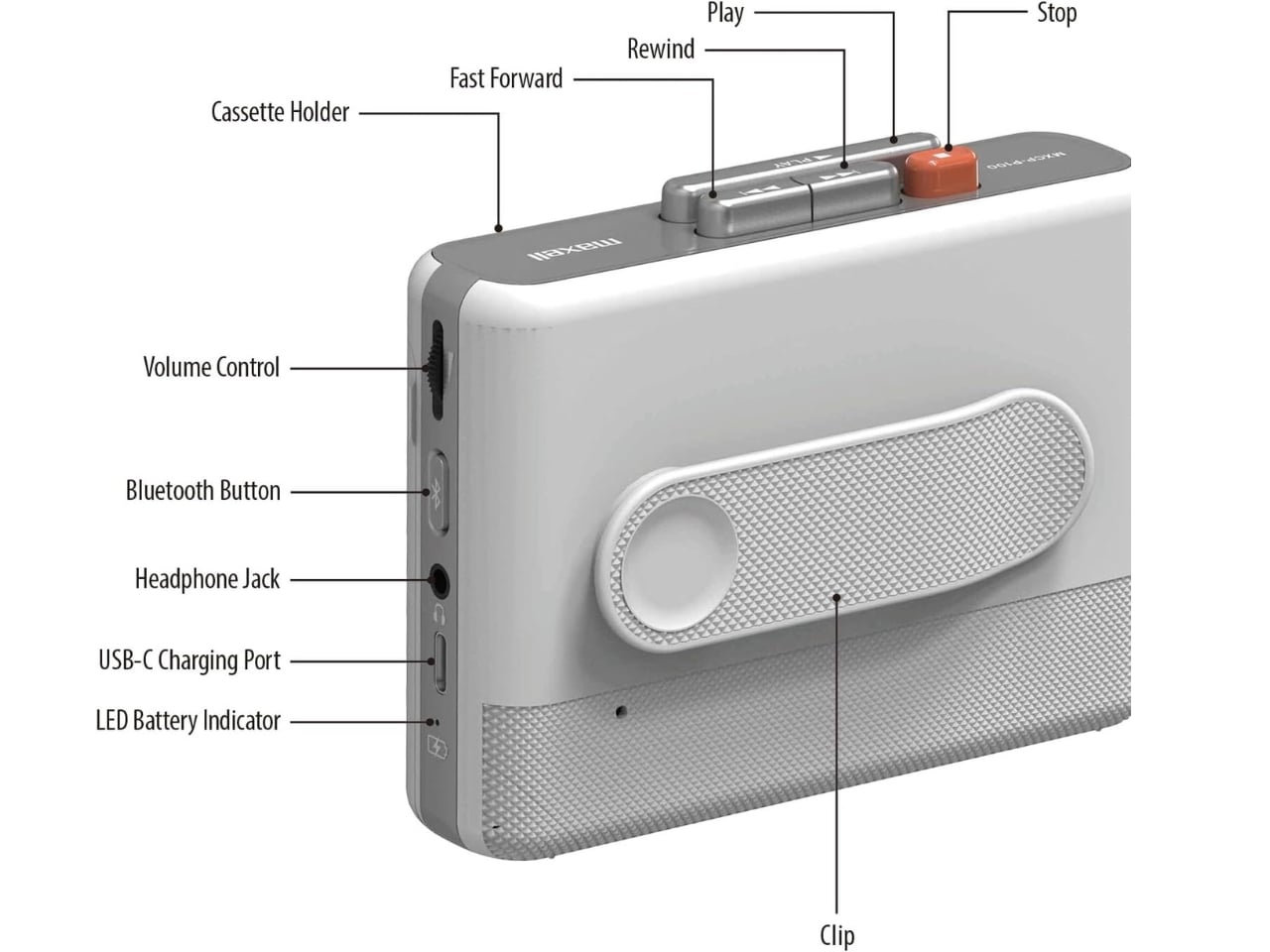
Physically, the player is familiar in all the right ways. A see-through cassette door, a satisfying row of clickable transport buttons across the top, and a volume dial on the side. It comes in black or white, measures 122 x 91 x 38mm, and weighs about 210 grams without a tape. That’s slightly chunkier than the slim Walkmans we remember, but for a device housing both a mechanical transport and Bluetooth electronics, it holds its shape well.
Inside, the stabilized transport uses a precision brass flywheel, which matters more than it sounds. Cheap cassette mechanisms are notorious for uneven playback, which is exactly the kind of thing that would make the whole retro revival effort feel sad and pointless. Whether the MXCP-P100’s mechanism is good enough to genuinely honor your old tapes is a fair question, and the answer seems to be a cautious yes, at least for everyday listening. Battery life clocks in at up to 11 hours on Bluetooth and 9 hours wired, with a full charge taking under two hours via USB-C.
The cassette revival itself deserves a moment of context. Tape has been slowly creeping back for years, driven largely by Gen Z listeners who see physical formats as collectible and meaningful in ways streaming can’t replicate. Musicians use tapes as affordable merch. Collectors hoard limited edition releases. Thrift stores have become unexpected tape archives. The culture is alive, even if the hardware has lagged behind. That’s exactly the gap Maxell is stepping into. Its entry carries the weight of brand legacy that no startup can manufacture, along with the expectations that come with it.
Part of what makes the MXCP-P100 quietly compelling is what it doesn’t try to do. It doesn’t record. It doesn’t have noise reduction circuitry. It doesn’t pretend to be a hi-fi audiophile product. It simply plays tapes and sends the signal somewhere useful. In a product landscape cluttered with devices that over-promise and under-deliver, there’s a certain confidence in knowing exactly what you are and committing to it cleanly. That restraint reads less like a limitation and more like a design decision.
My honest read: the Maxell Wireless Cassette Player isn’t trying to replace your streaming setup or convince anyone that tape sounds better than high-res digital. It’s a purpose-built device for a specific kind of listener who already has a box of tapes and wants a modern, reliable way to play them. On those terms, it makes complete sense.
Whether that’s worth $100 depends entirely on how attached you are to the tapes sitting in a drawer somewhere. If you don’t have any, this probably isn’t the product that converts you. If you do, this might be the one that finally gets you to press play again.
Cassette tapes are having a moment, and that moment is refusing to end. According to Billboard, cassette sales have grown more than 440% over the past decade, and in the first quarter of 2025 alone they more than doubled, hitting numbers not seen in 20 years. This isn’t a blip or a quirky indie niche. It’s a full-on cultural movement, and whether you’re old enough to remember rewinding a tape with a pencil or you’ve been hunting down limited editions on Bandcamp, you’ve probably felt its pull.
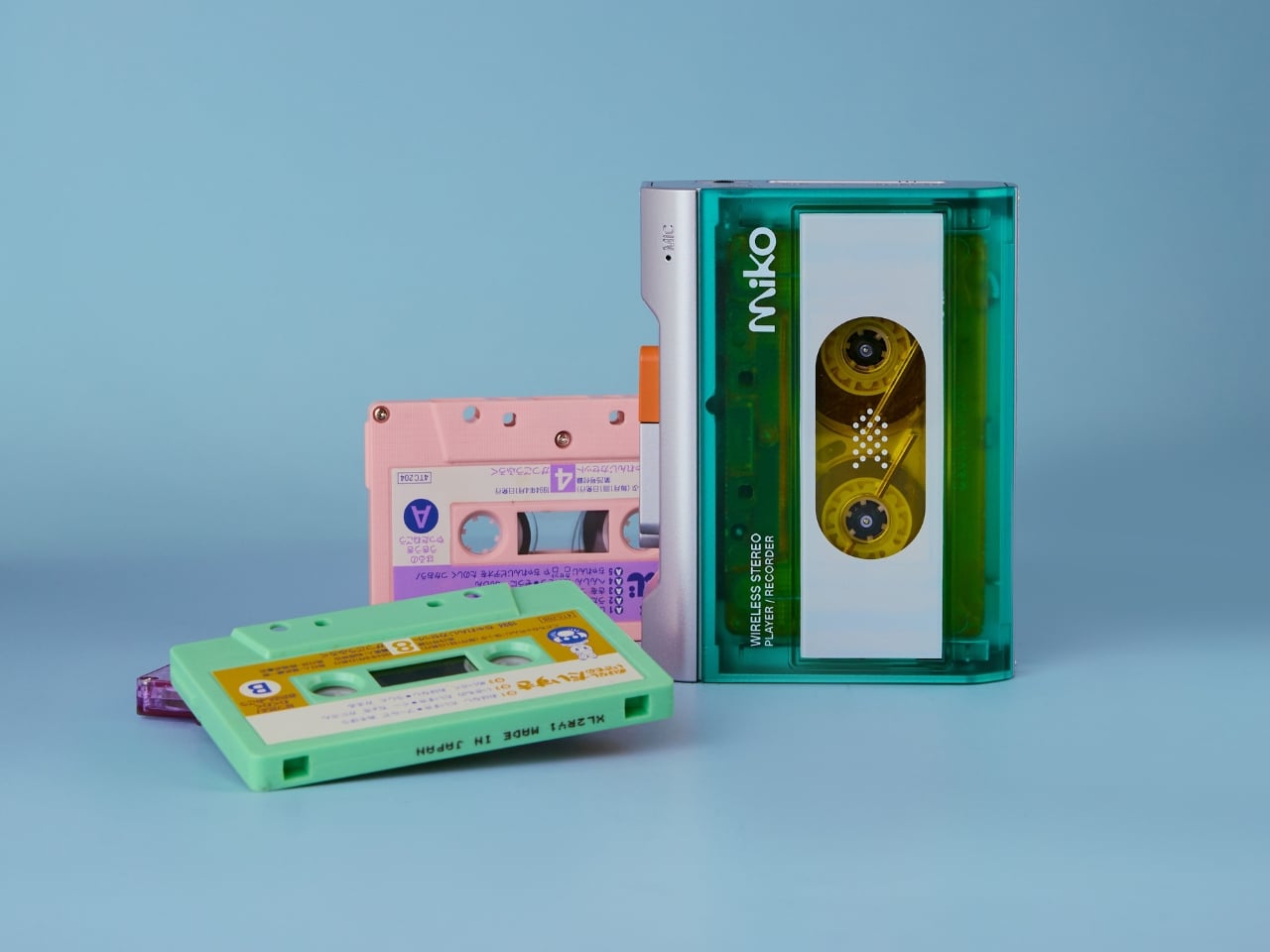
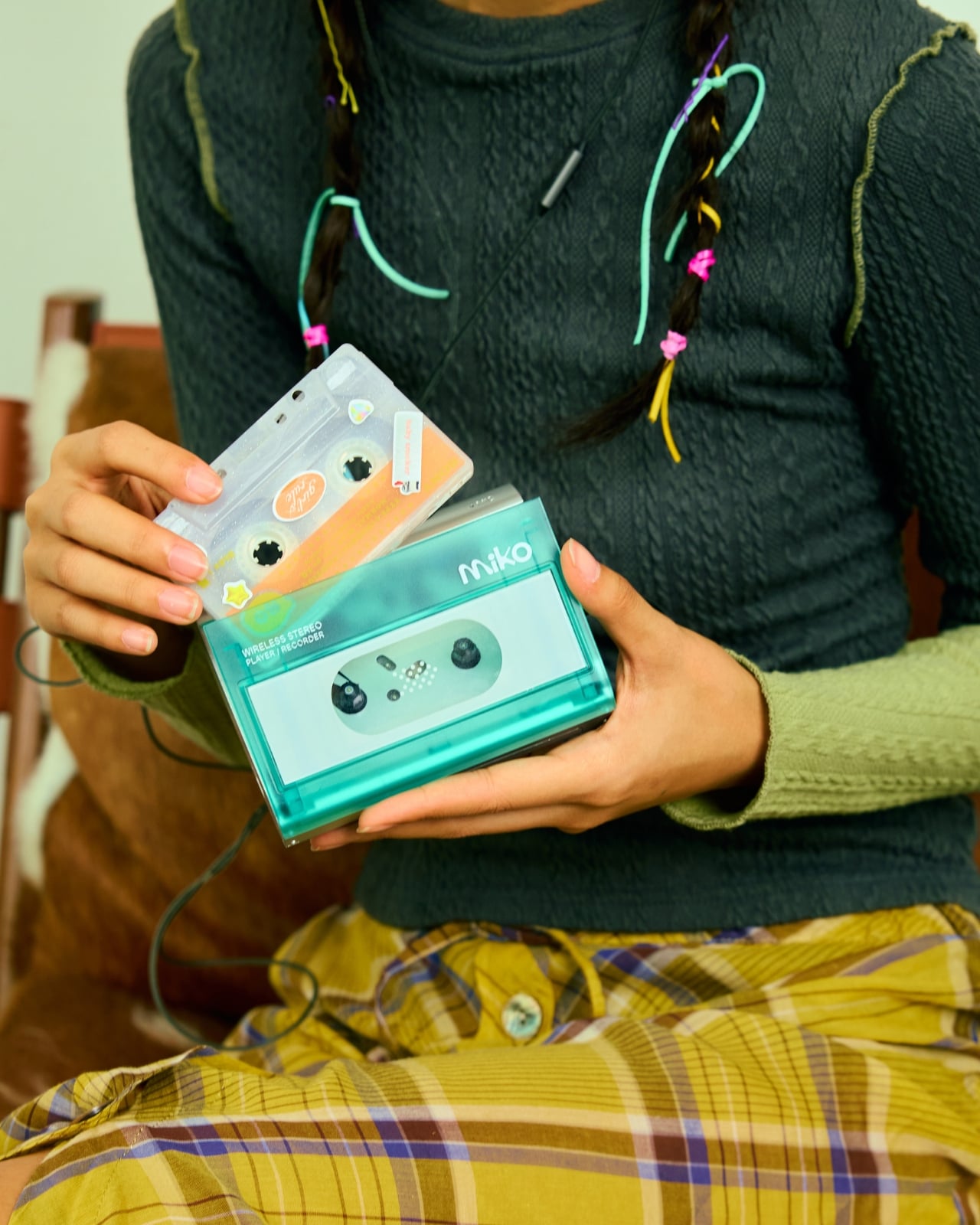
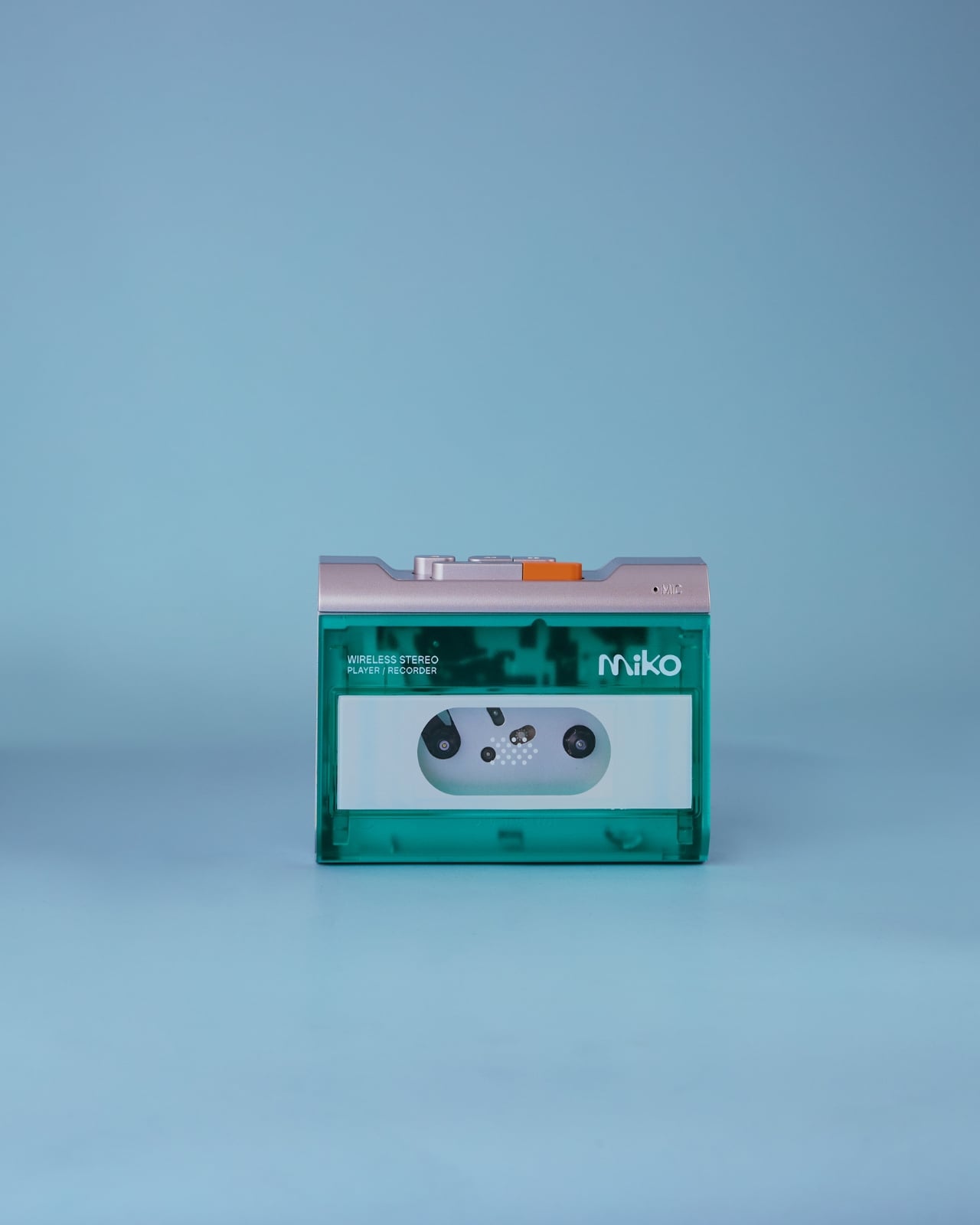
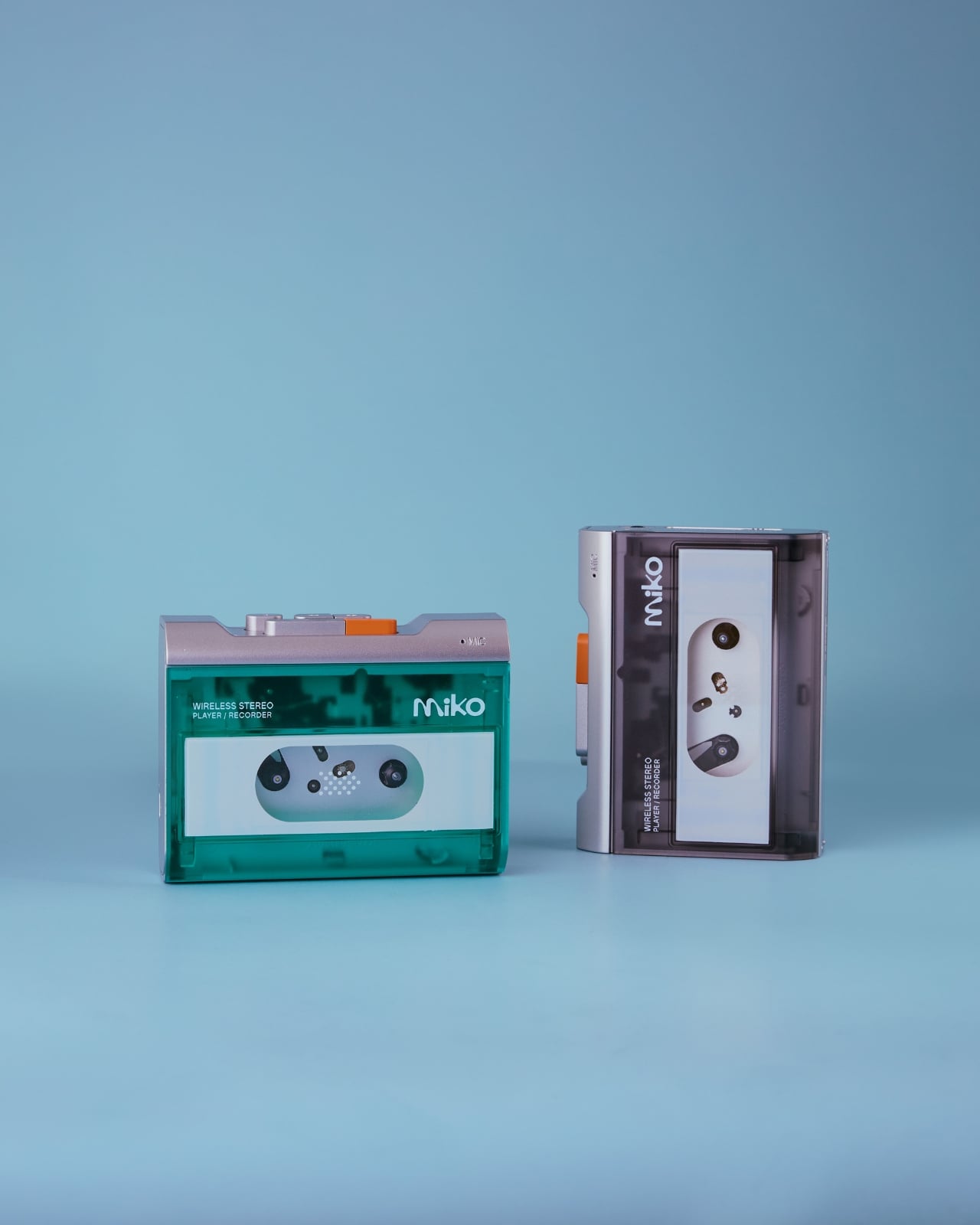
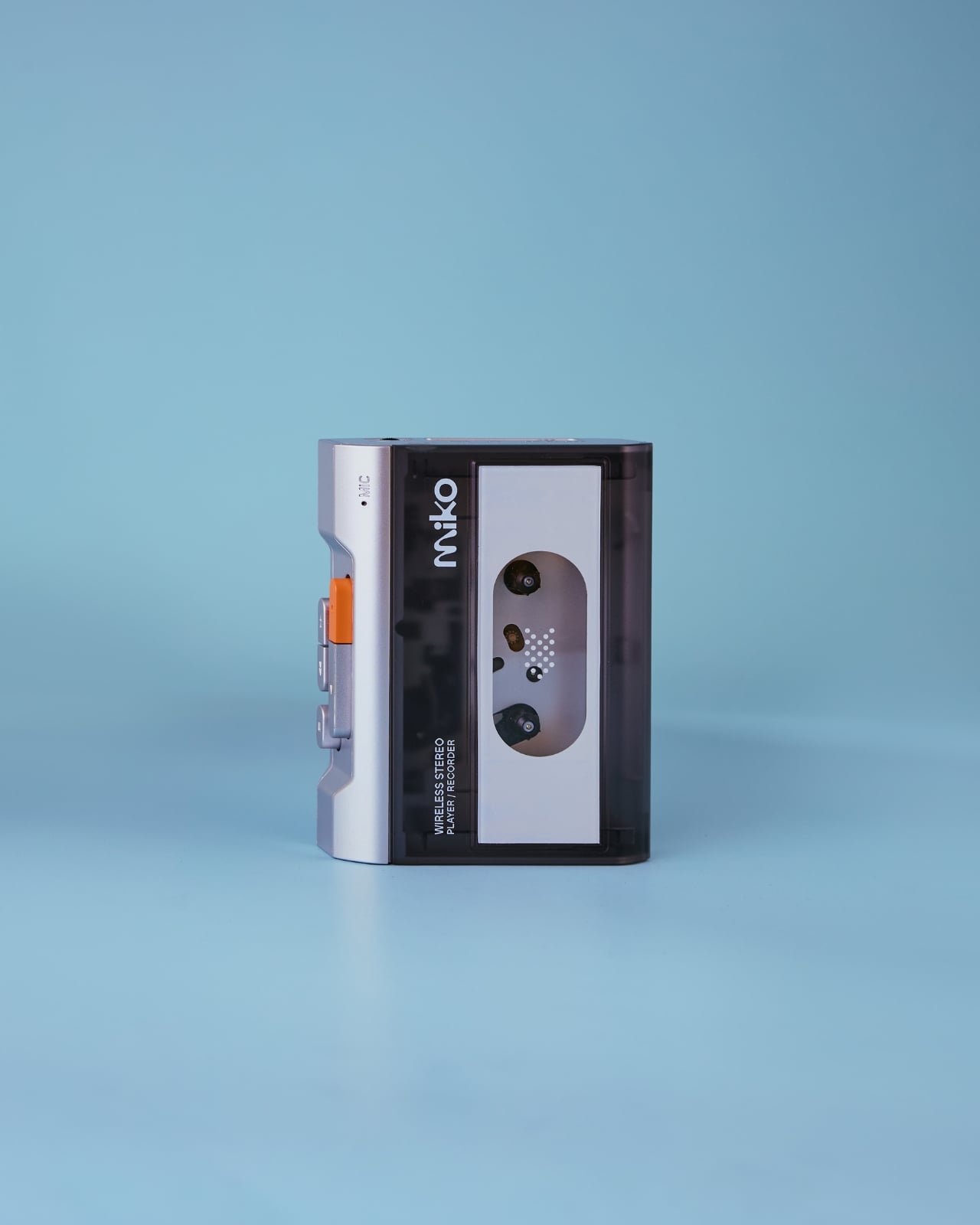
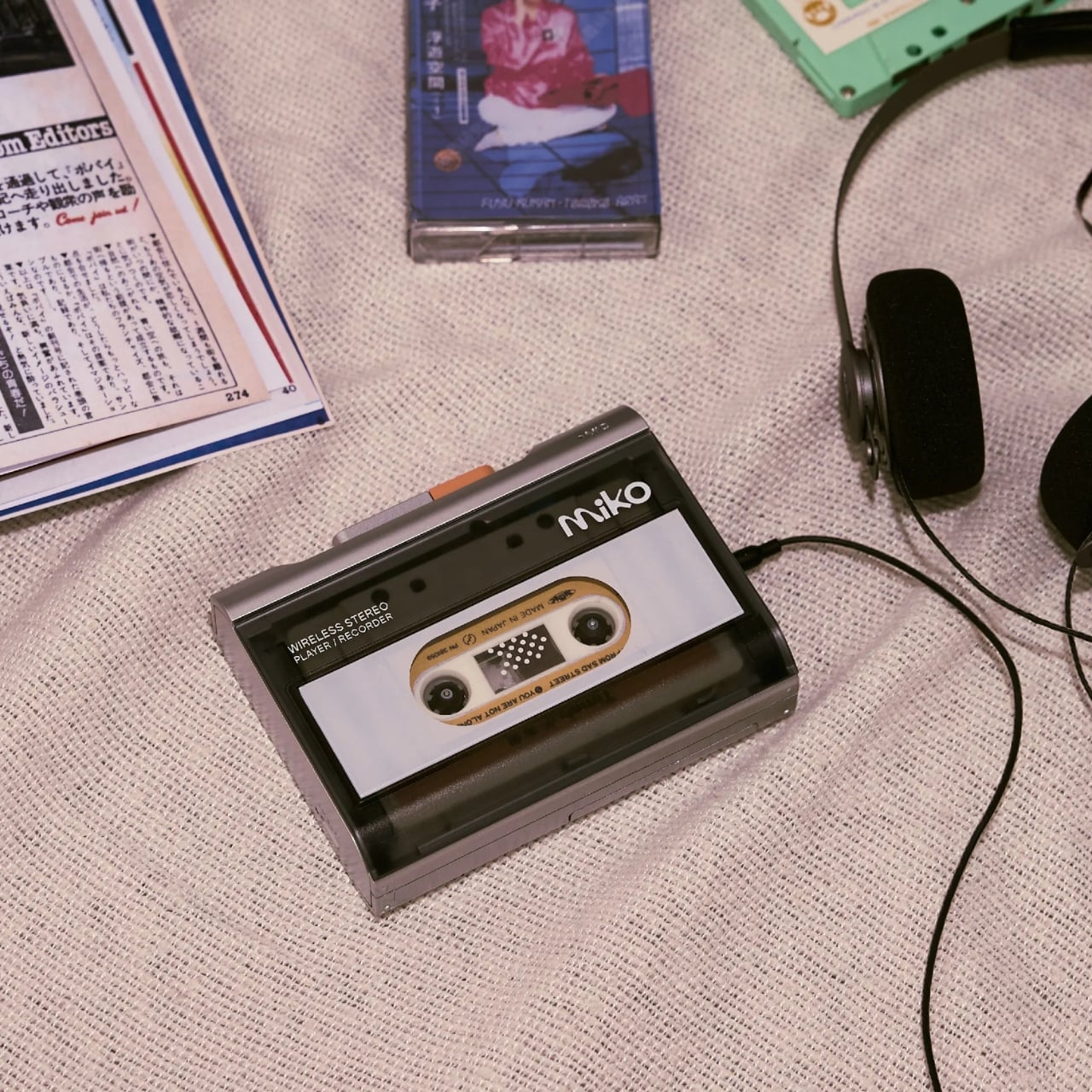
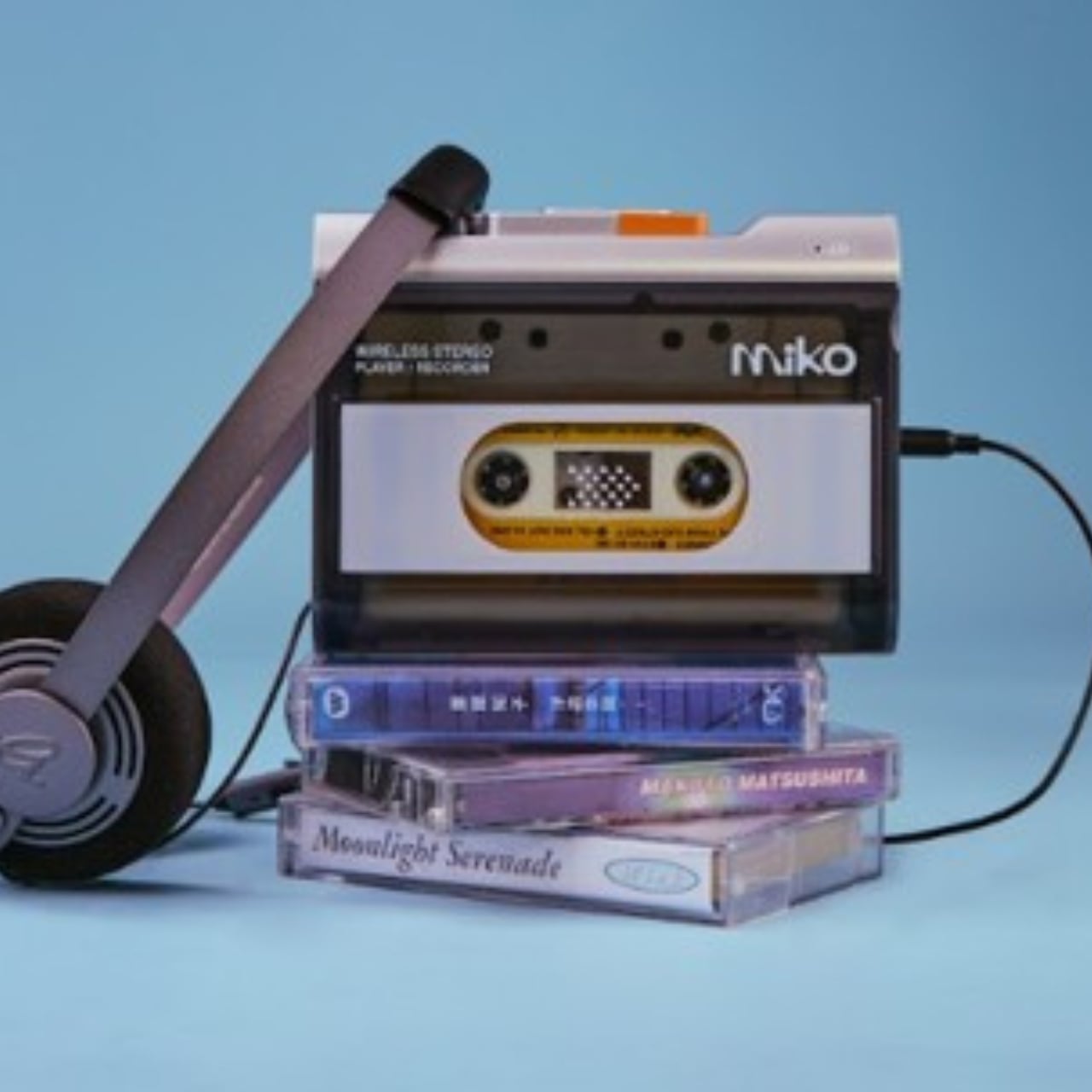
Gadhouse, the audio lifestyle brand behind some genuinely good-looking retro-inspired gear, clearly felt it too. The result is Miko, their first cassette player, and it arrives looking like it has a point to make. The design alone earns attention. Gadhouse drew heavily from the 1985 to 1995 era, a decade widely considered the peak of expressive, personality-driven consumer electronics. Miko carries that DNA through a translucent front cover that lets you watch the cassette move, an aluminum logo detail, and a compact form factor that sits satisfyingly in the hand.
It comes in two colorways, Smoke and Mint, and both feel deliberately considered rather than arbitrarily chosen. The Mint version especially hits that sweet spot between vintage and current that a lot of retro-inspired products spend significant design budgets trying and failing to achieve.
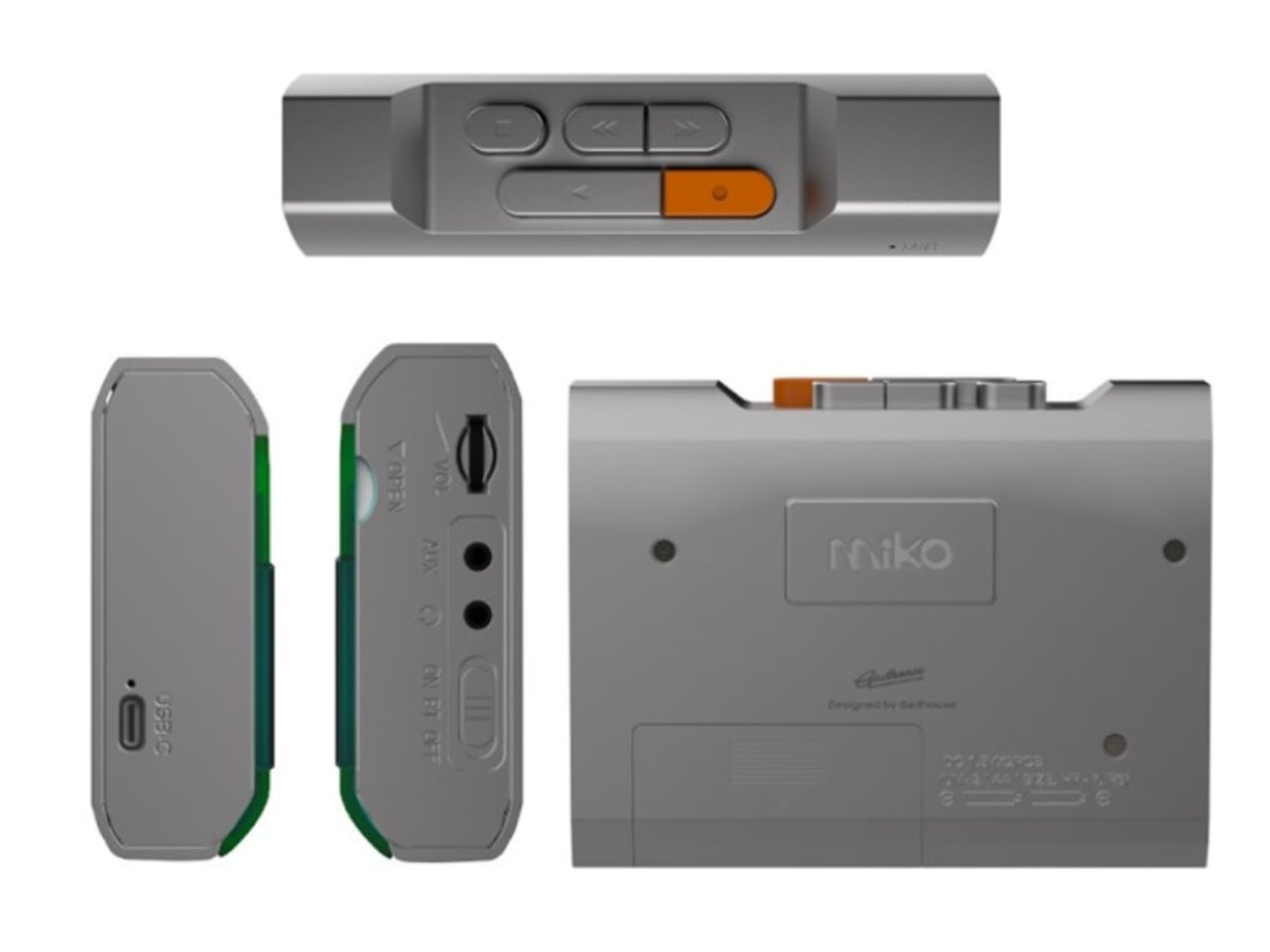
Beyond the looks, Gadhouse made a smart decision not to stop at aesthetics. The Miko runs on Bluetooth 5.3, which means you can pair it with wireless headphones and walk out the door untethered. There is also a 3.5mm stereo output for those who prefer a wired setup or own a vintage pair they’re not ready to part with. Both options coexist without one feeling like an afterthought, and that kind of functional honesty is rarer than it should be in products that trade so heavily on nostalgia.
The five-button control system handles play, fast-forward, rewind, stop, and record. That last button deserves its own moment. Miko includes a built-in directional microphone, which means you can record directly onto cassette. Voice notes, song ideas, a mix tape for someone you want to impress, or a playlist you’ve actually curated rather than algorithmically generated. The format shifts from relic to creative tool pretty quickly once you remember that capability is built right in. Gadhouse has also announced plans to release their own line of blank cassette tapes and accessories later this year, which suggests they’re approaching this as a longer-term ecosystem rather than a one-and-done launch.
At 192 grams, Miko is light enough to drop into a bag without thinking twice. It runs on AA batteries and accepts USB-C power input, including directly from an iPhone, which is exactly the kind of considered detail that signals a team that actually thought about how people use things in the real world. The campaign imagery reinforces the tone they’re going for: youthful, a little editorial, tactile. It reads less like a tech launch and more like a lifestyle statement, which, for this kind of product, is probably the right call.
The cassette revival isn’t going anywhere because it was never purely about audio quality. It’s about ownership, tactility, and a kind of deliberate listening that streaming has made increasingly rare. When you play a cassette, you commit to it. You flip it, you fast-forward past songs you skipped last time, you sit with the imperfections. Holding a tape, choosing it, pressing play. That sequence means something to people. That’s not nostalgia talking, that’s human behavior. Miko seems to understand this, and it packages that understanding into something that actually functions well in 2026, without trying to be a museum piece or a tech gimmick.
The Gadhouse Miko Cassette Player is priced at $99/£59.99 and available now from the Gadhouse website and global partners, with major retailers including Amazon, HMV, Currys, Tesco, and John Lewis expected to follow. Starting April 30th, it can be bundled with Gadhouse’s Wesley Retro Headphones for $149/£109. For anyone already deep into the format or simply cassette-curious, this might be the most considered entry point on the market right now.
Cassette tapes are having a moment, and that moment is refusing to end. According to Billboard, cassette sales have grown more than 440% over the past decade, and in the first quarter of 2025 alone they more than doubled, hitting numbers not seen in 20 years. This isn’t a blip or a quirky indie niche. It’s a full-on cultural movement, and whether you’re old enough to remember rewinding a tape with a pencil or you’ve been hunting down limited editions on Bandcamp, you’ve probably felt its pull.
Gadhouse, the audio lifestyle brand behind some genuinely good-looking retro-inspired gear, clearly felt it too. The result is Miko, their first cassette player, and it arrives looking like it has a point to make. The design alone earns attention. Gadhouse drew heavily from the 1985 to 1995 era, a decade widely considered the peak of expressive, personality-driven consumer electronics. Miko carries that DNA through a translucent front cover that lets you watch the cassette move, an aluminum logo detail, and a compact form factor that sits satisfyingly in the hand.
It comes in two colorways, Smoke and Mint, and both feel deliberately considered rather than arbitrarily chosen. The Mint version especially hits that sweet spot between vintage and current that a lot of retro-inspired products spend significant design budgets trying and failing to achieve.
Beyond the looks, Gadhouse made a smart decision not to stop at aesthetics. The Miko runs on Bluetooth 5.3, which means you can pair it with wireless headphones and walk out the door untethered. There is also a 3.5mm stereo output for those who prefer a wired setup or own a vintage pair they’re not ready to part with. Both options coexist without one feeling like an afterthought, and that kind of functional honesty is rarer than it should be in products that trade so heavily on nostalgia.
The five-button control system handles play, fast-forward, rewind, stop, and record. That last button deserves its own moment. Miko includes a built-in directional microphone, which means you can record directly onto cassette. Voice notes, song ideas, a mix tape for someone you want to impress, or a playlist you’ve actually curated rather than algorithmically generated. The format shifts from relic to creative tool pretty quickly once you remember that capability is built right in. Gadhouse has also announced plans to release their own line of blank cassette tapes and accessories later this year, which suggests they’re approaching this as a longer-term ecosystem rather than a one-and-done launch.
At 192 grams, Miko is light enough to drop into a bag without thinking twice. It runs on AA batteries and accepts USB-C power input, including directly from an iPhone, which is exactly the kind of considered detail that signals a team that actually thought about how people use things in the real world. The campaign imagery reinforces the tone they’re going for: youthful, a little editorial, tactile. It reads less like a tech launch and more like a lifestyle statement, which, for this kind of product, is probably the right call.
The cassette revival isn’t going anywhere because it was never purely about audio quality. It’s about ownership, tactility, and a kind of deliberate listening that streaming has made increasingly rare. When you play a cassette, you commit to it. You flip it, you fast-forward past songs you skipped last time, you sit with the imperfections. Holding a tape, choosing it, pressing play. That sequence means something to people. That’s not nostalgia talking, that’s human behavior. Miko seems to understand this, and it packages that understanding into something that actually functions well in 2026, without trying to be a museum piece or a tech gimmick.
The Gadhouse Miko Cassette Player is priced at $99/£59.99 and available now from the Gadhouse website and global partners, with major retailers including Amazon, HMV, Currys, Tesco, and John Lewis expected to follow. Starting April 30th, it can be bundled with Gadhouse’s Wesley Retro Headphones for $149/£109. For anyone already deep into the format or simply cassette-curious, this might be the most considered entry point on the market right now.
Minimalism in product design has gotten boring. We’re swimming in smooth white rectangles, touch controls that offer zero feedback, and devices designed to vanish. Apple spent two decades training the industry to sand away every visible seam, and now we live in a world where a Bluetooth speaker looks like a cylinder because a cylinder offends nobody. Bang & Olufsen understood early that audio equipment could occupy space like sculpture, could earn its place in a room through presence instead of absence. Teenage Engineering proved that mechanical honesty and playful geometry could coexist with premium materials. Both approaches work because they have a point of view.
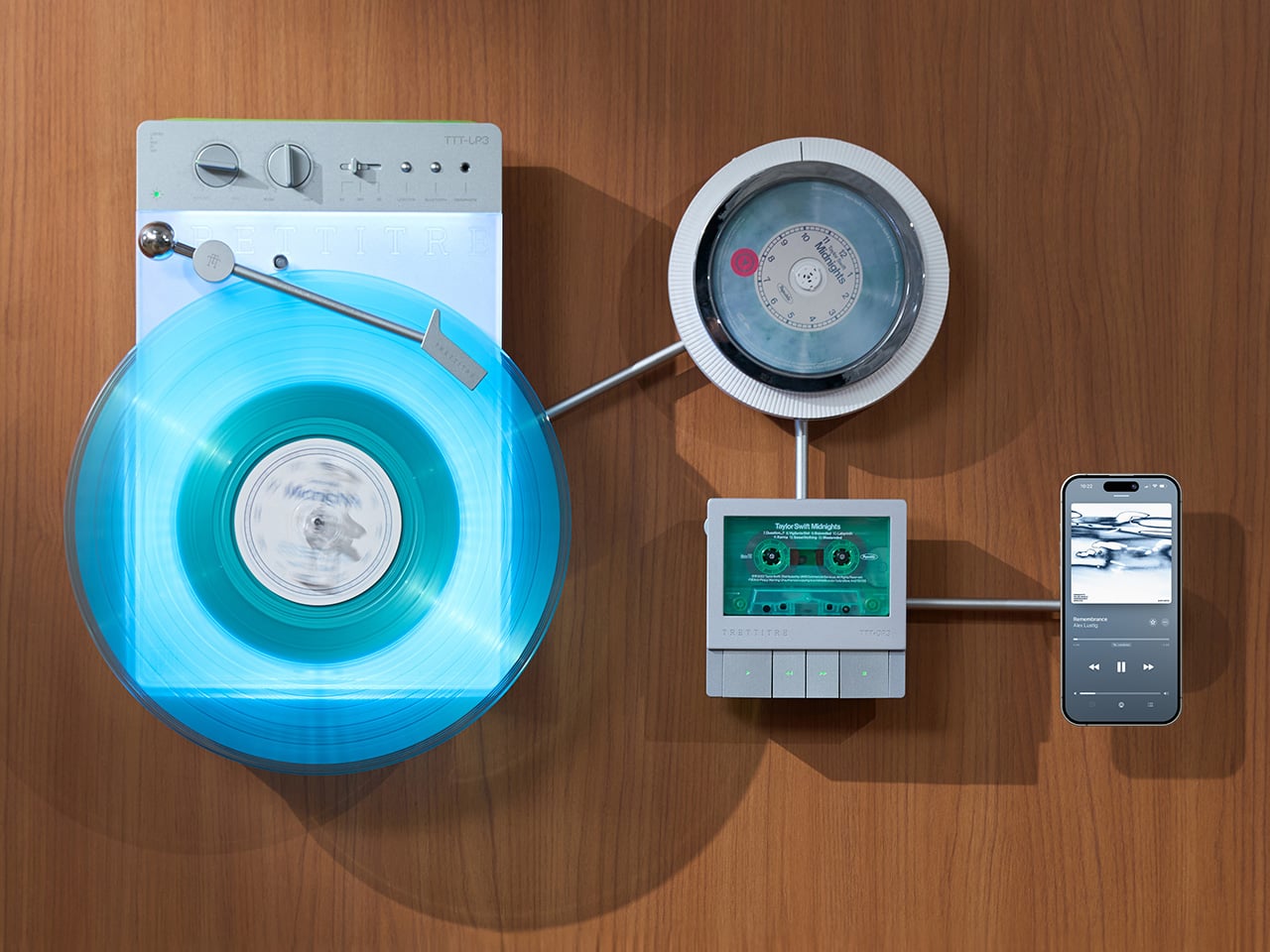
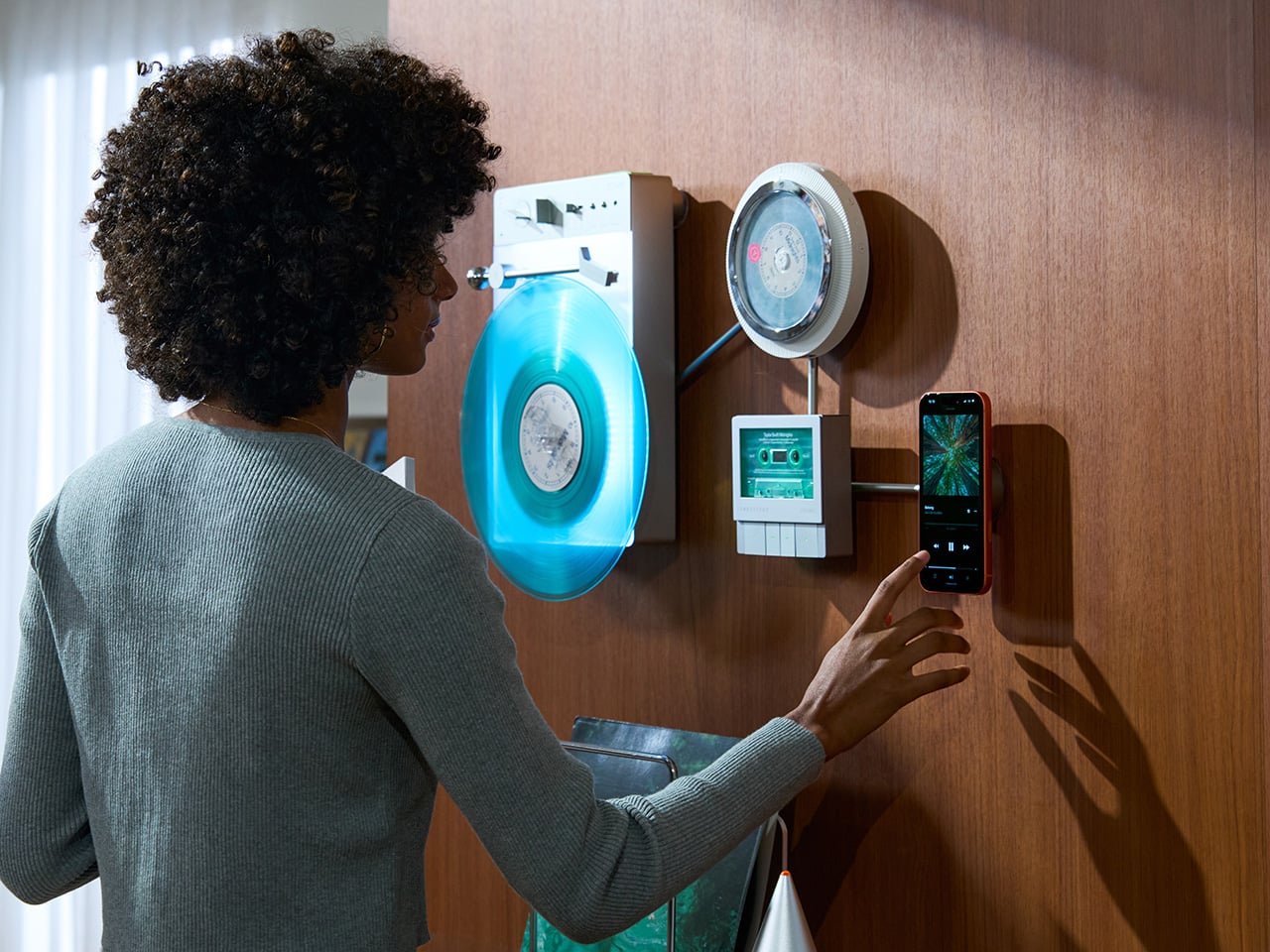
TRETTITRE’s TTT series combines those instincts into something harder to categorize. The TTT-LP3 wireless vinyl player uses CNC-machined aluminum for the main frame and features a diffused lighting panel that spreads light evenly across the surface when music plays. The TTT-DP3 Bluetooth CD player takes inspiration from a UFO-like form with a transparent magnetic cover that rotates open to reveal the spinning disc. The TTT-CP3 cassette player uses a metal housing with sharp geometric lines and mechanical transport keys that deliver clear physical response. All three mount on the TTT-W magnetic modular wall rack, turning physical media playback into a visible, functional part of interior design.
TTT-LP3: A Vinyl Player That Doubles as Ambient Light
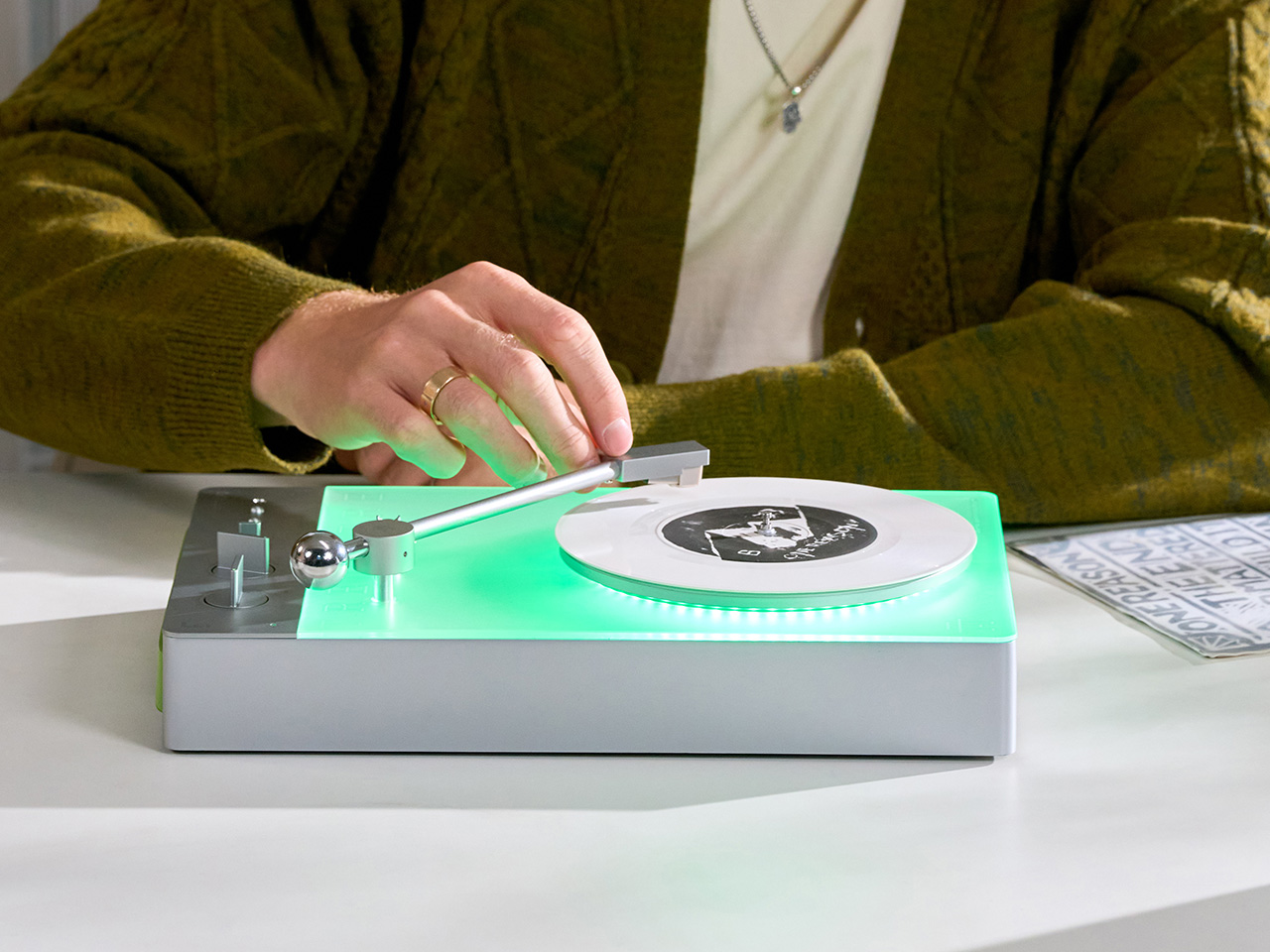
The back of the LP3 includes a hidden mounting structure that allows it to hang directly on a wall. You can mount it vertically so the record becomes part of the visual display, or go for the classic horizontal layout. When you want to move it, you lift the silicone leather handle at the top and take it down. The player detaches easily and gives you the freedom to listen wherever you choose. Traditional turntables usually stay exactly where you put them, limiting your options for when and where you listen. The LP3 works a little differently because of the battery and the wall mount’s wireless charging system, which keeps it powered without a visible cable.
Behind the LP3 sits a diffused lighting panel that spreads light evenly across the surface of the unit. When it’s on, the entire body of the player glows softly, designed to feel closer to ambient lighting than decorative lighting. You can change the lighting effects with the touch of a button. When a record spins, the moving shadows create a quiet visual effect. You can also leave the player mounted on the wall as a soft light source even when no music is playing. That ambient quality pushes the LP3 from well-designed product into something more considered: a slow, breathing light fixture that happens to play records.
The LP3 uses a self-balancing tonearm system that automatically sets the correct pressure when the player powers on. You place the record on the platter and lower the needle, and the system handles the rest. Many turntables require careful calibration before they can be used properly, with tonearm balance, tracking pressure, and counterweight adjustment all part of the process. For experienced collectors that process can be enjoyable, but for beginners it often feels complicated. The LP3 removes that barrier entirely while preserving the tactile experience people enjoy. The player supports both 33 RPM and 45 RPM records, and includes a manual control dial that allows small adjustments to playback speed (roughly ±0.5%), useful for older records that may not spin perfectly at their original speed anymore.
Wireless audio is handled through Qualcomm Bluetooth v5.3 with SBC, aptX, aptX HD, and aptX Adaptive, which allows higher-quality and lower-latency wireless audio than basic Bluetooth streaming. For wired setups, the player also includes a 3.5mm audio output. The built-in battery provides up to 6 hours of vinyl playback or up to 3 hours when used purely as an ambient light source. Full specs: dimensions 342×233×87mm, weight 1430g, Audio-Technica AT3600L moving magnet stereo cartridge, CNC-machined aluminum frame with silicone leather carrying strap. The LP3 arrives in June 2026 for Early Bird backers, May 2026 for Fast Delivery backers.
TTT-DP3: Giving the Compact Disc Its Aura Back
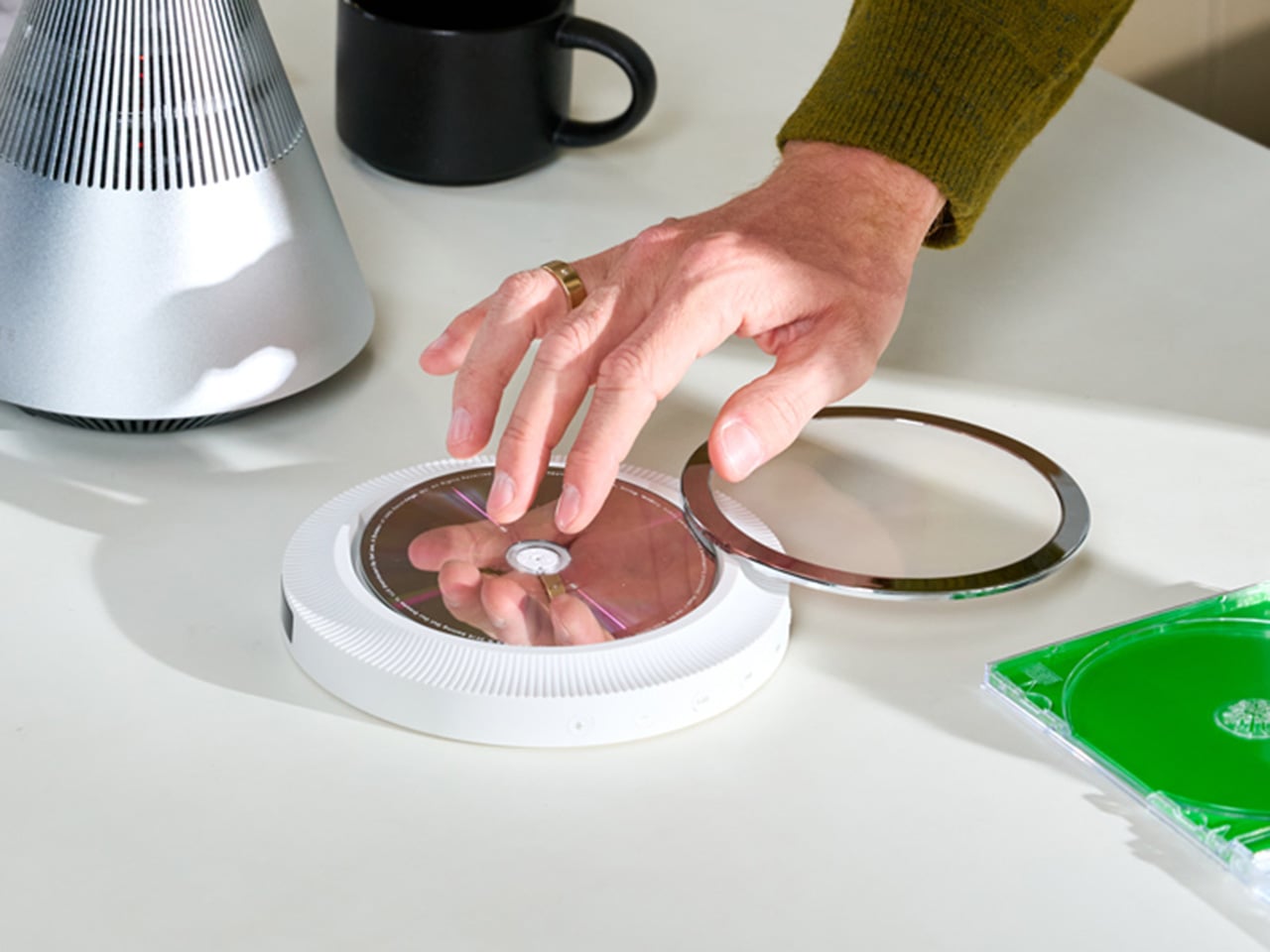
The DP3 keeps the reliability of CDs but gives the player a different visual presence. The design takes inspiration from a UFO-like form with a transparent magnetic cover. When the cover rotates open, the disc is partially visible as it spins, turning something simple into a small visual moment. A CD player shaped like a flying saucer with a rotating transparent lid is an audacious idea, and it works because it doesn’t try to evoke nostalgia. It reframes a CD player as a mechanical object of curiosity, something you watch as much as use.
The control buttons include raised tactile dots combined with a gold-embossed finish, making it easy to identify the buttons by touch alone. You can pause or skip tracks without needing to look down at the player. A small OLED display on the player shows track numbers, playback status, and battery level. The interface is intentionally simple so the information you need is visible immediately. A built-in battery allows the DP3 to run for several hours on its own, so you can move it from room to room, bring it to a small gathering, or take it while traveling. Full specs: Ø170×27mm, 324g, supports CD-DA and HDCD formats, Bluetooth 5.4, SNR >70dB, THD <3%, ABS+PC+Metal construction. The DP3 ships in May 2026.
TTT-CP3: Cassette Hardware for Modern Audio Setups
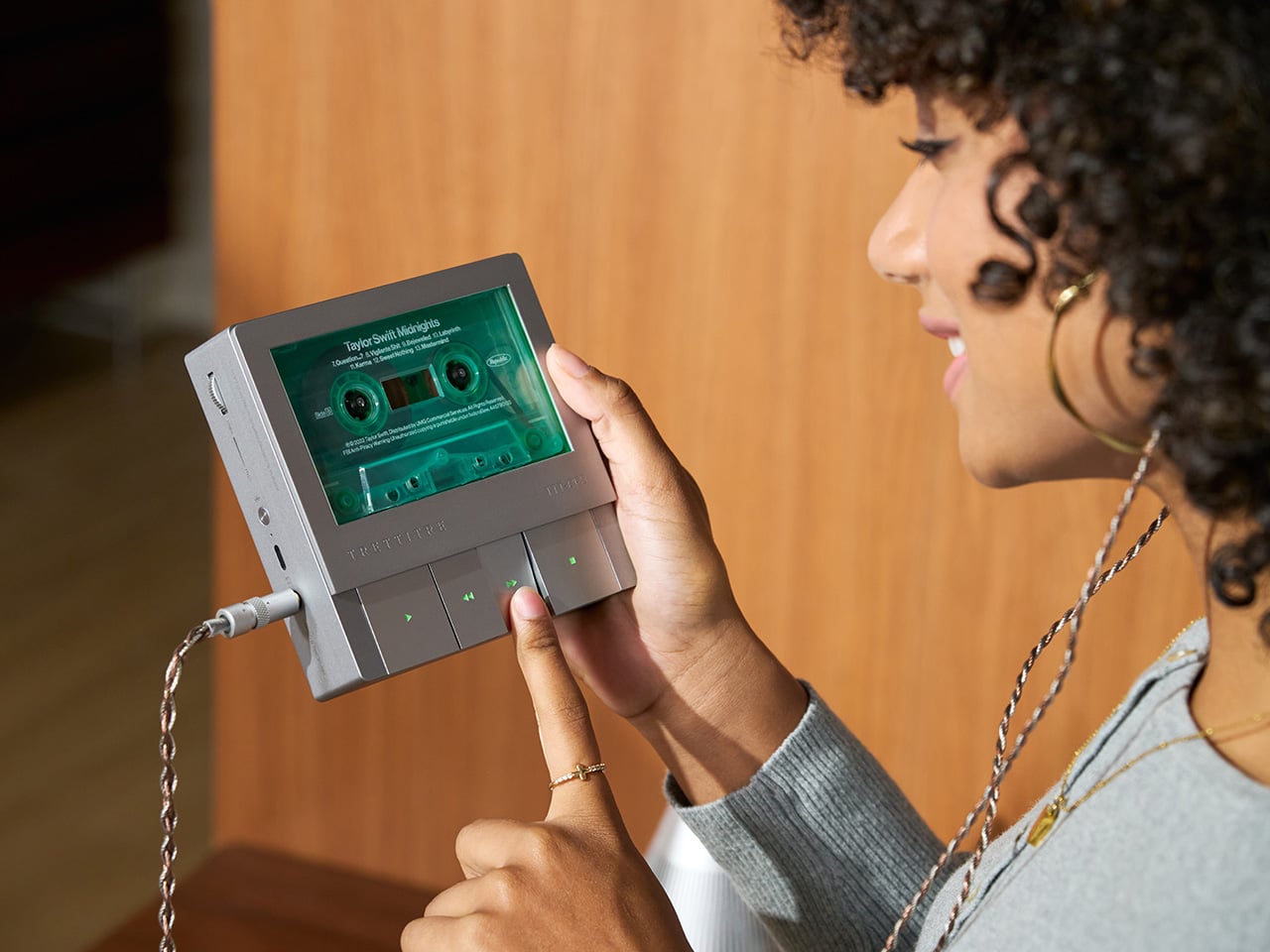
The CP3 keeps the tactile mechanical elements people associate with tapes while updating the electronics inside. The player uses a metal housing with sharp geometric lines that give it a distinctly industrial appearance. Instead of trying to imitate retro plastic designs, the CP3 leans into a more modern interpretation of cassette hardware. The playback controls use independent mechanical keys similar to piano keys. Each press has a clear physical response. Play, rewind, and stop feel deliberate instead of soft or mushy.
Inside the CP3 sits a Bluetooth module that allows cassette audio to stream wirelessly to speakers or headphones. The player decodes analog audio signals with high precision, helping reduce background noise and preserve more detail from the original recording. The result still sounds like cassette tape, but with greater clarity. Full specs: 122×120×32mm, 360g, supports Type I-IV cassette cartridges, Bluetooth 5.4, SNR ≥55dB, THD <3.5%, Metal+PC+ABS construction. The CP3 ships in May 2026.
When Storage Becomes Part of the Spectacle
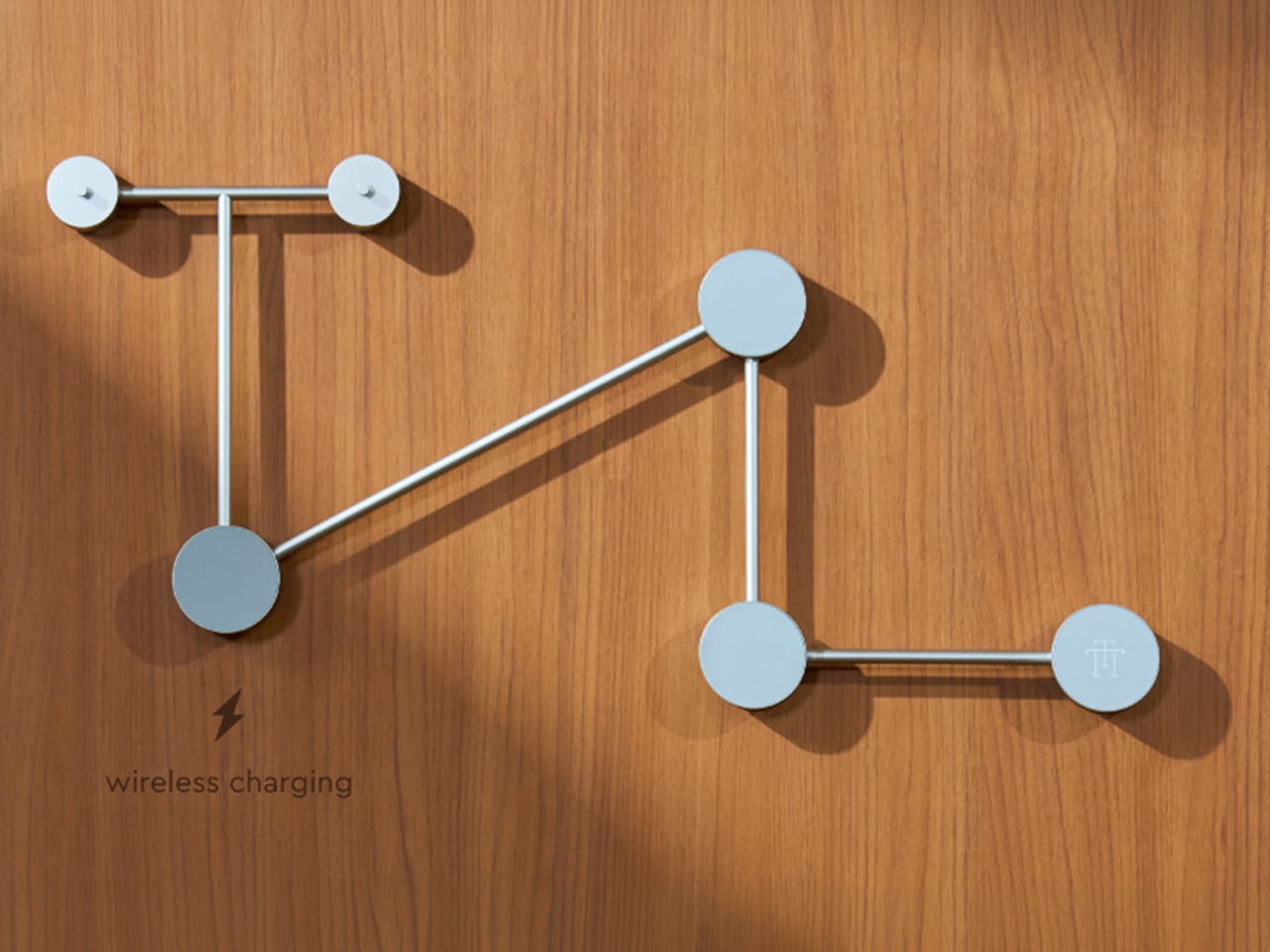
The TTT-W Magnetic Modular Wall Rack uses an all-metal geometric structure that allows multiple TTT players to be arranged into a clean wall display while keeping them organized and ready to use. The rack integrates magnetic alignment and wireless charging for the vinyl player, so the LP3 can stay powered without visible cables while being part of the room’s design. Two configurations are available: a T-shaped rack (263×196×27mm, 300g) and a magnetic modular wall rack (612×302×27mm, 775g, combined style T+3). Both support wireless charging at 5-10W and use USB-C 5V 2A input.
The Supporting Cast, from Sculptural Speakers to Planar IEMs
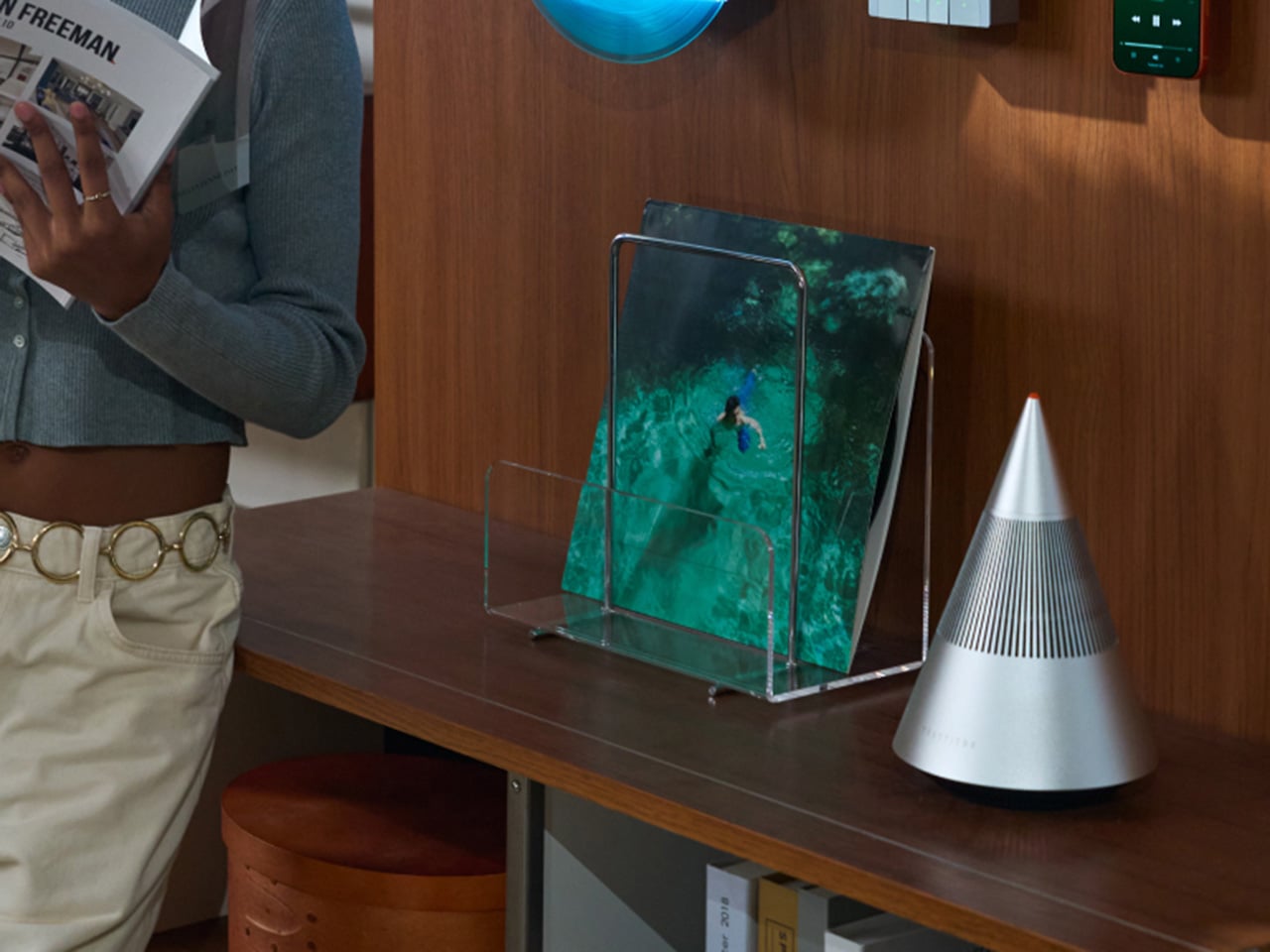
TRETTITRE offers a range of add-ons designed to complement the TTT system. The TreSound1 Speaker arrives in concrete and wooden editions, delivering 2×30W + 1×60W output power with a 1″ tweeter, 2.75″ mid-range, and 5.25″ subwoofer for 30Hz-25KHz frequency response. The conical speaker features 360° surround sound, Bluetooth 5.2 with Qualcomm aptX HD, and a sculptural form that occupies space like a piece of furniture. The TreSound Mini is a portable Bluetooth speaker with a 5200mAh battery, 30W RMS output, and 360° surround sound. The TTT-E3 in-ear headphones use a 13mm planar magnetic driver with a 4-strand silver-copper hybrid conductor, available in 3.5mm and 4.4mm configurations. An aluminum alloy side table (300×300×750mm, 1.75kg, max load 50kg) rounds out the ecosystem.
What It Costs to Build the Setup, and When It Ships
The TTT-LP3 wireless vinyl player is available at $229 for Early Bird backers (June 2026 delivery), down from a planned $449 MSRP. The TTT-DP3 Bluetooth CD player is priced at $79 standalone ($179 MSRP), while the TTT-CP3 cassette player is also $79 standalone ($199 MSRP). If you’re a bonafide audiophile, a $399 bundle gets you all three devices. Optional add-ons include the TreSound Mini Bluetooth Speaker at $169 ($299 MSRP), TreSound1 Wooden Edition at $449 ($659 MSRP), TreSound1 Concrete Edition at $499 ($799 MSRP), TTT-E3 planar IEMs at $139 ($239 MSRP), and the TTT Side Table at $89 ($199 MSRP). The campaign runs through April 9, 2026, with worldwide delivery beginning May 15, 2026.
Most portable speakers these days are designed to disappear. They’re compact, wireless, and largely anonymous, blending into whatever surface they rest on until a voice command kicks things off. Music has become a background utility, something that happens to you rather than something you actively choose. The ritual of physically engaging with sound has faded quietly, replaced by convenience that’s smooth, automatic, and almost entirely invisible.
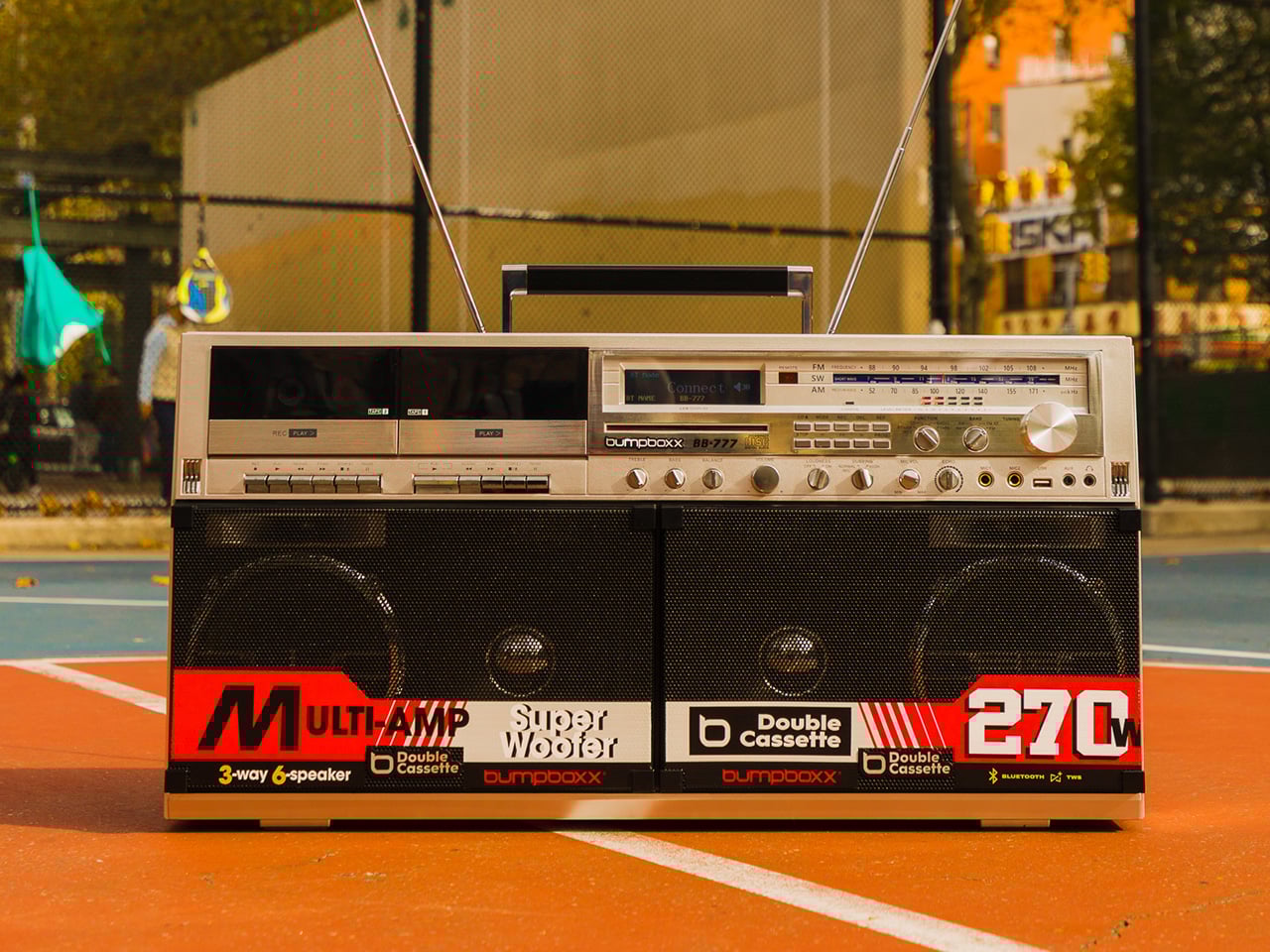
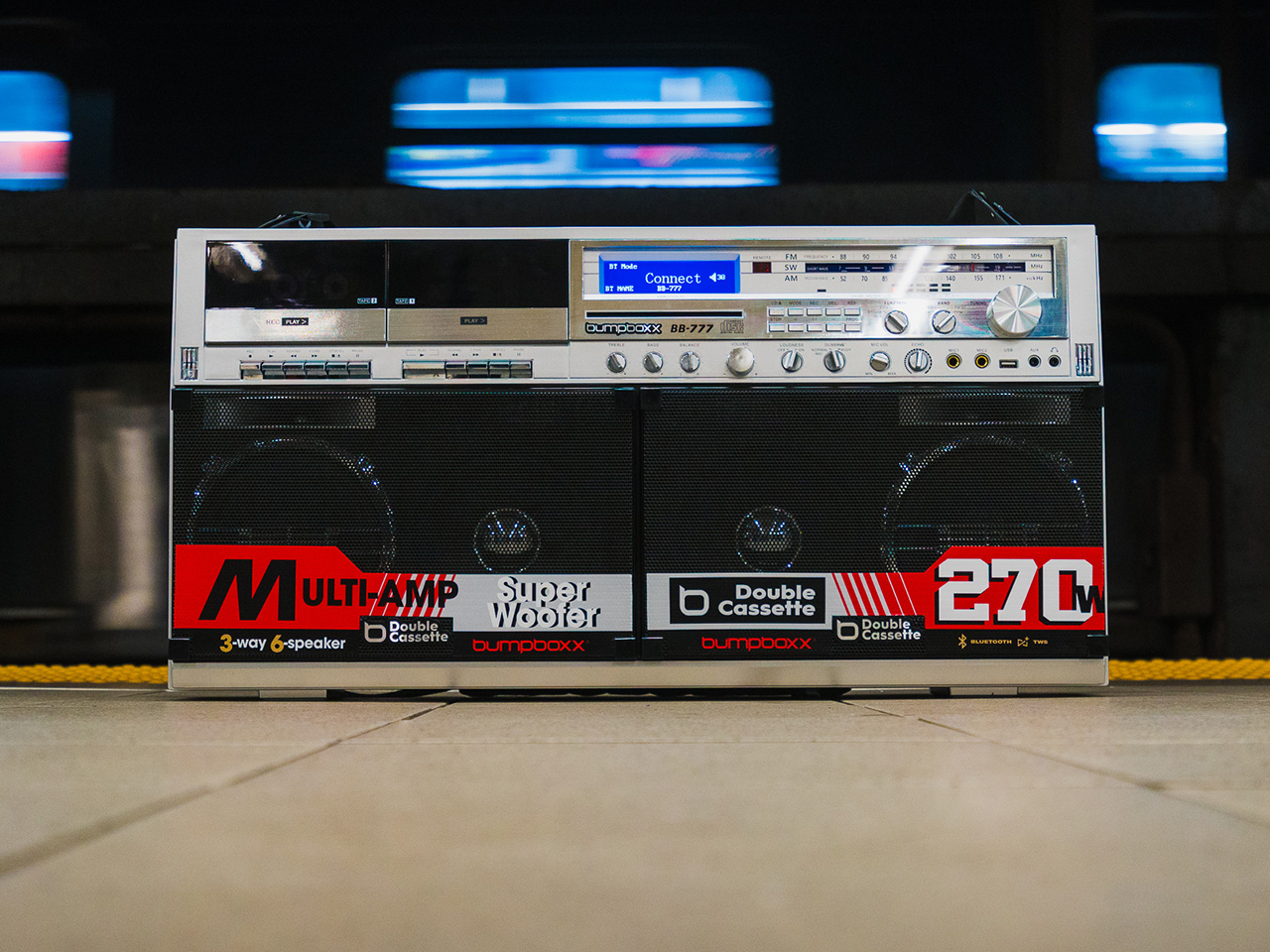
The BB-777 from Bumpboxx addresses that shift in a very deliberate way. Inspired by the legendary GF-777 of the ’80s, it brings back the classic boombox in a form that captures the unmistakable look and feel of the original, while updating everything under the hood. It’s the kind of design that immediately signals its intent: put music back at the center of the room, loud and visible.
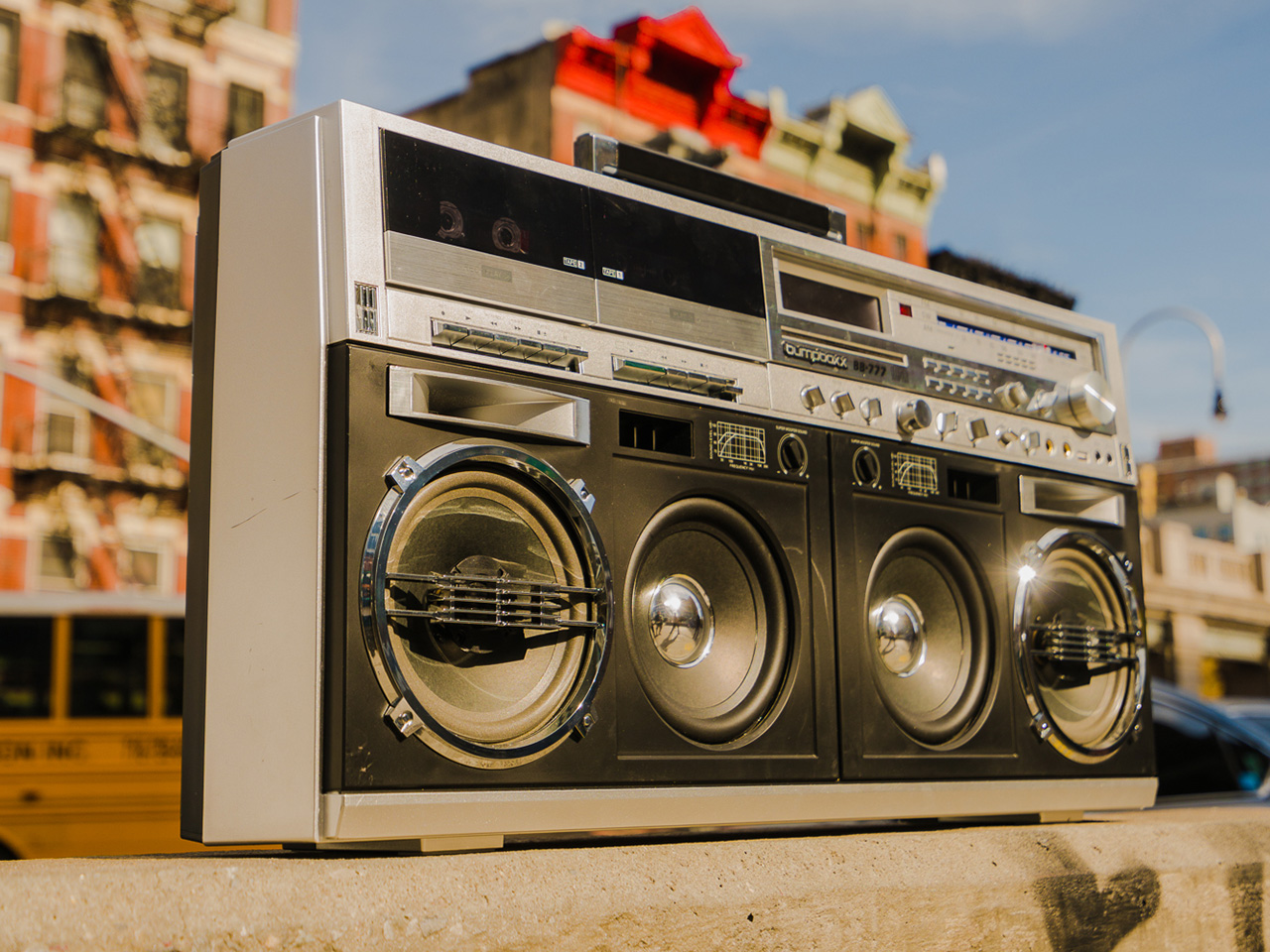
Part of what makes the BB-777 so compelling is just how much it commits to the aesthetic. The wide, horizontal body stretches 29.6 inches across, with dual cassette bays, a central control section, a long analog tuner strip, and four large drivers across the lower half. Paired with two telescoping antennas and a carry handle, the whole thing stays true to the iconic boombox design of the ’80s, built to be seen, not tucked away.
What really sets the experience apart, though, is how it feels to operate. Bass, treble, balance, and master volume are shaped through solid knobs that respond instantly, giving a direct connection to the music. Each adjustment is tactile and precise, bringing back the simple satisfaction of tuning sound with real hardware. There’s also a wireless remote for those moments when you’d rather adjust the sound from across the room without getting up from wherever you’ve settled in.
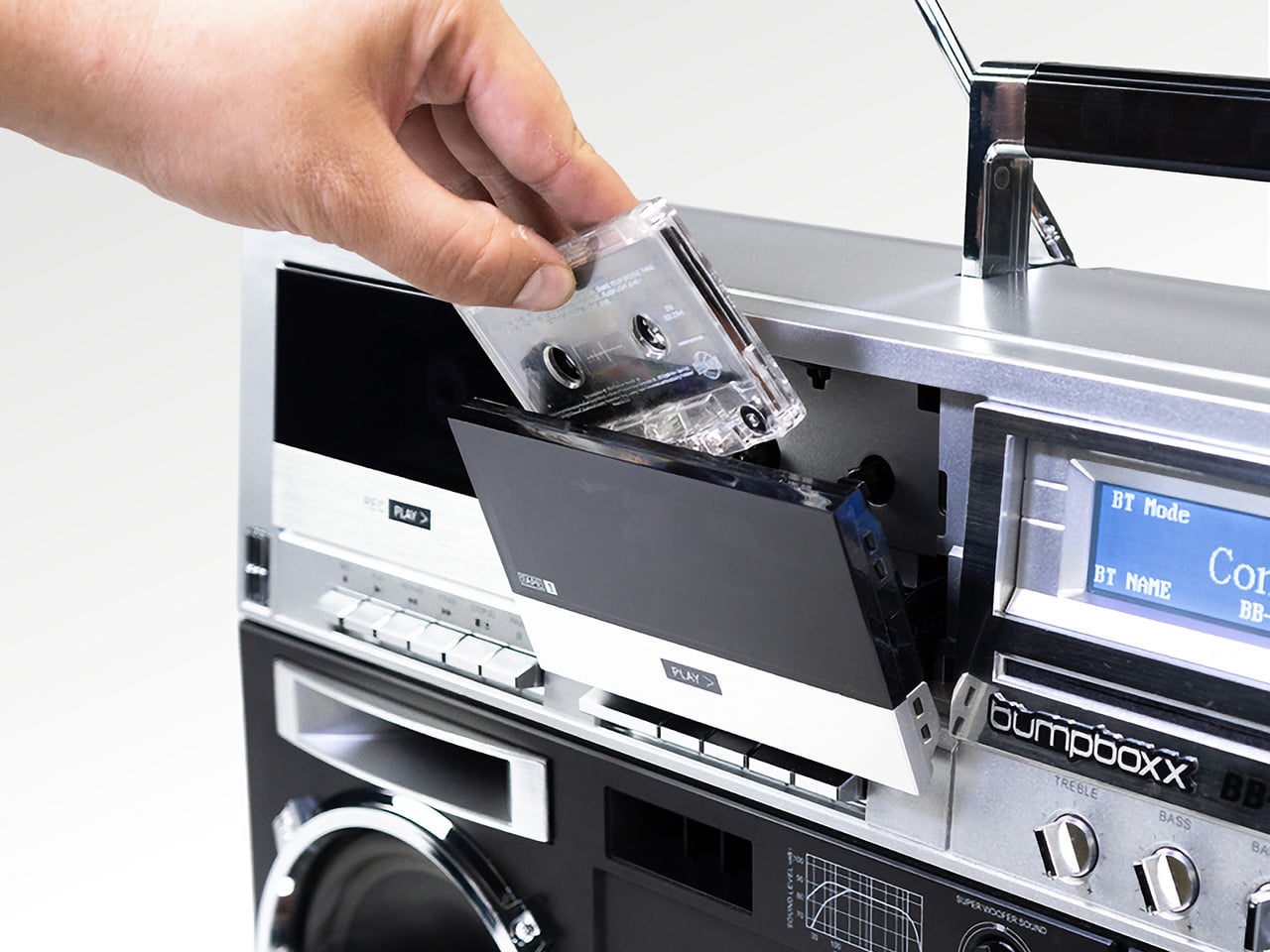
Then there’s the format support, and it’s where the BB-777 truly stands apart from other retro-styled speakers. It plays dual cassette tapes, loads CDs, tunes the radio, and connects via AUX, USB, or Bluetooth. It also handles CD-R and CD-RW discs, AM, FM, FM stereo, and shortwave radio. Old mixtapes, burned discs, streamed playlists, and radio stations all coexist in one machine without any compromise.
Beyond playback, the BB-777 brings old recordings back to life. Audio from cassettes, CDs, or radio can be recorded directly to a USB drive as clean WAV files, turning a retro boombox into a straightforward way to digitize your favorite recordings. The cassette deck supports cassette-to-cassette dubbing at high speed, and a built-in microphone with dual wired mic inputs and echo and volume controls means it handles voice recordings and live sessions just as comfortably.
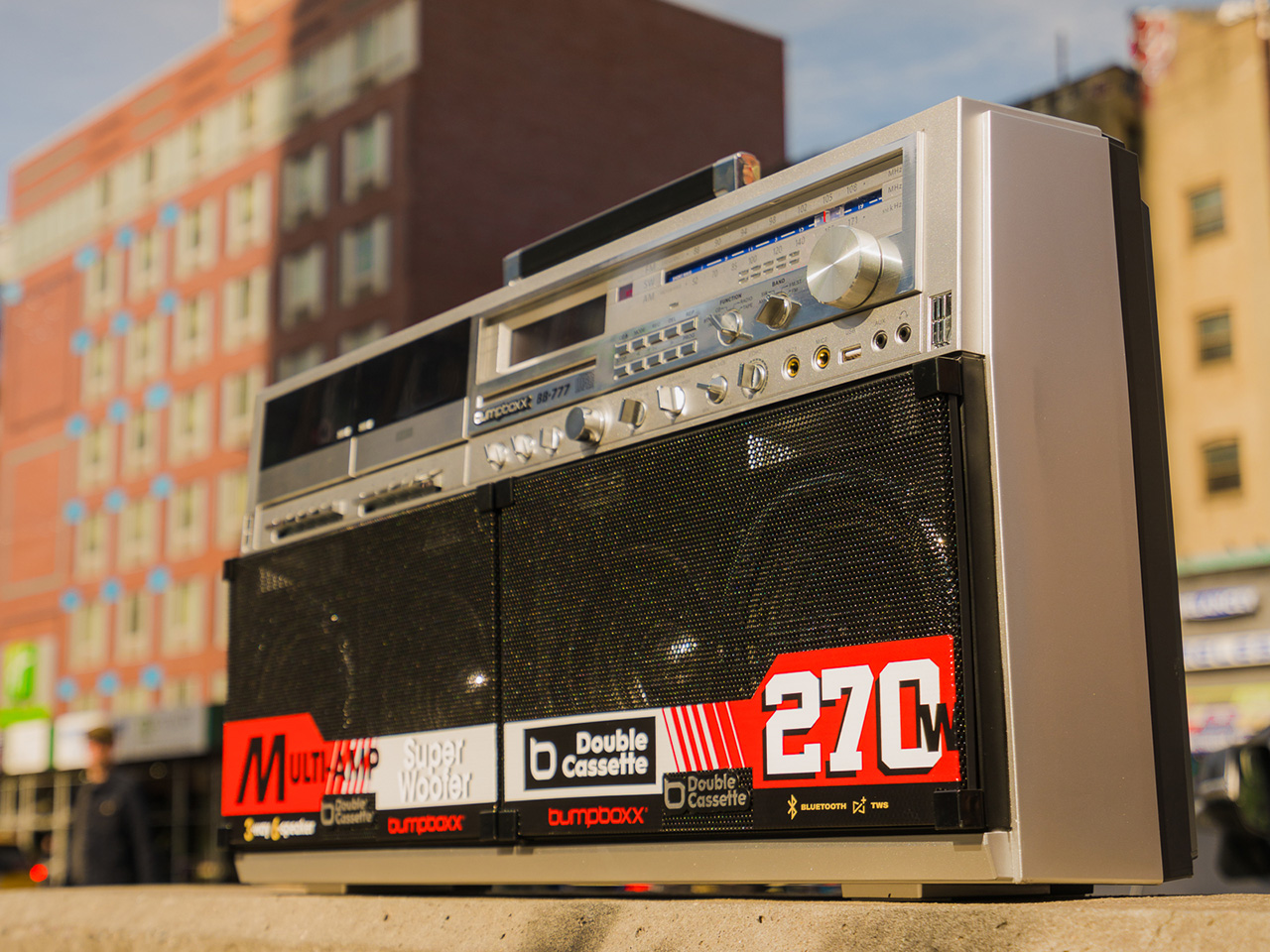
Of course, the sound system is equally serious and modern. Inside the wide enclosure sits a 270W system built for bold, room-filling audio, with a 3-way setup featuring dedicated isolated woofers, full-range drivers, and horn tweeters delivering deep bass, clear mids, and sharp highs. The internally chambered housing with bass ports and a fan-cooled amplifier round out an acoustic architecture built for real performance. The low end carries genuine weight, and the highs cut through cleanly.
Running all of that for up to 15 hours is a TSA-approved 97.6 Wh Li-ion rechargeable and interchangeable battery pack. With a 4-to-6-hour recharge window and 100 to 240V multi-voltage input, the battery can be charged either inside the unit or separately, and keeping a spare means the music never has to stop. It’s a smart upgrade from vintage boomboxes, which drained stacks of D batteries far faster than anyone expected.
For those wanting a bigger setup, two BB-777 units can be paired via TWS for true stereo sound, with dedicated left and right channels working together for deeper, more immersive audio across every format. The 100 to 240V AC input makes it ready for use almost anywhere in the world, with no voltage converters needed. It comes in Classic Silver, Radical Red, and Onyx Black, with removable magnetic front grills and a shoulder strap included.
What the BB-777 ultimately offers is something most audio products stopped trying to give people a long time ago: the feeling that music occupies real space. It sits in a room with a presence that commands attention, rewards the people who use it with a physical connection, and carries enough history in its silhouette to feel like it genuinely belongs to culture, not just a shelf.
Somewhere between the algorithmic playlists and the infinite scroll of recommended tracks, music stopped being something you held in your hands. Cassette tapes were declared dead more than two decades ago, buried under the weight of MP3s and then streaming services that promised every song ever recorded for a monthly fee. Search trends tell a different story now, though. Queries for “retro cassette player” have surged over 125% year-over-year, while “retro walkman cassette player” has exploded by more than 1,281% in the same period.
These numbers point to something more than a passing fad or a collector’s whim. Millennials and Gen Z listeners are actively seeking hardware that forces them to slow down, to choose an album rather than shuffle through ten thousand options. The cassette, with its fixed tracklist and physical limitations, turns listening into something deliberate again. Five modern cassette players have emerged to meet that demand, each one approaching the format from a wildly different design philosophy.
FiiO CP13
FiiO built its reputation on portable DACs and audiophile-grade headphone amplifiers, products where signal purity is the entire point. The CP13 carries that obsession into the cassette format with an all-analog signal path, from the magnetic tape head through a JRC5532 op-amp to the 3.5mm output. There is no digital conversion anywhere in the chain, no Bluetooth radio, no built-in speaker. The CP13 uses a motor with a high-voltage 4.2V power supply, paired with an oversized pure copper flywheel measuring 30.4mm in diameter.
That flywheel is the quiet star of the CP13’s engineering. Thicker and heavier than standard components, it reduces wow and flutter to levels most modern cassette players cannot approach, keeping tape speed consistent enough for the analog signal to actually matter. The dual-color aluminum alloy chassis, available in sky blue, white and black, or red and silver, measures just 31.8mm thick. An 1800mAh lithium cobalt oxide battery delivers 13 hours of playback and charges through USB-C, though FiiO’s decision to support all tape types from Type I through Type IV suggests the company expects its buyers to own tapes worth caring about.
What we like
Oversized copper flywheel for low wow and flutter
Fully analog signal path with no digital conversion
Supports all cassette types (I through IV)
What we dislike
No Bluetooth output means wired headphones are the only option
No recording and auto-reverse functions,
We Are Rewind Edith
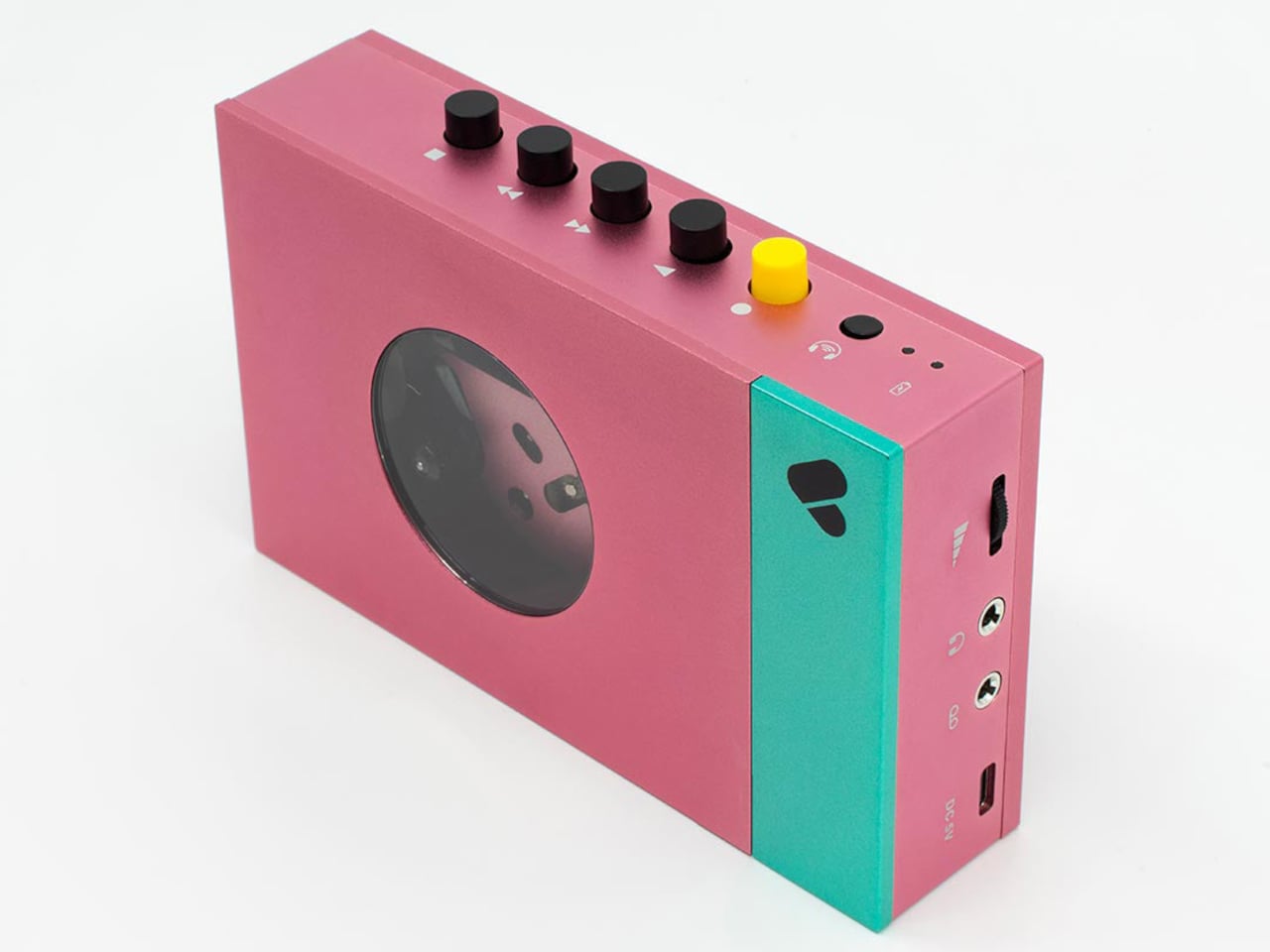
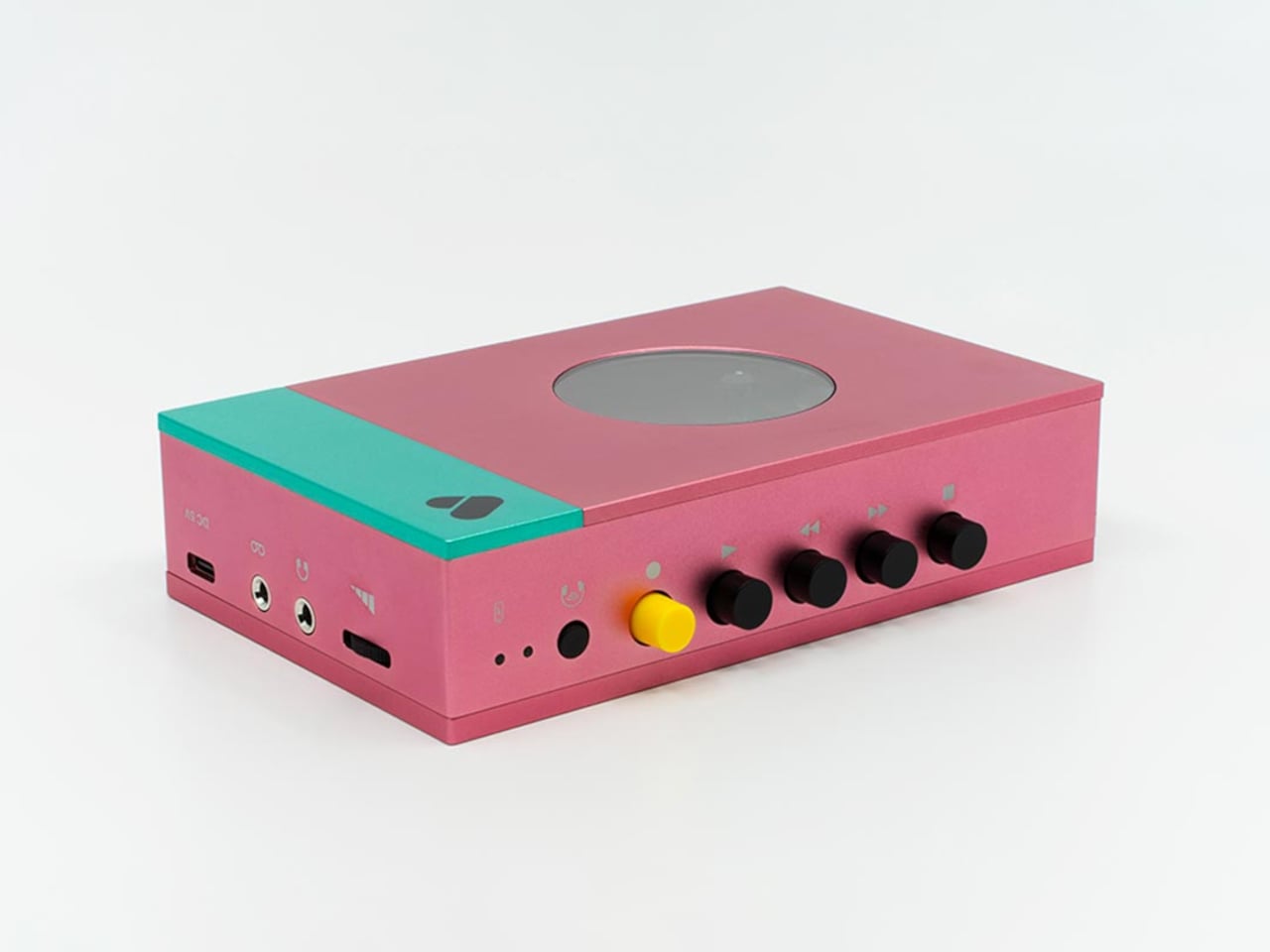
Where FiiO chases audio fidelity, the French brand We Are Rewind treats the cassette player as a cultural object first. The Edith, named after Edith Piaf, joins a lineup that already includes models named Kurt, Keith, and Serge, each one a color-coded tribute to a musician. The Edith arrives in a pink and green combination that reads less like consumer electronics and more like a fashion accessory, wrapped in an aluminum case that weighs 404 grams. That heft is deliberate. The brand explicitly references Sony’s original TPS-L2 Walkman as its design benchmark, choosing aluminum over plastic for what it describes as a “cool touch” quality.
Bluetooth 5.1 is the most visible concession to modernity, allowing wireless pairing with headphones and speakers. A built-in lithium-ion battery charges via USB-C and delivers roughly 10 to 12 hours of playback, replacing the disposable AA batteries that defined portable tape listening for decades. The Edith also records in stereo to Type I cassettes through its 3.5mm jack, and ships with a manual tape rewind pencil, a small wink to the analog rituals that streaming services have no equivalent for.
What we like
Aluminum case construction gives the player a premium tactile quality, making it feel like an object worth displaying
Bluetooth 5.1 and USB-C charging
Stereo recording capability through the 3.5mm jack preserves the mixtape tradition
What we dislike
The DC motor transport produces more wow and flutter than belt-driven alternatives
At 404 grams, the Edith is too heavy and too large for most pockets
NINM Lab IT’S OK TOO
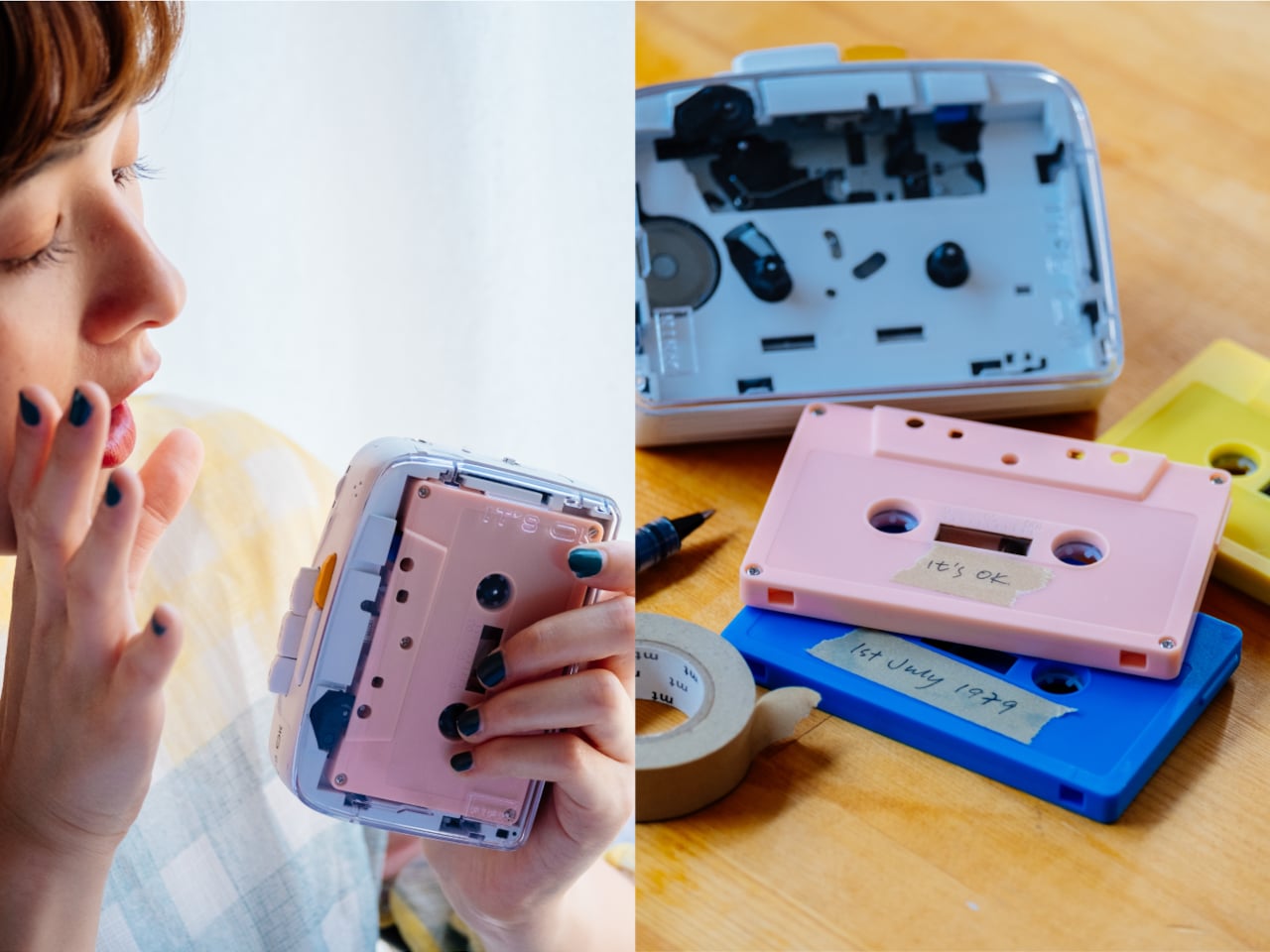
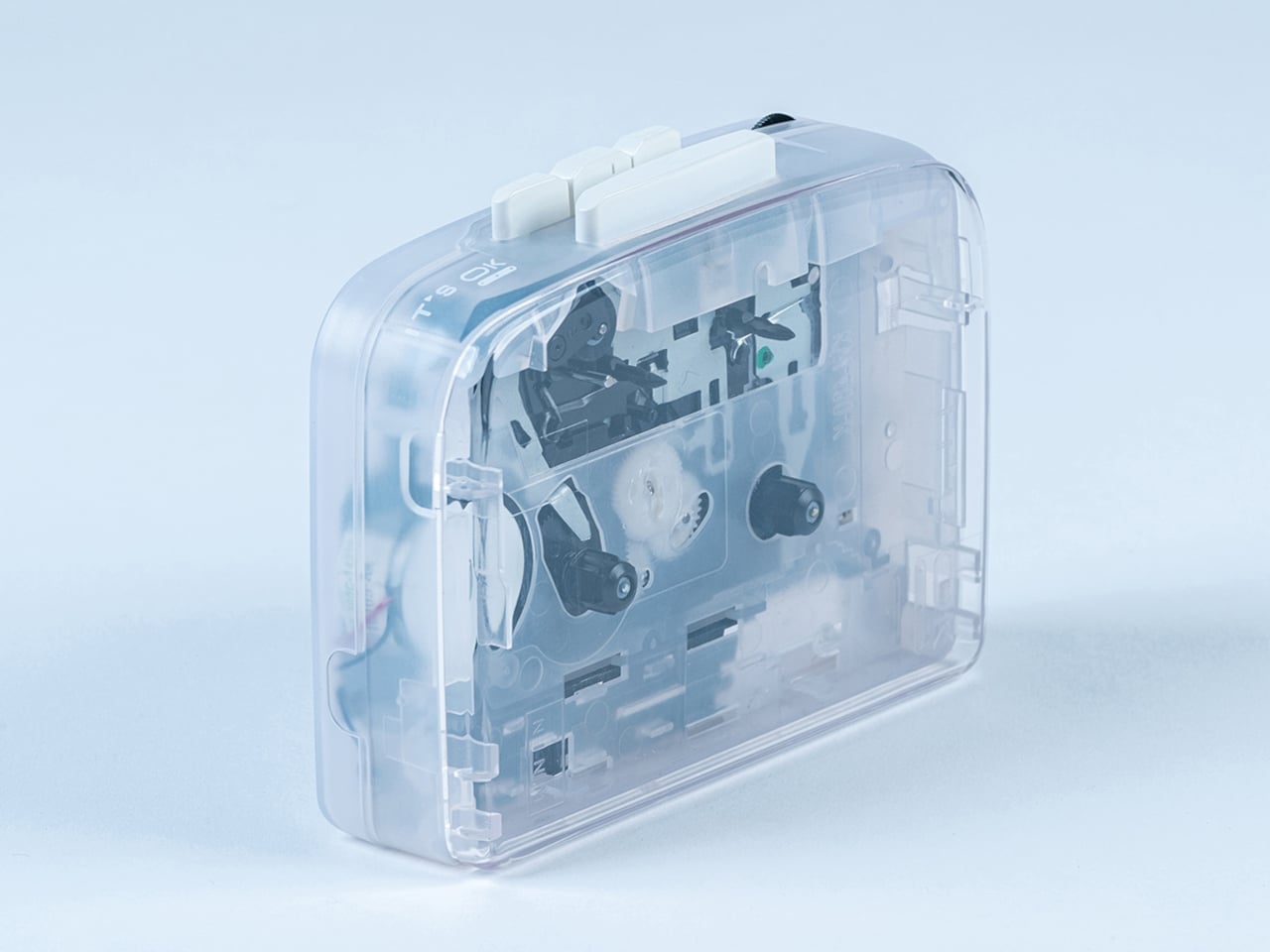
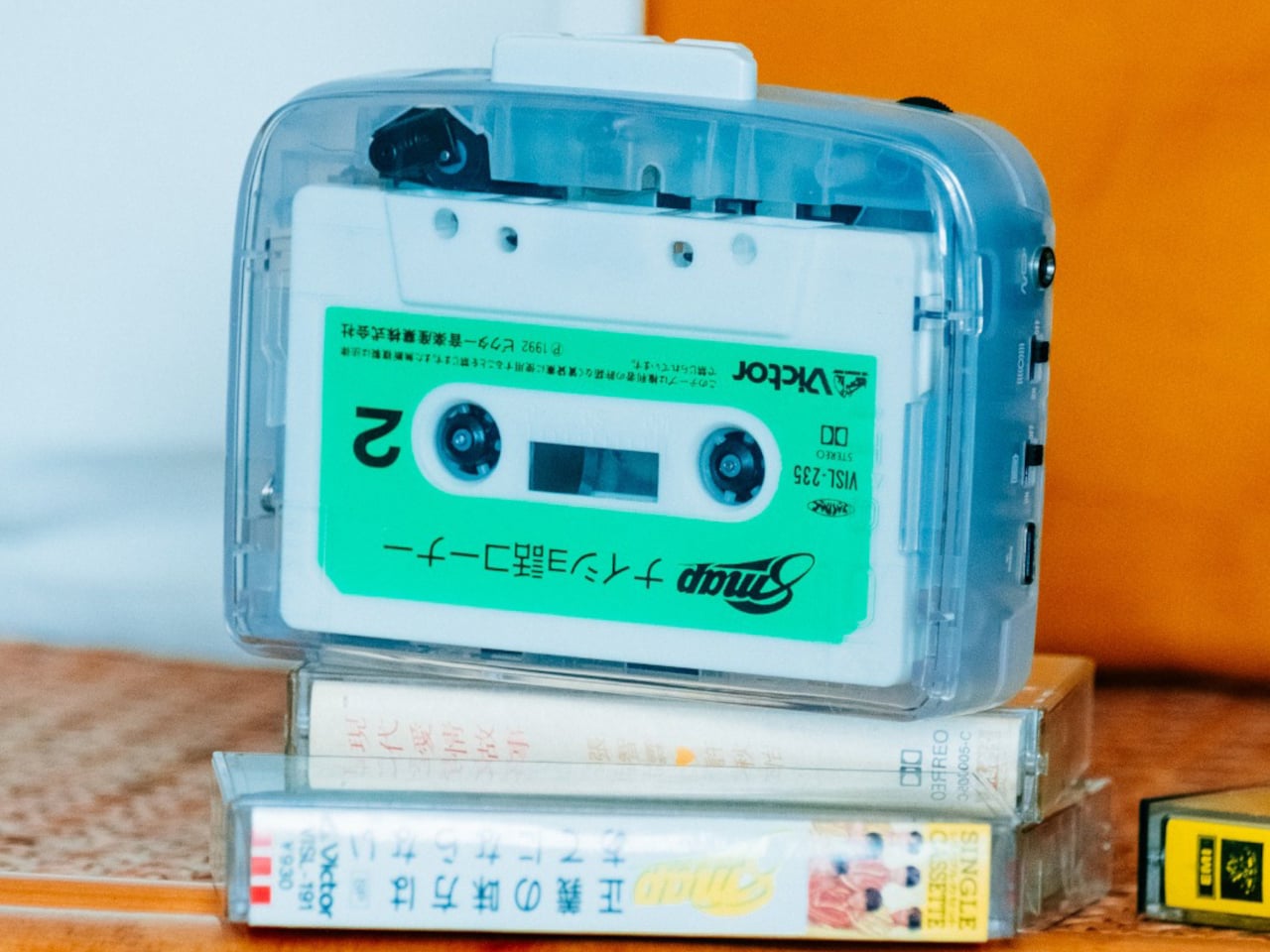
Taiwanese design studio NINM Lab launched the original IT’S OK through Kickstarter in 2019, billing it as the first cassette player with Bluetooth capability. The second generation, IT’S OK TOO, upgrades that foundation with stereo output and a semi-transparent matte body that splits the difference between full transparency and solid color. The casing is ABS plastic and polyethylene, lightweight at approximately 152g. Push-button controls for play, stop, forward, and backward line the front edge, with a classic belt clip on the back.
Power comes from two AA batteries or a USB-C supply (not charging the device itself, but powering it directly), with optional USB-C charging if you install rechargeable Ni-MH batteries. The transparent design is the real design statement here, exposing the tape mechanism so the spools become a visible, moving part of the experience. The IT’S OK TOO firmly positions itself as a lifestyle product for a younger demographic that may never have owned a cassette player before.
What we like
Transparent body turns the tape mechanism into a visual feature
Bluetooth 5.0 stereo output with 3.5mm jack
What we dislike
Only supports Type I cassettes
AA battery requirement with no built-in rechargeable cell
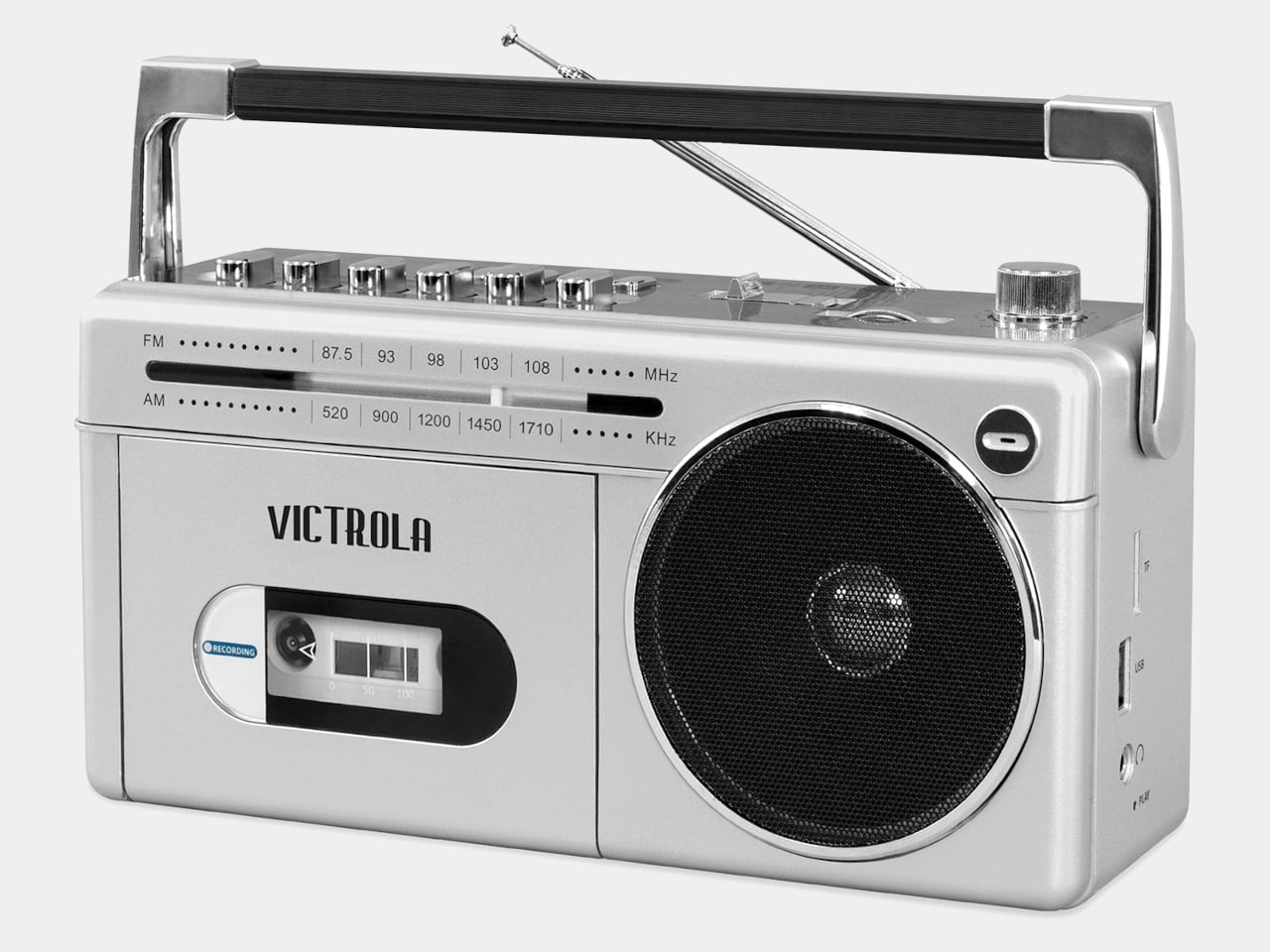
Victrola Mini Bluetooth Boombox
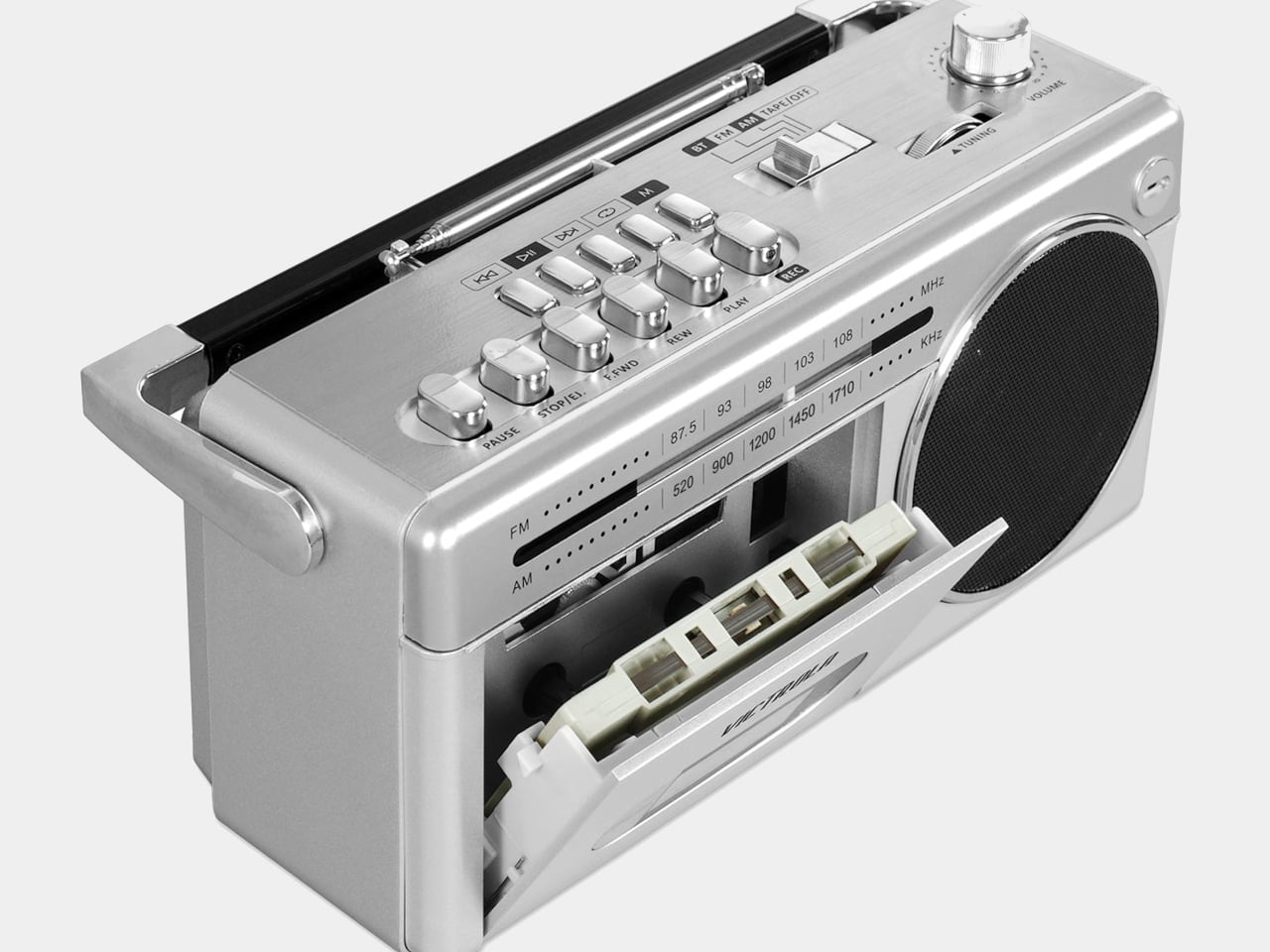
Victrola has made its name selling affordable turntables to people who want the ritual of vinyl without the investment of a serious hi-fi setup. The Mini Bluetooth Boombox applies that same philosophy to cassettes, packaging a tape player, tape recorder, AM/FM radio tuner, USB port for MP3 playback, and Bluetooth streaming into a hefty yet still portable box. It runs on AC power or batteries, comes in grey and silver colorways, and retails for under $40 at most outlets.
The design is a scaled-down boombox archetype, complete with dual built-in speakers, an analog radio tuning dial, and a cassette door on the front. At this price point, audio fidelity is not the conversation. The Victrola is competing with cheap Bluetooth speakers, not with premium cassette players. Its recording function lets you capture audio directly to cassette through a built-in microphone, and the Bluetooth connectivity means it can serve as a wireless speaker for your phone. What the Victrola lacks in audio refinement, it compensates for in sheer versatility. No other player on this list gives you FM radio, Bluetooth reception, USB playback, and tape recording in one device.
What we like
The most versatile player on this list by a wide margin, combining cassette playback and recording, AM/FM radio, Bluetooth, and USB MP3 playback in a single compact unit
Sub-$40 pricing makes it the easiest entry point for anyone curious about cassettes but unwilling to commit to a premium device
What we dislike
Speaker quality and cassette playback fidelity are both budget-tier
Plastic construction and lightweight build feel disposable
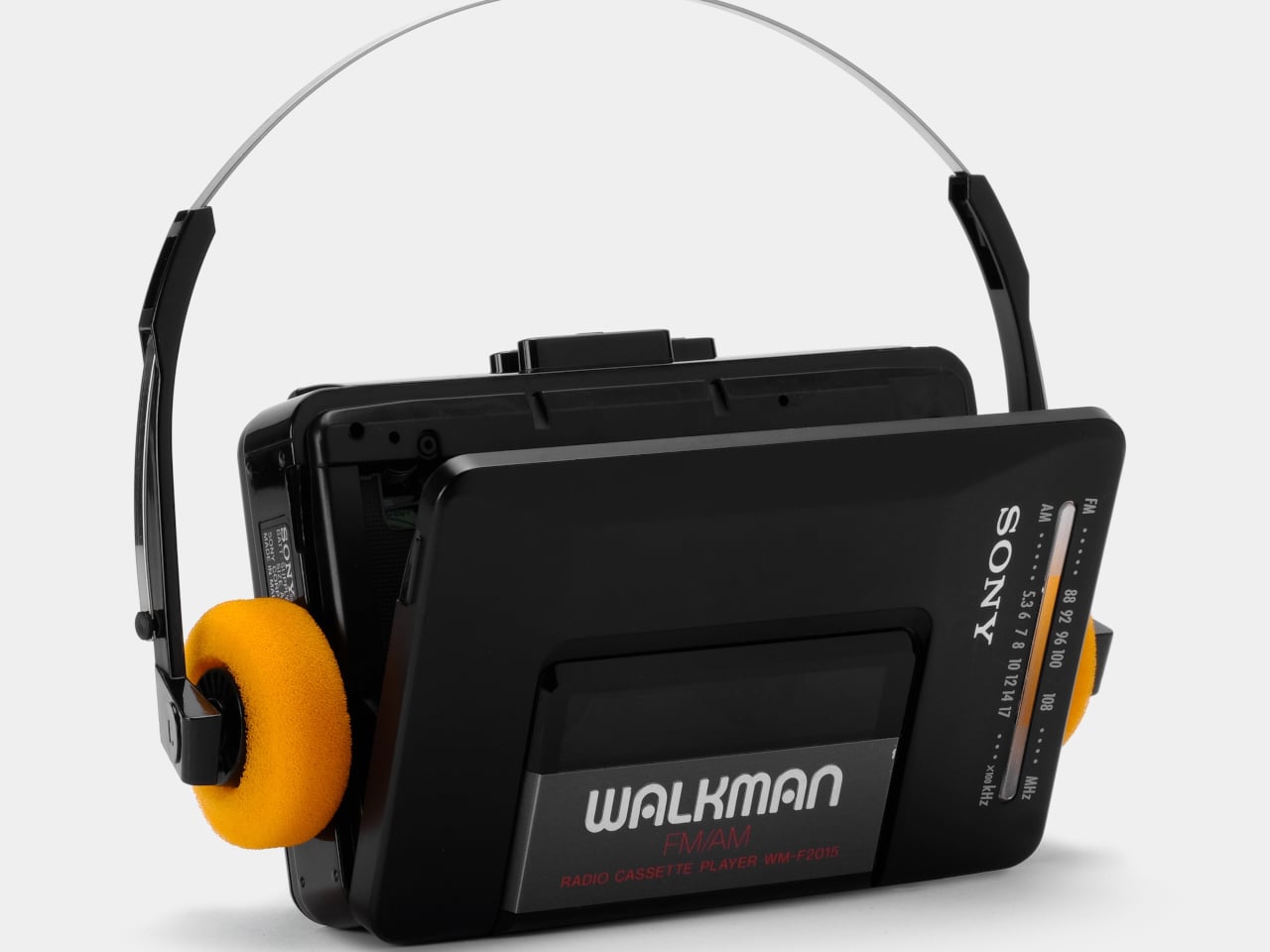
Retrospekt Sony Walkman WM-F2015
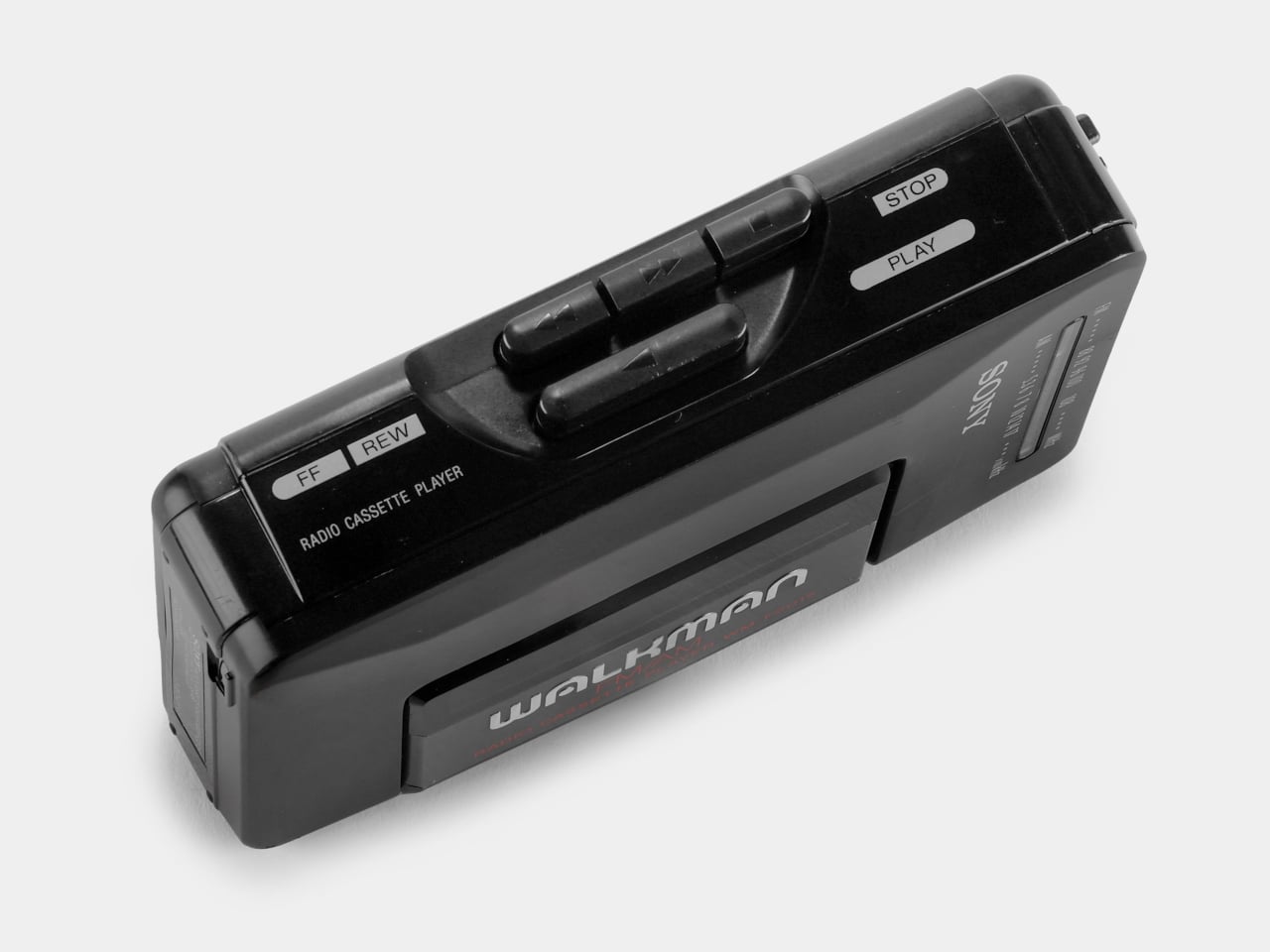
Every other player on this list is a modern product designed to evoke nostalgia. The Retrospekt Sony Walkman WM-F2015 is the actual artifact, a unit originally manufactured in 1990, disassembled by technicians in Milwaukee, and rebuilt with replaced drive belts, idler tires, and pinch wheels. The playback speed has been recalibrated, the volume potentiometer deoxidized, and the tape head cleaned and demagnetized. Retrospekt sells the WM-F2015 as a “vintage refurbished” product starting at $299.
The WM-F2015 is a matte black candybar design with an AM/FM radio tuner, powered by two AA batteries. It ships with orange retro-inspired headphones that look the part, even if they cannot compete with modern over-ears. The appeal here is not specification superiority or modern convenience. There is no Bluetooth, no USB-C, no rechargeable battery, and no recording function. What the Retrospekt Walkman offers is something no reproduction can manufacture: the physical reality of a 35-year-old Sony mechanism, with all its original plastics and original weight, restored to functional condition.
What we like
An authentic 1990 Sony Walkman mechanism
Retro Sony matte black industrial design and compact form factor
What we dislike
A bit pricey at $299
Zero modern conveniences: no Bluetooth, no USB-C, no rechargeable battery
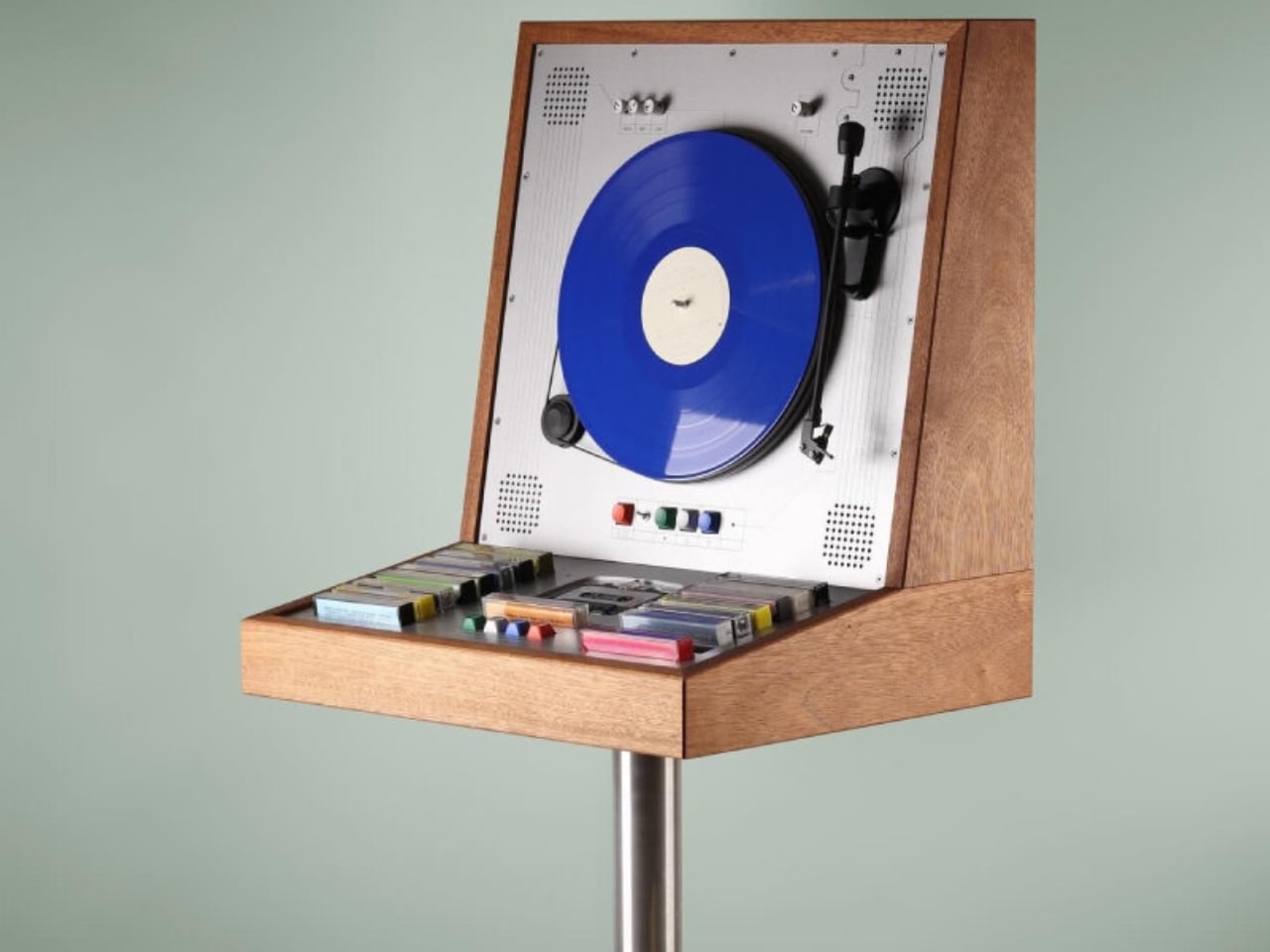
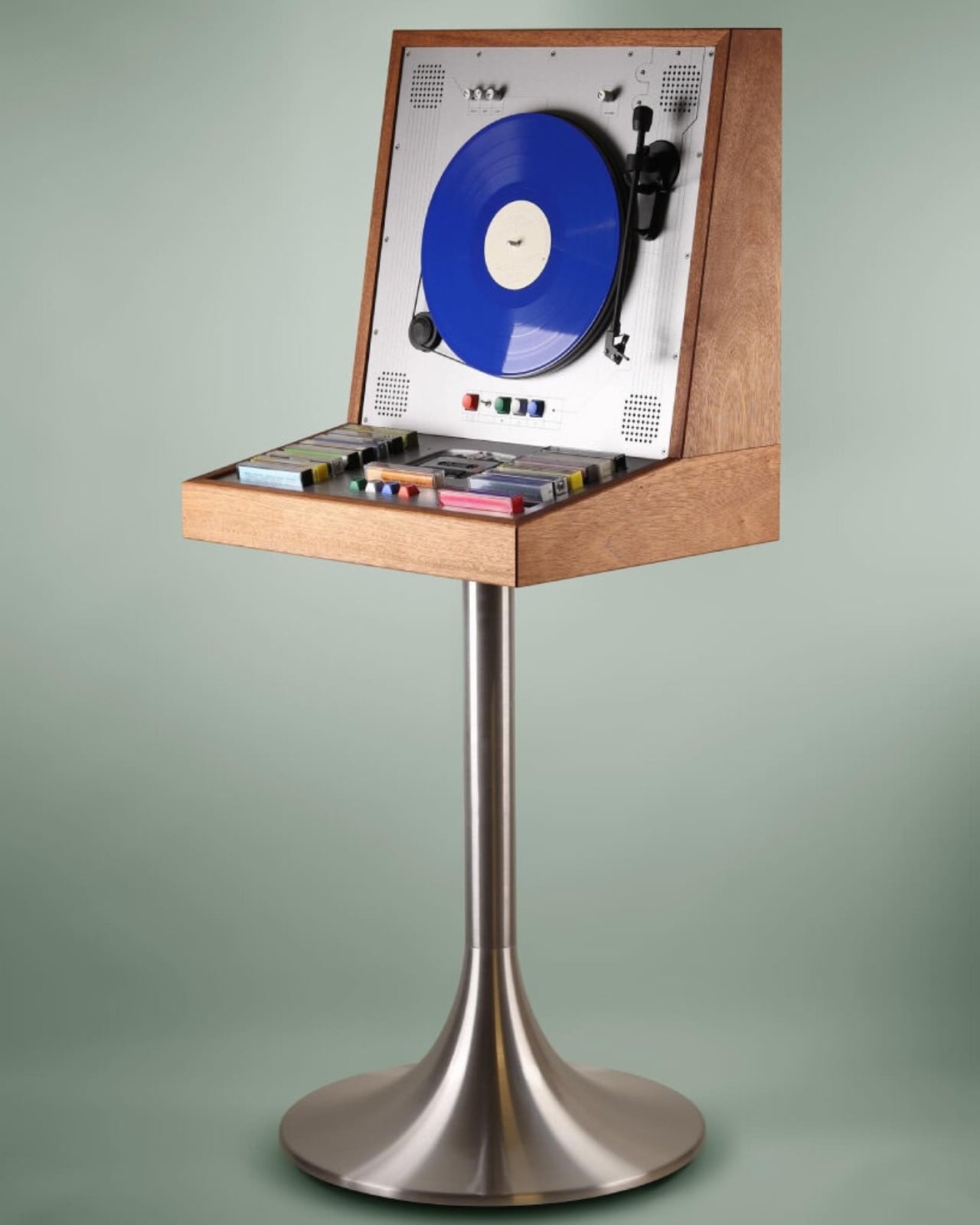
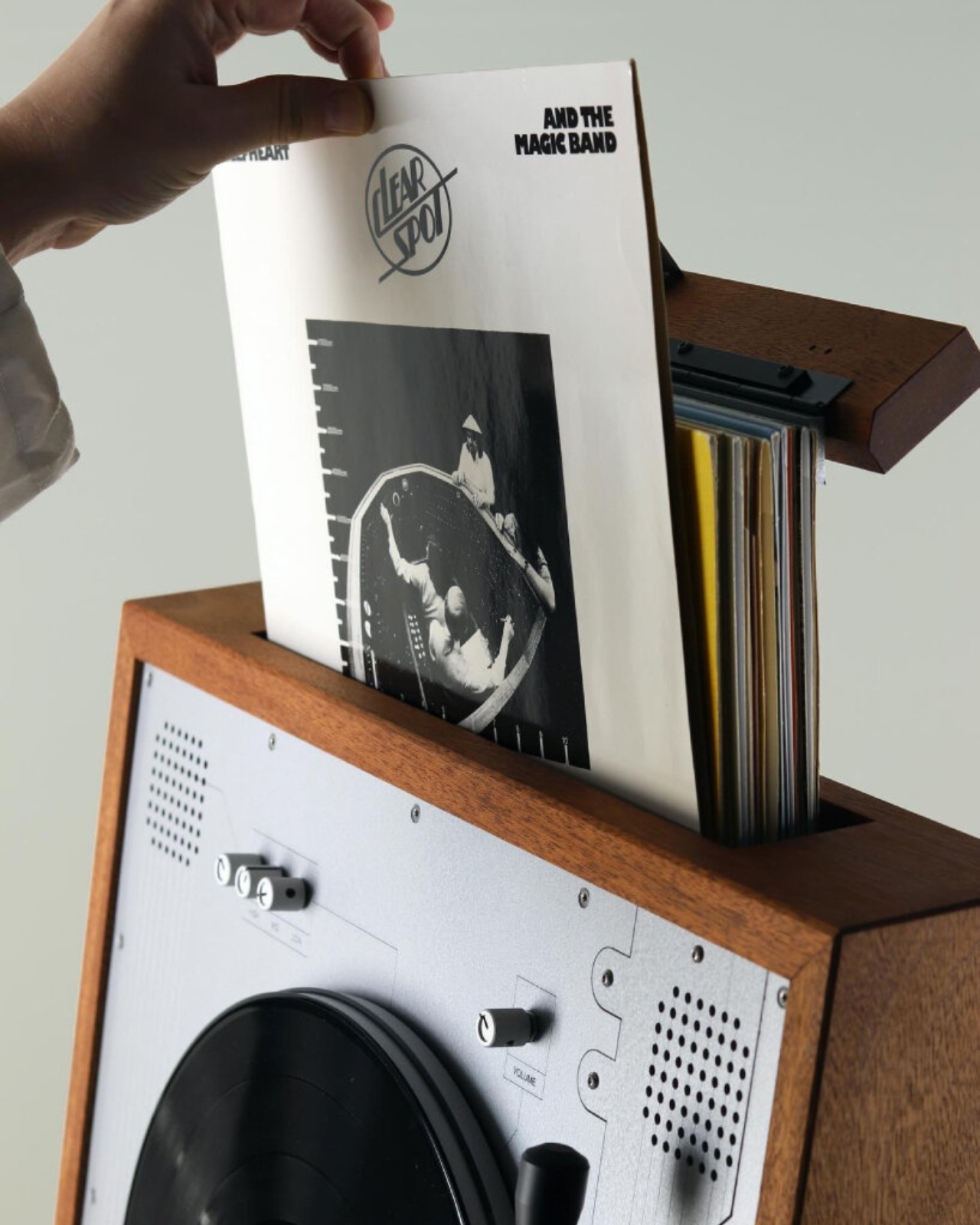
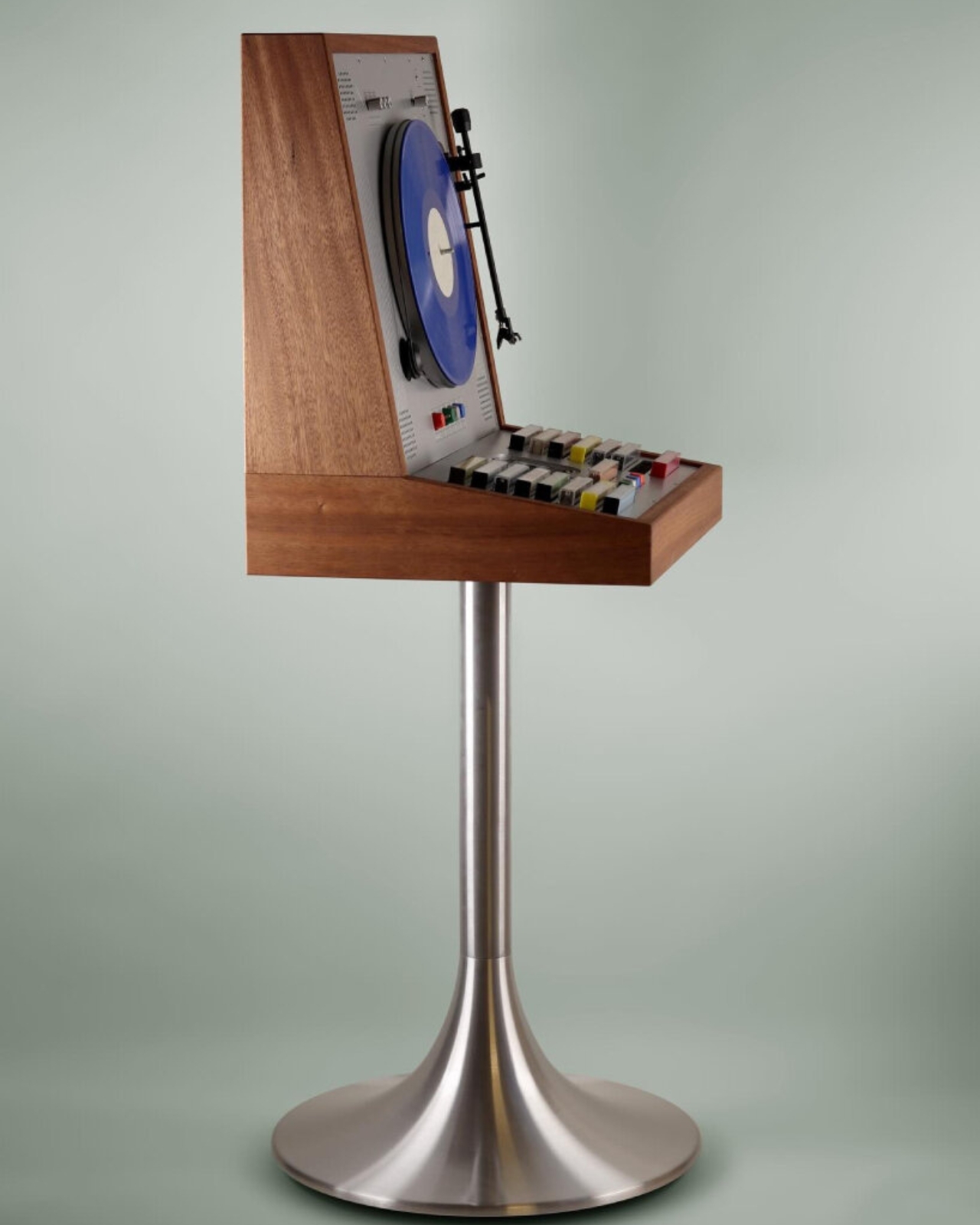
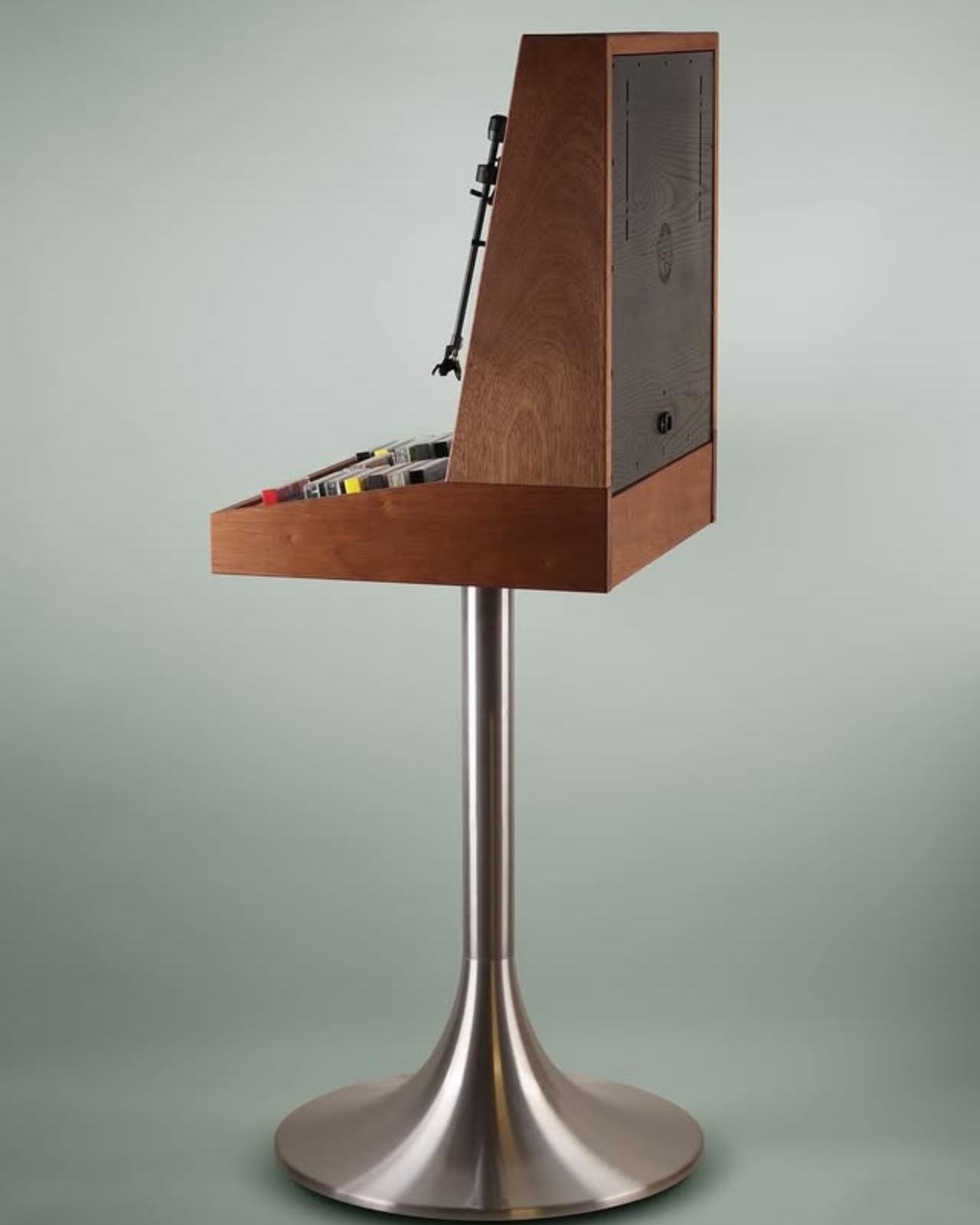
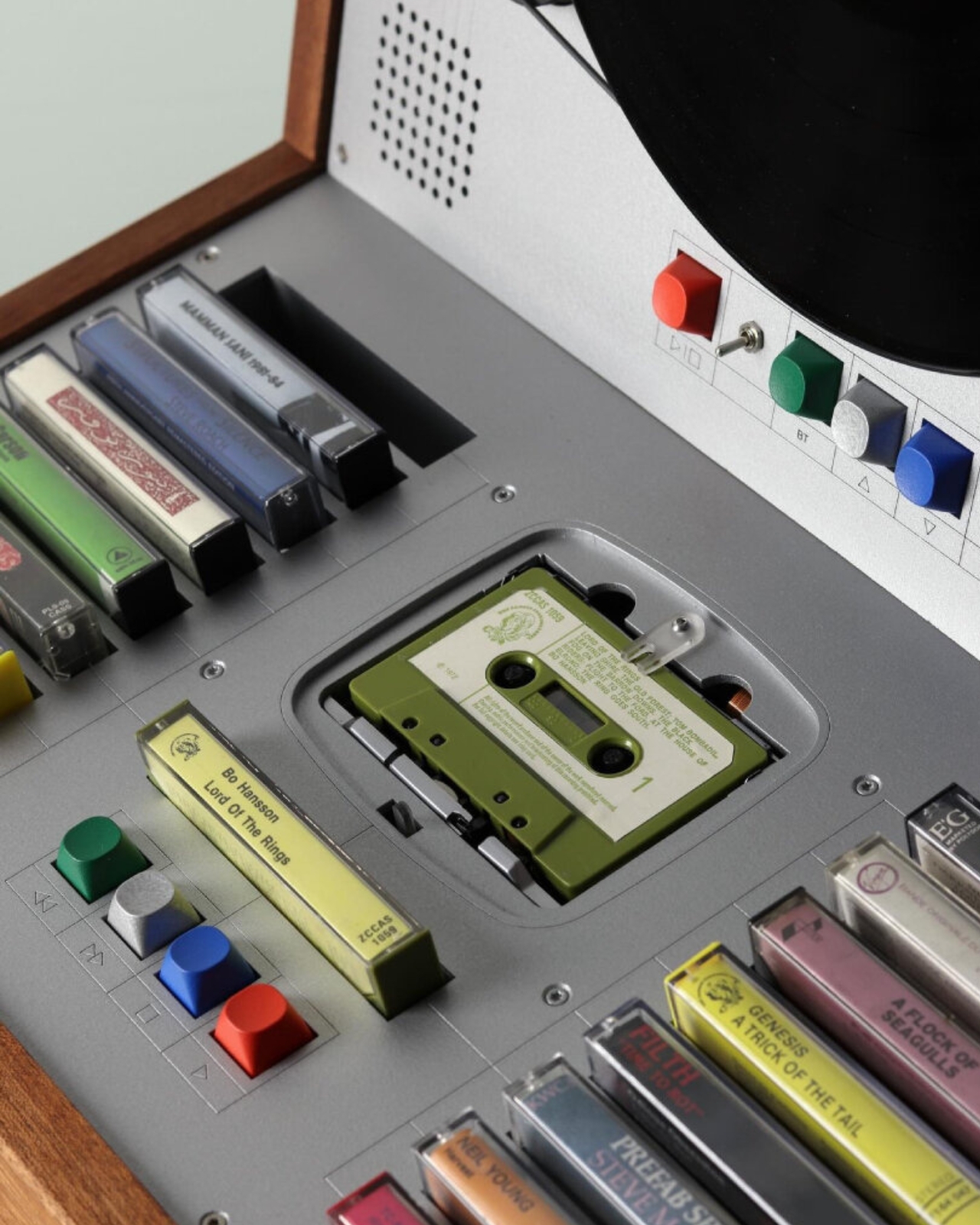
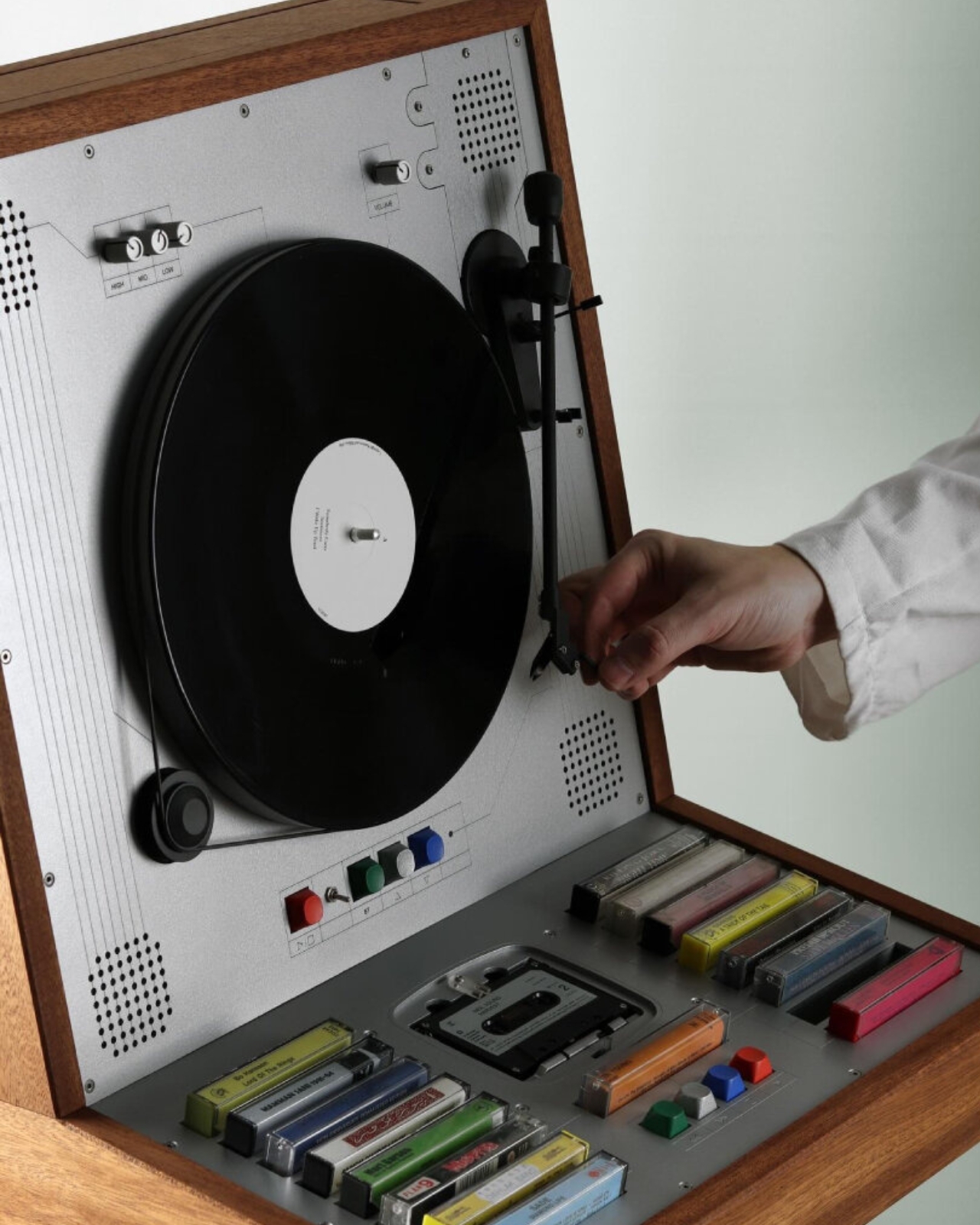
There’s something genuinely exciting happening in the world of audio design, and it comes packaged in warm wood and a beautifully nostalgic aesthetic. Swedish artist and craftsman Love Hultén has just unveiled a wooden music cabinet that does something no one really asked for, but everyone immediately wants: it plays vinyl records vertically while also housing a full collection of cassette tapes.
Yes, vertically. Your records, standing upright, spinning in a way that feels both physically unlikely and somehow completely right. It’s the kind of design move that makes you stop scrolling, tilt your head, and go, “Wait, how?”
Hultén has built a reputation for creating custom, handcrafted audio devices that sit at the crossroads of art, furniture, and technology. His past work includes a synthesizer housed inside a wooden cabinet, retro-inspired tape players, and all manner of beautifully tactile objects that feel more like heirlooms than gadgets. The wooden music cabinet is very much in that tradition, except it’s one of his most complete visions yet.
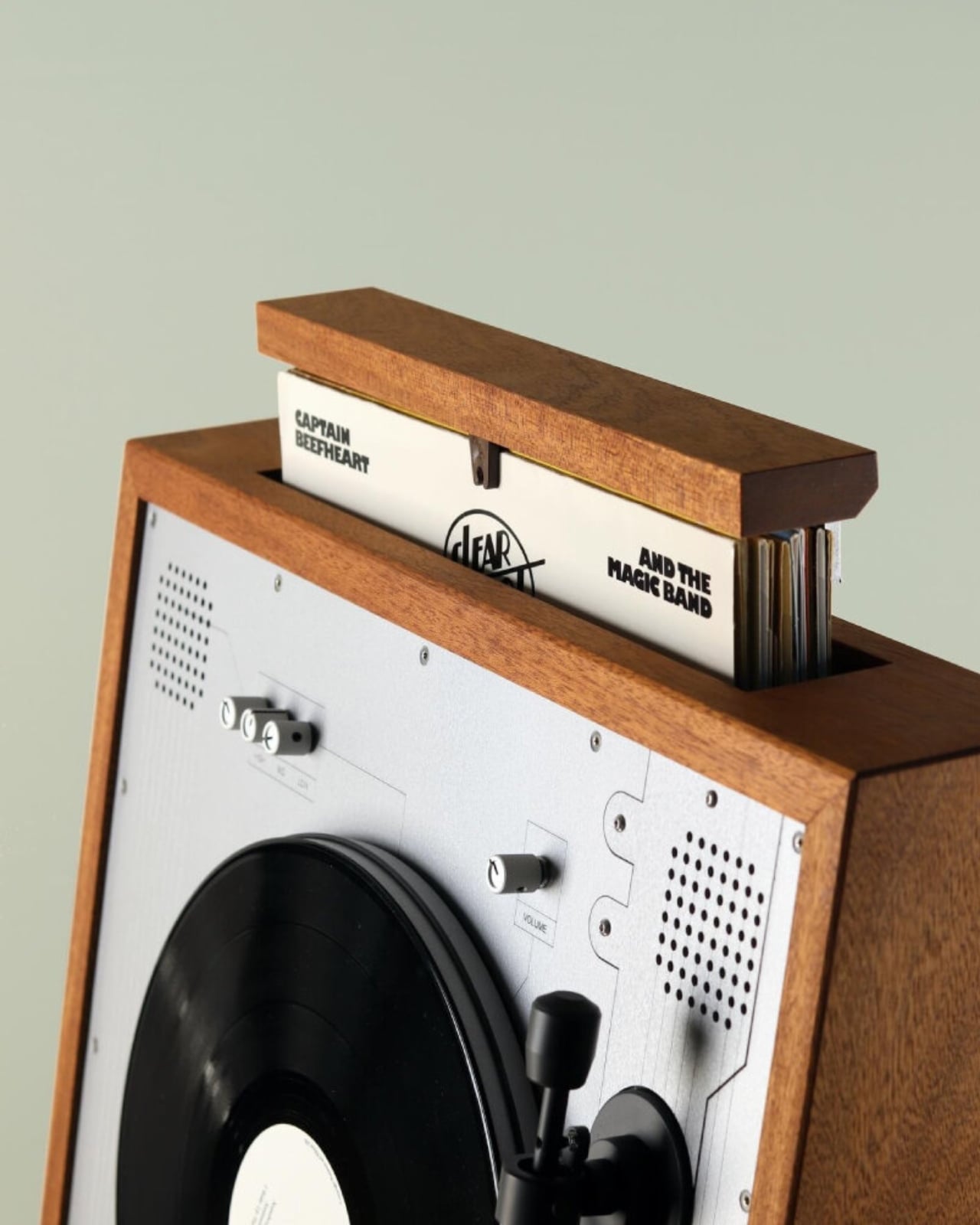
The cabinet itself is built from rich, natural wood, giving it the warmth and weight you’d expect from a well-made piece of furniture. But the front panel around the record player breaks from the organic material and shifts into light gray metal, a nod to an older vision of futurism. It’s a contrast that works surprisingly well, the wood grounding the piece while the metal gives it a certain retro-industrial cool.
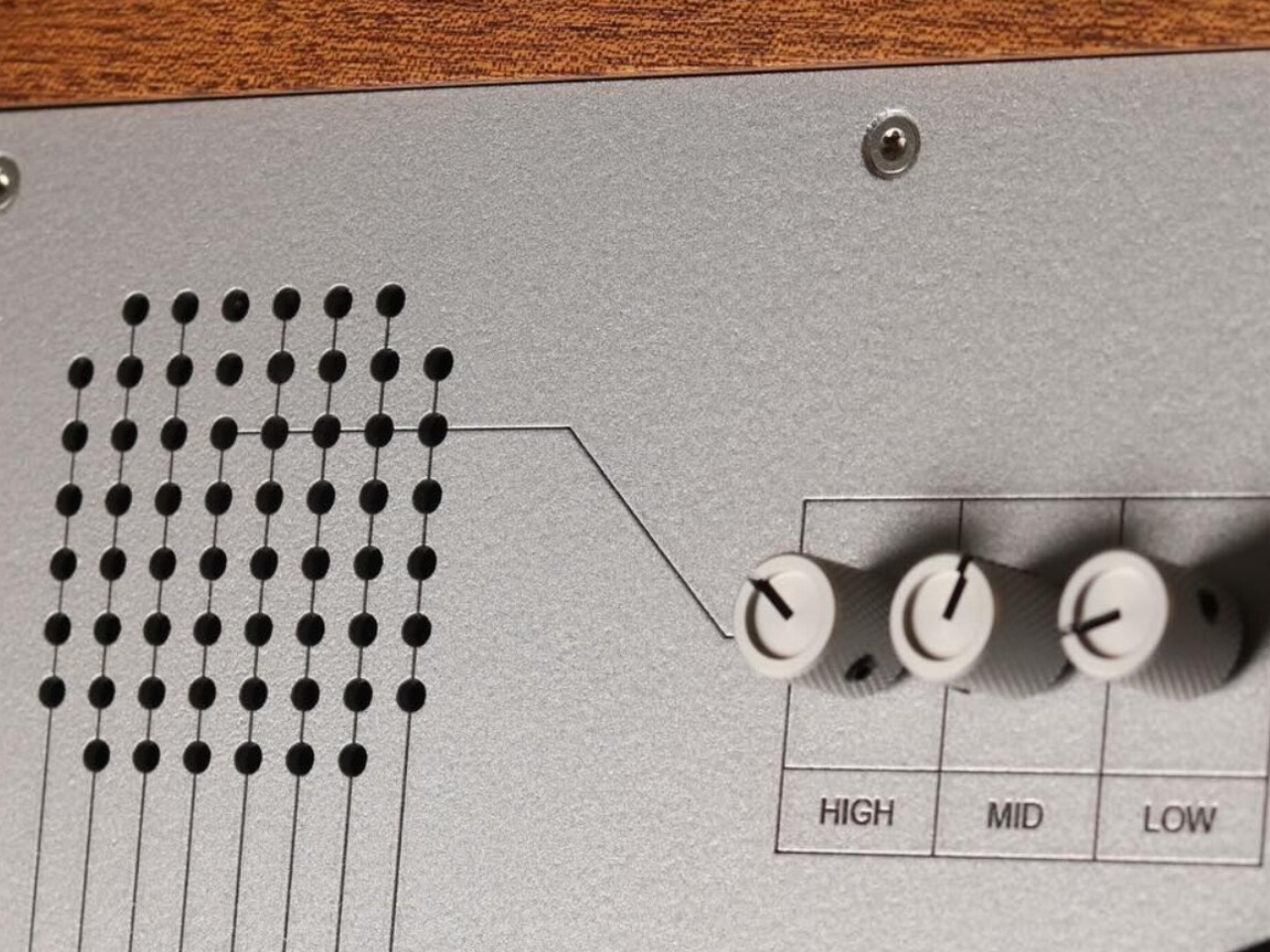
Sound control comes through a row of small, round knobs at the top of the panel, each one labeled for high, mid, and low. Flanking them on both sides are speaker holes arranged in a clean grid pattern, the kind of detail that feels satisfyingly considered. Nothing is there by accident. Everything has a place.
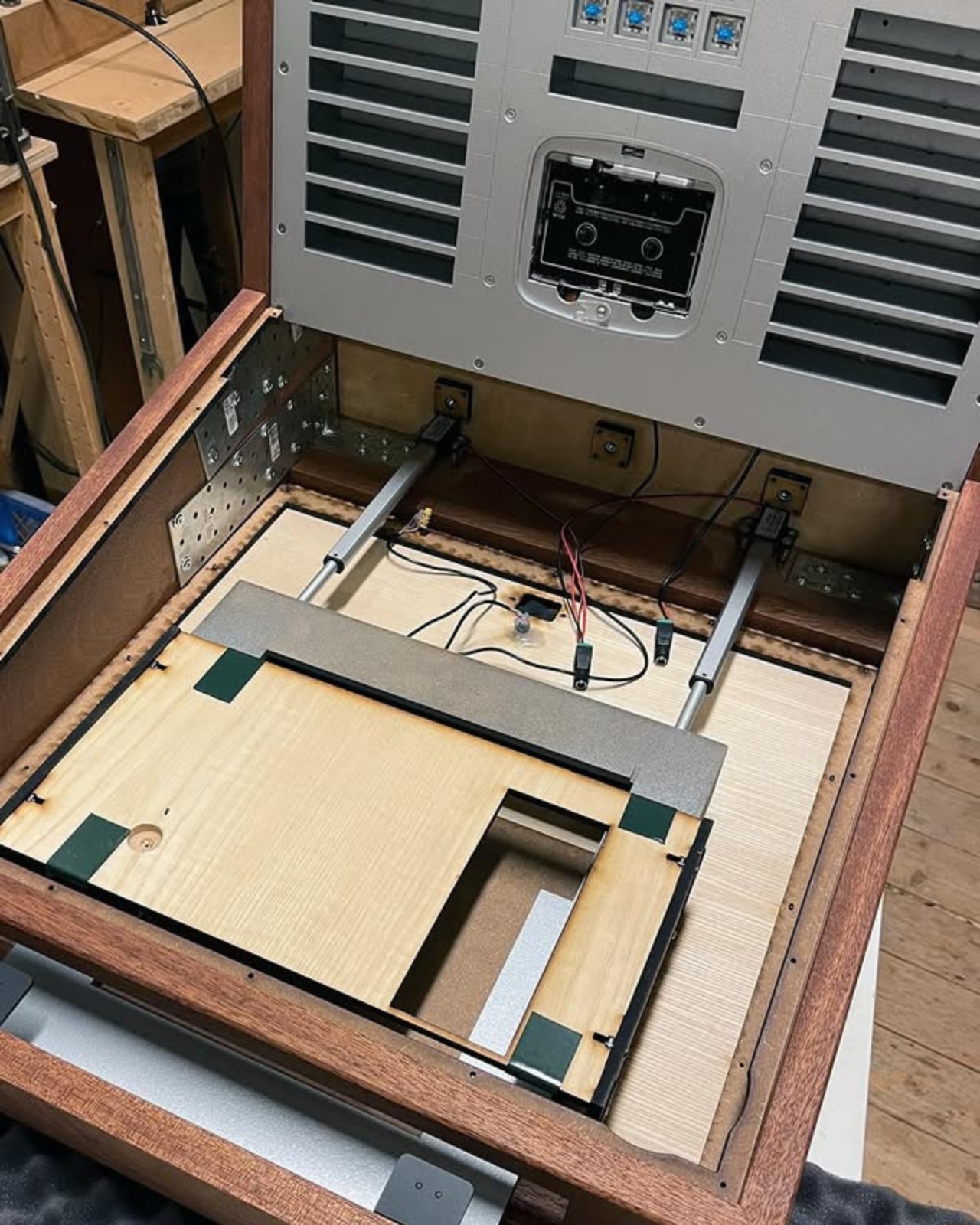
Below the turntable, the cabinet opens up into storage for cassette tapes, with several colorful ones arranged neatly in rows, also stacked vertically to mirror the record player above. The storage section holds up to 12 records. The whole layout feels like Hultén thought carefully about the ritual of listening, giving both formats their own dedicated space without either one feeling like an afterthought.
The design draws clear inspiration from the Rosita Commander Luxus, a 1970 audio unit with that signature high-chair silhouette and a decidedly mid-century European flair. Hultén’s version carries that same upright, almost architectural posture but updates it with his own sense of craft and intention. The result is something that belongs in a well-curated living room or a design studio, not tucked under a TV stand or shoved in a corner.
What makes Hultén’s work so compelling is that it refuses to be just one thing. It’s not purely nostalgic, leaning entirely on the romance of physical media. It’s not purely modern either, chasing specs and wireless connectivity. It lives in the middle, treating analog formats as something worth celebrating rather than merely tolerating, and wrapping them in an object that demands to be looked at as much as listened to. Hultén himself has described his practice as playing with preconceptions about the distinct realms of art and design, breaking patterns of function and aesthetics.
There’s also something worth noting about the moment we’re in. Vinyl sales have been climbing steadily for years, and the cassette tape revival has moved from niche curiosity to genuine cultural moment. Hultén’s music cabinet arrives at exactly the right time, when people aren’t just listening to physical media again but actively thinking about how it fits into their spaces and their identities.
A music cabinet like this isn’t just a player. It’s a statement about what you value, a rejection of invisible, streaming-era audio in favor of something you can touch, organize, and display. It’s the kind of object that starts conversations, the kind people notice the moment they walk into your room. No price or availability has been announced yet, which tracks for a piece this considered. Love Hultén’s creations tend to be custom or limited, made with the patience and intention that mass production simply can’t replicate. Whatever the wait turns out to be, it might just be worth it.
It’s weird to think that Walkmans were literally in my lifetime but if I were to give one to a kid born after 2000, they’d wonder what the hell they’re staring at. Sure, an iPod still feels intuitive because it’s still a relatively digital interface, and MP3 files are still a thing. But a cassette? Having to rewind and fast forward? They’re all relics of an age youngsters wouldn’t even recognize anymore!
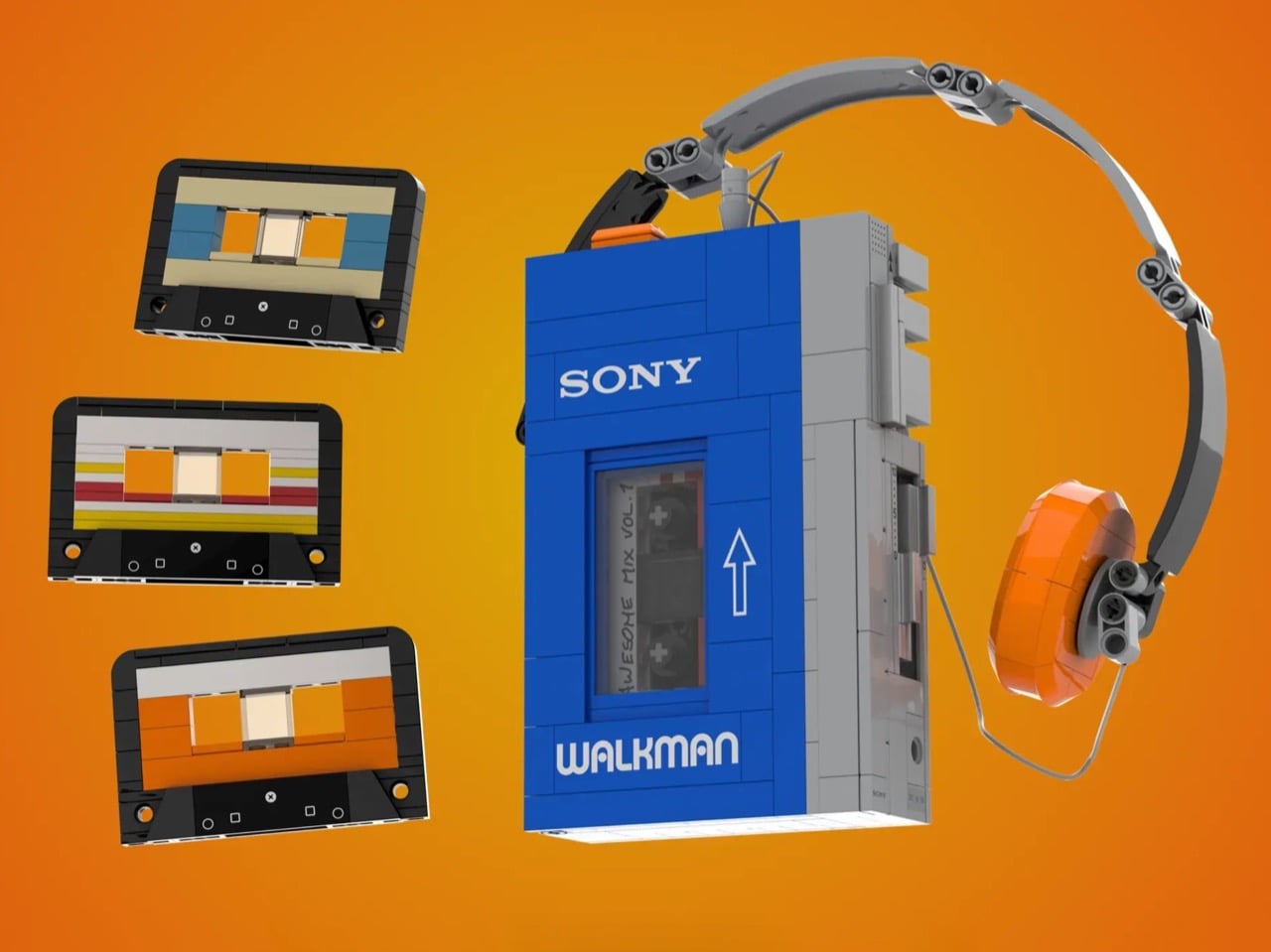
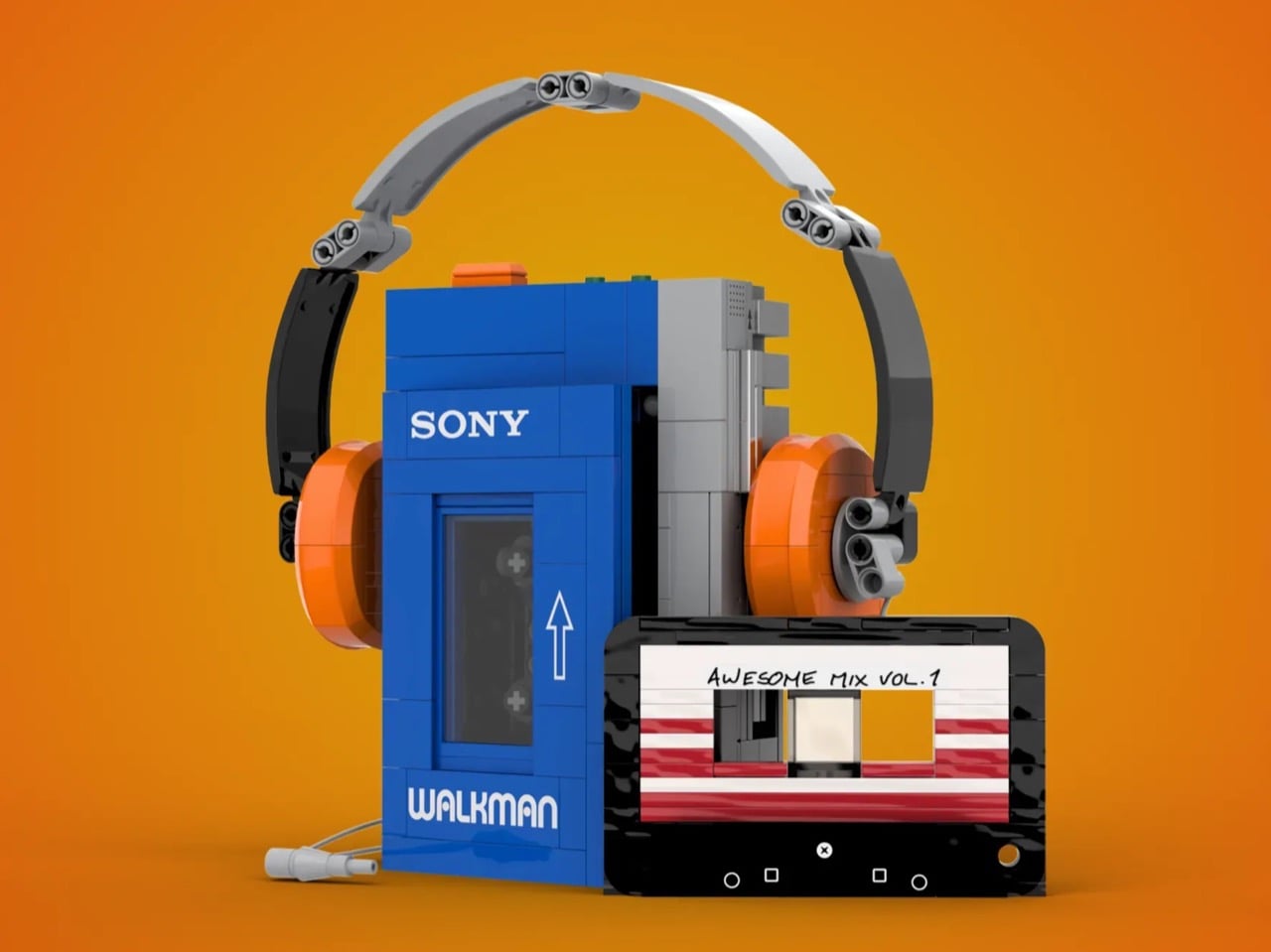
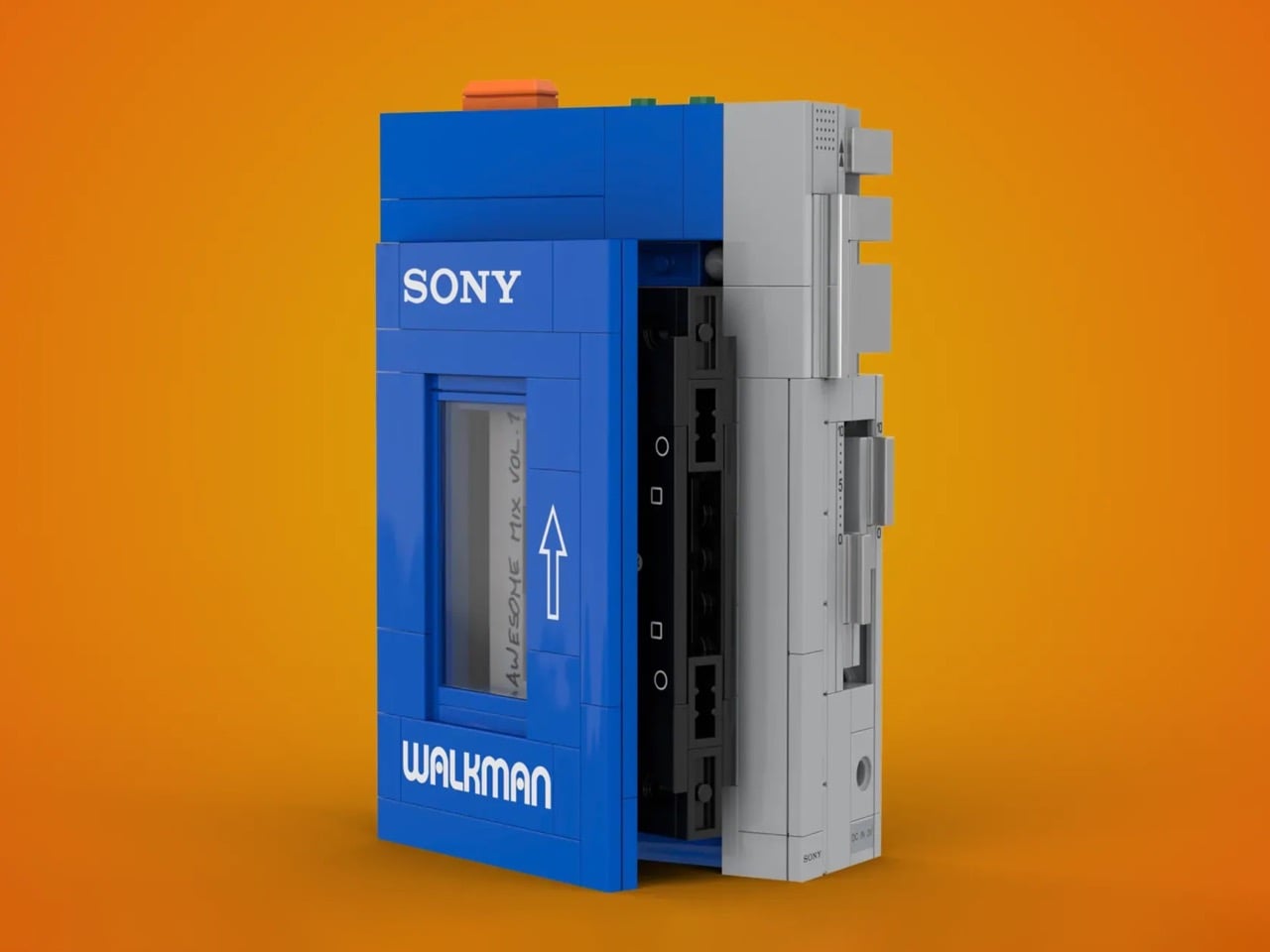
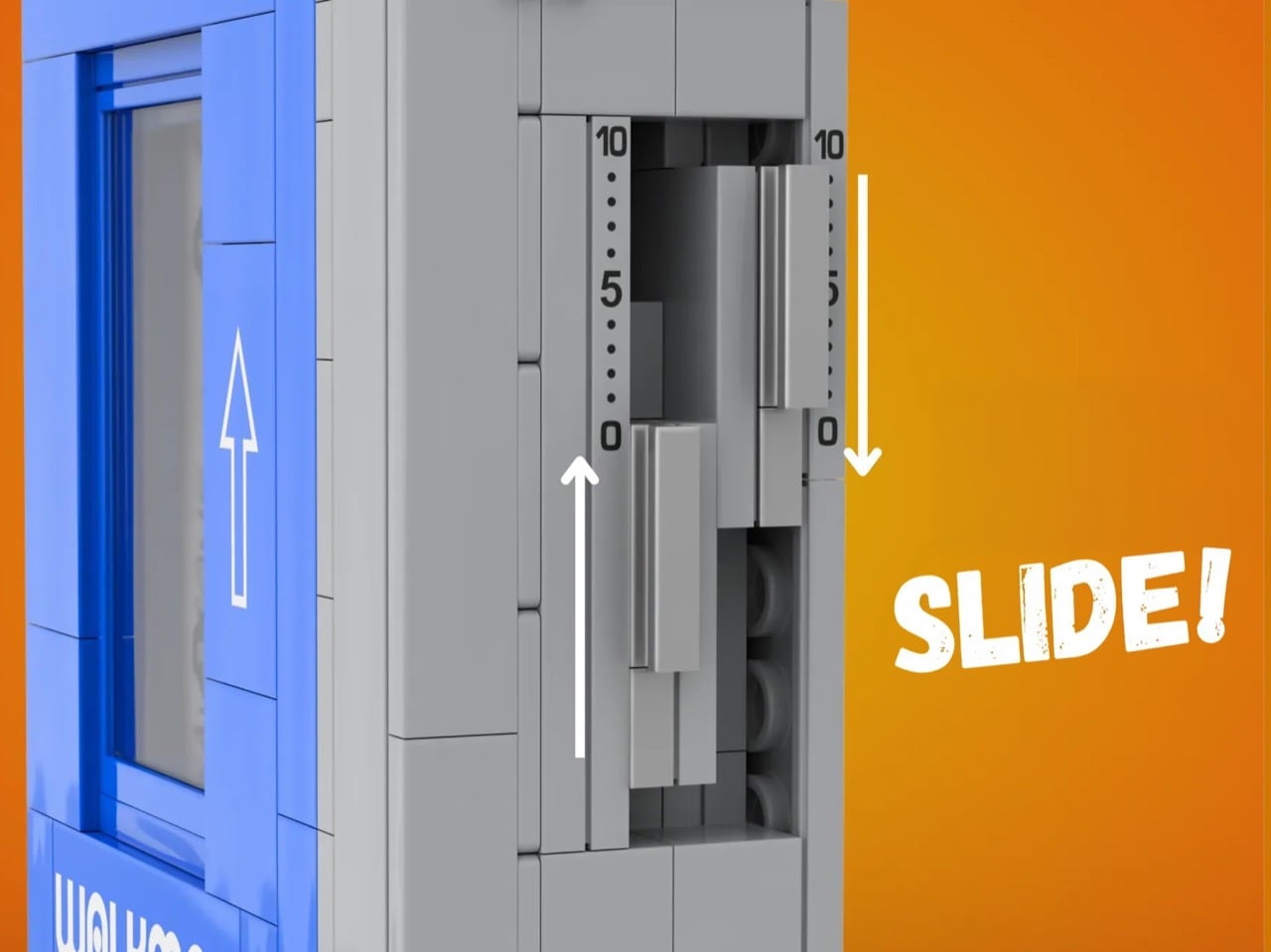
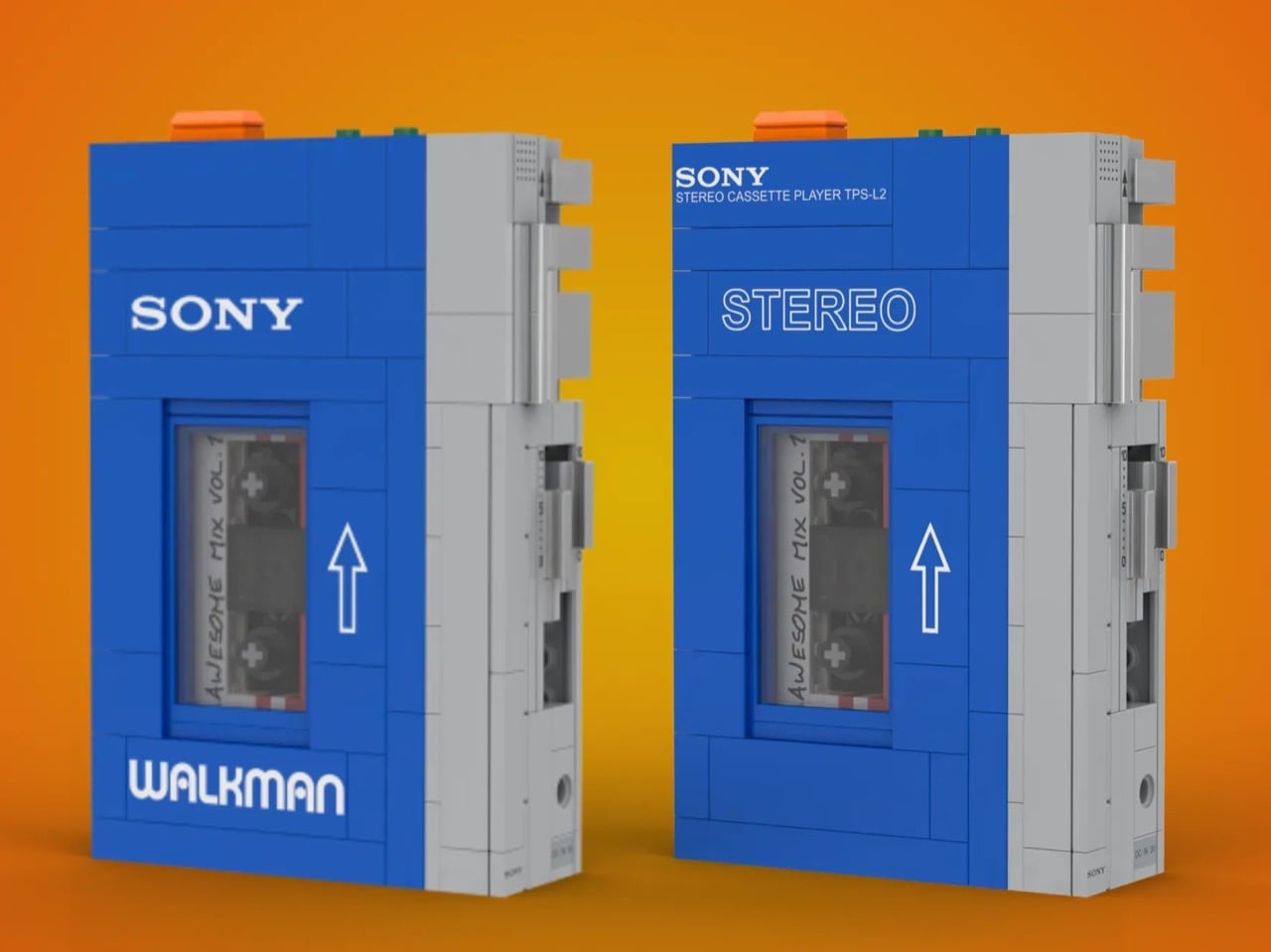
If anything, there’s hope that a kid who’s seen Guardians of the Galaxy would recognize this particular model of cassette player. Featured in the movie as the device that Star Lord operated to play his legendary mixtapes, the Sony Walkman TPS-L2 achieved something remarkable: it made cassette technology cool again for people who’d never touched magnetic tape. Enter Headlight Bricks, a creator who channeled that same Marvel-inspired obsession into a breathtaking LEGO Ideas project. Their 520-piece homage recreates every iconic element from the transparent cassette window to the individually adjustable volume controls, all wrapped in that unmistakable Sony blue. Three buildable cassette tapes let you craft your own mini mixtapes, while the poseable orange headphones complete the authentic 1979 experience.
Designer: Headlight Bricks
Each cassette measures maybe an inch and a half across but manages to pack in customizable label areas where you can swap colored tiles to create different “album art.” One of them references Awesome Mix Vol. 1 from Guardians, probably the one piece of pop culture that did more for cassettes than anything else in the past decade. The cassettes made from LEGO don’t look entirely like you’d expect. They’re missing the gears on the middle that are characteristic of a cassette tape. The reason is simple – making that out of LEGO is a headache, and it does little to add to the original build, which is the player itself. The cassette does its role of fitting into the player, and Headlight Bricks did detail spindles on the inside to complete the illusion. If you want impressive detailing, however, look at that headphone strap, which uses a LEGO Technic part to enable flexibility and movement.
That specific shade of blue paired with light gray side panels captures exactly what Sony’s industrial designers were going for in 1979. They weren’t chasing premium materials or trying to make the TPS-L2 look like jewelry you wore on your belt. It had this utilitarian confidence that said “I do one thing, I do it perfectly, and I don’t apologize for looking like a piece of equipment.” The LEGO version gets that completely right by keeping the form clean and the details purposeful. Besides, everything is perfectly to 1:1 scale, which means this MOC (My Own Creation) accurately captures every single aspect of the Walkman TPS-L2… including even functional buttons.
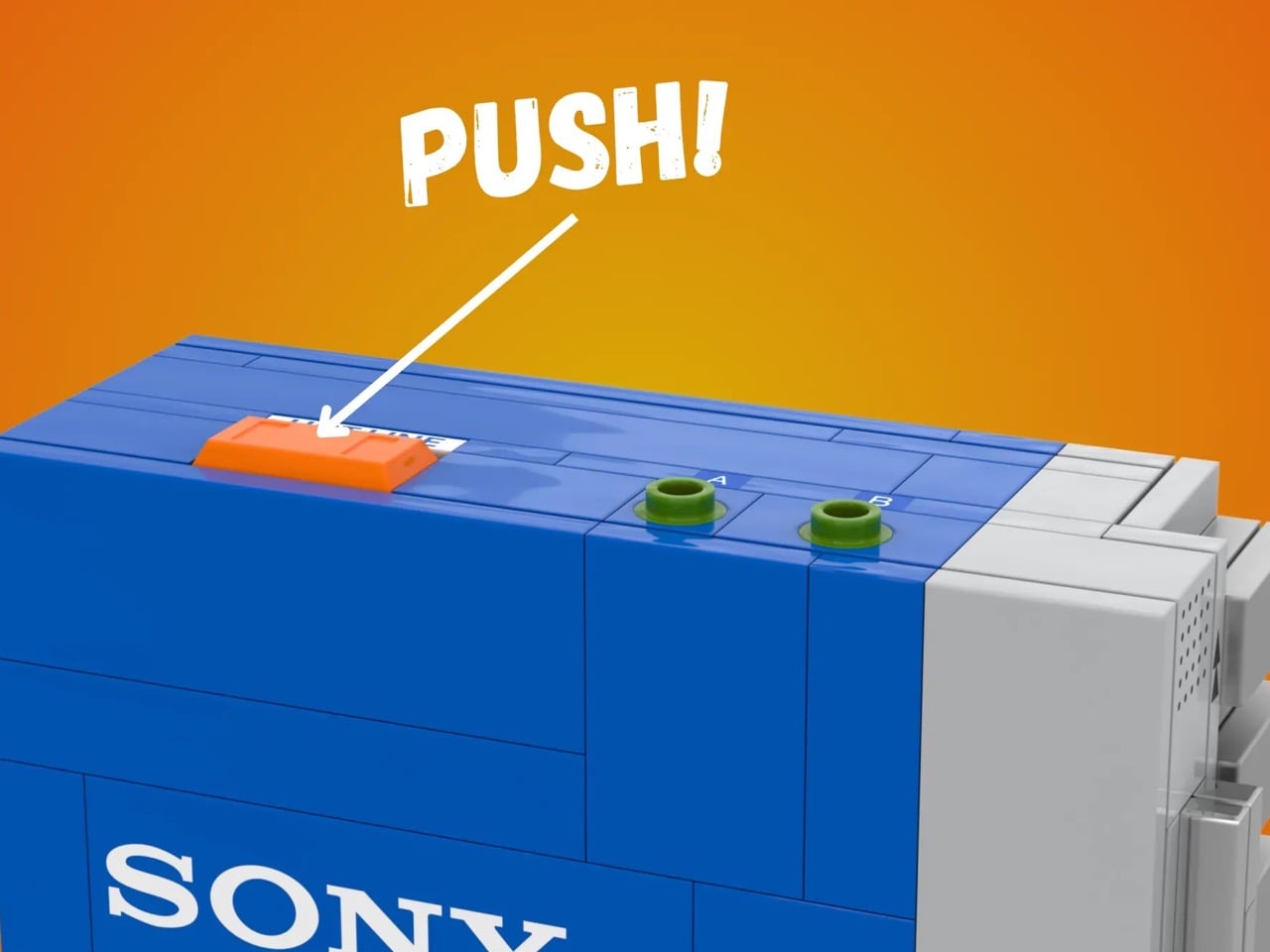
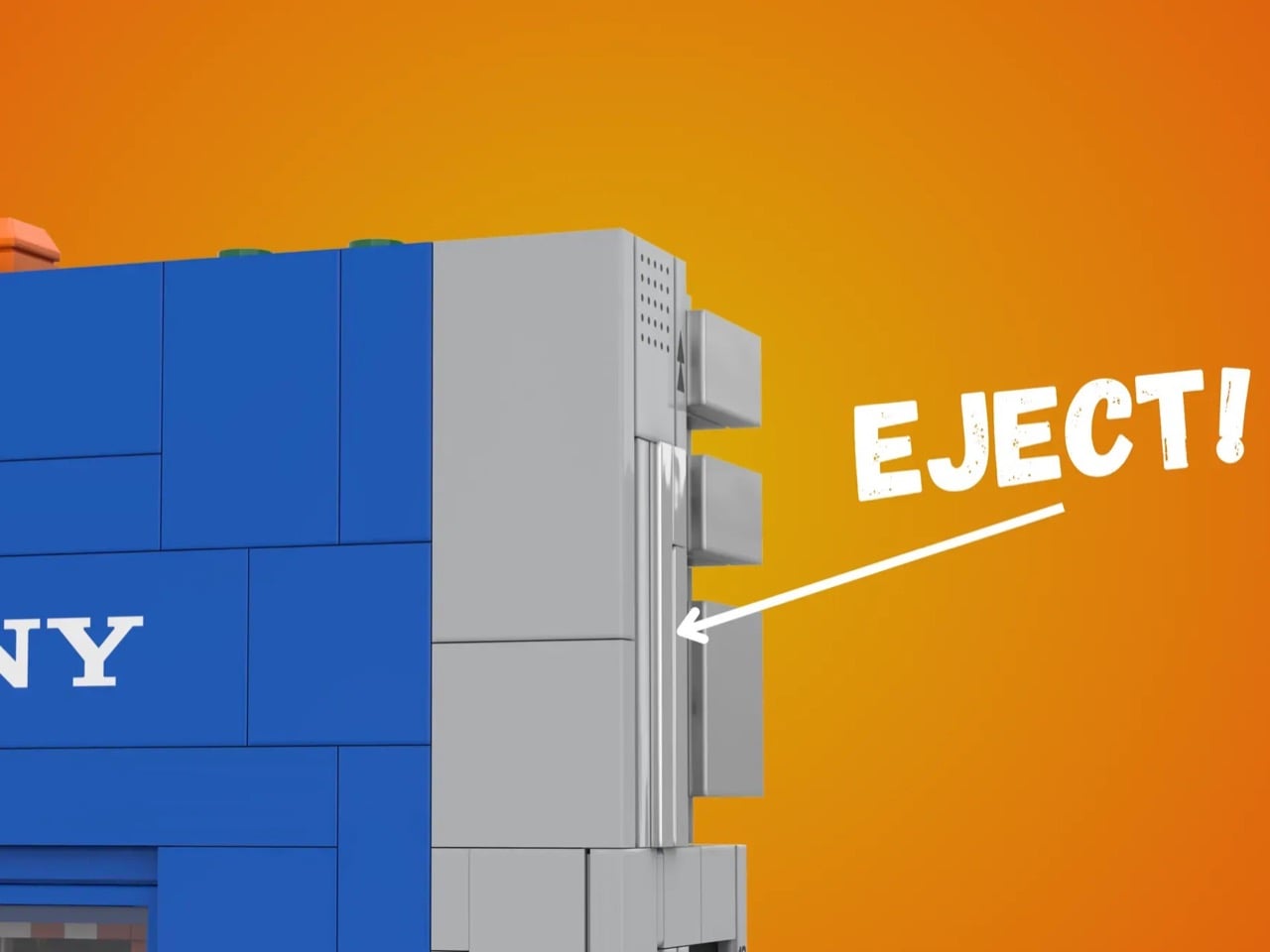
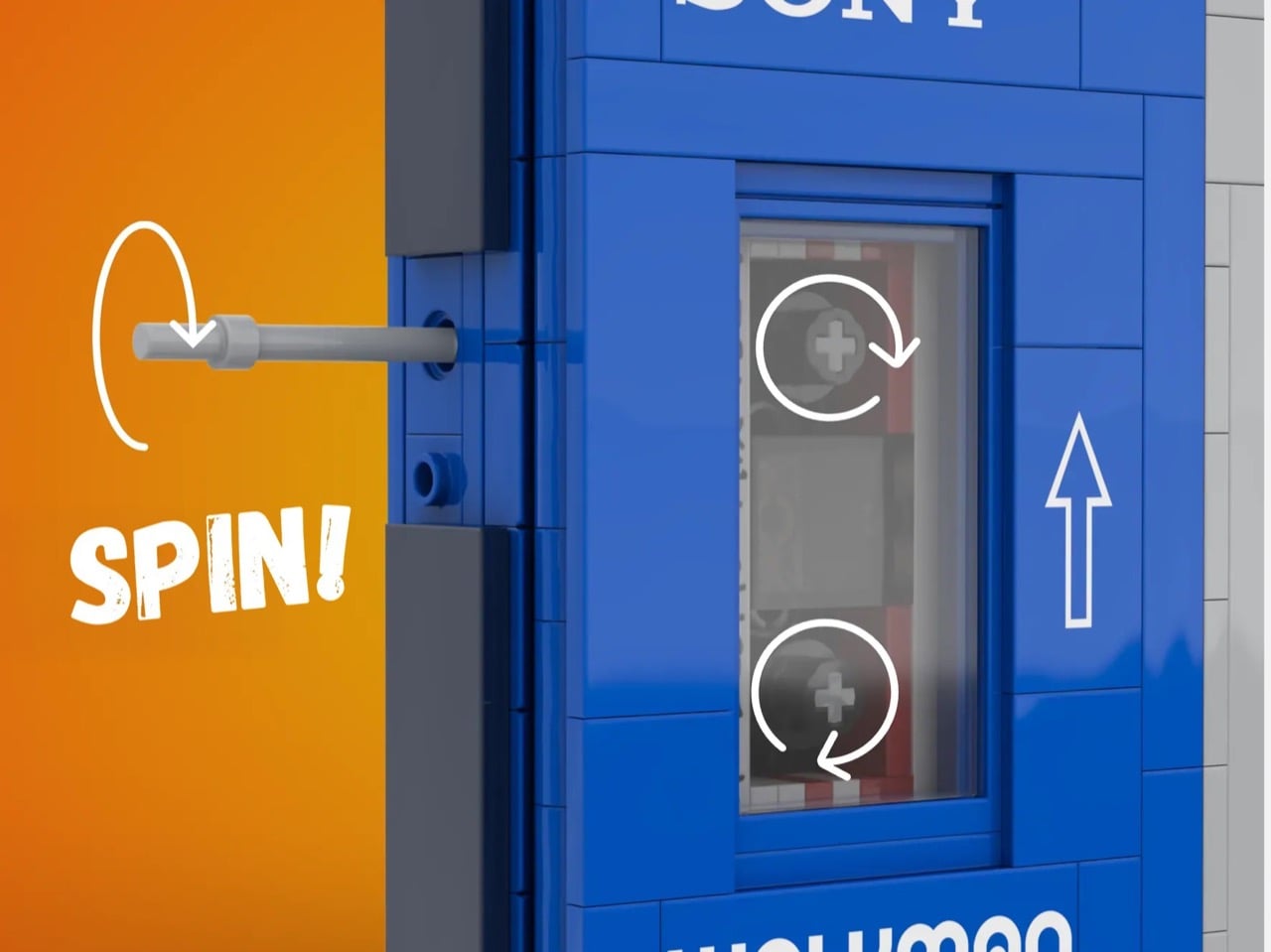
Volume buttons move independently, which means Headlight Bricks had to engineer two separate mechanical systems in a space probably no bigger than a couple of studs wide. The cassette compartment opens with a pressable eject button, and the spindles inside actually rotate when you turn them. Most builders would’ve faked it with printed tiles or stickers, called it close enough, and collected their upvotes. Instead, this thing functions like you could actually thread magnetic tape through it if you were small enough and patient enough.
Right now the project has 4,735 supporters on LEGO Ideas with 445 days left to hit 10,000 votes. Ideas works on a threshold system where fan designs need 10K supporters to get reviewed by LEGO’s actual product team. Getting reviewed doesn’t guarantee production, but it gets your build in front of the people making those calls. They evaluate marketability, licensing complexity, manufacturing feasibility, whether it fits the brand… which this one surely does, with its iconic, retro-throwback fun design. Whether Sony agrees to comply is an entirely separate issue.
You want to see this become a real product you can order? Go to the LEGO Ideas Website and hit the Support Idea button!. You need a free LEGO account to vote, takes maybe thirty seconds to set up if you don’t have one already. Hit the support button, leave a comment if you feel like it, and you’re done. At 4,738 supporters (me included), this build is inching towards the 10,000 vote mark needed to put this build into the ‘Review’ phase. LEGO managed to produce a working typewriter you can buy. A Walkman with rotating cassette mechanisms and pressable buttons feels like the obvious next move in that category.
Music is the ultimate nirvana to numb the stresses of life or derive inspiration while taking up focus-intensive tasks. The hobby of listening to music has come a long way from the dated radios to the current generation of high-resolution Bluetooth music listening gear. But then, things always come back in circles, that’s why we’re seeing a revival of old school analog media like record players, CDs, and even cassette players.
Countless companies are experimenting with the idea of infusing old-school charm into current-generation music players without losing out on the tactile feel. Teenage Engineering has been a pioneer in modern times when it comes to creating electronic music instruments with design that’s second to none. The signature TE aesthetics and color theme can be clearly seen to be inspiring designs in unrelated domains.
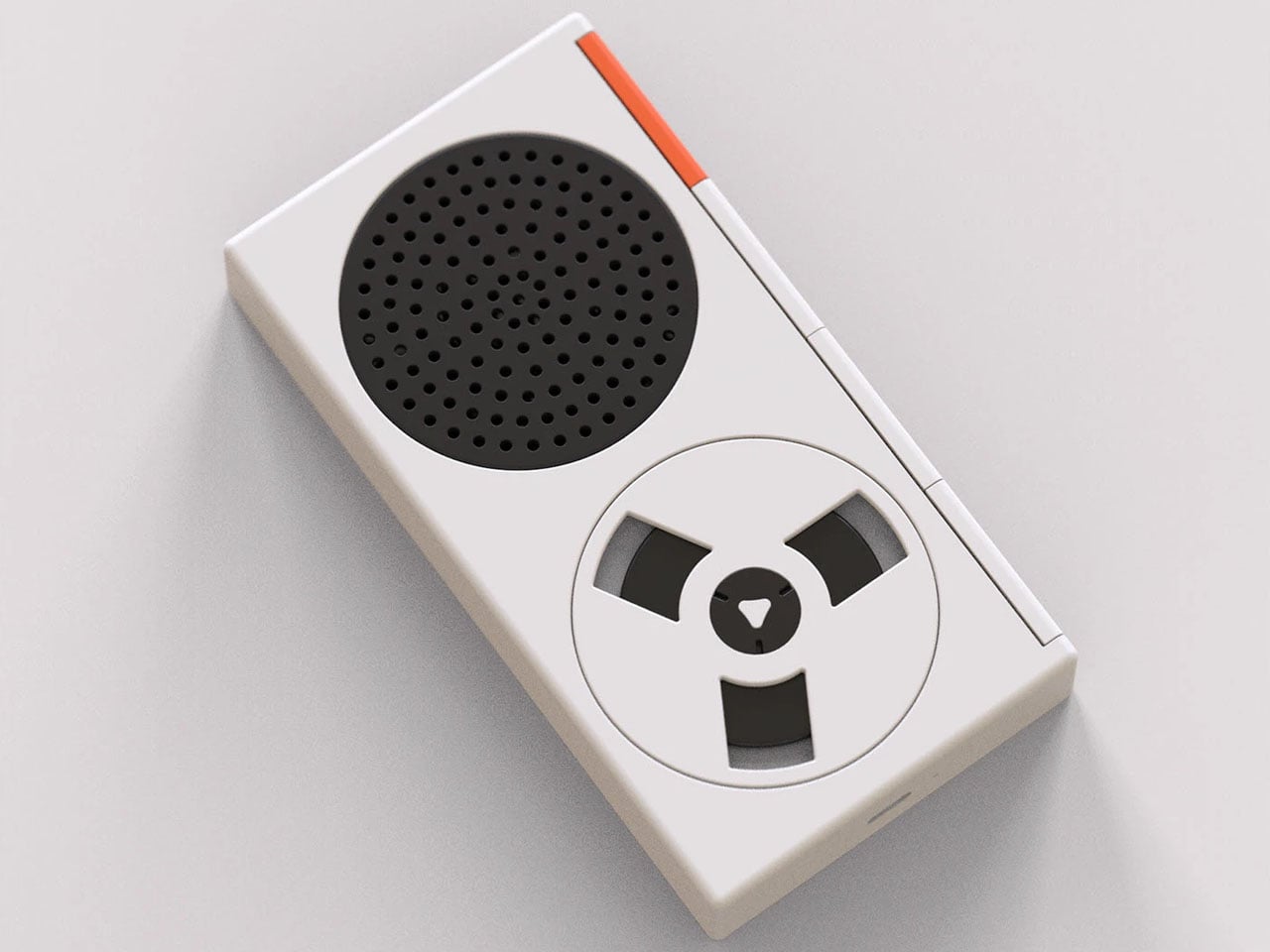
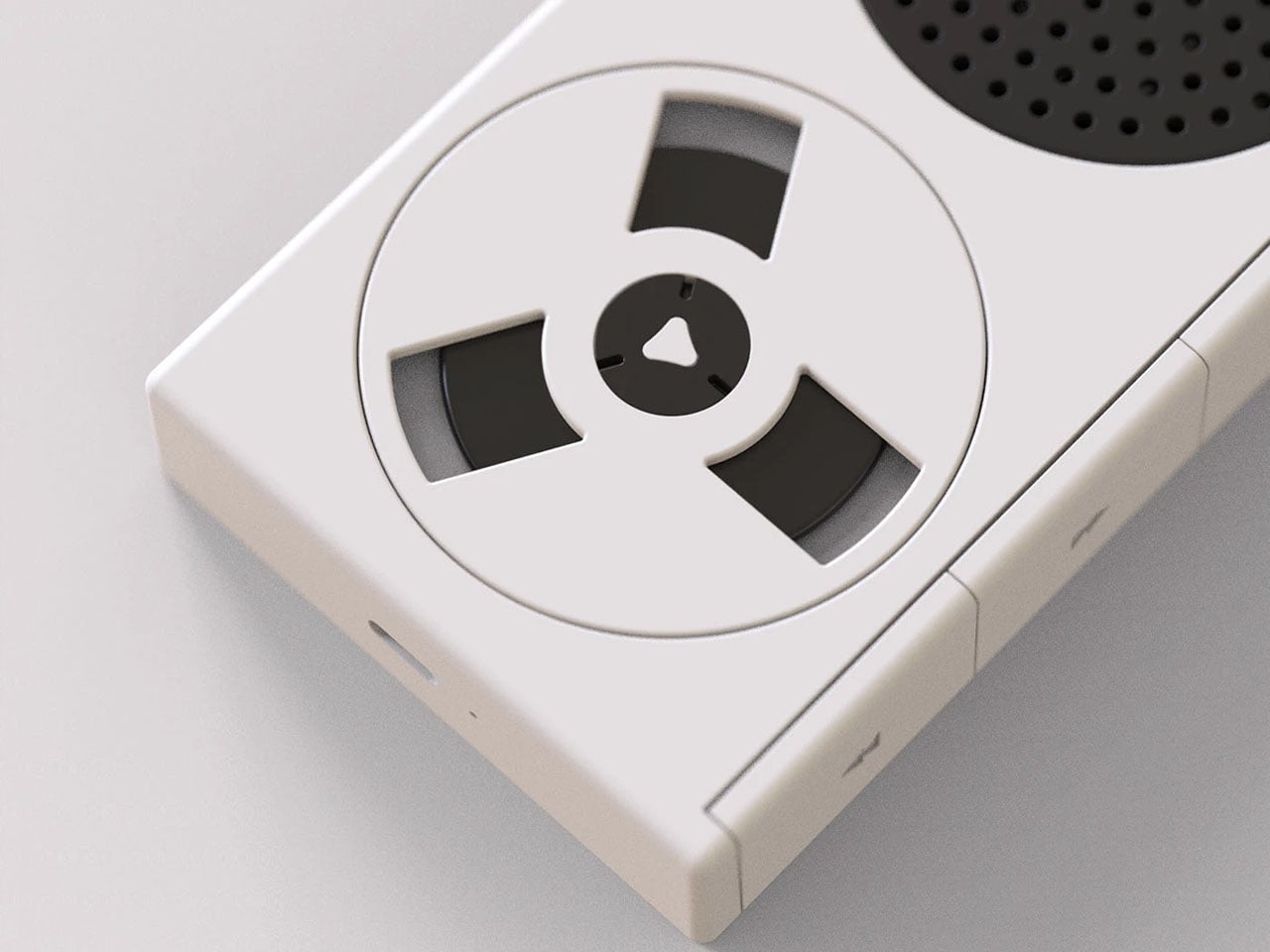
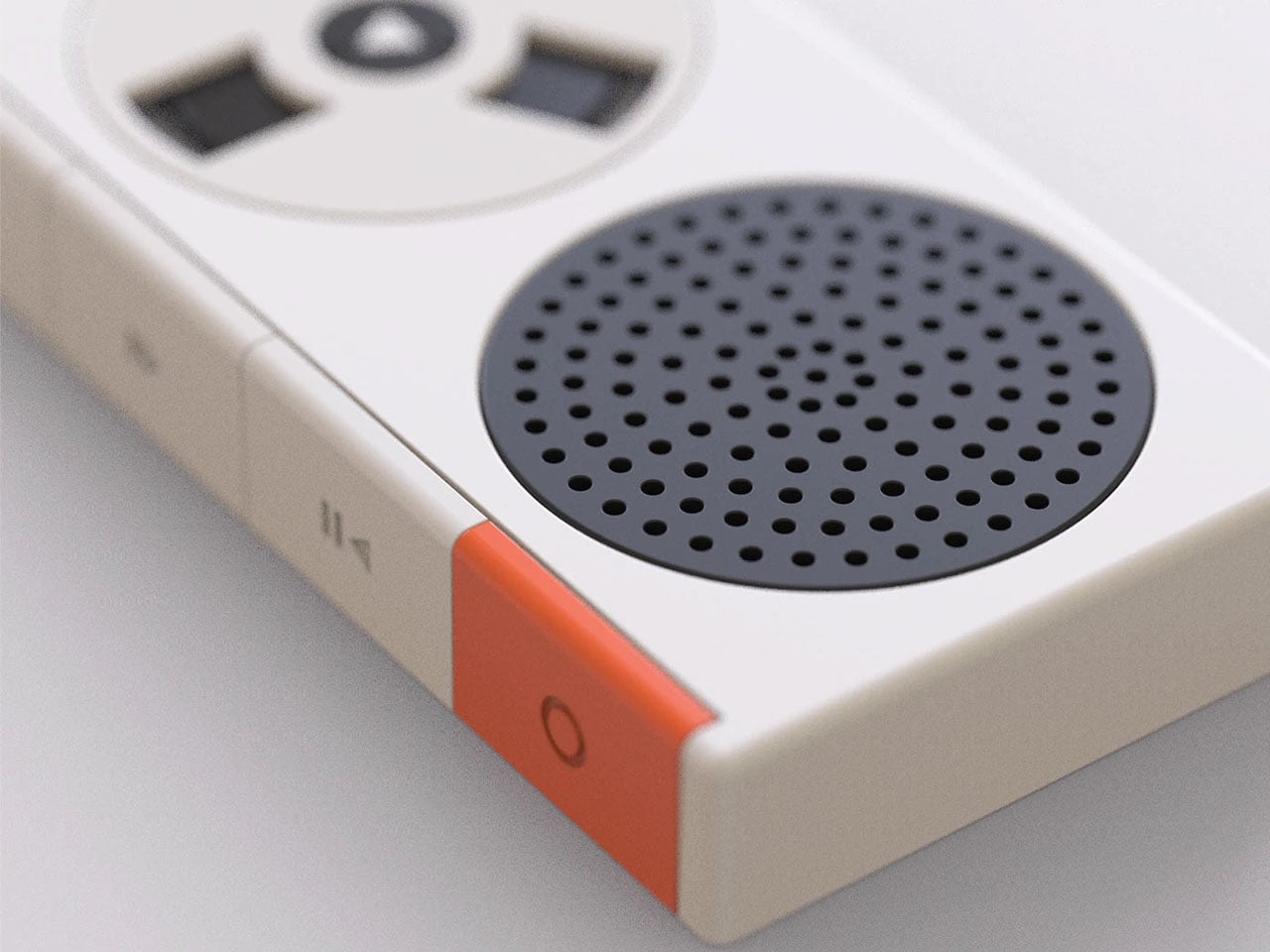
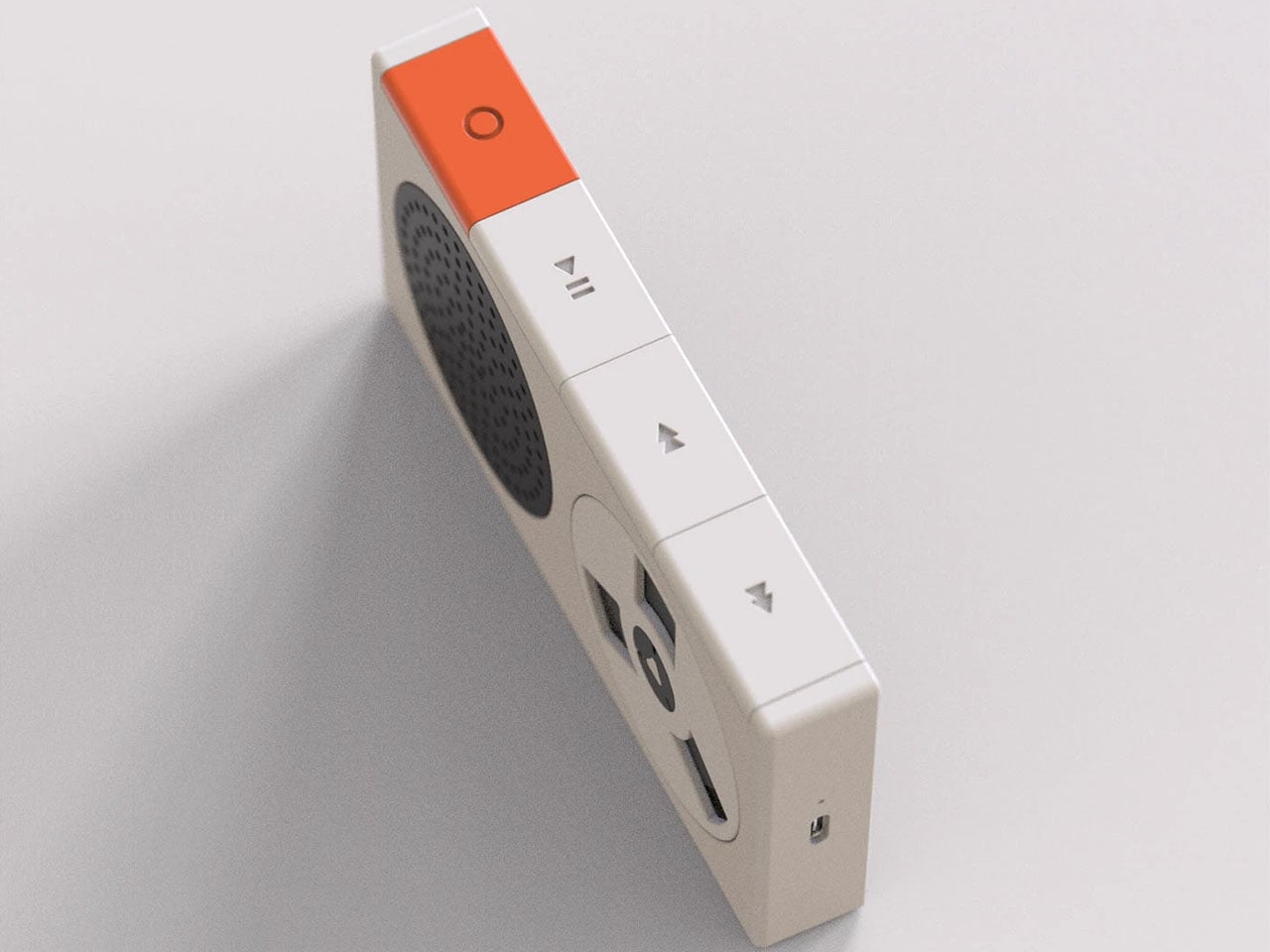
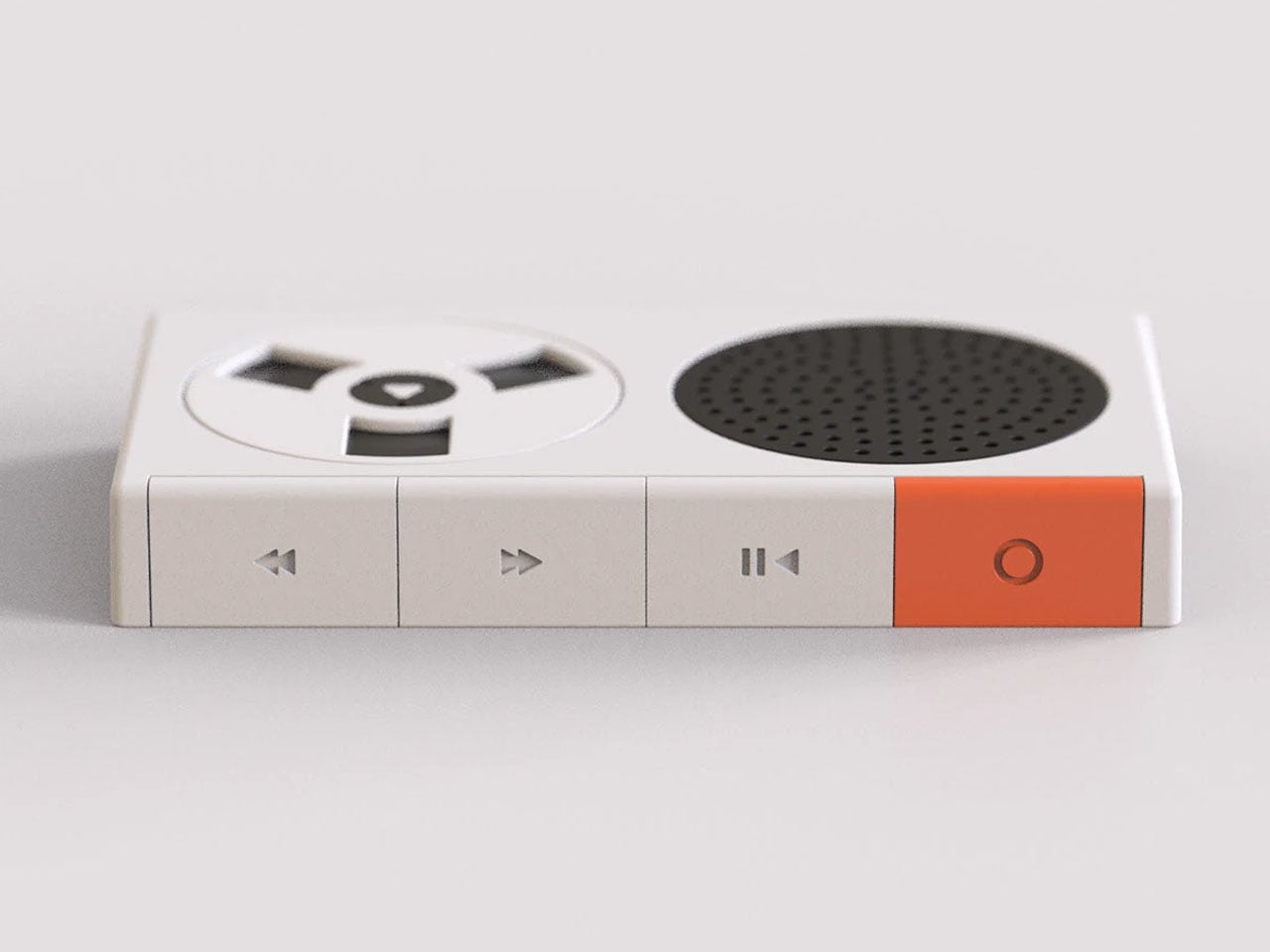
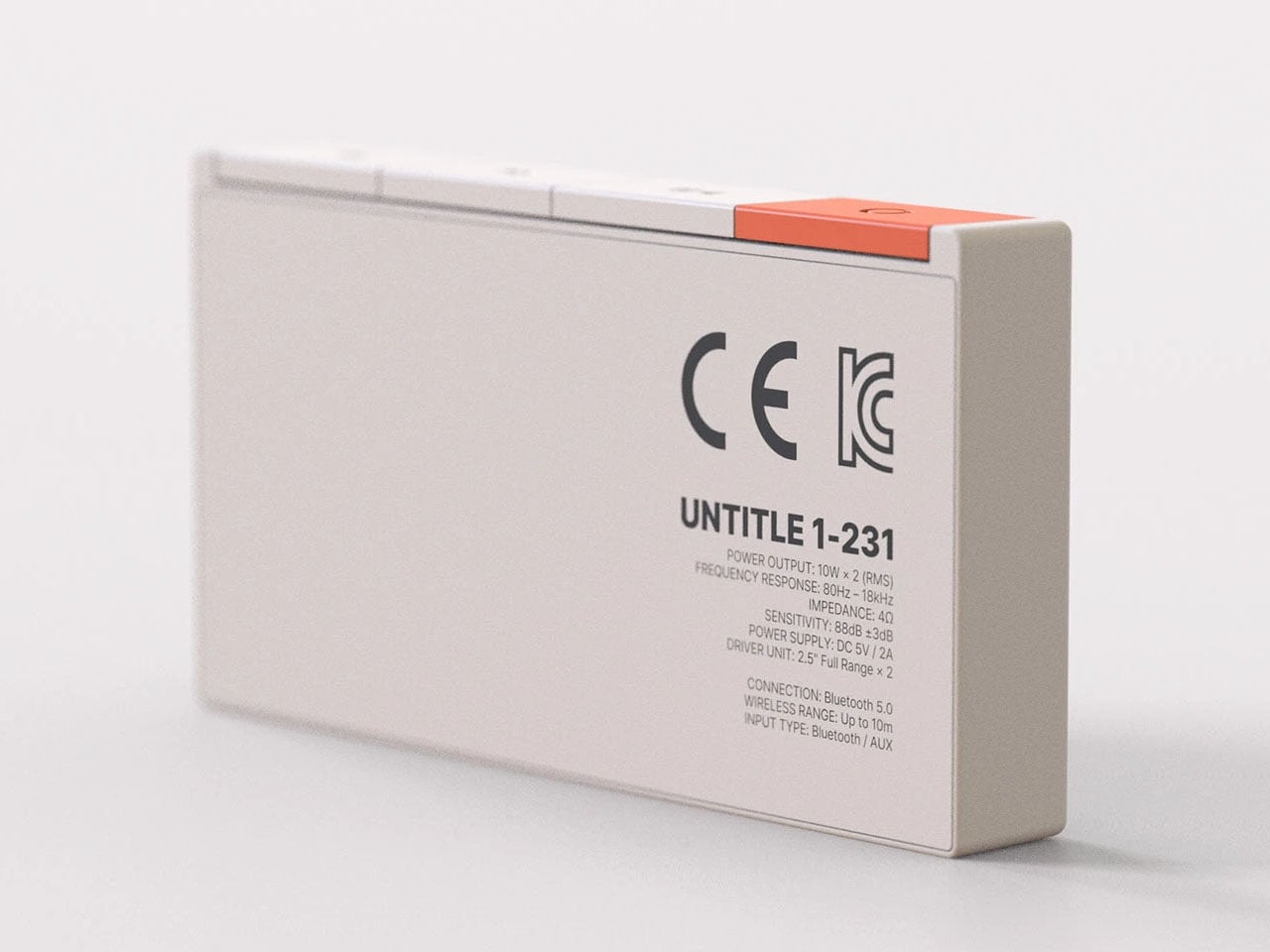
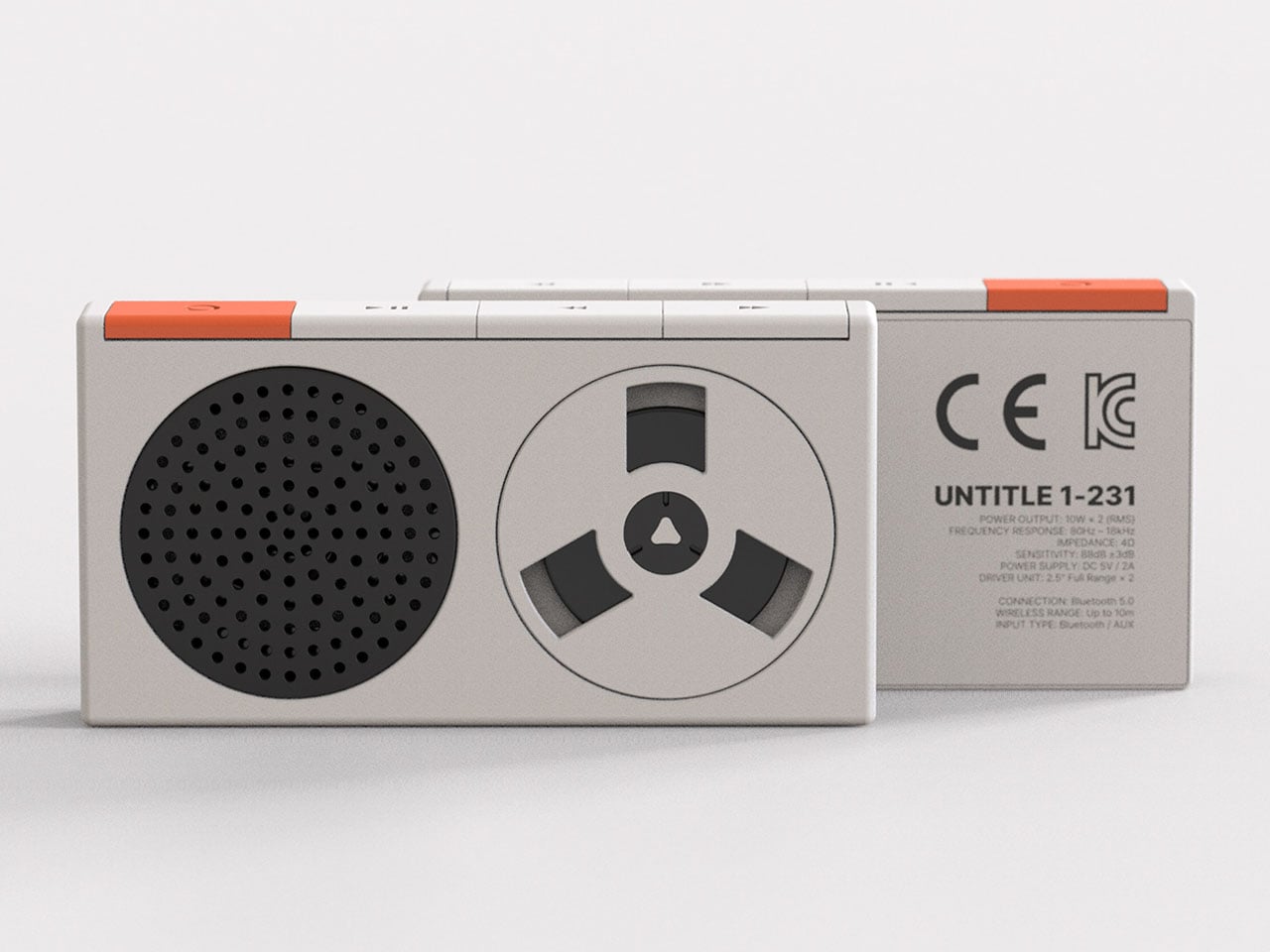
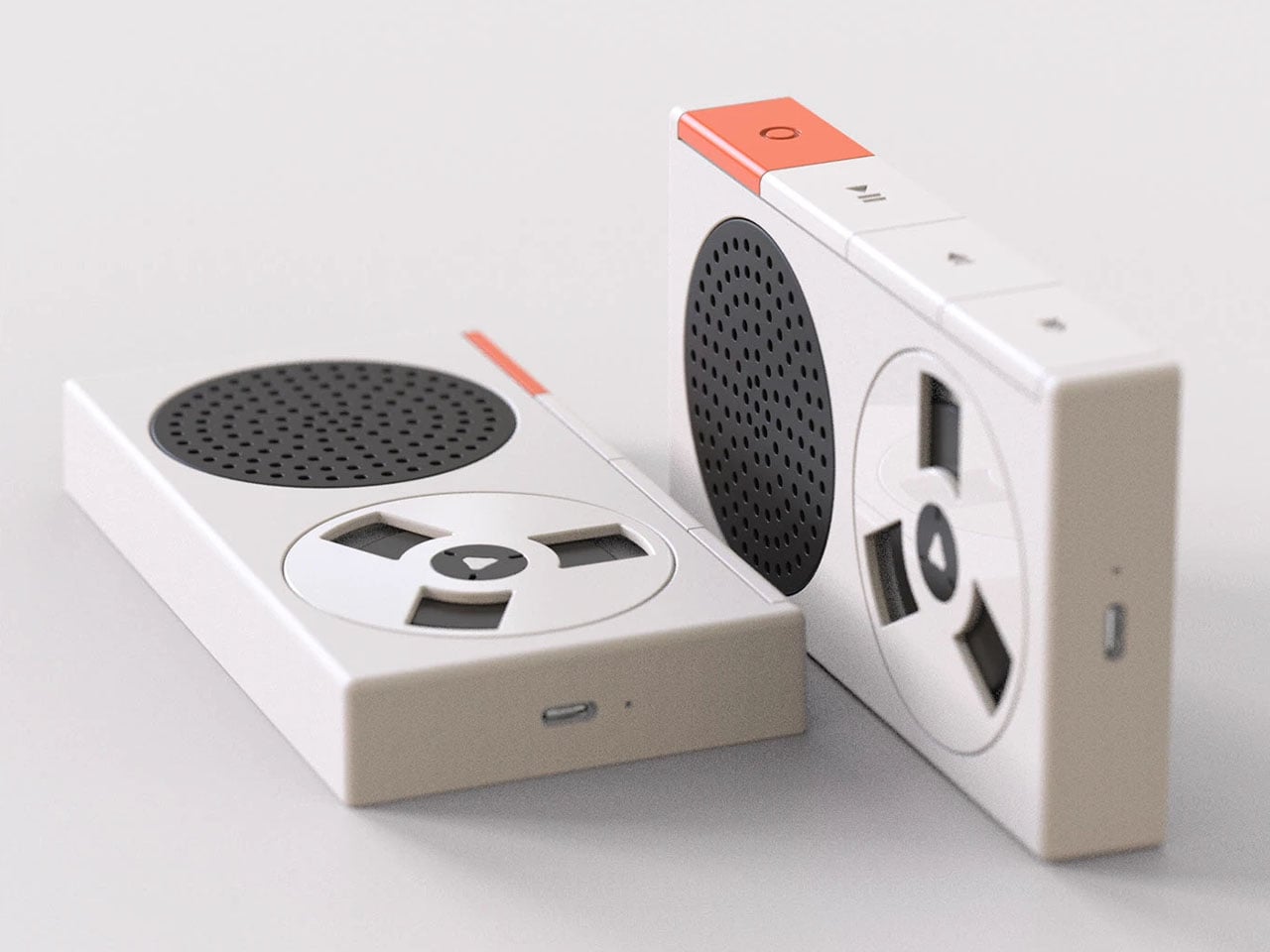
For this time around, however, the concept player here stays within the audio listening gear domain; nonetheless, has clear signs of a TE-inspired design. The retro Bluetooth player is a music accessory that’s reminiscent of the classic cassette tape player design, but on the inside, it’s a modern music player that plays music wired or wireless. The aesthetics are purely for arousing the nostalgic feel of listening to music on a cassette player, while the audio is digitally played via a DAC for high-resolution output.
The mono speaker can output 10W sound with a frequency range of 80Hz – 18kHz. Clearly, in the mono speaker mode, the audio accessory is suited for casual listening. For more analytical listeners, the wired or Bluetooth mode is suited to enjoy the nuances of music. Either way, the spinning cassette player takes you back to a happy place, making the music sound more soulful than ever.
The front displays the spinning cassette player with the perforated speaker grill section. At the top, there are the big player controls to keep things minimal. Other than that, the music player follows a clean design language, which is much appreciated. The designer has not mentioned the exact dimensions of the player, but we presume it’ll be palm-sized given the reference size of the buttons.
Clearly, such a retro-modern music player is recommended for people who appreciate design and love their tunes. Revival of the analog music era is another influence that should resonate well with people who want the tactile feel of the visual elements while enjoying their favorite playlists on music services like Apple Music, Spotify, Dezeer or Tidal in high resolution.