Old Tape, New Tricks: Maxell’s Cassette Player Goes Wireless

Every few years, the tech industry digs up something from the past, slaps a USB-C port on it, and calls it innovation. Sometimes it works. Sometimes it’s a gimmick dressed in nostalgia. The Maxell Wireless Cassette Player lands, surprisingly, somewhere in between, and it’s more interesting for it.

Maxell isn’t exactly an outsider here. The Japanese electronics brand was practically synonymous with cassette culture in the 1980s, when their high-performance chromium metal tapes were the gold standard for serious music listeners. So when they decided to bring back the cassette player, it wasn’t a random brand riding a retro wave. It was the original brand, returning to its roots with a bit more wisdom and a Bluetooth chip.

Designer: Maxell

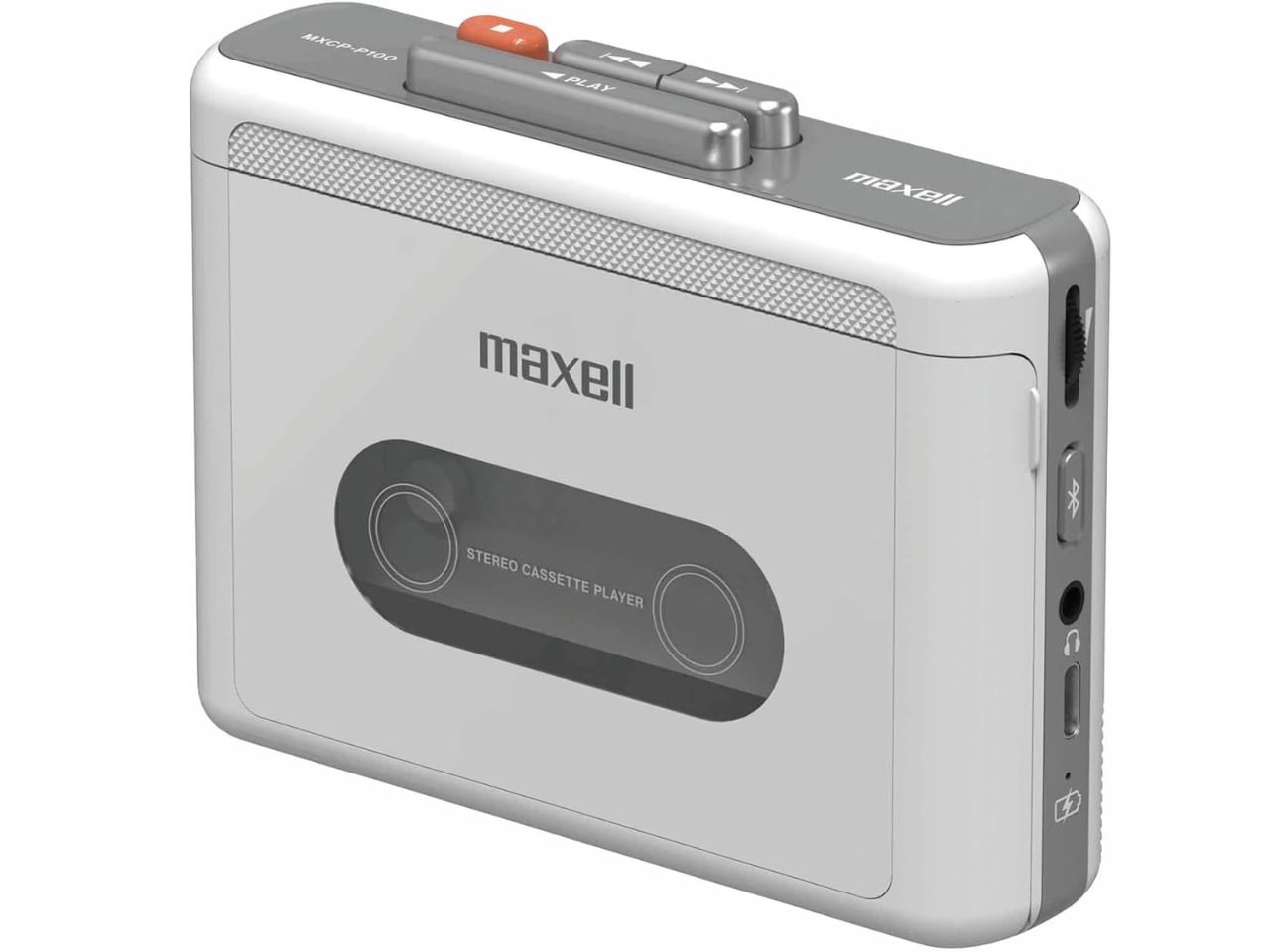
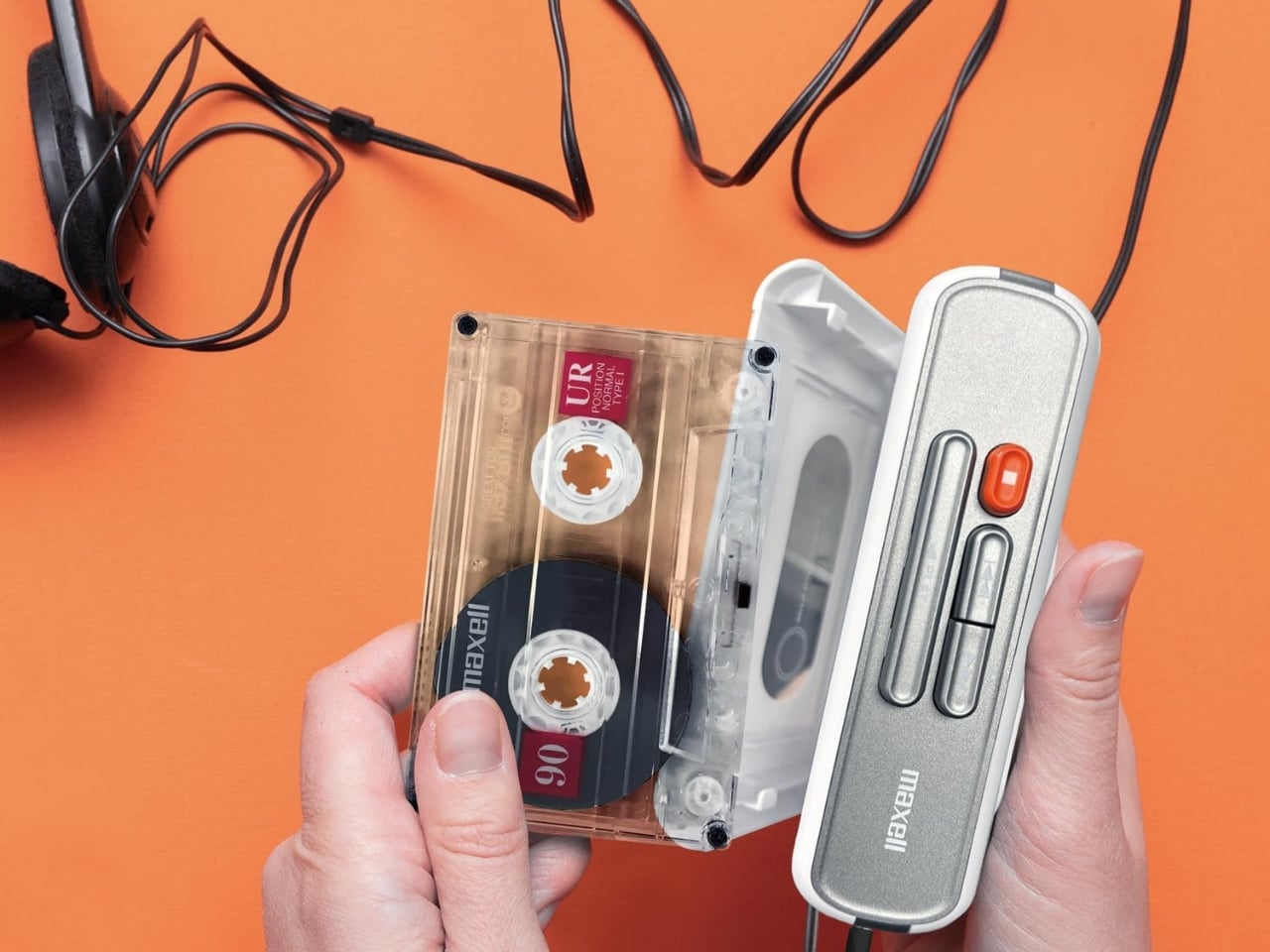
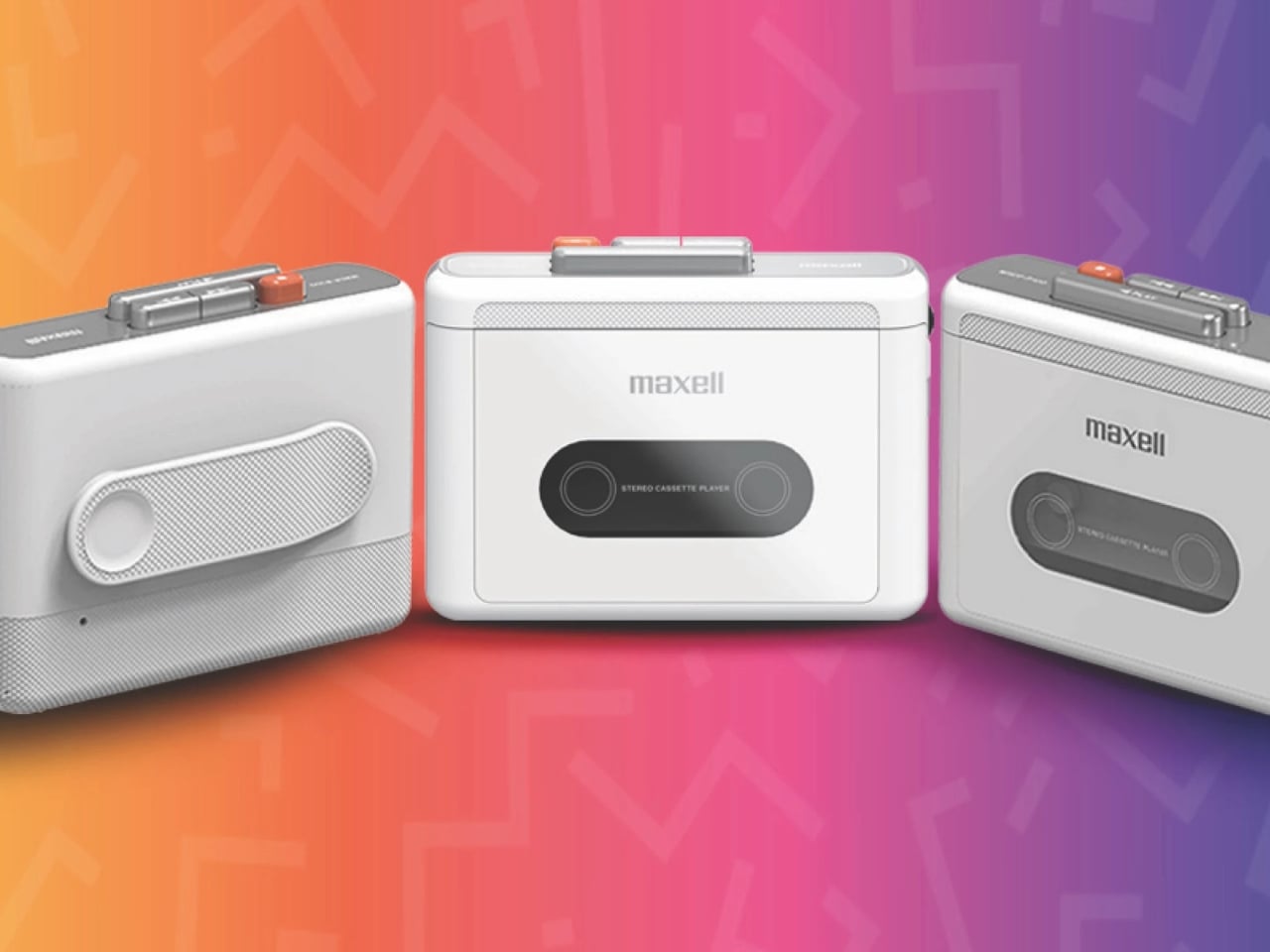
The result is the MXCP-P100, a compact player that pairs your old mixtapes with wireless technology. Pop in a tape, hit play, and stream the audio to your Bluetooth headphones or speaker of choice. At $99.99, currently selling closer to $75, it sits at a price point that feels reasonable for something this specific, though not cheap enough to be an impulse buy.

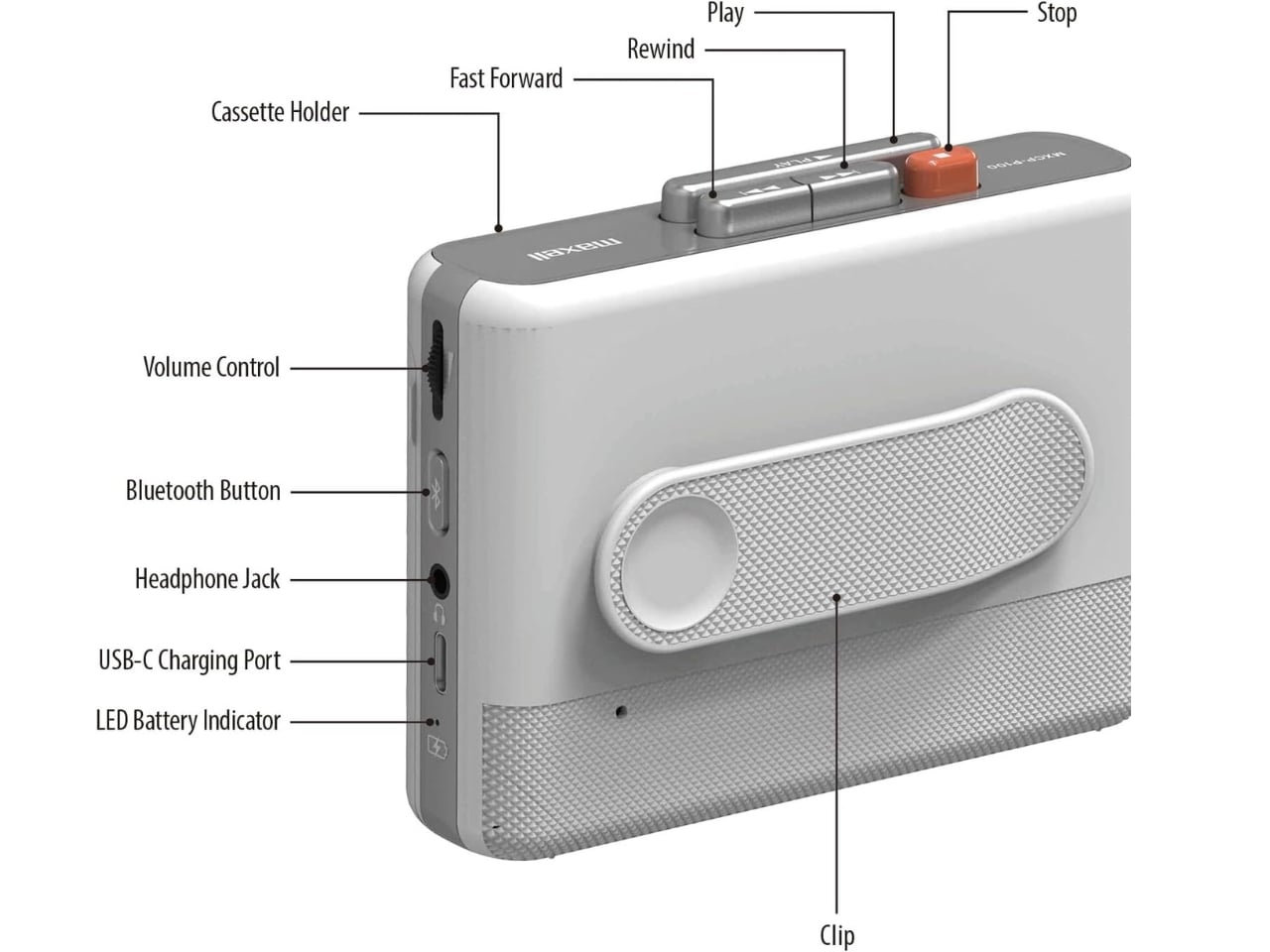
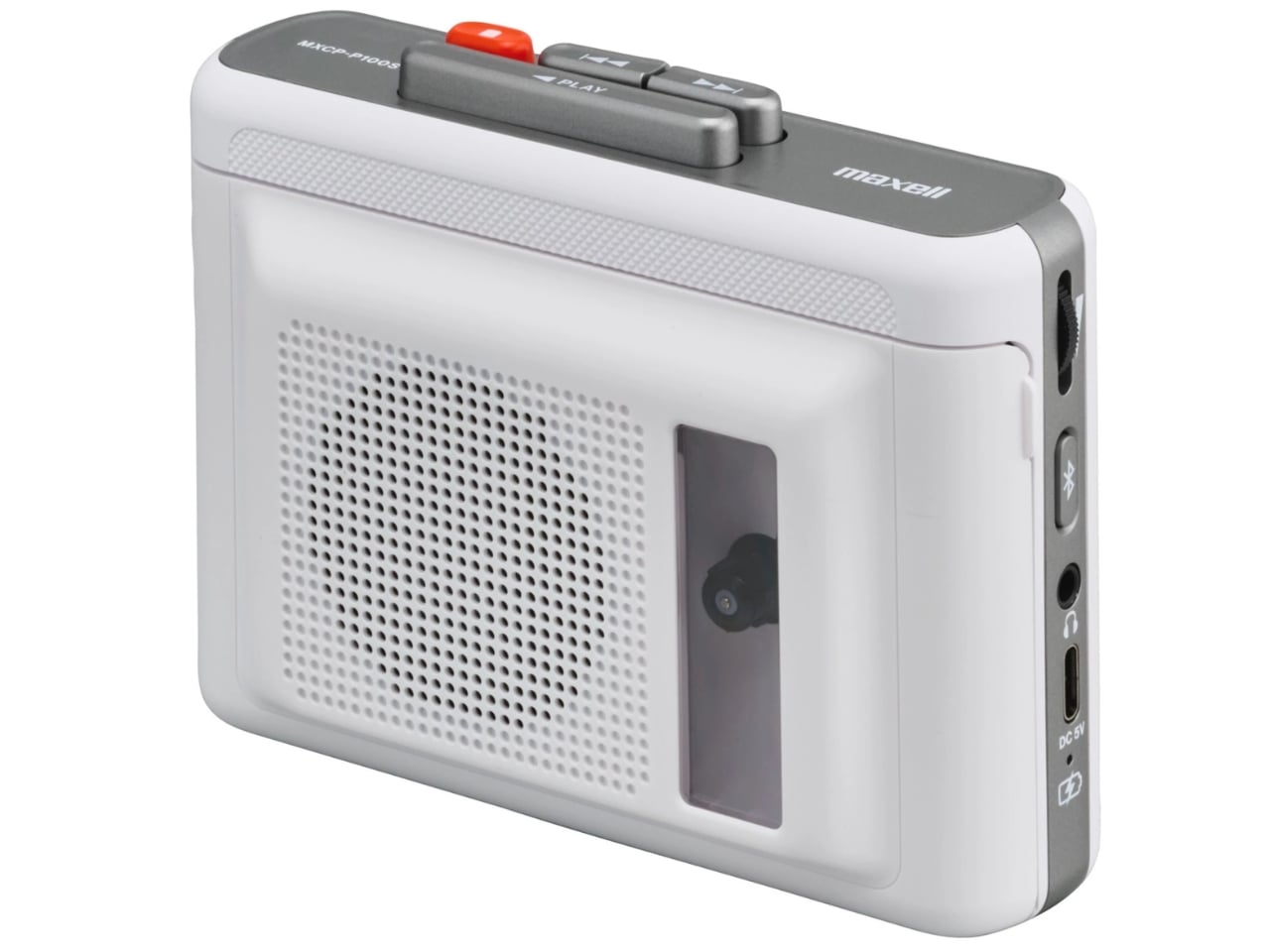
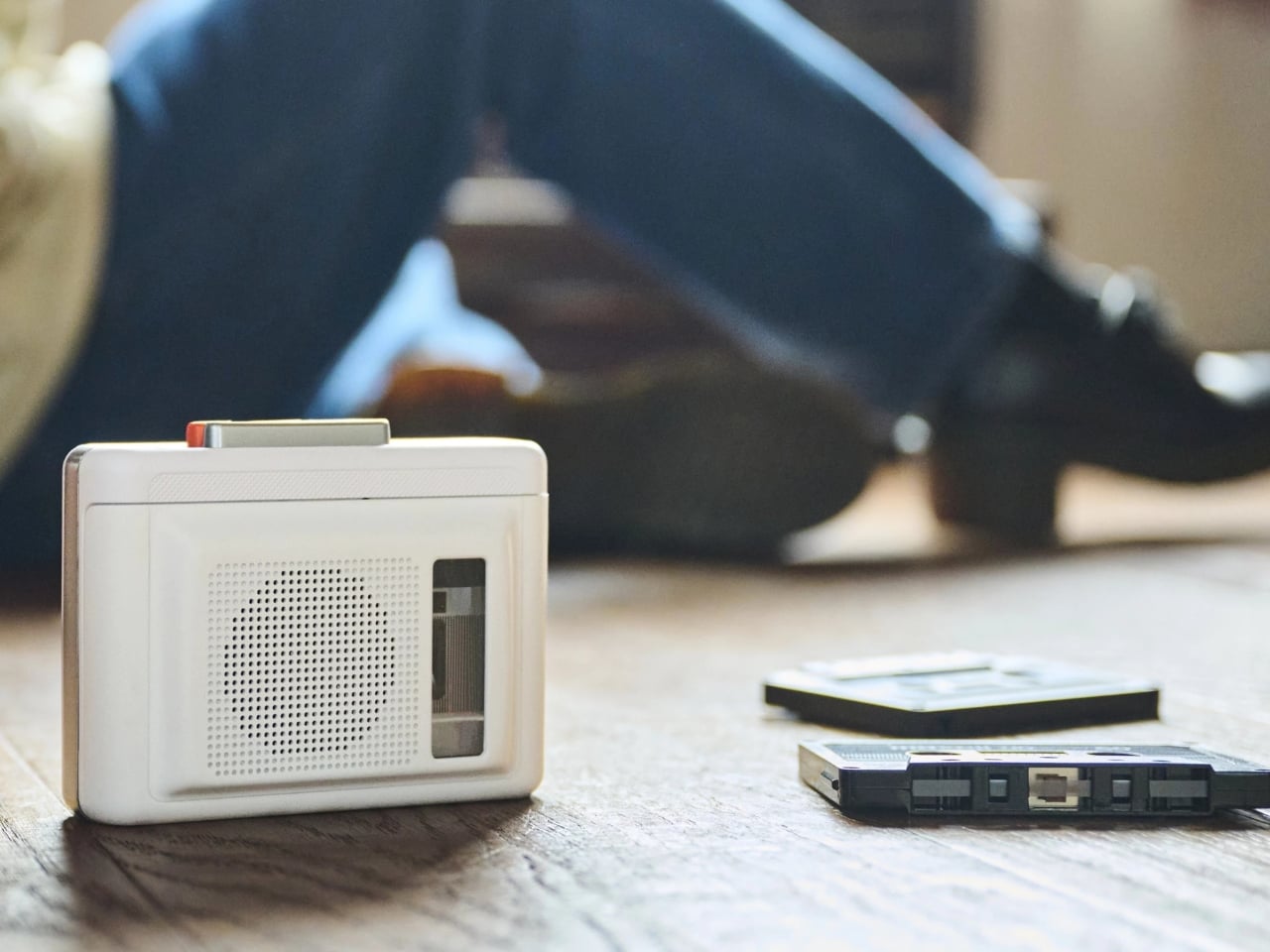
Physically, the player is familiar in all the right ways. A see-through cassette door, a satisfying row of clickable transport buttons across the top, and a volume dial on the side. It comes in black or white, measures 122 x 91 x 38mm, and weighs about 210 grams without a tape. That’s slightly chunkier than the slim Walkmans we remember, but for a device housing both a mechanical transport and Bluetooth electronics, it holds its shape well.

Inside, the stabilized transport uses a precision brass flywheel, which matters more than it sounds. Cheap cassette mechanisms are notorious for uneven playback, which is exactly the kind of thing that would make the whole retro revival effort feel sad and pointless. Whether the MXCP-P100’s mechanism is good enough to genuinely honor your old tapes is a fair question, and the answer seems to be a cautious yes, at least for everyday listening. Battery life clocks in at up to 11 hours on Bluetooth and 9 hours wired, with a full charge taking under two hours via USB-C.

The cassette revival itself deserves a moment of context. Tape has been slowly creeping back for years, driven largely by Gen Z listeners who see physical formats as collectible and meaningful in ways streaming can’t replicate. Musicians use tapes as affordable merch. Collectors hoard limited edition releases. Thrift stores have become unexpected tape archives. The culture is alive, even if the hardware has lagged behind. That’s exactly the gap Maxell is stepping into. Its entry carries the weight of brand legacy that no startup can manufacture, along with the expectations that come with it.

Part of what makes the MXCP-P100 quietly compelling is what it doesn’t try to do. It doesn’t record. It doesn’t have noise reduction circuitry. It doesn’t pretend to be a hi-fi audiophile product. It simply plays tapes and sends the signal somewhere useful. In a product landscape cluttered with devices that over-promise and under-deliver, there’s a certain confidence in knowing exactly what you are and committing to it cleanly. That restraint reads less like a limitation and more like a design decision.

My honest read: the Maxell Wireless Cassette Player isn’t trying to replace your streaming setup or convince anyone that tape sounds better than high-res digital. It’s a purpose-built device for a specific kind of listener who already has a box of tapes and wants a modern, reliable way to play them. On those terms, it makes complete sense.

Whether that’s worth $100 depends entirely on how attached you are to the tapes sitting in a drawer somewhere. If you don’t have any, this probably isn’t the product that converts you. If you do, this might be the one that finally gets you to press play again.

The post Old Tape, New Tricks: Maxell’s Cassette Player Goes Wireless first appeared on Yanko Design.

Gadhouse’s $99 Miko Is the Cassette Player the Revival Needed

Cassette tapes are having a moment, and that moment is refusing to end. According to Billboard, cassette sales have grown more than 440% over the past decade, and in the first quarter of 2025 alone they more than doubled, hitting numbers not seen in 20 years. This isn’t a blip or a quirky indie niche. It’s a full-on cultural movement, and whether you’re old enough to remember rewinding a tape with a pencil or you’ve been hunting down limited editions on Bandcamp, you’ve probably felt its pull.

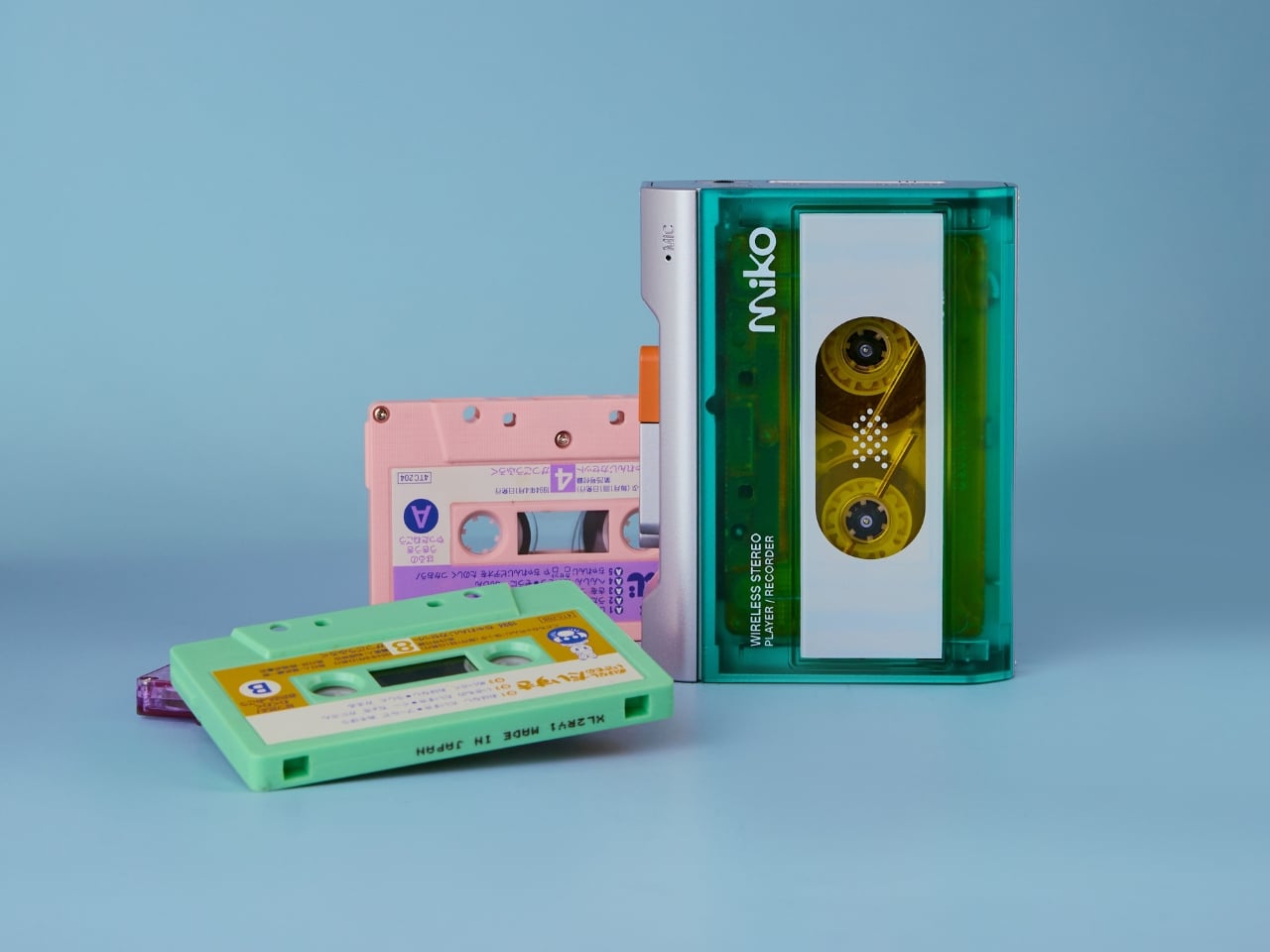
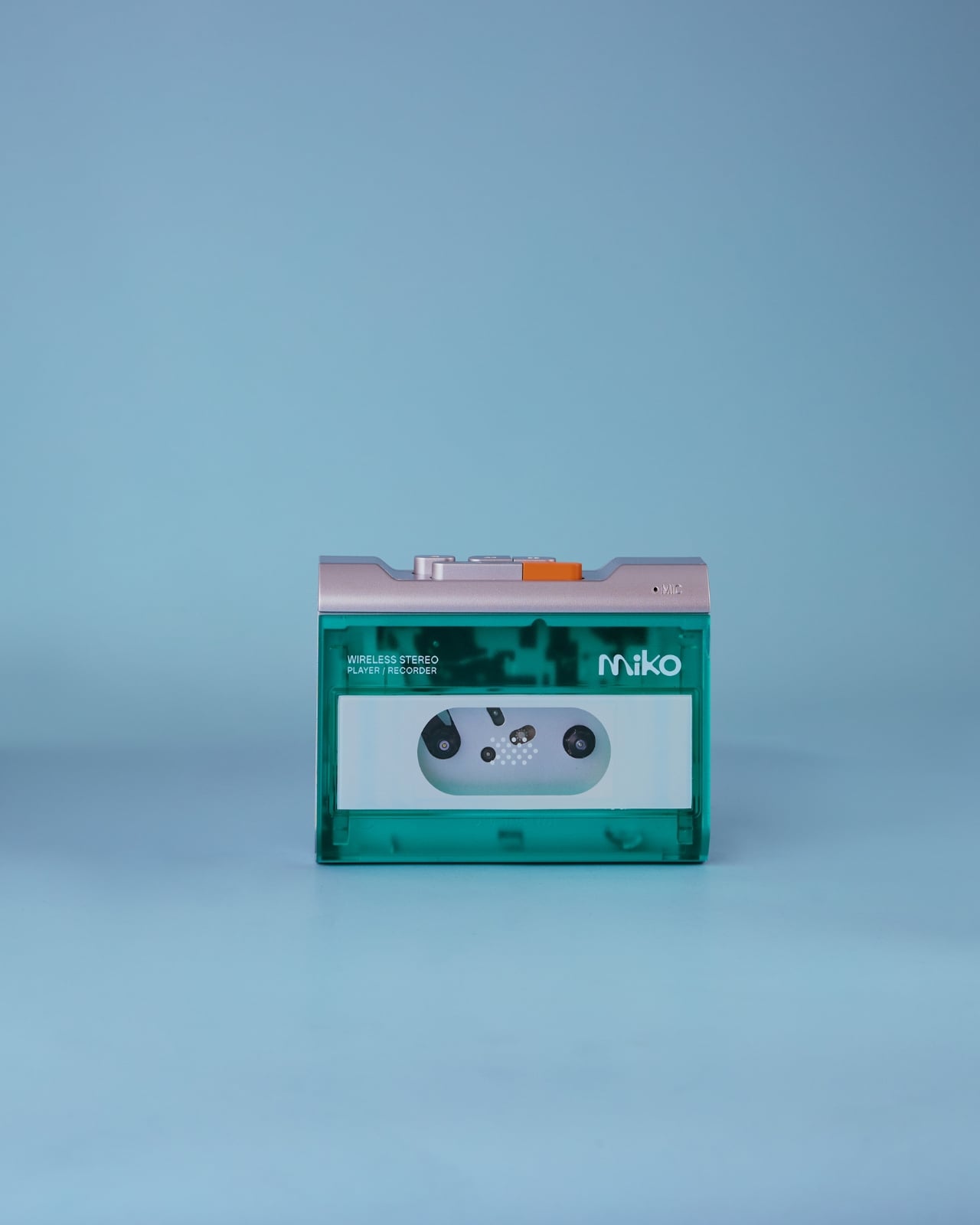
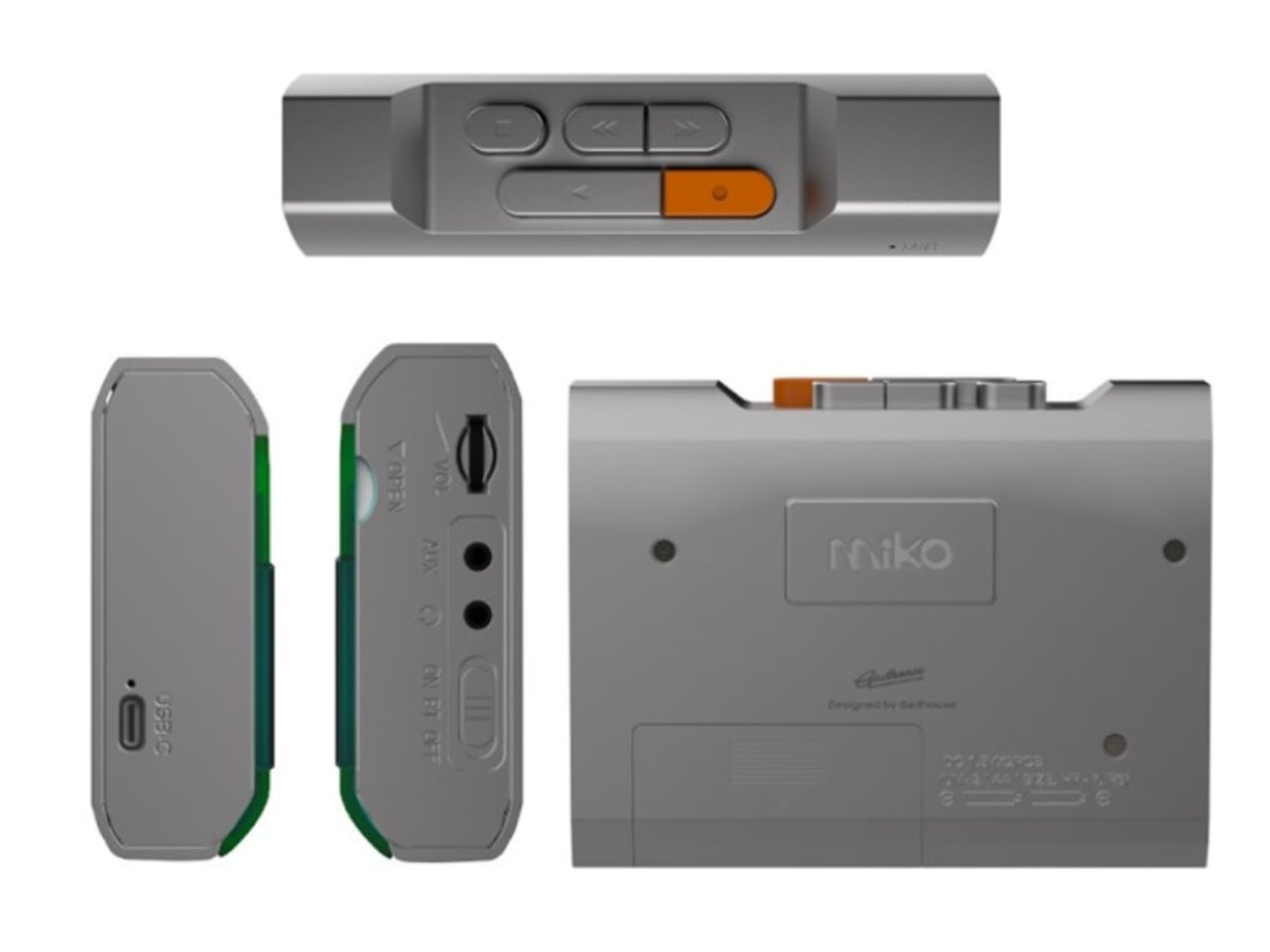
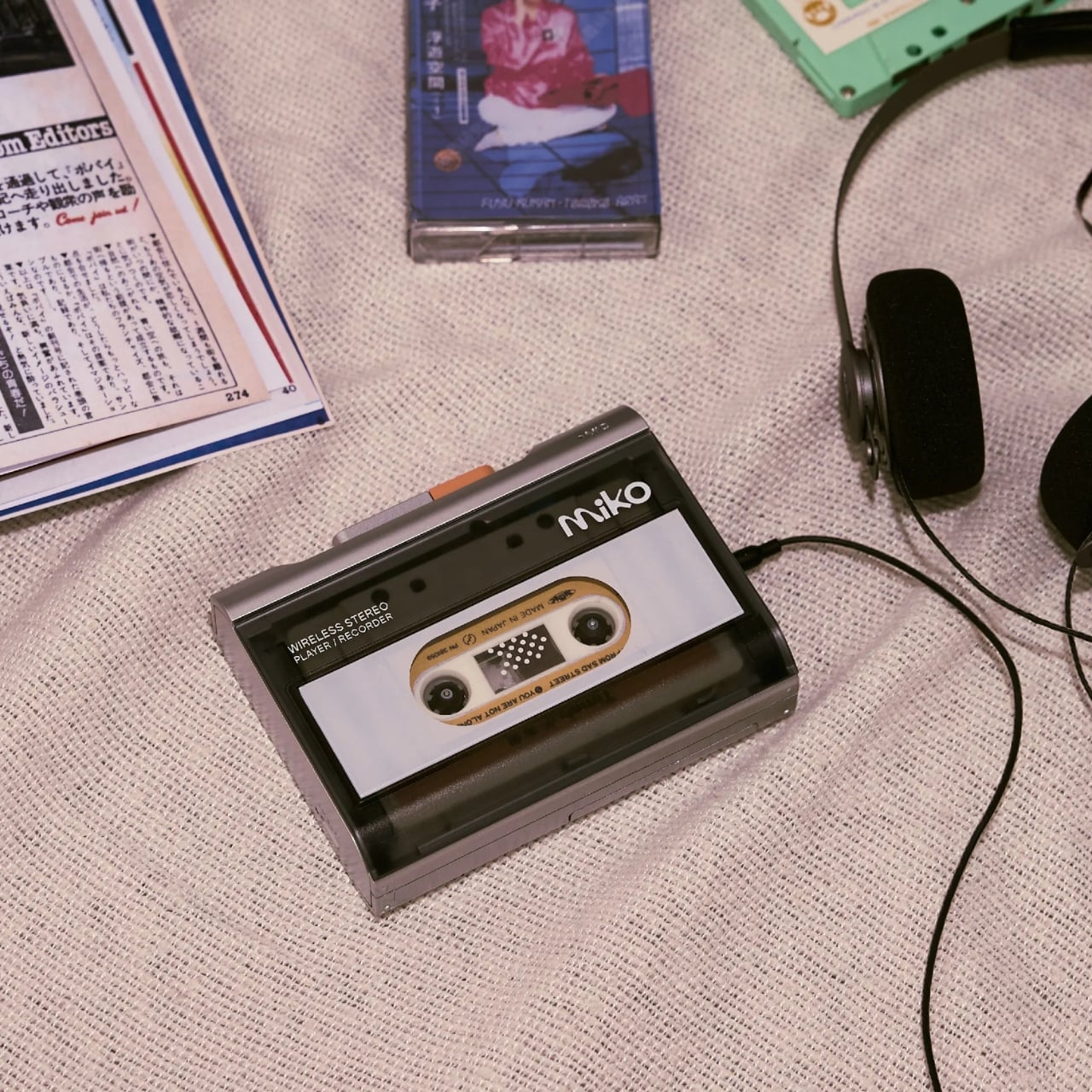
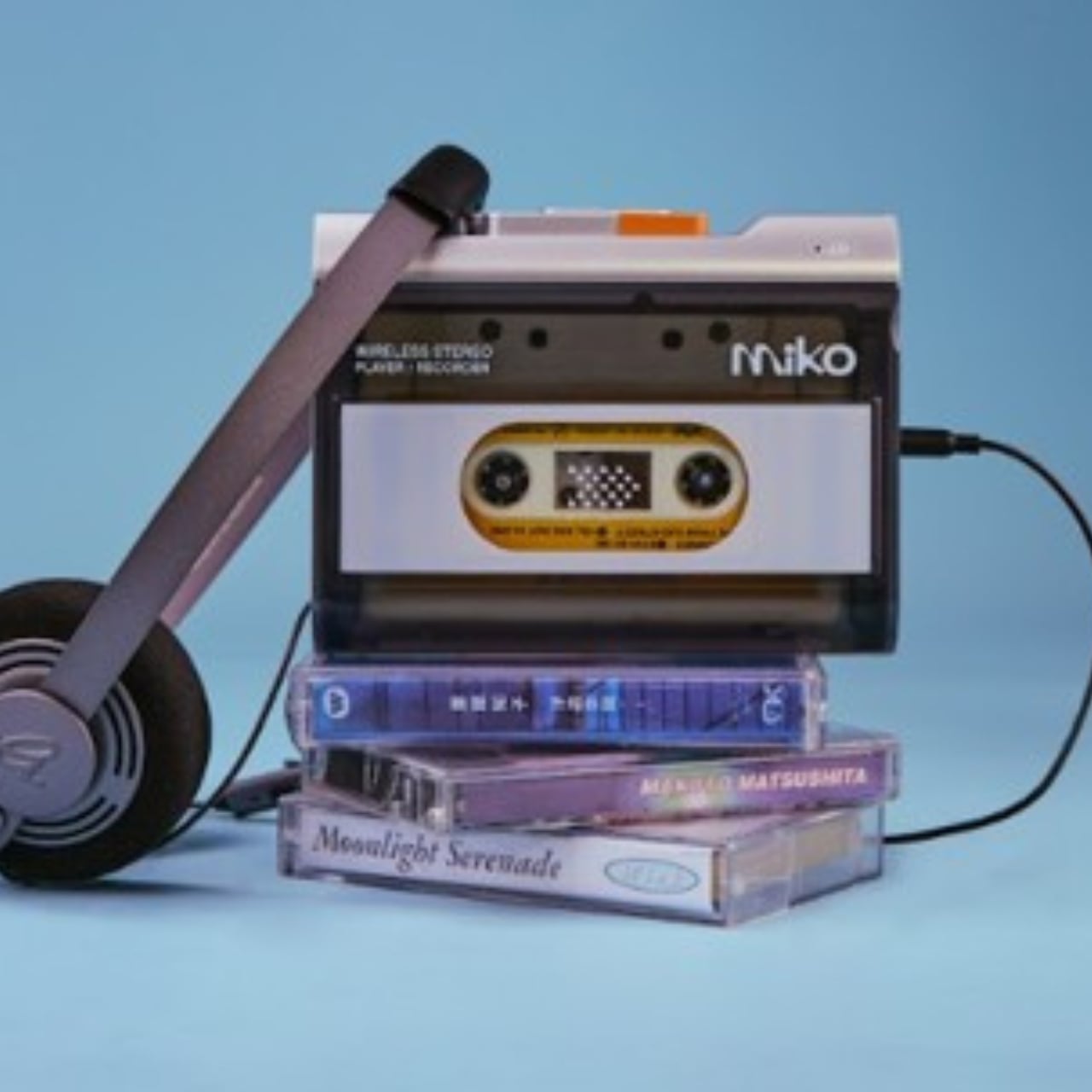
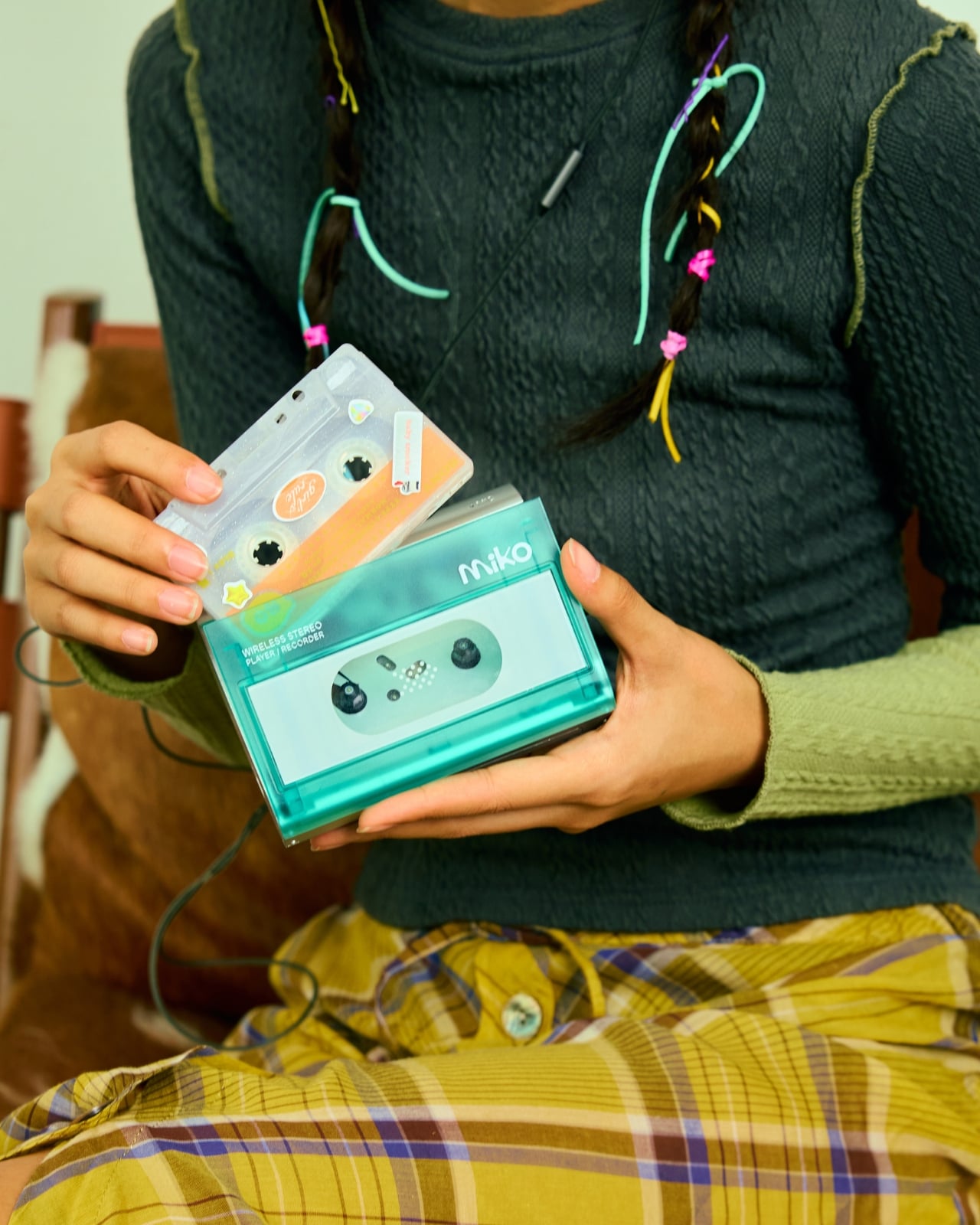
Gadhouse, the audio lifestyle brand behind some genuinely good-looking retro-inspired gear, clearly felt it too. The result is Miko, their first cassette player, and it arrives looking like it has a point to make. The design alone earns attention. Gadhouse drew heavily from the 1985 to 1995 era, a decade widely considered the peak of expressive, personality-driven consumer electronics. Miko carries that DNA through a translucent front cover that lets you watch the cassette move, an aluminum logo detail, and a compact form factor that sits satisfyingly in the hand.

Designer: Gadhouse

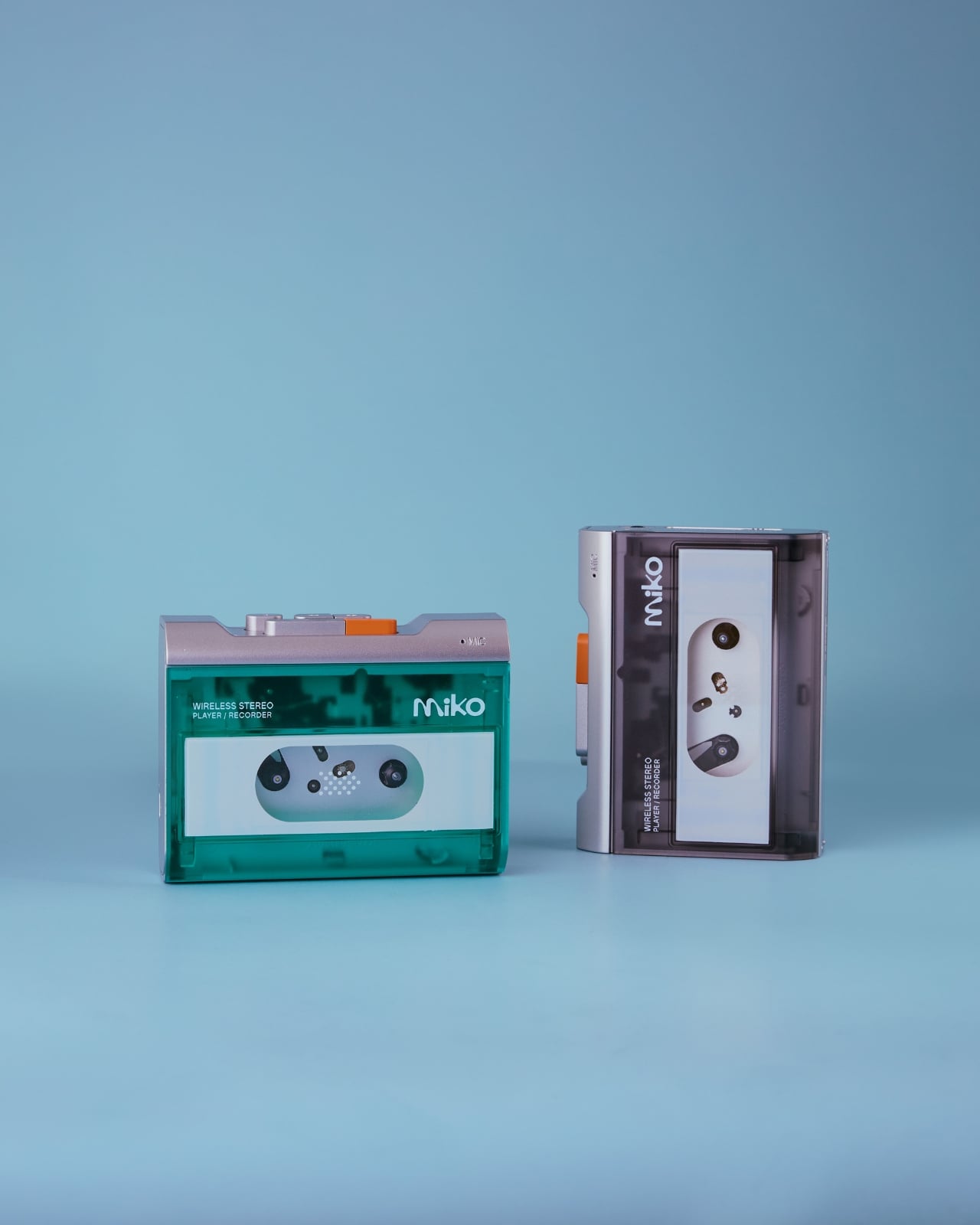
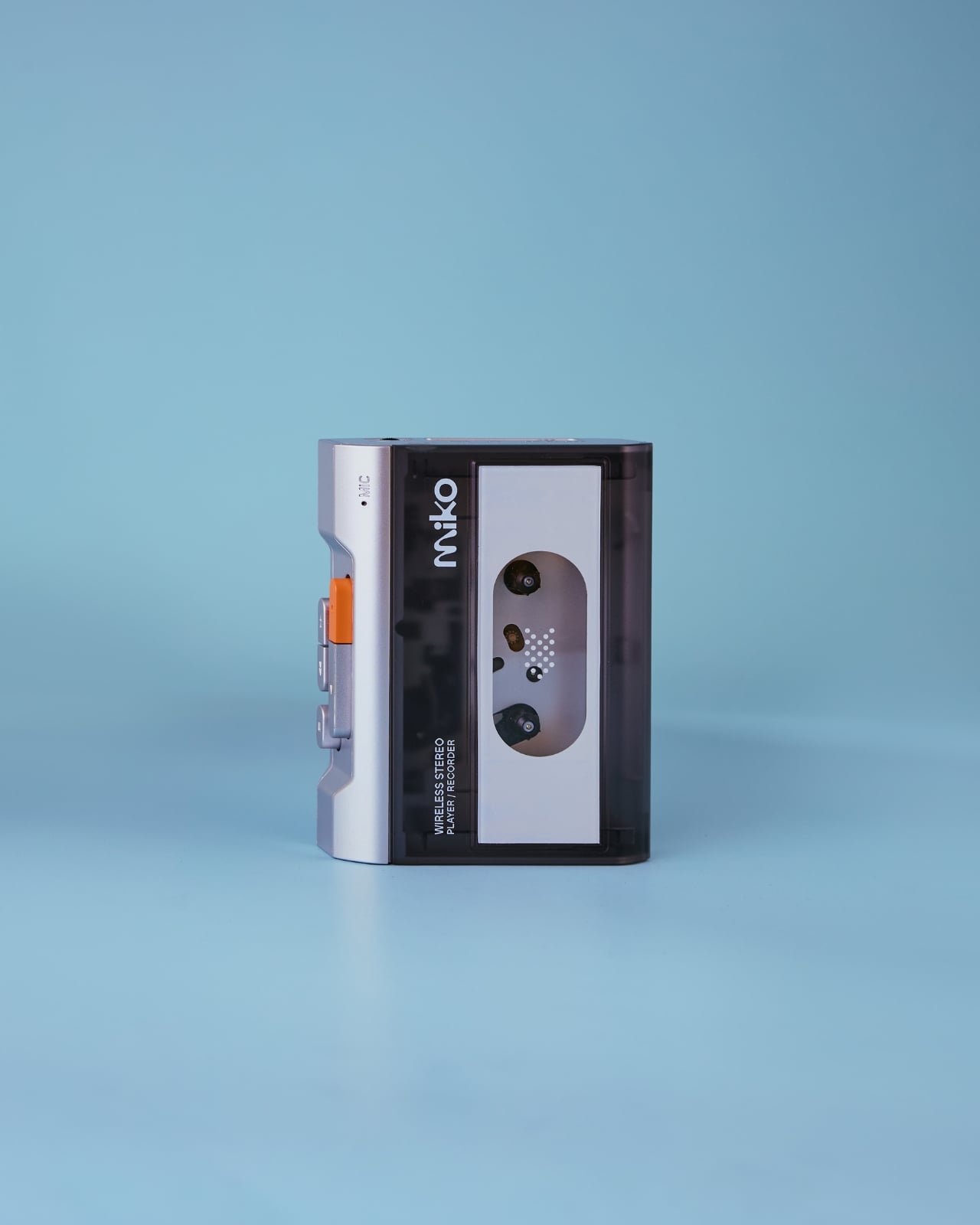
It comes in two colorways, Smoke and Mint, and both feel deliberately considered rather than arbitrarily chosen. The Mint version especially hits that sweet spot between vintage and current that a lot of retro-inspired products spend significant design budgets trying and failing to achieve.

Beyond the looks, Gadhouse made a smart decision not to stop at aesthetics. The Miko runs on Bluetooth 5.3, which means you can pair it with wireless headphones and walk out the door untethered. There is also a 3.5mm stereo output for those who prefer a wired setup or own a vintage pair they’re not ready to part with. Both options coexist without one feeling like an afterthought, and that kind of functional honesty is rarer than it should be in products that trade so heavily on nostalgia.

The five-button control system handles play, fast-forward, rewind, stop, and record. That last button deserves its own moment. Miko includes a built-in directional microphone, which means you can record directly onto cassette. Voice notes, song ideas, a mix tape for someone you want to impress, or a playlist you’ve actually curated rather than algorithmically generated. The format shifts from relic to creative tool pretty quickly once you remember that capability is built right in. Gadhouse has also announced plans to release their own line of blank cassette tapes and accessories later this year, which suggests they’re approaching this as a longer-term ecosystem rather than a one-and-done launch.

At 192 grams, Miko is light enough to drop into a bag without thinking twice. It runs on AA batteries and accepts USB-C power input, including directly from an iPhone, which is exactly the kind of considered detail that signals a team that actually thought about how people use things in the real world. The campaign imagery reinforces the tone they’re going for: youthful, a little editorial, tactile. It reads less like a tech launch and more like a lifestyle statement, which, for this kind of product, is probably the right call.

The cassette revival isn’t going anywhere because it was never purely about audio quality. It’s about ownership, tactility, and a kind of deliberate listening that streaming has made increasingly rare. When you play a cassette, you commit to it. You flip it, you fast-forward past songs you skipped last time, you sit with the imperfections. Holding a tape, choosing it, pressing play. That sequence means something to people. That’s not nostalgia talking, that’s human behavior. Miko seems to understand this, and it packages that understanding into something that actually functions well in 2026, without trying to be a museum piece or a tech gimmick.

The Gadhouse Miko Cassette Player is priced at $99/£59.99 and available now from the Gadhouse website and global partners, with major retailers including Amazon, HMV, Currys, Tesco, and John Lewis expected to follow. Starting April 30th, it can be bundled with Gadhouse’s Wesley Retro Headphones for $149/£109. For anyone already deep into the format or simply cassette-curious, this might be the most considered entry point on the market right now.

The post Gadhouse’s $99 Miko Is the Cassette Player the Revival Needed first appeared on Yanko Design.

Gadhouse’s $99 Miko Is the Cassette Player the Revival Needed

Cassette tapes are having a moment, and that moment is refusing to end. According to Billboard, cassette sales have grown more than 440% over the past decade, and in the first quarter of 2025 alone they more than doubled, hitting numbers not seen in 20 years. This isn’t a blip or a quirky indie niche. It’s a full-on cultural movement, and whether you’re old enough to remember rewinding a tape with a pencil or you’ve been hunting down limited editions on Bandcamp, you’ve probably felt its pull.

Gadhouse, the audio lifestyle brand behind some genuinely good-looking retro-inspired gear, clearly felt it too. The result is Miko, their first cassette player, and it arrives looking like it has a point to make. The design alone earns attention. Gadhouse drew heavily from the 1985 to 1995 era, a decade widely considered the peak of expressive, personality-driven consumer electronics. Miko carries that DNA through a translucent front cover that lets you watch the cassette move, an aluminum logo detail, and a compact form factor that sits satisfyingly in the hand.

Designer: Gadhouse

It comes in two colorways, Smoke and Mint, and both feel deliberately considered rather than arbitrarily chosen. The Mint version especially hits that sweet spot between vintage and current that a lot of retro-inspired products spend significant design budgets trying and failing to achieve.

Beyond the looks, Gadhouse made a smart decision not to stop at aesthetics. The Miko runs on Bluetooth 5.3, which means you can pair it with wireless headphones and walk out the door untethered. There is also a 3.5mm stereo output for those who prefer a wired setup or own a vintage pair they’re not ready to part with. Both options coexist without one feeling like an afterthought, and that kind of functional honesty is rarer than it should be in products that trade so heavily on nostalgia.

The five-button control system handles play, fast-forward, rewind, stop, and record. That last button deserves its own moment. Miko includes a built-in directional microphone, which means you can record directly onto cassette. Voice notes, song ideas, a mix tape for someone you want to impress, or a playlist you’ve actually curated rather than algorithmically generated. The format shifts from relic to creative tool pretty quickly once you remember that capability is built right in. Gadhouse has also announced plans to release their own line of blank cassette tapes and accessories later this year, which suggests they’re approaching this as a longer-term ecosystem rather than a one-and-done launch.

At 192 grams, Miko is light enough to drop into a bag without thinking twice. It runs on AA batteries and accepts USB-C power input, including directly from an iPhone, which is exactly the kind of considered detail that signals a team that actually thought about how people use things in the real world. The campaign imagery reinforces the tone they’re going for: youthful, a little editorial, tactile. It reads less like a tech launch and more like a lifestyle statement, which, for this kind of product, is probably the right call.

The cassette revival isn’t going anywhere because it was never purely about audio quality. It’s about ownership, tactility, and a kind of deliberate listening that streaming has made increasingly rare. When you play a cassette, you commit to it. You flip it, you fast-forward past songs you skipped last time, you sit with the imperfections. Holding a tape, choosing it, pressing play. That sequence means something to people. That’s not nostalgia talking, that’s human behavior. Miko seems to understand this, and it packages that understanding into something that actually functions well in 2026, without trying to be a museum piece or a tech gimmick.

The Gadhouse Miko Cassette Player is priced at $99/£59.99 and available now from the Gadhouse website and global partners, with major retailers including Amazon, HMV, Currys, Tesco, and John Lewis expected to follow. Starting April 30th, it can be bundled with Gadhouse’s Wesley Retro Headphones for $149/£109. For anyone already deep into the format or simply cassette-curious, this might be the most considered entry point on the market right now.

The post Gadhouse’s $99 Miko Is the Cassette Player the Revival Needed first appeared on Yanko Design.

Bumpboxx BB-777 Plays Cassettes, CDs, Radio, and Bluetooth at 270W

Most portable speakers these days are designed to disappear. They’re compact, wireless, and largely anonymous, blending into whatever surface they rest on until a voice command kicks things off. Music has become a background utility, something that happens to you rather than something you actively choose. The ritual of physically engaging with sound has faded quietly, replaced by convenience that’s smooth, automatic, and almost entirely invisible.

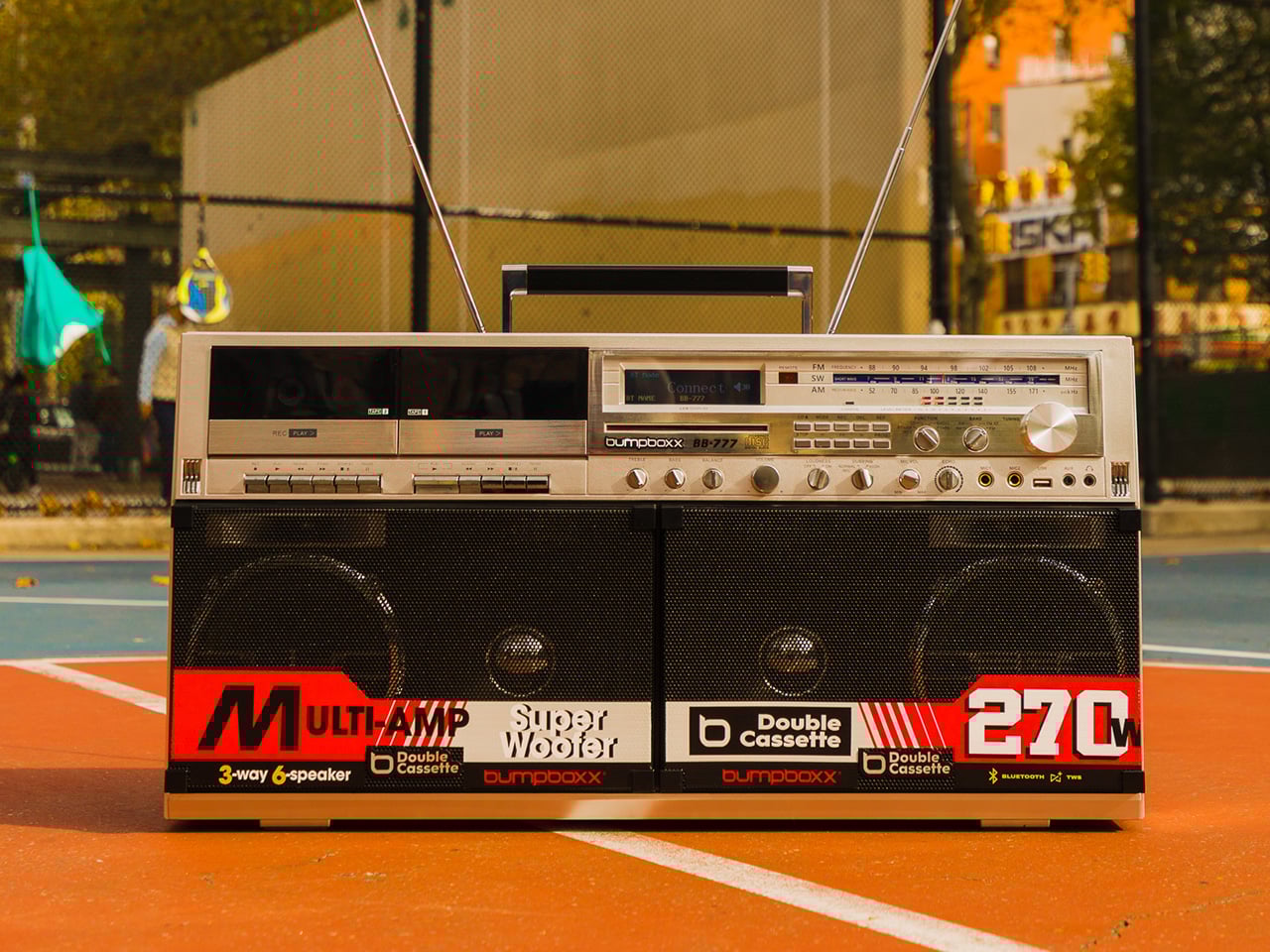
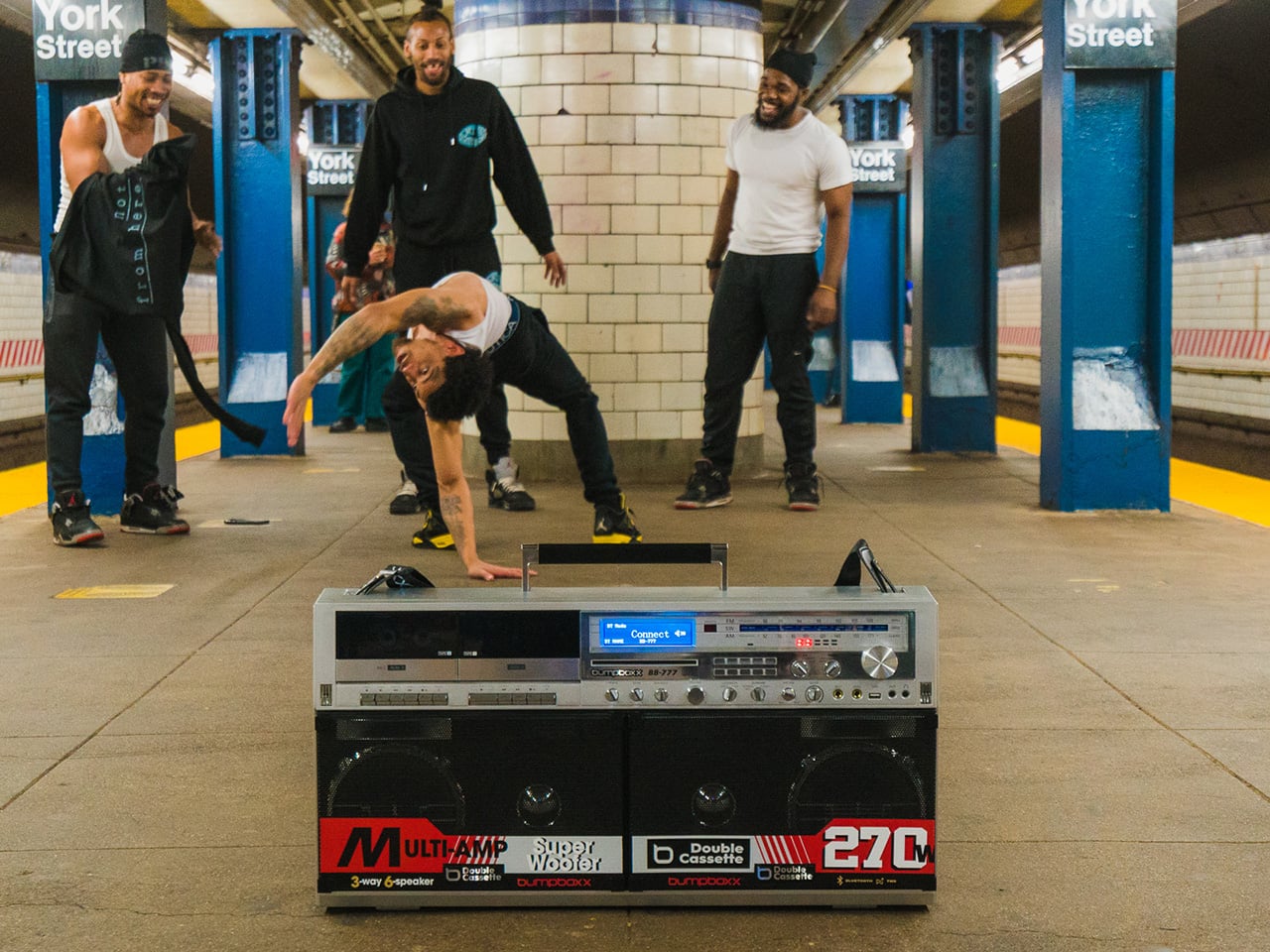
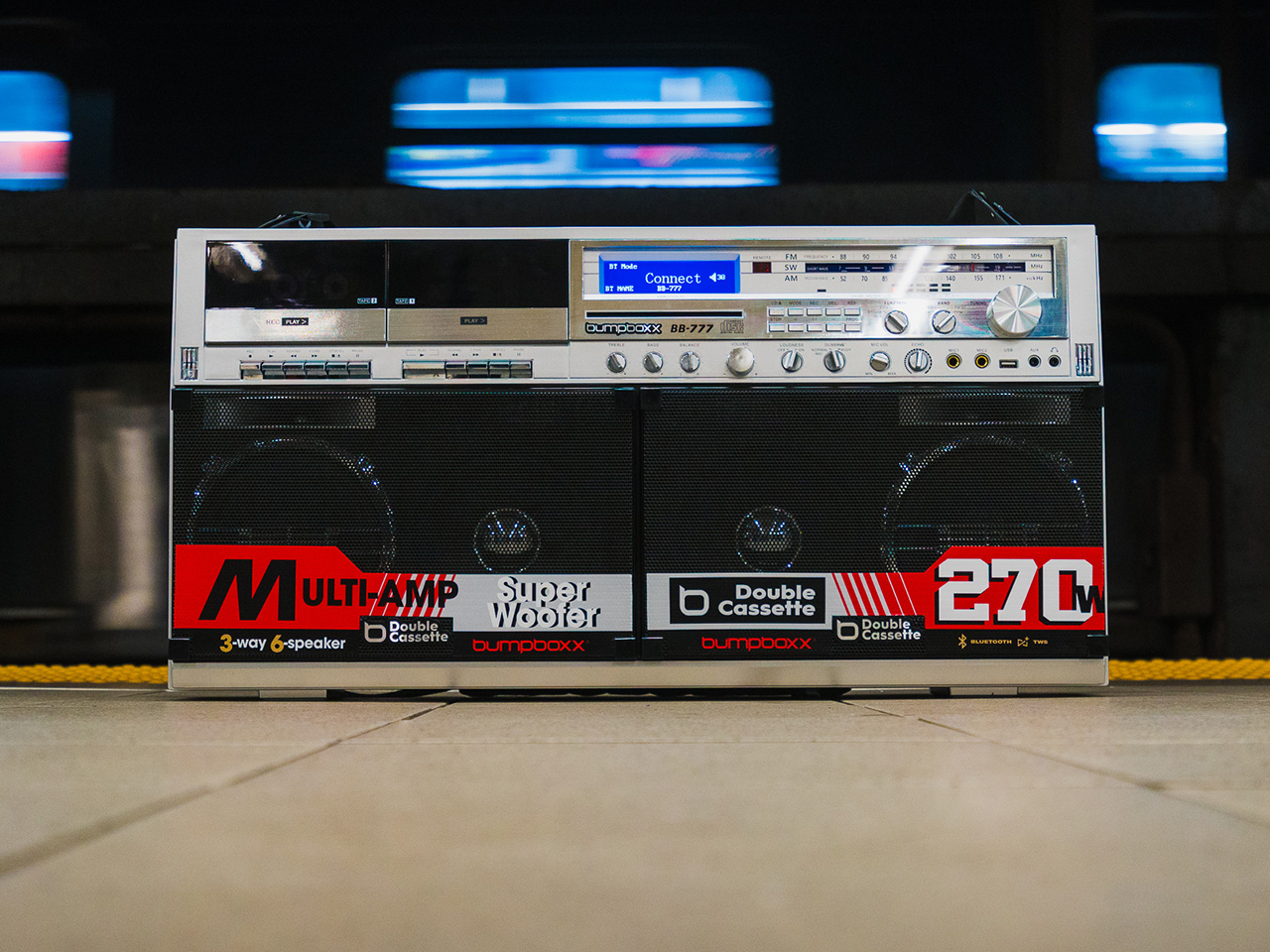
The BB-777 from Bumpboxx addresses that shift in a very deliberate way. Inspired by the legendary GF-777 of the ’80s, it brings back the classic boombox in a form that captures the unmistakable look and feel of the original, while updating everything under the hood. It’s the kind of design that immediately signals its intent: put music back at the center of the room, loud and visible.

Designers: Rob Owens and Luis Maciel

Click Here to But Now: $649 $1049 ($400 off). Hurry, only 197/1100 left! Raised over $3.8 million.

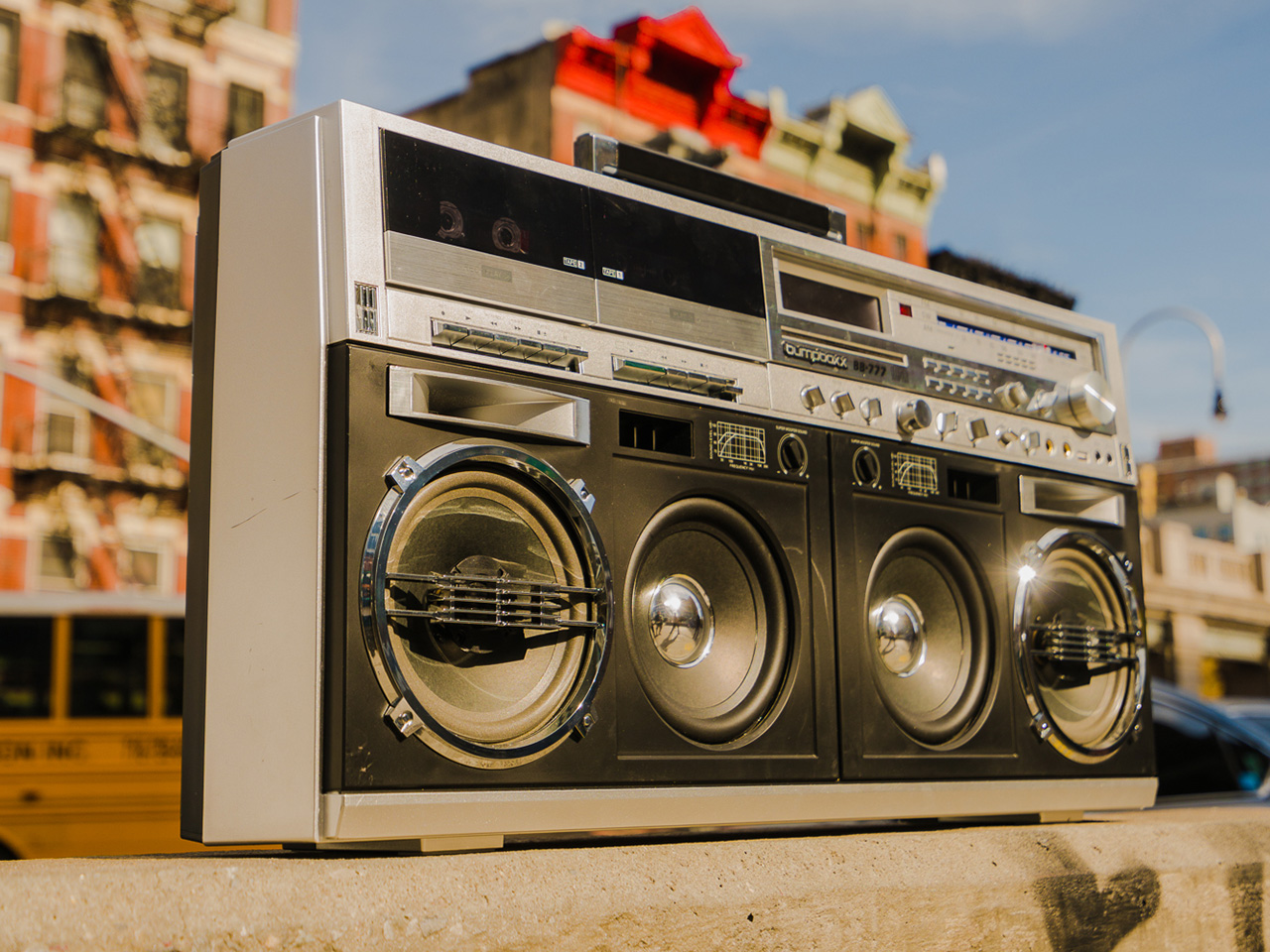
Part of what makes the BB-777 so compelling is just how much it commits to the aesthetic. The wide, horizontal body stretches 29.6 inches across, with dual cassette bays, a central control section, a long analog tuner strip, and four large drivers across the lower half. Paired with two telescoping antennas and a carry handle, the whole thing stays true to the iconic boombox design of the ’80s, built to be seen, not tucked away.

What really sets the experience apart, though, is how it feels to operate. Bass, treble, balance, and master volume are shaped through solid knobs that respond instantly, giving a direct connection to the music. Each adjustment is tactile and precise, bringing back the simple satisfaction of tuning sound with real hardware. There’s also a wireless remote for those moments when you’d rather adjust the sound from across the room without getting up from wherever you’ve settled in.

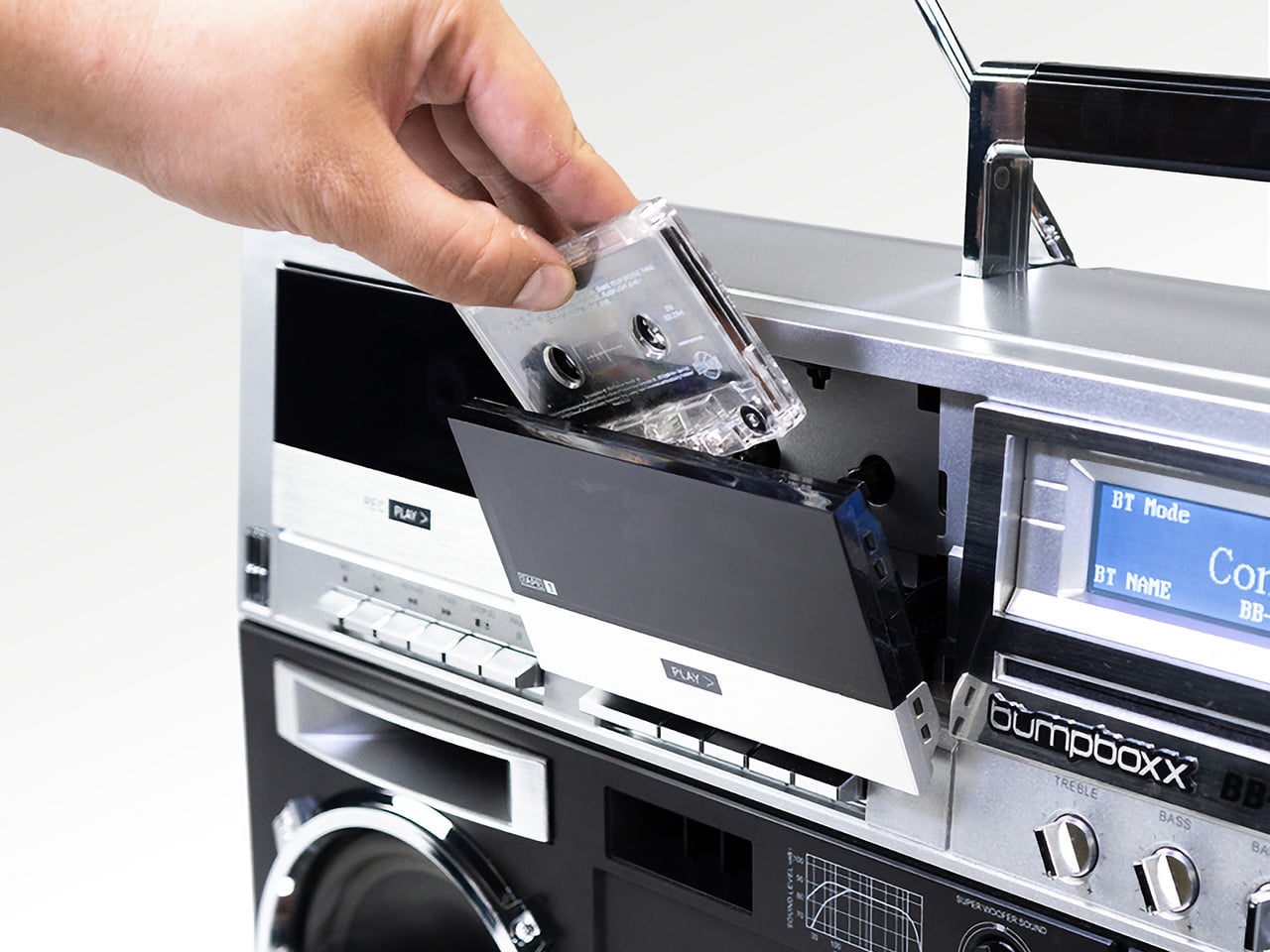
Then there’s the format support, and it’s where the BB-777 truly stands apart from other retro-styled speakers. It plays dual cassette tapes, loads CDs, tunes the radio, and connects via AUX, USB, or Bluetooth. It also handles CD-R and CD-RW discs, AM, FM, FM stereo, and shortwave radio. Old mixtapes, burned discs, streamed playlists, and radio stations all coexist in one machine without any compromise.

Beyond playback, the BB-777 brings old recordings back to life. Audio from cassettes, CDs, or radio can be recorded directly to a USB drive as clean WAV files, turning a retro boombox into a straightforward way to digitize your favorite recordings. The cassette deck supports cassette-to-cassette dubbing at high speed, and a built-in microphone with dual wired mic inputs and echo and volume controls means it handles voice recordings and live sessions just as comfortably.

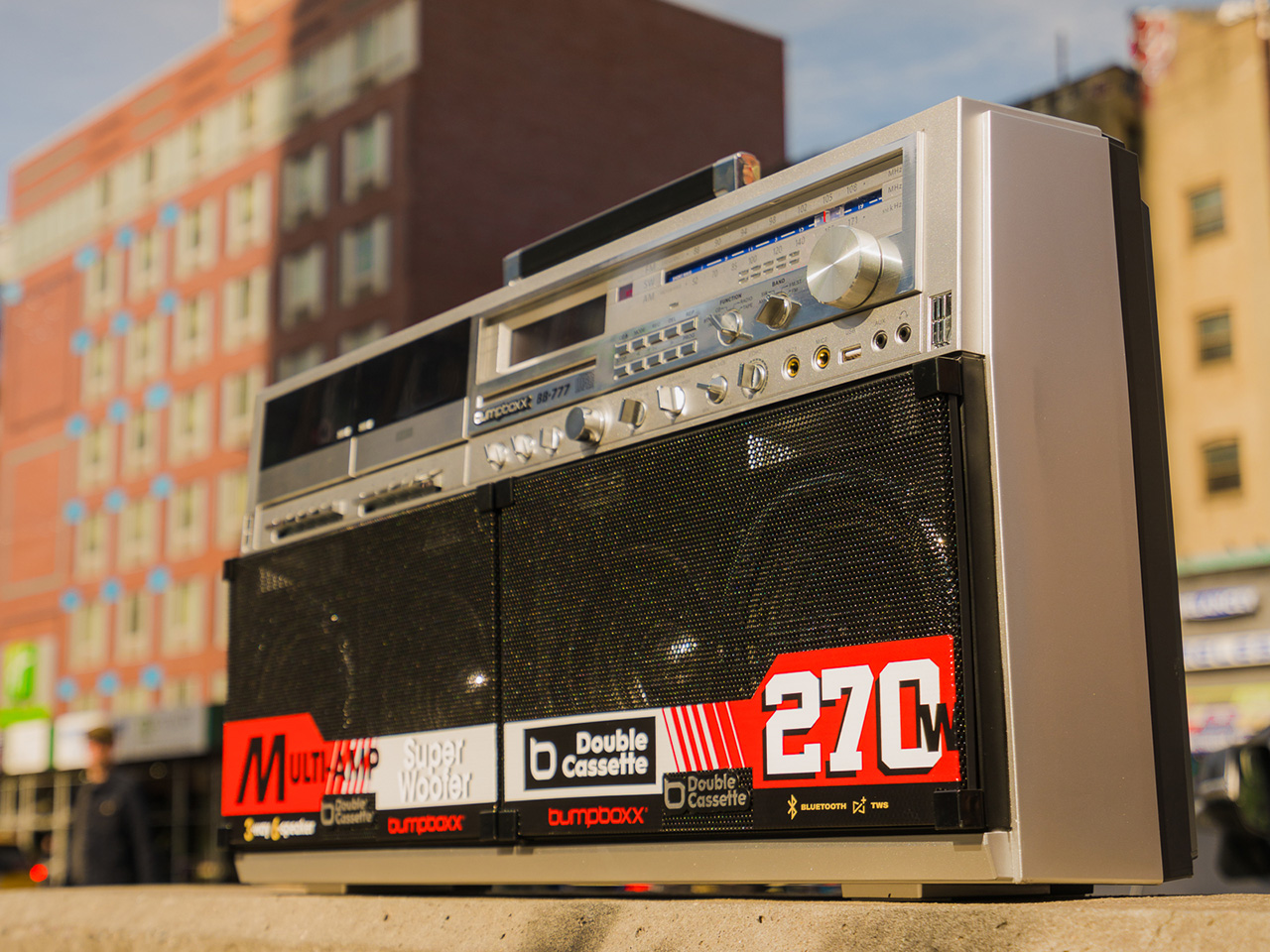
Of course, the sound system is equally serious and modern. Inside the wide enclosure sits a 270W system built for bold, room-filling audio, with a 3-way setup featuring dedicated isolated woofers, full-range drivers, and horn tweeters delivering deep bass, clear mids, and sharp highs. The internally chambered housing with bass ports and a fan-cooled amplifier round out an acoustic architecture built for real performance. The low end carries genuine weight, and the highs cut through cleanly.

Running all of that for up to 15 hours is a TSA-approved 97.6 Wh Li-ion rechargeable and interchangeable battery pack. With a 4-to-6-hour recharge window and 100 to 240V multi-voltage input, the battery can be charged either inside the unit or separately, and keeping a spare means the music never has to stop. It’s a smart upgrade from vintage boomboxes, which drained stacks of D batteries far faster than anyone expected.

For those wanting a bigger setup, two BB-777 units can be paired via TWS for true stereo sound, with dedicated left and right channels working together for deeper, more immersive audio across every format. The 100 to 240V AC input makes it ready for use almost anywhere in the world, with no voltage converters needed. It comes in Classic Silver, Radical Red, and Onyx Black, with removable magnetic front grills and a shoulder strap included.

What the BB-777 ultimately offers is something most audio products stopped trying to give people a long time ago: the feeling that music occupies real space. It sits in a room with a presence that commands attention, rewards the people who use it with a physical connection, and carries enough history in its silhouette to feel like it genuinely belongs to culture, not just a shelf.

Click Here to But Now: $649 $1049 ($400 off). Hurry, only 197/1100 left! Raised over $3.8 million.

The post Bumpboxx BB-777 Plays Cassettes, CDs, Radio, and Bluetooth at 270W first appeared on Yanko Design.

Gen Z Is Obsessed With These 5 Cassette-Era Gadgets & They Just Got a Full Design Upgrade for 2026

Something shifted in how people want to listen to music. Streaming gave everyone access to everything, and somewhere in that abundance, the experience got thinner. You stopped owning albums. You stopped reading liner notes or staring at cover art while the opening track played. The playlist just kept moving forward. That isn’t nostalgia talking. It’s a design problem, and one the cassette era solved without knowing it was solving anything.

The products worth paying attention to in 2026 absorbed the analog era’s lessons and built something genuinely new from them — better components, better battery life, cleaner construction. Cassette-era warmth, fully reengineered for a world that also has Bluetooth and USB-C. From a $49 speaker shaped exactly like a real mixtape to a 104-watt boombox covered by WIRED and Forbes at launch, each one makes a specific case for listening differently.

1. Side A Cassette Speaker

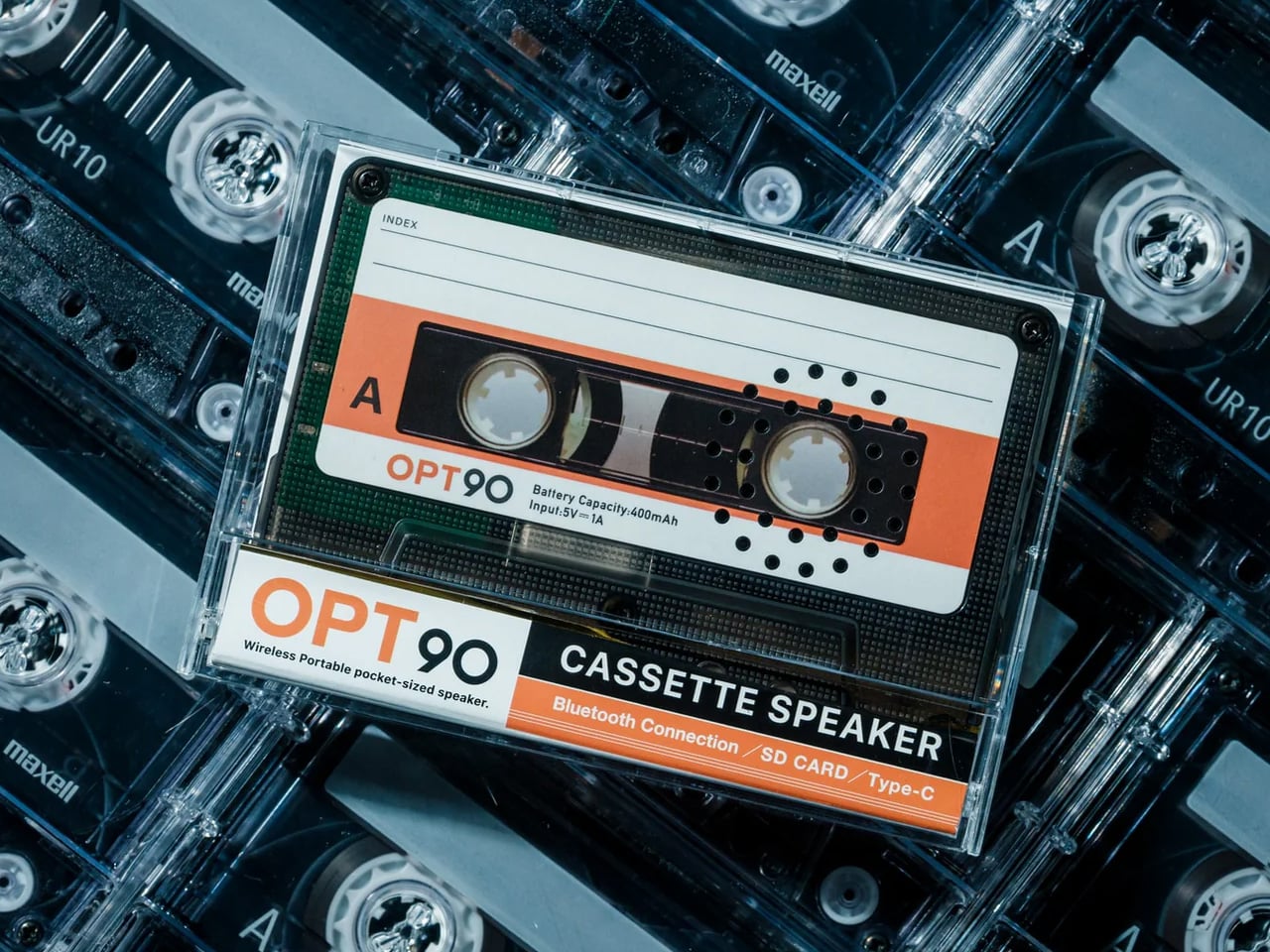
The cassette tape was always more than a format. It was an object you labeled by hand, kept in a glove compartment, or assembled specifically for someone who needed to hear certain songs in a certain order. The Side A Cassette Speaker takes that intimacy and wraps it around a Bluetooth speaker that earns a second look before it plays a note. Shaped faithfully like a real mixtape, transparent shell and Side A label intact, it sits in its clear case-turned-stand like a relic that also connects to your phone. At $49, it is the most honest nostalgia product in this category right now, because it commits to the premise completely rather than gesturing at it from a polite distance.

What keeps it practical day to day is how little it demands from you. Bluetooth 5.3 handles pairing, a microSD slot covers offline listening, and at 80 grams, it disappears into a jacket pocket without thought. Battery life runs six hours at maximum volume, and a full recharge takes two, which means it soundtracks a full workday and refuels overnight. The sound is tuned warm, which suits the object better than raw precision ever could. For anyone who spent time making mixtapes, or anyone who didn’t but understands why people did, this is the version of that feeling you can carry and actually hear in 2026 rather than only remember.

Click Here to Buy Now: $49.00

What We Like

  • Cassette-faithful design works as a display piece when it isn’t playing
  • Bluetooth 5.3 and a microSD slot give you two reliable ways to listen

What We Dislike

  • A single-driver setup won’t satisfy anyone looking for real volume or full-range sound
  • Only three units available at the time of writing

2. RetroWave 7-in-1 Radio

The boombox era was about more than cassette decks. It was about radios you could carry anywhere, tuning dials you could feel through your fingers, and sound that filled a room without asking permission first. The RetroWave 7-in-1 Radio captures that in a compact, Japanese-inspired frame. The tactile tuning dial, the warm retro casing, and AM/FM/shortwave reception give it the presence of something lifted from a 1984 shelf. It also streams Bluetooth, plays MP3s from USB or microSD, runs an LED flashlight, an SOS alarm, a hand-crank and solar charging, and a 2000mAh power bank that charges other devices when yours runs low. Seven functions in one object, packaged inside something that earns its place on a shelf every single day.

The seven functions working together are where the RetroWave earns its position in a 2026 home rather than a nostalgia market. Daily desk companion and off-grid emergency tool are roles that typically live in completely separate product categories, and the RetroWave collapses them into one object without obvious compromise on either side. The battery delivers up to 20 hours of radio time on a single charge. Solar and hand-crank inputs keep it running when the grid fails or the trail goes deeper than expected. At $89, it solves problems you haven’t had yet while looking precisely right sitting on a counter, a shelf, or inside a go-bag. That specific combination is considerably harder to design than it appears.

Click Here to Buy Now: $89.00

What We Like

  • Seven functions cover daily listening, emergency power, and off-grid communication in one device
  • AM/FM/shortwave reception works without any internet connection

What We Dislike

  • 8W speaker output is modest for anyone expecting outdoor or large-space sound
  • Solar charging acts as backup only and cannot fully recharge the battery independently

3. FiiO Echo Mini (Snowsky)

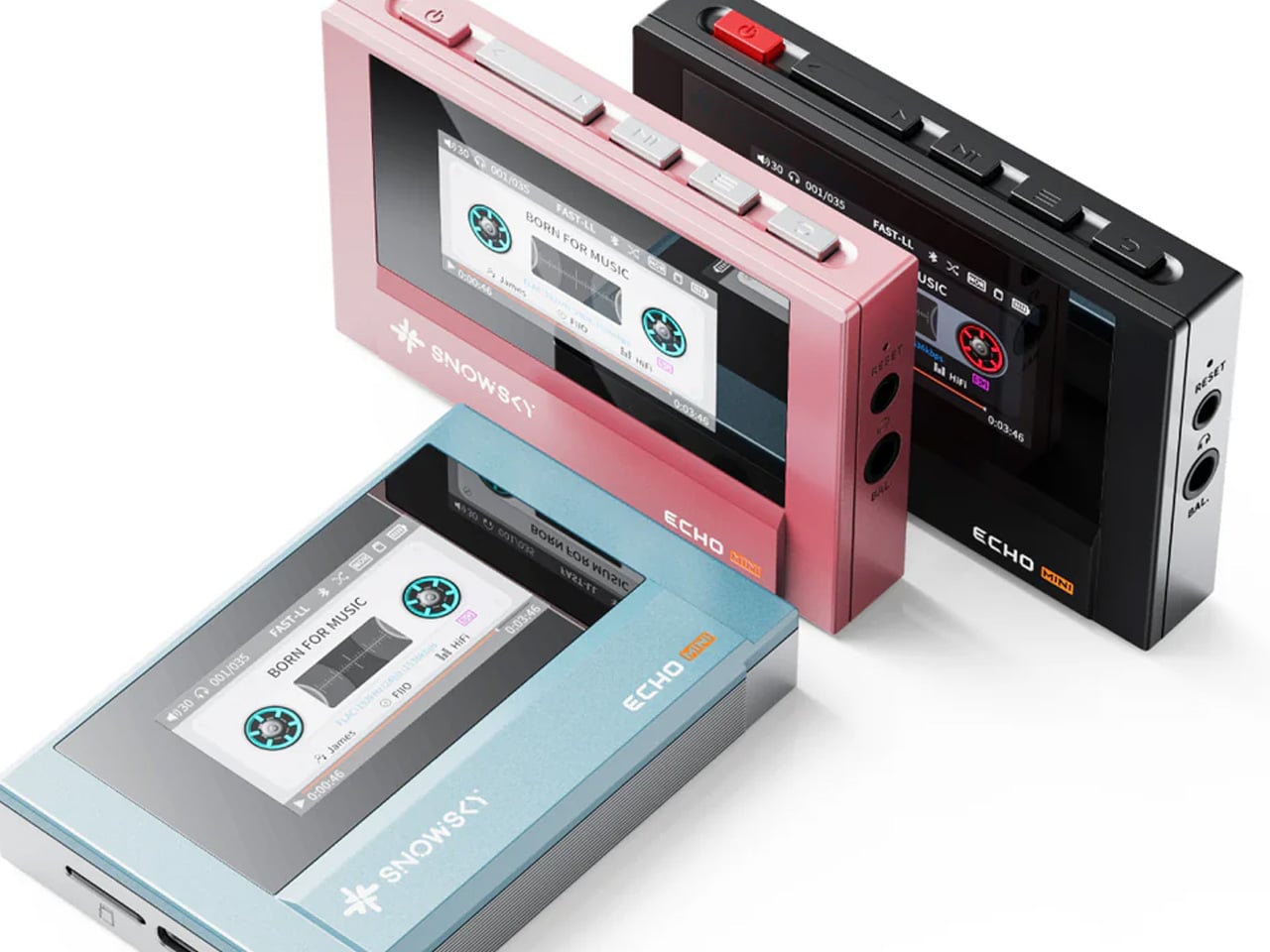
The Walkman moment was never really about audio quality. It was about having your music with you, completely yours, untouched by anyone else’s programming or curation. The FiiO Echo Mini, released under the Snowsky imprint, brings that feeling back in a form that looks exactly like a vintage cassette player from the outside and performs like a current hi-res audio device from the inside. Dual CS43131 DAC chips from Cirrus Logic handle the audio processing, earning it Hi-Res certification from the Japan Audio Society. The retro interface and cassette-player proportions are a direct reference to early Sony and Aiwa portables, down to the tactile controls and the way it sits in the palm of your hand.

Where the Echo Mini separates itself from the nostalgia-only tier is in what it can actually do for your listening. It supports FLAC, DSD, WAV, OGG, and other lossless formats, and accepts microSD cards up to 256GB, which means a library that would have filled an entire shelf of cassette cases in 1988 now fits in a slot smaller than your thumbnail. Dual headphone outputs and Bluetooth connectivity cover both wired and wireless listening from the same device. An independent power supply keeps the audio circuitry isolated from interference, which is the kind of engineering detail that doesn’t show up in the design but surfaces immediately in how it sounds. This is what a Walkman would have become if the engineers had forty more years to keep working on it.

What We Like

  • Dual DAC chips and Hi-Res certification deliver audio quality that the original Walkman never came close to
  • 256GB microSD support with multi-format lossless playback builds a serious portable library

What We Dislike

  • Playback-only with no recording function, which rules it out for anyone who wants to make tapes
  • The deliberate retro cassette aesthetic won’t suit every listener or every room

4. Retrospekt CP-81 Portable Cassette Player
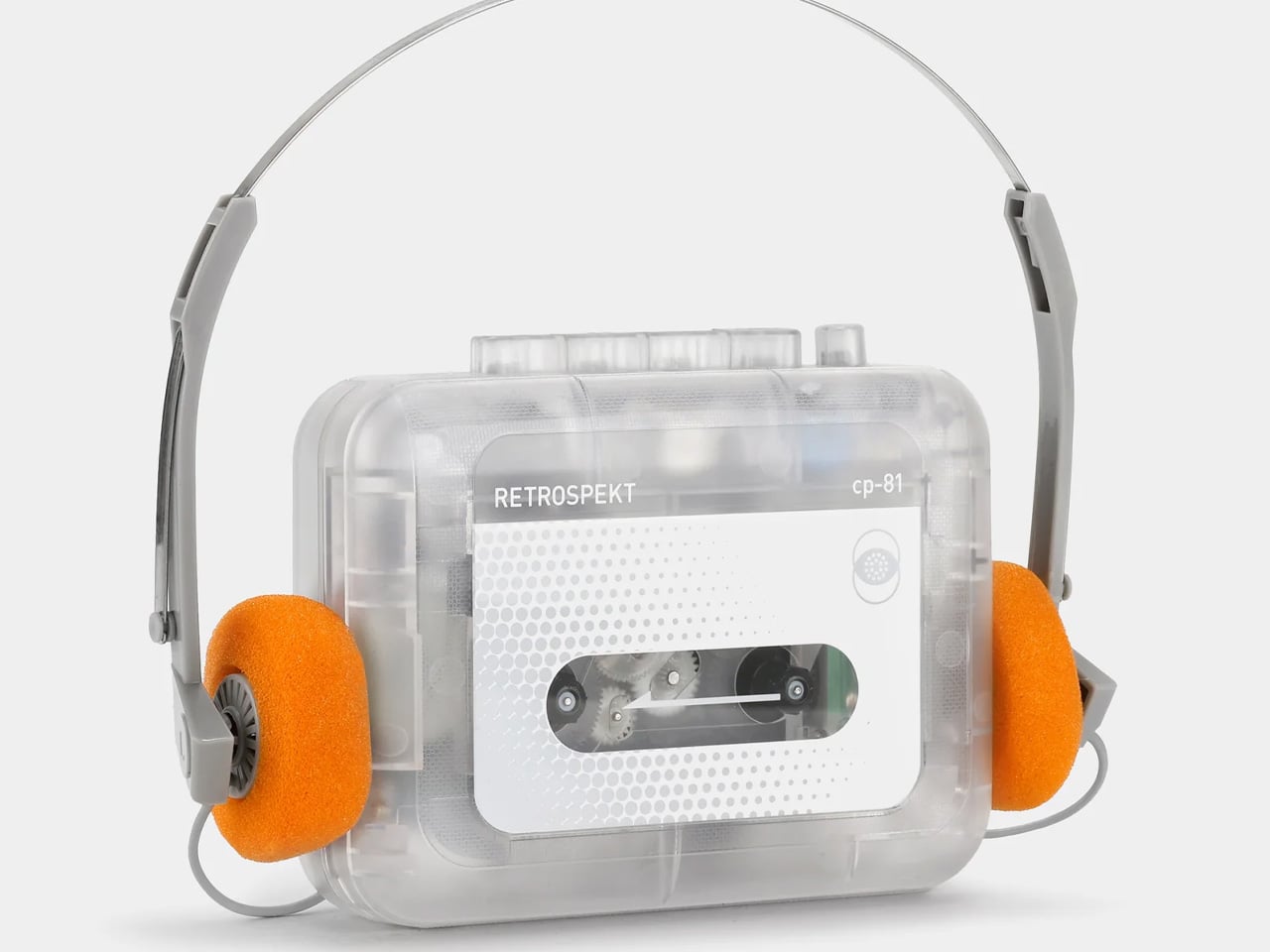
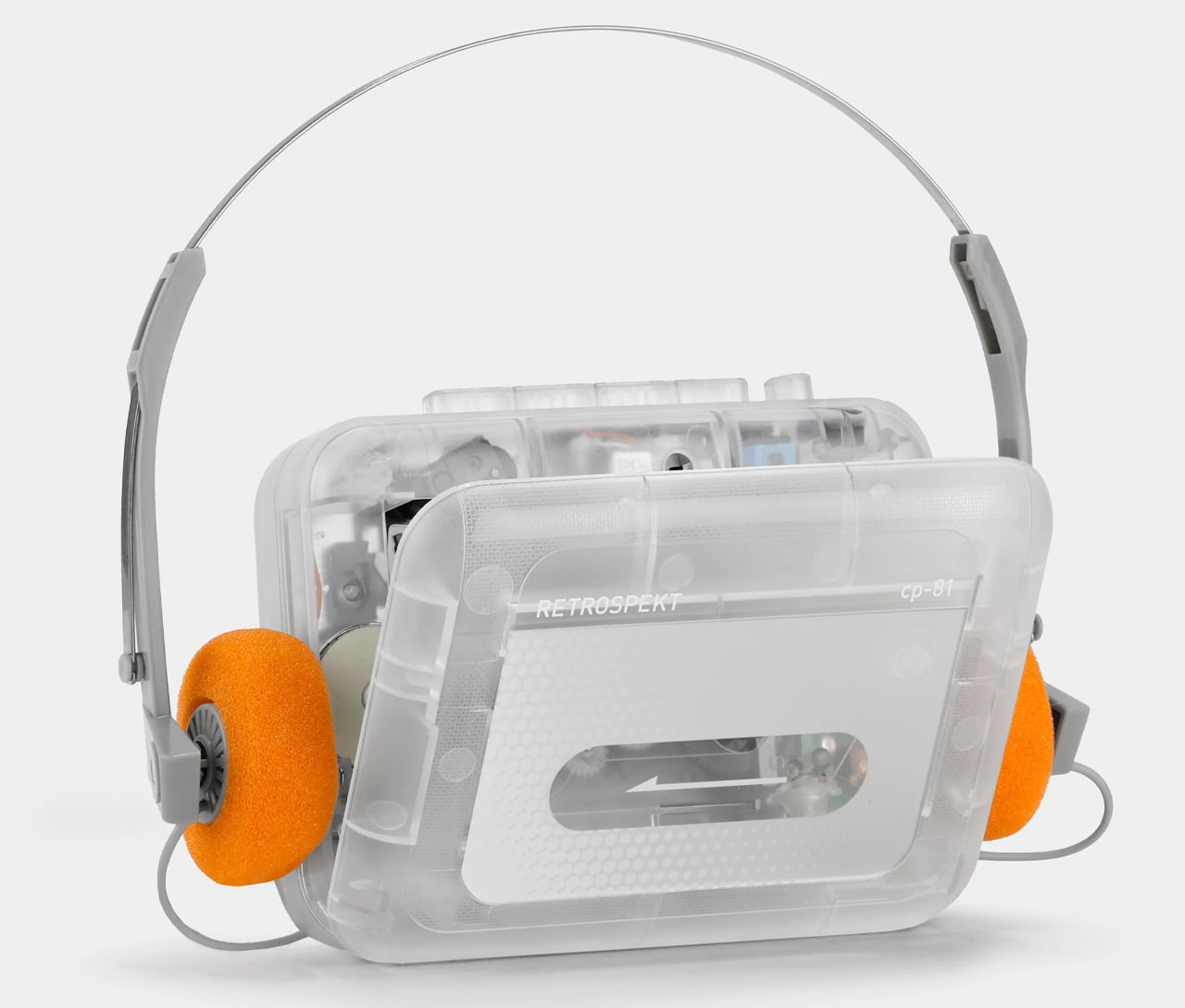
The CP-81 is the cassette player that stopped trying to be a hi-fi device and leaned fully into being a cultural artifact, and somehow that turned out to be exactly right. The clear plastic body shows the mechanism in full, the controls are exactly where you expect them, and the included RFH-01 headphones with their orange foam cushions make the whole package feel like something pulled from a very specific and beloved corner of 1983. Sold at MoMA Design Store, Nordstrom, and Urban Outfitters, it has collaboration editions with Miffy, Peanuts, and Hello Kitty that treat the cassette player as a canvas rather than just a device. It has 4.8 stars across 174 reviews, which is noteworthy.

What grounds it is that it actually works as a cassette player, not just as a shelf piece. The CP-81 plays, fast-forwards, rewinds, and records, with a line-in microphone jack that most modern cassette players quietly dropped from the spec sheet. Power comes from two AA batteries or a USB-C input, so it runs on whatever you have available. The people who buy it tend to keep it out on a desk rather than in a drawer. That’s partly the design doing its job, and partly because a cassette player that looks this considered, at this price, with this many ways to use it, is genuinely hard to put away.

What We Like

  • Records as well as plays, with a microphone jack that makes line-in recording straightforward
  • USB-C and AA battery power options mean it works wherever you need it to

What We Dislike

  • The clear plastic body shows every fingerprint, which matters more than it should for something this tactile
  • Collaboration editions sell out quickly, and availability varies across retailers

5. We Are Rewind Curtis Boombox GB-001
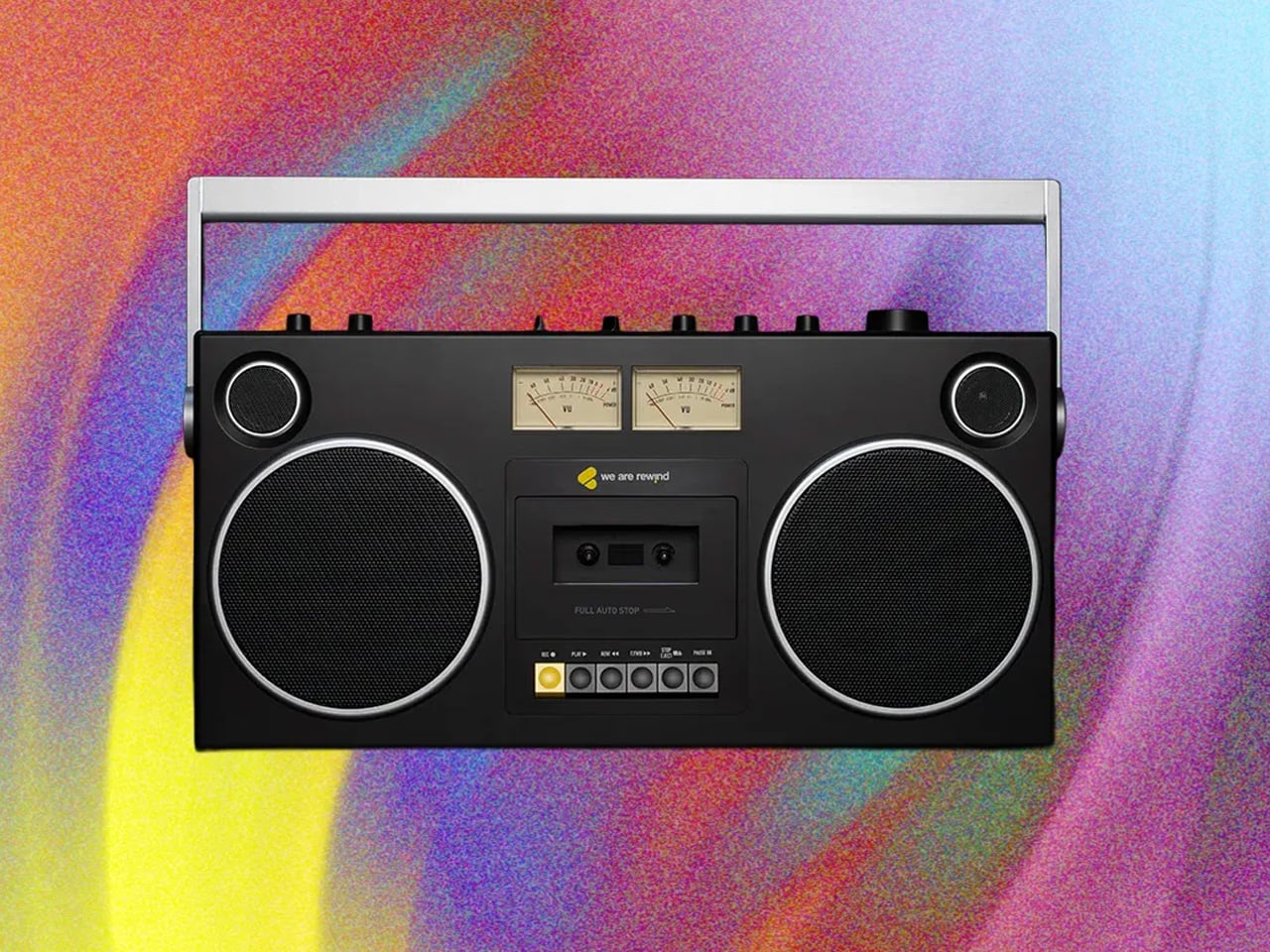
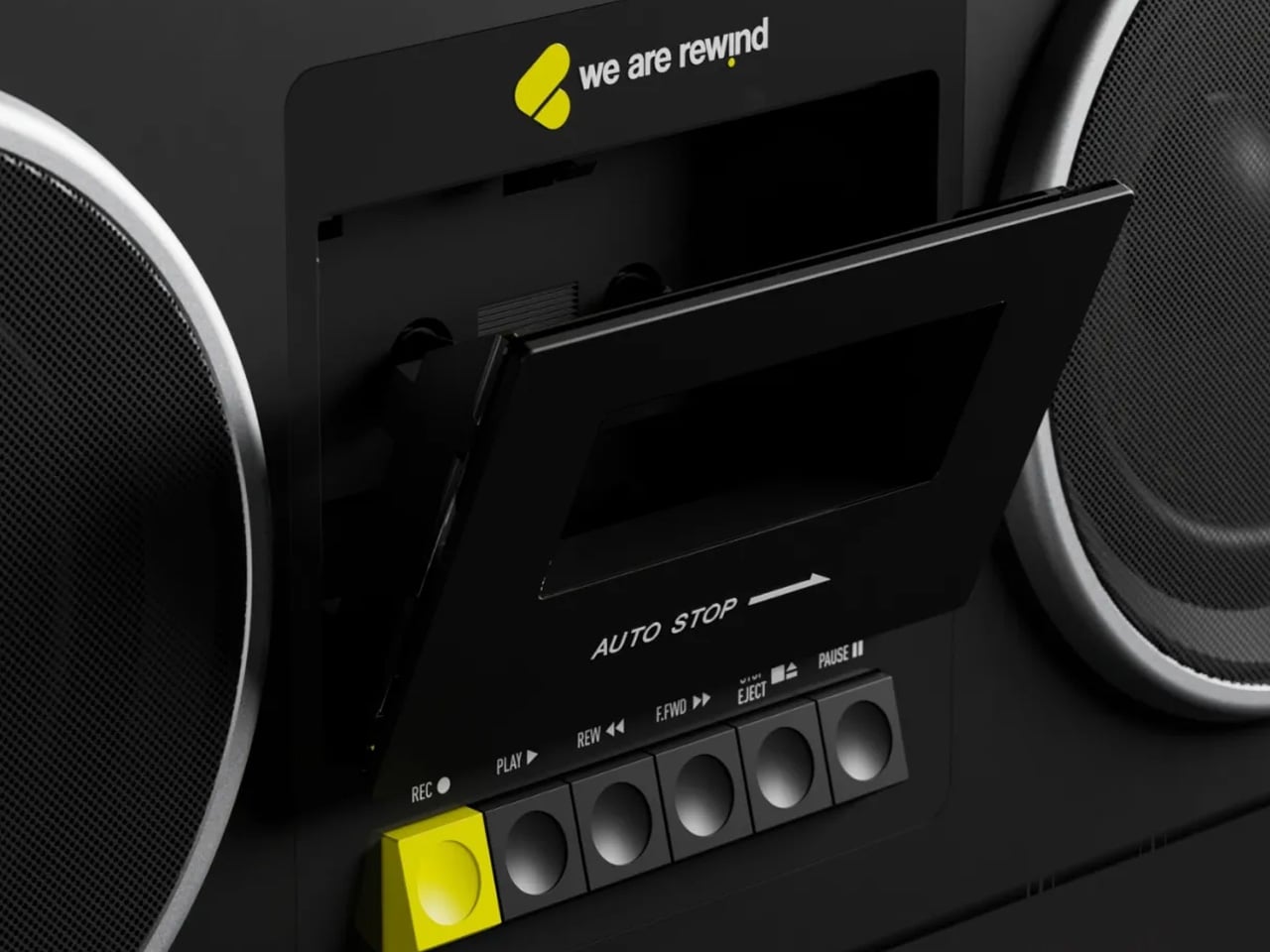
The boombox never fully disappeared. It got quieter, more compact, and less certain of what it was trying to be. The We Are Rewind Curtis GB-001 has none of that uncertainty. At 19 inches wide and 15 pounds, it is a proper boombox in the original meaning of the word: something you carry by its full-width folding handle and set down in a room that then belongs to the music. Four hi-fi speakers, two Class D woofer amplifiers, and two tweeters, push 104 watts across a frequency response of 40 to 20,000Hz. The cassette deck plays and records. The guitar amp input takes a real guitar. These are functional commitments, not marketing features, and they give the GB-001 the same confidence the original boombox had before the category forgot what it was for.

What lifts the GB-001 beyond a premium nostalgia product is how fully it commits to every part of the premise. Bluetooth 5.4 covers streaming when the tapes run out. The backlit VU meters — the detail WIRED noted immediately in its January 2026 review and the first thing every Gen X person in the room points out without being asked — are deliberately and gloriously analog. Forbes covered the North American launch the same week. Techmoan put it on camera in December 2025. The coverage it has earned reflects what the product actually is. At $579, this is the most serious purchase on this list, and also the most direct one: if you want a boombox that means it, this is the only new boombox in 2026 that does.

What We Like

  • 104 watts across four hi-fi speakers produces real, room-filling sound rather than novelty volume
  • Cassette recorder and guitar amp input make it a functional, creative instrument, not only a playback device

What We Dislike

  • At $579, the full value rewards buyers who use the cassette deck regularly, not just Bluetooth
  • Battery life has been flagged across multiple reviews as shorter than expected for a unit of this size and price

The Cassette Era Didn’t Come Back. It Came Back Better.

None of these products asks you to give up modern life for a feeling. The Side A speaker pairs over Bluetooth. The RetroWave runs 20 hours without a socket. The Echo Mini carries a full lossless library on a card smaller than a thumbnail. The CD Cover Player hangs on a wall. The Curtis boombox records. The best version of the cassette era is the one being made right now.

What makes each worth the attention isn’t nostalgia as a pitch. It’s the specific design decision behind each object. A speaker shaped like a tape because that was the only honest form. A radio that belongs in a go-bag as much as on a shelf. A CD player that brings the artwork along. These are for people who want music to feel like something. That instinct is now being answered.

The post Gen Z Is Obsessed With These 5 Cassette-Era Gadgets & They Just Got a Full Design Upgrade for 2026 first appeared on Yanko Design.
These $40-$299 Cassette Players Just Crushed Spotify’s Algorithm

Somewhere between the algorithmic playlists and the infinite scroll of recommended tracks, music stopped being something you held in your hands. Cassette tapes were declared dead more than two decades ago, buried under the weight of MP3s and then streaming services that promised every song ever recorded for a monthly fee. Search trends tell a different story now, though. Queries for “retro cassette player” have surged over 125% year-over-year, while “retro walkman cassette player” has exploded by more than 1,281% in the same period.

These numbers point to something more than a passing fad or a collector’s whim. Millennials and Gen Z listeners are actively seeking hardware that forces them to slow down, to choose an album rather than shuffle through ten thousand options. The cassette, with its fixed tracklist and physical limitations, turns listening into something deliberate again. Five modern cassette players have emerged to meet that demand, each one approaching the format from a wildly different design philosophy.

FiiO CP13

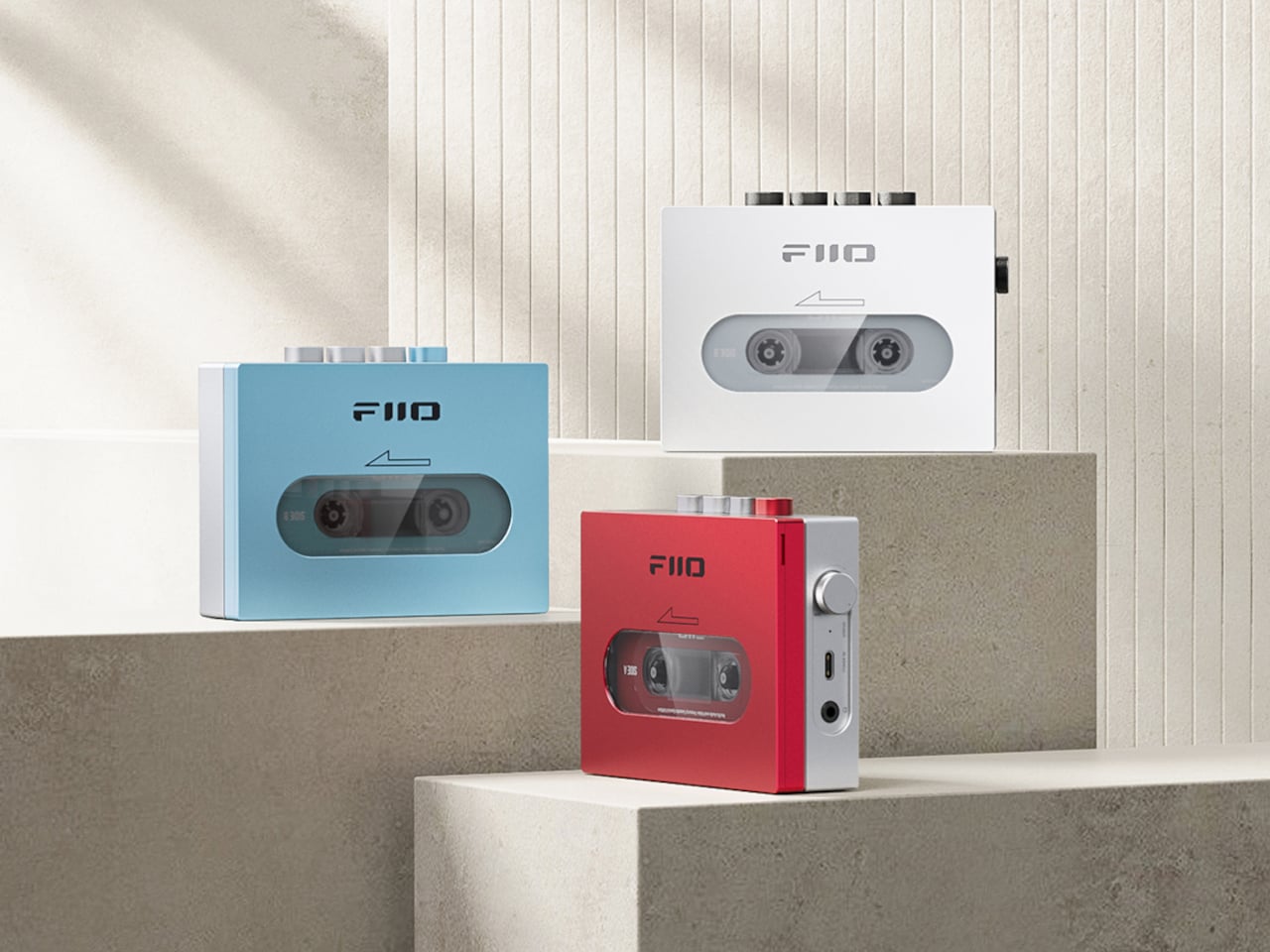
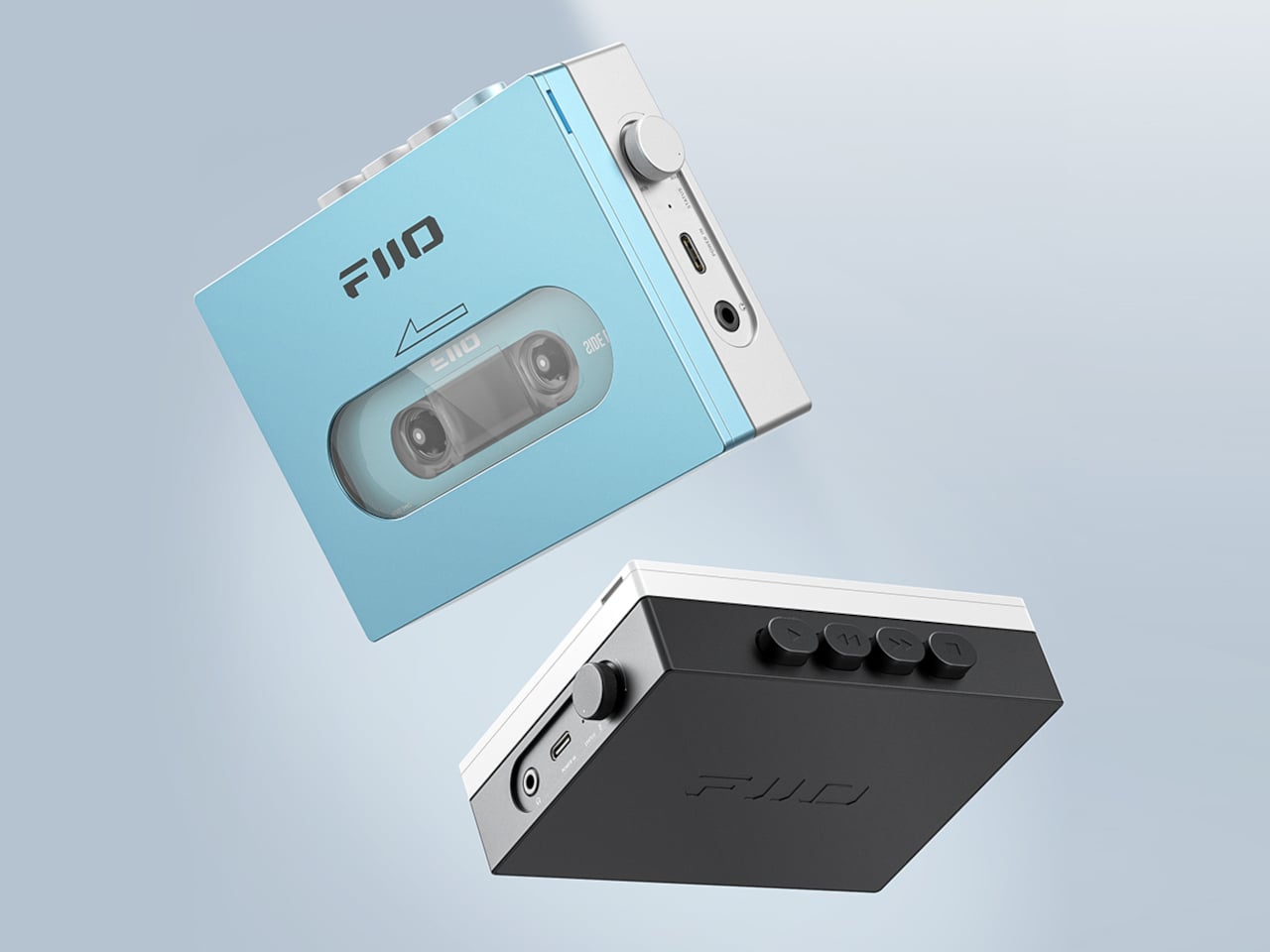
FiiO built its reputation on portable DACs and audiophile-grade headphone amplifiers, products where signal purity is the entire point. The CP13 carries that obsession into the cassette format with an all-analog signal path, from the magnetic tape head through a JRC5532 op-amp to the 3.5mm output. There is no digital conversion anywhere in the chain, no Bluetooth radio, no built-in speaker. The CP13 uses a motor with a high-voltage 4.2V power supply, paired with an oversized pure copper flywheel measuring 30.4mm in diameter.

Designer: FiiO

That flywheel is the quiet star of the CP13’s engineering. Thicker and heavier than standard components, it reduces wow and flutter to levels most modern cassette players cannot approach, keeping tape speed consistent enough for the analog signal to actually matter. The dual-color aluminum alloy chassis, available in sky blue, white and black, or red and silver, measures just 31.8mm thick. An 1800mAh lithium cobalt oxide battery delivers 13 hours of playback and charges through USB-C, though FiiO’s decision to support all tape types from Type I through Type IV suggests the company expects its buyers to own tapes worth caring about.

What we like

  • Oversized copper flywheel for low wow and flutter
  • Fully analog signal path with no digital conversion
  • Supports all cassette types (I through IV)

What we dislike

  • No Bluetooth output means wired headphones are the only option
  • No recording and auto-reverse functions,

We Are Rewind Edith

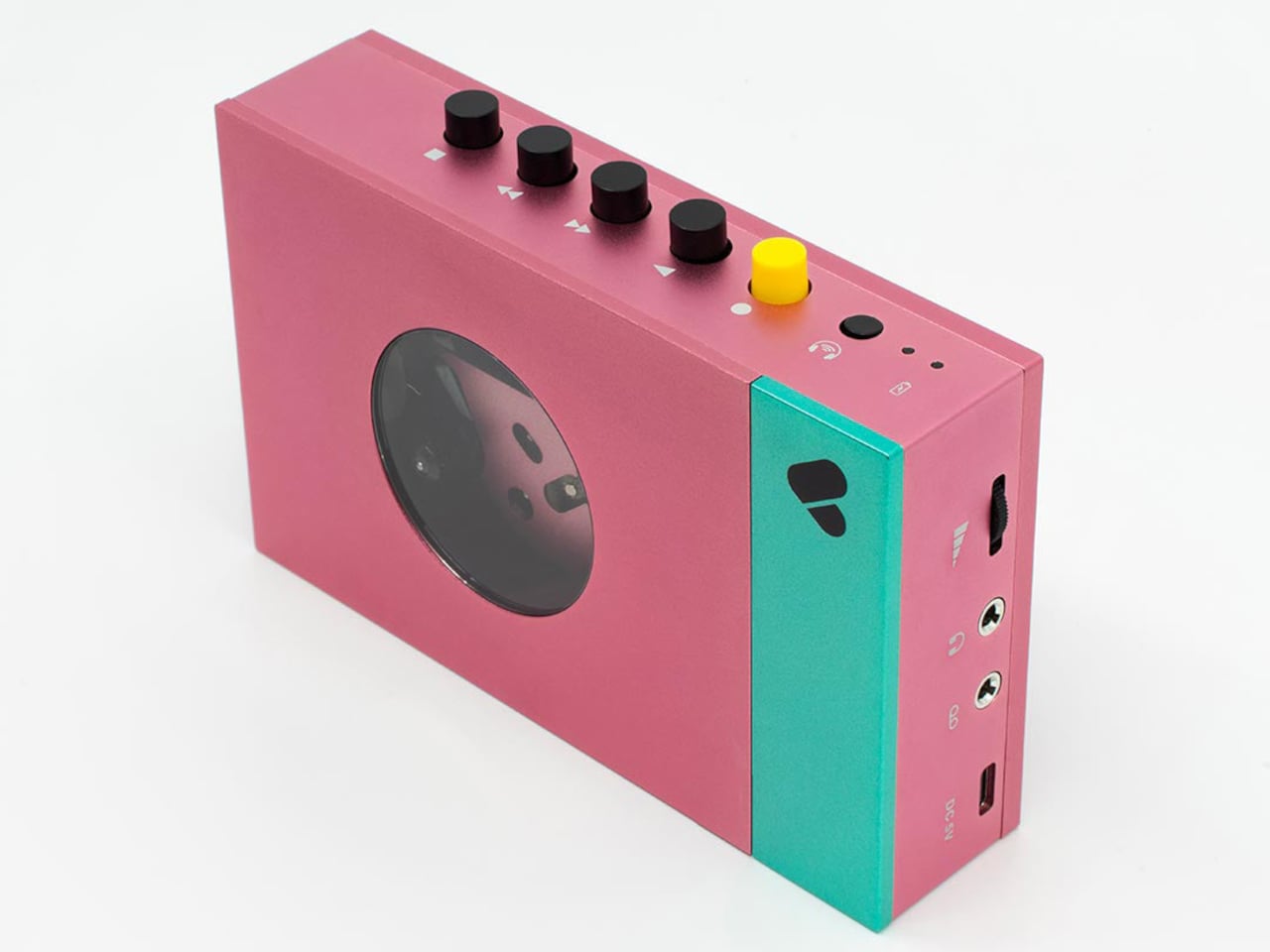
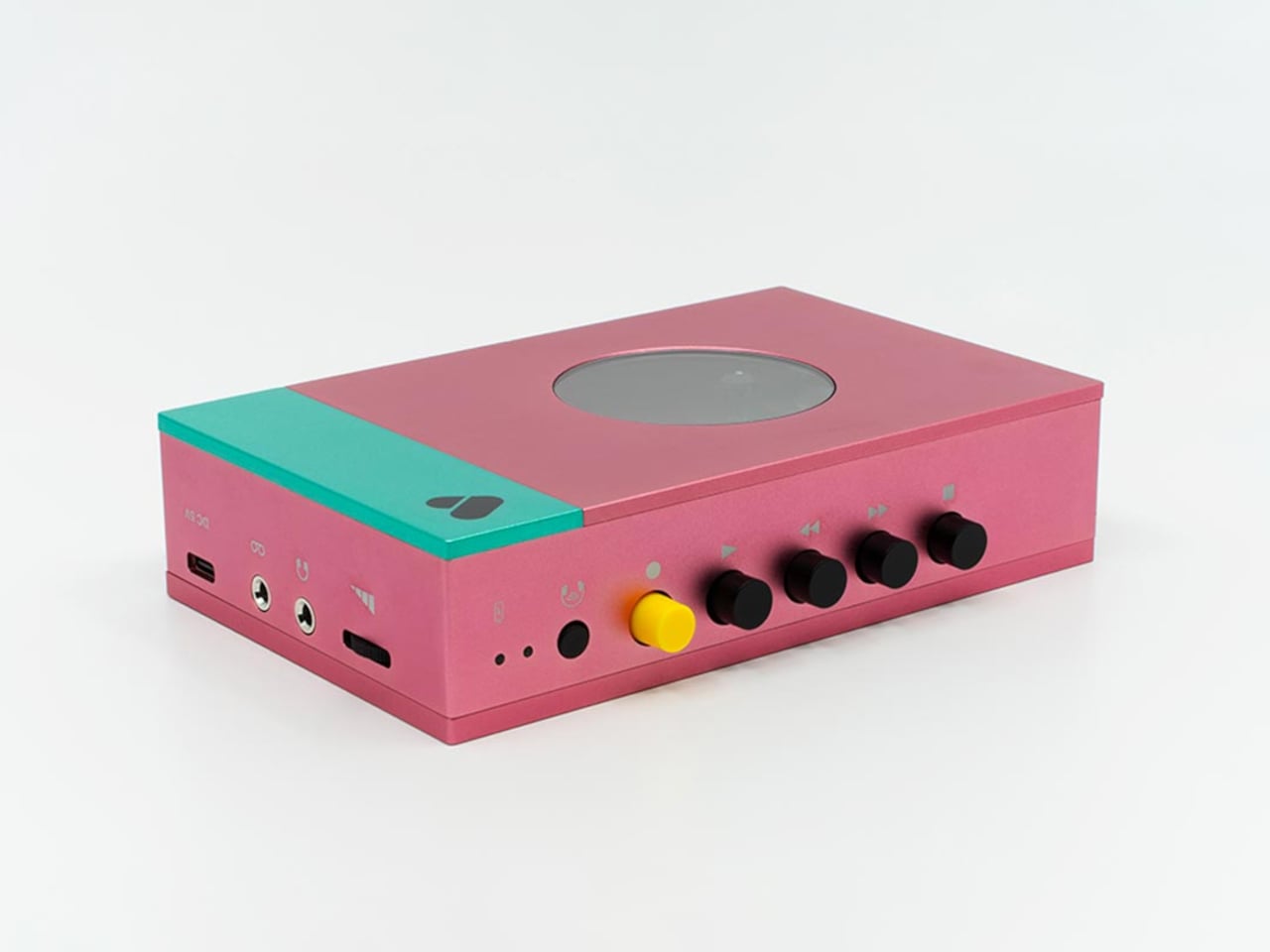
Where FiiO chases audio fidelity, the French brand We Are Rewind treats the cassette player as a cultural object first. The Edith, named after Edith Piaf, joins a lineup that already includes models named Kurt, Keith, and Serge, each one a color-coded tribute to a musician. The Edith arrives in a pink and green combination that reads less like consumer electronics and more like a fashion accessory, wrapped in an aluminum case that weighs 404 grams. That heft is deliberate. The brand explicitly references Sony’s original TPS-L2 Walkman as its design benchmark, choosing aluminum over plastic for what it describes as a “cool touch” quality.

Designer: We Are Rewind

Bluetooth 5.1 is the most visible concession to modernity, allowing wireless pairing with headphones and speakers. A built-in lithium-ion battery charges via USB-C and delivers roughly 10 to 12 hours of playback, replacing the disposable AA batteries that defined portable tape listening for decades. The Edith also records in stereo to Type I cassettes through its 3.5mm jack, and ships with a manual tape rewind pencil, a small wink to the analog rituals that streaming services have no equivalent for.

What we like

  • Aluminum case construction gives the player a premium tactile quality, making it feel like an object worth displaying
  • Bluetooth 5.1 and USB-C charging
  • Stereo recording capability through the 3.5mm jack preserves the mixtape tradition

What we dislike

  • The DC motor transport produces more wow and flutter than belt-driven alternatives
  • At 404 grams, the Edith is too heavy and too large for most pockets

NINM Lab IT’S OK TOO

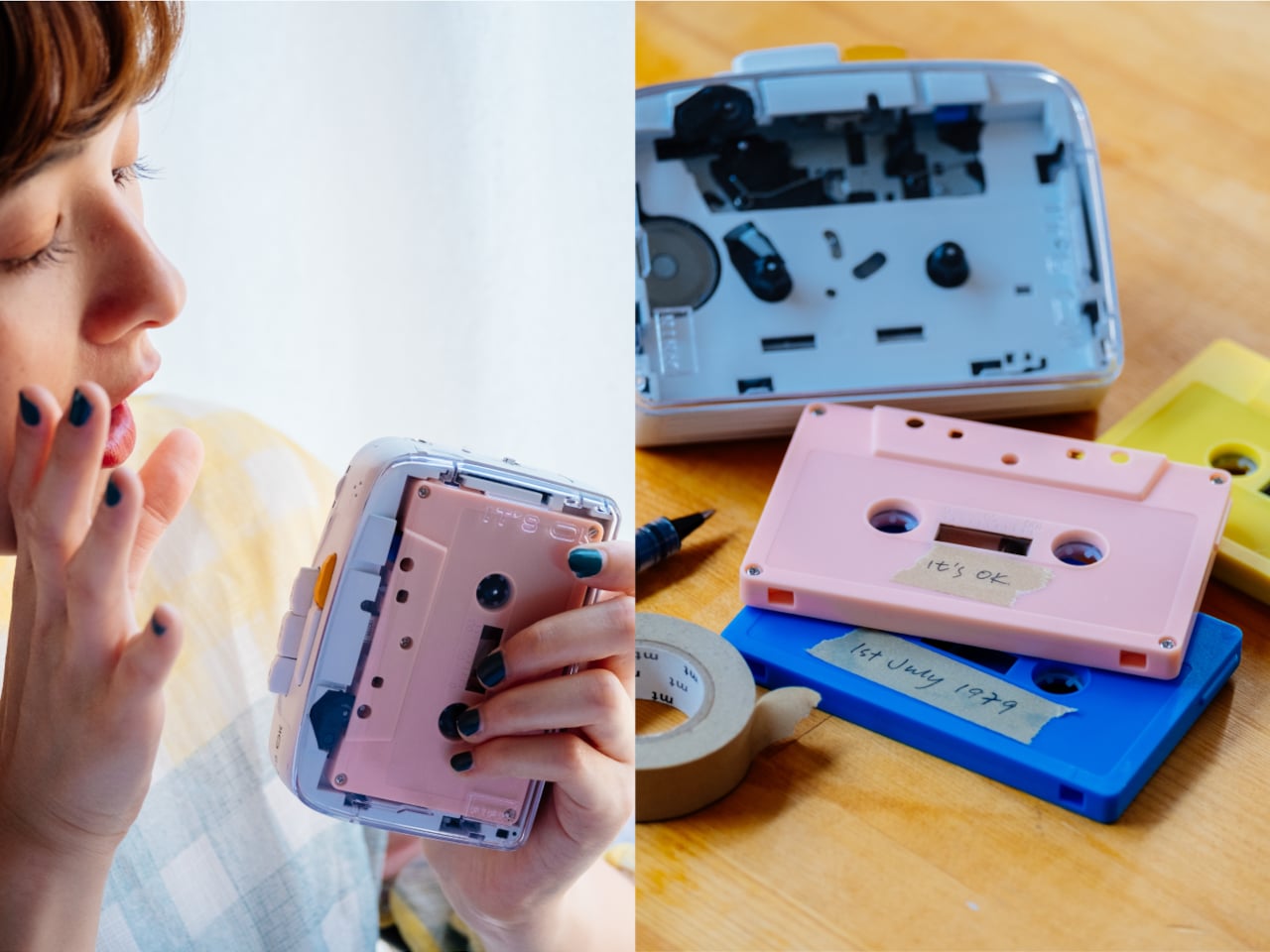
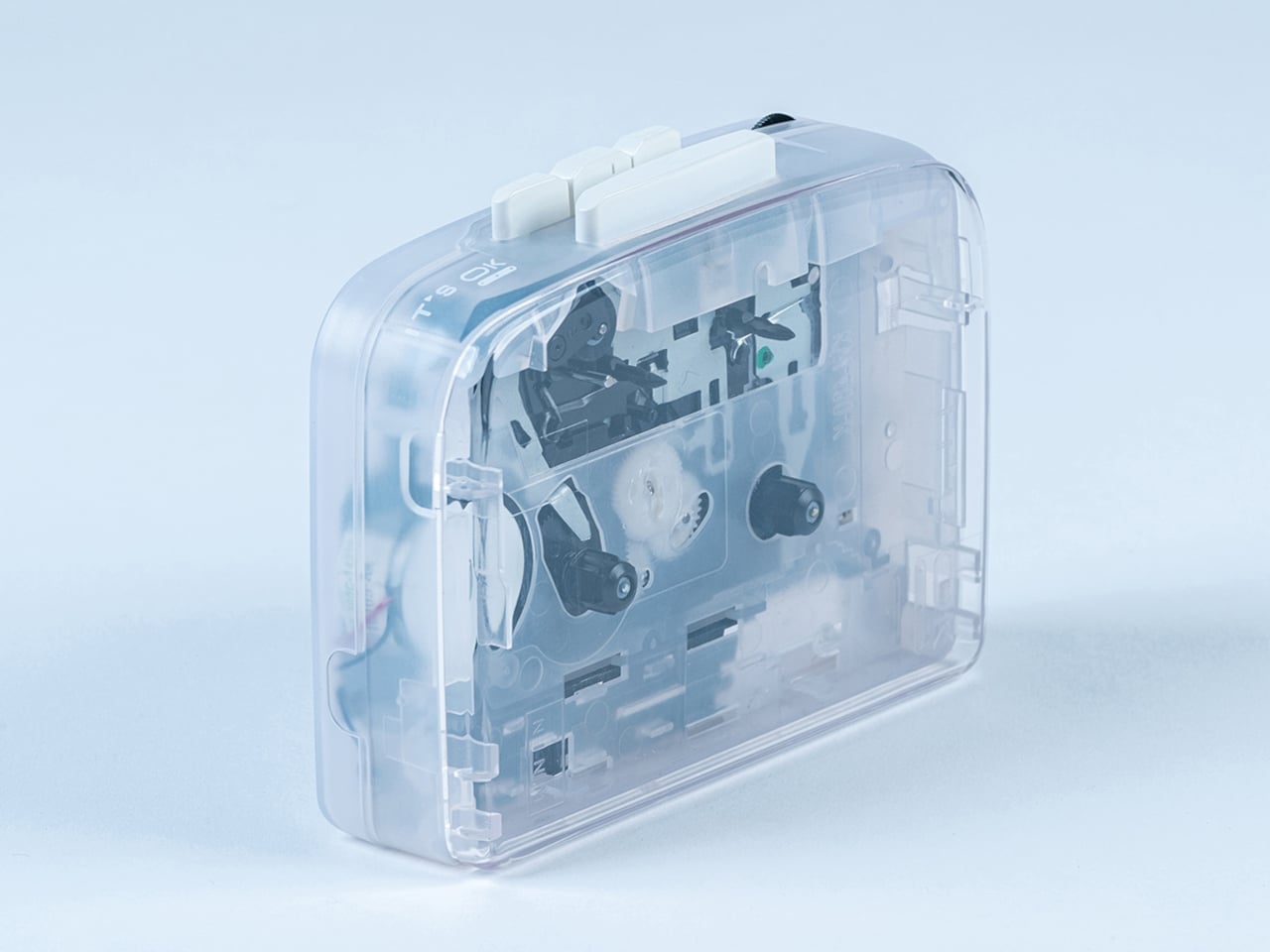
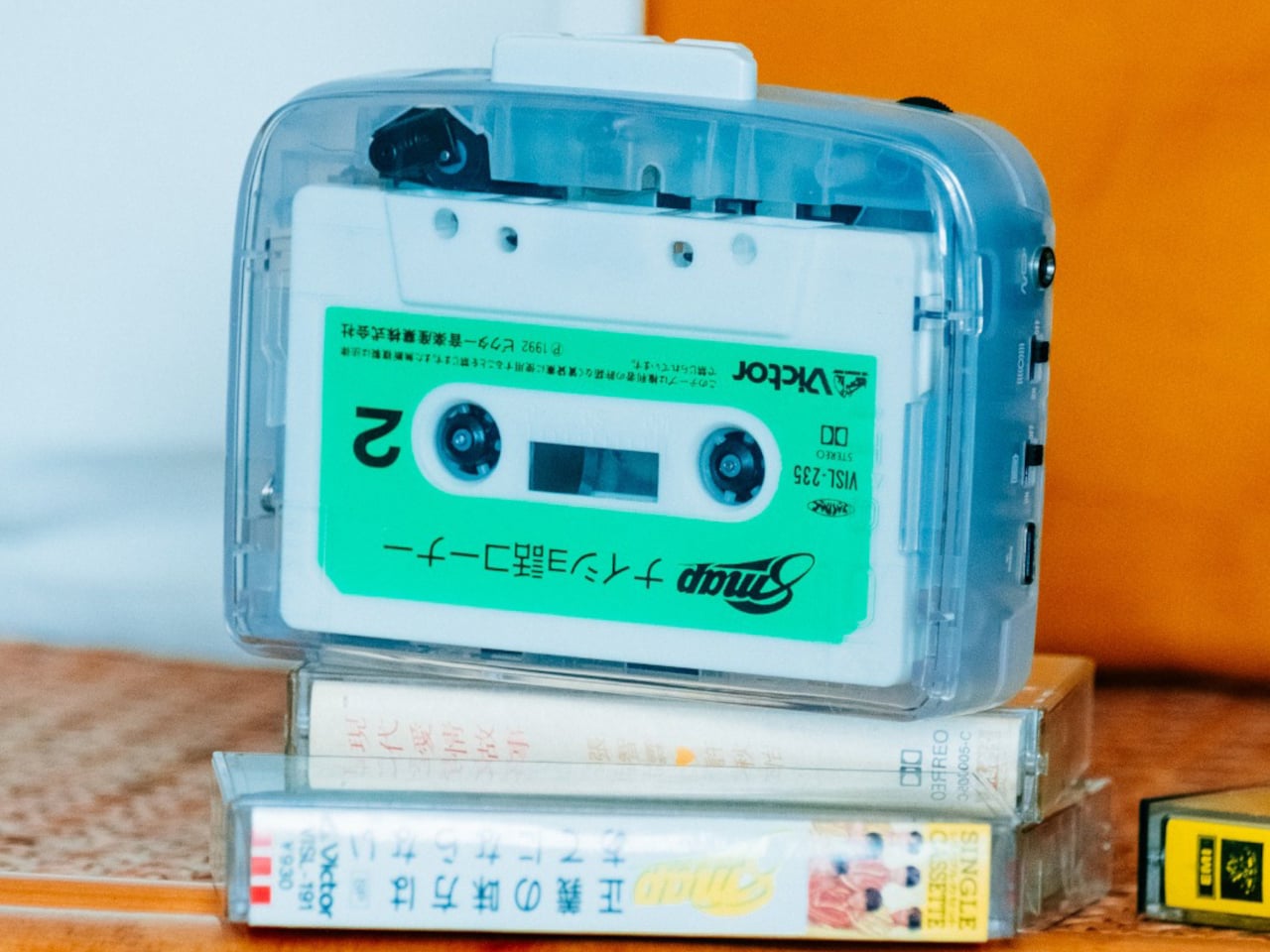
Taiwanese design studio NINM Lab launched the original IT’S OK through Kickstarter in 2019, billing it as the first cassette player with Bluetooth capability. The second generation, IT’S OK TOO, upgrades that foundation with stereo output and a semi-transparent matte body that splits the difference between full transparency and solid color. The casing is ABS plastic and polyethylene, lightweight at approximately 152g. Push-button controls for play, stop, forward, and backward line the front edge, with a classic belt clip on the back.

Designer: NINM Lab

Power comes from two AA batteries or a USB-C supply (not charging the device itself, but powering it directly), with optional USB-C charging if you install rechargeable Ni-MH batteries. The transparent design is the real design statement here, exposing the tape mechanism so the spools become a visible, moving part of the experience. The IT’S OK TOO firmly positions itself as a lifestyle product for a younger demographic that may never have owned a cassette player before.

What we like

  • Transparent body turns the tape mechanism into a visual feature
  • Bluetooth 5.0 stereo output with 3.5mm jack

What we dislike

  • Only supports Type I cassettes
  • AA battery requirement with no built-in rechargeable cell

Victrola Mini Bluetooth Boombox

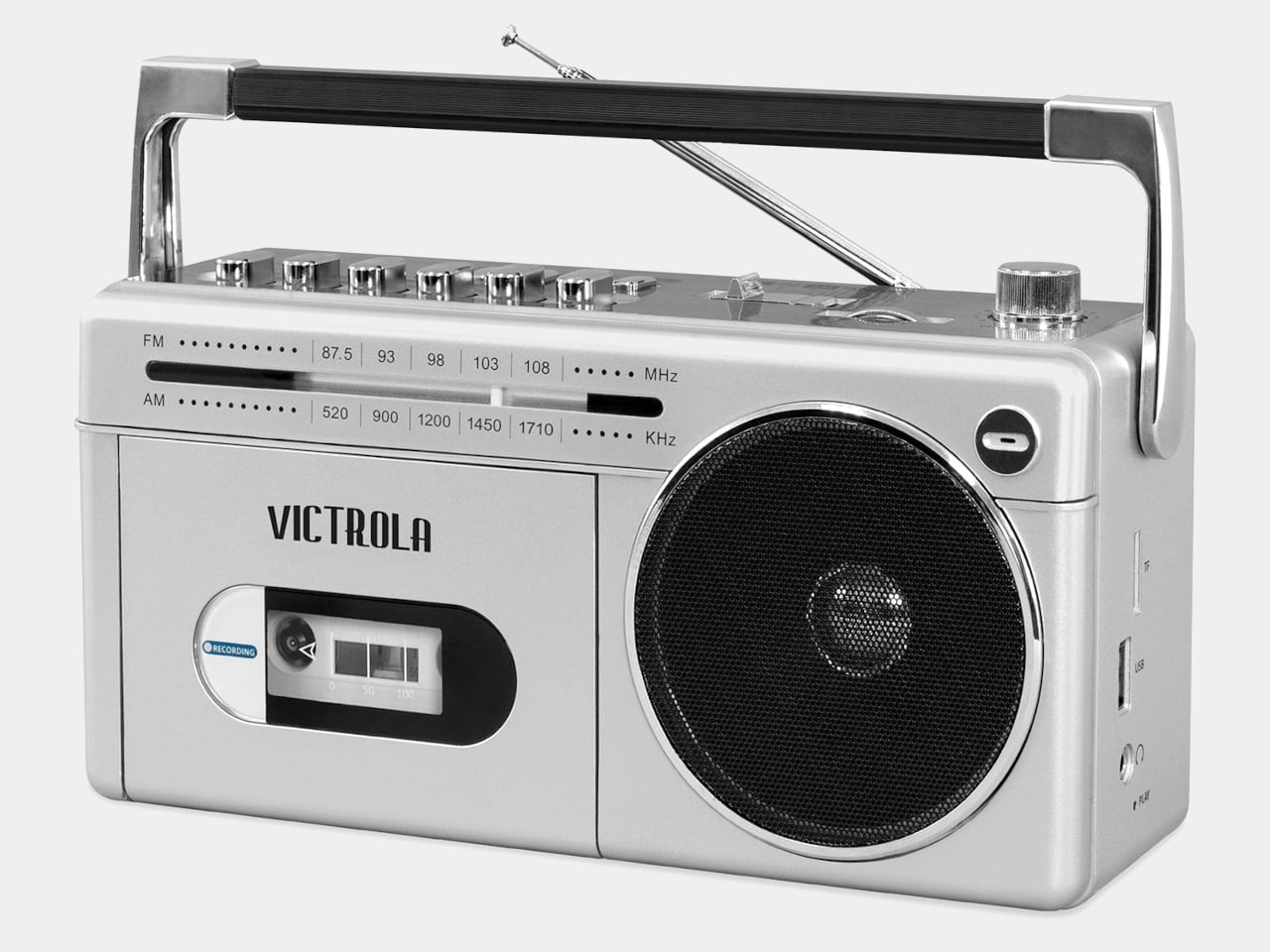
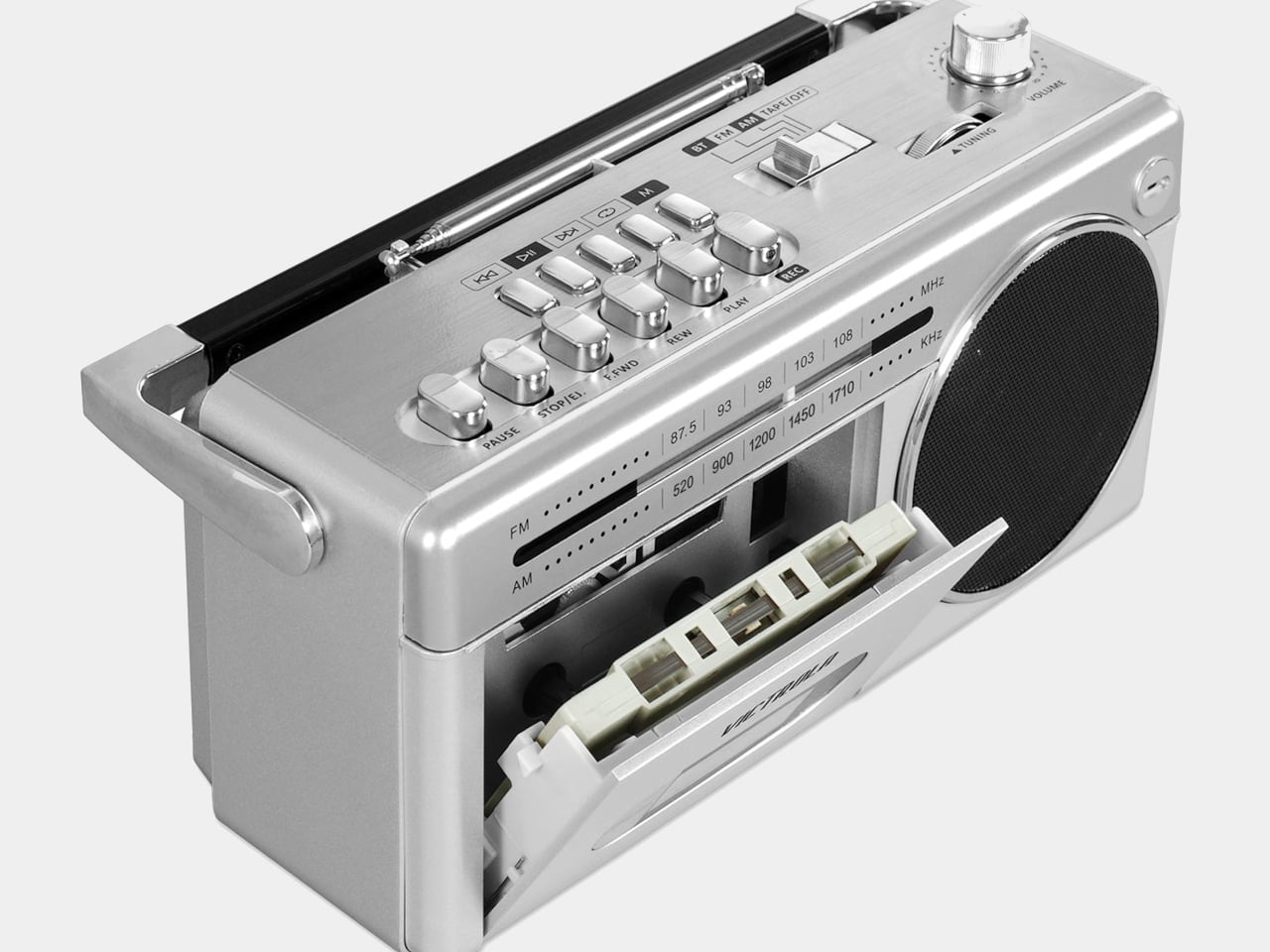
Victrola has made its name selling affordable turntables to people who want the ritual of vinyl without the investment of a serious hi-fi setup. The Mini Bluetooth Boombox applies that same philosophy to cassettes, packaging a tape player, tape recorder, AM/FM radio tuner, USB port for MP3 playback, and Bluetooth streaming into a hefty yet still portable box. It runs on AC power or batteries, comes in grey and silver colorways, and retails for under $40 at most outlets.

Designer: Victrola

The design is a scaled-down boombox archetype, complete with dual built-in speakers, an analog radio tuning dial, and a cassette door on the front. At this price point, audio fidelity is not the conversation. The Victrola is competing with cheap Bluetooth speakers, not with premium cassette players. Its recording function lets you capture audio directly to cassette through a built-in microphone, and the Bluetooth connectivity means it can serve as a wireless speaker for your phone. What the Victrola lacks in audio refinement, it compensates for in sheer versatility. No other player on this list gives you FM radio, Bluetooth reception, USB playback, and tape recording in one device.

What we like

  • The most versatile player on this list by a wide margin, combining cassette playback and recording, AM/FM radio, Bluetooth, and USB MP3 playback in a single compact unit
  • Sub-$40 pricing makes it the easiest entry point for anyone curious about cassettes but unwilling to commit to a premium device

What we dislike

  • Speaker quality and cassette playback fidelity are both budget-tier
  • Plastic construction and lightweight build feel disposable

Retrospekt Sony Walkman WM-F2015

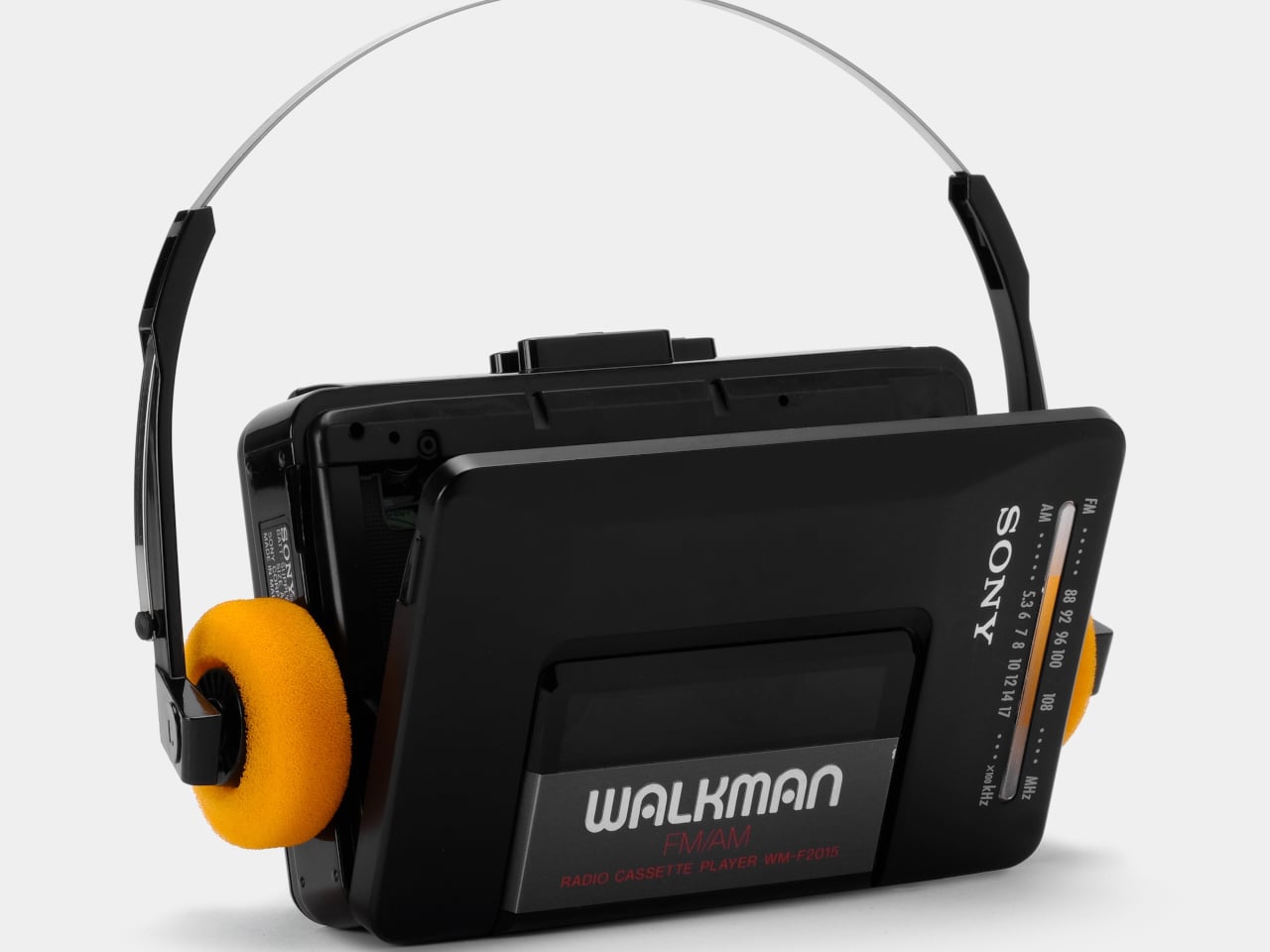
Every other player on this list is a modern product designed to evoke nostalgia. The Retrospekt Sony Walkman WM-F2015 is the actual artifact, a unit originally manufactured in 1990, disassembled by technicians in Milwaukee, and rebuilt with replaced drive belts, idler tires, and pinch wheels. The playback speed has been recalibrated, the volume potentiometer deoxidized, and the tape head cleaned and demagnetized. Retrospekt sells the WM-F2015 as a “vintage refurbished” product starting at $299.

Designer: Retrospekt

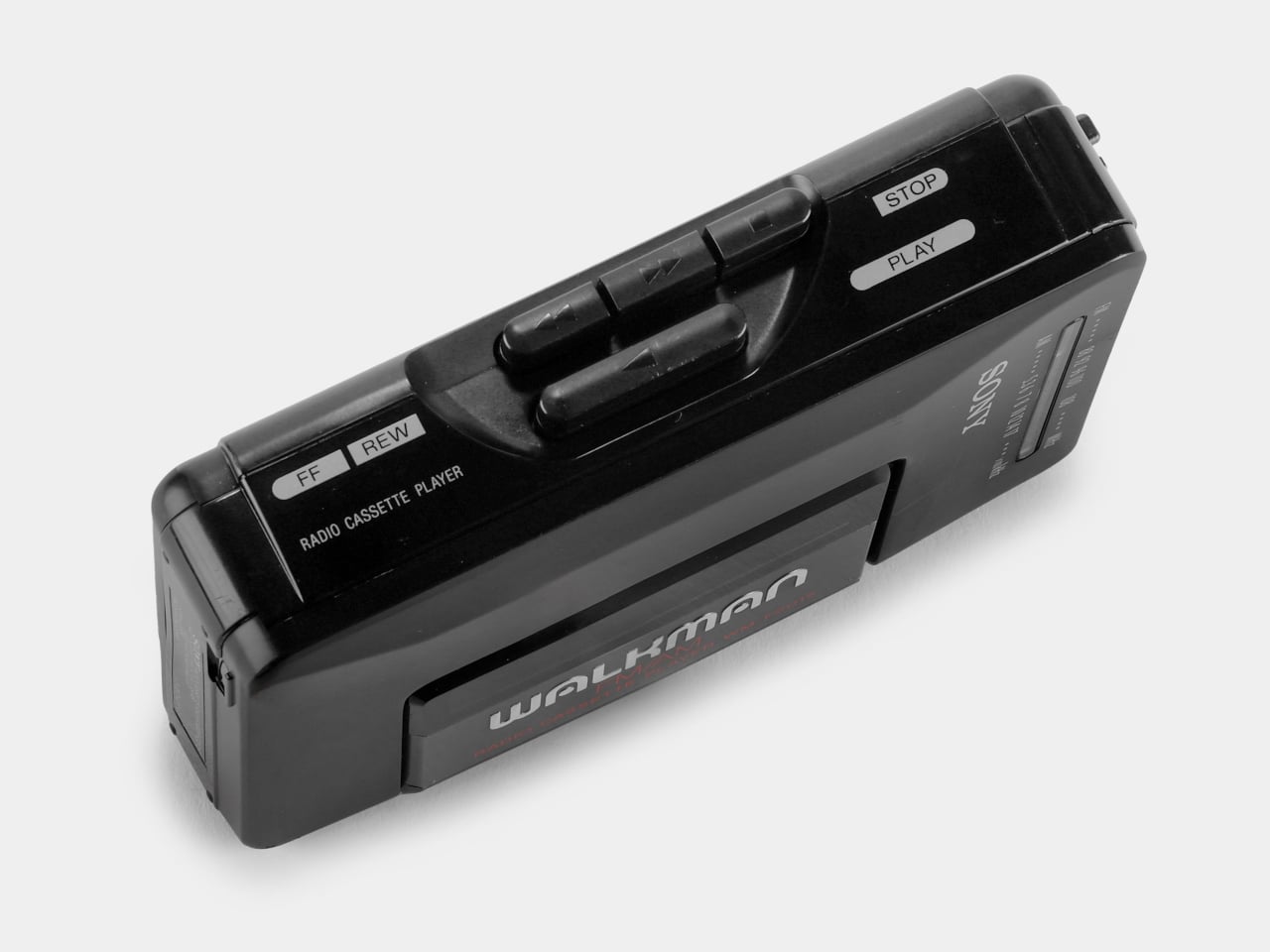
The WM-F2015 is a matte black candybar design with an AM/FM radio tuner, powered by two AA batteries. It ships with orange retro-inspired headphones that look the part, even if they cannot compete with modern over-ears. The appeal here is not specification superiority or modern convenience. There is no Bluetooth, no USB-C, no rechargeable battery, and no recording function. What the Retrospekt Walkman offers is something no reproduction can manufacture: the physical reality of a 35-year-old Sony mechanism, with all its original plastics and original weight, restored to functional condition.

What we like

  • An authentic 1990 Sony Walkman mechanism
  • Retro Sony matte black industrial design and compact form factor

What we dislike

  • A bit pricey at $299
  • Zero modern conveniences: no Bluetooth, no USB-C, no rechargeable battery

The post These $40-$299 Cassette Players Just Crushed Spotify’s Algorithm first appeared on Yanko Design.
Old walkman becomes cassette player and storage unit

“Everything old is new again” is an adage that we will probably never escape. How we listen to music continually evolves but it seems that we still have a certain fondness for the old way like vinyls, CDs, and yes, even cassette tapes. Streaming music on our mobile devices is the most convenient but there’s a certain nostalgia attached to “vintage” that we enjoy. And of course, the music quality is way different to the compressed ones we have now.

Designer Name: Love Hulten

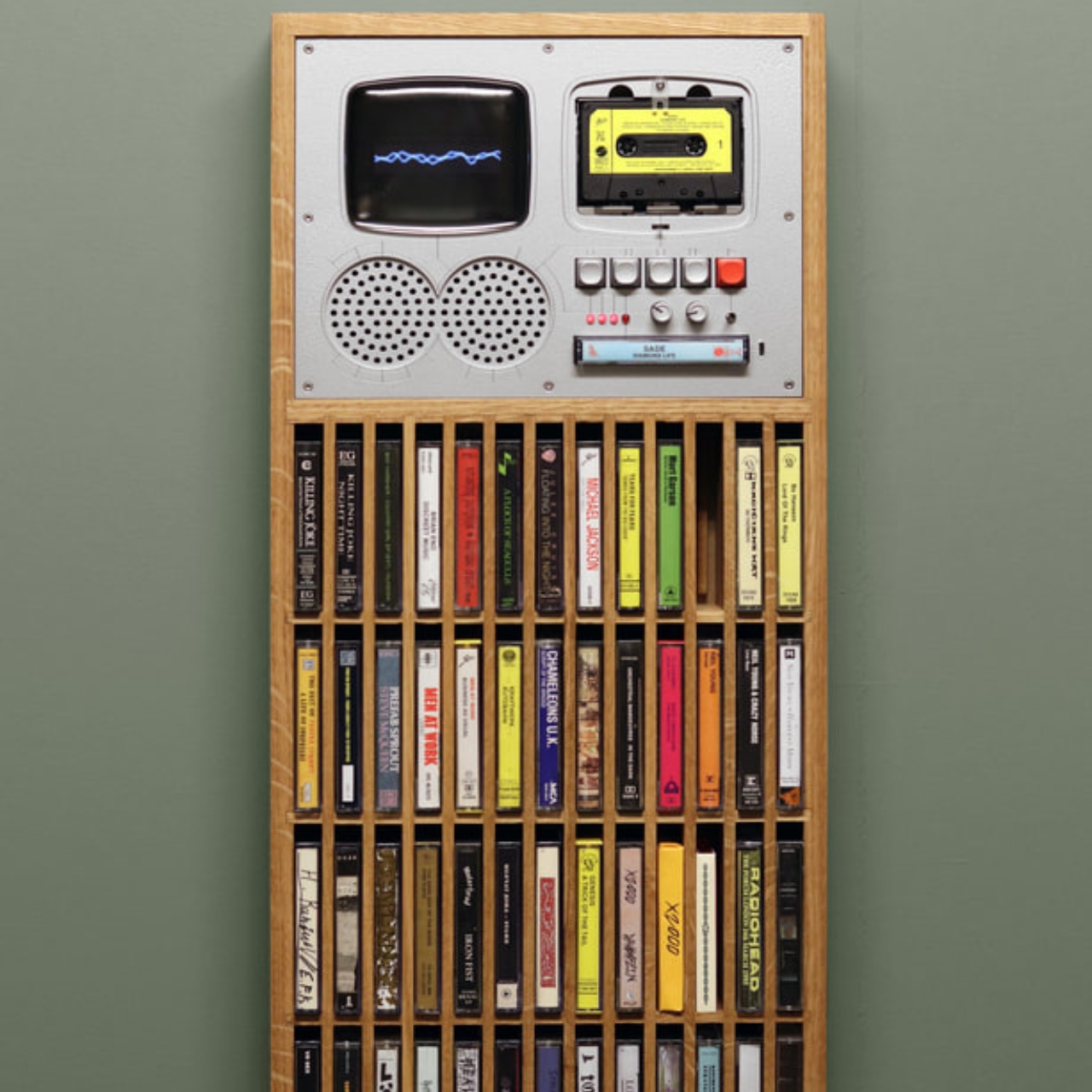
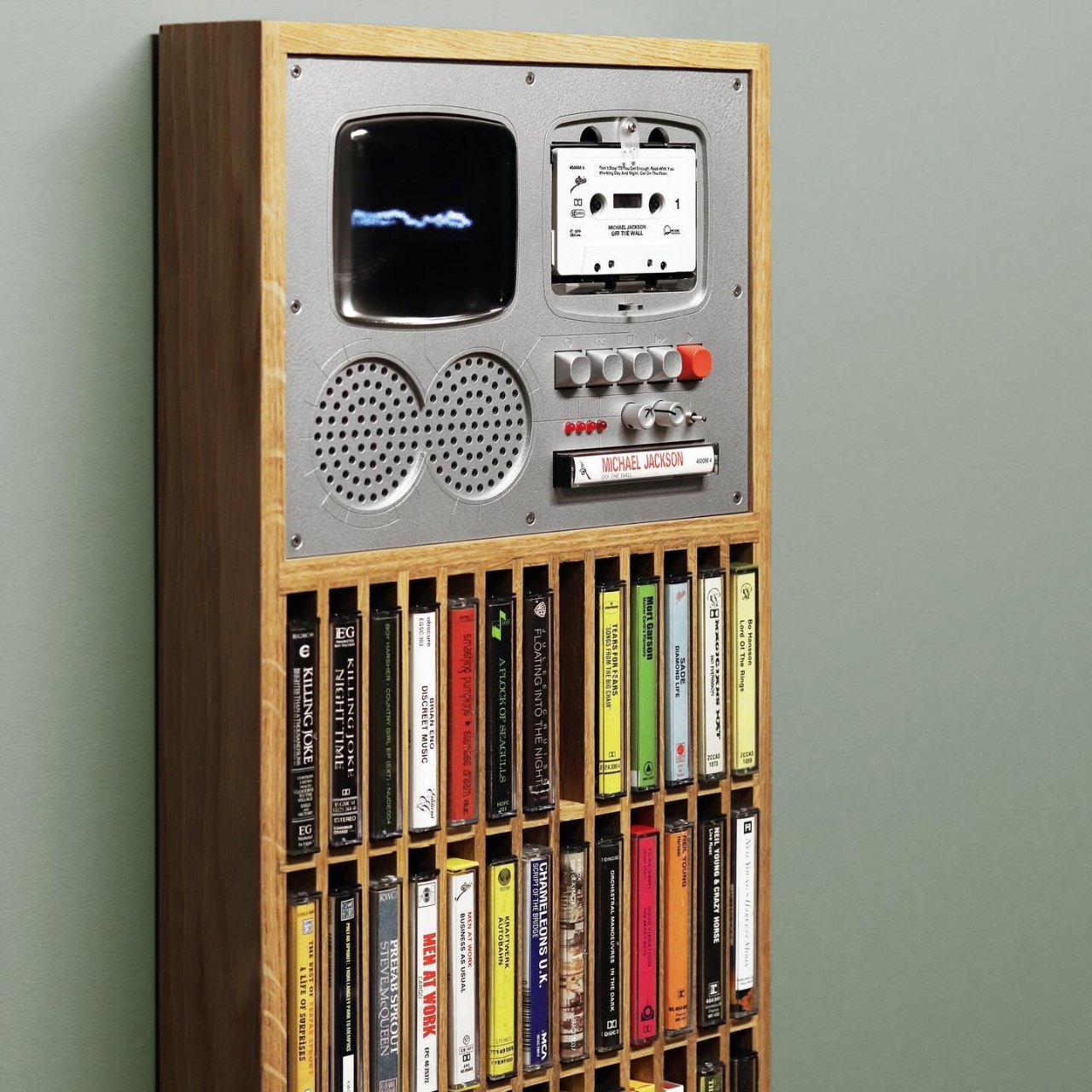
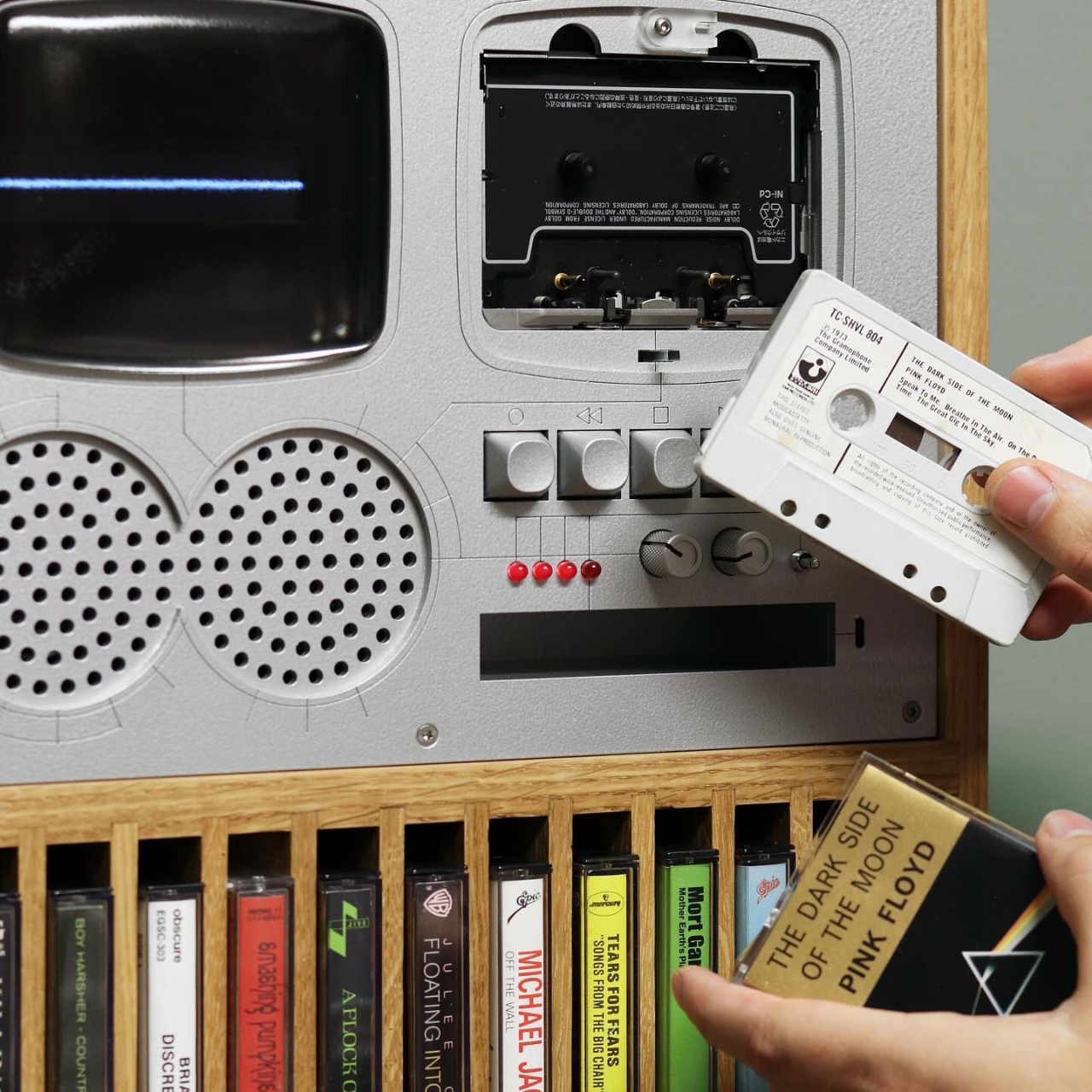
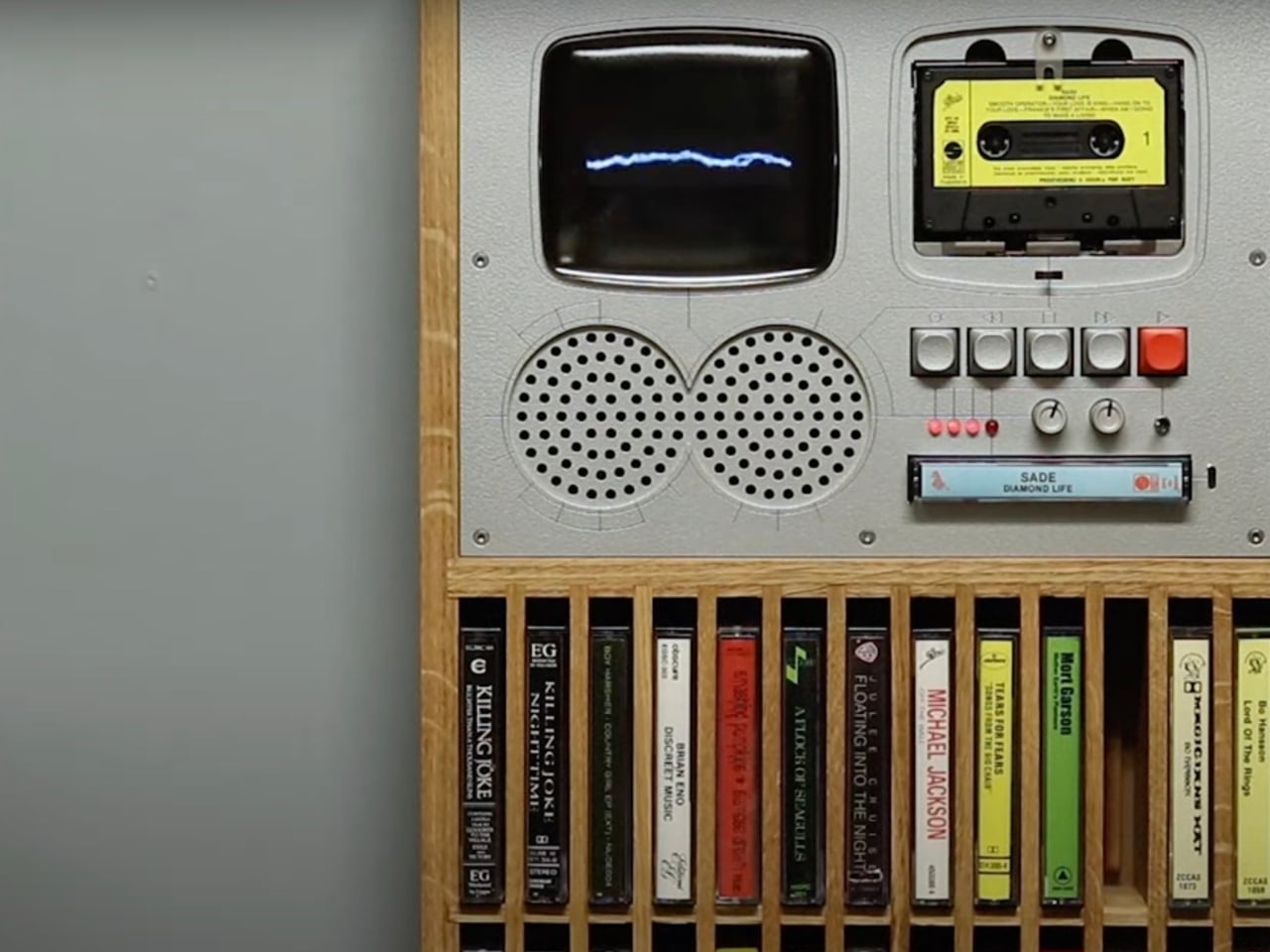
This designer is obviously of the generation that still enjoyed listening to music on cassette tapes since the main component of this device is his old Sony Walkman WM-EX655. And he still has a collection of cassette tapes so we know he’s a serious collector. What he developed is something straight out of a 60s science fiction movie. But instead of using it to conduct experiments, you use it as it was originally intended: to play sweet, sweet music.

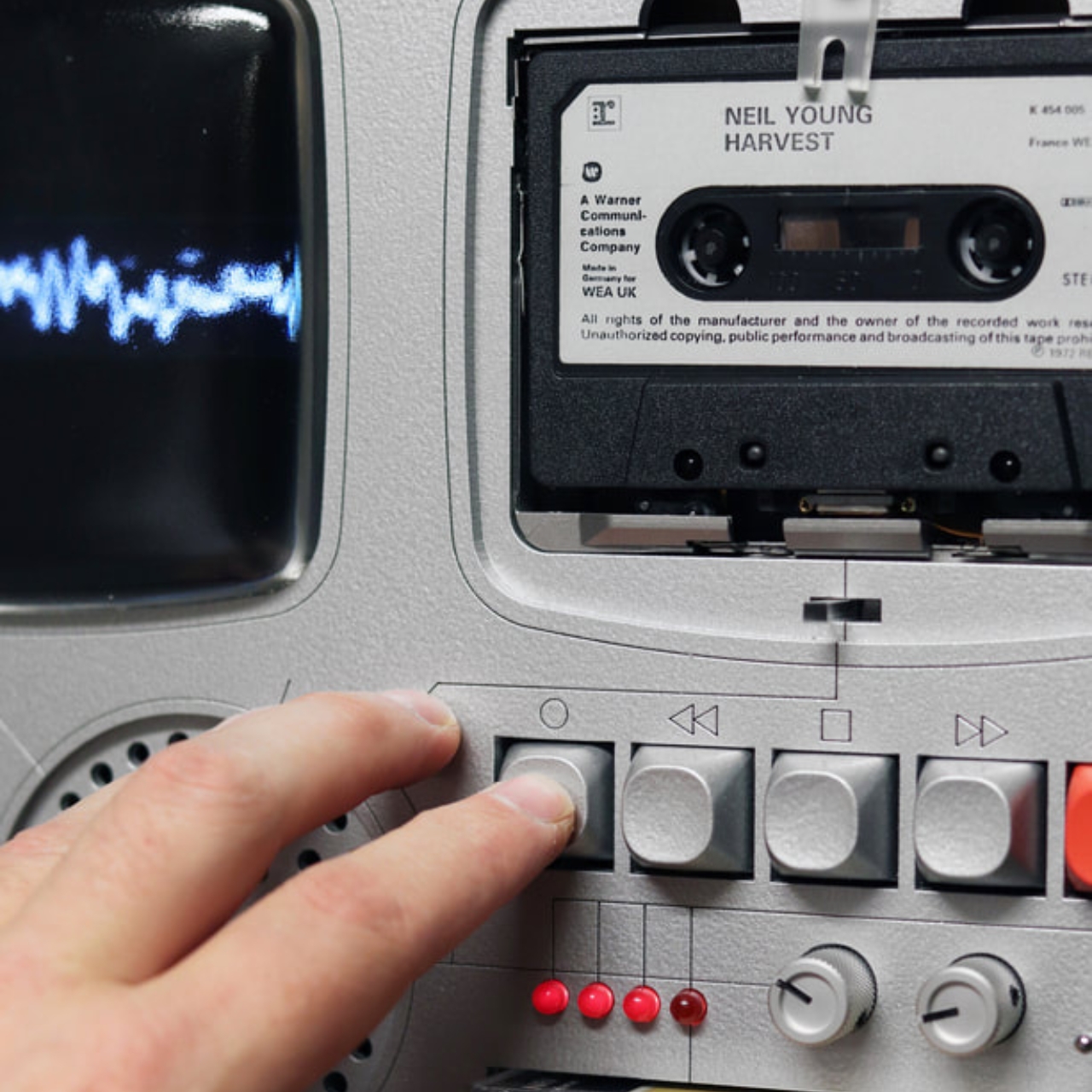
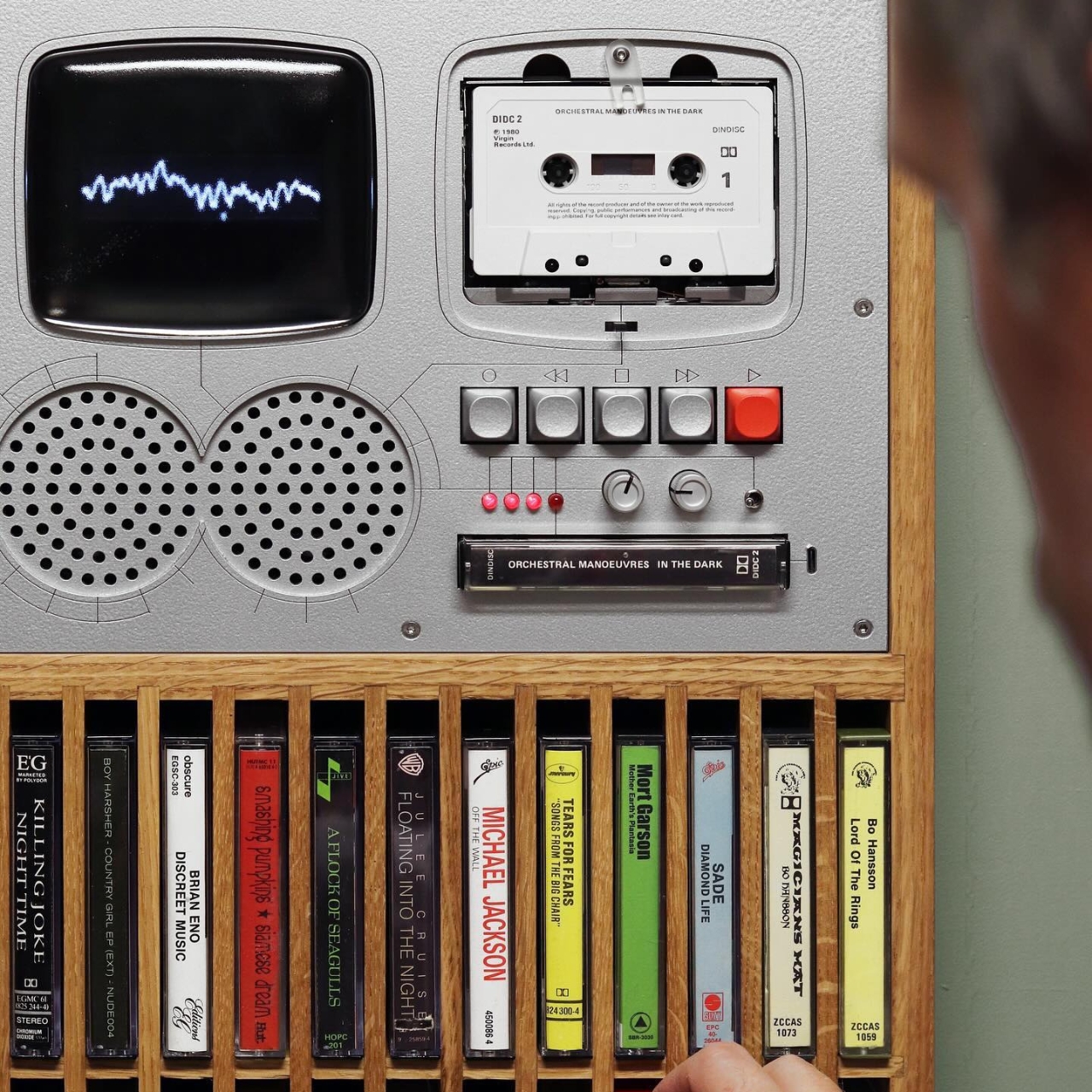
What he came up with is a cassette player and storage unit for the colorful cassette tape cases. There’s also built-in dual circular speakers, keyboard switches and buttons with various functions like play, stop, forward, rewind, etc. There’s also an audio waveform meter to go along with the beat of the music and even a tape slot to put in the case of the album you’re currently playing. The cabinet looking device blends design and technology to give you a truly retro piece of equipment that still performs its original function.
It’s of course a device that he made for himself since he has been collecting and keeping cassette tapes. But unlike vinyls and CDs that you can still buy from a lot of places, I don’t know that many stores that still sell cassettes. So the possibility of having a commercial version of this is very slim.
The post Old walkman becomes cassette player and storage unit first appeared on Yanko Design.