The latest iteration of Meta's smart glasses has arrived and, as rumored, they are more customizable, particularly for people who need prescription lenses. Meta and Ray-Ban parent company EssilorLuxottica revealed two new styles of frames: the Ray-Ban Meta Blayzer Optics and Scriber Optics, which will start at $499 a pair.
The latest glasses are still considered to be part of the "Gen 2" Ray-Ban Meta glasses, but they do come with a few upgrades that make it easier to get a personalized fit. According to EssilorLuxottica, both styles have somewhat slimmer frames, swappable nosepads and adjustable temple tips so wearers can get a better fit. And, as the "optics" branding implies, the new frame styles are also compatible with a wider variety of prescription lenses, including progressive lenses and transition lenses.
The Blayzer style frames are more square, similar to the existing Wayfarer glasses, while the Scriber version is a little more rounded, like the "Headliner" style frames. Both come in a variety of colors including some translucent styles and are available now for pre-order on Meta's website and will be on sale April 14. The "optics" lineup will also be sold at more physical retail stores, including LensCrafters, Sunglass Hut, Salmoiraghi & Viganò, Apollo, Grand Vision Optical, Vision Express and other locations that are part of EssilorLuxottica's distribution network.
The round, "Scriber" frames.
EssilorLuxottica
The new lineup of glasses is also more expensive, with a starting price of $499, compared with Meta's standard Wayfarer Gen 2 model, which starts at $379. That price doesn't include prescription lenses either, which can easily run $200-$300 or more, depending on your setup.
One benefit of that investment, though, is that Meta has consistently added new features to its smart glasses. And with the latest frames, the company is bringing some additional capabilities to all users. These include new translation support for Japanese, Mandarin and Arabic; as well as Meta AI-enabled food and nutrition tracking. Meta AI can also summarize longer message threads rather than simply reciting a long string of messages in a given chat.
This article originally appeared on Engadget at https://www.engadget.com/wearables/the-latest-ray-ban-meta-smart-glasses-are-more-customizable-and-expensive-130000553.html?src=rss
In the current RAM crisis, no company is better positioned to not only weather the storm but turn it to its advantage like Apple. It proved that when it released the MacBook Neo in early March. Despite only including 8GB of RAM, the Neo doesn't feel compromised, a testament to the company's silicon and software engineering. For Apple, it may be tempting to treat its latest MacBook as a one-off. That would be a mistake, because at this moment, the business decisions that made the Neo possible represent a once-in-a-generation opportunity to become a bigger player in the PC market.
If you read Engadget, there's a good chance you know the contours of the global memory shortage, but it's worth repeating just how bad things have become in recent months. Just three companies — SK Hynix, Samsung and Micron — produce more than 90 percent of the world's memory chips. At the end of last year, Micron announced it would end its consumer-facing business to focus on providing RAM and other components to AI customers.
Citing data from TrendForce, The Wall Street Journal reported in January that data centers would consume 70 percent of the high-end memory produced in 2026. As the Big Three shift more of their production to meet enterprise demand, they're allocating fewer wafers for consumer products, leading to dramatic price increases in that market segment. According to data from Counterpoint Research, the price of memory — including consumer RAM kits and SSDs, as well as LPDDR5X memory for smartphones — increased by 50 percent during the final quarter of 2025. Before the end of the current quarter, the firm predicts prices will increase by another 40 to 50 percent, and the CEO of SK Hynix recently warned shortages could last until 2030.
Since nearly all consumer electronics need some amount of RAM and storage, the trickle-down effects have come fast and hard. In December, before the situation got as bad as it is now, TrendForce warned that most of the major PC manufacturers were either considering, if not already planning, price hikes. This month, the firm warned laptop prices could increase by as much as 40 percent if manufacturers and retailers moved to protect their margins. Such a scenario would send the cost of a $900 model to about $1,260.
Amid all that, Apple added another point of pressure: the $600 MacBook Neo. During a recent investor call, Nick Wu, the chief financial officer of ASUS, described the Neo as "a shock to the entire market," adding "all PC vendors, including upstream vendors like Microsoft, Intel and AMD" are taking the cute device "very seriously." Wu warned ASUS would "need more time" before it could ready a response.
For ASUS and other Windows manufacturers, any response realistically may take a year or more to formulate. That's because the Neo represents both a technical and logistical hurdle.
To start, it's a fundamentally different machine from the one most Windows OEMs are making right now. It has the advantage of using "unified memory" instead of a set of traditional RAM modules. The 8GB of RAM the Neo has is shared between the A18 Pro's CPU and GPU, meaning it can more efficiently use the RAM that it does have. That's part of the reason the Neo doesn't feel like a Windows PC with 8GB of RAM. Apple didn't get to the A18 Pro and the MacBook Neo by accident. It has spent more than a decade designing its own chips.
Since 2024, Microsoft has mandated 16GB of RAM — and 256GB of solid-state storage — for PCs that are part of its Copilot+ AI program. That branding effort may not have amounted to much, with Copilot+ AI PCs accounting for just 1.9 percent of all computers sold in the first quarter of 2025, but it did push OEMs, including ASUS, Dell and others to make more capable machines. It also saw Microsoft rework Windows to better support ARM-based processors from Qualcomm. Still, it's hard to see how Windows manufacturers can challenge Apple by going back to existing or older x86 chips with with less RAM.
Qualcomm's Snapdragon X2 processors could offer a potential response, but there are question marks there too. At CES 2026, the company announced the Snapdragon X2 Plus, a pared down version of its X2 Elite chipset with a six-core CPU. On paper, it should offer similar performance to the A18 Pro, but it doesn't seem Qualcomm has produced the chip at scale or that Windows OEMs have shown much interest in it. As of the writing of this story, the company's website lists just four X2 Plus-equipped models. I was only able to find one of those in stock, the $1,050 HP Omnibook 5. It has an OLED screen and more RAM than the Neo. Could HP repurpose something like the Omnibook 5 to take on the Neo? Maybe, but I'm not sure there's getting around the need for 16GB to get Windows 11 running decently.
Even if the Snapdragon X2 Plus offers a stopgap measure, no company operates a supply chain quite like Apple. It has spent billions of dollars to make itself independent of companies like Qualcomm by designing its own Wi-Fi and Bluetooth chips, for example. It also doesn't need to pay Microsoft a licensing fee to use a bloated Windows 11. Those are all factors that lead to OEMs like ASUS and Lenovo operating on razor thin margins.
Per Statista, Apple earned a nearly 36.8 percent gross profit margin on its products in 2025. That's almost exactly half as much as the gross margin it made on services, which grew to a record 75.4 percent last year. For comparison, ASUS has seen its profit margins erode to about 15.3 percent in recent quarters, or less than a third of Apple's 2025 average of 46.9 percent. For ASUS and other Windows OEMs, the short-term outlook isn’t good. HP recently told investors RAM now accounts for more than a third of the cost of its PCs. And if memory shortages continue, many of them will be forced to raise their prices to protect their margins.
Apple is in no such position. The iPhone recently had its best quarter ever, contributing $85.27 billion to the company's Q1 revenue. The fact that Mac revenue declined from $8.9 billion to $8.3 billion year-over-year didn't make a dent to Apple's bottom line. For the companies that must now compete against the Neo, it's not a fair playing field. To Lenovo, Dell, HP and ASUS, PC sales are almost everything to their business. For Apple, it's a side hustle.
As the company prepares to kick off its 51st year, it should consider it may never be in a better position to claw ahead in the market where it all started for the company. In both the PC and smartphone segments, Apple's market share has always been a distant second (and sometimes third and forth) to Windows and Android, in part because commoditization has consistently worked against the company. But when a single part now accounts for a third of the cost of a new PC, the regular rules don't apply.
It's not just that the company is better insulated than nearly every other player against runaway RAM costs, it's that it also has a technological edge and the profit margins to compete on price at the same time. In recent quarters, the company's share of the PC market has hovered around the 9 to 10 percent mark, meaning it's consistently been about the fourth largest manufacturer.
For as long as the RAM shortage continues, Apple should seriously consider sacrificing some of its PC profits to become a bigger player. So far, the company has moved to protect the margins on its more expensive devices. For example, it increased the price of the latest MacBook Air and MacBook Pro by $100. The company doubled the amount of base storage to make up for the hike.
Moving forward, it should do everything it can to maintain, and maybe even lower the price of its computers to a point where its competitors can't meet it. If the Lenovos and HPs of the world can't compete on either price or performance, consumers will move to Mac computers. As Apple looks to the next 50 years, it may not get another opportunity like the one it has right now.
This article originally appeared on Engadget at https://www.engadget.com/computing/laptops/the-ram-crisis-is-apples-best-chance-in-decades-to-capture-the-pc-market-130000672.html?src=rss
I’m honestly shocked the AirPods Max 2 even exists. After Apple only added a USB-C port and a few new colors to its over-ear headphones in 2024, I thought it had given up on delivering a proper upgrade to its priciest AirPods model. I’m happy to report that wasn’t the case.
The AirPods Max 2 is certainly an updated version of Apple’s headphones, but the company is also catching it up to the AirPods Pro 3. The headphones now carry the company’s powerful H2 audio chip, the component that enables features like Adaptive Audio and Live Translation. The USB-C AirPods Max may have barely been an update, but the AirPods Max 2 is worthy of the new numeral in its name. The price is still $549, due in part to the fact that Apple’s products are exempt from Trump’s tariffs, yet these remain some of the most expensive headphones I’ve reviewed. Are the AirPods Max still worth it?
What’s new on the AirPods Max 2?
All of the AirPods Max 2’s major new features are here thanks to the upgrade to the H2 chip. It was baffling that Apple didn’t swap out the H1 when it made the switch to USB-C, choosing instead to saddle its pricey headphones with very outdated silicon for another 16 months. So, in a lot of ways, the AirPods Max 2 is a lot more about getting up to date with the rest of the lineup, which means a host of new tools await.
Thanks to the H2 chip, the AirPods Max 2 has Adaptive Audio, Conversation Awareness, Voice Isolation, Personalized Volume, Siri Interactions (head gestures) and Live Translation. Adaptive Audio blends active noise cancellation (ANC) with transparency mode and automatically adjusts the mix based on your surroundings. Conversation Awareness can tell when you’re talking and automatically lowers the volume and enables transparency mode for quick chats.
Voice Isolation helps improve your voice quality for calls when the AirPods Max 2 is used with compatible apps on an iPhone, iPad or Mac, and I think we’re all well-aware of what Live Translation is. Lastly, Personalized Volume takes notes on your listening preferences over time and applies automatic adjustments based on those and your surroundings.
Unsurprisingly, these features all work as well as they do on the AirPods Pro 3. Of course, there will be some that you use often and others that you might not touch at all. For me, I don’t like contending with unwanted volume changes due to Conversation Awareness, so I turn that one off. It’s not as easily triggered as Sony’s version, but I did trick it with an unexpectedly loud burp. I also don’t use the Siri head gestures, although they work very well. I frequently use Adaptive Audio around the house, which allows me to enable transparency mode to hear what I need to while letting the headphones apply ANC if I encounter unwanted noise. Voice Isolation is also a big improvement to normal voice performance and Live Translation is certainly nice to have.
Two additional H2 features that I do use often on the AirPods Pro, and will do so on the AirPods Max 2 because they work well here, are studio-quality audio recording and Camera Remote. The first is self-explanatory, but it does offer a boost to clips recorded in Voice Memos and the Camera app (my main two uses). Meanwhile, Camera Remote allows you to use the Digital Crown to take a photo or start/stop a video recording without reaching for your iPhone.
Et tu, hearing health?
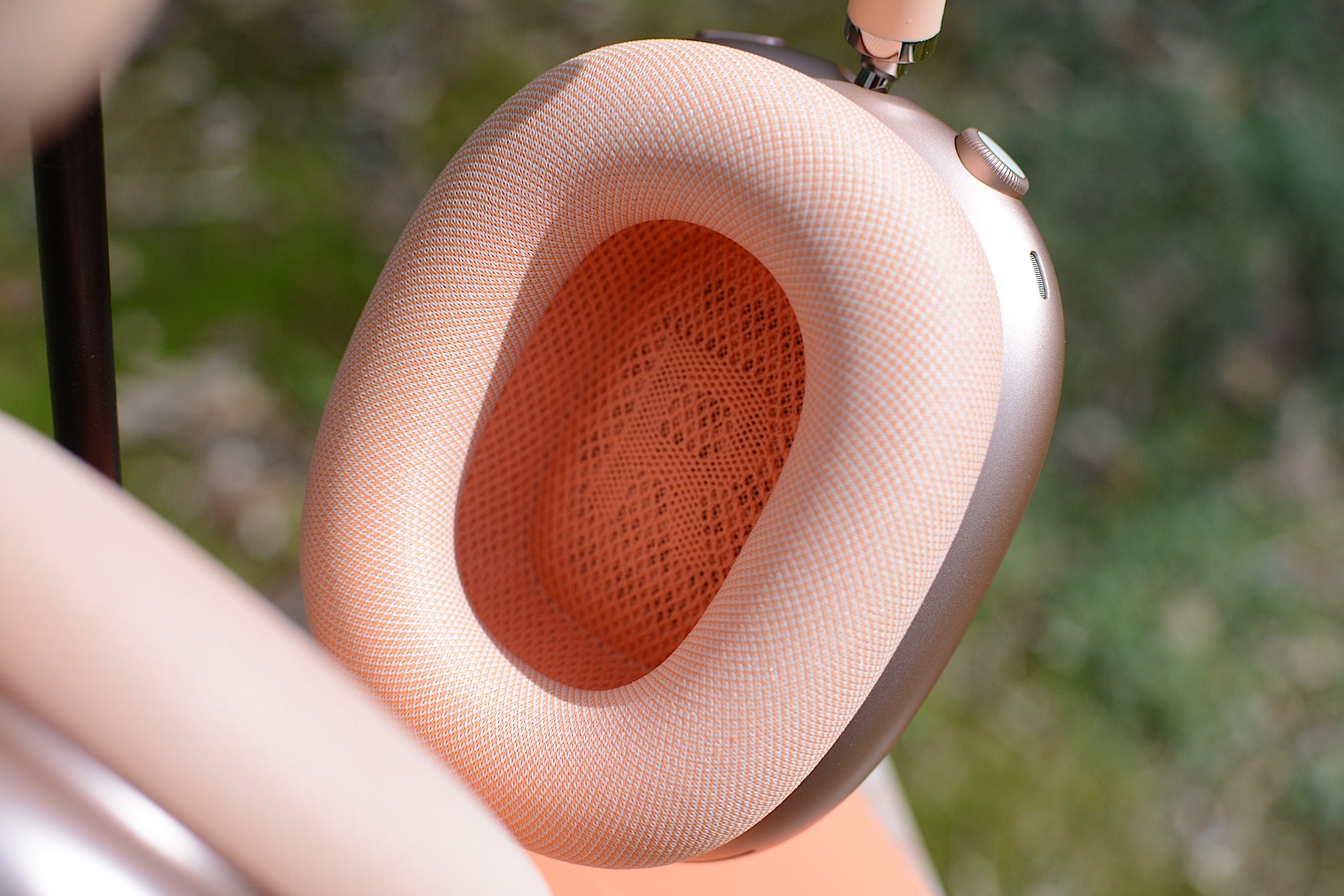
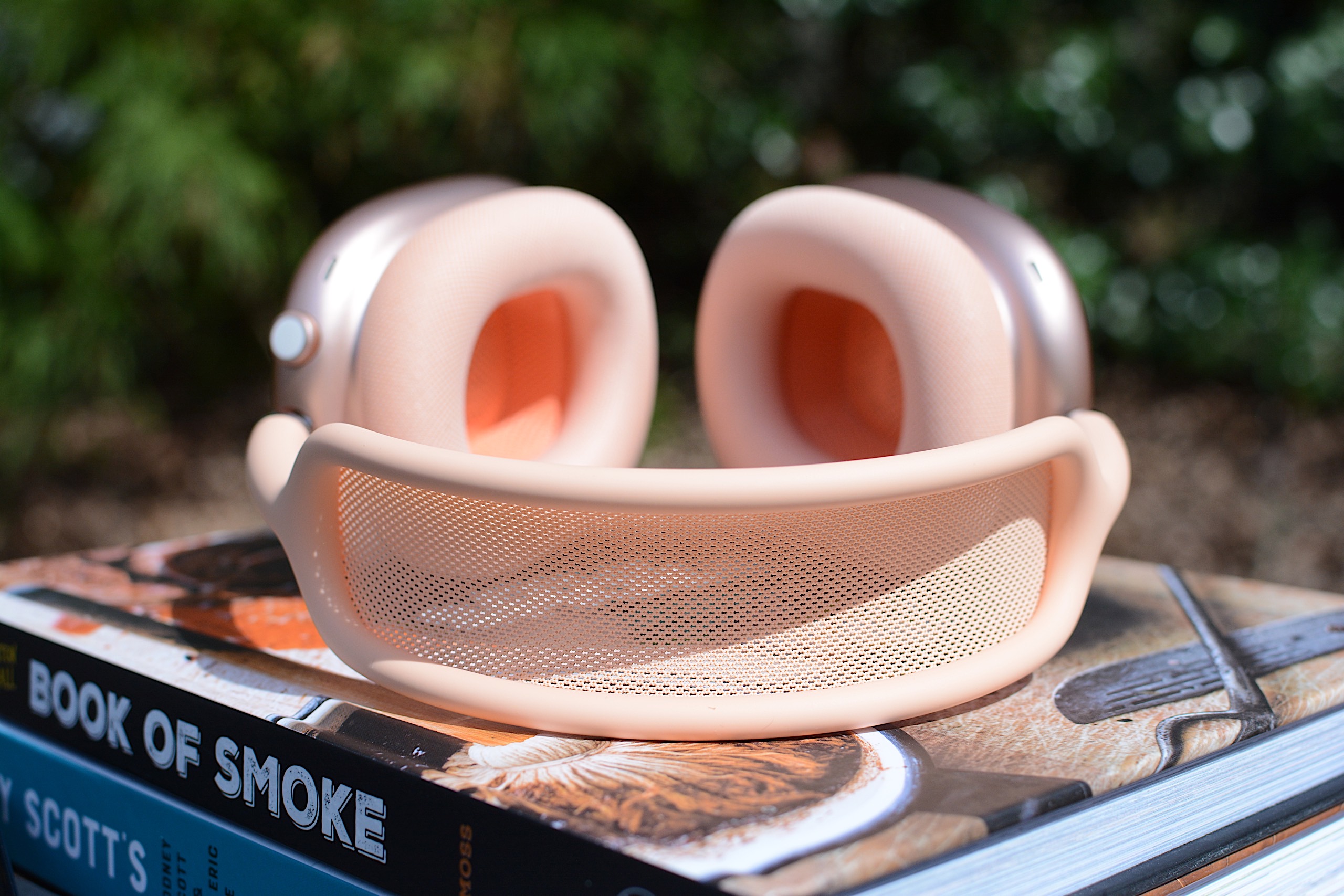
The fabric ear pads on the AirPods Max 2
Billy Steele for Engadget
Apple’s hearing health features are some of the most important tools on the AirPods Pro. However, you won’t find them on the AirPods Max 2, despite the new H2 chip. While the headphones do offer loud sound reduction, the hearing test, hearing aid and automatic conversation boost tools are absent. There are several reasons for this, the primary one being that the cushions on the over-ear headphones don’t seal off your ears the way the AirPods Pro ear tips do.
Still, loud sound reduction isn’t nothing. This prevents exposure to loud ambient noise while making adjustments to keep the audio sounding good. It’s particularly useful when you encounter blaring construction sounds during a commute or similar inconveniences.
Design: More of the same
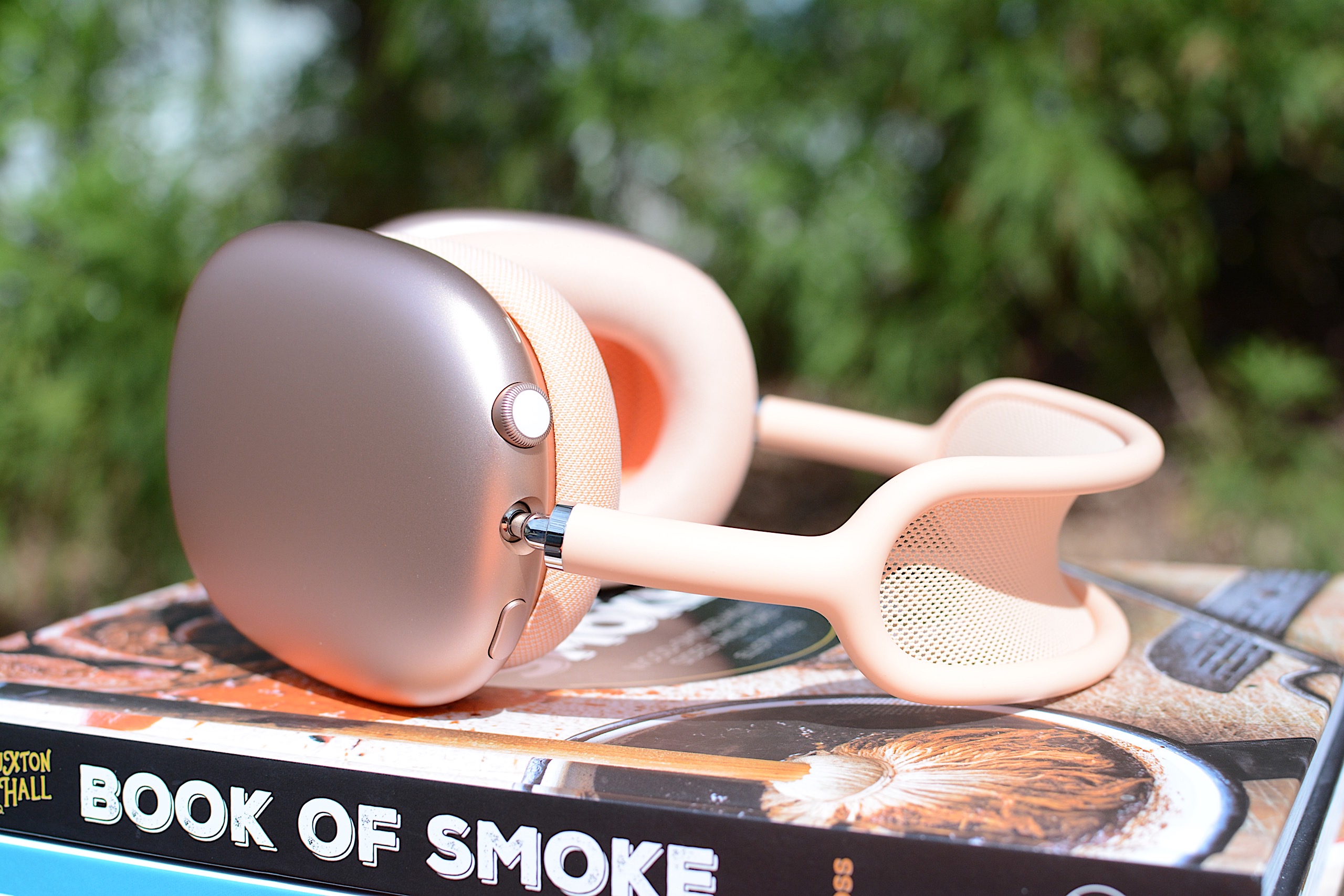
The Digital Crown and the listening mode control on the AirPods Max 2
Billy Steele for Engadget
One thing that hasn’t changed on the AirPods Max 2 is the design. For better or worse, Apple has kept the same look that it debuted in 2020. Aside from new colors and the switch from Lightning to USB-C in 2024, there are no other visible differences between this version and the original. I would argue it’s time for the company to change things up, but I can also understand why it hasn’t.
First, let’s discuss what’s great about the AirPods Max’s design. It’s unique, especially the mesh headband, solid aluminum ear cups and fabric ear pads. The punches of color are nice too, and if you prefer something more subtle, the black and gold, er… Midnight and Starlight options fit that bill. From the start, I’ve loved the simple controls that are comprised of the Apple Watch’s Digital Crown and the lone additional button for listening modes (a press and hold will activate Live Translation). The controls are in a great location, and it’s so satisfying to spin the Digital Crown for volume adjustments.
So, why hasn’t Apple redesigned the outside of the AirPods Max? I’d argue it doesn’t think it needs to yet. The AirPods Pro is still largely the same as it has been from the first version, and the regular AirPods only got its first big design overhaul in 2024. The original AirPods debuted in 2016, so if Apple keeps a similar timeline for aesthetic changes to both the Pro and Max lines, we might not see those until 2027 and 2028 respectively.
Sound quality, ANC and calls
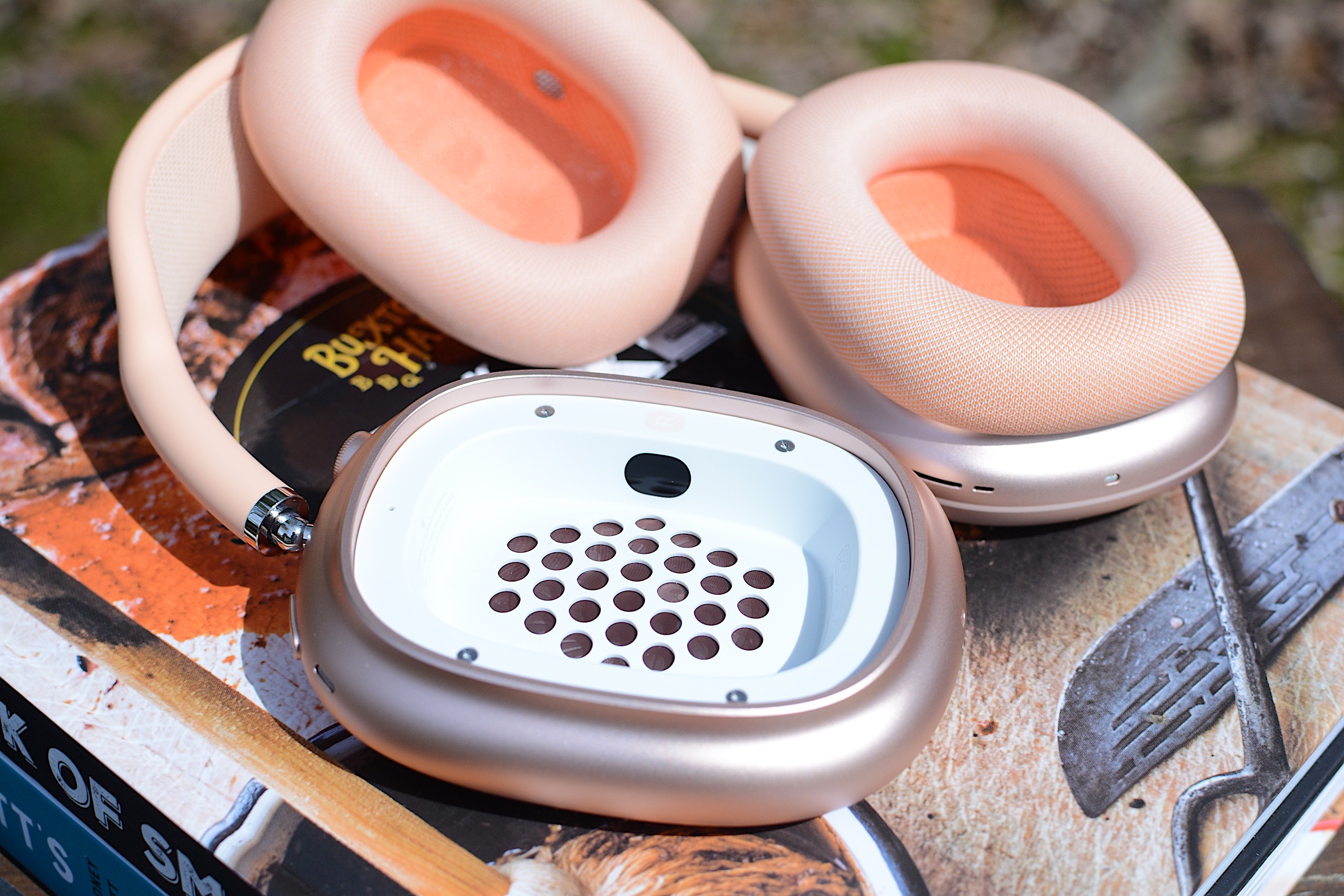
Like before, the ear pads are replaceable on the AirPods Max 2
Billy Steele for Engadget
Besides the H2 chip, the other big upgrade to the AirPods Max’s internal components is a new high dynamic range amplifier. This improves overall sound quality by allowing you to listen at higher volumes with low distortion and excellent clarity. Apple also overhauled the digital signal processing (DSP) for better bass response and to enhance the locations of instruments in the mix.
Those tweaks don’t equate to a huge leap in audio performance on the AirPods Max 2, but the gains are noticeable. Sound quality wasn’t an issue before, but you can definitely hear the improved instrument localization and enhanced bass performance across nearly all genres. On Ruston Kelly’s “Waiting to Love You (Piano Version/Live From Salt Lick Sessions),” the singer’s unique voice and the keys completely fill your head. It’s like a barrage of balladry in the best way. You get the texture of the vocals, the reverb of the piano and all the dynamics of the stripped-down live performance.
Jump to something a bit more energetic, like aya’s “navel gazer,” and the AirPods Max 2 deftly manages the vocals, synths and whatever else is happening in the mix (seriously, it’s a lot). And there’s still the sonic deluge that hexed! hits you with. Even with the multi-genre mash-up metal of Bilmuri, these headphones keep the vocals, guitars, drums and subtle sounds separate. There are a lot of delicate details in the artist’s latest tracks — like “More Than Hate,” for example — and the AirPods Max 2 ensures you’ll catch them all. A screeching eagle? Hell yeah, brother.
While wireless listening remains excellent, the AirPods Max 2 still offers lossless audio over USB-C. If you opt for wired use, you can get up to 24-bit/48kHz quality from compatible streaming services or locally stored files. This is the same functionality that Apple delivered in 2025. As expected, it still works well and provides enhanced listening when needed. Personally, I like to use it when I’m sitting at my desk. What’s more, the wired USB-C connection can be used for low-latency audio — which is great when you’re playing a game or mixing/editing audio projects. I should note the rest of the AirPods Max features (Siri, Adaptive Audio, etc.) still work over Bluetooth in wired mode, and there’s also a low-latency Game Mode for wireless use with a Mac, iPhone or iPad.
In terms of ANC, Apple says the H2 unlocks up to 1.5x stronger performance than the previous generation. The company combined the audio chip with new computational audio algorithms to reduce more external sounds — like airplane engines, trains and the roar of a coffee shop. That difference is certainly noticeable, as I found constant sources of noise around my house (fans, white noise machines, HVAC system, etc.) were much less apparent when I had the AirPods Max 2 on. Plus, Adaptive Audio uses the ANC system to pick up any changes and make the necessary adjustments to keep your music, podcast or movie coming through clearly.
Every AirPods model that has ANC is also equipped with transparency mode. Since the debut of the first AirPods Pro, I’ve been continually amazed by the natural sound of this feature. No other audio company comes close to matching the clarity of the ambient sound here, nearly making you forget you're wearing earbuds or headphones. This has a tremendous impact on calls, as you can hear yourself very well, so you never feel the need to speak loudly. Plus, Voice Isolation combines the AirPods Max 2’s H2 chip with an iPhone, iPad or Mac to further improve your voice and reduce background noise. Most headphones offer average voice performance at best, but like it has in the past, Apple actually delivers.
Battery life
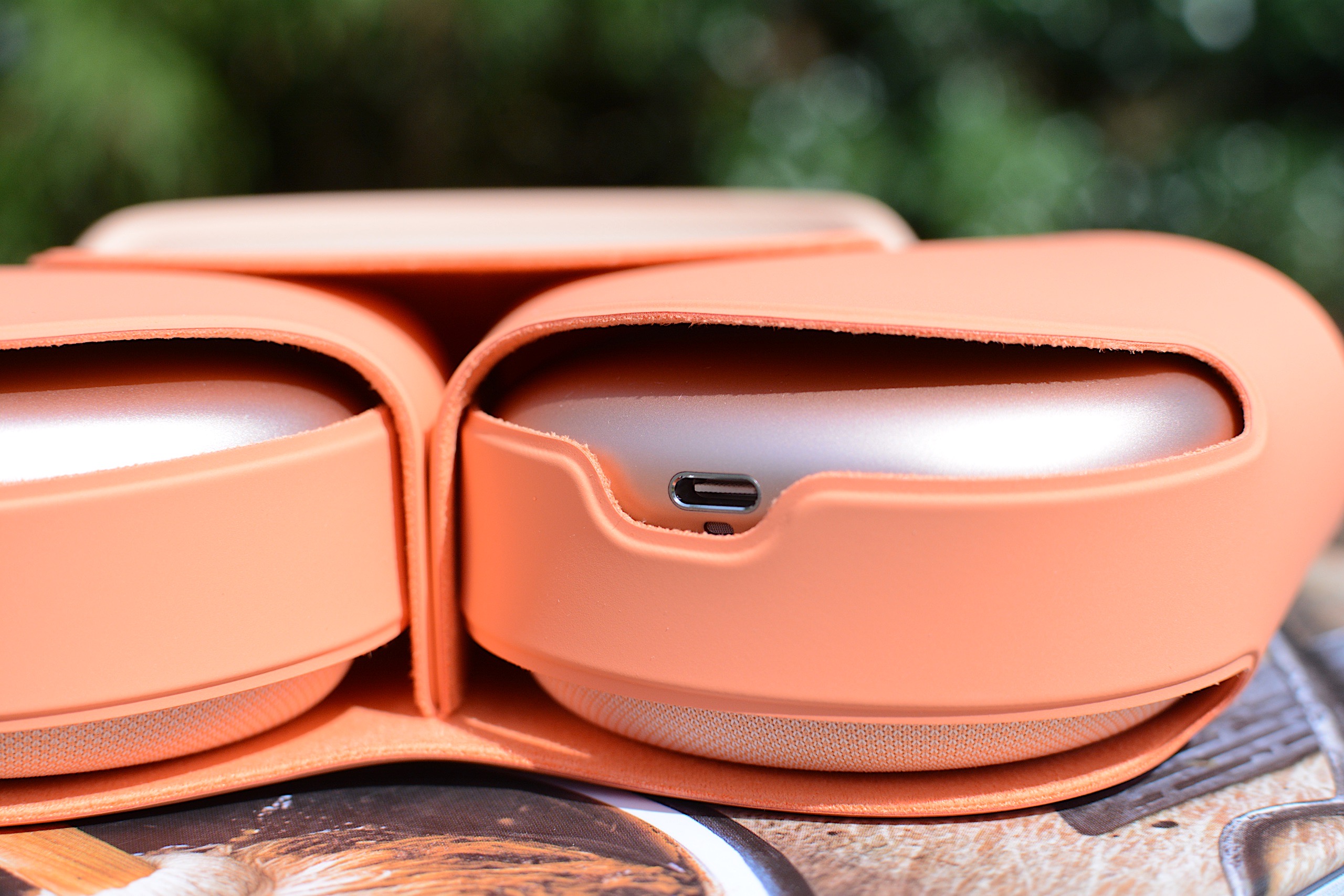
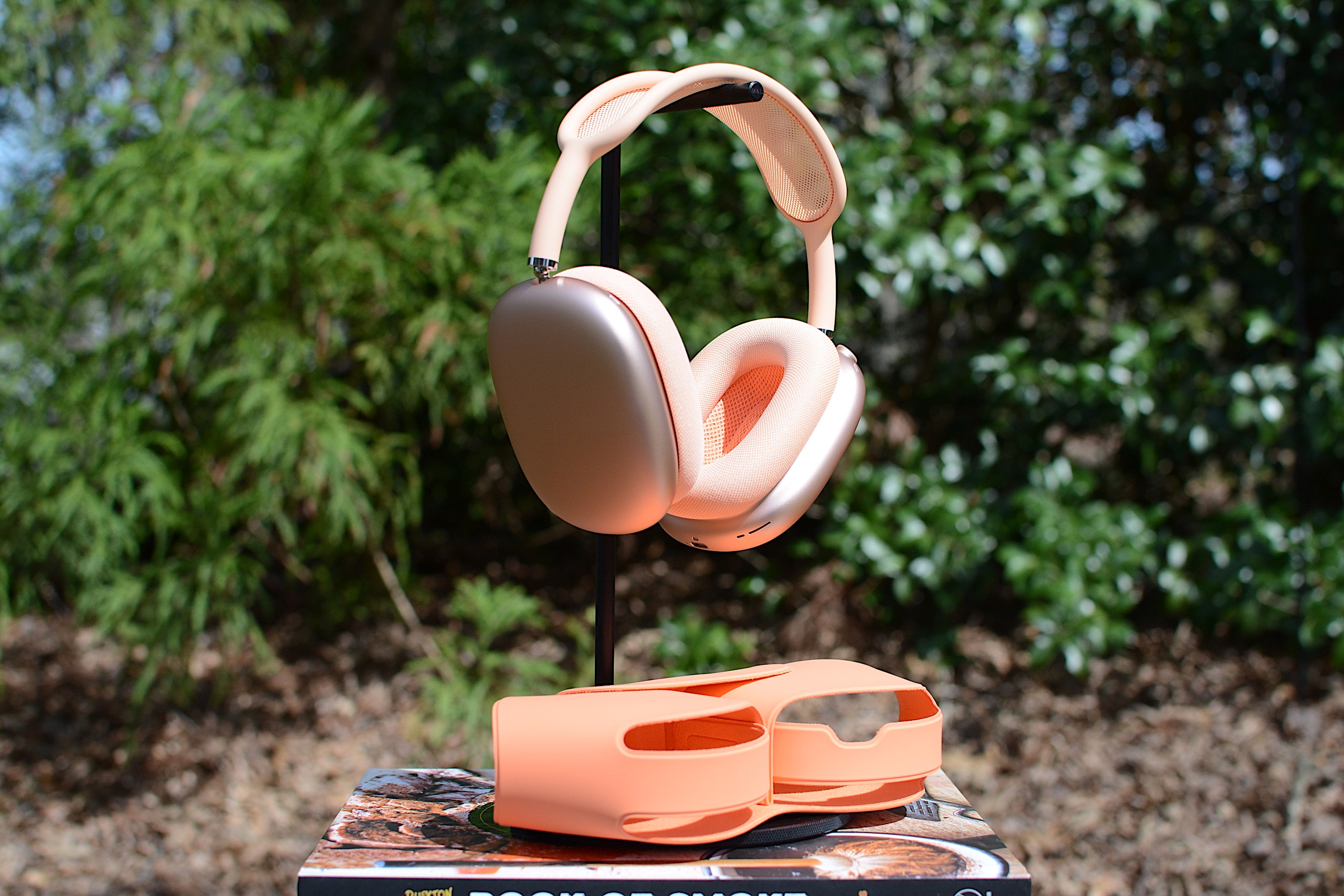
The Smart Case puts the AirPods Max 2 in an "ultra-low-power state"
Billy Steele for Engadget
One of the areas I was hoping for an additional boost on the AirPods Max 2 is battery life. Sadly, I was headed for disappointment. This model offers the same 20-hour longevity as its predecessors, a figure that includes ANC and/or Spatial Audio. While it’s certainly enough to get you through a couple of work days or a trans-Atlantic flight, that number falls well short of the 30-50 hours much of the over-ear competition can muster these days.
I haven’t had the AirPods Max 2 long enough to do a full battery test; I chose to focus on the new features instead. However, based on the performance that I’ve seen so far, I have no reason to doubt Apple’s claims here. The company has a solid track record on battery life, and all indications are that it continues on the AirPods Max 2. I’ll update this review when this test is complete.
The competition
The AirPods Max 2's mesh headband
Billy Steele for Engadget
If you’re thoroughly invested in Apple’s ecosystem, the AirPods Max 2 is worth considering. Most of the features are reserved for the iOS, iPadOS and masOS faithful, so it doesn’t really make sense for Android users or Windows devotees to splurge on the $549 headphones. If you’re still balking at that price tag, Sony’s WH-1000XM6 is my current top pick on our best headphones list. While those headphones are $460 at full price, you can currently find them for $400. Sony continues to mix great sound with capable ANC and a list of features few rivals can compete with. Plus, those handy tools are available to both iOS and Android users.
Bose’s second-gen QuietComfort Ultra headphones are another solid option. They offer powerful ANC, great sound quality and excellent comfort for $449, but you can currently snag them for around $400. If noise cancellation performance is your primary concern, this is your pick. Lastly, if money is no object, a personal favorite is the Px8 S2 from Bowers & Wilkins. They’re pure luxury right down to the $799 price tag, and they exude grandeur. The company’s combo of leather and aluminum screams high end and it made some design tweaks for this model to refresh the overall look. Battery life and sound quality are the big attractions here, but just know you’ll have to forgo the advanced features much of the (more affordable) competition provides — like all of those H2-powered tools on the AirPods Max 2.
Wrap-up
Apple AirPods Max 2 and the Smart Case
Billy Steele for Engadget
The AirPods Max 2 is an obvious upgrade over the previous version. And no, I don’t count the USB-C swap-in as a separate model. Simply put, the H2 chip brings Apple’s over-ear headphones on par with the rest of the AirPods lineup, namely the AirPods Pro 3. And since I don’t expect Apple to announce new earbuds this year, that parity should remain for a while.
These headphones are still expensive though, and the more affordable AirPods Pro offer handy hearing health features that are nice to have in your pocket. I could also understand why prospective buyers would want some design changes before making such a big investment. Sure, the AirPods Max 2 looks the same as its predecessor, possibly leaving those who own the previous version with a difficult decision to make. But Apple kept the price the same and brought better sound and more features, so there’s no denying these headphones outperform the original.
This article originally appeared on Engadget at https://www.engadget.com/audio/headphones/apple-airpods-max-2-review-better-late-than-never-130000982.html?src=rss
Amazon announced that it is adding new capabilities for ordering food delivery with its Alexa+ artificial intelligence assistant. Users will be able to place orders using natural language on Alexa+ through the GrubHub or Uber Eats platforms, provided they have an Amazon device with a large screen. First, you'll need to connect an account for those delivery services to use the feature. You can ask to see restaurants with a specific cuisine or tell the assistant to go right to a favorite spot. Once you start an order, Alexa+ will also support natural language requests and, if you ask for something generic, the assistant will match it to the most similar item on the menu. It should also support more detailed queries like "what are kid-friendly options?" and be able to submit special requests like "no onions."
To start, this ordering capability will be available for Alexa+ customers using the Echo Show 8 or larger devices. The screen should reflect your order, with any changes shown in real time. Amazon made the Alexa+ subscription available to all US customers earlier this year.
This article originally appeared on Engadget at https://www.engadget.com/ai/amazon-adds-dynamic-food-delivery-ordering-to-alexa-130000065.html?src=rss
AI is reshaping the way marketing teams operate, offering new ways to streamline workflows and boost productivity. In her latest guide, Grace Leung explores how to build a fully functional AI-driven marketing team using Claude AI. The process begins with identifying core marketing functions, such as social media content creation, email campaign management and data […]
Shark just introduced a new product called the BlastBoss that's basically a leaf blower rated for both indoor and outdoor use. This means it can actually be used to blow leaves around in the yard, but is also handy for tidying up debris in the house.
It offers adjustable airflow up to 190 mph, making it a "versatile solution for the garage, patio, car, inside the home and beyond." I imagine this would also make it the bane of every dog and cat in the neighborhood.
It's pretty light, at under 1.5 pounds, and cordless. The BlastBoss ships with several attachments, including an extension wand and precision nozzle for getting into tight spots like under appliances or between couch seams. The adjustable airflow means that the power can be dialed down for dusting and other less-intensive cleaning tasks.
Shark
It also comes with an attachment called the BlastBroom, which is exactly what it sounds like. This is a broom attachment that blows out air, which can be used to "loosen, lift and clear debris in one pass." The company says this is "ideal for patios, garages and walkways."
The BlastBoss is available to purchase right now and costs $150. It's available in a bunch of different colors, which is a bit odd for a leaf blower but cool for those who like to accessorize.
Shark
Shark has been pumping out some pretty wild products lately. There's a personal cooling device called the ChillPill and a skin-care gadget that performs aqua peels.
This article originally appeared on Engadget at https://www.engadget.com/home/the-shark-blastboss-is-a-leaf-blower-that-can-be-used-indoors-123011878.html?src=rss
We’ve written about the Swiss company Proton’s moves to take on Google and Microsoft with an expanding variety of privacy-focused internet services, and the company is announcing yet another new tool today. Proton Meet, as the name suggests, is a video-calling service that sounds comparable to Zoom, Microsoft Teams and, naturally, Google Meet.
As with everything Proton does, Meet is end-to-end encrypted, but the company is taking extra steps towards security and anonymity here. You don’t need a Proton account to join a Meet call, which should help service gain traction — you can use Proton and not totally throw off everyone else who’s still using other systems. Proton says that Meet can be used anonymously and no logs are kept. The company even says that a Proton account isn’t needed to host a meeting. If you visit the Proton Meet site, you can start an anonymous call with up to four participants for free.
Proton says that anyone with an account (even a free one) can start Meet call with up to 50 participants for up to one hour, but it is also offering a dedicated Meet Professional plan for $8 a month with fewer restrictions (though we don’t have the specifics yet).
Meet joins the other core Proton tools including Mail, Calendar, VPN, Drive and a password manager. Drive in particular has gotten some notable upgrades recently — it offers collaborative documents and spreadsheets, just like Google. With the addition of Meet, Proton has most of the core services that Google offers covered. There’s even a little AI bot if that’s your thing.
Proton is using this launch as an opportunity to rebrand its services, gathering them all under the new Proton Workspace (another name pulled directly from Google’s offerings). In addition to the dedicated Meet Professional plan, Proton is offering Workplace Standard for $13 per month (billed annually) or $15 a month (billed monthly). That includes the aforementioned tools and 500GB of space by default. There’s also a Premium plan ($20/month annually or $25/month billed monthly) that adds more storage, access to the Lumo chatbot, expanded Meet participant limits and a few other tidbits.
The company says it’ll continue offering its other plans, including a Mail-only option that costs $36 a year as well as other bundles for an individual, two users or a whole family. But Proton is obviously looking to expand its business client base with Meet in addition to growing its user base (currently more than 100 million). Proton says it has about 100,000 enterprise customers, and adding a tool like Meet to its portfolio should make it easier to court companies as well as individuals.
This article originally appeared on Engadget at https://www.engadget.com/apps/proton-adds-a-secure-video-conferencing-service-called-meet-to-its-toolbox-121729143.html?src=rss
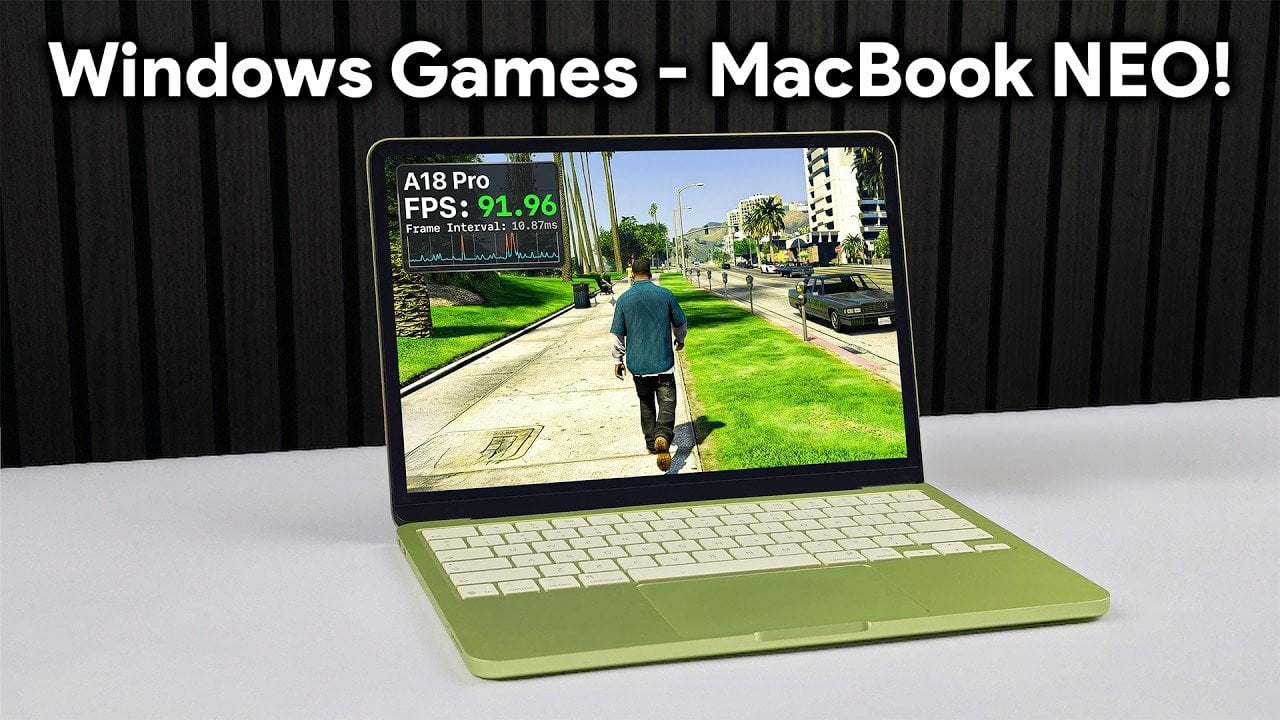
The MacBook Neo, powered by the A18 Pro CPU and 8GB of shared RAM, is carving out a niche as a surprisingly capable device for casual gaming. While primarily designed for productivity, it demonstrates an ability to handle both native macOS games and Windows titles through emulation. In a detailed breakdown by ETA Prime, the […]
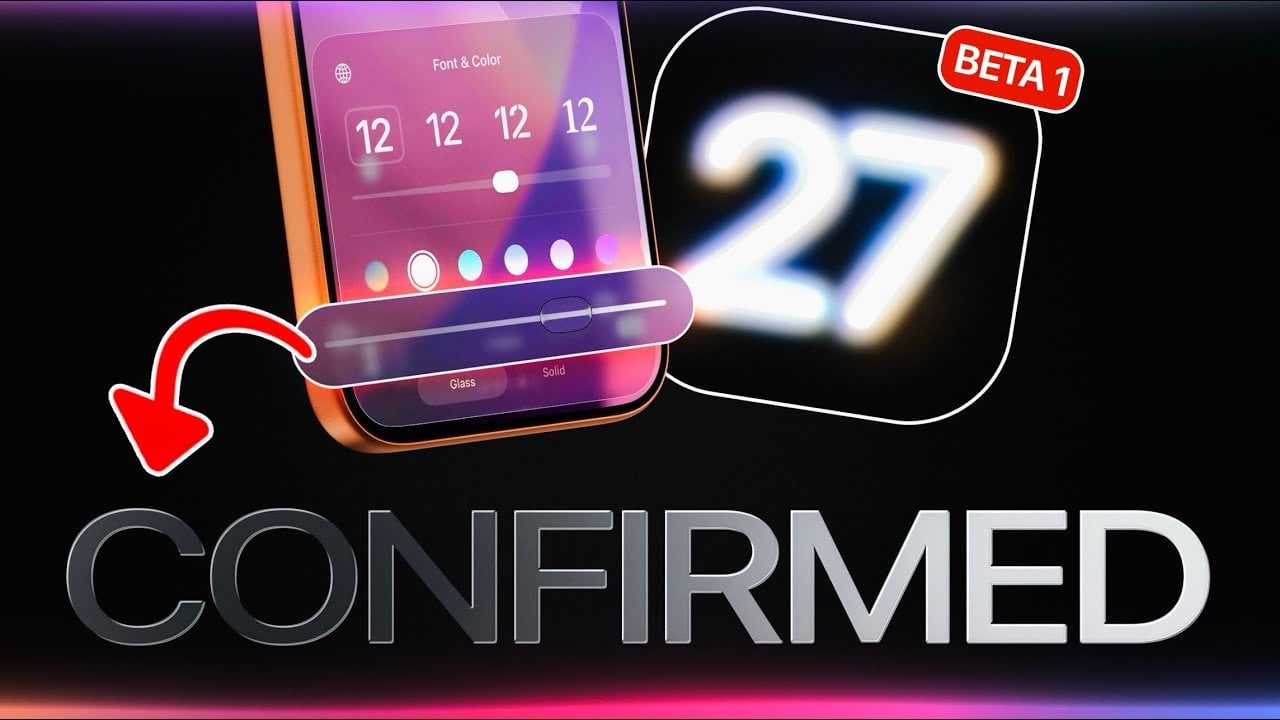
Apple’s next major iPhone software update will be iOS 27, and the beta will debut during the Worldwide Developers Conference (WWDC) 2026, scheduled to run from June 8 to June 12. This release introduces significant updates, including a customizable glass effect slider and a major overhaul of Siri, now branded as Siri 2.0. These advancements […]
SpaceX has lost contact with Starlink satellite 34343 after it suffered an unspecified anomaly on March 29 while it was in orbit, the company has announced on X. The event happened while the satellite was approximately 348 miles above our planet. Since that is a relatively low altitude, SpaceX’s analysis showed that the remains of the satellite pose no risk to the International Space Station or the upcoming launch of the Artemis II mission. It also won’t affect the company’s Transporter-16 mission, which launched with small satellites from its clients on March 30.
In its statement, SpaceX also said that it will monitor any trackable debris, indicating that the satellite is no longer in one piece. LeoLabs, an American company tracking satellites in Low Earth Orbit, said it detected a “fragment creation event” involving Starlink 34343 on March 29. It also mentioned that this event is similar to another incident that happened on December 17, 2025. SpaceX had lost Starlink satellites to events like geomagnetic storms in the past, but it doesn’t seem like these two recent incidents were caused by external factors. The company has yet to announce what led to the anomalies, but LeoLabs believes that both of them were “likely caused by an internal energetic source rather than a collision with space debris or another object.”
At the moment, the Starlink team is still working on determining the root cause of the incidents. SpaceX said that once it has come to a conclusion, the company will “rapidly implement any necessary corrective actions.”
On Sunday, March 29, Starlink satellite 34343 experienced an anomaly on-orbit, resulting in loss of communications with the satellite at ~560 km above Earth.
Latest analysis shows the event poses no new risk to the @Space_Station, its crew, or to the upcoming launch of NASA’s…
This article originally appeared on Engadget at https://www.engadget.com/science/space/spacex-loses-contact-with-one-of-its-starlink-satellites-115538554.html?src=rss