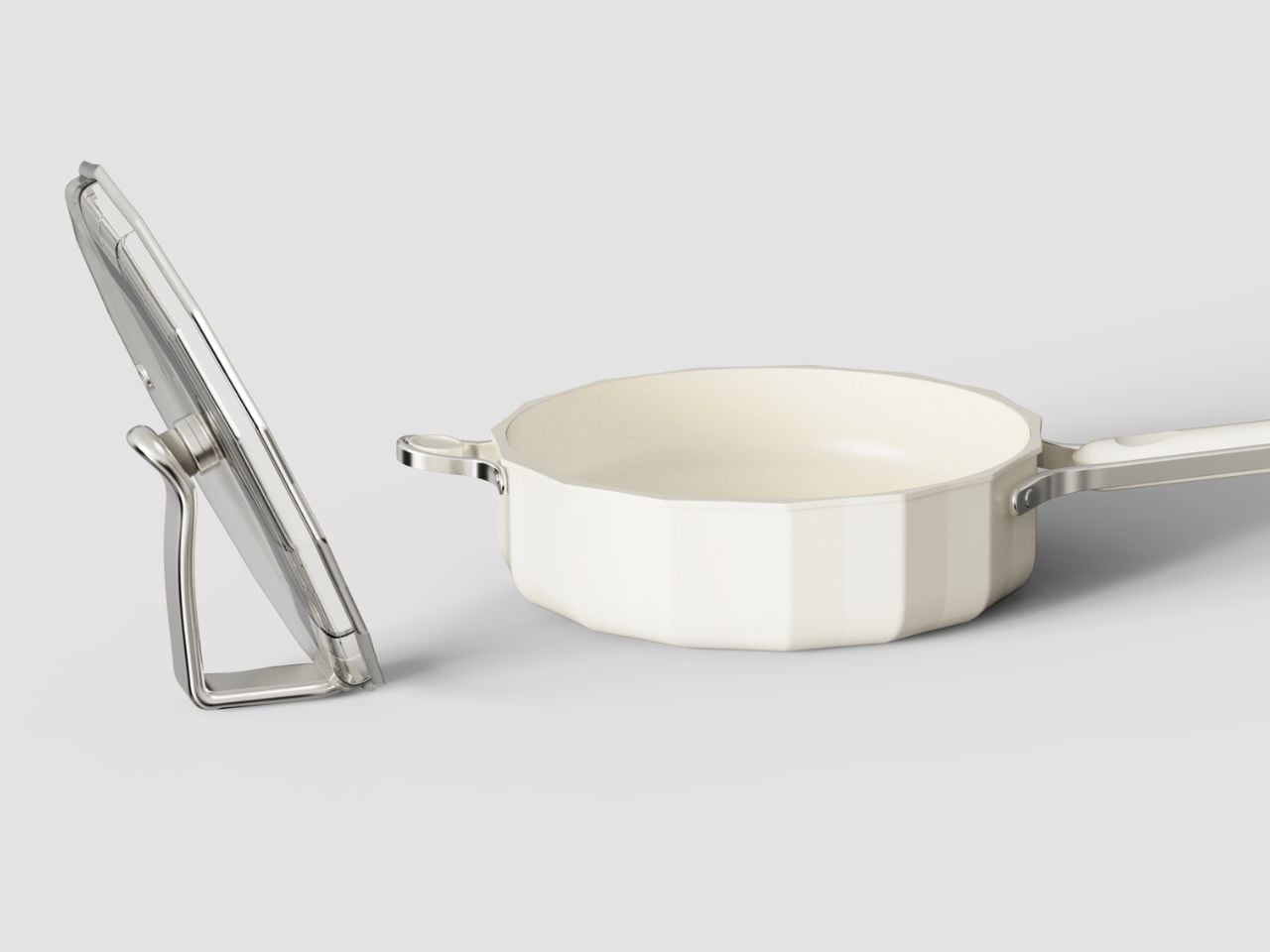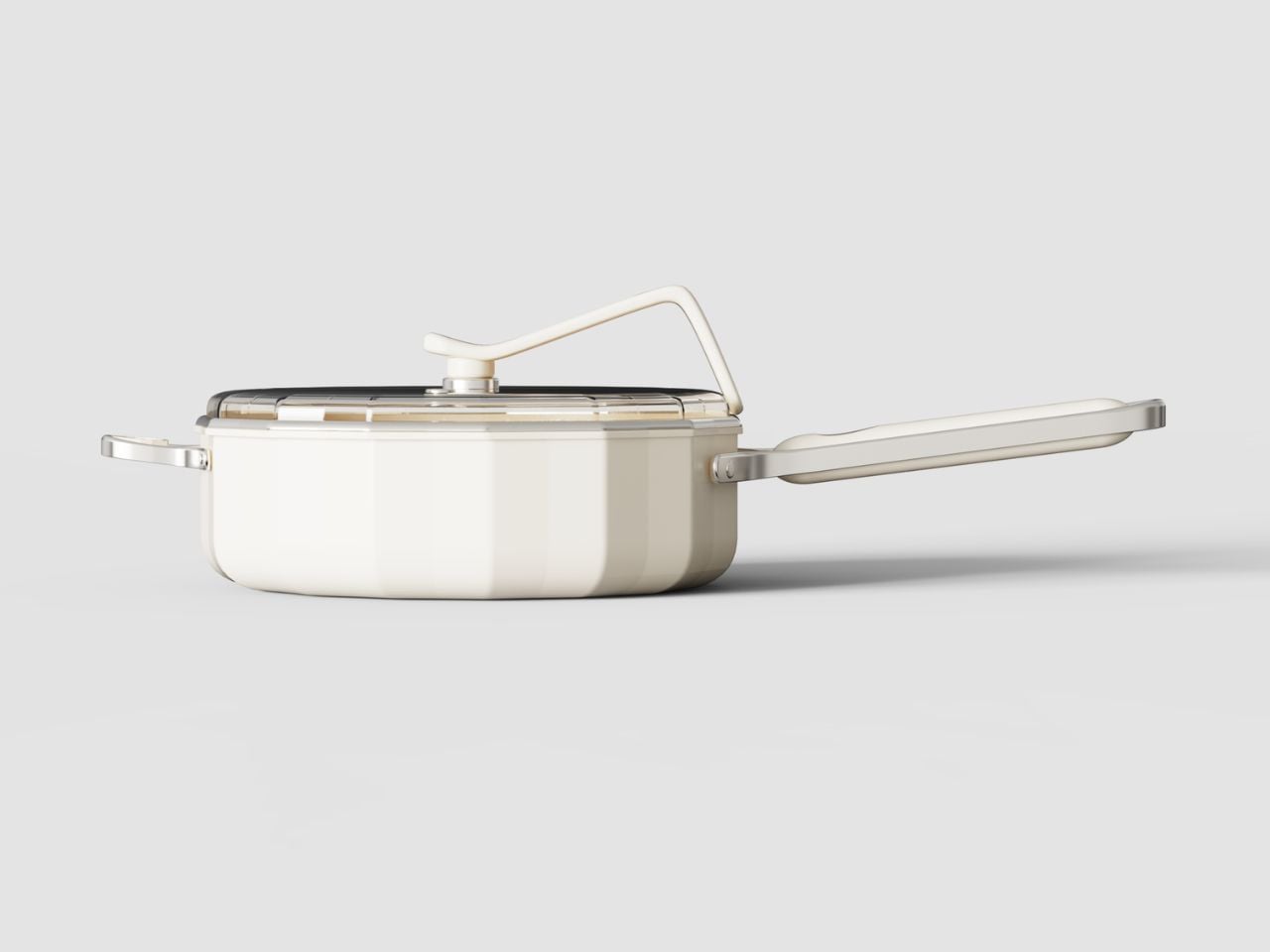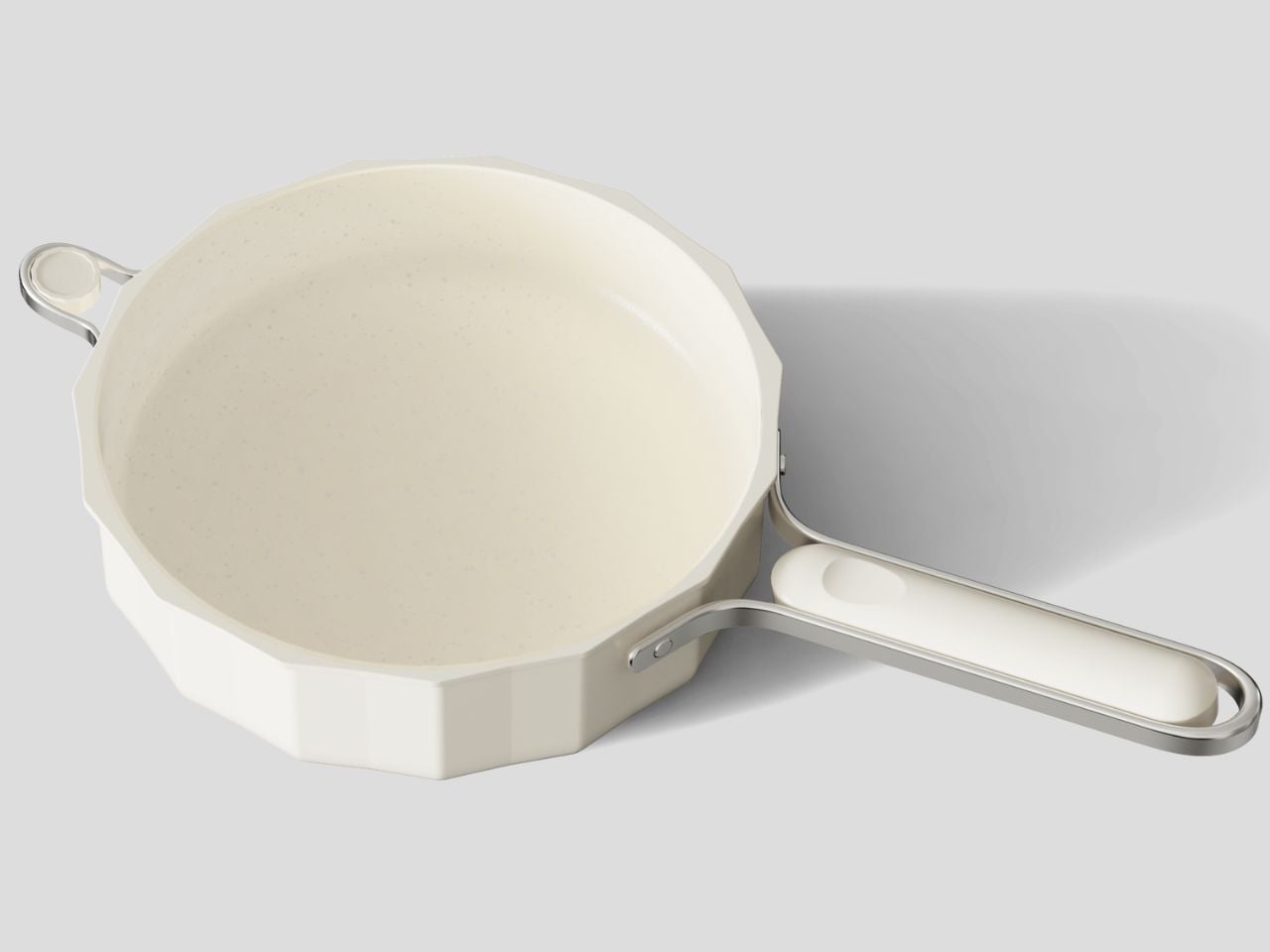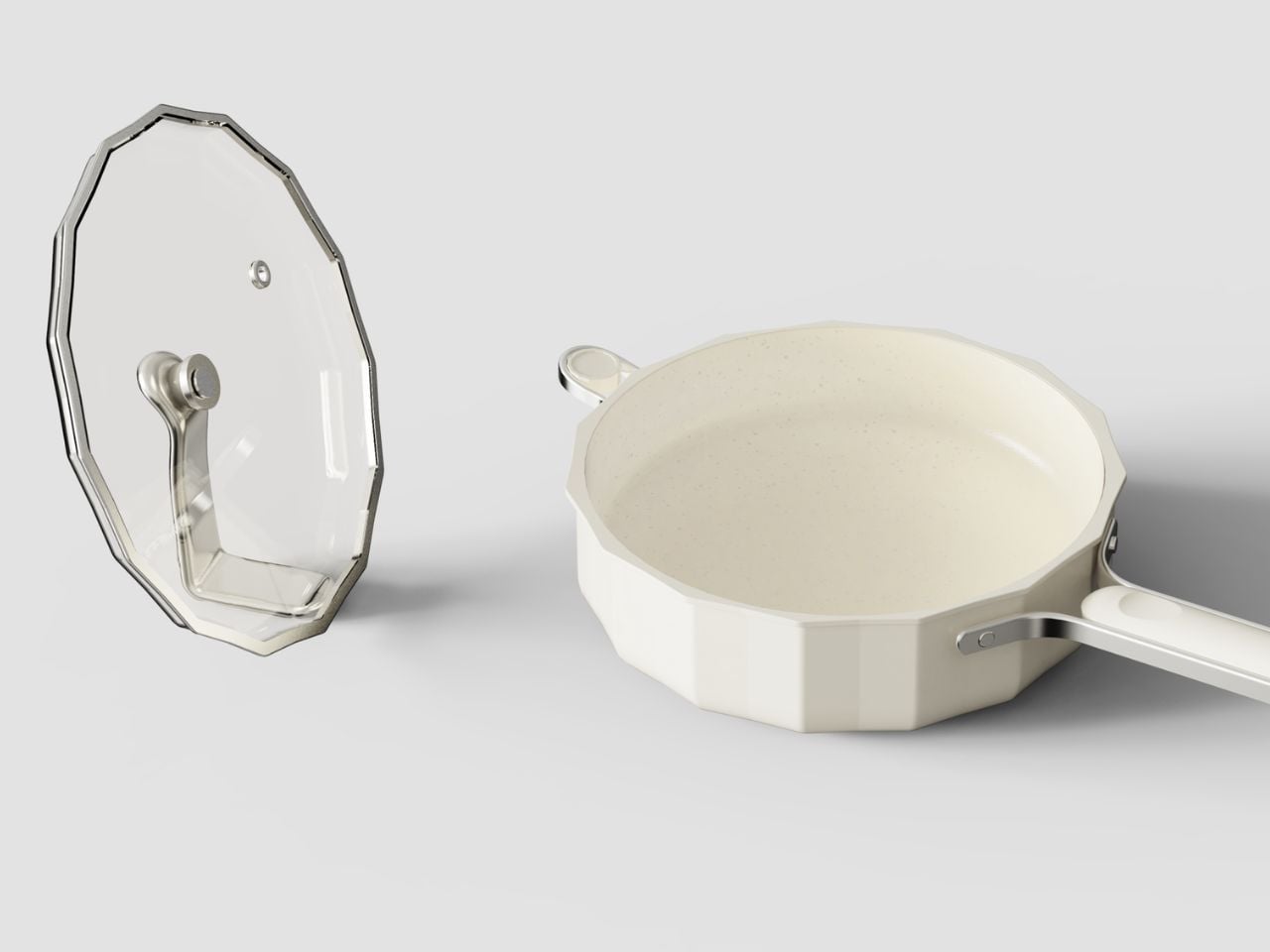
Genius Saucepan Lid Design Sits Vertically On Your Kitchen Counter While You Cook

Cookware is one of those product categories where familiarity can easily disguise bad design. A pan heats up, a lid comes off, a handle gets held. These actions are so routine that small frustrations are often accepted as part of cooking. Gresland Benc Artisan Cast Cookware approaches the category differently, treating each of these familiar interactions as an opportunity to reconsider how cookware should perform, feel, and age in a contemporary kitchen.

The cookware, designed by Christophe Paul Gresland for Gresland Benc Technology, was recognized as a 2025 European Product Design Award winner in the Home and Kitchen Accessories category. Much of its innovation sits beneath a deliberately restrained exterior. Its revolutionary multi-layered core, developed through advanced metallurgy, achieves greater thermal responsiveness and retention, heating 40% faster and distributing heat 30% more evenly than traditional cast counterparts while eliminating hotspots. For the cook, those numbers translate into something much more tangible: less waiting, more predictable results, and fewer areas of the cooking surface demanding constant attention.

Designer: Gresland-Benc Technology (Foshan) Co., Ltd., United Kingdom

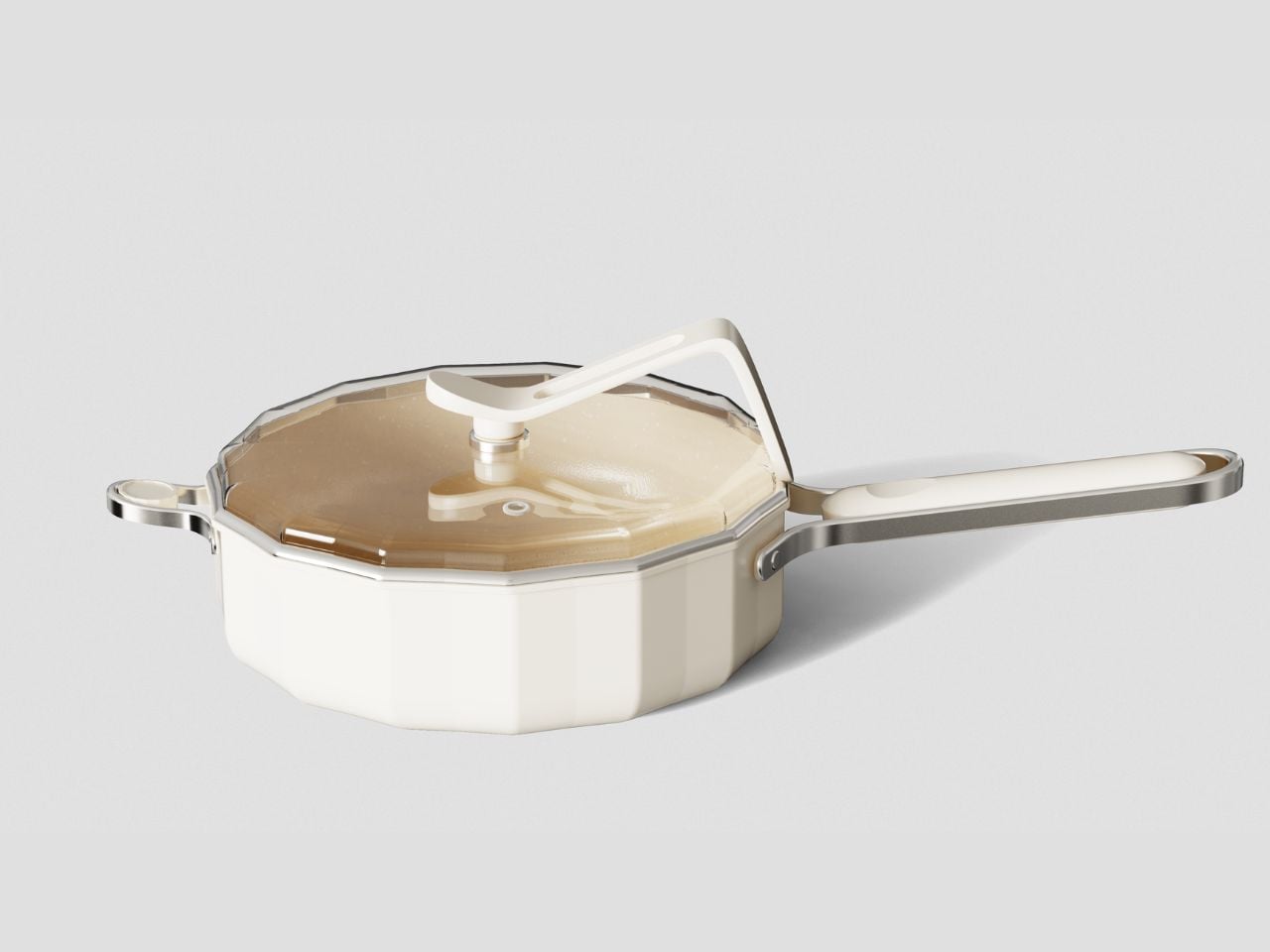
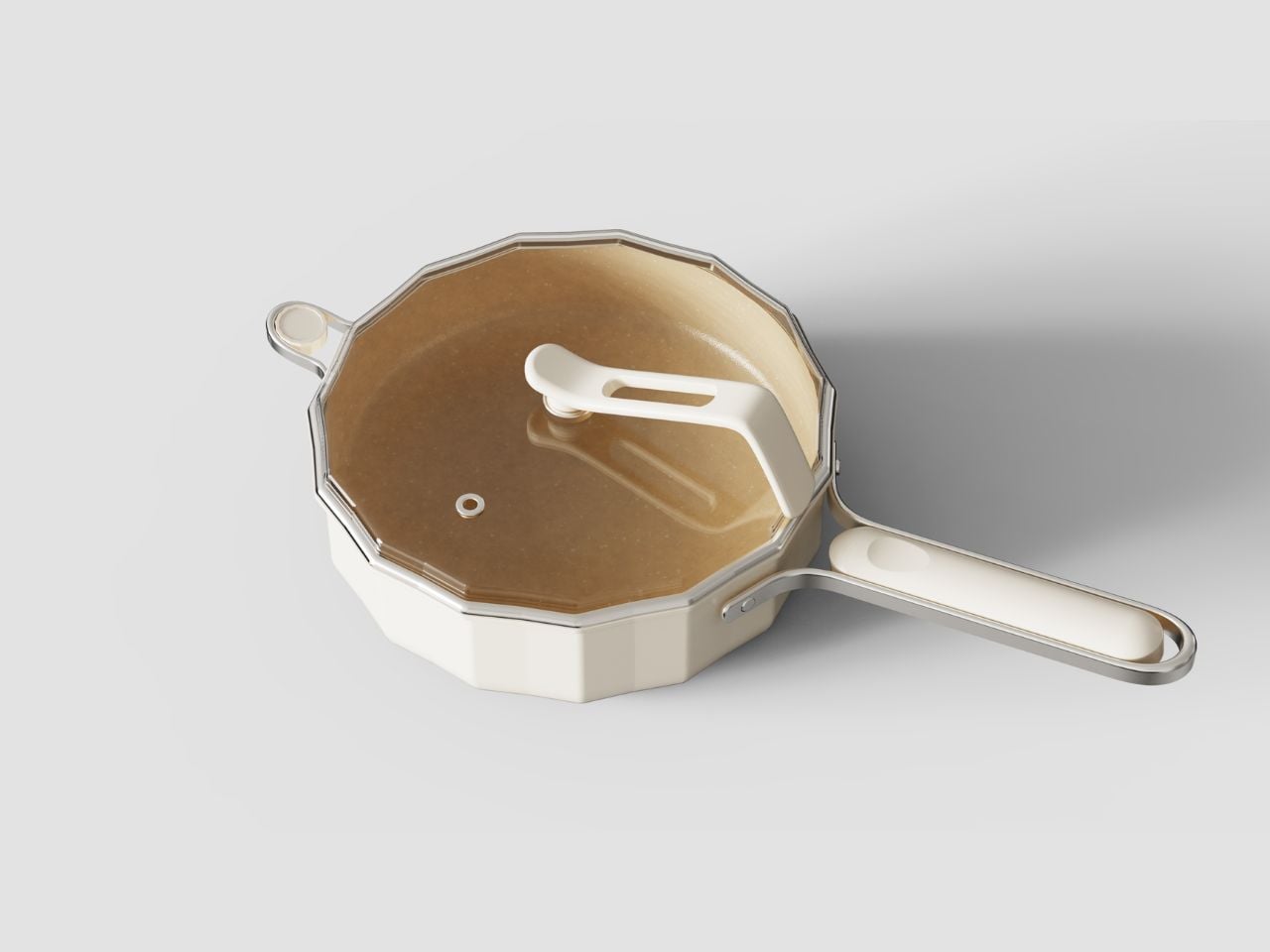
That performance is paired with some surprisingly thoughtful decisions around everyday use. The sculpted handle has been engineered for balance and comfort, but its more interesting contribution is how it responds to one of cooking’s most common and rarely addressed hazards. Removing a lid can release a concentrated burst of steam directly toward the hand. Here, the handle geometry has been considered specifically to reduce the risk of scalding from lid release steam. It is a small interaction, but one that reveals where the product’s priorities lie. Good kitchen design is rarely about adding more features. Often, it is about noticing where the user has quietly learned to compensate for the product.

The same thinking appears in details that are less dramatic but equally relevant. A flat base makes the cookware suitable for induction cooking ranges as well as conventional stovetops. It may seem like an expected feature today, yet it matters because cookware is usually purchased to last much longer than the appliance beneath it. Designing for different cooking environments makes the object more adaptable to changing kitchens and a broader range of users.

The external chamfered edges also bring function and form closer together. When the cookware is cold, the softened geometry provides a more comfortable surface to grip and maneuver. Visually, those edges prevent the form from appearing unnecessarily heavy, giving an otherwise substantial piece of cast cookware a more considered profile. It is an example of detailing that earns its place because it improves both handling and character.

Material choices extend that thinking beyond the immediate cooking experience. The cookware uses 85% recycled stainless steel alongside locally sourced components, while its zero-waste casting process is stated to meet B Corp environmental standards. For an object whose value is tied to durability, this feels particularly relevant. Sustainability is more convincing when it is embedded into how a product is manufactured rather than treated as an additional feature attached to it afterward.

There is still one consideration that deserves attention. A metal handle can potentially absorb and retain heat during prolonged cooking. Depending on the final thermal isolation and construction of the handle, users may still need to remain aware of its temperature, particularly during extended stovetop use. It does not undo the strength of the design, but it is exactly the kind of practical behavior that matters in a product built around everyday physical interaction.

What makes Gresland Benc Artisan Cast Cookware compelling is that its most meaningful decisions are not limited to one headline innovation. Thermal performance, safer lid handling, induction compatibility, comfortable edges, material responsibility, and visual restraint all contribute to the same experience. It is cookware designed with an understanding that refinement often happens in the moments people barely notice, until someone designs them better.

The post Genius Saucepan Lid Design Sits Vertically On Your Kitchen Counter While You Cook first appeared on Yanko Design.

Finally someone made a ‘Rock Guitar’ out of actual rock… And it honestly sounds good!

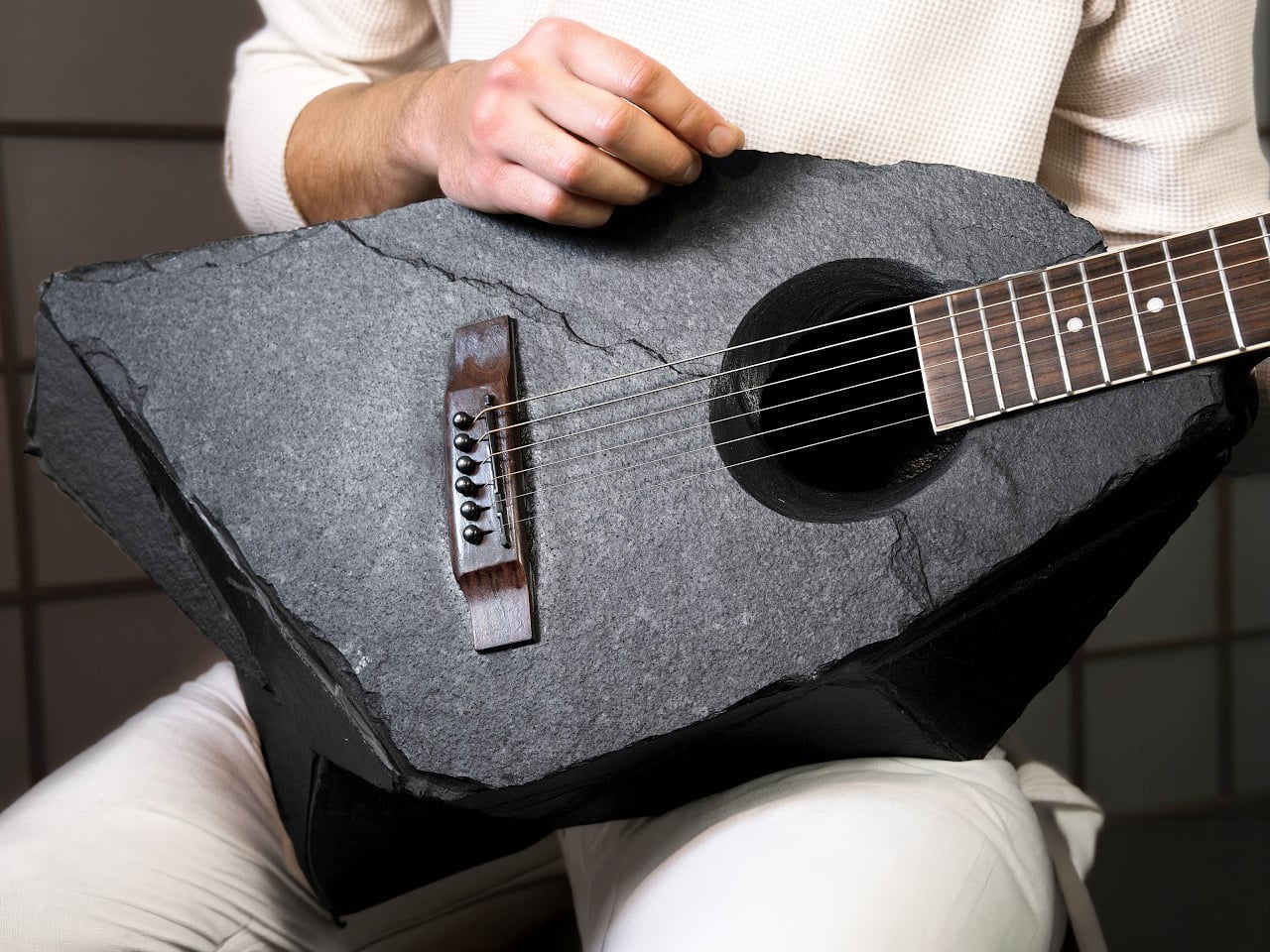
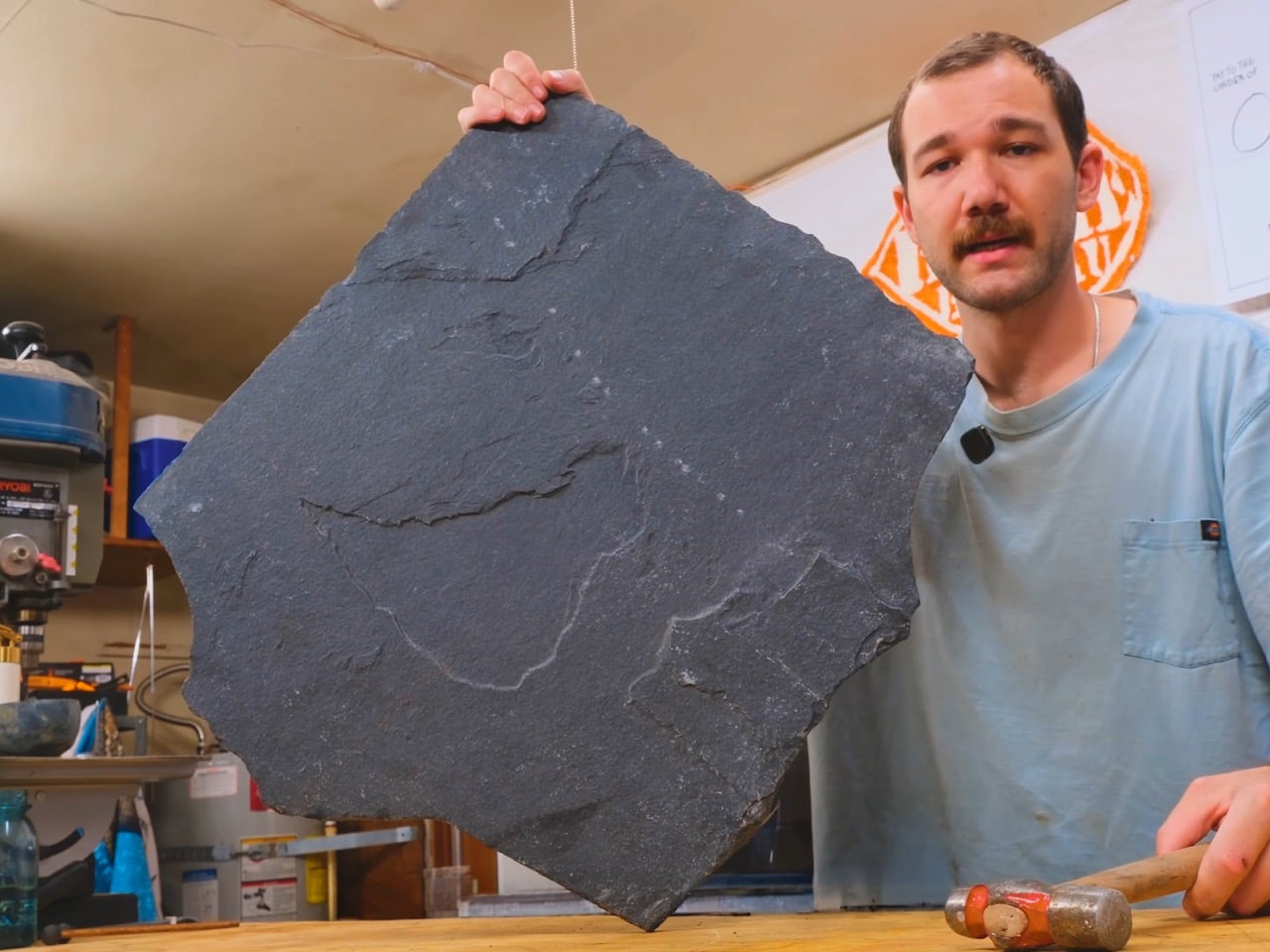
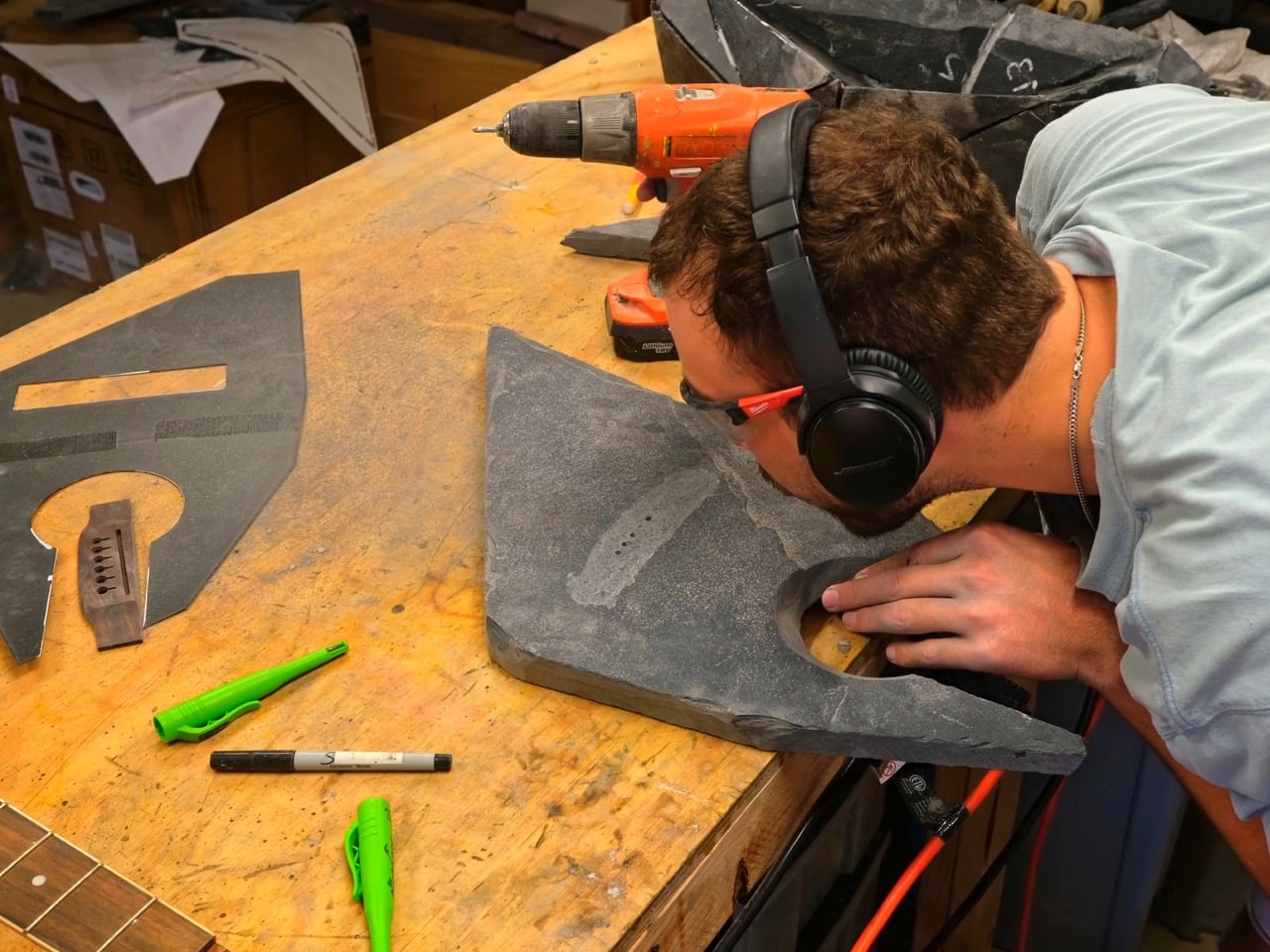
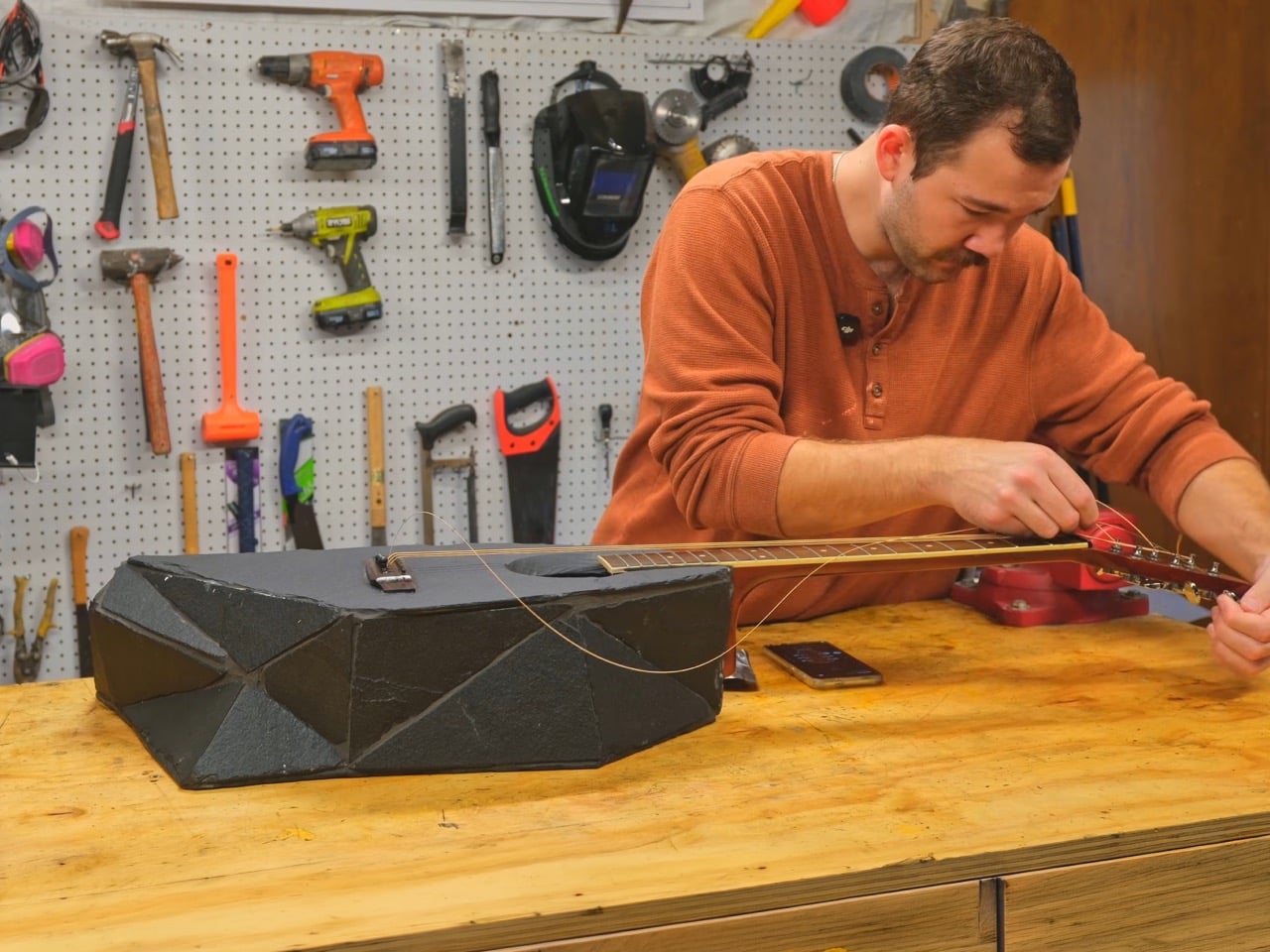
Almost every guitar ever made, acoustic or electric, comes from wood, which means the genre names have been lying to us the whole time. Rock guitar is not made from rock. Heavy metal is not made from iron ore. Somebody finally got tired of that gap between name and material, and a YouTuber going by BeBeau Builds decided the phrase “rock guitar” had the potential to be the greatest dad joke ever attempted with a table saw. So he sacrificed a perfectly good acoustic guitar, kept the fretboard, and built the rest of the instrument out of actual slate stone. It works. It plays. It is somehow real.

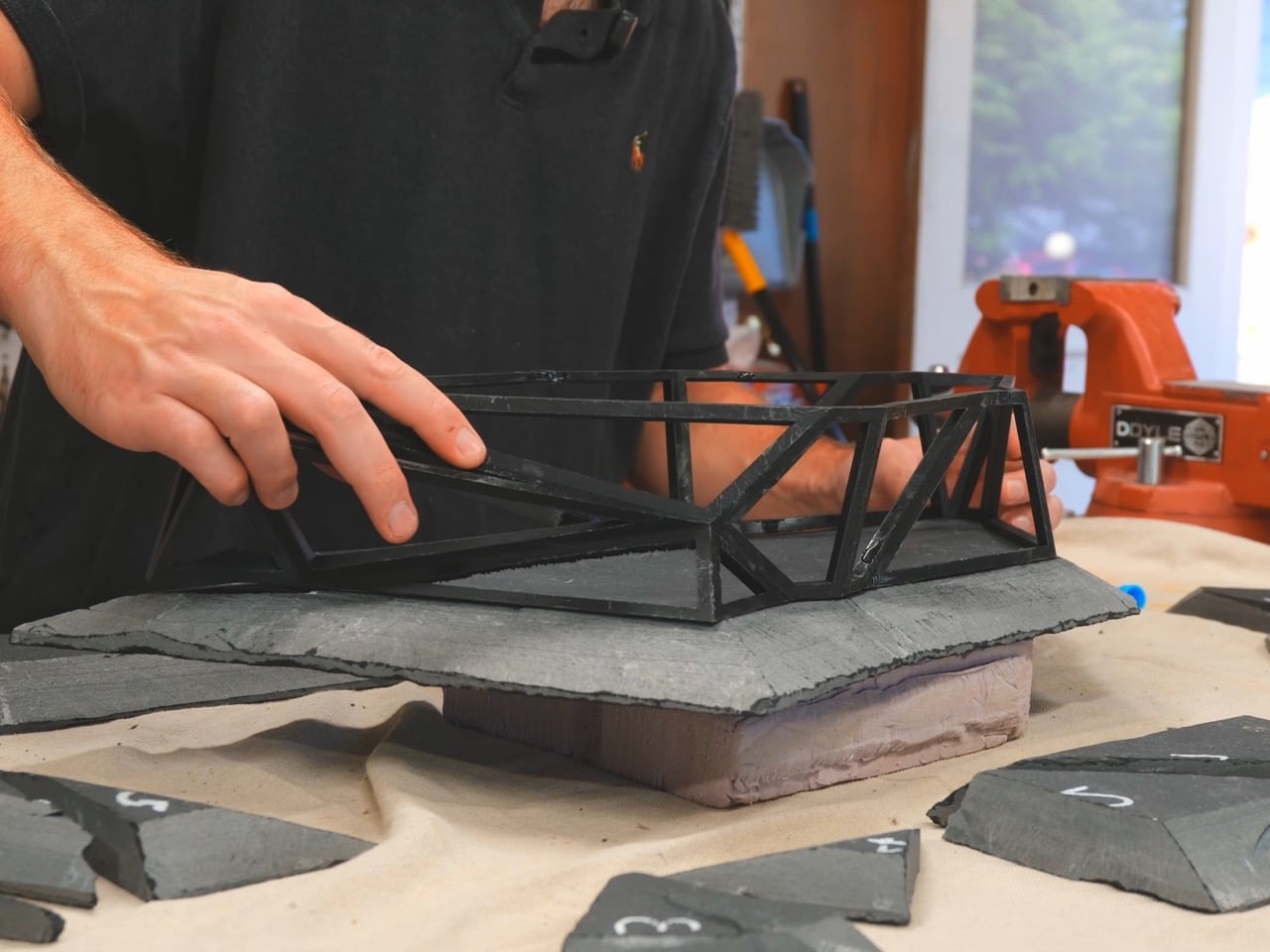
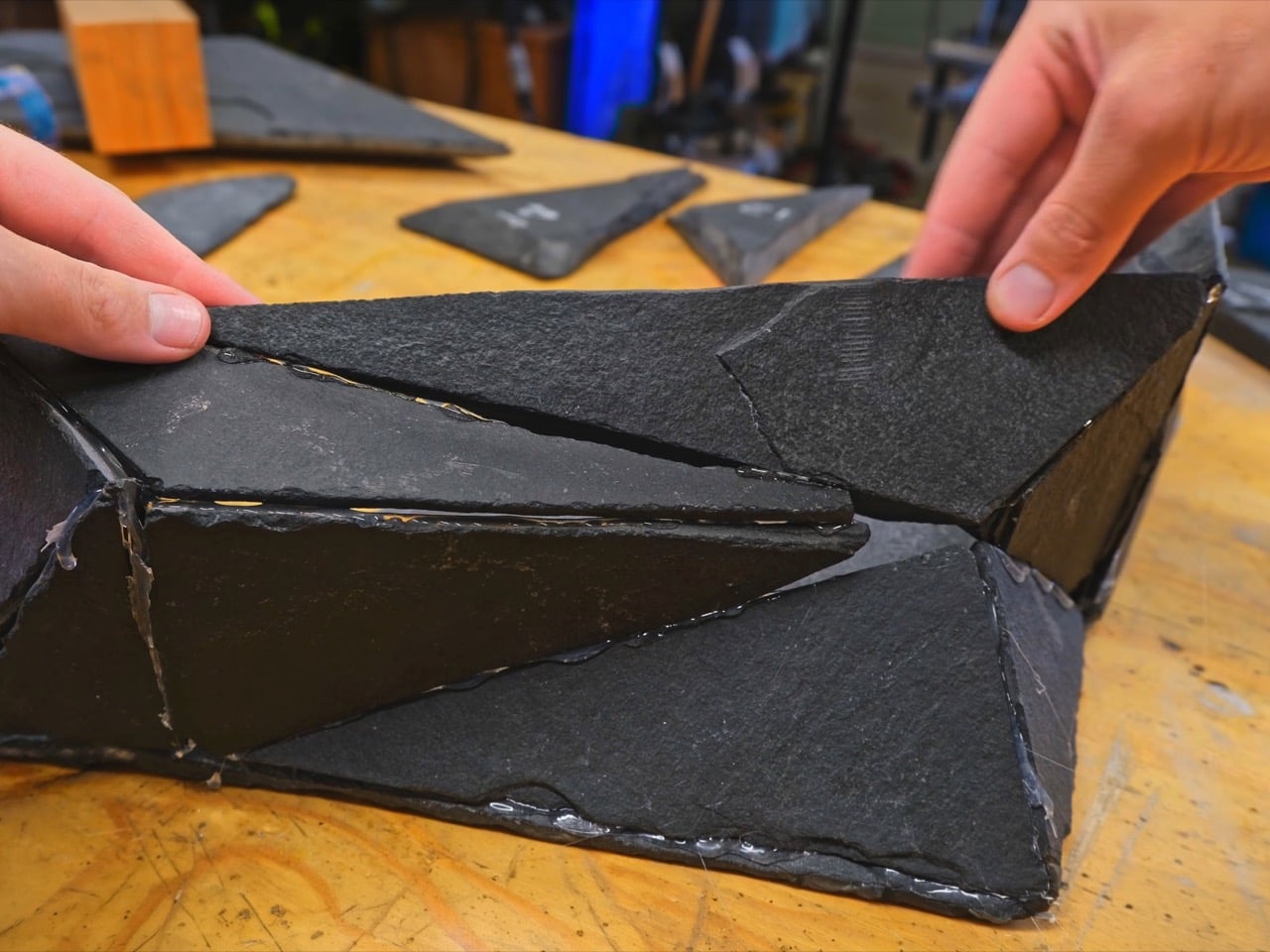
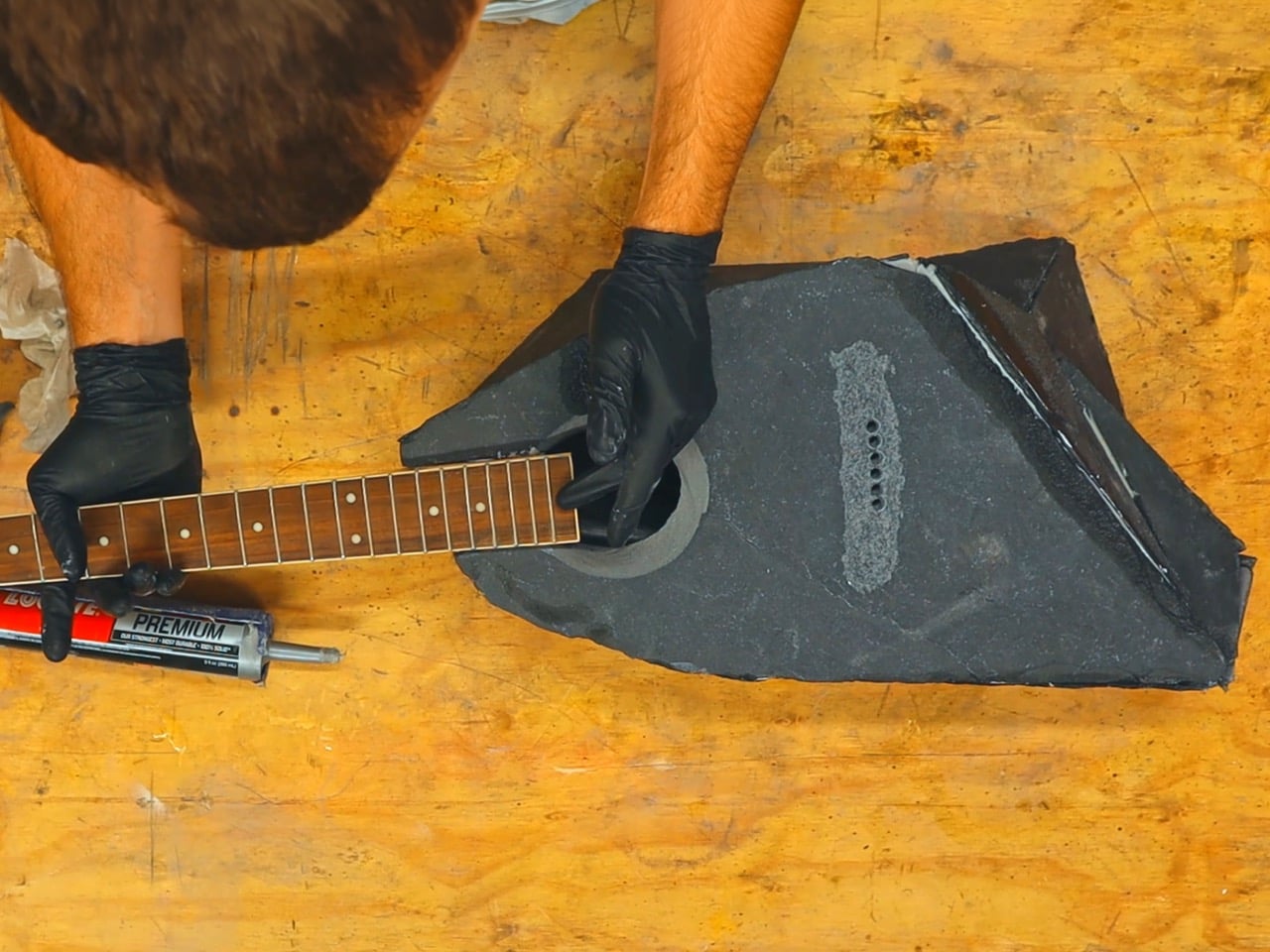
Repurposing the neck and fretboard from a donor acoustic, BeBeau built an internal armature to hold the stone in place, then pieced together individual slabs of slate into a guitar body that looks like the spiritual cousin of Rocky from Project Hail Mary. Eighteen separate stone pieces went into the shape, cut and glued over a 3D printed skeleton, because free handing eighteen matching slabs by eye would have ended several friendships. The finished instrument weighs just under 49 pounds, which is closer to a car battery than a guitar. Somehow it still sounds like one.

Designer: BeBeau Builds

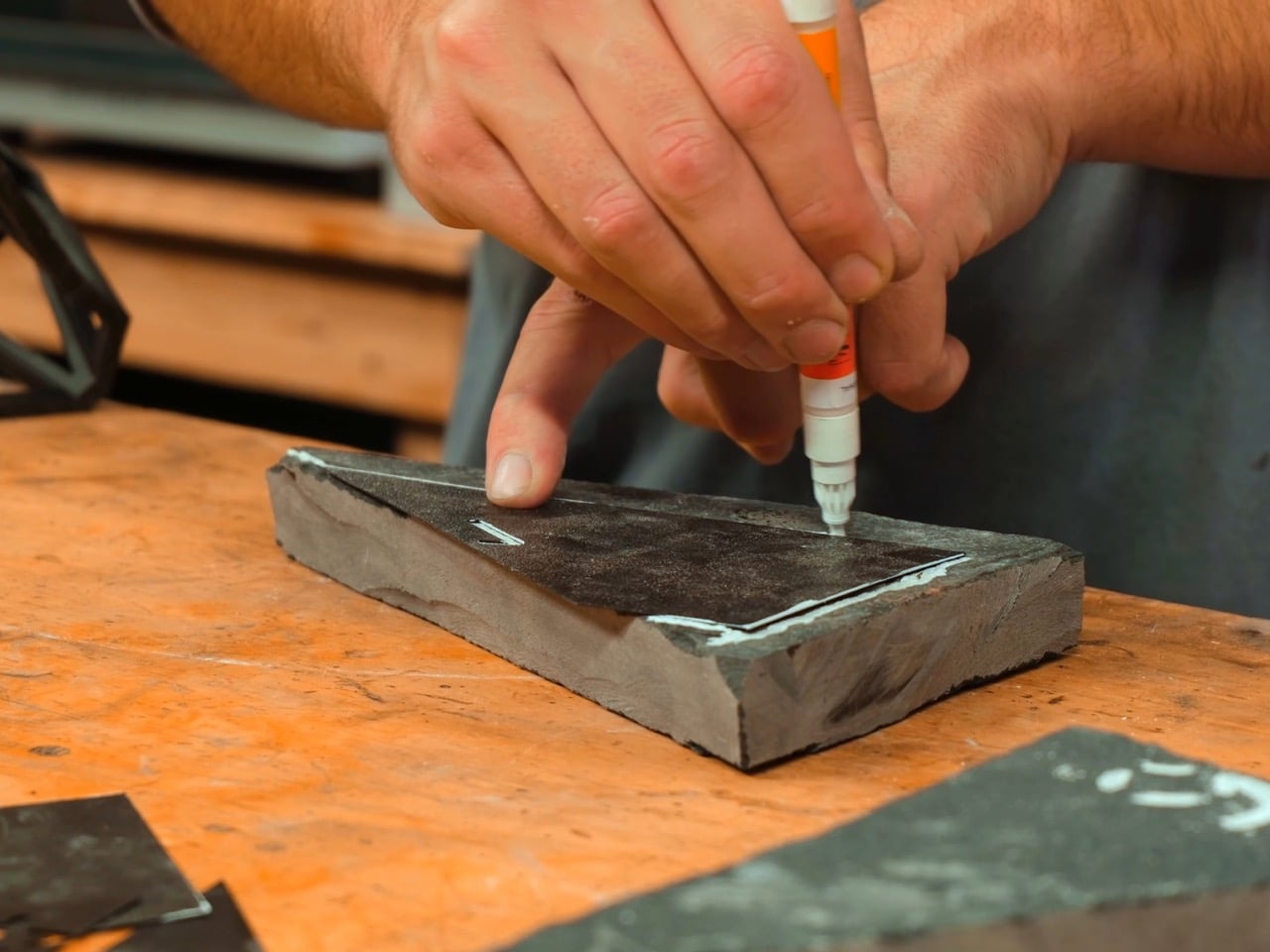
Slate was not exactly the obvious pick here, but it makes more sense for purely logistical reasons. The stone splits into clean, flat sheets naturally, which is exactly why it has been used for roofing tiles and pool tables for centuries, and that same property made it possible to cut consistent slabs for a guitar body instead of fighting a shapeless boulder. A tile saw got tried first and overheated almost immediately on material this thick, which tells you slate was never meant to be machined like plywood. The build leaned on 3D printed templates to keep eighteen individually cut pieces close enough in dimension to actually fit the internal skeleton. Even with that help, thickness varied enough across slabs that small angle errors piled up until the whole assembly stopped lining up, forcing a redo.

The first full glue attempt failed outright and had to be scraped clean by hand, a multi hour job that nobody signs up for twice. The fix was smarter the second time around, using hot glue as a temporary skeleton while construction adhesive filled the gaps and did the actual structural work over several days of curing. One piece of the soundboard cracked during shaping, which is the kind of moment that ends most builds, except a spare slab was on hand and it turned out to have even better tone than the original. Mineral oil went on at the end, both to protect the stone and to give it the same worn, wet look you would expect from a countertop rather than a guitar.

Here is the part that actually surprised me. Strummed unplugged, this thing sounds a lot closer to a normal wooden acoustic than a 49 pound rock guitar has any business sounding, trading off mostly in reduced volume and shorter sustain rather than some completely alien tone. Compare that to steel bodied resonators like the Dobro, which change an instrument’s voice dramatically even at a fraction of this weight, and slate starts looking less like a stunt and more like a real data point on how much a guitar’s material actually shapes its sound. The trade-off is obvious and unavoidable. Nobody is retiring their dreadnought for a slab of rock that weighs as much as a mini fridge shelf, and the neck angle on this build is slightly off, which stretches the strings sharp under fretting pressure.

Still, as a proof of concept, it lands. Burls Art has made a habit of testing whether guitars actually need to be guitar shaped materials at all, and we covered his cardboard guitar, built from laminated corrugated sheets and resin, which he engineered by studying the alternating grain structure of the Wiggle Side Chair to survive real string tension. Before that there was a fully functional bass built from 2000 LEGO bricks, and a guitar whose body was cast from 5,000 roasted coffee beans suspended in epoxy, so a rock guitar fits an established pattern of testing lutherie against materials that have no business holding a string. BeBeau’s slate build earns its place in that lineup by actually working as an instrument instead of just posing as one. A trained player still needs to put this through its paces before anyone calls the tonal verdict final. Until then, the dad joke holds up, and honestly, that might be the best review it needed.

The post Finally someone made a ‘Rock Guitar’ out of actual rock… And it honestly sounds good! first appeared on Yanko Design.

Porsche’s 550 J is a racing legend shrunk into an electric track-day car

The Porsche 550 Spyder occupies a special place in the brand’s motorsport history. Developed specifically for racing, the lightweight mid-engined sports car proved that clever engineering and low weight could challenge competitors with considerably larger engines. At the 1954 Carrera Panamericana, factory drivers Hans Herrmann and Jaroslav Juhan took their 550 Spyders to third and fourth overall while winning their class, covering the demanding 3,077-kilometre race route.

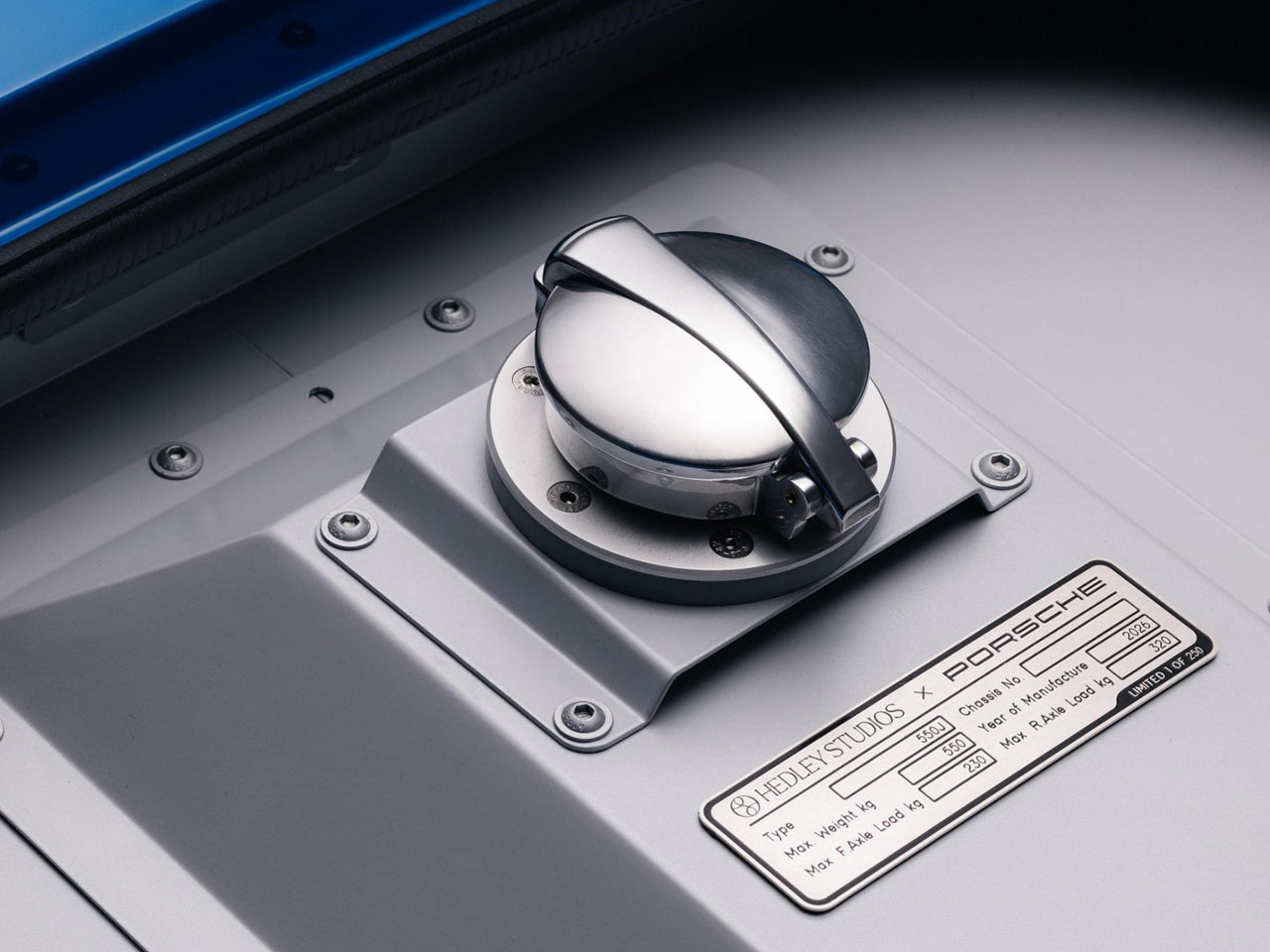
For the 75th anniversary of Porsche Motorsport, Hedley Studios has reinterpreted that racing icon as the Porsche 550 J, an officially licensed electric replica built at approximately 80 percent of the original’s size. The “J” stands for Junior, but this is not a toy. It is a handcrafted two-seater intended for collectors and enthusiasts who want to experience the character of a historic Porsche in a much smaller package. Only 250 examples will be produced.

Designer: Hedley Studios and Porsche

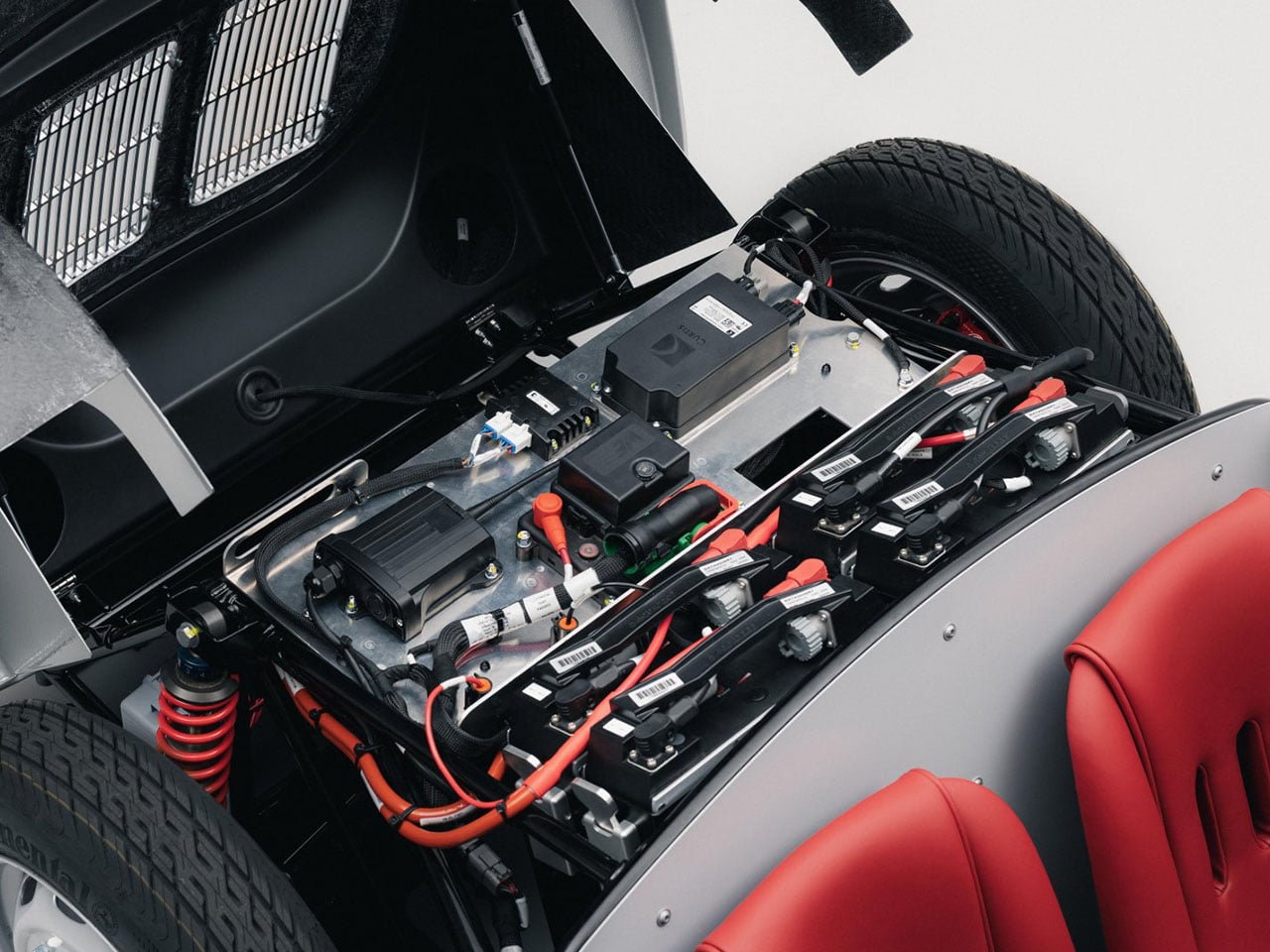
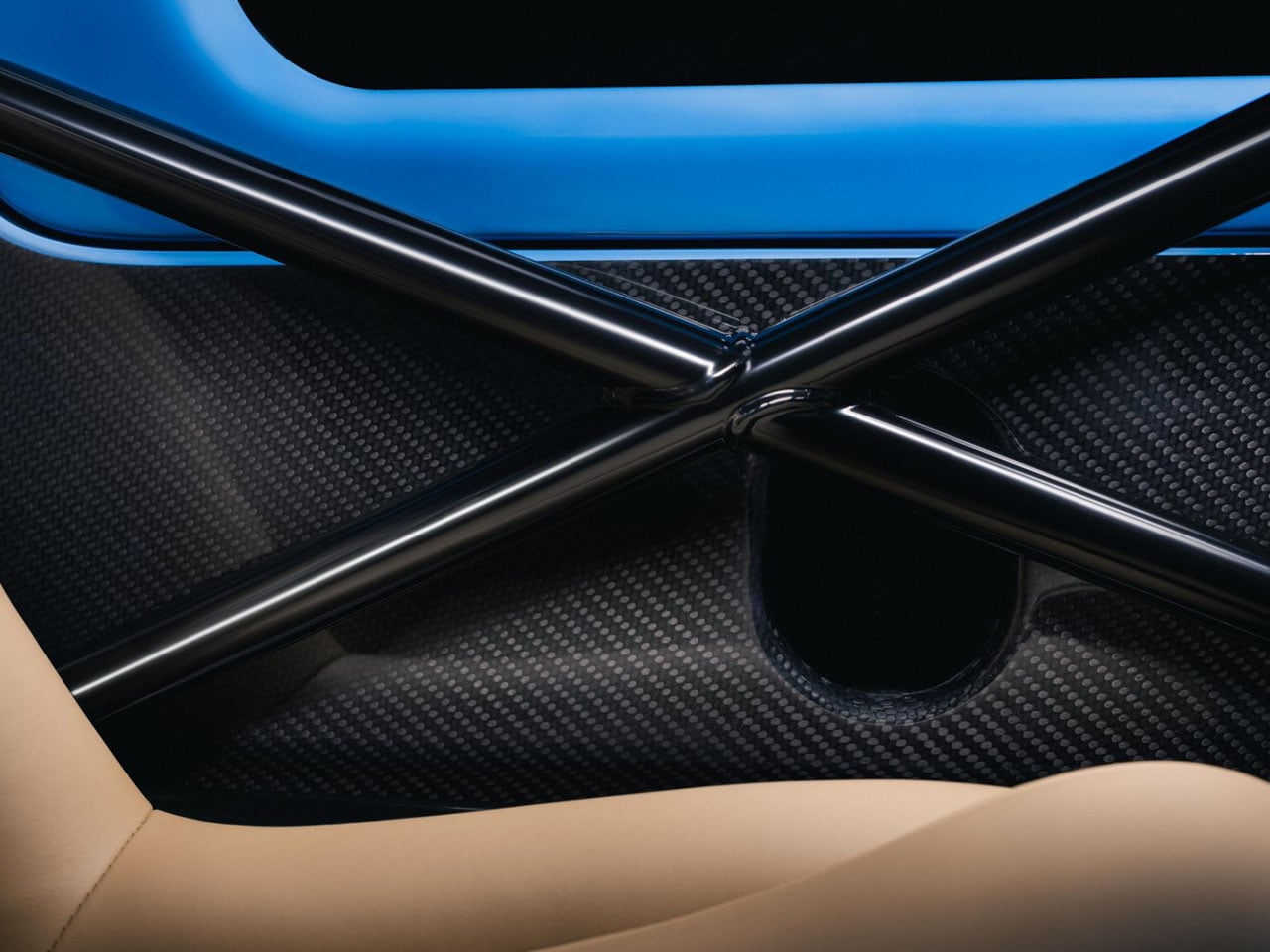
The compact proportions measure around 2.9 metres long and 1.2 metres wide, yet the scaled-down body still accommodates two adults. Porsche provided Hedley Studios with access to its corporate archives and an original 550 during development, helping the British company capture the proportions and details of the original without simply producing a museum-style replica. The carbon-fibre body sits over a steel space-frame chassis, while the battery pack is positioned behind the seats to recreate the weight distribution and mid-engined character of the original.

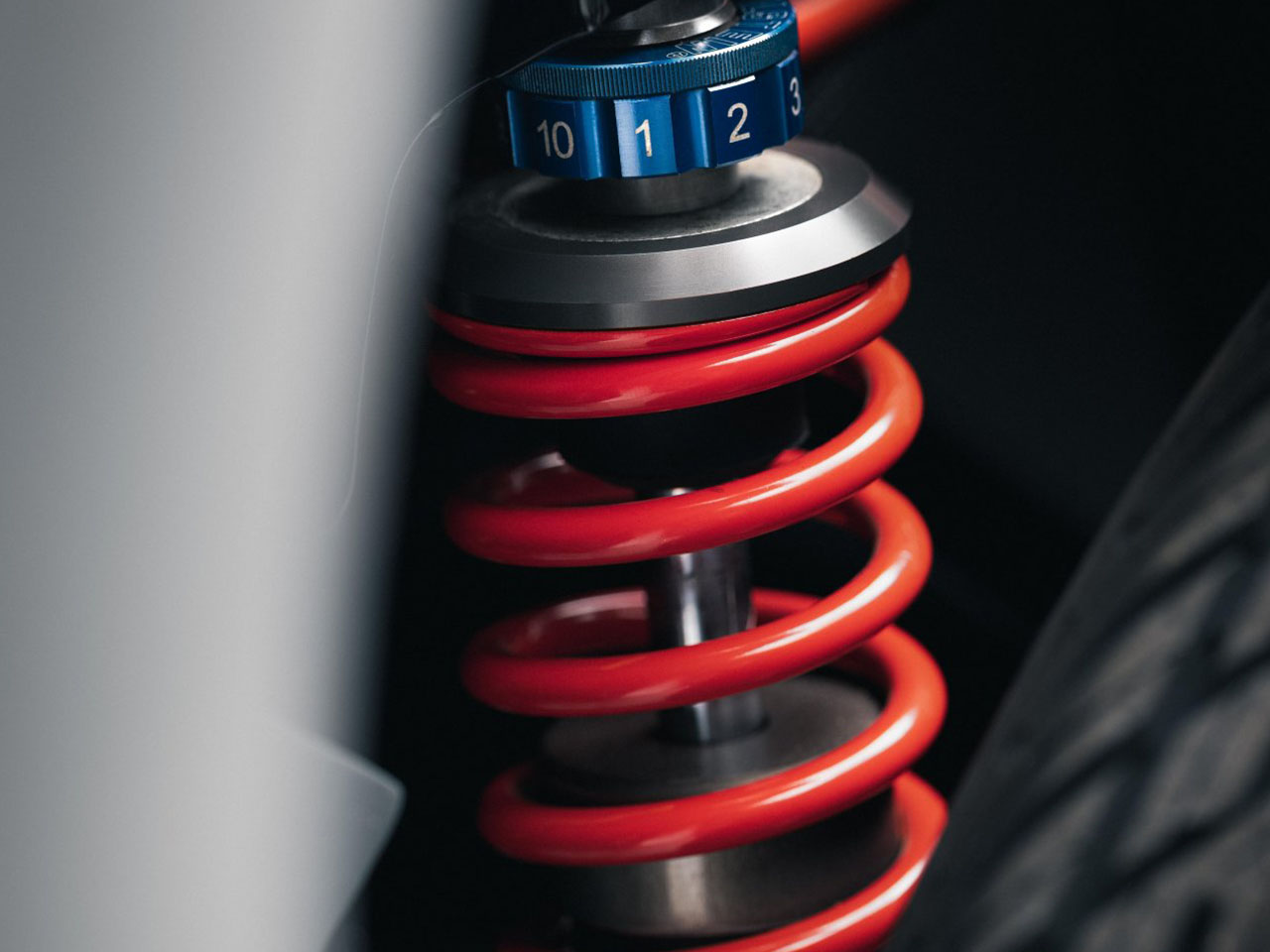
Electric power gives the 550 J a distinctly modern interpretation of the classic formula. Its 48-volt drivetrain produces 8 kW in standard form, with an RS Package increasing output to 16 kW. The standard version can reach approximately 80 km/h, while the RS version raises the top speed to around 50 mph. The RS Package also adds drilled brakes and adjustable dampers, while four drive modes—Novice, Comfort, Sport and Race—bring a contemporary interface to the otherwise vintage-inspired cockpit.

The chassis is equally important to the experience. Hedley has adapted the original 550’s trailing-arm suspension for the smaller car, combining it with Bilstein coilover dampers, Eibach springs and Brembo brakes. Custom switchgear inspired by Porsche’s modern Taycan adds another subtle connection between the 1950s original and its electric successor.

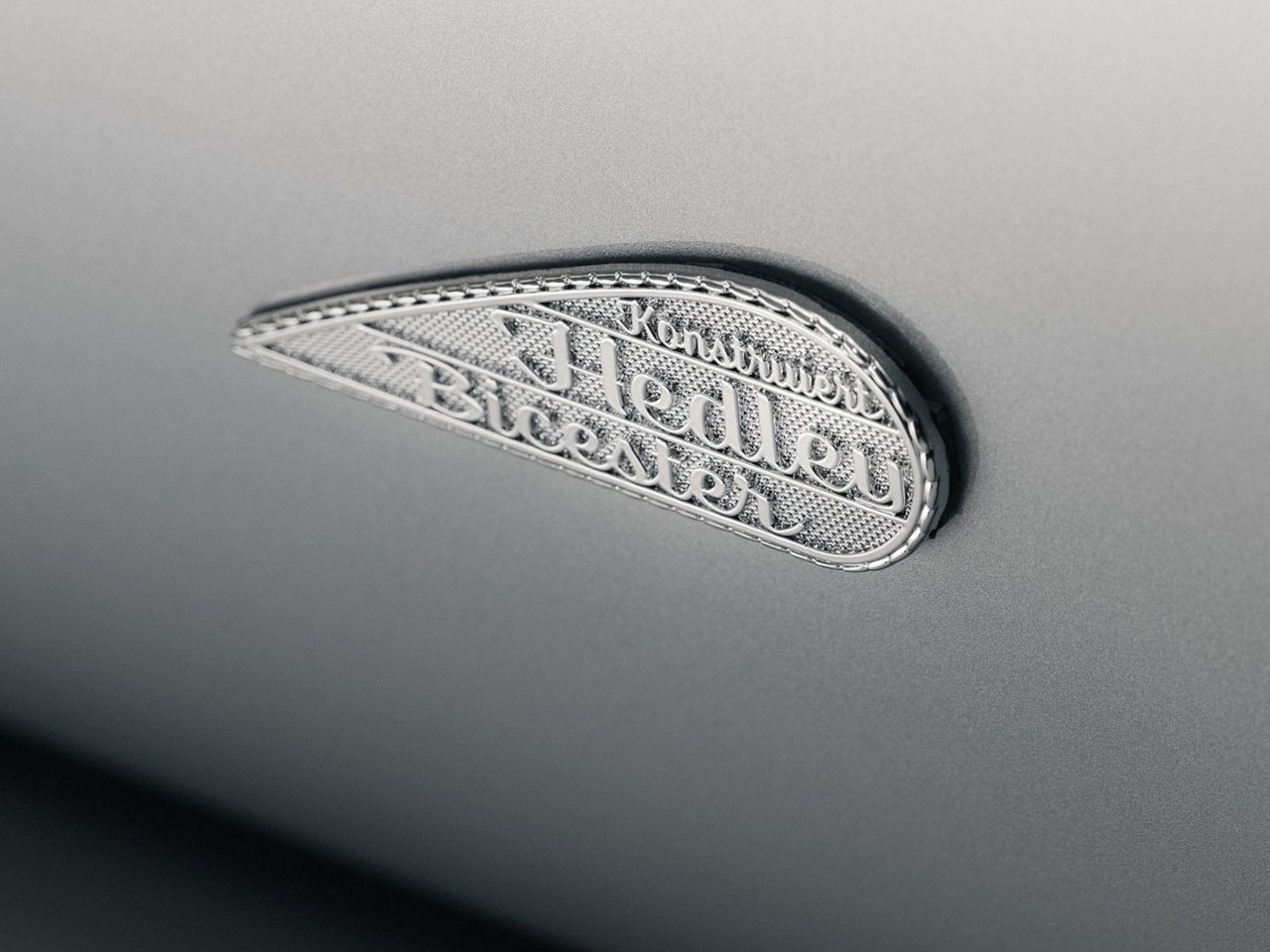
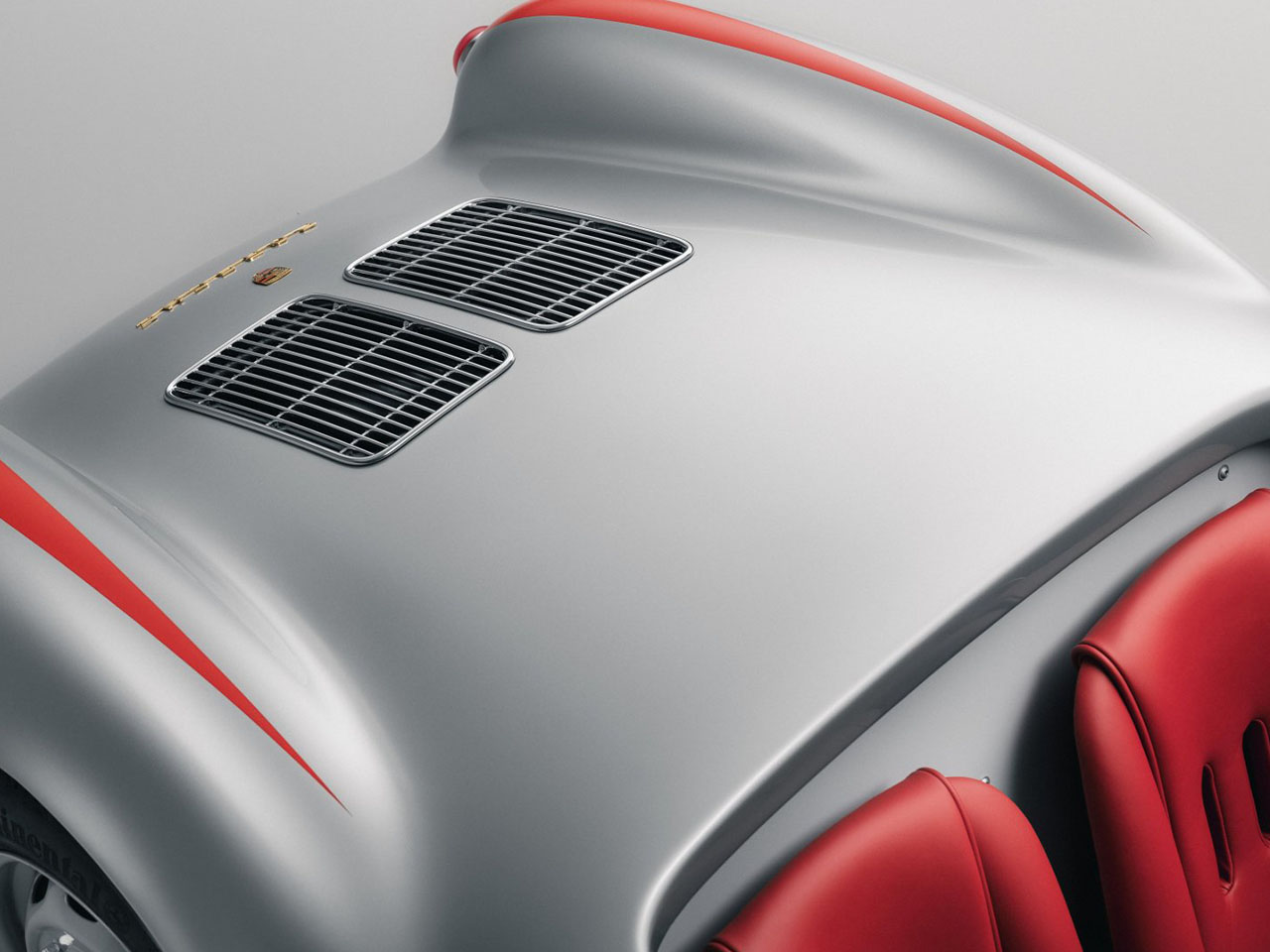
Visually, the 550 J stays close to the elegant simplicity that made the original distinctive. Buyers can choose Porsche Silver alongside heritage-inspired blue, white, yellow and red finishes, while Hedley’s Bespoke programme opens up further paint, livery and detail combinations. Every example is handcrafted at Hedley Studios in Bicester, UK.

The Porsche 550 J is not road legal, so its natural home is a private estate, closed course or suitable track environment. Pricing starts at £69,500 (approximately $93,500), with deliveries expected from spring 2027.

The post Porsche’s 550 J is a racing legend shrunk into an electric track-day car first appeared on Yanko Design.

Huawei FreeBuds Neo Review: Style, Comfort, and a Strong Feature Set

PROS:


  • Exceptionally comfortable fit

  • Great overall performance for the price point

  • Nebula Pink gives the design real personality

  • Pleasant, well-rounded sound

    CONS:


    • Some Huawei smartwatch features were not available during testing

    RATINGS:

    AESTHETICS
    ERGONOMICS
    PERFORMANCE
    SUSTAINABILITY / REPAIRABILITY
    VALUE FOR MONEY

    EDITOR'S QUOTE:

    The FreeBuds Neo are not about chasing flagship bragging rights. They are about getting the everyday essentials right, and doing it with a bit more style than most.
    award-icon

    Huawei has been on a bit of an audio expansion streak lately. It now offers everything from traditional in-ear earbuds to open-ear and clip-style designs, and the company has openly said it wants to become the number one audio brand. In many ways, it feels like Huawei is trying to repeat the kind of success it has already had with smartwatches, building out a wider ecosystem instead of relying on just one or two standout products.

    That bigger push has also made the lineup more crowded. On the in-ear side, Huawei already has the premium FreeBuds Pro, the comfort-focused FreeBuds, the more affordable FreeBuds i, and the entry-level FreeBuds SE. The FreeBuds Neo feel like the pair meant to fill the gap in between, offering something a little more polished and feature-packed without tipping too far into premium pricing.

    Designer: Huawei

    That alone makes them interesting. I went into this review with fairly high expectations because the Huawei FreeBuds Pro 5 are still one of my favorite earbuds for ANC and sound quality. The FreeBuds Neo are clearly not trying to play in that league, but they do feel like an important part of Huawei’s bigger audio plan, and a pair that could end up appealing to a much wider audience.

    Aesthetics

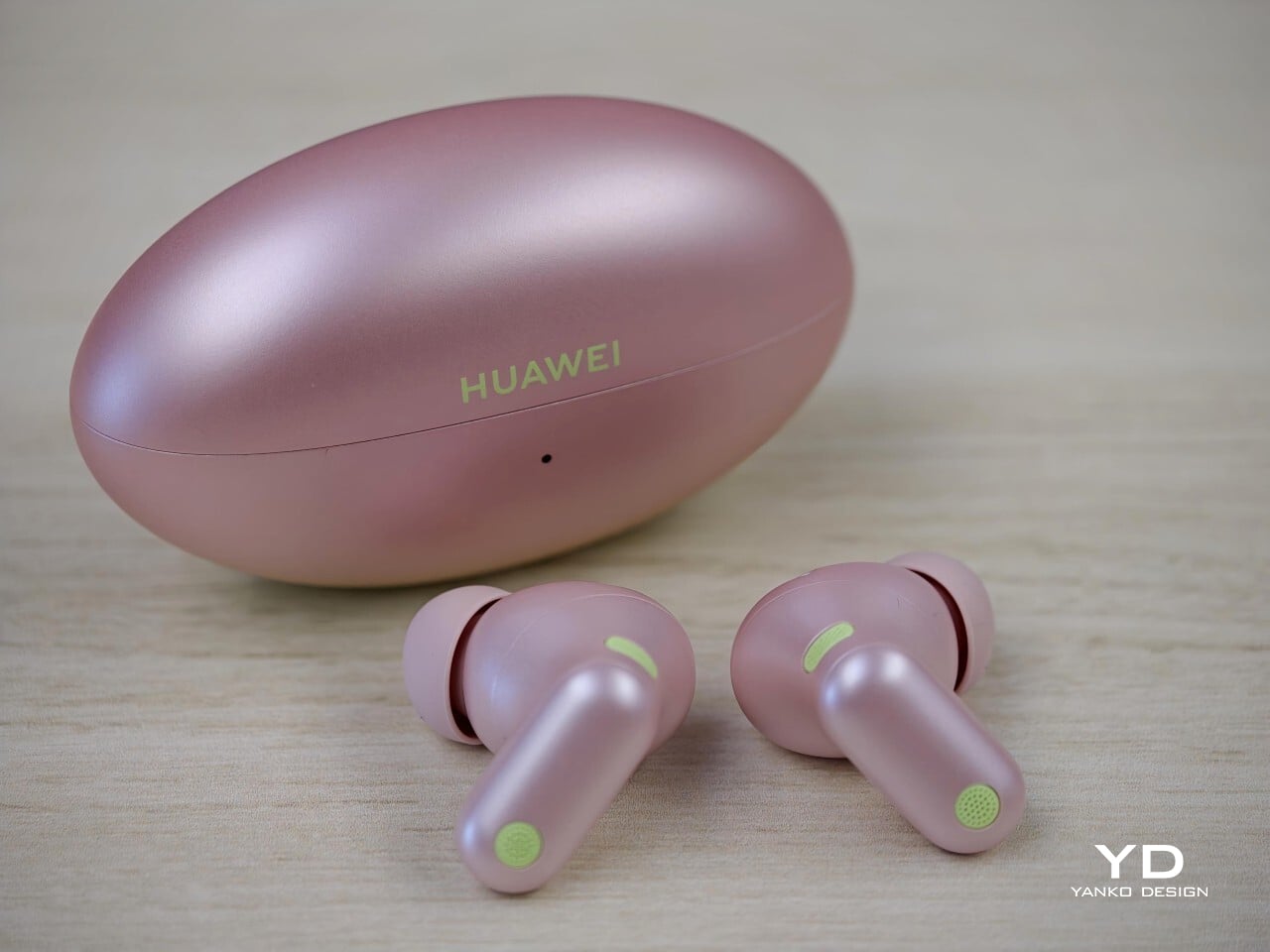
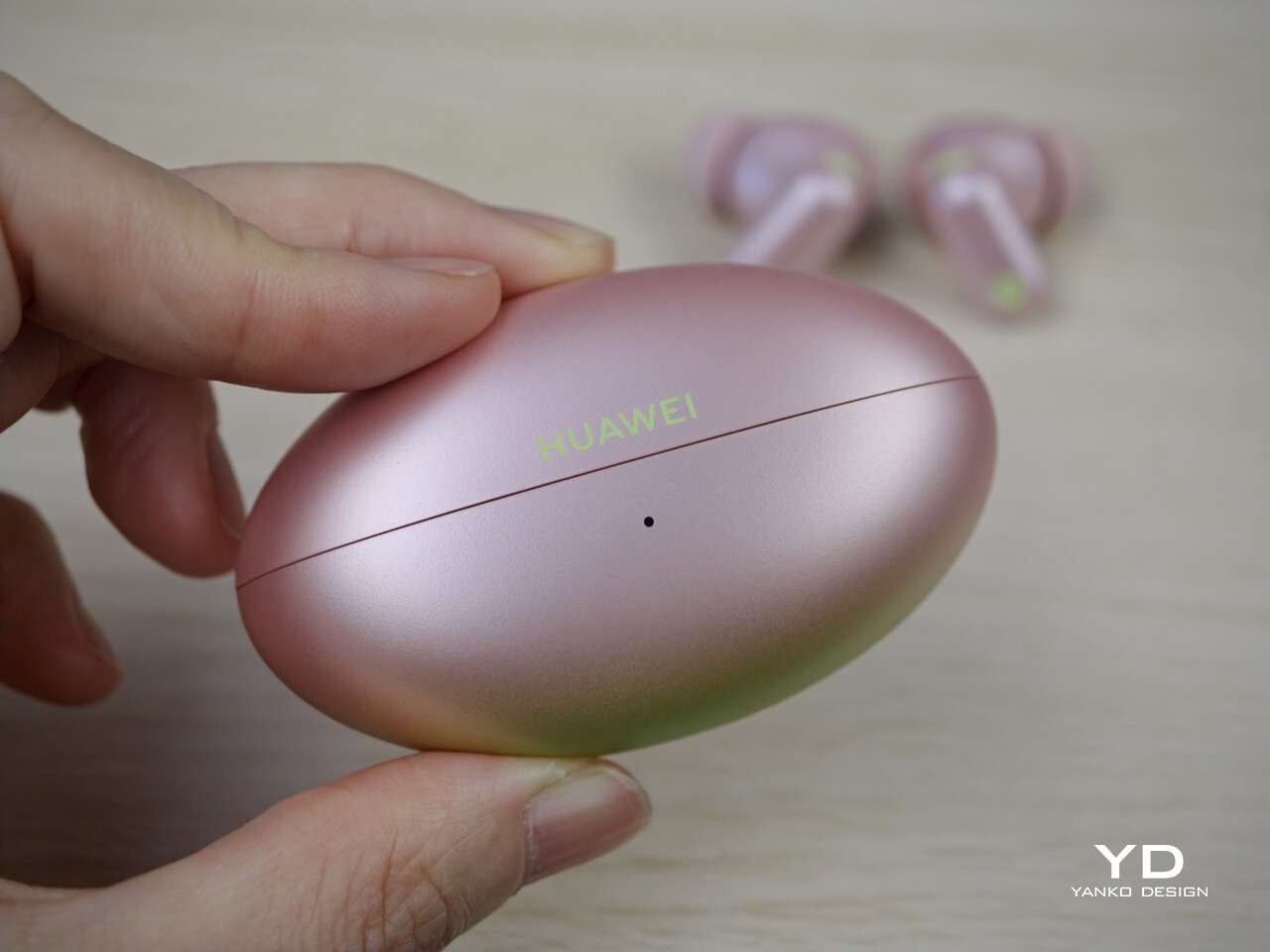
    The Huawei FreeBuds Neo brings a bit more personality than the usual square or pebble-shaped earbud case. The case has an elongated oval shape, almost like a small American football, which gives it a more distinctive look than most budget rivals. It feels a little more sculpted than the norm, while still fitting nicely in the palm.
    Nebula Pink is easily the most interesting finish in the lineup. Most of the case is a soft pink with a muted metallic sheen, while the bottom fades into a pale light green with a gentle gradient between the two. It adds more depth than a flat single-tone finish and helps this version feel less generic than the plainer Stellar Silver, Ice White, and Starry Black options.

    The earbuds themselves follow a familiar stem-based design, but the stems are relatively short, which helps them look tidier in the ear. They are finished in the same pink tone, with light green accents that tie in neatly with the case. In this color, the FreeBuds Neo feel more expressive than many affordable earbuds, while the other finishes are much more straightforward.

    Ergonomics

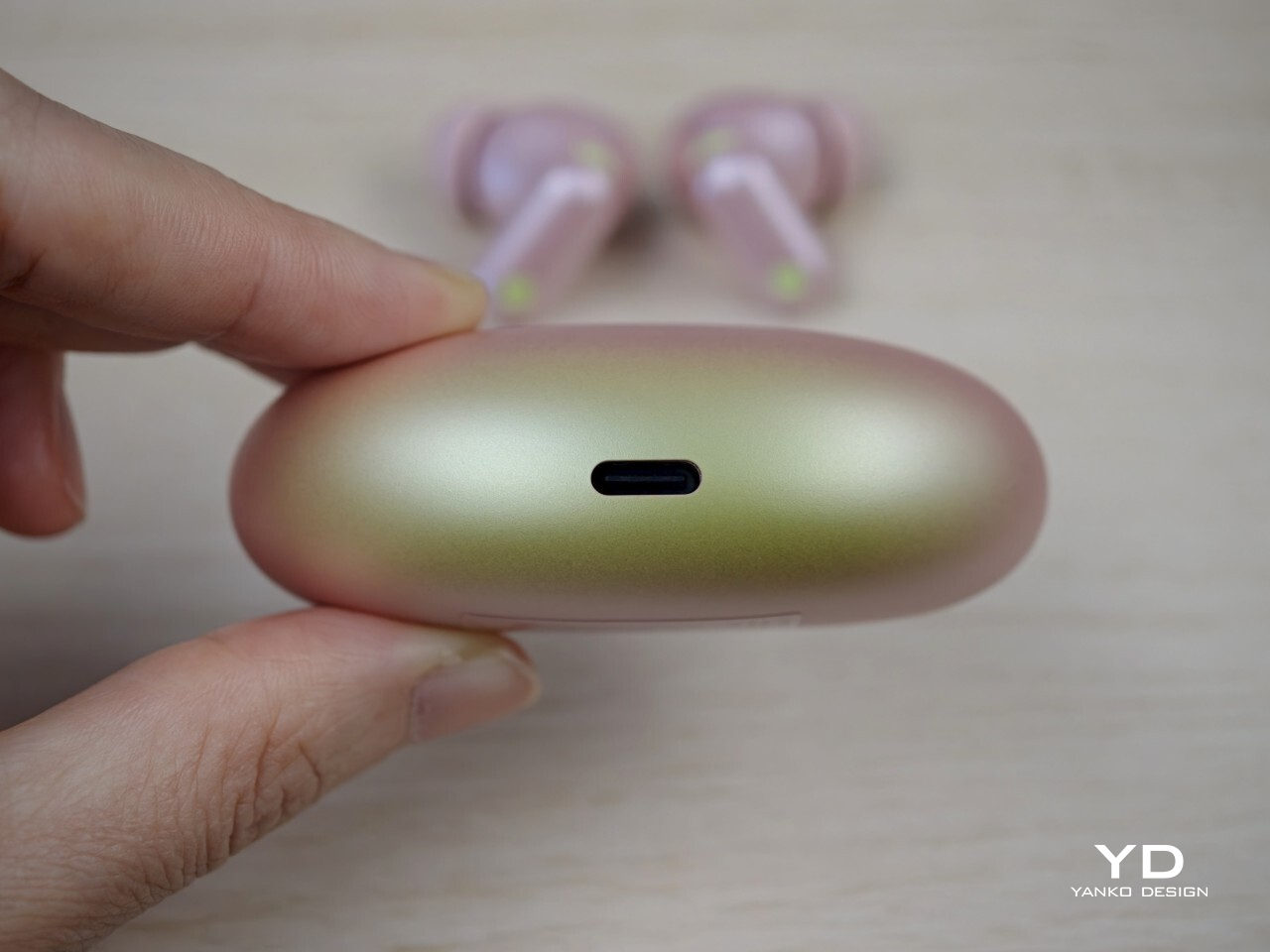
    The case is easy to live with. Its elongated oval shape sits nicely in the palm, and the smooth curves make it easy to slip into a pocket or small bag. It is compact without feeling fiddly, which is exactly what you want from something you will be reaching for throughout the day.
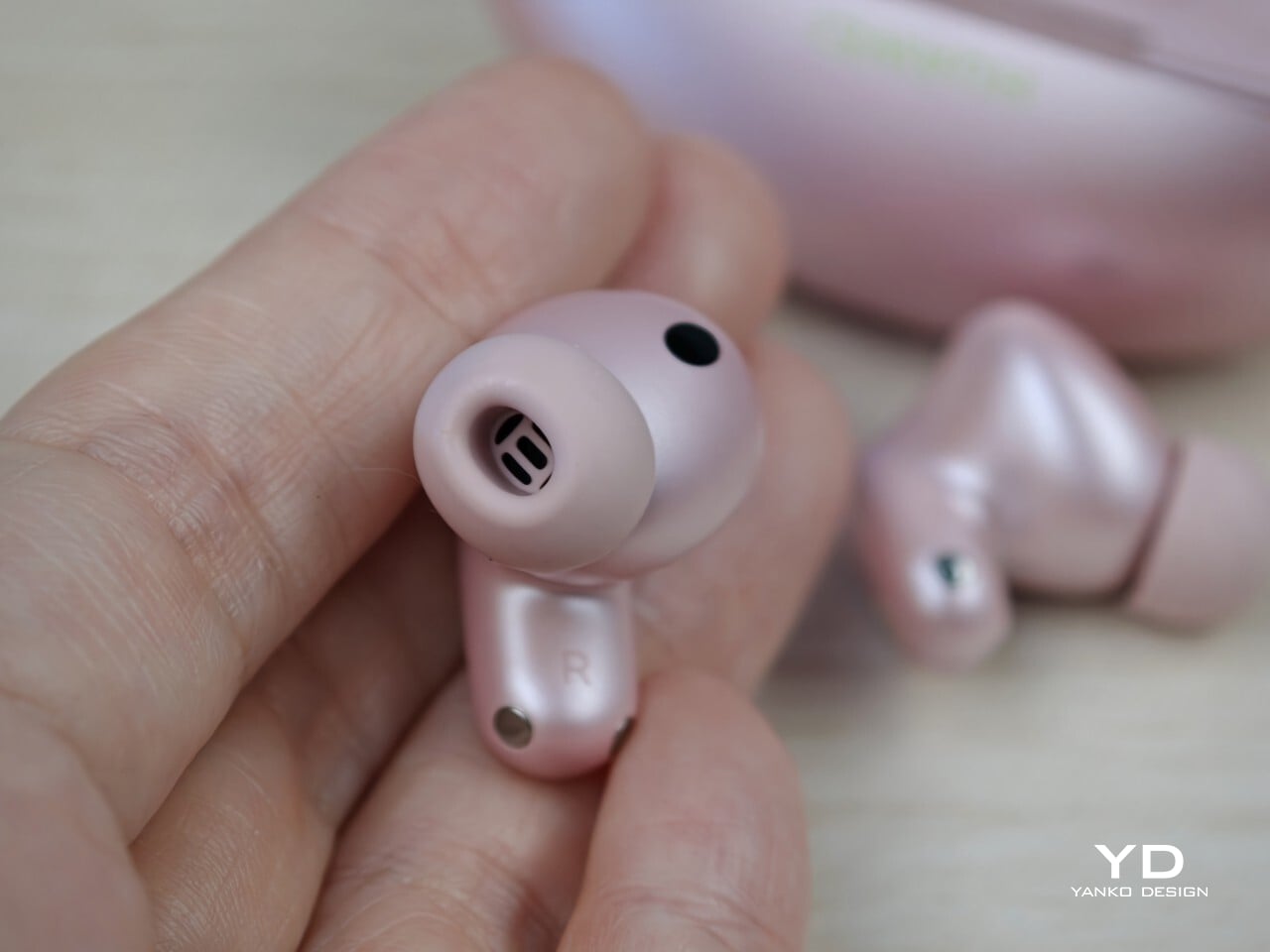
    The earbuds are also very light at just 0.17 ounces, or 4.9g, each, and that helps a lot with comfort. The short stems are not just there for looks. They improve weight distribution, so the earbuds feel more balanced in the ear instead of hanging downward like some longer-stem designs. The downside is that they are not quite as easy to handle when adjusting them or placing them back into the case, simply because there is less stem to grab.

    For me, these are among the most comfortable earbuds I have used. I actually found them more comfortable than the Huawei FreeBuds Pro 5, even though that is the more premium model in Huawei’s lineup. The short stems make a bigger difference than expected, especially when lying back or resting your head to one side. On an overnight flight, I could lean against my neck pillow without them digging in or becoming annoying, which is not something I can say about every pair of stem-based earbuds.

    Huawei includes extra silicone tips in XS, S, and L sizes, which is about what you would expect for in-ear earbuds. The companion app also includes a tip fit test, which can tell you whether the seal is good or not. It is a simple feature, but a useful one if you are unsure about fit.

    Performance

    The FreeBuds Neo are tuned for easy everyday listening rather than showy first impressions. They sound clean, balanced, and generally pleasant across music, videos, podcasts, and calls. Vocals come through clearly, there is enough bass to give tracks some weight, and the overall tuning avoids sounding too sharp or tiring over longer sessions. They also support LDAC and Hi-Res Audio, which is a nice bonus on a pair of earbuds at this level, especially for listeners who want access to higher-quality wireless audio.

    The ANC is good for the price. It does a solid job softening the usual background hum of travel or public spaces, though it does not match the stronger, more complete effect you get from premium models like the Huawei FreeBuds Pro 5. For everyday commuting or working in mildly noisy places, though, it is useful enough to make a real difference.
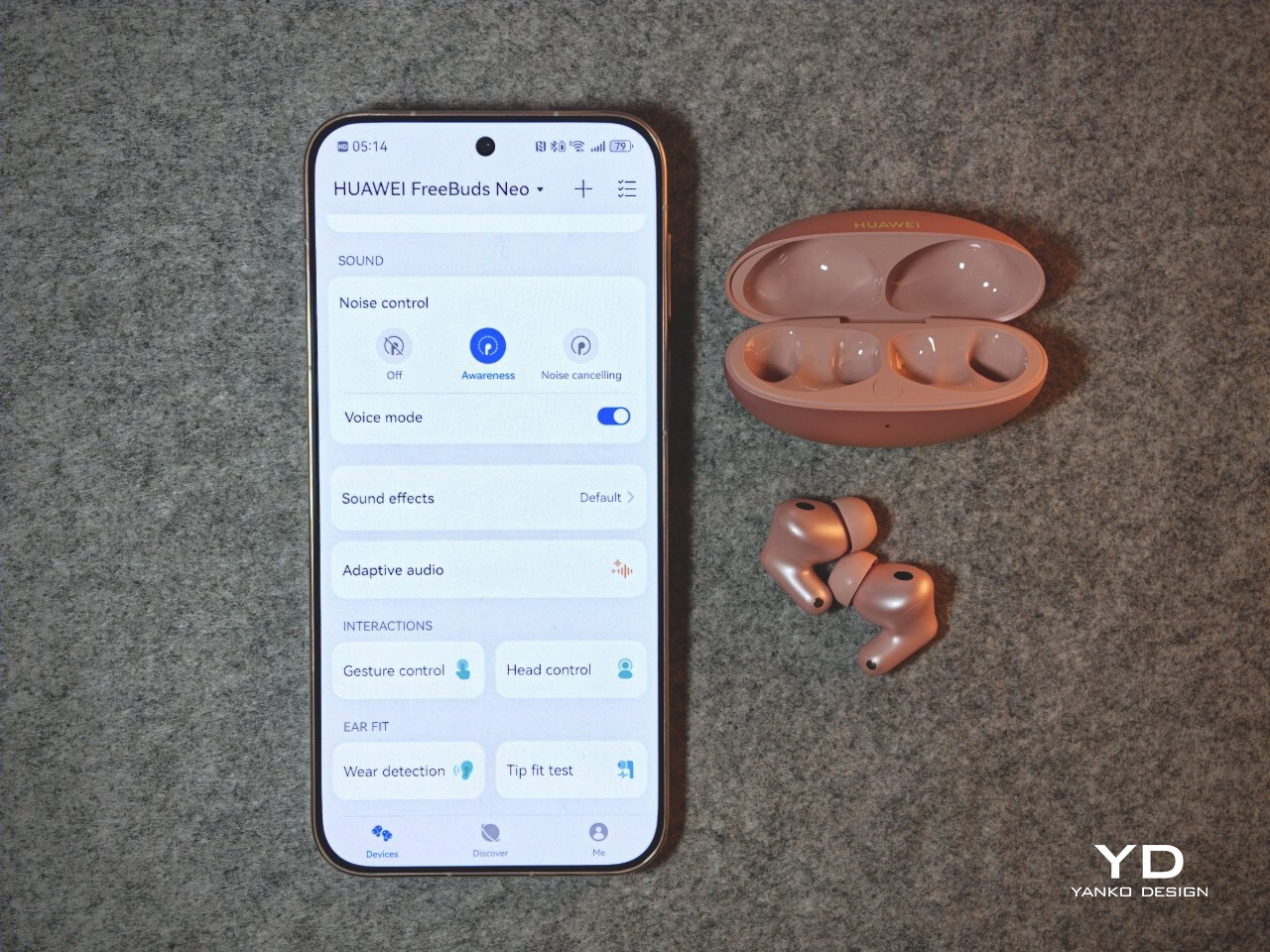
    Awareness mode works well too, and it feels genuinely useful rather than just included for the sake of it. I especially liked the voice mode within Awareness, which seems to let speech through more clearly. That made it easier to catch announcements or have a quick conversation without taking the earbuds out.

    Controls are another area where the FreeBuds Neo do well. Even with the short stems, gesture controls worked reliably for me. You get double tap, triple tap, press and hold, plus swipe up and down, which gives you a fairly complete set of controls without constantly reaching for your phone. Head controls are here too, letting you nod to answer calls or shake your head to decline them.
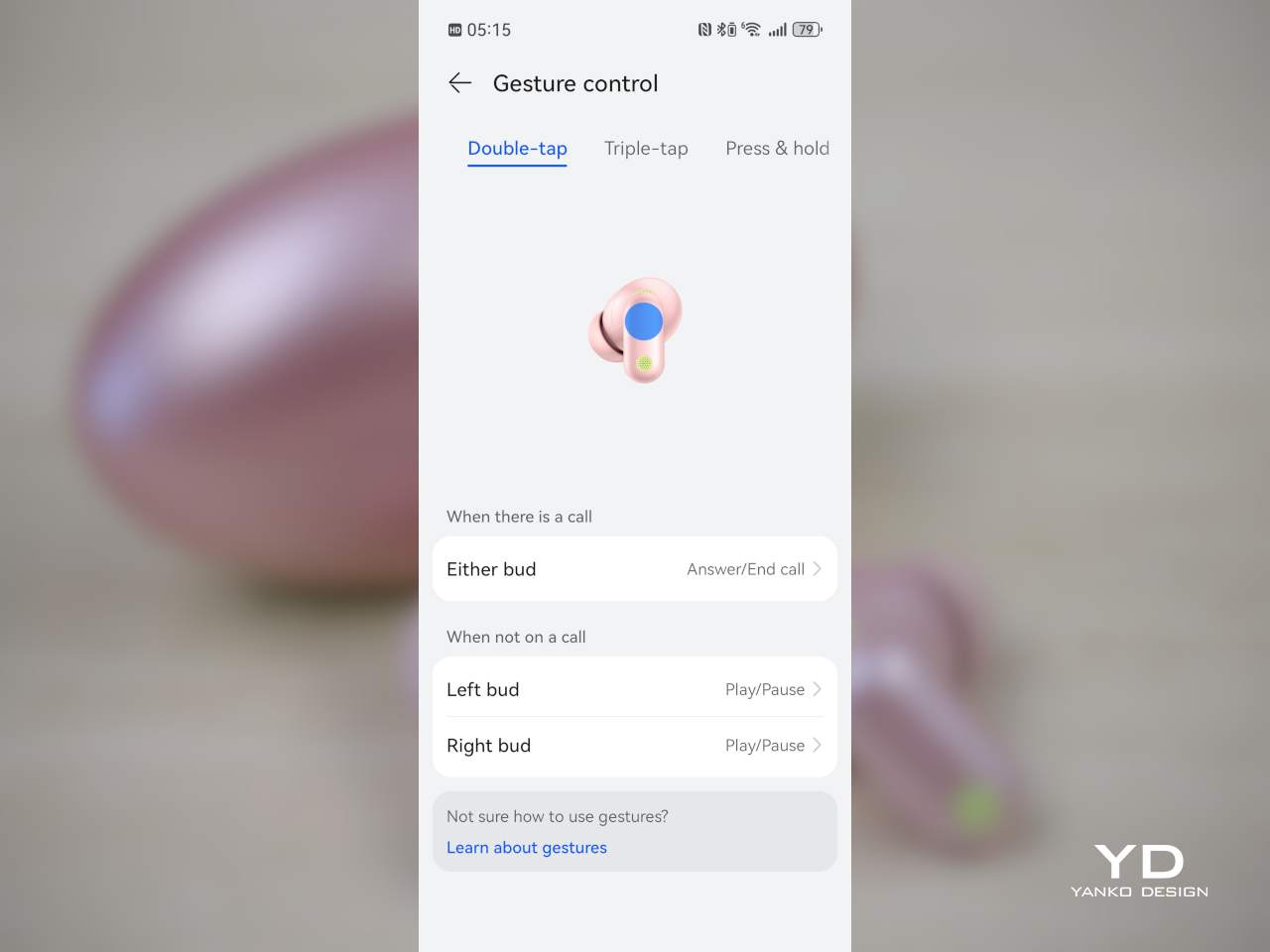
    Dual device connection is one of the more practical features. Being able to stay connected to two devices at once makes the earbuds much easier to slot into daily life, especially if you switch between a phone and a laptop or tablet. They also support Bluetooth 6.0, which helps keep the overall feature set feeling current.

    Huawei also says that if you have a Huawei smartwatch, you can control music playback from the watch, hear workout notifications through the earbuds while listening from your phone, and adjust settings like ANC and EQ from your wrist. In my testing, though, those extra features were not available with the Watch GT 7 Pro.

    Battery life is solid. Huawei rates the FreeBuds Neo for up to 10 hours with ANC off or 6.5 hours with ANC on, with up to 38 hours in total when you include the case. That should be more than enough for most people, especially since these are the kind of earbuds that will usually be topped up in the case between listening sessions anyway.

    Overall, the FreeBuds Neo gets the important things right. The sound is easy to enjoy, ANC is useful, Awareness mode works well, the touch controls are reliable, and dual device support adds real convenience. They may not feel as polished or as powerful as Huawei’s more expensive earbuds, but for everyday use, they offer a well-rounded set of features without becoming complicated.

    Sustainability

    Sustainability is not a major part of the Huawei FreeBuds Neo story. Huawei does not make any notable environmental claims here, and like most true wireless earbuds, they are built in a compact, sealed form that is not really designed for easy repair.

    The main durability point is the IP55 rating for the earbuds themselves, which adds some protection against dust and splashes. That should help them hold up better in daily use. As with most earbuds in this category, the best way to get long-term value is simply to take care of them and keep them in use for as long as possible.
    Value

    At £119.99 (approximately $160), the Huawei FreeBuds Neo sit in the middle of the market, but they offer a fairly complete package for the price. They are not exactly cheap, though they still come in below more premium earbuds, so the value is less about one headline feature and more about how well everything comes together.

    What you get is a strong all-rounder. There is good ANC, a useful Awareness mode, reliable gesture controls, dual device connection, LDAC support, and a design that feels more distinctive than many rivals, especially in Nebula Pink. In markets like the UK, Huawei is also offering a £20 discount before October 26, which makes them even more appealing.
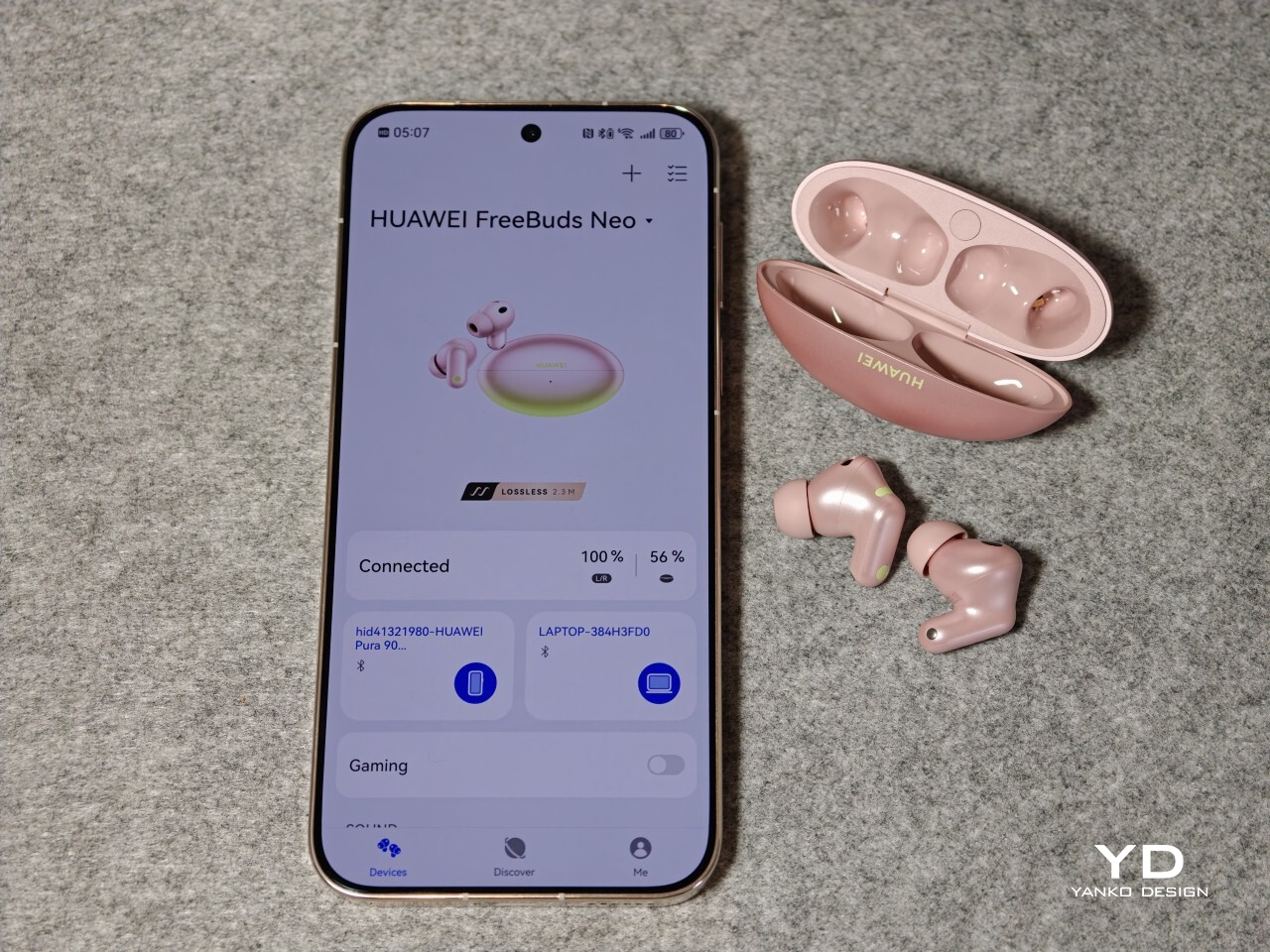
    They may not be the first choice if you are only chasing the strongest ANC or the absolute best sound for the money. But as a stylish, comfortable, and easy-to-use pair of everyday earbuds, the FreeBuds Neo offer solid value and feel like a well-judged package overall.

    Verdict

    The Huawei FreeBuds Neo get a lot right for a pair of everyday wireless earbuds. They are comfortable, easy to use, and come with enough useful features to feel like a well-rounded option. The short stems, lightweight fit, and palm-friendly case make them especially easy to live with day to day.
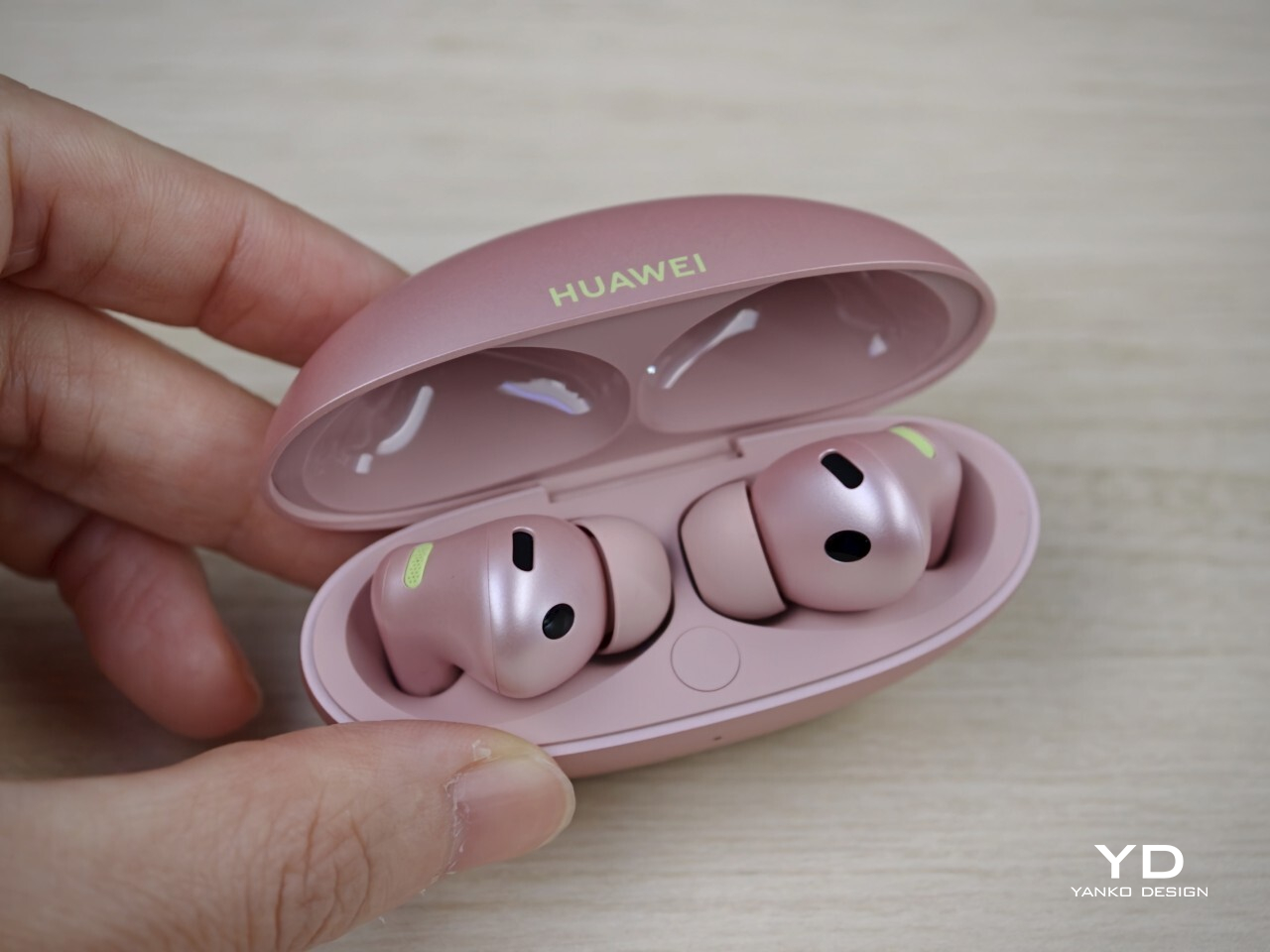
    Nebula Pink also gives them more personality than most earbuds in this price range. Add in good ANC for the price, a useful Awareness mode, reliable gesture controls, dual device connection, and strong battery life, and there is plenty here to like.

    The ANC does not reach the level of Huawei’s more premium earbuds, but that is easy to accept given the price. Even so, at £119.99, or about $160, and less if you catch the early bird discount in some markets, the FreeBuds Neo are an easy pair to like and an easy pair to recommend for everyday use.

    The post Huawei FreeBuds Neo Review: Style, Comfort, and a Strong Feature Set first appeared on Yanko Design.
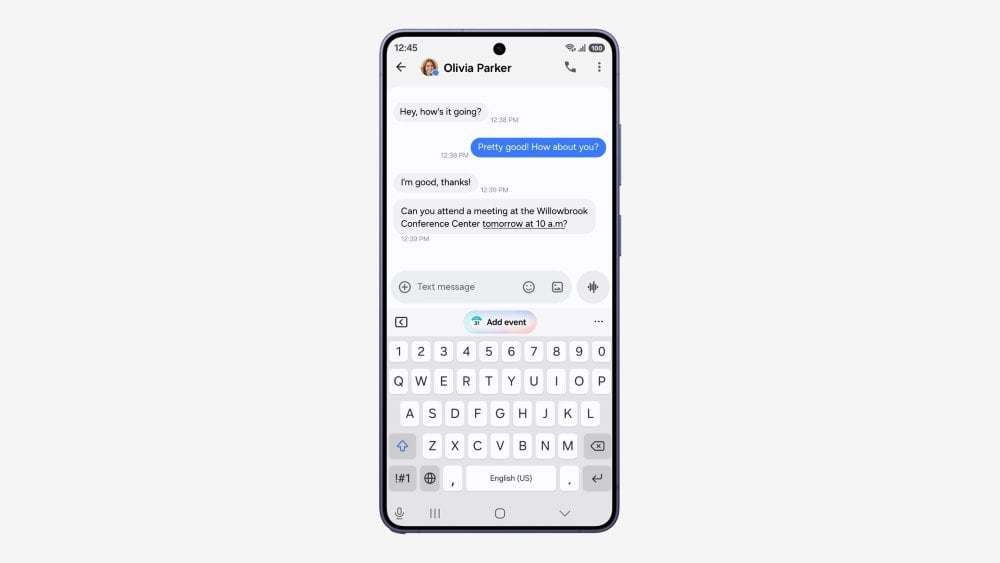
    Samsung Just Dropped One UI 9 — Here’s What Changes on Your Phone Today

    Samsung Just Dropped One UI 9 — Here’s What Changes on Your Phone Today The One UI 9 home screen on a Samsung Galaxy smartphone

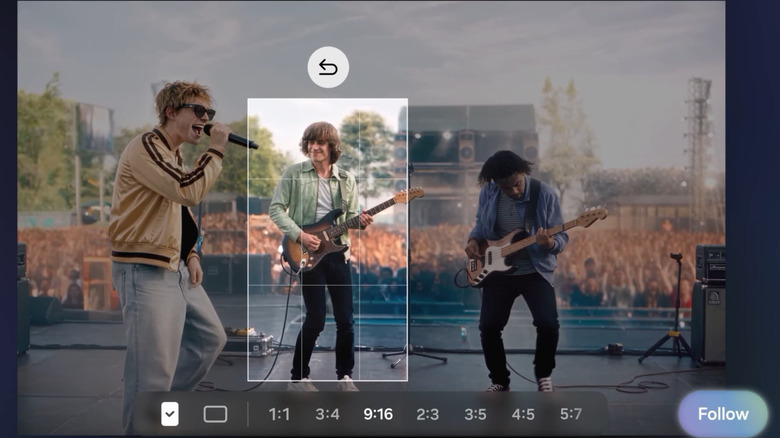
    Samsung has officially launched the One UI 9 update, starting with the Galaxy S26 series and gradually expanding to other Galaxy devices in the coming months. This update introduces a range of features designed to enhance personalization, productivity, security, and overall usability. Whether you own a Galaxy S26 Ultra or a Galaxy Z Fold8 Ultra, […]
    The post Samsung Just Dropped One UI 9 — Here’s What Changes on Your Phone Today appeared first on Geeky Gadgets.

    Posted in Uncategorized