Netflix’s live-action Assassin’s Creed show has entered production and will officially be set in Rome in the year 64AD, confirming previous reports.
The upcoming adaptation, then, will return to the setting of 2010’s Assassin’s Creed Brotherhood, although the latter’s story took place more than 1,000 years after the events we'll see in Netflix's show. Ubisoft confirmed in a press release that the Netflix series will tell an original story centered on a war between the Templar Order and the Assassin Brotherhood, who each have very different ideas on how the future of mankind should look.
The full ensemble cast has also now been announced. Sandra Guldberg-Kampp (Foundation), Youssef Kerkour (A Knight of the Seven Kingdoms), Mirren Mack (28 Years Later: The Bone Temple), and Louis McCartney (Broadway production Stranger Things: The First Shadow) have all been cast as recurring characters. Netflix previously announced Lola Pettigrew (Trespasses) and Toby Wallace (Babyteeth) as possible leads, along with a number of other series regulars.
Roberto Patino (Westworld, Sons of Anarchy) and David Wiener (Halo, The Killing) are serving as creators, showrunners and executive producers on the show, which is primarily filming at Rome’s iconic Cinecittà Studios. No release date has been announced.
Assassin’s Creed won’t represent the first time that Netflix has adapted a Ubisoft property. 2023’s Captain Laserhawk: A Blood Dragon Remixwas based on a Far Cry 3 expansion, and last year Sam Fisher made his TV debut in the broadly well received Splinter Cell: Deathwatch.
This article originally appeared on Engadget at https://www.engadget.com/entertainment/streaming/netflixs-assassins-creed-is-officially-set-in-ancient-rome-171533234.html?src=rss
It's hard not to find the premise of Andy Weir's Project Hail Mary instantly compelling: Something is slowly killing the sun and threatening life on Earth. That same mysterious force, dubbed the Astrophage, also destroyed every nearby star — except one. Our only hope is to visit that solar system and figure out what helped it survive. And there's just one middle school science teacher who can do it.
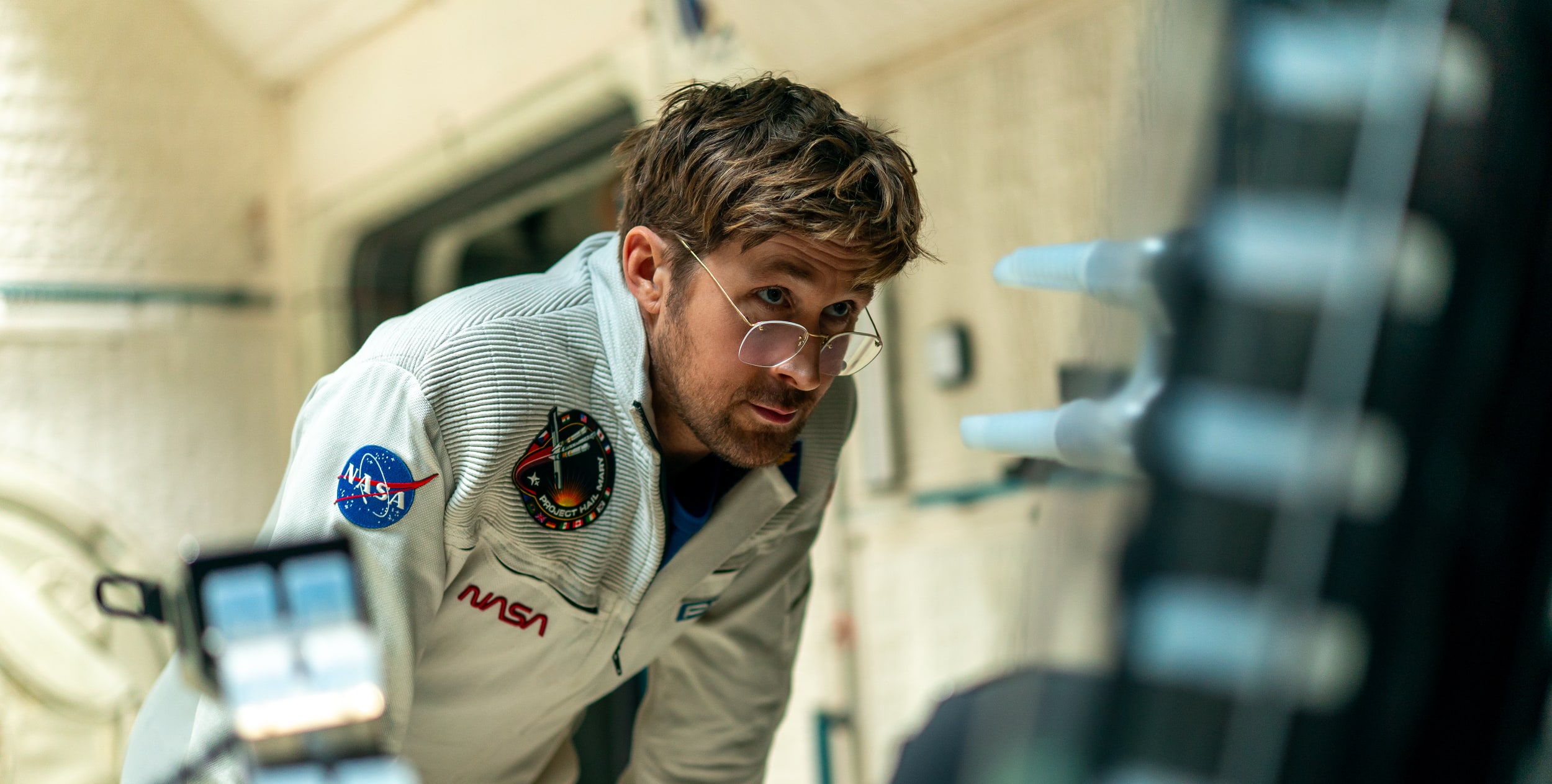
At its core is Weir's love of technical problem solving, along with a tremendous performance by Ryan Gosling in full nerd hero mode as the aforementioned science teacher (and former molecular biologist). It's the sort of sweeping sci-fi epic that will make a whole generation of kids ready to science the shit out of humanity's future problems. And maybe it'll remind clueless adults that we gain much more by working together to solve global issues, instead of being purely self-interested.
The film starts with Gosling's character, Ryland Grace, waking up from an induced coma with no memory. He's shocked to find that he's light years away from Earth, and that the other two members of his crew are already dead. As he gets his bearings, he recalls that he was sent on a last-ditch mission, Project Hail Mary, to save the sun and everyone on Earth. No pressure! These early moments make it clear that screenwriter Drew Goddard (who also adapted The Martian), as well as directors Phil Lord and Chris Miller, can deftly juggle comedy alongside the inherent drama in the story.
There's something genuinely moving about the mission. With about 30 years before the planet is faced with a global cooling event likely ending in mass starvation, Earth's major political powers put aside their differences and deliver their finest scientific minds to come up with a solution. You can really take your pick with real-world parallels, like the impending climate crisis, or the increasing threat of nuclear war. Simply seeing the world work together feels meaningful in these bleak times. And unlike other space disaster films like Armageddon and Interstellar, cooperation, rather than NASA alone, is the only way forward.
Ryan Gosling in Project Hail Mary.
Jonathan Olley for Amazon
Sure, humanity's hope for survival ultimately falls on the shoulders of one of the most attractive white men on (or in this case, off) the planet, but you know, movies. It's also not a spoiler to say that Grace isn't entirely alone on his journey. As already revealed by the film's trailers and a ton of social media clips, he's also joined by a crab-like being made of rock, which he simply calls Rocky. They eventually learn to communicate, and it's revealed that Rocky is also on a mission to save their own home planet.
While we get brief glimpses of life on Earth, and the planning of Project Hail Mary, for the vast majority of the film we're just left with Grace figuring things together with a rock alien. And yet, the film never drags. It's a testament to Gosling's inherent charm, but he also demonstrates an incredible ability to shift from joy and goofiness, to sheer terror, to leading-man heroics on a dime. It's also hard to take your eyes off of Rocky, who is rendered with a loving mixture of practical puppetry and CG. We've never seen a creature like them before – one that, despite having no eyes or mouth, manages to connect with viewers mostly through their very expressive arms.
Ryan Gosling in Project Hail Mary.
Jonathan Olley for Amazon
Project Hail Mary is ultimately a work of pulp sci-fi as told by an author who loves deeply nerdy technical solutions, as well as a writer and directors who know precisely what makes a great blockbuster tick. But the notion that humanity can collectively come together to do the impossible always tugs at my heartstrings a bit. And yes, there’s the power of friendship, too. In this moment, when things seem particularly bleak, these ideas seem especially meaningful.
This article originally appeared on Engadget at https://www.engadget.com/entertainment/tv-movies/project-hail-mary-could-teach-humanity-a-thing-or-two-154327806.html?src=rss
Stranger Things fans will soon have permanent access to the Upside Down, as a full DVD set is now available to preorder. Stranger Things: The Complete Series comes in Blu-Ray and 4K UHD editions.
This collection includes all five seasons of the hit show, which totals 25 discs. It'll be available at brick-and-mortar and online retailers beginning on July 28. Prices range from $200 to $260, depending on the media type and edition.
Return to Hawkins this July with STRANGER THINGS: THE COMPLETE SERIES, available in Special and Deluxe Editions on Blu-ray and 4K UHD.
To that end, there's a deluxe edition available for true diehards. This includes the complete series, of course, but also bonus content like bloopers, interviews with the cast and crew and various behind-the-scenes featurettes. It also comes with a bunch of doodads, like a self-adhesive Hellfire Club patch, five posters, 25 smaller art cards, a fold-out map of Hawkins and a branded twenty-sided die.
There's a collector's box and each season comes in reversible sleeves with new artwork. Finally, this edition ships with a large artbook that includes original design sketches, concept art, storyboards and more. This is a pretty cool and comprehensive package.
This article originally appeared on Engadget at https://www.engadget.com/entertainment/the-complete-stranger-things-dvd-set-includes-25-discs-and-costs-around-200-172222577.html?src=rss
Microsoft is rolling out a number of Xbox Series X|S updates to those on its Xbox Insiders program, and one of them has been requested by the community for years. You’ll soon be able to disable the Quick Resume feature for specific games, meaning they'll boot up fresh each time you launch them.
As a reminder, Quick Resume is a feature that Microsoft introduced with its current generation of consoles. It lets you suspend a number of games simultaneously so they’re running in the background even when the console is turned off. When you want to return to a game that supports Quick Resume, it'll drop you back in exactly where you left it within a few seconds, often even when it’s been months since you last played that game. It’s a pretty neat feature, and still impressive more than five years since the Series X|S launched.
But over the years, players have discovered that Quick Resume isn’t ideal for every title, particularly always-online games. When you take these out of their suspended state, they’ll often shout at you for letting them disconnect, forcing you to manually close the game down properly and then relaunch it. Other games just don't seem to get on with it for a variety of other reasons. You can manually close any game you want at any time, but it takes a few more button presses than Quick Resume, so it’s easy to forget.
The latest Xbox update finally addresses this, letting you turn off the feature on a game-by-game basis by selecting "More Options" and then "Manage Quick Resume" on a game tile. That way you can ensure it’s only enabled for single-player titles in which the ability to instantly pick up where you left off is very appealing. It’s a change that has gone down well with ex-Xbox icon Larry “Major Nelson” Hryb, who said on X that he first requested it five years ago when still employed by Microsoft.
Love this. I filed a feature request to make Quick Resume per title in 2021. Great to finally see it happen. https://t.co/eDn56MIMSu
— Larry Hryb, Gamer Emeritus 📱⌨️🖱️🎮 (@majornelson) March 18, 2026
Microsoft is also adding more customization options to the Xbox dashboard in the upcoming update. You’ll be able to create custom background colors, rather than having to select one of the existing color options, while the amount of Groups you can add to your Home screen has been increased from two to 10. These can be reordered in the same way you reorder individual game tiles.
Select Xbox Insiders can start using the new features now, before they’re eventually made available to everyone.
This article originally appeared on Engadget at https://www.engadget.com/gaming/xbox/microsoft-will-finally-let-you-turn-off-quick-resume-for-individual-games-174639730.html?src=rss
We just got our first trailer for Spider-Man: Brand New Day, the next big Marvel film. This is the fourth installment led by Tom Holland and follows the multiversal shenanigans of Spider-Man: No Way Home.
I'm about to get into some spoilers, for those still working through the MCU catalog. No Way Home ended with the entire world forgetting about the existence of Peter Parker, so this new movie will deal with the fallout from that. His whole support system is gone, though it looks like he still checks in on besties MJ and Ned from time to time.
Peter Parker may be lonely, but he's not alone in the film. He's teaming up with the Punisher, who is still played by Jon Bernthal after returning to the role in Daredevil: Born Again. In the comics, Spider-Man and the Punisher are long-time work buddies and occasional sparring partners. As a matter of fact, Frank Castle made his introduction in a Spider-Man comic that was published in 1974.
Bruce Banner also shows up in the trailer, potentially as Parker's professor. Mark Ruffalo is returning to the role, but we don't have any confirmation that he'll turn into the Hulk. It's worth pointing out that this is the regular human Banner, and not the hybrid version that's been popping up in recent MCU projects.
The trailer even highlights an iconic Spider-Man villain. Michael Mando is playing Scorpion, which is a pretty deep MCU cut. The character was teased all the way back in Spider-Man: Homecoming. The footage also shows Spidey battling ninjas that look suspiciously like the Hand, who were last seen in The Defenders on Netflix. This lends credence to rumors that Daredevil could be appearing in the film.
We don't have all that long to wait. Spider-Man: Brand New Day premieres in theaters on July 31. This is the final MCU film before the long-awaited Avengers: Doomsday, which hits cinemas in December.
This article originally appeared on Engadget at https://www.engadget.com/entertainment/tv-movies/the-spider-man-brand-new-day-trailer-is-filled-with-mcu-cameos-170215452.html?src=rss
Stop me if you've heard this before: Meta has a new program to lure top creator talent to Facebook and it comes with hefty bonus payments. The company is launching a new initiative aimed at popular creators who already have large followings on TikTok, YouTube or Instagram and offering them bonuses up to $3,000 a month just for posting on Facebook.
Meta's goal is to draw more top talent to its Content Monetization program, which pays creators based on views and other engagement metrics across Stories, Reels and posts. The new bonuses will be part of an initiative Meta has dubbed "Creator Fast Track," which is meant to make the onboarding process easier — and more enticing — to Facebook newcomers.
Under the new "Fast Track" program, Meta is offering monthly bonuses of $1,000 to creators who have at least 100,000 followers on another platform and $3,000 for those that have a million or more. Creators who join will need to post a minimum number of Reels per month to earn the bonuses, but aren't required to meet engagement targets or post exclusive content to earn. They also aren't limited to video content as Facebook also rewards text and photo posts, as well as Stories.
That may sound like a pretty good deal (it is), but it's also a limited one. The fast track bonuses will only last for three months. Creators should think of the bonuses as payment "for the hassle of starting on a new platform," not the central part of the program, Meta's VP of Product for Creators, Yair Livne, tells Engadget. "Our hope is that within a few months … the earnings that you see from Facebook Content Monetization will become the more important thing." He also notes that Meta will boost the reach of creators it fast-tracks, which should help them speed up their earning potential.
Creators can apply for the new program in Facebook's app.
Meta
It's far from the first time Facebook has sought to lure big names with big checks. It promised publishers big payouts when it launched Facebook Watch nearly a decade ago. It once courted game streamers for its (now defunct) Twitch competitor. A year after launching Reels to take on TikTok, it invested $1 billion in a bonus program that offered creators as much as $35,000 a month only to pull the plug in 2023.
Livne acknowledged that it "took us a long time to find our path" to a more sustainable creator program. "We don't have a pool structure so you're not competing with other creators for dollars. It really is based on your performance."
There are already signs that the Facebook Content Monetization program, which it introduced in the fall of 2024, is working — at least for some. Meta says it paid Facebook creators nearly $3 billion in 2025, a new high for the social network. Creators have also reported that the new streamlined program is paying off.
One political news creator told the newsletter Chaotic Era that they made $250,000 from Facebook in January alone. Publishers told Digiday last year that they expected to make "between six and seven figures" in 2025 thanks to the program. There are numerous recent posts in Reddit's r/passiveincome forum where users report making five figures a month from the program, which is still invitation only.
Livne agrees that Facebook's monetization program has been something of a "well kept secret" in the creator community. "We're trying to make it less well kept and less of a secret."
Are you in Facebook's Content Monetization Program, Creator Fast Track or another creator program at Meta? You can reach Karissa by email, on X, Bluesky, Threads, or send a message to @karissabe.51 to chat confidentially on Signal.
This article originally appeared on Engadget at https://www.engadget.com/social-media/metas-latest-creator-push-comes-with-3000-bonuses-for-posting-on-facebook-160000283.html?src=rss
It's only been two years since Dune: Part Twotook over multiplexes, but we already have a trailer for the third installment. The appropriately-named Dune: Part Three is an adaptation of Frank Herbert's Dune Messiah book from 1969.
Just like the book, the latest film takes place a number of years after Dune: Part Two. "If the first movie was contemplation, a boy exploring a new world, and the second one is a war movie, this one is a thriller," according to The Hollywood Reporter. "It is action-packed and tense. More muscular.”
Despite the time jump, most primary actors are returning. This includes Timothée Chalamet, Zendaya and Javier Bardem. Anya Taylor-Joy, who briefly appeared in the second film, is also coming back. The same goes for Jason Momoa, despite his Duncan Idaho character dying in the first film. Book readers will likely understand what that means.
The trailer also highlights the antagonist Scytale, as portrayed by Robert Pattinson. He should be a more nuanced villain than Baron Harkonnen, though that's not exactly a high bar.
The release date is coming up fast. Dune: Part Three hits theaters on December 18. That's this year. Villeneuve had intended to take a break after making the second one to focus on a smaller and more personal film, but said that he kept "waking in the middle of the night" with potential images from the third installment.
This article originally appeared on Engadget at https://www.engadget.com/entertainment/tv-movies/the-dune-part-three-trailer-introduces-robert-pattinsons-villainous-new-character-173758393.html?src=rss
You can sum up the gamer response to NVIDIA's DLSS 5 announcement with the ever-relevant Fallout 4 meme: "Everyone disliked that." Across social media and Reddit last night, I couldn't find anyone who's genuinely positive about the potential for DLSS 5, which uses AI to add "photorealistic" lighting and materials to in-game models and environments. Instead, it's mostly complaints about the feature being another avenue for AI slop. And you know what? I agree.
It's not unusual to see gamers being reflexively angry about new technology on the internet, especially when it's being pitched by NVIDIA as the “biggest breakthrough in computer graphics” since its RTX 20-series GPUs arrived in 2018 with real-time ray tracing. There was plenty of suspicion around DLSS's original AI upscaling model, as well as the "fake" frames generated by later iterations. But the few demos we've seen of DLSS 5 basically look like "yassified" AI filters for popular games.
Leon and Grace from Resident Evil: Requiem have more distinct facial and hair detail, but they look a bit too slick. There are more wrinkles on an old woman in Hogwarts Legacy. And the face, hair and clothing from a Starfield character gain an uncanny sheen.
None of the demos have the immediate impact of the Star Wars real-time ray tracing short ILMxLab produced with NVIDIA seven years ago. That demonstration showed us glorious reflections and lighting effects we'd never seen before in real-time. The DLSS 5 demos, on the other hand, don't look much different from the AI filters that make you look more presentable for Zoom calls. There's no genuine excitement for DLSS 5, just NVIDIA telling us that it's groundbreaking.
There's also plenty of concern about DLSS 5 straying from an artist's original intent, as well as a potential homogenization of game visuals if every developer starts using the feature. NVIDIA claims developers will have "detailed controls for intensity, color grading and masking," which will help DLSS 5 stay in line with a game's aesthetic. But we don't have any direct developer experience with the feature yet — some artists may want far more control than NVIDIA wants to give.
The difference between DLSS 5 and earlier versions NVIDIA's upscaling is like the difference between generative AI and more traditional machine learning models. NVIDIA relied on the latter to make low-resolution textures and models appear sharper, and later to insert generated frames to smooth out gameplay and raise your fps count. As Wirecutter and former Polygon editor Arthur Gies points out, you could argue those features were in service of delivering what developers originally intended. But DLSS 5's neural model applies its concept of "photorealism" on top of what games are rendering -- it's like watching a Pixar movie that let OpenAI's Sora do a final visual pass.
Part of the negative response towards DLSS 5 may stem from a widespread anti-gen AI sentiment, but that doesn’t devalue the criticisms either. Similar to AI generated text, images and video, there’s a dehumanizing aspect about DLSS 5. It can erase the work of human artists (despite how much control NVIDIA claims they have), and it also feels like a calculated attempt to appeal to gamers who just want shinier graphics. NVIDIA showed off how generative AI could be used to create dialog and voices for NPCs last year at CES, but that was also widely disliked (and I called it a genuine nightmare).
Of course, I can’t fully judge DLSS 5 until I see it in action beyond a short demo. But I think the visceral disgust is an important indicator that many gamers aren’t onboard with the AI-powered future NVIDIA is trying to sell us. And perhaps the idea of chasing “photorealism” may be a bit of a fool’s errand. It may be appropriate for some games, but as Nintendo and indie PC devs have shown, you can also make some of the best games of all time without striving for realism. Tears of the Kingdom could use a better framerate and higher resolution textures, but it certainly doesn’t need DLSS 5.
This article originally appeared on Engadget at https://www.engadget.com/gaming/pc/gamers-are-right-to-be-disgusted-by-nvidias-dlss-5-151105593.html?src=rss
Just months after announcing DLSS 4.5 at CES, NVIDIA has unveiled its next major upscaling technology, DLSS 5. The company is doubling-down on AI for this next iteration, claiming DLSS 5 “infuses pixels with photoreal lighting and materials” using a real-time neural rendering model when it arrives this fall.
So what does this mean in practice? In an on-stage demo at NVIDIA’s GTC 2026 keynote, CEO Jensen Huang showed off the technology with Resident Evil: Requiem, Hogwarts Legacy and Starfield. DLSS 5 adds a noticeable amount of detail to character’s hair and skin tone, but it also appears it’s being compared to those games without any DLSS features turned on. It’s unclear how much of a difference it makes compared to DLSS 4.5 with path tracing and all of its features turned on.
“DLSS 5 takes a game’s color and motion vectors for each frame as input, and uses an AI model to infuse the scene with photoreal lighting and materials that are anchored to source 3D content and consistent from frame to frame,” NVIDIA said in a blog post. The company also notes that the technology runs in real time, and it works at up to 4K.
Huang showed off DLSS 5 while running a system with two RTX 5090 GPUs. Eventually, it will be able to run on a single video card (though I’d imagine it would have to be almost as powerful as two 5090s). Huang also paints DLSS 5 as a step towards offering Hollywood-like quality for real-time rendering, without the need for the GPU horsepower required by studios. It sounds a bit like a generative AI video model that can be directly controlled by developers, instead of just AI prompts.
NVIDIA, never shy from self-aggrandizing, claims DLSS 5 is also the “biggest breakthrough in computer graphics” since real-time ray tracing arrived in 2018. But given that ray tracing itself hasn’t been mainstream for many gamers, it’ll be interesting to see if there’s any interest in NVIDIA’s AI-produced pixels.
This article originally appeared on Engadget at https://www.engadget.com/gaming/pc/nvidia-claims-dlss-5-will-deliver-photoreal-image-quality-with-ai-this-fall-193452088.html?src=rss
Firefly aired for just one season in 2002 before Fox canceled it. In the 24 years since, the sci-fi show has skyrocketed in popularity and now fans are finally getting more. Nathan Fillion has announced that an animated Firefly series is currently in advanced development, Deadline first reported.
Fillion shared the news at AwesomeCon during a live taping of his podcast Once We Were Spacemen with his Firefly co-stars Gina Torres, Morena Baccarin, Summer Glau, Sean Maher, Jewel Staite and Alan Tudyk. Tudyk co-hosts the podcast, in which the duo look back at their careers and interview past coworkers. Each of the actors present at AwesomeCon are expected to voice the animated versions of their characters.
This isn't one of those maybe one day it will happen announcements, with many steps already being taken. The animated reboot is under the direction of showrunners Tara Butters (Agent Carter, Reaper) and Marc Guggenheim (DC's Legends of Tomorrow, Arrow) — original creator Joss Whedon is not involved, but has given his blessing. It has early concept art from ShadowMachine, an Oscar- and Emmy-winning animation studio. Fillion is producing the show through Collision33, his production company, and with 20th Television Animation. There's even already a script in place.
According to Fillion, the one thing left is a home for the series. He and his co-stars took to Once We Were Spacemen's Instagram to provide more details and implore FireFly fans to show demand for the reboot.
Firefly took place in 2517, centuries after a universal civil war. It followed a group of people living aboard a transport ship, Serenity, flying through the galaxy. In 2005, the show got a sequel in the form of a movie, Serenity.
This article originally appeared on Engadget at https://www.engadget.com/entertainment/tv-movies/firefly-is-getting-rebooted-as-an-animated-series-120604649.html?src=rss