If you’re off-roading, it’s a neat idea to use your engine to top up your battery, which prompted Bluetti to launch the Charger. You could hook it to your alternator and draw off energy as you drove to make sure you turned up to your campsite with full batteries. But if you’re also toting around solar panels on your roof, then it’s a shame you can’t also use that power to top up. This omission is what prompted Bluetti to turn up to CES 2026 with the Charger 2, which will take power from your engine and your solar panels at the same time.
Bluetti says the Charger 2’s dual-input architecture will accept 600W from the panels, 800W from the engine. All of that power will charge your batteries significantly faster than the first model, claiming it’s 13 times faster than a standard car charger. In addition, Charger 2 can manage more than one Bluetti power station and expansion batteries, should your power needs stretch. And the system is smart enough to know where the energy is coming from, managing the sources based on their availability. Plus, you can use it to jump start your engine should you need the help.
If you’re a Charger 1 owner and want to upgrade, it’s fairly painless to drop the old unit out in favor of its replacement. It uses the same cabling, so you can just hook the new model to your existing wires without having to get your fingers greasy. To reward that loyalty, the company will sell you an upgrade for $99, at least through February 7.
As for everyone else, you’ll be able to pick up the Charger 2 for $349 through February 7, at which point the price leaps to $499.
This article originally appeared on Engadget at https://www.engadget.com/general/bluettis-charger-2-uses-solar-and-engine-power-to-charge-your-portable-battery-230000270.html?src=rss
If you’re off-roading, it’s a neat idea to use your engine to top up your battery, which prompted Bluetti to launch the Charger. You could hook it to your alternator and draw off energy as you drove to make sure you turned up to your campsite with full batteries. But if you’re also toting around solar panels on your roof, then it’s a shame you can’t also use that power to top up. This omission is what prompted Bluetti to turn up to CES 2026 with the Charger 2, which will take power from your engine and your solar panels at the same time.
Bluetti says the Charger 2’s dual-input architecture will accept 600W from the panels, 800W from the engine. All of that power will charge your batteries significantly faster than the first model, claiming it’s 13 times faster than a standard car charger. In addition, Charger 2 can manage more than one Bluetti power station and expansion batteries, should your power needs stretch. And the system is smart enough to know where the energy is coming from, managing the sources based on their availability. Plus, you can use it to jump start your engine should you need the help.
If you’re a Charger 1 owner and want to upgrade, it’s fairly painless to drop the old unit out in favor of its replacement. It uses the same cabling, so you can just hook the new model to your existing wires without having to get your fingers greasy. To reward that loyalty, the company will sell you an upgrade for $99, at least through February 7.
As for everyone else, you’ll be able to pick up the Charger 2 for $349 through February 7, at which point the price leaps to $499.
This article originally appeared on Engadget at https://www.engadget.com/general/bluettis-charger-2-uses-solar-and-engine-power-to-charge-your-portable-battery-230000270.html?src=rss
If you’re off-roading, it’s a neat idea to use your engine to top up your battery, which prompted Bluetti to launch the Charger. You could hook it to your alternator and draw off energy as you drove to make sure you turned up to your campsite with full batteries. But if you’re also toting around solar panels on your roof, then it’s a shame you can’t also use that power to top up. This omission is what prompted Bluetti to turn up to CES 2026 with the Charger 2, which will take power from your engine and your solar panels at the same time.
Bluetti says the Charger 2’s dual-input architecture will accept 600W from the panels, 800W from the engine. All of that power will charge your batteries significantly faster than the first model, claiming it’s 13 times faster than a standard car charger. In addition, Charger 2 can manage more than one Bluetti power station and expansion batteries, should your power needs stretch. And the system is smart enough to know where the energy is coming from, managing the sources based on their availability. Plus, you can use it to jump start your engine should you need the help.
If you’re a Charger 1 owner and want to upgrade, it’s fairly painless to drop the old unit out in favor of its replacement. It uses the same cabling, so you can just hook the new model to your existing wires without having to get your fingers greasy. To reward that loyalty, the company will sell you an upgrade for $99, at least through February 7.
As for everyone else, you’ll be able to pick up the Charger 2 for $349 through February 7, at which point the price leaps to $499.
This article originally appeared on Engadget at https://www.engadget.com/general/bluettis-charger-2-uses-solar-and-engine-power-to-charge-your-portable-battery-230000270.html?src=rss
If you’re off-roading, it’s a neat idea to use your engine to top up your battery, which prompted Bluetti to launch the Charger. You could hook it to your alternator and draw off energy as you drove to make sure you turned up to your campsite with full batteries. But if you’re also toting around solar panels on your roof, then it’s a shame you can’t also use that power to top up. This omission is what prompted Bluetti to turn up to CES 2026 with the Charger 2, which will take power from your engine and your solar panels at the same time.
Bluetti says the Charger 2’s dual-input architecture will accept 600W from the panels, 800W from the engine. All of that power will charge your batteries significantly faster than the first model, claiming it’s 13 times faster than a standard car charger. In addition, Charger 2 can manage more than one Bluetti power station and expansion batteries, should your power needs stretch. And the system is smart enough to know where the energy is coming from, managing the sources based on their availability. Plus, you can use it to jump start your engine should you need the help.
If you’re a Charger 1 owner and want to upgrade, it’s fairly painless to drop the old unit out in favor of its replacement. It uses the same cabling, so you can just hook the new model to your existing wires without having to get your fingers greasy. To reward that loyalty, the company will sell you an upgrade for $99, at least through February 7.
As for everyone else, you’ll be able to pick up the Charger 2 for $349 through February 7, at which point the price leaps to $499.
This article originally appeared on Engadget at https://www.engadget.com/general/bluettis-charger-2-uses-solar-and-engine-power-to-charge-your-portable-battery-230000270.html?src=rss
As power gets more dicey, personal energy generation only gets more appealing. Shine’s compact turbine isn’t going to power your house any time soon (though Rachel Carr, the company’s co-founder told me they have plans in that direction) but it can suck up the energy required to refill a smartphone in as little as 17 minutes. Of course, what it can generate depends on wind speed. That same charge could take as long as 11 hours if there’s only a slight breeze.
That power curve, and its ability to operate at night, sets the turbine apart from solar panels. Of course, on a completely still day, the Shine as inert as a becalmed sailing ship but if the wind picks up even as little as a breeze, it gets to work making power. The turbine even automatically pivots on the included stand to face into the wind.
Shine turbine 2.0
Shine
The Shine 2.0 looks like a thin space football and has a screw-off cap that reveals a hollow compartment for the stand and tie downs. The cap then doubles as a key to unlock the blades. It all weighs just three pounds, which is impressively light considering it also houses a 12,000mAh battery that can output up to 75 watts. This is the second version of the turbine and updates include a USB-C port instead of USB-A, as well as app connectivity.
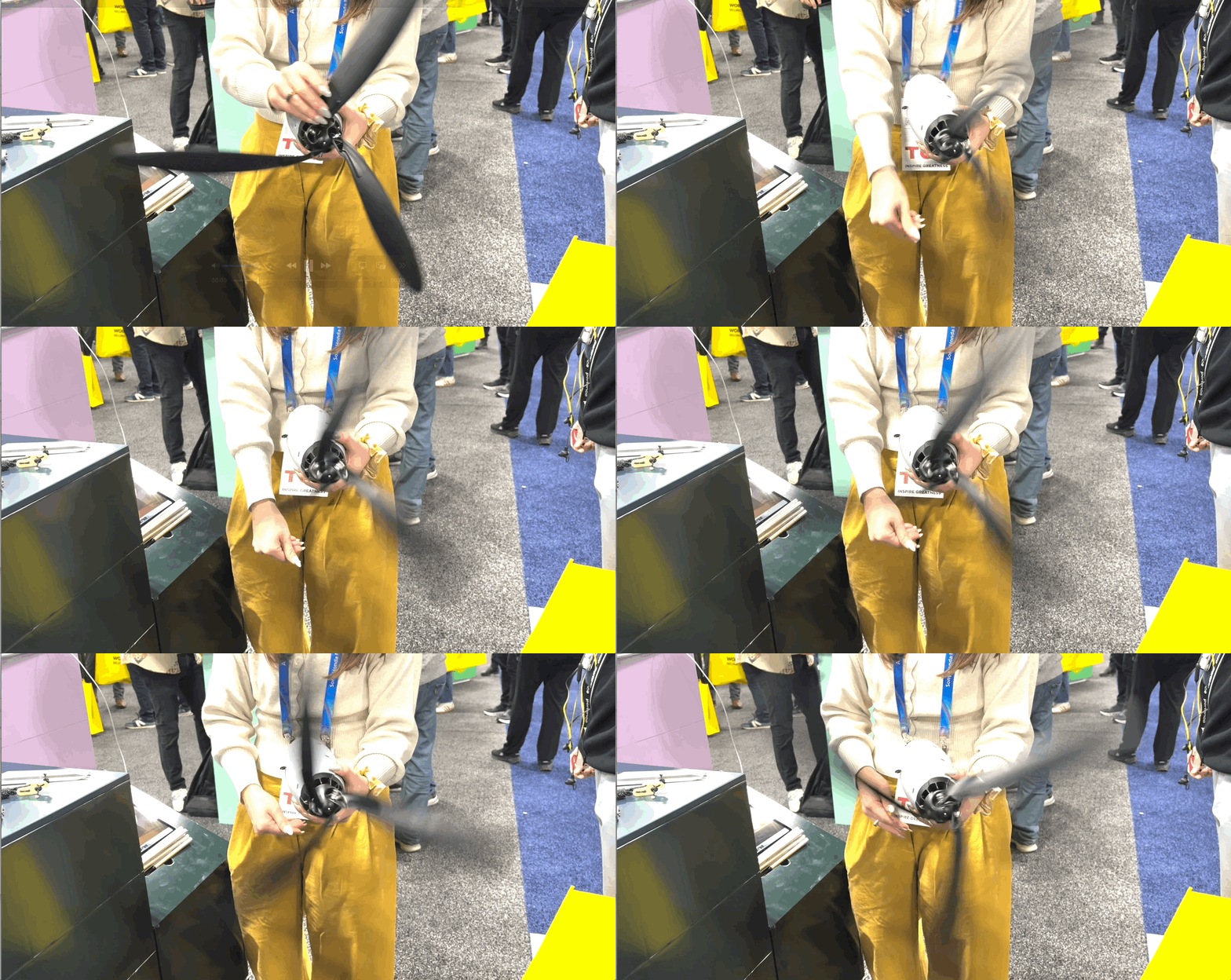
The company claims you can set the entire thing up in around two minutes. I watched the Carr take the turbine from fully closed to unfurled and ready for the stand in about that long. Unfortunately, there was no wind rushing through the CES show floor so I couldn’t see it spin, but Carr was kind enough to spin it for me.
Spinning the Shine Turbine 2.0
Amy Skorheim for Engadget
Possibly the most exciting part is Shine’s plan for more expansive power generation. Shine 3.0, which the company is working on now, will be a 100 to 300 watt system and grid-tied turbines are on the wish list.
Pre orders are now open for the Shine 2.0 through Indiegogo for $399 and units should begin shipping this spring.
Update, January 7 2026, 4:00PM ET: This story has been updated to correct the wattage output and include the co-founder’s name.
This article originally appeared on Engadget at https://www.engadget.com/home/smart-home/the-shine-20-is-a-compact-wind-turbine-for-your-next-camping-trip-191000940.html?src=rss
Even if you bring home as few bags as possible — using reusable bags, carrying purchases home with your own two hands — soft plastics sill accumulate. I certainly have a collection with one flimsy plastic sack filled with dozens or hundreds of others. I plan to do something with it… eventually.
Unfortunately, there aren’t a ton of options for what to do with those soft plastics, as most recycling facilities can’t accept them. But no one likes seeing them end up in oceans and rivers and stuck up in trees. So I was excited to see the Clear Drop Soft Plastic Compactor (CPC) at CES. It’s a pre-recycler for your home that turns hundreds of bags into a solid brick that’s easier to transport. Certain facilities can accept the bricks for recycling.
Clear Drop works with 95 percent of soft plastics, sucking up bags, bubble wrap, ziplocks, package wrap and cling film into its maw. It then compresses and heats the plastic to form a compact eight by twelve by four inch brick. I asked Matt Daly, Clear Drop’s head of product, what the compactor can’t take and I was told you can’t add ping pong balls, IV bags and camera film. Easy enough.
A compacted brick the Clear Drop CPC produced.
Amy Skorheim for Engadget
It was satisfying to see the little slot on the top gobble up the plastic bags Daly fed it. The Clear Drop wasn’t set to smash and heat at the show, but I was assured by another Clear Drop rep that any plastic smell produced during operation was minimal and the company performed safety tests to ensure the machine didn’t create any harmful emissions.
Daly said it would take about a month for most households to create a brick, which translates to around a 30 gallon trash bag full of other bags. Once that brick is created, it can be shipped to one of Clear Drop’s partner facilities and pre-paid USPS shipping envelops are included. They work with multiple US-based recycling facilities and do audits to ensure the bricks are actually being recycled.
Of course, I was a little disappointed the bricks couldn’t be tossed in my blue curbside bin, but Daly said they’re working to bring more recycling partners on board and the ultimate goal is to create an infrastructure that would eventually include municipal recycling. Shipping the bricks somewhere feels a little counterproductive, eco-wise. And the machine itself is not cheap. The price is split up over the course of two years, but it adds up to $1,400.
I’m happy to see someone somewhere is doing something to address a pretty clear problem. While it’s not perfect, this is probably the best household-level solution I’ve seen to that can ensure your bags don’t go down some sea turtle’s throat.
This article originally appeared on Engadget at https://www.engadget.com/home/smart-home/clear-drop-is-trying-to-do-something-about-all-those-plastic-bags-under-your-sink-140000254.html?src=rss
I’m seeing a ton of smart bird feeders again this year at CES — and I’m inexplicably drawn to them. Perhaps because the idea of birds nibbling on seeds and flying away represents a natural purity and freedom that doesn’t exist within the halls of CES. Birdbuddy was one of the first smart bird feeder brands, with a wildly successful Kickstarter back in 2020. And this year, they’ve added birdsong to their species identification capabilities.
Two new feeders, the Birdbuddy 2 and the Birdbuddy 2 Mini both have the new feature, but the latter is a more affordable, starter version. The Bird Buddy 2 is solar-powered with built-in panels. It’s slightly larger and has a bigger seed capacity, too. Both have HD cameras you can manually position either vertically or horizontally and both have a mic to help with birdsong IDs.
Upgrades to the cameras include a faster wake-up time when a bird lands and the housing for the seed and camera has a more modular design that makes the feeder easier to clean. The lens is now protected by Gorilla Glass, which may seem excessive, but Rhian Humphries, Birdbuddy’s senior PR manager, said curious birds often peck at the camera looking for more food.
The AI Birdbuddy uses was trained on real bird visits and at the end of each day, you’ll get a “postcard,” a curated look at the birds that visited your feeder that day. Of course, the app can also alert you each time you have a feathered customer in your yard so you can tune into nature’s live feed and soothe your soul for a few.
The Birdbuddy 2 goes for $199. It sold out during the pre-order phase, and those units will ship in February, but more will be available in mid 2026. The Birdbuddy 2 Mini costs $129 with pre-orders opening in summer.
This article originally appeared on Engadget at https://www.engadget.com/home/smart-home/birdbuddys-new-smart-bird-feeder-can-id-birds-by-their-songs-122000692.html?src=rss
One of the many concerns about artificial intelligence these days is how the rush to build data centers is impacting local communities. Data centers can create a drain on resources, and some utility companies have already said customers can expect to see their electricity bills growing as these facilities increase demand. There have been some discussions of what other power sources could support the AI engine, and wind power specialist Airloom is one company that's looking to address the problem. Ahead of the business' upcoming appearance at CES, we've learned a bit about what Airloom has accomplished this year and what it is aiming for next.
Rather than the very tall towers typically used for this approach, Airloom's structures are 20 to 30 meters high. They are comprised of a loop of adjustable wings that move along a track, a design that’s akin to a roller coaster. As the wings move, they generate power just like the blades on a regular wind turbine do. Airloom claims that its structures require 40 percent less mass than a traditional one while delivering the same output. It also says the Airloom's towers require 42 percent fewer parts and 96 percent fewer unique parts. In combination, the company says its approach is 85 percent faster to deploy and 47 percent less expensive than horizontal axis wind turbines. Airloom broke ground on a pilot site in June for testing out its approach and confirming how those figures work in practice.
It’s not feasible to bring a wind farm, even a small one, into CES, but Airloom will have a booth at the event with materials about its technology and engineering. While the business isn't in a consumer-facing field, the impact of Airloom's work could have a future positive impact on people if the data center boom continues.
This article originally appeared on Engadget at https://www.engadget.com/science/airloom-will-showcase-its-new-approach-to-wind-power-at-ces-160000063.html?src=rss
I’ve always wondered what it would be like to own a plug-in hybrid, and recently, fate handed me that opportunity. On a recent trip to Vancouver, I rented a 2024 Toyota Prius Prime for nearly two months — the ideal scenario to try out North America’s most popular PHEV.
My experience with the Prius Prime
Previously, the words "Prius" and "sexy" were rarely used in the same sentence. However, I think the wedge-shaped Prius Prime introduced for 2023is much sexier than its frumpy predecessors. The sleek shape also pierces the wind better to improve efficiency. It’s lower to the ground than before, though, which can make entry tough for taller or older people.
I was comfortable in the Prius Prime once seated, even though the materials and options aren’t quite as luxurious as other PHEVs sold in the US. On two 10-hour highway drives from Vancouver up to northern Canada I never felt sore (or cold) in the well-bolstered, heated seats. However, visibility wasn’t the greatest due to the low seating position and thick front pillars that occasionally blocked my view of traffic.
Steve Dent for Engadget
With its wraparound dash and 8-inch touchscreen, the interior is reasonably high-tech but not to the standard of some EVs I’ve tried recently. It came with wireless CarPlay and Android Auto support that gave me seamless streaming entertainment on long highway stretches. The driver safety features (lanekeeping, adaptive cruise, automatic braking and more) also boosted my confidence in Vancouver’s gnarly traffic. The Prius Prime doesn’t offer true one-pedal implementation, but it has a mode that’s close to that.
With a two-liter 150 HP gas motor and 161 HP electric motor (net 220 HP combined), the 2024 (fifth generation) Prius Prime has a whopping 100 more horsepower than the previous model. The electric drivetrain is supplied by a 13.6kWh battery (10.9kWH usable) that takes four hours to charge at 240 volts, or double that with 120-volt household electricity. That means you can juice it fully overnight, but it doesn’t have DC fast-charging for speedy power-ups on longer trips. The EPA electric range is 44 miles, 19 more than the fourth-gen Prius.
It accelerated surprisingly well (from 0 to 60mph in 6.7 seconds) and was agile, but had a fair amount of body roll since it’s not designed for the race track. Still, considering the Prius’s reputation as a staid hippie econobox, the new model was downright sporty. I enjoyed driving in the all-electric mode much more than the hybrid mode, though — it was quieter and smoother, with lower noise levels and vibration.
So, how far was I able to drive on that electric motor alone? On the highway at about 65 MPH, I eked out 30 miles and just over 40 miles in the city. On one trip, I drove from the city center to a suburb 30 miles away and made it there and partially back on a full charge. On another voyage, I was able to drive back and forth between the east- and west-most points of Vancouver (13 miles) — a typical commute for many city-dwellers — with about a quarter charge to spare.
Steve Dent for Engadget
With consistent charging, my fuel consumption over a two week period (averaging 25 miles per day) was about a quarter of a tank or around $7.50. In terms of electricity, I used nearly 70.5kWh during that time at $.085/kWh, for a total of $6. All told, I spent $13.50 for gas and electricity over 350 miles of mixed driving, so the Prius Prime was clearly cheap to operate.
For longer trips, it’s still as inexpensive as it gets for a gasoline-powered vehicle, thanks to the efficient ICE motor and hybrid system that’s among the best in the industry. With a full battery charge and tank, I set out on a 547-mile drive and travelled 470 miles before stopping for gas, with a quarter tank to spare. That fill-up cost around $25.
The true savings and the problem with plug-in hybrids
The timing for my test of this car was ideal. In October, I spotted a European study concluding that PHEVs aren’t as economical as expected over a large sample size. Engadget’s article about that stirred up some passion among owners and potential buyers, so I wanted to compare my experience with points in the study.
First, let’s see if a PHEV is worth the extra money compared to a regular hybrid. My calculations are for the average US buyer and don’t take state or federal clean air rebates into account.
When I chose to rent a "compact" car, Avis assigned me a mid-range Prius Prime XSE — a model that lists at $37,320 but typically sells for $34,590, according to Edmunds. That suited me well as it only lacked a few features of the high-end XSE Premium, notably the larger 13.2-inch infotainment display and solar roof option. A fully equipped 2026 XSE Premium model with those features costs $41,665.
Steve Dent for Engadget
Since Toyota also makes a regular hybrid Prius, that vehicle offers an ideal comparison. The equivalent Prius XTE model has a list price of $31,995 in a similar configuration, making it $5,325 cheaper than the Prius Prime XSE.
The average US driver covers 13,662 miles per year and gasoline currently has a median $3 per gallon price. Over that distance, a non-PHEV Prius driver could expect to burn 273 gallons at 50 MPG (EPA combined) in a year, spending $819 on fuel.
A Prius Prime driver, on the other hand, would use 70 to 85 percent less fuel by current EPA or WLPT estimates. If we generously take the high end of those numbers at 85 percent, that cuts fuel costs to $160. That would require using about 2,500 kWh of electricity, though, so at an average US price of $0.18/kWh, that amounts to $450, for a total of $610 (gas plus electricity). That means you’d save just $209 in a year, or $2,090.00 over 10 years — not enough to justify the extra price. (Fuel and electricity prices, usage and other factors vary by region and can have a big impact on those figures.)
It could be even worse than that, according to a European automotive thinktank called Transport & Environment (T&E). After gathering real-world OBFCM data from 800,000 vehicles, they determined that PHEVs only run in all-electric mode 27 percent of the time, rather than 84 percent as estimated by Europe’s WLPT standard. As a result, plug-in hybrids in Europe emit five times more emissions and cost users €500 ($586) more per year than previously thought. Those figures are likely similar in the US.
Steve Dent for Engadget
How could regulators be so wrong about this key data? The first, obvious reason is that they underestimated how often people charge their vehicles. With their relatively short range, plug-in hybrids often need a full charge to get through the day in electric-only mode — but many people aren’t doing that.
Why? One reason may be a lack of easy charger access away from home. I found them to be difficult to find and use, often requiring a sign-up or app rather than just letting me tap a credit card (I’m looking at you, ChargePoint, Flo and Switch Energy). It can also be more expensive than just buying gasoline, since many companies charge triple or more the market rate for electricity. Another factor is that drivers of company or fleet PHEVs charge their vehicles less often than private owners.
There's one additional and especially pernicious reason: The ICE engine often kicks in when PHEVs are supposedly running in all-electric mode, particularly with heavier sedans or SUVs. That’s because the electric motors alone aren’t powerful enough for maneuvers like passing.
Larger batteries can boost all-electric usage, but only to a point. Beyond 45 miles of range, emissions actually increase. The reason is simple: "Long-range PHEVs are the heaviest in the dataset, averaging 28 percent more mass and 33 percent more engine power than the group just below," T&E wrote.
Steve Dent for Engadget
Overall, I enjoyed my time with the Prius Prime and found it to be fun, practical and cheap to drive. It’s the most economical PHEV because it has excellent electric range and enough power that the ICE engine rarely needs to kick in. At the same time, it offers the highest EPA mileage rating of any non-EV sold in North America. If I were in the market for a new vehicle, the Prius Prime would be high on my list.
However, I also learned that PHEVs aren’t reducing emissions or saving buyers as much as regulators and manufacturers have promised. Governments are to blame for much of that, as they overestimated all-electric use in PHEVs and failed to support the charging infrastructure needed to make them practical.
Responsibility also falls to automakers and buyers. Consumers want SUVs, but manufacturers aren’t making the electric motors in PHEVs powerful enough to run all the time in EV mode or offering fast DC charging. At the same time, drivers are failing to charge their vehicles consistently. Until those issues are solved, in my experience plug-in hybrids are a poor substitute for EVs in terms of emissions and a less economical choice than regular hybrids.
This article originally appeared on Engadget at https://www.engadget.com/transportation/toyotas-prius-prime-saved-me-gas-money-but-probably-not-the-environment-133027378.html?src=rss
You may be surprised to learn electricity only accounts for 21 percent of the world’s energy consumption. Fossil fuels and the rest all play their part to make the world go around, but their role is likely to diminish no matter what happens. The International Energy Agency believes electricity’s share of global energy consumption is going to double in the next decade alone. You all know the causes: Electrification, EVs, data centers and AI mean the planet needs to dramatically increase its power generation, transmission and storage capacity. It’s a shame, then, that the world is nowhere near ready to satisfy such an outrageous surge in demand.
Re-learning to love the atom
The US has certainly spent the year opening doors to dramatically increase domestic energy production. Part of that has to give the signal that the US will embrace nuclear power in ways it hasn’t for generations. This January, an executive order titled Unleashing American Energy included an instruction for the government to eliminate rules and regulations related to power generation. Its primary focus was to destroy environmental regulations limiting the extraction of oil, natural gas and coal, but also to remove roadblocks to the construction of new nuclear plants. Then, in May, a subsequent order declared a desire to ensure the deployment of “advanced nuclear technologies.”
As the driving force behind the AI push, big tech has made some high profile moves to buy up extra generation capacity. Meta signed a 20-year deal with Constellation to own the output of the Clinton Power Station, preserving the 1.1GW facility once its state tax credit expires next year. Microsoft has its own 20-year deal with Constellation to own the power generated by reactor 1 at Three Mile Island, now renamed the Crane Clean Energy Center. On November 18, that project was also given the backing of the Department of Energy which authorized a $1 billion loan. But even without the backing of big tech, other mothballed reactors are being restarted, like the Palisades plant in Michigan. Earlier this year, the Department of Energy handed out a $1.52 billion loan to get the facility, capable of generating 800MW, back up and running.
Big tech is also betting on the future of nuclear power, signing deals with a number of startups looking to build out a new generation of reactors. Google, for instance, has backed Kairos Power and its plan to build a series of small, modular reactors. Amazon, meanwhile, invested in X-Energy and has published plans for its own buildout in Washington State.
It’s not just the US that is learning to fall back in love with nuclear power, as the rest of the world is also building out new capacity. The World Nuclear Association says there are 70 reactors currently under construction across 15 countries. Russia, India, Argentina, Turkey, South Korea, Japan, and Brazil, to name just a few, are all working on new reactors.
China on its own is presently building 33 reactors and, as Nuclear Business Platform reported earlier this year, greenlit a further 10 this April. That same report adds that China’s policy of producing multiple reactors at a time has seen costs crater. It says that while the UK’s two new reactors at Hinkley Point will cost in excess of $60 billion, each of these new reactors will cost $2.7 billion.
Bridging the nuclear gap
coal handling in a port
Indigo Division via Getty Images
Building a nuclear reactor is not a swift process, and construction of a facility can take the better part of a decade. You can add on a few more years if you include the necessary procedural steps that need to be undertaken before a single piece of concrete is poured. Consequently, any major shift in the US’ power generation fleet will be measured in generations, rather than years. It’s a concern that, for all of the attention nuclear power is getting, it’s merely a smokescreen for a renewed push for fossil fuel extraction.
After all, one major casualty from the Big, Beautiful Bill was the eradication of subsidies for the US’ solar industry. As we reported back in July, the act has kicked the legs out from domestic solar panel manufacturing, handing renewable energy dominance to China. This goes hand in hand with the US Department of Energy setting up a $625 million funding stream to revive America’s coal industry and recommission old power plants. Or that it is also awarding contracts to grow America’s strategic petroleum reserve.
Back in September, Energy Secretary Chris Wright made the implausible claim to BBC News that fossil fuel extraction was nothing to worry about as fusion power would be on the grid in the next decade. Wright, himself the former CEO of fracking company Liberty Energy, was taken to task by a number of climate experts for publishing a report riddled with “misleading or fundamentally incorrect” assertions. Similarly, on November 20, the Department of Energy reshuffled its org chart to eliminate several departments responsible for renewable energy and energy efficiency while forming the Office of Fusion.
Solar’s unstoppable rise
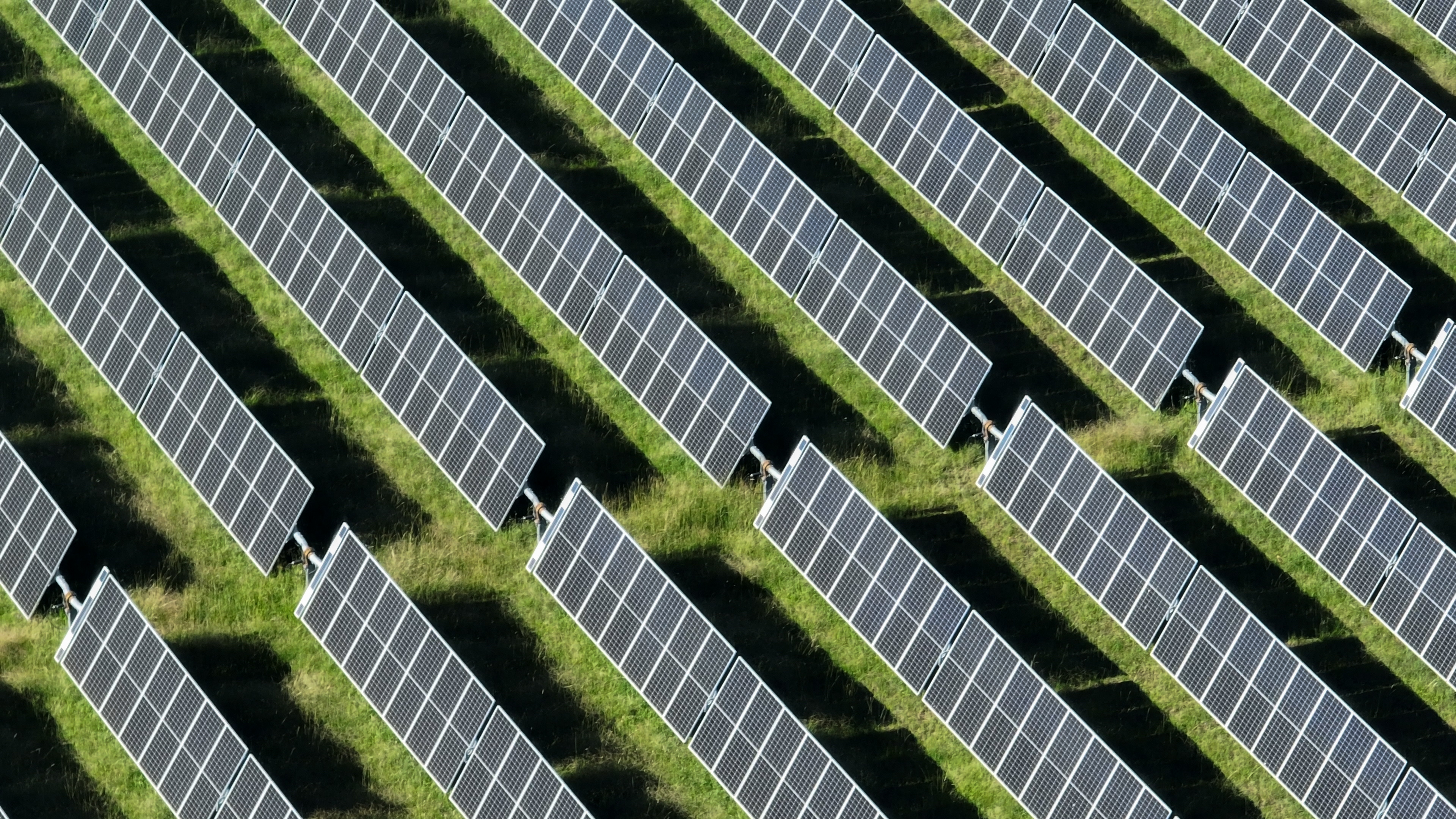
This stunning aerial view captures an array of solar panels arranged in neat, parallel rows across the landscape. From above, the panels shimmer under the bright sunlight, creating a striking contrast against the natural terrain below. The organized rows of solar panels stretch across acres of land, symbolizing the growing global shift toward renewable energy. The grid-like pattern highlights the efficiency and scale of modern solar farms, contributing to sustainable energy production.This high-resolution image showcases the incredible reach and potential of solar power as a clean, renewable energy source. Whether situated in rural fields, expansive deserts, or atop rooftops, these solar panels represent a major step toward reducing carbon footprints and combating climate change. The solar farm's orderly rows and reflective surfaces create a visually appealing scene, demonstrating both technological innovation and environmental responsibility.
Diane Keough via Getty Images
The US may have kneecapped its domestic solar industry, but it may not be enough to defeat renewables’ momentum. In October, the International Energy Agency projected renewable energy will grow by 4.6 TW by 2030 — a figure equal to the combined generation capacity of China, the EU and Japan combined. 77 percent of that figure is expected to come from solar power alone, despite the loss of subsidies in the US and less favorable circumstances in China.
The domestic US forecast has been revised downward significantly as a consequence of its policy choices. But despite this, the obvious benefits of solar power haven’t gone away even if the price may be higher than it was at the start of the year. It remains the fastest and cheapest way to add new power in many countries, and can be installed on a grid or individual basis. Not to mention its utility in remote areas with poor generation resources, where it can reduce dependency on fossil fuels. This year, clean energy think-tank Ember reported on the growth of solar power in the last decade, and how it went from adding just one percent of global power generation in 2015 to 8.8 percent in the first half of 2025.
“AI demand for electricity is the macro driver of US made solar,” said Rob Gardner, VP at the Solar Manufacturers for America Coalition. “AI investments can’t deliver expected returns without quickly deployed power, and US solar is the fastest and cheapest to deploy,” he said. Gardner cited a recent FERC forecast which predicts that 92.6GW of solar will come online between now and July 2028.
The dream of fusion
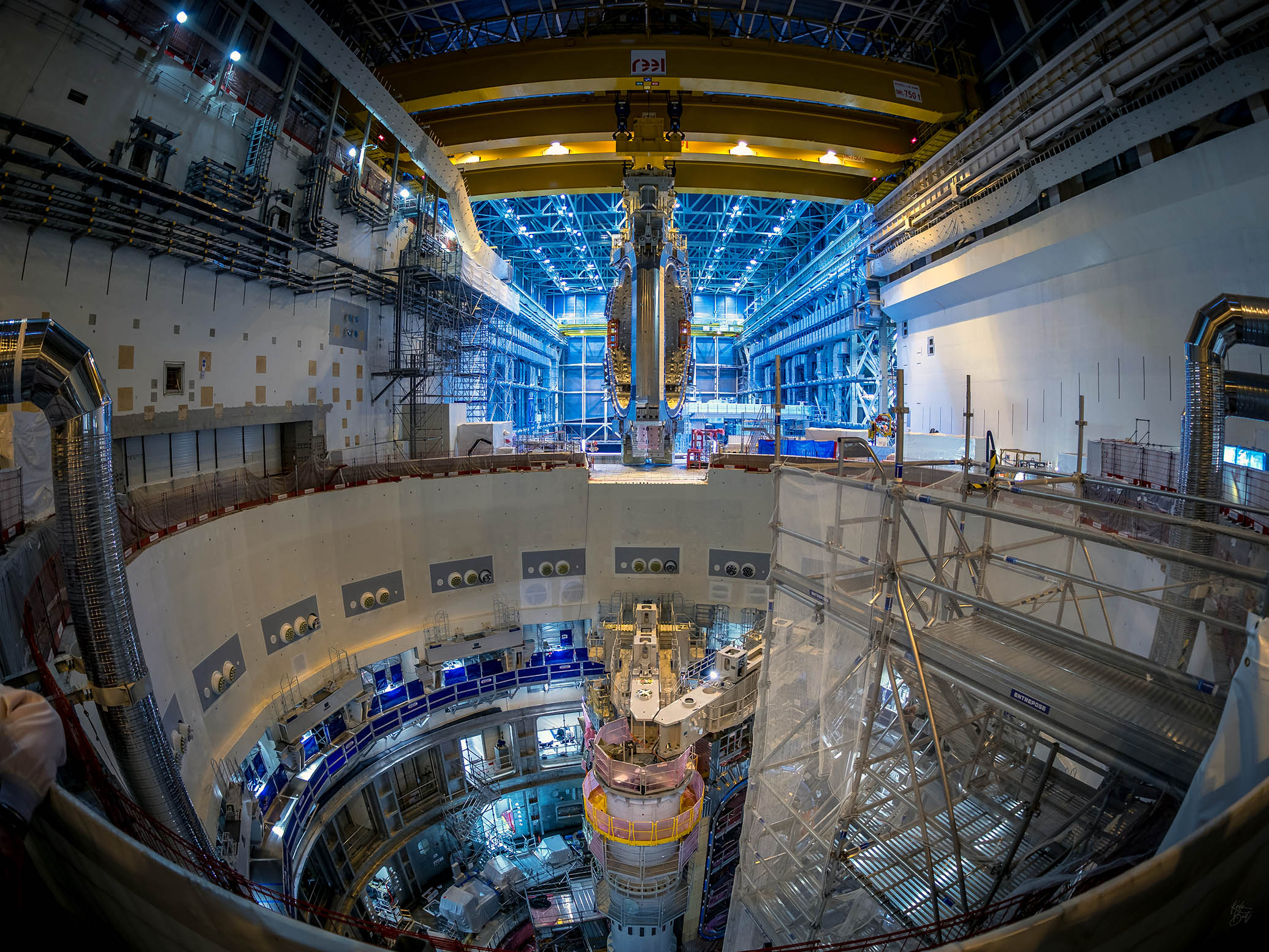
Construction inside the reactor of ITER.
ITER
The US is pinning a lot of its hopes on fusion power to wipe away the debt of our fossil fuel past. Earlier this year, the Department of Energy released a roadmap to get fusion out of the lab and into the world. It wants to coordinate the remaining resources of the federal government to close the fusion world’s “critical science, materials and technology gaps.” In the next three years, officials have been tasked with designing facilities for reactors and developing sources of fuel. Within the next decade, it’s hoped the government will be able to offer large-scale fuel cycle plants to help private sector plants start operations.
If fusion power can be harnessed, it has many of the same upsides as nuclear fission with a lot fewer downsides. If nuclear fission harnesses the energy released when an atom is broken apart, then fusion harnesses the energy released when two smaller atoms are smashed together to create a larger one. It harnesses the same principle as you’ll find inside our sun: Superheated hydrogen atoms fusing to create helium. And while nuclear fusion requires radioactive material, we can source deuterium and tritium from water and lithium.
ITER (International Thermonuclear Experimental Reactor) is a giant experimental fusion reactor under construction in France which, when operational, will be the world’s largest. It is backed by a coalition of nations, including the US, EU and China, and has the aim of both generating power and developing the technologies necessary to make Fusion a reality. The organization claims that there is enough of both materials available on the planet to run fusion plants for at least a thousand years, if not longer. There are also a raft of safety benefits, as there’s no creation of the sort of long-lived and dangerous waste associated with nuclear power, no risk of a meltdown, and its raw materials can’t be used to make weapons.
But while fusion is entirely possible, and on paper could be the salve to all of the world’s energy ills, it’s not yet a reality. There are a large number of engineering challenges sitting between us and a viable commercial reactor. The shift that has happened this year is that fusion is now being treated as a “strategic national priority,” according to the International Atomic Energy Agency. More than 160 fusion facilities are operational worldwide, each one looking to explore ways of solving the hard problems standing between us and limitless power.
But as well as ITER, there are other major nations working to build out their own fusion capacity. The biggest would likely be China’s Experimental Advanced Superconducting Tokamak (EAST) which has already set a record for energy generation. At the start of this year, it was able to produce a steady state for 1,066 seconds.
But what we are seeing now, which may offer some degree of hope, is the surge in interest from the private sector. Companies like Commonwealth Fusion, Type One Energy, Helion and Pacific Fusion are all working on their own fusion facilities. These projects have received billions in funding, but it’s likely all will need time to work out if their approaches are viable.
Stuart White is a spokesperson for Tokamak Energy, a British-Japanese startup spun out from the UK’s Atomic Energy Authority which is developing its own fusion technologies. In 2022, the company’s own reactor was able to reach a plasma temperature of 100 million degrees celsius. “It’s an incredible achievement but that isn’t going to power homes around the UK or anywhere,” he said. White believes the fusion world will spend the next decade “scaling up,” projects to find the right pathway to building commercial reactors. He cited national programs, like the UK’s STEP which is targeted to begin working in 2040, while the US’ plan for the mid-2030s he feels is “aggressive.”
White also explained that, as equally important as solving the key physics issues, is building out the supply chain to actually make the equipment. He cited the importance of manufacturing in Japan and China to produce the hardware necessary to build fusion reactors. And that this process, while time consuming now, will help accelerate the eventual development of the technology down the line. White added that another positive sign is that regulators aren’t likely to want to scrutinize fusion reactors with the same intensity as they do nuclear reactors. That will both speed up the construction of new facilities and reduce costs when they do eventually enter service.
What’s clear, however, is that Fusion is not going to be able to swoop in and decarbonize the world’s energy needs in the sort of time scale it’s likely to be required. (White said it is likely to arrive in time to complement other clean sources of energy over the next half century, rather than so quickly that every other power station gets mothballed instantly.) Consequently, the government of the world must keep prioritizing the rollout of renewables rather than hoping that fusion will simply bail everyone out in the next decade.
This article originally appeared on Engadget at https://www.engadget.com/science/in-2025-ai-and-evs-gave-the-us-an-insatiable-hunger-for-power-133000673.html?src=rss