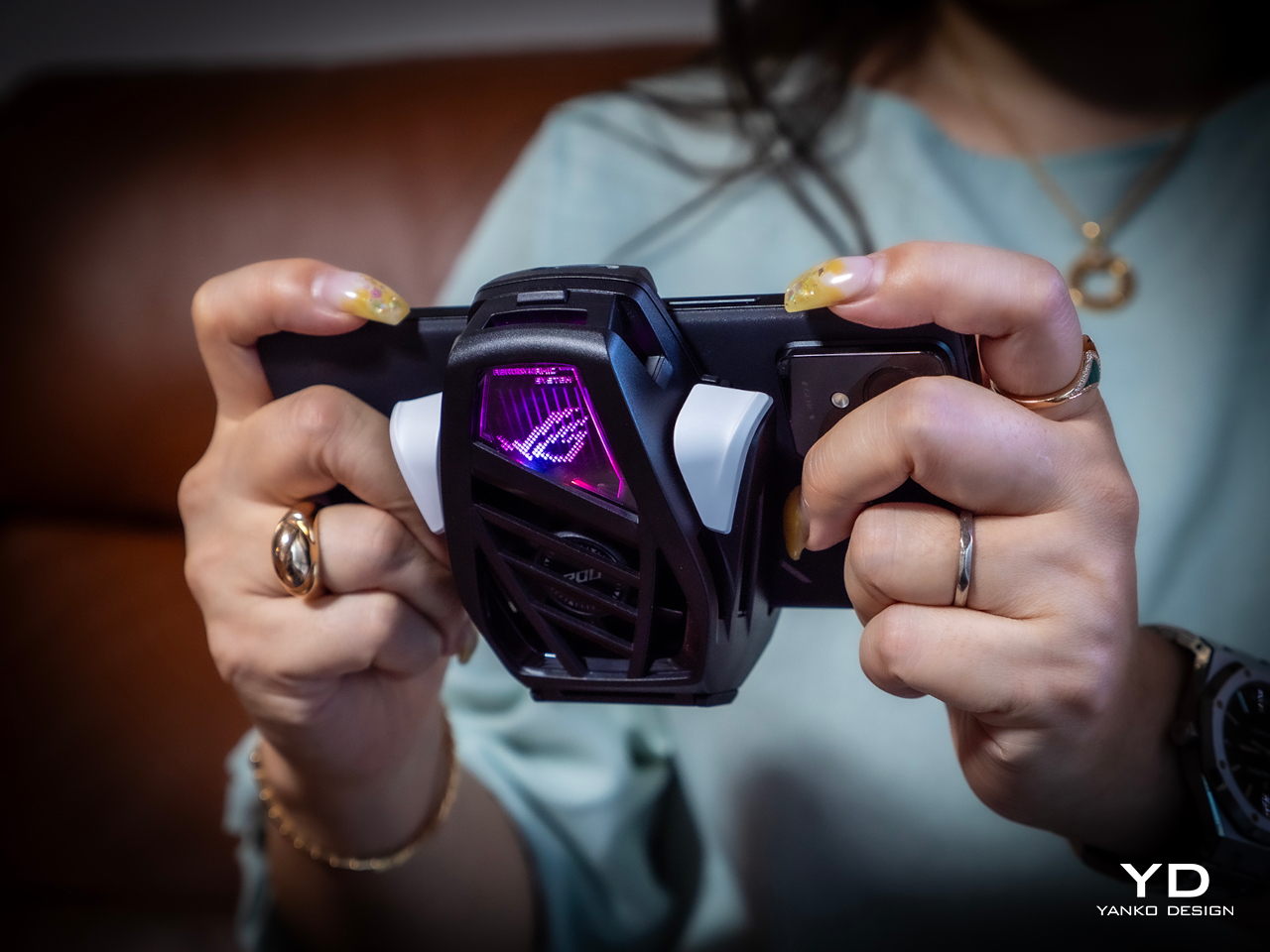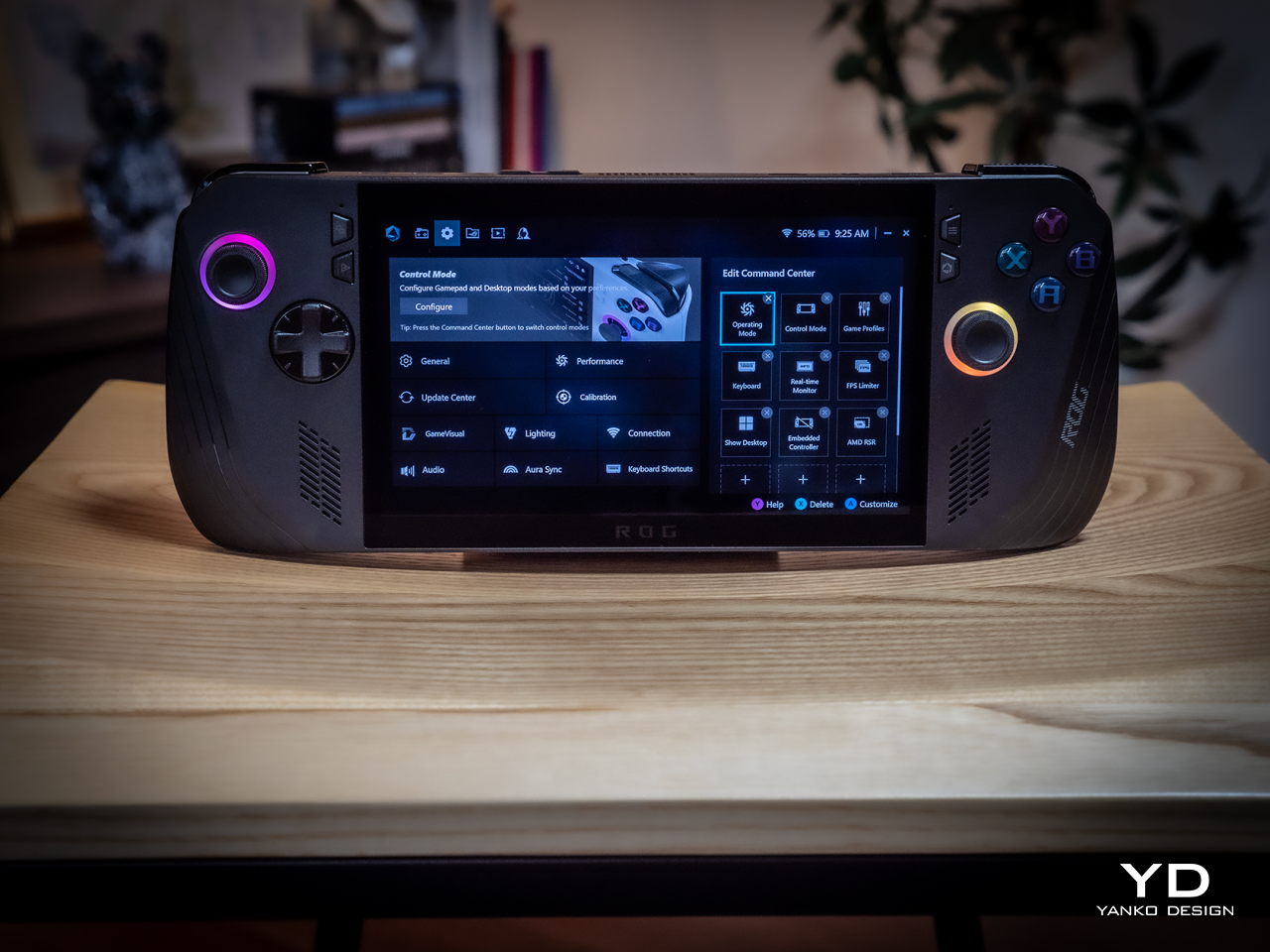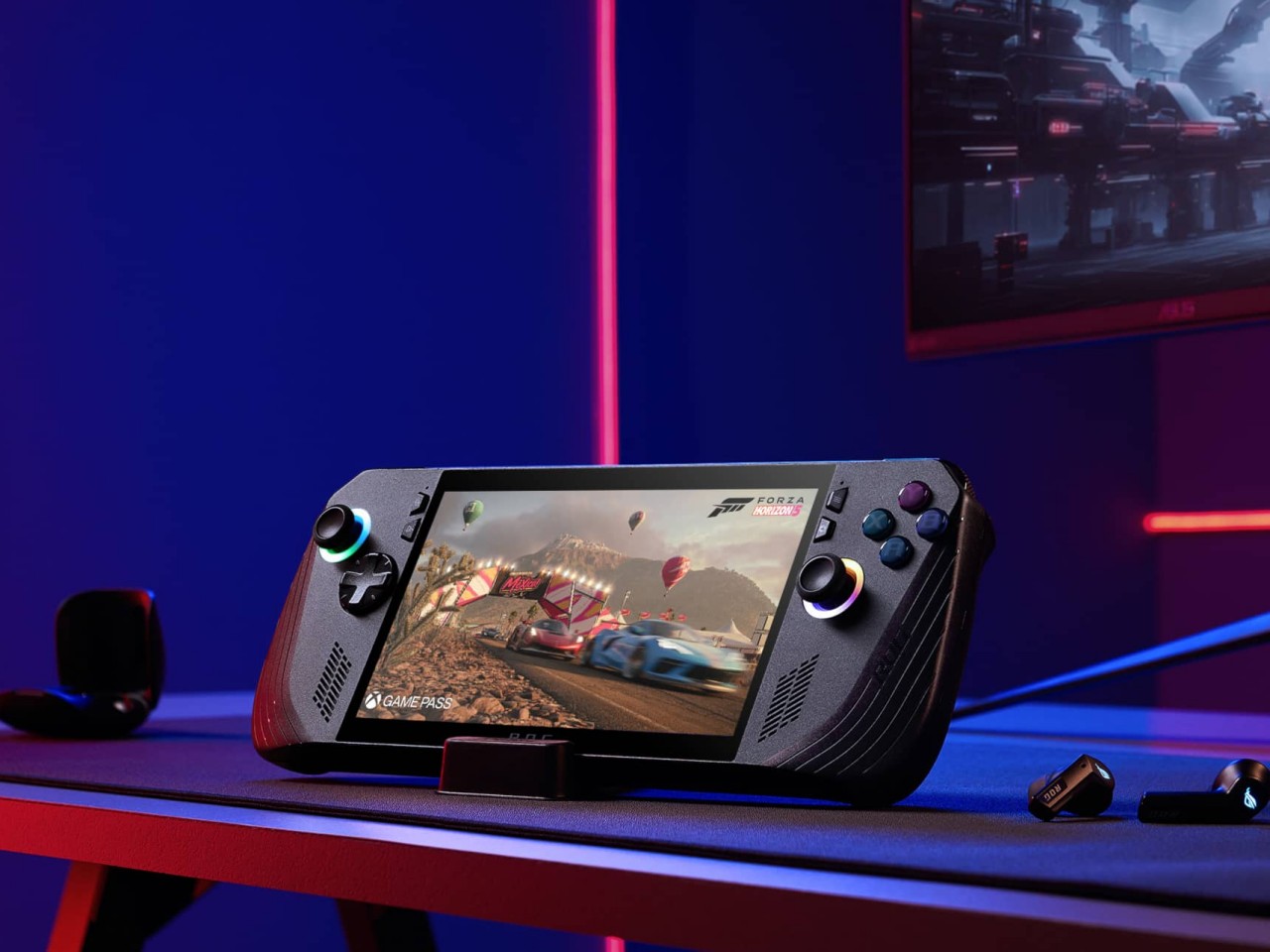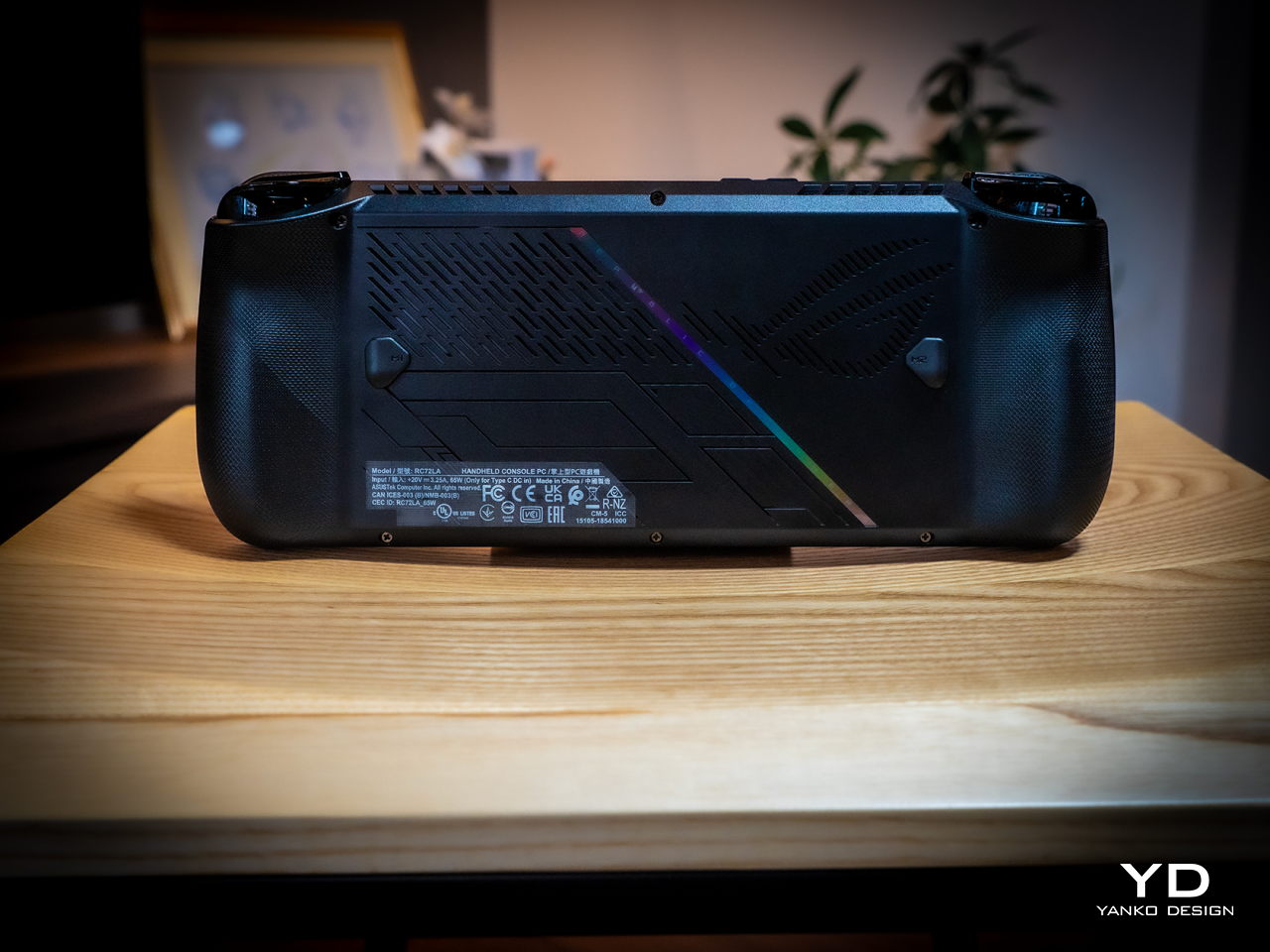
ASUS ROG Mjolnir power station promises uninterrupted gaming for an hour

It seems that the gods of Asgard are truly smiling on brave digital warriors. After two months of debate and speculation on whether they’re just pulling a long hoax, ROG has proven that there is, indeed, a real Mjolnir power station, or at least one working unit shown off to the public at Computex 2024. And it is as massive as you might have expected, but also had a few surprises we didn’t see coming. It probably won’t satisfy outdoor adventurers, but for the avid collector, comics fan, and loyal ROG gamer, the ROG Mjolnir will definitely be one to keep an eye on, at least when ASUS finally spills all the beans.

Designer: ASUS Republic of Gamers

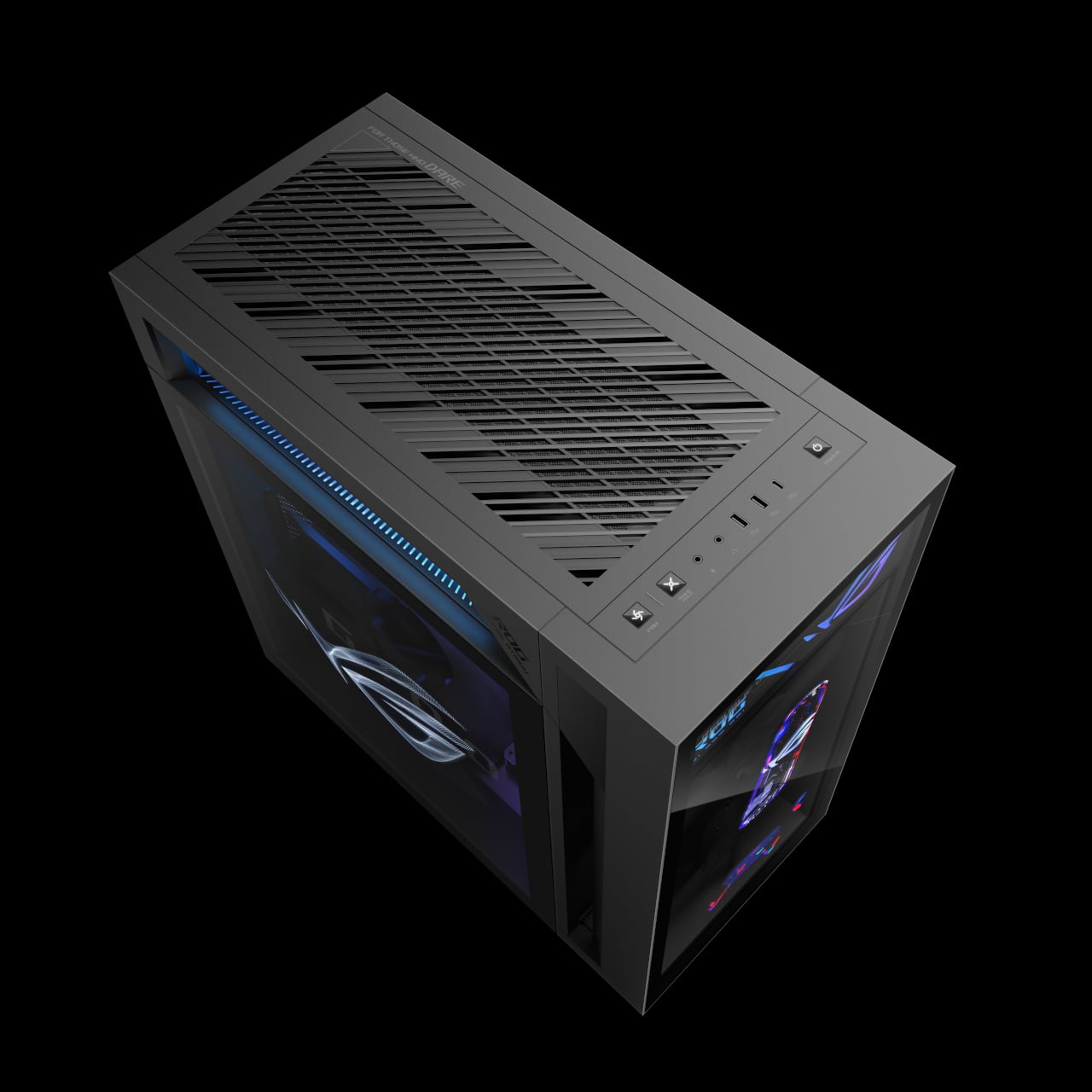
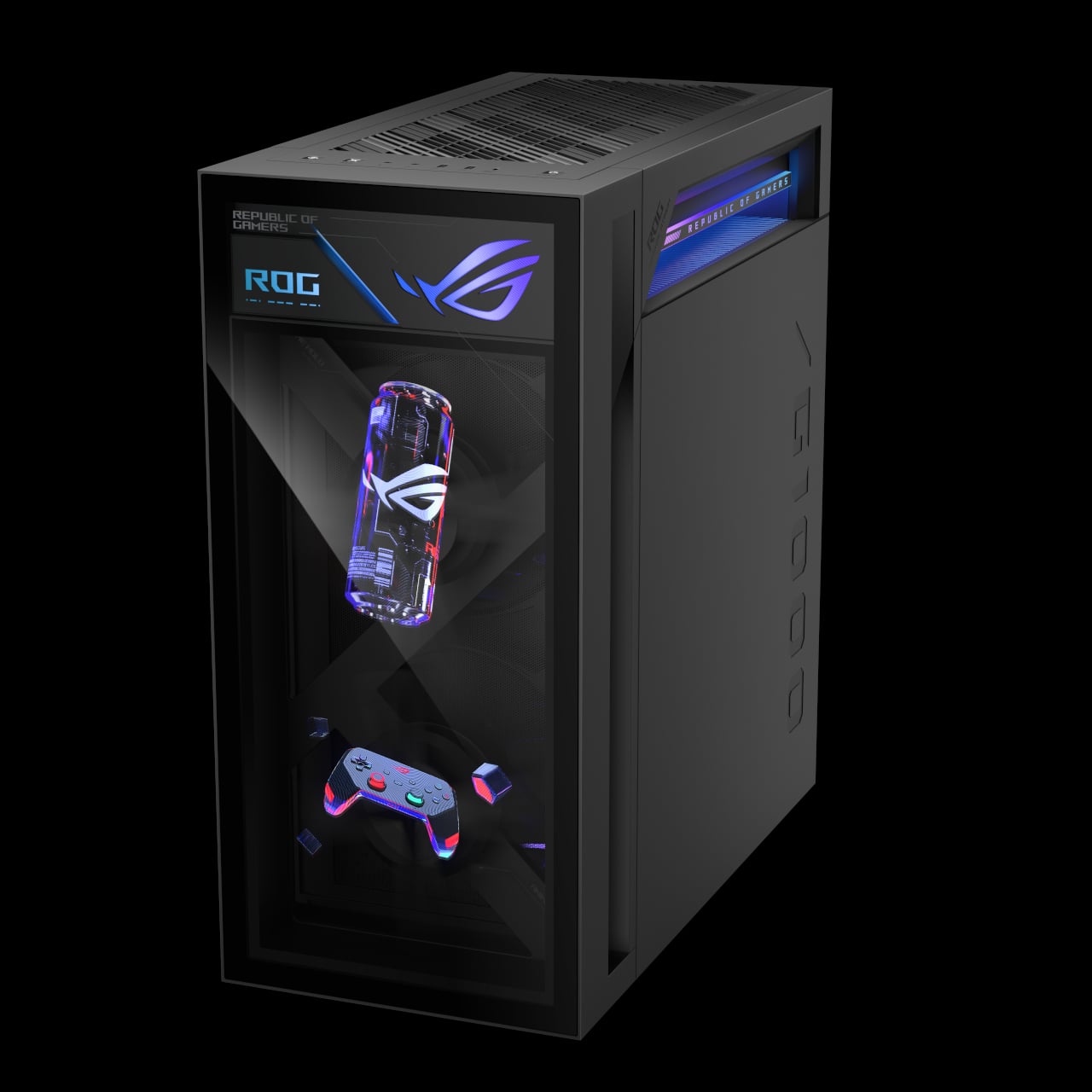
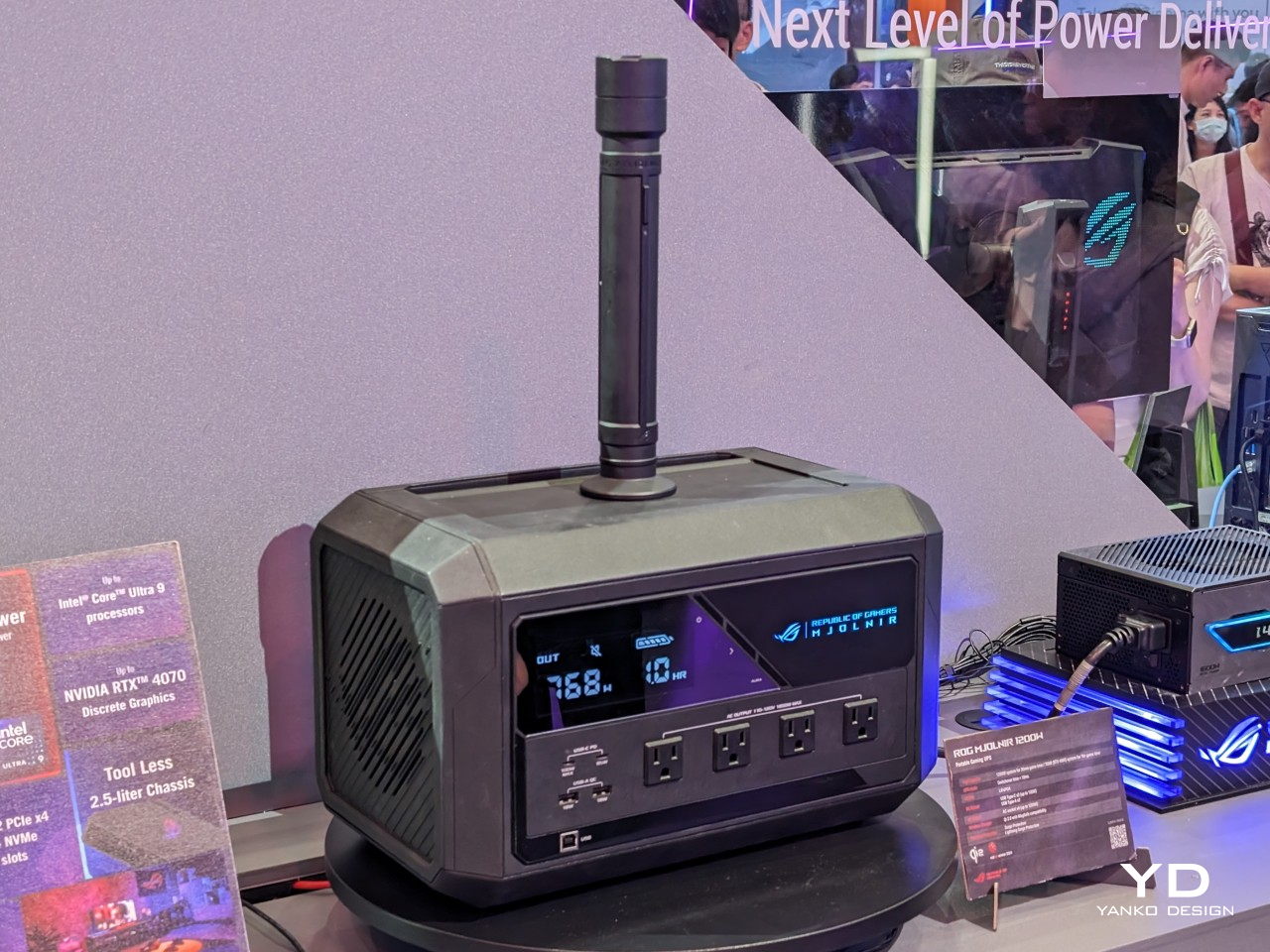
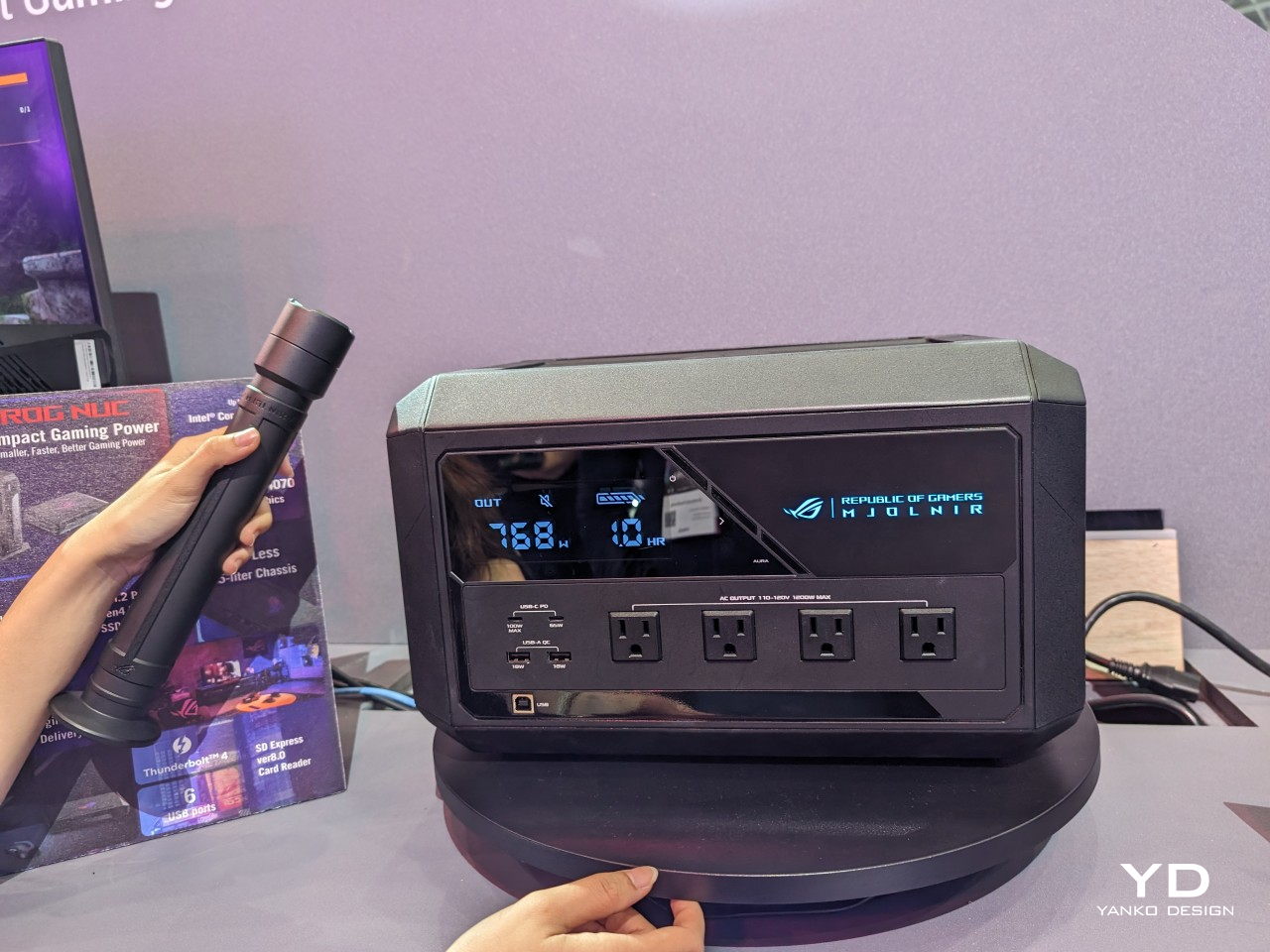
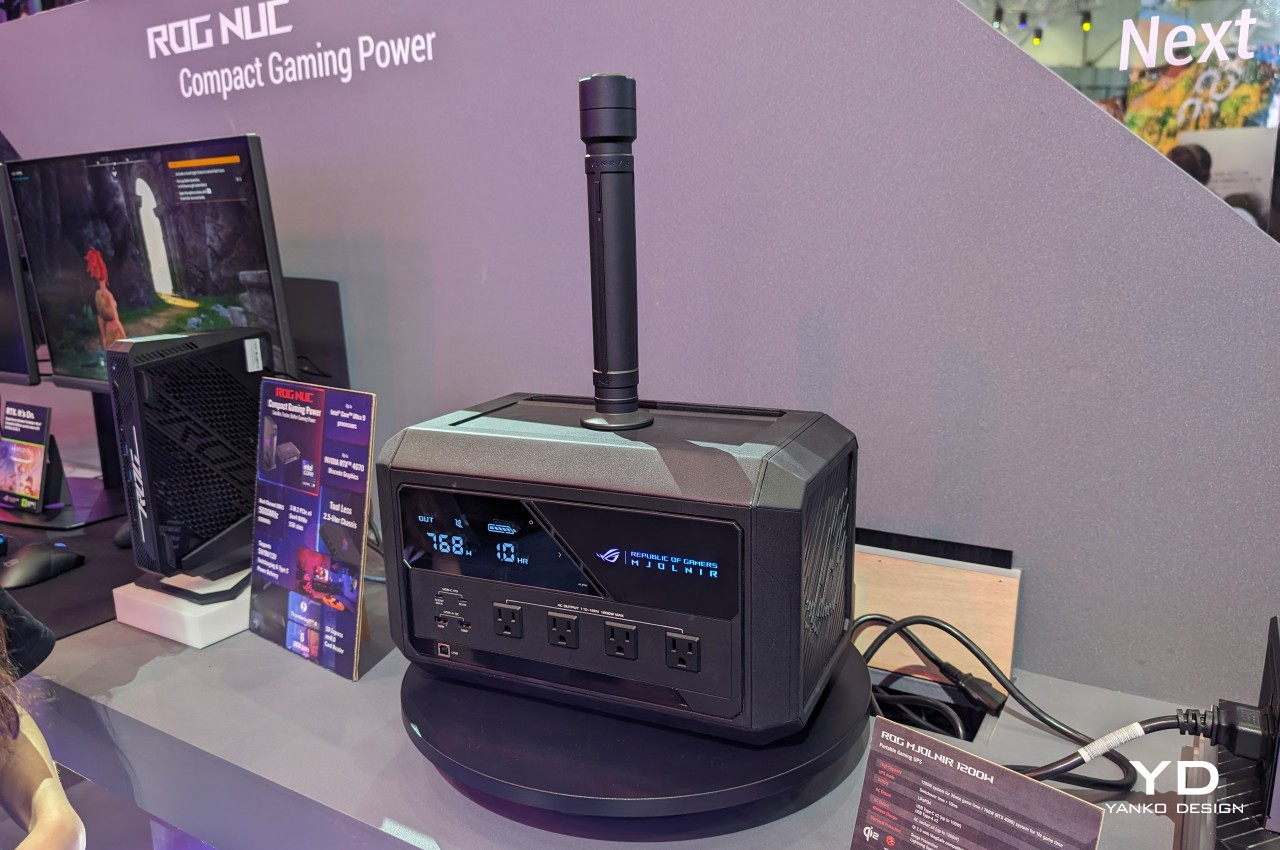
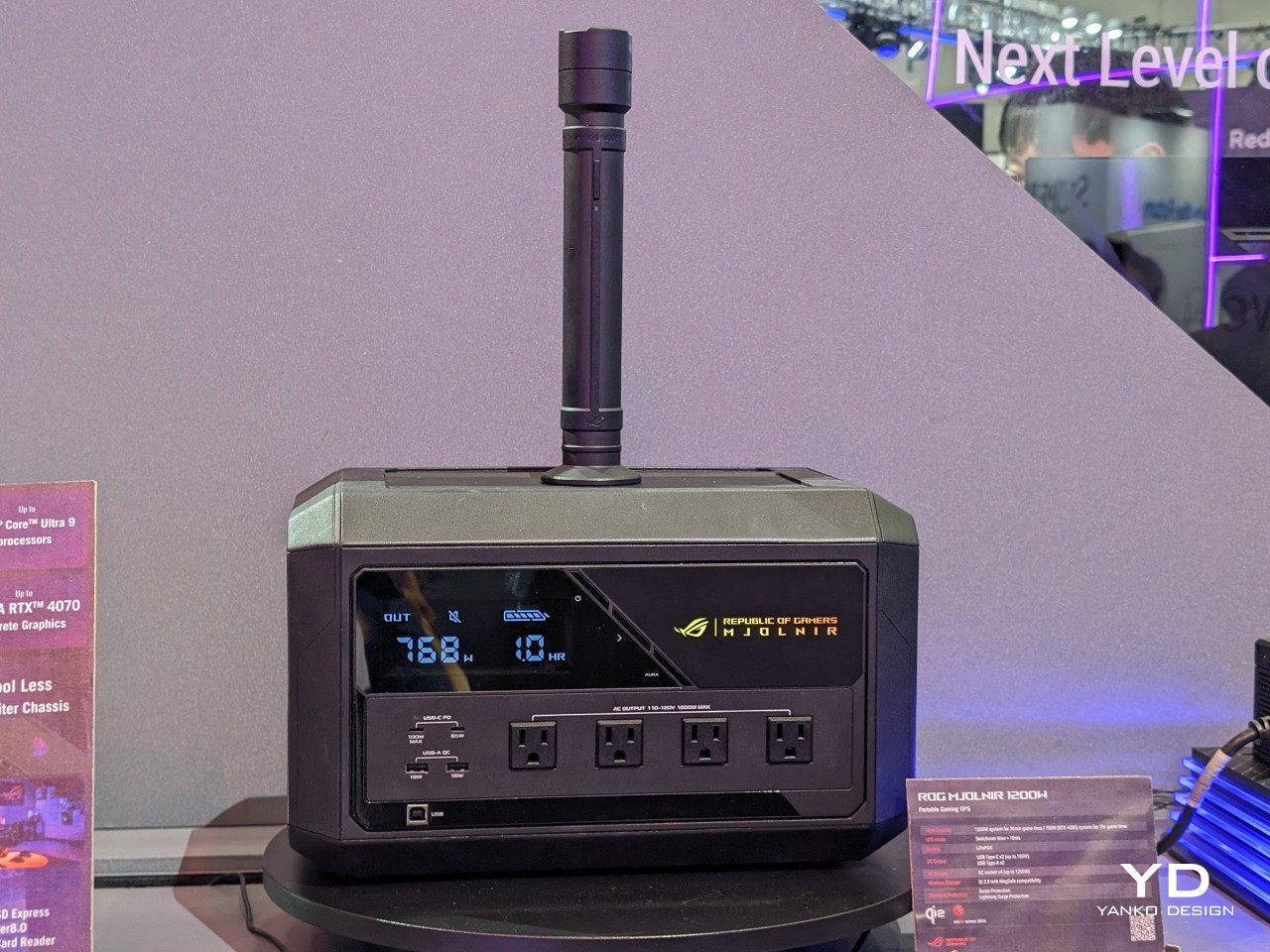
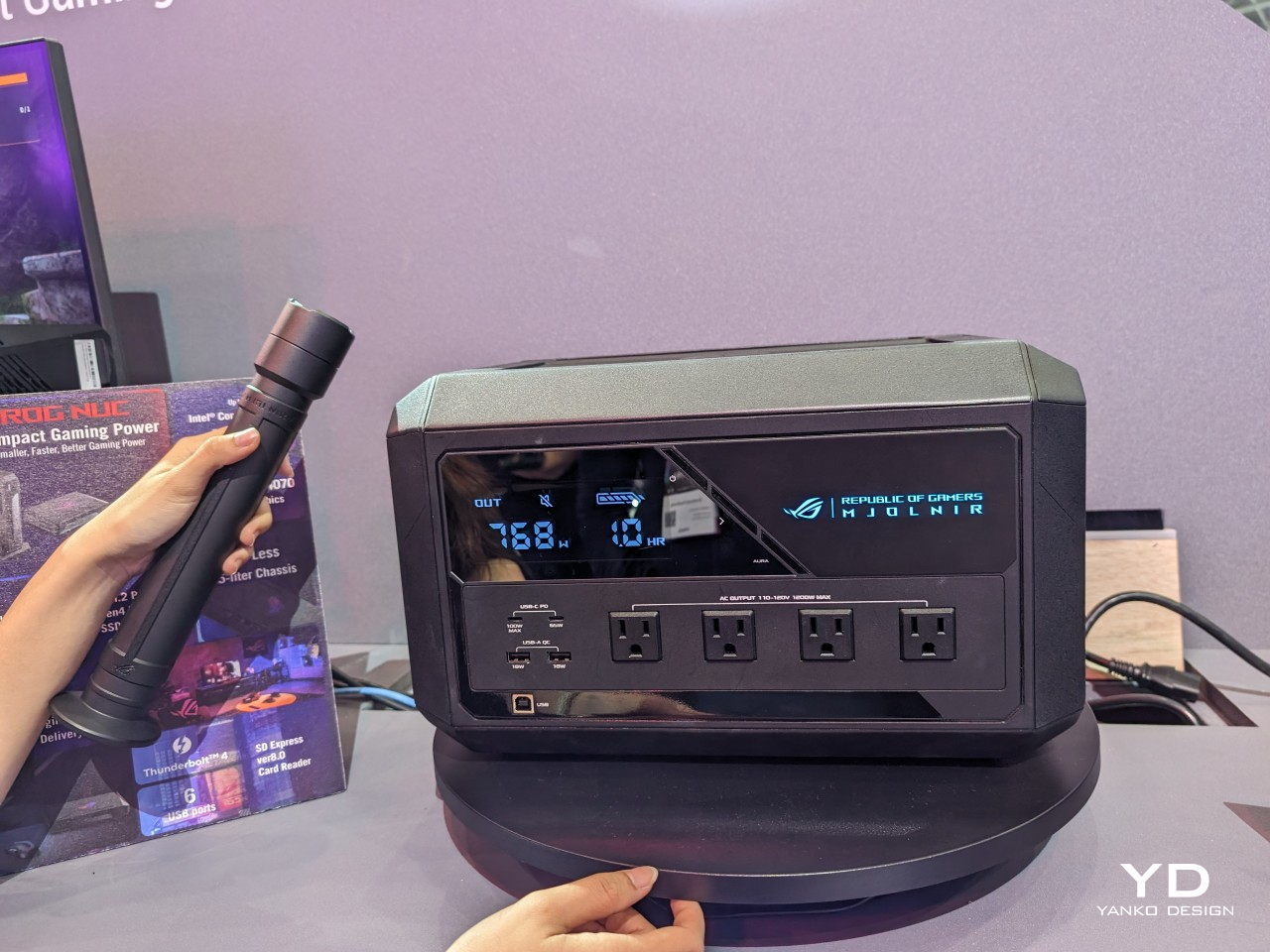
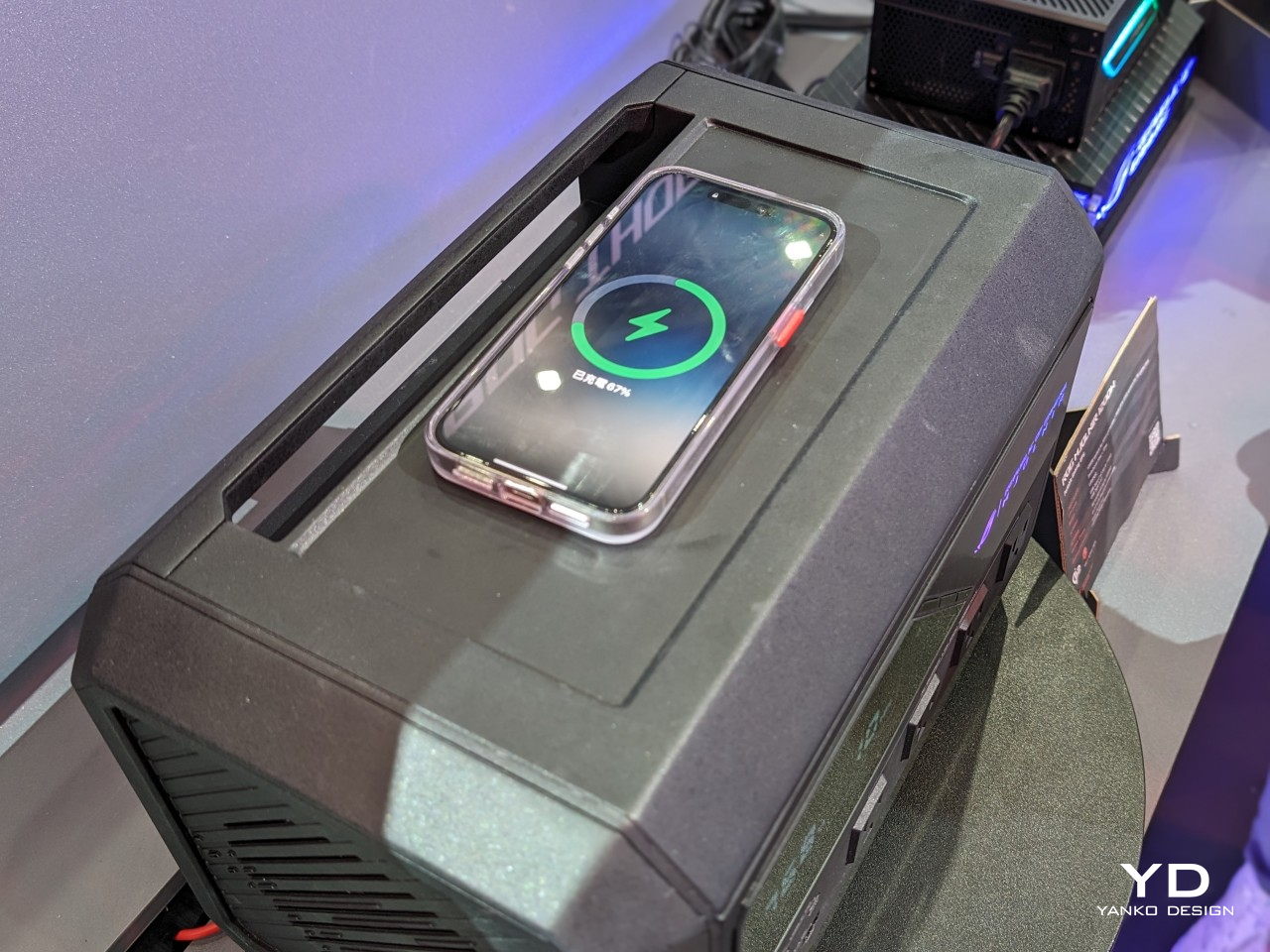
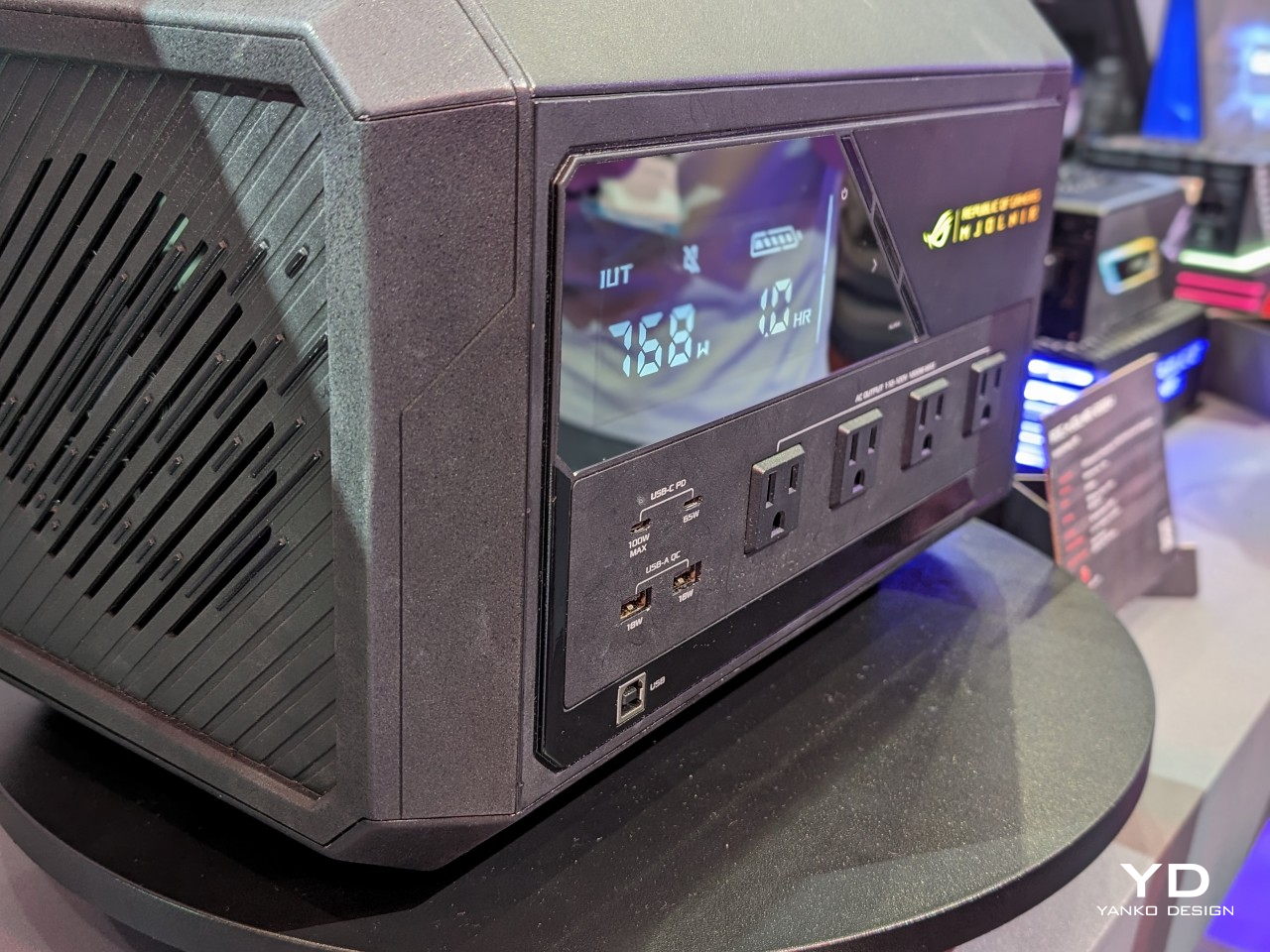
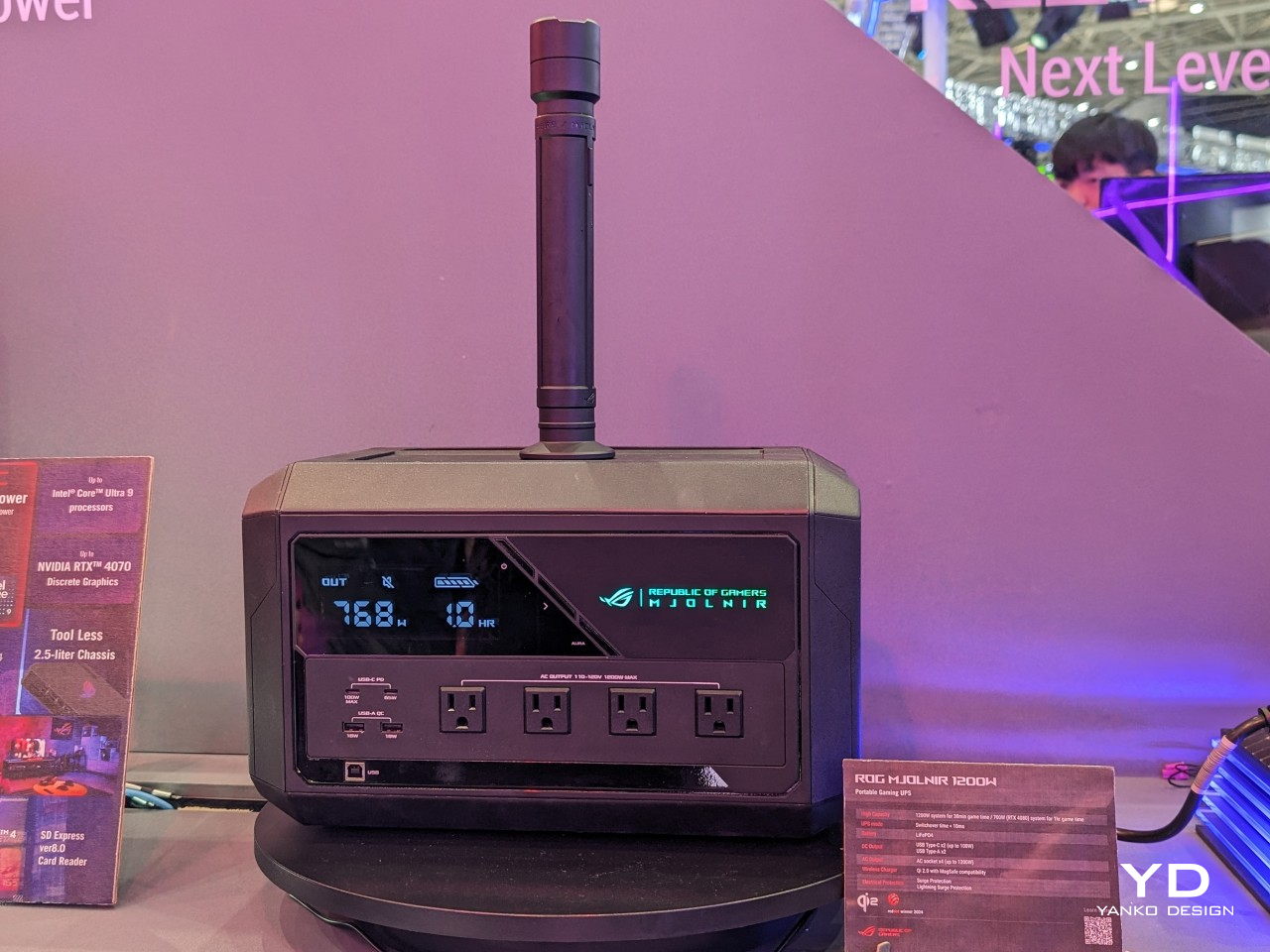
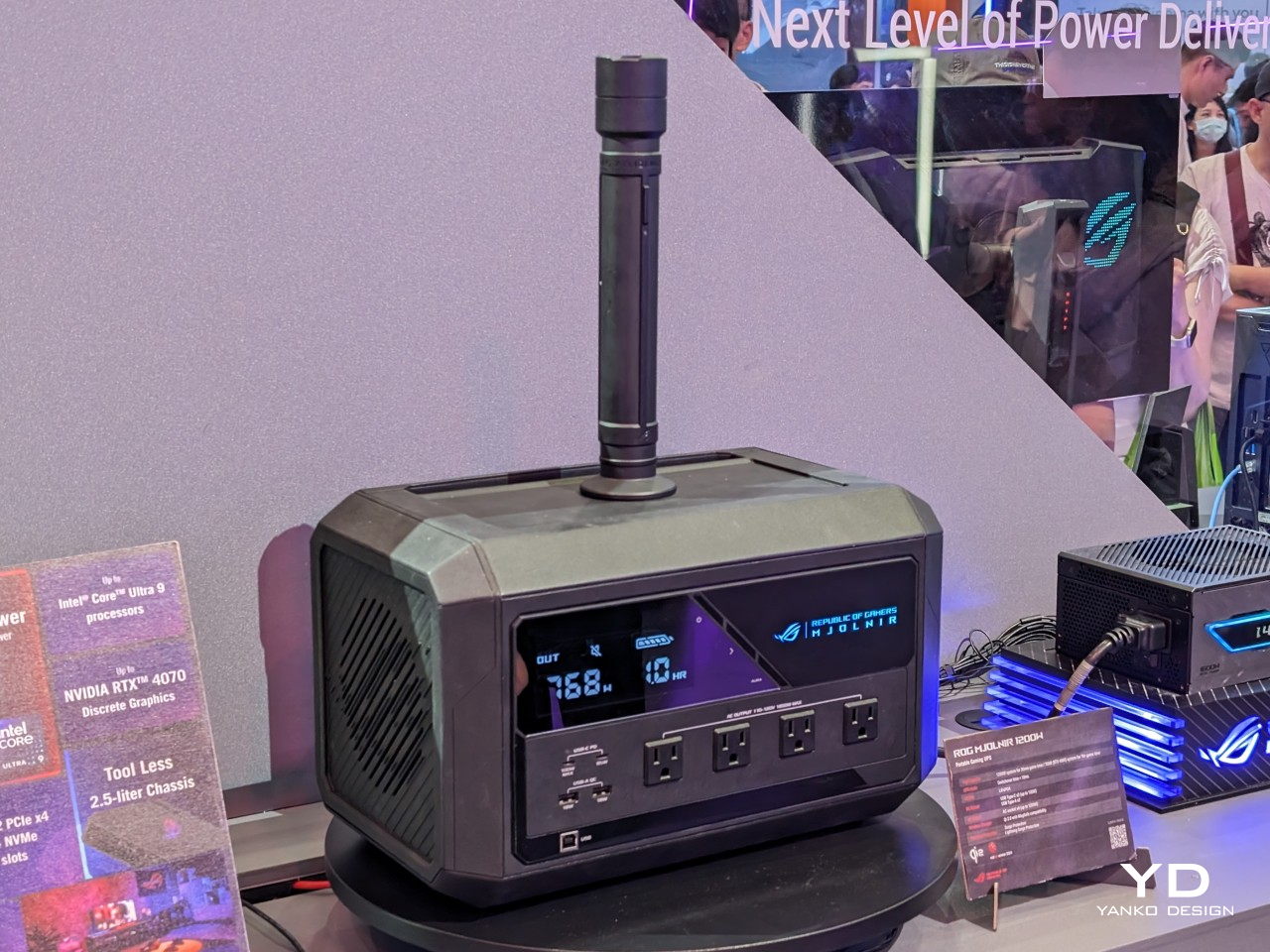
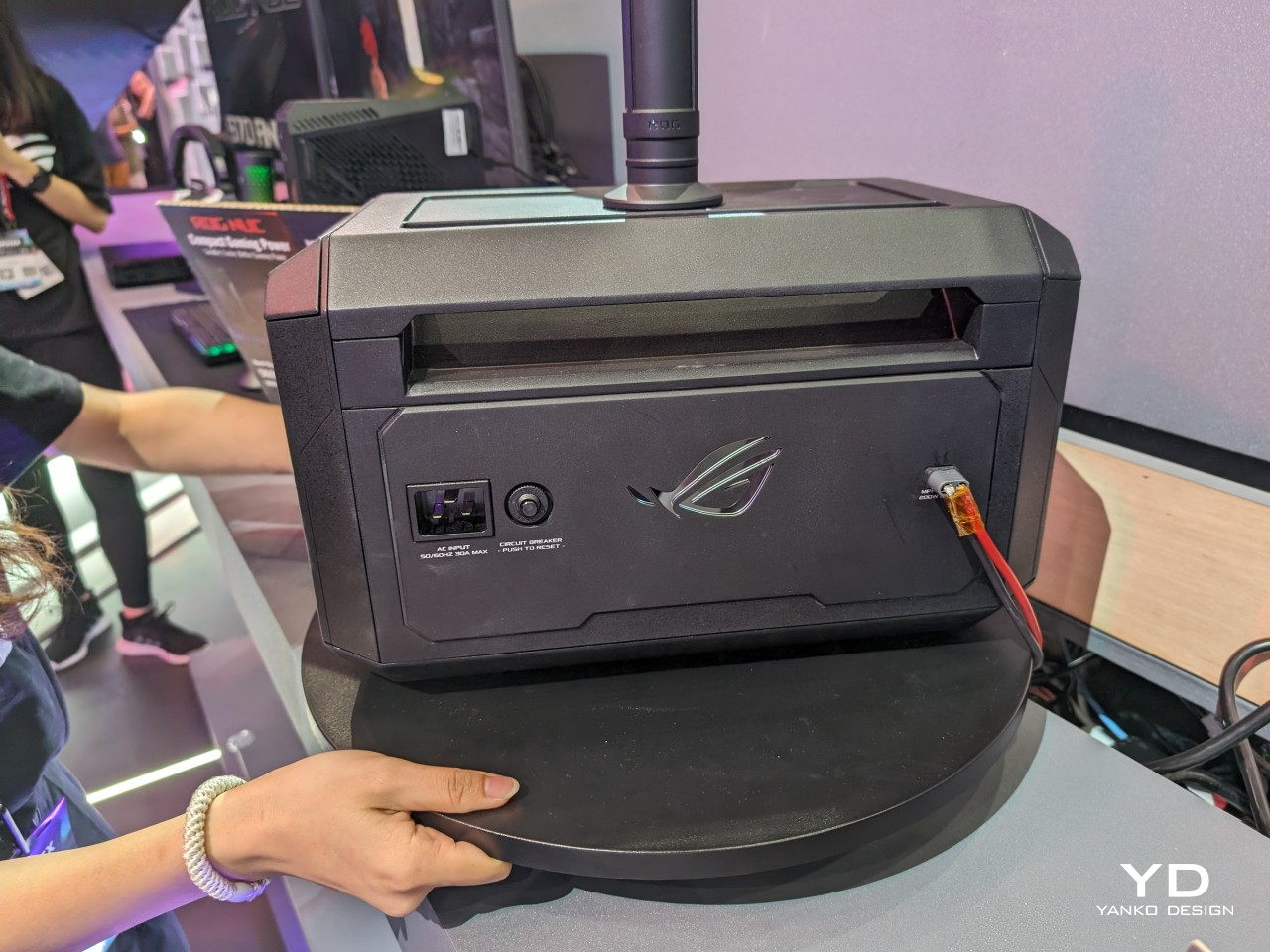
The ROG Mjolnir is a huge box, perhaps too big for the 768Wh battery it packs inside. Exact dimensions and weight aren’t available yet, but it’s definitely not something you’ll be carrying around a lot despite the “portable” in its name. And you’ll definitely not want to lift it by that handle sticking out from the top because you won’t be able to. And it’s not because you’ve been deemed unworthy.

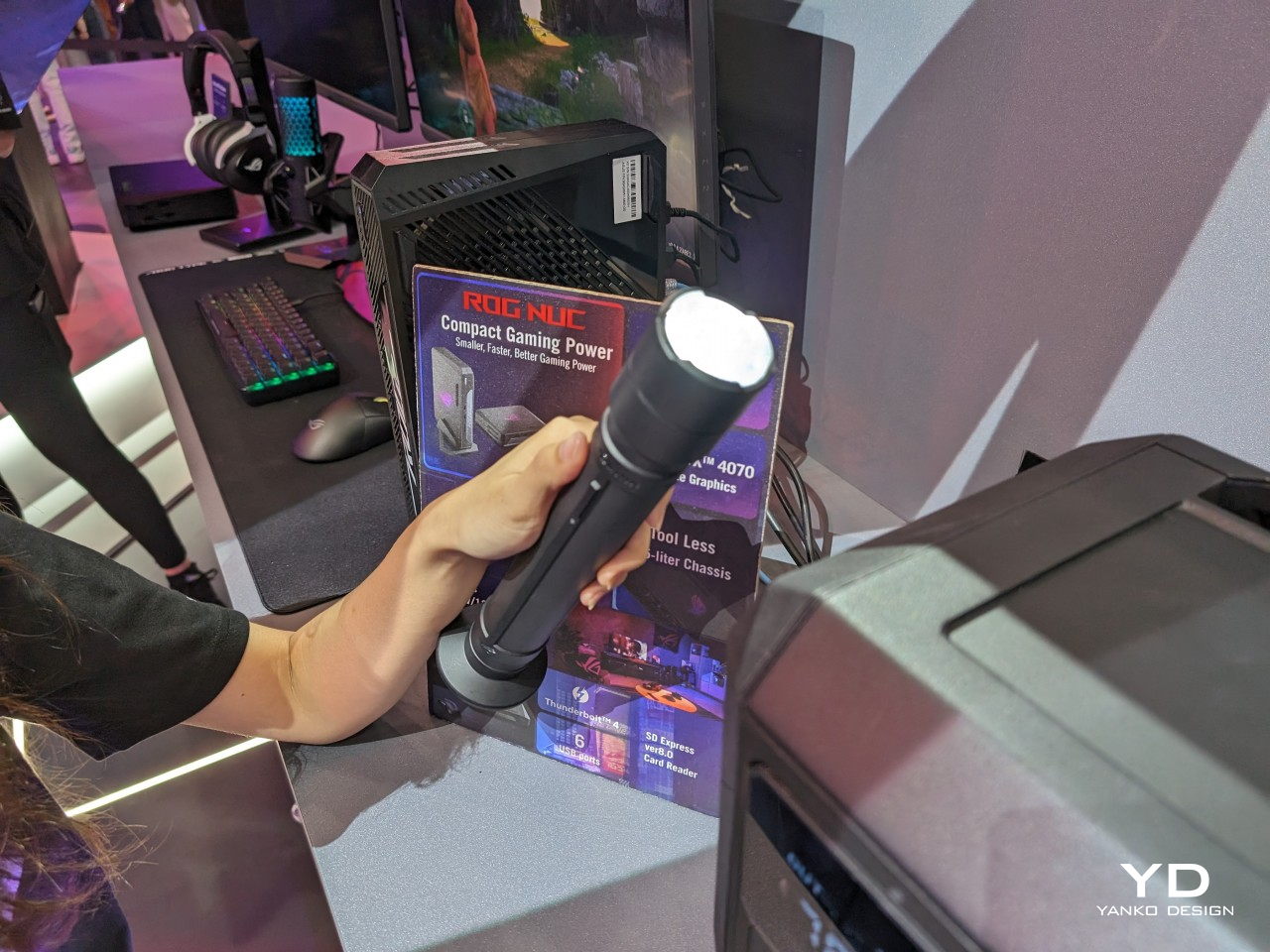
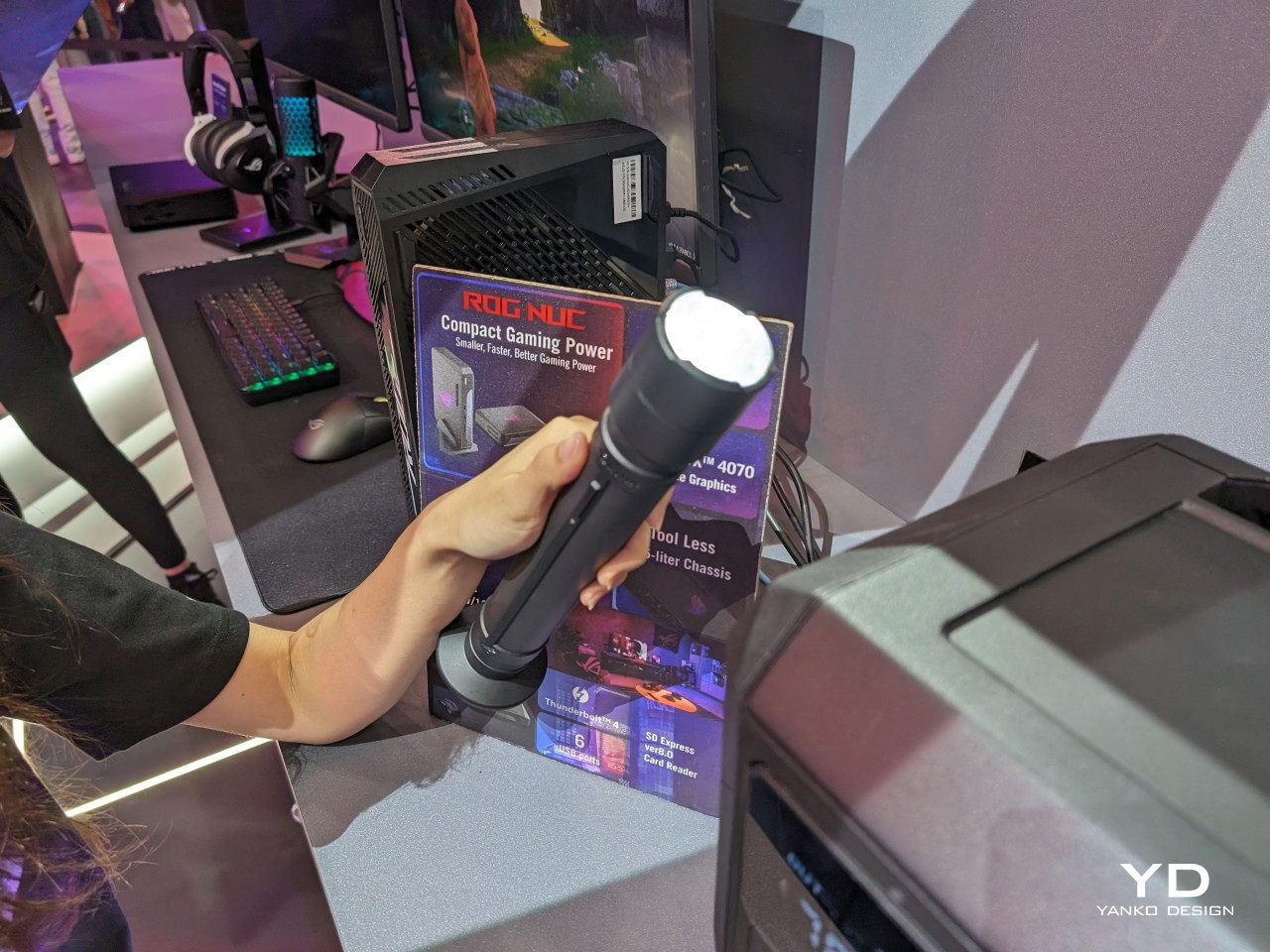
As speculated, that stick is actually the torch that ASUS teased in April, but it doesn’t work the way you might expect it to. The light is actually on the top end of the stick, so you have to lift it rather than pull it up like you would when trying to pick up a hammer. The opposite end that has a flat disc is actually a magnetic connector that attaches to the magnetic wireless charger on the top of the box.

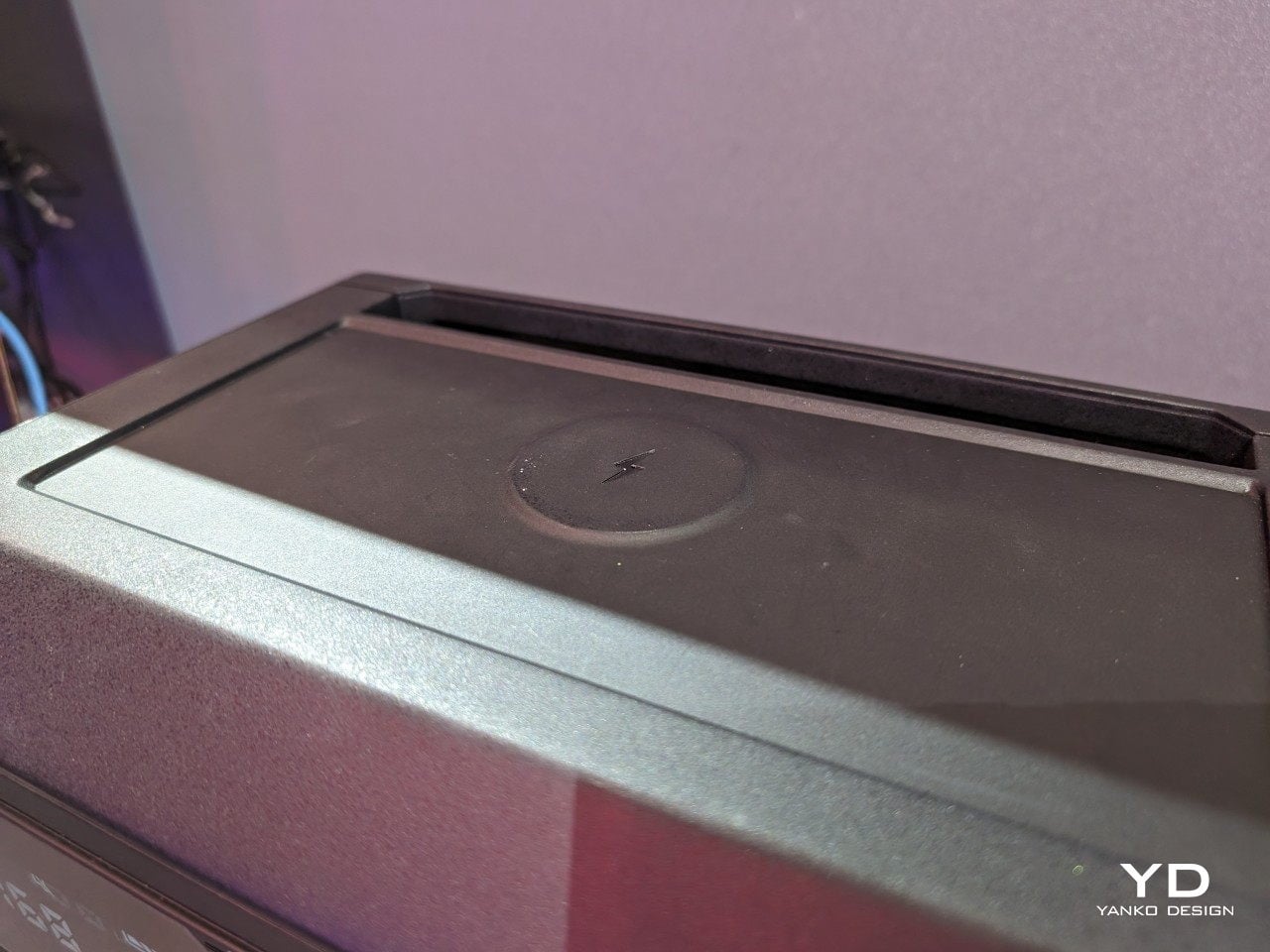
Yes, there is a 16W wireless charger and it’s compatible with both MagSafe and Qi 2.0. There’s a telltale sign of a charging coil smack in the middle of the Mjolnir’s top, and it’s a bit raised so you can feel the spot with your hand if it’s too dark to see. Of course, you could just use the torch handle to light up the space since you’ll be removing it from its spot anyway. One design oversight, however, is that there doesn’t seem to be any other way to attach the handle so you’ll have to make sure it doesn’t roll off or get lost while you’re charging your smartphone.

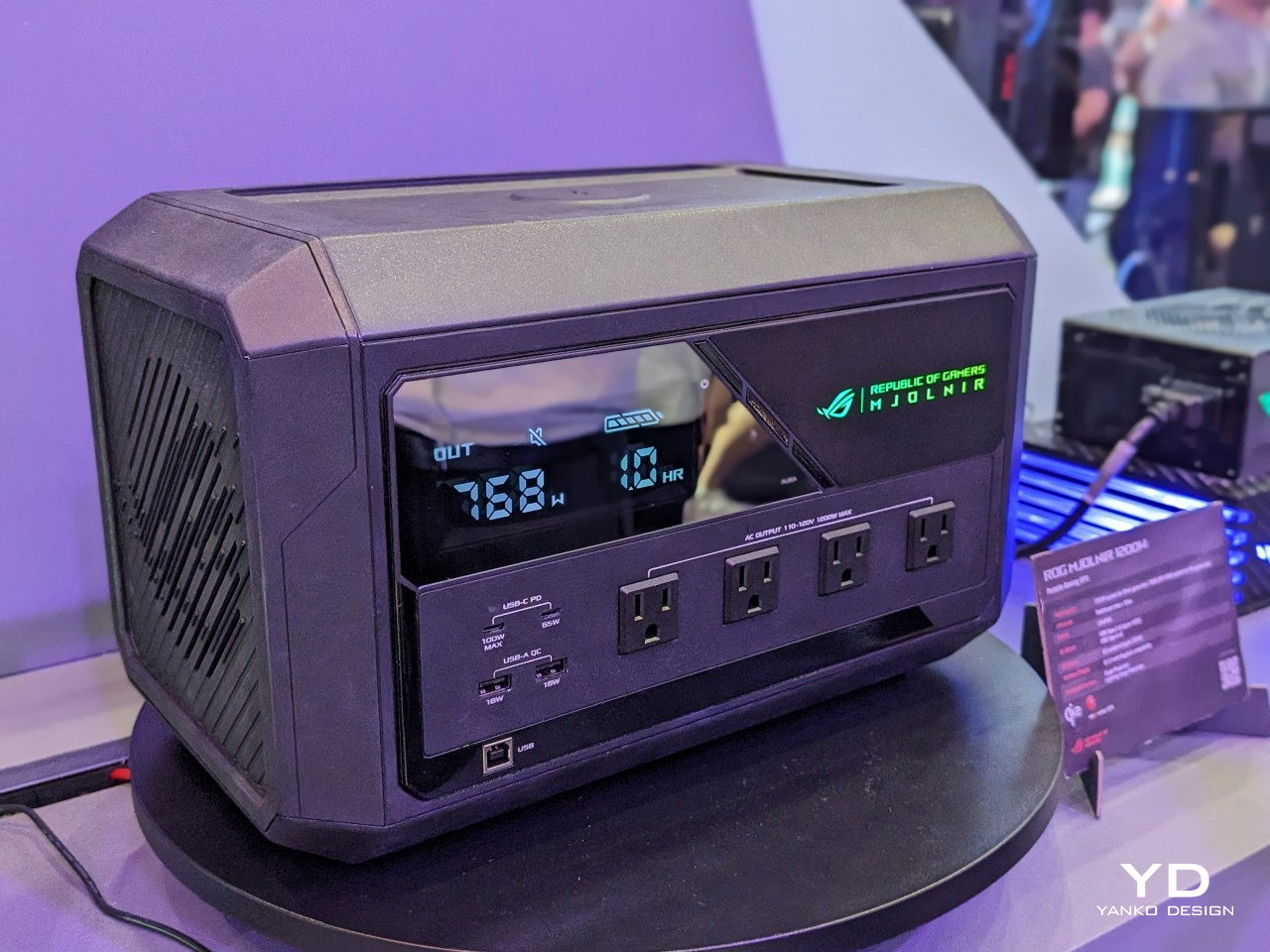
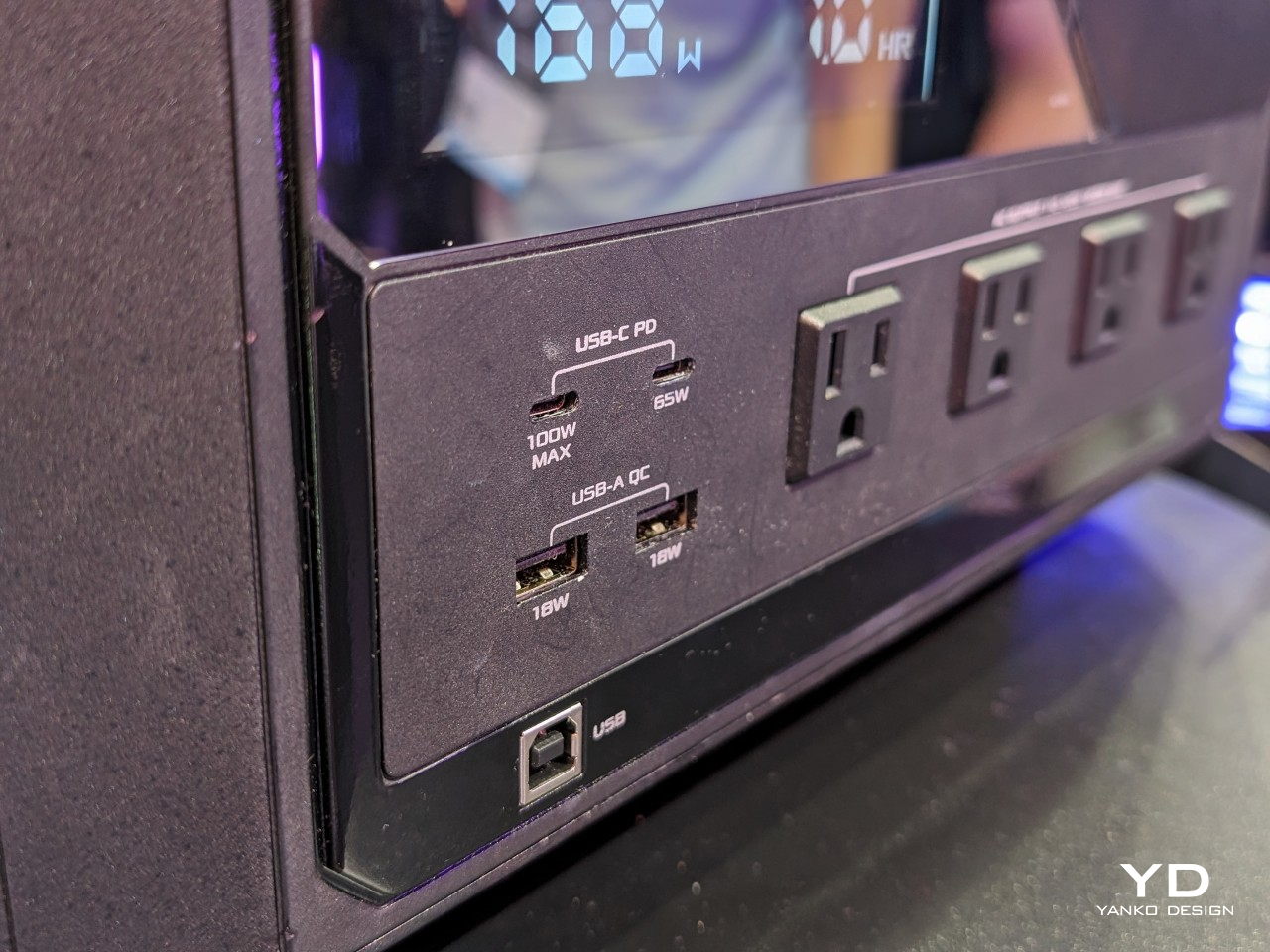
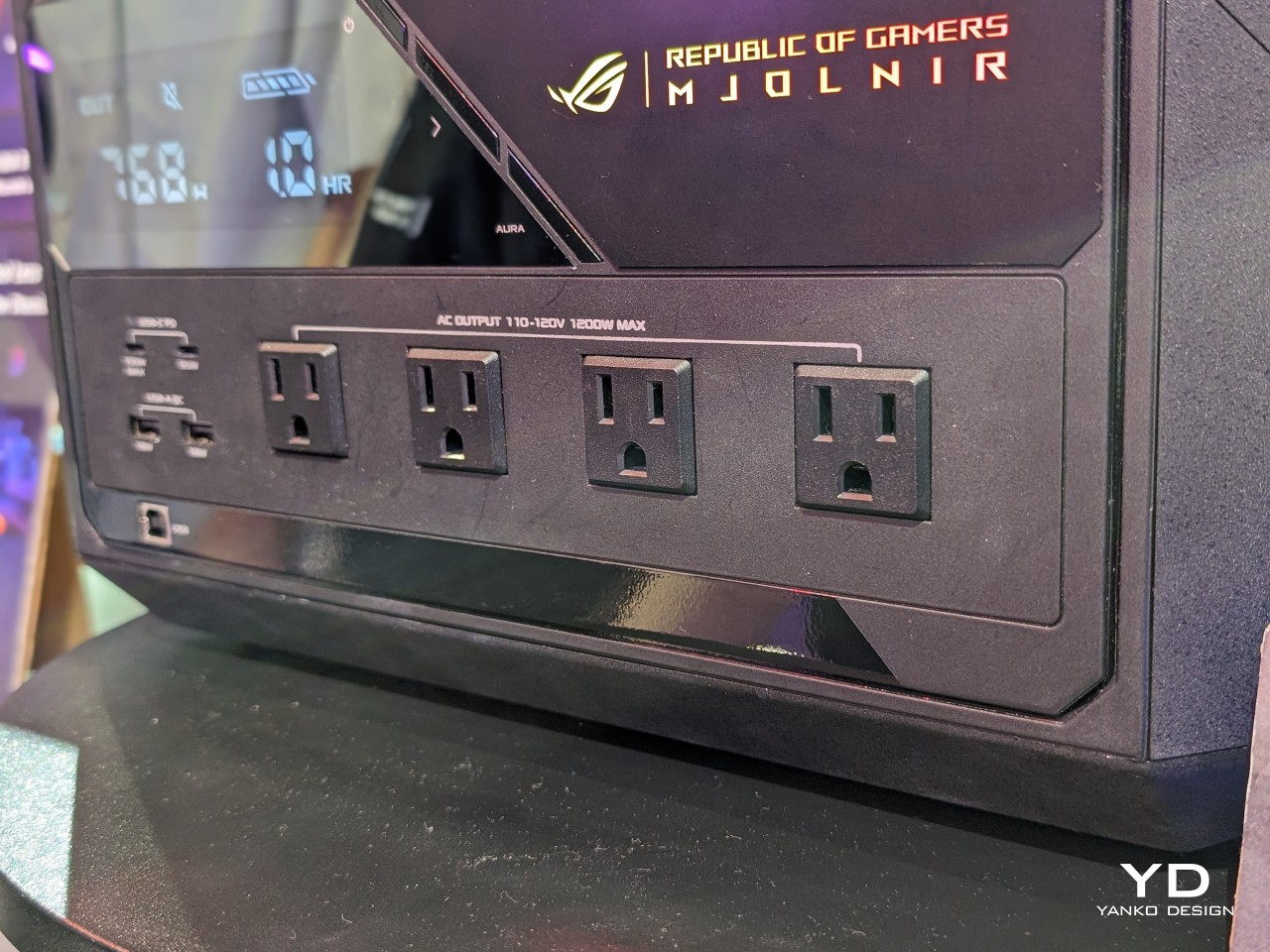
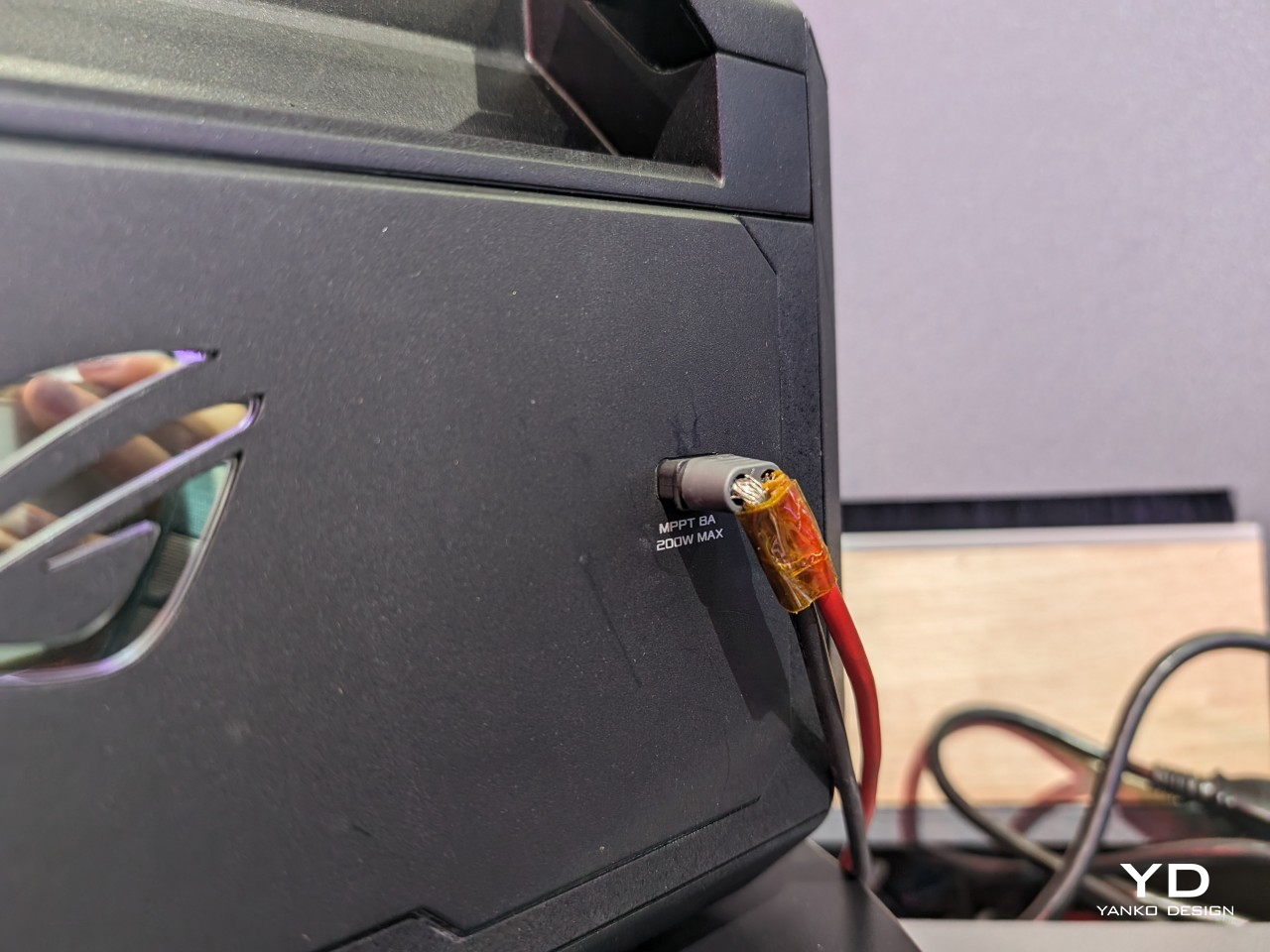
Apart from its majestic design, the ROG Mjolnir is pretty average as a power station and is clearly aimed at computer users more than travelers. There are two USB-C ports capable of 65W and 100W of output, two USB-A ports, and four AC outlets with a total maximum load of 1200W. There are no DC barrels or car chargers, it can be charged via solar panels if a direct power source is unavailable.

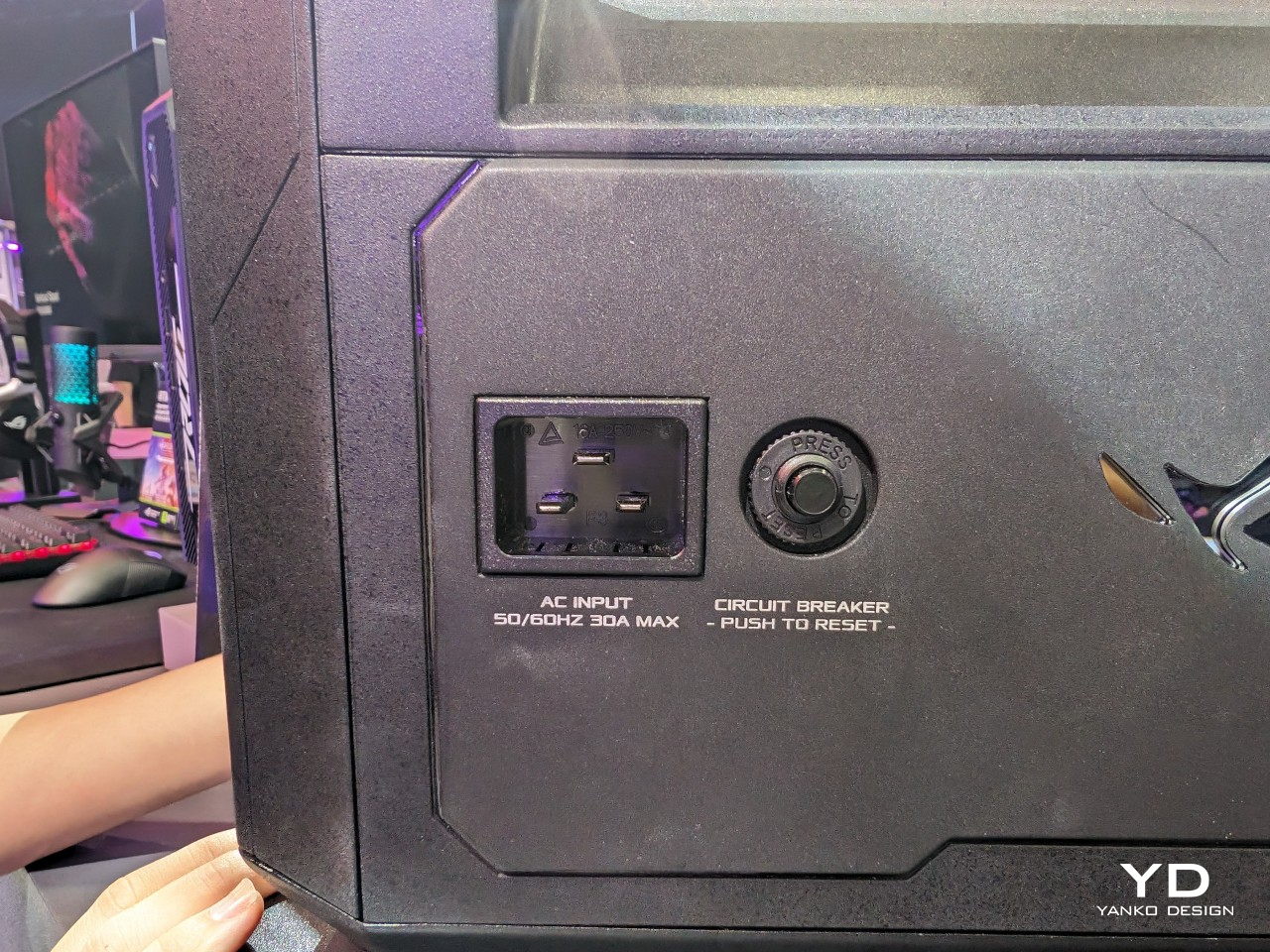
That’s pretty much a standard for portable power stations but its main purpose is really to provide an uninterruptible power supply in a sudden power outage that should last one hour at 700W or 30 minutes with the max 1200W load. With a fast switchover of 10ms, you’ll have enough time to safely shut down your PC or, better yet, finish your battle before finally going down with the power. There is no word yet on when the ASUS ROG Mjolnir will descend on stores, but expect it to have a price tag worthy of a god when it does.

The post ASUS ROG Mjolnir power station promises uninterrupted gaming for an hour first appeared on Yanko Design.
ASUS ROG Ally X gaming handheld PC brings small changes that have a big impact

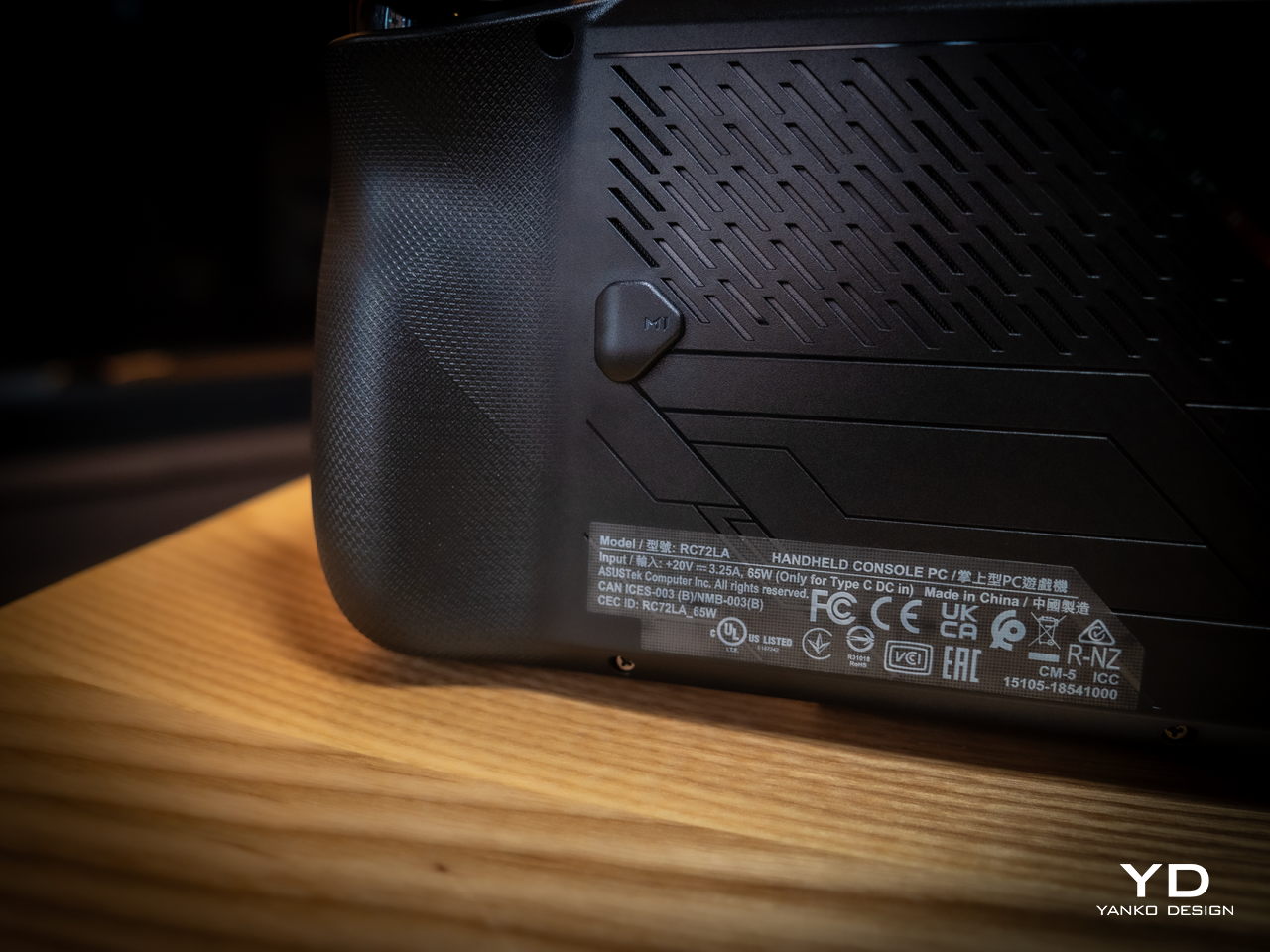
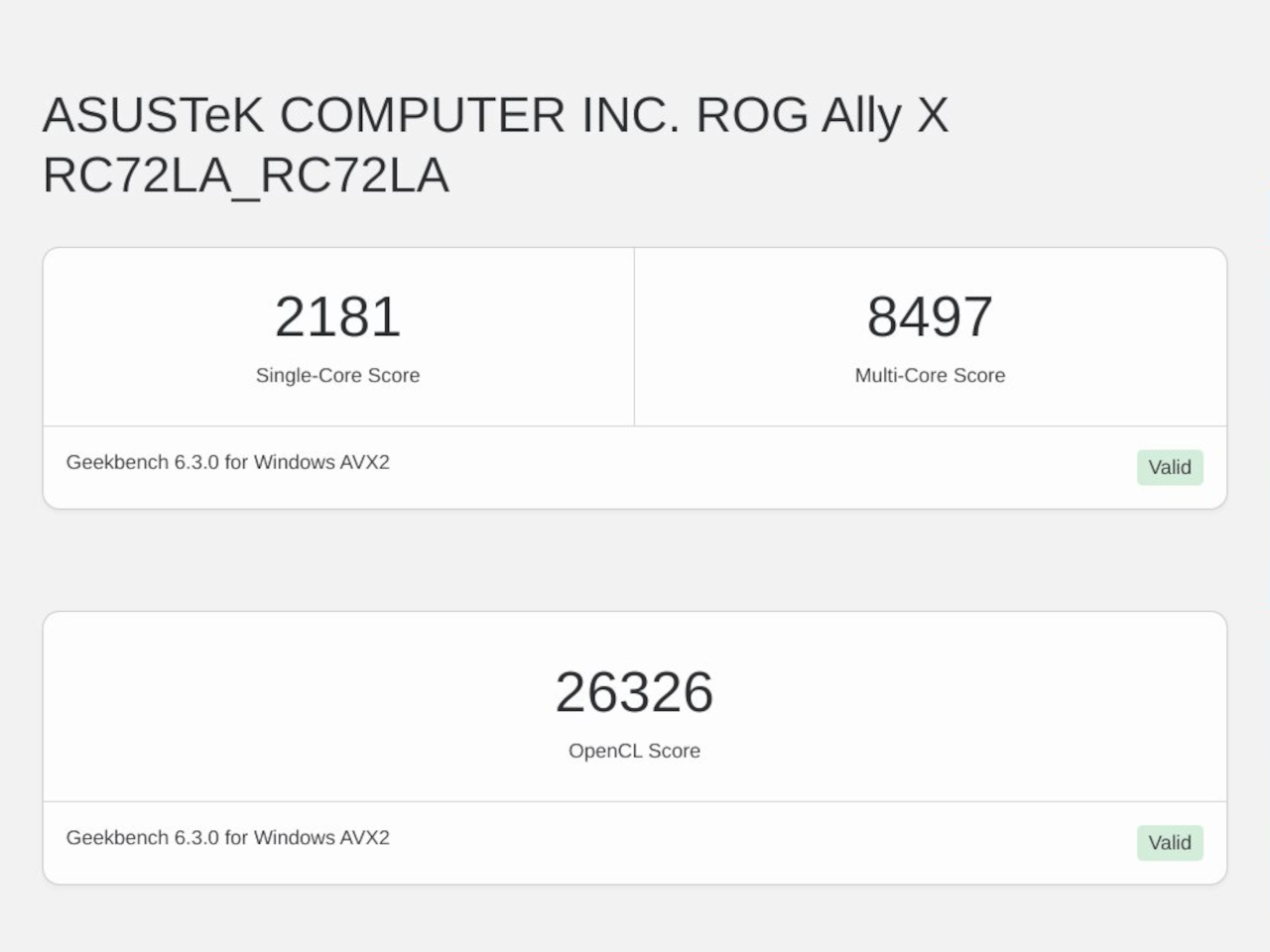
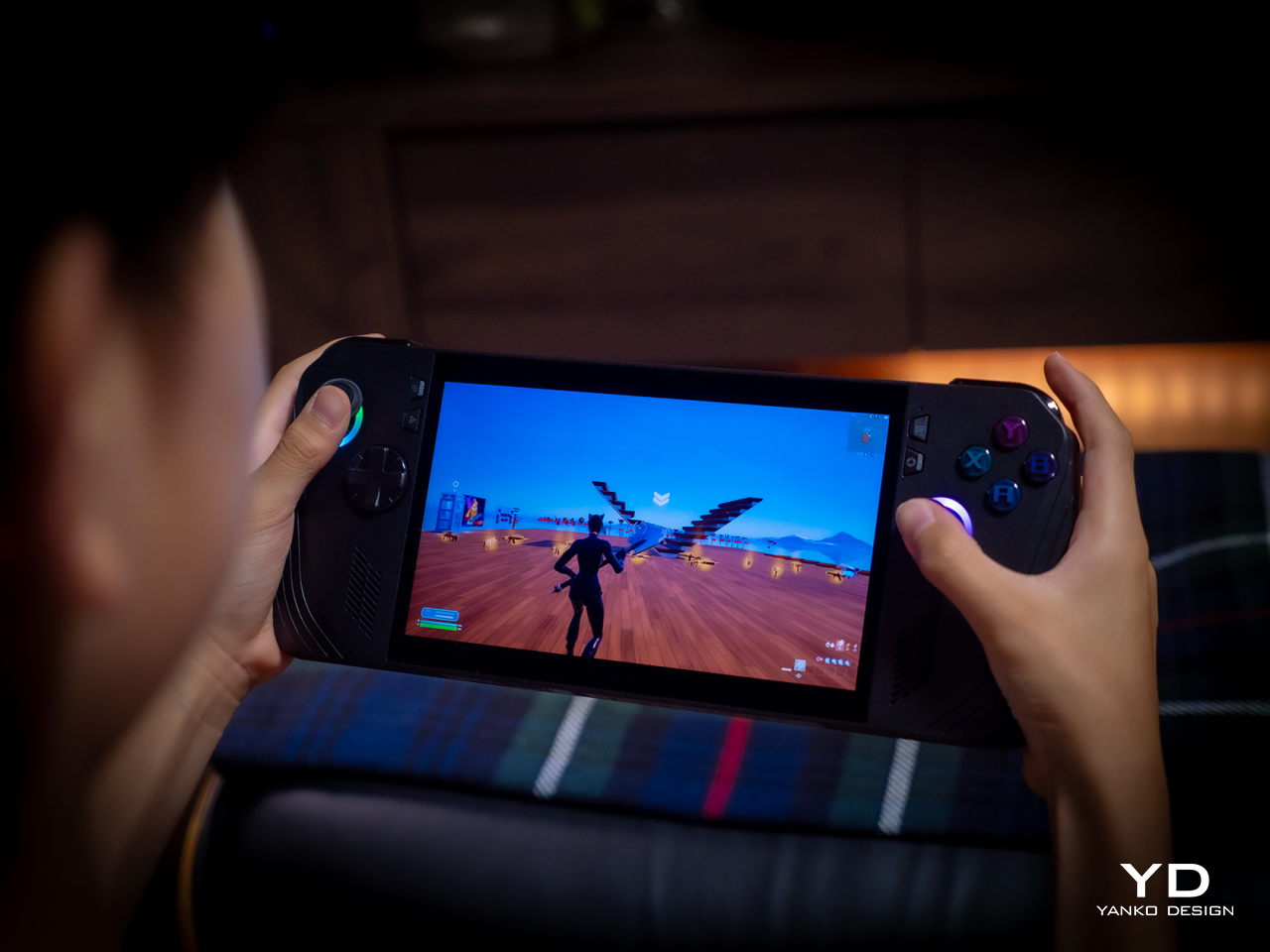
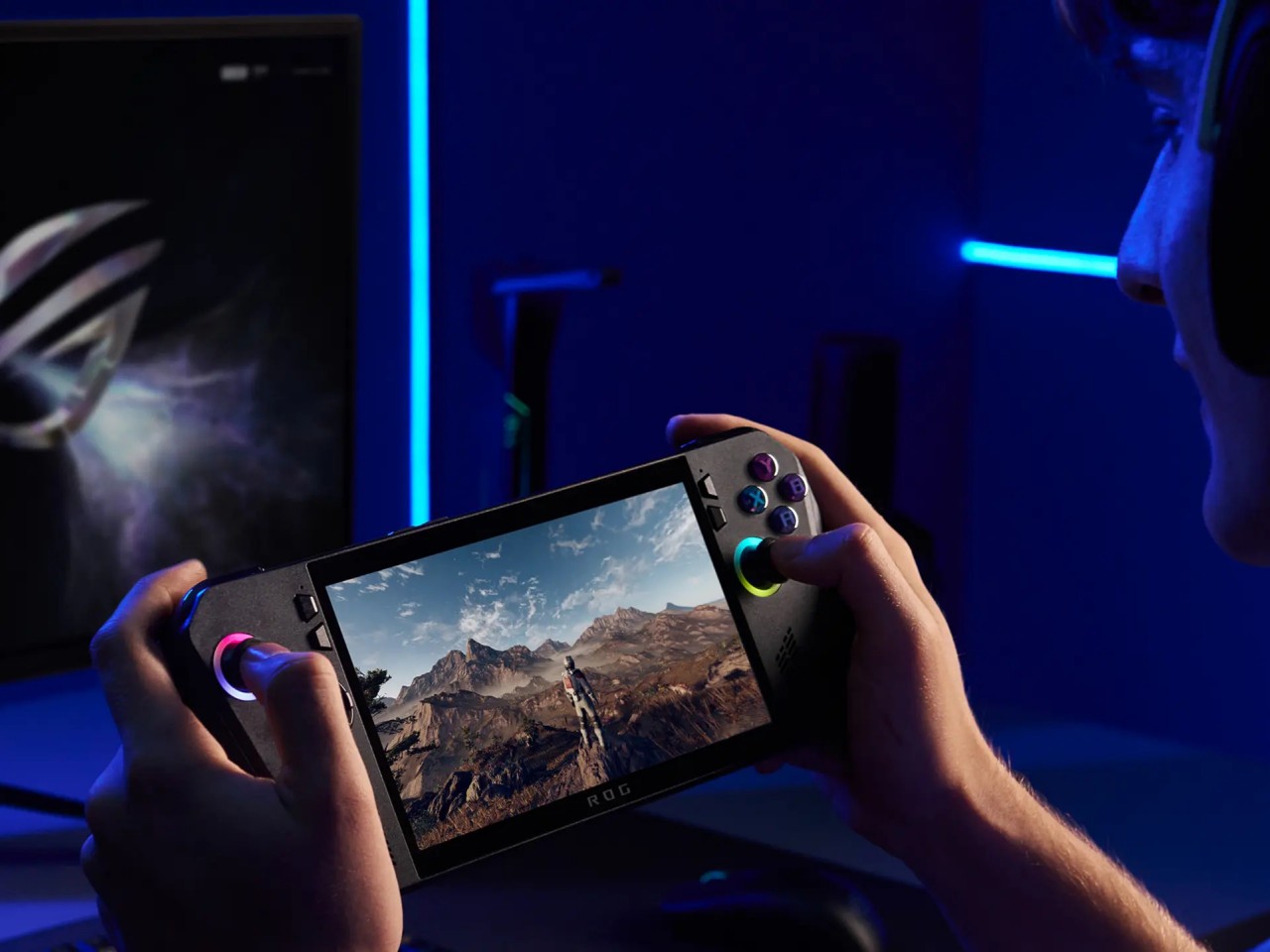
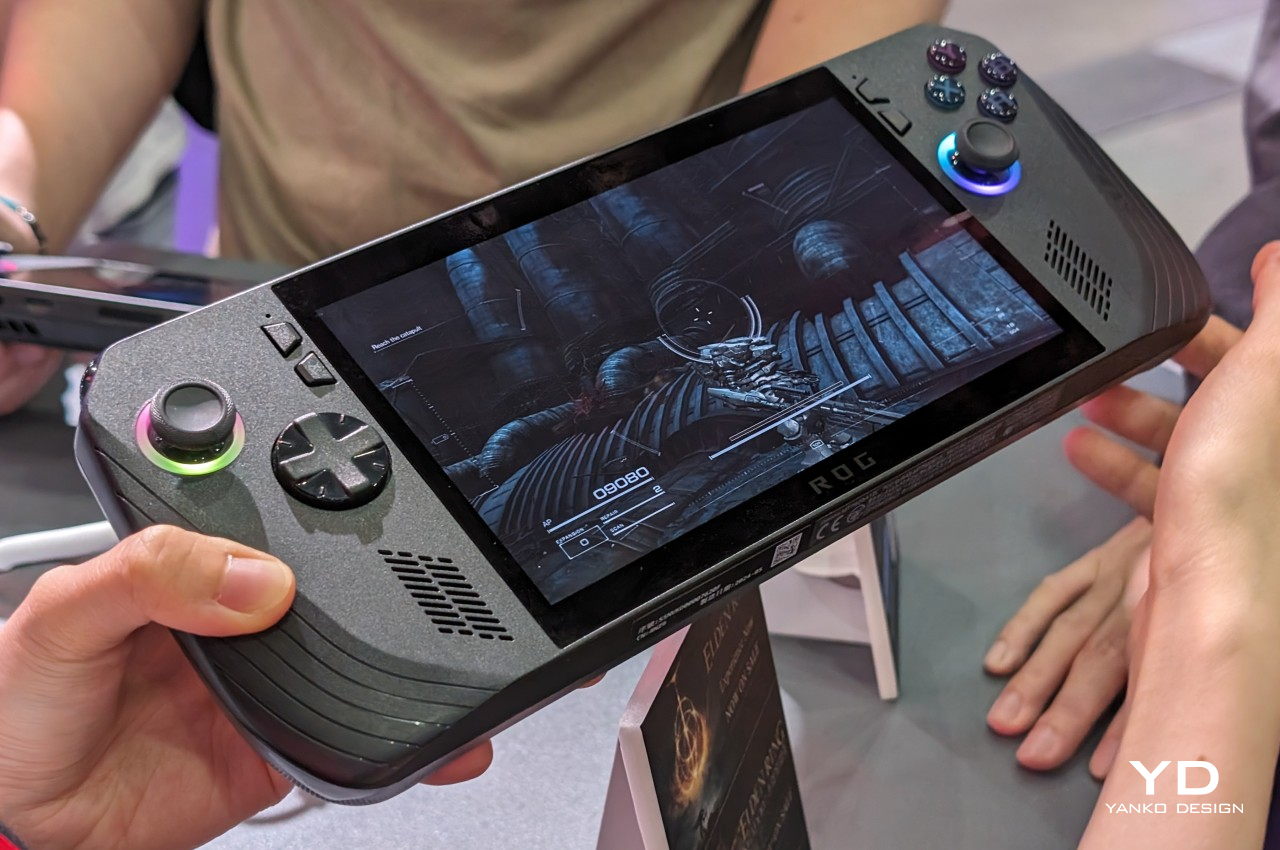
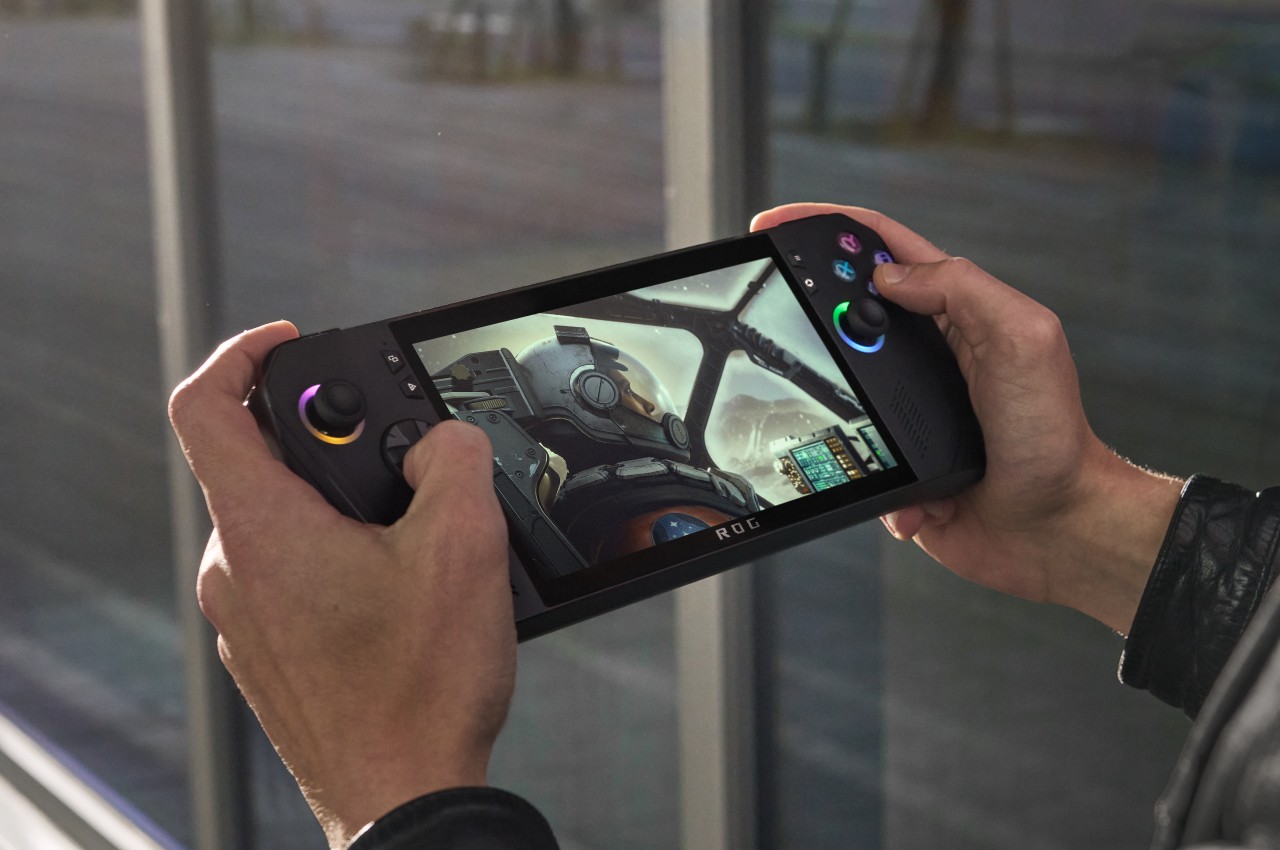
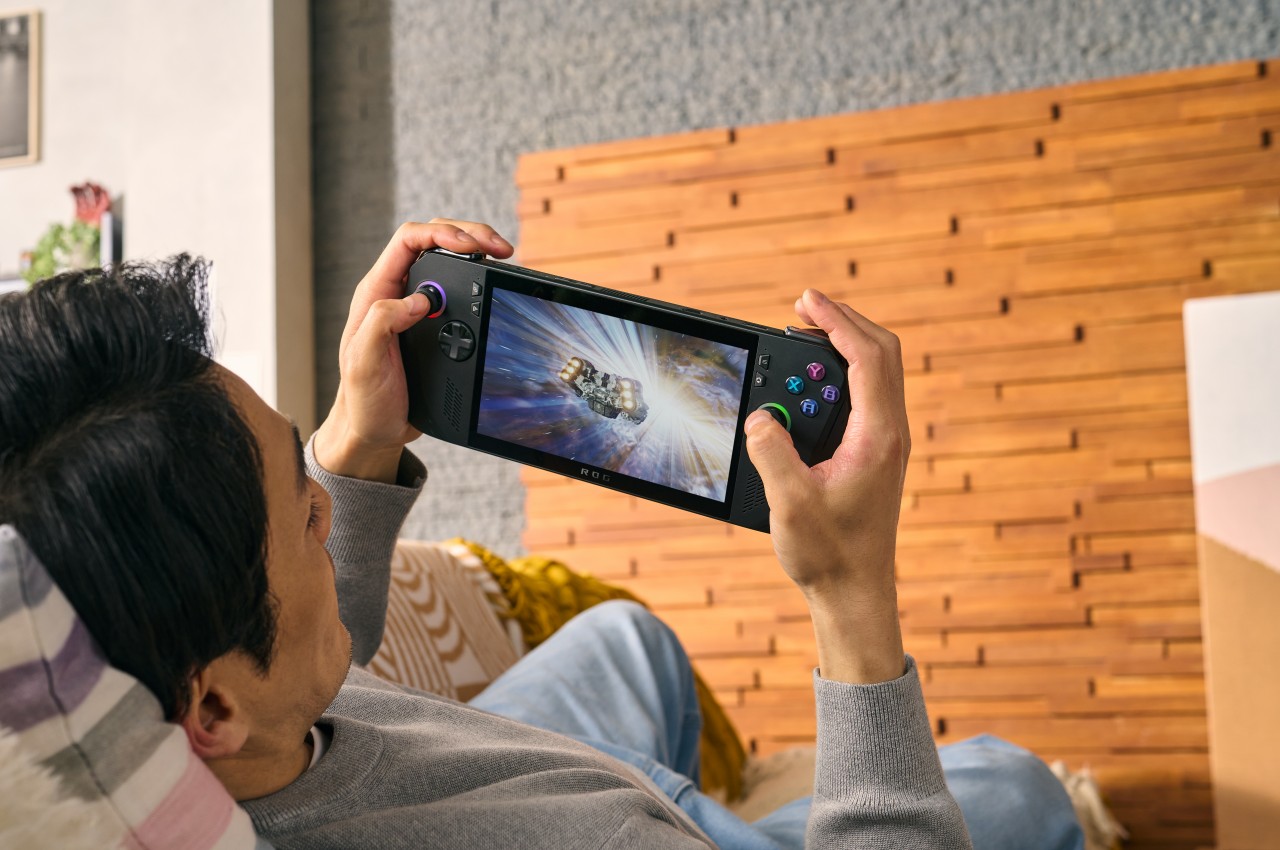
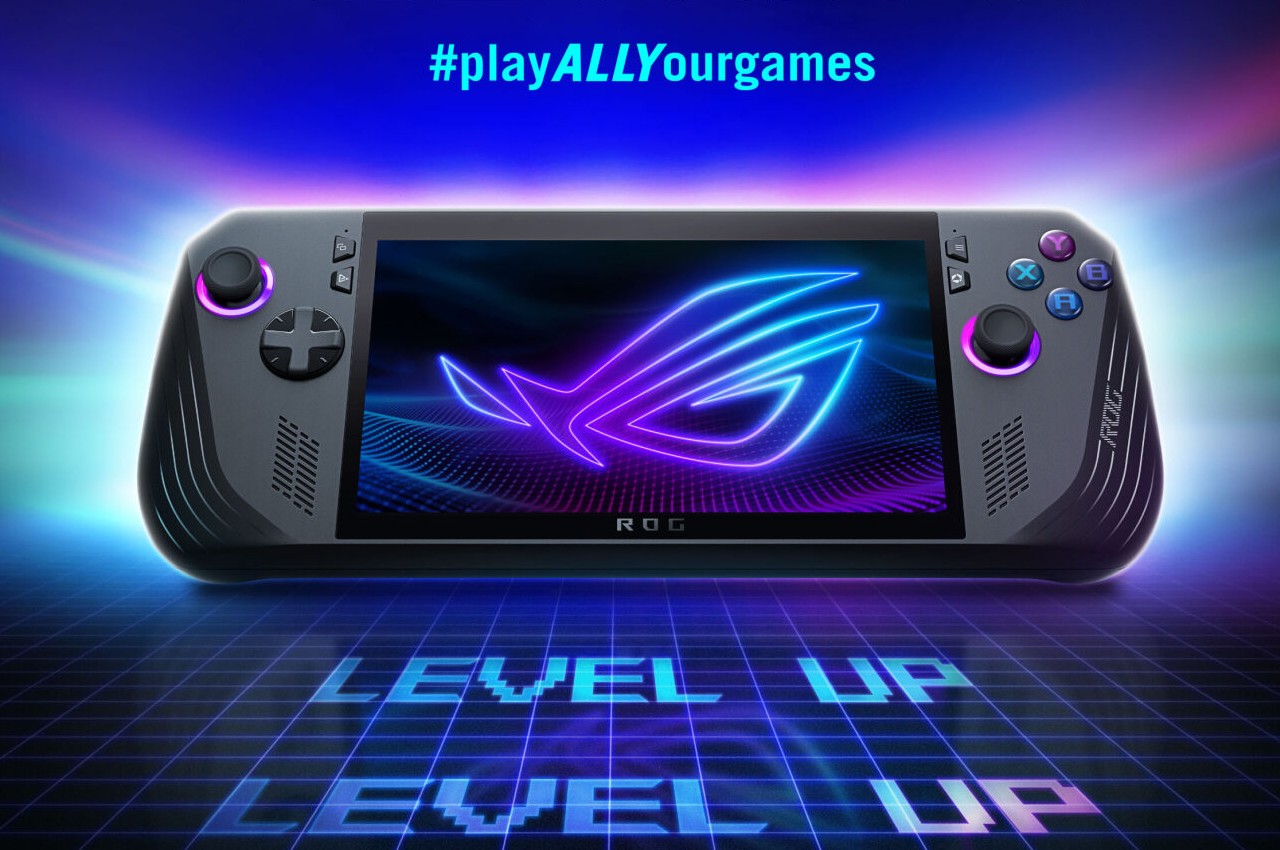
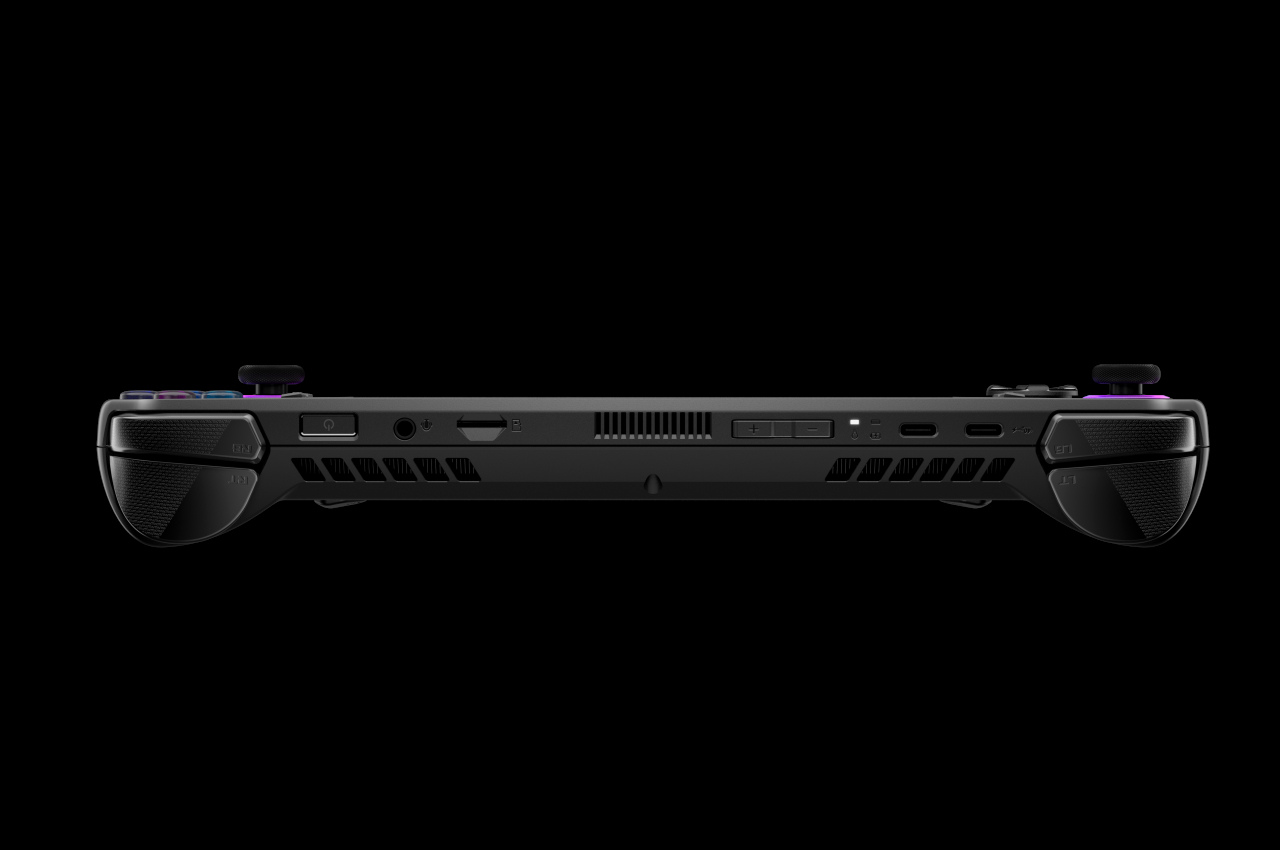
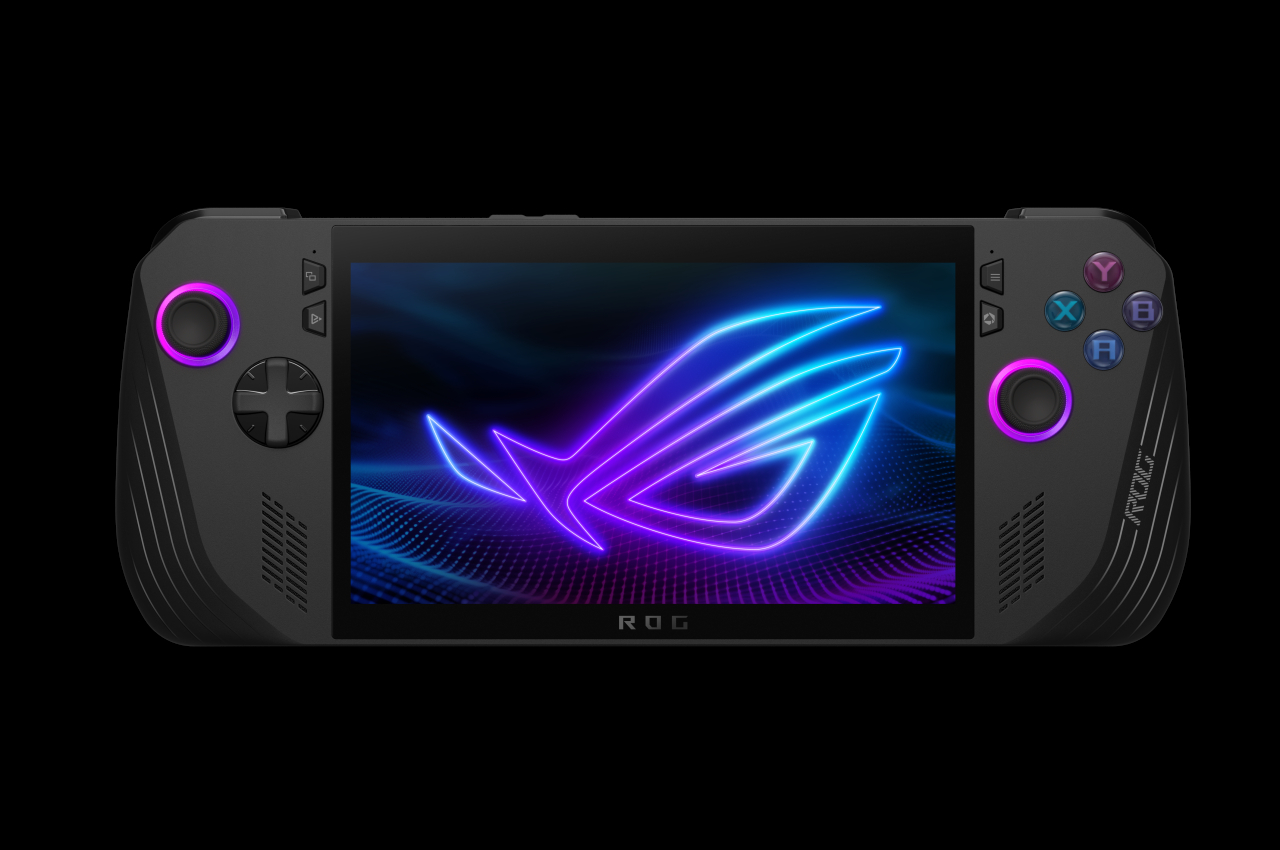
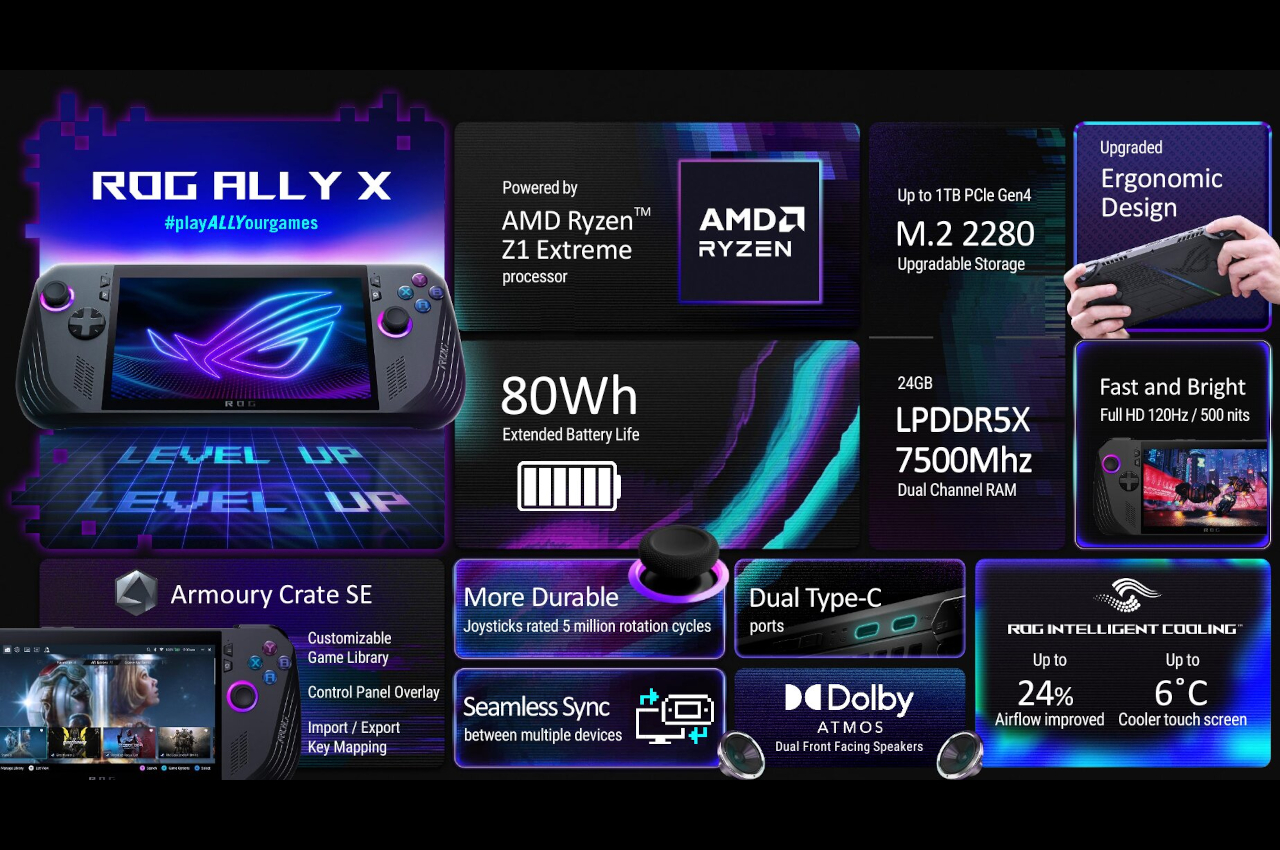
After numerous leaks and rumors, the cat is finally out of the bag. The next ASUS Republic of Gamers handheld PC isn’t the Ally 2 but the ROG Ally X as expected. While some might see it as simply splitting hairs, the naming does make a difference. It still has the beating heart of the first ROG Ally, but with a few extras that respond to the criticisms and requests of the gaming community who embraced this more portable form factor right off the bat. From some perspectives, those extras are really small and subtle, especially if looking at it from the outside. But with enough of those changes working together, the ROG Ally X is positioning itself to be a more powerful companion that will let you play more games longer.

Designer: ASUS ROG

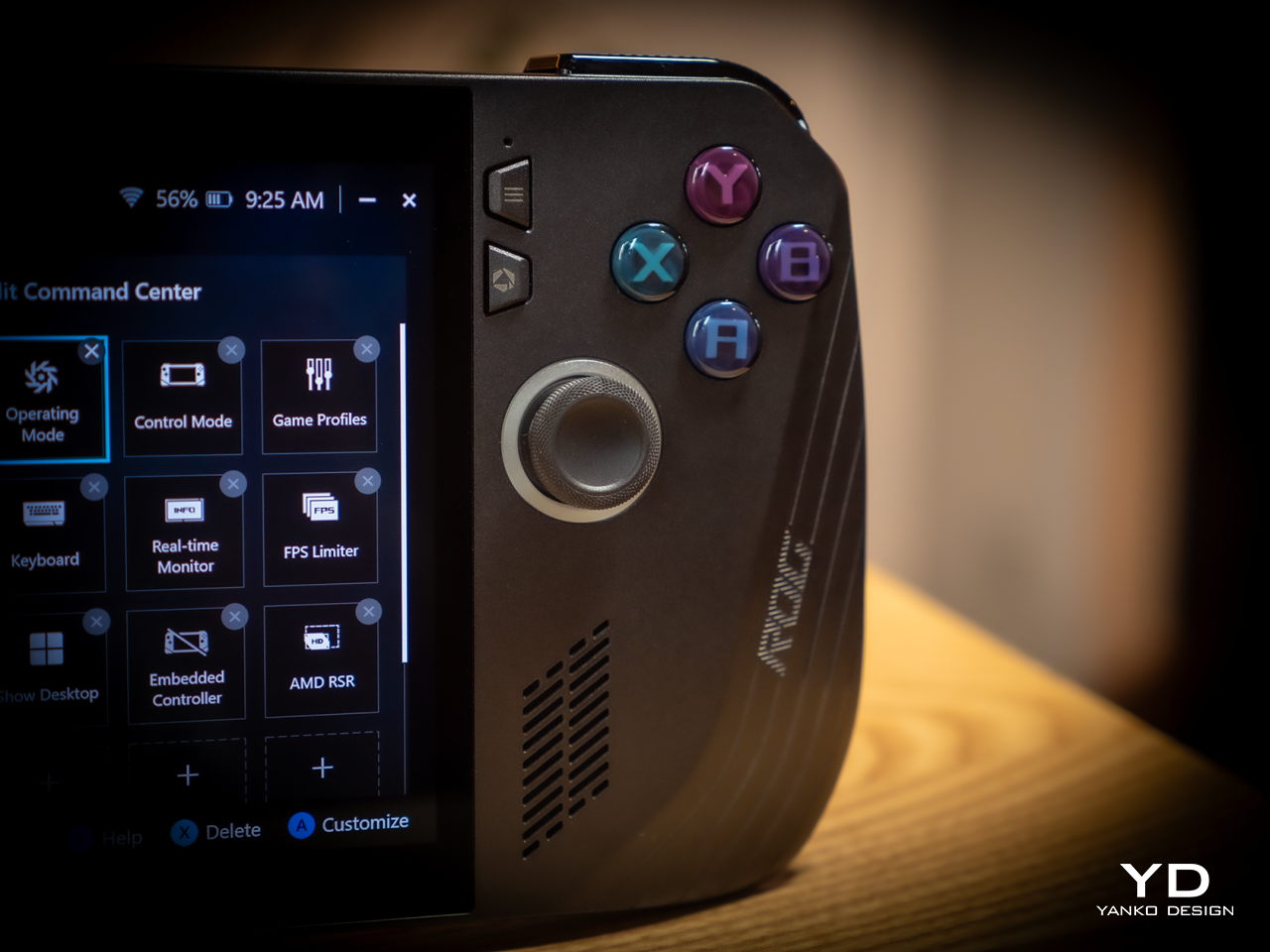
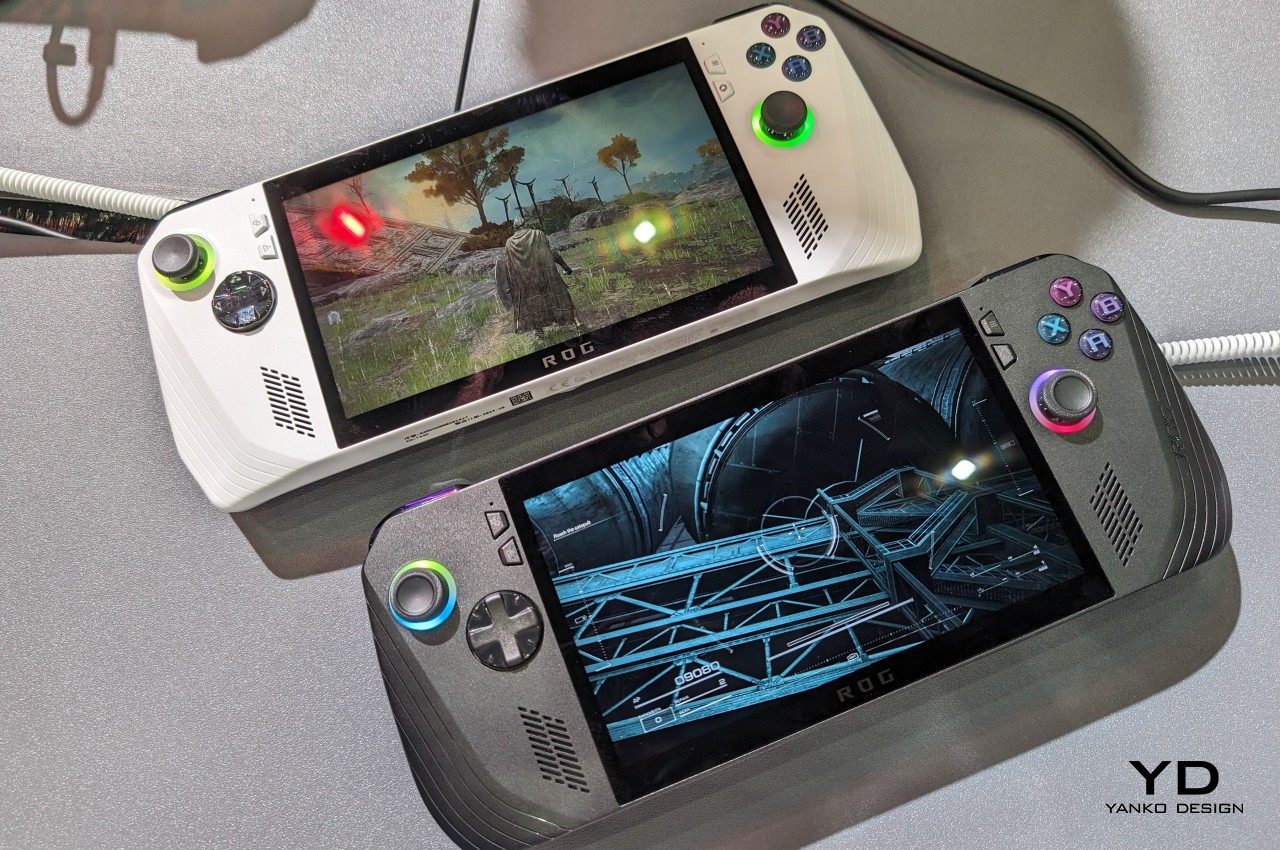
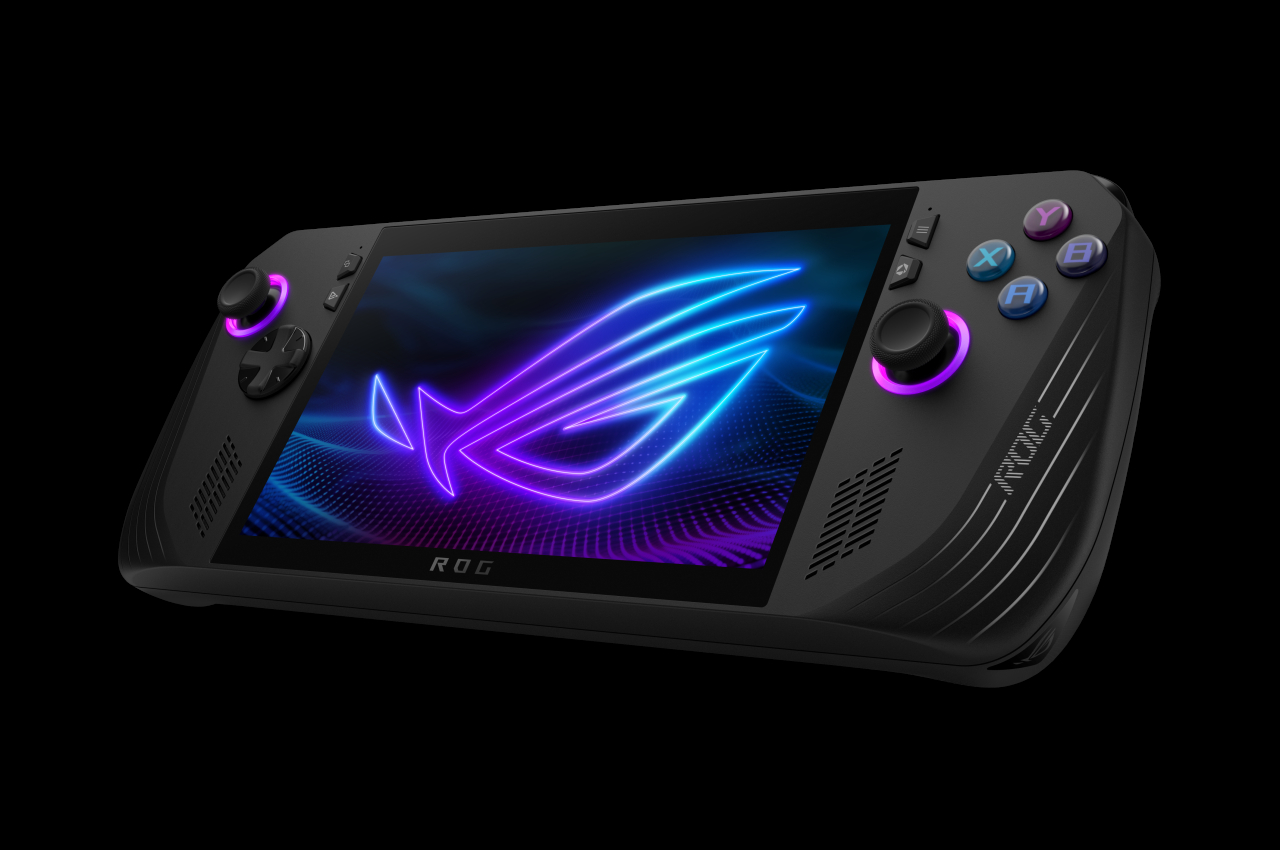
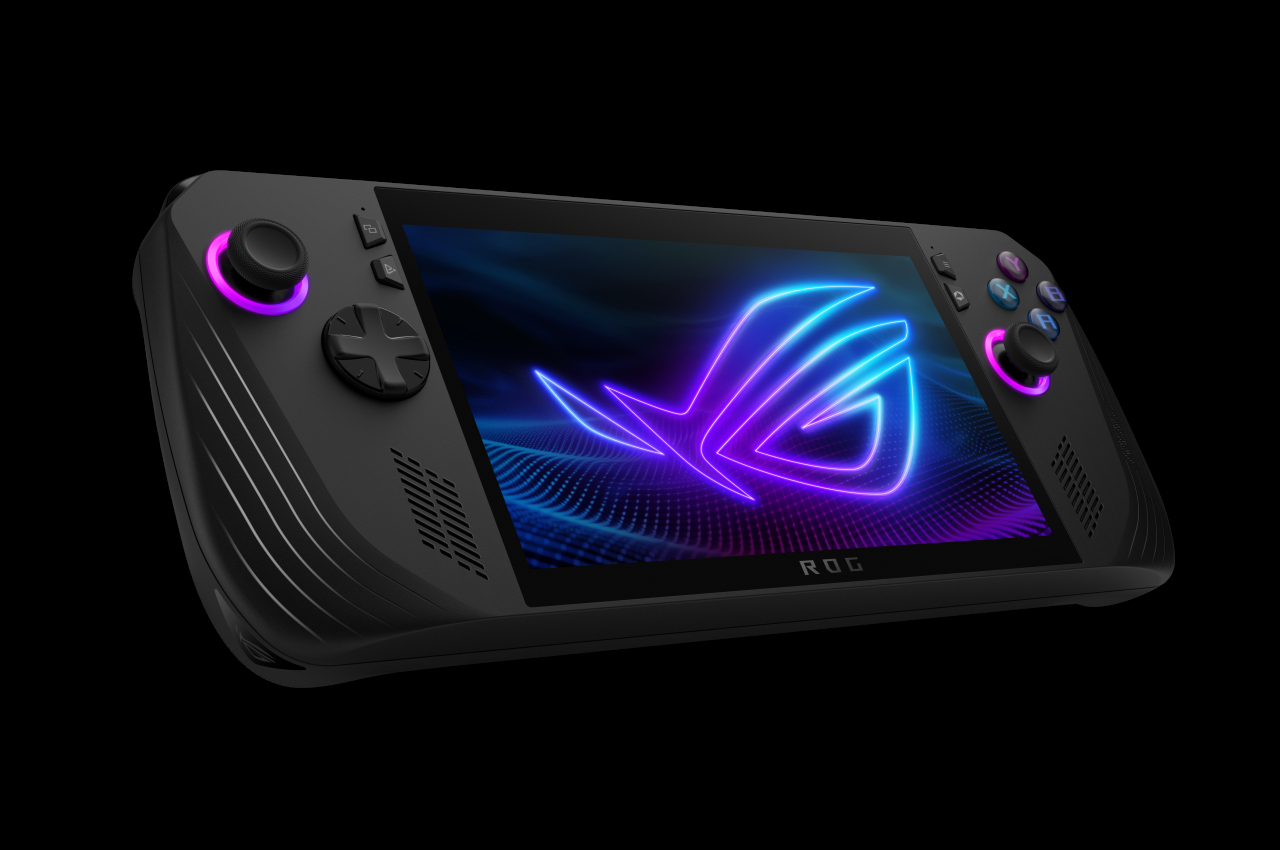
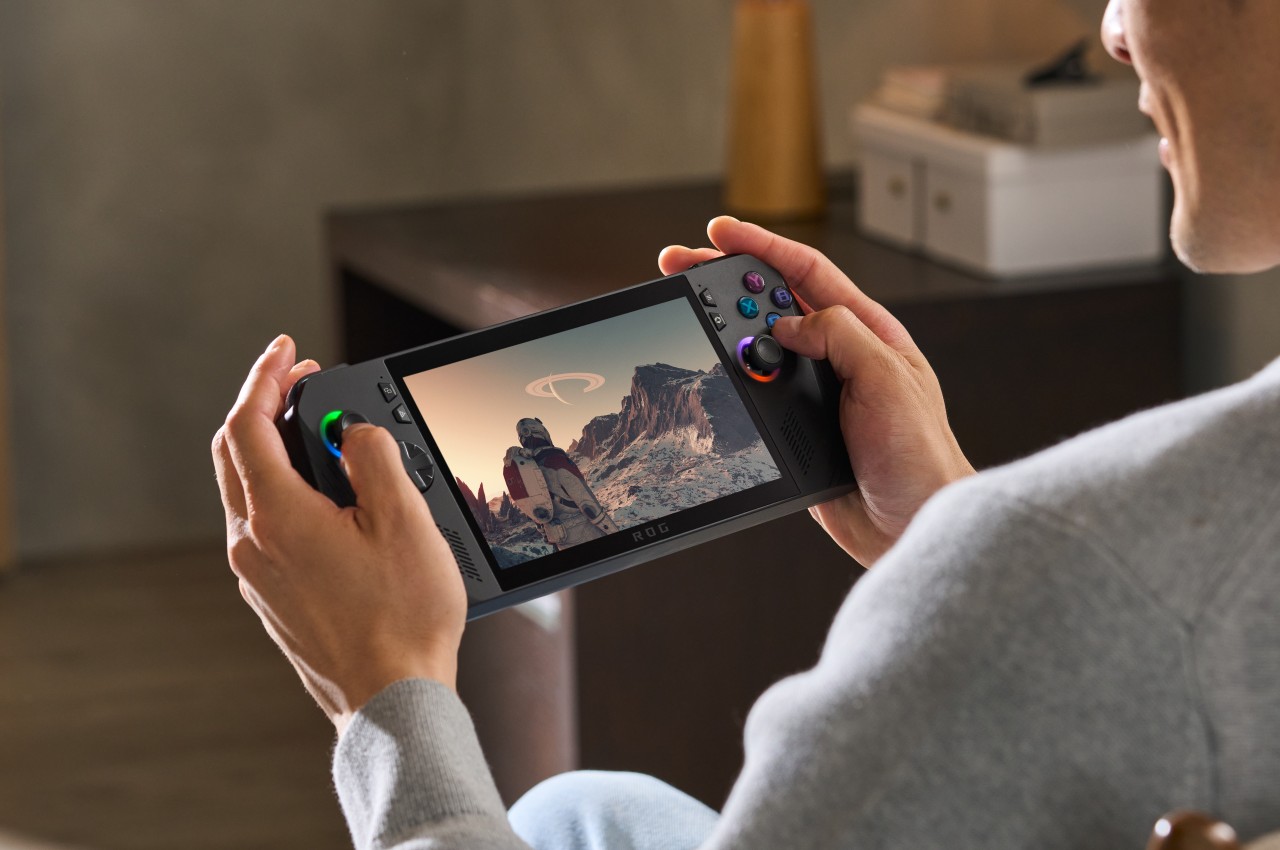
Just from a glance, you might not be able to tell that this is in any way different from the OG ROG Ally, at least except for its new all-black motif. It still boggles the mind why ASUS chose white for its first iteration, a color that’s almost alien to gamers’ palettes, though it did help the ROG Ally stand out from its rivals. If you look more closely, however, and hold the device in your hands, you might notice how things are somewhat different, hopefully for the better.

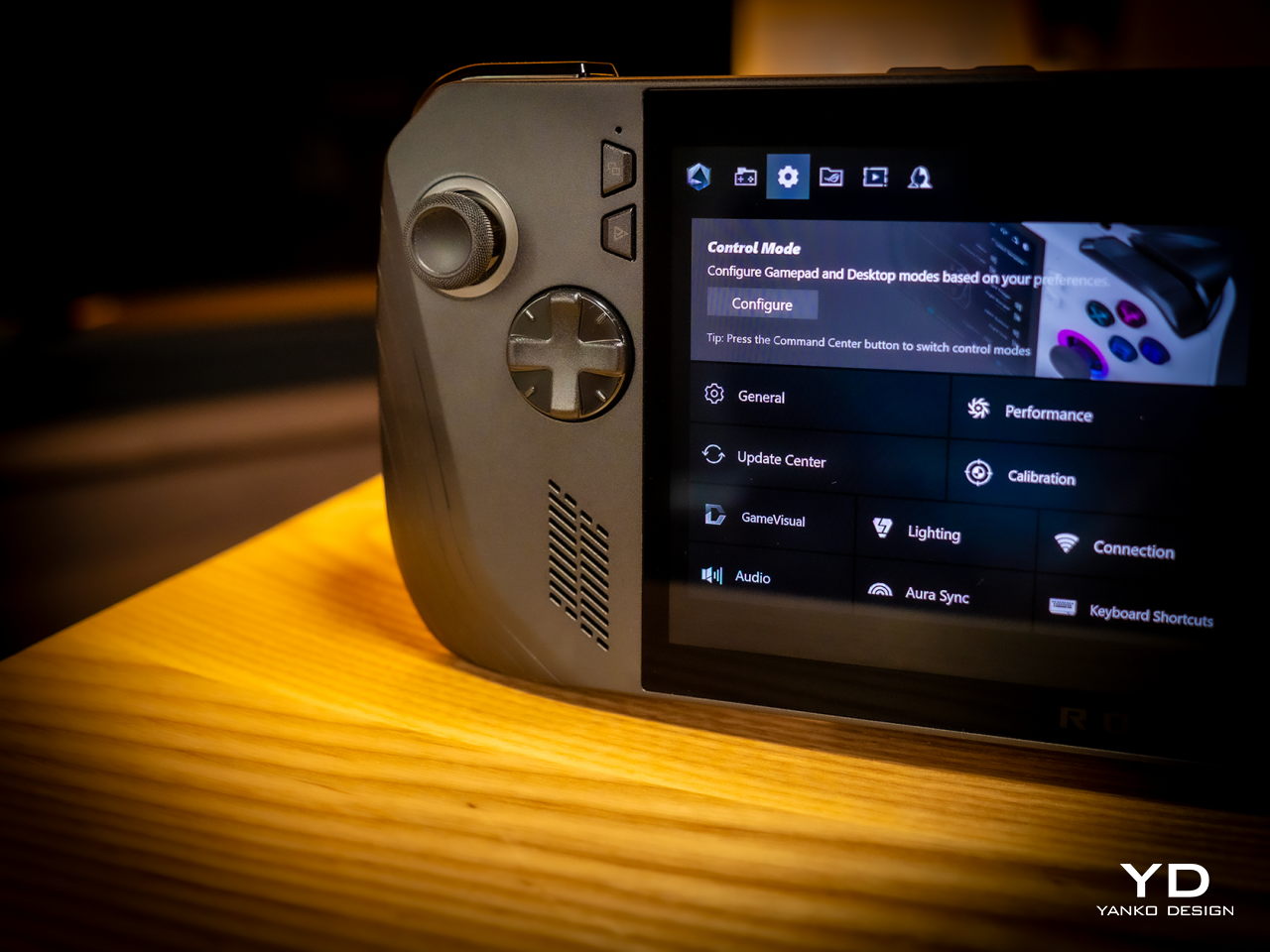
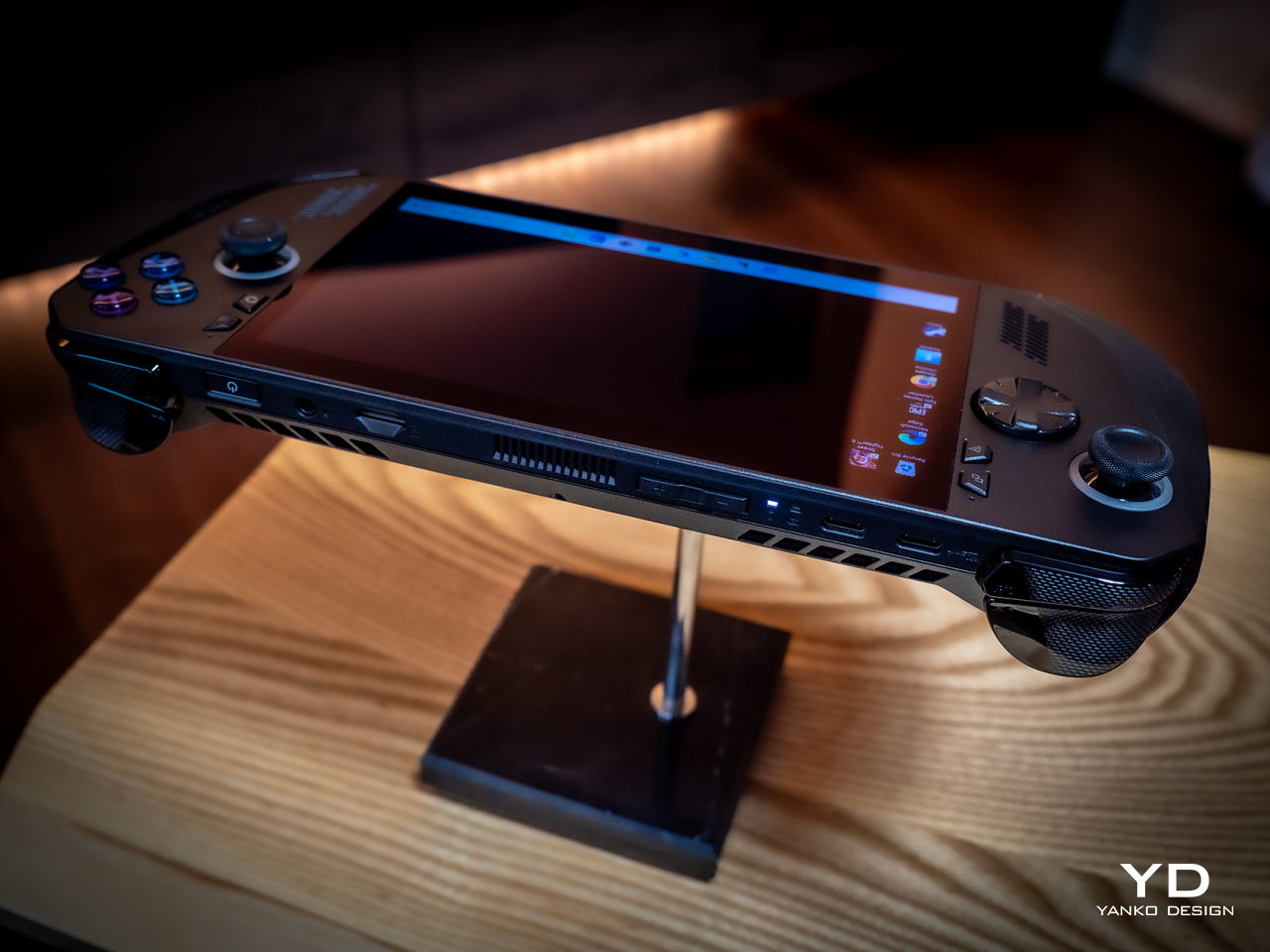
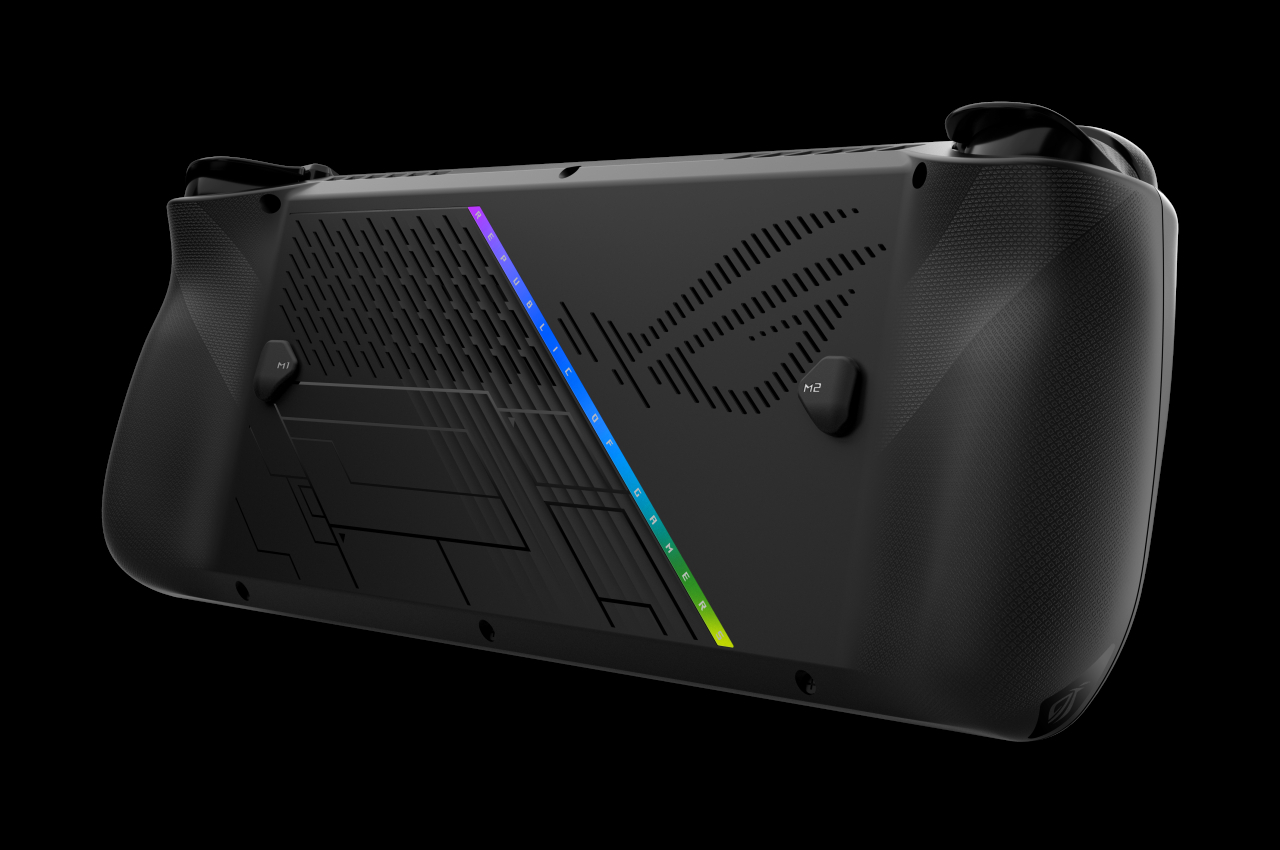
The handles, for example, are rounder now, which helps improve the grip that’s critical to a handheld device. The back triggers now come at an angle for better ergonomics, while the joystick and D-pad have been improved to be more durable and more precise. The biggest changes, however, are on the inside, where every little thing counts if it’s meant to improve the gaming experience.

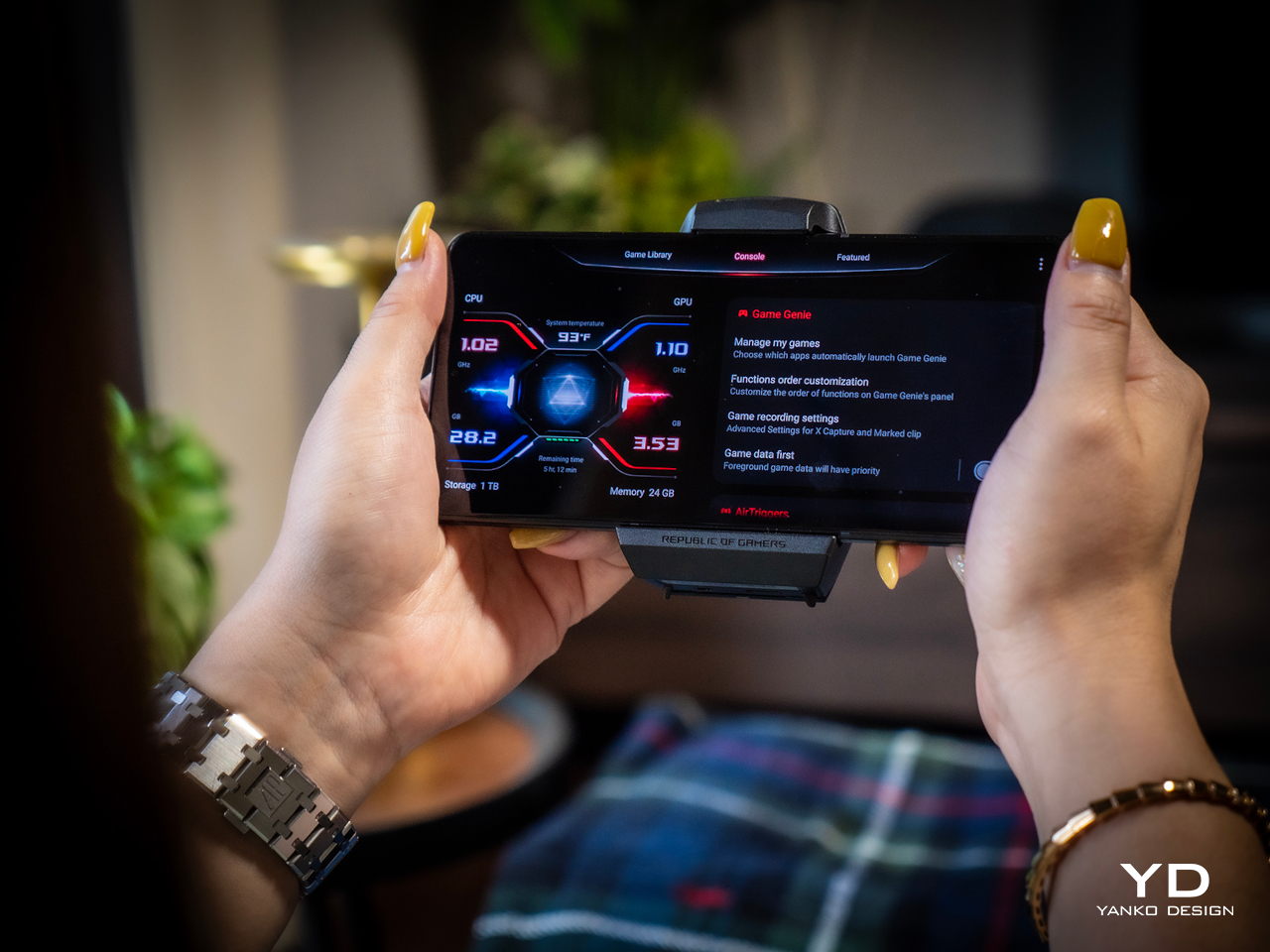
It’s still the same AMD Ryzen Z1 Extreme as the original ROG Ally, but that mobile gaming processor is now paired with 24GB of DDR-7500 RAM, up from 16GB in the first iteration. The storage capacity has been doubled to up to 1TB, but the bigger surprise is that ASUS is making it easier to upgrade it. The battery has also been doubled to 80Wh, which means you’ll have more time playing before you need to plug the little monster in. To compensate for this newfound power, ASUS ROG promises an improved thermal cooling solution so you won’t burn your hand while you play.

There is at least one change that some might consider a downgrade, depending on how attached they’ve become to ASUS’ proprietary XG external graphics port. In its place, the ROG Ally X uses a more standard Thunderbolt-compatible USB-C port that could still work with external GPUs but also with a lot more devices as well. Given all these changes, it’s no surprise that the ASUS ROG Ally X will cost more than its predecessor at $799.99. Then again, this version is squarely aimed at power gamers, and those who can live with the bare minimum can still get the older model, at least for now.

The post ASUS ROG Ally X gaming handheld PC brings small changes that have a big impact first appeared on Yanko Design.
ASUS ROG Mjolnir solar power station is shockingly real, but is it worthy?

One of the worst days to announce or tease a new product is April 1st. Most people already presume that the majority of “news” going out that day is a hoax, especially if it’s about something outlandish or unbelievable. Then again, it might also be the best time to get as much attention, even if it means being doubted until the product actually lands on store shelves. That’s the kind of situation that ASUS’ Republic of Gamers created when it teased one of the weirdest-looking yet also most interesting portable power stations to grace the industry, only to reveal that, no, it is no April Fool’s joke. But is this Mjolnir-lookalike worthy to be wielded by gamers and enthusiasts or is it just a dastardly plot by Loki to have a laugh at everyone’s expense?

Designer: ASUS ROG

Myeu-muh? What’s a Myeu-muh?

Even if you’re not a comics or movie buff, you’re most likely to already be familiar with the icons of Marvel’s Cinematic Universe given the media over-saturation. This is especially true for the most popular icons and their paraphernalia, such as Captain America’s shield, Iron Man’s mask, and Thor’s hammer. That hammer has a formal name, even in the original Norse mythology, though few will probably be able to utter Mjolnir’s properly unless they watched the first Thor film. It’s MYOL-neer or MYOL-nur, by the way. You’re welcome.

That hammer is the subject of today’s speculation. On the 1st of April, probably one of the trickster god Loki’s favorite days, ASUS’ gaming brand teased and then announced Mjolnir, not as a weapon but as an electrifying computer accessory. It’s a power station that indeed resembled the movie prop to some extent, with a large rectangular box whose sides tapers a bit, and a rod extending from the body acting as a handle. ROG was quick to point out that it’s a real thing, not a hoax, but that in itself could be the joke. But maybe it would have been better if it remained hidden from mortal hands.

What We Know So Far

To be fair, there’s not much we know other than what ROG itself has revealed, but there’s quite a bit already available. The most important is that this power station can be charged using solar energy, drawing power from the sun instead of lightning. How it does that, however, is still anyone’s guess. The teaser showed a dark rectangle on the station’s front that could be a tilting solar panel, though that would be too small to supply the power that this large box needs and was probably just a placeholder graphic.

On the front, you will see an assortment of ports typically found on power stations. There are four AC outlets, two full-sized USB-A ports, and two USB-C ports. There’s an LCD display above these ports that shows important information about the input, output, and remaining battery capacity. Noticeably missing here, however, are DC and car charging ports, which hints that this power station might not have outdoor adventures in mind.

The teaser also mentions that the ROG Mjolnir can illuminate your path with the light it summons, but it unsurprisingly doesn’t say how. That panel on the back could be a very bright flood light, but the better theory is that the handle itself is some sort of lighting component. Either the handle lights up or, more likely, it’s a removable flashlight, which is a better design for a part that would otherwise simply be a cosmetic detail that gets in the way.

Cracks in the Hammer

There’s no denying that the ROG Mjolnir has an interesting design, one that will appeal to a large segment of the market, especially the brand’s gaming audience. Its upturned hammer shape sets it apart from other portable power stations, if the ROG branding doesn’t already make sure of that. The bigger question, however, is whether that design is actually good for the product’s usability or hinders it.

That handle is going to be the biggest point of contention, with a tall rod sticking out from the top of the box. If it acts as a removable flashlight, then it’s not as big of an issue. But if it’s permanently fixed in that position, it will become a problem when storing or moving the power station. It’s not like you can carry the Mjolnir using its handle for real. But if that handle were removable, it also introduces a different kind of problem, one of durability and reliability. There’ll be a hole where the handle connects to the body, which means an opportunity for dust and liquid to get into the sensitive electronics. Definitely not a smart design.

It doesn’t look like the power station is designed for easy carrying either. Depending on how much battery it’s packing inside, this power station can end up being a bit heavy to carry with one hand without a handle. You’d have to hold it with both hands, but there doesn’t seem to be any grips to make that convenient. Admittedly, it doesn’t look too big beside a smartphone, but that’s just a render that might not reflect the product’s actual size.

True Power

There’s admittedly not much we know about the ROG Mjolnir Solar Power Station yet, including its specs, its price, and whether it’s really an actual product or ROG has just been pulling our leg and chuckling at the buzz going around their vaporware. Then again, it’s a pretty niche design as far as a power station is concerned, anyway, and there are plenty of other options in the market, albeit with less sensational aesthetics.

When it comes to solar portable power stations, the BLUETTI AC2A comes with all the bells and whistles, including proven product quality and durability. There are only two AC outlets, yes, but it makes up for it with a wider variety of input and output ports. You will need to plug in a solar panel, but that might also be the case for the ROG Mjolnir anyway. The BLUETTI AC2A is indeed designed more for outdoor use, though it can be an emergency backup for computers at home as well. As far as we know, the ROG Mjolnir is primarily designed to serve gamers’ needs, with rather questionable outdoor survivability.

Designer: BLUETTI

Is the ROG Mjolnir Power Station going to sell? It will probably have a few fans, especially those who will readily throw money at cool-looking and unique designs. It is going to be a practical and usable product? It’s definitely too early to say, and ROG might still end up surprising us, or completely disappointing us with the harsh reality of a month-long joke. Either way, we don’t expect the ROG Mjolnir to be a ground-breaking new design beyond its unique aesthetics, and if you’re looking for truly gamer-ready power solutions, you don’t have to wait for the truth to be revealed.

The post ASUS ROG Mjolnir solar power station is shockingly real, but is it worthy? first appeared on Yanko Design.

ASUS ROG NUC mini PC offers a small gaming box with a big catch

Handheld gaming PCs might be the buzzword in the industry, but they’re not the only small-form gaming-oriented computers around. In fact, it’s probably thanks to the relative success of the likes of the Steam Deck, Lenovo Legion GO, and ASUS ROG Ally that the formula for compact gaming computers has been tested and proven. It probably shouldn’t come as a surprise, then, that gaming desktops in mini PC form would be popping up more frequently, like this latest entry from ASUS’ ROG brand that carries in its compact body some pretty big specs, a big legacy, and, unfortunately, an equally big price tag.

Designer: ASUS ROG

Gamers, especially those on the PC side of the fence, might already be familiar with the Republic of Gamers brand, but “NUC” might sound alien to them. The name, which stands for “Next Unit of Computing,” actually came from Intel and was used for the chipmaker’s line of mini PCs. After a decade of existence, Intel decided the product line really bore no fruit, definitely not in terms of profit, and decided to shutter the hardware and license the name to ASUS. Thus, the ASUS ROG NUC is pretty much the merger of two DNAs, one from Intel’s somewhat proof-of-concept mini PCs and the other from ASUS’s gaming house.

Unlike Intel’s NUCs, which were pretty much barebone general-purpose budget computers in a small box, the ROG NUC has the beating heart of a gaming laptop, just crammed in a small box that’s just around two inches thick. That includes an Intel Core Ultra processor, the kind that boasts upgraded AI chops, and an integrated NVIDIA RTX 4060 or 4070, depending on the configuration. There are plenty of ports for connection, as well as options for expanded storage that you can easily access thanks to its tool-less chassis.

While those might sound like juicy features for a gaming mini PC, the starting price of $1,629 makes it look less palatable, or $2,199 for the next step up in specs. For that price, you can already get a respectable gaming laptop with nearly the same or even better specs, and you won’t need to hook it up to a monitor, keyboard, and mouse. And unlike a desktop PC, you can’t upgrade anything other than memory and storage, so performance is pretty much a fixed value.

These raise the question of who the ASUS ROG NUC will be for, and the answer is quite a niche market. It will be for PC gamers who don’t exactly need mobility but do have limited desk space for a tower. It might even be for users who already have a more powerful gaming desktop and just need a secondary computer for their office. Either way, these scenarios make that high price tag even less appealing unless ASUS holds a sale immediately after launching the product.

The post ASUS ROG NUC mini PC offers a small gaming box with a big catch first appeared on Yanko Design.

ROG Zephyrus G16 laptop at CES 2024 brings a thin, all-aluminum frame to your game

Gaming laptops are powerful beasts, sometimes almost as powerful as some desktops. Most of them, however, almost feel as heavy and as bulky as those towering computers because of how much technology they pack inside, including the required cooling systems. Thanks to the laws of physics and limitations in manufacturing, it almost seems like having a gaming laptop that’s as slim and sleek as a MacBook is just a pipe dream. Consider those dreams fulfilled, then, with the newest duo in the ASUS ROG Zephyrus line, bringing to the CES 2024 crowd the first glimpse of an all-aluminum CNC machined gaming laptop that maintains a mind-blowing thin and light body despite the power it crams inside.

Designer: ASUS Republic of Gamers

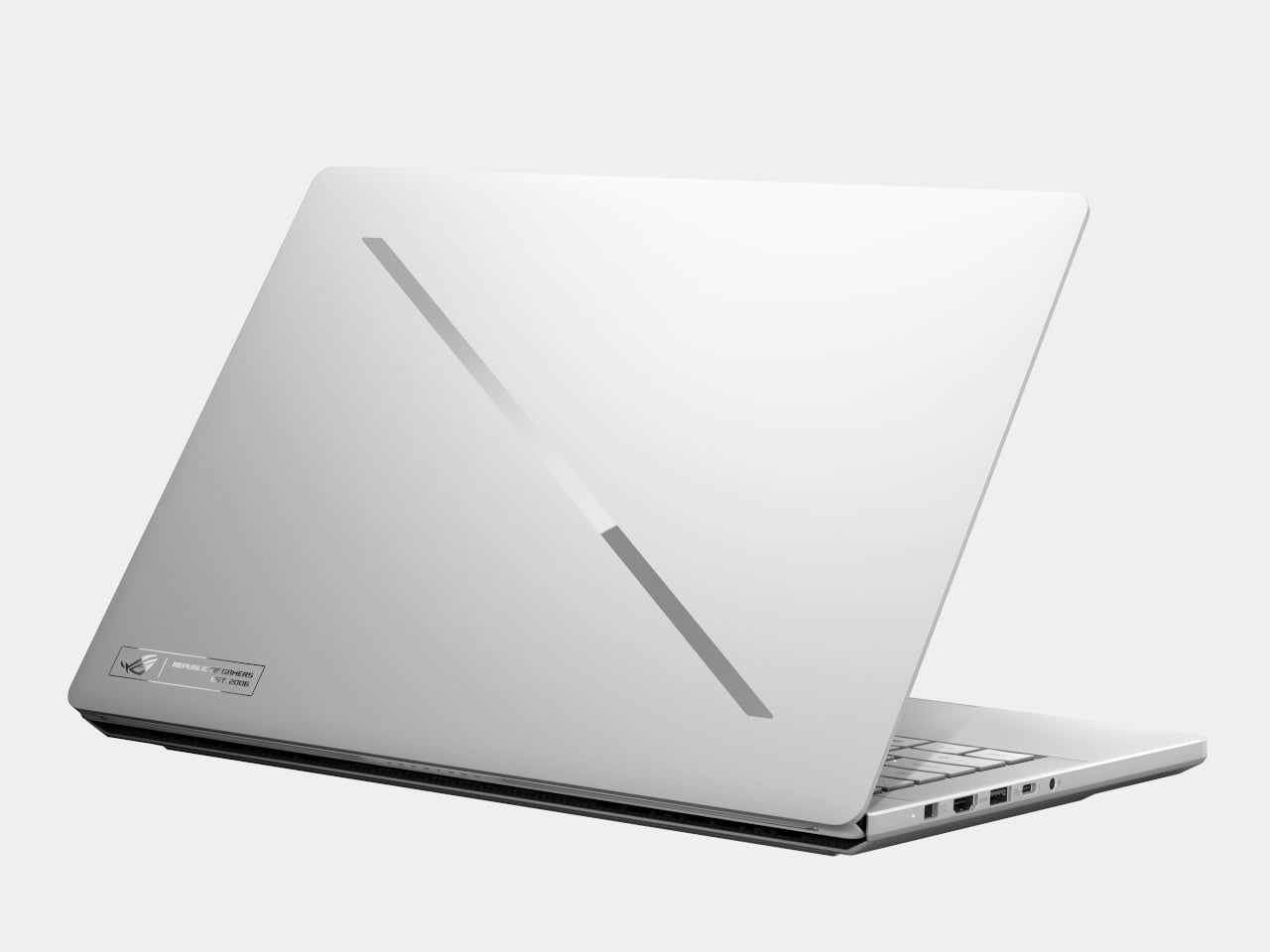
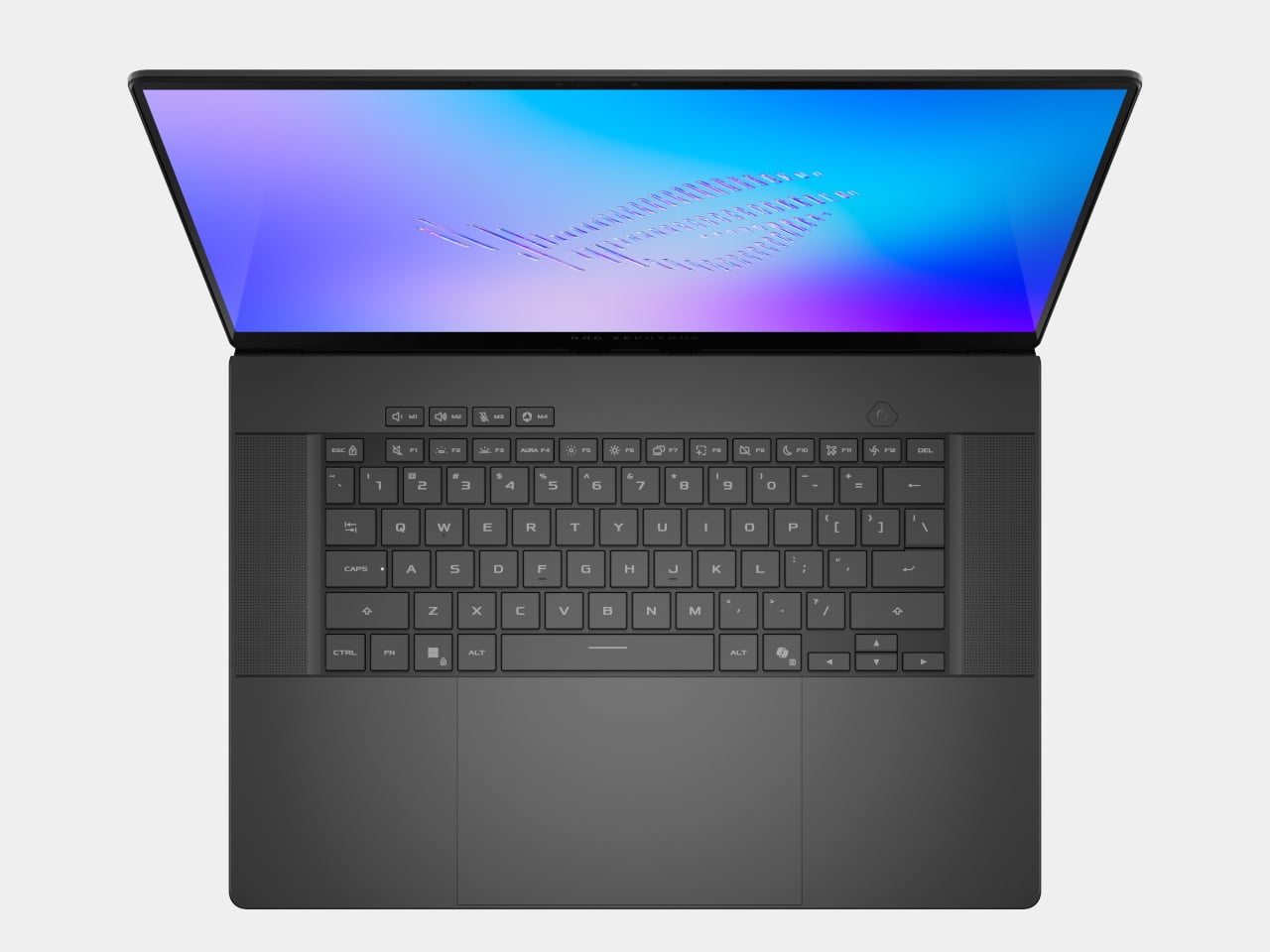
Although the typical laptop might have plenty of metal on the outside, the majority of gaming laptops use plenty of plastic or only plastic for the chassis. It’s more resilient to pressure and is cheaper to manufacture, helping to offset the costs of the expensive hardware. However, it also has poorer heat dissipation, is prone to deform from excessive heat, and makes the laptop feel less premium than its price would suggest. The Republic of Gamers is, fortunately, challenging the status quo with the 2024 ROG Zephyrus G16 and its slightly smaller sibling, the ROG Zephyrus G14, bringing a sleek and elegant look you won’t easily find on most of its kind.

With an all-new, all-aluminum CNC-machined chassis, the ROG Zephyrus G16 and G14 bring a touch of class to your gaming gear. It isn’t all just for show, of course, because the change in materials also improves the structural rigidity of the laptop, reduces its overall weight, and increases the space for components inside. That means more room for more things while still keeping the laptop thin and light. At only 1.49cm thick and 1.85kg light, the Zephyrus 16 is pretty much on par with the gold standard of lightweight pro notebooks, the MacBook Pro. For reference, the Zephyrus G14 stands at 1.59cm thick and 1.5kg heavy only.

Of course, Zephyrus laptops are heavy-duty gaming slash workstations, and ROG hasn’t forgotten the traits that truly mark this mobile PC as such. There’s a brand-new LED lighting array, one that runs diagonally across the lid. Appropriately called Slash Lighting, this lighting accent can display customized patterns and animations that quickly set the laptop apart from other premium-looking notebooks. This 2024 generation also welcomes a new colorway, Platinum White, with a matte finish that cements the Zephyrus G16 and G14 as luxury items for gamers.

In terms of hardware, the two aren’t lacking in any department either, sporting the latest Intel and AMD processors paired with NVIDIA GeForce RTX 4070 or 4090 laptop graphics. In fact, these two boast the first ROG laptops to carry an OLED monitor under the ROG Nebula Display branding, offering rich blacks that truly make graphics pop. They both possess the latest cooling solutions, but the ROG Zephyrus G16 additionally carries a custom vapor chamber to make up for the more powerful hardware. These two stylish and powerful laptops are scheduled to land in markets in the first quarter of the year, though exact dates and pricing have yet to be announced.

The post ROG Zephyrus G16 laptop at CES 2024 brings a thin, all-aluminum frame to your game first appeared on Yanko Design.

ROG Phone 8 at CES 2024 arrives with a simpler, more premium design

What is a gaming phone? Since most smartphones can actually handle mobile games, especially the more expensive models, this breed of smartphones differentiates itself from the rest of the crowd with over-the-top performance and, more often than not, over-the-top aesthetics as well. Whether it’s in the form of flashy RGB lighting or an abundance of geometric shapes, the stereotypical gaming phone leaves no room for doubt that these gadgets are miniature versions of gaming desktops and laptops that grab people’s attention one way or another. Great for hardcore gamers who have embraced that aesthetic, not so much for others who want a gaming-worthy phone they can use everywhere as well. That’s the kind of redesign that the new ROG Phone 8 is now carrying, bringing its unparalleled performance for a wider audience to enjoy.

Designer: ASUS Republic of Gamers

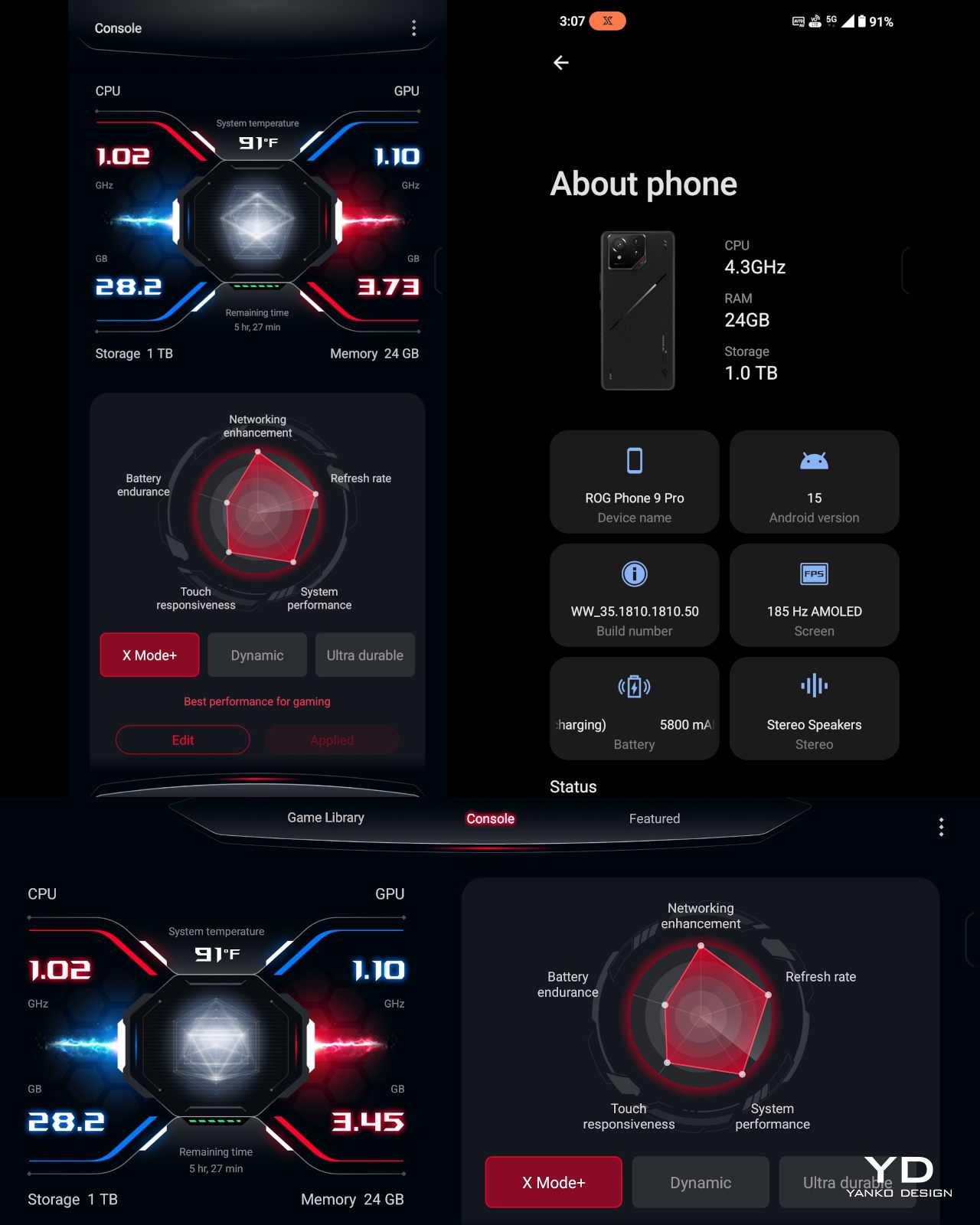
There isn’t going to be any debate on the merits of the ROG Phone 8’s gaming prowess. Powered by the latest Qualcomm Snapdragon 8 Gen 3 processor and paired with the fastest memory and storage technologies in the market, it can handle any mobile game currently in existence and then some. The large 6.78-inch AMOLED display promises bright images even under sunlight, and an equally large 5,500mAh battery guarantees hours of enjoyment of games and streaming videos. Those specs are on par with most gaming phones of this caliber, but, for the first time, ROG is adjusting its specs and design to match what not just gamers but also the masses want.

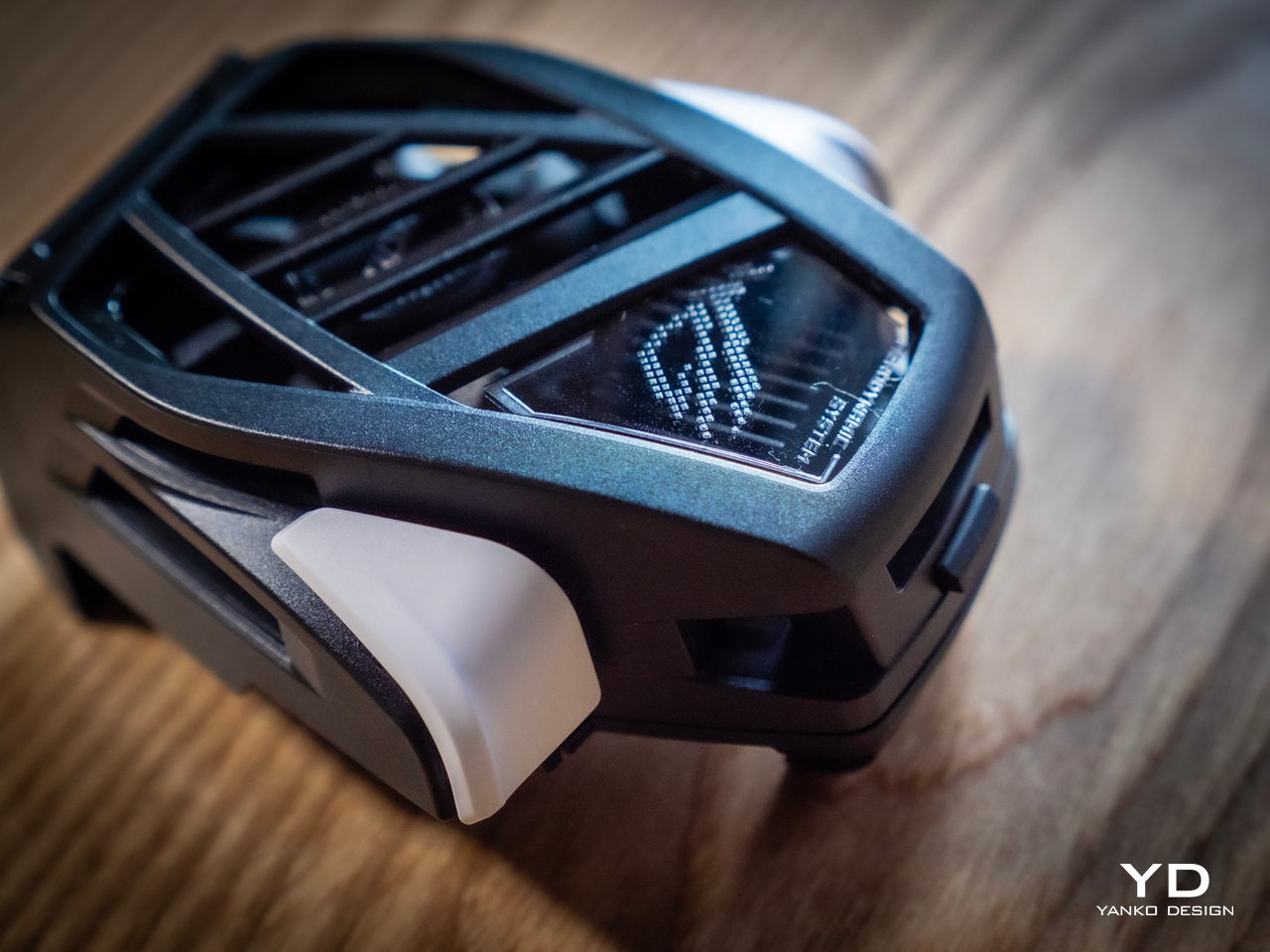
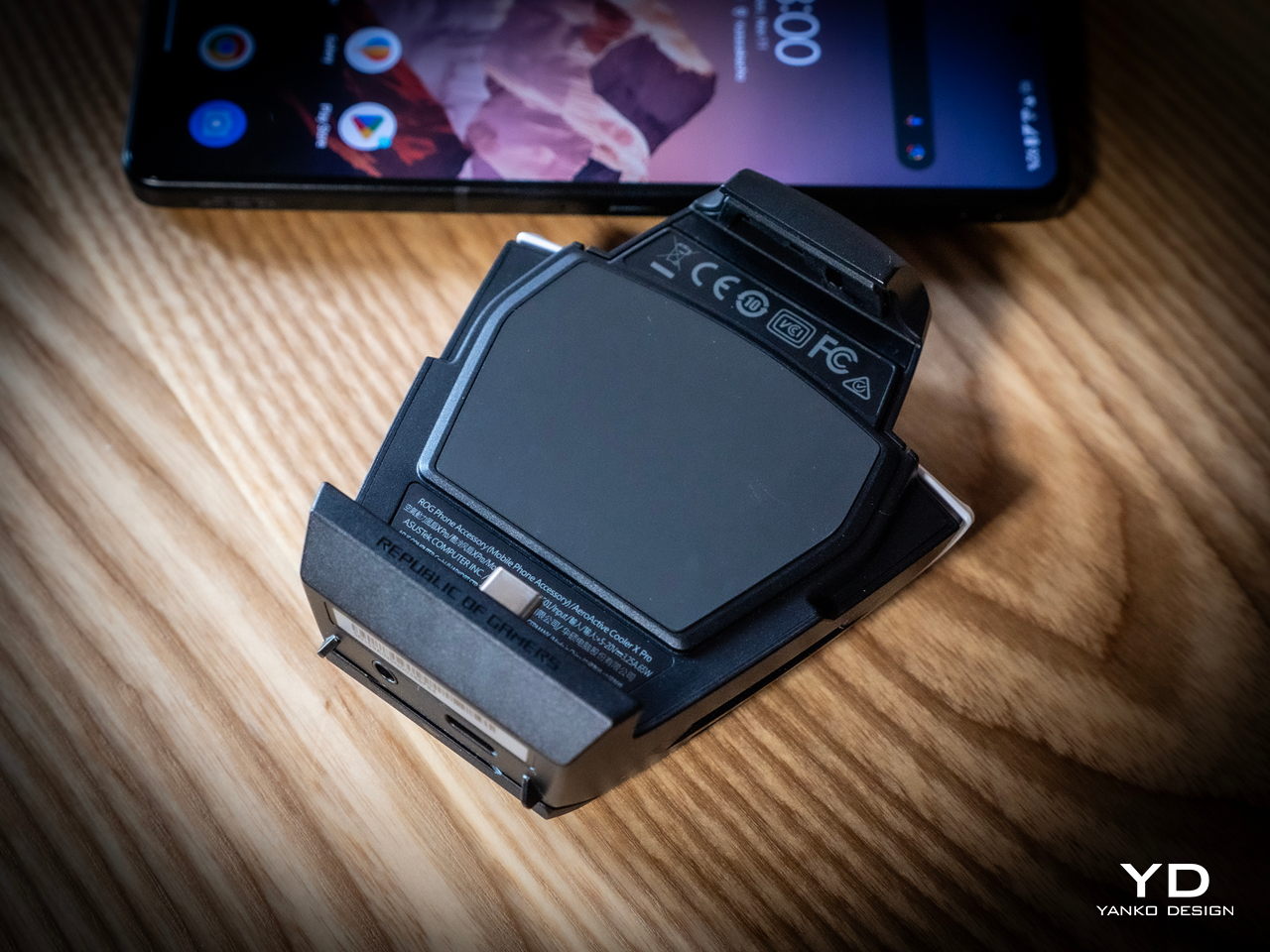
For example, it has a more powerful camera system now, with a 50MP main Sony sensor joined by a surprising 32MP telephoto camera with 3x optical zoom. This is a huge step up from the macro shooter that the brand usually puts on its gaming phones, though the 13MP ultra-wide camera is still minimally decent. ROG has also ensured the durability of the ROG Phone 8 by giving it IP68 dust and water resistance, the first gaming phone to receive this certification. That’s thanks to a cooling system and thermal design that doesn’t require a tiny fan inside, though ASUS ROG will try to convince owners to buy and use the AeroActive Cooler X attachment as well.

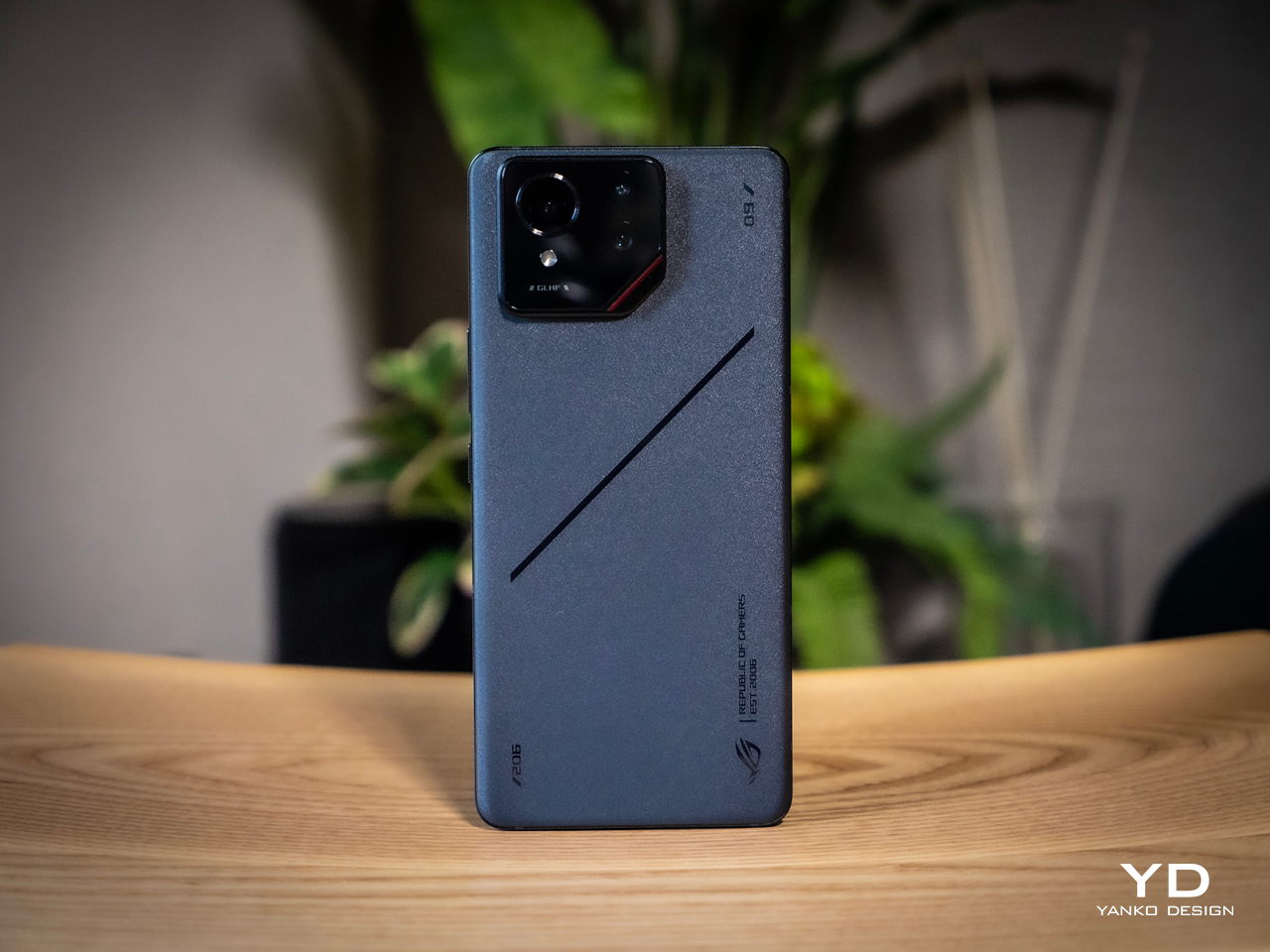
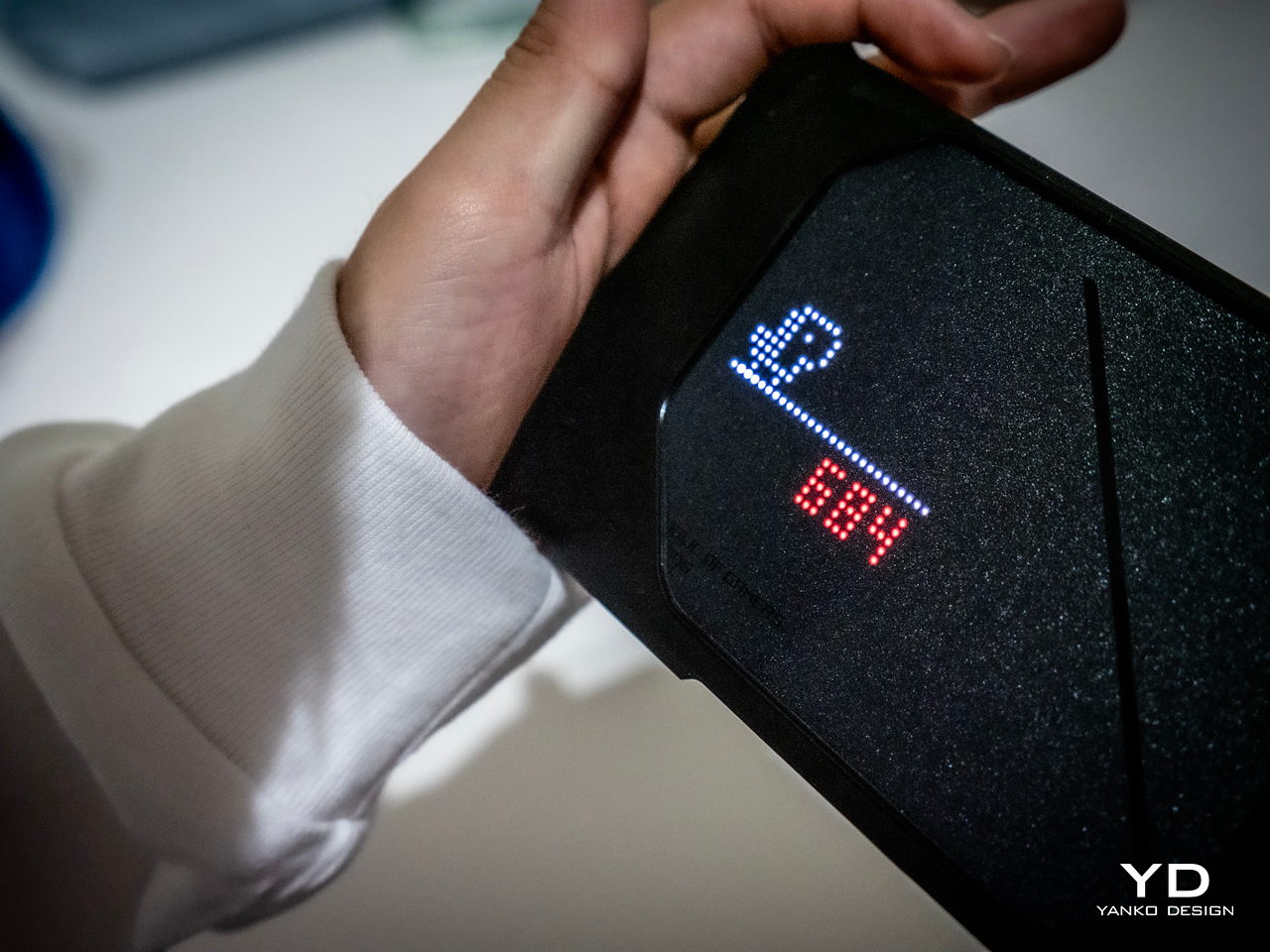
The biggest change, however, is also the most obvious. Gone are the sci-fi-like design of the previous ROG phones, replaced by an aesthetic that still looks sleek and stylish but also cleaner. The pentagon-shaped camera island is off to the side, similar to many camera designs these days, and the back sports a dual-tone tone color theme, depending on the colorway. That’s not to say that the ROG Phone 8 completely ditches the hallmarks of gamer aesthetics, as the base model still has a customizable Aura RGB Lighting on the ROG logo. The ROG Phone 8 Pro, on the other hand, gets an “AniMe Vision” Mini LED display composed of 341 lighting elements that can display preset or custom animations.

It remains to be seen whether the ROG Phone 8’s sudden change of direction will help it appeal to more customers beyond the gamer crowd, or if it will actually turn gamers away toward competing brands. Suffice it to say, it’s a bold new design for a gaming phone, one that still packs the power that gamers require, now wrapped in a stylish design that could appeal to everyone as well. The ASUS ROG Phone 8 will be available in Q1 2024 with an SRP of $1,099 for the base model, $1,199 for the ROG Phone 8 Pro, and $1,499.99 for the ROG Phone 8 Pro Edition that includes the AeroActive Cooler X in the box.

The post ROG Phone 8 at CES 2024 arrives with a simpler, more premium design first appeared on Yanko Design.

ASUS ROG Phone 8 design takes a very different direction

Almost every smartphone these days can play games, especially the expensive high-end ones, but there are a few that definitely take the cake. They’re labeled gaming phones not just because of some special feature, such as a tiny fan spinning inside, but also because of the gamer aesthetics that they embrace. For years now, the ASUS ROG Phone has held the crown of having the most gamer-friendly design, but it seems that it’s finally willing to let that title go next year. Based on its own teasers, the next Republic of Gamers smartphone might be embracing a more mainstream design in exchange for what might finally be more capable cameras as well.
Designer: ASUS (via GSMarena)

ASUS ROG Phone 7

To be fair, there is no guidebook on how to apply a gamer aesthetic to products, but you can bet it will have plenty of RGB lighting and lines going in multiple directions that suggest the presence of machine panels. Indeed, the previous ROG Phones have employed those design elements, sometimes even going as far as using small LED screens for more dynamic accents. Of course, none of these are essential to the actual gaming experience, but they do add a nice touch that marks the product as something truly designed with gamers in mind.

ASUS ROG Phone 6

ASUS ROG Phone 6

ASUS ROG Phone 6

Given its history, it’s a bit surprising that the ASUS ROG Phone 8 might do away with those design elements almost entirely. Although nothing’s set in stone yet, the brand’s official teaser suggests that it might be adopting a more minimalist and subdued design, one that eschews the lines and RGB colors. What we see instead is a clean dual-tone composition that, given the gray colors, looks more industrial than futuristic. There could still be some lighting underneath the ROG logo, but could very well be the only place it shows up.

Perhaps more curious is the camera bump design, a thick pentagon laid on top of a square. For generations, the ROG Phones have carried mediocre cameras, so a switch to a triple camera system could be big news for fans of the brand. It’s not a clear win yet, of course, but it’s commendable that ASUS is willing to shake things up to improve its performance.

To its credit, the ROG Phones have slowly been moving towards more conventional and less spectacular designs, but the ROG Phone 8 could have the most drastic changes if the teasers are to be taken at face value. On the one hand, it does help make the ROG Phones more acceptable in “regular” scenarios and won’t stand out as much. On the other hand, if you want a more conventional-looking smartphone that can handle mobile games, there are already plenty of those in the market, making the ROG Phone 8 redundant.

ASUS ROG Phone 7

The post ASUS ROG Phone 8 design takes a very different direction first appeared on Yanko Design.