If Waymo cars are Level 4 automation, what does it take to be a Level 5?
We break down the different autonomous driving levels, and why Level 5 is so hard to achieve.
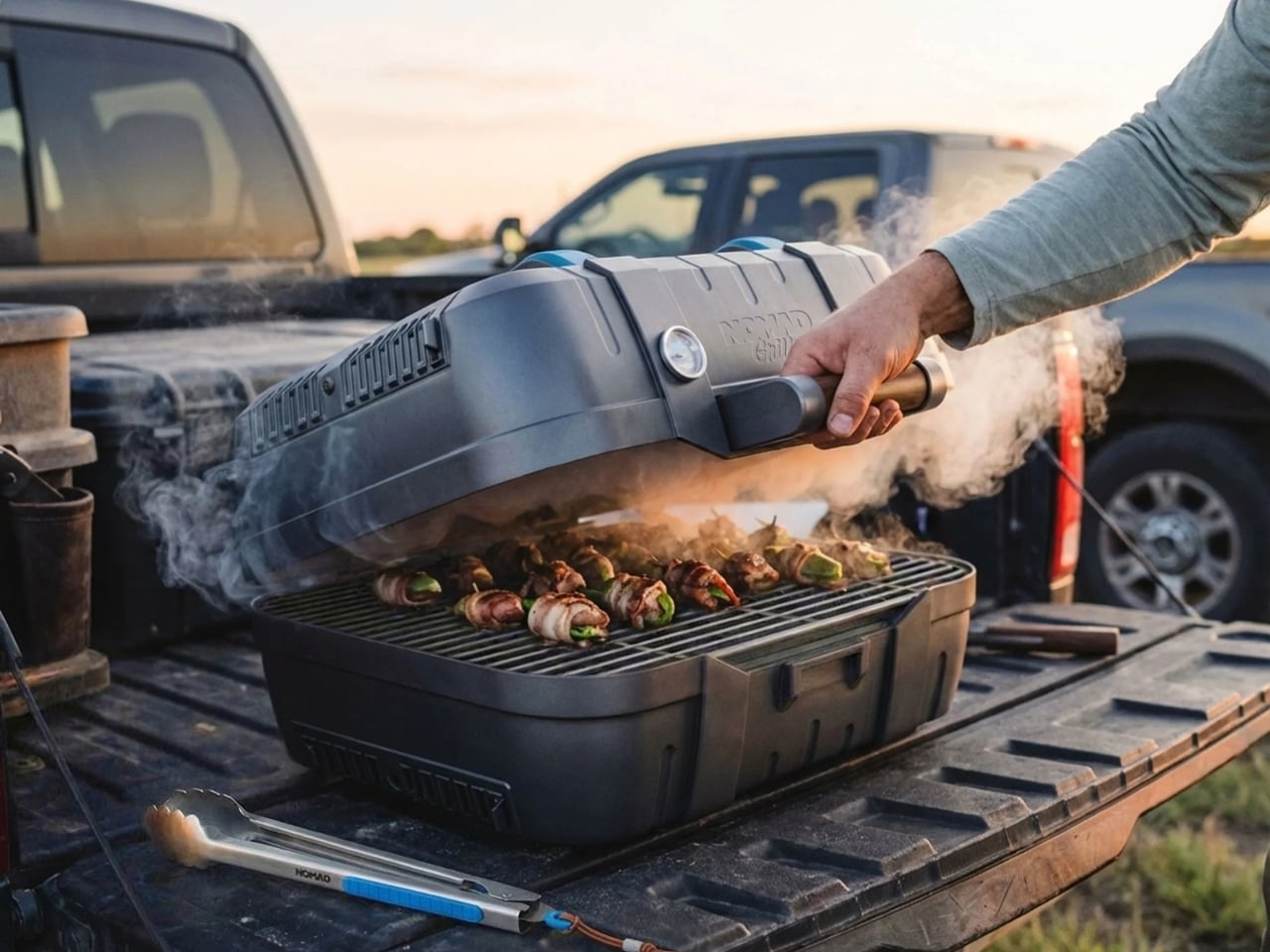
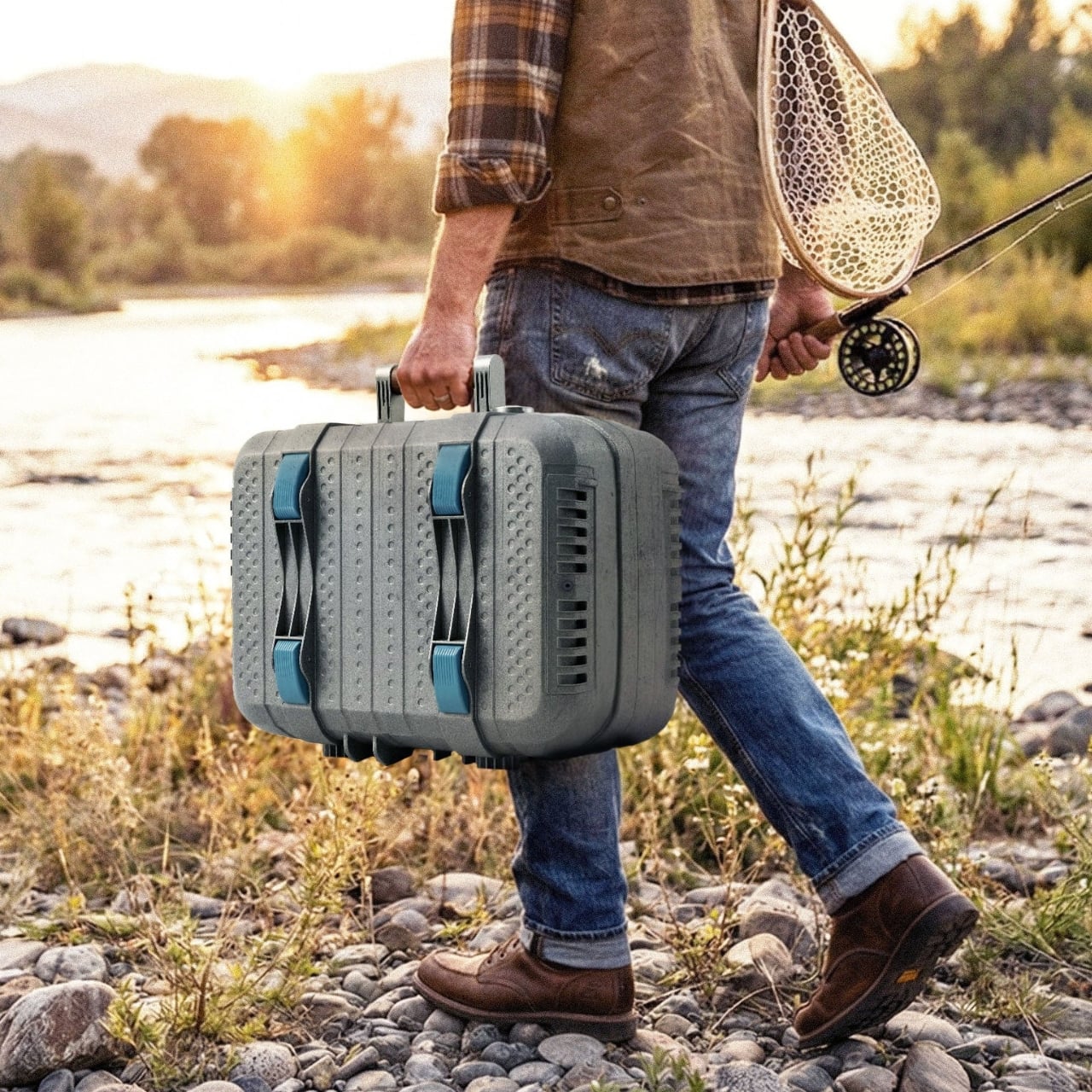
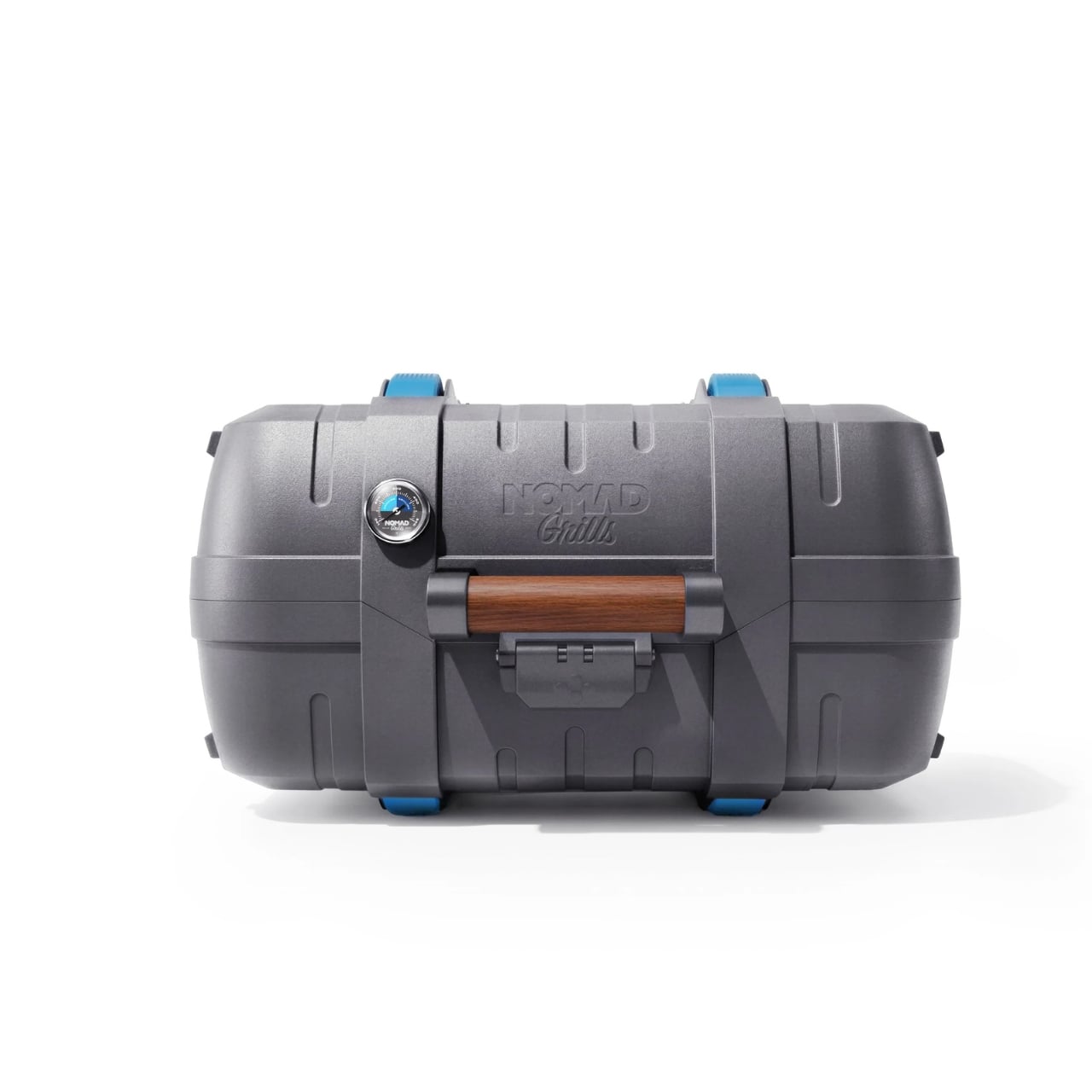
If you’ve ever stared down a bulky kettle grill and thought there has to be a better way, Nomad seems to have been listening. Their newest release, the Rodeo Grill & Smoker, looks less like something you’d find at a backyard cookout and more like something a very cool architect would carry through an airport. It’s a full-size charcoal grill and smoker folded into a suitcase footprint, and it’s hard not to be a little captivated by it.
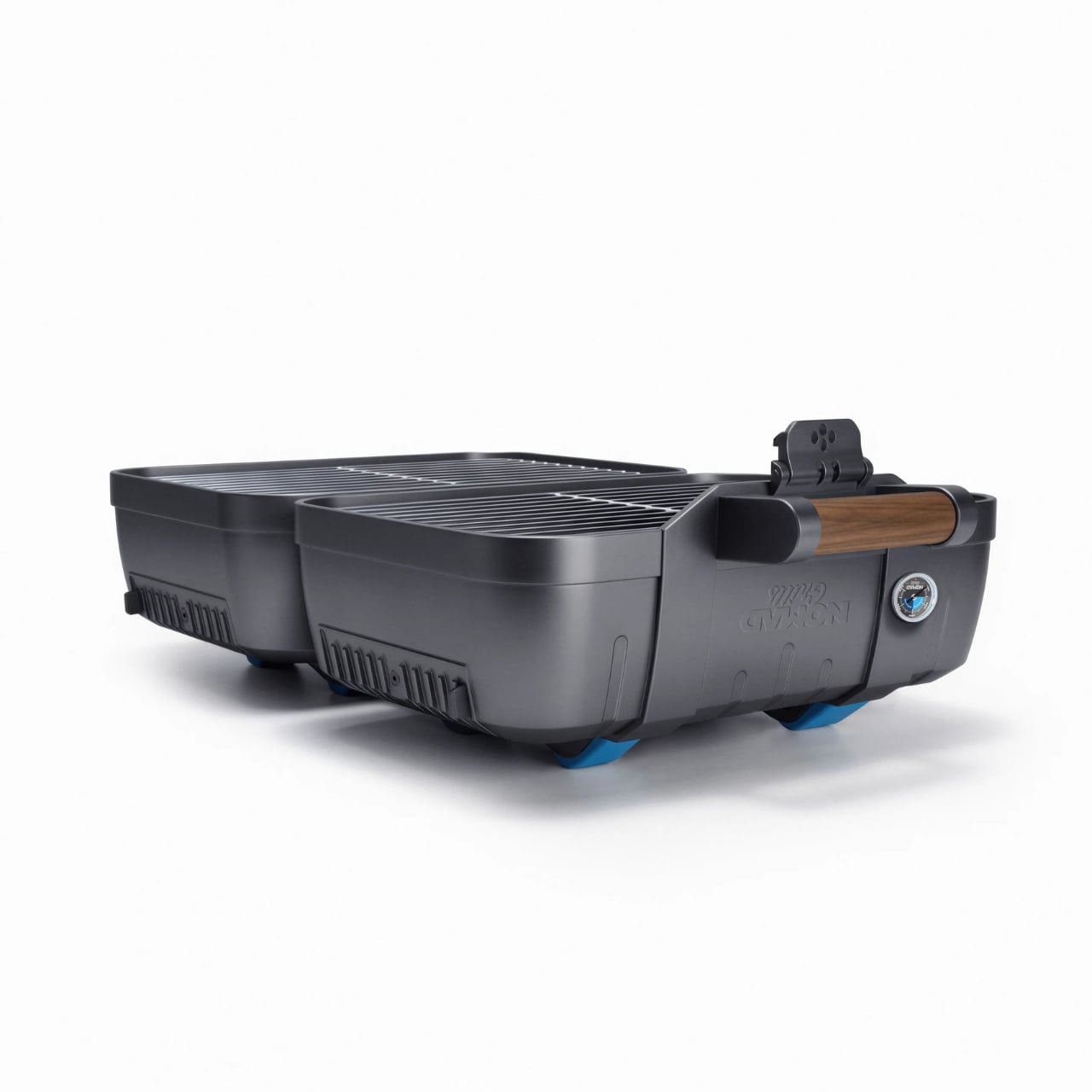
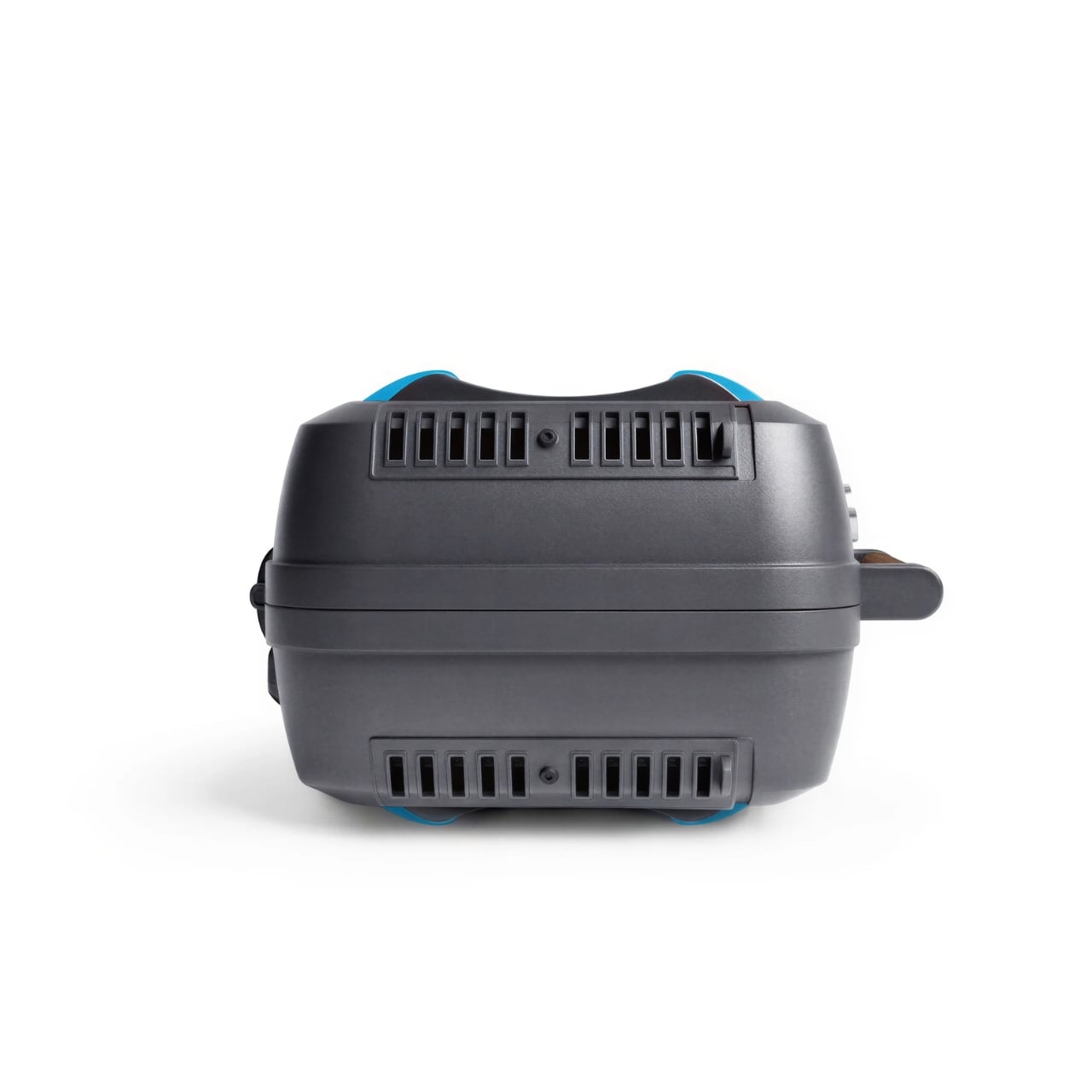
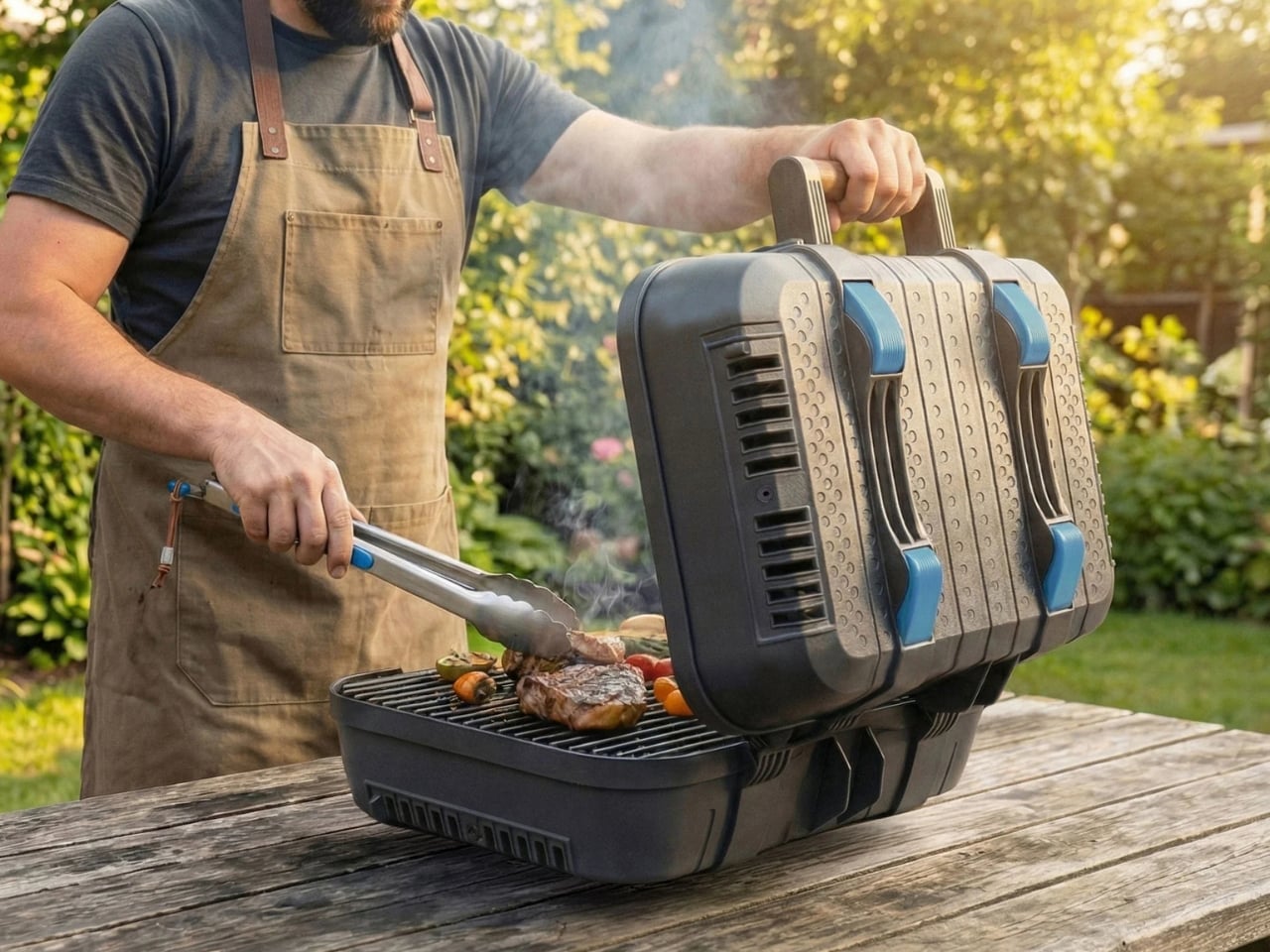
The design concept isn’t new for Nomad. The brand has been making suitcase-style charcoal grills for a while now, but the Rodeo is their most evolved and refined version yet. It’s built from unibody cast aluminum, weighs 22 pounds in its single-grate configuration, and opens up to deliver over 500 square inches of cooking space. That’s enough room for 36 burgers or two full racks of ribs, which is not a small number for something you can carry one-handed. The dual-grate setup is the main unlock here: run both grates for a big cookout, or drop to a single grate for a lighter everyday session at 250-plus square inches. One grill, two configurations. It’s a genuinely smart bit of engineering that doesn’t ask you to overthink it.
Designer: Nomad
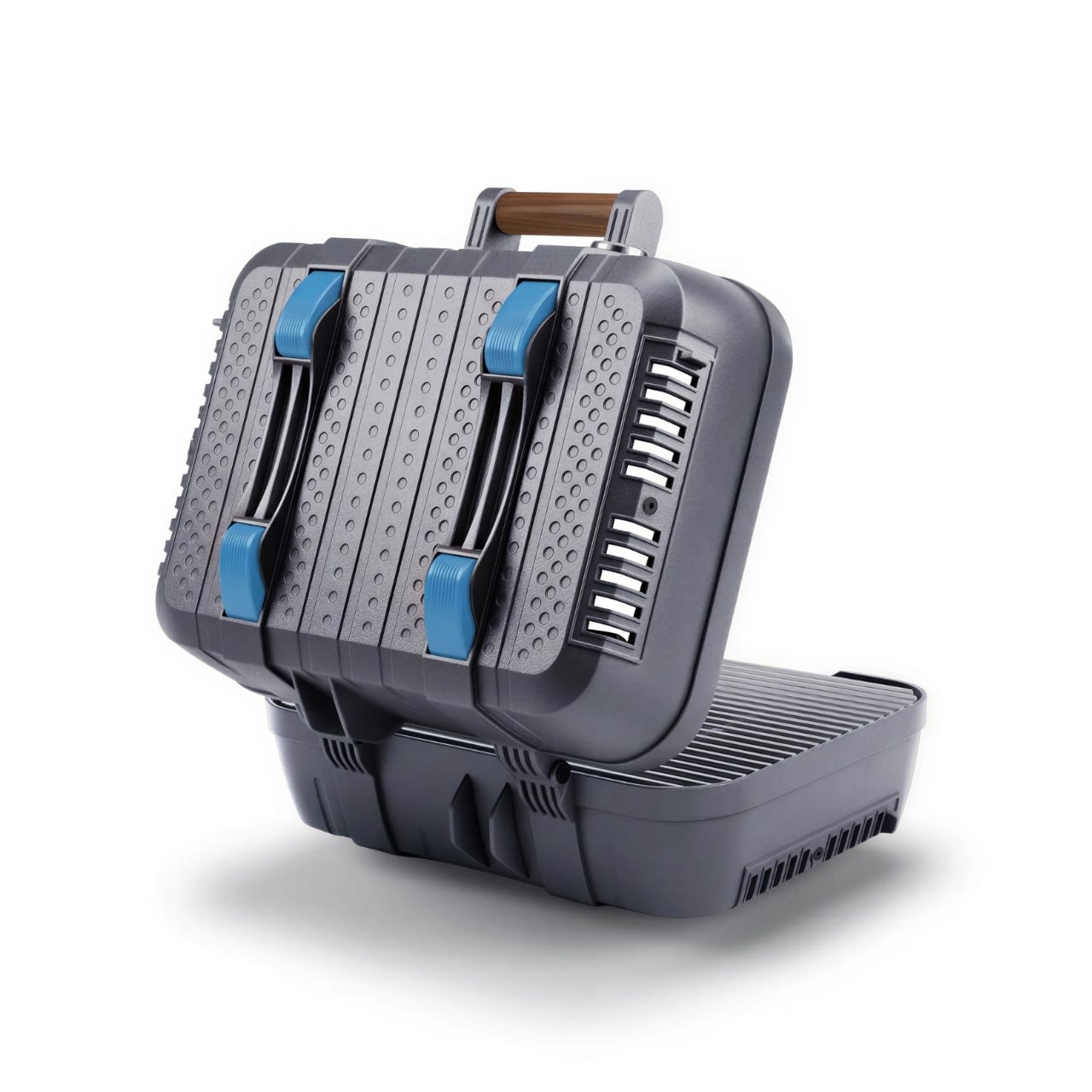
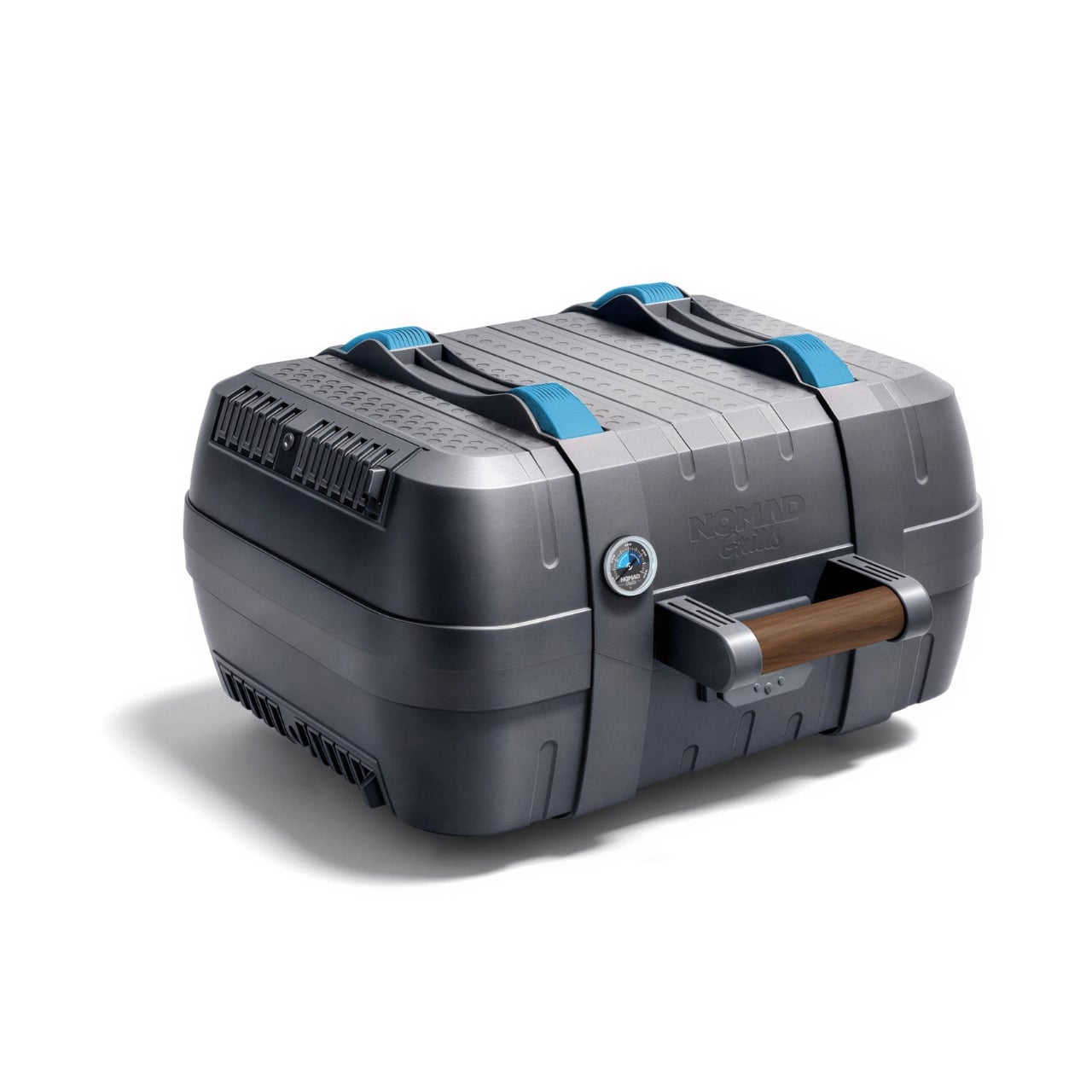
Nomad didn’t try to reinvent charcoal cooking with the Rodeo, and I genuinely respect that decision. No Bluetooth thermometer, no companion app, no subscription service hovering in the background. Just charcoal, fire, and flavor, which is a philosophy that’s been working for thousands of years. A built-in analog thermometer lets you monitor temperature without lifting the lid, and four side vents give you precise airflow control whether you’re going hot and fast for a sear or dialing it way down for a long, slow smoke. These are the details that actually matter when you’re cooking something that deserves your full attention.
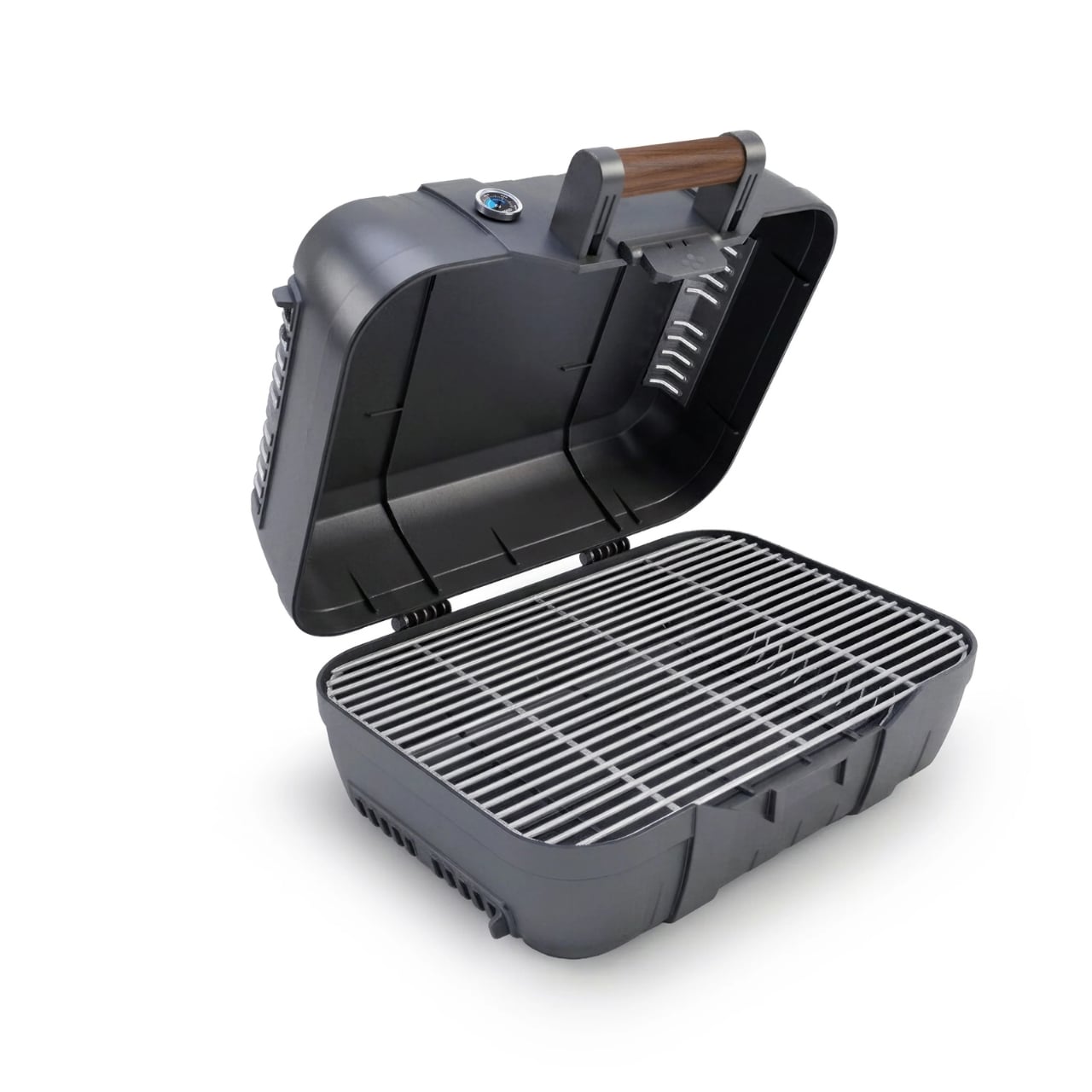
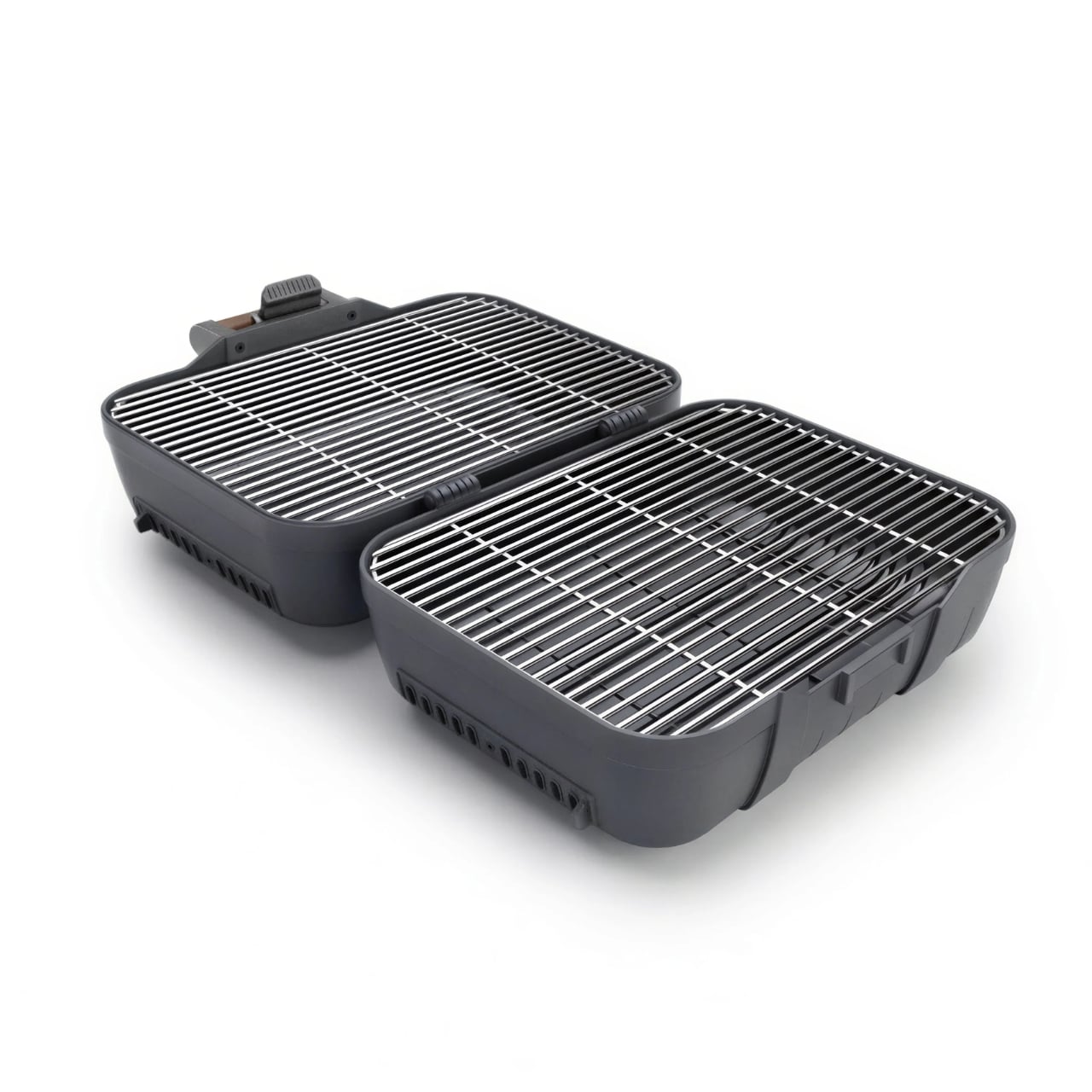
The material choice also deserves some credit. Cast aluminum handles heat and weather better than the lightweight steel you often find in portable grills. The cooking grates are heavy-gauge stainless steel, and the finish is rated for extreme temperatures, meaning you’re not going to find peeling paint after a season of use. There’s also a solid walnut handle on the exterior, which is a small touch but the kind of small touch that tells you something about a brand’s priorities. Someone made a decision about that handle. It didn’t have to be walnut.
Nomad makes the Rodeo in limited production runs, which is either a deliberate scarcity strategy or simply a reflection of the realities of manufacturing something domestically. Either way, it’s made in the USA, priced at $399, and the first two drops have already sold out. Drop 3 is currently available for preorder with shipping expected in October 2026. The limited-run model does create a certain urgency around it, which works in their favor whether that’s the intention or not.
The $399 price point sits in an interesting spot. It’s not cheap, but for a grill built with this level of material quality and this much design intention, it doesn’t feel unreasonable. The original Nomad Grill & Smoker has nearly 2,400 customer reviews and a 4.9-star average, which is the kind of track record that makes a higher-end purchase feel a lot less risky. The Rodeo builds directly on that lineage with a more integrated design, better heat control, and more cooking space, so the upgrade argument is pretty clear.
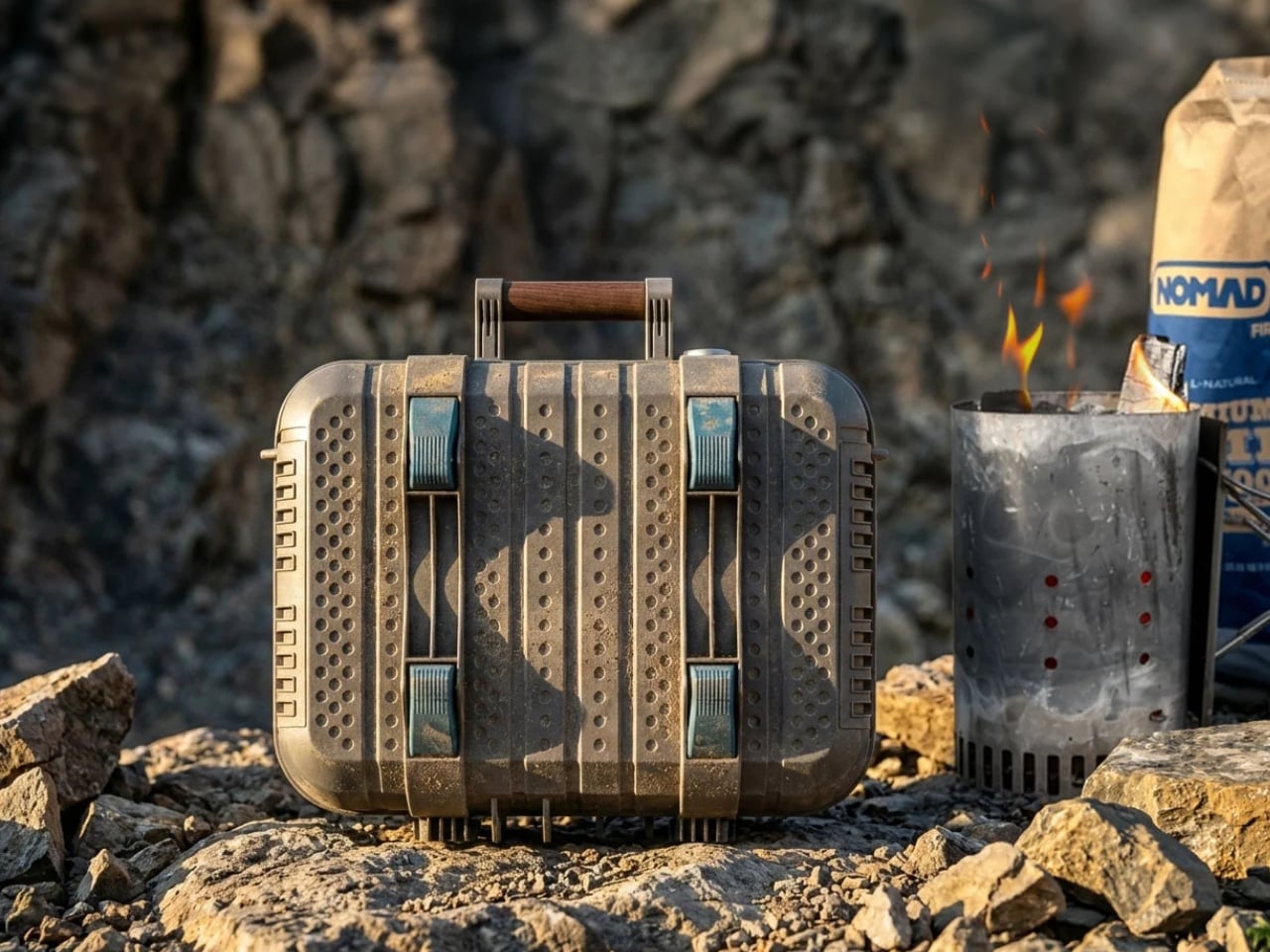

Outdoor cooking culture has always had a gear obsession, and the Rodeo fits neatly into that conversation. But it also works just as well for people who simply want to grill well without hauling around equipment that takes up half a garage. It’s portable without being a compromise, and it’s designed well enough that you’d actually want to leave it out on a patio. That combination is rarer than it sounds, and it’s why the Rodeo feels like more than just another portable grill.
The post The $399 Charcoal Grill That Folds Into a Suitcase first appeared on Yanko Design.



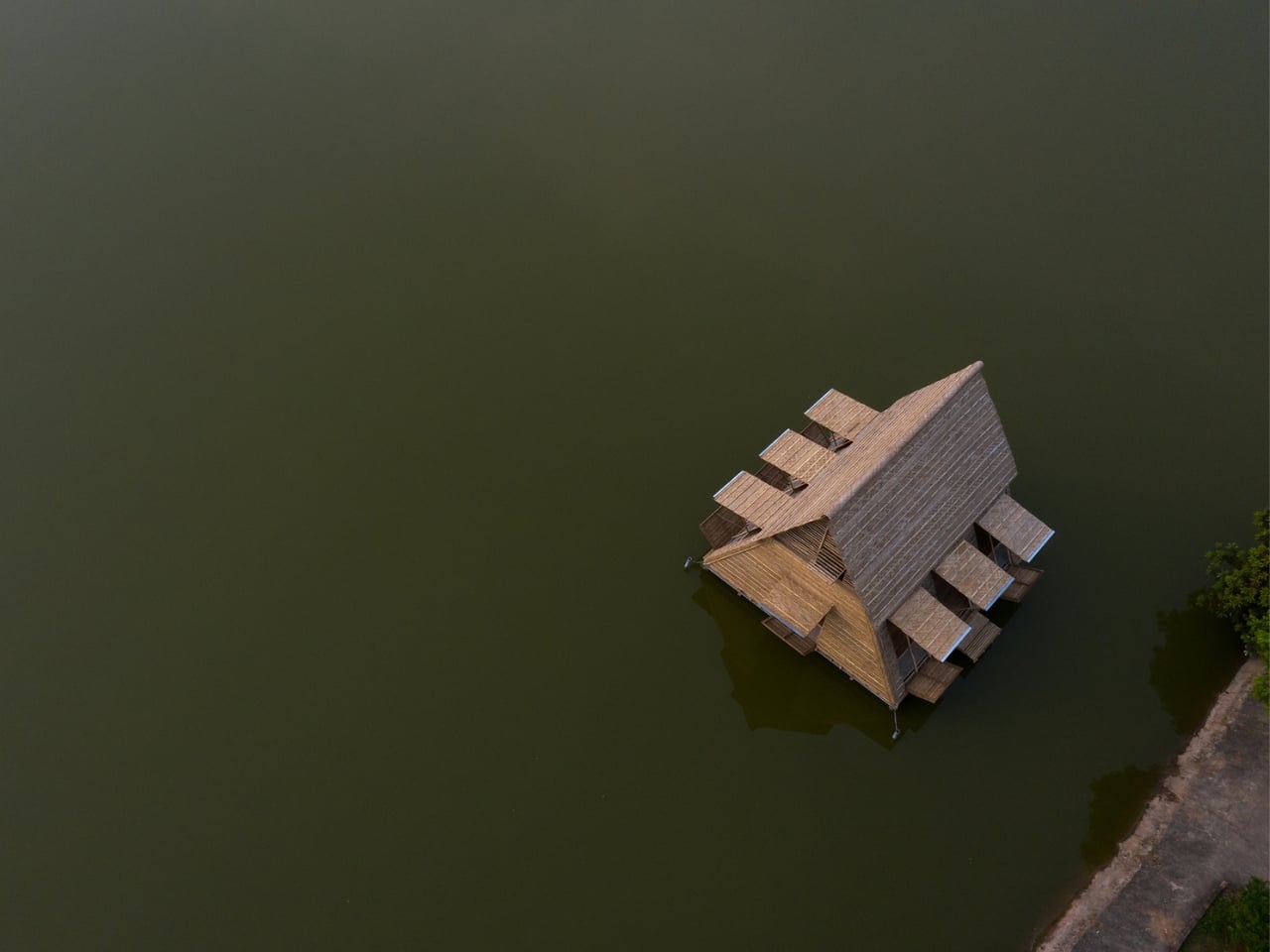
The Mekong Delta has always lived by the rhythms of water. Its rivers rise and fall with the seasons, and the people who call this region home have spent generations learning to move with it rather than against it. But what happens when the water stops being seasonal and starts being permanent? That question sits at the heart of one of the most quietly radical housing concepts to come out of Southeast Asia in recent years: the Floating Bamboo House by Hanoi-based H&P Architects.
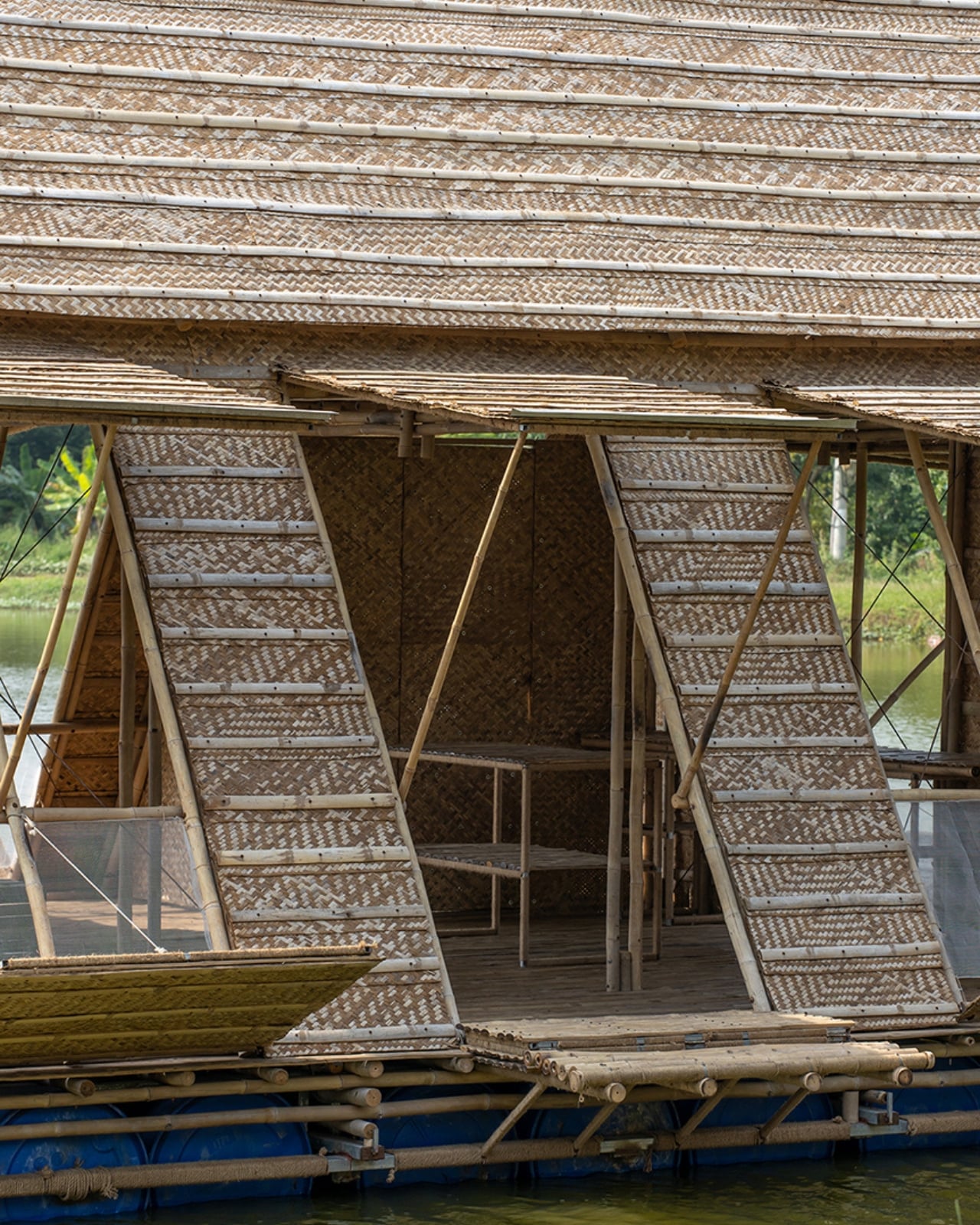
The project, also known as Nhà tre nổi, started as a prototype for Vietnamese communities whose lives and livelihoods are tied to the river. The structure is a three-compartment home built from solid-cored bamboo, with pieces ranging from three to six meters in length, joined with latches and ties rather than industrial fasteners. Beneath the floor, a system of plastic drums keeps the whole thing afloat. It sounds almost too simple, which is exactly why it works.
Designer: H&P Architects
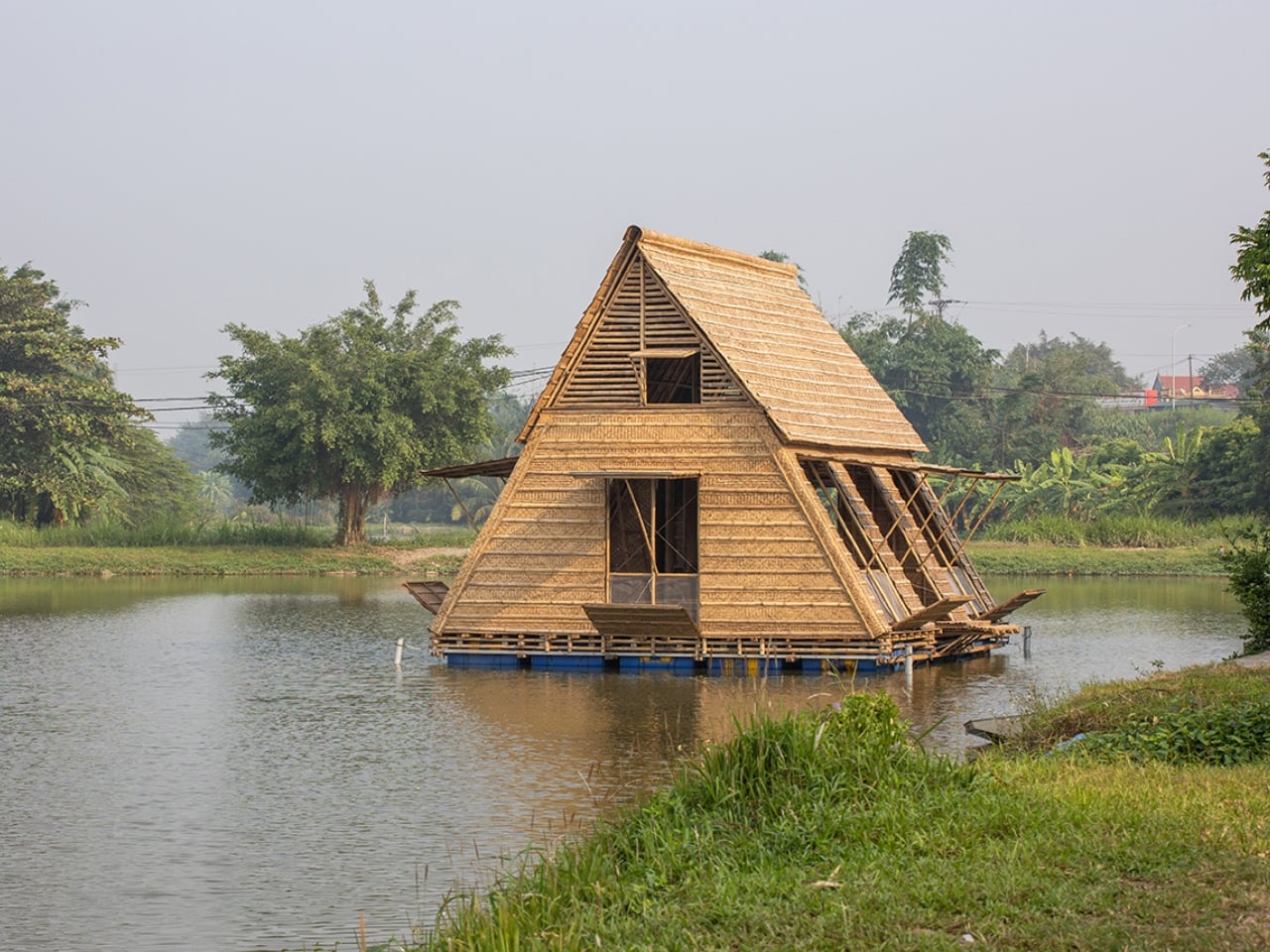
The exterior and interior are covered in lightweight materials: compacted bamboo sheets, leaves, perforated iron, and bamboo panels. Doors and panels open and close in ways that reinforce the structure during bad weather, and when skies are clear, the same openings let the house breathe. Two prototypes have been built so far, both in Hanoi province. Neither of them looks like a compromise.
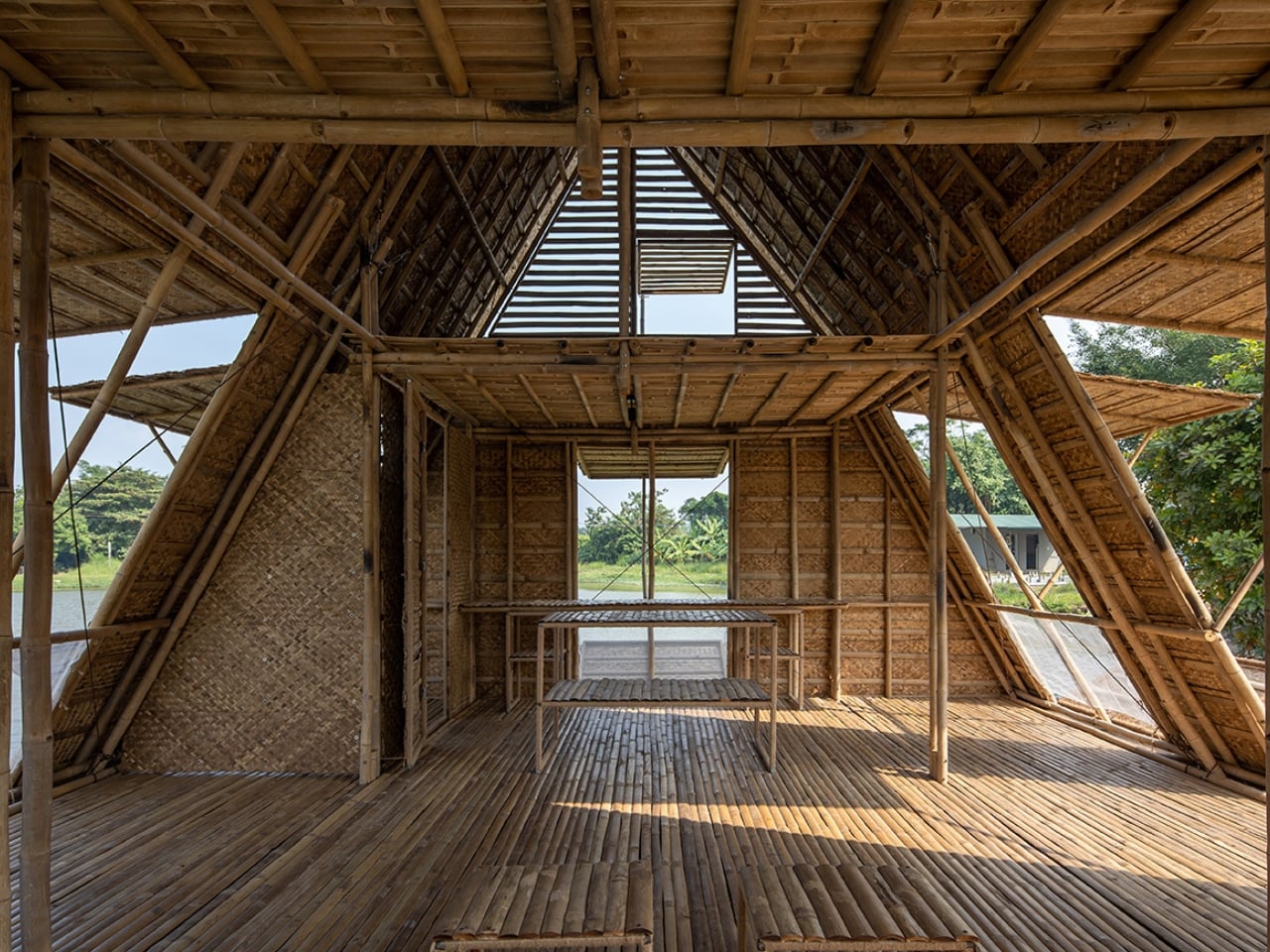
What makes this project feel culturally grounded rather than just architecturally clever is how it draws from Vietnam’s own building history. The open interior mirrors the Rông house, a communal structure used by ethnic minority groups in Vietnam’s Central Highlands, and the Đình pavilion, a longstanding civic gathering space. When the second-floor panels are removed, the home can transform into a classroom, a library, or a meeting hall. The house doesn’t just shelter people. It creates the possibility of community.
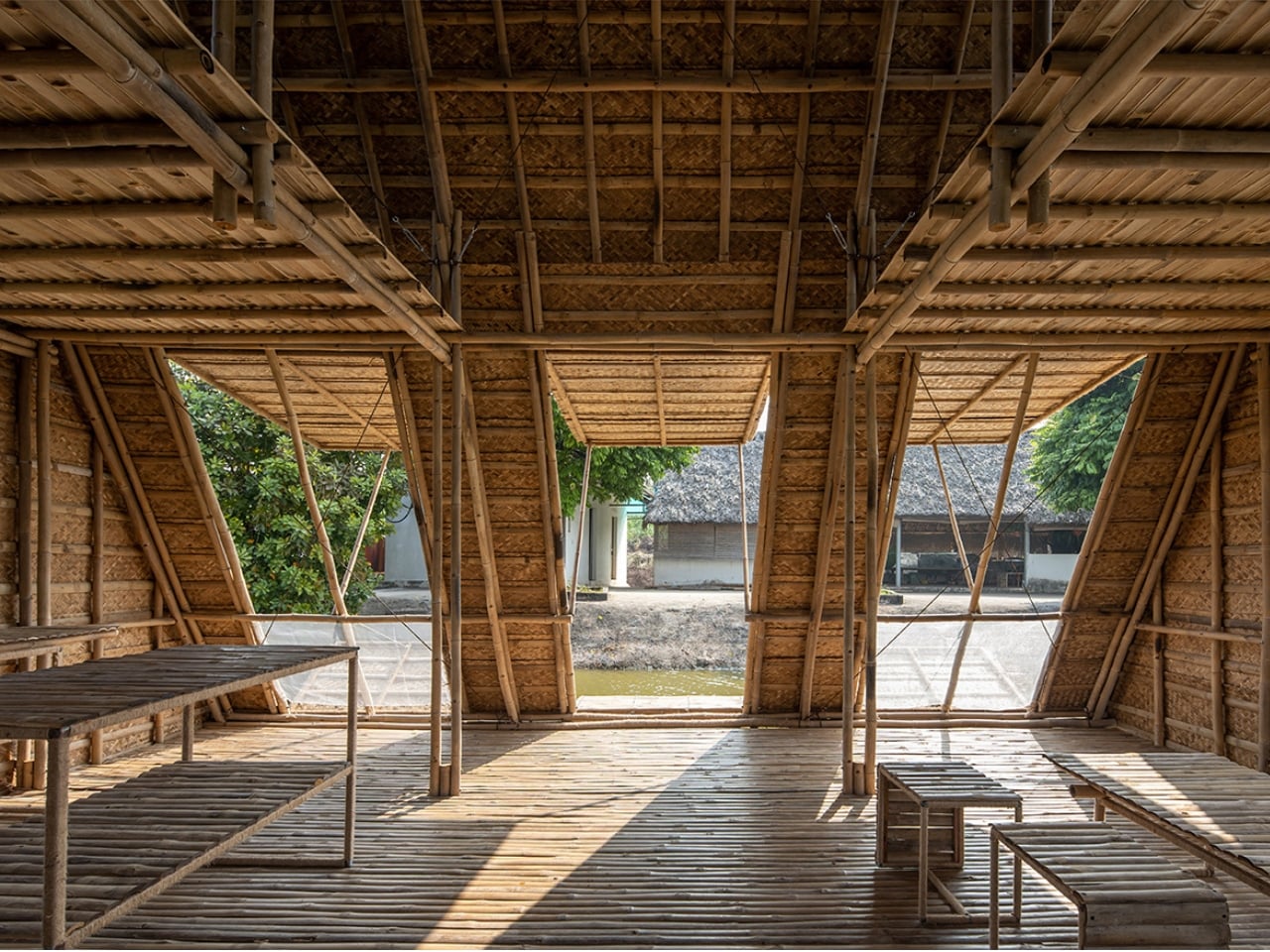
It also scales. H&P Architects envision multiple FB Houses eventually forming floating neighborhoods, connected by playing grounds, vegetable-growing rafts, and fish-raising areas. This is not a niche design experiment meant for a magazine spread. It is a serious proposal for how people can continue living with dignity in places the climate is actively reshaping.
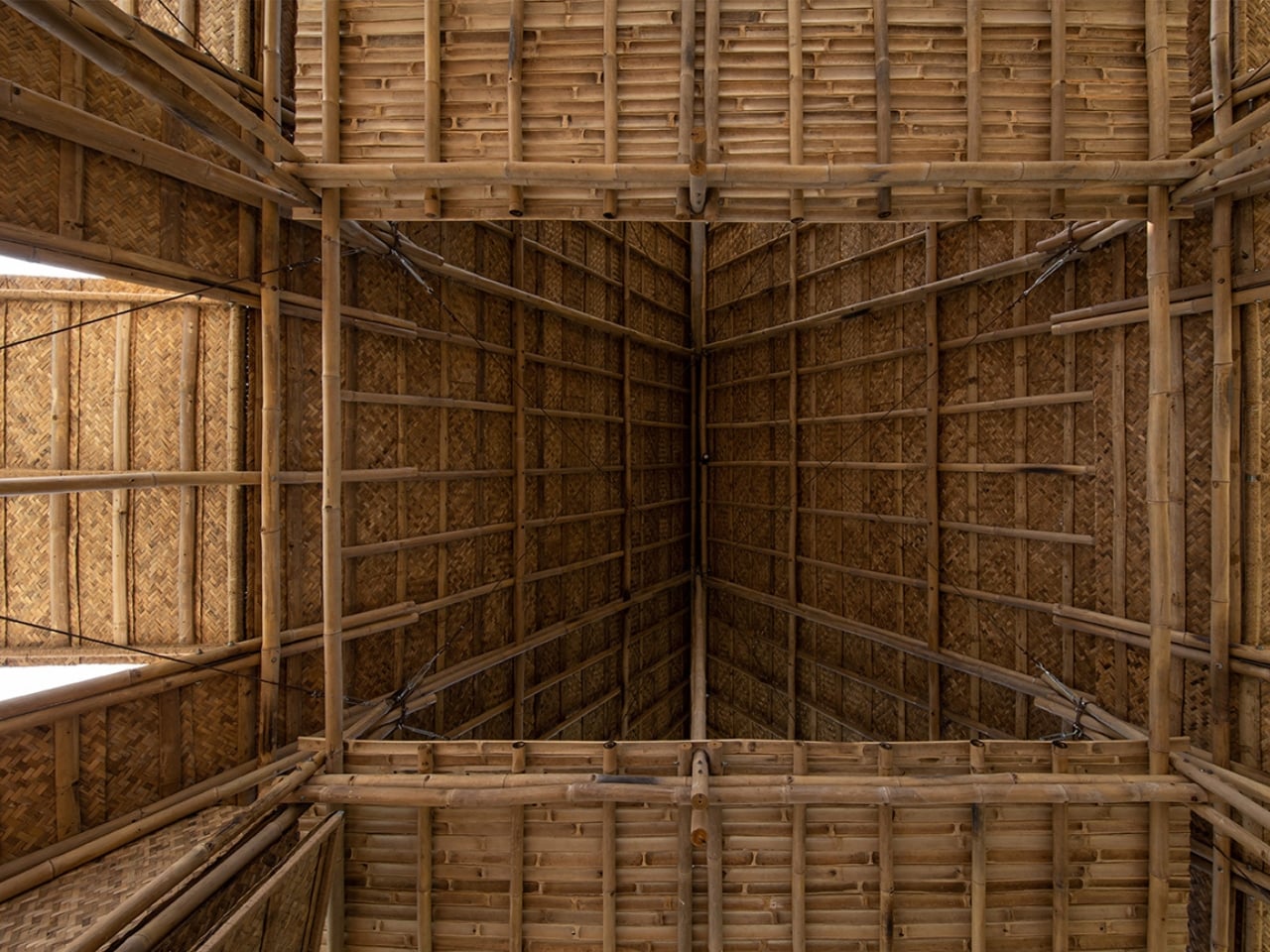
Vietnam is one of the countries most exposed to sea-level rise. A predicted one-meter increase would flood nearly half of the Mekong Delta and affect somewhere between 20 and 30 million people. That context reframes everything about this project. Bamboo becomes not just a material choice but a statement about what resilience actually looks like at the scale of everyday life.
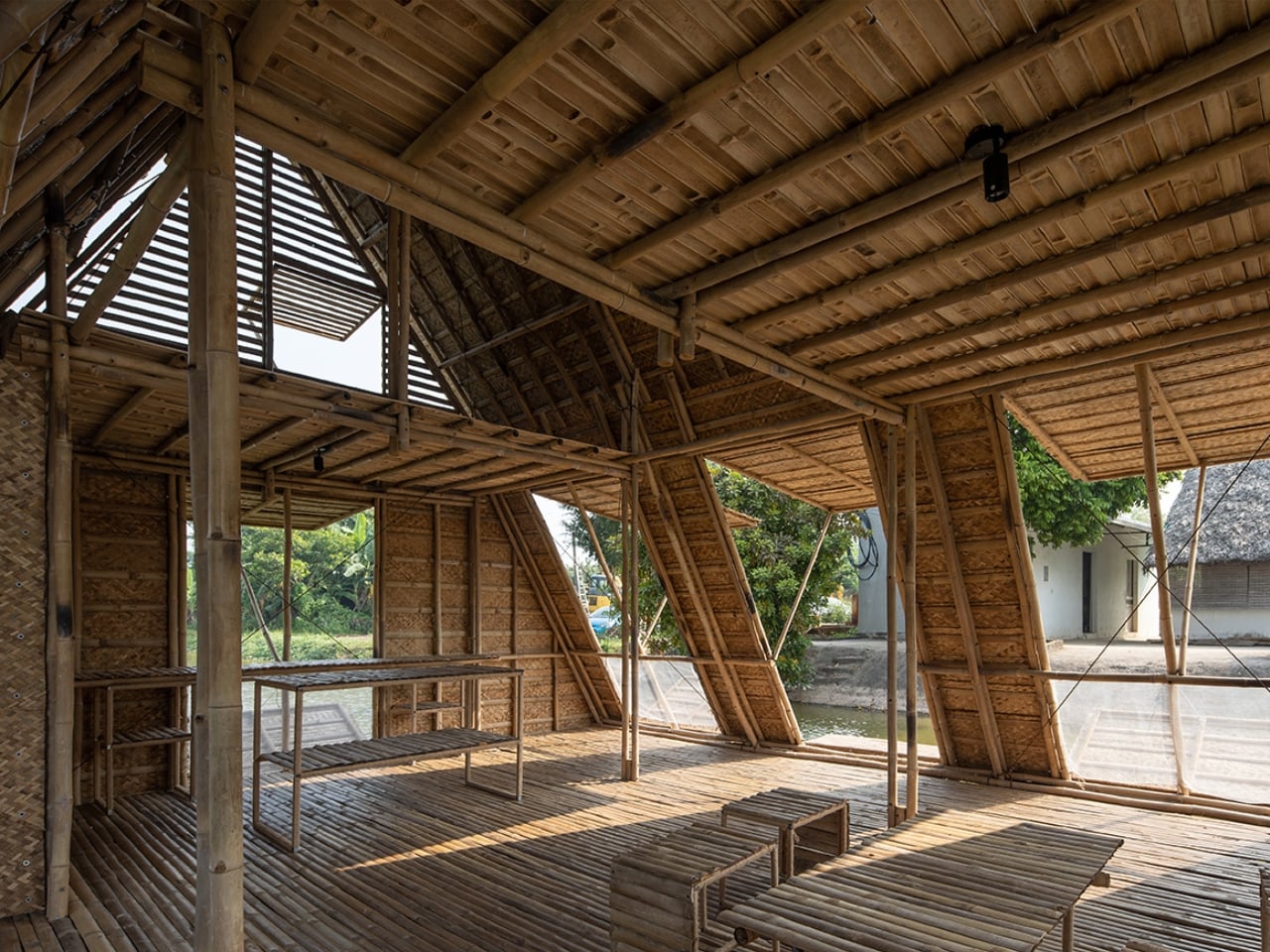
I keep coming back to the fact that the most compelling design work right now isn’t coming from luxury firms building dramatic icons for wealthy cities. It’s coming from architects willing to work with local knowledge, accessible materials, and real constraints. H&P Architects didn’t design a vacation house that happens to float. They designed a home that a low-income family can build and maintain, that connects to the land it came from, and that has enough cultural intelligence to feel like it belongs there.
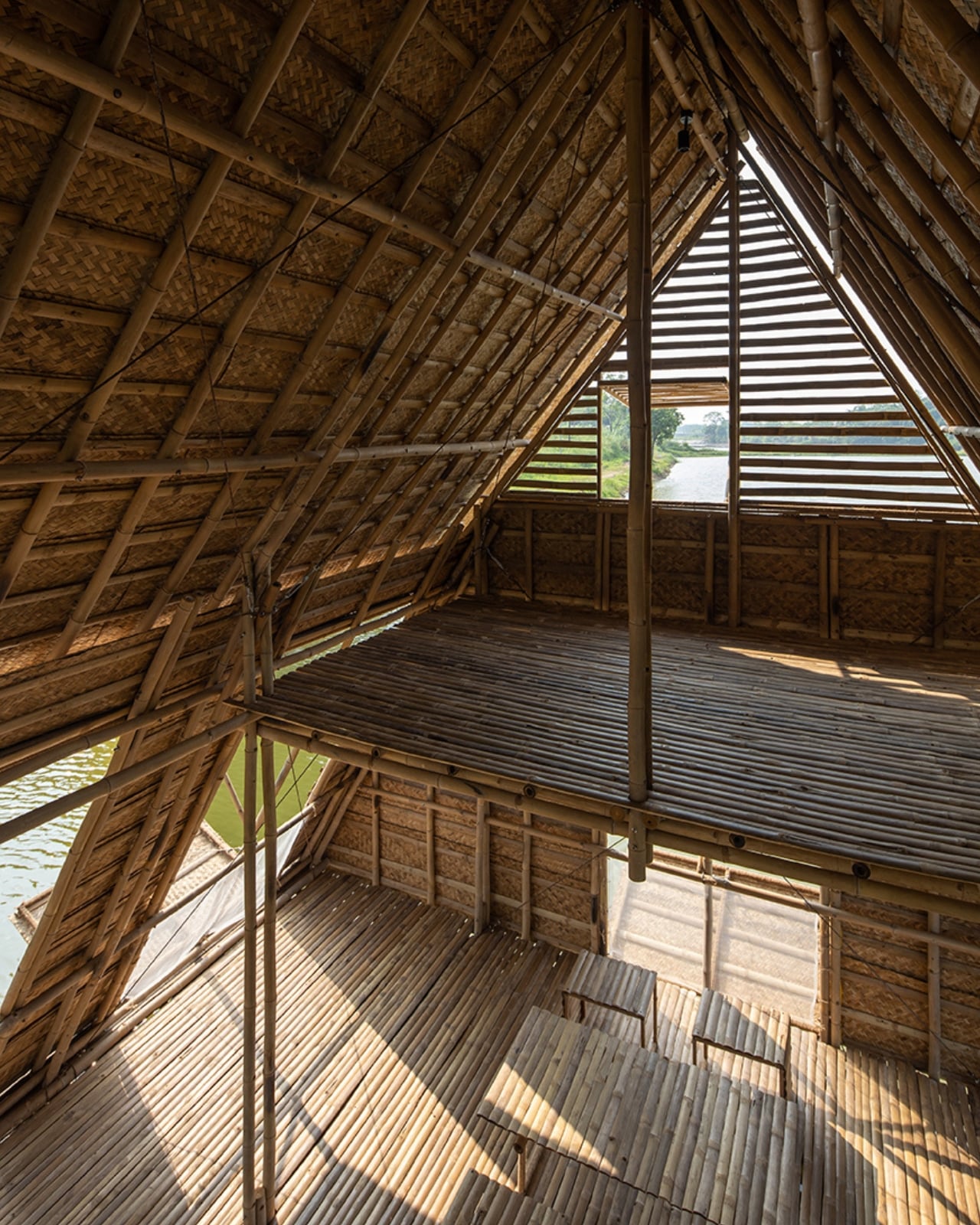
The Floating Bamboo House isn’t trying to be photogenic. But it is. The studio’s own description of the finished structures as “like flowers amidst floating waters” is one of those rare phrases that makes you pause because it actually earns its poetry.
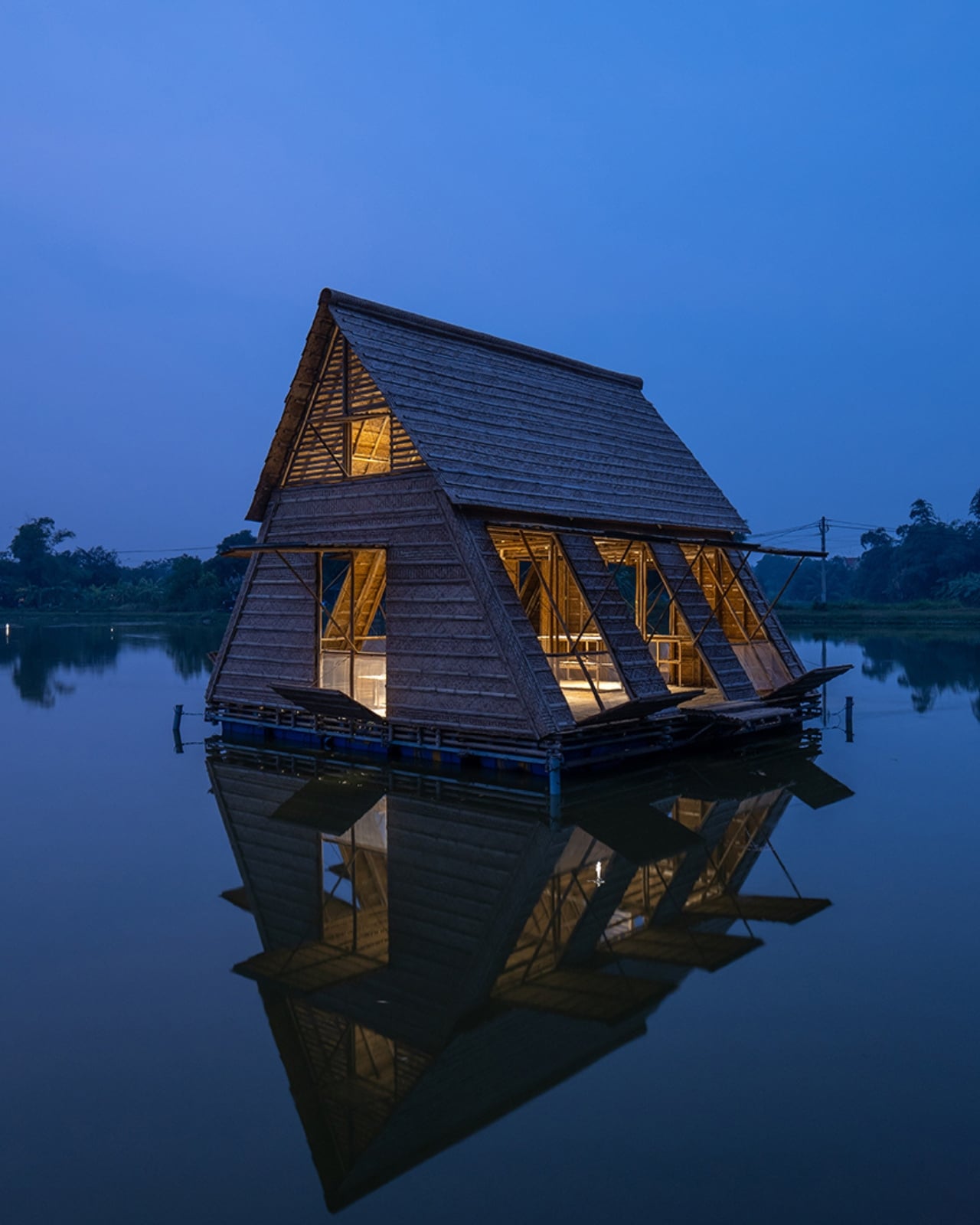
If the broader design world is paying attention, and I think it should be, projects like this are worth more than admiration. They are worth studying, funding, and scaling. The climate conversation in design tends to get stuck on materials certifications and carbon metrics. What H&P Architects is offering is something harder to quantify: a model of living that bends rather than breaks, that takes its cues from the place and the people it was made for, and that treats resilience not as an aesthetic but as a form of care.
The post Vietnam Is Building Floating Bamboo Homes Before It’s Too Late first appeared on Yanko Design.