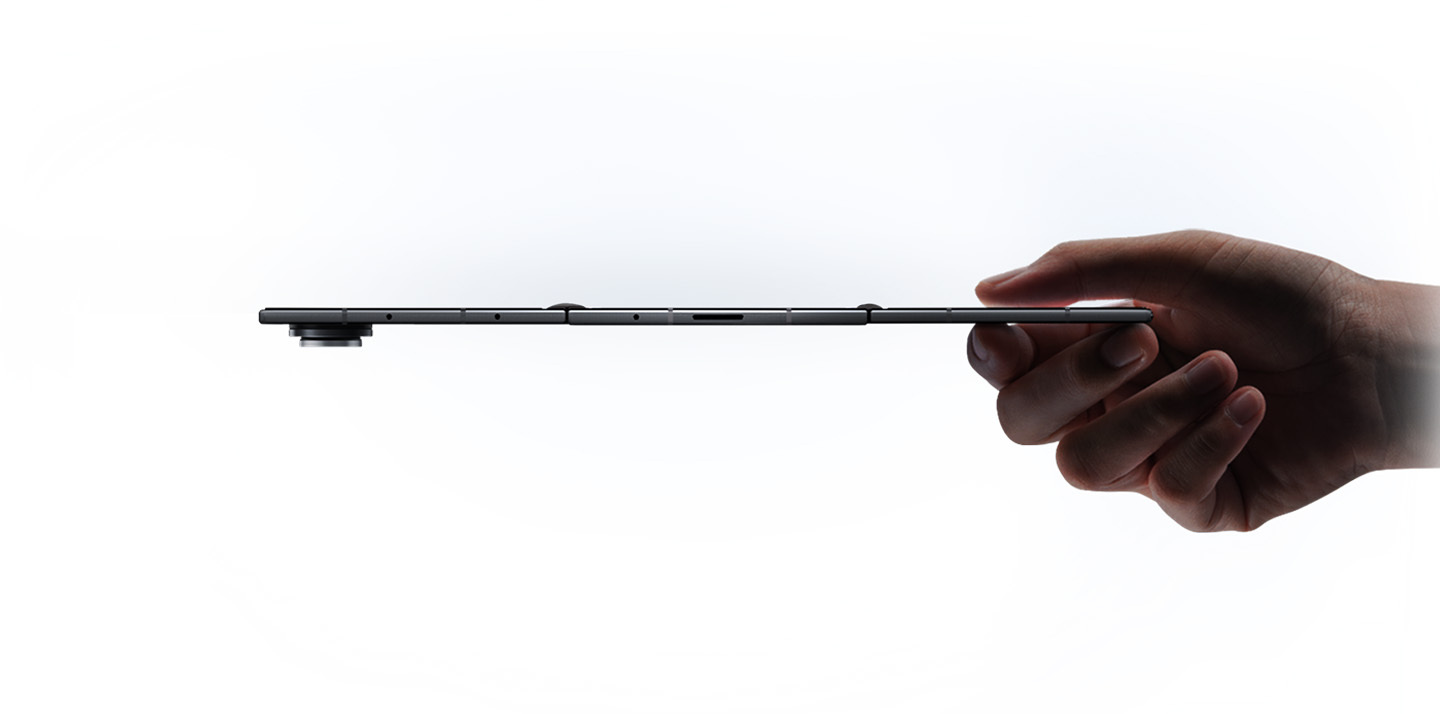
The HMD Skyline is a mid-range smartphone that’s all about repairability

Today, HMD unveiled its newest own-brand smartphone called Skyline. This phone runs on a mid-range Snapdragon 7s Gen2 CPU, and it offers up to 256GB of storage and 12GB of RAM. It has 15W Qi2 wireless charging and its 4600mAh battery lasts “up to 48 hours.” The screen is a 6.55-inch full HD+ panel with a 144Hz refresh rate and up to 1,000 nits of brightness. Pick either pink (maybe they had leftovers from the Barbie collab) or black for your phone's color. Skyline phones will be available starting in August and will cost $499.

The spotlight feature for Skyline is ease of repairability. This has been a focus for recent projects from HMD, which also makes phones under the Nokia brand. The back cover of this phone model can be removed, allowing for a user or a third-party shop to replace a broken screen, a worn-out battery, or a bent charging port. Replacement parts are available in select markets from iFixit, which said Skyline will have almost the repairability levels of the Fairphone. Right to repair movements gained a lot of traction last year, with even holdout device manufacturers starting to change their tune. It's positive to see HMD not just offering an option to self-repair, but making it easy to do so.

Front of HMD skyline phone
HMD (modified)

Skyline is also equipped with some notable photo features. The 50 megapixel front camera offers autofocus and eye-tracking. It also has "selfie gesture" hardware that will snap a photo in response to one of four common hand gestures. The rear camera is 108MP, and it has both portrait and night modes to capture the right image for the moment.

As more people want the option to unplug from the always-on lifestyle, Skyline will offer a Detox mode. This feature lets users select specific apps and contacts to block during scheduled breaks. It can be useful for people who find themselves spending more time than they want on social media or games, or for those who need to draw strong lines for work-life balance.

This article originally appeared on Engadget at https://www.engadget.com/the-hmd-skyline-is-a-mid-range-smartphone-thats-all-about-repairability-070035654.html?src=rss

Microsoft releases iOS and Android apps for Designer, its AI-powered Canva competitor

Microsoft has officially released its Designer platform for AI image generation. After a long preview phase, Designer is now available to most people with a Microsoft account. Designer can be used on the web in more than 80 languages, as a mobile app for iOS and Android, and as a Windows app. You can create a brand new visual from the ground up with AI, or use Designer to edit and tweak a picture you've already made. There are plenty of templates available to guide the creation of common image types, like a greeting card, smartphone wallpaper or a profile avatar. More experienced artists can also build everything from scratch, developing their own templates and using their own art.

While Designer can be used on its own, Microsoft is promoting its integration with the company’s other services. Thanks to the company's Copilot AI chatbot, Designer images can be easily linked up to Microsoft Word and PowerPoint projects. Of course, taking full advantage of that will require a Copilot Pro subscription.

If you've used Canva, then Designer will feel very familiar. The service takes a very similar approach to its user experience and now also has some AI options. According to details from when Microsoft first announced the app back in 2022, Designer is integrated with OpenAI's image generator DALL-E. Copilot already has DALL-E 3 integration, as well as ChatGPT 4 Turbo, so it makes sense that Designer will sync up with those existing services.

This article originally appeared on Engadget at https://www.engadget.com/microsoft-releases-ios-and-android-apps-for-designer-its-ai-powered-canva-competitor-203028855.html?src=rss

AMC is bringing fifteen shows to Netflix for one year

AMC and Netflix have inked a deal to bring several series from the cable network to the streaming platform later this summer. Variety reports that the agreement includes seasons 1-8 of Fear the Walking Dead, season 1 of The Walking Dead: Daryl Dixon, seasons 1-4 of Preacher, seasons 1-3 of A Discovery of Witches, seasons 1-3 of Into the Badlands, seasons 1-2 of Kevin can F*** Himself, seasons 1-2 of Dark Winds, seasons 1-2 of Gangs of London, season 1 of Anne Rice’s Interview With the Vampire, season 1 of Anne Rice’s Mayfair Witches, season 1 of Monsieur Spade, season 1 of That Dirty Black Bag and season 1 of The Terror. All of them will join Netflix on August 19 and will be available for one year. The first seasons of both The Walking Dead: Dead City and The Walking Dead: The Ones Who Live will land on Netflix on January 13.

Budget-minded viewers may also appreciate that these AMC shows will be available to watch ad-free, even for people on Netflix's ad-supported standard plan. The same is true of all eleven seasons of The Walking Dead that are already on the streaming service.

"These curated titles are also being strategically windowed to drive interest in current and upcoming seasons on our direct-to-consumer and partner platforms," AMC Networks CEO Kristin Dolan said of the arrangement. "We believe this significant expansion of our Netflix relationship will drive viewership and engagement on Netflix, while also raising awareness and interest in our award-winning content on AMC-branded and partner platforms across our distribution ecosystem.

The cable company pursued a similar, even shorter-term deal to get Fear the Walking Dead and other programming in front of the Max streaming audience in 2023. The company’s own streaming service, AMC+, had 11.5 million subscribers as of May 2024.

This article originally appeared on Engadget at https://www.engadget.com/amc-is-bringing-fifteen-shows-to-netflix-for-one-year-230551808.html?src=rss

Anthropic’s Claude chatbot is now an Android app

Anthropic announced that its Claude chatbot is now available as an Android app. After introducing the platform’s free iOS app in May, Android owners can now also play with the company's AI on their mobile devices. The Android app is free and works with both the Pro and Team plans for paid users. Conversations with Claude can happen across hardware, with both of the mobile apps and the web version connected to each other.

This platform is one of several large-language model AI chatbots currently available to the public. OpenAI and its ChatGPT tool have attracted the lion's share of attention. ChatGPT is already available in both Android and iOS app form, and it underlies many features of the new Apple Intelligence. However, it's possible that Claude may have more powerful skills. According to Anthropic, the Claude 3 version of the platform performed better than both ChatGPT and Google's Gemini on some important benchmarks. The Claude 3 Opus version scored top marks in March and the Sonnet 3.5 version did the same in June. We always need to take that kind of comparison from one of the companies in question with many grains of salt. But even the leaps between the Sonnet and Opus over the course of a few months do appear to be impressive.

This article originally appeared on Engadget at https://www.engadget.com/anthropics-claude-chatbot-is-now-an-android-app-220046355.html?src=rss

Streaming accounted for more than 40 percent of TV viewing in June

Streaming has hit a new high on the American viewing charts. According to the latest Nielsen data, streaming services were responsible for 40.3 percent of daily TV viewing in June 2024. It's a banner result for streaming video, which first overtook cable in Nielsen ratings back in 2022. The June result marks not only the biggest share recorded for streaming since Nielsen added it as a tracked category on The Gauge report, but it is also the largest share Nielsen has ever recorded for a single viewership category. Cable TV secured 27.2 percent of American viewing for the month, followed by broadcast TV at 20.5 percent.

YouTube was the favorite streaming platform with 9.9 percent of the monthly usage, followed by Netflix at 8.4 percent. The summer sensation of Bridgerton helped boost Netflix's performance; the costume drama was responsible for a staggering 9.3 billion minutes of viewing during the month. There's a notable drop after those two services, with Amazon's Prime Video securing 3.1 percent, and companion platforms Hulu and Disney+ coming in with 3 percent and 2 percent shares, respectively.

In case those streaming figures seem low, it's important to note that Nielsen tracks viewing only on television screens. That means the vast number of hours Americans spend streaming shows on their phones and tablets isn't part of this accounting.

While streaming continues to draw ever-more eyeballs, executives are more focused on drawing in dollars. Another report, this one from analyst PricewaterhouseCoopers, projected that advertising would be responsible for about 28 percent of global streaming revenue. In 2023, the ad share was 20 percent.

The report credited that shift to the growth rate of subscription revenue stalling out. "Usage and consumer uptake of the core offering is continuing to increase — albeit at a lower rate than in recent years – but companies are having greater difficulty getting people to pay more for digital goods and services," PwC said. "As the number and range of streaming services proliferate, a form of market saturation has begun to kick in." In response, recent years have seen many of the top video streaming services, including Netflix, Disney+ and Amazon Prime Video have introduced hybrid models that offer lower monthly subscription costs in exchange for viewers watching ads. If the PwC forecast is accurate, we can expect other platforms to follow suit.

This article originally appeared on Engadget at https://www.engadget.com/streaming-accounted-for-more-than-40-percent-of-tv-viewing-in-june-203206939.html?src=rss

Report finds most subscription services manipulate customers with ‘dark patterns’

Most subscription sites use "dark patterns" to influence customer behavior around subscriptions and personal data, according to a pair of new reports from global consumer protection groups. Dark patterns are "practices commonly found in online user interfaces [that] steer, deceive, coerce or manipulate consumers into making choices that often are not in their best interests." The international research efforts were conducted by the International Consumer Protection and Enforcement Network (ICPEN) and the Global Privacy Enforcement Network (GPEN).

The ICPEN conducted the review of 642 websites and mobile apps with a subscription component. The assessment revealed one dark pattern in use at almost 76 percent of the platforms, and multiple dark patterns at play in almost 68 percent of them. One of the most common dark patterns discovered was sneaking, where a company makes potentially negative information difficult to find. ICPEN said 81 percent of the platforms with automatic subscription renewal kept the ability for a buyer to turn off auto-renewal out of the purchase flow. Other dark patterns for subscription services included interface interference, where desirable actions are easier to perform, and forced action, where customers have to provide information to access a particular function.

The companion report from GPEN examined dark patterns that could encourage users to compromise their privacy. In this review, nearly all of the more than 1,000 websites and apps surveyed used a deceptive design practice. More than 89 percent of them used complex and confusing language in their privacy policies. Interface interference was another key offender here, with 57 percent of the platforms making the least protective privacy option the easiest to choose and 42 percent using emotionally charged language that could influence users.

Even the most savvy of us can be influenced by these subtle cues to make suboptimal decisions. Those decisions might be innocuous ones, like forgetting that you've set a service to auto-renew, or they might put you at risk by encouraging you to reveal more personal information than needed. The reports didn't specify whether the dark patterns were used in illicit or illegal ways, only that they were present. The dual release is a stark reminder that digital literacy is an essential skill.

This article originally appeared on Engadget at https://www.engadget.com/report-finds-most-subscription-services-manipulate-customers-with-dark-patterns-225640057.html?src=rss

Elon Musk escapes paying $500 million to former Twitter employees

The social media platform formerly known as Twitter has been at the center of multiple legal battles from the very beginning of Elon Musk's takeover. One such suit relates to the more than 6,000 employees laid off by Musk following his acquisition of the company – and his alleged failure to pay them their full severance. Yesterday, Musk notched a win over his former employees.

The case in question is a class-action lawsuit filed by former Twitter employee Courtney McMillian. The complaint argued that under the federal Employee Retirement Income Security Act (ERISA), the Twitter Severance Plan owed laid off workers three months of pay. They received less than that, and sought $500 million in unpaid severance. However, on Tuesday, US District Judge Trina Thompson in the Northern District of California granted Musk's motion to dismiss the class-action complaint.

Judge Thompson found that the Twitter severance plan did not qualify under ERISA because they received notice of a separate payout scheme prior to the layoffs. Instead, she dismissed the case, ruling that the severance program adopted after Musk's takeover was the one that applied to these former employees, rather than the 2019 one the plaintiffs were expecting.

This ruling is a setback for the thousands of dismissed Twitter staffers, but there are future chances for them to win larger payments. Thompson's order noted that the plaintiffs could amend their complaint for non-ERISA claims. If they do, Thompson said "this Court will consider issuing an Order finding this case related to one of the cases currently pending" against X Corp/Twitter. There are still lawsuits underway on behalf of some past top brass at Twitter, one which is seeking $128 million in unpaid severance and another attempting to recoup about $1 million in unpaid legal fees.

This article originally appeared on Engadget at https://www.engadget.com/elon-musk-escapes-paying-500-million-to-former-twitter-employees-203813996.html?src=rss

Google brings passkeys to its Advanced Protection Program

Google is adding passkey support to its Advanced Protection Program. APP is the company's highest-level security option. It's intended for targets who could be at high risk of hacks or other scams, such as elected officials or human rights workers, and it previously required a physical security key to use. In Google's announcement today, it acknowledged that the physical component made APP less feasible for some of the people who need the service most. Now, people who enroll in APP can opt for a passkey or for a physical key.

Google was one of many tech companies to start offering passkeys for security, rolling out the option to Android and Chrome in 2022 and offering them to all Google accounts in 2023. Earlier this year, Google said that more than 400 million accounts have used passkeys more than 1 billion times. And that's a big number, but on the whole, uptake of this technology has still been gradual.

In addition to adding passkey support, Google also shared that it is partnering with media nonprofit Internews to provide cybersecurity support for its network of journalists and human rights advocates. The arrangement will cover ten countries, including Brazil, Mexico and Poland.

This article originally appeared on Engadget at https://www.engadget.com/google-brings-passkeys-to-its-advanced-protection-program-100034040.html?src=rss

Xbox is increasing Game Pass prices and adding a ‘standard’ plan

Time for Xbox fans to adjust their budgets. Xbox Game Pass is increasing prices this year in a phased rollout. Beginning on July 10, any new subscribers will be charged the updated price, while current subscribers will see the higher costs take effect starting September 12. For the US, Game Pass Ultimate prices will increase from $17 a month to $20 a month, while a year of access to Game Pass Core will jump from $60 to $75. Microsoft laid out all the regional increases in a graph.

Microsoft is also adding a less expensive option in September with Xbox Game Pass Standard. This plan offers access to Game Pass titles but without some perks of the Ultimate package, such as day one releases and Xbox Cloud Gaming. The Standard option will include online multiplayer, some store discounts, and all the other features of the Core plan. It will cost $15 per month in the US.

Breakdown of benefits for Xbox Game Pass plans
Xbox

The final change is what looks like the beginning of the end for the Xbox Game Pass for Console plan. This option will no longer be available for new customers, and if any current plan holders stop their automatic renewal, they'll have to choose a different option if they want to re-up.

This is the latest in a string of sad news stories about Game Pass. In February, we heard from Microsoft that the program had 34 million subscribers, marking a notable slowdown in growth with only 9 million new players added in the past two years. That total includes Core, which is the rebranded Xbox Live plan for playing online games with minimal other perks, meaning the number of new subscribers is even lower. And in June, Xbox's hoped-for big splash of new hardware announcements turned out to be a mere trickle of refreshes. It's a great offer for players who want to keep up with the vast number of new games being released every month, but it doesn't seem to be connecting with the audience in the way Microsoft hoped.

This article originally appeared on Engadget at https://www.engadget.com/xbox-is-increasing-game-pass-prices-and-adding-a-standard-plan-234657957.html?src=rss

Bumble wants users to report AI-generated images

Bumble is making it simpler for its members to report AI-generated profiles. The dating and social connection platform now has "Using AI-generated photos or videos" as an option under the Fake Profile reporting menu.

"An essential part of creating a space to build meaningful connections is removing any element that is misleading or dangerous," Bumble Vice President of Product at Bumble Risa Stein said in an official statement. "We are committed to continually improving our technology to ensure that Bumble is a safe and trusted dating environment. By introducing this new reporting option, we can better understand how bad actors and fake profiles are using AI disingenuously so our community feels confident in making connections."

According to a Bumble user survey, 71 percent of the service's Gen Z and Millennial respondents want to see limits on use of AI-generated content on dating apps. Another 71 percent considered AI-generated photos of people in places they've never been or doing activities they've never done a form of catfishing.

Fake profiles can also swindle people out of a lot of money. In 2022, the Federal Trade Commission received reports of romance scams from almost 70,000 people, and their losses to those frauds totaled $1.3 billion. Many dating apps take extensive safety measures to protect their users from scams, as well as from physical dangers, and the use of AI in creating fake profiles is the latest threat for them to combat. Bumble released a tool called the Deception Detector earlier this year, leveraging AI for positive ends to identify phony profiles. It also introduced an AI-powered tool to protect users from seeing unwanted nudes. Tinder launched its own approach to verifying profiles in the US and UK this year.

This article originally appeared on Engadget at https://www.engadget.com/bumble-wants-users-to-report-ai-generated-images-203627777.html?src=rss