Apple has teamed up with an artist named Bailey Hikawa to make an iPhone grip and stand thingamajig. The appropriately-named Hikawa Phone Grip & Stand is a MagSafe compatible device that snaps onto an iPhone. The grip can be "removed with ease" and also doubles as a stand.
To that end, it supports two different viewing angles, both vertical and horizontal. Apple says the ergonomic form factor was "designed with accessibility in mind from the ground up" and that Hikawa was given "direct input from individuals with disabilities affecting muscle strength, dexterity and hand control."
Bailey Hikawa/Apple
It's also intended to be a work of art, as it was "inspired by modern sculpture." This is what likely ticks the price up. The grip is available in two colorways, both of which cost $70. Generic grips cost around $10 on Amazon or big-box retailers, but Hikawa has been making noteworthy phone cases for years. She also makes eye-catching toilet seats.
That leads us to the knitted elephant in the room. Apple introduced a bizarre knitted sleeve last week intended to hold iPhones. This, uh, phone sock starts at a whopping $150 and goes all the way up to $230. The idea of spending $150 on a little knitted bag for a smartphone has, quite obviously, irked some consumers and sparked internet outrage.
This article originally appeared on Engadget at https://www.engadget.com/mobile/smartphones/apple-teamed-up-with-another-artist-to-make-this-iphone-grip-and-stand-163508039.html?src=rss
The possible reasons behind Ubisoft delaying the earnings report it was expected to release last week were the subject of much discussion, especially given the company’s well-documented issues in recent times. But we now know that the delay was forced by an accounting issue relating to its soon-to-be finalized transaction with Tencent.
As detailed in Ubisoft’s now-published first-half 2025-26 earnings figures, the company was required to restate its FY2024-25 accounts, concerning revenue for this period attributed to sales from a partnership. "This position now applied by the Group going forward has also resulted in a partnership signed in Q2 FY2025-26 not being recognized in IFRS15 revenues," the company said. "The above results in the Company not complying with its leverage covenant ratio under certain existing financing agreements at September 30, 2025. However, this is being addressed by the aforementioned actions relating to the concerned debt instruments."
With the report now published, Ubisoft has asked Euronext to resume trading its shares. And while the accounting snag led to the week-long delay, the French company said that its deal with Tencent is set to close in "the coming days," with the imminent €1.16 billion ($1.36 billion) investment expected to help the company pay off outstanding debt. Once finalized, the partnership will also "enable the acceleration" of Vantage Studios, the new Ubisoft subsidiary in which Tencent will own a 25 percent stake. The new studio will be responsible for Ubisoft’s three biggest IPs: Assassin’s Creed, Far Cry and Rainbow Six.
Ubisoft reported net bookings of €491 million ($564 million) this quarter, which it said was a 39 percent year-on-year increase. The company said that Assassin’s Creed Shadows, which is getting a Switch 2 port next month, had overperformed this quarter, likely helped by arrival of its New Game+ mode in the summer.
This article originally appeared on Engadget at https://www.engadget.com/gaming/ubisoft-delayed-its-latest-earnings-report-due-to-an-accounting-issue-152017119.html?src=rss
DJI may be the big dog in drones, but it plays third fiddle to GoPro and Insta360 in the action cam market. To better stand out, the company has launched the Osmo Action 6 with a pair of innovative features. The first is a big, square sensor that boosts video quality in low light, while making it easy to output both horizontal and vertical video. The second is a variable aperture for flexible shooting in both bright and dark conditions.
As DJI’s new flagship non-360 action cam, the Action 6 goes up against GoPro’s Hero 13 and the Insta360 Ace Pro 2. Both of those can capture higher resolution footage, so they’re better for most users in daylight conditions. However, if you shoot a lot in dim or contrasty light, DJI’s Action 6 may be your best option.
Variable aperture
I’ve already gone through the Osmo Action 6’s specs in my earlier news post, so check that to see the full details. As for what’s new, the first key feature is the variable f/2.0-f/4.0 aperture — the first ever in an action cam. This allows for brighter video and improved stabilization when shooting at night compared to the fixed f/2.8 aperture on the Action 5 Pro. It also offers shallower depth of field and more flexibility on sunny days.
The first thing I noticed with this feature was the lack of full manual control. You can only set it to fixed f/2.6, f/2.8 and f/4.0 “starburst” modes, or automatic settings ranging from f/2.0-f/4.0 up to f/2.8-f/4.0. That means f/2.0 isn’t available as a fixed aperture, which is too bad as that would be ideal for portraits.
Still, variable aperture is a highly useful feature. In auto mode, it ramps from one setting to another in fine steps (f/2.1 to f/2.2, for example), so I never saw any exposure jumps. In low light, I could dial the ISO range down to avoid excessive noise, giving me higher video quality. However, I’d love to see full manual control in a future update.
New square sensor
Another key feature is the new 1/1.1-inch (0.56 inch diagonal) square sensor that allows a wide range of resolutions and aspect ratios. The Action 6 supports vertical and horizontal resolutions up to 4K, in either 16:9 or 4:3 aspect ratios for the latter orientation. The best new setting, though, is Custom, which lets you shoot 3,840 x 3,840 square video.
At 60 fps (a standard frame rate for action videos), GoPro’s Hero 13 maxes out at 5,312 x 2,988 pixels, while the Insta360 Ace Pro 2 can hit 3,840 x 2,880 pixels. That makes the Osmo Action 6 the only current action cam with 4K vertical resolution at 60 fps.
The benefit is that you can film for both horizontal and vertical video platforms like YouTube and TikTok, respectively, with no need to rotate the camera and no loss in resolution. If that sounds familiar, it’s the same reason Apple adopted a square sensor on the iPhone 17’s front camera.
I tested the Custom aspect ratio in DaVinci Resolve Studio and it made exports a breeze. First, I created and exported a standard 4K horizontal timeline, then simply copied the contents to a vertical timeline. After reframing a few shots to keep the action centered, I was able to immediately export a 4K TikTok video. That’s a big time saver for busy editors.
Video quality
Sample image from the DJI Osmo Action 6 in "Custom" mode
Steve Dent for Engadget
With a 30 percent larger sensor, the Action 6 is better for night or interior shooting using 6,400 ISO and up. Compared to the Action 5 Pro, I found nighttime video from the Action 6 to be considerably cleaner. DJI also improved the Night setting itself: video is cleaner, noise reduction is applied less aggressively and everything looks more natural.
The new sensor and variable aperture also help DJI’s Rocksteady 3.0 digital stabilization in low light. If you’re filming from a bicycle at night, for instance, the Action 6 will use a higher shutter speed than the Action 5, so video will be sharper. That helps the stabilization algorithm produce a better result with less pixelation and tearing.
In daylight conditions, the Action 6 delivers sharp, color-accurate video that can be used straight out of the camera — just like the Action 5. However, in contrasty scenarios like a sun-dappled forest trail, the Action 6 has a slight advantage. When I engaged the 10-bit D-LogM setting to boost dynamic range, I noticed that dark shadow areas had more detail and less noise than they did in footage from the Action 5 Pro or GoPro Hero 13.
However, the GoPro Hero 13’s extra resolution is an advantage if you mostly use YouTube and other horizontal formats. With up to 5,312 x 2,988 pixels at 60 fps, it offers sharper 4K video after supersampling and more room to reframe shots in post production without any loss in quality.
DJI Osmo Action 6's "Custom" square format shown with gridlines enabled
Steve Dent for Engadget
If you like shooting wide but hate the distortion, DJI’s Natural Wide field of view is a nice addition. The regular Wide setting tends to distort vertical lines, but Natural Wide keeps everything nice and straight while providing a greater field of view.
Finally, I tested the Action 6’s new Film Tone feature that borrows a trick from Fujifilm’s simulations. It’s a way to get some fun looks straight out of the camera, like “pristine and cool tones” or “classic negative film type.”. The results are great for anyone who doesn’t want to fiddle with color in post-production, though DJI needs to add a few more options like black and white or sepia.
Other updates
With its bigger sensor the Osmo Action 6 is slightly larger than the Action 5 Pro in all dimensions, but around the same weight at 5.26 ounces. As before, it can connect to up to two DJI wireless microphones at once, including the Mic 2, Mic 3 and Mic Mini. And it comes with DJI’s new dual-latch Quick-Release Adapter Mount that can be attached in either direction, but supports all of DJI’s past accessories.
Unlike its competition, the Osmo Action 6 comes with 50GB of internal memory (up from 47GB before) along with a microSD card slot. That means you won’t be screwed if you forget a memory card, as most of us have done at one point or another. DJI also doubled the Wi-Fi transfer speeds to 80MB/s and boosted USB-C transfer rates to 800MB/s.
Steve Dent for Engadget
As before, the Action 6 is waterproof to 20 meters (66 feet) by itself, or nearly 200 feet with DJI's waterproof case. And on top of voice control, the Action 6 supports gestures as well, so you can now wave at the camera to start and stop video (like you can with the new Neo 2 drone). With the same 1,950mAh Extreme Battery Plus as before, shooting time between charges is four hours at 1080p and two hours at 4K.
Finally, DJI has introduced two removable lenses for the Action 6, given DJI some competition in that regard. The first is a macro lens with a minimum focal distance of just 4.3 inches, making it ideal for closeup work and portraits. The other is an FOV expansion lens that boosts the field of view from 155 to 182 degrees.
Wrap-up
With a bigger sensor and larger aperture than the competition, DJI’s Action 6 is now the best action cam on the market for night shooting, delivering clean, sharp video with better stabilization than rivals. It’s also ideal for users who output to both YouTube and TikTok.
For regular daytime shooting, though, the extra resolution offered on GoPro’s Hero 13 might be preferable for some users. All that aside, it may come down simply to the price. DJI’s Action 6 starts at $369 ($439 with extra batteries and a charger), compared to $309 for the Hero 13 Black and $420 for Insta360’s Ace Pro 2. These are all great choices, but if low-light capability is more important than resolution, choose the Osmo Action 6.
This article originally appeared on Engadget at https://www.engadget.com/cameras/dji-osmo-action-6-review-an-action-camera-that-excels-in-low-light-143027343.html?src=rss
Black Friday deals are officially upon us. We've seen loads of great deals popping up around the Internet, including some serious discounts on headphones. The Beats Studio Pro set is available for a whopping 51 percent off on Amazon. That means you can grab the high-end Beats model for just $170 instead of its usual $350 price tag. This matches the cost we've seen for the Studio Pro headphones during other peak shopping times earlier this year, so this might be your last chance to pick them up for this price.
The Beats brand last updated this wireless over-ear headset in 2023, but it's still a solid choice for a workhorse pair of headphones. The current model improved audio quality and added a useful Transparency mode, so that you can listen to your tunes and still be aware of the world around you, which is great for settings such as public transit and the gym. The other option is a more immersive active noise-canceling mode. Beats Studio Pro also support lossless audio when wired on a USB-C cable. The official specs say the battery life for the headphones lasts up to 40 hours, or 24 hours when the active noise canceling mode is engaged. If you need to eke more life out of these Beats, they do offer a fast-charging mode that promises four hours of activity from just ten minutes of recharge.
There are several color options for the Beats Studio Pro, so if there's a particular hue you want to be sporting, this might be a deal to hop on quickly before the supplies run out or the deal expires. Also on sale in the Beats realm for Black Friday is the Beats Solo 4, which is 35 percent off and down to $130.
This article originally appeared on Engadget at https://www.engadget.com/audio/headphones/the-beats-studio-pro-headphones-are-more-than-half-off-for-black-friday-140335170.html?src=rss
So it turns out Meta isn't a monopoly, at least according to a federal judge. In this episode, we dive into Meta's victory in the FTC's antitrust case, which it seems to have won mainly thanks to TikTok's existence. Also, we chat about the Cloudflare issue that took down a huge portion of the web this week, as well as Roblox's plan to collect kids' selfies for age verification. We also carve out some time to chat with the audience and answer your pressing tech questions.
Meta won its antitrust case, will keep control of Instagram and WhatsApp – 2:30
Chat with the Livestream: Flickr’s repository of aughts memories and who uses Facebook anymore – 23:59
The Cloudflare issue that took down a lot of the web? It was a database error – 32:49
Google’s new Gemini 3 model is now available – 34:57
Roblox wants tens of millions of kids to send them a selfie for age verification – 38:27
TikTok’s screen time management function now includes an…affirmation journal? – 41:30
Around Engadget – 43:47
Working on – 50:36
Pop culture picks – 52:27
Credits
Host: Devindra Hardawar Producer: Ben Ellman Music: Dale North and Terrence O'Brien
This article originally appeared on Engadget at https://www.engadget.com/social-media/engadget-podcast-meta-wins-its-massive-antitrust-case-140000660.html?src=rss
Square Enix loves to remaster, remake and reheat its RPGs. The latest title to get the treatment is the critically acclaimed Final Fantasy spin-off, Final Fantasy Tactics.
Tactics has undergone its own remakes before, with War of the Lions bringing the game to the PlayStation Portable and, eventually, iOS and Android. However, now across all the major consoles, Final Fantasy Tactics: The Ivalice Chronicles is a different remake again – and even dismisses some of the characters and additions in War of the Lions. I never finished either version, and two things are apparent: I have missed out, and this is hard.
Originally released just a few months after Final Fantasy VII, which introduced polygon characters, FMV and more, Tactics’ sprite aesthetic seemed quaint in comparison. With compact isometric levels, turn-based battles are closer to Tactics Ogre and Disgaea than the lineup and strike battles of mainline Final Fantasy games of the time. The game was a critical hit, even if it didn’t match the popularity of Cloud et al.
Tactics is far less forgiving. Battle dynamics lean heavily on random number generation; your squad is often outnumbered, and you can easily be undone when resurrection spells and defensive magic fail to land. The first time my revival spell failed, I audibly swore at my Switch 2. But the taste of defeat? It’s usually seasoned just right. It’s gaming umami.
I wanted more, even at the notorious difficulty spike in a battle against knight-gone-wrong Wiegraf. In this fight, I faced him, a far more powerful fighter, solo, and proceeded to die roughly 20 times in a row. On standard difficulty, you rarely have to do this, but I had to craft a specialized version of the protagonist that could hit hard, heal himself, and generally just stay alive long enough for the second stage of this fight.
The Ivalice Chronicles can be played in two ways. The modern version features high-resolution sprites, backgrounds, and effects, while retaining the original’s isometric view, which can be rotated and tilted for the best view of the action. There’s an HD-2D nod with a thick depth of field blur to add a more modern feel.
If you want your Tactics pixelated, you can play the original version, although you can’t transition between the two, which seems like a missed opportunity. (You can toggle your saves across the versions in other RPGs with similar dual versions, like Dragon Quest XI S.)
More than the graphical downgrade, though, you’re missing out on polished voice acting, which not only elevates the diorama cutscenes and political intrigue but also peppers battles when you field main characters and they unleash certain job class attacks.
Talking of jobs, Tactics’ system remains the same, with base jobs like knight, white knight and freelancer giving way to dragoons, summoners and, much later, bizarre-but-powerful roles like arithmetician (the power of math!) and ninja.
The difficulty curve of Tactics is very much here. It was embarrassing how much I struggled to overcome spikes in difficulty, but then again, I never finished the original. (And, like a true hero, I refused to research broken job builds or easy grind spots.)
A crystalline attack hits an enemy in an isometric battle.
Square Enix
You can grind, raise levels of your characters, rake in money, and pick up crucial job points. But the wiser method is figuring a battle loop where your characters repeat actions. When the character attacks, heals, steals and generally does anything besides just moving or staying put, it earns Job Points. These are the most crucial parts of growing your squad, as abilities and passive skills can be ported between jobs; it’s how you can customize your entire party to demolish certain kinds of enemies. Lots of archers? A skill called archer’s bane means they’ll struggle to get a hit. Lots of slow-moving enemies in a tight space, rain hell with your summoner, but with an ability to regain MP as they move around.
At times, it still feels like a slog to repeat battles and garner enough JP for that skill you know will turn the tide of a challenging fight. Fortunately, a new battle speed toggle makes them a little less dull.
It's funny to feel nostalgic about a game I never played the first time around. But there’s something familiar and cosy to Final Fantasy Tactics. I’m surprised at the depth of what seems at first to be a pretty simple fighting system.
While the voice acting and additional quality-of-life upgrades are great, it’s a shame that Square Enix didn’t include extra jobs (and characters) introduced in other iterations, like the PSP version. Still, it's another great tactical RPG for the Nintendo Switch, increasingly the best place to play the genre. Fortunately, however, it's available across PS5, PS4, Xbox Series X/S, and PC as well.
This article originally appeared on Engadget at https://www.engadget.com/gaming/final-fantasy-tactics-ivalice-chronicles-review-140000972.html?src=rss
Ooni is having a Black Friday sale and there are some serious deals here for fans of homemade pizza. The Karu 2 pizza oven is on sale for $359, which is 20 percent off. The typical asking price here is $449.
The Karu 2 didn't make our list of the best pizza ovens, but most of the list is populated by Ooni products. The company makes good stuff. The Ooni Karu 16 topped our list and the Karu 2 is basically a smaller version of that one.
This is a 12-inch multi-fuel model that can cook with wood or gas. It's intended for outdoor use and it's on the lighter side, at 33 pounds. This should make it easy when moving it around the backyard or when taking it to a friend's house for an impromptu pizza party. To that end, the company sells a luggage-like cover for the oven.
The interior reaches temperatures up to 950F. This can cook a pizza in around a minute. The only downside here? This is an oven that's only for outdoor use and, well, winter is coming. Ooni has discounted plenty of its other models for Black Friday, but not the indoor Volt 2 pizza oven. These deals last until December 2.
This article originally appeared on Engadget at https://www.engadget.com/deals/ooni-black-friday-deals-get-20-percent-off-pizza-ovens-this-holiday-season-130544525.html?src=rss
Finding a gift for the tech nerd in your life can be tough. They likely have all the tech they need and then some, but you can add to their kit with the right accessories. Apple, Samsung, Sony and other big tech companies all have affordable gear that comes in at $100 or less, you just have to know where to look. Below are some of our favorites, but it's worth remembering: you can often find alternatives that are just as good (and sometimes better) than these. But for the people in your life for which brand names really do matter, these gifts will speak to them.
This article originally appeared on Engadget at https://www.engadget.com/computing/accessories/the-best-tech-gifts-for-100-or-less-from-apple-nintendo-google-and-others-130038608.html?src=rss
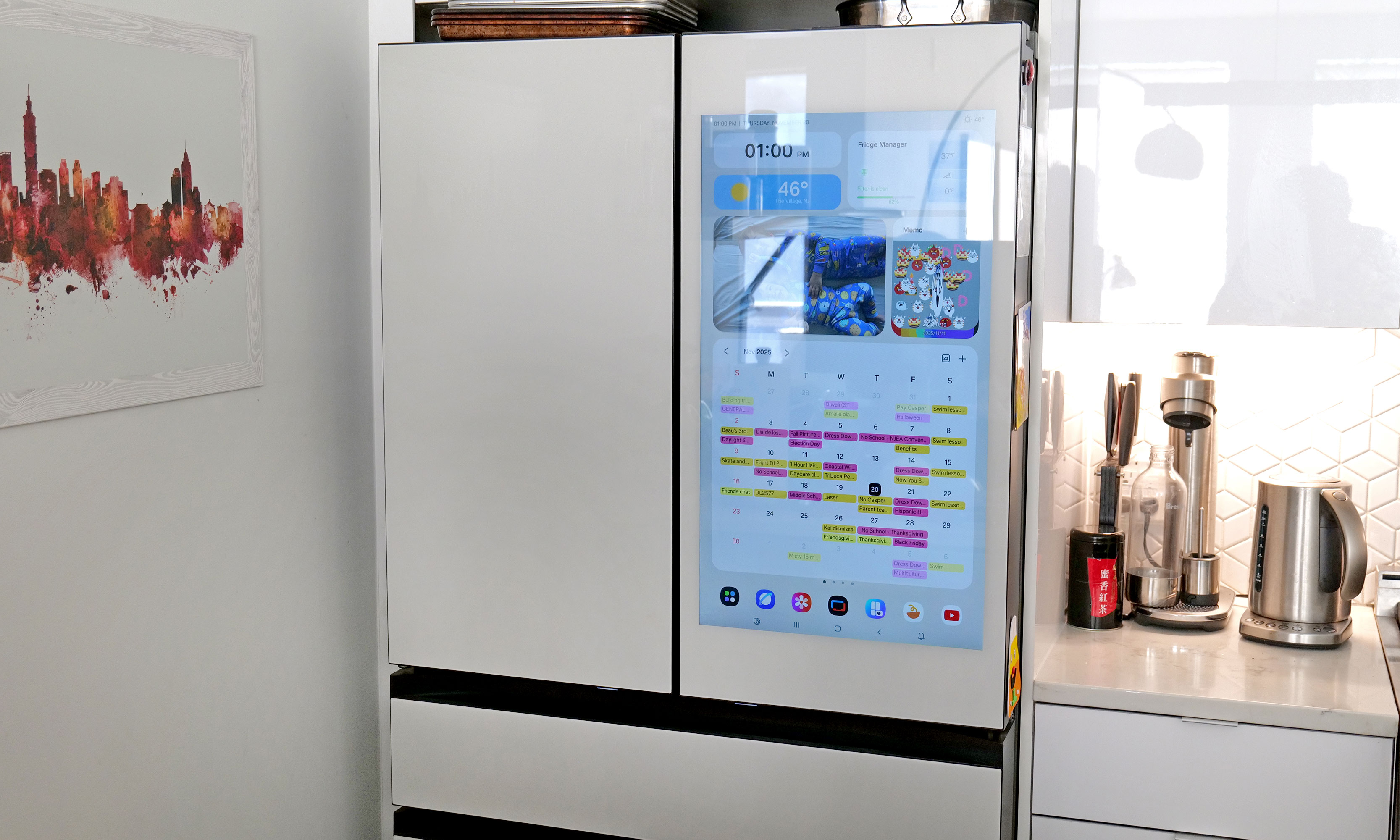
In case you haven't noticed, Engadget has been expanding our smart home and kitchen coverage. However, we don't get to test out as many fridges as we like simply because they're large and difficult to move around. That said, now that Samsung has been putting AI inside of its fancy iceboxes for a few years, I wanted to do a long-term review of one of its latest models — the Bespoke AI 4-door refrigerator — to see firsthand if adding machine learning to an appliance improves its performance. But what I quickly learned is that my favorite thing about the fridge isn't AI but instead an innovative twist on the traditional water pitcher.
Samsung's Beverage Center is hidden behind a thin panel on the left so the water dispenser doesn't become an eyesore.
Sam Rutherford for Engadget
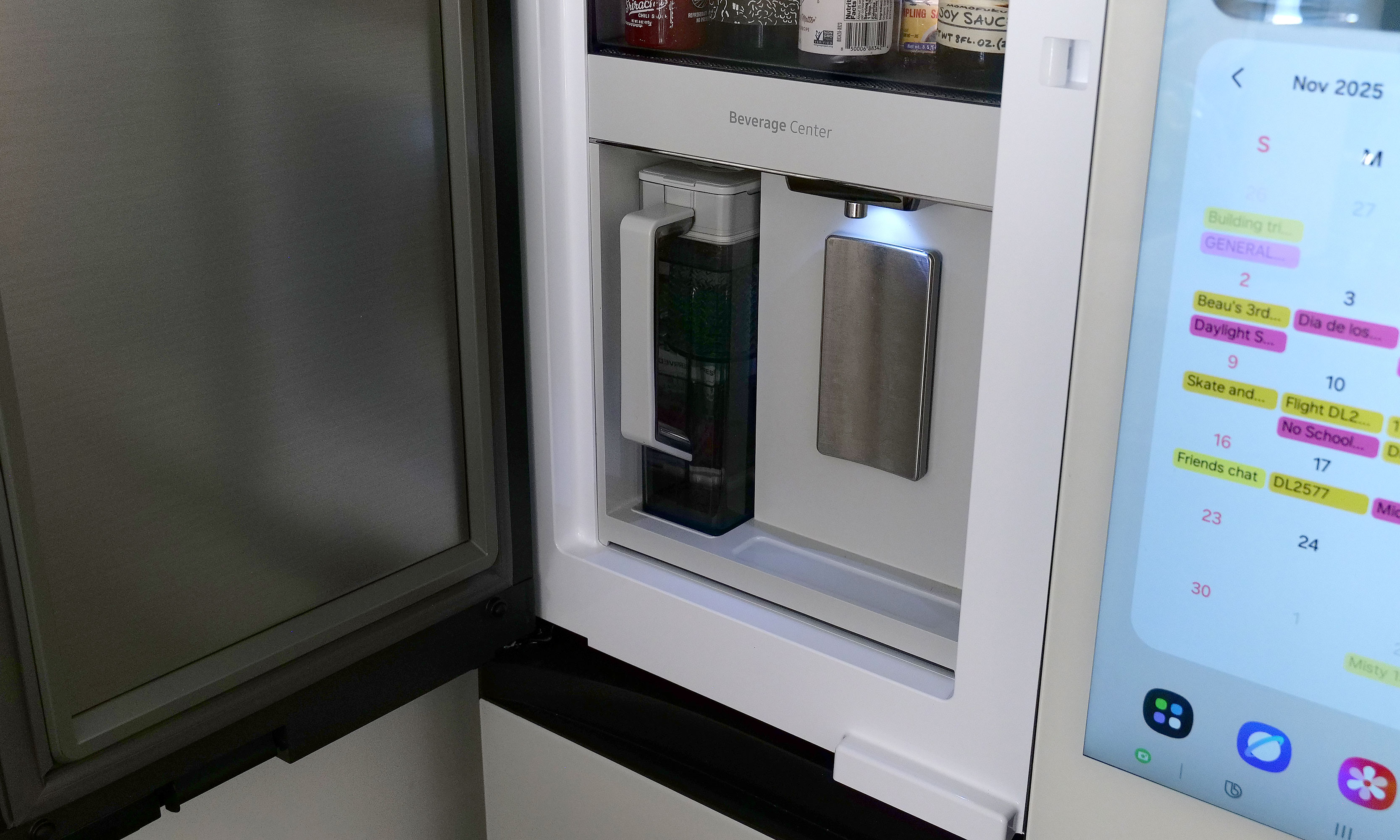
Samsung calls it the Beverage Center and it's actually been around since 2021. It started out as a feature exclusive to the company's top-of-the-line model, but more recently, it's become so popular that Samsung began adding it to a wider range of products. Instead of having a basic water dispenser on the outside of a fridge (which is frankly kind of an eyesore), Samsung moved it behind a thin door. It then added another station right next that big enough to hold a water pitcher that automatically refills itself every time you use it.
My biggest gripe with traditional water dispensers is that they're too slow. If you're only filling up a single glass, it's not a big deal. But if you're trying to top up a water bottle or get water for the entire family before dinner, you're often forced to stand in front of the fridge for a few minutes, blocking others from getting in and generally being in people's way. With the Beverage Center, you still have the option to fill a glass individually, or you can pull the entire pitcher out, carry it over to your table and fill everyone's cup with haste like a waiter at a restaurant. Sure, this might only save you a few minutes, but when you're rushing to get dinner done before your kids start getting hangry, every second is precious. After all, six o'clock is dinner time — not 6:05 or 6:10.
Samsung's Beverage Center features a traditional water dispenser and a built-in pitcher that automatically refills itself after each use.
Sam Rutherford for Engadget
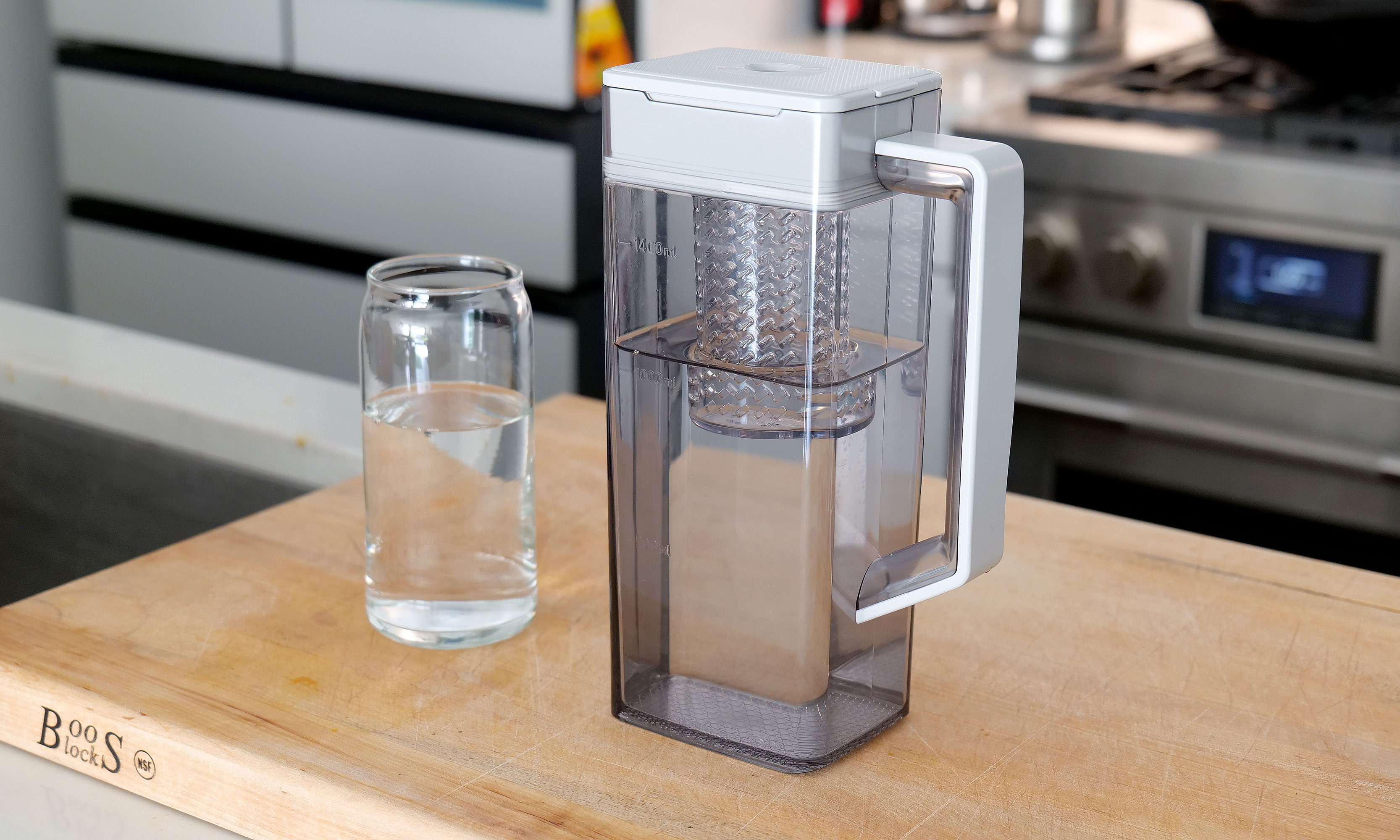
I'd also argue that a pitcher is slightly more elegant than waiting for the weak stream from your water dispenser to lazily fill up a cup. But more importantly, because the whole pitcher is sitting inside a chilled fridge, all of the water is cold — not just the first 12 or 16 ounces you typically get from that little spigot. Also, because there's a strainer basket, you can even use it to make infused water just by throwing some fruit or herbs in there. And once again, you never need to refill it manually because when the pitcher is empty, you just put it back in the fridge and the next time you grab it, it's already full again. But don't just take it from me, there are numerous threads where other users acknowledge the greatness of Samsung's Beverage Center.
Samsung's Beverage Center comes with a built-in pitcher that holds 48 ounces of water and includes a strainer for making infused water or even iced tea.
Sam Rutherford for Engadget
Of course, this feature isn't perfect. Samsung's pitcher isn't dishwasher safe, though that's not a huge deal because it's quick and easy to clean with warm soapy water. The bigger issue is that sometimes I wish the pitcher had more capacity or that Samsung offered the option to upgrade to a bigger one. In my experience, 48 ounces is just enough for my family of four, but I wouldn't be surprised if people with larger households might want something with more volume.
One of the nice things about Samsung's Beverage Center is that you still get room on the reverse side for holding things in the door of the fridge.
Sam Rutherford for Engadget
Honestly, Samsung's Beverage Center feels like one of the ingenious inventions that makes you wonder why another company didn't think of this sooner. But none did, and because Samsung holds some patents related to its automatic water pitcher, you probably won't see a similar feature on any of its competitors' fridges anytime soon.
As for the rest of the fridge and its AI Vision technology, I'm still testing those out, but stay tuned for a full review soon.
This article originally appeared on Engadget at https://www.engadget.com/home/smart-home/samsungs-beverage-center-is-the-best-fridge-feature-competitors-cant-copy-130000113.html?src=rss
HP and Dell has disabled support for the High-Efficiency Video Coding (HEVC) standard in some of their laptops, Ars Technica reports. HEVC is a codec that enables the compression of large videos into smaller files while retaining their quality. Sixth-gen Intel Core chips and later, as well as AMD chips made over the past 10 years, come with built-in support for the standard. But as some HP and Dell owners on Reddit have shared, they found themselves faced with an infinite loading screen when they tried to view HEVC Content on a browser, like Chrome and Firefox.
Ars Technica found documentation for some HP business laptop models, including the HP ProBook 460 G11, ProBook 465 G11 and EliteBook 665 G11, stating: “Hardware acceleration for CODEC H.265/HEVC (High Efficiency Video Coding) is disabled on this platform.” Dell didn’t explicitly mention disabling support for HEVC, but it has a support page explaining that HEVC content streaming is only possible on devices with specific configurations.
To be clear, users will still be able to play HEVC videos on programs like VLC and Windows Media Player. However, users with the affected laptops will have to deal with broken videos if they try to play anything on their browsers that use the standard. HP told Ars that it disabled HEVC on select devices way back in 2024 and encouraged people to use “licensed third-party software solutions” instead. Meanwhile, Dell told the publication the its premium laptops still support HEVC videos. For users with base and standard laptops that can no longer play them, the company also encourages the use of third-party software.
The companies didn’t say why they decided to switch off HEVC playback for certain models, but as Ars notes, it could be associated with increasing licensing fees. After September 30 this year, the royalty rates for the HEVC codec went from 20 cents to 24 cents per unit for over 100,001 units. HP and Dell are two of the largest laptop manufacturers in the world, so that translates to a considerable chunk of money.
This article originally appeared on Engadget at https://www.engadget.com/big-tech/hp-and-dell-cut-hevc-support-in-some-laptops-130000940.html?src=rss