The picture’s taken, but the moment isn’t over until someone checks it, requests another, and decides the first one was better. That little approval loop is the problem Flashback’s One75 is trying to sidestep. Available to preorder for $179, the digital point-and-shoot removes the photo preview and borrows the rituals of a film camera. I like the premise: taking a picture shouldn’t always require an immediate verdict.
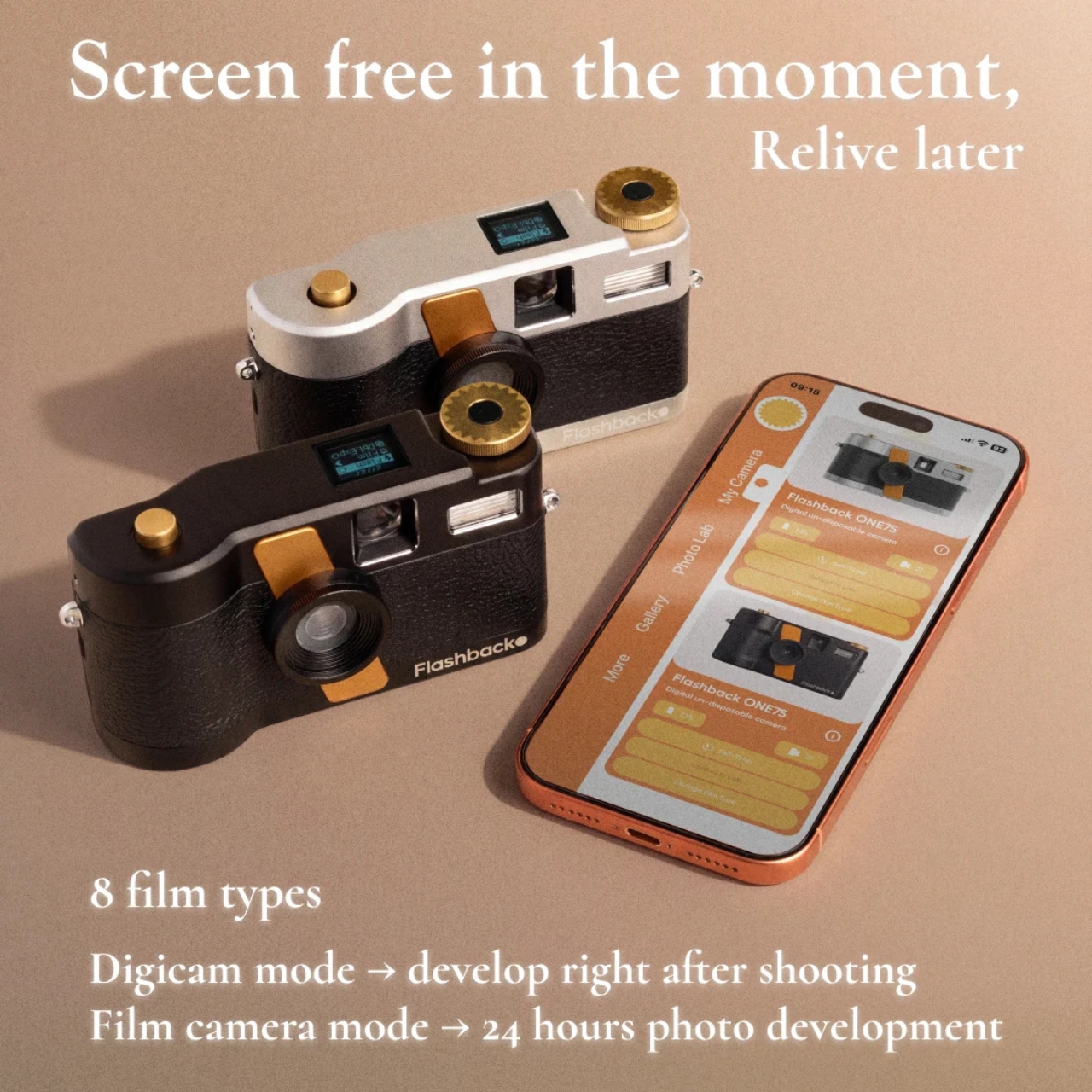
You get 27 shots per digital “roll,” with an optional 24-hour wait before the pictures appear in the Flashback app. Switch to Digicam Mode, and you can see them as soon as they’re transferred. Either way, unloading a roll frees the camera to keep shooting. Making the delay optional feels sensible. Anticipation can be fun, but nobody needs a camera enforcing a lesson in patience when they actually need their pictures tonight.
Designer: Flashback
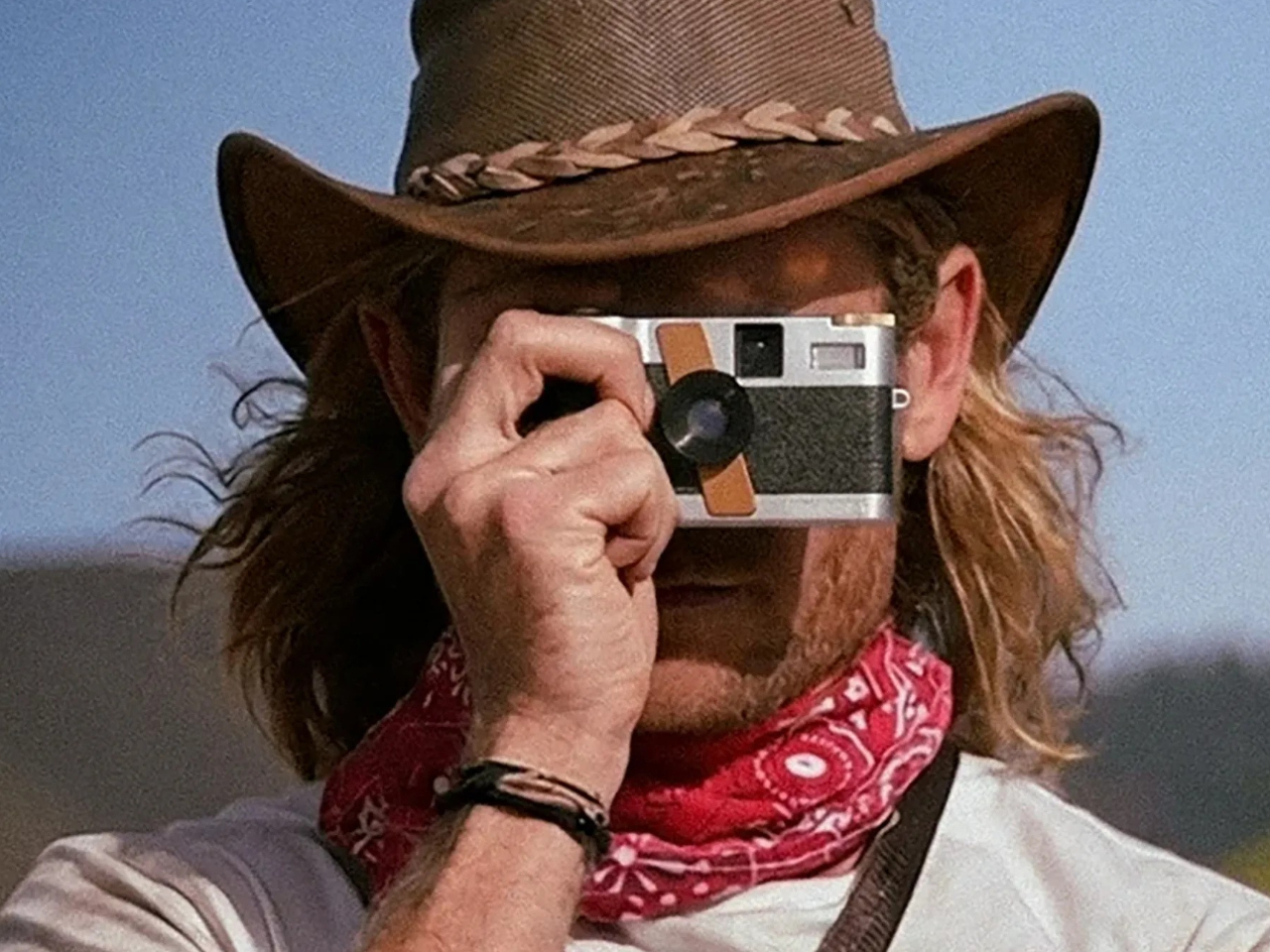
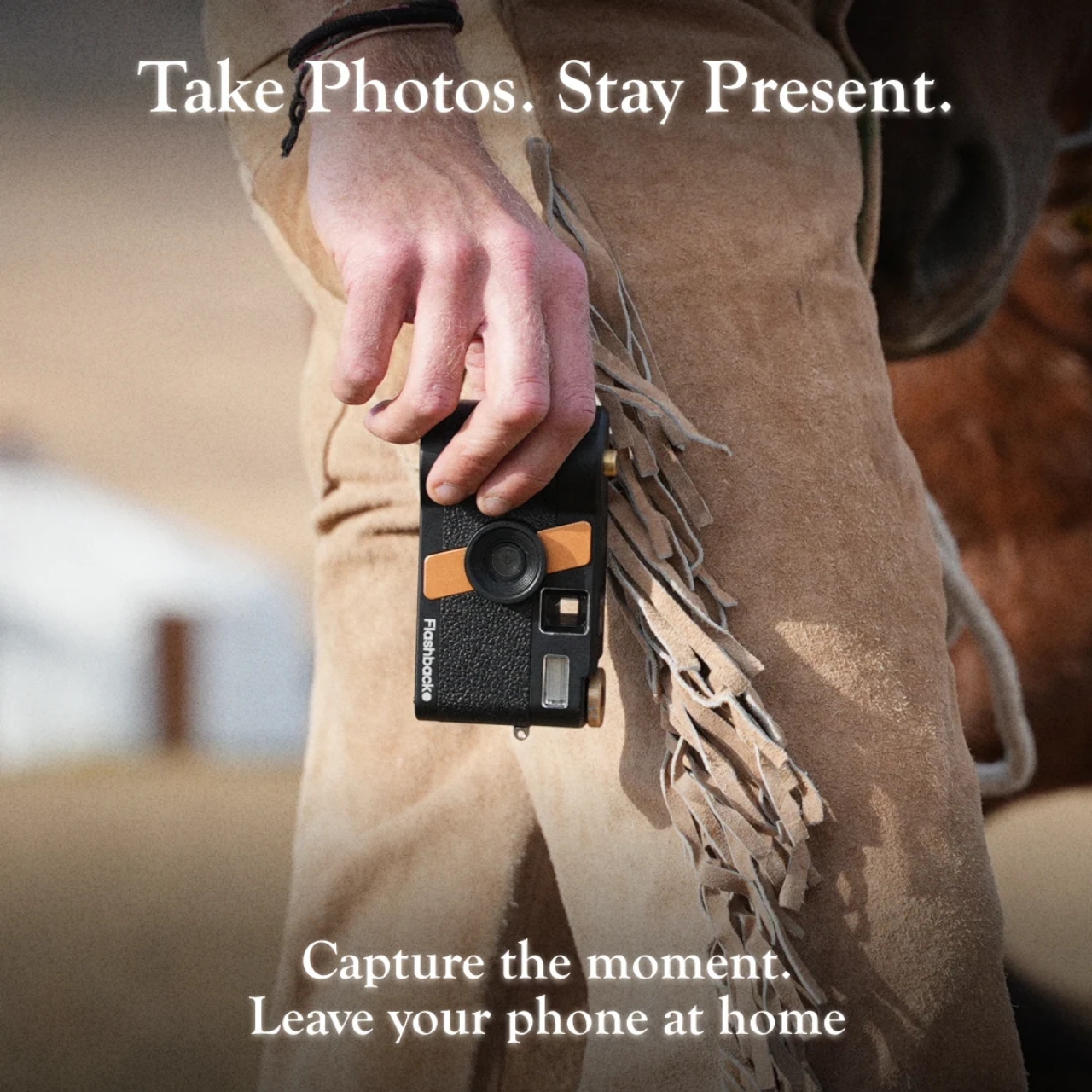
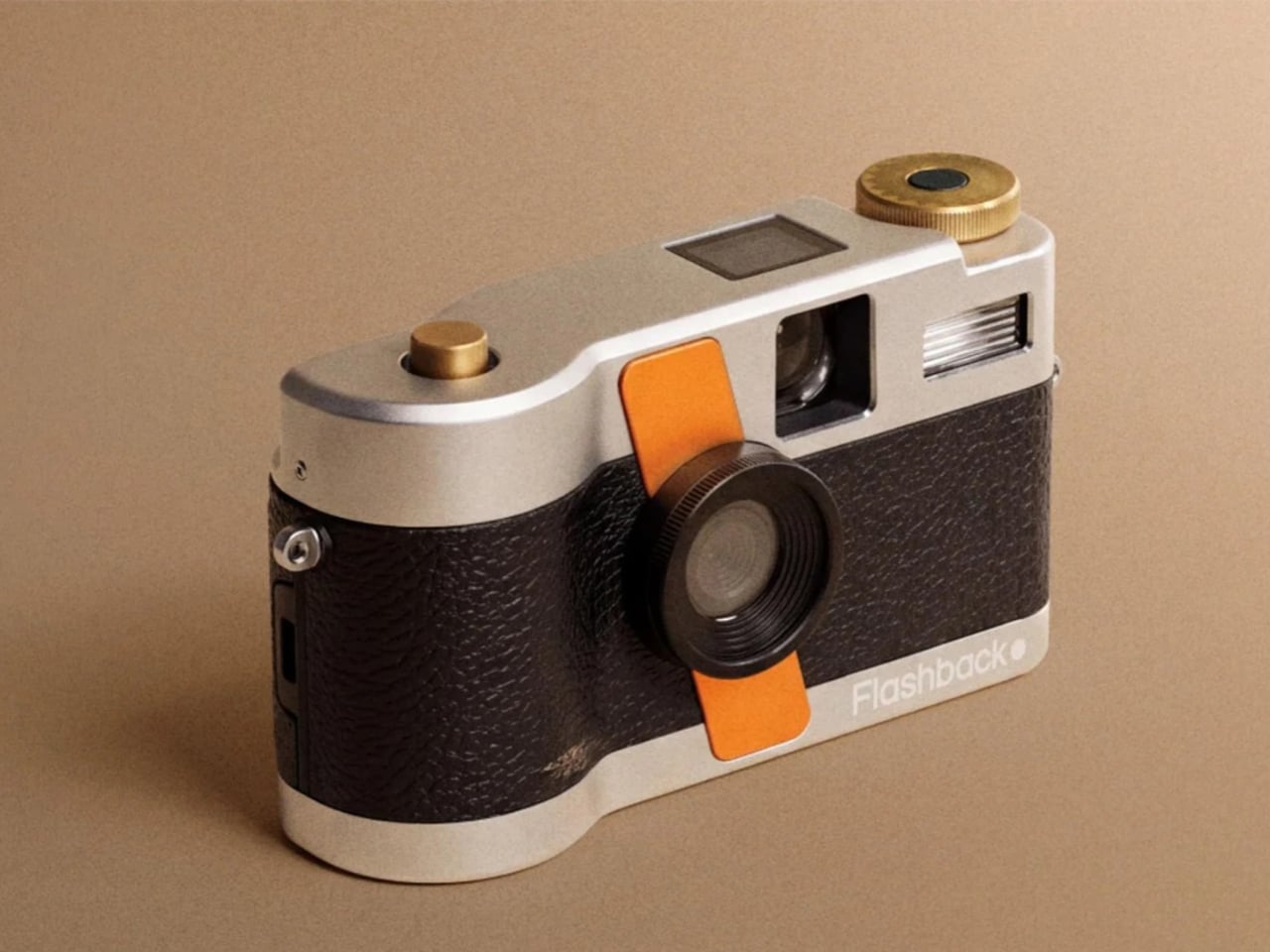
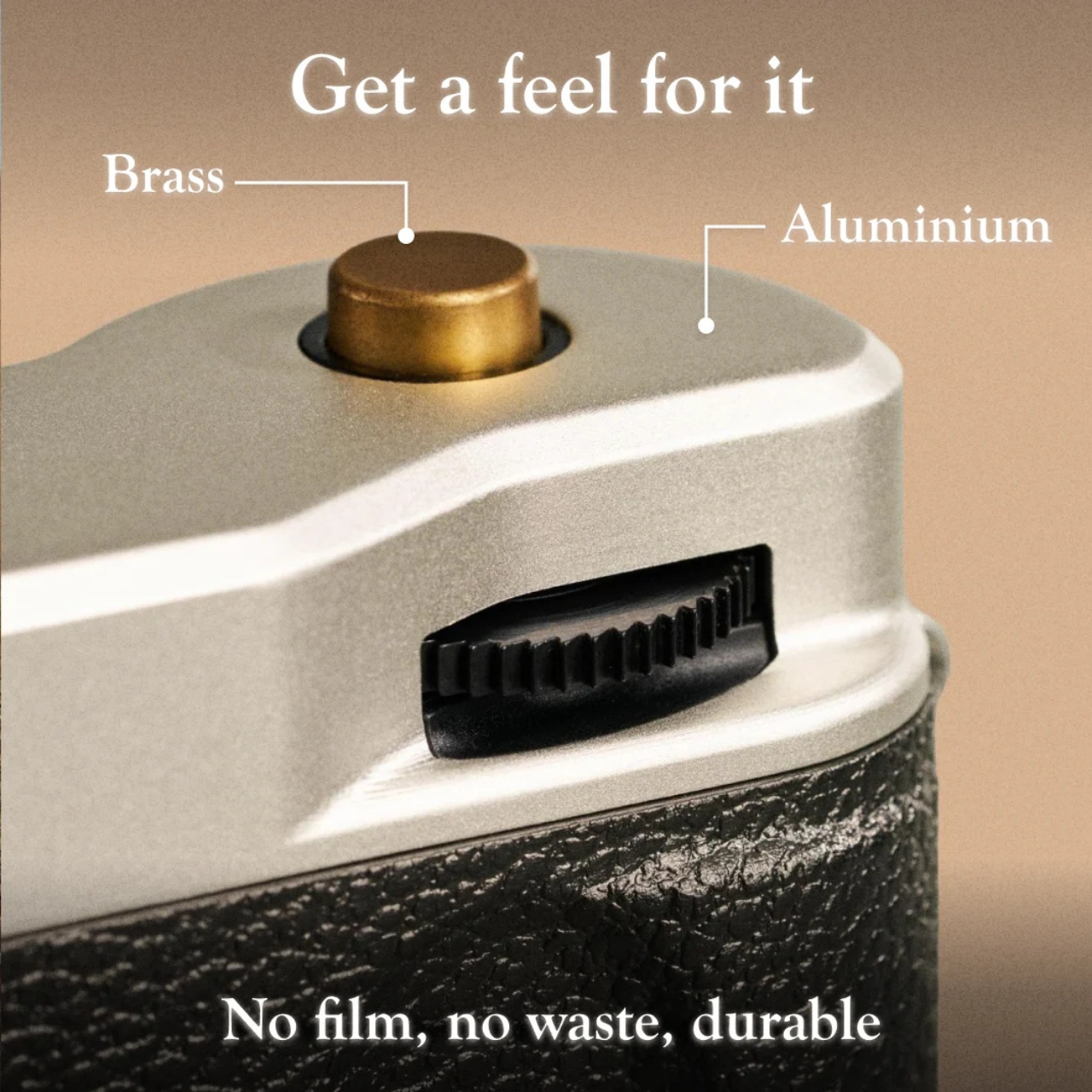
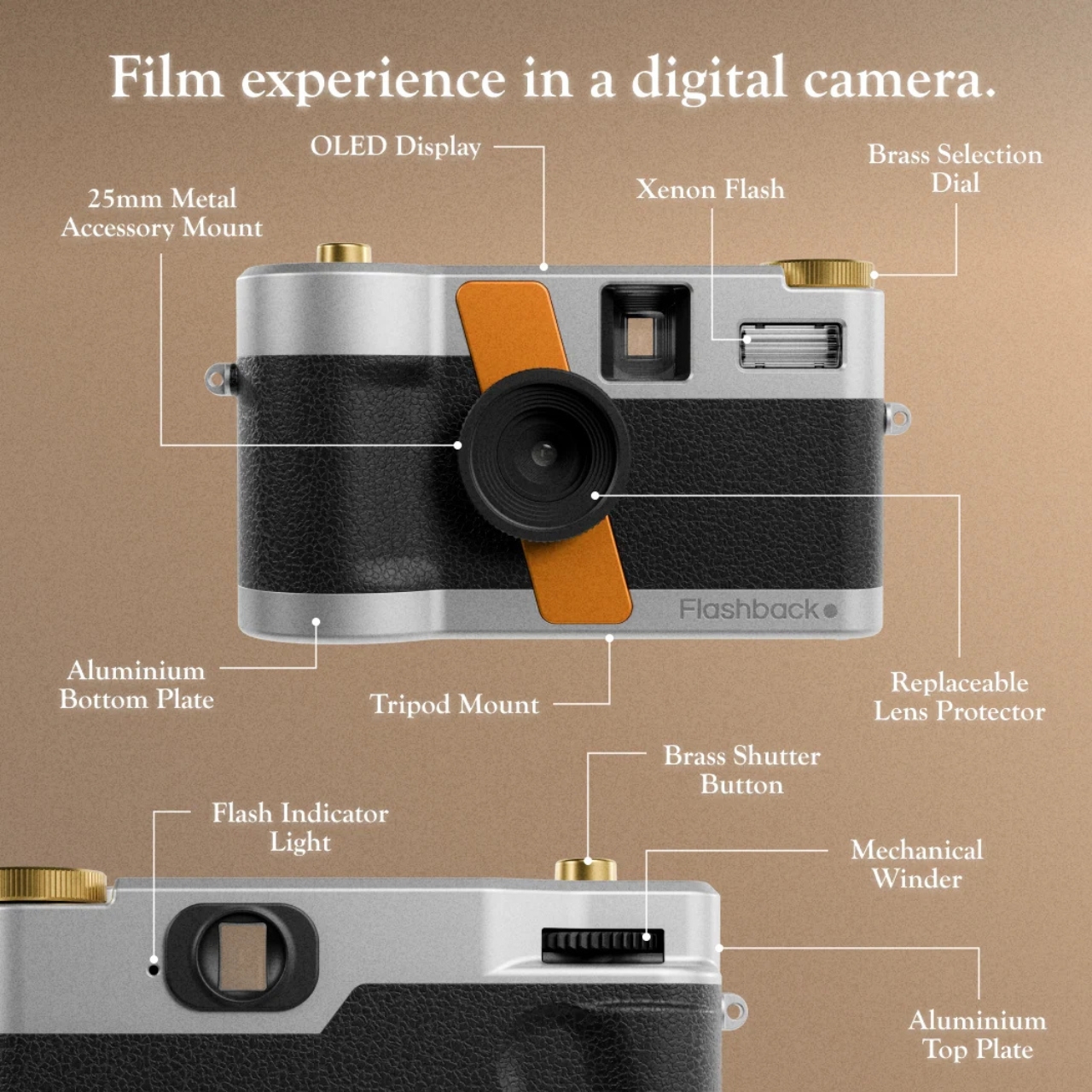
The body gives the idea a convincing physical home. Aluminum top and bottom plates frame a black, leather-textured front, with brass controls and a bright orange strip running behind the lens. That orange detail is a smart interruption. Without it, the One75 could read as a fairly straightforward tribute to an old family camera. With it, the design has a little more personality, without turning the whole object into a novelty prop.
There’s a mechanical wind-on control, too, despite there being no film to advance. On paper, that sounds wonderfully unnecessary. As a design choice, though, the gesture could help separate one photograph from the next. A small OLED screen on top handles settings and film selection rather than picture playback. You still get useful information, but you don’t get invited to inspect everyone’s expression after every press of the shutter. I’d welcome that particular omission.
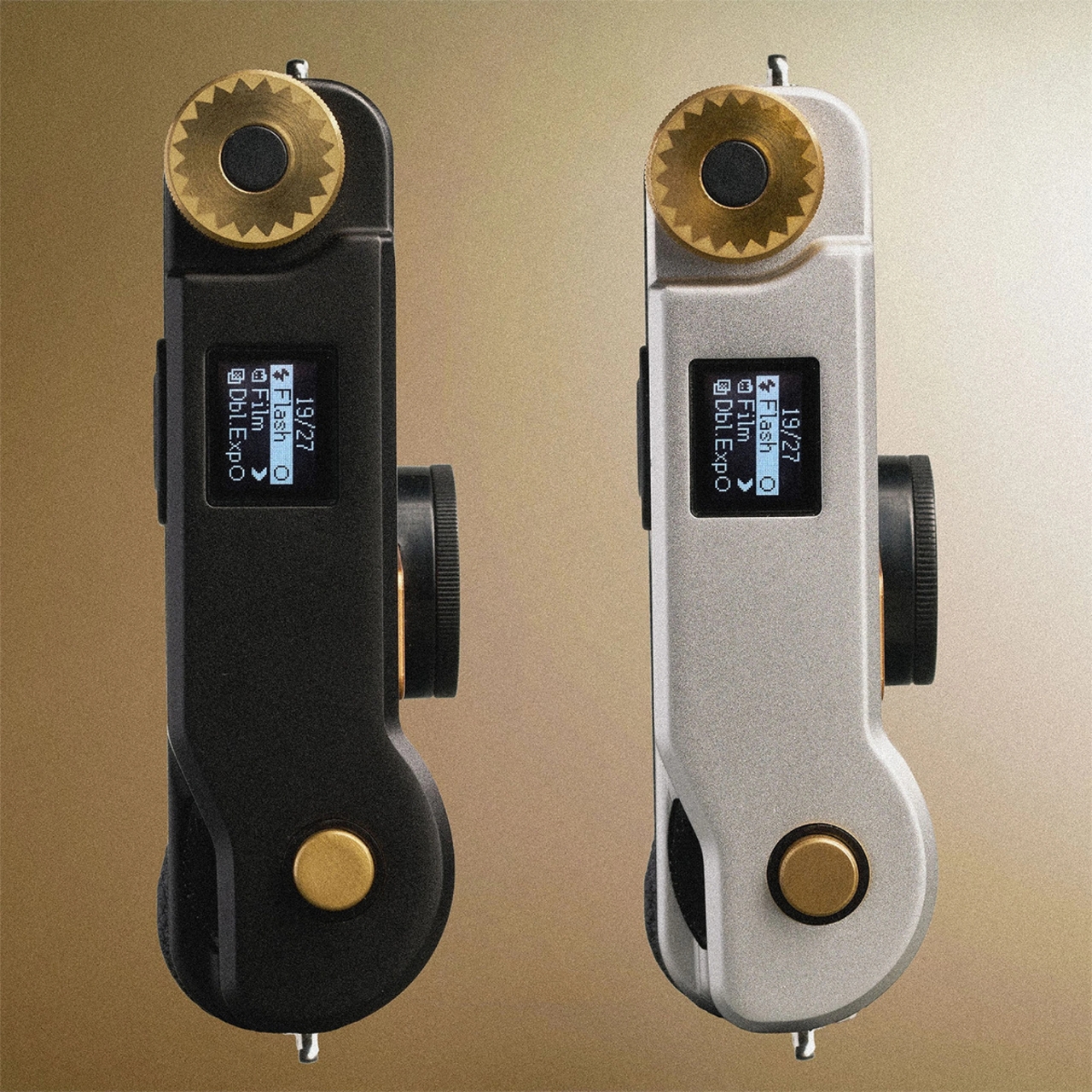
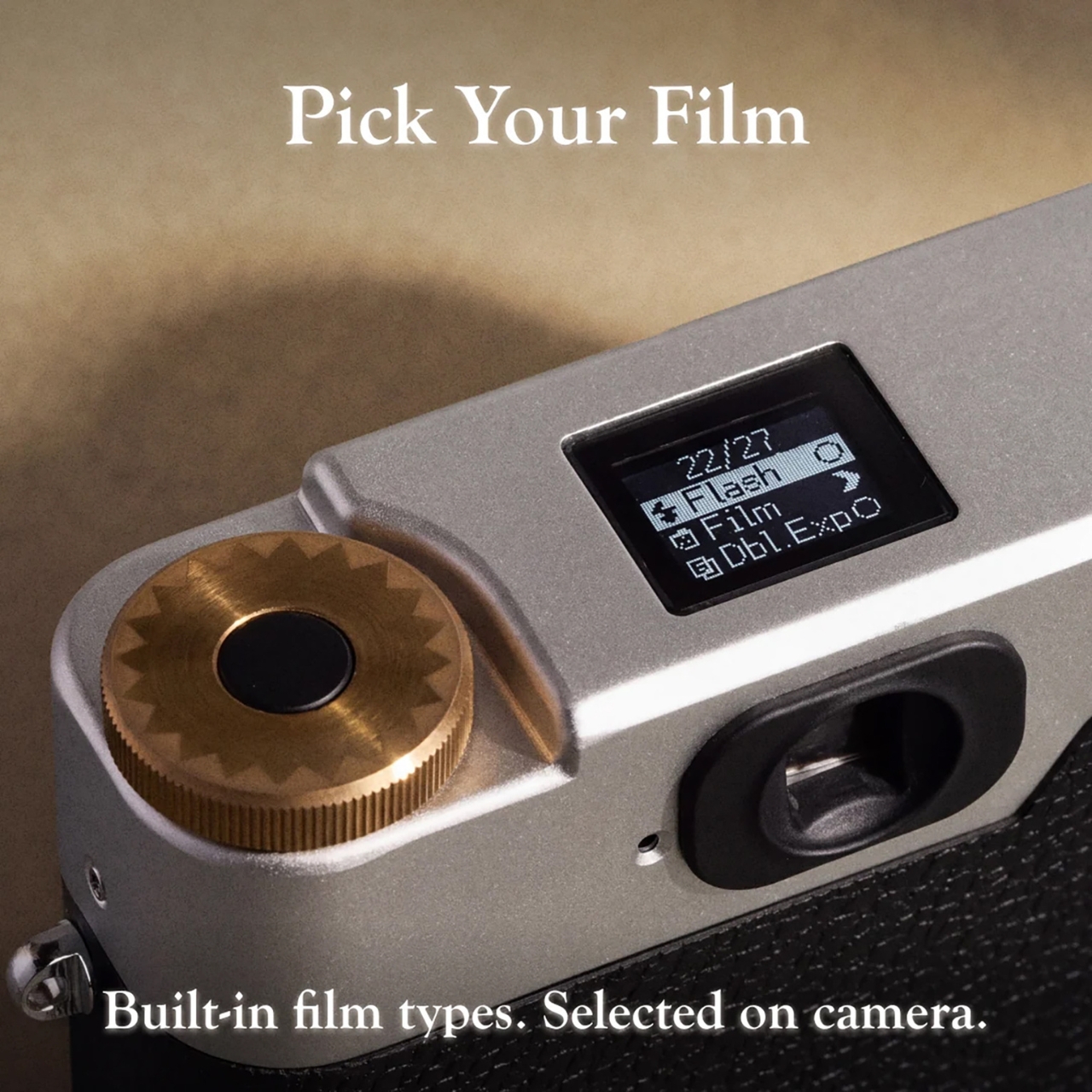
Flashback gives you eight film-emulation options and a double-exposure mode for layering two shots into one frame. The latter strikes me as a particularly good fit here. A camera built around surrendering some control ought to leave room for experiments, including ones that don’t work. I’d rather have a few strange pictures worth discussing than an entire roll that feels obliged to look tastefully vintage.
Underneath the retro styling, these are 13-megapixel digital photographs. Images transfer through Wi-Fi or USB-C, and RAW export to a PC or Mac gives anyone inclined to edit more flexibility afterward. Flashback also estimates around 15 rolls per battery charge. Those conveniences make the premise easier to entertain. You can play along with the slower routine without also signing up for film purchases, lab visits, and the logistics of getting everything onto your phone.
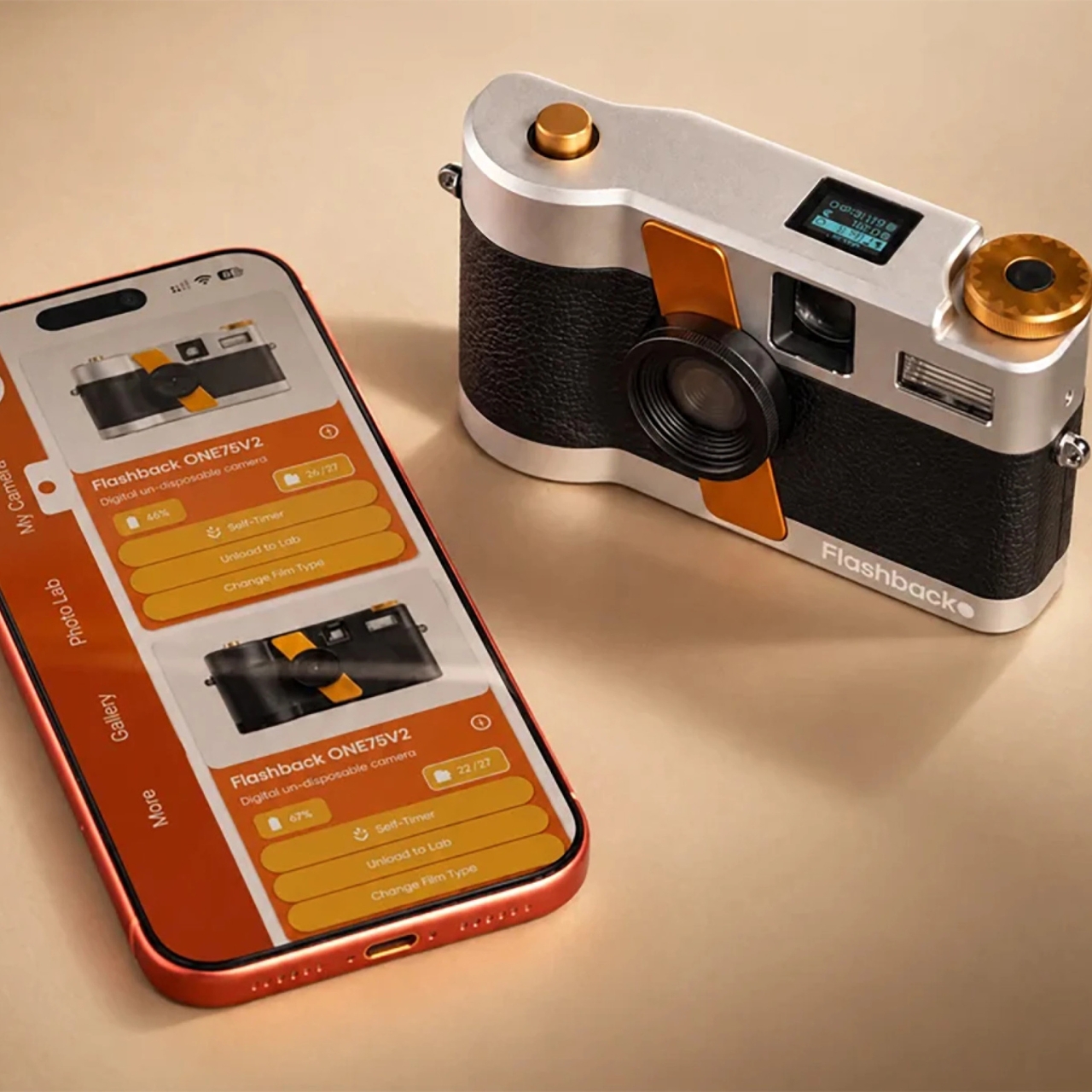

Still, I wouldn’t confuse an appealing shooting routine with proven image quality. New Atlas notes that sensor size, lens aperture, and focal length weren’t detailed in its report. The fixed-focus setup favors simplicity, but the available specifications don’t establish how the results will hold up. I haven’t tested the One75, and attractive product photography isn’t enough to tell me whether I’d love the photos it takes.
Flashback says preorders will arrive before Christmas 2026, which remains the company’s delivery estimate. It also says the app and digital photo development are free, with no subscriptions. That matters more to me than another decorative nod to analog photography. A reusable camera starts to make more sense when its central ritual doesn’t come with a recurring bill. The cost of film is one nostalgic detail I’d happily leave behind.
At $179, I’d want the One75 to earn its place alongside a phone, rather than become another attractive object that stays in a drawer. Its case rests on whether those small interruptions make taking pictures enjoyable enough to carry a separate camera. For a birthday dinner or a weekend with friends, I can see the appeal of leaving the photographs unjudged until everyone has gone home.
The post Flashback One75: Film-Camera Rituals Without the Film Bills first appeared on Yanko Design.