
Apple’s iPhone Handoff feature will cost you $5 a month on T-Mobile
Apple will release iPhone Handoff with iOS 27 this month, but it will only be available to T-Mobile subscribers in the US at launch.

Tracking performance metrics effectively can be a challenge, but Excel offers a practical way to create a self-updating performance board that simplifies the process. My Online Training Hub demonstrates how to build a dynamic board that combines features like automatic ranking and sorting with interactive elements such as dropdown menus. For example, using Excel’s `RANK.EQ` […]
The post Build an Auto-Updating Performance Board in Excel 2026 appeared first on Geeky Gadgets.
Small apartments don’t fail because of square footage. They fail because the things you need to live in them- a speaker, a vacuum, somewhere to work out- were designed for rooms twice the size. You end up with a robot dock that reads like a utility object in the middle of your living space, a rowing machine eating an entire corner, and three devices on a nightstand doing three things that one should be doing.
The five products here take the opposite approach. Each one earns its footprint or removes it entirely, doing more with less floor space without requiring you to reorganize your life around the purchase. The measure of anything in a small apartment is simple: does it disappear into the room, or does the room start disappearing around it? These five clear that bar in noticeably different ways.
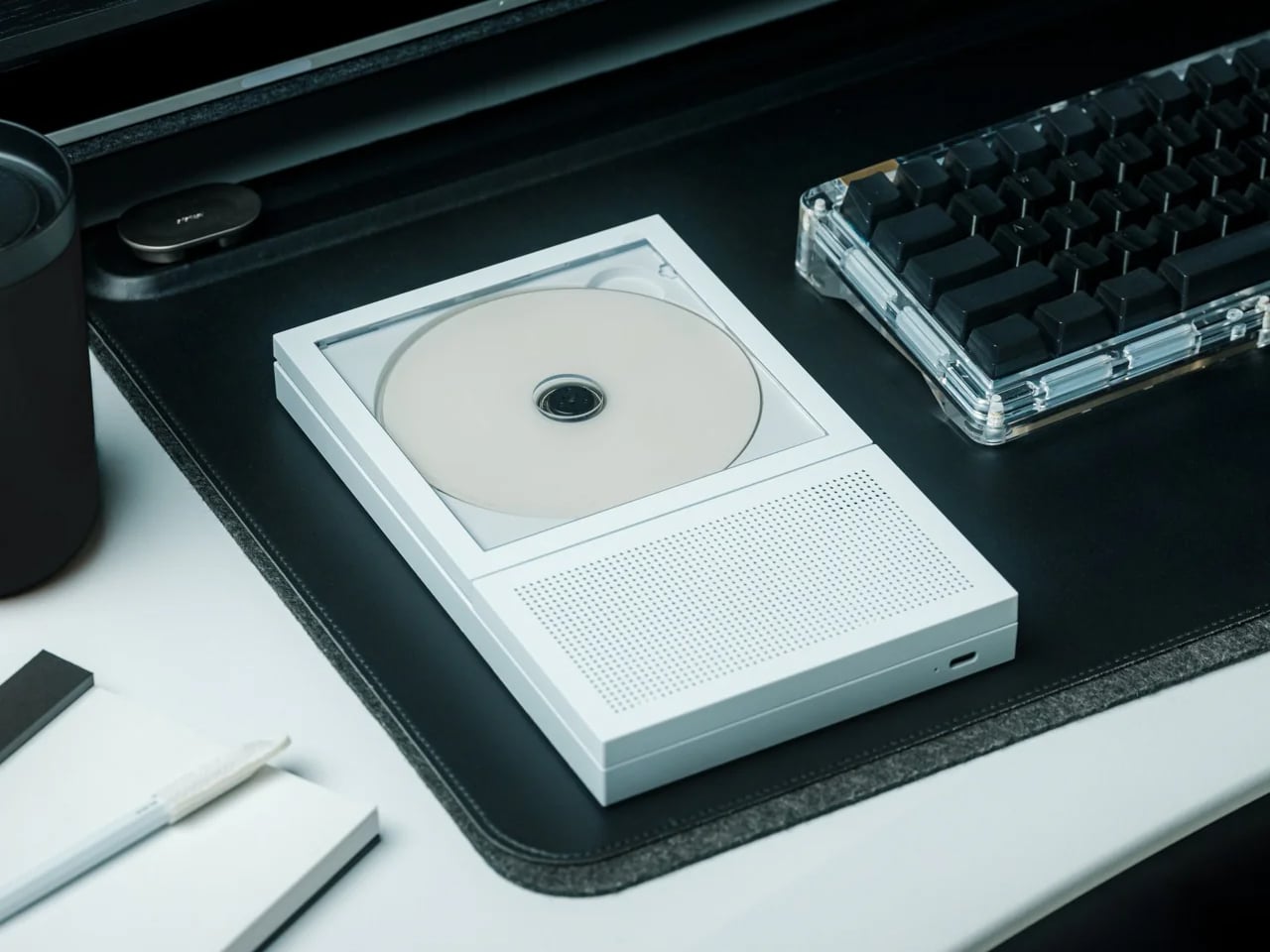
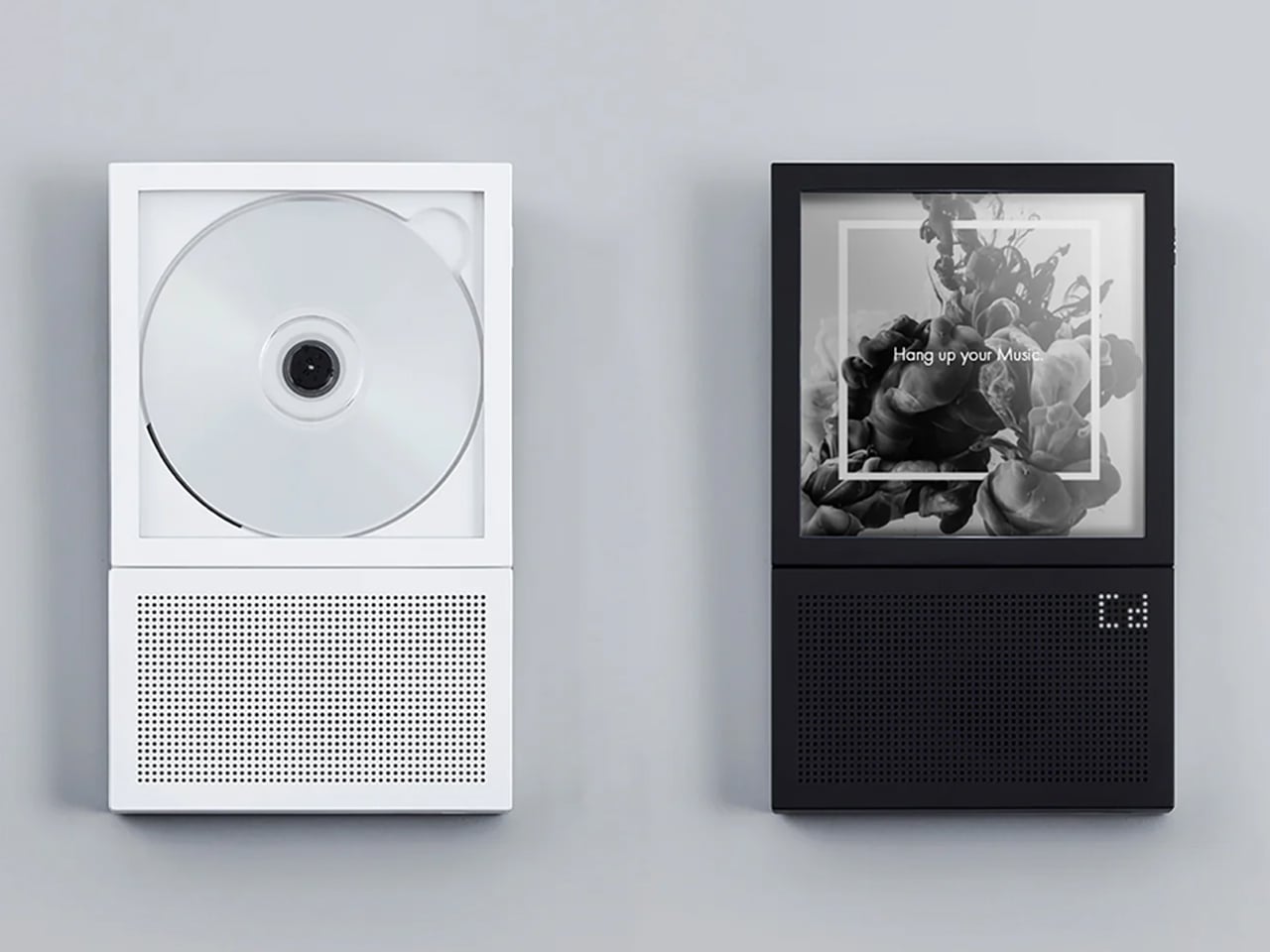
The Portable CD Cover Player costs $199 and takes up no horizontal surface at all. It mounts directly to the wall, leaving every shelf, table, and counter below it available for something else. In a small apartment, that trade earns itself back in freed real estate almost immediately. Physical media also takes you away from algorithm-driven listening, and in a room where every surface and every sound competes for attention, that turns out to feel like a feature rather than a compromise.
What changes in practice is the relationship between music and the room. The Cover Player doesn’t sit on anything. It doesn’t need a corner or a dedicated shelf. It mounts, plays, and disappears into the wall in a way that most audio objects never quite manage. The wall mount bracket is sold separately from the base price, which is worth factoring in, but the outcome is a speaker setup that reads as an intentional design choice rather than something you found space for.
Click Here to Buy Now: $199.00
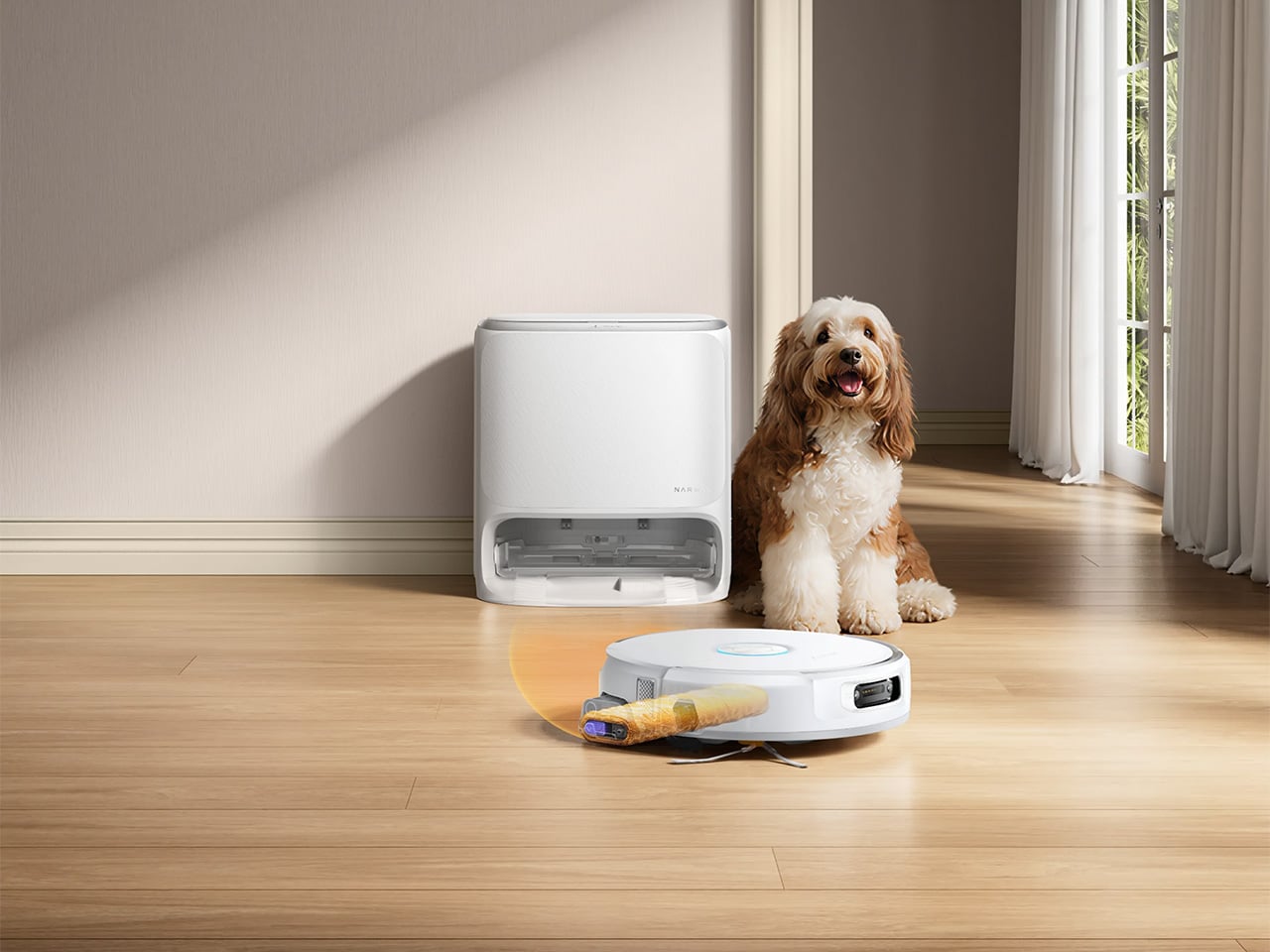
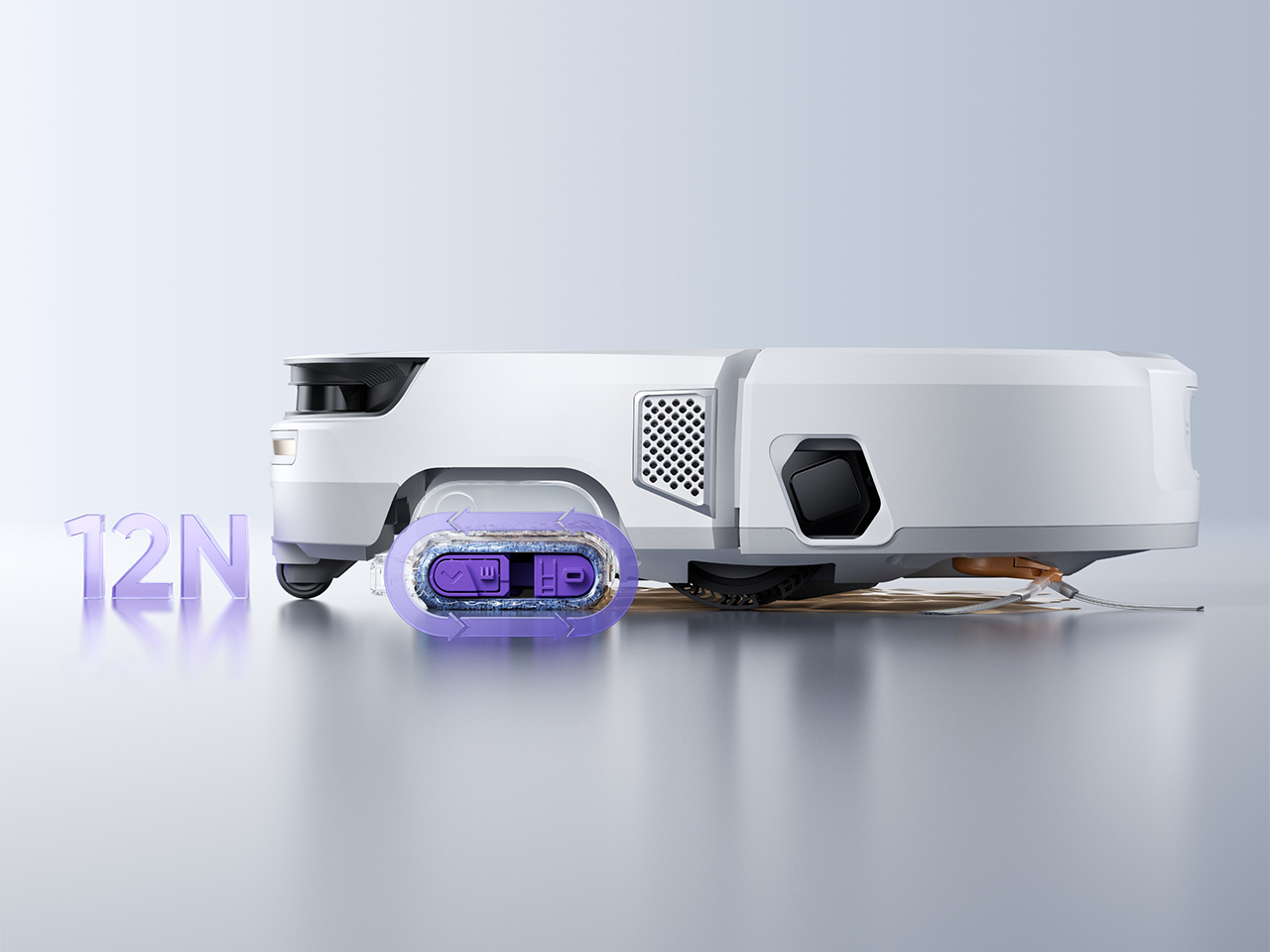
The Freo 20 addresses the two problems robot vacuums have quietly carried since the beginning. The first is the mop, which on most machines drags the first room’s dirt through every room that follows. Narwal’s Track Mop cleans itself mid-run using 16 precision nozzles, 140°F water, and a built-in scraper that routes dirty water into a separate tank, so the floor it finishes on is genuinely cleaner than the one it started. The second problem is the dock, and the woven fabric texture Narwal wraps it in is the first of its kind in the category.
In a small apartment, both issues land harder. A dirty mop re-running on three hundred square feet means the whole floor carries whatever it picked up in the first pass. A dock that reads as a utility object means hunting for a corner to store it in, which in a studio is usually a corner you’d rather use. The Freo 20’s 120-day maintenance interval and 31,000Pa suction make the performance case directly. The dock being genuinely livable alongside rather than tolerated is the detail that separates it from the rest of the category at any price.
Click Here to Buy Now: $849.99 $1,099.99 ($250 off, use coupon code “YANKOF20”). Hurry, deal ends soon! Amazon Link Here.


A rowing machine is one of those fitness purchases that tends to exist in a small apartment as a statement of intent rather than a piece of equipment. It claims a corner, it demands clearance on both sides, and the commitment it asks for from the room is usually larger than the commitment it gets from the person who bought it. The Home Gym Cube Rower changes that equation by folding down to the size of a side table, making it something you can actually live alongside rather than continuously negotiate with.
Folded, it stores flat against a wall or inside a closet without permanently claiming the room. Unfolded, it offers a complete rowing workout without a gym membership, a separate fitness space, or the friction that usually makes skipping a session too easy. For anyone working out of a studio or one-bedroom, the calculation shifts from whether you can fit a rowing machine at all to whether you actually want to use one, which is a significantly more useful question to be spending your energy on.
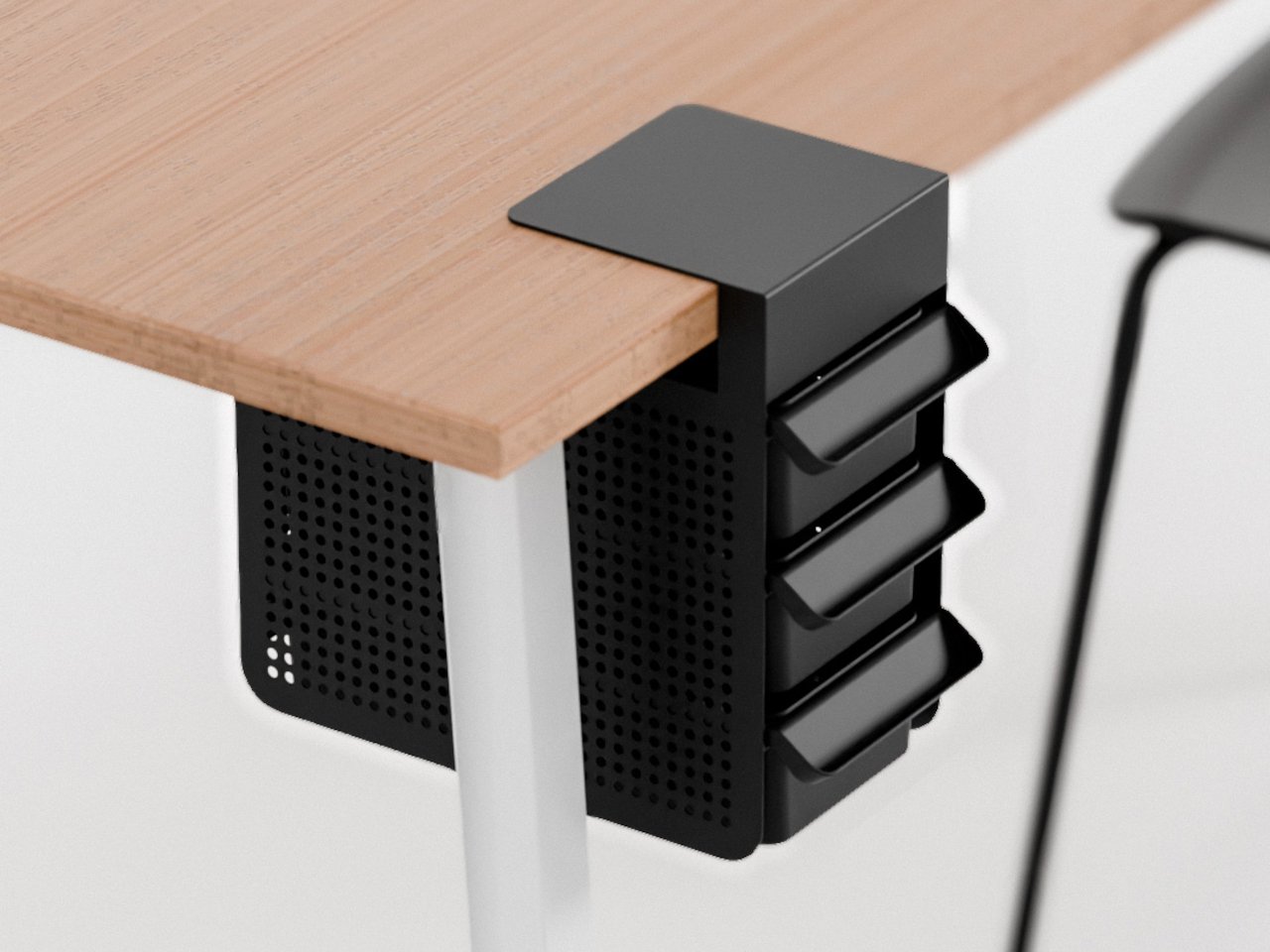
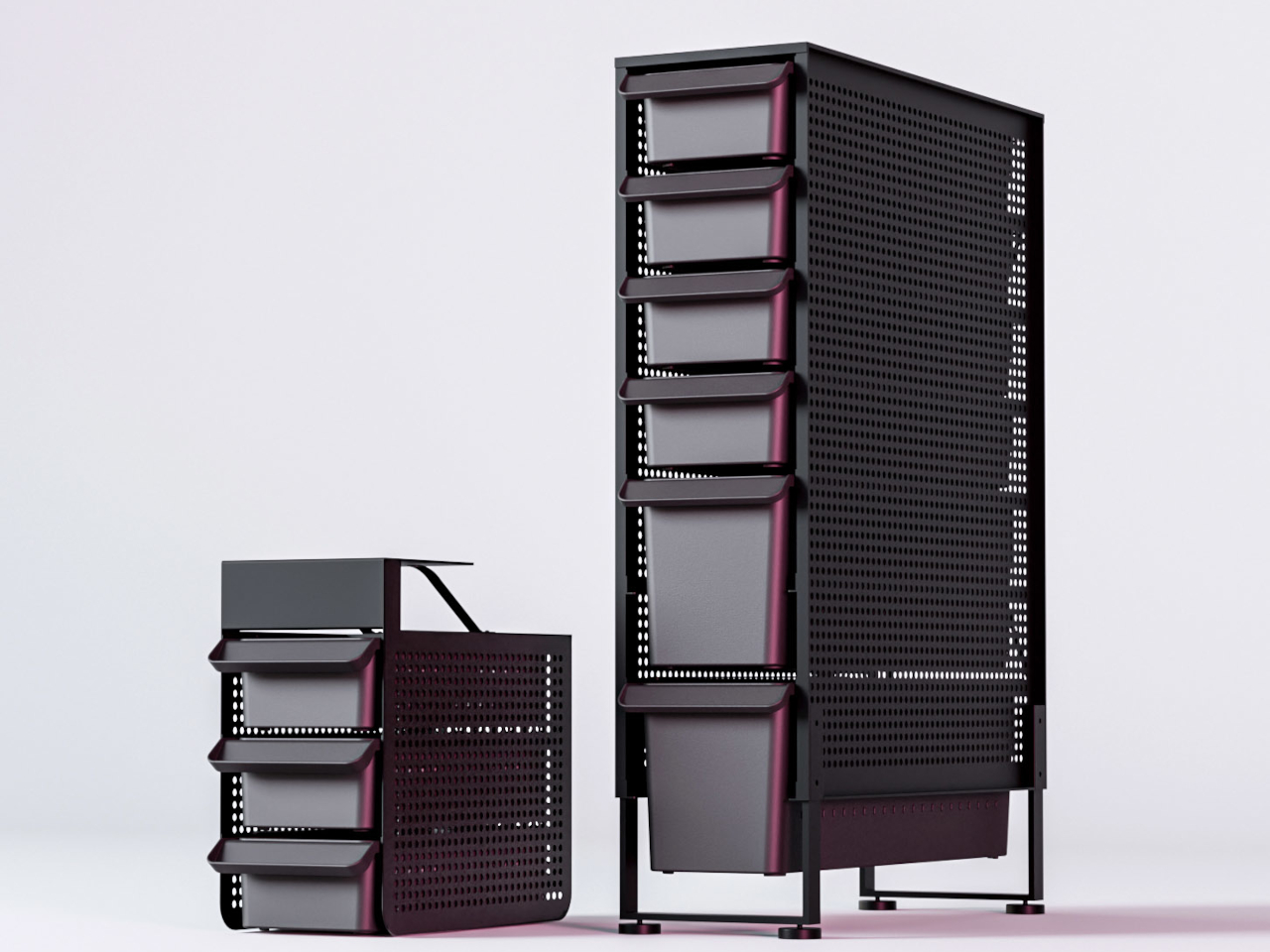
Most desk organizers solve the clutter problem by making clutter more vertical. The Otis Hanger 3.0 takes a different position: it hangs a full drawer beneath the desk surface without a screw, adhesive, or any permanent alteration to the furniture. For renters, which describes most people living in small apartments, that matters. You are not committing to a hardware modification for furniture you don’t own in an apartment you are not permitted to drill into. It clips on, holds things, and comes off clean when you leave.
In practice, it means the desk surface stays clear. Cables, chargers, notebooks, and the collection of small items that colonize any workspace have somewhere to go that stays entirely out of sightlines and video call frames. In a small apartment where the desk often doubles as the dining table, the morning coffee surface, and the only flat working area in the room, keeping the top uncluttered is one of the more useful upgrades you can make without touching a single wall or piece of furniture permanently.
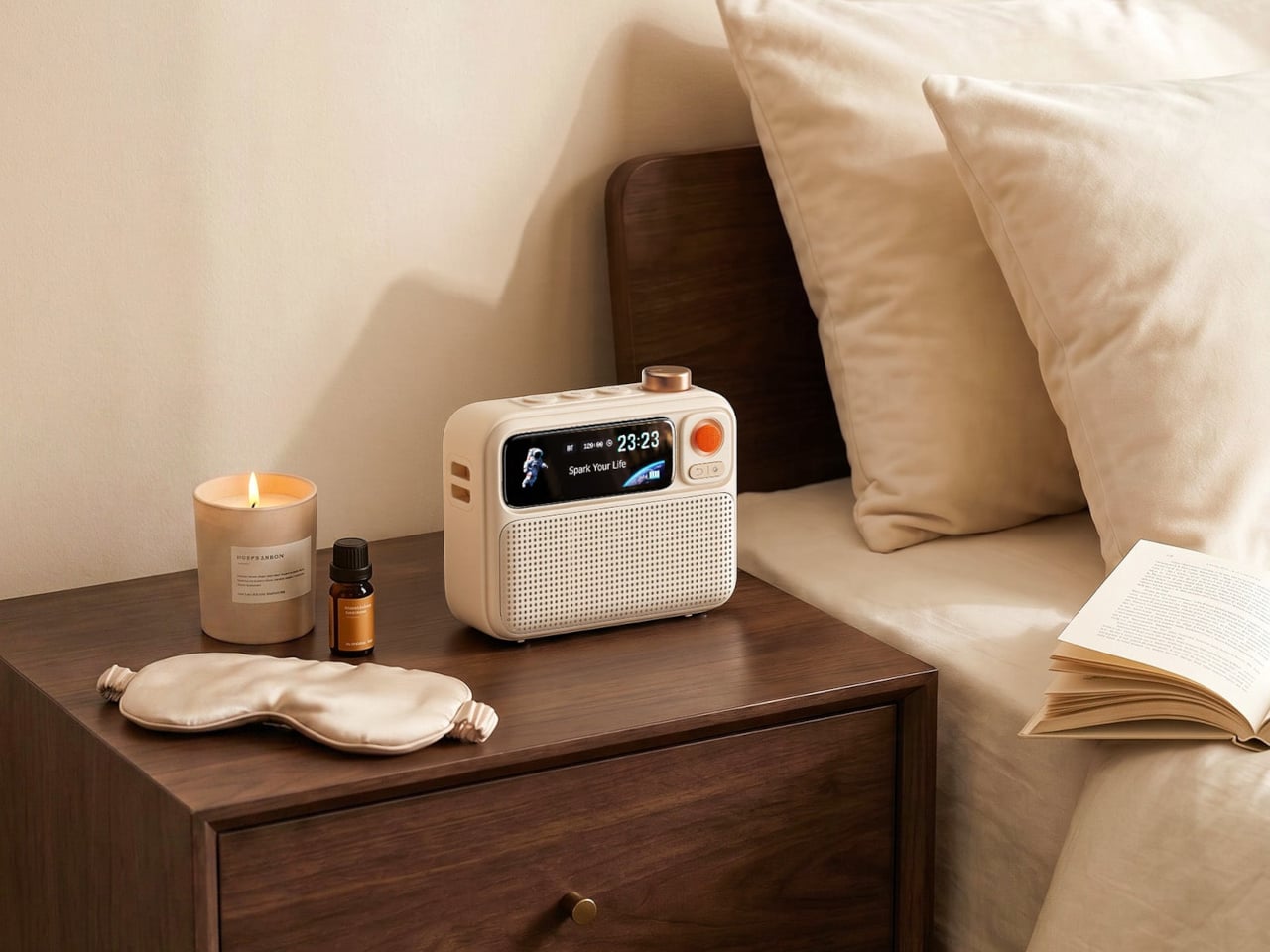
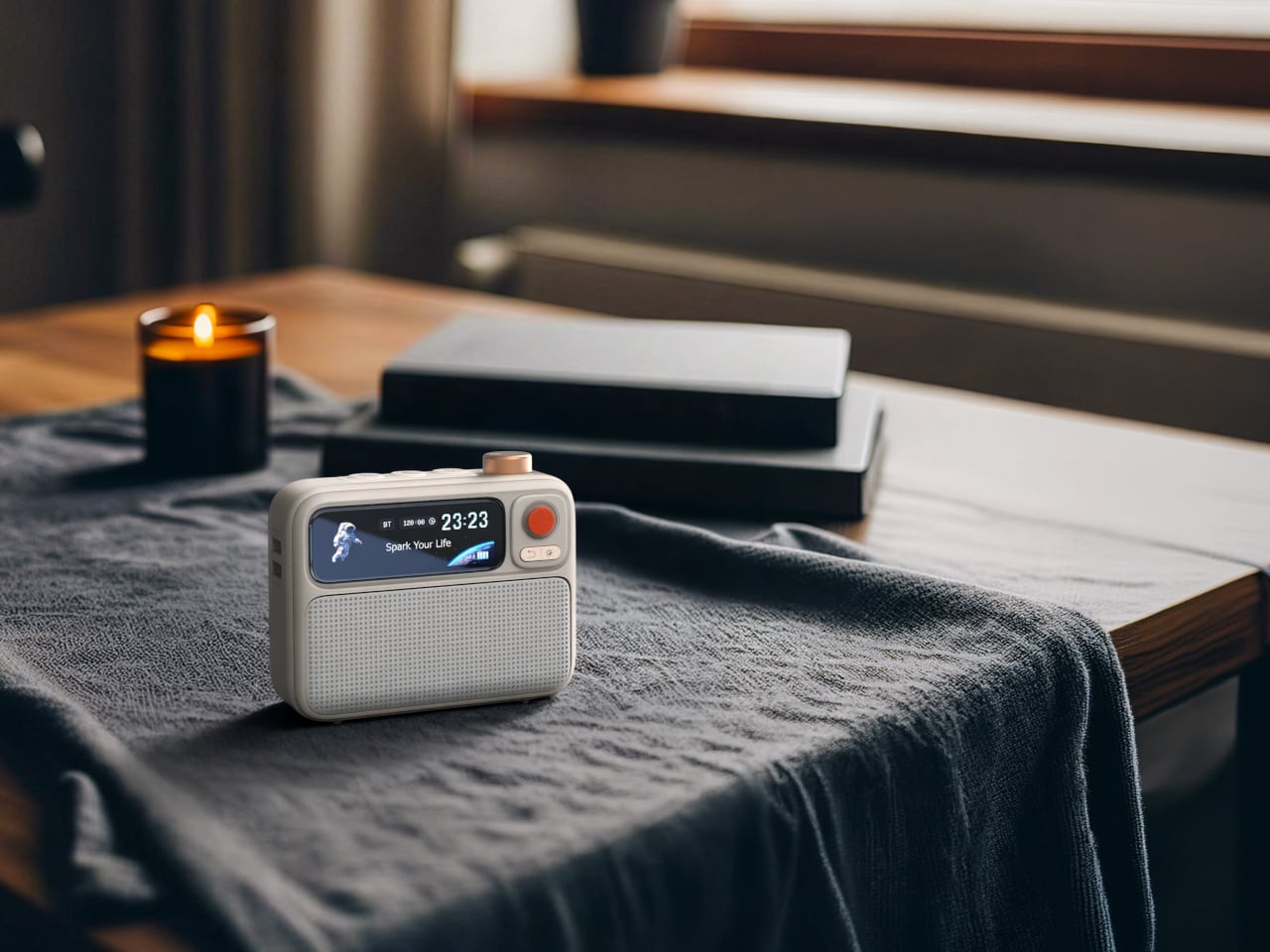
A nightstand in a small apartment runs out of surface faster than almost anywhere else in the room. The usual setup- white noise machine, alarm clock, Bluetooth speaker, phone charger- is four separate objects doing four separate things on a surface that doesn’t comfortably hold two. The Divoom FlowToo consolidates three of those into a single compact body: a 10W Bluetooth speaker with a 45mm full-range driver, 90-plus soothing and white noise sounds, a smart alarm, and a Pomodoro timer, all in one object that draws $99.99 from your wallet and returns significant nightstand real estate in exchange.
The design reads like a retro desk object rather than a tech gadget, which matters in a room where everything left out is also part of how the space looks at eight in the morning. At $99.99, it costs less than most standalone Bluetooth speakers of comparable output while replacing the white noise machine and alarm clock entirely. The Pomodoro timer makes it genuinely useful during working hours too, which gives it a reason to stay out on the desk rather than get stashed in a drawer the moment the alarm goes off.
Outfitting a small apartment well is less about finding products that fit and more about finding products that don’t ask too much. The best ones earn their square footage by solving something real: a dock that belongs in the open, a speaker that stands in for three devices, a rowing machine that stops being an obstacle the moment you fold it up. None of these require you to rearrange your life to accommodate them.
That is what separates the five here from most of what fills a small-space shopping list. They work with the room rather than demanding the room work around them. Whether it’s the wall-mounted CD player freeing every surface below it, or the Narwal dock sitting beside the couch without apology, the common thread is the same: good design in a tight space isn’t about fitting more in. It’s about needing less room to begin with.
The post The 5 Best Gadgets of September 2026 That Make Small Apartments Actually Livable first appeared on Yanko Design.
Small apartments don’t fail because of square footage. They fail because the things you need to live in them- a speaker, a vacuum, somewhere to work out- were designed for rooms twice the size. You end up with a robot dock that reads like a utility object in the middle of your living space, a rowing machine eating an entire corner, and three devices on a nightstand doing three things that one should be doing.
The five products here take the opposite approach. Each one earns its footprint or removes it entirely, doing more with less floor space without requiring you to reorganize your life around the purchase. The measure of anything in a small apartment is simple: does it disappear into the room, or does the room start disappearing around it? These five clear that bar in noticeably different ways.
The Portable CD Cover Player costs $199 and takes up no horizontal surface at all. It mounts directly to the wall, leaving every shelf, table, and counter below it available for something else. In a small apartment, that trade earns itself back in freed real estate almost immediately. Physical media also takes you away from algorithm-driven listening, and in a room where every surface and every sound competes for attention, that turns out to feel like a feature rather than a compromise.
What changes in practice is the relationship between music and the room. The Cover Player doesn’t sit on anything. It doesn’t need a corner or a dedicated shelf. It mounts, plays, and disappears into the wall in a way that most audio objects never quite manage. The wall mount bracket is sold separately from the base price, which is worth factoring in, but the outcome is a speaker setup that reads as an intentional design choice rather than something you found space for.
Click Here to Buy Now: $199.00
The Freo 20 addresses the two problems robot vacuums have quietly carried since the beginning. The first is the mop, which on most machines drags the first room’s dirt through every room that follows. Narwal’s Track Mop cleans itself mid-run using 16 precision nozzles, 140°F water, and a built-in scraper that routes dirty water into a separate tank, so the floor it finishes on is genuinely cleaner than the one it started. The second problem is the dock, and the woven fabric texture Narwal wraps it in is the first of its kind in the category.
In a small apartment, both issues land harder. A dirty mop re-running on three hundred square feet means the whole floor carries whatever it picked up in the first pass. A dock that reads as a utility object means hunting for a corner to store it in, which in a studio is usually a corner you’d rather use. The Freo 20’s 120-day maintenance interval and 31,000Pa suction make the performance case directly. The dock being genuinely livable alongside rather than tolerated is the detail that separates it from the rest of the category at any price.
Click Here to Buy Now: $849.99 $1,099.99 ($250 off, use coupon code “YANKOF20”). Hurry, deal ends soon! Amazon Link Here.
A rowing machine is one of those fitness purchases that tends to exist in a small apartment as a statement of intent rather than a piece of equipment. It claims a corner, it demands clearance on both sides, and the commitment it asks for from the room is usually larger than the commitment it gets from the person who bought it. The Home Gym Cube Rower changes that equation by folding down to the size of a side table, making it something you can actually live alongside rather than continuously negotiate with.
Folded, it stores flat against a wall or inside a closet without permanently claiming the room. Unfolded, it offers a complete rowing workout without a gym membership, a separate fitness space, or the friction that usually makes skipping a session too easy. For anyone working out of a studio or one-bedroom, the calculation shifts from whether you can fit a rowing machine at all to whether you actually want to use one, which is a significantly more useful question to be spending your energy on.
Most desk organizers solve the clutter problem by making clutter more vertical. The Otis Hanger 3.0 takes a different position: it hangs a full drawer beneath the desk surface without a screw, adhesive, or any permanent alteration to the furniture. For renters, which describes most people living in small apartments, that matters. You are not committing to a hardware modification for furniture you don’t own in an apartment you are not permitted to drill into. It clips on, holds things, and comes off clean when you leave.
In practice, it means the desk surface stays clear. Cables, chargers, notebooks, and the collection of small items that colonize any workspace have somewhere to go that stays entirely out of sightlines and video call frames. In a small apartment where the desk often doubles as the dining table, the morning coffee surface, and the only flat working area in the room, keeping the top uncluttered is one of the more useful upgrades you can make without touching a single wall or piece of furniture permanently.
A nightstand in a small apartment runs out of surface faster than almost anywhere else in the room. The usual setup- white noise machine, alarm clock, Bluetooth speaker, phone charger- is four separate objects doing four separate things on a surface that doesn’t comfortably hold two. The Divoom FlowToo consolidates three of those into a single compact body: a 10W Bluetooth speaker with a 45mm full-range driver, 90-plus soothing and white noise sounds, a smart alarm, and a Pomodoro timer, all in one object that draws $99.99 from your wallet and returns significant nightstand real estate in exchange.
The design reads like a retro desk object rather than a tech gadget, which matters in a room where everything left out is also part of how the space looks at eight in the morning. At $99.99, it costs less than most standalone Bluetooth speakers of comparable output while replacing the white noise machine and alarm clock entirely. The Pomodoro timer makes it genuinely useful during working hours too, which gives it a reason to stay out on the desk rather than get stashed in a drawer the moment the alarm goes off.
Outfitting a small apartment well is less about finding products that fit and more about finding products that don’t ask too much. The best ones earn their square footage by solving something real: a dock that belongs in the open, a speaker that stands in for three devices, a rowing machine that stops being an obstacle the moment you fold it up. None of these require you to rearrange your life to accommodate them.
That is what separates the five here from most of what fills a small-space shopping list. They work with the room rather than demanding the room work around them. Whether it’s the wall-mounted CD player freeing every surface below it, or the Narwal dock sitting beside the couch without apology, the common thread is the same: good design in a tight space isn’t about fitting more in. It’s about needing less room to begin with.
The post The 5 Best Gadgets of September 2026 That Make Small Apartments Actually Livable first appeared on Yanko Design.

DeepSeek V4.1 Flash represents a significant step forward in AI development, emphasizing both efficiency and accessibility. As outlined by Universe of AI, the model features a 552-billion-parameter Mixture of Experts architecture, which dynamically adjusts computational resources to optimize performance. Its causal encoder-decoder design improves processing speed and accuracy, while integrated visual understanding capabilities remove the […]
The post DeepSeek V4.1 Flash Outperforms Opus 5 in New AI Benchmarks appeared first on Geeky Gadgets.

Apple has unveiled the Release Candidate (RC) version of tvOS 27, bringing a host of updates designed to elevate the Apple TV experience. This update introduces a refined user interface, enhanced app performance, expanded accessibility options, and deeper integration with smart home ecosystems. Whether you use Apple TV for streaming, gaming, or as a hub […]
The post The tvOS 27 RC is Now Available with a Big Apple TV Upgrade appeared first on Geeky Gadgets.

Xiaomi’s latest addition to the foldable smartphone market, the Xiaomi 18 Fold, combines a notebook-inspired design with practical enhancements for durability and usability. Featuring Dragon Crystal Glass, the device addresses common durability concerns with improved scratch resistance, while its compact form factor and reinforced hinge mechanism balance aesthetics with functionality. According to Tech Court, the […]
The post Xiaomi 18 Fold Brings a 7.58-Inch OLED and Minimized Crease appeared first on Geeky Gadgets.

Apple’s iOS 17 Release Candidate (RC) introduces a range of notable updates for AirPods equipped with the H2 chip. These updates, available for AirPods Max (2nd generation), AirPods Pro (3rd generation), and AirPods 4, bring improved functionality, enhanced customization, and deeper integration with Apple’s ecosystem. If you own one of these models, you’re about to […]
The post iOS 27 RC Brings the Biggest Upgrade Yet to Your AirPods appeared first on Geeky Gadgets.

Augmented reality glasses are increasingly being positioned as viable replacements for traditional computer monitors, offering a mix of portability and immersive functionality. In her latest breakdown, Jasmine Uniza explores three standout contenders in this space: the XREAL XR1 Pro, URXR1, and VITURE Luma Ultra. Through a detailed comparison across six key categories, ranging from screen […]
The post XREAL vs URXR vs VITURE Compared as Best AR Monitor Replacements appeared first on Geeky Gadgets.