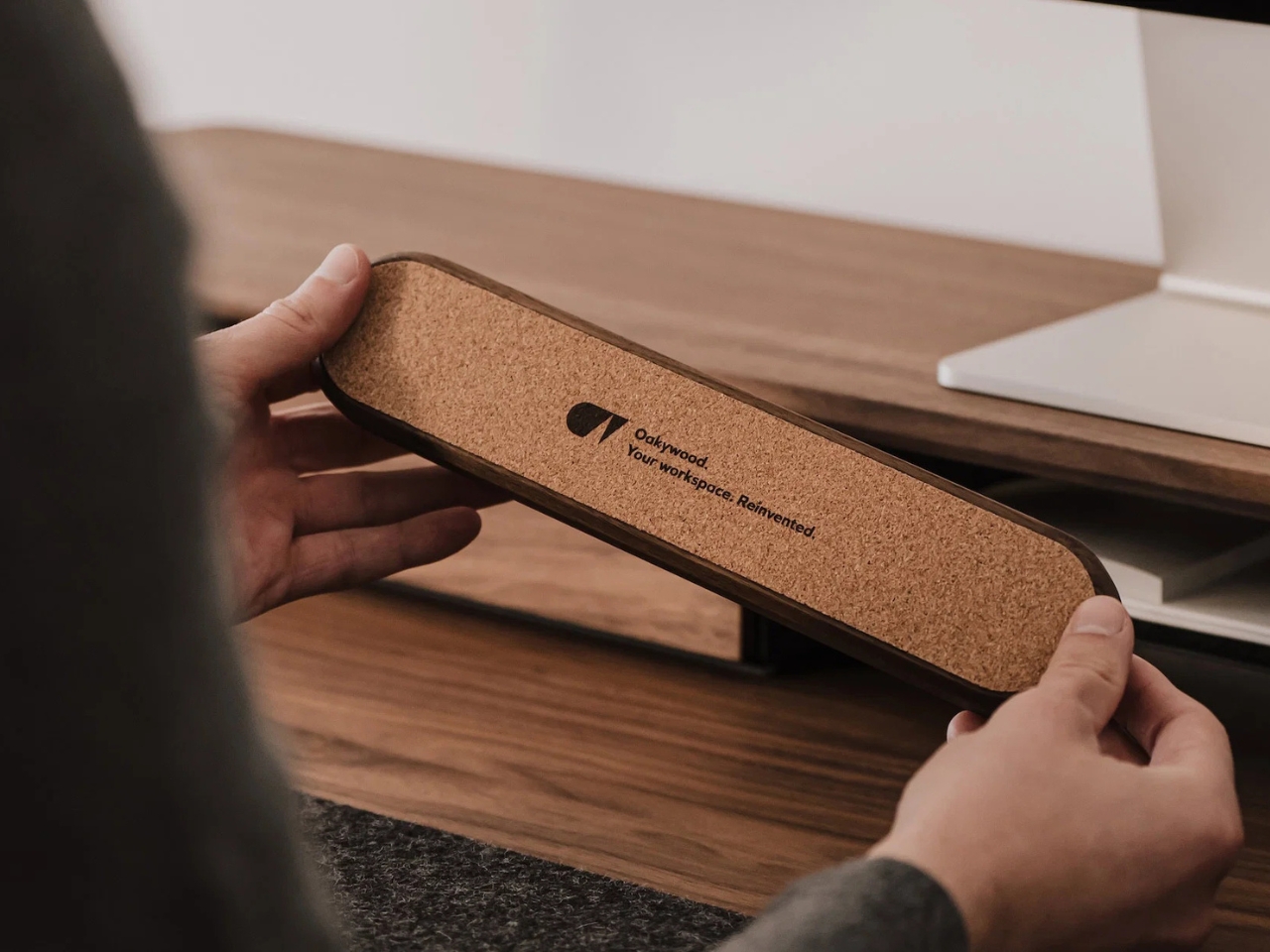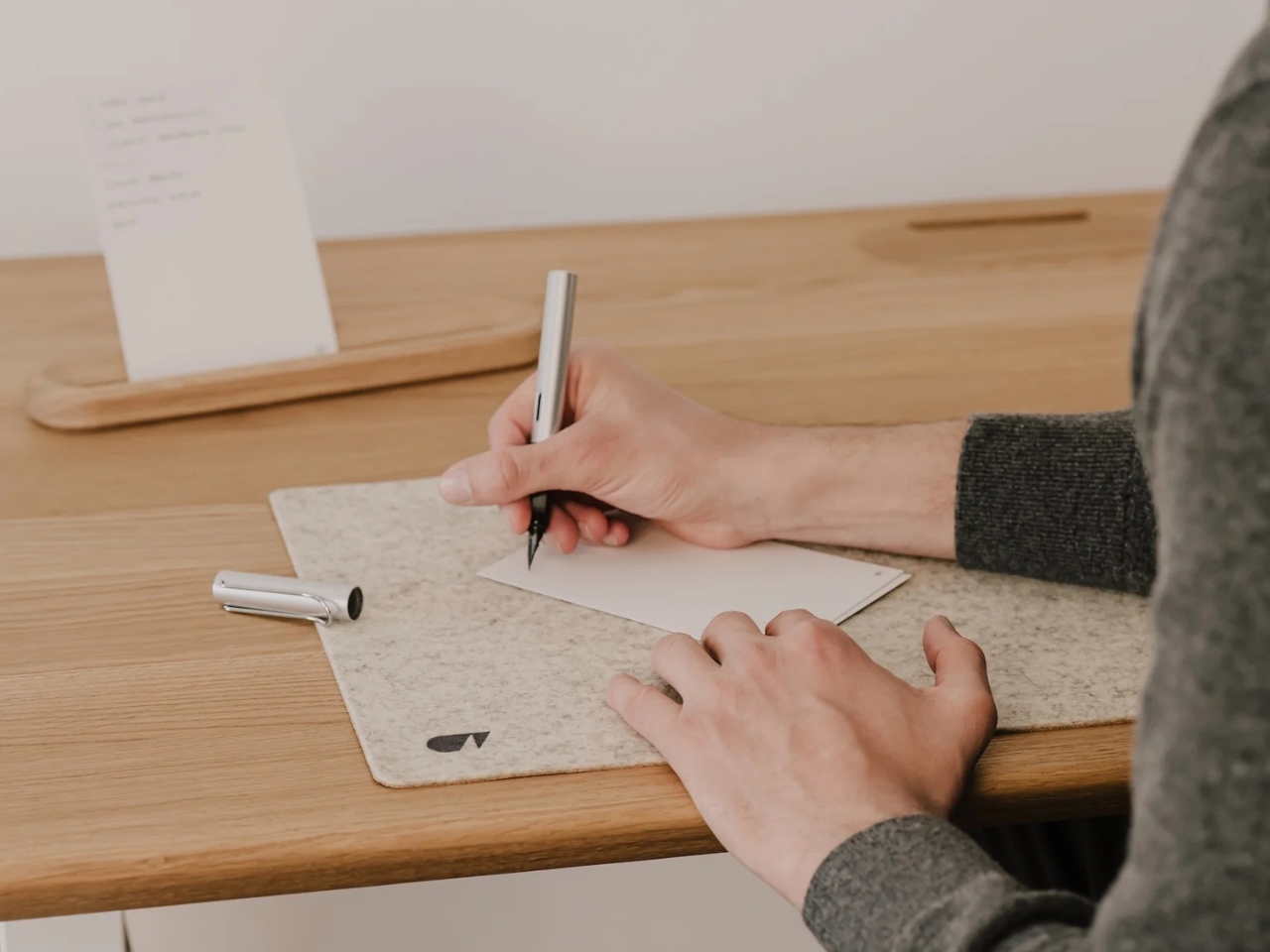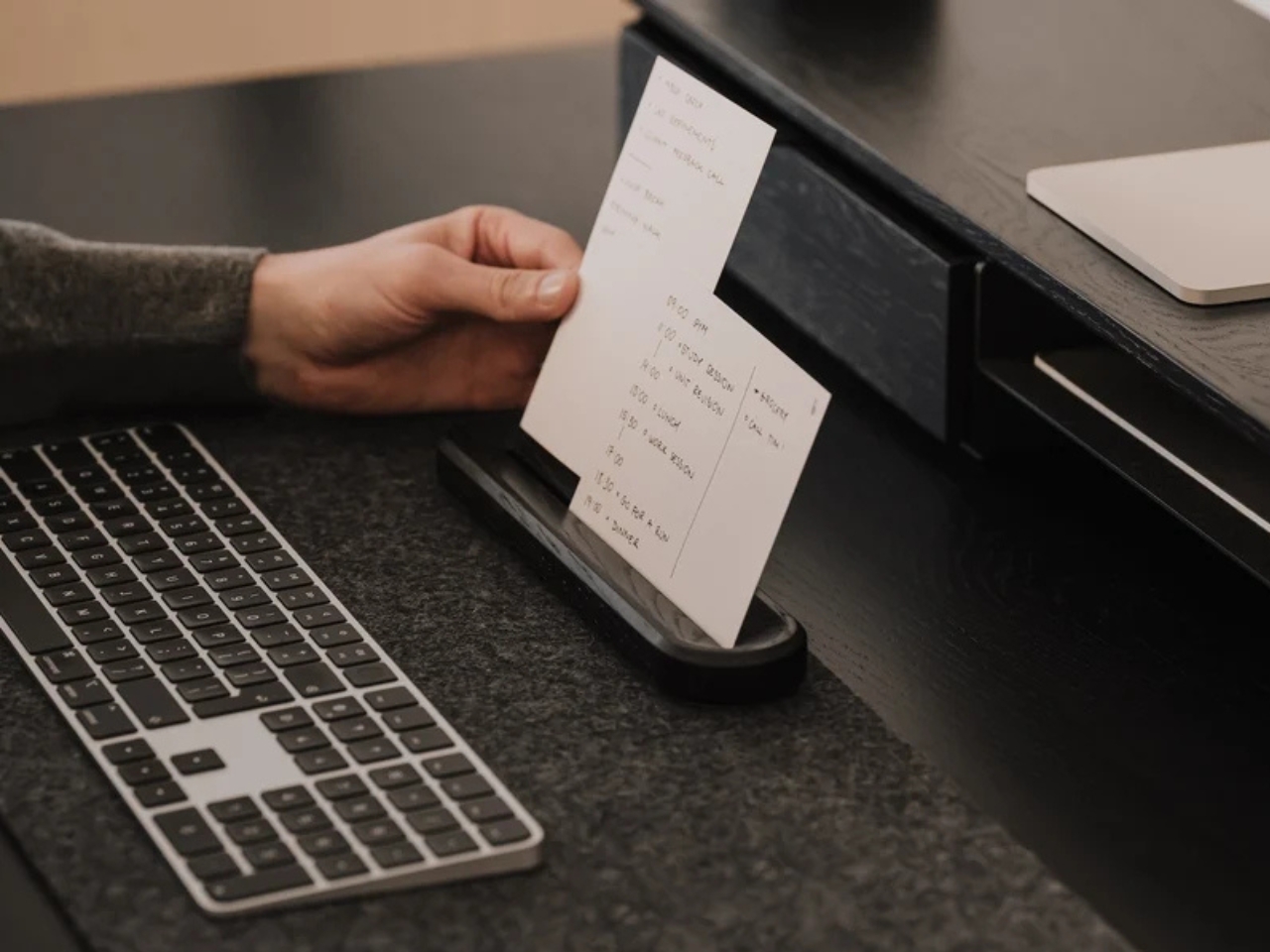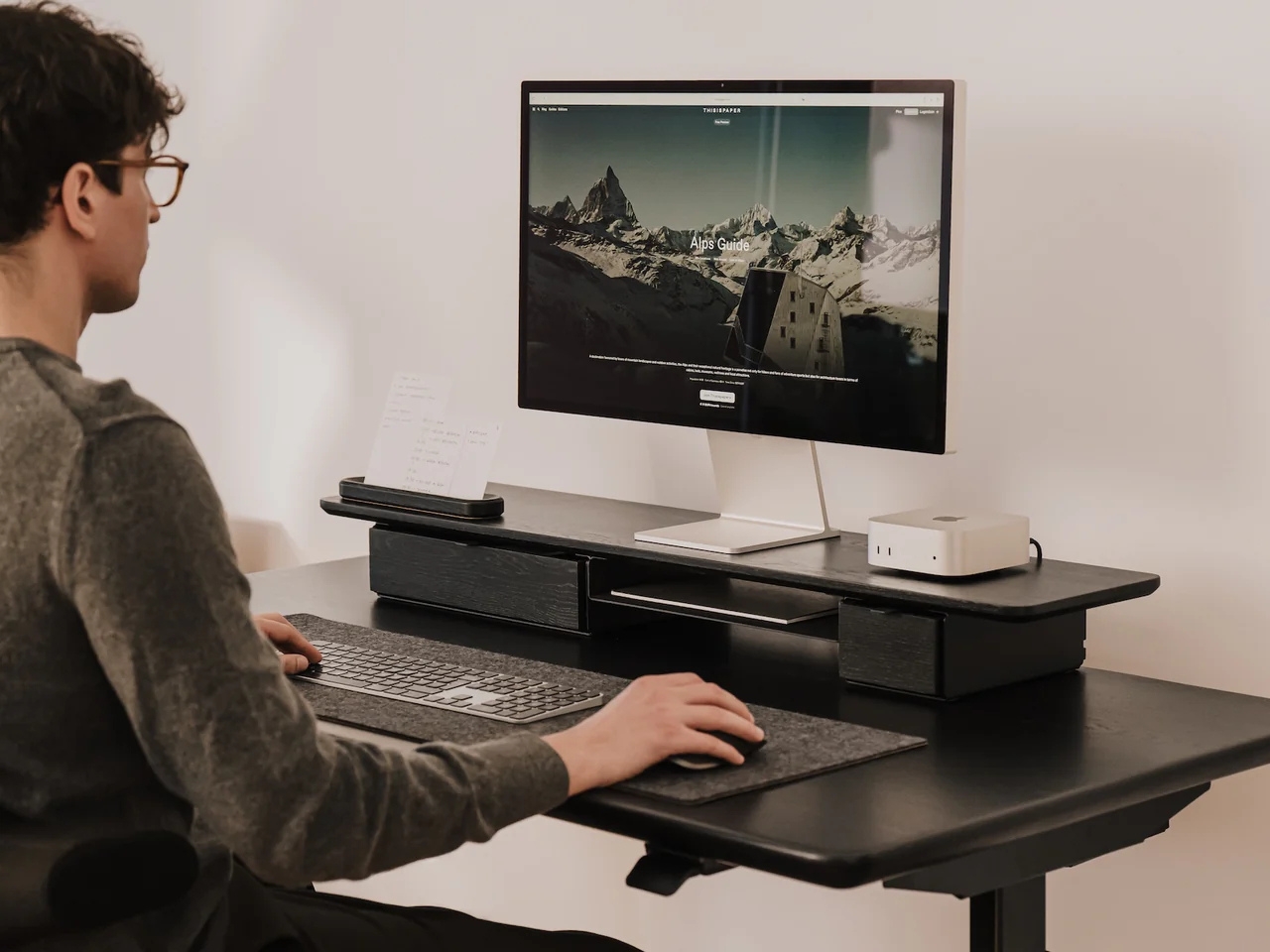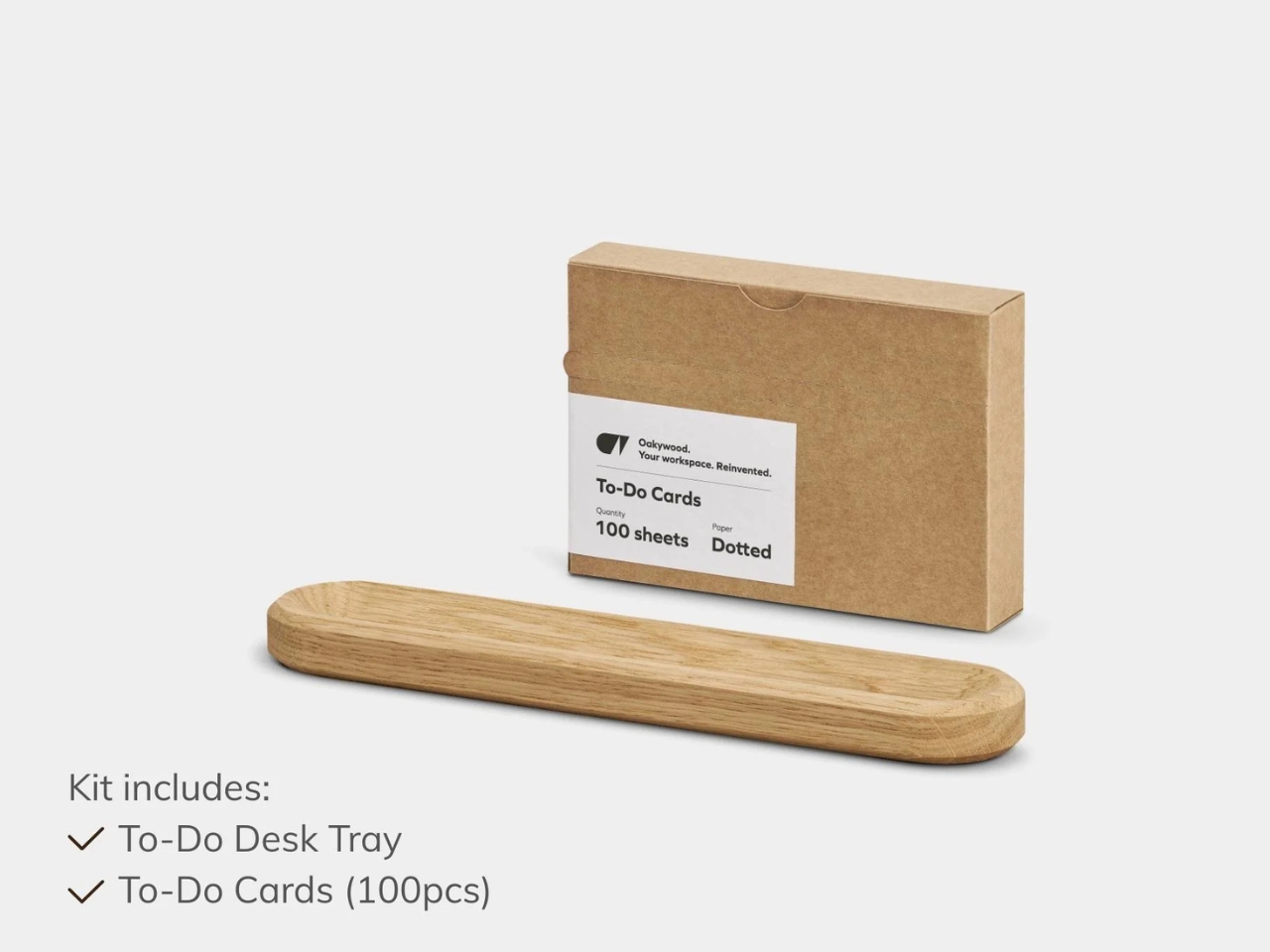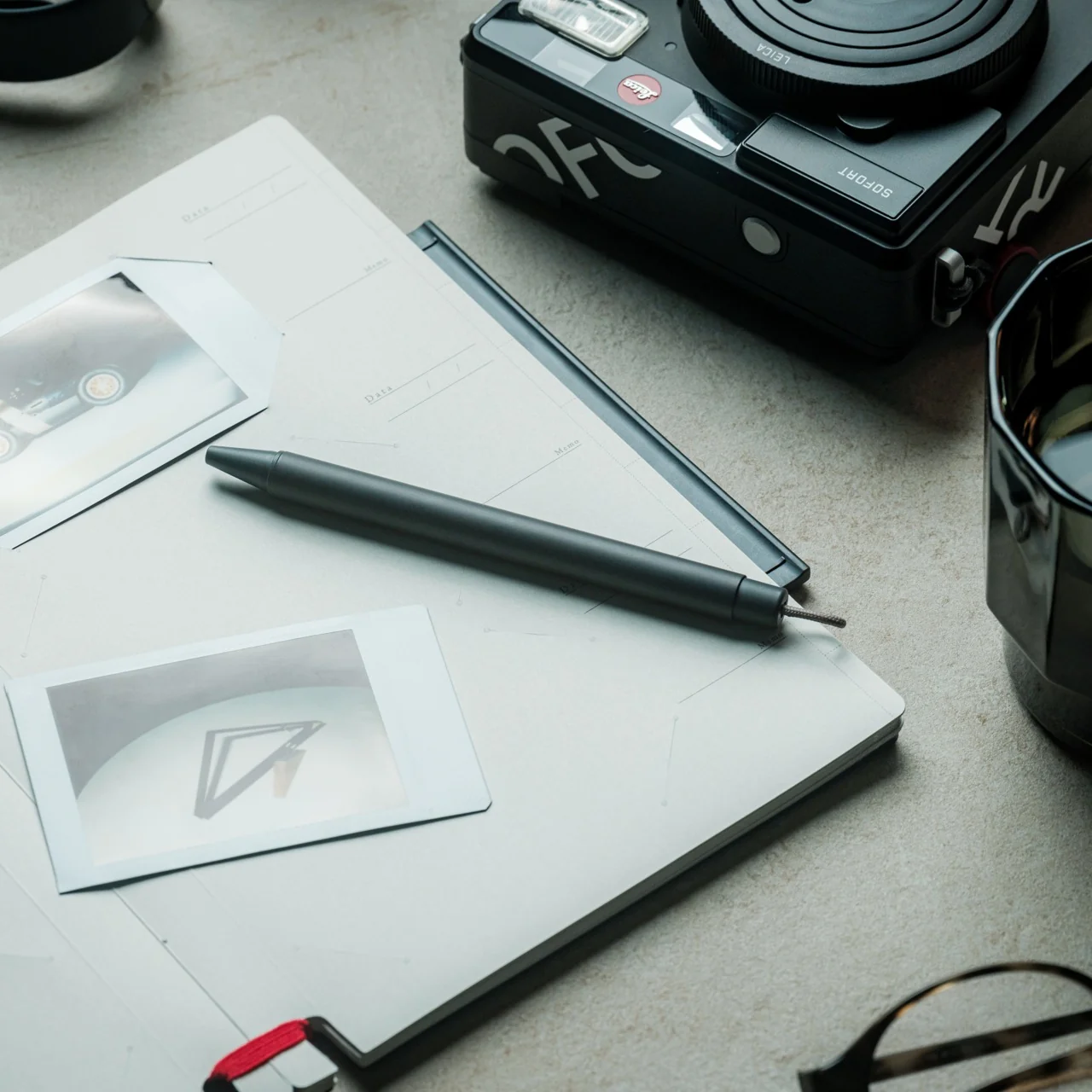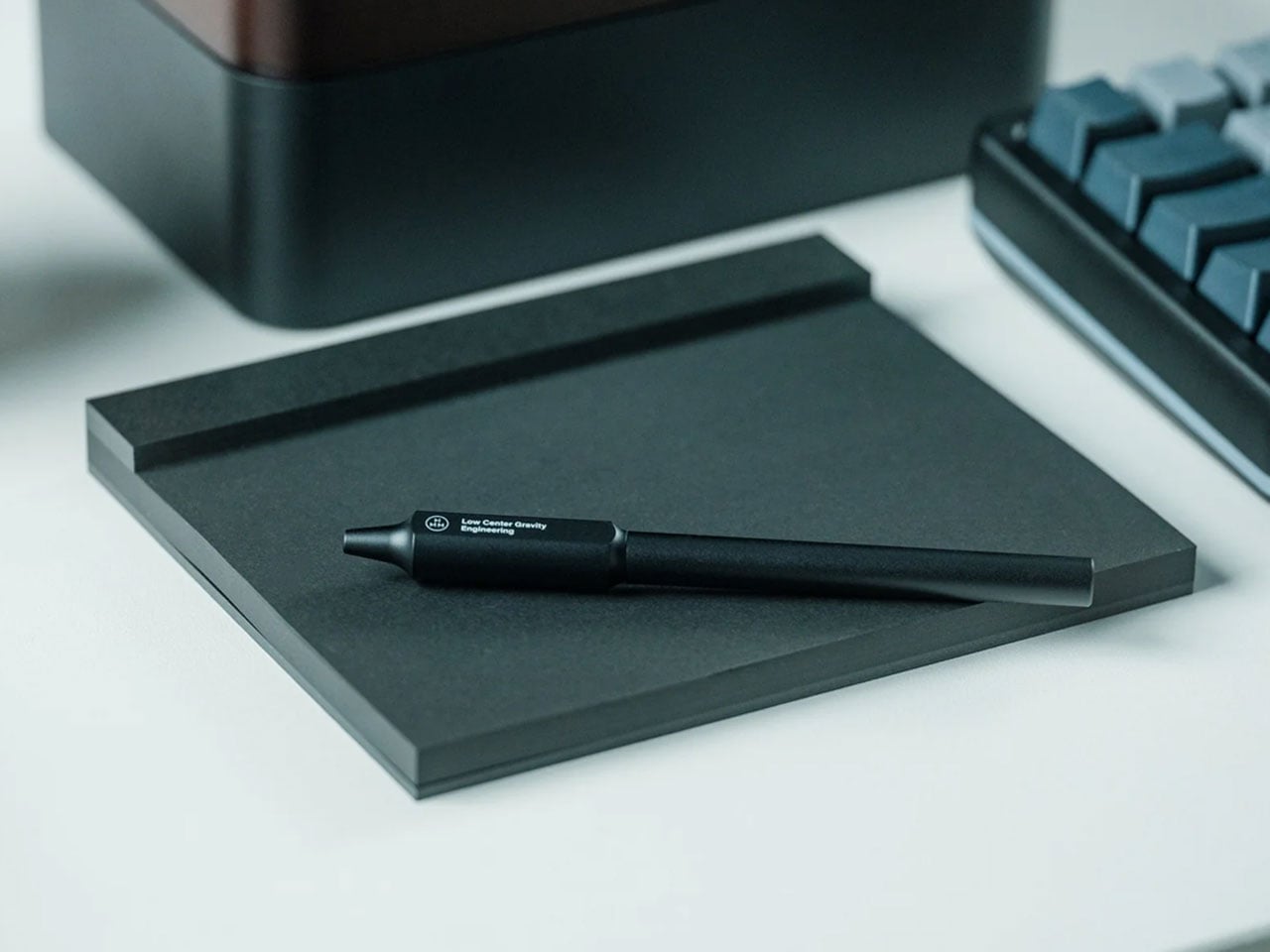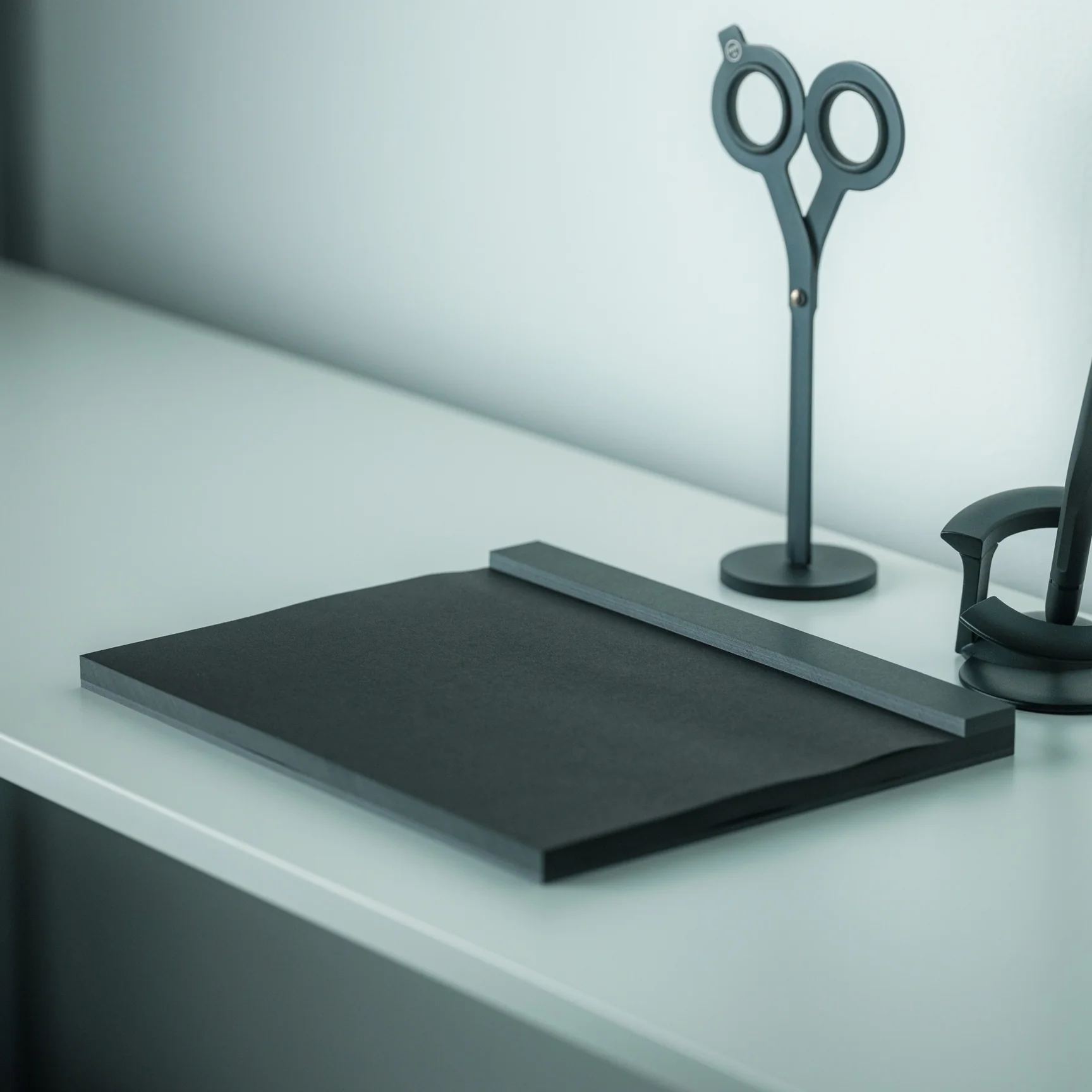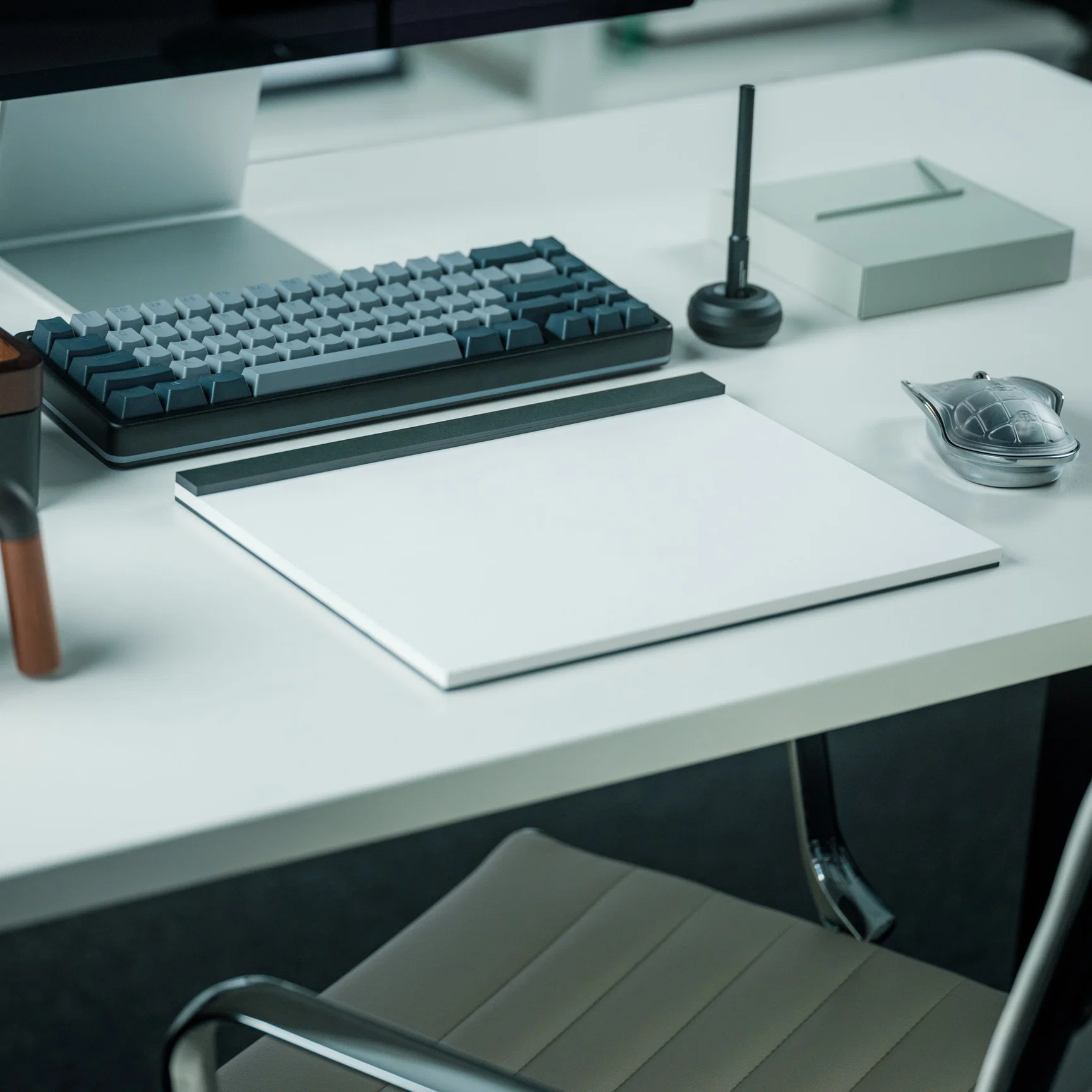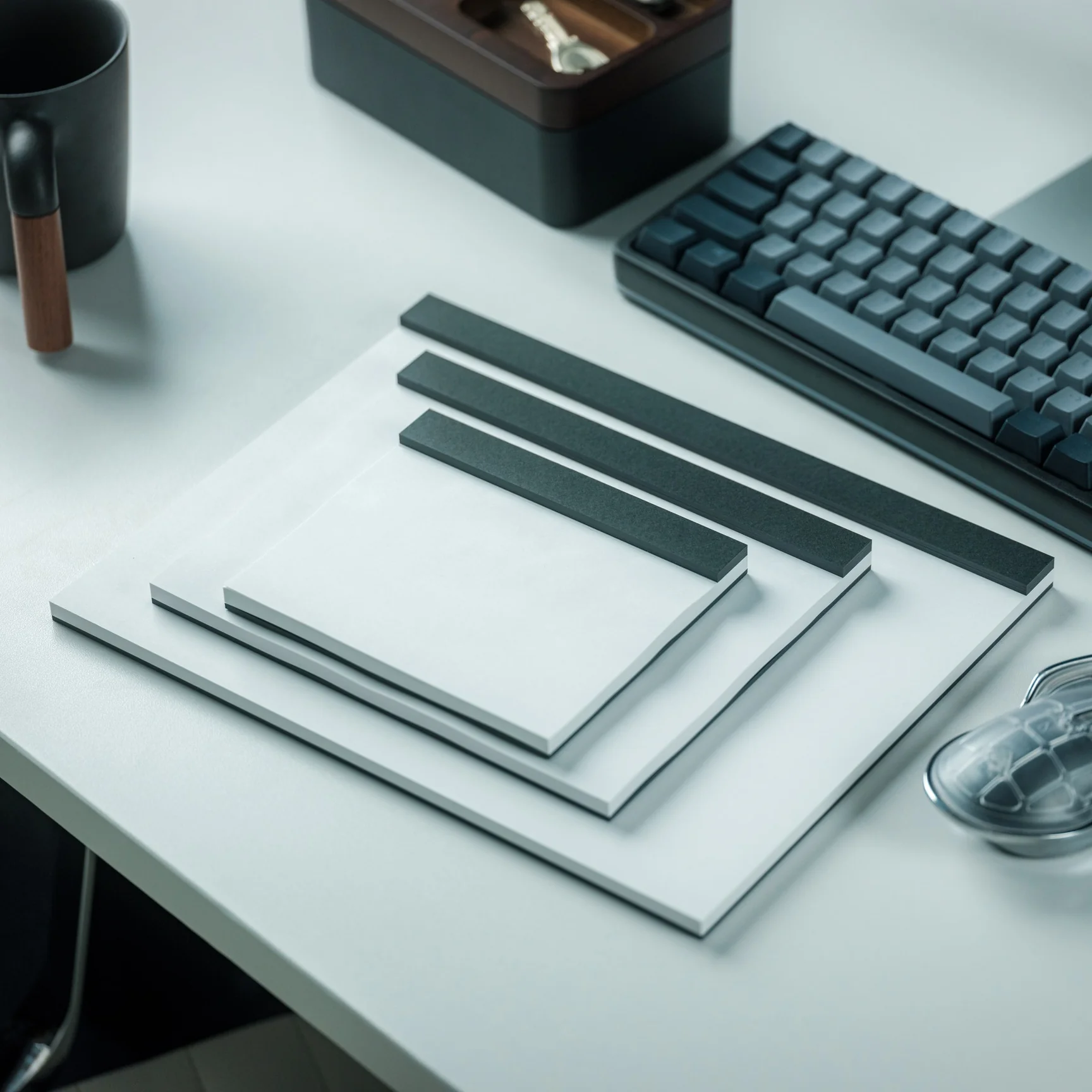
The Ultimate 8‑in‑1 Desk Organizer Puts Wireless Charging, Speakers, and Lighting on One Magnetic Wood Base

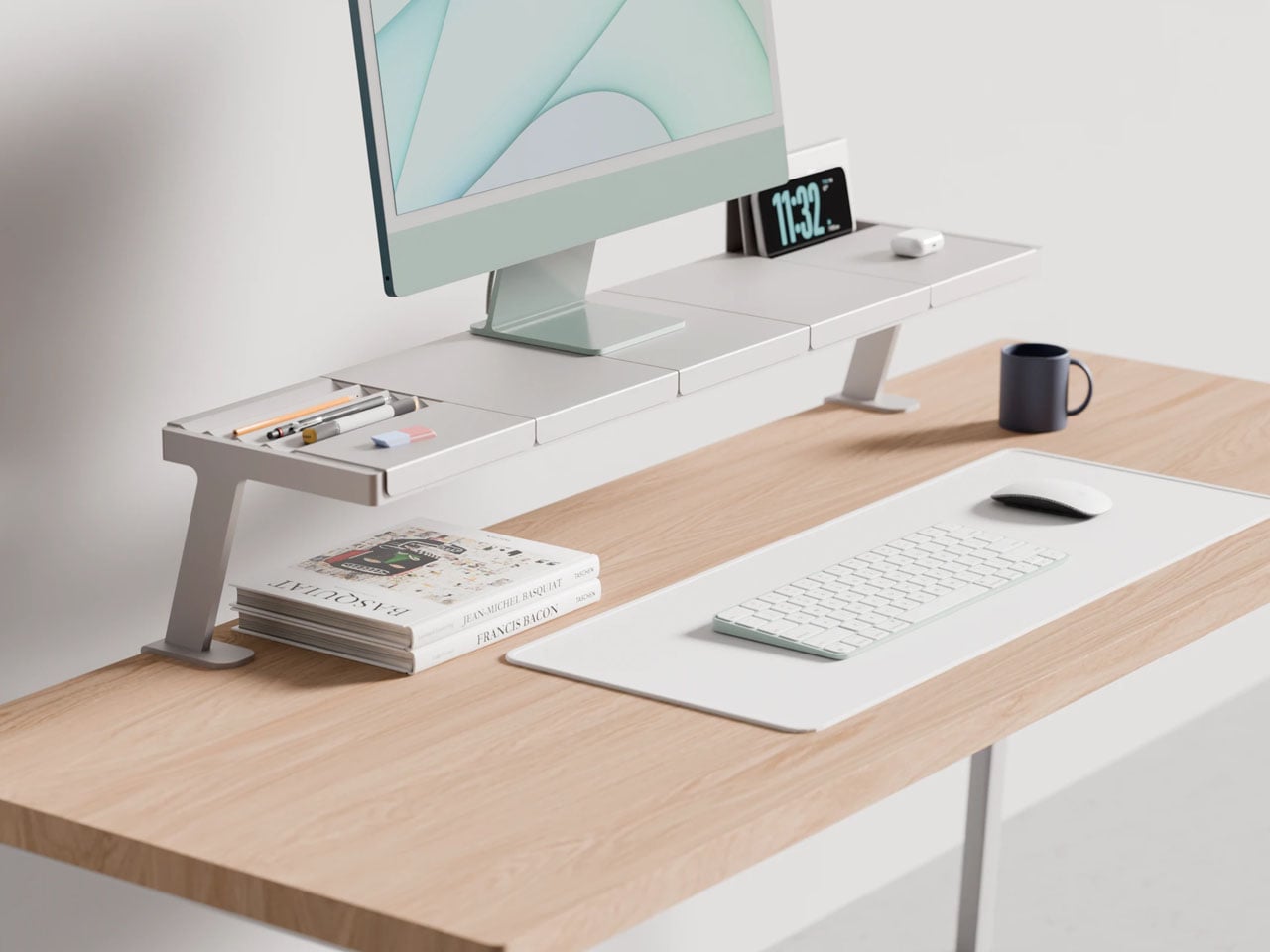
Desks have a way of accumulating chaos. Chargers multiply, cables tangle, and what starts as a clean workspace turns into a collection of mismatched gadgets competing for outlets and attention. MODULO, a new Kickstarter project from Italian design duo Modulo Design Lab, approaches the problem with a different philosophy: one wooden base, magnetic modules, and a single power cable to rule them all.

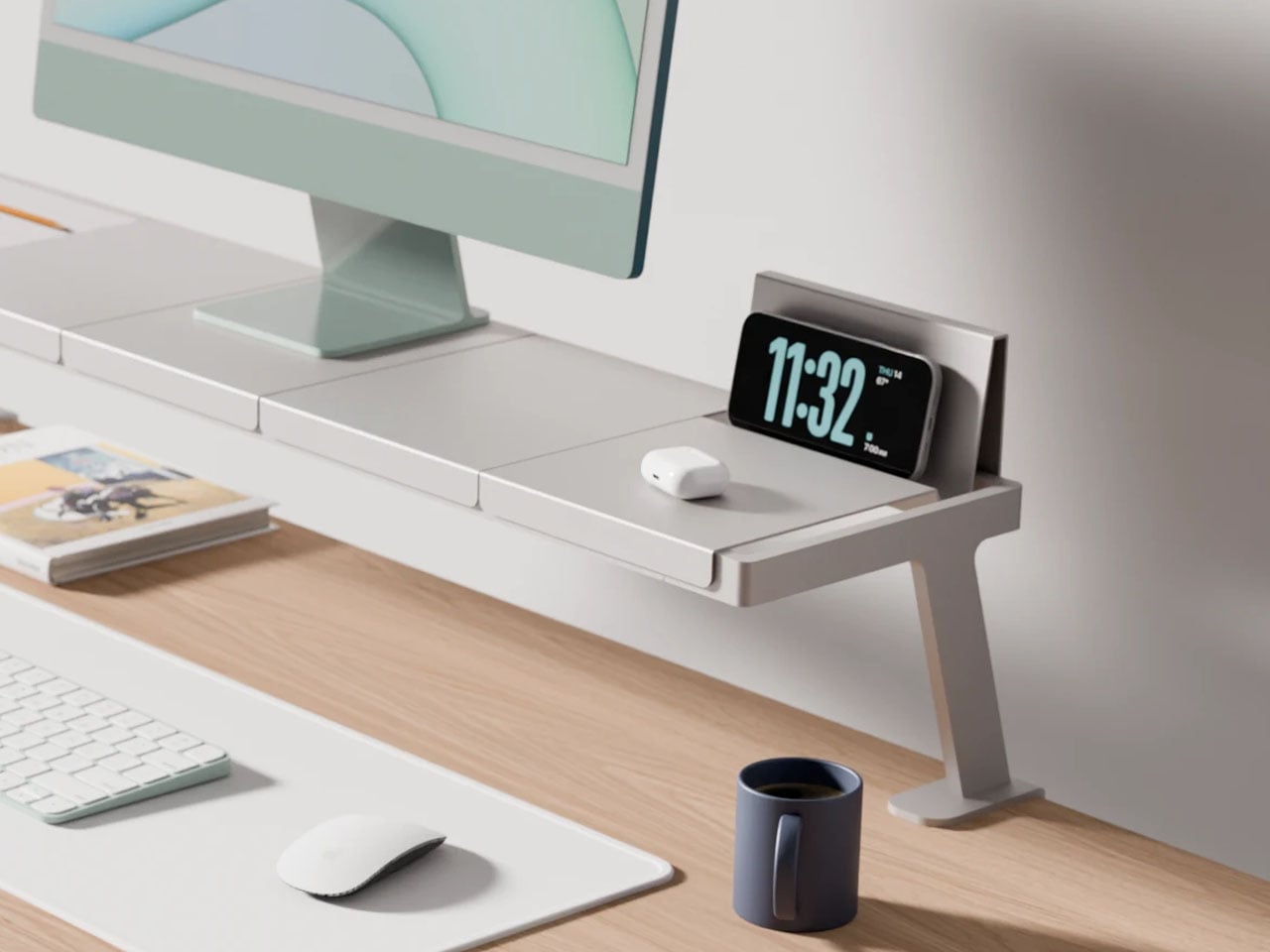
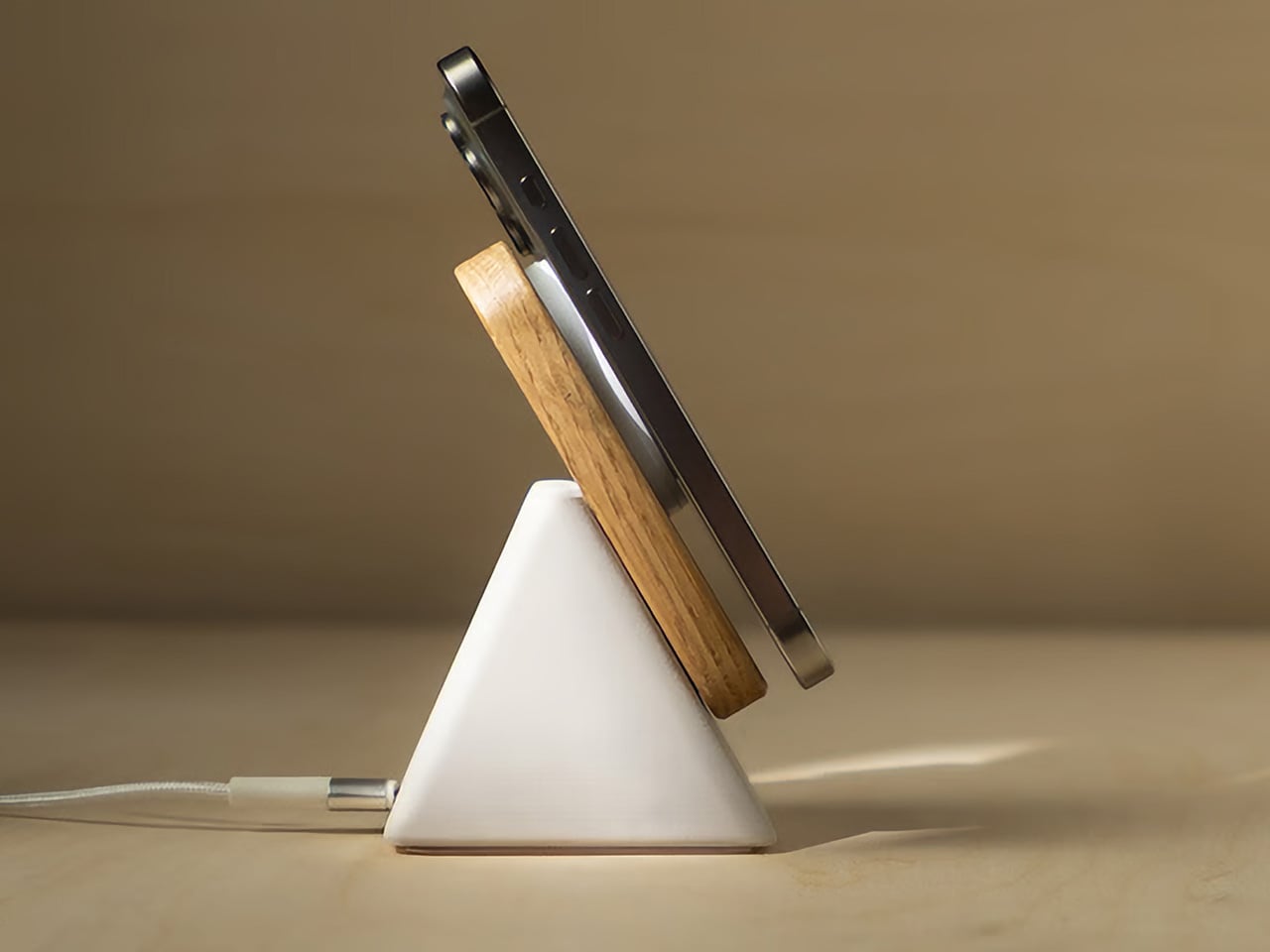
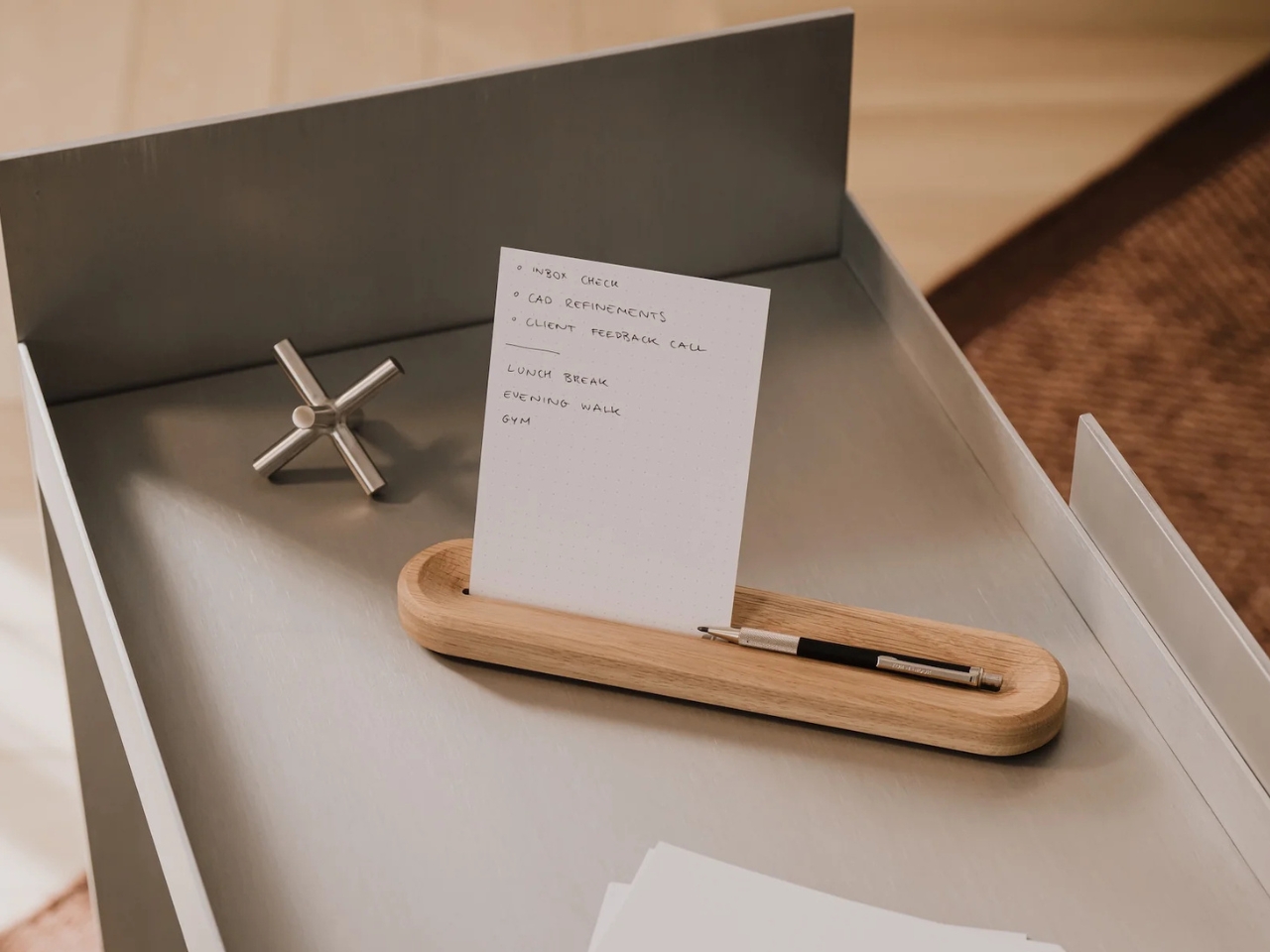
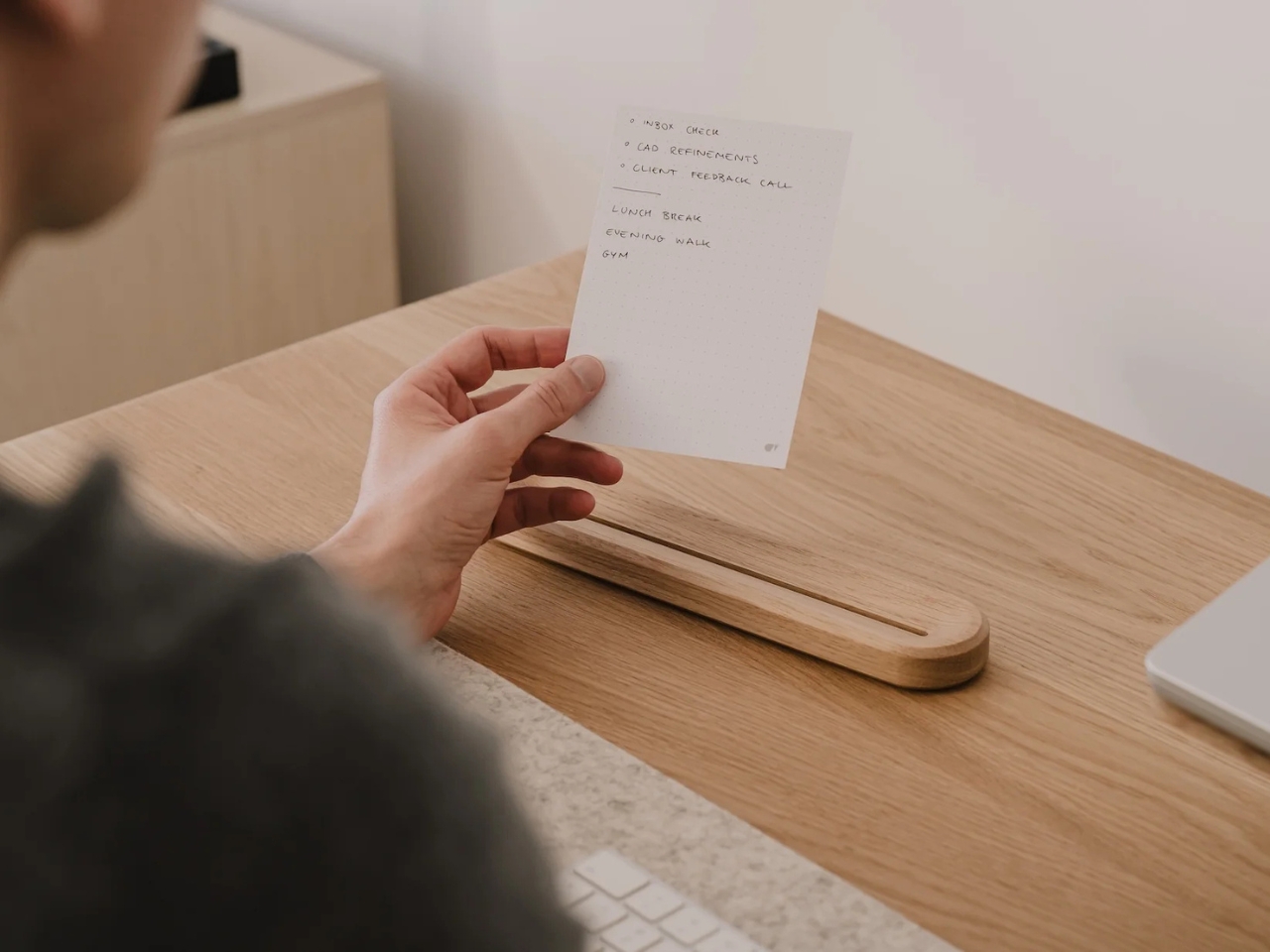
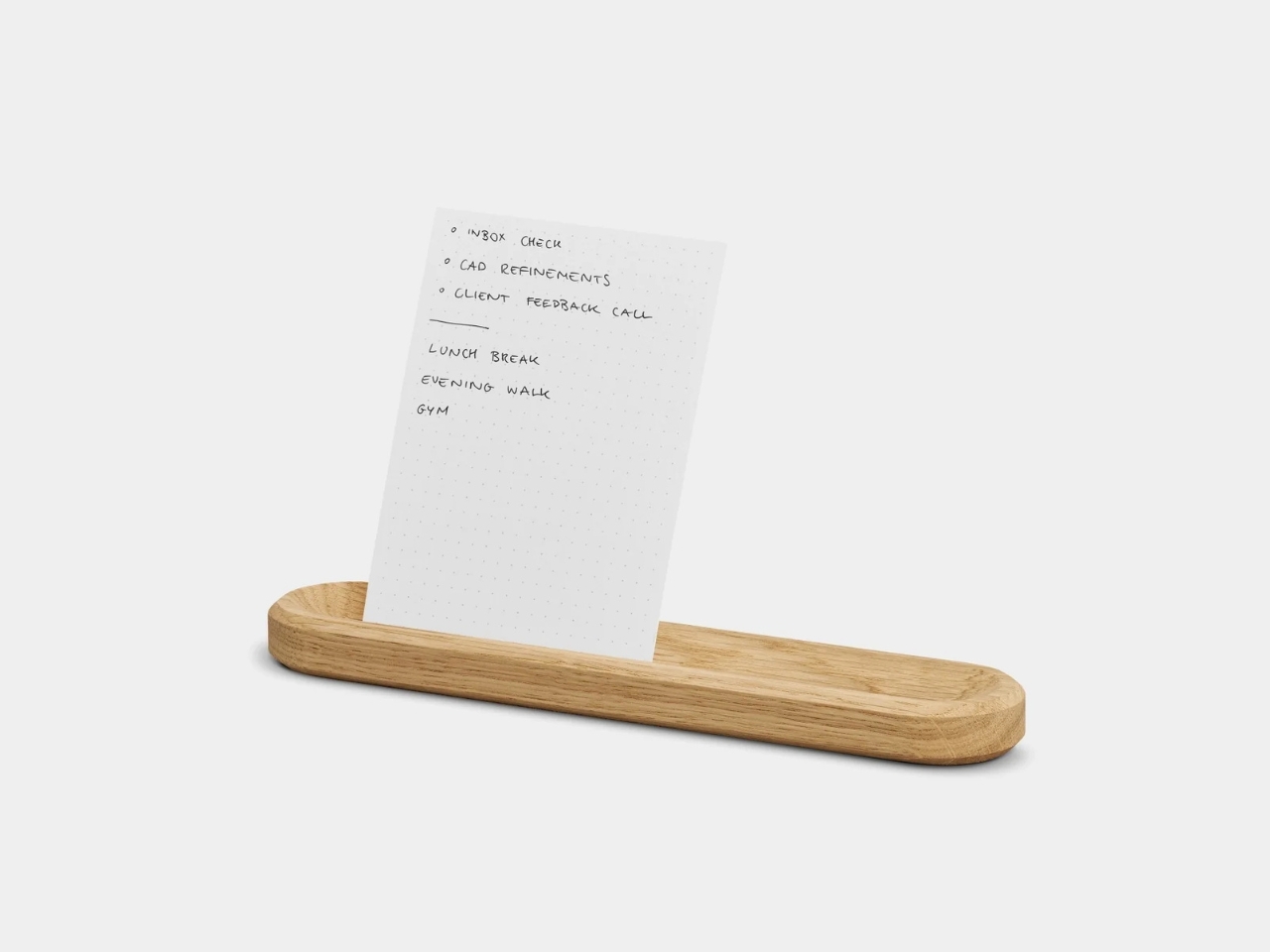
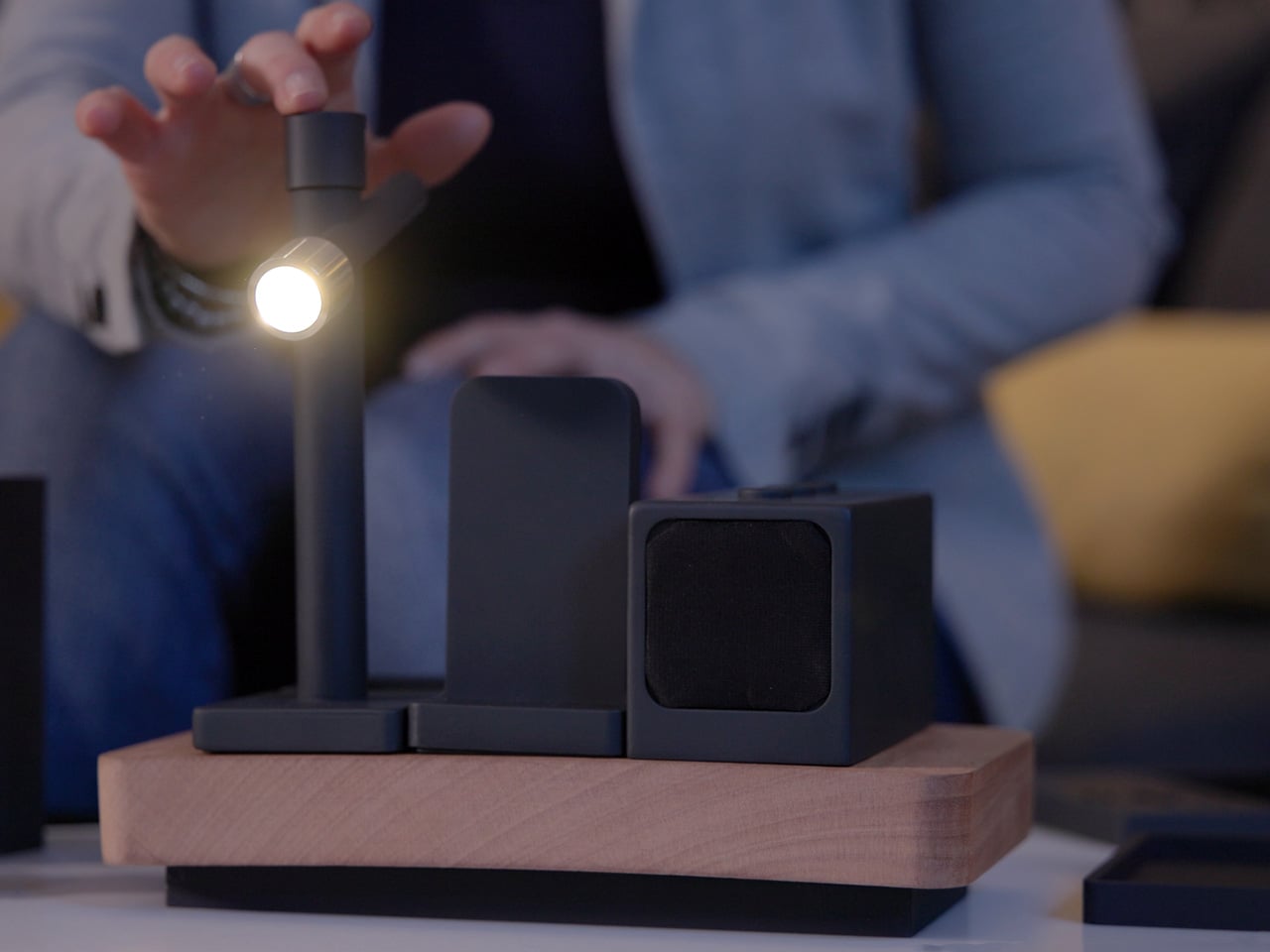
Built around a CNC-milled wooden platform handcrafted in Italy, MODULO lets you snap together charging modules, Bluetooth speakers, e-paper displays, task lights, and organizers into one unified system. Each of the 8 different modules connects magnetically, drawing power and data through gold-plated connectors rated for 50,000+ cycles. The Modulo app ties everything together, so your phone charger, desk lamp, and notification display all respond to a single interface instead of separate apps and pairing routines.

Designer: Mauro Veccari

Click Here to Buy Now: $144 $180 (20% off). Hurry, only a few left!

I’ve seen plenty of desk organizers that promise to solve cable clutter, and most of them amount to glorified boxes with some velcro straps. MODULO actually rethinks the problem at the power distribution level, which is where the mess starts in the first place. The wooden base acts like a backplane in a computer case, routing electricity and communication to whatever you plug into it. Modules are active devices that wake up the moment they make contact with the base, whether that base lives on your desk, your nightstand, or your kitchen counter. That means swapping a wireless charger for a Bluetooth speaker takes about three seconds, and the app instantly recognizes what you have changed. There is something satisfying about that kind of hot-swap simplicity, especially if your setup needs to shift between work, sleep, and cooking duty without a nest of cables following you around.

The magnetic connection system uses pogo-pin style contacts, similar to what you would find on a smartwatch charging dock but built for higher current and data transfer. Gold plating keeps corrosion at bay, and the 50,000-cycle rating suggests they are serious about longevity. For context, that is roughly 13 years of swapping modules once a day, which is more than most people will ever need but solid insurance against the usual wear that kills magnetic connectors prematurely. The magnets themselves are strong enough to hold modules securely but not so aggressive that you feel like you are prying Lego bricks apart, which matters when you are reconfiguring things on the fly. You can move a base from your desk to your bedside table, drop the speaker and e-paper module on it, and in under a minute you have a smart alarm stack that looks intentional instead of hacked together.

Module selection covers the usual suspects but with some thoughtful touches. The USB-C charger sits vertically and doubles as a cable anchor, so your phone cable does not slither off the surface when you unplug, whether that surface is a desk or a nightstand. The wireless charging pad works with iPhones, recent Samsung flagships, and AirPods, handling up to 15 W for fast charging where supported, which makes sense for bedside charging or a quick top-up in the kitchen while you prep dinner. The Bluetooth speaker module packs enough power for background music or podcasts while you cook or get ready in the morning, so you are not yelling at your phone from across the room. Then there is the e-paper display, which becomes a bedside clock and alarm status screen at night, or a kitchen timer and recipe step indicator when you drag the base over to the counter.

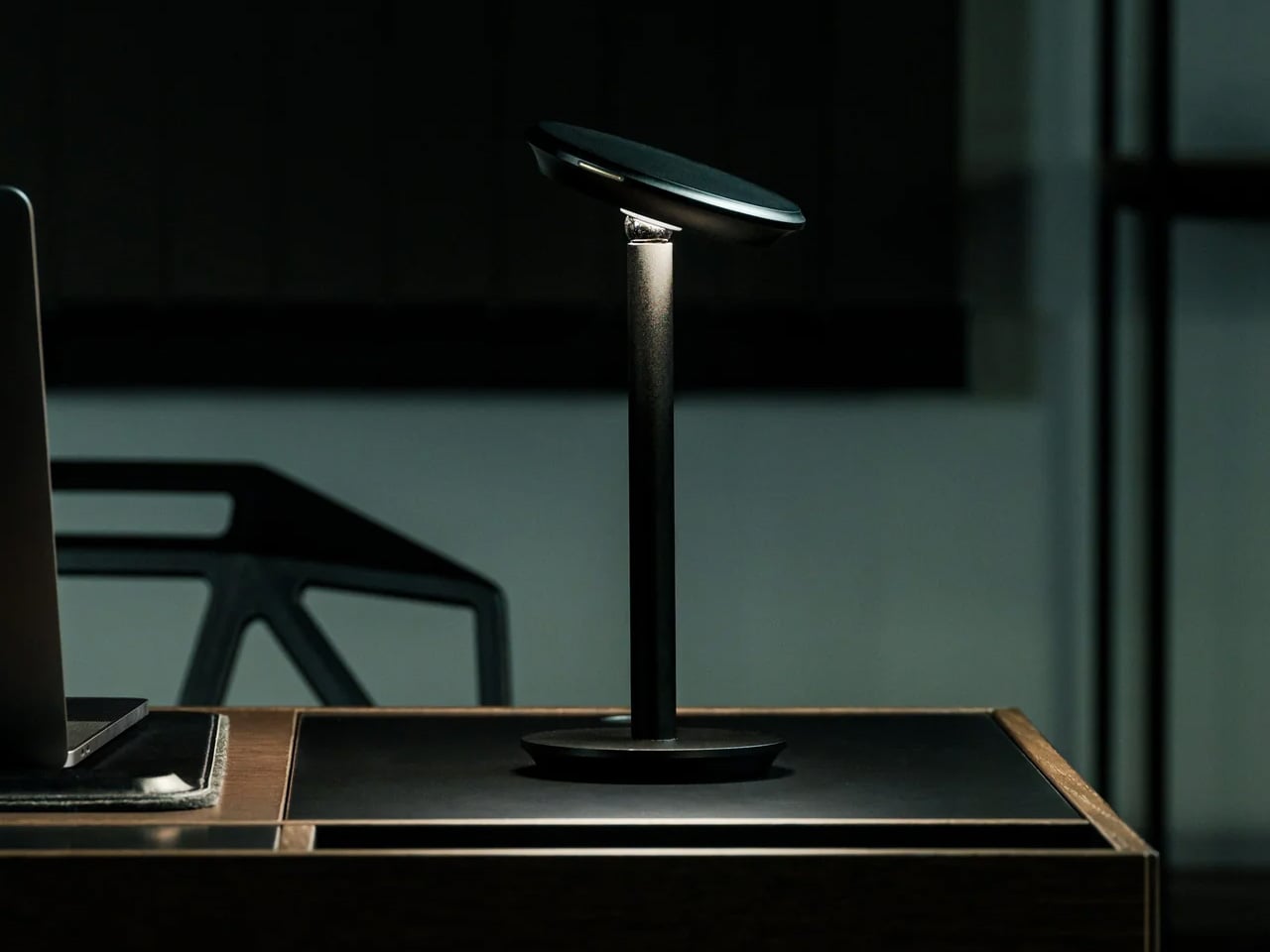
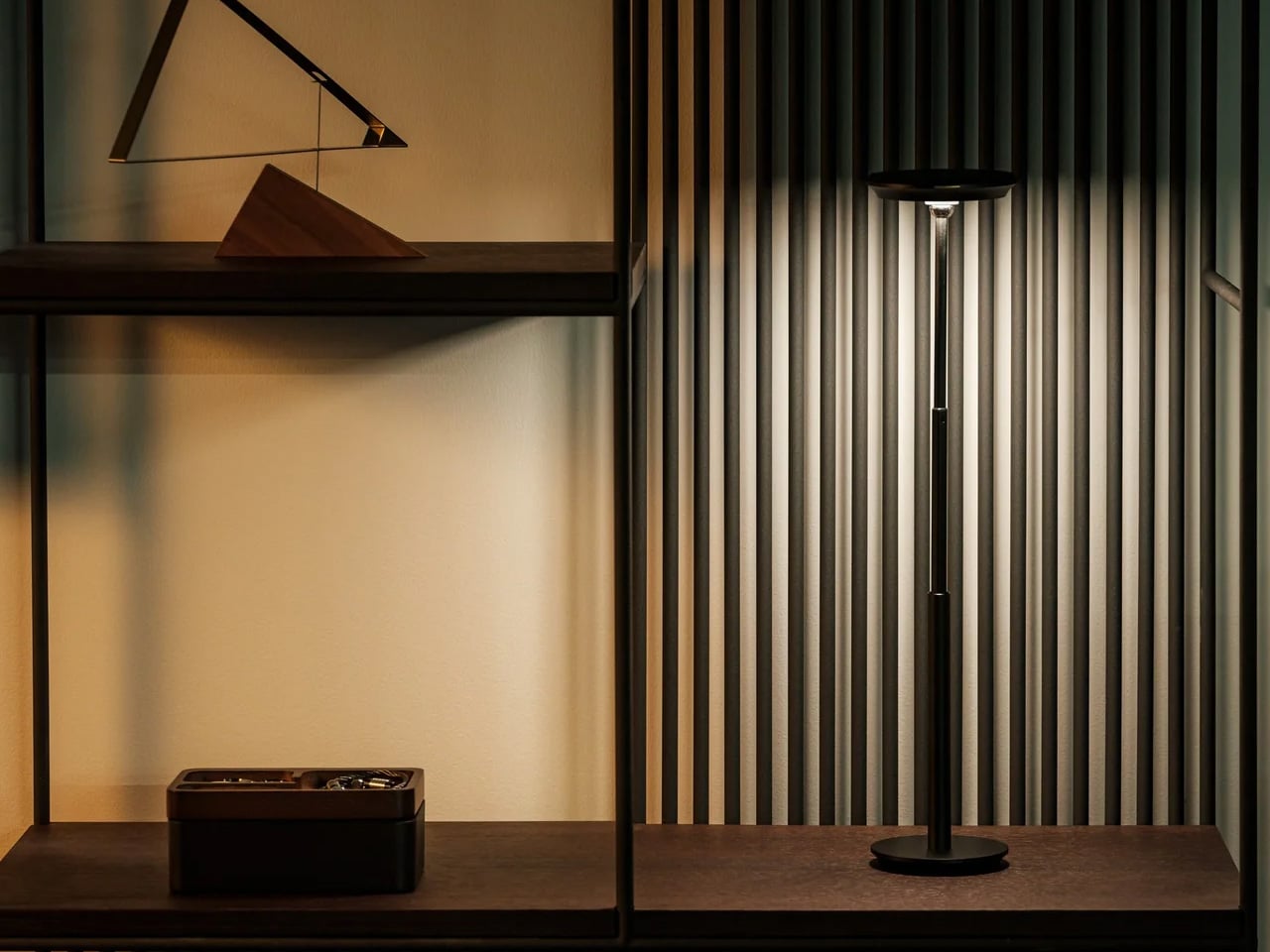
The Light Tower module gives you an adjustable lamp with touch control for brightness and app control for scenes, and that versatility matters in different rooms. On a desk it behaves like a focused task light. Next to the bed you can set it to warm color temperatures and low brightness for late-night reading without frying your circadian rhythm. In the kitchen it can act as an accent light while the e-paper screen counts down the last three minutes on your eggs and the speaker reads out a podcast. Modulo also includes purely physical modules like pen holders and “Pocket Emptier” trays, which make as much sense by the front door for keys and wallets as they do on a workspace. Everything mounts on the same grid, so your catch-all area, your alarm station, and your cooking corner share the same visual language instead of looking like three unrelated tech piles.

Modules auto-pair when they connect to the base, so there is no manual Bluetooth dance or Wi-Fi provisioning every time you move the system. The app gives you a dashboard where you can adjust speaker volume, tweak lighting, choose what the e-paper display shows, and set up automations that match the room. In the bedroom you can schedule a wake-up routine that fades in the Light Tower, starts your favorite playlist at a low volume, and shows the weather and first calendar event on the e-paper screen. In the kitchen you can switch profiles so the same base now runs a cooking layout, with a large countdown timer on the display, a chime on the speaker when the timer hits zero, and maybe a quick glance at notifications while your hands are covered in flour. The point is that the hardware stays the same, while the personality shifts with the context.

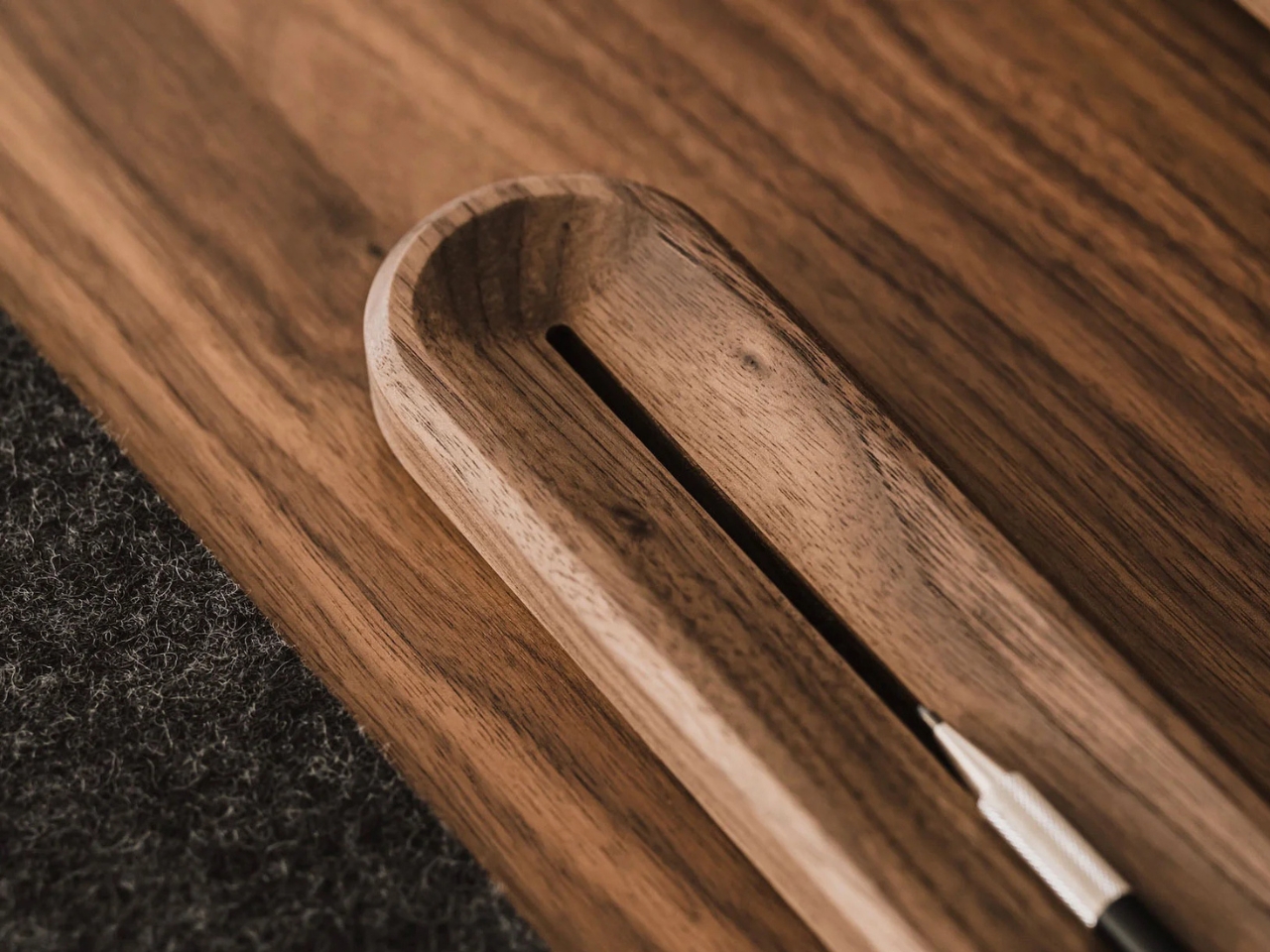
Material quality separates MODULO from the usual injection-molded plastic organizers. Each base is milled from solid wood using CNC machines, then hand-finished in Italy. The default option is a light tone, but the first stretch goal at 10,000 euros brings in additional finishes for people who want something darker or richer on a nightstand or console table. The wood is structural, not a thin veneer, which gives the whole thing a furniture-grade heft that feels at home in a bedroom or living room, not only in a home office. Modules use matte-finish polymers for the housings, keeping weight down while maintaining a cohesive look. The contrast between warm wood and minimalist black modules works just as well next to a linen headboard or a marble countertop as it does next to a 34 inch ultrawide.

MODULO is live on Kickstarter now through February 5, 2026, with delivery targeted for July 2026. The Geek Kit starts at $148 during the launch special and includes a colored plastic base plus a light tower and pen holder, which is the budget entry point. The Wood Premium Kit sits at $416 for the launch tier and gets you a handcrafted 3×2 wood base, light tower, Bluetooth speaker, wireless charger, and smart notifier module. There’s also a doubled-up kit at $831 with two bases and a fuller module lineup for people running multi-desk setups or wanting spares. The Custom Edition kit lets you build your own configuration starting at $141 for the base, then adding whichever modules you actually need. Stretch goals include a battery pack add-on for portable use, colored pop modules for a less serious look, and an AI module running a local LLM to keep your thoughts organized, just like your desk!

Click Here to Buy Now: $144 $180 (20% off). Hurry, only a few left!

The post The Ultimate 8‑in‑1 Desk Organizer Puts Wireless Charging, Speakers, and Lighting on One Magnetic Wood Base first appeared on Yanko Design.

This Lighthouse Calendar Turns Your Desk Into a Coastal Escape

There’s something wonderfully audacious about a desk calendar that refuses to be just a desk calendar. Cillgold Agency’s “By the Lighthouse” for 2026 is exactly that kind of design rebel. Instead of being a forgettable square of paper you flip through mindlessly, it’s a miniature architectural statement that happens to tell you what day it is.

The piece stands tall on your desk like a proud beacon, mimicking the silhouette of an actual lighthouse with surprising accuracy. The structure tapers as it rises, supported by angular legs that give it a sense of purpose and stability. This isn’t some flimsy cardboard that’ll topple over when someone walks by too quickly. The design feels deliberate, substantial, like it’s actually guiding you through the year ahead.

Designer: Cillgold Agency

What really catches your eye is the material choice. The entire exterior is wrapped in this gorgeous deep green marbled paper with veins of gold running through it like captured lightning. It’s the kind of surface that makes you want to reach out and touch it, to trace those organic patterns with your fingertips. The marbling has a luxurious, almost geological quality, as if each calendar was carved from a block of precious stone rather than assembled from paper and cardboard.

Then there’s that pop of coral orange along the edges. It’s unexpected and bold, creating this beautiful contrast against the moody green. The orange trim follows the contours of the structure, outlining the lighthouse shape and drawing your eye upward. It’s a small detail that completely transforms the piece, adding warmth and energy to what could have been a somber color palette.

Near the top of the structure, there’s a rectangular cutout that reveals a row of white seagulls in flight, set against a ribbed green background. This little window is pure charm. It’s like peering through a lens into a coastal scene, a reminder of the lighthouse’s maritime purpose. The birds are simplified, almost pixelated in their rendering, which gives them a playful, graphic quality that bridges vintage and contemporary design sensibilities.

The actual calendar component sits in the lower portion of the structure, displaying date cards that feature their own coastal imagery. Each card shows serene beach scenes, lighthouses in the distance, palm trees swaying in ocean breezes. The photography has that dreamy, gradient quality that makes you want to book a seaside vacation immediately. Flipping through the days becomes a small daily ritual, revealing new vistas as the year unfolds.

What Cillgold Agency has really accomplished here is creating an object that lives in multiple categories at once. Yes, it’s functional. You can absolutely use it to track dates and plan your schedule. But it’s also decorative, sculptural, collectible. It’s the kind of thing that sparks conversations when people enter your workspace. “What is that?” they’ll ask, and you’ll get to explain that it’s a calendar, watching their faces light up with surprise and delight.

The design speaks to a larger trend in stationery and desk accessories where form and function merge into something more meaningful. We’re moving away from purely utilitarian objects and embracing pieces that bring joy, personality, and artistry to our everyday environments. Our workspaces shouldn’t be sterile or boring. They should reflect who we are and what we value.

From a collector’s perspective, this is absolutely a keeper. Once the year ends, you don’t toss it in the recycling bin. You might repurpose it, display it on a shelf, or store it carefully as an example of excellent paper craft and product design. Limited edition calendars like this often appreciate in value among design enthusiasts, but more importantly, they become personal artifacts, markers of a particular year and aesthetic moment.

The post This Lighthouse Calendar Turns Your Desk Into a Coastal Escape first appeared on Yanko Design.

This Pocket Titanium Ruler Has a Level, Protractor, and Pen Built In

Projects pile up on the bench with a ruler that stops at 30 cm, a square for right angles, a separate protractor for odd cuts, a level somewhere in a drawer, and a pencil that has wandered off. Those small frictions add up when you are trying to stay in a flow state, and most rulers can measure but do not really help you think through the layout. You end up switching between tools, rechecking marks, and occasionally cursing when parallels drift, or angles end up slightly crooked.

The FLINTONE MegaRuler is a titanium 9-in-1 drawing master that tries to compress a whole layout kit into something smaller than a phone. It is designed for garage tinkerers, designers, woodworkers, model builders, electronics people, and 3D-printing geeks who want strength, accuracy, and versatility in one object. The body is machined from titanium, so it feels like a small instrument rather than a disposable ruler, and it packs infinite extension lines, perfect parallels, angles, levels, magnets, and a built-in pen into a single pocket-sized block.

Designer: FLINTONE

Click Here to Buy Now: $69 $99 (30% off). Hurry, only 223/500 left! Raised over $150,000.

1

The infinite extension feature uses a central roller that lets you draw a straight line as long as you need by rolling the tool along the surface. You can dock the ruler end-to-end 27 times with less than 0.1mm cumulative error, enough to lay out an 8m straight line without a laser or chalk box. For framing, cabinetry, set building, or large-format graphics, that kind of repeatable accuracy means less rework and fewer compromises when the layout determines everything downstream.

The side wheels hug a reference line, so every new line stays exactly the same distance away. In testing, drawing 50 parallel lines produced a maximum drift of 0.07mm, which is effectively negligible for most jobs. That lets you stop measuring every joist, slat, or tile and simply roll the MegaRuler along, trusting it to keep spacing consistent for grooves, stitch lines, or printed patterns. The result feels less like measuring and more like running a tiny machine that thinks about geometry for you.

1

MegaRuler handles angles by letting you draw any-angle slanted lines from 1° to 179° in one smooth motion. The integrated protractor is laser-etched with a high-contrast scale that remains readable in bright light, dust, or glare, so you can lean the body to the exact angle you want and draw without switching tools. For miters, chamfers, or odd-angle joints, it becomes the single reference you reach for instead of juggling a ruler and a protractor and hoping the alignment holds while you mark.

1

Dual bubble vials turn the tool into both a horizontal level and a plumb checker. Standing it up gives true vertical in half a second, laying it flat gives an instant surface check. N52 magnets are flush-mounted in the body, so it sticks to steel beams, machines, or a shop cabinet, allowing hands-free marking and storage. A small marking pen lives inside the ruler itself, sliding out to mark and back in when you are done, so measuring and marking are finally in the same place instead of scattered across the bench or lost in pockets.

1

MegaRuler might live clipped to a pocket on a jobsite, sitting next to a sketchbook on a designer’s desk, or magnetized to a drill press in a home workshop. Instead of reaching for a different tool every time you need a line, angle, or level check, you grab the same titanium block and let its rollers, vials, magnets, and pen handle the details. It earns its space by doing many jobs well, feeling less like a novelty and more like the ruler you wish you had from the start, compact enough to forget until you need it and precise enough to trust when accuracy actually matters.

Click Here to Buy Now: $69 $99 (30% off). Hurry, only 223/500 left! Raised over $150,000.

The post This Pocket Titanium Ruler Has a Level, Protractor, and Pen Built In first appeared on Yanko Design.

7 Best 2026 Gadgets & Tools Every Digital Nomad Needs in Their Backpack

The digital nomad lifestyle thrives on contradiction. You need professional-grade tools that disappear into a carry-on. Power without bulk. Connection without cables. The freedom to work from a Bali café or a Berlin co-working space demands gear that adapts as quickly as your location changes. The right equipment doesn’t just make remote work possible—it makes it effortless, turning any corner of the world into your office.

This year’s standout gadgets understand that nomadic work isn’t about compromising between portability and performance. These seven designs solve real problems that emerge when your desk is wherever you set down your laptop. They’re built for the constant motion between airports and coffee shops, for the moments when a stable internet connection matters more than a stable address, for professionals who measure workspace in grams and millimeters.

1. HubKey Gen2: Your Entire Setup in a Cube

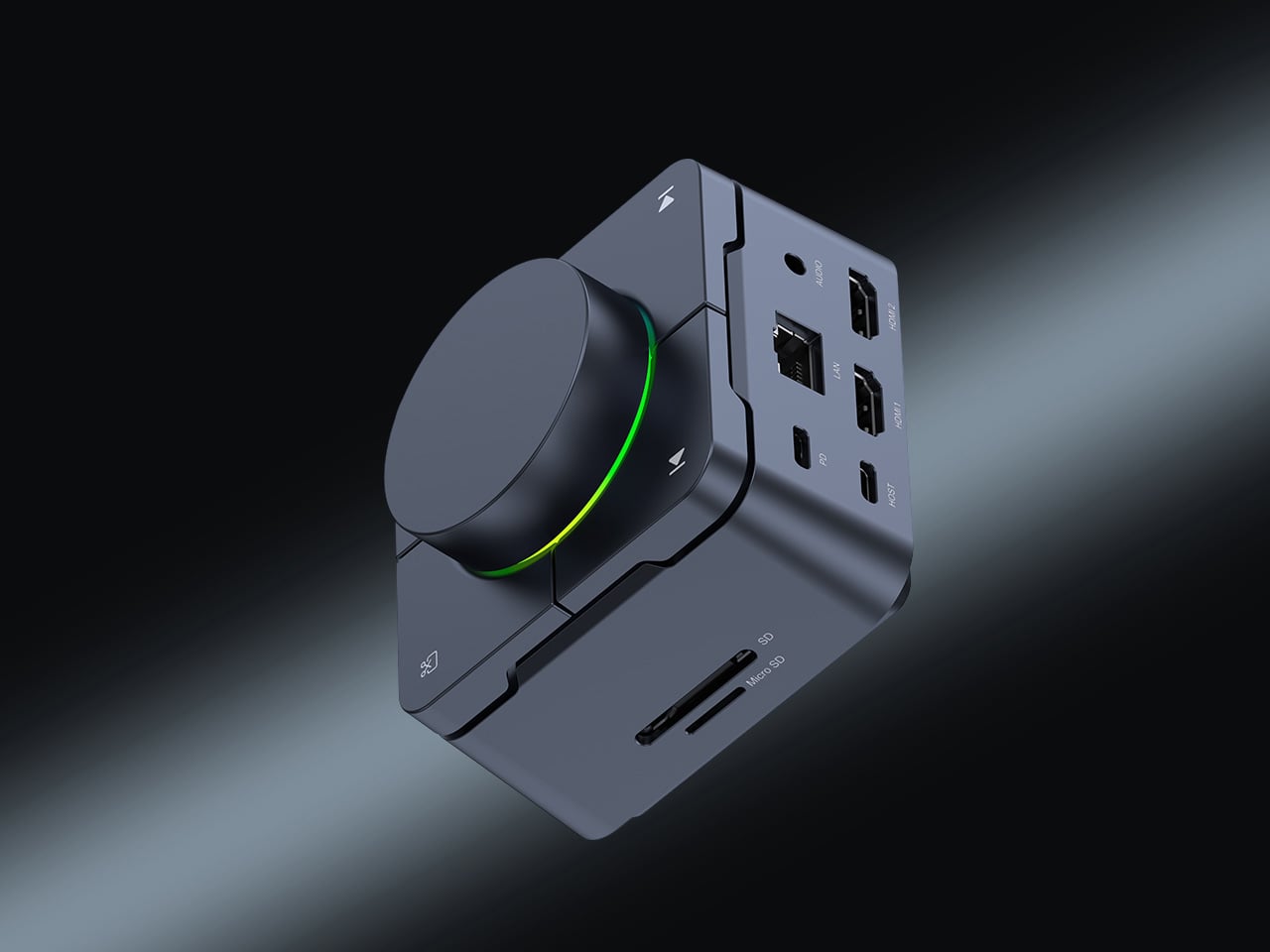
The chaos of the modern nomadic workspace often comes down to ports. Your sleek ultrabook offers maybe two USB-C connections, yet you’re constantly reaching for monitors, ethernet reliability, external drives, and power. What begins as minimalist hardware design becomes a tangle of dongles and adapters stuffed into every pocket of your tech pouch. HubKey Gen2 rethinks this entirely, consolidating 11 different connections into a palm-sized cube that sits exactly where you need it.

Beyond the connectivity sprawl, this device addresses another friction point: the small actions buried in menus and keyboard shortcuts that disrupt your workflow. Four programmable keys and a central control knob transform software commands into physical gestures. Mute your microphone, adjust volume, toggle camera privacy, or switch between tasks with tactile certainty. For someone working across time zones and video calls, having media controls at your fingertips rather than three clicks deep makes the difference between smooth professionalism and fumbling mid-presentation.

What We Like

  • The 11-in-1 hub eliminates the need for multiple adapters, significantly streamlining your packing list.
  • Dual 4K display support means you can plug into external monitors at co-working spaces or client offices without compromise.
  • Physical shortcut keys and a control knob bring immediate access to privacy toggles and media controls.
  • The compact cube design fits easily in a backpack’s tech compartment without adding bulk.

What We Dislike

  • The stationary cube format works best on stable desks, which isn’t always guaranteed in nomadic setups.
  • At a premium price point, it’s an investment that may not suit budget-conscious travelers.

2. OrigamiSwift Folding Mouse: Full-Size Precision in Your Pocket

Laptop trackpads work fine until they don’t. After hours of detailed work—editing photos, building spreadsheets, designing mockups—your fingers cramp and precision suffers. Full-sized mice offer the ergonomic relief you need but consume precious backpack real estate. OrigamiSwift solves this spatial puzzle with origami-inspired engineering that lets a complete mouse fold completely flat, transforming from 40 grams of barely-there weight into a proper productivity tool the moment you need it.

The transformation happens in under half a second. One flip and the mouse springs into an ergonomic form that fits naturally in your palm, ready for extended work sessions, whether you’re at a standing desk in Bangkok or a wobbly café table in Lisbon. When you pack up, it collapses just as quickly into a profile thin enough to slide into a notebook pocket. The Bluetooth connection means one less cable to manage, and the full-size functionality means you’re not sacrificing comfort for convenience.

Click Here to Buy Now: $79.00

What We Like

  • The foldable design delivers genuine full-size mouse comfort without occupying significant bag space.
  • Weighing only 40 grams, it’s essentially weightless in your daily carry.
  • The instant transformation in under 0.5 seconds means you can deploy it as quickly as you open your laptop.
  • Ergonomic shaping provides the comfort needed for extended work sessions across multiple time zones

What We Dislike

  • Bluetooth connectivity requires occasional charging, adding one more device to your power management routine.
  • The folding mechanism, while durable, introduces moving parts that could potentially wear over time.

3. StillFrame Headphones: Creating Focus Anywhere

Airports, cafés, co-working spaces—the nomadic office is rarely quiet. Concentration becomes a portable skill, and headphones evolve from accessory to essential tool. StillFrame approaches audio with a design philosophy borrowed from the deliberate era of physical media, when albums were objects you held, and listening was an intentional act. The result sits comfortably between in-ears and over-ears, at just 103 grams, with 40mm drivers that open up soundscapes rather than just pumping audio into your ears.

The real utility emerges in the switching. Active noise cancellation erases the chaos when you need to disappear into deep work. Transparency mode keeps you connected to your surroundings when you’re waiting for a gate announcement or want to stay aware in an unfamiliar city. Twenty-four hours of battery life means you can travel from New York to New Delhi without reaching for a charging cable, maintaining your focus through layovers and long-haul flights.

Click Here to Buy Now: $245.00

What We Like

  • The 24-hour battery life eliminates anxiety about running out of power during long travel days.
  • Weighing just 103 grams, these headphones stay comfortable through marathon work sessions.
  • Both noise-cancelling and transparency modes adapt to shifting environments from silent libraries to bustling streets.
  • The 40mm drivers create an open soundstage that makes both music and podcasts more immersive.

What We Dislike

  • The on-ear design may not provide the same noise isolation as full over-ear models in extremely loud environments.
  • The retro-inspired aesthetic, while distinctive, may not appeal to those preferring more modern styling.

4. Memento Business Card Log: Analog Memory in a Digital World

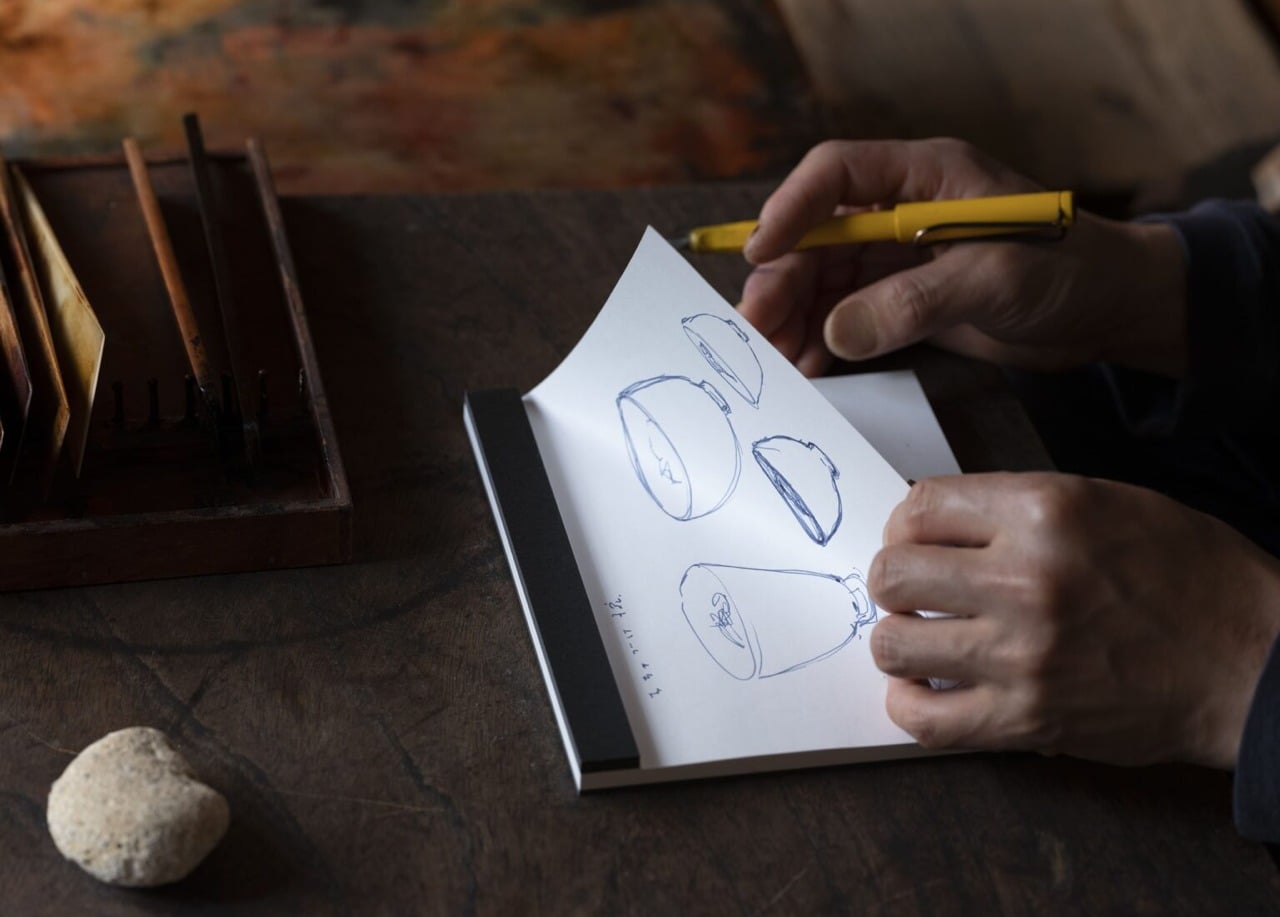
Digital contacts sync across devices, but they don’t capture the texture of a conversation. The nomadic lifestyle means constantly meeting collaborators, clients, and fellow travelers—connections that could turn into partnerships if you remember not just names but contexts. The Memento Business Card Log stores up to 120 business cards using a binding system that lets you reorganize and reference them easily, but more importantly, it provides space for the handwritten details that transform a card into a memory.

Japanese brand Re+g built this organizer around the idea that writing things down changes how you remember them. After a chance meeting at a conference in Singapore or a productive coffee chat in Copenhagen, you can note what you discussed, ideas that emerged, or even just the person’s working style. These annotations become retrieval cues that software contact lists can’t replicate. When you reconnect weeks or months later, those handwritten notes help you pick up the conversation with genuine context rather than generic pleasantries.

Click Here to Buy Now: $35.00

What We Like

  • The capacity for 120 business cards means you can collect connections throughout extended trips without needing to transfer them.
  • Handwritten note space beside each card captures conversational context that digital contacts miss.
  • The unique binding system allows easy reorganization as your network and priorities evolve.
  • Minimal, tactile paper design from Re+g elevates organization into something you’ll actually enjoy using.

What We Dislike

  • The analog format means cards aren’t automatically backed up if the log is lost or damaged.
  • Physical storage takes up more space than purely digital contact management.

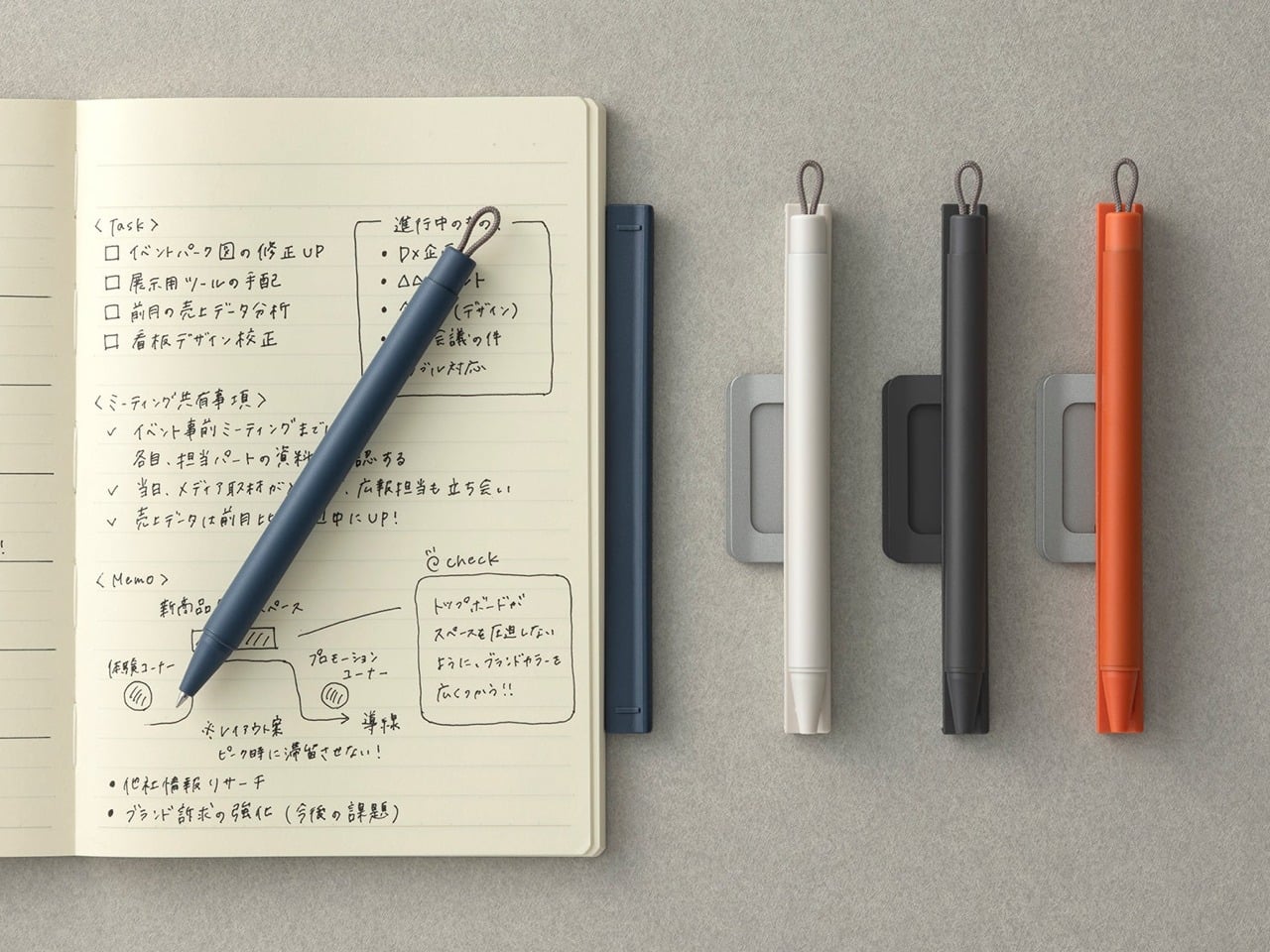
5. Inseparable Notebook Pen: Never Hunt for a Pen Again

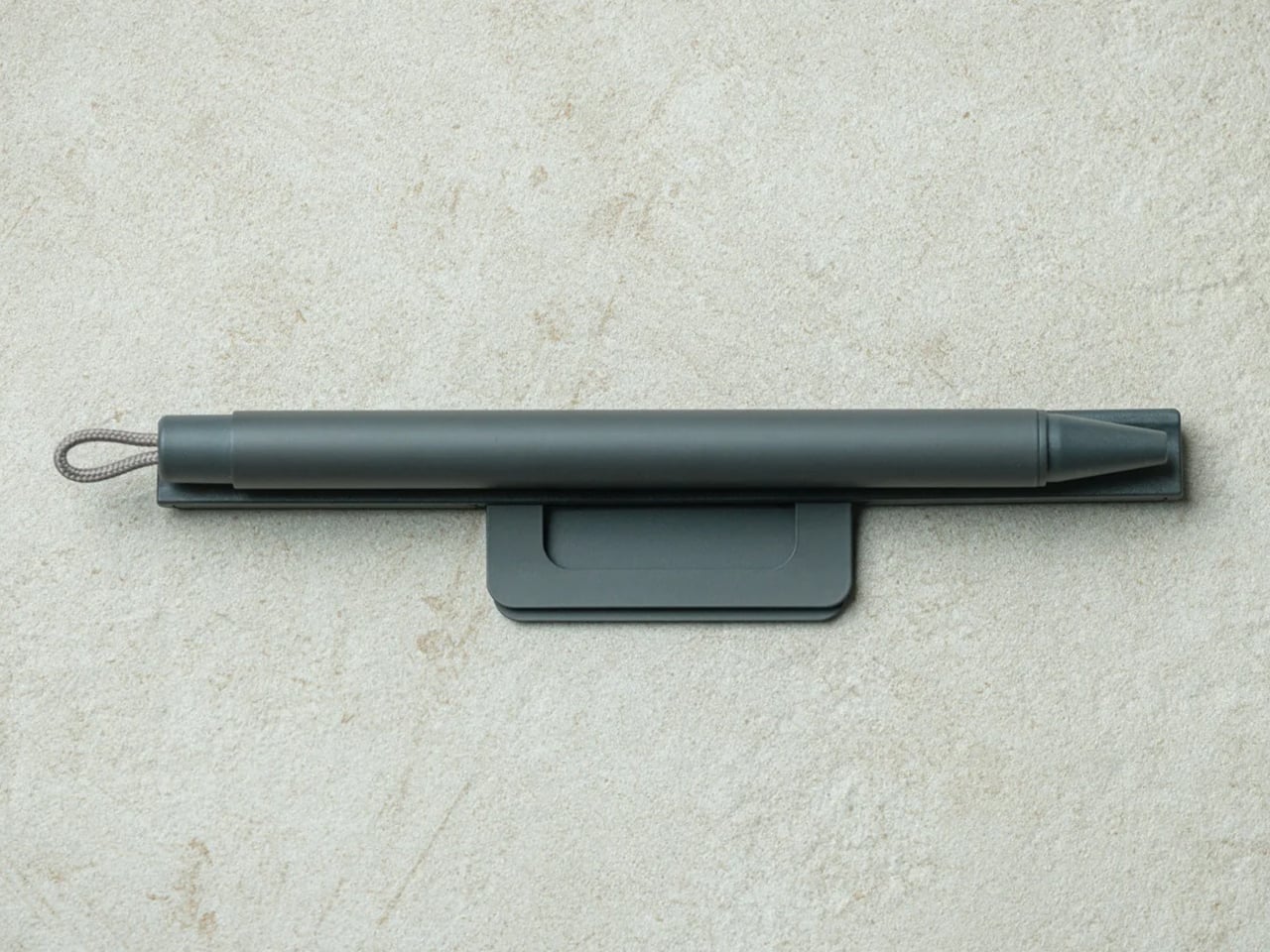
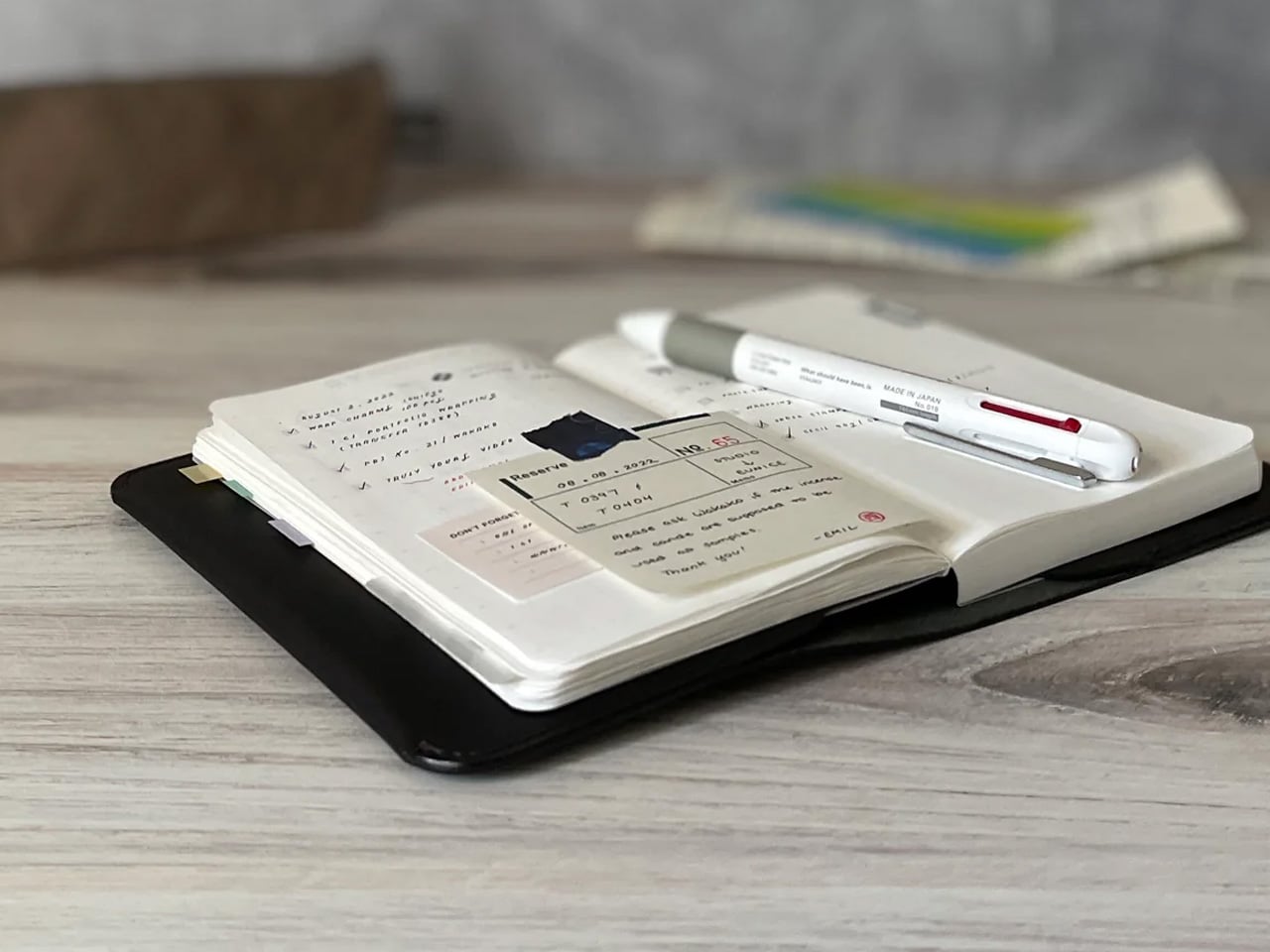
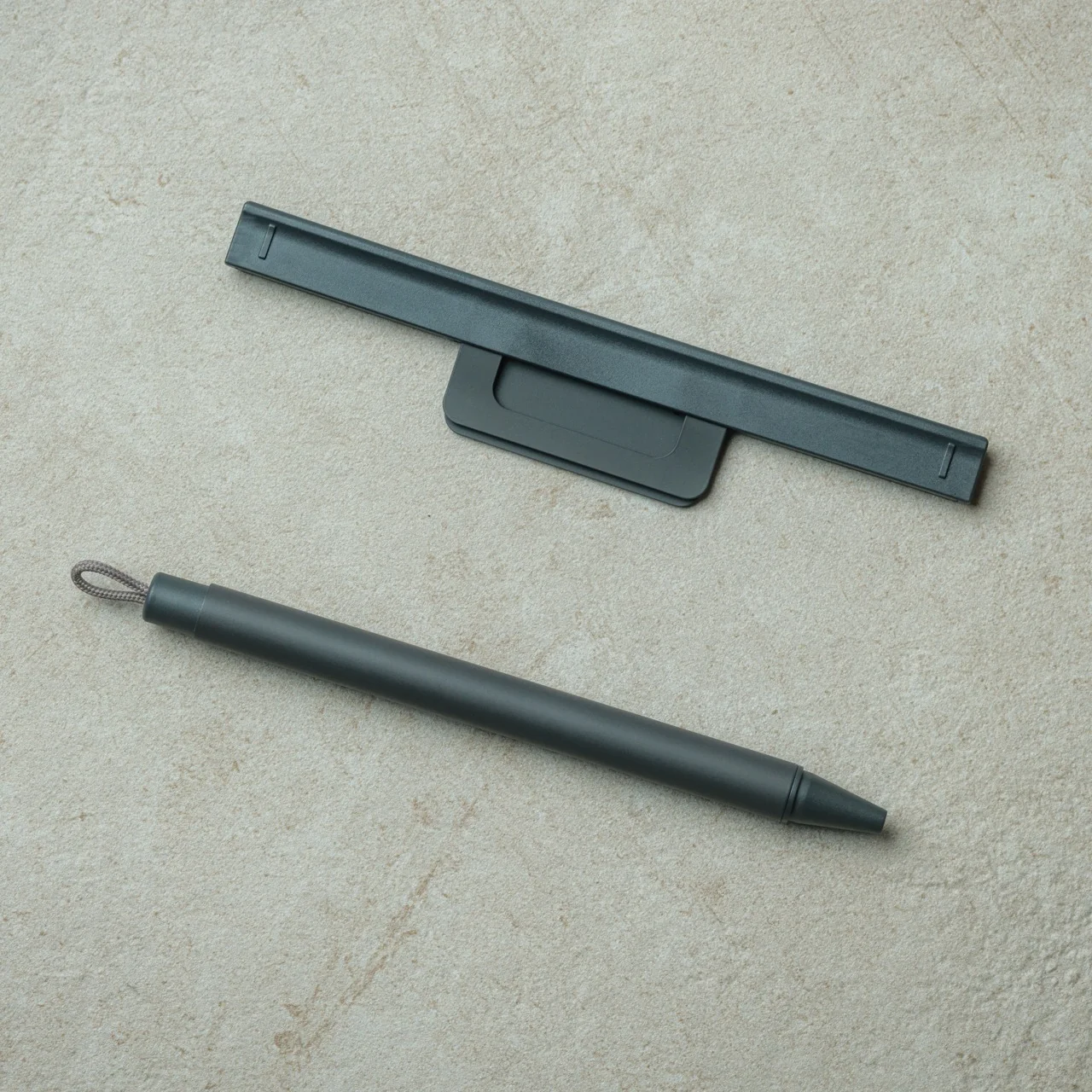
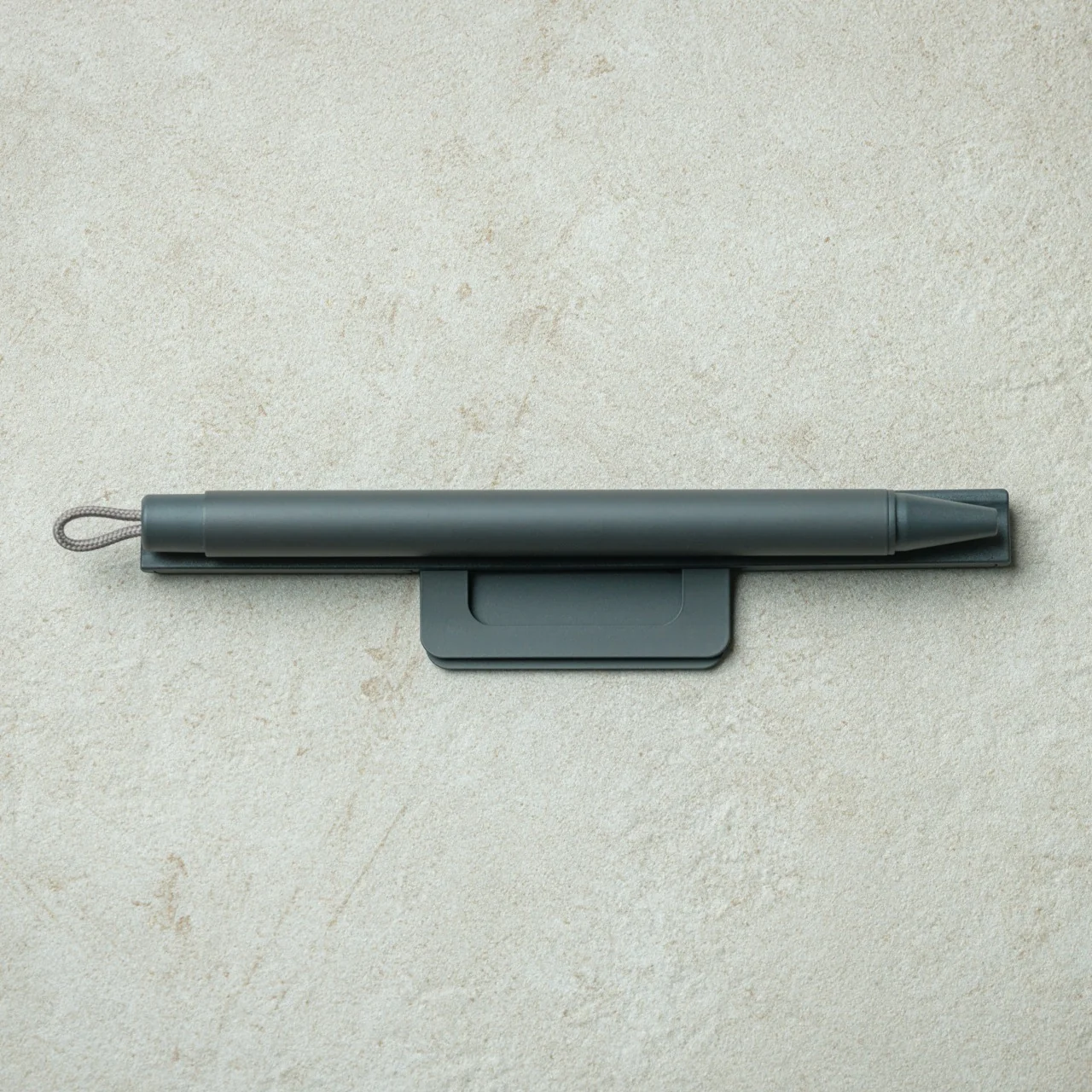
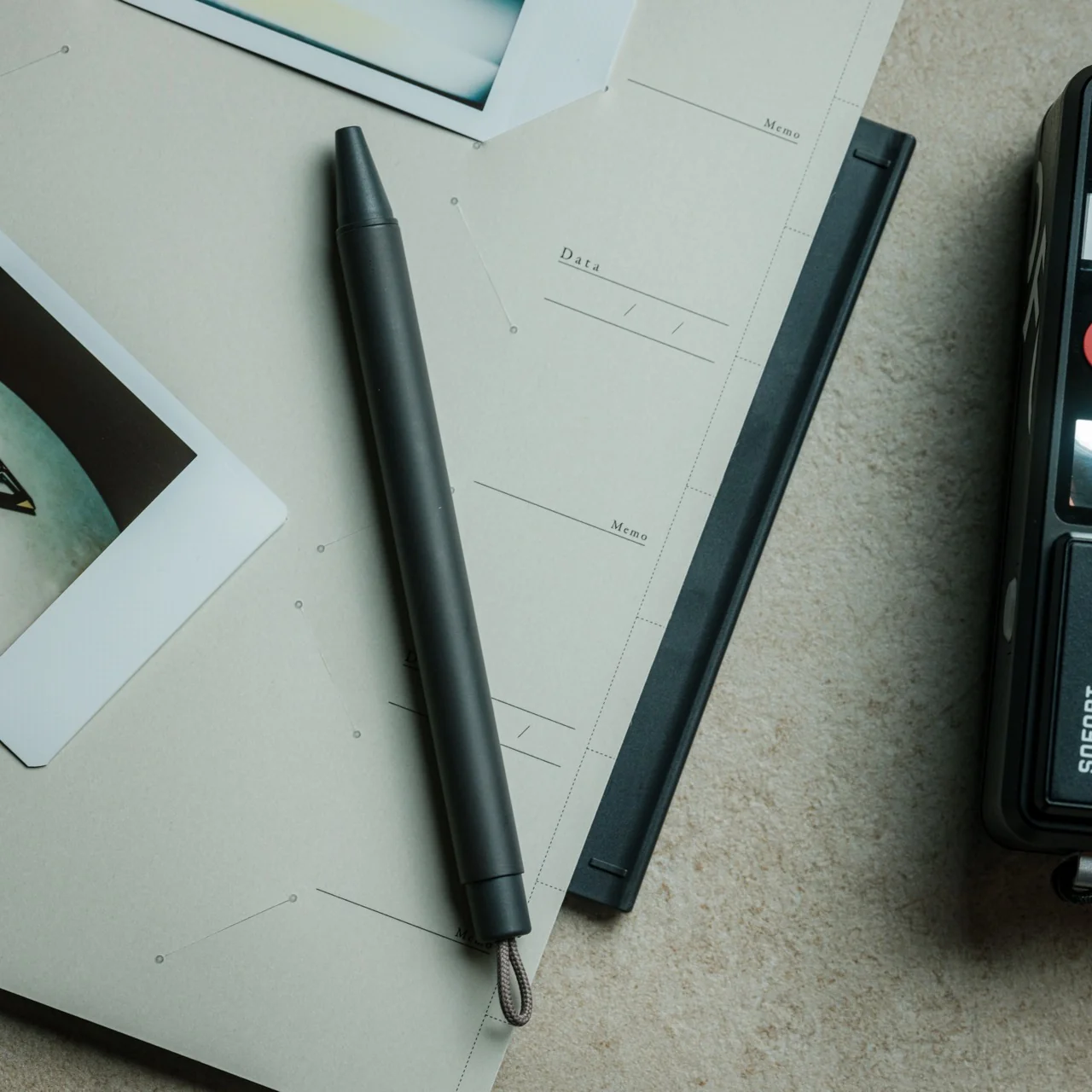
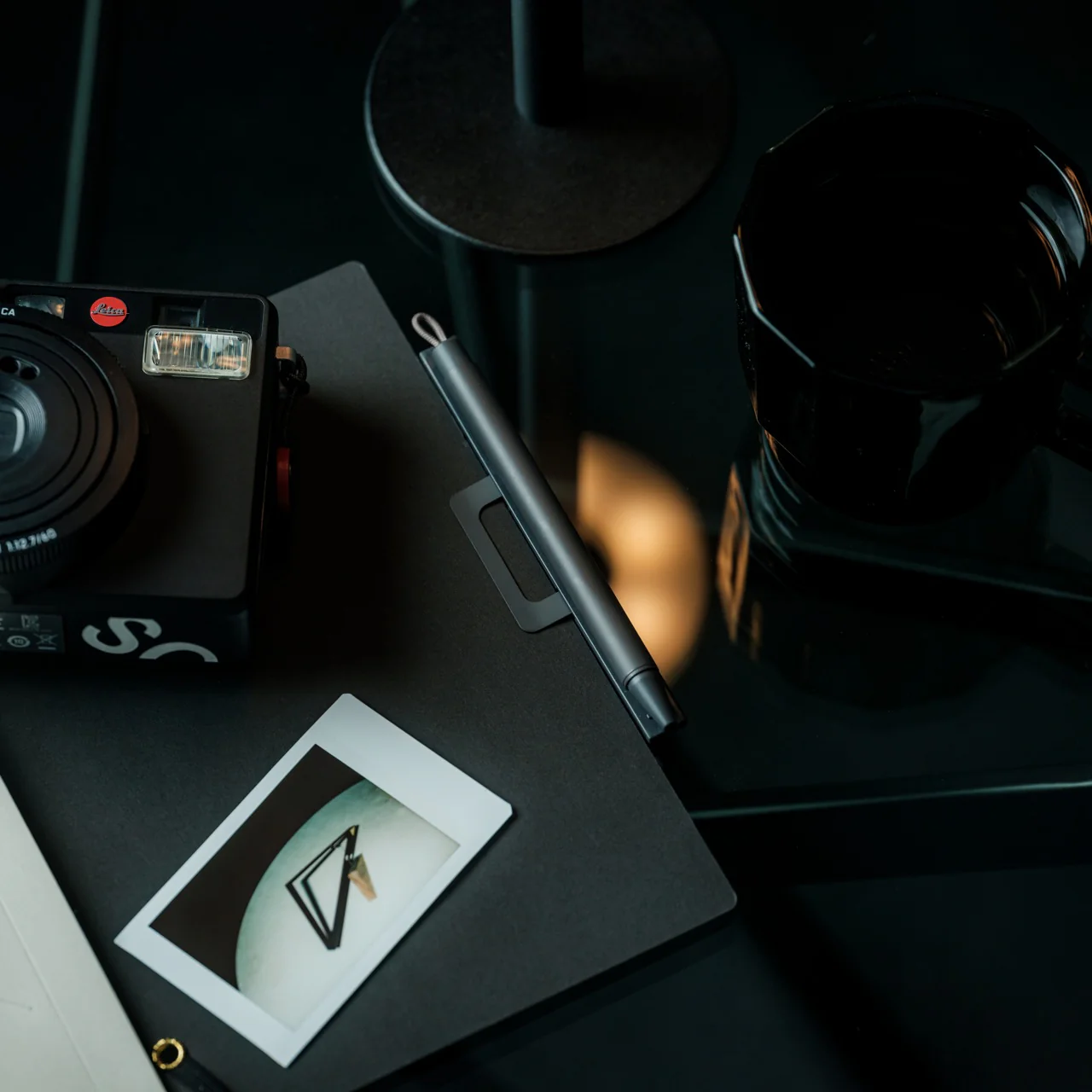
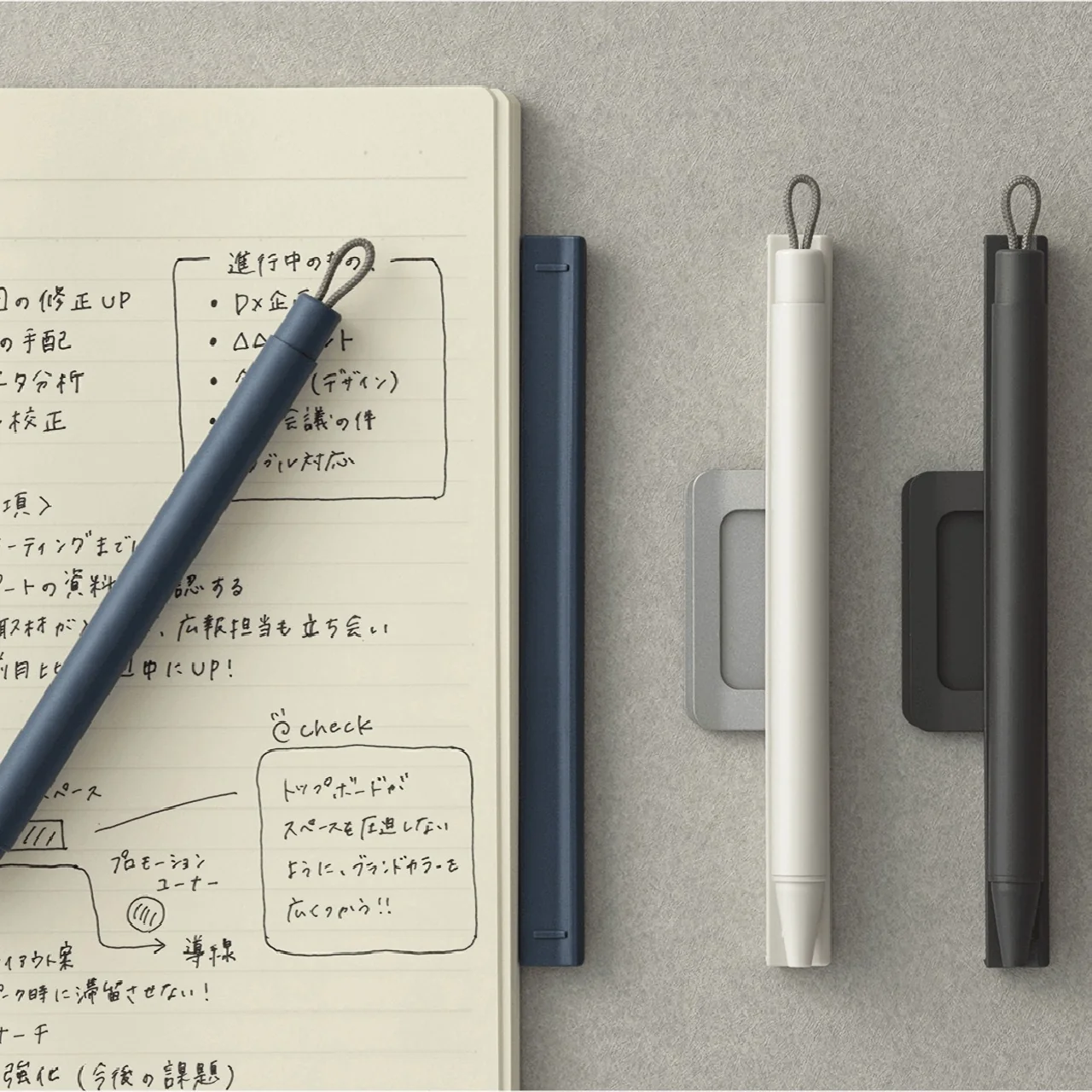
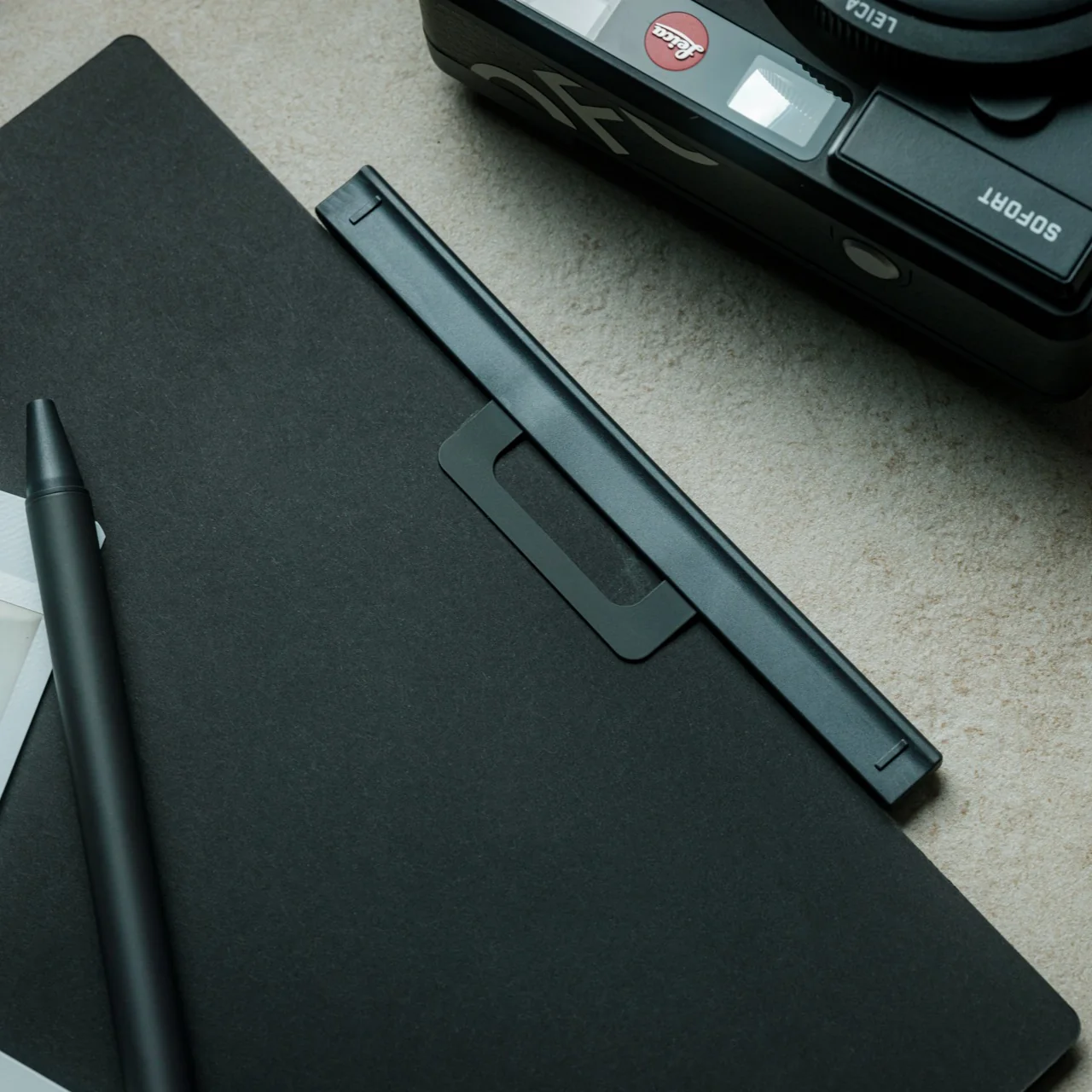
The friction of creativity often isn’t the idea—it’s the split second when you can’t find something to write with. Inspiration arrives during a walking tour, mid-conversation, or while half-asleep on a red-eye flight. By the time you’ve rummaged through your bag for a pen, the thought has scattered. The Inseparable Notebook Pen uses a magnetic clip that attaches securely to your notebook, ensuring your writing tool lives exactly where you reach for it.

The design focuses on seamless integration. A built-in silencer makes attaching and detaching the pen a quiet, satisfying gesture rather than a clumsy snap. The minimalist form fits any notebook style without visual clash, and the smooth ink flow handles everything from quick notes to detailed sketches. For digital nomads who alternate between typing and handwriting—brainstorming on paper before building in software—this pen becomes an extension of your process rather than something you have to think about.

Click Here to Buy Now: $19.95

What We Like

  • The magnetic clip ensures the pen is always exactly where your notebook is, eliminating lost-pen frustration.
  • The built-in silencer creates a refined, quiet attachment experience.
  • Minimalist design complements any notebook without stylistic compromise.
  • Smooth ink flow handles varied writing needs from rapid note-taking to careful sketching.

What We Dislike

  • The pen is designed specifically for notebooks with compatible magnetic areas, limiting versatility.
  • As a single pen solution, you’ll need backup options if the ink runs out mid-journey.

6. MagBoard Clipboard: Flexibility Without Binding

Traditional notebooks lock you into linear page order and permanent binding. That structure helps for continuous journals but frustrates project-based thinking where ideas need to be rearranged, removed, or reordered. MagBoard uses a magnet and lever mechanism to secure up to 30 loose sheets, letting you compose, decompose, and reorganize pages however your thinking demands. The hardcover backing means you can write standing, leaning against a wall, or anywhere without a stable surface.

For nomads juggling multiple projects, this flexibility becomes essential. Keep client notes separate until a meeting, then compile them in order. Sketch design concepts on individual sheets and arrange them spatially before committing to a sequence. Remove finished work without the orphaned pages that haunt traditional notebooks. The water-resistant cover handles the unpredictability of working outdoors or in transit, and the simple cleaning means coffee spills don’t become permanent damage.

Click Here to Buy Now: $45

What We Like

  • The magnetic lever system holds up to 30 sheets securely while allowing instant reorganization.
  • Hardcover design enables writing anywhere, even standing or without a desk surface.
  • Water-resistant and easy-to-clean materials protect your work in unpredictable environments.
  • Complete flexibility to add, remove, or rearrange pages matches project-based workflows.

What We Dislike

  • Loose sheets can be lost more easily than bound pages if not carefully managed.
  • The hardcover adds some weight compared to lighter, flexible notebooks.

7. Rolling World Clock: Time Zones at a Glance

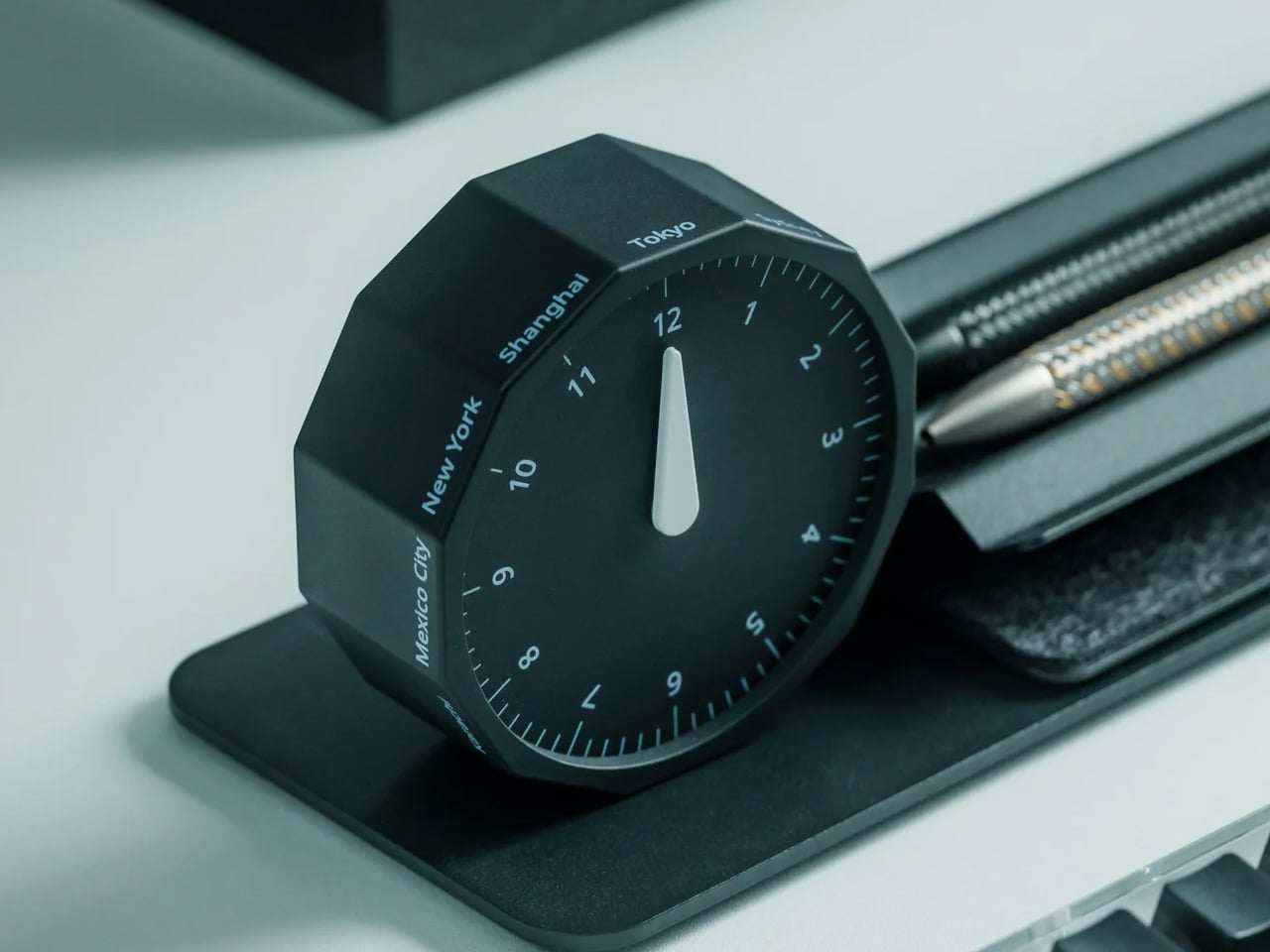
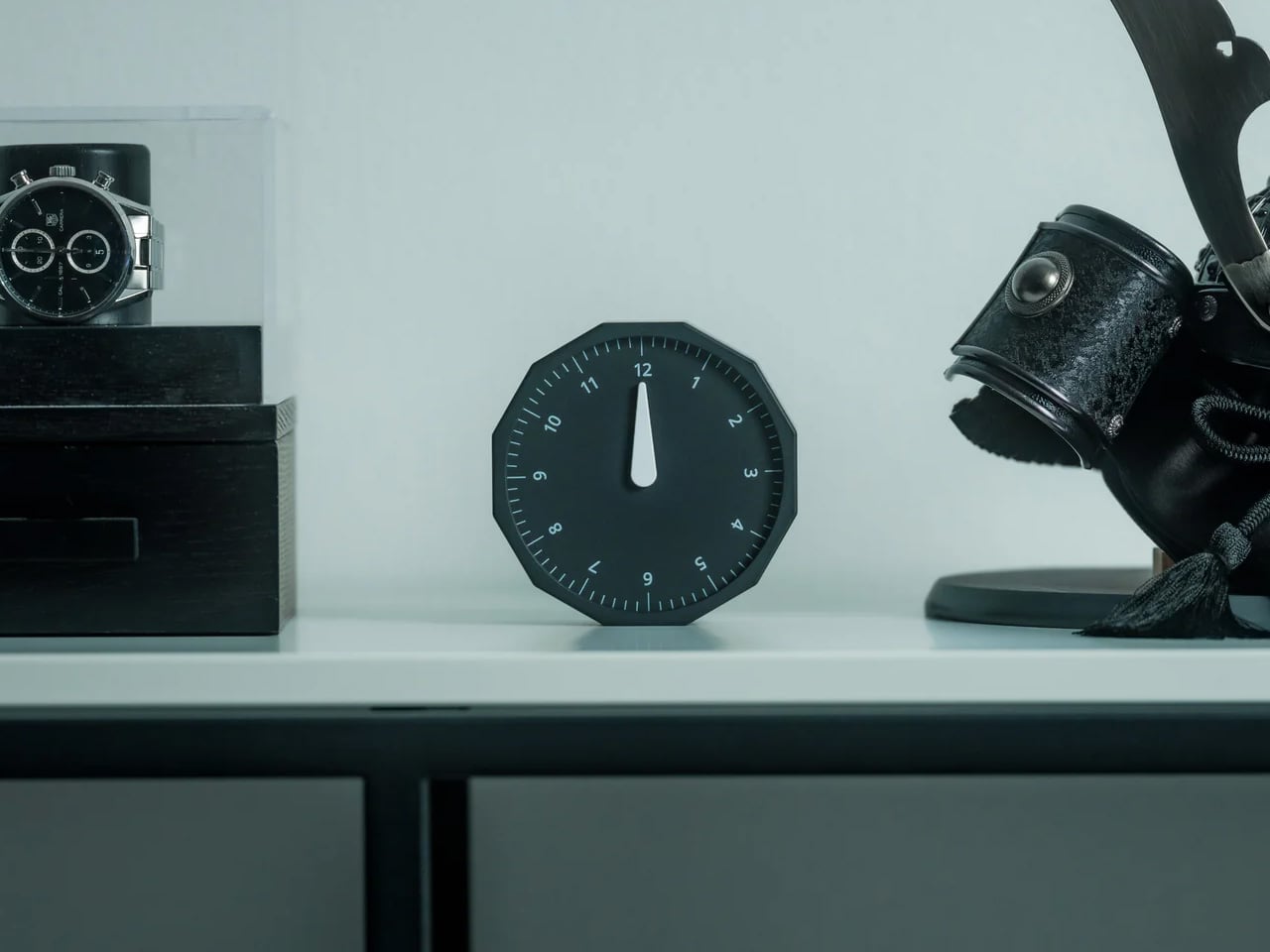
Working across continents means constantly calculating time zones. Is it too late to call your client in Tokyo? When does your team meeting in New York start relative to your current location in Cape Town? Digital clocks and apps provide answers, but they require pulling out your phone and breaking focus. The Rolling World Clock offers a tactile, immediate solution: a 12-sided desktop piece that displays the current time in major cities simply by rolling it to the desired timezone.

Each of the twelve sides represents a location—London, Paris, Moscow, Los Angeles, Karachi, Mexico City, New York, Shanghai, Tokyo, Sydney, Cape Town, and New Caledonia. A single hand shows the hour for whichever city faces up. The minimalist design eliminates digital distractions while adding a physical, almost playful element to time awareness. When you’re working from temporary desks and rented apartments, this small object becomes both functional tool and a reminder of the global nature of your work.

Click Here to Buy Now: $49

What We Like

  • The twelve-sided design covers major global time zones in one compact object.
  • Physical rolling creates a tactile, screen-free way to check international times.
  • Minimalist aesthetics work as both functional tool and desk decoration.
  • Available in black and white options to match different workspace styles.

What We Dislike

  • Limited to twelve preset cities, which may not include all the locations you coordinate with.
  • The single-hand design requires some interpretation compared to digital displays showing exact minutes.

Building Your Mobile Office

The nomadic workspace is personal, built piece by piece until it reflects exactly how you work rather than where. These seven gadgets share a common understanding: that portability and capability aren’t opposites. They fit into the rhythms of constant movement, solving the small frictions that accumulate when your office exists in a backpack. Connection without cables. Writing without searching. Time awareness without screens.

The best gear for digital nomads doesn’t announce itself. It disappears into your process, working so seamlessly you forget it’s there until you need it. Whether you’re coordinating across twelve time zones, capturing ideas before they evaporate, or creating focus in chaotic airports, these designs adapt to your location rather than constraining it. Your backpack becomes not just luggage but the architecture of your professional life, carefully curated for the work that matters wherever it happens.

The post 7 Best 2026 Gadgets & Tools Every Digital Nomad Needs in Their Backpack first appeared on Yanko Design.
This Bauhaus Pen Holder Has 2 Cones: One for Chaos, One for THE Pen

Most desk pen cups end up as graveyard storage for half-dead markers, random pencils, and that one pen you actually like, buried somewhere in the mix. The usual cylinder treats every tool the same, even though your hand instinctively knows which pen feels right for signing documents or writing notes that matter. A little hierarchy on the desk might do more to calm the visual noise than another storage bin that just shuffles the clutter around.

Konus is an aluminum pen holder that takes Bauhaus principles seriously rather than using them as decoration. Designed by Liam de la Bedoyere, it is built from two inverted cones, one hollowed out to hold everyday tools, the other reduced to a single aperture for a chosen pen. It is a personal project, which gives it permission to be a bit more pure and uncompromising than mass-market organizers that try to please everyone and end up feeling generic.

Designer: Liam de la Bedoyere

The larger cone becomes the communal container, swallowing the usual mix of pens and markers without complaint. The smaller cone acts like a tiny plinth for one special pen, the good ballpoint or fountain pen that always ends up lost under papers when you need it. This simple split creates a visual and functional hierarchy, your hand learning that the main cone is for grabbing anything, while the smaller one is where the favored pen lives, ready when you need it.

Konus is machined from aluminum with a satin finish that catches light softly rather than shouting for attention. The cork base keeps it from sliding on smooth desks and adds a bit of warmth against hard surfaces. Together, the cool metal and warm cork make it feel more like a small piece of desk architecture than a plastic cup, something you notice without it becoming a distraction or requiring constant attention.

A typical day with Konus on the desk means the main cone slowly fills with whatever pen you grabbed last, while the single aperture keeps your favorite anchored in one place. There is a small pleasure in always knowing where that pen is, and the object quietly nudges you to put it back in its slot instead of letting it disappear under papers or into a drawer where it will live for weeks before you find it again.

The cones embody that Bauhaus idea of form leading function without relying on labels or moving parts. Dropping tools into the big opening is effortless, but placing a pen into the small aperture feels deliberate, almost like docking a tiny instrument. Over time, that difference turns into a quiet ritual that organizes both the desk and your habits, making you slightly more intentional about which tools stay within reach and which ones can live in a drawer.

The post This Bauhaus Pen Holder Has 2 Cones: One for Chaos, One for THE Pen first appeared on Yanko Design.
Steel Is Dead: 5 Titanium Products That Just Replaced It in 2026

Titanium is no longer confined to aerospace or medical tools. You now see it shaping everyday product design, from consumer electronics to furniture and wearables. Its high strength-to-weight ratio lets you create thinner profiles without sacrificing durability. Resistant to corrosion, scratches, and heat, titanium extends product life while reducing the need for frequent replacement.

Beyond performance, titanium delivers a refined tactile and visual experience. Its surface interacts with light to produce subtle tonal shifts that feel precise yet understated. You get products that feel premium without excess. With its long lifespan and recyclability, titanium supports responsible design choices, aligning innovation with sustainability and long-term value.

1. Generative Titanium Design

Generative design combined with additive manufacturing is reshaping how you approach product structures. Instead of solid, overbuilt components, you can now create lightweight forms guided by algorithms. These digitally evolved geometries use material only where strength is required, resulting in efficient, organic profiles inspired by natural systems such as bone and cellular growth.

With 3D titanium printing technologies like laser powder bed fusion, you achieve precise stress-optimized components with minimal waste. Although production costs remain higher upfront, you benefit from reduced material usage, fewer assembly steps, and lower energy input, which delivers smarter products that balance performance, sustainability, and long-term value.

Apple’s move to 3D-printed titanium signals a deeper shift in product design, where manufacturing innovation directly shapes form, performance, and sustainability. By producing Apple Watch Ultra 3 and Series 11 cases through additive manufacturing using 100 percent recycled aerospace-grade titanium powder, Apple cuts raw material use by nearly half. The result feels identical to traditionally forged cases that are light, durable, and mirror-polished, yet it emerges from a process that builds only what the design truly needs.

Unlike subtractive machining, where excess titanium becomes waste, 3D printing constructs cases layer by layer with extreme precision. This unlocks design advantages beyond efficiency. Apple can now print internal textures that improve bonding between metal and plastic, enhancing waterproofing without adding bulk. The same approach enables thinner yet stronger components, such as the titanium USB-C enclosure in the iPhone Air. Here, sustainability is not an add-on, as it becomes the system through which better products are designed.

2. Anodic Color Effects

Titanium achieves color through anodic oxidation, an electrochemical process that alters its natural oxide layer rather than covering it. You are not applying paint, but you are changing how the material interacts with light. This creates rich hues—ranging from soft blues to deep violets—that shift subtly with angle and atmosphere, giving products a living, responsive surface.

These anodic finishes are not only expressive but enduring. They resist UV fading, corrosion, and salt exposure far better than conventional coatings. For product design, this means long-lasting color without maintenance or reapplication. You get visual depth, material honesty, and performance aligned in a single, permanent finish.

The AEON Ballpoint is defined by disciplined product design rather than visual flair. Its form is reduced to a clean metal cylinder, free of branding, excess seams, or decorative elements. The matte finishes are chosen for grip and durability, not ornament. Every curve is calibrated for the hand, making the object feel purposeful and precise from the first touch.

Function drives every detail. The front-end twist mechanism is hidden where the fingers naturally rest, allowing seamless operation without changing grip. Weight distribution is carefully balanced for sustained writing comfort, while subtle flat facets prevent the pen from rolling on a desk. Titanium

3. Smart Glazing

Titanium-doped glazing represents a new generation of high-performance glass designed to actively regulate indoor climate. By depositing ultra-thin layers of titanium dioxide onto glass surfaces, this technology achieves spectral selectivity—reflecting infrared heat while allowing visible light to pass through. The result is improved thermal efficiency, reduced heat gain, and lower dependence on mechanical cooling systems, even in buildings with expansive glass façades.

Beyond performance, this glazing supports biophilic design intent. Clear, untinted views preserve a visual connection with the landscape, allowing natural light to shape interior experience. The space remains thermally stable yet visually open, creating a calm, nature-connected interior envelope.

The Prism Titanium Beer Glass is designed to elevate the act of drinking through precision, material integrity, and restrained design. Crafted in Japan by Progress Design, the glass features an ultra-thin lining of 99.9% pure titanium, engineered to reduce bitterness and eliminate metallic aftertastes, allowing the true character of the beverage to emerge. Its flared rim enhances aroma and refines mouthfeel, while the aerospace-grade construction ensures durability, corrosion resistance, and long-term performance. Every element reflects a balance between advanced technology and traditional Japanese craftsmanship.

Visually understated yet distinctive, Prism’s light-reactive finish subtly shifts with movement, adding depth without excess. Etched motifs draw from enduring Japanese symbols of continuity and prosperity, reinforcing its sense of permanence and purpose. Designed to be used daily rather than displayed, the Prism Titanium Beer Glass prioritises clarity, tactility, and intention—transforming an ordinary pour into a composed, well-considered experience grounded in design excellence.

Click here to Buy the Prism Titanium Beer Glass: $99 

4. Minimalism Enabled by Strength

Titanium’s exceptional tensile strength enables a new approach to product and structural design defined by extreme slenderness and visual lightness. Components can be engineered with significantly reduced mass while maintaining high performance, allowing forms to appear almost invisible. This material efficiency supports refined proportions and uninterrupted lines, enhancing both functionality and aesthetic clarity.

By minimising structural bulk, design emphasis shifts towards spatial sequencing and visual flow. Slender supports and cantilevered elements create open, fluid compositions that maximise usable space while reinforcing a sense of weightlessness. This form of minimalism is not decorative but technical—rooted in advanced engineering and material intelligence, where precision-driven design allows the surrounding context and spatial experience to take precedence.

The TriPro Stand is a compact, precision-engineered multitool designed to deliver high functionality within a remarkably small form. Crafted from durable titanium alloy, it integrates 15 essential tools into a structure no larger than a finger while maintaining a lightweight profile of just 56 grams. Its design prioritises strength, corrosion resistance, and refined minimalism, demonstrating how advanced materials allow complex functionality without added bulk. The result is a discreet yet highly capable everyday carry tool that balances performance with visual restraint.

Each function is thoughtfully embedded to support practical, real-world use. Features such as the integrated phone stand, modular screwdriver system with magnetic bit storage, SIM ejector, pry bar, spoke wrench, folding scalpel, sharpener, and emergency glass breaker are engineered for reliability rather than novelty. Measuring 8 cm in length, the TriPro Stand exemplifies intelligent product design—where precision manufacturing, material efficiency, and purposeful detailing converge to create a durable and dependable multitool.

5. Exceptional Fatigue Resistance

Titanium demonstrates exceptional resistance to cyclic fatigue, enabling it to withstand repeated stress and loading without cracking, deforming, or compromising structural integrity. Unlike many conventional metals that gradually weaken under continuous use, titanium retains its mechanical performance across millions of stress cycles. This inherent endurance allows designers to rely on slimmer, more efficient components without sacrificing reliability.

Such fatigue resistance makes titanium particularly suitable for products intended for frequent handling and long-term use, including hinges, fasteners, wearables, tools, and precision mechanical interfaces. By maintaining consistent performance over time, titanium enhances safety, durability, and functional stability. Its ability to endure prolonged mechanical demand reinforces its position as a material defined not only by strength and lightness, but by sustained performance and endurance-led design.

Fasteners positioned in confined or obstructed spaces often reveal the shortcomings of conventional ratchets, which require a wide swing arc to function effectively. The Titaner EDC Ratchet System is engineered specifically to overcome this limitation through a precision 4-degree swing arc, enabling forward motion with minimal hand movement. Its compact ratchet core weighs just 29.8 grams, yet delivers clear tactile and audible feedback, ensuring accurate engagement even in environments where access and visibility are severely restricted.

Despite its minimal size, the system is designed for high torque and long-term durability. A dual-lock gear mechanism efficiently transfers force without play, while a flip-based directional control replaces fragile thumb levers, reducing complexity and potential failure points. The modular configuration allows the tool to be adapted into T-, L-, or I-shaped formats using extension bars, optimising leverage and reach. Manufactured from GR5 titanium with hardened M390 steel gear teeth, the Titaner EDC Ratchet System combines corrosion resistance, structural integrity, and refined mechanical performance in a compact, purpose-driven design.

The integration of titanium into product design marks a shift from visual heaviness to intelligent lightness. No longer perceived as cold or industrial, titanium functions as a responsive material that balances strength, precision, and refined tactility. Its use enables objects that are lighter, more durable, and visually restrained—defining a new language of design where performance, longevity, and elegance are seamlessly aligned.

The post Steel Is Dead: 5 Titanium Products That Just Replaced It in 2026 first appeared on Yanko Design.
Steel Is Dead: 5 Titanium Products That Just Replaced It in 2026

Titanium is no longer confined to aerospace or medical tools. You now see it shaping everyday product design, from consumer electronics to furniture and wearables. Its high strength-to-weight ratio lets you create thinner profiles without sacrificing durability. Resistant to corrosion, scratches, and heat, titanium extends product life while reducing the need for frequent replacement.

Beyond performance, titanium delivers a refined tactile and visual experience. Its surface interacts with light to produce subtle tonal shifts that feel precise yet understated. You get products that feel premium without excess. With its long lifespan and recyclability, titanium supports responsible design choices, aligning innovation with sustainability and long-term value.

1. Generative Titanium Design

Generative design combined with additive manufacturing is reshaping how you approach product structures. Instead of solid, overbuilt components, you can now create lightweight forms guided by algorithms. These digitally evolved geometries use material only where strength is required, resulting in efficient, organic profiles inspired by natural systems such as bone and cellular growth.

With 3D titanium printing technologies like laser powder bed fusion, you achieve precise stress-optimized components with minimal waste. Although production costs remain higher upfront, you benefit from reduced material usage, fewer assembly steps, and lower energy input, which delivers smarter products that balance performance, sustainability, and long-term value.

Apple’s move to 3D-printed titanium signals a deeper shift in product design, where manufacturing innovation directly shapes form, performance, and sustainability. By producing Apple Watch Ultra 3 and Series 11 cases through additive manufacturing using 100 percent recycled aerospace-grade titanium powder, Apple cuts raw material use by nearly half. The result feels identical to traditionally forged cases that are light, durable, and mirror-polished, yet it emerges from a process that builds only what the design truly needs.

Unlike subtractive machining, where excess titanium becomes waste, 3D printing constructs cases layer by layer with extreme precision. This unlocks design advantages beyond efficiency. Apple can now print internal textures that improve bonding between metal and plastic, enhancing waterproofing without adding bulk. The same approach enables thinner yet stronger components, such as the titanium USB-C enclosure in the iPhone Air. Here, sustainability is not an add-on, as it becomes the system through which better products are designed.

2. Anodic Color Effects

Titanium achieves color through anodic oxidation, an electrochemical process that alters its natural oxide layer rather than covering it. You are not applying paint, but you are changing how the material interacts with light. This creates rich hues—ranging from soft blues to deep violets—that shift subtly with angle and atmosphere, giving products a living, responsive surface.

These anodic finishes are not only expressive but enduring. They resist UV fading, corrosion, and salt exposure far better than conventional coatings. For product design, this means long-lasting color without maintenance or reapplication. You get visual depth, material honesty, and performance aligned in a single, permanent finish.

The AEON Ballpoint is defined by disciplined product design rather than visual flair. Its form is reduced to a clean metal cylinder, free of branding, excess seams, or decorative elements. The matte finishes are chosen for grip and durability, not ornament. Every curve is calibrated for the hand, making the object feel purposeful and precise from the first touch.

Function drives every detail. The front-end twist mechanism is hidden where the fingers naturally rest, allowing seamless operation without changing grip. Weight distribution is carefully balanced for sustained writing comfort, while subtle flat facets prevent the pen from rolling on a desk. Titanium

3. Smart Glazing

Titanium-doped glazing represents a new generation of high-performance glass designed to actively regulate indoor climate. By depositing ultra-thin layers of titanium dioxide onto glass surfaces, this technology achieves spectral selectivity—reflecting infrared heat while allowing visible light to pass through. The result is improved thermal efficiency, reduced heat gain, and lower dependence on mechanical cooling systems, even in buildings with expansive glass façades.

Beyond performance, this glazing supports biophilic design intent. Clear, untinted views preserve a visual connection with the landscape, allowing natural light to shape interior experience. The space remains thermally stable yet visually open, creating a calm, nature-connected interior envelope.

The Prism Titanium Beer Glass is designed to elevate the act of drinking through precision, material integrity, and restrained design. Crafted in Japan by Progress Design, the glass features an ultra-thin lining of 99.9% pure titanium, engineered to reduce bitterness and eliminate metallic aftertastes, allowing the true character of the beverage to emerge. Its flared rim enhances aroma and refines mouthfeel, while the aerospace-grade construction ensures durability, corrosion resistance, and long-term performance. Every element reflects a balance between advanced technology and traditional Japanese craftsmanship.

Visually understated yet distinctive, Prism’s light-reactive finish subtly shifts with movement, adding depth without excess. Etched motifs draw from enduring Japanese symbols of continuity and prosperity, reinforcing its sense of permanence and purpose. Designed to be used daily rather than displayed, the Prism Titanium Beer Glass prioritises clarity, tactility, and intention—transforming an ordinary pour into a composed, well-considered experience grounded in design excellence.

Click here to Buy the Prism Titanium Beer Glass: $99 

4. Minimalism Enabled by Strength

Titanium’s exceptional tensile strength enables a new approach to product and structural design defined by extreme slenderness and visual lightness. Components can be engineered with significantly reduced mass while maintaining high performance, allowing forms to appear almost invisible. This material efficiency supports refined proportions and uninterrupted lines, enhancing both functionality and aesthetic clarity.

By minimising structural bulk, design emphasis shifts towards spatial sequencing and visual flow. Slender supports and cantilevered elements create open, fluid compositions that maximise usable space while reinforcing a sense of weightlessness. This form of minimalism is not decorative but technical—rooted in advanced engineering and material intelligence, where precision-driven design allows the surrounding context and spatial experience to take precedence.

The TriPro Stand is a compact, precision-engineered multitool designed to deliver high functionality within a remarkably small form. Crafted from durable titanium alloy, it integrates 15 essential tools into a structure no larger than a finger while maintaining a lightweight profile of just 56 grams. Its design prioritises strength, corrosion resistance, and refined minimalism, demonstrating how advanced materials allow complex functionality without added bulk. The result is a discreet yet highly capable everyday carry tool that balances performance with visual restraint.

Each function is thoughtfully embedded to support practical, real-world use. Features such as the integrated phone stand, modular screwdriver system with magnetic bit storage, SIM ejector, pry bar, spoke wrench, folding scalpel, sharpener, and emergency glass breaker are engineered for reliability rather than novelty. Measuring 8 cm in length, the TriPro Stand exemplifies intelligent product design—where precision manufacturing, material efficiency, and purposeful detailing converge to create a durable and dependable multitool.

5. Exceptional Fatigue Resistance

Titanium demonstrates exceptional resistance to cyclic fatigue, enabling it to withstand repeated stress and loading without cracking, deforming, or compromising structural integrity. Unlike many conventional metals that gradually weaken under continuous use, titanium retains its mechanical performance across millions of stress cycles. This inherent endurance allows designers to rely on slimmer, more efficient components without sacrificing reliability.

Such fatigue resistance makes titanium particularly suitable for products intended for frequent handling and long-term use, including hinges, fasteners, wearables, tools, and precision mechanical interfaces. By maintaining consistent performance over time, titanium enhances safety, durability, and functional stability. Its ability to endure prolonged mechanical demand reinforces its position as a material defined not only by strength and lightness, but by sustained performance and endurance-led design.

Fasteners positioned in confined or obstructed spaces often reveal the shortcomings of conventional ratchets, which require a wide swing arc to function effectively. The Titaner EDC Ratchet System is engineered specifically to overcome this limitation through a precision 4-degree swing arc, enabling forward motion with minimal hand movement. Its compact ratchet core weighs just 29.8 grams, yet delivers clear tactile and audible feedback, ensuring accurate engagement even in environments where access and visibility are severely restricted.

Despite its minimal size, the system is designed for high torque and long-term durability. A dual-lock gear mechanism efficiently transfers force without play, while a flip-based directional control replaces fragile thumb levers, reducing complexity and potential failure points. The modular configuration allows the tool to be adapted into T-, L-, or I-shaped formats using extension bars, optimising leverage and reach. Manufactured from GR5 titanium with hardened M390 steel gear teeth, the Titaner EDC Ratchet System combines corrosion resistance, structural integrity, and refined mechanical performance in a compact, purpose-driven design.

The integration of titanium into product design marks a shift from visual heaviness to intelligent lightness. No longer perceived as cold or industrial, titanium functions as a responsive material that balances strength, precision, and refined tactility. Its use enables objects that are lighter, more durable, and visually restrained—defining a new language of design where performance, longevity, and elegance are seamlessly aligned.

The post Steel Is Dead: 5 Titanium Products That Just Replaced It in 2026 first appeared on Yanko Design.
The Pen That Went to the Moon Just Got a Tactical Upgrade

Remember when you were a kid and someone told you about the space pen? You know, the one that writes upside down, underwater, and in basically any condition imaginable because NASA needed something reliable for astronauts? Well, Fisher Space Pen just dropped a new version that makes their legendary writing instrument even more ridiculously practical, and honestly, I’m kind of obsessed.

Meet the Measure Twice, a bolt-action tactical pen that’s basically the Swiss Army knife of writing instruments. At $69, it’s not your average drugstore pen, but hear me out because this thing is genuinely clever.

Designer: Fisher Space Pen

First, let’s talk about that bolt-action mechanism. If you’ve ever fidgeted with a pen during a long meeting or phone call, you know the appeal of a good click. But this takes it to another level. The bolt-action deployment is smooth, satisfying, and way more robust than a standard clicker. It’s the kind of tactile experience that makes you actually want to use a physical pen in our increasingly digital world. Plus, it just looks cool. There’s something inherently appealing about that tactical aesthetic without it being over the top or trying too hard.

But here’s where it gets interesting. Fisher etched precision ruler markings right into the barrel of the pen. We’re talking both imperial measurements up to 3.5 inches and metric up to 9 centimeters. Think about how many times you’ve needed to measure something small and had to hunt around for a ruler or tape measure. Shopping for furniture online and need to visualize how big something is? Got it. Working on a craft project? Covered. Trying to figure out if that vintage frame will fit your photo? Done. It’s one of those features that seems almost too simple, but once you have it, you realize how often you actually need it.

The construction is pretty impressive too. Fisher switched from their traditional chrome-plated brass to anodized aluminum for this model. That means it’s lighter and more comfortable to carry all day, but still incredibly durable. The anodizing makes it resistant to scratches, corrosion, and impacts, so you can toss it in your bag or pocket without babying it. It’s designed to be used, not displayed on a shelf.

Now for the feature that really sets this apart: there’s a tungsten carbide glass breaker tip on the opposite end from the writing point. Yes, you read that right. This pen doubles as an emergency escape tool. In a car accident or emergency situation where you need to break a window, this could genuinely save your life. It’s the kind of thing you hope you never need, but knowing it’s there provides a weird sense of security. Plus, it speaks to the thoughtful design philosophy behind this pen. It’s not just about looking tactical or cool, it’s about actual functionality.

Of course, it still has all the legendary Space Pen technology that made the original famous. The pressurized ink cartridge writes upside down, works in extreme temperatures, functions underwater, and has a shelf life of over 100 years. That’s not marketing hype, that’s actual tested performance. These pens literally went to space and performed flawlessly in zero gravity.

What I really appreciate about the Measure Twice is how it represents a shift in how we think about everyday carry items. We’re constantly looking for ways to simplify what we carry, to have fewer, better things that do more. This pen nails that philosophy. It’s a precision writing instrument, a measuring tool, and an emergency device all in one sleek package that’s just over 5.5 inches long.

Fisher Space Pen took an icon and made it more relevant for 2026. The Measure Twice isn’t trying to replace your smartphone or be something it’s not. It’s just a really, really well-designed pen that happens to do a few extra things exceptionally well. And in a world of increasingly disposable products, there’s something genuinely appealing about a tool that’s built to last decades and actually earns its place in your pocket.

The post The Pen That Went to the Moon Just Got a Tactical Upgrade first appeared on Yanko Design.
This Pencil Sharpener Spins Like a Top and It’s Pure Genius

You know that moment when you find a perfectly ordinary object that someone has completely reimagined? That’s exactly what happened when I stumbled across Ferfereh, a pencil sharpener designed by Maryam Fallah that’s basically a spinning top in disguise. And honestly, it’s the kind of design that makes you wonder why no one thought of this before.

Let’s be real for a second. Pencil sharpeners are usually the most boring things on your desk. They sit there, doing their one job, looking completely utilitarian and forgettable. But Fallah decided to flip that script entirely. What if your pencil sharpener could also be a desk toy? What if the simple act of sharpening your pencil could bring a little joy to your workspace?

Designer: Maryam Fallah

The design itself is pretty striking. Picture a spinning top with those gorgeous, swooping curves that make you want to reach out and give it a whirl. The body comes in eye-catching color combinations like a deep blue that fades into vibrant orange, or sleek all-black and white versions. It’s the kind of object that doesn’t hide in your desk drawer but sits proudly on display, adding a pop of personality to your space.

But here’s where it gets really interesting. This wasn’t just a “wouldn’t it be cool if” kind of concept. Fallah spent six months developing this as a student project at Haute École Arc in Switzerland, studying industrial design engineering. And the process? It’s honestly fascinating. She explored tons of different shapes, from what looks like traditional spinning tops to more abstract forms, even some that resembled swans and other playful figures. The sketches show just how many directions this could have gone.

The final design landed on that iconic top shape for good reason. It had to work as both a functional pencil sharpener and an actual spinning toy. That meant getting the engineering just right. The sharpener is made of two main pieces that screw together, with a reservoir inside to catch all those pencil shavings. Simple enough, right? But the tricky part was making sure it could actually spin properly.

Through 3D printing prototypes and testing, Fallah discovered that the weight of the metal sharpening mechanism and its position affected how well the top would rotate. The pencil and sharpener weren’t symmetrically placed inside, which threw off the balance. Even the slope and overall shape had a major impact on performance. So she dove into actual engineering equations used for spinning tops to optimize the design. After multiple rounds of prototypes, she landed on a form that spins beautifully.

What I love about this project is how it challenges our assumptions about everyday objects. We’ve been conditioned to think that tools should look like tools, that function and fun are separate categories. But why? Your desk is your creative space, your thinking zone. Why shouldn’t the objects on it spark a little delight?

There’s something refreshing about seeing a designer take a mundane object seriously enough to give it this much attention. The photos show Ferfereh sitting on a clean, modern desk next to notebooks and glasses, looking completely at home. You can imagine giving it a spin while you’re thinking through a problem or just taking a mental break. It transforms a routine task into a moment of play.

This kind of thoughtful design speaks to a larger trend we’re seeing in contemporary product design. People want objects that do more than just function. They want things that feel good to use, that have personality, that make their spaces more interesting. Ferfereh delivers on all fronts. It sharpens your pencils effectively while also serving as a kinetic desk sculpture that invites interaction. Whether you’re a designer, a student, someone who still loves the analog pleasure of writing with actual pencils, or just a person who appreciates clever design, Ferfereh hits that sweet spot. It’s practical without being boring, playful without sacrificing function, and beautiful enough to make you rethink what a simple desk accessory can be.

The post This Pencil Sharpener Spins Like a Top and It’s Pure Genius first appeared on Yanko Design.
5 Best Desk Accessories to Reset Your Work-From-Home Setup in January 2026

January arrives with its familiar promise of renewal, and your work-from-home setup deserves the same attention as your fitness goals or morning routines. The desk where you spend eight hours daily becomes more than furniture—it transforms into the command center of your productivity, creativity, and professional presence. After months of accumulated cable chaos, scattered pens, and makeshift arrangements, the new year offers the perfect excuse to reimagine your workspace with intention.
The right desk accessories don’t just organize; they elevate your entire work experience through thoughtful design and purposeful engineering. These five pieces represent the intersection of form and function, where premium materials meet clever problem-solving. From levitating pens that spark creative breaks to monitor stands that finally solve the Mac mini placement puzzle, each accessory addresses a specific pain point while adding visual sophistication to your desk landscape.

1. Alogic Aspekt Omni Fold Stand

Apple’s Mac mini has always been a spatial enigma—too beautiful to hide away, yet too awkward to display properly. The little computing powerhouse typically ends up pushed to the side with cables sprawling in every direction, never quite integrating into your desk aesthetic. Alogic spotted this design gap and responded with the Aspekt Omni Fold Stand, a monitor stand that elegantly solves the Mac mini placement problem by building its home directly into the base.

The engineering here feels revelatory in its simplicity. Rather than creating another shelf or separate mount, Alogic carved a precision groove into their premium monitor stand specifically calibrated for the M4 Mac mini. This transforms your setup into a modular iMac where computer and display unite visually while remaining independently upgradeable. The stand eliminates cable clutter by centralizing your hub, while the aluminum construction matches Apple’s design language perfectly. Starting your year with this level of spatial organization creates a foundation for everything else on your desk.

What We Like

  • Transforms the Mac mini and monitor into a cohesive all-in-one aesthetic.
  • Precision-engineered groove prevents the computer from sliding or shifting.
  • Centralizes cables and ports for a cleaner desk appearance.
  • Premium aluminum construction matches Apple product quality.

What We Dislike

  • Specifically designed for the Mac mini limits universal appeal.
  • Premium materials result in a higher price point than basic stands.

2. FoldLine Pen Roll

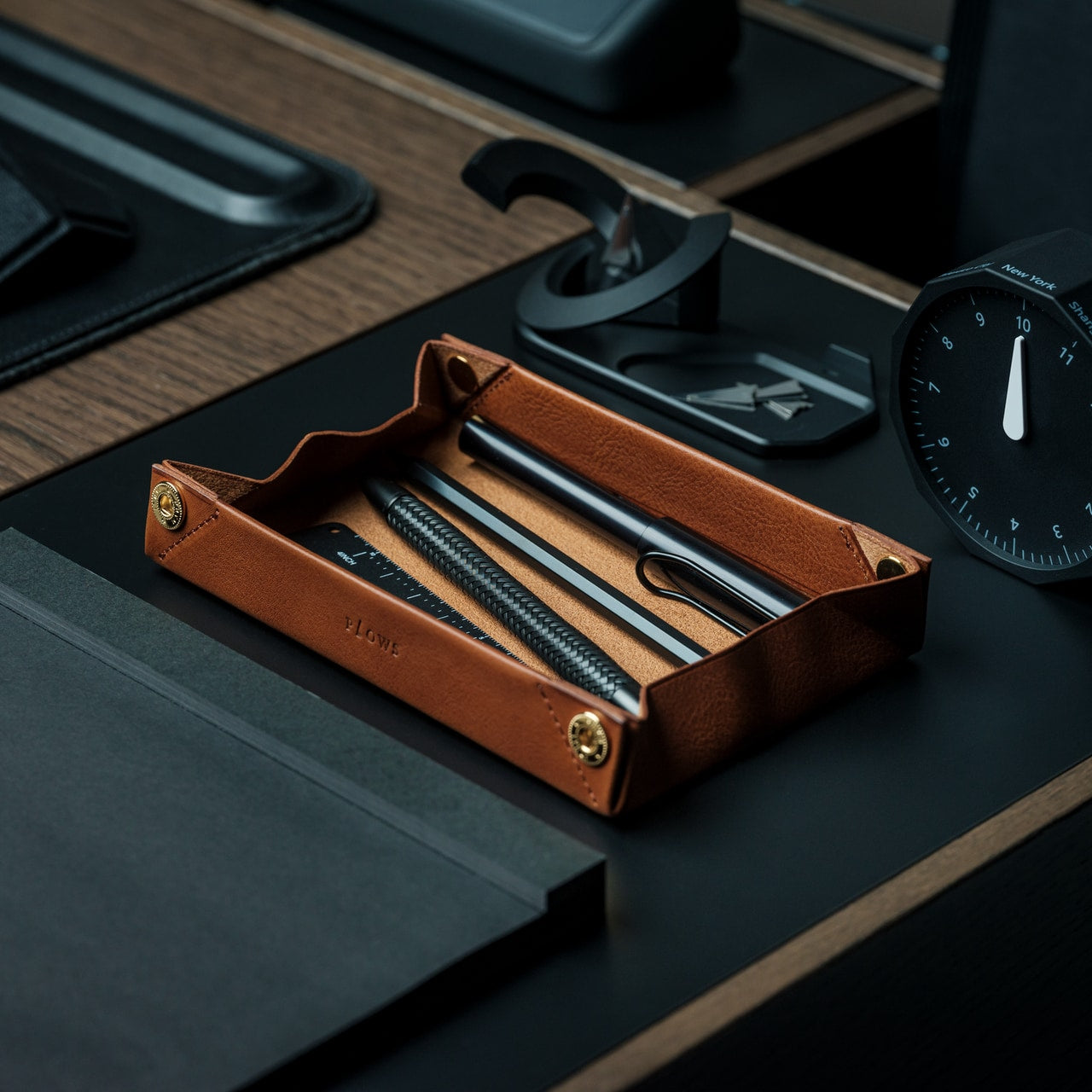
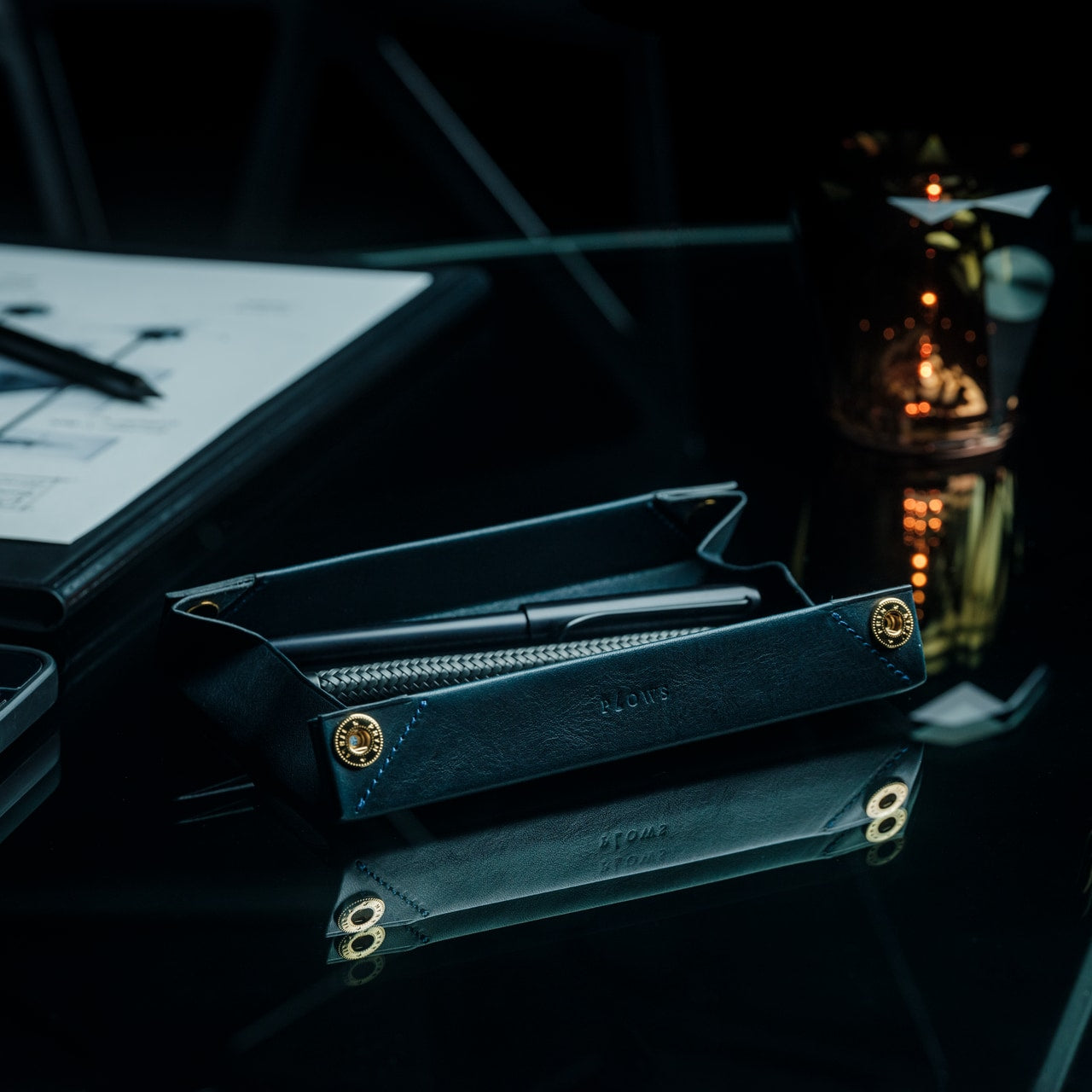
Digital tools dominate our workflows, yet the ritual of putting pen to paper remains irreplaceable for sketching ideas, signing documents, or journaling thoughts. The FoldLine Pen Roll recognizes this enduring need and transforms pen storage from utilitarian afterthought into an intentional design object. Crafted from a single piece of Italian leather, this isn’t merely a case—it’s a portable writing station that unfolds into a defined work surface wherever you land.

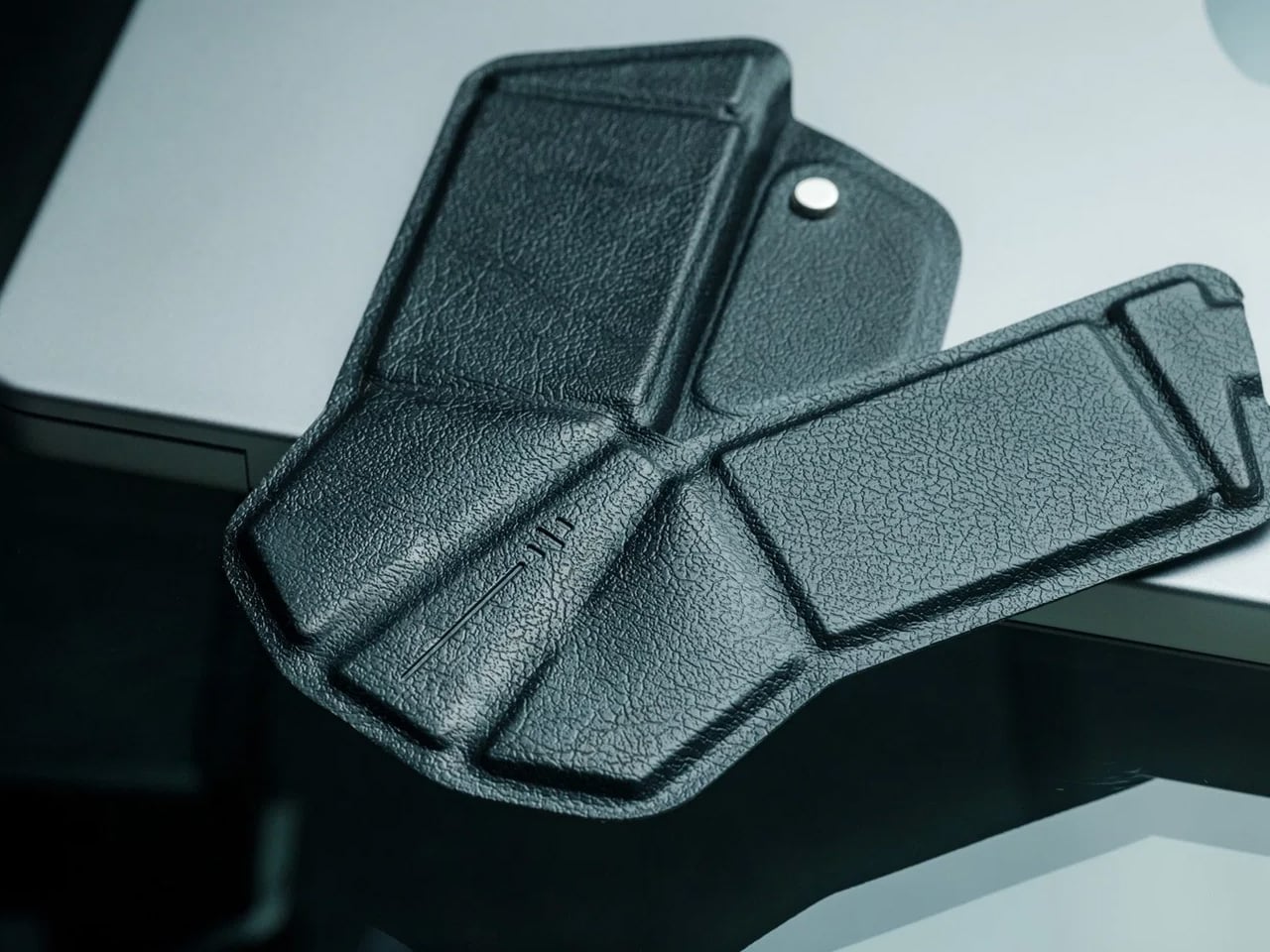
The origami-inspired geometry creates natural compartments without stitching or partitions. Your pens nestle into folded leather channels that prevent rattling and scratching; even metal-bodied instruments remain separated and protected. Opening the roll becomes a small ceremony that signals transition into focused work mode, whether you’re at a café table or hotel desk. The leather develops character through use, aging beautifully while maintaining structure. Resetting your desk for January means honoring analog tools with the same design consideration you’d give your laptop or monitor.

Click Here to Buy Now: $135.00

What We Like

  • Single-piece Italian leather construction ensures durability and elegance.
  • Unfolds into a stable tray that defines a workspace on any surface.
  • Natural folding system protects pens without scratches or noise.
  • Compact form travels easily in bags without adding bulk.

What We Dislike

  • Leather requires occasional conditioning to maintain suppleness.
  • Limited capacity suits curated pen collections rather than large inventories.

3. ClearMind Kendama

Desk accessories typically focus on productivity optimization, but sustained focus requires deliberate breaks that refresh your mind without derailing concentration. The ClearMind Kendama from Tokyo Kendama introduces a physical skill toy to your workspace, offering three-minute mental resets between video calls or during creative blocks. This traditional Japanese toy—a wooden handle connected to a ball—challenges hand-eye coordination while providing satisfying tactile feedback that screens simply cannot deliver.

Tokyo Kendama recalibrated the classic design specifically for modern desk use. Larger cups make landing tricks more achievable, building confidence rather than frustration during brief breaks. The bearing system minimizes string twists, maintaining smooth operation throughout the day. The balanced weight distribution creates precise movements that feel meditative rather than chaotic. Keeping the ClearMind Kendama within reach establishes a healthier relationship with breaks, replacing endless phone scrolling with intentional physical engagement that genuinely refreshes your attention span for the next task.

Click Here to Buy Now: $59.00

What We Like

  • Physical skill development provides genuine mental breaks from screens.
  • Larger cups and recalibrated balance increase success rates for beginners.
  • The bearing system prevents string tangles during extended use.
  • Compact desktop footprint requires minimal space when not in use.

What We Dislike

  • The initial learning curve may frustrate users seeking immediate gratification.
  • Wooden construction shows wear marks from repeated trick attempts.

4. OrigamiSwift Folding Mouse

Laptop trackpads serve their purpose, but precision work demands a proper mouse—a truth that becomes problematic when your workspace shifts between home office, coffee shops, and coworking spaces. The OrigamiSwift Folding Mouse solves this portability paradox by delivering full-size comfort and control in a device that collapses completely flat. Inspired by origami’s transformation principles, this Bluetooth mouse adapts to your location rather than forcing workspace compromises.

The folding mechanism activates in under half a second with a simple flip, springing the mouse to life immediately. At just 40 grams, it disappears into your bag or pocket until needed, yet the ergonomic shape feels substantial and natural during extended work sessions. The design acknowledges that January resolutions often include workspace flexibility—maybe you’re committing to working from different environments or finally embracing that digital nomad dream. OrigamiSwift ensures your tools match your ambitions, providing desktop precision regardless of where you unfold your laptop.

Click Here to Buy Now: $79.00

What We Like

  • Folds completely flat for effortless transport in any bag.
  • Full-size ergonomic comfort prevents hand fatigue during long sessions.
  • Instant 0.5-second activation from folded to functional state.
  • Ultra-lightweight 40-gram construction adds negligible travel weight.

What We Dislike

  • The folding mechanism represents a potential long-term durability concern.
  • Bluetooth connectivity requires occasional battery recharging.

5. Levitating Pen

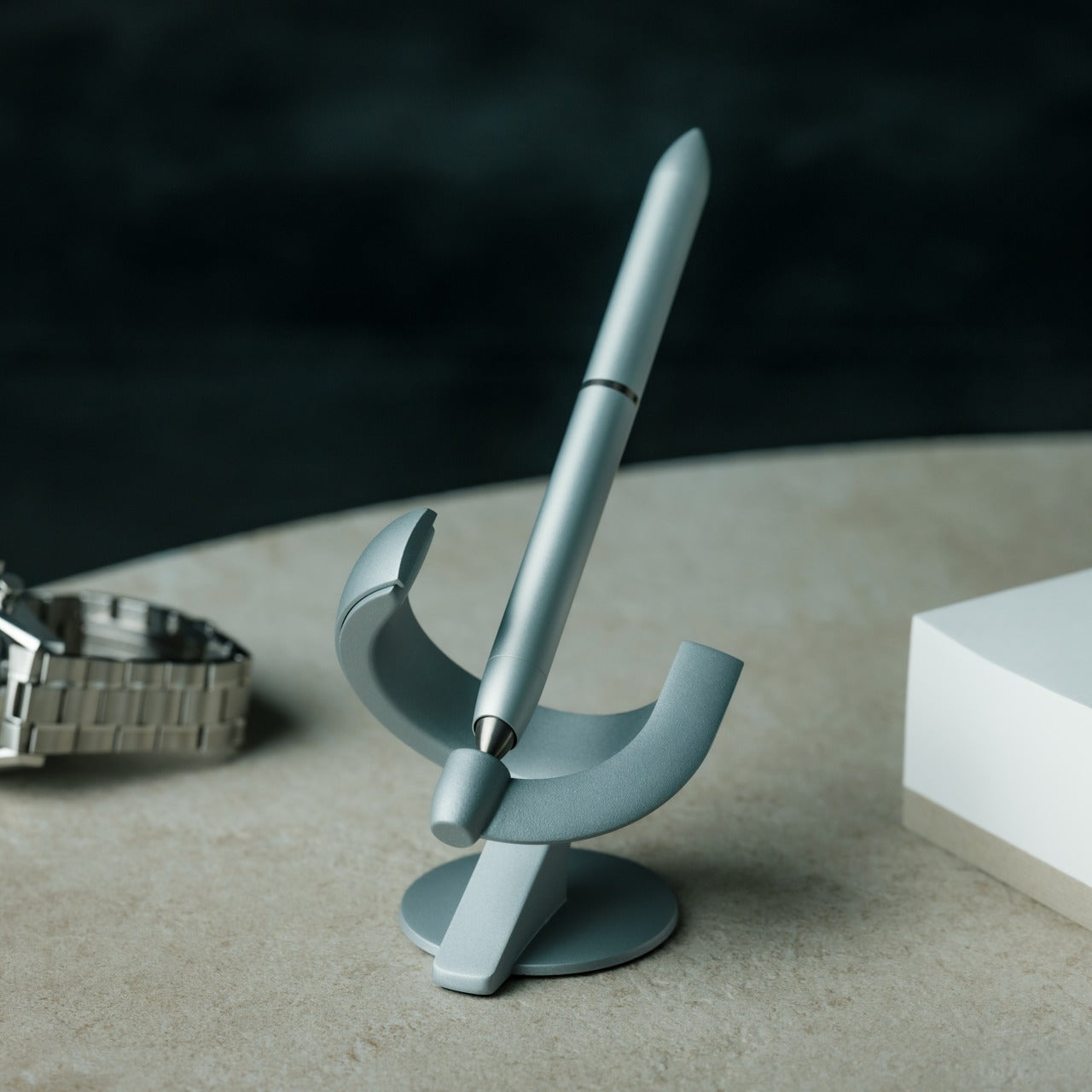
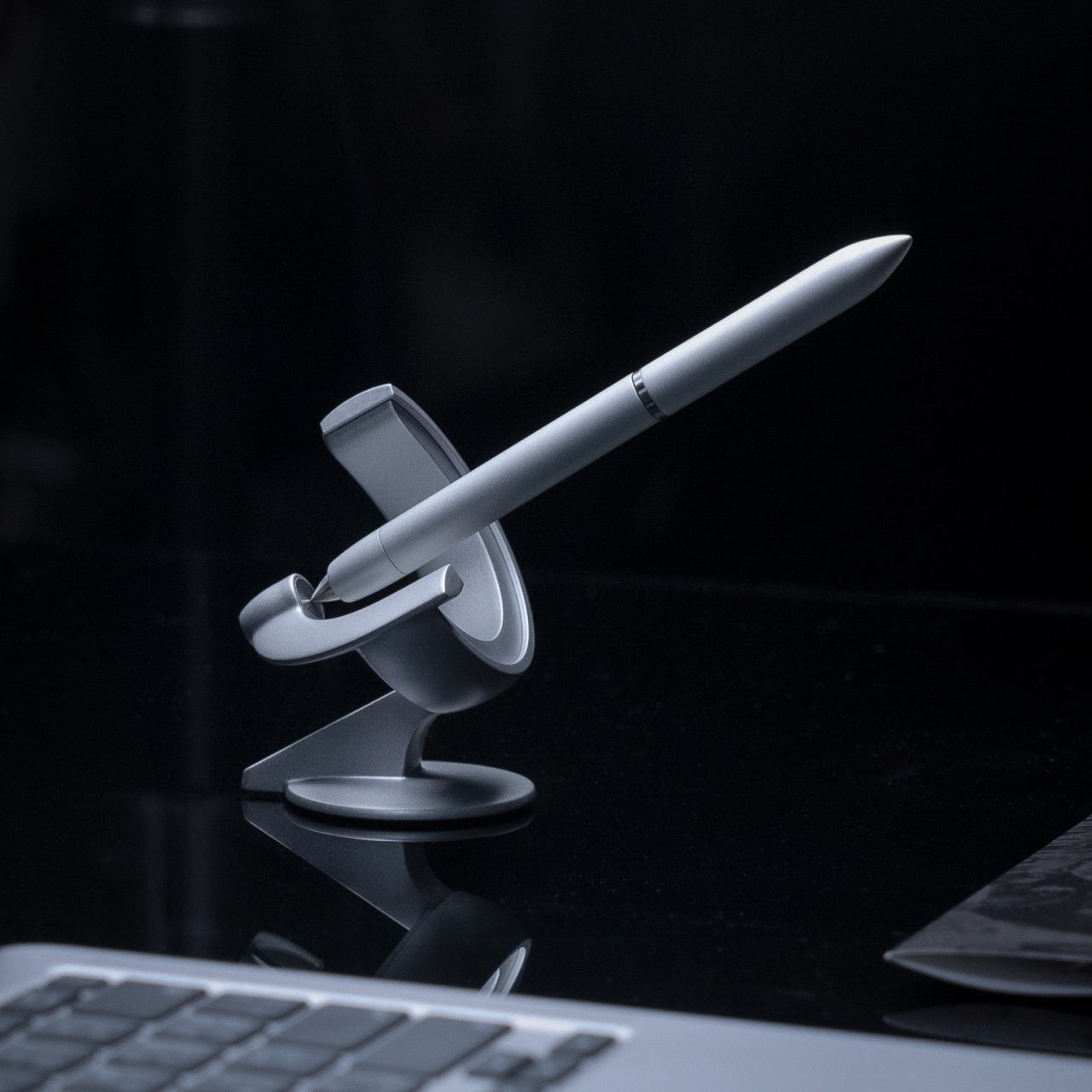
Every desk needs a conversation piece that transcends pure utility, an object that sparks curiosity and provides momentary wonder during grinding workdays. The Levitating Pen achieves this through magnetic engineering that suspends the pen vertically in mid-air without batteries or electronics. The precision-machined pedestal creates a magnetic field perfectly calibrated to balance the pen, transforming a writing instrument into a kinetic sculpture that commands attention on any desk surface.

Manufactured using CNC machining with tolerances under 0.1mm—the same facility producing Apple products—this pen demonstrates obsessive attention to detail. The Swiss-made ballpoint cartridge ensures writing performance matches the engineering spectacle. Beyond aesthetics, the levitating mechanism serves a practical purpose: taking brief mental breaks by spinning the pen, watching its hypnotic wobble for thirty seconds before returning refreshed to your task. Starting January with this level of design consideration signals your commitment to a workspace that inspires rather than merely functions.

Click Here to Buy  Now: $79.00

What We Like

  • Magnetic levitation creates a mesmerizing desk centerpiece without power requirements.
  • High-precision CNC manufacturing ensures reliable hovering performance.
  • Swiss ballpoint cartridge delivers a smooth, professional writing experience.
  • Spinning motion provides meditative micro-breaks during intensive work.

What We Dislike

  • The pedestal requires permanent desk space that cannot be repurposed.
  • Premium manufacturing process results in significant investment cost.

Resetting Your Workspace Intentionally

The desk accessories you choose reveal your priorities and shape your daily experience more than most people realize. These five pieces represent different facets of the modern work-from-home reality: spatial organization, analog appreciation, mental refreshment, location flexibility, and design inspiration. Each addresses specific pain points while elevating your workspace beyond pure function into something that genuinely sparks joy during those long January afternoons.

Resetting your desk for the new year isn’t about buying everything at once—it’s about identifying which aspect of your current setup drains energy rather than creating it. Maybe you’re drowning in cable chaos around your Mac mini, or perhaps you’re scrolling through your phone during breaks when your mind needs actual engagement. Start with the accessory that solves your most persistent frustration, then build from there as your workspace evolves throughout the year.

The post 5 Best Desk Accessories to Reset Your Work-From-Home Setup in January 2026 first appeared on Yanko Design.