This Rotating Titanium Keychain Glows for 25 Years Without a Battery

Most everyday carry accessories are built on compromise. Flashlights need batteries. Multi-tools go through pockets without ever being opened. Tiny gadgets get charged for a few days, forgotten about, and eventually lost to a drawer somewhere. The smaller something is, the more disposable it tends to feel, and the less likely it is to stick around long enough to actually earn its place on your keys.

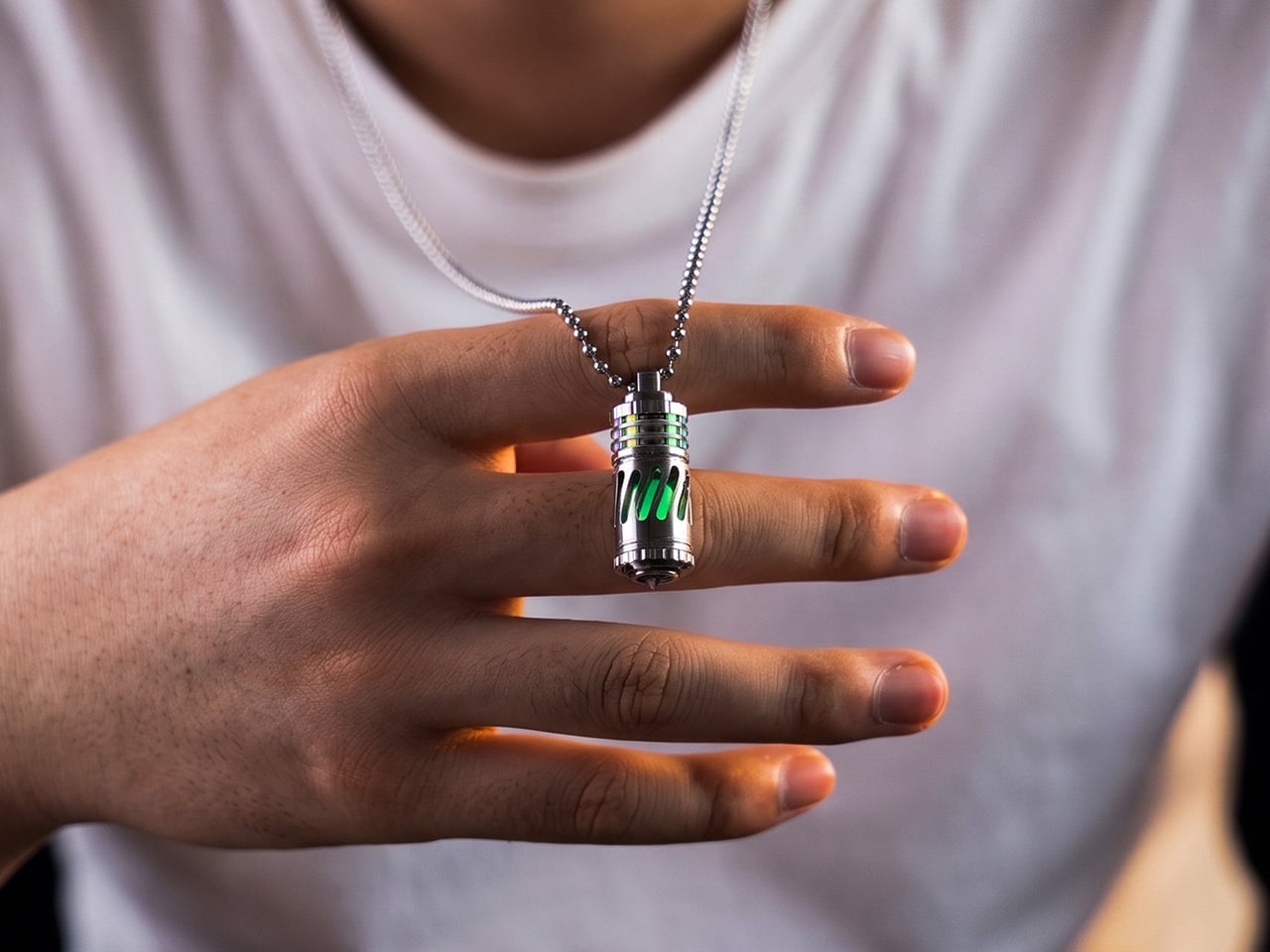
The SpinTi is a different kind of answer to that problem. Machined from Grade 5 titanium and measuring just 35mm at 8g, it’s a rotating tritium keychain that doesn’t need a power source, battery replacements, or a switch to activate. Its glow is passive and constant, driven by the natural properties of the tritium vials sealed inside. Once it’s on your keychain, it simply does its thing.

Designer: COMANDI

Click Here to Buy Now: $43 $59 (27% off). Hurry, only 98/100 left! Raised over $52,000.

At 8g, it’s as light as a single credit card, and its 35mm frame is shorter than an AA battery. You’d clip it to your keys, toss it in your bag, or hang it from a zipper and forget about it for weeks. Then one night, in a dark room or a pitch-black campsite, your hand finds the keys, and there it is, that quiet, steady glow.

What sets SpinTi apart from other tritium markers is that spinning body. The body rotates on a solid-state pivot with no bearings, while the core is secured by a full-metal compression system instead of rubber O-rings. It’s the kind of thing your fingers gravitate toward during a long commute or a slow afternoon, giving it a secondary life as a tactile object that goes well beyond locating your keys in the dark.

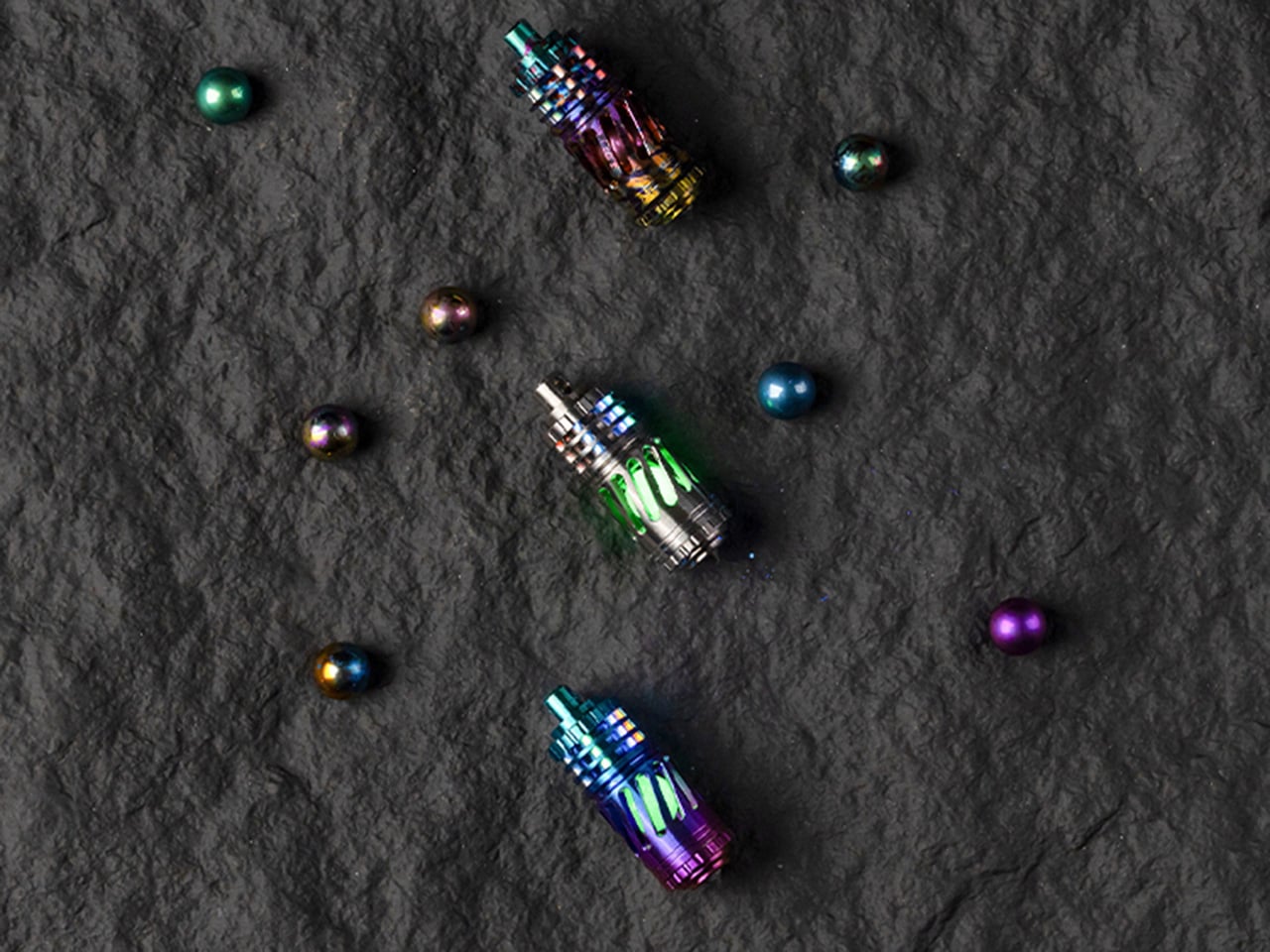
The glow itself comes from tritium vials seated inside a six-slot core. As tritium decays, the beta particles it releases hit a phosphor lining, producing continuous light without any power source at all. It’s not meant to flood a room with light, and it doesn’t try to. What it offers instead is a low-level, always-on glow that stays usable over roughly 25 years, even as brightness gradually declines.

The body is CNC-machined from Grade 5 titanium, the same material used in aerospace components and surgical hardware. The skeletonized exterior has generously cut slots that expose the luminous core from every angle, while a precision metal compression system holds the vials firmly without relying on epoxy or rubber. It’s built to genuinely outlast the phone in your pocket by several decades.

SpinTi isn’t limited to keychain duty either. It can hang around your neck as a pendant, clip to a zipper pull for finding your bag in the dark, or attach to a tactical pack as a quick identifier. The tail end has a hardened glass-breaker tip for emergencies, and the hollow interior can carry small items like emergency pills or a micro memory card.

There’s room to make SpinTi feel personal, too. The vials come in six colors, from ice blue and apple green to midnight violet, and you can mix them across all six slots however you like. Three finish options are available for the titanium shell: raw titanium for a minimal look, a splash finish for something bolder, and a gradient anodized finish for something closer to wearable art.

And since the core unscrews for service, you’re not locked into any one configuration. Swap a dimming tube after years of use, change the color to suit your mood, or drop in glass luminous tubes as a more affordable alternative. SpinTi is built to be updated and refreshed over time, and that’s part of what makes it feel less like a purchase and more like a long-term companion.

Click Here to Buy Now: $43 $59 (27% off). Hurry, only 98/100 left! Raised over $52,000

The post This Rotating Titanium Keychain Glows for 25 Years Without a Battery first appeared on Yanko Design.
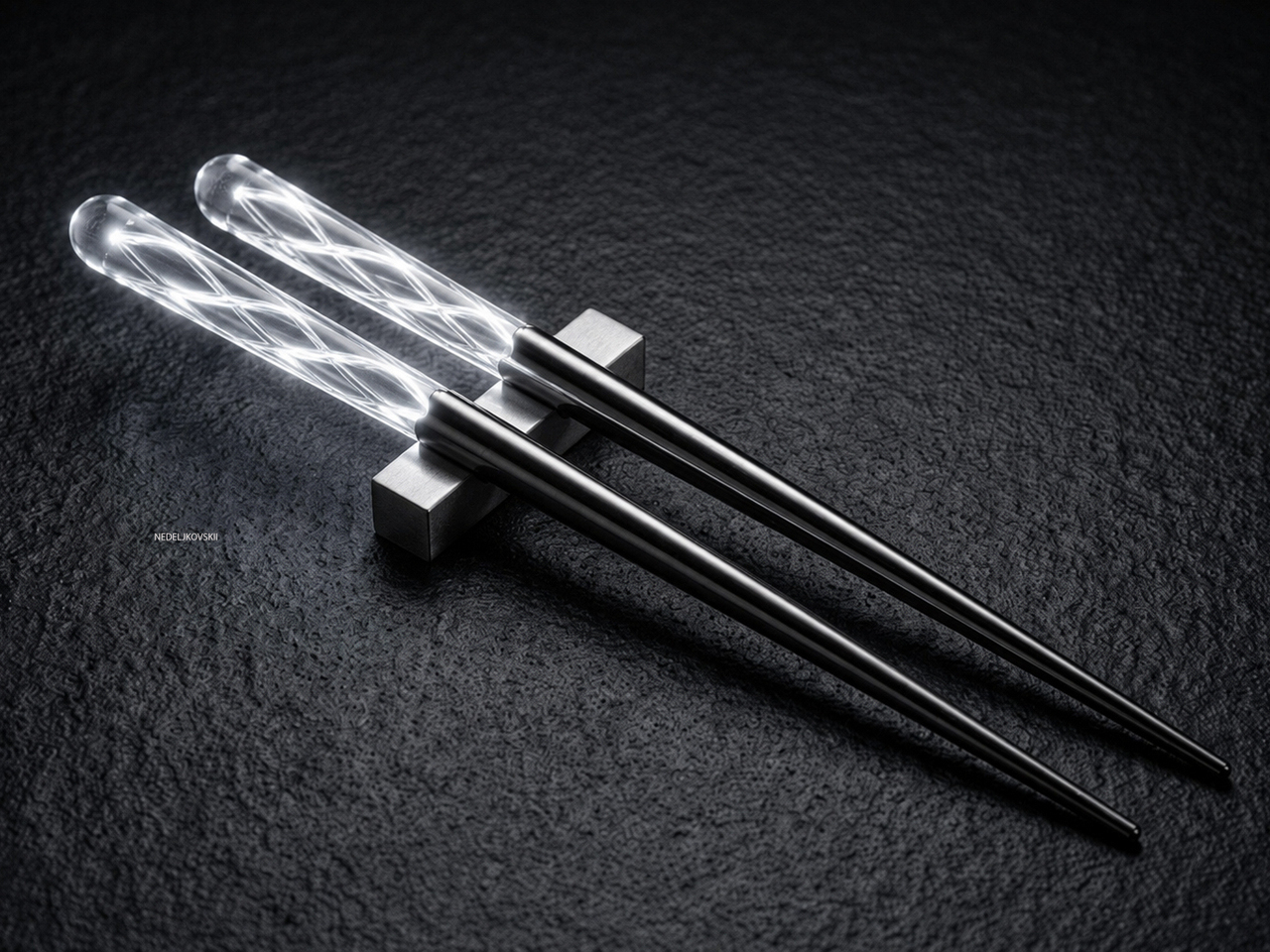
These Chopsticks Glow at Dinner Without a Battery or Power Source

Chopsticks have been around for thousands of years, and their form has barely changed. The material varies, from wood and bamboo to polished metal and lacquered resin, but the design conversation rarely goes beyond surface decoration. They exist to serve a function, and that’s mostly where the thinking stops, quiet tools that have settled into the background of the dining table.

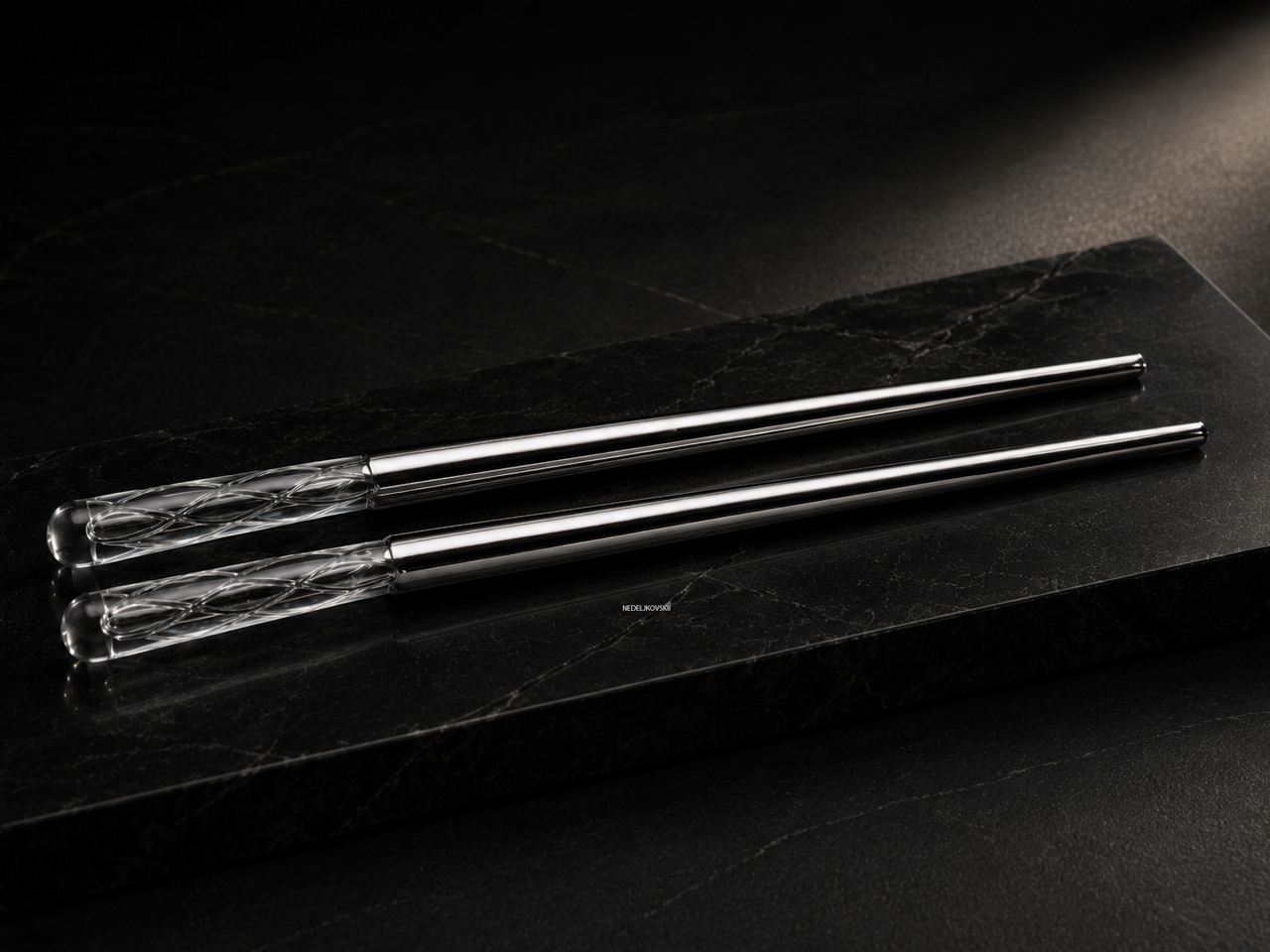
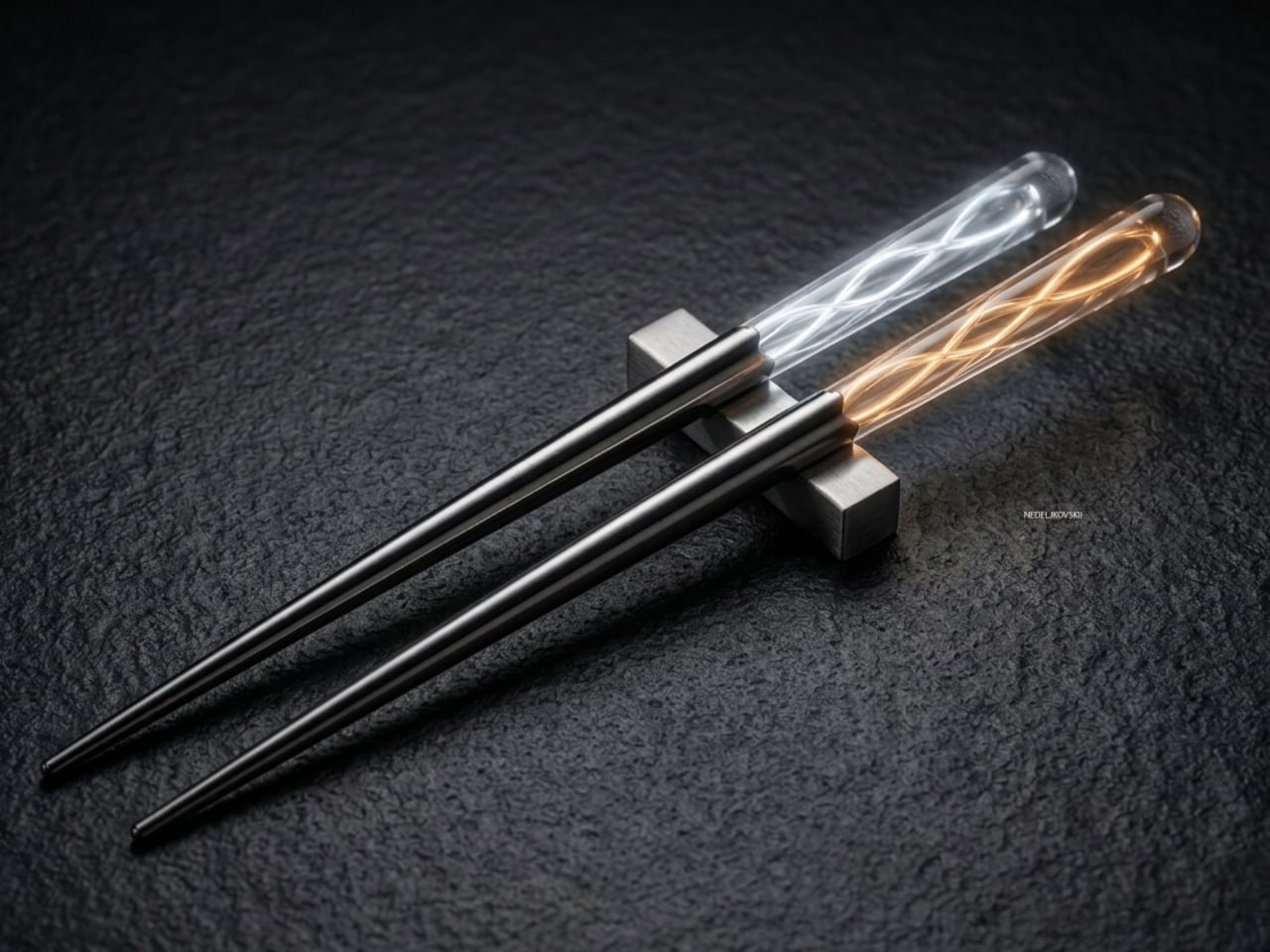
LUNARIS takes that very stillness as its starting point. A conceptual chopstick design, it reinterprets the traditional form as a collectible dining object built around the relationship between material, atmosphere, and light. It doesn’t try to reinvent how chopsticks work, but asks a quieter question: what if the object you pick up for dinner could change the feeling of the room around you?

Designer: Ivana Nedeljkovska

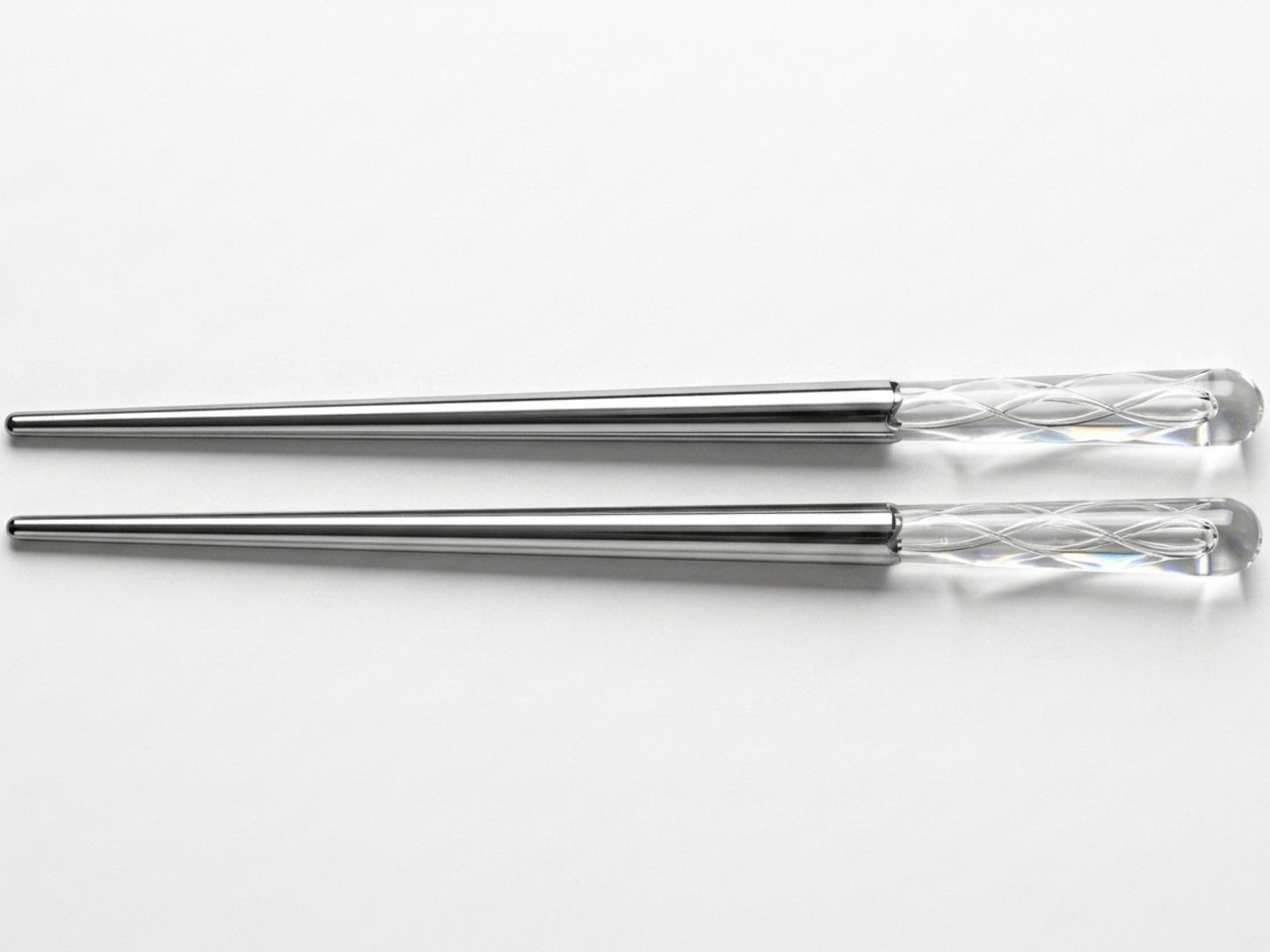
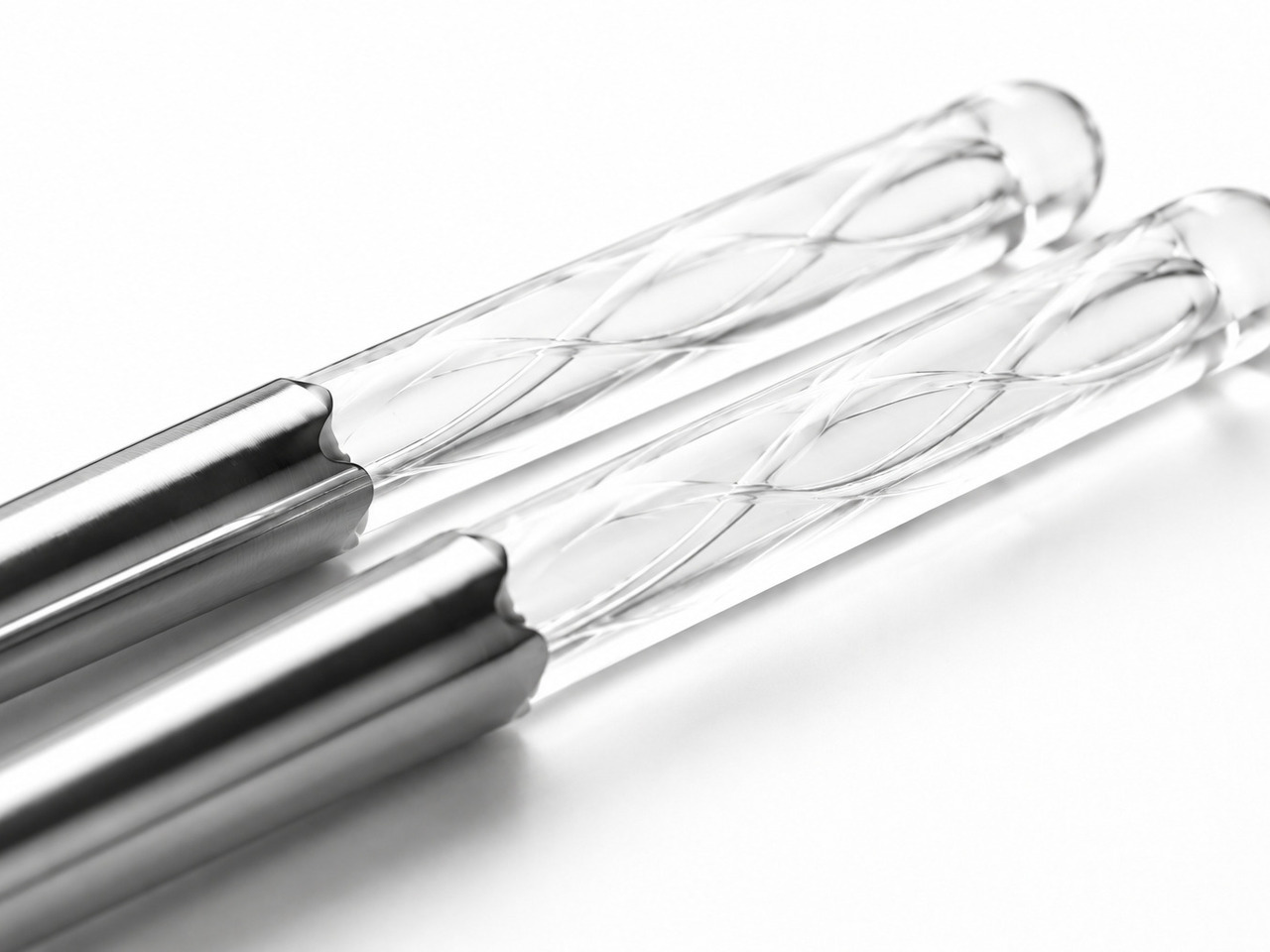
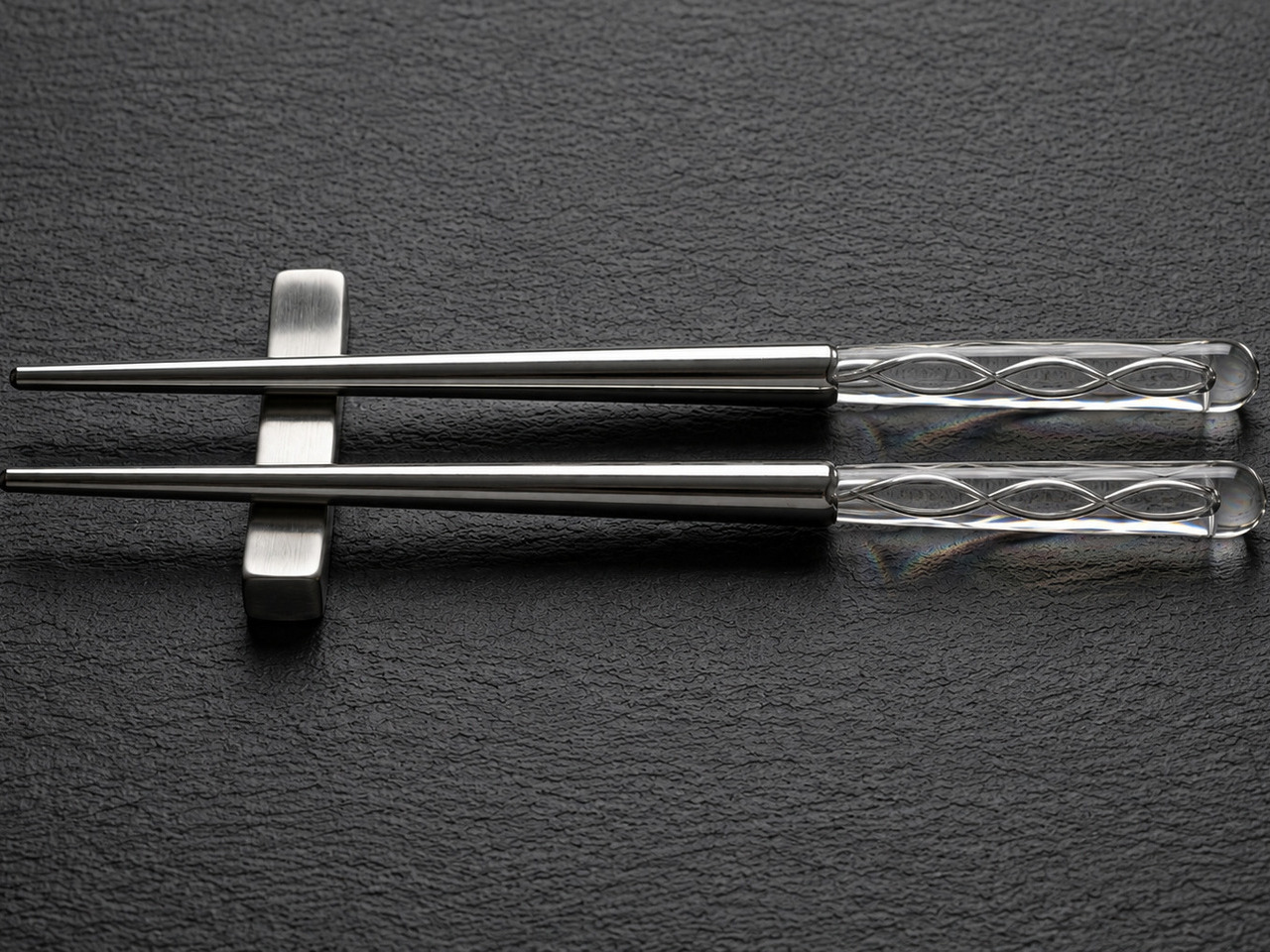
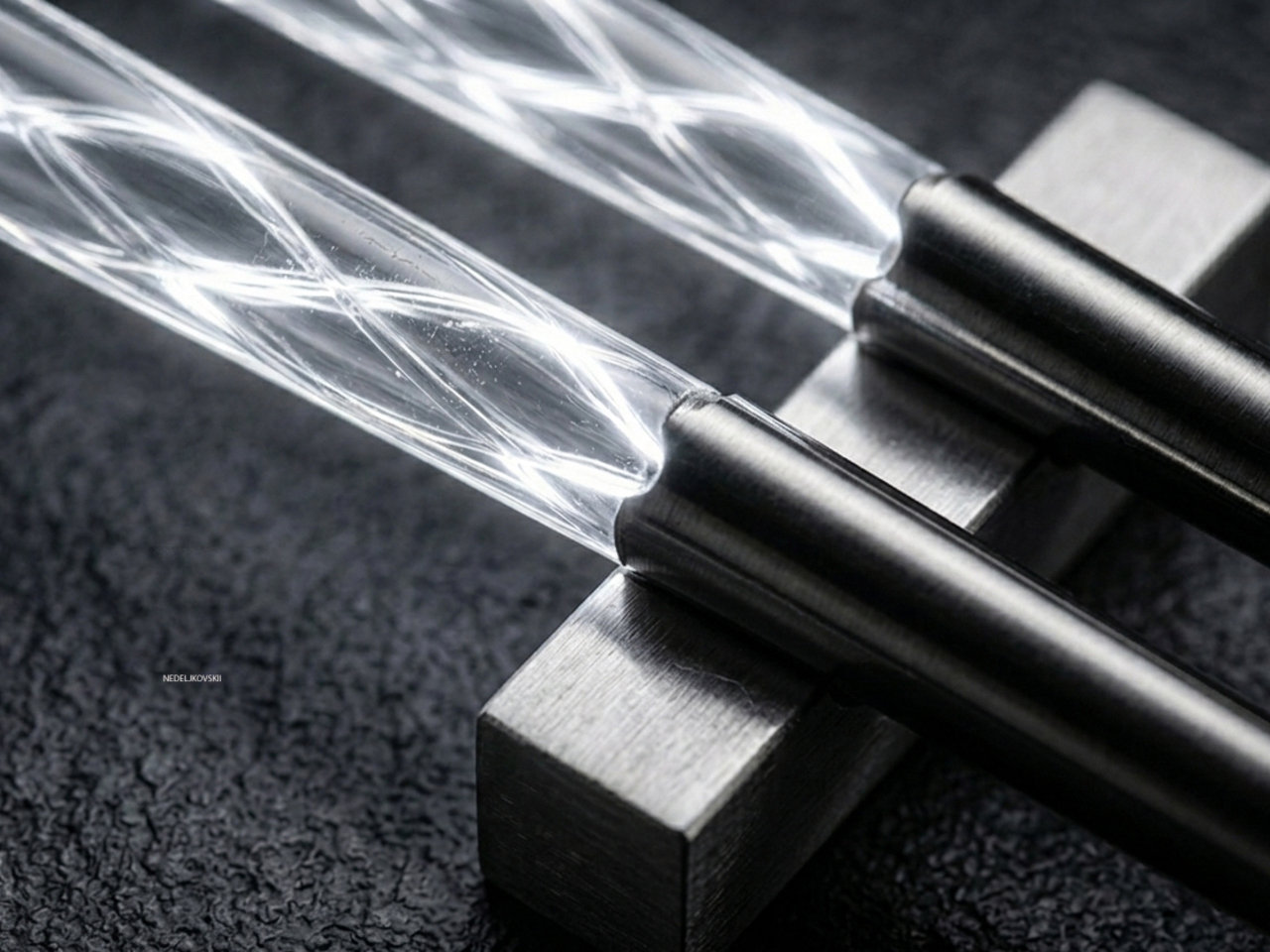
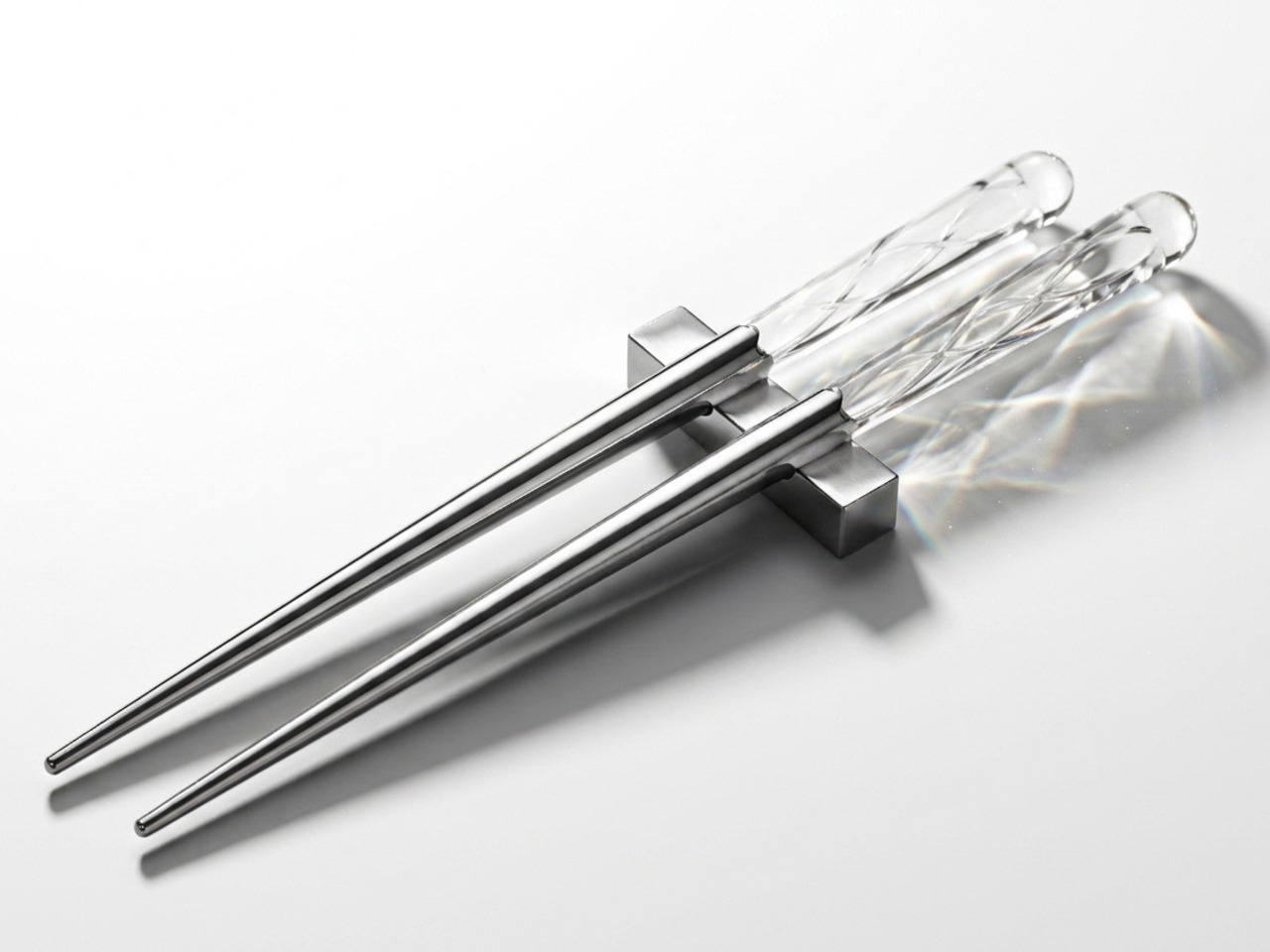
Each pair is made up of two materials that meet at a deliberately fluid transition. The lower section is polished stainless steel, shaped so the metal flows naturally into the upper element rather than meeting it with a hard edge. The result is a form that reads as unified rather than assembled, closer to a sculpted object than a utensil with two components joined together.

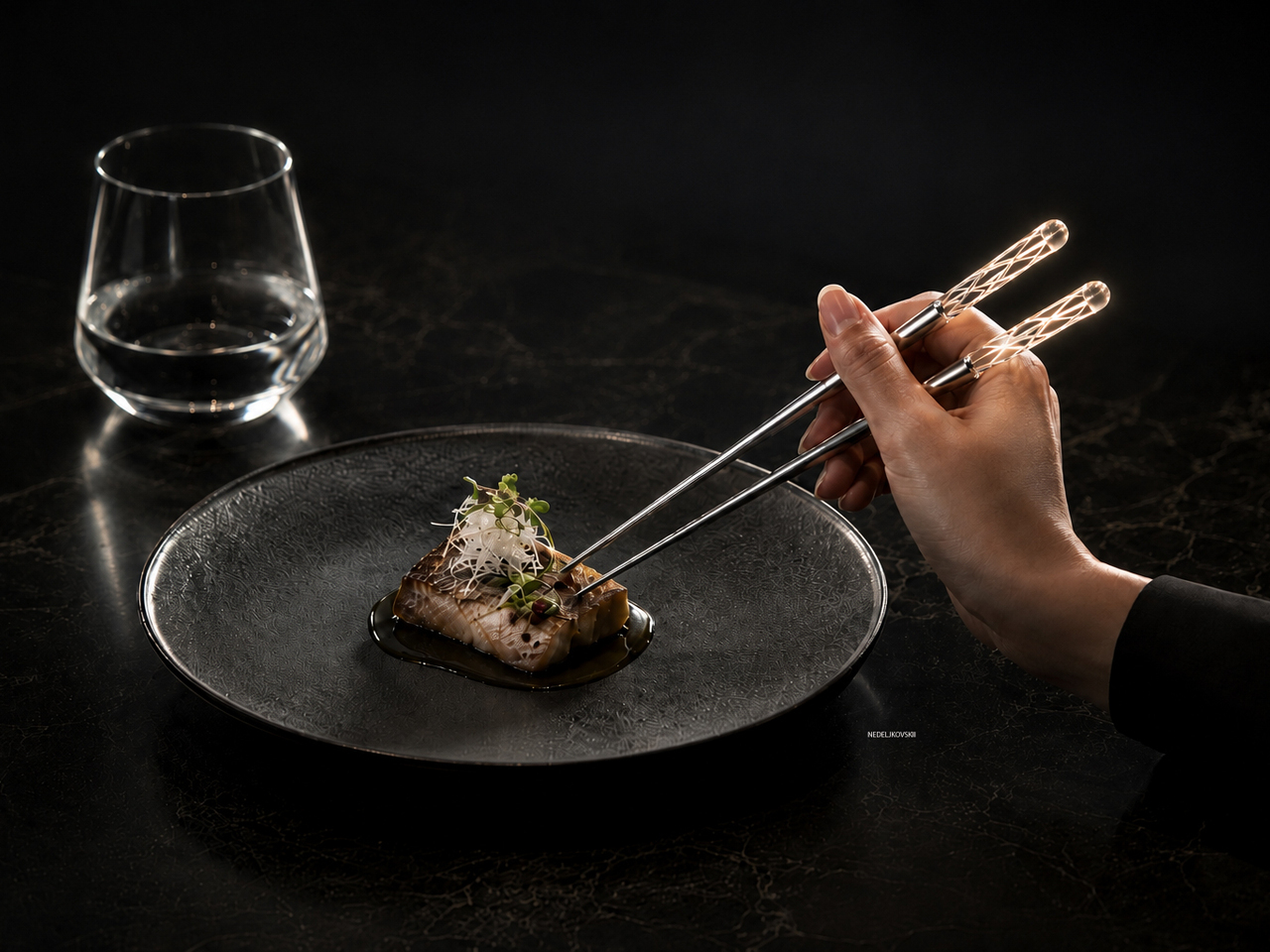
The upper section is where the concept lives. It’s a transparent epoxy resin body housing delicate curved tubes filled with a photoluminescent material. During the day, the object reads as clean and minimal, the resin catching light in ways that feel closer to decorative crystal than a dining tool. Nothing about it immediately gives away what happens once the lights go low.

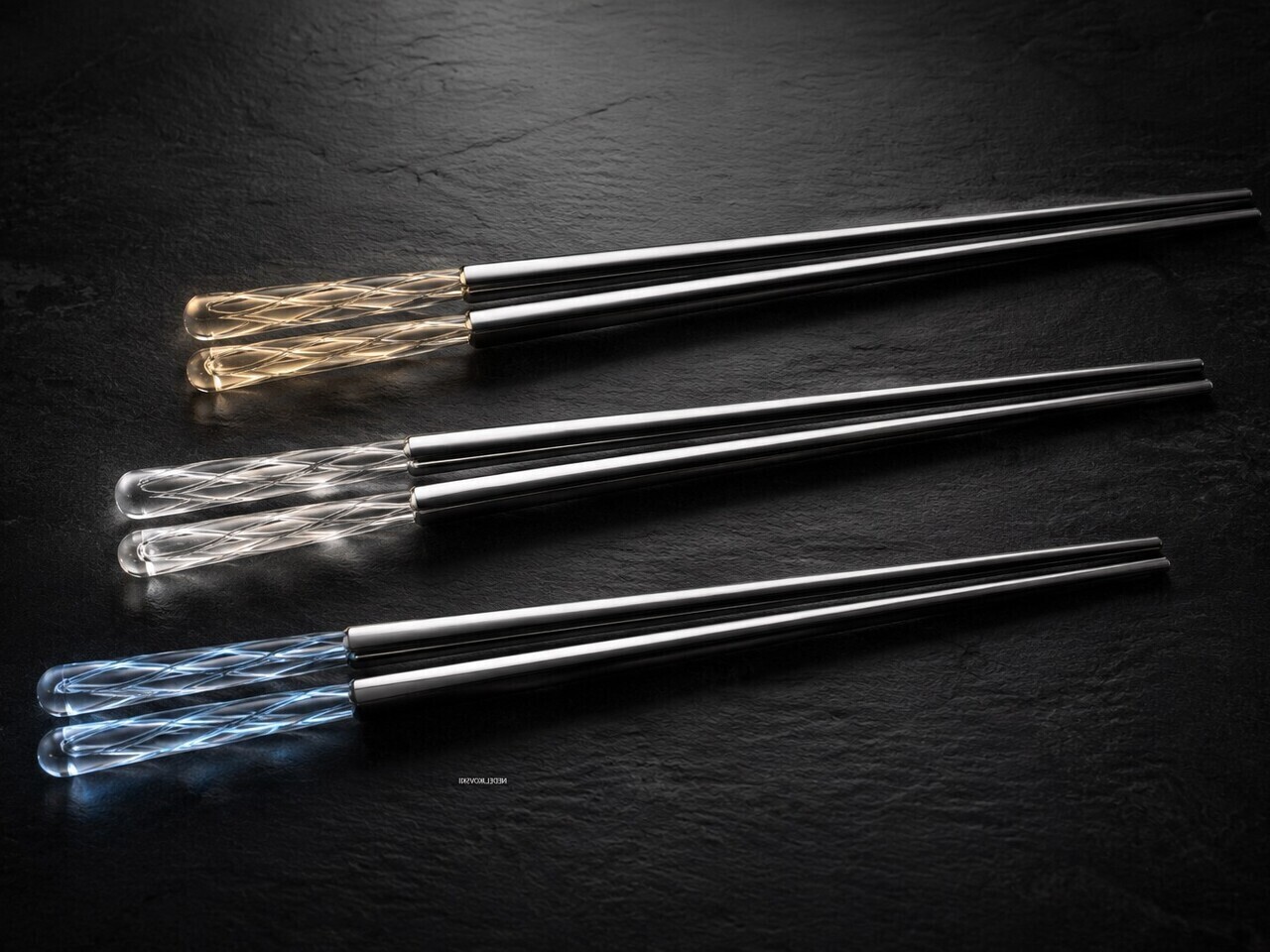
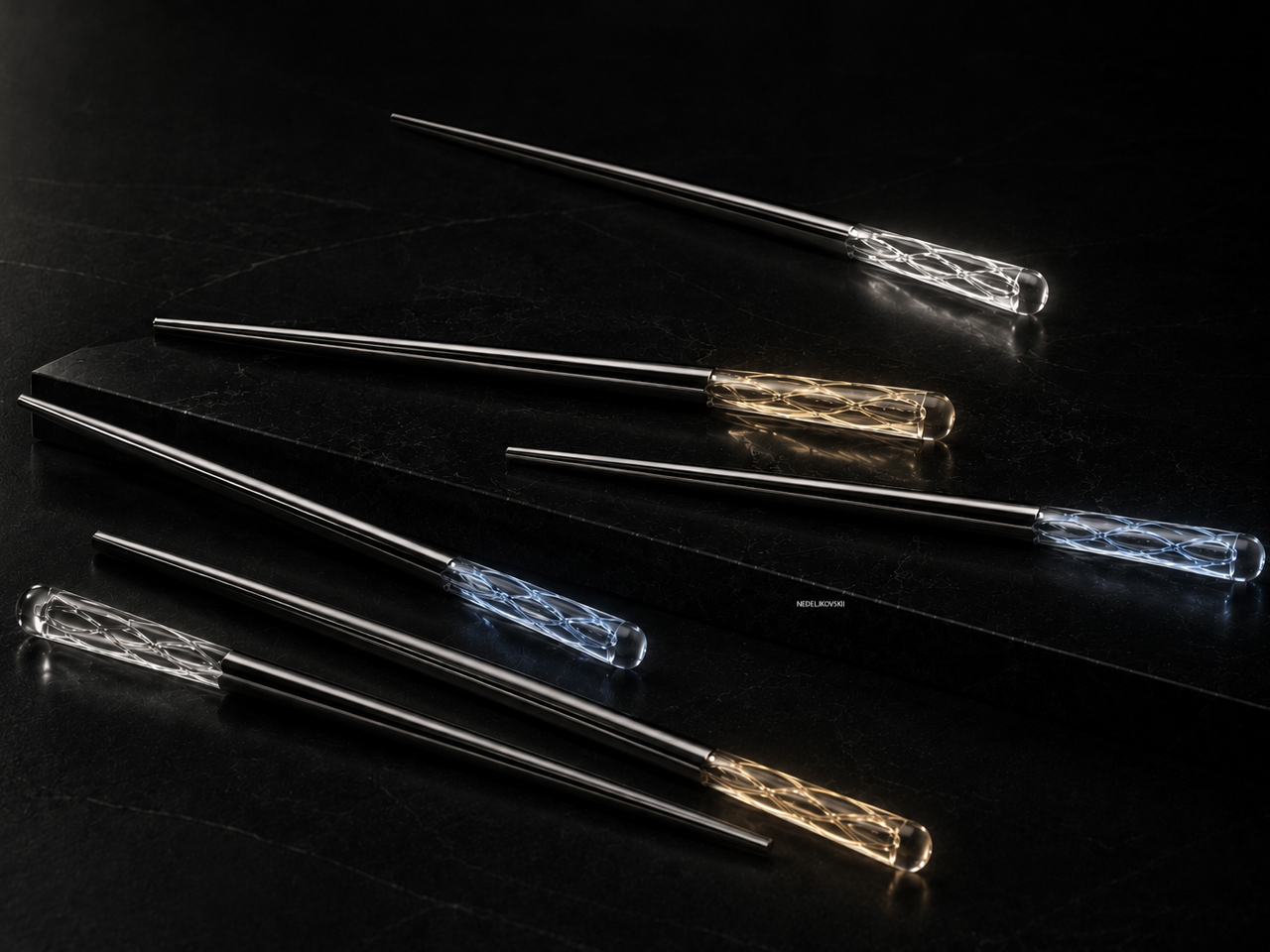
When the room dims, the photoluminescent tubes begin to release the light they’ve been quietly storing all day. Glowing lines emerge from within the resin, creating the impression of light trapped inside the form itself. The effect isn’t electric or sudden; it’s gradual and soft, more like something waking up than switching on. The glow comes in amber, white, and blue variants.

The point of LUNARIS isn’t to glow for the sake of glowing. The object is designed to create a different kind of interaction between person and object, one where atmosphere becomes part of the experience. Dinner at a dimly lit table takes on a different quality when the utensil in your hand starts contributing to the mood rather than simply doing its job.

Collectible design rarely makes it to the dining table in such a literal sense. LUNARIS is positioned as an object worth keeping and displaying, not just reaching for at mealtimes. The stainless steel chopstick rest included with each pair functions as a small display stand as much as a holder, a quiet suggestion that the object still earns attention long after the meal is done.

What LUNARIS proposes isn’t technically complex. There’s no power source, no battery, and no mechanism hidden inside the resin. The photoluminescent material works passively, absorbing ambient light through the day and releasing it slowly once the room darkens. The restraint is the point, and it’s a reminder that even the smallest objects on a table carry considerably more potential than they’re usually given credit for.

The post These Chopsticks Glow at Dinner Without a Battery or Power Source first appeared on Yanko Design.
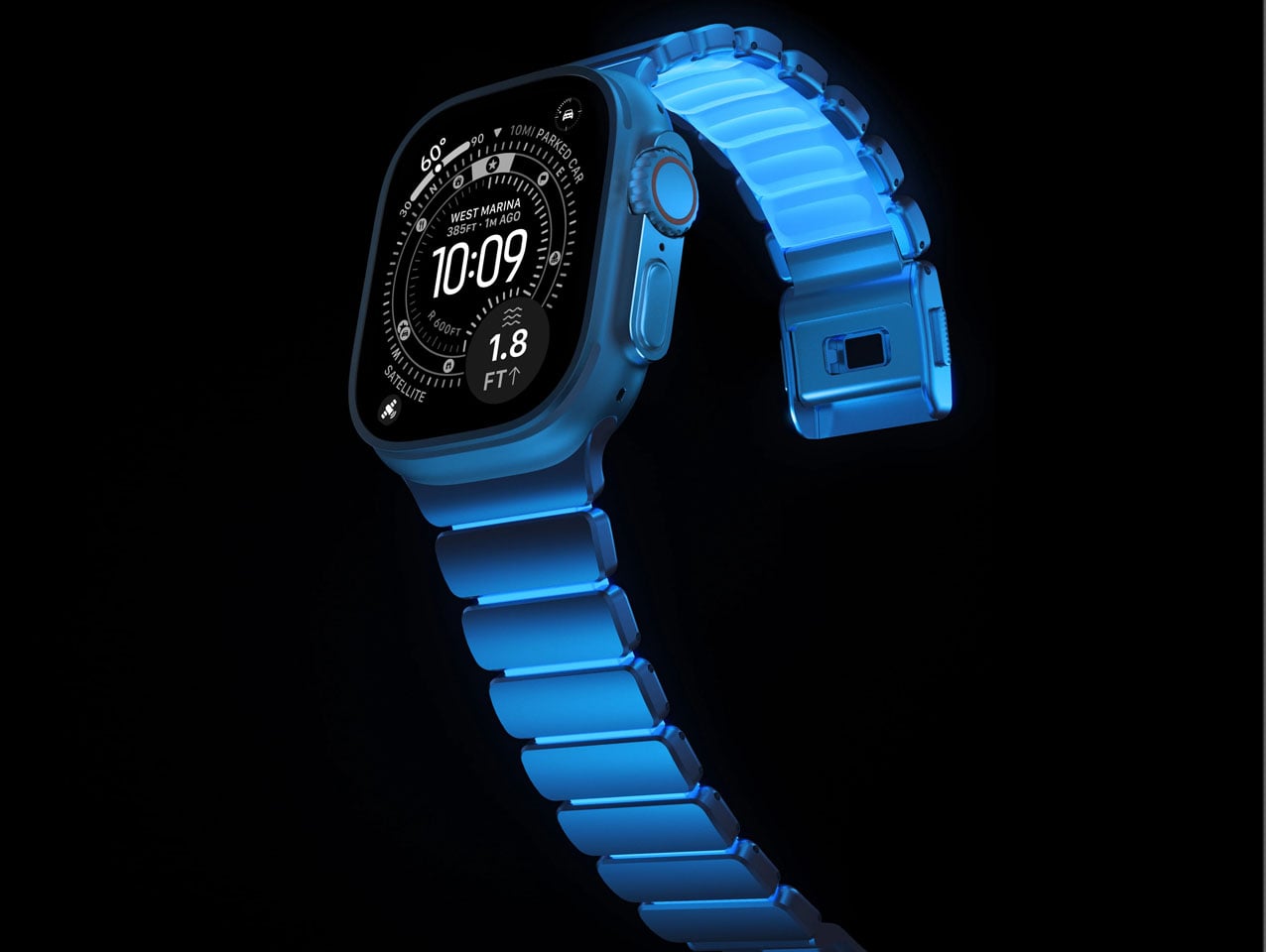
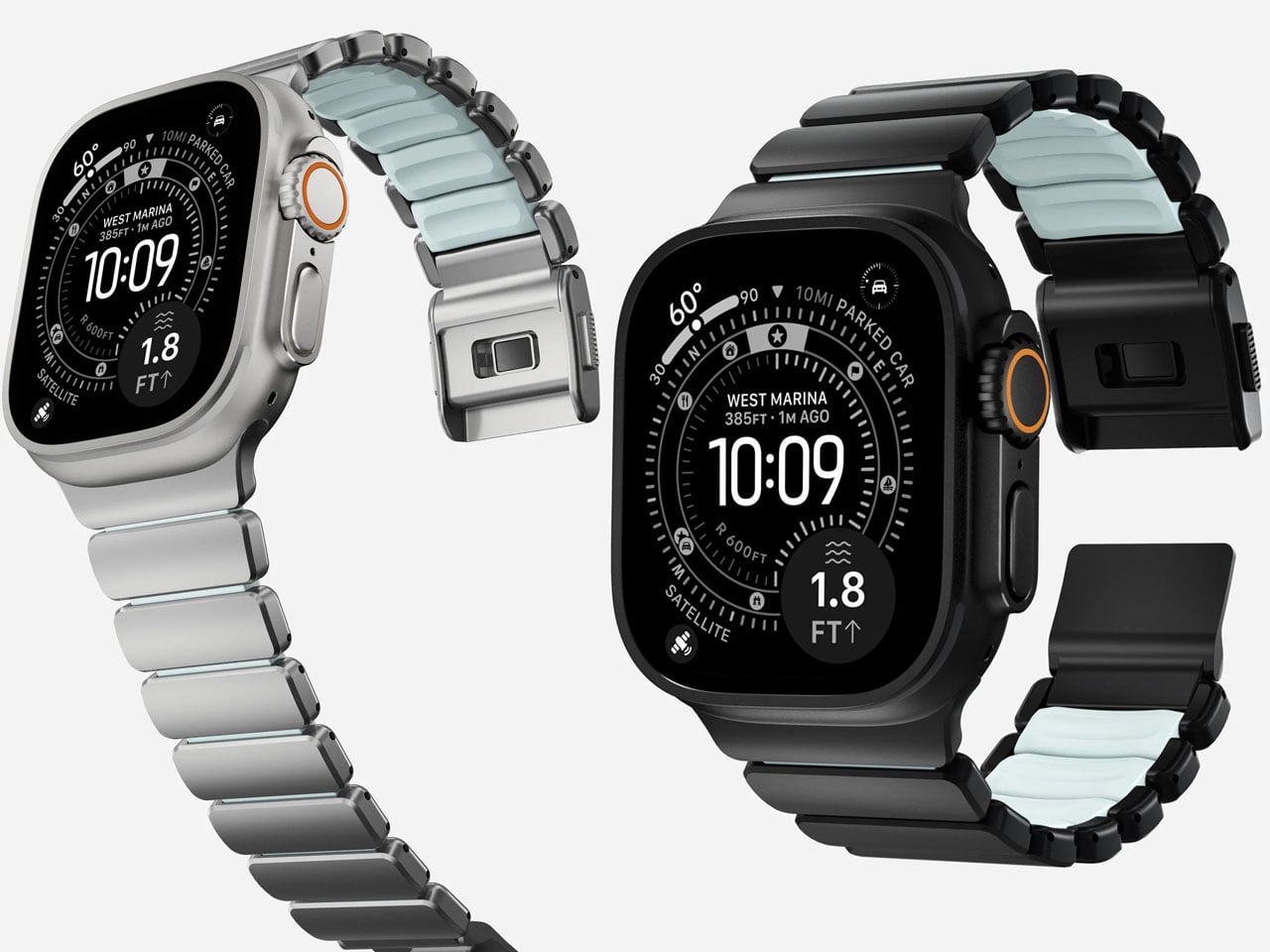
Nomad Icy Blue Glow Stratos Band adds glow-in-the-dark twist to Apple Watch Ultra

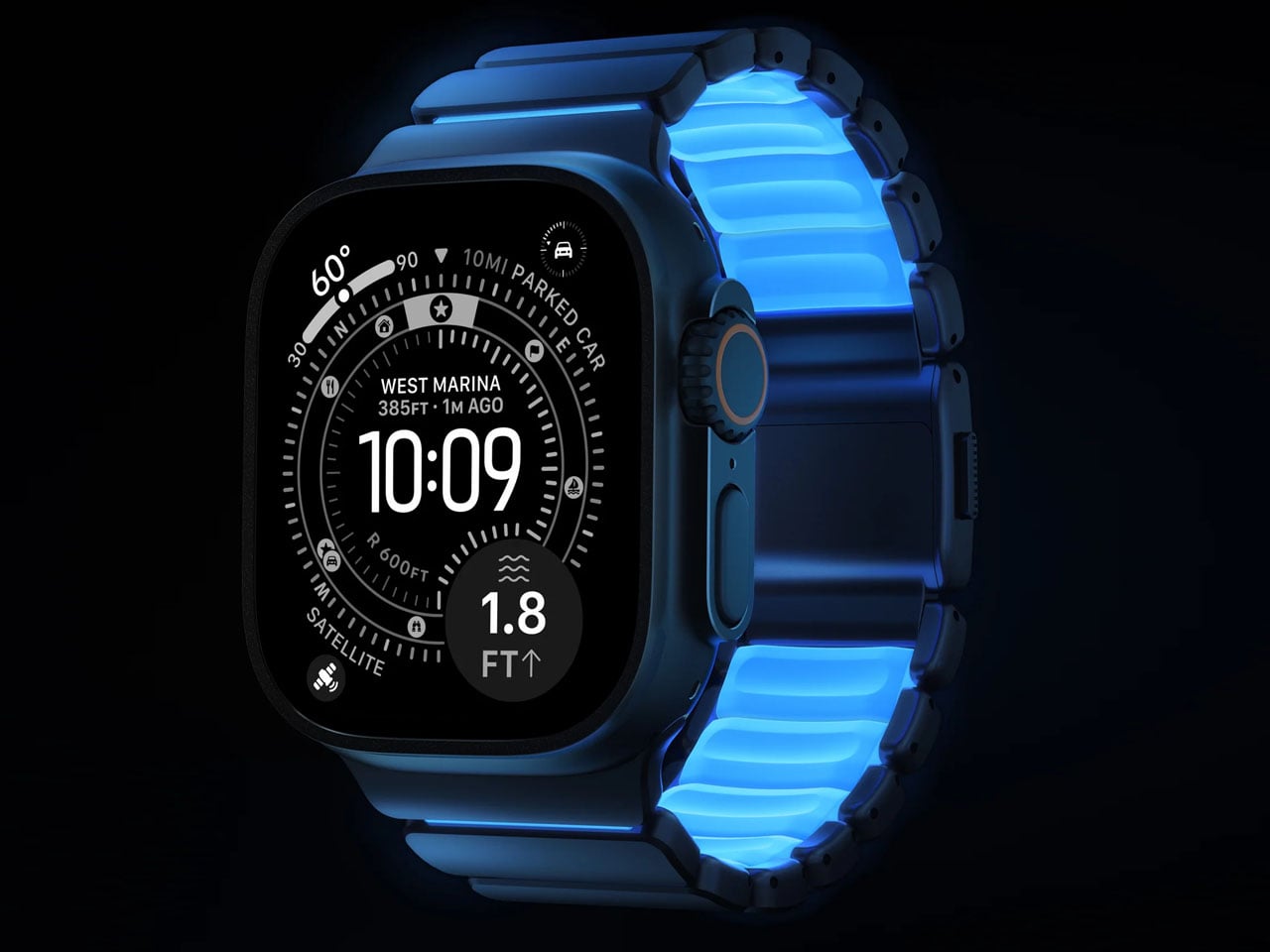
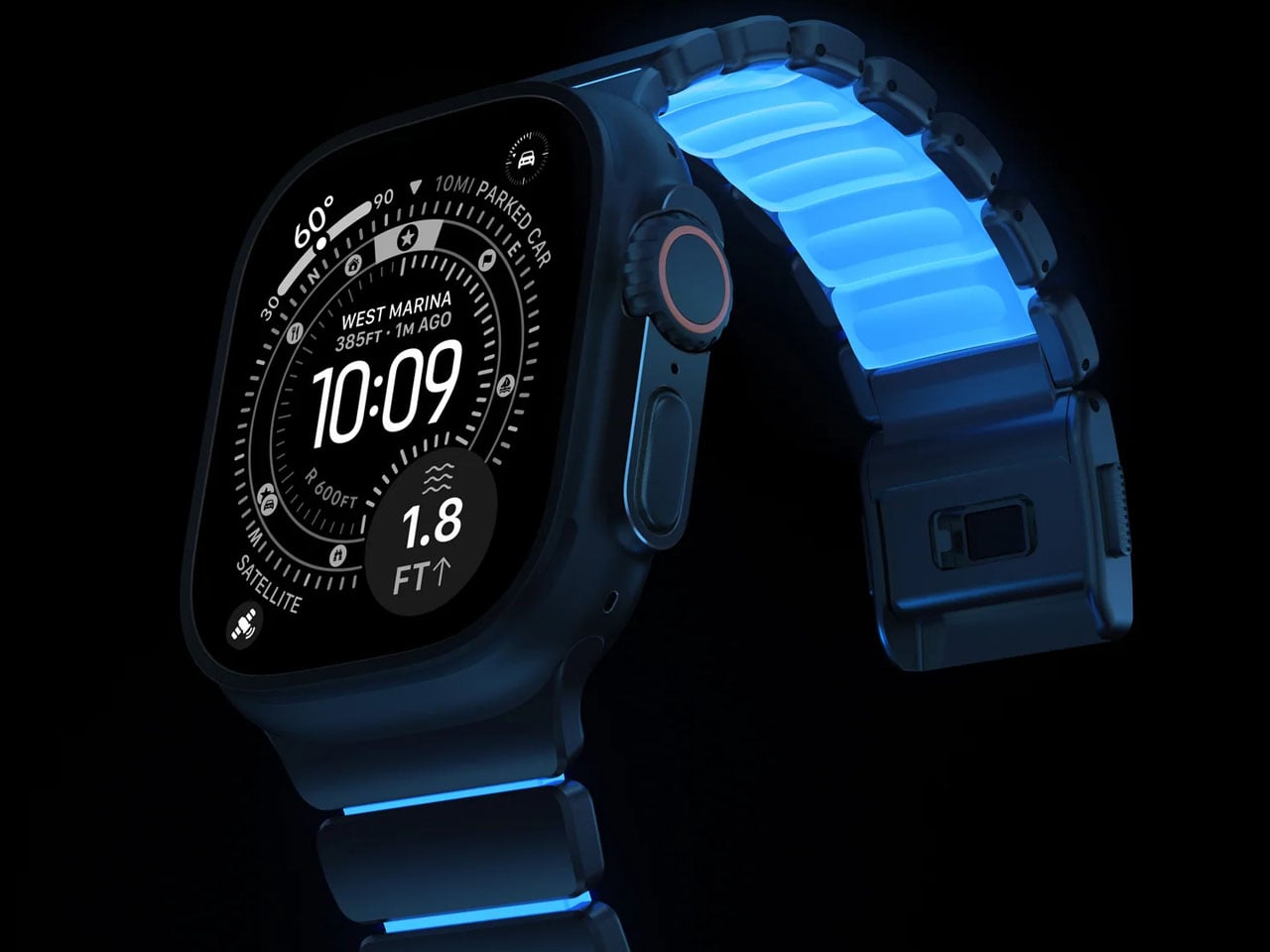
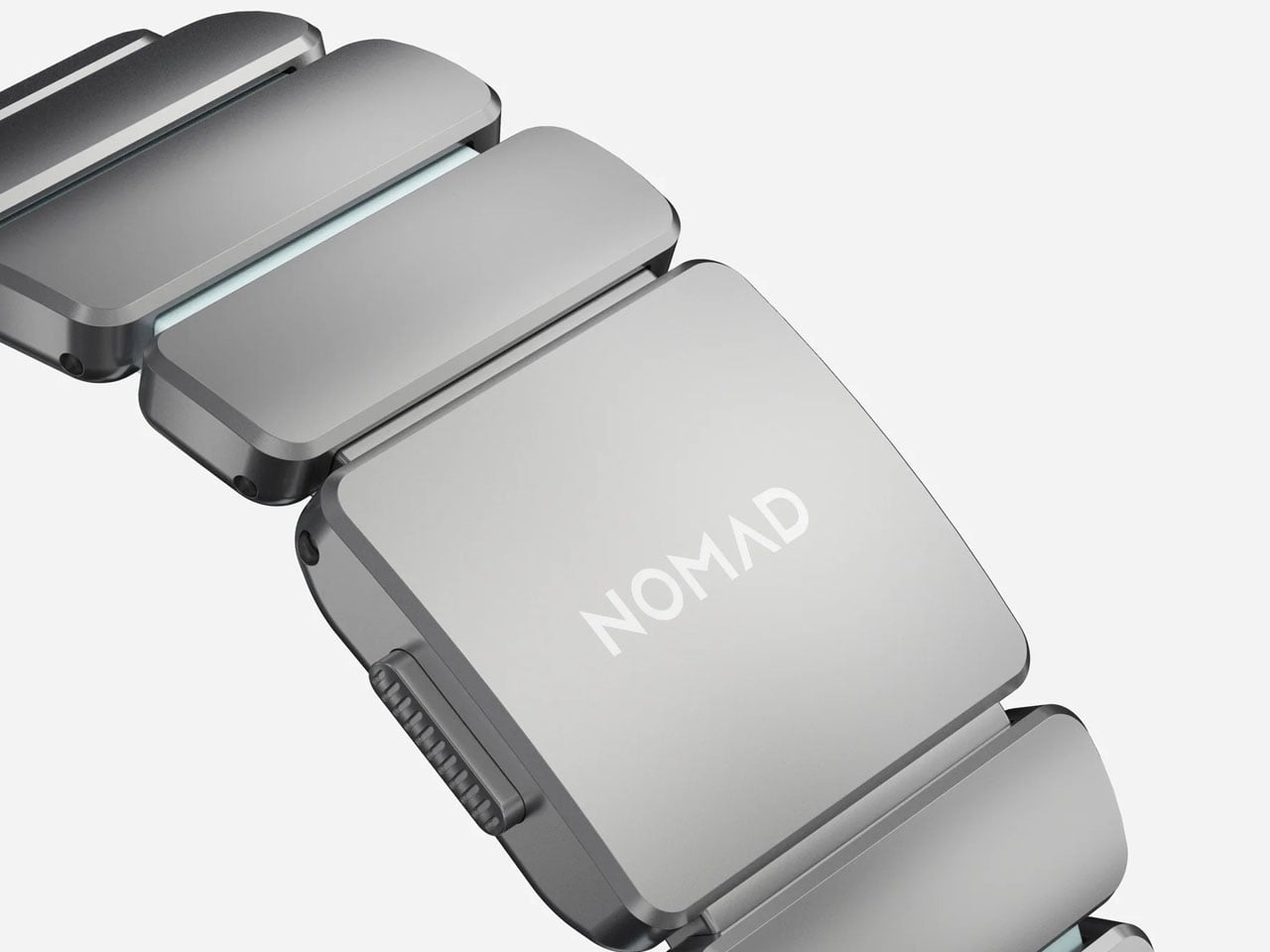
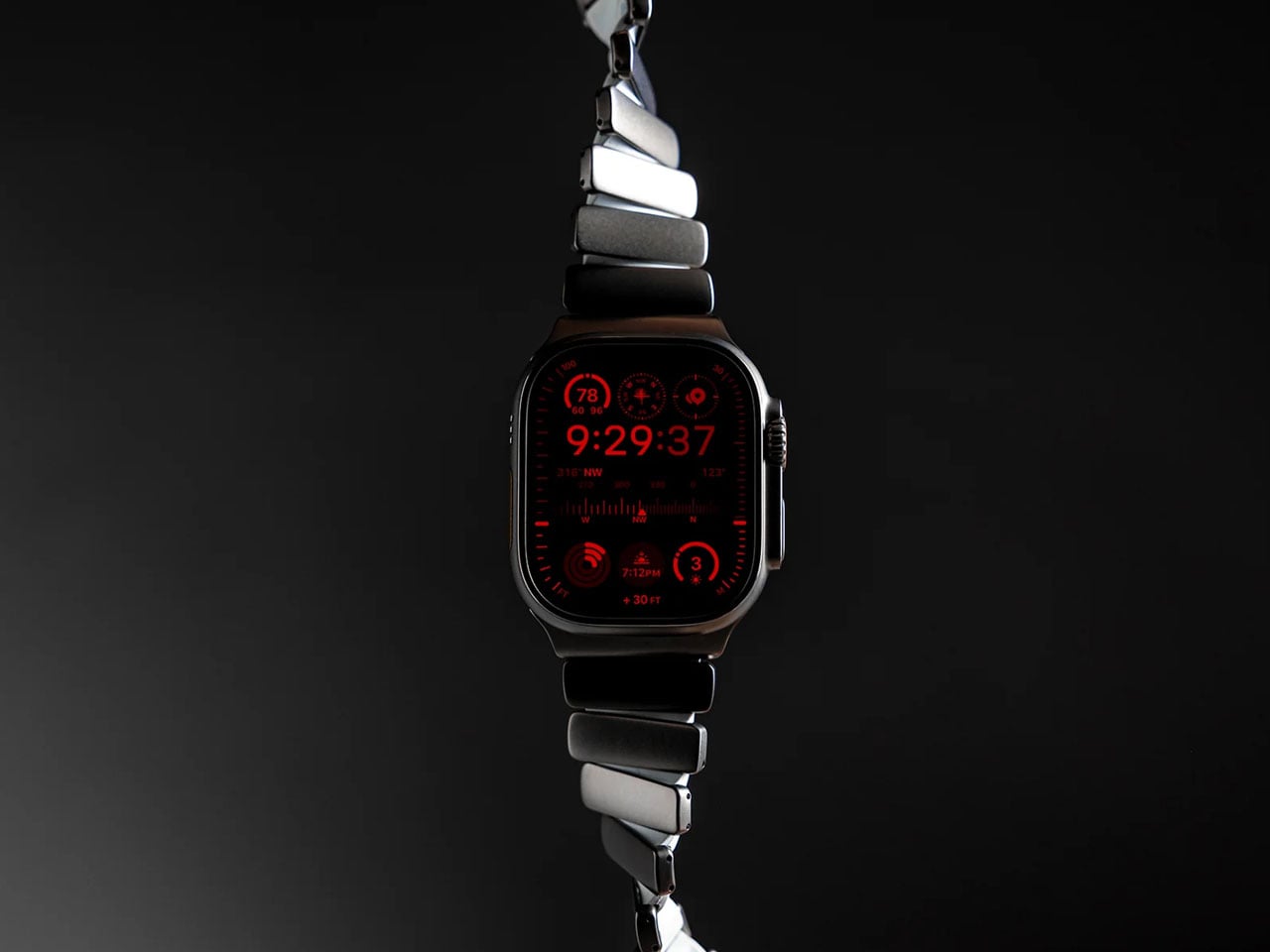
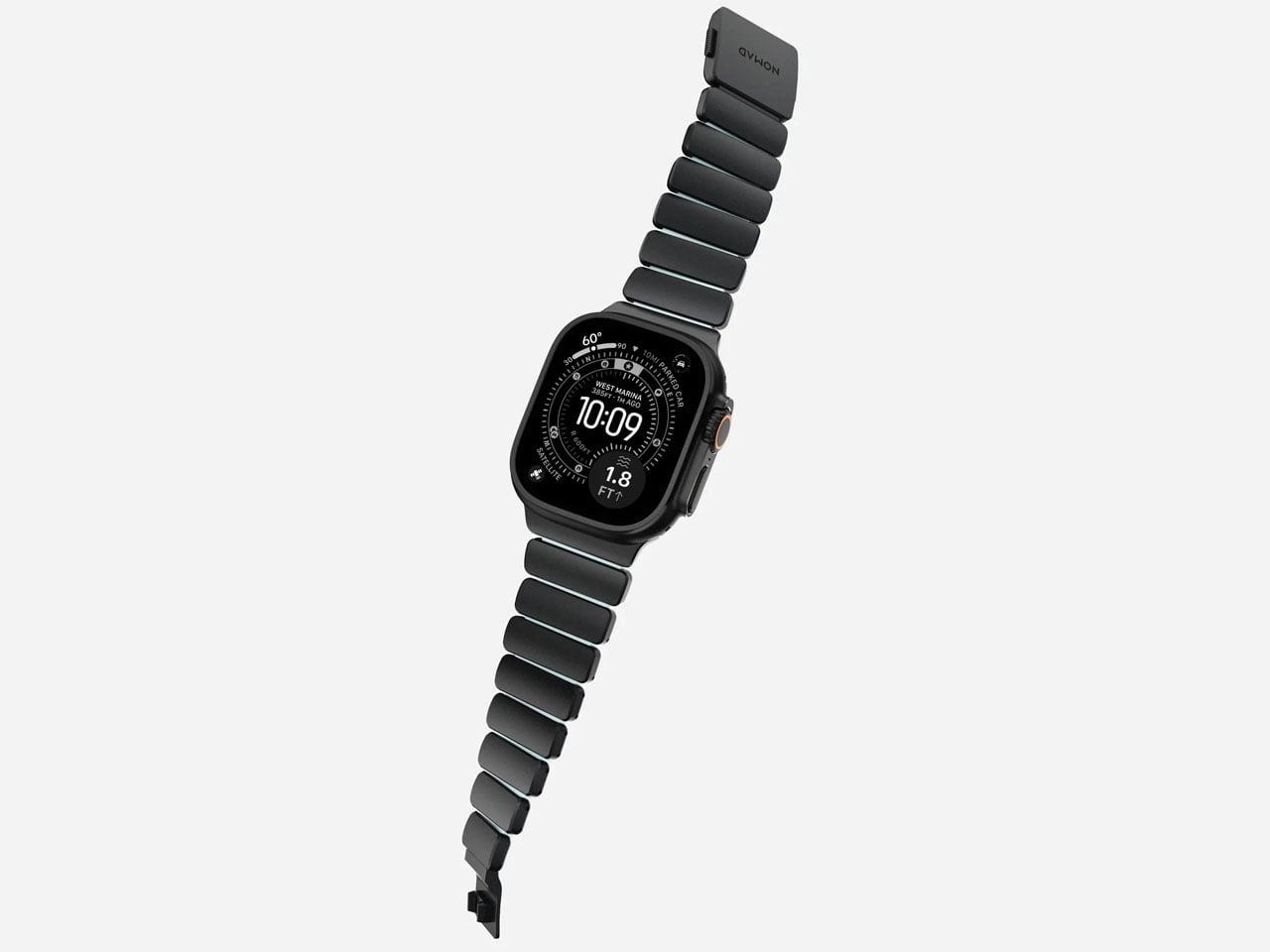
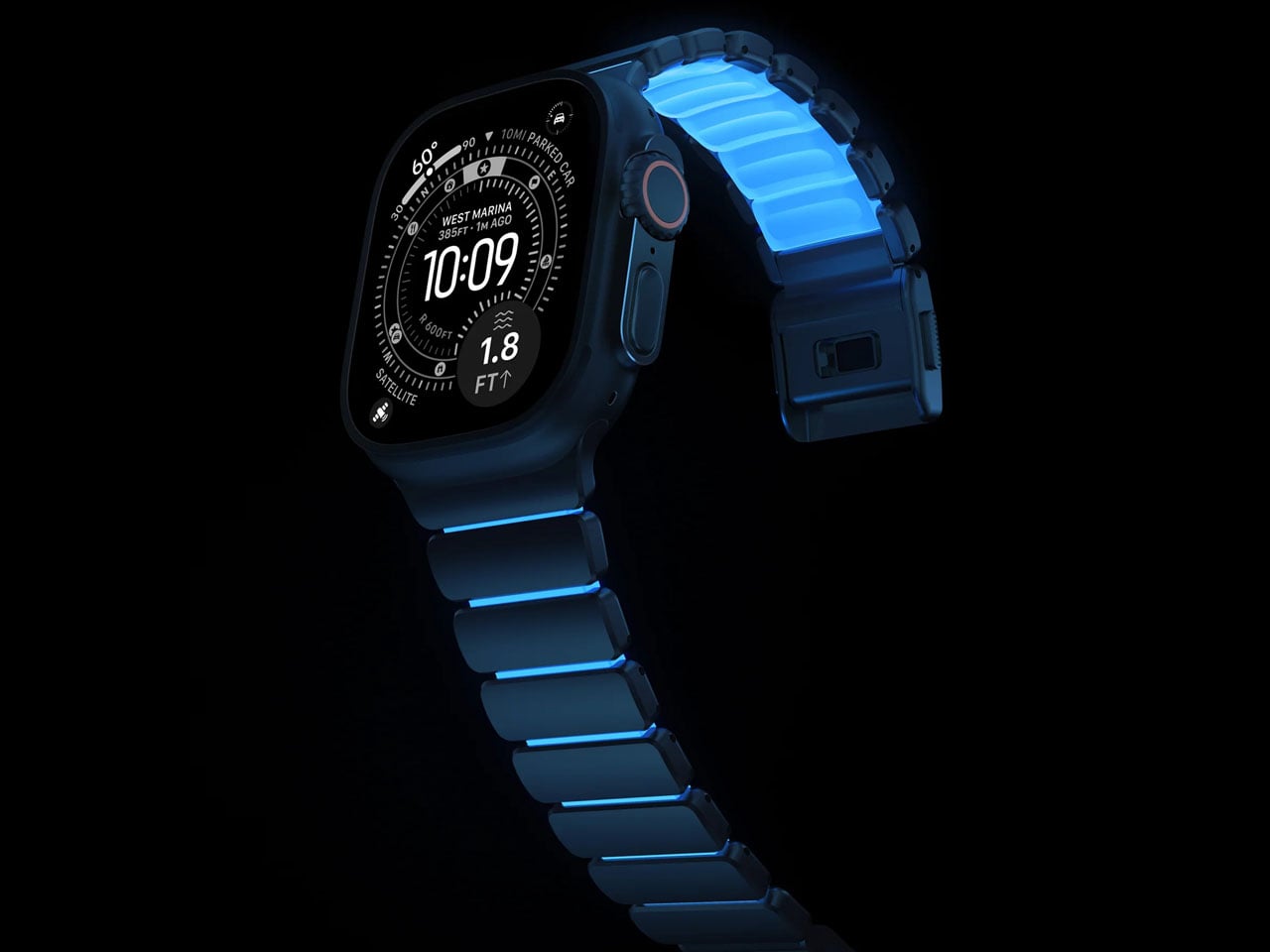
Getting a watch band for your Watch Ultra just got interesting with Nomad’s latest addition to the Stratos Band line-up. After the success with the custom fit band designed for the Ultra in titanium finish and the FKM links, which is more comfortable to wear and touch, this watch band is irresistible. Coming in a fluoroelastomer cast that glows in Tron-like hues, the band demonstrates how “performance and fun can happen at the same time.” Nomad calls it the Icy Blue Glow version, and it’s a limited-run creation that pairs rugged durability with understated style.

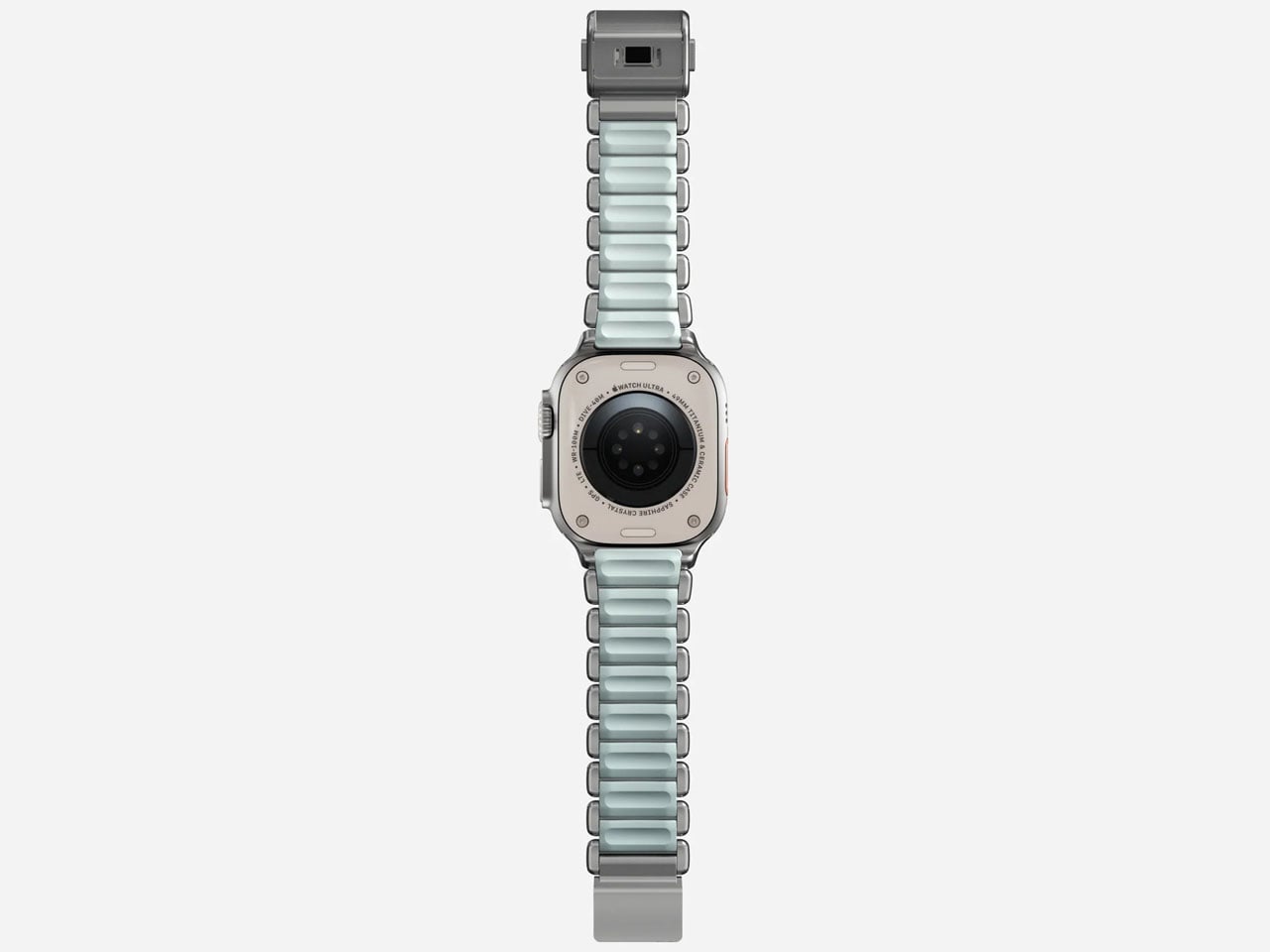
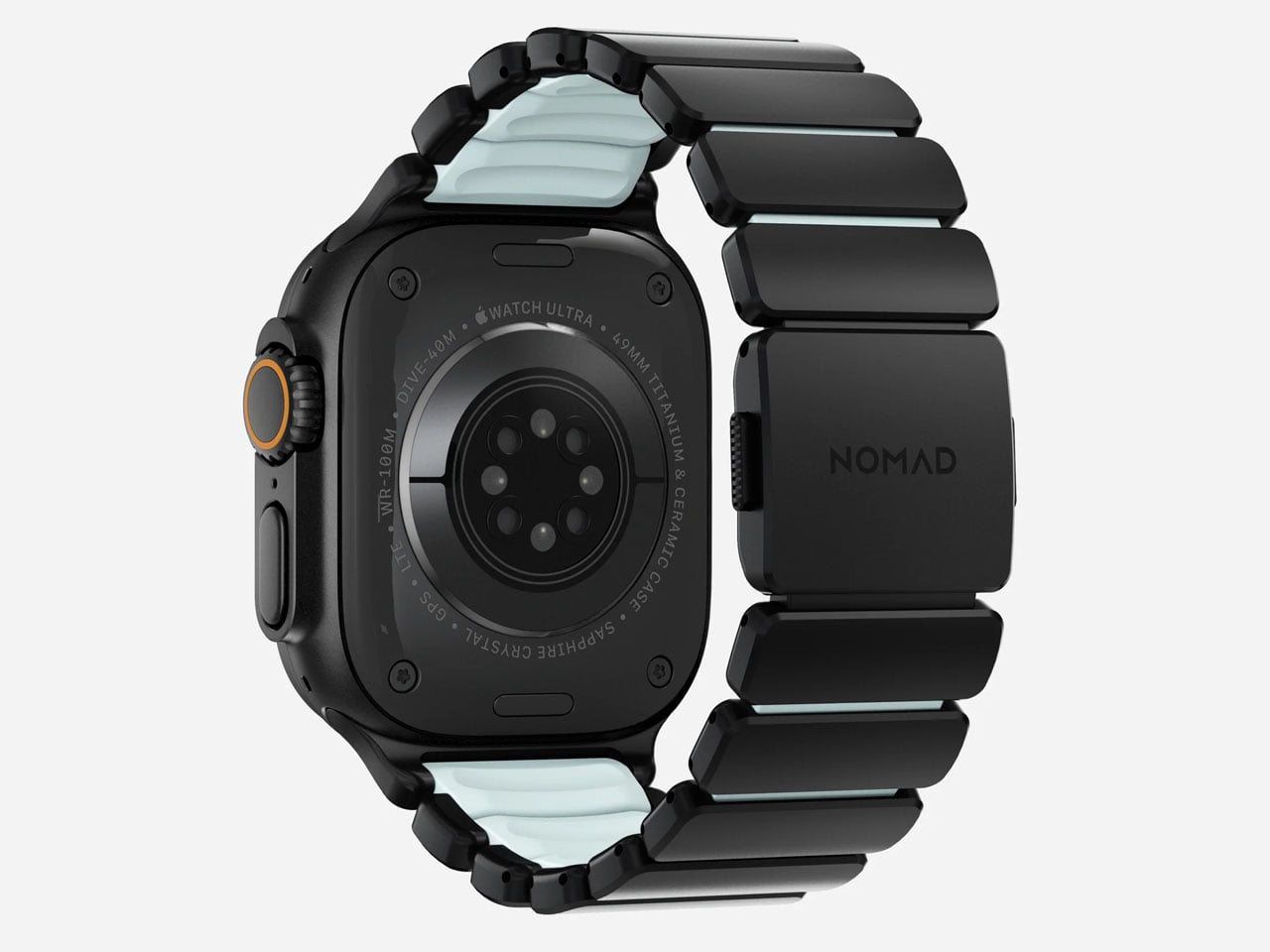
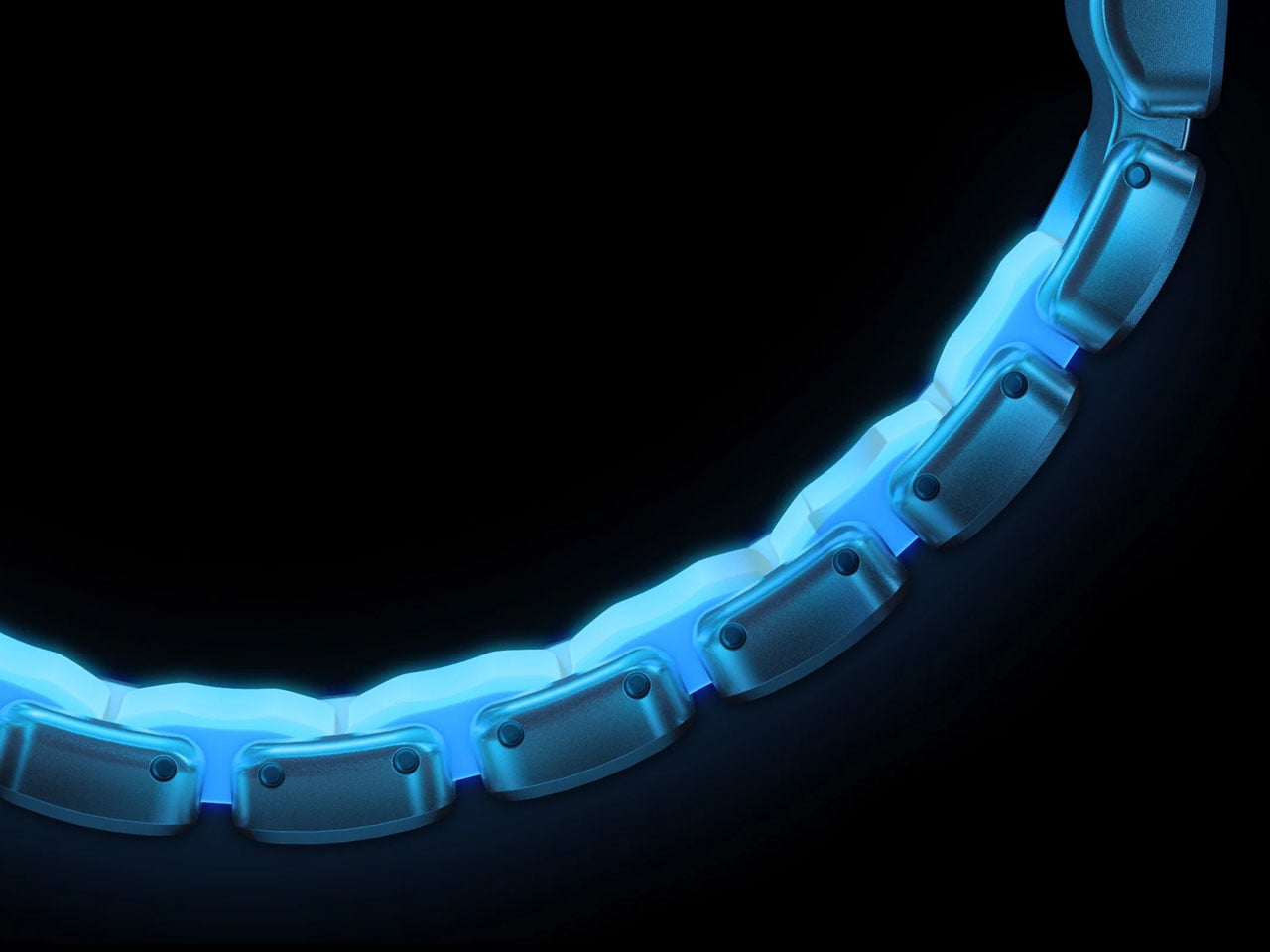
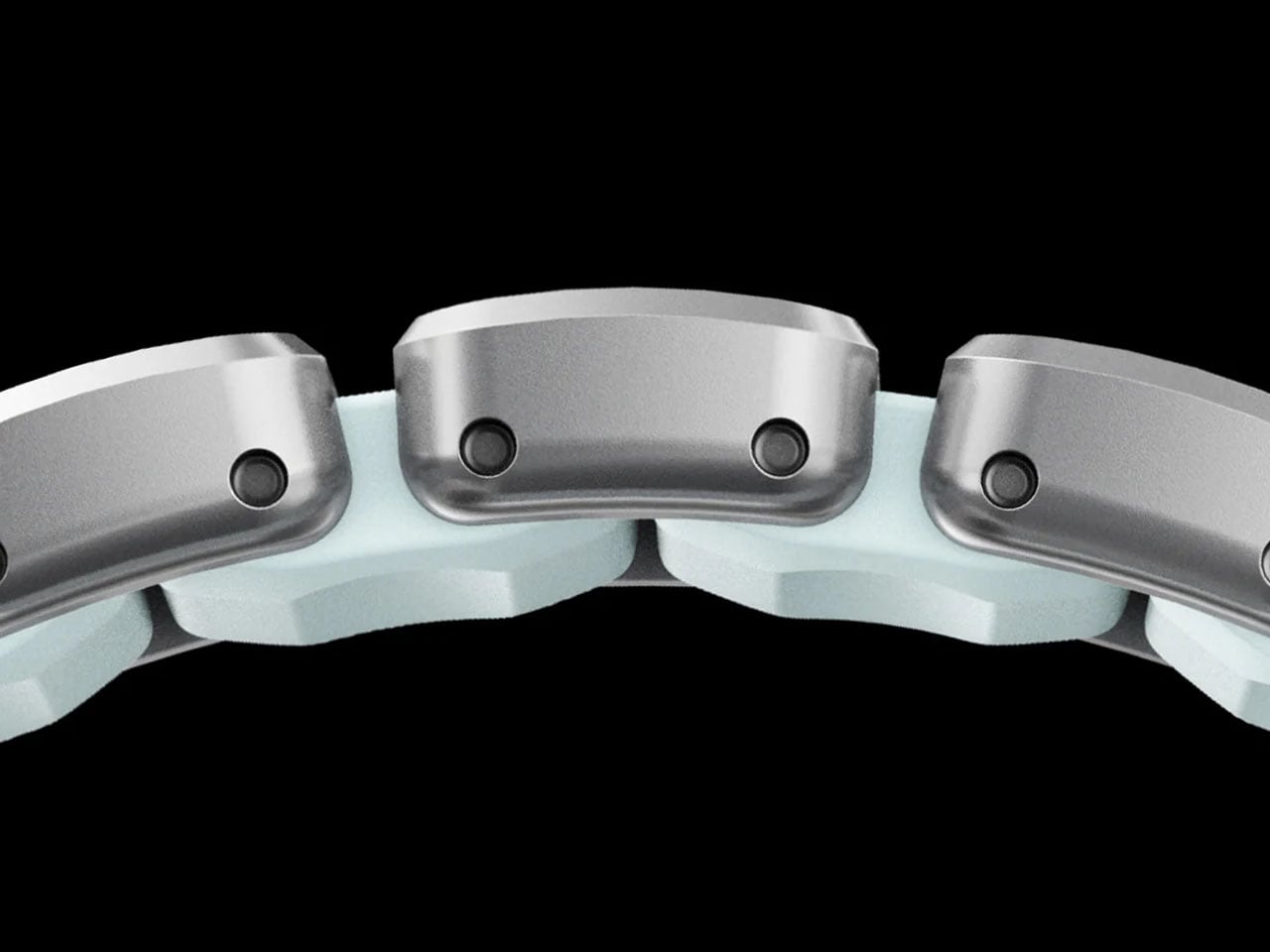
The new Stratos Band blends Grade 4 titanium hardware with compression-molded FKM fluoroelastomer for a hybrid design that balances strength and flexibility. The titanium outer links provide a refined look and robust build, while the FKM interior links contour around the wrist for comfort and movement that traditional metal bands rarely offer. This dual-material approach also introduces subtle ventilation spaces, which help with moisture evaporation and breathability during everyday wear or more intense activity.

Designer: Nomad

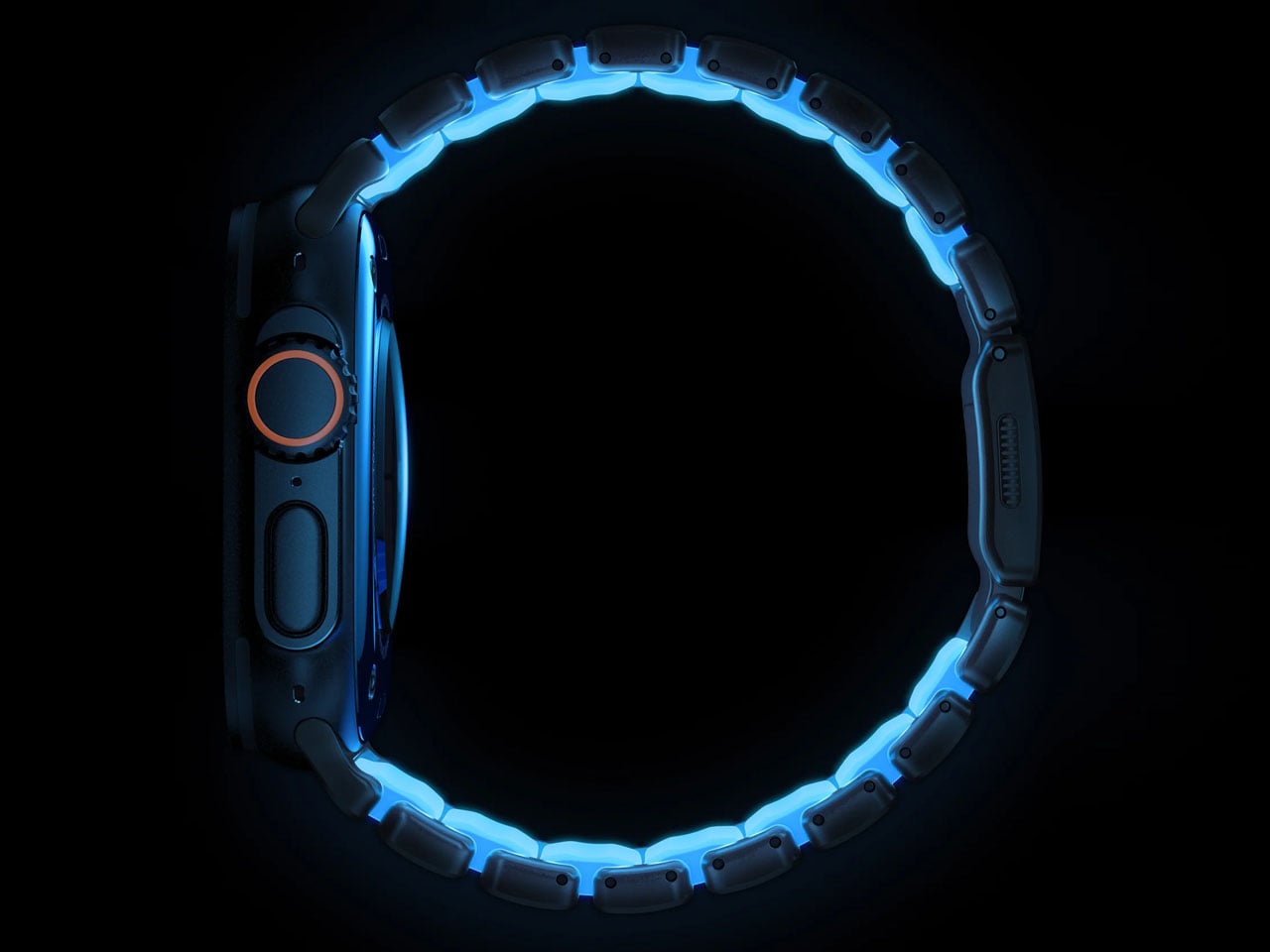
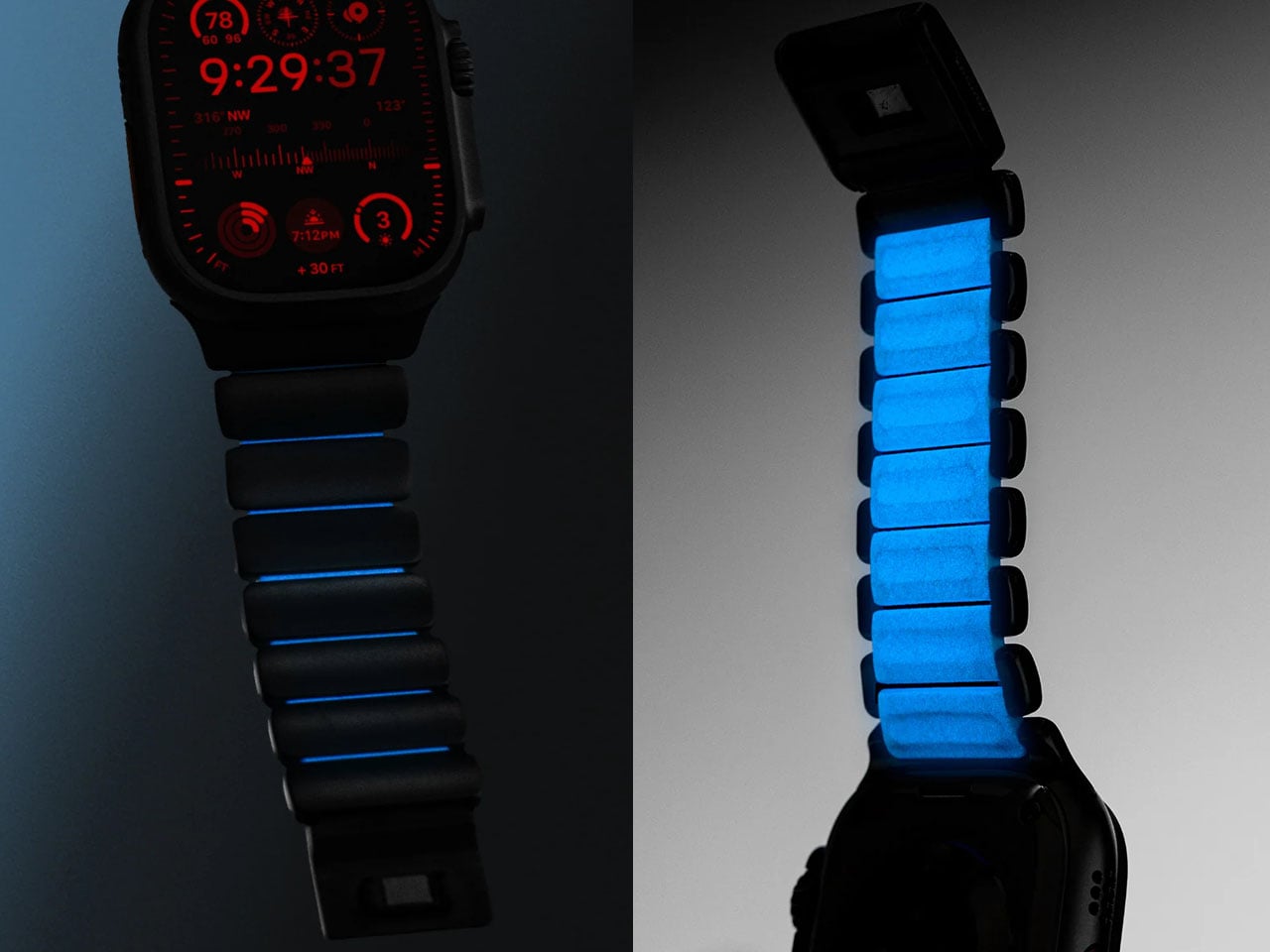
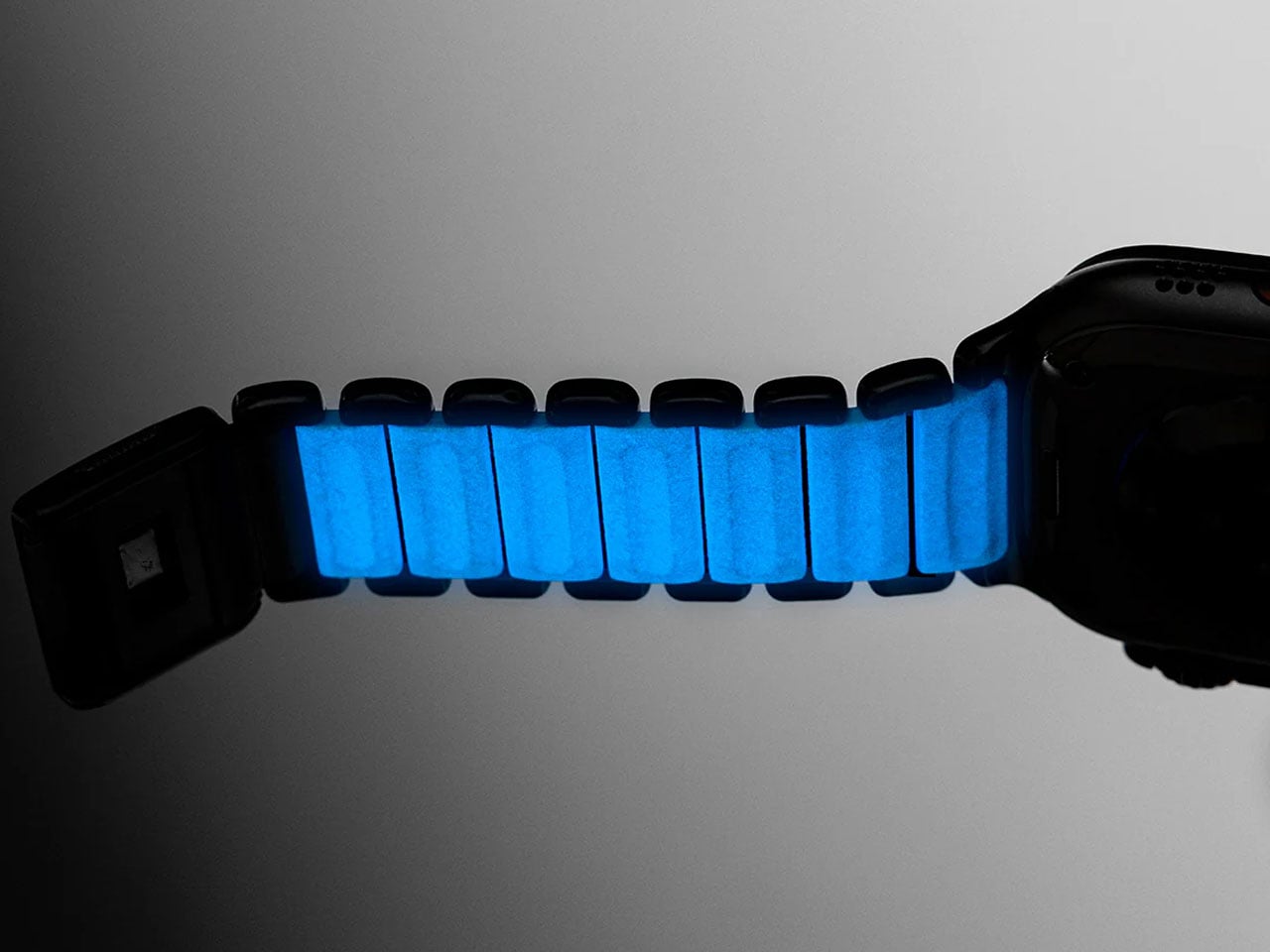
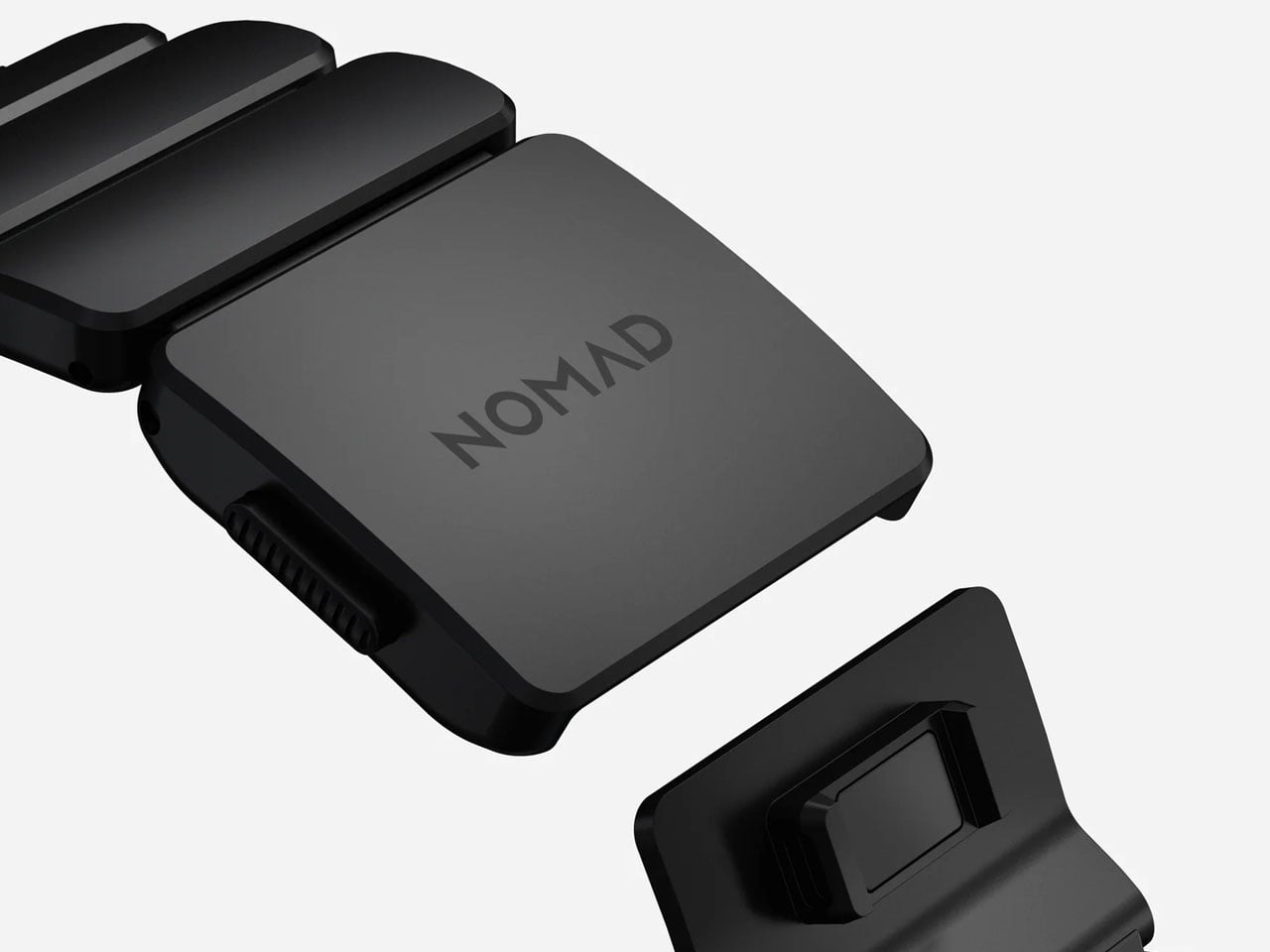
What sets the Icy Blue Glow edition apart is the photoluminescent material infused into the interior FKM links. This compound absorbs light throughout the day and emits a soft blue glow in low-light conditions. The glowing effect is more subdued in typical environments because the material sits beneath the titanium, but it still produces a cool, visual accent in the dark that distinguishes it from more conventional bands. Nomad equips this limited version with a custom magnetic clasp engineered for secure closure and corrosion resistance. The clasp remains fastened through daily movements yet opens easily when the sides of the buckle are squeezed. Users can also fine-tune the band’s fit using the included tool to remove or add links, making customization straightforward.

Though designed from the ground up for Apple Watch Ultra models 1 and higher, the Stratos Band is also compatible with earlier Apple Watch Series 1–11 and SE models, offering versatility across a wide range of devices. The band’s flexible design supports wrist sizes generally between 130 mm and 200 mm, and its construction balances a weight that feels substantial without being cumbersome. The titanium elements are finished with a scratch-resistant DLC coating, adding resilience for adventures and daily use alike.

The fluoroelastomer material itself is antimicrobial and can be cleaned easily with soap and water, supporting hygiene for wear during workouts or outdoor activities. The band’s water-resistant design further reinforces its adaptability to various lifestyles, though it’s recommended to allow the band to dry fully after exposure to moisture. Priced at $189, the Stratos Band Icy Blue Glow edition offers a premium alternative to standard Apple and third-party bands with a playful glow-in-the-dark element.

The post Nomad Icy Blue Glow Stratos Band adds glow-in-the-dark twist to Apple Watch Ultra first appeared on Yanko Design.
Nothing’s Glow-in-the-Dark Phone (2a) Plus Sparks a New Design Trend: We Need Glowing Phone Cases!

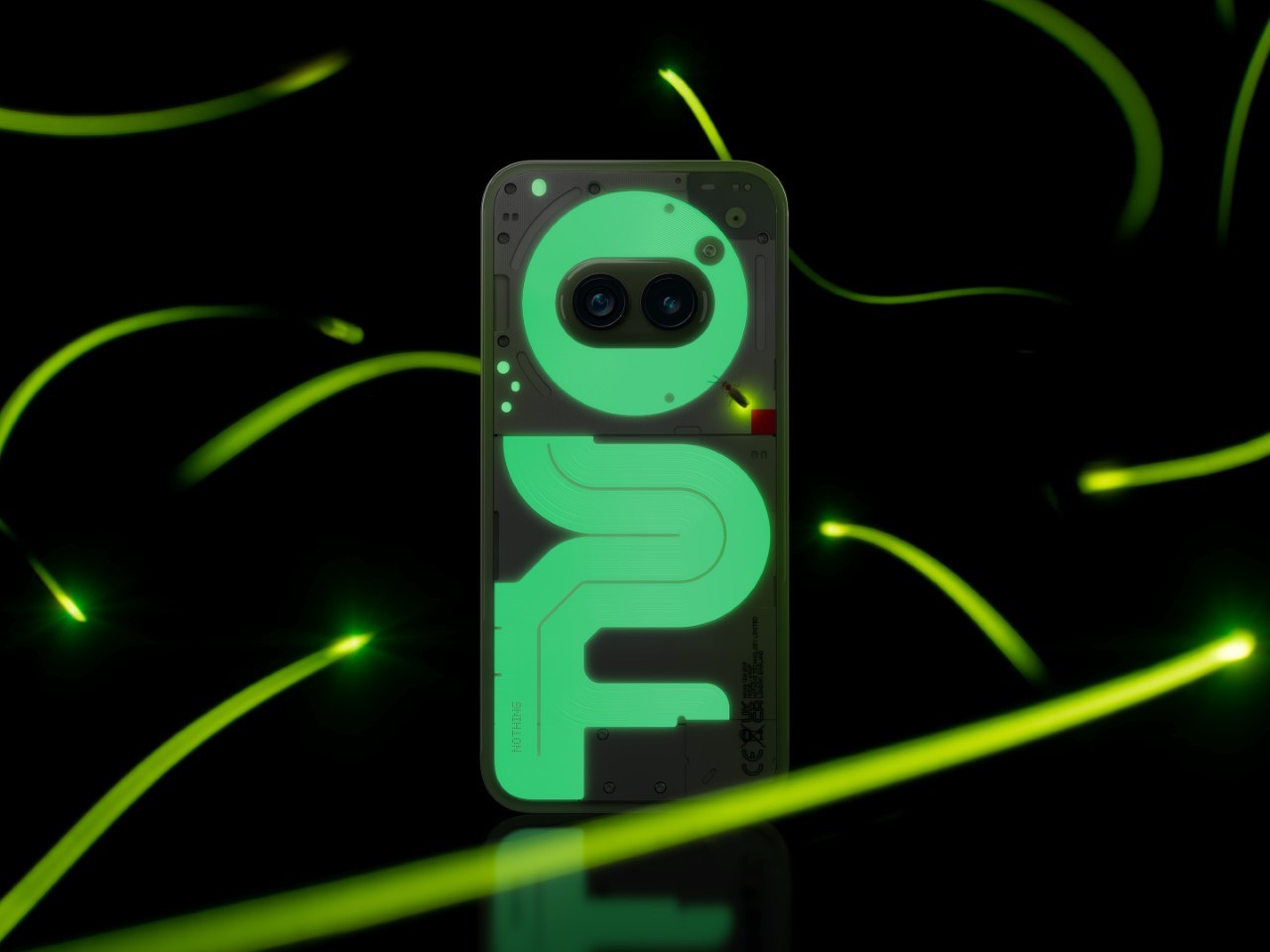
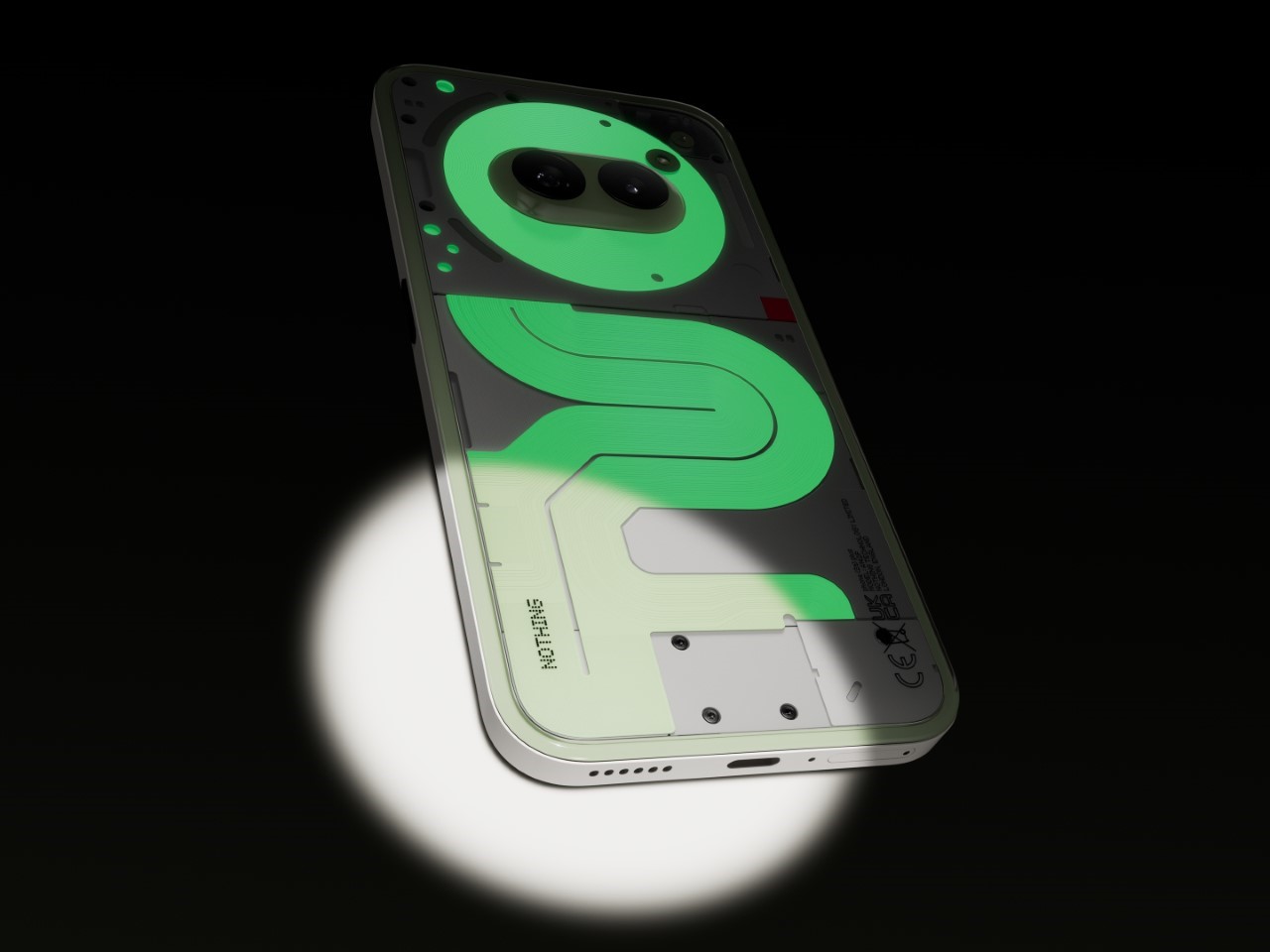
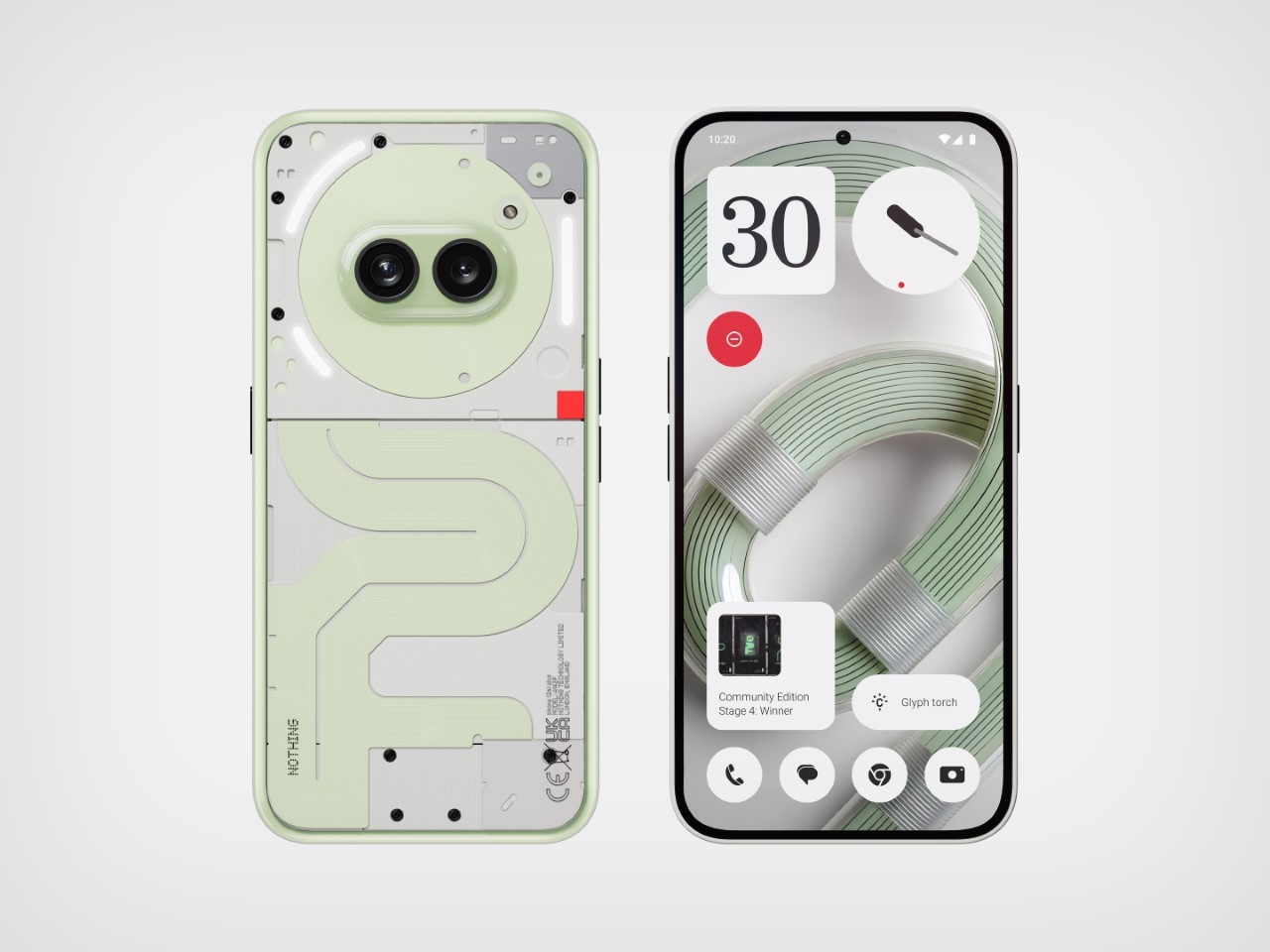
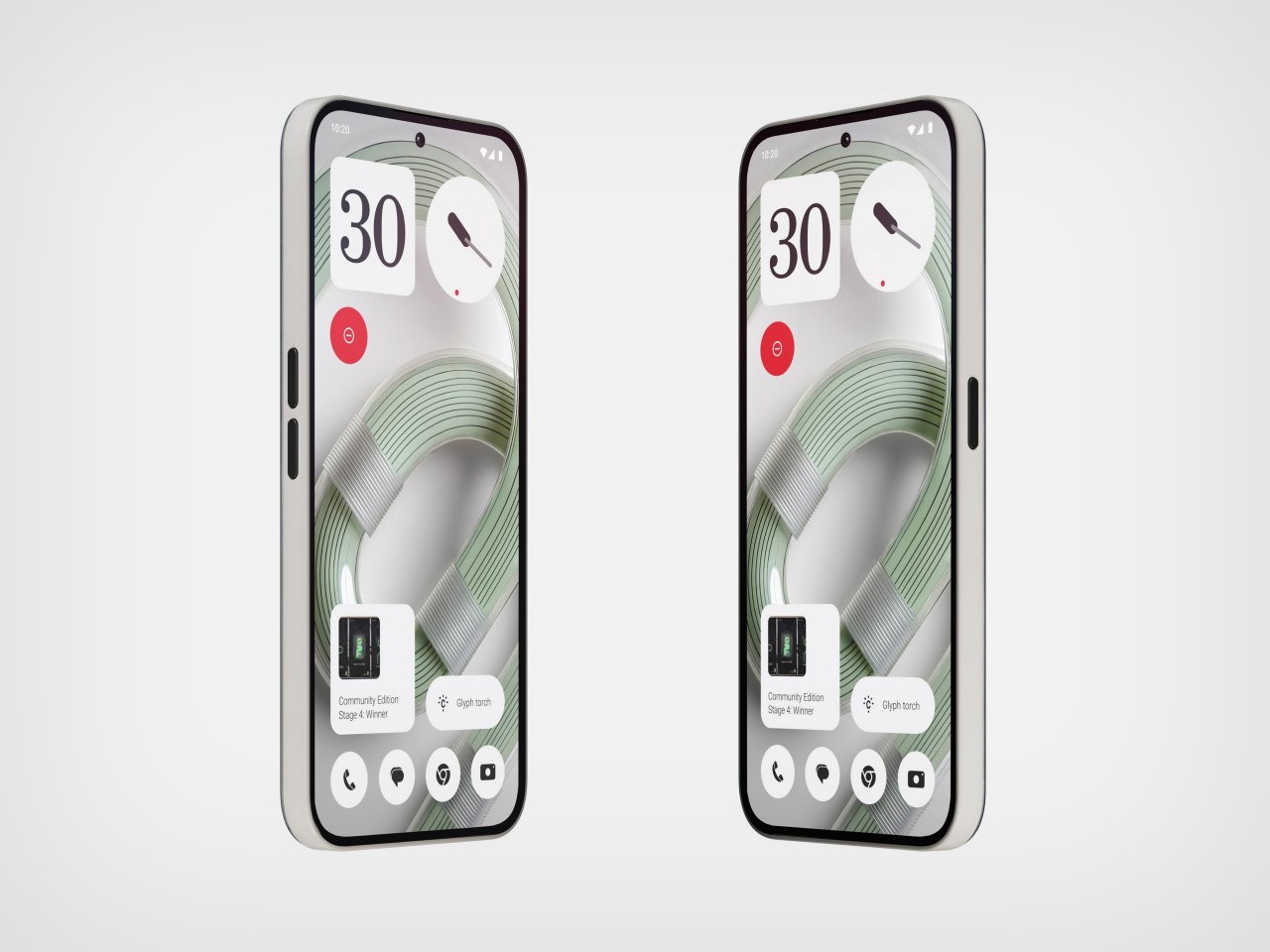
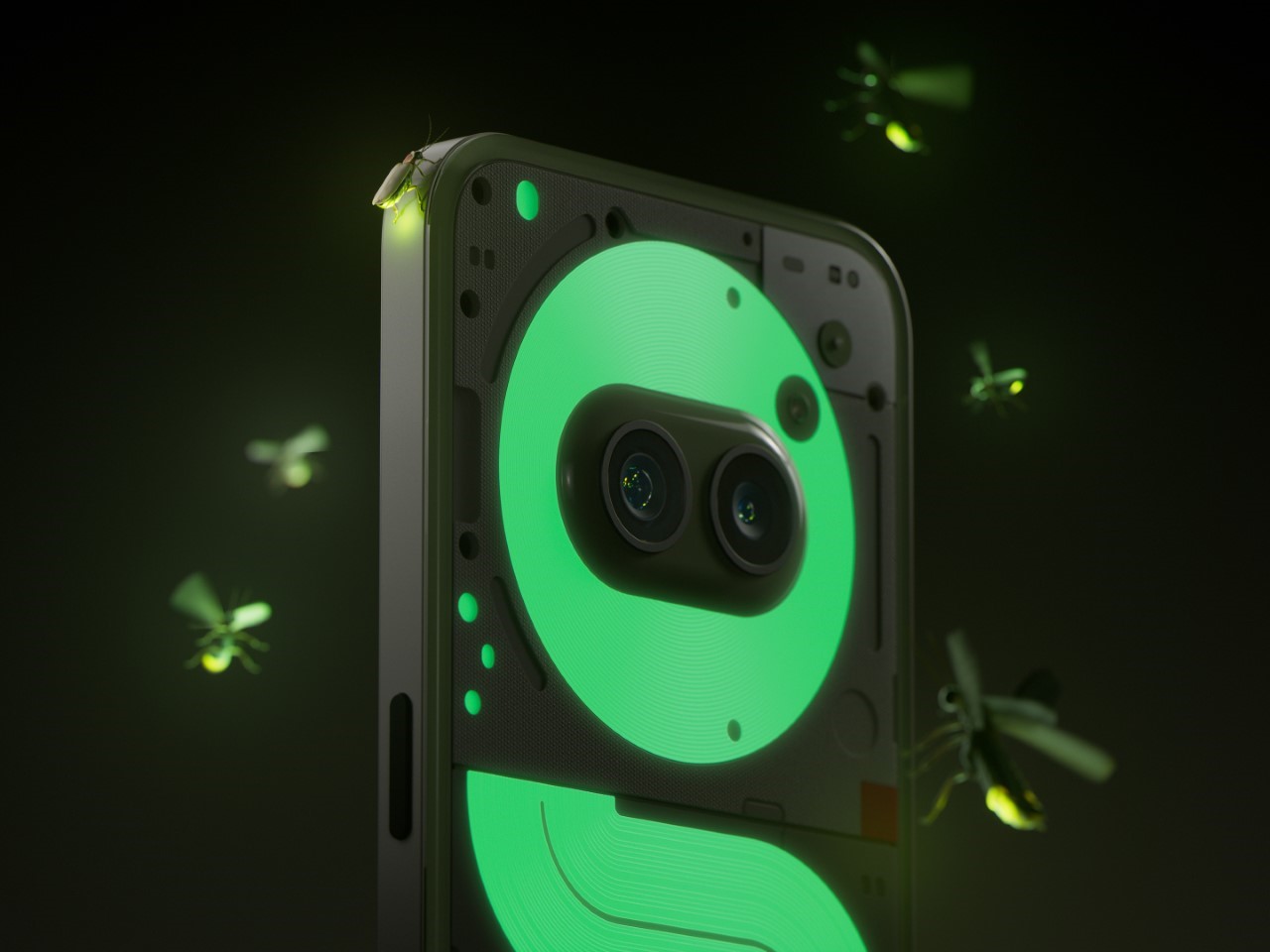
If you loved the Nothing Phone’s glyph interface, their Community Edition phone may just absolutely capture your heart. Announced today following a lengthy community-driven design competition, the Nothing Phone (2a) Plus Community Edition made its global reveal, with a unique twist on the original phone’s design. Sure, you’ve got the Glyph Interface with LEDs that glow to make the phone’s rear panel turn into a dynamic display for notifications and alerts, but the new Community-made version of the phone comes with literal glow-in-the-dark ribbon cables that are ‘nothing’ like anything we’ve seen on any phone in the past decade!
Thanks to input from community members Astrid Vanhuyse and Kenta Akasaki, this phone stands out in a crowd—but not with power-hungry LEDs. Instead, it uses a green phosphorescent material that charges up with ambient light, glowing gently in dim settings and giving the 2(a) a dose of unique, eco-friendly style.

Designers: Astrid Vanhuyse & Kenta Akasaki for Nothing

The design shift here is significant, especially if you remember the original Phone (2) and the less glowy Phone (2a). While the Phone (2) featured bright LED glyphs, the 2(a) kept things quieter, dialing back on the glow to maintain a sleeker look. This Community Edition, though, reintroduces some of that distinctive Nothing flair, swapping LEDs for a phosphorescent effect along the phone’s ribbon cables and components. It’s a subtler, softer glow that gives the phone character without the need for extra power or flashing lights. Imagine your phone lighting up on the nightstand—not enough to keep you awake, just enough to catch your eye.

The phosphorescent material works just like those glow-in-the-dark stars you might have seen as a kid. It absorbs natural or artificial light and emits a soft glow when the lights go down. Unlike typical LEDs, it doesn’t drain the battery, giving this 2(a) a style boost without impacting battery life or performance. It’s the kind of understated cool that’s right in line with Nothing’s design philosophy: thoughtful, sustainable, and practical. Plus, it makes it easier to find in a dark room, giving the design a practical edge as well as aesthetic appeal.
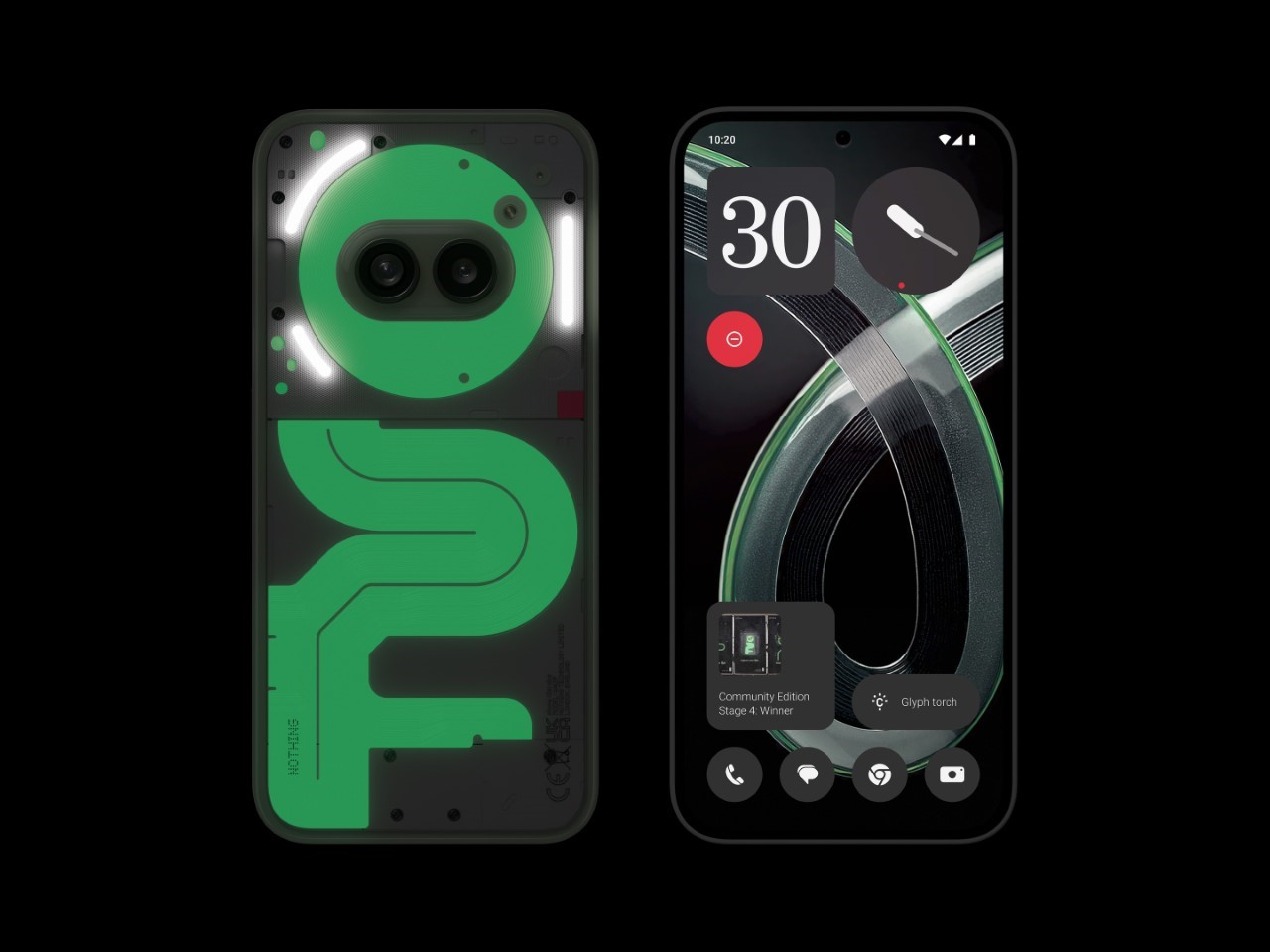
The collaborative effort on this phone really says a lot about Nothing’s approach to designing for their community. The company didn’t just create the effect on its own; they opened it up to the public and sorted through more than 900 design submissions from fans across 47 countries. Out of these, Vanhuyse and Akasaki’s concept shone the brightest, resulting in a design that feels distinctively Nothing while showcasing a global community’s creativity. It’s part of Nothing’s shift toward community-centric product innovation, giving fans a real voice in shaping what they carry.

Nothing also went to great lengths to ensure this glow effect wasn’t just a gimmick but a part of the Phone (2a) Plus Community Edition’s build. The phosphorescent material is durable and seamlessly integrated, meaning it won’t interfere with the phone’s performance or longevity. You get a sturdy device with an artistic edge, a blend of tech and simplicity that fits seamlessly into daily life.

The Phone (2a) Plus Community Edition is priced at $518 USD (£399 / €449 / ₹29,999), with sales beginning on November 12. If you’re located in London, you might also grab one in person at the Nothing Soho store on November 16. There are just 1,000 units available up for grabs… so if you enjoy the idea of having a phone so dazzling that you’ll never want to put a case on it, grab one while you still can. And for anybody at dbrand or Spigen, you best believe people will want glowing cases for their iPhones and flagship Androids too!

The post Nothing’s Glow-in-the-Dark Phone (2a) Plus Sparks a New Design Trend: We Need Glowing Phone Cases! first appeared on Yanko Design.