Most Gaming Handhelds Make You Choose, But the Win Max 3 Doesn’t

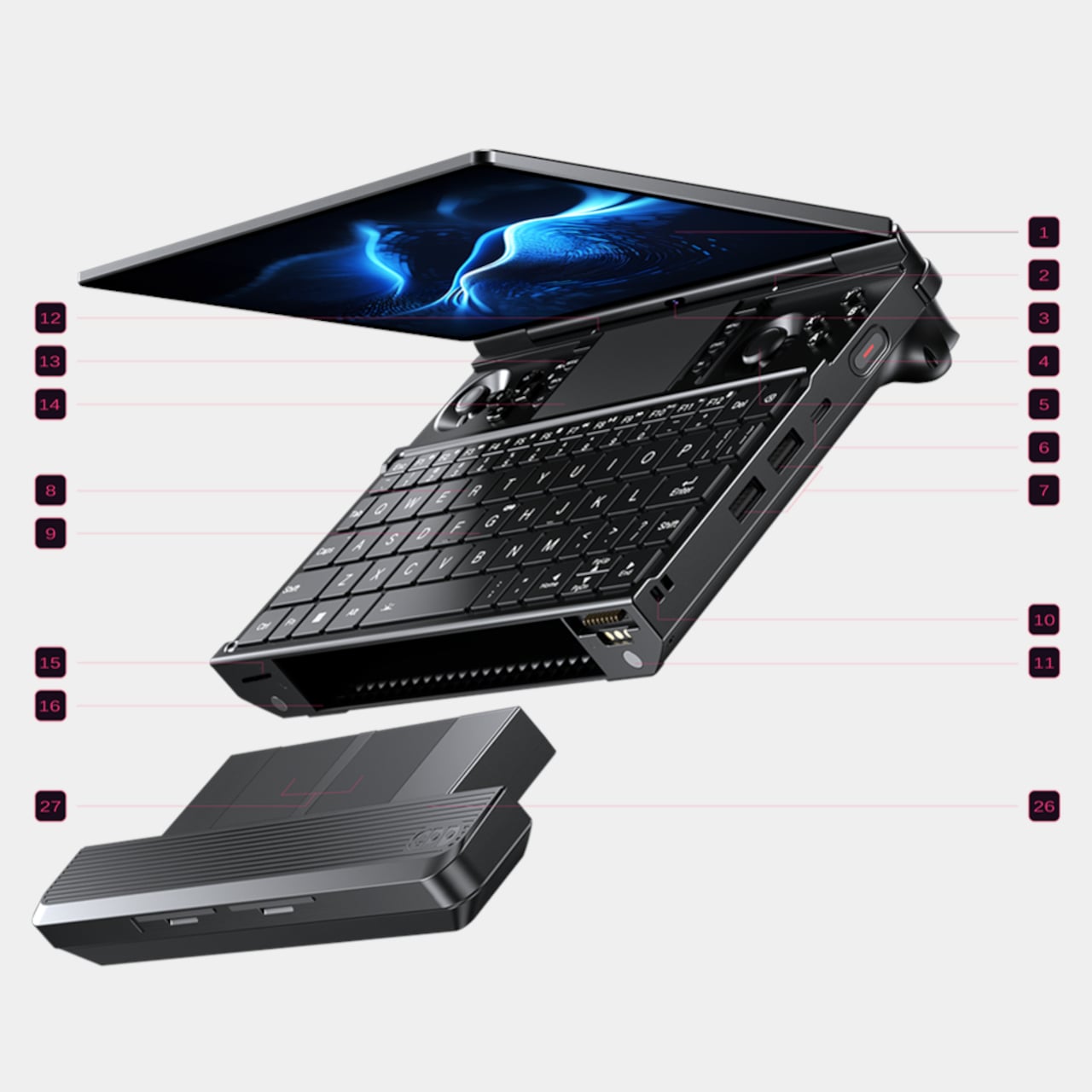
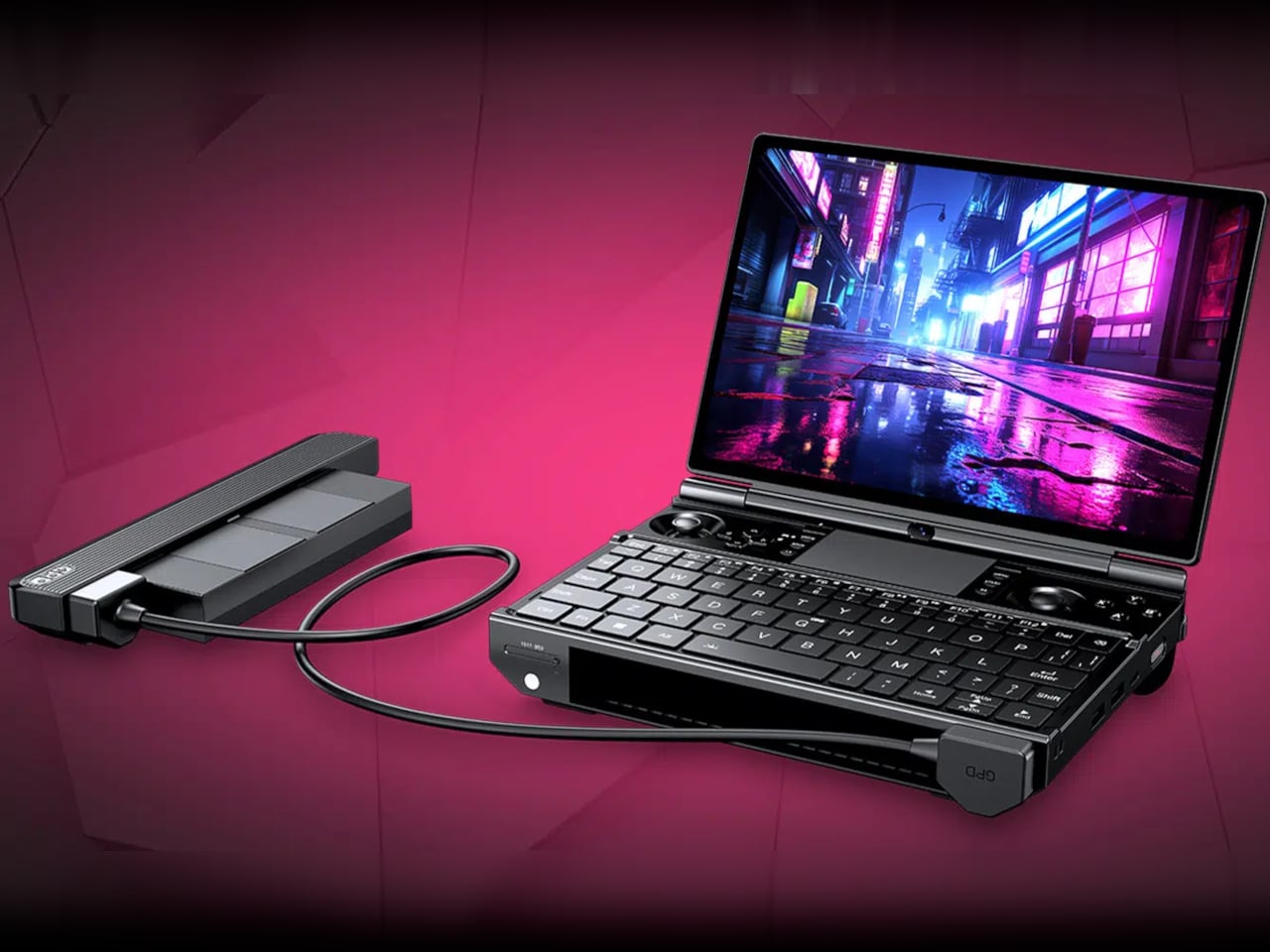
Most handheld gaming PCs ask you to accept a single, fixed compromise between power, battery life, and weight. The GPD Win Max 3 refuses that trade-off entirely. Its clamshell body is built around a base chassis that can be reconfigured with a snap-on battery pack, an external cooling module, or both, turning one small laptop into several different machines depending on what the moment calls for.

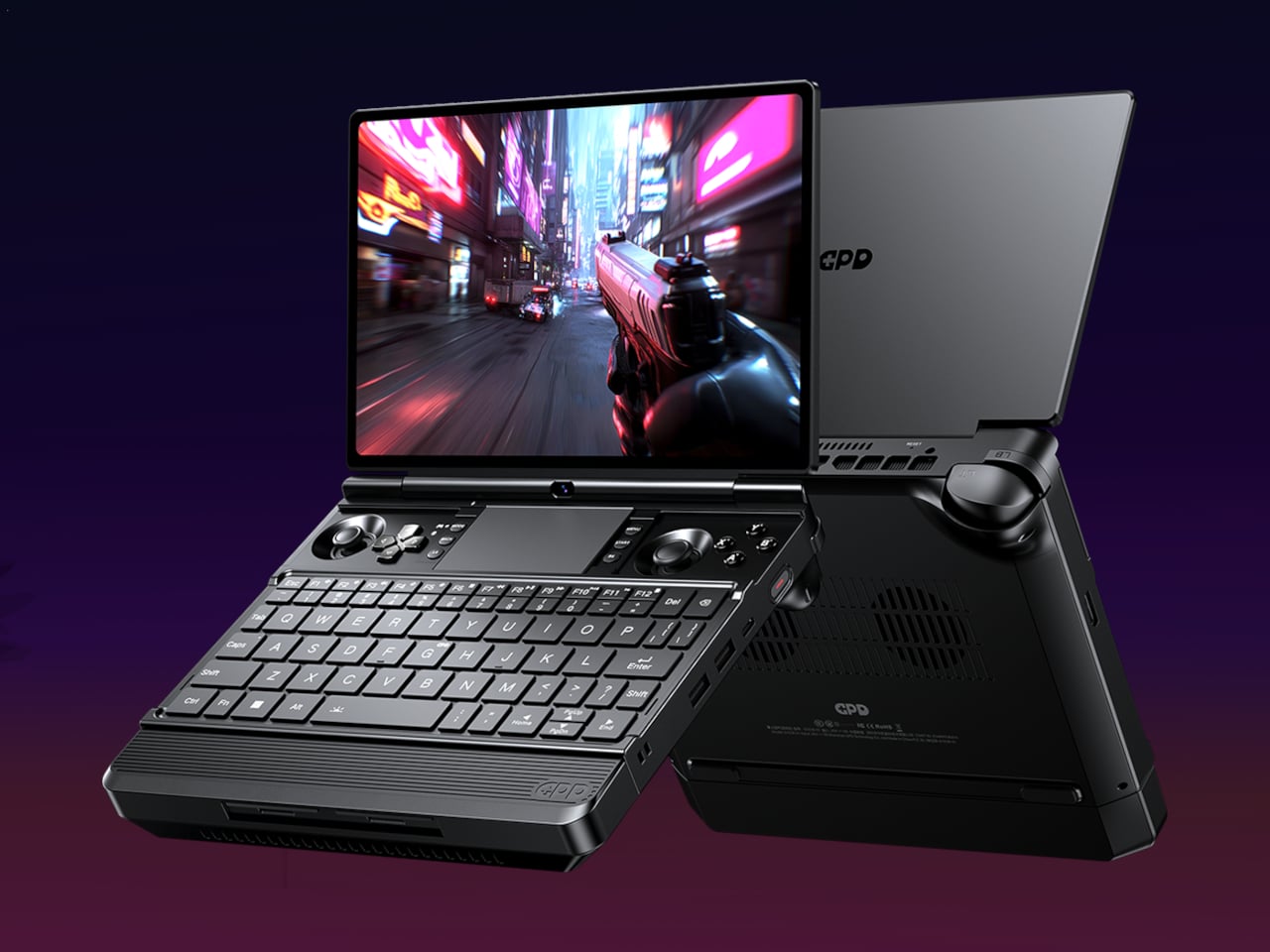
Strip it down to its lightest form and the Win Max 3 weighs just 815g, closer to a paperback novel than a gaming rig. Clip on the 97Wh battery module and it grows to 1,220g, trading some portability for hours of unplugged play. Swap that for the cooling module instead, and the machine settles at 985g while unlocking sustained performance that would otherwise cook a chassis this size. Every configuration reshapes the same 207mm x 147mm footprint.

Designer: GPD
That flexibility exists because the hardware inside earns it. An AMD Ryzen AI Max+ 395 or 388 processor drives Radeon 8060S graphics, paired with up to 128GB of LPDDR5x memory that can allocate as much as 96GB directly to the GPU. GPD claims the chip can hold 100W at 88°C with no fan module attached at all, and adding one, or a pair of them, pushes sustained output to 110 W without needing a dock nearby.
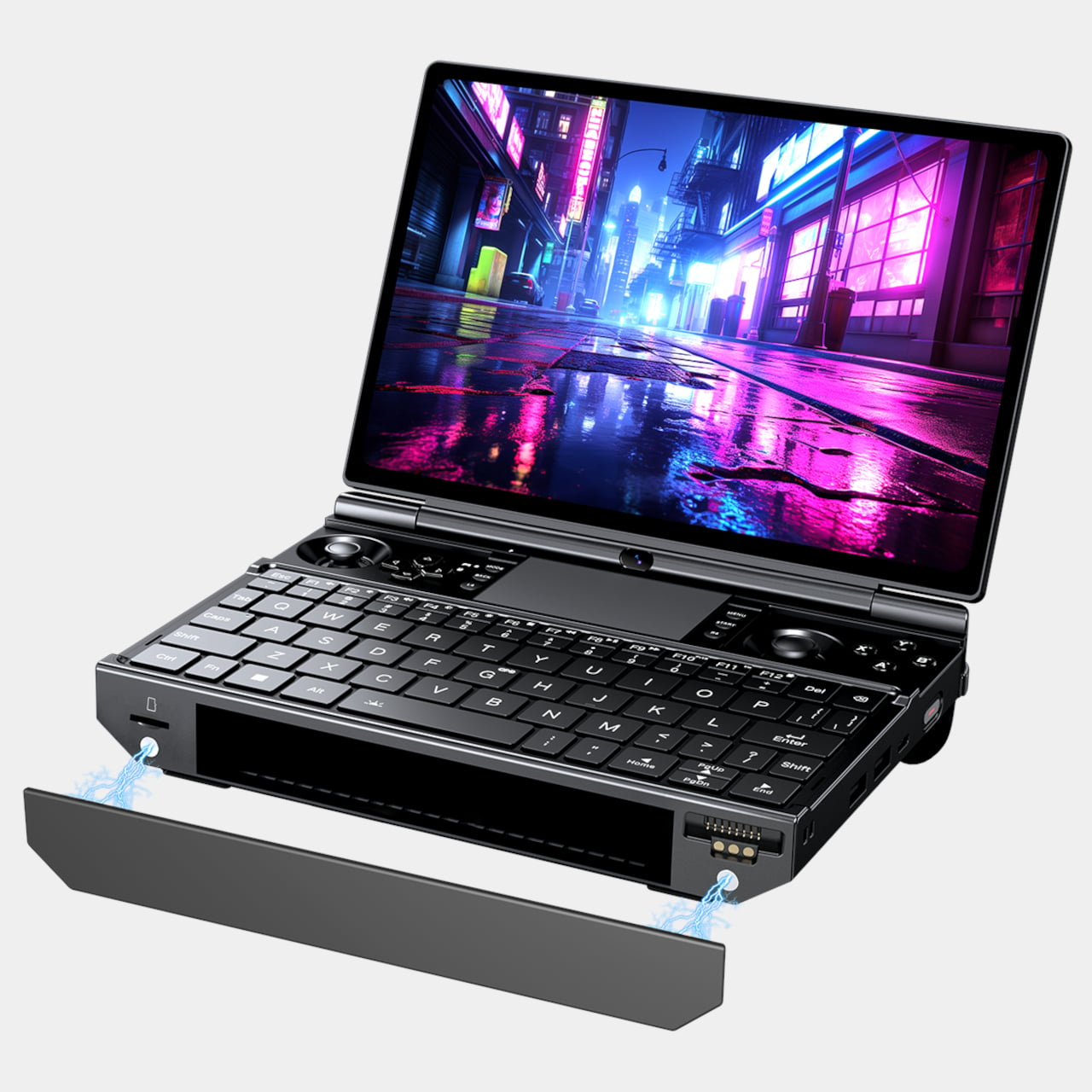
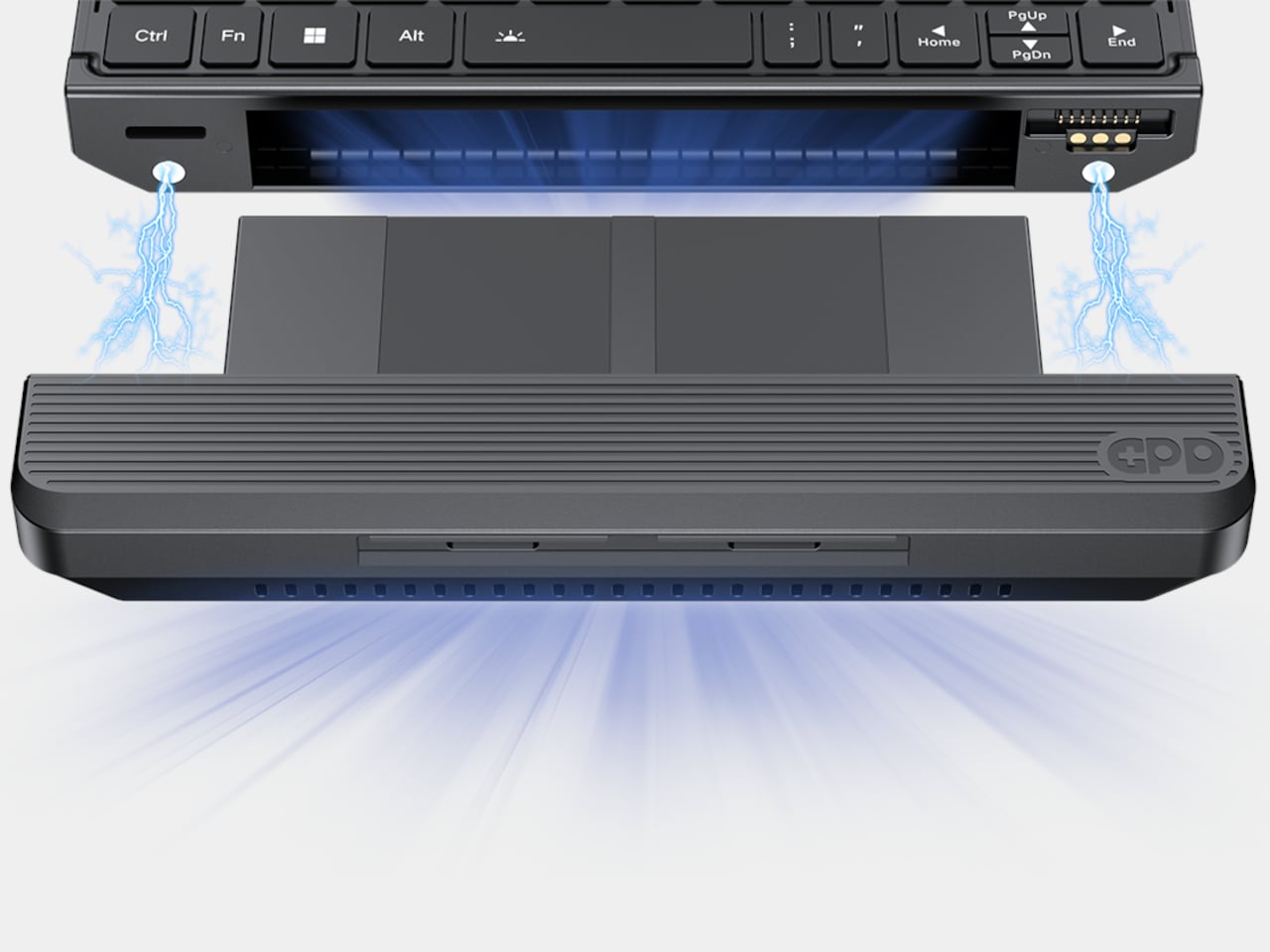
Picture a commute where the base unit alone slips into a bag, light enough to ignore until a layover turns into three hours of downtime. Clip on the battery module then, and a handheld built for a quick match becomes one built to survive an entire flight without hunting for an outlet. Back at a desk, pull the battery off and attach the cooling module instead, and the same chassis stops sipping power and starts pushing toward its ceiling.
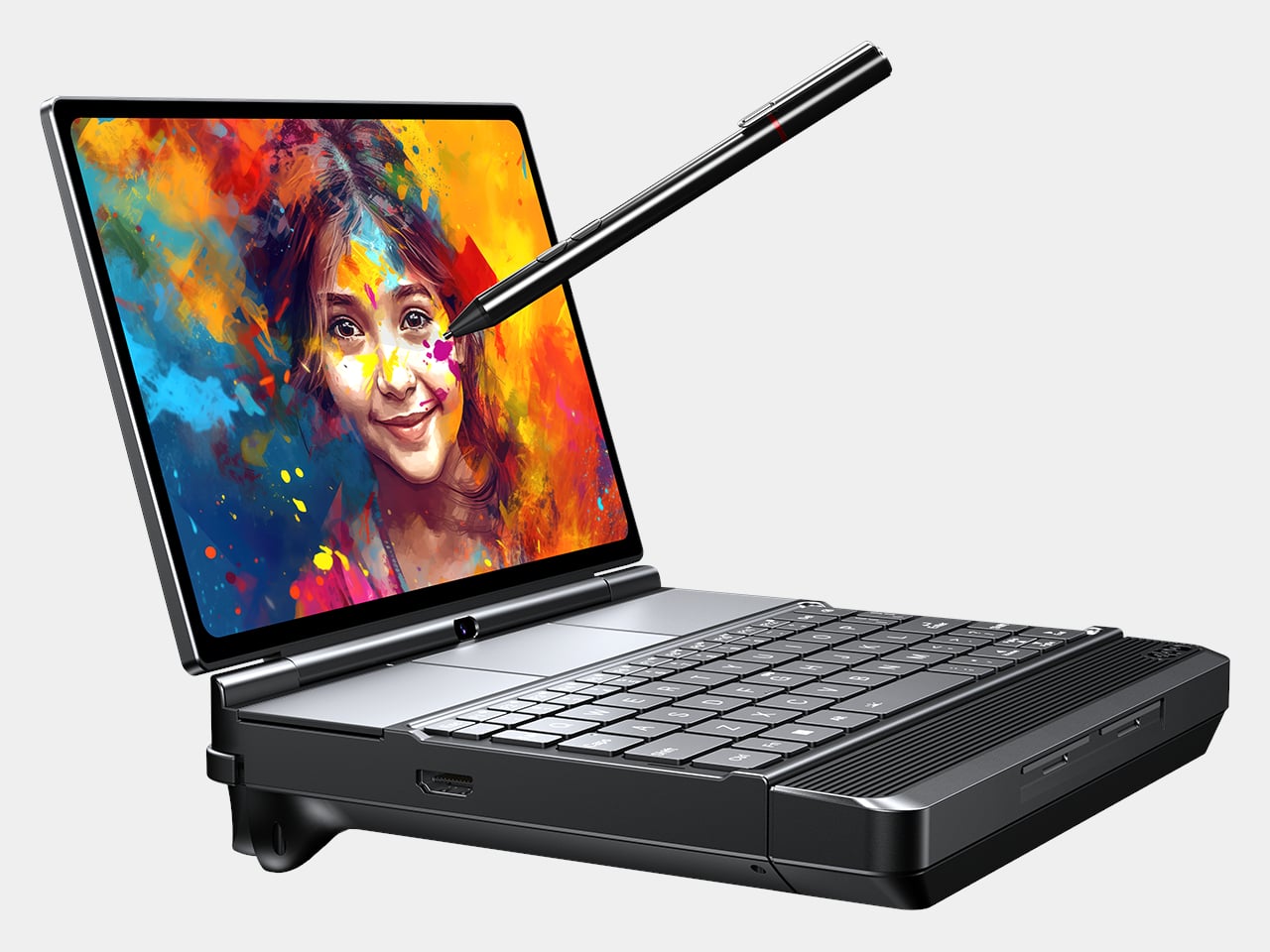

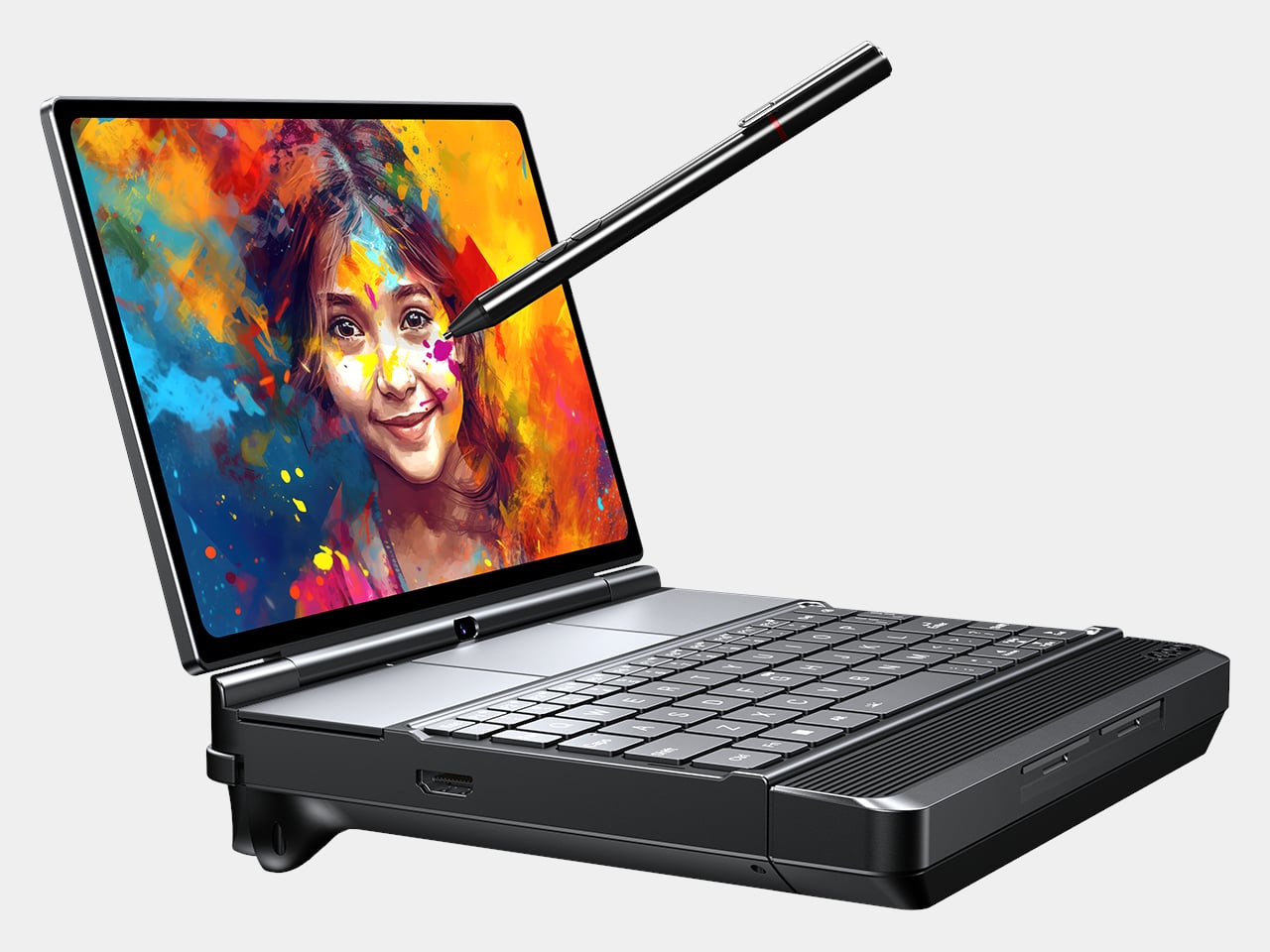
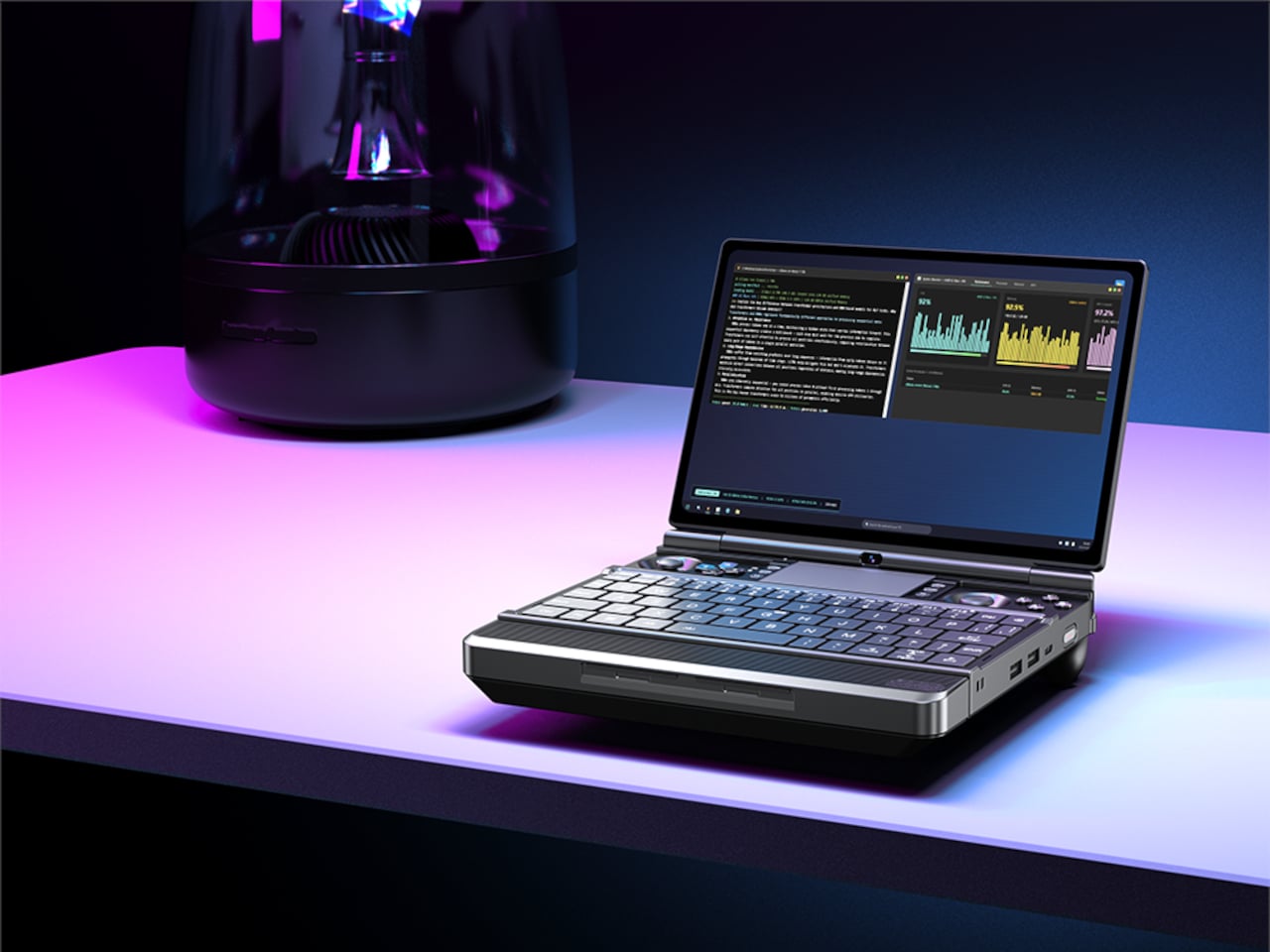
The 9.06-inch AMOLED display carries its own share of the workload, running at up to 165Hz with HDR10 active at the same time, a pairing few handhelds manage without dimming one to preserve the other. Underneath the screen, a full-size keyboard sits below two Xbox-style control clusters, with the touchpad placed above the keys instead of below them, an arrangement that keeps typing and gaming postures from fighting each other.
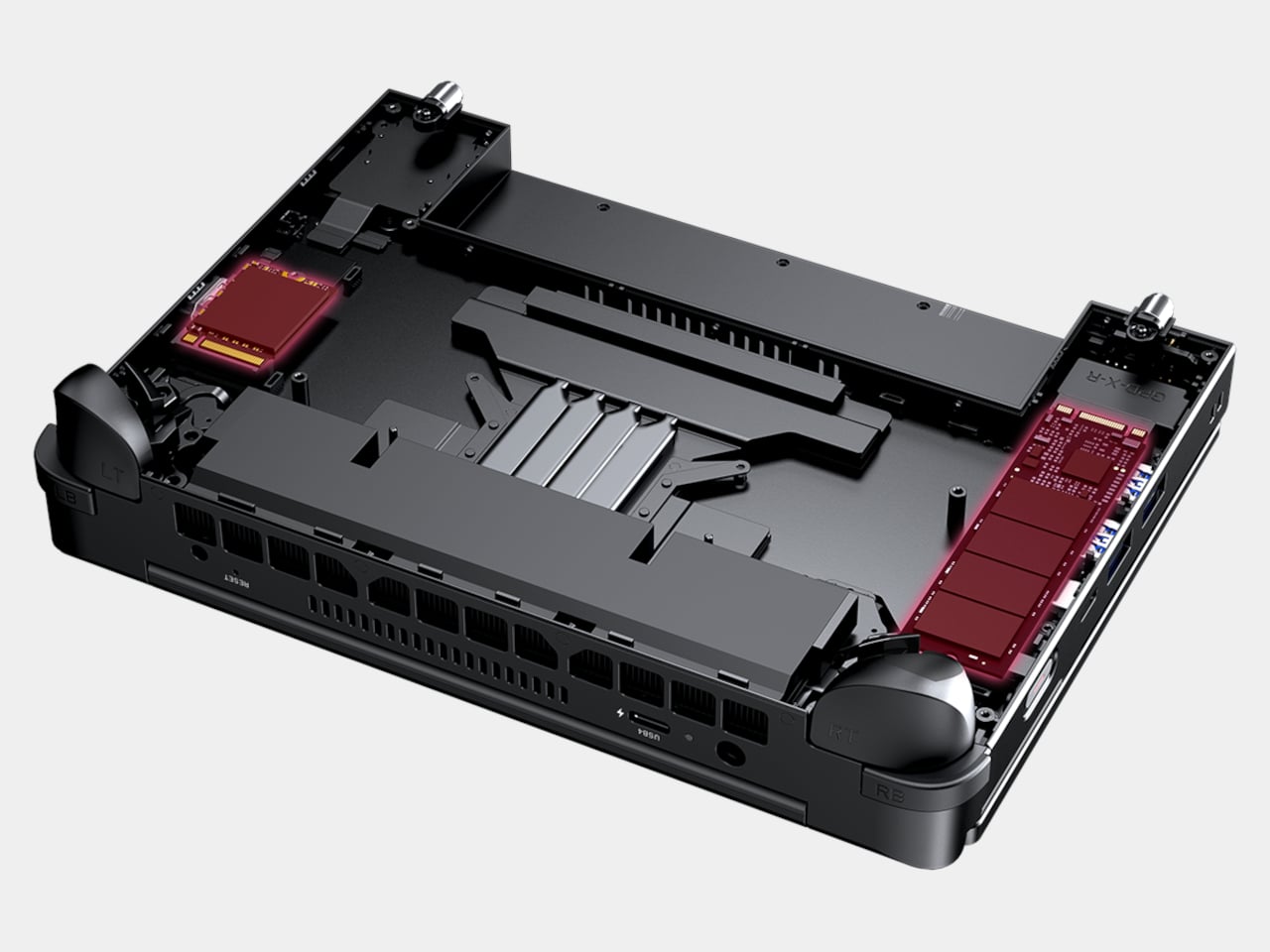
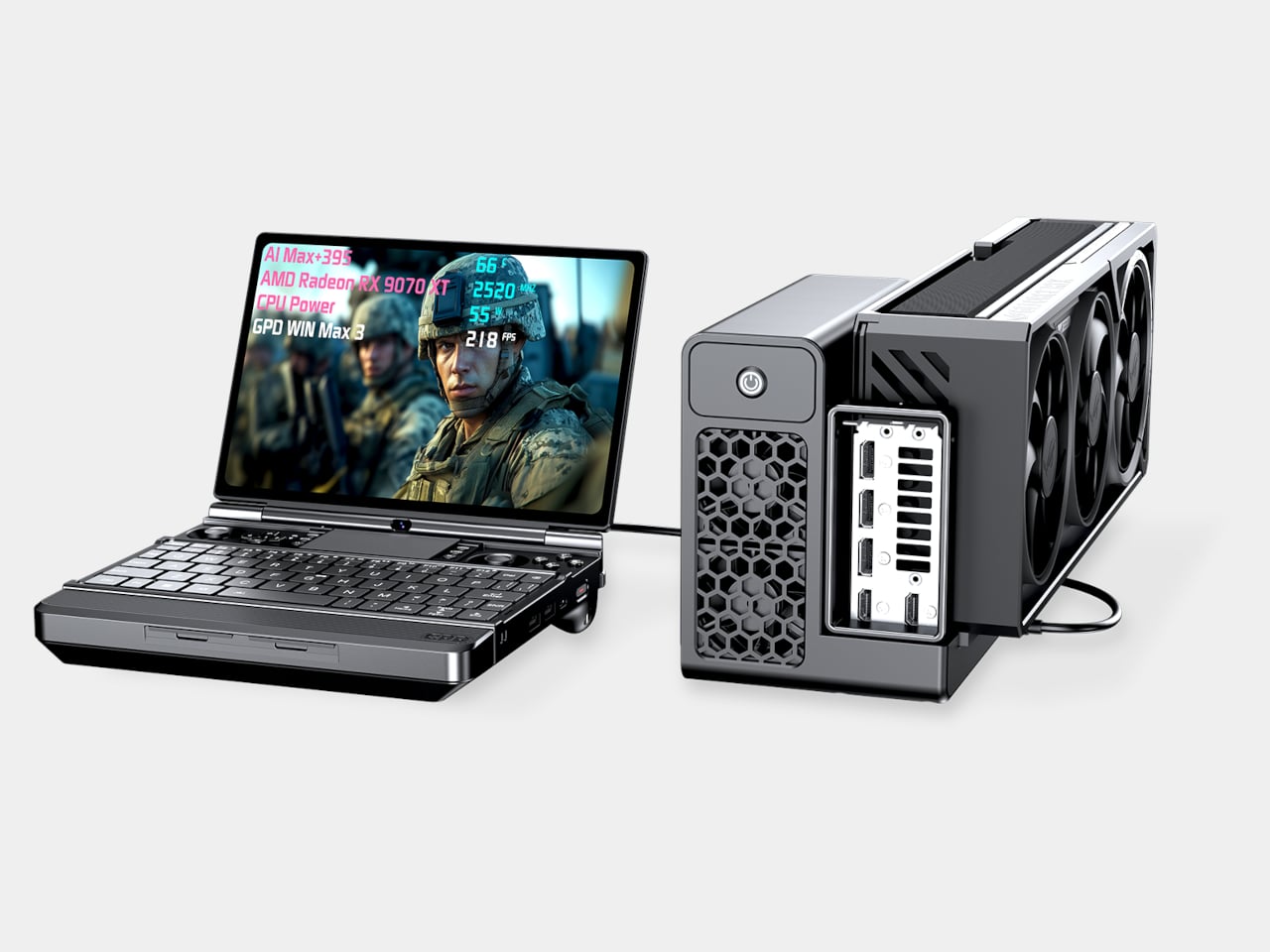
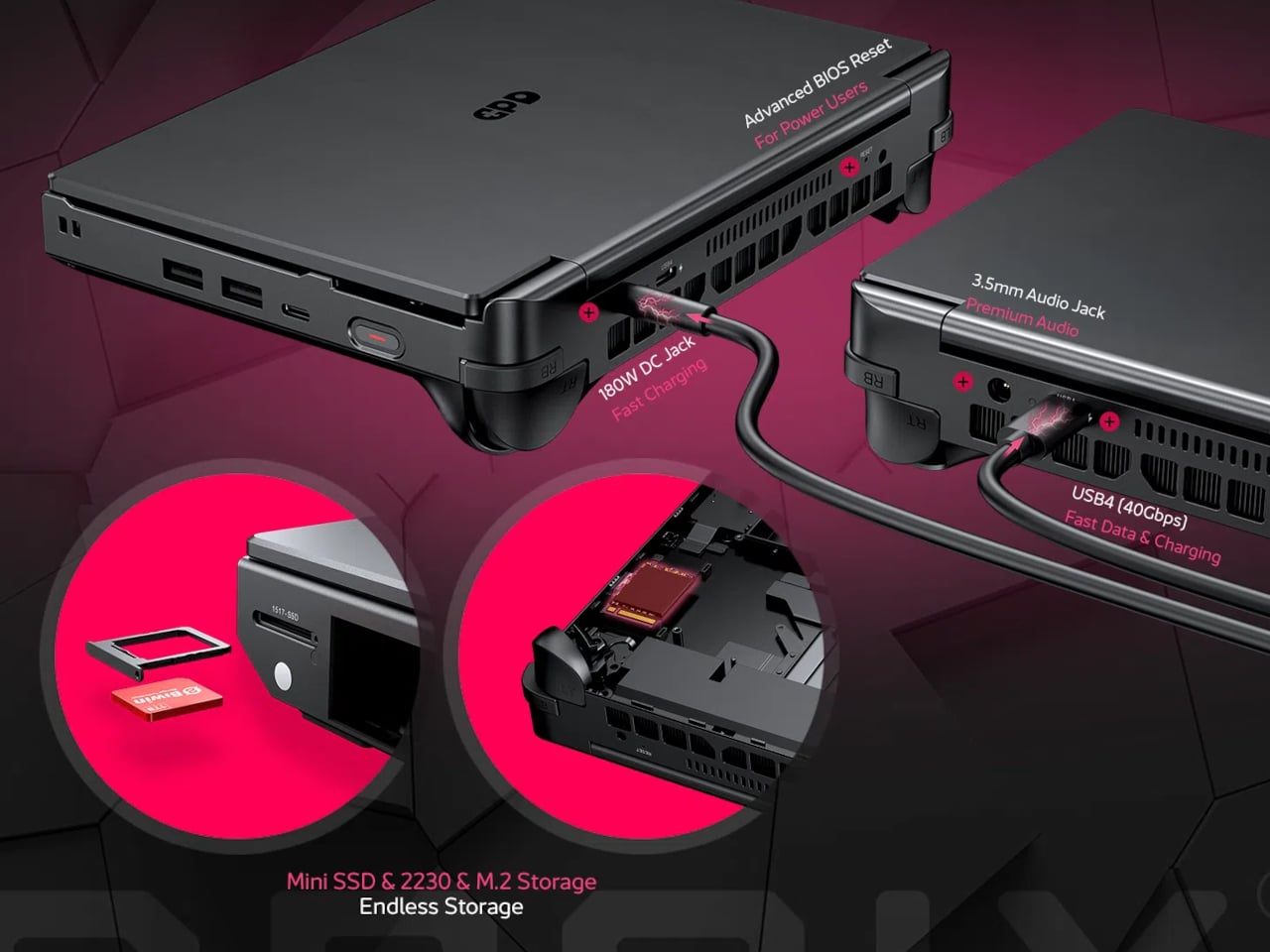
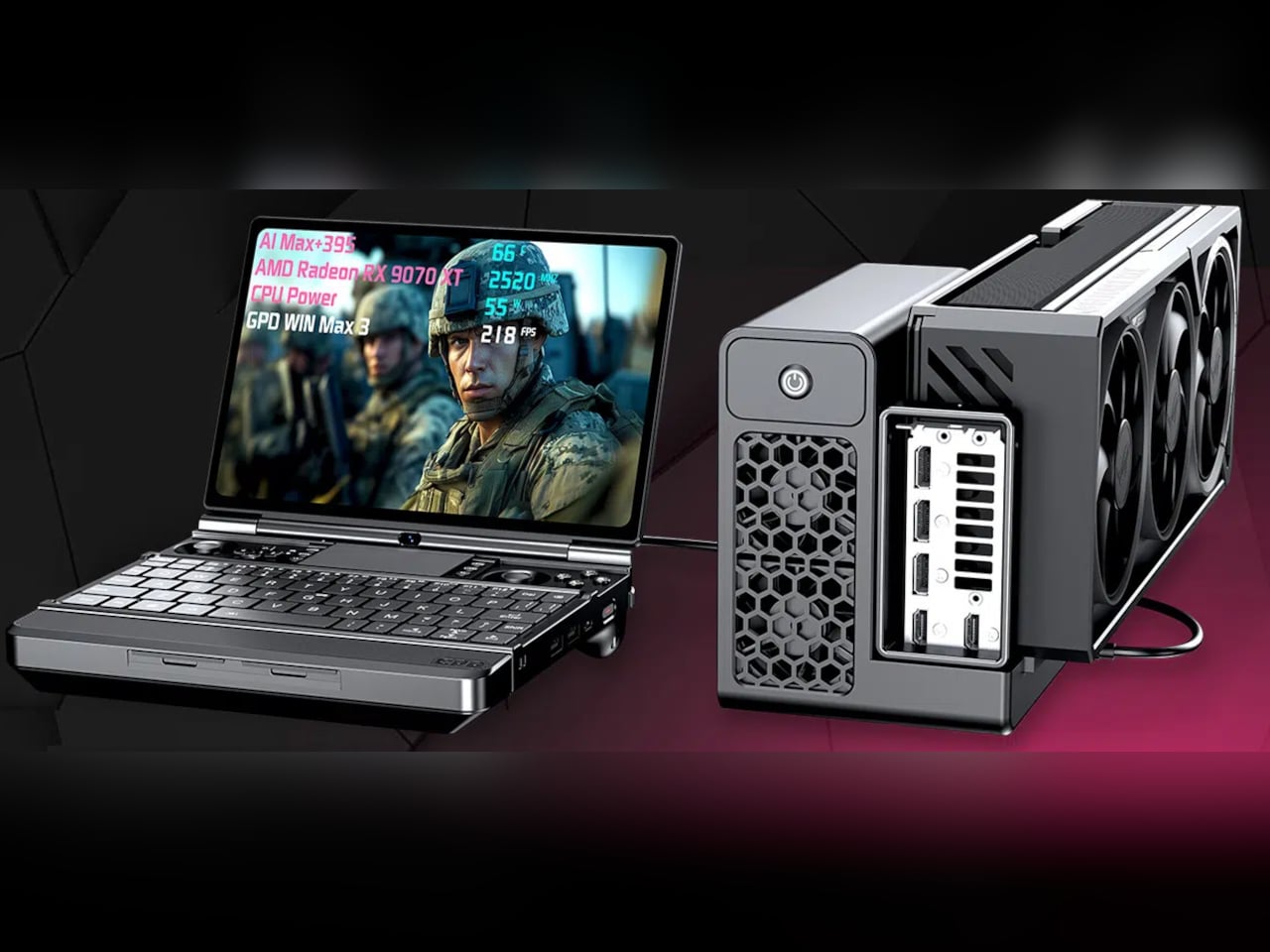
Storage follows the same modular logic as everything else, with M.2 2280, M.2 2230, and Mini SSD 1517 slots available at once rather than forcing a single-drive ceiling. A USB4 port supports GPD’s own G2 graphics dock, so the same unit that fits in a jacket pocket can also feed a full external GPU setup at a desk. None of these pieces work in isolation; they’re designed to be added, removed, and swapped as the day’s task changes.

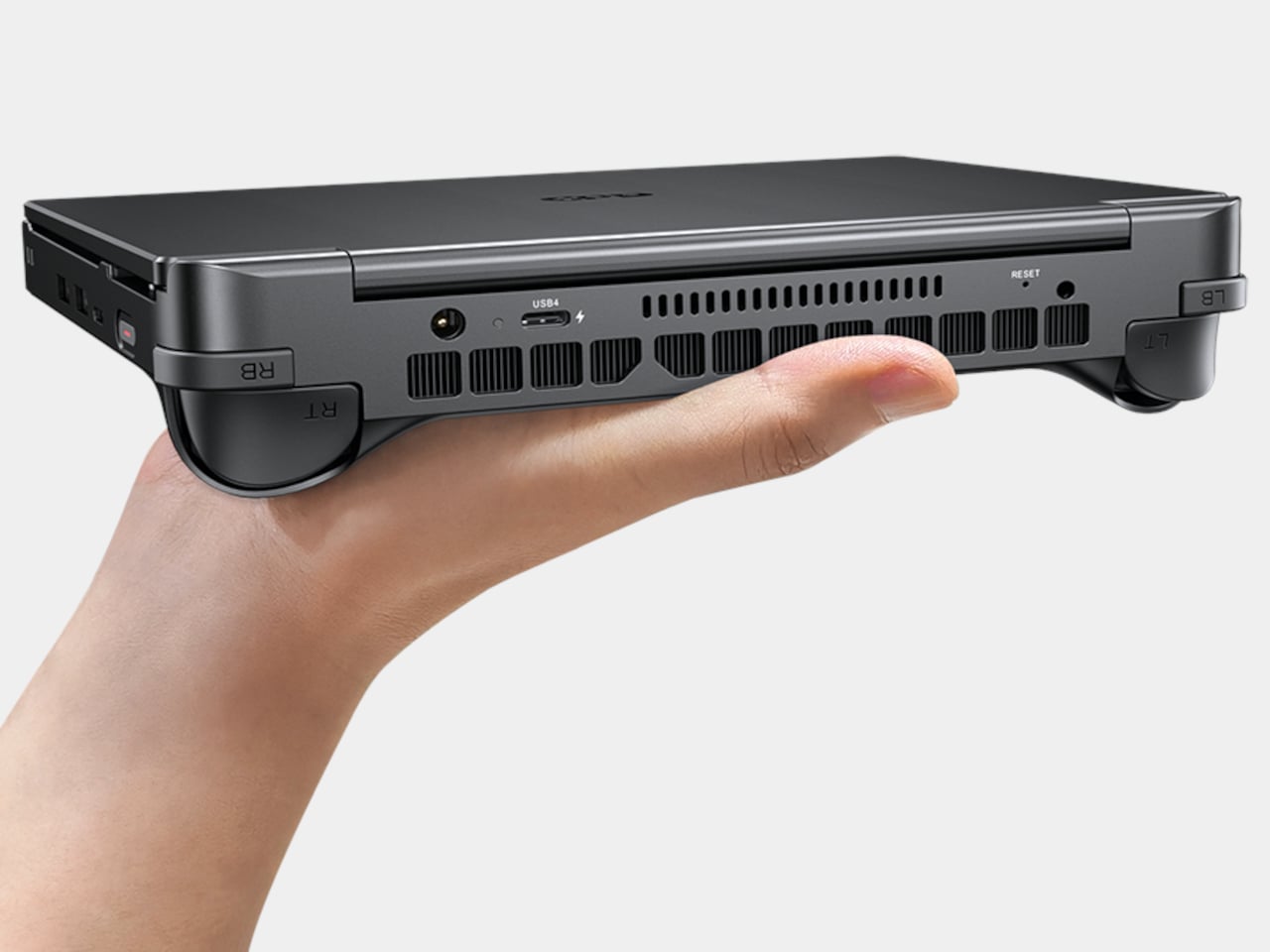
What the Win Max 3 ultimately sells isn’t a spec sheet. It’s the idea that a device this size doesn’t have to pick a single identity. Battery life, raw wattage, and portability usually fight each other inside a sealed shell, and here they’ve been separated into parts you attach only when you need them, and left off entirely when you don’t.
The post Most Gaming Handhelds Make You Choose, But the Win Max 3 Doesn’t first appeared on Yanko Design.
Gaming Laptops Die Mid-Game, GPD WIN Max 3 Swaps Its Battery Live

Handheld gaming PCs have come a long way, but most still force an uncomfortable compromise. The ones built around controllers and portable gaming rarely double as decent work machines, while those that lean toward productivity often handle demanding games with apology. Anyone wanting both usually ends up carrying two devices, a proper laptop for meetings and a gaming handheld for the commute home.

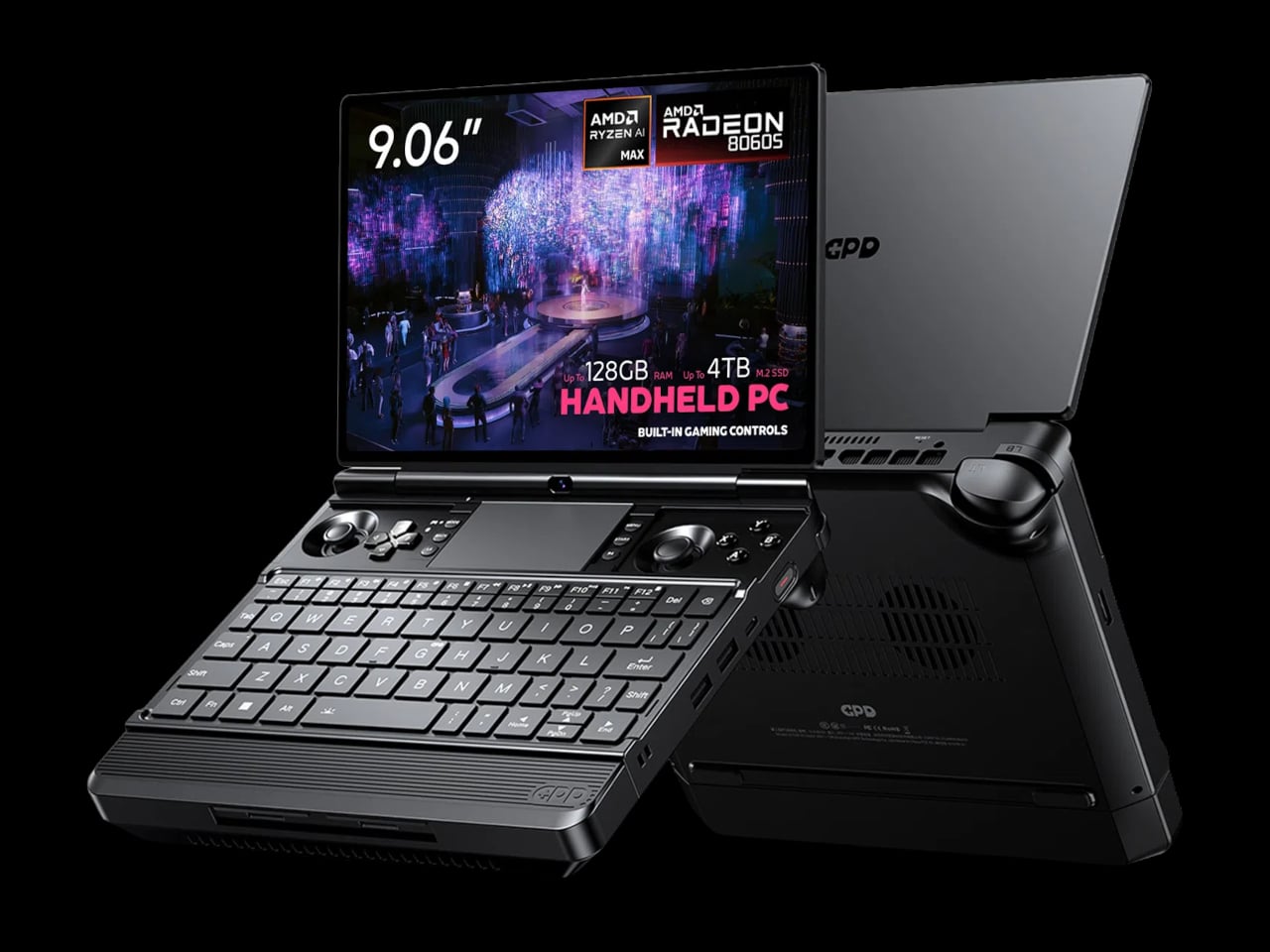
The GPD WIN Max 3 tries to sidestep that problem entirely. It looks like a compact clamshell laptop at first, complete with a keyboard, a Precision touchpad, and a 9.06-inch display on a hinged lid. Lift those magnetic panels above the keyboard, though, and a set of capacitive joysticks appears alongside linear Hall-effect triggers, two programmable rear buttons, and a full Xbox-style controller layout.

Designer: GPD

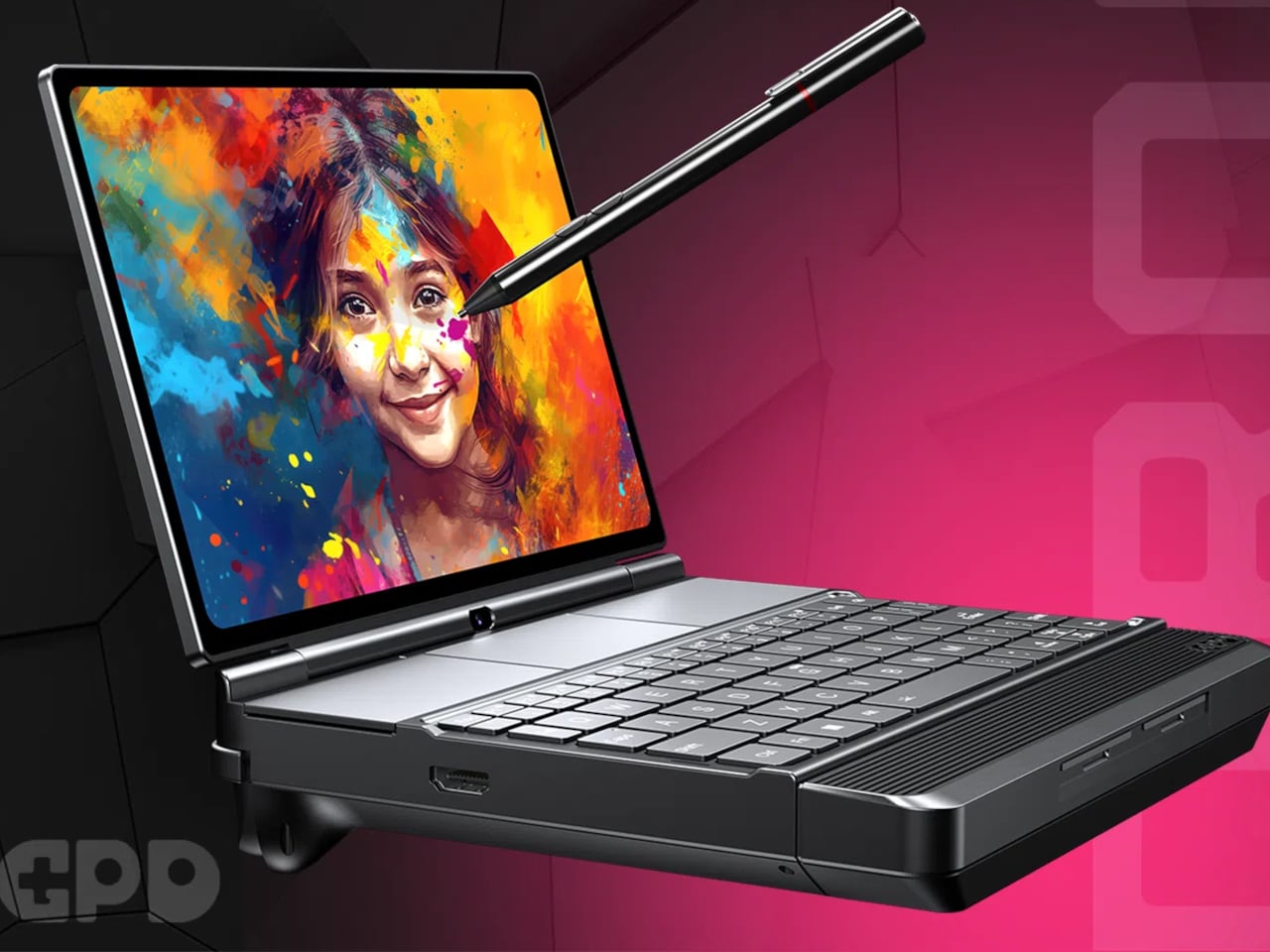
That 9.06-inch screen doesn’t cut corners on quality. GPD is listing an AMOLED panel with a 2400×1504 resolution, a 165Hz refresh rate, and HDR10 support, protected by Gorilla Glass 6. Peak brightness reaches 1,050 nits, making it readable in brighter environments, while the 313 PPI pixel density keeps text and graphics crisp whether you’re reviewing a document or mid-fight in a demanding AAA title.

Underneath the hood, the WIN Max 3 is listed with either the AMD Ryzen AI Max+ 395 or 388, both Zen 5 Strix Halo chips with Radeon 8060S integrated graphics that go well beyond what typical handhelds can offer. Configurations scale up to 128GB of LPDDR5x-8000 memory in a quad-channel setup, with storage stretching to 4TB, figures that feel more at home in a workstation than a portable gaming device.

What sets the WIN Max 3 apart is its power architecture. Rather than a sealed internal battery, it uses a 97Wh hot-swappable module that attaches externally, letting you swap it mid-session without shutting down. You can also run the machine straight from a 180W DC adapter without any battery installed. An external 110W fan module clips on separately to push sustained performance to its TDP ceiling.

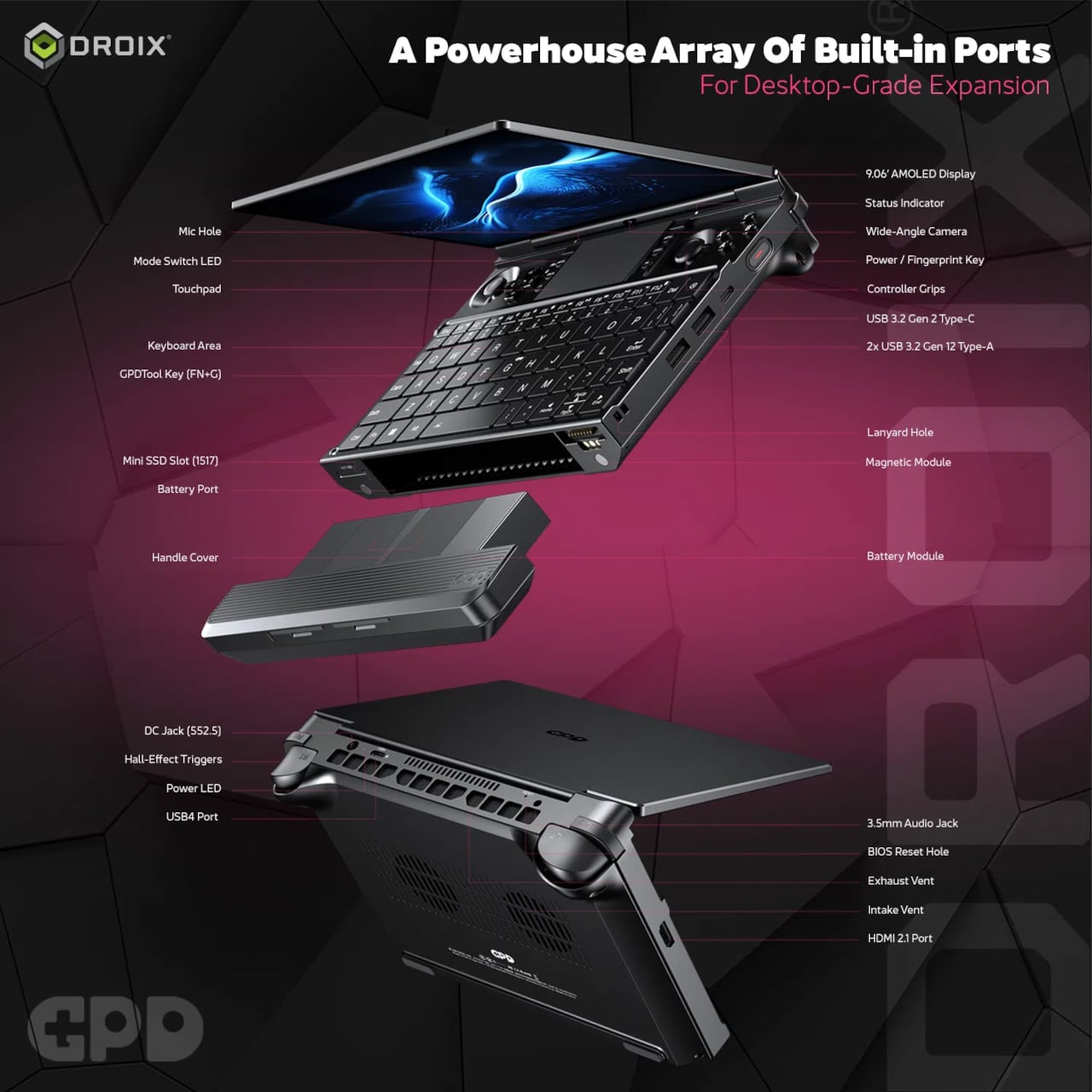
The connectivity options for a device this compact are genuinely broad. A USB4 port with 40Gbps bandwidth and DisplayPort 2.1, a USB 3.2 Gen 2 Type-C, two USB 3.2 Gen 2 Type-A ports, and HDMI 2.1 FRL mean you can connect to external displays, docking stations, or even GPD’s G2 graphics dock for extra GPU performance the moment you sit down at a desk.

Finish a report during a flight, swap out the battery at the gate, and boot up a graphically demanding title in the hotel room, all without a second device in your bag. That’s the scenario the WIN Max 3 is built around, and for the perpetual traveler who also games, it makes an honest case for consolidating two things you’d otherwise pack separately.

There are legitimate trade-offs, naturally. The base unit weighs 815g, climbing to 1,220g with the battery module in place, which rules out jacket pocket carry. Pricing is expected to start around $2,000. For a device that can handle a board meeting and a late-night gaming session in the same bag, that price feels both like a luxury and an honest calculation.

The post Gaming Laptops Die Mid-Game, GPD WIN Max 3 Swaps Its Battery Live first appeared on Yanko Design.