3D-Printed Guitar Amp Desk Organizer Brings Concert Energy to Your Boring Monday Morning

The contrast between Sunday night at a concert and Monday morning at your desk is brutal. One moment you’re lost in the music, feeling every guitar riff vibrate through your chest. The next, you’re answering emails and pretending last night’s euphoria wasn’t real. The transition back to routine work feels especially cruel when the weekend gave you a taste of something electric.

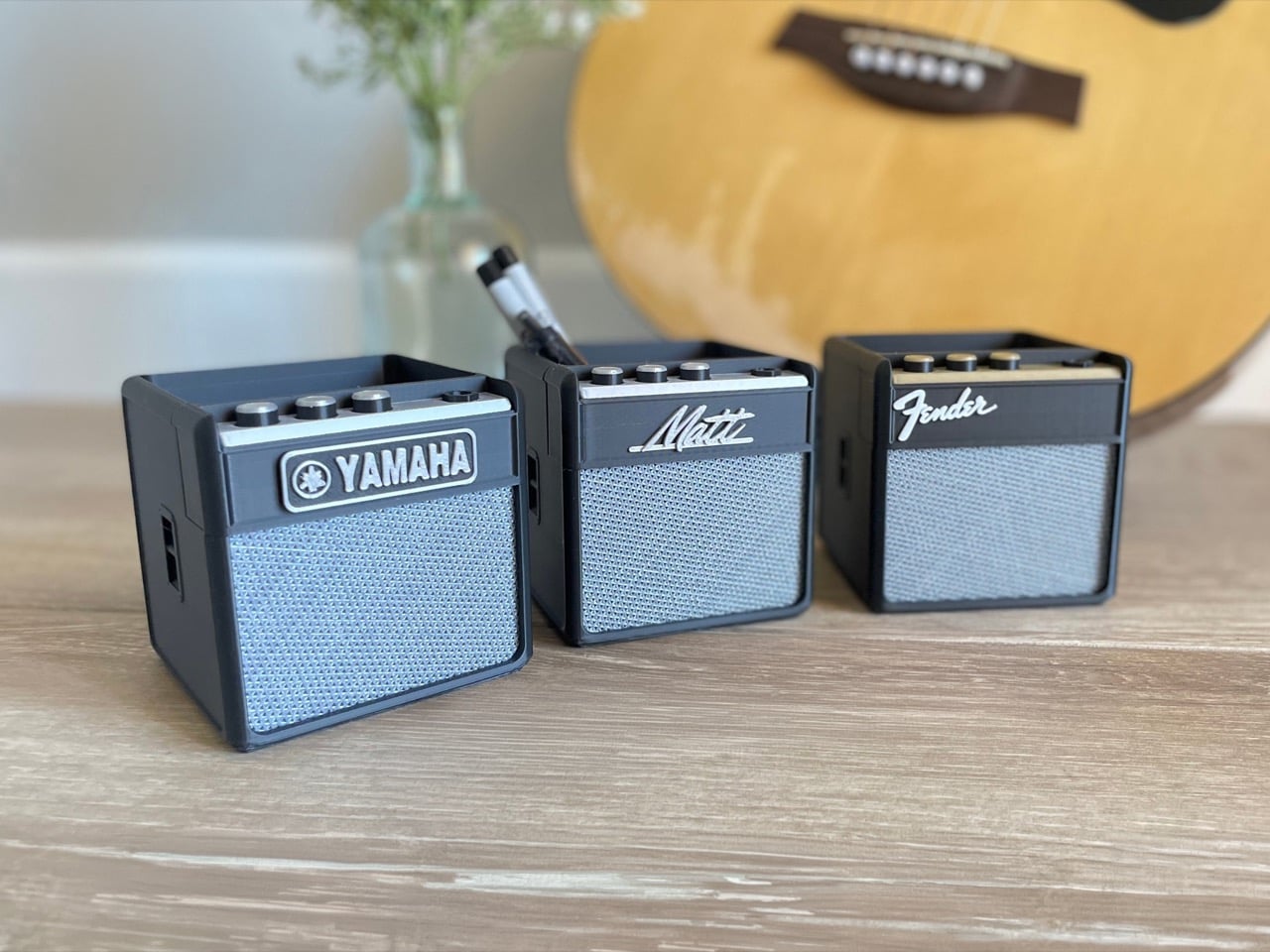
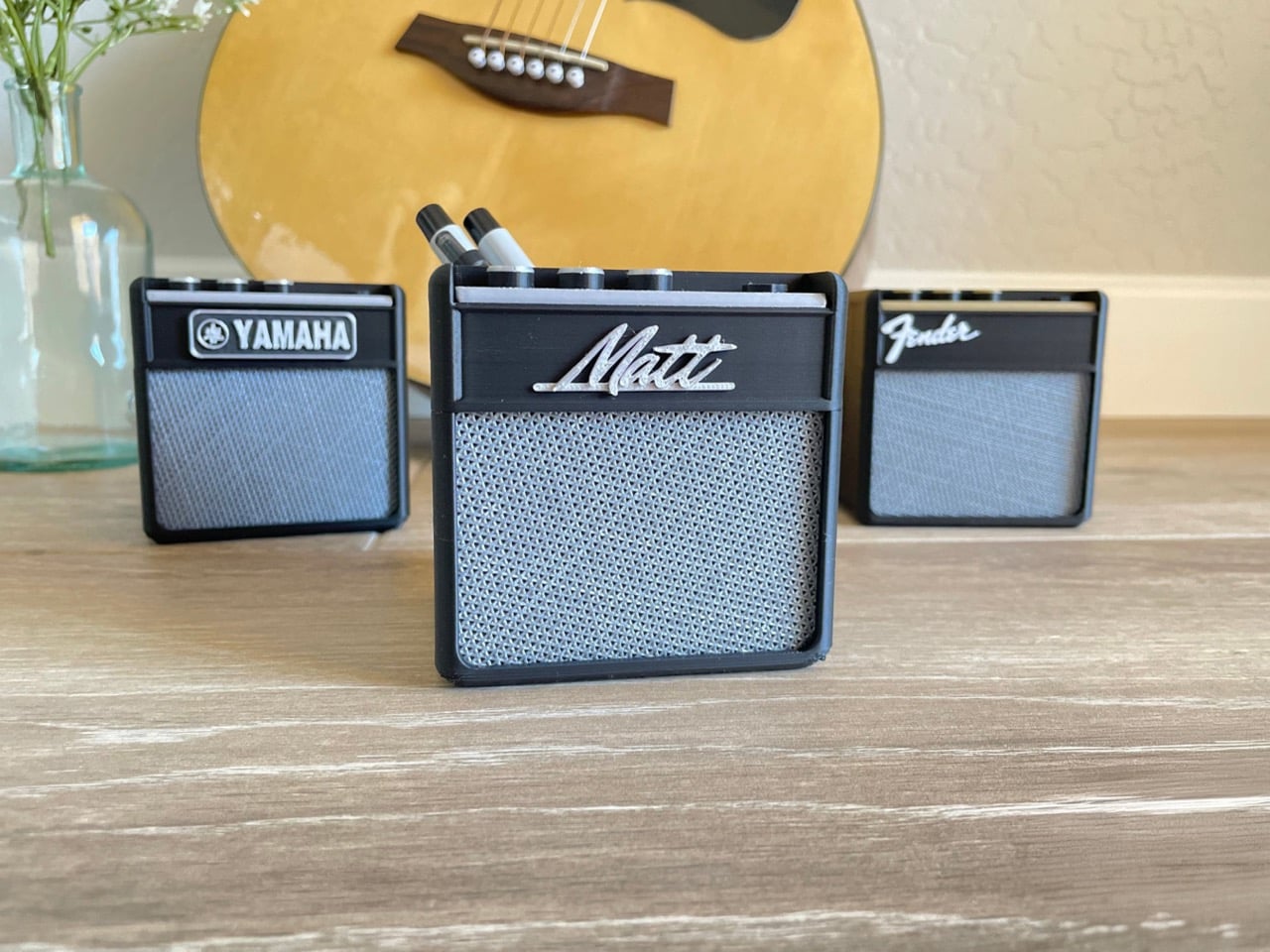
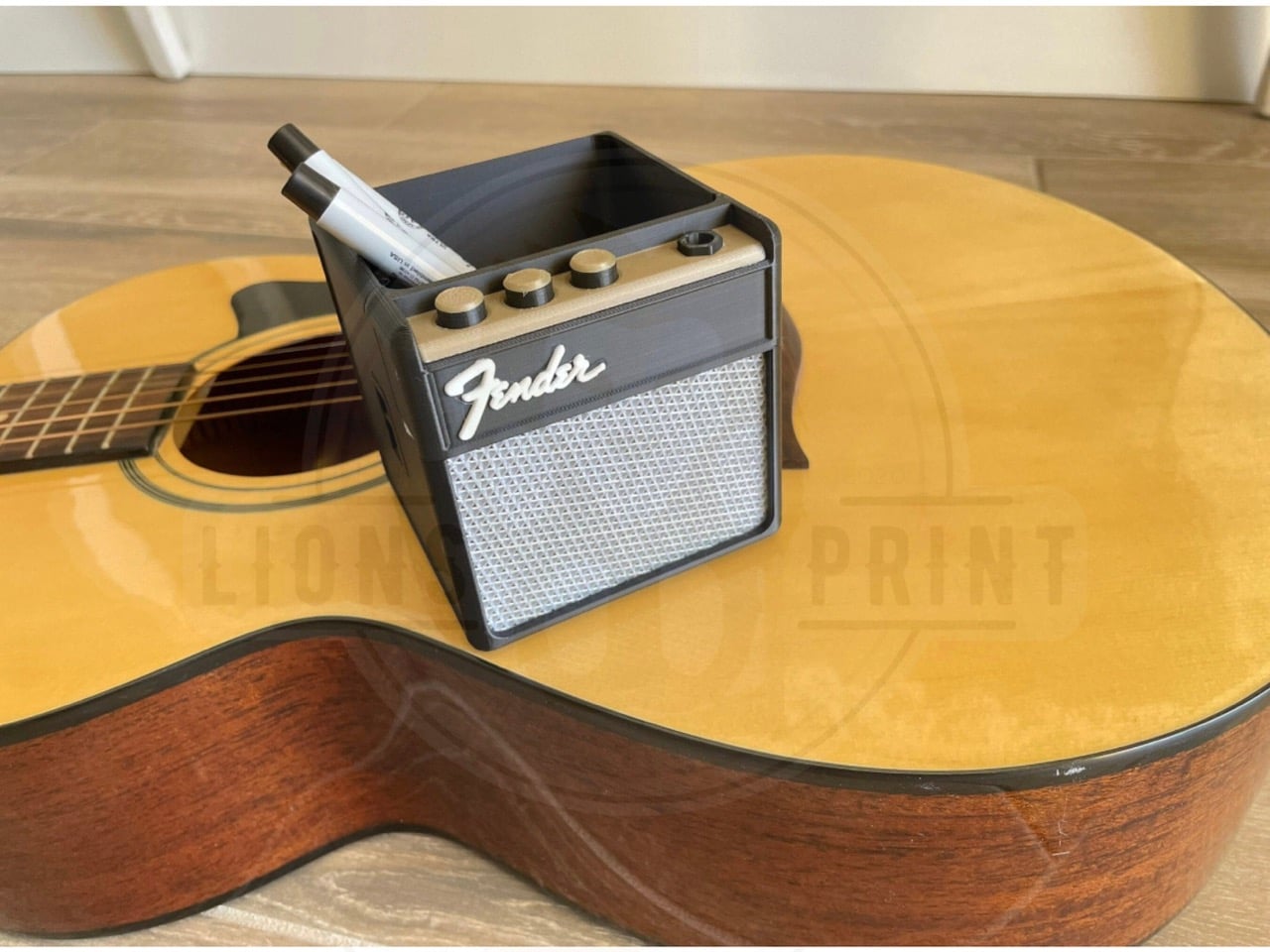
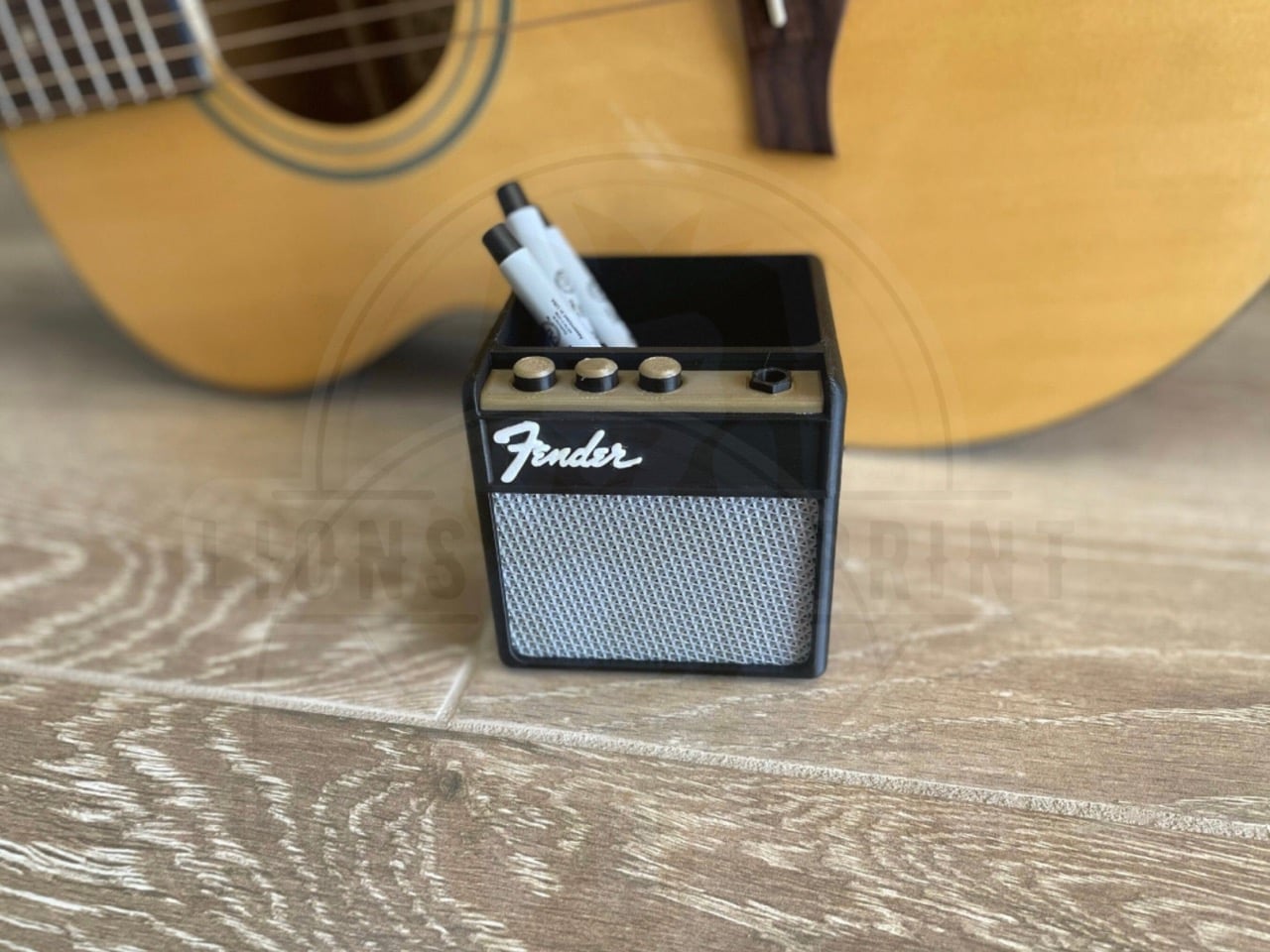
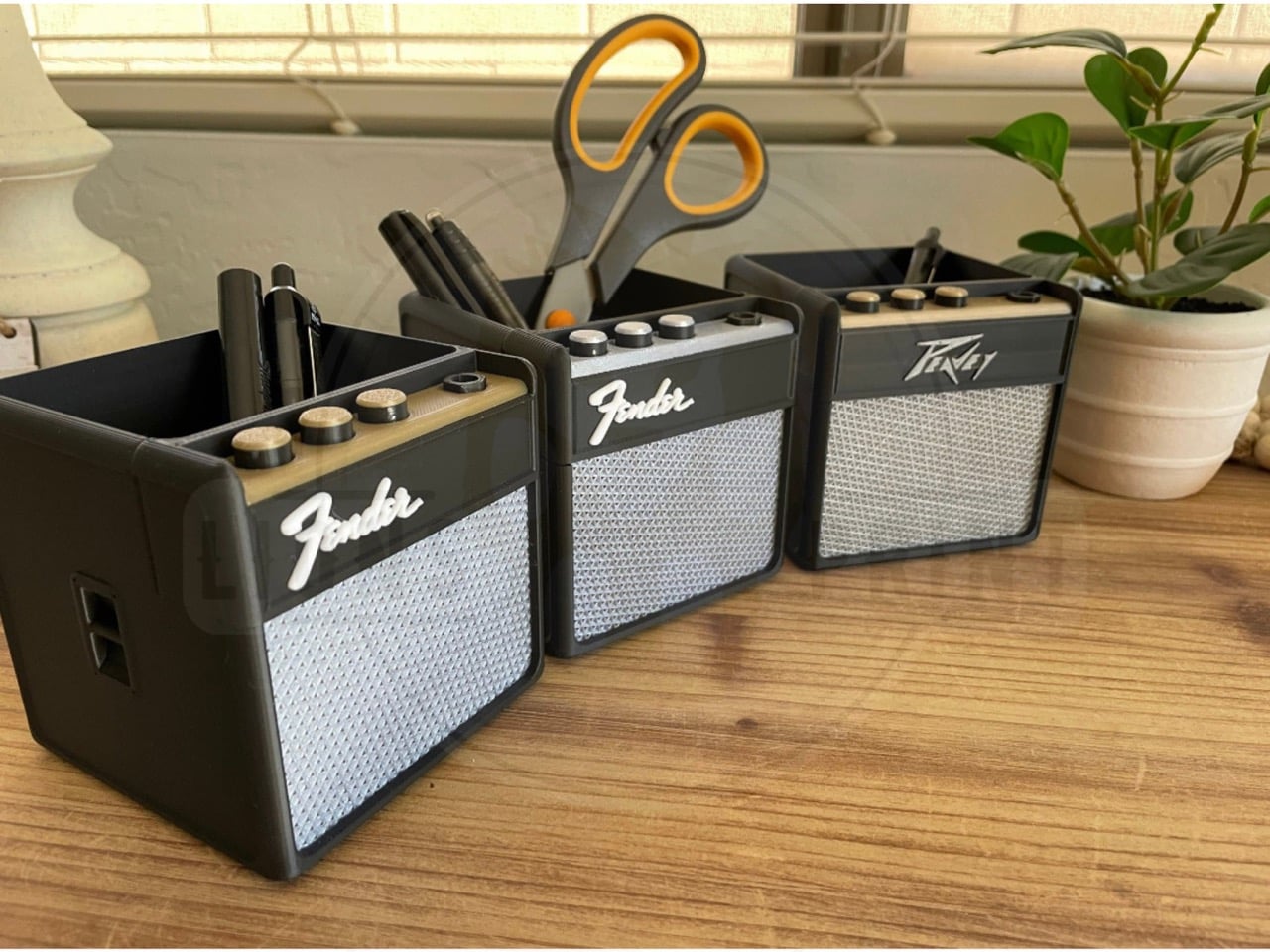
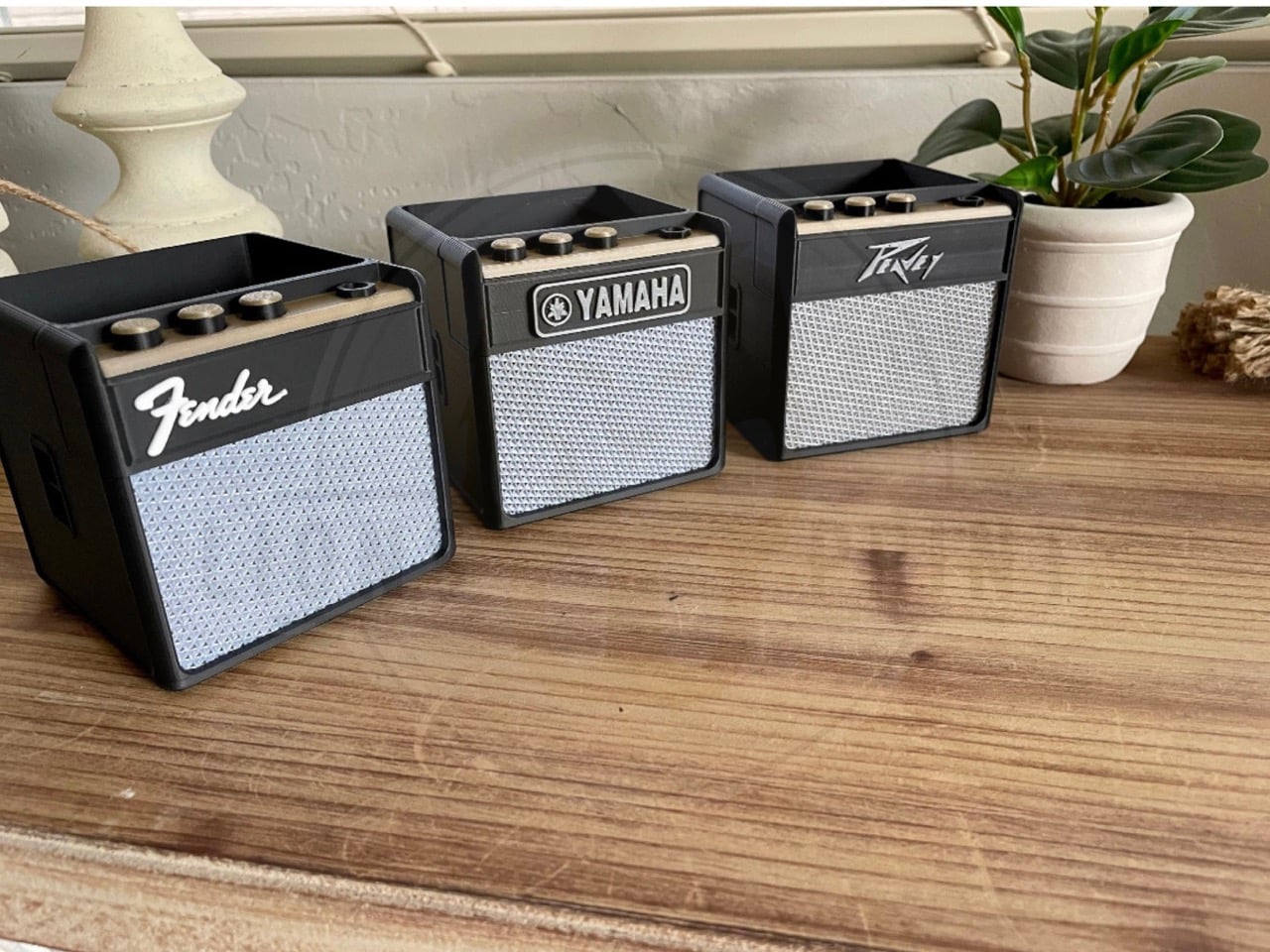
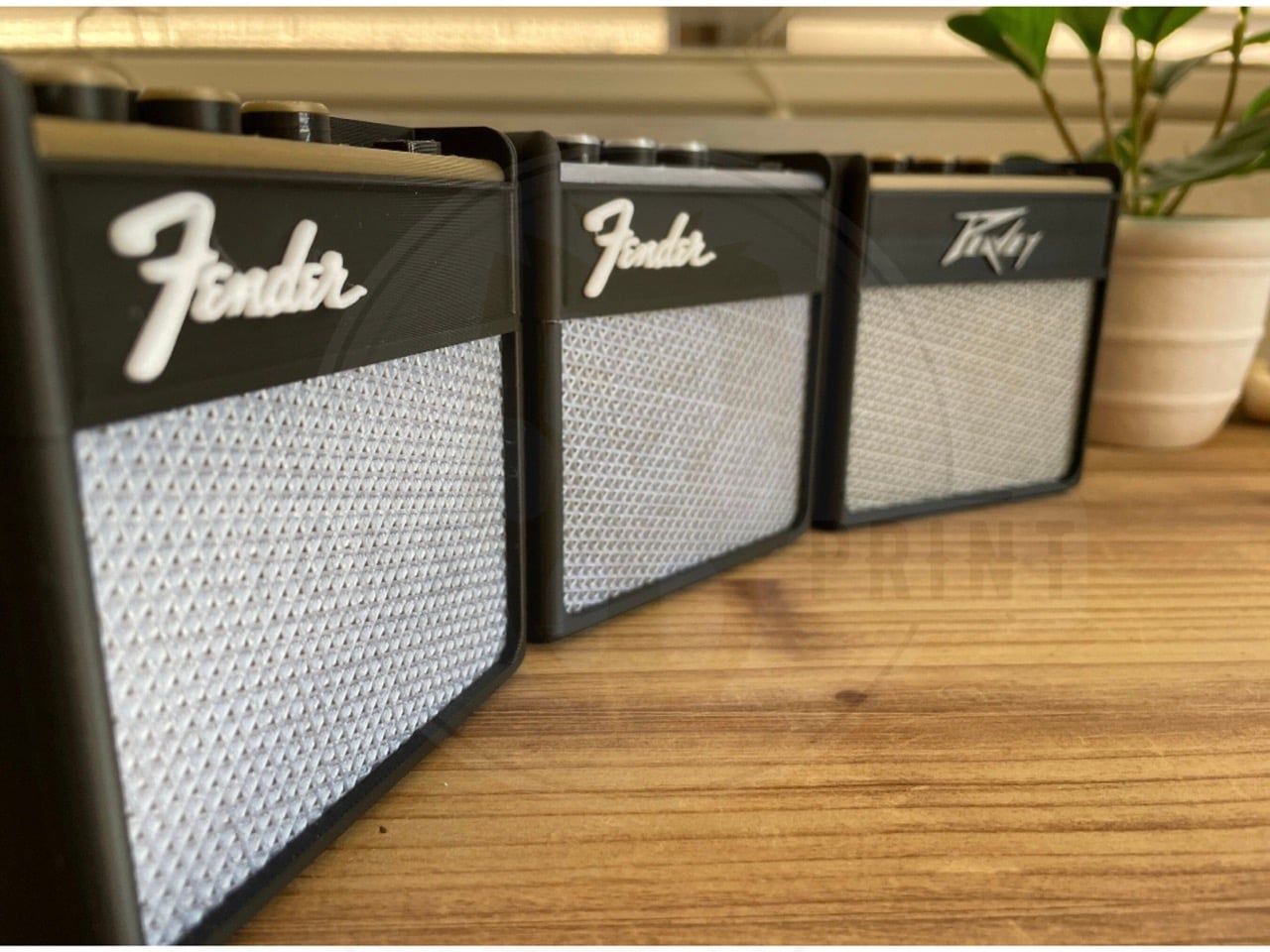
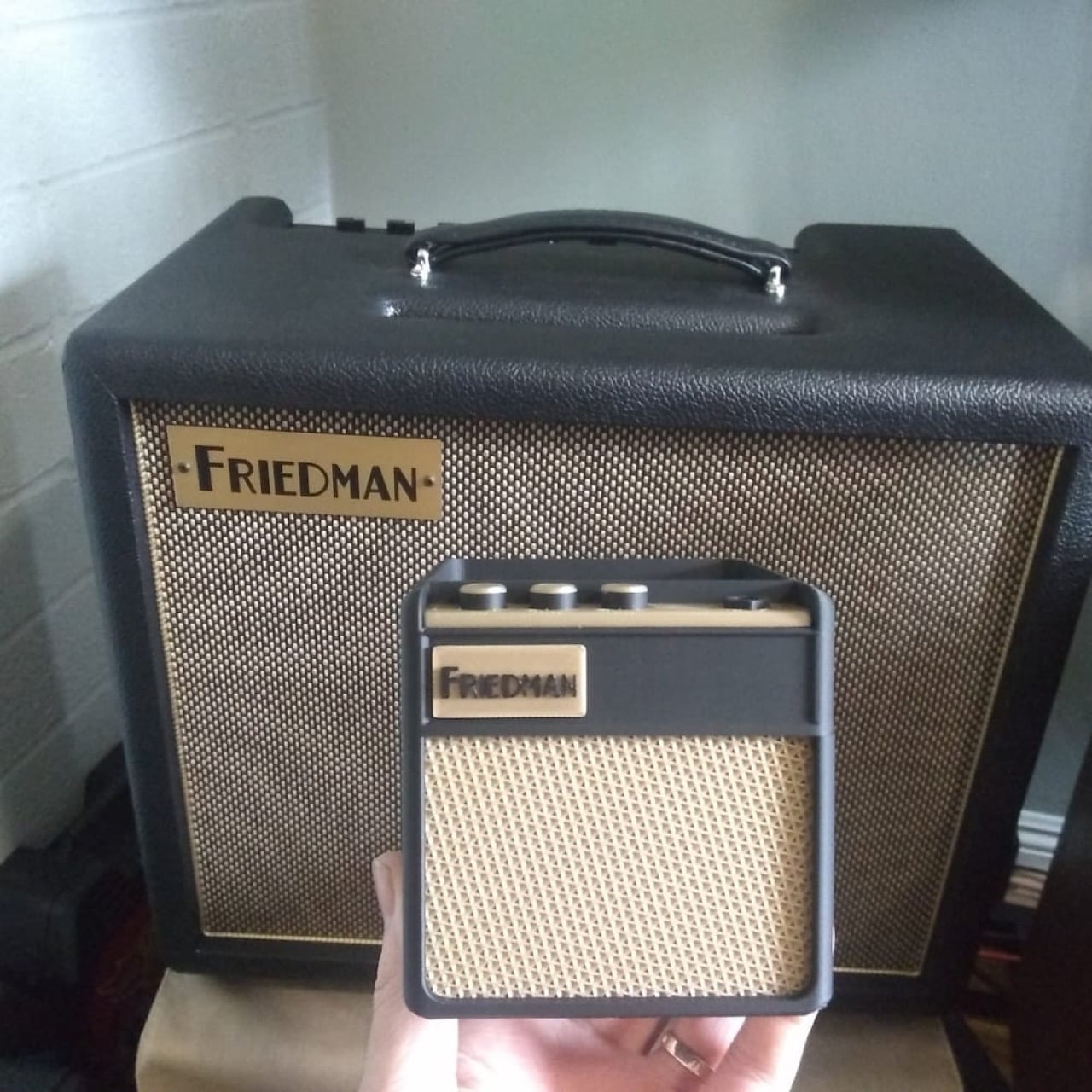
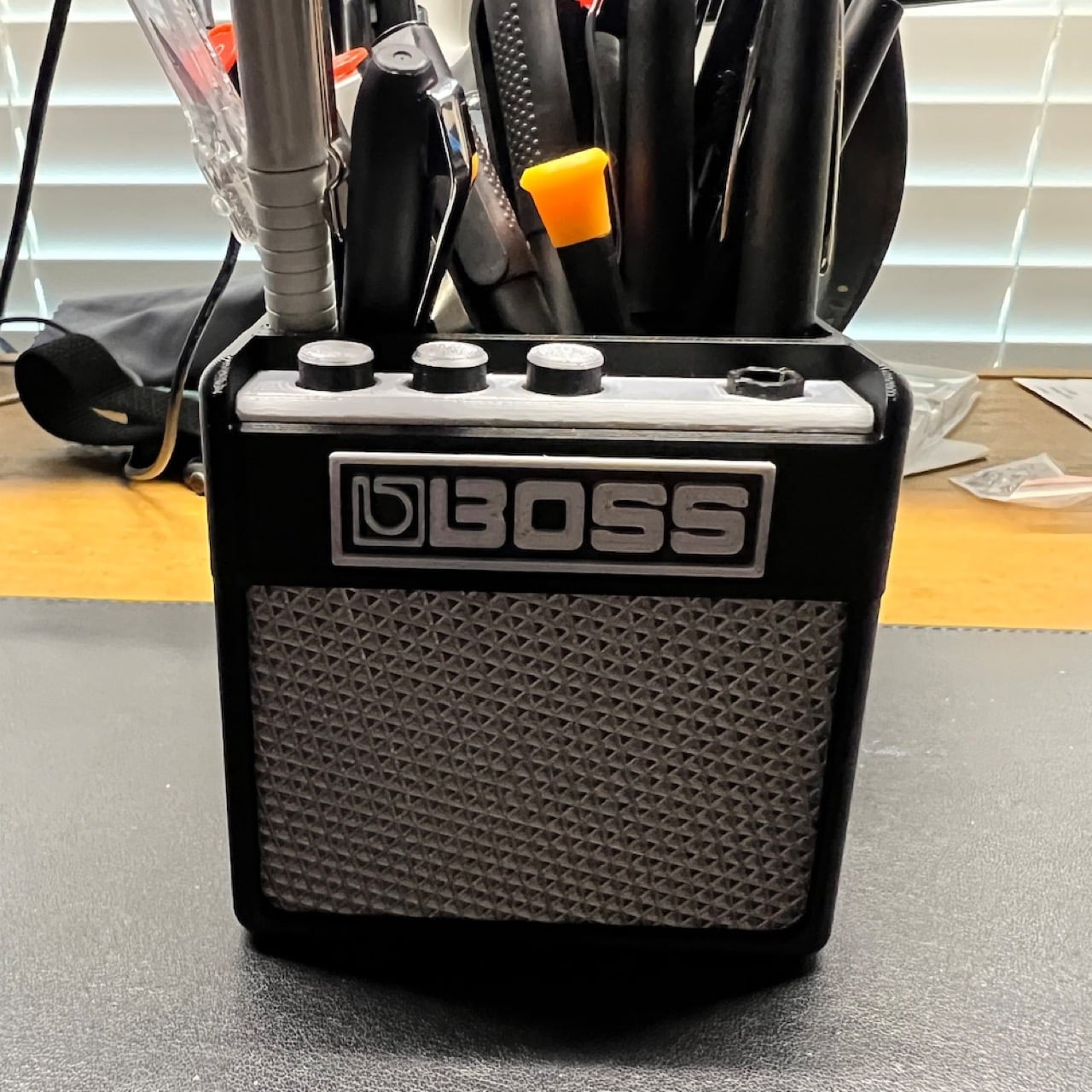
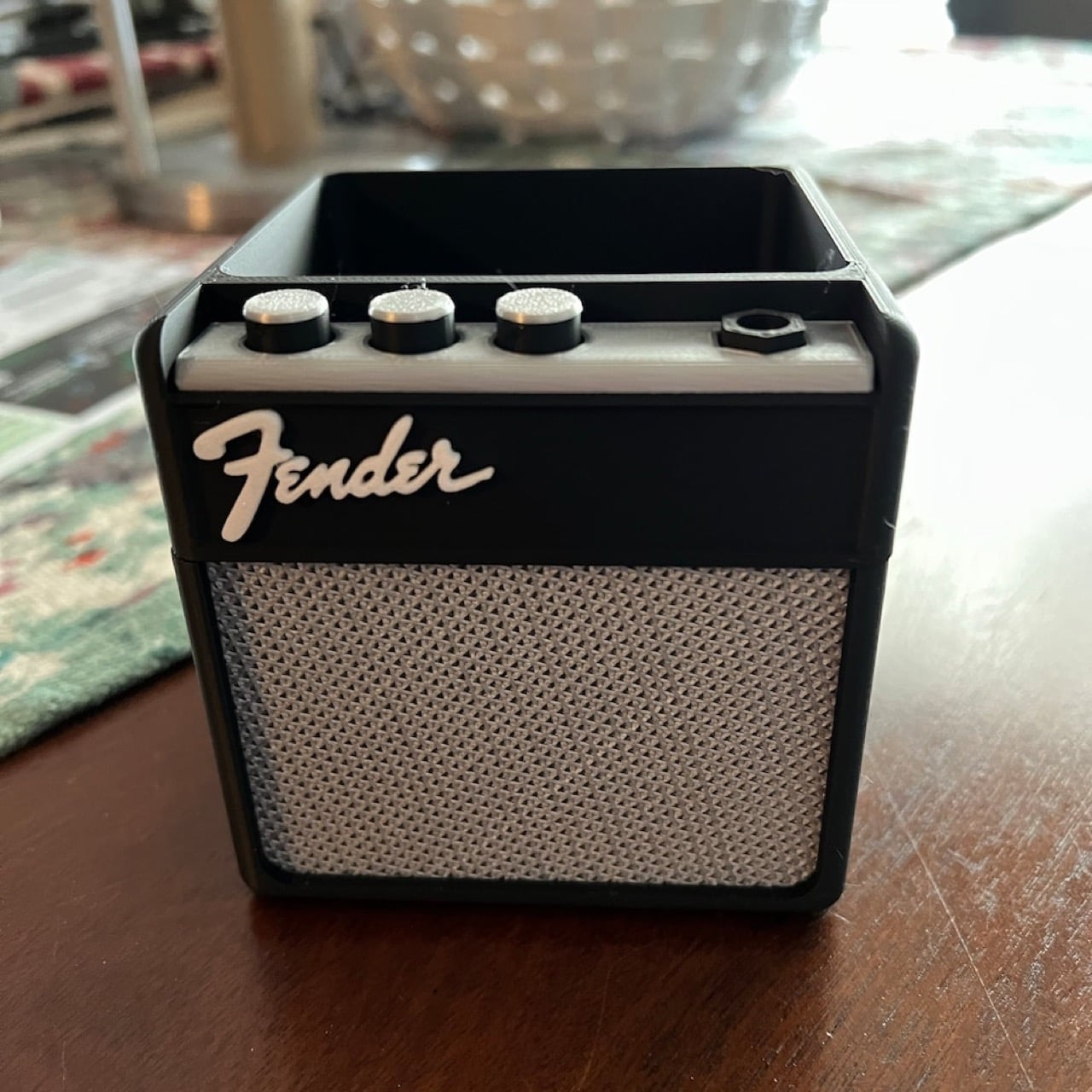
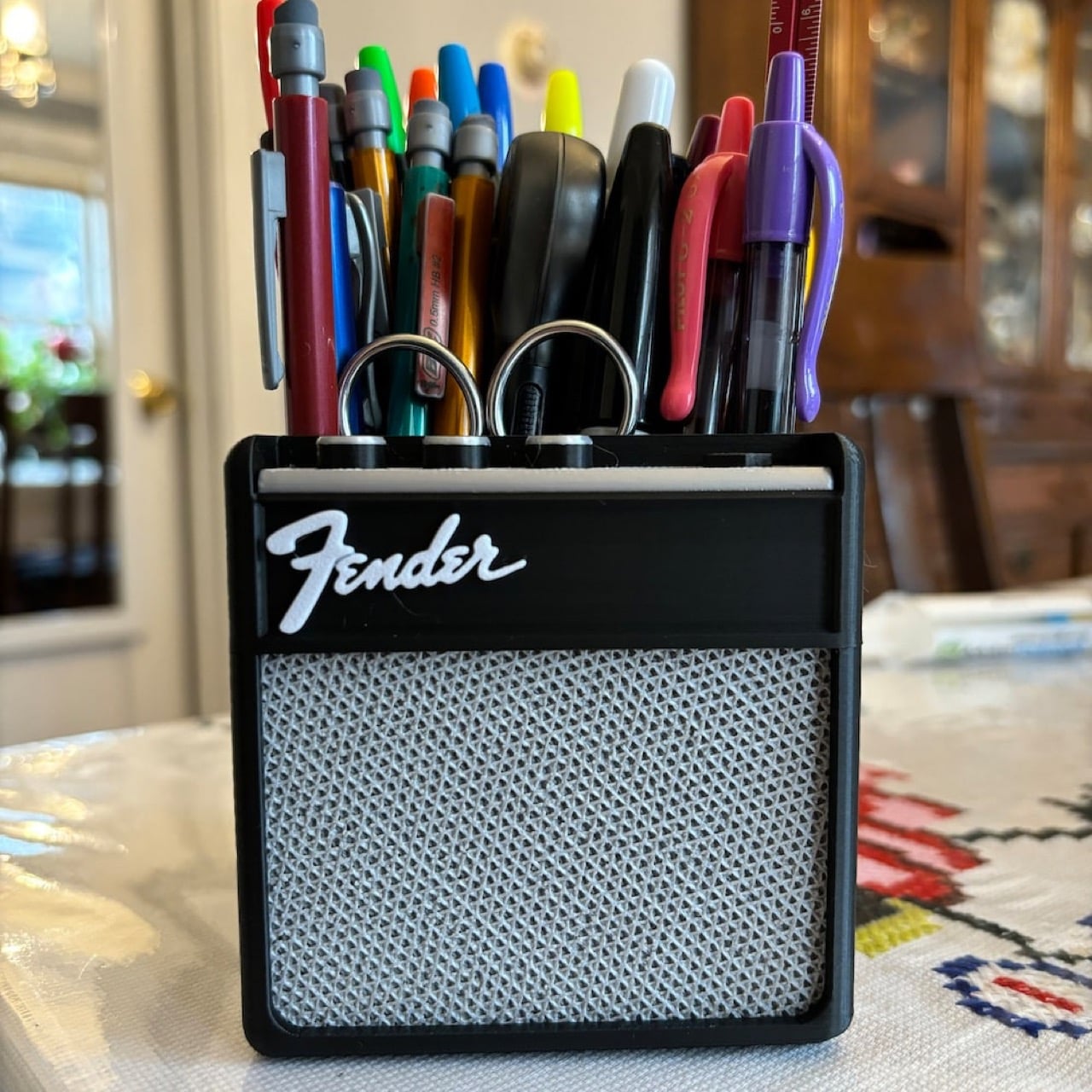
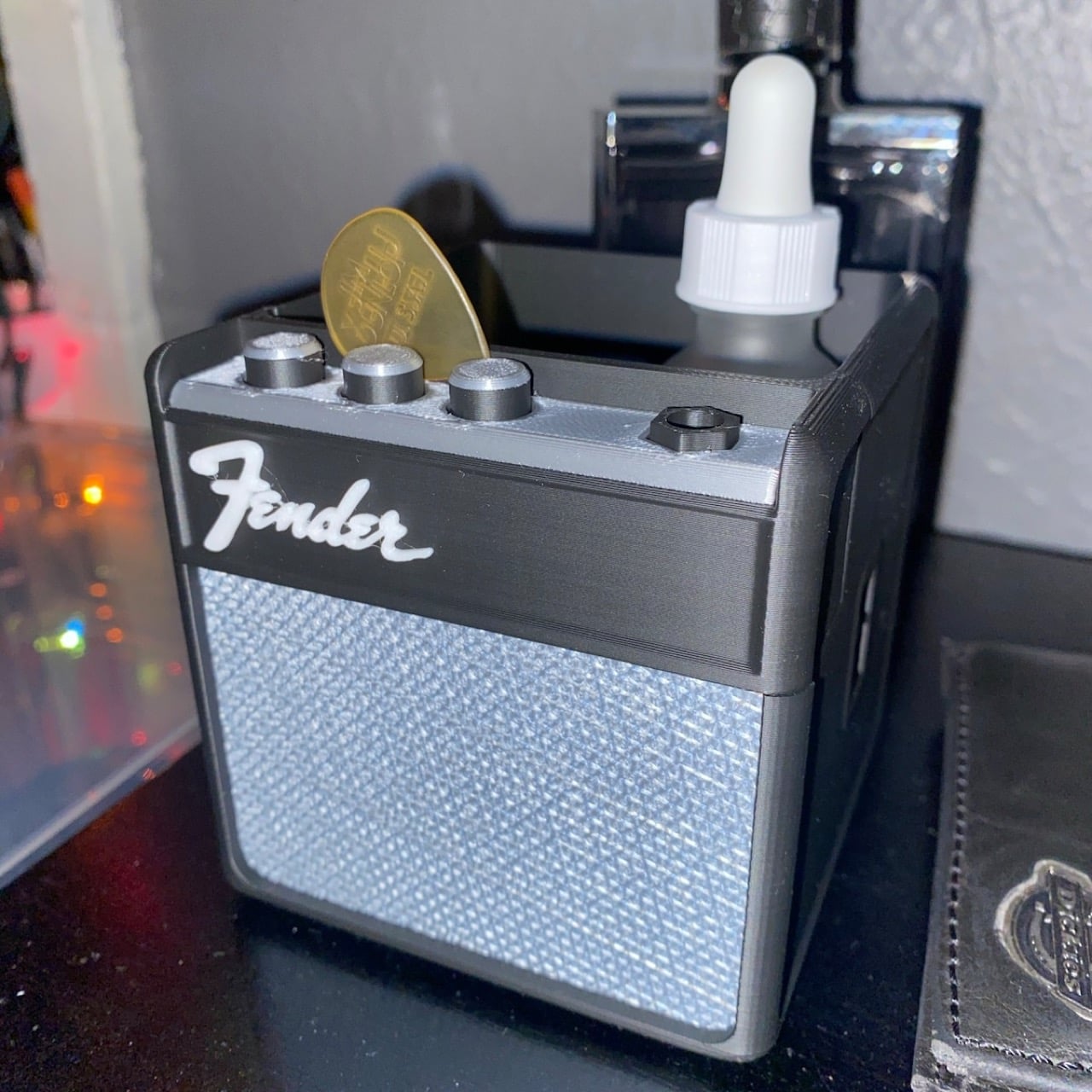
That’s where a little whimsy helps. These 3D-printed guitar amp pen holders from LionsPrint bring a fragment of that musical energy to your workspace. They’re compact at 3.5 inches per side, but the details are spot-on: authentic speaker grilles, control panels, and designs inspired by the amplifiers that power actual rock shows. You can personalize them with custom text in silver or gold. They won’t replace the thrill of live music, but they’re a small reminder that the mundane is just temporary.

Designer: LionsPrint

The thing about good desk accessories is they need to justify their existence beyond pure function. A pen holder is essentially a container with holes. You could use a coffee mug. But LionsPrint clearly understood that musicians and music fans have a specific relationship with amplifiers that goes beyond their utility. These aren’t random music references slapped onto office supplies. They’re recognizable silhouettes: Marshall stacks with their iconic script logo, Fender’s clean lines, Yamaha’s distinctive branding. The 3D printing allows for texture work that would be impossible with traditional manufacturing. Those speaker grilles have depth and pattern variation that catches light differently depending on angle.

At 3.5 x 3.5 x 3.5 inches, the dimensions work perfectly for standard desk real estate. Small enough that they don’t dominate your workspace, large enough that they actually hold a functional amount of pens, scissors, and whatever other tools accumulate throughout a workday. The cube format keeps them stable. No tipping over when you’re fishing for a specific marker at 2 AM during a deadline crunch.

The customization option elevates these beyond typical musician merch. You can add text in metallic silver or gold finishes, which means your studio name, your band’s logo, or even an inside joke with your bandmates can live on your desk. Most “gifts for guitarists” feel like afterthoughts, designed by people who think all musicians are the same. This actually lets you claim ownership of the aesthetic instead of just passively receiving someone else’s idea of what music fans want.

LionsPrint sells these through Etsy starting at $19.98 USD before shipping. The price sits in that sweet spot where it’s low enough to impulse buy after a particularly soul-crushing Monday, but high enough that the 3D printing quality actually delivers on the details. You pick your amp style, add your custom text if you want it, and suddenly your desk has at least one object that doesn’t make you question your life choices. Small victories count when you’re counting down to the weekend.

The post 3D-Printed Guitar Amp Desk Organizer Brings Concert Energy to Your Boring Monday Morning first appeared on Yanko Design.
JBL’s AI Wireless Speakers Can Remove Vocals, Guitars, or Drums From Any Song While You’re Jamming

Walk into any rehearsal space and you will see the usual suspects. A combo amp in the corner, a Bluetooth speaker on a shelf, maybe a looper pedal on the floor. Each tool has a single job. One makes your guitar louder, one plays songs, one repeats whatever you feed it. You juggle them to build something that feels like a band around you.

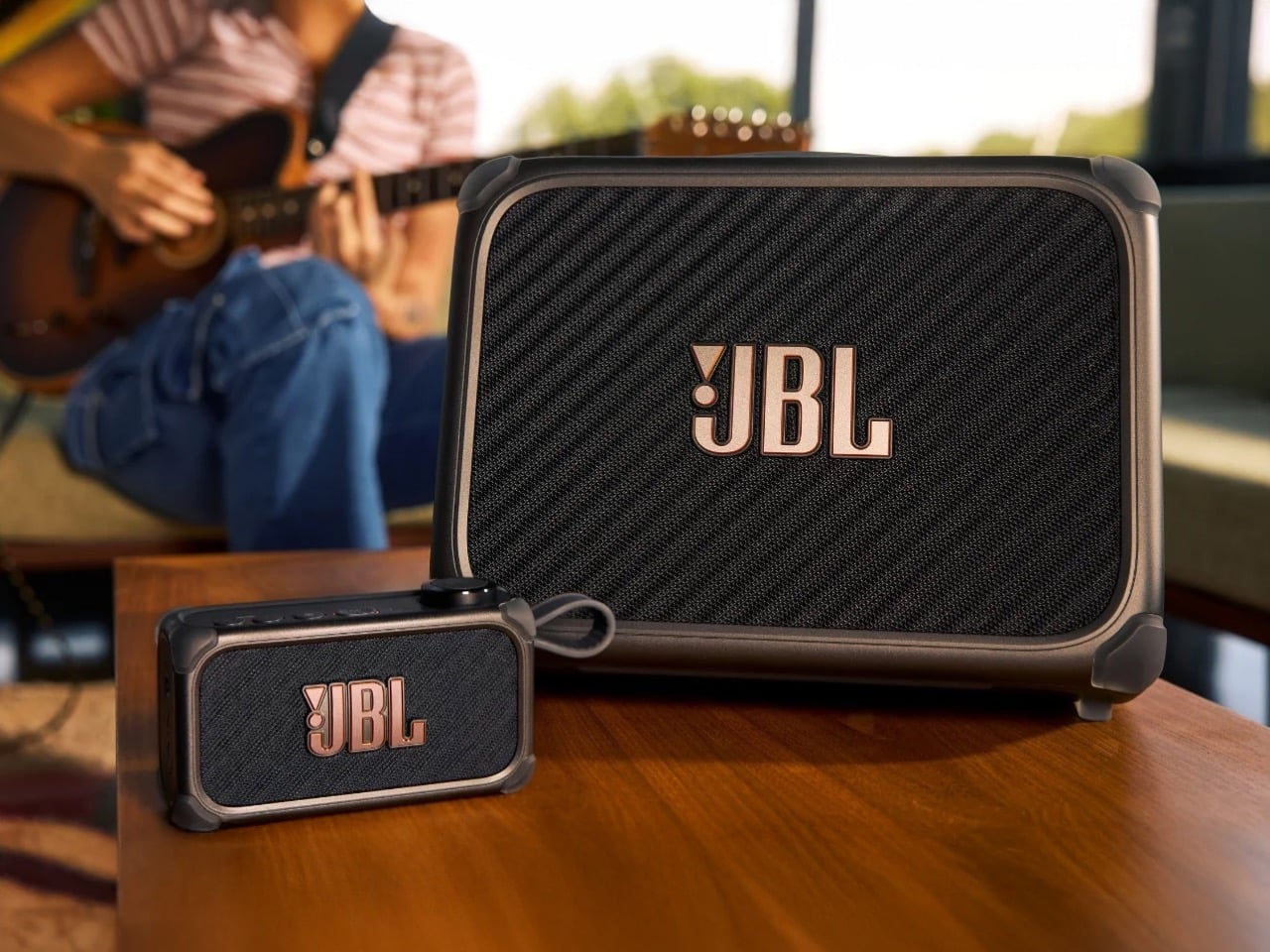
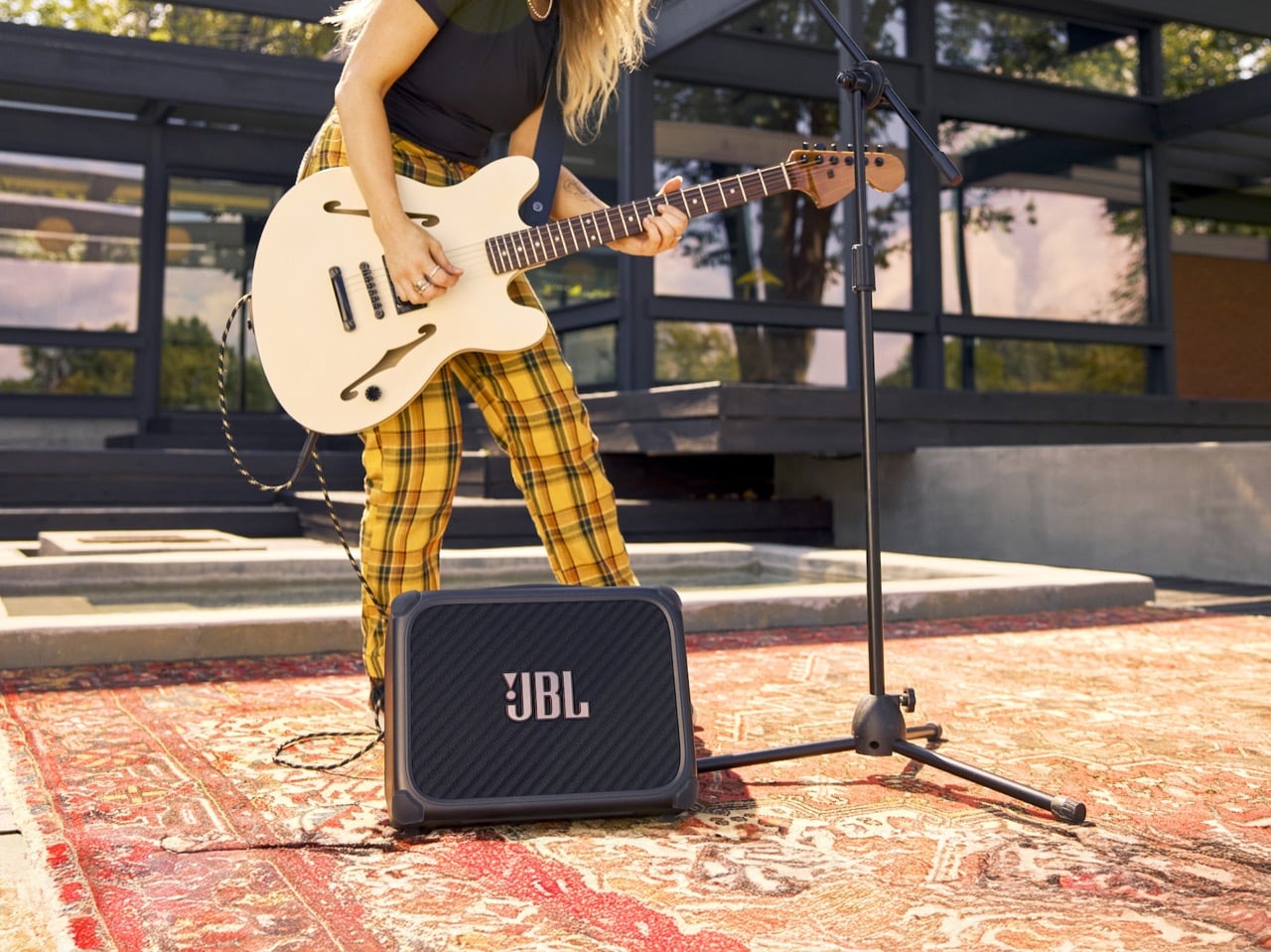
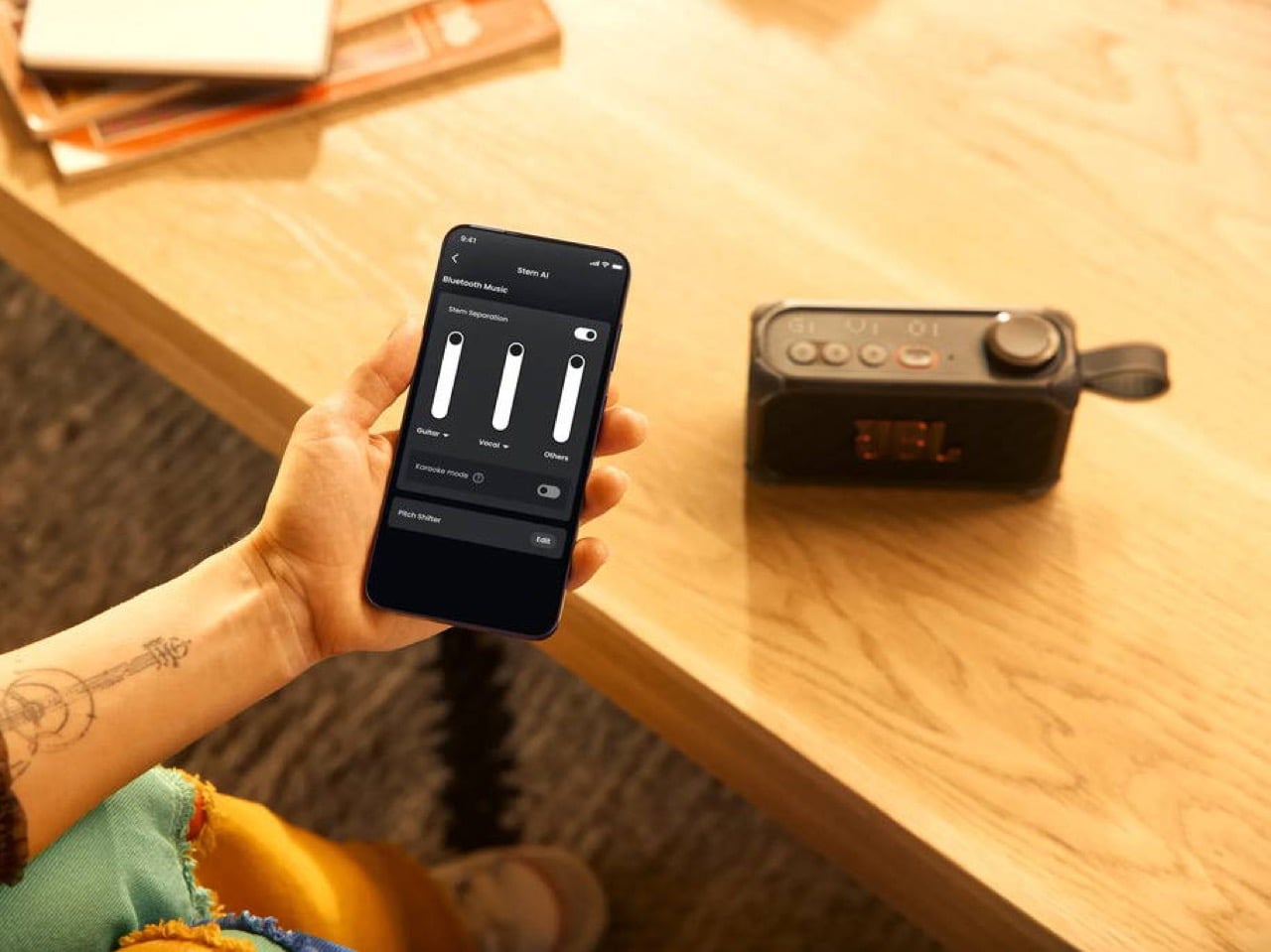
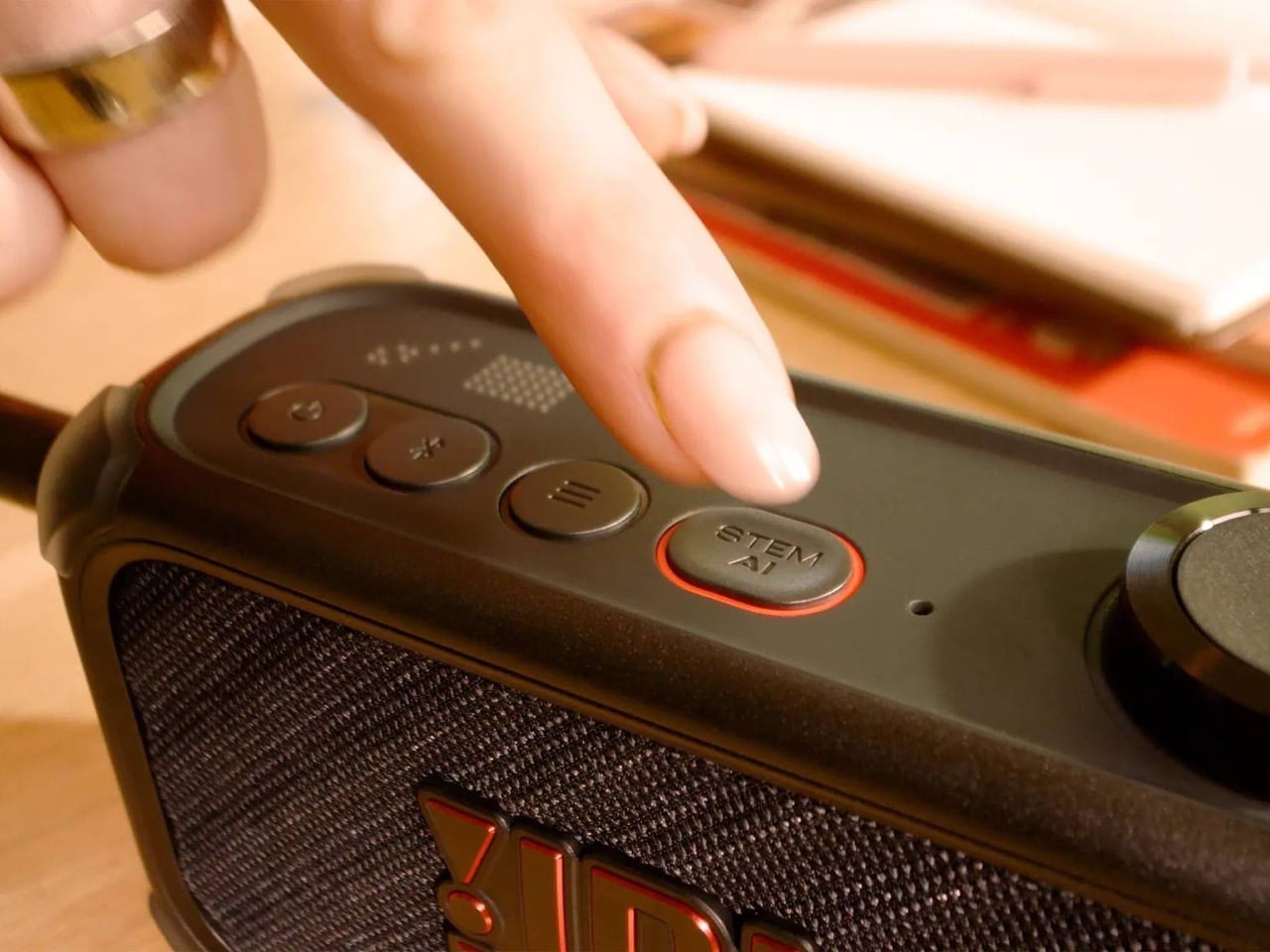
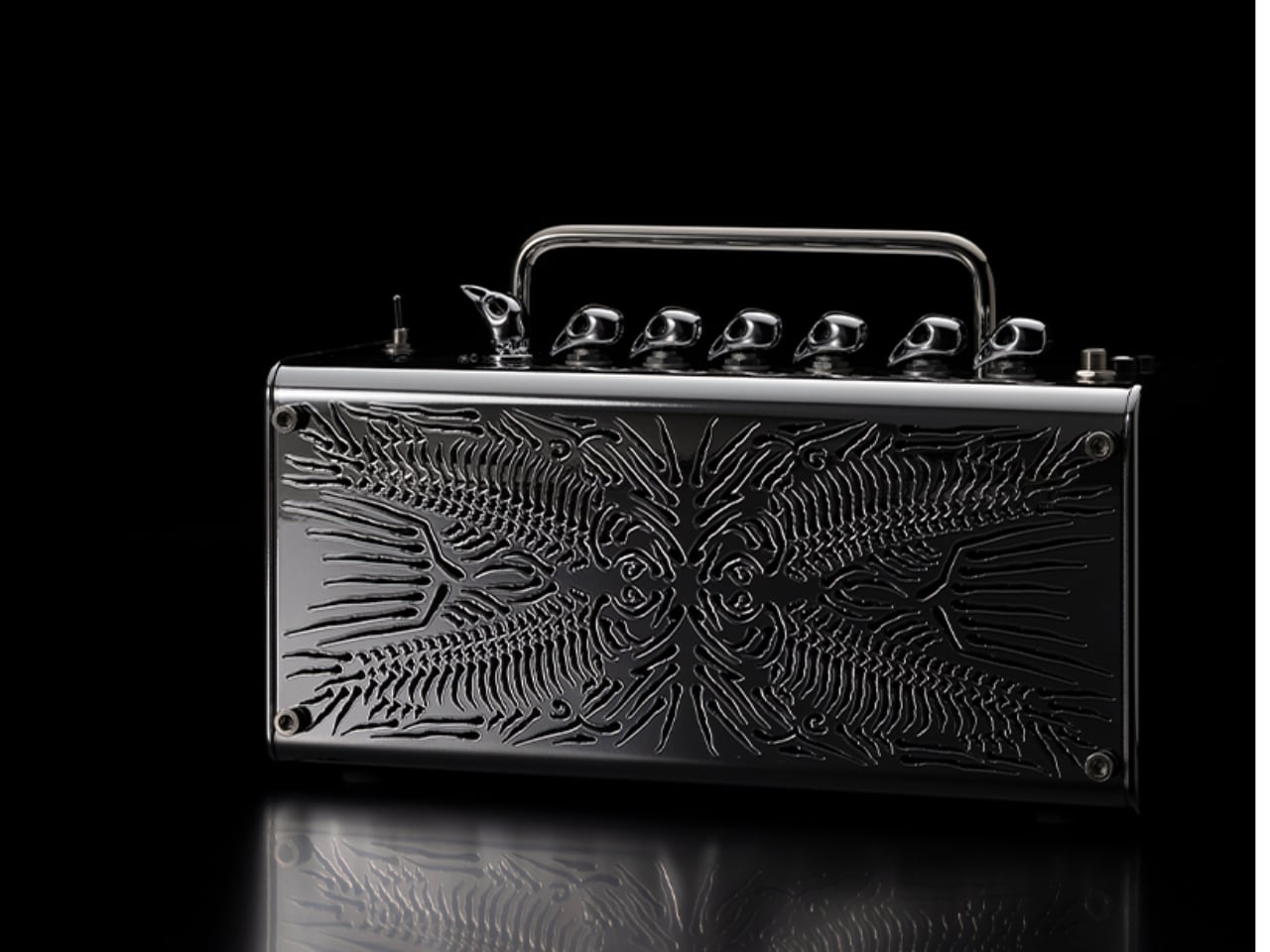
JBL’s BandBox concept asks a different question. What if one box could understand the music it is playing and reorganize it around you in real time. The Solo and Trio units use AI to separate vocals, guitars, and drums inside finished tracks, so you can mute, isolate, or replace parts on the fly. Suddenly the speaker is not just a playback device. It becomes the drummer who never rushes, the backing guitarist who never complains, and the invisible producer nudging you toward tighter practice.

Designer: JBL

This ability to deconstruct any song streamed via Bluetooth is the core of the BandBox experience. The AI stem processing happens locally, inside the unit, without needing an internet connection or a cloud service. You can pull up a track, instantly mute the original guitar part, and then step in to play it yourself over the remaining bass, drums, and vocals. This is a fundamental shift in how musicians can practice. Instead of fighting for space in a dense mix, you create a pocket for yourself, turning passive listening into an interactive rehearsal.

The whole system is self-contained, designed to work straight out of the box without a pile of extra gear. Both models come equipped with a selection of built-in amplifier models and effects, so you can shape your tone directly on the unit. Essentials like a tuner and a looper are also integrated, which streamlines the creative process. You can lay down a rhythm part, loop it, and then practice soloing over it without ever touching an external pedal. It is this thoughtful integration that makes the BandBox feel less like a speaker and more like a complete, portable music-making environment.

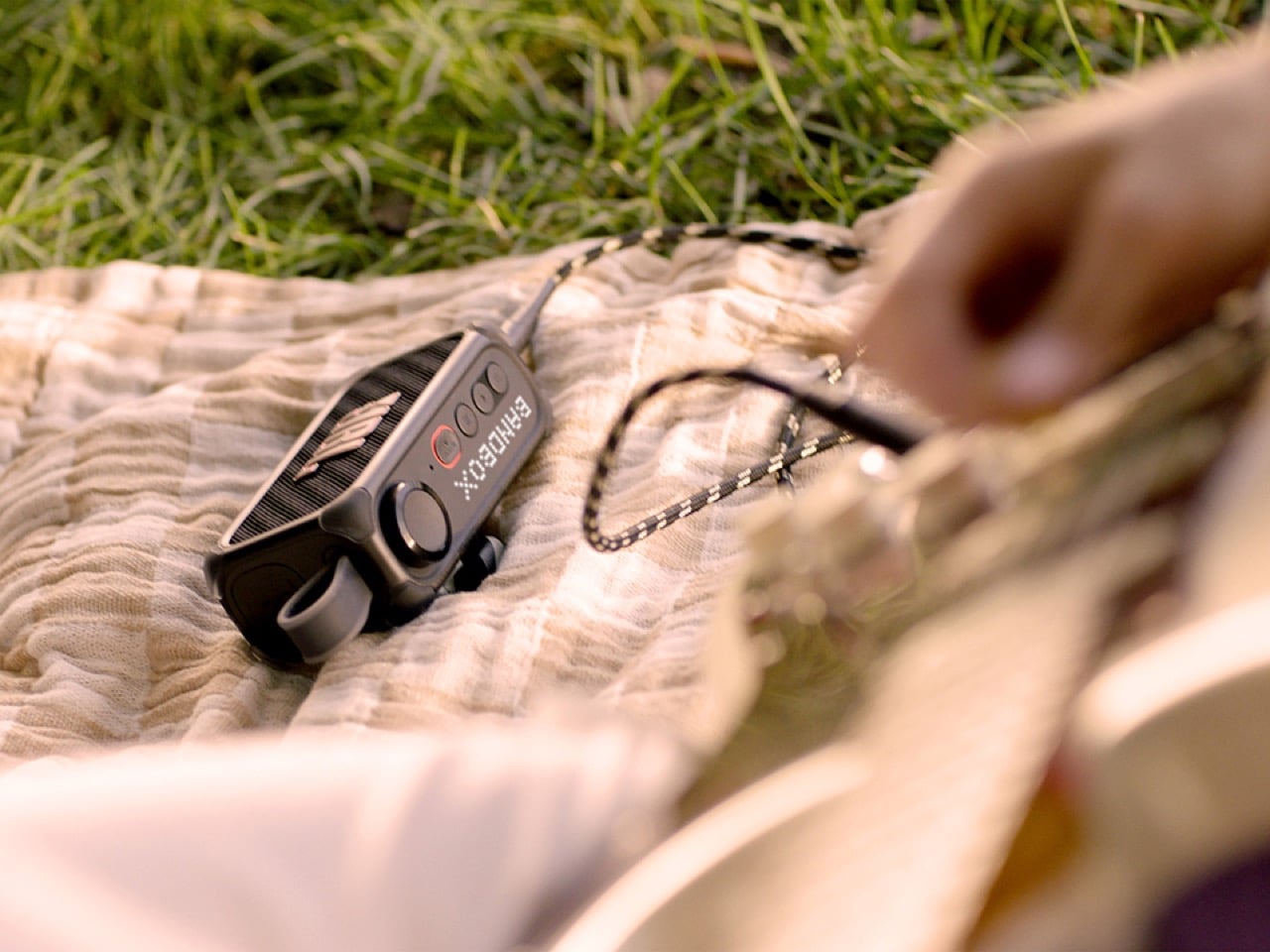
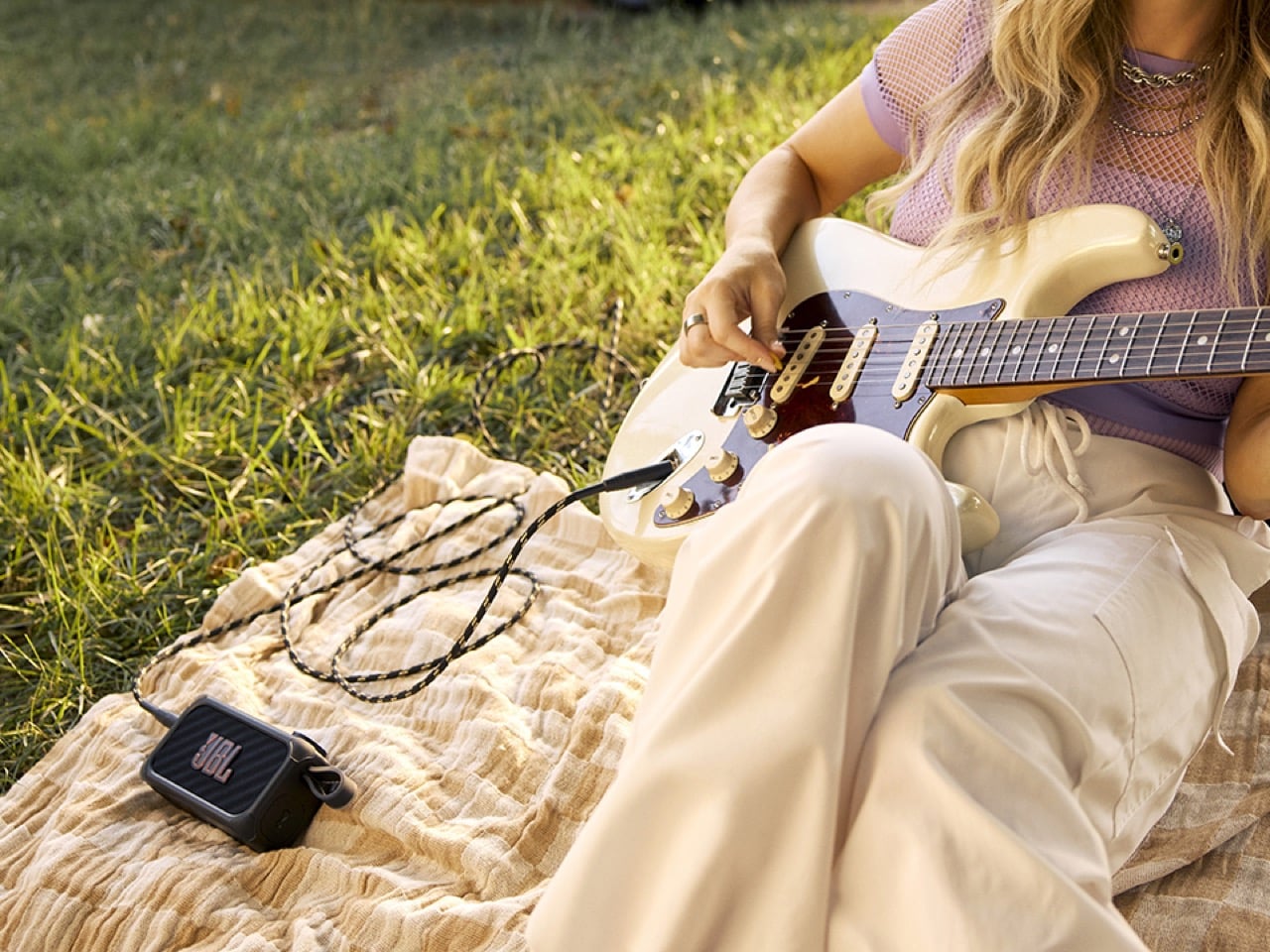
The BandBox Solo is the most focused version of this idea, built for the individual. It is a compact, easily carried device with a single combo input that accepts either a guitar or a microphone. This makes it an obvious choice for singer-songwriters or any musician practicing alone. The form factor is all about convenience, with a solid build and a top-mounted handle. A battery life of around six hours means you could take it to a park for an afternoon busking session or just move it around the house without being tethered to a wall outlet. It is a self-sufficient creative station in a small package.

When practice involves more than one person, the BandBox Trio provides the necessary expansion. It is built on the same AI-powered platform but scales up the hardware for group use. The most significant change is the inclusion of four instrument inputs, which transforms the unit into a miniature, portable PA system. A small band or a duo can plug in multiple guitars, a bass, and a microphone, all running through the same box. This is a clever solution for impromptu jam sessions, stripped-down rehearsals, or music classrooms where setting up a full mixer and multiple amps is too cumbersome.

Both units share a clean, modern design that aligns with JBL’s broader product family. The controls seem to be laid out for quick, intuitive access, a must for musicians who need to make adjustments without interrupting their flow. Connectivity extends beyond just playing music; a USB-C port allows the BandBox to double as an audio interface. You can connect it directly to a computer or tablet to record your sessions or lay down a demo, adding a layer of studio utility that makes the device even more versatile. It is not just for practice, it is for capturing the ideas that come from it.

Of course, none of this would matter if the sound was not up to par. JBL’s reputation in audio engineering creates a high expectation, and the BandBox aims to meet it by delivering a full-range sound that can handle both a dynamic instrument and a complex backing track simultaneously. The goal is to provide a clear, responsive guitar tone that cuts through, while the underlying track remains rich and detailed. This dual-functionality is key, ensuring it performs just as well as a high-quality Bluetooth speaker for casual listening as it does as a dedicated practice amp.

The JBL BandBox series has started its rollout in Southeast Asian markets, with promotions and availability already noted in the Philippines and Malaysia. A wider international release is expected to follow. While pricing will fluctuate by region, the BandBox Solo appears to be positioned competitively against other popular smart amps on the market. The Trio, with its expanded inputs and group-oriented features, will naturally sit at a higher price point, offering a unique proposition as an all-in-one portable rehearsal hub.

The post JBL’s AI Wireless Speakers Can Remove Vocals, Guitars, or Drums From Any Song While You’re Jamming first appeared on Yanko Design.
This Flat-panel 350W Guitar Amp is actually thinner than most guitars…

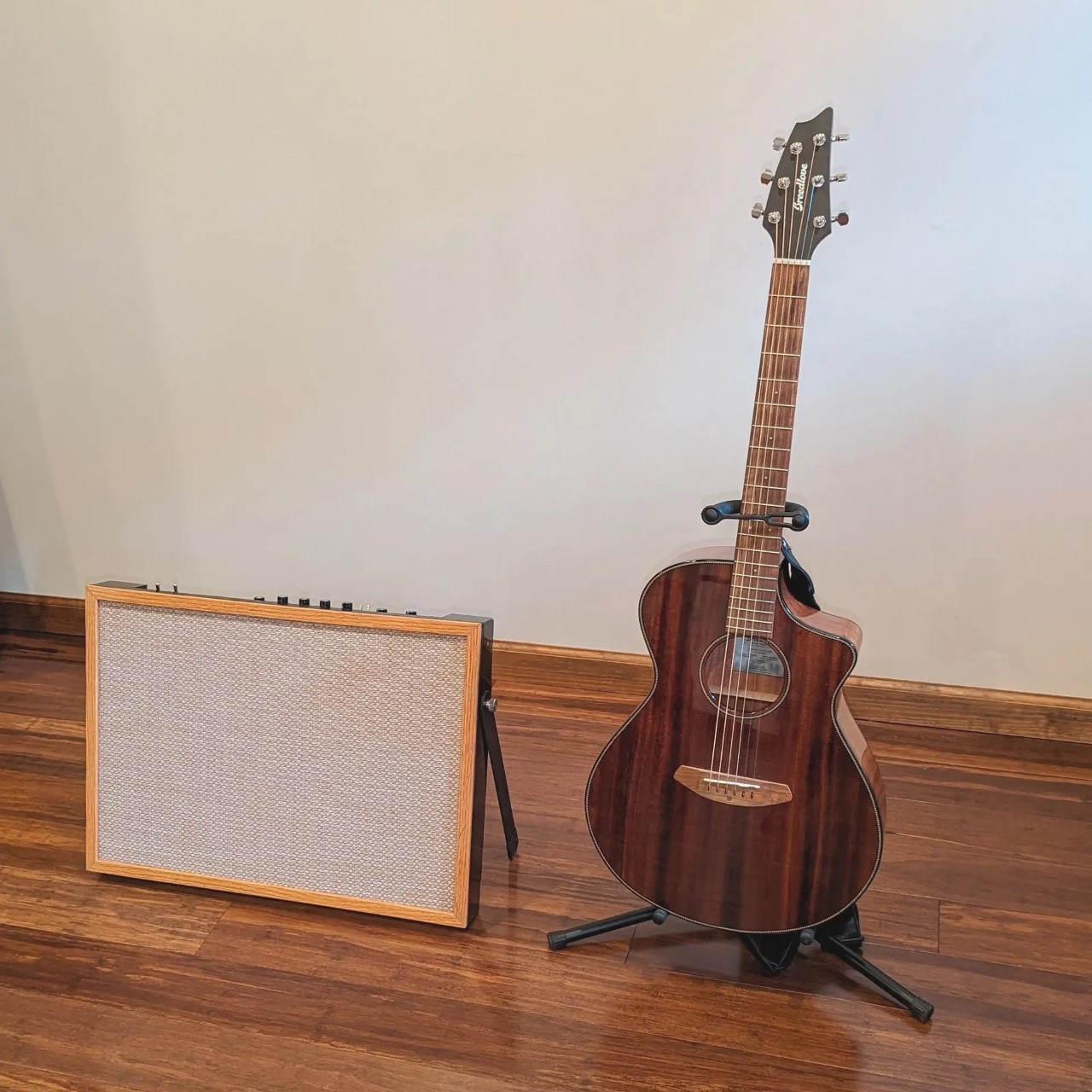
It’s thinner than a Harry Potter or Game of Thrones novel… if we’re still using those benchmarks to compare things these days.

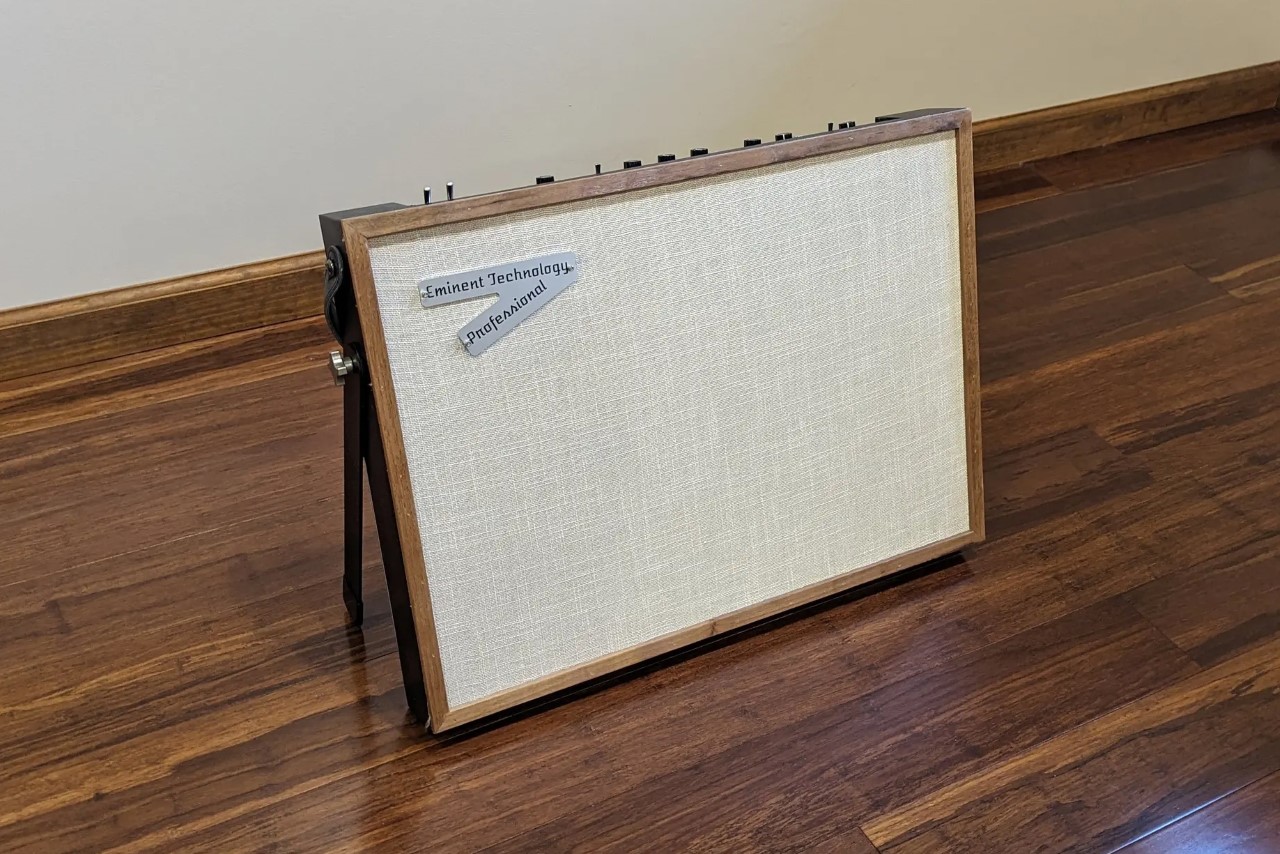
At NAMM 2024, Eminent Technology recently debuted the Model Twenty Two, a groundbreaking flat-panel active guitar speaker, marking a significant advancement from its predecessor, the Model Twenty. This new model is distinguished by its compact size, measuring 16 x 22 inches, boasting a thickness of just under 5 inches, and a lightweight design at just 16.5 pounds, making it highly portable for musicians on the go. It’s not just its slim profile that’s impressive; the Model Twenty Two boasts a powerful 350-watt built-in amplifier, capable of catering to a variety of audio sources like guitars, vocals, and keyboards.

Designer: Eminent Technology

This innovative speaker combines the functionalities of an amplifier and speaker in one sleek package. It is equipped with a full-range, flat response (FRFR) speaker capability, allowing it to handle different guitar amp modeling units and even serve as a small PA system with an output of up to 120 decibels. For added versatility, it includes a high-headroom clean preamp and a cab voice, suitable for both acoustic and electric guitars, as well as for use with external amp models. You can even run vocals, keyboards, or a CD player through it, effectively treating it like a super-sleek PA system that outputs up to an impressive 120 decibels.

Despite its high-end features, the Model Twenty Two is more affordable than its predecessor, priced at $1,699. That may be a lot, but think of how easy it is to carry around!

The post This Flat-panel 350W Guitar Amp is actually thinner than most guitars… first appeared on Yanko Design.