Titaner’s new torch lighter features a 4.5-billion-year-old meteorite outer shell

In 1906, a few kids in northern Sweden were kicking rocks around for fun when they hit one that refused to budge. That stubborn lump turned out to be a piece of the Muonionalusta meteorite, a slab of space iron that landed near the Arctic Circle roughly a million years ago. More than a century later, Titaner is turning pieces of Muonionalusta into lighters. The Monolith’s Genuine Meteorite Edition pairs the meteorite with precision-machined titanium, and the whole lineup is designed for everyday carry. Honestly, I can think of worse retirement plans for a space rock than lighting someone’s cigar.

Titaner has spent about two decades machining titanium into pens, pry bars, knives, and even frying pans, so a titanium lighter sits squarely in its comfort zone. The meteorite changes the personality of the object. Every Meteorite Edition carries its own crosshatched slice of asteroid core and its own serial number, while every Monolith gets an ignition wheel and magnetic slider. There’s a removable copper heat sink, a replaceable insert, and a symbol for fire built into the side vents.

Designer: Titaner

Click Here to Buy Now: $159 $286 (44% off). Hurry, only 77/100 left!
A Meteorite Pattern Millions of Years in the Making
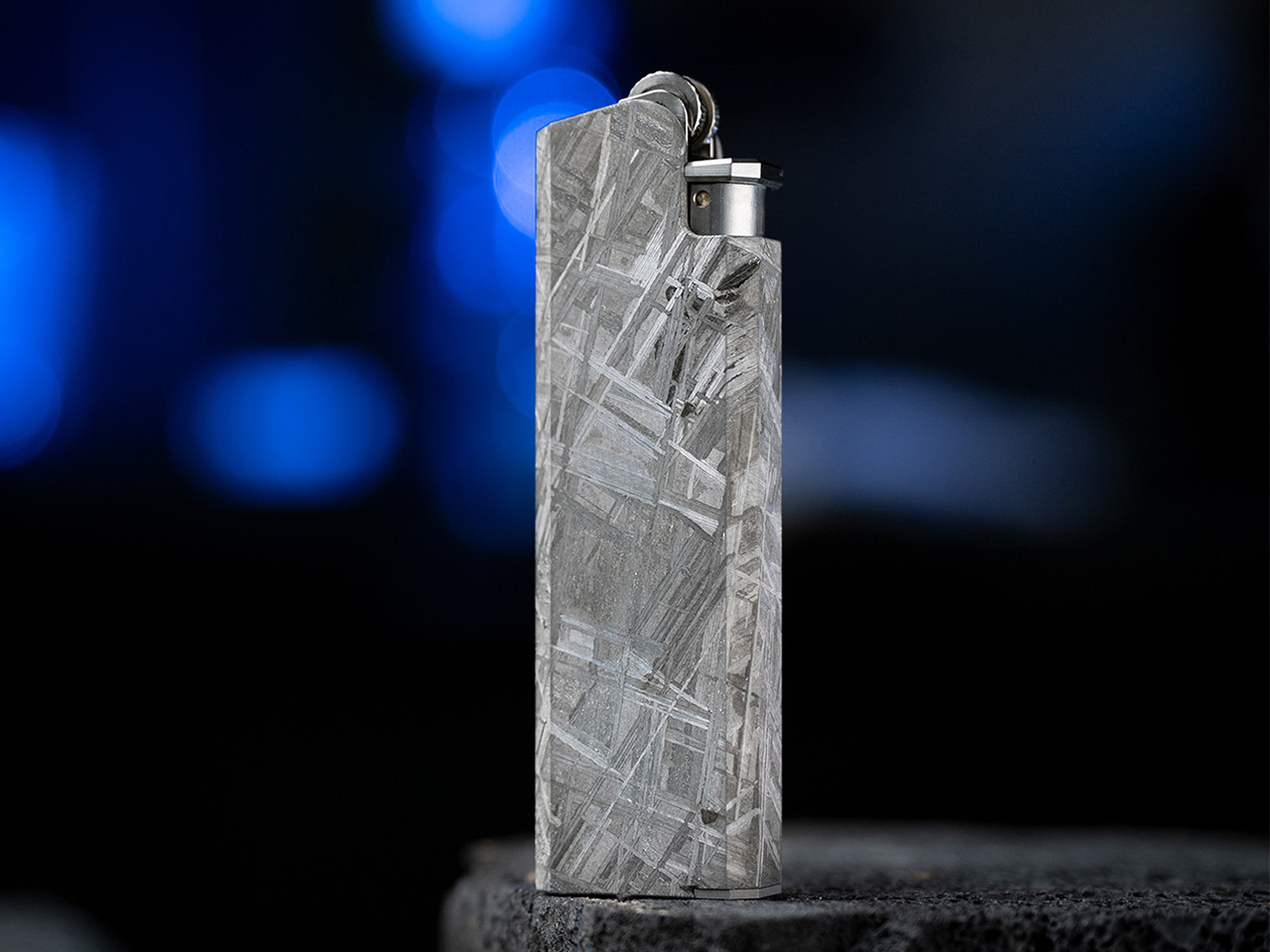
Muonionalusta’s crosshatch of intersecting bands is called a Widmanstätten pattern. It forms as nickel-iron alloys develop distinct crystal structures during the slow cooling of an asteroid’s core over millions of years. Muonionalusta itself is estimated to be over 4.5 billion years old, roughly the age of the solar system. Titaner’s tagline for the Monolith is “A star you can hold.” Asteroid core doesn’t have quite the same ring to it.

Titaner can’t control where those lines fall, which is sort of the point. The pattern on each Meteorite Edition Monolith depends on where and how the meteorite was cut, so each gets a different layout. One might show long diagonal streaks while another gets a tighter grid of intersecting bands. Each one also comes with an exclusive serial number and, according to Titaner, an independent material-testing certificate. The space-rock story comes with paperwork.

Ignition You’ll Want to Fidget With

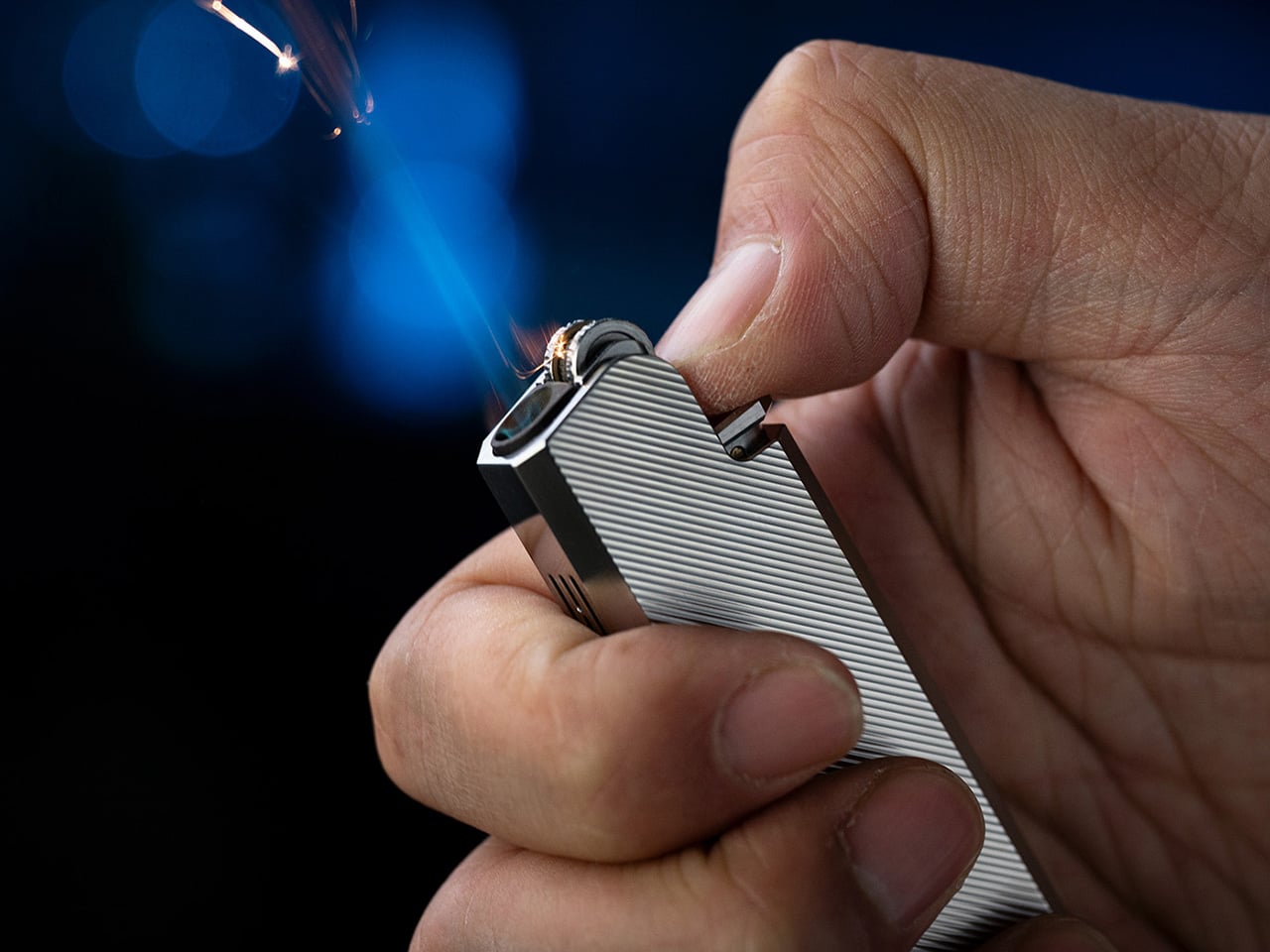
I don’t smoke, and I still want this lighter in my pocket. Titaner gave the Monolith two separate controls: an ignition wheel you roll with your thumb and a magnetic slider at the base. Up close, the optional hammered-texture wheel kit has faceted, CNC-machined knurling on its outer rings and a crosshatched grip in the center, intended to give your thumb more purchase with every roll. The mechanism looks like something you’d happily operate even with nothing to light.

The titanium components are precision-machined, with attention to the edges and surfaces your fingers meet. The metal brings strength, low weight, and corrosion resistance to an object destined to live in pockets and bags. Titanium is a poor conductor of heat, though, so Titaner adds a removable copper heat sink intended to help dissipate heat during use. The Cricket Flint Deluxe insert at its core is refillable with butane, so you top it up instead of tossing it. The insert is replaceable too, and the copper heat sink carries over to a compatible replacement.

A Magnetic Slider With Secrets and a Wind-Resistant Torch Flame
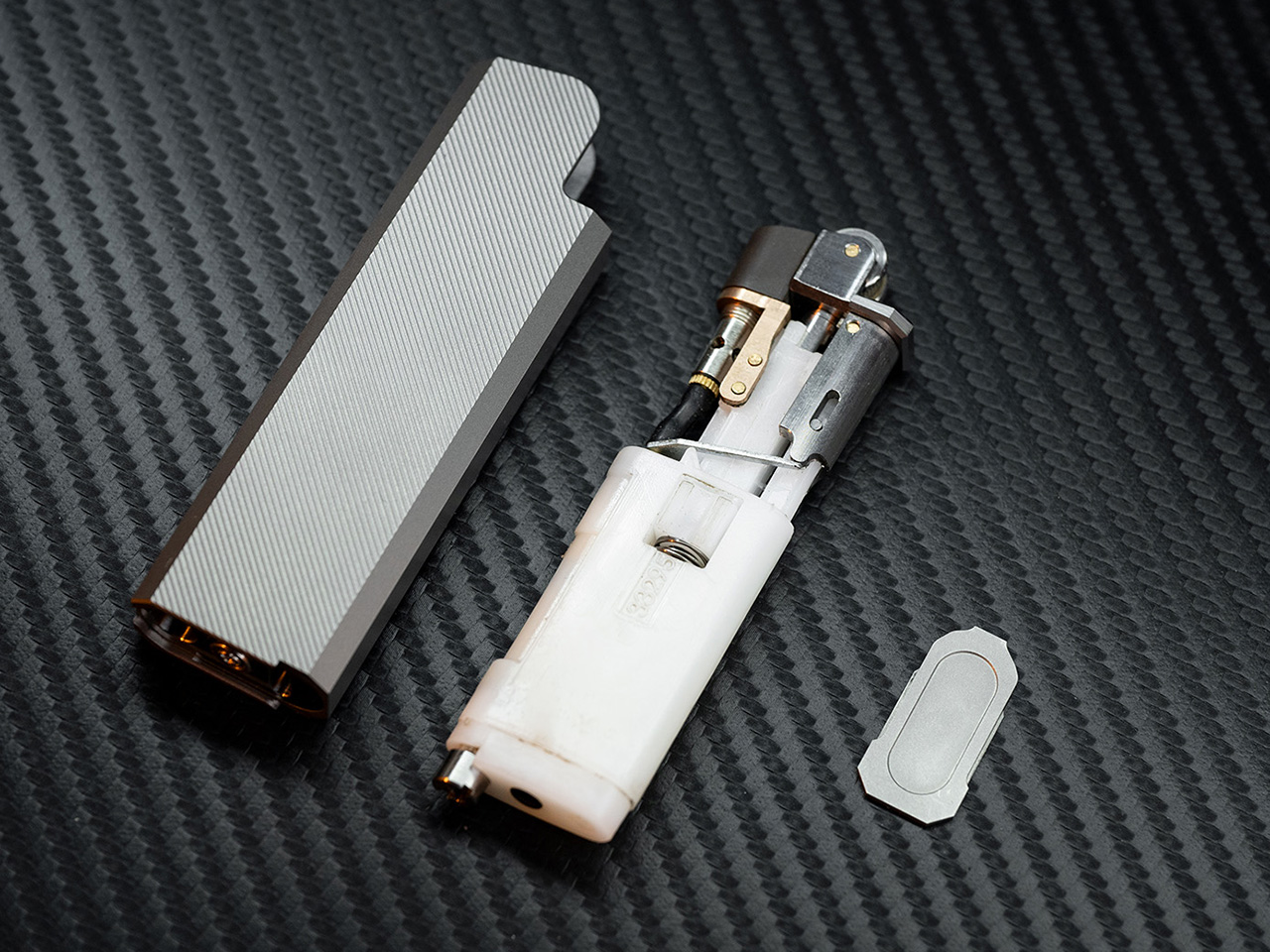
The magnetic slider at the base moves between detents and looks dangerously easy to fidget with. Slide it to the refill position and it exposes the filling valve, so you can top up the butane without pulling the insert out. Tucked inside the slider is a spare flint, ready for when the original wears down. Remove the module entirely and its end doubles as a flathead tool for adjusting the insert’s gas flow. Swapping the insert itself means undoing a single M2 retaining screw at the bottom.

Up top, the Cricket Flint Deluxe platform produces what Titaner describes as a wind-resistant torch flame. Titaner built its own outer shell and heat-management components around that insert. A gap between the combustion chamber and the titanium shell connects to ventilation channels on the side, providing a path for airflow. That airflow is intended to work alongside the copper heat sink to dissipate heat during use.

Fire Symbols, Three Editions, and About 30 of the Rarest
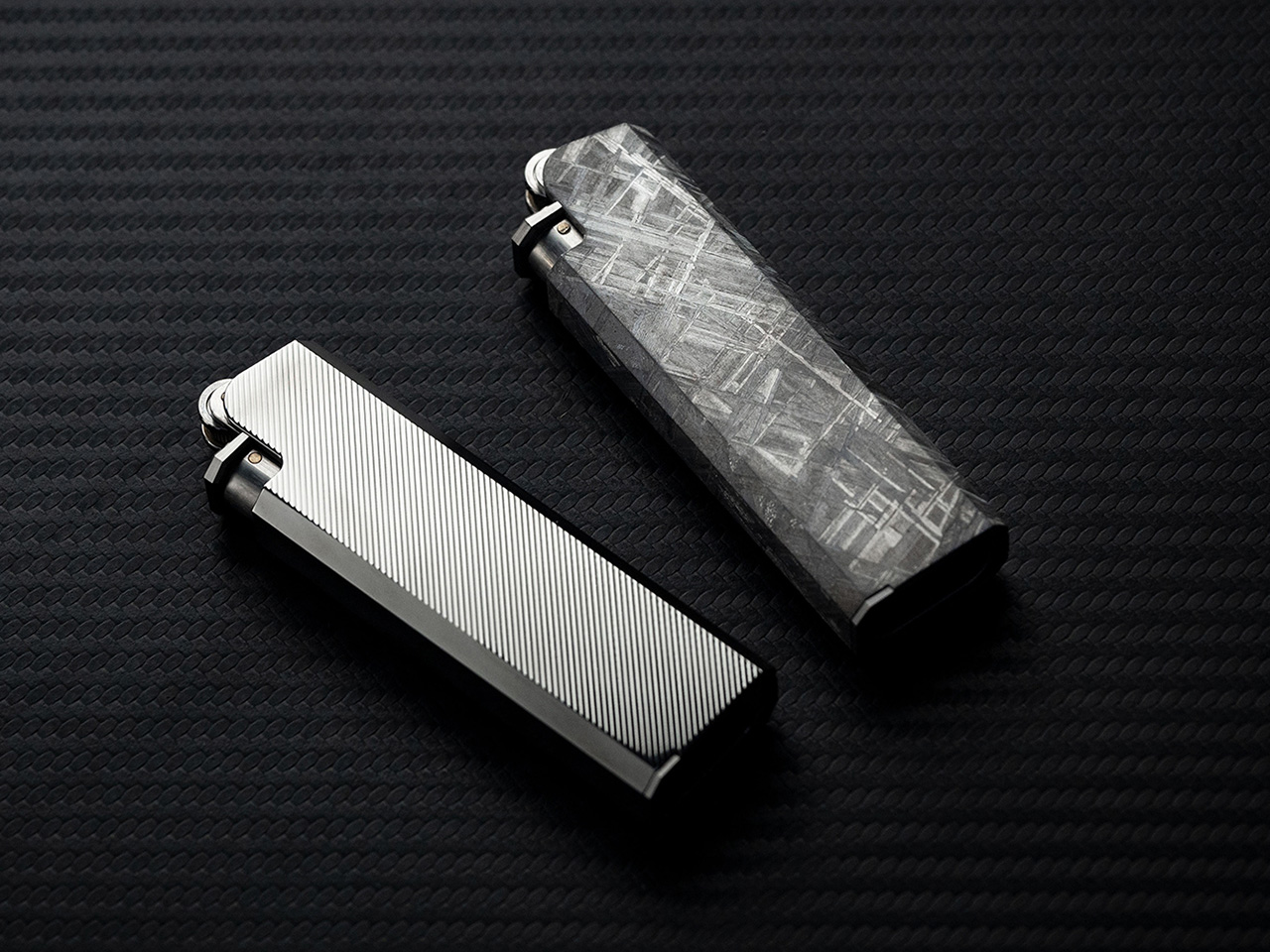
Along the side of the Monolith, those ventilation slots are arranged to echo Li (☲), the fire trigram in the I Ching, the ancient Chinese book of divination. Li is associated with fire, light, and clarity, and Titaner pairs it with a sweet little blessing: “May your path be bright, and every step be clear.” It’s a fitting symbol to cut into a lighter and gives the body a recognizable signature. The titanium wears a finely fluted diagonal texture in Titaner’s photos, catching light in shifting stripes. Those orderly grooves contrast with the irregular bands of the Meteorite Edition.

Titaner is offering the Monolith in three versions: the Standard Titanium Edition in bead-blasted or precision-milled finishes, the Obsidian Meteor Engraved Edition, and the Genuine Meteorite Edition. Despite its name, the Obsidian Meteor Engraved Edition contains neither meteorite nor obsidian. The Genuine Meteorite Edition adds the hammered wheel kit, personalized CNC engraving of your own handwritten message, and exclusive packaging. Titaner estimates its meteorite supply is enough for around 30 pieces, allocated first come, first served. Pricing starts at $159, with the Monolith offered through Kickstarter. The internal titanium components carry a one-year warranty from the date you receive the lighter. Not bad coverage for something that already survived a trip through the solar system.

Click Here to Buy Now: $159 $286 (44% off). Hurry, only 77/100 left!

The post Titaner’s new torch lighter features a 4.5-billion-year-old meteorite outer shell first appeared on Yanko Design.
Titaner’s new torch lighter features a 4.5-billion-year-old meteorite outer shell

In 1906, a few kids in northern Sweden were kicking rocks around for fun when they hit one that refused to budge. That stubborn lump turned out to be a piece of the Muonionalusta meteorite, a slab of space iron that landed near the Arctic Circle roughly a million years ago. More than a century later, Titaner is turning pieces of Muonionalusta into lighters. The Monolith’s Genuine Meteorite Edition pairs the meteorite with precision-machined titanium, and the whole lineup is designed for everyday carry. Honestly, I can think of worse retirement plans for a space rock than lighting someone’s cigar.

Titaner has spent about two decades machining titanium into pens, pry bars, knives, and even frying pans, so a titanium lighter sits squarely in its comfort zone. The meteorite changes the personality of the object. Every Meteorite Edition carries its own crosshatched slice of asteroid core and its own serial number, while every Monolith gets an ignition wheel and magnetic slider. There’s a removable copper heat sink, a replaceable insert, and a symbol for fire built into the side vents.

Designer: Titaner

Click Here to Buy Now: $159 $286 (44% off). Hurry, only 77/100 left!

A Meteorite Pattern Millions of Years in the Making

Muonionalusta’s crosshatch of intersecting bands is called a Widmanstätten pattern. It forms as nickel-iron alloys develop distinct crystal structures during the slow cooling of an asteroid’s core over millions of years. Muonionalusta itself is estimated to be over 4.5 billion years old, roughly the age of the solar system. Titaner’s tagline for the Monolith is “A star you can hold.” Asteroid core doesn’t have quite the same ring to it.

Titaner can’t control where those lines fall, which is sort of the point. The pattern on each Meteorite Edition Monolith depends on where and how the meteorite was cut, so each gets a different layout. One might show long diagonal streaks while another gets a tighter grid of intersecting bands. Each one also comes with an exclusive serial number and, according to Titaner, an independent material-testing certificate. The space-rock story comes with paperwork.

Ignition You’ll Want to Fidget With

I don’t smoke, and I still want this lighter in my pocket. Titaner gave the Monolith two separate controls: an ignition wheel you roll with your thumb and a magnetic slider at the base. Up close, the optional hammered-texture wheel kit has faceted, CNC-machined knurling on its outer rings and a crosshatched grip in the center, intended to give your thumb more purchase with every roll. The mechanism looks like something you’d happily operate even with nothing to light.

The titanium components are precision-machined, with attention to the edges and surfaces your fingers meet. The metal brings strength, low weight, and corrosion resistance to an object destined to live in pockets and bags. Titanium is a poor conductor of heat, though, so Titaner adds a removable copper heat sink intended to help dissipate heat during use. The Cricket Flint Deluxe insert at its core is refillable with butane, so you top it up instead of tossing it. The insert is replaceable too, and the copper heat sink carries over to a compatible replacement.

A Magnetic Slider With Secrets and a Wind-Resistant Torch Flame

The magnetic slider at the base moves between detents and looks dangerously easy to fidget with. Slide it to the refill position and it exposes the filling valve, so you can top up the butane without pulling the insert out. Tucked inside the slider is a spare flint, ready for when the original wears down. Remove the module entirely and its end doubles as a flathead tool for adjusting the insert’s gas flow. Swapping the insert itself means undoing a single M2 retaining screw at the bottom.

Up top, the Cricket Flint Deluxe platform produces what Titaner describes as a wind-resistant torch flame. Titaner built its own outer shell and heat-management components around that insert. A gap between the combustion chamber and the titanium shell connects to ventilation channels on the side, providing a path for airflow. That airflow is intended to work alongside the copper heat sink to dissipate heat during use.

Fire Symbols, Three Editions, and About 30 of the Rarest

Along the side of the Monolith, those ventilation slots are arranged to echo Li (☲), the fire trigram in the I Ching, the ancient Chinese book of divination. Li is associated with fire, light, and clarity, and Titaner pairs it with a sweet little blessing: “May your path be bright, and every step be clear.” It’s a fitting symbol to cut into a lighter and gives the body a recognizable signature. The titanium wears a finely fluted diagonal texture in Titaner’s photos, catching light in shifting stripes. Those orderly grooves contrast with the irregular bands of the Meteorite Edition.

Titaner is offering the Monolith in three versions: the Standard Titanium Edition in bead-blasted or precision-milled finishes, the Obsidian Meteor Engraved Edition, and the Genuine Meteorite Edition. Despite its name, the Obsidian Meteor Engraved Edition contains neither meteorite nor obsidian. The Genuine Meteorite Edition adds the hammered wheel kit, personalized CNC engraving of your own handwritten message, and exclusive packaging. Titaner estimates its meteorite supply is enough for around 30 pieces, allocated first come, first served. Pricing starts at $159, with the Monolith offered through Kickstarter. The internal titanium components carry a one-year warranty from the date you receive the lighter. Not bad coverage for something that already survived a trip through the solar system.

Click Here to Buy Now: $159 $286 (44% off). Hurry, only 77/100 left!

The post Titaner’s new torch lighter features a 4.5-billion-year-old meteorite outer shell first appeared on Yanko Design.
AirTag-sized EDC lighter packs a Zippo-style flame into a 1.4-inch tall Titanium body

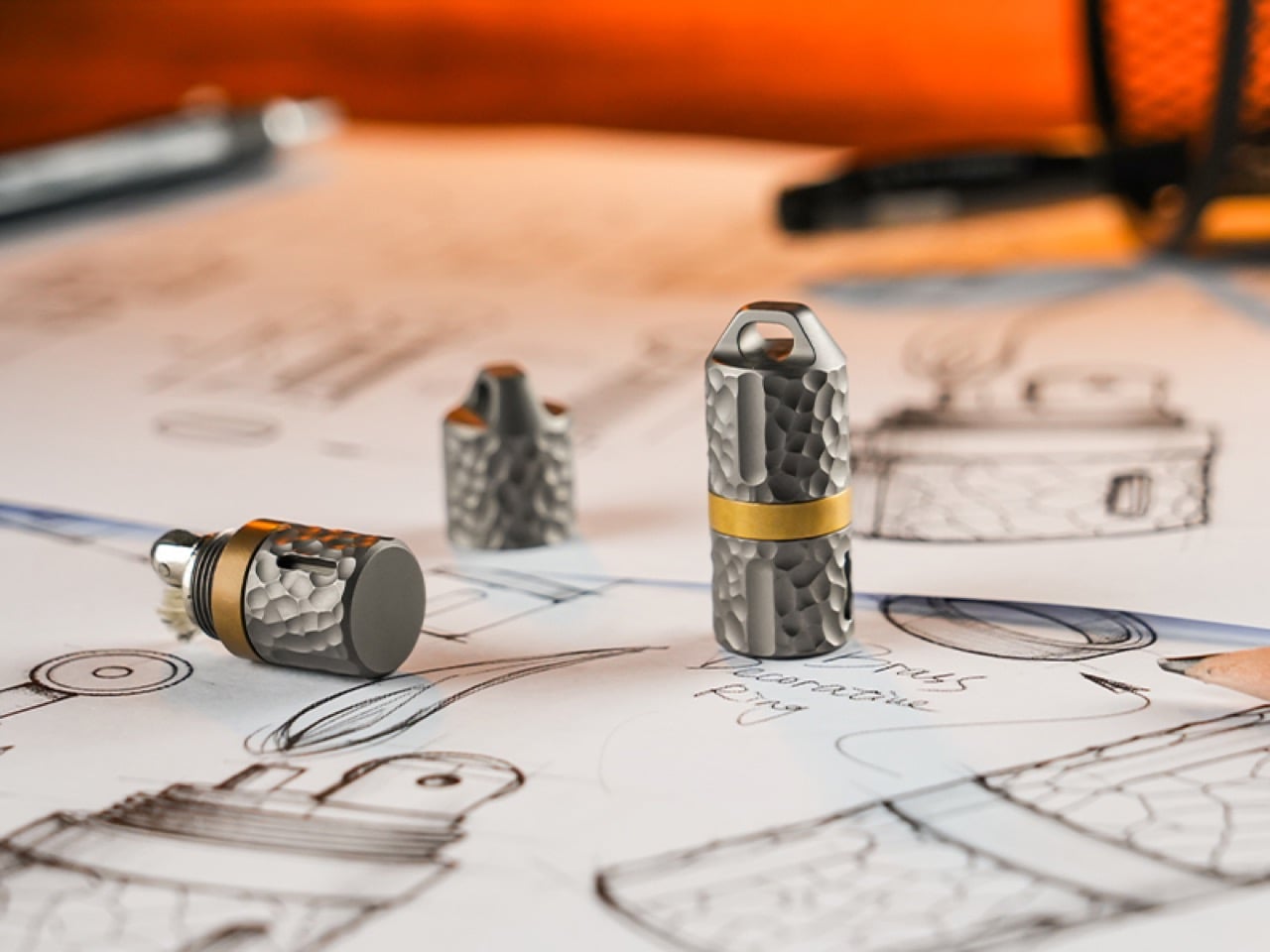
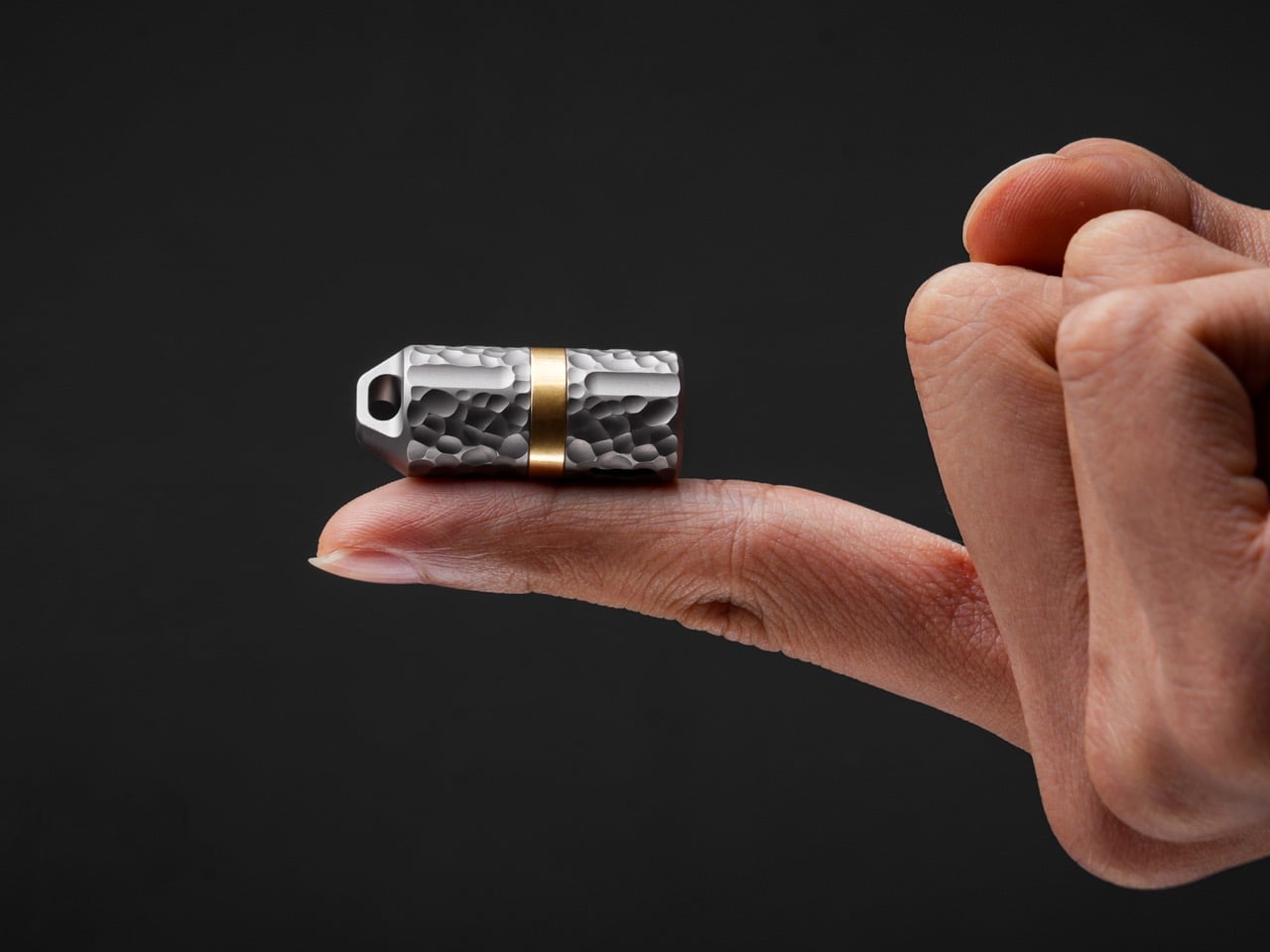
An AirTag is 32mm in diameter, and the whole appeal is forgetting you put it there. MR.GADGET apparently thought this was the right template for a lighter. The Pyra measures 36mm (1.42 inches) tall and 15mm (0.59 inches) across, which means it is, quite genuinely, just four millimeters taller than an Apple AirTag. A complete mechanical lighter in a form factor you’d otherwise associate with tracking your lost dog. MR.GADGET is a Boston-based product design studio, and Pyra represents exactly the kind of object they seem to enjoy building: small, precise, and maybe slightly unnecessary in the best possible way.

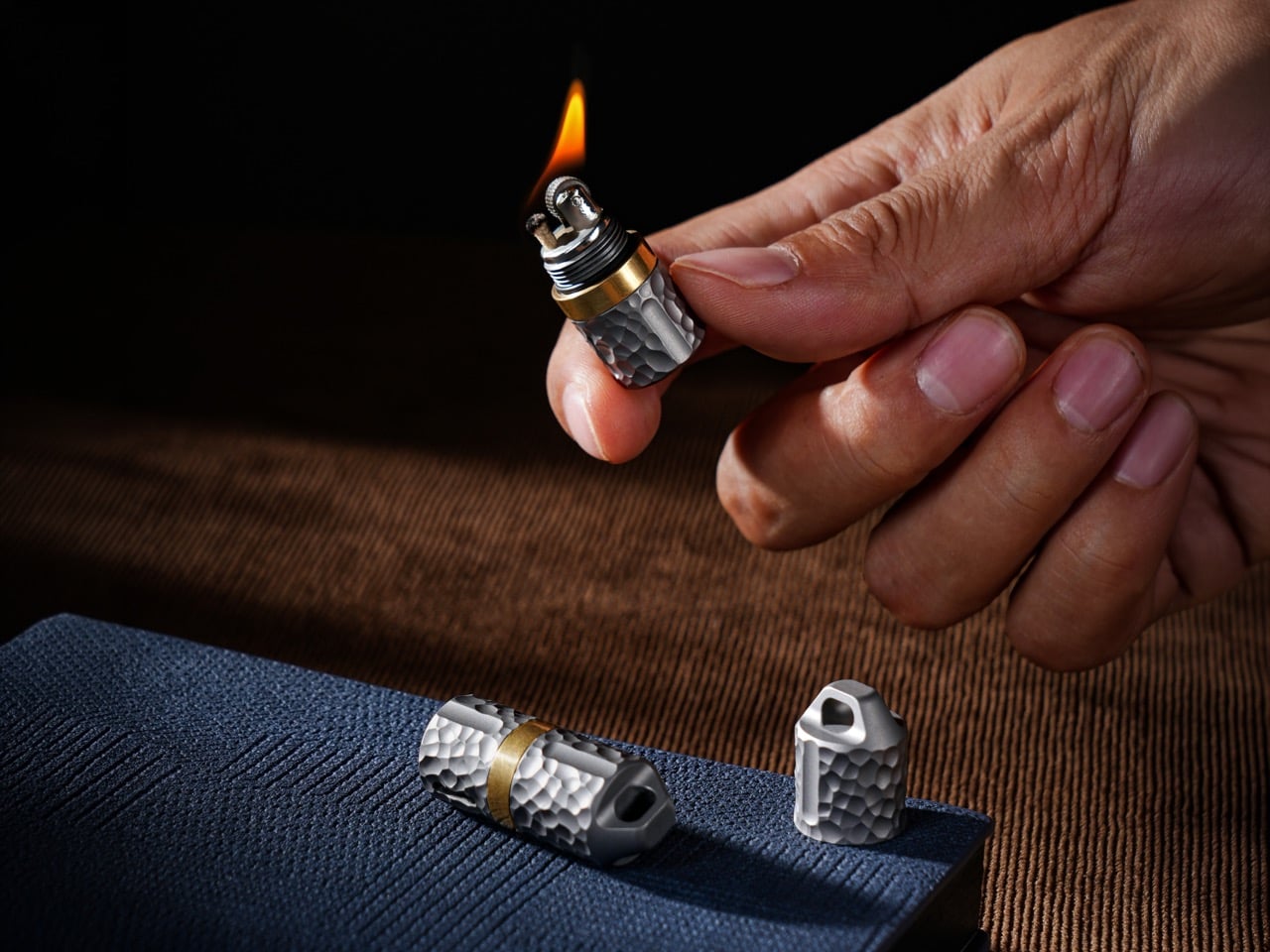
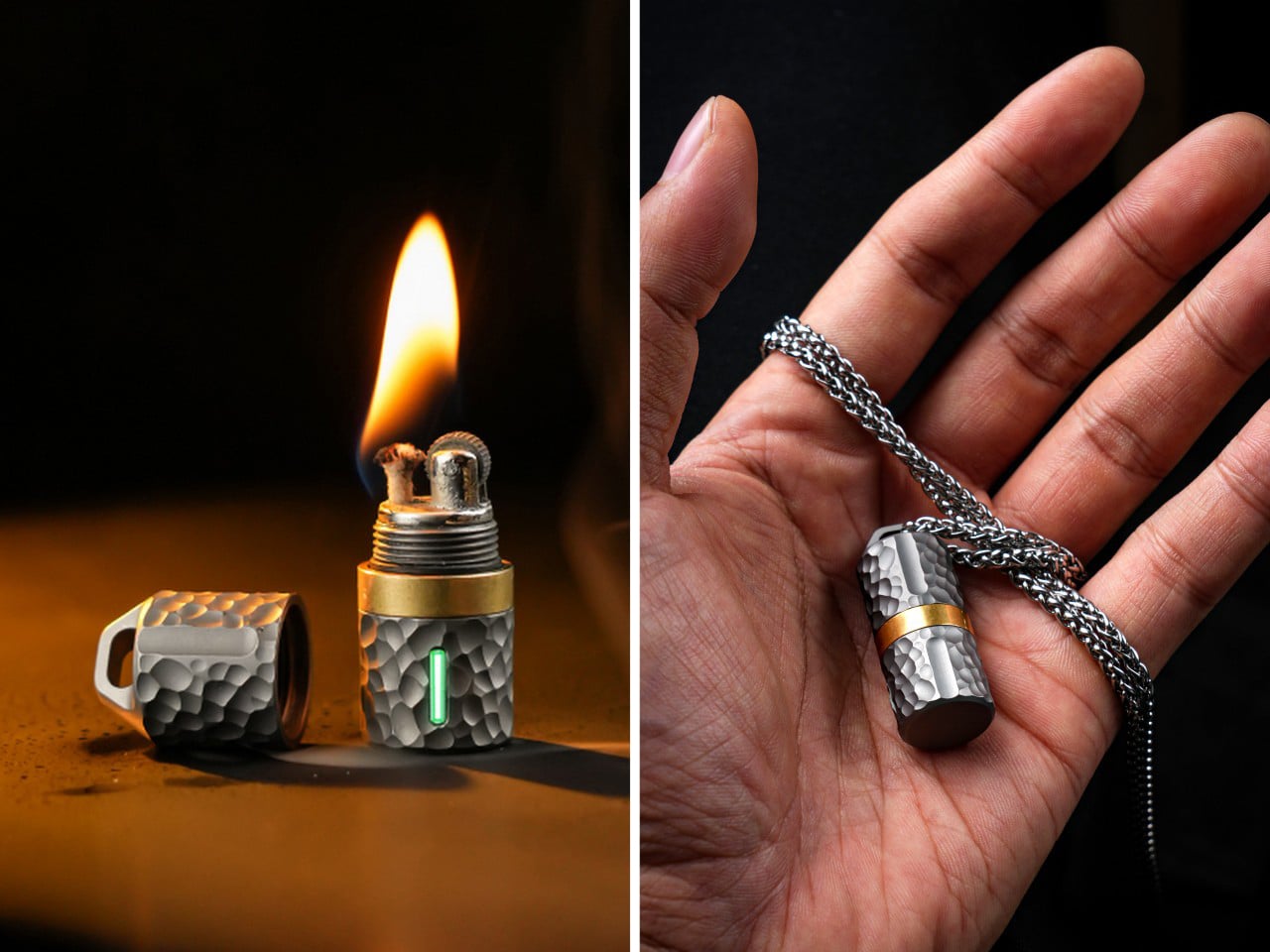
Behind the compact titanium body is a fully mechanical ignition structure. No electronic ignition. No battery. No charging port. A CNC-machined hammered texture, inspired by meteorite surfaces, gives the titanium body a distinctive tactile character. Four symmetrical grooves provide natural grip, while a contrasting copper/brass ring adds a warm metallic accent. At just 0.63 ounces (17.8 grams), Pyra is small enough to carry almost anywhere without becoming another bulky object in your pocket. That’s lighter than most coins or USB drives rattling at the bottom of your bag.

Designer: MR.GADGET

Click Here to Buy Now: $49 $65 (25% off) Hurry! Only 55 of 100 left.

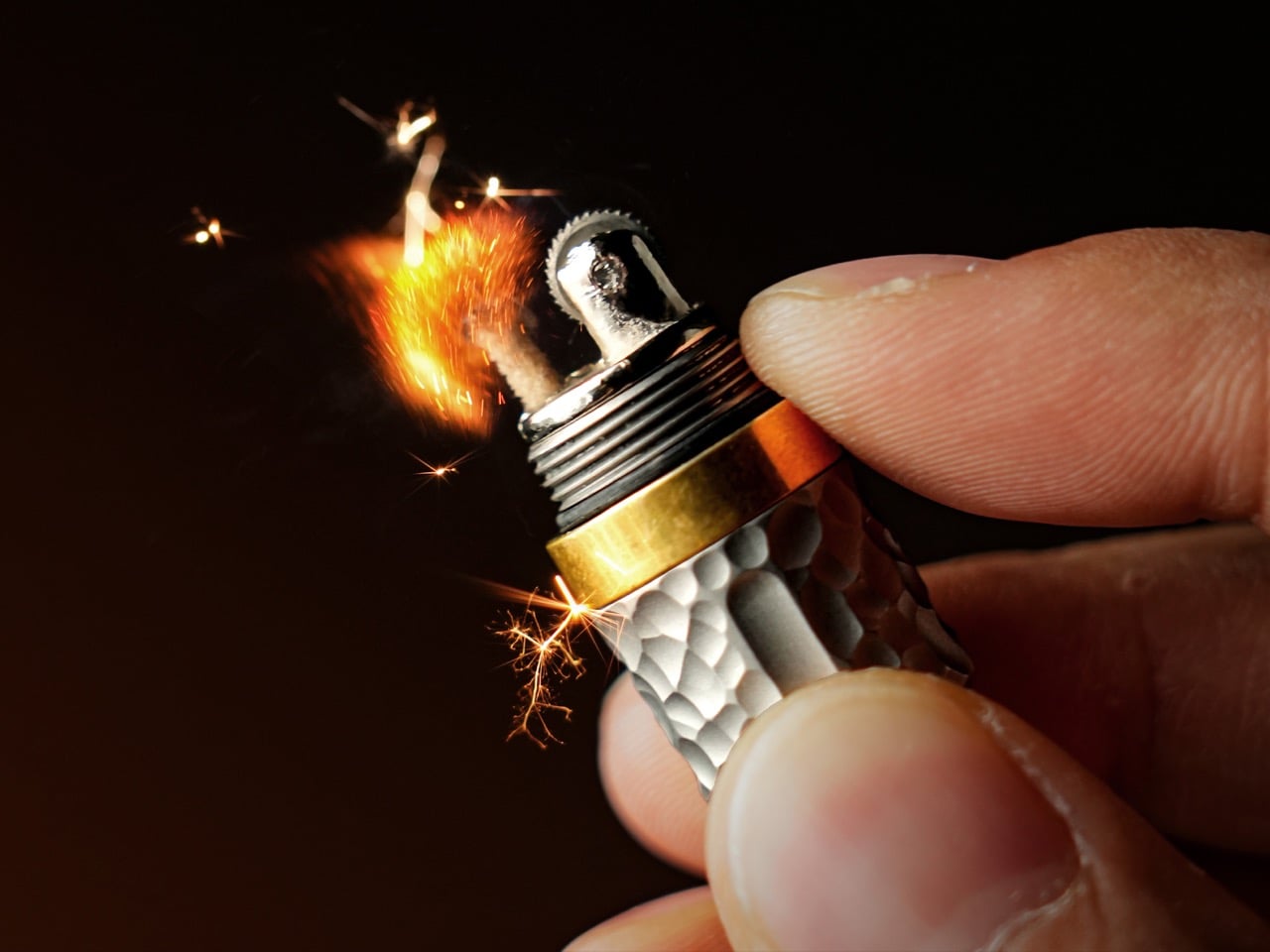
The ignition system inside that 36mm shell contains 13 discrete components, each with a specific job. Rotating the upper shell open reveals the mechanism, then you spin the flint wheel, metal meets flint, a spark appears, and the flame follows. Every component is precision CNC machined to work within the compact body, from the internal mechanism to the threaded connection. The precision threads give every rotation a distinct mechanical feel, ending with a precise mechanical lock. The component list reads like a miniaturized Zippo: spring, flint wheel, flint, fuel chamber, and O-ring, all organized so that every millimeter has a job.

Pyra is machined from Grade 5 Titanium, or Ti-6Al-4V if you prefer to sound intimidating at dinner parties, an alloy roughly 2 to 2.5 times stronger than commercially pure titanium and the same material used in aerospace components, carabiners, and precision knife hardware that gets used hard. MR.GADGET chose it for the combination of low weight, high strength, durability, and premium tactile feel. The compact body serves as the structural backbone that keeps the whole object compact, rigid, and carry-ready. That CNC-machined hammered texture does double duty: it gives the titanium visual drama and provides genuine grip. The four symmetrical grooves give your fingers something to find naturally, and the copper/brass accent ring breaks the all-titanium aesthetic with a warm, almost handcrafted quality that photographs beautifully.

Inside Pyra is a dedicated fuel chamber, and when closed, the precision threads and O-ring sealing structure reduce the entry of air, moisture, and dust. That sealing is a meaningful detail: the classic Zippo has no equivalent and is notorious for losing fuel to evaporation in storage. The flame stays lit when the wind picks up and keeps burning through the rain. Pyra has been tested across extreme temperatures from -20°C to 50°C, covering nearly every scenario outside of volcano tourism. The fuel load delivers approximately six minutes of continuous burn time, ample for lighting candles, starting camp stoves, and the occasional dramatic effect.

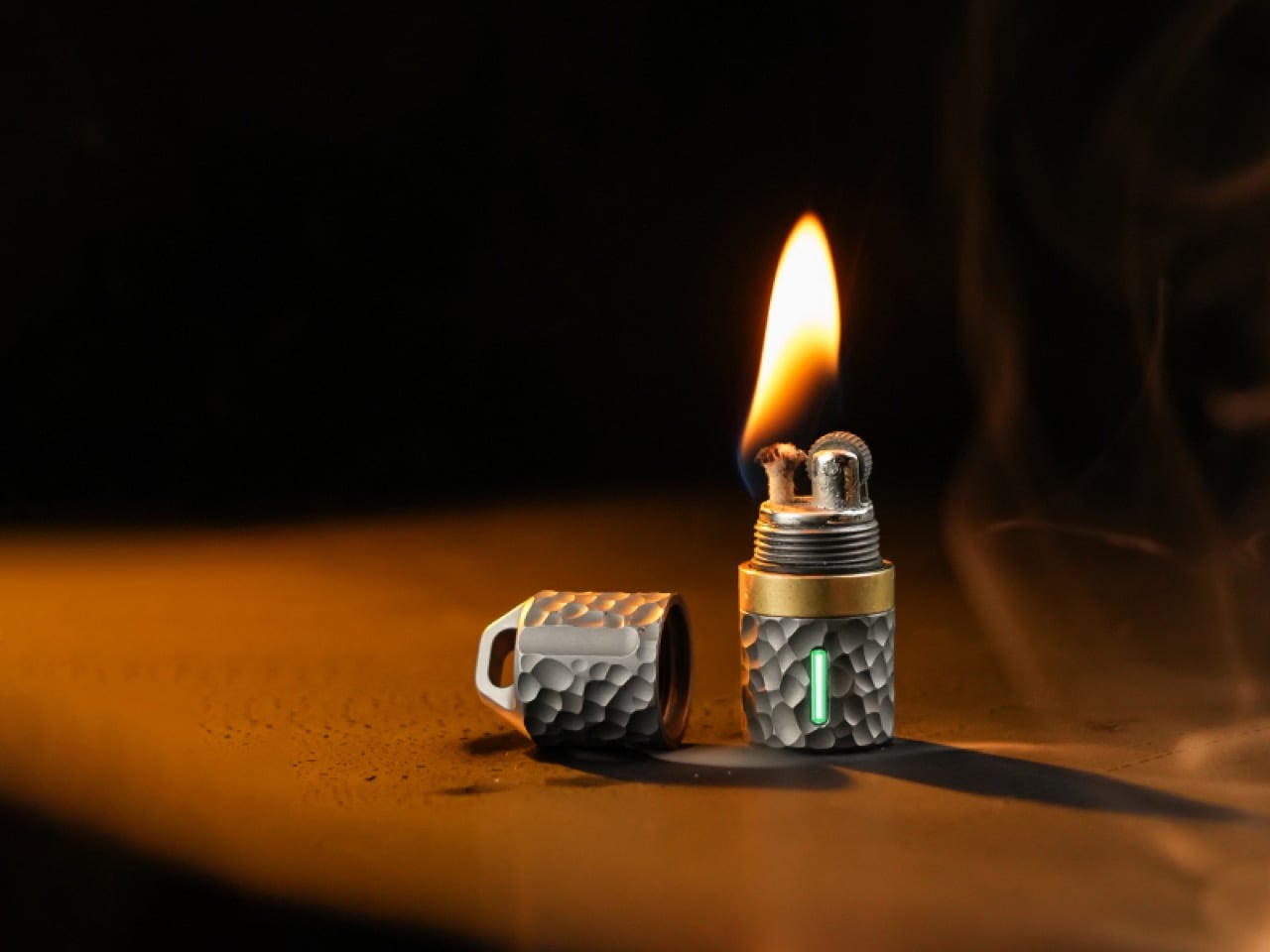
Pyra carries two different kinds of light: a real flame created mechanically when you need it, and tritium, a self-luminous element integrated into the body to provide a small glow without batteries or charging. Two 1.5 × 6mm tritium slots are built directly into the shell, and this is honestly one of my favorite details on the whole design. In daylight, the vials become part of the design. In darkness, they become a subtle point of light, turning Pyra into something you can locate by feel or by glow at 2am. The vials come in a variety of colors and are available as an add-on, and they genuinely elevate the whole object into small-artifact territory.

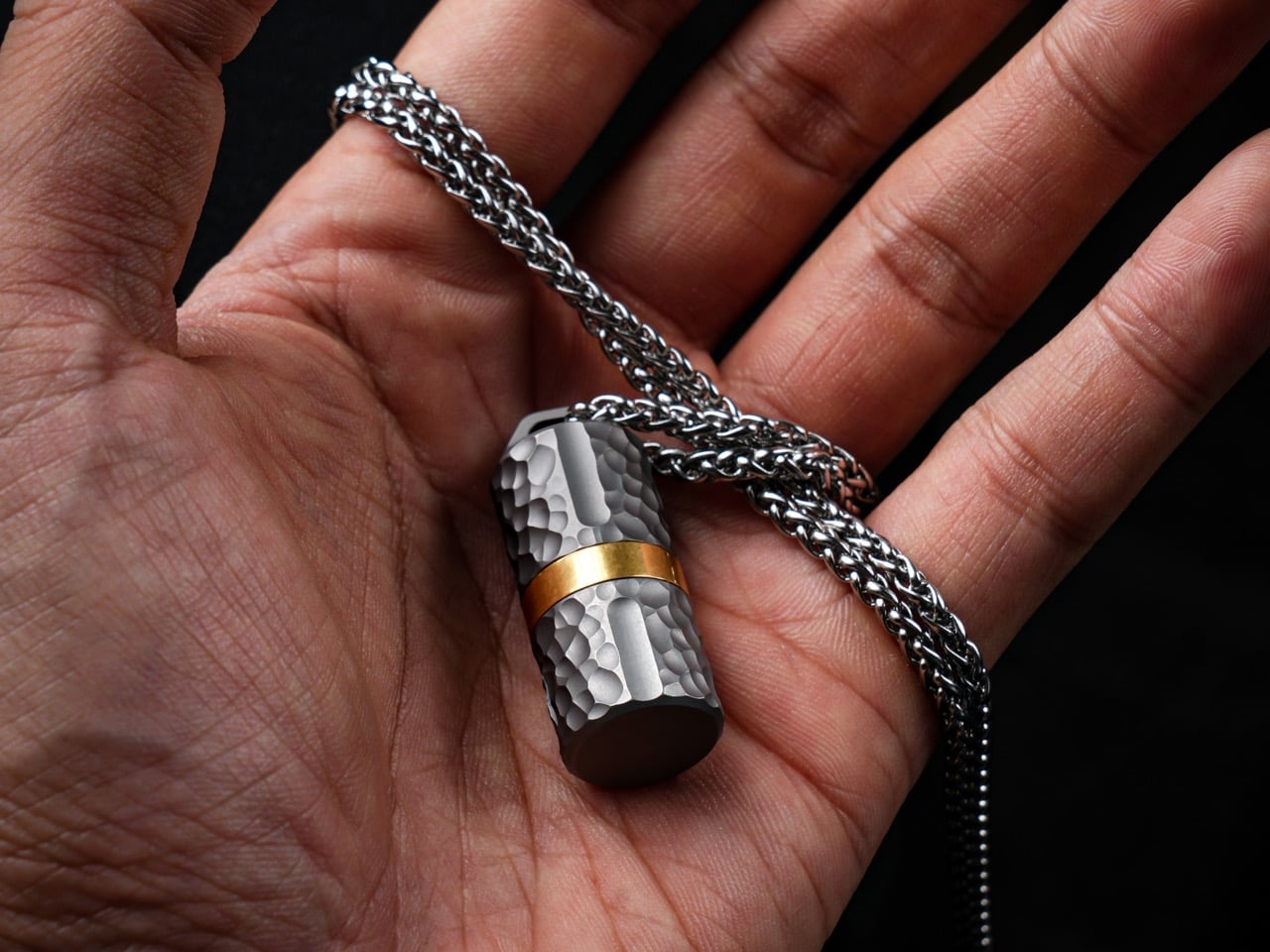
Pyra’s compact cylindrical form fits naturally into an EDC setup, riding in your pocket at only 36mm, and the attachment hole gives the option of keyring or lanyard. A necklace chain add-on is also available, turning Pyra into pendant carry if that’s your angle. The flat bottom gives Pyra another small but intentional feature: it stands. That’s one of those quietly considered design decisions that makes an object feel genuinely thought through. The mechanical structure is designed with maintenance in mind, the flint is replaceable, and the whole approach rejects the idea that a lighter should become disposable just because one small component wears out.

Pyra is available at a discounted $45 per unit with free worldwide shipping, and the add-on catalog is surprisingly comprehensive for a lighter. A black anodized finish adds $15, personalized engraving is $12, a titanium quick-release keychain is $15, and a spare flint kit of 30 runs just $5. Tritium vials are $30 for a pair, with glass luminous vials at $6 for those who want the ambient glow without the premium. Multi-unit bundles bring the per-unit cost down considerably, with a two-pack starting at $85 and a four-pack at $159.

Click Here to Buy Now: $49 $65 (25% off) Hurry! Only 55 of 100 left.

The post AirTag-sized EDC lighter packs a Zippo-style flame into a 1.4-inch tall Titanium body first appeared on Yanko Design.