DYSH Cooks Dinner, Serves It, and Leaves Just One Thing in the Sink

Cooking a single meal usually means dirtying a pot, a plate, and whatever serving dish stands between them, three separate objects doing what feels like one continuous job. DYSH collapses that chain into a single system, where the same vessel that cooks your food becomes the plate you eat from and the bowl you serve it in. It’s a multi-cooker built less around heating elements and more around eliminating the handoffs between cooking, eating, and cleaning.

The core vessel does the heavy lifting here, functioning as a pot, a frying pan, and a serving bowl depending on what a given recipe calls for. Rather than reaching for a different pan every time a dish changes character, from simmering a sauce to searing something quickly, the same piece of cookware adapts, cutting down on the pile of mismatched pots that usually accumulate across a single cooking session.

Designers: Chaeyeon Yoo, Doyoon Kim, Eui Hwan Kwon, Gun Park, Yangwoo Choi

The lid takes on double duty of its own, flipping from a cover that traps heat and moisture into an actual plate once the cooking is done. That single swap removes an entire category of dishwashing from the equation, since a meal cooked and served straight out of DYSH never touches a separate plate in the first place. It’s a small mechanical shift with an outsized effect on how much ends up in the sink afterward.

A two-way handle ties the physical and functional sides of the system together. It offers the grip stability you’d expect from cookware, letting you lift, tilt, or steady the vessel during actual cooking, while also serving as the control interface for the multicooker itself. Instead of a separate dial or touchscreen bolted onto the base, the handle you’re already holding becomes the same point of control.

Underneath all of it sits an induction base, the one component that stays put on the counter while everything else moves. Magnetic connections join the vessel, lid, and handle to that base, a detail that does more than simplify assembly. It keeps the overall system lighter, safer to handle when hot, and considerably easier to break apart and clean once a meal wraps up.

None of these choices exist in isolation. The vessel’s shape-shifting utility only works because the lid is ready to become a plate the moment cooking stops, and that handoff only feels seamless because the handle and magnetic base keep every piece aligned and secure throughout. Each part borrows from the next, turning what would normally be three separate categories of kitchenware into a single, continuous object.

For a kitchen already crowded with single-purpose gadgets, DYSH argues for consolidation instead of addition. A meal-kit cooker that eats its own leftovers, so to speak, absorbing the roles of a pan, a plate, and a serving dish into one connected system, changes what a full dinner’s cleanup actually looks like once the last bite is gone.

The post DYSH Cooks Dinner, Serves It, and Leaves Just One Thing in the Sink first appeared on Yanko Design.
Art-ware Is the Dining Set That Never Has to Go in a Cabinet

Tableware has always had a storage problem. A complete set of cups, bowls, and cutlery takes up a cabinet’s worth of space for the privilege of being used a few times a week. The rest of the time, it sits behind closed doors, out of sight and contributing nothing to the space around it. That’s a lot of material devoted to a fairly passive existence.

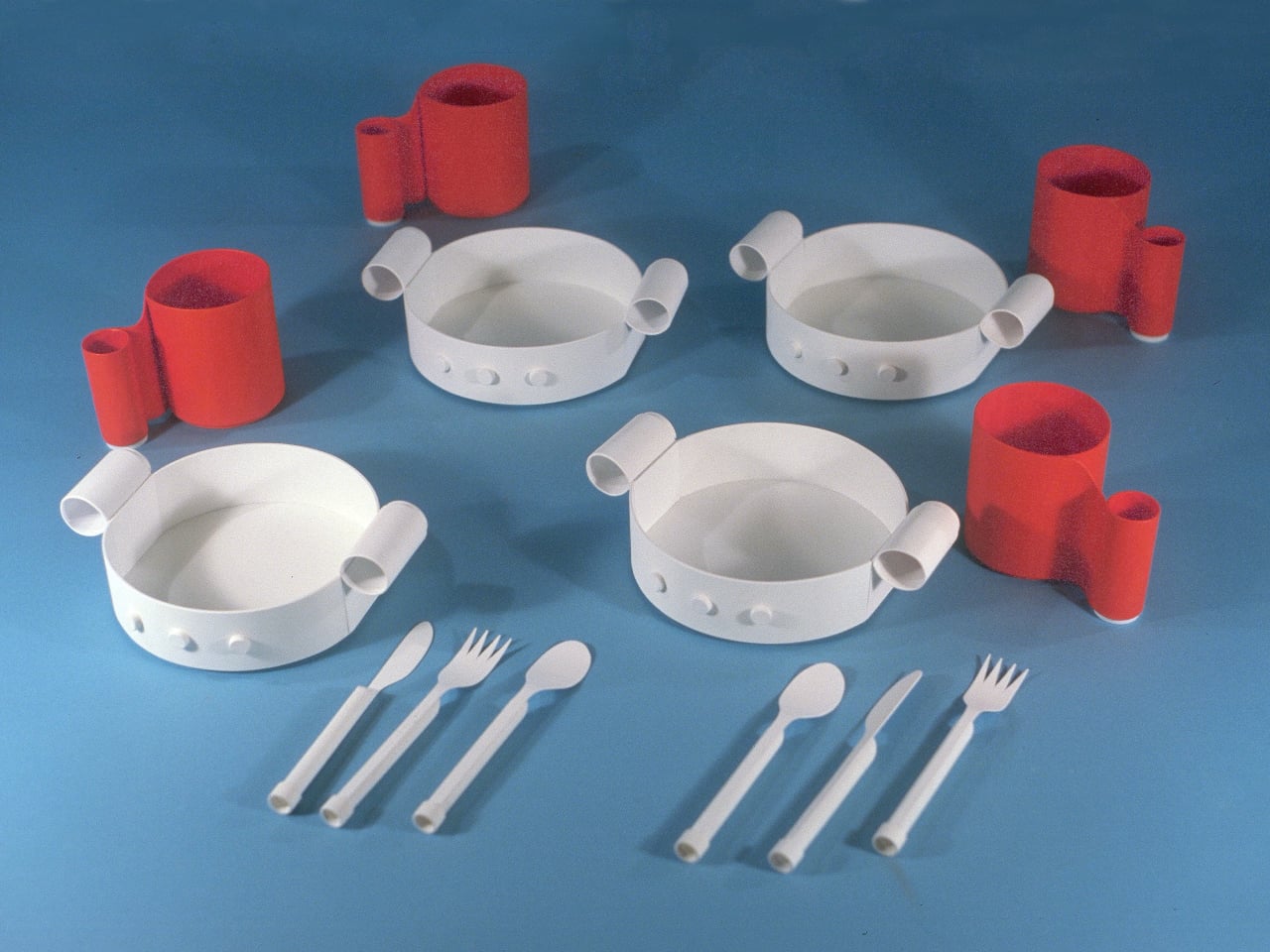
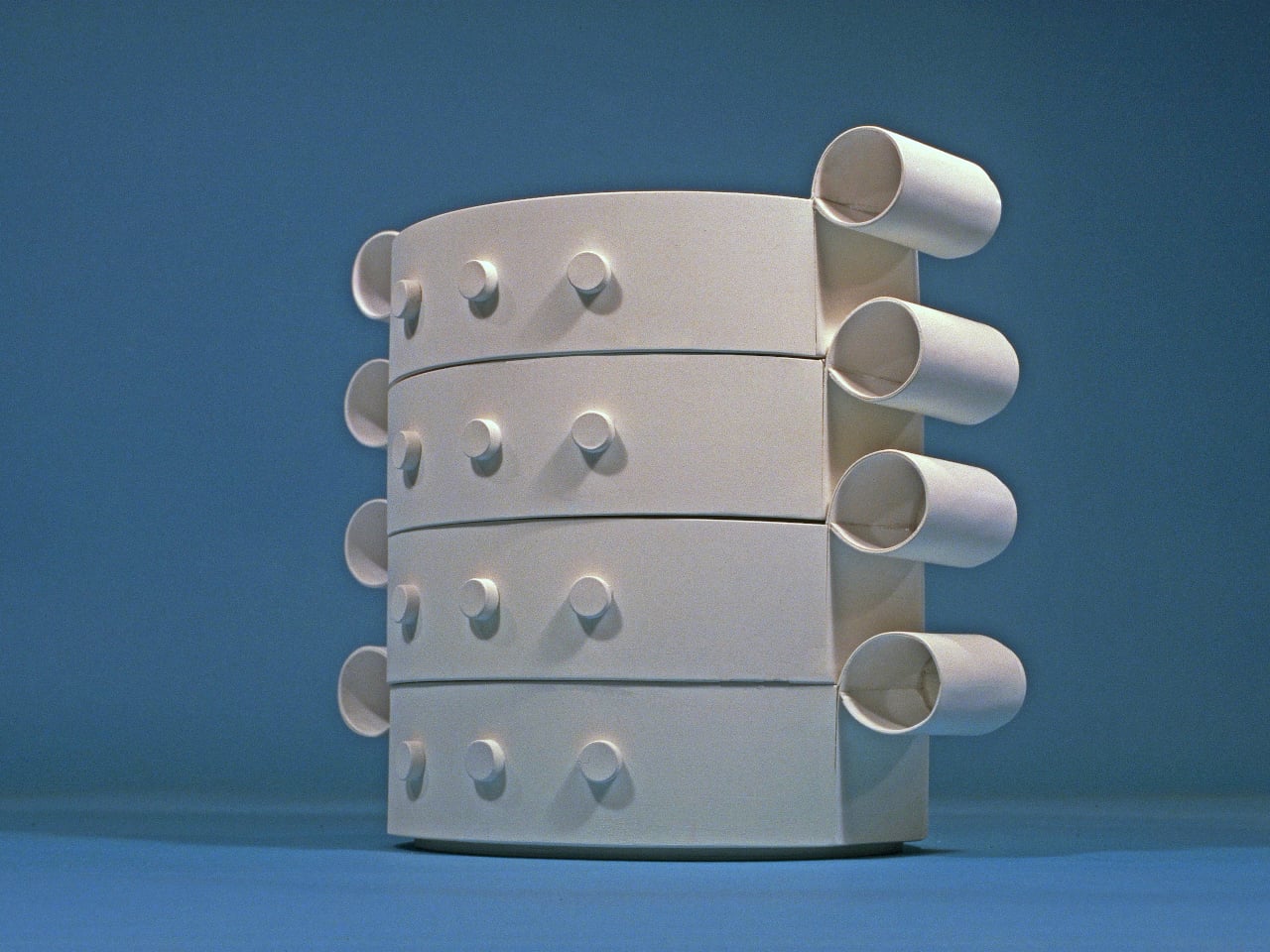
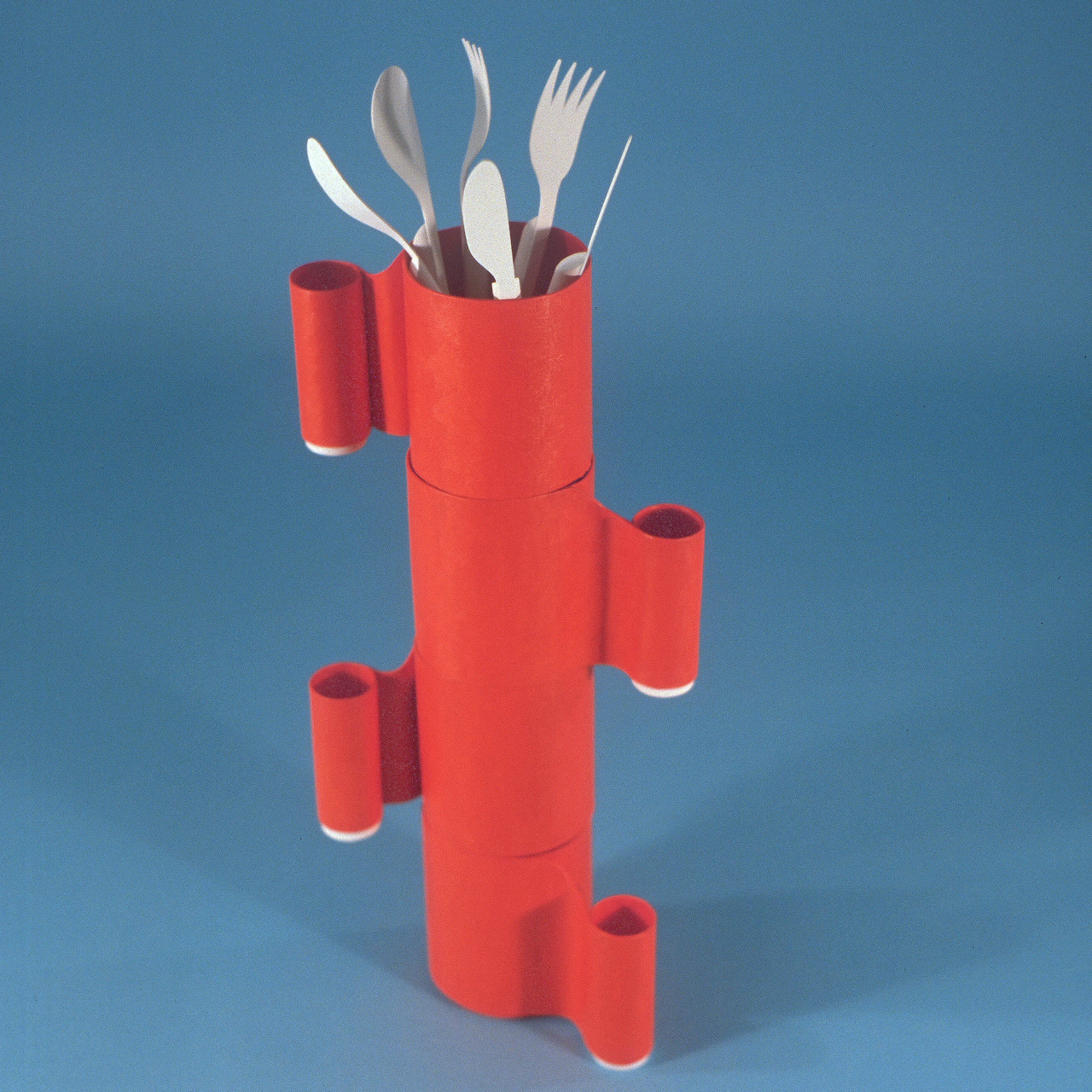
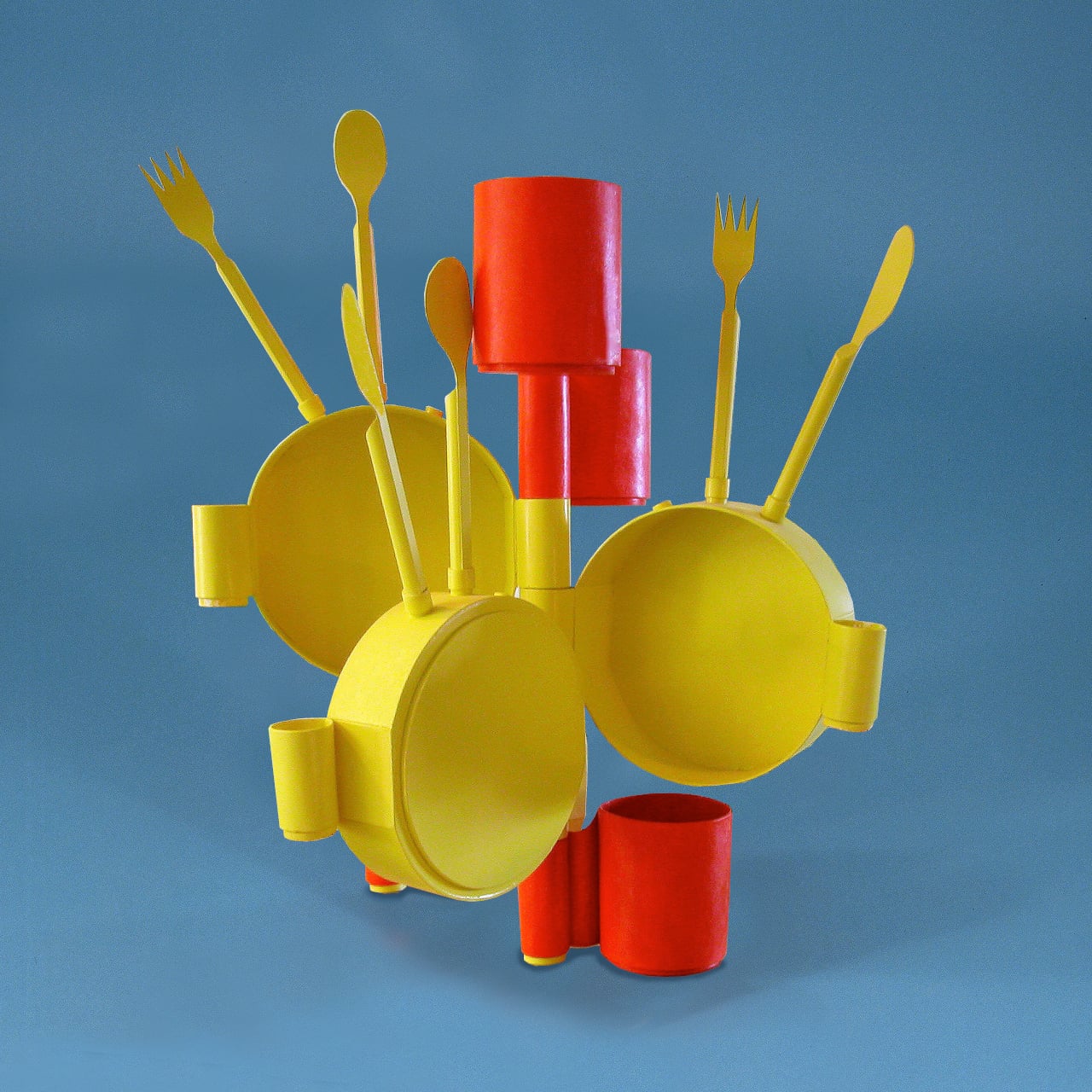
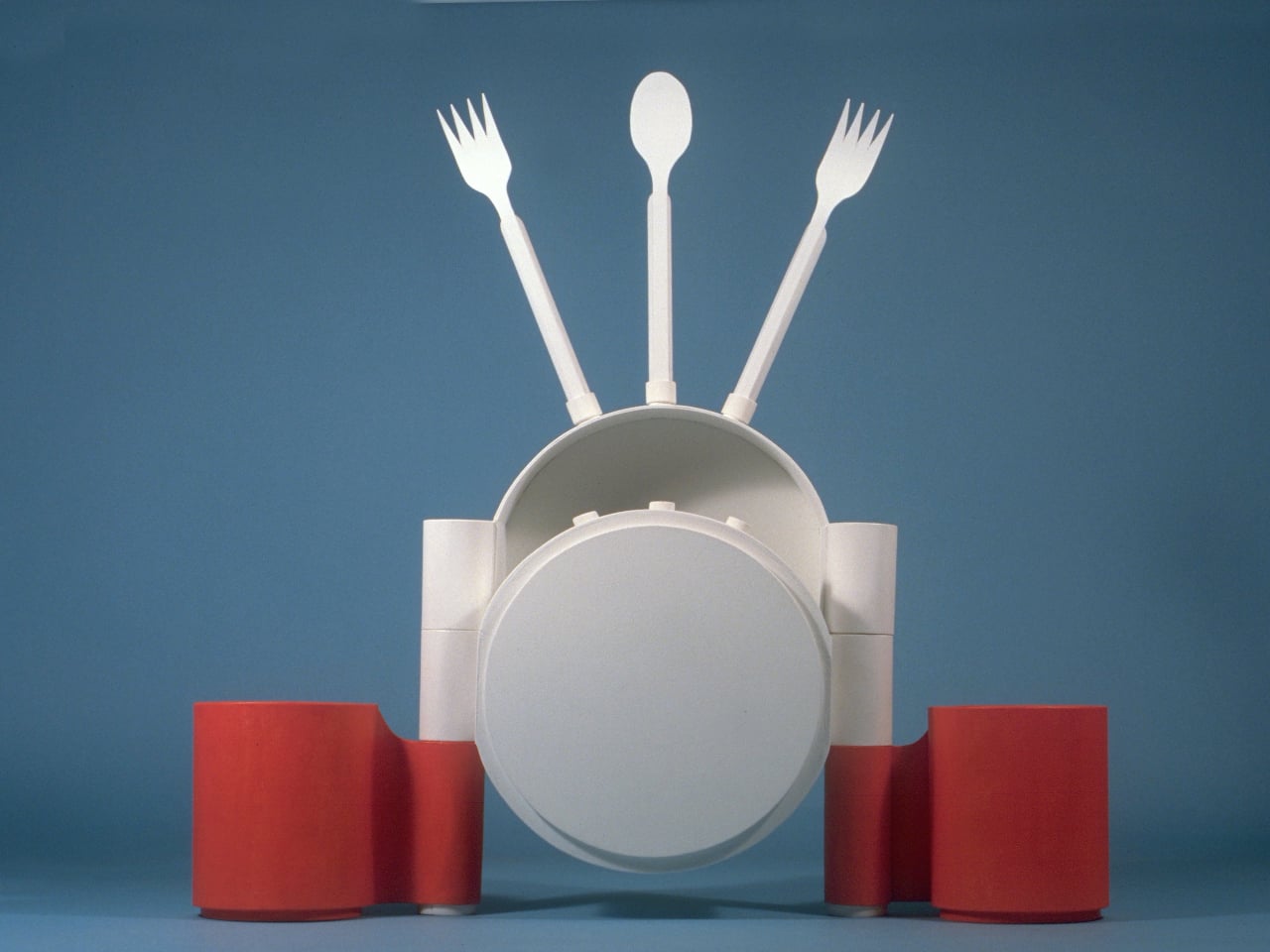
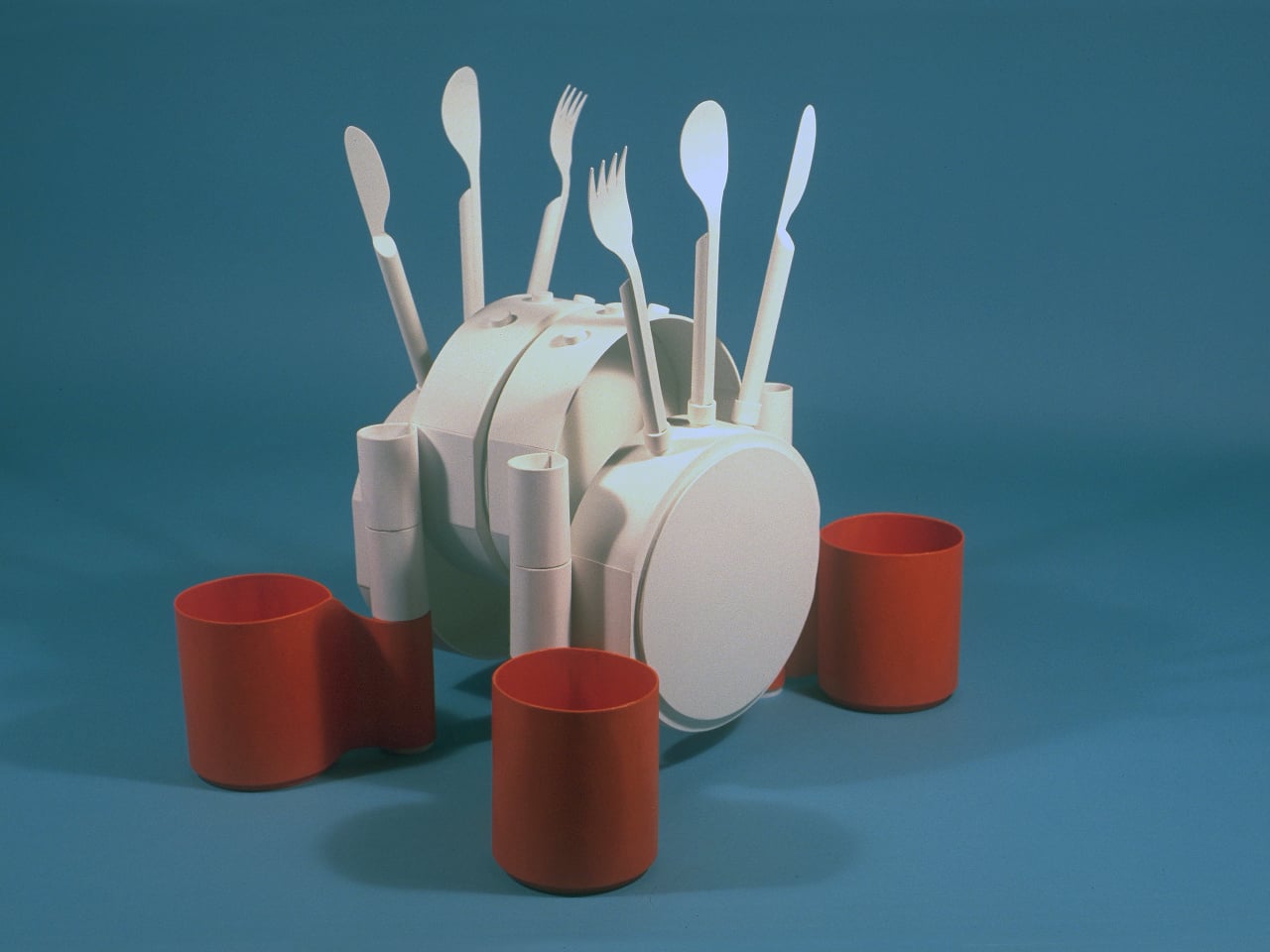
Michael Jantzen’s Art-ware prototype takes a different approach to the same set of objects. Rather than designing tableware that gets put away after a meal, he designed a system where the dishes, cups, and cutlery connect to each other and become something else entirely: freestanding abstract sculptures that live out in the open, doubling as décor when they’re not being used for eating and drinking.

Designer: Michael Jantzen

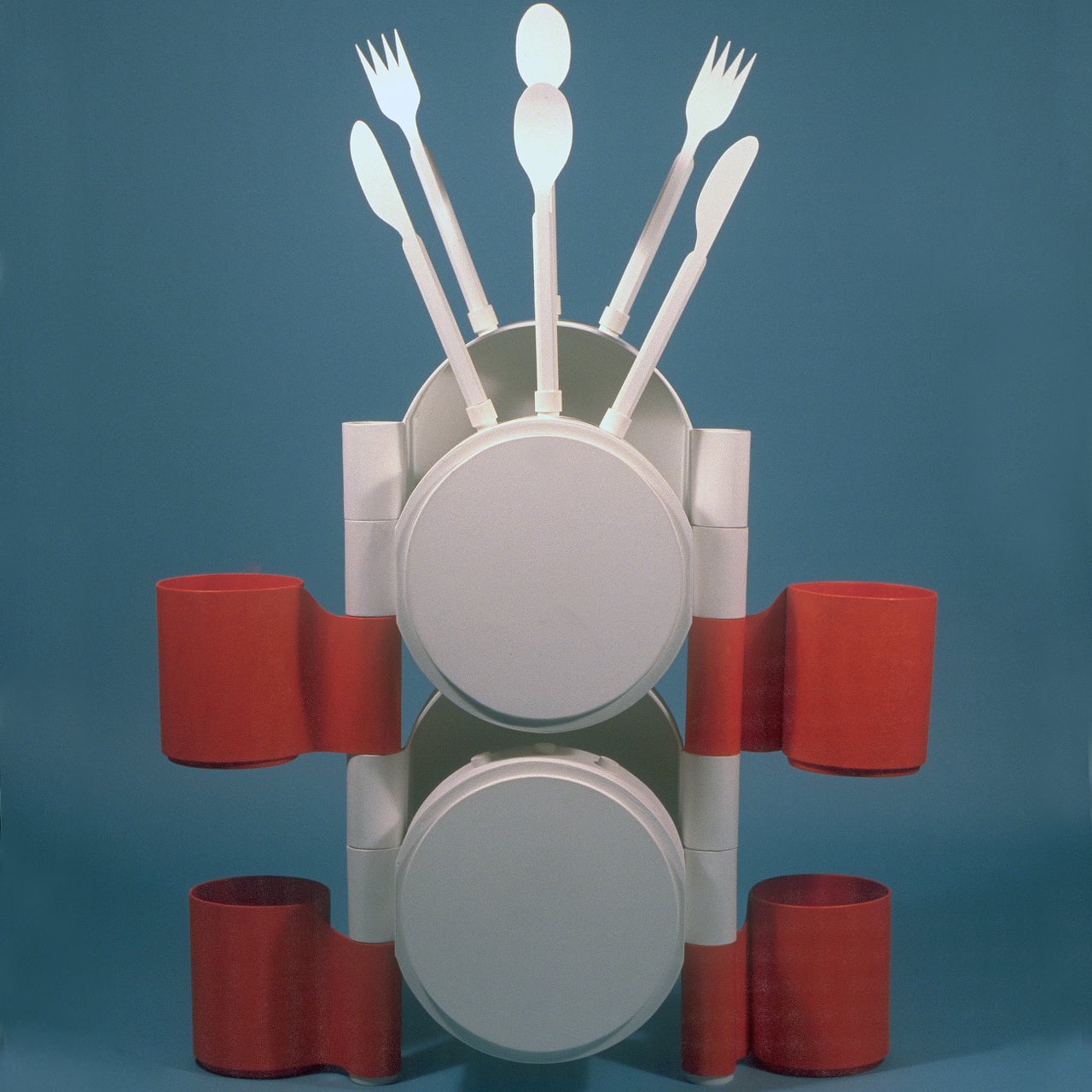
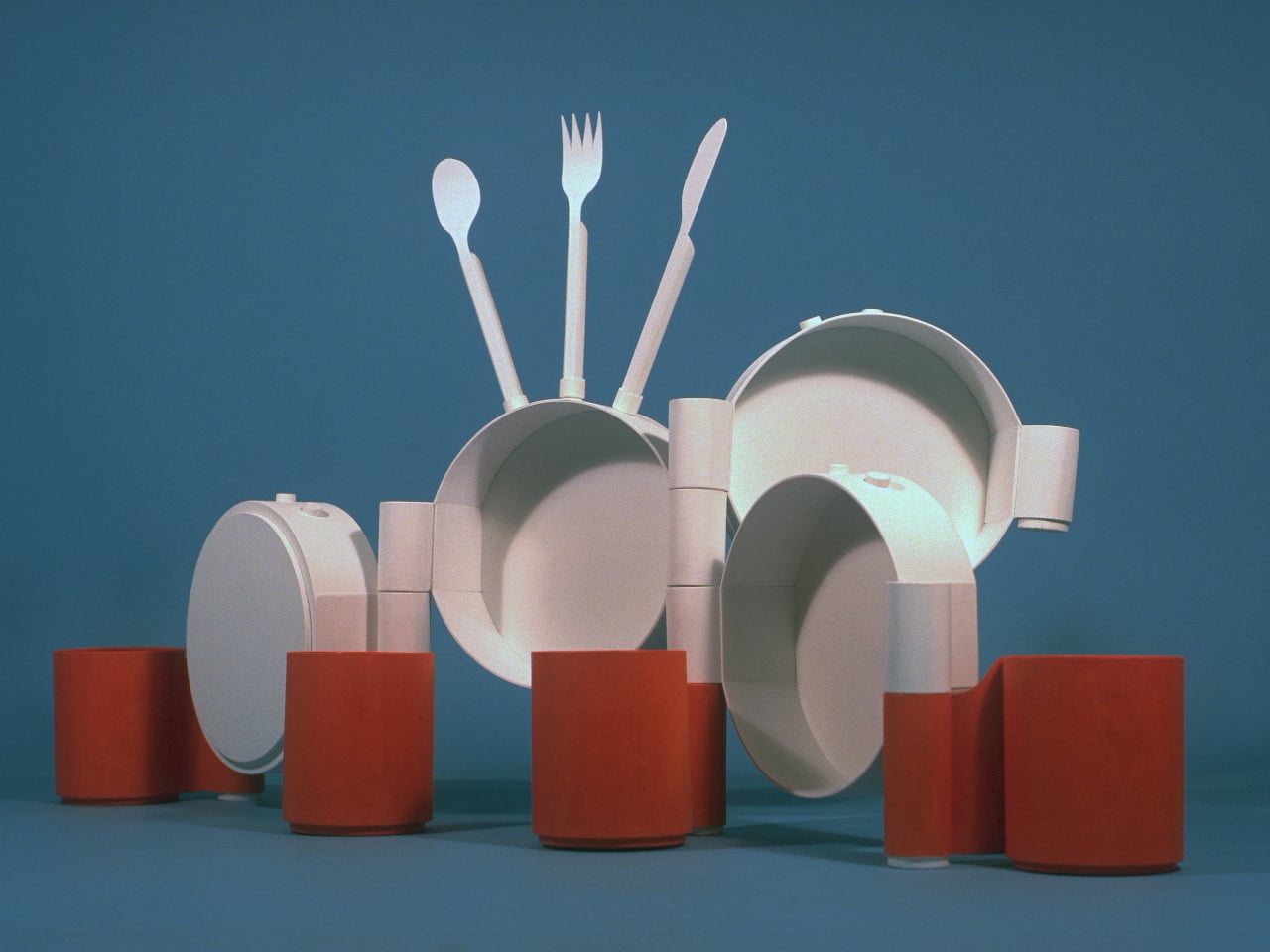
The key to the whole system is a set of male and female connectors molded directly into each piece. These are simple protrusions that stick out from the surfaces of the bowls, cups, and cutlery handles, allowing any component to plug into or stack onto any other. A bowl can lock onto a cup, a cup onto another cup, cutlery can stand upright in an opening or connect through a handle, and the whole assembly stays together without any separate hardware.

The configurations that result don’t look accidental. Cups stacked and plugged together form vertical columns; bowls assembled at various orientations create clusters that read as organic, almost biomorphic forms. Slide cutlery upright through the assembled pieces, and the resulting structure starts to resemble a piece of abstract art you’d find mounted in a gallery, not something you’d normally find next to a kitchen sink.

That’s precisely what Jantzen is after. The Art-ware set doesn’t need to be stored in a cabinet because the assembled form is meant to sit on a shelf or table as a decorative object, a sculpture that also happens to be a dining set. You pull it apart before a meal and reassemble it afterward in whatever configuration suits you that day. No two arrangements have to be the same.

The material is recyclable plastic, and Jantzen frames the concept in straightforward sustainability terms: one product that performs multiple functions uses fewer resources than two separate products doing the same jobs independently. There’s no dedicated storage unit needed, no extra display piece required. The dining set is the décor, and the décor is the dining set.

Art-ware is a prototype and the first in a planned series of designs that expand the idea further. The concept is broad enough to go well beyond tableware, and Jantzen has spent decades applying this kind of thinking to furniture, architecture, and public installations. The dining set is a compact version of the same logic: objects that commit fully to their function while quietly doing something else on the side.

The post Art-ware Is the Dining Set That Never Has to Go in a Cabinet first appeared on Yanko Design.