The steer-by-wire interface abandons the steering wheel’s fundamental geometry, trading infinite rotation for limited-arc precision and mechanical feedback for algorithmic haptics.
The circular steering wheel represents one of automotive design’s most persistent forms. Its logic is elegant: infinite rotation maps directly to front axle movement, the column transmits road texture into the driver’s palms, and the geometry anchors muscle memory across every vehicle. Peugeot’s Hypersquare discards that entire vocabulary–and the visual disruption is deliberate.
Designer: Peugeot
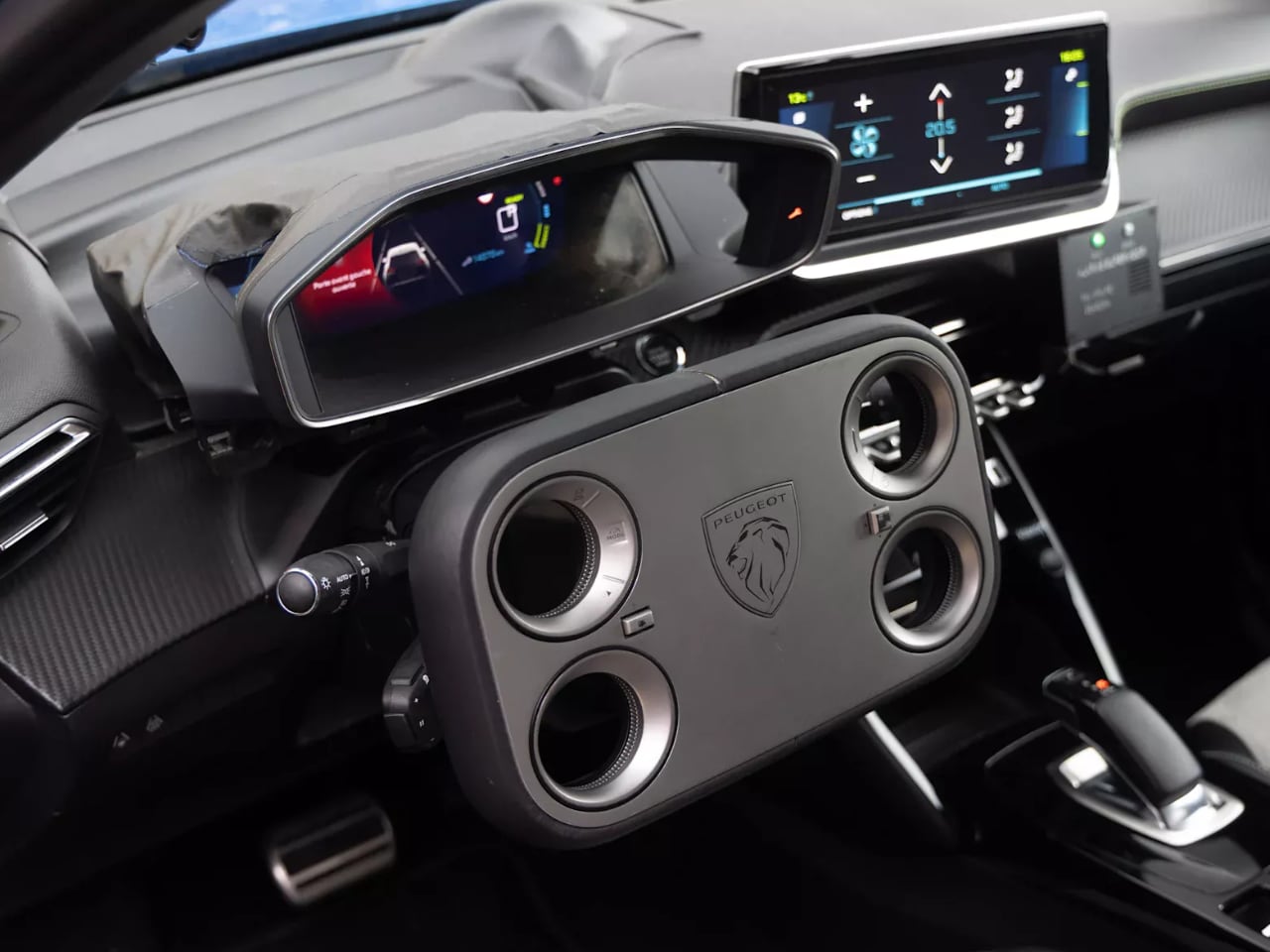
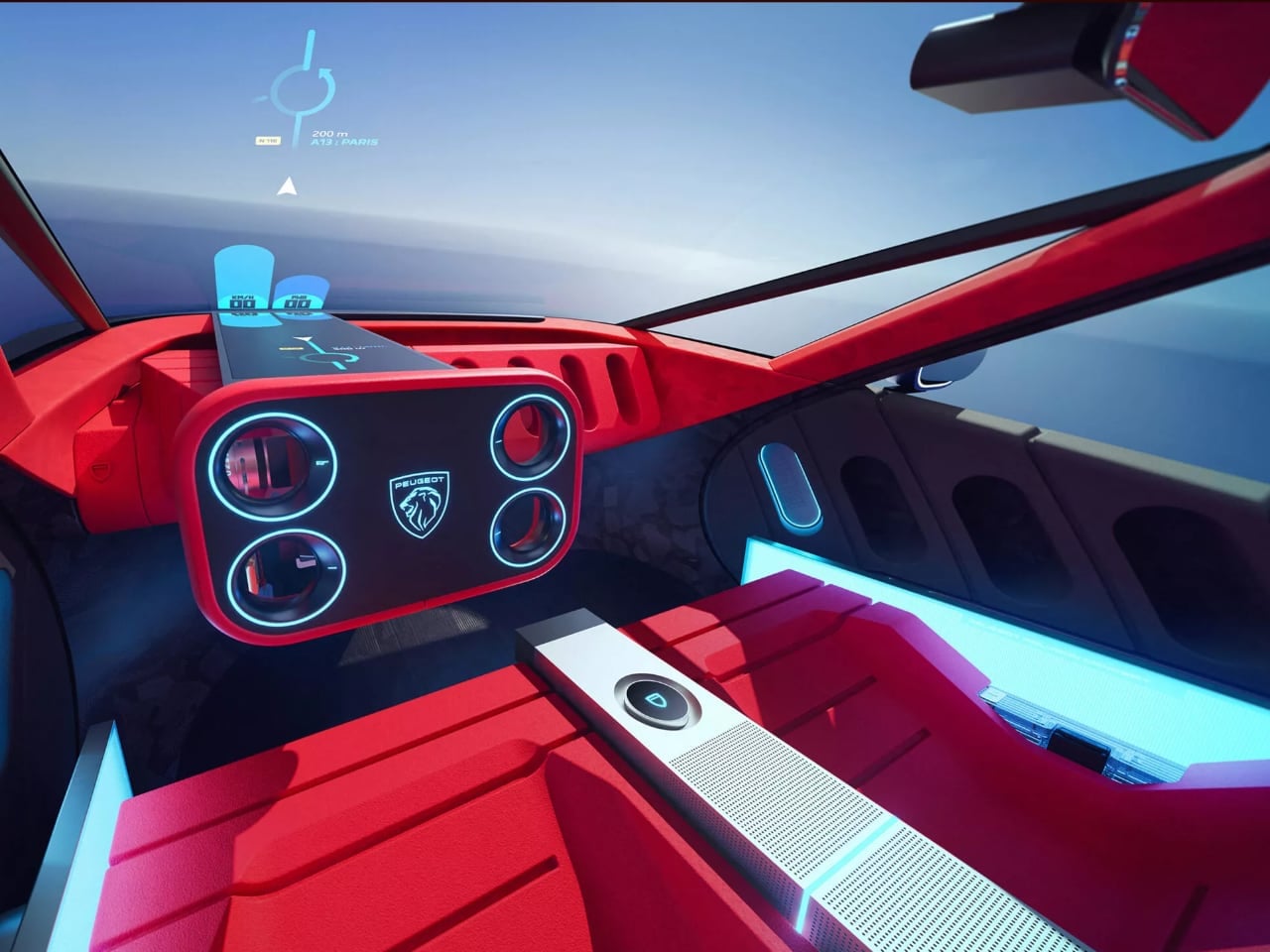
The controller presents as a rectangular frame with rounded corners, closer in visual language to a gaming peripheral than automotive equipment. Where traditional wheels invite sweeping hand motions and continuous rotation, Hypersquare rewards precise, deliberate inputs within a constrained arc. The angular geometry introduces deliberate friction within cockpit environments refined over decades around curves and organic transitions. This visual foreignness signals technological departure before the driver touches anything.
Peugeot first introduced the concept inside the Inception show car in early 2023, then refined it further in the Polygon concept. Working prototypes now exist in E-2008 test vehicles, translating render into tangible interface. The geometry has remained consistent across iterations: thick rectangular profile, four corner cutouts, control pods nested where thumbs naturally rest.
Controller Form and Spatial Logic
The controller’s primary form factor establishes immediate distance from steering convention. Where wheels present an unbroken rim that hands traverse continuously, Hypersquare offers four distinct corner voids that interrupt the perimeter. These cutouts serve dual purposes: they reduce visual mass while creating natural grip zones that guide hand placement without explicit instruction.
The upper two cutouts house circular touch-and-push control pods, positioned precisely where thumbs settle during a relaxed hold. This placement transforms the steering interface into a multi-input device-drive modes, media controls, ADAS settings, and navigation all accessible without hands leaving the controller surface. The integration recalls smartphone interaction patterns more than traditional automotive switchgear.
Rotation limits to approximately 170 degrees in each direction, eliminating hand-over-hand movement entirely. Lock-to-lock travel spans less than a single full turn. This constraint fundamentally alters the kinetic vocabulary of steering: no more shuffling grip during tight maneuvers, no more crossing arms during parallel parking. The interface assumes position-holding rather than continuous motion.
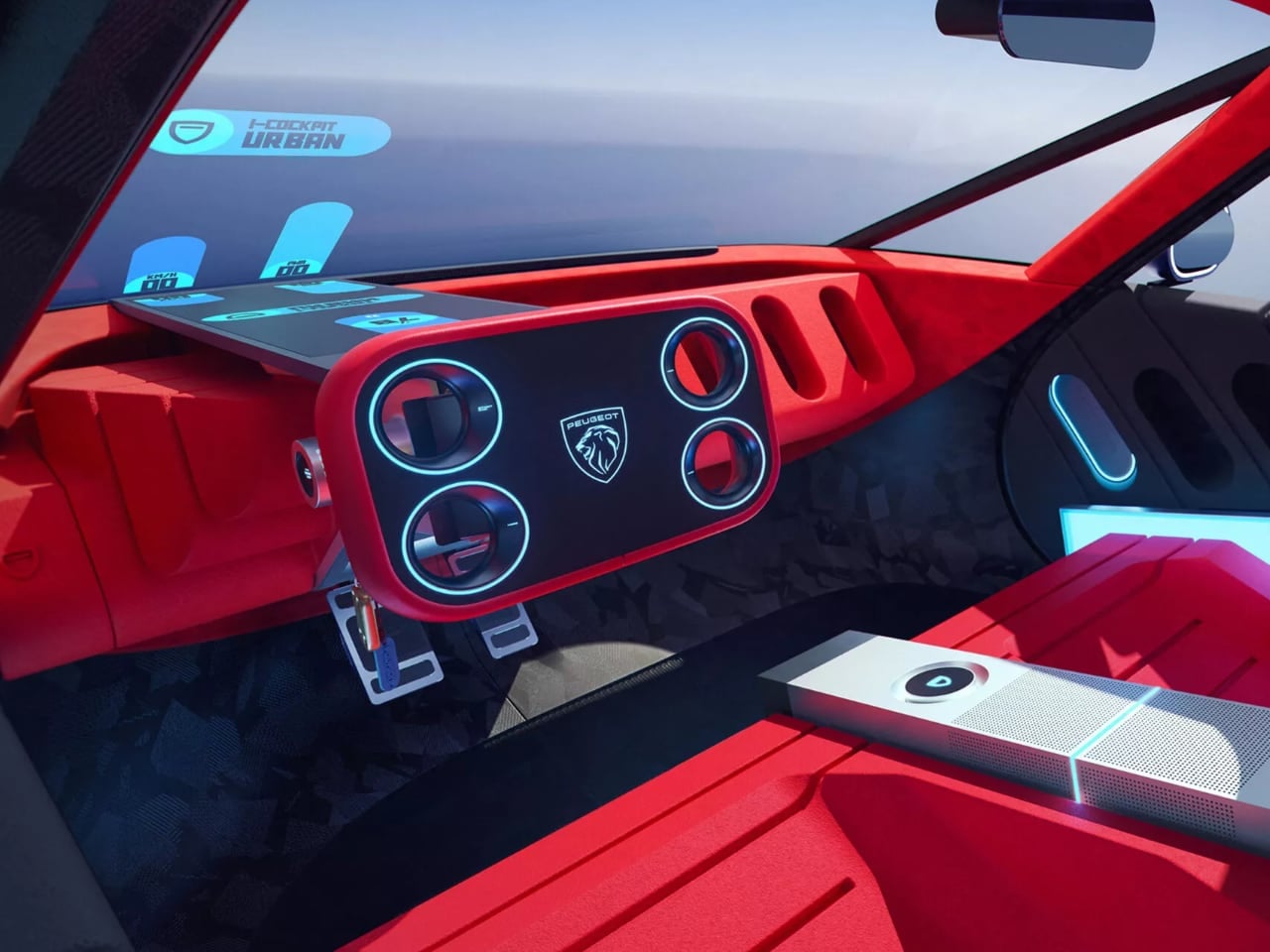
The thickness of the frame itself carries design intent. Traditional wheels taper toward thin rims that fingers wrap around easily. Hypersquare maintains substantial depth throughout, creating a slab-like presence that emphasizes grip stability over rotational fluidity. The form suggests holding rather than spinning.
Interior Integration and Visual Hierarchy
Hypersquare arrives as the centerpiece of Peugeot’s next-generation i-Cockpit, and the interior architecture reorganizes around its unconventional form. The traditional instrument binnacle disappears entirely–that hooded cluster of gauges positioned behind the steering wheel no longer makes spatial sense when the wheel itself has transformed. This isn’t merely component swapping; the entire visual hierarchy of the driver’s forward view gets restructured.
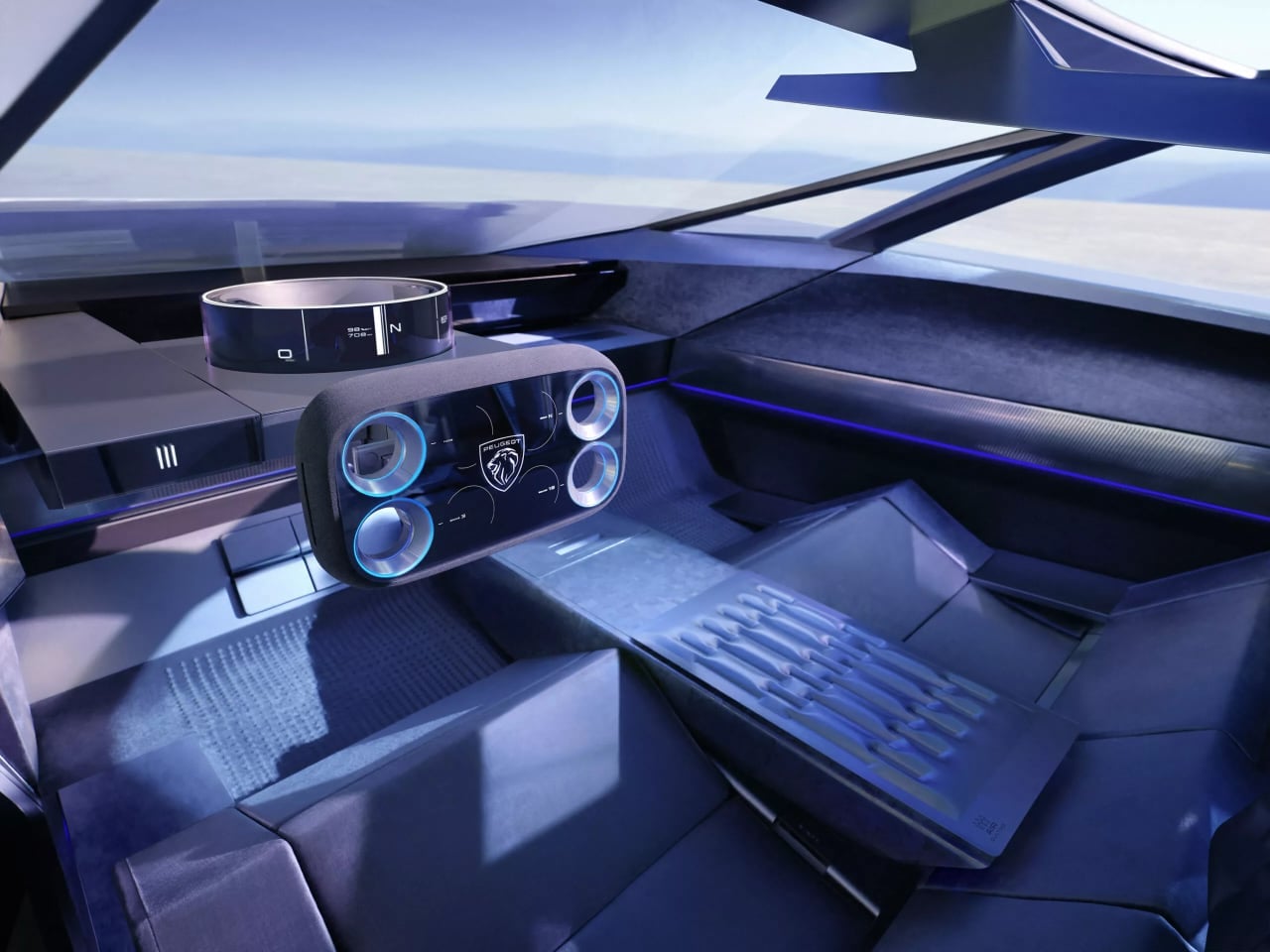
A large micro-LED display mounts high in the driver’s sightline, projecting vehicle data, navigation, and media controls in a single integrated surface. The Hypersquare sits below this display rather than in front of it, creating an unobstructed visual channel between driver and information. This layout resolves a persistent complaint about current i-Cockpit designs: the small-diameter wheel often blocks gauge visibility depending on seat position and driver height. Removing the circular wheel eliminates the occlusion problem at its geometric root.
The spatial relationship establishes a clear information triangle: eyes forward to the micro-LED, hands down on the controller, peripheral awareness maintained through the uninterrupted windshield view. Traditional cockpits force constant focal shifts–gauges behind the wheel, center stack to the right, road ahead. Hypersquare’s architecture consolidates primary information into a single elevated zone while relegating physical control to a lower plane that hands find by muscle memory rather than visual search.
Haptic Design and Synthetic Feedback
Eliminating the steering column removes the tactile vocabulary that drivers have developed over lifetimes of motoring. Traditional steering transmits surface texture directly–gravel announces itself through vibration, understeer builds as resistance at the rim, grip changes register as subtle shifts in feedback weight. Hypersquare must reconstruct this language algorithmically, and the design challenge extends beyond engineering into semiotics.
Sensors embedded within the steering actuator monitor forces acting on the wheel carriers. Those measurements get processed and translated into haptic vibrations through the controller itself, generating synthetic sensations designed to communicate grip levels and surface conditions. The result is road feel as interpretation rather than transmission–filtered through software calibration tables that determine what information reaches the driver’s hands and how intensely.
Physical feedback carries meaning accumulated through decades of driving experience. Synthetic feedback must either replicate those meanings faithfully or establish new ones that drivers can learn to interpret reliably. The haptic motors in Hypersquare’s corner pods bear responsibility for an entirely new tactile language–one that cannot simply copy mechanical sensation but must create communicative patterns that drivers internalize as meaningful.
This algorithmic mediation opens design possibilities unavailable in mechanical systems. Feedback intensity could adapt to driving mode–sharper haptic response in sport settings, dampened sensation during highway cruising. Surface texture translation could emphasize safety-critical information while filtering irrelevant noise. The controller becomes a tunable communication channel rather than a fixed mechanical linkage.
Material Expression and Ergonomic Form
The controller’s rim material carries significant design weight for an object intended for continuous palm contact during driving. Early prototypes suggest soft-touch surfaces with subtle texturing–enough grip to prevent slip without aggressive bite that would fatigue hands over extended sessions. The thumb pods feature slightly different tactile characteristics, likely to help fingers locate controls through touch alone without requiring visual confirmation.
Color and finish details remain largely undisclosed, though concept versions have appeared in dark matte treatments that recede visually against interior surfaces. This restraint makes sense: the form itself already commands substantial attention. Adding high-contrast finishes or decorative elements would risk visual overload in an already unconventional interface. The material palette must also accommodate significant electronic payload–touch sensors, haptic actuators, processing electronics, and wireless connectivity integrated into the frame add mass and thermal load that surface materials must manage invisibly.
Weight distribution presents unique challenges that circular wheels avoid entirely. Traditional steering balances around a central hub; Hypersquare must achieve equilibrium despite rectangular geometry and corner-mounted pods containing varying electronic payloads. Getting this balance right represents invisible design work–the kind of engineering refinement that users never consciously notice but would immediately sense if absent. A controller that pulls slightly leftward or resists rotation unevenly would undermine the entire interface concept regardless of how striking the visual design appears.
Design Significance
Hypersquare represents the most aggressive formal departure from circular steering wheels in automotive history. The visual drama of rectangular geometry, the integration of touch controls into the primary steering interface, and the reconstruction of road feel through algorithmic haptics combine into a coherent design proposition that either anticipates the future of driving interfaces or stands as ambitious experiment.
The interface succeeds as object design independent of its functional performance. The proportions feel considered, the material choices communicate appropriate restraint, and the integration of control pods demonstrates thoughtful human factors work. Whether drivers ultimately embrace or reject the interaction model, the physical artifact itself reflects serious design attention applied to a problem space that has resisted formal innovation for over a century.
The post Peugeot’s Hypersquare Replaces Two Centuries of Circular Logic with a Rectangular Controller first appeared on Yanko Design.