LEGO Racing Joins the F1 ACADEMY Grid with a Livery That Looks Nothing Like Racing

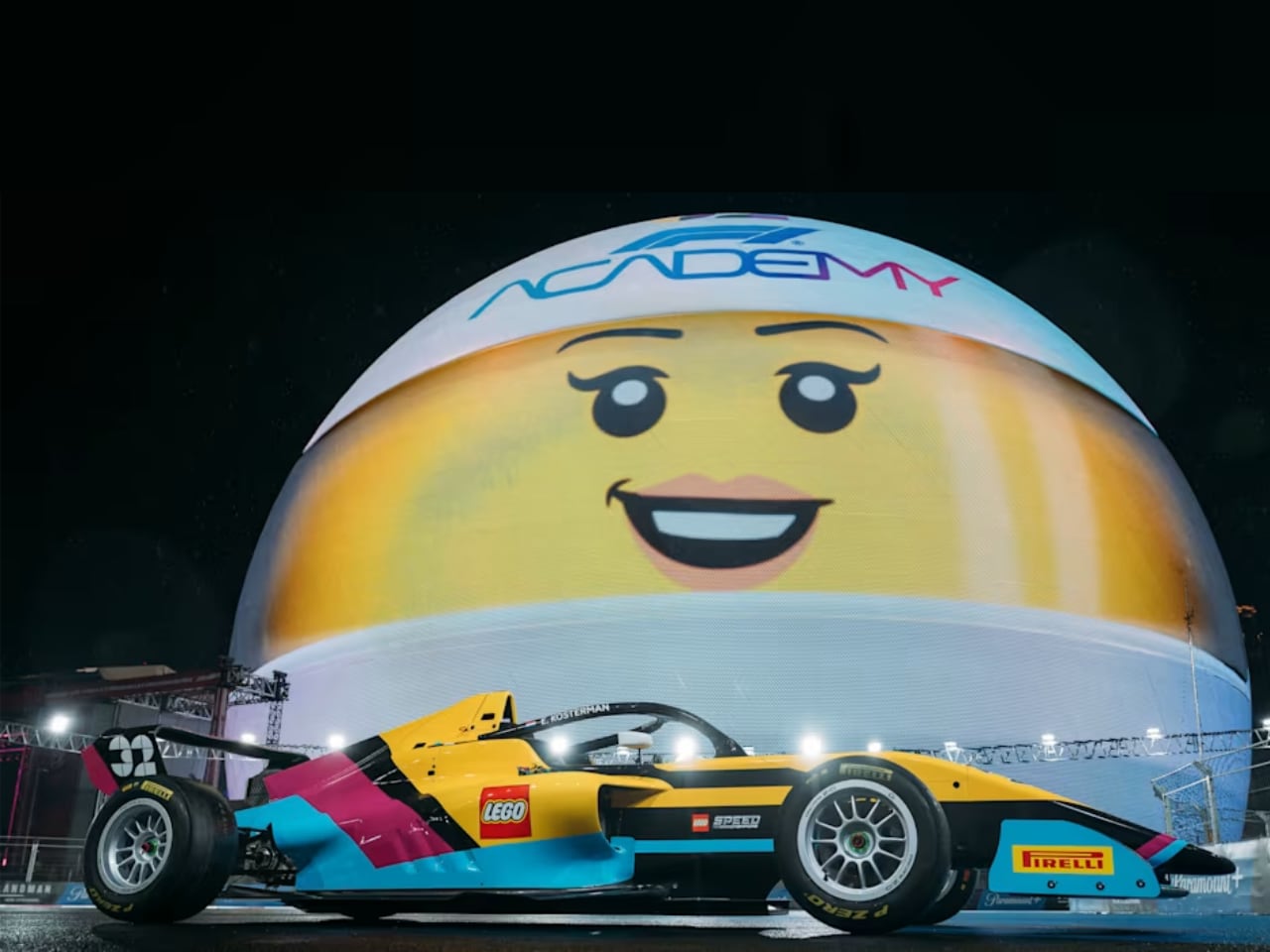
The LEGO Group announced a multi-year partnership with F1 ACADEMY at the Las Vegas Strip Circuit during the Formula 1 Las Vegas Grand Prix. LEGO Racing debuts in the 2026 F1 ACADEMY season with 20-year-old Dutch driver Esmee Kosterman behind the wheel.

Designer: LEGO

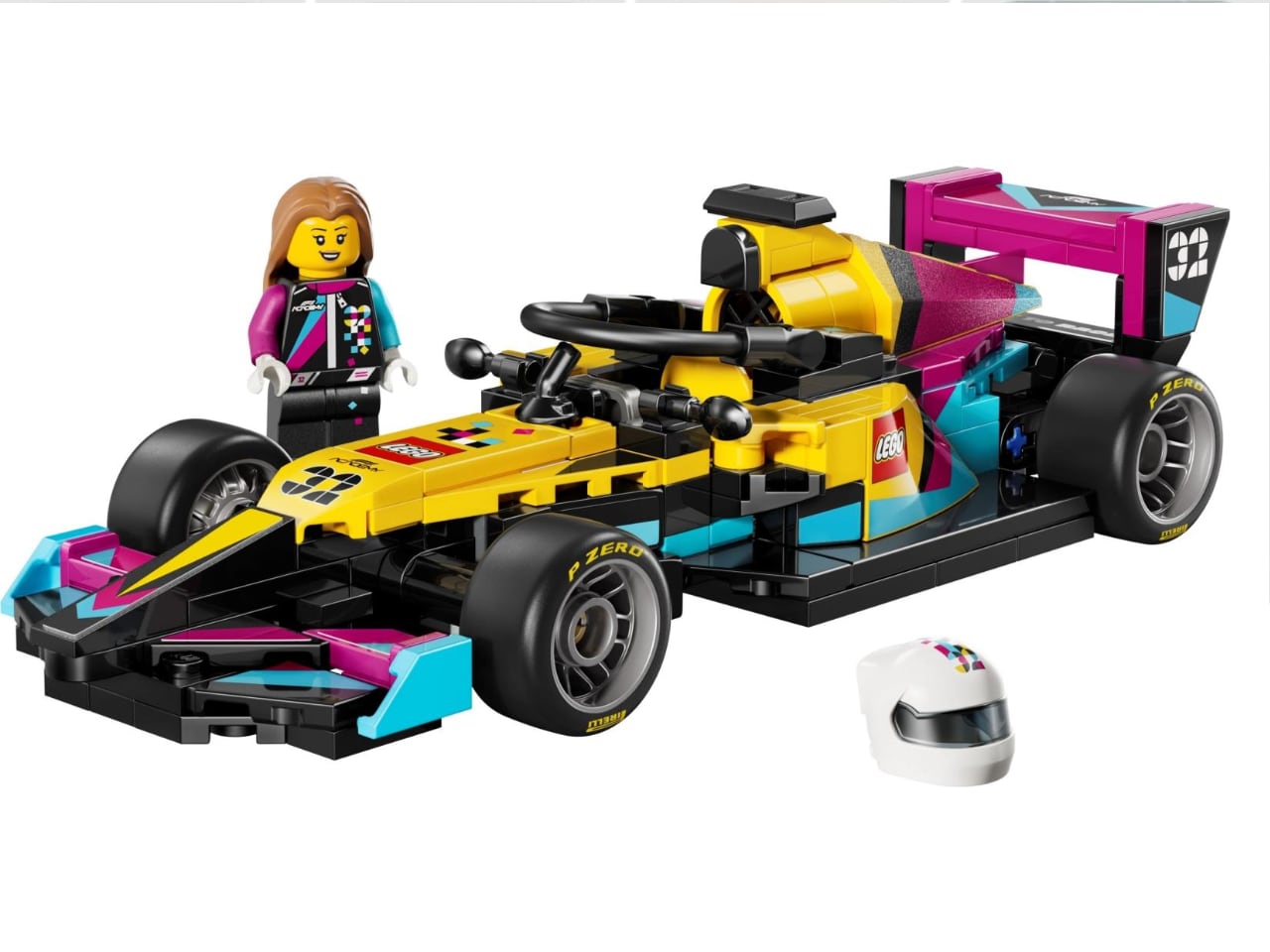
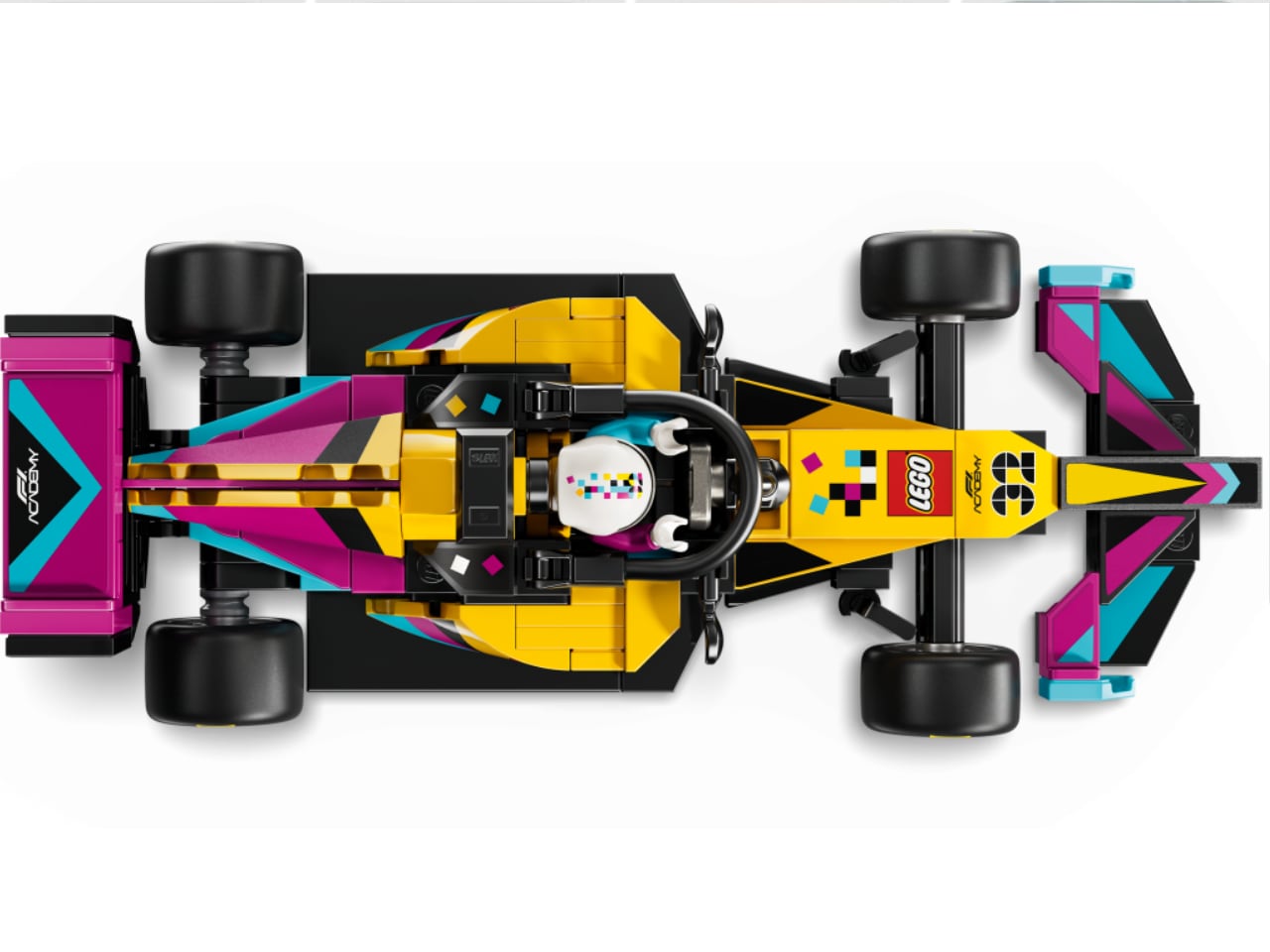
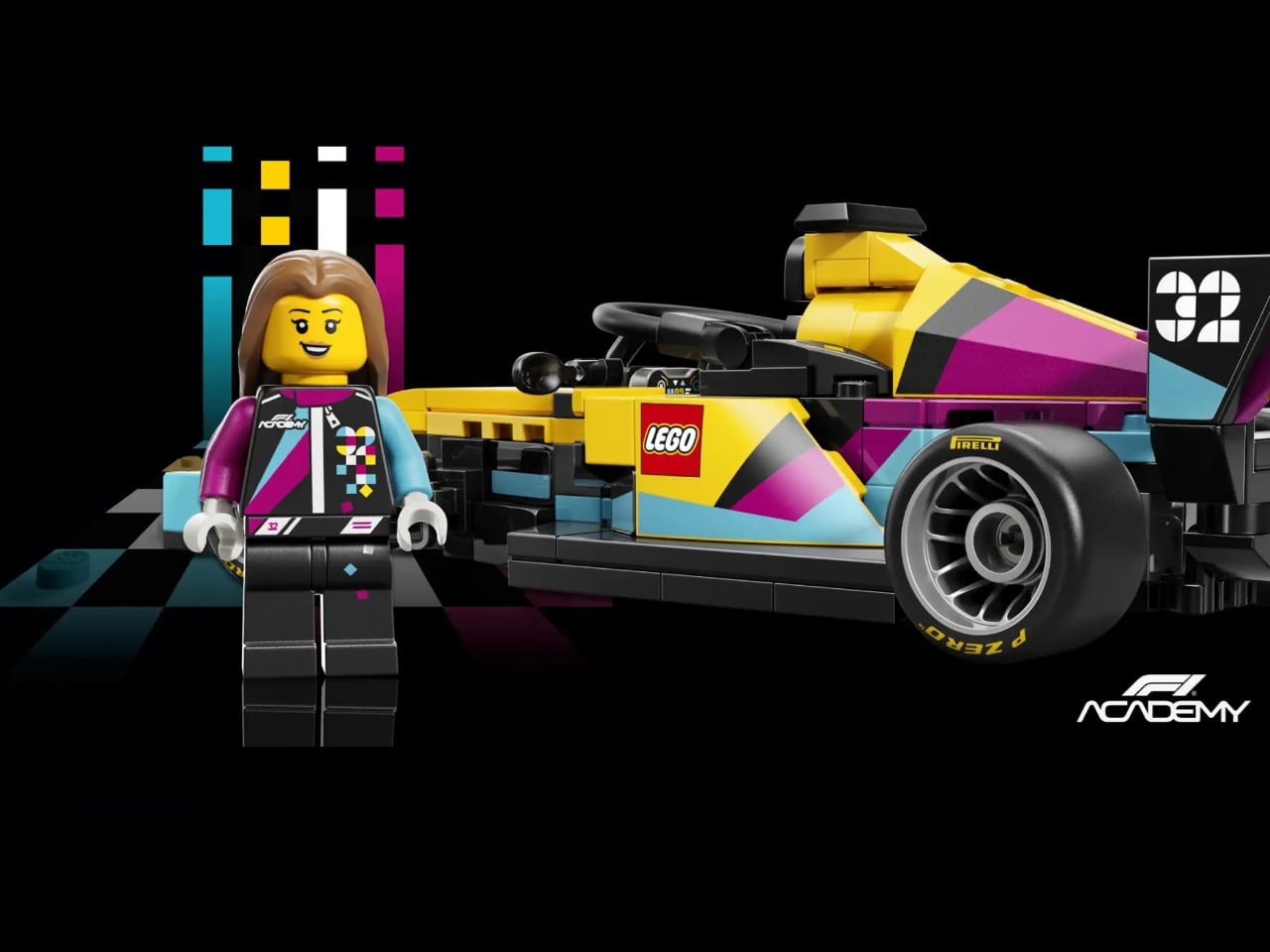
The announcement brings a toy company directly onto the racing grid with its own team, driver, and a livery created by the LEGO Design team. The livery uses a unique checkered pattern that merges the brand’s toy aesthetic with racing design, creating a visual identity that stands apart from typical motorsport liveries.

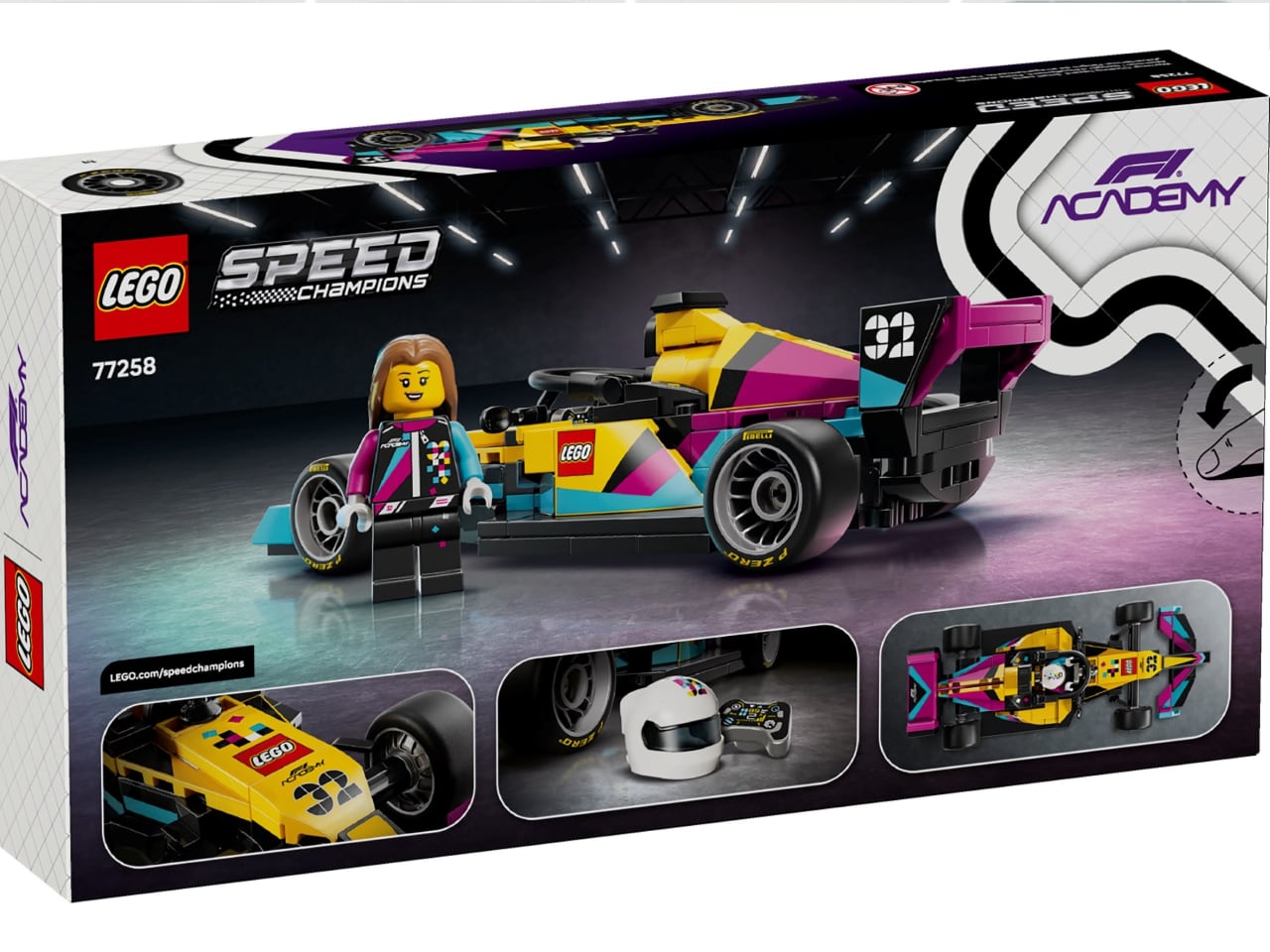
The partnership includes the LEGO Speed Champions F1 ACADEMY Race Car, a 201-piece set launching globally on March 1, 2026. The set features aerodynamic details mirroring the real car’s design, the #32 racing number, and a minifigure in LEGO Racing colors. Pre-orders are available now from [LEGO.com](http://LEGO.com).

The Livery and Las Vegas Debut

The LEGO Racing livery represents a departure from traditional motorsport design. The LEGO Design team created a one-of-a-kind livery that uses colors and patterns from the LEGO brand identity. The checkered pattern differs from the traditional racing checkered flag, bringing the tactile, modular world of LEGO brick building directly onto the track.

Most racing liveries use sharp angles, aggressive typography, and sponsor-dense layouts optimized for speed and intimidation. LEGO Racing took a different approach, creating a playful, approachable visual identity that prioritizes brand recognition over racing convention.

At the Las Vegas F1 ACADEMY weekend, the LEGO Group presented custom LEGO Botanicals Bouquets for the Race 1 and Race 2 podium ceremonies. Each bouquet was built from nearly 2,000 LEGO elements and weighs approximately 1 kg, replacing traditional trophies with LEGO’s signature building blocks.

Esmee Kosterman Takes the Wheel

Esmee Kosterman becomes the premiere driver for LEGO Racing in her first full F1 ACADEMY season. The 20-year-old Dutch driver made history as the first woman to win in the Ford Fiesta Sprint Cup series in 2023, where she finished second in the Junior Cup and third place overall. She made her F1 ACADEMY debut as a Wild Card at Round 5 in Zandvoort, her home race, in 2024 before moving to single seaters with Indian F4.

According to Kosterman, she’s been a longtime fan of the LEGO brand and what it represents. “To be the first driver for LEGO Racing is such an exciting opportunity, and I can’t wait to continue my racing journey with F1 ACADEMY,” she said. “I hope this inspires future generations of female drivers, that with hard work and determination, anything is possible.”

The Product Launch

The LEGO Speed Champions F1 ACADEMY Race Car marks the first time fans can hold an F1 ACADEMY car in their hands, according to Julia Goldin, Chief Product & Marketing Officer at the LEGO Group. The 201-piece set features intricate aerodynamic details that mirror the real car’s design, complete with the unique colorway and the #32 racing number.

The set includes a minifigure in LEGO Racing colors and focuses on securing female representation in racing toys for young girls. LEGO Group research shows 87% of girls surveyed want more opportunities in motorsport, and 75% think racing sounds exciting. However, 76% of parents surveyed believe motorsport is often perceived as “more for boys.”

The representation gap extends to toy aisles. Racing toys have historically featured male drivers and male-dominated racing series. According to the LEGO Group, 82% of parents think representation in motorsport is important, and 52% of girls surveyed could see themselves as an F1 ACADEMY or race car driver.

The LEGO Speed Champions F1 ACADEMY Race Car is available for pre-order now from LEGO with global retail availability starting March 1, 2026.

The post LEGO Racing Joins the F1 ACADEMY Grid with a Livery That Looks Nothing Like Racing first appeared on Yanko Design.

The Px8 S2 McLaren Edition: Papaya Orange, Carbon Cones, and Racing Pedigree

The Px8 S2 McLaren Edition wears its racing heritage proudly. That signature McLaren Papaya finish dominates the design, paired with Anthracite Grey accents that create instant visual impact. The McLaren Speedmark logo appears on both the headband and earcups, with diamond-cut bright edges on each elliptical plate that catch light like the carbon fiber details on a McLaren supercar.

Designer: Bowers & Wilkins + McLaren

Every material choice screams premium. The memory-foam cushions and headband come wrapped in soft Nappa leather, the same material you’ll find in McLaren’s Ultimate Series cars. The diecast aluminum arms provide structural integrity while keeping weight down to just 0.31 kg. This is what happens when automotive designers and audio engineers collaborate without compromise.

Carbon Cone Drivers: The Performance Story

Inside each earcup sits a custom 40mm Carbon Cone driver, completely redesigned from the previous Px8 generation. Bowers & Wilkins rebuilt everything: new chassis, upgraded voice coil, improved suspension, and a more powerful magnet system. The drivers sit angled within each earcup, ensuring consistent distance from every point on the driver surface to your ear. Translation: better imaging and a wider soundstage.

The result is audio that reviewers are calling deeper, tighter, and more holographic than the already-impressive original Px8. Bass hits harder without bleeding into the mids. Vocals sit precisely in the soundstage. Highs remain crystal clear without any harshness. This is 24-bit/96kHz high-resolution audio delivered wirelessly through Qualcomm’s aptX Adaptive and aptX Lossless technology, with Bowers & Wilkins’ DSP (Digital Signal Processing) fine-tuning everything in real-time.

The Smart Features

The Px8 S2 McLaren Edition connects to the Bowers & Wilkins Music app, giving you control over everything from noise cancellation to sound customization. A five-band EQ lets you dial in your preferred sound signature and save multiple presets. The transparency mode toggles between full isolation and ambient awareness. A physical Quick Action button puts your most-used functions one press away.

Eight microphones power the adaptive noise cancellation system while handling call quality duties. The ANC falls slightly short of what Bose and Apple achieve with their flagship models, but it preserves musicality in a way that overly aggressive noise canceling often destroys. The headphones prioritize sound quality first, noise cancellation second. For audiophiles, that’s the right priority order.

Battery life hits 30 hours on a single charge. A 15-minute quick charge delivers seven hours of playback. Connectivity options include aptX Lossless, aptX Adaptive, aptX HD, aptX Classic, AAC, and SBC codecs, plus USB-C wired listening when you want to bypass wireless entirely.

The Partnership Behind the Product

Bowers & Wilkins and McLaren have been developing audio systems together since 2015, starting with the McLaren 540C and continuing through to the recently unveiled McLaren W1 supercar. The audio system in the W1 features the same Continuum Cone technology found in Bowers & Wilkins’ flagship 800 Series Diamond loudspeakers. This partnership runs deeper than logos and color schemes.

The collaboration mirrors the precision demanded in Formula 1 racing with the acoustic perfection Bowers & Wilkins has pursued since founder John Bowers established the company in 1966. Both brands obsess over details. Both refuse to compromise on performance. The Px8 S2 McLaren Edition represents that shared philosophy translated into a wearable product.

Following the Pi8 McLaren Edition earbuds from earlier this year, these headphones give McLaren fans another way to connect with the team’s visual identity while getting genuinely excellent audio hardware. This isn’t a corporate partnership slapping logos on existing products. This is two performance-focused brands creating something together that neither could build alone.

The Details That Count

The Px8 S2 McLaren Edition launches November 19, 2025, priced at $899 (£729 UK, €829 EU). You can grab them directly from Bowers & Wilkins or through selected retailers. The price positions these firmly in premium territory, competing with the Mark Levinson 5909 ($999) and Focal Bathys ($799).

Early impressions highlight the improved comfort over previous generations, making these suitable for extended listening sessions and long flights. The slimmer profile and redesigned headband distribute weight more evenly. The Nappa leather cushions remain breathable even after hours of wear. For frequent travelers and music enthusiasts who value both design and performance, that comfort factor matters as much as sound quality.

The McLaren Edition offers music lovers, audiophiles, and Formula 1 fans a chance to own headphones that deliver on both aesthetic appeal and acoustic excellence. Sometimes partnerships create products that feel forced. This one feels natural, like both brands speaking the same performance-obsessed language.

The post The Px8 S2 McLaren Edition: Papaya Orange, Carbon Cones, and Racing Pedigree first appeared on Yanko Design.

Audi R26 Concept: Radical Minimalism Rewrites F1 Design

Photo: Audi

How Audi’s Formula 1 entry rewrites the visual rules of motorsport

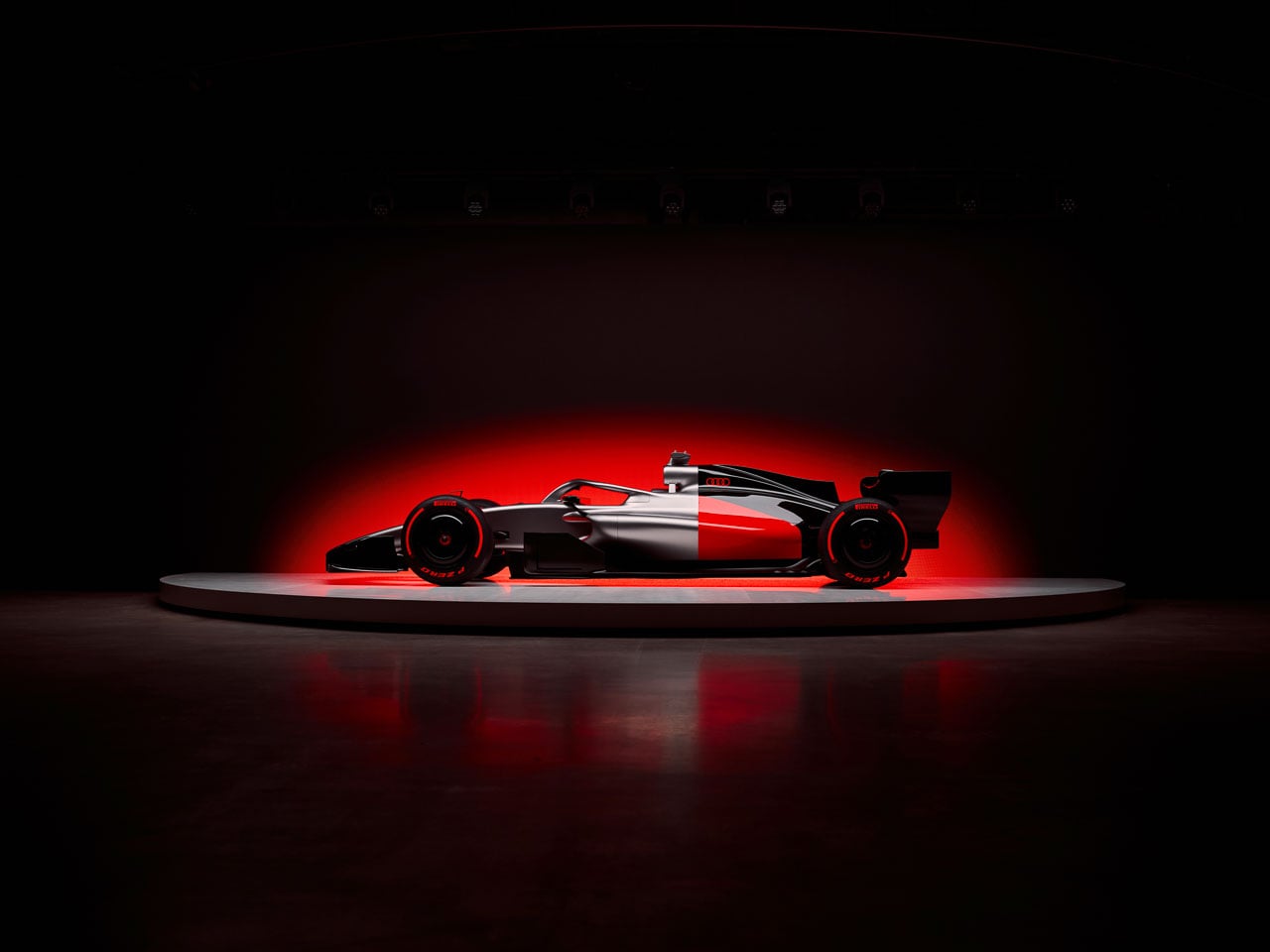
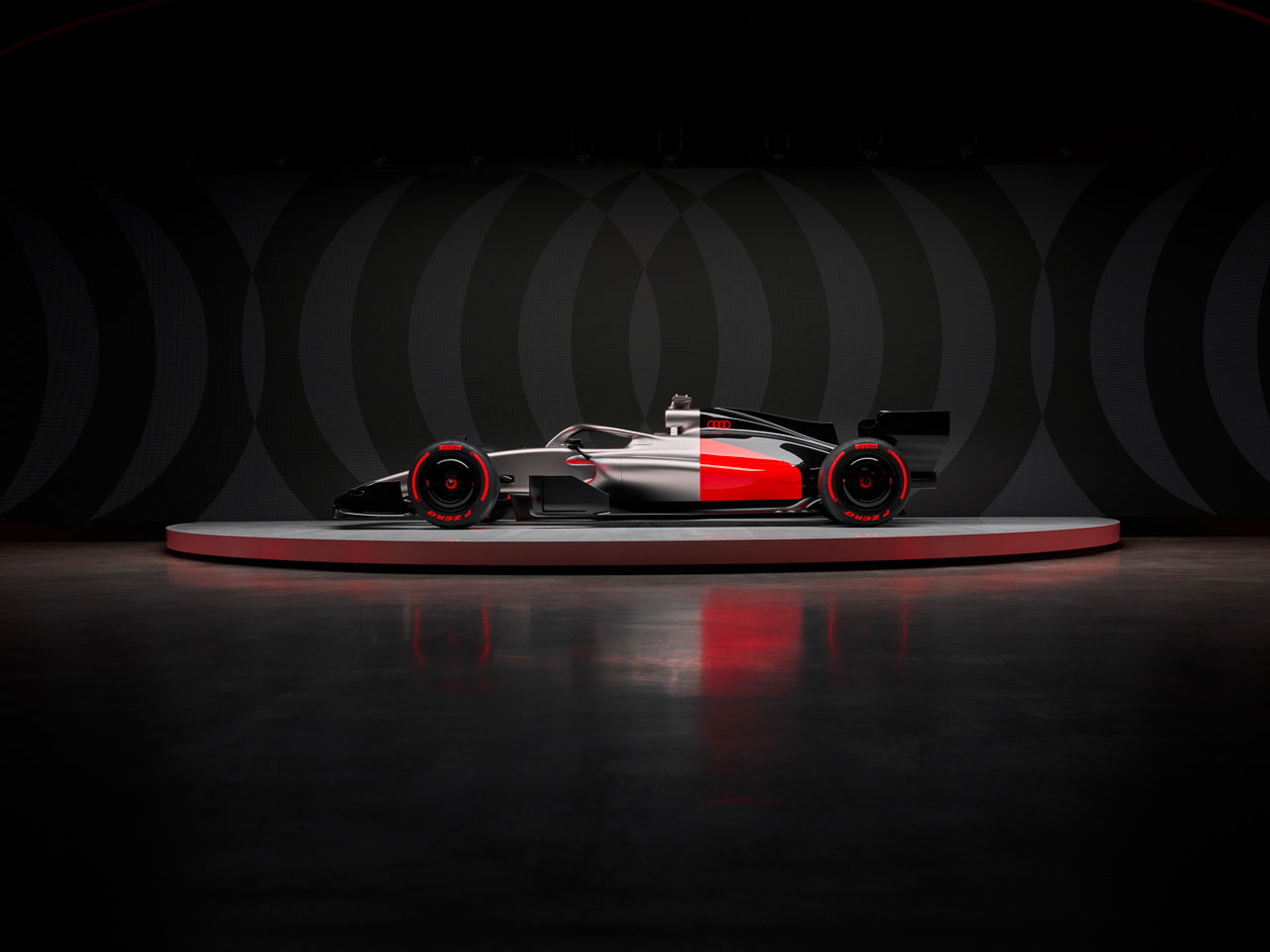
On November 12, 2025, Audi unveiled the R26 Concept at its Brand Experience Center in Munich. I was there, and the first thing that strikes you when you see the car in person is how clean it looks compared to every other F1 car. Where competitors plaster every surface with sponsor logos and complex graphics, Audi went the opposite direction: radical minimalism driven by four design principles that treat the race car as architecture.

The R26 sat under bright reveal lighting at the Brand Experience Center, and the titanium finish showed its full reflective quality – a light, warm silver with subtle gold undertones. Move around the car, and you see how metallic finishes shift depending on viewing angle and light direction. That dynamic quality is something photos struggle to capture.

This isn’t a livery. It’s a visual system.

First Impressions: Seeing the R26 in Person

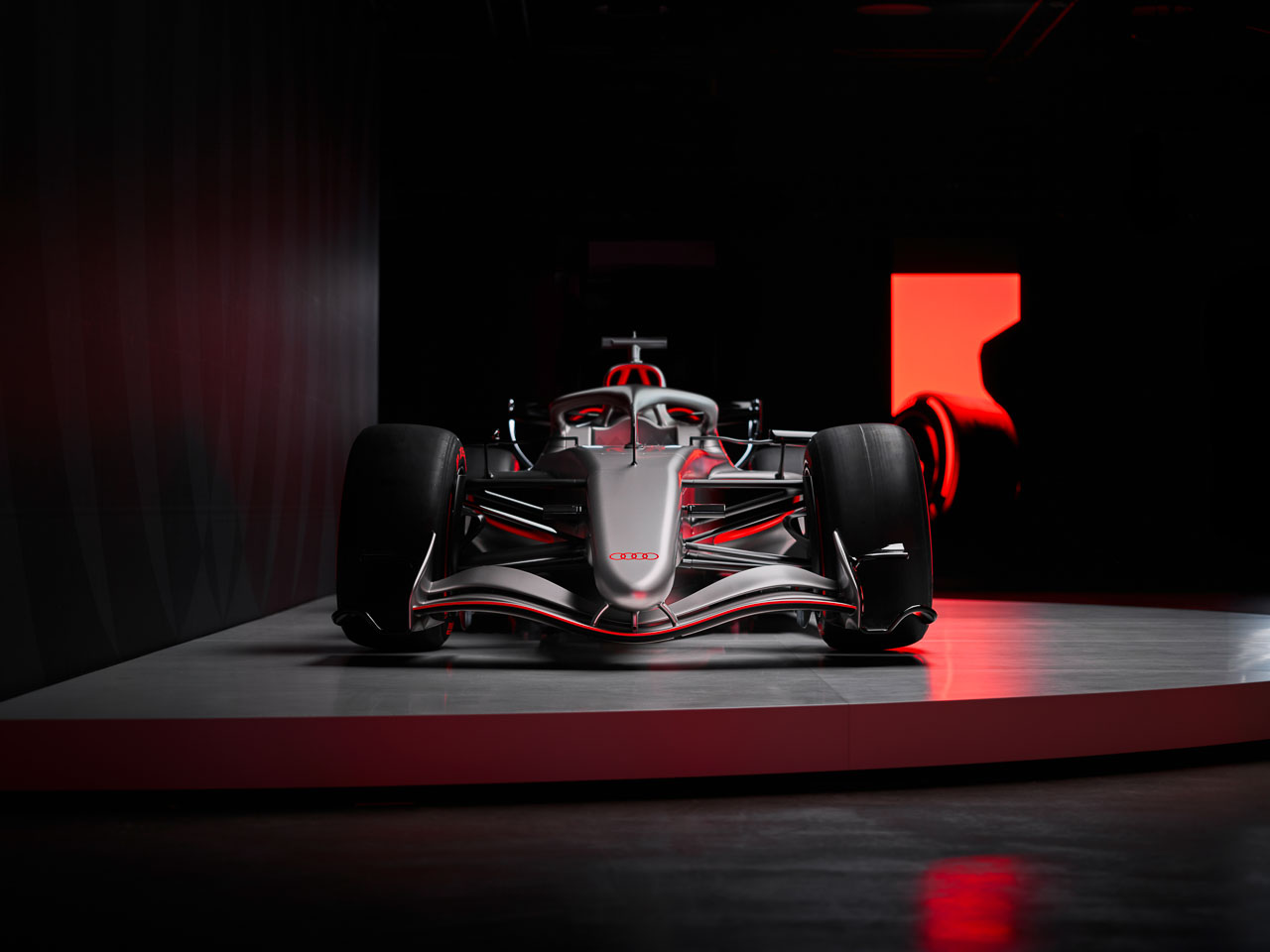
The R26 Concept sits on a raised platform at the Brand Experience Center, and from the moment you walk in, you understand what Audi means by “clarity.” The car reads as a single sculptural object. Your eye doesn’t jump between different graphic elements or sponsor logos fighting for attention. Instead, you follow the car’s form.
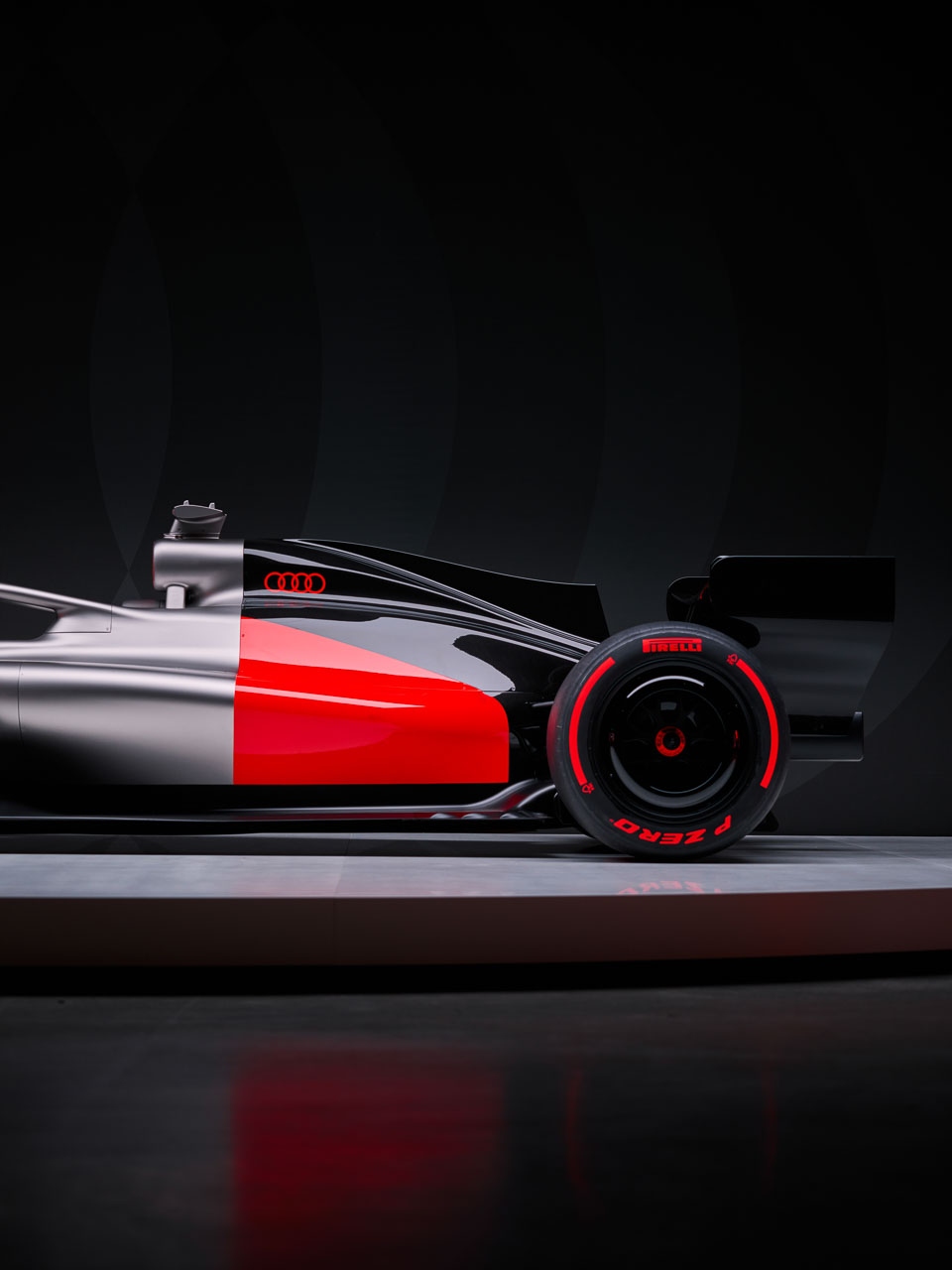
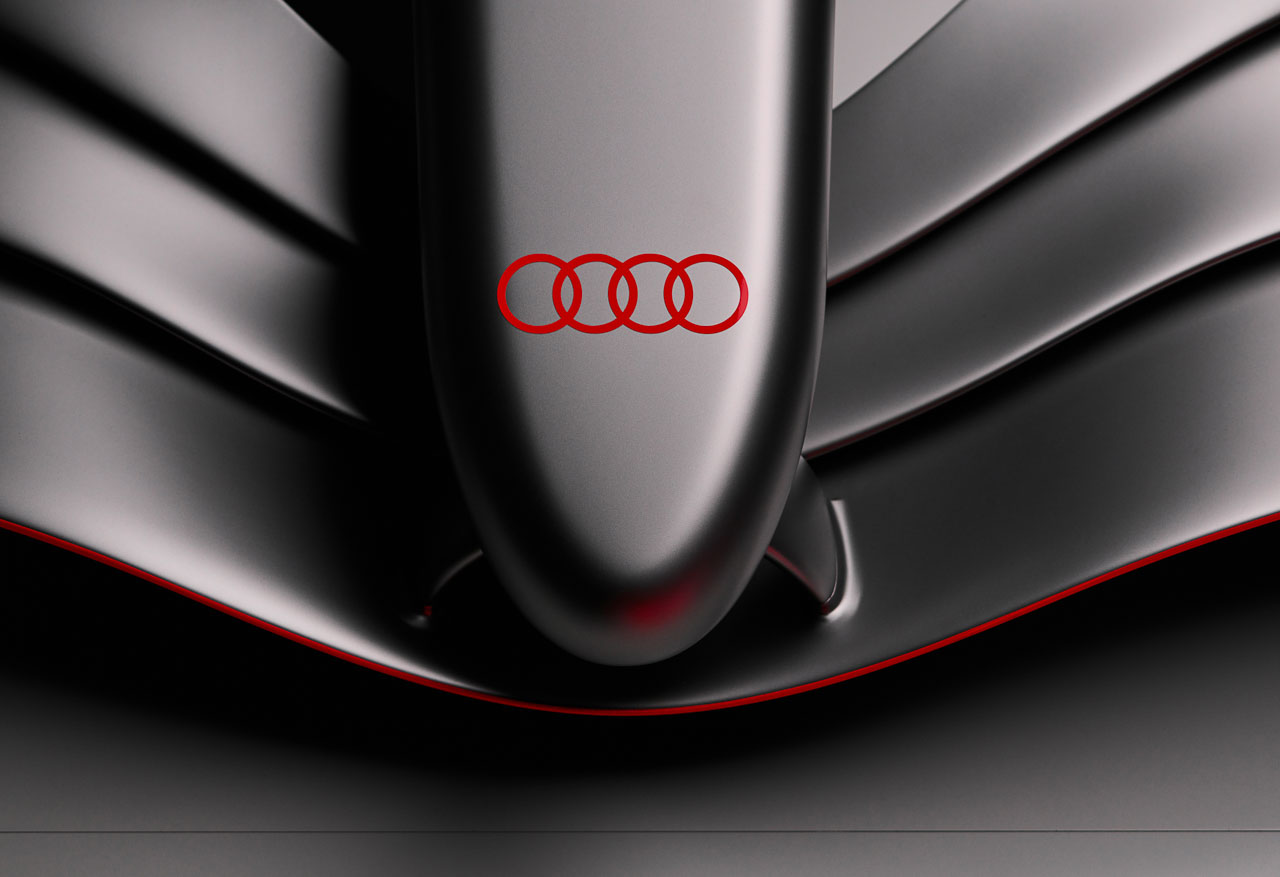
The red rings dominate immediately. Against the titanium and carbon, the red pops in a way that silver rings never could. Standing about 10 feet from the car, the rings are the first thing you see. Move closer, and the geometric cuts become visible. Move to the side, and you see how those cuts follow the sidepod’s compound curve.

The carbon fiber is particularly striking in person. It’s not painted black. It’s actual woven carbon, clear-coated to bring out the texture. Under the reveal lighting, you can see the individual weave pattern. It creates this organic texture against the precision geometry of the titanium panels. The contrast between smooth metal and textured carbon adds depth that flat paint never could.

The proportions feel different from current F1 cars. The R26 looks smaller, more compact, almost delicate. The narrow track width and reduced wheelbase make it look more like a classic Grand Prix car than a modern F1 machine. The minimalist graphics amplify this effect. Without visual clutter, the car’s actual shape becomes the dominant element.

Walking around the car, the geometric cuts reveal their logic. Each cut aligns with a structural element or airflow path. On the front wing, the titanium and carbon transition follows the wing’s compound curve. On the sidepods, the geometric division marks the break between the upper and lower airflow paths. These aren’t arbitrary design choices. They’re the car’s engineering made visible.

The Four Principles: Clear, Technical, Intelligent, Emotional

Audi’s design team built the R26 around four foundational principles: Clear, Technical, Intelligent, and Emotional. Each principle shapes specific design decisions.

Clear means eliminating visual noise. The R26 uses minimalist graphic surfaces with precise geometric cuts that follow the car’s structural lines rather than fight them. Where most F1 liveries wrap graphics over complex 3D surfaces, Audi’s design integrates with those surfaces. The result: a car that reads as a single visual object rather than a collection of stickers.
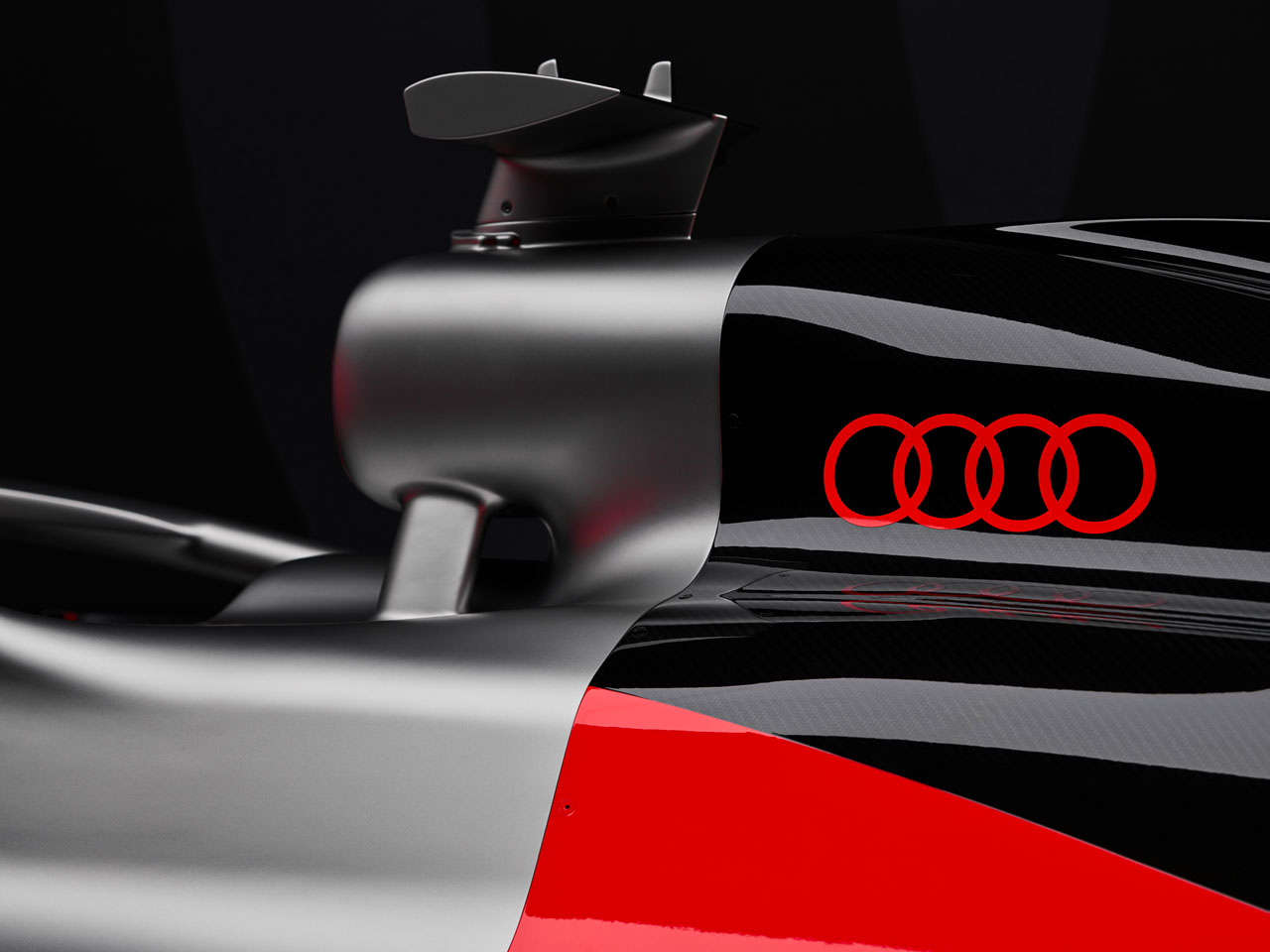
Technical drives the material expression. Exposed carbon fiber, metallic titanium, functional air intakes: every surface communicates its engineering purpose. The design doesn’t hide the technology; it celebrates it through selective color application and geometric clarity.

Intelligent governs the systematic application of design elements. The geometric cuts aren’t random. They map to structural stress points, airflow paths, and regulatory panel divisions. Audi’s designers worked directly with the engineering team to map every cut to the car’s invisible architecture: stress points where forces concentrate, airflow boundaries where high and low-pressure zones meet, load paths where structural members transfer energy. The visual geometry reflects forces you can’t see but that define how the car works. Function dictates form, but beauty emerges from the constraint.

Emotional brings the selective use of Audi red. While the base palette stays monochromatic (titanium and carbon black), red appears at key moments to create visual punctuation. The red rings replace Audi’s traditional silver exclusively for F1, marking a historic brand departure.

Color as Communication: The Three-Color System

Audi developed an entirely new color palette for F1, and each color has specific purpose:

Titanium: The Foundation

Titanium is Audi’s new performance color, first introduced on September’s Concept C. It’s a warm metallic that reads differently depending on light conditions. In bright sun, it appears almost white with a subtle gold undertone. In shadow or under track lighting, it shifts to a deeper, cooler gray with bronze highlights.
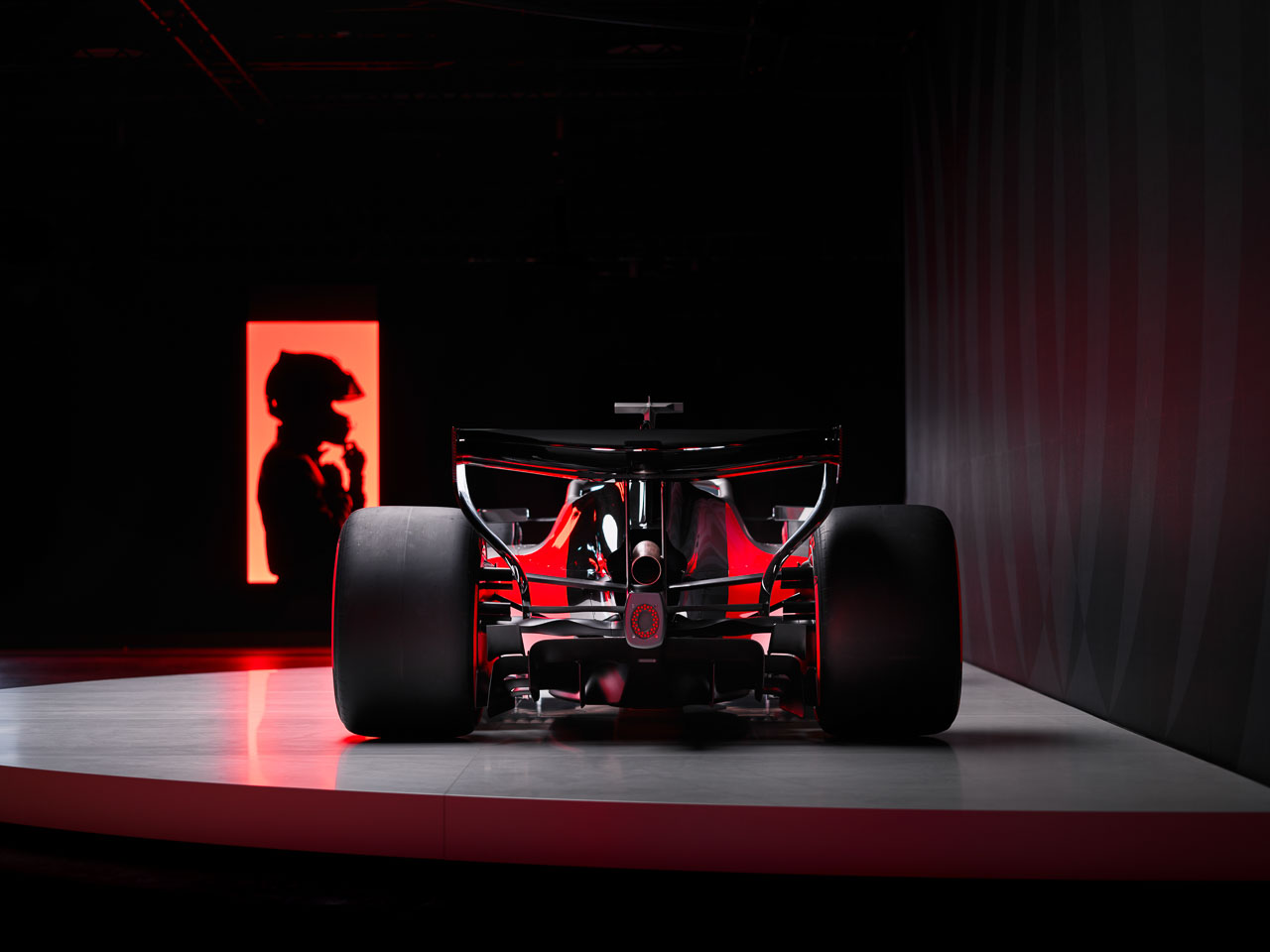
Photo: Audi

The Concept C introduced titanium as part of Audi’s production car transformation. The R26 adapts that same color for a radically different purpose. Where Concept C uses titanium to signal elegance and precision in a road car, the R26 deploys it for instant recognition and competitive differentiation in racing. Same color, different mission. The R26 doesn’t copy Concept C. It translates Concept C’s design language into motorsport clarity.

The warmth differentiates it from traditional racing silvers. Where chrome and aluminum feel cold and industrial, titanium conveys technical sophistication with organic warmth. It’s the color of aerospace-grade materials, of precision engineering, of expensive watches.

Titanium also solves a practical problem: visibility. On modern F1 broadcasts with complex camera angles and varying light conditions, many cars become visually similar. Titanium’s warmth and unique reflective properties create immediate visual differentiation.

Carbon Black: The Contrast

Carbon black isn’t paint. It’s exposed carbon fiber, finished to showcase the material’s woven structure. The decision to leave carbon exposed rather than painted communicates technical transparency.

Carbon black creates depth through texture. Where titanium reflects light, carbon absorbs it. The contrast between the two materials creates visual drama without graphics. The eye follows the transition between reflective and absorptive surfaces, mapping the car’s complex 3D geometry.
The exposed carbon also references Audi’s motorsport heritage. The Auto Union Silver Arrows pioneered lightweight construction in the 1930s. The R18 e-tron quattro showcased carbon monocoque technology at Le Mans. Exposed carbon fiber connects past to present through material honesty.

Audi Red: The Punctuation

Audi red exists nowhere else in the brand’s history. Created specifically for F1, it’s a pure, saturated red without orange or blue undertones. Think Rosso Corsa (Ferrari’s racing red) but slightly cooler in temperature.

Red appears selectively. It doesn’t flood the car. Instead, it marks specific moments: the halo structure, certain wing elements, brake cooling ducts. Each red application draws the eye to a functional element. Red becomes a visual guide to the car’s critical systems.

The red rings replace Audi’s silver rings exclusively for F1. Four red rings against titanium and carbon create instant recognition. From any angle, any distance, you know it’s Audi. The red rings also solve the challenge of brand visibility on a minimalist design. Without busy graphics, the rings need to work harder. Red makes them unmissable.

Geometric Language: Precision Cuts and Surface Integration

The R26’s most striking design element is its geometric surface treatment. Rather than applying graphics to the car’s complex 3D forms, Audi’s designers created precise cuts that follow the car’s structural geometry.
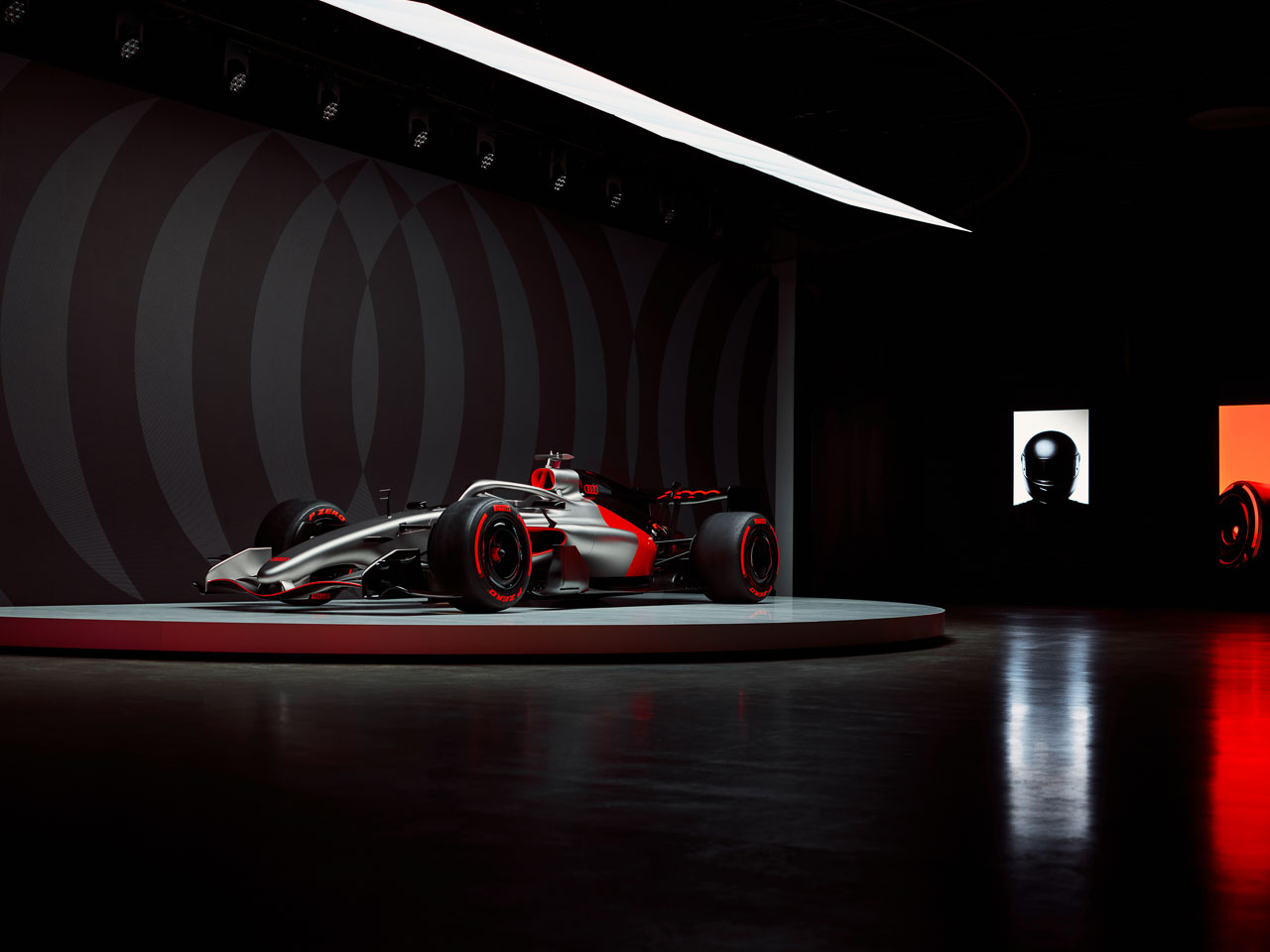
Think of it as subtractive design. Instead of adding visual elements, they’re revealing underlying structure through selective color application. A titanium surface might have a carbon black geometric cut that follows the bodywork’s compound curve. The cut isn’t arbitrary. It maps to an internal structural member, an airflow path, or a regulatory panel division.

This approach requires understanding the car’s architecture at a deep level. The design team worked directly with engineers to map stress points, airflow boundaries, and load paths. The visual geometry reflects the invisible forces acting on the car.

The geometric cuts also solve a challenge unique to F1: active aerodynamics. The 2026 regulations allow adjustable front and rear wings. The R26’s design maintains visual consistency whether wings are deployed or stowed. The geometric language works in multiple configurations because it follows the car’s core structure rather than any single aerodynamic state.

Proportion and Geometry: Working with the 2026 Regulations

The 2026 regulations give Audi’s designers opportunities unavailable with current F1 cars. The new cars are smaller (3.40m wheelbase vs. 3.60m), narrower (190cm vs. 200cm), and lighter (768kg vs. 798kg).

The 2026 regulations also mandate a fundamental powertrain shift: 50% electric power. The MGU-K (electric motor-generator unit) delivers 350kW, roughly matching the combustion engine’s output. This massive increase in electrical power (tripled from current regulations) changes the car’s architecture. The battery, inverter, and MGU-K create new packaging challenges and cooling requirements that directly influence the car’s geometry and surface design.

These reductions change the car’s proportions dramatically. Current F1 cars look big and planted, almost heavy. The 2026 cars will look nimble, almost delicate by comparison. The reduced wheelbase creates a more aggressive front-to-rear ratio. The narrower track width emphasizes vertical elements like the halo and rear wing.

Audi’s design amplifies these proportional shifts. The minimalist graphics make the car look even smaller because there’s no visual clutter to fill space. The geometric cuts emphasize the car’s length and narrowness. The selective red draws the eye vertically, accentuating height.

The overall impression is of lightness and precision: a car pared to its essential elements.

Material Expression: Texture and Finish

Beyond color, the R26 communicates through texture and finish. Audi specifies different surface treatments for different materials:

Titanium surfaces: Semi-gloss finish that balances reflection with depth. Too glossy and the car becomes a mirror, washing out detail. Too matte and the color loses its metallic character. The semi-gloss finish maintains the warm metallic read while preserving surface detail.
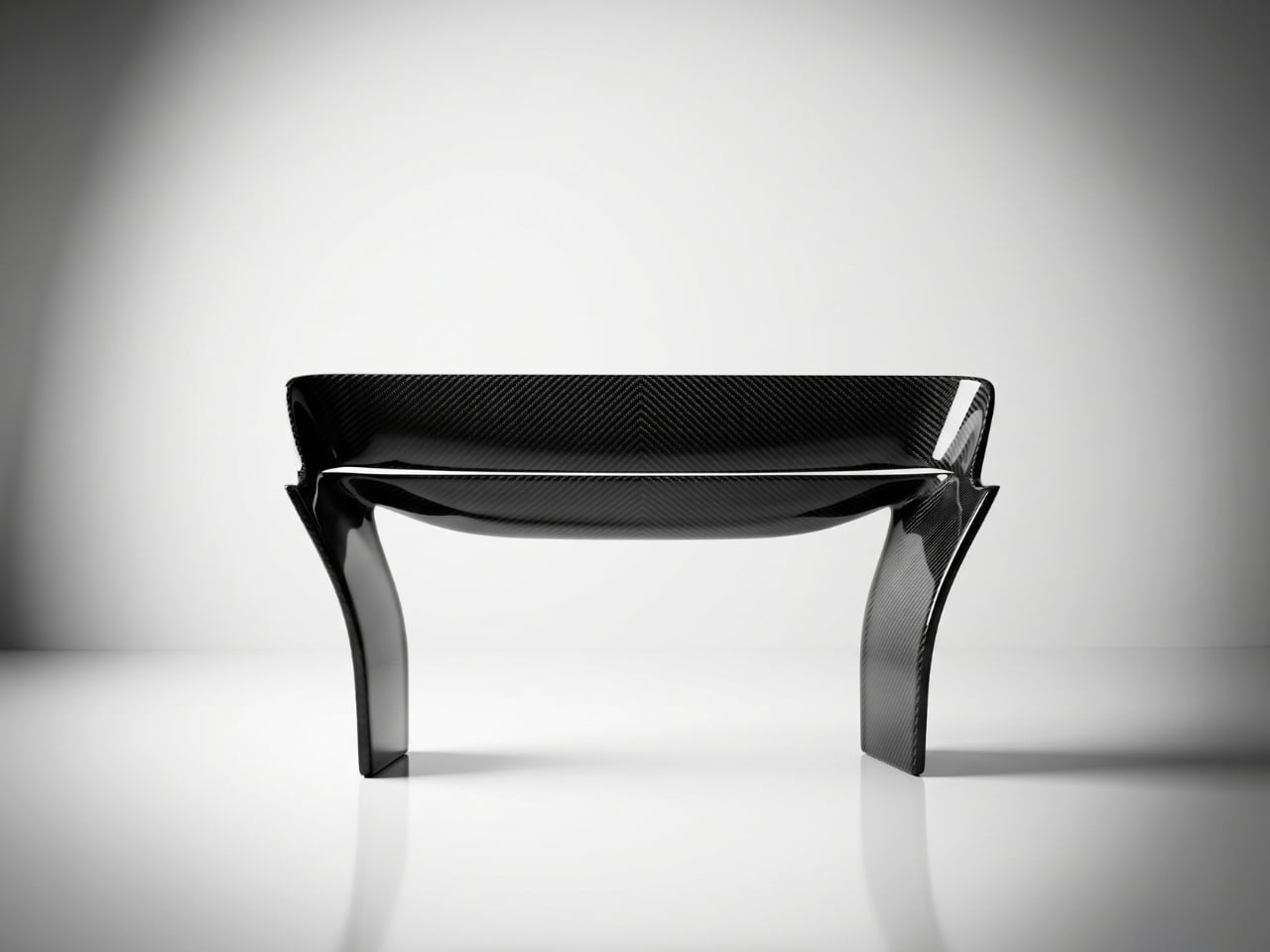
Carbon fiber surfaces: Clear-coated to reveal the woven structure but finished smooth for aerodynamic efficiency. The weave pattern creates visual texture without adding surface roughness. Under bright light, the carbon weave becomes visible, adding organic pattern to the geometric precision.

Red also needs high gloss for color saturation. Matte red looks dull and heavy.

These finish differences create a hierarchy of visual attention. Your eye goes to high-gloss red first, then semi-gloss titanium, then matte carbon. The finish strategy guides how you read the car’s form.

Typography and Graphics: When Less Is More

The R26 Concept preview shows minimal typography and graphics. The Audi wordmark appears clean and geometric, likely in a custom typeface that references the geometric cut language. Numbers use a technical, precision-cut style similar to engineering drawings.

Sponsor logos will be present on the final race car but in reduced size and selective placement. Audi’s partnership strategy emphasizes quality over quantity, which extends to livery design. Fewer, larger sponsor placements rather than dozens of small logos fighting for attention.

The lack of visual clutter makes individual elements more impactful. When everything screams, nothing stands out. The R26’s restraint makes each element meaningful.

Beyond the Car: A Complete Visual System

Audi’s design extends beyond the R26 to every touchpoint:

Team clothing (designed with adidas) uses the same geometric cuts, the same three-color palette, the same material contrasts. Driver suits feature titanium and carbon panels with red accents. Engineer shirts use geometric patterns derived from the car’s surface cuts.

Motorhome design applies architectural clarity. Clean white surfaces, geometric titanium accents, selective red details. The hospitality space feels like a contemporary art gallery, not a racing paddock.

Pit garage aesthetics showcase technical precision. Carbon fiber workstations, titanium tool holders, red accent lighting. Every element reinforces the four design principles.

Fan engagement zones reflect the design language through environmental graphics, wayfinding, and spatial organization. The geometric cuts become architectural elements. The three-color palette defines zones and circulation paths.

Digital fan zones and merchandise: The design system extends to Audi’s F1 app, website, and official merchandise. The same geometric patterns, the same three-color palette, the same material language. A fan buying an official team shirt gets the same design experience as someone walking through the paddock.

This comprehensive visual system creates a unified brand experience. Every interaction with Audi F1 reinforces the same design principles, the same aesthetic values, the same material language.

Designing for a New Audience

Audi’s design choices target F1’s demographic shift. The sport has gained 120 million female fans in five years. 44% of on-site visitors are now under 35. This younger, more diverse audience values aesthetics, sustainability, and brand authenticity differently than traditional F1 fans.

The R26’s minimalism appeals to design-conscious audiences who appreciate restraint over excess. The sustainable fuel mandate (part of the 2026 regulations) and 50% electric power align with younger fans’ environmental concerns. The red rings and titanium palette create a visual identity that works across digital platforms where younger audiences engage with F1 content.

Formula 1’s growth among younger demographics isn’t accidental. It’s driven by new media formats, design-forward teams, and visual storytelling that emphasizes aesthetics alongside performance. The R26 positions Audi at the center of this shift.

Design Heritage: From Silver to Red

Audi’s motorsport design history provides context for the R26:

The Auto Union Silver Arrows (1934-1939) pioneered the mid-engine layout, creating an entirely new racing silhouette. They emphasized technical innovation through streamlined bodywork that showcased mechanical complexity.

The Audi quattro (1981-1984) made four-wheel drive visible through aggressive fender flares and functional air intakes. The design communicated the revolutionary drivetrain through proportional shifts.

The Audi R8 LMP (2000-2002) introduced TFSI technology with clean, efficient aerodynamics. The design emphasized airflow management through sculpted surfaces and functional openings.

The R18 e-tron quattro (2012-2014) showcased hybrid technology through distinctive LED lighting and exposed mechanical elements. The design made electrical systems visible for the first time.

The RS Q e-tron (2024) brought electric drive to Dakar with brutal, geometric bodywork that emphasized structure over surface. The design celebrated the mechanical complexity of the electric drivetrain.

The R26 continues this heritage of technical transparency and innovative thinking, but adds a new layer: systematic minimalism. Previous Audi race cars showcased technology through addition: more details, more elements, more visual complexity. The R26 showcases technology through subtraction, revealing essential form through reductive design.

Comparison: How the R26 Differs from Current F1 Design

Current F1 liveries follow predictable patterns:

Busy graphics: Most cars use complex swooshes, gradients, patterns, and layered sponsor logos. Visual complexity becomes visual noise.

Arbitrary color placement: Colors often appear without structural logic, applied to maximize sponsor visibility rather than enhance form.

Surface-level design: Graphics sit on top of the car’s form rather than integrate with it. The 3D complexity of an F1 car gets flattened by 2D graphics.

Brand consistency over innovation: Most teams maintain similar liveries year after year, changing colors but maintaining the same basic approach.

The R26 rejects all these conventions:

Minimalist graphics: Visual restraint creates clarity and impact.

Structural color logic: Color placement maps to the car’s engineering, not sponsor requirements.

Integrated design: Graphics follow and reveal the car’s 3D form rather than covering it.

Visual innovation: The R26 establishes a new aesthetic language for Audi’s F1 era.

The closest comparison might be McLaren’s occasional minimalist liveries or the simple elegance of classic Grand Prix cars from the 1960s. But the R26’s geometric precision and material-driven approach creates something new.

Why Minimalism Works: Function, Not Just Form

The R26’s minimalism isn’t purely aesthetic. It solves practical problems:

Sponsor visibility: Fewer, larger sponsor placements get more attention than dozens of small logos competing for space. The minimalist surfaces make each sponsor location more valuable and more visible on television broadcasts.

Instant identification: Racing fans need to identify cars during chaotic race starts, high-speed overtakes, and wet conditions where spray obscures details. The R26’s distinctive proportions, unique color palette, and bold red rings create instant recognition from any angle, any distance, any lighting condition.
Television clarity: Modern F1 broadcasts use complex camera angles, onboard shots, and aerial views where busy liveries become visual noise. The R26’s geometric clarity reads clearly in every camera position.

Adaptability: The minimalist approach allows the design to work across different configurations (active aero positions) and different lighting conditions (day races, night races, variable weather) without losing visual coherence.

Minimalism becomes a competitive advantage because it makes the brand more visible, not less.

The November R26 Concept preview shows design direction, not final specification. Between now and the January 2026 car reveal, Audi’s design and engineering teams are working through an iterative refinement process:

Color specification: Testing titanium samples under different light sources (daylight, track lighting, television lighting) to finalize the exact metallic formula. Calibrating the red hue for maximum saturation and visibility. Optimizing the carbon fiber clear-coat finish for texture visibility while maintaining aerodynamic smoothness.

Geometric precision: Using CAD models and full-scale mockups to refine the exact placement of every geometric cut. Each cut must align with structural boundaries, airflow paths, or regulatory panel divisions. The design team validates that cuts maintain visual coherence in all wing configurations (active aero deployed and stowed).

Typography: Finalizing the custom typeface design that references the geometric cut language. Testing number legibility at racing speeds and various camera angles. Ensuring consistency across physical car graphics and digital brand materials.

Sponsor integration: Working with partners bp, Revolut, and adidas to position their logos within the minimalist design without disrupting visual flow. Fewer, larger placements that respect the geometric language and three-color palette.

Material transitions: Engineering the physical junctions where titanium panels meet carbon fiber surfaces. Ensuring smooth transitions that don’t create aerodynamic disturbances. Detailing how red elements integrate structurally with the base colors (painted panels vs. vinyl applications).

This refinement process involves constant collaboration between designers in Munich, engineers in Neuburg and Hinwil, and aerodynamicists validating every change in CFD simulations and wind tunnel testing.

The January reveal will show these refinements applied to a competition-ready car. Testing in Barcelona (January 26-30) and Bahrain (February 11-13, 18-20) will reveal how the design works in real racing conditions under television cameras and against competitor liveries. The March 8 Melbourne debut will show the R26 under lights, in competition, against nine other designs.

Strategic Investment: Qatar Backs the Vision

The R26’s bold design vision is backed by equally bold strategic moves. In November 2024, Audi announced that Qatar’s sovereign wealth fund, the Qatar Investment Authority (QIA), acquired a significant minority stake in Sauber Holding AG. This partnership provides financial strength and long-term commitment to the F1 project.

The QIA investment signals confidence in Audi’s approach: minimalist design, technical innovation, and audience transformation. Qatar’s backing allows Audi to execute its vision without compromise, funding the three-location operation, the extensive testing program, and the comprehensive visual system rollout.

Design as Competitive Advantage

“We want to have the most striking car on the grid,” says Massimo Frascella, and the R26’s design might deliver exactly that.

In modern F1, with cars so aerodynamically similar, visual differentiation matters. Fans need to identify cars instantly during chaotic race starts, high-speed overtakes, wet conditions. Television directors need cars that read clearly on screen. Sponsors want immediate brand visibility.
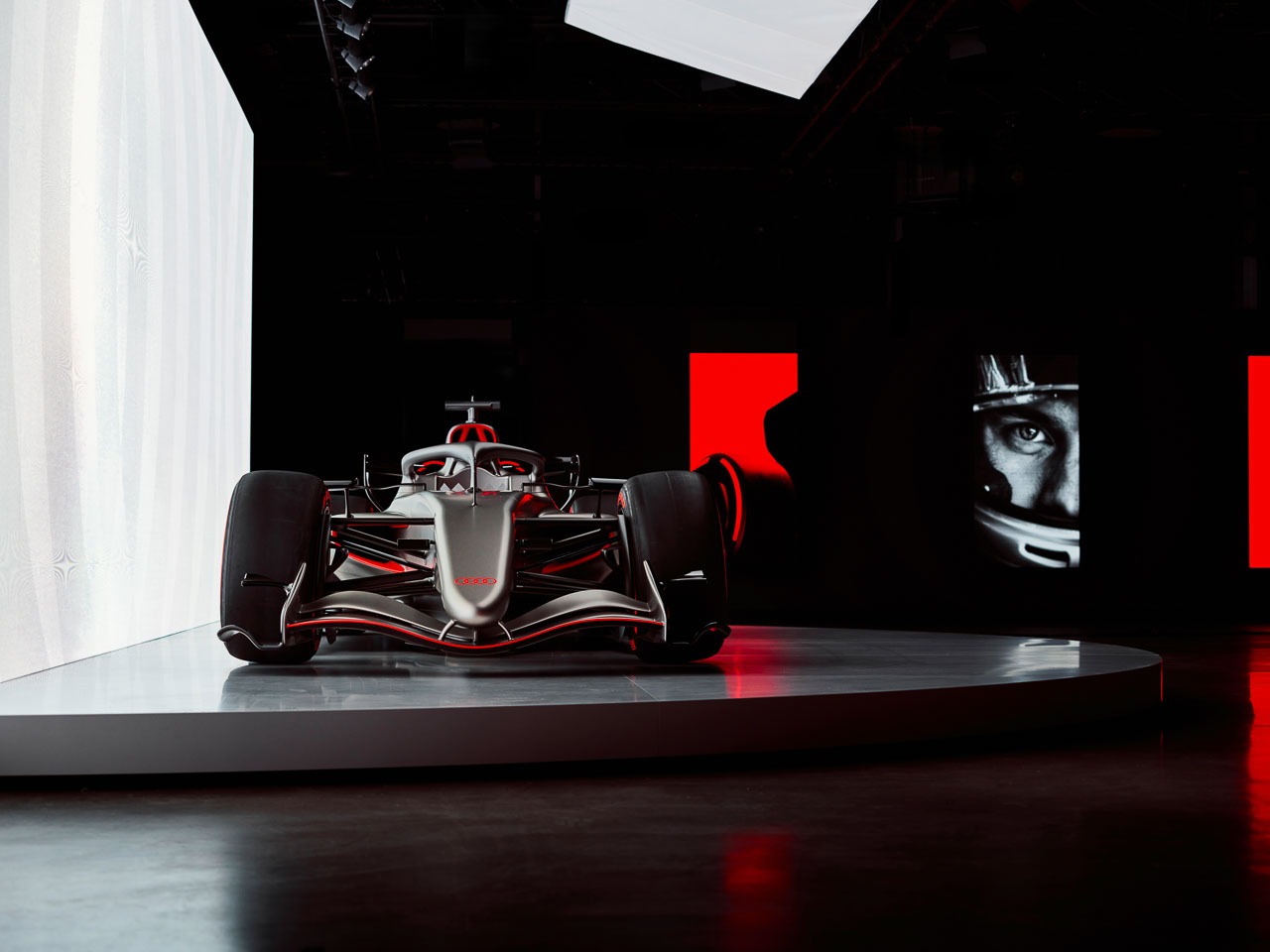
The R26’s minimalism creates instant recognition. The unique proportions, the distinctive color palette, the red rings: you can identify an Audi from any angle, any distance, any lighting condition.

The design also communicates brand values: precision, technical sophistication, innovative thinking. Where other teams shout, Audi whispers. The confidence to do less when everyone else does more.

And that confidence comes from century of motorsport success: 13 Le Mans victories, multiple DTM championships, Dakar Rally wins. Audi earned the right to take design risks.

115 days until the R26 races in Melbourne. 115 days until we see if minimalism can win in motorsport’s most complex, most visible, most competitive arena.

The post Audi R26 Concept: Radical Minimalism Rewrites F1 Design first appeared on Yanko Design.
Hot Wheels and F1 Team Up: Limited Edition Die-Cast Model Bringing the Thrill of Formula 1 Racing to Your Collection!

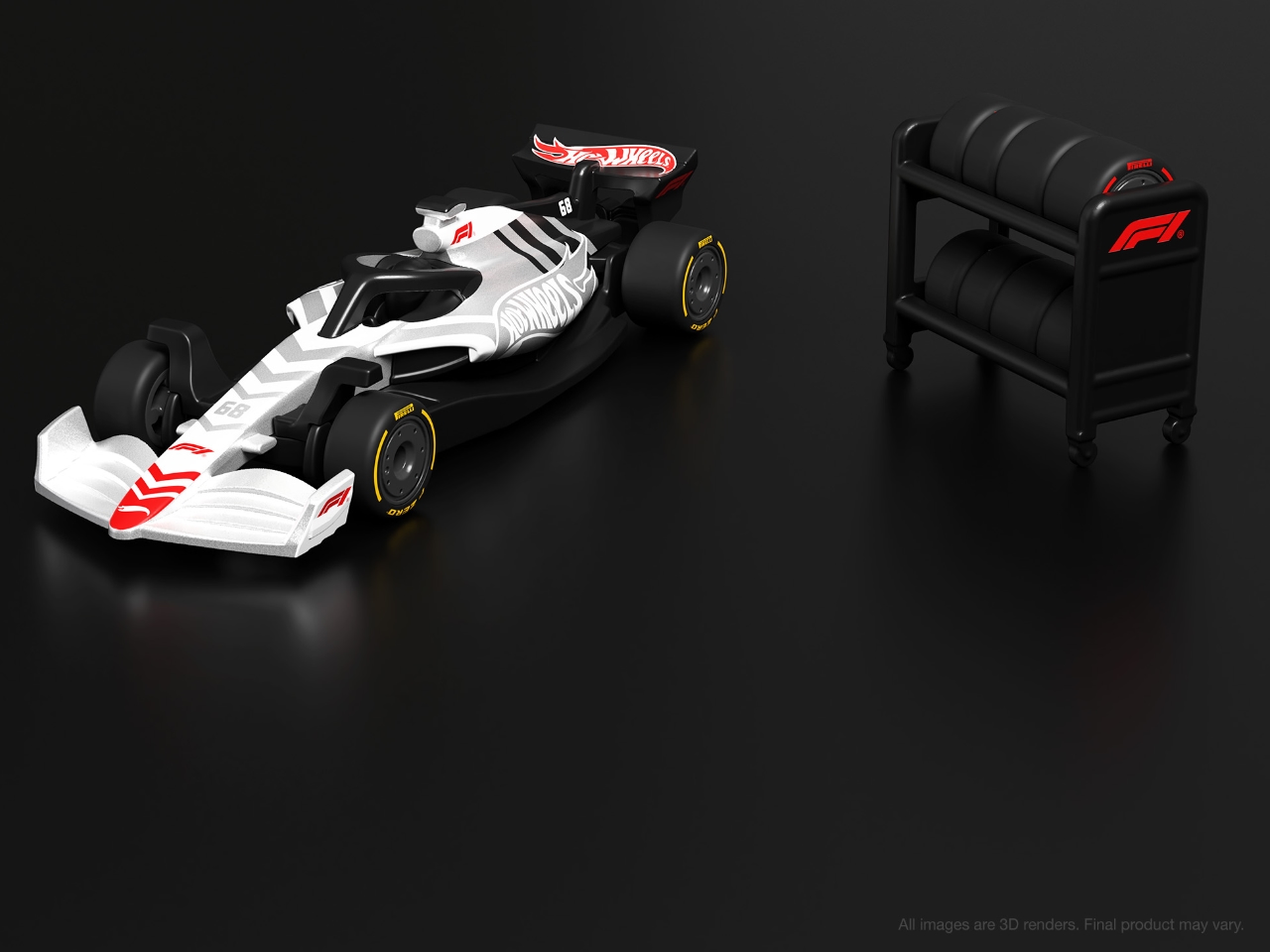
Hot Wheels has leaped into the high-octane world of Formula 1, bringing the excitement of F1 racing into your home, combining the precision of motorsport with the signature thrill of Hot Wheels. This limited-edition collaboration brings the thrill of Formula 1 racing to a die-cast model. It’s a miniaturized piece of racing history featuring custom livery, real Pirelli tire compounds, and an F1-inspired tire rack that gives collectors an authentic taste of the pit lane experience. Let’s break down the details that make this partnership a must-have for collectors and racing fans.

Image: Hot Wheels x F1

Designer: Hot Wheels x F1

A Design That Thrills

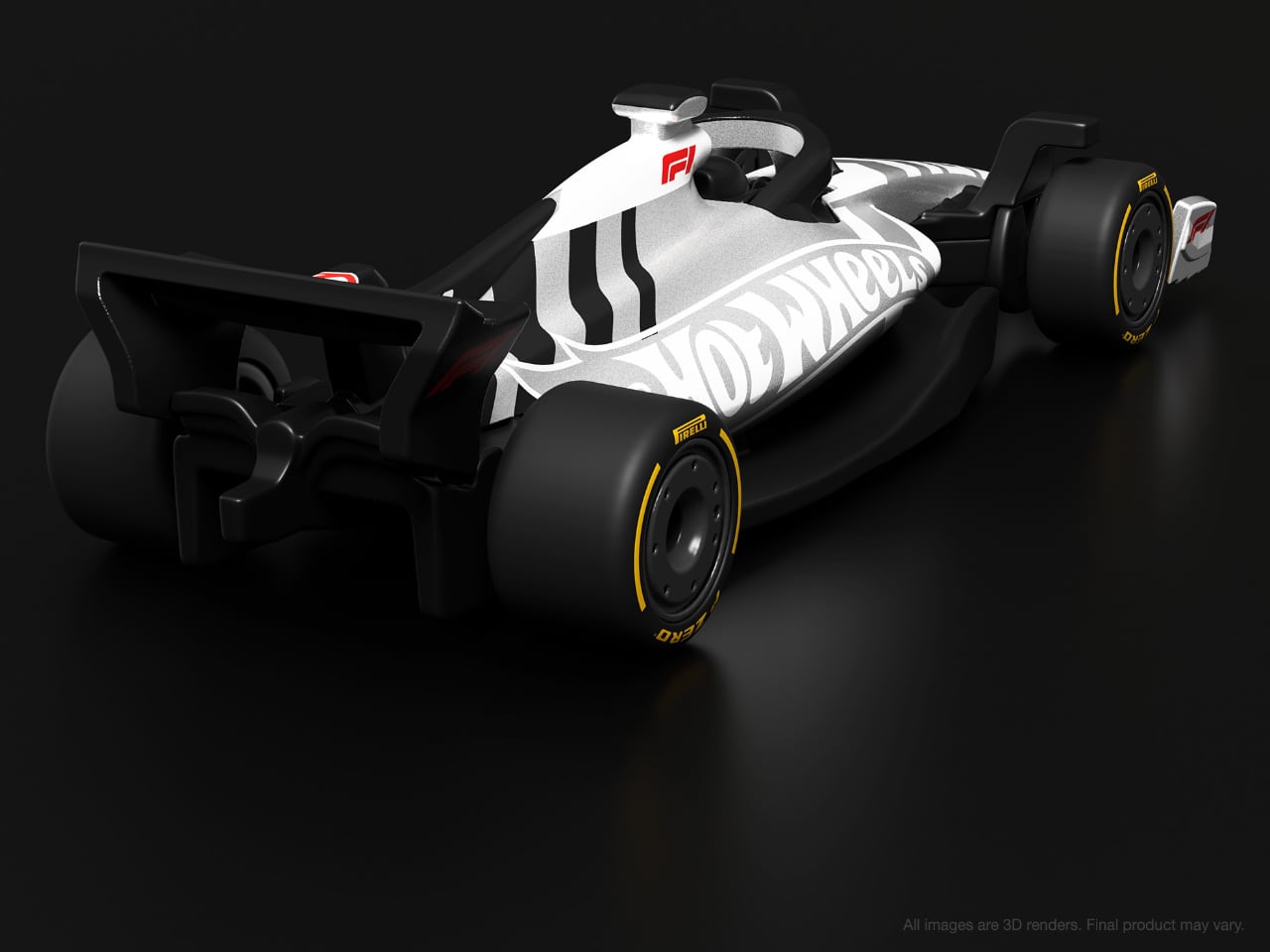
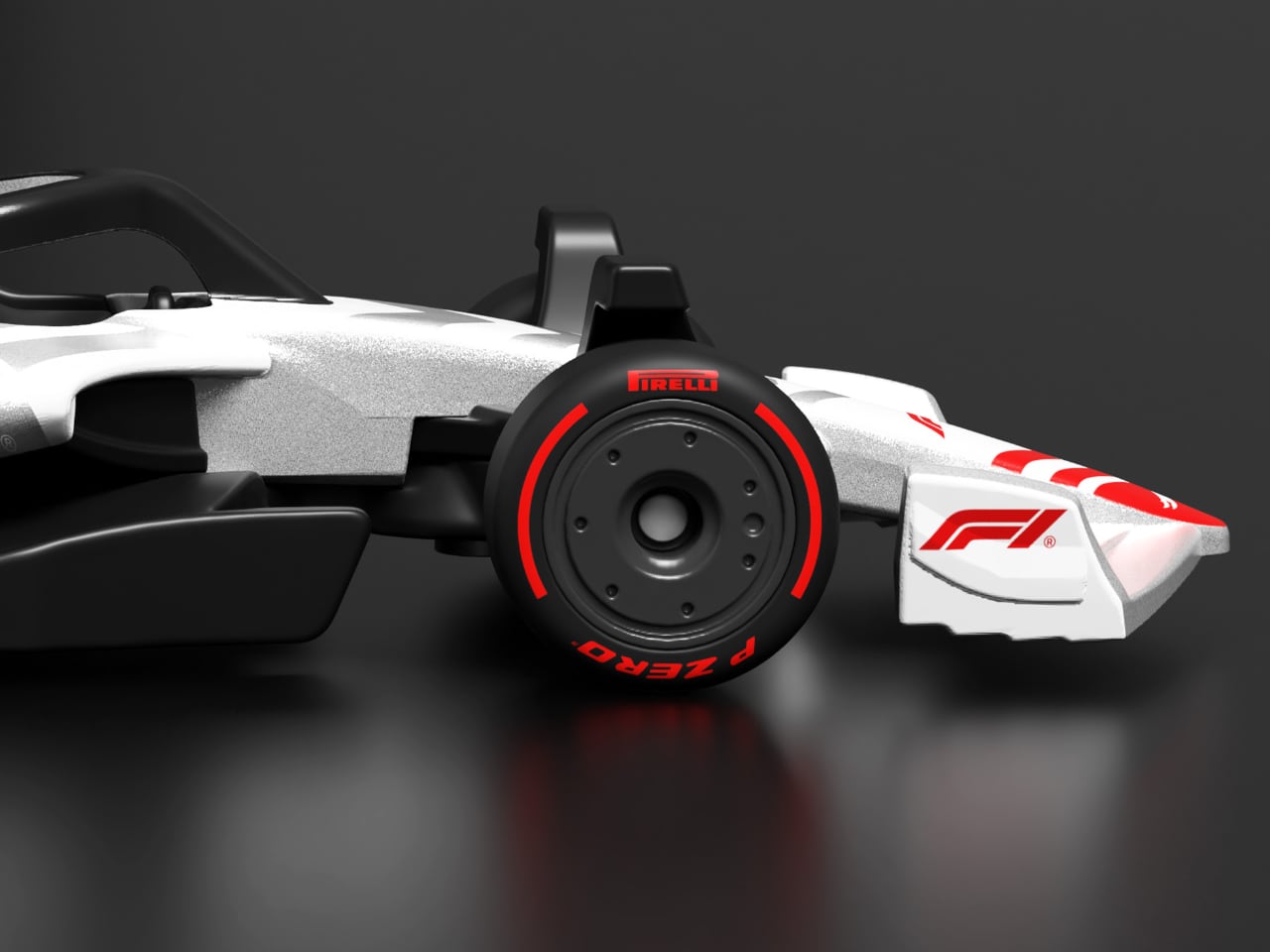
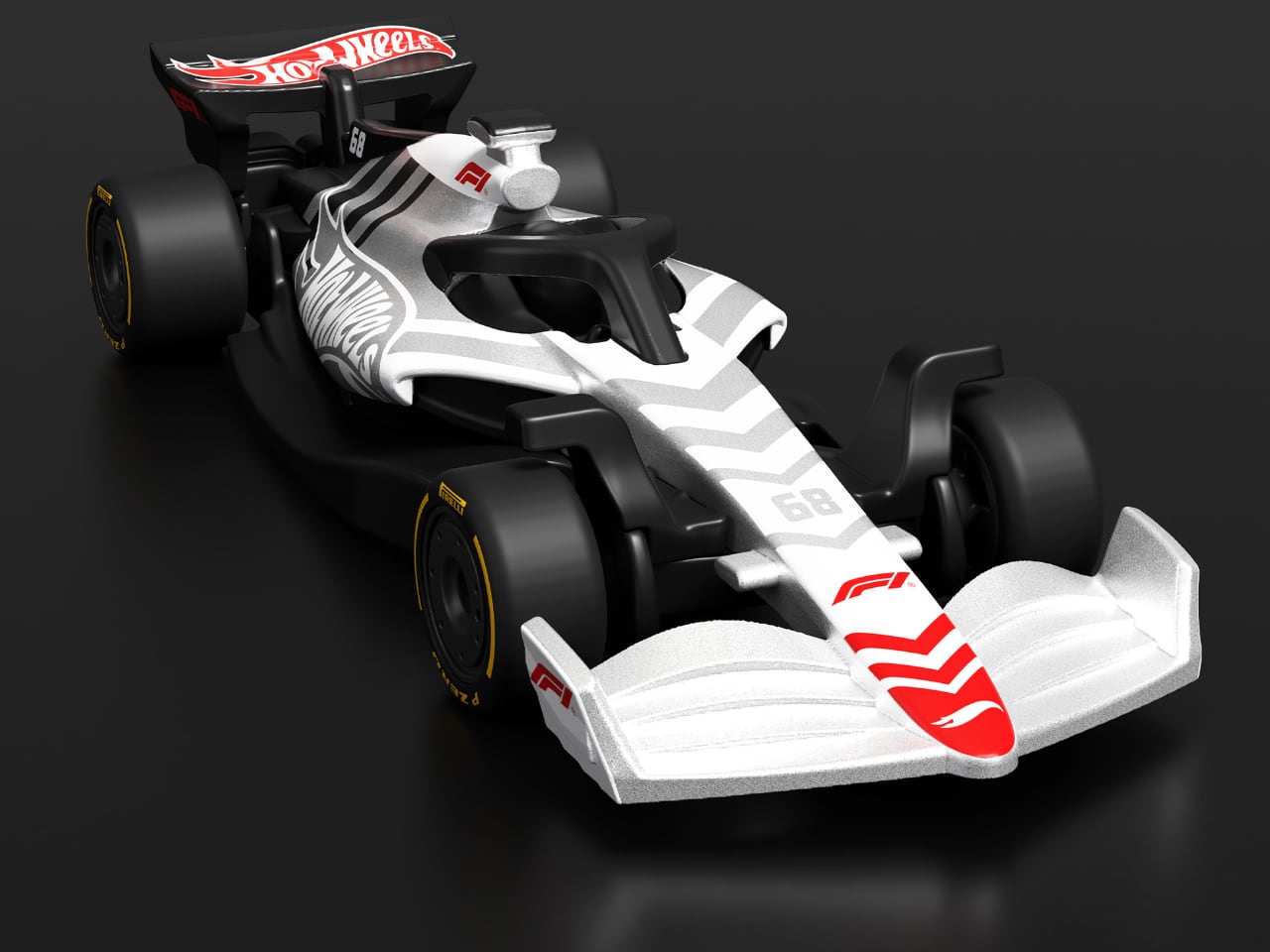
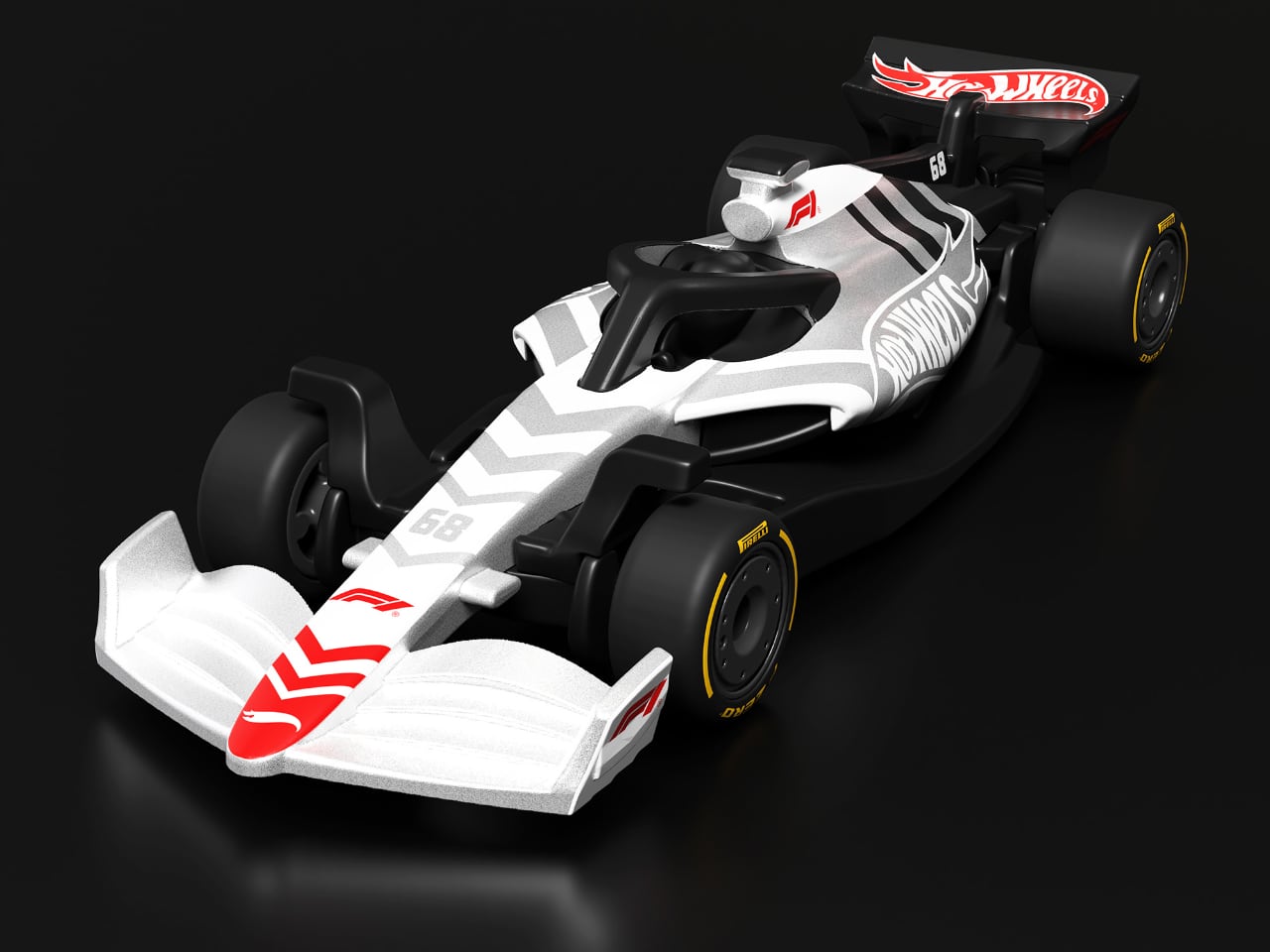
The Hot Wheels x F1 collaboration showcases a collector’s die-cast that combines the signature Hot Wheels aesthetic with the bold and dynamic spirit of Formula 1. It’s a blend of speed, style, and nostalgia, engineered down to the smallest detail to capture the imagination of racing enthusiasts and Hot Wheels collectors alike. The base color of the car is a clean metallic silver, accented by bold Hot Wheels graphics that snake across the bodywork, emphasizing movement and energy. The contrast between the glossy black highlights and bright red accents gives the model a sharp, eye-catching appearance, making it a centerpiece worthy of any collection.

Image: Hot Wheels x F1

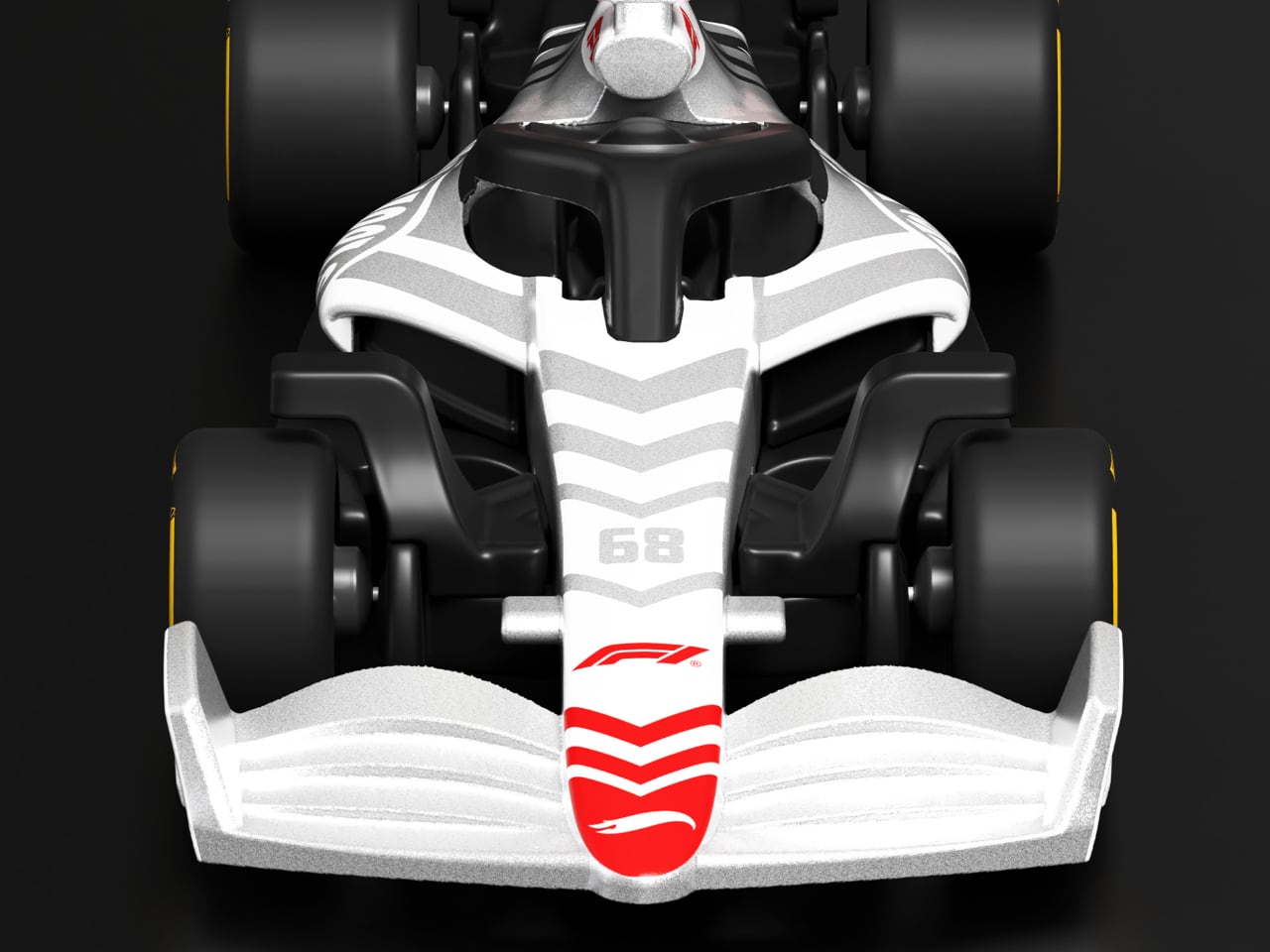
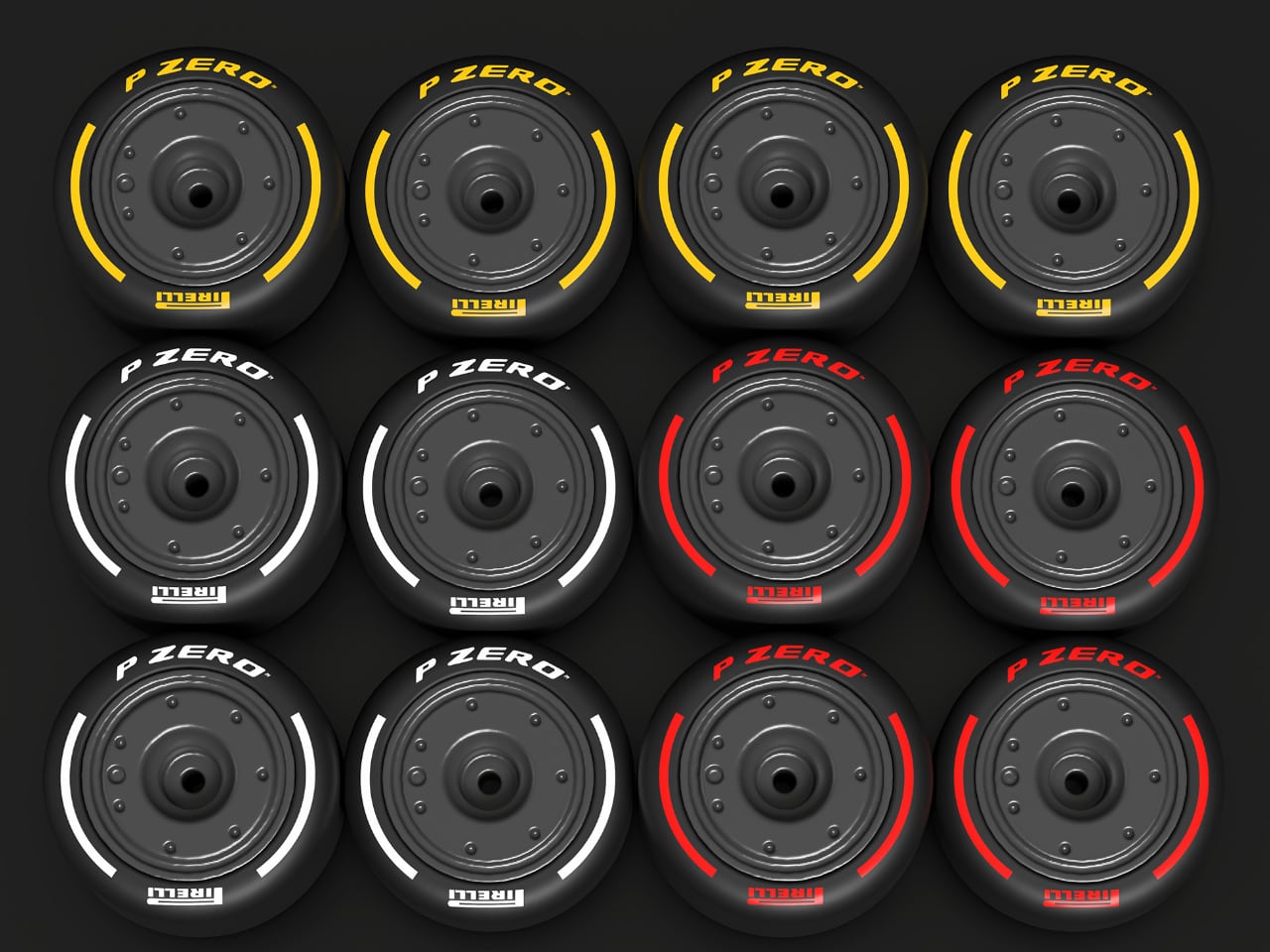
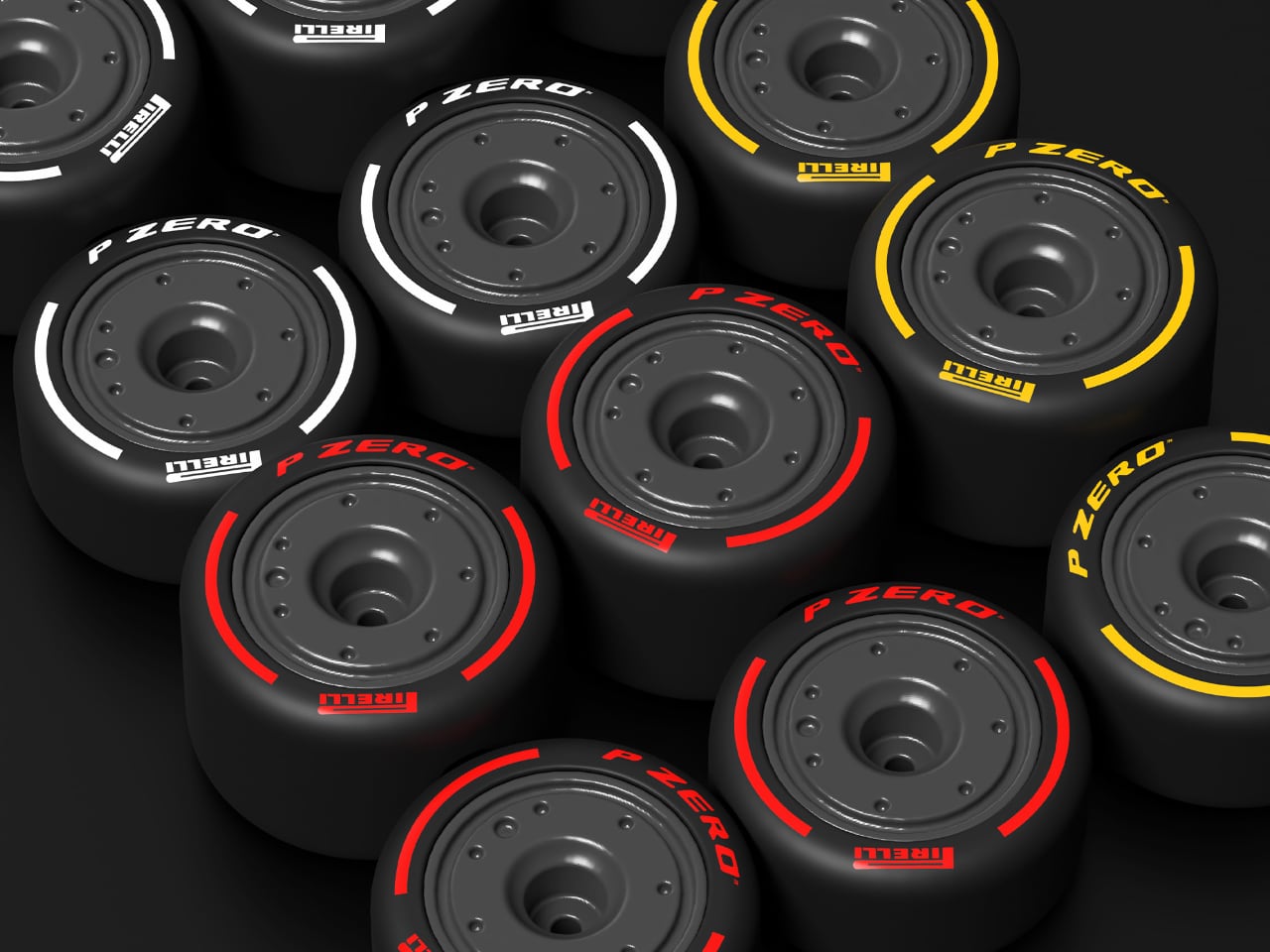
Unique to this model is the number “68” emblazoned on the nose, marking the year Hot Wheels debuted in 1968. This thoughtful detail connects the present to the brand’s history, reminding fans of the origins of Hot Wheels. The car also features bespoke Real Rider wheels with interchangeable tires inspired by the actual tire compounds used in F1—whether it’s the soft, medium, or hard options seen in real Grand Prix races. The inclusion of different tire colors—red, yellow, and white—is visually exciting, it adds an interactive element that brings the thrill of F1 race strategy to life.

Image: Hot Wheels x F1

Wheels That Tell a Story

The interchangeable tire set is a detail that speaks to the thoughtfulness of this collaboration. The wheels are designed to reflect the technical precision of F1 while maintaining the fun flair of Hot Wheels. Each tire features Pirelli’s “P Zero” branding, emphasizing its role as the official tire supplier of Formula 1. This ensures the model’s authenticity and direct connection to the real-world sport. This branding lends an air of authenticity as if the miniature car has just rolled off the paddock of a Grand Prix weekend.

Image: Hot Wheels x F1

The color coding of the tires—red for soft, yellow for medium, and white for hard—perfectly mirrors the real tire strategies used in Formula 1. As Emily Prazer, chief commercial officer of Formula 1, put it, ‘The exciting collaboration will bring together the adrenaline of motor racing and the excitement of toy cars, providing opportunities to see the fine details that go into an F1 car, all in the palm of your hand.’ This combination of detail and play makes it an immersive experience. This adds another layer of depth for collectors, giving them a hands-on connection to the sport’s tactical nuances. The tire detail doesn’t stop there; each tire features an industrial, machined aesthetic with small rivet-like details around the central hub. It’s a rugged, functional look that pays homage to the no-nonsense engineering of an F1 car, offering just the right balance of realism and fantasy.

Image: Hot Wheels x F1

The Ultimate Tire Rack Accessory

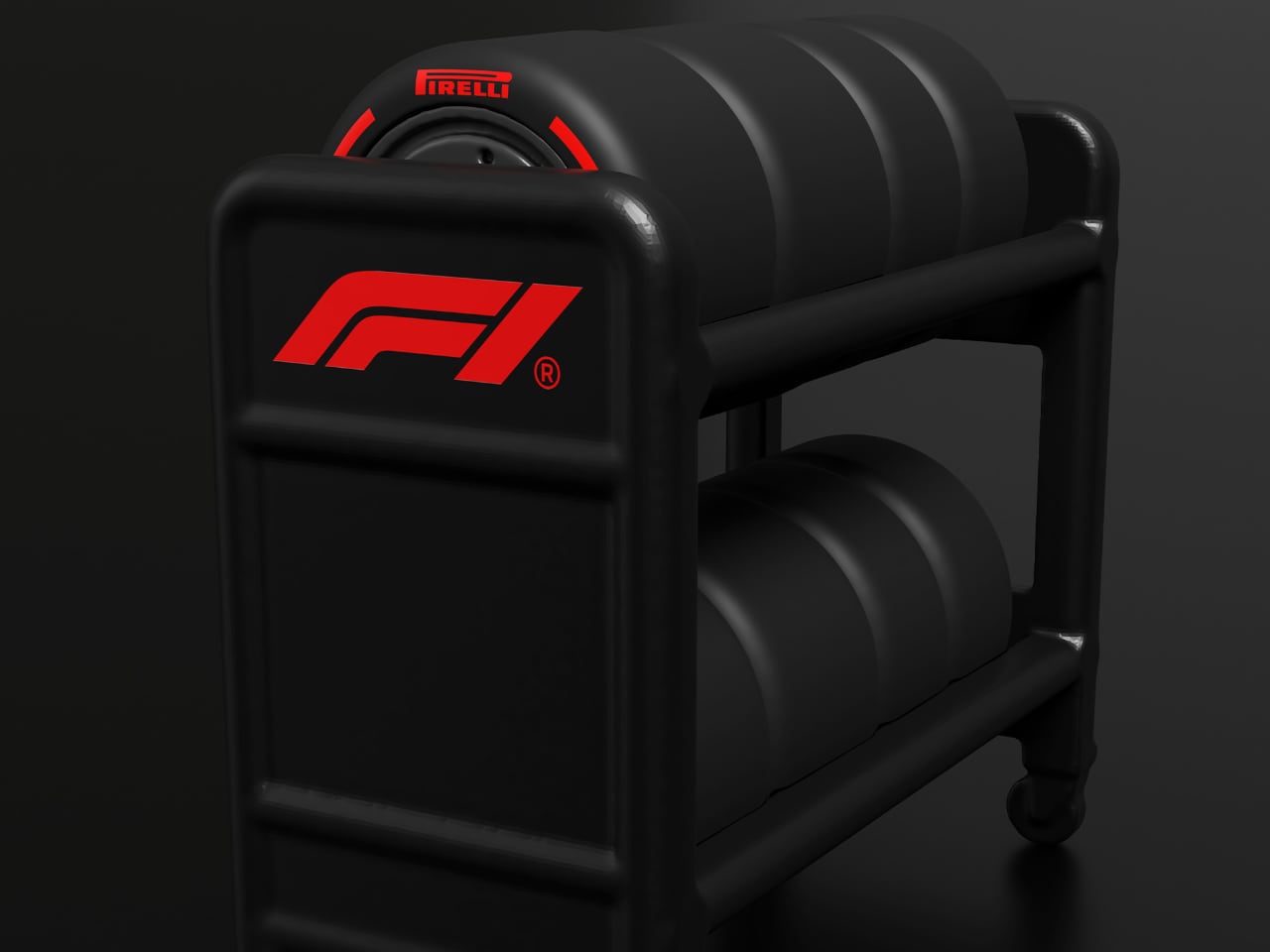
The tire rack that comes with this set is a thoughtfully designed display piece right in your living room. As Stanichi mentioned, ‘We have put together a program that allows kids to replicate the thrill of F1 racing where they can drive like the pros and engages with our loyal communities on a global scale.’ This sentiment shines through in the tire rack design, making the entire set feel complete, like a miniature slice of a real F1 paddock.

Image: Hot Wheels x F1

The red F1 logo stamped on the tire rack seamlessly complements the rest of the color scheme, creating a cohesive visual identity throughout. This display element is a key reason why this is a complete collector’s piece that tells a story, from the track to the pit lane.

Image: Hot Wheels x F1

Precision Meets Play and A Celebration of Racing Passion

Hot Wheels’ collaboration with Formula 1 creates a model that reflects the intricacies of motorsport. The aerodynamic front wing, featuring Hot Wheels flames, and the halo device are designed to reflect the performance-focused nature of Formula 1 cars, emphasizing safety and speed. The model features a full-metal body and chassis, giving it a satisfying weight that makes it feel substantial in hand. The metallic silver paint shimmers under the light, adding a level of detail you’d expect from a display model, not just a toy.

Image: Hot Wheels x F1

The rear wing is designed with a broad span and intricate details, replicating the aerodynamic focus of a real F1 car. The Hot Wheels logo is placed prominently on the rear wing, reinforcing the collaboration’s emphasis on bold design and fun.

This limited-edition release is a collector’s item—it symbolizes what happens when childhood imagination meets the pinnacle of motorsport. Emily Prazer emphasized, ‘It’s more than just a partnership; it’s a celebration of speed, creativity, and innovation that will bring fans a new way to engage with the sport.’ Whether swapping out the different tire compounds like a pit crew or displaying it proudly, this collaboration encourages fans to engage with the magic of racing truly.

Image: Hot Wheels x F1

Key Takeaways

    • Authentic F1 Details: From the bespoke Real Rider wheels to the official Pirelli branding, the model captures the precision and authenticity of a real F1 car.
    • Interactive Tire Compounds: The interchangeable tires—soft, medium, and hard—mirror actual F1 race strategies, giving fans an immersive and hands-on experience.
    • Collector’s Tire Rack: The thoughtfully designed tire rack adds to the display value, offering a pit lane-inspired accessory that ties the entire set together.
    • High-Quality Build: The full-metal body, chassis, and shimmering metallic paint make this model a true collector’s piece, far beyond just a toy.
    • Nostalgic Touches: The number ’68’ on the nose is a tribute to Hot Wheels’ debut year, connecting the brand’s rich history to this exciting new chapter.

The post Hot Wheels and F1 Team Up: Limited Edition Die-Cast Model Bringing the Thrill of Formula 1 Racing to Your Collection! first appeared on Yanko Design.

Officially licenced Mercedes-AMG Petronas F1 racing wheel simulates every turn and bump to perfection

The lines between real racing and simulated one are blurring with every new advancement. The racing rigs with surreal force feedback, visually stunning displays and the 360-reality audio put you right in the middle of the action. Adding to the realism, a racing wheel enhances the experience by providing precise force feedback of every chicane and high speed bump.

For those who love racing F1 cars in the simulator at home, Sim Lab has revealed a sim racing wheel designed in collaboration with the Mercedes-AMG PETRONAS Formula One Team. The officially licensed gaming accessory makes every G-force and high-speed overtake as authentic as possible. It is the closest thing to driving the real thing. Something that the Silver Arrows drivers – Hamilton and Russel vouch for to learn track behavior and practice before the team lands at the paddock of every race circuit.

Designer: Sim Lab

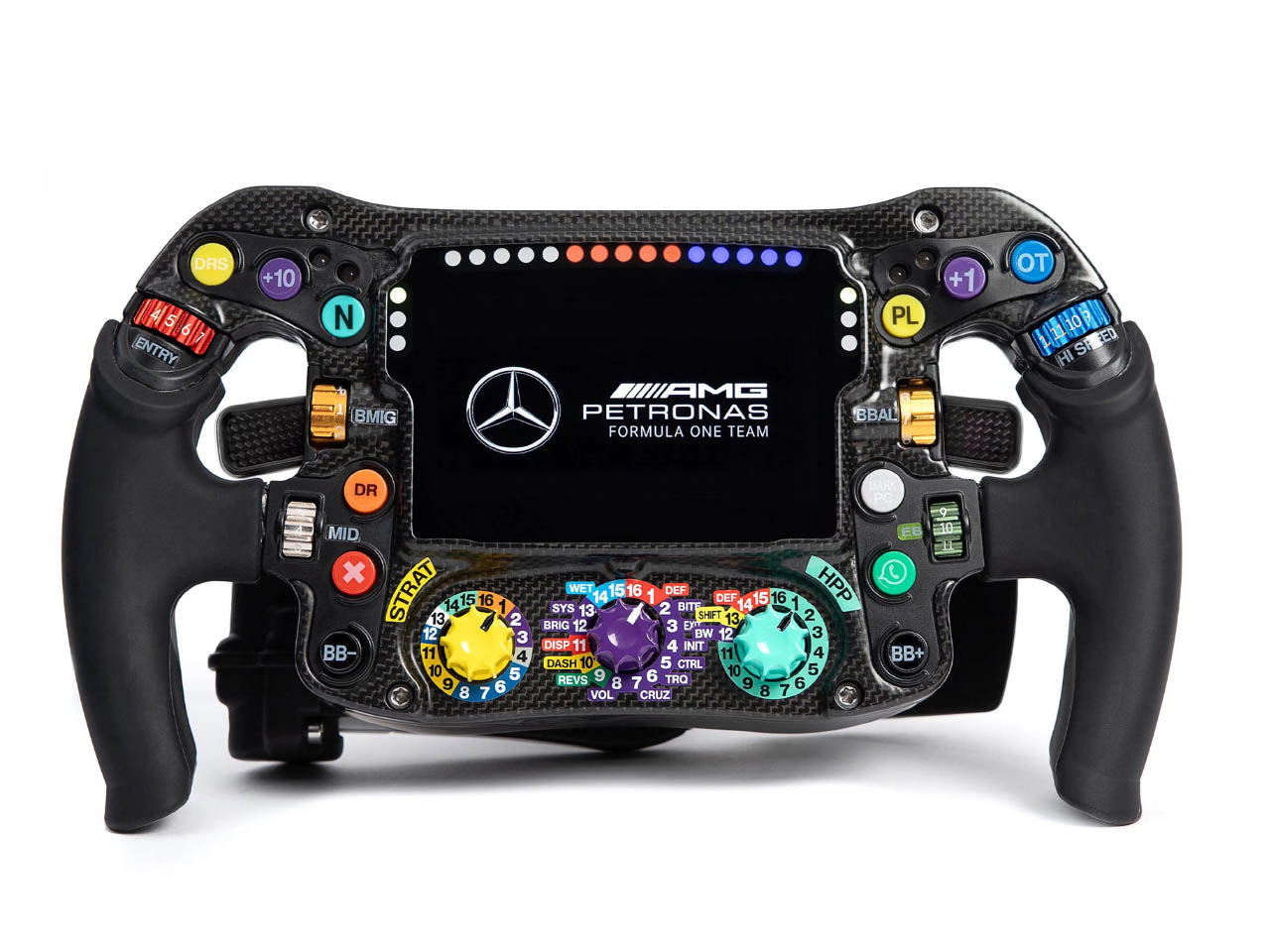
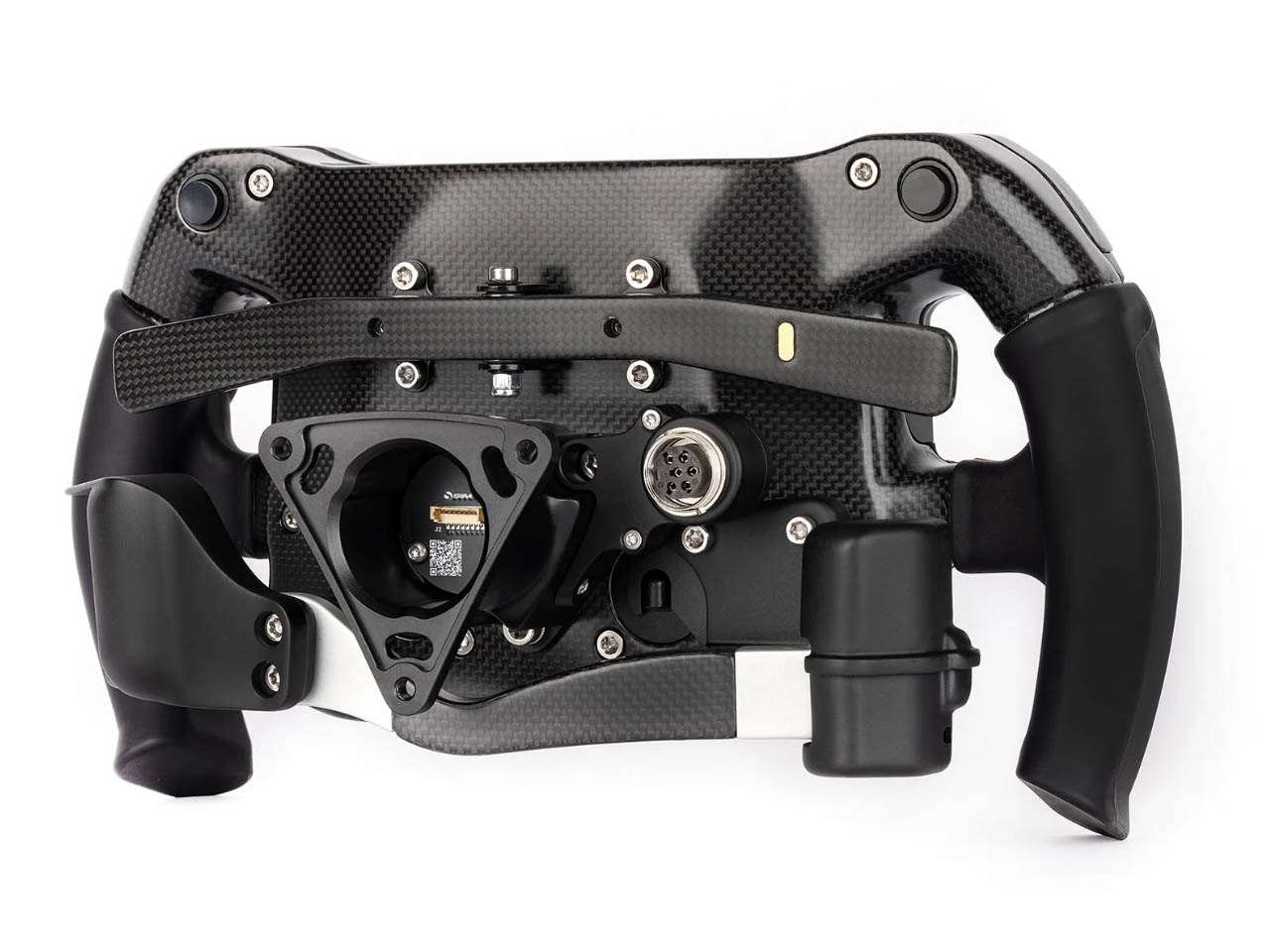
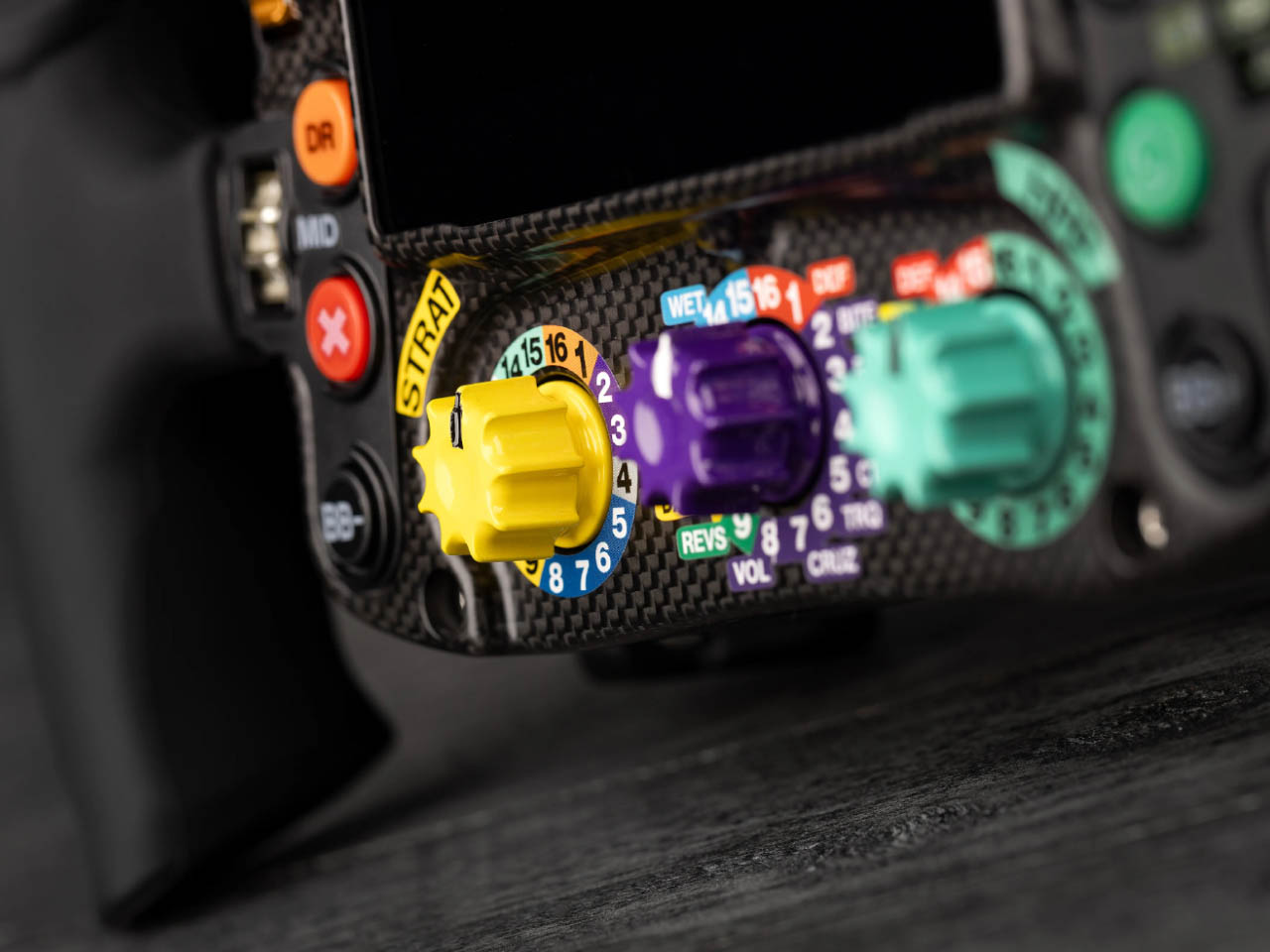
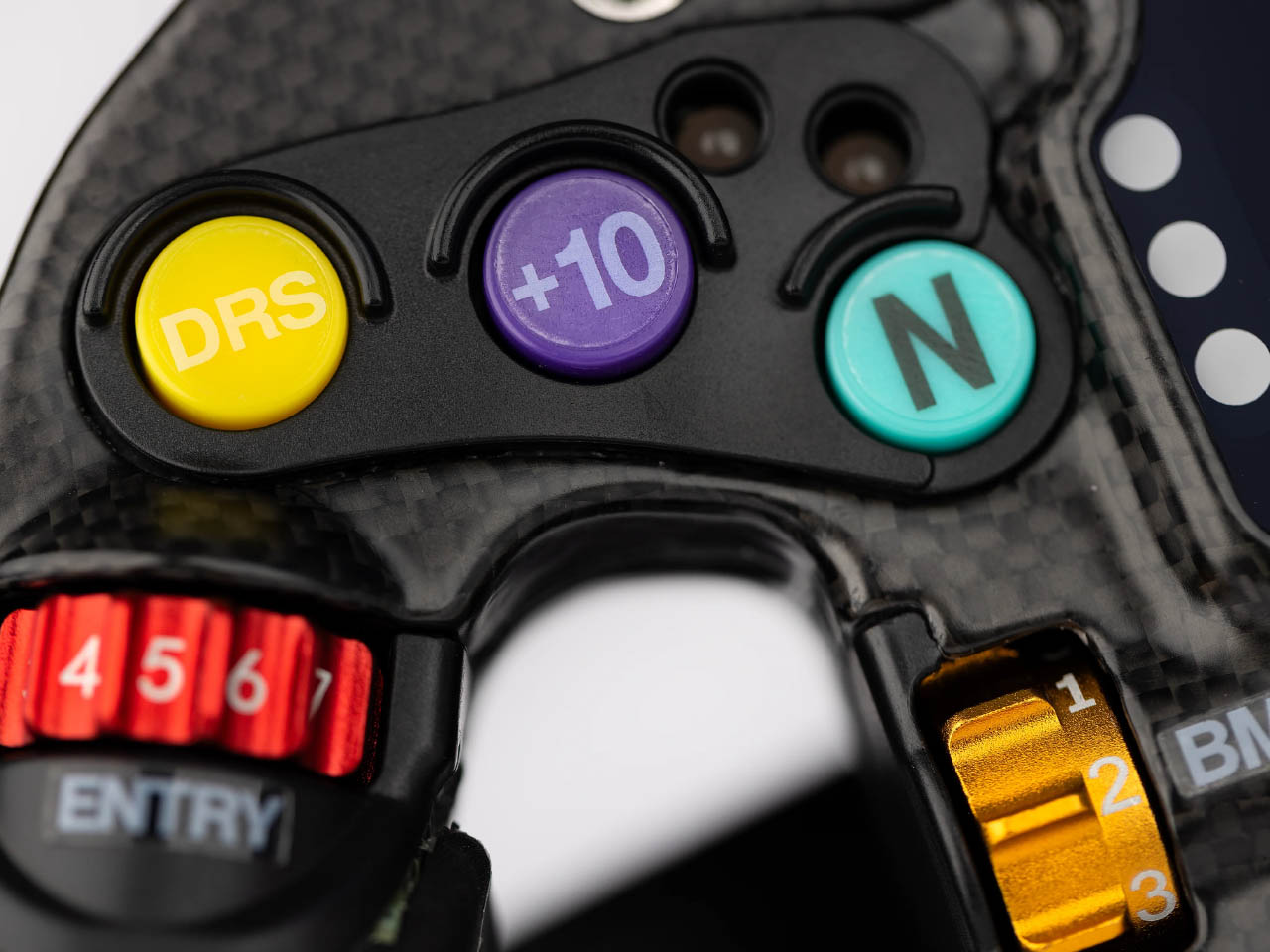
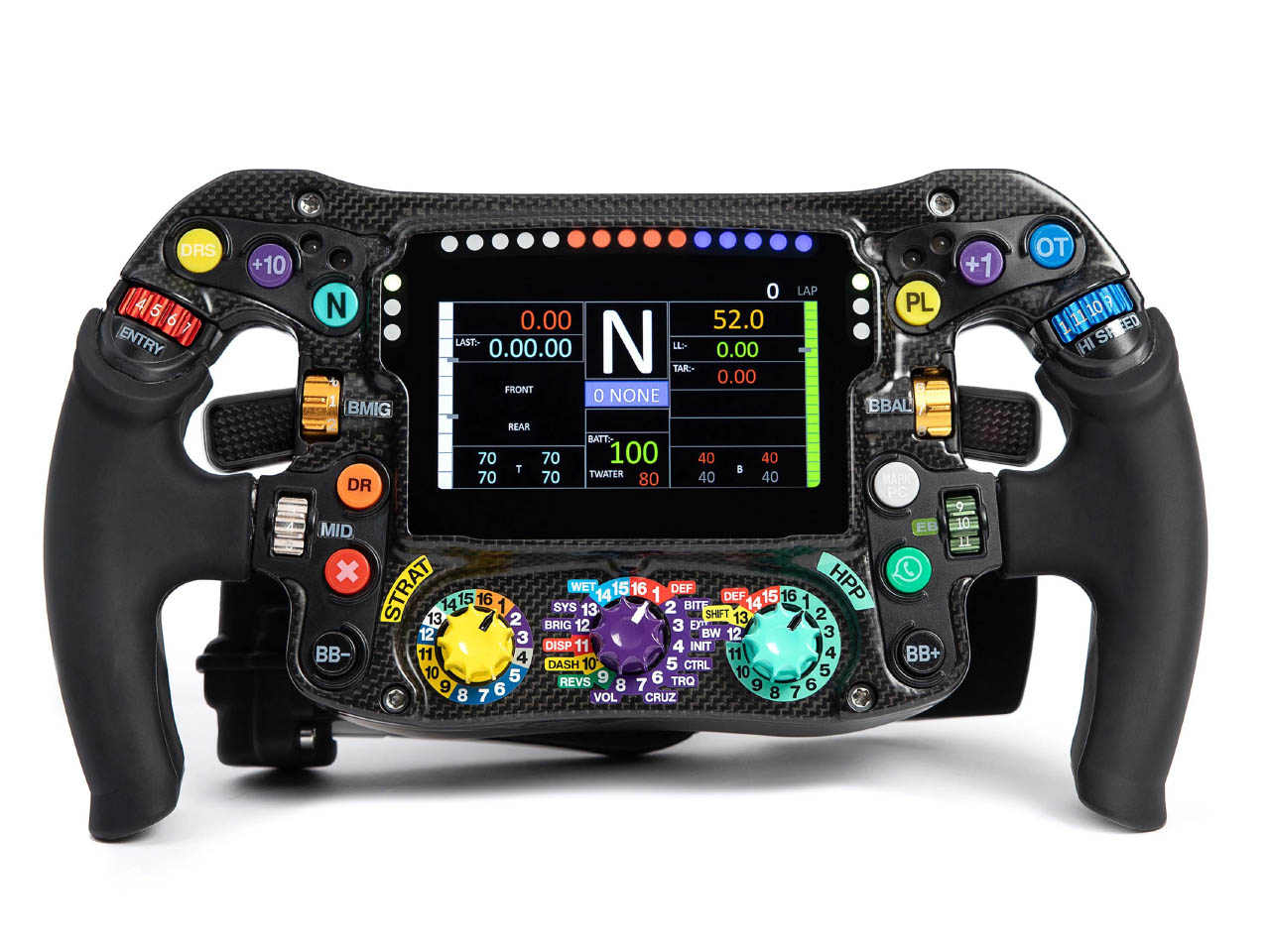
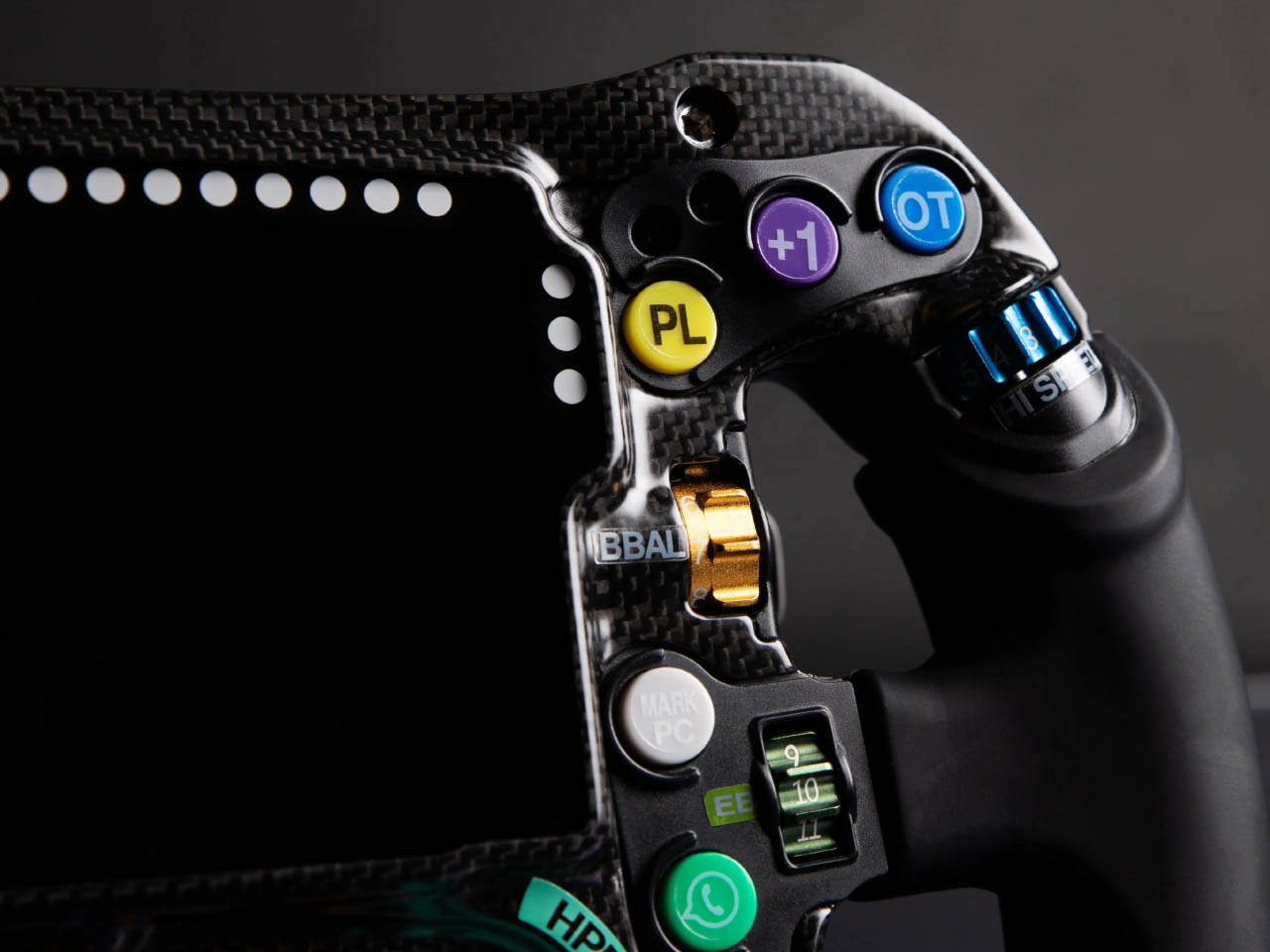
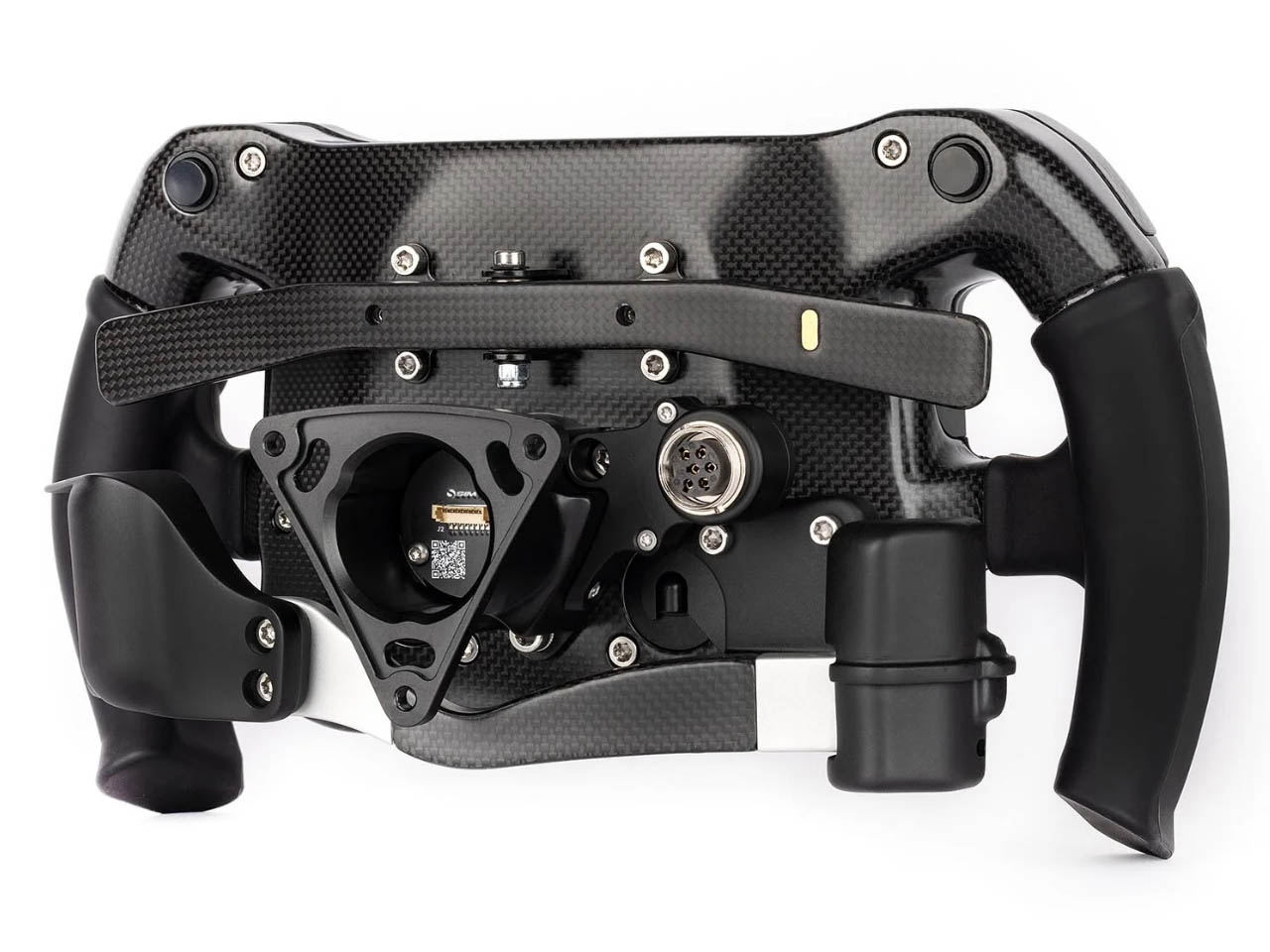
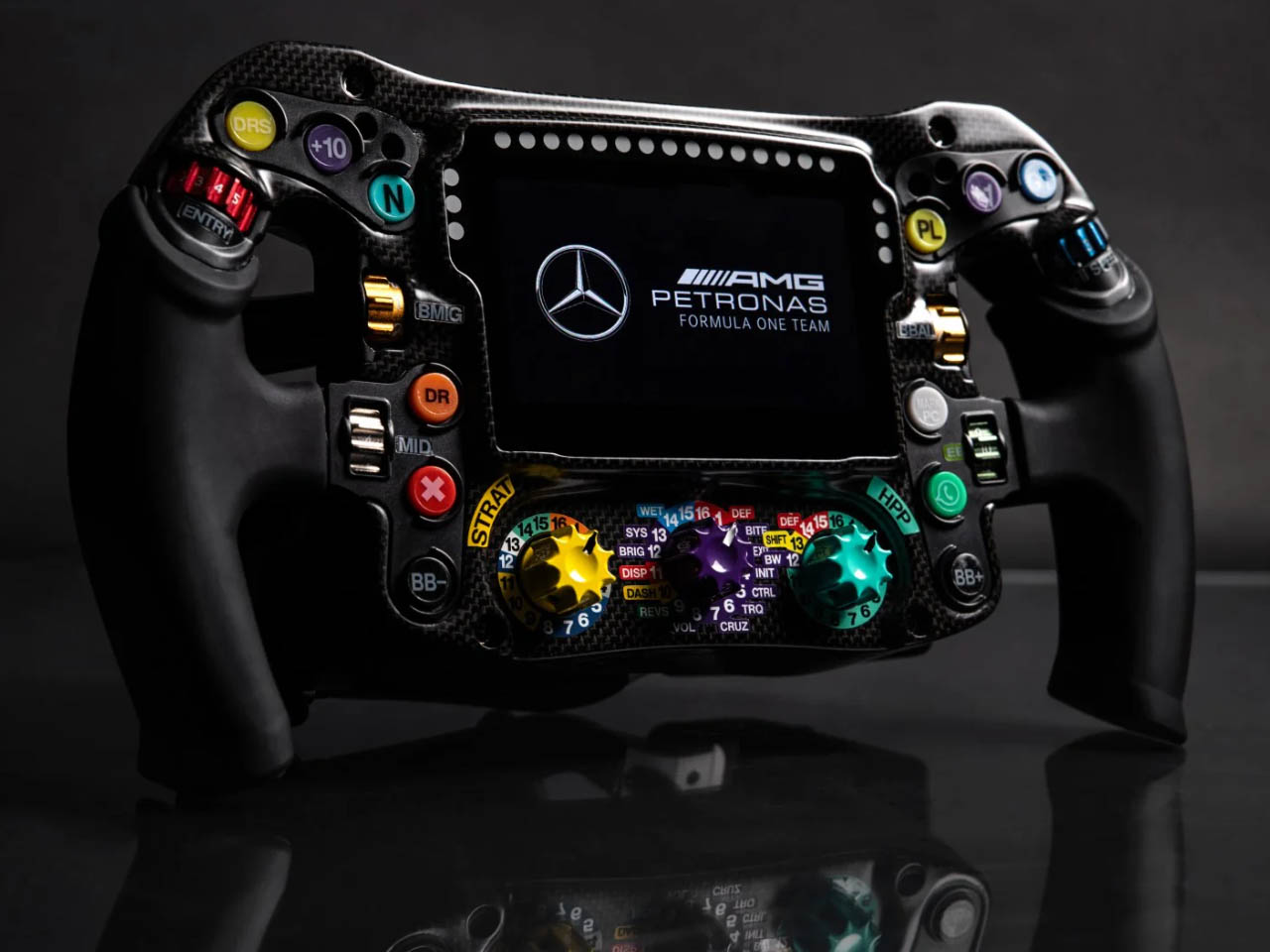
Compared to other racing wheels designed for Motorsports, this one is far ahead in terms of sheer level of detail and realism. The gaming accessory is designed using the CAD data that the F1 team uses for the multimillion-dollar racers. Hardware used in the making is also the same as the real F1 steering wheel used by the team. It is handmade out of a carbon fiber shell keeping the weight at 1,240 grams in total, so that every vibration and force feedback is felt the same as Lewis would feel driving at 150 mph going into a turn.

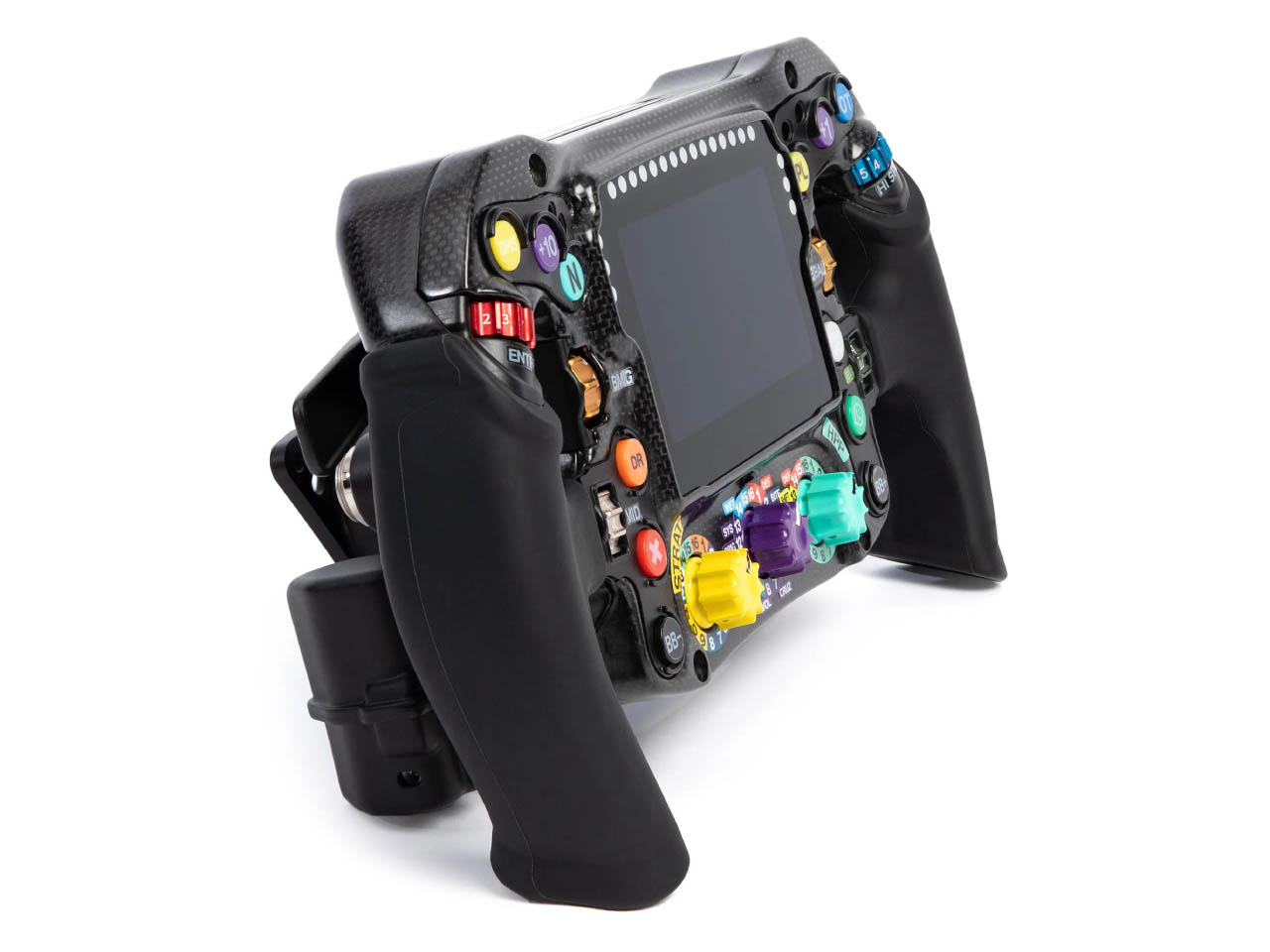
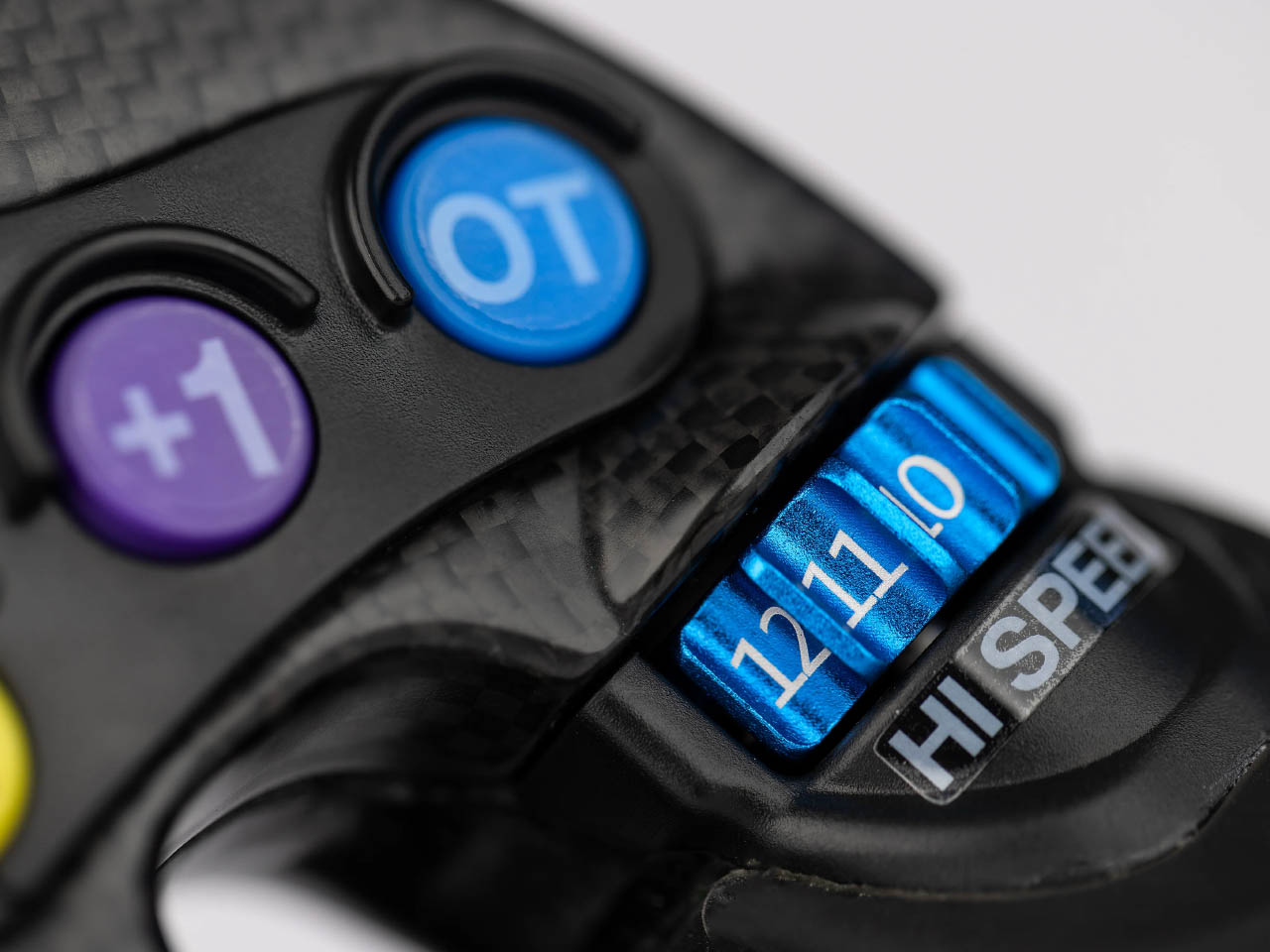
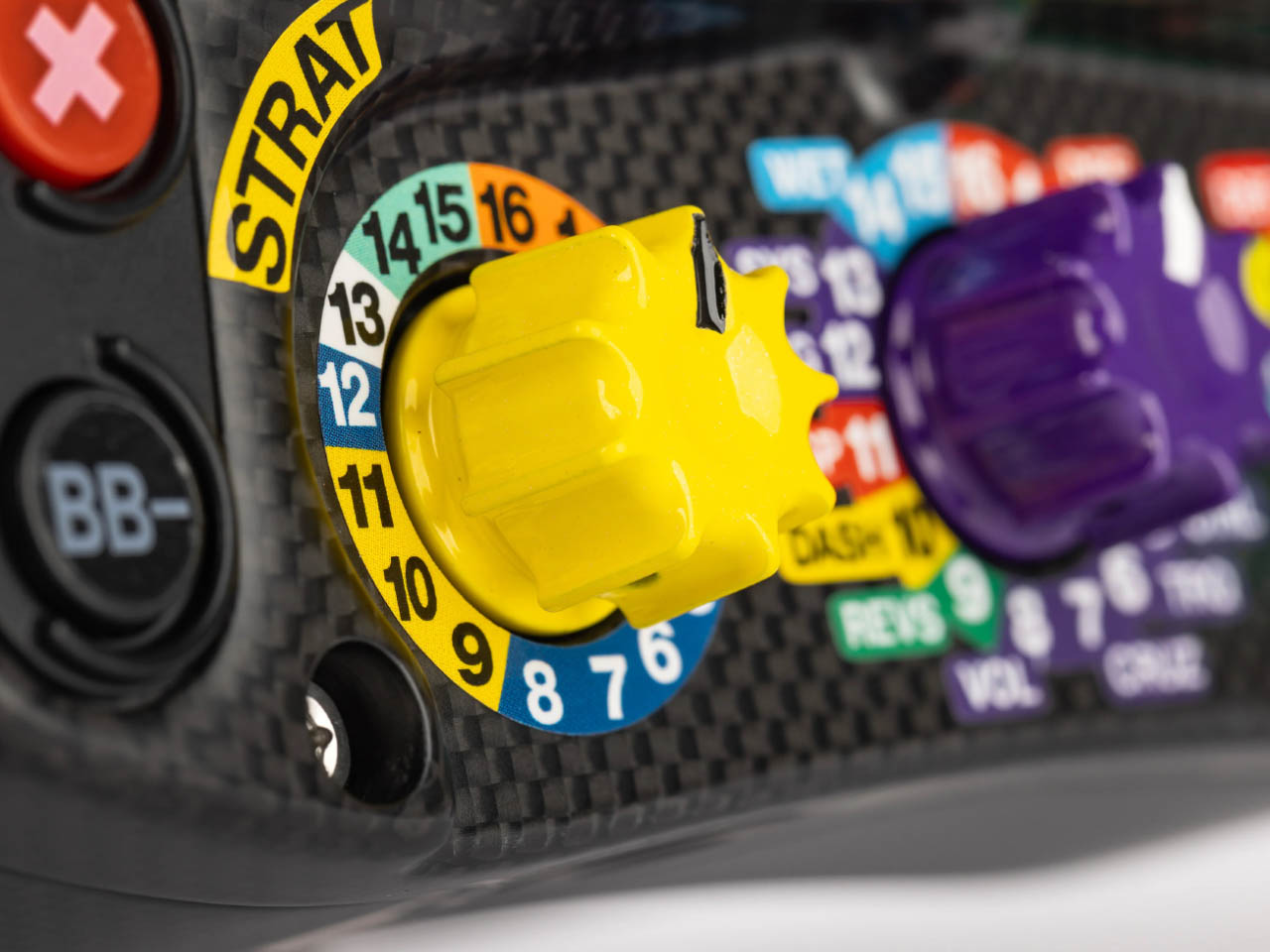
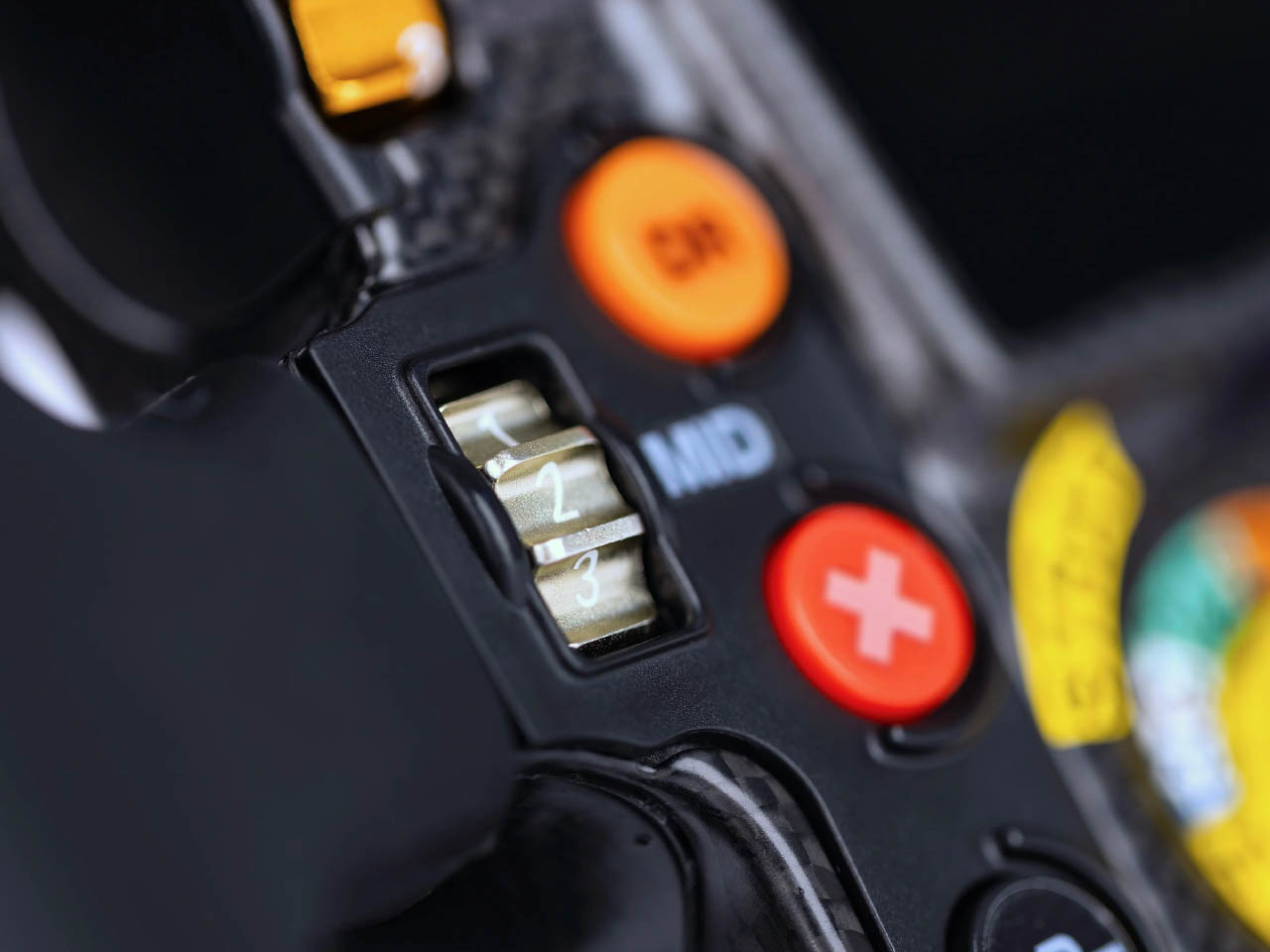
For superior grip and control during long stints of gaming, the racing wheel features anti-static rubber silicone grips. The carbon fiber shifter paddles, magic buttons and clutch mechanism have the same realism. It doesn’t stop there, as the gaming accessory features a 4.3-inch LCD screen that displays complex data to replicate the real-time data Mercedes F1 car’s drivers see while driving around the circuit. For those who follow F1 closely, the inclusion of 25 controllable RGB LEDs for telemetry data is unbelievable, showcasing the level of detail put into this one.

For those wanting to recreate the real Formula-1 experience, the Mercedes-AMG PETRONAS Formula One Team Sim Racing Steering Wheel costs a whopping $2,500. You’ll need to add on other accessories like a wheelbase to complete the realism, so it’s going to be a costly affair only manageable by a few passionate sim racers and the odd gaming affectionate. The officially licensed racing wheel is going to be compatible with wheelbases other than Formula One including Simucube, Fanatec, Moza, Simagic Alpha, Asetek, and VRS.

The post Officially licenced Mercedes-AMG Petronas F1 racing wheel simulates every turn and bump to perfection first appeared on Yanko Design.
TAG Heuer’s Iconic Return with the Reinvented Formula 1 Kith is Retro and Hot

As a die-hard enthusiast of both timepieces and Formula 1, the comeback of the TAG Heuer Formula 1 Series 1 not only grabs my attention—it’s also gearing up to increase my spending habits this month! This iconic watch, first introduced in 1986, was a pivotal point for TAG Heuer and played a key role in rejuvenating the Swiss brand during the quartz crisis. Its vibrant, robust design has survived and flourished, turning into a valued collector’s piece.

Designer: TAG Heuer + Kith

Teaming up with Kith, the trend-setting powerhouse that’s all about shaking up the fashion scene, TAG Heuer has given this classic sports watch a slick modern makeover. Limited to just under 5,000 pieces, the collection illustrates the nostalgia that often fuels contemporary watch collecting, coupled with the exclusivity and appeal that modern collectors want.

Just like the Swatch MoonSwatch sparked a frenzy in the watch world by adding a playful and accessible spin to Omega’s classic design, the TAG Heuer Formula 1 Kith collection is set to generate similar excitement. As such, it’s sure to mix the thrill of “get it before it’s gone” with some cool, fresh updates. I imagine it will attract long-time original series fans and a new generation captivated by unique collaborations and storytelling through design.

Swatch x Peanuts Snoopy MoonSwatch

The new series introduces significant updates to meet modern expectations. Sapphire crystal now replaces the original plastic dial coverings, improving both durability and clarity. High-grade rubber straps have been used in place of the original plastic ones, providing enhanced comfort and wearability. Personally, I prefer high-quality rubber straps because they are more casual and comfortable for daily wear. The collection includes five models with stainless steel cases, two of which have black PVD coatings to match their bezels. Additionally, five models maintain the original Arnite cases, now offered in new colorways created in partnership with Kith.

TAG Heuer Formula 1 | Kith (References WA121L.BT0014 & WA121J.BT0012)

Ronnie Fieg, the founder of Kith and a significant figure in the streetwear and sneaker industry, brings his personal passion for vintage TAG Heuer Formula 1s to this collaboration. This enthusiasm is echoed in the collection’s unique design elements. The all-plastic versions, as well as two steel versions with bright blue and green bezels, are available exclusively at Kith’s boutiques in New York, Miami, Los Angeles, Toronto, Hawaii, Tokyo, and Paris, as well as on its website.

These watches represent a return to the brand’s adventurous and innovative roots for fans of TAG Heuer’s racing heritage. This watch lets you own a piece of motorsport history, refreshed for today. It’s a direct link to racing legends, updated with modern style—perfect for everyday wear or showing off at special events. The balance between preserving nostalgic features like the 35mm sizing and vibrant color palettes and introducing upgrades showcases TAG Heuer’s dedication to respecting its past while pushing forward.

As TAG Heuer and Kith prepare to launch, there’s a buzz among Formula 1 fans and watch enthusiasts. This isn’t just another watch hitting the market. It’s a big deal, a cultural happening. It’s a one-of-a-kind piece that might sell out as quickly as a race car zips around the track. It could even match the recent hit collaborations by Swatch.

The post TAG Heuer’s Iconic Return with the Reinvented Formula 1 Kith is Retro and Hot first appeared on Yanko Design.
LEGO McLaren MP4/4 with Ayrton Senna minifig arriving in March to grace F1 fans’ shelves

Ayrton Senna is the undisputed legend of motor racing and he could have achieved timeless greatness (not that he has already not achieved the feat) hadn’t it been for that fateful corner at the Imola Circuit in Italy during the 1994 San Marino Grand Prix. Hence, Ffor a Formula-1 fanatic, any memorabilia or piece of history that recalls the legend’s memories is a prized possession.
For such fans, LEGO Speed Champions and Technic lineup will add to the proud collection in the form of the McLaren F1 MP4 Ayrton Senna LEGO set. The set comprising of 693 pieces will go on sale from March 1, 2024 for a suggested price tag of $80. Highlight of this set is the Senna minifigure on a podium holding the winner’s trophy with a plate displaying the photo and quote,  alongside the McLaren in action mode.
Designer: LEGO Group

The main focus here is the successful F1 MP4/4 car powered by the Honda turbocharged engine that was used during the 1988 Formula 1 season. Ayrton alongside his teammate Alain Prost pushed this beast to its limits in a spectacle of racing craft dominating the competition winning 15 out of the 16 races during the season. Ayrton stole the limelight with eight wins for the team, securing his place as the world champion, while Alain just missed the bar winning seven races.

The MP4/4’s reliability and pure performance made it one of the most dominant cars in the history of F1 to date. Of course, one can attribute that feat to the skill of Ayrton who showed some of the most mind-blowing driving craft during the season. Coming back to this LEGO build, it looks like Shell is again on good terms with the LEGO Group after a lull of a decade. You can spot the Sheel and Honda logos while the controversial Marlboro branding has been given a pass.

The 1:8 LEGO model is 553 mm long, 257 mm wide, and 125mm high. It comes with functional suspensions, a steering wheel, a V6 engine, a turbo compressor (with intercooler radiators), snorkels and exhaust blowing under the rear diffuser. What more could you ask for?

The post LEGO McLaren MP4/4 with Ayrton Senna minifig arriving in March to grace F1 fans’ shelves first appeared on Yanko Design.