Fire, Memory, and the Design That Wants to Keep Both Alive

Every year during the Ghost Festival, millions of people across East Asia stand at street corners, in parking lots, or on sidewalks, setting fire to paper offerings for their ancestors. It is one of the most intimate acts a person can perform in public. It is also, increasingly, a problem for the cities around it. The smoke is real. The fire hazard is real. And the tension between a deeply rooted cultural practice and modern urban living is just as real. That is the space where the Peace Urn was born.

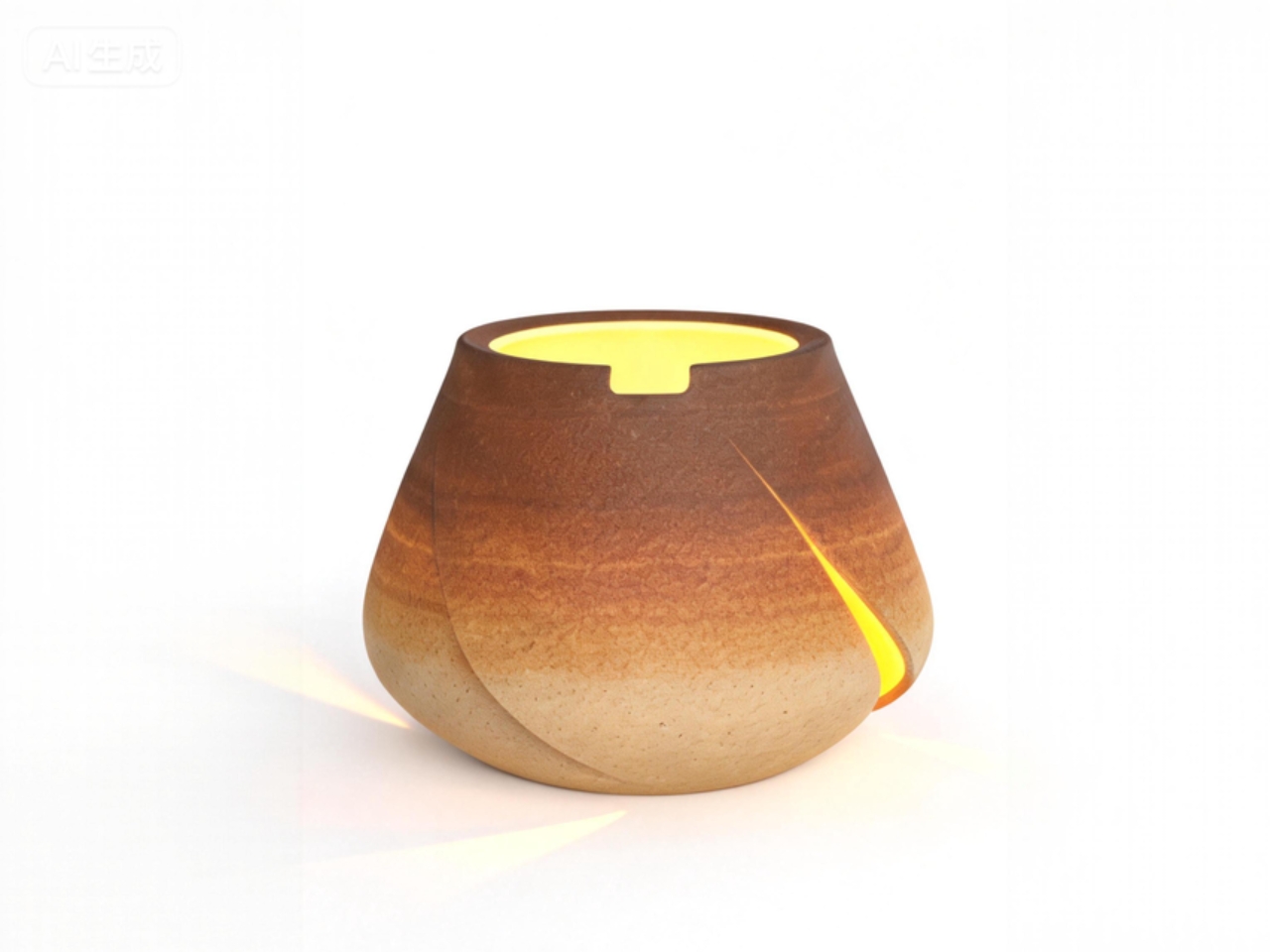
Designed by a team of five students, Hao Qian, Xiyue Yang, Zetong Song, Chenchen Du, and Yichen Fan, the Peace Urn is a clay vessel built specifically for burning joss paper in dense urban environments. It took home a Student Notable in the Lifestyle Accessories category at a 2026 design awards program, and while the recognition might sound understated, the thinking behind the project is anything but.

Designers: Hao Qian, Xiyue Yang, Zetong Song, Chenchen Du, Yichen Fan
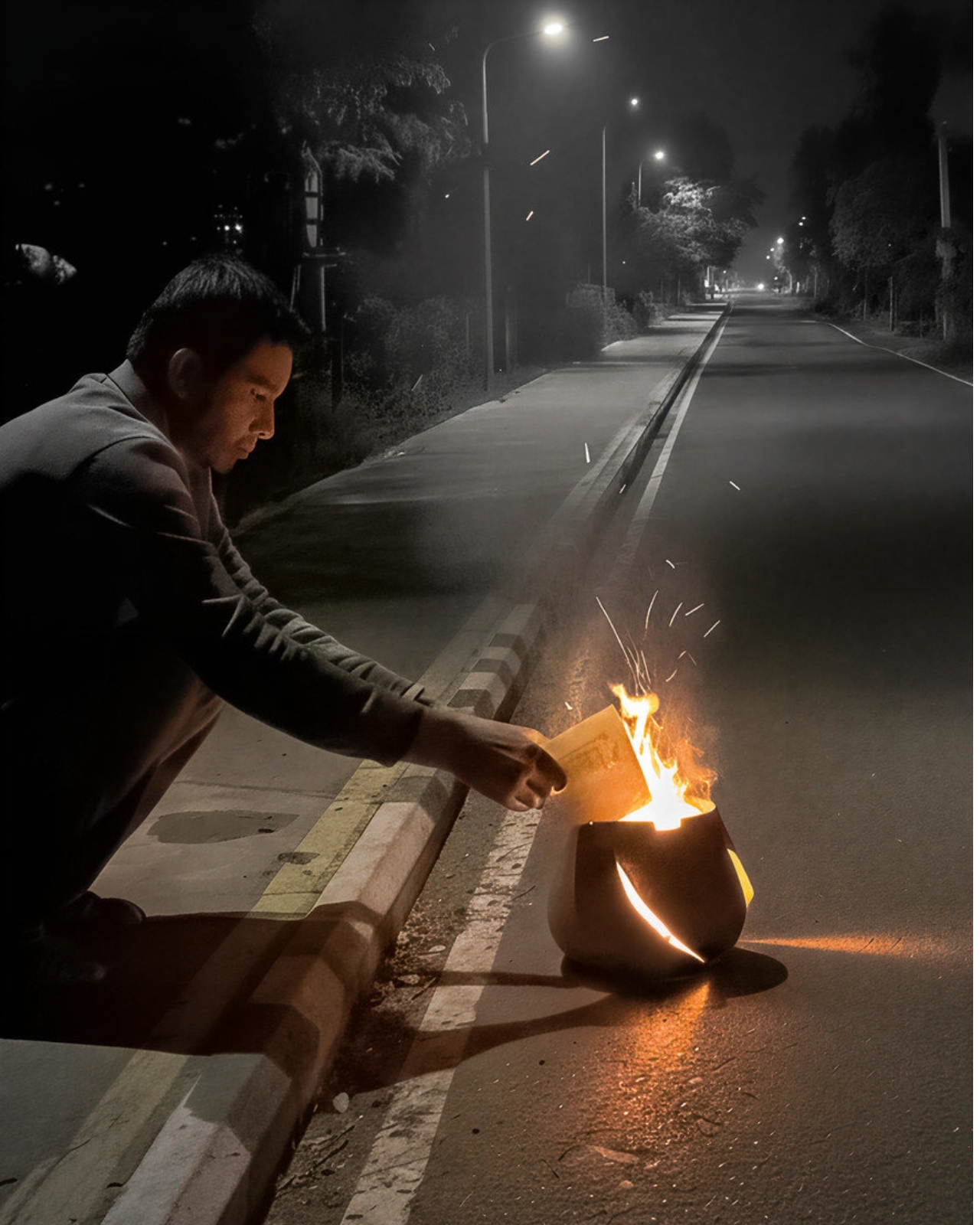
What the designers understood, and what I think gets missed in a lot of conversations about modernizing tradition, is that the goal was never to replace the ritual. It was to protect it. Burning joss paper is an act of grief and connection, a way of sending material offerings through fire to ancestors in the afterlife. You do not solve that by eliminating the fire. You solve it by giving the fire somewhere better to live.

The Peace Urn does exactly that through airflow. The geometry of the vessel is engineered so that air moves through it in a specific pattern, slowing ash as it rises and drawing it back down rather than letting it scatter across streets and neighbors’ windshields. Smoke is managed similarly. The result is a contained burn that still looks and feels like a burn, which matters more than it might seem.

The designers were deliberate about keeping the visual experience intact. Flames remain visible through openings in the vessel because that visibility is not decorative. It is the whole point. Watching the offerings transform is part of the ritual itself. A closed, purely functional container would have technically solved the problem while emotionally gutting it. The Peace Urn refuses to make that trade.

The material choice is worth noting too. The urn is made from unglazed heat-resistant clay, chosen for its thermal stability, affordability, and cultural familiarity. But the choice goes beyond practicality. As the urn ages and accumulates soot, heat marks, and residue from repeated use, it becomes a record of the rituals performed in it. The surface changes. It holds memory in a tangible way, which feels entirely fitting for an object designed to help people honor the dead.

There is also a structural proposal embedded in the design: moving the practice from informal street corners into designated public spaces. The urn is not just a personal object. It is part of a system, a piece of infrastructure that allows the practice to be relocated into designated spaces, improving safety and spatial order while maintaining the privacy and emotional intimacy of the ritual. That shift from “this is someone’s private act happening in public” to “this is a supported civic practice” is, I think, quietly significant. It is an argument that tradition deserves planning, not just tolerance.
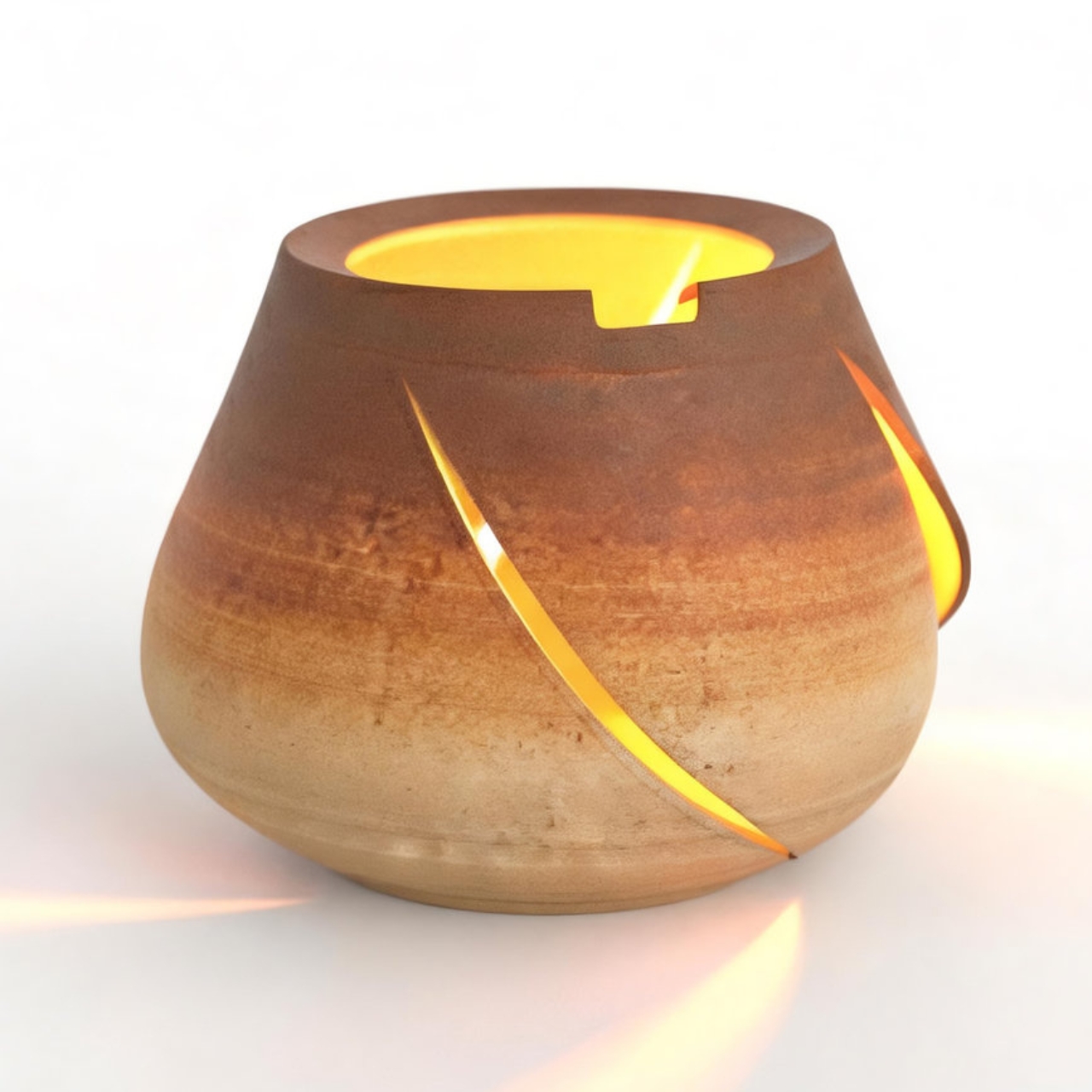
The geometry carries one more layer of meaning. The circular form of the urn references the traditional practice of drawing a circle on the ground when burning joss paper, where the boundary defines sacred space and the opening represents the direction of spiritual transmission. Translating that into the vessel’s shape is the kind of detail that separates thoughtful design from clever design. The circle does not just look good. It means something.

The Peace Urn will not end up in a museum as an object of aesthetic appreciation, and it is not trying to. It is trying to show up every Ghost Festival, on a designated corner somewhere, smelling like smoke and doing its job. That restraint is admirable. Not every design needs to be timeless. Some just need to be useful at the right moment, for the right people.
The post Fire, Memory, and the Design That Wants to Keep Both Alive first appeared on Yanko Design.
The Urn With 4 Screens Showing Moving Images of the Person You Lost

Cremation urns have existed for thousands of years, but their design language has barely moved. They tend toward the ceremonial and the generic, pottery shapes lifted from antiquity or polished boxes that draw from the visual vocabulary of caskets. The underlying assumption across nearly all of them is the same: that the vessel marks an ending. That what’s inside has arrived, not departed.

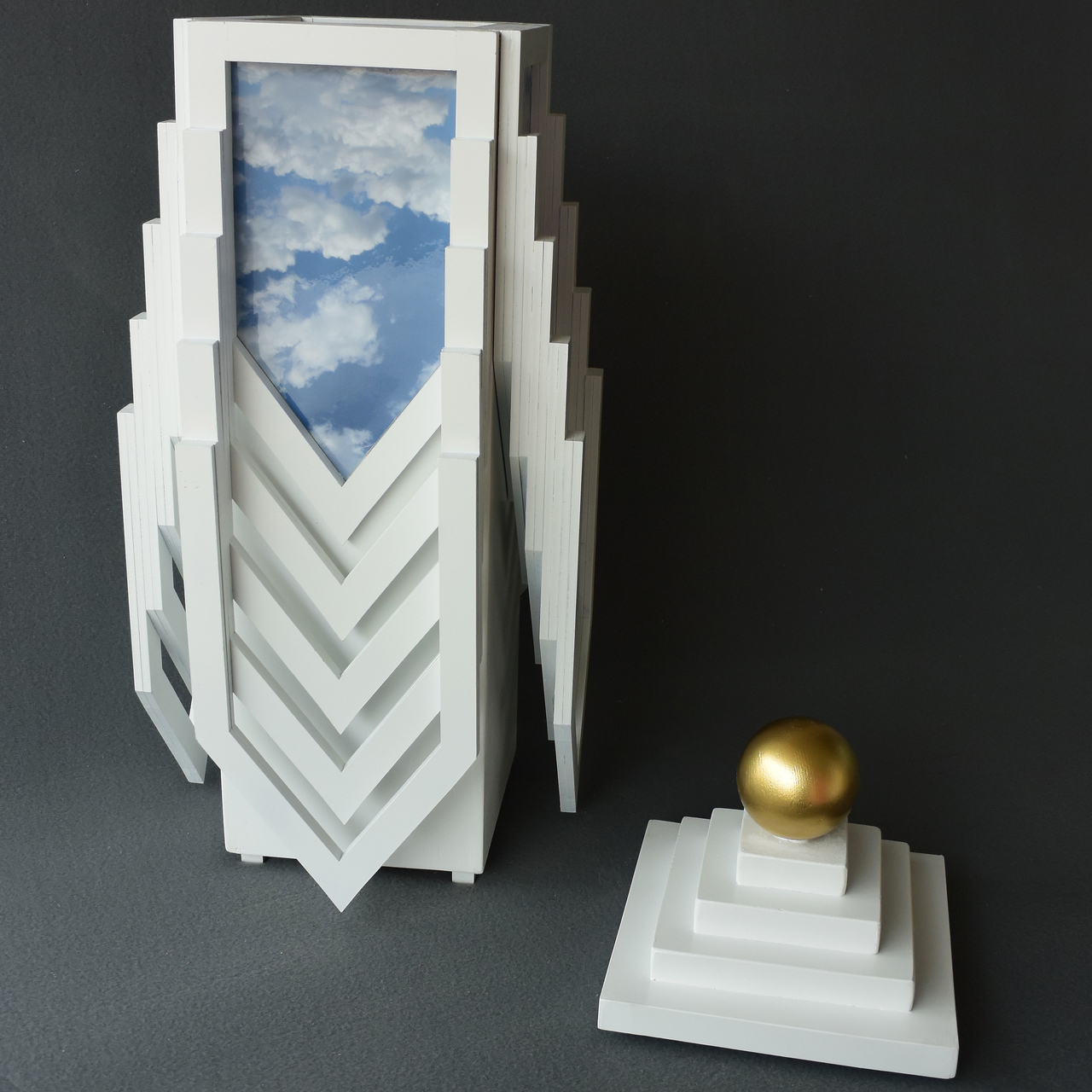
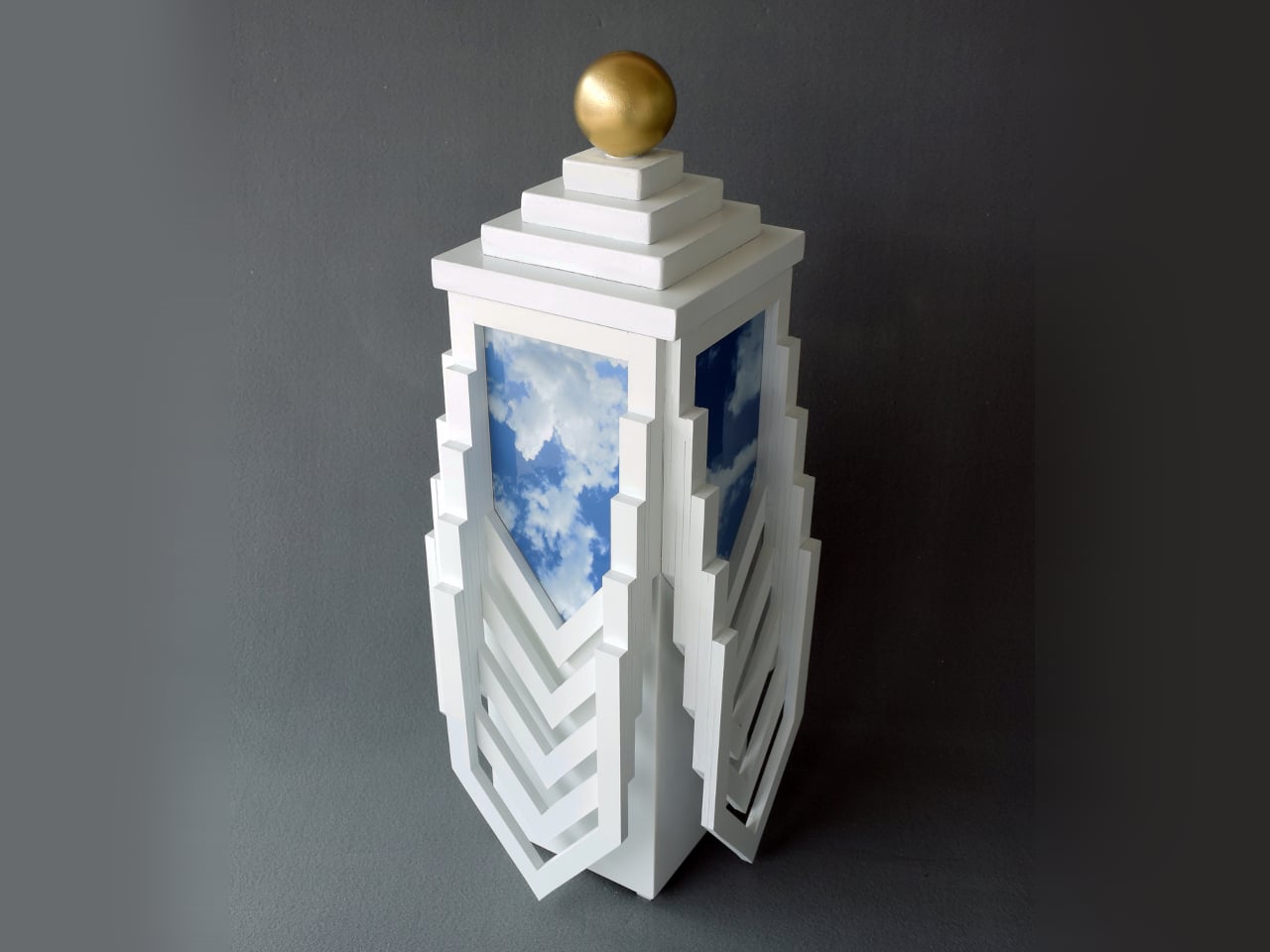
The Transcendence Urn takes a different philosophical position entirely. It belongs to a series of objects conceived as temporary dwellings for the remains of loved ones, held in anticipation of what comes next. The form it takes to express this idea is strikingly futuristic, almost sci-fi in its ambition, built on the premise that the urn theoretically facilitates the occupant’s journey toward a higher state of existence rather than simply containing what was left behind.

Designer: Michael Jantzen

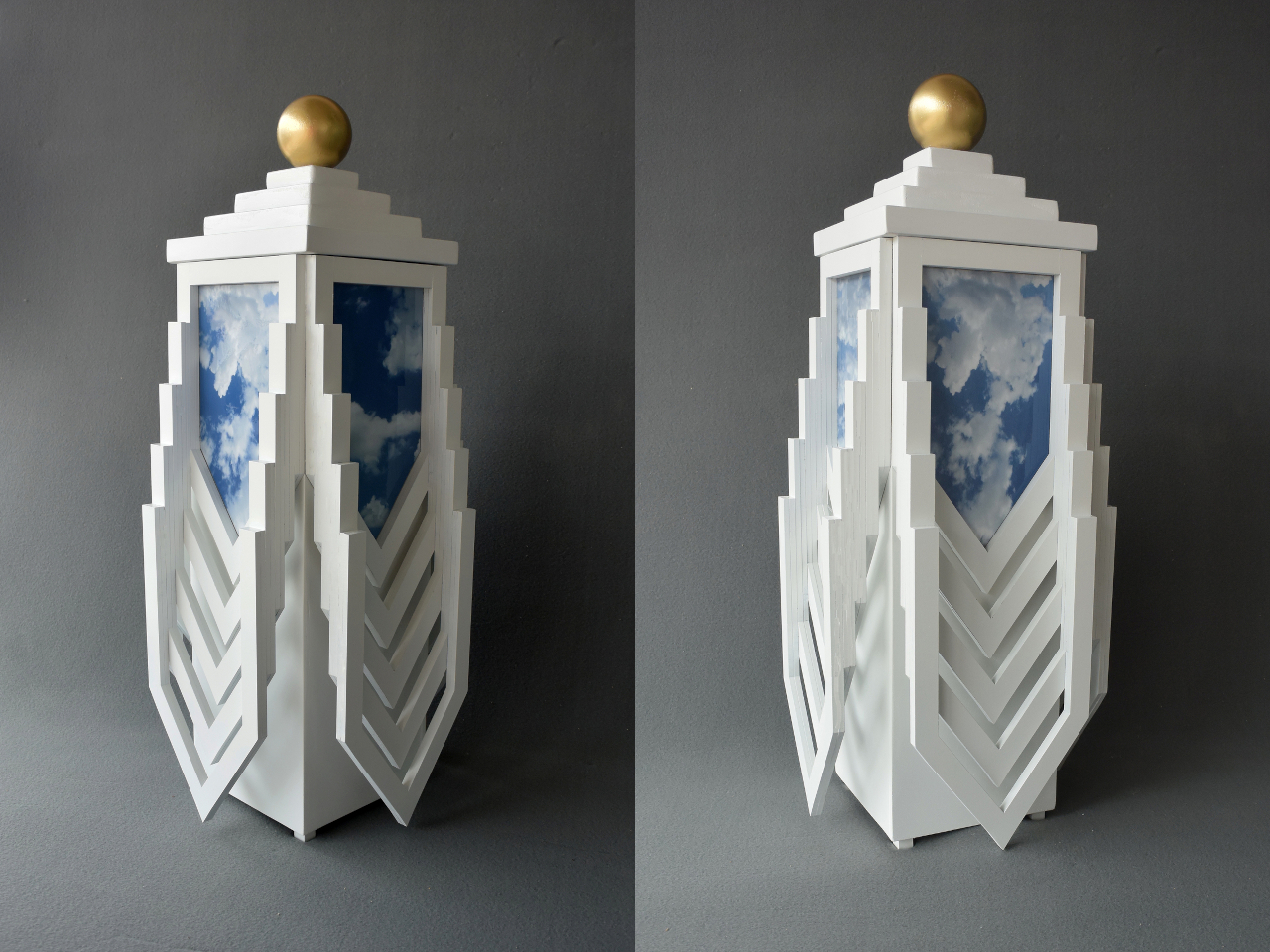
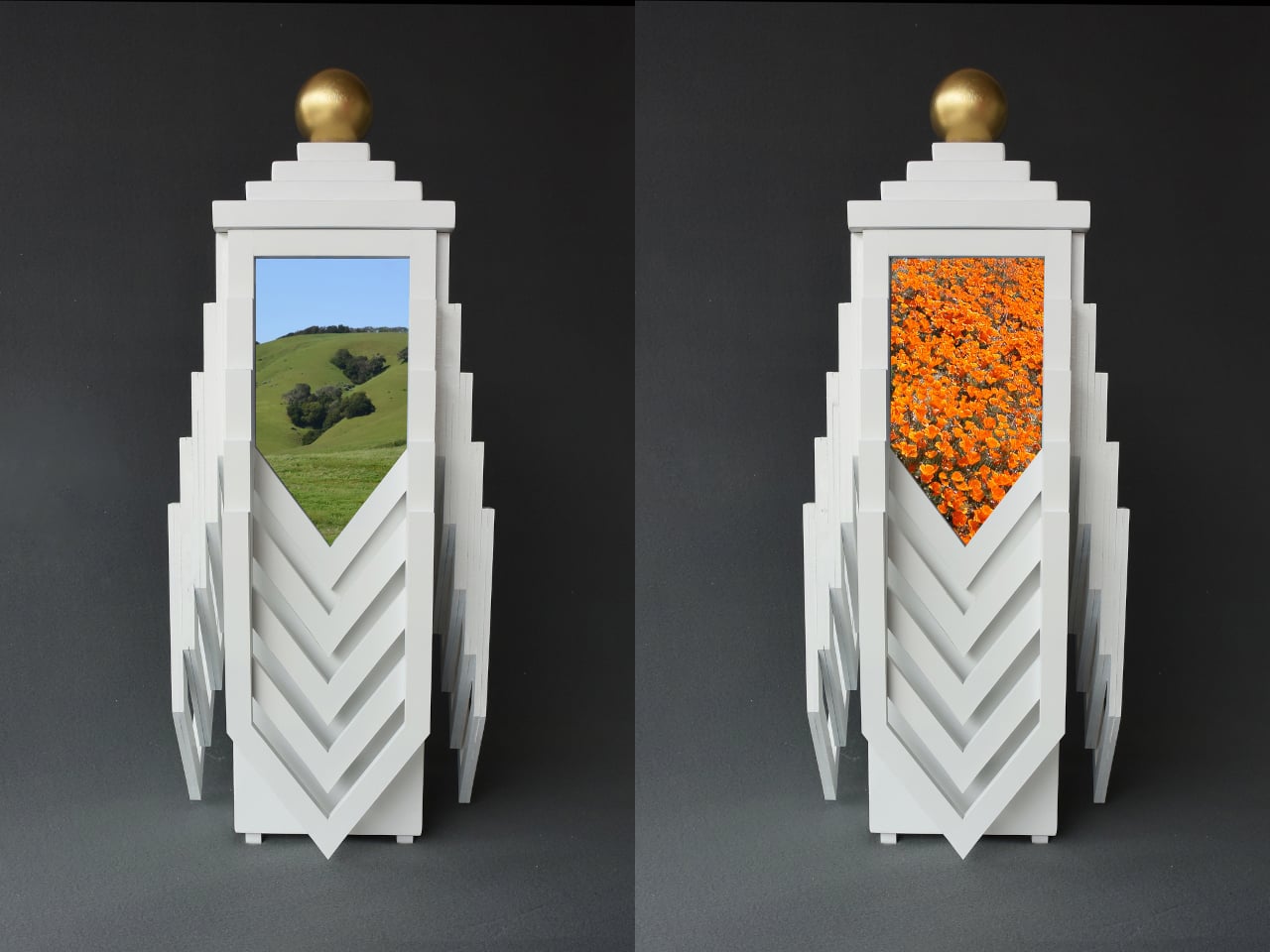
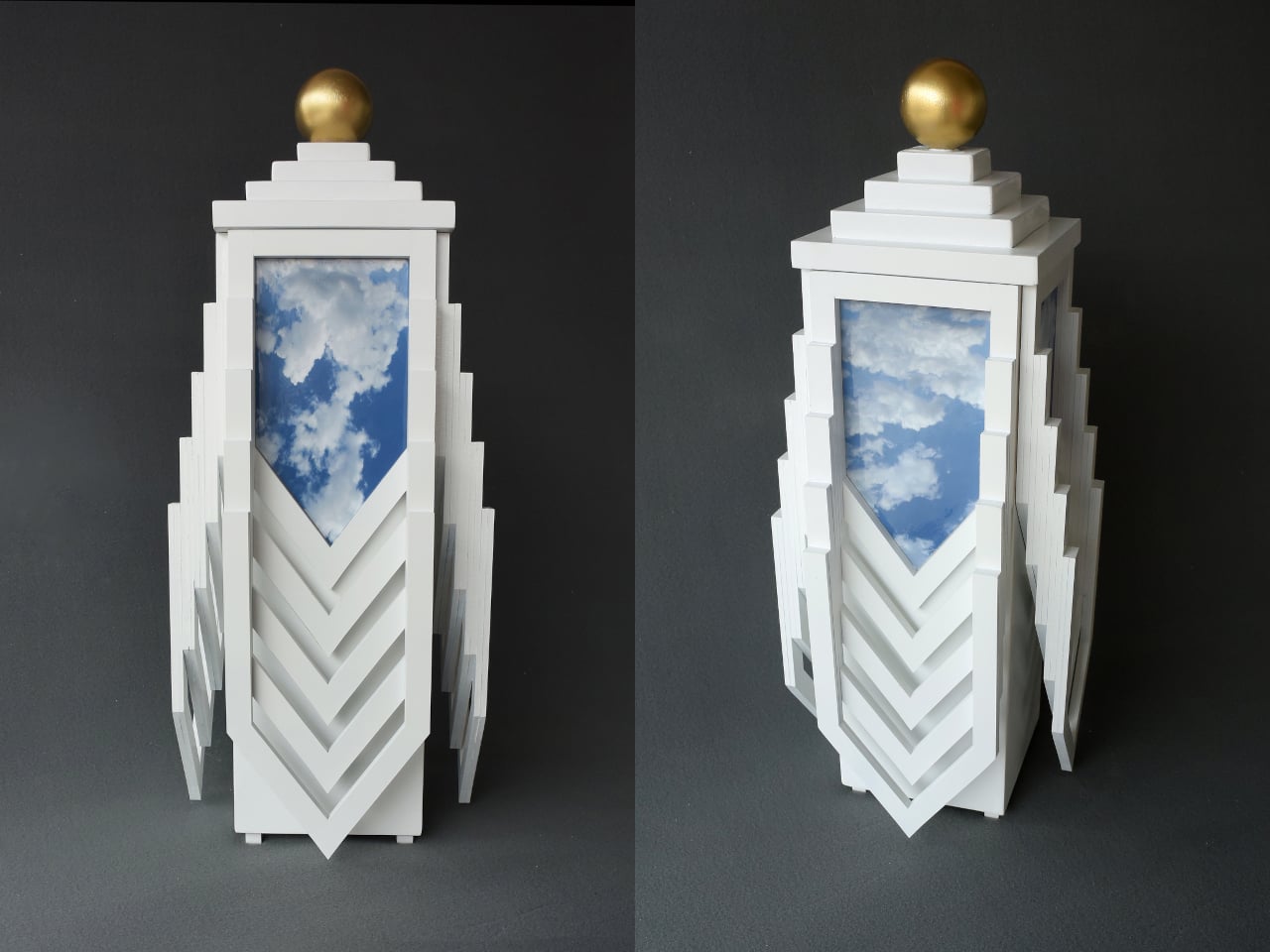
The structure stands 25 inches tall and 12 inches wide, built from painted wood in a form that seems to reach upward. Stepped tiers stack toward the top, followed by a gold sphere that crowns the whole structure and is removable from its own tiered plinth. The lower body radiates outward in layered chevron forms, pointing downward like fins, giving the whole piece a sense of directed energy, as if something inside it is moving rather than resting.

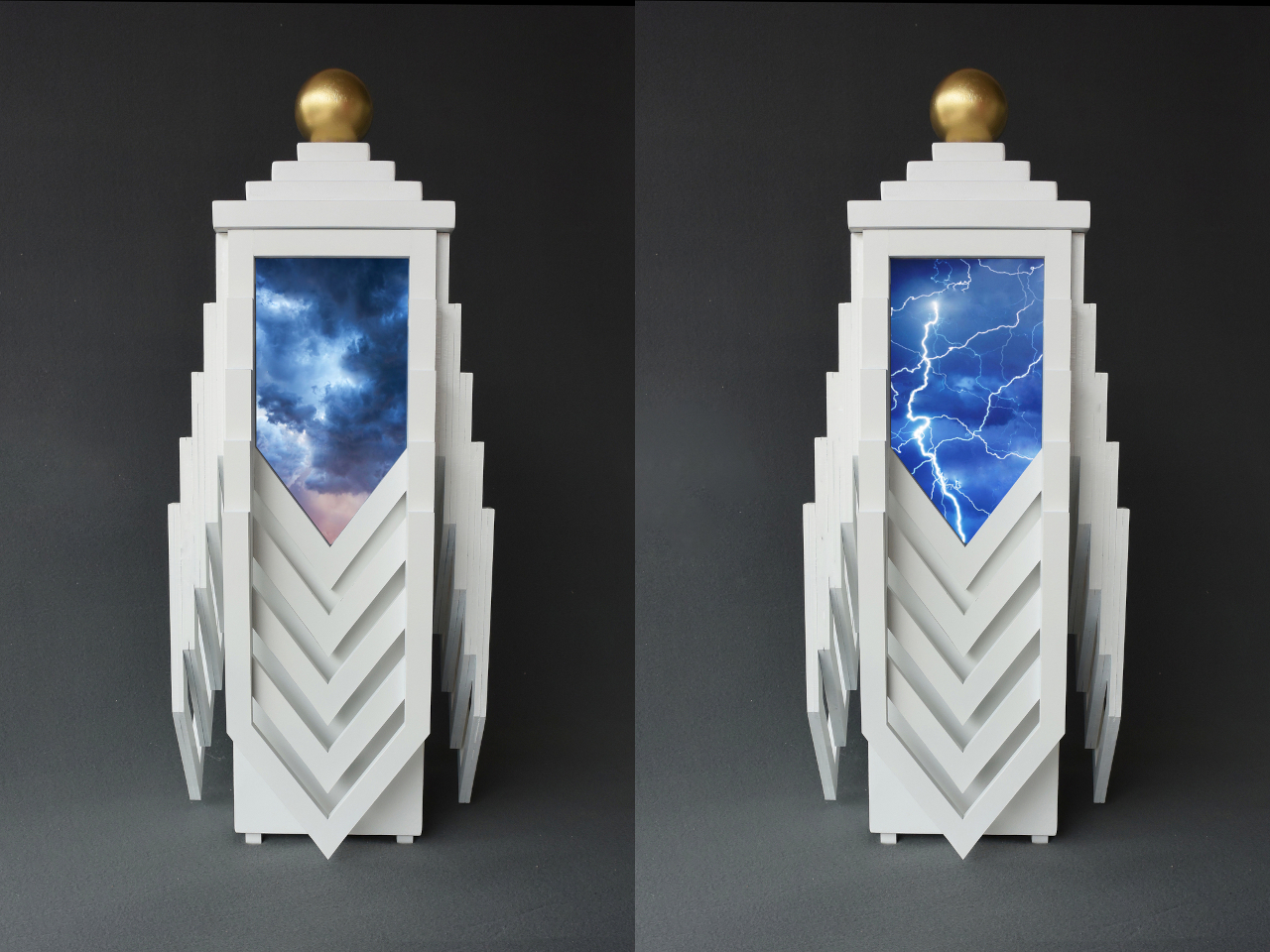
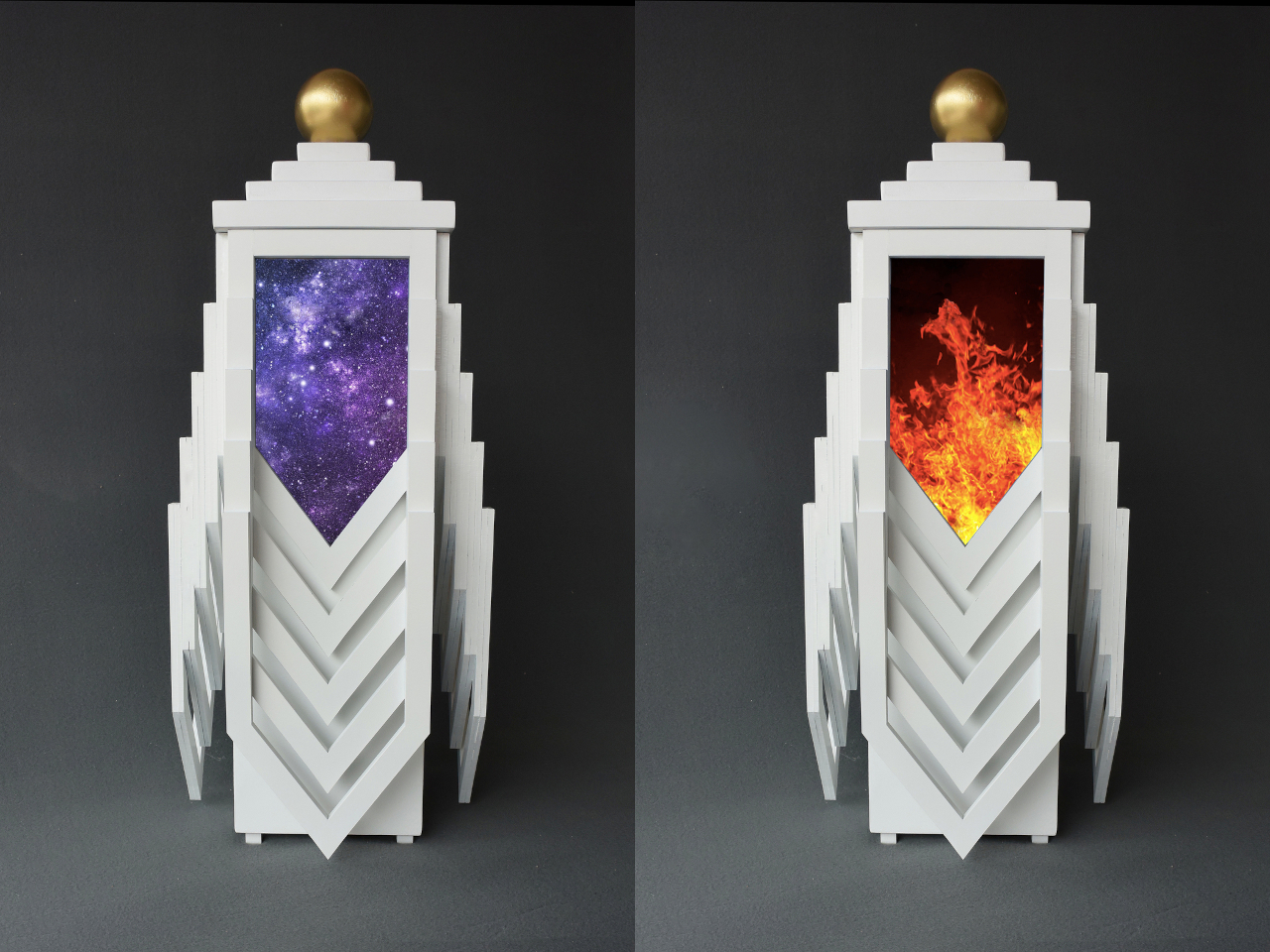
The four panel spaces near the top of the urn are where the personal dimension takes shape. Owners can fill them with photographs selected from a curated series of symbolically resonant images, or with their own. The possibilities run a wide emotional and metaphysical range: images of open sky and drifting clouds, a sunlit hillside, a field of orange flowers, a galaxy, fire, storm, and lightning are all part of the symbolic vocabulary this design draws from. Of course, photos of the actual person can go there, too.

That choice matters more than it might first appear. Most memorial objects leave the bereaved as passive recipients of a fixed form. This one asks them to make decisions about meaning, to assign symbols, and to decide what the person they lost should be surrounded by. It’s a quiet but real kind of agency during a period when very little feels controllable.

A digital variant of the Transcendence Urn replaces the four static panels with four screens displaying moving images and sounds, turning the object from a still memorial into something more like a living one. That version shifts the experience even further, letting the presence of the deceased linger in a more active, dynamic way rather than being fixed to a single still photograph chosen on a single day of grief.

It’s also worth noting what the object looks like on a shelf or a table. It doesn’t look like an urn. It looks like a piece of speculative design, the kind of object that invites questions before anyone knows what it holds. That unfamiliarity carries its own kind of comfort: it doesn’t announce loss the same way a traditional vessel does, and it doesn’t ask the viewer to feel a particular thing on sight.

The post The Urn With 4 Screens Showing Moving Images of the Person You Lost first appeared on Yanko Design.
Liquid Death x Spotify Eternal Playlist Urn, because afterlife deserves good vibes

Spotify is undoubtedly one of the most used streaming audio services worldwide, with a library of over 100 million tracks, 7 million podcasts, and 500,000 audiobooks. Their upgrade to lossless audio will only edge the 751 million-user base further, as the battle with Apple Music, YouTube Music, and Tidal heats up.

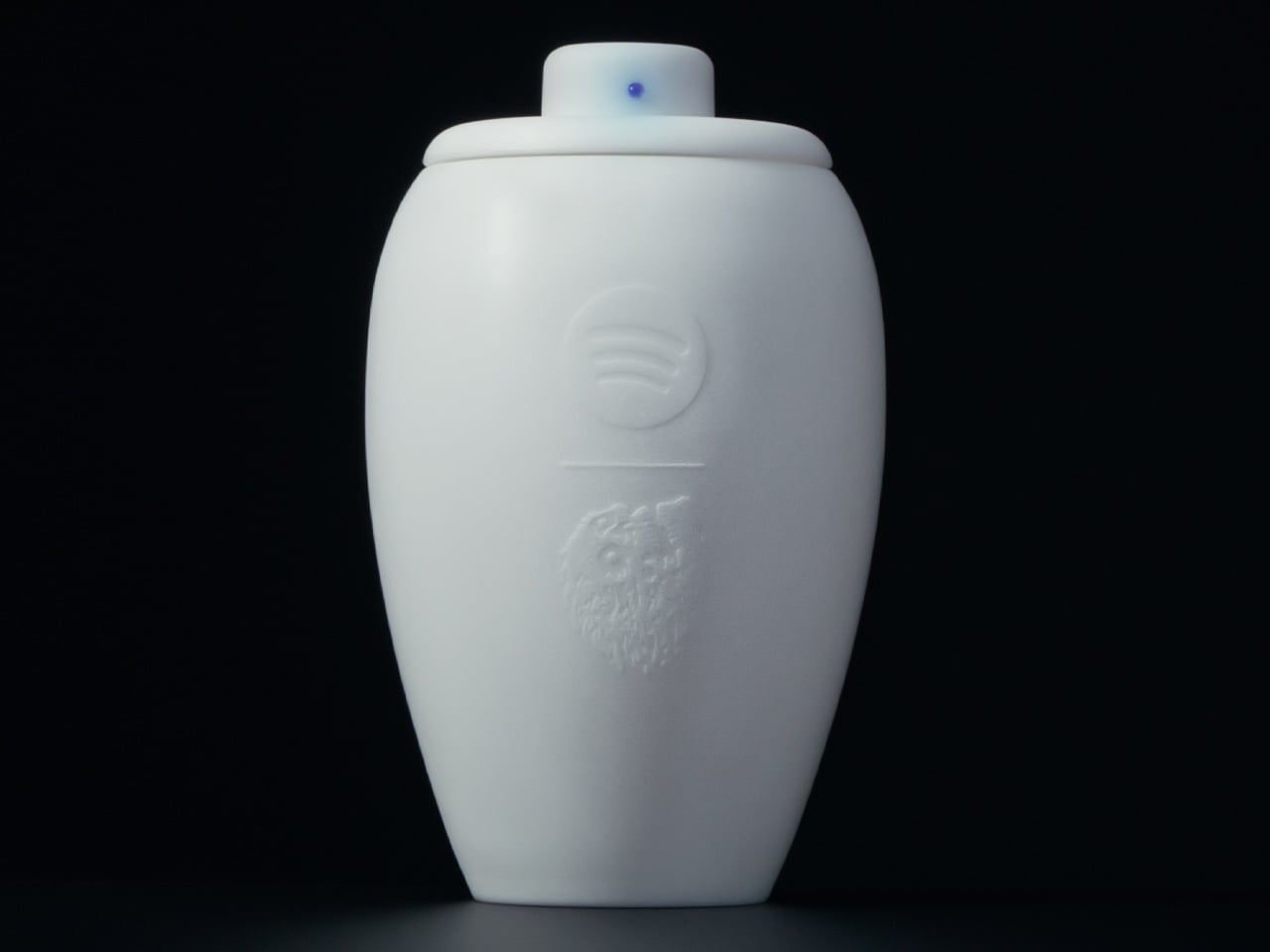
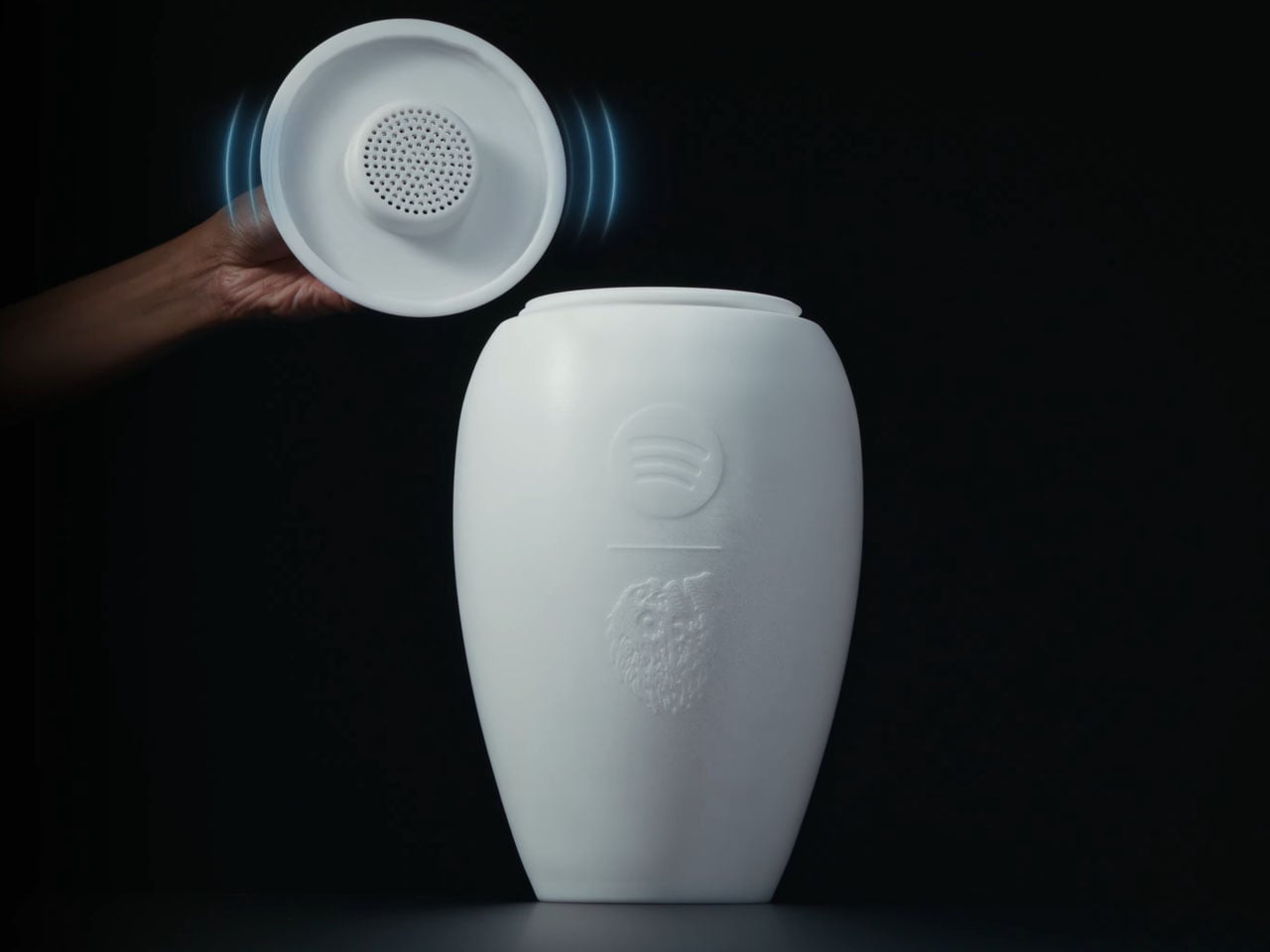
Their estimated market share of 31 percent is not eroding anytime soon, so why not experiment with out-of-the-box product designs that attract more users? The Scandinavian music giant has collaborated with beverage company Liquid Death to create one of the most unique products you’ll see all year long. This is the Eternal Playlist Urn, a Bluetooth speaker shaped like an urn (no prizes for guessing). According to Spotify, this is the world’s first music streaming ceremonial jar that makes death “a lot less boring” and keeps hauntings at a minimum, as music tends to calm down the deceased, presumably!

Designer: Spotify and Liquid Death

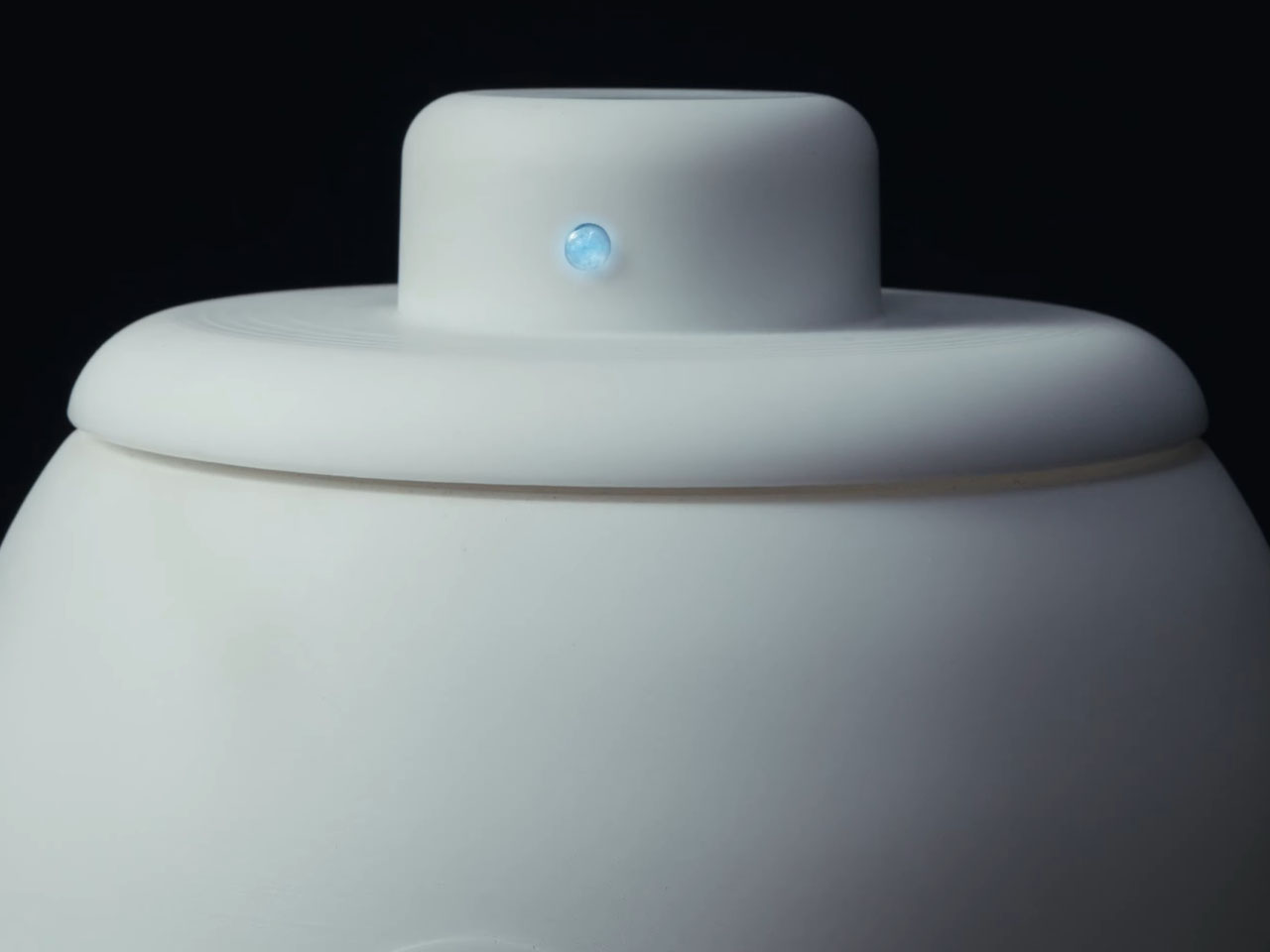
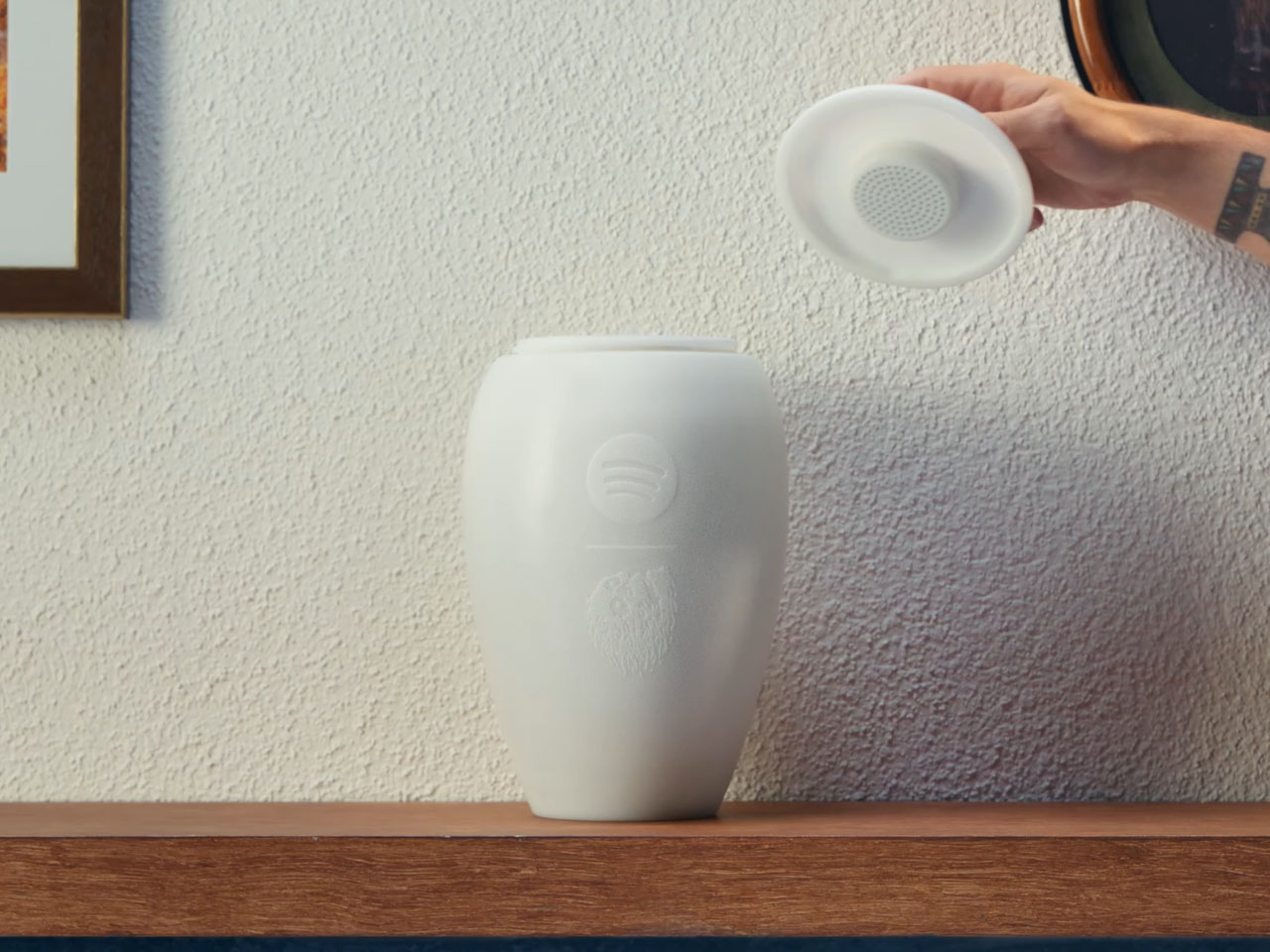
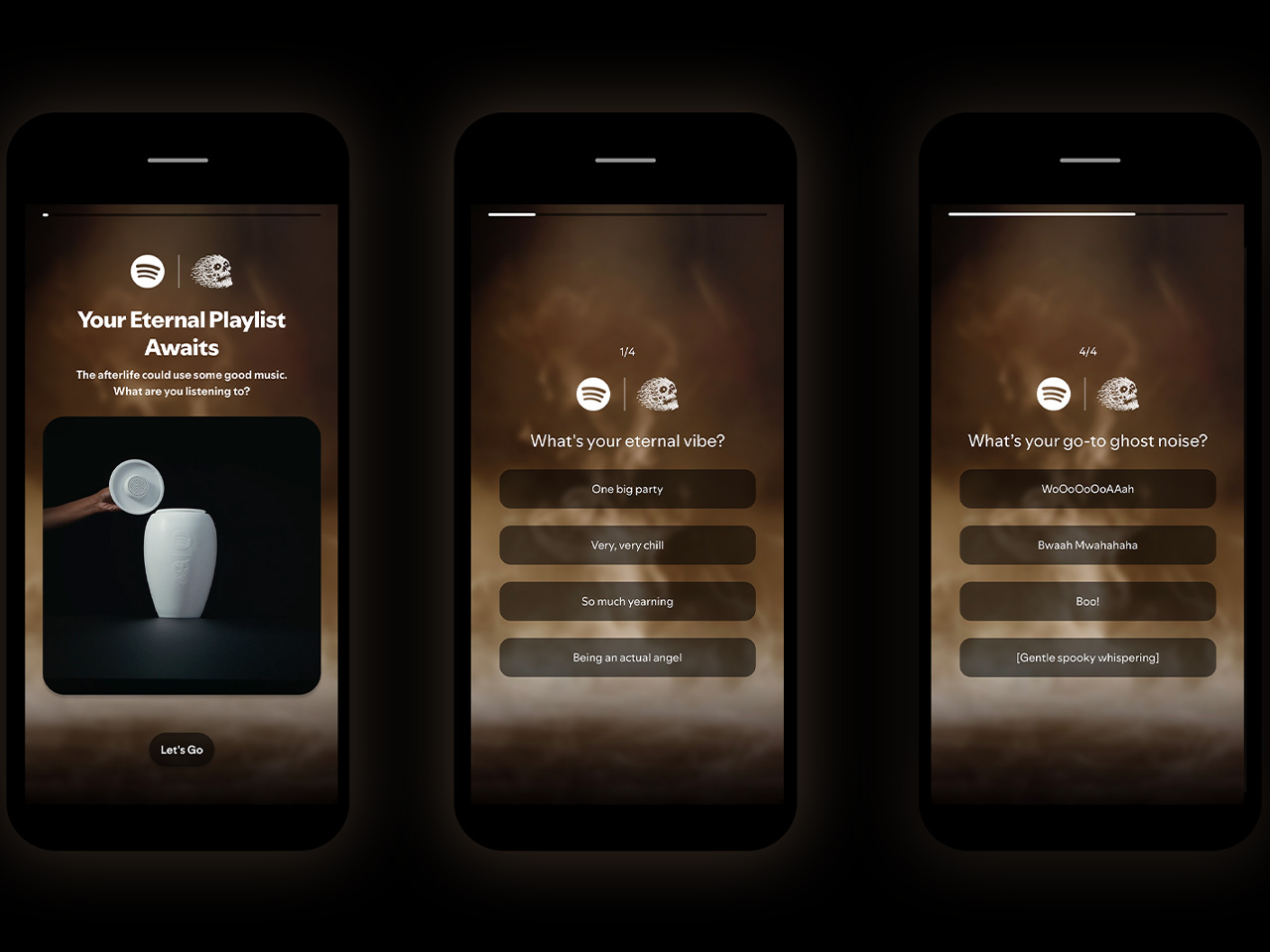
The idea here is to create music vibes somewhere that has never been done before. A belief that the dearly departed souls should have the freedom to jive to their favorite tunes down 6 feet under. That too for eternity, as Spotify jokingly exclaimed. As most of us would believe, the keepsake pot houses the wireless speaker unit. That’s not the case, as the big urn doesn’t conceal the big speaker; it is a small driver unit in the lid of the urn. When you get this speaker urn, the first thing you do is create the Eternal Playlist on Spotify. There are a few questions that you need to answer, like “What’s your eternal vibe?” or “What’s your go-to ghost noise?”, and then the custom playlist is generated considering these replies and the listening history.

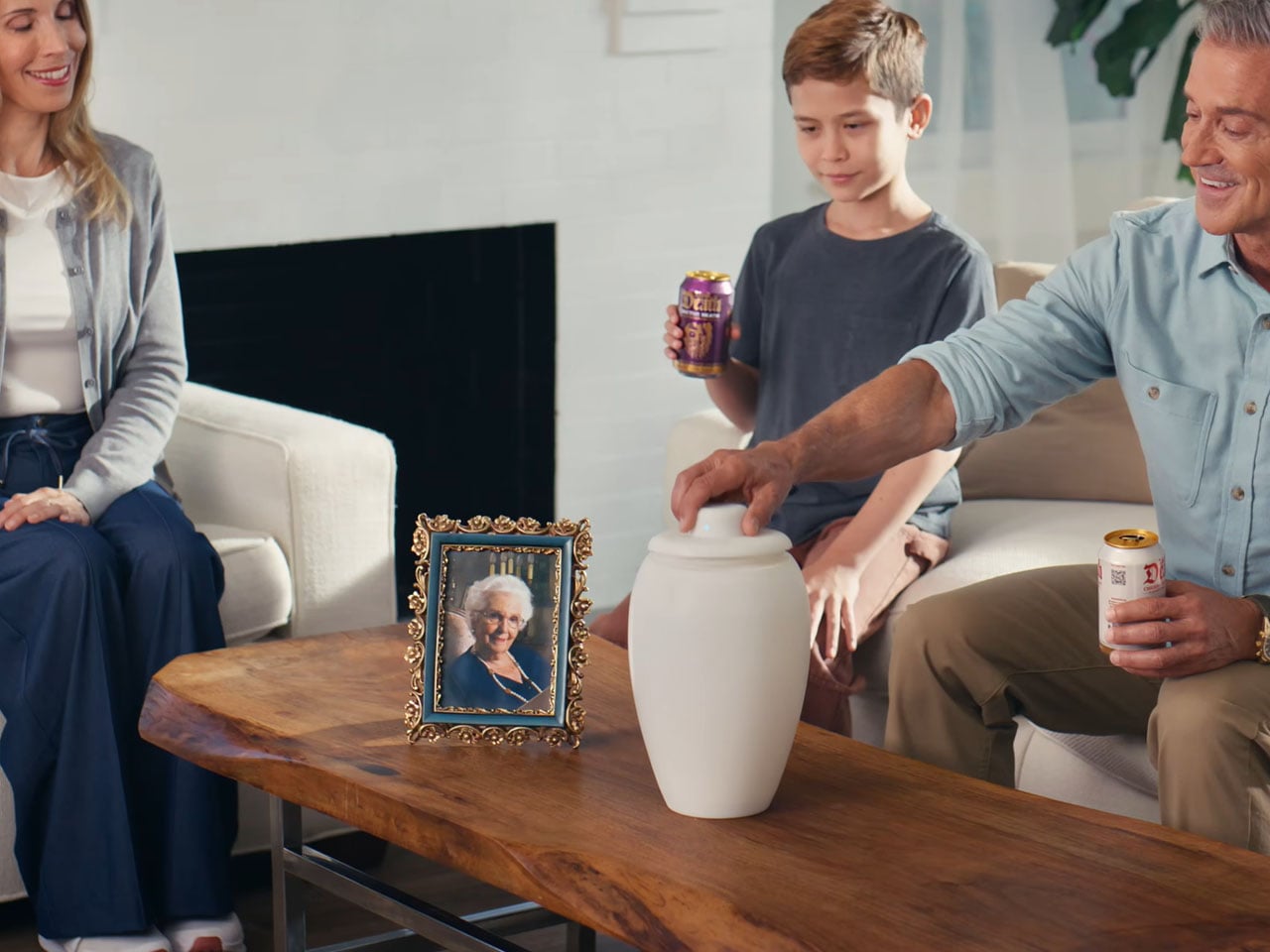
The playlist generating tool Spotify calls the Eternal Playlist is synced to the urn right away, and you can share the last rights with your friends and family. Of course, you can then play the music directly on your newly purchased urn speaker on the living room shelf. The urn, measuring 7 x 7 x 11 inches and weighing 2.4 pounds, is intended to be minimal in white color and respectful of other décor elements it sits beside. It has the Spotify and Liquid Death logos engraved upfront, which keeps the musical vibe apparent, if you don’t fancy urns in your peripheral vision.

While this speaker urn will not be the best thing to hold the ashes of your dear dead, the thing is definitely going to be a collector’s item. Only 150 will be available for purchase in the United States for a fat $495, so you’d better be on your toes to grab this one. For those who still prefer contemporary audio accessories, that amount of money can buy you a decent speaker system. I just hope this isn’t an early April Fool’s joke.

The post Liquid Death x Spotify Eternal Playlist Urn, because afterlife deserves good vibes first appeared on Yanko Design.