Belgium’s Most Striking Concrete Villa Was Designed by the Dunes

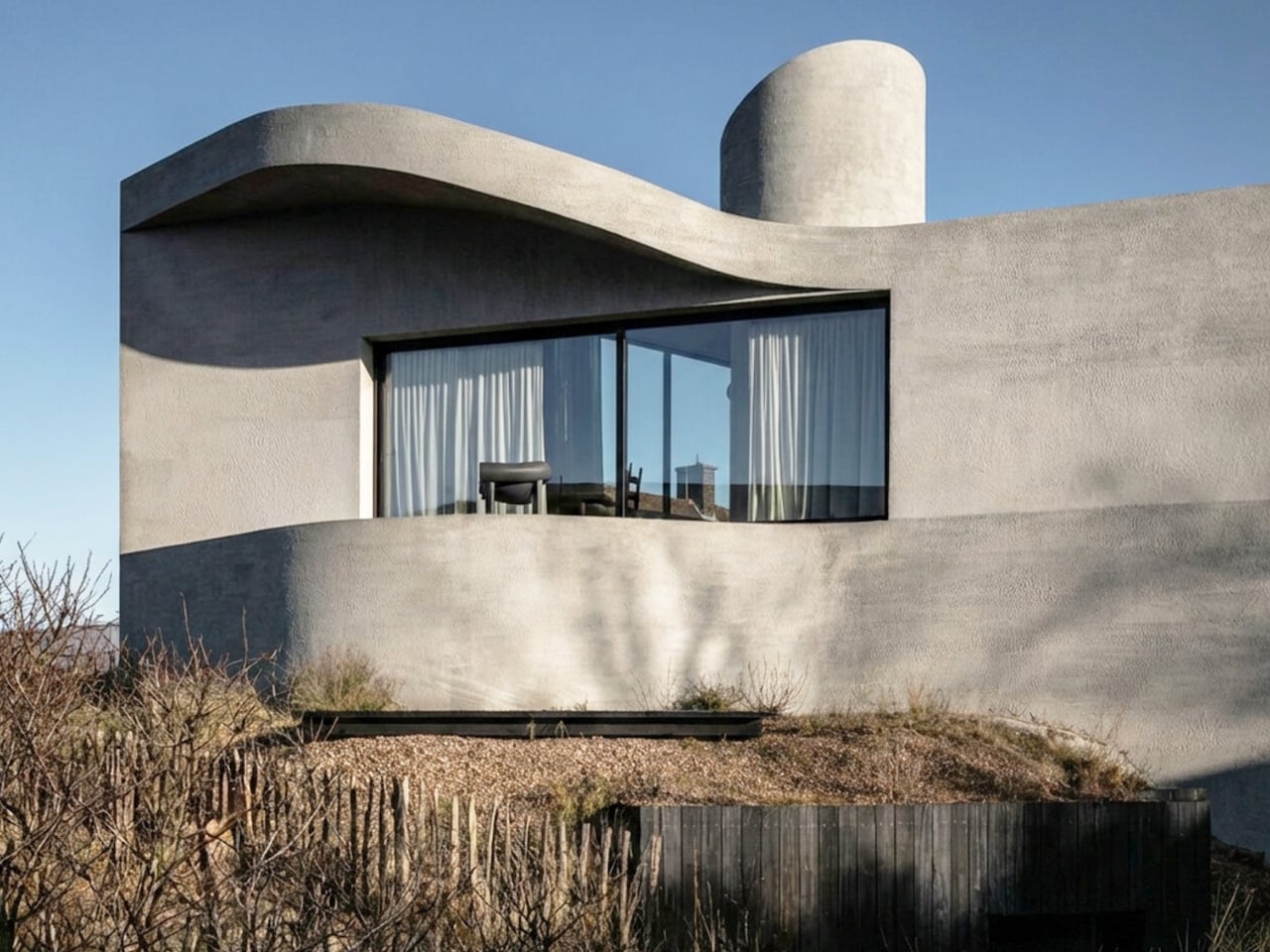
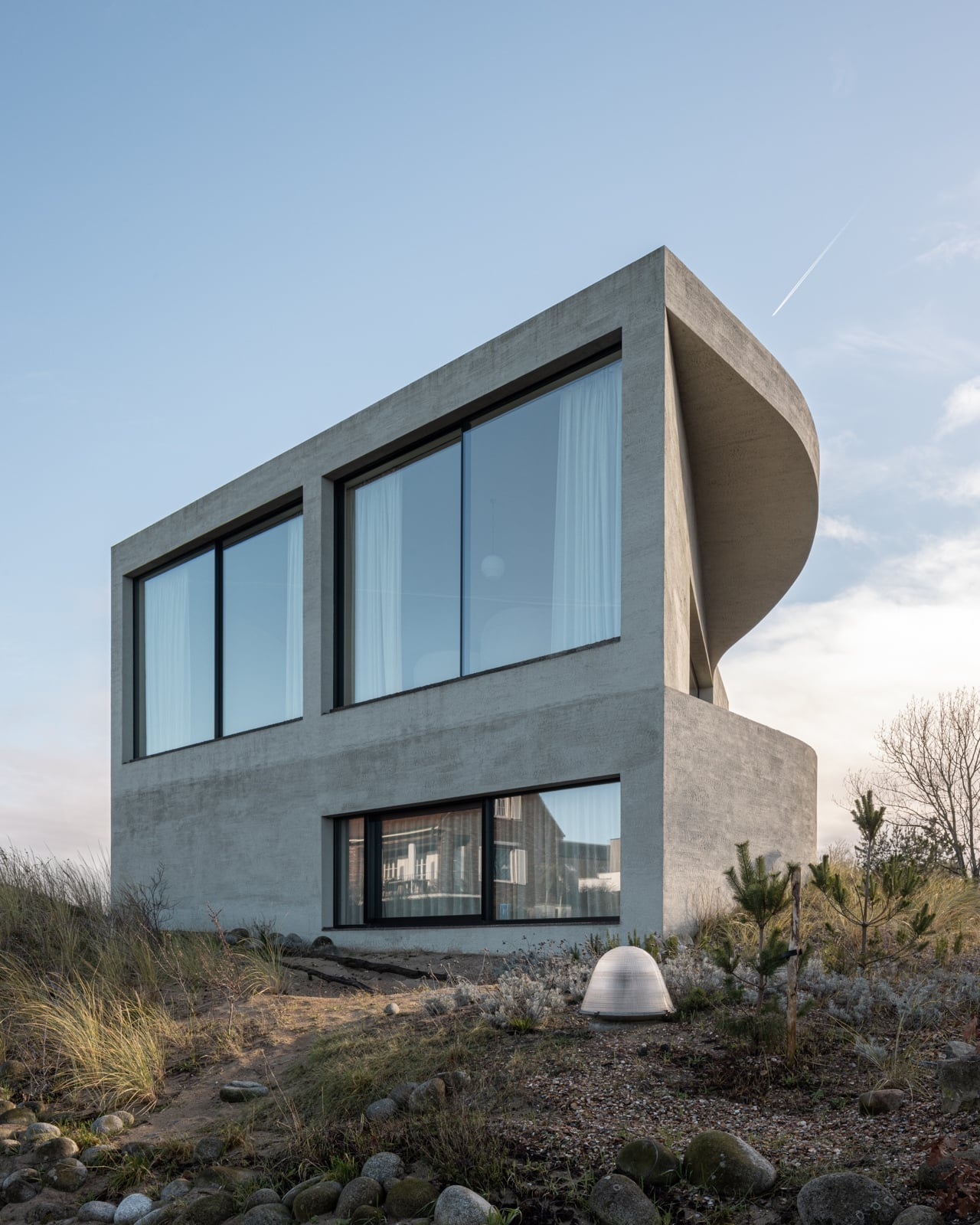
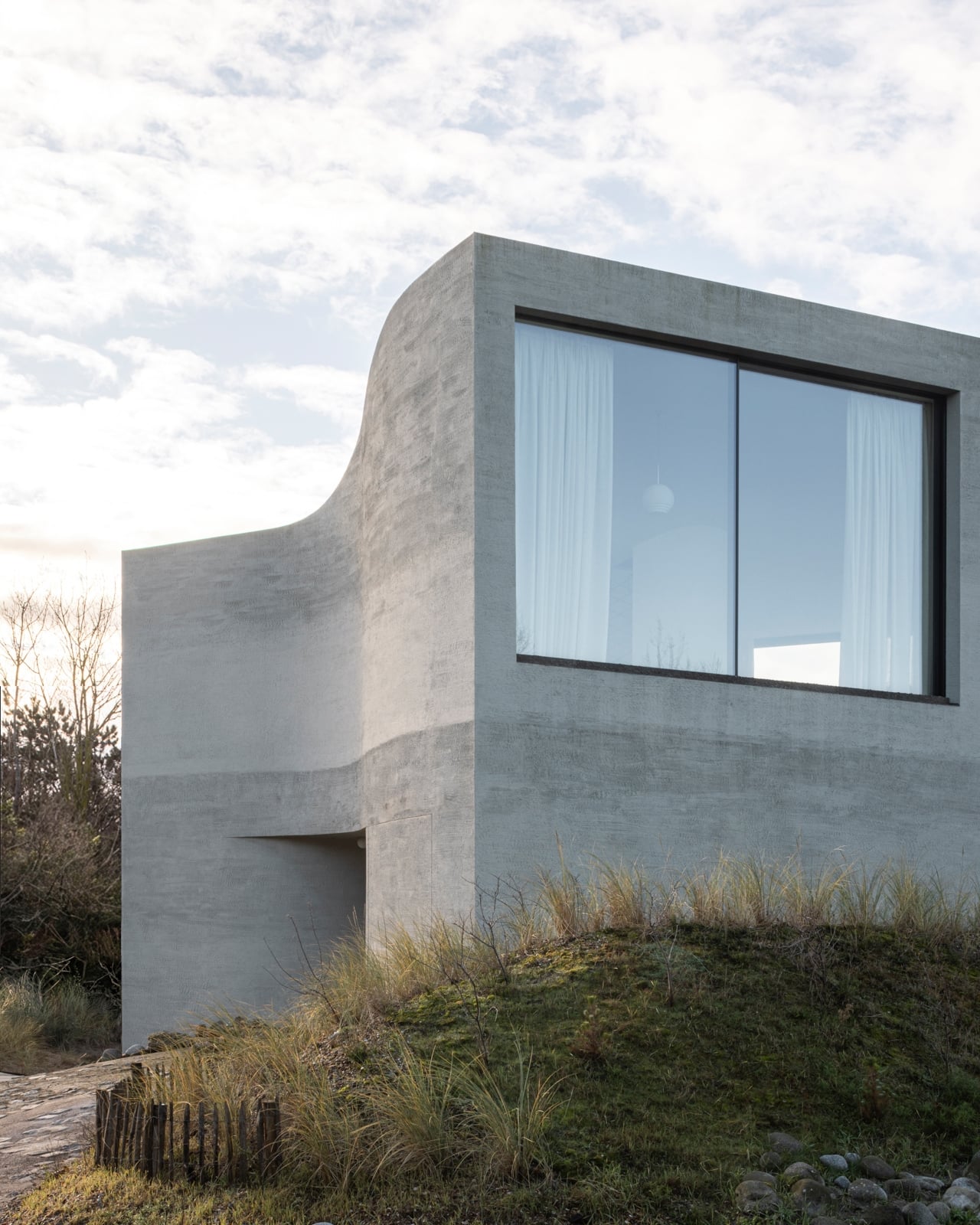
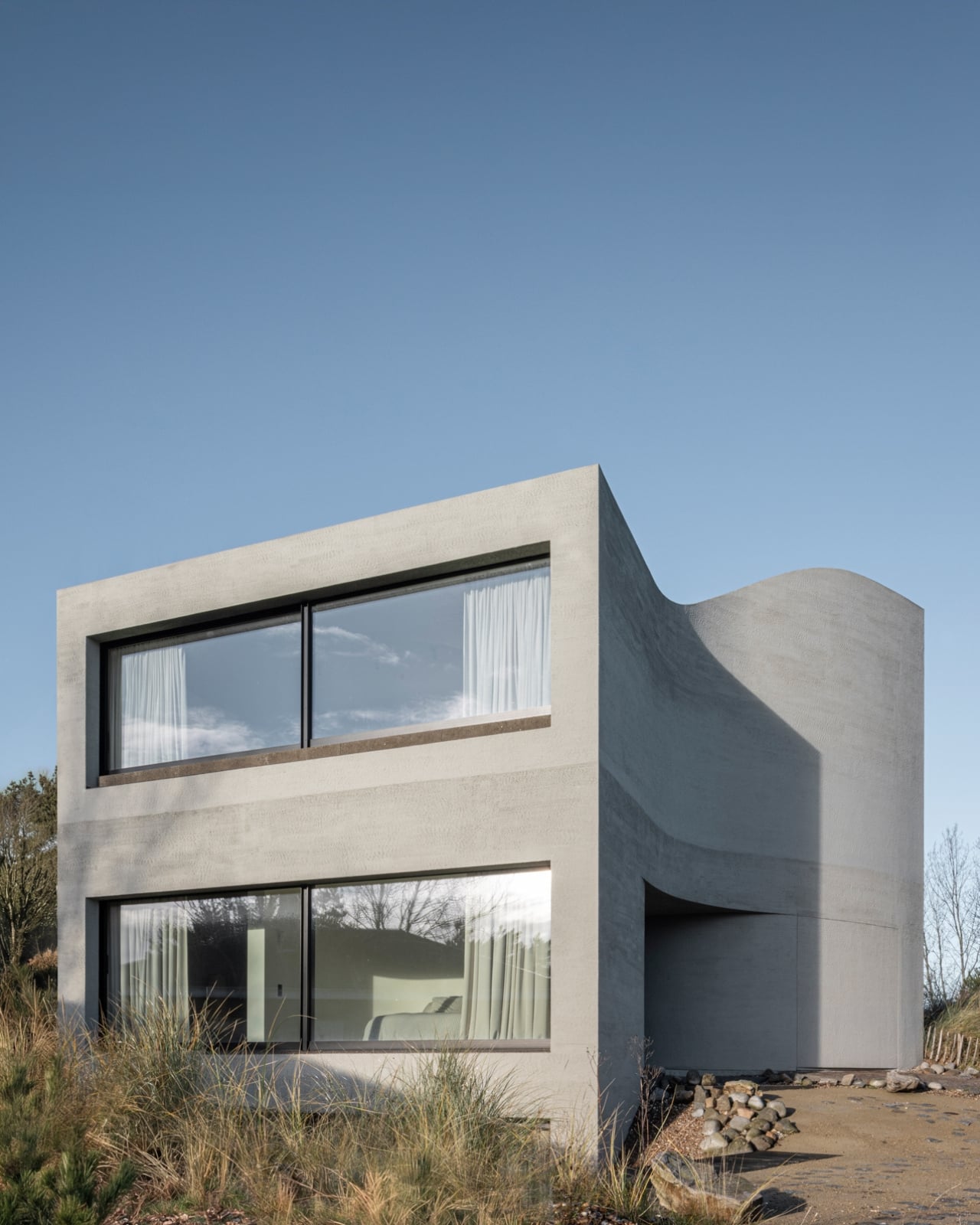
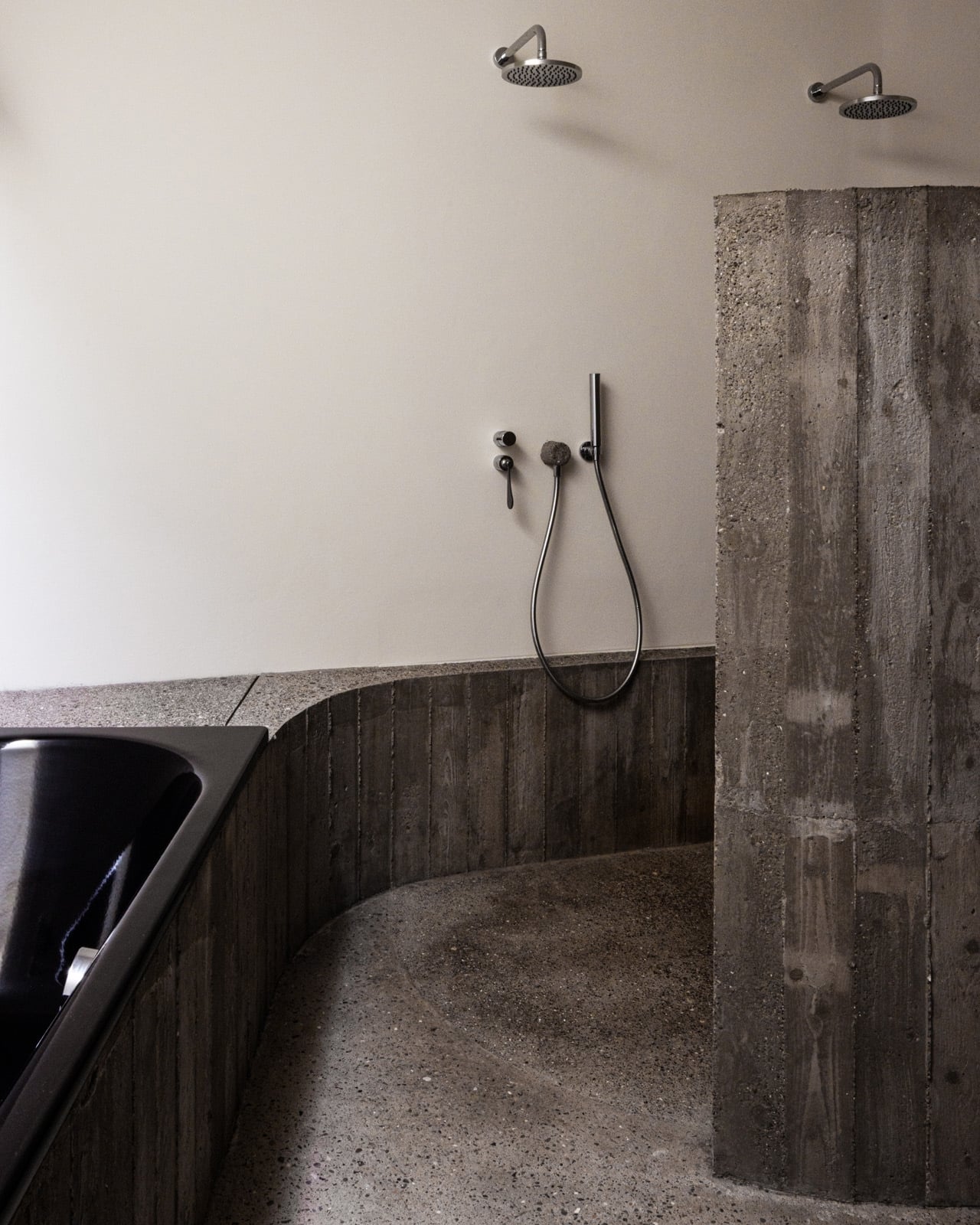
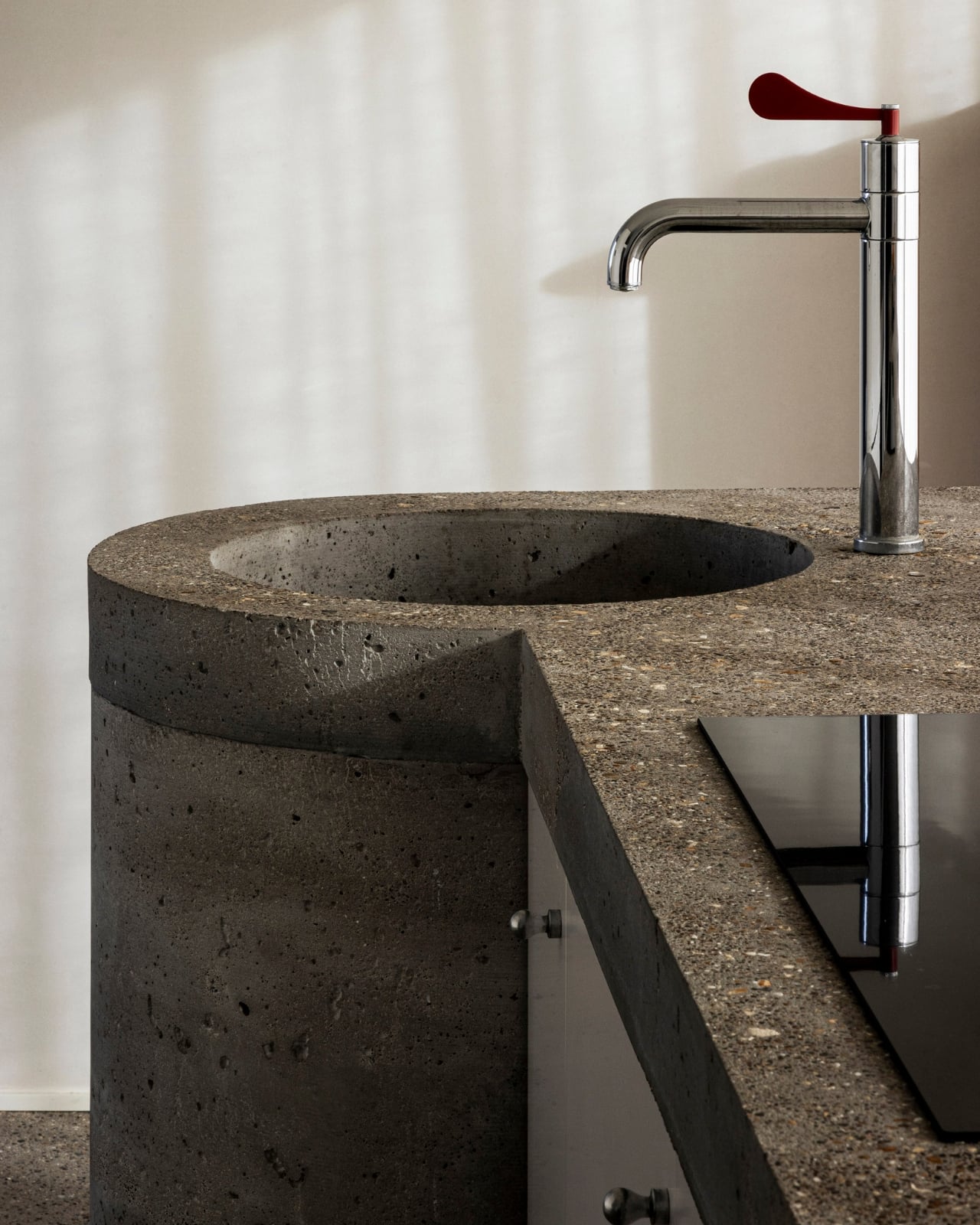
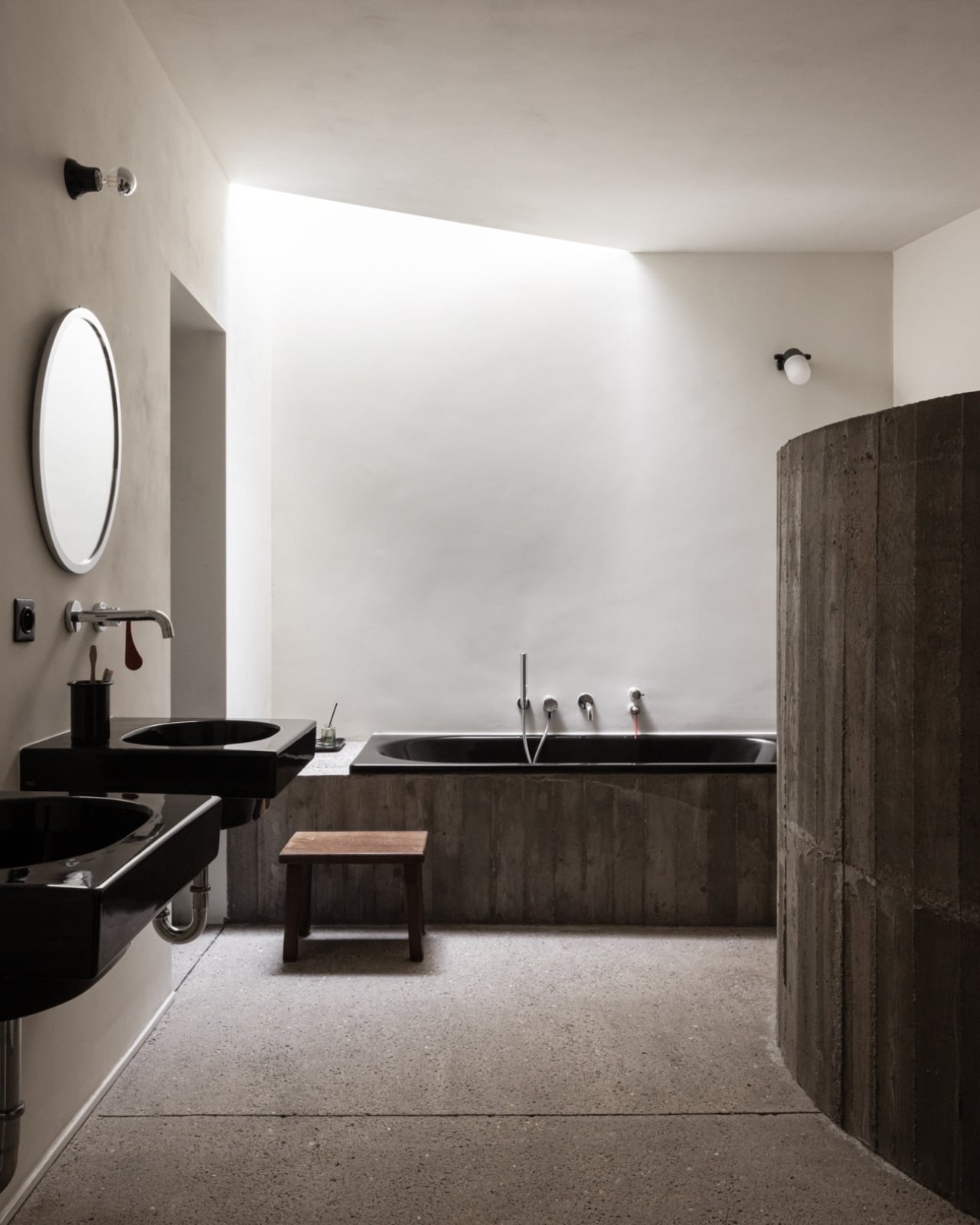
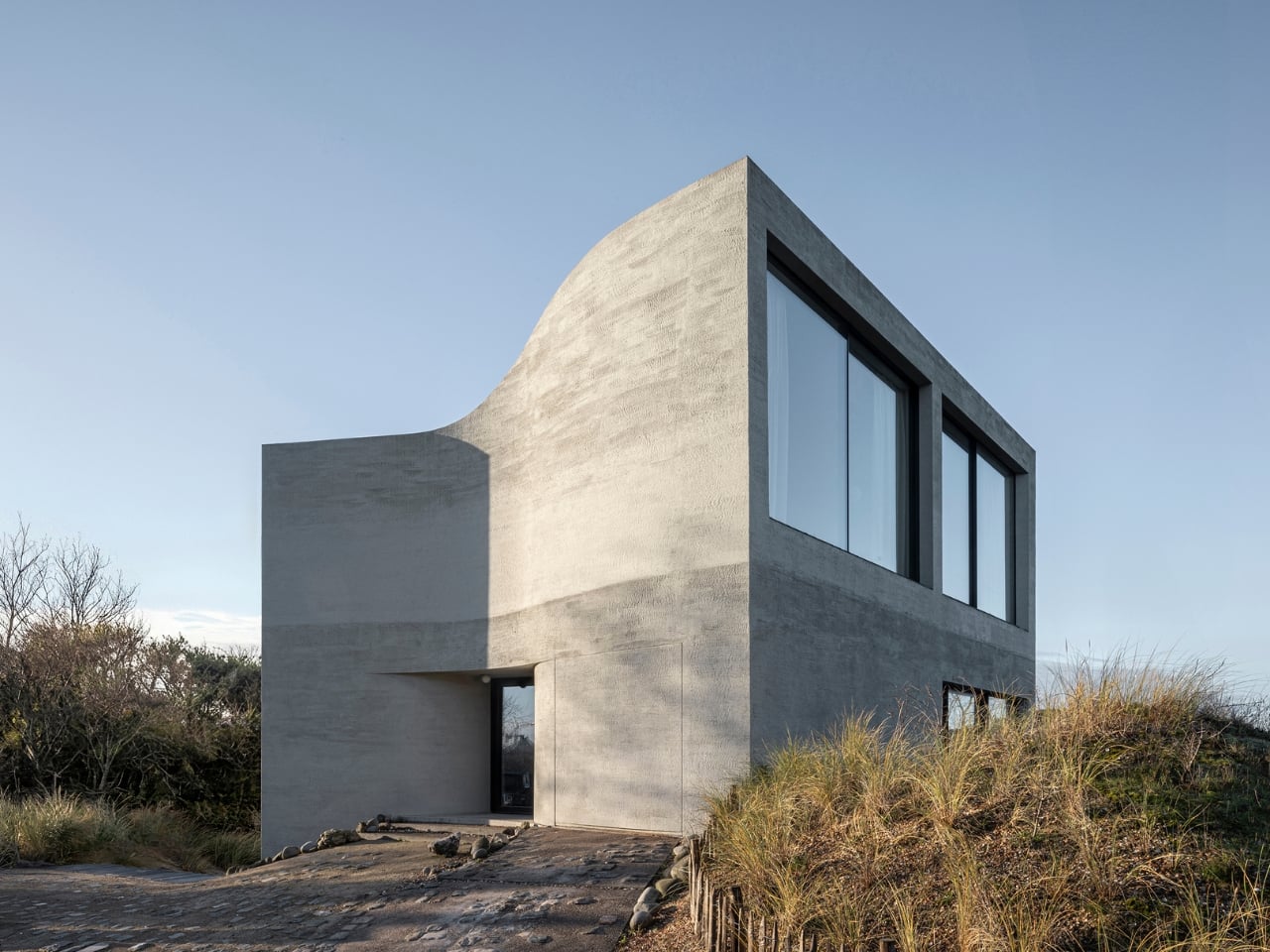
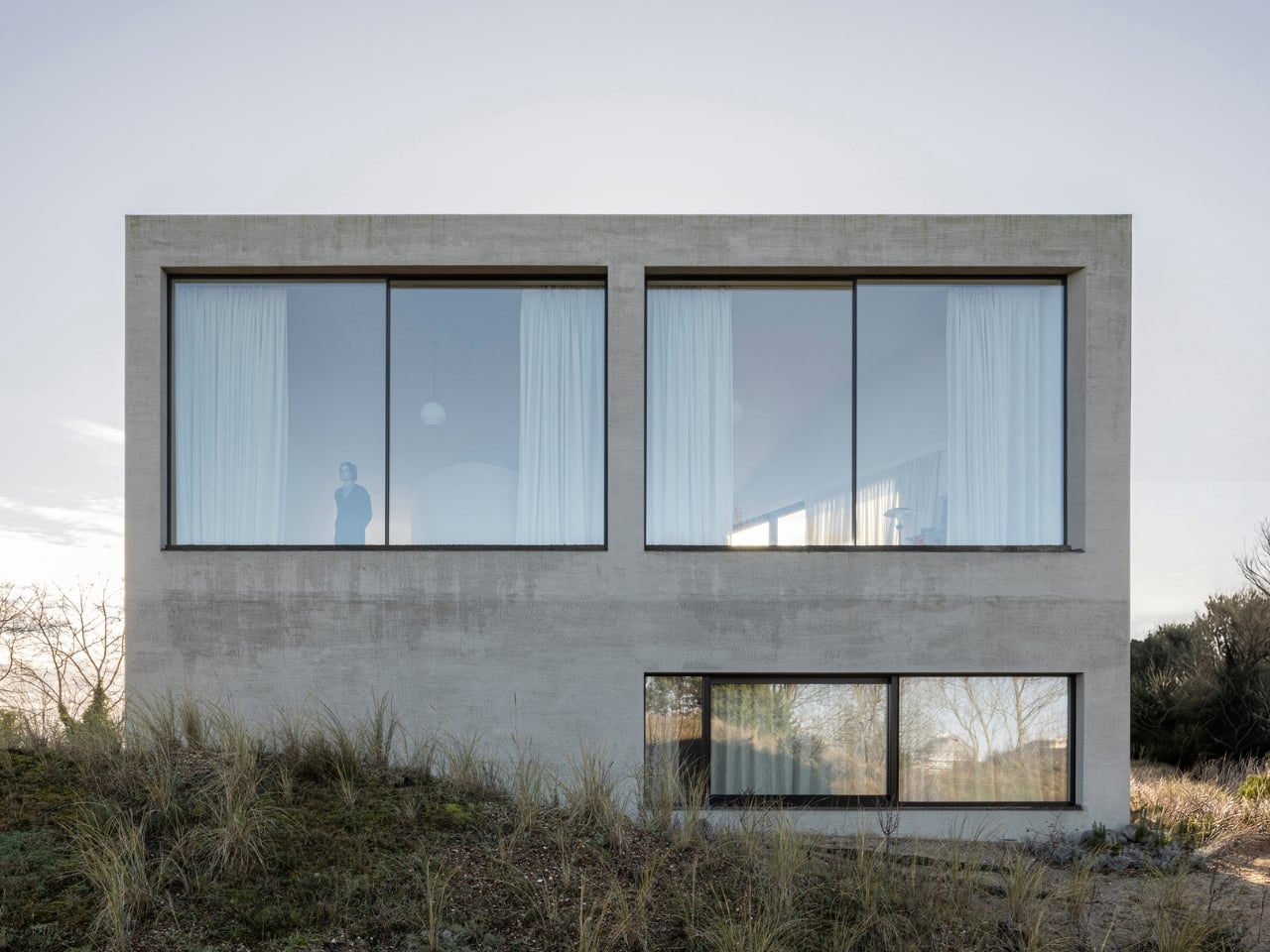
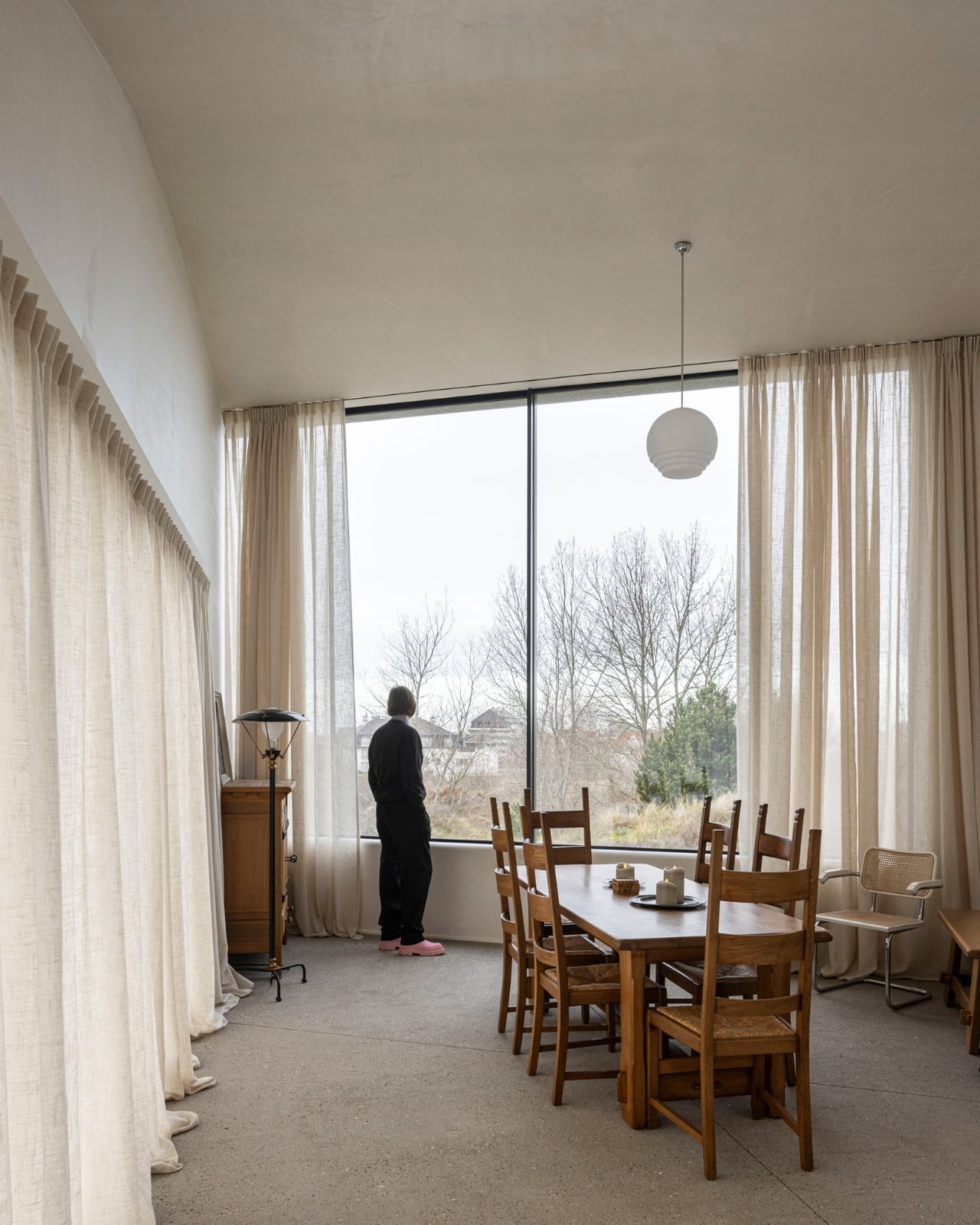
If you’ve ever stood on a beach and watched the tide pull back, you know that moment right before the water retreats completely, when it leaves those delicate horizontal lines etched across wet sand. That’s what the facade of Villa Nouvelle Vague looks like. Not metaphorically. Literally. Belgian architect Magalie Munters designed the concrete surface of this seaside villa in Oostduinkerke with a horizontal grain that mirrors the striations the North Sea leaves behind at low tide. The reference isn’t decorative, it’s structural. And that distinction matters.

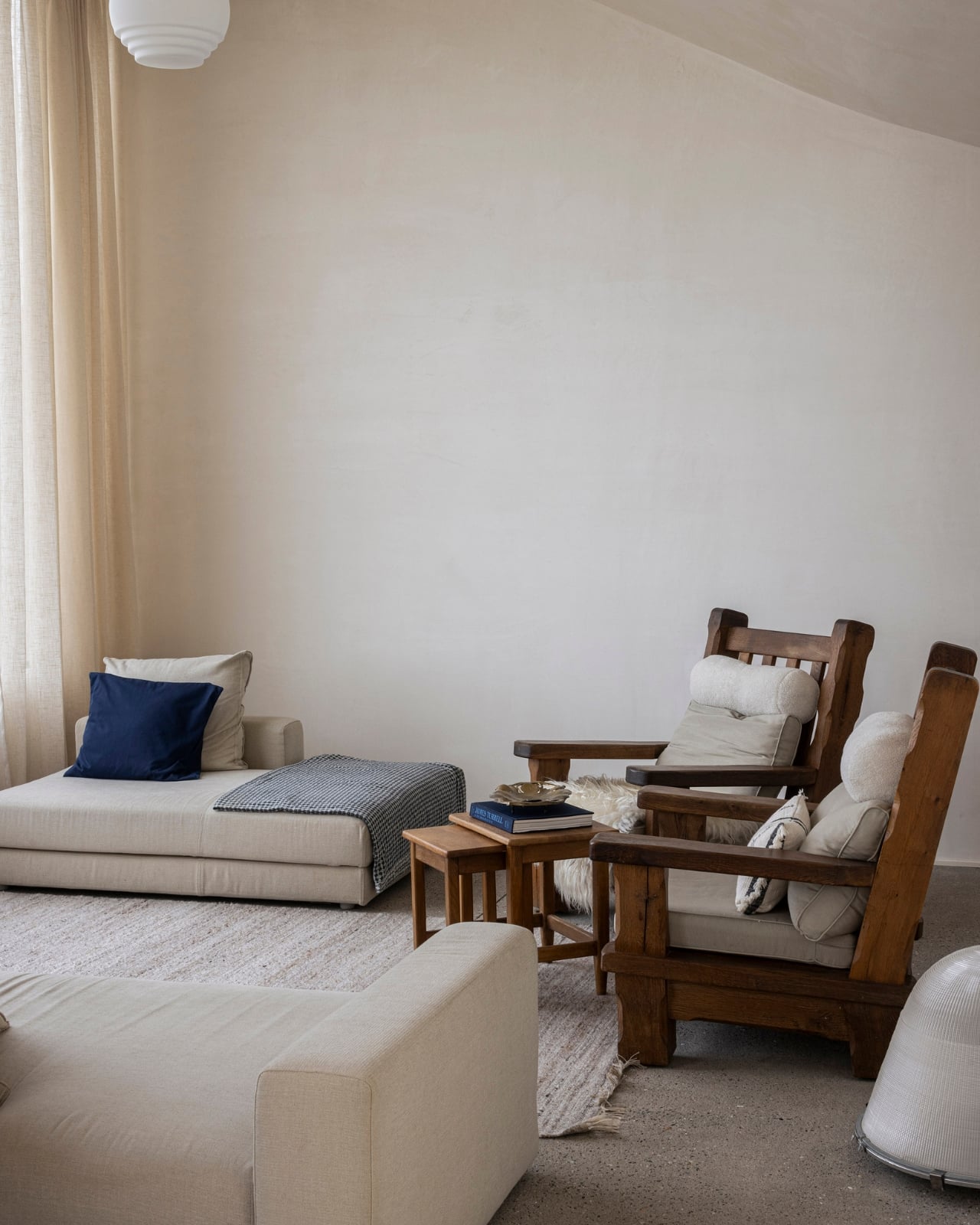
The villa sits on a corner plot at the edge of a protected dune reserve in Oostduinkerke, a small coastal town already known for a few wonderfully eccentric things: a ship-shaped restaurant and fishermen who harvest shrimp on horseback. Into this landscape, Munters has introduced something that manages to be arresting without being loud. The form is sculptural and unmistakably modern, but it doesn’t shout. It settles.

Designer: Magalie Munters

The name “Nouvelle Vague” borrows from the French New Wave film movement, and the reference is apt in ways that go beyond the obvious nod to style. The French New Wave was defined by breaking conventional rules while remaining deeply committed to craft. Munters is working in a similar register. For years, her Ghent-based boutique studio has been developing residential architecture with organic geometries, pushing against the idea that construction methods should set the ceiling on what architecture can achieve. “Through that ongoing research, I developed a way of building in which construction and technology no longer act as a limitation to the architecture,” she explains. Villa Nouvelle Vague is where that research cashes out.

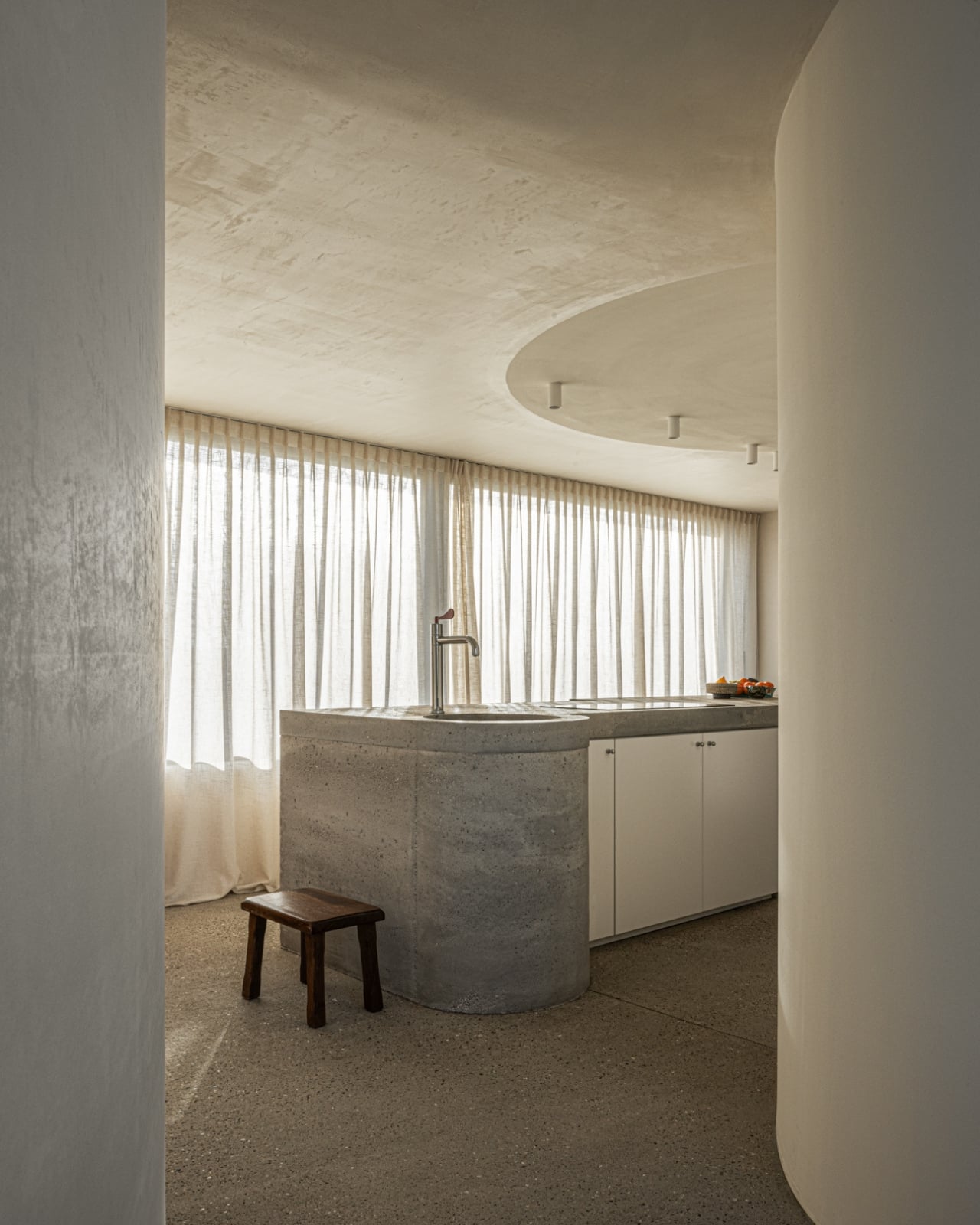
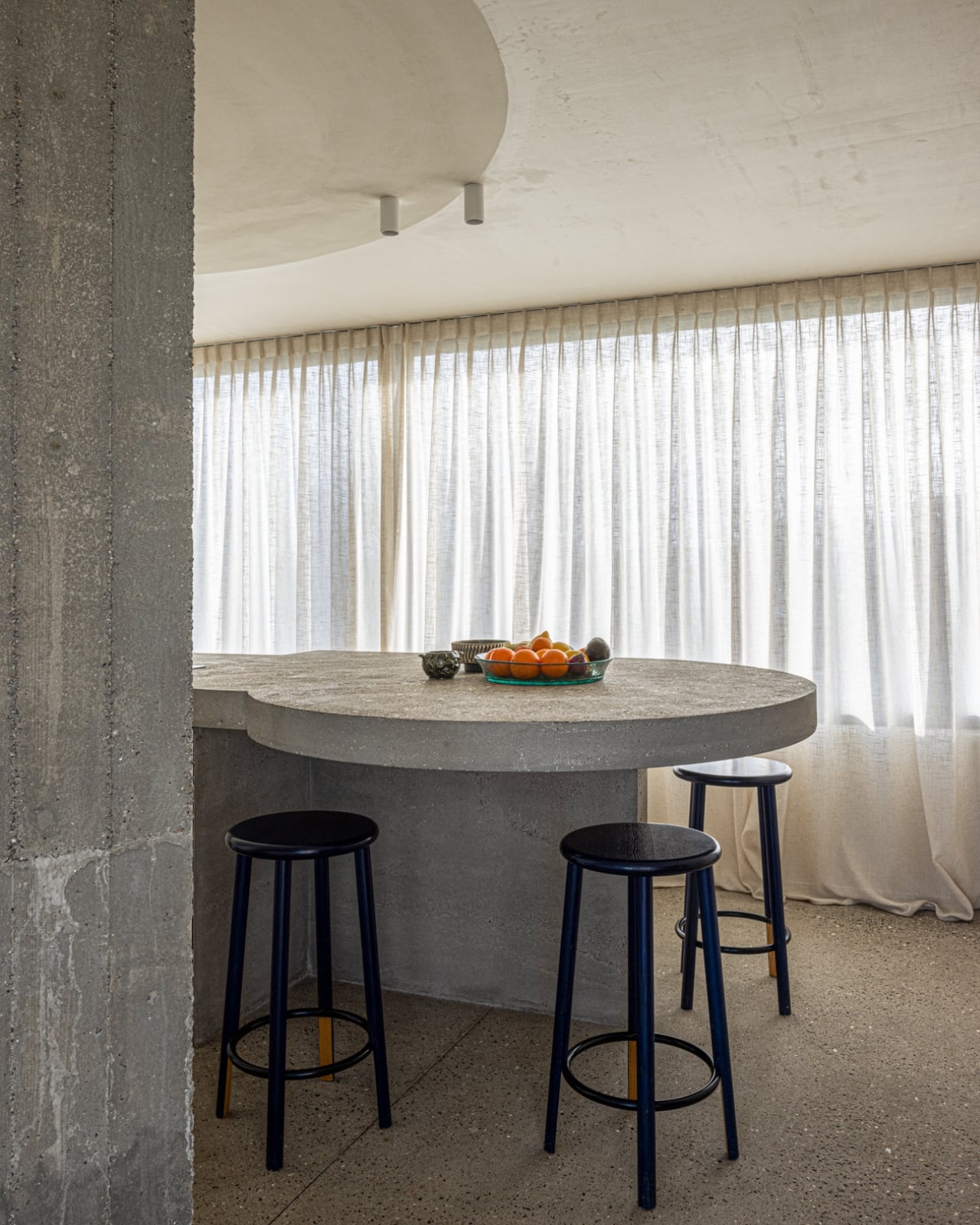
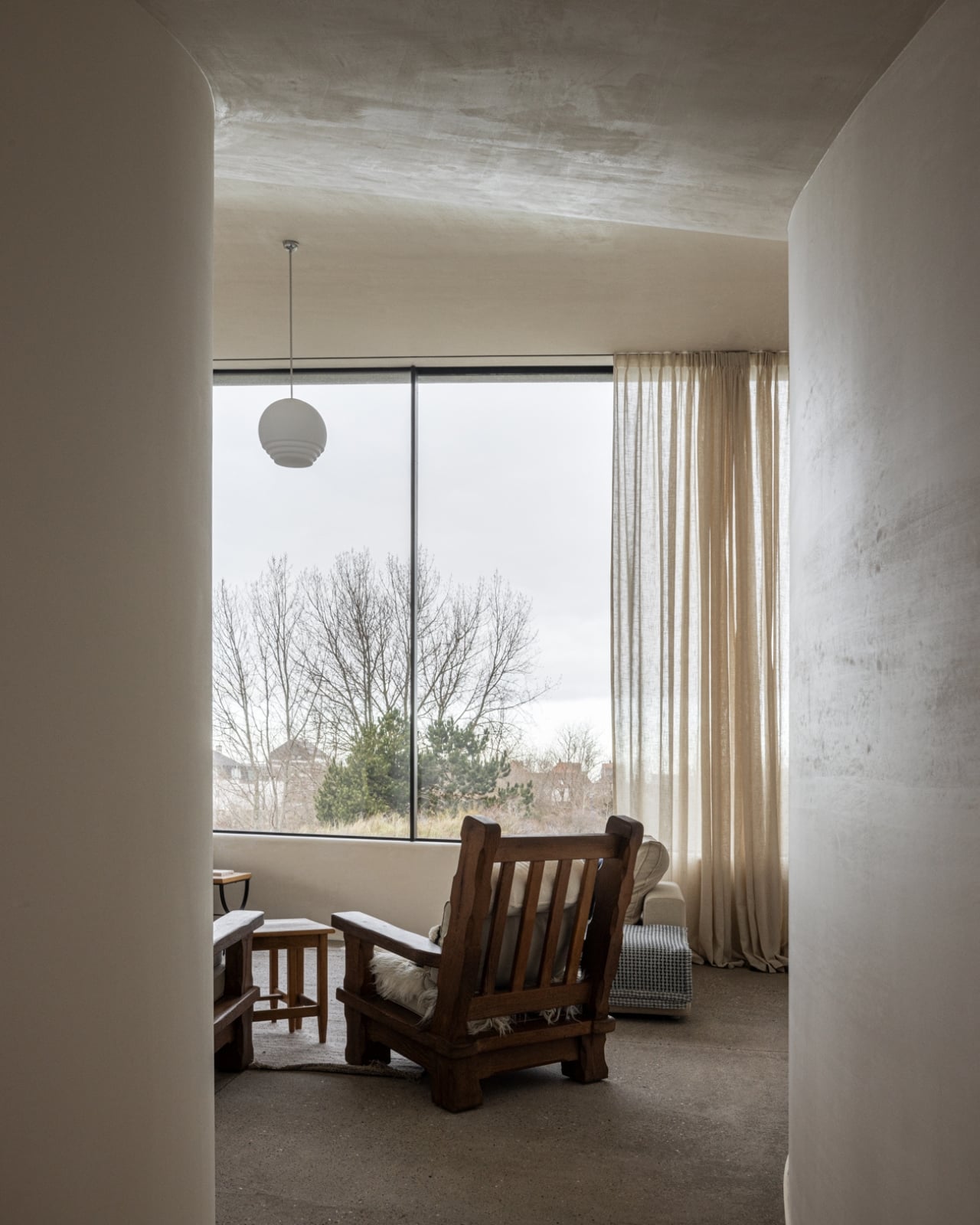
The concrete form is completely curved across the entire volume, not just as a surface treatment but as a governing logic, carried through every detail: the absent roof edges, the curved garage opening, even the way the house integrates into the ground. The bedrooms are half-buried in the dunes, which is both a functional and a conceptual move. The house doesn’t sit on the landscape. It’s anchored into it. Above those buried rooms, the living spaces rise toward the horizon, pulling in light and opening out to views of the dunes in a way that feels earned rather than forced.

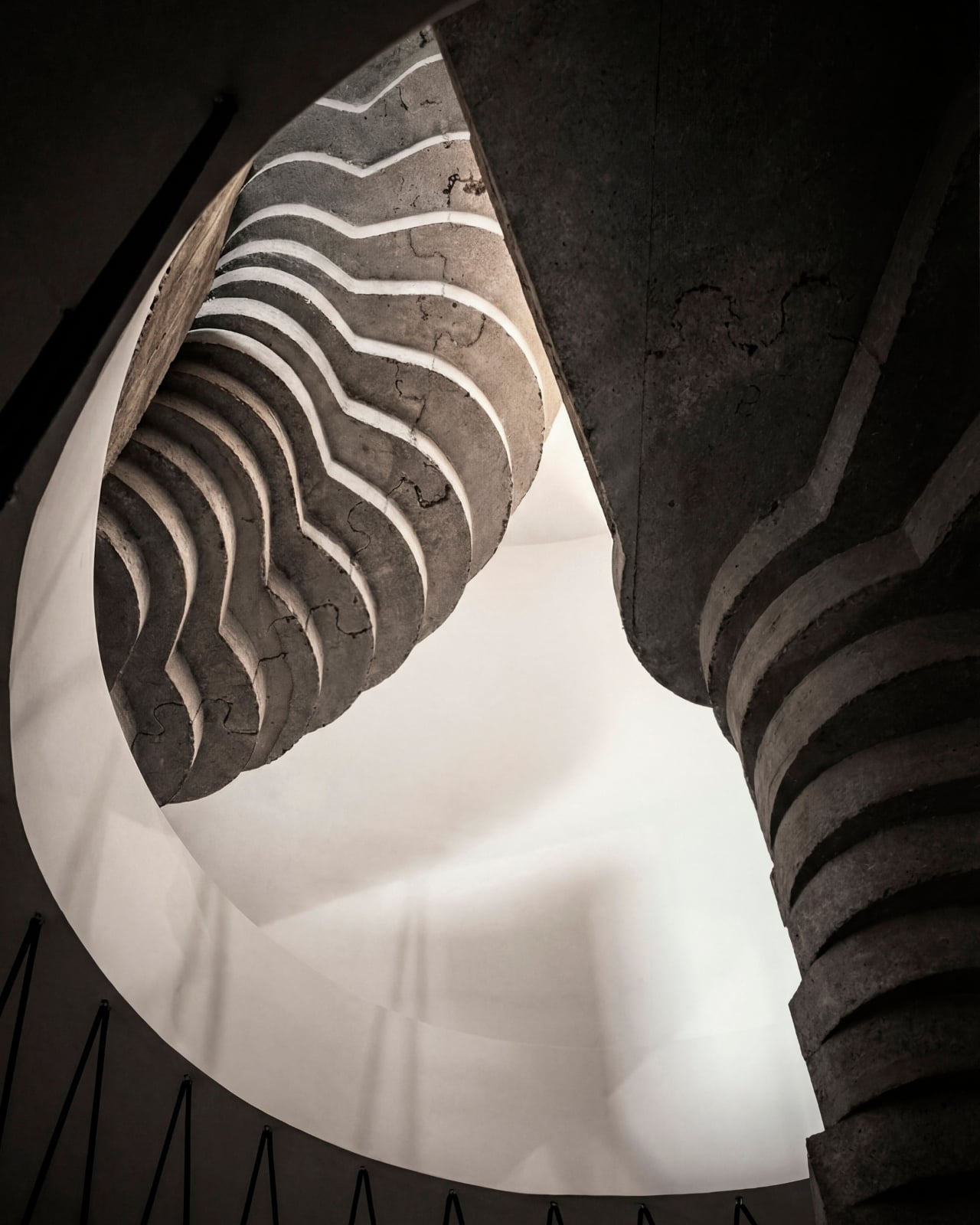
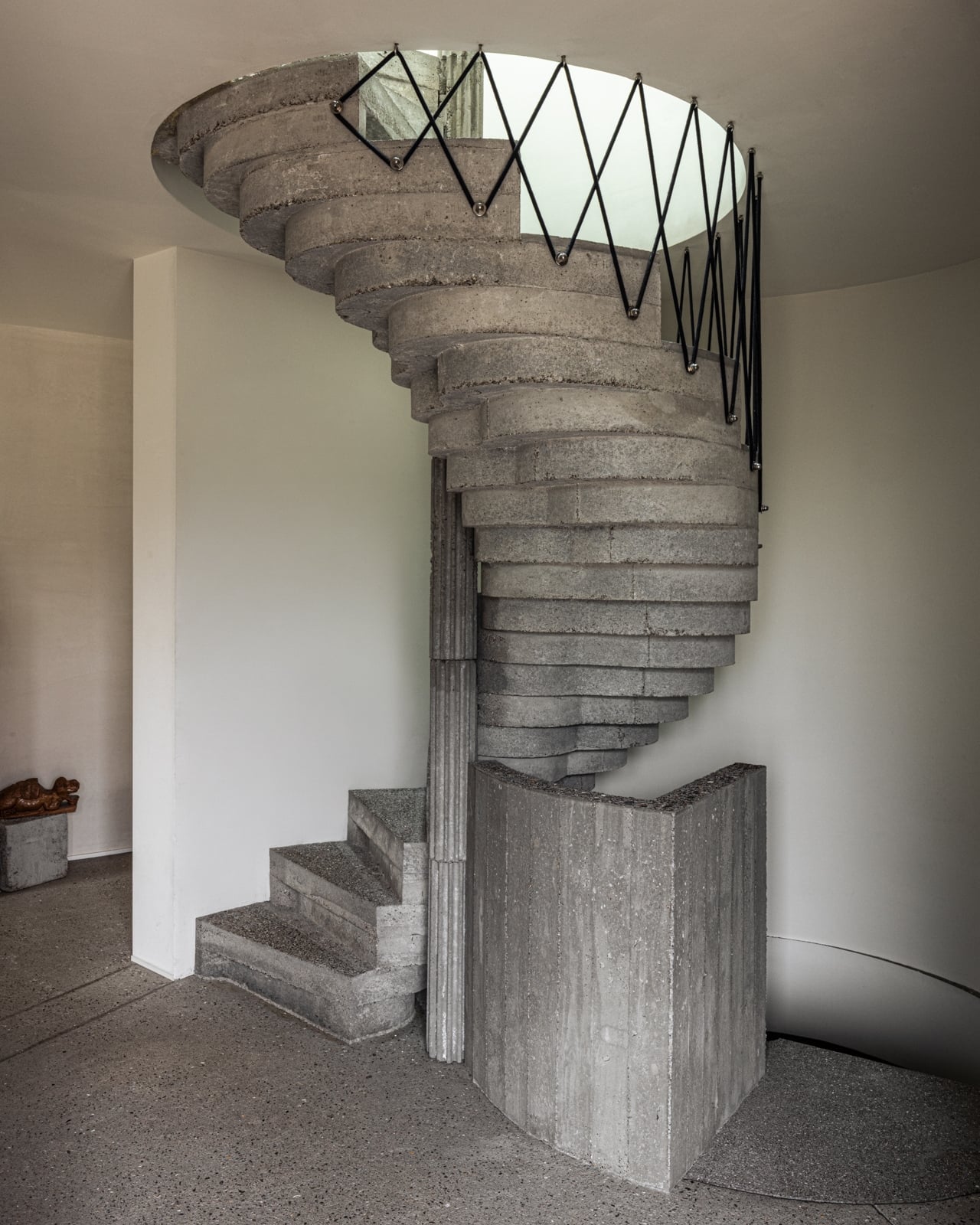
The way you move through the house is where Munters’ admiration for Le Corbusier becomes most legible. She’s spoken about his influence, specifically in “the rooftop solarium, in the way spaces expand and contract, and in the vertical shafts that structure movement through the house.” You enter through a vertical shaft that climbs toward the roof before expanding into the main living space. The compression-then-release is theatrical in the best sense. The house is working on your nervous system before you’ve even sat down.

I keep coming back to that word: deliberate. Munters uses it herself: “What might appear as a free form is in fact the result of a very deliberate construction logic.” That’s the tension the villa lives in, and frankly, it’s what makes it interesting. Nothing here is freehand improvisation. The curves look fluid because the logic behind them is airtight. The concrete looks like it grew from the dunes because the architect studied the dunes before she touched a drawing. That’s different from a building that mimics nature for aesthetic points. It’s rarer, and harder.

Belgian architecture doesn’t always get the international visibility it deserves, and Magalie Munters is one of those names worth paying attention to even if residential architecture isn’t usually your thing. Villa Nouvelle Vague is the kind of project that earns its name. It has the confidence of something that knows exactly what it is, and the intelligence not to over-explain itself. Just like the best films of the movement it references.

The post Belgium’s Most Striking Concrete Villa Was Designed by the Dunes first appeared on Yanko Design.

Belgium’s Most Striking Concrete Villa Was Designed by the Dunes

If you’ve ever stood on a beach and watched the tide pull back, you know that moment right before the water retreats completely, when it leaves those delicate horizontal lines etched across wet sand. That’s what the facade of Villa Nouvelle Vague looks like. Not metaphorically. Literally. Belgian architect Magalie Munters designed the concrete surface of this seaside villa in Oostduinkerke with a horizontal grain that mirrors the striations the North Sea leaves behind at low tide. The reference isn’t decorative, it’s structural. And that distinction matters.

The villa sits on a corner plot at the edge of a protected dune reserve in Oostduinkerke, a small coastal town already known for a few wonderfully eccentric things: a ship-shaped restaurant and fishermen who harvest shrimp on horseback. Into this landscape, Munters has introduced something that manages to be arresting without being loud. The form is sculptural and unmistakably modern, but it doesn’t shout. It settles.

Designer: Magalie Munters

The name “Nouvelle Vague” borrows from the French New Wave film movement, and the reference is apt in ways that go beyond the obvious nod to style. The French New Wave was defined by breaking conventional rules while remaining deeply committed to craft. Munters is working in a similar register. For years, her Ghent-based boutique studio has been developing residential architecture with organic geometries, pushing against the idea that construction methods should set the ceiling on what architecture can achieve. “Through that ongoing research, I developed a way of building in which construction and technology no longer act as a limitation to the architecture,” she explains. Villa Nouvelle Vague is where that research cashes out.

The concrete form is completely curved across the entire volume, not just as a surface treatment but as a governing logic, carried through every detail: the absent roof edges, the curved garage opening, even the way the house integrates into the ground. The bedrooms are half-buried in the dunes, which is both a functional and a conceptual move. The house doesn’t sit on the landscape. It’s anchored into it. Above those buried rooms, the living spaces rise toward the horizon, pulling in light and opening out to views of the dunes in a way that feels earned rather than forced.

The way you move through the house is where Munters’ admiration for Le Corbusier becomes most legible. She’s spoken about his influence, specifically in “the rooftop solarium, in the way spaces expand and contract, and in the vertical shafts that structure movement through the house.” You enter through a vertical shaft that climbs toward the roof before expanding into the main living space. The compression-then-release is theatrical in the best sense. The house is working on your nervous system before you’ve even sat down.

I keep coming back to that word: deliberate. Munters uses it herself: “What might appear as a free form is in fact the result of a very deliberate construction logic.” That’s the tension the villa lives in, and frankly, it’s what makes it interesting. Nothing here is freehand improvisation. The curves look fluid because the logic behind them is airtight. The concrete looks like it grew from the dunes because the architect studied the dunes before she touched a drawing. That’s different from a building that mimics nature for aesthetic points. It’s rarer, and harder.

Belgian architecture doesn’t always get the international visibility it deserves, and Magalie Munters is one of those names worth paying attention to even if residential architecture isn’t usually your thing. Villa Nouvelle Vague is the kind of project that earns its name. It has the confidence of something that knows exactly what it is, and the intelligence not to over-explain itself. Just like the best films of the movement it references.

The post Belgium’s Most Striking Concrete Villa Was Designed by the Dunes first appeared on Yanko Design.

What Happens When You Stop Fighting the Rain and Design With It

Most architects treat rain as an obstacle. Drain it. Redirect it. Keep it away from the interior at all costs. Australian architect Steven Chu had a different idea entirely, and it just earned him the Grand Prize at the NOT A HOTEL DESIGN COMPETITION 2026.

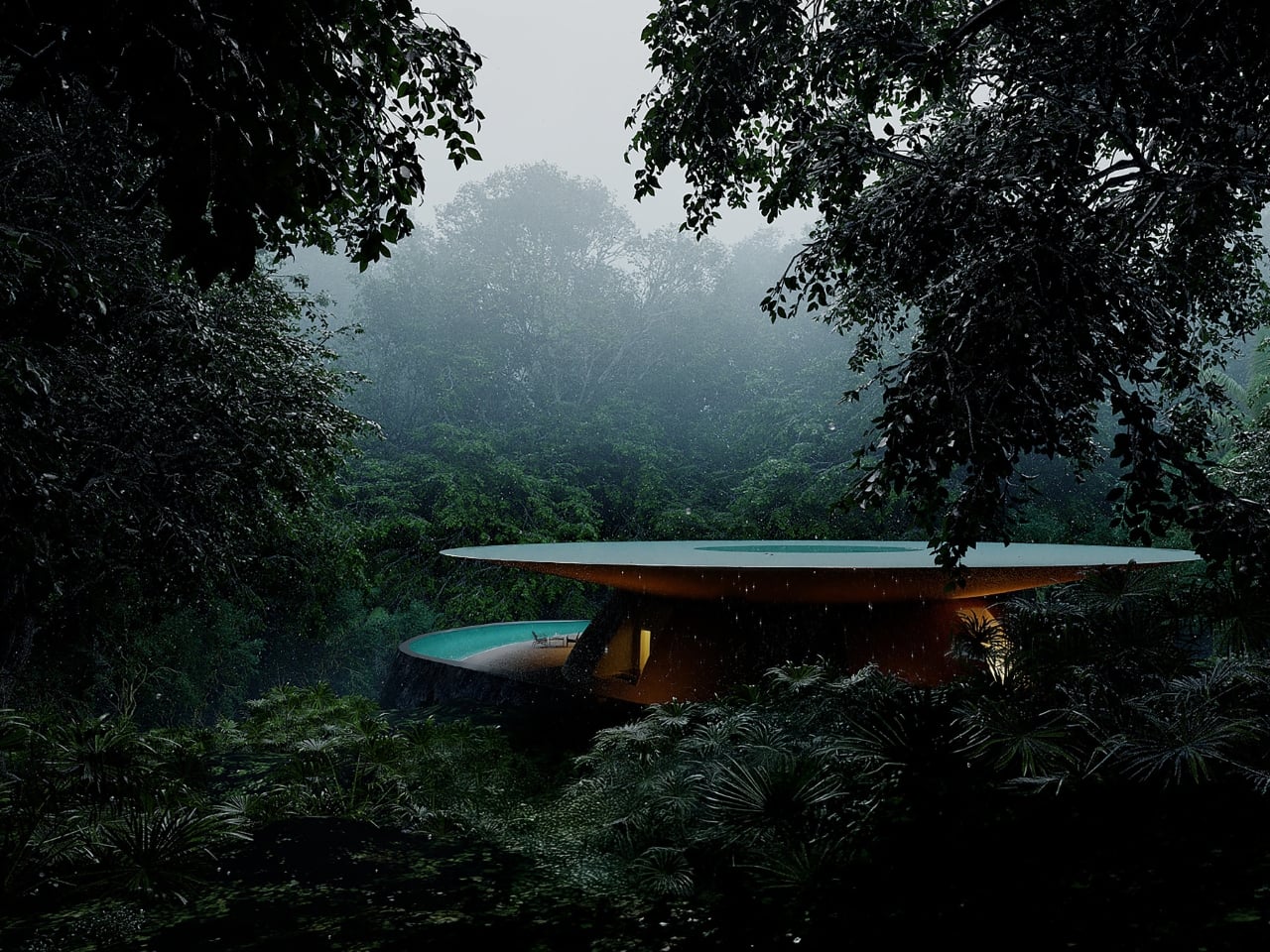
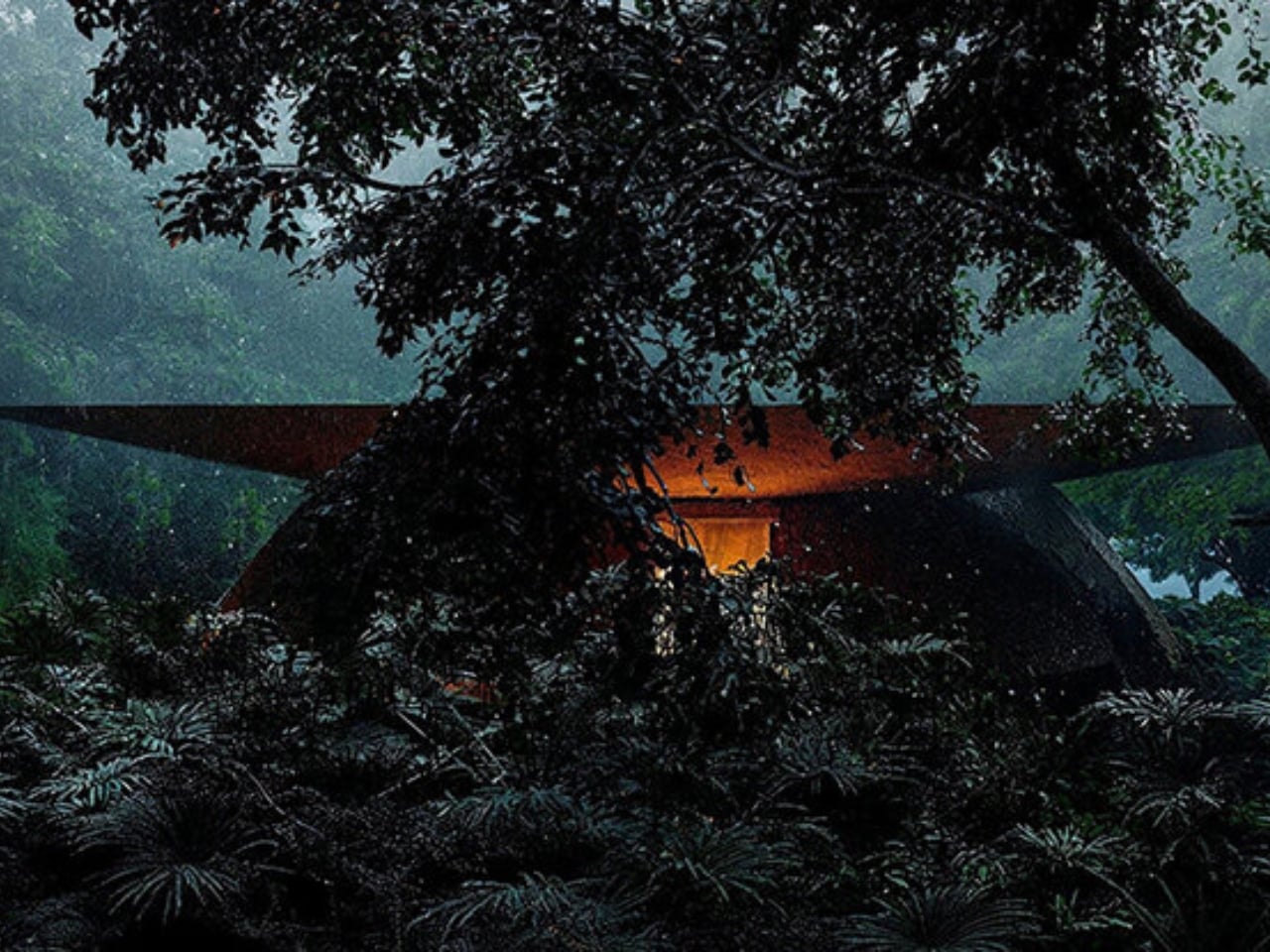
His winning entry is called Sound of Rain, a proposed villa on Yakushima, a densely forested island off the southern coast of Kyushu, Japan. It’s a UNESCO World Heritage site known for its ancient cedar forests and, predictably, a lot of rain. Rather than treating that rain as a logistical problem to solve, Chu built his entire design around it.

Designer: Steven Chu (Artefact Architects)

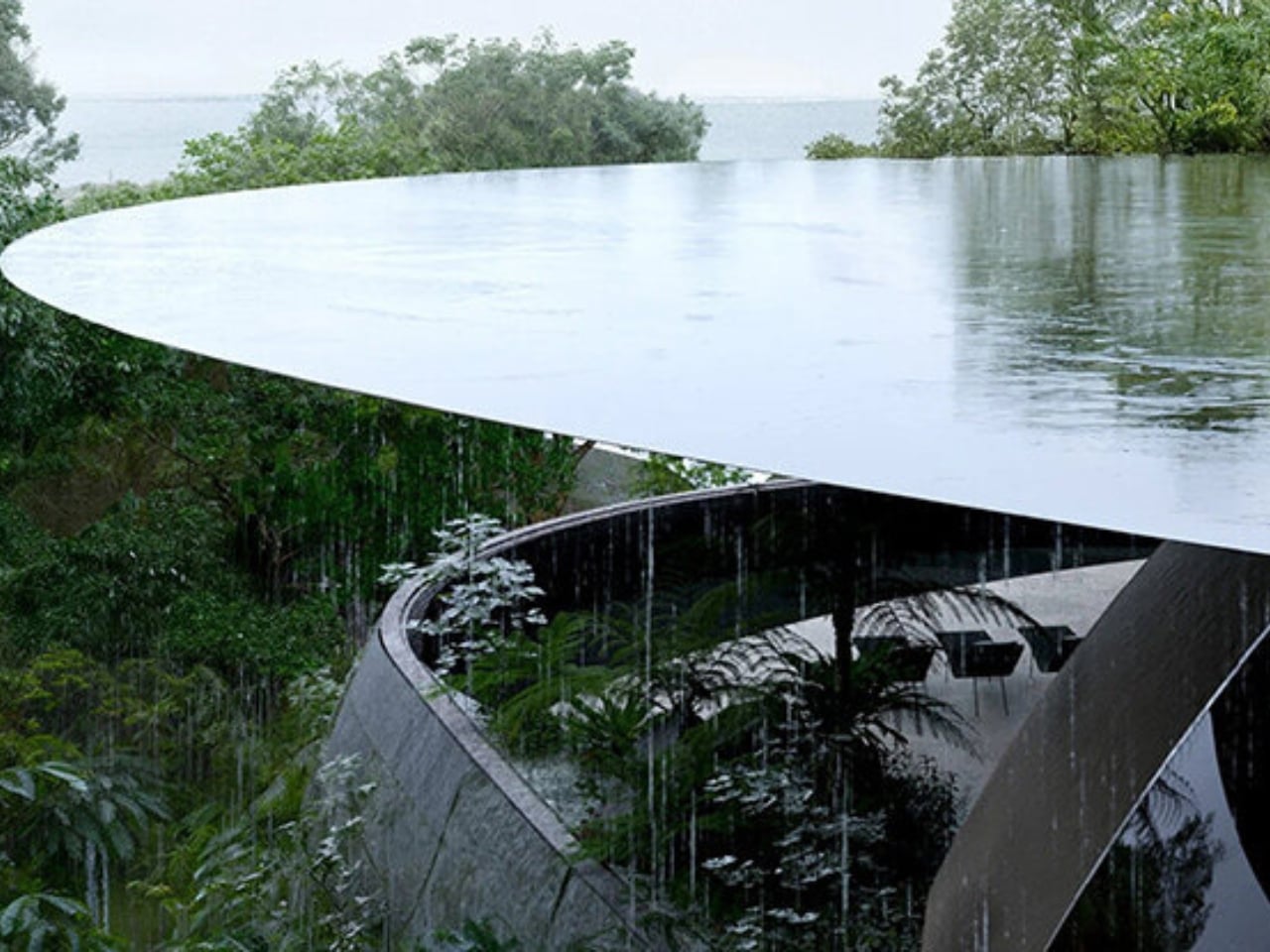
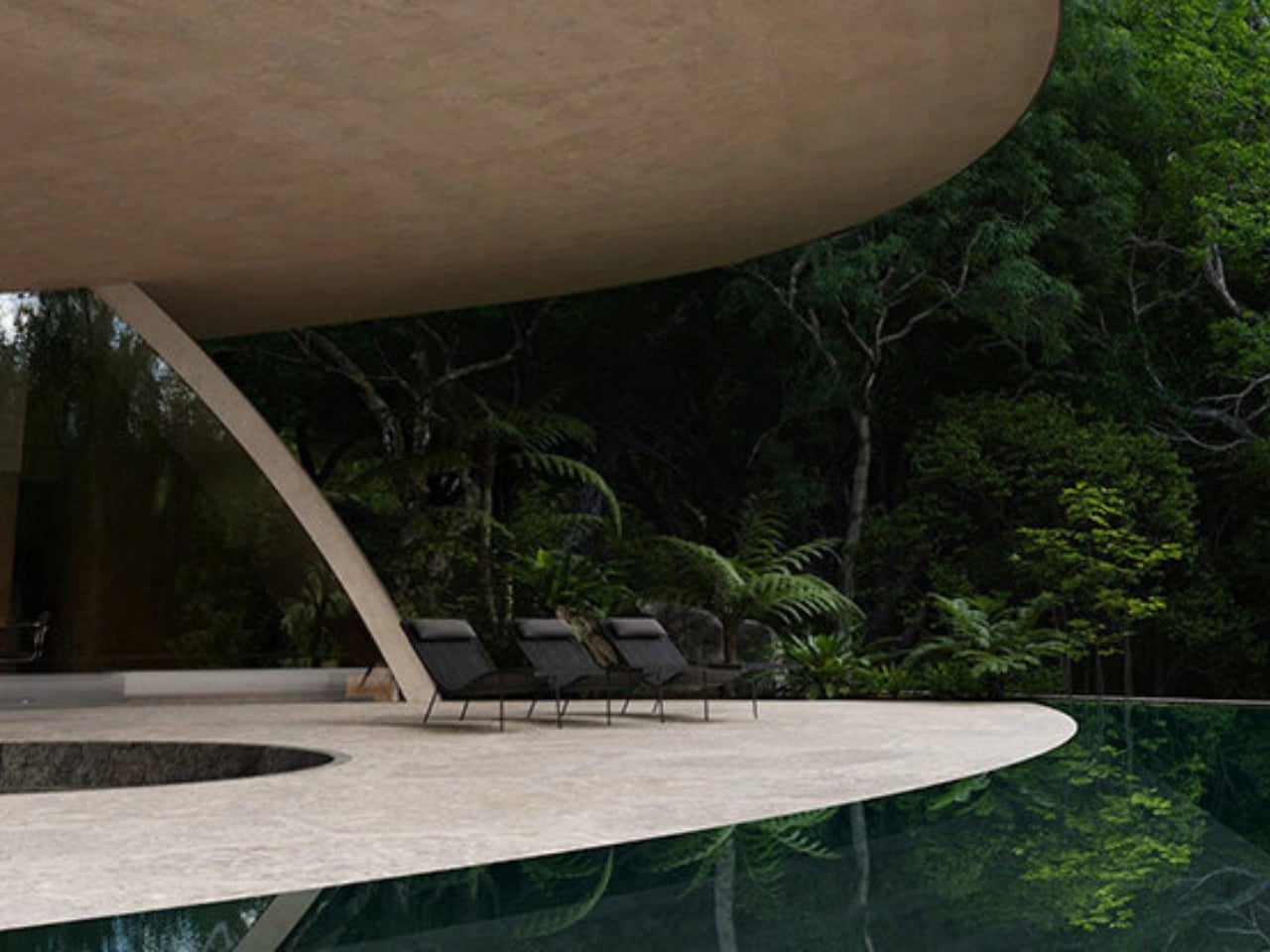
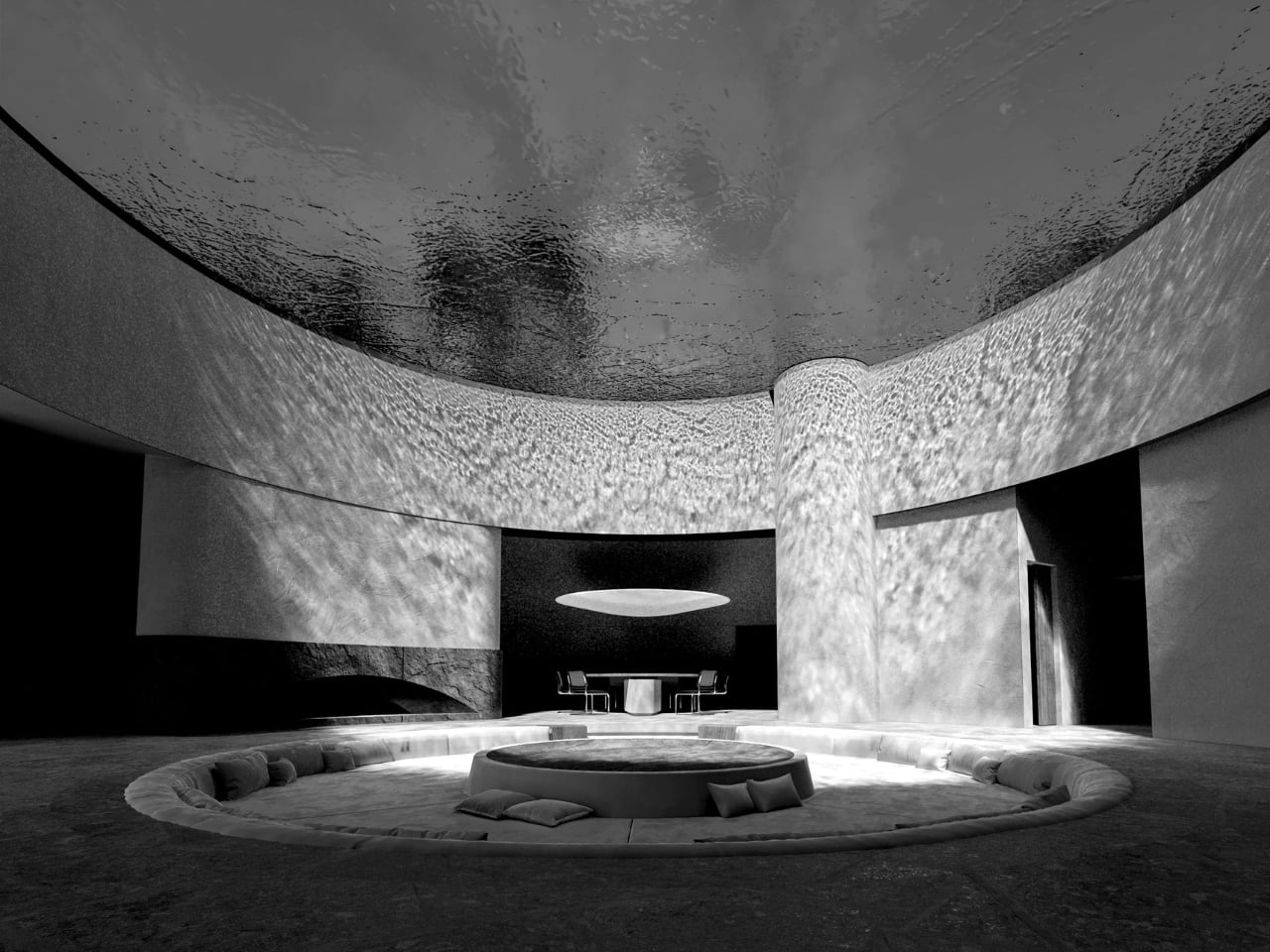
The concept is beautifully straightforward. A broad, bowl-shaped rooftop sits above the structure, collecting rainfall and releasing it slowly along the roof’s perimeter. Water traces a continuous line around the building’s edge, creating a living curtain that shifts and moves depending on the weather. That boundary between inside and outside isn’t a wall or a window. It’s water.

Circulation paths, sheltered zones, and open terraces are all arranged around the movement of that water. It’s the kind of design thinking that sounds almost obvious in hindsight but rarely gets executed with this much commitment. Chu didn’t just reference the climate in a mood board. He made it load-bearing.

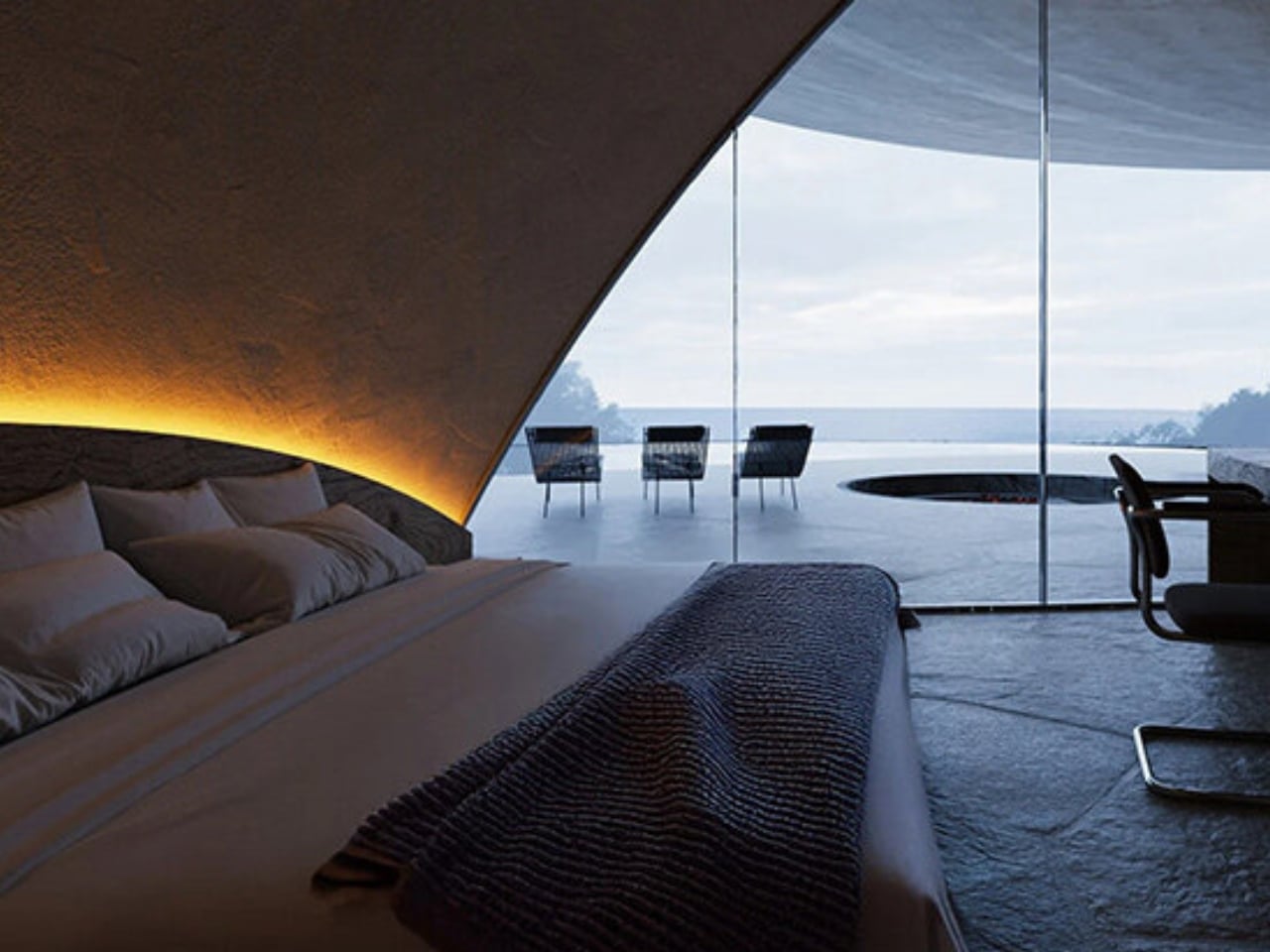
Inside, the approach stays consistent. Materials are restrained and surfaces curve gently, guiding movement without feeling prescriptive. Glass openings frame the surrounding forest and coastline. A bedroom sits along the perimeter, positioned specifically to receive filtered light and the ambient sound of rain falling outside. The atmosphere in every room is meant to shift throughout the day as weather changes, because in this house, weather isn’t background noise. It’s the whole point.

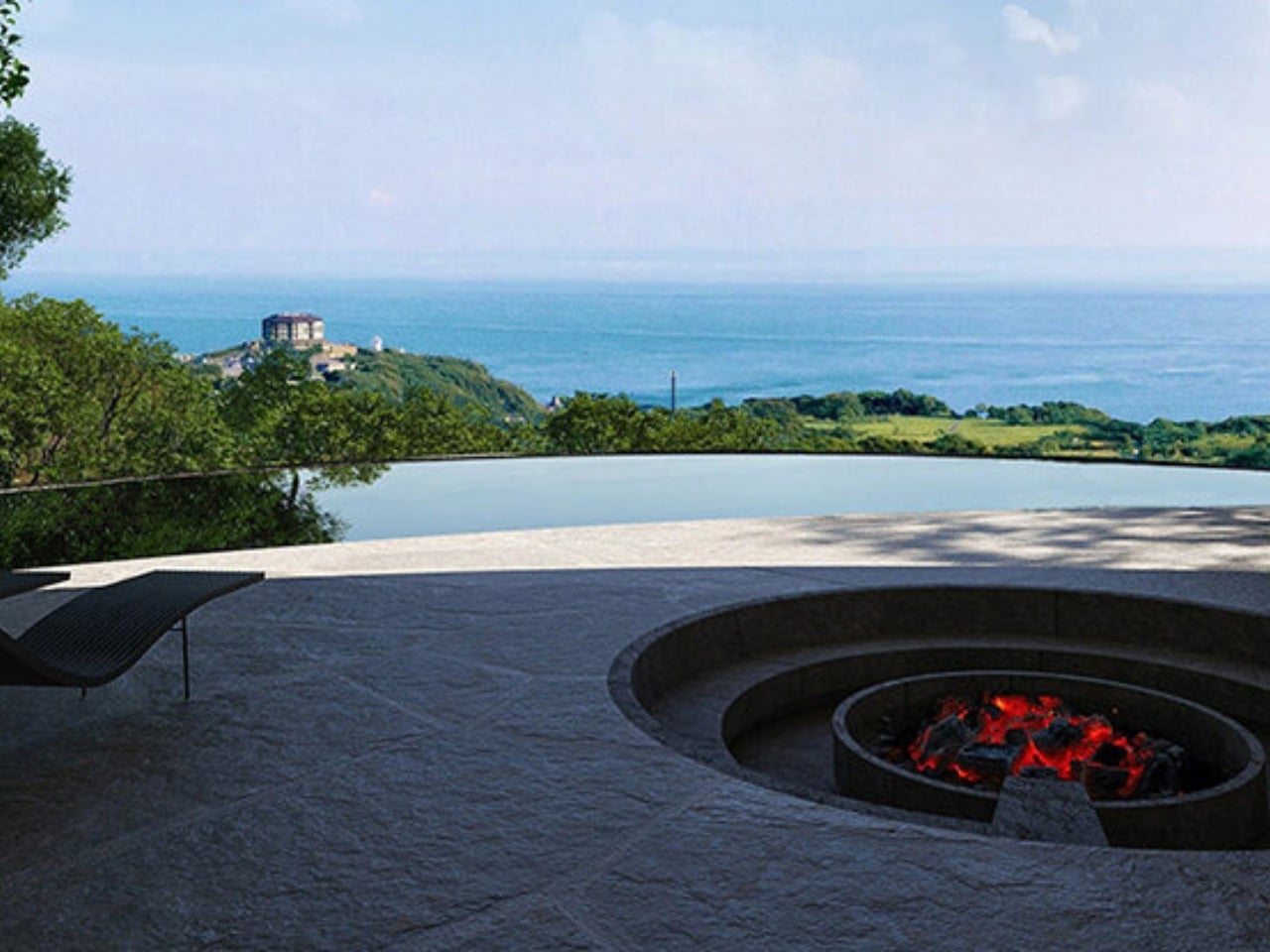
A circular outdoor space anchors the main living area, with a sunken fire element at its center. It’s a pairing that works precisely because neither element announces itself. The contrast between the water perimeter and the fire core feels like it’s pulled directly from the island’s own logic: rain on the outside, warmth on the inside. As a design gesture, it’s earned rather than decorative.

The competition itself adds weight to the win. NOT A HOTEL, the Japanese luxury hospitality brand, opened the 2026 edition to architects under 40, asking them to design a hybrid between a private residence and a boutique hotel on Yakushima. Sound of Rain was selected from 1,058 entries submitted across 112 countries and regions. That’s a significant shortlist to come out on top of, and the scale of the competition makes Chu’s win feel genuinely meaningful, not just for him, but for a generation of architects rethinking what place-responsive luxury design can be.

The restraint of this project is remarkable. It would have been very easy to over-design a property on an island as visually rich as Yakushima. The temptation to layer in dramatic architectural gestures must be significant when your backdrop is ancient cedar forest, rugged coastline, and a UNESCO-protected landscape. Instead, Chu did the quieter, harder thing. He listened to what the site was already doing and made that the architecture.

Sound of Rain fits into a broader conversation about how design can respond to climate without trying to conquer it. So much of contemporary architecture is still fundamentally about control, about managing and minimizing natural elements rather than working alongside them. This project offers a different model, one that treats the environment as a collaborator instead of a variable to be resolved. It’s a building that knows where it is and what that means, and it doesn’t pretend otherwise.

Whether the villa ever gets built is another question, but as a competition entry, it’s already doing something valuable. It’s expanding the conversation about what a high-end retreat can look like, and what the relationship between a building and its environment should be. Sometimes the most sophisticated thing a designer can do is step back and let the rain do some of the talking.

The post What Happens When You Stop Fighting the Rain and Design With It first appeared on Yanko Design.

Experience Living In Nature By Blending Into It With This Luxurious Nature-Inspired Villa

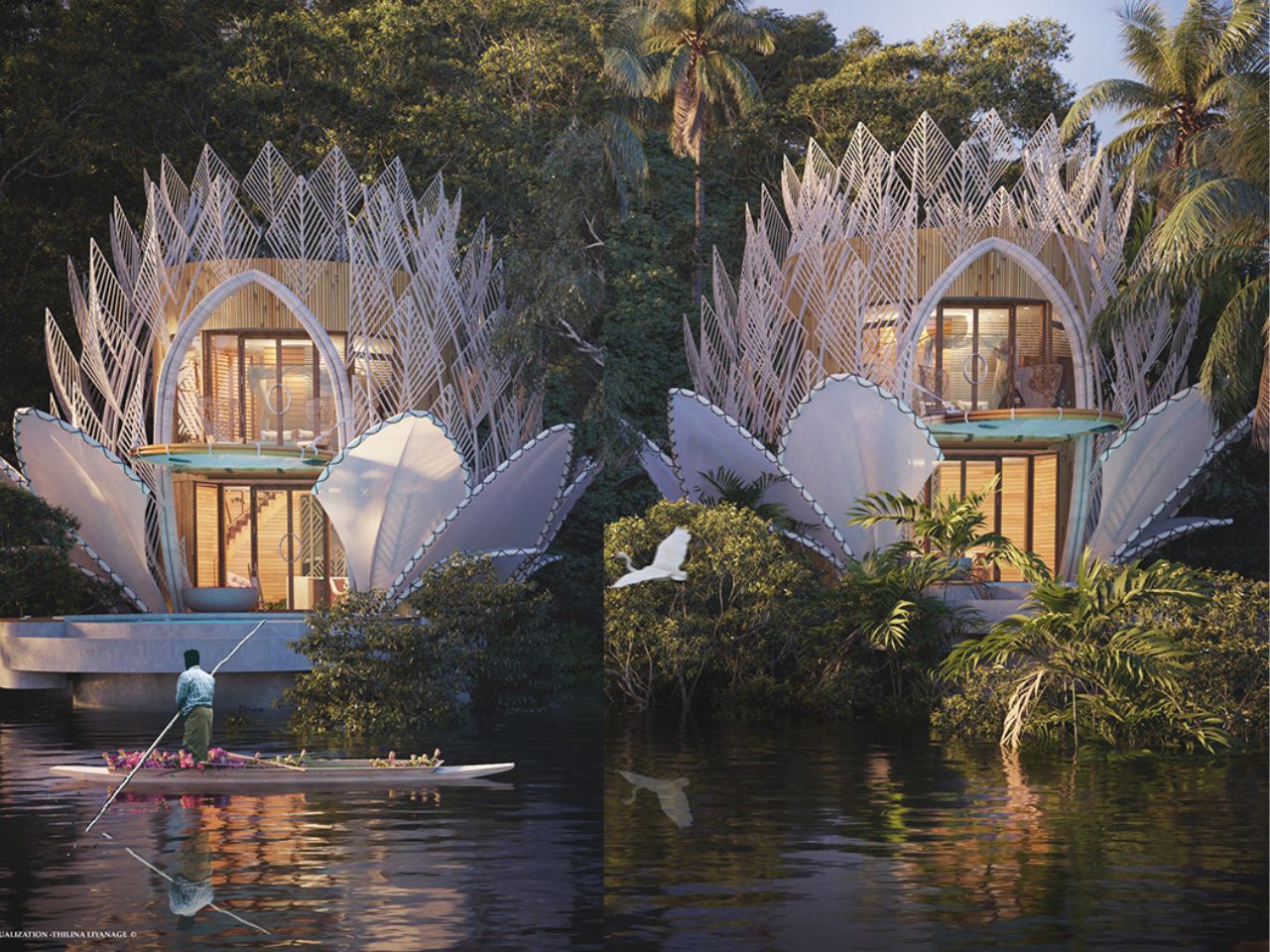
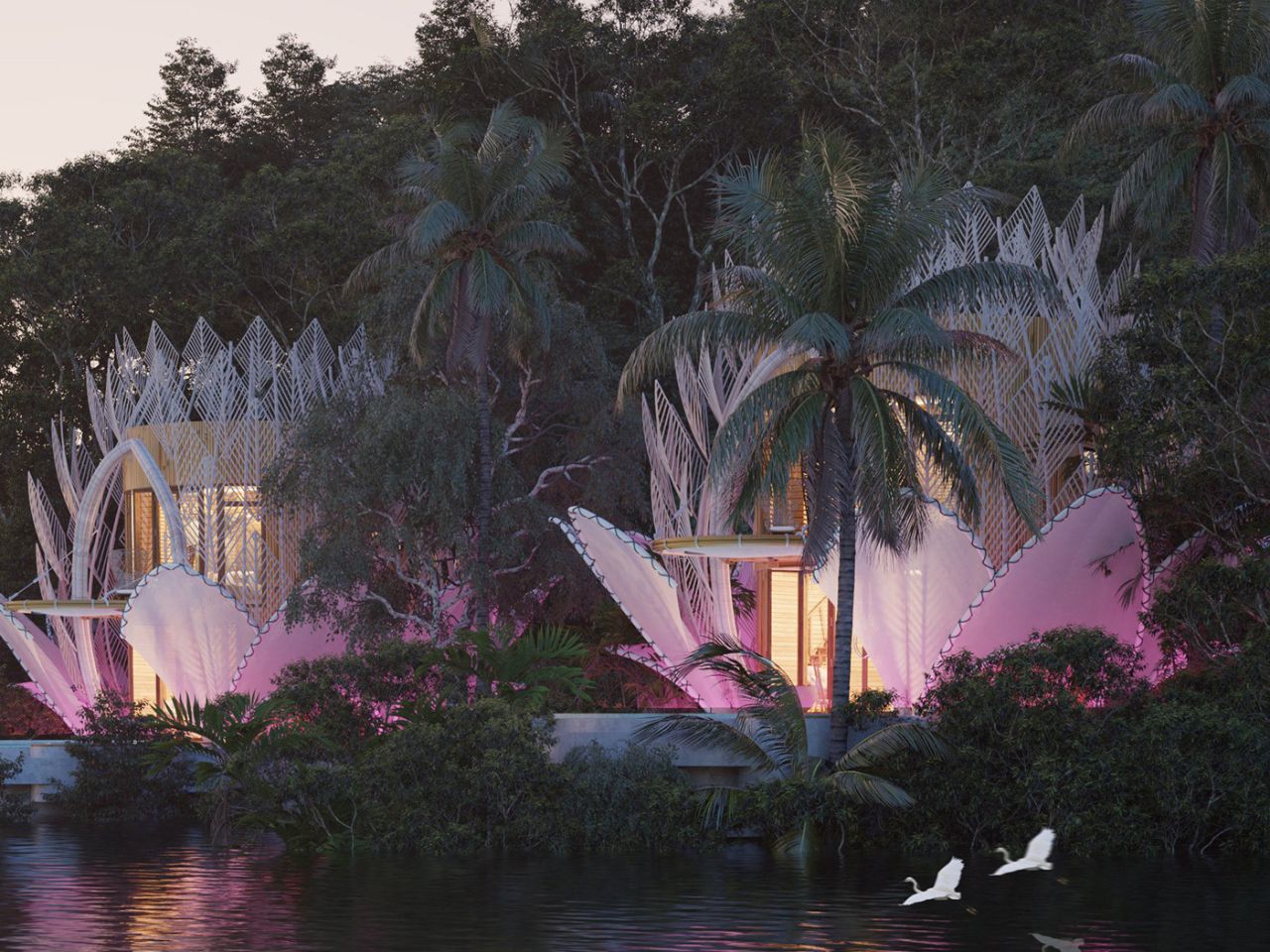
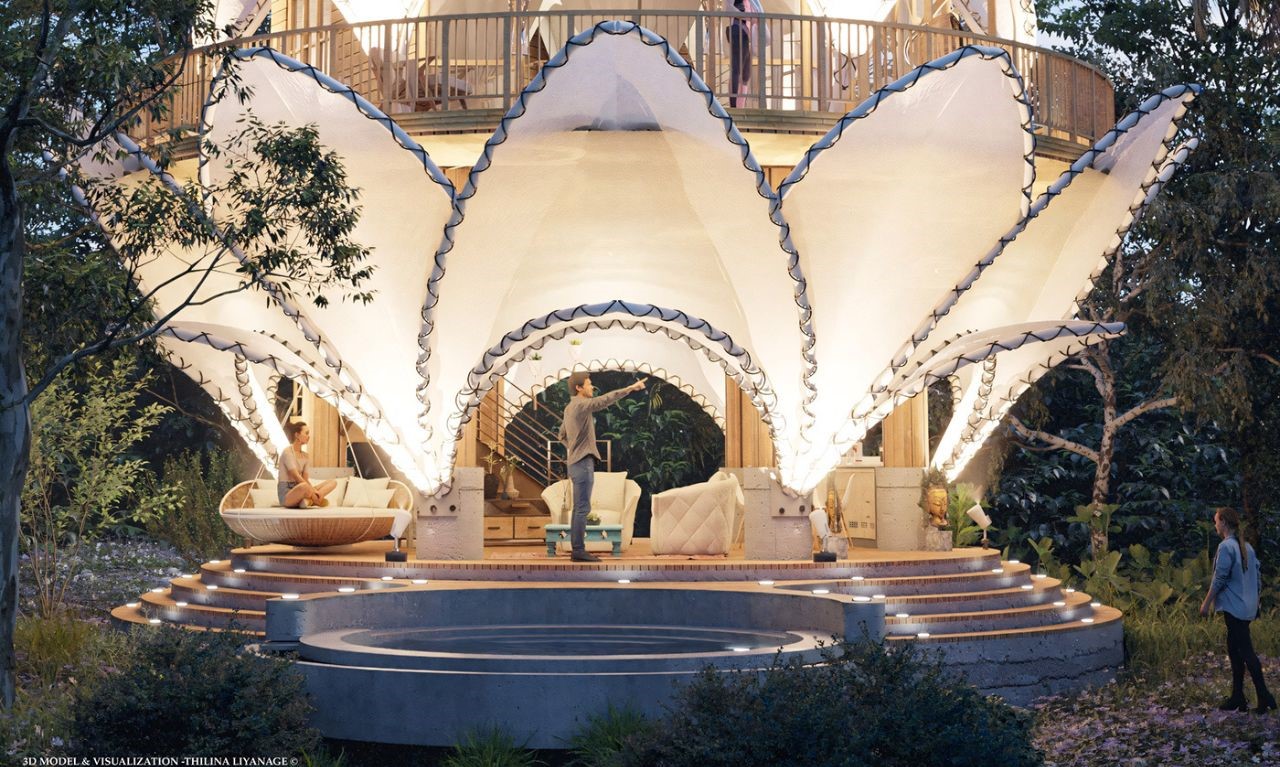
In the heart of the tropics, where the dense forest meets a serene lake, stands an architectural marvel that feels plucked from the pages of a fairytale – the Blue Water Lily Villa. This design, a testament to the brilliance of its creator, captures the essence of biomimicry, echoing the delicate beauty of a water lily while remaining entirely practical and constructible. The villa is a perfect blend of nature-inspired elegance and modern functionality.

Designer: Thilina Liyanage

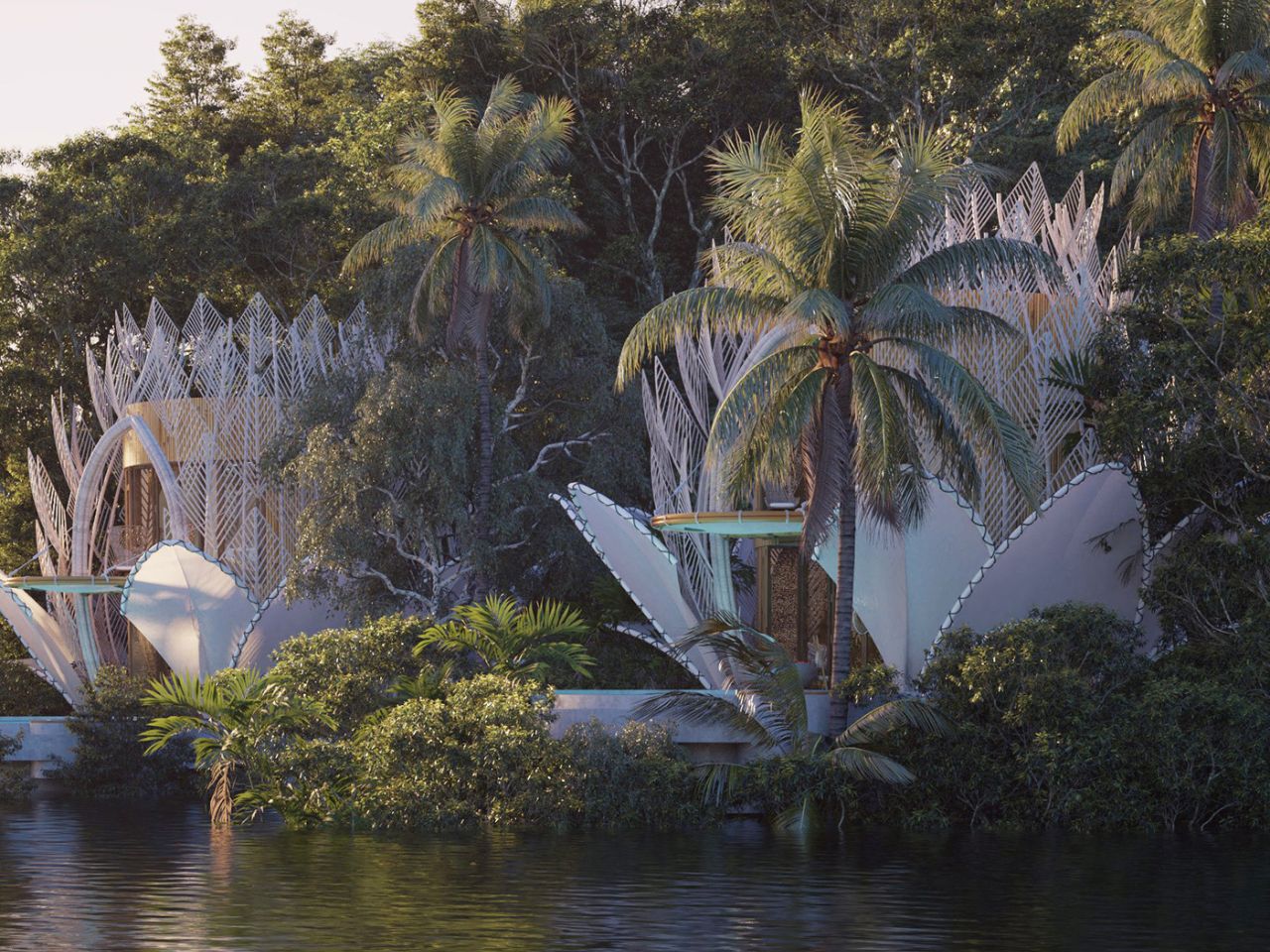
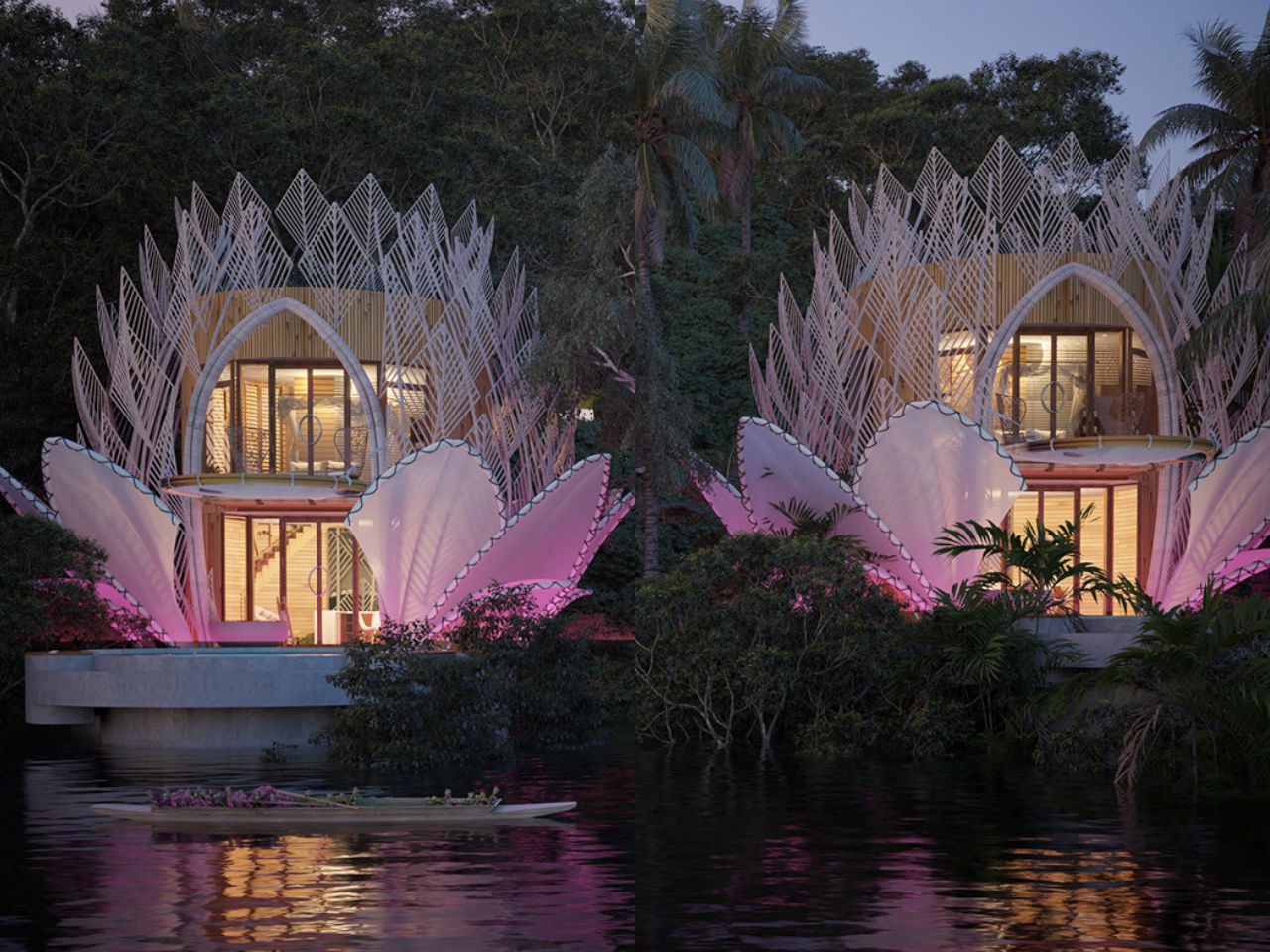
The Blue Water Lily Villa is composed of two stunning two-story structures, both offering direct access to the lake, making it an idyllic retreat for nature lovers. These villas, seemingly floating on the water’s edge, draw immediate attention with their unique design, inspired by the layers of a blooming water lily. Just as the petals of a lily unfold, revealing intricate layers beneath, these villas are carefully nestled within an array of petal-like structures that rise gracefully from the landscape.

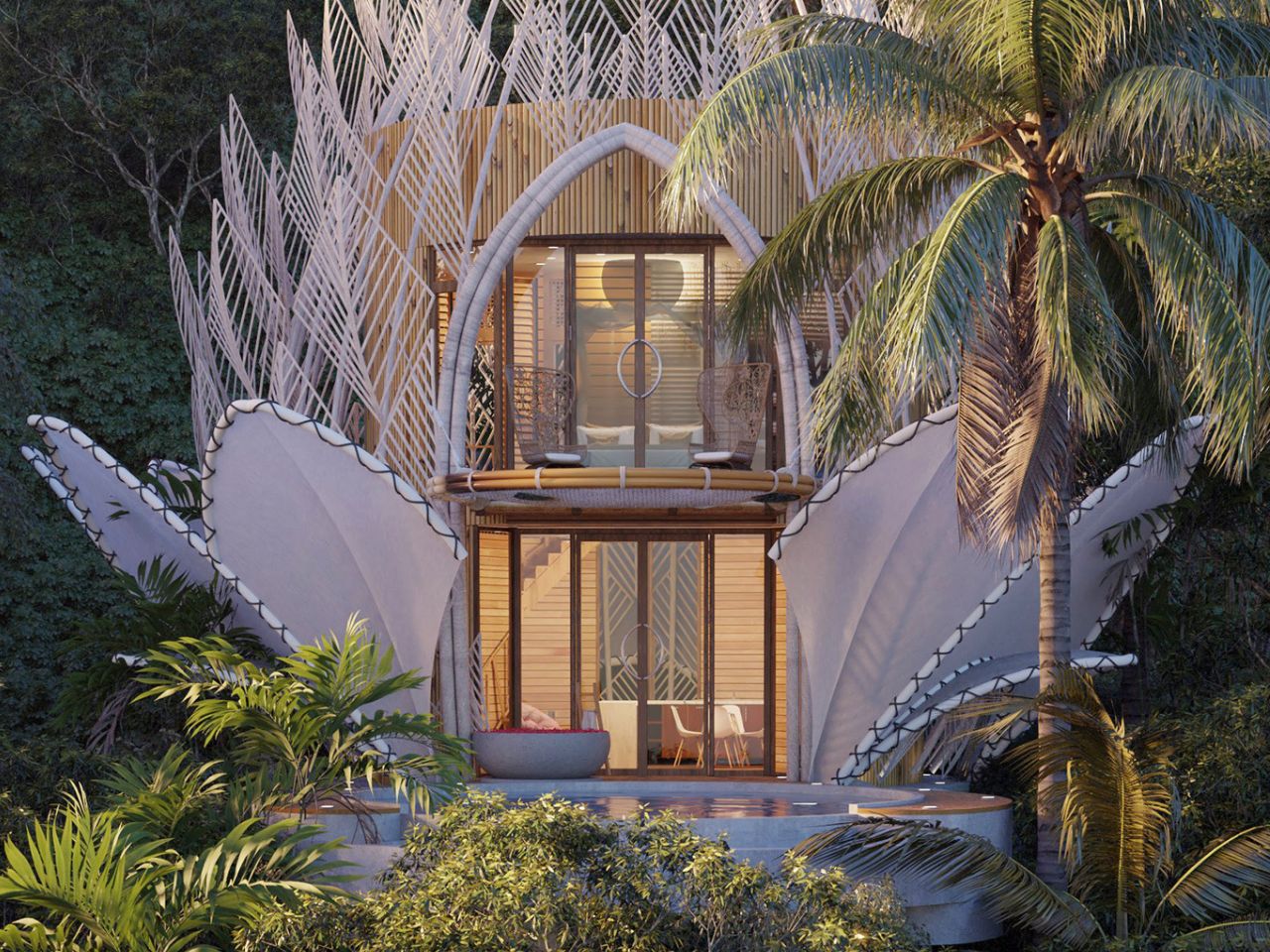
Upon entering the villa, the lower level reveals a welcoming space designed for communal living. The open-plan layout seamlessly integrates the living and dining areas, creating a spacious and airy environment. The kitchen, though modest, is thoughtfully designed to cater to essential needs, reinforcing the villa’s focus on simplicity and harmony with nature.

One of the most striking features of the lower level is the way the living and dining areas open up to a small, intimate pool. This pool offers a refreshing escape, with the tranquil lake providing a breathtaking backdrop. It’s a space where one can truly immerse themselves in the natural surroundings, taking in the soothing sounds of water and the gentle rustling of leaves.

Ascending the stairs leads to the villa’s upper level, where the bedroom awaits—a cozy sanctuary that exudes warmth and tranquility. The ambient lighting adds to the room’s intimate atmosphere, making it a perfect place to unwind. From here, the space extends to outdoor cantilevered seating, offering an elevated perspective of the natural beauty surrounding the villa.

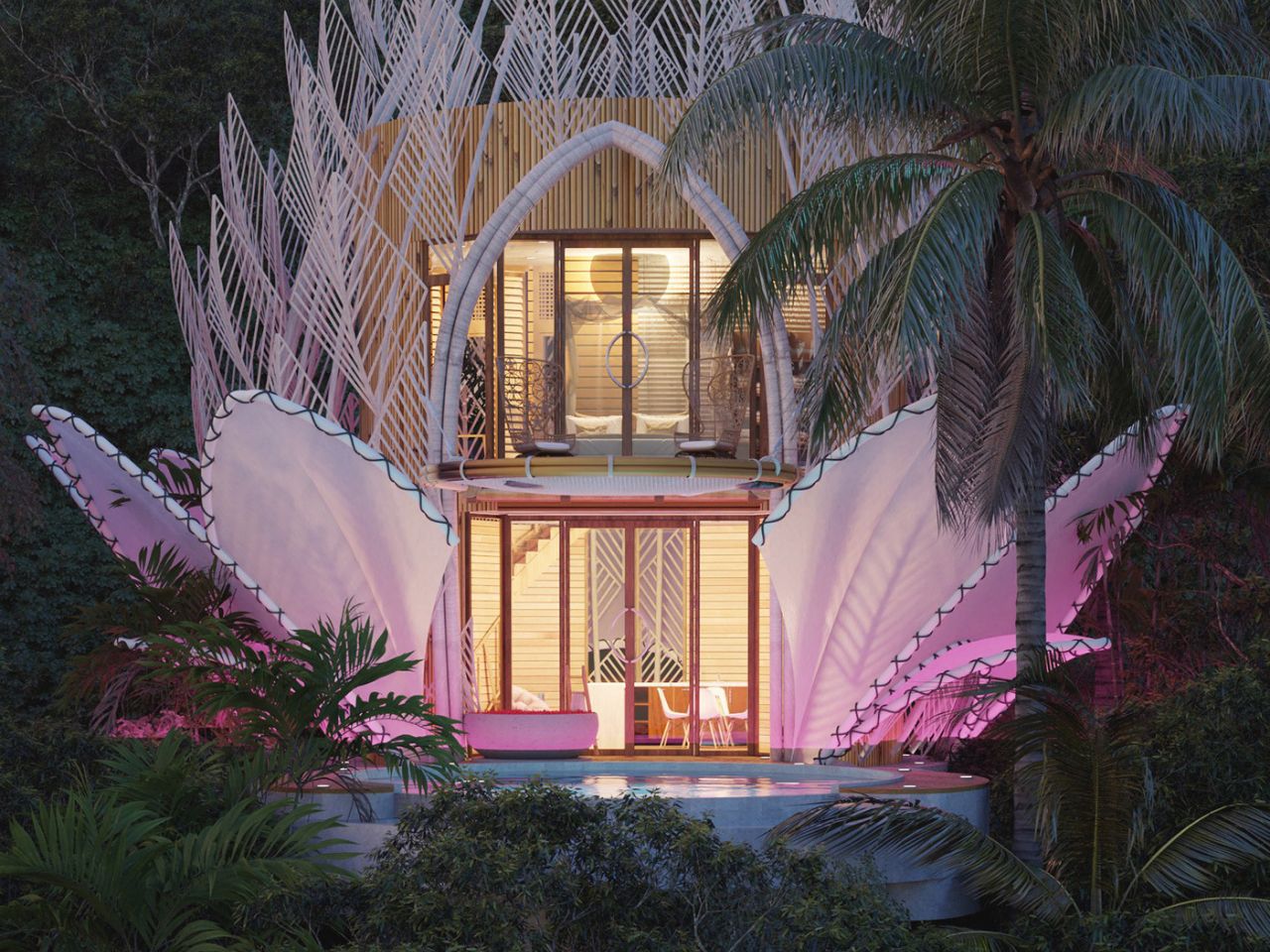
The outermost and lowest of the villa’s “petals” are constructed from metal frames covered in a sturdy fabric, giving them a soft, organic appearance. At night, the villa transforms as soft pink uplights cast a magical glow onto these fabric petals, bringing the entire structure to life, much like a water lily illuminated by the moonlight.

The upper villa’s structure is composed of prefabricated metal elements, which continue the theme of delicate, petal-like forms. These elements are designed to be thin and see-through, evoking the fragile beauty of a water lily’s petals. The primary structural components within the villa, likely made from locally sourced bamboo, further reinforce the villa’s connection to its environment. This choice of material not only adds to the aesthetic appeal but also underscores the villa’s commitment to sustainability, making it a model of eco-friendly design.

The post Experience Living In Nature By Blending Into It With This Luxurious Nature-Inspired Villa first appeared on Yanko Design.

Lotus Villa: A Tropical Paradise Blending Nature And Architecture

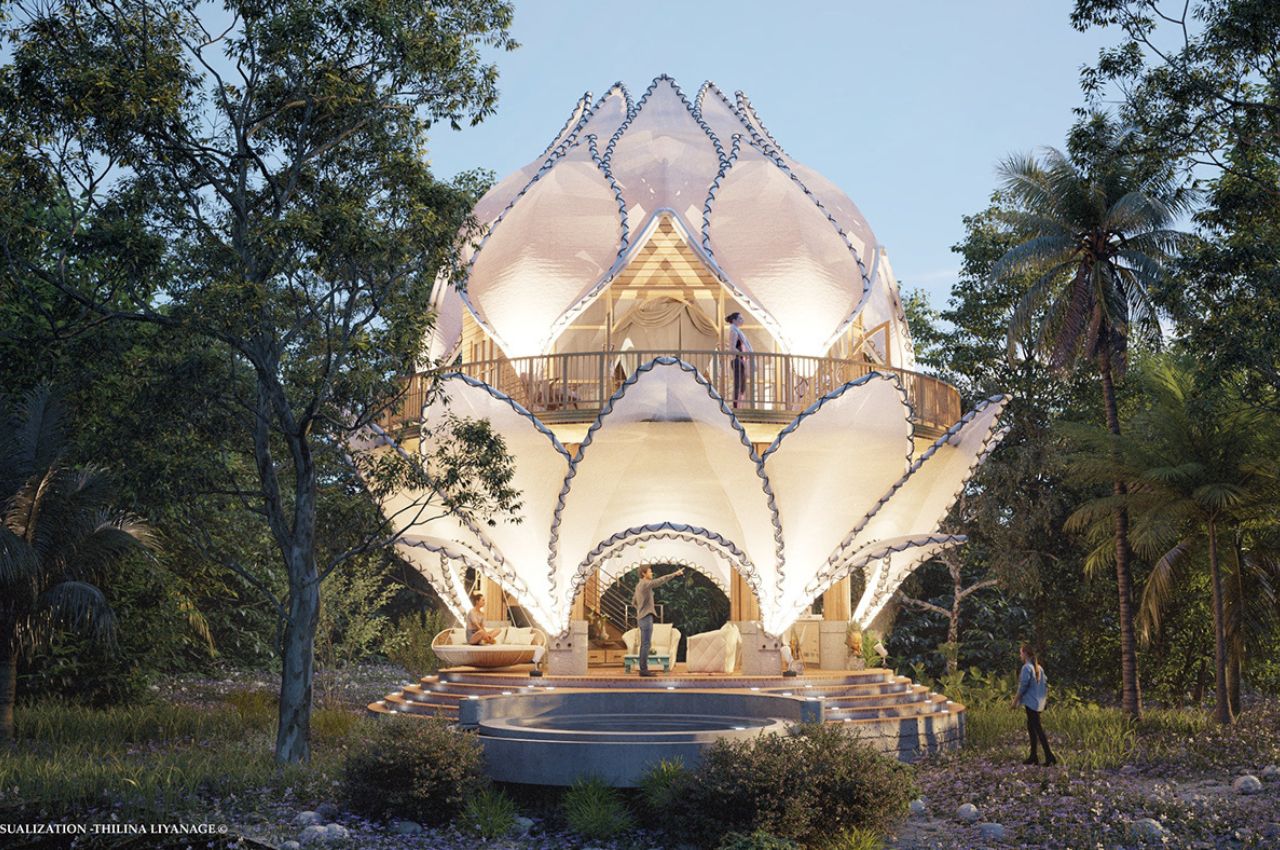
Nestled in the heart of a tropical paradise, the Lotus Villa stands as a stunning testament to the harmonious relationship between nature and architecture. Inspired by the symbolic purity and calmness of the lotus flower, this design embodies beauty and enlightenment. Using advanced tools like SketchUp and Vray, the architect has crafted a masterpiece that seamlessly blends modern luxury with the organic elegance of nature.

Designer: Thilina Liyanage

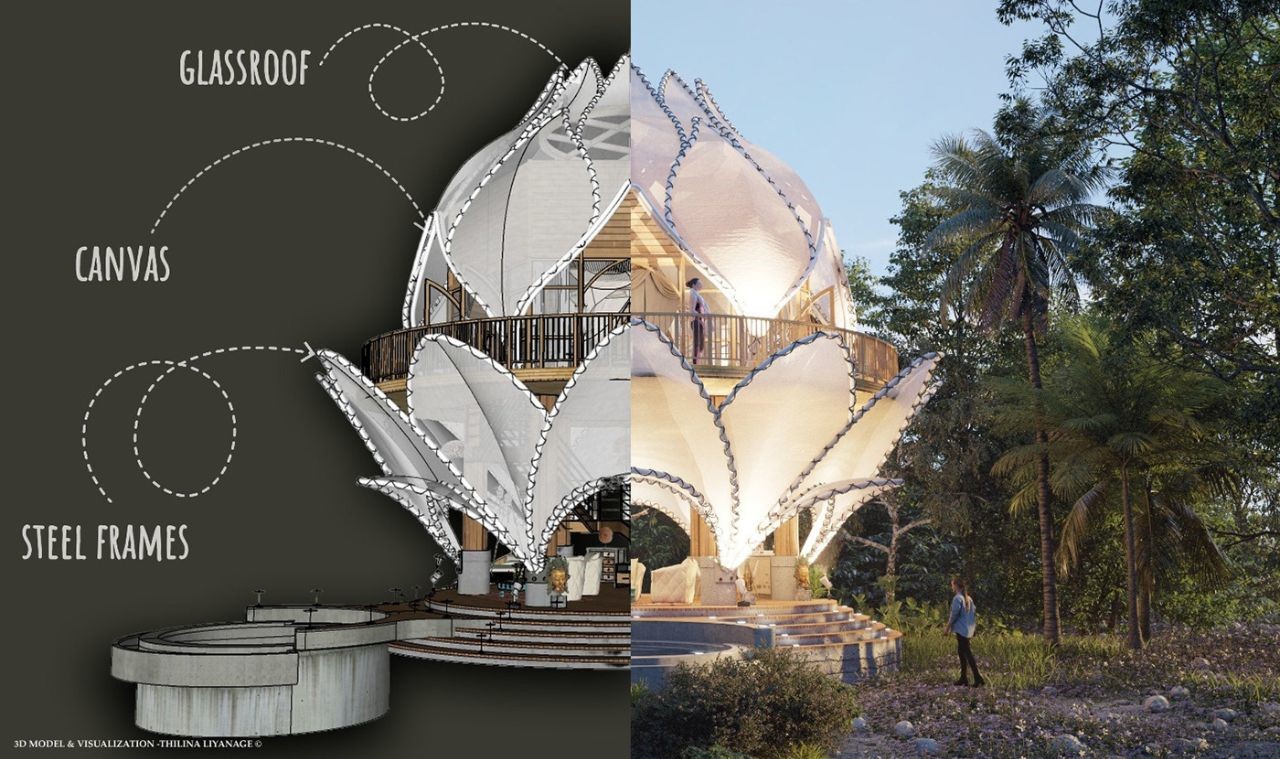
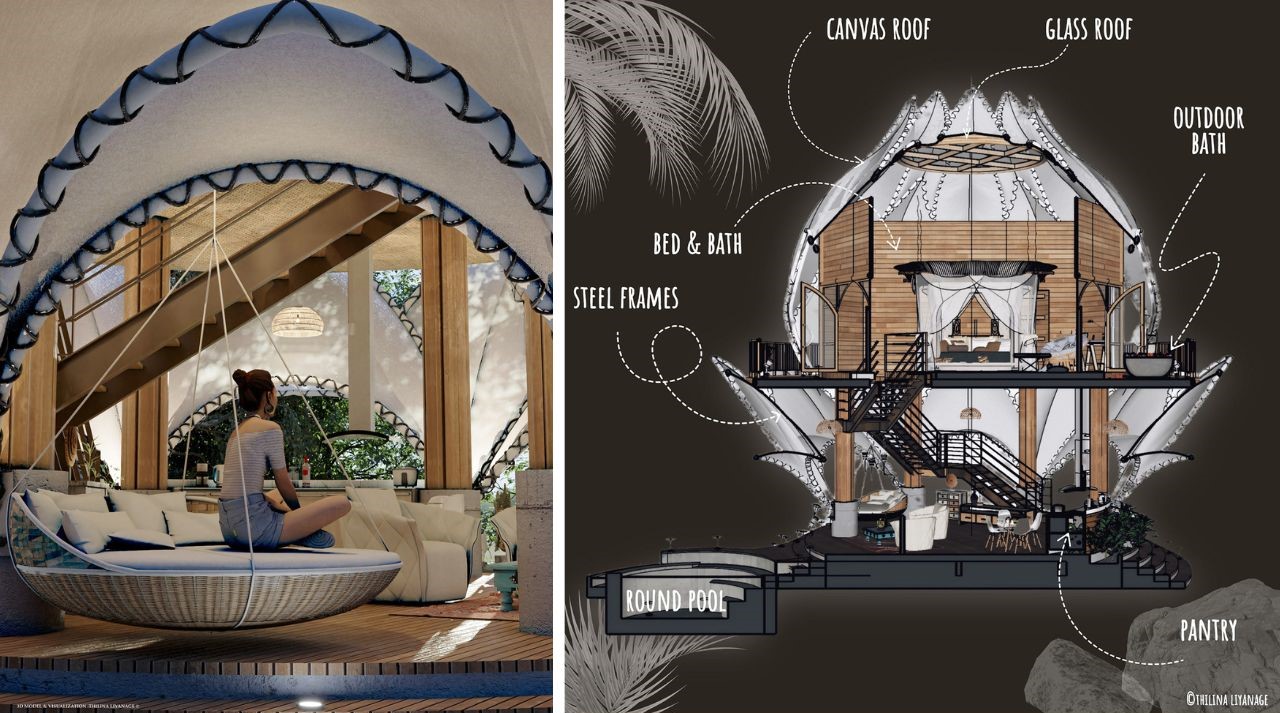
The Lotus Villa comprises three main elements that contribute to its unique charm: a glass roof, a canvas, and steel frames. The glass roof floods the interior with natural light, creating a bright and airy atmosphere that mirrors the lotus’ emergence into the sun. The canvas, resembling the petals of the lotus, is supported by intricately designed steel frames that add strength and elegance to the overall structure.

Surrounded by lush greenery, the villa creates a striking contrast between the organic and the artificial. However, the thoughtful design ensures that the structure harmoniously blends with its natural surroundings. The translucency of the overlapping canvas allows ambient light to filter through creating a play of light and shadows that adds a touch of drama to the interior.

The steel frames have a detail resembling delicate threads, evoking the softness of the lotus, giving the impression that the villa is intricately woven together. This attention to detail not only enhances the aesthetic appeal but also creates a sense of unity with the natural inspiration. The villa’s unique design extends to the flooring, where recessed ground lights add to the ambiance, casting beautiful shadows on the ceiling and walls on both levels.

The Lotus Villa is a perfect sanctuary for those seeking a zen holiday or a meditation retreat. The use of natural materials like wood complements the tranquil vibe, creating an environment conducive to relaxation. The villa is designed for a nuclear family or a couple, featuring a bedroom on the top floor with an attached outdoor bath. The lower level houses a living room, dining area, and a pantry, seamlessly blurring the lines between indoor and outdoor living.

The Lotus Villa stands as a testament to the possibilities when architecture draws inspiration from the natural world. Its unique design, combining the elegance of the lotus flower with modern luxury, creates a tropical paradise that is both visually stunning and functional. Whether as a retreat for meditation or a luxurious getaway, this villa offers an unparalleled experience where the boundaries between indoors and outdoors dissolve into a seamless blend of tropical and modern living.

The post Lotus Villa: A Tropical Paradise Blending Nature And Architecture first appeared on Yanko Design.
This Undulating Villa With A Green Rooftop On A Japanese Island Is Currently For Sale If Any Millionares Are Looking

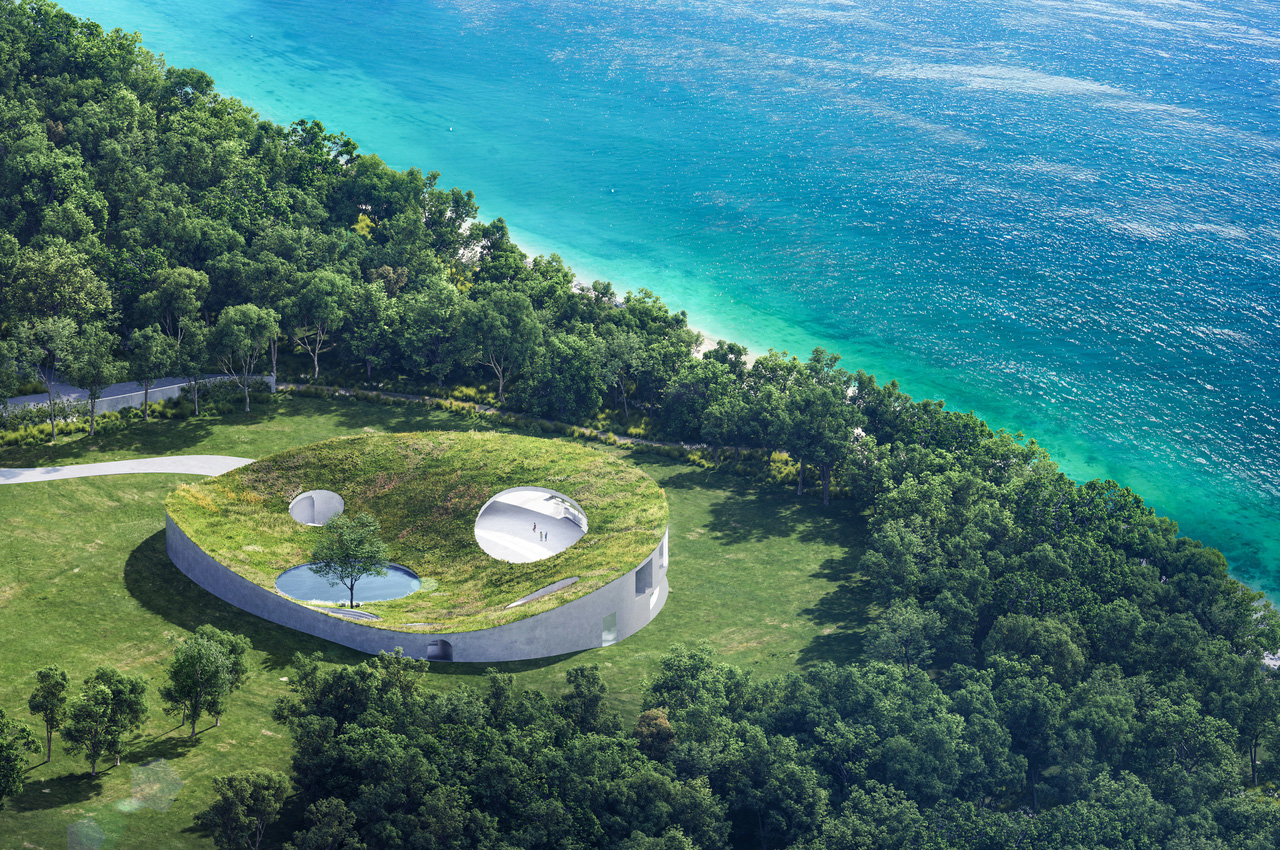
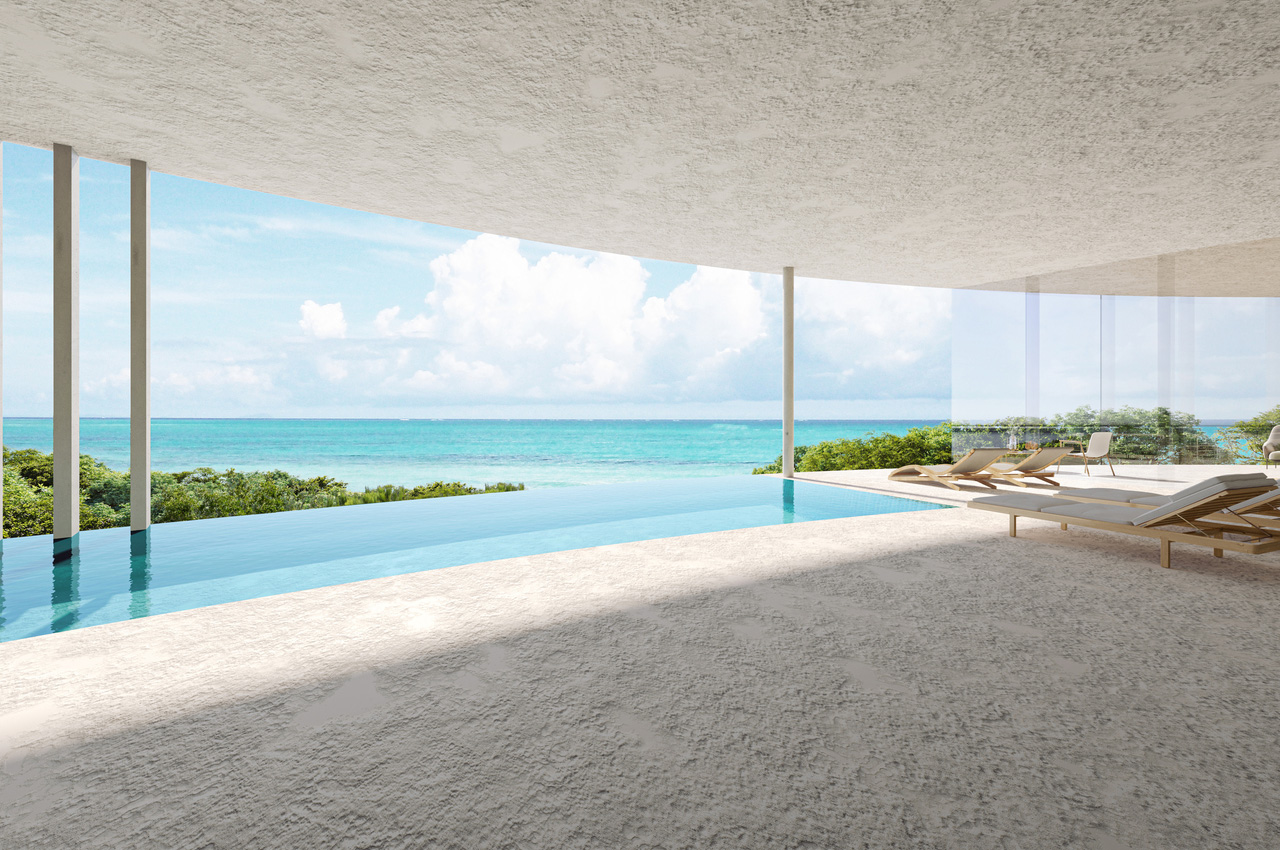
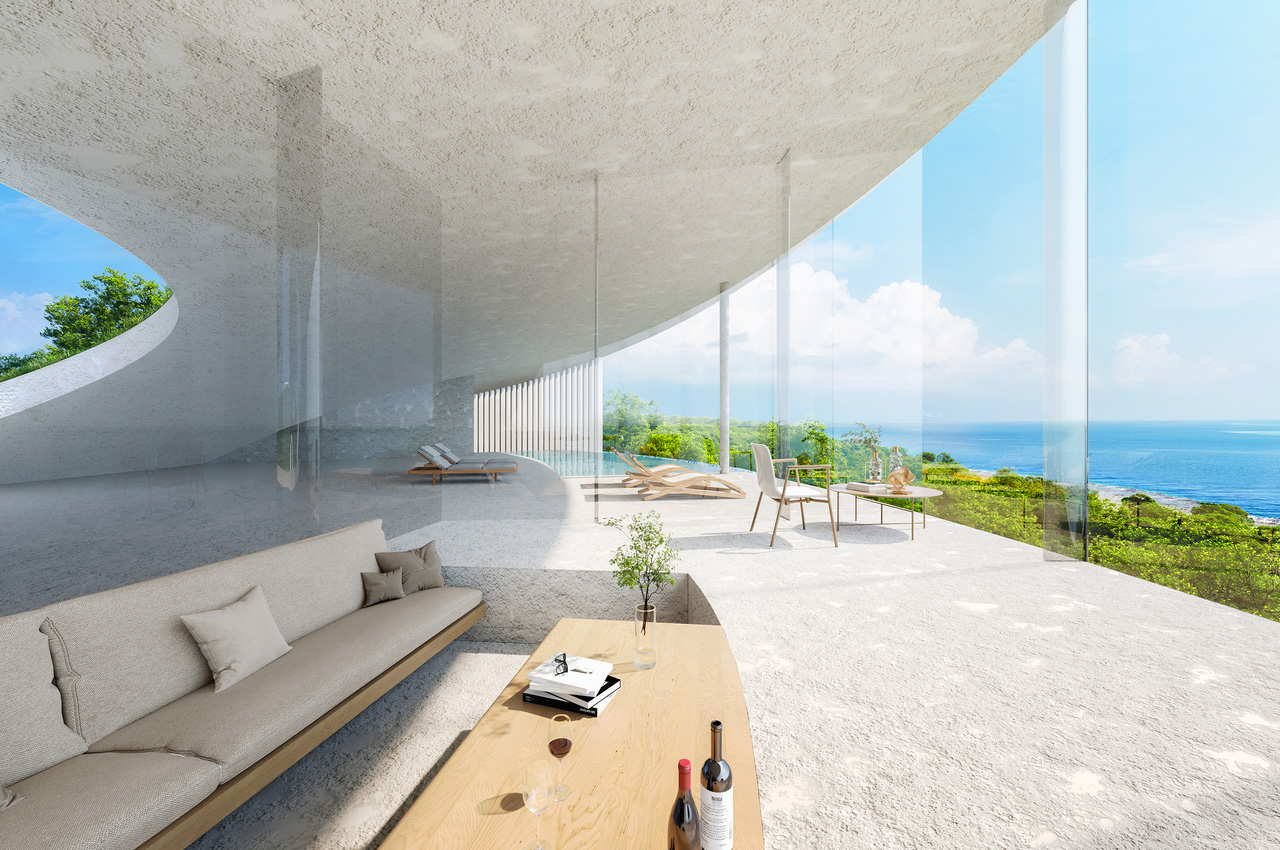
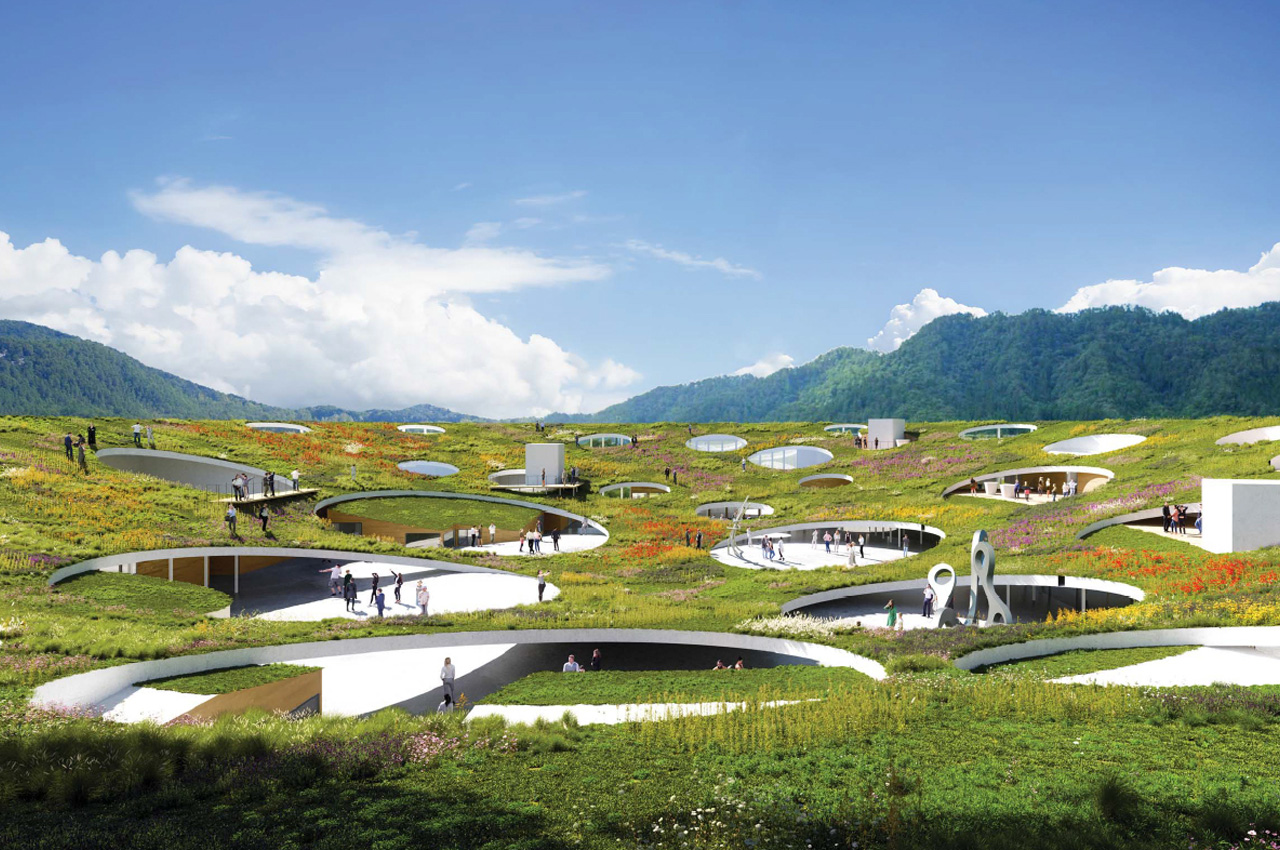
Nestled on the stunning Ishigaki Island in Okinawa, this impressive green villa is called the Ishigaki Earth and was designed by architect Sou Fujimoto. It’s been a year since its debut, and startup hospitality brand Not a Hotel has recently put it up for sale. The expansive retreat occupies 9900 square meters and is located along the island’s pretty southwestern coast. It has a unique circular design topped by a lush green roof which eradicates the typical concept of a front and back, instead, it allows the villa to effortlessly merge with the surrounding nature.

Designer: Sou Fujimoto

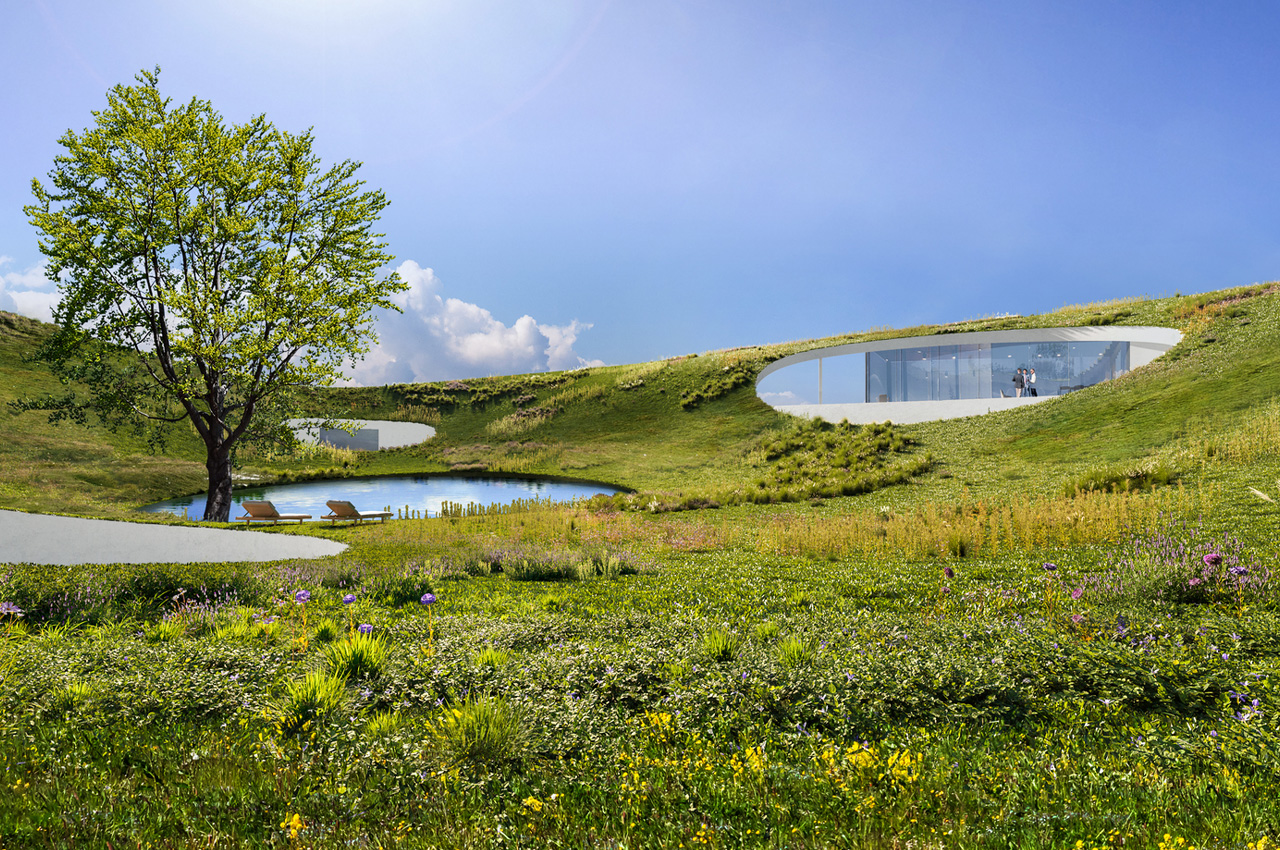
The villa’s expansive roof is marked with large openings that provide stunning views of the sky, inadvertently masking the lines between the structure and nature. Fujimoto had a specific vision for the project which involved creating a serene connection between the villa and nature. He wanted to harmonize them and make them one. The circular structure and concave design are inspired by the undulations of the rolling hills, in turn, offering the residents unobstructed views, and allowing the island’s pretty greenery to merge with the ocean panoramas.

The relaxing retreat is amped with multiple amenities such as an infinity pool that merges with the sea, spacious living and dining rooms with beautiful views, a fully equipped gym, and an underwater sauna. The pool is a beauty to look at, as the sky and water meet there, building a fusion of the horizons. It is truly the perfect place to unwind and relax! The living area of the home extends towards the outside and is equipped with full-height glazing, allowing the surrounding landscapes to be connected to the home.

The retreat accommodates four bedrooms which can comfortably house up to ten people. Each bedroom in the house has been designed to provide a calming and tranquil experience. The bedroom on the waterside offers serene views of the sea, with a bathroom that allows the residents to catch glimpses of the horizon. The rooftop garden also accommodates a pool for kids to play in, as well as a fireplace to gather around and warm up.
The post This Undulating Villa With A Green Rooftop On A Japanese Island Is Currently For Sale If Any Millionares Are Looking first appeared on Yanko Design.