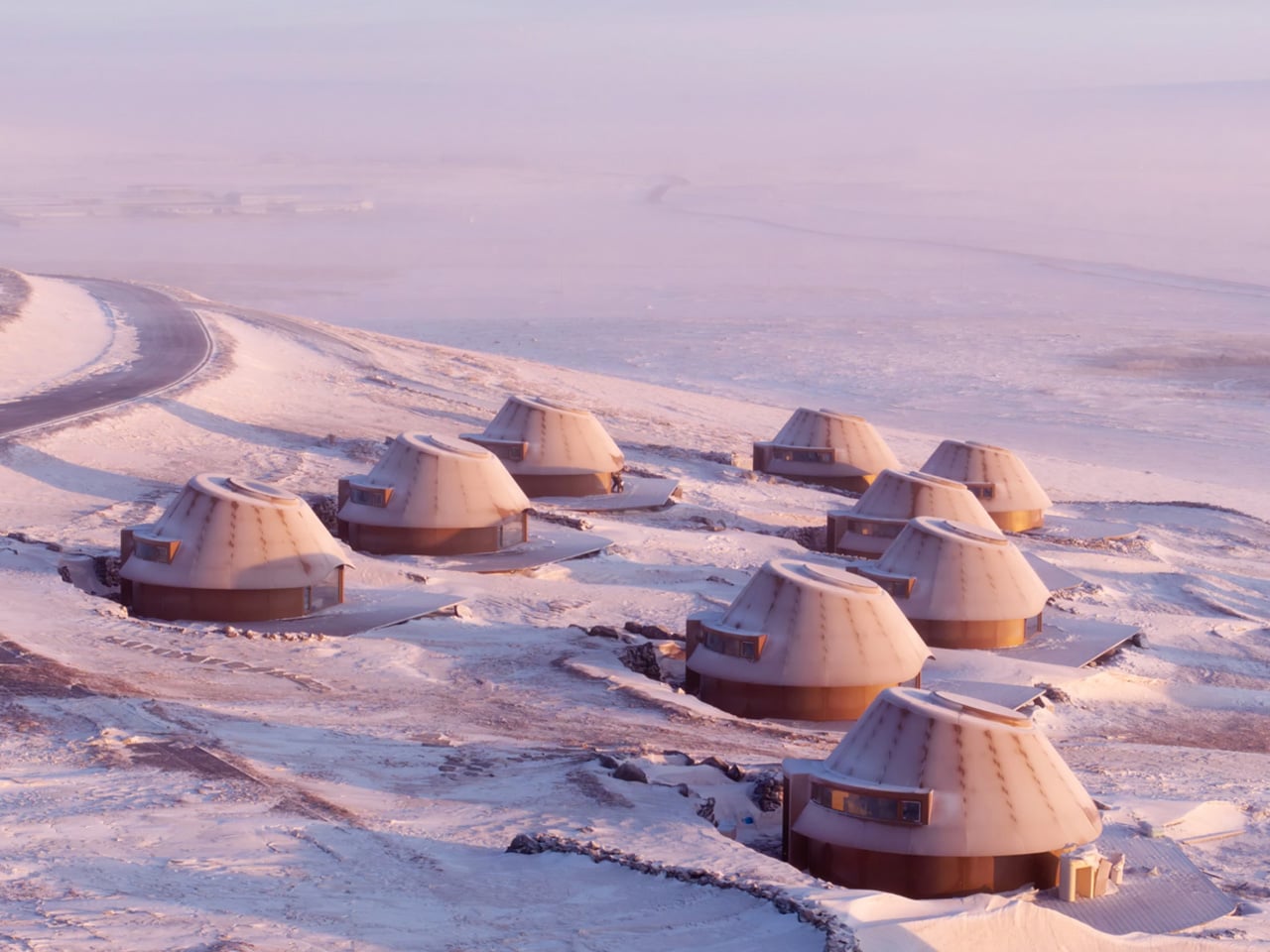
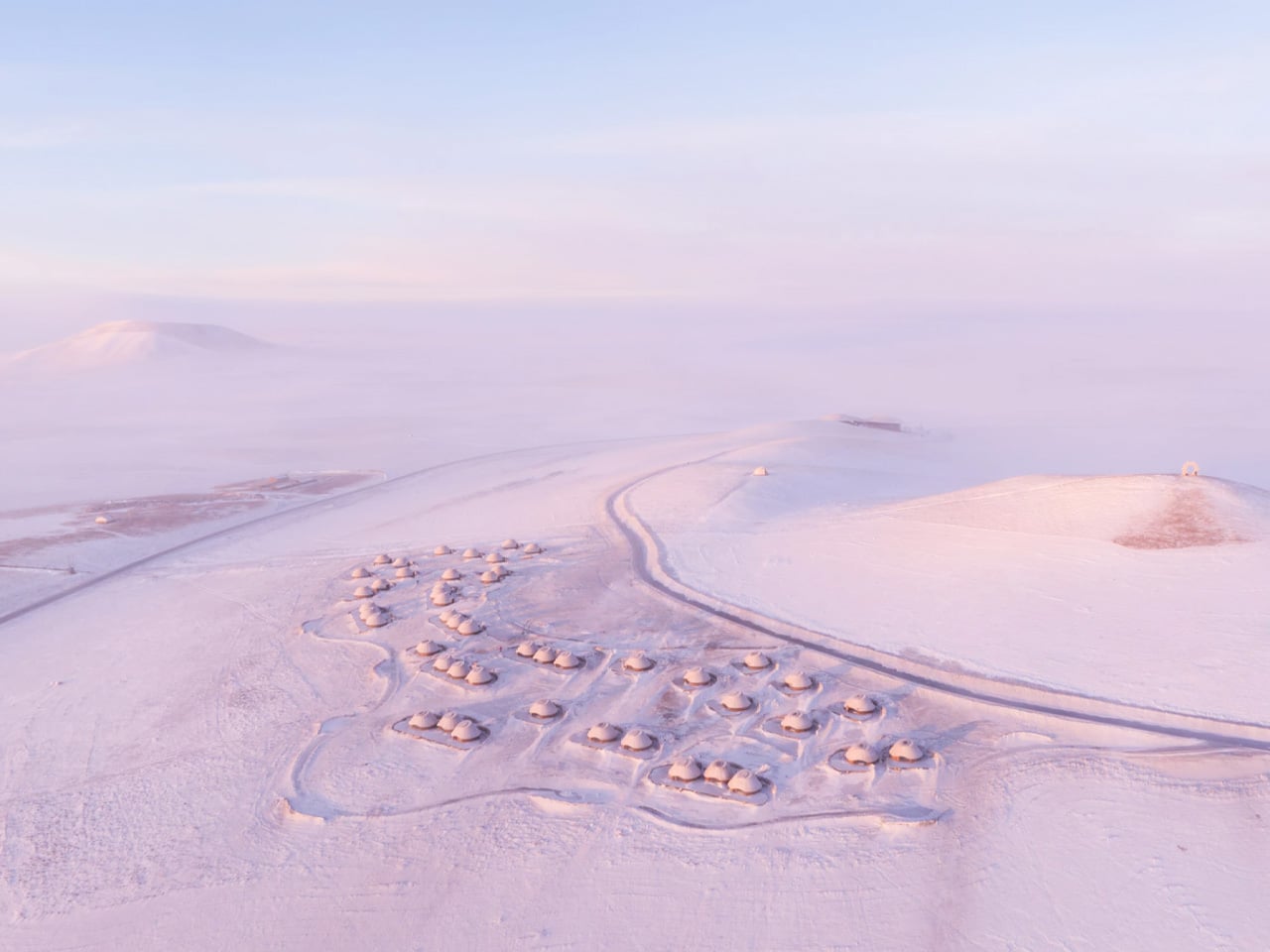
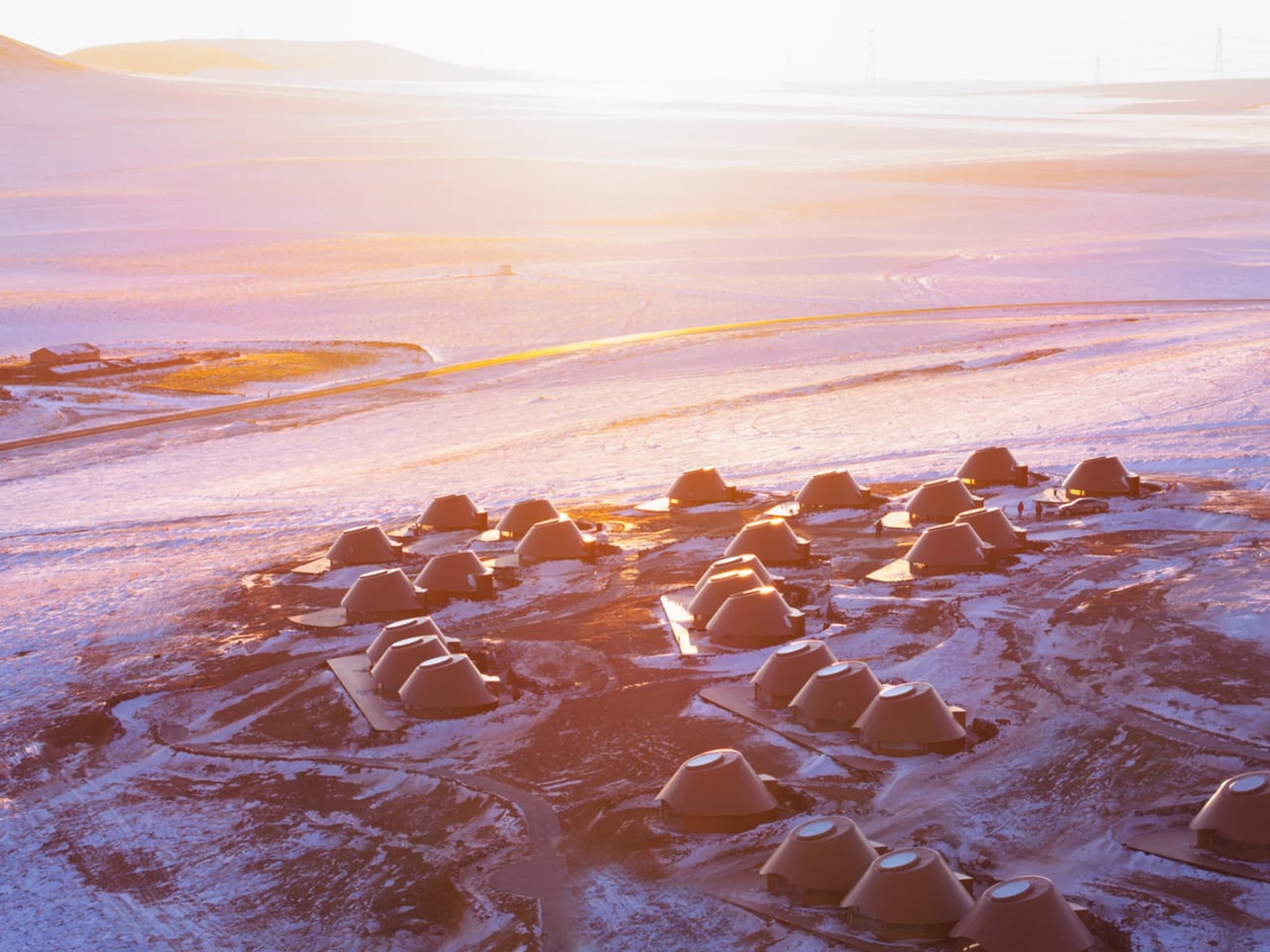
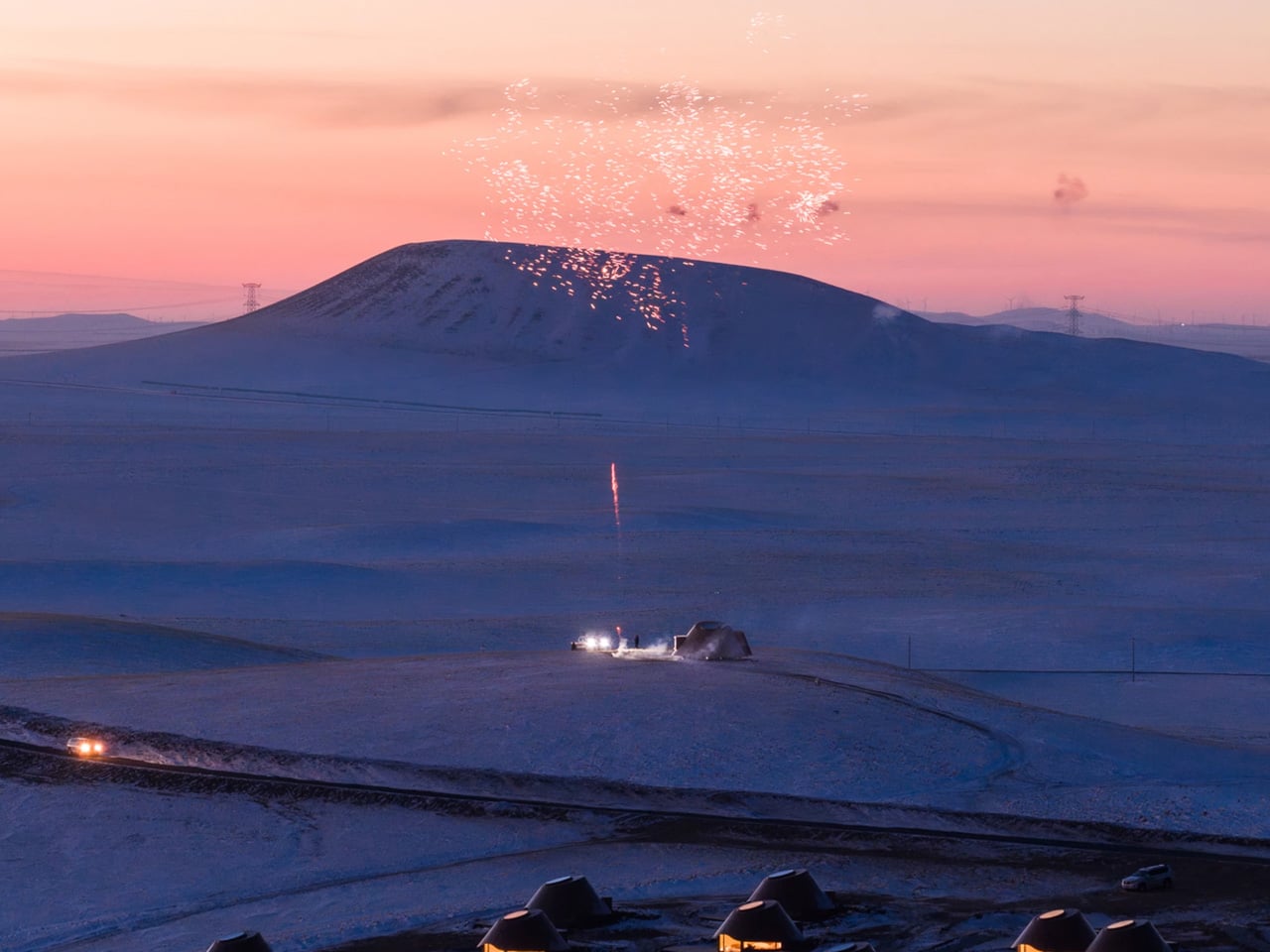
Somewhere in the vast Baiyinkulun Steppe of Inner Mongolia, where dormant volcanoes have shaped the earth for millennia, a new hotel settles quietly into the land it hopes to heal. Designed by PLAT ASIA, the Volcano-In Hotel of Arrivals spans 1,634 square meters across an ancient volcanic field roughly 150,000 years in the making. Rather than imposing itself on this remote terrain, the resort scatters a constellation of compact, sphere-fronted cabins across the landscape, each one placed with surgical intention over patches of degraded sand where vegetation has long struggled to take root.
That placement is the project’s central gesture. By positioning guest suites directly atop eroding sand depressions, the architects aim to arrest soil loss and give the steppe a chance to regenerate beneath and around the structures. It’s an unusual proposition — architecture as ecological bandage — and one whose success will only reveal itself over years of careful observation.
Designer: PLAT ASIA
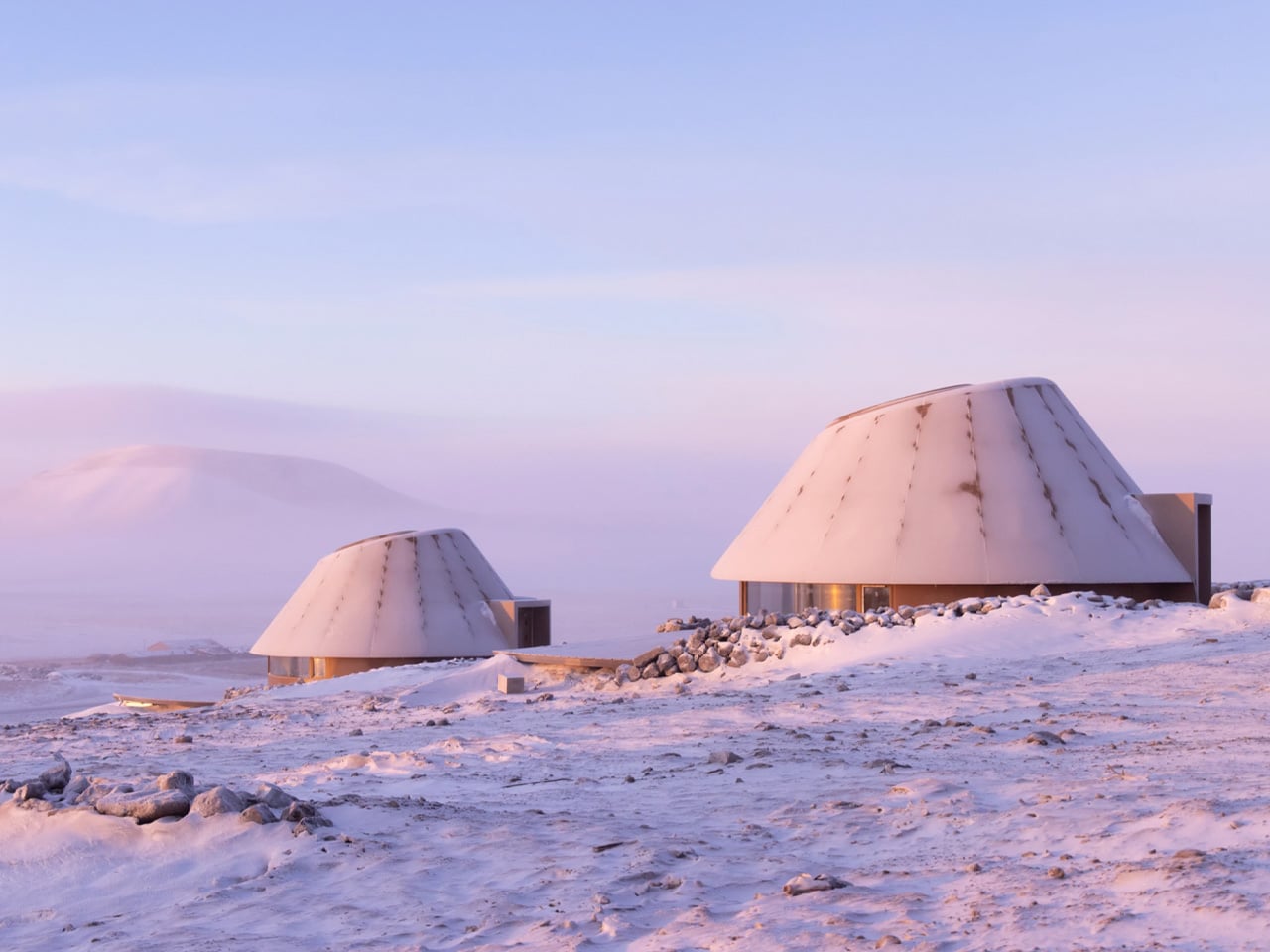
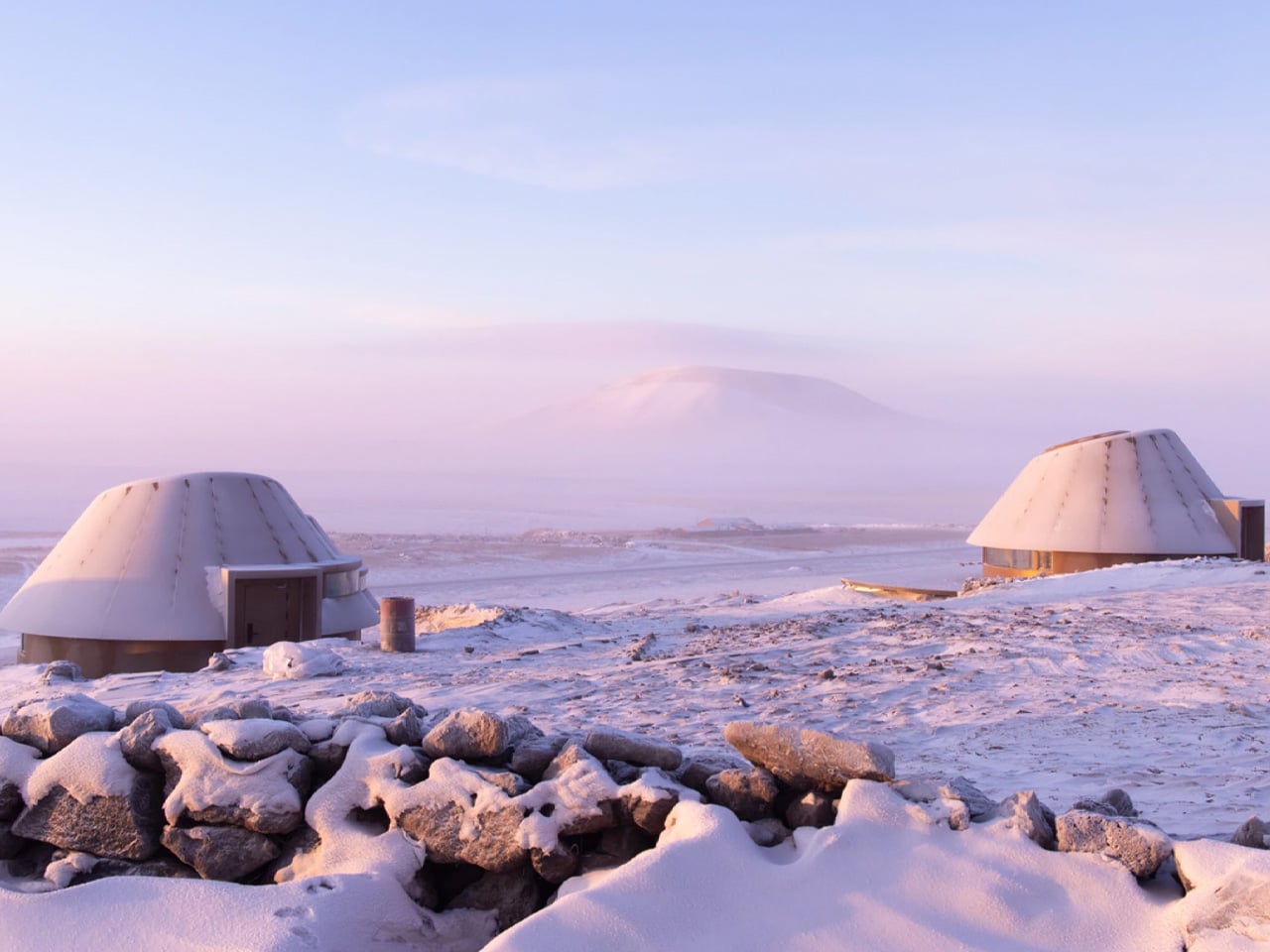
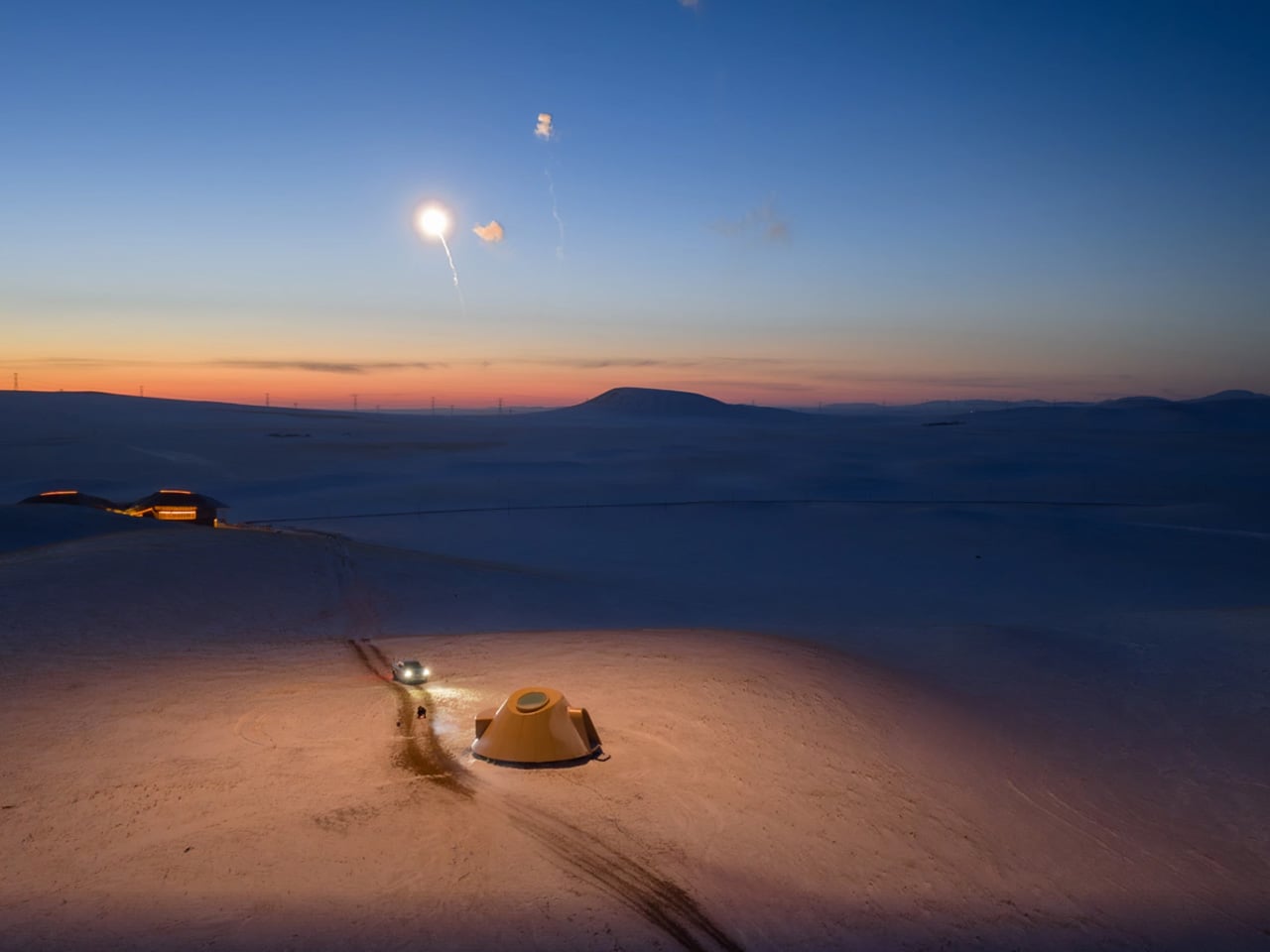
Each cabin presents a striking silhouette against the open grassland. Reddish metal panels wrap the rounded facades, nodding to the volcanic geology underfoot, while aluminum roofing caps the forms with a clean, reflective edge. The units are raised slightly off the ground, a deliberate lightness that limits their footprint. Curved retaining walls serve double duty, acting as wind buffers and snow screens against the harsh seasonal conditions that sweep through the region. Construction leaned heavily on prefabrication, with components arriving ready to assemble on site, keeping heavy machinery and deep excavation to a minimum, a pragmatic choice for a landscape this sensitive.
Inside, the cabins are compact but considered. A sleeping area, a relaxed living zone, a bathroom, and a private outdoor terrace compose each suite. The most memorable detail is overhead: an oval skylight positioned directly above the bed, turning the Mongolian night sky into a personal planetarium. A slim horizontal window extends the experience outward, framing the volcanic horizon in a single unbroken line.
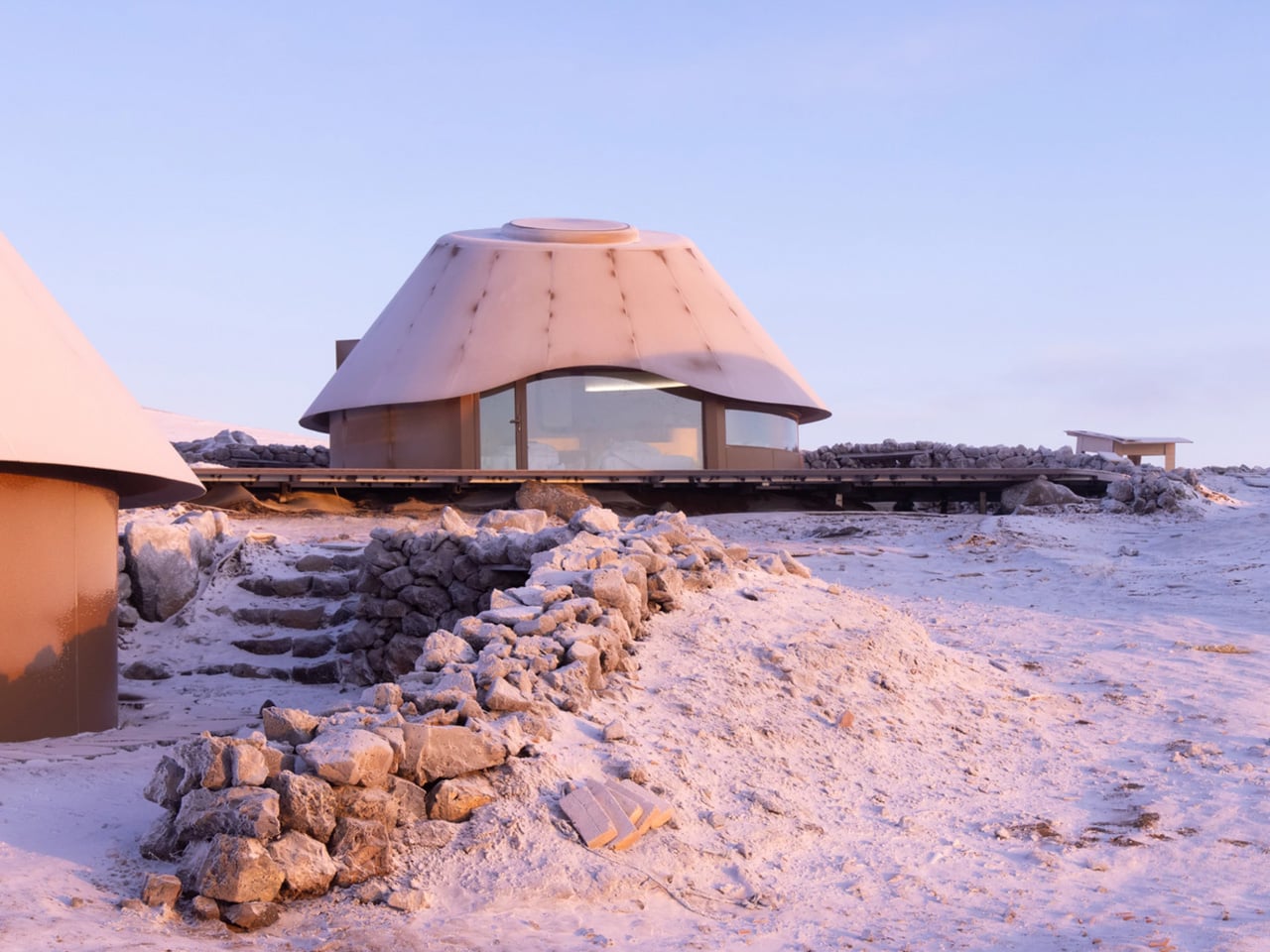
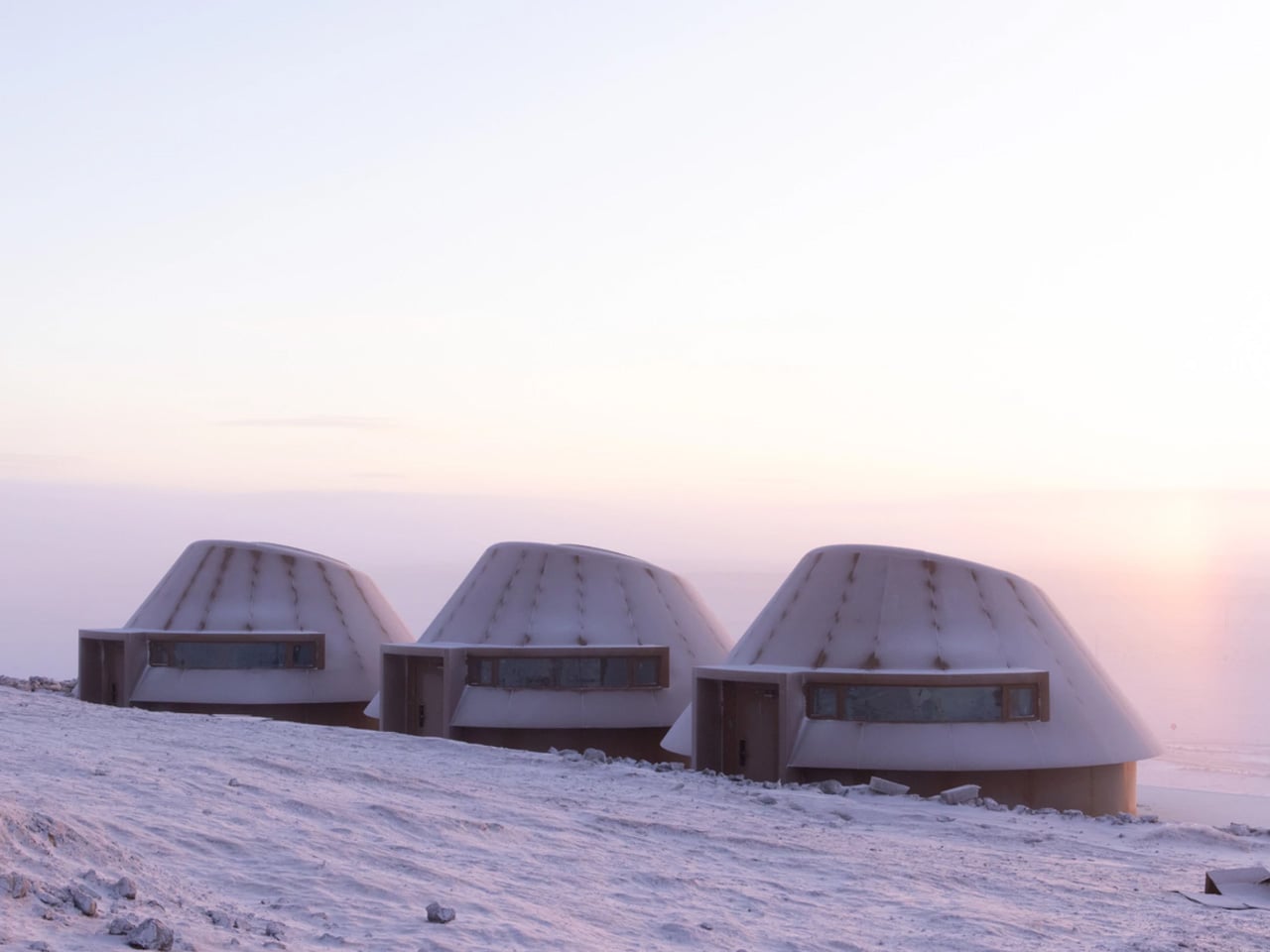
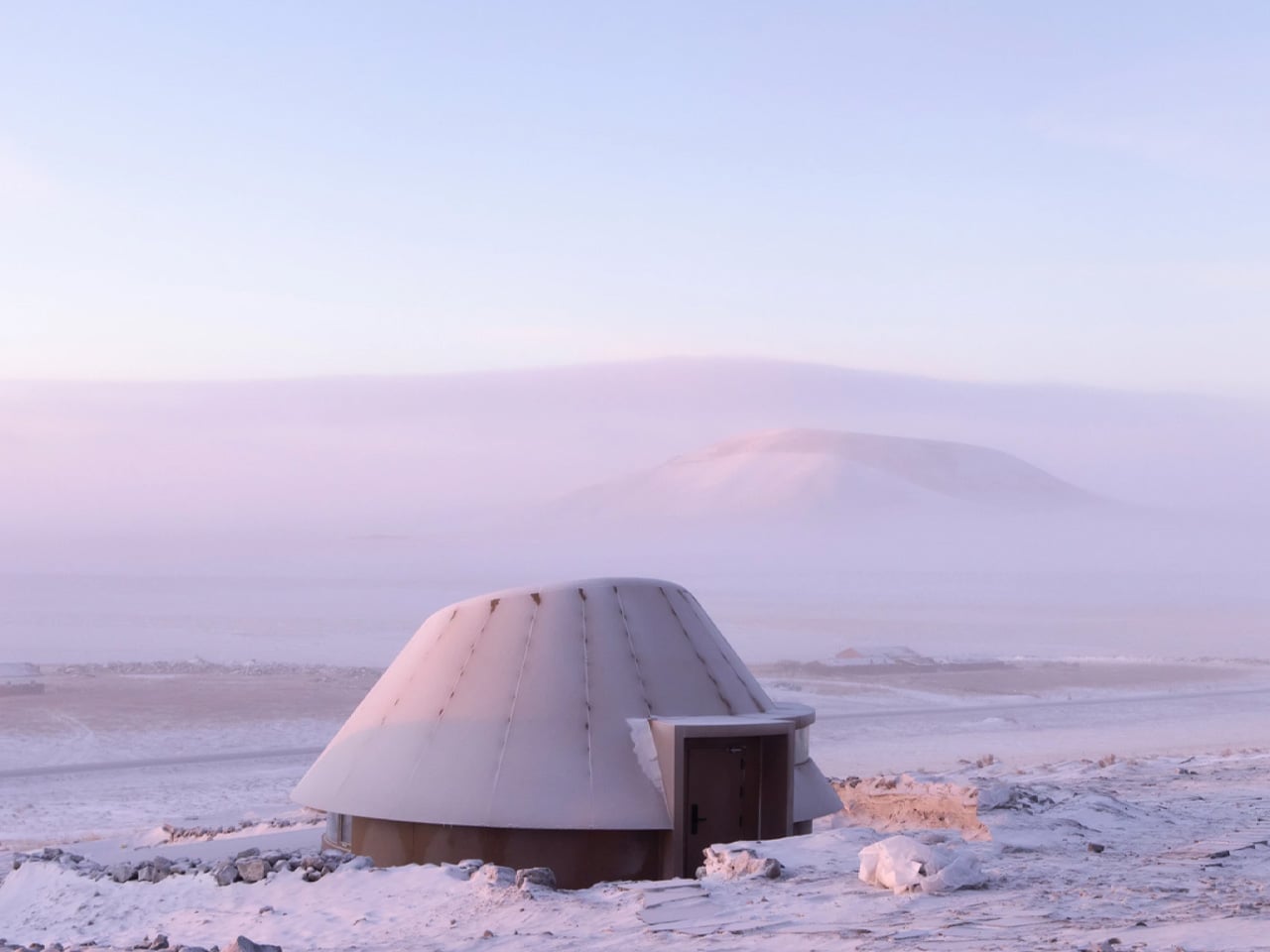
On a nearby hilltop, an earlier prototype cabin stands alone — smaller, simpler, and a remnant of the resort’s experimental beginnings. It reads almost as a sentinel, watching over the cluster that followed. Stone-paved pathways thread the cabins together, grounding the experience in a tactile, unhurried movement through the site. The hotel forms one piece of the larger Baiyinkulun Steppe & Volcano Tourism Resort, which also includes the Volcano-In Visitor Center. Whether the steppe ultimately reclaims the ground beneath these cabins remains an open question. But as a proposition, that tourism infrastructure might double as land rehabilitation, the Volcano-In Hotel offers a compelling, quietly ambitious model worth watching.
The post A Cluster of Volcanic Cabins Rises From Inner Mongolia’s Fragile Steppe first appeared on Yanko Design.